A friend walks into your living room, smiles, says nothing, and you catch it anyway. That half-second flicker. Something in the room told on you before a word got spoken, and odds are it was a piece of furniture doing the talking. Not the paint, not the curtains — the furniture. Certain designs carry a year stamped into their bones, a shape or a finish that pins a space to a decade whether the rest of the room agrees or not. These are the usual suspects, the ones that survived moves and divorces and three coats of wax, and here’s why they keep giving the game away.
Please note that some of the images in this article were created with the assistance of AI.
41. Bridge Headboard With Built-In Nightstands
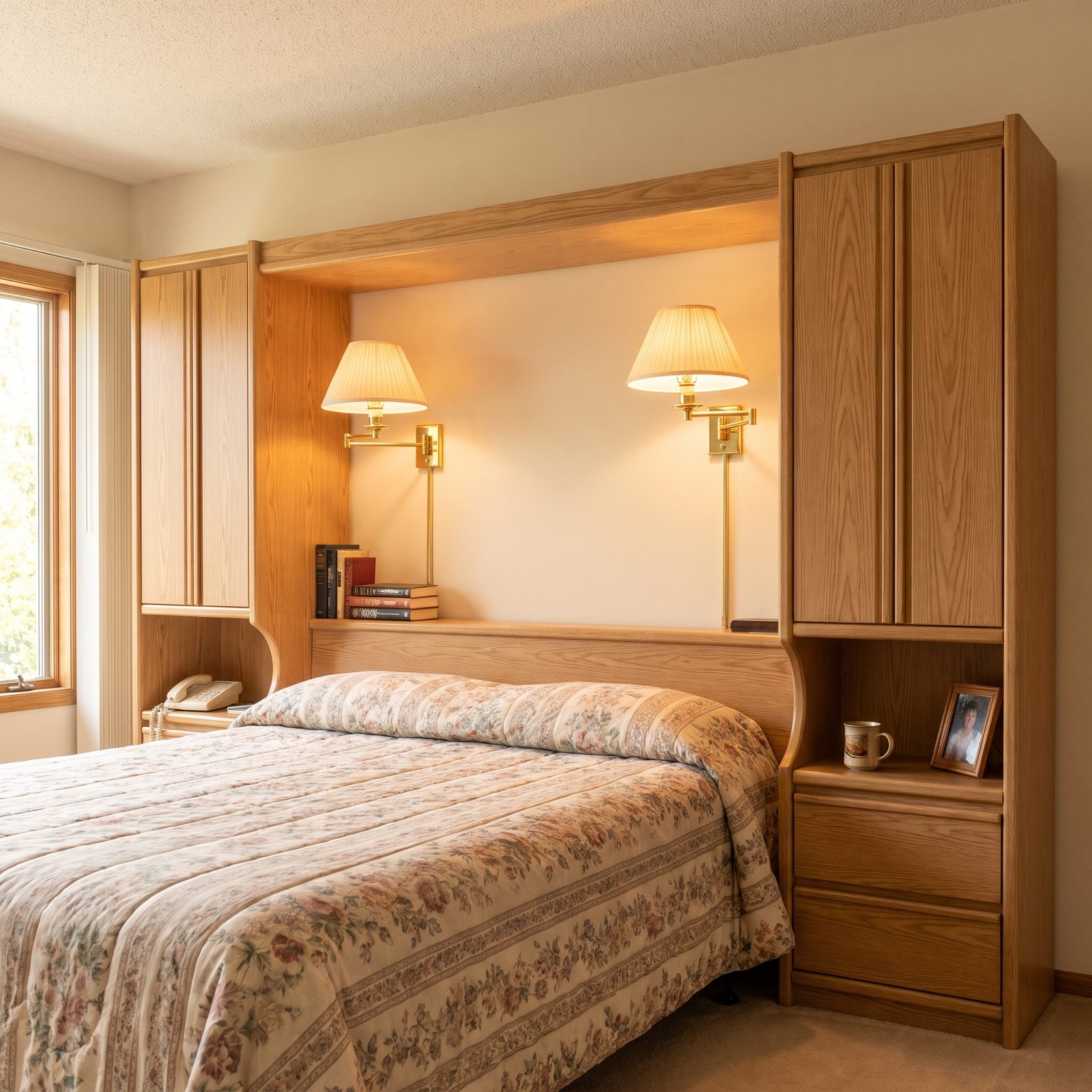
The all-in-one bedroom system was a marvel of its moment. Why own a headboard, two nightstands, and a bridge shelf when one connected slab of oak could be all three? The problem is scale. That arching unit eats the whole wall and locks your bed into exactly one position forever.
It reads as a single large object instead of furniture you chose piece by piece. A separate headboard with two mismatched nightstands looks collected. The bridge looks delivered in one truck.
40. Oak Printer Cart With Paper Compartments
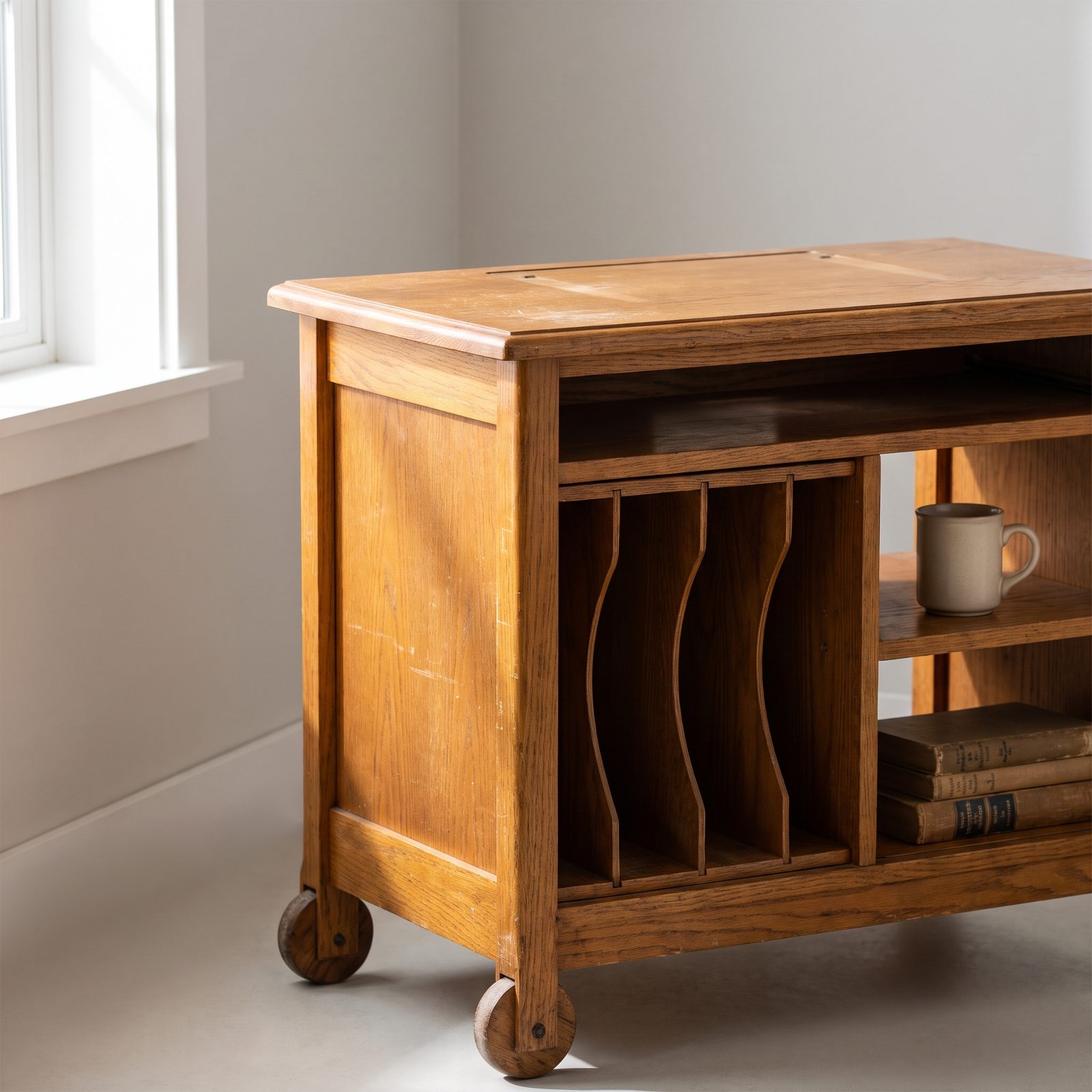
Built for a machine that needed a home. The oak printer cart arrived when a printer was a hefty appliance and paper came in reams you stacked in little vertical slots like library cards.
Those paper compartments are the tell, because nobody files paper that way anymore, and the slim casters and slotted sides scream a very specific office-supply era. It’s furniture built around a workflow that no longer exists. Honestly, if you still have one, you probably use it to hold a plant or a tangle of charging cables now, which it does fine. It just also announces that it was bought to park a 1996 inkjet.
39. Telephone Gossip Bench
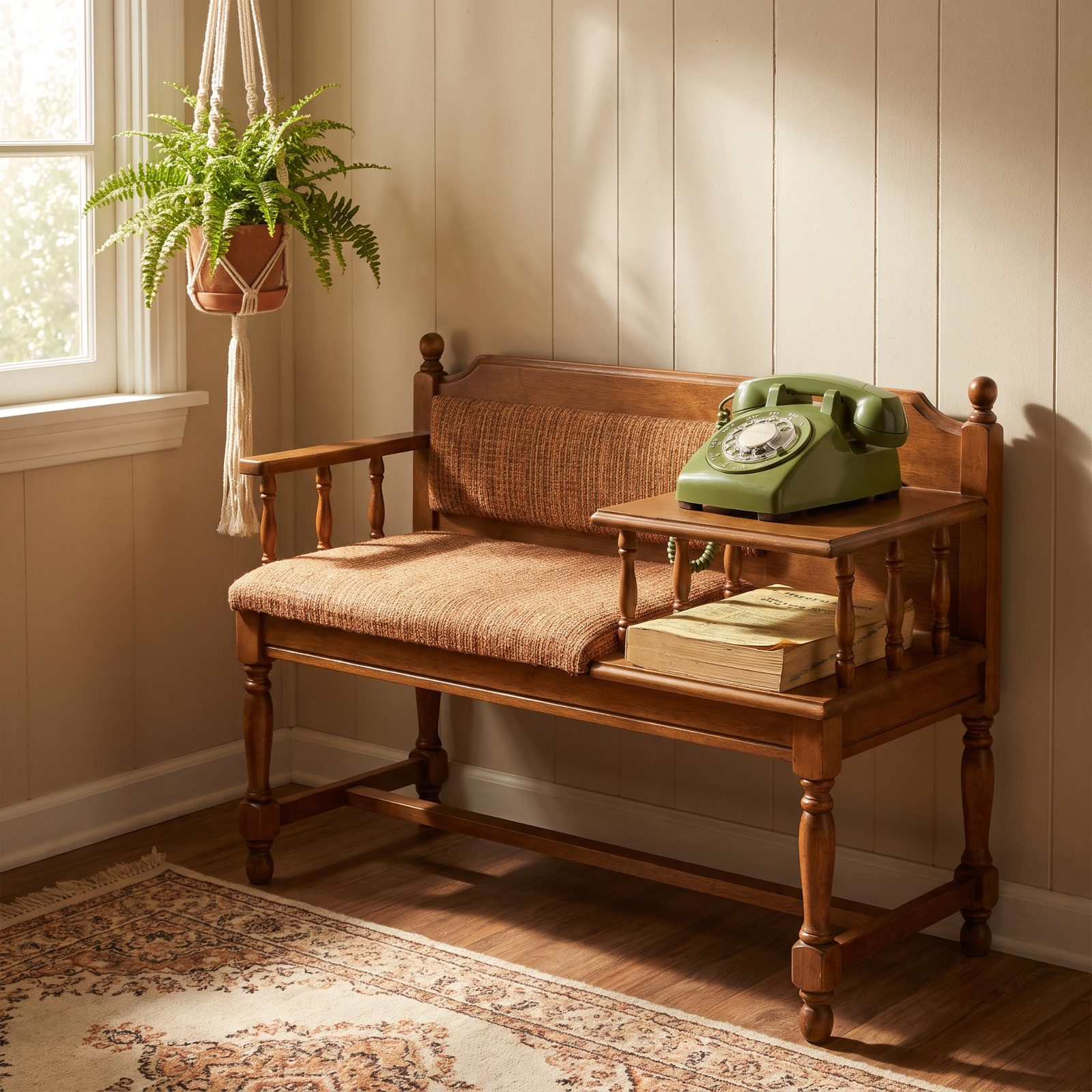
There was a time you had to go somewhere to take a call.
The gossip bench was that somewhere — a seat and a little table fused together, parked by the phone jack, built so you could settle in for a proper conversation with a cord tethering you to the wall.
It’s a lovely object and a dead giveaway. The whole concept assumes the telephone lives in one fixed spot, which no phone has done in twenty years. Keep it if you love it, by all means. A gossip bench with a stack of books where the phone used to sit is charming. Keep the phone on it, though, and the room sets its own clock back thirty years.
38. Shadow-Box Coffee Table With Display Compartments
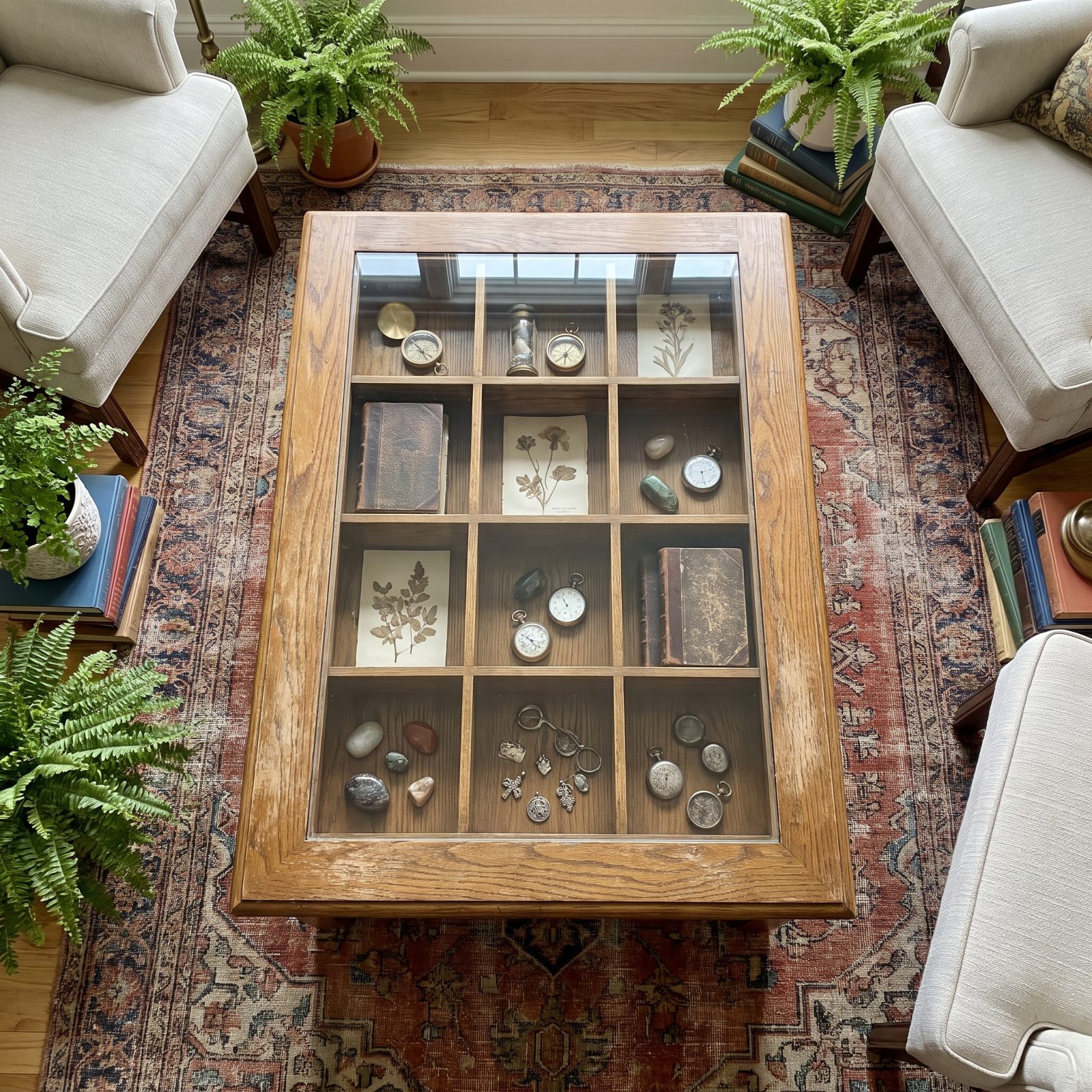
A coffee table and a curio cabinet decided to become one. The shadow-box version put a glass top over a grid of little compartments, so your collection of thimbles or seashells could live permanently on display under your coffee cups.
The compartments are the problem. They commit the table to being a museum case, and the contents freeze in whatever year you last rearranged them. A plain-topped table gives the eye somewhere to breathe. This one hands it a tiny gift shop every time you look down.
37. Honey-Oak Octagonal End Table With Cabinet Doors
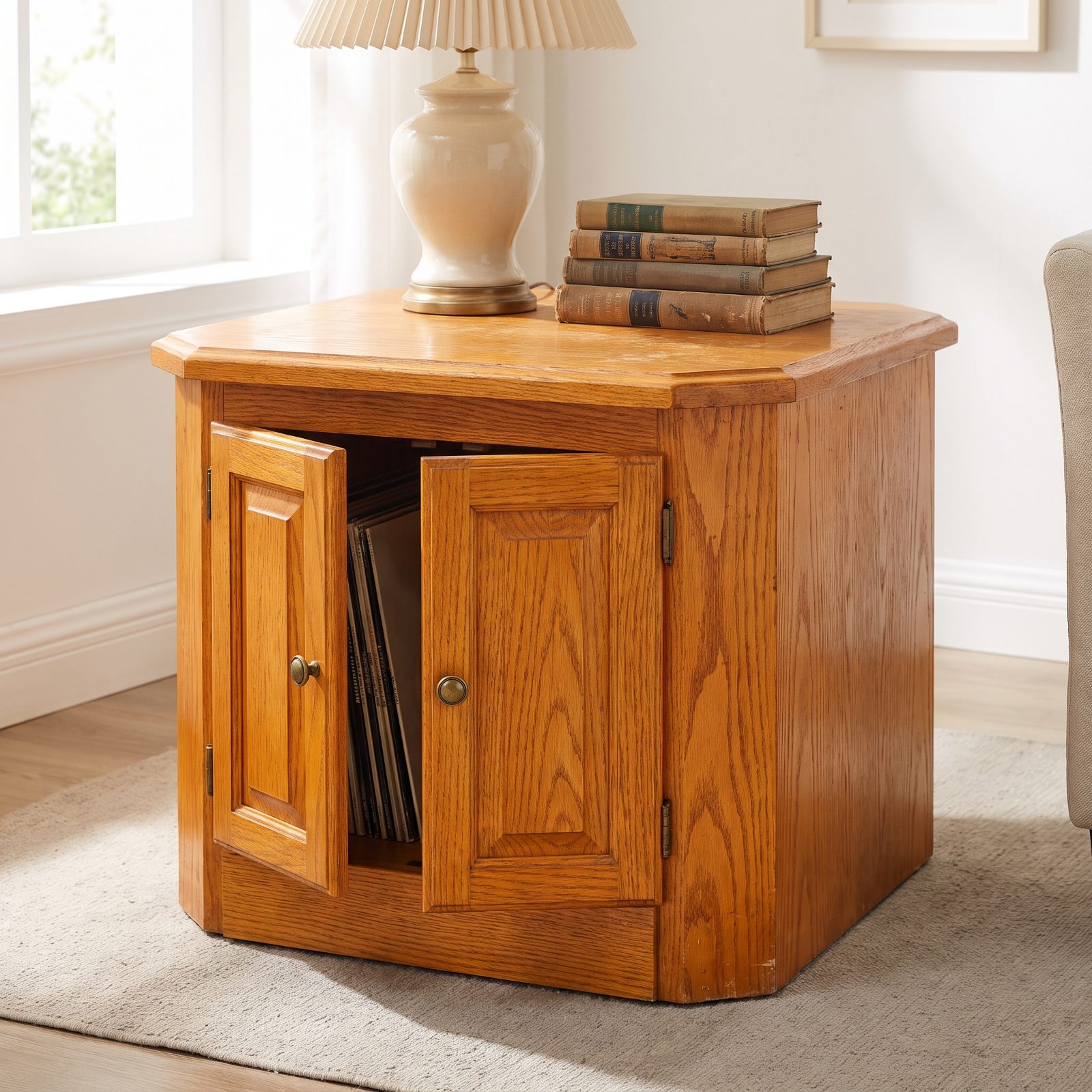
Two signals at once, and both land in the same decade. The octagon shape and that particular shade of orange-honey oak are late-1980s country furniture in its purest form.
Add the little cabinet doors with brass pulls and you’ve got the full set. The eight sides were meant to feel special, a step up from a boring square. Now they just date it twice. And the finish is the louder offender — that warm orange varnish is one of the most era-specific colors in American furniture.
36. Laminate Waterfall Dresser
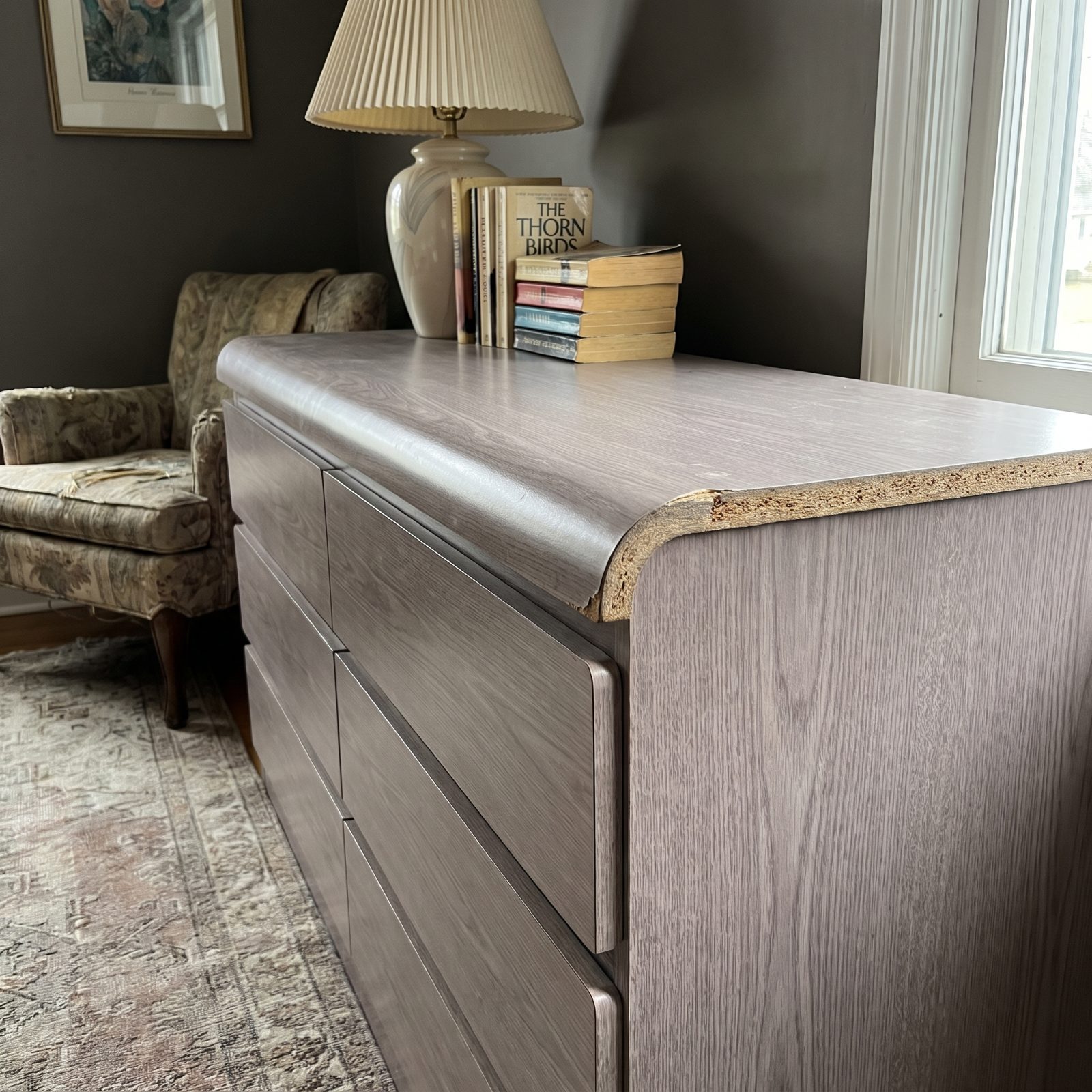
The waterfall edge was supposed to look smooth and modern. That continuous curve rolling over the front corners felt sleek in the showroom and reads as pure 1980s builder-grade now.
Laminate is the second strike. Real wood ages into character; laminate just chips at the corners and shows its particleboard underneath, usually right where your hand rests. The mauve-grey finish some of these came in is almost a calendar page on its own. There’s no polishing it into something it isn’t, and that rounded edge makes sure you can’t mistake it for anything newer.
35. Pickled-Oak Bedroom Chest
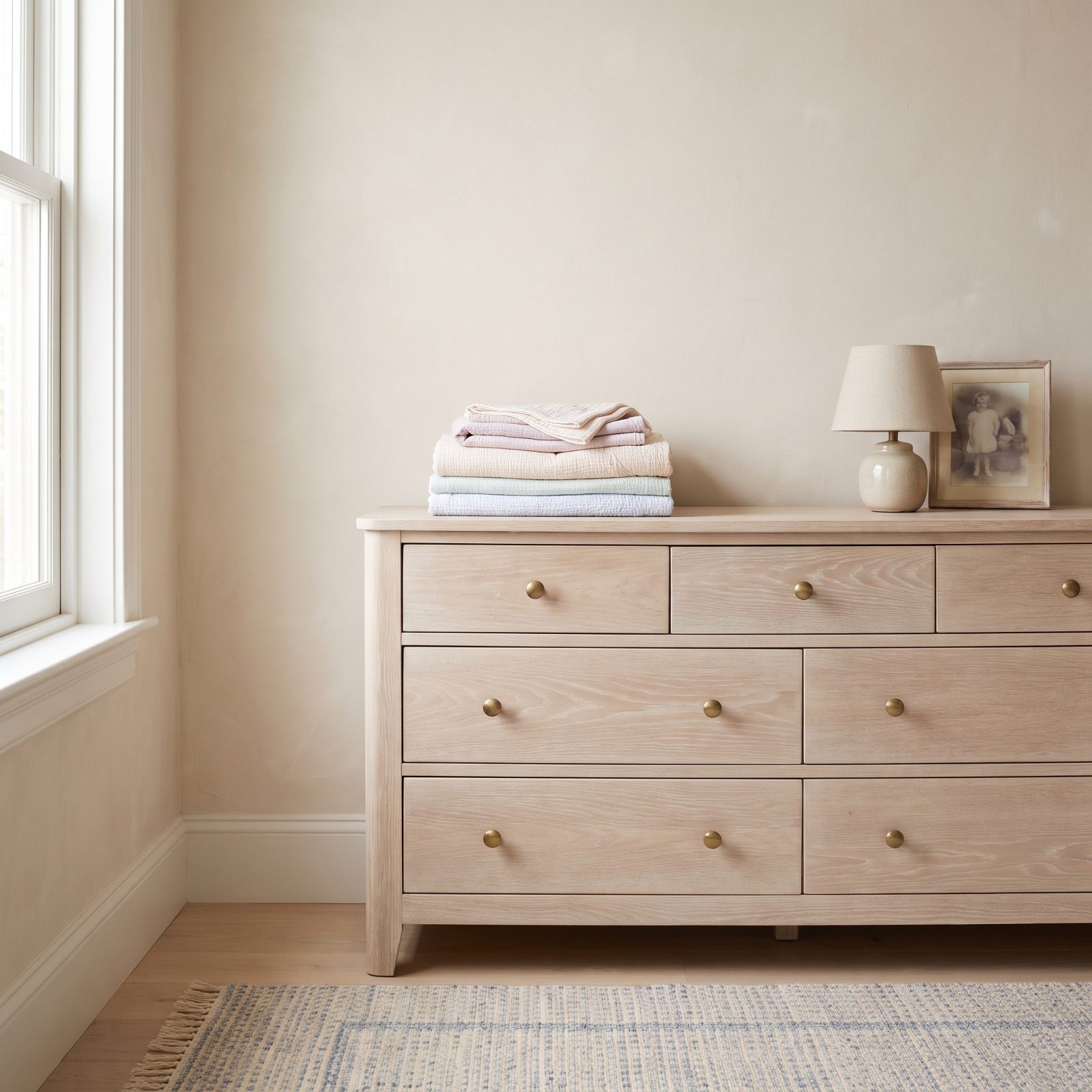
Pickled oak was the great compromise of the early 1990s. You wanted the look of wood but lighter and airier, so somebody washed a thin coat of white over the grain and called it pickled. For a while it was everywhere.
That chalky whitewash with the grain peeking through is the issue. It belongs to such a narrow window of time that spotting it is almost a party trick. The frustrating part? These chests are usually solid, well-built, good bones under a finish that pins them to a single catalog season. A pickled piece and a modern one in the same room don’t argue so much as refuse to acknowledge each other.
34. Oak Plate-Rack Hutch With Heart Cutouts
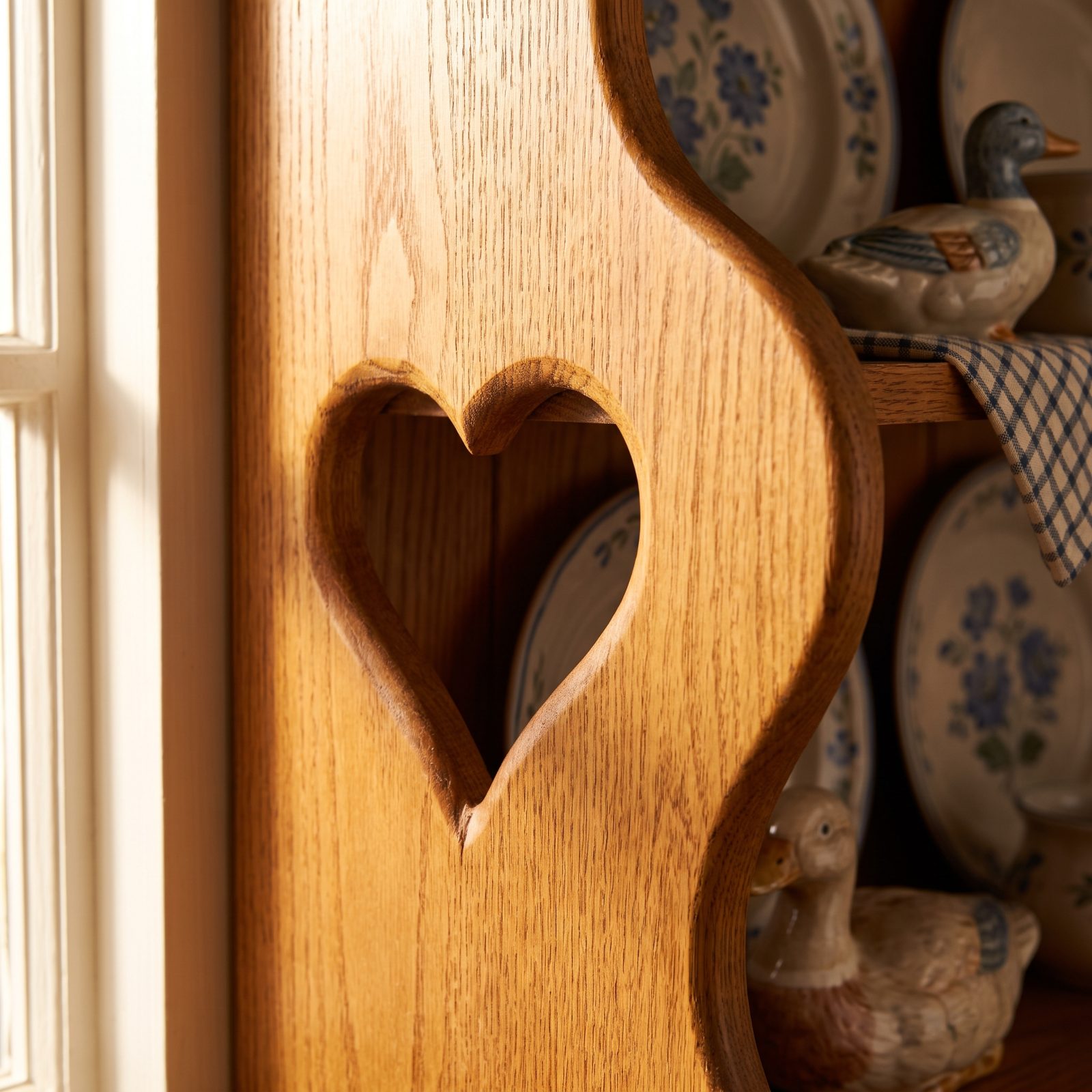
Heart cutouts. If you want to set a room’s dial to roughly 1991, carve a little heart into a honey-oak side panel and call it country charm. I’ll say it plainly: this is the single most decade-specific detail on the list.
The plate rack plays its part too, holding your good dishes on their edges like trophies. But the hearts do the heavy lifting. They were sweet and they were everywhere and now they function as a timestamp nobody can un-see.
33. Quilt Rack With Turned Wooden Rails
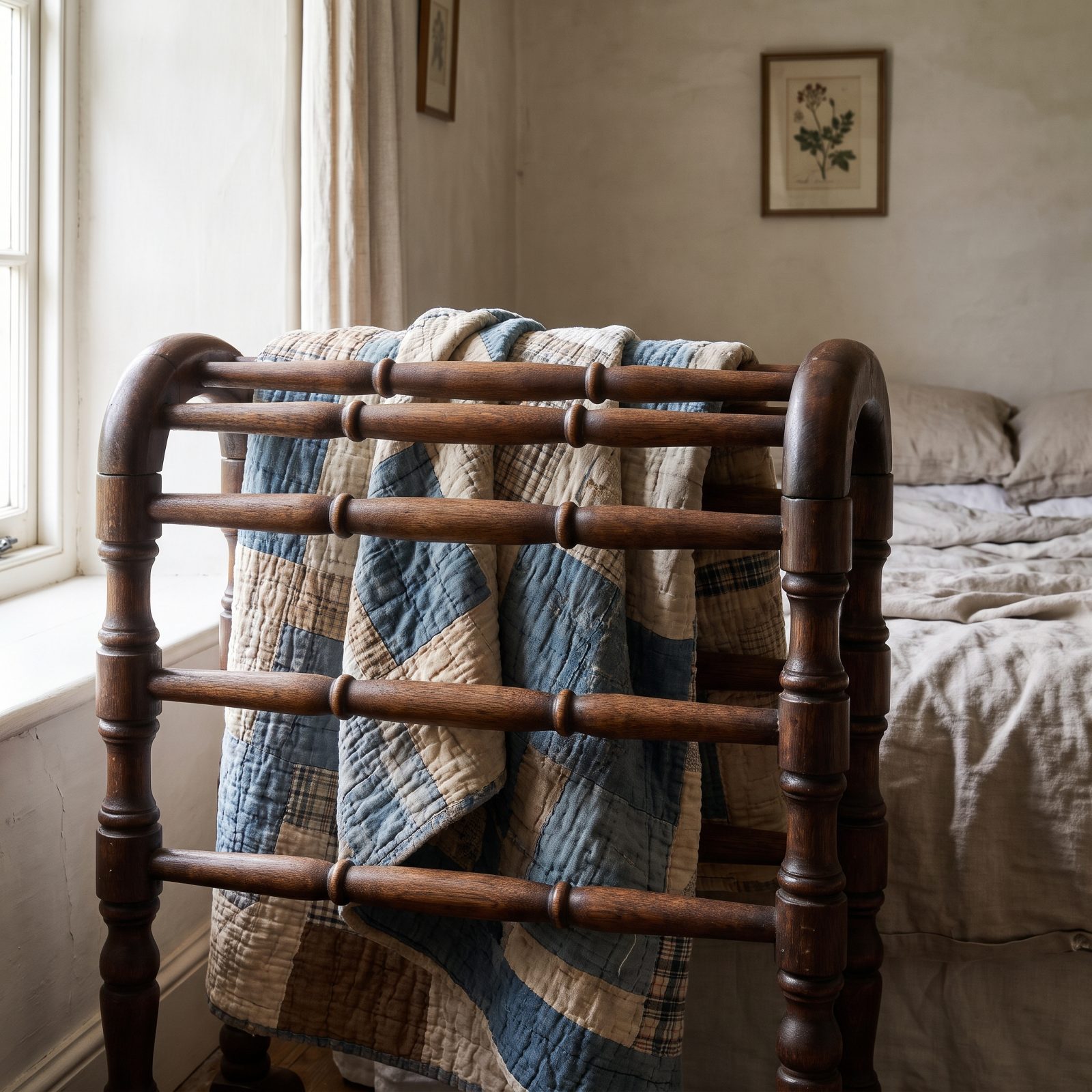
A little ladder for your blankets, and a surprisingly loud one. The quilt rack itself is fine in theory. It’s the turned rails that date it, those lathe-shaped spindles bulging and tapering in a pattern that belongs entirely to country-craft furniture of its era.
Those curves are decorative, not structural, which means every one of them exists to say something about style. Draping a modern quilt over it doesn’t help. The frame keeps talking.
32. Wooden Magazine Rack With a Carry Handle
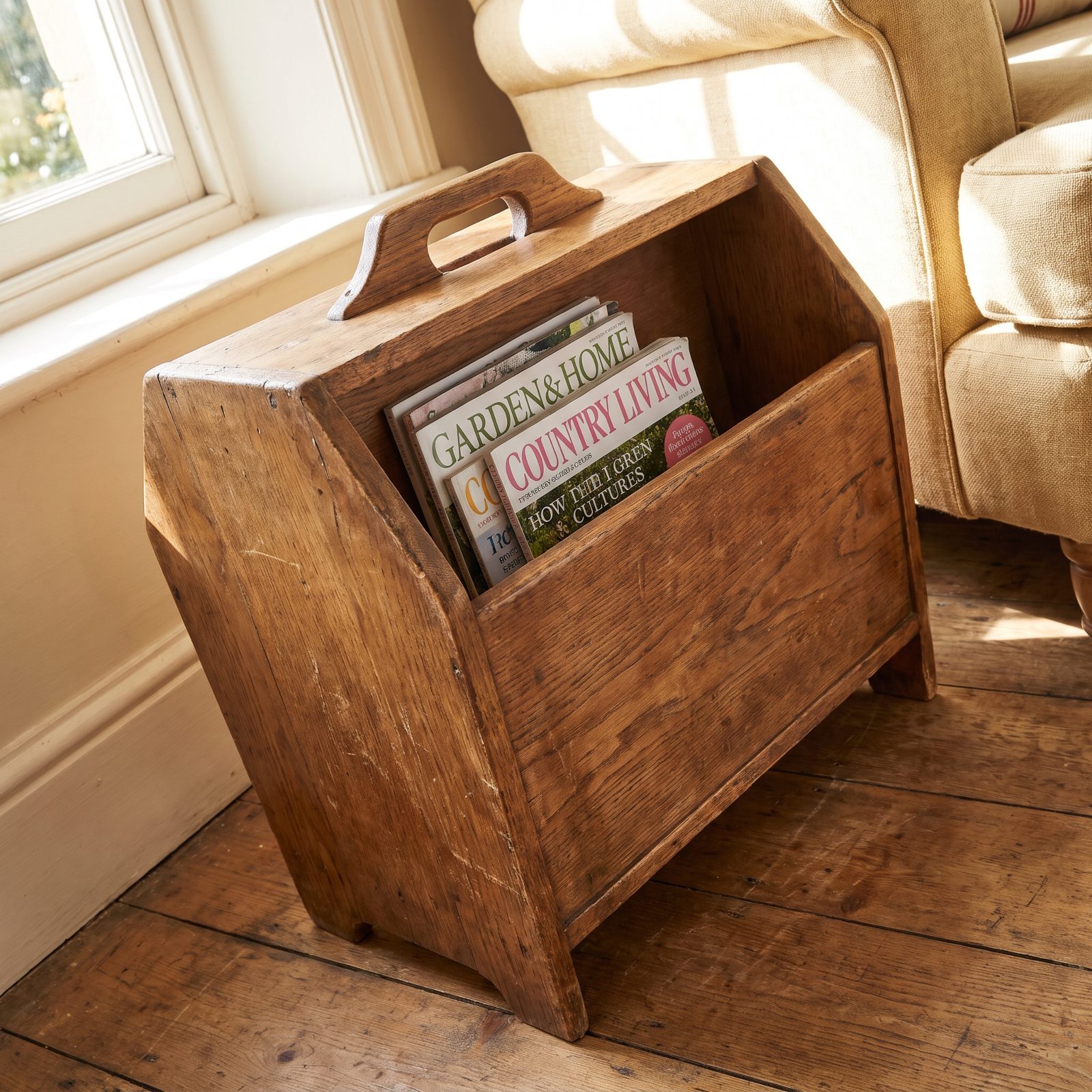
The carry handle is the giveaway. Why a magazine rack needed to be portable is a mystery nobody ever solved, but there it is, that chunky wooden handle bolted onto the top of the back board so you could, in theory, lift your copies of Reader’s Digest and relocate them.
The single solid-panel pocket and golden varnish fill in the rest of the picture. It assumes you still get magazines by mail, in a stack, often enough to warrant a dedicated piece of furniture. Most of us don’t. So it sits by the chair holding three old catalogs and setting the room’s clock to a decade when the mail was heavier and the reading was slower.
31. The VHS Cabinet With Smoked-Glass Doors
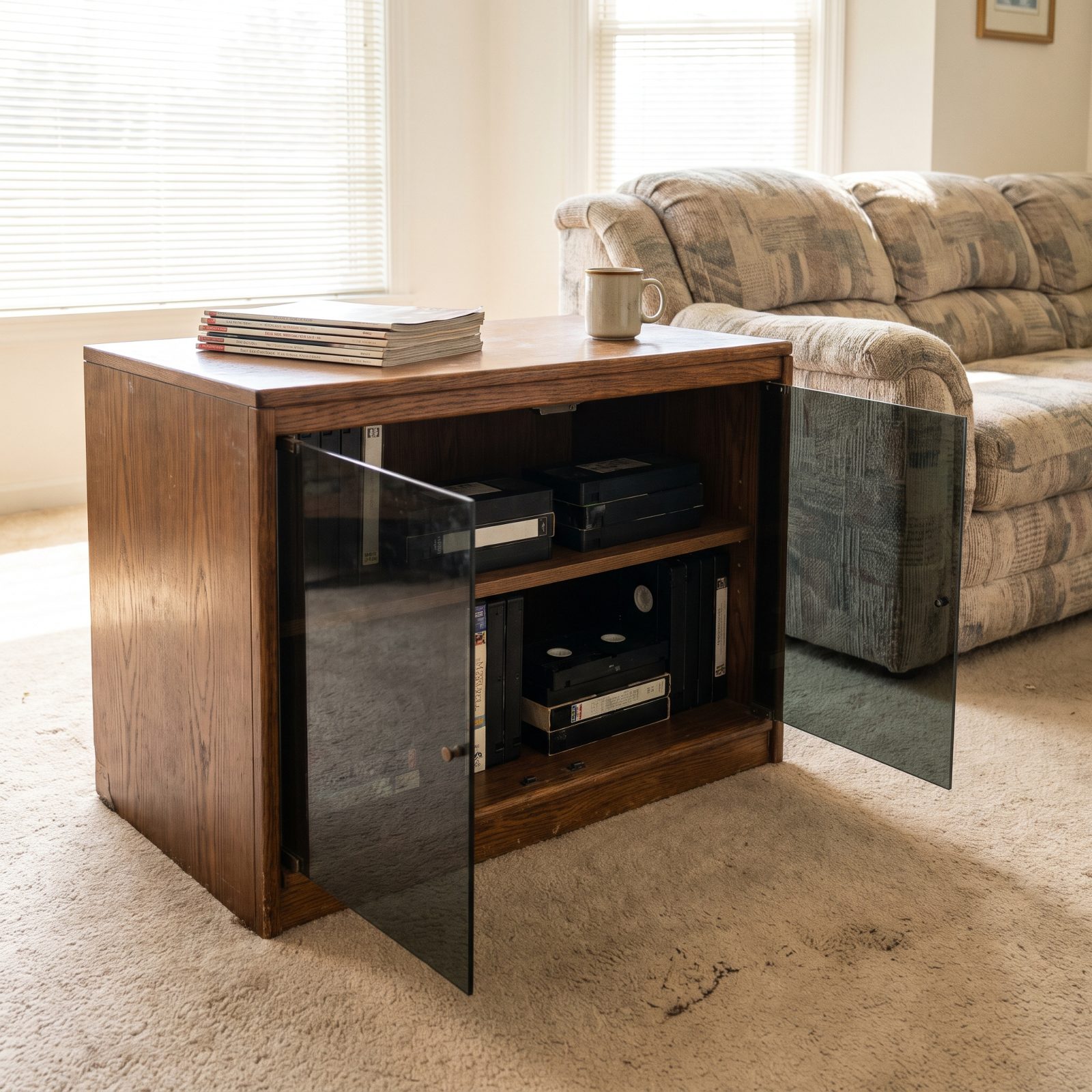
Nothing announces a stalled living room faster than a low wooden box with tinted doors you have to crack open just to find the remote. The smoked glass was supposed to hide the clutter of tapes. Now it hides the fact that nobody’s touched the thing since discs went flat.
The proportion gives it away. These cabinets were sized for a tube television, so they squat there, heavy and low, too short for a flatscreen and too deep to be useful for anything else. A piece built to hold a dead format reads as a time capsule, not storage.
30. The Floor-Standing CD Storage Tower
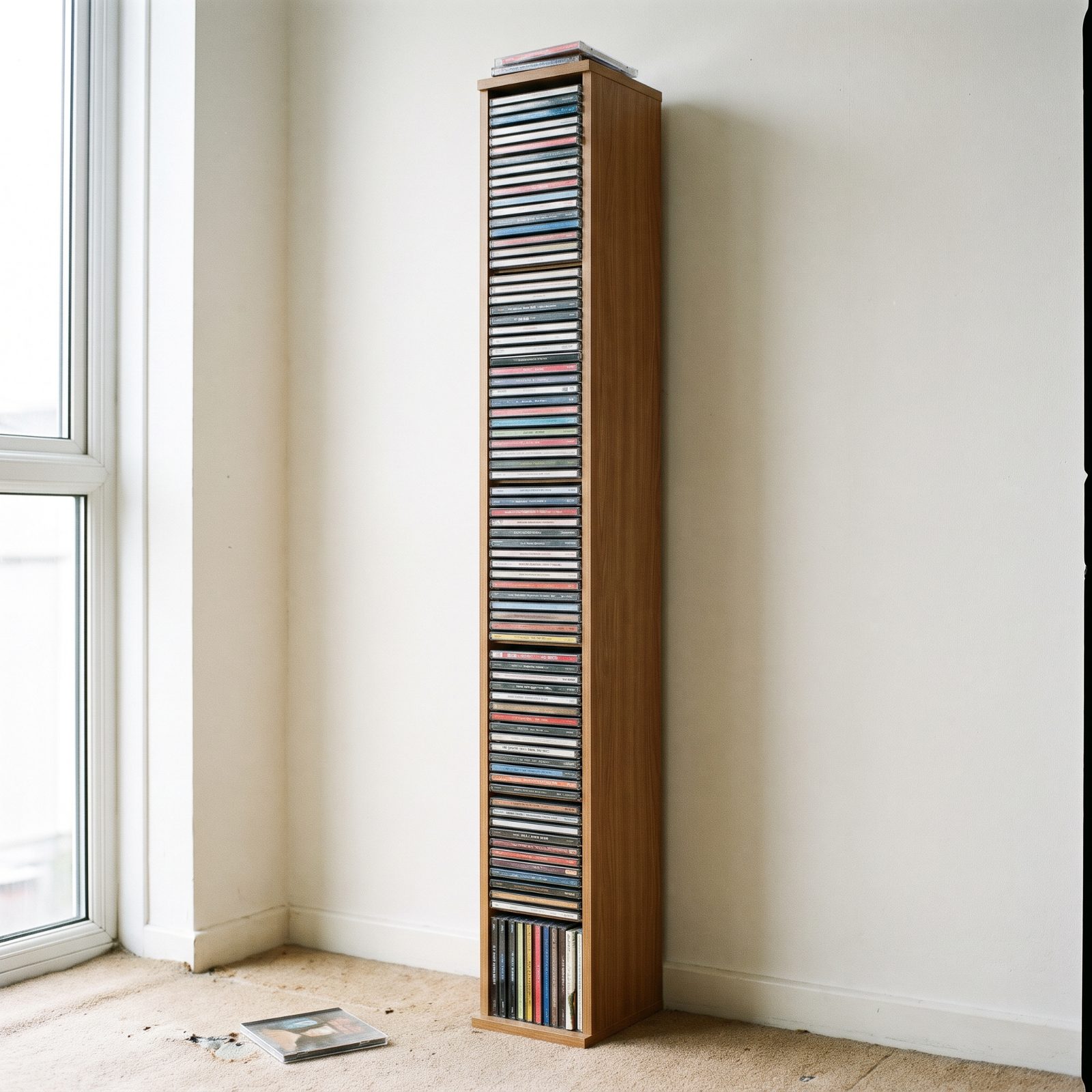
The spinning version was the worst offender. But any skinny tower built to hold hundreds of plastic cases pins a room to a very specific stretch of years.
And these towers were never good furniture to begin with. Thin particleboard or wobbly wire, built to cram in as many of an object people stopped buying as possible. So when one survives into a current room, it does double damage: it dates the space and looks cheap while it’s at it.
29. The Waterbed Frame With a Bookcase Headboard
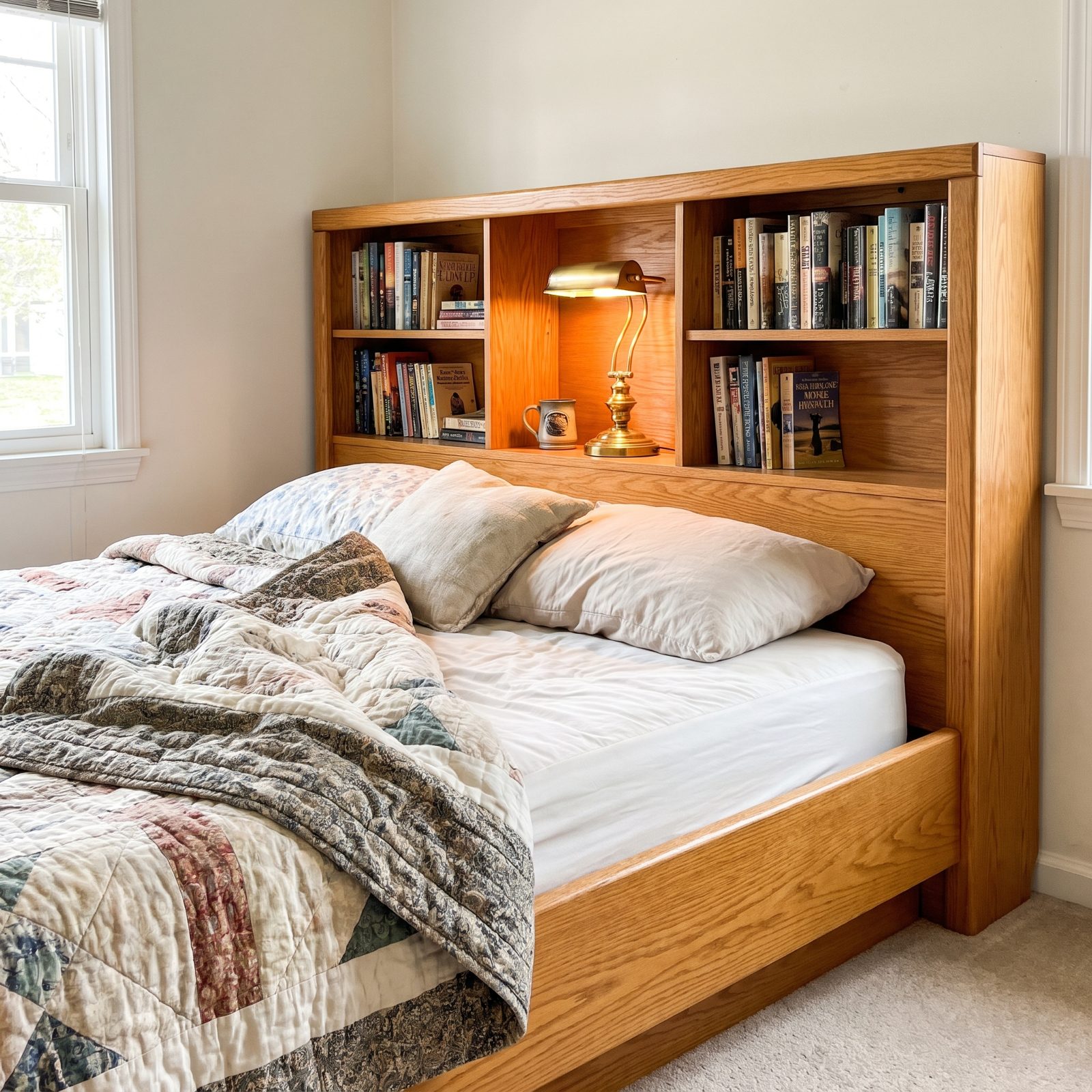
That bookcase headboard did a lot of work in its day. Reading light, a shelf for your glasses, a cubby for the clock radio, a top ledge for the alarm clock. A nightstand, a lamp, and a storage unit welded to the bed, all in one.
Honestly, the waterbed bladder itself usually got swapped out decades ago. What lingers is the frame: honey-toned, boxy oak with that cluttered little shelf wall, way too big for the mattress sitting in it now. Even a soft patchwork quilt can’t save it. The headboard drags the whole room backward, and it’s the first thing to go if you want the space to feel like it belongs to this century.
28. The Computer Armoire With a Pullout Keyboard Tray
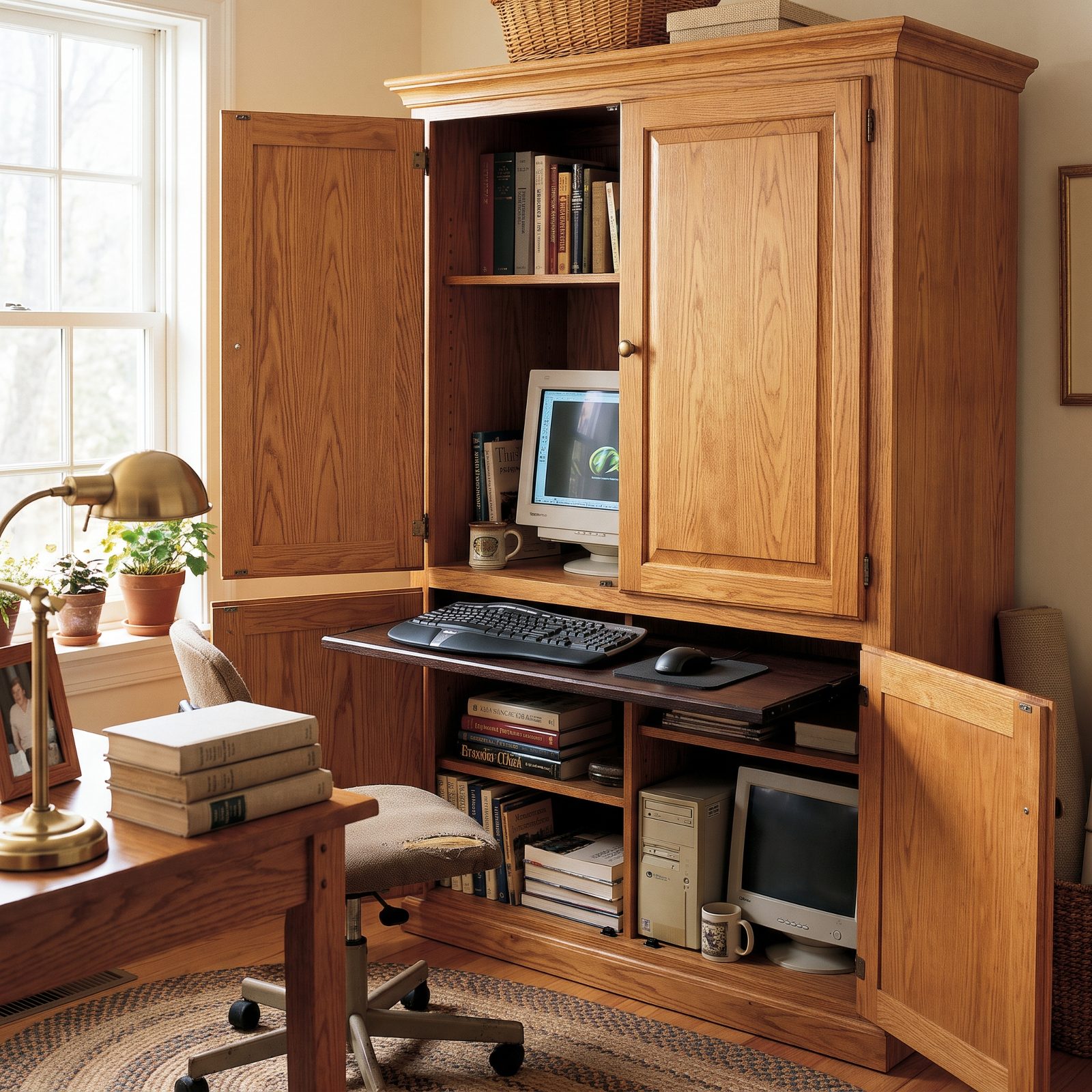
The pitch was clever: shut the doors and the whole computer disappeared. No monitor glare, no cord nest, just a handsome wooden cabinet pretending to be a wardrobe.
Then screens got thin and laptops moved to the kitchen table. The armoire’s reason for existing evaporated overnight. What’s left is a hulking honey-oak box with a sliding tray sized for a beige keyboard and a cubby built for a tower that used to hum.
27. The CRT Entertainment Center With Side Piers
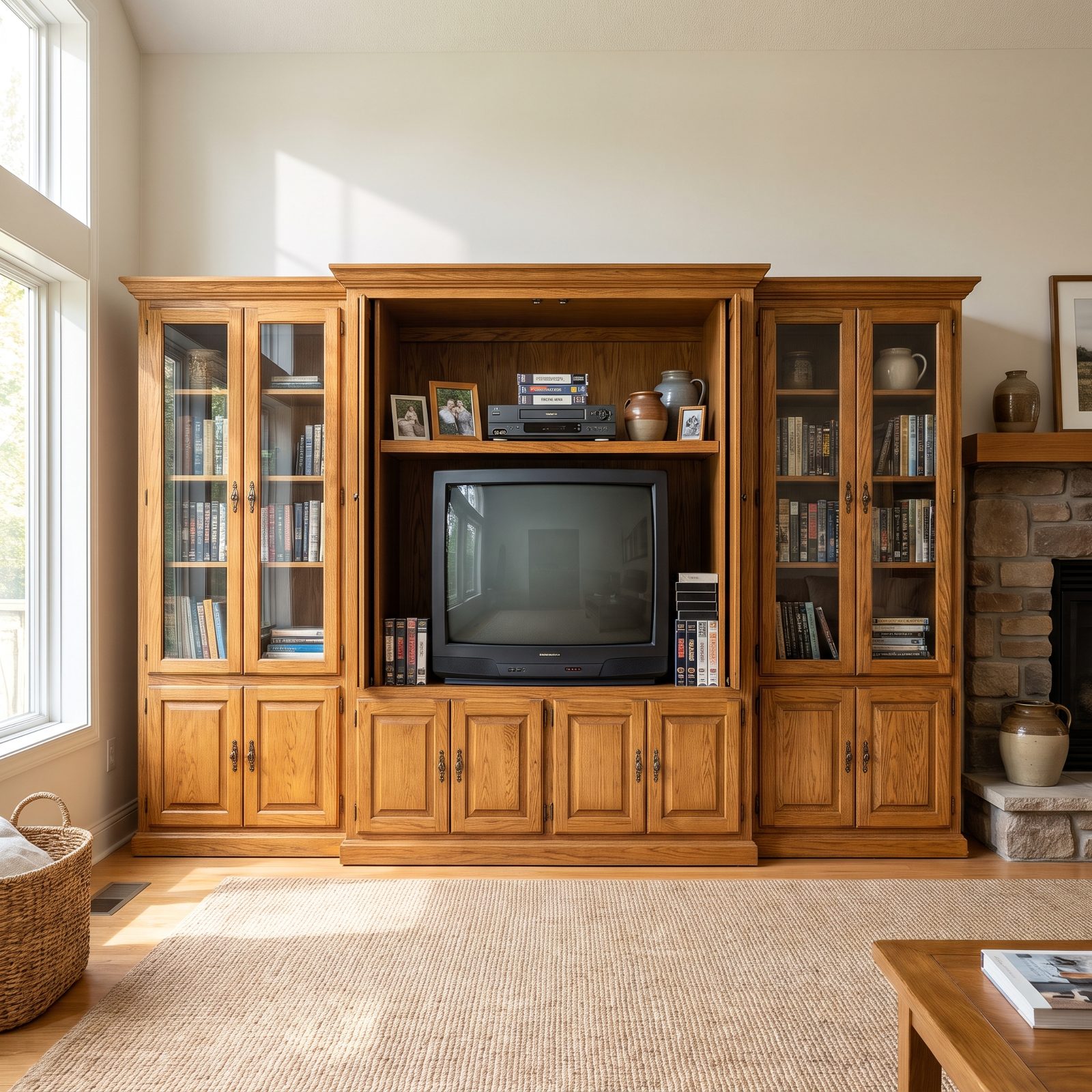
You know the one. That oak wall unit with the cave in the middle and two glass towers flanking it like bookends with ambition, taking up an entire wall and forcing the whole room to arrange itself around the thing.
The center opening tells it all. It was cut for a 32-inch tube that weighed about as much as a small refrigerator. Slide a flatscreen in there now and it floats in the gap, lonely, like a snapshot rattling around inside the wrong frame. Scale is the problem here, and no amount of fussing with the glass piers rescues a cabinet designed around a shape that no longer exists.
26. The Black Lacquer Bed With a Mirrored Headboard
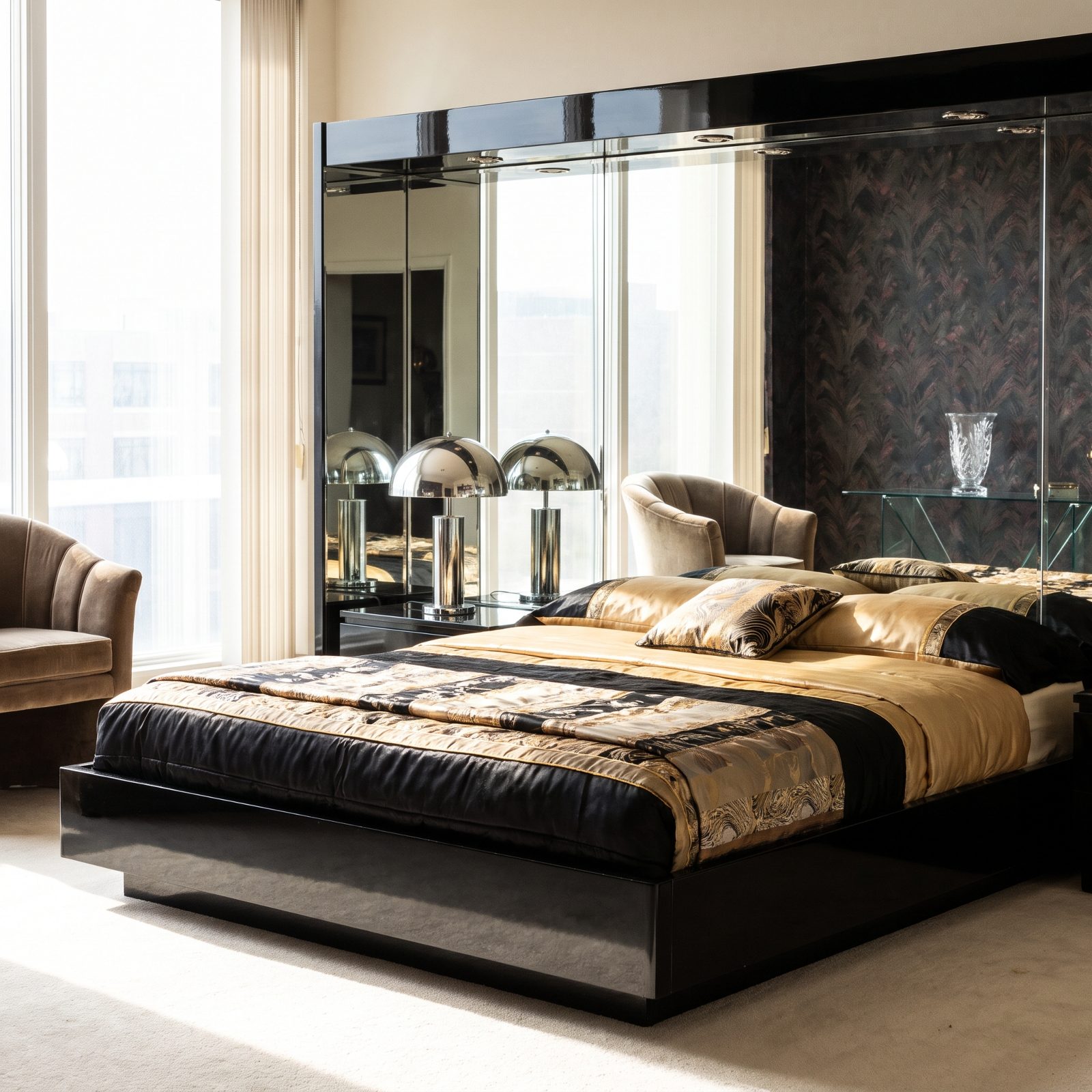
High-gloss black with a mirror running across the headboard felt like glamour once. Las Vegas by way of a department store showroom.
The finish is the tell. That mirror-shine lacquer, paired with chrome and often a glint of gold, reads as one very specific idea of luxury the rest of the house moved past years ago. The mirror panel smudges. The lacquer chips at the corners. And because the whole thing almost always arrives as a matching set, the room becomes a complete period statement instead of a bedroom anyone actually decorated.
25. The French Provincial Dresser in Cream and Gold
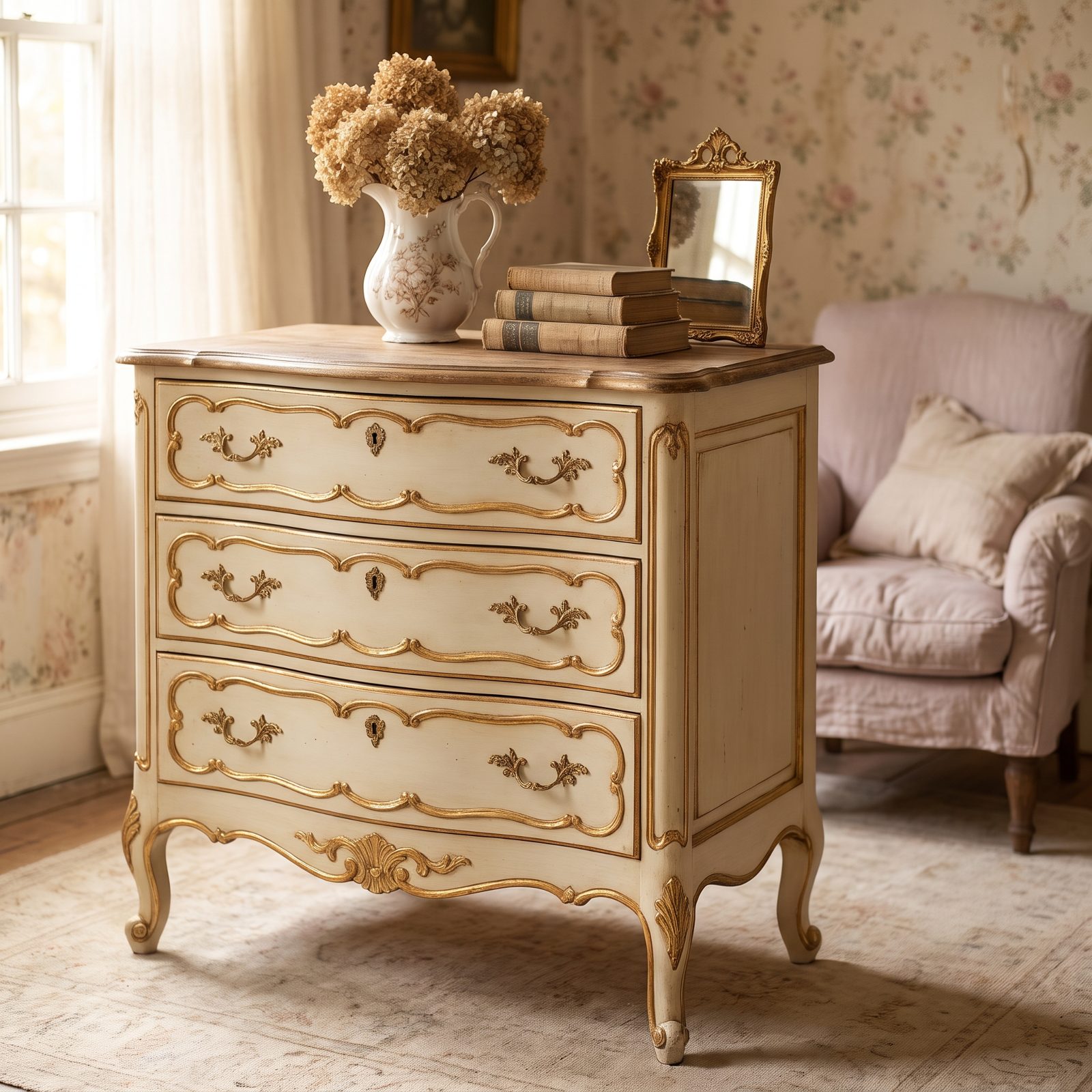
Curved legs, scalloped drawers, cream paint with gold tracing every edge. The French Provincial set was aspiration in furniture form, a little slice of Versailles smuggled into a suburban bedroom.
What pins it down is the specific combination. Not the shape, which drifts in and out of fashion, but the cream-and-gold finish spread across a full matching suite: dresser, mirror, nightstands, maybe a canopy bed to finish the thought. One piece on its own can pass as a nice vintage find. The whole coordinated set in that exact palette turns a bedroom into a recreation of a decorating catalog from a decade you can name on sight.
24. The Tri-Fold Vanity With a Ruffled Stool
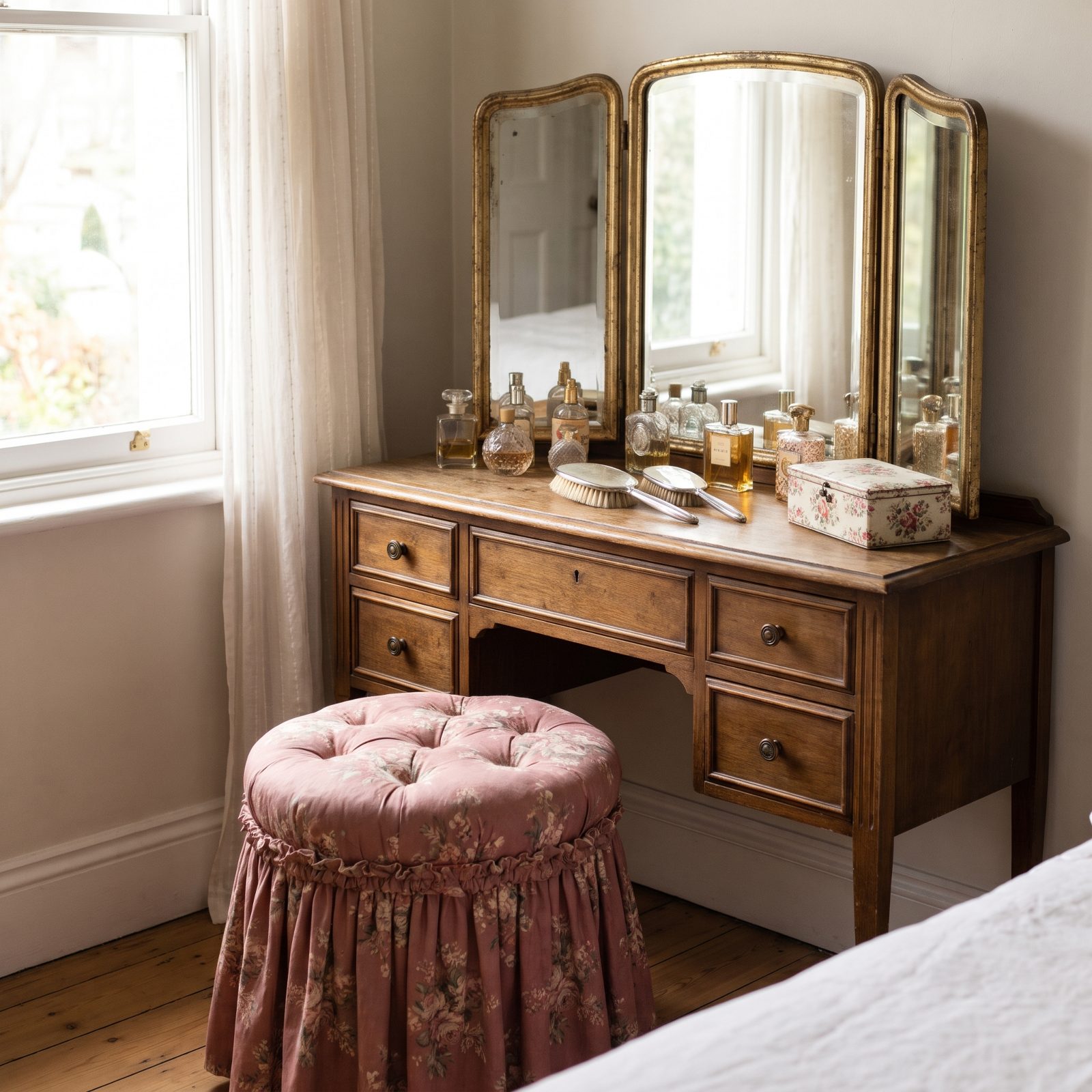
The hinged three-panel mirror and the little skirted stool traveled together, a matched pair announcing that this corner was where getting ready happened.
It’s the ruffle that does it. That gathered fabric skirt around the stool, usually a pastel, sits inside a very narrow window of good taste. Pair it with the folding mirror and you’ve got a vanity tied to a specific idea of femininity most rooms quietly updated. The vanity itself? Perfectly fine. Swap the ruffled stool for a clean upholstered seat and you’ve nudged the whole thing forward twenty years in an afternoon.
23. The Matching White Wicker Bedroom Set
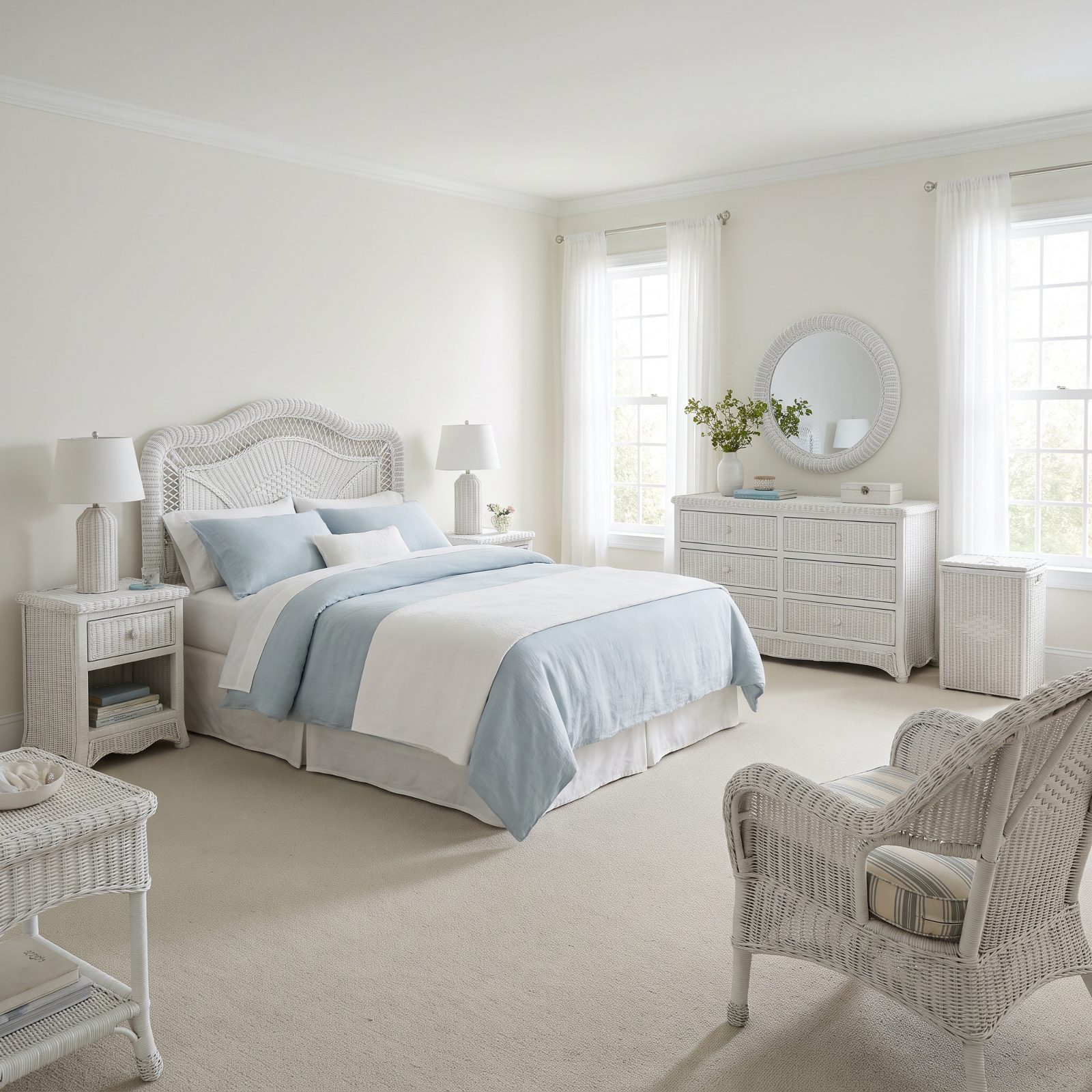
White wicker had its place: a sunporch, a beach cottage, a guest room meant to feel breezy. The trouble starts when the entire bedroom matches.
A single wicker piece reads as texture, a hint of coastal ease. The headboard plus the dresser plus the nightstand plus the little chair, all painted the same chalky white, turns the room into a set. Worse, white paint on woven reed yellows, chips, and traps grime deep in every loop, so even a carefully kept suite looks tired in a way solid wood simply never does.
22. The Entertainment Console With a Fake Fireplace and TV Mount
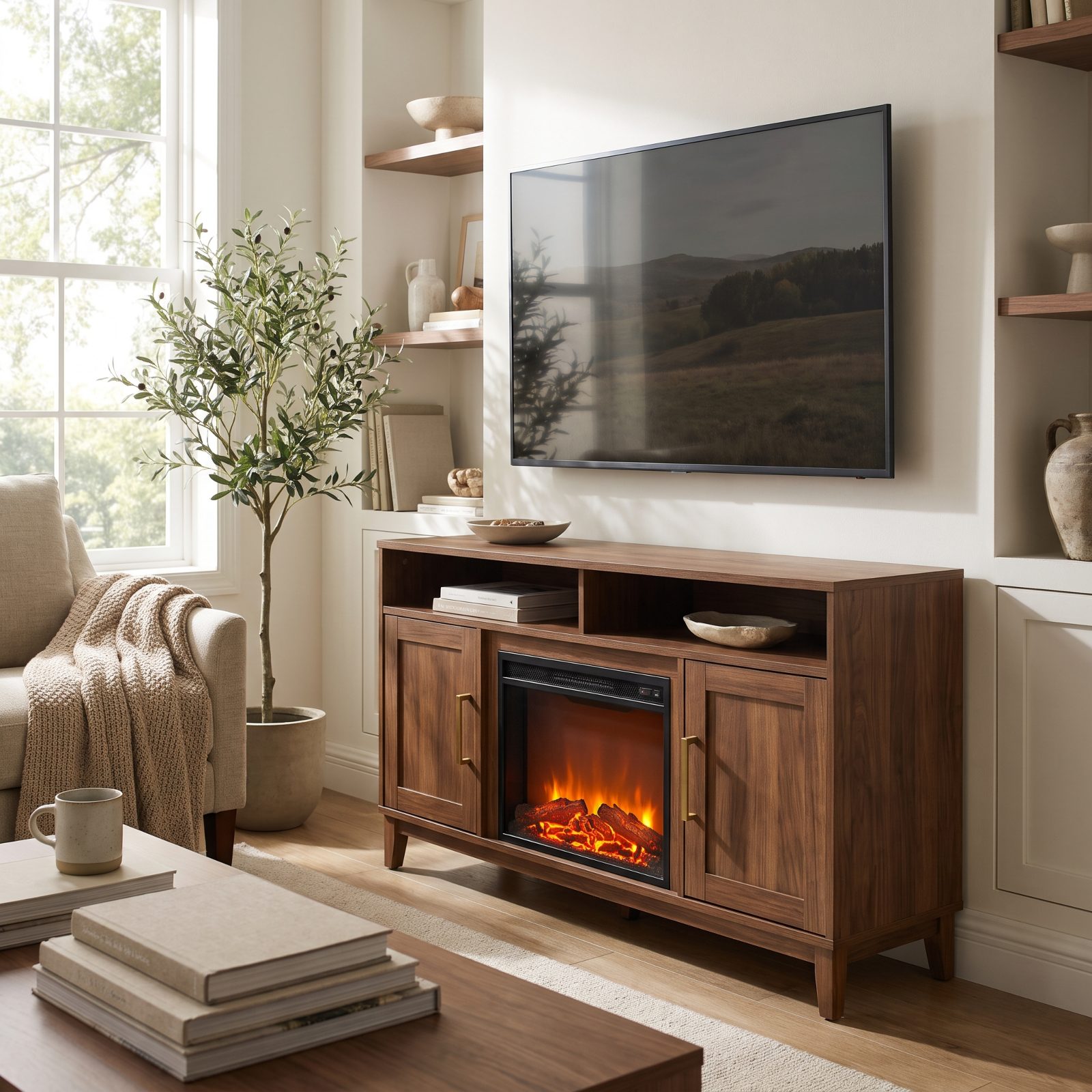
This one’s newer, which is exactly why it’s sneaky. The console with the glowing plastic flame below and the TV hung on the wall right above it felt like a smart all-in-one solution not that long ago.
The flame gives it away. That flickering orange insert, usually with a fake ember bed and its own remote, imitates fire while missing the entire point of fire. Hang the TV on the wall directly above it and you’ve got a pairing that can only sit one way, in one spot, doing one job forever. This isn’t a room arrangement. It’s an appliance the furniture grew around, and appliances date faster than anything carved from wood.
21. The Cherry-Finish Sleigh Bed
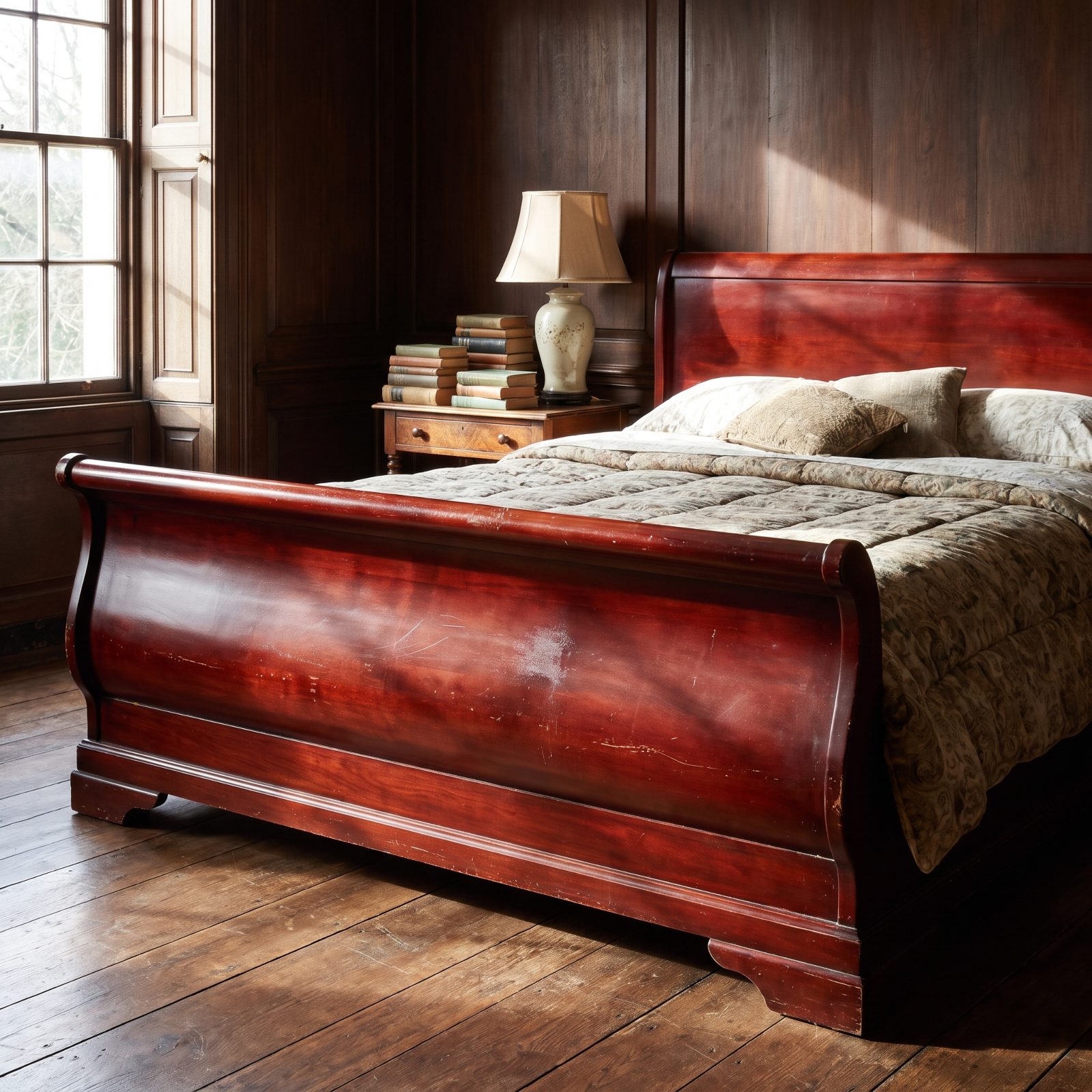
Nothing dates a bedroom faster than the glossy reddish sheen of a cherry sleigh bed. Those curved head and footboards were the signature of early-2000s bedroom sets, usually sold as a matched suite with two nightstands and a dresser cut from the same shiny veneer.
The bulk is the real giveaway. That deep scroll eats floor space and makes a room read heavier than it is, while the high-gloss finish catches light and flattens everything around it.
Swap it for a low upholstered or matte-wood frame and the whole room exhales. Same mattress, completely different decade.
20. The Country Floral Chintz Sofa
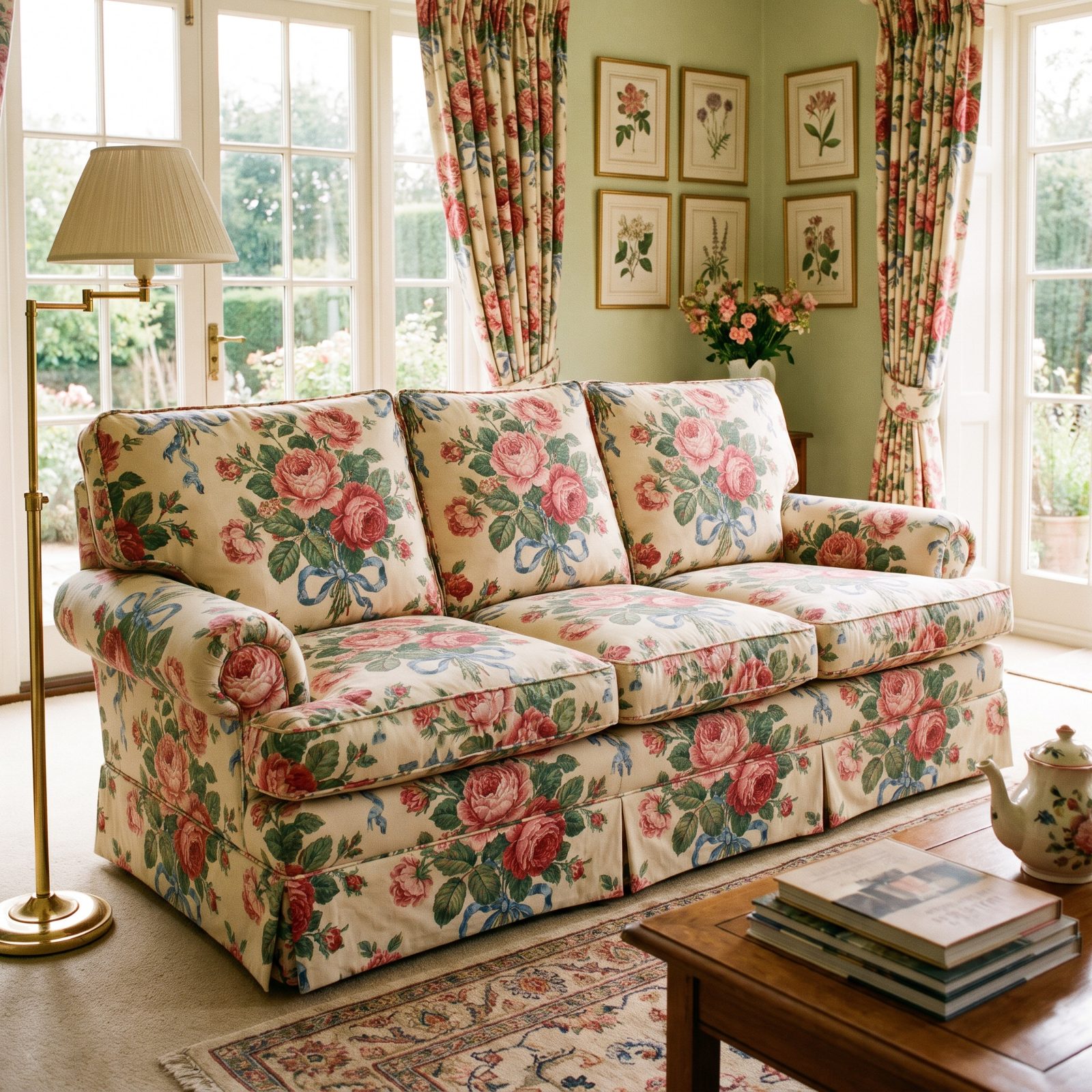
Cabbage roses blooming across every cushion will carbon-date a room instantly. Glazed chintz had its moment during the English-country craze, when a sofa was meant to look like it belonged in a cottage somewhere damp and charming.
The problem is scale and sheen. Those oversized florals fight with everything in sight, and the glazed finish gives the fabric a faint plastic shine under lamplight. Pair it with matching curtains and wallpaper, as the look demanded, and you’ve built yourself a time capsule you have to sit in.
Honestly? The frame underneath is often excellent. Reupholster it in a solid linen and you keep the bones while losing the decade.
19. The Skirted Sofa With Bullion Fringe
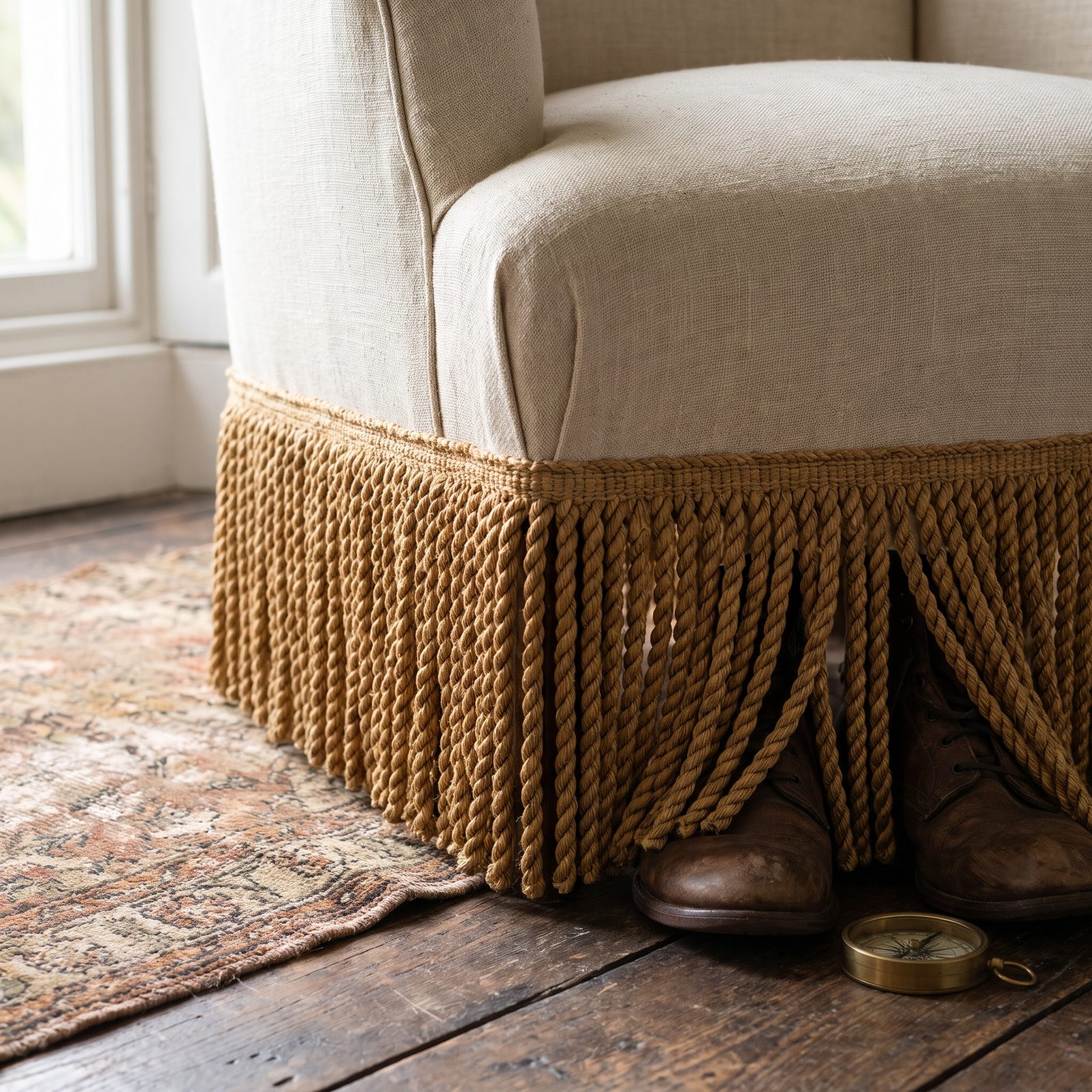
Bullion fringe is the thick, twisted rope skirt that hangs from a sofa’s base like a curtain for the floor. It signaled formality in the heavily decorated traditional rooms of the 80s and 90s, usually alongside tasseled pillows and swagged drapes.
It collects dust, hides the legs, and chains the whole piece to a decade of fussy, layered interiors. The fringe even sways when you walk past, which is somehow the worst part.
Visible legs make furniture look lighter. A floor-length skirt makes even a good sofa squat where it sits.
18. The Brown Microfiber Sectional
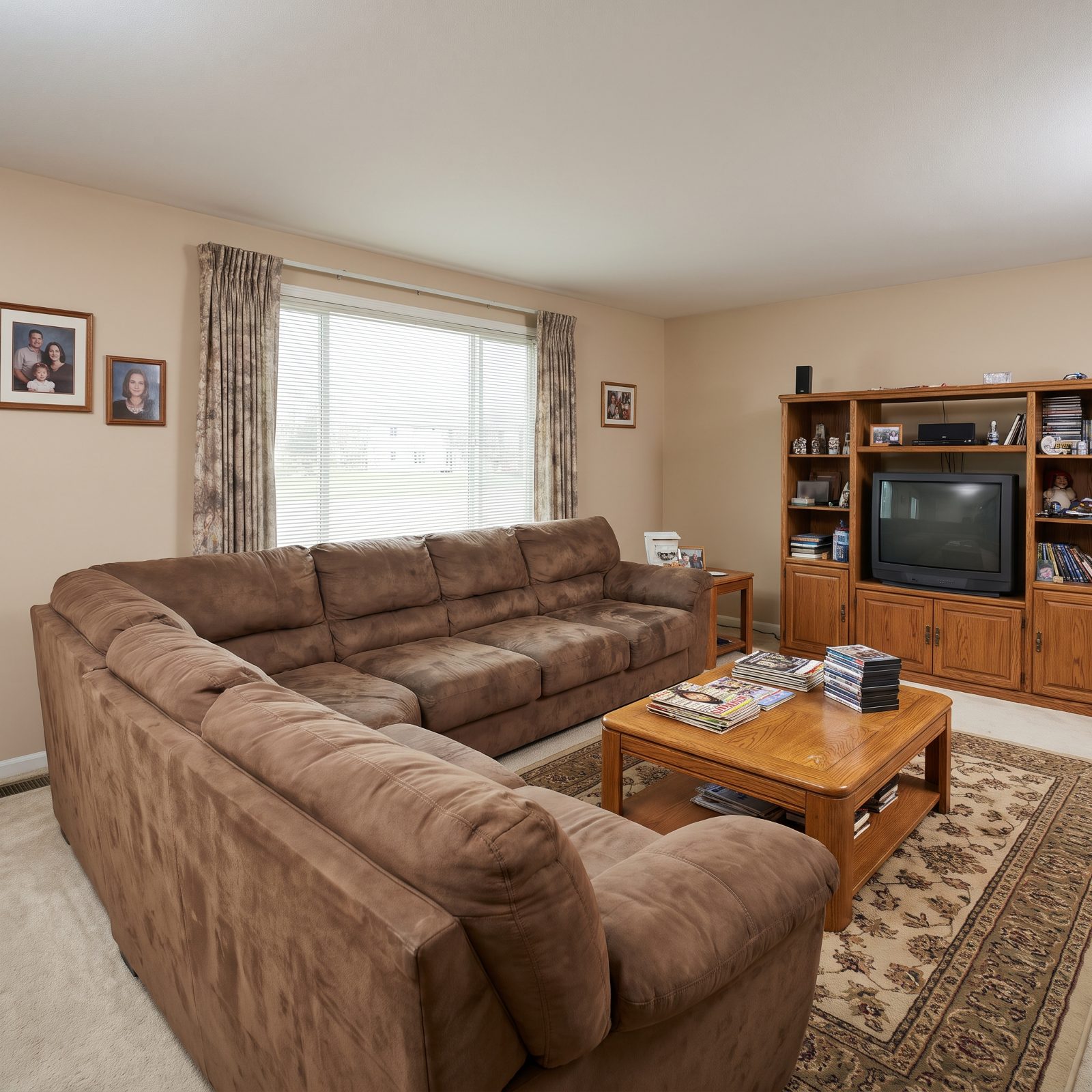
The brown microfiber sectional was the default family-room sofa for a solid decade. Affordable, kid-proof, and sold in every big-box furniture store with a matching ottoman.
The fabric gives it away. Microfiber shows every swipe of a hand, going darker or lighter depending on which way you brush it, and over time it develops shiny worn patches on the seats and arms. That flat builder-brown soaks up light and shrinks a room around it.
A slipcover in a lighter tone buys time. A new sofa in a woven fabric with actual legs under it buys you a different decade.
17. The Bonded-Leather Reclining Loveseat With a Center Console
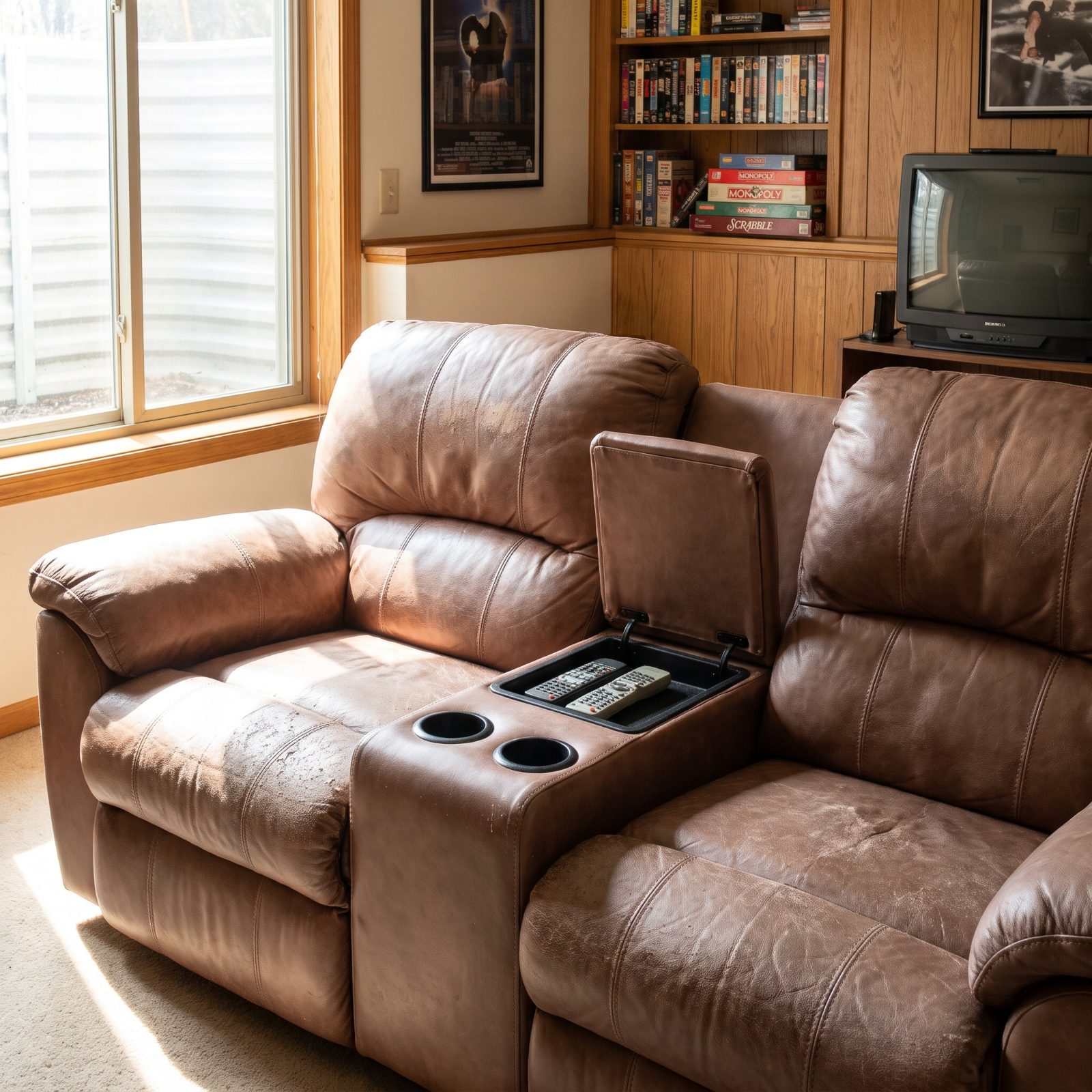
Twin recliners glued together with a cupholder console in the middle: the unofficial throne of the early-2000s basement den. Between the bulk, the overstuffed armrests, and that built-in console, it broadcasts a very specific era of comfort-first furniture.
Bonded leather is the bigger tell. It isn’t real leather at all, just leather scraps bonded to a backing with polyurethane, and it peels and flakes within a few years no matter how gently you treat it.
We’ve watched loveseats shed their surface like a snake. Once bonded leather starts cracking at the seams, there is no saving it.
16. The Metal Futon With a Black Tubular Frame
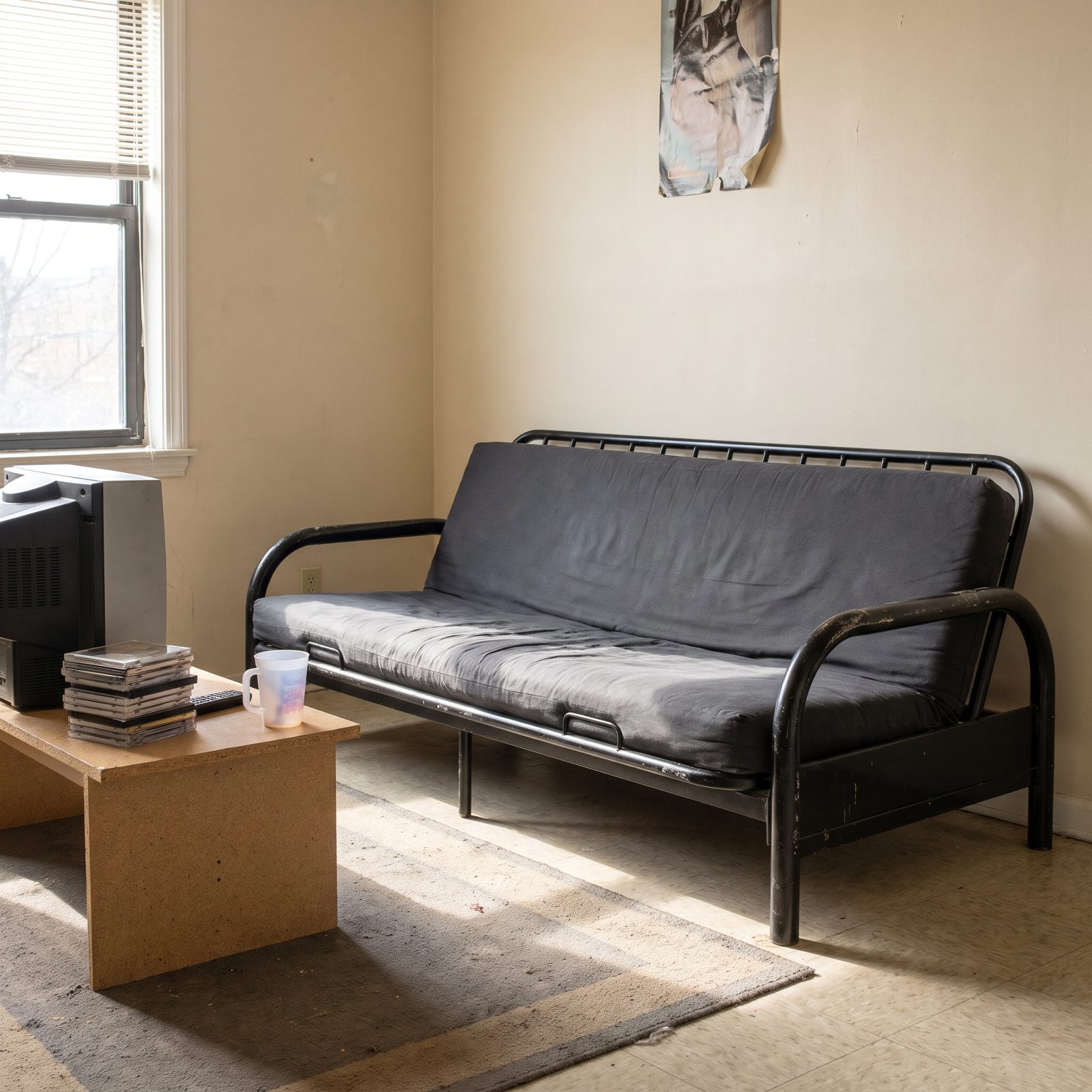
The black tubular futon is first-apartment furniture that somehow followed people into their forties. The bent-metal frame, the thin fold-flat mattress, the visible hinge at the back: it reads as temporary even after eight years in the same spot.
It was never comfortable as a bed or as a sofa, which is a rare kind of double failure. The metal arms are cold, the mattress compresses to a pancake, and the frame squeaks.
15. The Papasan Chair With a Printed Cushion
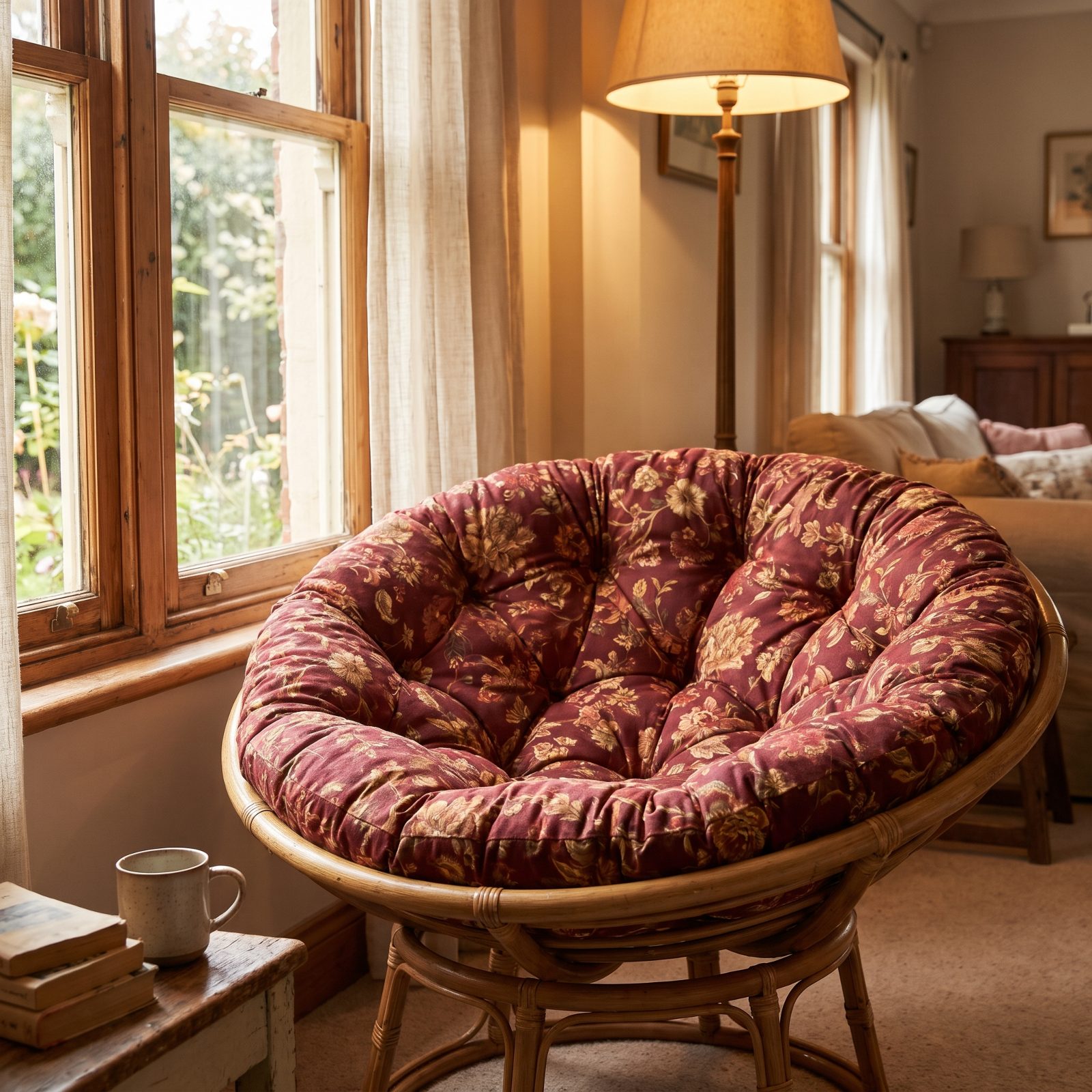
That giant rattan bowl of a chair has a devoted following, and I understand the loyalty. It’s genuinely comfortable to sink into. But the papasan, especially with its original printed cushion in deep burgundy-and-gold floral, plants a room squarely in the late 90s.
Blame the cushion, not the frame. The woven rattan base itself has come back around as a natural-fiber favorite. Re-cover the cushion in a solid linen or a textured bouclé and the chair stops looking like a hand-me-down.
14. The Freestanding Home Bar With a Padded Vinyl Front
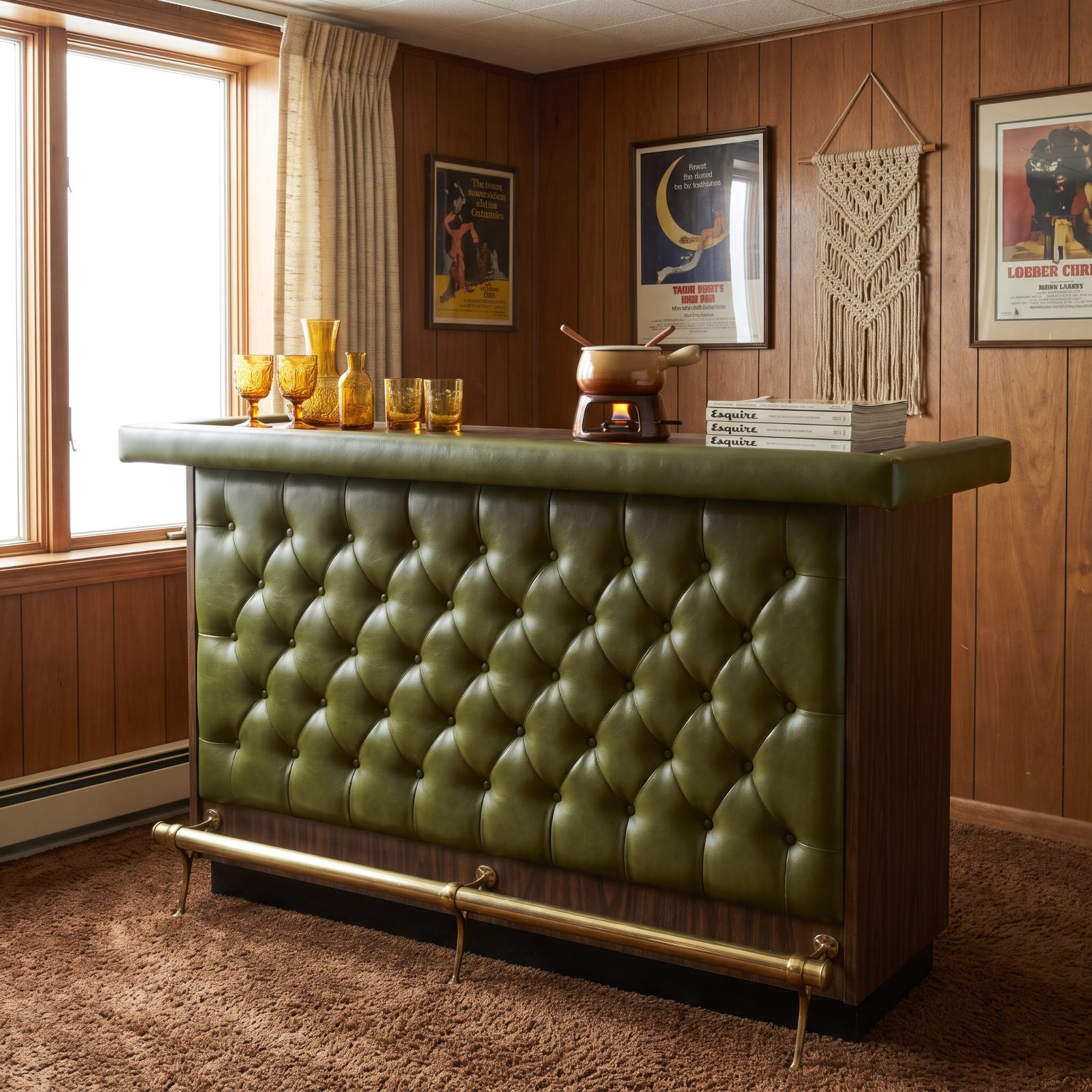
The padded, button-tufted vinyl bar front is pure basement rec-room, the kind of built-in-looking unit that arrived with matching stools and a brass footrail. In its day it meant a home was set up for entertaining.
Now the diamond-tufted vinyl in its wood frame reads as a very specific slice of the 70s and 80s. The vinyl cracks at the buttons, the laminate top chips, and the whole thing claims a corner that could do more.
There’s a thin line between charmingly retro and just tired. A bar cart on wheels does the same job and can roll out of the room entirely when you’re done with it.
13. The Tile-Inset Coffee Table
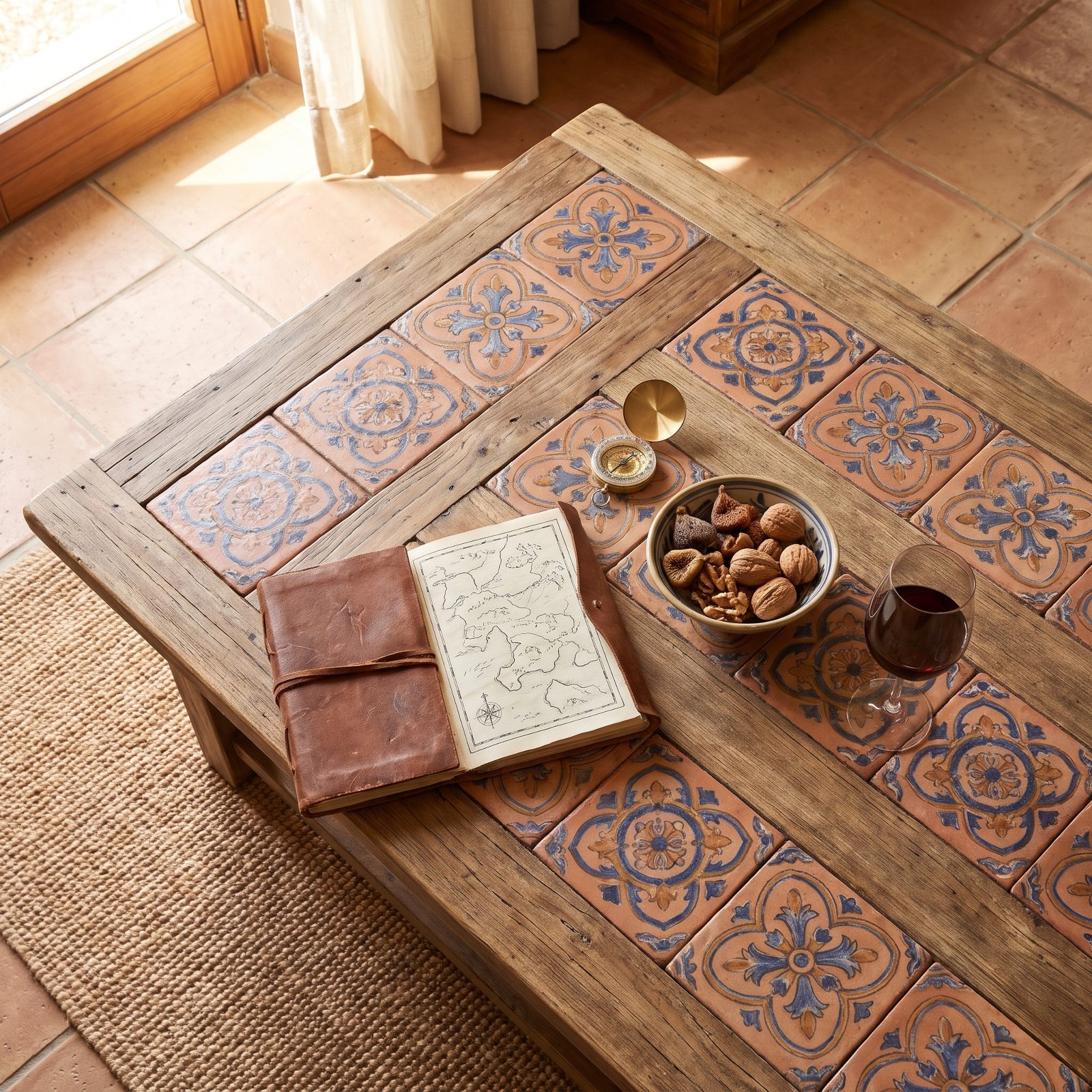
A coffee table with a grid of ceramic or travertine tiles set into the top was a fixture of Tuscan and Southwestern rooms. The terracotta tones and grout lines went hand in hand with faux-finished walls and heavy pine furniture.
Two problems. The grout stains and traps crumbs, and the inset pattern locks the whole piece into a warm-earth palette that fell out of favor years ago. Those chunky turned legs don’t help its case either.
Function-wise it’s fine. Style-wise, the tile top is doing all the aging, and there’s no way to restyle around it.
12. The Glass Coffee Table With Curved Cherry Legs
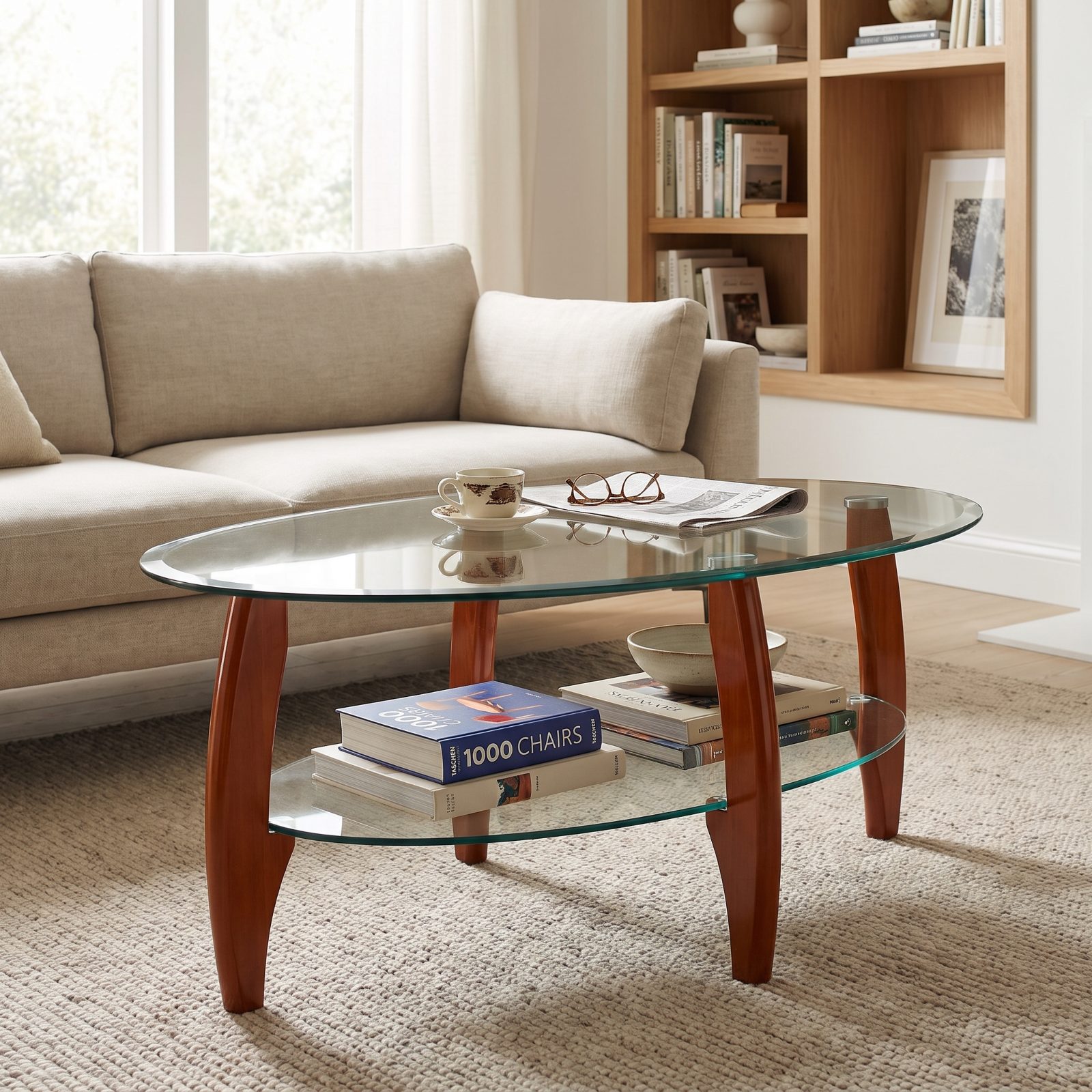
Glass top, curved glossy cherry legs bowing outward, a little display shelf underneath: this table showed up as part of a matched living-room trio, twin end tables included. Around the turn of the millennium it was everywhere formal living rooms existed.
The curved cherry legs are the dead giveaway. That reddish high-gloss finish, paired with the smudge-prone glass top, says one era and only one era.
Glass tables themselves aren’t the problem. Blame the reddish veneer and the fussy curve. Swap in straight oak or black metal legs and the room stops looking like a furniture showroom that shut its doors in 2003.
11. Faux-Marble Coffee-and-End-Table Set
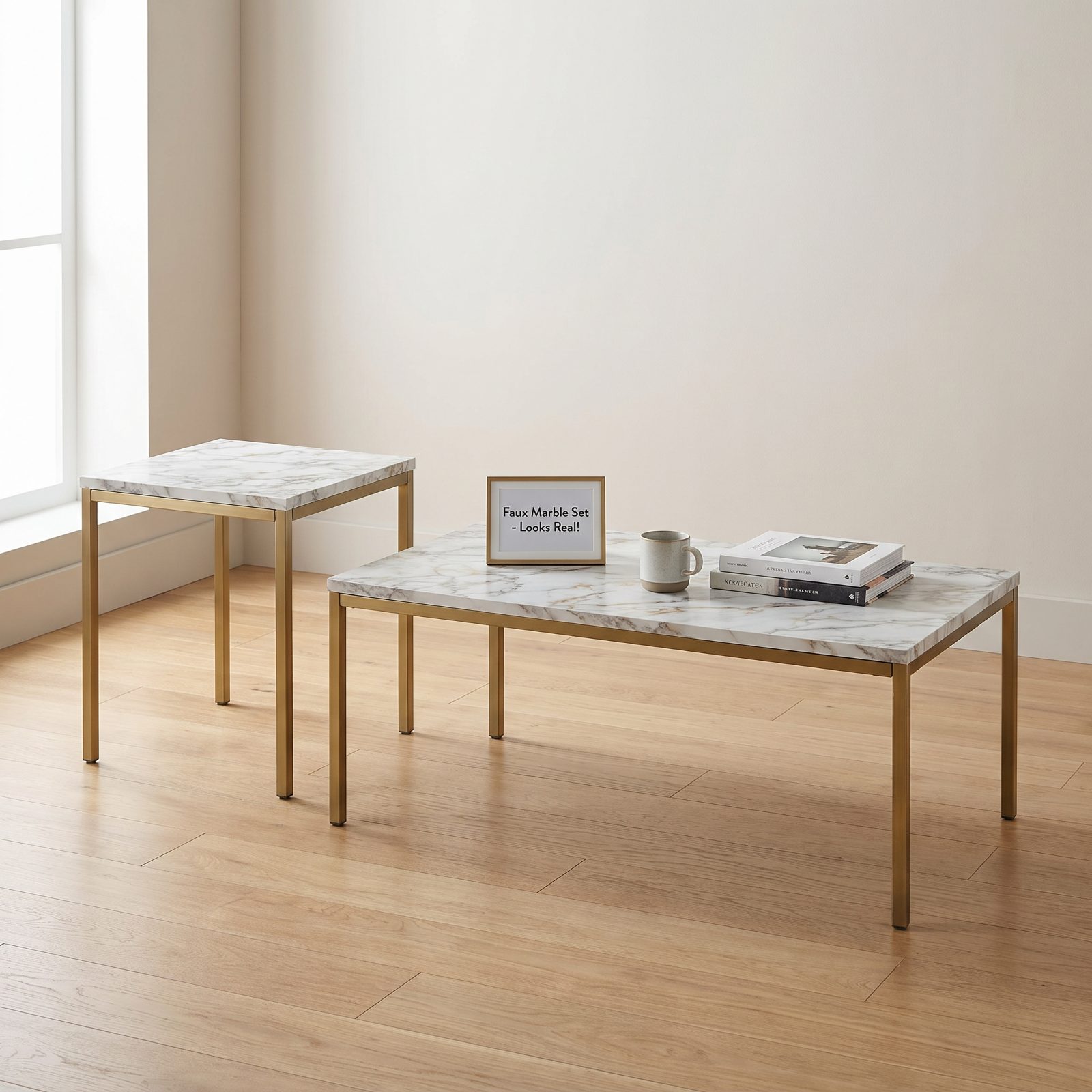
The dead giveaway is the matching. A printed-marble coffee table on its own is forgivable. But buy the coffee table, the two end tables, and sometimes a console in the identical pattern, and suddenly the room reads like a furniture showroom circa 2008.
Real marble has depth and cold weight to it. The laminate version just prints the same veining over and over, so your eye catches the repeat before it catches anything else. And the gold legs — usually a thin satin finish that scratches down to raw metal — don’t exactly rescue the situation.
10. Mirrored Coffee Table With Crystal Pulls
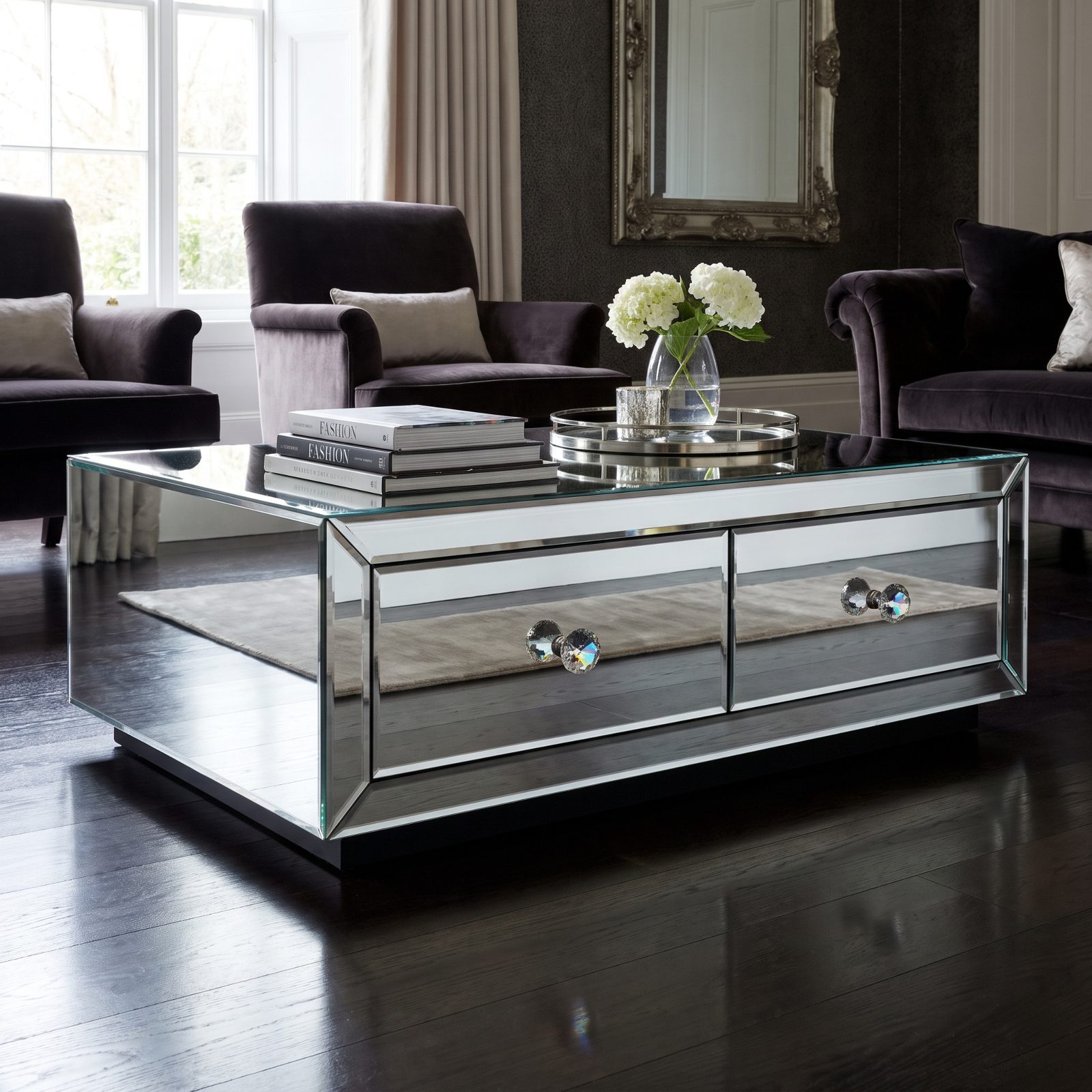
Glamour has a shelf life, and the all-mirror coffee table burned through most of it around 2012. Those faceted crystal pulls were the exclamation point on a trend that promised Hollywood Regency and handed you a surface you could never, ever keep clean.
That’s the practical gripe nobody puts in the catalog copy. Every mirrored plane shows every fingerprint, every ring from a sweating glass, every speck of dust in raking light. You end up polishing furniture that thinks it’s jewelry.
A single mirrored accent can still earn its spot. A whole table dripping with faux-crystal hardware just announces the exact season it came home.
9. Farmhouse Coffee Table With an X-Frame Base
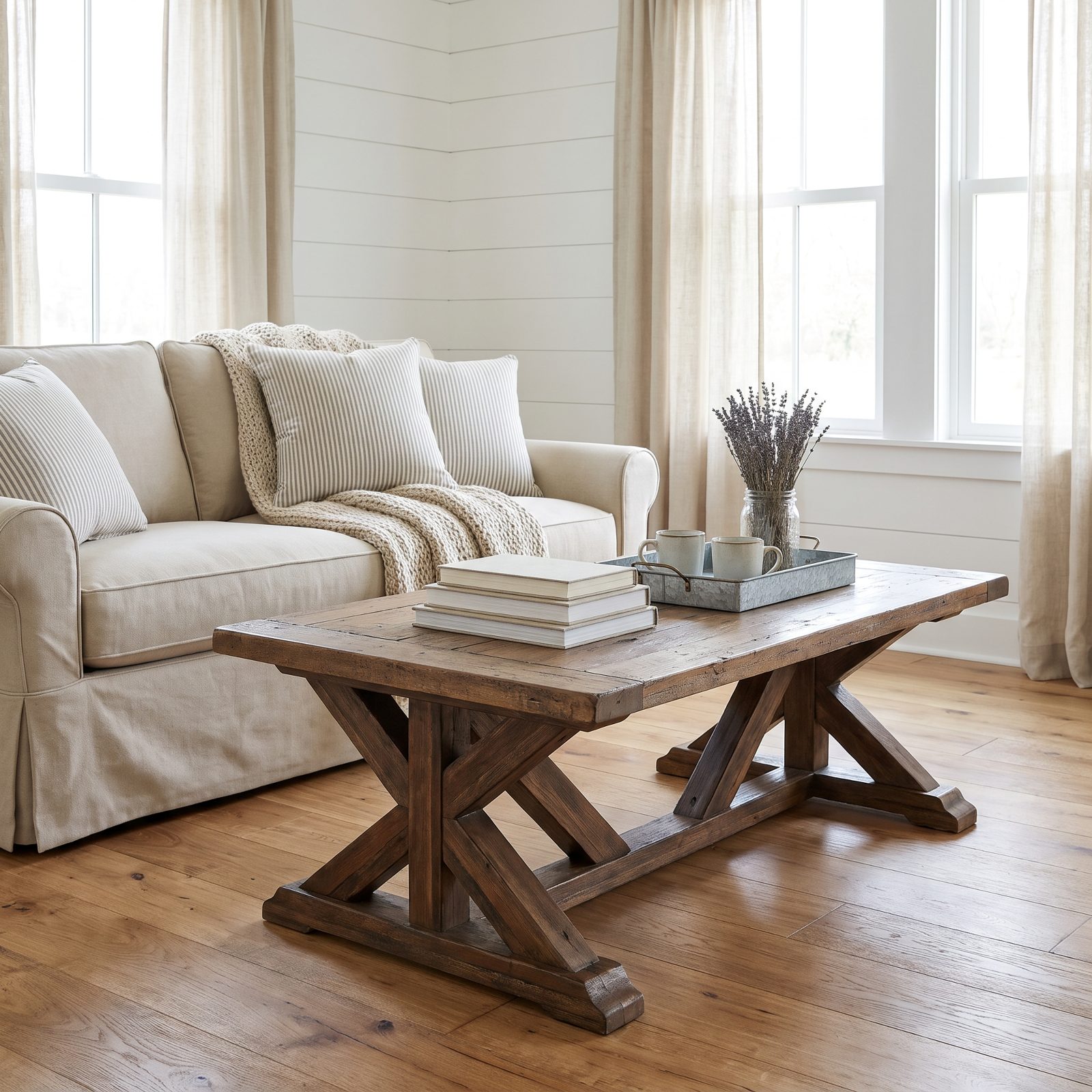
The X-frame farmhouse table was the default for most of the 2010s. If a room leaned shiplap and mason jars, this sat underneath all of it — nearly always in a gray wash, wearing distressing that looked applied by a machine rather than earned over decades.
The gray stain was what gave it away. Warm wood tones came roaring back, and that cool, chalky gray reads as the precise instant farmhouse went from fresh to everywhere at once. Swap the gray for an honest, warm wood tone and the X-base stops looking like a mood board and starts looking like furniture.
8. Leaning Ladder Bookcase
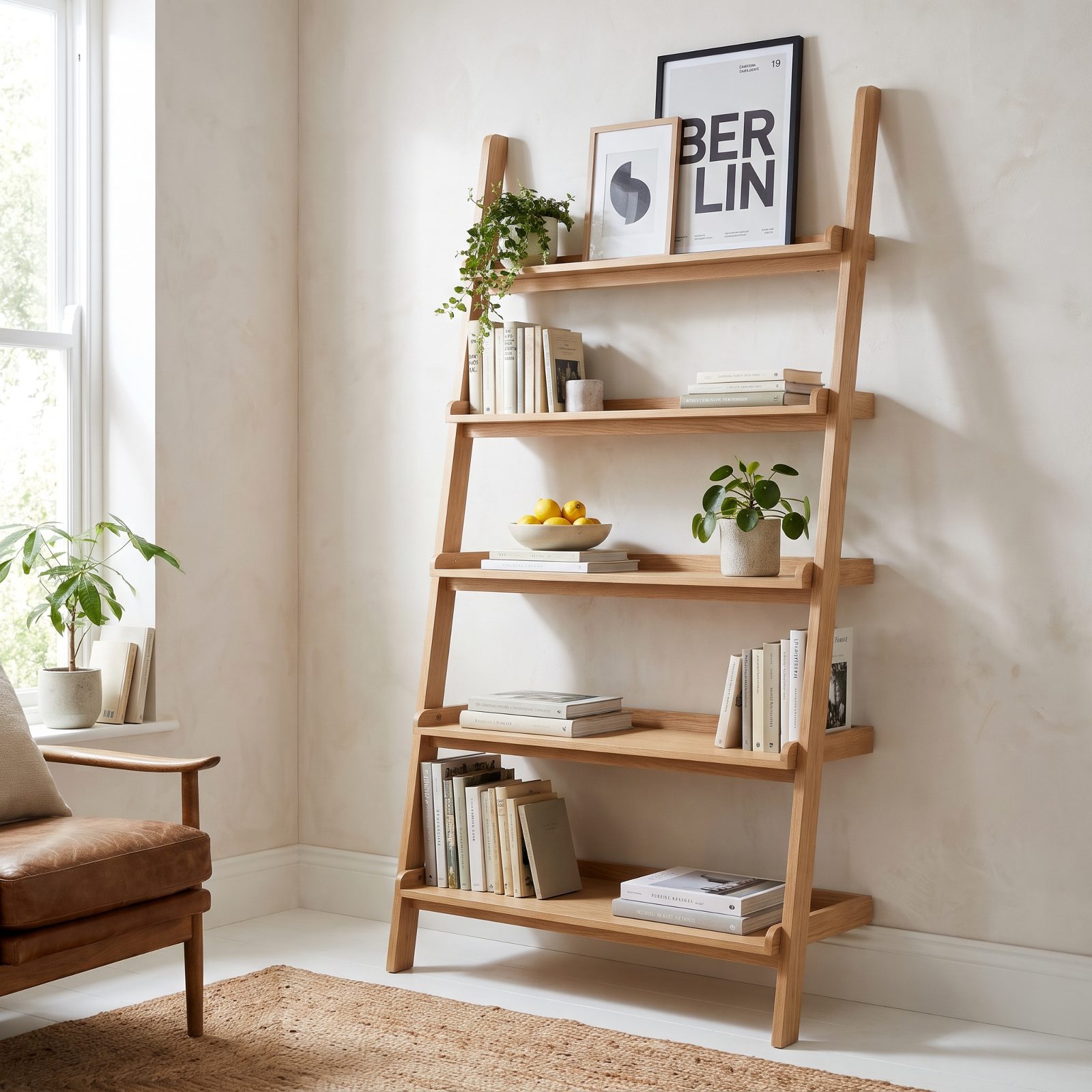
You know the one. It leans against the wall on purpose, shelves fanning out from narrow at the top to deep at the bottom, almost always in espresso brown. For a stretch there, it was the apartment-friendly shortcut to storage that didn’t need anchoring.
Trouble is, the shape telegraphs its era on sight. That graduated lean was so specific to one decorating moment it works like a timestamp, and even a pale natural oak finish — right in step with today’s lighter woods — can’t hide the date.
7. Black-and-Chrome Glass Media Stand
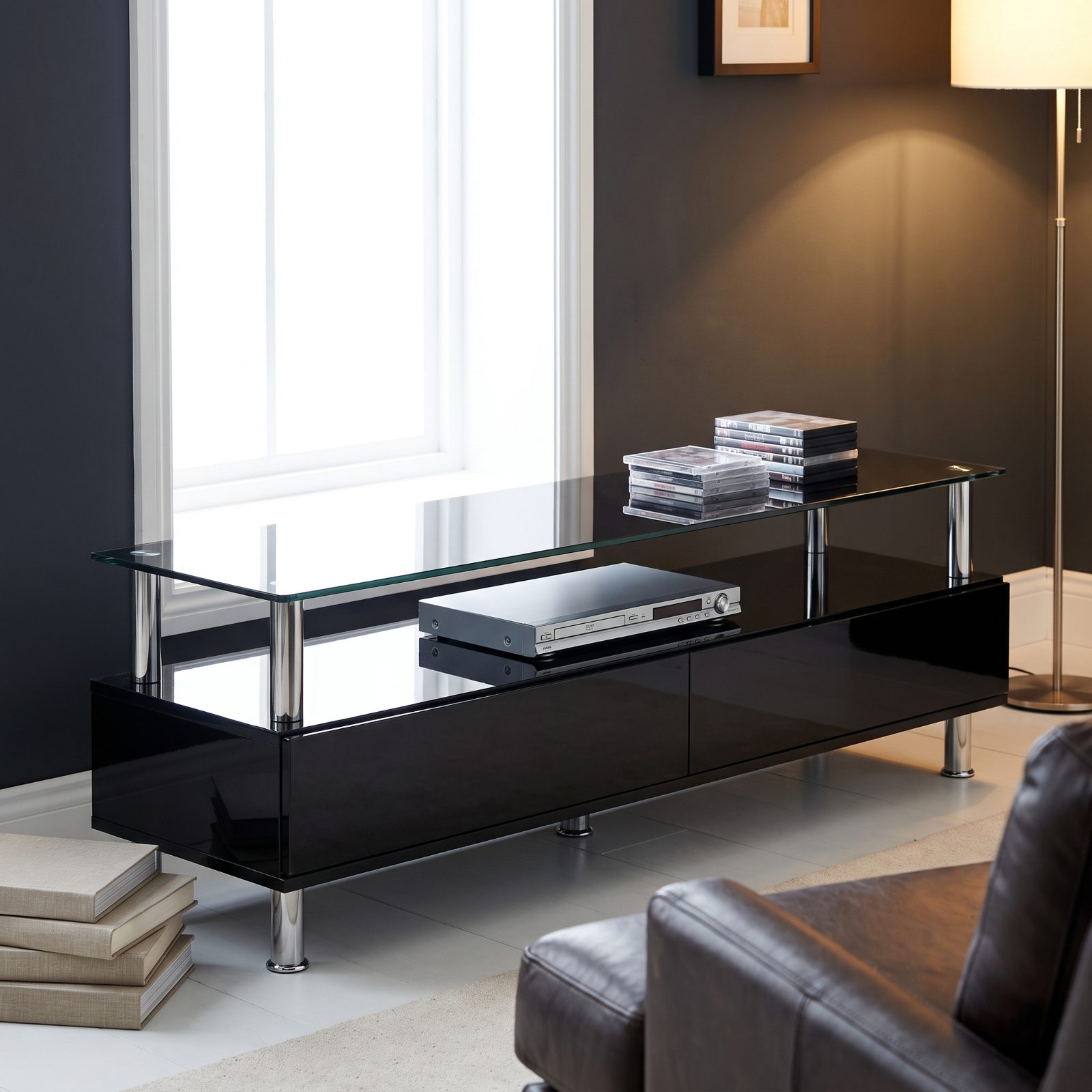
Black gloss, clear glass, chrome legs. The media stand that screamed “home theater” in the early 2000s now quietly admits that this room updated everything except the electronics furniture.
High-gloss black is a cruel material. It absorbs the room’s mistakes and broadcasts every one of its own. Dust settles on it like frost, and the clear glass shelf puts every fingerprint, smudge and stray cable on display. Chrome tube legs, meanwhile, date a piece faster than nearly any other detail I can think of.
Honestly? This is the one I’ll argue about. A low wood console in a matte finish does the exact same job and vanishes into the room instead of demanding applause. Your media stand should hold the TV, not elbow it for attention.
6. Baker’s Rack With Scrollwork and Wood Shelves
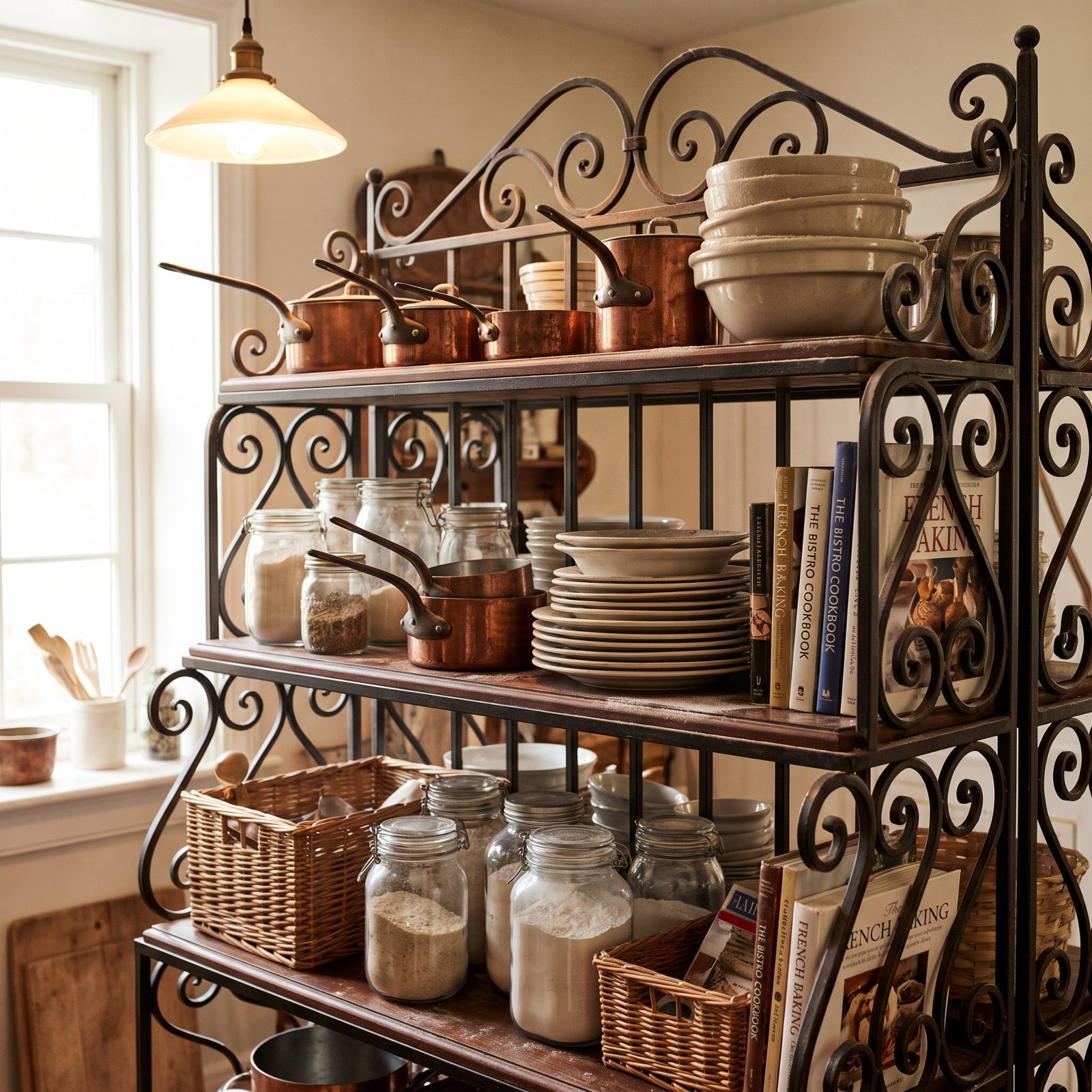
The baker’s rack promised French-bistro charm and mostly delivered a dust magnet full of curling metal that nothing sat flat against. Those scrolls turned up in kitchens everywhere for a good long stretch, usually with a grapevine motif or a rooster lurking somewhere nearby.
The busyness is what dates it. Ornate wrought-iron flourishes fight with everything around them, and that dark cherry shelf tone is a nightmare to pair with current cabinetry. The form itself isn’t the crime here — it’s the decorative excess bolted on top.
5. Glass Curio Cabinet With Brass Trim
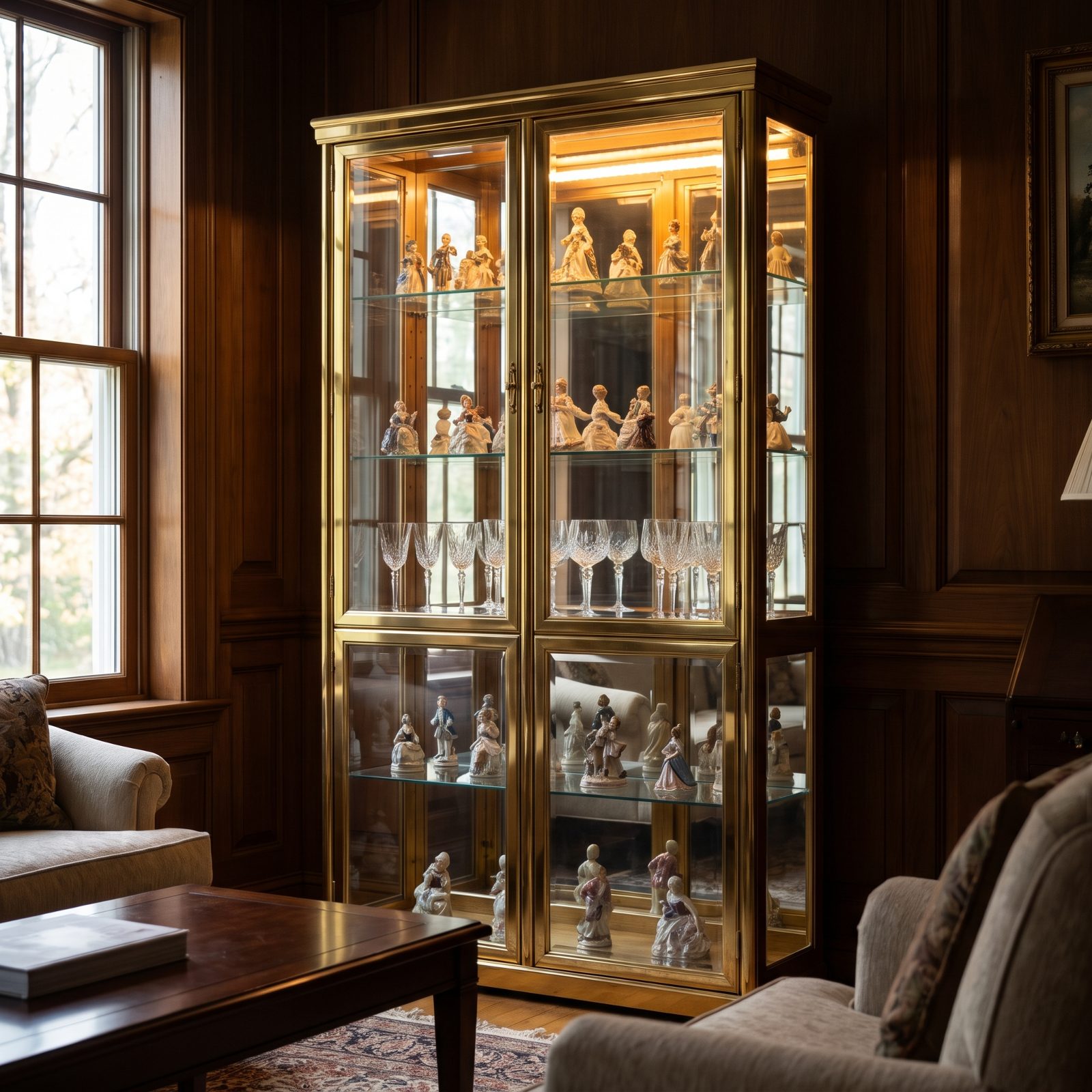
Lighted glass shelves, a mirrored back, thin brass trim ringing every edge. The curio cabinet was built to show off a collection, and the collection is usually what dates it first — figurines, souvenir spoons, porcelain nobody’s dusted since the last big holiday.
Still, the brass trim is the real tell. Not the warm, substantial brass having its moment right now, but the thin yellow-gold electroplate kind that chips at the corners and goes dull at the joints. It nails the whole piece to one very specific era of formal-dining-room ambition.
4. Counter-Height Dining Table With a Storage Pedestal
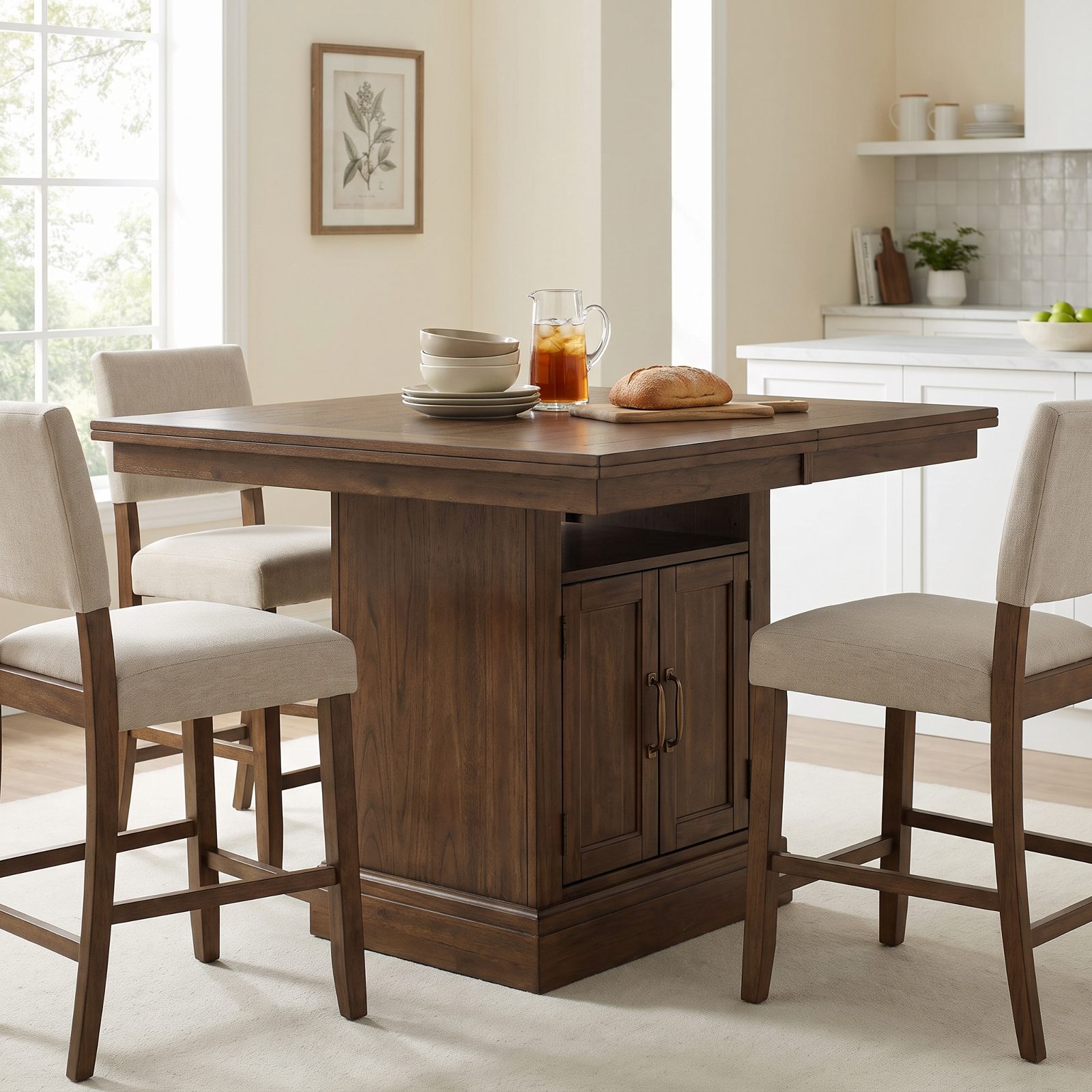
Counter-height dining had a real moment, and the version with a chunky storage pedestal was the heavyweight of the bunch. Thick square top, a solid base crammed with cubbies, tall chairs your feet dangled off of. It sold hard on the fantasy of a casual pub vibe at home.
Two problems tagged along. The height made it a chore for anyone short or elderly to climb into, and the sheer mass of that storage base pins the proportions to one catalog year.
Standard-height tables came back for a reason. They seat more kinds of people more comfortably. The pub table was a fun idea the knees eventually overruled.
3. Tuscan Trestle Dining Table With Heavy Distressing
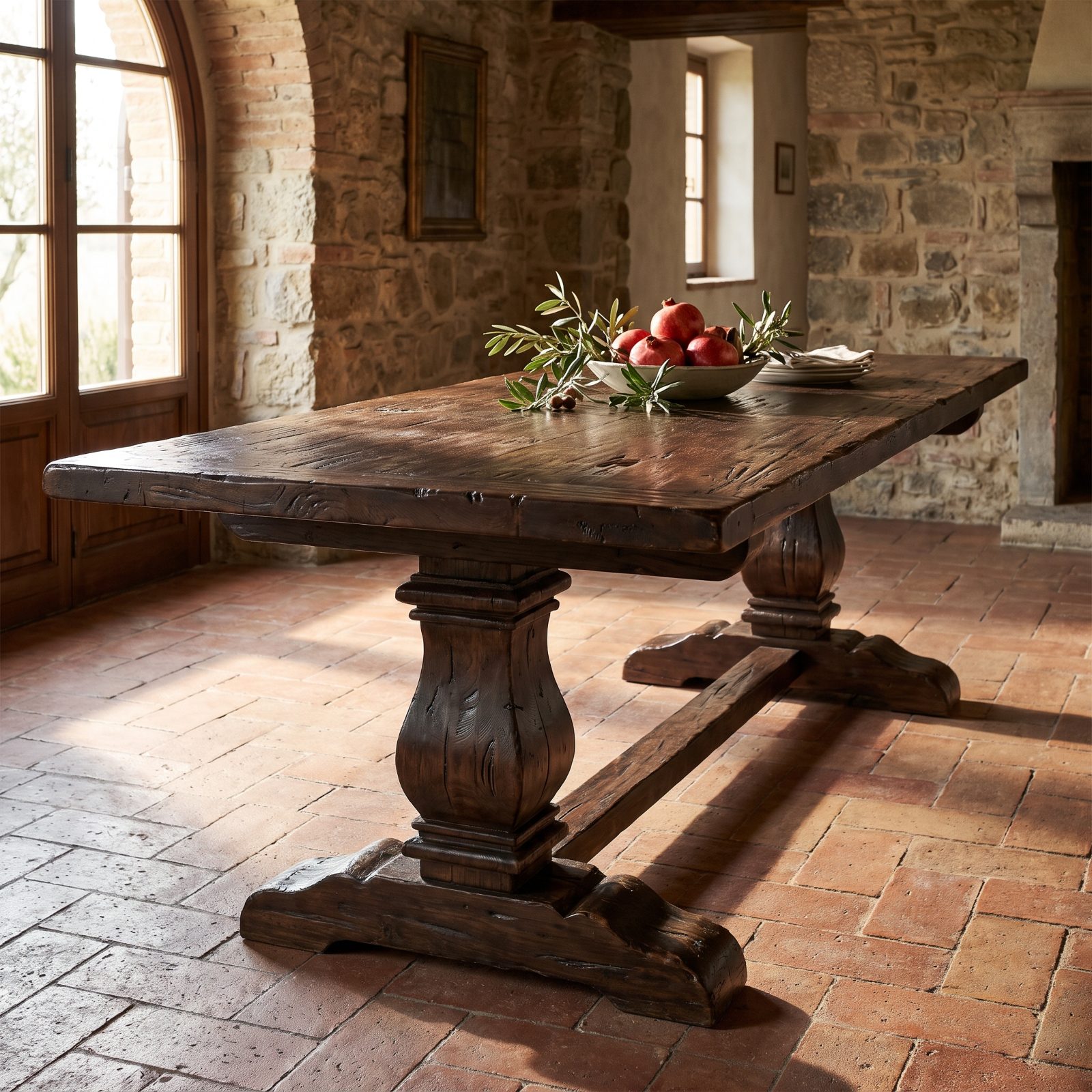
Big, dark, carved, and beaten with a chain on the factory floor to look five hundred years old. The Tuscan trestle table was the centerpiece of a whole old-world decorating wave, generally hemmed in by burgundy, gold tassels, and a wrought-iron chandelier.
The distressing gives it away every time. Real age is uneven and makes sense — the dents land where hands and chairs actually wear a table down over years. Factory distressing lands everywhere at once, randomly, including spots nothing could ever reach. Your eye knows the difference even when your mouth can’t explain it.
2. Faux-Suede Parsons Dining Chairs
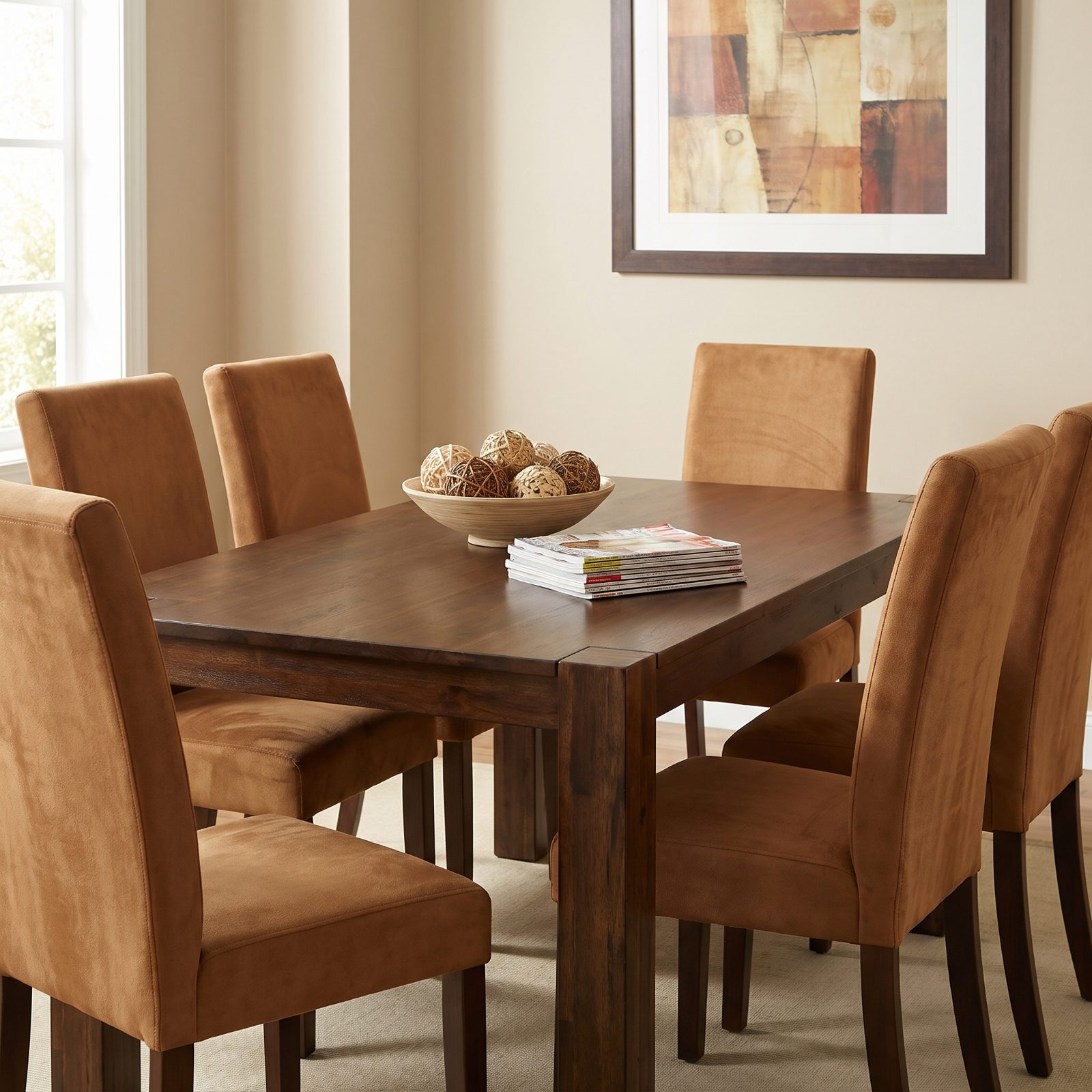
The Parsons chair is a fine, honest shape — no argument there. It’s the faux-suede covering that dates it, usually a mocha or taupe microfiber that showed every brush of the nap and every spilled thing.
Microfiber suede got sold as wipeable and practical. In an actual dining room it became a logbook of everything that ever touched it: shiny worn patches on the seat front, darkened spots on the back where hands yanked the chair out, a nap running two directions that never fully recovered.
1. The Folding Faux-Wood TV Tray Set
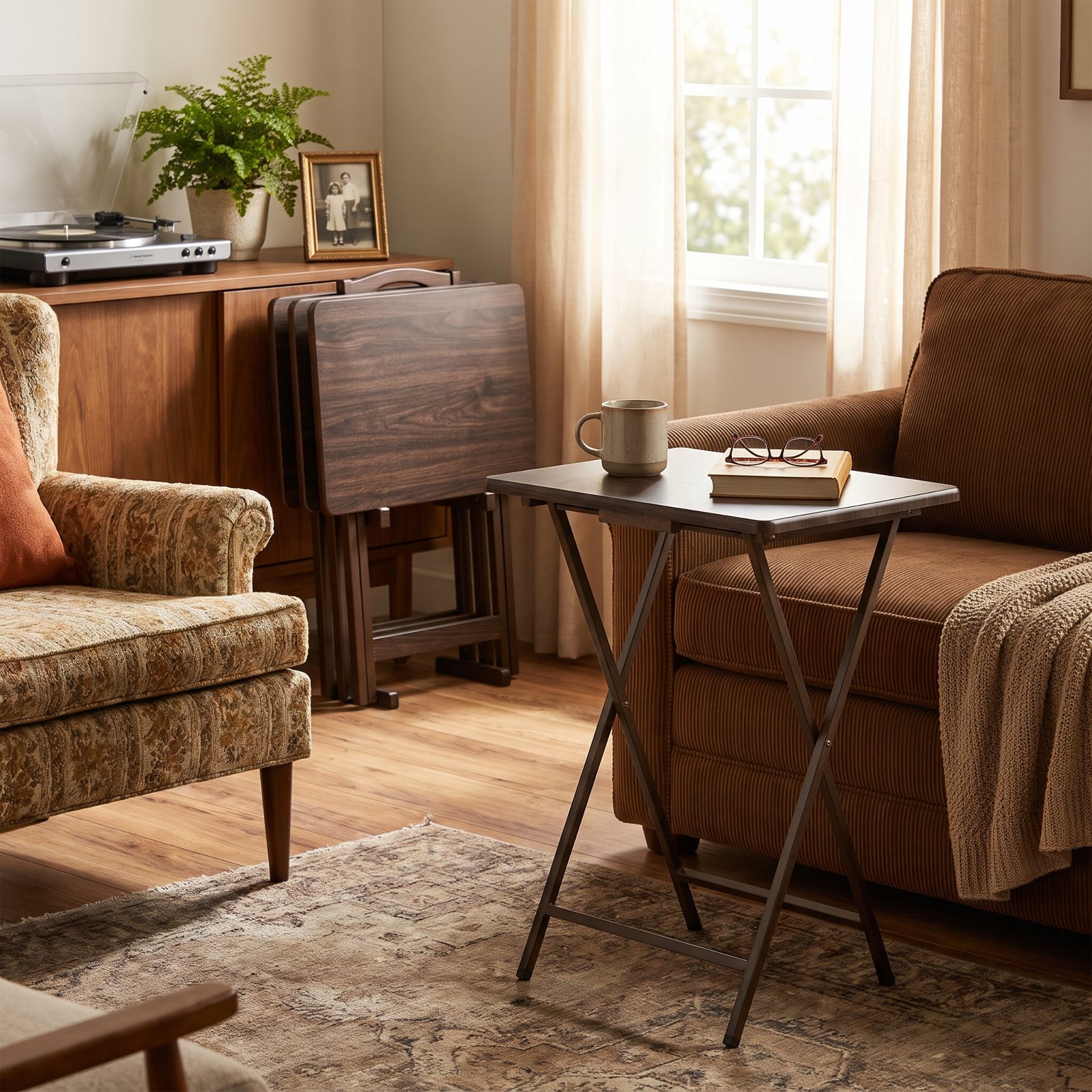
Nobody actually dislikes what the folding faux-wood tray set does. A surface that appears when you need it and folds flat when you don’t is a genuinely good idea. The trouble is everything else: that printed wood-grain laminate and the spindly scissor legs, which scream rec-room-circa-1978 the second a guest walks in.
And then there’s the storage rack. That little upright caddy, holding all four trays at attention, has somehow become shorthand for a room built around the television instead of the people sitting in it.
Swap them for one small folding side table in real wood or powder-coated metal. You keep every bit of the usefulness and drop the decade along with it.