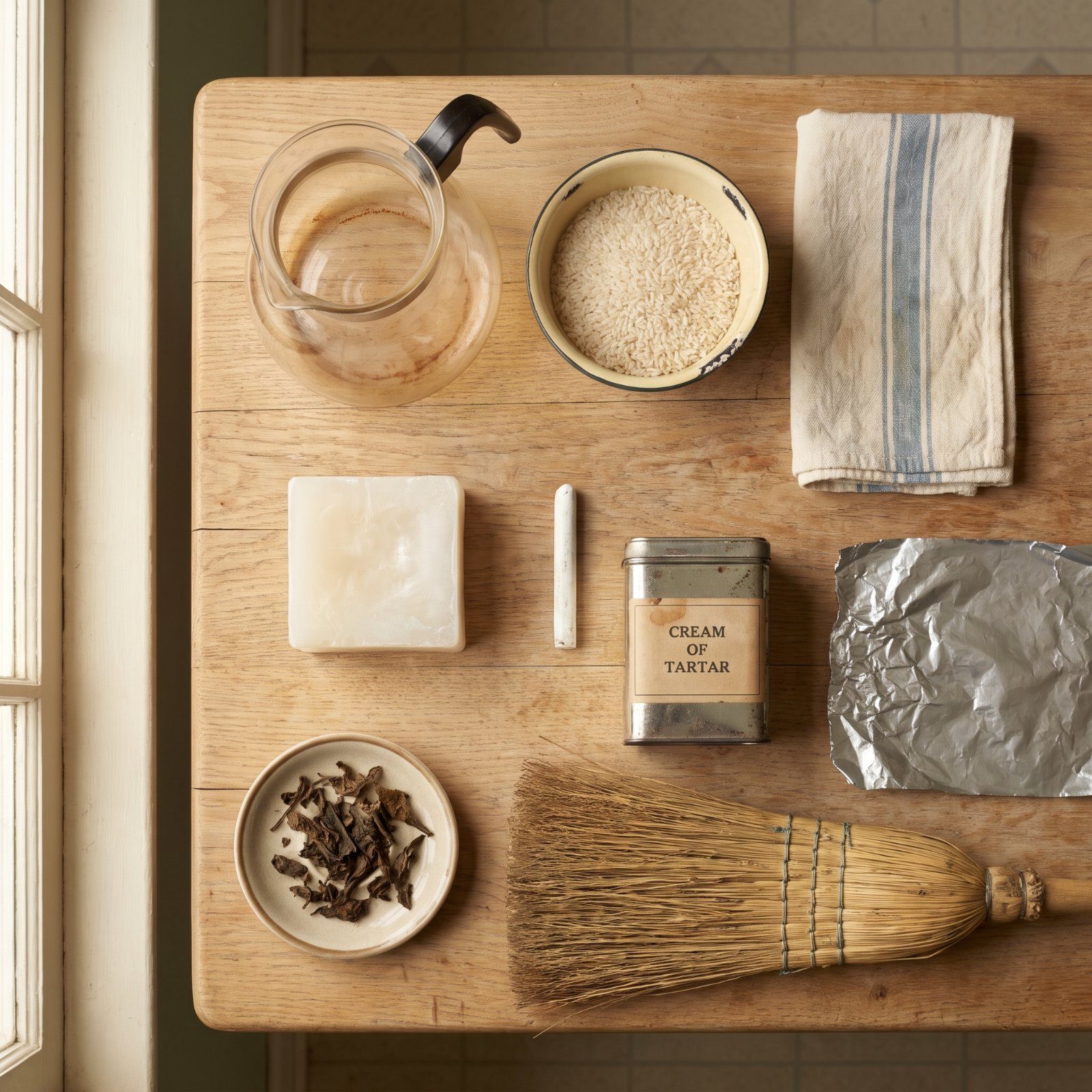
A box of cream of tartar can sit in the back of a baking cabinet for decades. It outperforms half the spray bottles lined up under the kitchen sink, and it costs about a dollar. Before the cleaning aisle grew to the length of a bowling lane, people solved household problems with rice, bread, chalk and whatever was already in the pantry. Those methods didn’t vanish because they stopped working. They vanished because nobody could sell you a tea leaf. Here are the ones worth dragging back into daylight, with the reasons they still hold up.
Please note that some of the images in this article were created with the assistance of AI.
26. Damp Tea Leaves to Keep Hearth Ash From Billowing
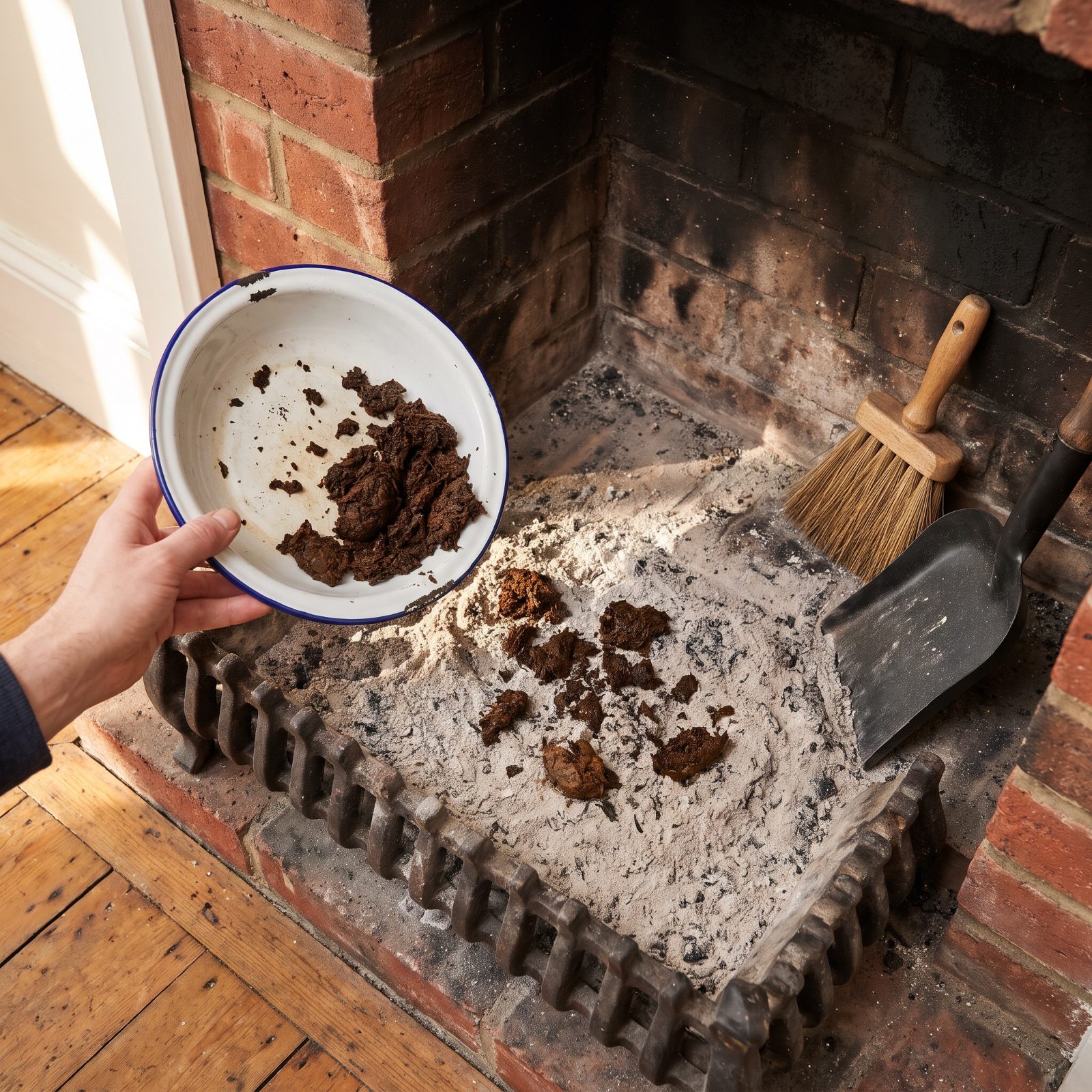
Sweeping a cold fireplace is how you learn that ash doesn’t stay put. It lifts in a gray cloud, settles on the mantel, and homes straight in on the one dark sofa cushion in the room. Damp tea leaves fix that. Scatter the used leaves across the ash, give them a minute, and sweep. The moisture weighs the ash down so it comes up in the dustpan instead of hanging in the air.
Spent coffee grounds do the same job if that’s what’s on hand. The trick is damp, not wet. Soggy leaves just make mud on the firebrick, and nobody wants to scrub that.
25. Lift Wallpaper Grime With Soft White Bread
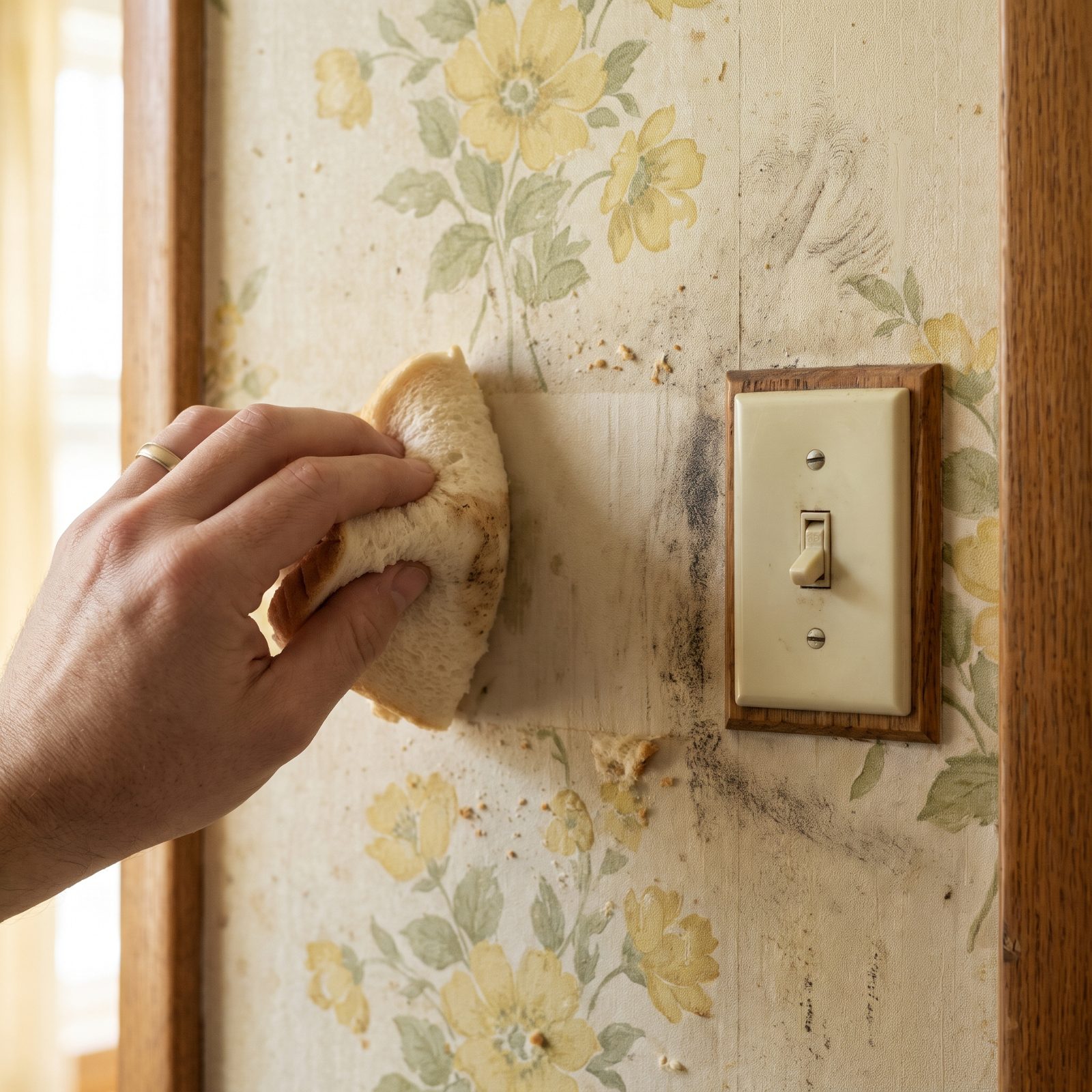
Old wallpaper can’t take a wet rag. Water bleeds the colors and loosens the paste, and now you’ve traded a smudge for a bigger problem. A slice of fresh white bread, crust and all, is the gentlest eraser you own.
Fold a thick slice over your fingers and wipe side to side in short horizontal passes. The soft crumb grabs grease, soot, and finger grime off the surface without pressing moisture into the paper. Go easy on faded prints, though: rub too hard and you can lift the pattern right off with the grime, leaving a blank patch. Test a hidden spot first. When the bread darkens, grab a fresh piece. Works on non-washable lampshades and unframed art too. Day-old bread is fine. Stale bread just crumbles and makes a mess.
24. Freshen a Wool Rug Face-Down in Clean Snow
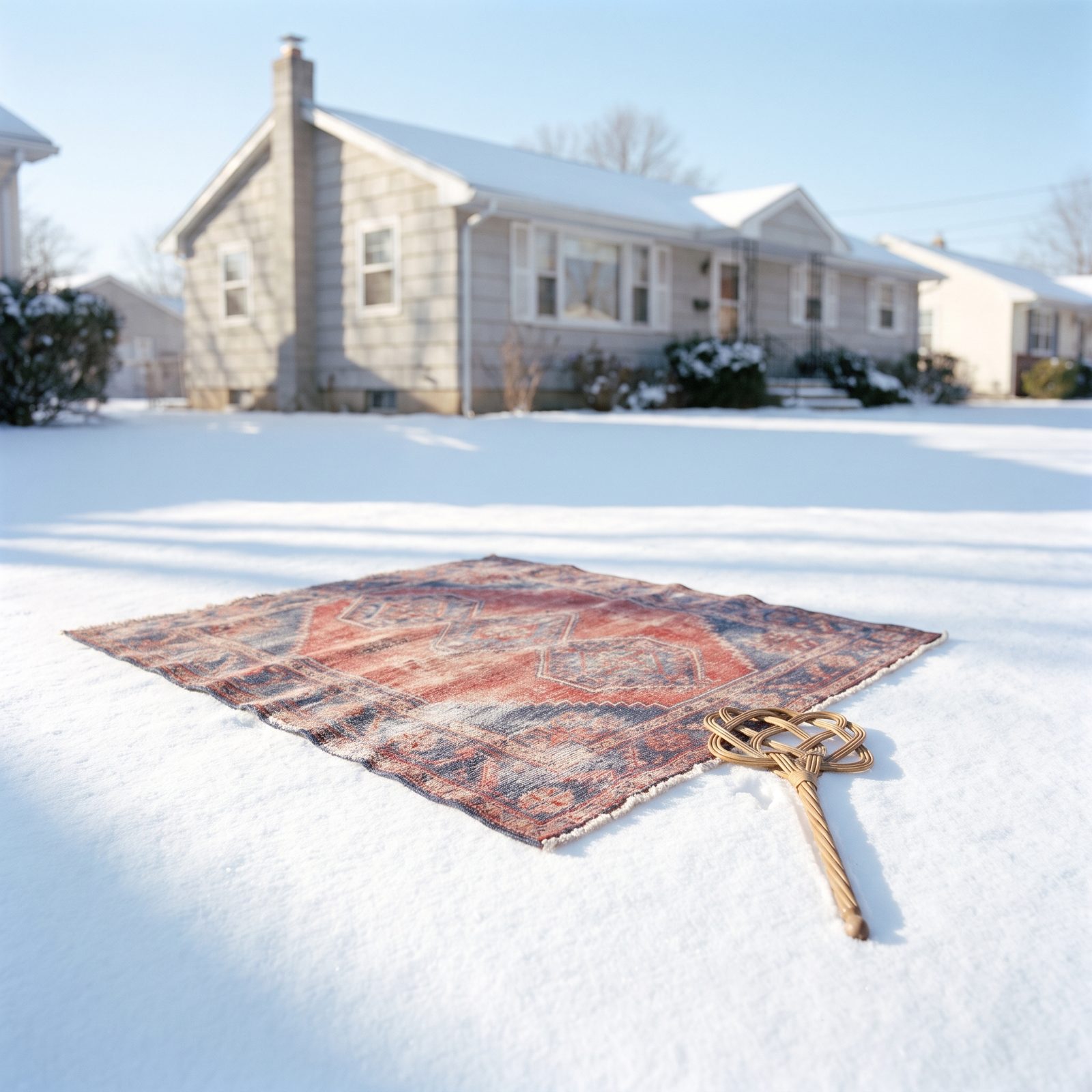
This one sounds like folklore until you try it. On a dry, cold day, lay a wool rug face-down on a patch of clean, fresh snow, then beat the back of it with a broom or carpet beater. The vibration shakes dust loose, and the cold dry snow pulls odors and surface dirt out of the fibers without soaking them.
Sweep the snow off, and bring it in to dry flat. Wool tolerates the cold far better than it tolerates a hot shampoo soak that never fully dries and goes sour in the middle. You want powdery snow. Slush will only make everything worse.
23. Scrub Narrow-Necked Bottles With Raw Rice and Soapy Water
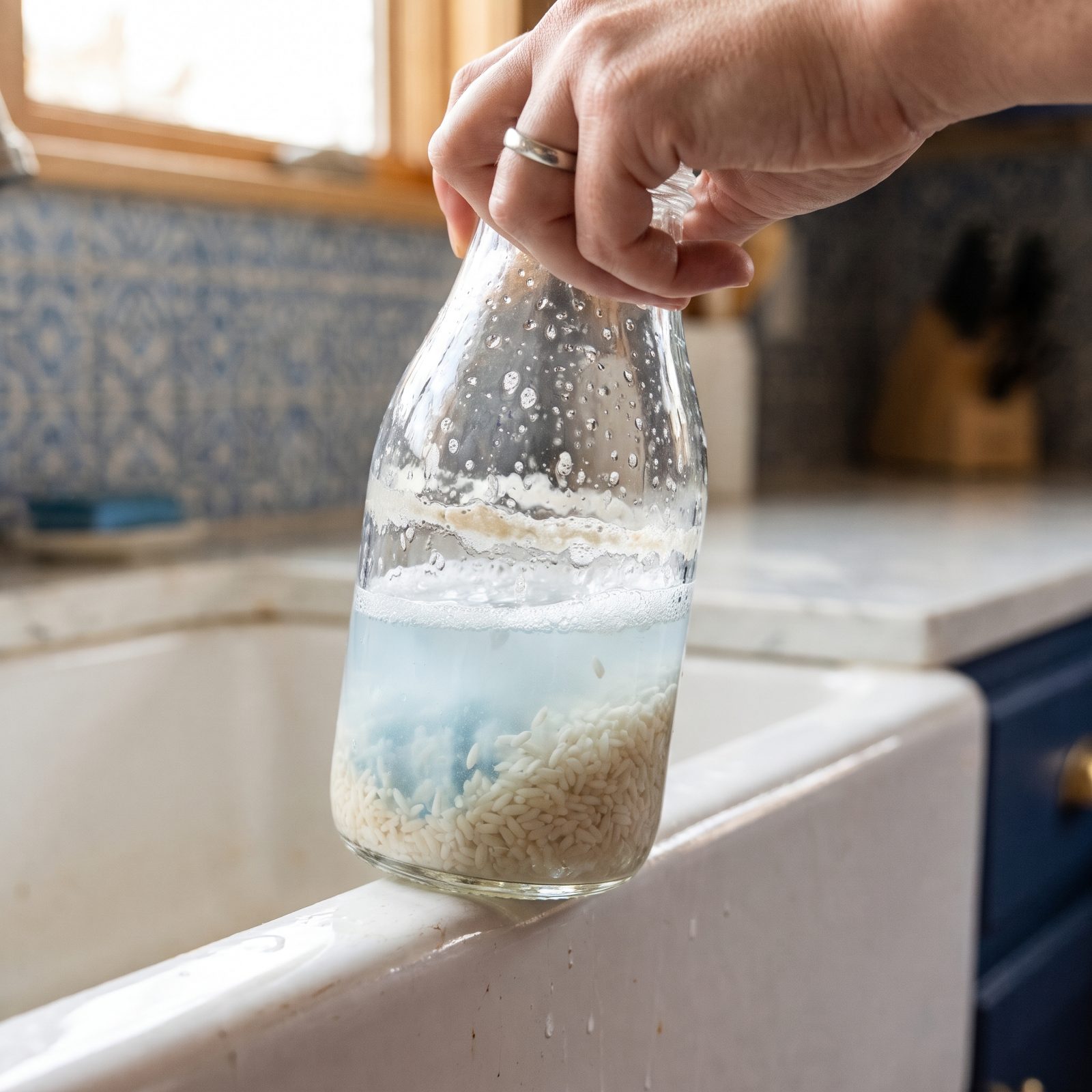
You cannot fit a brush into the bottom of a narrow vase, and you know it the moment you spot that cloudy ring down there. Uncooked rice is the brush that fits anywhere.
Drop a handful of dry rice into the bottle, add warm water and a squeeze of dish soap, cover the opening, and shake hard. The grains scour the inside walls as they tumble, reaching curves and the base that nothing else can touch. Rinse until no grains remain. Coarse salt handles heavier staining in a stubborn decanter. Cheap, simple, and it works on cruets, thermos flasks and old milk bottles alike.
22. Swirl Ice and Coarse Salt Through a Stained Glass Coffee Pot
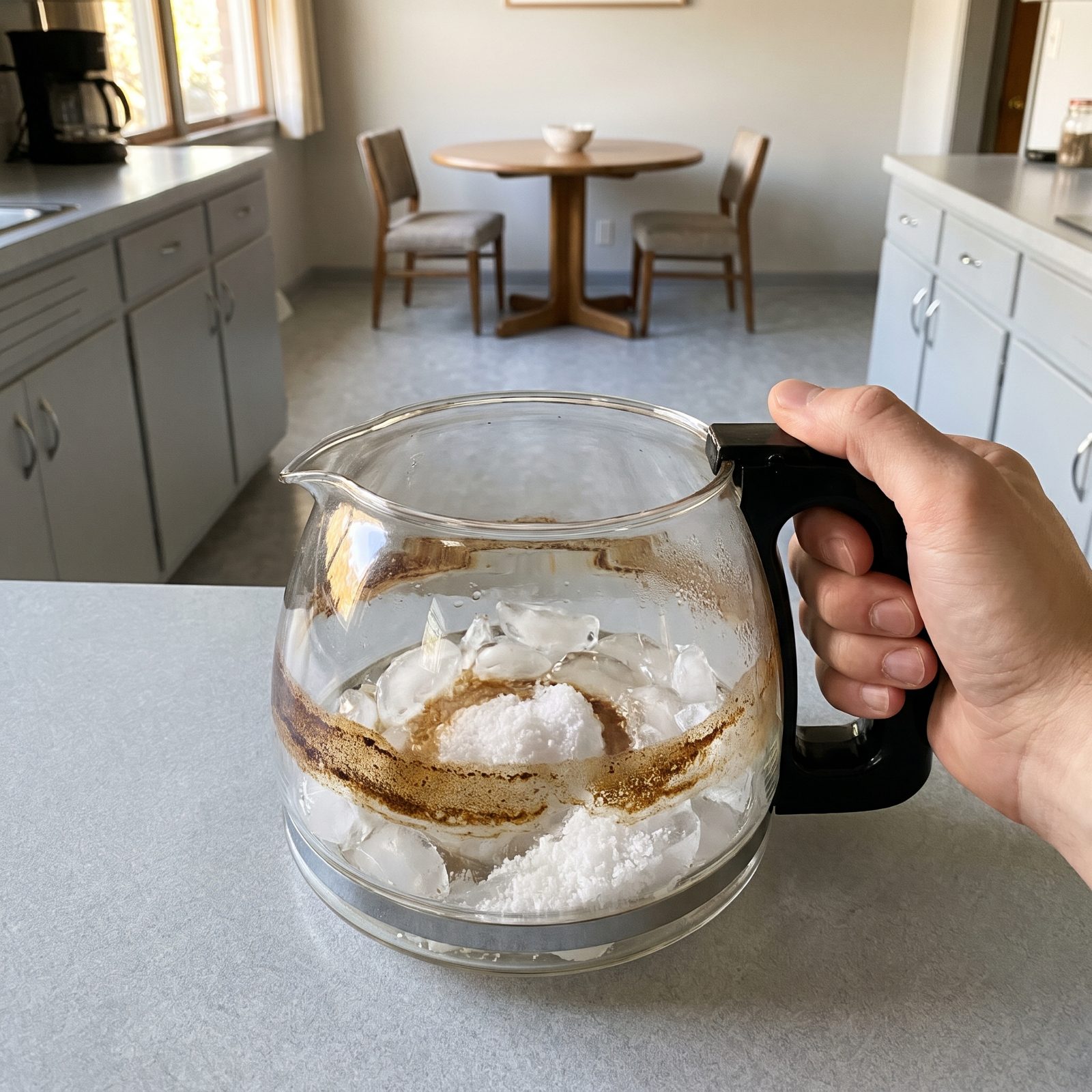
Coffee leaves a brown film inside a glass pot that a sponge just smears around. Ice and coarse salt cut through it fast.
Toss a handful of ice cubes and a generous spoon of kosher or rock salt into the empty pot, then swirl it hard for a minute. The ice gives the salt weight, the salt works as a mild abrasive, and together they scour the stained glass as they tumble. Rinse, and the film is gone. Same trick on a stained decanter or a thermos. Make sure the salt is coarse — table salt dissolves too quickly to scrub anything.
21. Straighten Crushed Broom Bristles With Steam
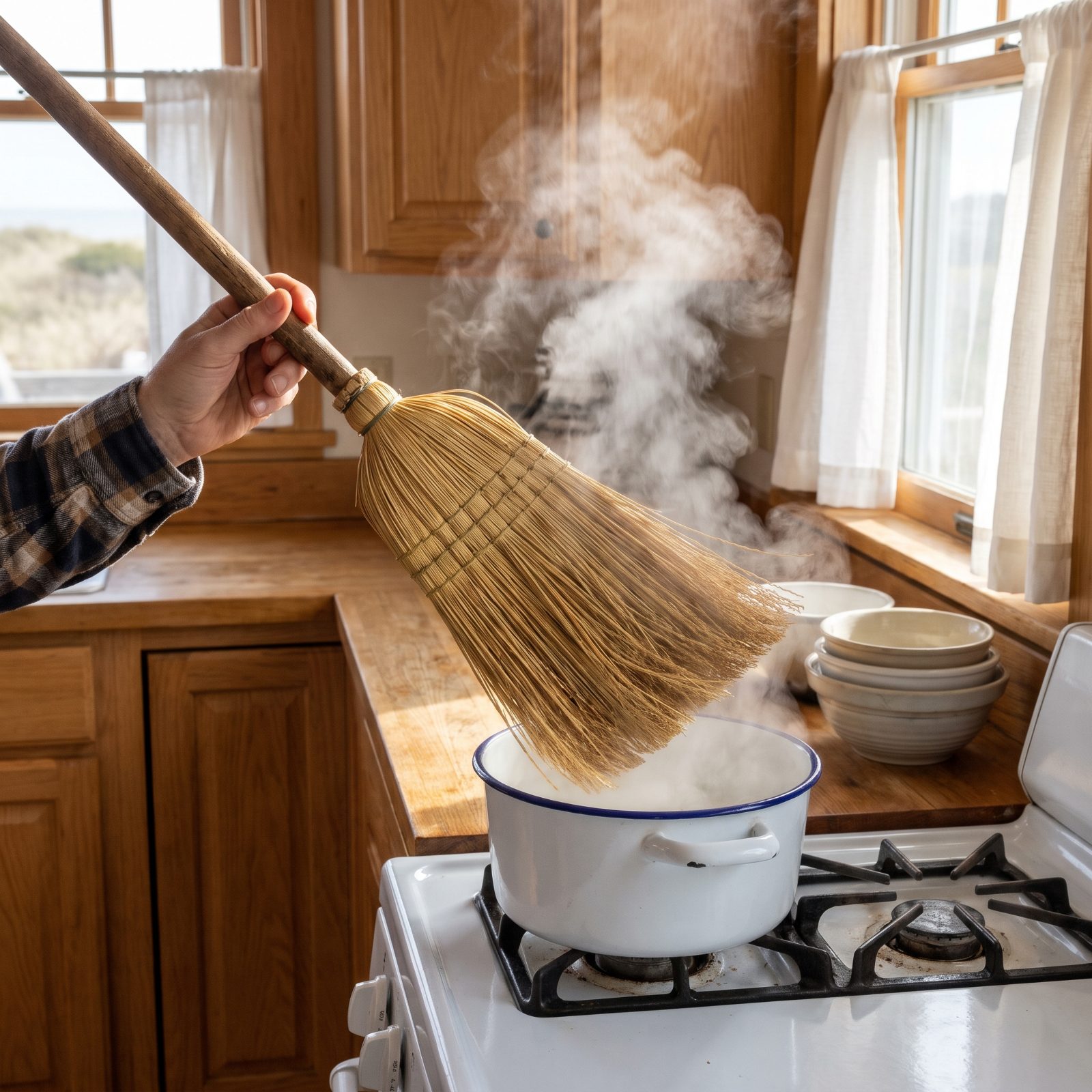
A broom left standing on its bristles ends up with a bent, splayed head that sweeps in circles and misses the corner every single time. Before you throw it out, hold it over steam.
Run a pot of water to a hard boil and hold the bent bristles in the rising steam for a minute or two. Natural straw and corn-fiber bristles soften with the heat and relax. Press them gently straight, then stand the broom on its handle to dry so it sets in the right shape. Keep your hands clear — that steam bites. And store the thing hanging from a hook afterward, which is where it should have been all along.
20. Rub Paraffin Along the Runners of a Sticking Wooden Drawer
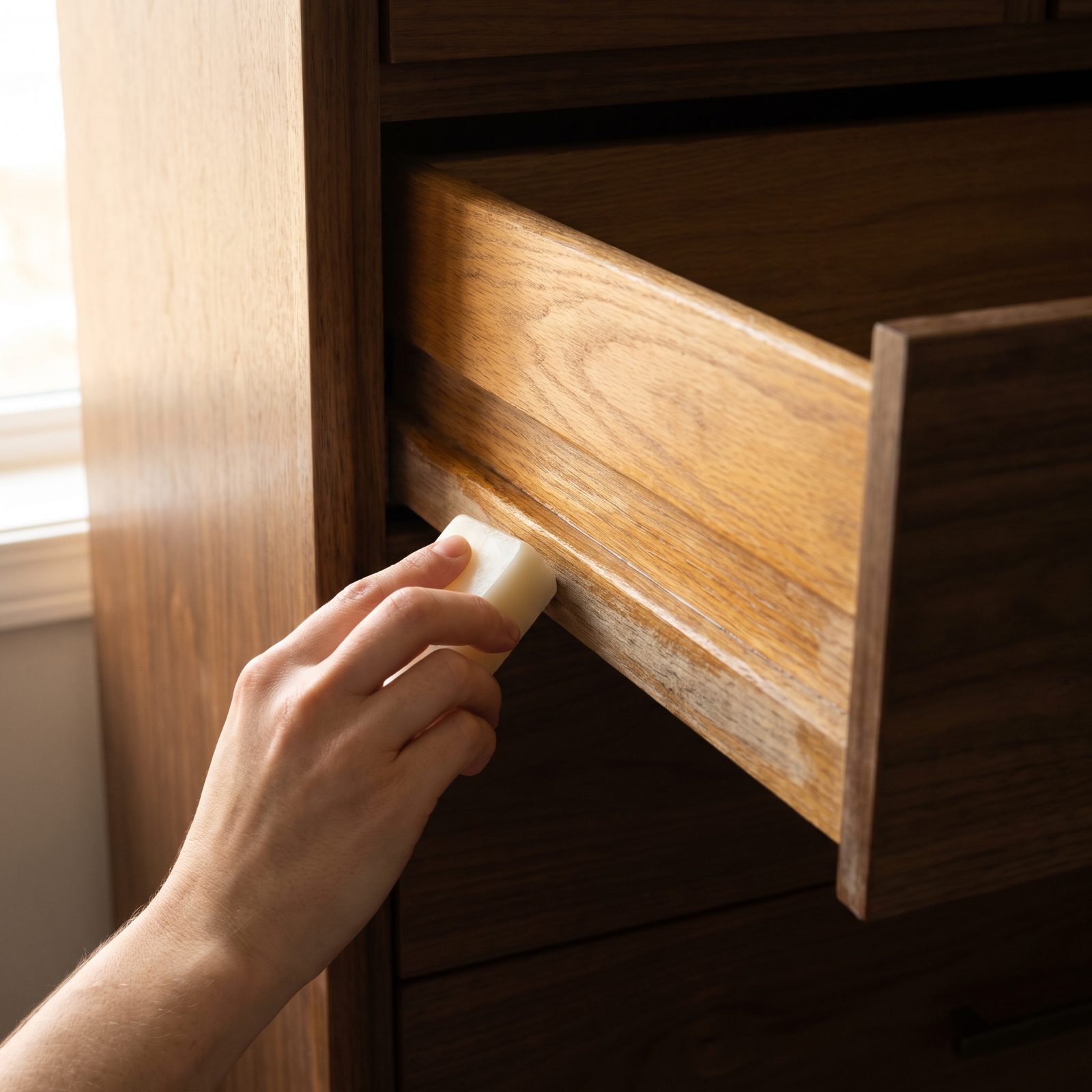
A wooden drawer that sticks and screeches on a humid day doesn’t need to be planed or sanded. It needs wax.
Pull the drawer all the way out and rub a block of paraffin or a plain candle stub along the runners and the tracks they ride in. Slide it back. The wax fills the microscopic roughness and the drawer glides like it did when the dresser was new. A bar of soap works in a pinch, and the same fix saves a sticking window sash. Skip anything oily — oil attracts dust and gums the track worse within a month.
19. Cover a Grease Spot With White Chalk Before Laundering
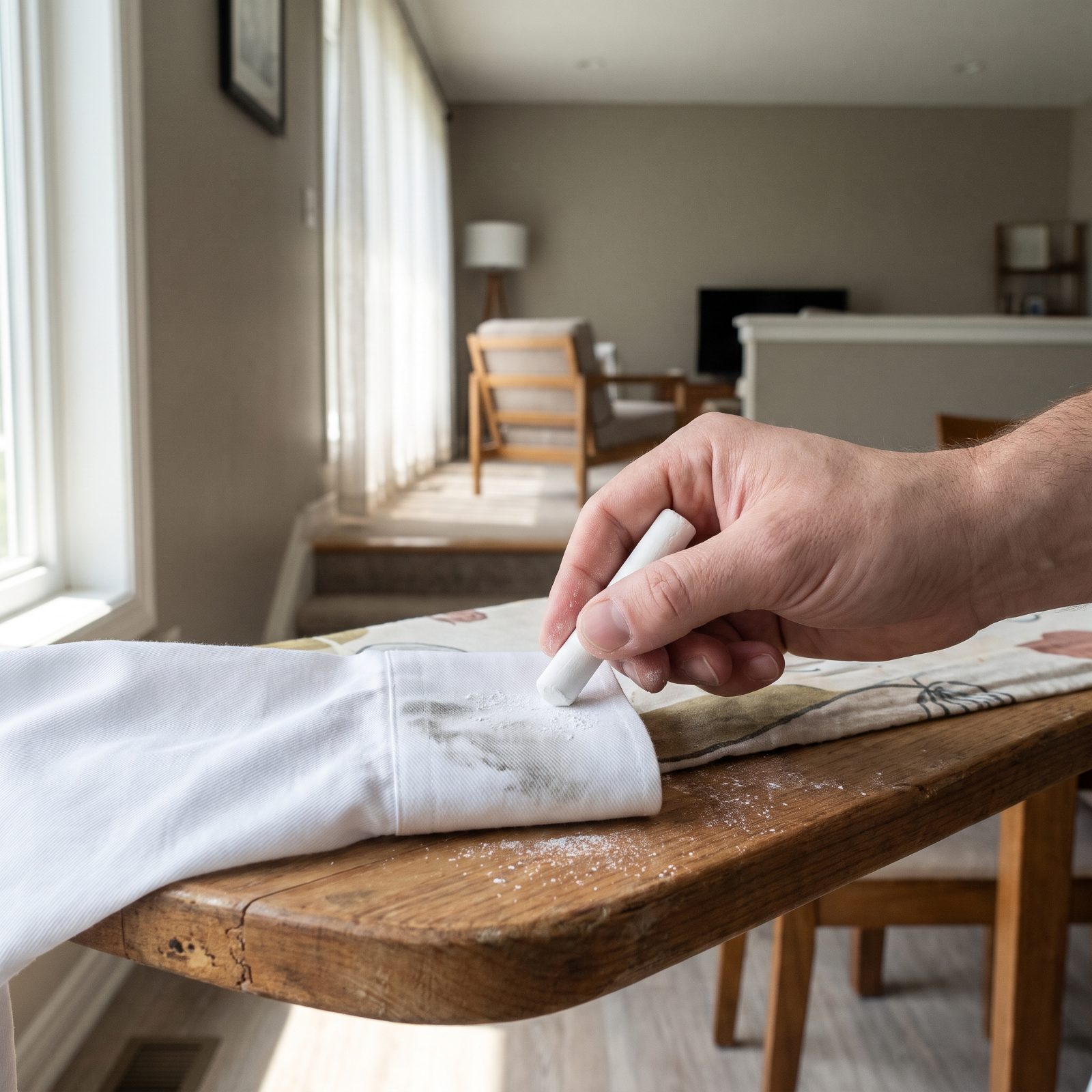
Catch a grease spot on a collar at the dinner table and you can save the shirt before it ever reaches the hamper. Rub plain white chalk straight over the mark.
Chalk is absorbent, so it pulls the oil up out of the weave before it sets and oxidizes into a permanent yellow shadow. Let it sit, brush off the excess, then launder as usual. Reapply on a heavier stain. It beats ring-around-the-collar, salad dressing, and lipstick smudges. Keep a stick in the laundry room where you’ll actually reach for it. White chalk only — colored sidewalk chalk can leave a dye mark worse than the grease ever was.
18. Brighten Dull Aluminum Pans With Cream of Tartar
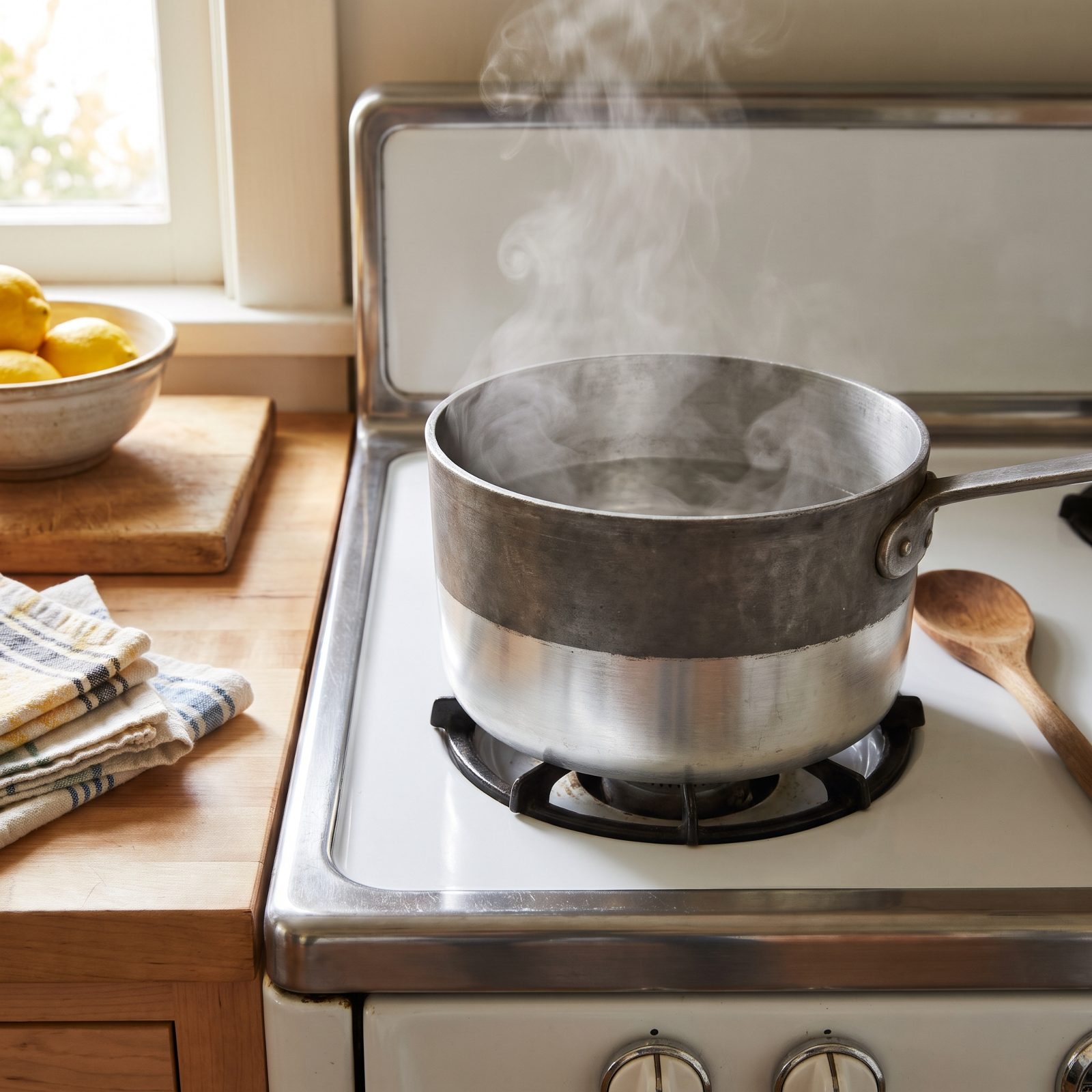
Aluminum pots go gray and dull over the years, and worse, they leave dark streaks on anything you boil in them. Cream of tartar brings the shine back with no scouring pad involved.
Fill the pan with water, stir in a couple tablespoons of cream of tartar, and simmer it for ten minutes or so. The mild acid dissolves the dark oxidation off the metal. Pour it out, give a light wipe, and the inside comes back bright. This is also why a spoon of cream of tartar in the water keeps boiled eggs and potatoes from staining an aluminum pot to begin with.
17. Remove Silver Tarnish With Aluminum Foil and Washing Soda
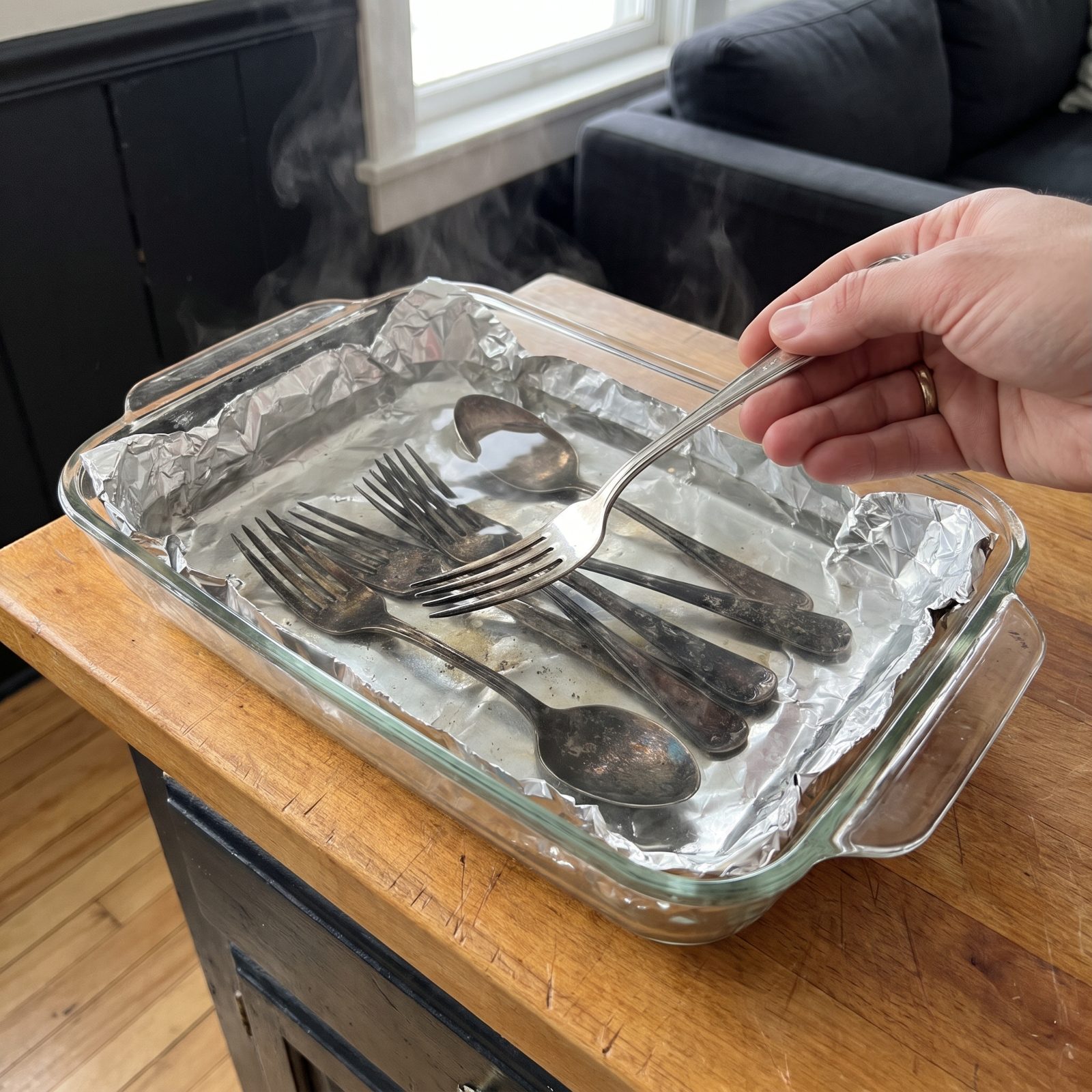
Polishing silver by hand with a cloth is slow, and every pass rubs a little metal away. This method doesn’t scrub at all. It moves the tarnish off chemically.
Line a glass baking dish with aluminum foil, shiny side up, and lay the silver on top, dry, so it touches the foil. Only once everything is in place, pour over hot water with a few spoons of washing soda dissolved in it. The tarnish transfers from the silver to the foil through the hot solution, often in under a minute. Lift the pieces out, rinse, and buff dry.
A few cautions worth taking seriously. Skip this on antique silver with an intentional dark patina in the detailing, because it strips that right out too. And don’t do it to anything glued — the hot bath can loosen the join.
16. Polish Unlacquered Brass With Flour, Salt and Vinegar
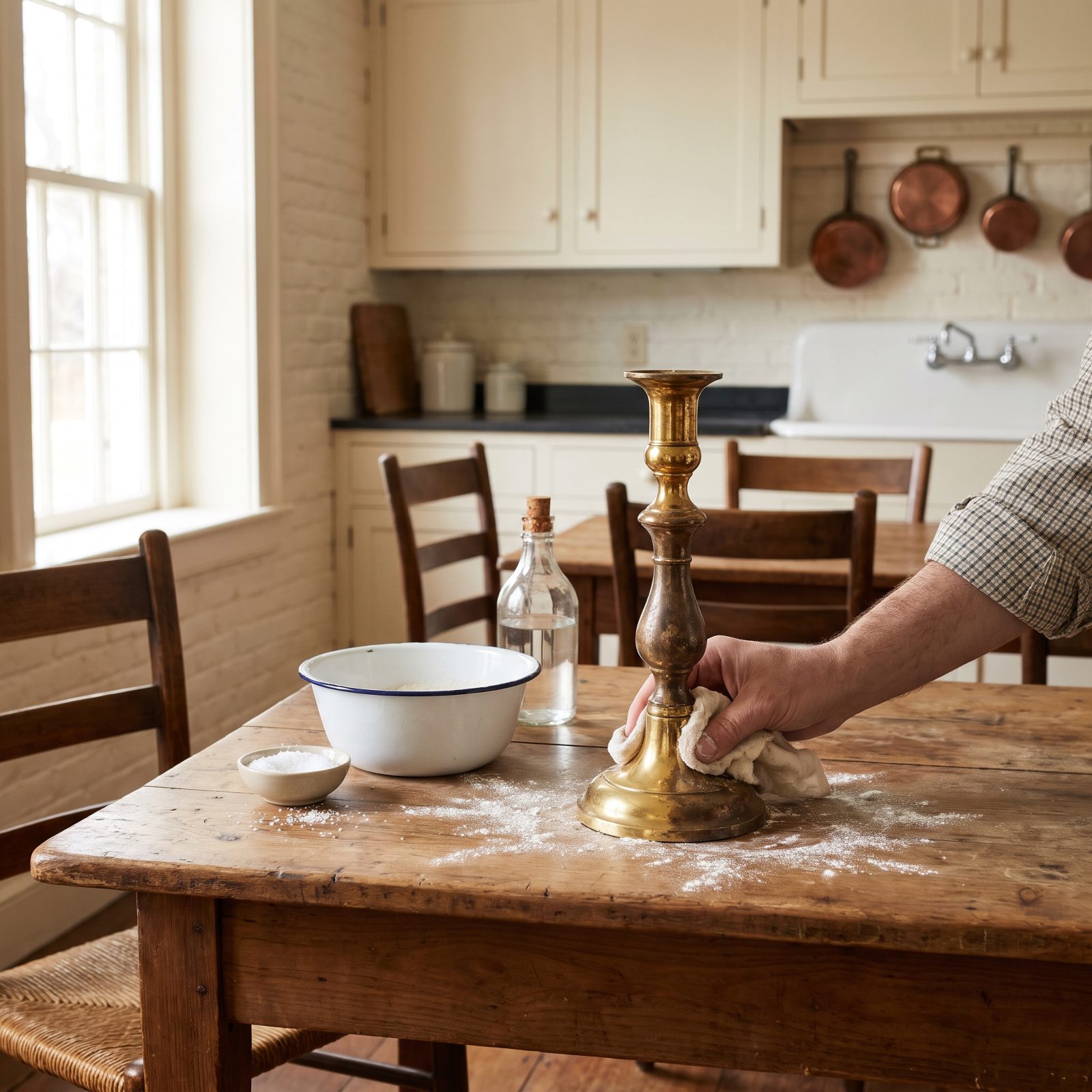
Tarnish on brass is just the metal reacting with air, and the mild acid in vinegar undoes it. Mix roughly equal parts flour and salt, add vinegar until you get a paste about as thick as pancake batter, then smear it over the piece.
Give it ten minutes. Rub off with a cotton cloth and rinse well — the salt scours, the acid dissolves, and the flour holds it all against the metal long enough to work. Dry it completely afterward or it dulls again within days.
15. Polish Chrome Fixtures With Crumpled Waxed Paper
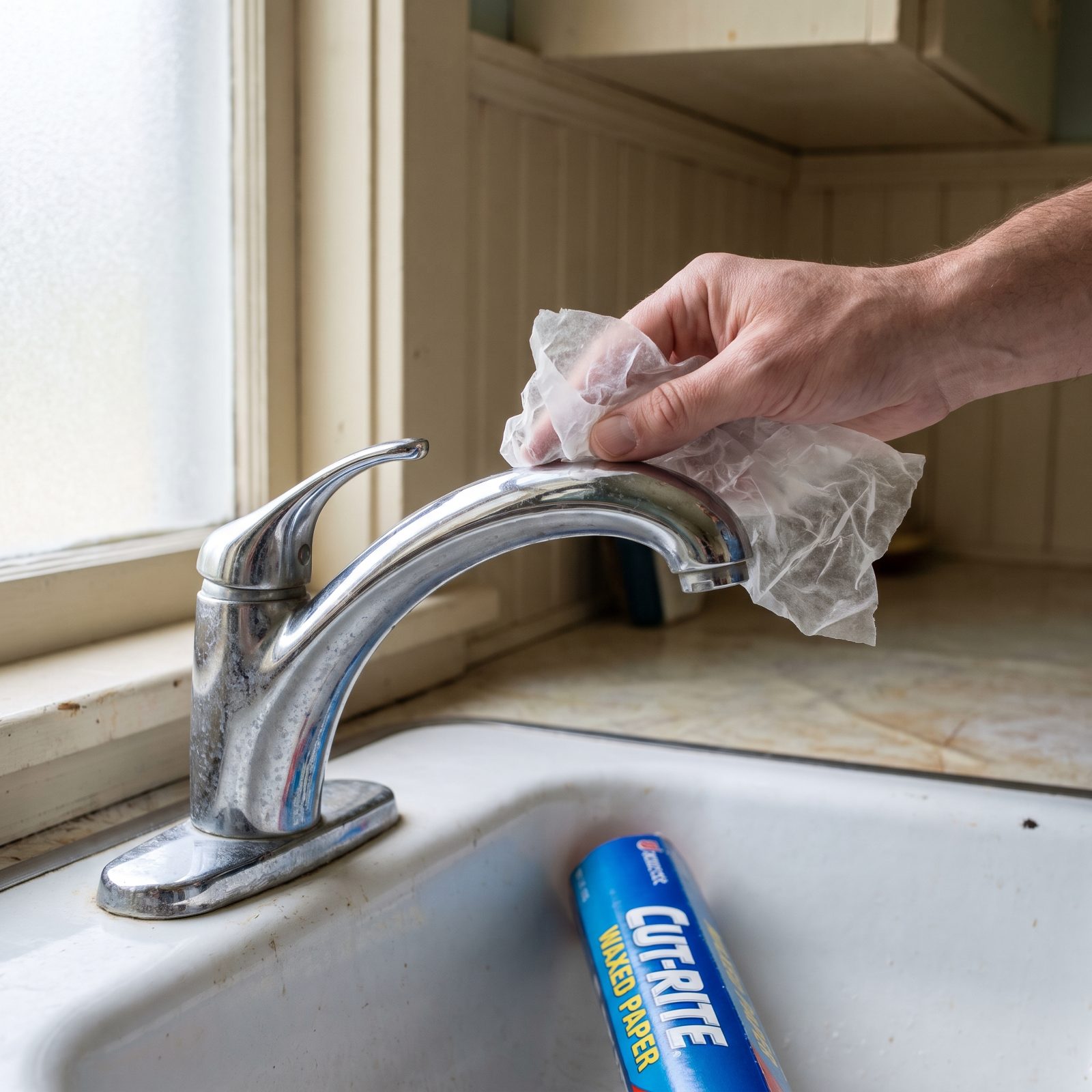
Chrome looks worst right after you clean it, when the air dries leftover water into spots. So crumple a piece of waxed paper and buff the fixture with it — the thin film of wax fills the microscopic pits and leaves a surface water beads off instead of clinging to.
Faster than any spray, and no streaks. Taps stay spot-free a week or two longer than they’d manage otherwise, and the whole thing takes about thirty seconds per faucet.
14. Dissolve Faucet Scale With a Vinegar-Soaked Cloth
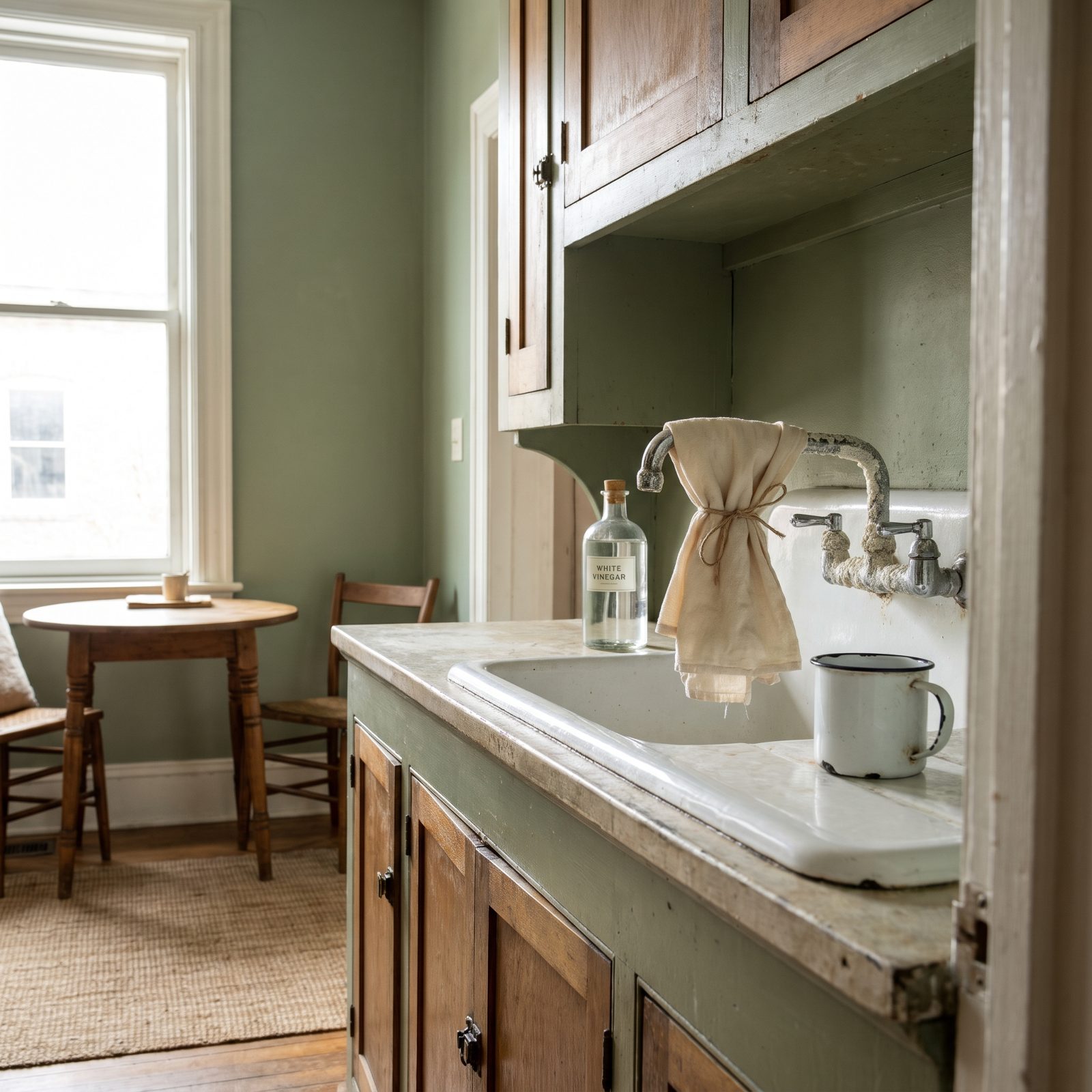
Scrubbing scale off a faucet is a losing fight. That hard white crust is mineral deposit, and it ignores muscle entirely. It responds to soaking instead.
Soak a cloth in plain white vinegar, wrap it snug around the spout, tie it on with string. An hour, longer for a bad crust. Peel it off and the deposit wipes away soft. For the aerator tip, just drop it in a cup of vinegar.
13. Deodorize a Thermos With Baking Soda and Warm Water
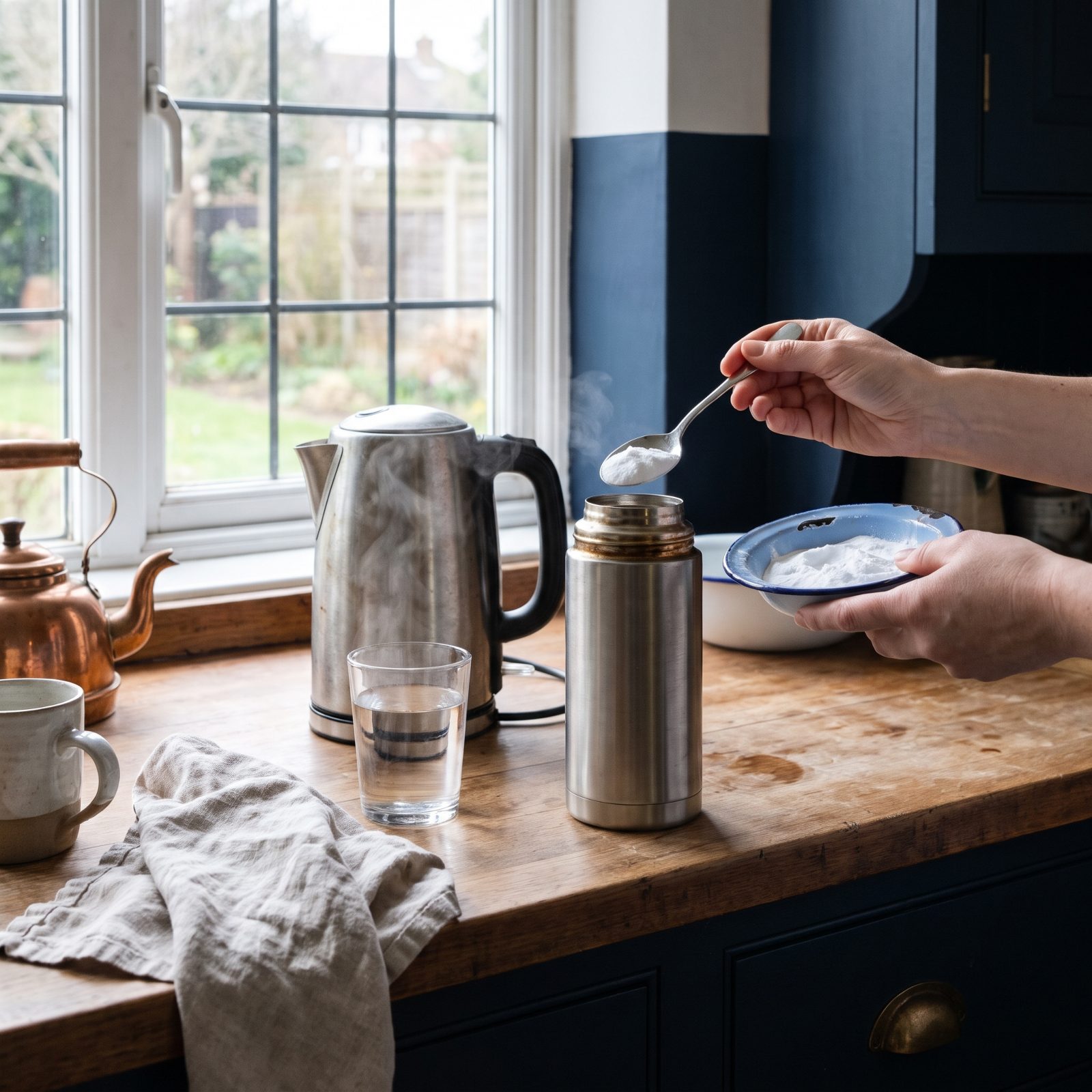
A thermos holds onto yesterday’s coffee the way nothing else does. The smell soaks into the lining, and no amount of soap gets it out.
Baking soda does. Drop in a tablespoon, fill with warm water, cap it loosely, and leave it overnight — the alkaline powder neutralizes the acidic odor molecules rather than masking them. Rinse in the morning and the stale coffee ghost is gone. Once a week keeps it that way if the thermos lives in daily use.
12. Cover a Fresh Oven Spill With Salt Before It Hardens
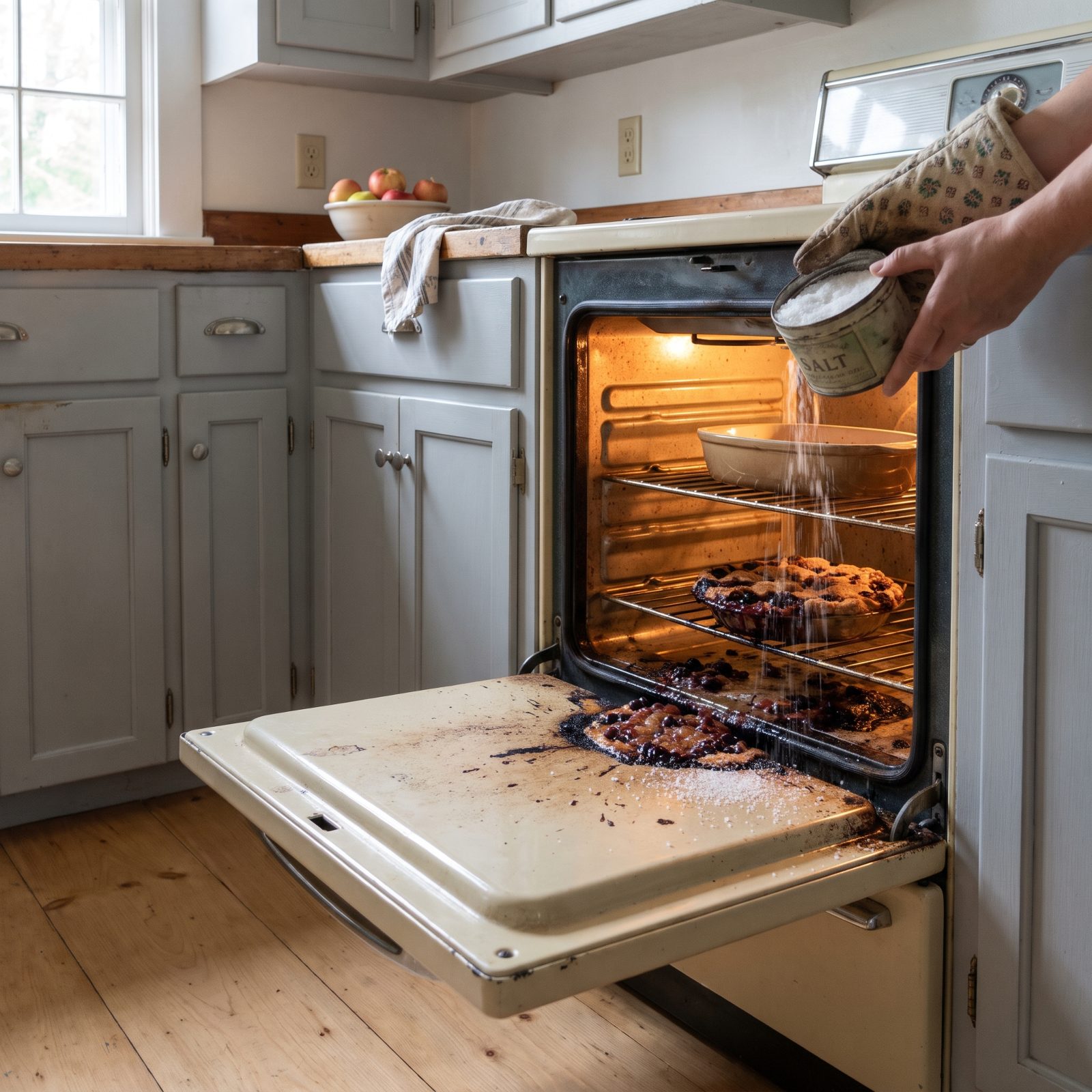
The moment a pie bubbles over, the clock starts. A fresh spill wipes off. A baked-on one becomes a chisel job later.
Toss a handful of salt straight onto the wet spill while the oven is still hot, and it soaks up the moisture to form a dry, lifted crust instead of a welded black patch. Once the oven cools, the whole mess lifts off with a spatula and a damp cloth.
11. Use Damp Sawdust to Gather Dust From Concrete Floors
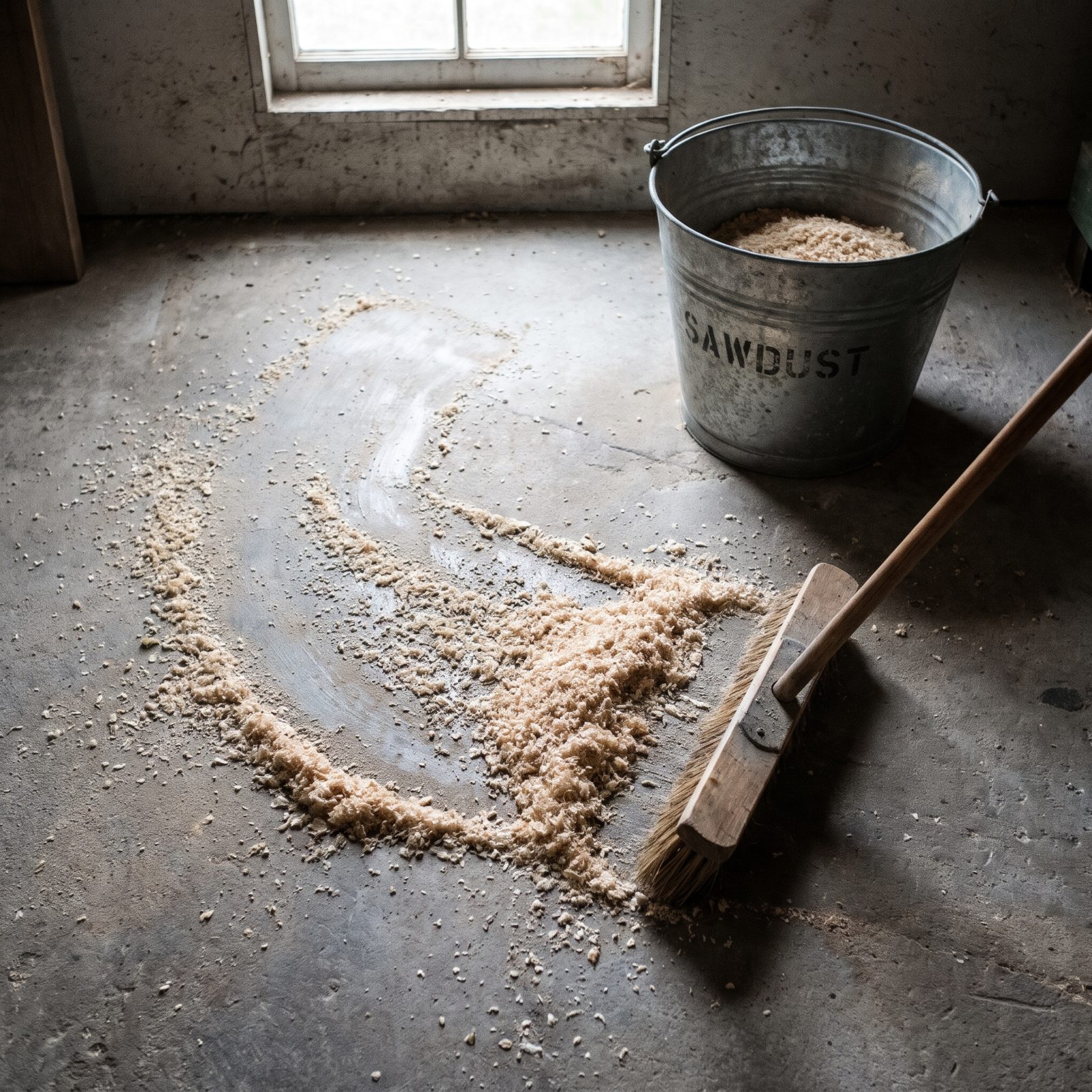
Sweeping a concrete floor just launches the dust into the air so it can settle again an hour later. Workshops and basements get the worst of it.
Scatter damp sawdust across the floor before you sweep. The moisture makes it grab fine grit instead of chasing it around, and you push the whole clumped mess ahead of the broom into a tidy pile. Barely damp works; soaking wet smears. It’s the oldest trick in any garage, and for good reason.
10. Raise Furniture Dents in Carpet With Melting Ice Cubes
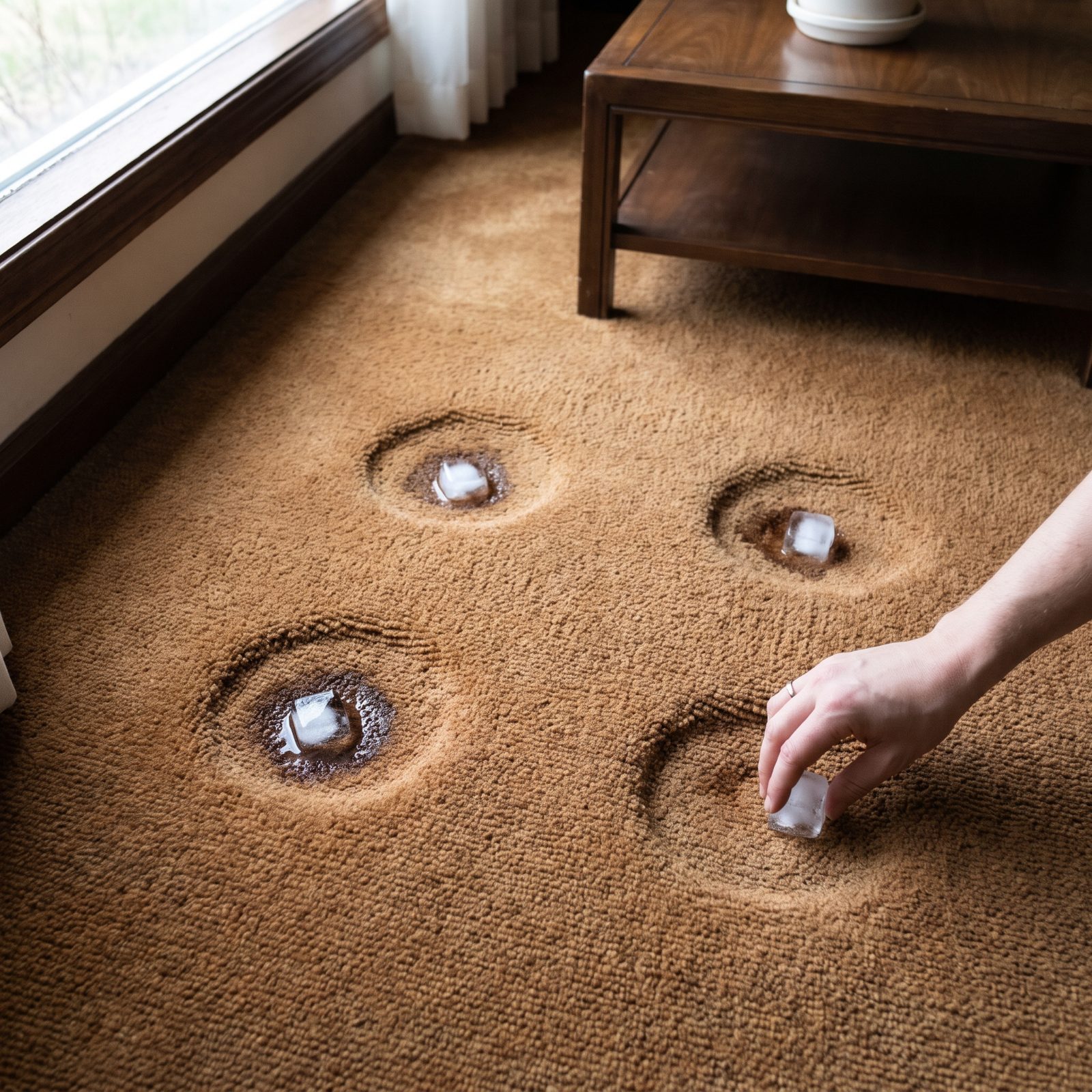
Move heavy furniture and you may find four wide, shallow hollows behind, each ringed with grooved lines and the pile pressed flat for years.
Set an ice cube in the center of each hollow and walk away. As it melts, the fibers slowly drink the water and swell back to their original height. Once the spot is damp, nudge the pile up with your fingers or the edge of a spoon, then let it dry. Wool and most synthetics both respond. Deeper dents may need a second cube.
9. Disguise a Small Furniture Scratch With Walnut Meat
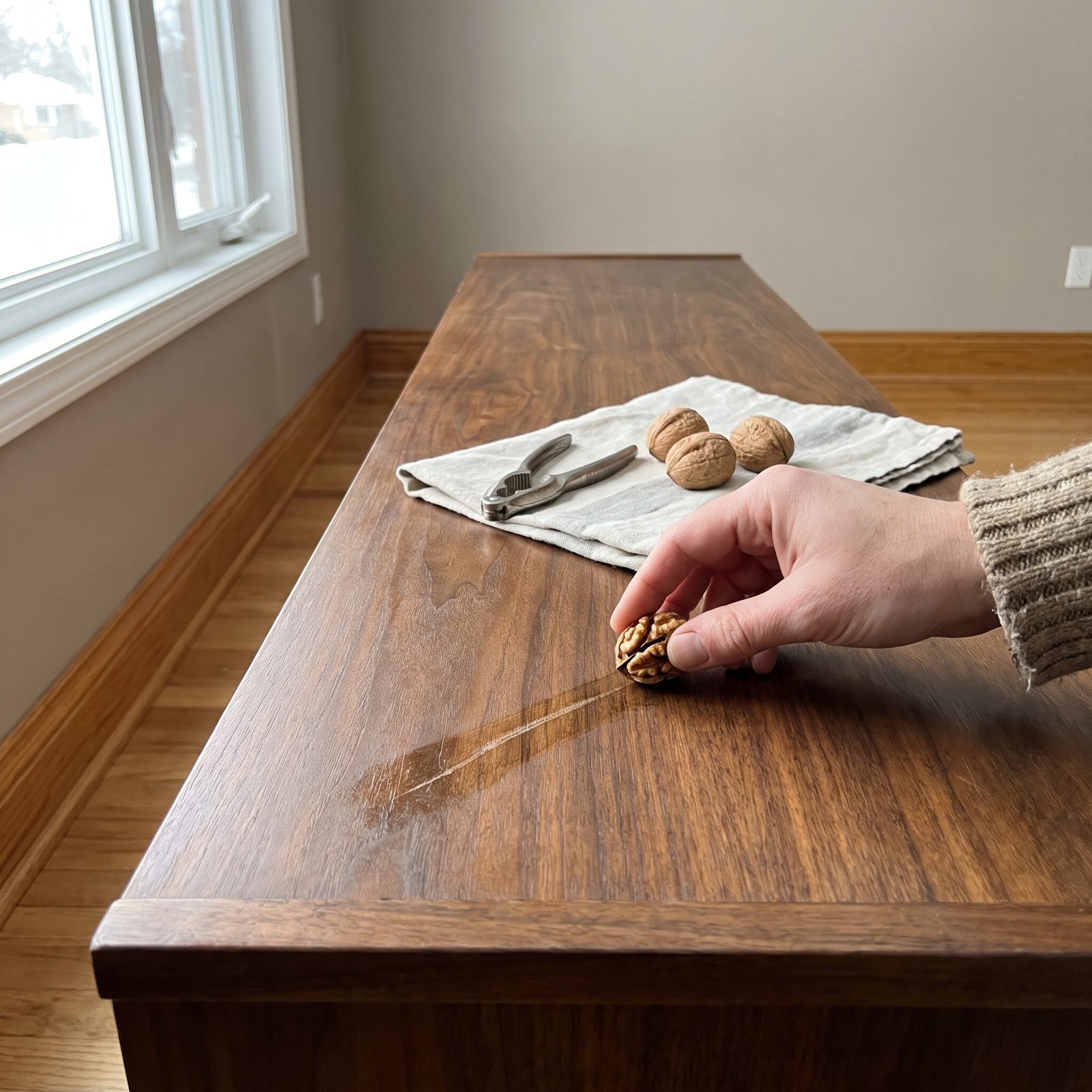
A shelled walnut is basically a crayon full of wood-colored oil, which is exactly what a scratch needs.
Rub the nut meat firmly along the line, back and forth, until the pale streak fills and darkens. Let it sit a couple of minutes so the oil soaks in, then buff with a soft cloth. It won’t fix a gouge. But for the fine white scratches that show up on dark wood, it blends them nearly invisible. Pecans work too.
8. Lift a Dent in Unfinished Wood With a Damp Cloth and Iron
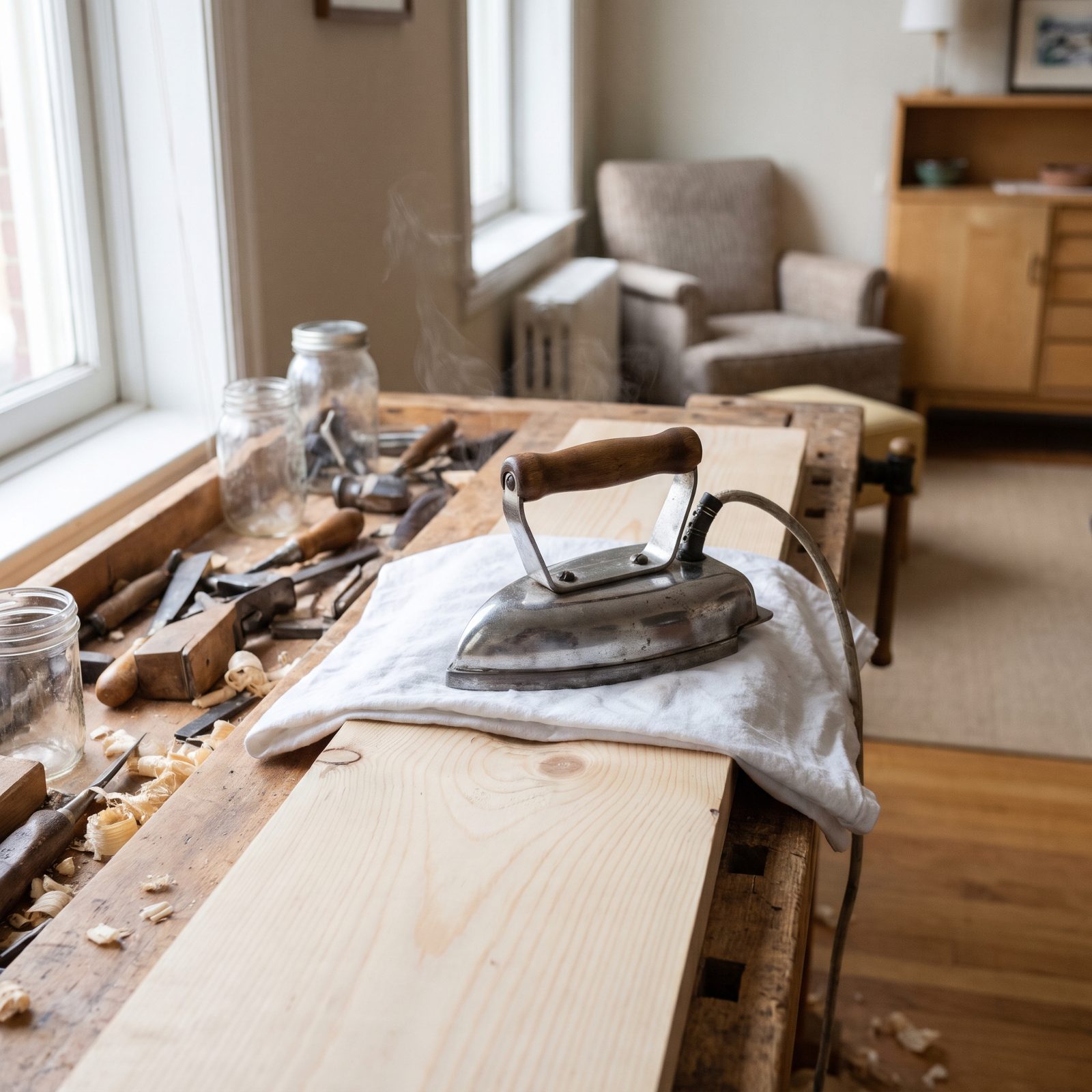
A dent in raw wood isn’t missing material. It’s crushed material. The fibers are compressed, not gone, which means they can be coaxed back up.
Lay a damp cotton cloth over the dent and press a warm iron onto it for several seconds. The steam drives into the wood and swells the crushed fibers back toward level, so repeat until the dent rises. Bare wood only — a finish seals the steam out and can blister under heat. Sand lightly afterward.
7. Dust Fabric Lampshades With an Old Nylon Stocking
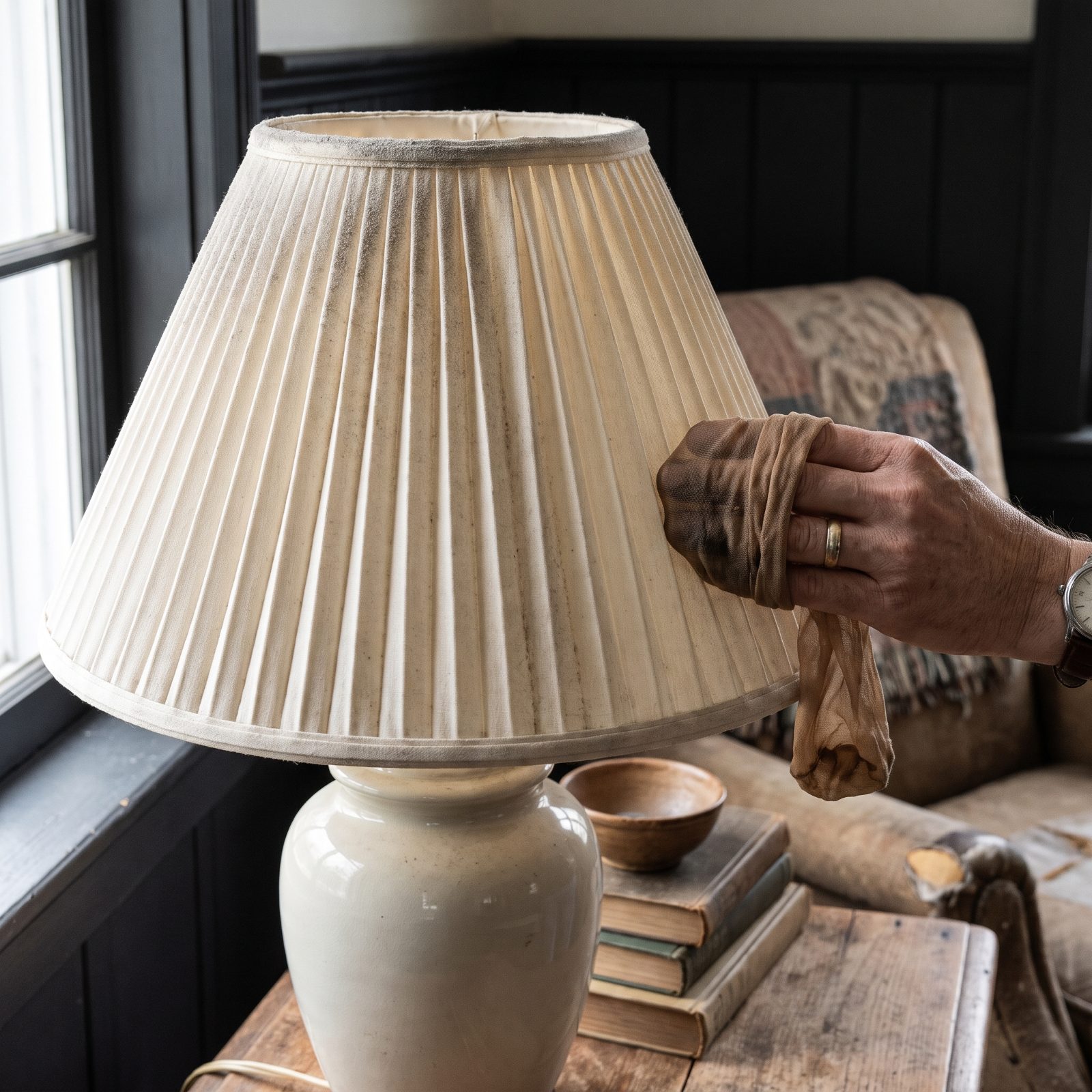
A damp cloth on a fabric lampshade just smears the dust into a grey streak you can never fully remove, and a dry cloth barely picks anything up.
Ball up an old nylon stocking and wipe the shade with that instead. Nylon carries a slight static charge that pulls the dust off the fibers and holds it, pleats and all. Go top to bottom and the shade comes back lighter. It’s the one good use left for stockings with a run in them.
6. Clean Venetian Blinds With Cotton Gloves on Your Hands
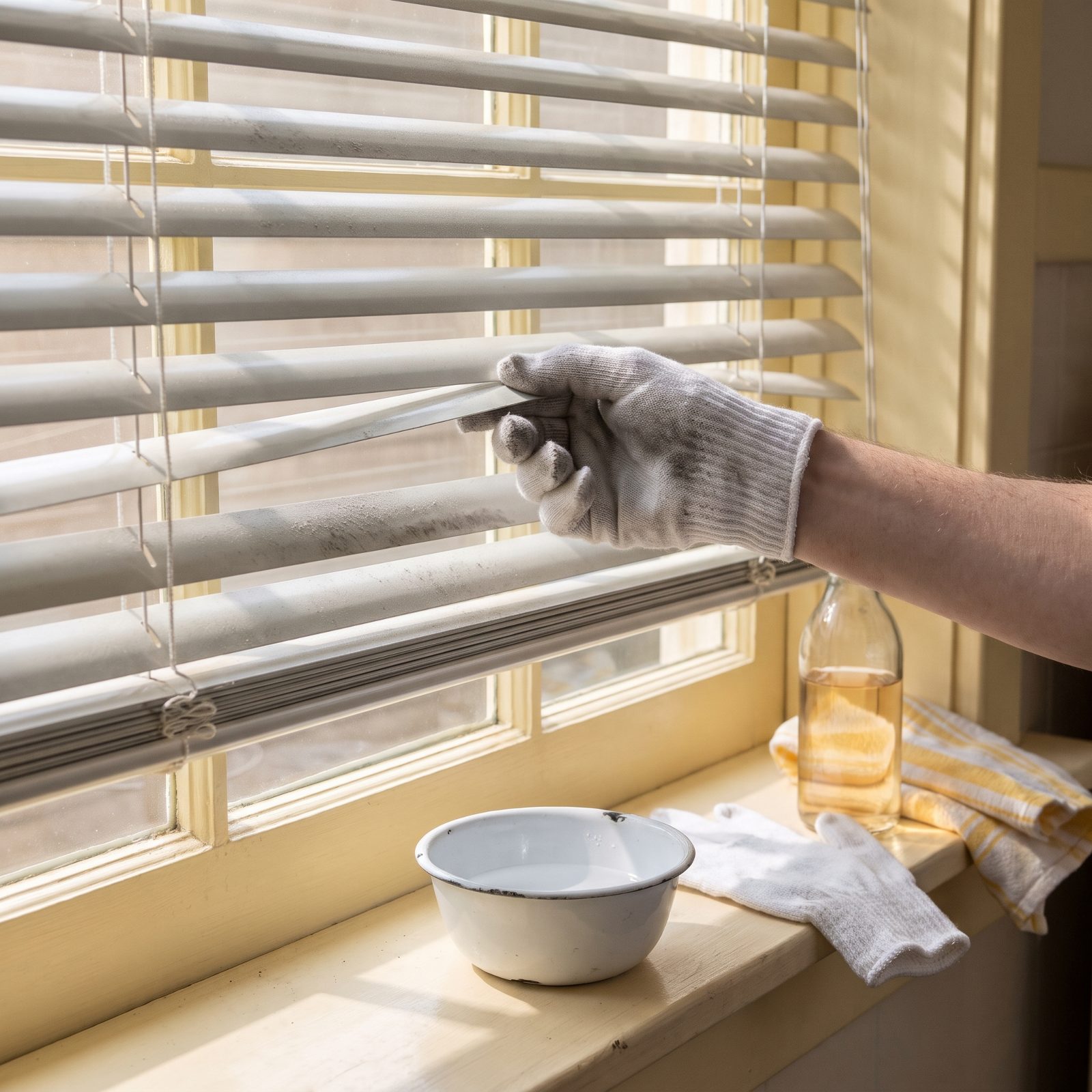
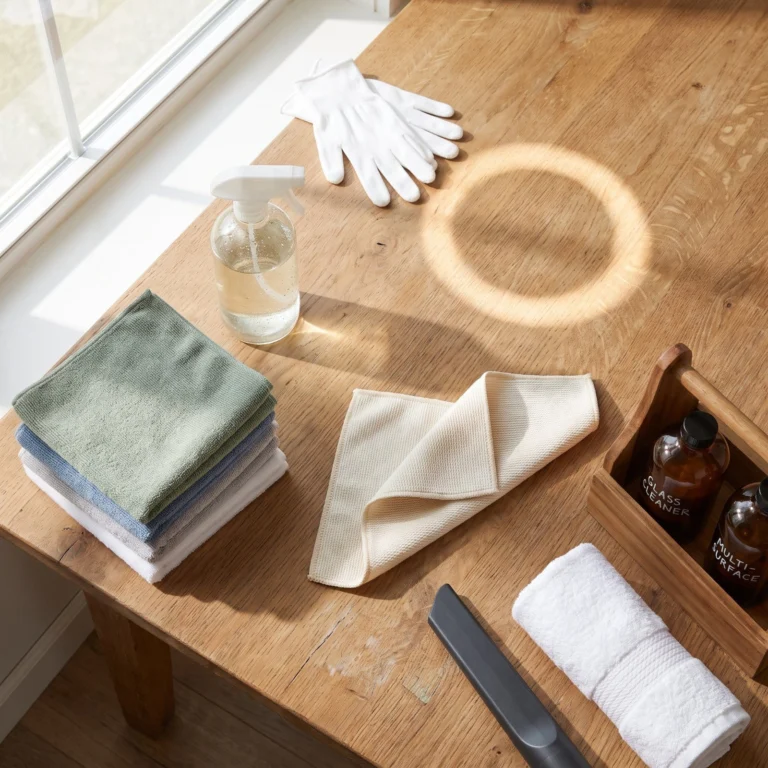
Rags skate right over blind slats and miss the undersides entirely. Slip a pair of plain cotton work gloves over your hands instead, dampen the fingertips, and pinch each slat so you clean top and bottom in a single pass.
The glove hugs the slat the way a flat cloth never will, so the dust transfers to the cotton rather than drifting back into the room. And when one hand loads up with grime, you can see it, which is oddly satisfying.
5. Trap Ceiling-Fan Dust Inside an Old Pillowcase
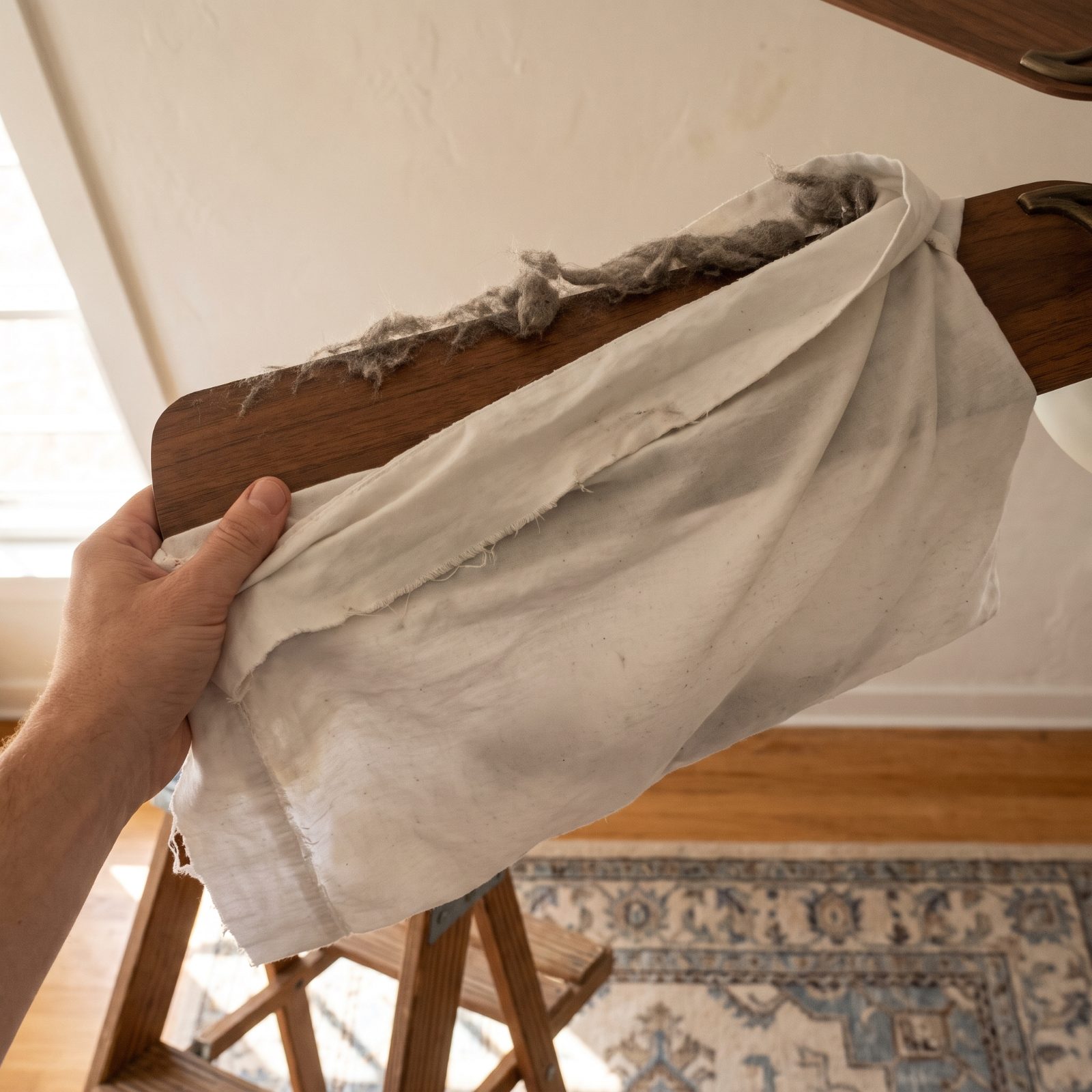
Wiping a fan blade with a rag is a confession you’ll regret the moment the dust rains down on your couch, your head, everything. Drape an old pillowcase over the blade instead. Press gently, pull it back toward you, and the dust bunches up in grey clumps along the blade’s top edge, right against the fabric.
What doesn’t cling to the cotton sits piled on the blade, ready to scoop into the pillowcase. Carry it outside, shake it out, and far less lands on the room below. Honestly, this one trick alone justifies keeping a drawer of retired pillowcases you can’t bear to throw out.
4. Line Cabinet Tops With Newspaper for Faster Grease Cleanup
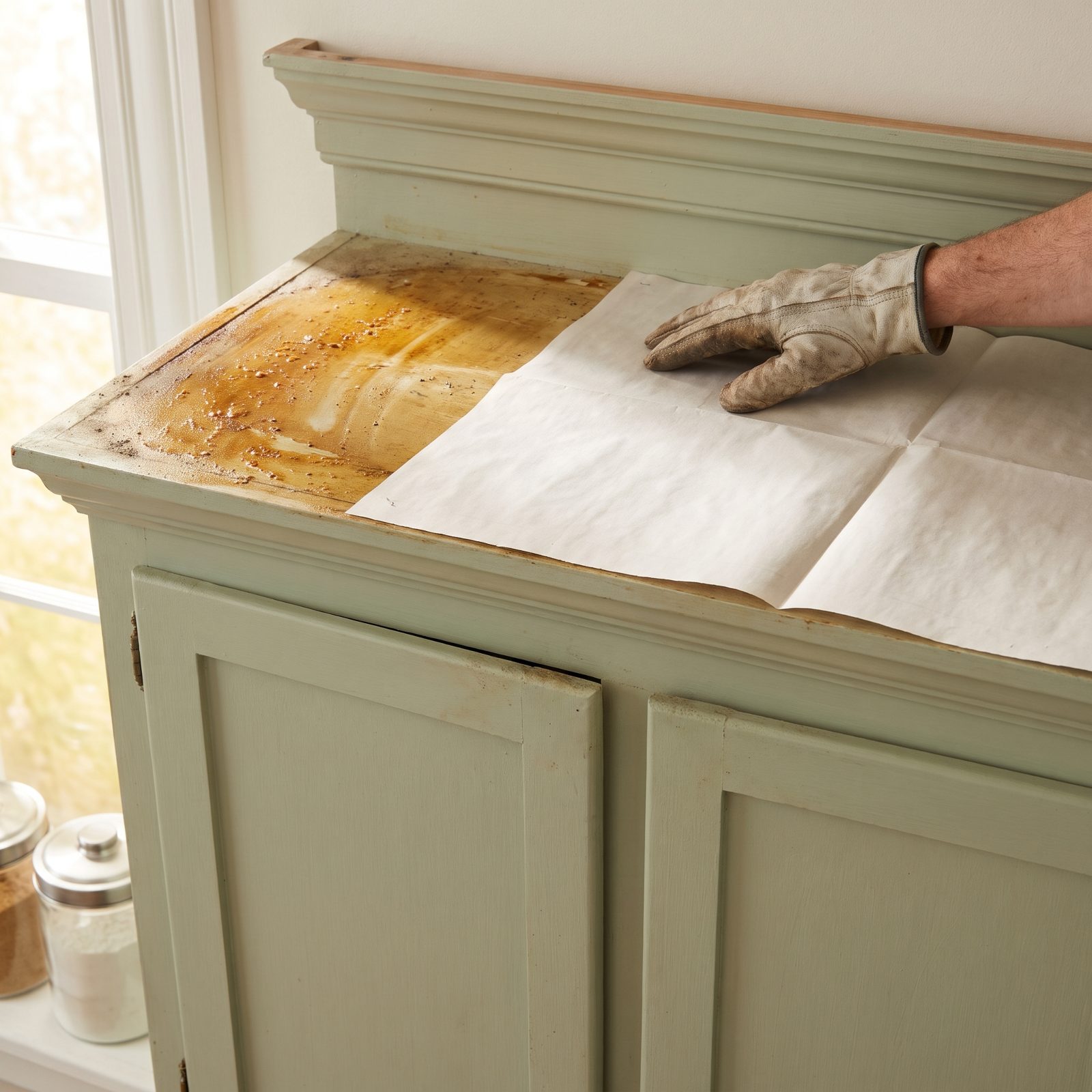
The top of a cabinet is where cooking grease and dust go to form a varnish. Nobody clears everything off it, so it builds into a film that practically needs a chisel.
Lay flat sheets of newspaper across the cabinet tops, right over the grime if you haven’t gotten to scrubbing yet. The paper catches the greasy fallout, and every few months you lift the sheets, toss them, and lay fresh ones down. No scrubbing. No hunching over the top with a rag and a bad attitude.
3. Clean an Enameled Sink With a Mild Borax Paste
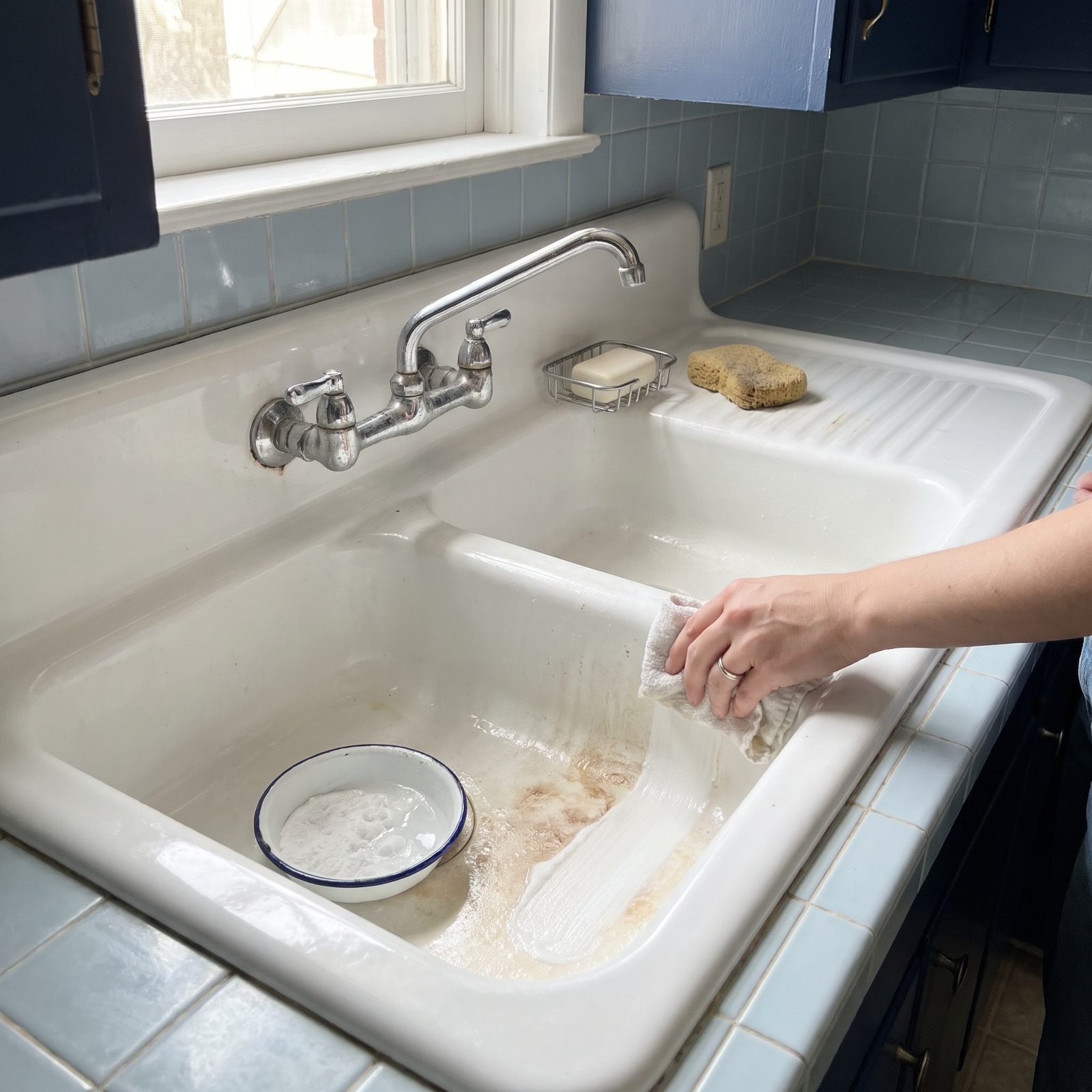
Enamel is glass fused to iron. Harsh abrasives scratch that glaze for good, which is exactly how old sinks end up dull and stain-prone in the first place.
Mix a little borax with just enough water to make a soft paste, spread it over the stains, and let it sit a few minutes before you work it in with a damp cloth and rinse. It’s mildly alkaline and just gritty enough to lift tea rings and grey scuffs without chewing up the finish.
2. Loosen Dried Mustard Stains With Glycerin Before Washing
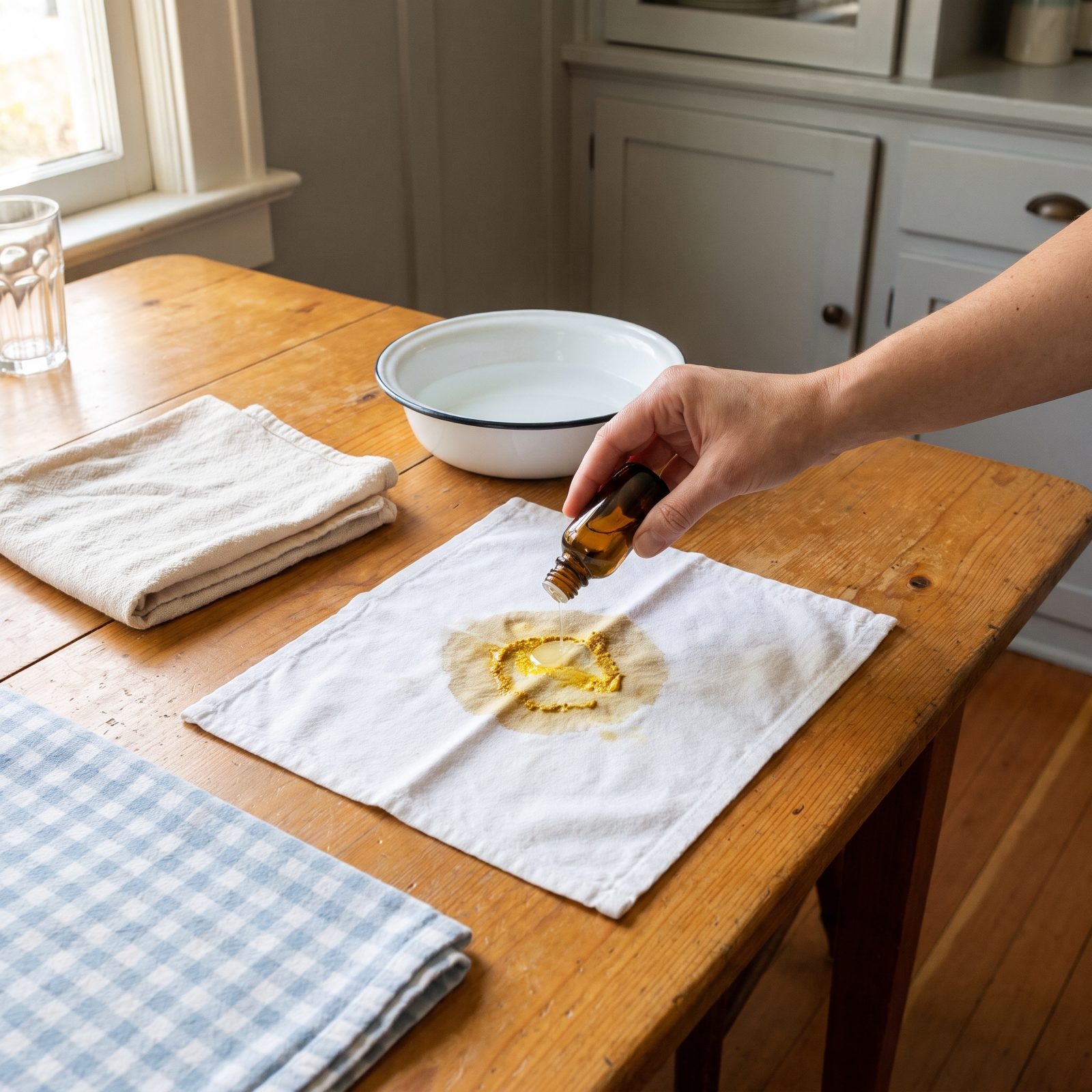
Mustard sets fast and turns stubborn once it dries into the weave, and hot water alone tends to cement it rather than lift it.
Work a little glycerin into the dried stain first, then walk away for an hour. The glycerin softens the crusted mustard so the pigment releases when you launder the piece normally. It’s a holding step, not a miracle, and it buys you back the time you lost by not catching the stain fresh.
1. Counter Yellowing in White Sheets With Laundry Bluing
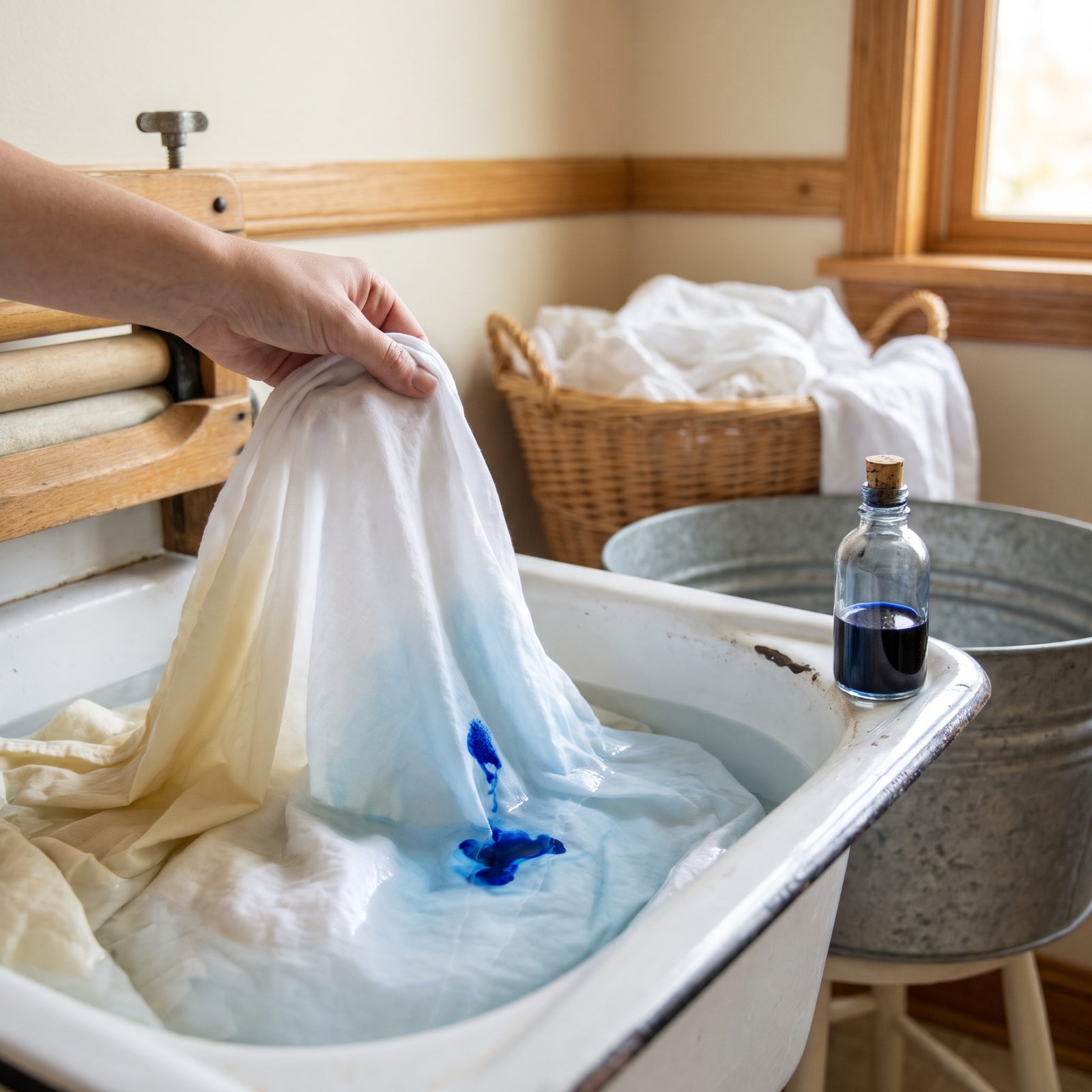
White sheets don’t really fade to grey. They drift toward yellow, washing after washing, until they look tired no matter how clean they actually are.
A few drops of laundry bluing in the rinse water fix that. Bluing adds the faintest trace of blue, which cancels the yellow cast to your eye so the fabric reads whiter. Nothing is bleached. Nothing is stripped. But restraint matters here, because too much turns sheets a sad pale blue, and that correction is worse than the yellow you started with.