
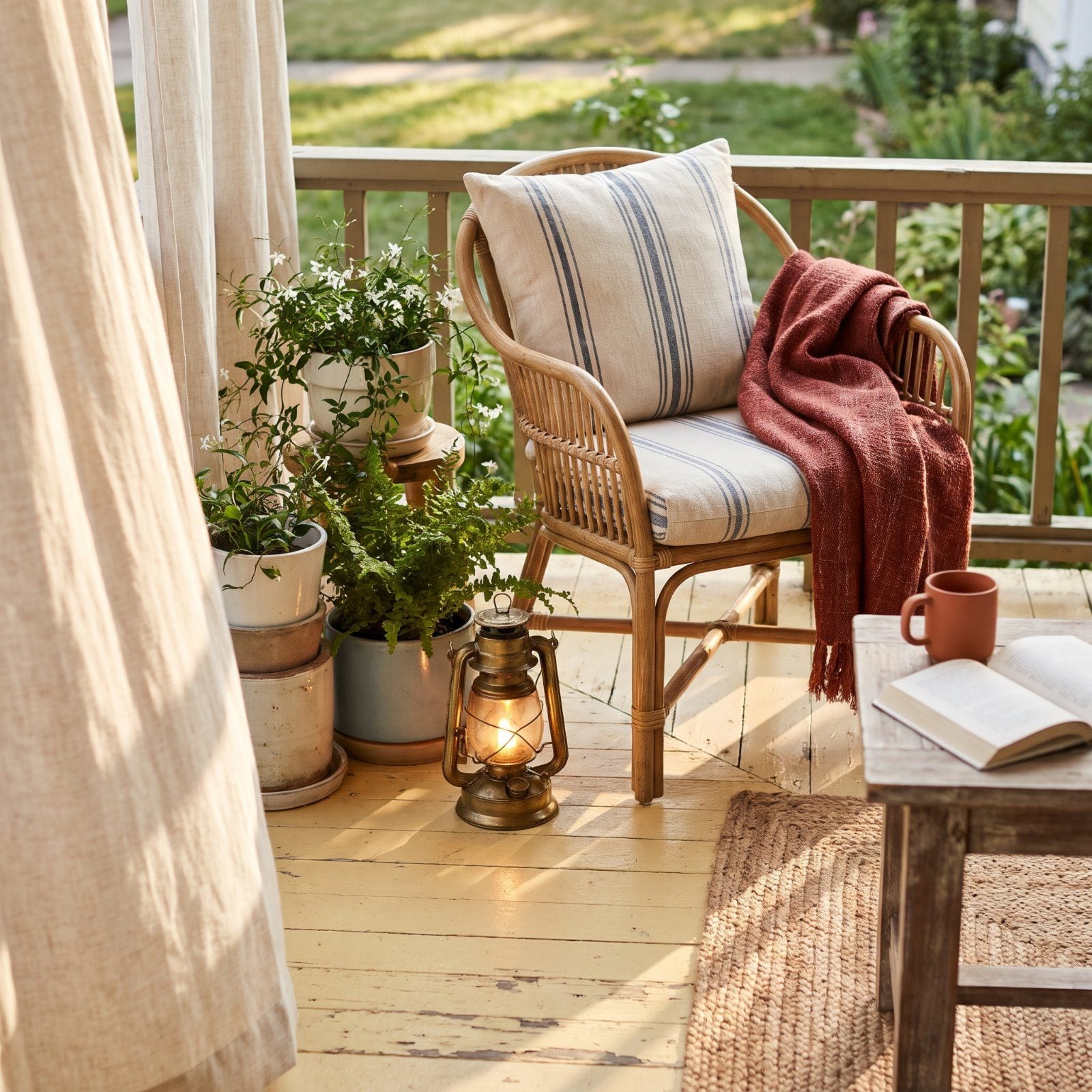
Most front porches sit there doing one job: holding the welcome mat and the package the delivery driver left in the rain. Half the square footage of a decent-sized porch goes completely unused, which is a shame. A porch is already covered, already shaded, already bolted to the house. You don’t have to build anything new — you just have to stop treating it like a hallway with a roof and start treating it like a room. The upgrades below steal tricks from the living room, the den, and the back patio, and they’ll work whether you’ve got a brick colonial, a sprawling farmhouse wraparound, or a tiny bungalow stoop barely wide enough for a chair. Pick one. Your porch has been waiting.
Please note that some of the images in this article were created with the assistance of AI.
38. Hang Curtains From the Porch Ceiling
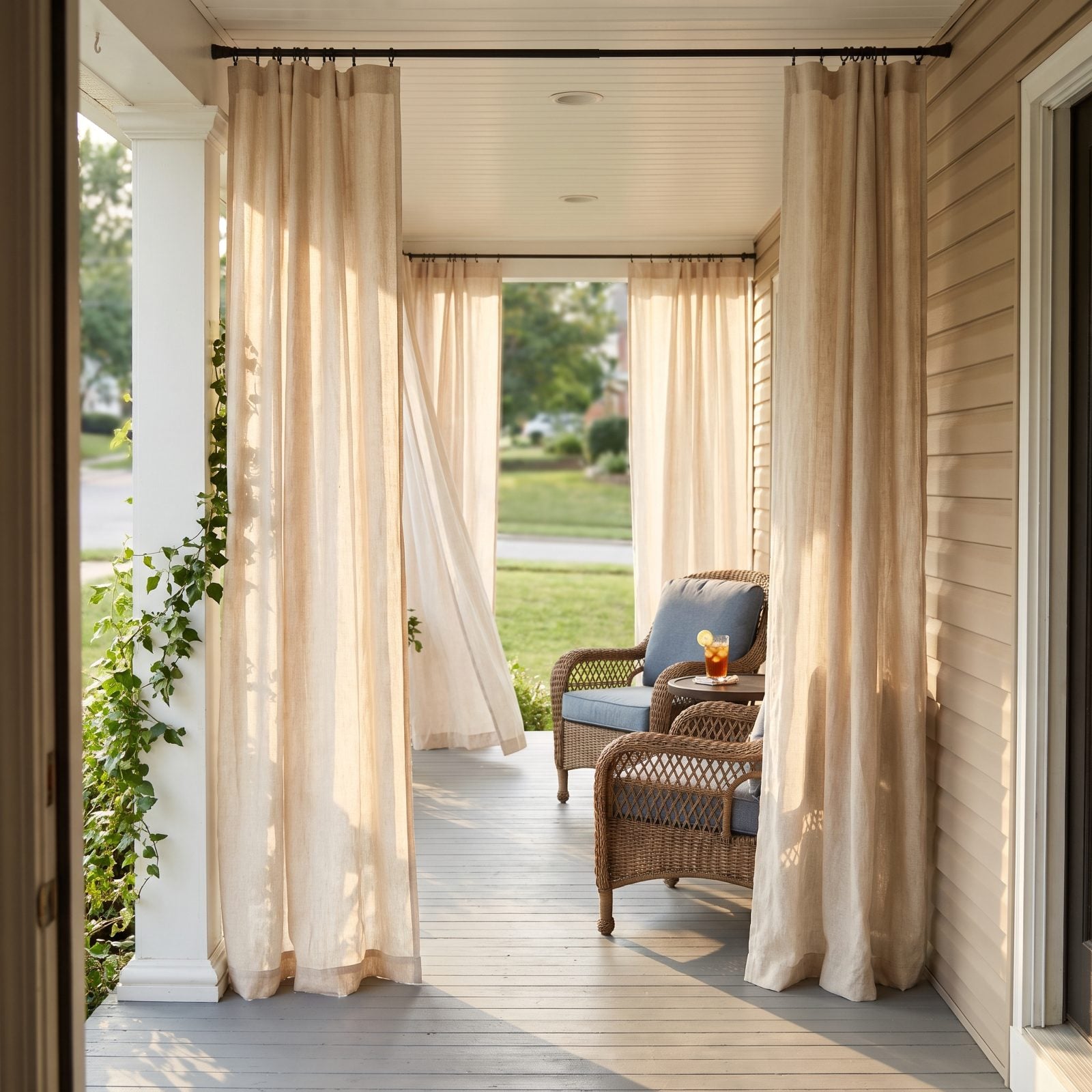
Curtains outdoors sound fussy until you feel the difference on a hot afternoon. They cut the low western sun, drop the temperature a few real degrees, and screen you from the sidewalk without walling anything off. Catch a breeze and the whole porch seems to exhale.
Get outdoor-rated fabric, not your spare dining room panels. Sunbrella and the other woven acrylics shrug off rain and UV for years. Mount the rod to the ceiling, not the posts, so the fabric hangs clean and long. We used cheap indoor cotton once and regretted it instantly — it mildewed in a single damp week and we never got the smell out.
37. Center a Sofa Facing the Yard
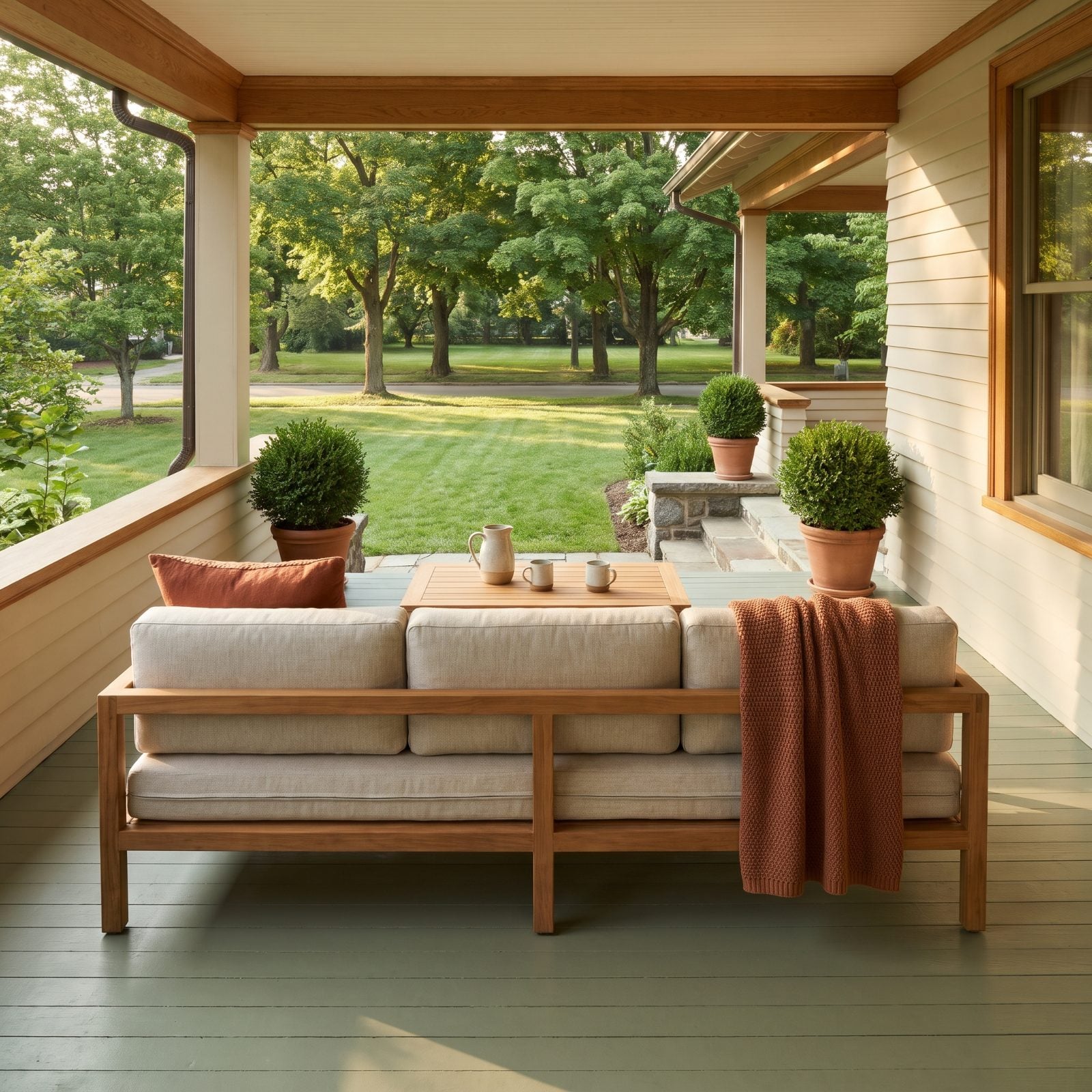
Most people get this backward. They line every seat up against the house wall, like a waiting room. Instead, pull a real sofa off the wall and set it across the middle of the porch, facing the yard, and suddenly you’re looking at your garden instead of your own front door.
A proper three-seater, mind you — not two spindly chairs. Scale is what makes it read as a room. You want something you can actually sprawl on with a book and a coffee, feet up, Sunday gone before you notice.
36. Use Mosquito-Net Curtains Around a Daybed

A daybed on a porch is already a good idea. Wrap it in mosquito netting and it becomes the one spot in the house everyone fights over.
The net pulls double duty. It keeps the bugs off at dusk — which is exactly when a porch is best and bugs are worst — and it turns an open bed into a little tented hideaway. Something about sheer fabric drifting in the air makes a space feel private even when it’s wide open to the yard.
Go with fine-mesh netting rated for outdoor use so it survives a season of sun. The cheap gauzy stuff shreds by August.
35. Hang a Porch Swing Sideways
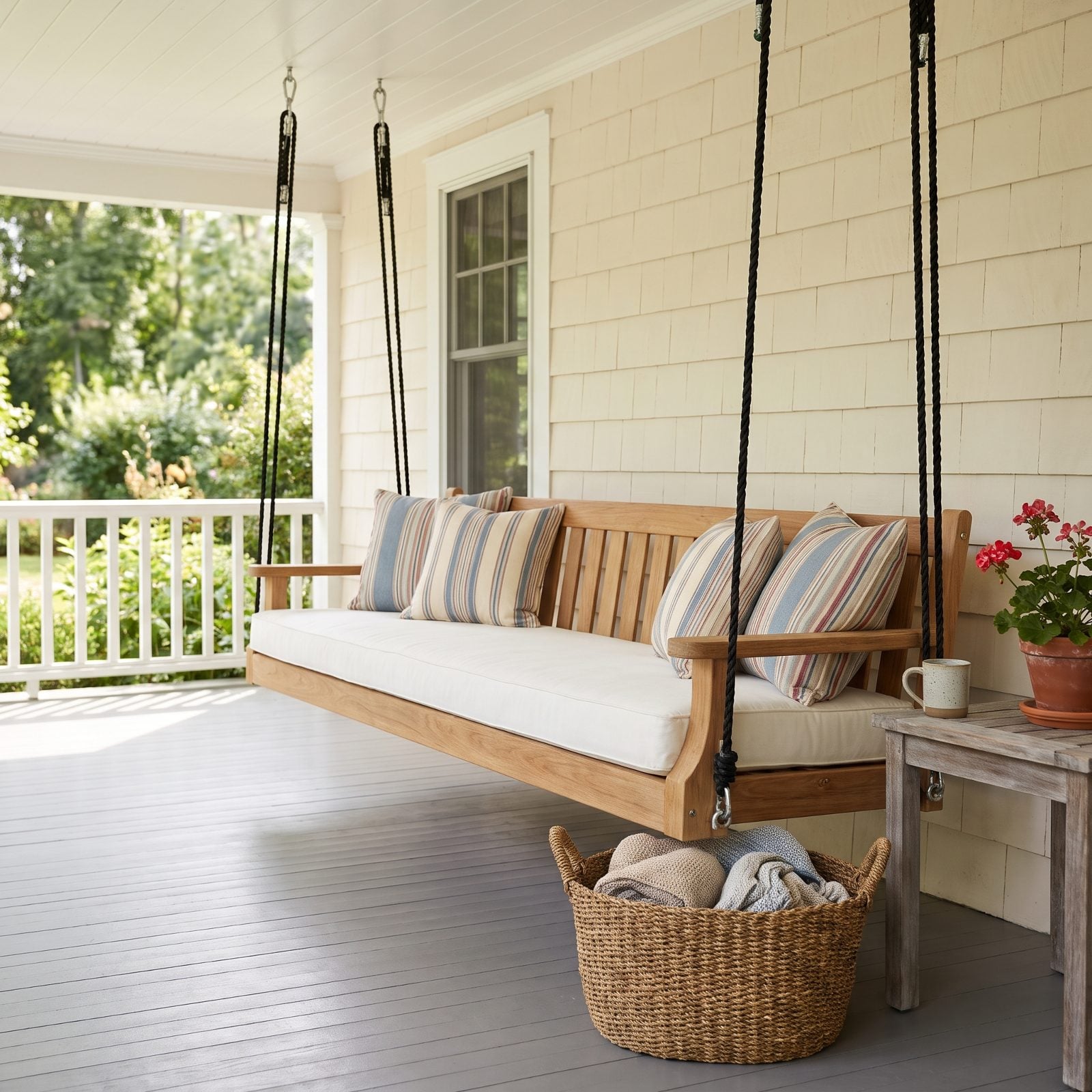
Everybody hangs the swing facing the street, parallel to the house, so it swings out toward the yard. Turn it ninety degrees — hang it end-on to the wall instead — and it stops being a novelty seat and becomes a daybed you can stretch out on sideways.
You still get the gentle sway, minus the collision with the coffee table. And a long sideways swing fits a tucked-up afternoon nap the way the facing-out version never could. Pile one end with pillows and there’s your headrest, built in.
34. Turn One Corner Into a Breakfast Nook
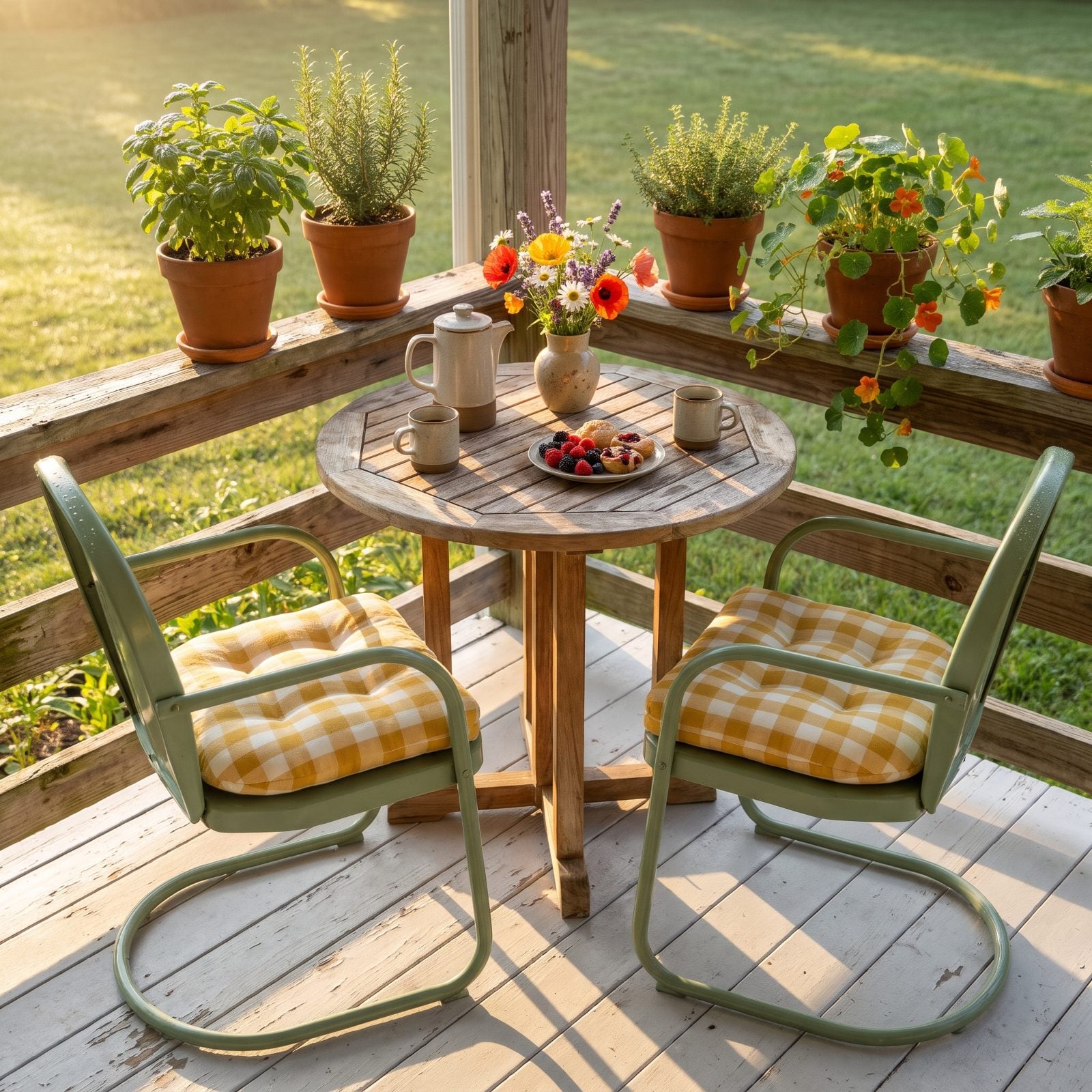
Coffee tastes better outside. This is just a fact.
You don’t need the whole porch for breakfast. One corner, a small round table, two chairs. Tuck it where the morning sun lands and you’ve built yourself a reason to get up earlier.
Round tables beat square ones in a corner. Two people can sit close without a hard edge between them, and a round top tucks into an angle without the shin-barking a square one hands you.
33. Put a Real Indoor Rug Outside
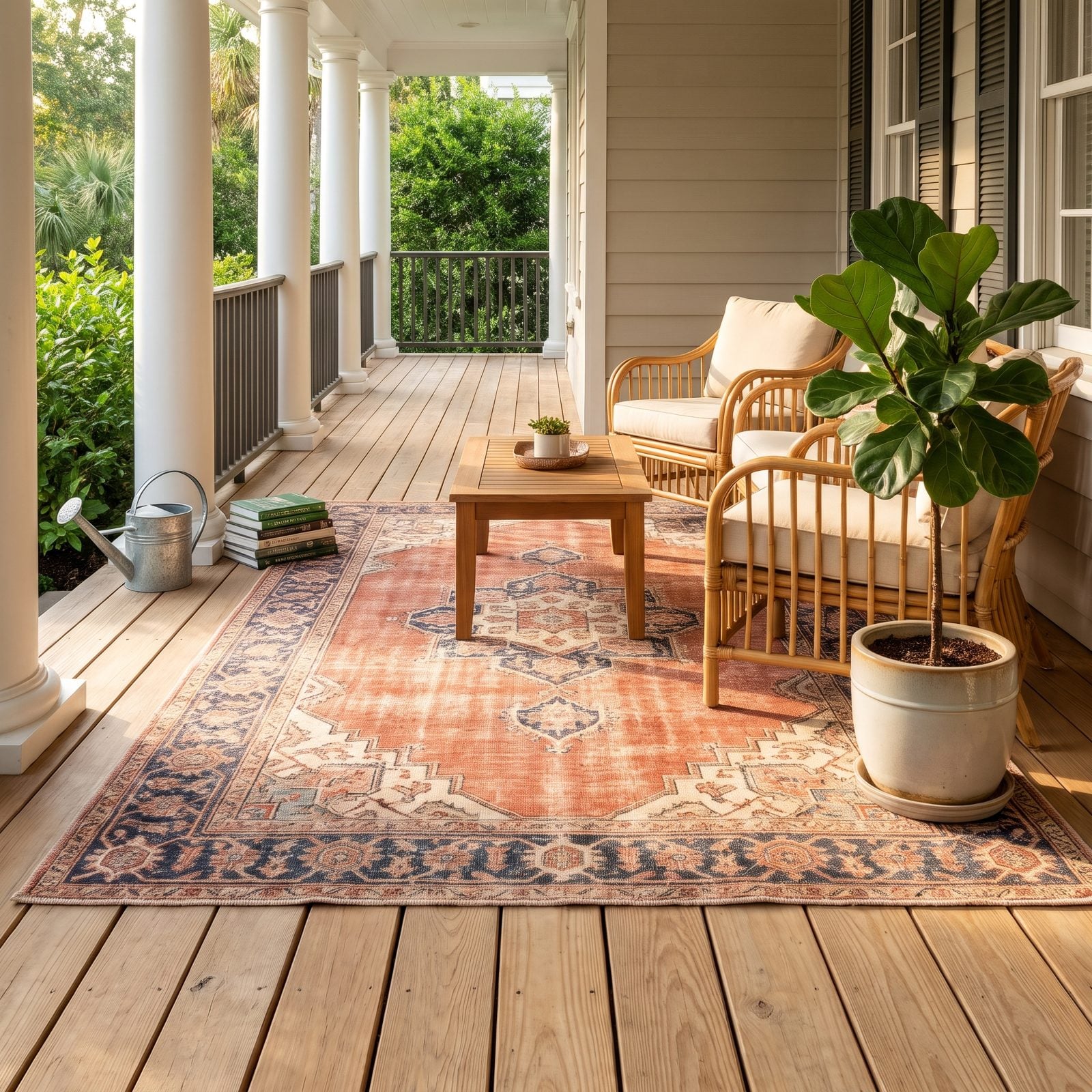
Want a porch to read as a room instead of a landing? Throw down a rug with an actual pattern. Not the flimsy flat tan mat everyone buys — a rug that looks like it wandered out of a living room, medallions and stripes and faded color and all.
Outdoor polypropylene rugs have gotten shockingly good. They mimic flat-weave kilims and hooked rugs closely enough that nobody clocks them as plastic, and you can hose them off when the mud happens. The pattern grounds the furniture and tells your eye the space is enclosed, even with no walls in sight. That’s the whole trick.
32. Use a Dining Table as the Porch Desk
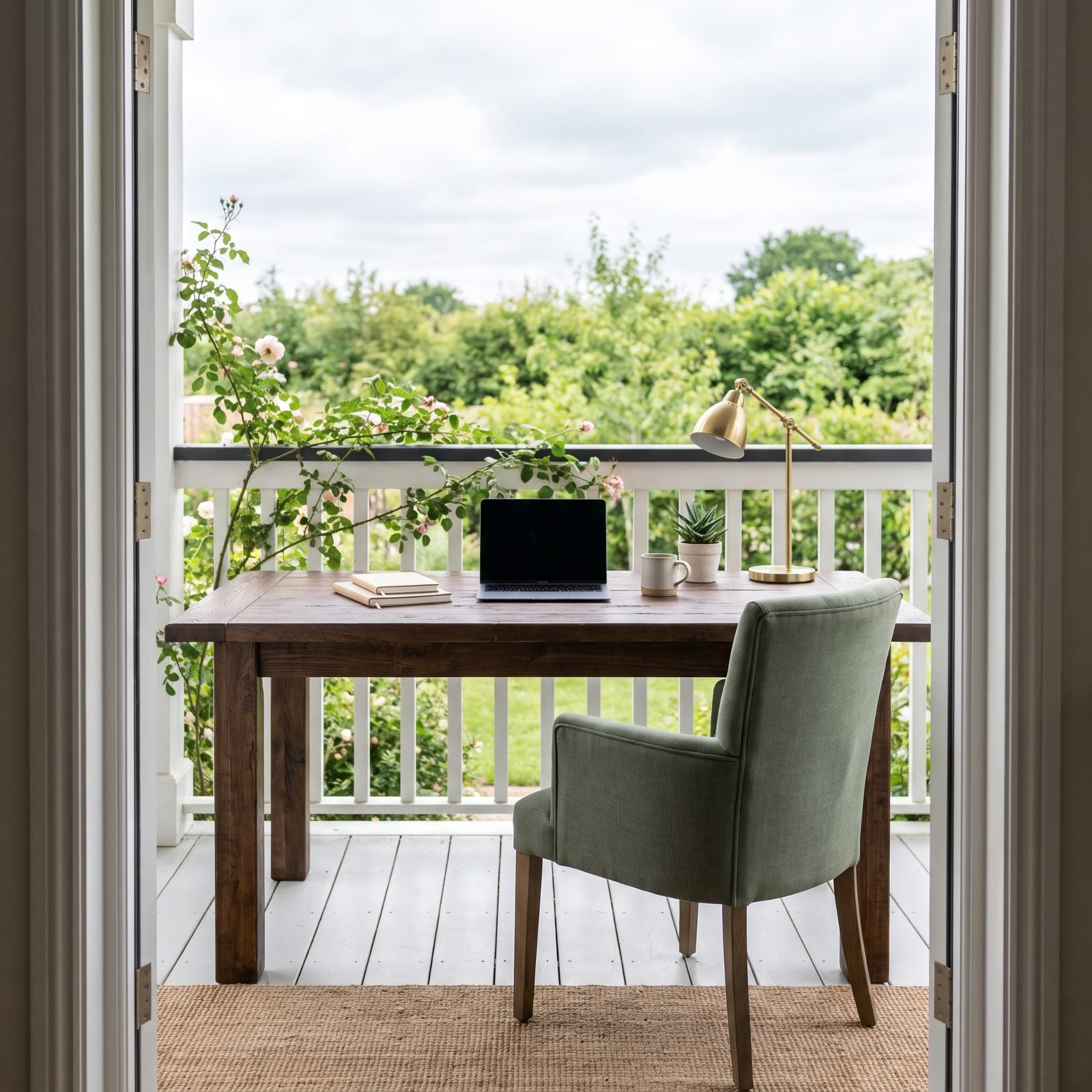
Working from home killed the home office. Nobody wants to stare at the same spare bedroom all day. So haul a full dining table out to the porch and call it your desk.
The length is the whole point. You spread out — laptop at one end, notebooks and coffee at the other, nothing crammed. Then you shut the lid at five and the same table seats six for dinner. One piece of furniture, two lives.
Set it along the railing so you’re facing out, not staring at the siding. A little breeze and some birdsong beats fluorescent silence every single time.
31. Build a Bench Around a Porch Column

That column holding up your porch roof is dead space pretending to be structural. (It is structural. It’s also dead space.) Run a bench along the railing right behind it, turning into the far corner, and that post becomes the front edge of a built-in seating nook.
The L-shape pulls off what store-bought furniture can’t. It seats a crowd along two runs, slots into the corner where nothing else fits, and hides storage below. Put cubbies down there for cushions, garden tools, the hose you’re forever tripping over.
A built-in also reads permanent, which quietly says this porch was planned, not cobbled together on a Saturday.
30. Place a Bar Rail Along the Railing
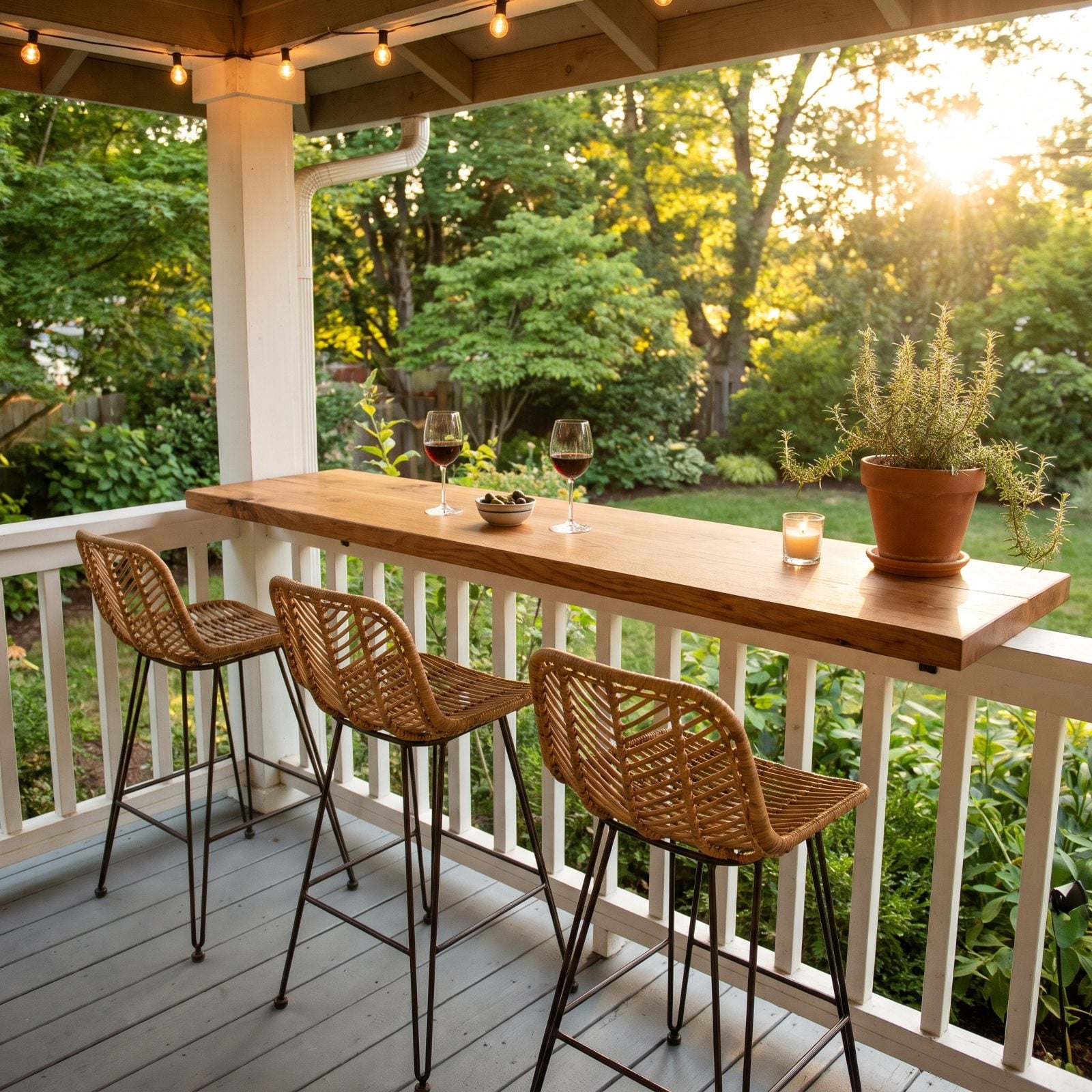
Mount a wide wooden counter on top of your existing railing, add a few tall stools, and there’s your bar facing the yard. Drinks in hand, elbows on the rail, the sun dropping behind the neighbor’s maple. Hard to beat.
It works because it rides the railing you already own. No new footprint, no tripping hazard — just a slab of oak and three stools, turning the edge of the porch, usually the most ignored strip of the whole thing, into the best seat in the house.
29. Install a Pair of Suspended Egg Chairs

One hanging egg chair is a statement. Two, hung side by side, is a conversation.
The pairing matters more than the chair itself. A single egg chair says look at me. Two say sit with me — a completely different porch. You can read side by side without anybody craning a neck, or talk for an hour while you both rock a little.
Check your ceiling joists before you hang a thing. A chair plus a grown adult is real weight, and you want it bolted into framing, not drywall. Honestly, hire someone for the mounting if you’re at all unsure. A chair that drops you is not a good story.
28. Add a Fold-Down Wall Table
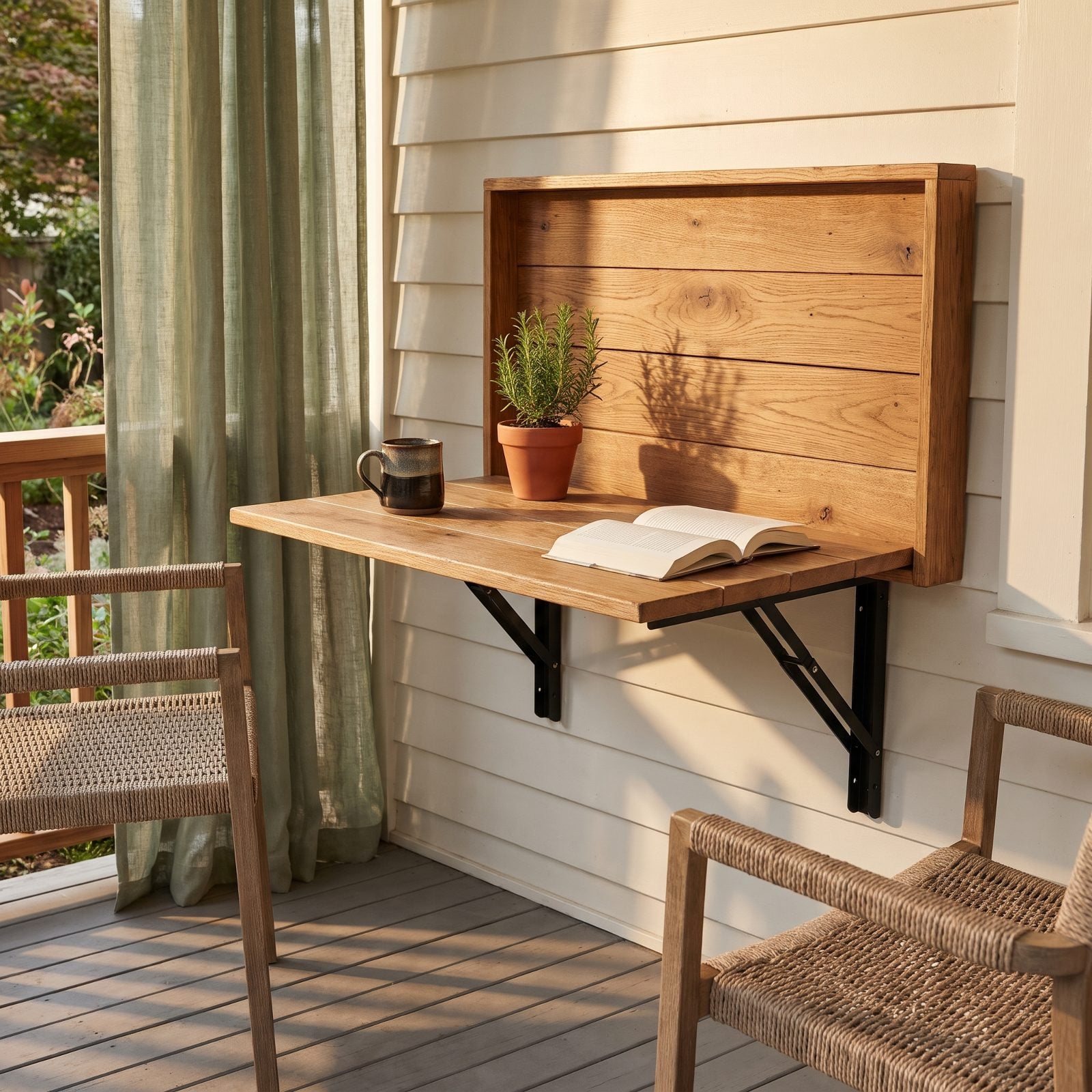
Narrow porches lose nothing and gain everything with a table that disappears into the wall. You mount it with a piano hinge and a folding bracket, drop it down for morning coffee or a crossword, then swing it flat when the walkway needs to be clear.
Reclaimed oak holds up to damp air better than cheap pine, which swells and warps the first wet autumn. We learned that one the hard way with a hallway shelf that bowed like a banana. Go generous — roughly two feet deep — so there’s room for a mug, a plant and an open book, then fold it flat so nobody clips a hip walking past.
27. Add Infrared Heaters Under the Eaves
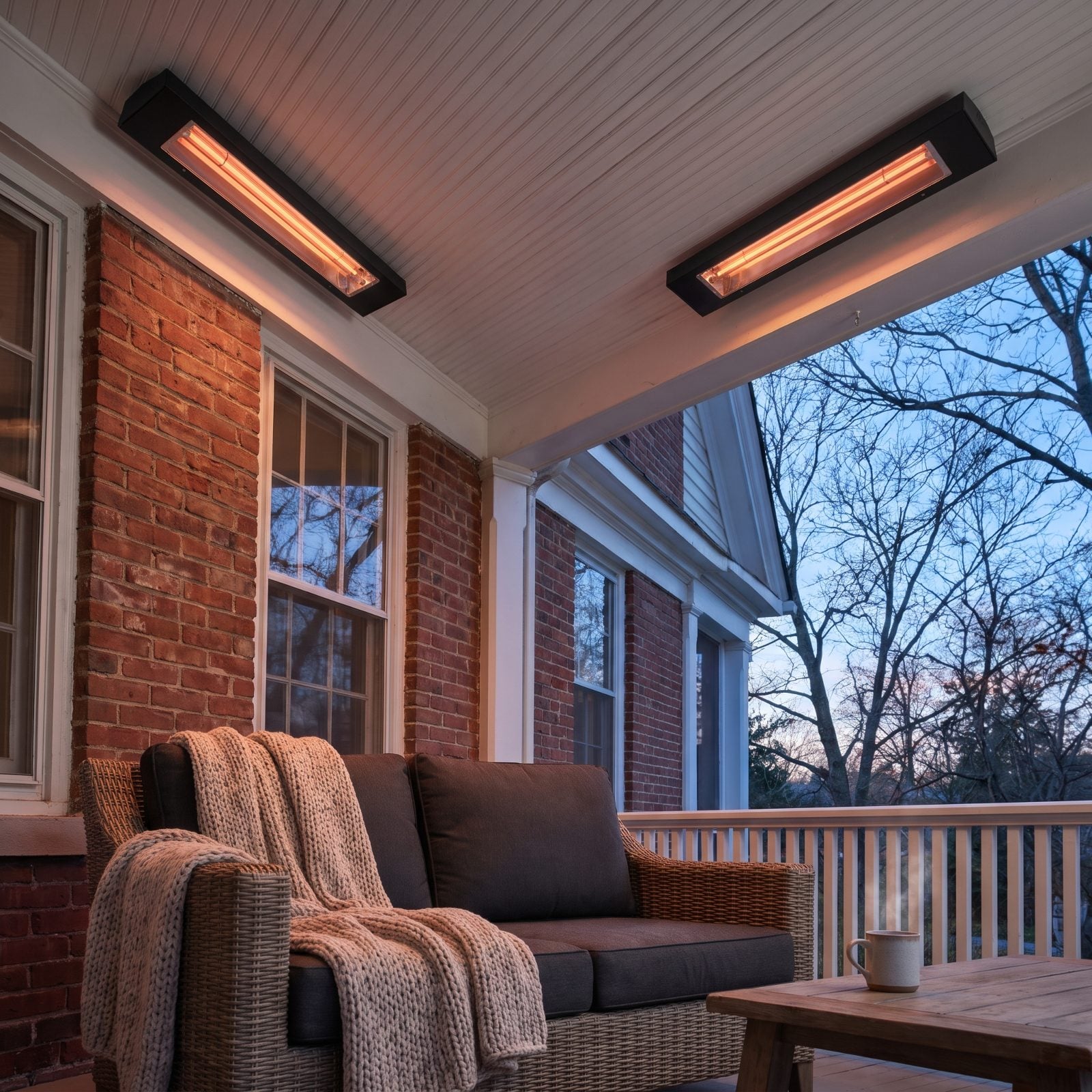
Heat is what keeps a porch useful in October instead of abandoned by Labor Day. Infrared units mounted under the eaves warm people and objects directly rather than the air, so a breeze doesn’t steal everything the way it does with a patio tower.
Electric infrared runs cleaner than propane — no tank to haul, no open flame near your knit throws. You’ll pay to run it, and anyone quoting you an exact monthly cost is guessing, because it depends on your rates and how often you brave the cold. Mount it high, angle it down at the seats, and late-night porch sitting suddenly stretches into real jacket weather.
Explaining why radiant units hold up in a breeze, an outdoor heating specialist notes of the infrared heater “It does not warm the air. It emits infrared energy that passes through air and is absorbed by whatever it lands on: your skin, your jacket, the table, the floor.”
26. Add Outdoor Floor Lamps
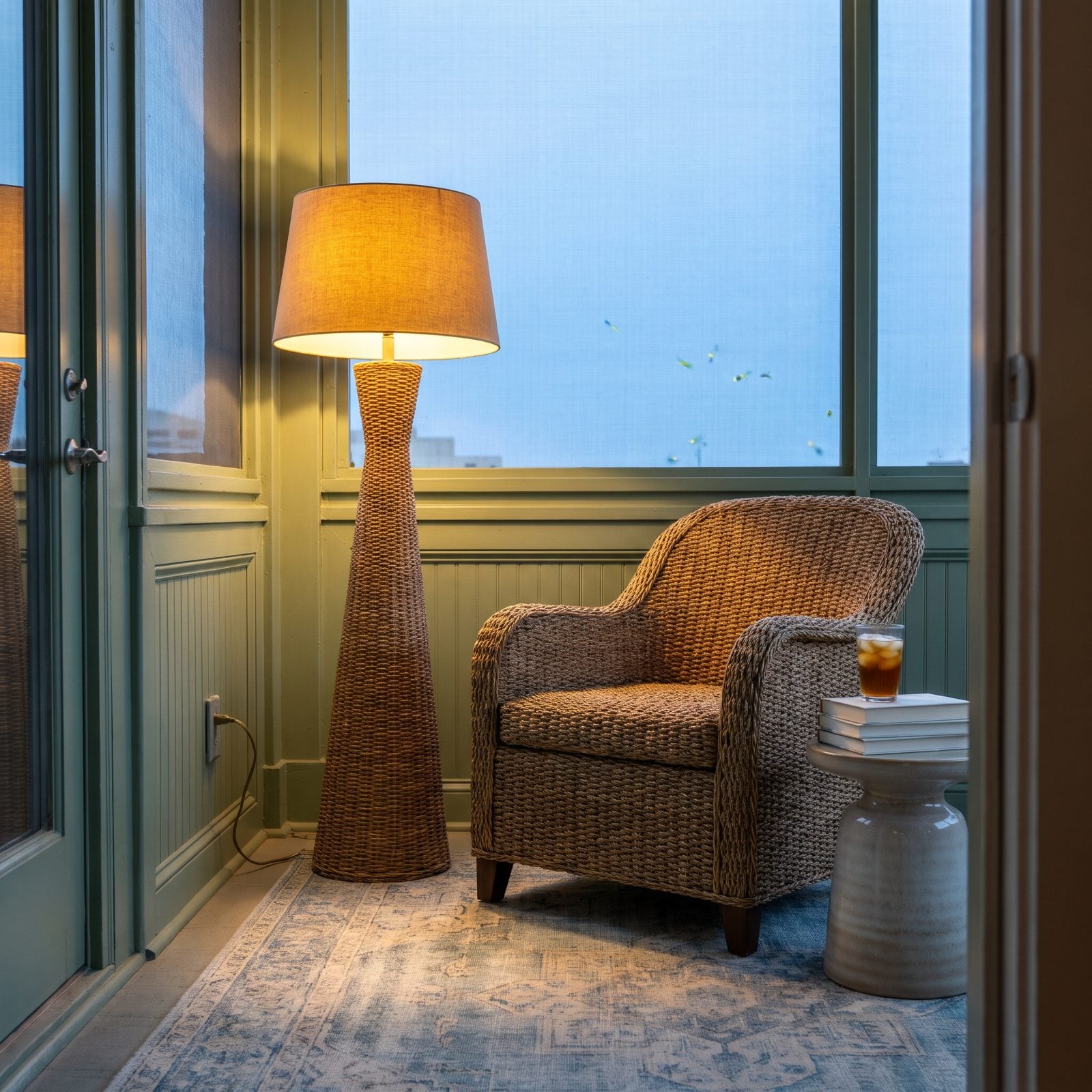
Overhead light flattens a porch into a parking lot. Floor lamps do the opposite — they drop the glow to seated eye level and carve a room out of the dark, the same trick that makes your living room feel like somewhere you want to be.
Look for weatherproof-rated lamps with a grounded outdoor plug, not an indoor lamp you dragged outside and hoped for the best. Rattan and all-weather resin shades shrug off humidity. One by a reading chair changes the whole porch after sundown.
25. Hang a Pendant Light Like an Indoor Chandelier
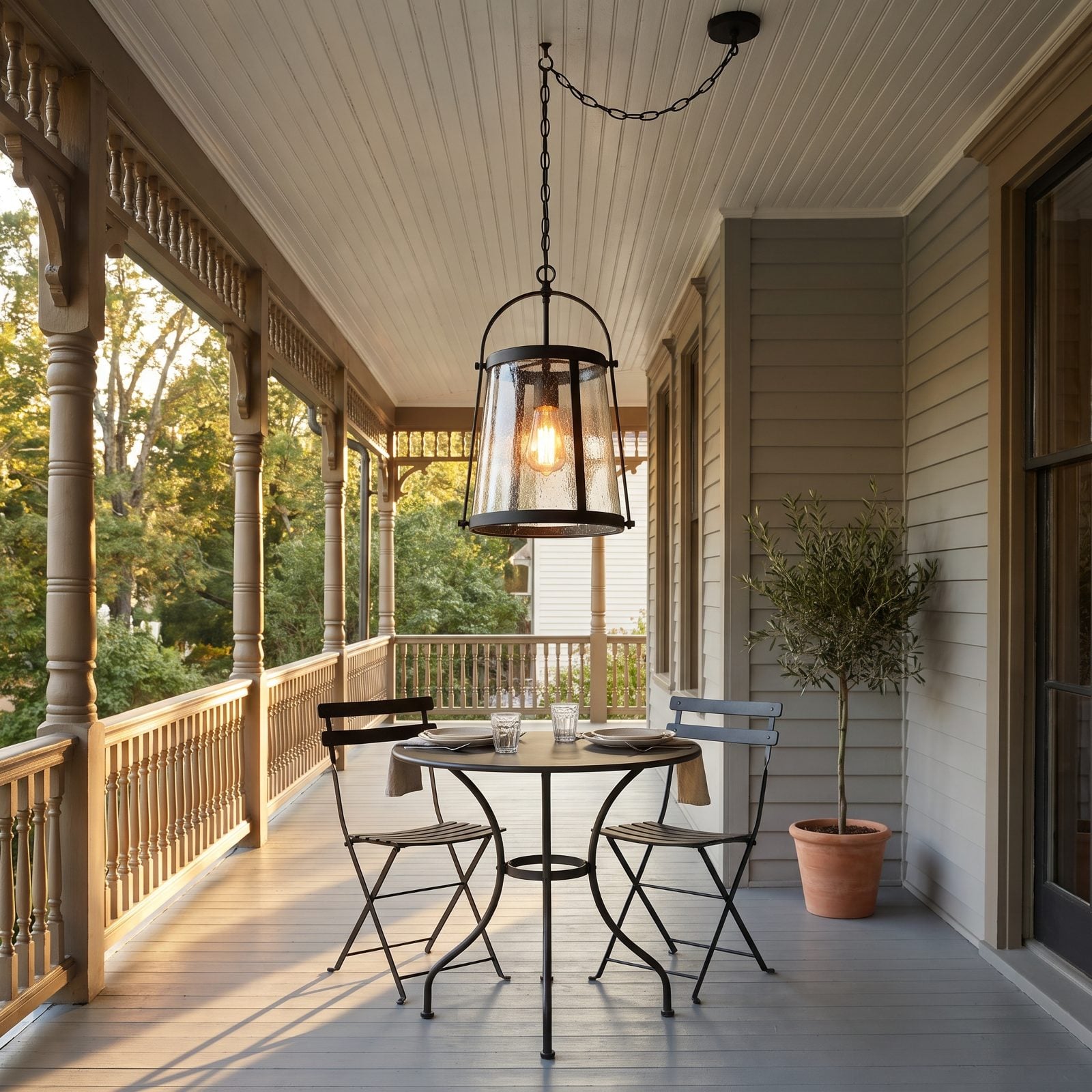
Nothing says room-not-stoop like a real pendant overhead. Hung on a swag hook with the cord chained to a side outlet, it centers a seating or dining zone and finally gives the ceiling a reason to exist.
Go for a wet-rated or damp-rated fixture, and check which one your porch actually needs. Fully exposed to blowing rain means wet-rated. Tucked under a deep roof? Damp is fine. A seeded-glass lantern with one warm bulb carries all the chandelier drama without the crystal you’d have to dust in the wind.
On choosing the right rating for an outdoor fixture, an electrical contractor explains “A damp-rated fixture is built for spots that see moisture but not falling or blowing water, such as a roofed porch ceiling or a covered patio.”
24. Hang a Mirror Opposite the Garden
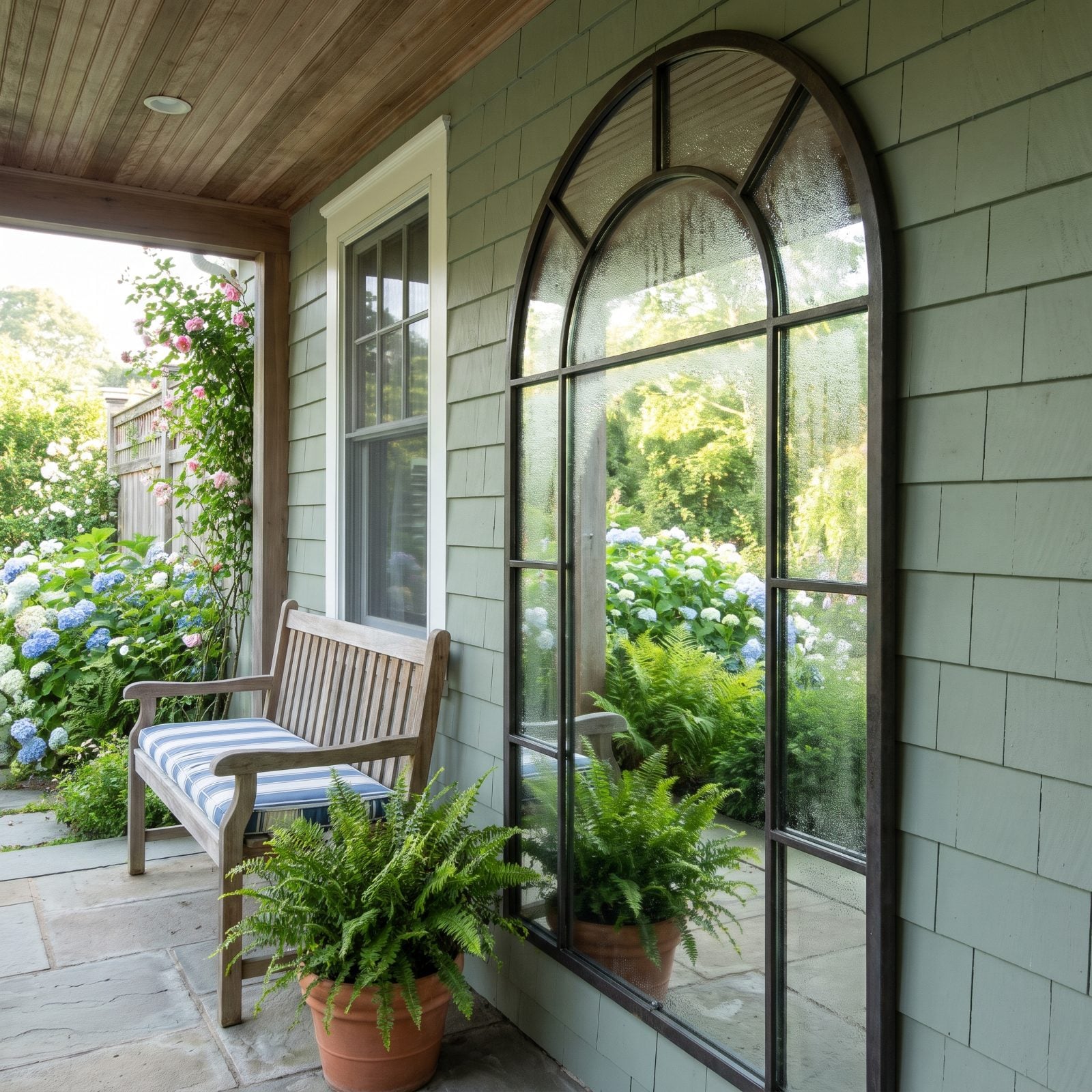
A mirror on the porch wall steals the garden and hangs it where there wasn’t one. Place it opposite your best view — the hydrangeas, the climbing rose — and it doubles the green while bouncing daylight into shaded corners.
Outdoor-rated mirrors exist for exactly this. The backing on an indoor mirror fogs and spots within a season out in the damp, leaving you with a sad grey ghost of a mirror. Ask me how I know. An arched metal frame holds up to weather and reads like a window that was always meant to be there.
23. Create an Outdoor Gallery Wall
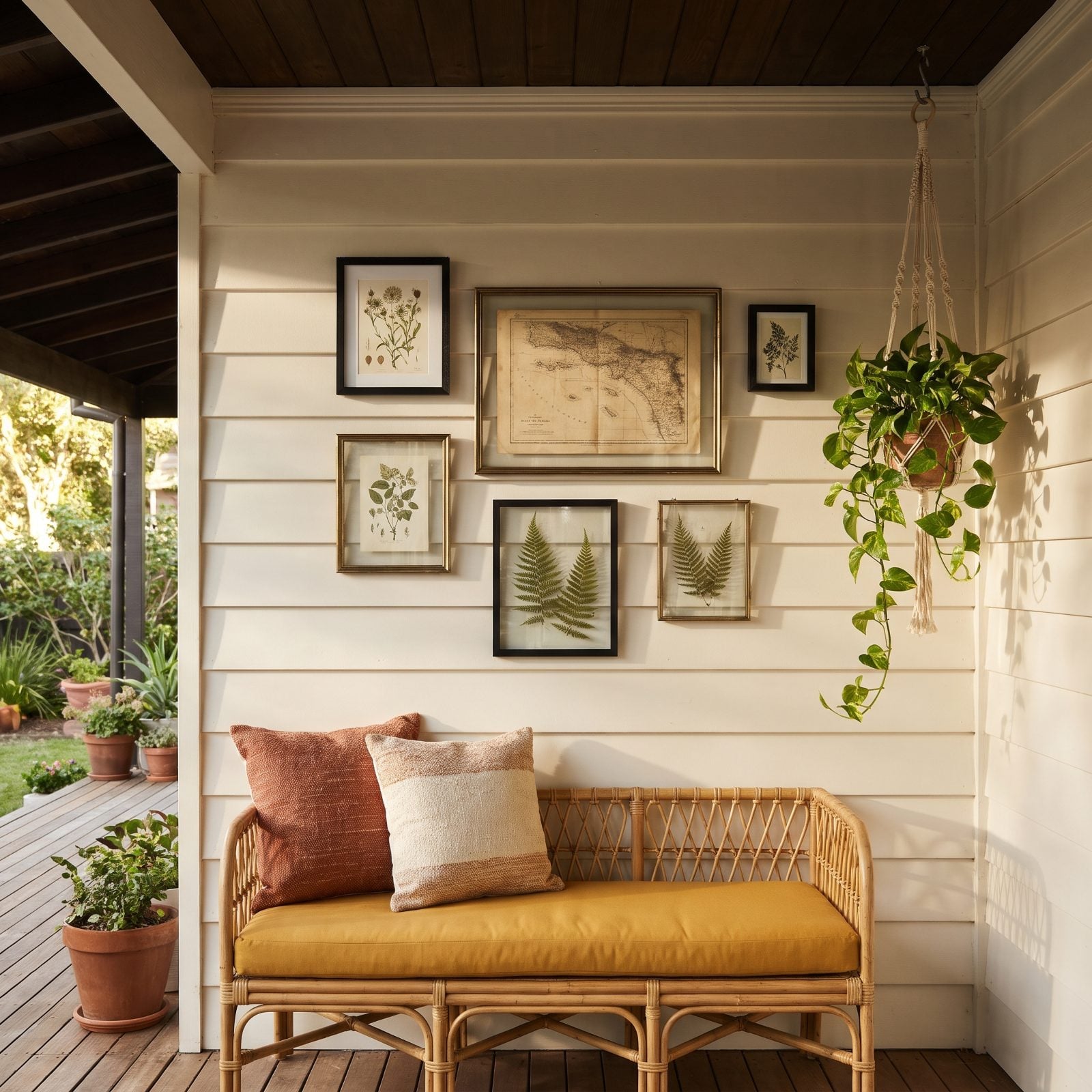
Why should the walls inside get all the art? A sheltered porch wall — one that stays dry under deep eaves — holds a gallery arrangement that turns a blank panel into a reason to linger.
Use weatherproof frames or seal the backs yourself, and lean toward botanical prints, old maps, or pressed ferns under glass. Subjects that belong outdoors anyway. Mix the frame sizes, keep the spacing tight, and anchor the lowest frame about a foot above the furniture so the whole thing reads as one composition.
22. Stencil the Floor Like a Tile Rug
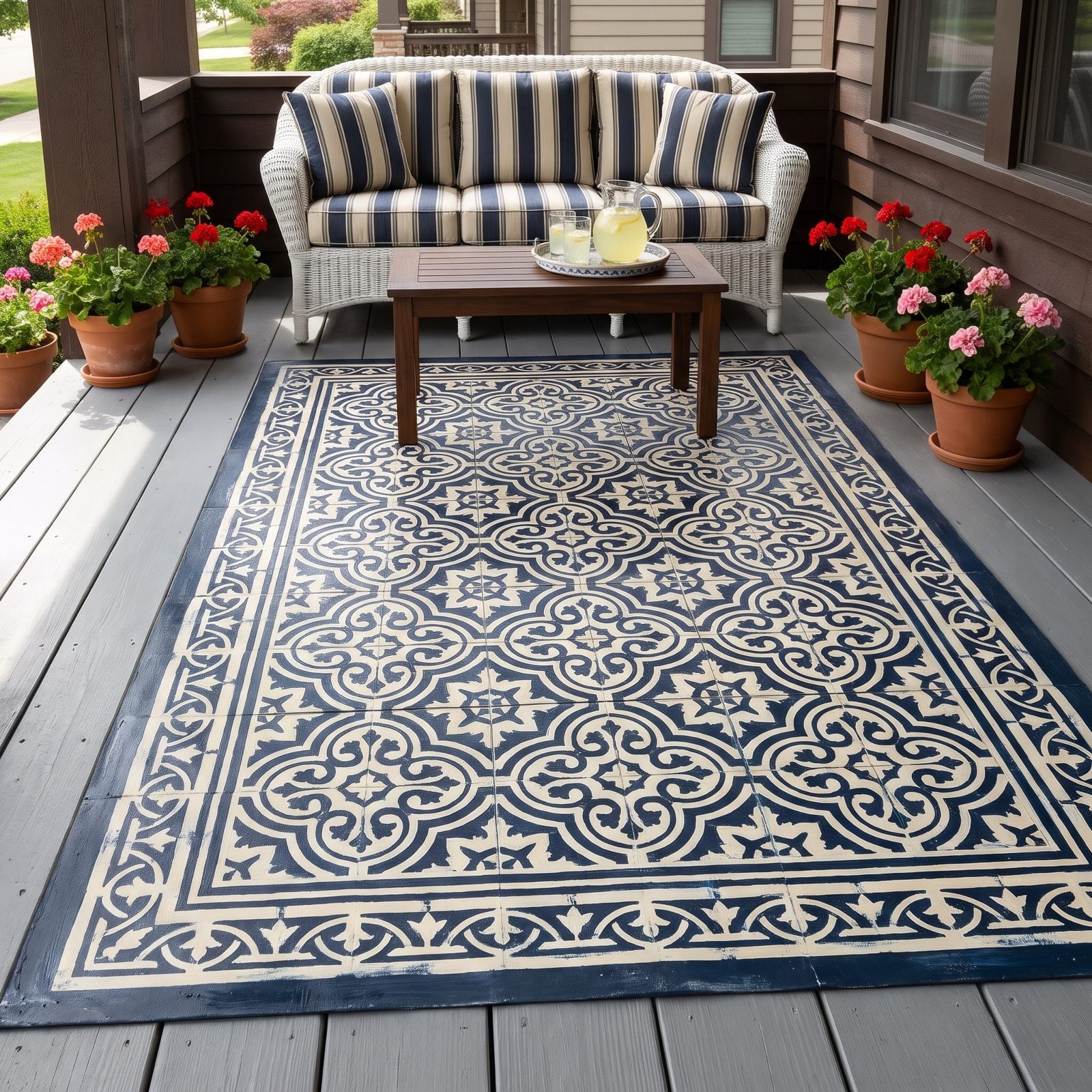
A painted tile pattern fakes an outdoor rug that never curls, never traps water, never blows into the yard in a storm. Tape off a rectangle, pick a stencil, and layer porch-and-floor paint in two tones for that cement-tile look.
It’s slow, fiddly work. Expect sore knees and at least one swear word when the stencil slips. But it grounds a seating zone like a real rug, and a coat of polyurethane on top means it survives boots, rain, and the dog. Navy on gray is nearly impossible to botch.
21. Wallpaper a Protected Porch Wall
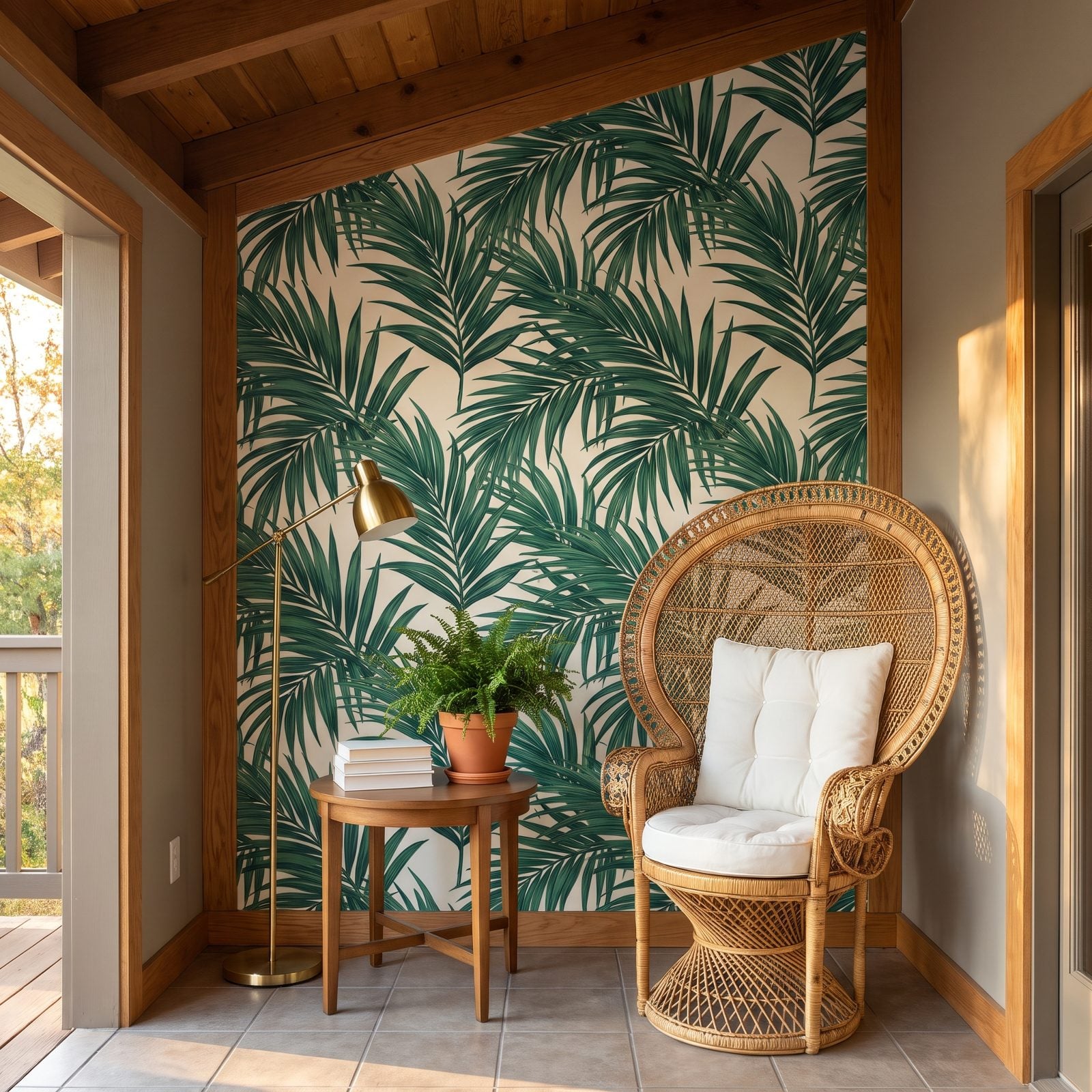
Wallpaper outdoors sounds reckless until you see it on a wall that never gets wet. A corner tucked deep under the roof, shielded from blowing rain, takes outdoor-grade peel-and-stick paper and suddenly reads like a sunroom instead of a slab of siding.
Pick a bold botanical or a palm print, something that belongs in the open air. The glue on standard indoor paper gives up fast in humidity, so buy the exterior-rated stuff and test one strip before you commit. On the right protected wall, this is the single move that makes guests ask if you built an addition.
20. Add a Peg Rail for Everyday Gear
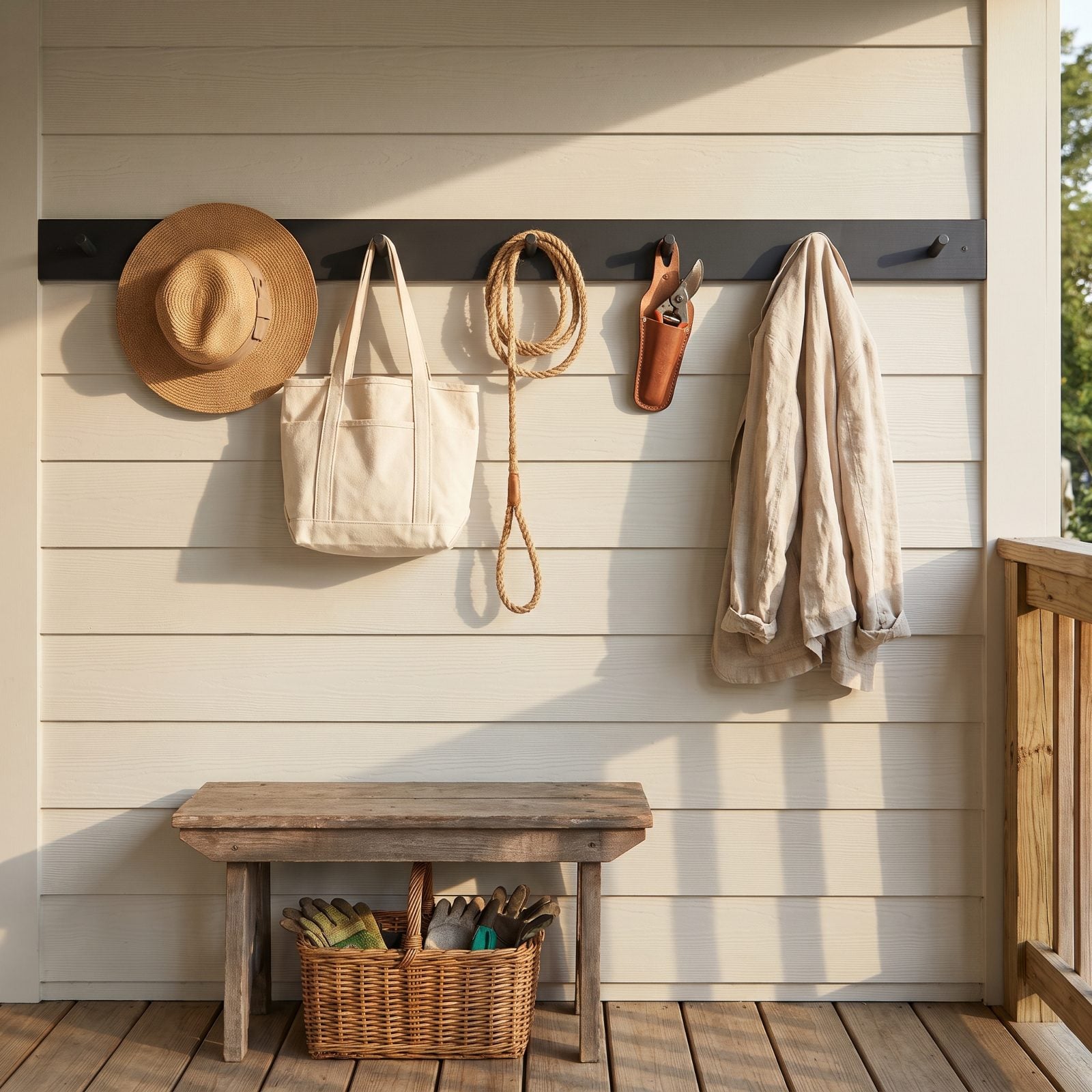
A Shaker peg rail is the most useful bit of lumber you’ll ever mount outside. Hats, the dog leash, garden shears, a tote for clipping herbs — everything you fumble for lives on hooks within arm’s reach of the door.
Hang it at shoulder height so a loaded tote doesn’t drag on the floor. Painted black or left raw, it keeps the porch from becoming the place where gear piles up in a corner and quietly judges you.
19. Mount a Weatherproof Book Cabinet
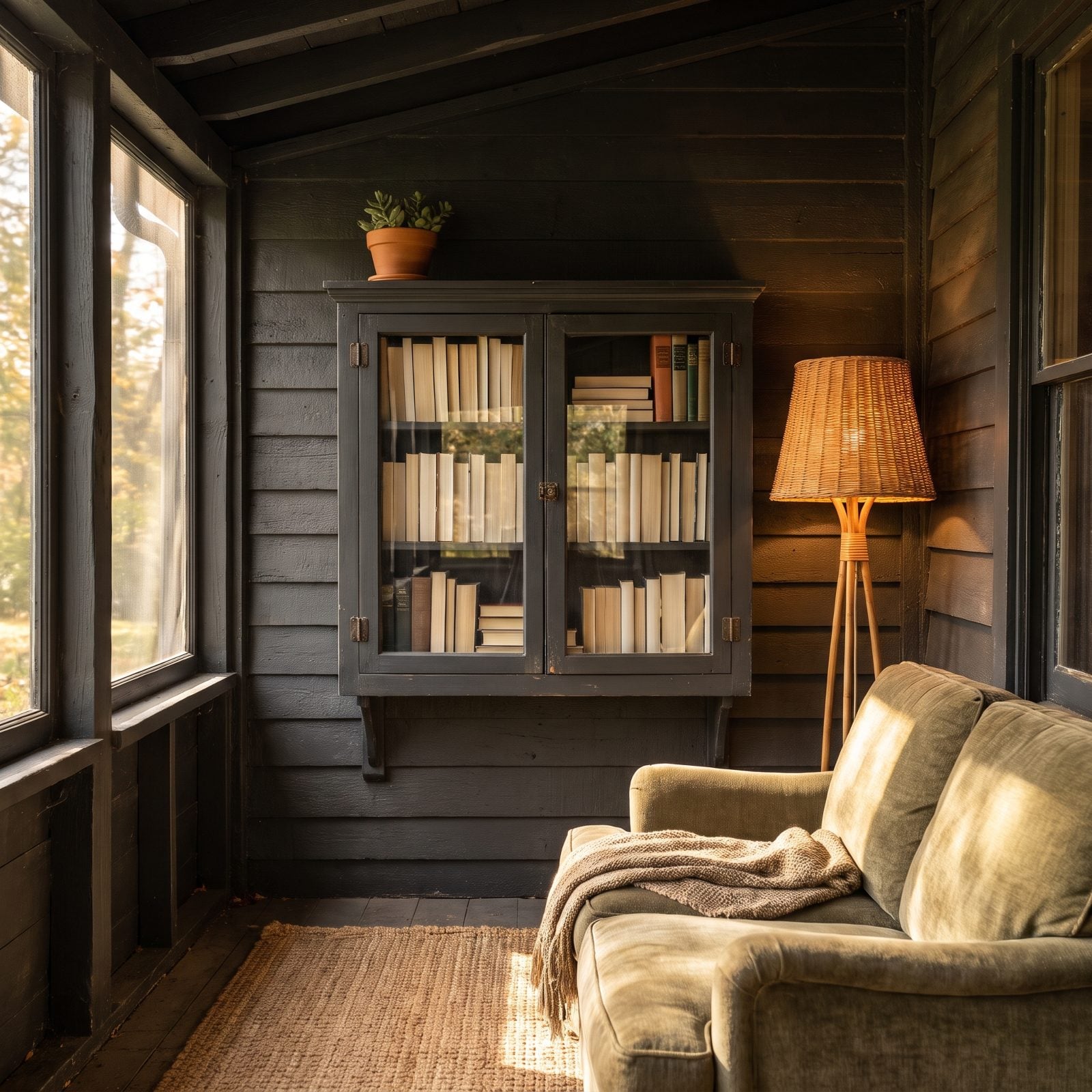
Books on an open porch warp, mildew, and curl by the second week. A sealed cabinet fixes that. A glass-fronted, weatherproof case keeps paperbacks dry and dust-free while putting a little library right where you do your best reading.
Mount it on the sheltered wall, load it with the kind of books you reread, and leave a succulent on top. Now the porch earns a Sunday afternoon. Add a lamp beside it and a cushioned chair, and nobody comes back inside until the light goes.
A porch earns the name outdoor living room the moment you stop bringing everything back inside at night.
18. Turn a Vintage Trunk Into a Coffee Table
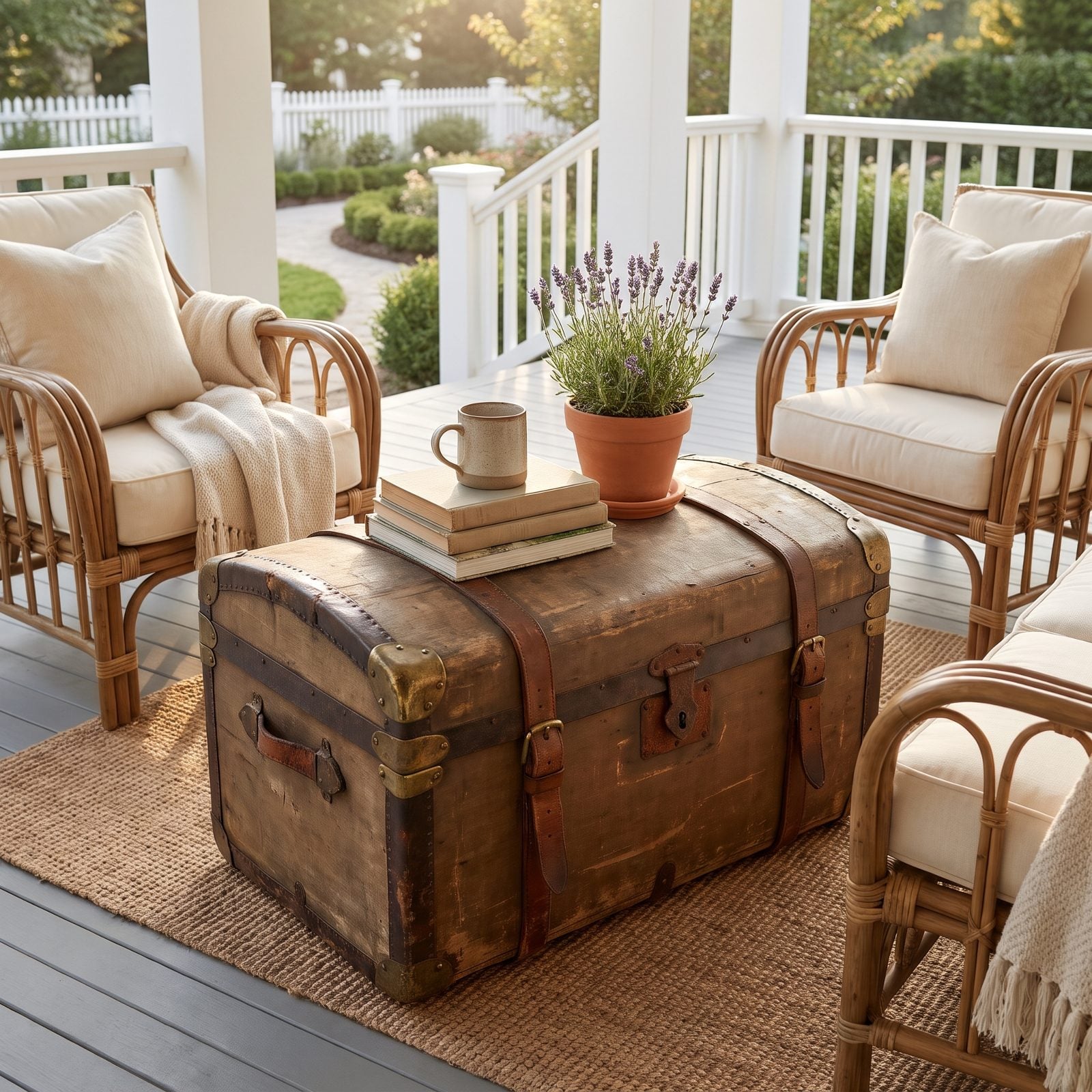
A domed-lid trunk from an estate sale does two jobs for the price of furniture that manages only one. On top it holds your coffee, your book, your feet; inside it swallows blankets, citronella candles, and the cushions you drag in before a storm.
Don’t pass up a domed lid. It looks lovely, but a curved top is no place for a loose mug, so a short stack of hardcovers gives your mug a level perch — we learned that trick the expensive way, with a trunk we loved and a coffee we didn’t.
17. Use a Rolling Cart as a Porch Bar
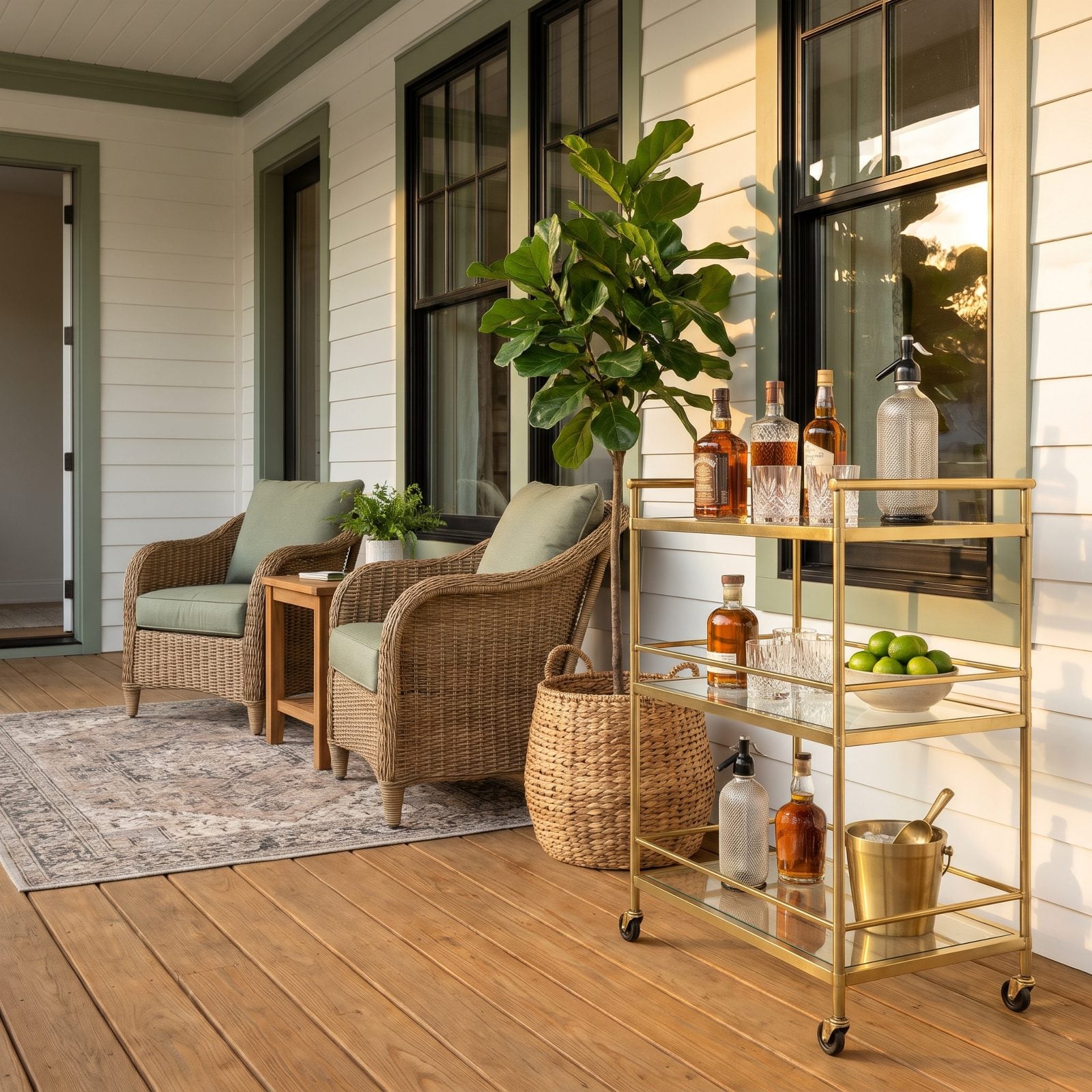
A bar cart on wheels is the laziest genius move here, and we mean that as praise. Mix drinks on the porch at six, roll the whole thing into the kitchen at ten, and nothing gets abandoned out in the dew overnight.
Lock the casters once it’s parked. A loaded cart with four free-rolling wheels will migrate across a sloped porch on its own, usually toward the steps. Ask me how I know.
16. Add a Built-In Cooler Drawer
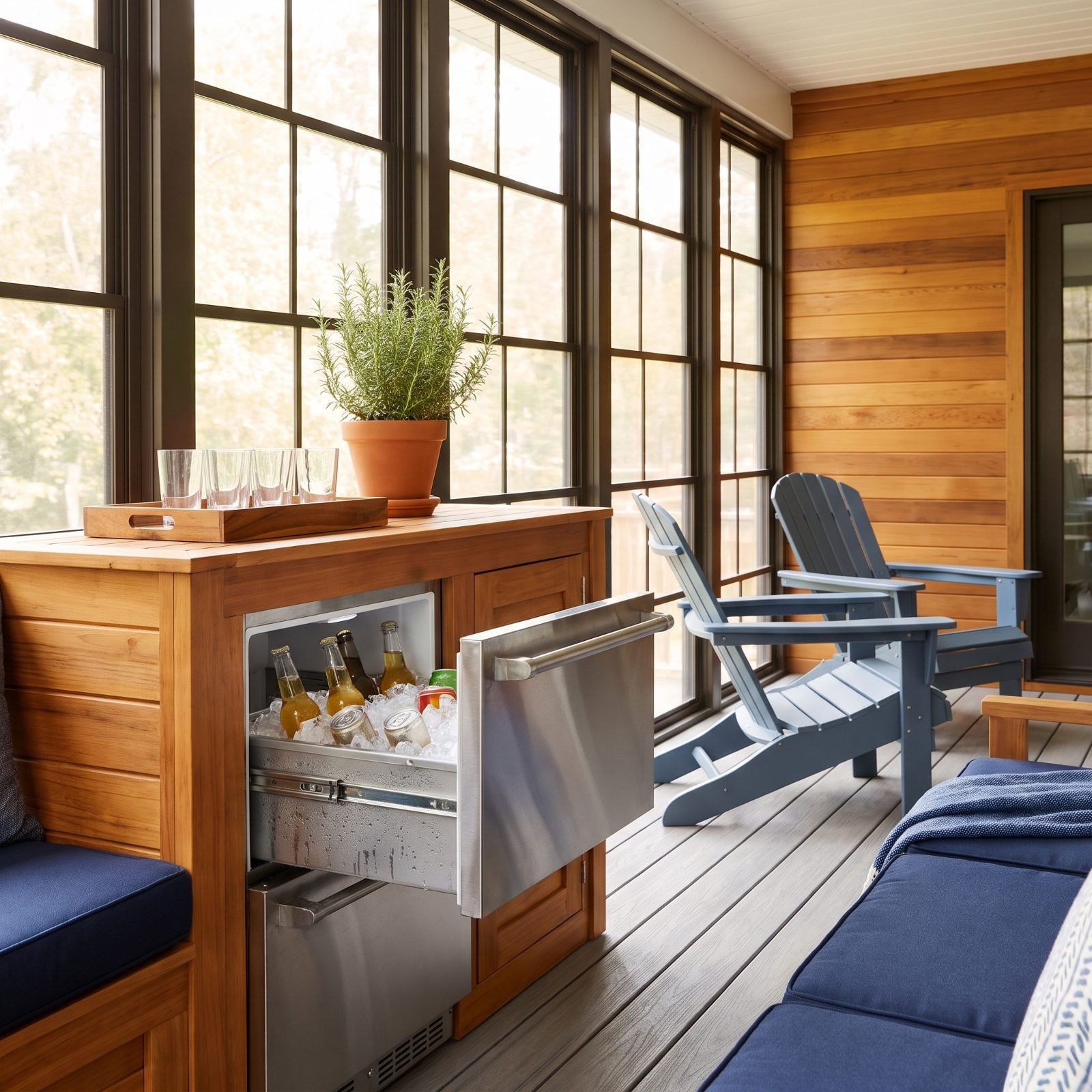
Nobody knows they want a cooler drawer until they’ve stopped hauling a dripping Styrofoam box across the porch every weekend. It tucks into a console or low cabinet, pulls out like a kitchen drawer, and keeps drinks cold at hip height.
You’ve got two paths. A drop-in insulated ice bin runs cheap and needs draining; a powered drawer refrigerator costs real money and wants a weatherproof outlet nearby. Honestly, for most porches the ice bin wins on charm and hassle both.
15. Install a Compact Outdoor Sink
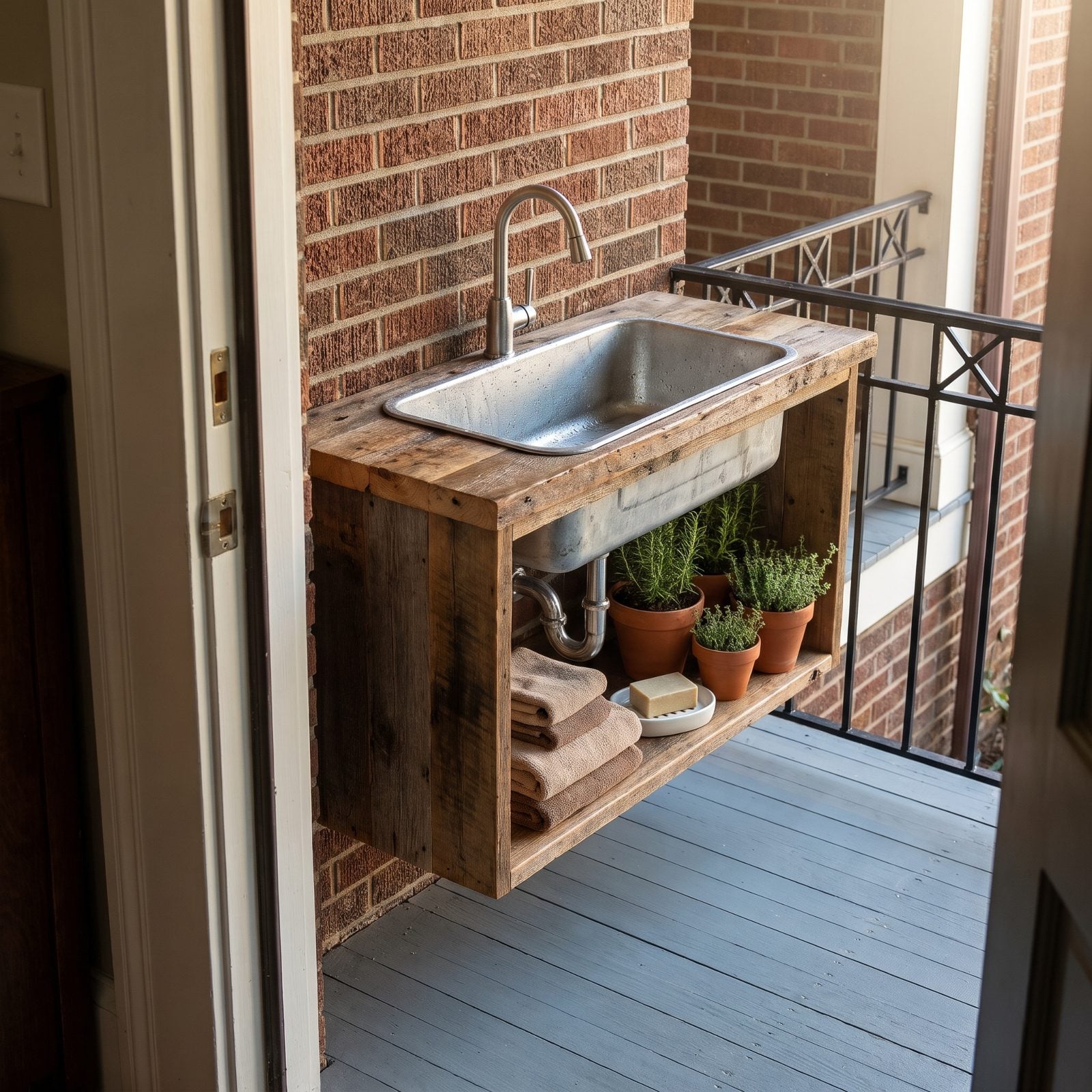
A porch sink sounds fussy until you’ve tried rinsing muddy hands, garden tools, and a dog’s paws at the same spigot you use for the flowers. A basic cold-water basin, fed off a garden line and draining to a bucket or a gravel pit, rearranges the whole rhythm of a backyard day.
No hot water needed. Most places don’t require a permit for a simple cold-water basin either, though that depends on your state and on whether you tie into real plumbing. Check before you cut into anything.
14. Set Up a Potting Counter That Doubles as a Buffet
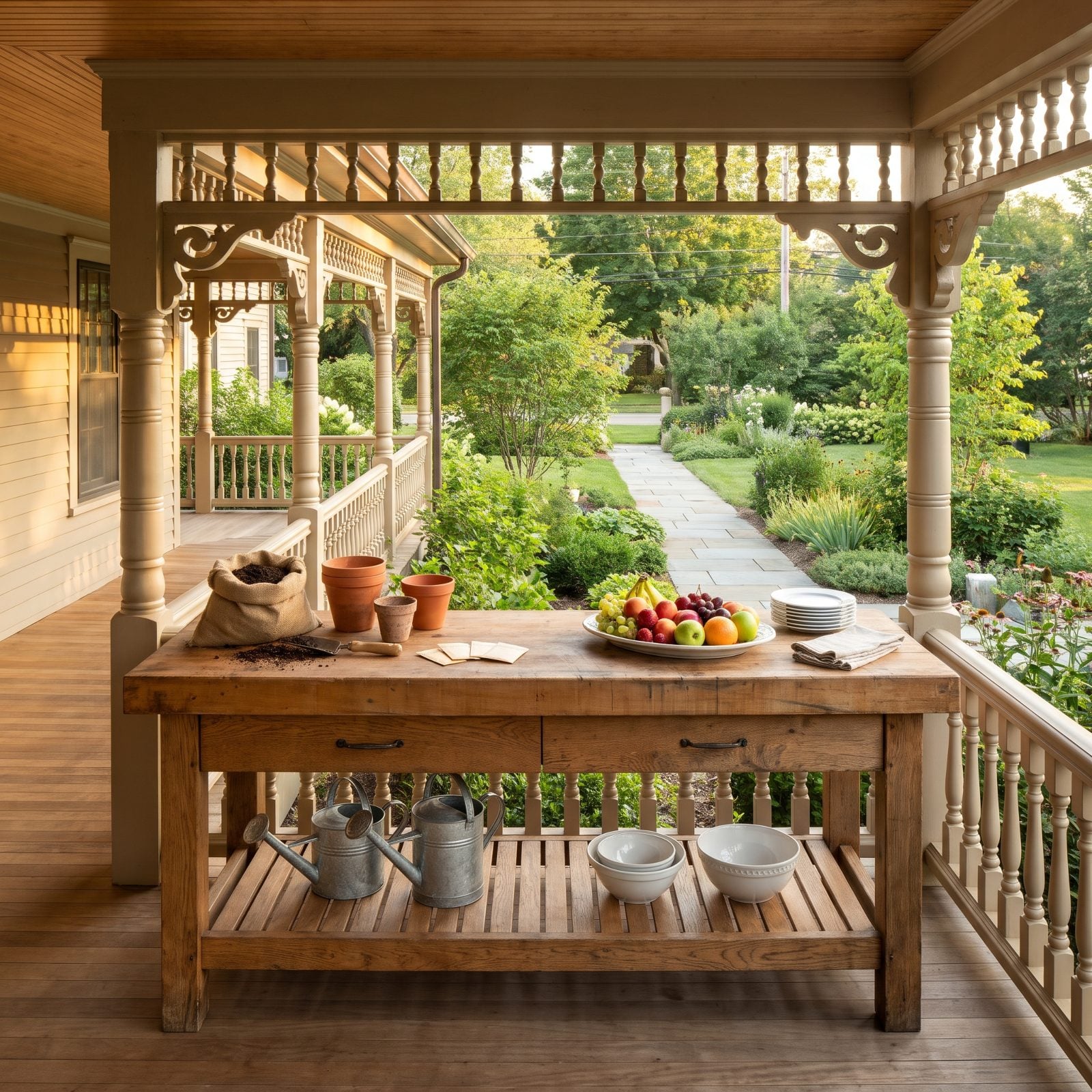
One counter, two lives. Weekday mornings it’s where you repot the geraniums and start your tomatoes; Saturday evening it’s the buffet, with a fruit platter and stacked plates sharing the top with a sack of potting mix and a scatter of loose soil.
The secret is a sturdy, weathered top — thick, rough-hewn butcher block that doesn’t mind a little dirt. Just keep the potting mix at one end and the food at the other, and sweep the stray soil away before guests arrive, or you’ll end up explaining why the brie tastes faintly of compost.
13. Build a Hidden Shoe Drawer Under the Bench
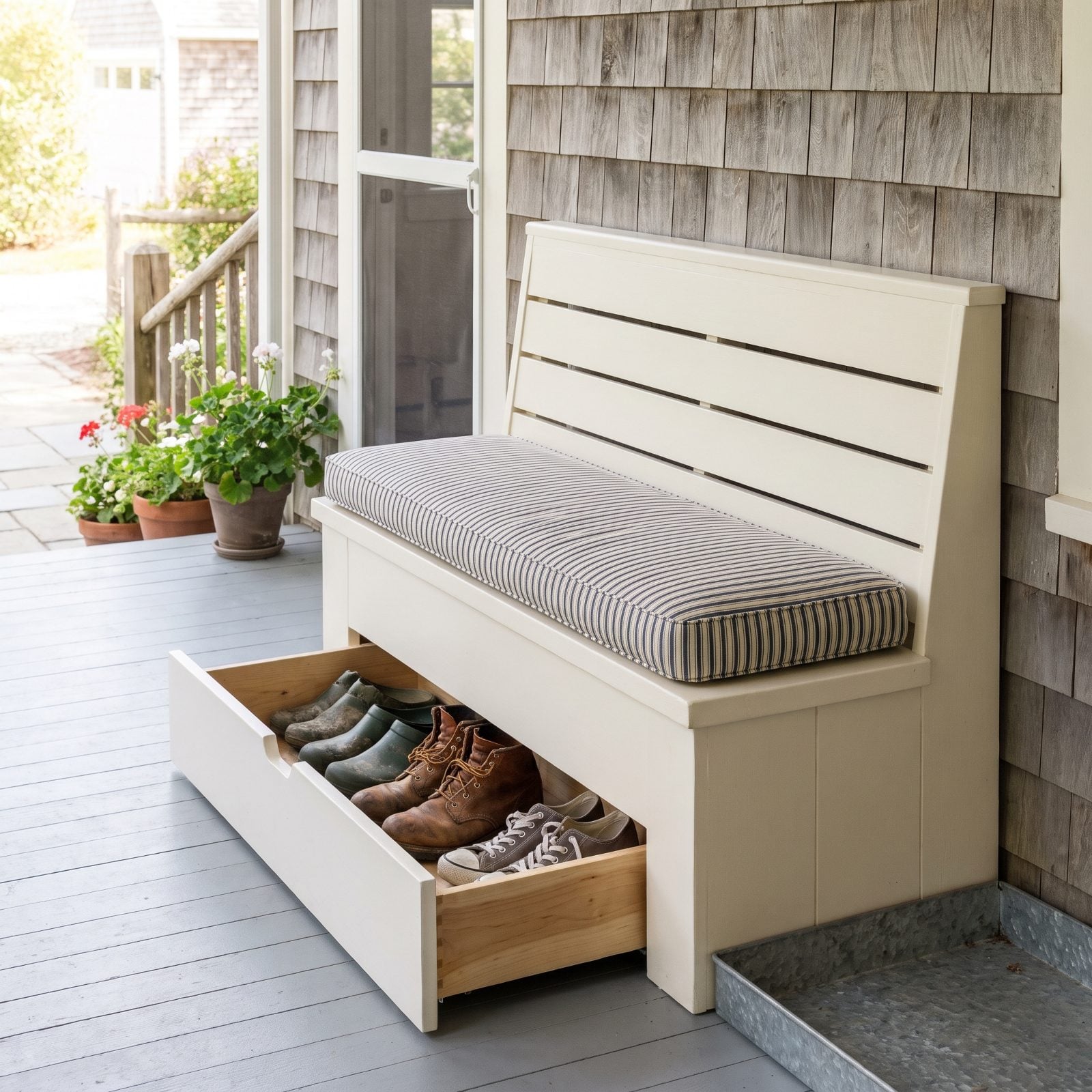
Muddy boots at the door are the oldest unsolved problem in American housekeeping. A deep drawer built under the porch bench lifts them off the floor and out of sight, and keeps the dirt they carry on the porch instead of your hallway.
Make it deep enough — eight to ten inches — that lace-up boots stand upright, and leave it open a while so wet soles air out instead of festering in a dark box. A galvanized tray on the floor beside the bench catches grit and lifts out for a hose-down. If we were starting over, this is the thing we’d build first.
12. Install Outdoor Speakers Behind Planters
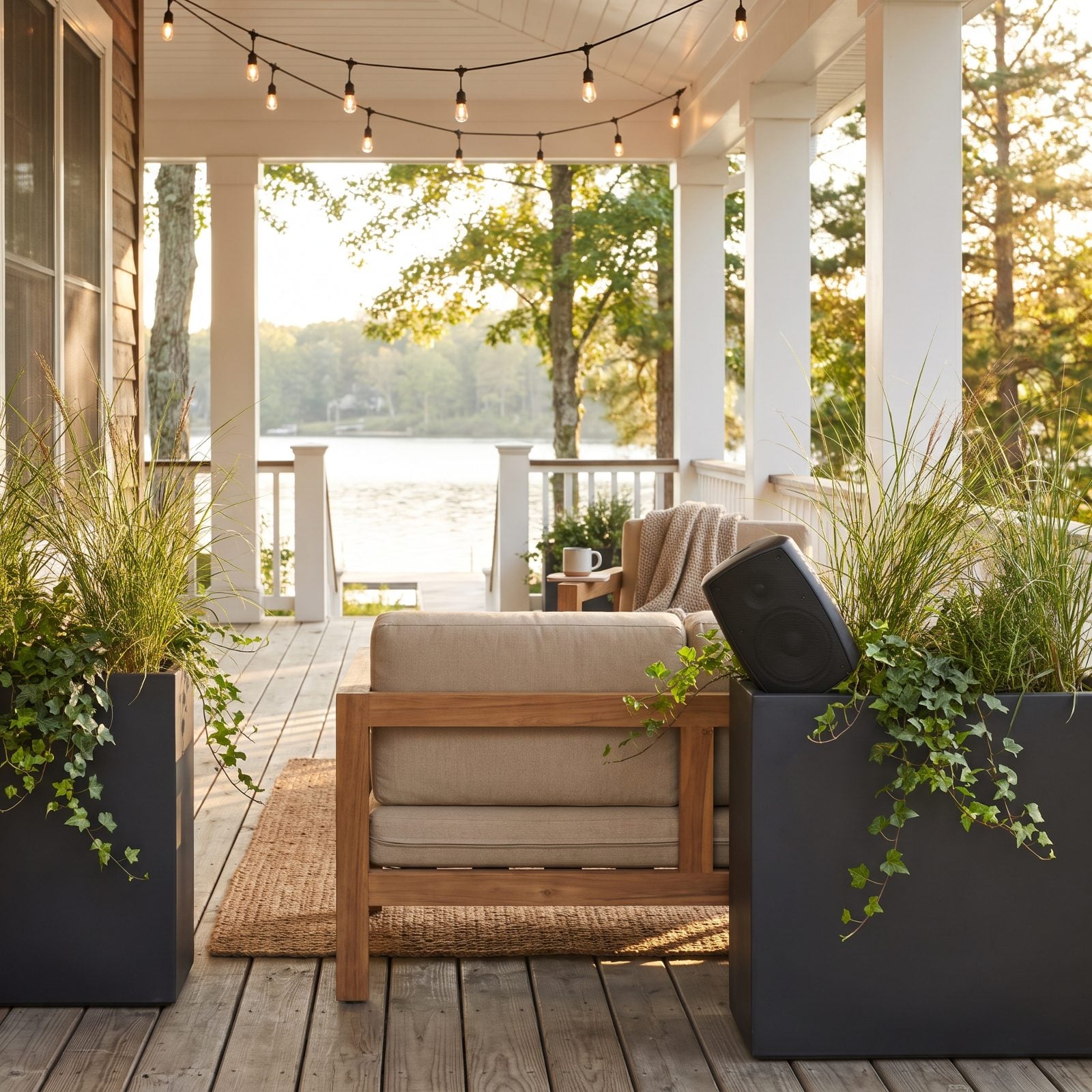
Music belongs on a porch. A pair of plastic speakers bolted to the wall, though, looks like a hardware store exploded against your siding. Tuck one into a tall planter instead, nestled among the grasses and trailing ivy, where the foliage softens its look and the dark finish blends right in with the planter.
Weatherproofing matters more than wattage out here, so look for an IP65 rating or better and a sideways rain won’t end your evening. Angle it up and inward toward the seating, not out toward the neighbors — unless you’re trying to make a statement nobody asked for.
11. Hang a Retractable Movie Screen
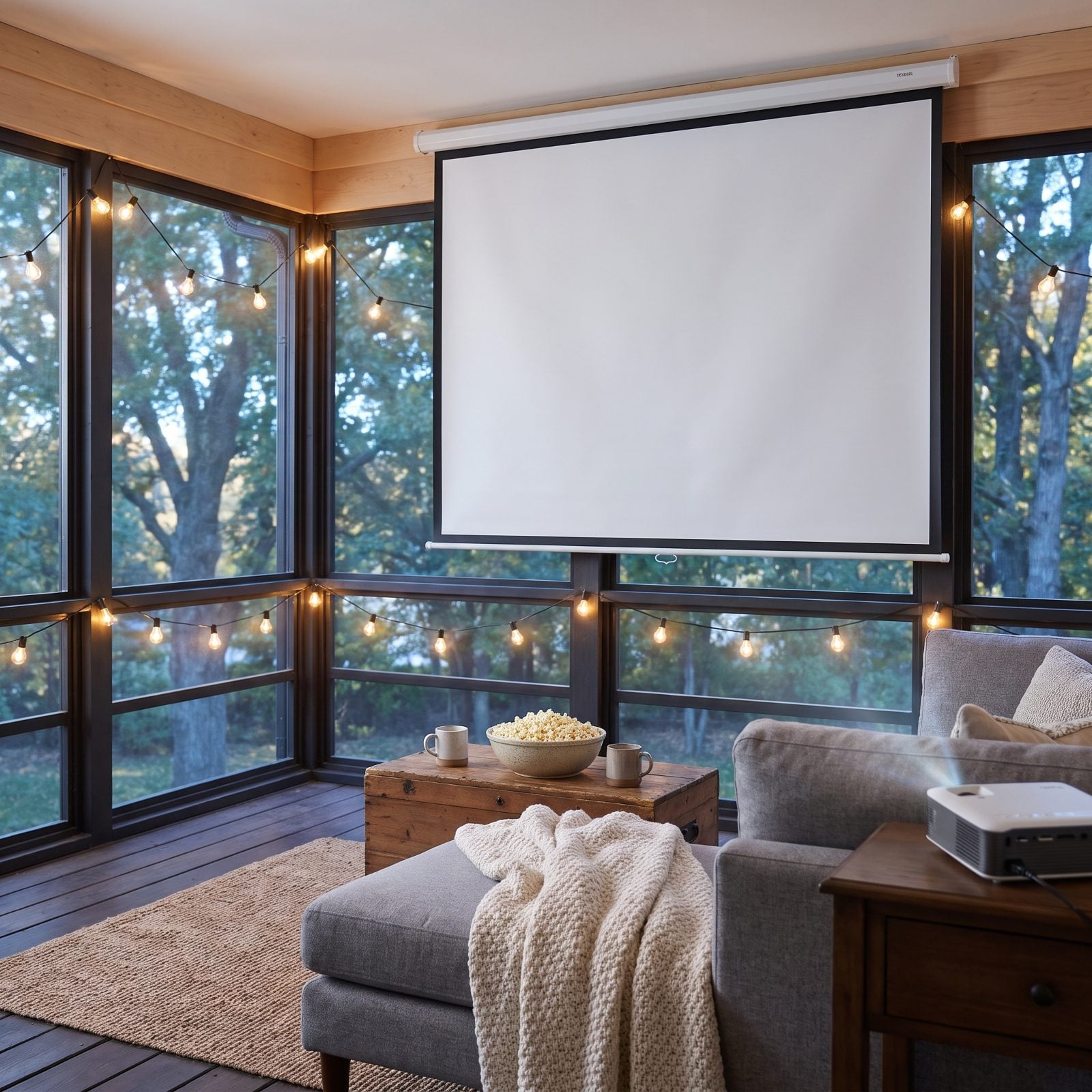
A screen that rolls up into a slim ceiling case separates a movie porch from a cluttered one. When nothing’s playing, it vanishes into a tube; when it is, it drops down in seconds, and any faint waviness from storage tends to relax once it’s hanging for a bit.
Pair it with a portable projector you carry out and carry back in. Mount a projector permanently outdoors and you’re inviting spiders, humidity, and heartbreak. The screen can live outside. The brains sleep indoors.
10. Mount a Dartboard Inside a Closing Cabinet
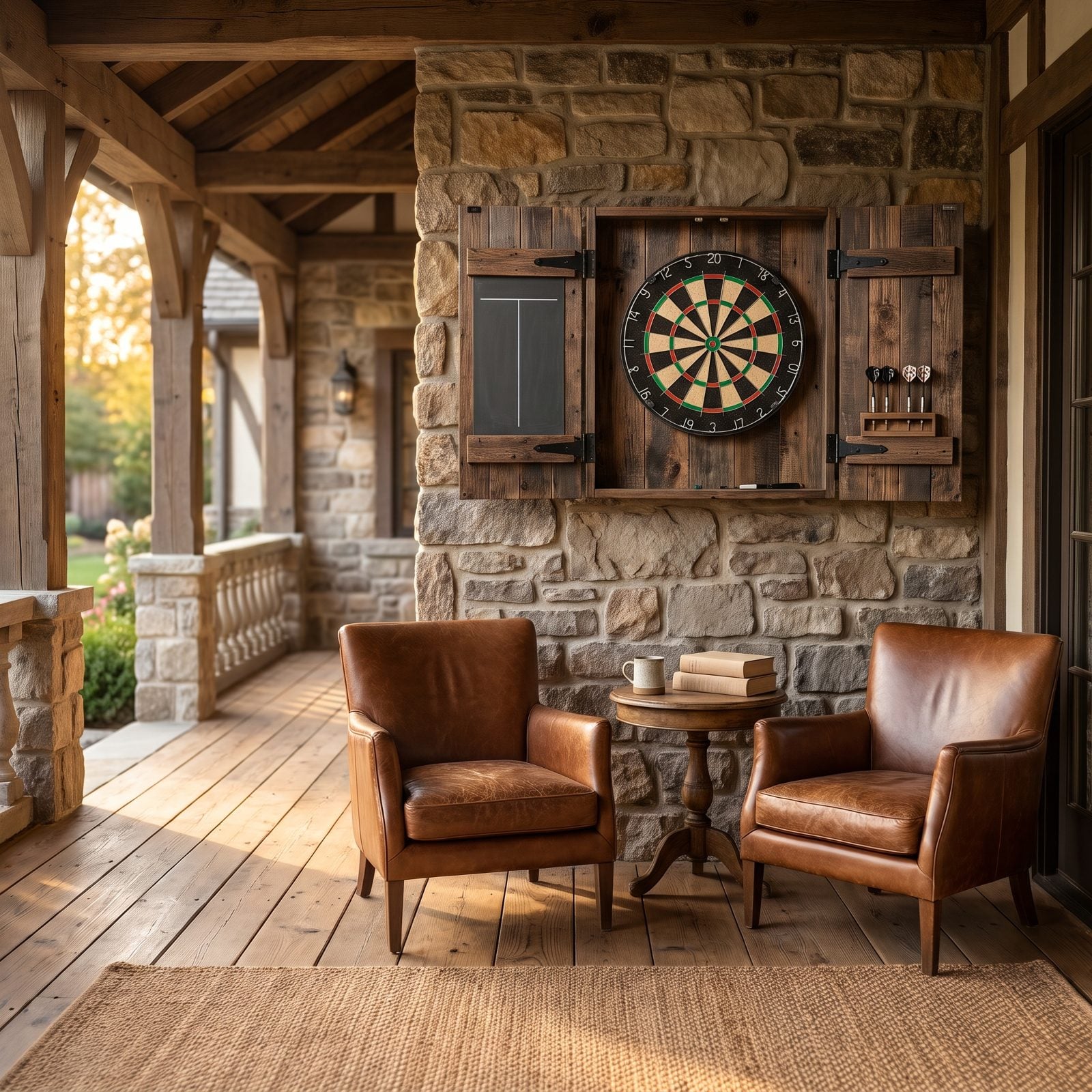
A dartboard tucked behind cabinet doors is the quiet trick of porch games. Open the doors and you’ve got a scoreboard, a dart holder, and a game going; close them and it reads as a handsome wood cabinet, every stray hole in the wall sealed away inside.
Those doors earn their keep two ways. They catch the wild throws that sail past the board, and they spare your siding the pockmarks that come with every honest game. Hang it where a stray dart can’t reach a window, and leave the throwers room to back up.
9. Create a Child-Size Art Corner
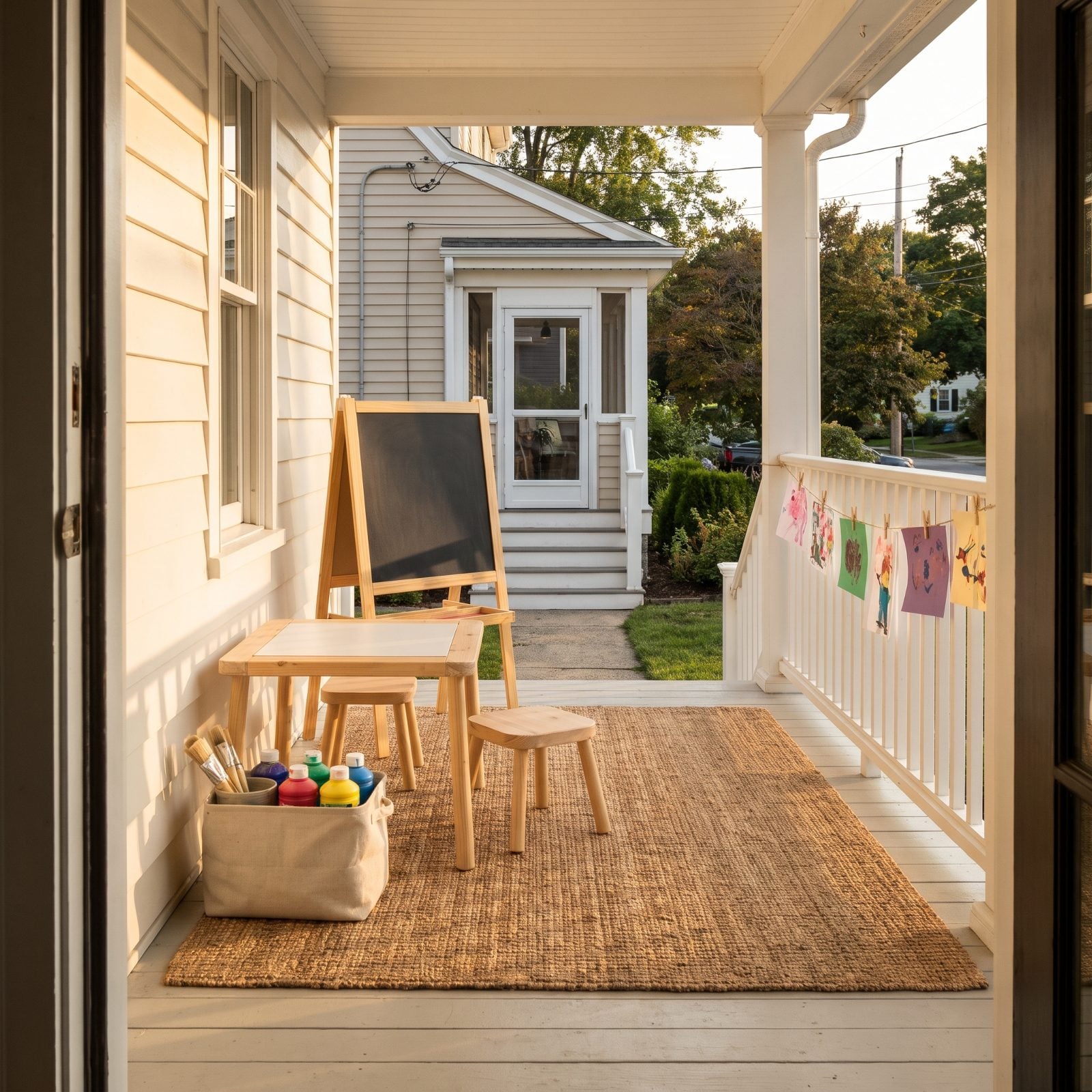
Give the youngest member of the household their own square footage and the porch stops being a place they get shooed off of. A short chalkboard easel, a pine table low enough for small elbows, an open canvas tote for washable paint and brushes. That’s the whole job.
The thing nobody mentions is drainage. Put the corner where rain blows in and by Tuesday you’re staring at a soggy pad of ruined watercolor paper. Tuck it against the house wall, under the deepest part of the roof overhang, and it survives weather.
8. Give the Dog a Built-In Porch Bed
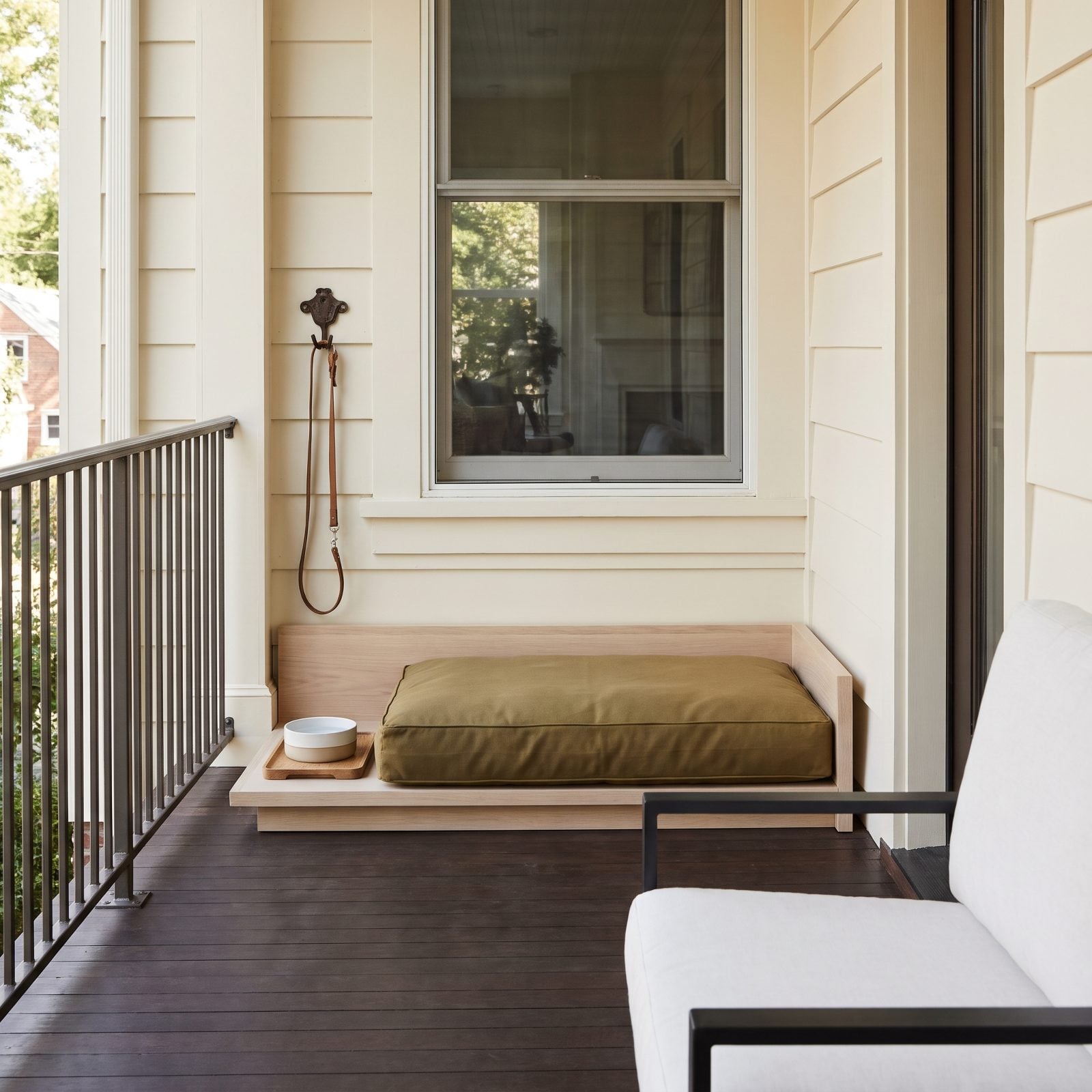
A loose dog bed slides around, collects leaves, and ends up in the exact corner you trip over. Build the bed into a low bench and all three problems vanish.
Recess a water-resistant cushion into a shallow wooden surround against the house wall, add a leash hook and a ceramic water bowl, and the dog gets a spot with a view of the street. Which is the whole reason dogs love porches. They want to supervise the neighborhood, and now they can do it without claiming your chair.
7. Grow Herbs in the Railing
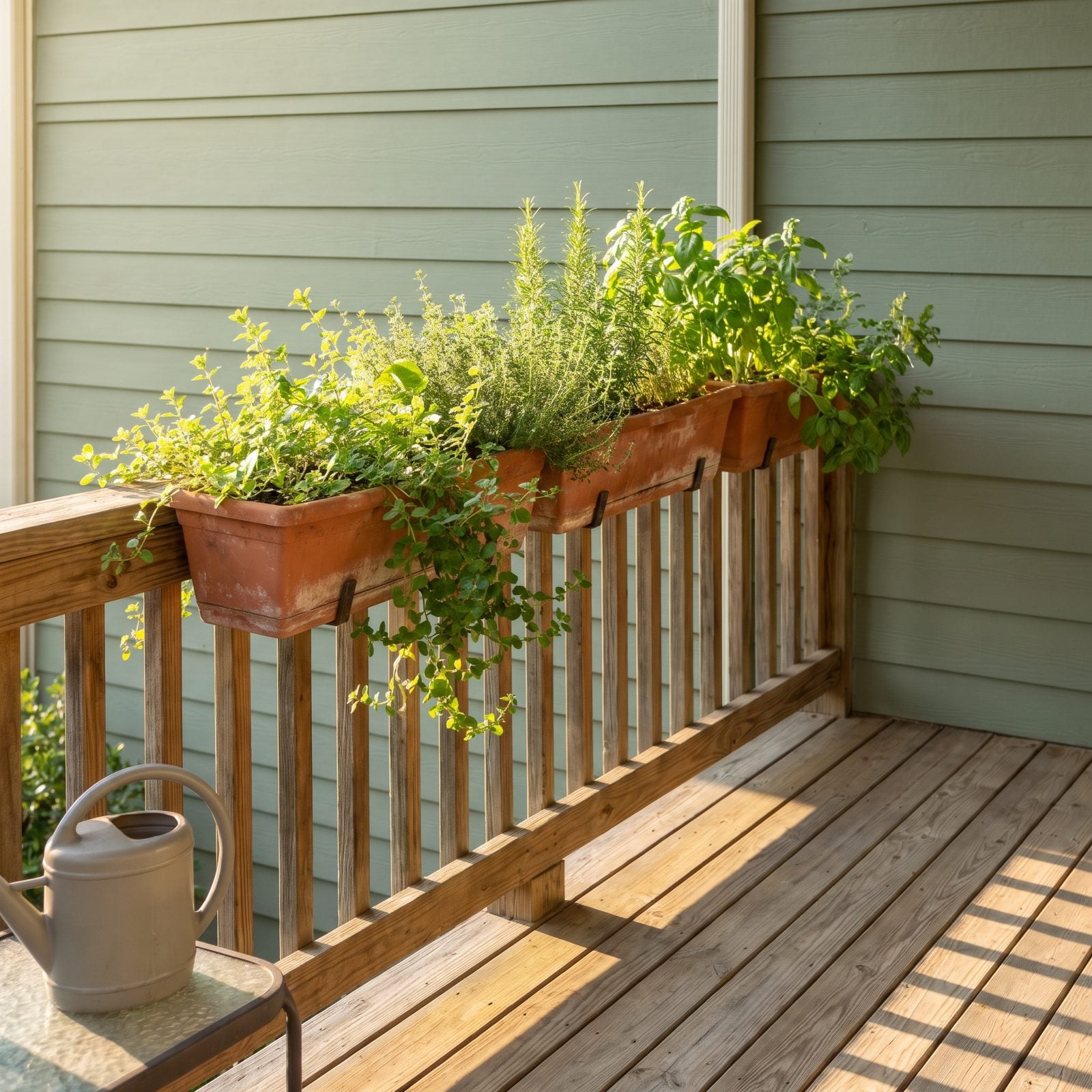
Rail-mounted planter boxes turn the one surface you never use into a working herb garden you brush past on your way to the door. Basil, thyme, rosemary, trailing oregano. Pick what you actually cook with, not what photographs well in a catalog.
We killed basil on a shady porch for two summers before admitting the problem was light, not us. Herbs want six hours of sun minimum. Point the boxes at the brightest rail you’ve got and skip the shade side entirely, no matter how much prettier it looks over there.
6. Train Vines Across Ceiling Wires
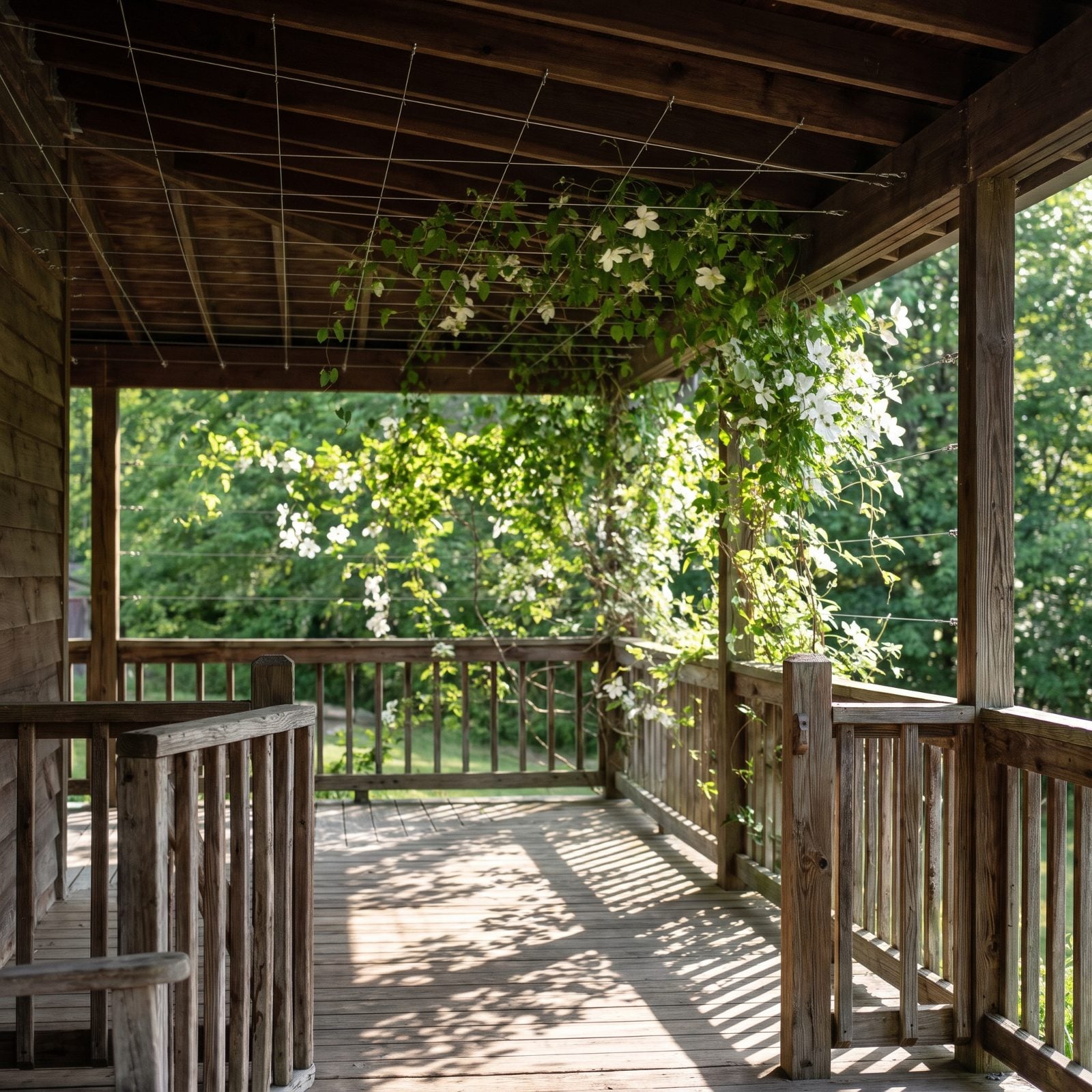
A bare porch ceiling is wasted overhead. String a grid of tensioned steel wire between the beams, train a flowering vine across it, and within a season you’ve got a living canopy that filters the afternoon sun.
Jasmine for scent, clematis for color, star jasmine if you want both without the aggression. Avoid wisteria unless you enjoy a plant that genuinely wants to pull your gutters down — charming and quietly destructive, which is a thing nobody tells you until it’s too late.
5. Install a Narrow Rain Curtain
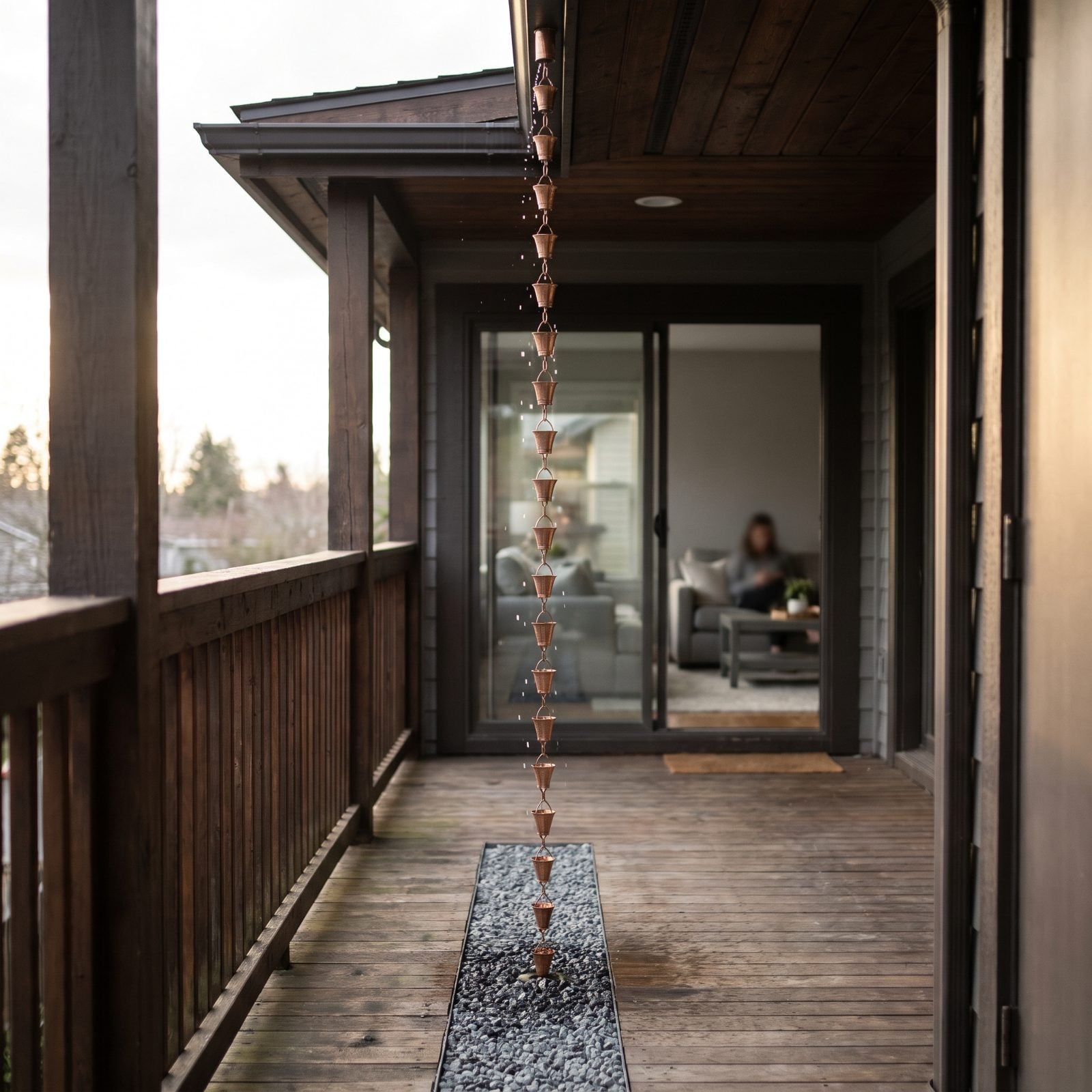
Swap a downspout for a copper rain chain and gutter runoff suddenly becomes something worth watching. Water threads down the chain into a slim gravel channel, and a dull drizzle turns into the best sound on the porch.
Here, a single chain hangs at the eave corner beside the gutter run, right where the runoff actually collects. That placement matters: hang a chain where nothing drains and you’ve installed expensive jewelry that does nothing. Follow the drip line on the next hard rain before you commit to a spot.
4. Place a Tiny Pond in a Watertight Trough
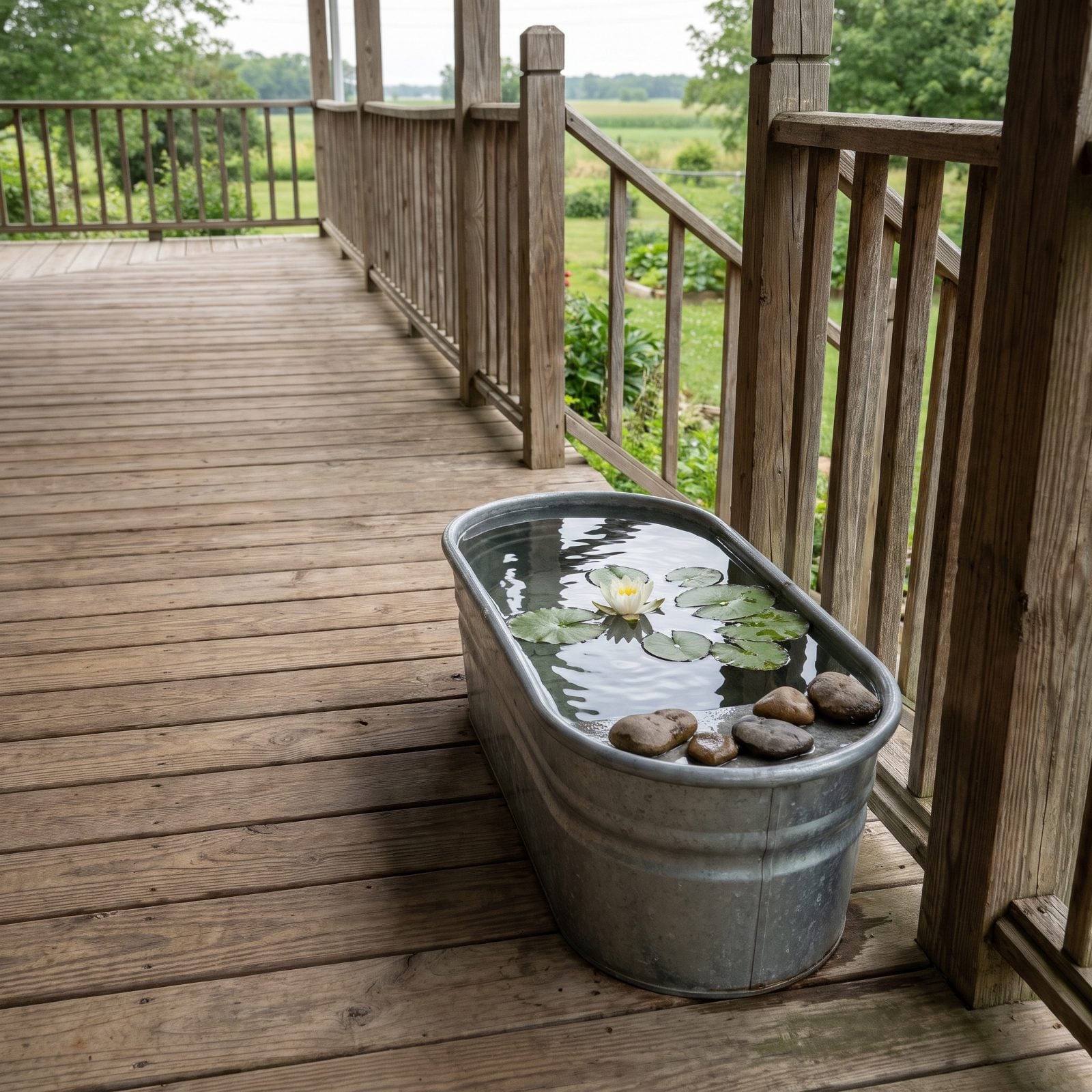
A galvanized trough, a watertight liner, one water lily, and a handful of river stones gives you a pond the size of a laundry basket. No digging, no pump drama, nothing buried under the yard.
Keep it small on purpose. A big open tank on a porch breeds mosquitoes faster than you’d believe. A mosquito dunk or two a month handles it, or a single tiny fish if your climate allows. We lost a whole summer to a trough we let go wild. The frogs were nice. The mosquitoes were not.
3. Install Sliding Outdoor Screens
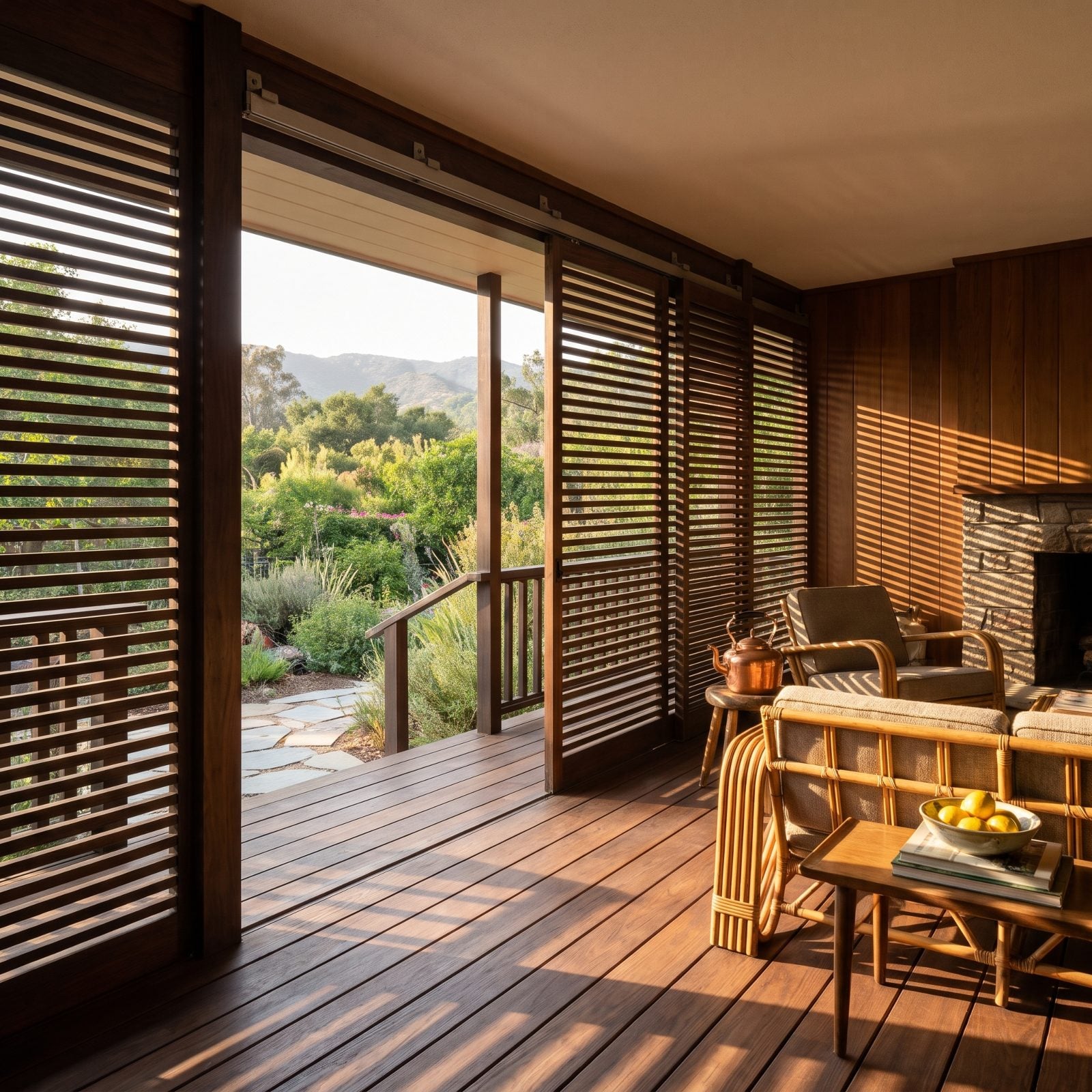
Sliding screen panels on a top track give you a porch that changes with the hour. Open for the breeze and the view. Shut for shade, privacy, or the moment the neighbor’s floodlight snaps on.
Fabric mesh keeps bugs out. Slatted wood kills afternoon glare and gives you something to lean on. And you don’t have to pick one for the whole porch — mesh on the buggy side, slats facing the street, and every panel earns its spot.
2. Extend the Porch With a Gravel Sitting Bay
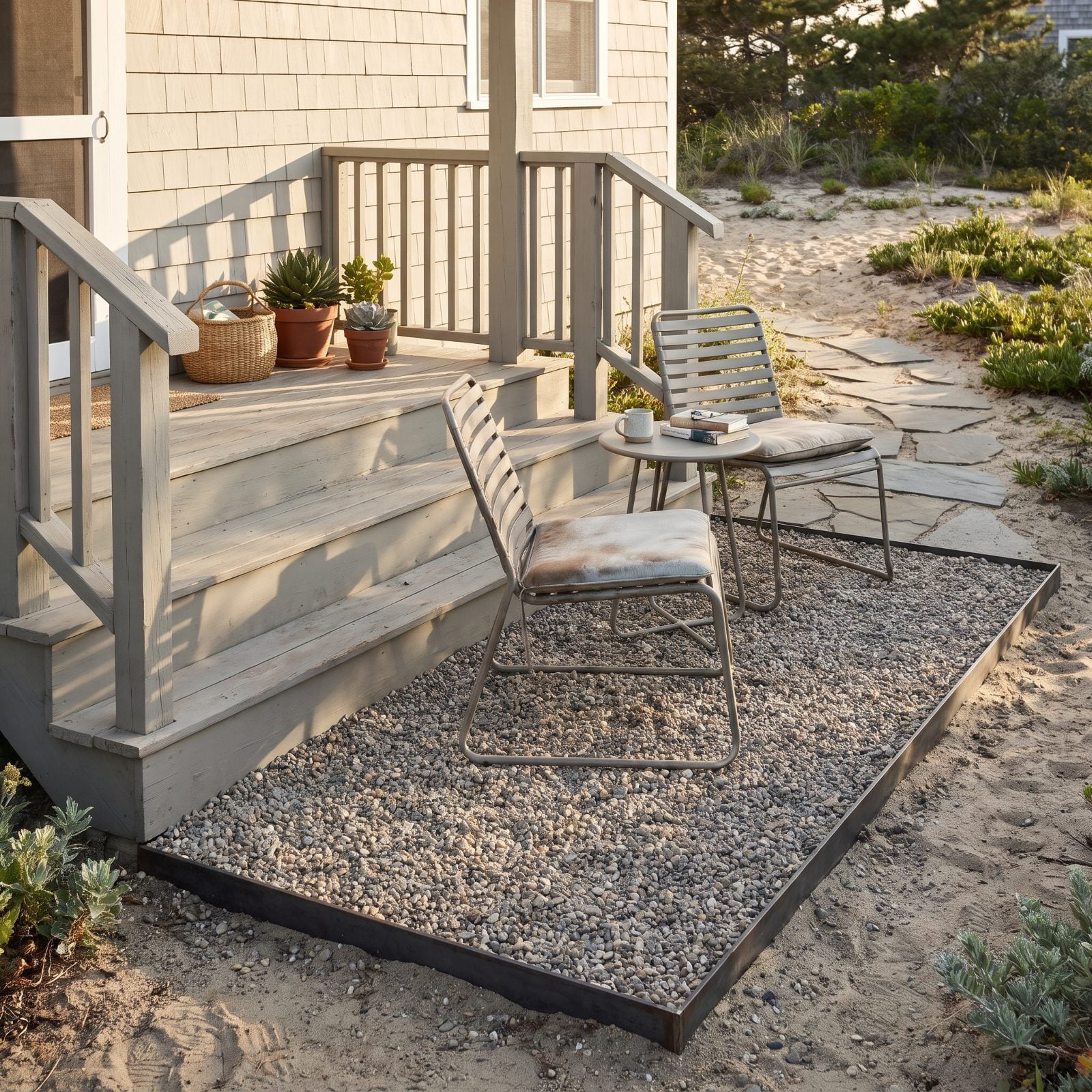
When the porch itself is too small to grow, grow next to it. A neat bed of pea gravel edged with steel, set flush off one end, adds a sitting bay without pouring a slab or chasing a permit.
Two low chairs and a side table make it the spillover room for the nights the porch fills up. Tamp the base and use a proper edge — skip that step and the gravel migrates into the grass by August, and you’ll be raking stones out of the lawn for years.
1. Install a Compact Fire Table
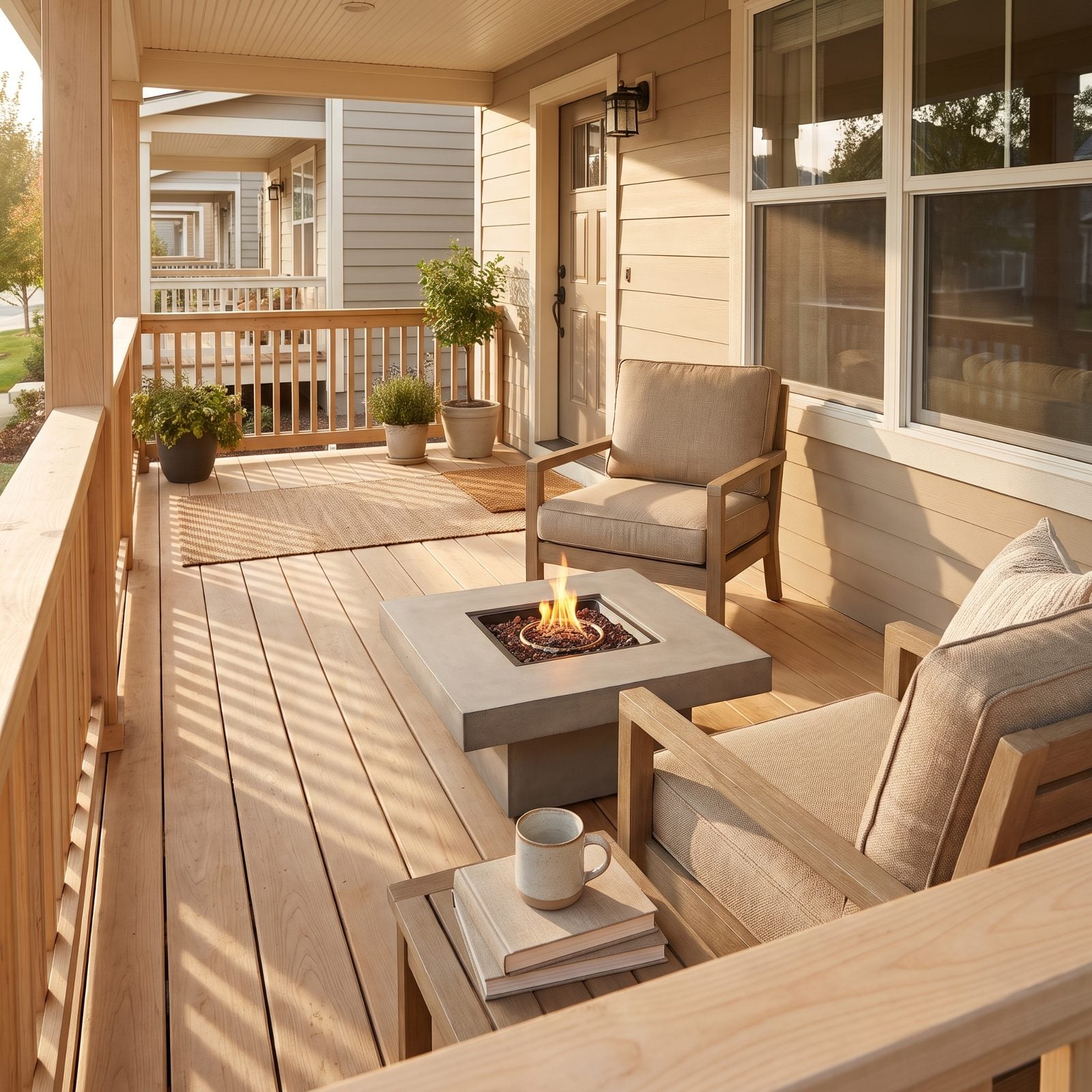
A compact gas fire table does what a fire pit can’t on a covered porch: real flame, no smoke, no embers drifting up toward a wood ceiling. It buys you an extra couple of months on each end of the year.
Check your clearances first. Covered porches need headroom above the flame, and plenty of HOAs and insurers have strong opinions about open flame on a deck. Boring to look up, genuinely expensive to ignore. Get the propane version if you want to drag it where you need it, or run a natural-gas line if you never want to swap a tank again.
On fire features under a porch roof, a certified master hearth professional is blunt about overhead clearance “If your ceiling sits lower than what the manual calls for, that model is out. No workaround makes it safe.”