
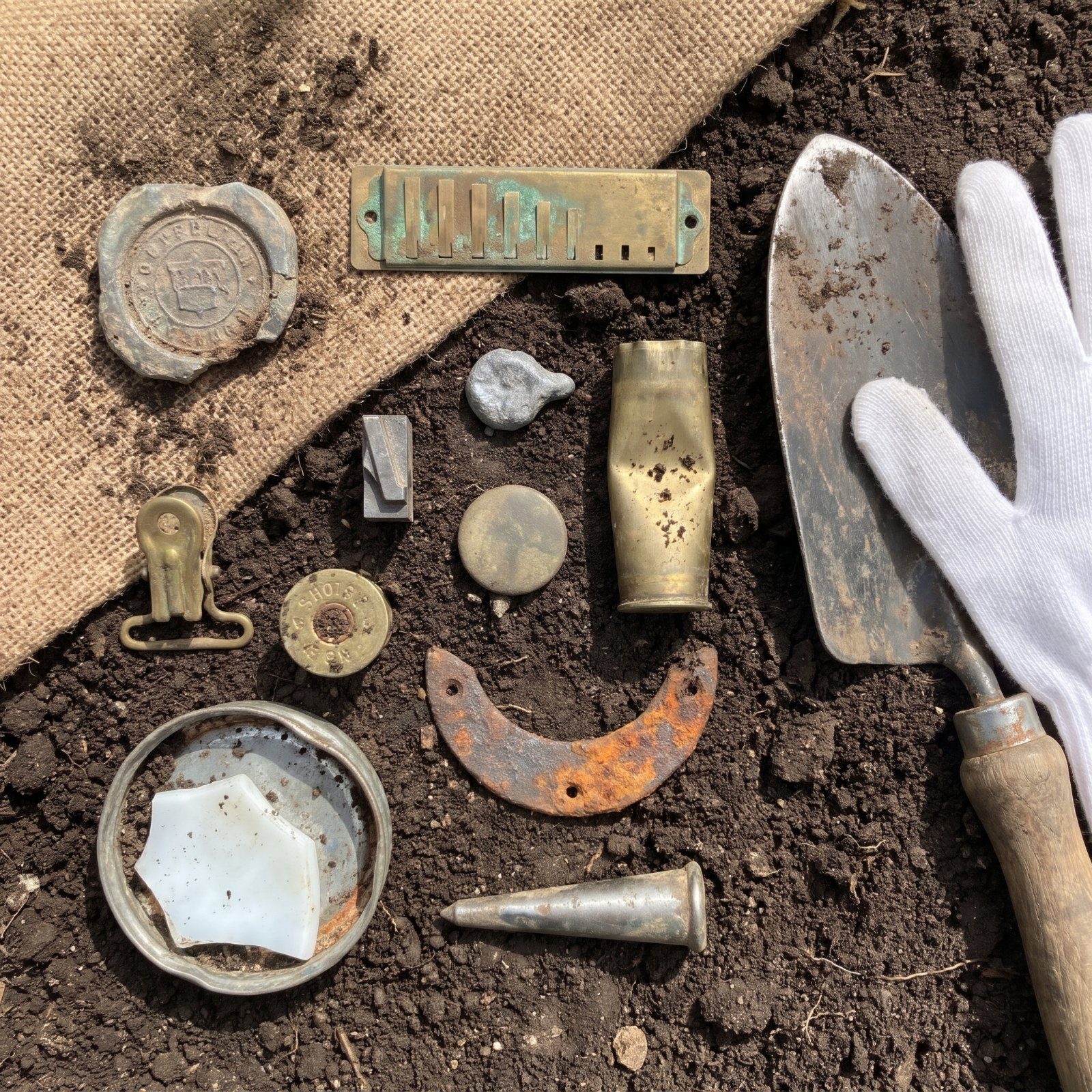
Gold gets the headlines. Lead seals, harmonica reeds and crushed jar lids fill the finds pouch. Anyone who has swung a coil over a plowed field knows how it really goes: for every ring or coin that makes a heart stop, the ground coughs up a hundred small, corroded, half-forgotten objects that someone once used, dropped, burned or threw away. These are the real residents of the topsoil, and each one carries a story about work, play, food or the plain mess of daily life. Learn to read them and a muddy afternoon of signals turns into something closer to a conversation with the people who came before.
Please note that some of the images in this article were created with the assistance of AI.
39. Stamped Lead Seals: Marked Discs That Certified Cloth, Seed and Merchandise
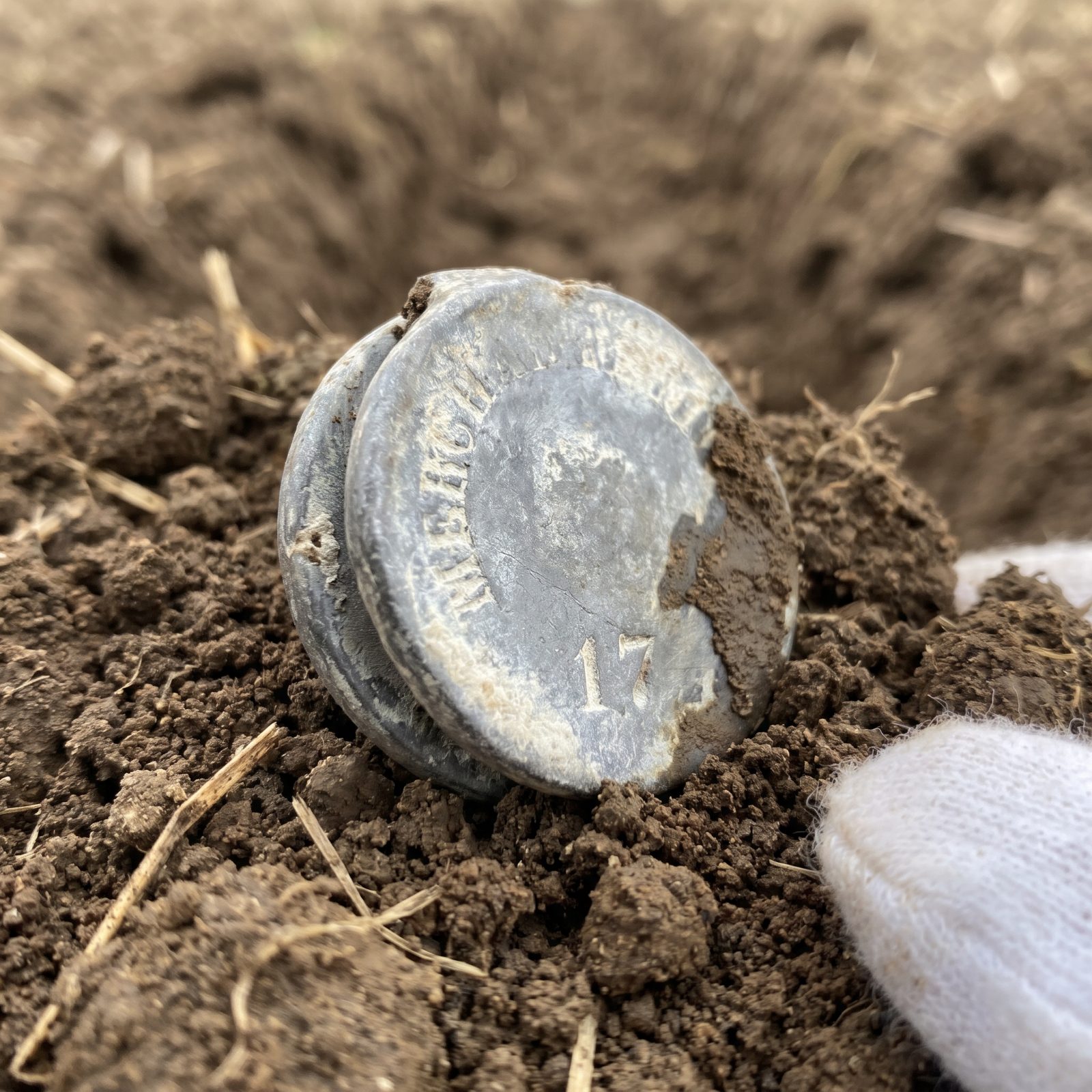
These little lead discs were the price tags and quality guarantees of their day. A merchant pressed his mark into soft lead to certify a bolt of cloth, a sack of seed or a bale of goods, and the seal rode along with the product until someone snipped it off and tossed it aside.
You find them in market towns, old wool districts, anywhere trade once passed through. The worn ones look like blank buttons until you angle them to the light and a stamp swims up out of the grey. That’s the moment that hooks people. A faint mark, maybe a date, maybe a town, and suddenly a nameless field has a trade route running through it.
38. Harmonica Reeds: Brass Plates That Survive After the Wood Disappears
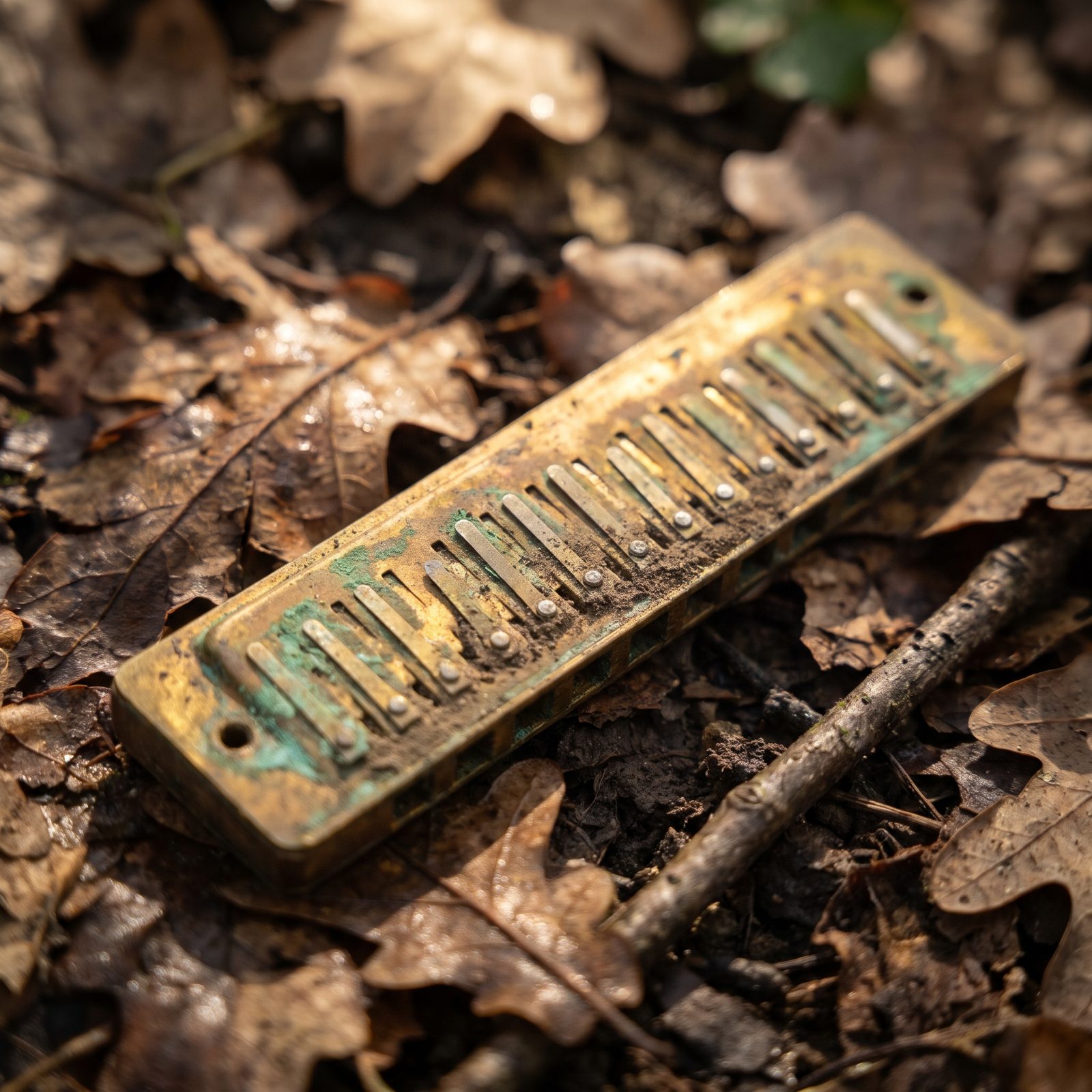
The wooden comb rots and the cover plates crush and scatter, but that little brass reed plate, slotted like a tiny pipe organ, hangs on in the ground for a century or more.
Detectorists pull these out of old homesites, logging camps and roadside picnic spots, and they almost always get the same reaction: a flicker of a sound nobody can hear anymore. Somebody sat on a porch step and played. Honestly, few finds feel this human. It’s not treasure. It’s a Saturday night that happened to leave something behind.
37. Molten Lead Droplets: Campfire Debris That Produces Surprisingly Strong Signals
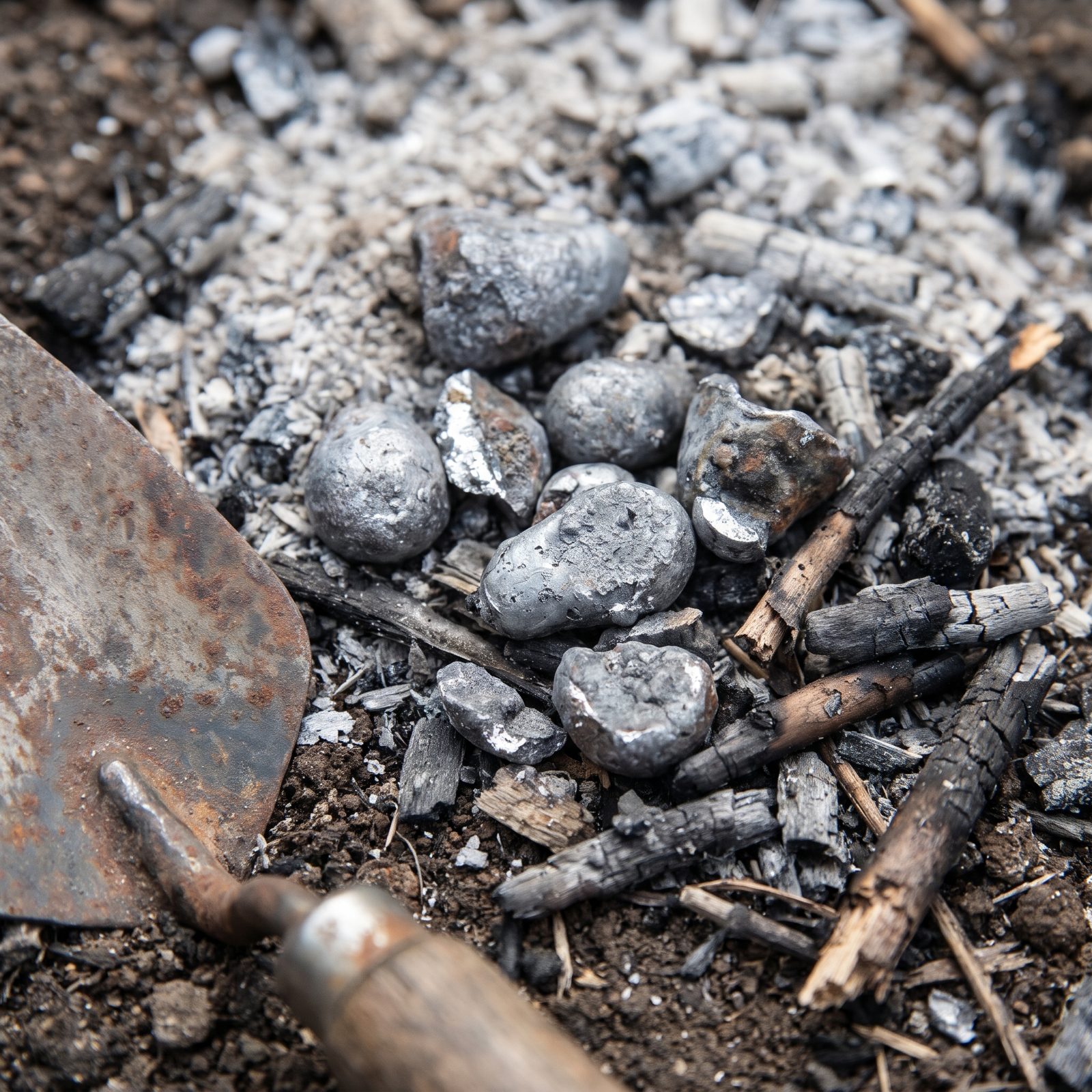
That loud, clean, high-value signal is often a lie. Lead reads beautifully on a detector, right in the zone where silver and gold live, which is exactly why molten lead blobs break so many hearts.
Fishing weights, bullets and fired shot melt in old campfires and hearth fires, puddle, then freeze into lumpy grey teardrops. They’re among the most common digs there is. Here’s the upside: where there’s melted lead, there was a fire, and where there was a fire, people lived or camped or cooked. Treat the blob as a breadcrumb rather than a letdown, and even the junk signal earns its keep.
36. Printing Type: Individual Metal Letters Lost Near Print Shops and Dumps
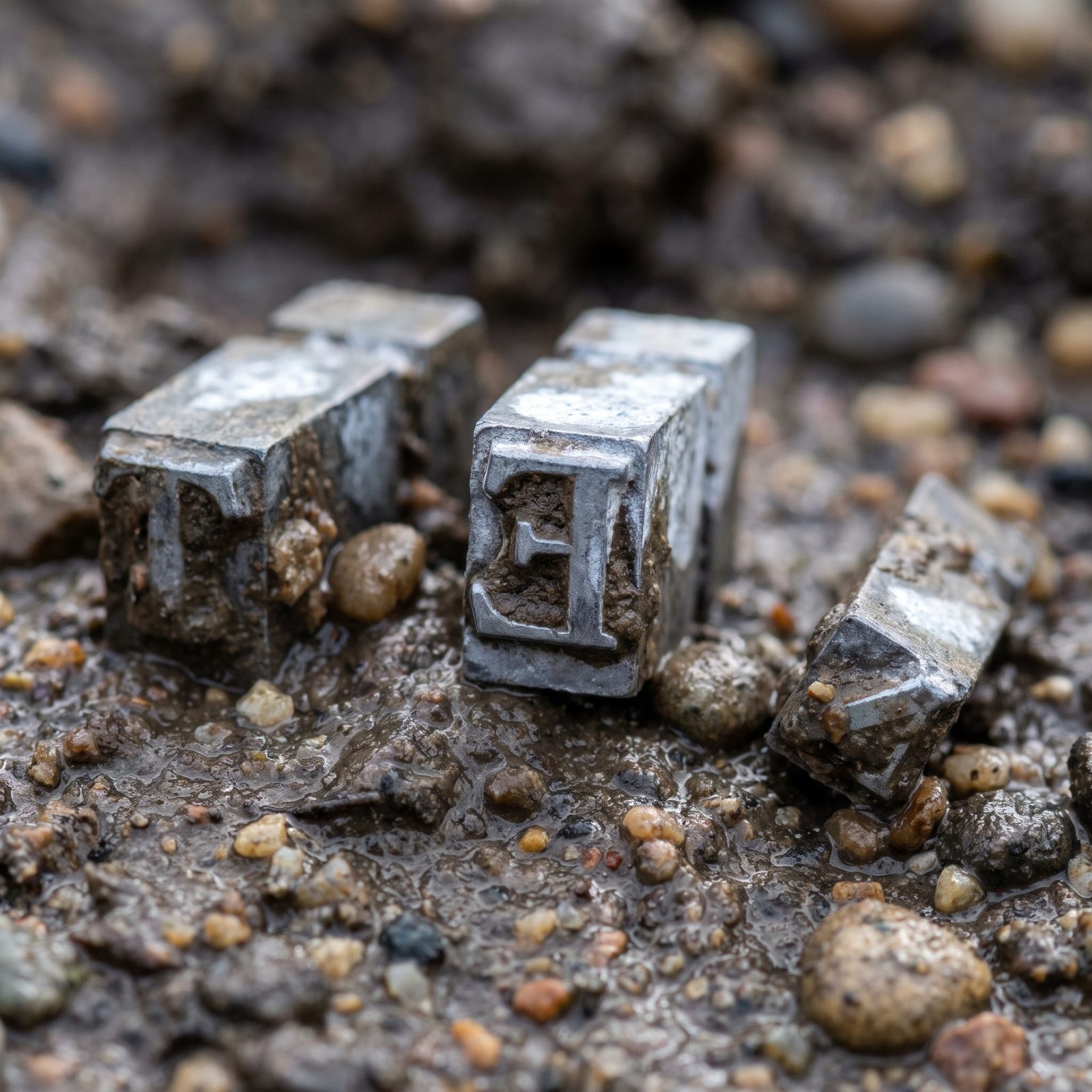
Pull up a tiny metal block with a letter raised on the end, and you’re holding a single character from somebody’s newspaper, handbill or hymnal.
Type was cast from a lead alloy, used until it wore, then discarded by the handful near print shops, newspaper offices and town dumps. Worn pieces get mistaken for scrap until you catch the letter. A face that reads backwards can throw people at first, since type was cast reversed so it would print the right way round. Find a cluster and you may have located where a town did its reading and its arguing, one sorted letter at a time.
35. Tombac Buttons: One-Piece Alloy Buttons Easily Mistaken for Coins
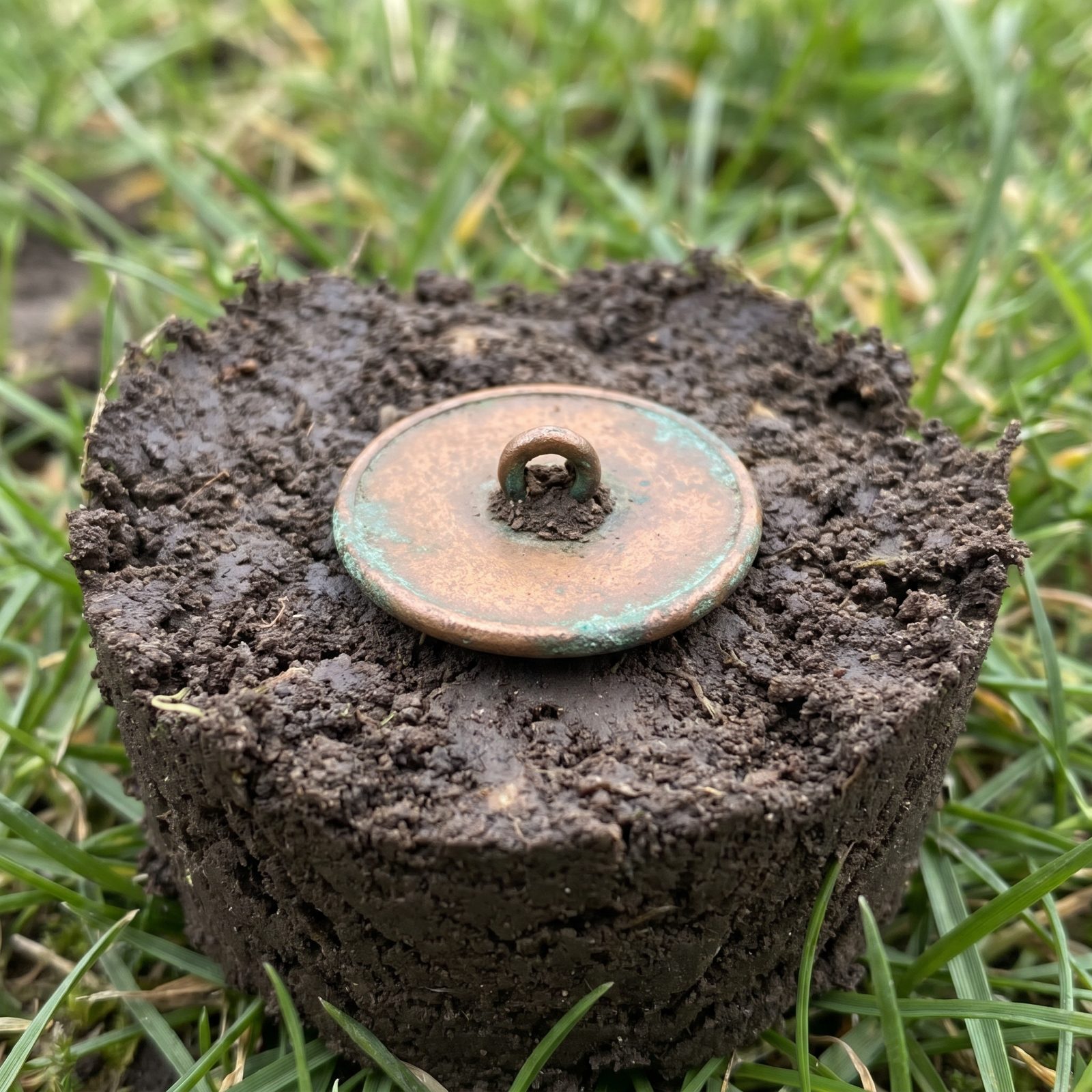
First beep, first flip of the soil, and a round coppery disc the size of a coin stares back at you. Heart rate climbs. Then you spot the little shank loop on the back, and the air goes out of it.
Tombac buttons, cast from a copper-zinc alloy in one solid piece, have fooled countless detectorists before they learned the shape. They turn up everywhere people dressed, which is everywhere. The consolation prize is real, though. A plain-faced button still marks a spot where someone stood, worked or lost a coat, and the shank style can help you narrow the age.
34. Shotgun Headstamps: Brass Bases That Can Help Date a Hunting Site
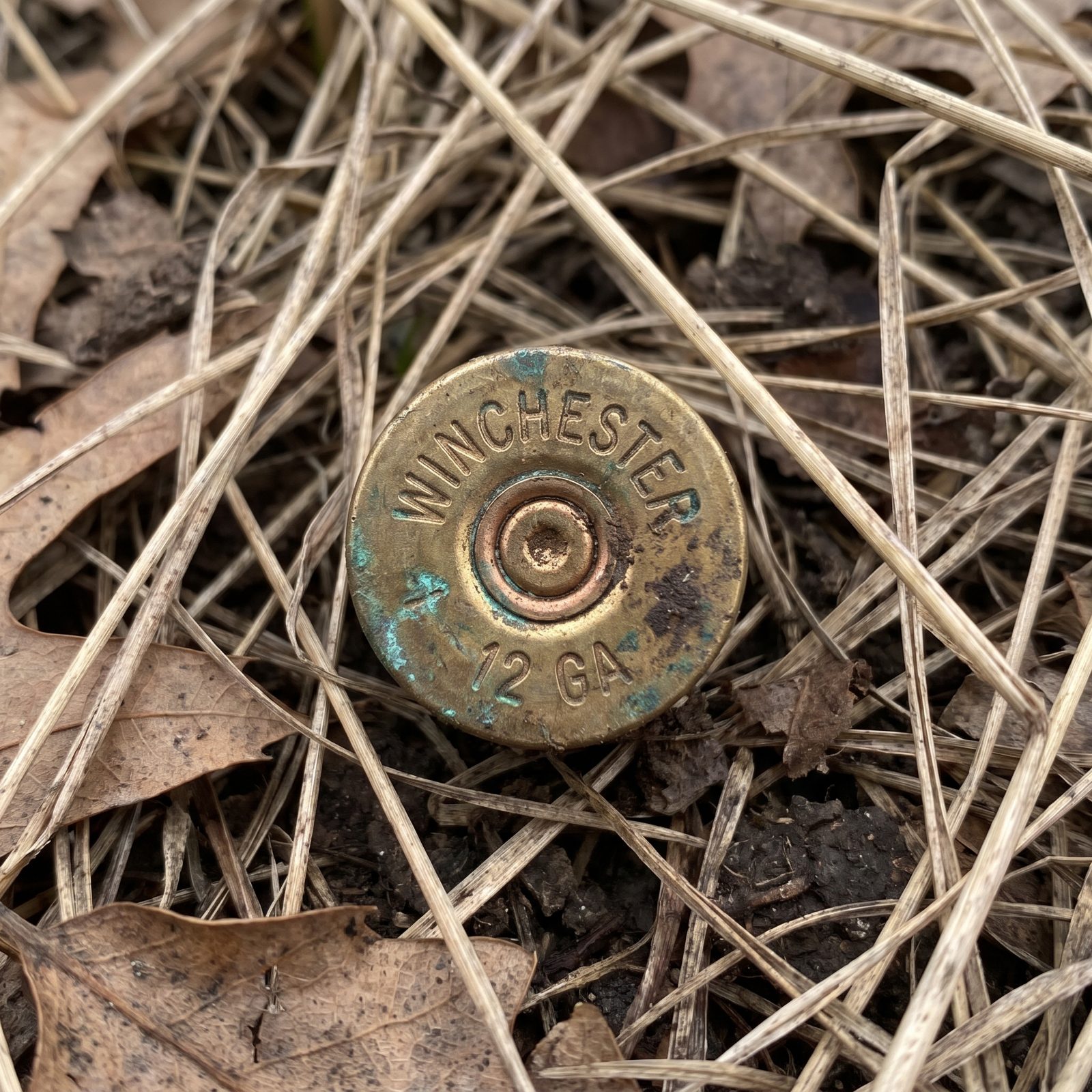
The hull burns or rots. The brass head stays, and stamped around its rim is a maker’s name and a gauge, sometimes enough to put a rough date on the ground.
Fields, hedgerows and old hunting grounds are littered with them. Experienced detectorists learn to read a headstamp the way a geologist reads a rock layer: a certain brand, a certain style of mark, and you know roughly when people were out here shooting. It’s one of the few junk signals that actually tells you something about the site instead of just filling your pouch.
33. Heel Plates: Crescent-Shaped Iron Protectors From Old Boots
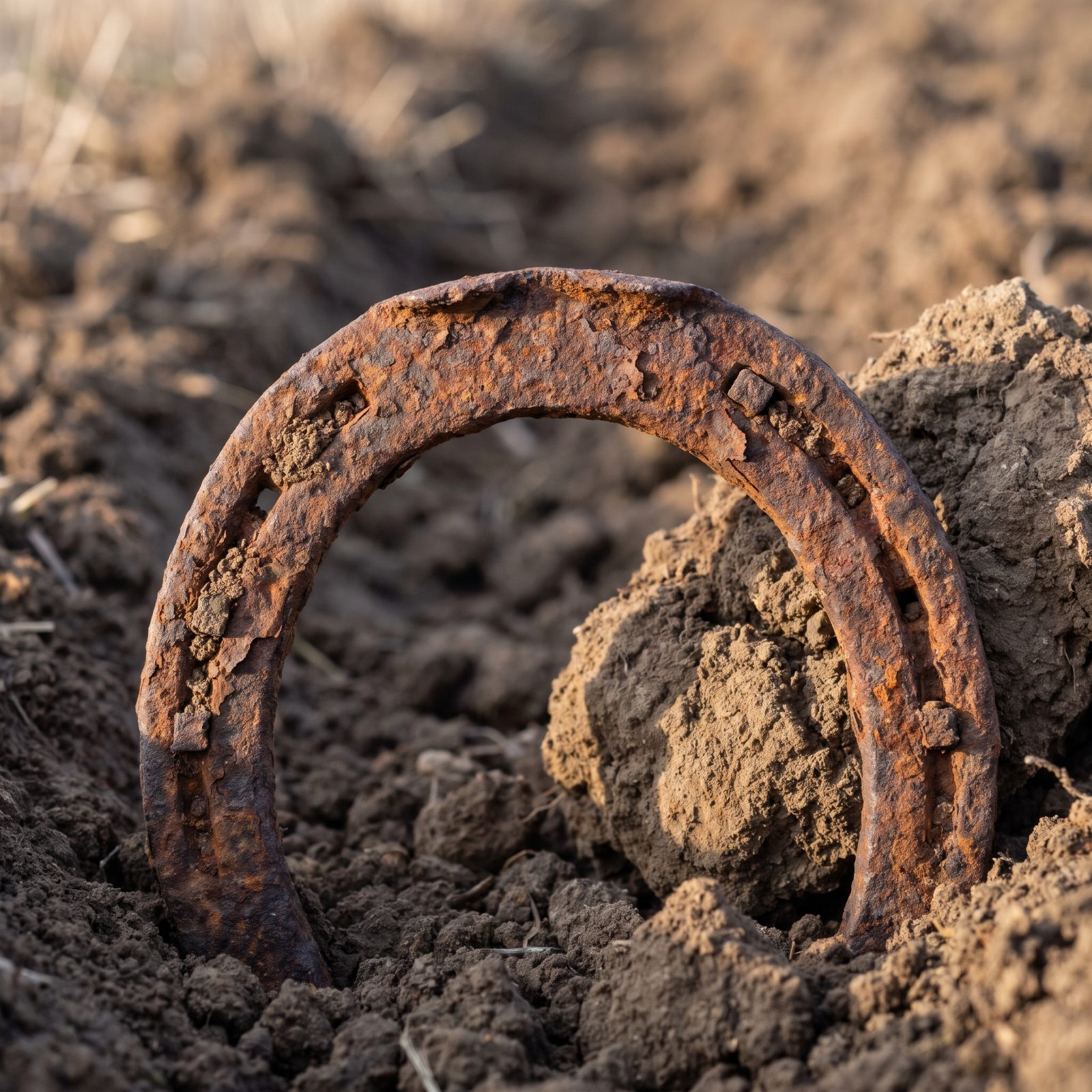
Leather disappears. Iron argues with the soil for decades. So the heel plate, that crescent of metal nailed to the back of a work boot to spare the sole, often outlasts the whole boot and the person who wore it.
They come up rusted into orange crescents, and plenty of folks toss them without a second look, which is a shame. A heel plate marks a route: a footpath, a gate, a field worked by boots that needed protecting. The ground remembers footsteps better than you’d think.
32. Suspender Clips: Decorated Fasteners Common Around Former Homesites
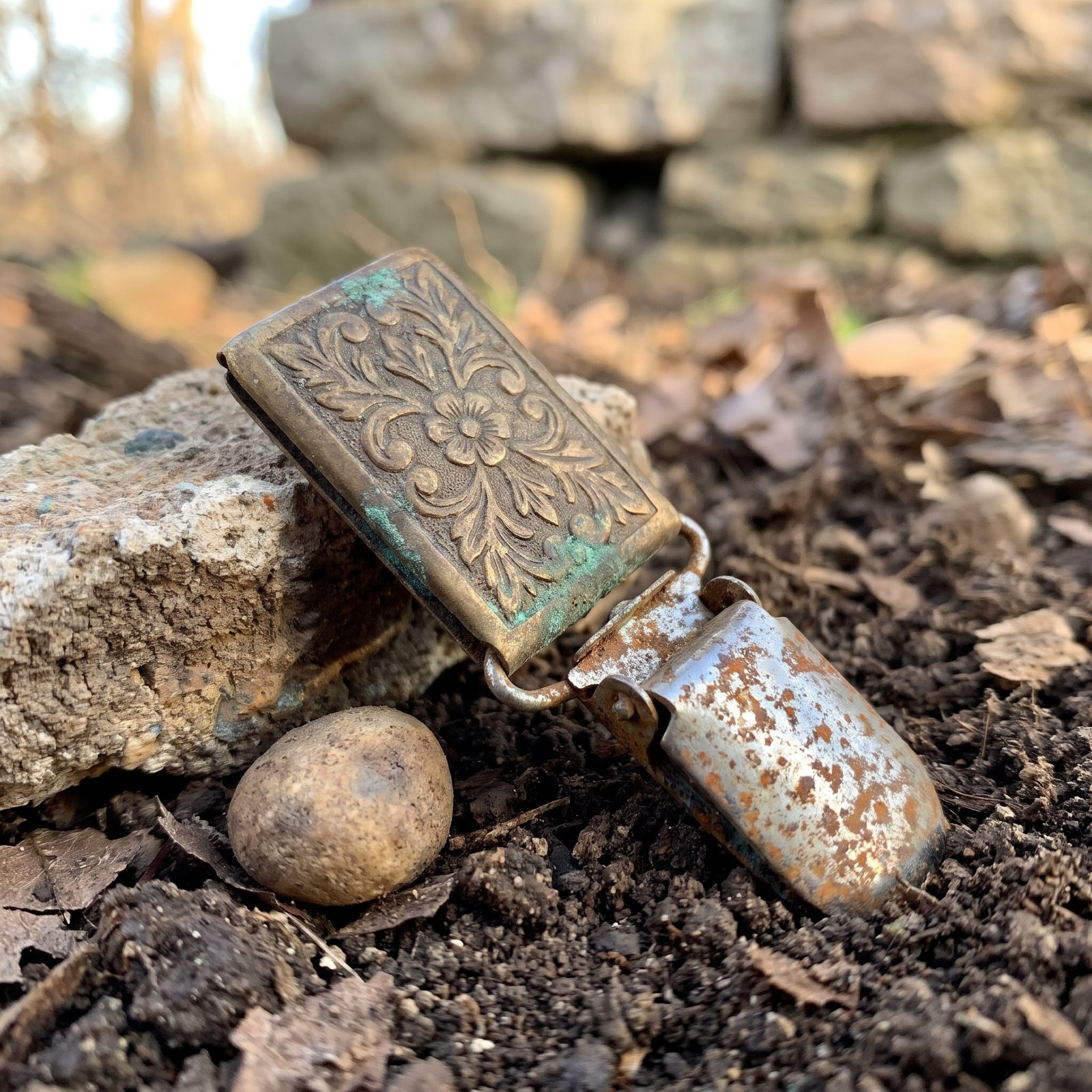
Suspenders held up the trousers of nearly every working man for generations, and the little metal clips that gripped the waistband dropped off and vanished into the dirt by the thousand.
Hunt an old homesite and you’ll turn them up near the back door, the privy, the woodpile, anywhere a man dressed or worked. Some carry embossed patterns or a maker’s touch that lifts them above plain junk. They gather where people lived, which makes them a quiet map. A scatter of clips and buttons usually means you’ve found where the house once stood.
31. Zinc Mason Jar Lids: Recognizable Closures From Household Rubbish Pits
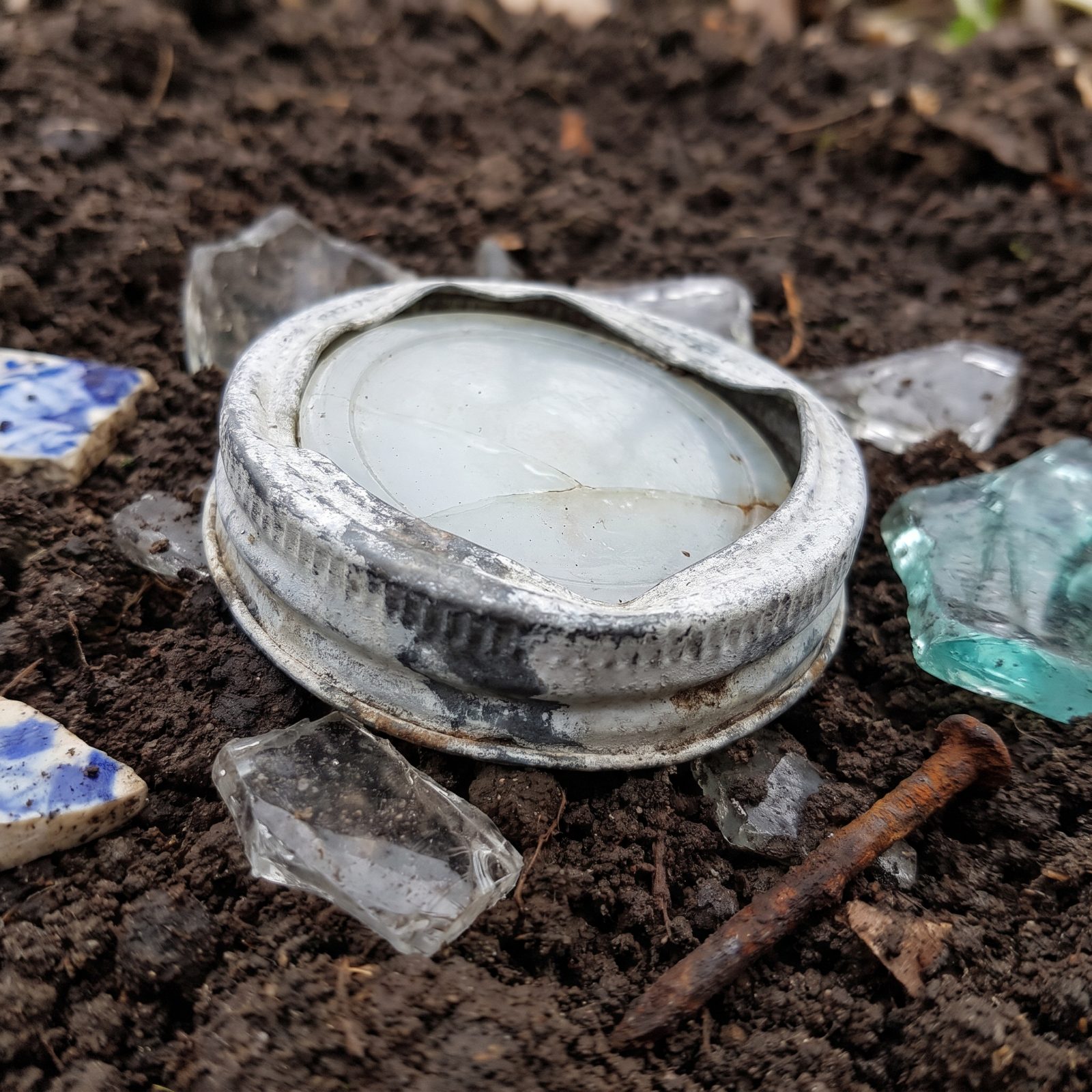
Dig into an old household dump and the ground gives up zinc lids like a vending machine that only stocks one product. Everyone canned. Everyone threw the lids away.
They come up chalky grey and dented, sometimes still holding a cracked milk-glass liner, and you’ll recognize that screw-cap shape instantly. On their own they’re rubbish. But they confirm you’ve hit a trash pit, and trash pits are where the good glass, the odd coin and the occasional surprise hide. A lid is the sign on the door. Follow it down.
30. Umbrella Ferrules: Pointed Metal Tips That Outlast Fabric Canopies
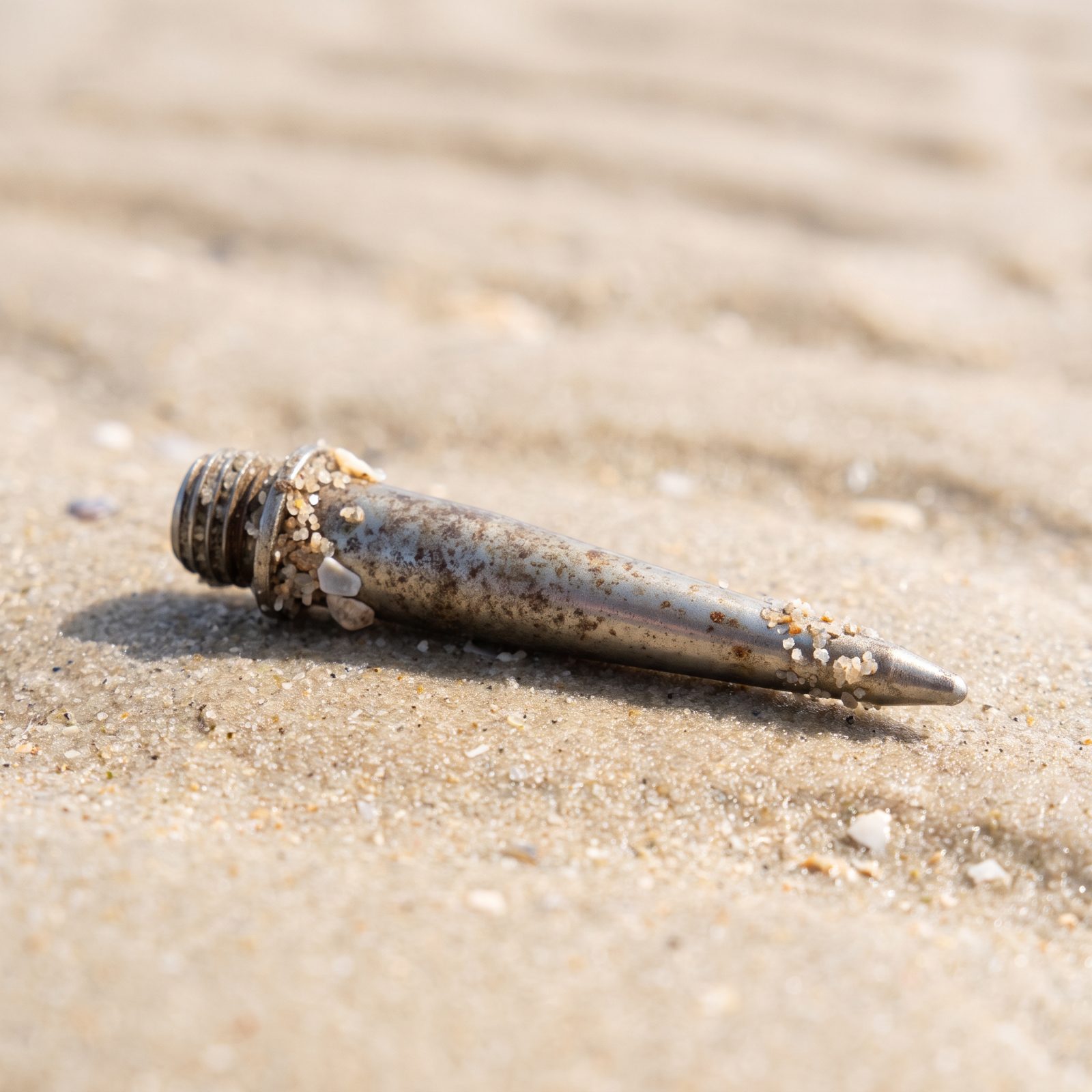
The canopy frays and blows away. The ribs rust to crumbs. That little pointed ferrule at the tip, and sometimes the cap on each rib, keeps right on going.
Detectorists dig these slim metal spikes on beaches, promenades and old picnic grounds and spend a confused moment wondering what on earth they are. A broken-off umbrella point doesn’t exactly announce itself. But there’s something fitting about it: the whole purpose of an umbrella is to not be there, to fold away and be forgotten, and yet the ground kept the one bit nobody ever looked at. Of all the common digs, it might be the most quietly stubborn.
29. Ox Shoes: The Two-Part Hoof Plates Hiding in Old Farm Fields
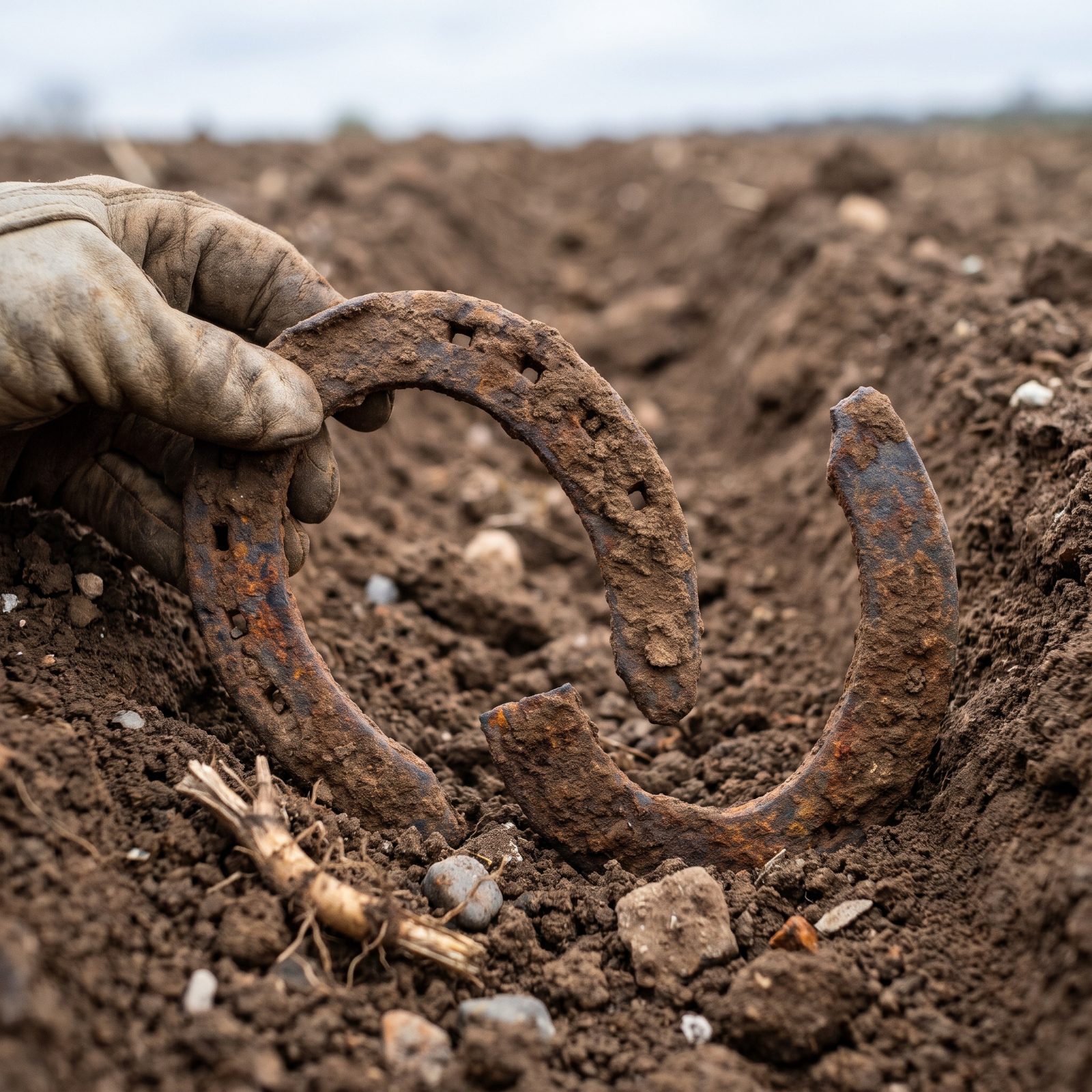
Oxen have two toes, which is why their shoes come in halves. Detectorists on old agricultural land pull up shoes like these constantly, and telling the two kinds apart isn’t always easy. An ox shoe is a flat crescent — one for each cloven toe, with a straight edge where it met its partner — while a horseshoe is one continuous U-shaped curve with nail holes along each branch. A rusted piece with no visible nail holes and a broken, incomplete curve is harder to identify.
Working horses were everywhere before tractors, so these shoes turn up wherever draft animals once pulled plows. They rarely sell for much. The value sits in what they tell you: you’re standing on land that was worked hard, long before anyone living remembers it.
28. Harness Rosettes: Decorative Brass Mounts From Working Horses
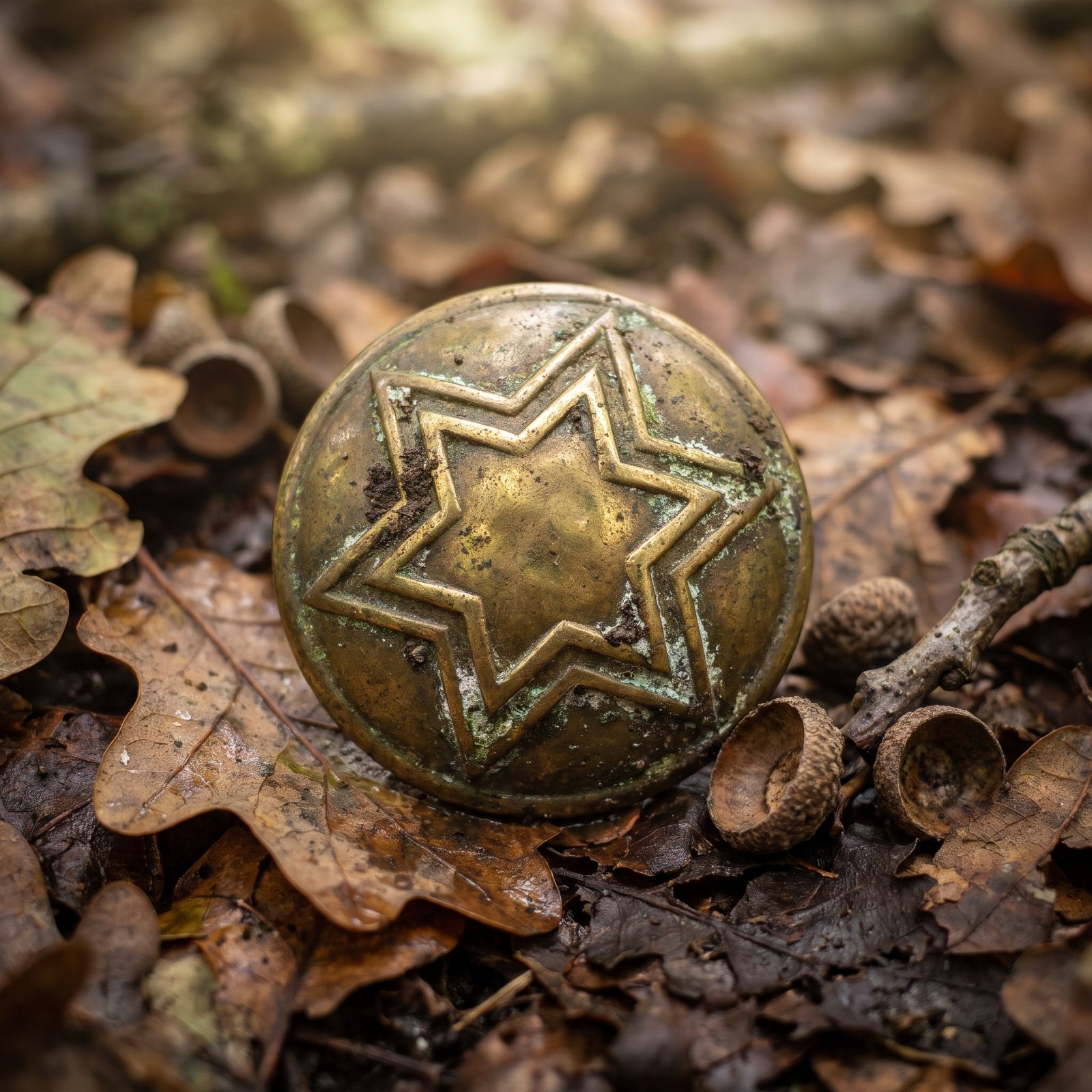
Rosettes are the decorative discs that studded a horse’s bridle and harness. They come up in round, diamond, and shield shapes, often stamped with stars, clustered petals, or a stable’s initials — small things, usually brass, and they catch the eye when the patina starts peeling back to gold.
Find one and you’ve found where tack was worn, cleaned, or came apart. A cluster, though? That’s likely a stable yard, or a spot where horses were harnessed day in and day out. The shapes are the fun part. No two sets matched exactly, and the fancier ones belonged to owners who wanted their animals looking sharp on the way into town.
27. Crotal Bells: The Round Jingling Bells Tied to Livestock
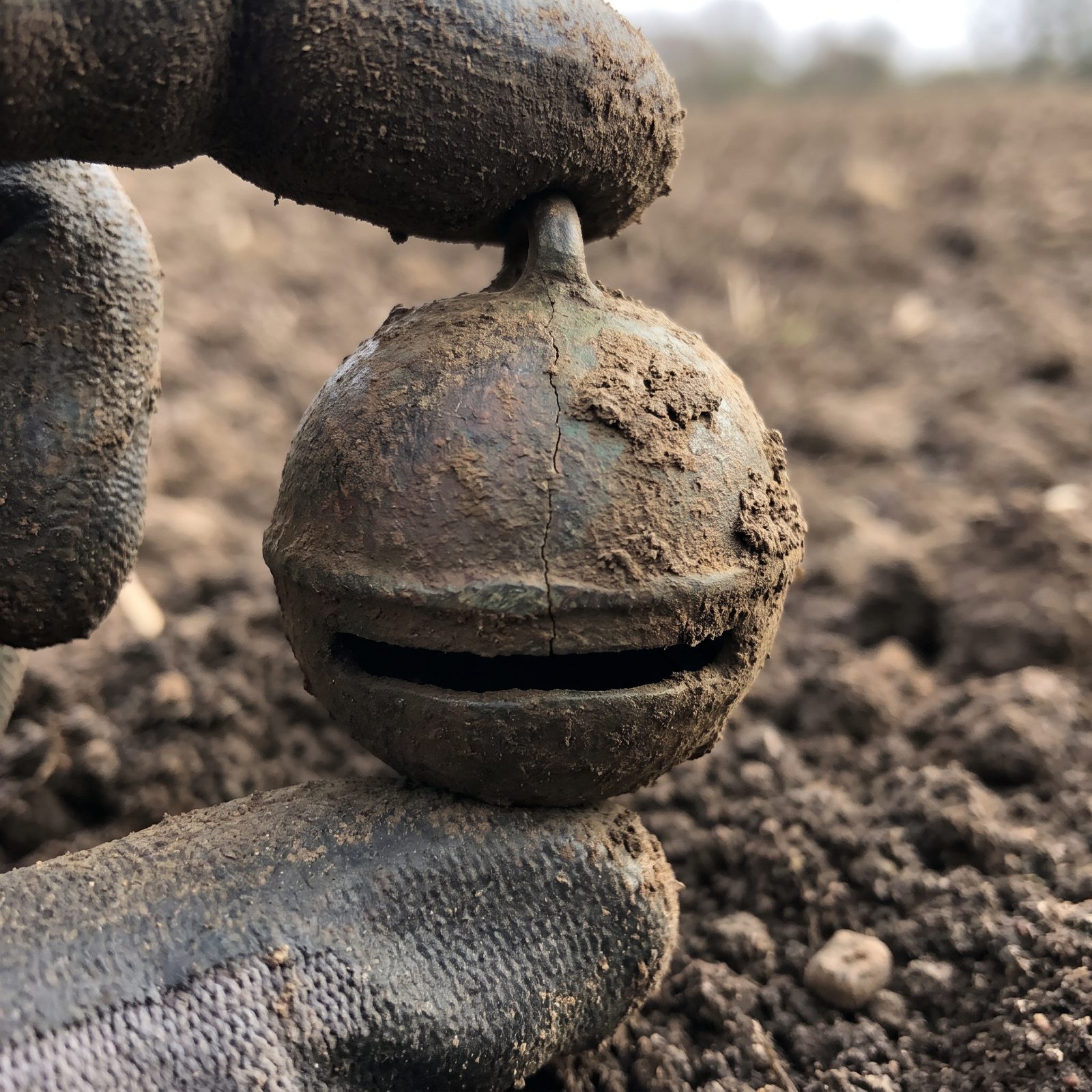
Give one a shake and, if the pea inside survived, it still rings.
Crotal bells are hollow cast spheres with a slot across the bottom and a loose iron or bronze pellet rattling inside. Farmers hung them on sheep, cattle, and horses so a wandering animal could be heard before it was seen, and carters bolted rows of them to teams so the jingle warned oncoming traffic on narrow lanes.
They’re one of the more satisfying things to dig. They’re whole, they’re old, and they make a sound. Many carry a maker’s initials cast into the body, which can narrow down who made it and roughly when. Just don’t expect it to buy you lunch. Expect a good story and a bell you’ll want on the windowsill.
26. Escutcheon Plates: The Keyhole Covers From Long-Gone Furniture
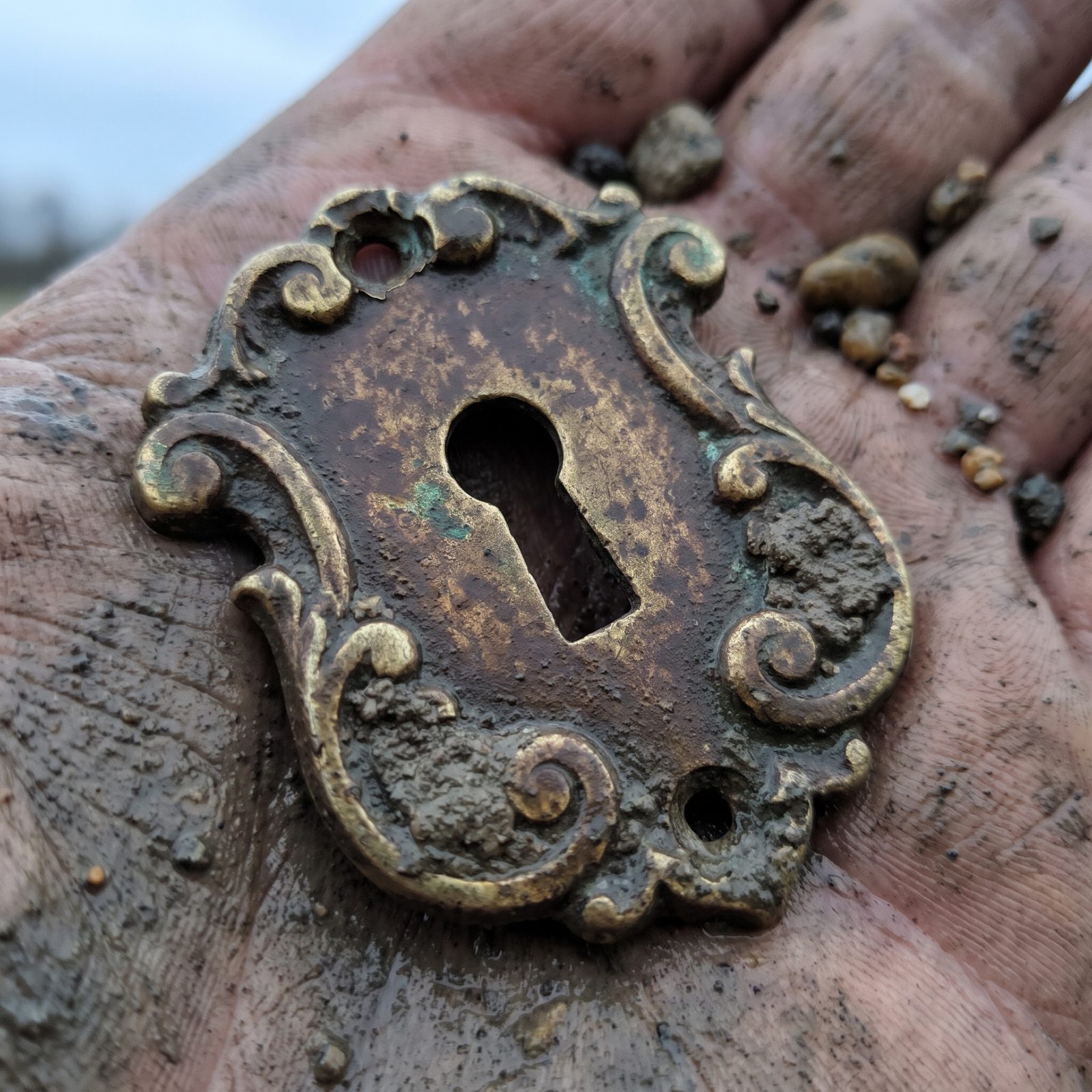
That little shaped plate around a keyhole on an old chest or cabinet door has a name: the escutcheon. When the wood rots away or the furniture gets dumped, the metal stays. Detectorists turn up these shield, heart, and teardrop shapes near old house sites and former rubbish pits.
They’re often brass, sometimes pierced with scrollwork meant to be admired every time someone reached for a key. On their own they look like scrap. In context, they mark where a home once stood — or where a household quietly threw out its broken things.
25. Pewter Spoon Fragments: The Brittle Tableware That Breaks Into History
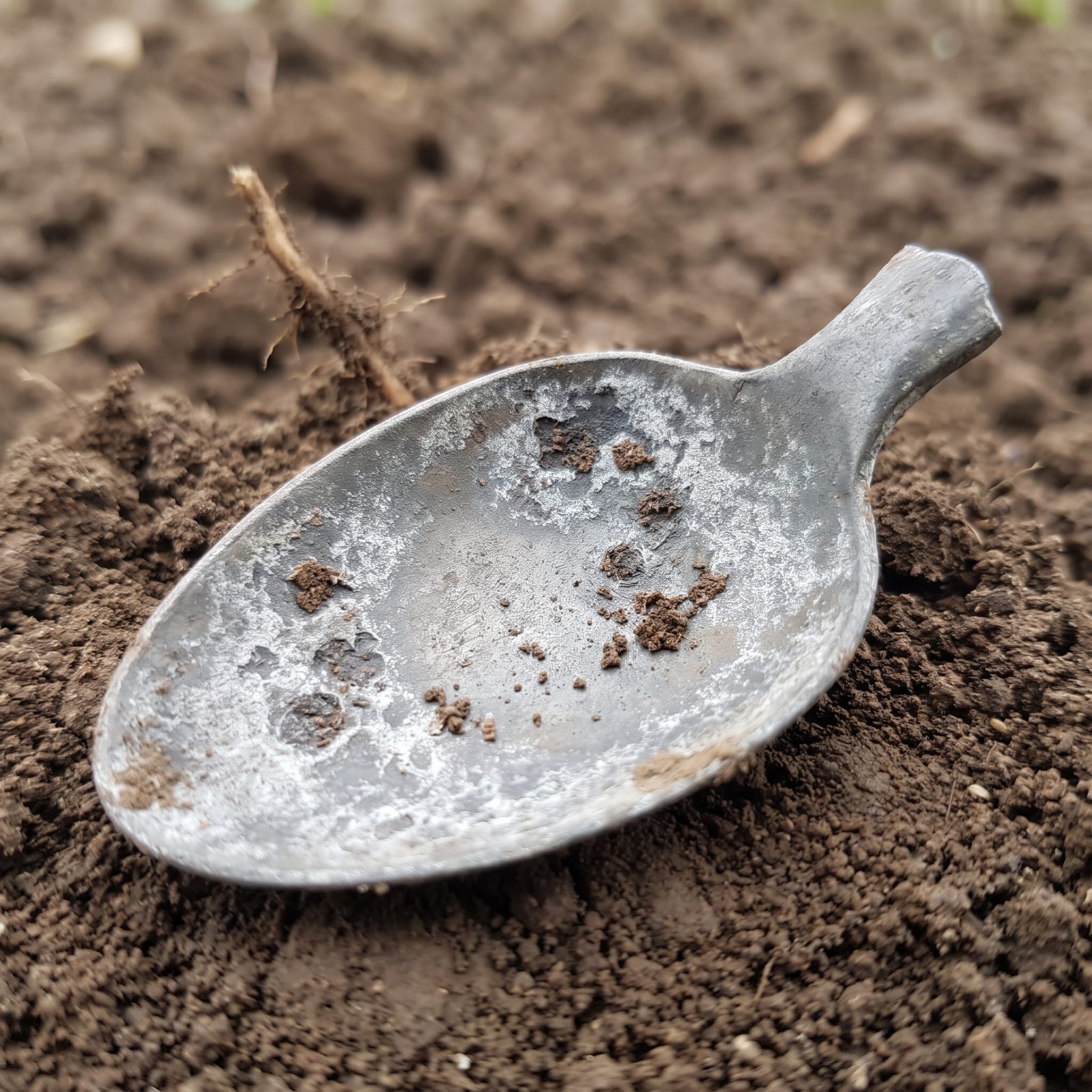
Pewter is soft, tin-heavy, and it does not age gracefully in the ground. What comes out is usually a fragment — a snapped bowl, a cut-off handle, the knop from the end of a spoon. Whole examples are rare because the metal goes brittle and crumbles under a boot or a plow.
Still, these pieces are domestic gold in the non-literal sense. A pewter spoon says people lived here, ate here, used tableware that was once a household’s modest pride. Look for the maker’s touchmark on the back of a bowl. That small stamp is often the difference between a scrap of grey metal and something you can actually date.
24. Copper Harness Rivets: The Small Fasteners Salting Every Old Stable Yard
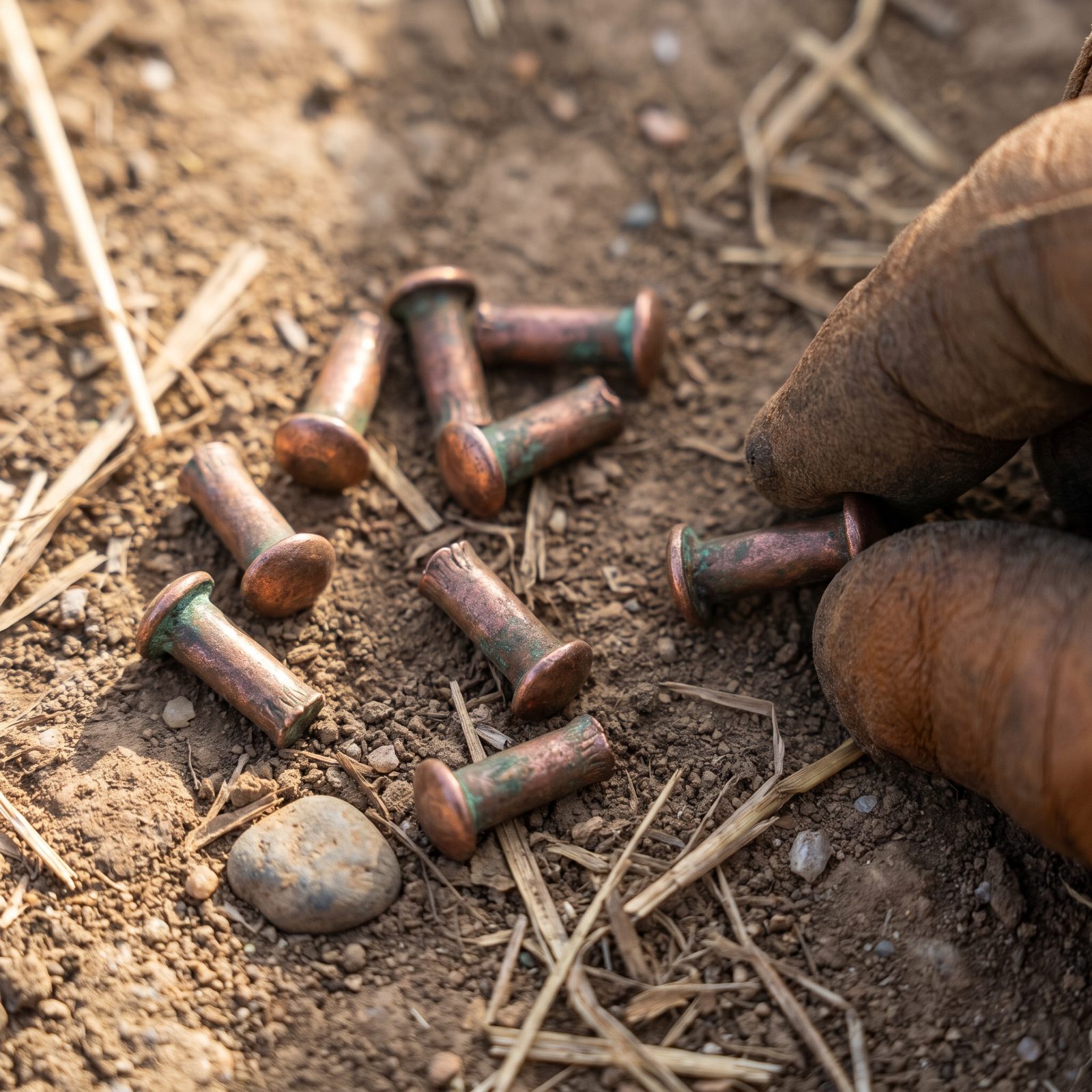
These are the little workhorses of any horse operation. Copper rivets held leather straps together, and when a strap wore through or a harness got cut apart for scrap, the rivets dropped and stayed. Walk a former stable yard with a detector and you’ll get signal after signal of them.
Nobody gets excited about one copper rivet. But a scatter of them maps something real — the exact ground where tack was repaired, where a cart was loaded, where horses stood day after day. The archaeology of ordinary work, written in small round pieces of corroded copper.
23. Livestock Ear Tags: The Numbered Metal Tags Lost in Mud and Hay
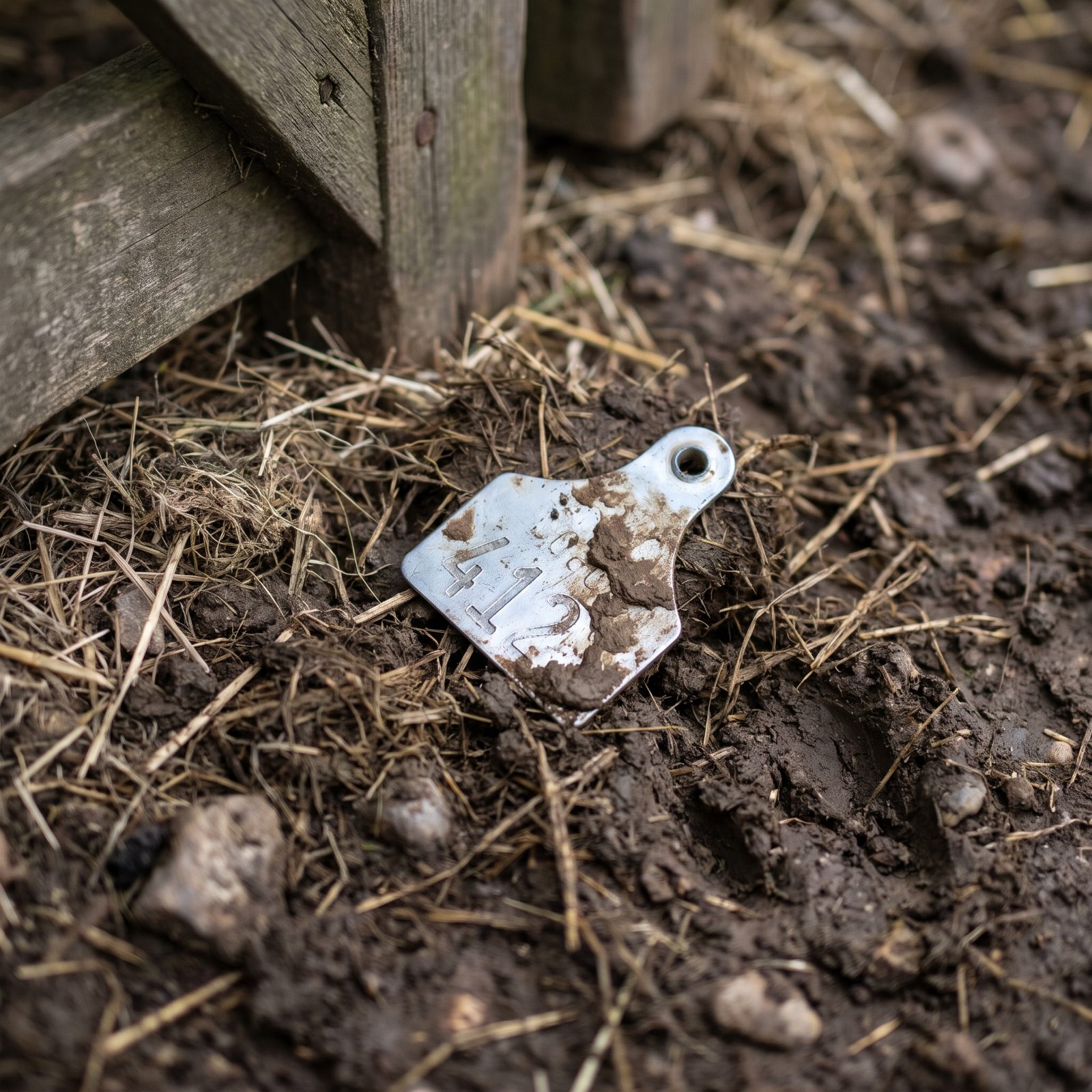
Not every find is a century old. Some are from last season.
Numbered metal ear tags come off animals constantly — snagged on fences, torn in a scuffle, lost in the churned mud of a gateway. Work pasture and barnyard ground with a detector and you’ll pull them up by the handful, usually aluminium or brass, stamped with herd numbers that meant something to someone.
They’re a reminder that a working farm is a layered site. You might get a Victorian button and a recent ear tag from holes a few feet apart. Both are evidence. One’s just a lot younger than the other, and far more likely to still carry a readable number.
22. Farm-Implement Teeth: The Heavy Iron Points Shed by Harrows and Cultivators
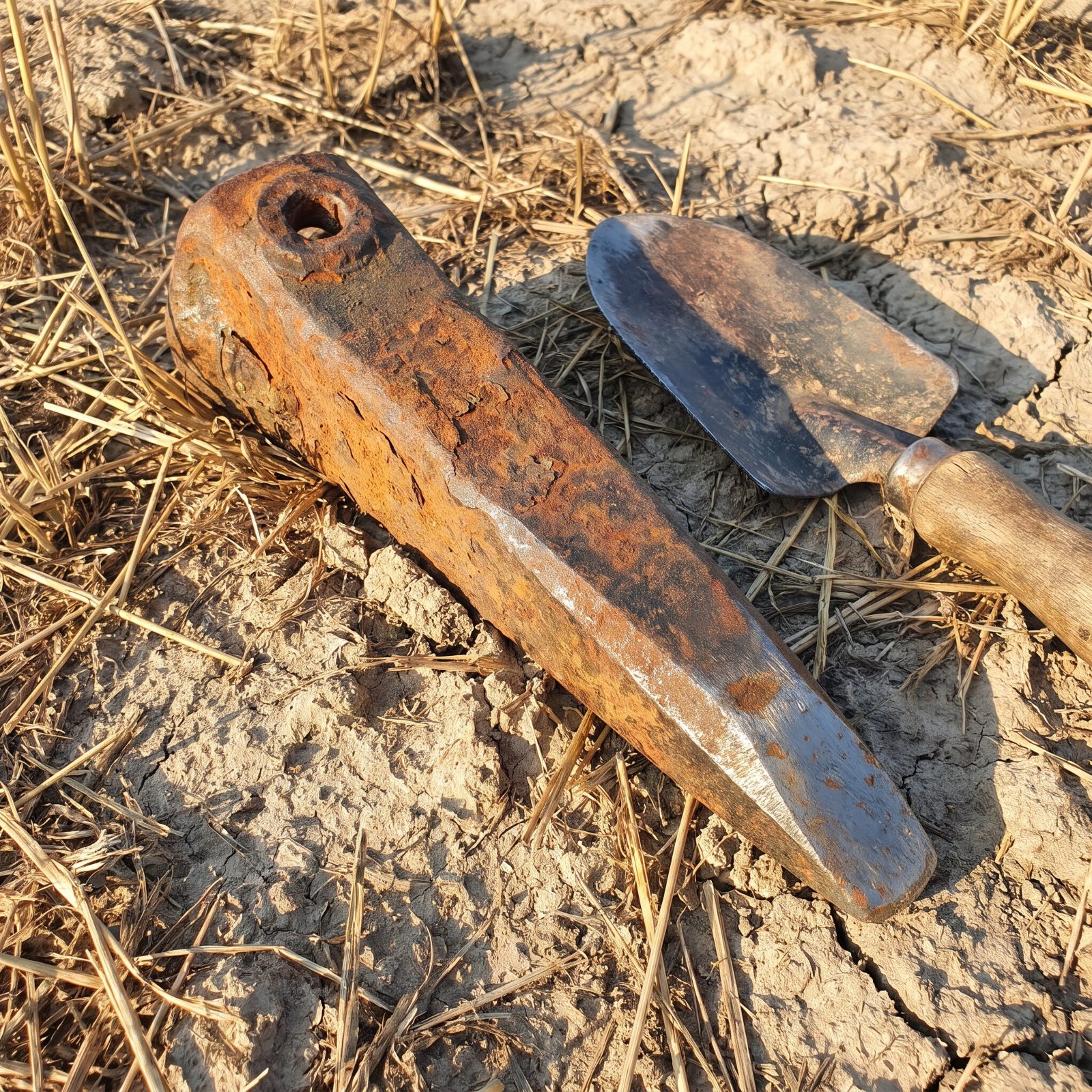
These are the big, chunky, heart-sinking signals. A cultivator or harrow drags dozens of iron teeth and points through the soil, and they snap, bend, and shake loose all the time. What you dig is a solid lump of rusted iron, often tapered to a worn tip, sometimes with a bolt hole still intact.
Experienced detectorists learn to read the signal and groan a little before they even dig. Heavy iron like this is common as dirt on cropland. It’s genuinely useful for understanding how land was worked — but honestly, most of it goes in the scrap bucket. The gold stays stubbornly imaginary.
21. Cut Nails: The Early Fasteners That Quietly Date a Vanished Building
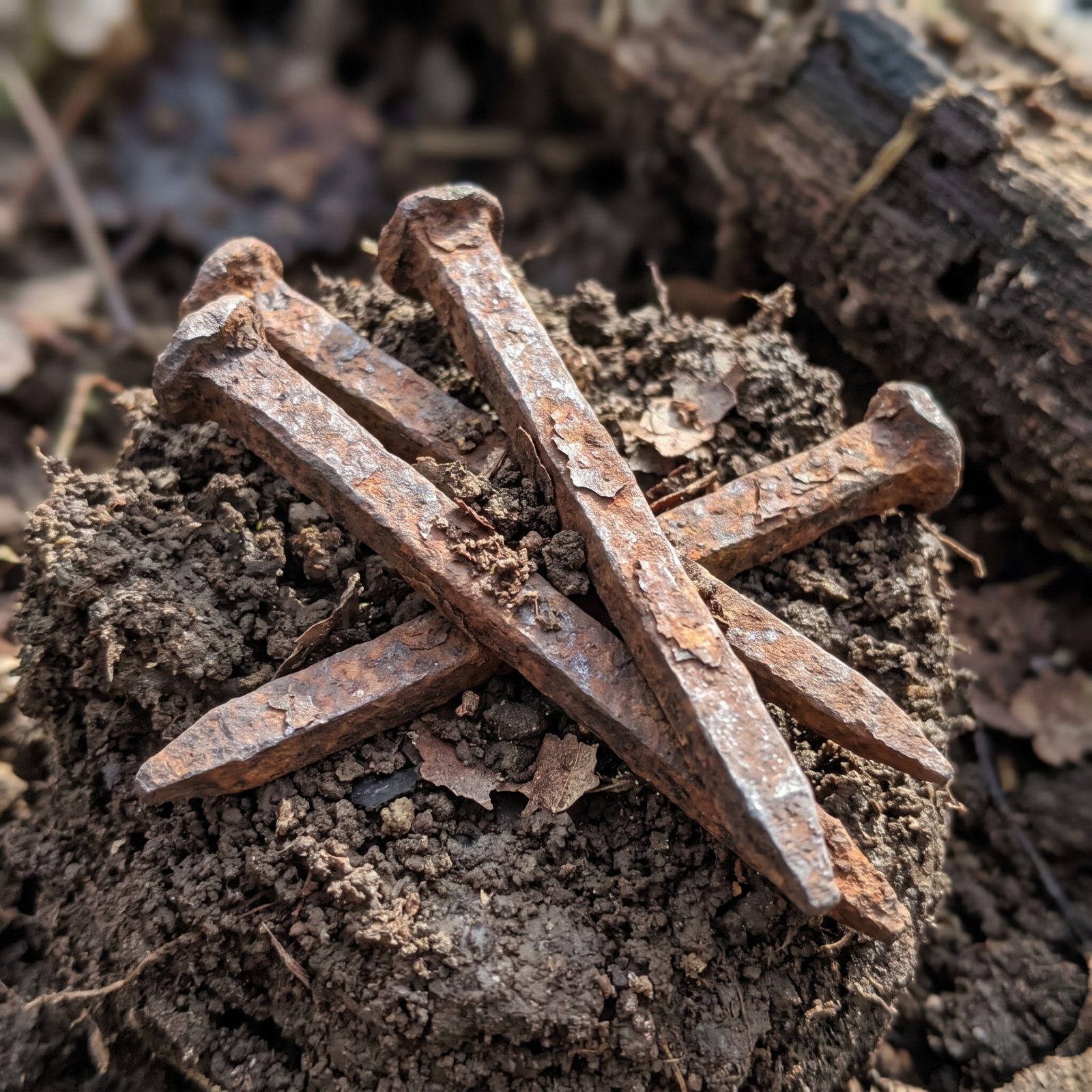
A nail seems like the most boring thing a detector can find. It’s also one of the most useful. The shape tells a story. Hand-forged nails were made one at a time with irregular heads; cut nails were sheared from flat iron sheets and have a rectangular, tapered body; wire nails are the round modern kind.
So a scatter of cut or hand-forged nails, with their square-sided shanks, on empty ground isn’t rubbish. It’s often the ghost of a building that rotted away generations ago, and the nail type brackets roughly when it stood. No foundation. No walls. No record. Just a square-sided nail and the outline of a structure nobody alive ever saw.
20. Skeleton Keys: The Long-Shanked Keys That Outlived Their Locks
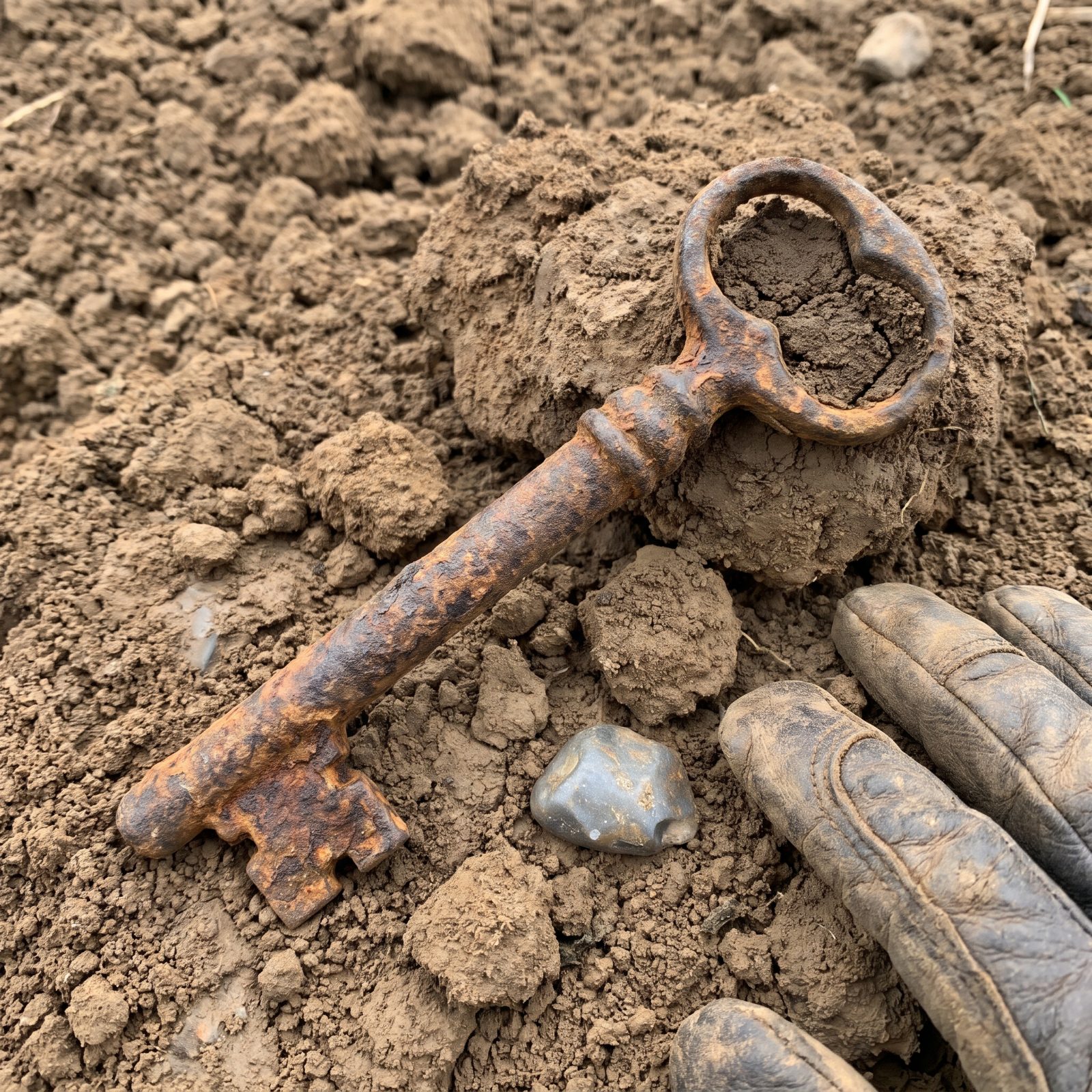
Everyone hopes a key will lead to a chest. It almost never does.
Skeleton keys — the long-shanked kind with a simple notched bit — come up in fields, gardens, and old house sites with real regularity. They opened doors, cabinets, trunks, and drawers, and they got lost the way keys always do: dropped, forgotten, buried in a tossed-out drawer.
What makes them worth keeping isn’t rarity. It’s romance. A key is an object built around a single lost moment — someone’s door, someone’s trunk, a lock that’s been rubble for a century. The key outlasted all of it. Better than most people give it credit for, even if it’s nothing like gold.
19. Pocket Knives: Corroded Folding Knives With Recognizable Bolsters and Blades
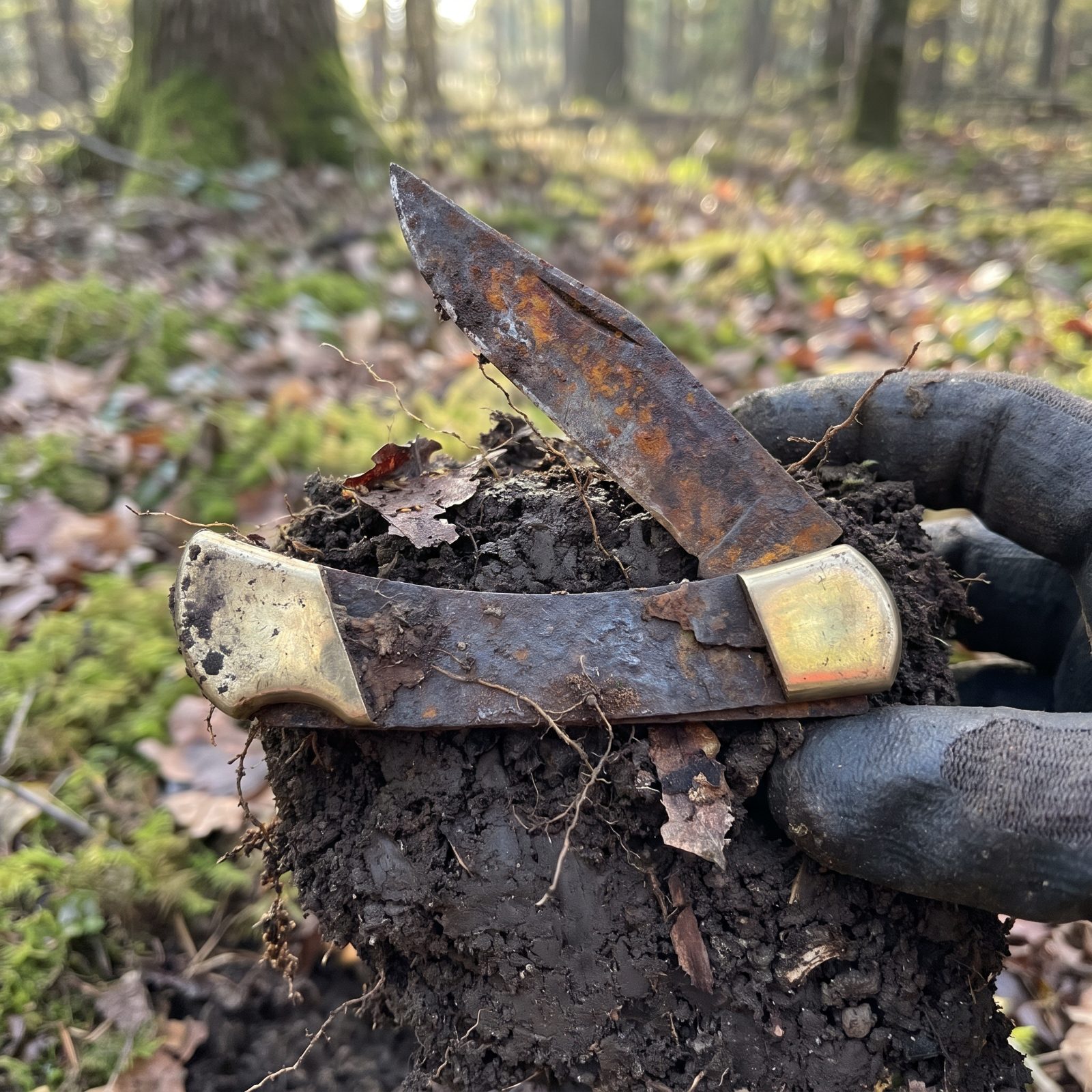
Pull the trash signal on any old farm track long enough and a pocket knife turns up, blade rusted half-open, the handle scales rotted away, one bolster usually hanging on by sheer stubbornness.
People get this one wrong. A corroded knife can still be the best find of the day, because the maker’s stamp often survives on the tang even when the blade is a ruin, and that stamp dates it. Men carried these everywhere and lost them constantly. That’s why they outnumber nearly every gold ring you’ll ever pull.
18. Thimbles: Brass, Aluminum and Silver-Colored Sewing Tools
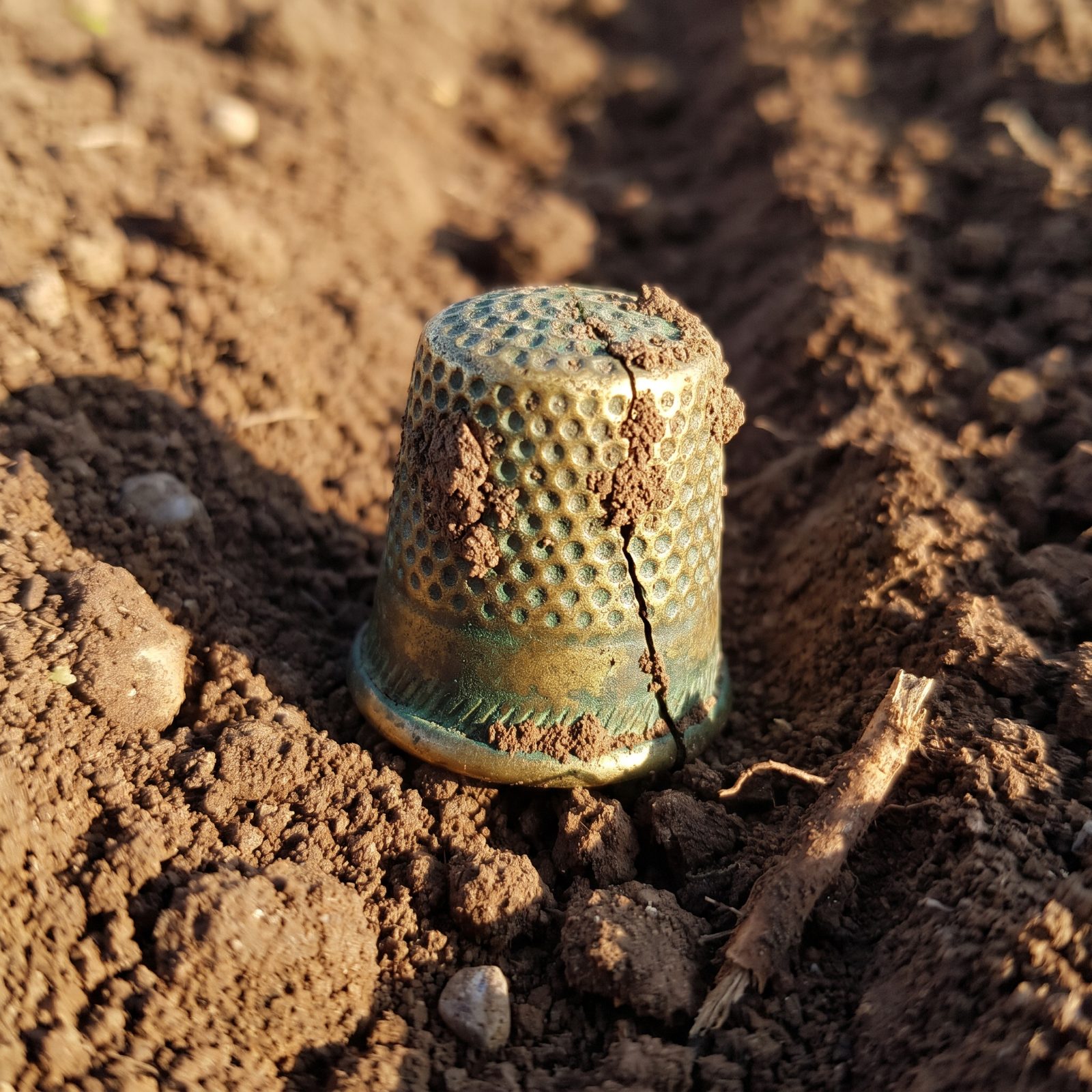
Thimbles are a detectorist staple, and they quietly tell you something: wherever you keep finding them, people lived and worked that ground for generations. Sewing was constant, thimbles were tiny, and they rolled away into floor cracks and cornfields by the thousand.
Most come out brass, dented and split. Older ones wear hand-punched dimples that look a little uneven, charmingly so. The silvery ones? Usually later aluminum or plated base metal — not the precious thing a rookie prays for.
17. Costume Brooches: Plated Ornaments Often Missing Their Stones and Pins
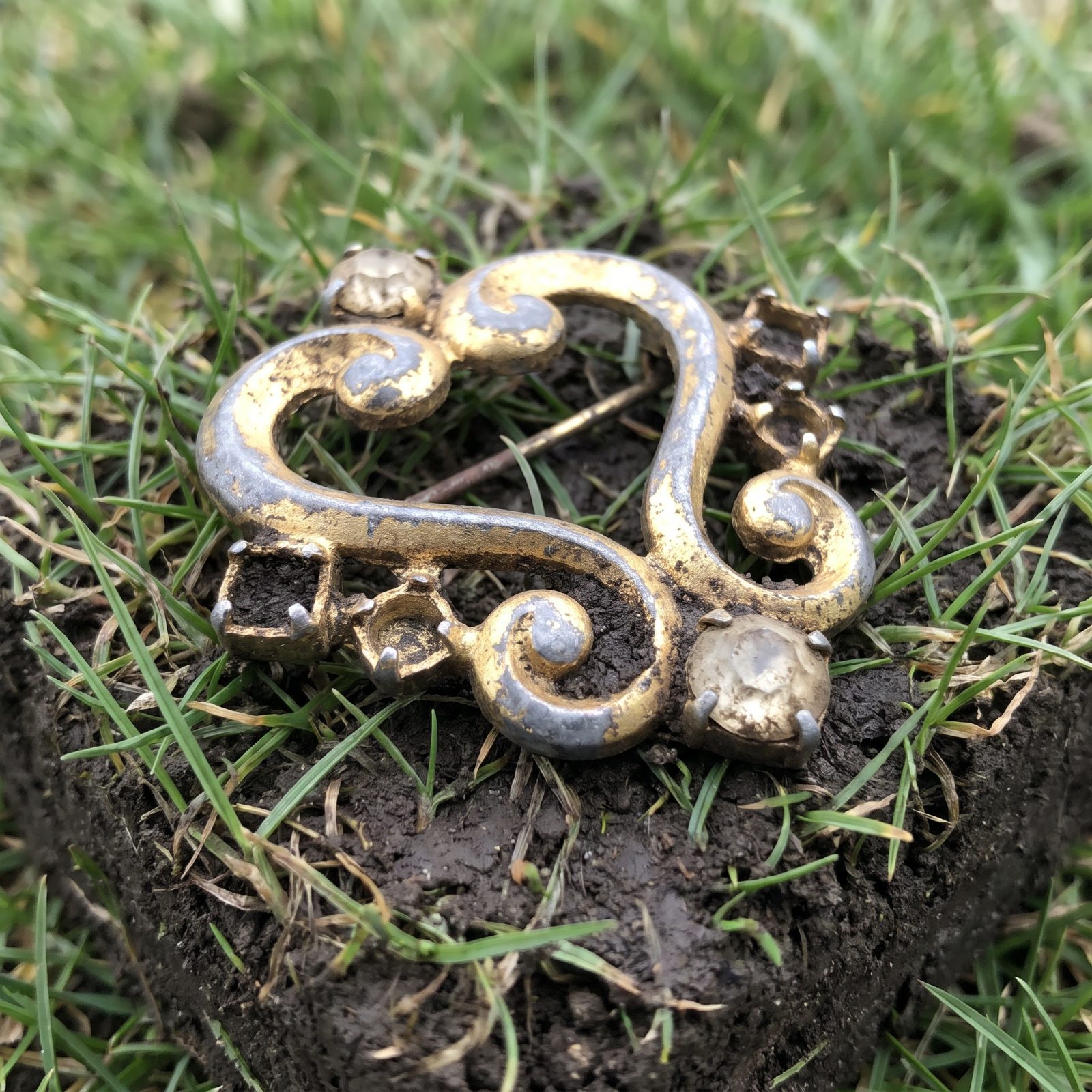
A brooch glints gold in the hole and your heart leaps. Then it surfaces — plating worn through, the stones long gone, the pin snapped off decades back.
That little gut-drop is a rite of passage. Costume jewelry outnumbers real gold by an enormous margin because it was cheap, worn hard, and shed its paste stones all over the place. The empty claw settings give it away every time. A good Victorian or Art Deco brooch frame still carries its own quiet charm, stones or not.
16. Base-Metal Rings: Copper, Brass, Steel and Plated Bands That Fool You at First
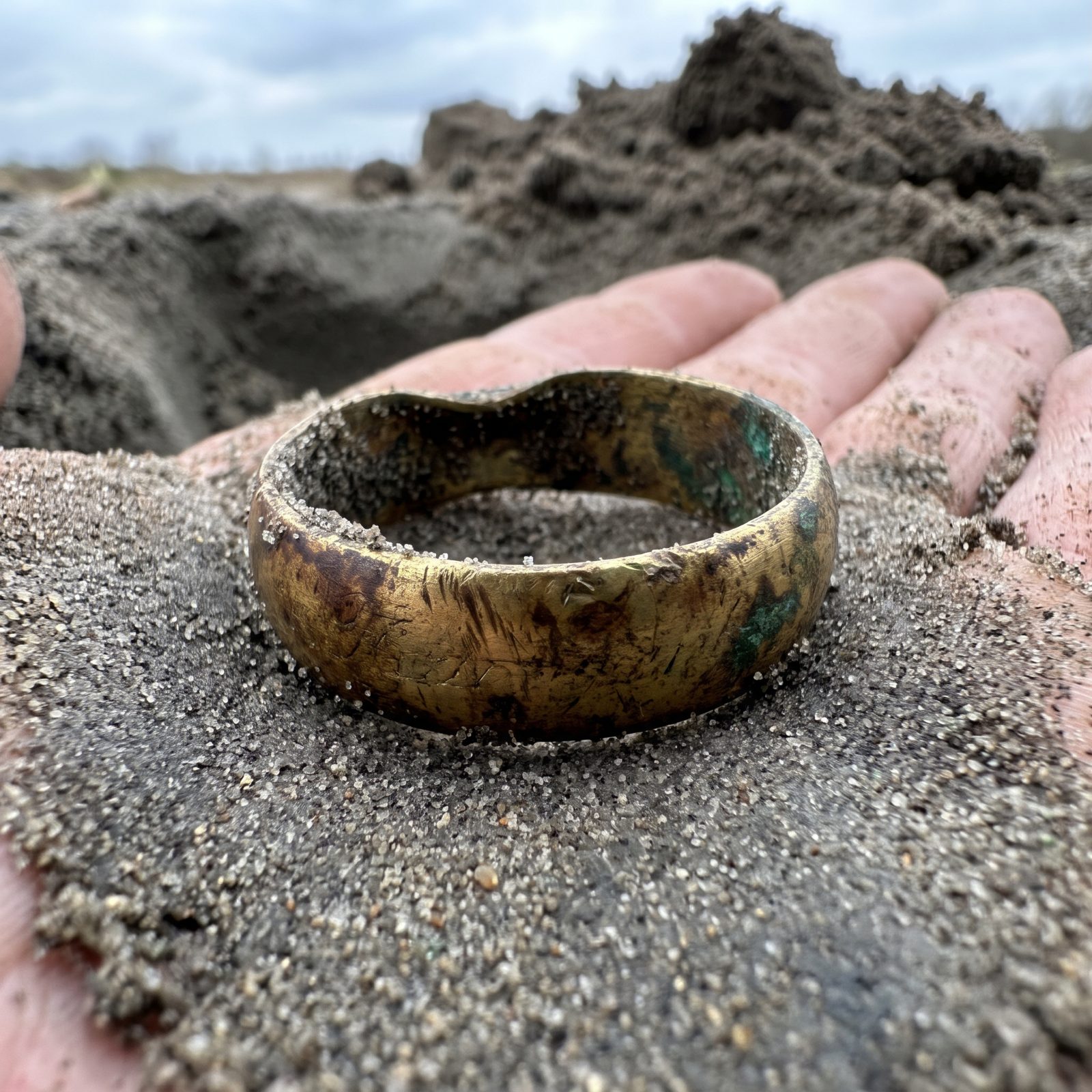
Every ring reads as gold for the first three seconds. Most aren’t.
Copper and brass rings dominate the count, and they age into convincing warm tones that trick the eye down in the hole. The tells arrive later: a green tinge on your skin, a magnet grabbing a steel band, plating flaking at the edges. Real gold shrugs off the ground and comes up bright. The base-metal ones come up dulled, pitted, often slightly misshapen — a bit sad, really.
15. Overall Buttons: Branded Workwear Fasteners From Farms and Factories
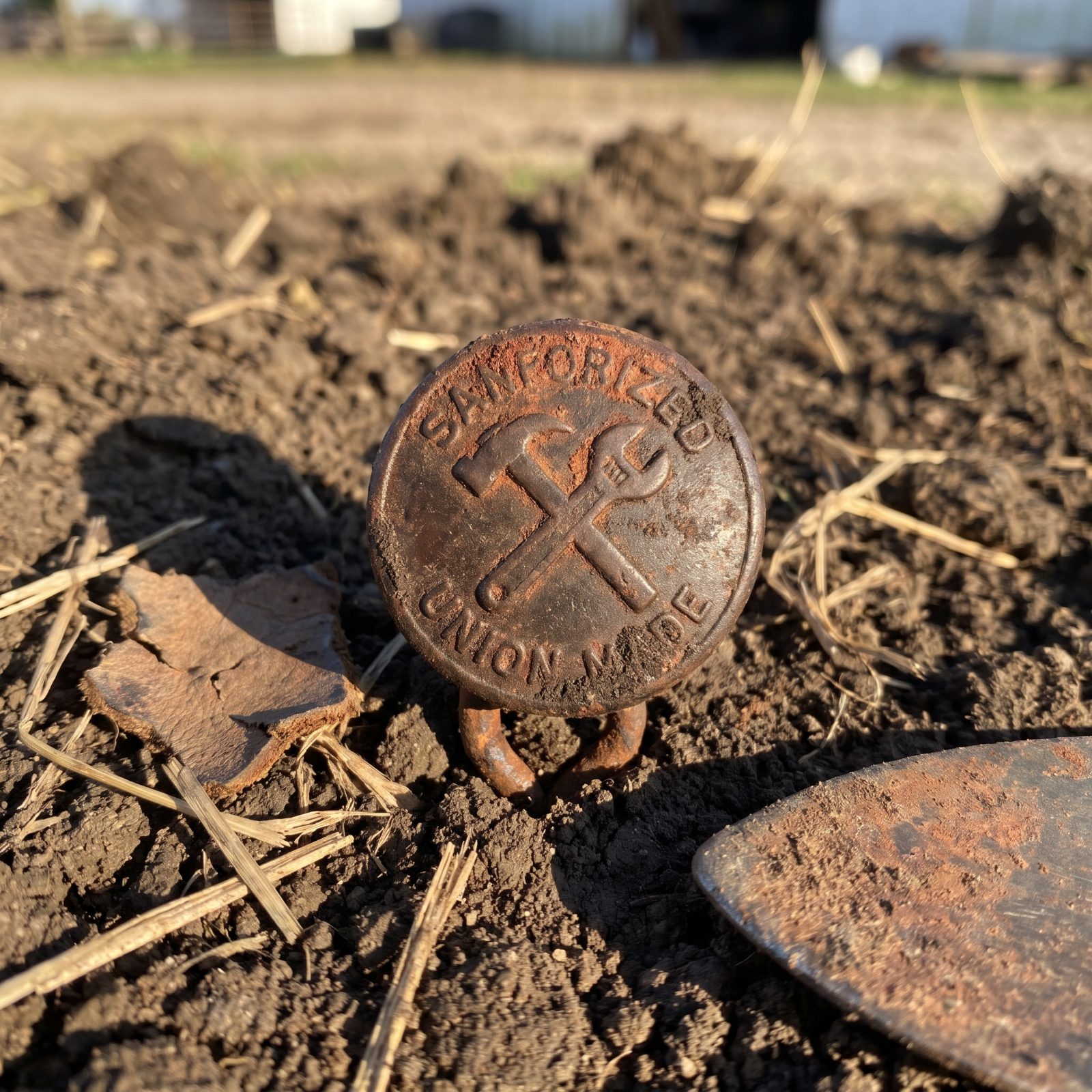
Overall buttons are the workhorse find of any old farm or industrial yard. Stamped with brand names and work themes, sewn onto denim bibs, popped off by the hundred during hard labor.
The stamp is where the appeal lives. A legible maker’s name can date a site and tie it to the working people who lived there — a lot more interesting than yet another worthless clad coin. Collectors actually chase particular stamped designs, so that brown dome in the furrow sometimes matters far more than it looks.
14. Belt Buckles: Frame, Plate and Roller Buckles Across Every Era
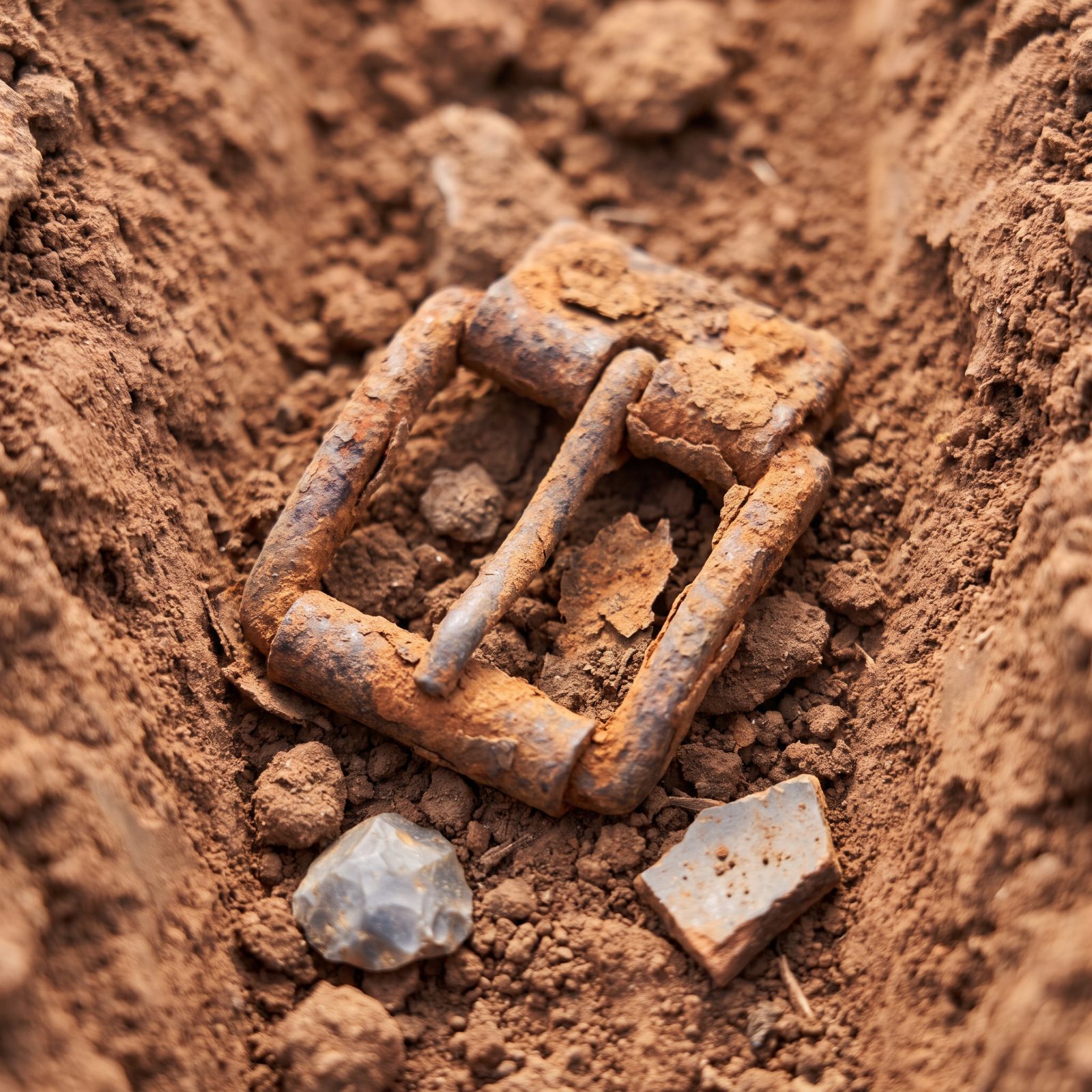
Buckles are everywhere, and that’s both the problem and the pleasure of them. A simple iron frame buckle could be medieval, or it could be off a cheap work belt from 1950. The form barely changed for centuries.
You’ll turn up frame buckles, flat decorated plate buckles, and roller buckles with a little turning bar. The brass decorated ones can be genuinely old and worth some research. Rusted iron frames are usually common — but every so often one carries a date or a cast design that rewards a closer look under the tap.
13. Bridle Bits: Heavy Iron Horse Gear From Old Routes and Farm Lanes
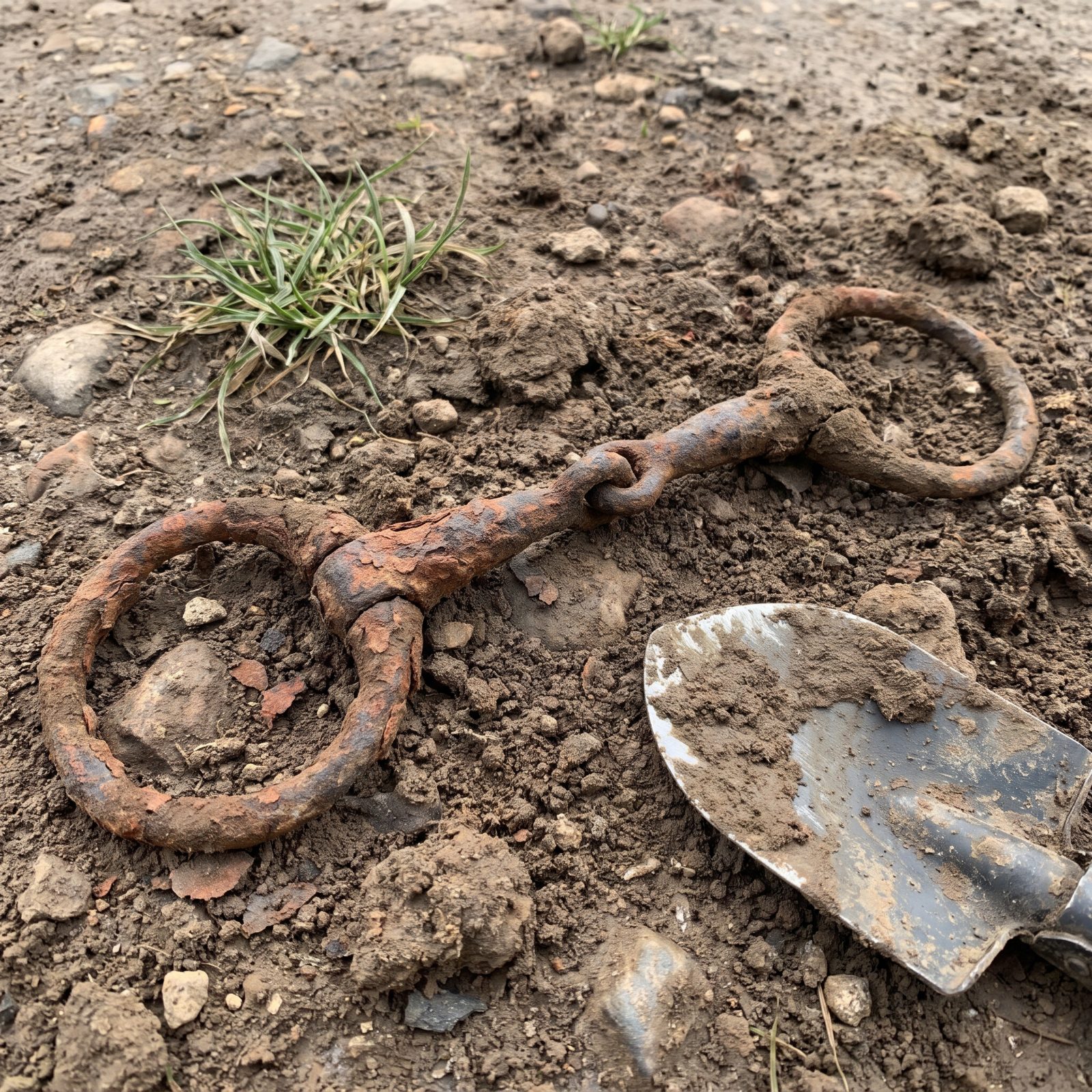
Find a bridle bit and you’ve found a road. These substantial iron mouthpieces surface along old transport routes, fords, and the lanes where horses worked and waited for centuries.
They come out heavy and heavily rusted, the jointed center and the big side rings usually intact. Nobody mistakes one for treasure. But a bit is a story — it marks where draft animals hauled goods and people before engines ever did, and that context is worth more than the lump of iron suggests.
12. Horseshoes: The Familiar Iron Find That Flags Transport and Livestock
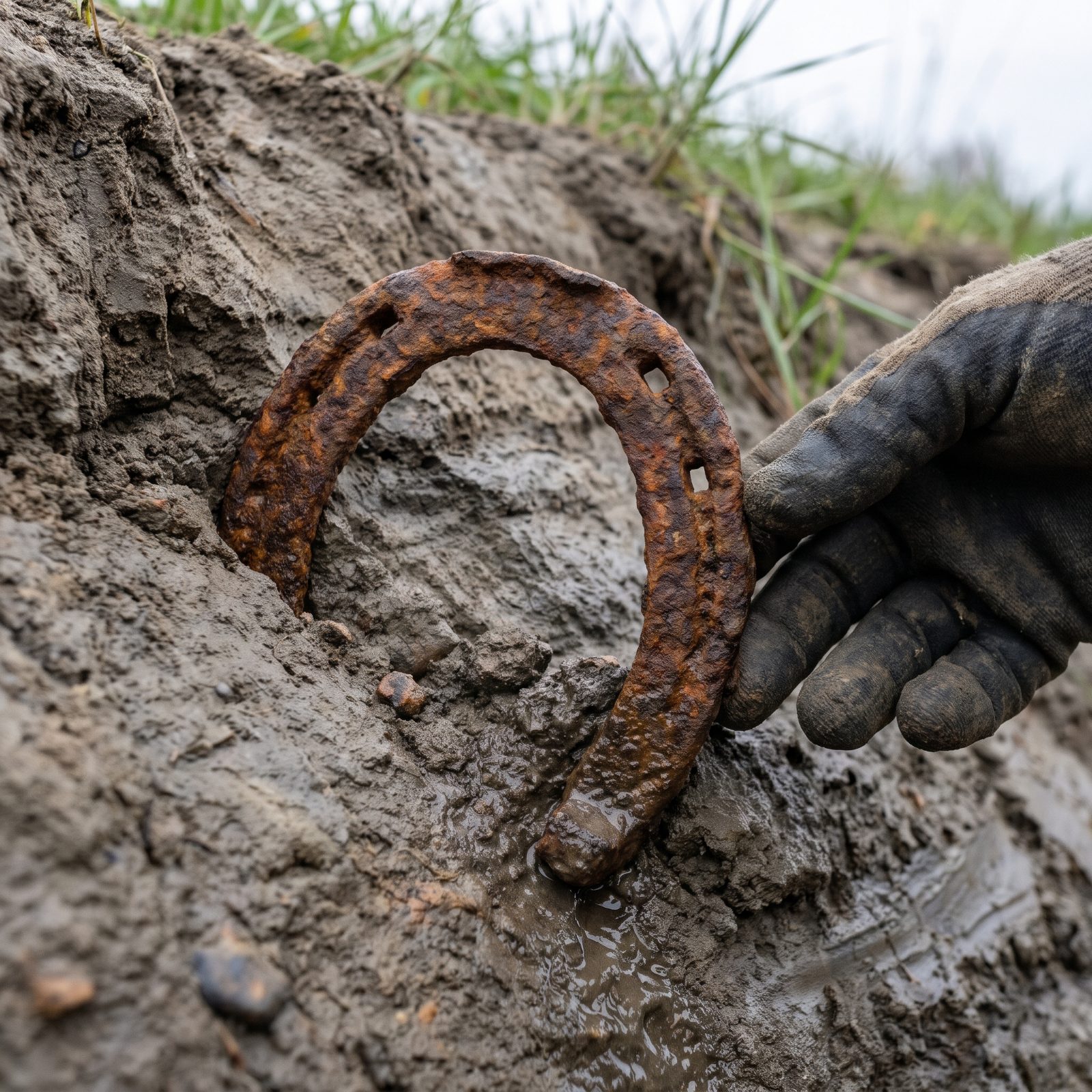
The horseshoe is the find everyone recognizes and plenty of detectorists leave in the hole. It’s big, it’s iron, and it rings up strong on the machine, promising a lot more than it delivers.
Don’t write them all off, though. A hand-forged shoe with wavy edges and square nail holes can be genuinely old, and its shape hints at whether draft or riding stock passed through. Where horseshoes pile up, people and animals once moved steadily — a decent reason to slow down and dig the finer signals nearby.
11. Fishing Sinkers: Lead Weights Clustered by Lakes, Rivers and Piers
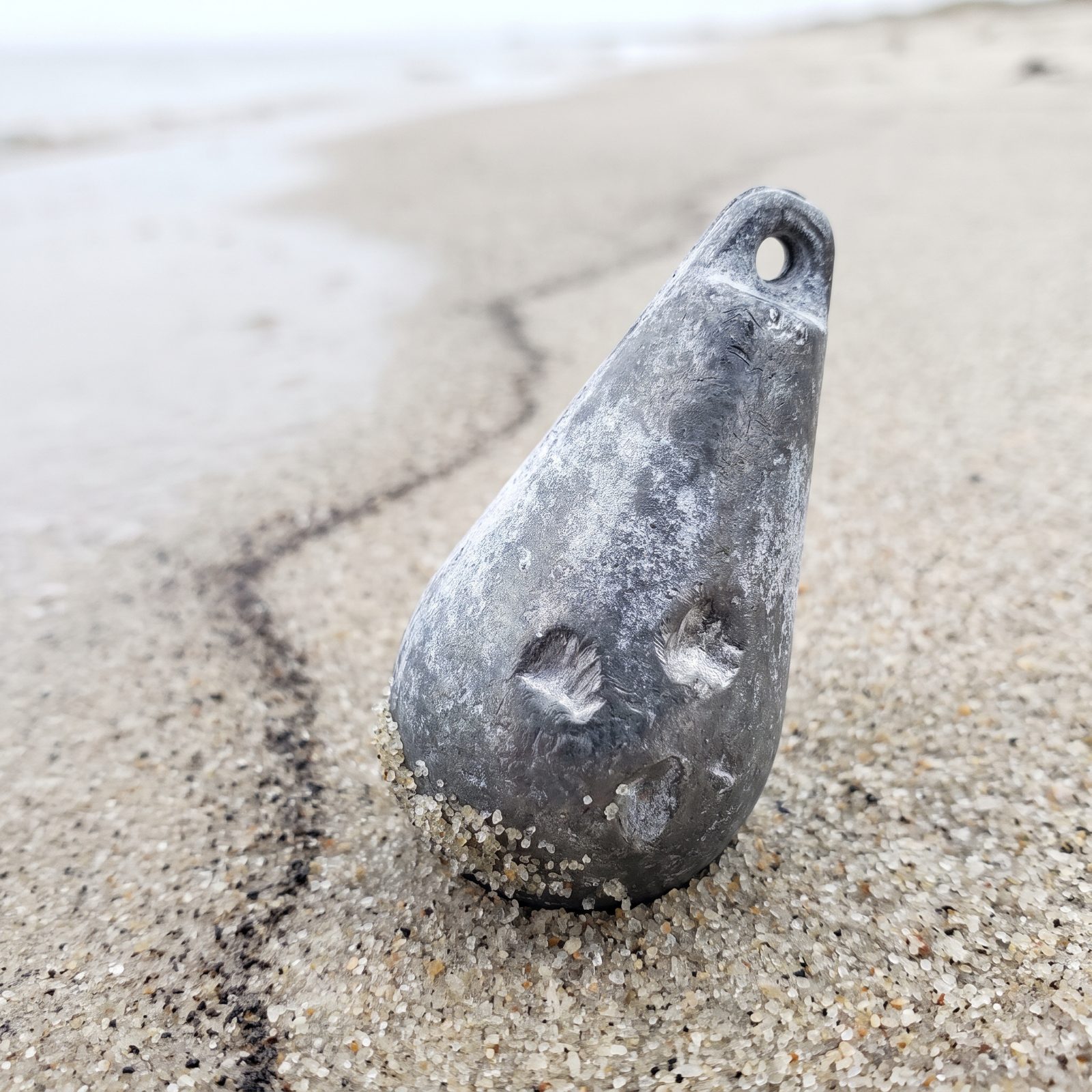
Swing a coil near any fishing water and lead sinkers pile up fast. Piers, riverbanks, lake edges, beaches — anywhere lines got snagged and snapped, the weights stayed behind.
They come up dull grey with that soft white oxide skin lead always develops. Shapes run from simple teardrops to split shot to molded oddities. Not glamorous. But a cluster of them maps exactly where people stood and cast, sometimes for a century or more.
10. Fishing Spoons: Curved Lures That Masquerade as Battered Cutlery
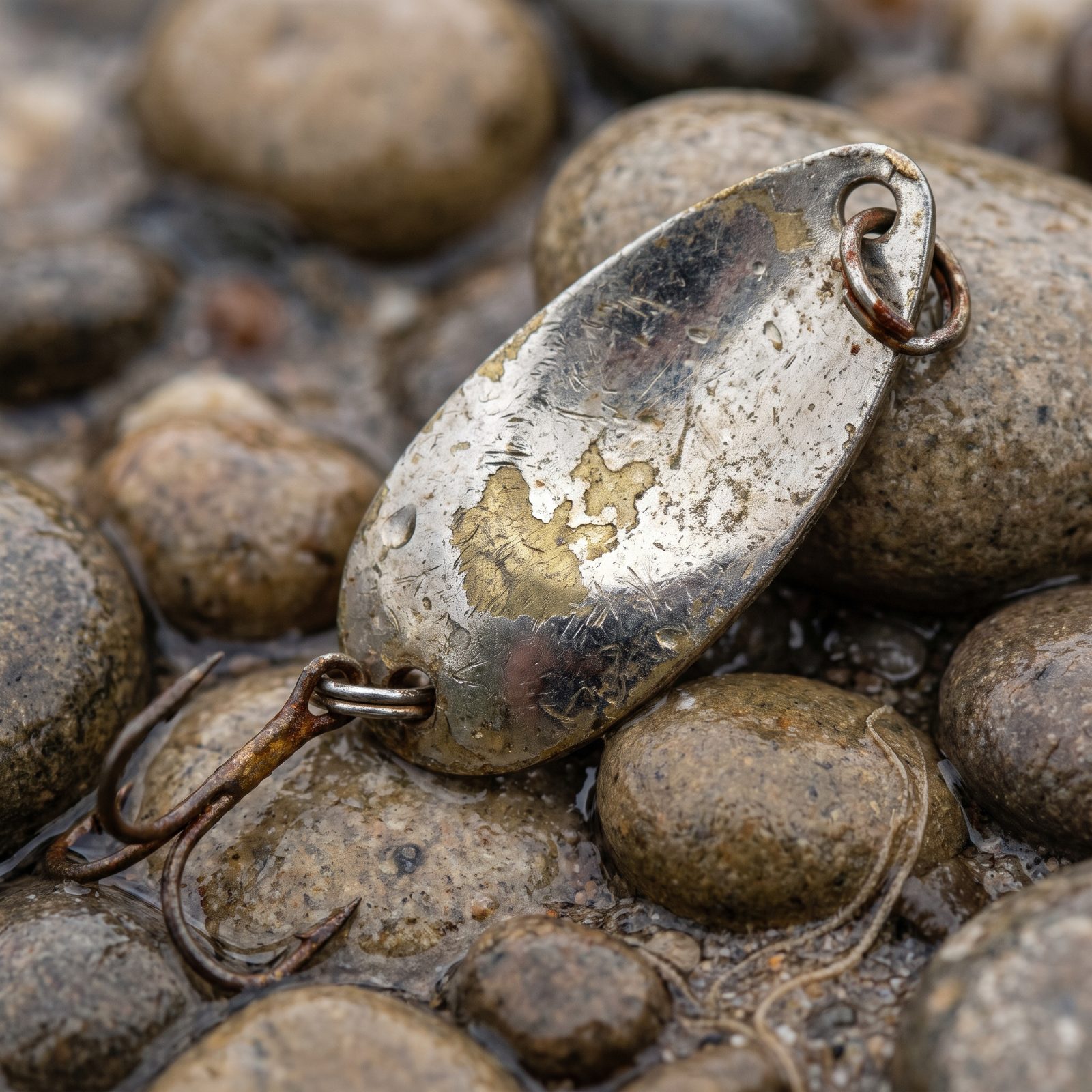
A spoon lure in the ground throws people off. That curved, dished metal looks for all the world like the bowl of a broken teaspoon, and plenty get logged as cutlery before anyone spots the hook hole.
Look for the split ring, the hook attachment points, the deliberate concave curve built to wobble through water. They surface tarnished and scratched along riverbanks and lake shores, snapped off and sunk decades back. A minor find, sure. Still, half the mystery in detecting is just working out what the odd little thing you’ve actually dug up really is.
9. Musket Balls, Round Lead Projectiles From Hunting, Militia Drill and Old Settlements
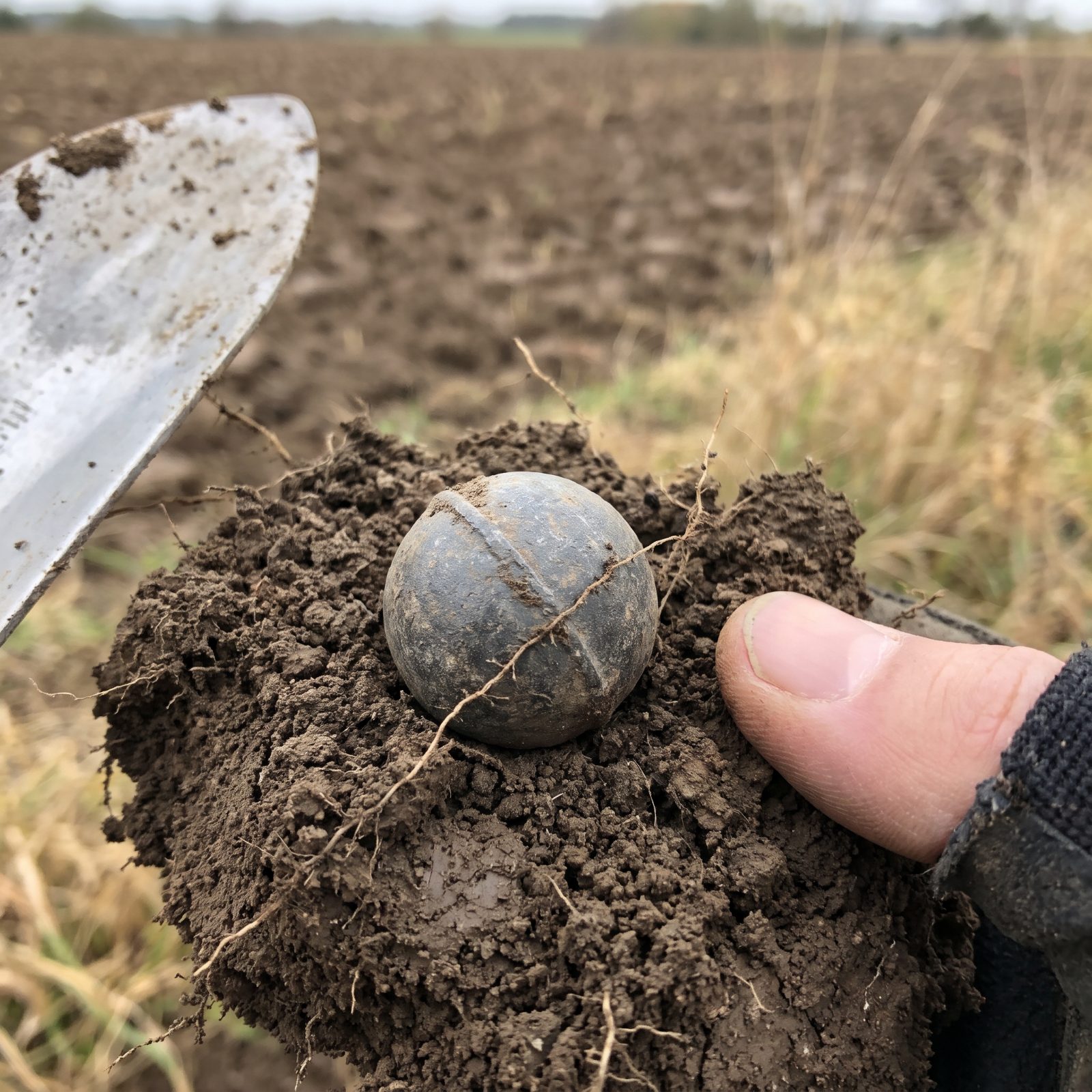
Dig long enough near an old homestead and you’ll pull up more lead than anything shiny. Round musket balls turn up constantly, and most aren’t battlefield relics — they come from hunting, from militia practice, from people casting their own ammunition over a fire in the yard.
Look for the casting seam and the little sprue nub where molten lead got snipped from the mold. Diameter hints at the caliber and roughly the era. Fired balls flatten on one side; dropped ones stay perfectly round.
8. Toy Cars, Die-Cast Bodies and Loose Wheels Lost in Gardens and Schoolyards
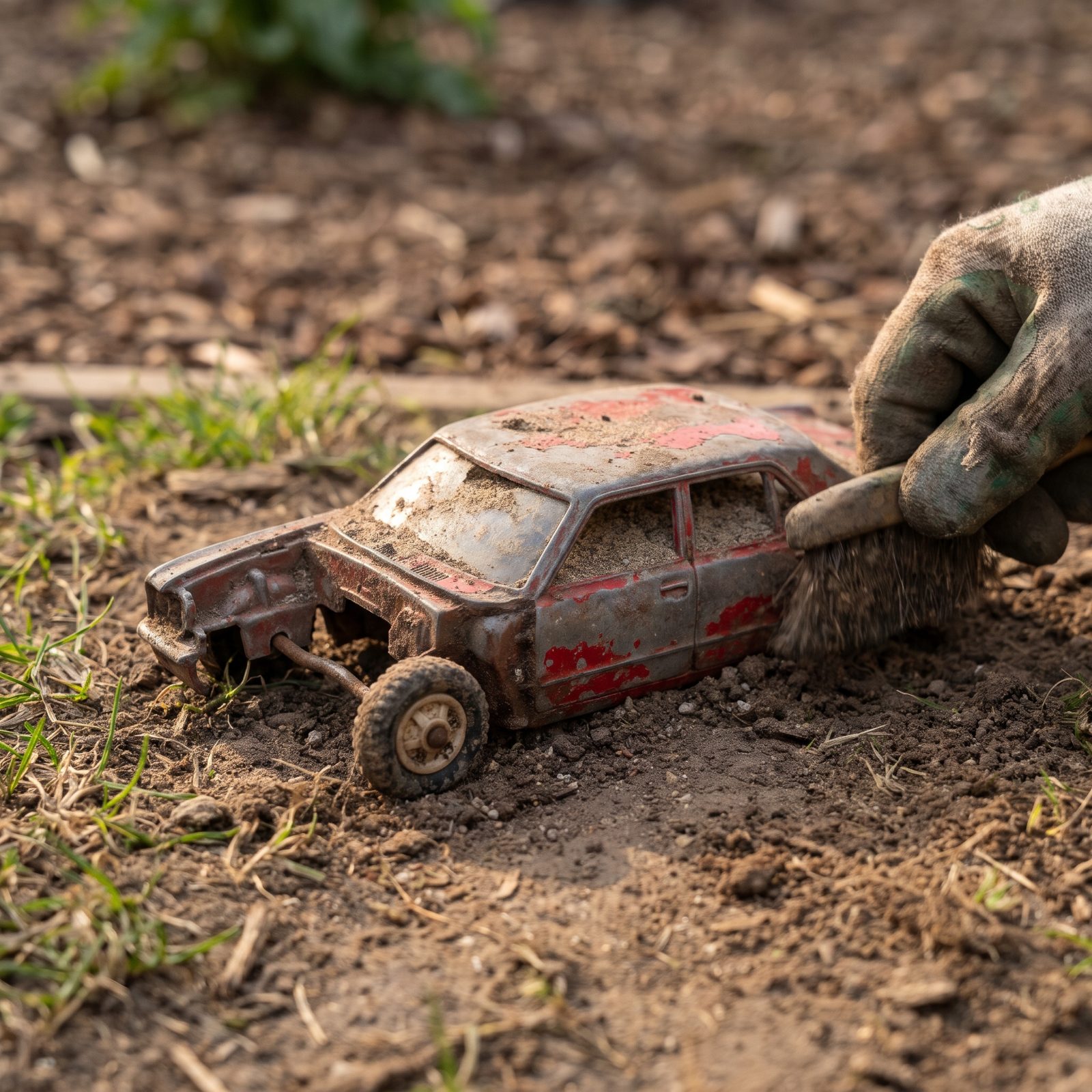
Every schoolyard and backyard is a graveyard of lost toy cars. The die-cast ones register beautifully on a detector, which is exactly why they fool people — a good solid signal, a careful dig, and up comes a rusted little chassis missing three wheels.
There’s a soft spot in it, honestly. Somebody owned that car, loved it, lost it in the grass decades ago. You’re holding the thing a child cried over on a Tuesday afternoon in the seventies. Not gold. Not nothing, either.
7. Lead Toy Soldiers, Cast Figures That Outlast Their Painted Uniforms
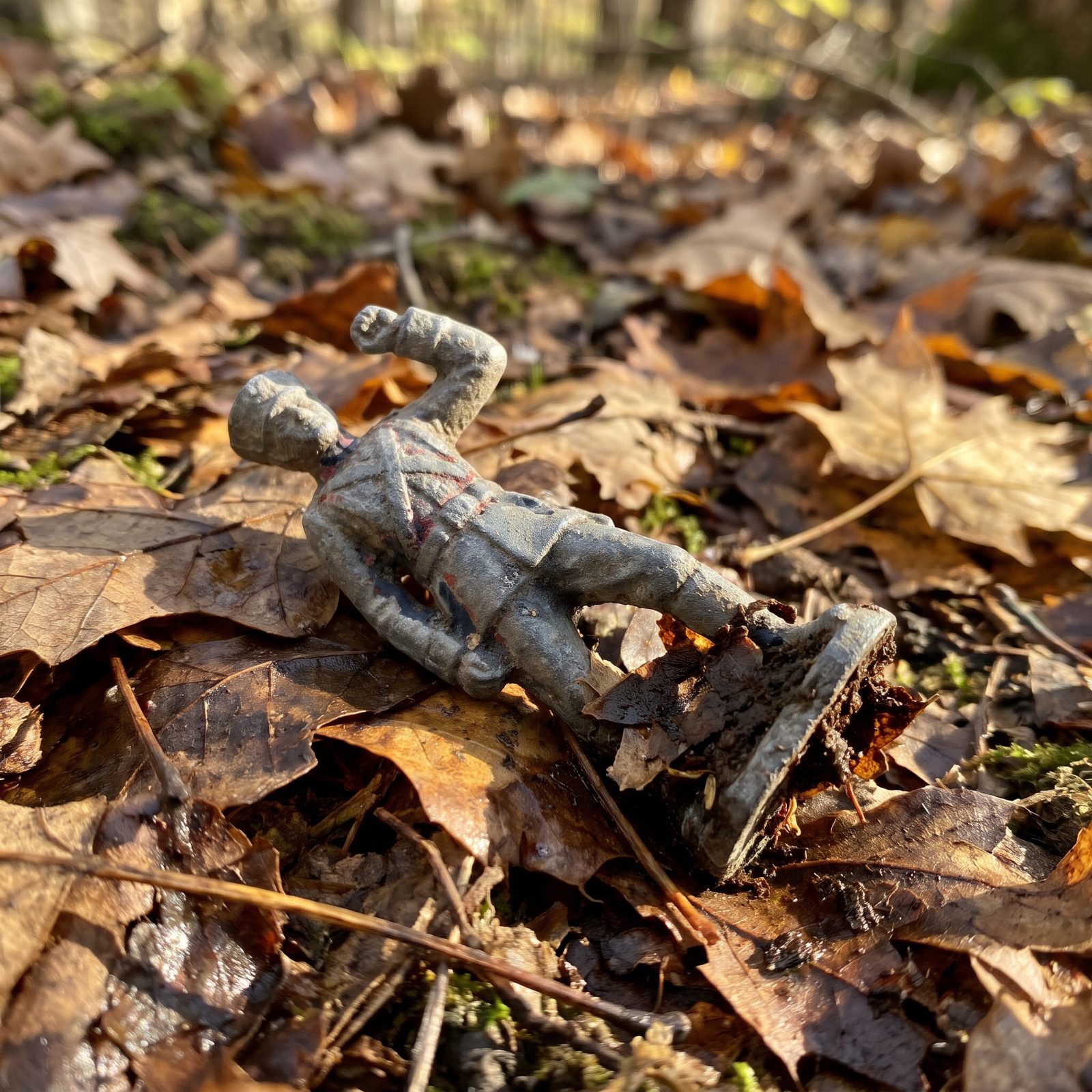
Lead soldiers outlast the paint that once covered them. The enamel flakes off within a few decades underground, but the figure survives — grey, soft, oddly dignified.
You can usually still read the pose: an arm raised, a rifle shouldered, a horse frozen mid-stride. Collectors prize the older hollow-cast British ones. Most recoveries, though, are humble, worn smooth by the slow acids in the soil.
6. Trade Tokens, Merchant Pieces Redeemable for Goods, Credit or a Single Beer
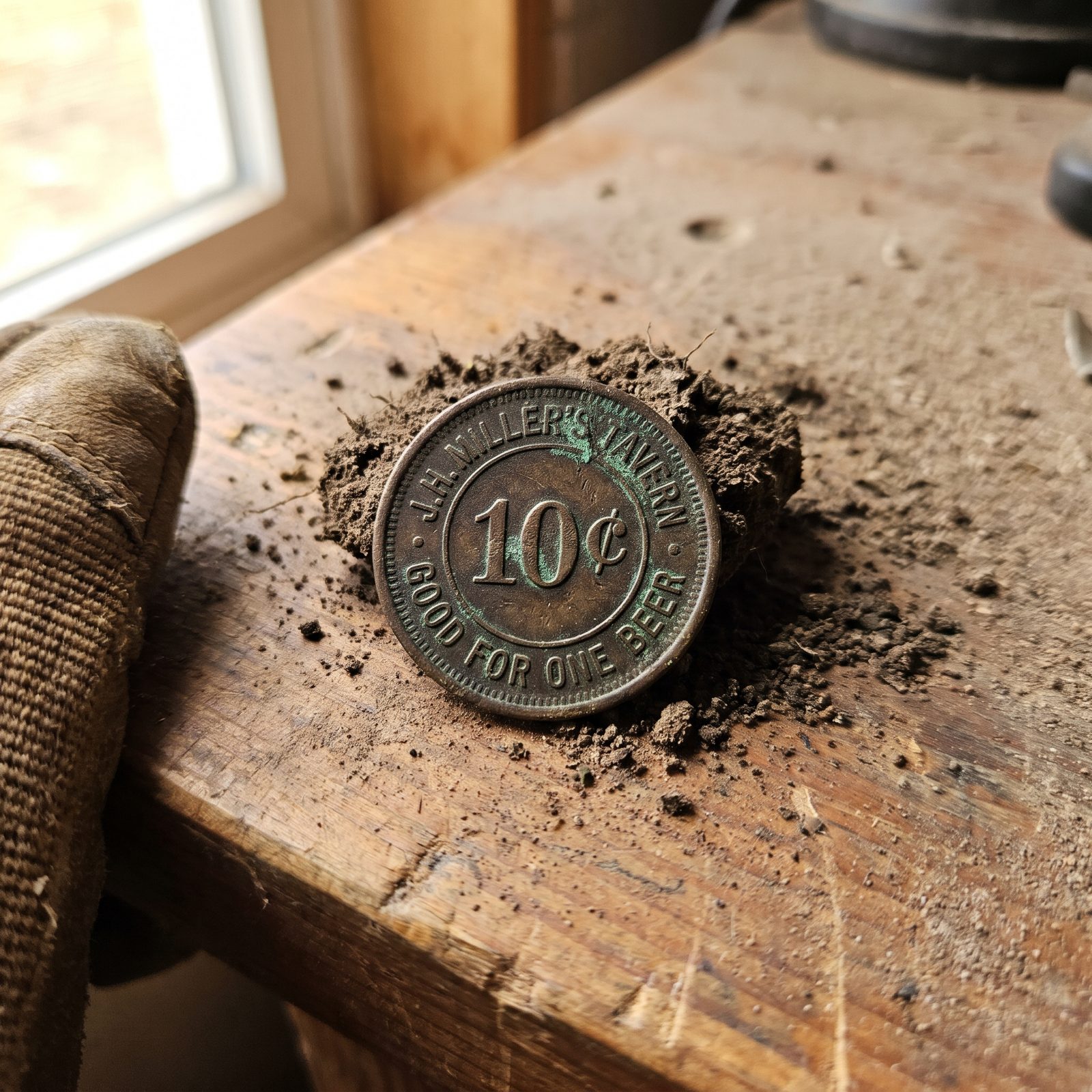
Trade tokens send detectorists tumbling down a rabbit hole of local history. A saloon owed you a drink. A general store extended you credit. A mining company paid you in coin that only worked at its own store — nowhere else.
Struck in brass, aluminum or white metal, they often carry a town name, a merchant, and a value like “Good For 5¢ In Trade.” That makes them traceable. Some are common and nearly worthless. Others document a business that vanished a century ago and left behind nothing else at all.
5. Foreign Base-Metal Coins, Pocket Change That Traveled Home in Someone’s Suitcase
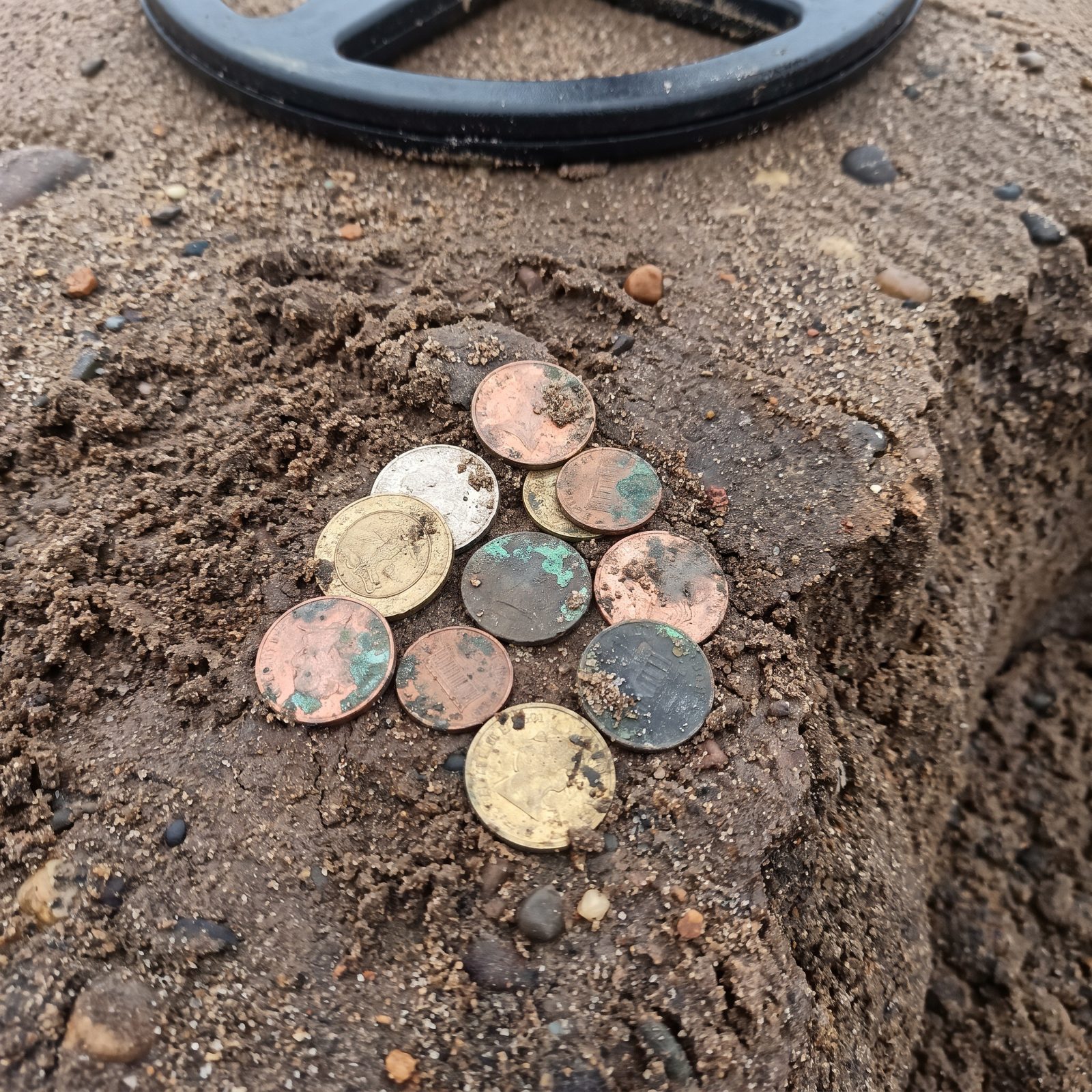
Foreign coins surface far more often than anyone expects, and they’re nearly always leftover travel change. Someone came home from a trip with a pocketful of unspendable coins, and eventually those coins ended up in the dirt of a park half a world away.
Most are base metal, worth almost nothing. But each one tells a tiny story of movement — a Canadian cent in an American schoolyard, a worn European coin on a beach. How did it get there? That puzzle is half the fun.
4. Modern Clad Coins, The Everyday Pocket Change That Rules Playground Digs
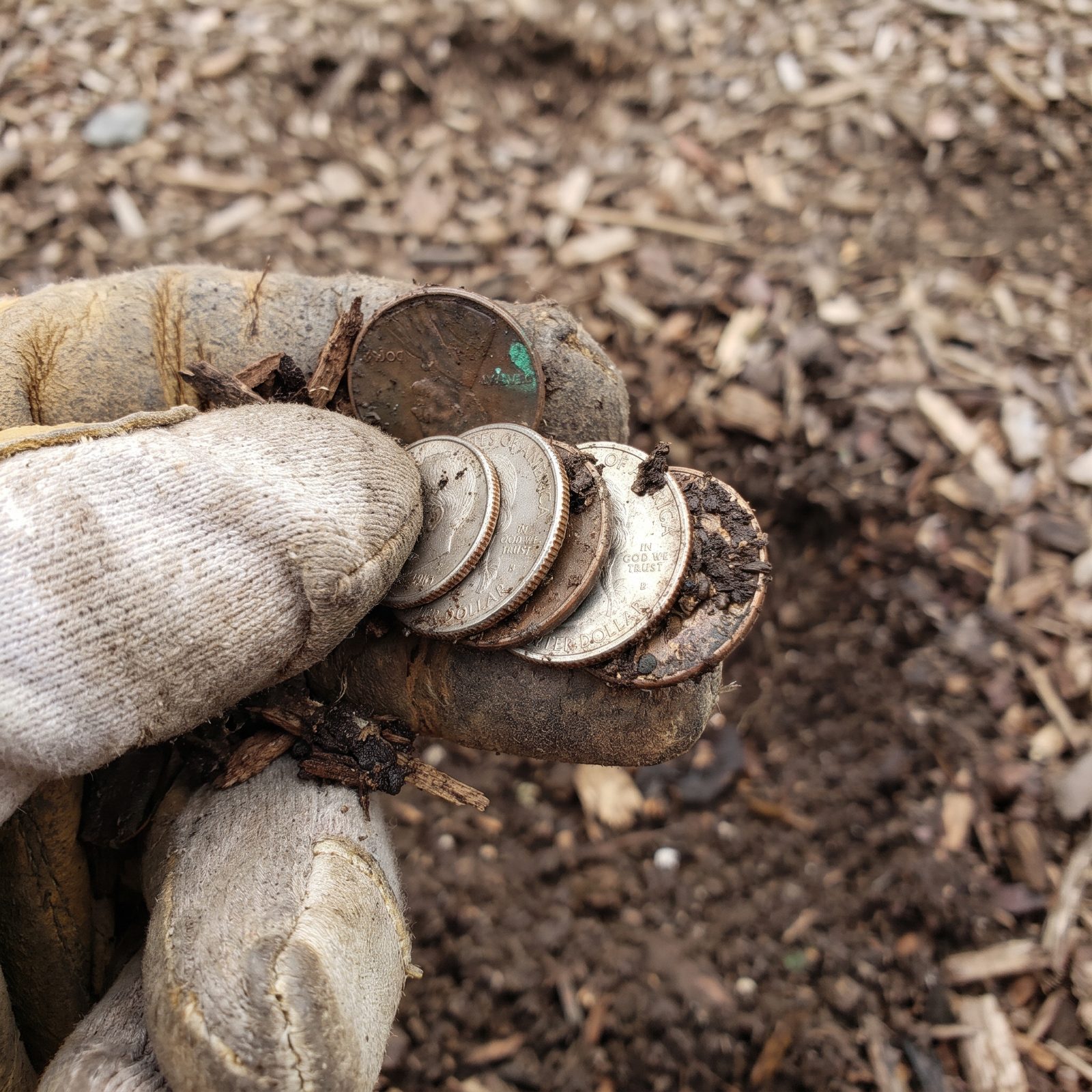
Detect a public park and you’ll dig modern clad coins until you’re sick of them — dimes, quarters, the occasional sad clad penny, all dropped by people on blankets and benches across the last few decades.
They’re the daily bread of the hobby. Not valuable, rarely interesting, but they add up and keep your digging skills sharp. Plenty of folks cover gas money this way and nothing more. Treat them as practice. The real finds hide between them.
3. Aluminum Pull Tabs, Ring Tabs, Beaver Tails and Stay-Tabs From Decades of Litter
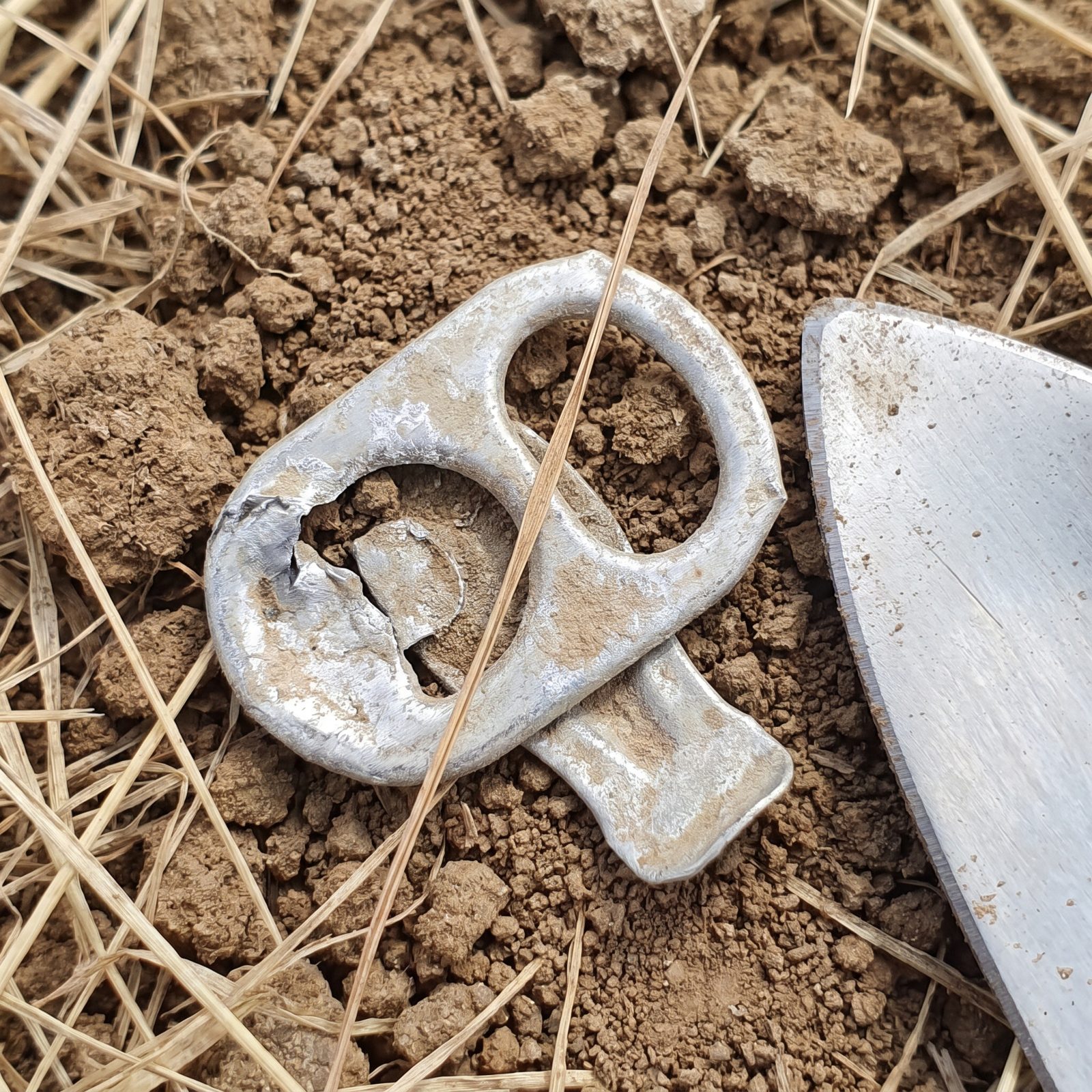
Pull tabs are the hobby’s great tormentor. They read almost exactly like a gold ring on most detectors, so every promising signal might be jewelry — or might be the remains of a soda somebody drank back in the eighties.
You can date a site by its tabs. Ring pulls came first, then the elongated beaver tails, then the stay-tabs we still have. A field full of ring pulls is an old field.
2. Aluminum Can Slaw, Shredded Can Fragments Chewed Up by Lawnmowers
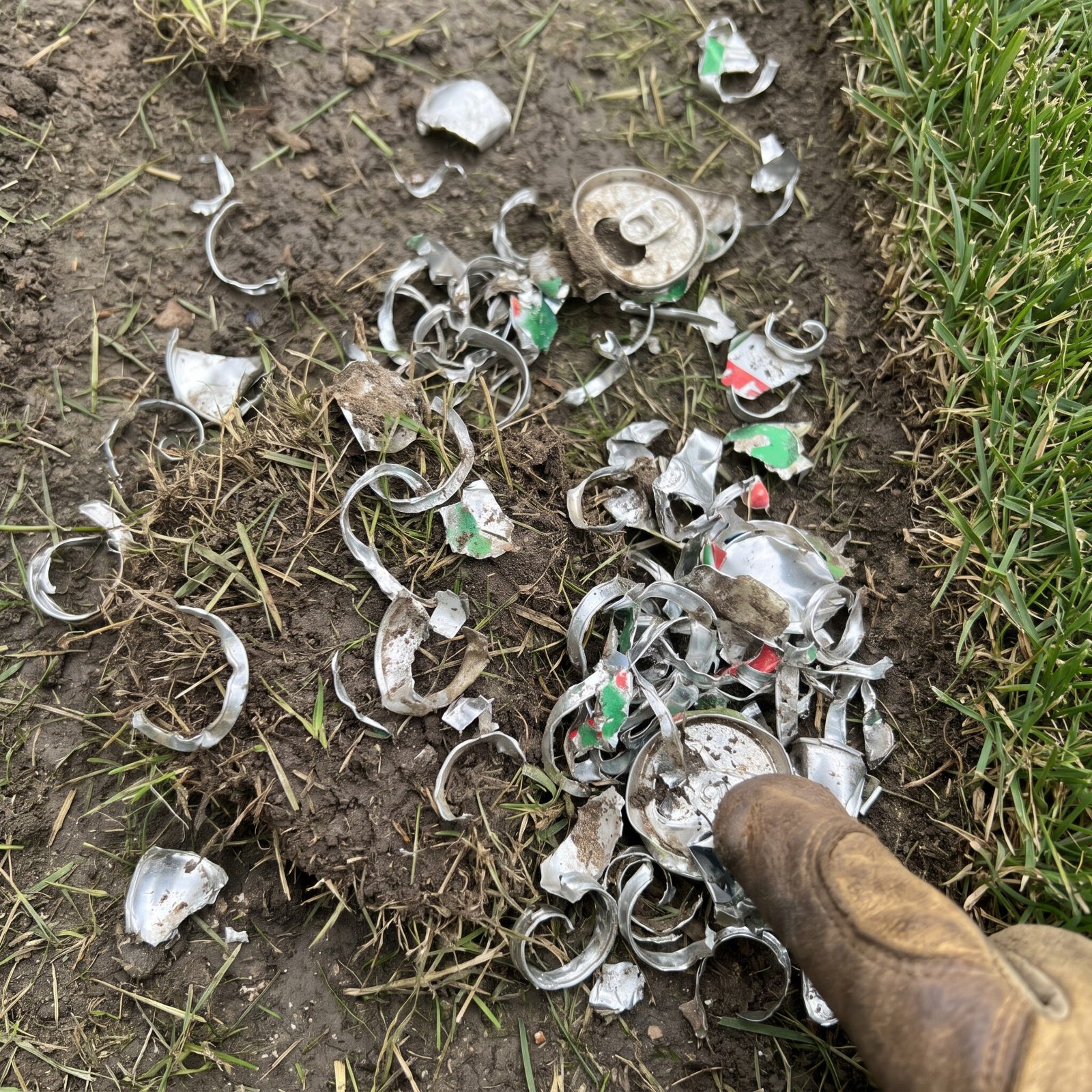
Can slaw is what detectorists call aluminum cans that a lawnmower has shredded into confetti and the soil has swallowed. Each little fragment throws its own signal.
It’s maddening in a well-kept park. You get a sharp hit, dig a clean plug, and find a twisted silver sliver the size of a fingernail. Then another. Then six more in the same square foot. Older cans sink, mowers slice them, and the pieces drift downward year after year. Pure frustration, and there’s no way around it.
1. Crown Bottle Caps, Crimped Steel Closures That Fake Out the Detector
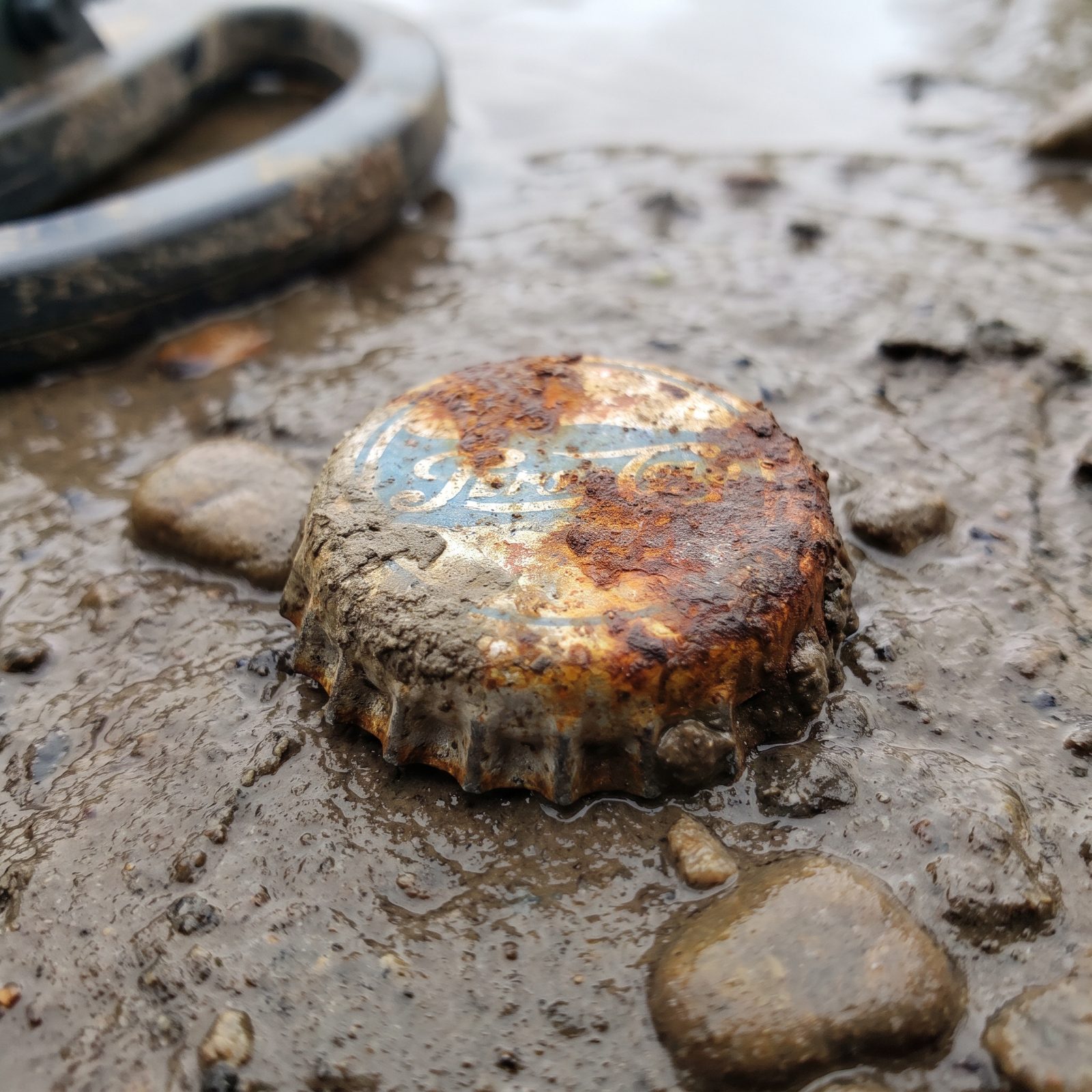
Crown caps are deceptive little things. Those crimped, fluted edges scatter a detector’s field and produce jumpy readings that mimic a coin one sweep and junk the next.
Rusted steel caps are easier to write off once you learn their erratic tone. But a fresh one, or one lying on edge, will tease you with a solid number. They collect wherever people gathered to drink, so old picnic spots and riverbanks are thick with them.