
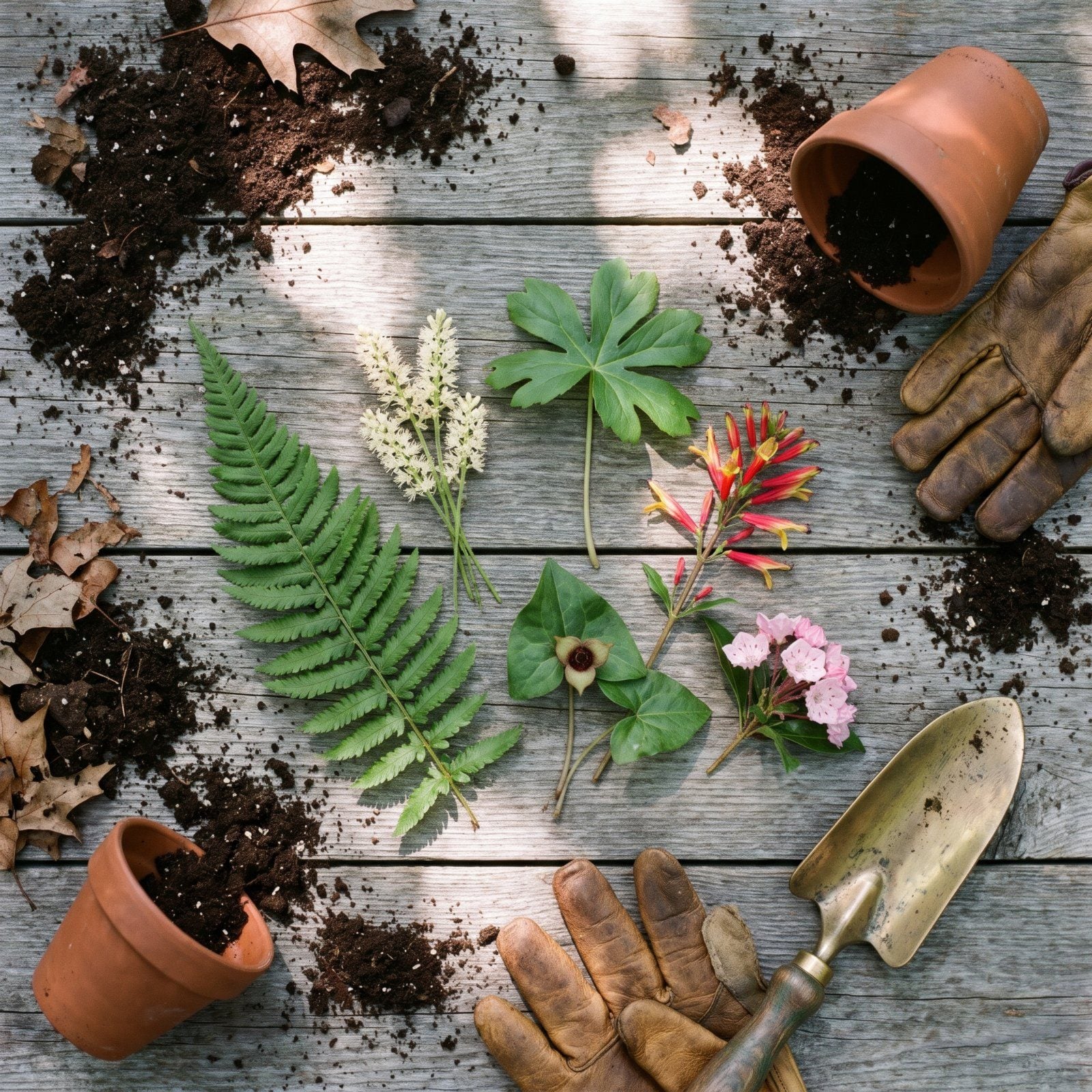
Dry shade under a big oak is where most garden dreams go to die. Grass won’t hold, hostas sulk, and the hardware-store annuals turn to mush by July. But the plants that thrive in that dim, root-choked ground are already growing wild in North Carolina woods, from the mountain coves of Graham County to the Piedmont ravines, and they’ve been doing shade for a few thousand years longer than any nursery hybrid. Below are natives matched to region and soil moisture, so you can stop fighting the canopy and work with it instead. Honesty up front: some of these need acidic, non-clay soil, and a couple will sulk the second things go dry.
Please note that some of the images in this article were created with the assistance of AI.
18. Christmas Fern: The Evergreen That Holds a Shady Slope Together
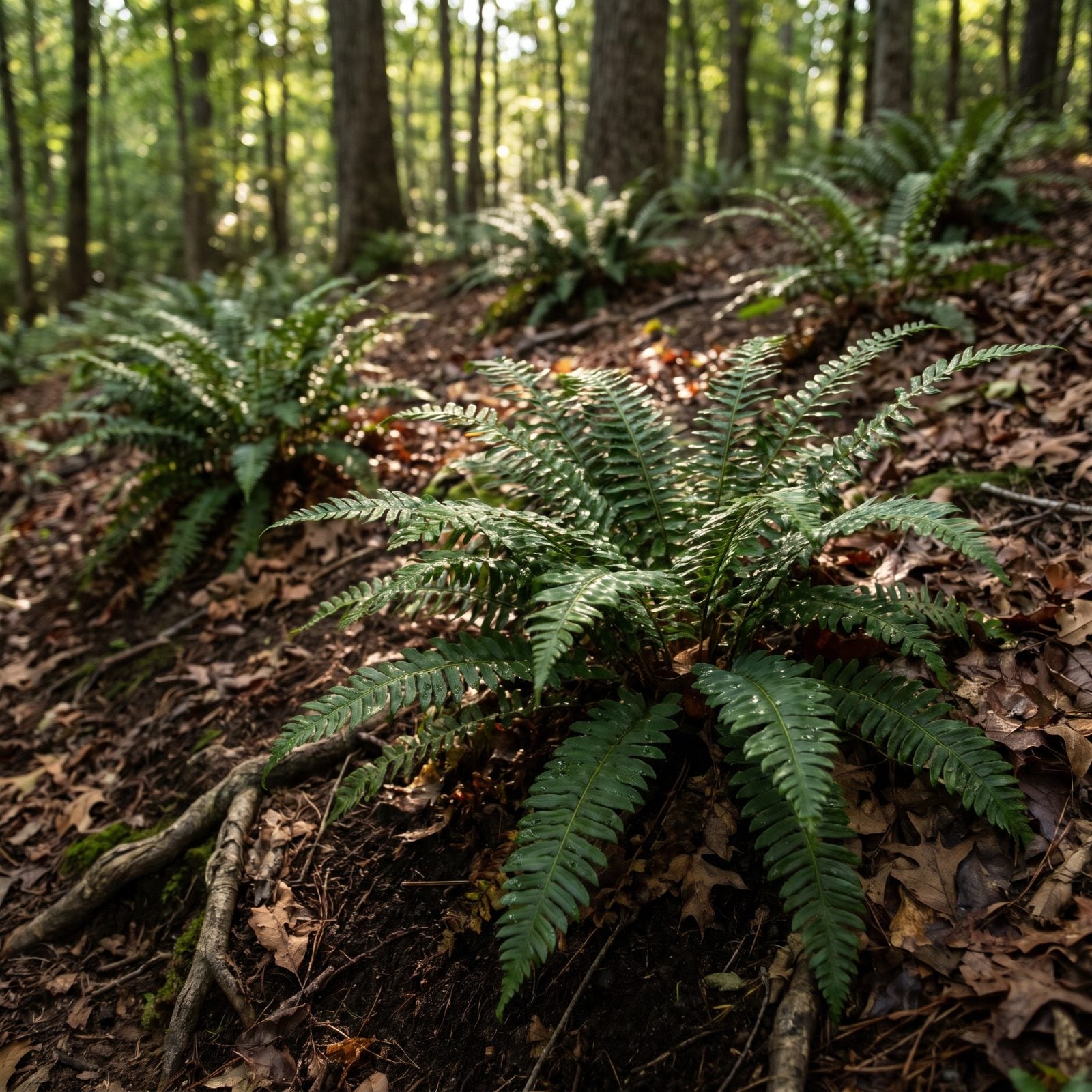
This is the fern that’s still green when everything else has given up for the year. NC State Extension calls Christmas fern an evergreen perennial native across the whole eastern half of the country, happiest in rich, well-drained soil that stays dry to medium and never soaks. Part shade to full shade — which is to say exactly the real estate under your trees.
Where it earns its keep is a shady bank. The clumps spread slowly and knit together, and Extension flags a mass planting as one of the better ways to fight erosion on a slope you can’t mow. Rabbit resistant too, and songbirds tuck into the low fronds for winter cover.
17. Foamflower: White Spring Spikes for Heavy Mountain and Piedmont Shade
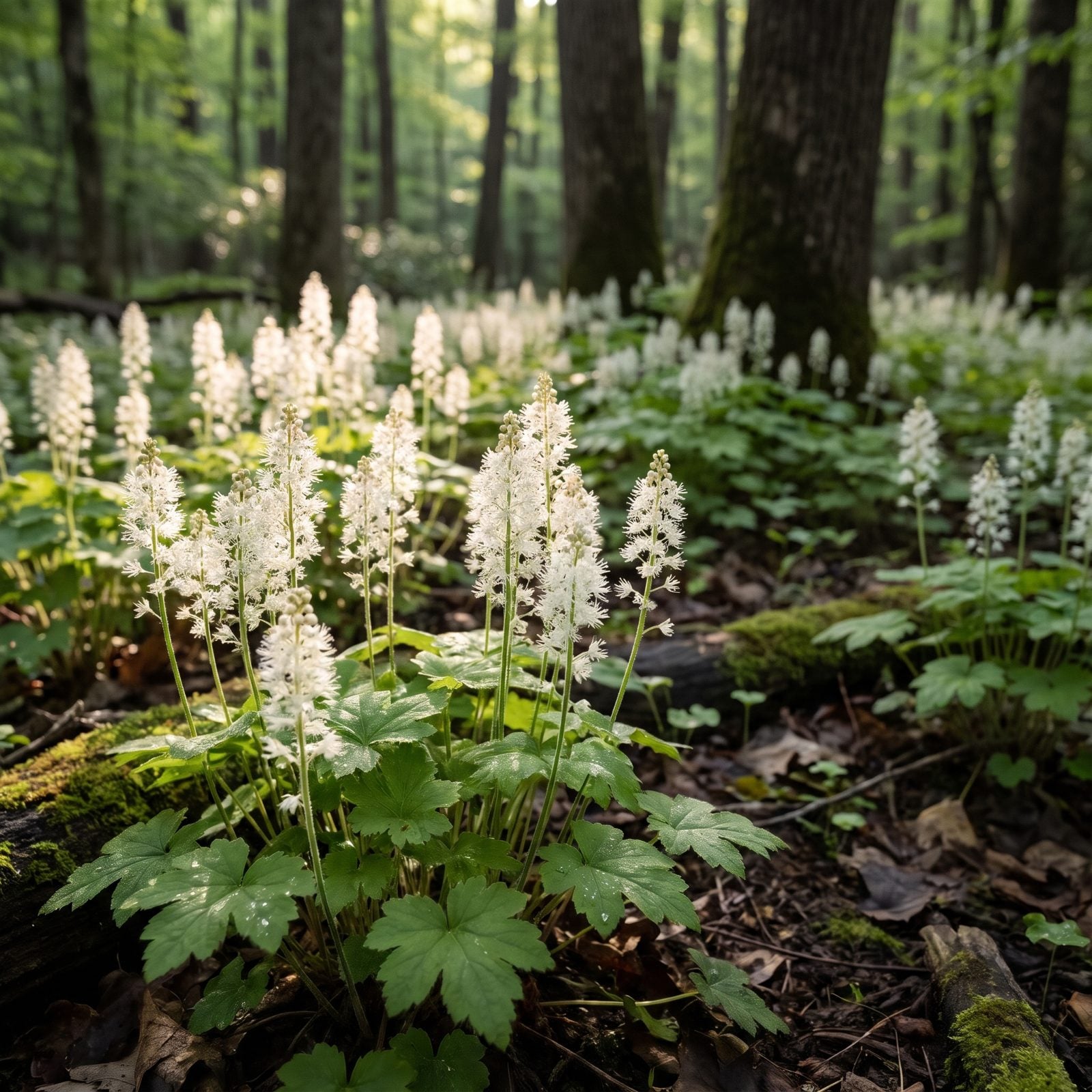
Common in the mountains and Piedmont, rare down on the Coastal Plain, foamflower is the native ground cover for the darkest corner you’ve got. The NC Native Plant Society lists it blooming white from April into June, staying ankle-high at under a foot, and tolerating shade down to less than two hours of sun a day.
Here’s the catch, and it’s a real one: it does not do drought. Extension wants it in moist, humus-rich soil, neutral to slightly acidic, in dappled to full shade. Let it dry out and it tells you fast. Keep your ground damp under the trees and this is one of the best shade covers in the state. Bake it and you’ll want something else.
16. Green-and-Gold: The Low Native Ground Cover That Blooms in Spring and Again in Fall
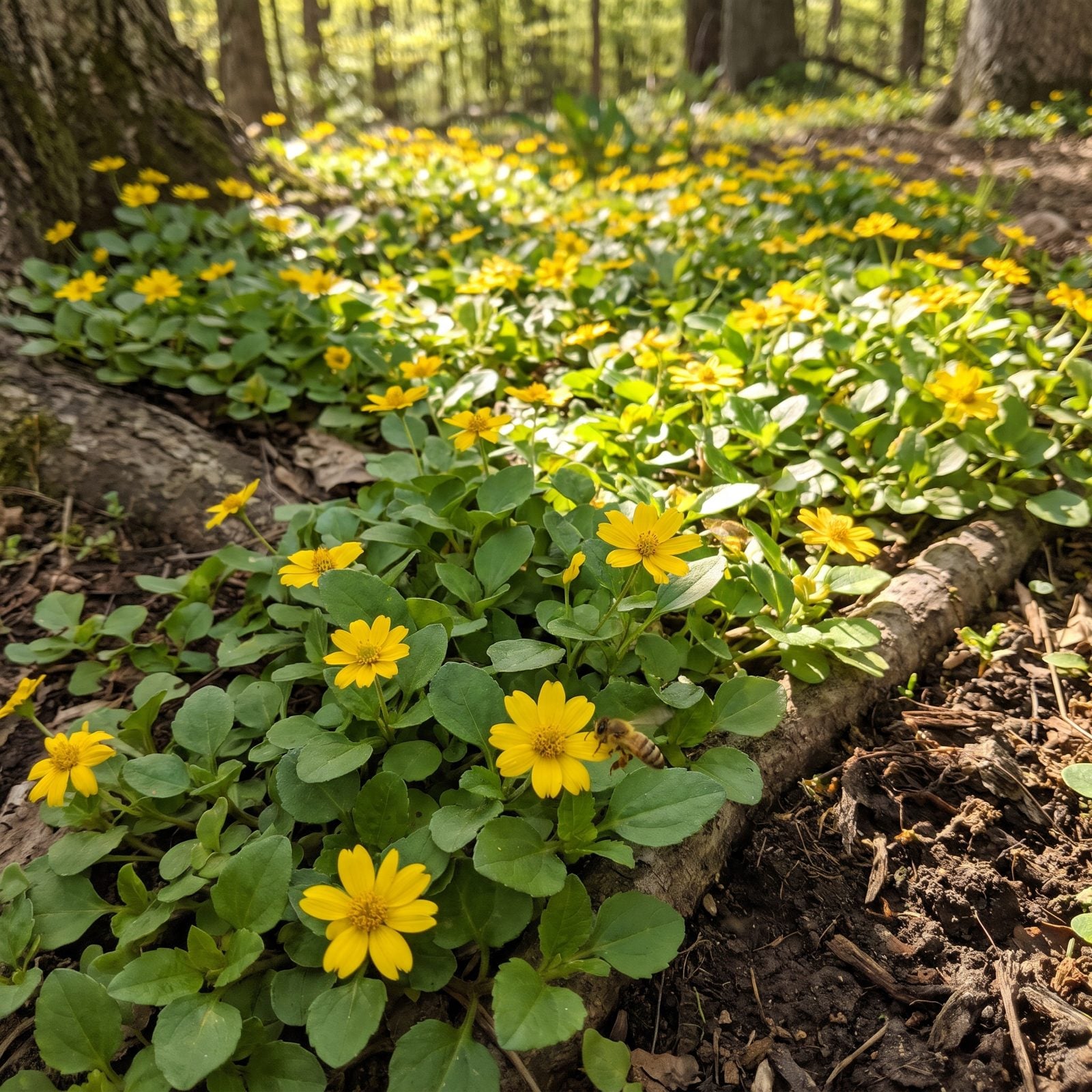
Cheerful is the word. Brunswick County Extension describes green-and-gold as a native, semi-evergreen ground cover that creeps along by rhizomes, throwing up yellow daisy-like flowers, each with five rounded, slightly notched petals around a golden center, that bloom hard in spring, ease off in summer heat, then stage a lighter second show in fall.
Give it average, well-drained soil loaded with organic matter and dappled part shade to full shade. The one chore: it needs extra water through a summer dry spell, so don’t plant it and forget it come August. Bees and butterflies work the flowers — more pollinator traffic than you’d expect from something growing in the shade.
15. Little Brown Jug: Evergreen Heartleaf Ginger With Flowers You Have to Dig For
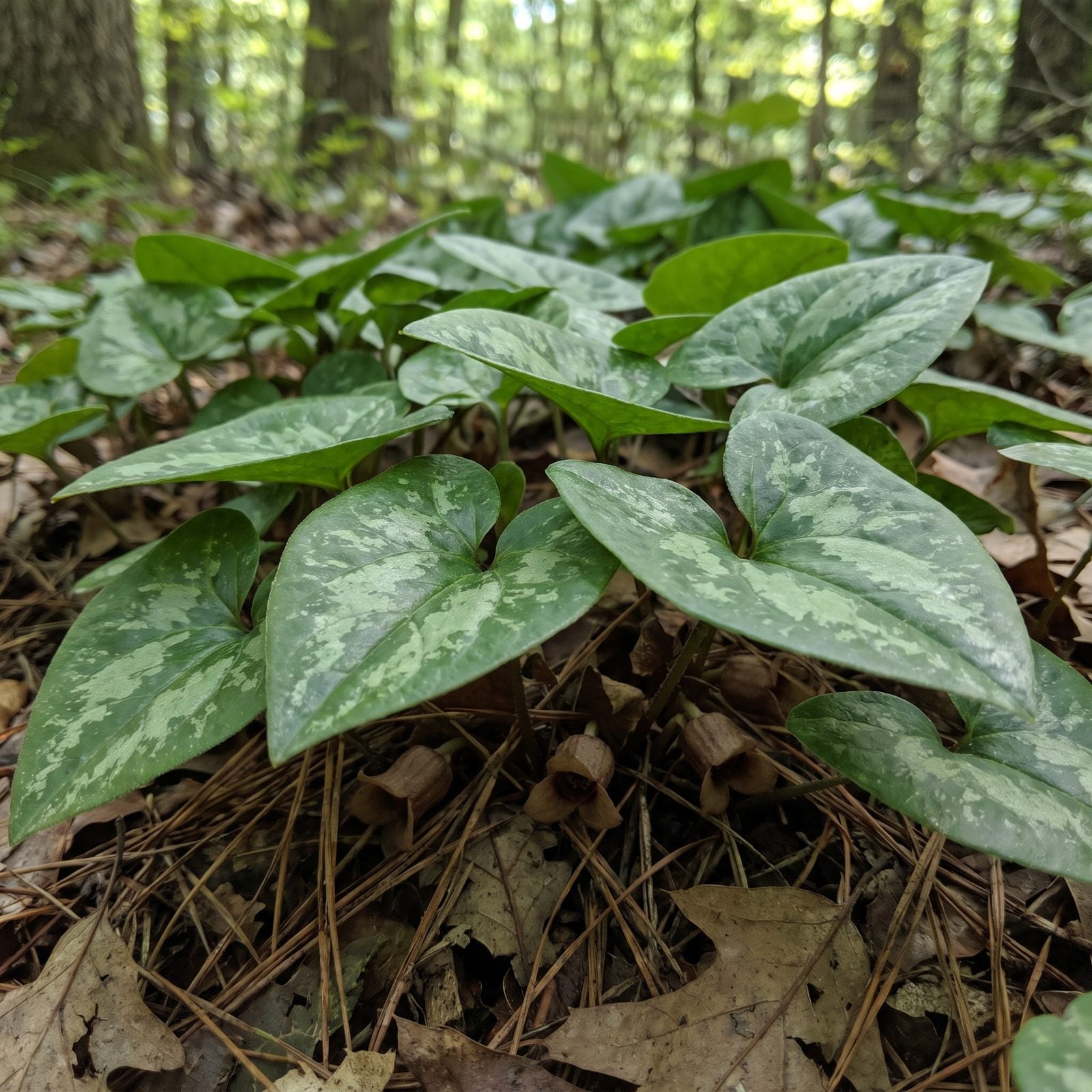
The common name does the heavy lifting here. Slide a hand under the triangle-shaped evergreen leaves and you’ll find little jug-shaped flowers hiding at the soil line — the kind of thing you walk past a hundred times and never see.
The NC Native Plant Society calls Hexastylis arifolia very common in North Carolina, growing statewide in moist, rich forests. NC Parks notes it prefers acidic soil and will even tough it out in quite dry upland sites. And those aren’t really flowers in the botanist’s sense: wild gingers have no petals, so the jug is fused sepals doing the whole job.
14. Canada Wild Ginger: The Deciduous Cousin for Rich Mountain and Piedmont Woods
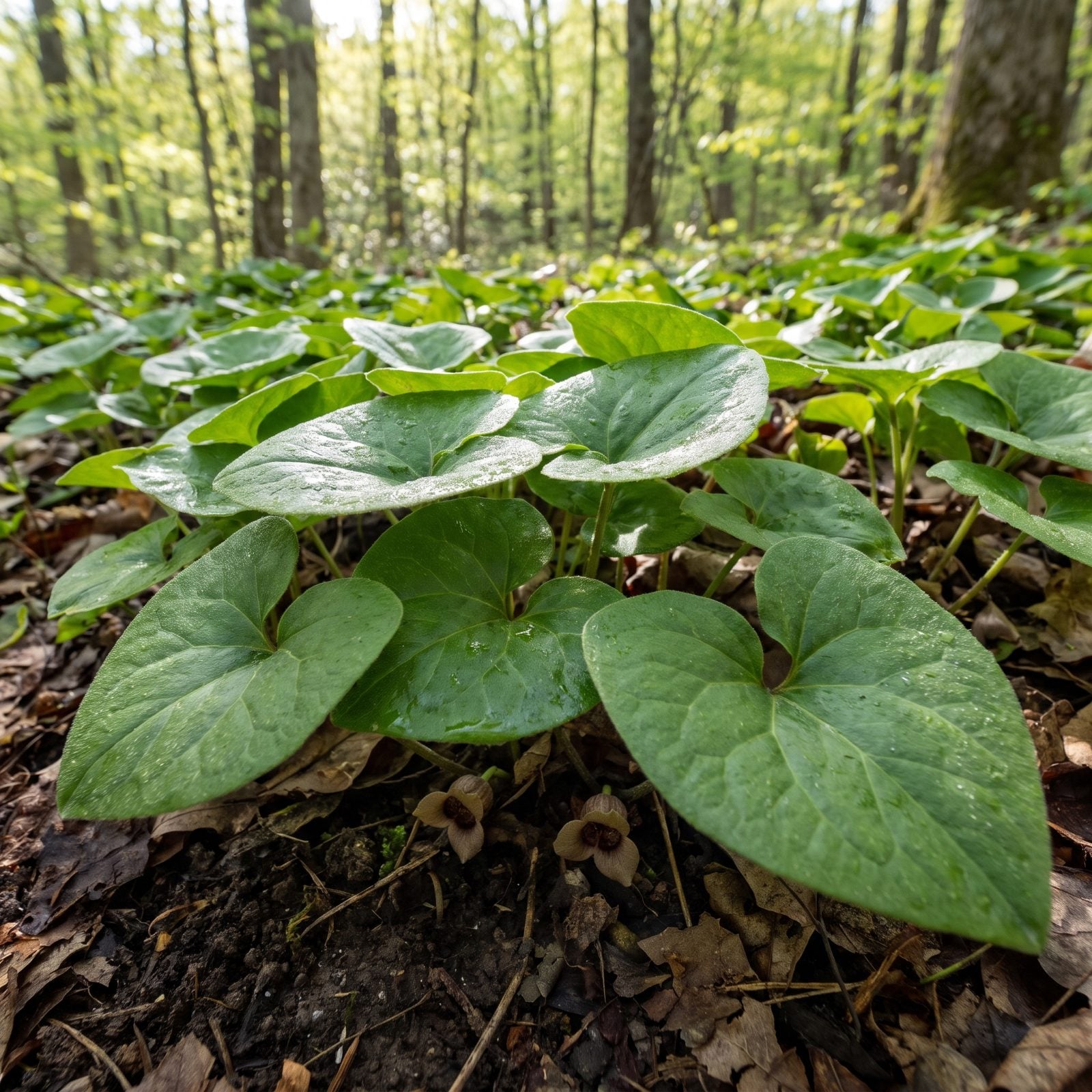
Easy to mix up with little brown jug — but there’s a tell. The NC Native Plant Society lists Canada wild ginger for the mountains and Piedmont in rich deciduous forest with near-neutral soil, and here’s the difference that matters: it drops its leaves in winter. The Hexastylis gingers stay evergreen. This one goes bare.
It stays under a foot, takes part shade down to less than two hours of sun, wants moist soil, and flushes brown flowers in April and May. One more fact worth having at a dinner party: it’s the only Asarum native to eastern North America. Everything else in the genus lives out west or overseas.
13. Mayapple: The Umbrella Colony That Hides a Flower (and a Poison)
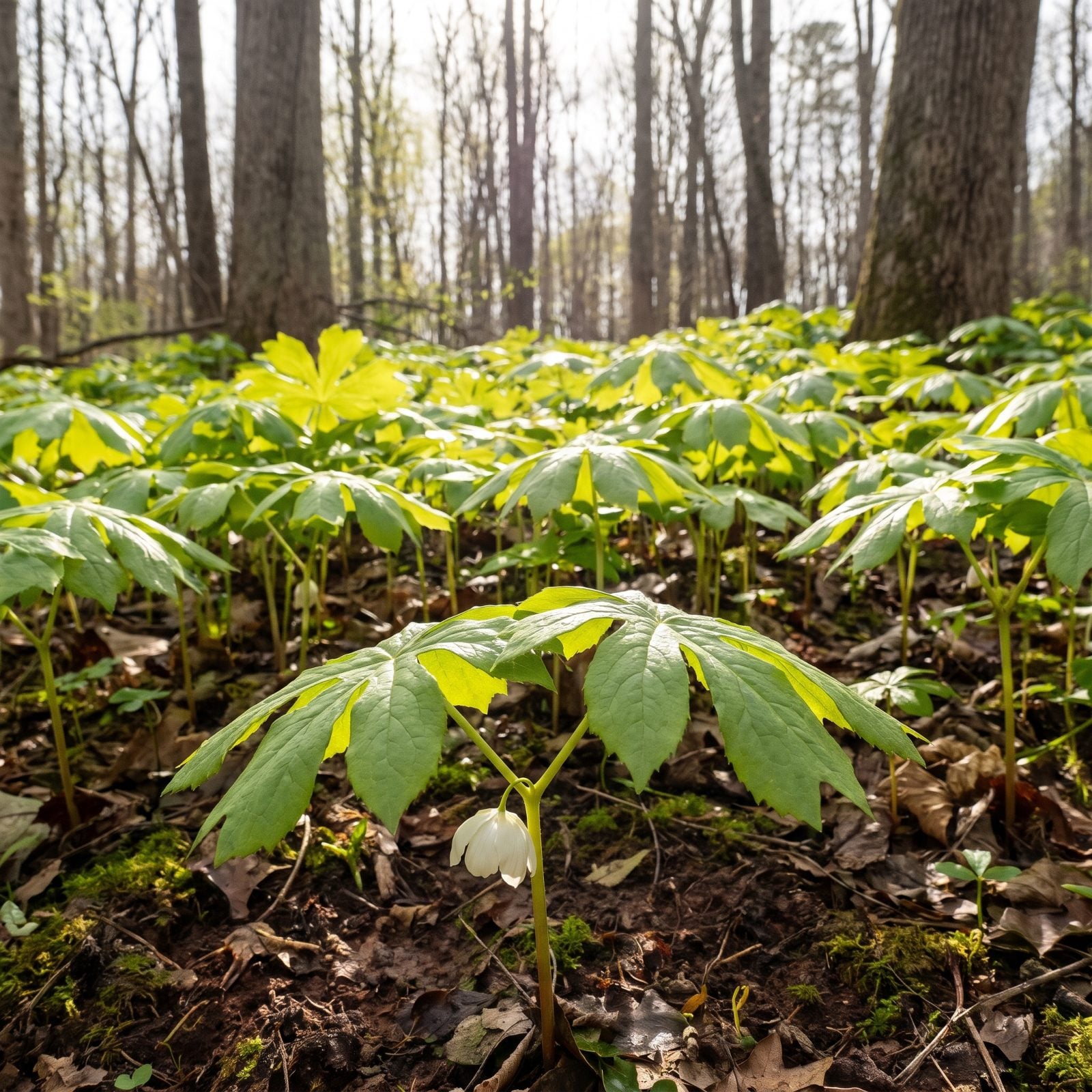
You’ve seen a hillside of these without knowing the name — a sea of little green umbrellas that appears in March and vanishes by summer. Mayapple spreads into colonies by rhizome and prefers partial to full shade in moist, humus-rich, acidic soil. Deer and rabbits leave it alone, which in North Carolina counts as a minor miracle.
One quirk worth knowing: a stem carrying a single umbrella leaf will never flower. You need the two-leaved stems for that nodding white bloom, which long-tongued bees and bumblebees visit. And the warning label is no joke. Every part is highly poisonous except the fully ripe fruit, so this is not a plant for a garden full of grazing toddlers.
12. Indian Pink: Red-and-Yellow Tubes That Pull Hummingbirds Into the Part Shade
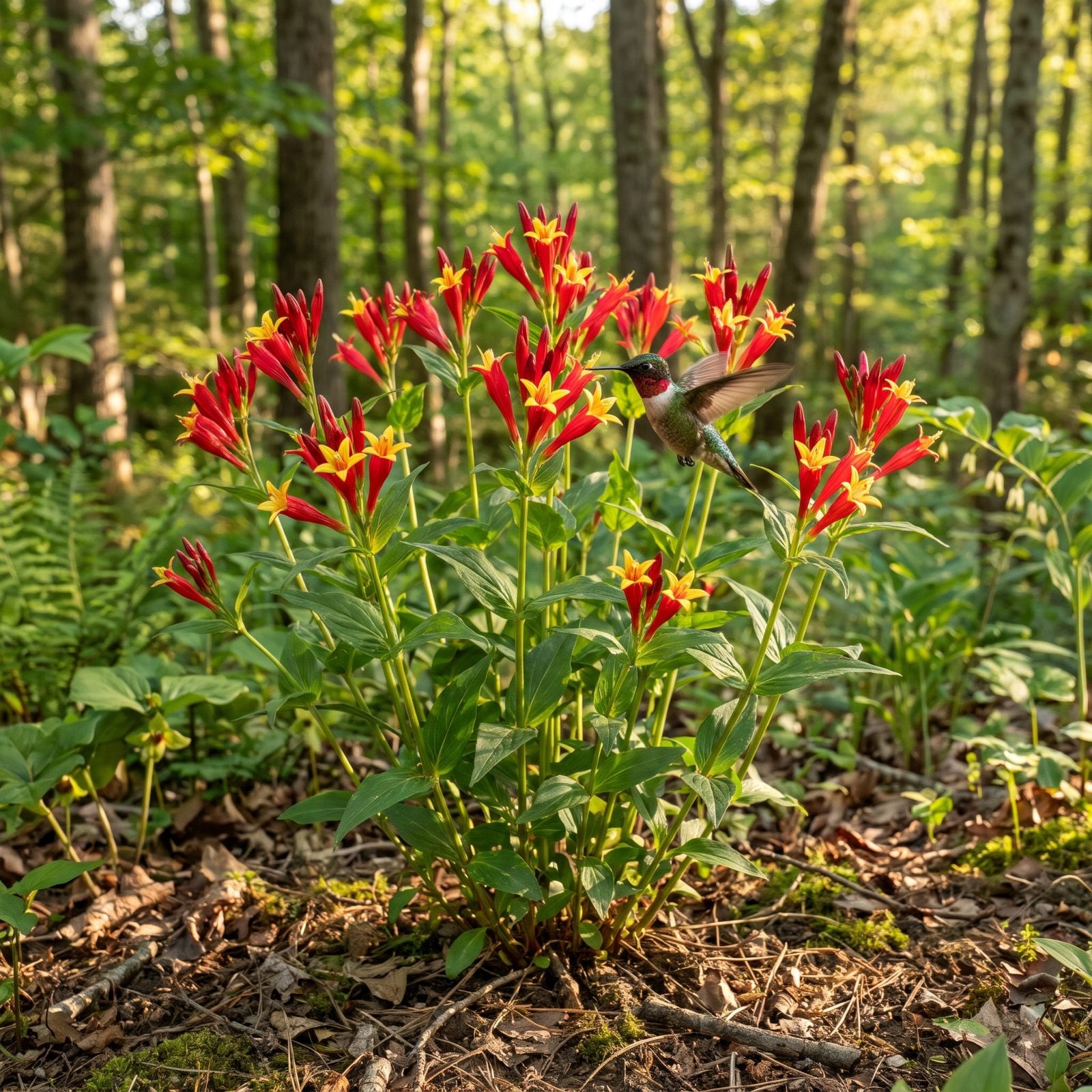
Want hummingbirds, and you’ve got dappled light? This is the one. Those scarlet tubes flaring open to yellow stars are a hummingbird billboard, and the NC Native Plant Society lists Indian pink at one to three feet with the mountains as its range.
Read the light carefully, because people get this wrong. Indian pink wants part shade, two to six hours of sun, not the deep gloom under a dense oak. NCNPS lists it for dry soil, so it can handle drier spots once established. Give it the bright edge of your shade garden, where a shaft of afternoon sun gets through, and it’ll pay you back in spring.
11. Mountain Laurel: The Evergreen Shrub That Lights Up Appalachian Shade in June
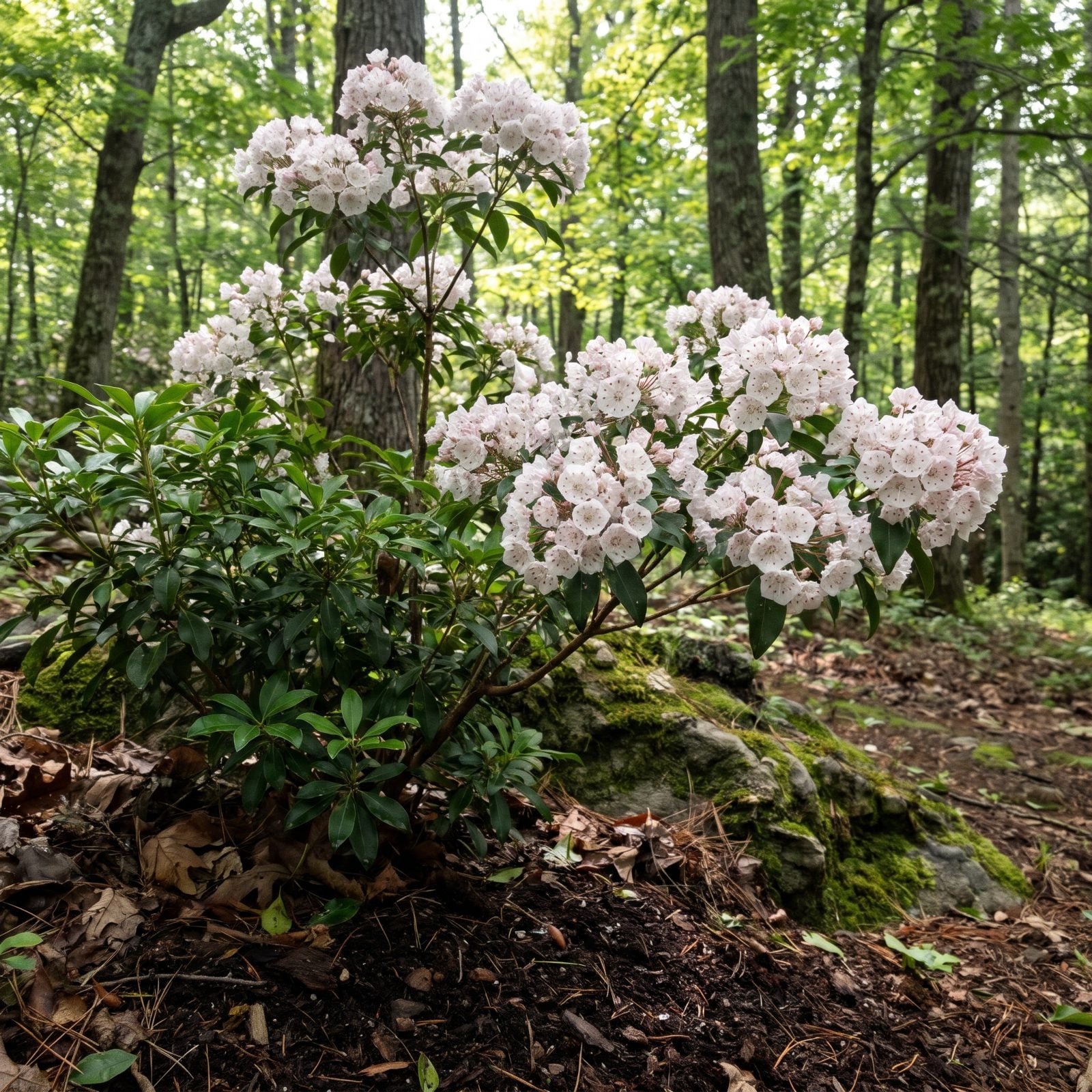
Hike almost anywhere in the Blue Ridge in June and you’ll walk through tunnels of this. The NC Native Plant Society lists mountain laurel from the mountains to the Sandhills and Coastal Plain. It’s nearly everywhere in the high country but more restricted in habitat in the lower Piedmont and Coastal Plain, blooming white to pink from April into July.
Now the part that kills them in the landscape. Extension says it does best in partial shade with morning sun, and it wants cool, moist, acidic, humus-rich, well-drained soil. Heavy clay or wet feet and it fails. If you garden on Piedmont red clay, plant it raised and mulch hard to keep the roots cool — or skip it. Fighting clay with laurel is a losing battle, and I’ve lost it.
10. Sweetshrub: The Dark Red Bloom That Smells Like Fruit (and Turns Gold in Fall)
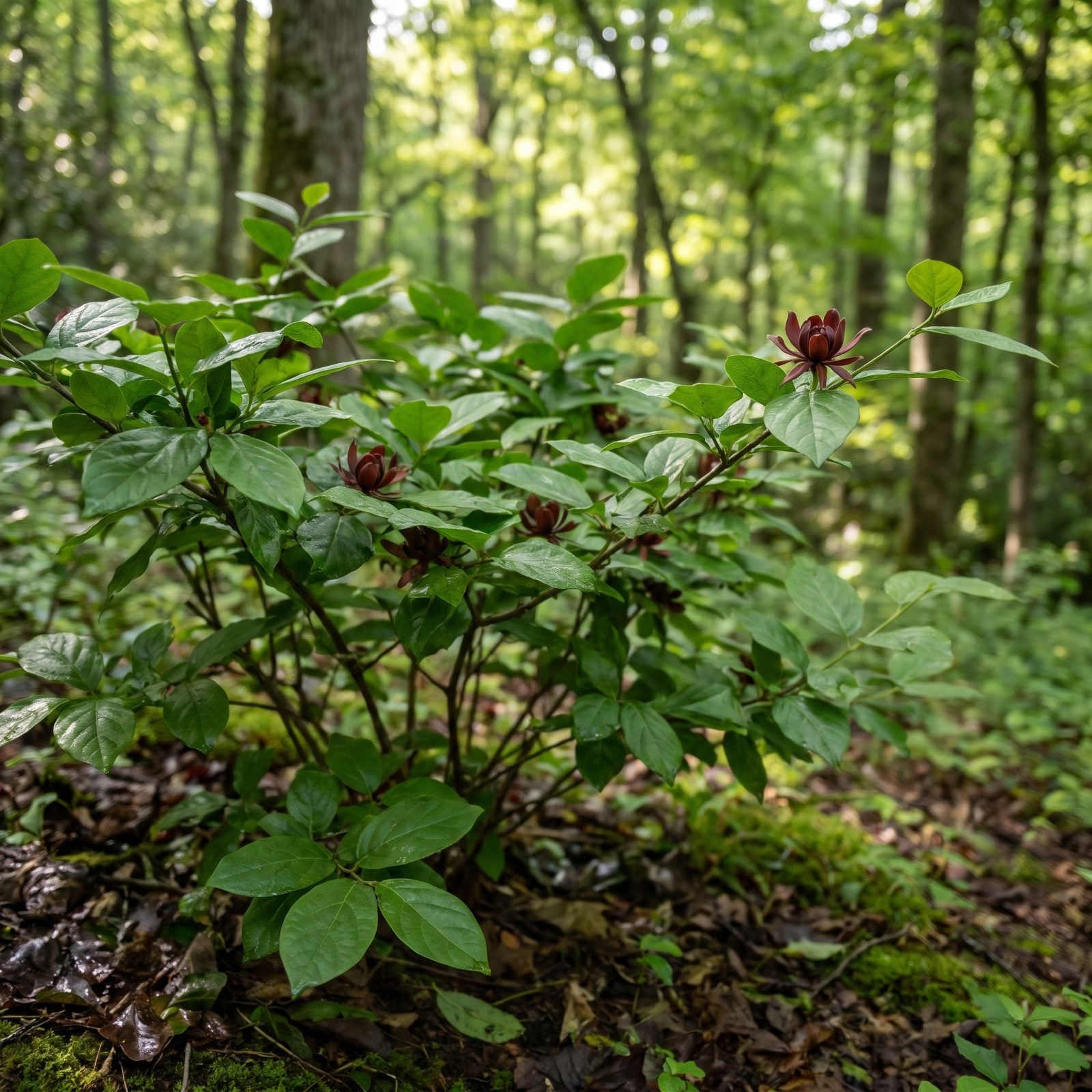
Find the flower by smell before you find it by sight. Those strap-petaled dark red blooms are tucked in among the leaves, and depending on the plant they throw a fruity, spicy scent that’s earned it the name Carolina allspice.
The NC Native Plant Society lists it at six to twelve feet for the mountains and Piedmont, blooming red in April and May, with leaves that go bright yellow in fall. It takes part shade down to less than two hours of sun in moist soil. It’s been photographed growing wild in Joyce Kilmer Memorial Forest, which tells you the kind of rich, cool ground it likes. Buy a few plants and sniff them in bloom if you can — the fragrance varies a lot shrub to shrub.
9. Pinxterbloom Azalea: The Native Deciduous Azalea for Moist Woodland Edges
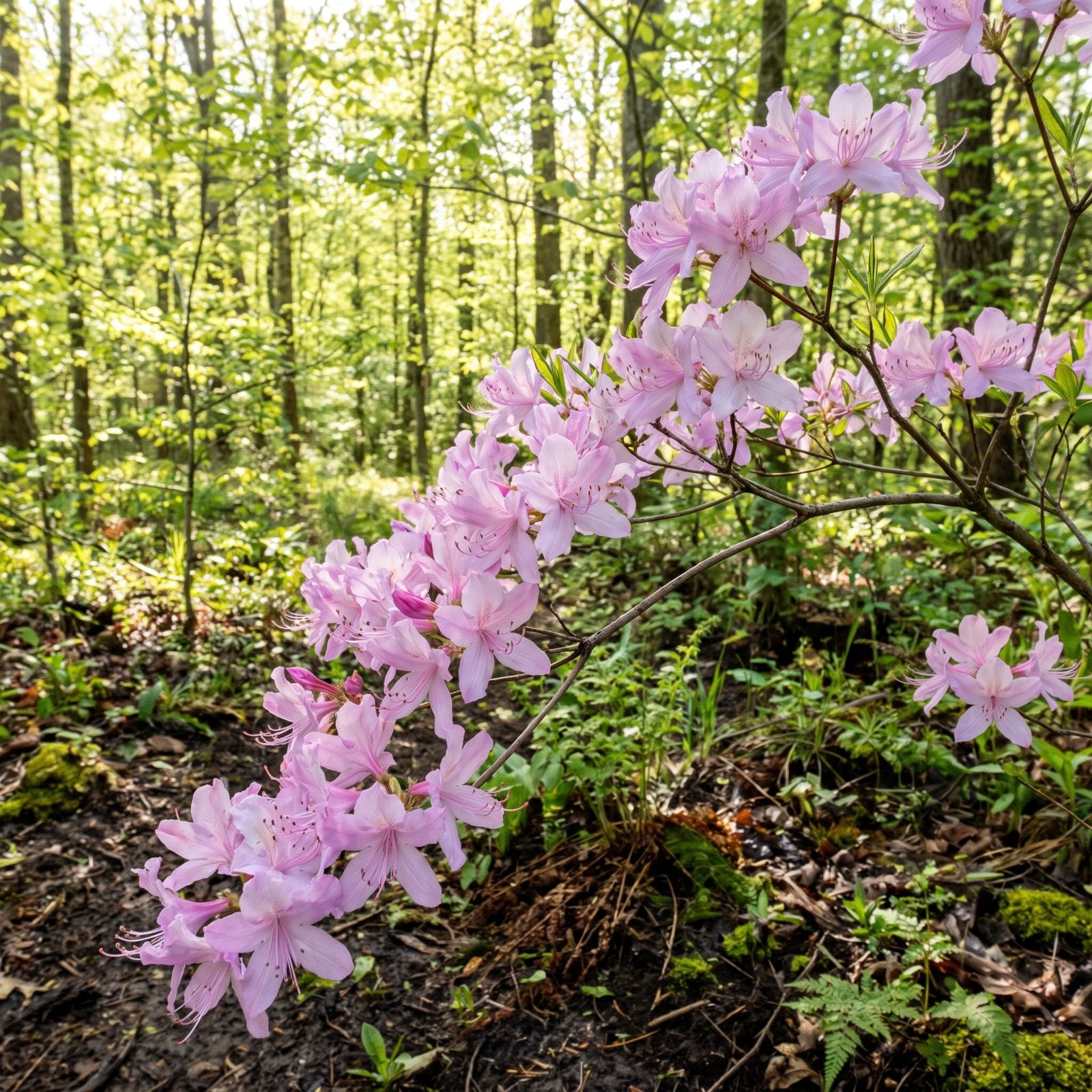
The native azalea most people don’t realize is native. Extension describes pinxterbloom as a deciduous azalea of moist woods and swamp edges, ranging up and down the East Coast, with slightly fragrant funnel-shaped spring flowers in soft pink to white to lavender, each up to about an inch and a half across.
It carries the same clay warning as its laurel and azalea kin. Extension says it won’t tolerate dense clay, so work organic matter in before you plant if that’s your soil. Extension lists it as having low-severity poison characteristics (its cousin mountain laurel is rated high-severity), and keep it where its roots stay moist. Get those two things right and you get a loose, airy native shrub that blooms before the leaves fully open — a show in itself.
8. Flowering Dogwood: The State Flower That Grows Where Big Trees Already Won
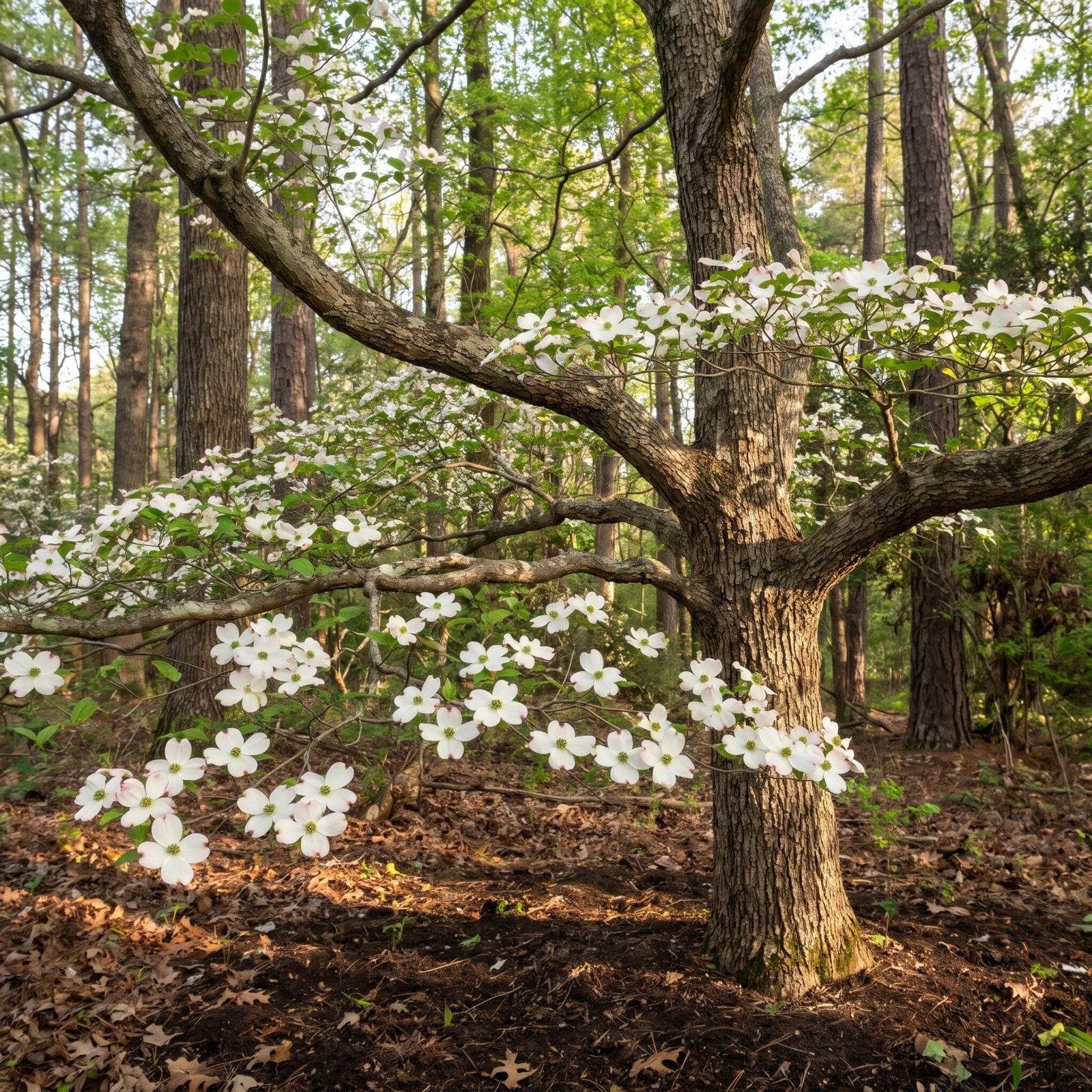
North Carolina named this its state flower in 1941, which is a little funny because the white part everyone calls the flower is technically a bract, not a petal. The real flowers hide in that tiny cluster in the middle. Nobody minds the mix-up.
Plant it in full sun to partial shade, but here’s the catch most people miss: in the Piedmont and down toward the coast, it wants afternoon shade or it sulks. Well-drained, slightly acidic to neutral soil suits it, with a good layer of mulch. Then come fall, the red fruits feed songbirds straight through winter.
I’ll level with you, this one can be fussy to establish, and NC State Extension says as much. Give it the right spot and it rewards you for decades.
7. American Alumroot: The Native Heuchera With Leaves Worth More Than Its Flowers
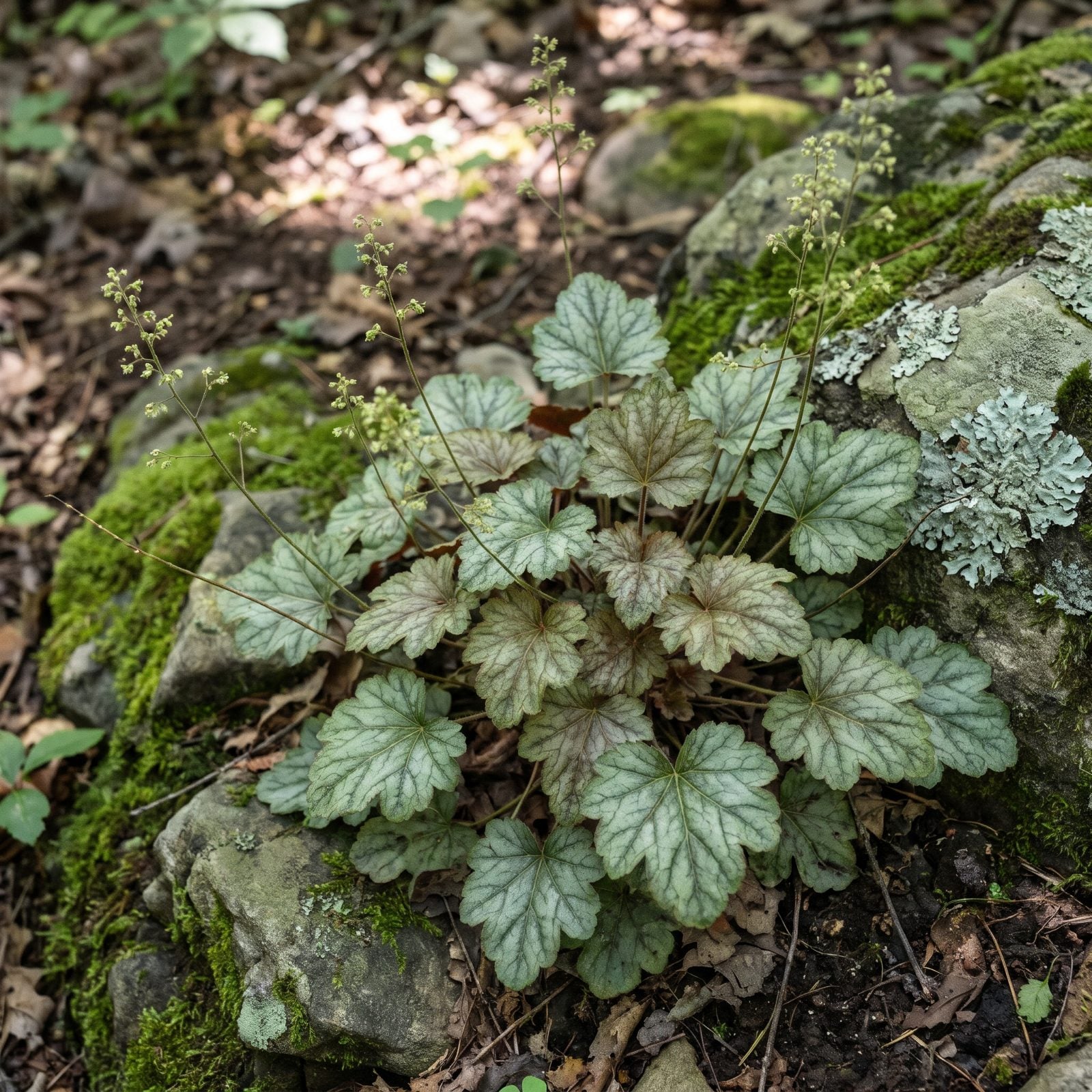
Forget the flowers for a second. People grow this one for the rosettes of veined, marbled leaves that sit low and tidy in shade to part sun.
It comes from rocky forests and rock outcrops, the kind of acidic ground that flattens fussier perennials, and it shrugs the whole thing off. Give it moist, rich soil and split the clumps every few years in spring or fall to keep them vigorous. Leaf color ranges from plain green to wild variegation, depending on what you buy.
6. Solomon’s Seal: Arching Stems Hung With Bells That Turn to Blue-Black Berries
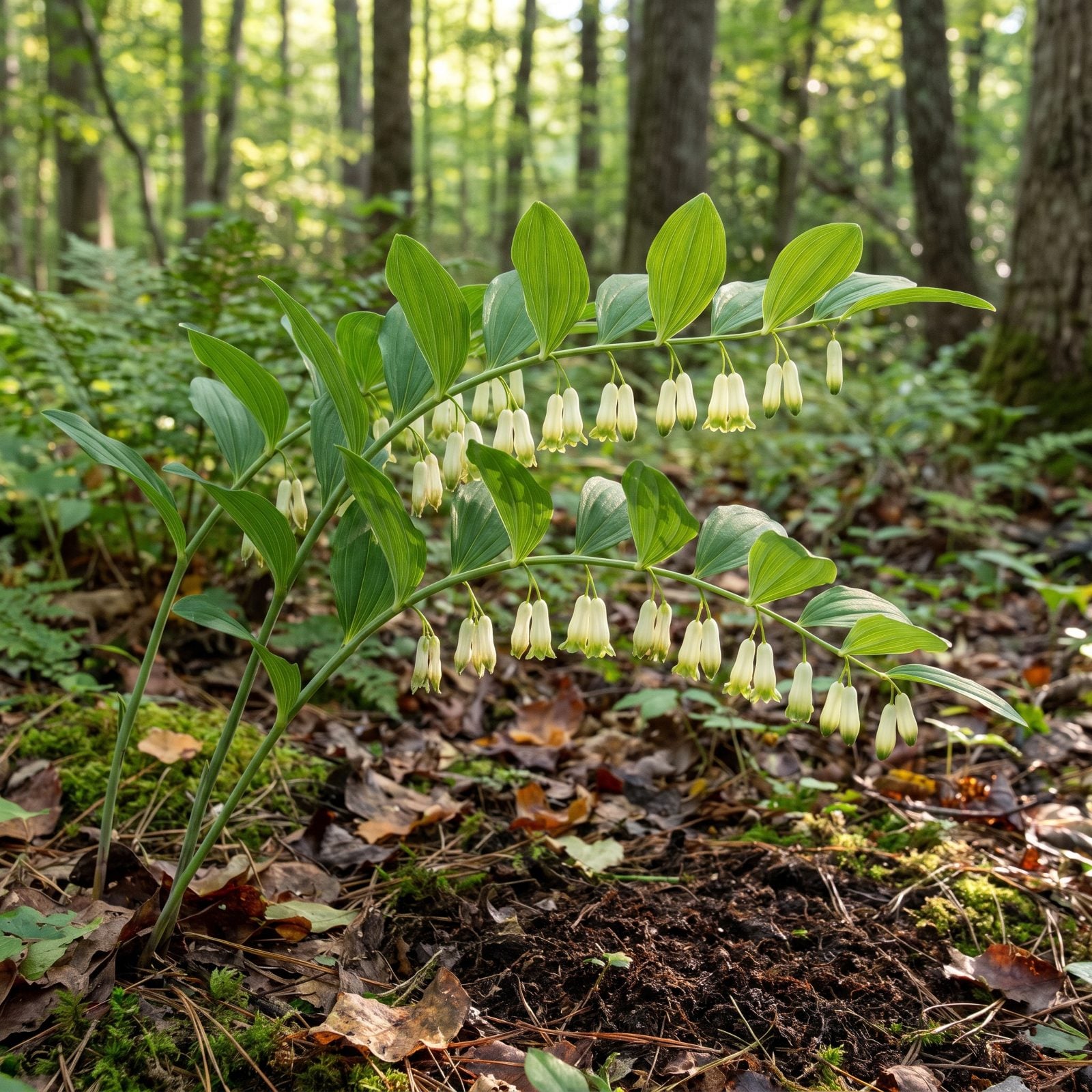
The stems are the whole show. They arch out in a long clean curve, and under each leaf joint dangle pairs of creamy, green-tipped bells from April into June, which ripen to blue-black berries by late summer.
You’ll find it across every region of the state, Mountains to Coastal Plain, and it copes with part shade down to barely two hours of sun. Dry soil or moist, it isn’t picky. Drop it in a woodland, shade, rain, or cottage garden, or just leave it alone to spread.
Slugs and snails will chew the foliage, so watch for that. And it carries low-severity poison characteristics, so it’s not one for nibbling.
5. Dwarf Crested Iris: A Six-Inch Carpet of Violet That Blooms Before the Canopy Closes
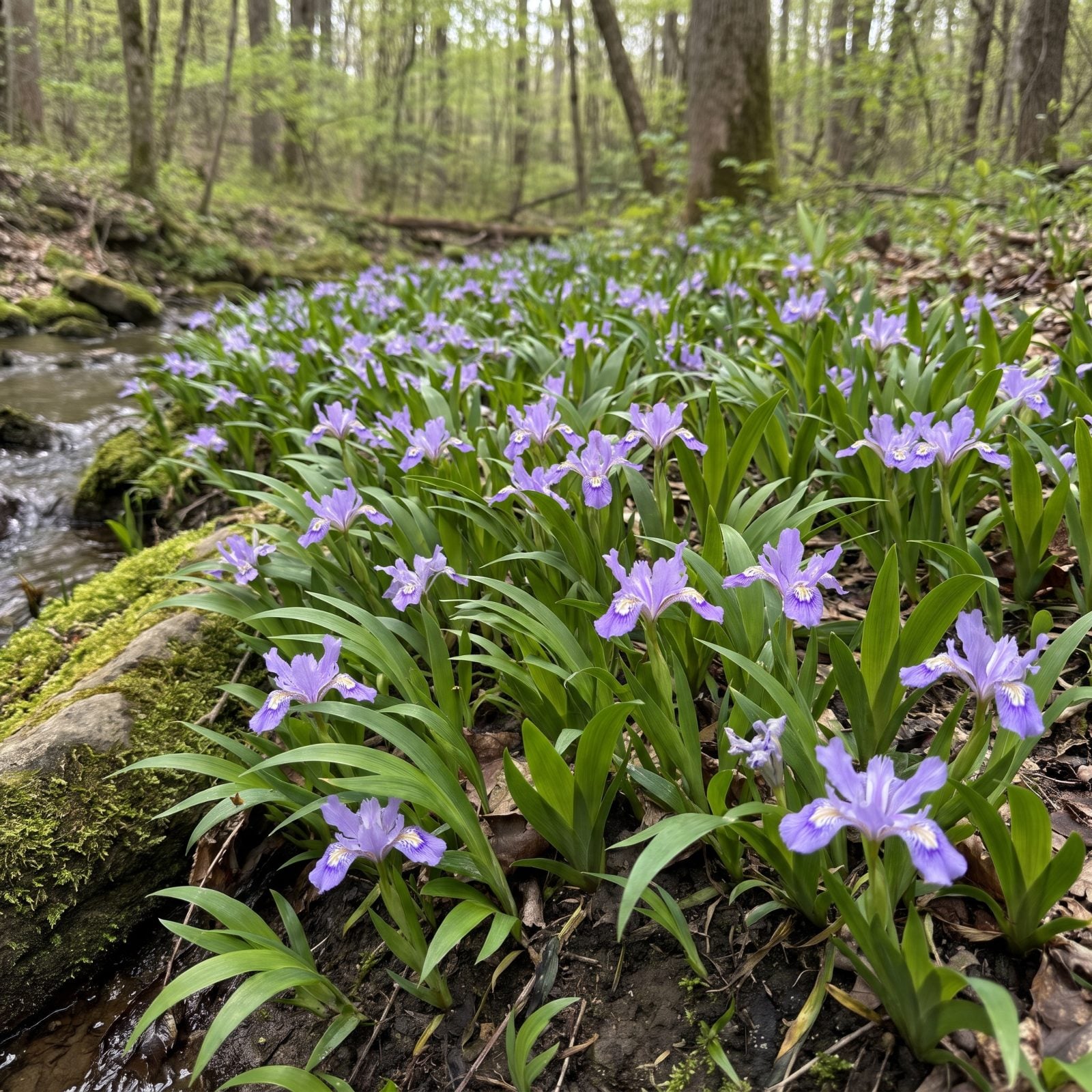
It stays under a foot tall and spreads into a low mat, one of the easiest natives to tuck between larger shade plants. The purple-violet blooms arrive in April and May, each streaked with a crested white-and-gold ridge.
Mountains, Piedmont, Coastal Plain, it grows in all three, favoring moist forests, rich woods, roadbanks, and streambanks. Part shade down to under two hours of sun suits it fine. Not a violet person? There’s a white form too, var. alba.
4. Allegheny Spurge: The Native Pachysandra That Behaves Itself Under Trees
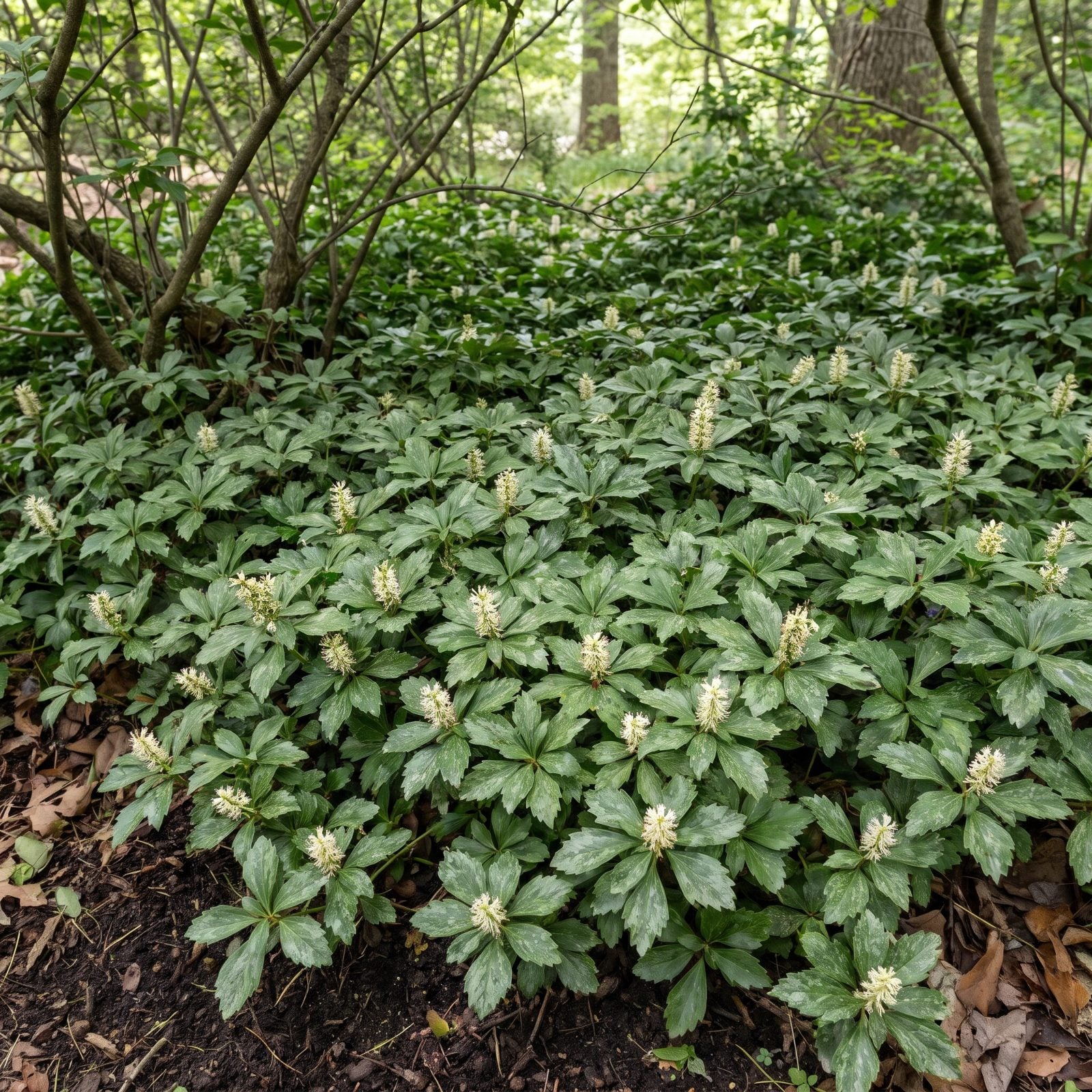
This is the native answer to that spreading Japanese pachysandra you’ve watched swallow whole yards. Allegheny spurge forms a dense evergreen-to-semi-evergreen mat in zones 7 and 8, grows happily under trees and shrubs, and it won’t go invasive on you.
New leaves carry a pale silver-green mottling, and fragrant flower spikes push up in spring. Here’s the part that matters: it’s an NC endangered species, growing wild in only a single county in the state.
So buy it from a nursery. Please don’t go digging it out of the woods. A rare plant doesn’t recover from being collected, and a nursery pot costs you a few dollars while your conscience stays clean.
3. Northern Maidenhair Fern: Fronds That Fan Out Like Green Fingers on Black Wire
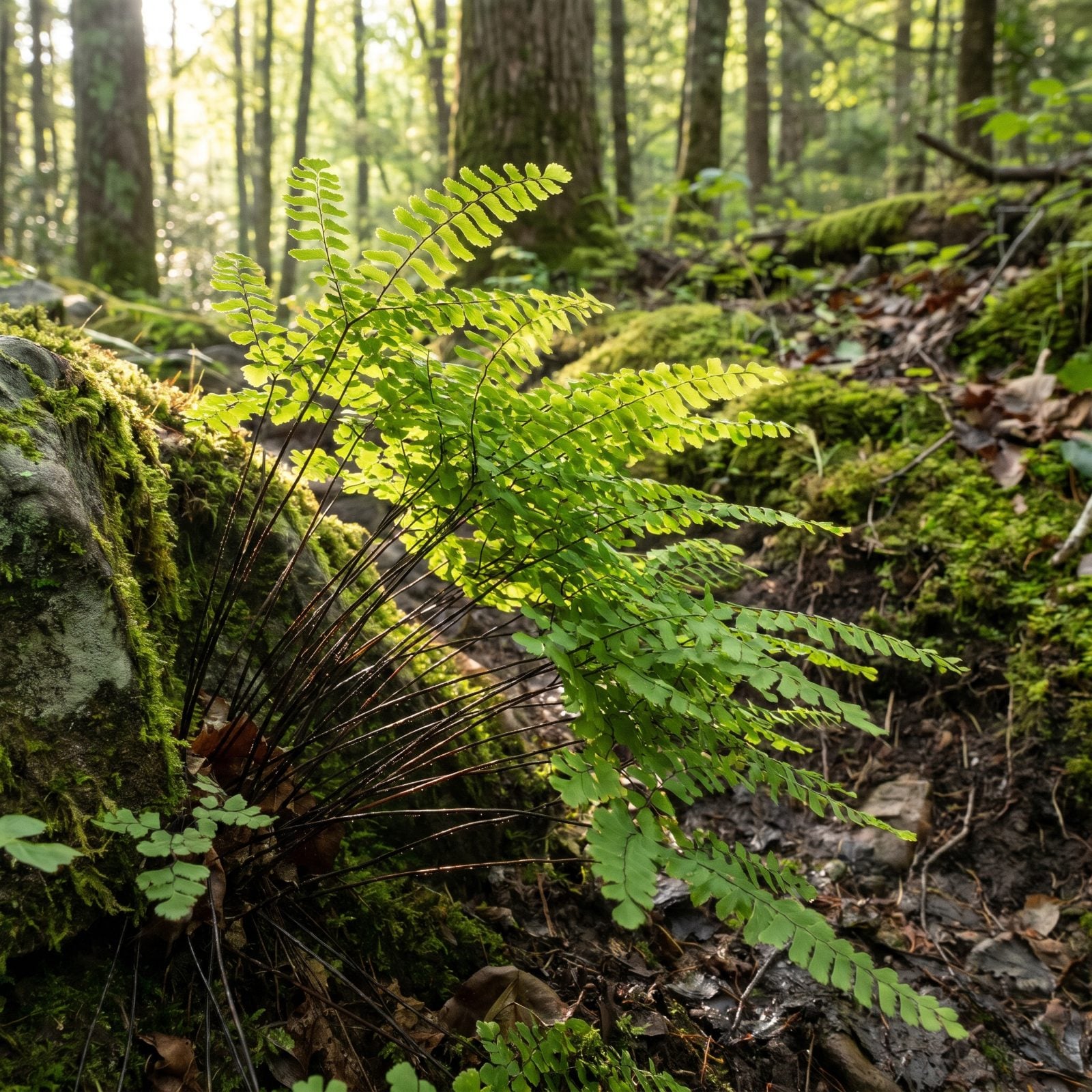
The wiry black stems are what set this fern apart. Light green fronds fan out horizontally on near-black, polished stalks, poised like little green hands.
In the wild, look for it in the Mountains and Piedmont, in moist forests and on cliffs, especially over calcareous or mafic rock. It runs one to three feet, drops its fronds in winter, and the Native Plant Society rates it highly recommended and available for landscapes.
Fair warning from someone who has watched it happen: it flops in dry spells and dies back entirely in a bad drought. Keep the soil moist or don’t bother.
2. Virginia Sweetspire: Bottlebrush Flowers in May, Garnet Leaves in Fall
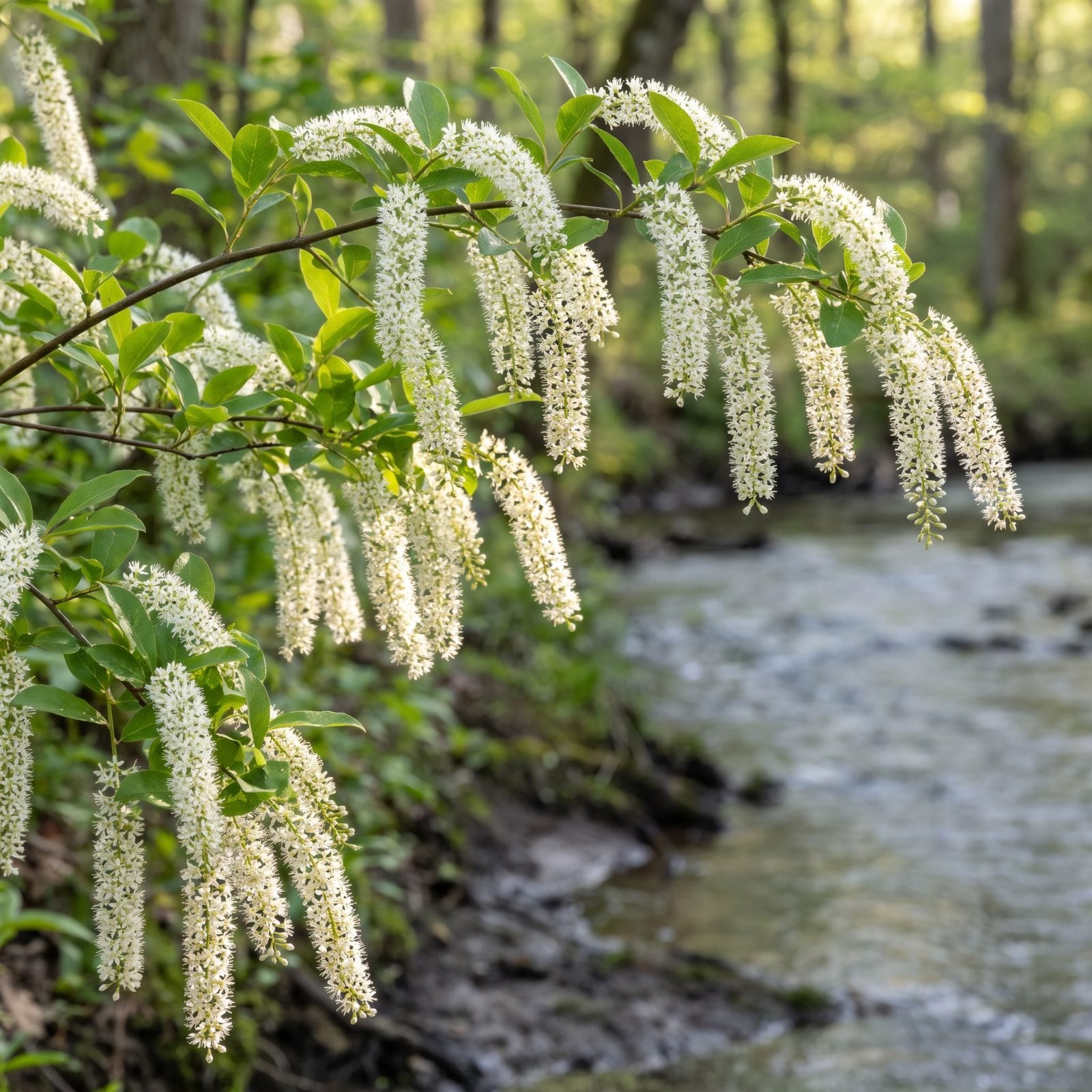
Long white flower spikes droop like bottlebrushes in May, fragrant enough to pull in pollinators, and then the leaves go garnet in fall. Two paydays a year.
Native from New Jersey down to Florida, it grows wild in moist woods, swamps, and along streams. It takes full sun to partial shade, resists drought, wet soil, and deer. It spreads by suckers, so site it where that’s welcome.
The straight species is rarely sold. Look for ‘Henry’s Garnet’, the cultivar Extension says is the easiest to find.
1. Mountain Doghobble: The Evergreen Shrub That Drapes Down Streambanks
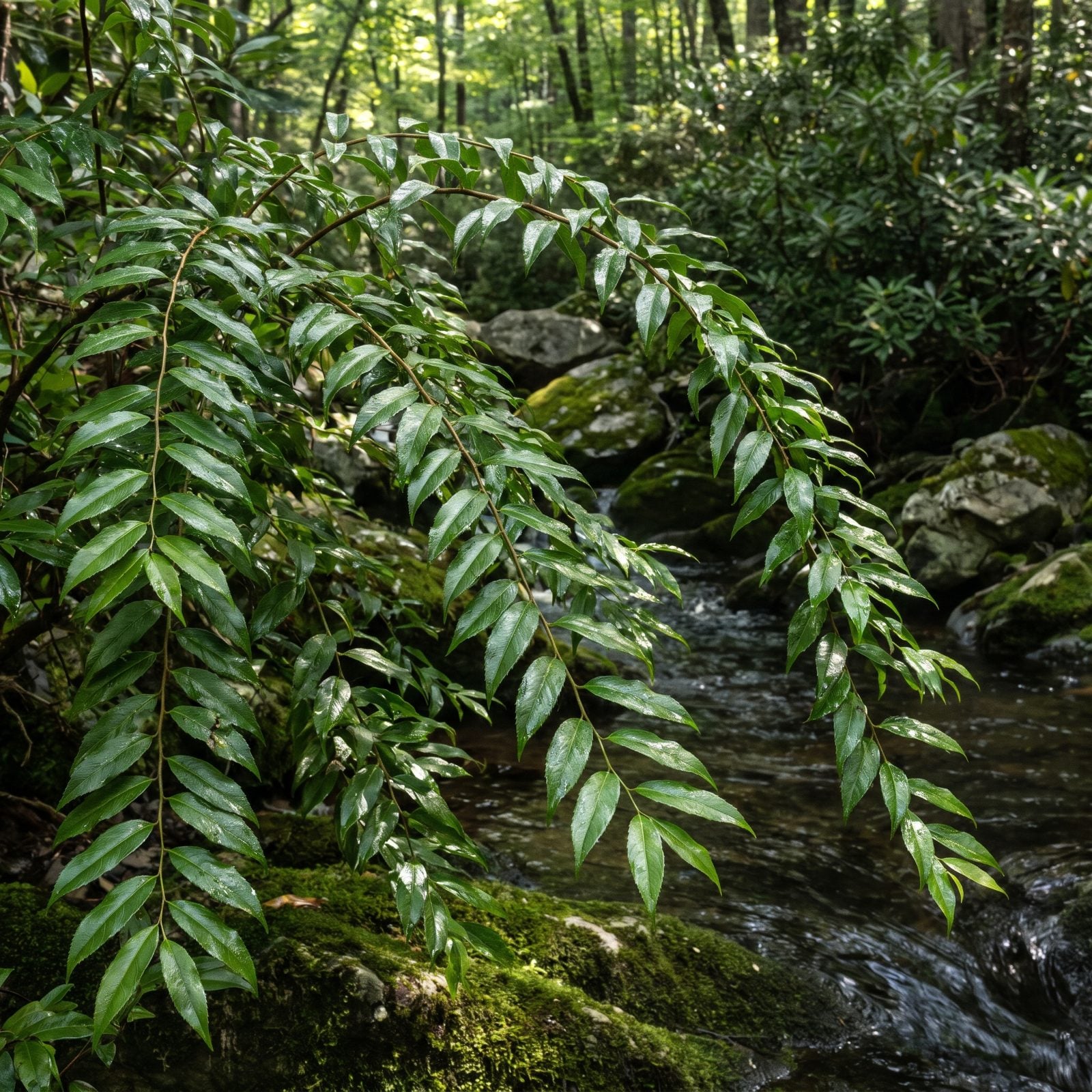
The name alone earns it a spot. Mountain doghobble, a broadleaf evergreen whose glossy leafy sprays hang down from an overhead branch, grows wild in Southeastern ravines and along streambanks, often tangled up in Rhododendron maximum thickets.
Partial shade suits it best, though it handles full shade as long as the soil stays moist and acidic. Drought and wind kill it, so skip the exposed spots. And one real caution: it carries high-severity poison characteristics. Keep it well away from anything you’d eat, or anywhere small children graze all day.