
A bottle of distilled white vinegar costs less than a candy bar and somehow gets treated like a miracle in a jug. Degreaser, disinfectant, descaler, grout whitener, floor cleaner, the thing your grandmother swore by. Most of that reputation holds up. Some of it falls apart the second you look at the actual chemistry, and a little of it is downright dangerous. Vinegar is an acid, a mild one, and acids do what acids do whether you asked them to or not. So here’s where the folk wisdom gets it right, where it gets it wrong, and the combinations that turn a cheap helper into a problem you can’t undo.
Please note that some of the images in this article were created with the assistance of AI.
39. Myth: Vinegar Is Safe to Mix With Chlorine Bleach
Start with the one that can actually hurt you. Vinegar plus chlorine bleach releases chlorine gas — not a strong smell, not a little cough, but a real respiratory hazard that sends people to the emergency room every year, usually because they were trying to build a “stronger” cleaner out of two things they already had.
The acid in vinegar reacts with the hypochlorite in bleach and the chlorine comes off as a gas. No safe dilution saves you here. No cracked window makes it fine. There’s no version of this worth attempting.
38. Myth: Vinegar Disinfects as Effectively as a Registered Disinfectant
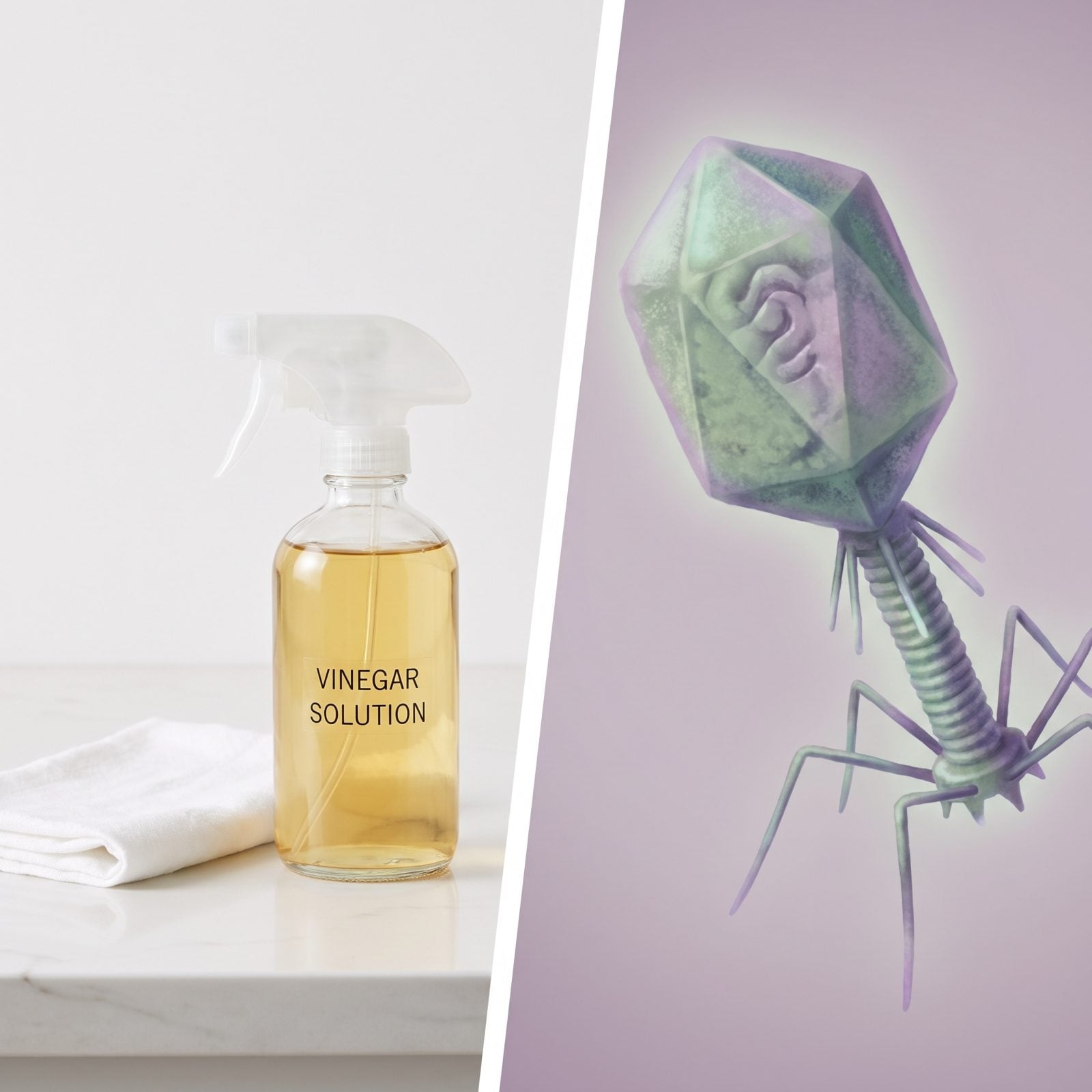
Vinegar cleans. But cleaning and disinfecting are two different jobs, and conflating them is where people get burned. Wiping away dirt and grease is one thing; killing the viruses and bacteria that make people sick is another, and that’s where vinegar comes up short.
Acetic acid has some antimicrobial effect against certain organisms, sure. It’s not registered by the EPA as a disinfectant, though, and it won’t reliably kill the pathogens a real disinfectant gets tested against. If you’re cleaning up after raw chicken or wiping down a sickroom, that gap matters.
Use vinegar for everyday grime. For true disinfection, reach for a product that earned the label.
37. Myth: Vinegar and Hydrogen Peroxide Belong in One Bottle
This myth spreads because the two actually make a great tag team. Spray a surface with vinegar, wipe, then follow with hydrogen peroxide and wipe again, and you’ve got a solid cleaning routine. The trick is the order — and the separate bottles.
Combine them in one container and they form peracetic acid. In strong concentrations that’s corrosive and irritating to skin, eyes, and lungs. The cheerful DIY blogs telling you to premix them are handing you bad advice.
Two bottles. One after the other. Never the same bottle.
36. Myth: Boiling Vinegar Increases Its Cleaning Power

Heat helps grease move, and that part is real — a warm vinegar solution loosens cooked-on gunk better than a cold one, same way warm dish water beats cold.
Boiling it, though, doesn’t make it a stronger acid. The acetic acid concentration is what it is. What you mostly accomplish by boiling it hard is filling your kitchen with a sharp vapor that stings your eyes and does nothing extra for the counter.
Warm it if you want. Just don’t boil it chasing a power-up that isn’t there.
35. Myth: Undiluted Vinegar Is Always More Effective
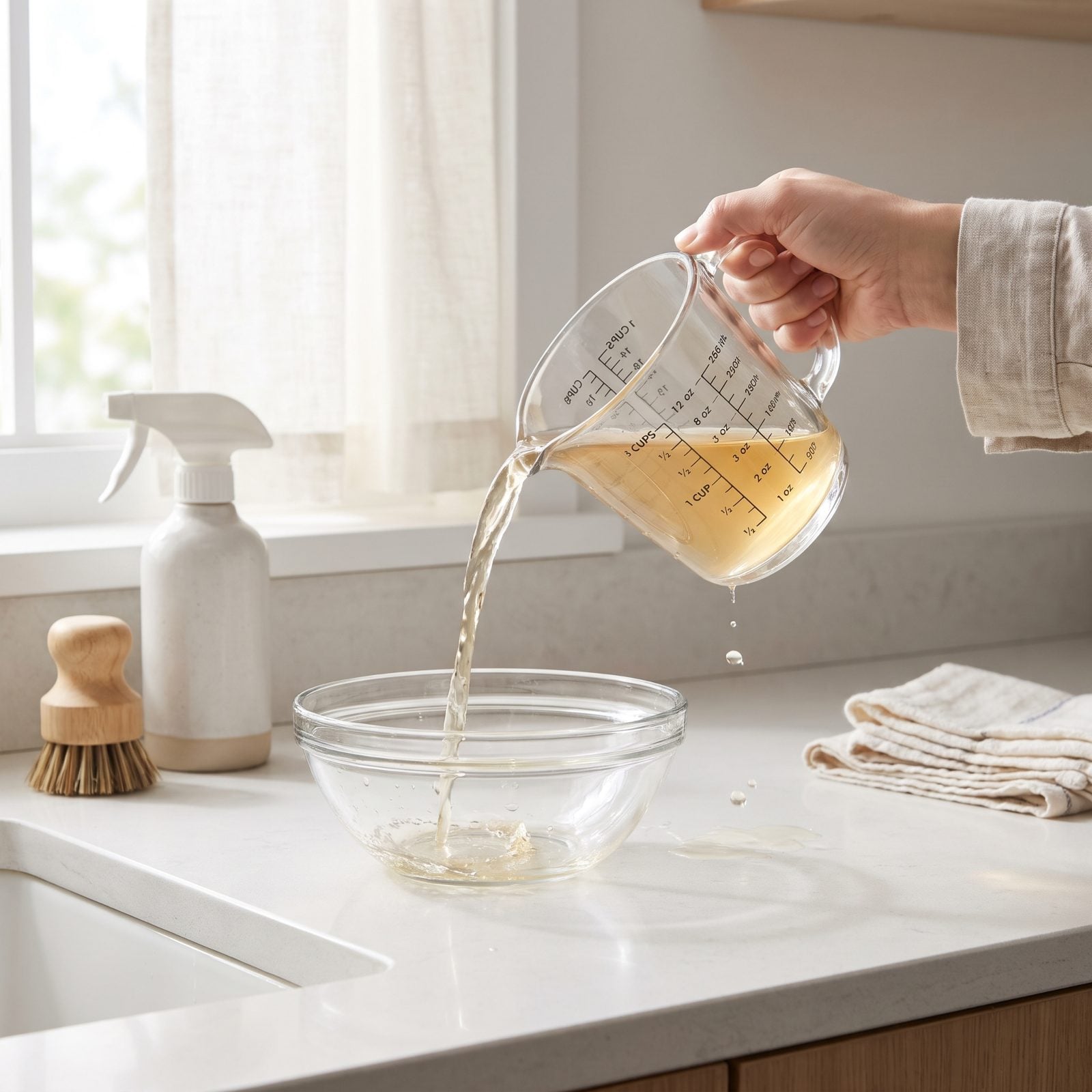
More acid, more power, right? Not usually. Sometimes the opposite.
For most household jobs a half-and-half mix with water works as well as straight vinegar and treats your surfaces more gently. Full strength is louder, not smarter, and on delicate finishes it just does more damage faster.
Straight vinegar earns its place on heavy mineral scale — a crusted kettle, a shower head soaked overnight. For the everyday wipe-down, diluted is the move. Using full-strength vinegar on everything is a quick way to dull more than one finish.
34. Myth: Cleaning Vinegar Is Just Regular Vinegar With New Branding
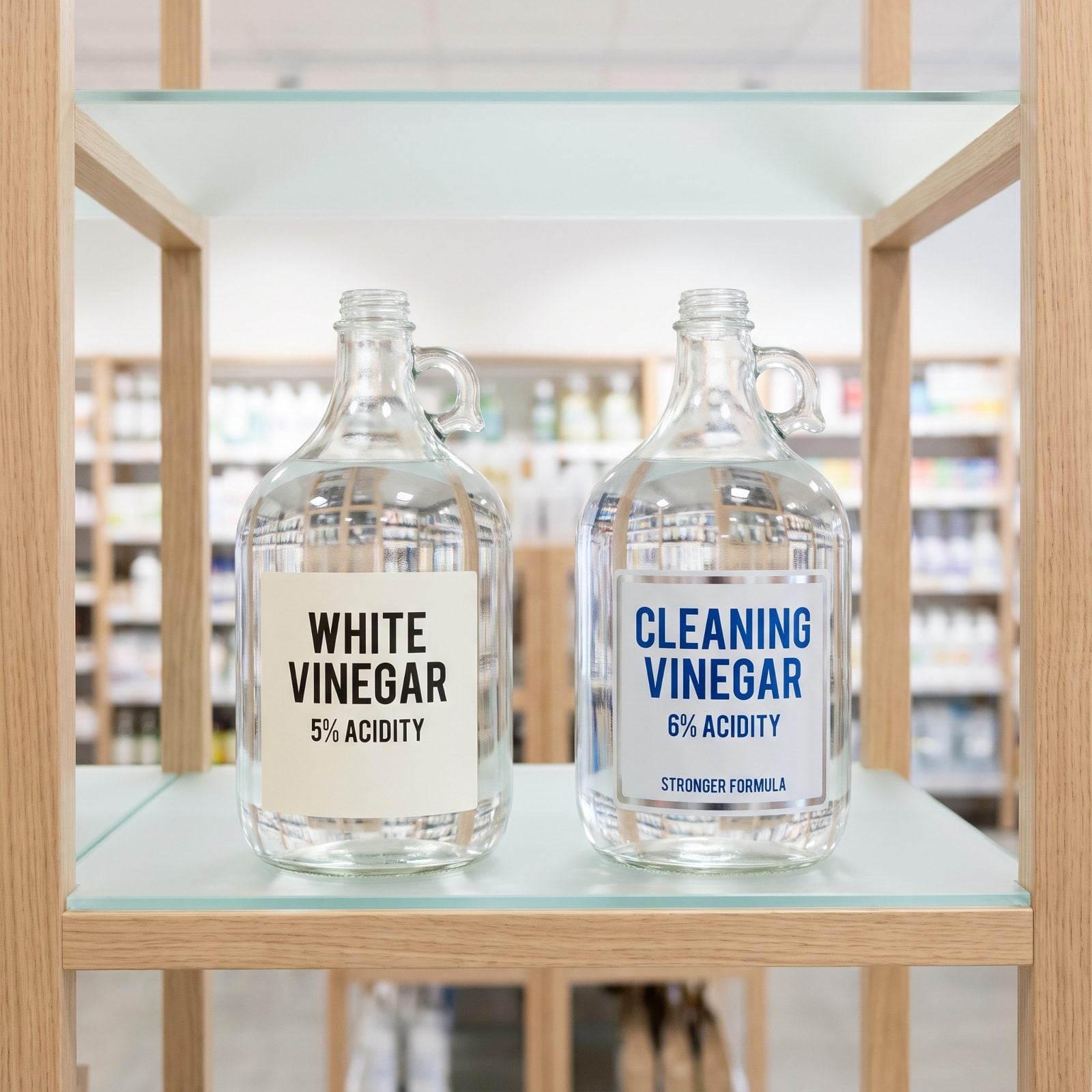
There’s a real difference, and it comes down to strength. Table vinegar for cooking runs around 5 percent acetic acid. Cleaning vinegar is stronger — usually a point or two higher.
That gap sounds tiny. In practice the cleaning version is noticeably more aggressive on scale and soap scum, and it’s not meant for food. Don’t splash it on a salad.
So no, it isn’t the same product with a fresh sticker. One is slightly punchier and built for scrubbing. If you want a bit more bite on bathroom buildup, the cleaning grade is worth the swap.
33. Myth: Vinegar Is Safe on Granite, Marble, and Other Natural Stone
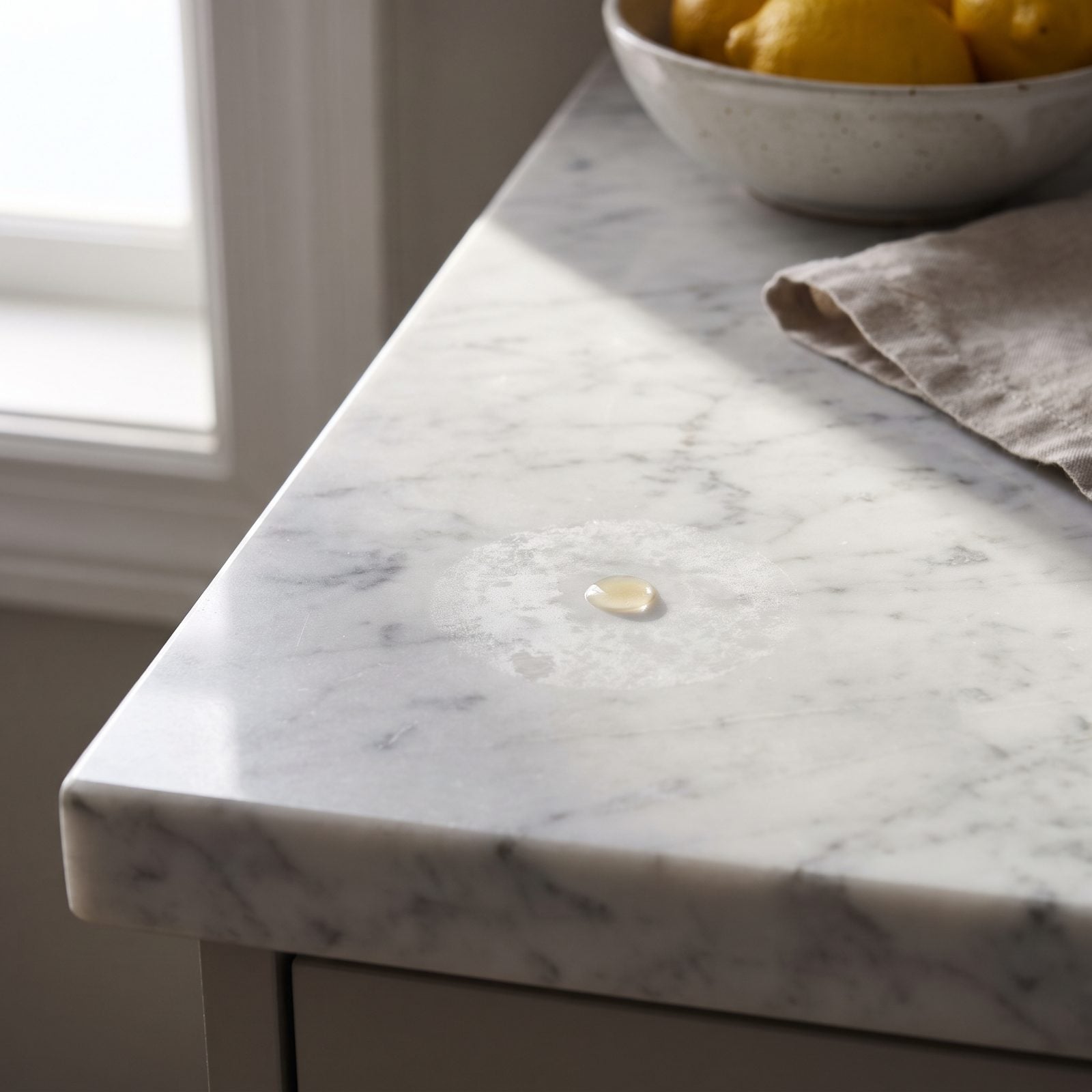
This is the one I wish more people knew before it was too late. Marble, limestone, travertine, and many granites contain minerals that acid eats, and vinegar is acid. On natural stone it etches a dull, rough spot where the shine used to be, and no amount of buffing brings that polish back without refinishing.
On marble, a quick vinegar wipe can leave a mark you’ll see in every angle of light for years.
Use a pH-neutral stone cleaner instead. Keep vinegar off the countertop, the stone backsplash, and the stone floor tile.
32. Myth: Vinegar Brightens Grout Without Weakening It
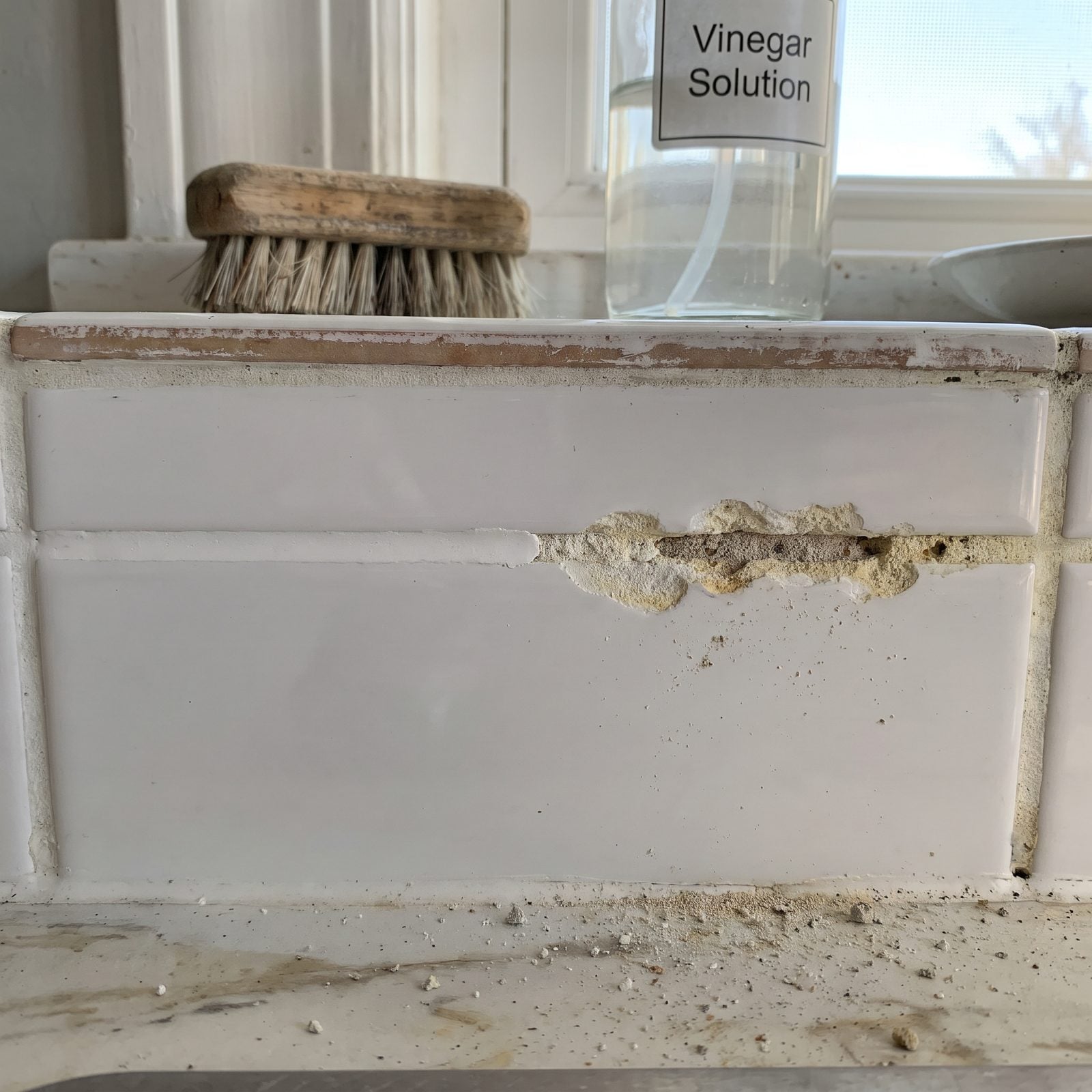
Grout looks whiter after a vinegar scrub, so people assume it’s helping. Short term, sure — it lifts some surface grime.
Here’s the catch. Most cement-based grout is porous and alkaline, and repeated acid exposure slowly dissolves and weakens it. You trade a brighter line today for crumbling, pitted grout down the road, especially if it was never sealed.
For regular cleaning, a pH-neutral cleaner and a stiff brush do the job without the long-term cost. Save the harder approach for sealed grout, and even then, don’t make vinegar your weekly habit on it.
31. Myth: Vinegar Cannot Harm Engineered Quartz Countertops
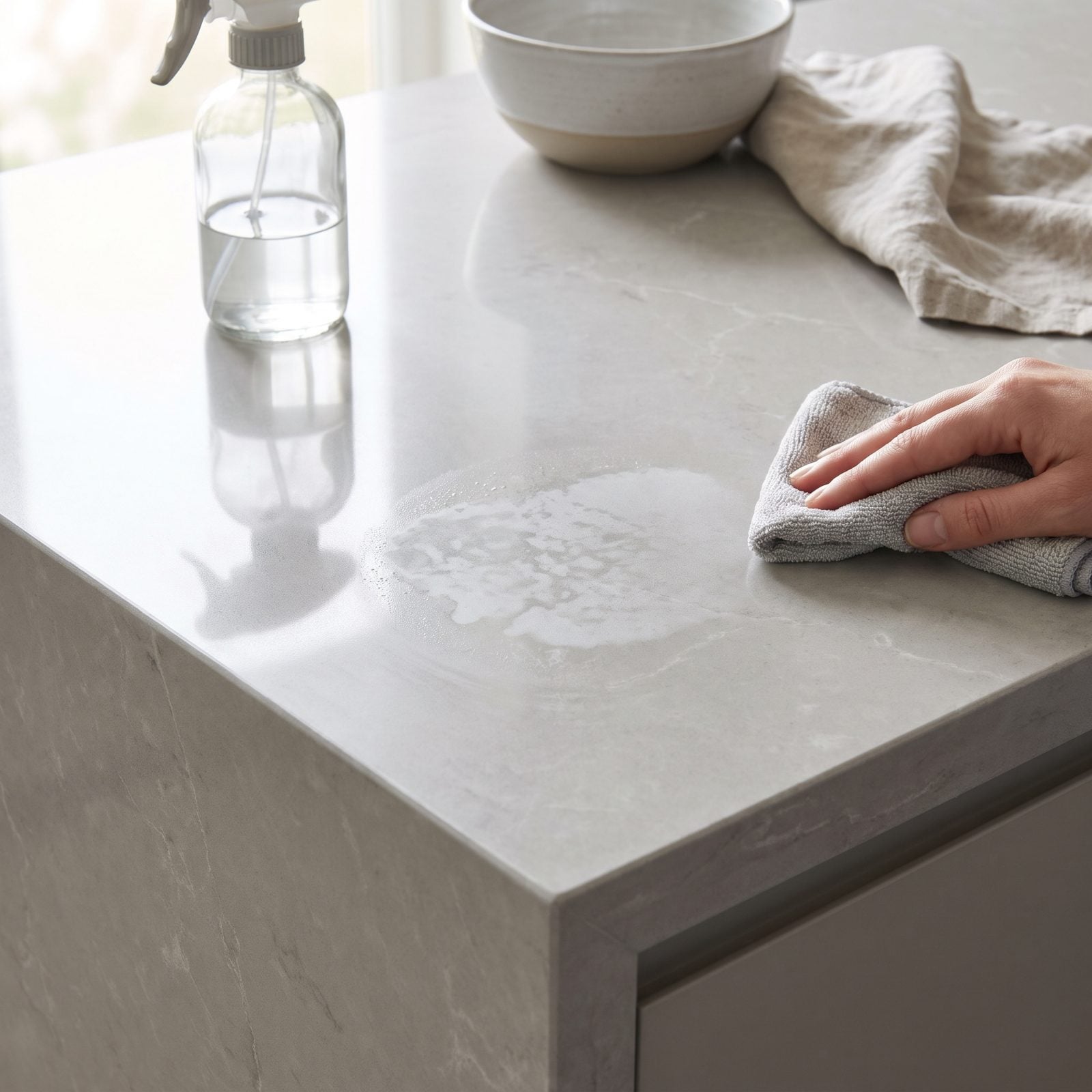
Quartz feels bulletproof, so it gets treated that way. It isn’t.
Engineered quartz is mostly ground stone bound with resin, and that resin binder is the weak point. Acidic cleaners like vinegar can dull the finish and break down the resin over time, especially at full strength or left to sit. Most quartz makers specifically tell you to avoid acidic cleaners, and using one can void the warranty.
Warm water and mild dish soap handle daily cleanup. For a counter that cost what quartz costs, that’s a cheap way to protect it.
30. Myth: Diluted Vinegar Is Safe on Every Hardwood Floor
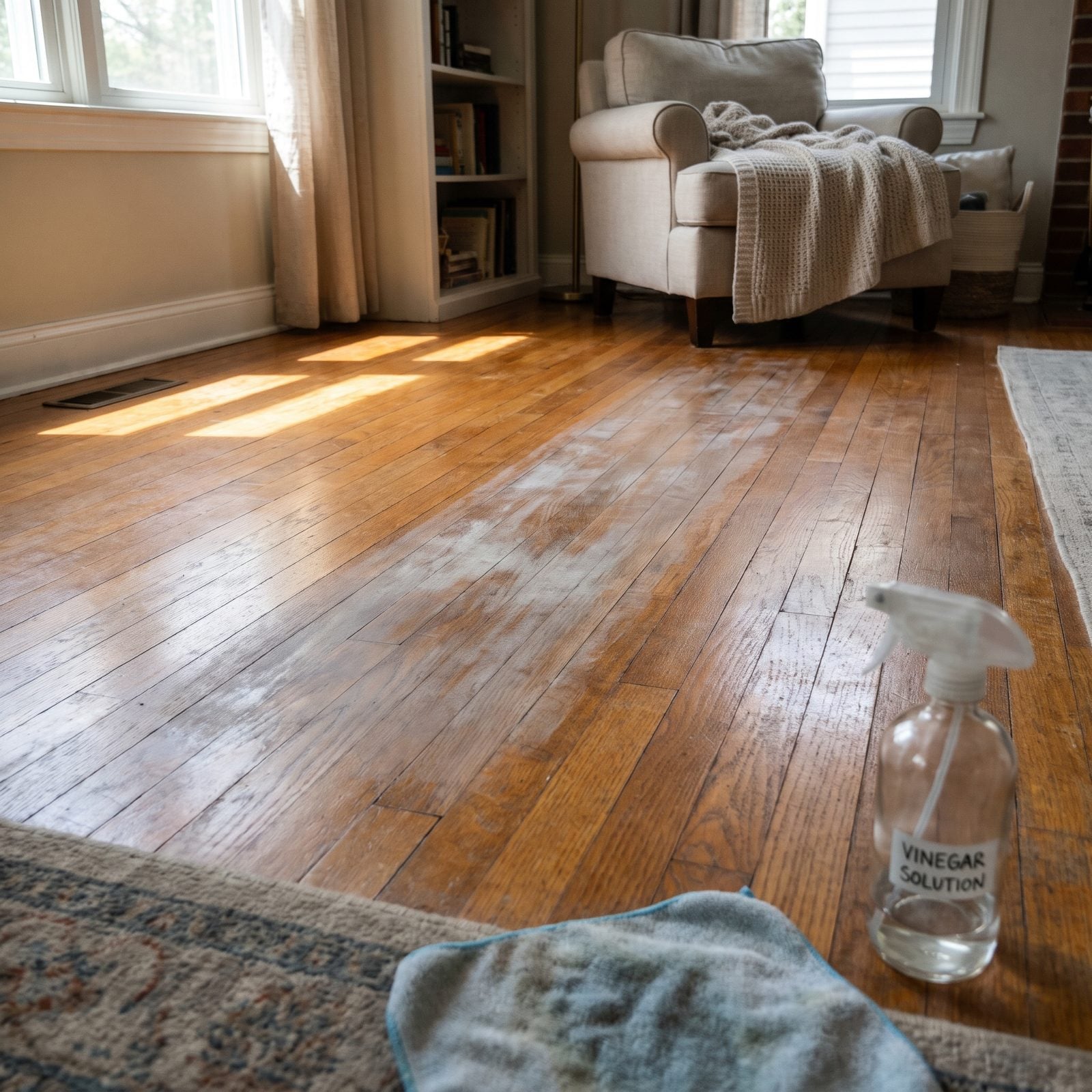
Diluted vinegar on wood floors is old advice, and on a true waxed or oiled floor it isn’t the worst idea. Problem is, almost nobody has those anymore.
Most modern hardwood carries a polyurethane or similar factory finish, and acid can slowly cloud and degrade that coating with repeated use. Over time the floor goes dull and hazy instead of clean. And too much water of any kind swells wood.
Check what finish you actually have before you start mopping. For polyurethane, a cleaner made for the finish beats the vinegar trick every time. I love vinegar for plenty of jobs. This just isn’t one of them.
29. Myth: Vinegar Is a Streak-Free Cleaner for Electronic Screens
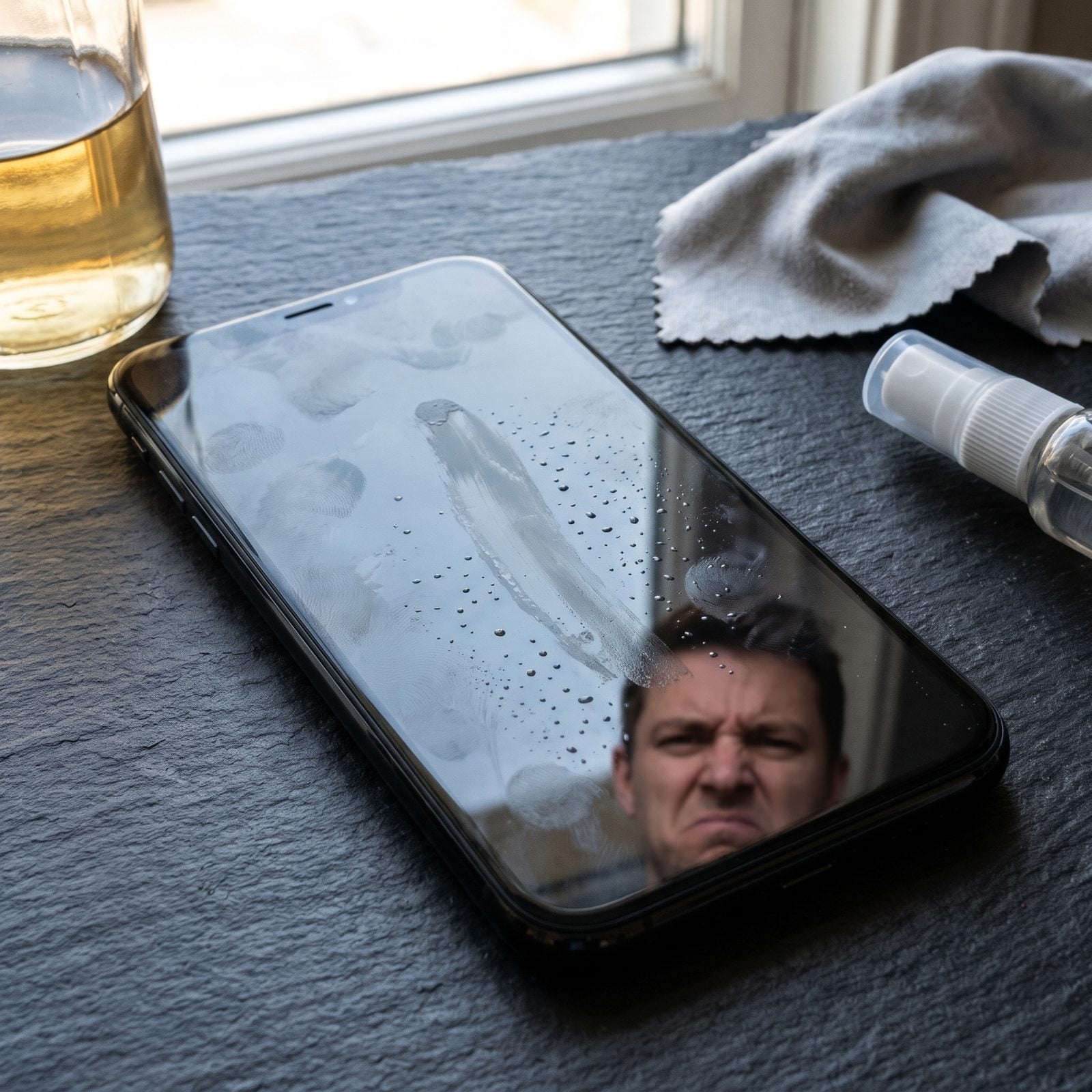
Acid and anti-glare coatings do not get along. Most modern screens — phones, laptops, TVs — carry an oleophobic or anti-reflective layer that vinegar slowly eats away, and you won’t see it happen in one pass. You’ll notice it months later, when the glass has gone cloudy and your fingerprints suddenly smear worse than they used to.
Plain distilled water on a microfiber cloth handles almost everything. Anything greasy? A single drop of dish soap in that water. Save the vinegar for your windows, which have no coating to lose.
28. Myth: Vinegar Cleans and Conditions Leather

The idea got around because a little diluted vinegar really can lift a scuff or a salt line off a boot. True enough. But that’s spot treatment, not conditioning.
Vinegar is acidic and drying. Leather is tanned to sit at a pH it likes to keep, and if you keep wiping it down with the stuff, you strip the natural oils that keep it supple. Dried-out leather cracks, and once it cracks, nothing brings it back.
Use a proper leather conditioner, or at most a damp cloth for everyday dust. Plenty of good bags have been ruined by someone getting clever with a spray bottle.
27. Myth: Vinegar Is Safe for Pearls and Every Type of Jewelry
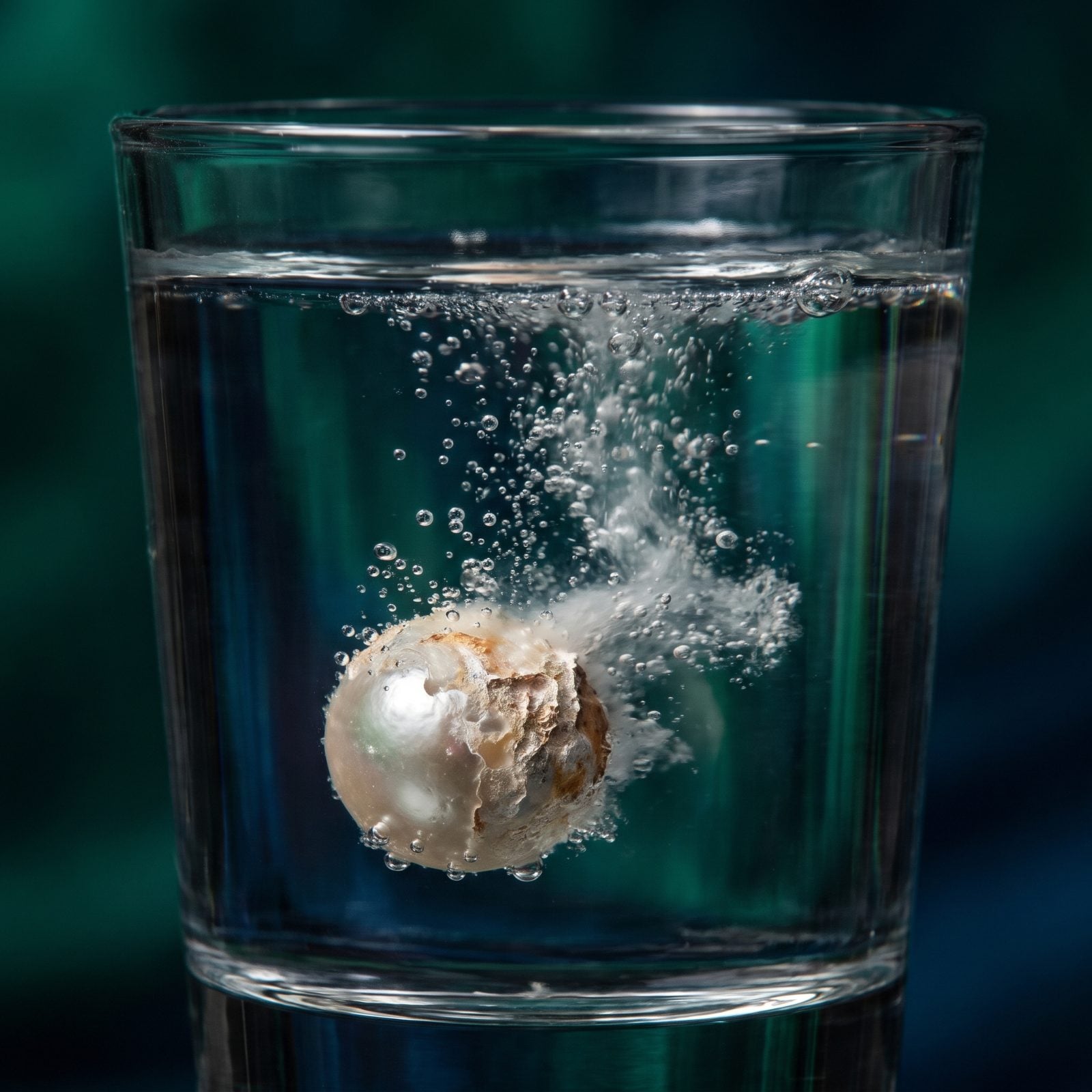
Pearls are calcium carbonate, and acid dissolves calcium carbonate. Drop a pearl in vinegar long enough and it will fizz and pit. Not a party trick you want to run on your grandmother’s strand.
Coral, opal, turquoise, anything porous — same story. Soft stones and organic gems hate acid. Even the glue holding costume pieces together can loosen.
Warm water, a drop of mild soap, a soft cloth. That’s the safe answer for the stuff you actually care about.
26. Myth: Vinegar Cannot Damage Rubber Gaskets and Seals
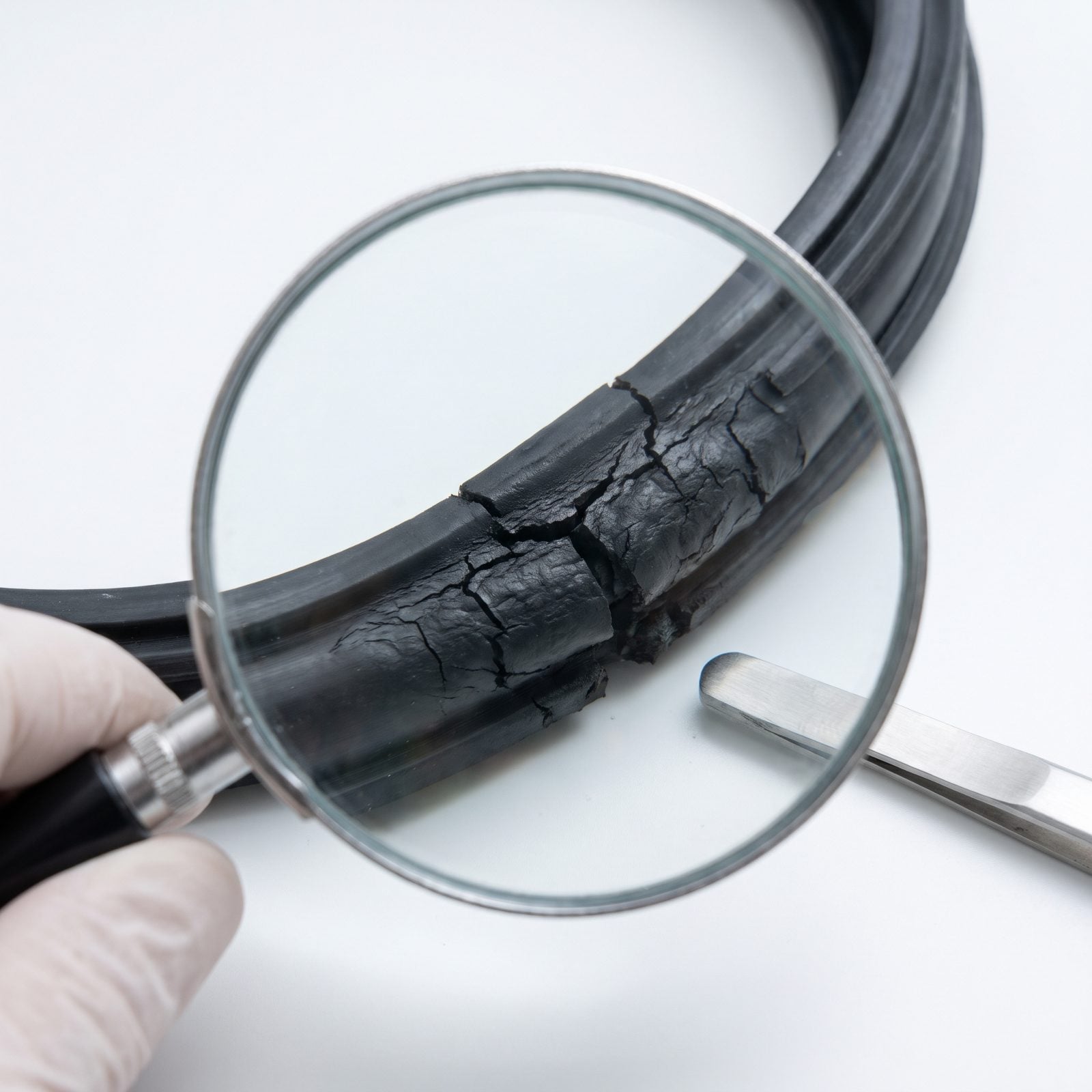
Rubber and acid are a slow-motion problem. Vinegar won’t melt a gasket on contact, so people assume it’s harmless. It isn’t — not over time.
Repeated acid exposure makes rubber swell, harden, and eventually crack. That matters most where rubber keeps water where it belongs: dishwasher seals, washing machine door boots, the gaskets tucked inside espresso machines and steam irons. A leaky seal costs a lot more than a bottle of descaler.
If a manufacturer specifically warns against vinegar — and plenty do now — there’s usually a gasket behind that warning.
25. Myth: Vinegar Is a Safe Soak for Cast-Iron and Carbon-Steel Pans
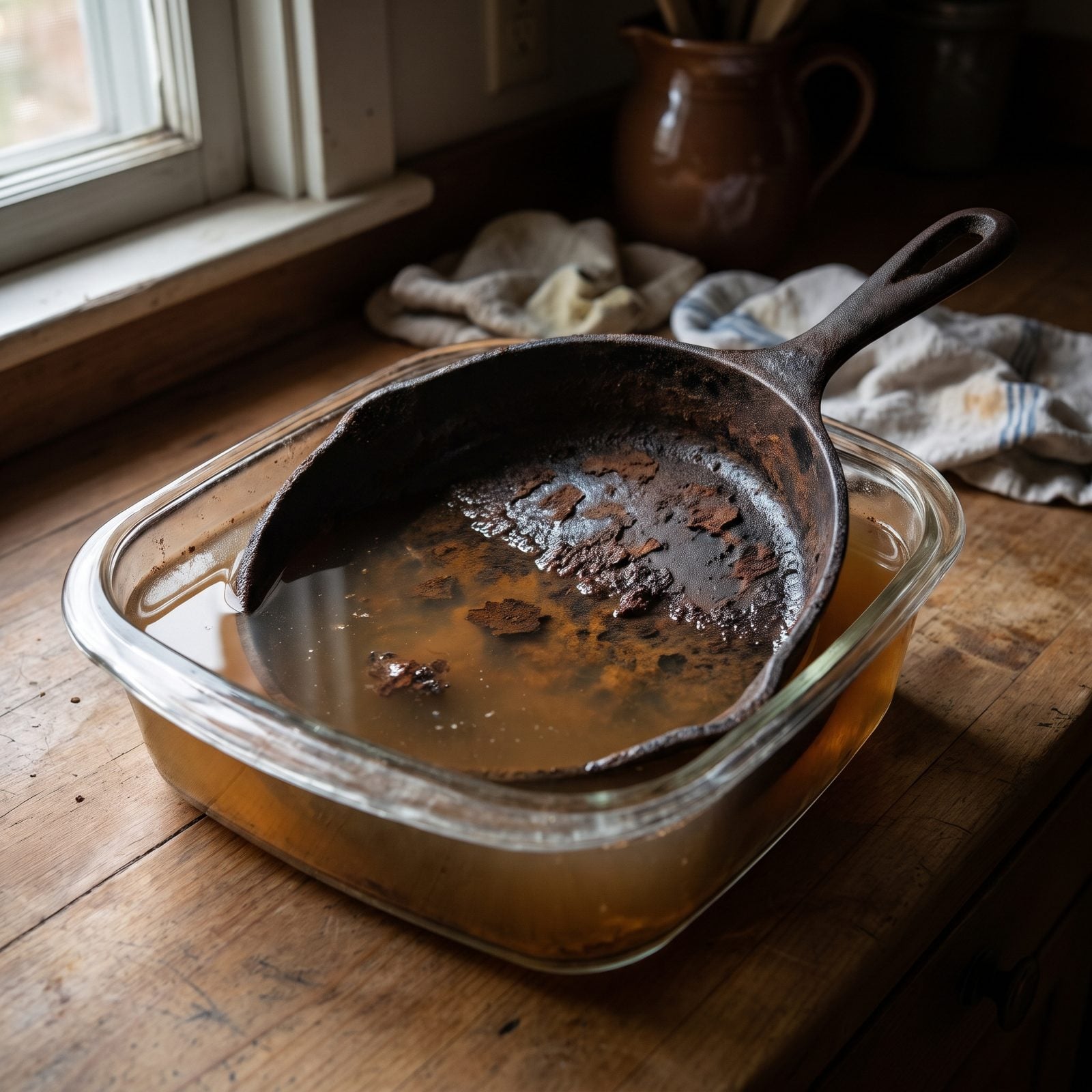
There’s a sliver of truth buried here, and it trips everyone up. A vinegar soak will strip rust off a neglected cast-iron pan. But that’s a restoration trick, done on purpose, for a short time, followed immediately by scrubbing and re-seasoning.
Leave a seasoned pan sitting in vinegar as routine cleaning and you dissolve the very layer you spent months building up. Walk away too long and the raw iron flash-rusts right in front of you.
Day to day, hot water and a stiff brush. Dry it on the stove, rub in a thin film of oil, done. Save the vinegar rescue for a flea-market skillet, done carefully, never for a pan you love.
24. Myth: Vinegar Cleans Aluminum Without Discoloring It
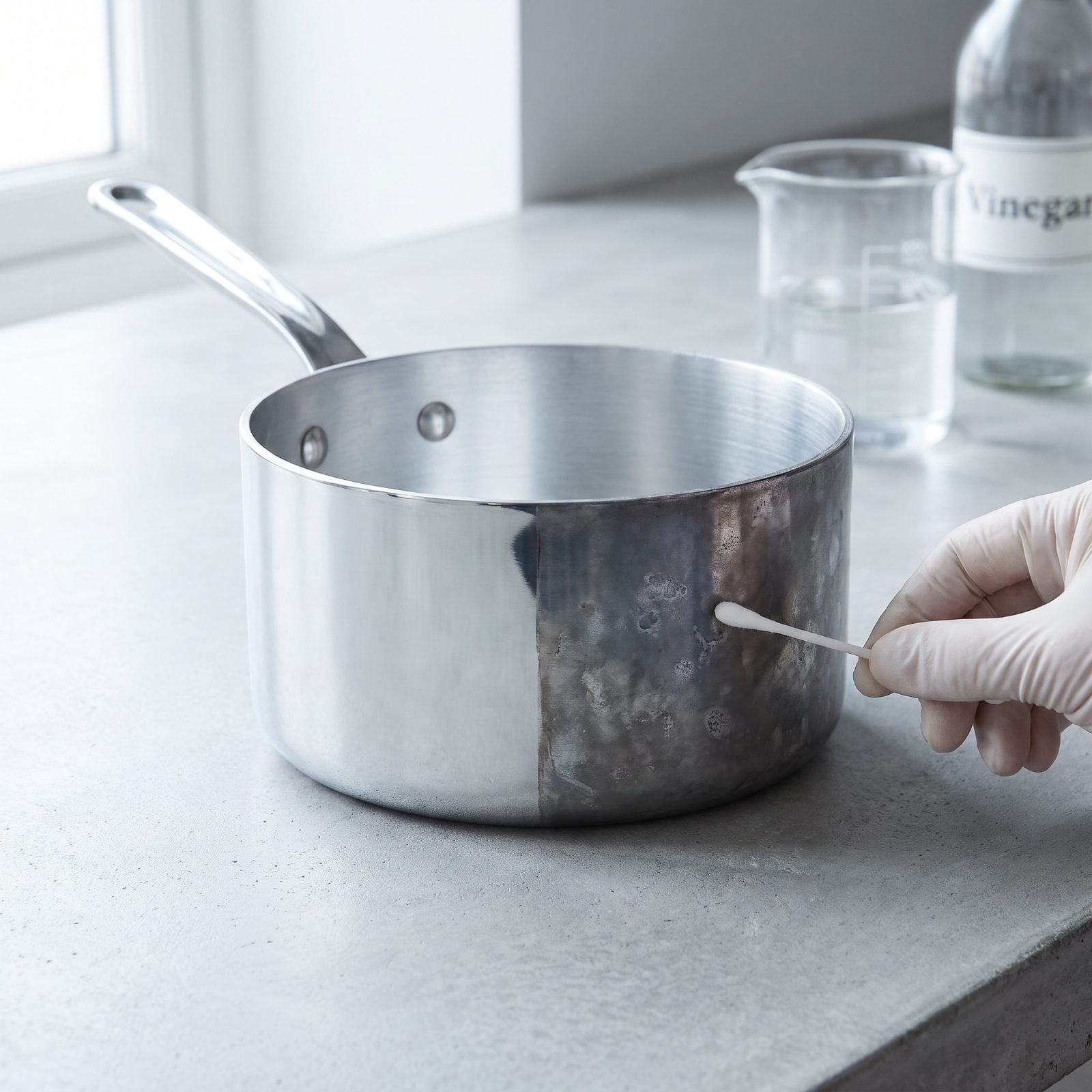
Aluminum is reactive, and vinegar is exactly the acid it reacts to. A short exposure can brighten it. Longer exposure does the opposite — dulls, darkens, and pits the surface.
You’ll spot it on sheet pans, older pots, and anodized trays that end up looking blotchy and grey. Same reason you don’t leave tomato sauce sitting in a bare aluminum pot overnight.
Warm soapy water does the honest work here. Skip the vinegar unless you enjoy explaining why the good baking sheet looks splotchy now.
23. Myth: Vinegar Always Damages Stainless Steel

This one’s backwards, and it’s worth setting straight. Stainless steel is built to shrug off mild acid. A quick wipe with diluted vinegar lifts fingerprints and water spots beautifully — then you buff with the grain and move on.
The trouble isn’t the vinegar itself. It’s leaving it to pool and sit on the surface for hours, which can dull or stain the metal, and it’s using it on steel that’s already been scratched down past its protective layer.
Diluted, wiped, dried, with the grain. Genuinely one of the good uses.
22. Myth: Every Coffee Maker Should Be Descaled With Vinegar
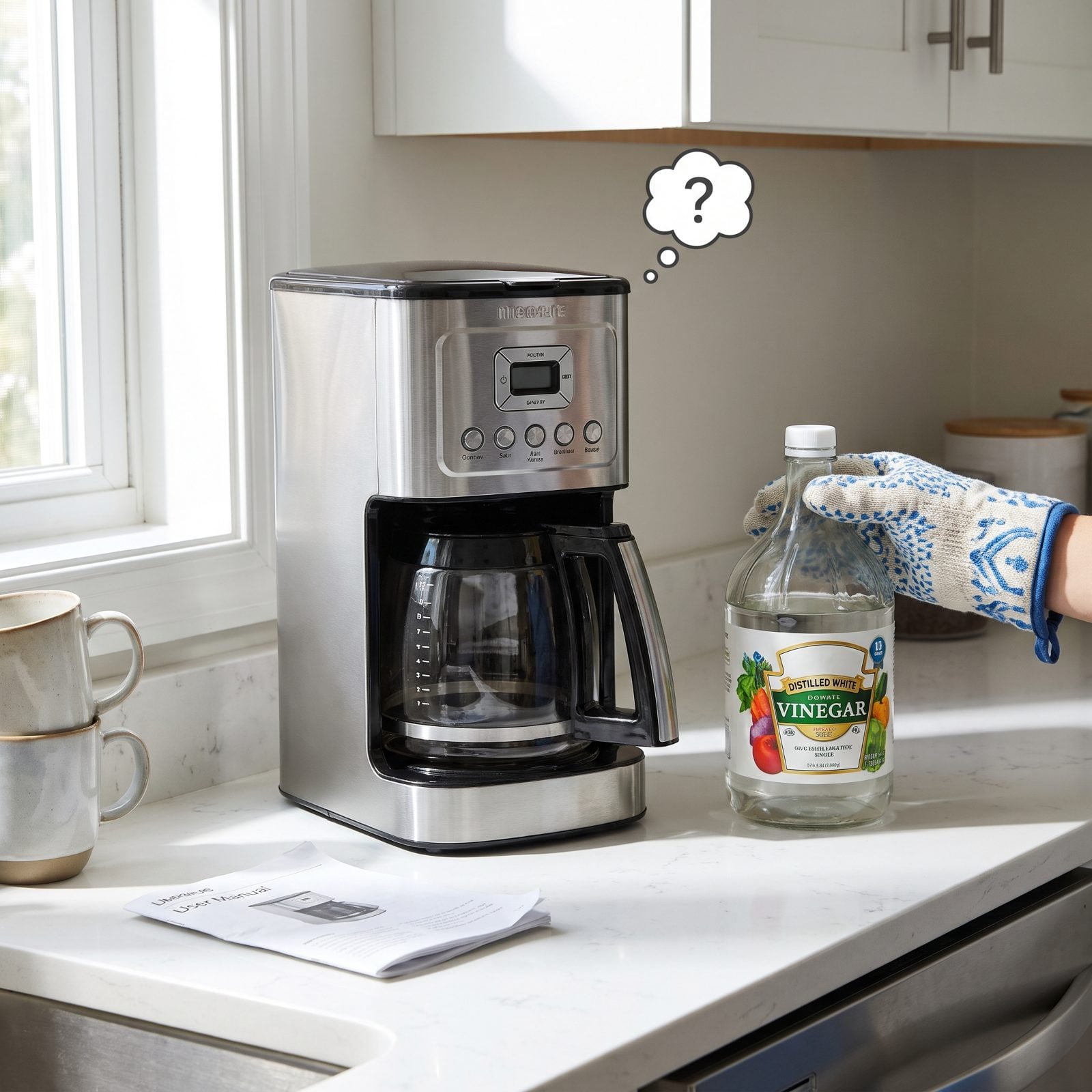
For a basic drip machine, a vinegar-and-water run followed by a few plain water rinses is cheap and it works. No argument there.
Pod machines and higher-end espresso makers are the problem. Many hide aluminum boilers, rubber seals, and sensors that vinegar quietly corrodes, which is exactly why many pod and espresso machine makers point you toward their own descaler instead. Ignore that and you may void the warranty and kill the machine faster than the scale ever would.
Check the manual first. If it says use our descaler, it’s not just angling to sell you a packet.
21. Myth: Vinegar Is a Universal Dishwasher Cleaner and Rinse Aid
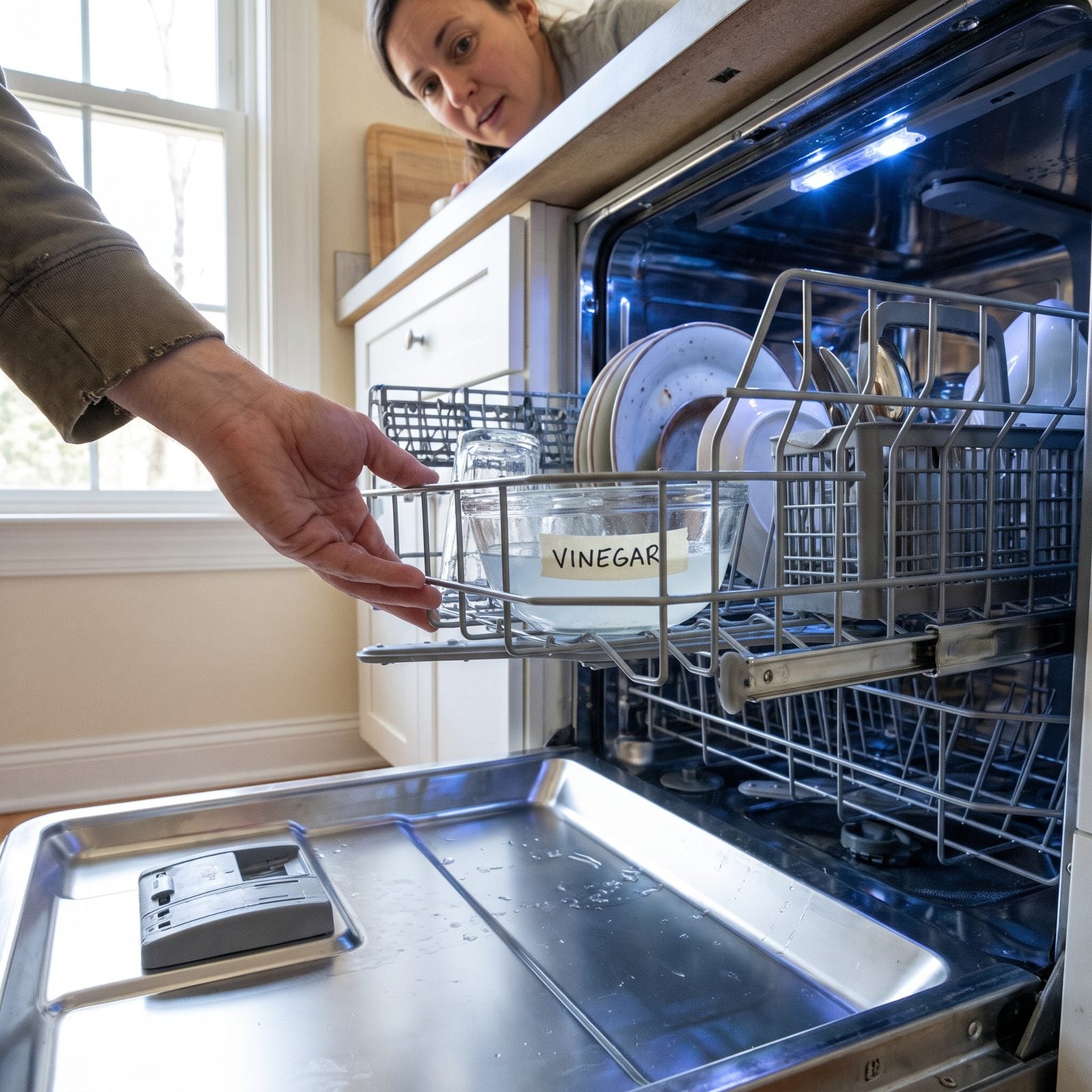
A bowl of vinegar on the top rack cuts odors and film, and that part works fine. Where it goes wrong is turning vinegar into a permanent rinse-aid replacement poured straight into the dispenser.
- The acid sits against the rubber door seal and dispenser flaps run after run, and rubber doesn’t love that.
- On soft water, it does nothing to stop the detergent etching that leaves glassware permanently cloudy.
- Several manufacturers advise against it outright, which tells you where their repair data points.
Occasional cleaner, yes. Daily additive, no. That’s the line between helpful and expensive.
20. Myth: Frequent Vinegar Cycles Cannot Harm a Washing Machine
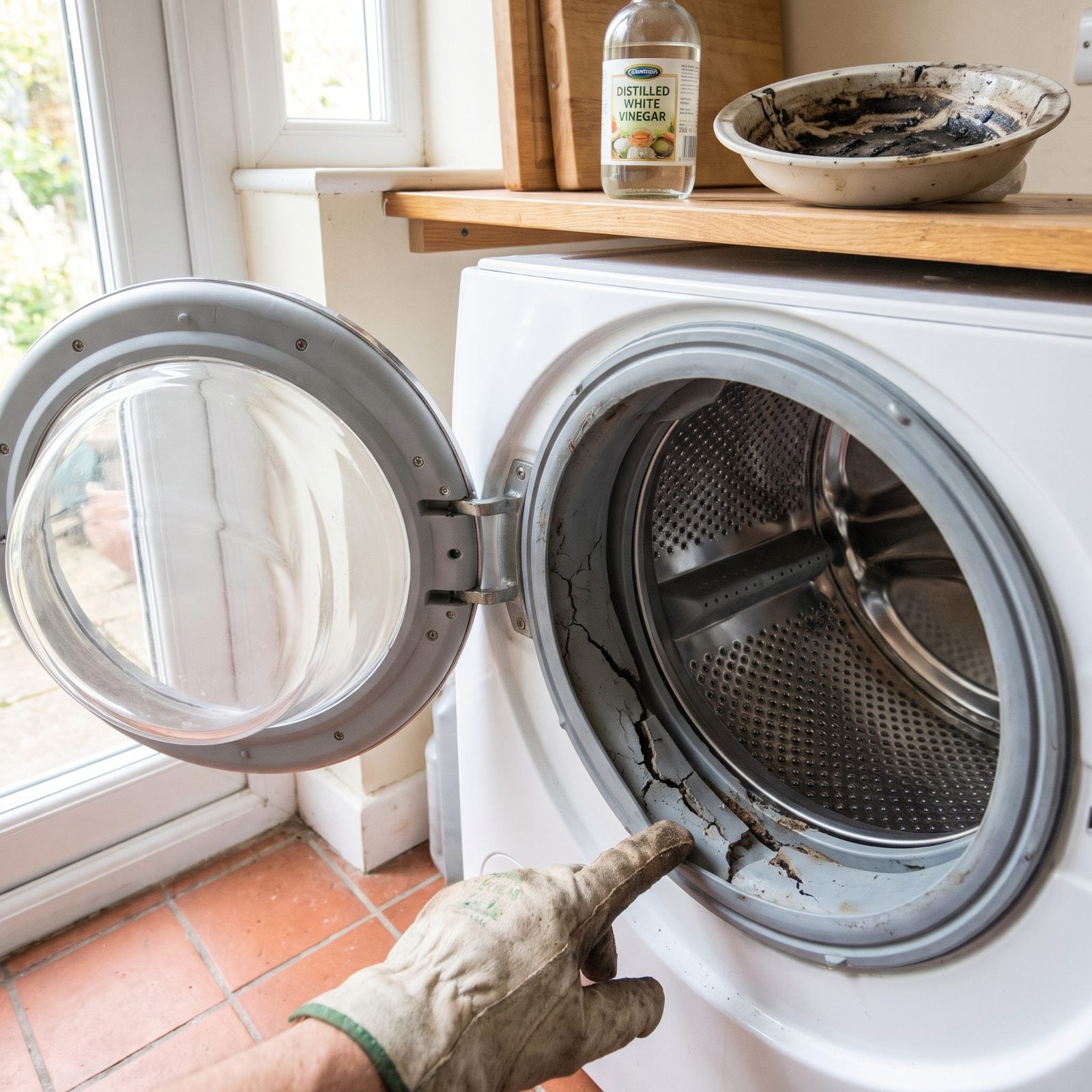
An occasional vinegar rinse freshens a washer and knocks back detergent buildup. Fine, now and then.
Run it hot and often, though, and the acid goes to work on every rubber part inside — the door boot on front-loaders, internal hoses, the assorted seals your repair tech charges real money to replace. The boot dries out, cracks like old plaster, and starts shedding chips onto the cabinet — then it leaks.
Most washer makers point you toward a dedicated machine cleaner for routine freshening, and it’s not a conspiracy to move tablets. It’s the gaskets.
Vinegar isn’t the villain. The frequency is. Treat it as a sometimes tool, keep it diluted, and your machine will outlast the myth that got it in trouble.
19. Myth: Vinegar Belongs Inside Every Steam Iron Reservoir
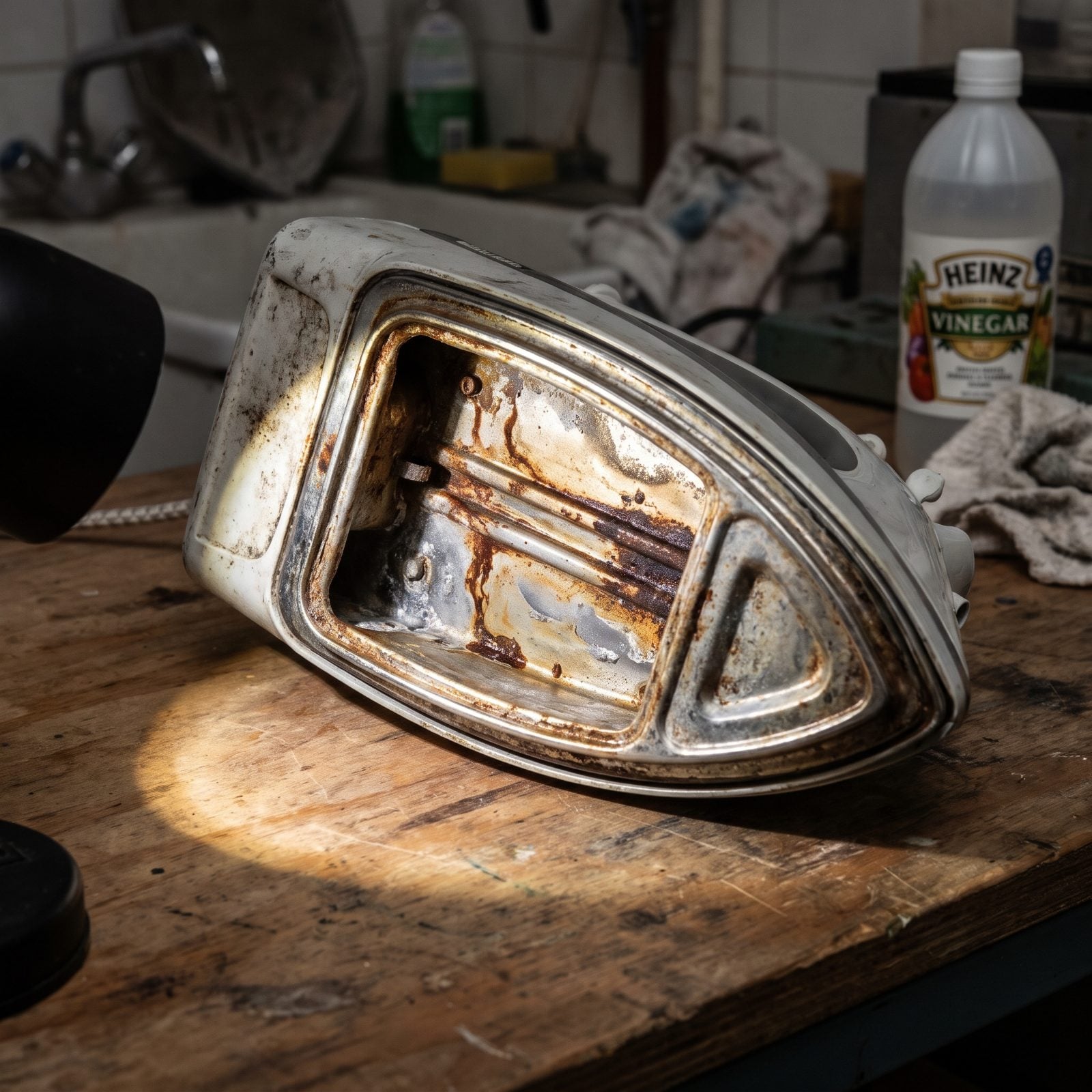
This one feels logical. Vinegar fights limescale, irons get limescale, so pour it in, right? No. Acetic acid corrodes the internal gaskets, seals, and metal components inside a steam iron, and most manufacturers warn against it outright. You might clear one clog and ruin three parts you can’t even see.
Distilled water is the boring, correct answer. If your iron is already crusty, the manual almost always has a dedicated self-clean cycle built for exactly this.
18. Myth: Vinegar Is a Powerful Oven Degreaser
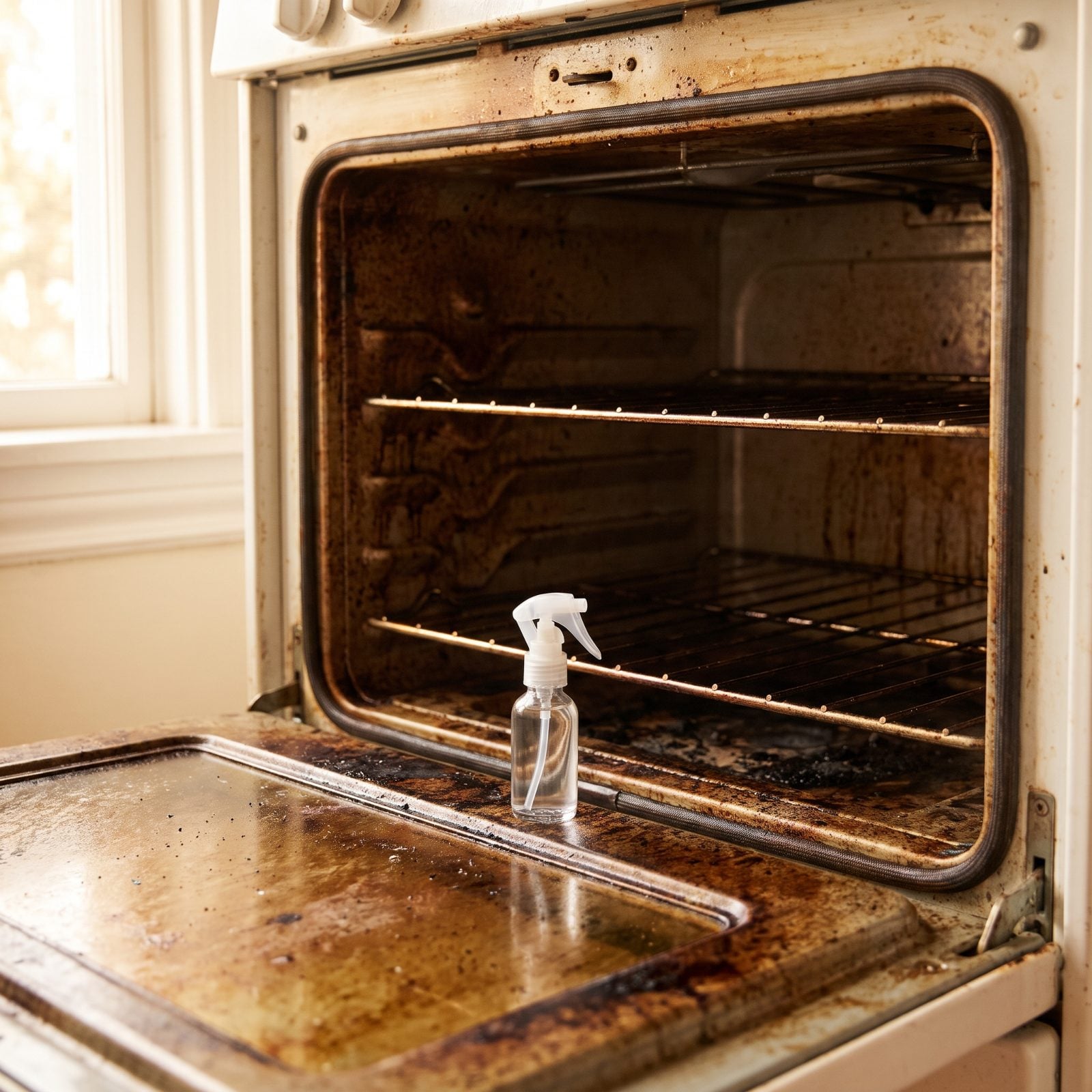
Vinegar is a mild acid. Baked-on oven grease is a carbonized, polymerized mess that laughs at mild acids. You can spritz vinegar all day and that black crust on the back wall won’t budge an inch.
It does help with light, fresh splatters wiped up before they bake. For the real archaeology on your oven floor, though, you need a baking-soda paste left to sit overnight, some elbow grease, or a dedicated cleaner with actual alkaline muscle. Plenty of people learn this the hard way, armed with a bottle of vinegar and a lot of optimism.
17. Myth: Microwaving Vinegar Steam Disinfects the Entire Microwave
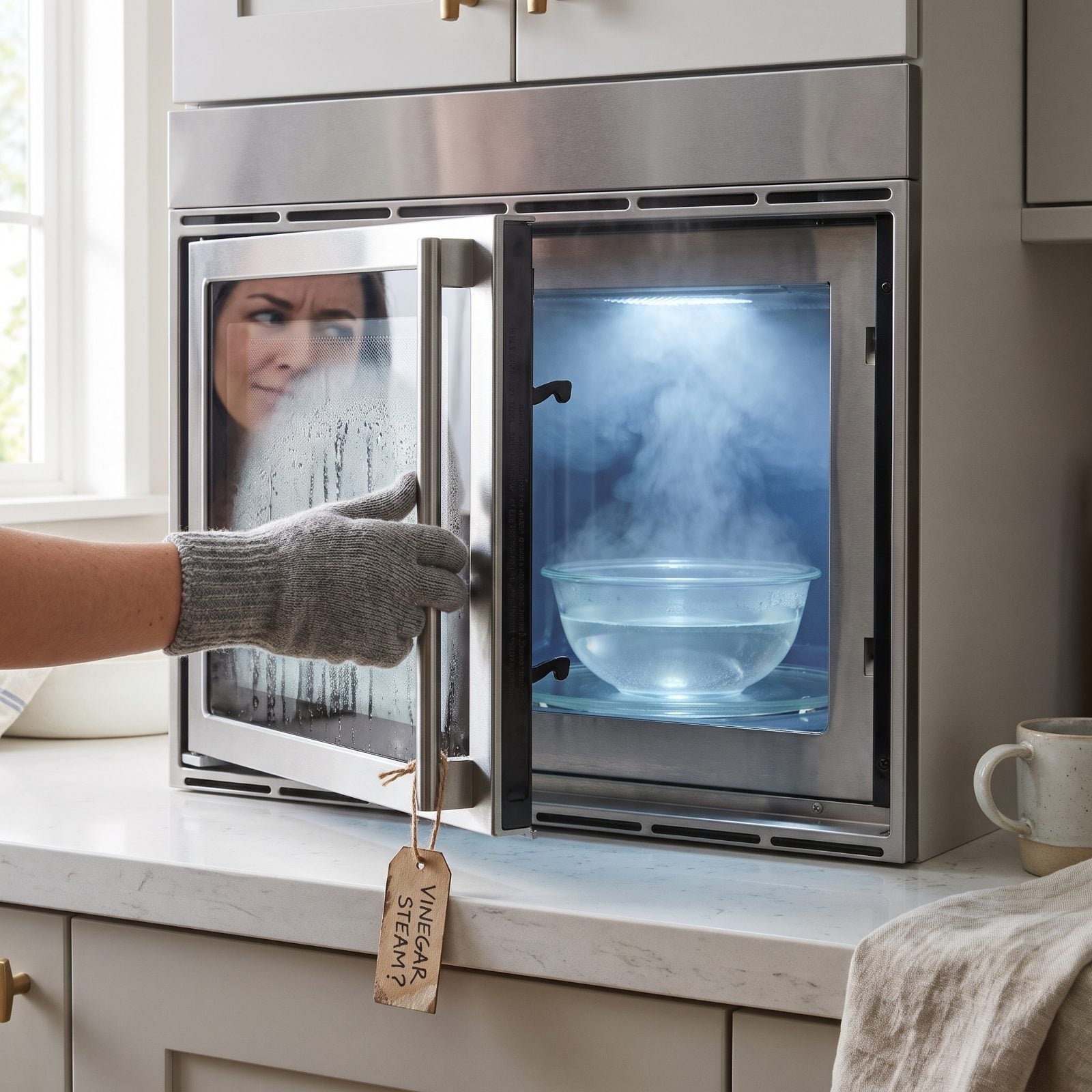
Steam loosens. It doesn’t sanitize. That bowl of vinegar water you microwave does one genuinely useful thing: it softens dried-on food so you can wipe it off with almost no scrubbing. A good trick, honestly, and worth doing.
Killing germs across every surface isn’t on the menu, though. Disinfection needs actual contact time with the surface, not a passing cloud of vapor. So steam, then wipe. The wiping is where cleaning happens — not the fog.
16. Myth: Vinegar Completely Replaces Laundry Fabric Softener
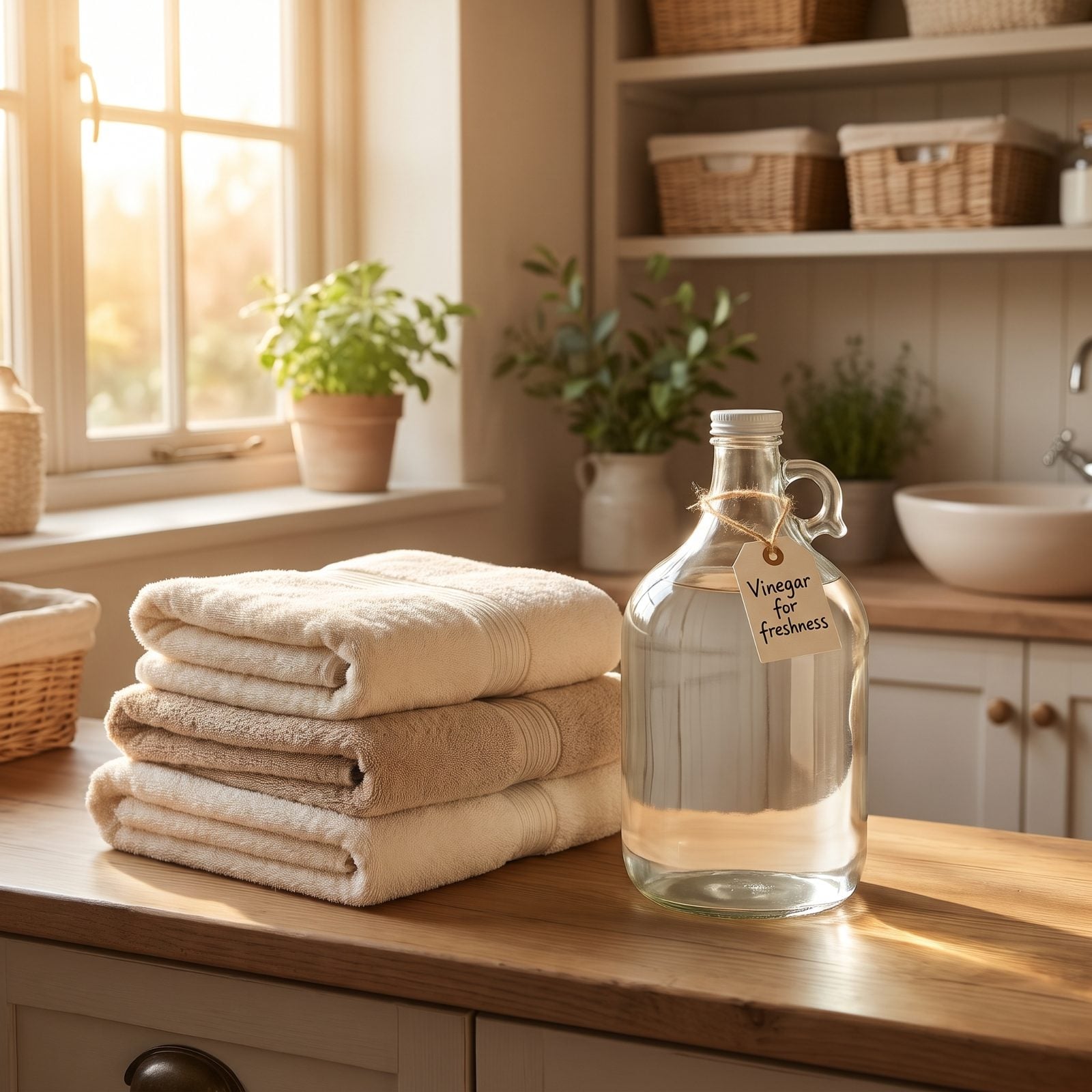
Vinegar in the rinse does real work. It cuts detergent residue, softens the water’s effect on fibers, and keeps towels absorbent instead of leaving them with that slick, coated feel commercial softeners give.
It’s not a one-for-one swap, though. Vinegar won’t lay down the fragrance and silicone slip that softener does, so if you love that sheet-off-the-line smell and silky hand, you’ll miss it. Picture it as a residue-stripper that happens to leave laundry softer, rather than a scented, fiber-coating product. Towels, in particular, prefer the vinegar route.
15. Myth: Vinegar Whitens Laundry as Effectively as Bleach
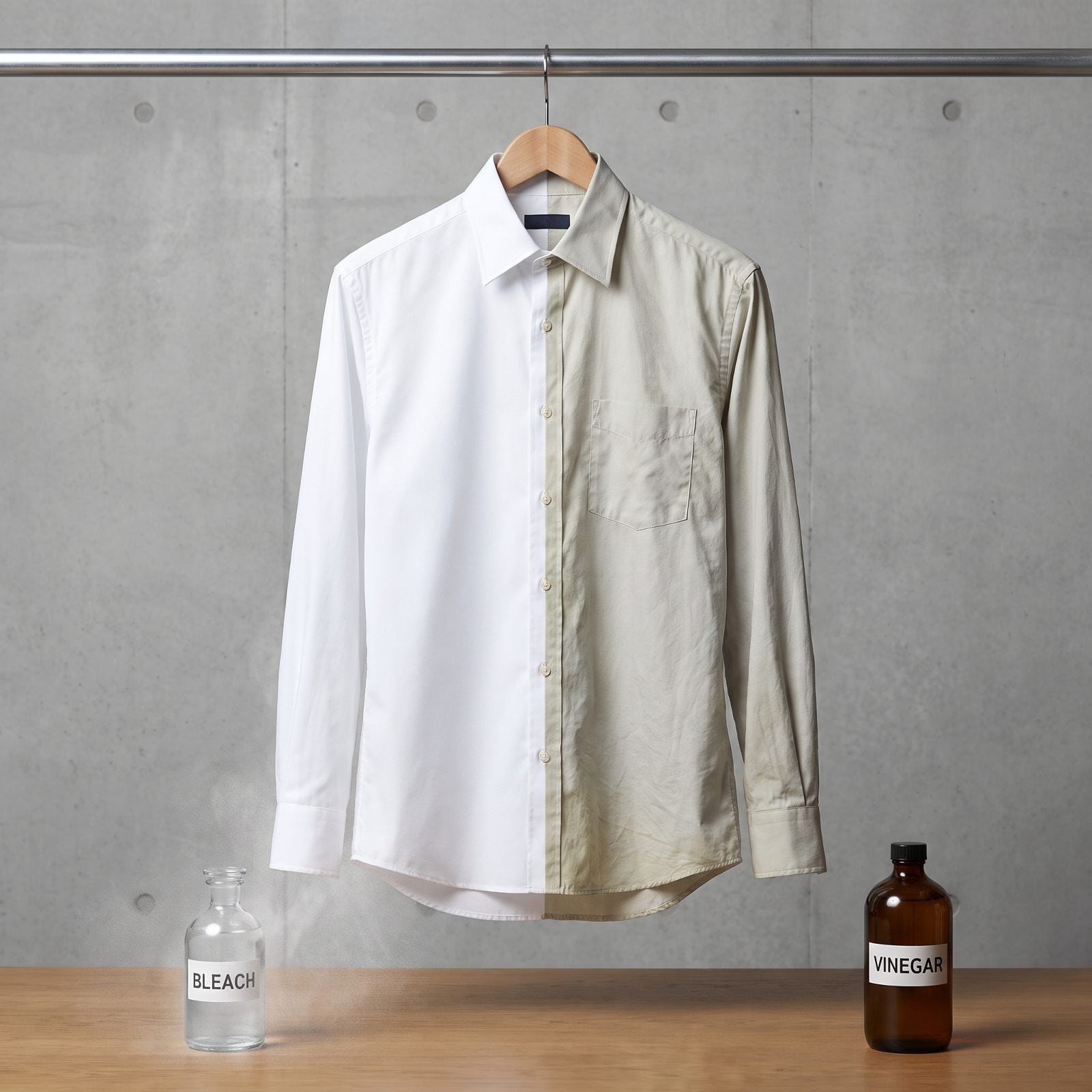
No. There’s no polite way to soften it. Vinegar can brighten slightly by removing dulling residue and mineral buildup, which makes whites look a touch cleaner. That’s the whole story.
Bleach and oxygen-based whiteners work through oxidation — actually breaking down the molecules behind stains and yellowing. Vinegar has no equivalent power. If your whites have gone grey, vinegar makes them marginally less dingy, not white again.
14. Myth: Vinegar Permanently Sets Dye in New Clothes
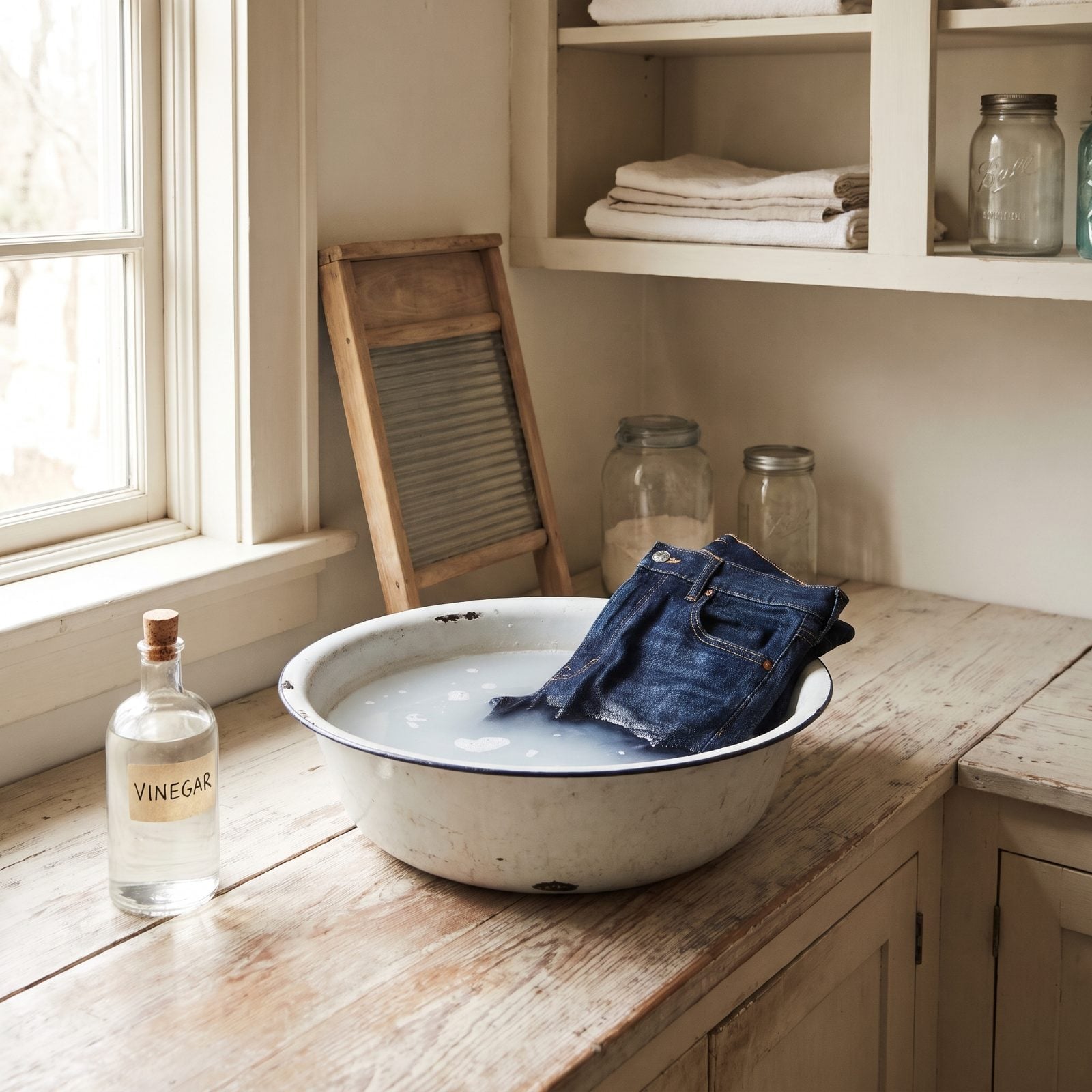
The old laundry wisdom says soak new jeans in vinegar and the dye stays put forever. A half-truth that got wildly oversold.
A vinegar soak genuinely helps with certain acid dyes used on wool and silk, and it can cut some initial bleeding. But modern cotton dyed with reactive or direct dyes is either already chemically bonded or it isn’t, and vinegar won’t shift that one way or another. Loose excess dye still washes out over the first few cycles regardless. So no magic fixative here. It’s a mild helper on a narrow set of fabrics, nothing more.
13. Myth: Vinegar Removes Every Type of Fabric Stain
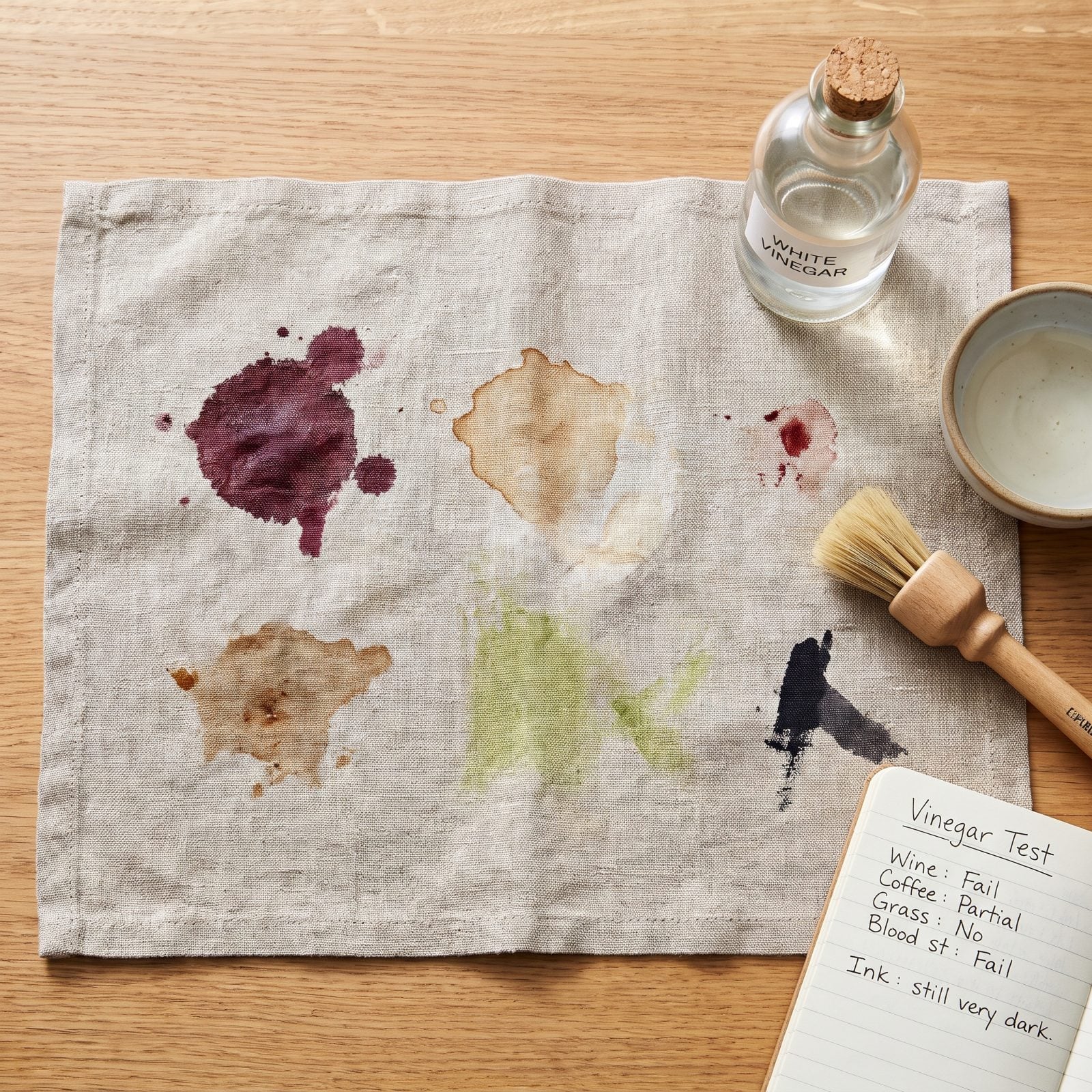
Vinegar earns its reputation on only a few messes. Some deodorant marks and water spots respond well because the acid helps break them down. Tannin-based stains are less reliable: coffee only partly lifts, and red wine can barely budge.
Then come the stains it barely touches. Set-in grease and oil, dried blood, protein stains, most inks: all of them shrug off vinegar entirely. Grease needs a surfactant. Blood and protein need enzyme cleaners or cold water, never heat. Keep vinegar as one tool in the stain kit, not the whole kit. Reaching for it on an oily salad-dressing splotch just smears the stain around.
12. Myth: A Vinegar Rinse Sanitizes Fresh Produce

A diluted vinegar soak can knock back some surface bacteria and lift a bit of residue from produce. It helps. It does not sanitize.
And here’s the part people skip: the vinegar step does little that a thorough rinse under running water and some gentle rubbing doesn’t already do, which is exactly why food-safety guidance leans on the plain-water scrub. Vinegar won’t reach bacteria hiding deep in leafy crevices or inside a melon rind you then slice straight through.
11. Myth: Vinegar Fully Disinfects Wooden Cutting Boards
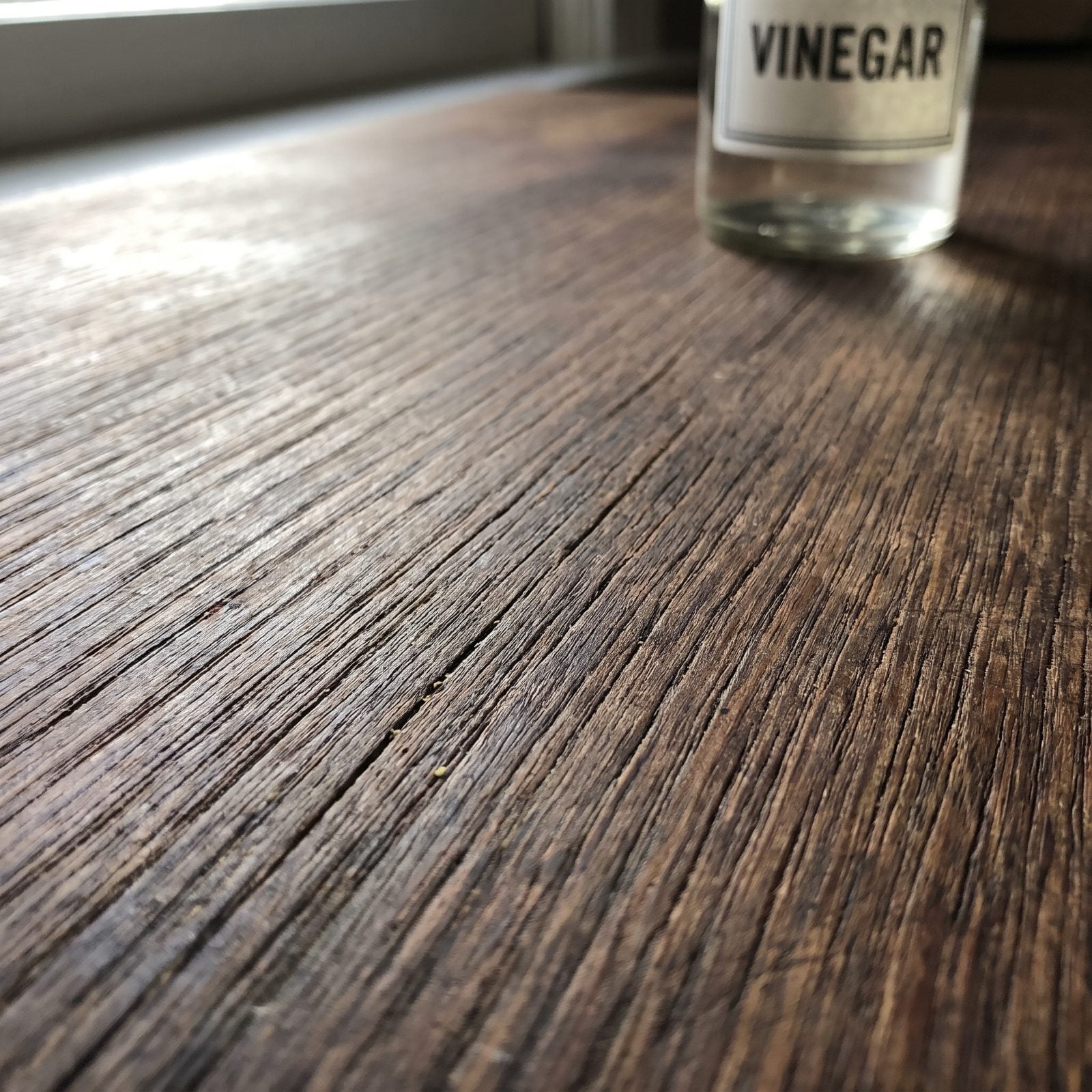
Vinegar cleans and deodorizes a wooden board, and the acid knocks back some surface bacteria. But wood is porous and riddled with knife grooves, and the real danger lives down in those cuts where a wipe can’t reach.
For raw-meat boards especially, vinegar alone isn’t enough reassurance. Wash with hot soapy water first. Then, for sanitizing, a diluted bleach solution or a proper food-safe sanitizer followed by thorough drying does the job vinegar can only pretend to. Dry wood is miserable territory for bacteria, so the drying matters every bit as much as the cleaning.
10. Myth: Vinegar Can Reverse Permanently Etched Cloudy Glassware
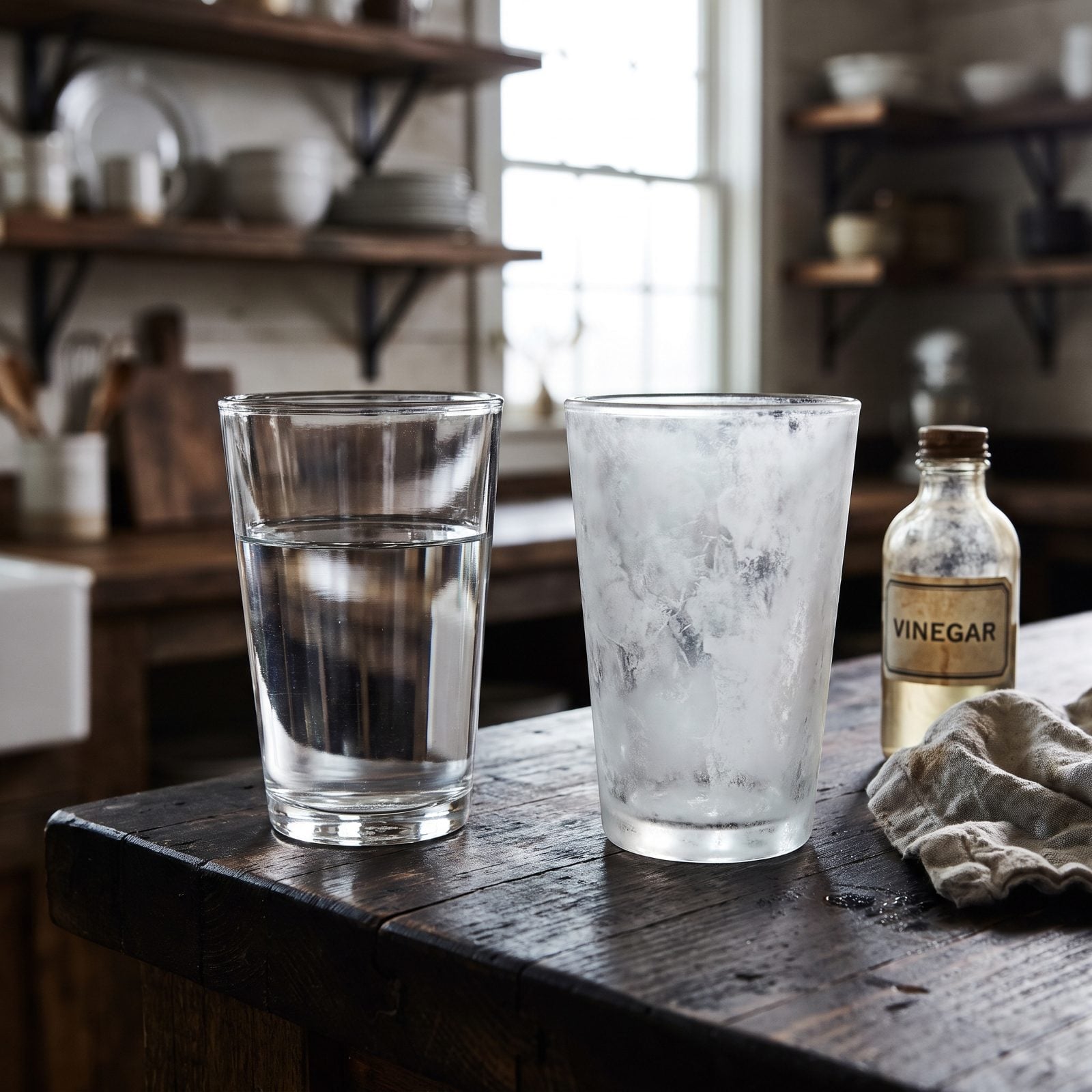
This is where vinegar’s reputation collapses. There are two kinds of cloudy glass, and they look identical until you test them.
Hard-water mineral film sits on the surface, and a vinegar soak dissolves it right off. Victory. Etching is a different beast — physical damage to the glass itself from dishwasher detergent and soft water over time, and no acid on earth brings it back. If a vinegar soak doesn’t clear the haze, it’s etched, and it’s permanent. You’re not cleaning it at that point. You’re just confirming the bad news.
9. Myth: Vinegar Dissolves Every Kind of Bathroom Soap Scum
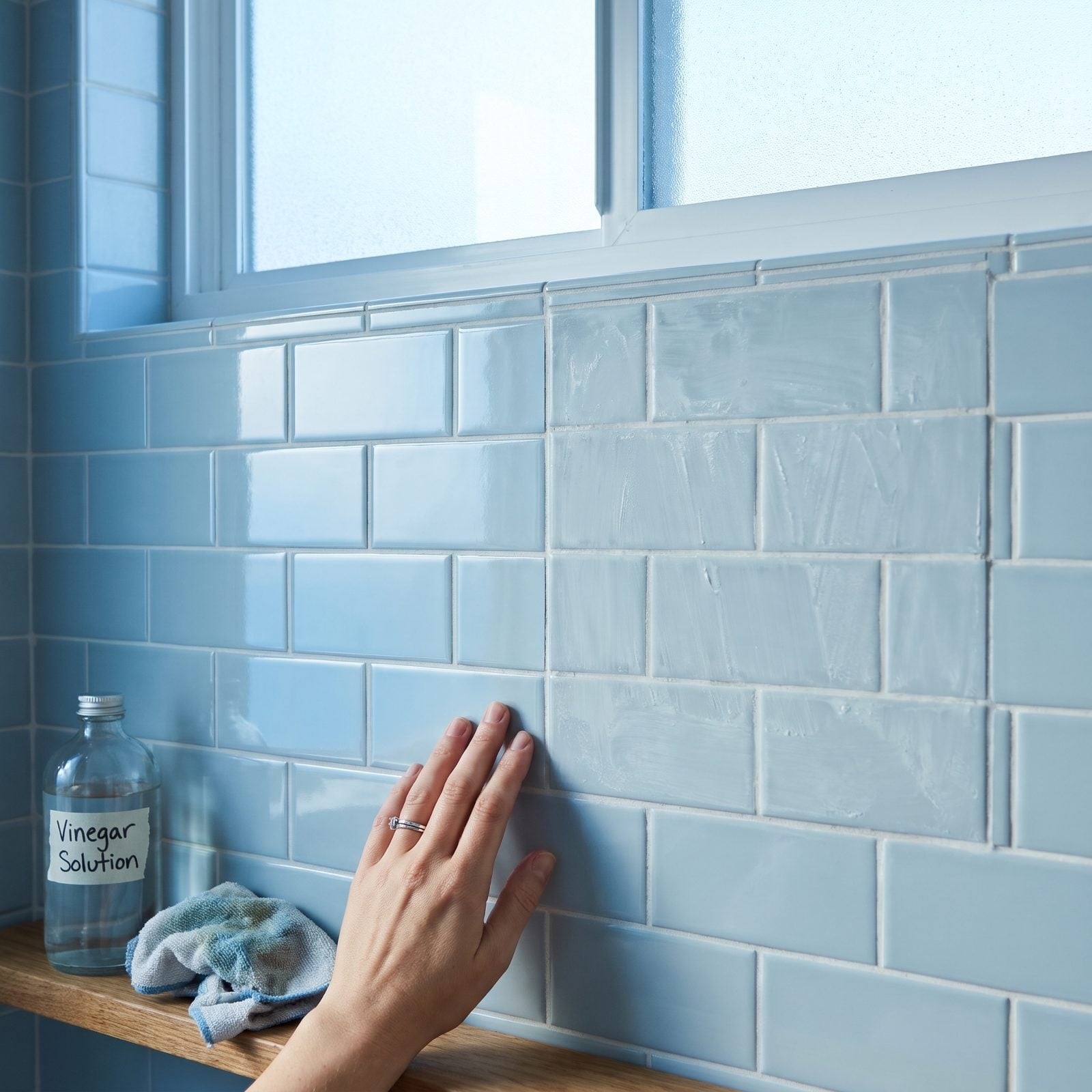
Nobody mentions this at the cleaning-hack level: there are two kinds of soap scum, and vinegar only beats one.
The soft, greasy film from liquid soap? Vinegar’s mild acid cuts it fine. But the hard, chalky crust that forms when old-fashioned bar soap meets hard water is calcium stearate, and it laughs at vinegar. You scrub, you wait, you scrub again. The white haze just sits there grinning at you.
That mix-up can eat a lot of Saturday mornings. The chalky stuff needs a dedicated scum remover or a non-abrasive paste. Vinegar isn’t useless — it’s just not universal, and the hack videos never tell you which scum you’ve got.
8. Myth: Vinegar Kills Every Type of Household Mold at Its Roots
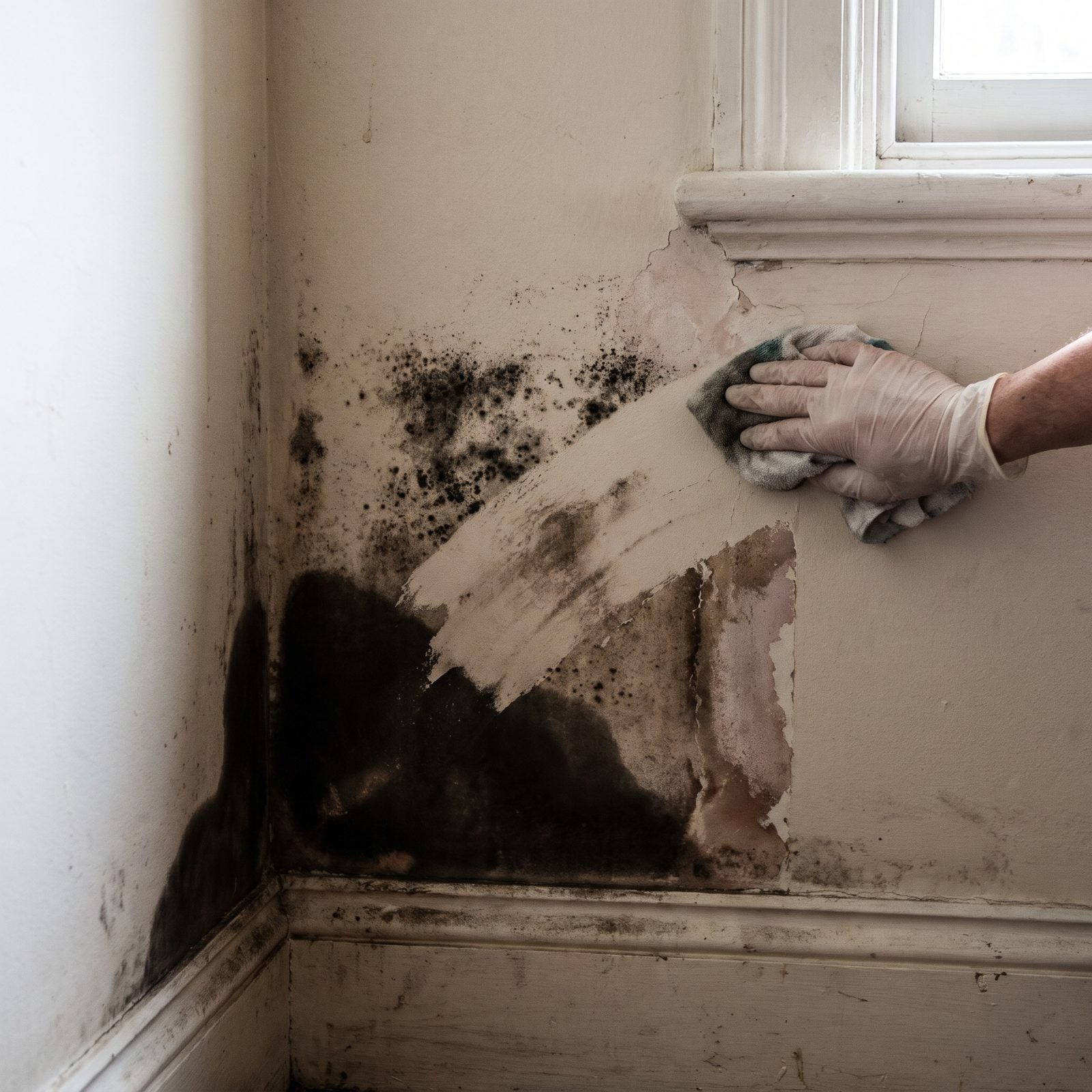
Vinegar does kill mold. The claim that goes too far is that little word, every.
On nonporous surfaces like glass or sealed tile, vinegar handles a solid range of common molds. But drywall, grout, old caulk, wood — on anything porous the mold sends threads down into the material where a surface spray never reaches. You clean the top, and two weeks later it’s back like you did nothing.
Some species shrug off acetic acid completely. A large patch, anything bigger than a few square feet, or anything hiding behind a wall is a remediation job, not a spray-bottle job. Please don’t talk yourself out of calling someone because a blog promised a cheap fix.
7. Myth: Every Showerhead Can Be Soaked in Vinegar Overnight
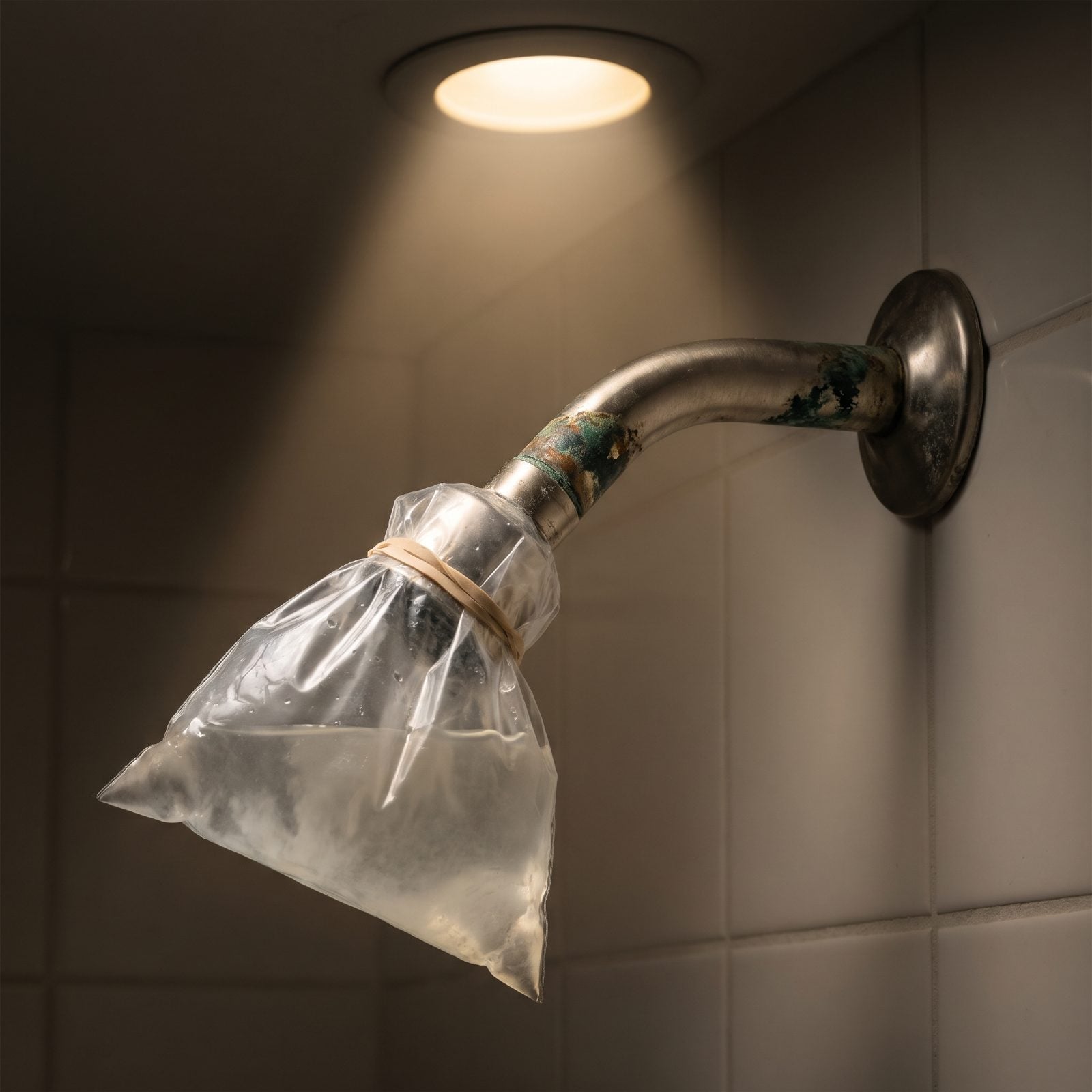
That bag-of-vinegar trick works beautifully, right up until it eats your finish.
Plain chrome handles a vinegar soak without complaint. The ones that can’t take it: brass, nickel, bronze, gold-tone, and various coated or plated finishes. Leave those sitting in acid overnight and you can permanently etch, dull, or discolor them. Rubber gaskets and some plastic bits don’t enjoy long acid baths either.
Check your manufacturer’s guidance first. When in doubt, cap the soak at 30 minutes instead of eight hours, then rinse well. A clogged showerhead is annoying. A ruined one is a trip to the store.
6. Myth: Vinegar and Newspaper Guarantee Streak-Free Windows
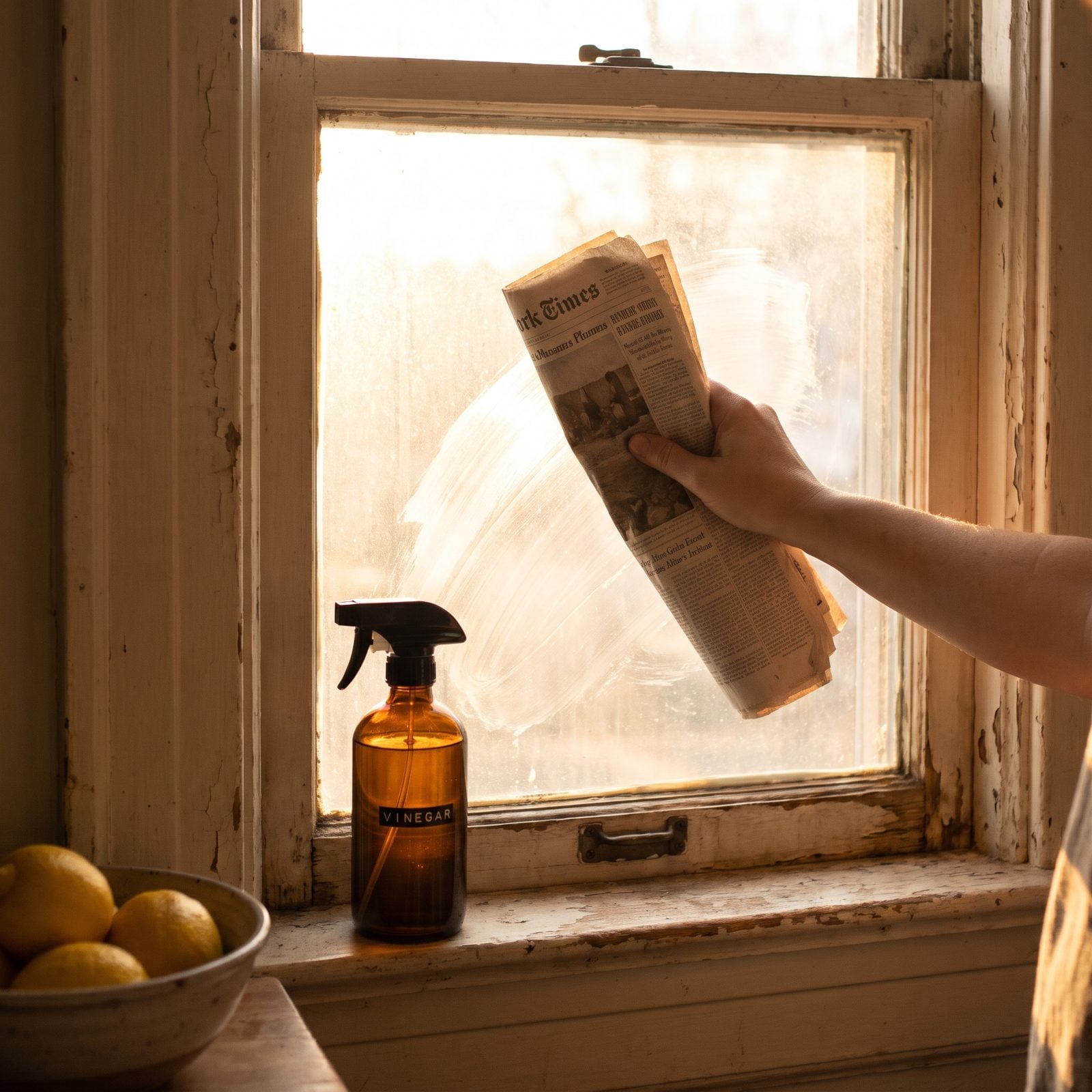
The vinegar-and-newspaper combo has a cult following, and it genuinely can give you clear glass. Guarantee is the wrong word.
Two things trip people up. If your windows have ever met a waxy commercial spray, vinegar reacts with that leftover residue and streaks until you’ve stripped the buildup over several passes. And modern newspaper ink and paper stock aren’t what they were decades ago, so the old lint-free magic is a lot less reliable now.
A clean microfiber cloth and a squeegee beat newspaper most days. One more thing — never clean windows in direct sun. The solution dries before you can wipe it, and the streaks get baked right in.
5. Myth: Baking Soda and Vinegar Can Clear Any Clogged Drain
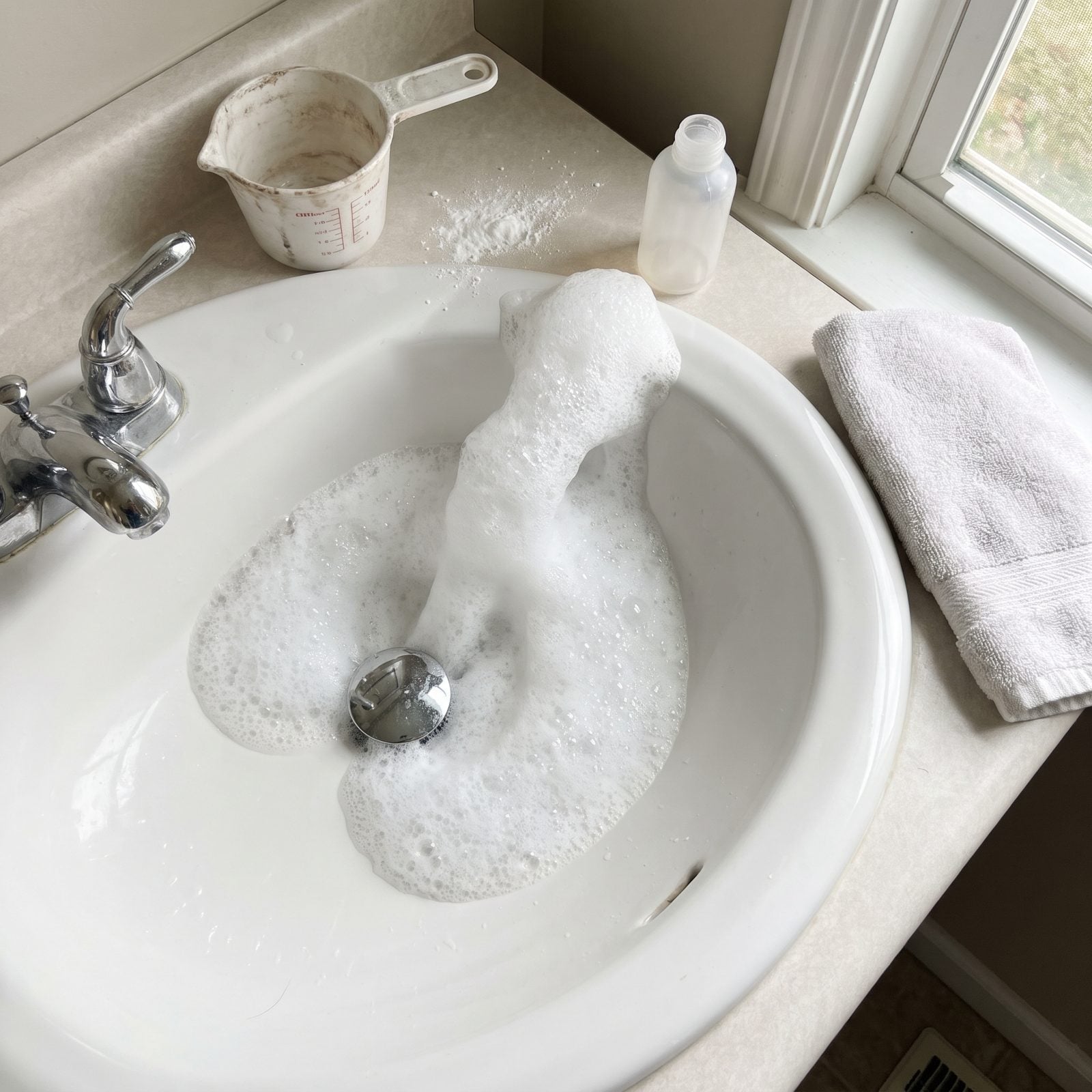
Pour the baking soda down the drain, chase it with vinegar, watch the foam erupt. Satisfying. Mostly theater.
That foaming reaction produces carbon dioxide and a mountain of bubbles that can surge out of the basin, over the counter and onto the floor. It’ll loosen light gunk and freshen a smelly drain. What it will never do is punch through a real clog — a hair mat, a grease plug, anything wedged deep in the trap.
Actual blockages want a plunger, a drain snake, or a proper mechanical fix. The chemistry is real enough. The cleaning power is tiny, and all that dramatic foam tells you nothing about how much actually cleared.
4. Myth: Vinegar Permanently Neutralizes Pet-Urine Odors
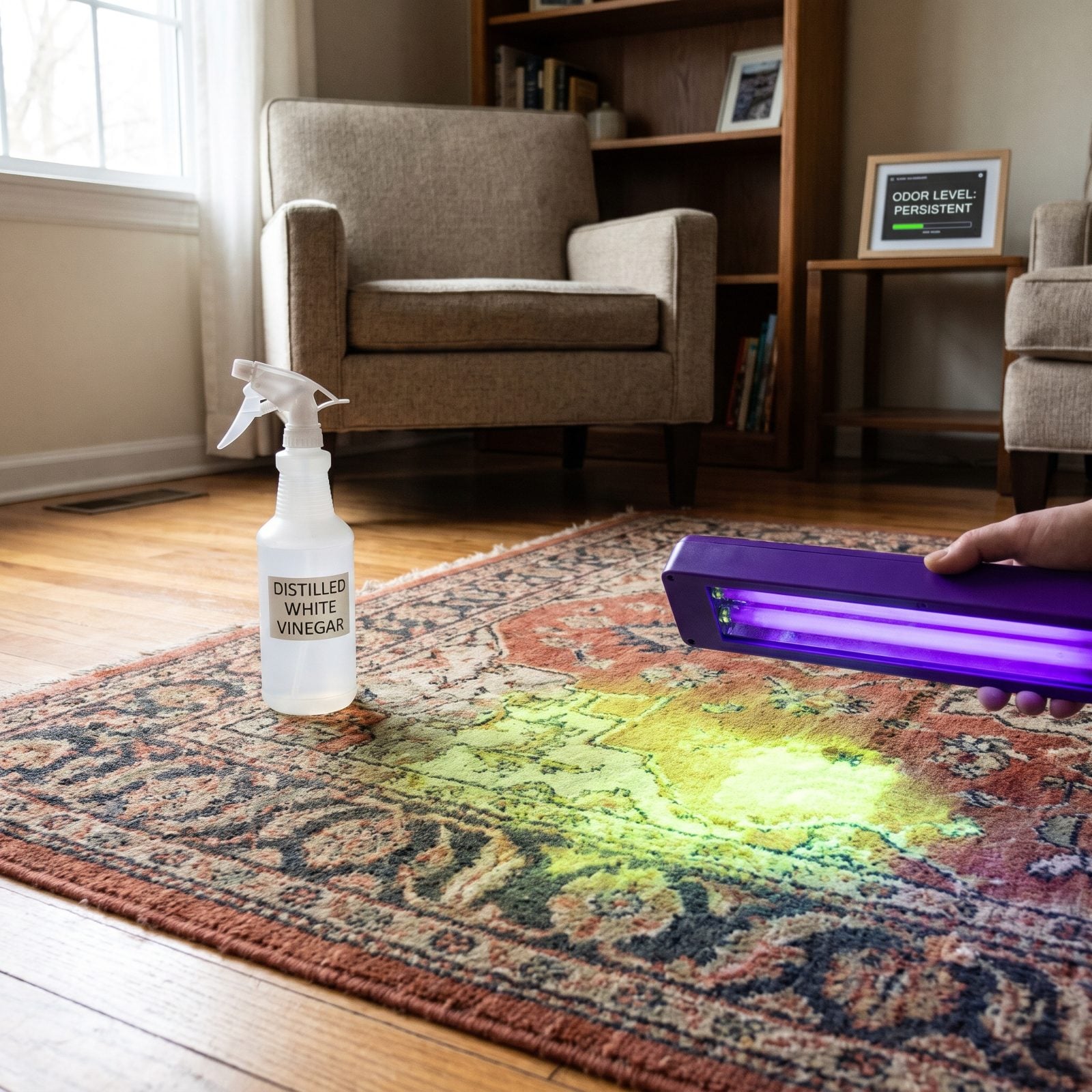
Vinegar masks and partly neutralizes fresh urine odor on the surface. The trouble is everything you can’t see underneath.
Dried pet urine carries uric acid crystals that bond hard to carpet fibers and padding. Vinegar knocks out the ammonia smell for a while, but it leaves those crystals intact, so the stink comes roaring back on the next humid day or the moment that spot gets damp again. And your dog smells the old marker loud and clear, so back to the same corner it goes.
Enzyme cleaners are the tool that actually digests the crystals. Skip them and you can end up re-cleaning one corner for a month. Use vinegar first if you like, but enzymes finish the job.
3. Myth: Vinegar Permanently Eliminates an Ant Colony
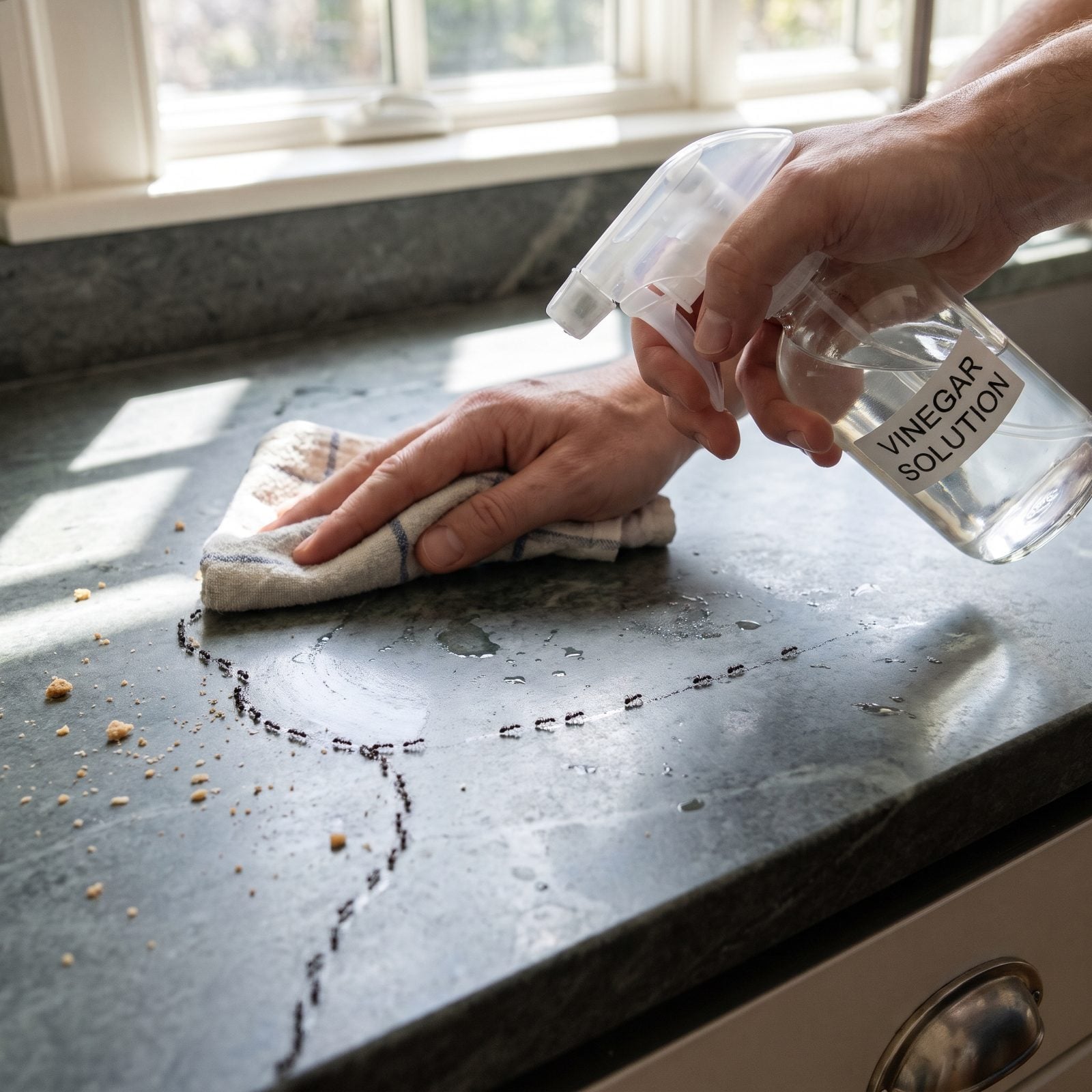
Vinegar wipes out the ant trail. It does nothing to the colony.
Ants navigate by scent trails they lay down to food, and spraying vinegar erases that chemical path. The marching line vanishes, and it looks like victory. But the nest, the queen, and thousands of workers sit untouched. Give them a few days and they scout a fresh route, and you’re right back where you started.
Want the colony gone? You need slow-acting bait the workers haul home to feed the queen. Vinegar is a decent trail-wiper and a short-term deterrent, nothing more. It is not pest control, however spotless the counter looks afterward.
2. Myth: Vinegar Is a Harmless Weed Killer That Never Affects Soil
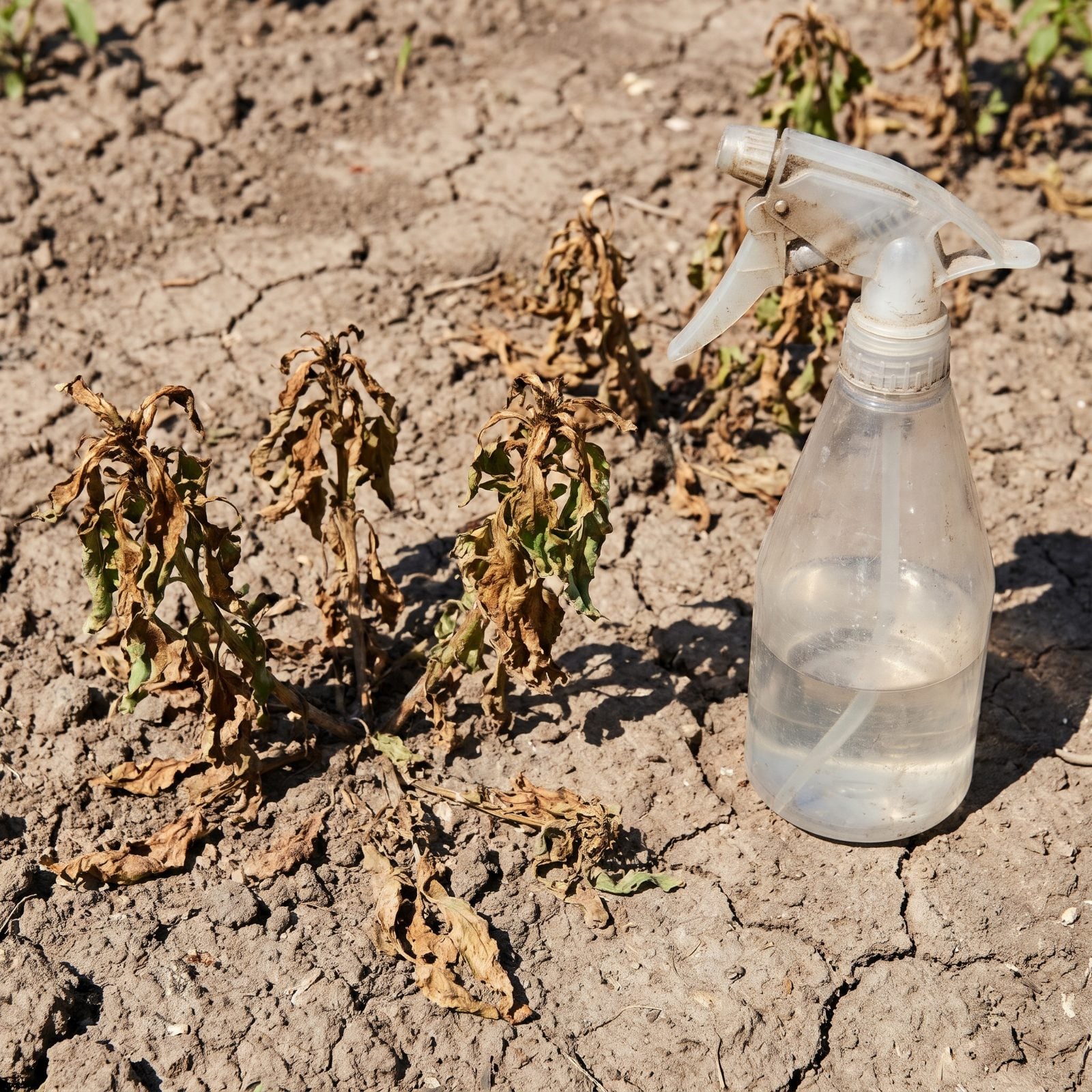
Household vinegar scorches the tops of young weeds on a hot day, which is how it earned its reputation as a gentle natural herbicide. Two corrections.
It’s a contact killer. It burns the leaves but rarely reaches the roots, so perennials and established weeds bounce right back. Small seedlings in full sun are where it actually shines.
And harmless to soil? Overstated. Acetic acid drops soil pH where it pools, and the stronger horticultural vinegars sold as weed killers — often 20% acid or more — can harm soil life, nearby plants, and your skin and eyes. That’s a whole different beast from the jug in your pantry, and it earns gloves and goggles.
1. Myth: Baking Soda and Vinegar Create a Super-Cleaner
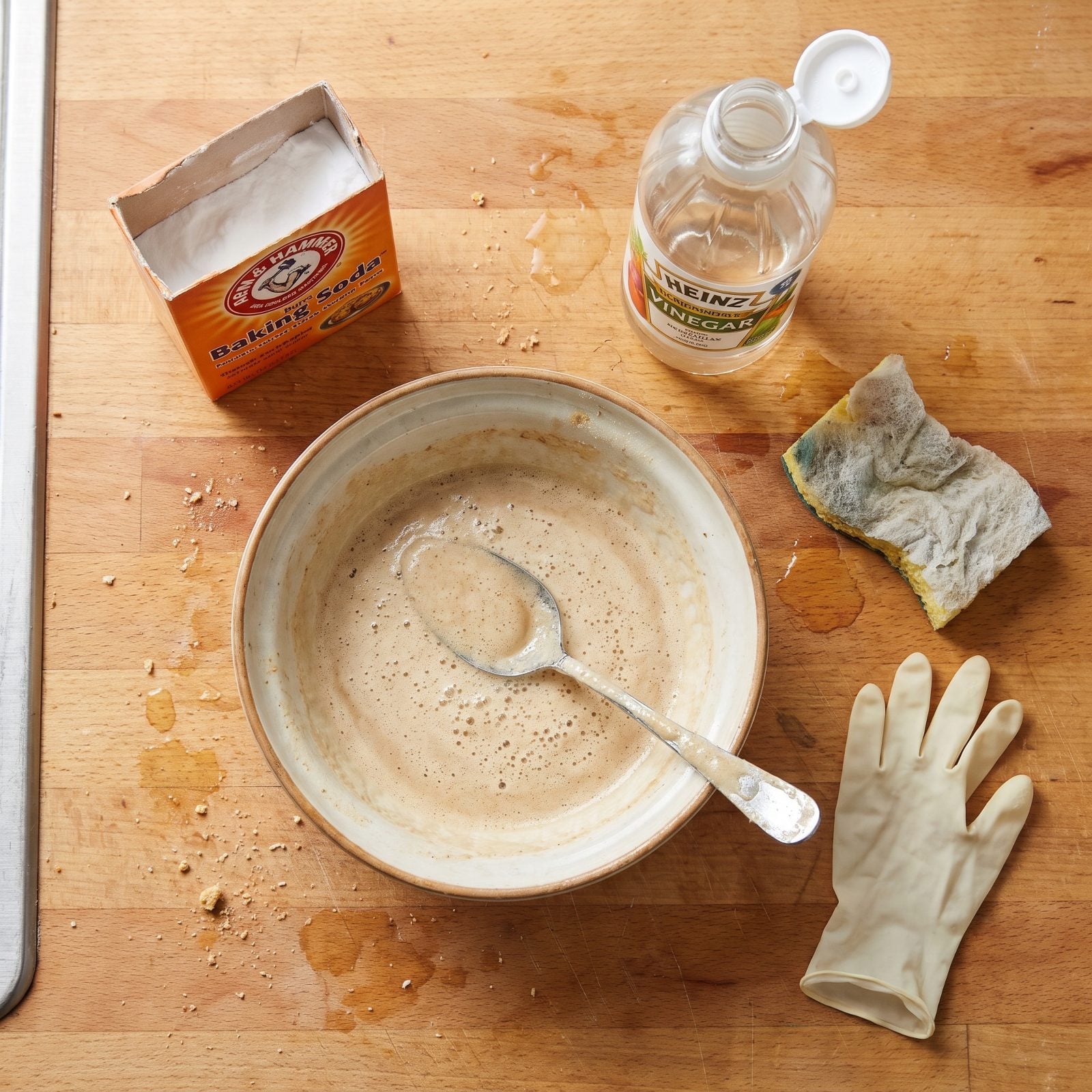
Mix baking soda and vinegar and you feel like a chemist. What you’ve actually done is cancel both out.
An acid plus a base neutralizes. Once the fizz dies, you’re left with mostly salty water and a trace of sodium acetate — weaker than either ingredient was on its own. The dramatic foam is just carbon dioxide escaping, not cleaning power building.
The fizz is the sound of two good cleaners destroying each other.
Separately, they’re great. Baking soda is a mild abrasive and deodorizer. Vinegar tackles mineral deposits and light grease. Combine them and you get a fun reaction and a mediocre cleaner. I’ll die on this hill.