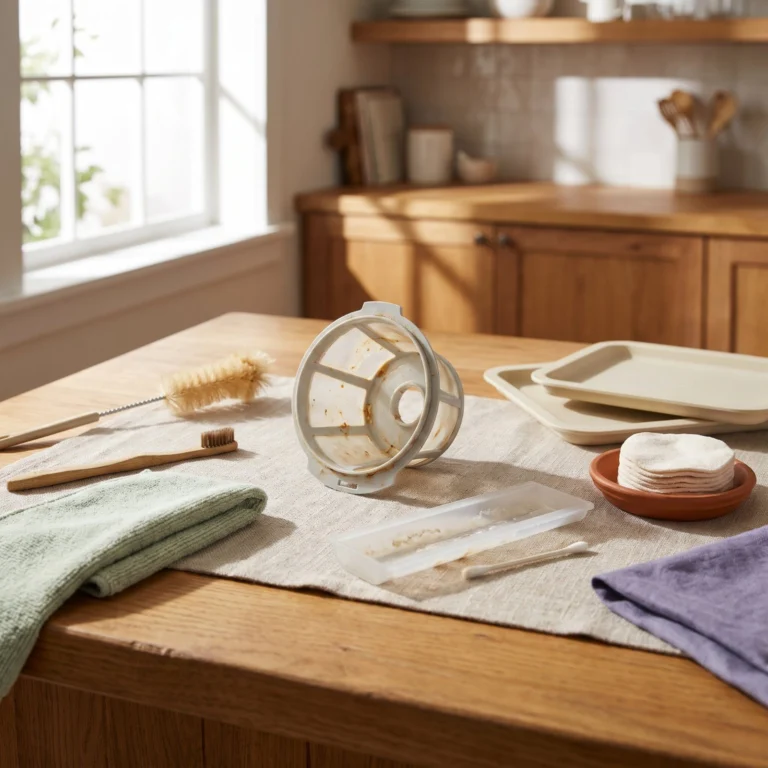
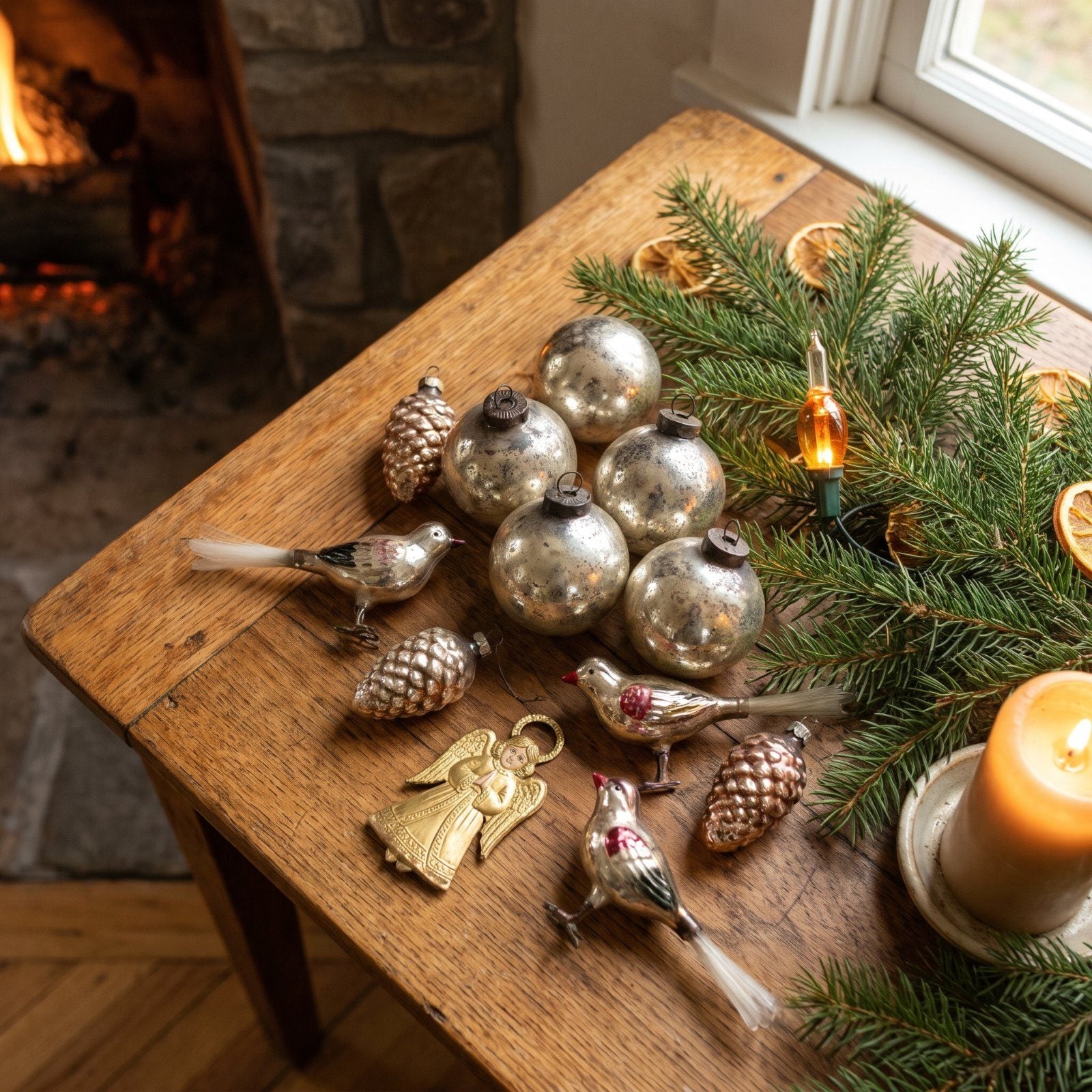
Somewhere in an attic, wrapped in a stiff sheet of 1950s newspaper, sits a glass ball worth more than the tree it once hung on. Most people throw these out. They see faded paint, a missing cap, a Santa with a nose rubbed soft from decades of handling, and they call it junk. Collectors see the opposite. The patina, the paper caps, the maker’s hairline mold seams are exactly the tells that separate a $4 yard-sale box from a real find. What follows is a look at the pieces people chase hardest, what makes each one valuable, and the details that get missed.
Please note that some of the images in this article were created with the assistance of AI.
49. Antique German Kugel Ornaments With Thick Silvered Glass
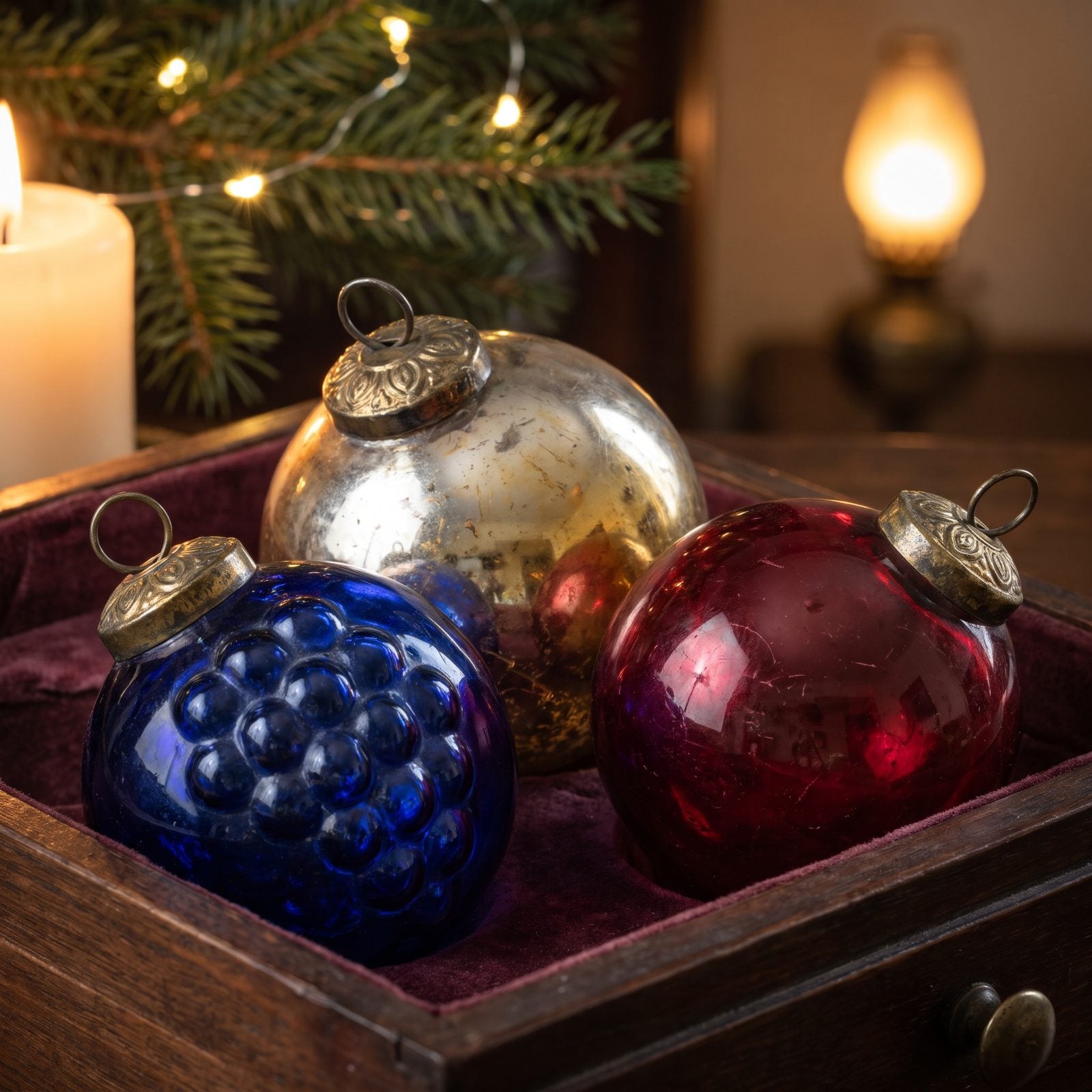
Pick one up and your first reaction is the weight. Kugels are heavy, far heavier than any modern ornament, because the glass is thick and the silvering was poured in to last. Germans made them from roughly the 1840s through the early 1900s, and the brass cap is where the money hides. Those original ornate embossed caps can matter more to value than the glass itself.
Grape clusters and heavy ribbed balls in cobalt, amethyst, and silver fetch the most. Watch for reproductions with lightweight caps and glass that feels like a soda bottle instead of a brick.
48. Shiny Brite Wartime Ornaments With Cardboard Paper Caps
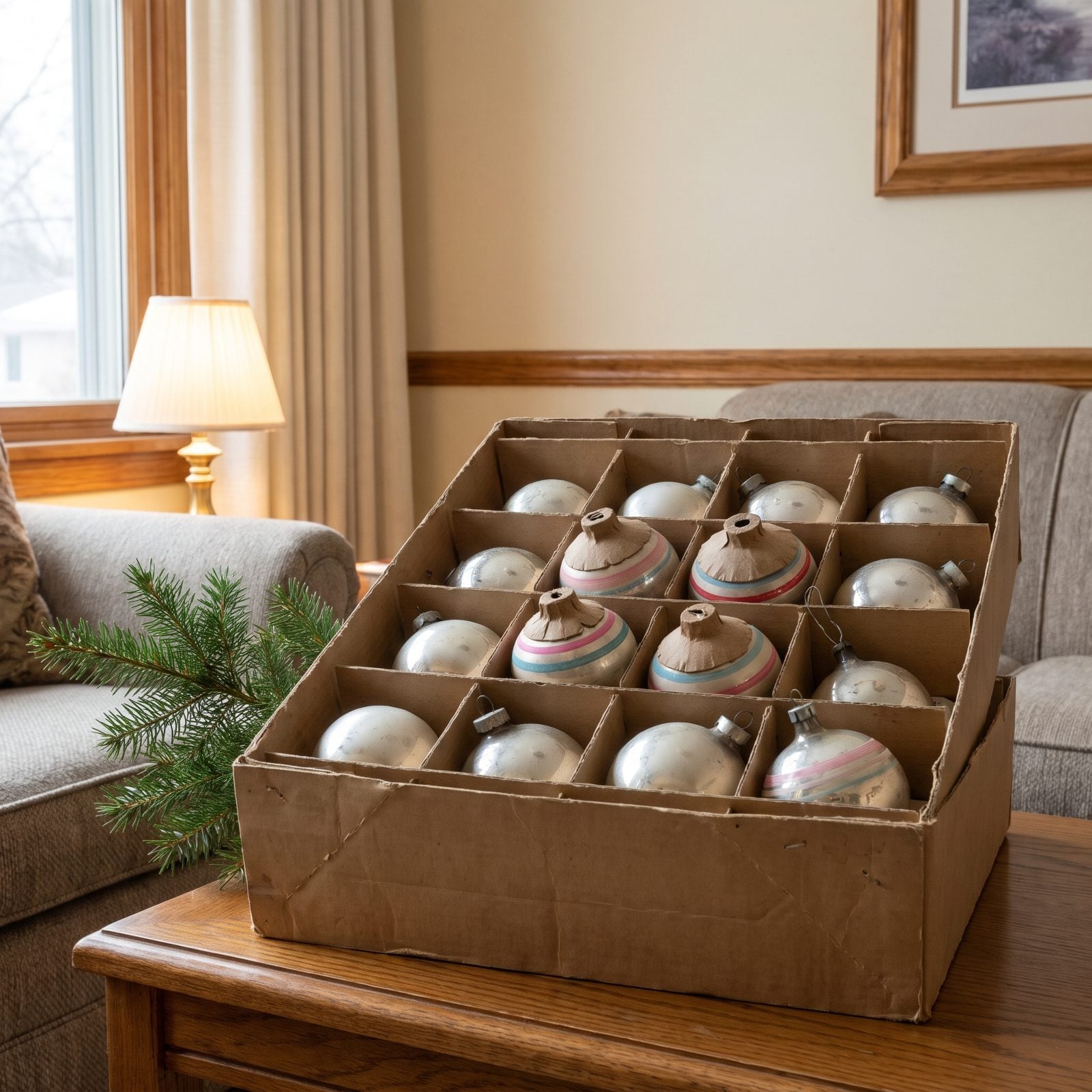
Metal went to the war effort, so the caps went to paper. That single shortage is why the most sought-after Shiny Brites have cardboard caps and simple yarn or string loops instead of the usual metal tops. Collectors prize the 1942 to 1945 pieces precisely because they look humble.
Wartime Shiny Brites also skip the silvering inside. No metal there either. So the paint reads softer, more pastel, less mirror-bright than the postwar ones. Find an original box with the lithographed label still intact and the paper caps all present, and you’ve got a genuinely scarce thing on your hands. People toss the box. Don’t.
47. Lauscha Figural Glass Ornaments Blown From Antique Molds
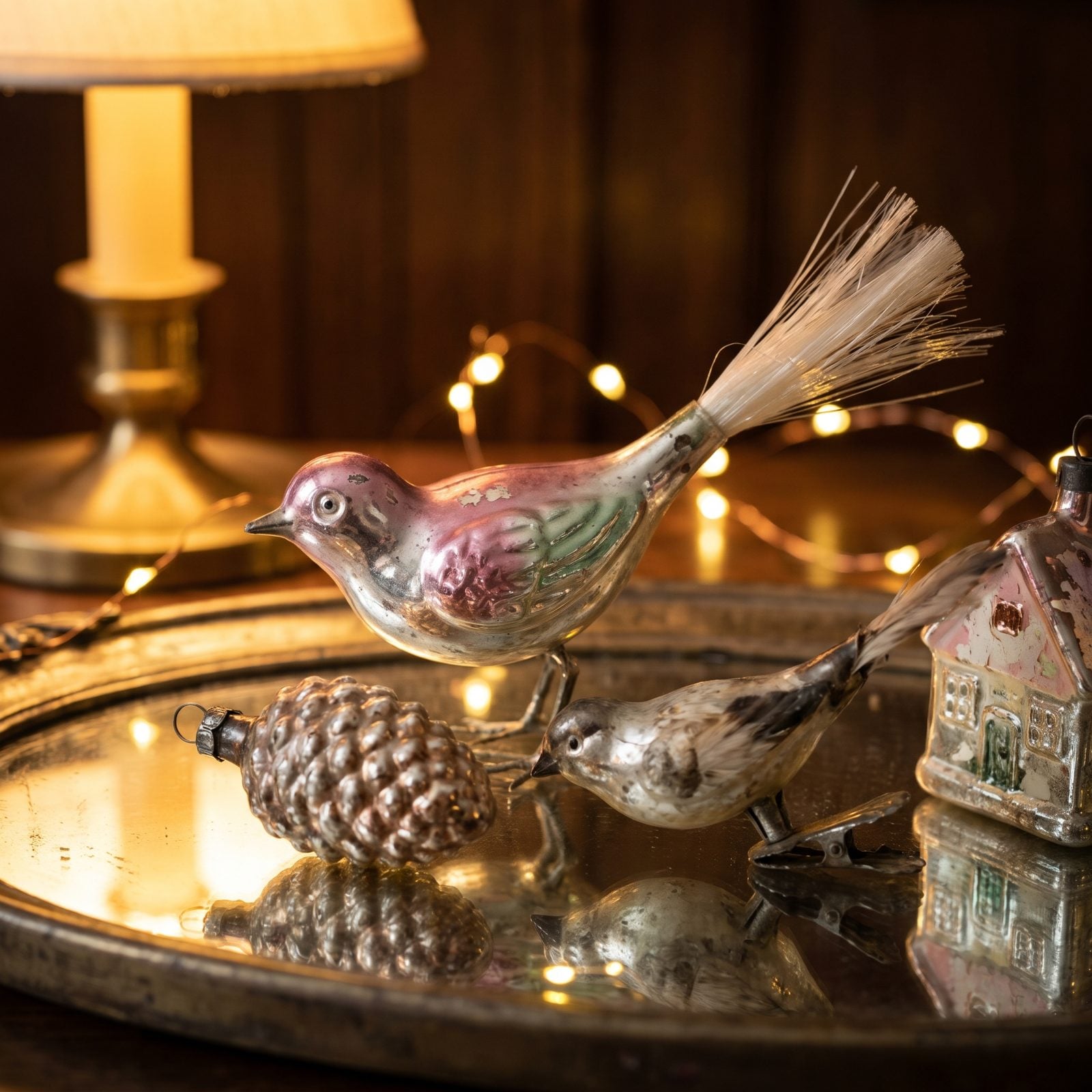
Lauscha is the German village where glass ornament-making was basically invented, and the figural pieces are where things get interesting — the ones shaped like birds, fruit, houses, and faces. Each was hand-blown into a carved mold, one at a time, then silvered and painted by hand. No two come out quite identical.
Clip-on birds with spun-glass tails are a favorite, and that fragile fiber tail surviving a century is half the thrill. Condition drives everything. A chip at the neck or heavy paint loss cuts the value hard, but honest, even fading reads as age, not damage. Learn the difference before you buy.
46. Embossed Dresden Cardboard Ornaments In Gold And Silver
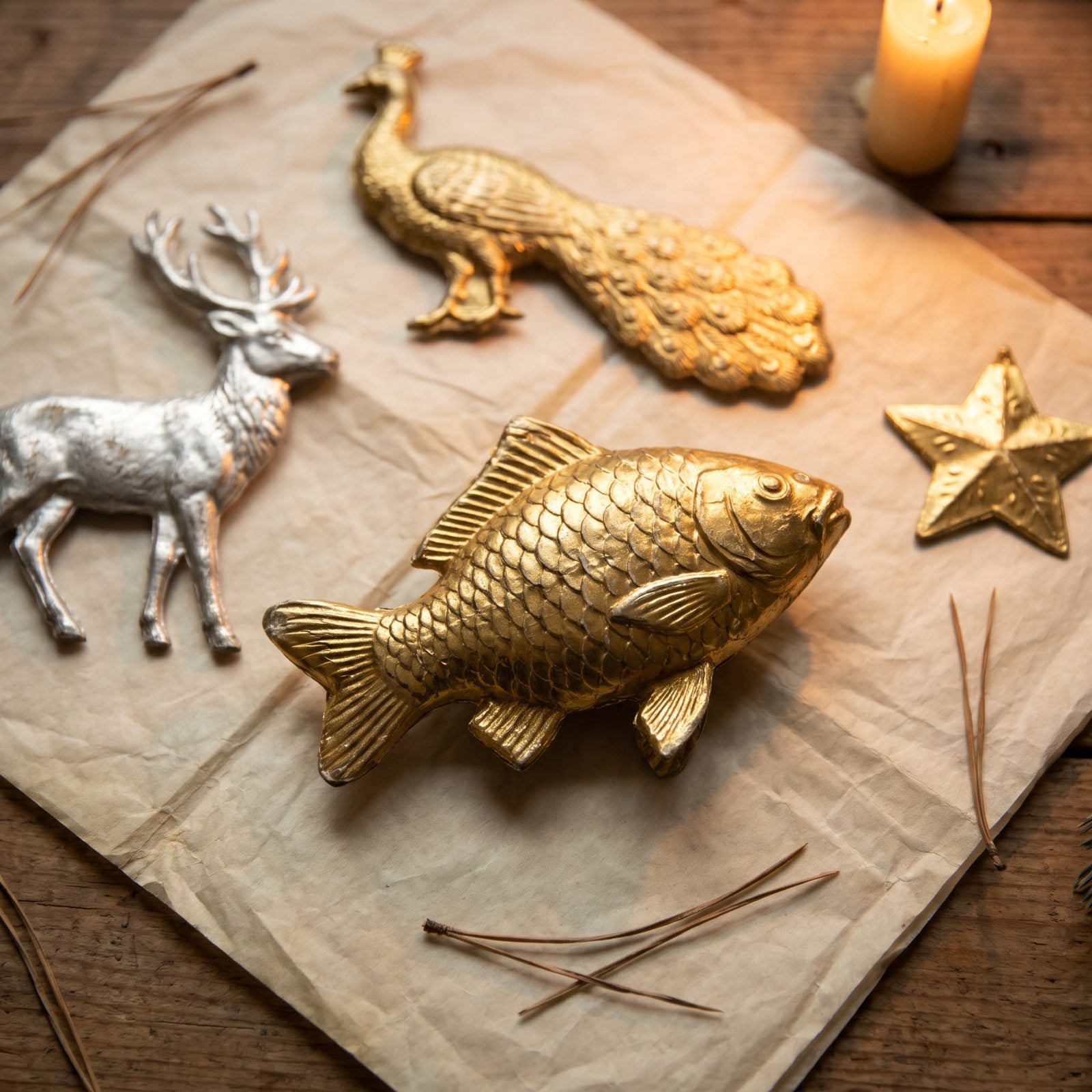
These are the overlooked ones. Made in Dresden and Leipzig between roughly 1880 and 1910, they’re pressed cardboard, die-stamped into animals and ships and sunbursts, then coated in gold or silver foil. The three-dimensional kind — assembled from two embossed halves into a fish or a stag you can see all the way around — brings far more than the flat varieties.
They’re paper, so they warp and tear easily. Most didn’t survive. That’s exactly why the survivors matter.
45. Noma Bubble-Light Sets That Still Boil After 70 Years
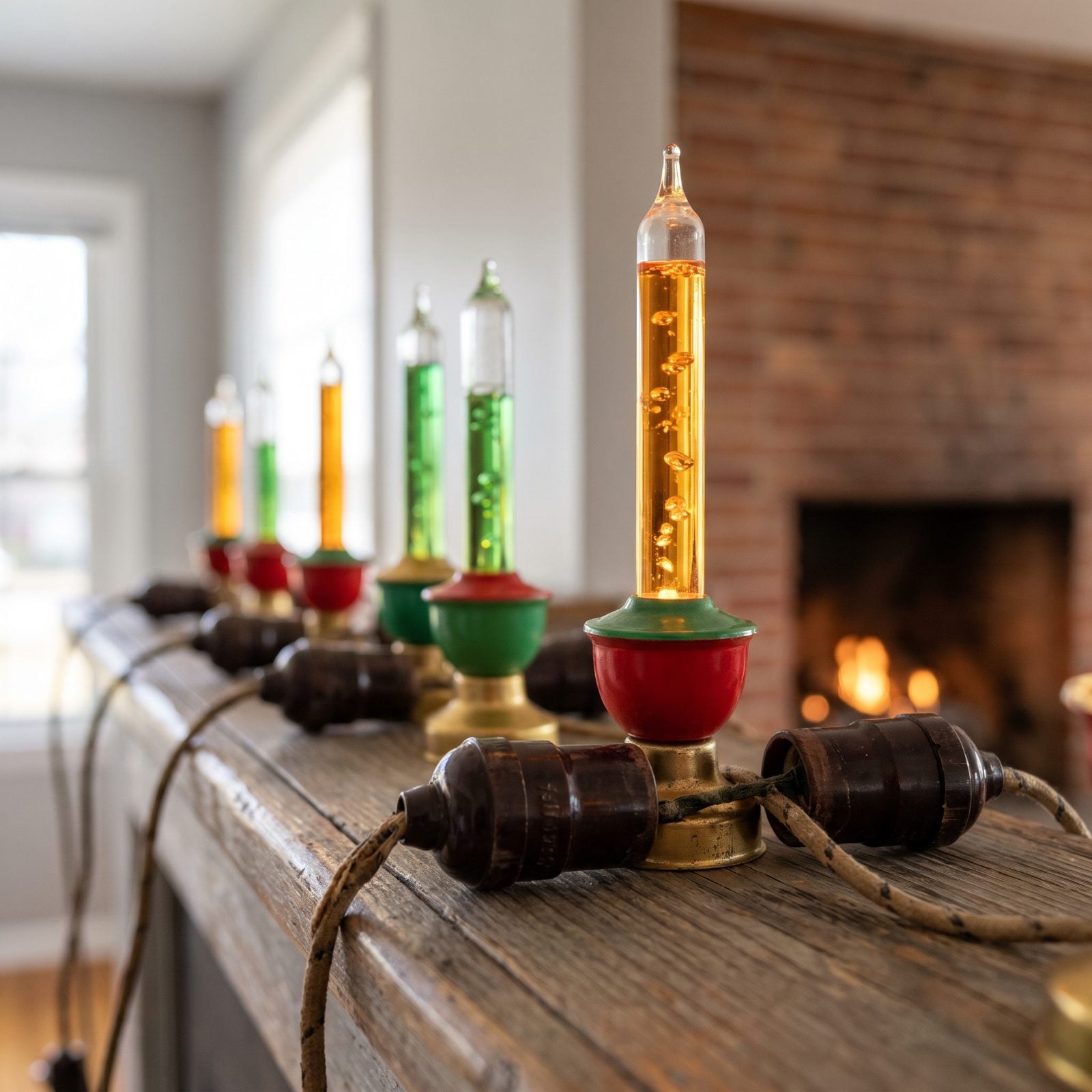
There’s a specific joy to a bubble light. The tube warms, the liquid inside — methylene chloride — starts to boil at a low temperature, and bubbles climb in a lazy stream. Noma popularized them in 1946, and working vintage sets get collected, not just hung for decoration.
The catch is that condition means it actually bubbles. A set that lights but won’t boil is worth far less. Original boxes, the old C6 or heavier bases, and intact cloth-covered wire all add value. Heads up on the wiring though.
44. General Electric Mazda Figural Christmas Bulbs Shaped Like Santa
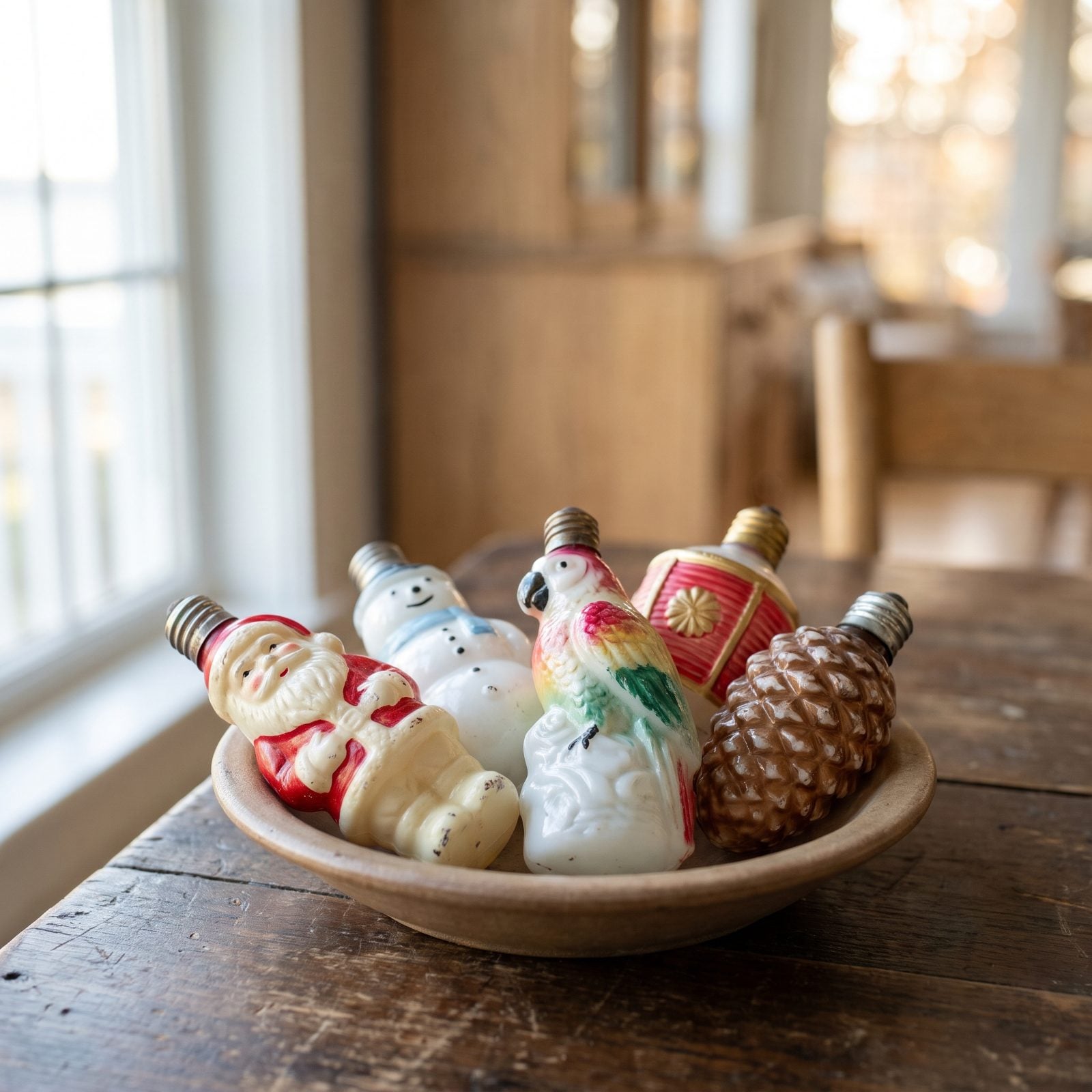
Before strings of plain colored lights, there were figural bulbs: little molded milk-glass Santas, snowmen, parrots, fruit, and Japanese lanterns that screwed into the socket and lit up from within. Many sold under the Mazda name, the brand General Electric used for its incandescent lamps in the early twentieth century.
Hand-painted detail is everything. A Santa with crisp face paint and bright, unfaded colors beats a worn one many times over, and the odd or comic character bulbs draw the most attention of all. The paint was fragile and sat right against the heat, so finding one that kept its face is the whole game.
43. Antique German Feather Christmas Trees With Red Berry Tips
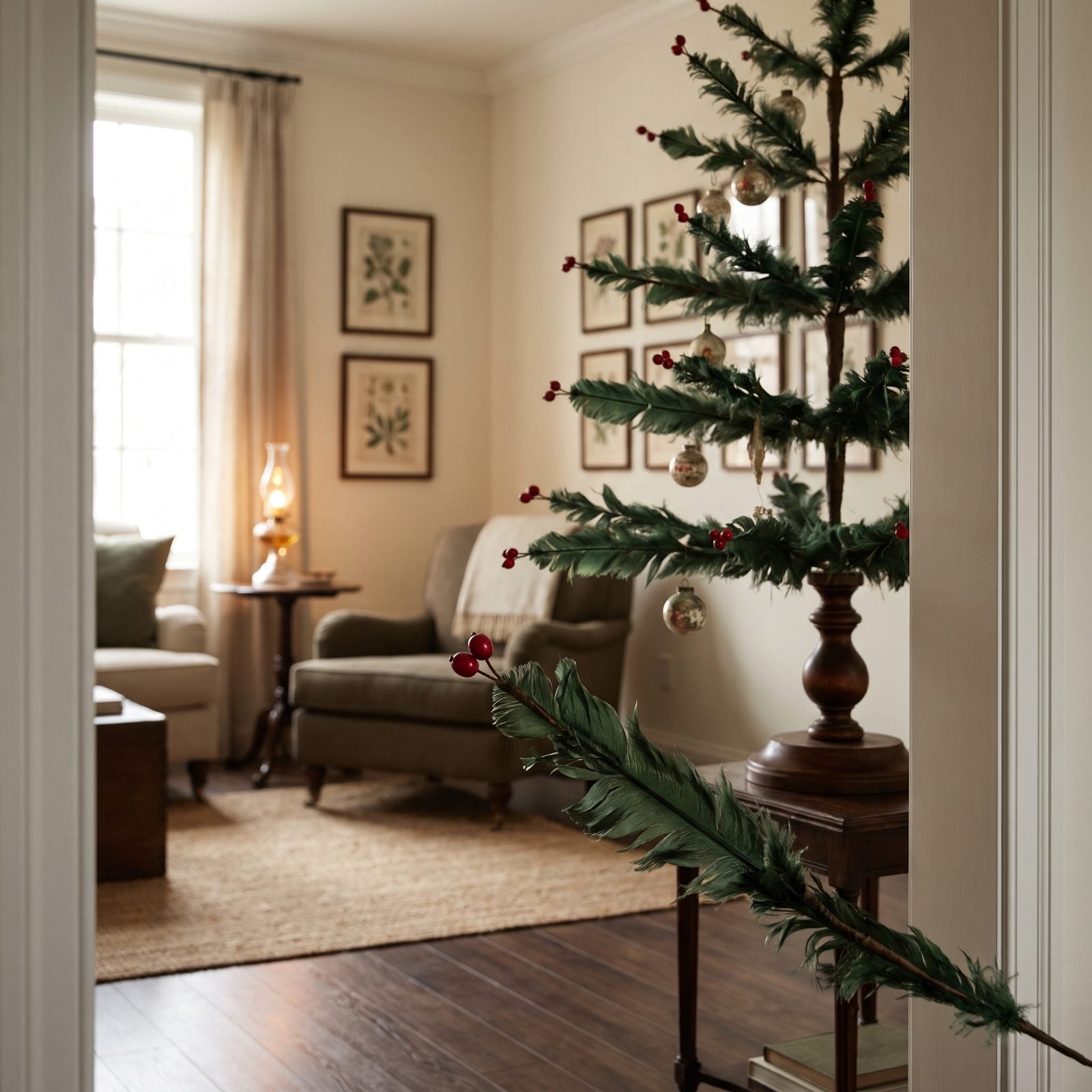
Germany had a deforestation problem, and the feather tree was the answer. Starting in the 1880s, makers wired dyed goose feathers to branch arms to mimic a sparse fir, partly to save real trees. The look is spindly and wide-spaced, and that was deliberate. The gaps let heavy glass ornaments hang without crowding.
Collectors look for the little red berry tips on the branch ends, a turned wooden base, and original green that hasn’t gone dull. Larger trees, four feet and up, are scarce and pricey. Watch for later reproductions with nylon instead of real feather.
42. Atlantic Mold Ceramic Christmas Trees With Plastic Light Pegs
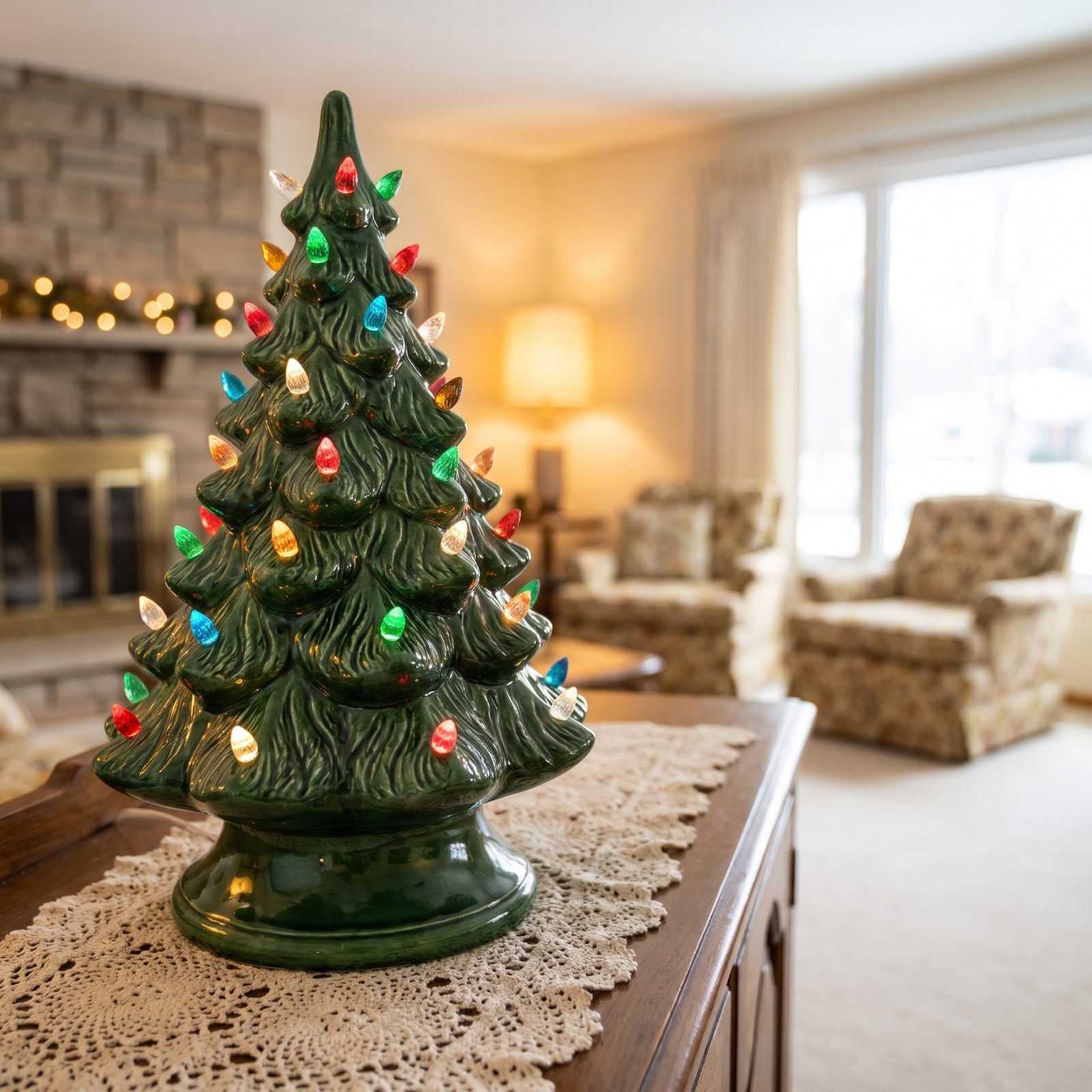
Everybody’s grandmother seemed to have one — the green glazed ceramic tree lit from inside, its branches studded with tiny colored plastic pegs. Many were cast from Atlantic Mold molds and hand-finished at ceramics classes, which means every one is a little different.
What collectors want: all the original plastic bird and star pegs present, the matching base, and an intact bulb socket. Missing pegs are the usual flaw, and tracking down exact replacements is a pain. Unusual glaze colors — white, pink, or a blue flocked finish — pull more than the standard green. These are rising in value fast as the generation that made them hands things along.
41. Empire Santa Blow Molds That Glow On The Front Porch

Blow molds are the oversized hollow plastic figures that light from inside, and the mid-century ones from Empire and Union Products are having a real moment. A Santa, a snowman, a whole choir of carolers out on the lawn, lit up and glowing against the dark.
Value lives in size and condition. Big figures, strong unfaded color, and the original light socket inside matter most. Sun fading is the killer. Decades outdoors bleach red to salmon and dull the paint.
The ones that lived in a basement most of the year, used only at Christmas, are the ones that held their color.
40. Rushton Rubber-Face Santas With Soft Flocked Suits

The Rushton Company of Atlanta made plush Christmas figures with soft molded rubber faces from the 1950s into the 1970s, and those faces are what collectors chase. A hand-painted expression, rosy cheeks, a plush flocked suit. There’s a warmth to them that mass-produced plastic never managed to copy.
Condition is tricky because rubber ages badly. It cracks, hardens, and the paint rubs off the high points of the face. A Santa with a clean, uncracked face and a bright suit is scarce and climbs in price. And the less common characters — elves, reindeer, anything beyond Santa — bring the most attention whenever they surface.
39. Harold Gale Department-Store Santas
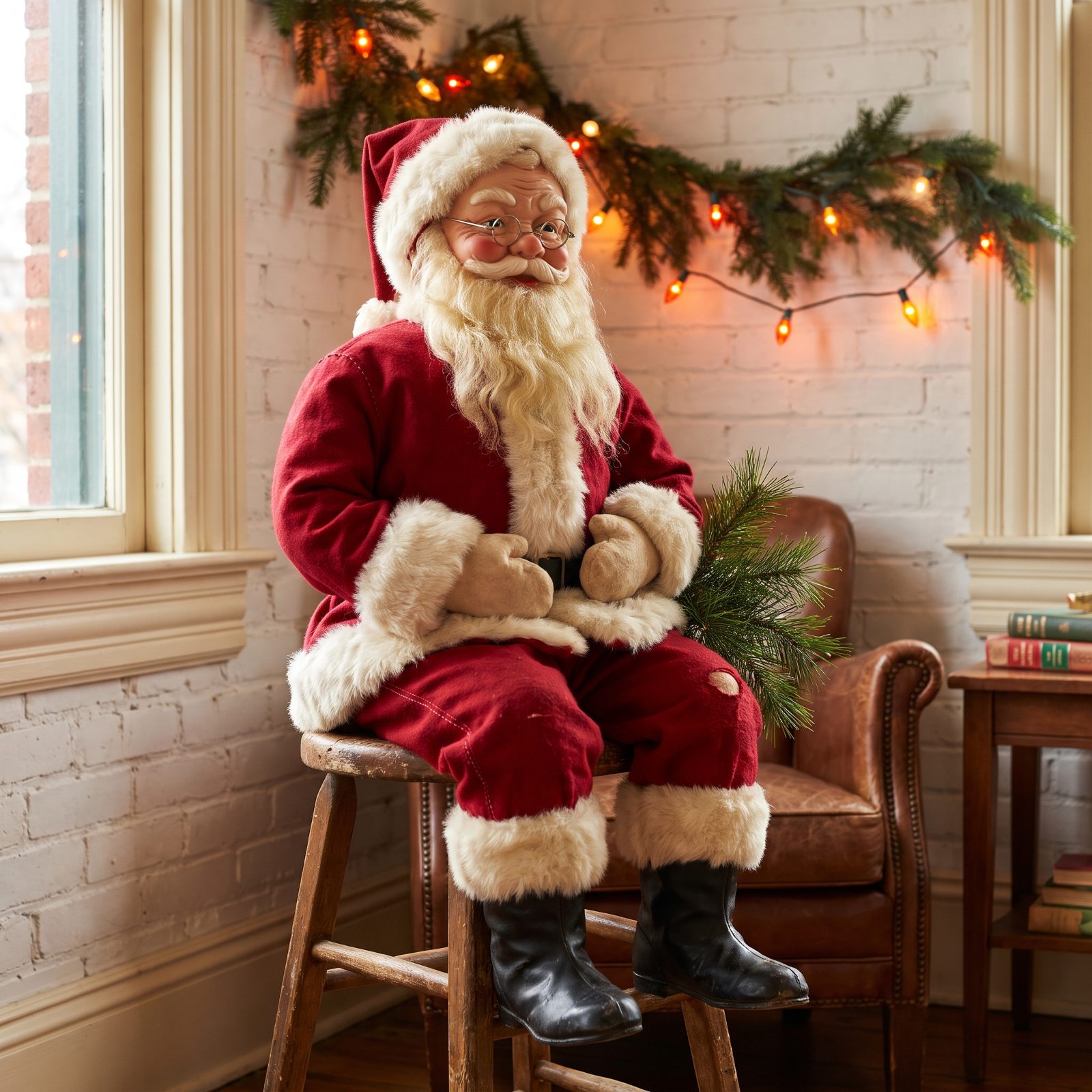
These were the big fellows propping up store windows from the late 1940s onward, built by a Massachusetts company that supplied half the department stores in America. The good ones have genuine rabbit-fur trim and a molded-rubber face that’s aged into something warmer than any factory finish could fake.
Collectors hunt the larger animated versions, the ones that once waved from a Macy’s display. Condition is everything. A split in the rubber face or a mothy beard tanks the value fast.
38. Antique German Belsnickels
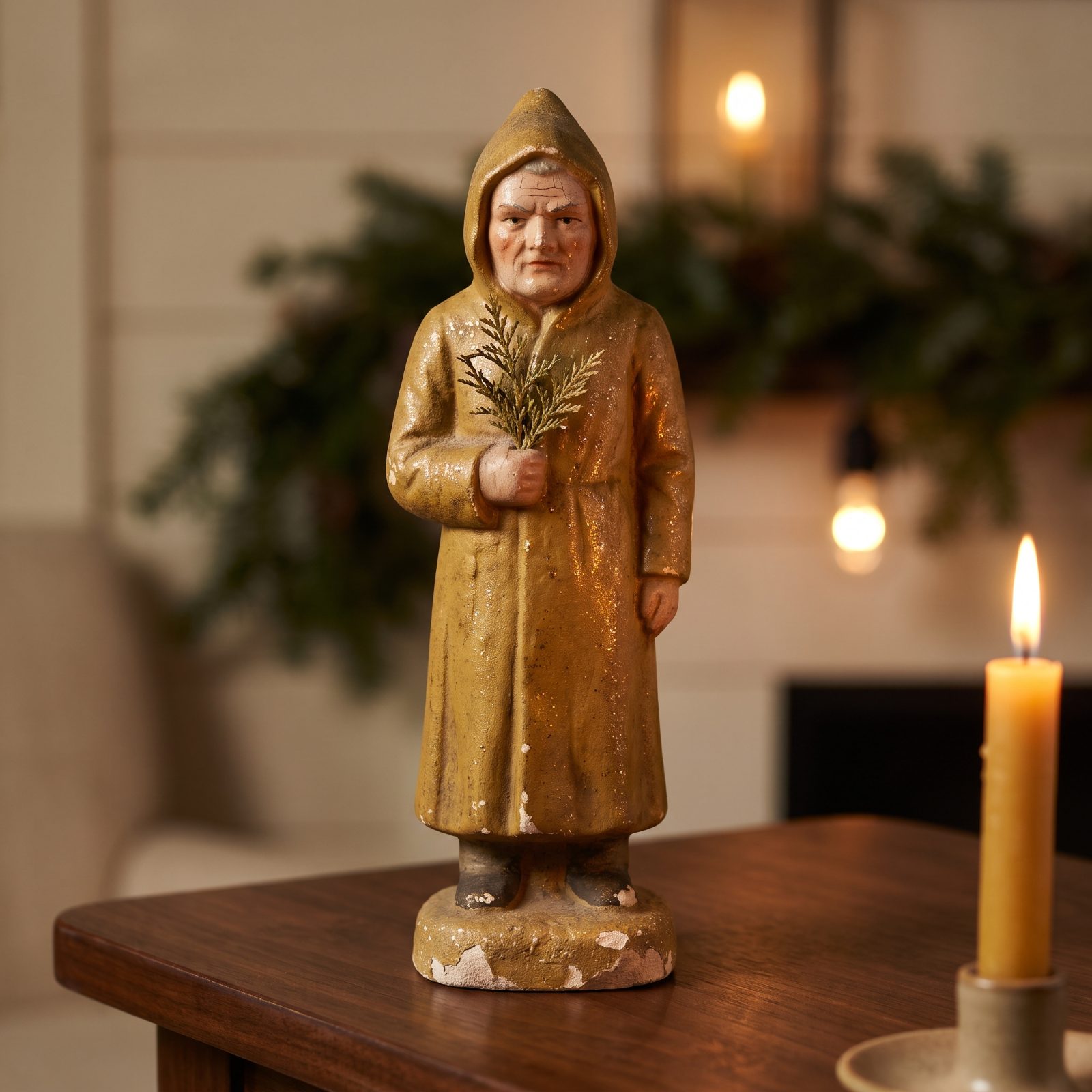
Belsnickels are scowling, long-bearded figures in hooded coats, often clutching an evergreen sprig, rendered in the German tradition of plaster and mica. That surface mica was meant to read as frost or snow, and when it’s intact it genuinely sparkles under candlelight.
Early examples from before 1920 in unusual coat colors command serious money. Gold, blue, green, and purple coats are rarer than red and fetch more. The age cracks and chipped plaster that scare off casual buyers? That’s exactly what seasoned collectors want to see, because the damage proves the thing is old. A suspiciously smooth figure is almost always a modern reproduction.
37. Early Composition Santas
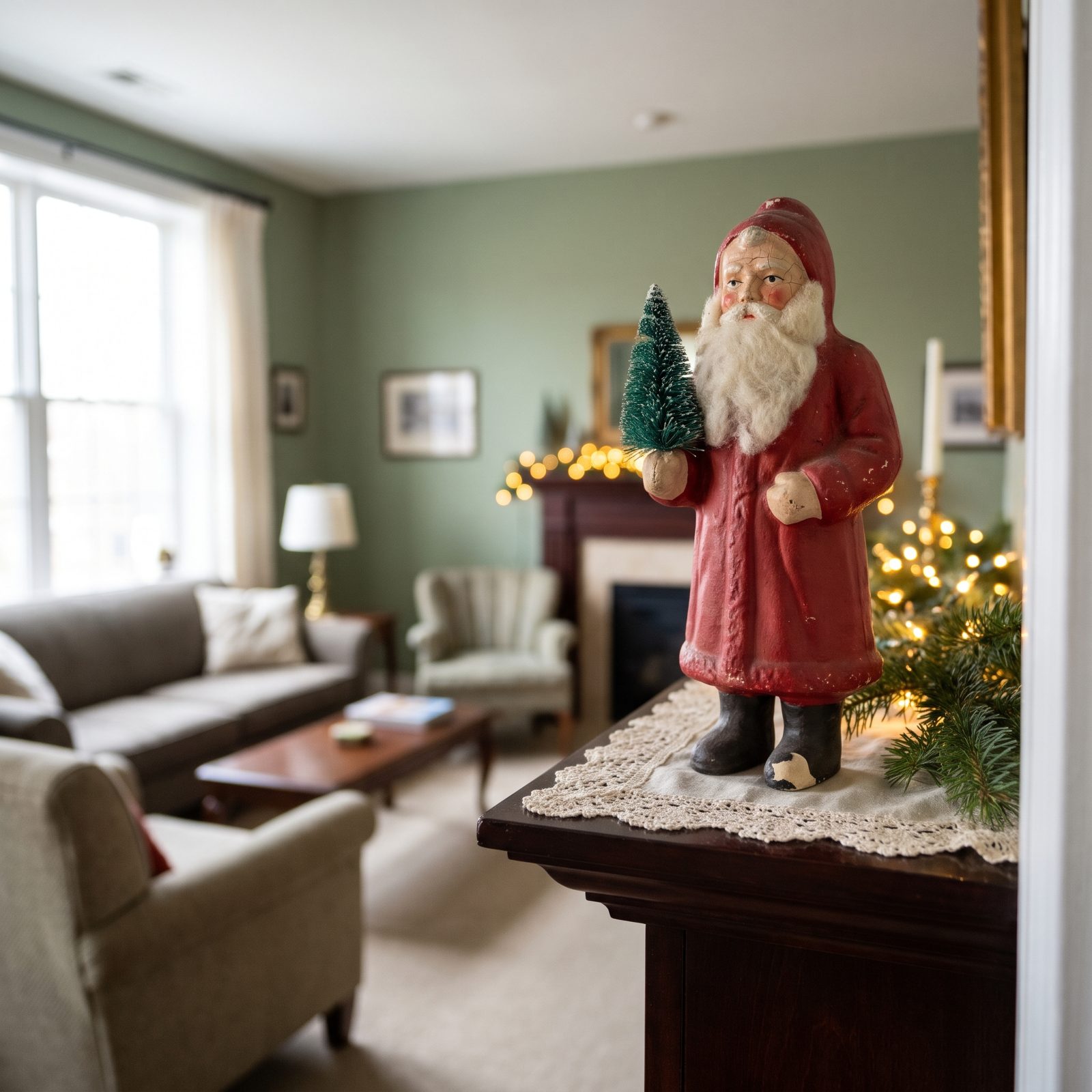
Composition is a mix of sawdust, glue and plaster pressed into molds, and it’s how most Santas got made before plastic took over. The material doesn’t age gracefully, which is precisely why survivors in good shape are worth chasing.
Look for fine crazing across the painted surface, a web of hairline cracks that only comes with decades. German-made examples with cotton-batting beards and bottle-brush trees are the ones collectors reach for first.
36. Steiff Felt Santas

The German company better known for teddy bears also made exquisite felt Santas, and that little metal button in the ear is the whole game. It’s the maker’s mark that separates a few hundred dollars from several thousand.
Early examples with the button still attached and the paper price tag intact are the grail. Felt is fragile, so moth damage and fading drag the price down hard, but a clean one with bright color and tight stitching is a trophy. Check for the glass eyes and the pressed felt face. Lose the ear button and you’ve lost the provenance that makes it worth real money.
35. German Cardboard Putz Houses

Tiny cardboard cottages with mica-frosted roofs and little cellophane windows, meant to sit beneath the tree in a Nativity-style village. Putz comes from the German word for decorate, and these things were practically disposable when new. Which is exactly why intact ones are scarce now.
Collectors prize the pre-war Japanese and German examples with the little bottle-brush trees still attached and the colored cellophane windows unbroken. The back has a hole where a bulb went in to light it from within.
The ones with a tiny Santa on the roof or a working light hole sell for a shocking amount given they started life as cheap holiday throwaways.
34. Original Department 56 Snow Village Buildings
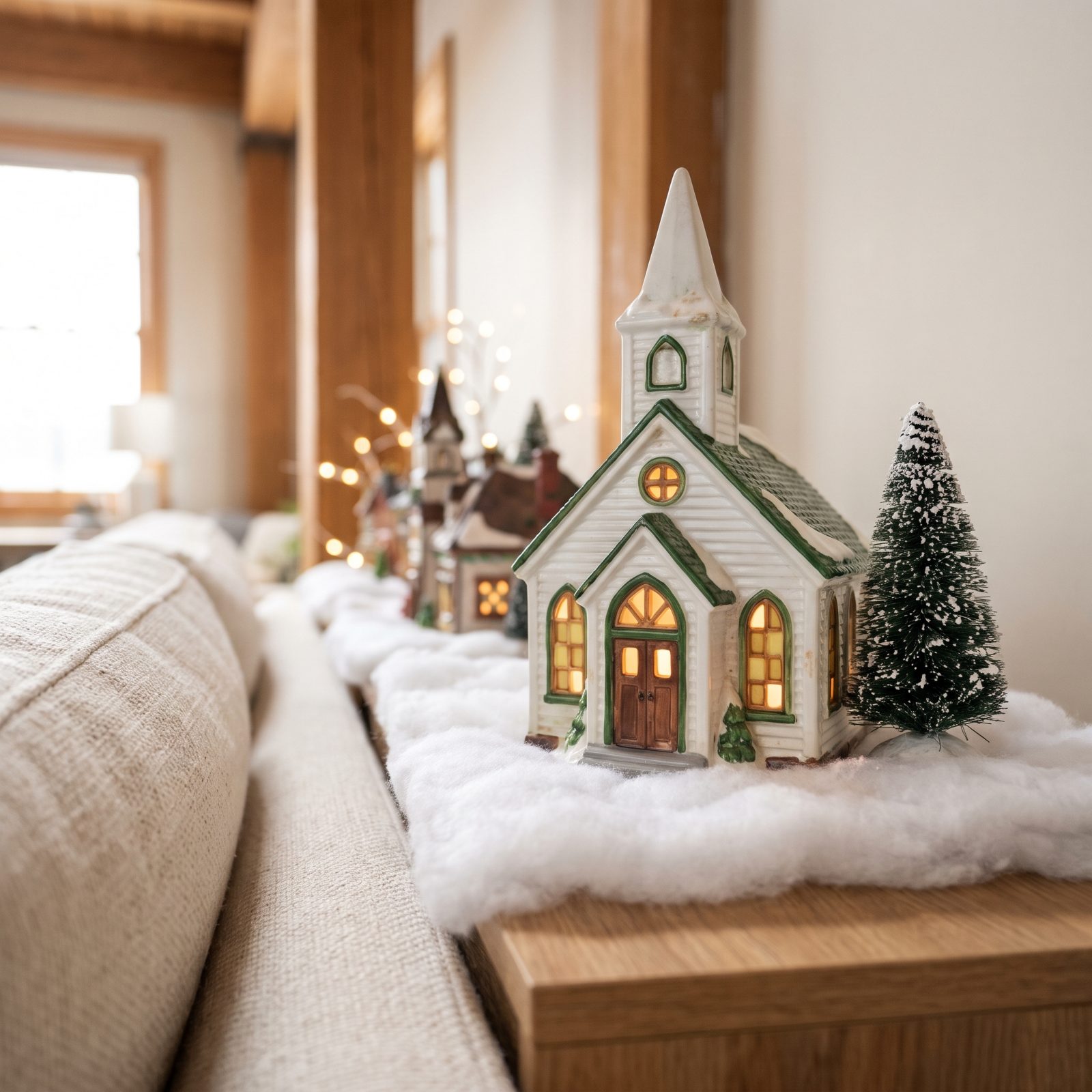
Department 56 launched Snow Village in 1976, and the very first run of lighted ceramic buildings is where the money lives. Those originals from the late 1970s, retired long ago, are what collectors chase through estate sales.
Early pieces were hand-painted with real glaze variation, and the original box plus the foil bottom sticker add meaningfully to value. The retired, short-production buildings outperform the common ones by a wide margin. A piece still in its sleeve with the paperwork is worth far more than a loose one, which is a solid argument for never throwing out the box.
33. Erzgebirge Candle Pyramids
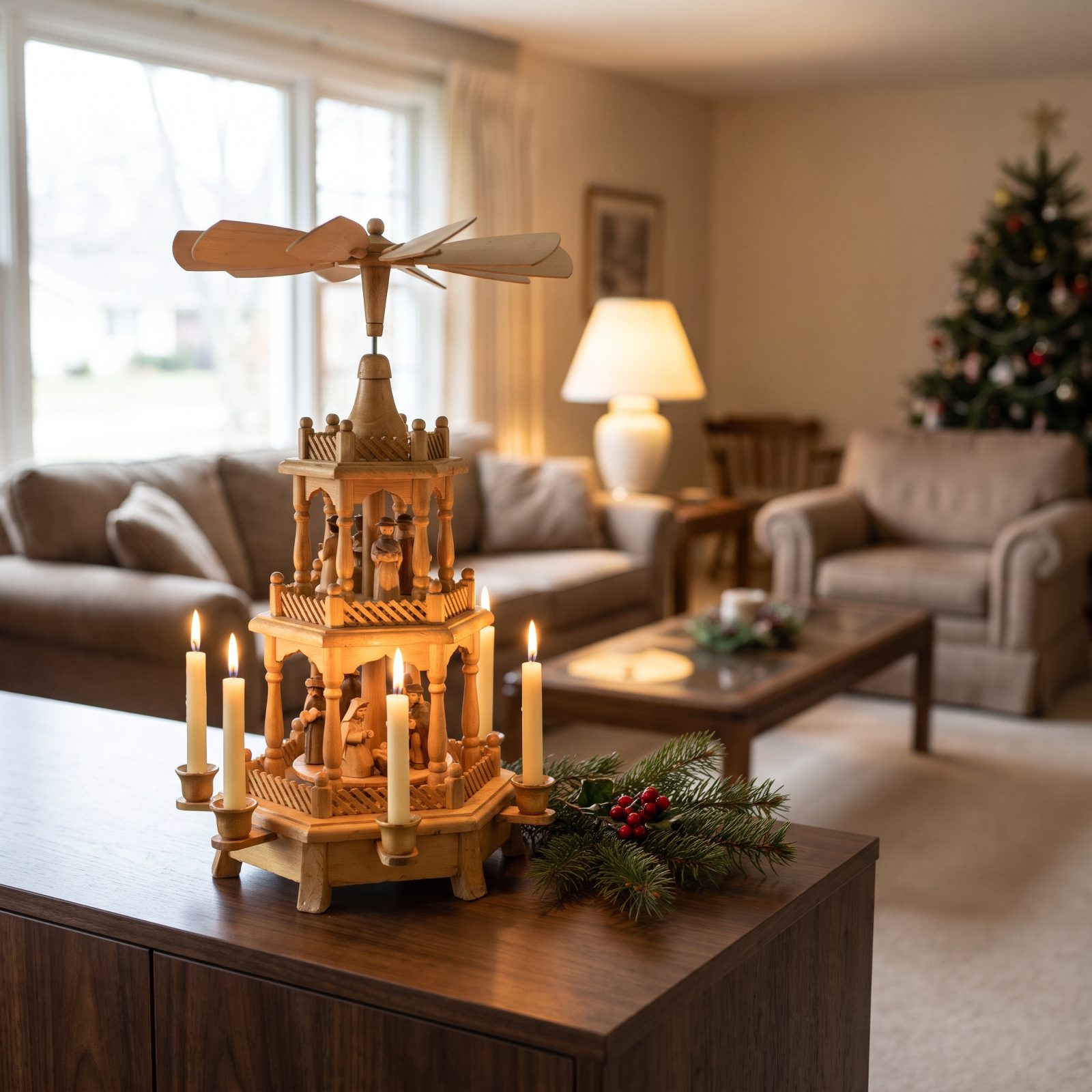
These are the spinning wooden pyramids from the Erzgebirge region of Germany, where lit candles create rising heat that turns a fan blade and sets the carved figures slowly revolving. Elegant little physics, and watching it work never gets old.
Hand-carved vintage examples from workshops like KWO or Müller command far more than the mass-produced versions. A good one gives itself away by crisp carving, balanced blades that actually spin, and warm honey patina on the turned wood. Check that the central spindle isn’t bent. A wobbling pyramid is a repair headache that scares buyers off.
32. Steinbach Limited-Edition Nutcrackers
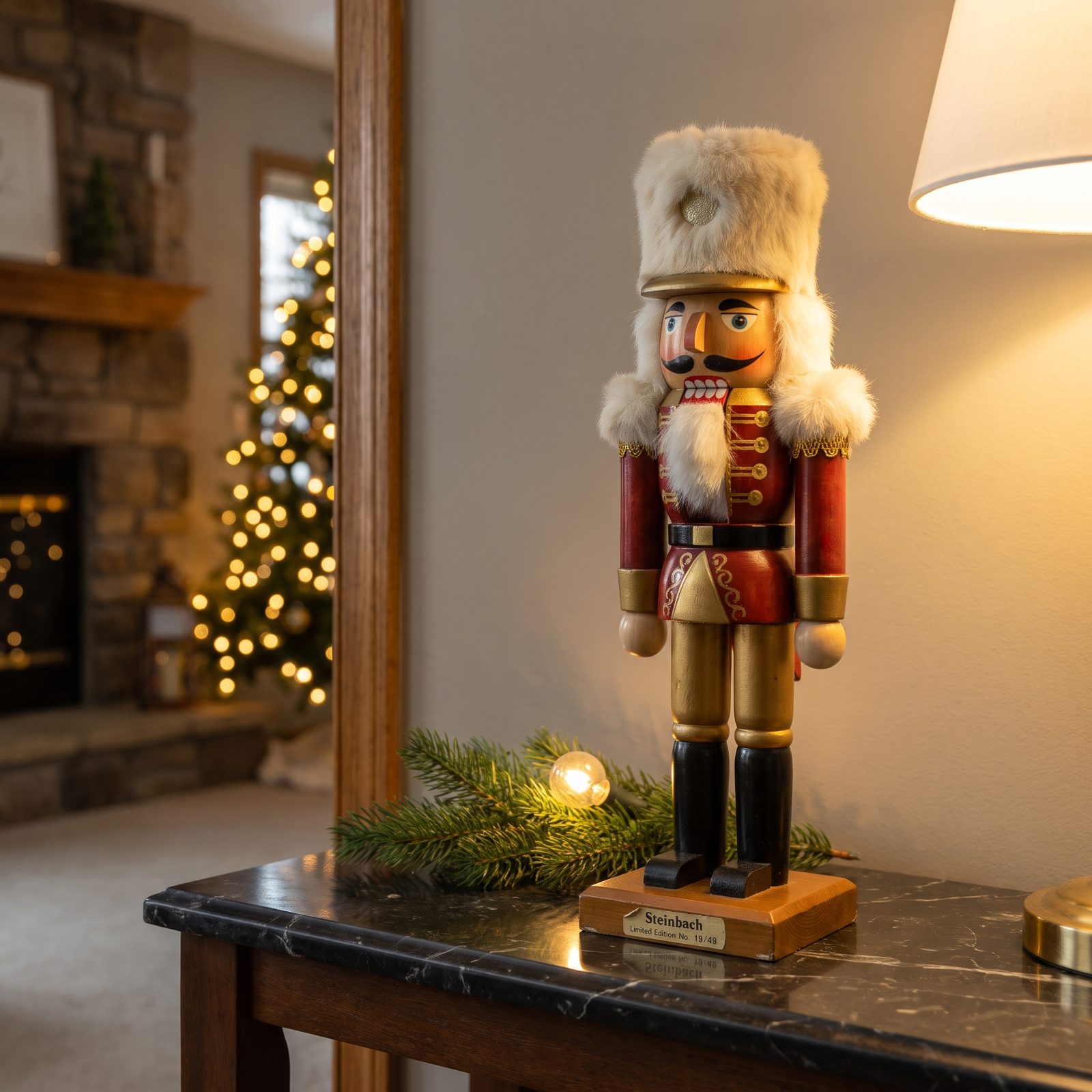
Steinbach has carved nutcrackers in Germany since the mid-1800s, and their limited-edition and series pieces are the ones that hold value. A working jaw, real fur trim on the hat, and crisp hand-painting mark the genuine article.
Flip it over. The paper label and numbered edition sticker on the base tell you what you’ve got, and retired editions plus the larger figures from popular series are what collectors pay up for. A missing label or a repainted face kills the premium instantly.
31. Complete Hummel Nativity Sets
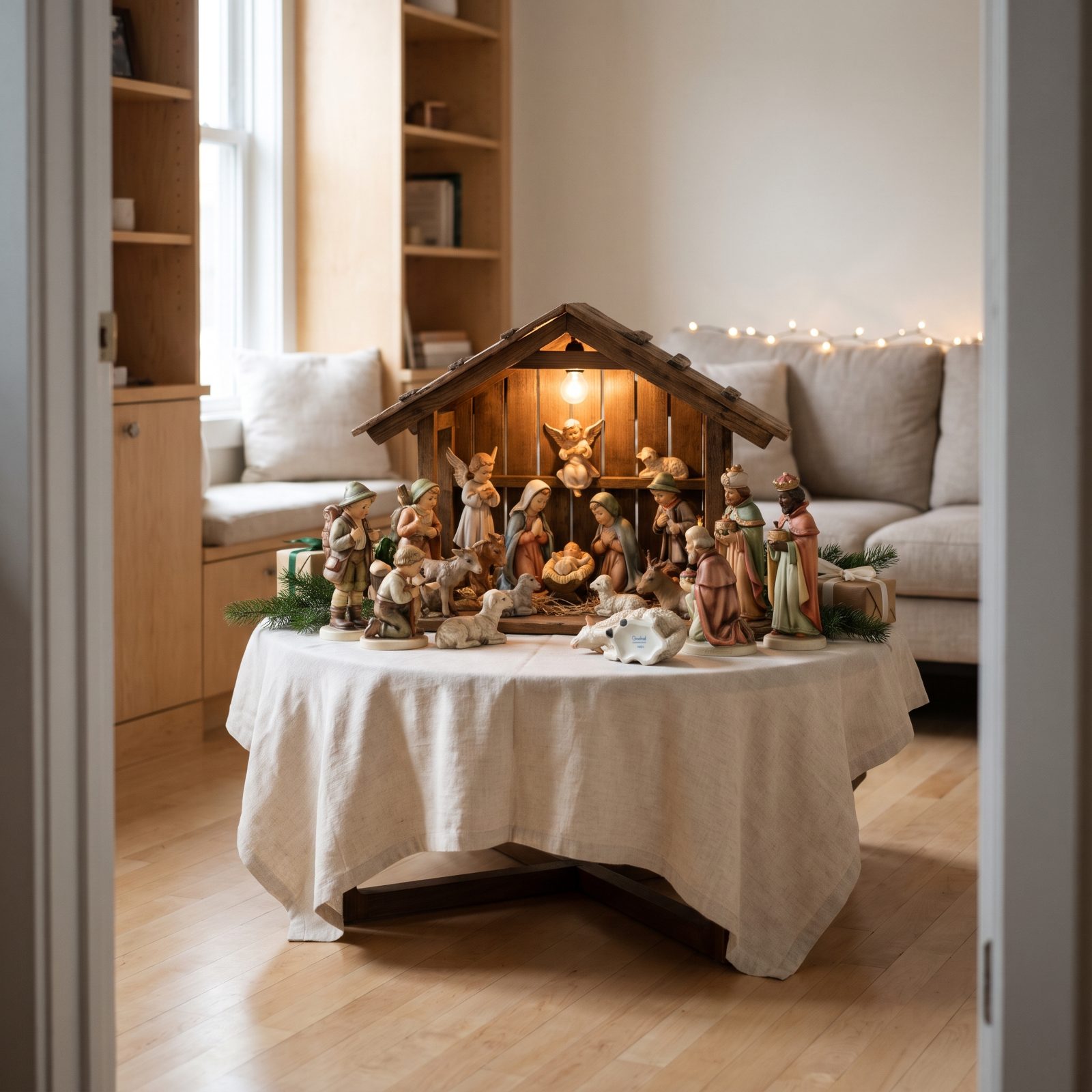
Hummel Nativity figures, made by Goebel in Germany, are worth far more as a complete matched set than piece by piece. Matching is the hard part. The pieces came in different sizes over the decades, and mixing them looks wrong to a knowing eye.
The Goebel bee mark on the base dates each figure, and earlier marks mean older, more valuable pieces. A full set in one consistent size with original boxes is what you hold out for. Hairline cracks and chips to delicate extremities are common and they hurt value, so inspect hands, staffs and animal legs closely before you commit.
30. Reuge Swiss Christmas Music Boxes
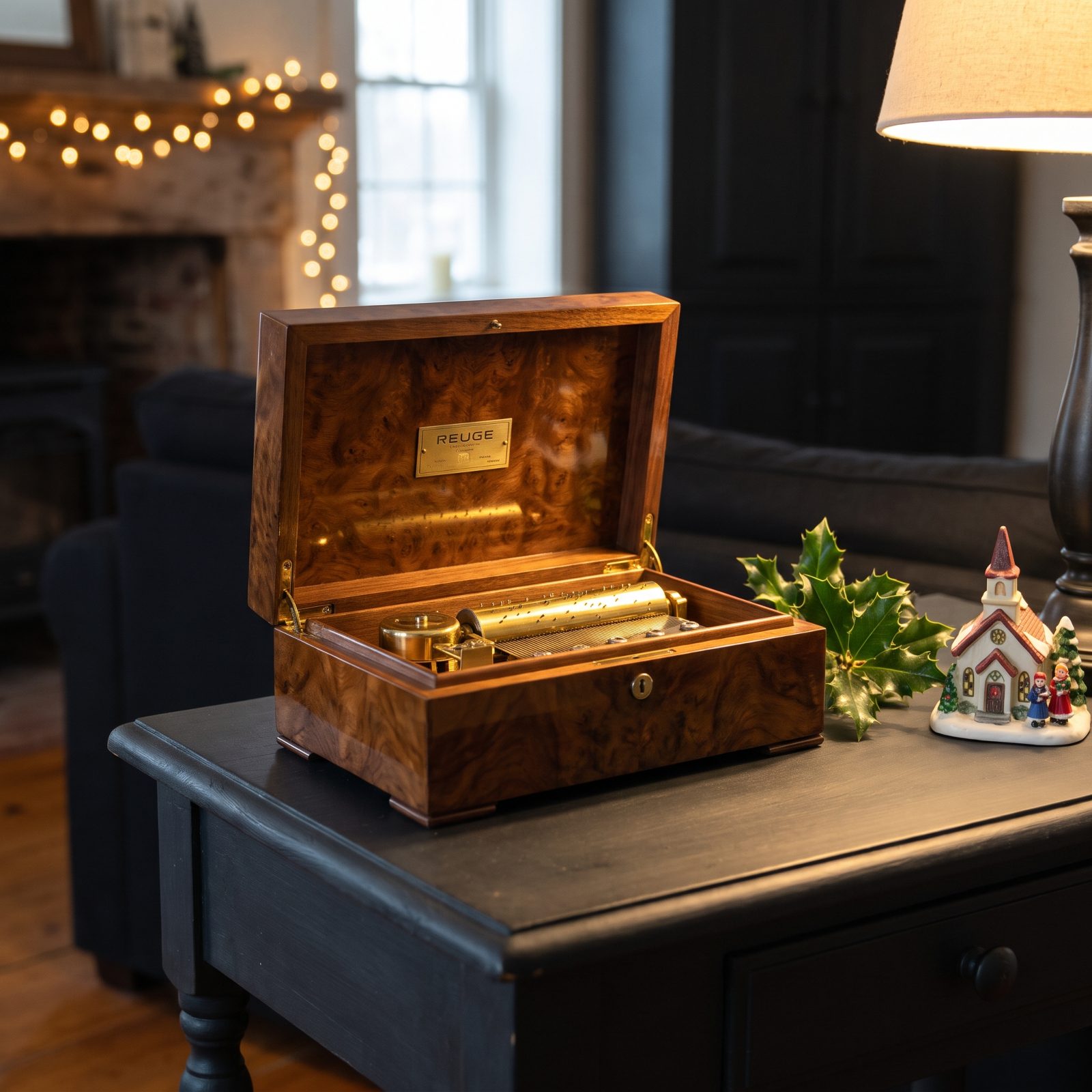
Reuge has made cylinder music boxes in Sainte-Croix, Switzerland since the 1860s, and their Christmas-tune movements are the collectible ones. Open the lid and the brass comb and pinned cylinder are a small marvel of mechanics on their own.
What matters is the note count. More notes mean a richer sound and a higher price, and the finer burl-wood cases with inlay fetch more than plain ones. A movement that still plays cleanly, without dragging or skipping, is essential.
29. Poloron Motorized Lawn Displays That Still Nod and Spin
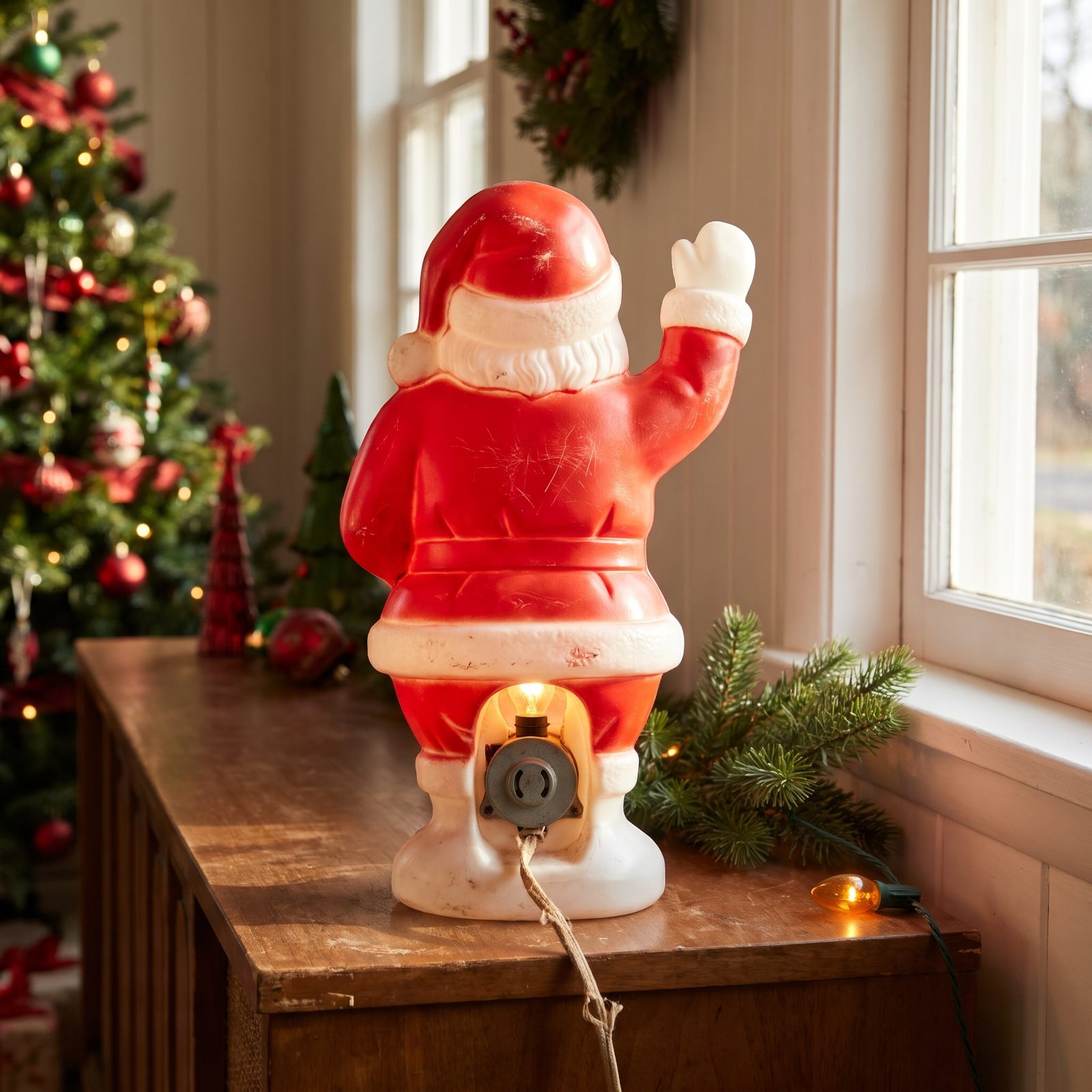
Poloron built these in the 1950s and 60s, and what collectors chase isn’t the look. It’s whether the little motor still turns. Picture a Santa that nods or a snowman waving a tiny plastic arm, driven by a gear motor humming away inside a hollow blow-mold body.
Most turn up with the motor seized or the cord snipped off by some nervous owner. A working one with its original wiring intact? That’s the find. Check the base for the motor housing and listen for that soft mechanical whir before you get excited.
28. Animated Department-Store Window Figures With Working Mechanisms
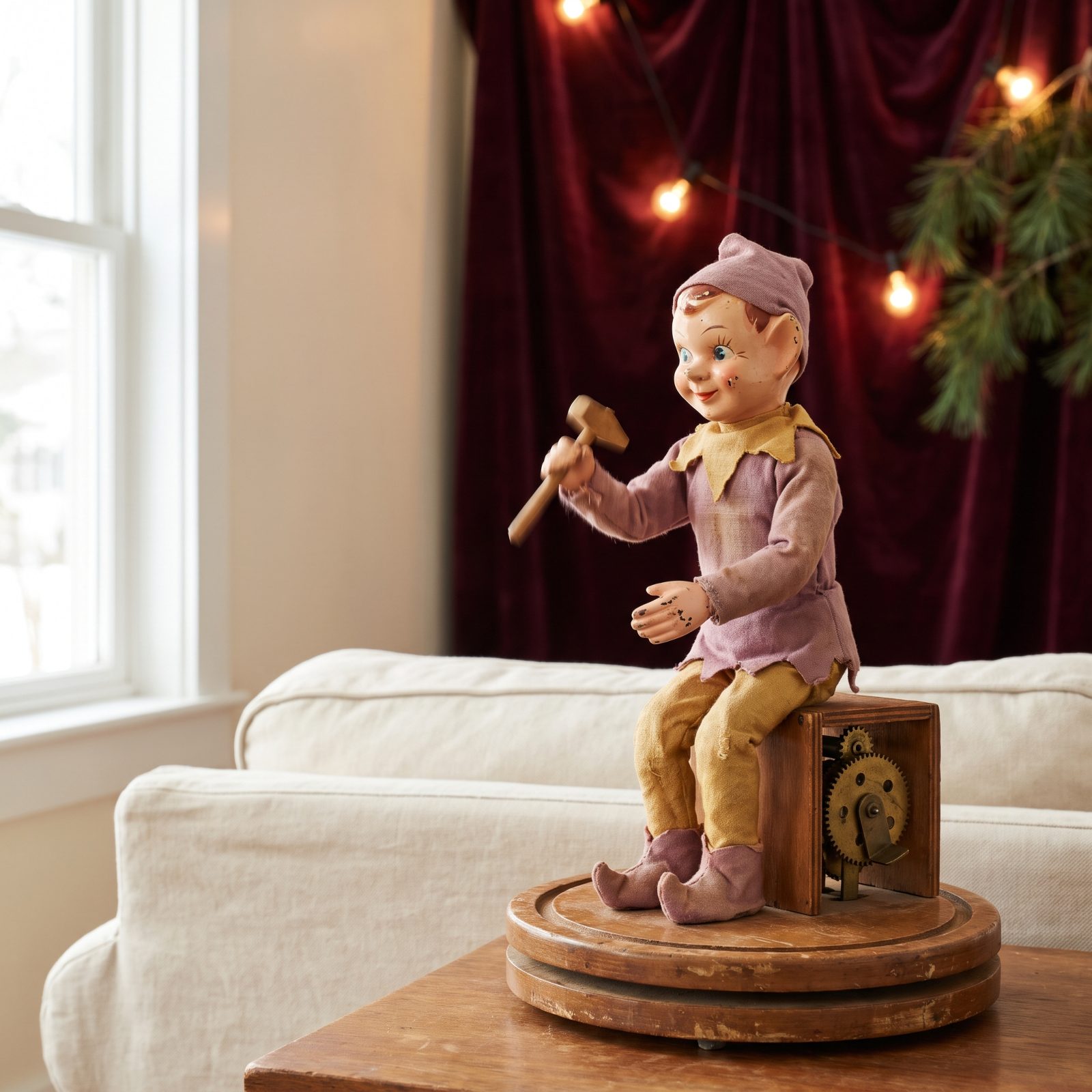
Before everyone had a screen, the animated department-store window was the show. Figures hammered toys, rocked in chairs, or tipped their heads on an endless loop, all driven by cam-and-lever mechanisms a clockmaker would recognize on sight.
When the old stores closed, a few of these escaped into private hands instead of the dumpster. The valuable ones keep their movement intact and their original costuming, not a modern servo swapped in by some well-meaning tinkerer. Fabric fades. Faces craze. That honest decay is exactly what buyers are after.
27. West German Indent Reflector Ornaments in Their Original Boxes
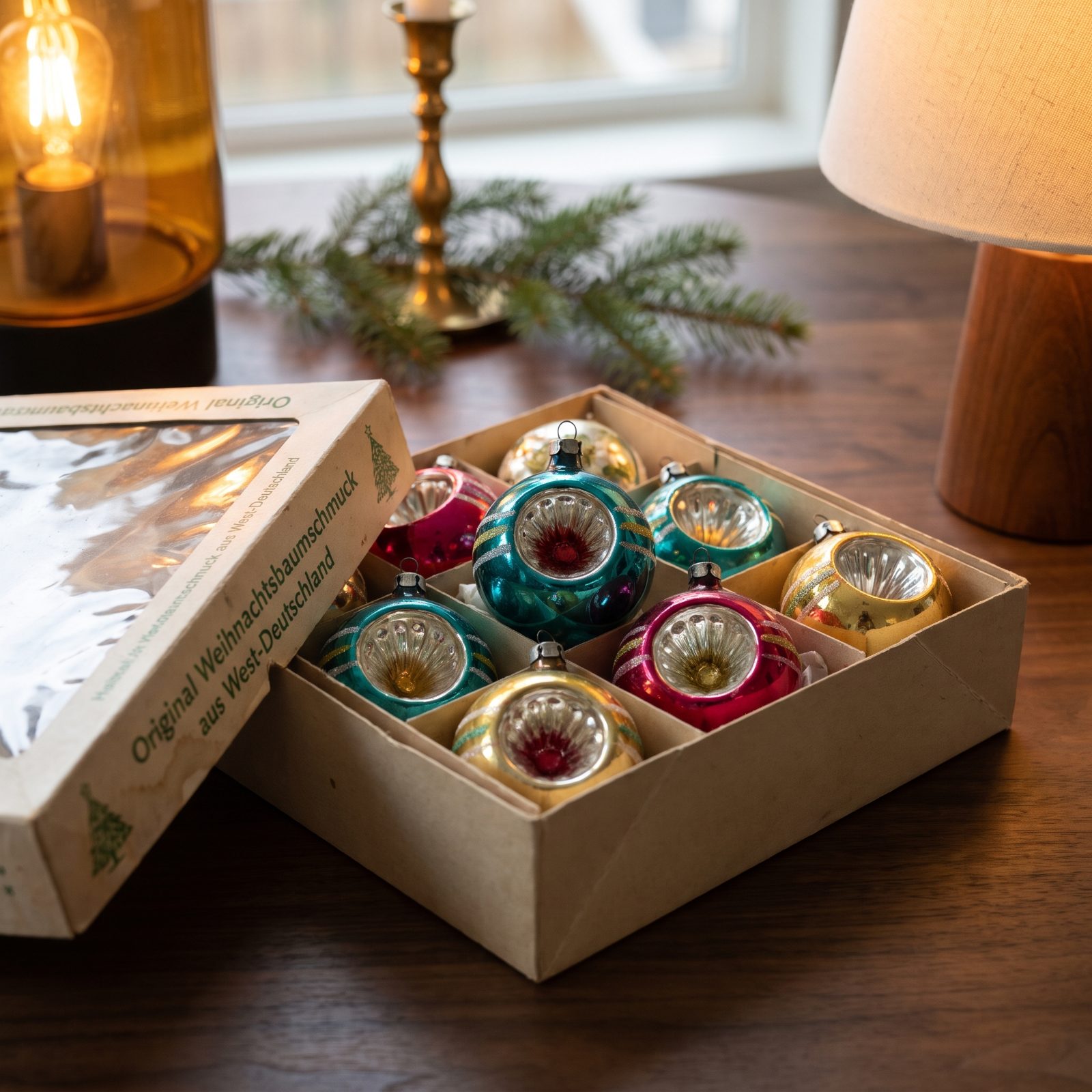
The indent is the whole point. A deep concave pocket pressed into the glass and silvered inside, so it throws light back like a tiny mirror set in a jewel. West German blowers made some of the finest after the war, and collectors date them by the mold work and the original spring caps.
Look inside the pocket. Bright silvering, paint that hasn’t flaked? You’ve got a keeper. And a full original box multiplies the value fast.
26. Czech Beaded-Wire Ornaments With Mercury-Glass Beads

These came out of the Gablonz region of Bohemia, now the Czech Republic, where bead-making was a cottage trade passed down for generations. Workers twisted fine wire and threaded it with tiny silvered beads into stars, baskets, little spinning wheels, even airplane shapes.
They’re fragile, and they drop out of the catalogs almost entirely after mid-century. A piece with most of its beads intact and the wire still holding its shape is tougher to find than you’d guess. We’ve handled plenty where half the beads just rattled loose in the bottom of the box.
25. Antique Cotton-Batting Christmas Figures From Pre-War Germany
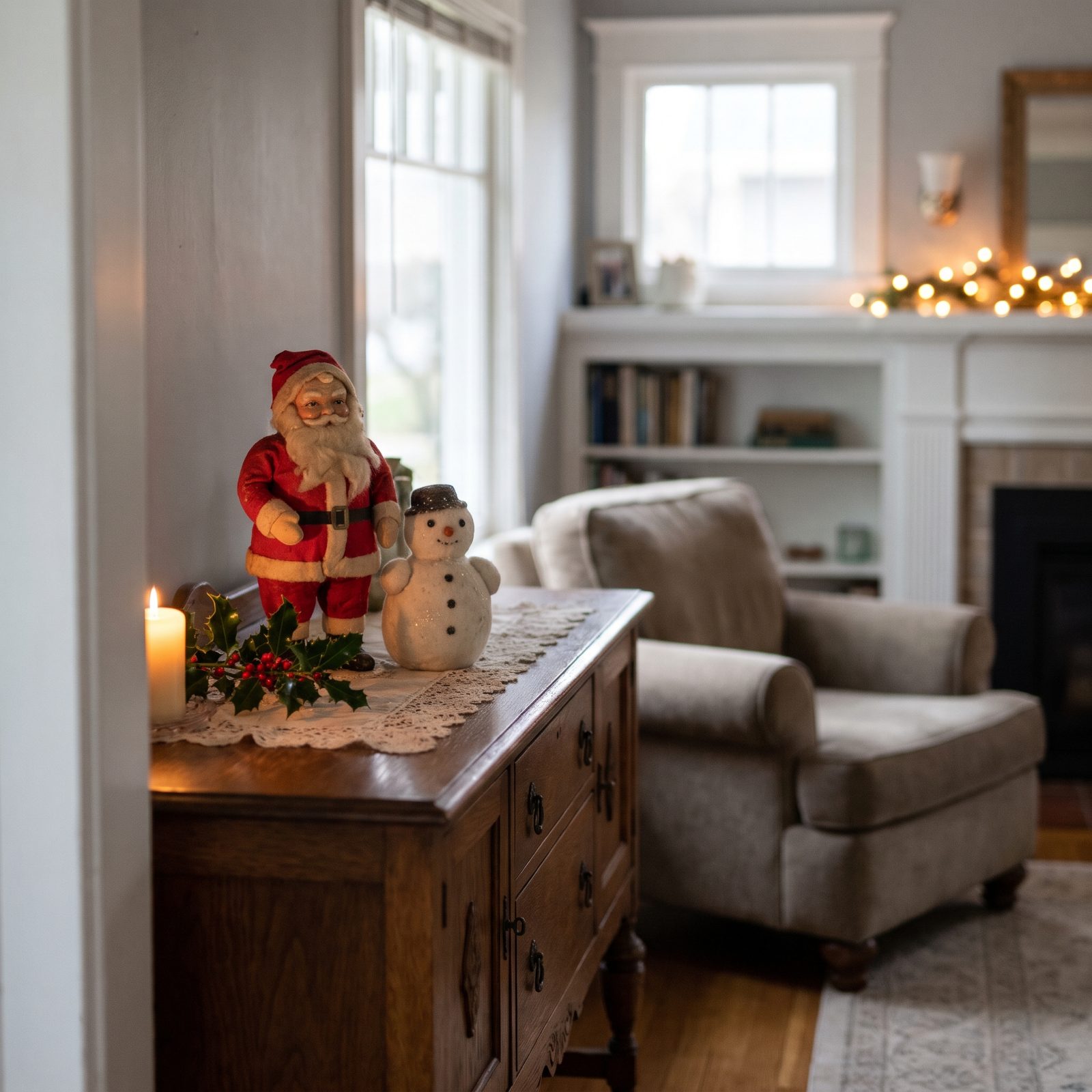
Spun cotton batting, a composition or scrap-paper face, a dusting of mica for frost. That’s the whole recipe, and German makers were cranking these out before the First World War. Santas, children, animals, snowmen, each one light as a breath and twice as fragile.
The cotton yellows and compresses with age, which is exactly how you spot an old one. New cotton looks too white, too fluffy. Real age slumps a little. And the mica sparkle on the oldest ones? That’s real mineral mica, not the plastic glitter that came later.
24. Antique Glass-Bead Tree Garlands Strung on Cotton Thread
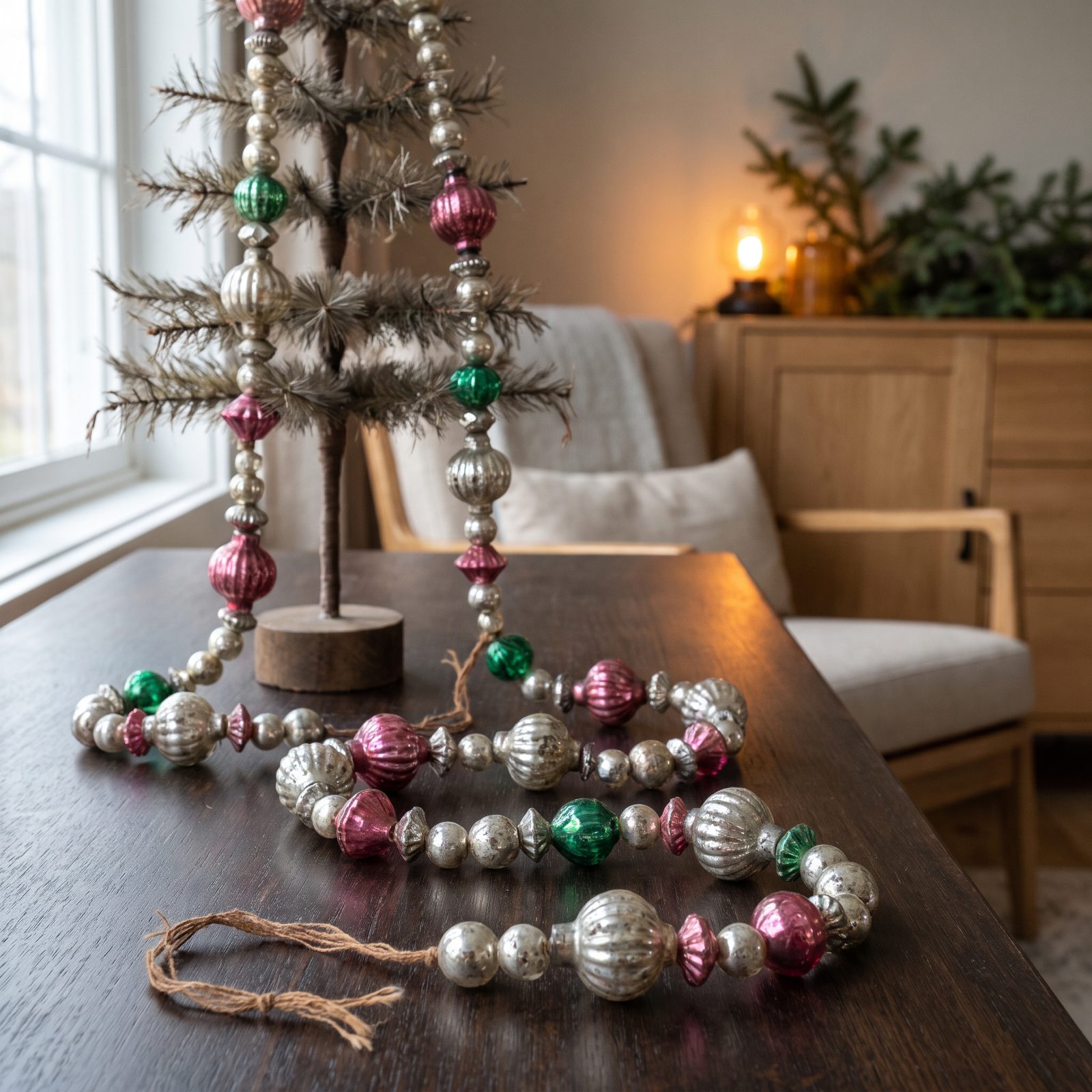
You’ve seen the modern plastic bead garland. This is its glass ancestor, and it behaves like a completely different creature. Tiny mercury-glass beads strung in repeating patterns, a lot of them made in Japan and Czechoslovakia for the American tree market.
The weight gives it away. Glass garland has a heft plastic will never manage, and the silvering inside each bead throws genuine light. Condition is everything here. One snapped thread and you’re hunting beads under the furniture for a week.
23. Vintage Lead Lametta Tinsel in Its Paper Sleeve
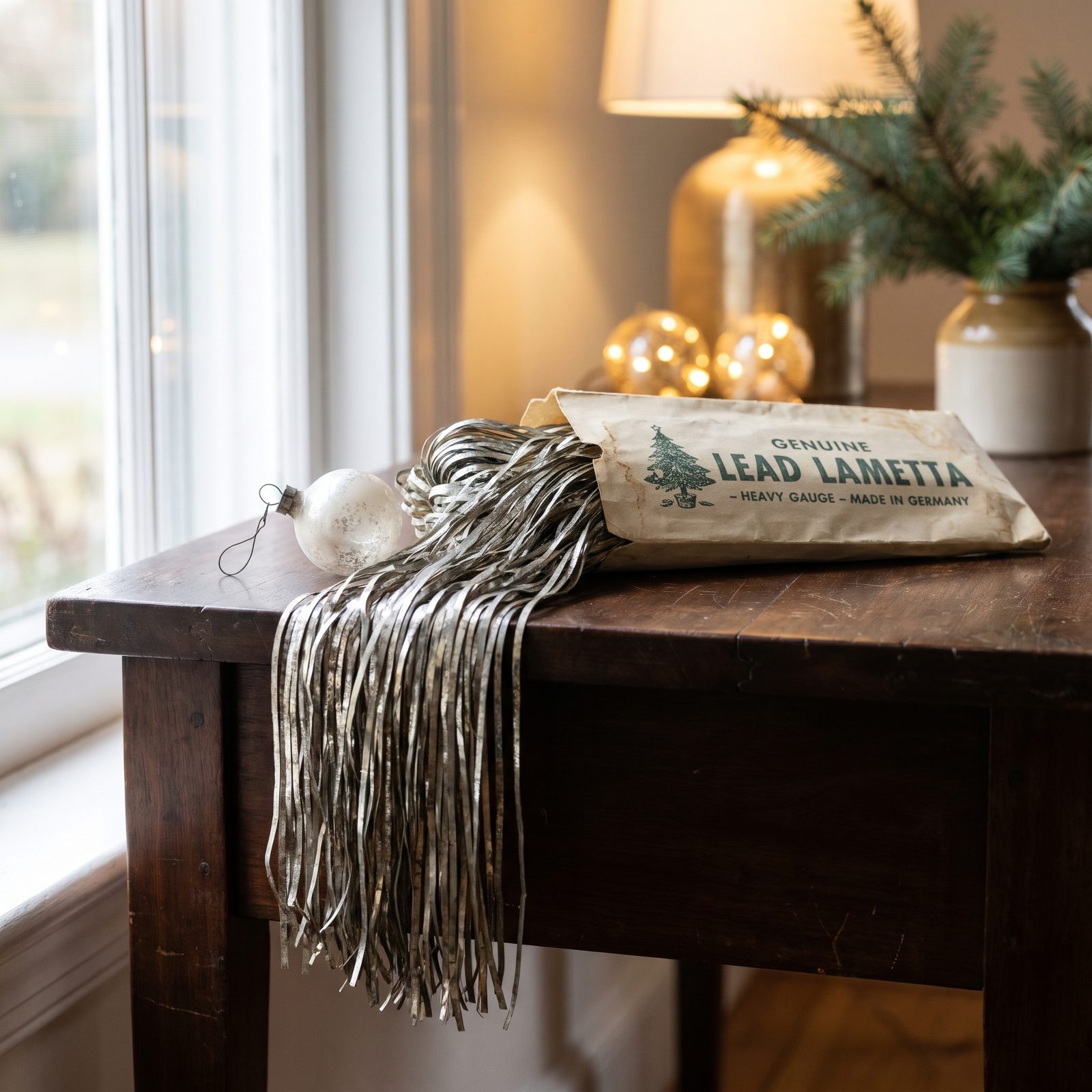
Here’s the oddity. The tinsel collectors want is the one you shouldn’t hang anywhere kids and pets roam. Old lametta was made with real lead, which gave it a dense, heavy drape modern Mylar can’t fake. It hangs straight down like it means business.
The U.S. phased out lead tinsel by the early 1970s over the health worry, so an unopened paper sleeve of the genuine article is a dated time capsule. Admire it, display it behind glass, keep it well out of little hands. We’re not being precious about that one.
22. Mercury-Glass Finial Tree Toppers With Original Caps
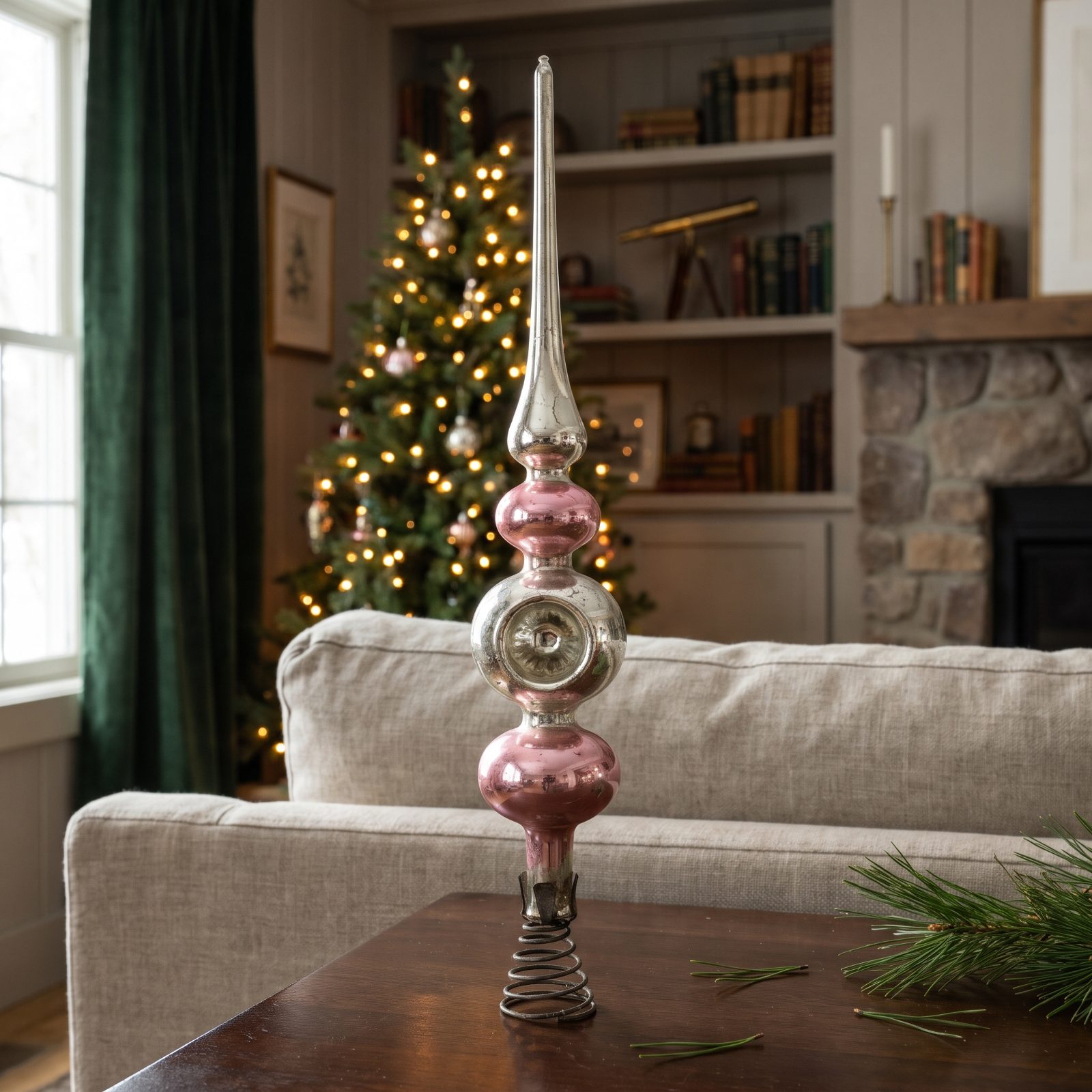
The finial topper is the exclamation point at the top of the tree. A long tapering glass spire stacked with balls and indents, silvered inside so it catches every bulb below. German and Japanese makers produced them for decades, and the tall multi-tiered examples are the ones people actually fight over.
They break easily. That’s why survivors with their original clip base and bright silvering are worth real money. A quarter-inch chip at the tip and the value drops hard.
21. Bradford Celestial Star Tree Toppers That Light From Within

Plastic, and proud of it. The Bradford celestial star used layered, faceted plastic to bend one bulb’s light into a radiating starburst. Push it onto the top of the tree, plug it in, and it scatters spokes of light clear across the ceiling.
They’re a mid-century icon and a genuinely clever piece of optical design. Collectors want the full starburst models with working sockets and original cords. The plastic yellows over the years, which bothers some buyers and charms others.
20. Paramount C-6 Cone-Light Strings With Bakelite Sockets
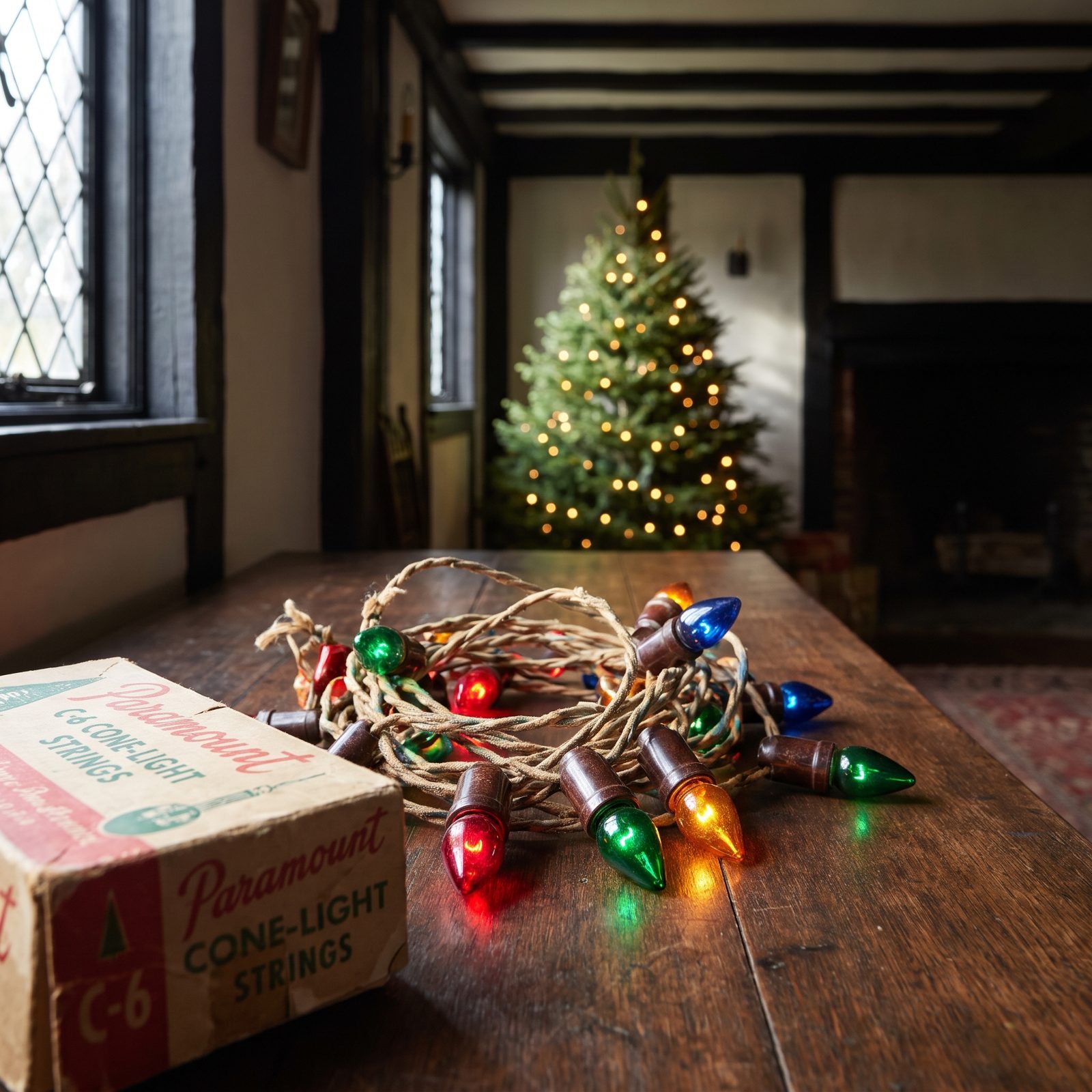
The C-6 cone bulb is a small thing with a big following. Little cone-shaped glass bulbs, often painted or figural, screwed into bakelite sockets on a cloth-covered cord. Paramount made some of the most sought-after strings from the 1930s through the 50s.
Now the real-talk part: these are vintage electrical. Cloth insulation frays, bakelite cracks, and plugging in a seventy-year-old string without checking it first is how you wreck both the string and your whole evening.
19. Noma Illuminated Christmas Bell Clusters
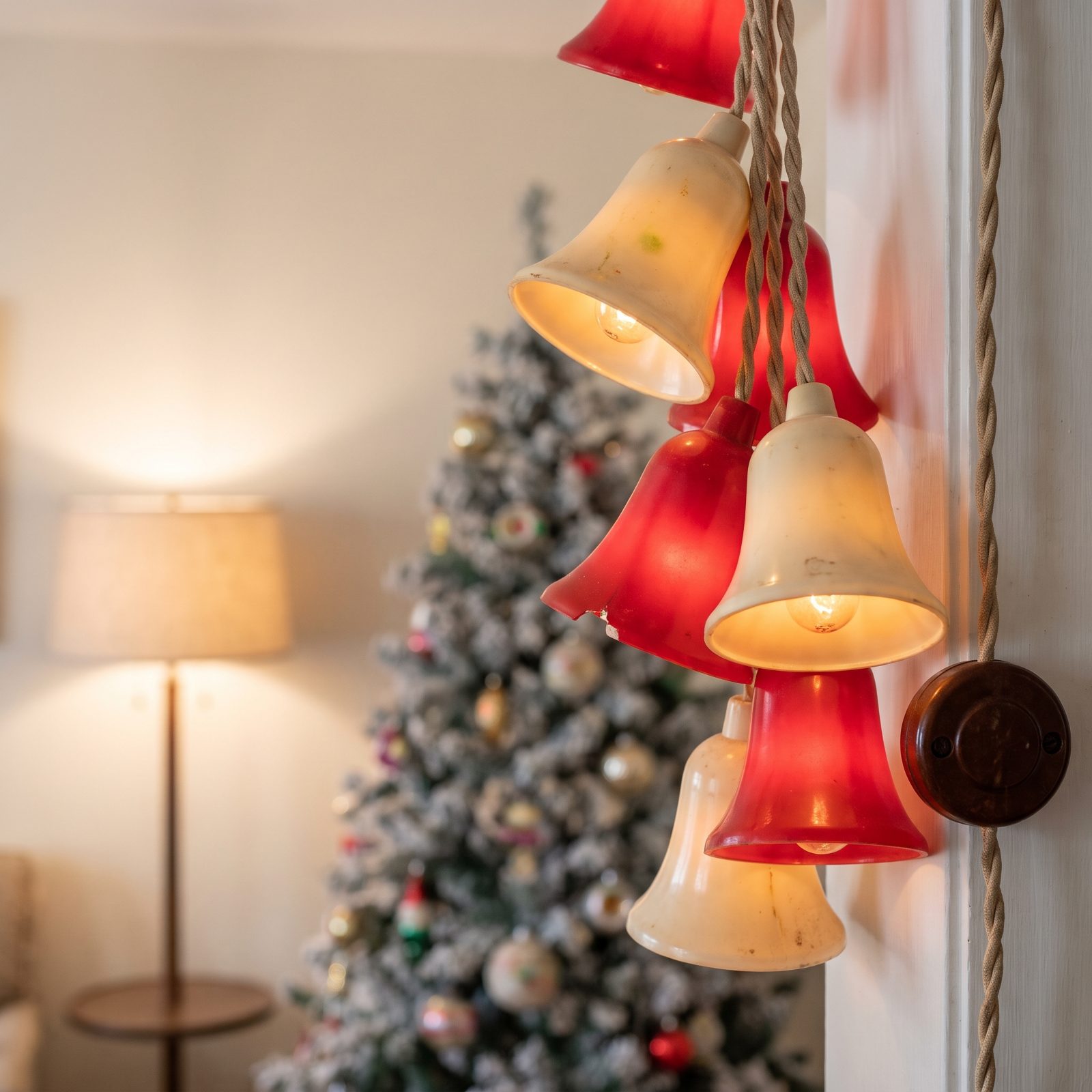
These were the showpiece of the mantel long before anyone called them collectible. Noma strung molded plastic bells into glowing clusters that all lit from a single cord. Collectors want the cloth-wrapped wiring intact and the bakelite plug still attached, because that’s what dates them, and it’s also the first thing to disappear.
Check the plastic for warping. Heat from the original bulbs cooked a lot of these over the decades, and a sagged bell knocks the value fast. The ones people really chase? Crisp, un-yellowed sets still sitting in the original box.
18. Penetray Revolving Christmas Color Wheels
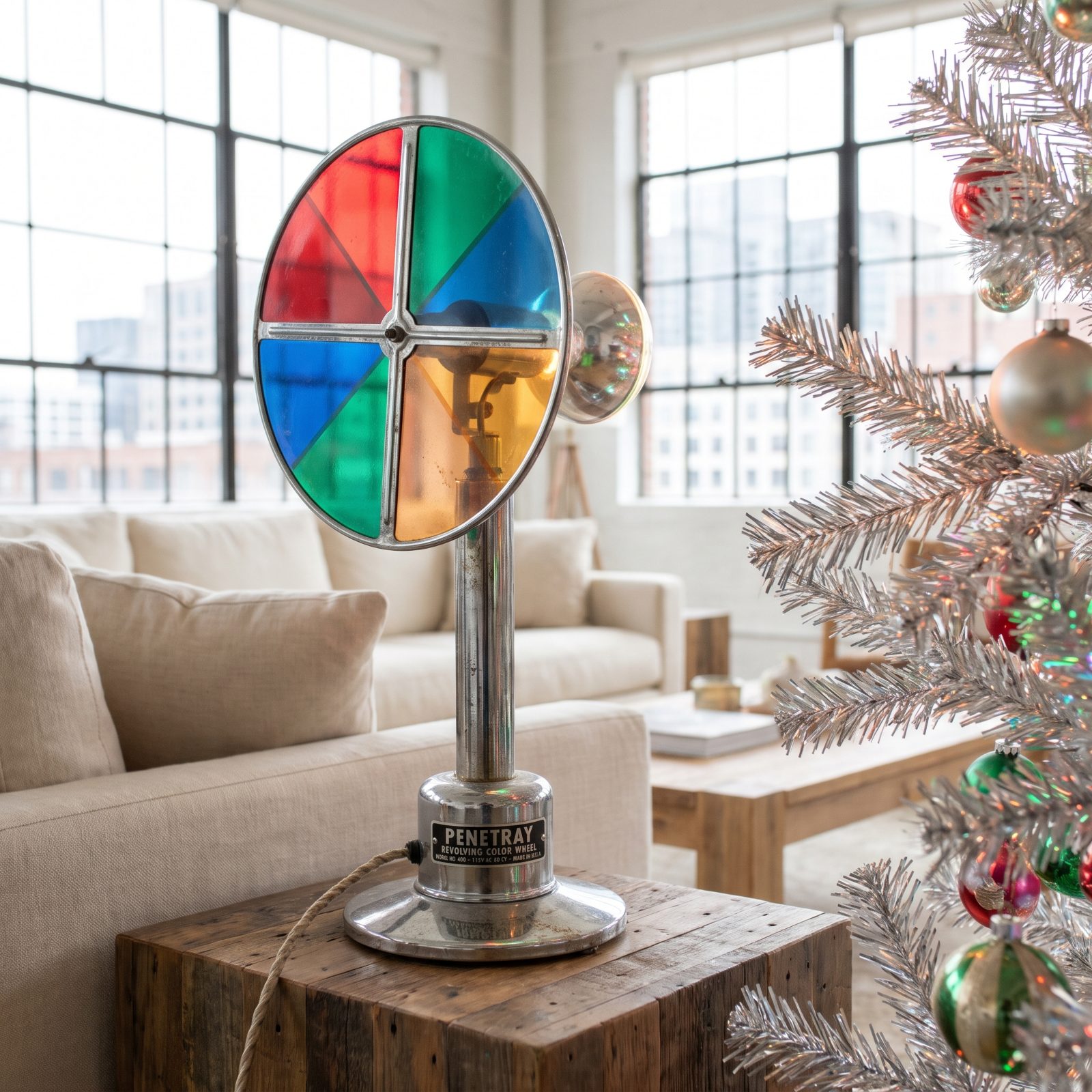
You pointed one of these at an aluminum tree and let it do the work. The wheel turned, the floodlight shone through seven colored panels, and the whole silver tree cycled from red to blue to green while you sat there doing nothing. That was the appeal, then and now.
What collectors look for: a wheel that still turns smoothly on its original motor, gels that haven’t cracked or faded to pastel, and a chrome stand without rust pitting. The motors are simple little things, but they seize up after sitting forty years in a damp basement. A working one commands real money against a decorative-only one.
17. Musical Rotating Christmas Tree Stands
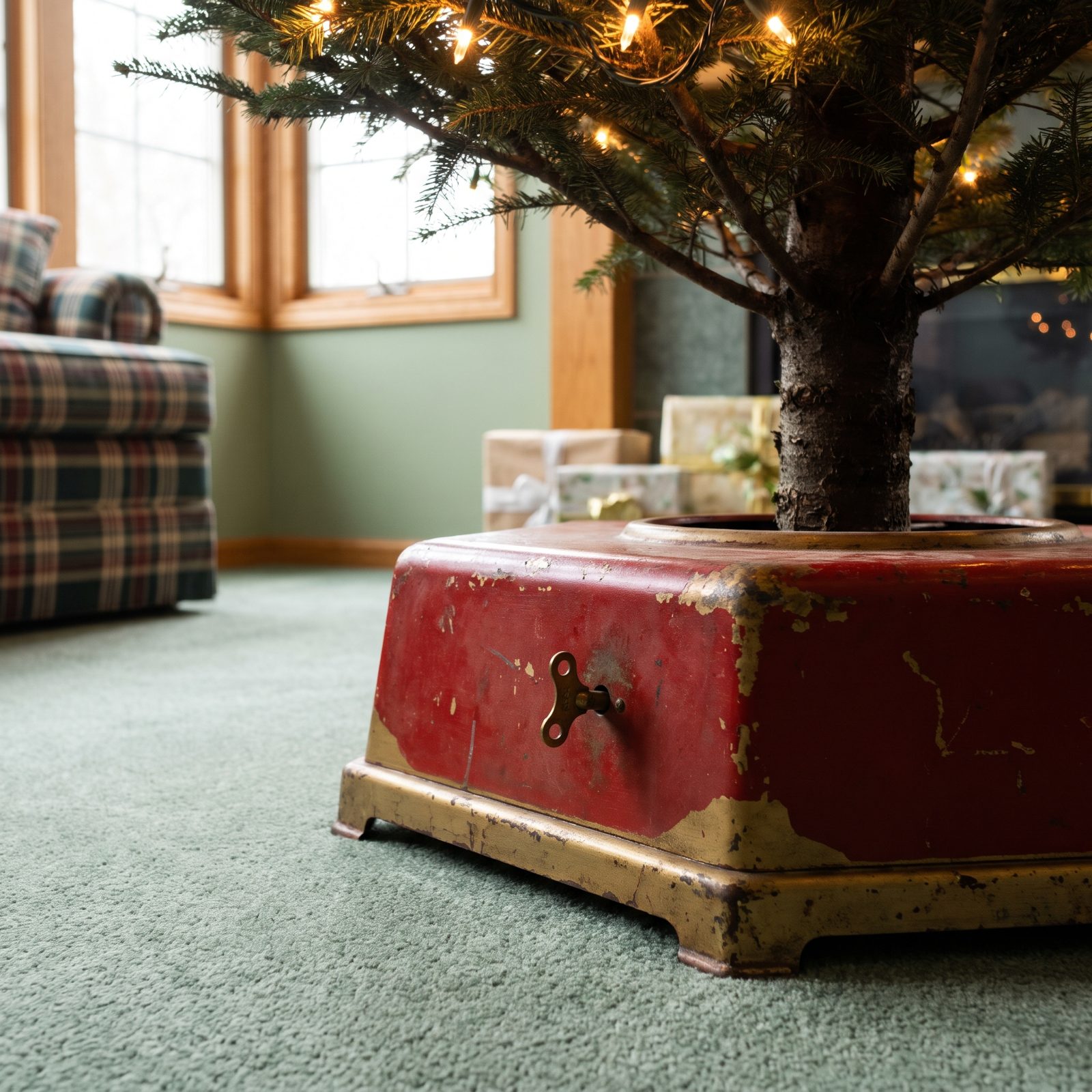
The novelty that made grandparents’ living rooms feel enchanted: the tree itself spinning slowly while a music box ground out a few bars of a carol on loop. Most came through in the fifties and sixties from brands you’ve never heard of, which is part of why condition matters more than name here.
The music box is the heart of it. Wind the key, then listen. A gummy, slow, or silent mechanism tanks the price. A clean one that plays its full tune and turns the tree without grinding is what buyers hunt.
16. Papier-Mâché Santa Candy Containers
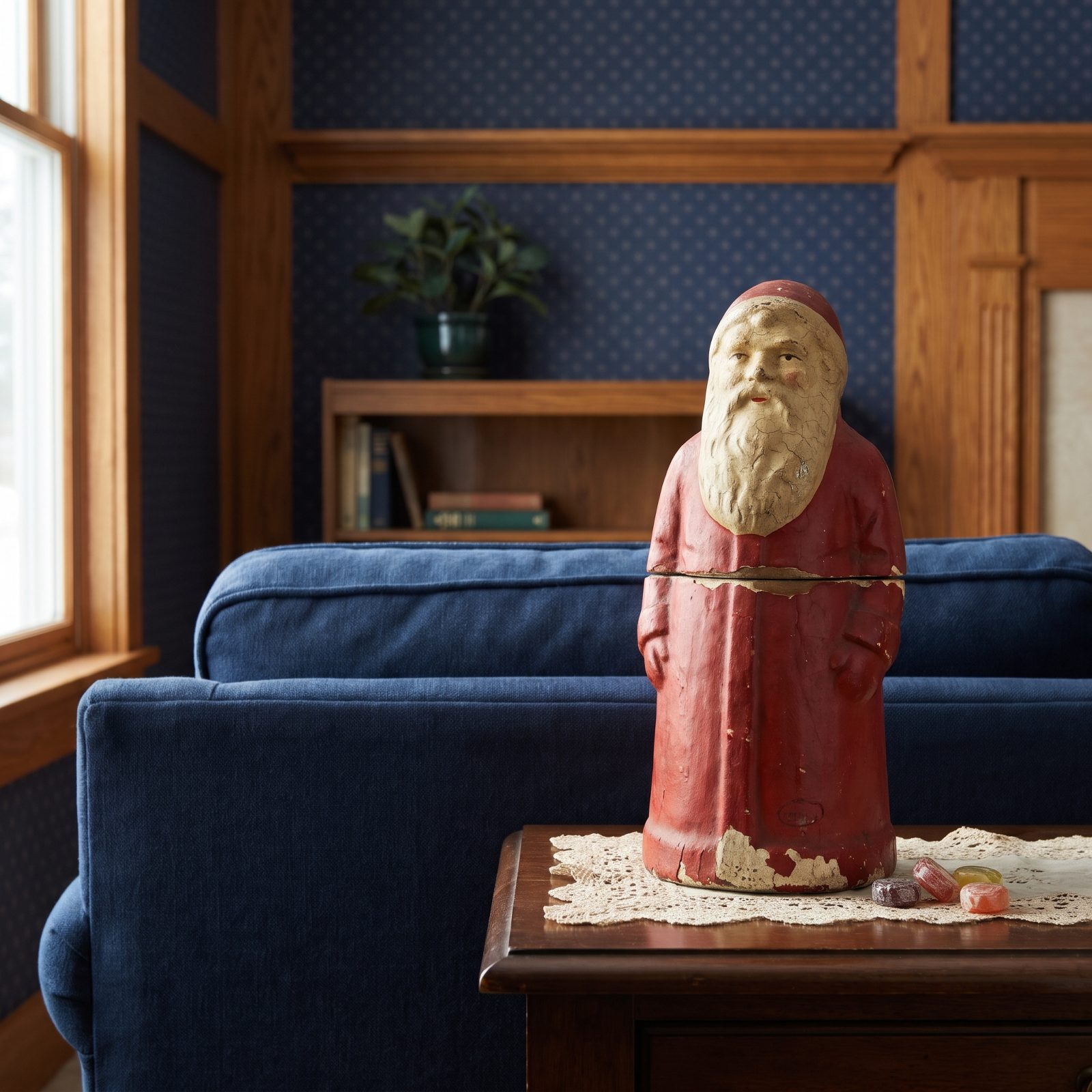
Before plastic, Santa came hollow and full of candy. These German papier-mâché figures pulled apart at the waist so you could tuck sweets inside, and the earliest ones predate World War I. The condition rules are brutal because the material is so fragile. Flaking paint, crushed hats, lost beards — each pulls the price down.
Look for original paint over repaint, and check whether the two halves still fit together cleanly. Collectors prize the stern-faced early German Belsnickle types over the jollier later versions. Honestly? The nicks and crazing don’t bother serious buyers much. A century-old Santa is allowed to show it.
15. Signed Byers’ Choice Carolers
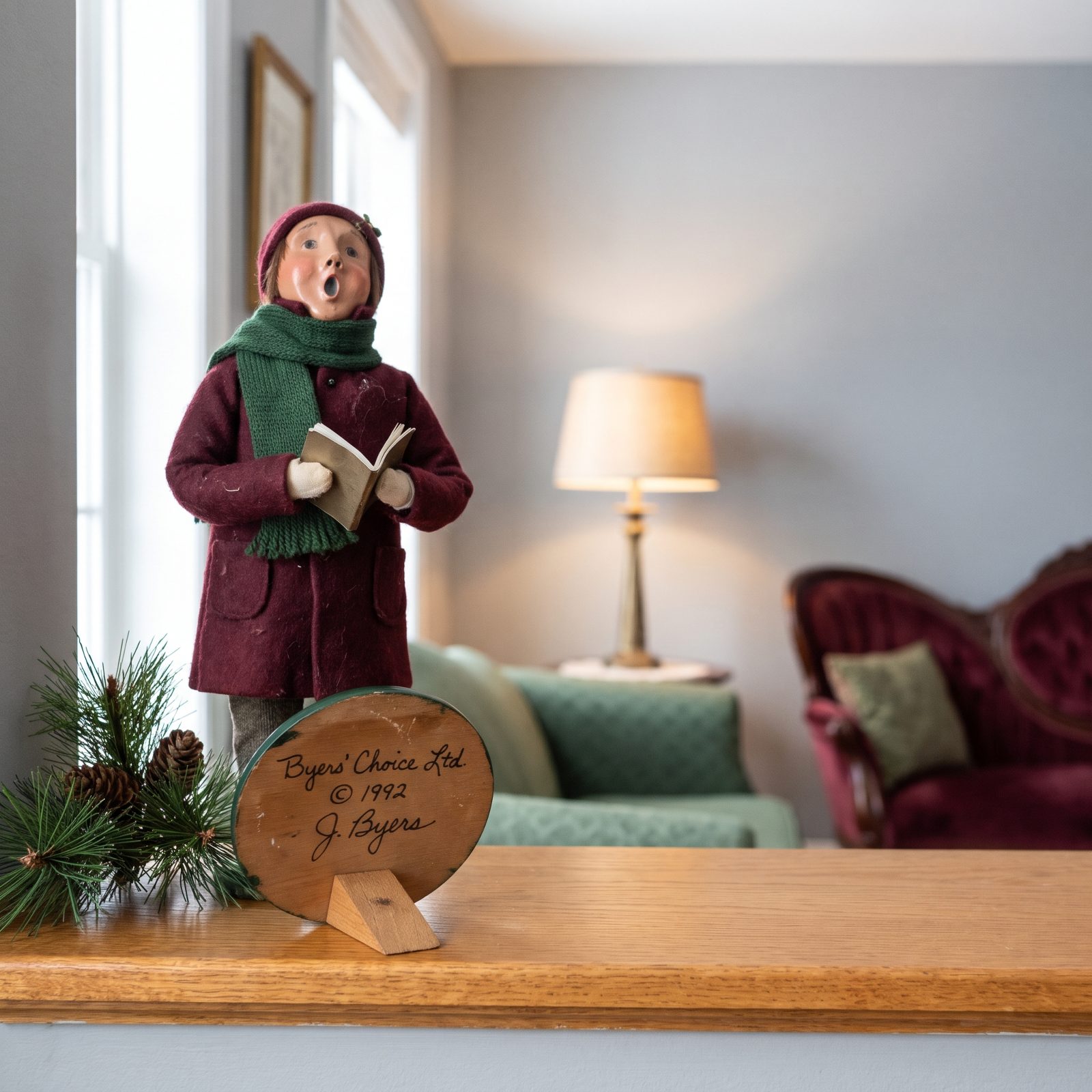
Each one is hand-assembled over a wire armature, mouth open mid-carol, and the collectible value lives on the bottom of the base. Byers’ Choice figures made before the mid-1980s carry a premium that the mass-produced later pieces simply don’t, and the early signed-and-dated ones most of all.
Flip it over. A signature from Joyce Byers herself, a date, limited edition markings — these separate a twenty-dollar shelf figure from one worth hundreds. Retired characters and early themed sets climb higher still.
14. Margaret Furlong Shell Angels
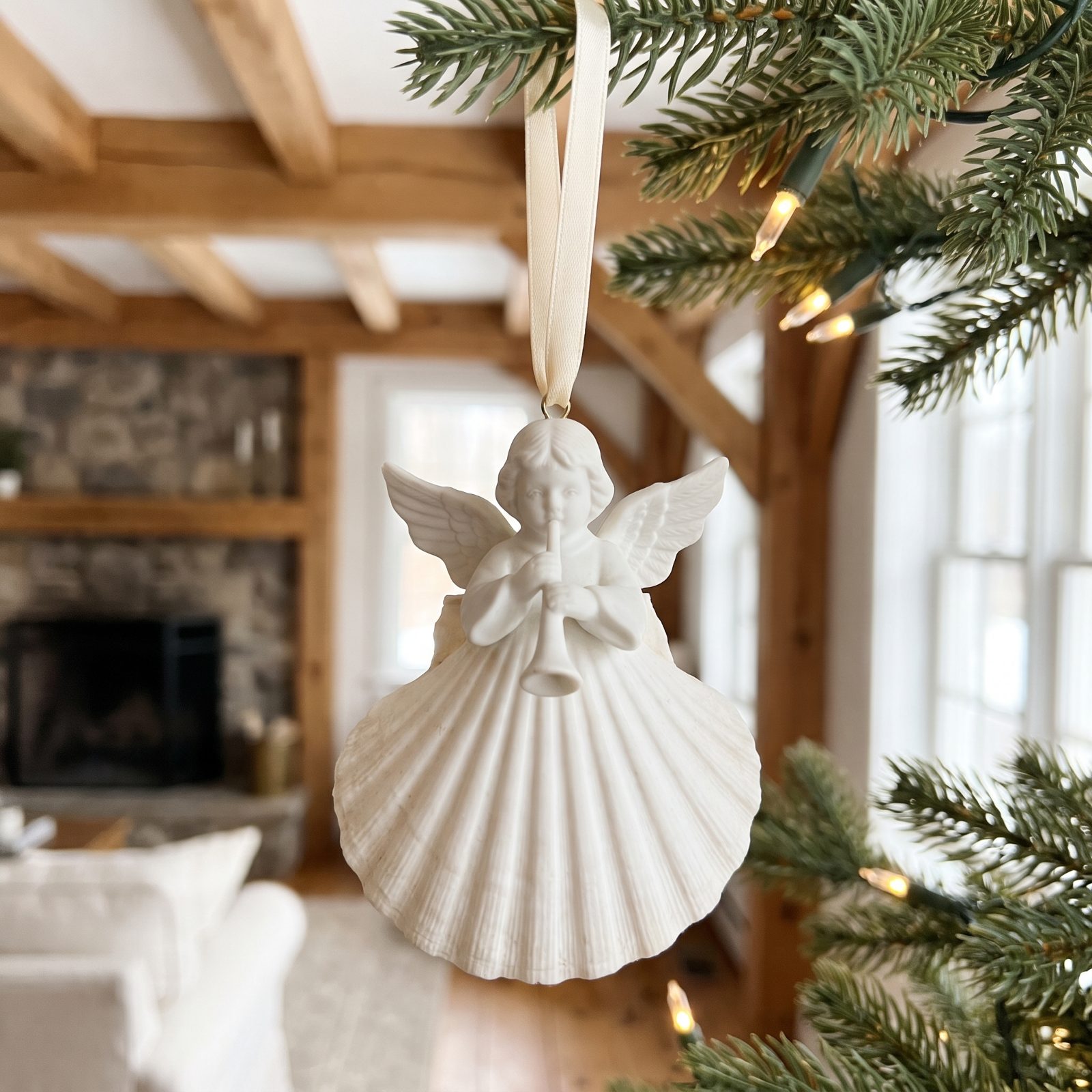
Pure white bisque porcelain, shaped around the lines of a scallop shell — which is where the whole look comes from. Margaret Furlong started making these in Oregon in the late 1970s. The early ones, plus the retired annual designs, are what collectors watch for.
Fragility is the catch. Trumpets snap, wingtips chip, and a repaired angel is worth a fraction of a flawless one. Keep the original box if you ever find one with it still. These show up at estate sales looking plain to people who have no idea what they’re holding.
13. Holt-Howard Santa Candleholders
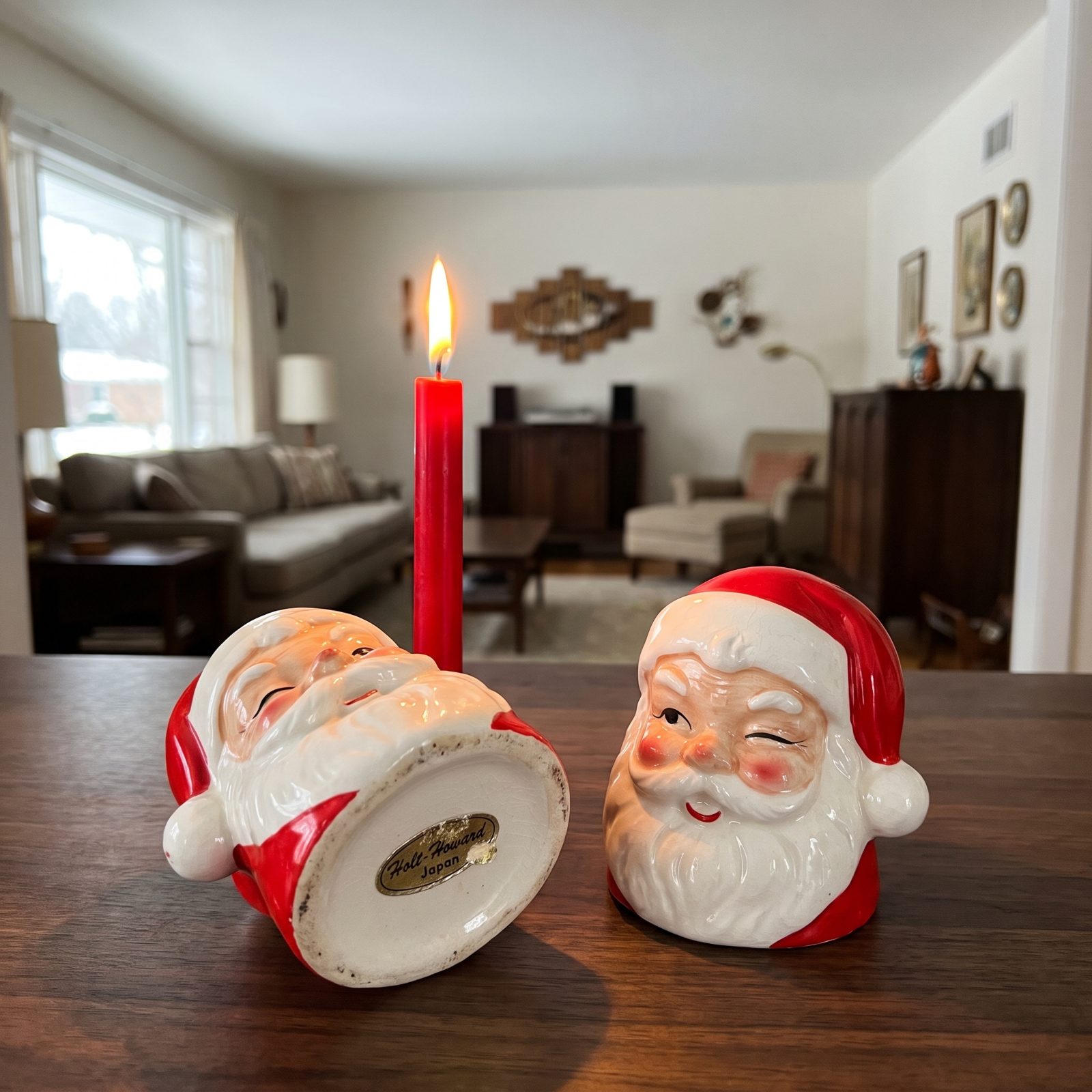
Winking, rosy-cheeked, and unmistakably late-fifties. Holt-Howard’s Santa line is some of the most sought-after mid-century ceramic holiday kitsch going — the candleholders, the salt-and-pepper sets, the whole grinning family of them.
Value lives in the mark. Look for the Holt-Howard foil sticker or the stamped backstamp with the year. Reproductions and knockoffs flooded in later, so the original markings carry weight. Chips, repainting, and missing stickers all cut into it. And a matched, marked pair beats two singles every time.
12. Napco Spaghetti-Trim Santas
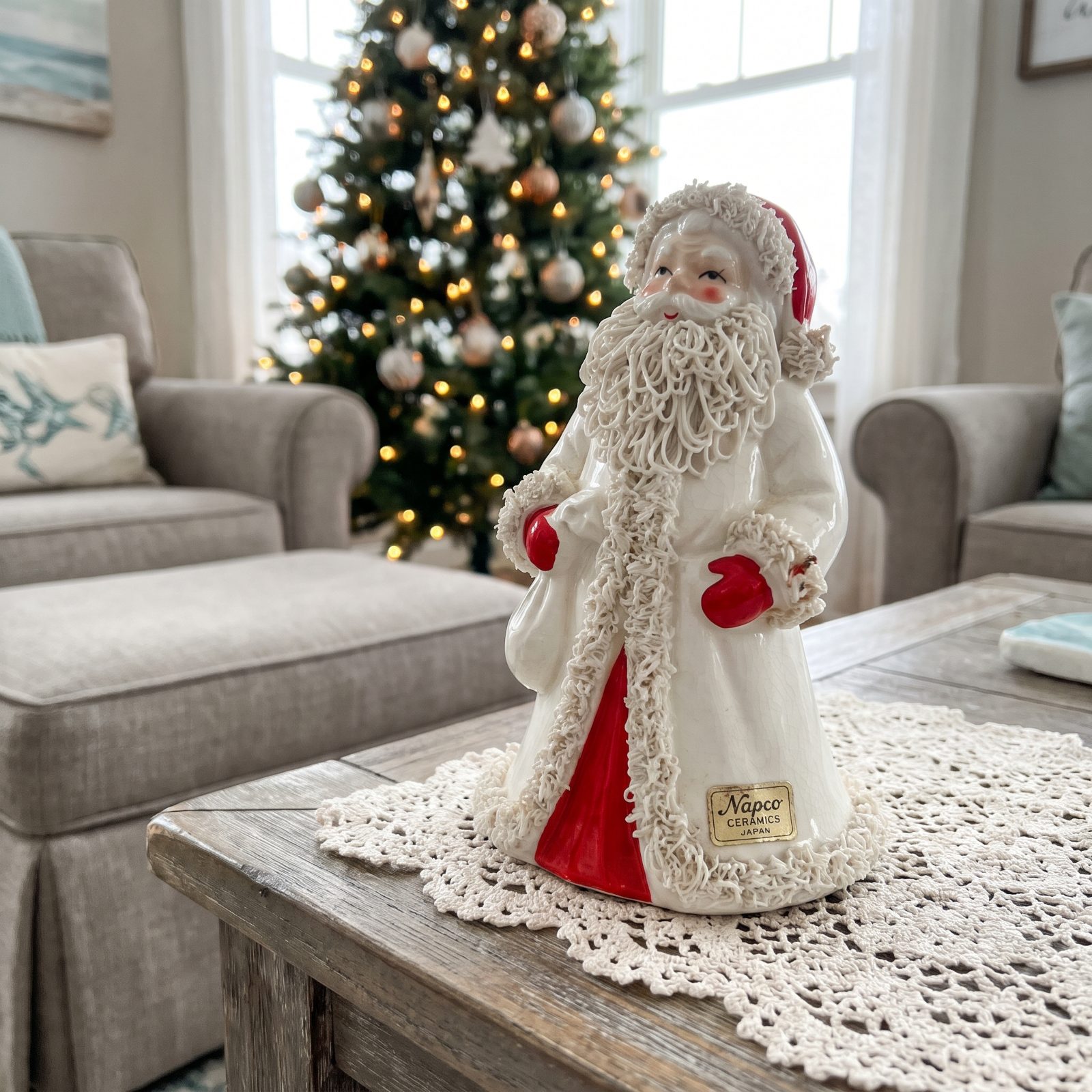
That curly, extruded ceramic trim gave these their nickname, and it’s also their weakness. Napco pressed fine ceramic strands onto the beard and fur to mimic spaghetti, and those delicate loops break off at the slightest knock. A piece with its trim fully intact is far rarer than it ought to be.
Run your finger lightly along the trim before you buy. Missing strands and glued repairs turn up everywhere. Collectors want the original Napco label or backstamp, bright paint, and a complete beard. All that condition sensitivity is exactly what keeps the clean ones valuable.
11. Gurley Novelty Christmas Candle Sets
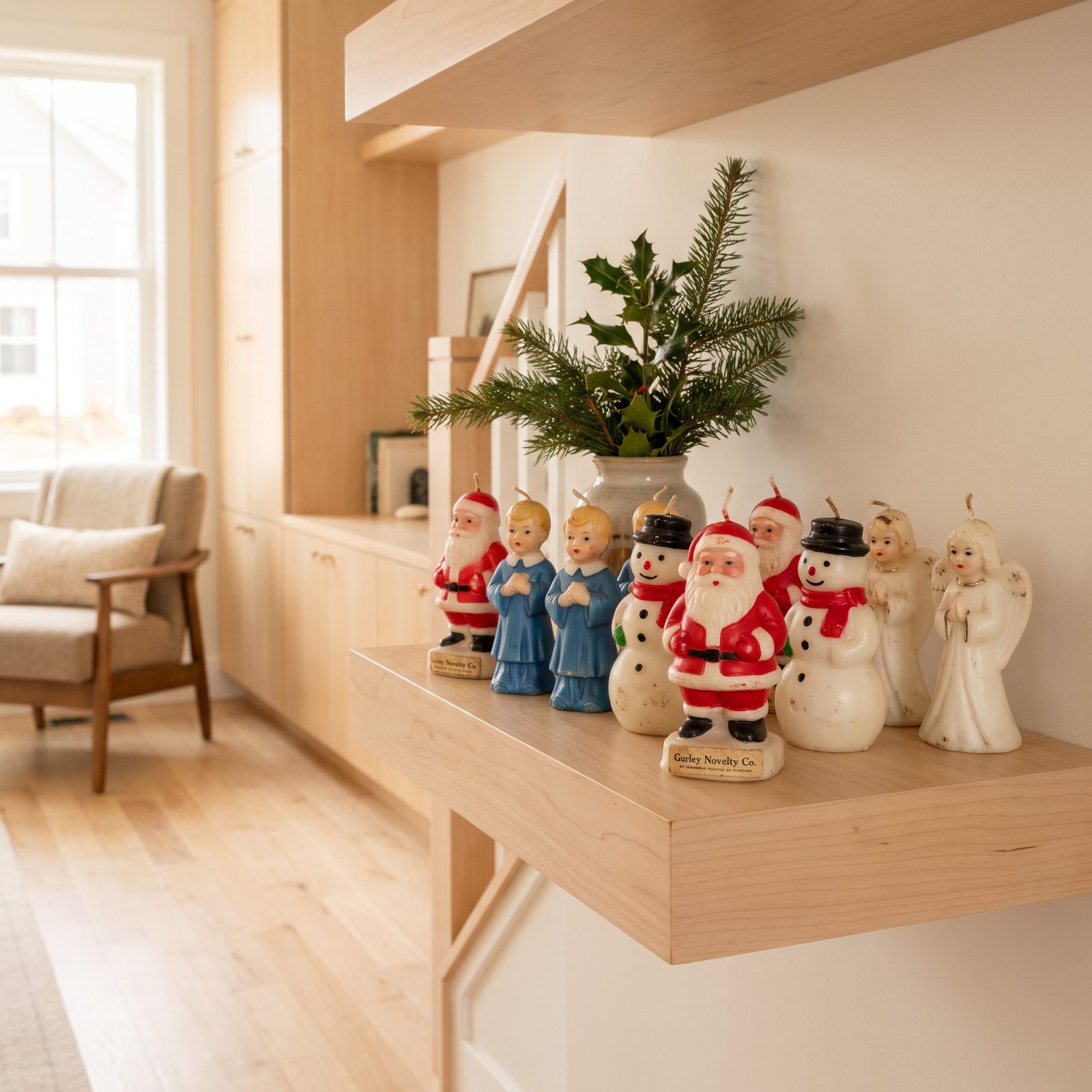
Nobody actually burned these — that’s the point. Gurley made figural wax candles shaped like Santas, choir boys, angels, and snowmen, and families set them out year after year as decorations rather than lighting them. An unburned wick is what you want to see.
An original paper Gurley label on the base can help confirm the maker and bumps the value, though old labels are often worn or illegible, so don’t rely on it alone. Rarer figures, holiday sets still together, and ones with no wax bloom or melting are the keepers. Cheap enough to start a collection on, too, which is half the fun.
10. Barclay Lead Christmas Village Figures
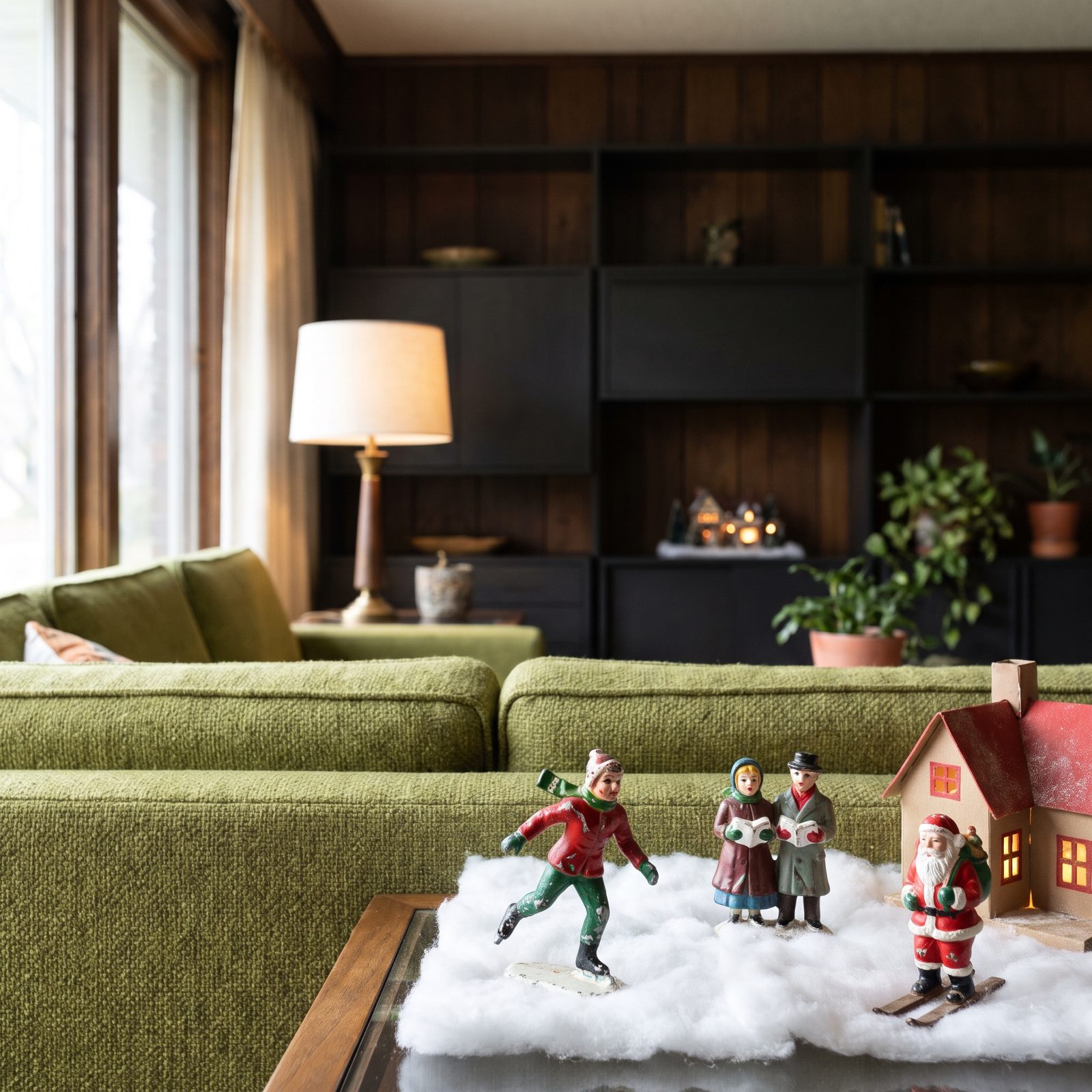
These heavy little cast-metal figures populated the putz villages under mid-century trees — skaters, skiers, carolers, a Santa headed down the slopes. Barclay and the related American makers turned them out through the thirties and forties, and the hand-painted detail is what carries value now.
Check the paint on the high points. Faces, raised arms, anywhere it rubs off first. Original paint over repaint matters a great deal, and the rarer action poses bring more than the common standing figures. One caution, though.
9. Antique German Advent Calendars from the Early 1900s
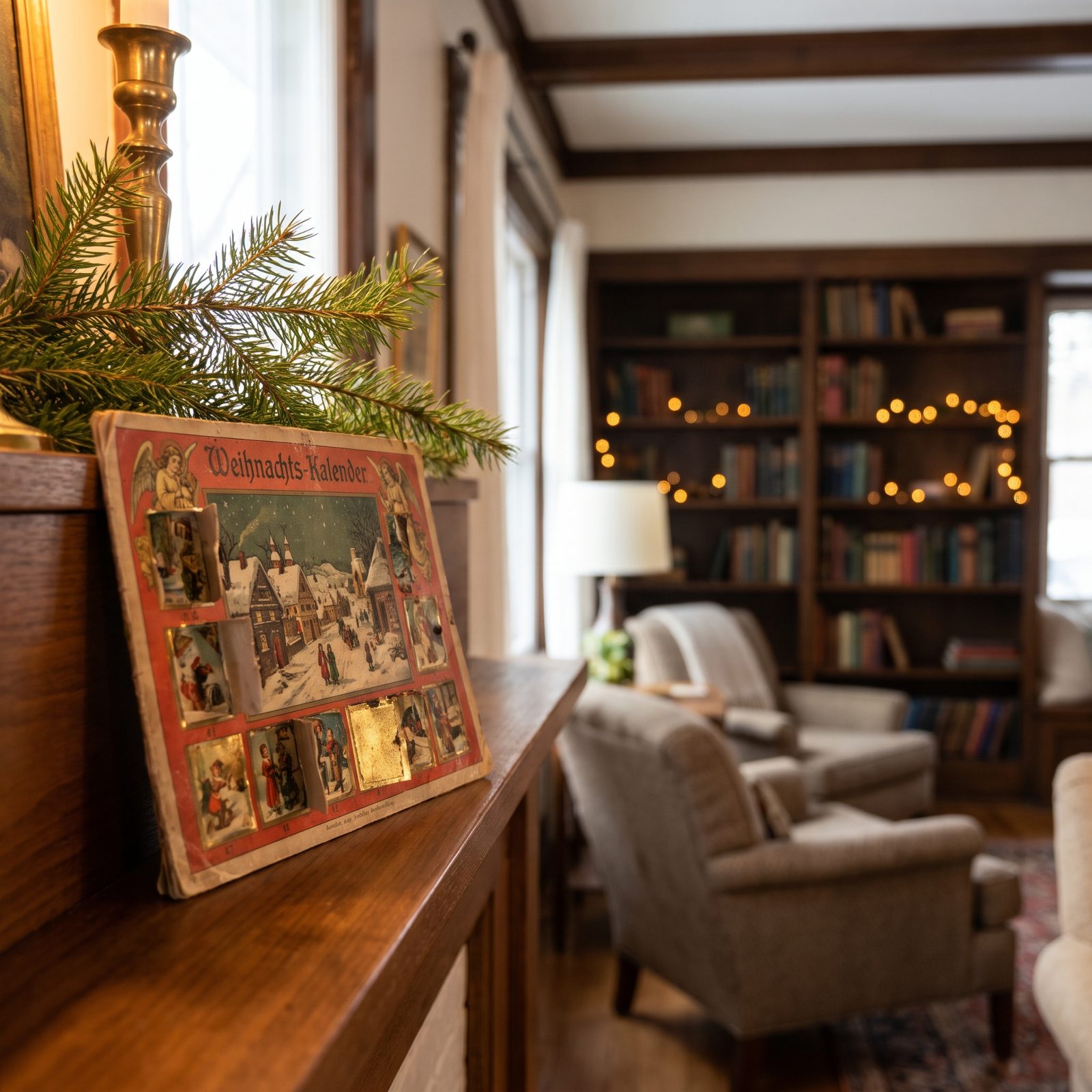
The oldest ones are paper and barely held together, which is exactly what makes them precious. German printers in Munich started making these in the early 1900s, with little doors hiding a Bible verse or a picture behind each date.
Collectors hunt the pre-WWII examples with intact, unopened doors, and here’s the catch: most were used. Every door got torn open by some kid decades ago. A calendar with its doors still shut is a small miracle of preservation.
8. Beistle Honeycomb Tissue Christmas Centerpieces
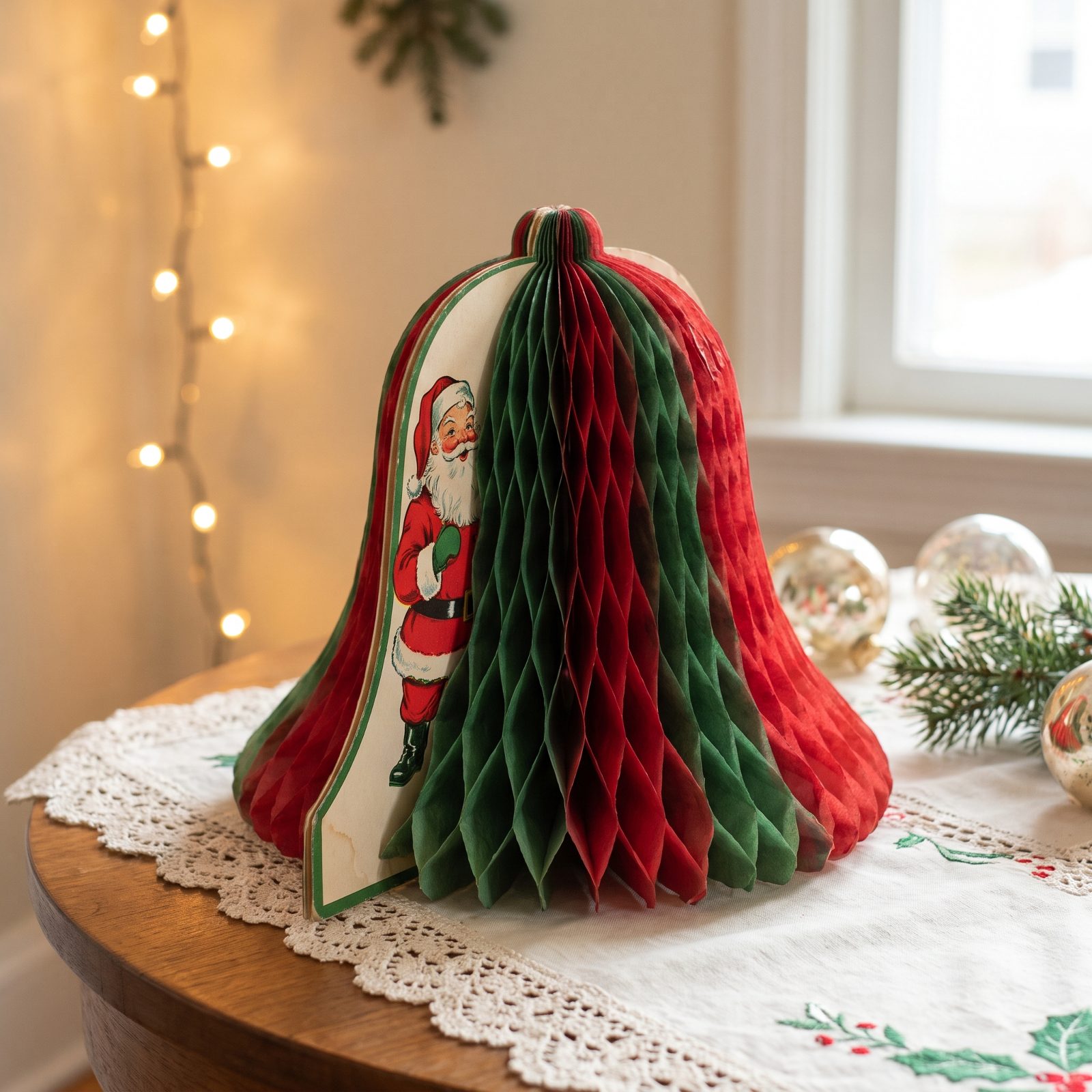
Flat as an envelope one second, a full tissue-paper bell the next. That accordion trick is why Beistle honeycomb pieces still have fans decades after they were made.
The Beistle Company out of Pennsylvania has been cranking out paper party goods since 1900, and their honeycomb centerpieces from the 1940s through the 1960s turn up at estate sales looking impossibly fragile. Value lives in the condition of the tissue. Tears, water stains, sun-faded fans — all of it knocks the price down fast. A crisp example that still opens cleanly and keeps its original cardstock front panel is the one worth grabbing.
7. Vintage Coca-Cola Cardboard Santa Store Displays
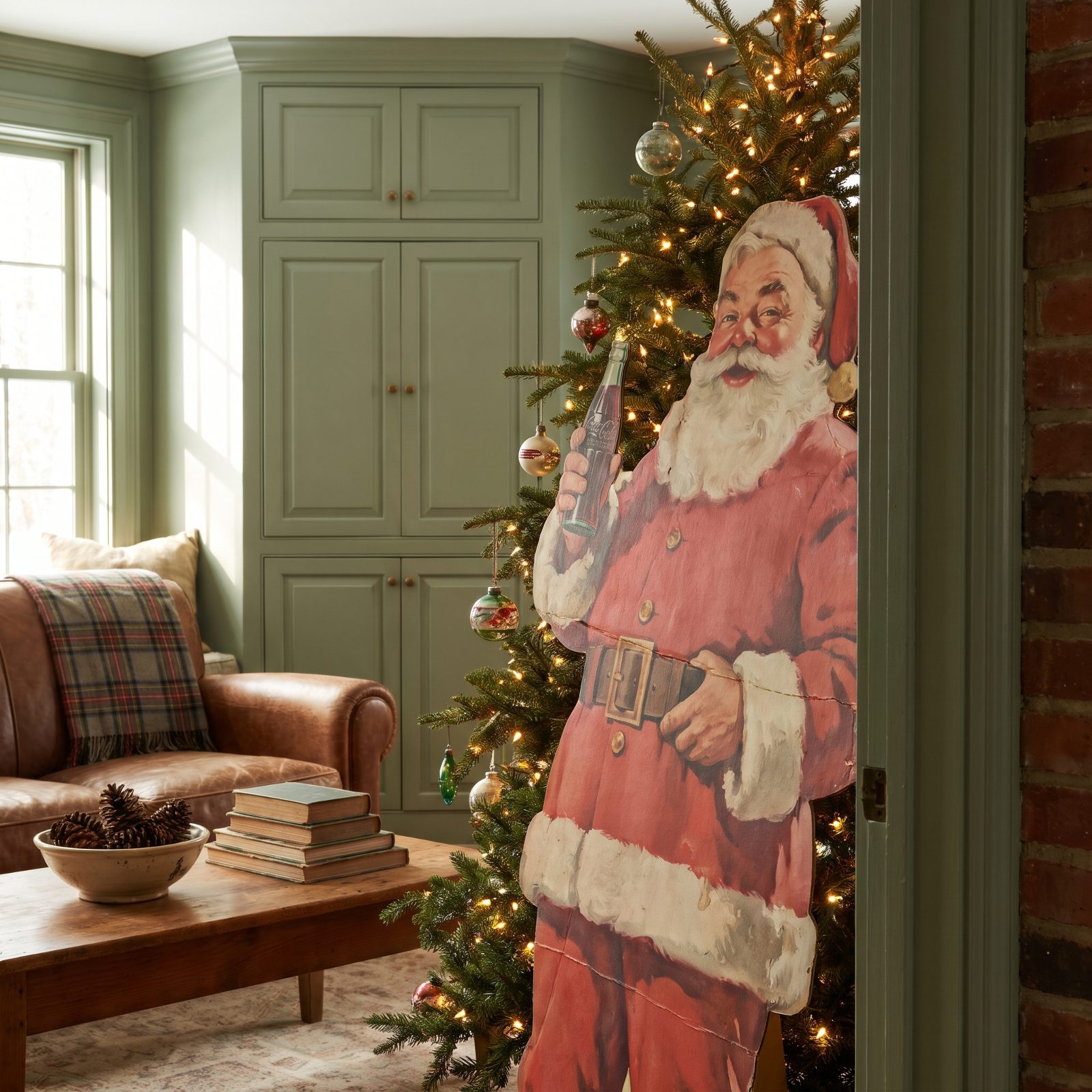
That red suit you picture when you think of Santa? Coca-Cola’s advertising helped lock it in. Illustrator Haddon Sundblom painted the company’s Santa from 1931 into the 1960s, and the cardboard store displays built around those paintings are now serious collector territory.
Size matters. Life-size standing die-cut Santas command the most, but good luck storing one without creasing it. Flat, uncut, store-fresh pieces are rare because most got bent, taped, and tossed after the holidays. Check for the self-standing easel back and intact die-cut edges.
6. Early Hallmark Keepsake Ornaments from 1973
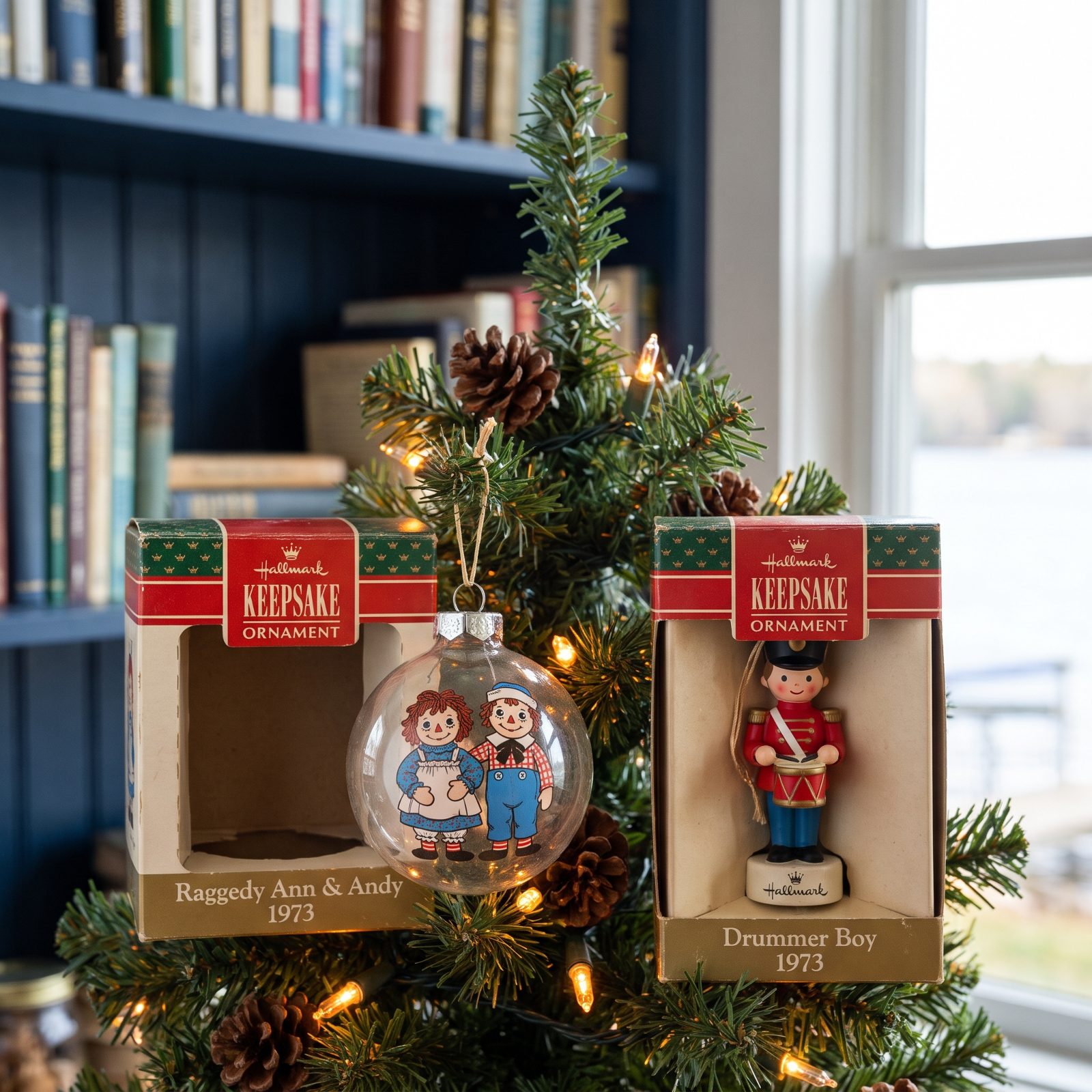
Hallmark launched its Keepsake line in 1973, and that first year is the holy grail. The debut was six glass ball ornaments and twelve yarn figures, and collectors pay a premium for the originals still boxed.
Here’s what people get wrong: the box is often worth as much as the ornament. A loose first-year Keepsake has value, sure. But a boxed one with the price sticker long gone, cap and string original, jumps considerably. The earliest dated pieces with intact backstamps are the ones that move at specialty auctions.
5. Swarovski Annual Snowflake Ornaments

Swarovski began its annual crystal snowflake series in 1991, and no two years are identical. Each features a different six-pointed design cut from the company’s clear crystal, released once and never repeated.
The early years are what collectors chase, and condition has to be flawless. One chipped point or a clouded facet tanks the value, because light refraction is the whole reason these exist. Original box and certificate matter enormously. The 1991 inaugural piece sells for many multiples of what later editions bring — when it surfaces with its paperwork, which isn’t often.
4. Gorham Sterling Silver Tree Ornaments
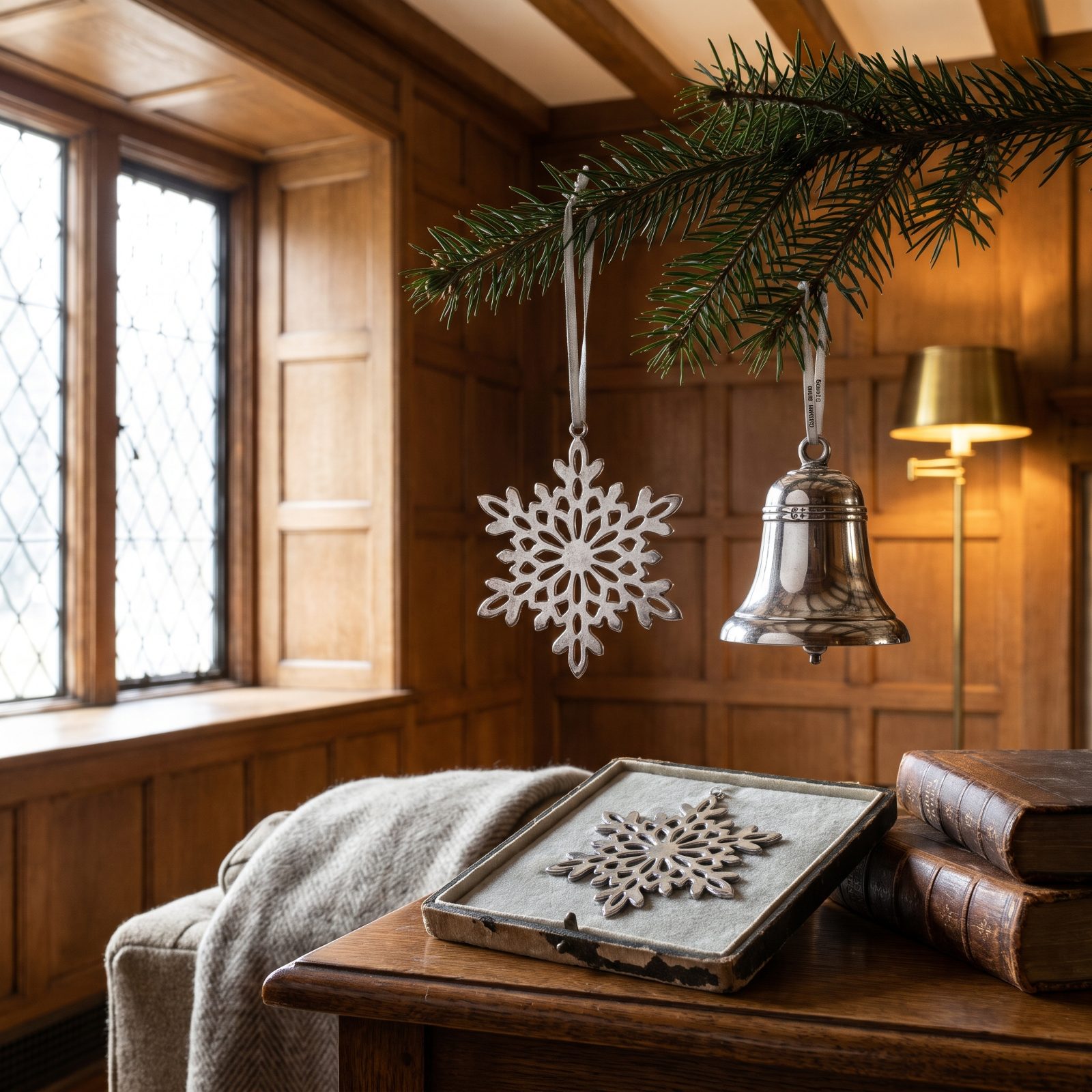
Gorham, the Rhode Island silversmith founded in 1831, released its sterling silver snowflake series beginning in the early 1970s. Each year brought a new pierced snowflake design, hallmarked and dated.
A quick confession. We used to think silver ornaments were just dressed-up trinkets, until we held an early Gorham snowflake and felt the weight of the thing. These are solid sterling, genuinely heavy, with crisp openwork that throws light around in a way no glass ball manages.
Collectors want the complete dated run with original pouches. Tarnish is forgivable since it polishes right out. Dents and bent points are not. Check the hallmark against the year.
3. Bucilla Hand-Stitched Felt Christmas Stockings
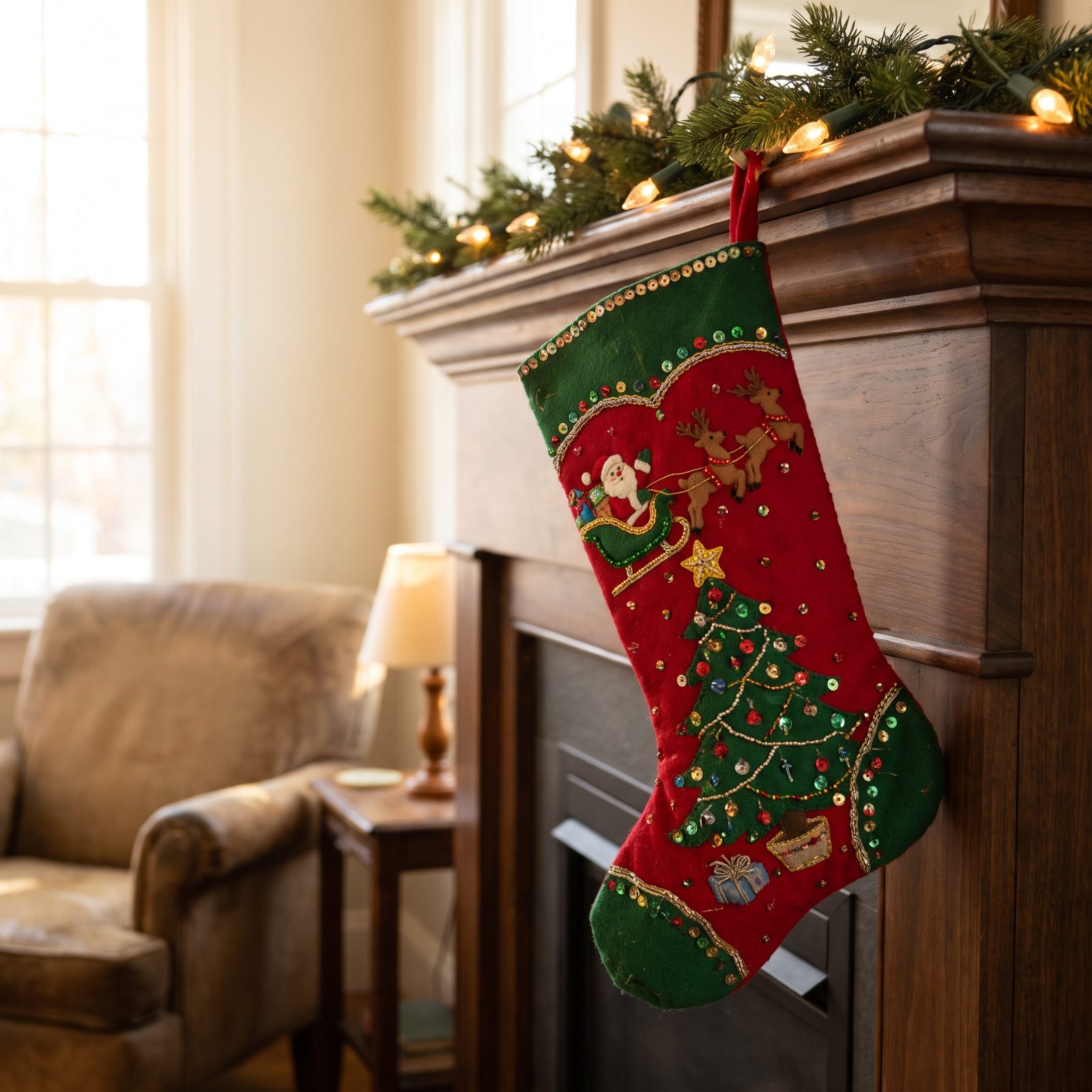
These were kits, and that’s the whole charm. Bucilla sold felt stocking patterns with pre-cut pieces, sequins, and beads, and someone spent weeks hand-stitching every element into place.
Finished vintage Bucilla stockings carry value precisely because of that labor. The sequin-and-bead density, the metallic thread, the tiny appliqué figures — no two are quite the same. Water damage, moth holes, and missing beads hurt the price. Minor wear, though, is expected and forgiven. A fully beaded, intact example from the mid-century shows the kind of patience nobody has time for anymore.
2. Ceramic Poinsettia TV Lamps
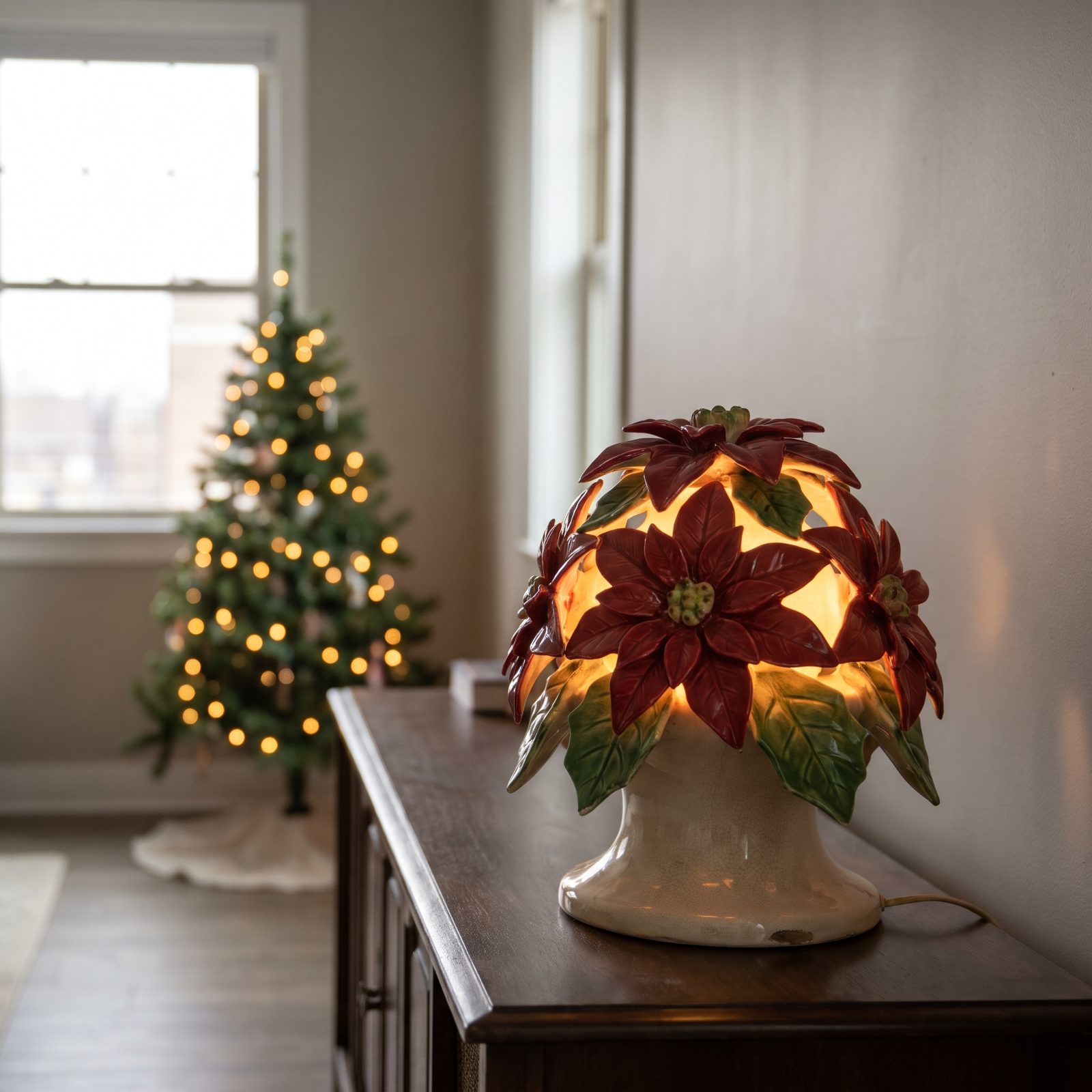
Before everyone lit their rooms with phone screens, families set a ceramic lamp on top of the television set. The theory was that a soft background glow eased eye strain in the dark. The poinsettia versions are the Christmas workhorses of that craze.
Made mostly in the 1950s and 1960s, these sculpted ceramic blooms hid a low-watt bulb that lit the petals from within. Hunt for intact ceramic with no cracks and original wiring. A working cord that hasn’t been hacked or replaced adds value — though plenty of collectors rewire for safety and don’t lose any sleep over it.
1. Evergleam Aluminum Christmas Trees
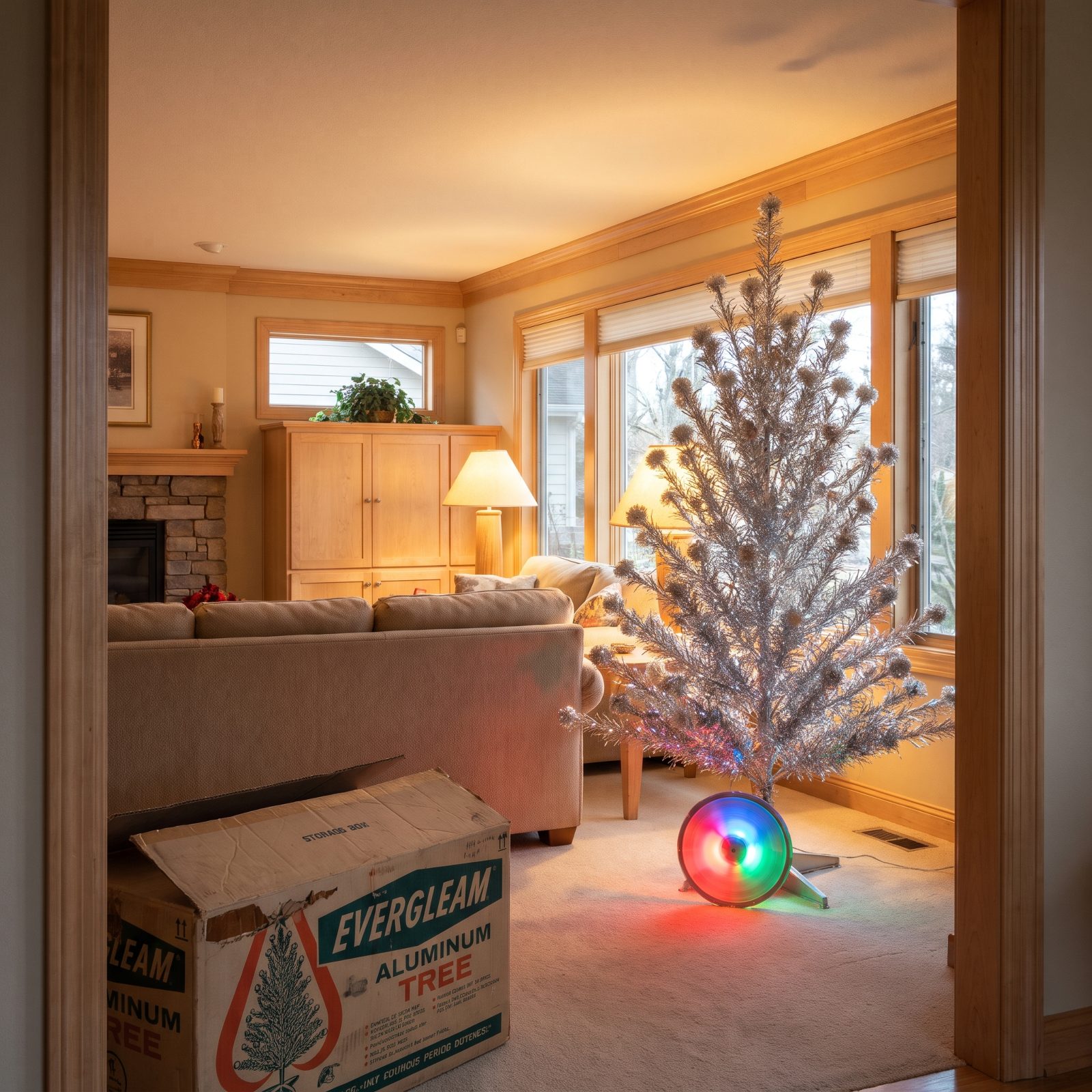
The shimmering metal tree that defined a decade. The Aluminum Specialty Company of Manitowoc, Wisconsin introduced the Evergleam in 1959, and for a few years no modern home was complete without one glinting in the corner.
Collectors want the complete package: the tree, every numbered sleeve of branches, the pole, and especially the original box with its period graphics. The color wheel, a disc that glows red, blue, and green at the tree’s base, is a separate prize. Larger trees in the six and seven foot range bring more than the tabletop versions.
A tip nobody mentions. The branch count printed on the box tells you whether the set is complete before you buy. Missing branches are the quiet value killer.