
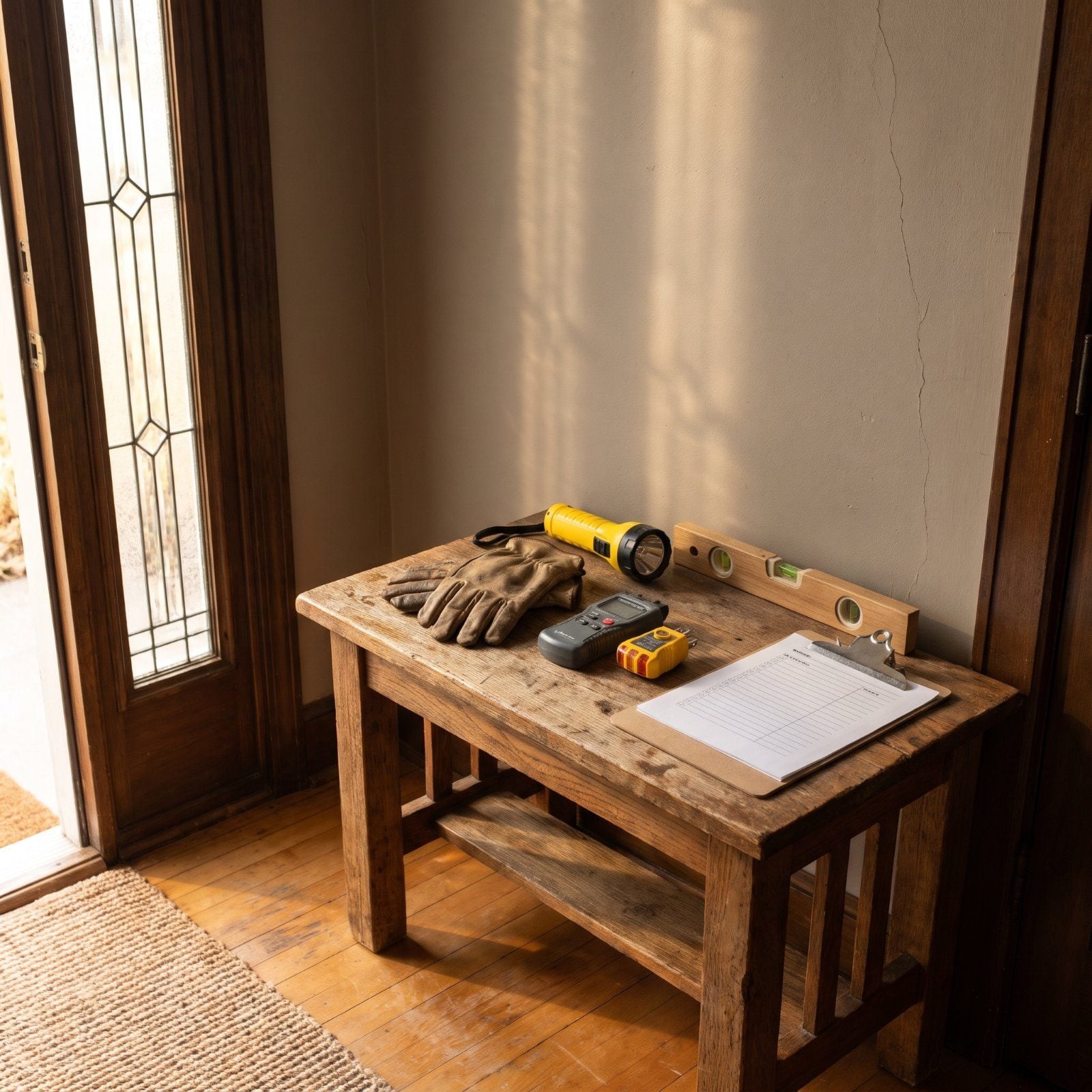
A good inspector knows a house before the clipboard comes out. They catch it at the threshold, in the way the air hangs, in a ceiling line that reads just slightly wrong. The nose does half the work and the feet do the rest. Years of walking into houses teach a person which clues are cosmetic and which ones mean a quiet, expensive conversation later on. We pulled together the tells that give a place away almost instantly — the ones that make an inspector slow down, pull the flashlight, and start asking questions the seller hoped nobody would.
Please note that some of the images in this article were created with the assistance of AI.
48. A Musty Smell at the Entry
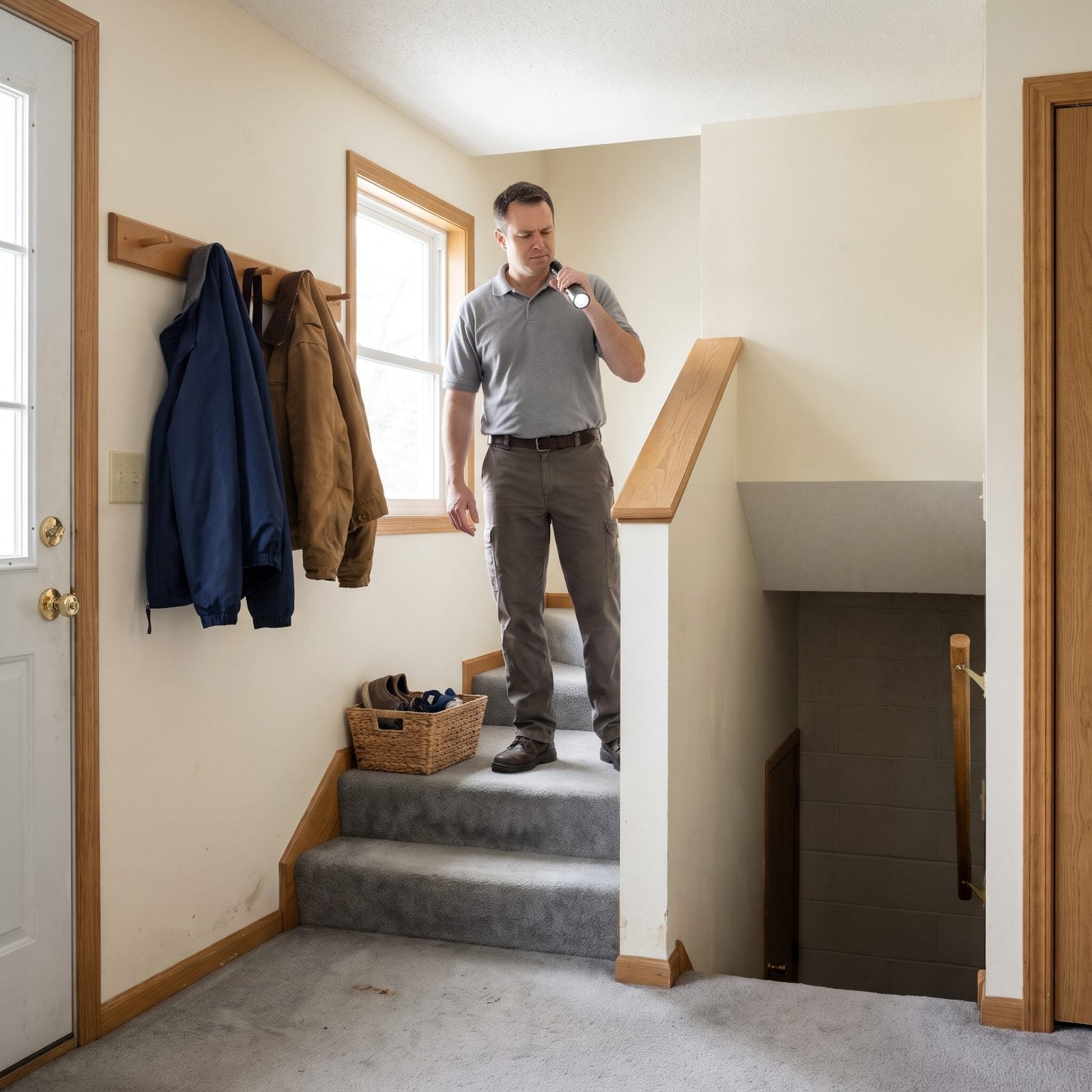
That damp, earthy smell the second the door opens? An inspector clocks it before anyone finishes saying hello. Musty air usually means water has been somewhere it shouldn’t, and it has been there a while. Dry homes don’t smell like wet cardboard.
Where the smell gets stronger is the giveaway. Follow the nose toward a basement or crawlspace and the source is rarely far off. Sometimes it’s an old leak long since patched over, and sometimes it’s still happening behind the drywall. The smell won’t tell you which. It just tells you to look harder.
47. Brown Rings on the Ceiling

A brown ring is a dried water stain, and the ring itself is the tell. Water spreads out, dries from the edges inward, and leaves a dark border like a coffee cup parked on a napkin. More rings nested inside the big one? It’s leaked more than once.
So the inspector’s next question is whether it’s old news or an open wound. A moisture meter settles that fast. Dry reading, probably a fixed roof or an ancient tub overflow. Wet reading, and something upstairs is still letting water through — and fresh paint over a stain fools nobody who knows to touch it.
46. Floors That Visibly Slope
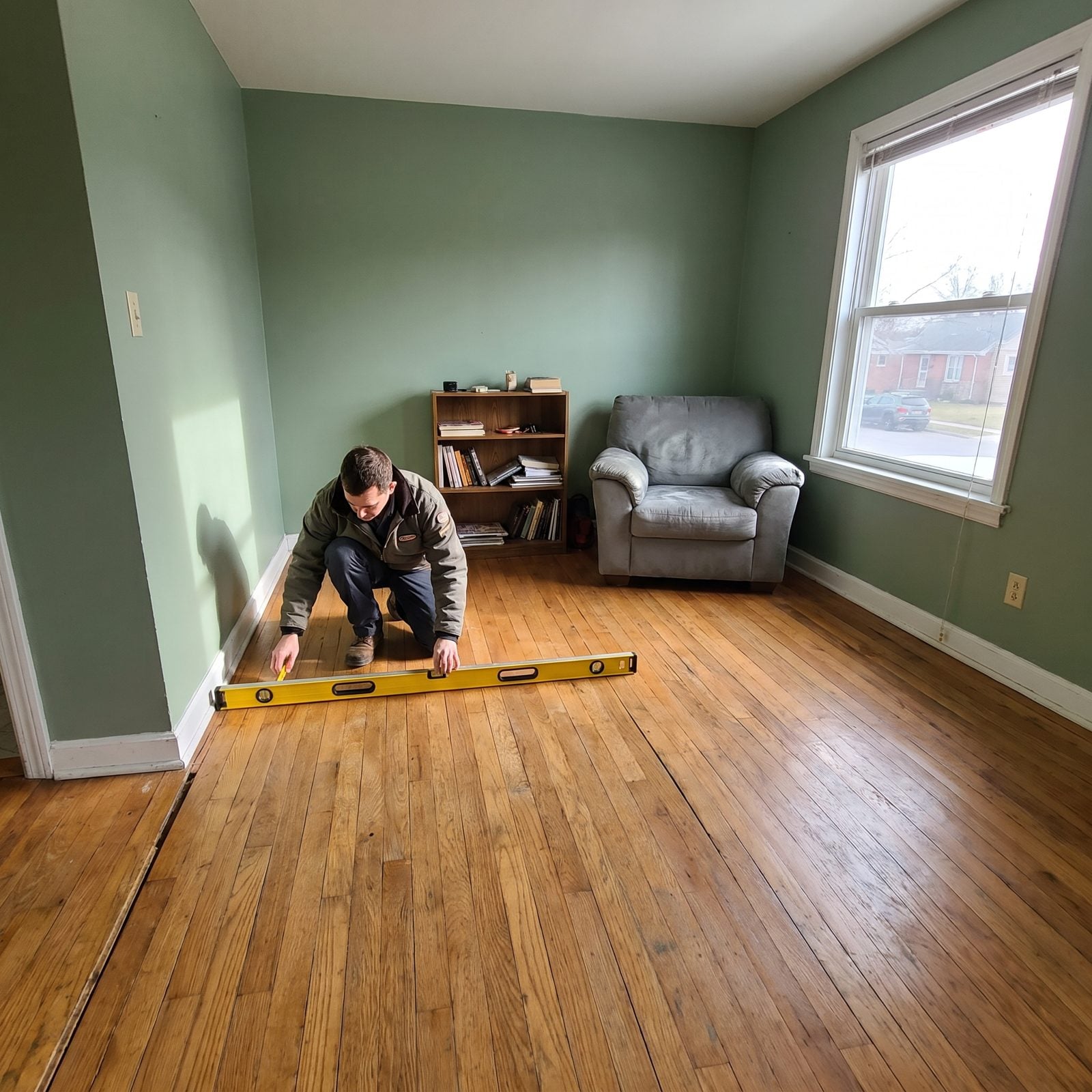
Drop a marble and watch it roll off on its own. That little parlor trick is how a lot of people discover their floors aren’t level, and inspectors feel the same thing through their shoes the moment they walk the room.
Gentle, even slope across an old house is usually just the building settling into a century of itself. No drama there. But a floor that dips sharply in one spot, or sinks toward the center of a room, can point to a failing support beam or a post that’s lost its footing down in the crawlspace. The level tells a story the eye can’t quite trust.
45. One Wall With Suspiciously Fresh Paint

Why is one wall gleaming when the rest of the room looks ten years older? That mismatch sets off alarms. Nobody repaints a single wall for fun — they repaint it to cover something.
Could be innocent. A scuff, a nail-hole repair, a toddler with a marker. Or it could be hiding a water stain, a crack, or a leak that got patched but never actually solved. So an inspector rakes a flashlight across it at a low angle to find the patch underneath, then rests a moisture meter against it just to be sure the trouble went away with the old paint.
44. Plug-In Air Fresheners in Every Room

One scented plug-in is a candle habit. A plug-in in every single room, plus a candle burning, plus a diffuser going on the counter — that’s a strategy. And strategies exist because there’s something to cover.
Heavy fragrance is one of the oldest seller tricks around. It smothers musty basements, pet odor, smoke, standing water. An experienced inspector mentally unplugs the whole lot, waits a beat, and smells the house underneath. If the air goes sour the moment the vanilla fades, you’ve learned something the listing photos never showed.
43. A Whiff of Sewer Gas

A sharp, rotten-egg tang near a bathroom or floor drain is unmistakable, and it’s never nothing. Sewer gas sneaks into a house when a plumbing trap fails at its one job: holding a little water that seals the pipe off from the sewer below.
Sometimes it’s harmless and quick to fix. A floor drain in a guest bath that nobody runs just dries out, the seal breaks, and the smell drifts up — pour water in, done. Other times it’s a cracked vent stack or a trap that was never installed right, and now you’re booking a plumber. The nose can’t tell those apart. It can only tell you to go find out.
42. A Bouncy or Spongy Floor

Spongy floors are the subfloor telling you it’s rotting. A healthy floor feels solid. One that gives underfoot — especially near a sink, dishwasher, or tub — usually means water got into the wood below and softened it like a wet biscuit.
That’s why inspectors work the kitchen and bathroom on purpose, pressing a boot against the base of the sink cabinet and the floor in front of it, feeling for the give. Wherever it flexes, out comes the moisture meter and the flashlight. The bounce is just the symptom. The leak that caused it may still be running quietly under the cabinet, which is exactly why a soft spot is so rarely a small spot.
41. Diagonal Cracks Above Doors or Windows
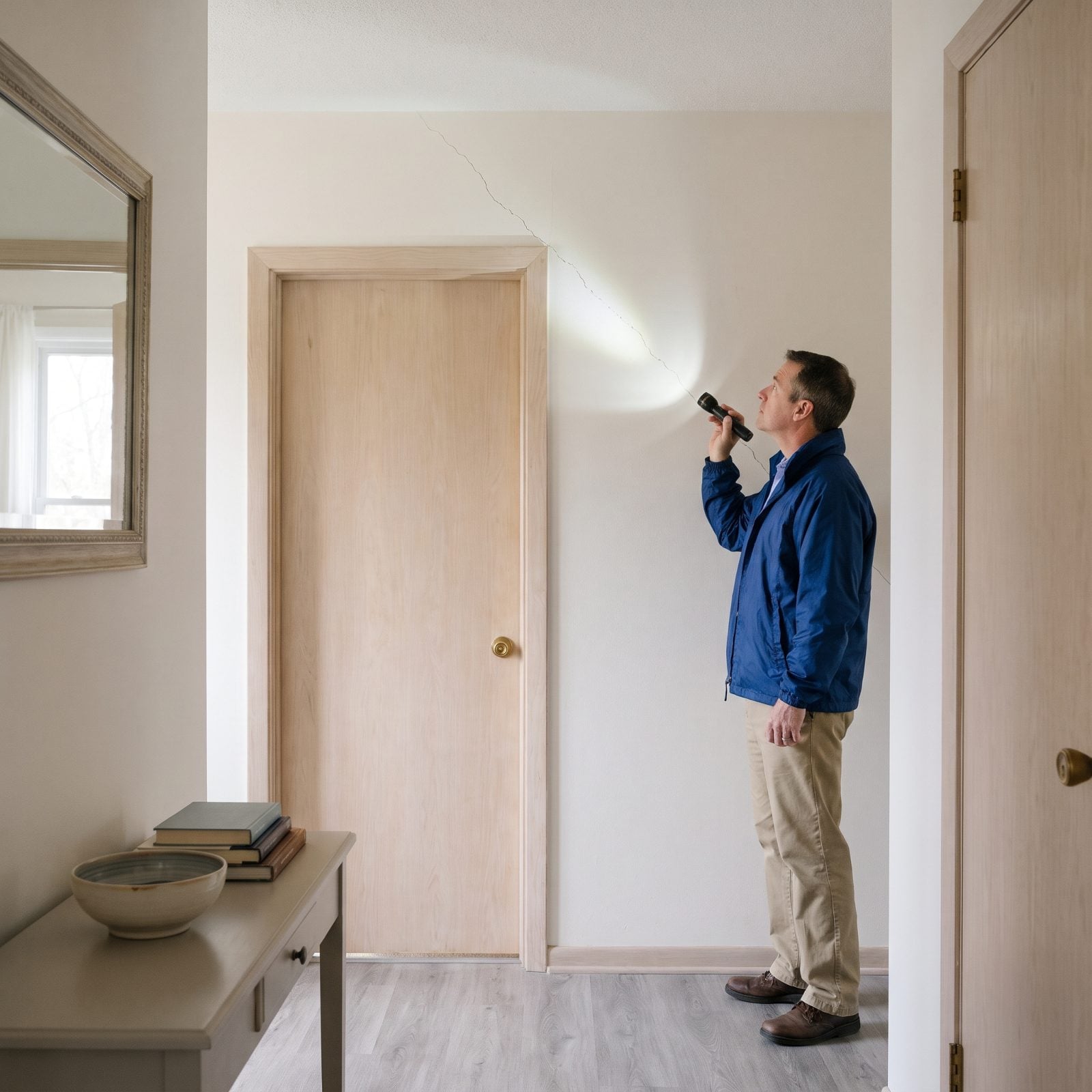
Cracks love corners. The top corner of a door or window is where drywall is weakest, so when a house moves, that’s where it splits first. A diagonal line shooting up at an angle from that corner is the classic settlement signature.
Thin and hairline? Often just seasonal movement, nothing to lose sleep over. But a crack that gapes wide at one end, keeps coming back after it’s patched, or runs alongside a door that won’t latch anymore — that points to something structural working away under the surface. The very angle of the split even hints at which way the house is shifting.
40. Stair-Step Cracks in Masonry
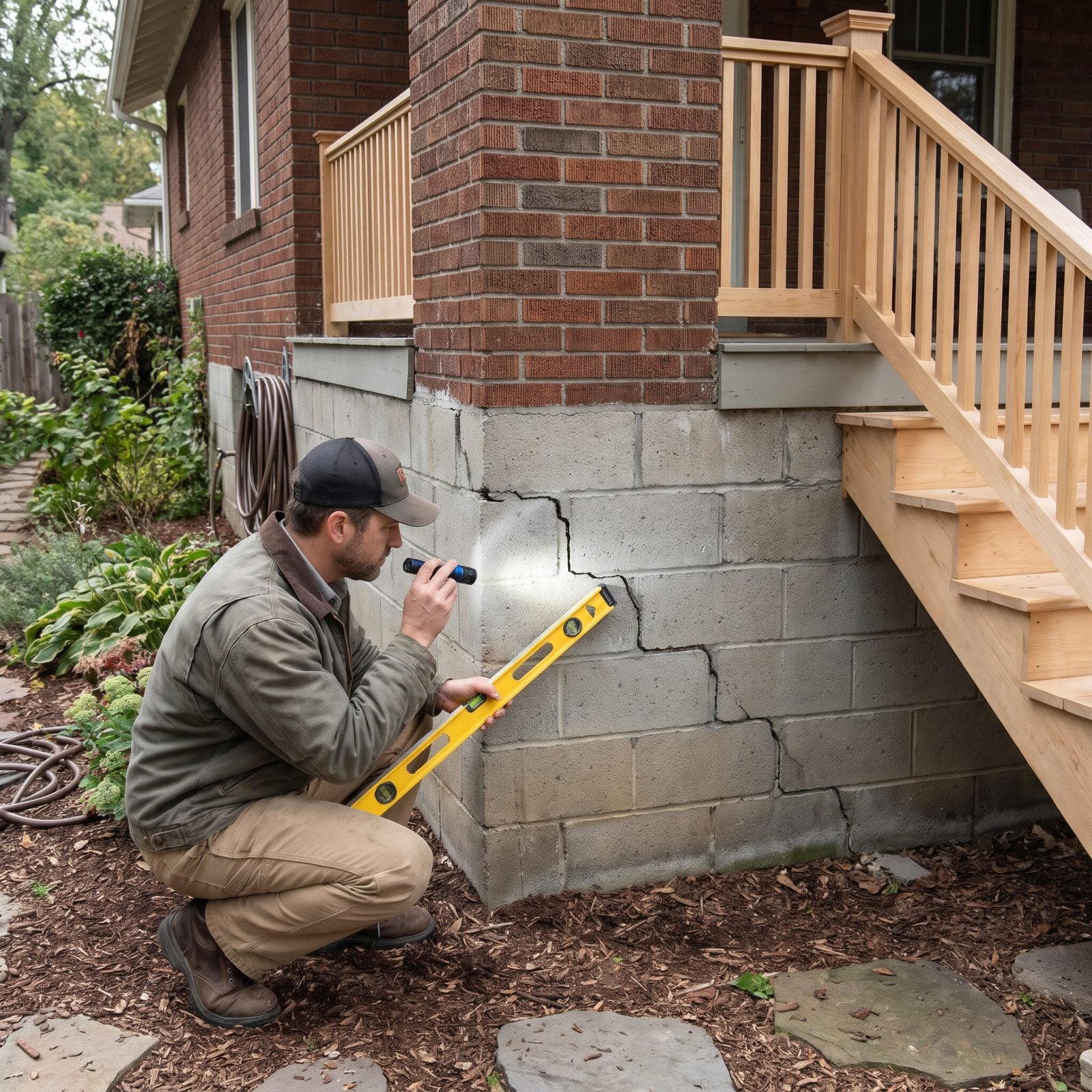
When a crack in a block or brick wall climbs in a zigzag, stepping along the mortar joints like a staircase, inspectors take a longer look. Mortar is the weak link between blocks, so foundation movement follows it, carving out that telltale stepped diagonal.
Hairline stair-steps turn up in plenty of perfectly sound foundations. The ones that matter are wider than a nickel’s edge, show blocks that have shifted out of plane, or let daylight through to the other side. Those can signal soil pressure or a settling footing — and that’s a structural engineer’s phone number, not a tube of caulk.
39. A Sagging Ceiling Plane
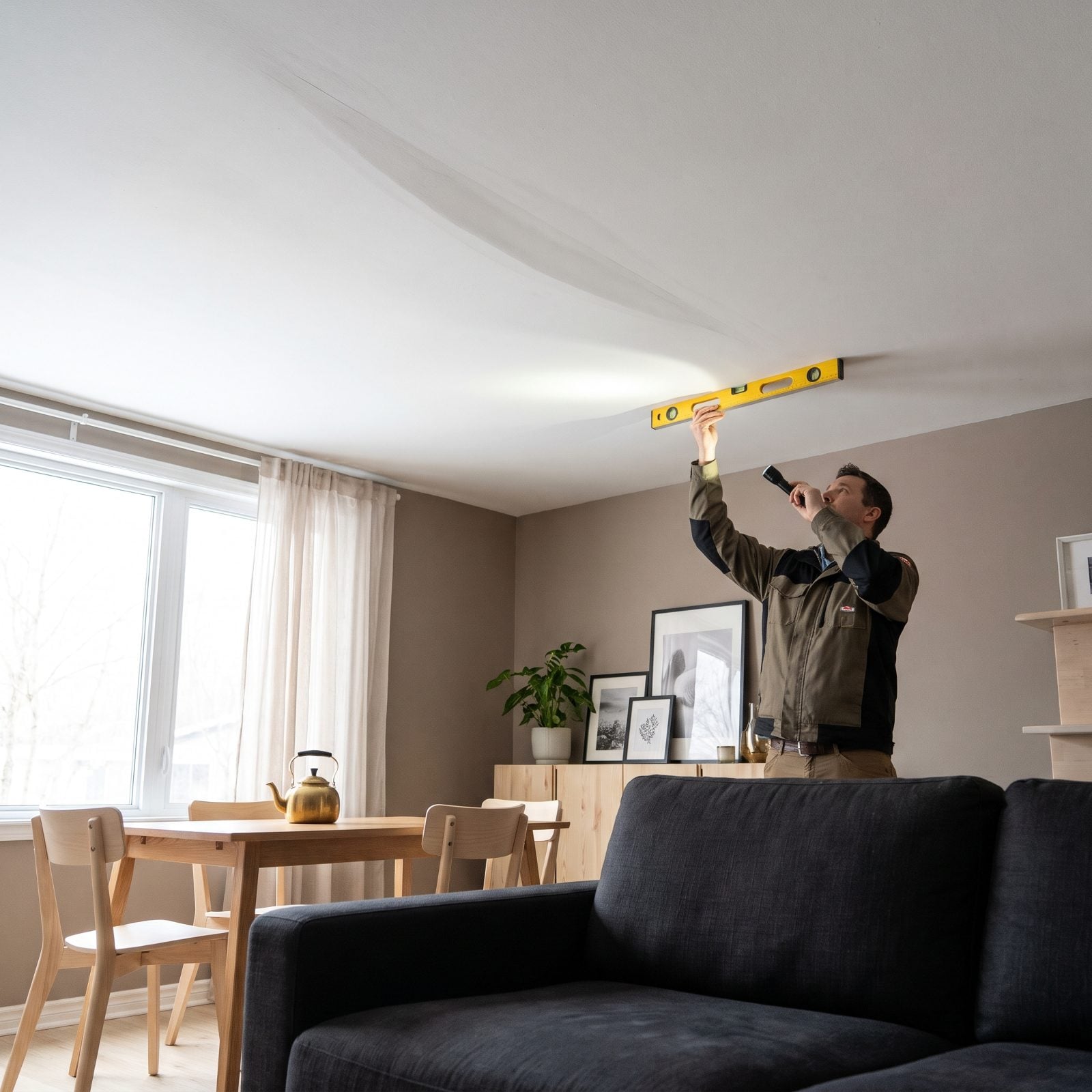
Ceilings are supposed to read as a flat plane. When one bows downward in the middle, your eye catches the wrongness before your brain can even name it. Inspectors confirm it by sighting along the surface with a flashlight held flat against the wall, raking light across the dip.
A sag can mean something minor — drywall hung with too few fasteners that finally pulled loose. It can also mean a leak above soaked the material through, or that a framing member overhead is overloaded or giving way. One of those is a weekend fix. The other you really do not want to be standing directly beneath. Looking up costs nothing; finding out why is the whole reason anyone showed up.
38. Bulging or Soft Drywall That Flexes Under a Thumb

Press a thumb against good drywall and nothing moves. Soft or bulging drywall gives, sometimes with a faint crumble, and that flex almost always means water got in behind the paint. It rarely came alone.
Watch the spots under windows, below bathrooms, and along ceilings beneath an upstairs tub. A bulge that follows a straight line usually traces a pipe or a seam that let go. Paint can hide the stain, but it can’t firm up the mush underneath.
37. Cupped Hardwood or Laminate That Peaks Along the Seams
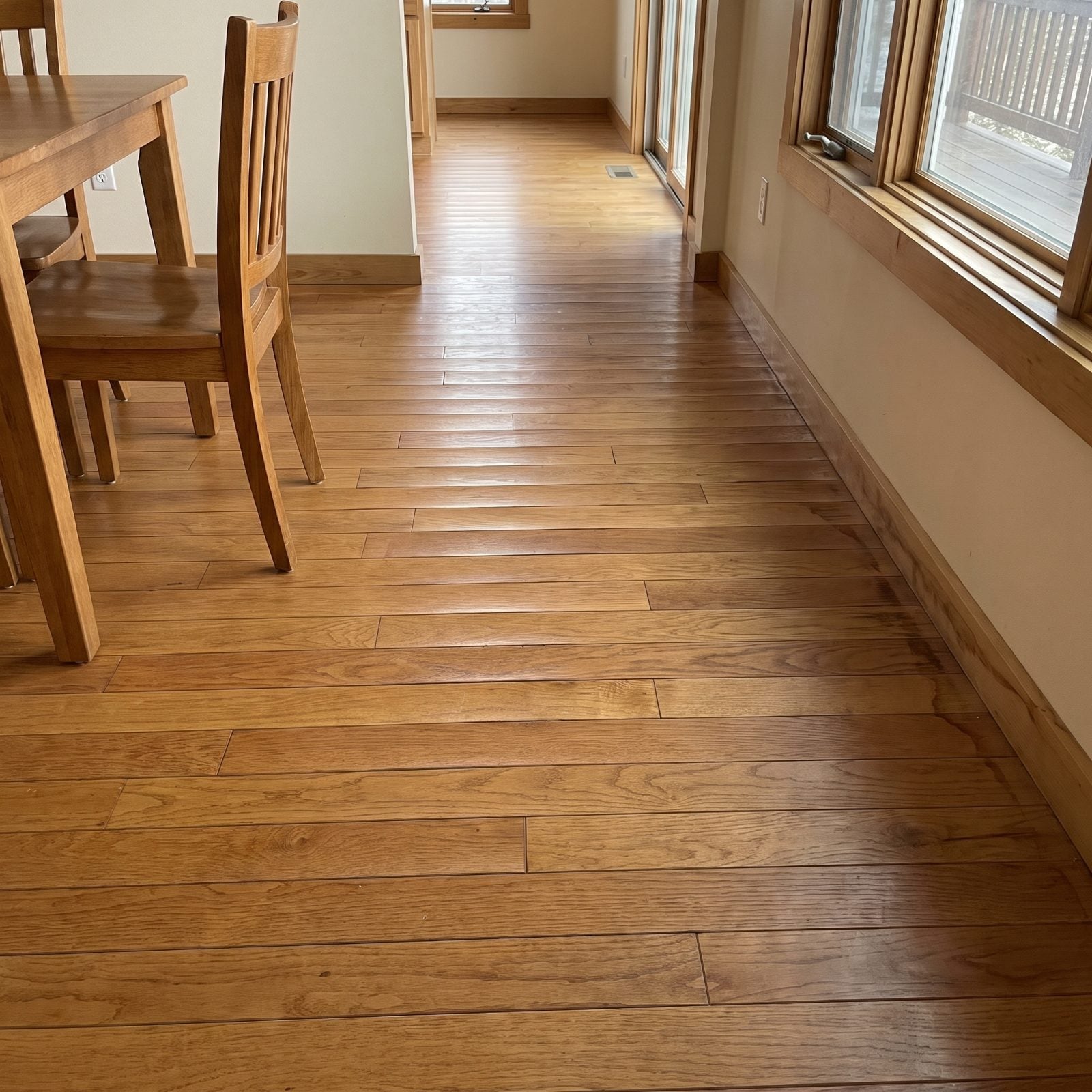
Stand at one end of the room and look down the length of the boards with the light low. Cupped wood shows itself then, each plank dipping in the center with its edges nudged up. You feel it through your socks before you ever see it.
Cupping means moisture came up from below, or sat on top long enough to swell the fibers. Laminate does something uglier — the seams lift and the surface peaks like a tiny mountain range. And once laminate’s core board swells, it’s done. There’s no sanding it flat the way you might rescue solid oak.
36. Swollen or Separated Baseboards Pulling Off the Wall
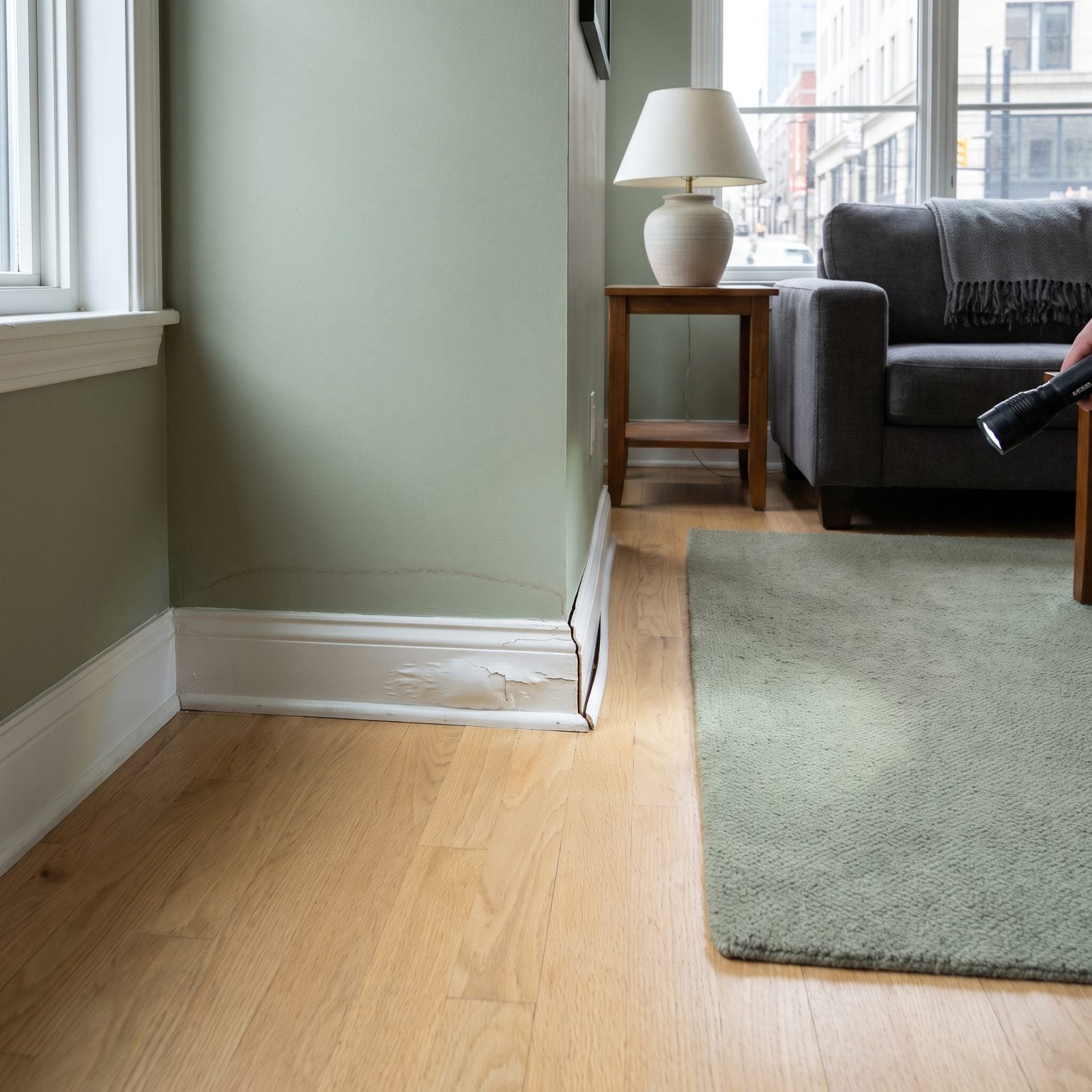
Baseboards are the floor’s low point, and water finds low points. When the bottom of the trim swells and the paint cracks into little scales, that board drank. MDF ones puff up worst, going spongy and fat along the bottom edge.
Watch too for trim that’s pulled a hair off the wall, leaving a shadow gap. Sometimes it’s just an old nail giving up. Often it’s the wall itself that moved, or the wood behind the paint swelling and shoving the trim outward. Either way, the baseboard is the canary, and the canary looks unwell.
35. A Front Door That Sticks or Swings Open on Its Own
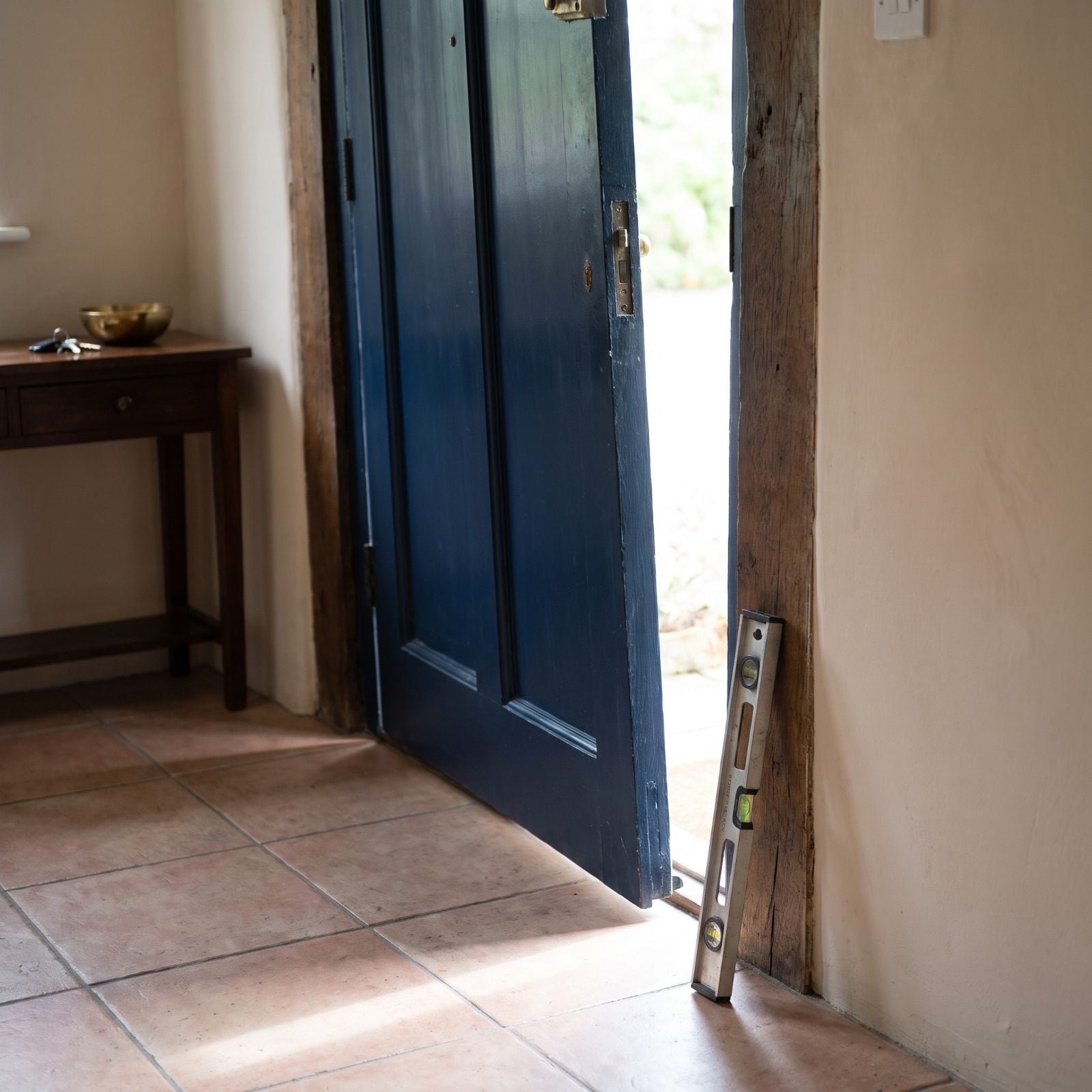
Let go of the door mid-swing and watch what it does. A door that drifts open or eases shut on its own is hanging out of plumb, and it only hangs out of plumb when the frame around it has moved.
Sticking at the top corner, rubbing at the threshold, a latch that only catches if you lean on it — all the same direction. The frame racked. Houses settle a little, and that’s normal. But a front door that fights you every single time hints the settling wasn’t gentle, or isn’t finished.
34. Interior Doors That Refuse to Latch
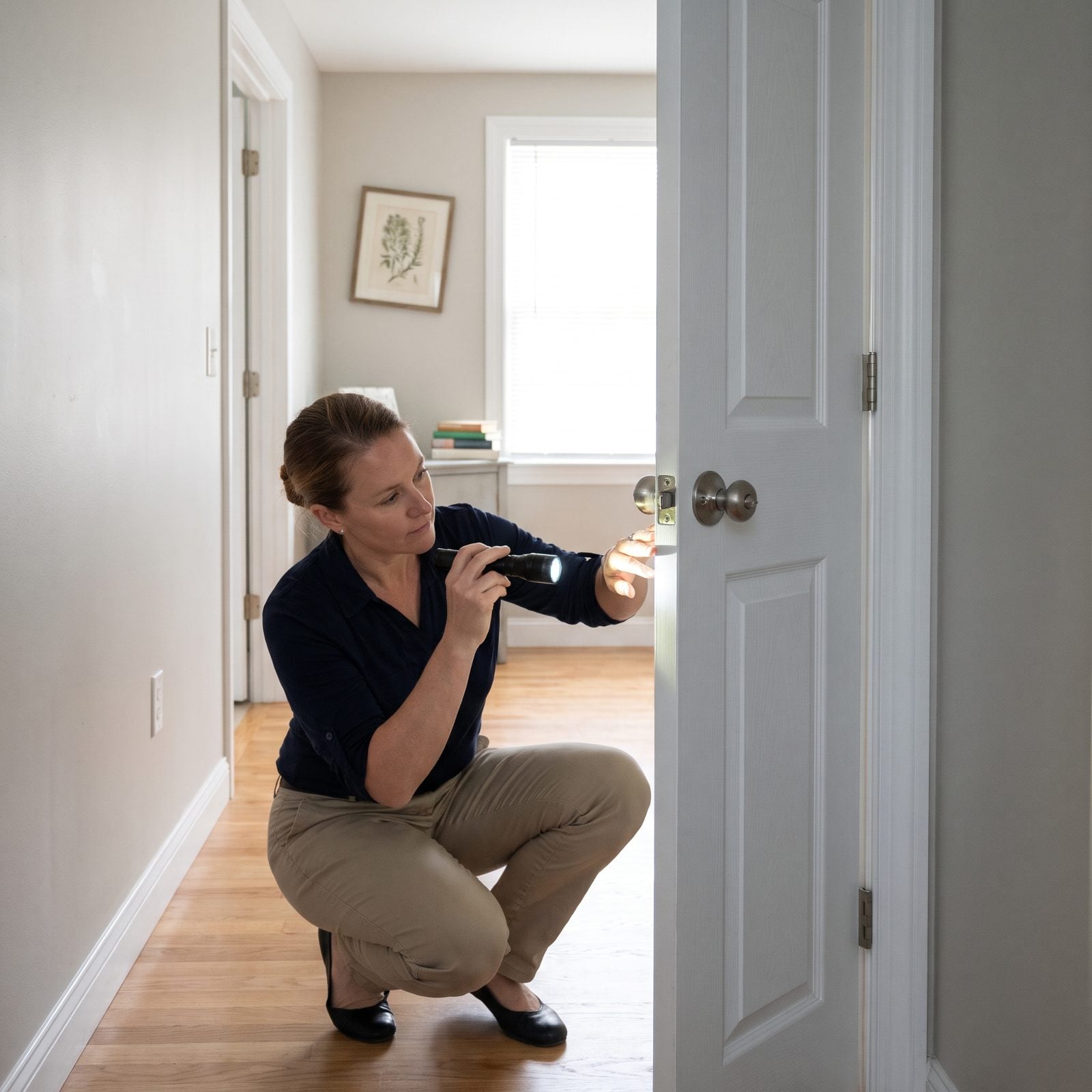
You close it, it bounces back a touch. The latch bolt kisses the strike plate instead of dropping into the hole. One door like that is nothing — a loose hinge screw or a humid week.
Several doors doing it on the same floor is a different story entirely. When latches creep high, low, or sideways across a whole level, the openings have shifted together, and openings shift together only when the framing underneath has moved. So look at where the gap landed. A consistent lean across the house points to settlement, not sloppy carpentry.
33. Daylight Leaking Around Exterior Door Frames

Stand inside, close the door, and let your eyes adjust. If a bright line glows around the frame, that’s air and water sharing a path. Daylight means the weatherstripping is shot, or the door never sat right in the first place.
Up top, it’s usually just worn seals. But a line running down the full length of one side tells you the frame is out of square — which loops right back to the settling story. And every one of those glowing gaps is a quiet little line item on the heating bill.
32. Yellow Nicotine Film Clinging to Walls and Air Vents

The nose gets there before the eyes do. In a house where someone smoked indoors for years, a stale, sweet-sour film hangs in the air and leaves a mark on everything it touches. Walls dull to a dingy gray, with faint yellowish streaks creeping down from the ceiling and around the vents. Vent grilles go darker than the ceiling. And the real giveaway is that clean rectangle where a picture once hung, bright against the dingy wall around it.
That film gets on everything, ducts included, and it’s stubborn stuff. Paint over it without washing and priming first and you just seal it under paint, where it bleeds back through within weeks. Worth knowing before you fall for a fresh coat.
31. White Efflorescence Crusting the Basement Walls
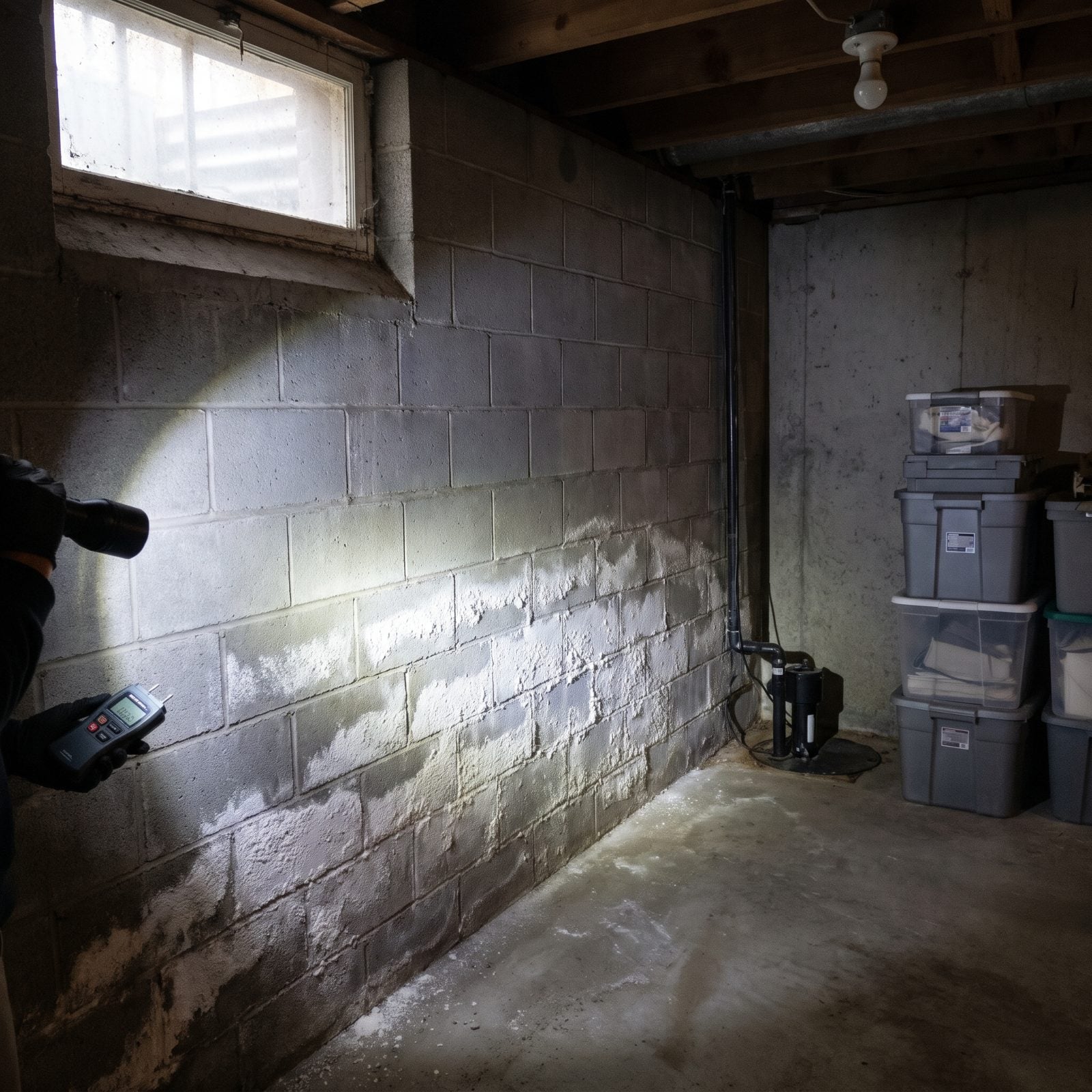
That chalky white bloom on the block isn’t mold, and it isn’t harmless either. Efflorescence is mineral salt, left behind when water passed through the concrete and evaporated on the surface. Scrape it and it powders off like stale flour.
Here’s the part people skip: efflorescence is a receipt. It proves water moved through that wall. The crust itself won’t hurt the foundation, but the moisture that made it can — so where you see salt, go looking for the source. Heavy white streaking running down from a crack is the wall telling you exactly where it’s been letting water in.
30. Fresh Waterproofing Paint Rolled Over Basement Walls
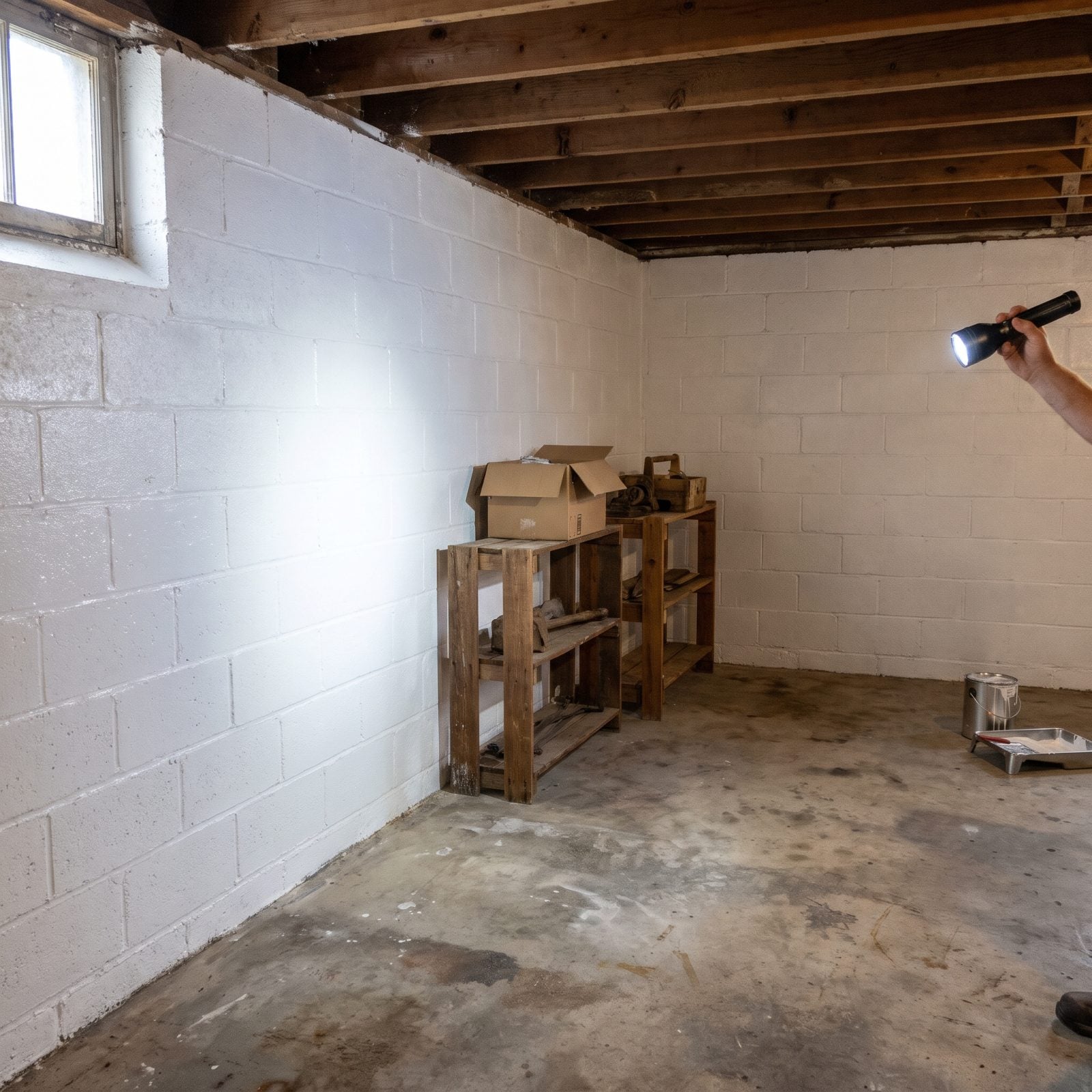
A bright white basement is sometimes a clean basement, and sometimes a cover-up. Waterproofing paint rolled thick over foundation walls, newer and whiter than everything around it, is one of the first things an inspector slows down for.
The paint can seal minor dampness. What it cannot do is fix a wall that leaks under pressure, and it buries the stains, the efflorescence, and the cracks that would otherwise tell the real story. So you look harder, not less. Bubbling in the coating means water is still pushing from behind. Fresh paint over the exact spot a foundation would weep is a question, and the house isn’t going to volunteer the rest of the answer.
29. A Dehumidifier Running Full-Time
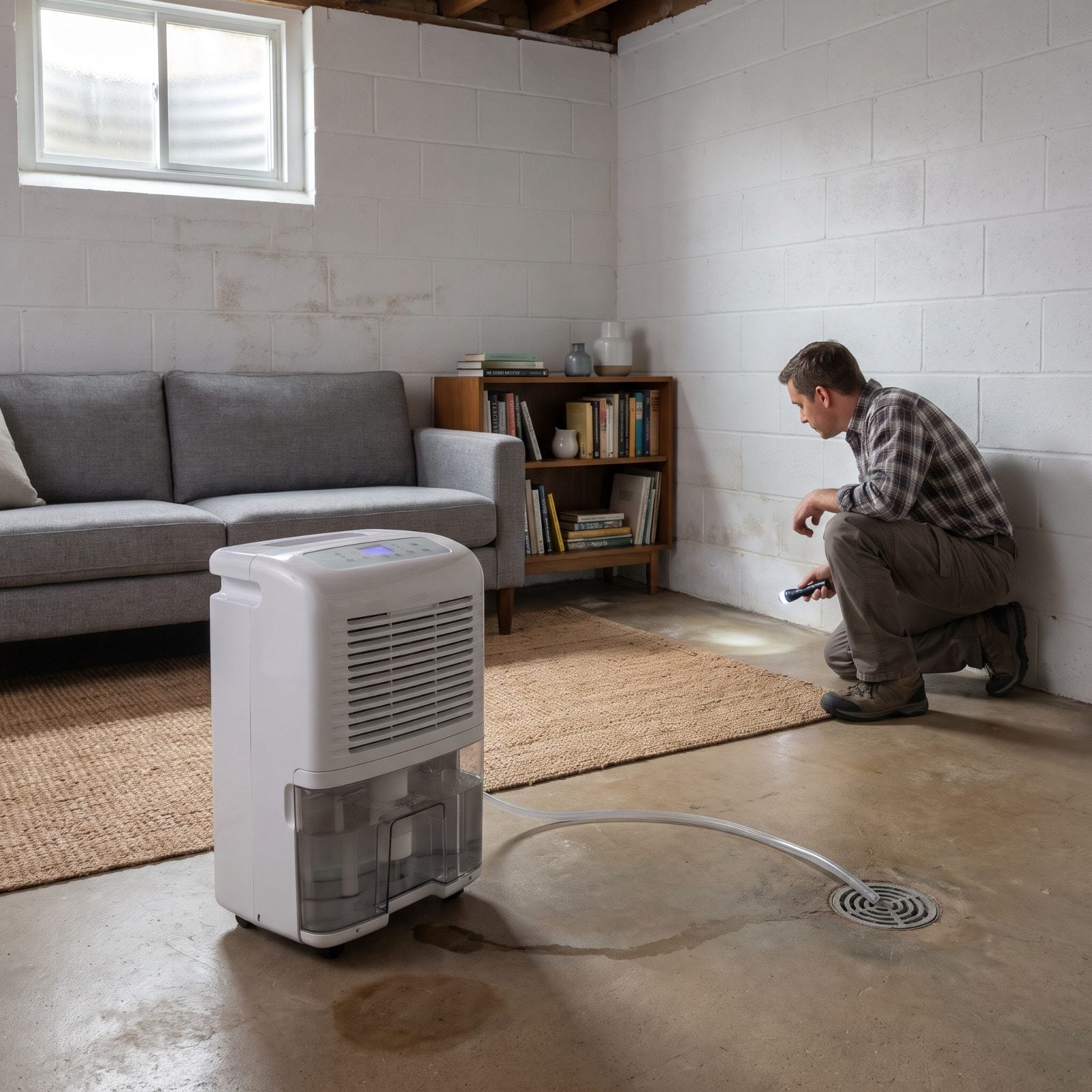
A dehumidifier hum is the sound a basement makes when something’s wrong. One running occasionally in August is fine. But one running full-time, tank always sweating, a hose snaking across the slab to lie beside the floor drain so nobody has to empty it? That’s a house telling on itself.
Inspectors notice the permanence — the drilled hole for the drain line, the dust pattern that shows it never moves, the water stain ring on the slab underneath. Humidity isn’t a seasonal visitor here. It lives here, and a machine working that hard is treating a symptom nobody fixed at the source.
28. An Uncovered or Improvised Sump Pit
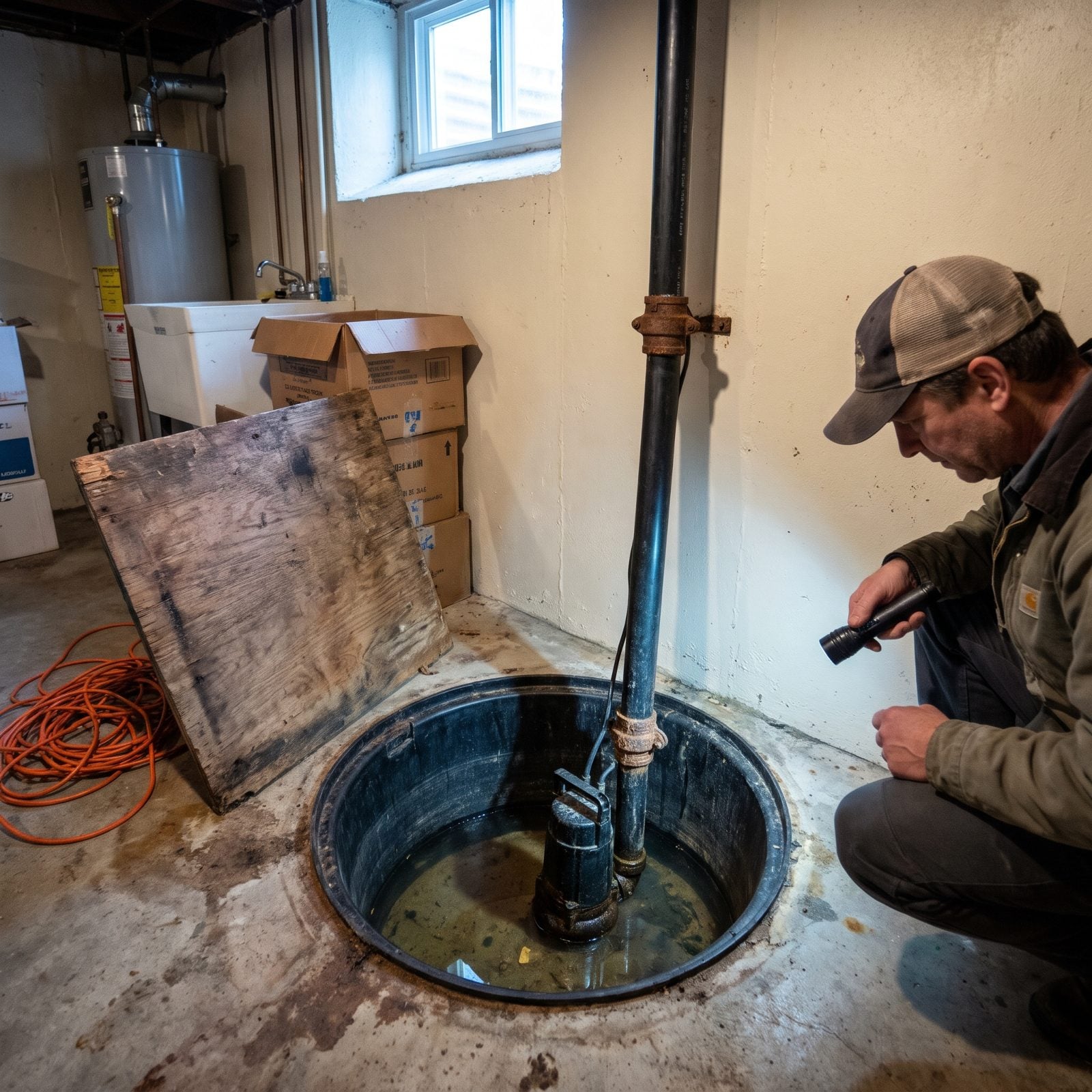
A sump pit is supposed to have a sealed lid. When it doesn’t — or when the lid is a piece of plywood someone cut to look close enough — two things happen. Moisture evaporates straight up into the room all day long, and whatever radon is in the soil gets a free pass inside.
We’ve seen pits with a brick holding down a trash bag. We’ve seen pits with no pump at all, just standing water and good intentions. An inspector checks whether the float moves, whether the discharge actually goes somewhere useful, and whether the whole setup came from a store or got invented on a Saturday afternoon.
27. Condensation Streaming Down Windows

Sweating windows look harmless. They’re not always. A little condensation on a cold morning is just physics. Water running down the glass every day, pooling on the sill, is a ventilation problem wearing a disguise.
The air inside is too humid and has nowhere to go. That same moisture lands on surfaces you can’t see as easily — the backs of closets, the cold corners of exterior walls, the spot behind the headboard. Inspectors read persistent window condensation as a preview of mold conversations to come.
26. Fog Trapped Between Double Panes

Look at a window and the view is slightly milky, like someone breathed on glass you can’t wipe. That haze lives between the panes, sealed where no cloth will ever reach. The insulating gas has escaped and the seal has failed.
It’s not a safety hazard. It’s an honest signal about replacement costs and how the house has been maintained. One foggy unit is a repair. A whole row of them is a pattern, and the pattern usually means the windows are at the end of their run. Inspectors count them because every single one is a line item on somebody’s bill.
25. Soft, Rotted Window Sills

Inspectors do a quiet thing at every window: they press the sill with a thumb or a pen. Sound wood pushes back. Rotted wood gives — soft, spongy, sometimes crumbling under almost no pressure. That little test tells a longer story than the paint ever will.
Soft sills mean water has been getting in, probably for years, probably from above. The rot you can poke is the part that’s already finished failing. What matters more is the framing behind it, where the water went after it ruined the wood you can see. Fresh paint over a rotted sill is a cover-up, and a thumb finds it in two seconds.
24. Water Stains Inside Sink Cabinets
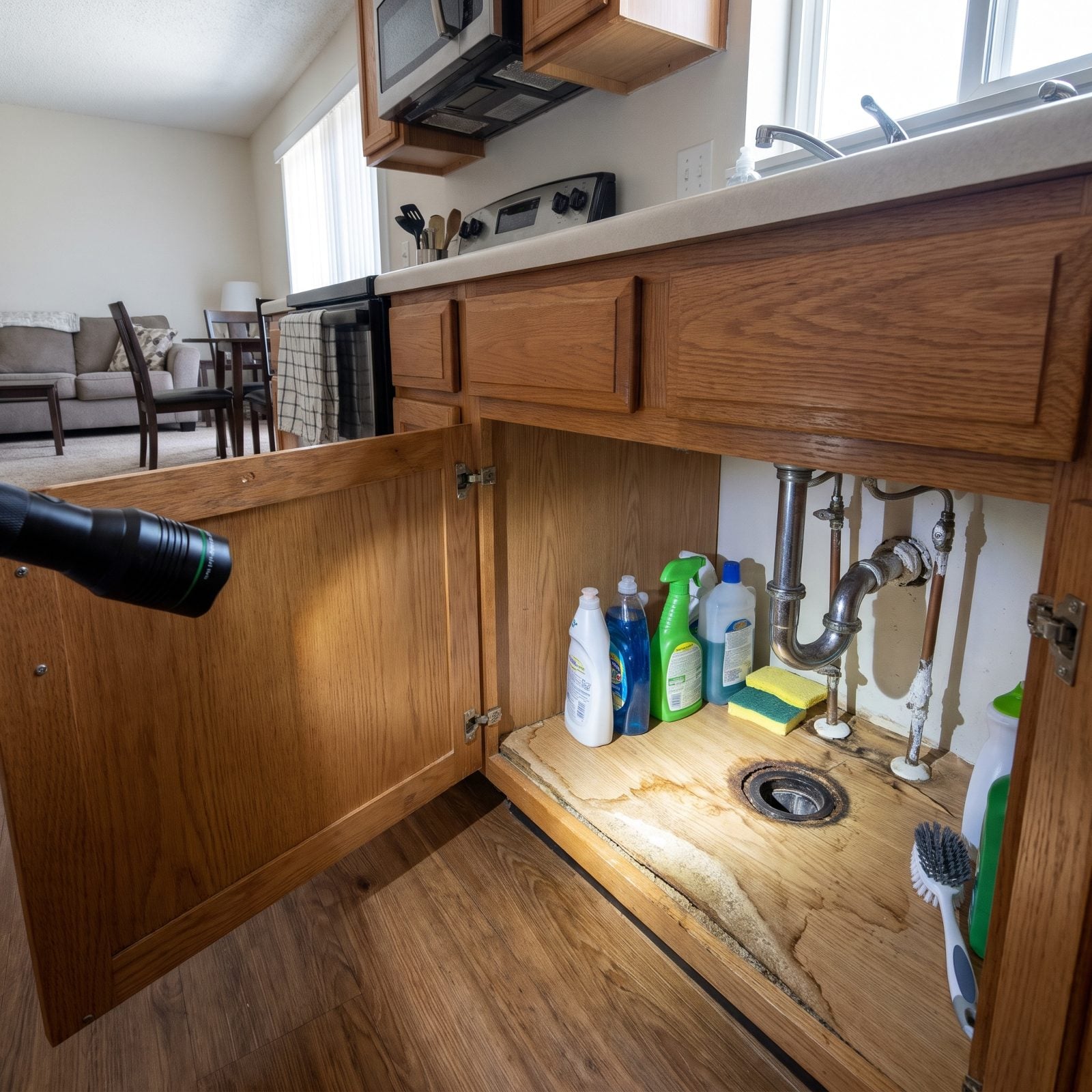
The cabinet under a kitchen sink is where houses keep their secrets. Open the door, shine a light, and the floor of that cabinet confesses everything — dark rings, swollen particleboard puffed up like a stale sponge, white mineral crust climbing a fitting.
A slow drip at a trap or a supply line doesn’t announce itself. It quietly wrecks the cabinet bottom while you store the dish soap right on top of the evidence. An inspector pulls everything out and looks at the back corners, because that’s where water settles and where a seller rarely bothers to wipe.
23. Flexible Accordion Pipes Under Sinks
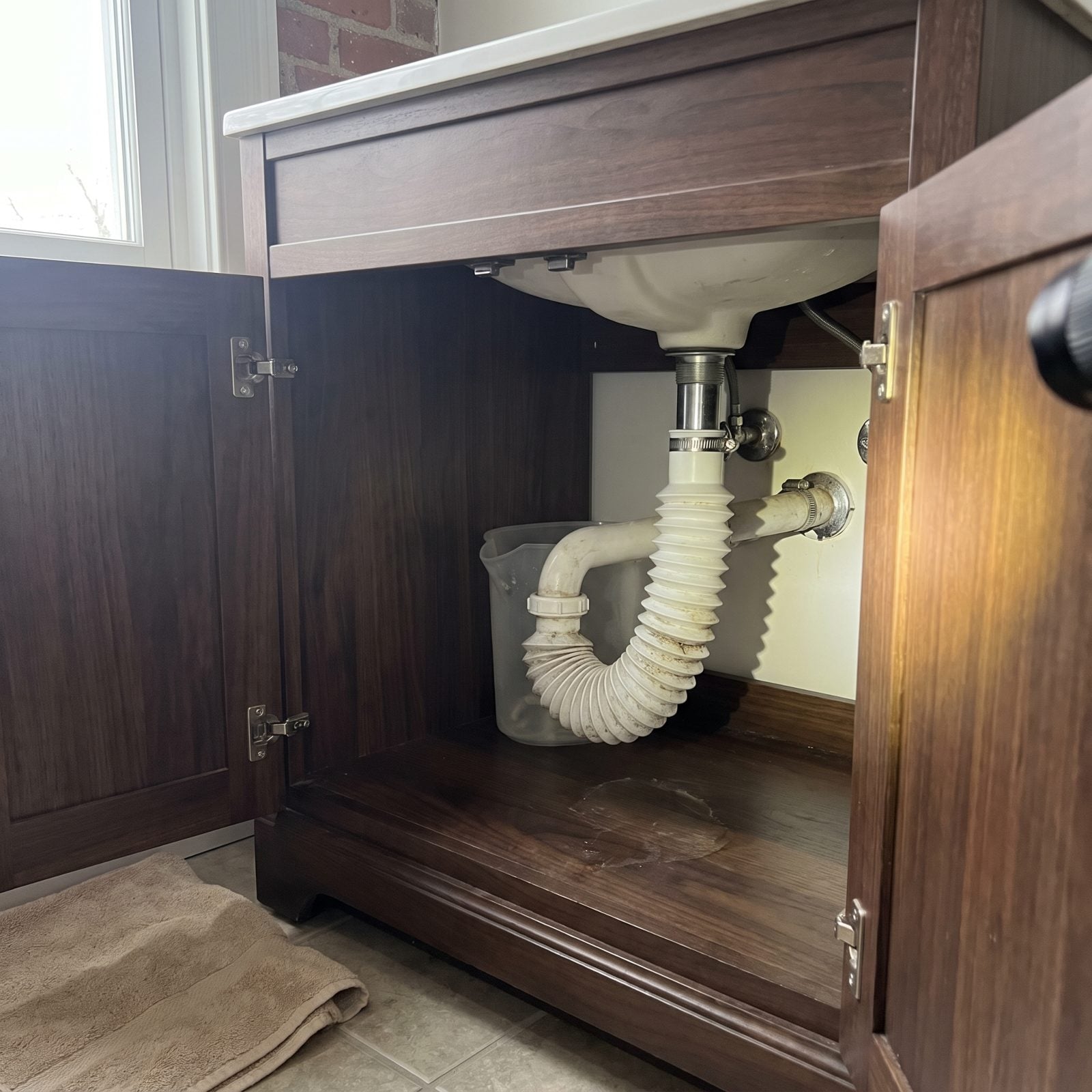
Those ribbed, accordion-style drain pipes are sold cheap and installed fast. Plumbers mostly hate them, and inspectors flag them on sight. The corrugations that let the pipe bend around any angle also catch grease, hair, and gunk at every single ridge.
So the drain clogs more. The thin plastic cracks sooner. And here’s the real tell — nobody plumbs a brand-new quality job with flexible accordion pipe. It’s the signature of a quick fix, which means someone had a leak or a mismatch under there and solved it the lazy way. One flex pipe makes an inspector wonder what else got the shortcut treatment.
22. A Toilet That Rocks at the Base
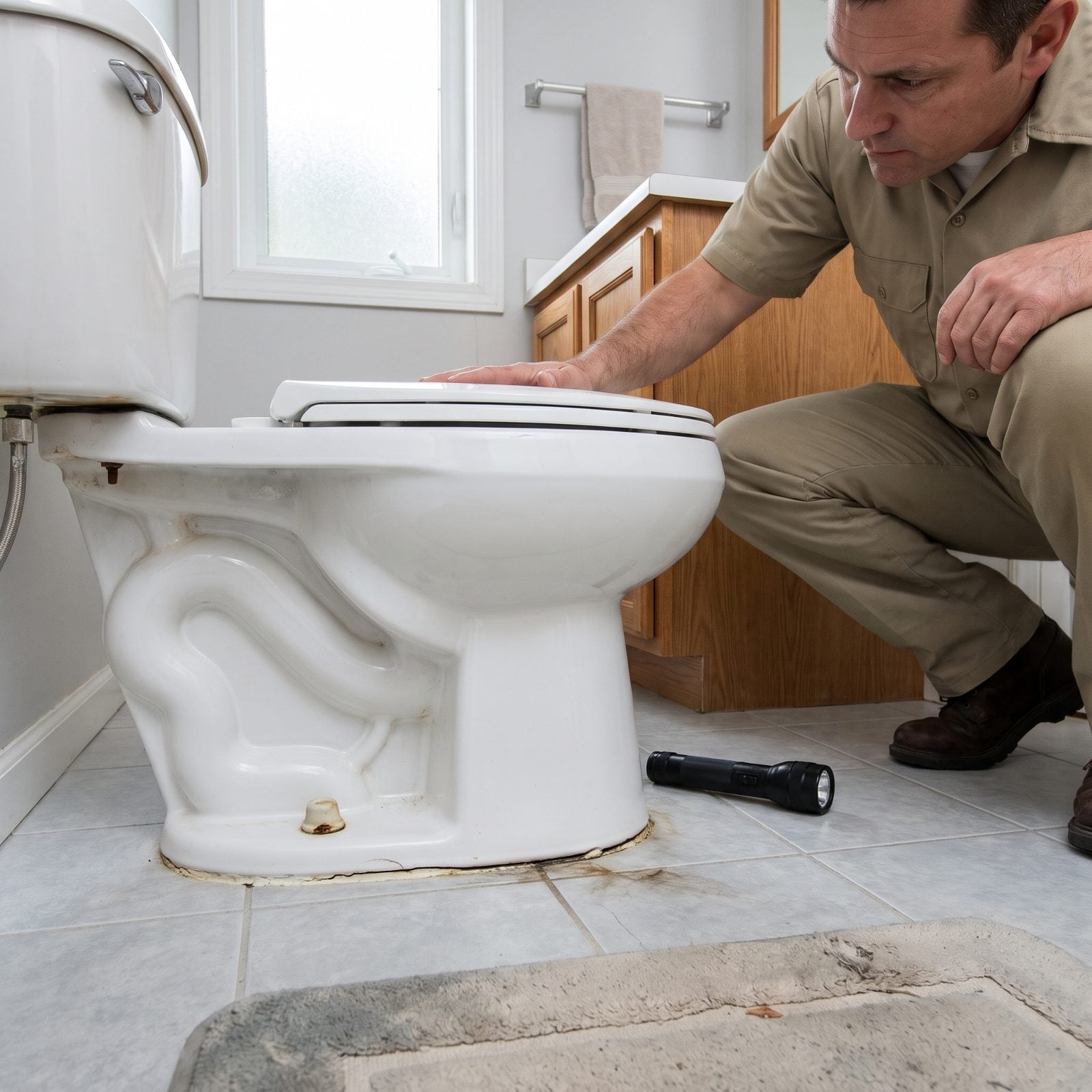
Rock a toilet gently and you learn a lot. A solid one doesn’t budge. One that wobbles is riding on a wax ring that’s probably broken, which means every flush sends a little water seeping under the base and into the subfloor.
You don’t see the damage because it’s happening below the tile, rotting the plywood from underneath. By the time the floor feels soft underfoot, the fix is no longer a three-dollar wax ring. Inspectors push on the bowl at every bathroom for exactly this reason. A rocking toilet is a cheap part failing in the most expensive possible place.
21. Rust Streaks Below HVAC Registers
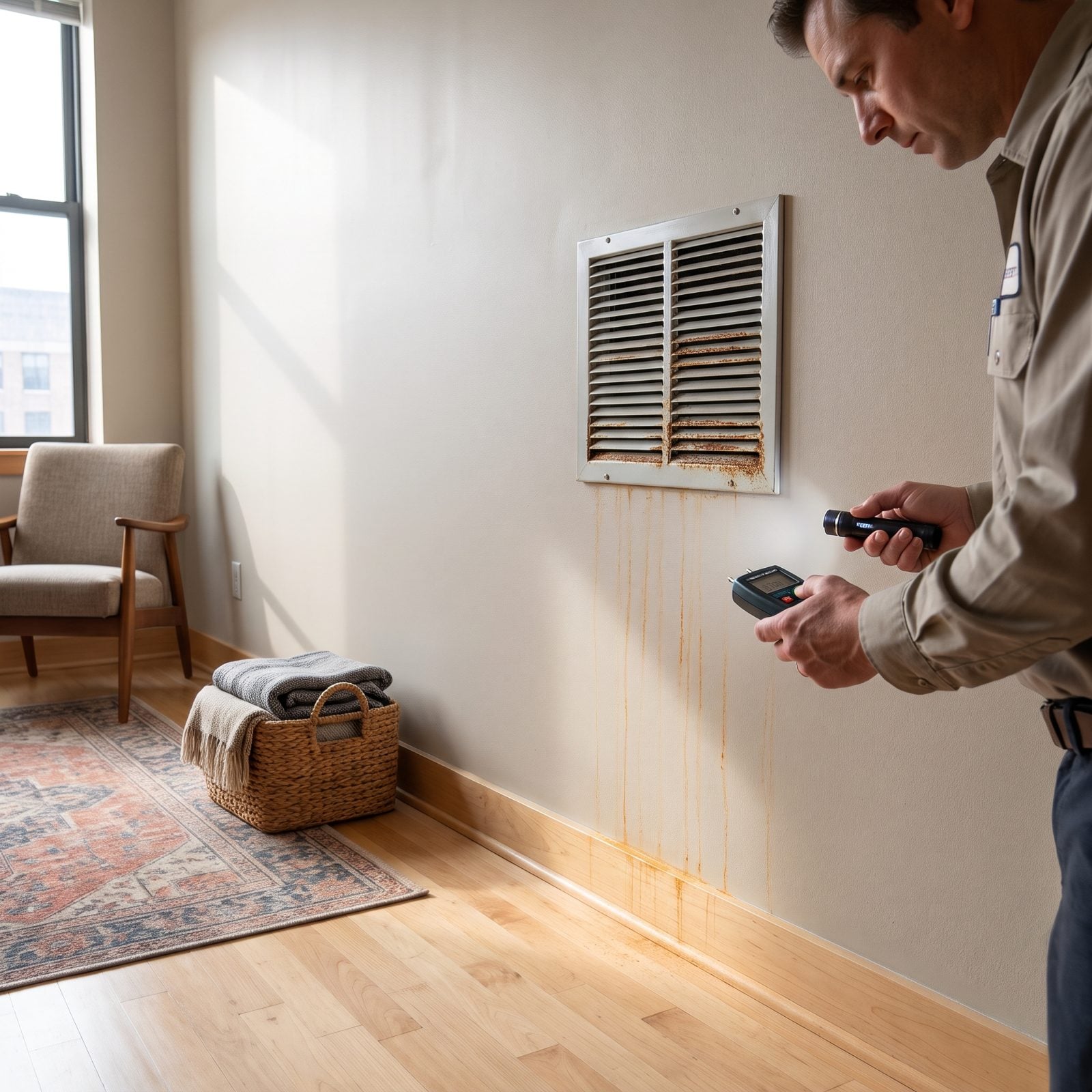
Rust streaking out from under an air register is one of those clues people walk right past. The register itself is often crusted with rust along its lower louvers and frame, but it’s the orange-brown bleed running down the wall to the baseboard below it that really matters.
That staining usually means moisture is condensing inside the ductwork and the metal is corroding. On an air conditioning system it points to drainage or humidity trouble deep in the ducts, the part nobody can see. The visible rust is just the messenger. The real issue is upstream, inside the duct, where moisture had no business being in the first place.
20. A Furnace Filter Packed With Dust
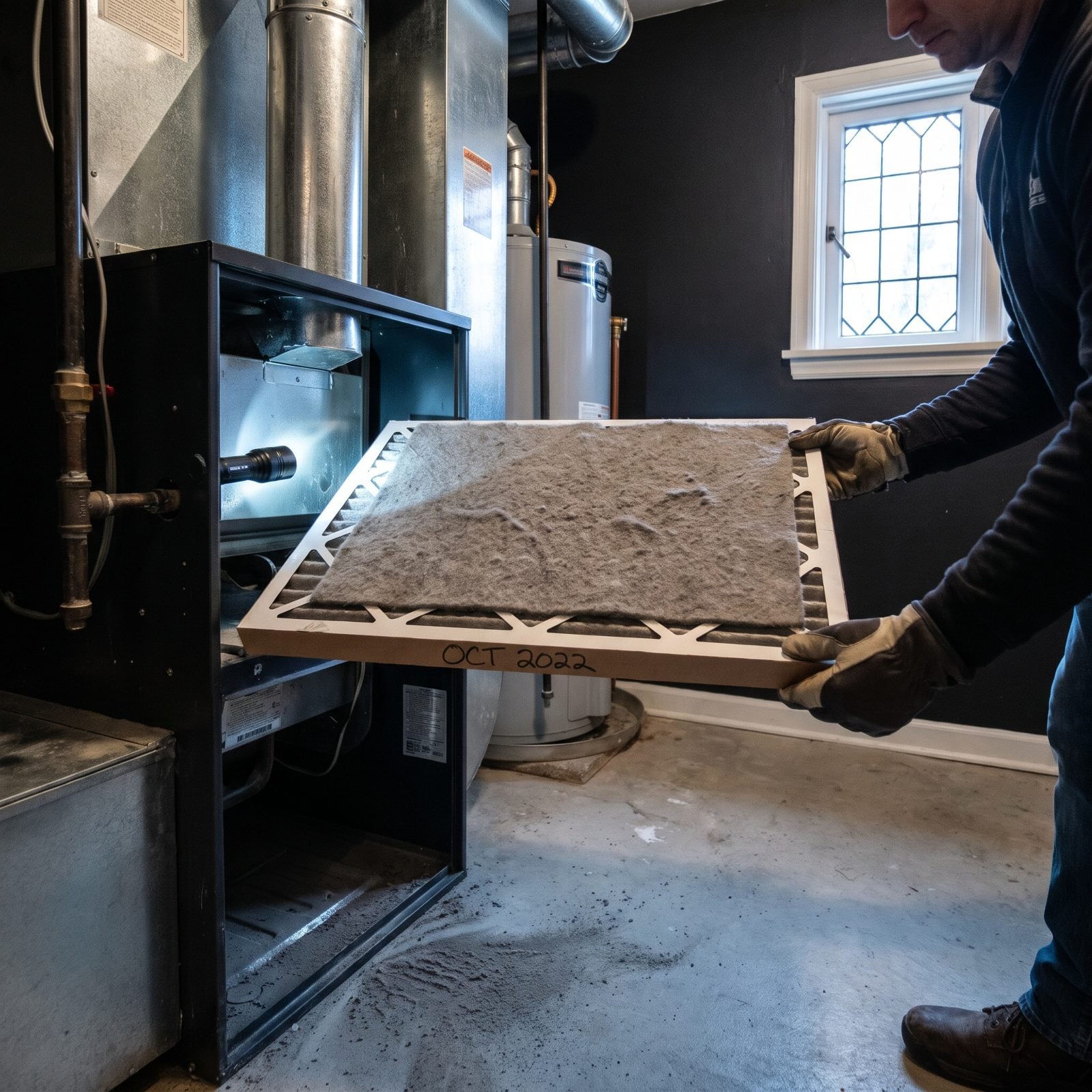
A filter packed solid with gray felt tells an inspector more about an owner than about a furnace. It means maintenance happened whenever someone remembered — which is to say rarely. A clogged filter starves the system for air, making it work harder for less until something expensive gives out.
On an air conditioner, a choked filter can freeze the coil. On a furnace, it can overheat the heat exchanger, which is the one part you never want cracking. The filter costs a few dollars and takes a minute to swap. When it’s this neglected, inspectors quietly assume the furnace, the water heater, and everything else got the same attention.
19. A Puddle Around the HVAC Condensate Line
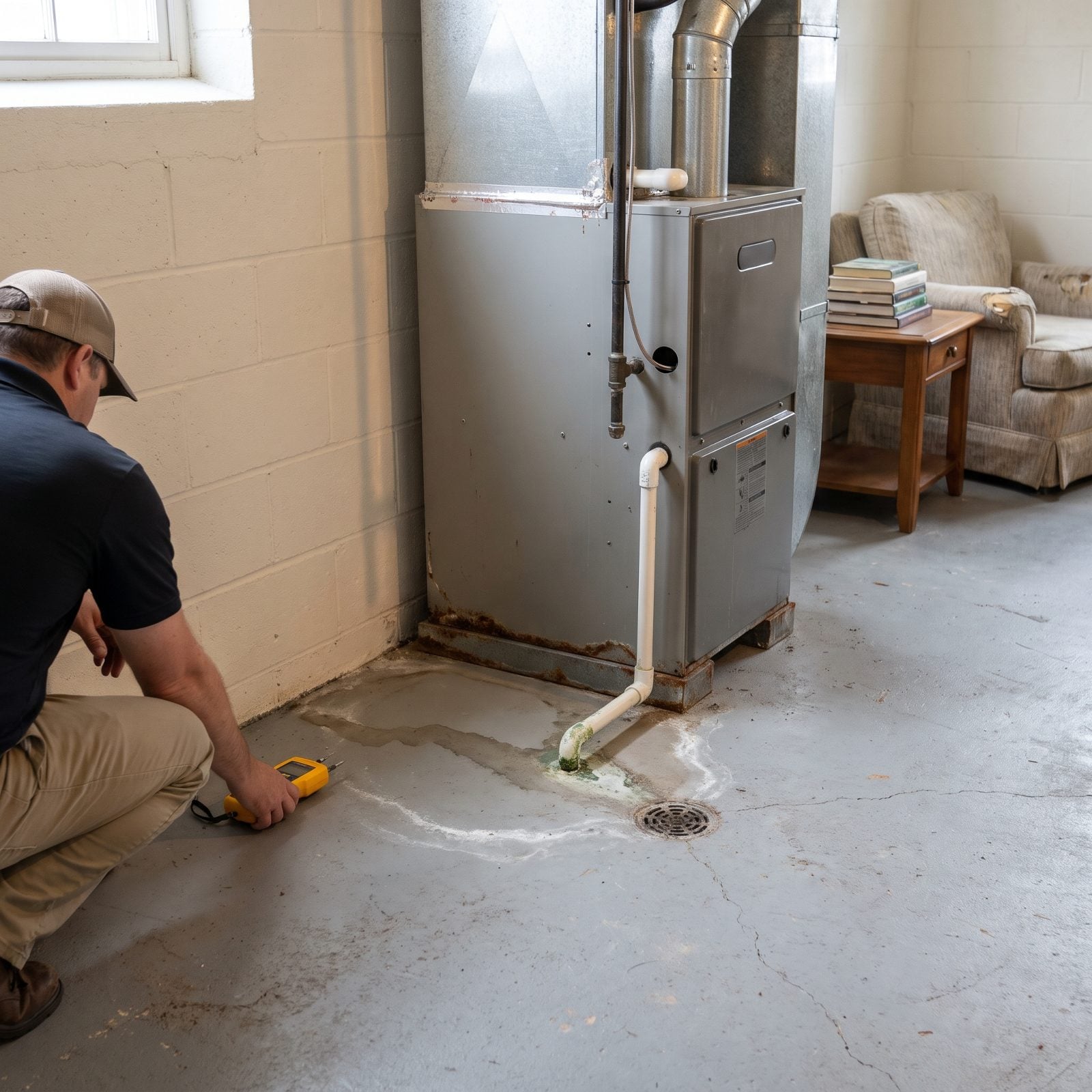
That damp ring under the condensate line looks like nothing. A little water, who cares. But the inspector reads it differently: a clogged drain line means the air handler is weeping where it shouldn’t, and the next place that water goes is the subfloor or the ceiling below.
The slimy algae at the pipe’s end is the giveaway. It grows in the dark and backs the line up every cooling season. Clearing it is cheap. Letting it rot a joist is not.
18. Corrosion Blooming on the Water Heater Tank

Rust at the top fittings is one story. Rust weeping from the bottom seam is another, and it usually means the tank is already failing from the inside out.
Here’s the part nobody tells you. That crusty white-and-orange crud around the connections is often a slow leak that dried, left minerals behind, and started again. Water heaters don’t give long notice — one day there’s a puddle, the next there’s forty gallons on the floor. If the tank’s date sticker reads a decade or more back, start pricing the replacement before it picks the date for you.
17. Foil or Plastic Dryer Vent Ducting
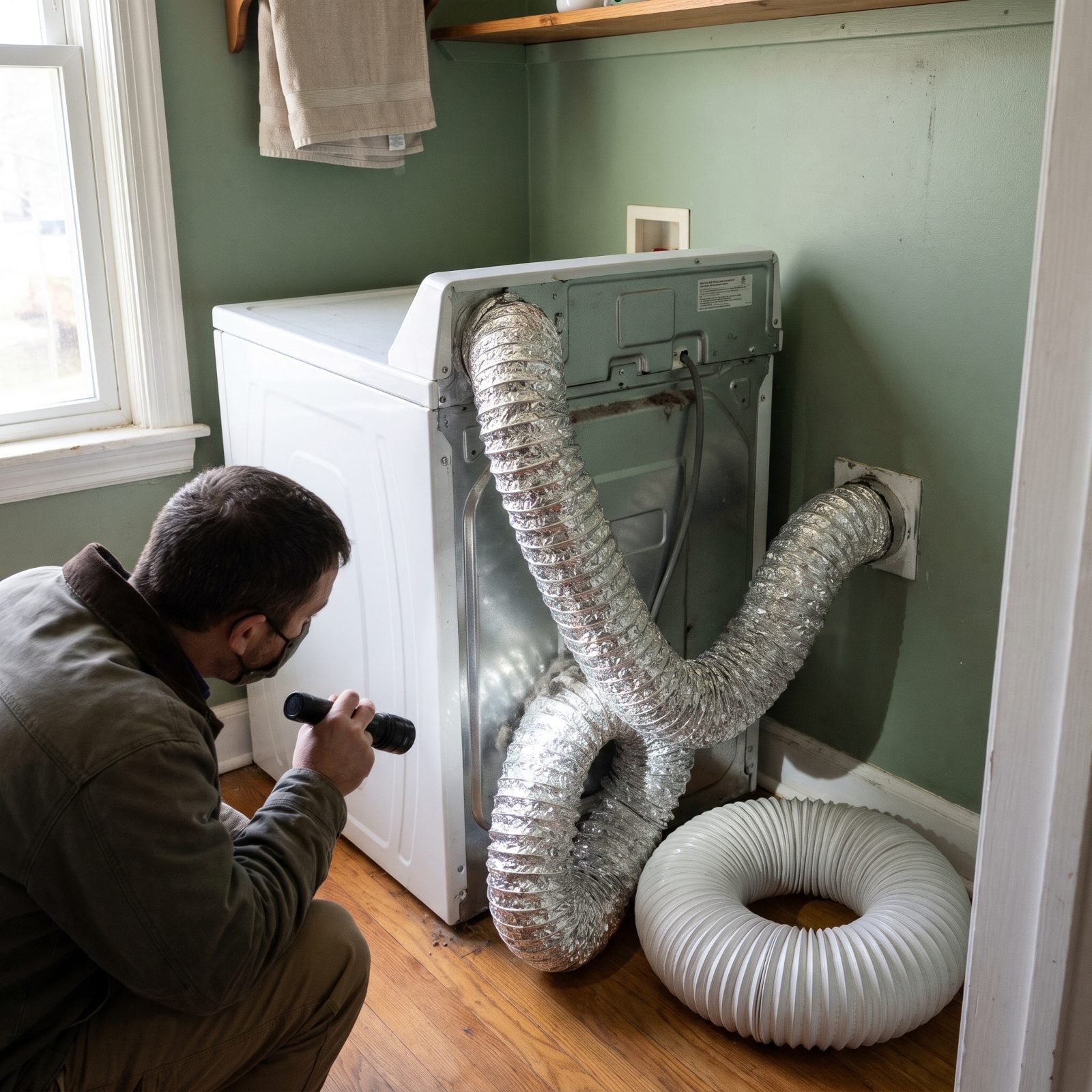
The ribbed foil or white plastic accordion behind the dryer is a fire waiting for a reason. Those ridges catch lint, lint is basically kindling, and the heat has nowhere to go.
Inspectors flag it on sight because the fix is simple and the risk is real: rigid or semi-rigid metal duct, smooth on the inside, kept short and straight. We’ve seen the plastic kind melted right at the connection. That’s not a maybe. That’s the duct telling you what almost happened.
16. A House Full of Two-Prong Outlets
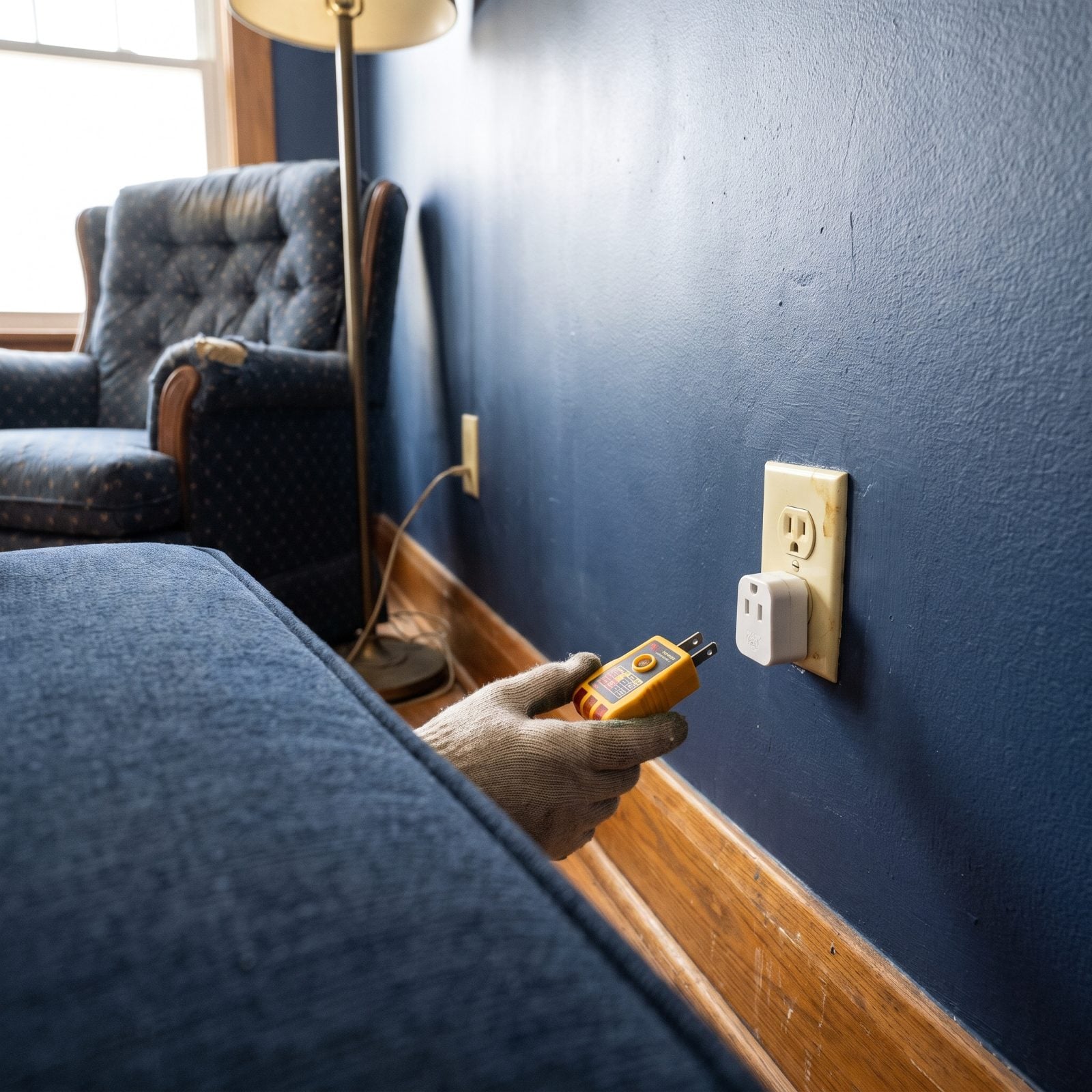
Two slots instead of three means no ground. In an older home that’s not a defect so much as a confession: the wiring probably predates the grounded standard, and every surge protector plugged into it is quietly lying to you.
That little yellow two-prong plug-in tester with the indicator light? With no ground pin, it can’t even tell you whether one is there; it can only show whether the slots are live. An inspector counts the two-prong outlets as a clue about the age of the whole electrical system, not a single isolated fix.
15. No GFCI Protection Near Water
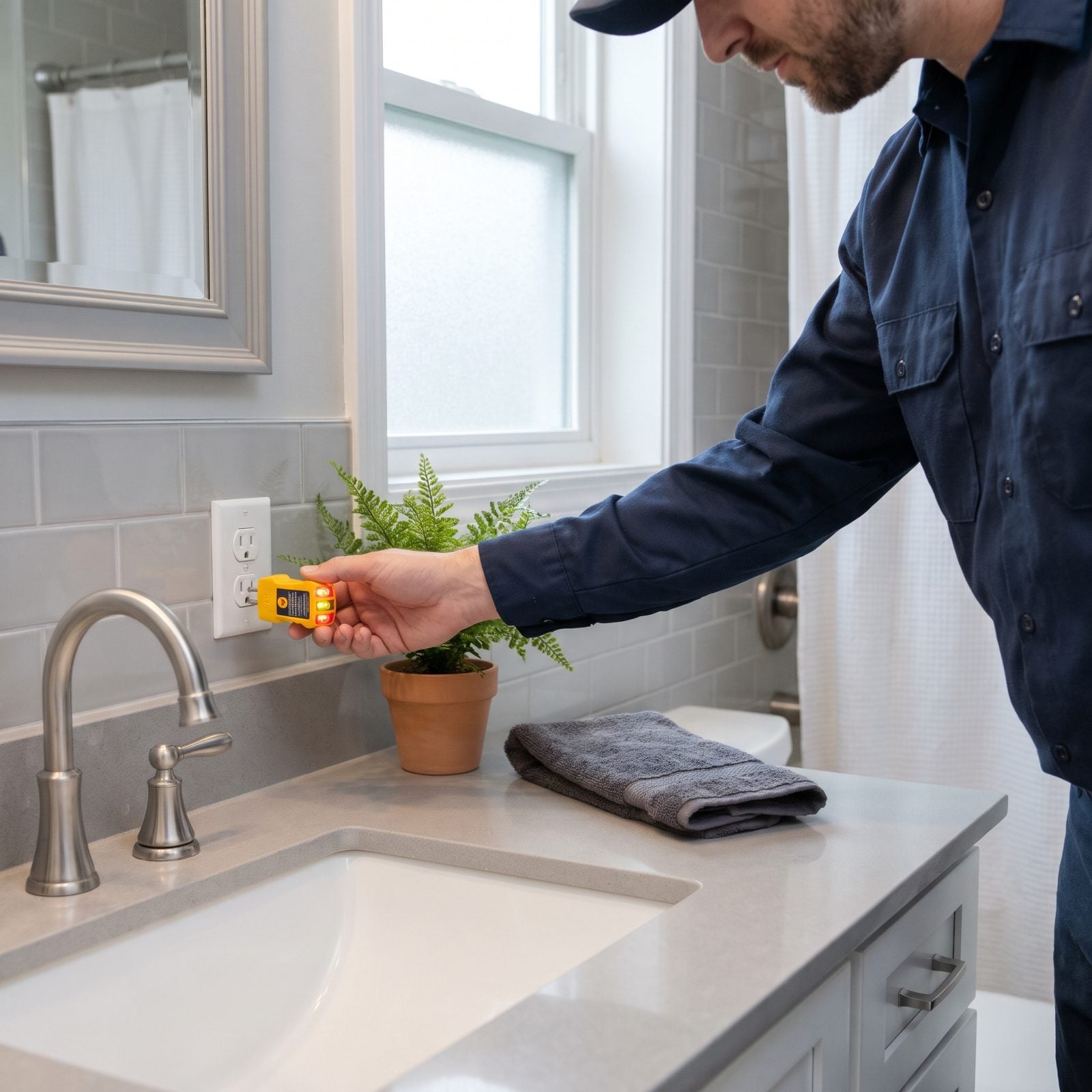
A standard outlet next to a sink stops an inspector cold. A GFCI has those little test and reset buttons and cuts power in a fraction of a second when current strays, while a plain outlet by water has none of that safety margin.
Kitchens, bathrooms, garages, outdoor receptacles — anything near plumbing. No test buttons in sight? That’s a safety upgrade, not a nicety. The protection can live at the first outlet in the circuit or at the breaker, so one device often covers several receptacles. The inspector still has to see it working, though.
14. Scorch Marks Around a Receptacle
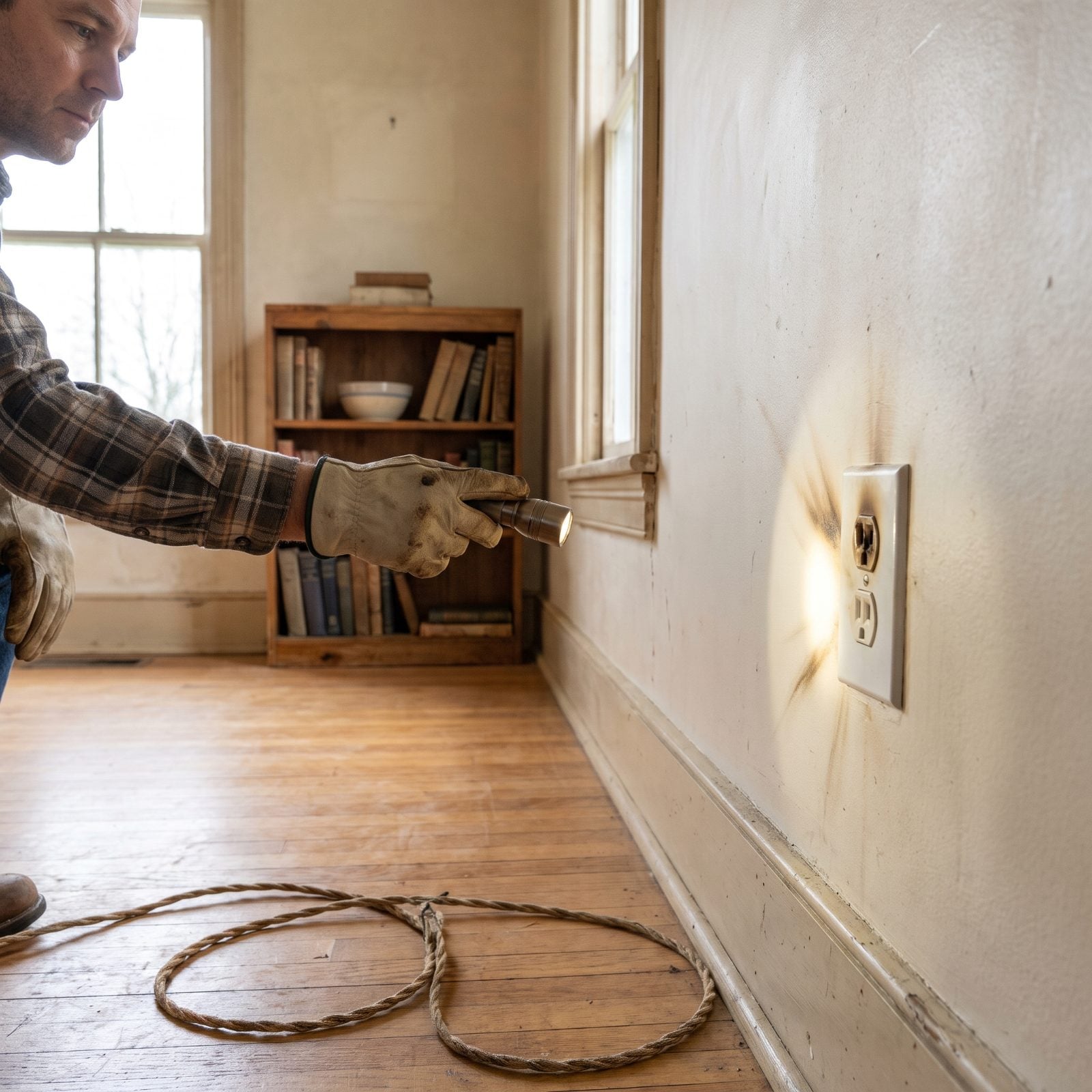
Brown staining fanning out from an outlet is not dirt. It’s heat, and heat at a receptacle means a loose connection arcing behind the wall.
This looks bad because it is bad. There’s no polite way to say it. A melted slot or a sooty plate is the visible end of a problem that started inside the box, and arcing is exactly how walls catch fire. The moment they see it, inspectors stop writing nice words and start recommending an electrician.
13. Extension Cords Doing a Wall’s Job
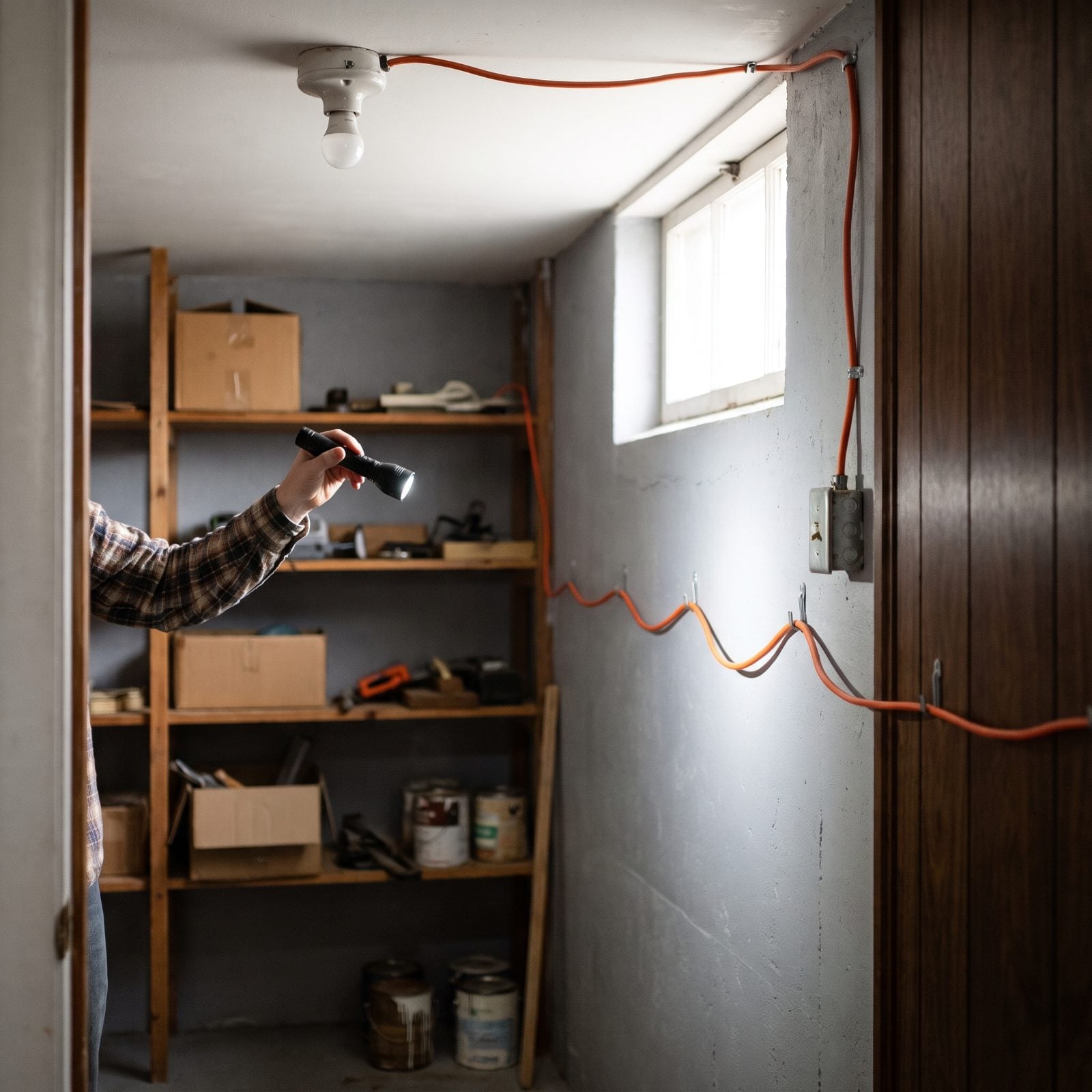
An extension cord stapled to the wall and feeding a light fixture is a shortcut someone took instead of calling an electrician. Cords are rated for temporary use. Run them permanently, hide them in walls, staple them down, and they overheat where you can’t see them.
The giveaway is the staple. Nobody staples a cord they plan to move. When an inspector traces an orange cord vanishing behind drywall, they aren’t looking at a convenience — they’re looking at a circuit someone built on the cheap.
12. Exposed Splices Hanging Outside a Junction Box
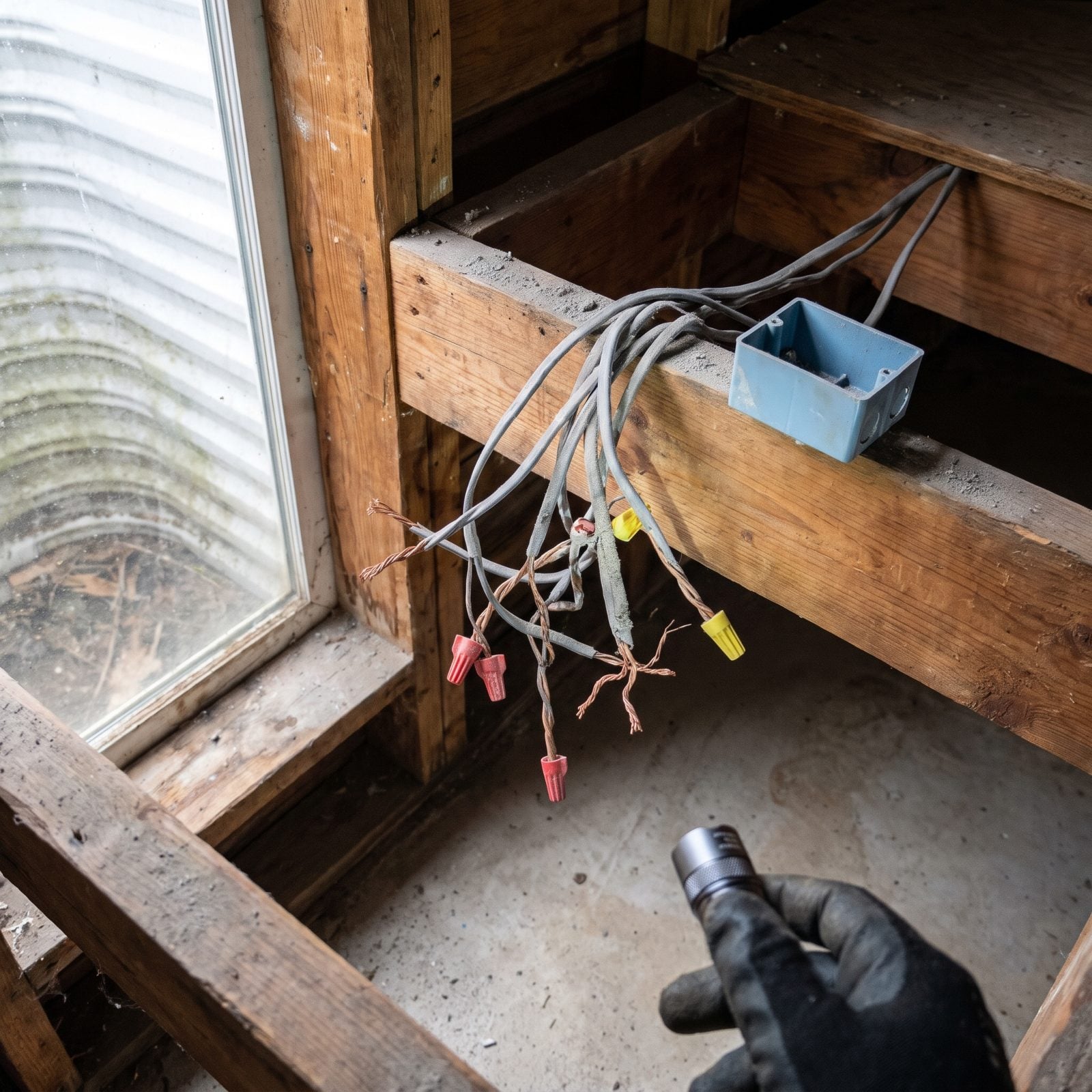
Wire nuts dangling in open air off the edge of a stair tread under the window. An open box sits right there, empty, while the splices hang in the dust. Those connections belong inside a covered junction box for a reason: the box contains any spark and keeps the splice from being bumped, pulled, or shorted by a stray nail.
An open splice is one of the fastest things an inspector catches on a basement walkthrough. Often the fix is a cheap box and a cover. The real problem? Someone skipped it, and skipped boxes travel in packs.
11. An Obsolete Federal Pacific or Zinsco Panel
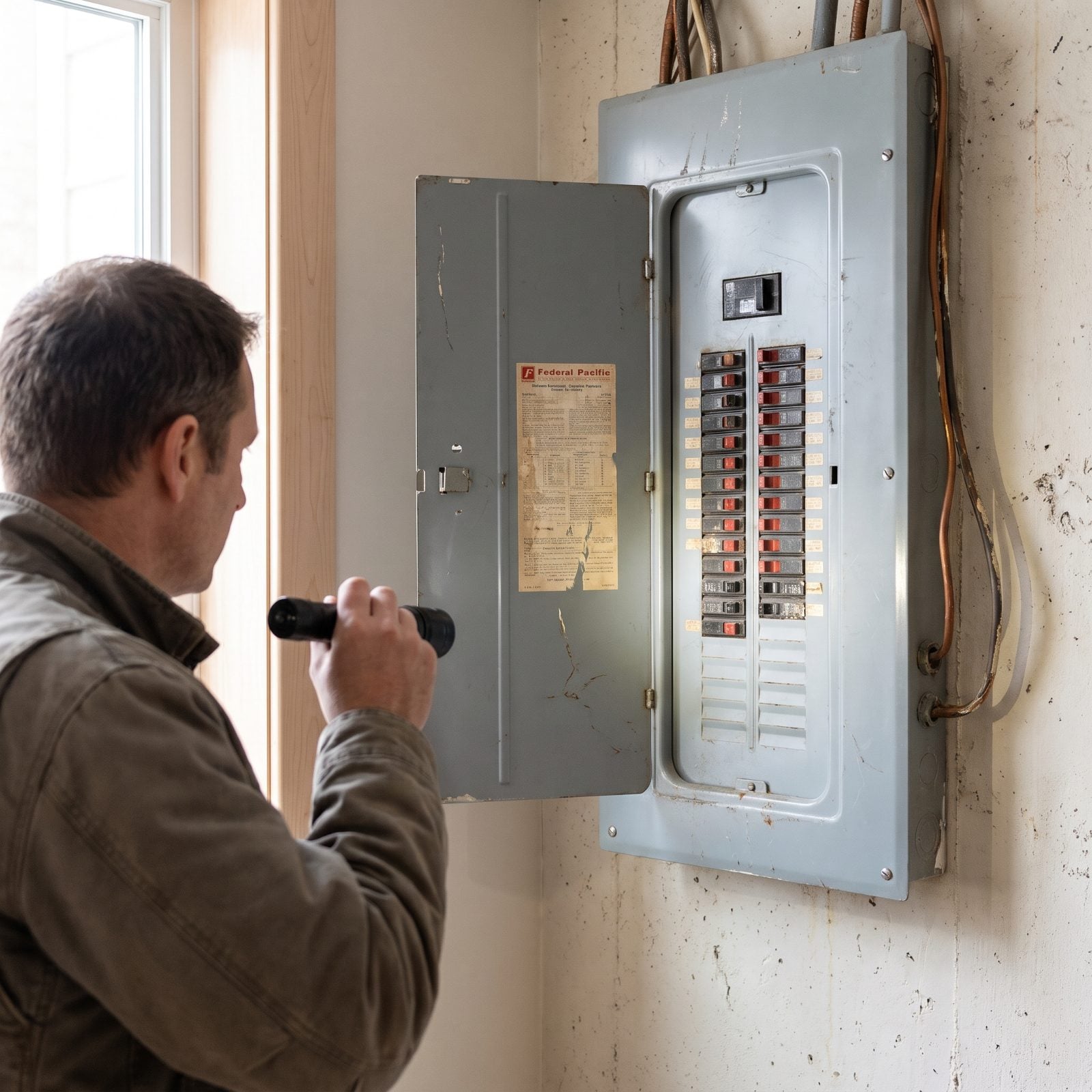
Some electrical panels have a reputation, and inspectors know the look of them from across the room. Older Federal Pacific Electric (FPE) Stab-Lok panels and Zinsco panels carry a documented history of breakers that don’t always trip when they should.
A breaker that fails to trip is the whole safety system failing silently. The panel looks fine, the lights work, everything seems normal — until the one moment it’s supposed to protect you and doesn’t. Replacement usually runs well into four figures, and many buyers negotiate it hard. Got one? Get an electrician to assess it rather than take an internet thread’s word for it.
10. Rust or Water Tracks Inside the Electrical Panel
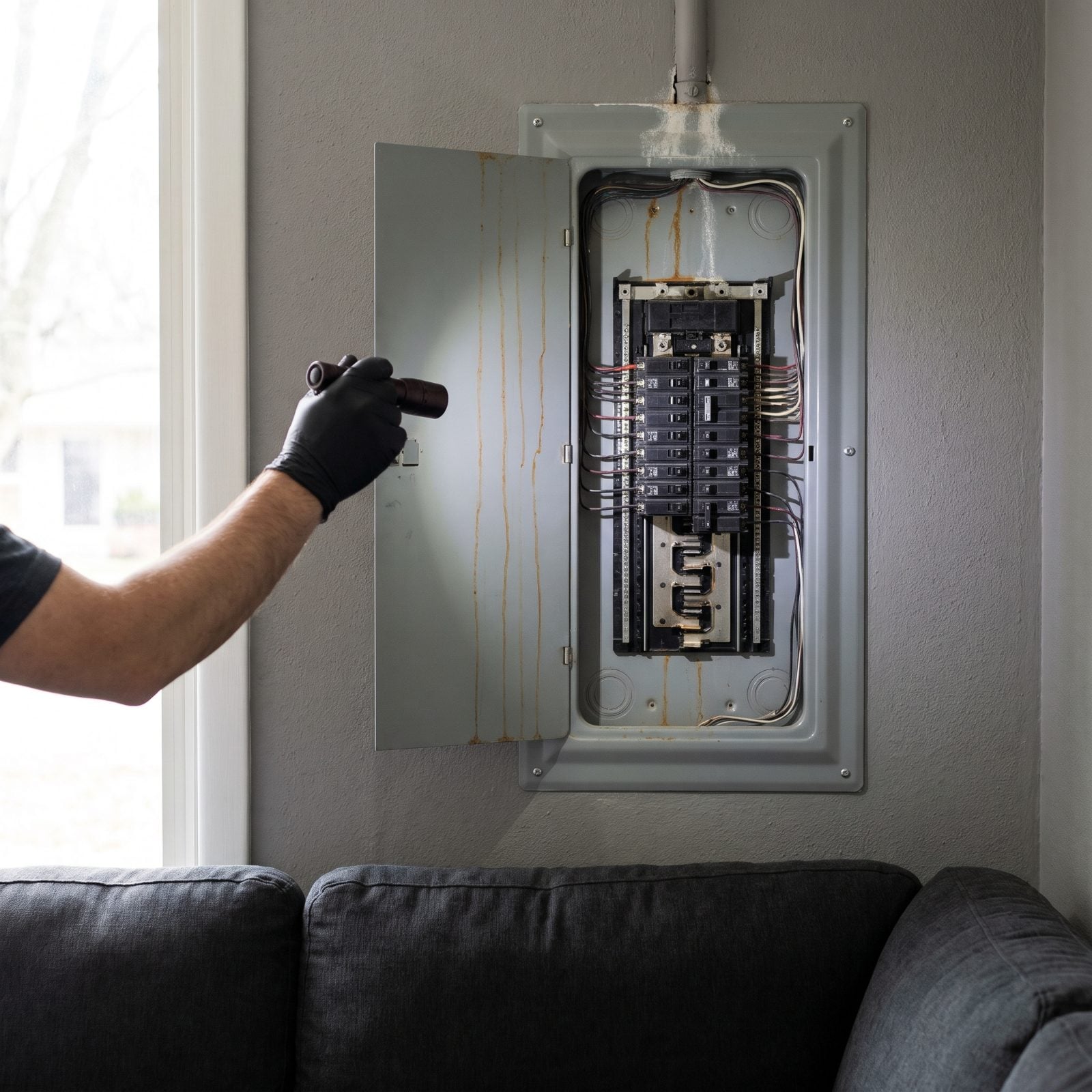
Open a panel, find rust tracks running down the back, and an inspector’s whole posture changes. Water and live electrical do not share space quietly. Those orange streaks mean moisture got in, usually down a conduit from outside or from a leak above.
Here’s what the stain tells you. Corrosion weakens connections, and water that found a path once will find it again. A dry panel can be inspected and trusted. A rusted one raises questions — where did the water come from, is it still coming, and what is it doing to connections you can’t see? Stop and call a pro. This is not a wipe-it-and-move-on kind of clue.
9. Missing or Disabled Smoke Alarms
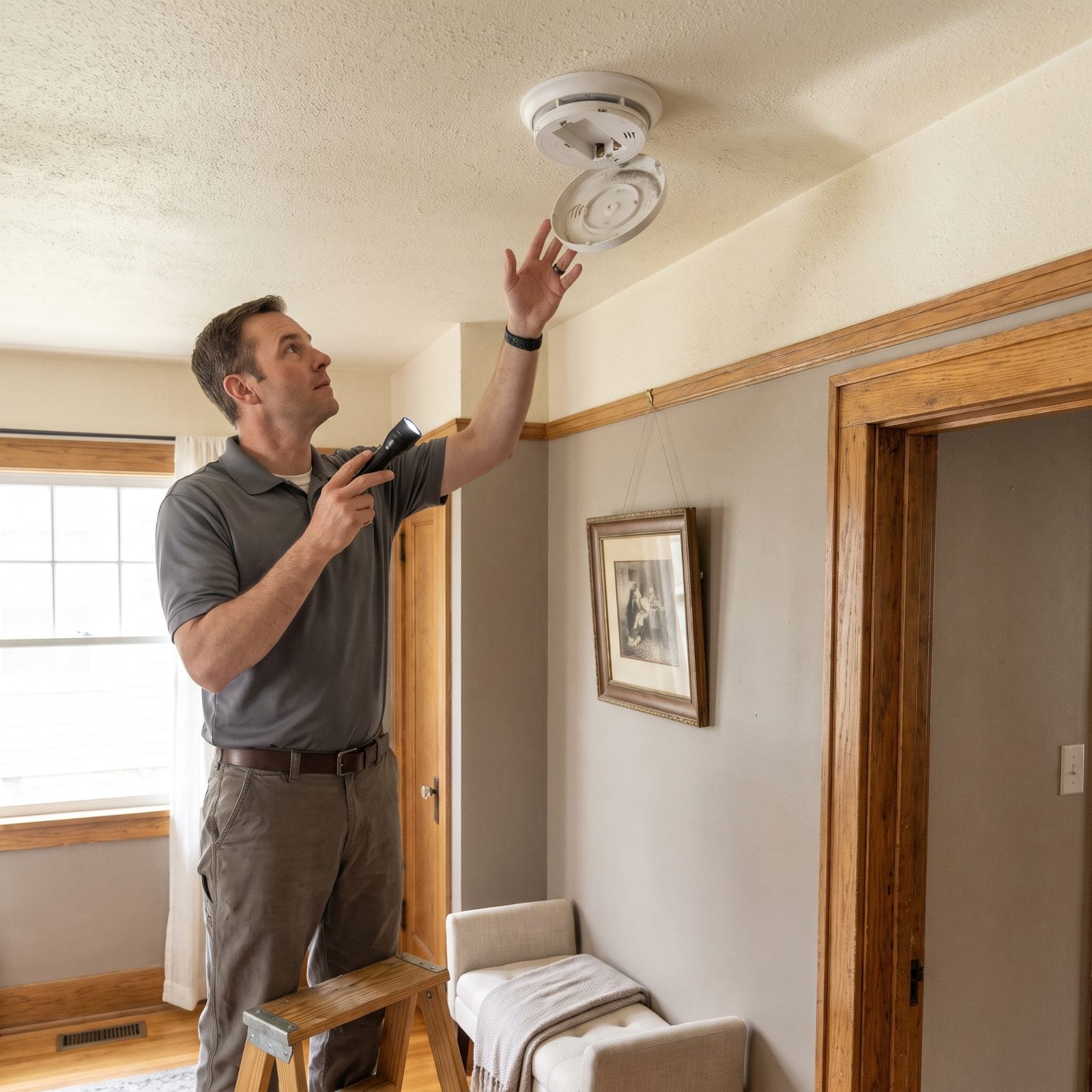
A disconnected smoke alarm is the first thing we notice, and it tells us more than the gadget itself. Someone pulled the battery because it chirped at 2 a.m. and never climbed back up to replace it. That one small annoyance is the most common deadly shortcut in American homes.
We check the date stamped on the back too. Anything past ten years is done, beeping or not, because the sensor degrades whether you remember it or not.
8. A Bedroom Window Too Small to Climb Out Of
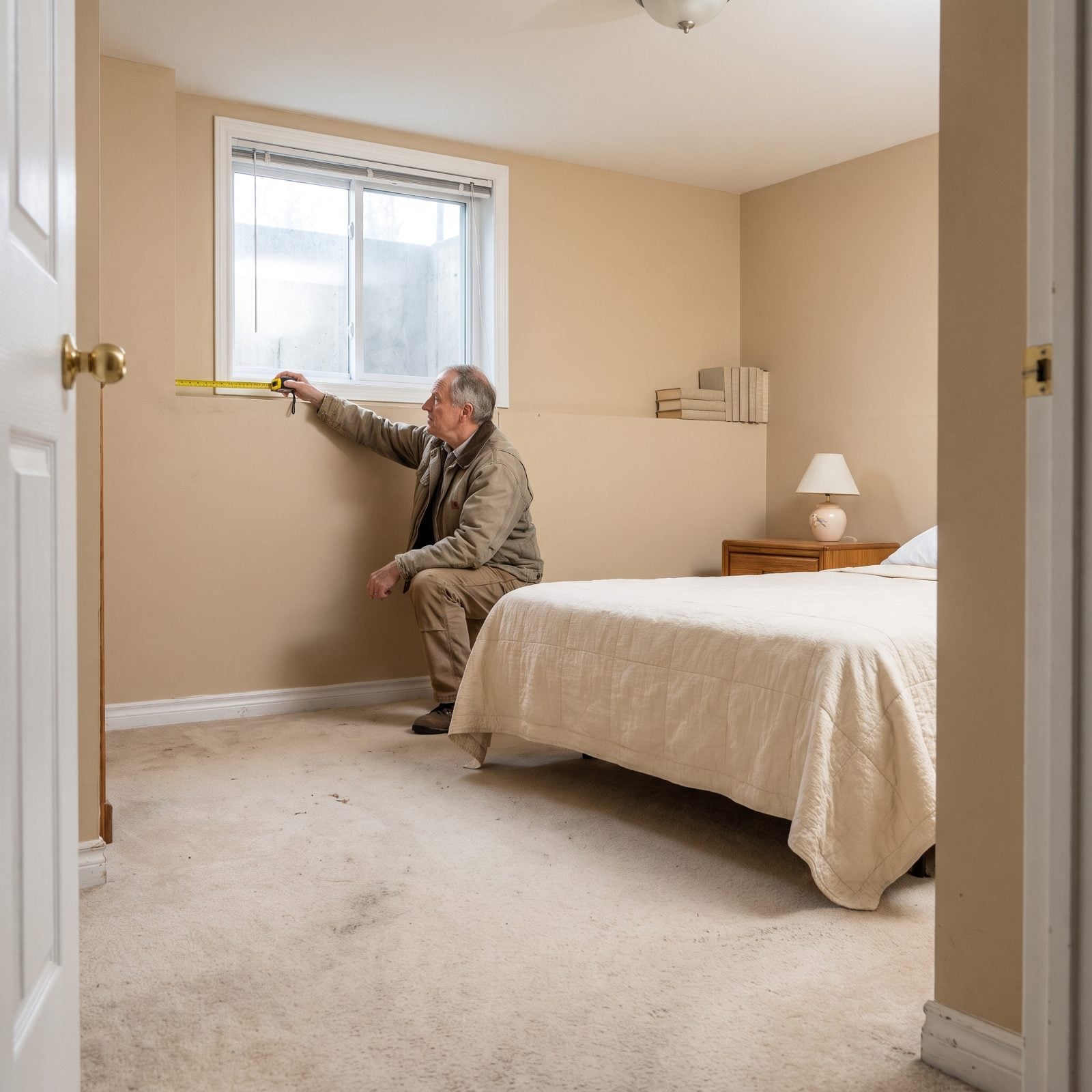
Any room used for sleeping needs a way out that a firefighter in full gear can also climb into. The code word is egress, and the opening has to be big enough and low enough to crawl through under smoke.
Basement bedrooms fail this constantly. A tiny slider up near the ceiling looks like a window and works like a trap. If the only exit runs through the rest of a burning house, the room shouldn’t be advertised as a bedroom, no matter how nicely it’s finished.
7. Stairs With No Handrail at All
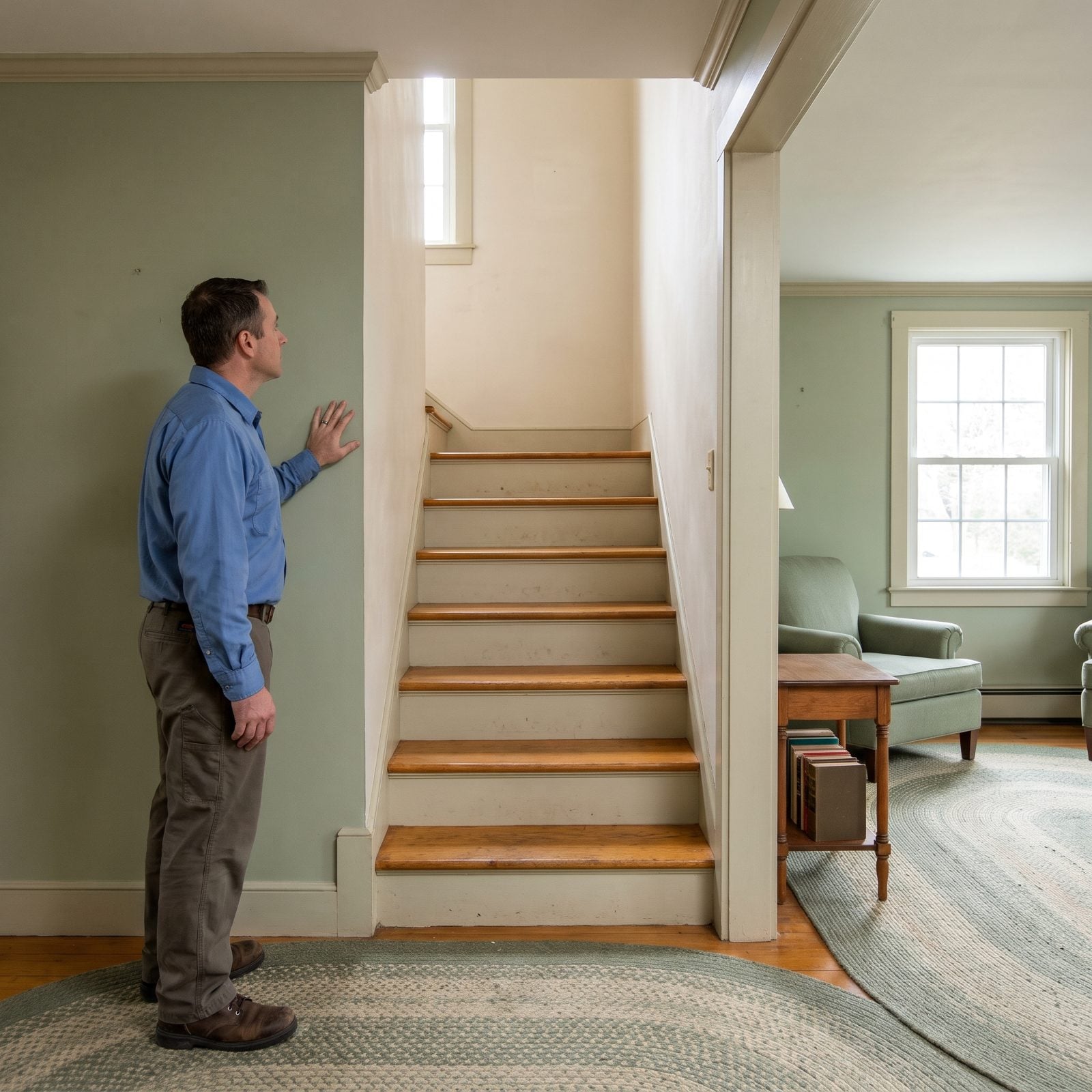
Bare stairs with nothing to grab read as fine until the moment they don’t. One missed step, one armful of laundry, and there’s no rail to catch yourself. We see it most on short interior flights and basement runs, where people assume a handful of steps don’t count. They count. Falls on stairs send a great many people to the emergency room every year, and the ones with handrails rarely make that list.
6. Loose or Cracked Stair Treads Underfoot
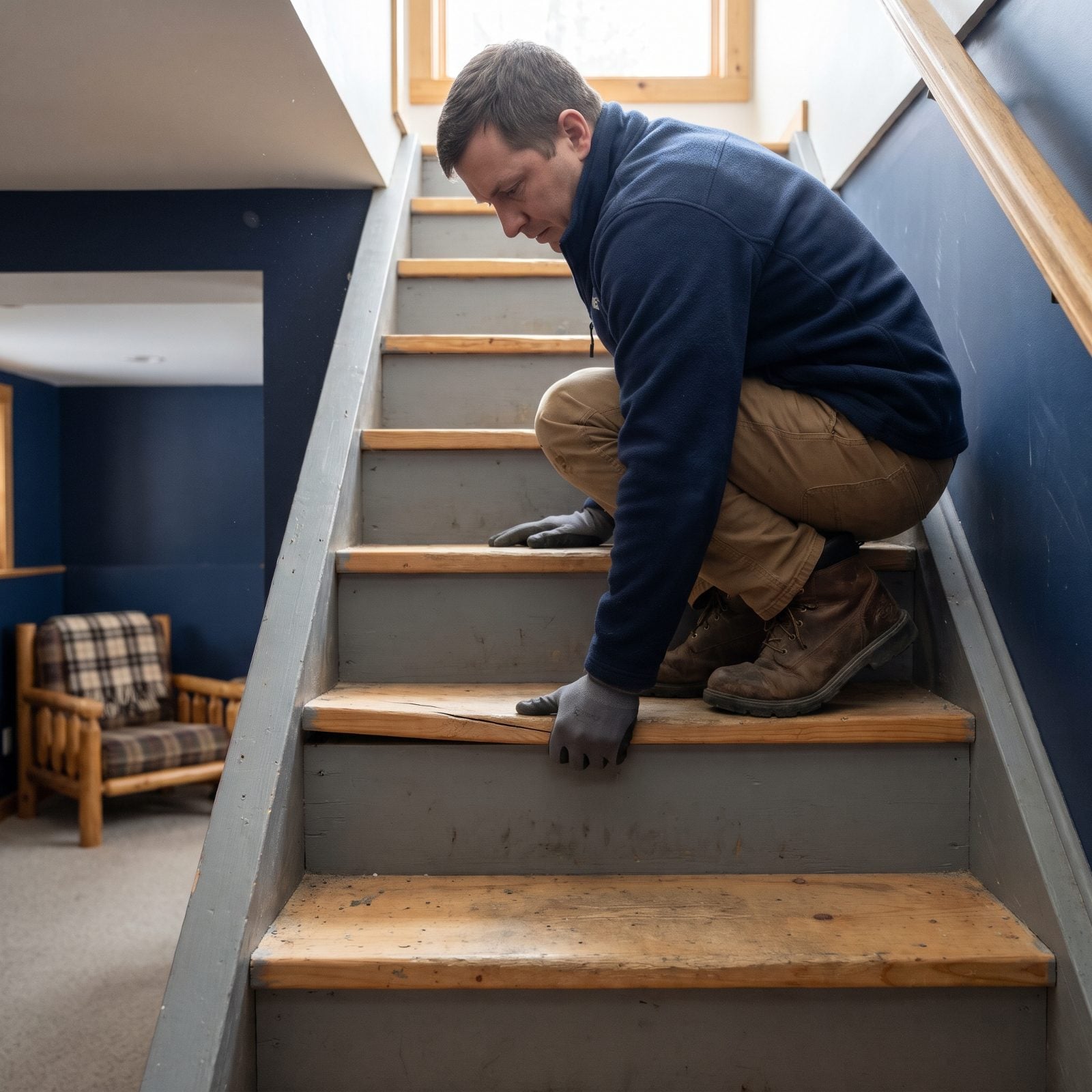
We put weight on every tread for a reason. A step that flexes or knocks underfoot is already failing, usually at a fastener that worked loose years ago or a board that split along a knot.
Cracked treads rarely snap all at once. They give a little, then a little more, and the failure finally arrives on the trip down when you least expect it.
5. A Hollow-Core Door Between the Garage and House

Knock on the door into the house from the garage. A dull, light, hollow sound means trouble, because that door is supposed to slow a fire and hold back exhaust fumes, and a hollow-core panel does neither.
The fix is one of the cheaper safety upgrades in the whole house: a solid-core or rated fire door, hung on self-closing hinges so nobody can prop it open. Builders cut this corner all the time because the hollow door looks identical from the kitchen side. The ear knows better.
4. Open Gaps in the Garage Separation Wall
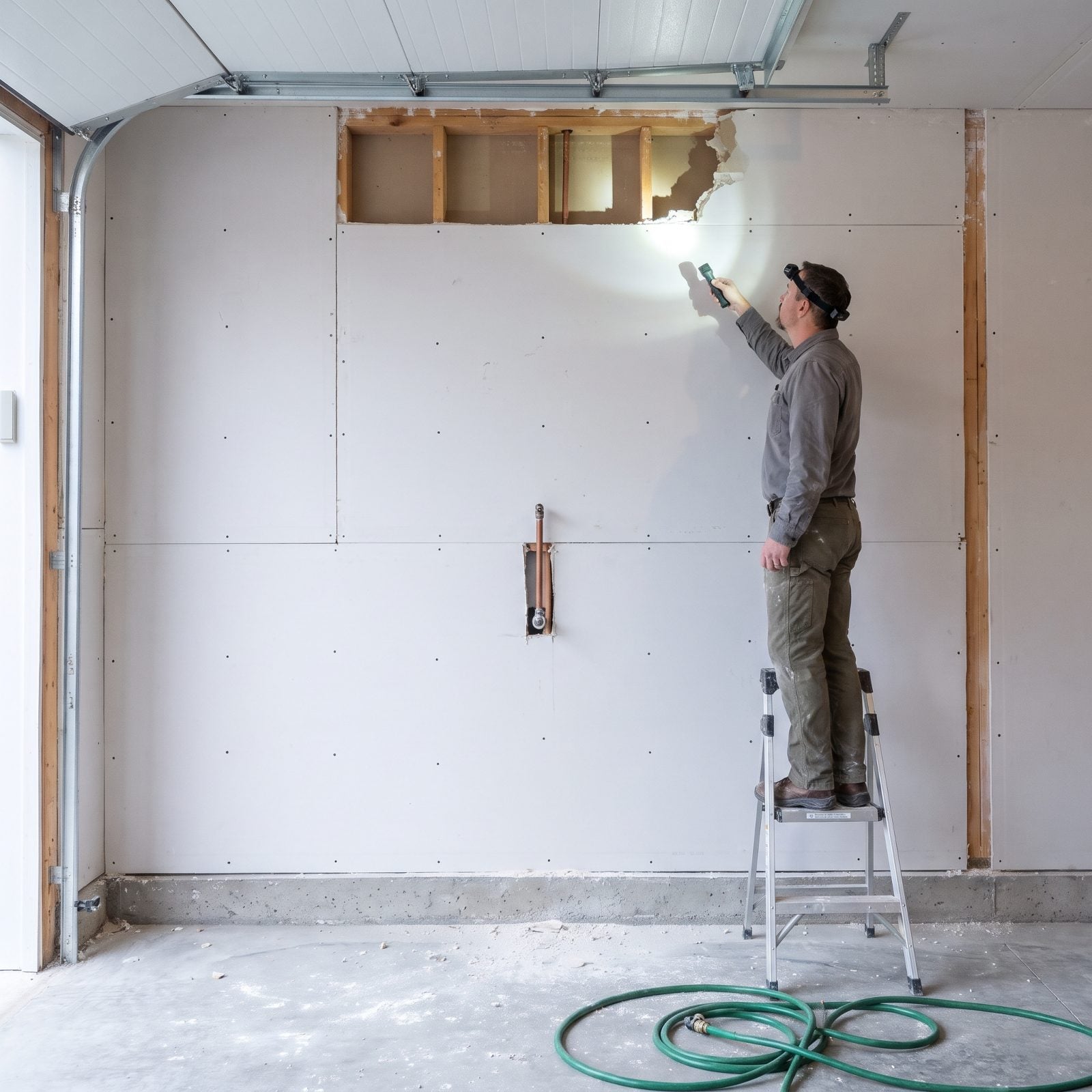
The wall between garage and living space is a firebreak, and a firebreak only works when it’s actually sealed. So we go looking for the gaps people leave behind: an unpatched hole where a pipe runs through, a missing section of drywall, daylight showing around a vent.
Each of those openings is a path for fire and exhaust to travel from the garage, where the cars and the gasoline live, into the part of the house where people sleep. A patch of drywall and some fire caulk closes it. Noticing it’s open is the hard part.
3. Carpenter-Ant Frass Piling Below the Trim
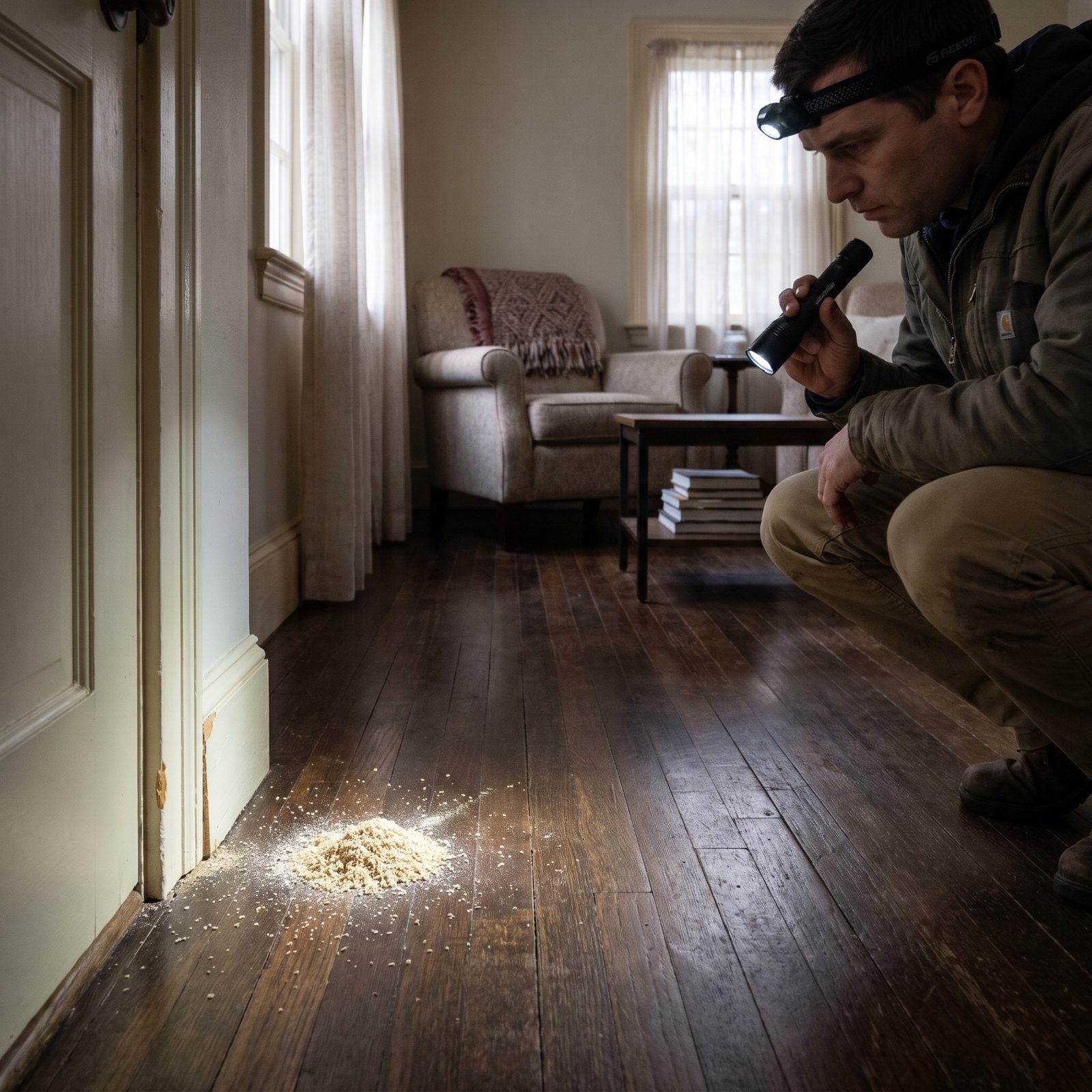
A tidy little heap of what looks like sawdust under the trim is almost never sawdust. Carpenter ants push out frass, a mix of chewed wood and insect debris, as they tunnel through the framing behind the wall.
And here’s the part people get wrong. Carpenter ants don’t eat the wood. They hollow it out to nest, which means they go for wood that’s already damp and softening. The frass is two warnings in one, then: you have ants, and you very likely have a moisture problem feeding them.
2. Rodent Droppings Tracing the Base of the Walls
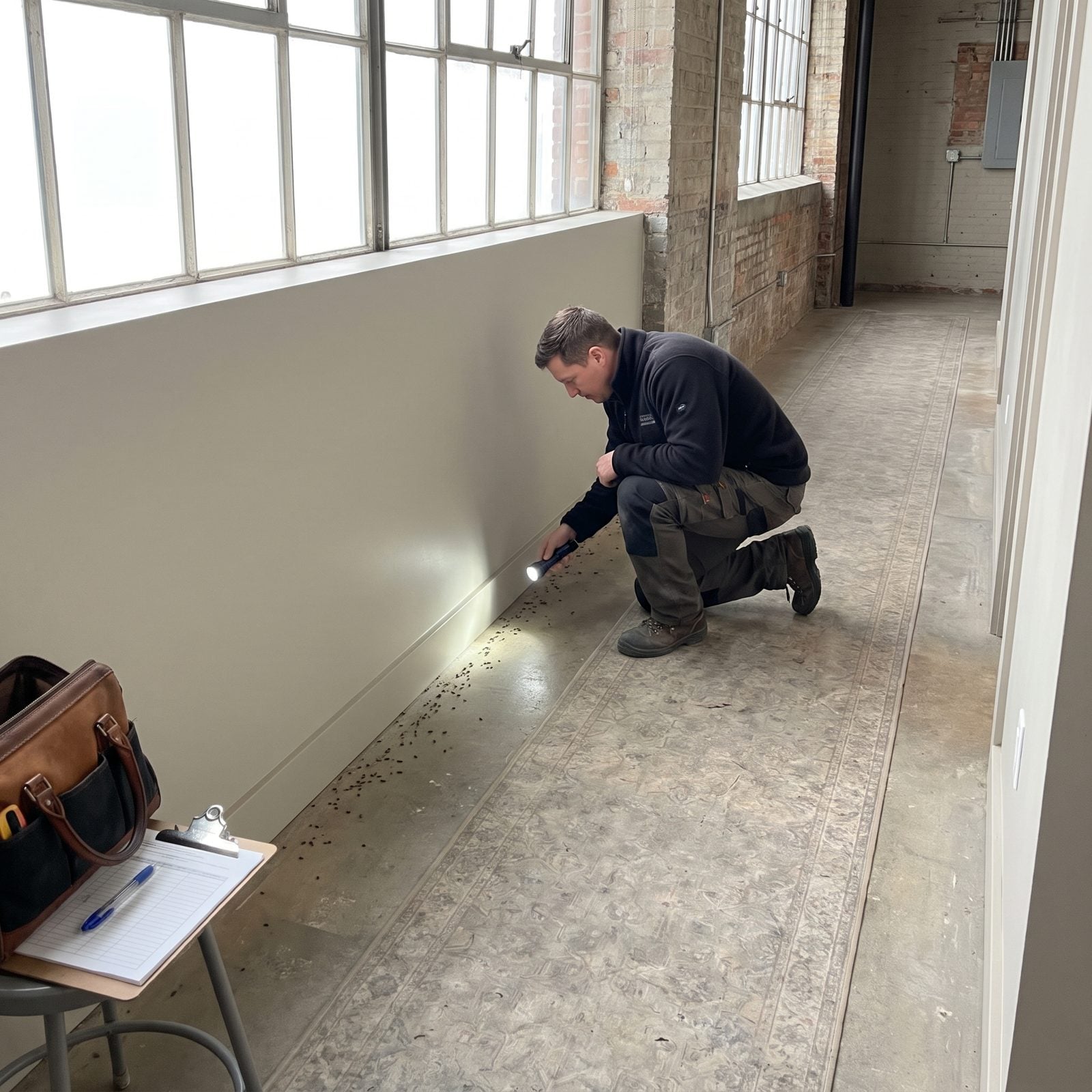
Mice and rats run the edges. They won’t cross an open floor if they can help it, so their droppings line up along baseboards, behind appliances, under the sink. We follow that line like a map.
Fresh droppings are dark and soft. Old ones go gray and crumble. The amount tells you whether you’re dealing with a visitor or a resident. And that greasy smudge along the wall, the rub mark left by oily fur passing the same spot a hundred times over, means the route has been running a while.
1. Termite Mud Tubes Climbing the Foundation
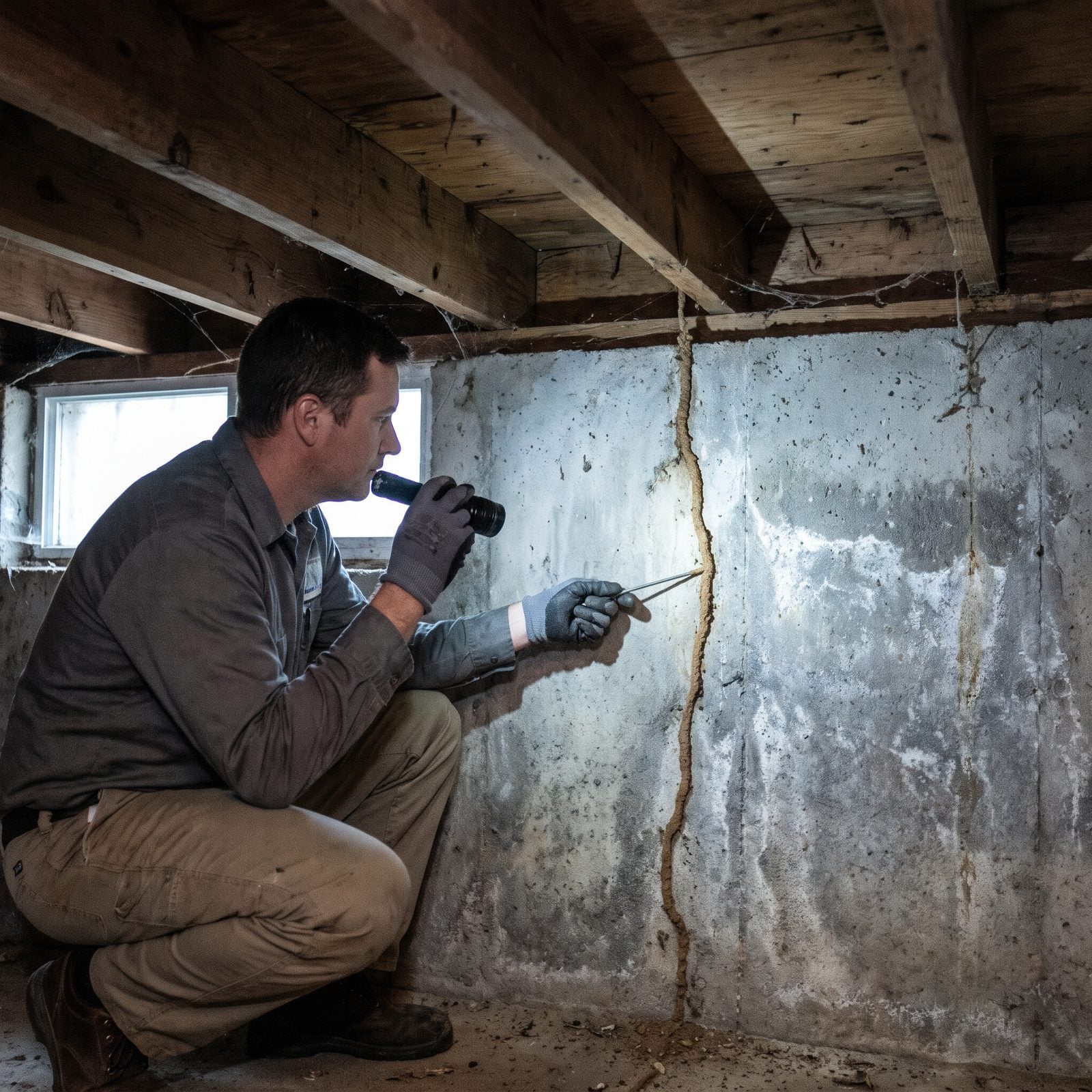
A thin band of dried mud, about the width of a pencil, running up the foundation is the one that makes us slow right down. Subterranean termites build those tubes to travel from the soil to the wood above without drying out in the open air.
Break a tube open gently. Active, and you’ll find pale workers inside. Abandoned and dry, and the colony may have moved on, though the damage behind the wall is already done. Either way, a mud tube means termites have found the house and laid a highway straight to it. This is the find that turns a routine walkthrough into a phone call, same day, to a licensed pest inspector.