
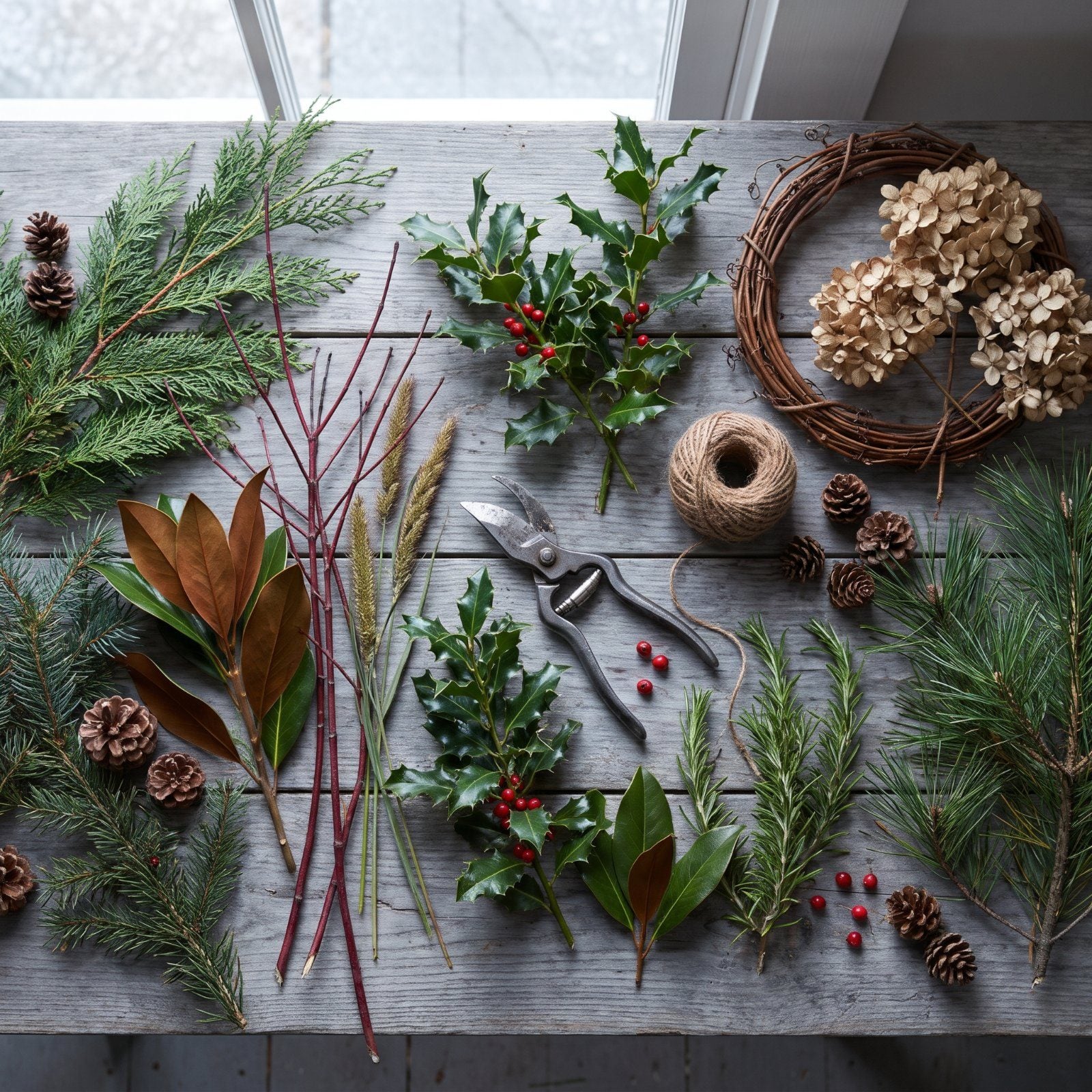
The best holiday greenery doesn’t come shrink-wrapped from a big-box store. It’s hanging off the back fence, dropping berries on the lawn, and threatening to swallow the mailbox. Cedar that smells like December when you snap a branch. Holly that scratches your wrists and seems proud of it. Bare red-twig dogwood glowing like embers against the snow. Every yard hides a Christmas shop, if you know where to cut. We pulled together decorations built entirely from what grows outside your own door, each one looser and more alive than anything with a price tag. Grab your pruners. The materials are free, and they already belong to you.
Please note that some of the images in this article were created with the assistance of AI.
48. Mixed-Evergreen Front-Door Wreath
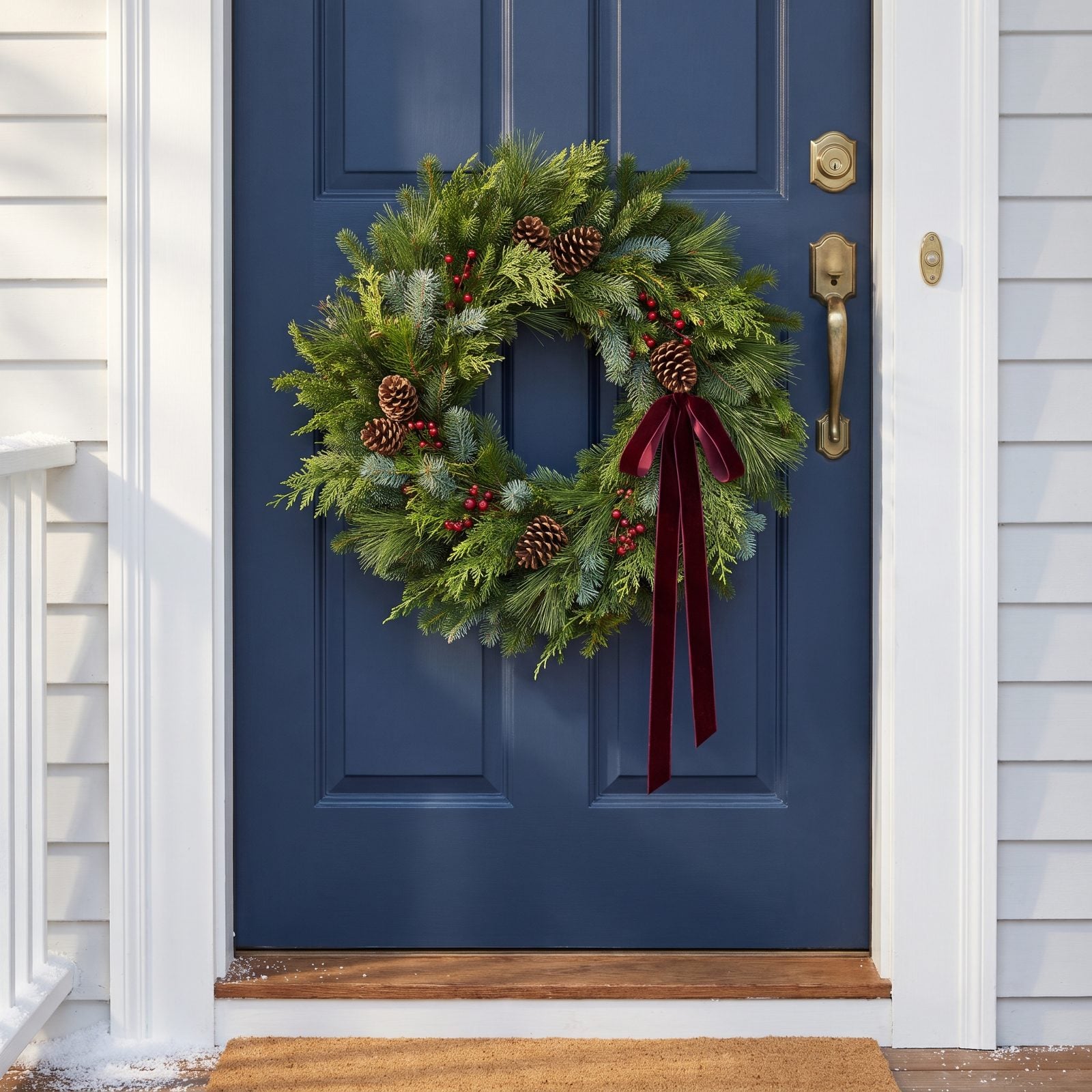
Everyone makes the same mistake with their first wreath: one kind of greenery, cut all to the same length, wired into a tidy donut. It reads as plastic even when it isn’t. The fix is depth. Layer cedar with pine, juniper, and a few holly sprigs, and let some branches stick out longer than others.
That irregularity is what separates a homemade wreath from a store one. Mix three or four textures and the thing catches light differently all the way around. A scattering of small pinecones and red berries, tucked in unevenly, finishes it without trying too hard.
Writing about cutting greens from the home landscape, an extension horticulture educator notes “Whether you are making wreaths, porch pots or swags, Illinois gardens boasts eastern red cedar, pines, spruces, holly, yew, boxwood and junipers that can be used.”
47. Asymmetrical Holly-and-Cedar Door Swag
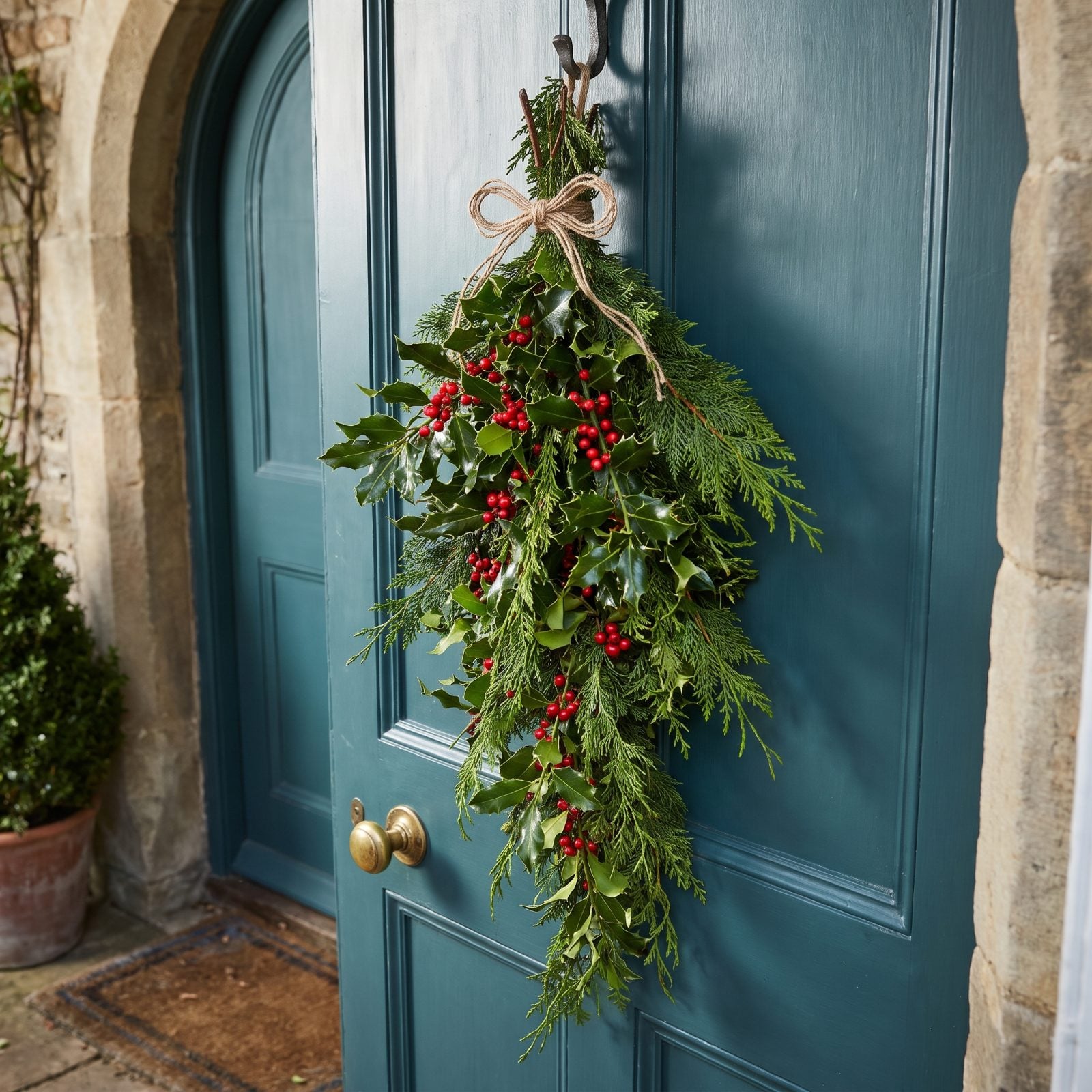
A swag is a wreath that stopped pretending to be round. Easier to make, honestly, and I prefer it. You gather a bundle of stems, bind the top, and let gravity do the design work.
Holly carries this one. The berries pull the eye, and the cedar trails long underneath to give it motion. Let a few holly sprigs reach out sideways across the door, so the whole thing reads wider than it is. The lopsidedness is the point. A swag that’s perfectly balanced looks like you fought it.
46. Natural Garland Framing the Front Door
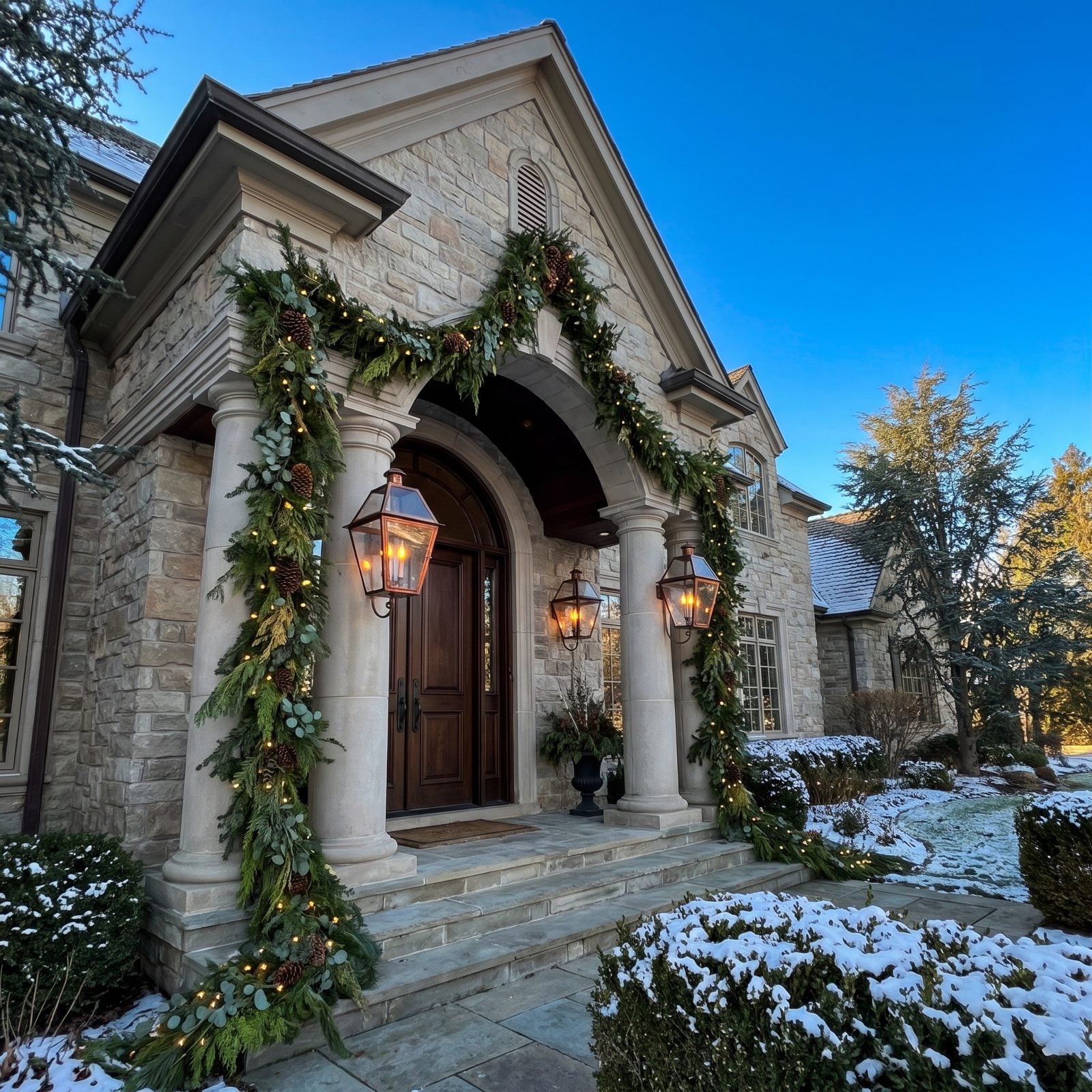
Framing a door with garland is the single biggest-impact thing you can do with yard clippings, and it costs nothing but an afternoon.
The trick nobody tells you: make more garland than you think you need, then double it up. A thin garland on a wide door frame looks sad, like bunting that deflated. You want it full enough to droop between the fixing points. Twist cedar and pine lengths together around a base of jute rope, working in eucalyptus sprigs and pinecones as you go. Let one side hang heavier than the other.
45. Boxwood-and-Juniper Porch Urns
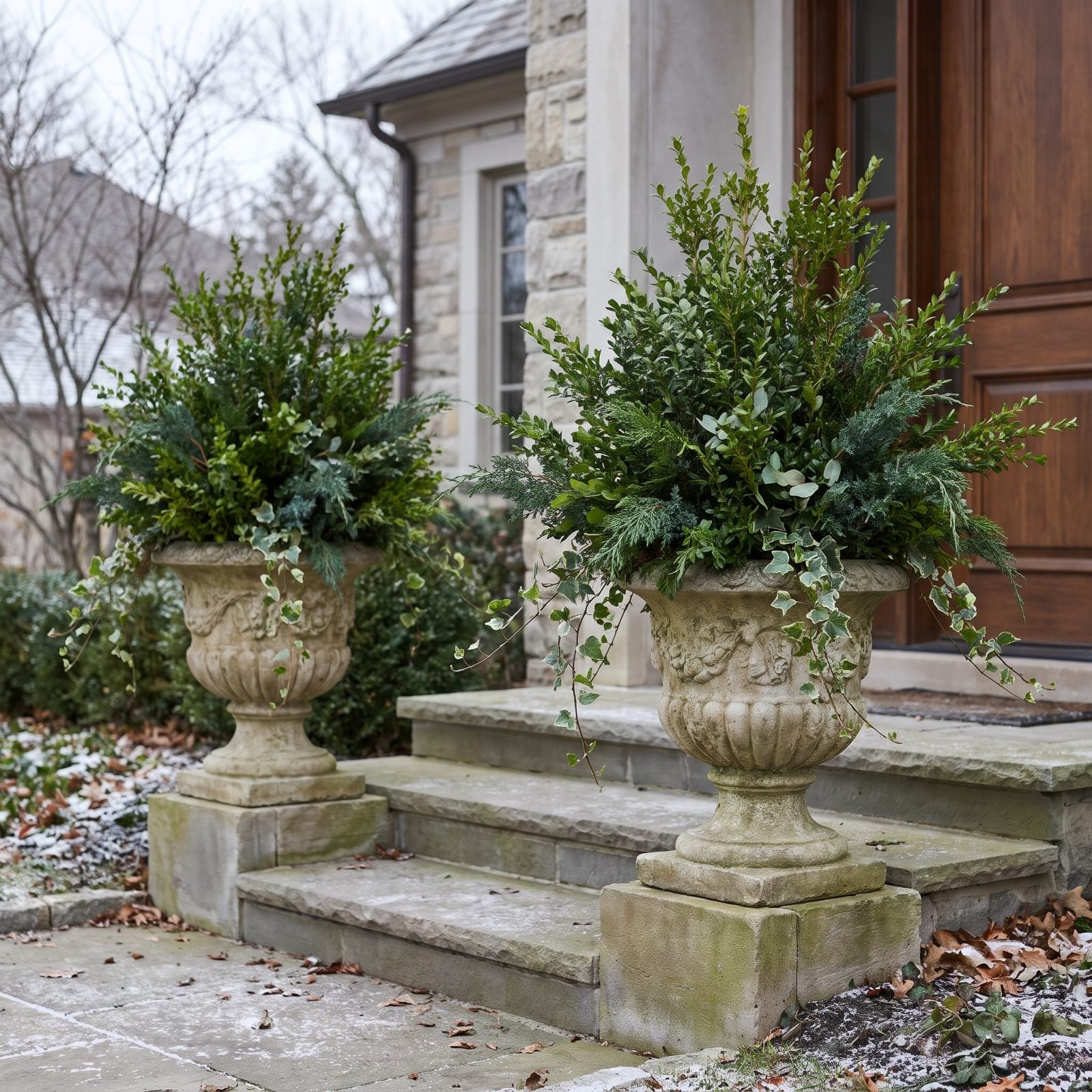
You’ve seen the empty summer planters sitting forlorn on a porch all winter, the geraniums long gone, the dirt frozen. That’s the perfect base for this.
Fill them with wet sand or floral foam, then build: a rounded boxwood in the center for the body, feathery blue juniper fanned out around it for drama. The texture matters. Soft, silvery juniper sprays reaching past the rim keep the arrangement from looking like a sad green meatball. Tuck trailing ivy around the edge where the greenery meets the urn and let it spill down the sides.
These last for weeks outdoors, often clear through January, because the cold keeps everything fresh.
After planting up winter pots in a test garden, a gardening magazine writer says “One of the easiest ways to create a spruce tip porch pot is to use containers filled with annuals that are done for the season, as we did in the video above.”
44. Evergreen Window Box With Red-Twig Accents
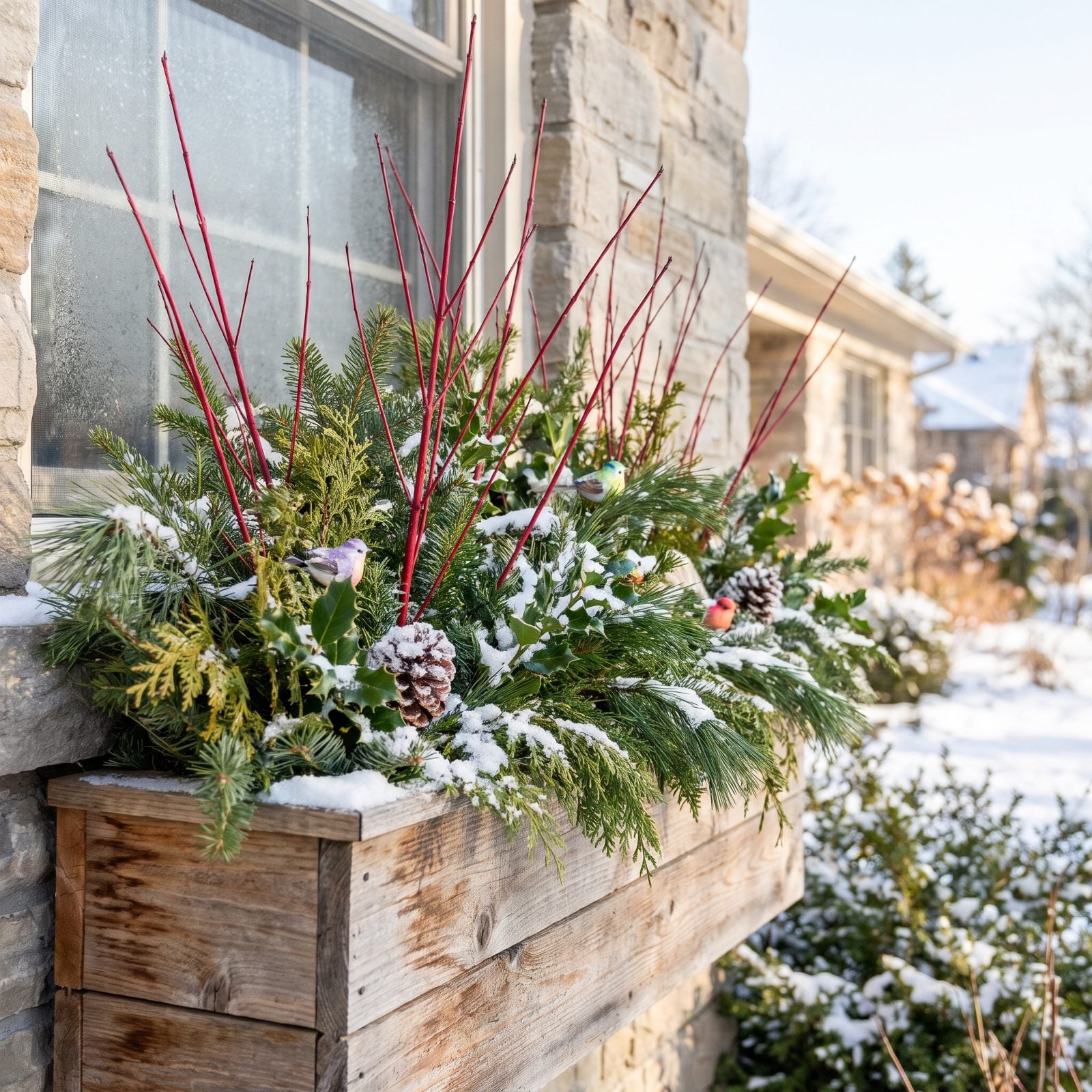
A window box is a stage, and in winter it’s empty. Fill it.
The red-twig dogwood is what makes this one sing. Those bare scarlet stems, pushed in vertically at the back and rising a foot or more above the greenery, read as deliberate even though nature grew them that way. Front of the box: let cedar and pine spill over the edge so the box looks like it’s overflowing. Tuck rosemary near the front so you catch the scent every time you walk past the window. Winterberry clusters add the color that photographs well from the street.
Describing a slim entry planter she built for a client, a winter container designer says “It is simple but one of my favorites, with stunning red twig dogwood stems.”
43. Cedar Spray for the Mailbox
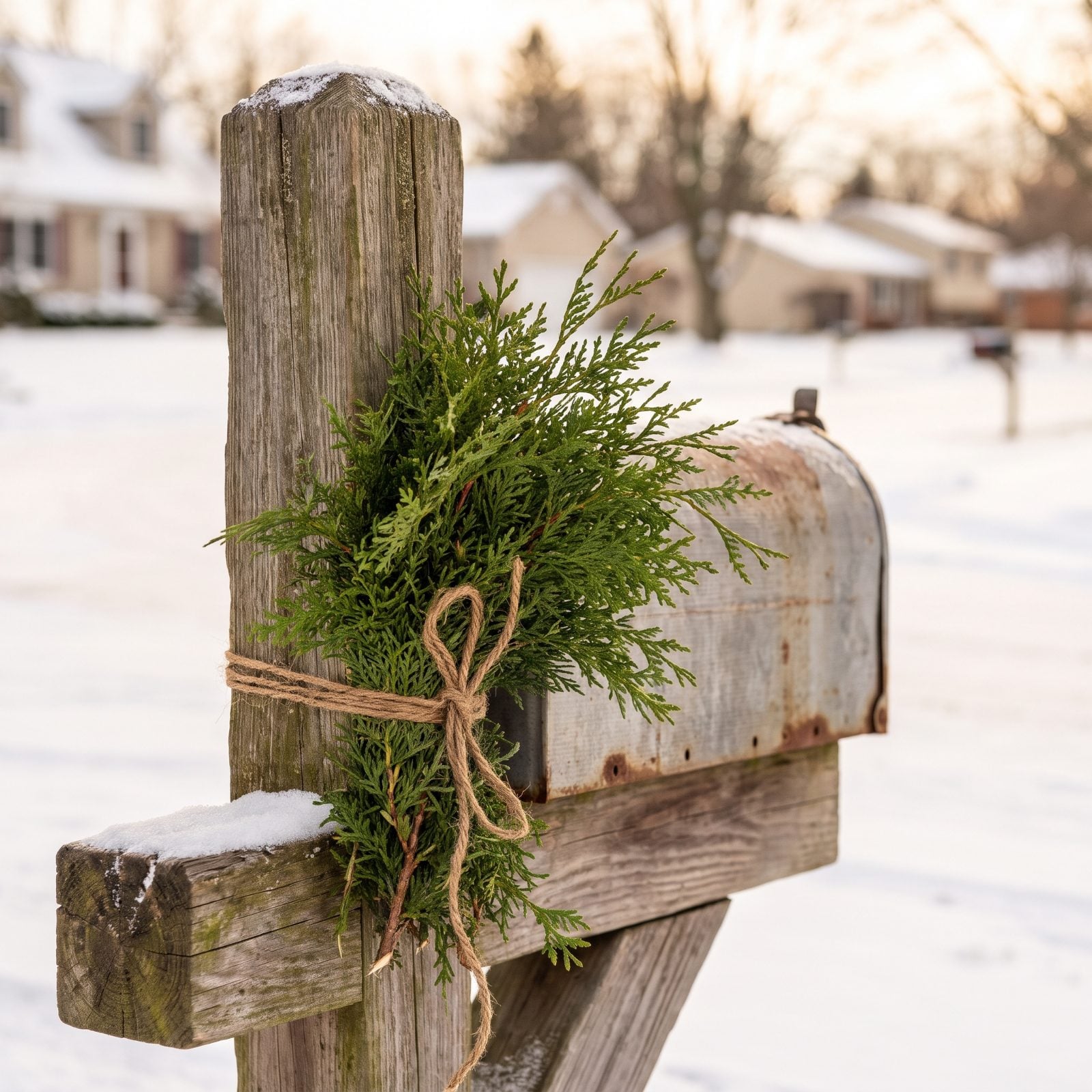
The mailbox is the one decoration your whole street actually walks and drives past, and most people forget it entirely.
A simple cedar spray fixes that in ten minutes. Bundle cedar and pine, lay it across the top of the box or lash it to the post, and let it trail down one side. A simple jute twine bow, and you’re done.
42. Flexible-Vine Christmas Arch Over the Garden Gate
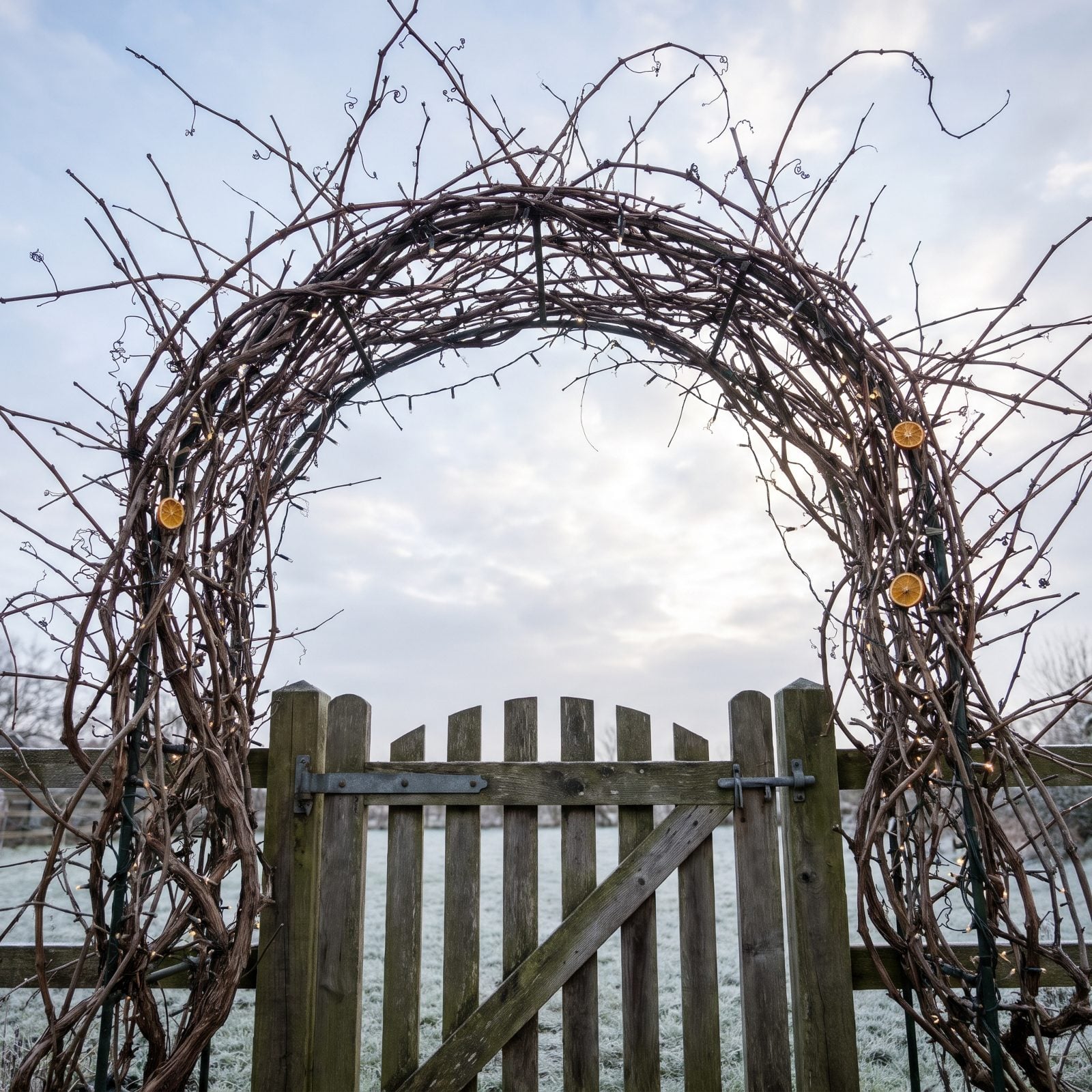
Grapevine is the secret weapon of yard decorating. It bends where you want it and holds the shape, which means you can build an actual arch over a gate with nothing but what’s strangling your fence.
Bend a few lengths into a curve, secure them above the gate, then weave in more bare vine until it looks thick and wild. Thread warm fairy lights through, tuck dried orange slices in for a pop of colour. Walking under a lit grapevine arch on the way to the door does something to a person. It makes an ordinary gate feel like an entrance.
This one takes longer than the others. Worth it.
41. Evergreen Nest Inside a Porch Lantern
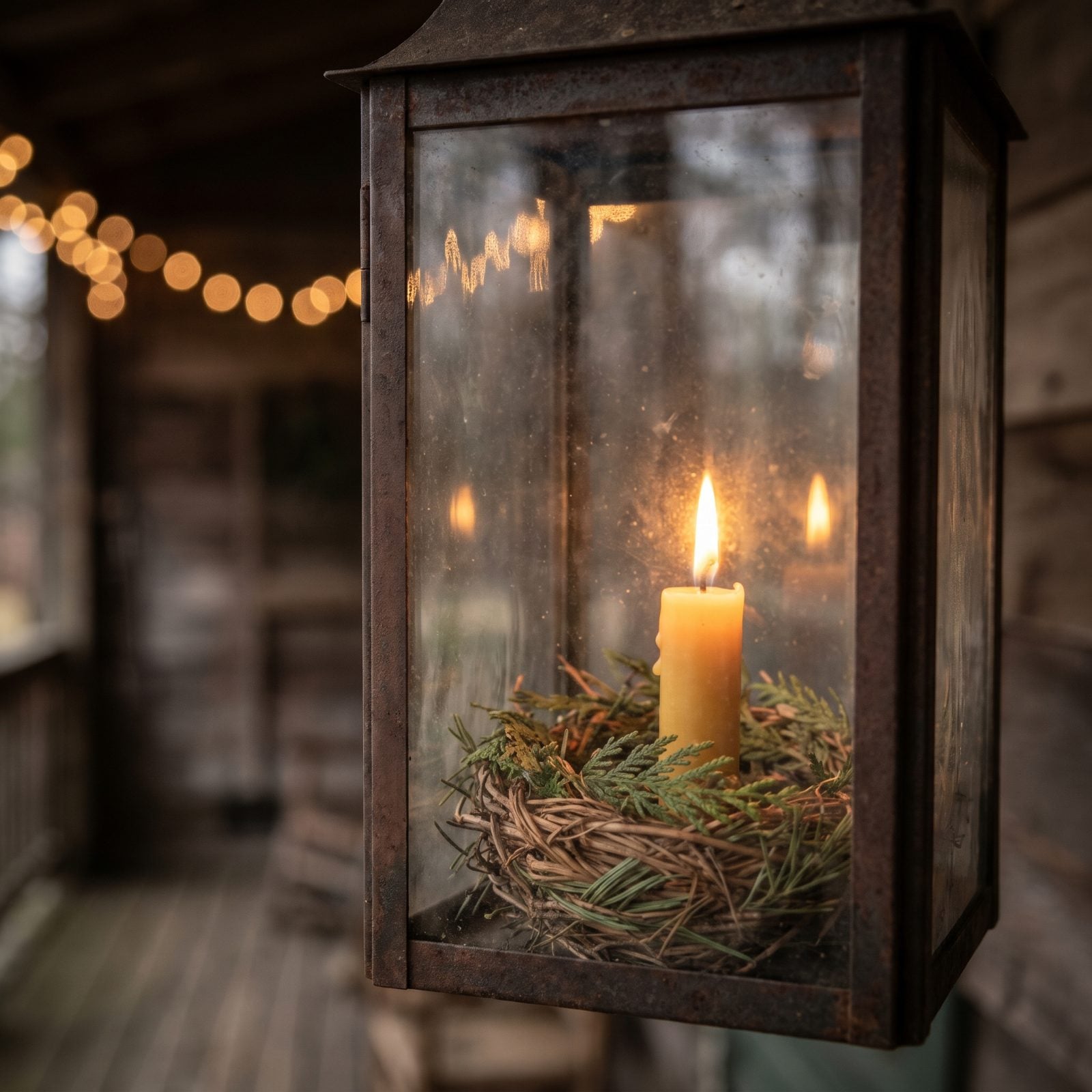
A porch lantern left bare all winter is a missed opportunity sitting in plain sight.
Tuck a small nest of cedar and juniper inside, weave a few loose pine needles among the twigs and leave the center open, then set a lit pillar candle right in the middle of it. At dusk the glow lights up the greenery from within, and the whole thing turns into a tiny lit scene. A sprig of rosemary gives it scent when you lean in.
Keep the arrangement loose. A lantern crammed full looks choked. Let the greenery sit low around the base of the candle so the glass shows off the whole nest instead of reading as a box stuffed to the brim.
40. Hanging Kissing Ball With Berries and Pine
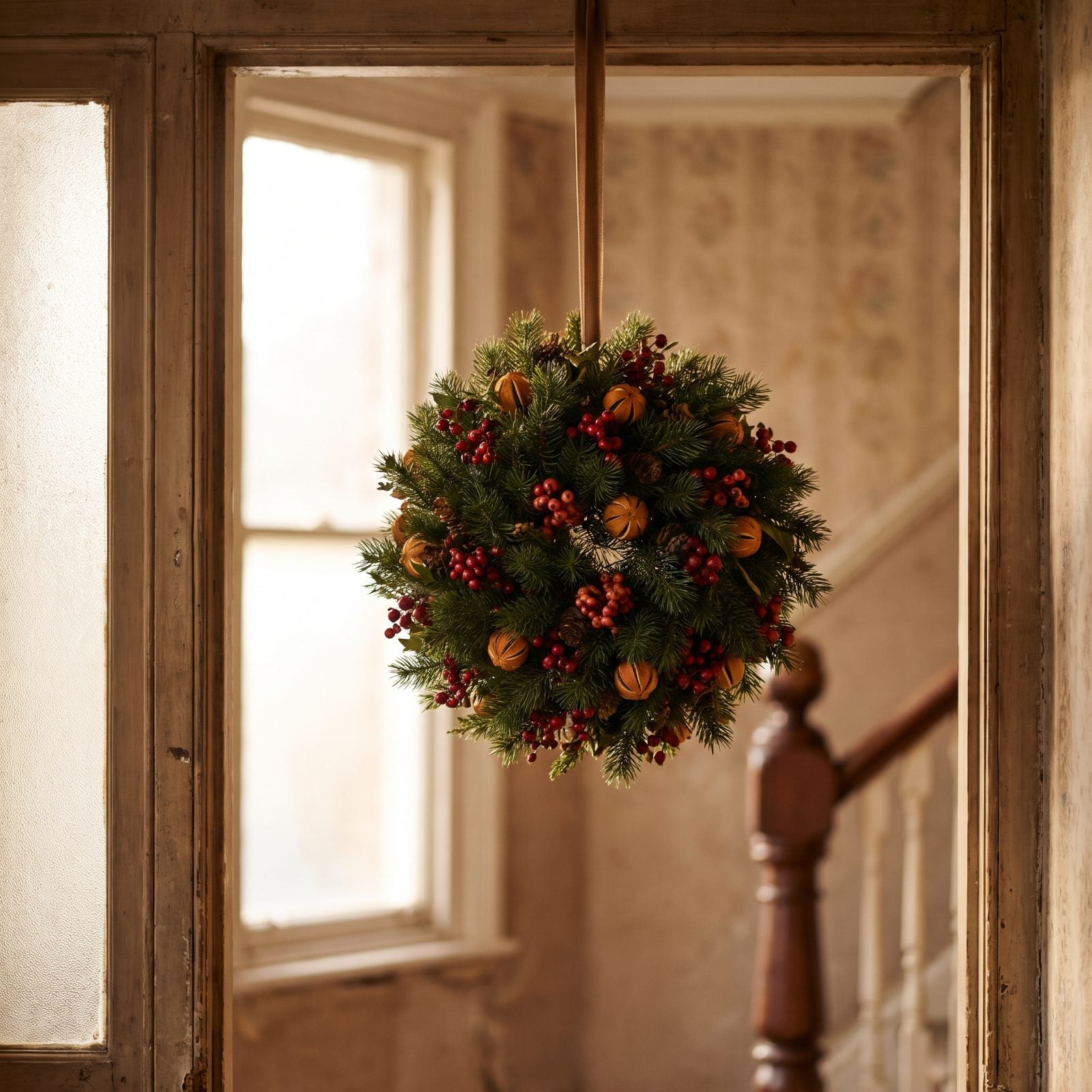
Before the plastic mistletoe sprig in a doorway, there was the kissing ball: a full sphere of greenery hung from a ribbon, and it’s far prettier.
Start with a ball of damp floral foam or a wire frame, then push pine sprigs in from every angle until it’s a dense green orb. Work clusters of red berries into the surface. Hang it from velvet ribbon where people pass under.
Walking through how to build a boxwood kissing ball, an extension horticulture agent advises “The sprigs should be placed as close together as possible to create a full shape and to prevent seeing any white from the Styrofoam ball.”
39. Garden Obelisk Turned Into an Outdoor Christmas Tree
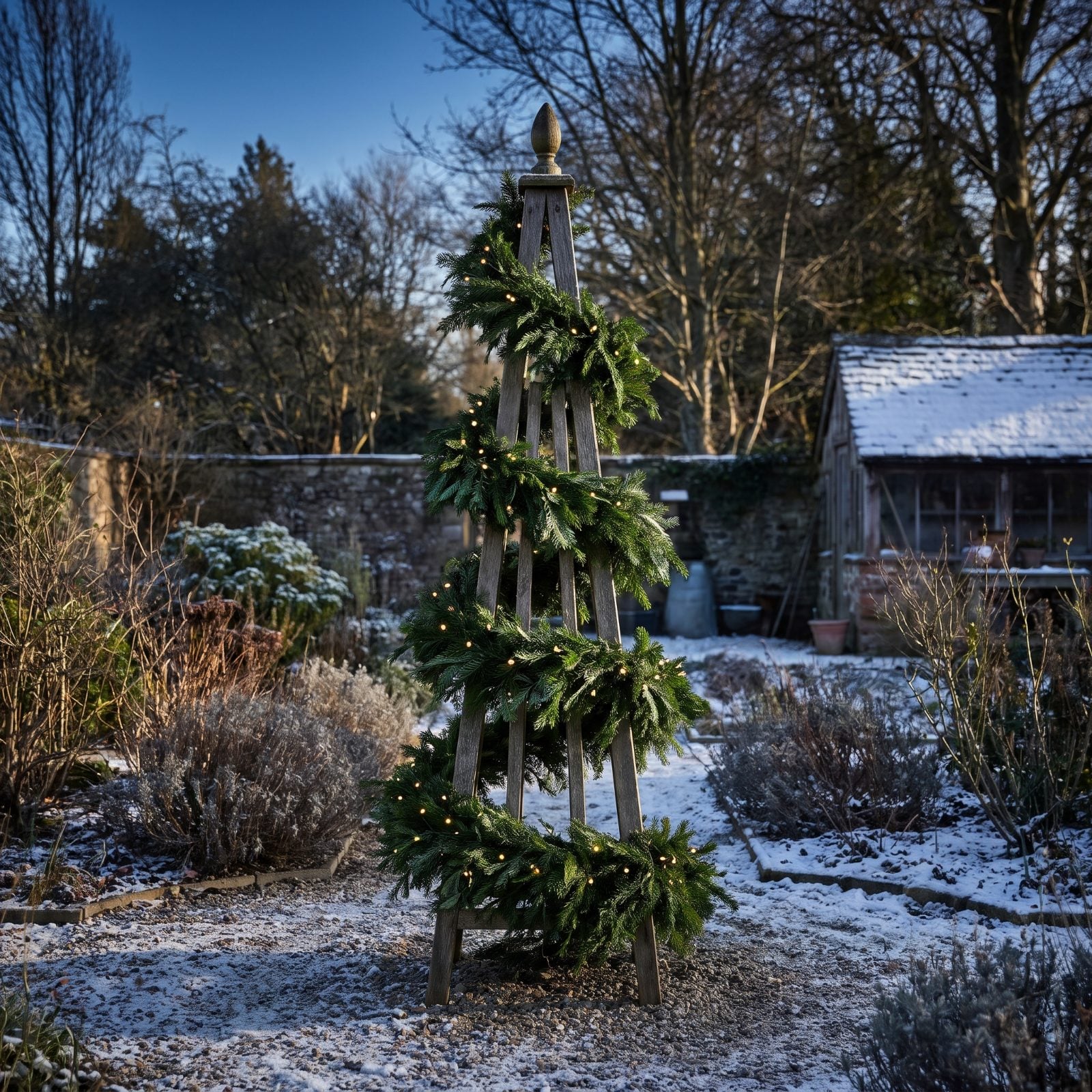
Here’s the clever one. That garden obelisk holding up your clematis all summer is already a tree shape, cone-wide at the bottom, pointed at the top. All it needs is greenery.
Spiral cedar and pine up the frame, binding as you climb, tapering toward the peak. Tuck red berries and pinecones in like ornaments. Finish the top with a bow or a little star bent from red-twig dogwood. Lit with a strand of warm white lights, it becomes an outdoor Christmas tree that needs no watering and won’t drop needles on your rug.
38. Evergreen-Filled Wheelbarrow Display
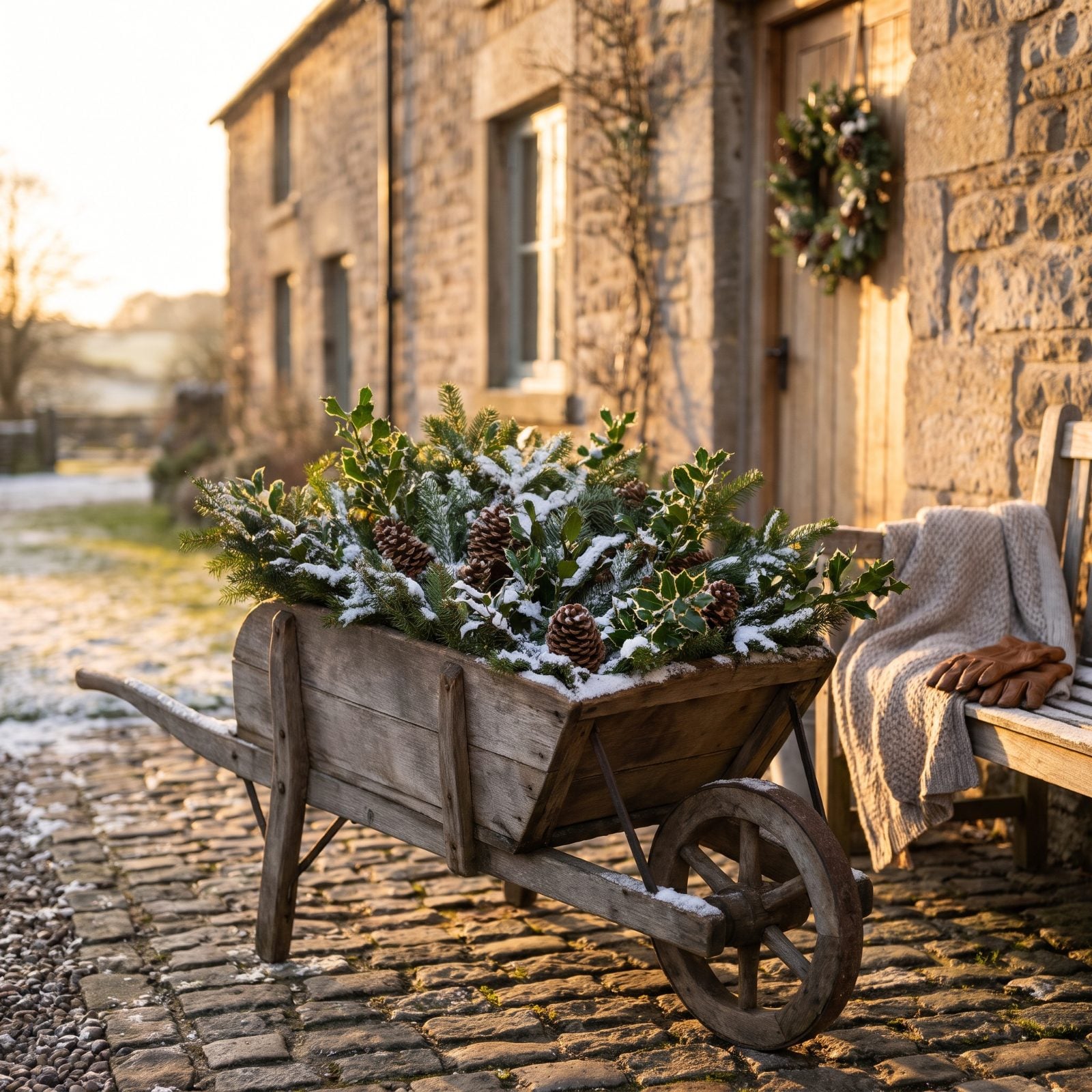
An old wheelbarrow is the best planter you already own, and in December you fill it with what you prune instead of what you plant. Pile cedar and spruce until it looks generous, not tidy. Shove a brick or a bag of sand in the bottom first so it doesn’t tip.
Tuck sprigs of variegated holly and a handful of pine cones through the greens. They give the whole thing texture and a contrast the greens can’t do on their own.
37. Life-Size Reindeer Silhouette Made From Pruned Branches

Here’s the project that stops cars. A reindeer built from your own prunings sounds ambitious until you realize it’s mostly bundles of sticks zip-tied over a rough frame. The antlers are the trick. Hunt your brush pile for a forked branch that already looks like antlers, and half the work is done.
I’ll be honest, the first one usually looks like a drunk dog. That’s fine. Keep adjusting the neck angle until it reads as a deer, then wrap a single strand of warm white lights through the body and nobody questions it after dark.
36. Woven-Vine Orbs Lined Along the Walkway
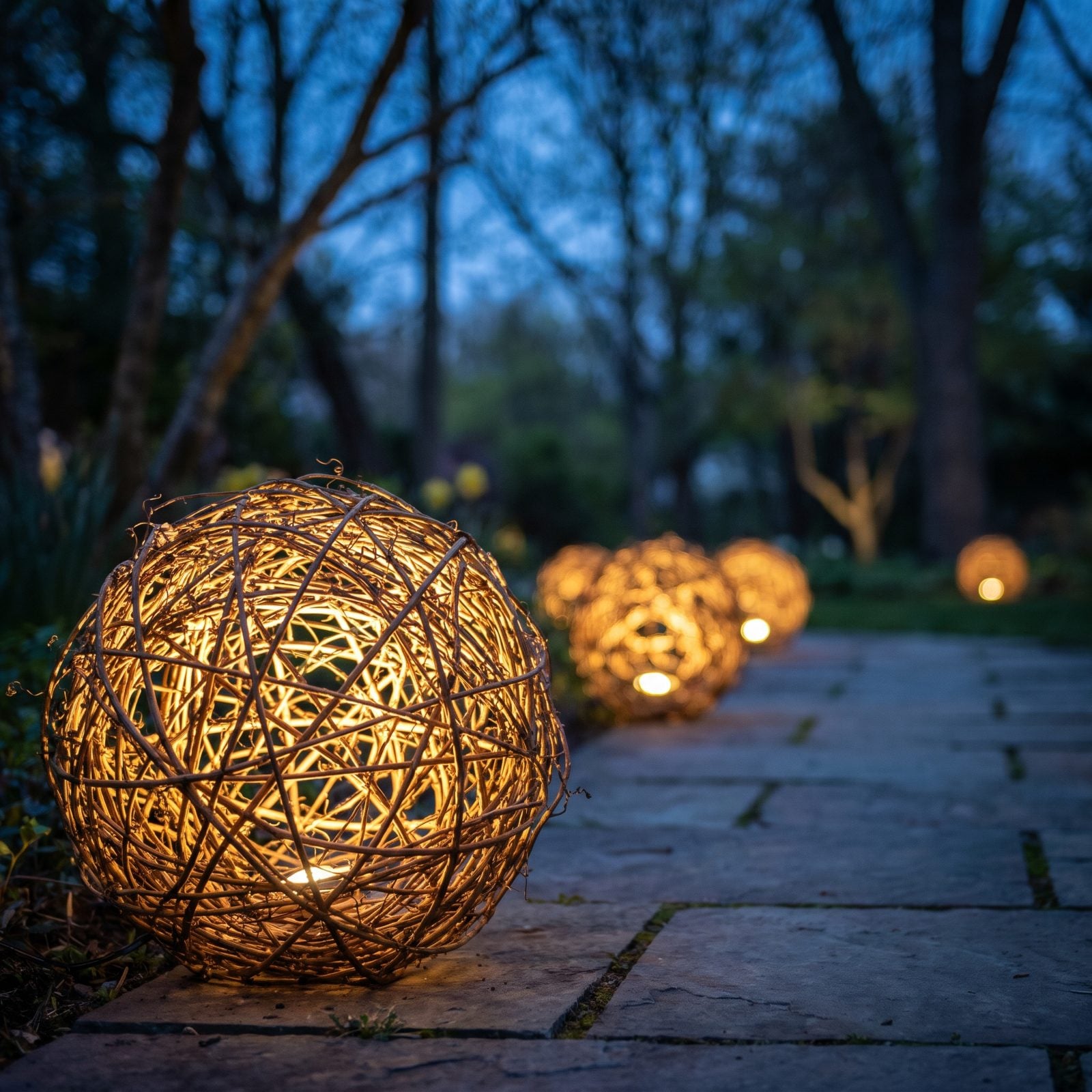
Grapevine, wisteria, honeysuckle, any woody runner you’ve been cursing all summer. Cut it long, coil it while it’s still a little green and bendy, and tuck the ends back into itself. No glue, no wire if you don’t want it. The vine holds its own shape.
Group them in odd numbers down the walk, big ones and small ones mixed. String a few with lights, leave the rest bare. The ones you leave alone are the ones people stop to touch.
35. Oversized Twig Star for a Porch Wall
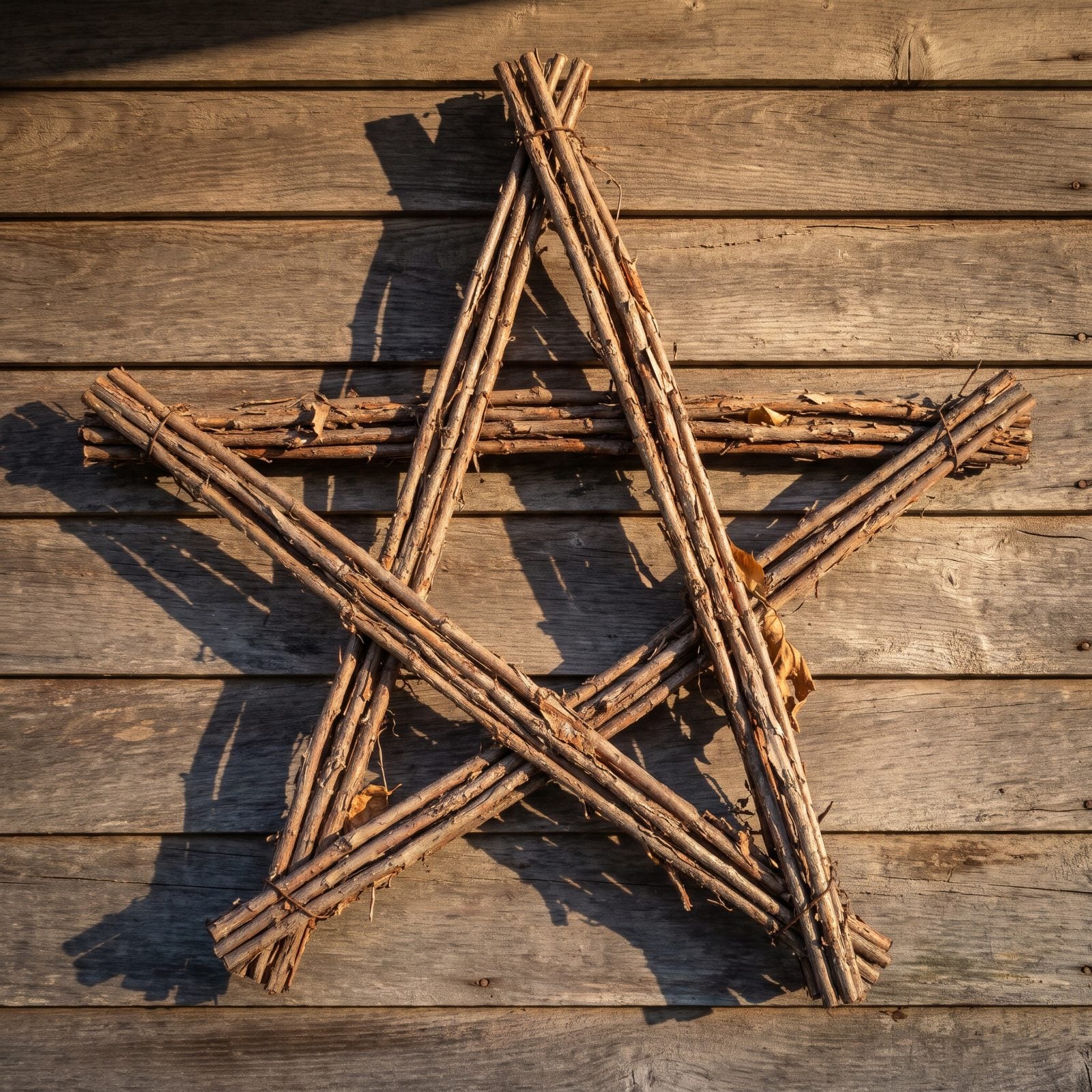
Five straight bundles of twigs. That’s a star. Lash two into a wide V, add the other three, and tie every crossing point with twine until it holds its shape when you lift it.
Bare birch gives you pale silvery lines. Red dogwood gives you color. Mix them and the star has depth you can see from the driveway.
34. Stick-and-Evergreen Snowflake for the Fence
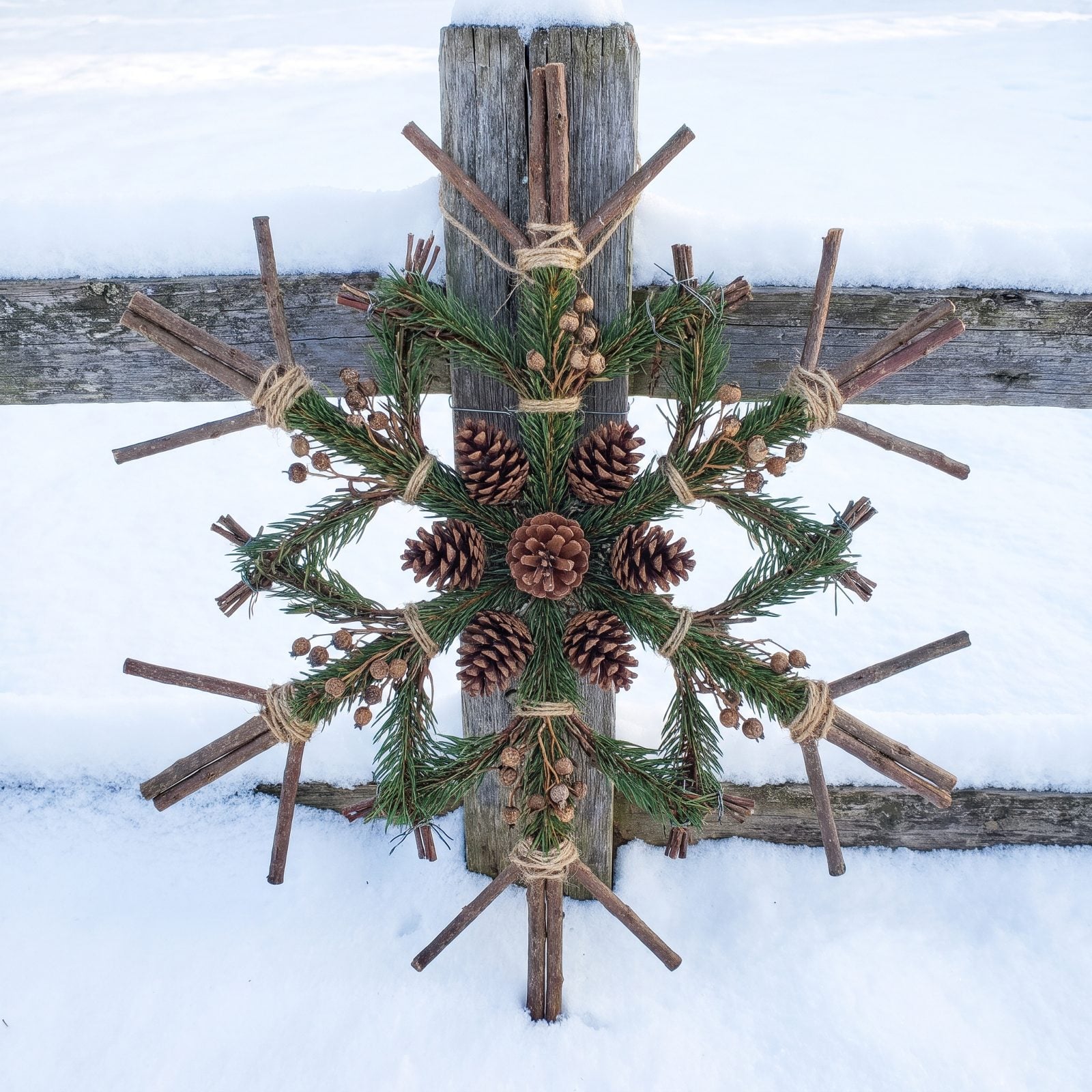
A snowflake is just a star with more arms and a little symmetry anxiety. Six main spokes, then branch each one with shorter sticks so it looks frosty and complicated.
Tuck a few sprigs of blue spruce along the arms. That cool blue-green against bare gray wood is what sells it, and it keeps the thing from looking like a pile of kindling tied to your fence. Which, technically, it is.
33. Frozen Botanical Lantern With Ferns and Berries
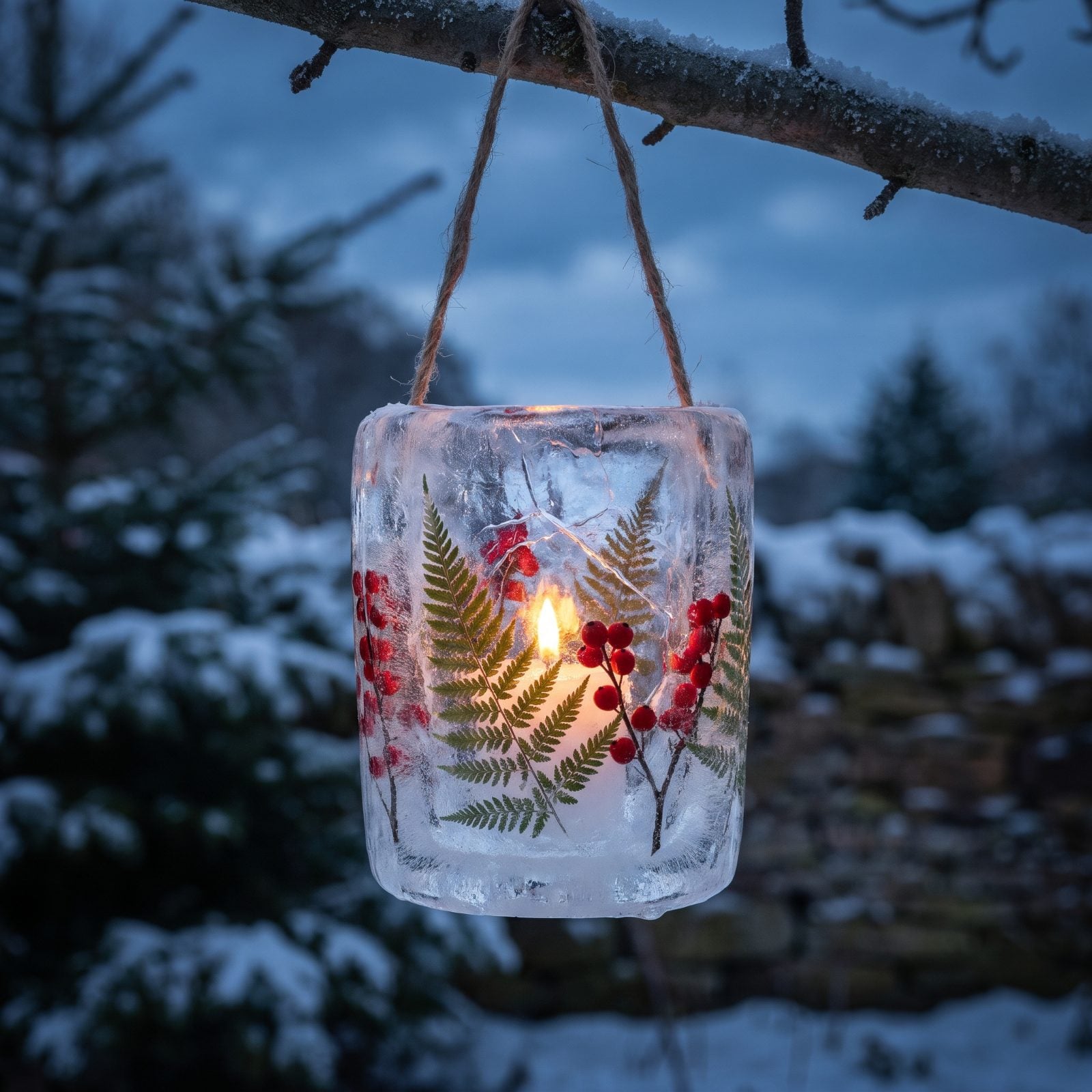
This one only works when it’s cold outside, which feels obvious until your first one melts into a sad puddle on the porch by noon. Freeze water in a bucket with a smaller container floated in the middle to leave a candle hole. Tuck ferns, rosemary, holly berries, and cranberries into the water before it sets.
The botanicals suspend mid-ice like they’re floating. Light a candle inside and the whole thing glows from within, berries lit up red like little coals.
It lasts as long as your weather stays below freezing. A sculpture with an expiration date, basically. Enjoy it while the cold holds.
Before you set frozen ice lanterns on the steps, a garden writer warns “Also keep in mind that, yes, these will melt. They can create a mess when they do so, as all the garden greenery will be left behind.”
32. Bird Buffet Branch Hung With Seed Treats
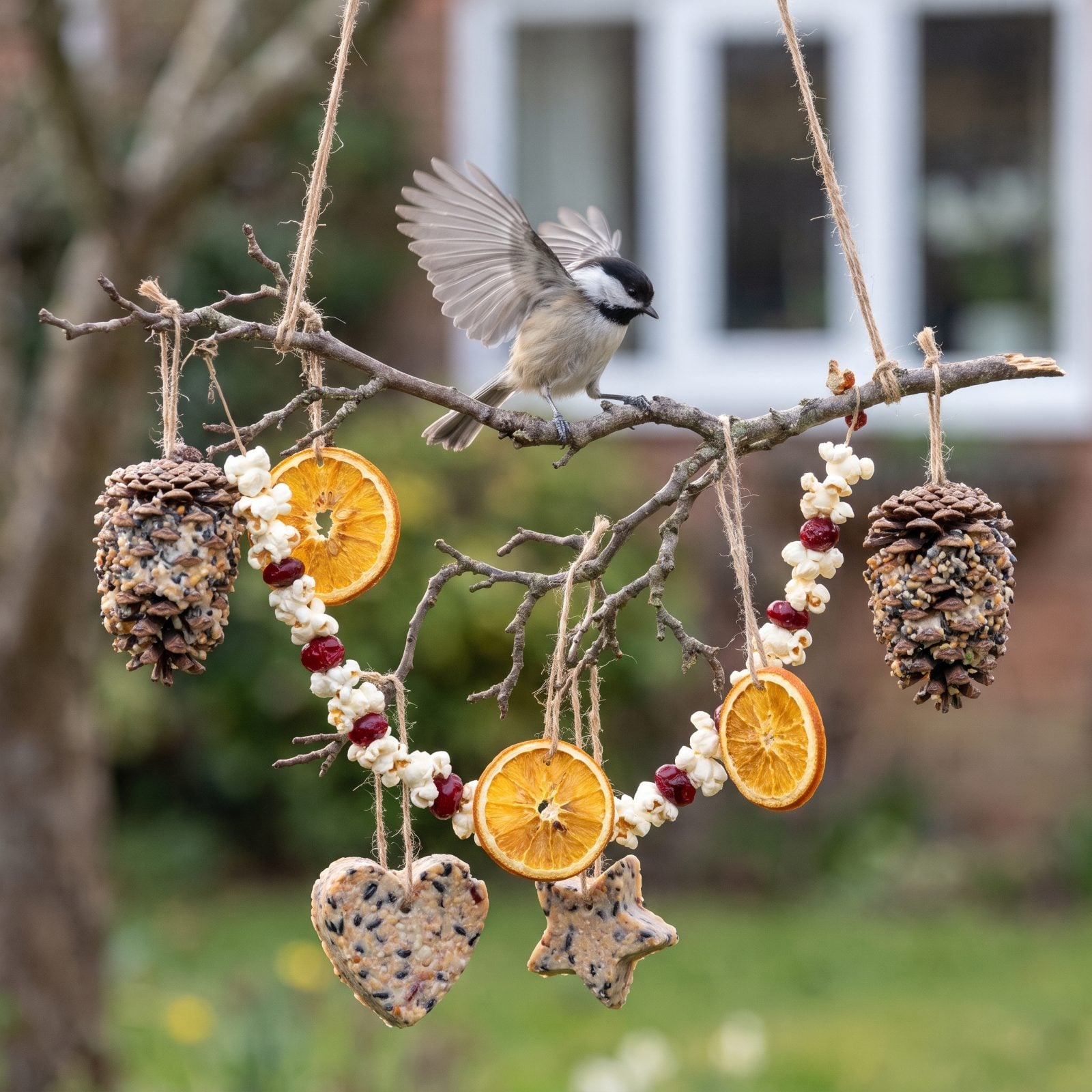
The only decoration on this list that feeds something. Hang a strong branch, then load it with treats the birds actually want: pinecones rolled in suet and seed, dried orange halves, strings of popcorn and cranberry.
It’s pretty from the kitchen window and it earns its keep. You get chickadees and finches showing up all morning, which beats any lights you could string.
31. Cone-Shaped Hanging Basket Packed With Greenery
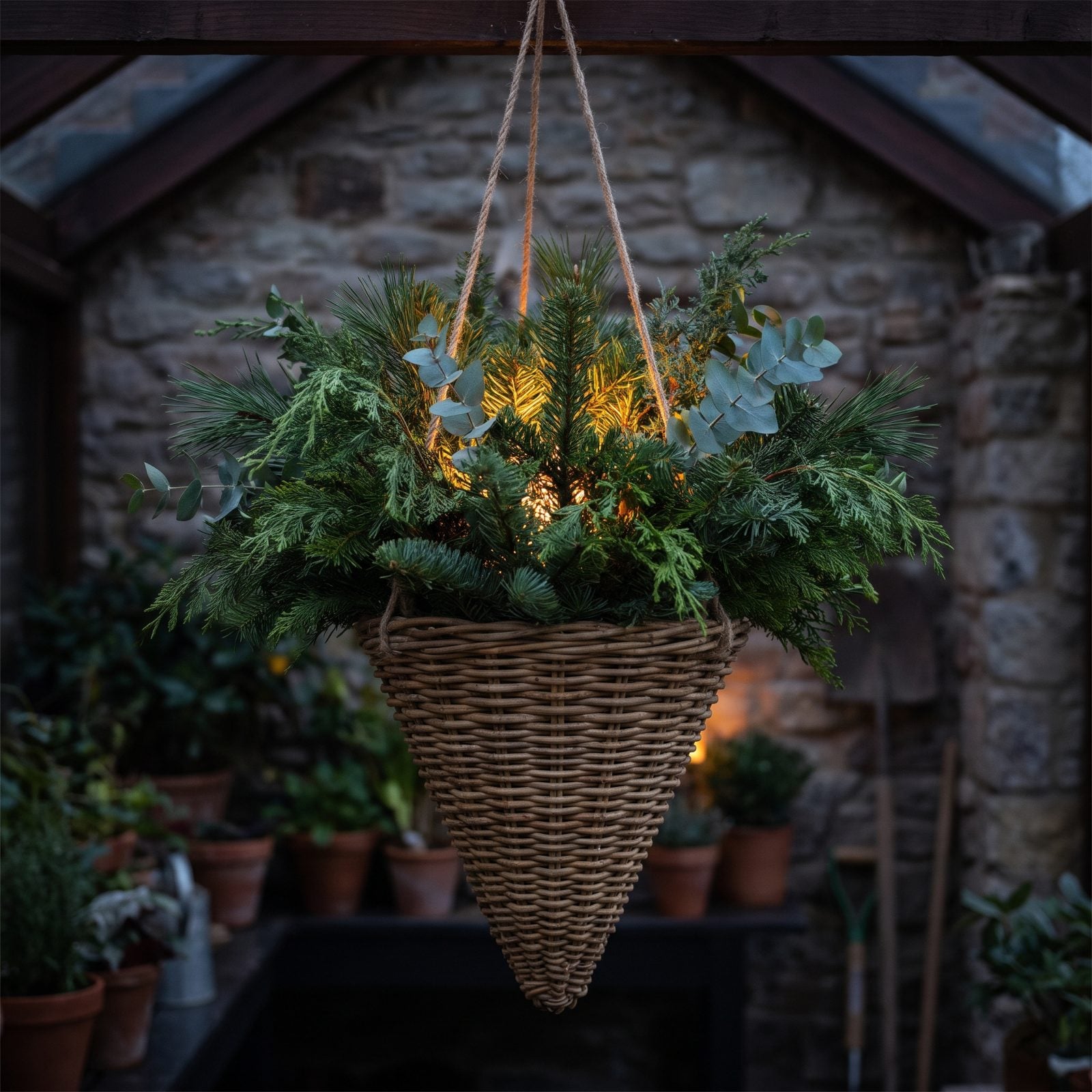
Hang a cone basket point-down, pack it with greens, and let them spill out over the open top. Layer cedar and fir first for fullness, then push in long pine sprigs and silvery eucalyptus stems so it looks deep rather than flat.
Plain jute rope at the top, a few lights woven through, and it hangs from the porch beam like an ornament for the whole house. Mist it every couple days and it stays fresh well past the new year.
30. Twig Gift-Box Sculptures for the Lawn
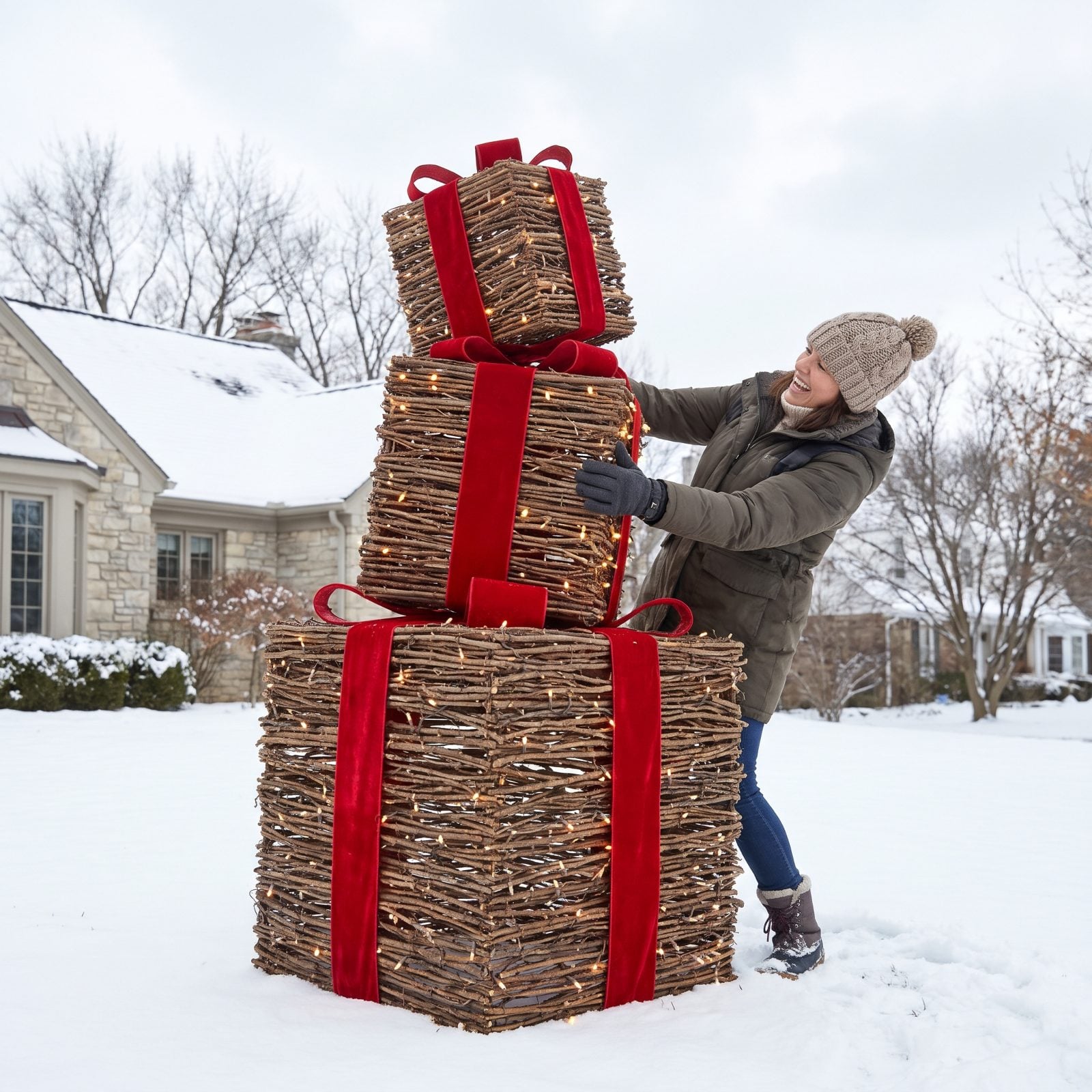
Stack straight twigs horizontally, layer upon layer, into four dense walls and bind them with twine. Repeat two more times, and you’ve got a stack of gift boxes for the lawn that cost nothing but an afternoon.
Wrap each one with wide red velvet ribbon like a real present and tie a bow on top. Weave string lights through the twigs and they glow at dusk, twinkling out between the tightly packed sticks.
29. Staircase Greenery Cascade With Ribbon and Berries
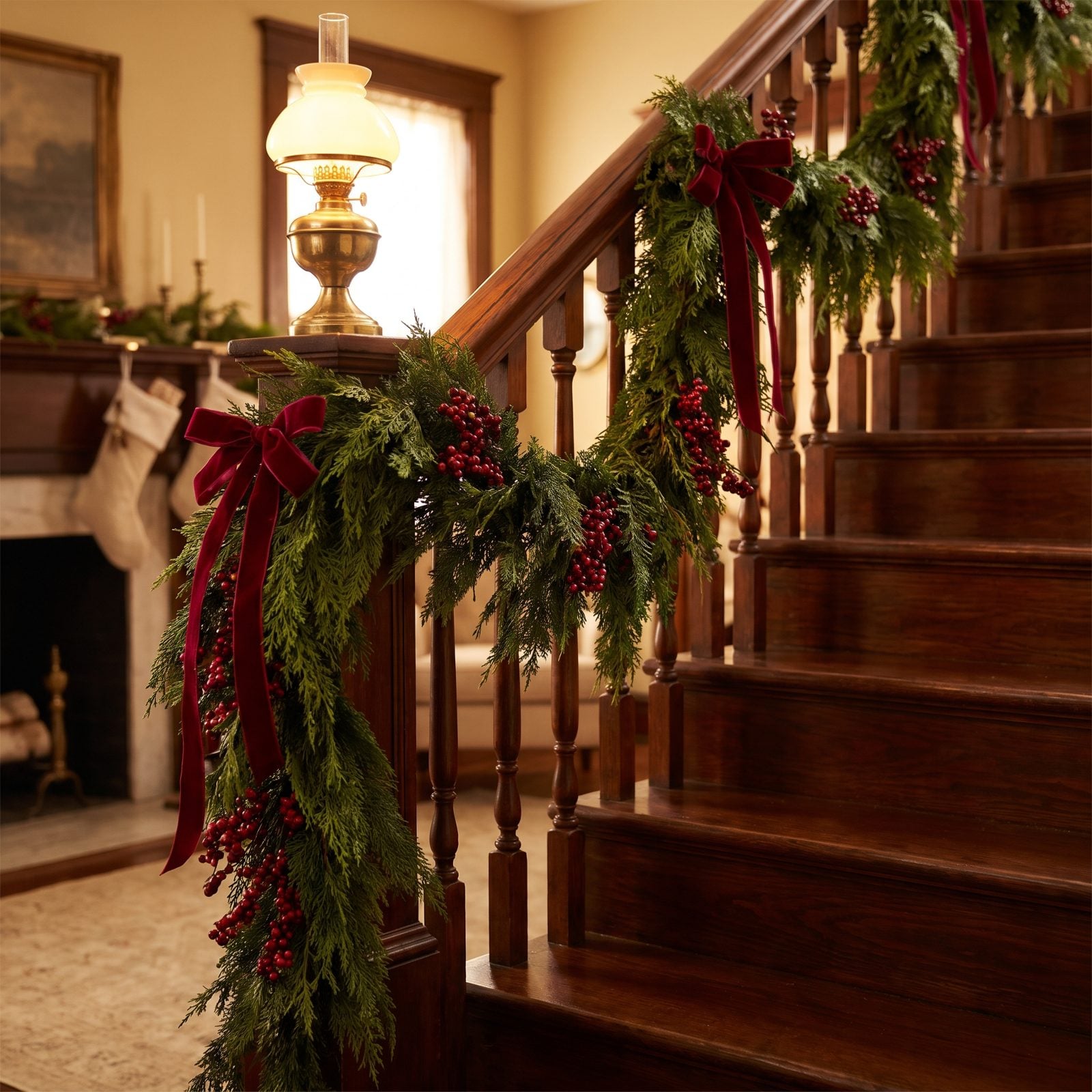
The one that moves indoors. A banister draped in garland is the warmest thing you can do with a handful of clippings, and it’s forgiving because the rail does the structural work for you.
Layer your greens loose, let them hang a little, then tuck in winterberry and loop velvet ribbon down the length. A few bare red dogwood stems poking out keep it from looking like a wall of solid green.
Twist a strand of warm white lights underneath before you add the greenery. You want the glow buried in it, not sitting on top. And mist it when you walk past so it holds up through the season. Alright, go cut something.
28. Layered Mantel Display of Cedar, Magnolia, and Holly

Magnolia is the quiet showoff here. Flip the leaves so the suede-brown undersides face out against the cedar, and the whole mantel gains a warmth that straight green never delivers. That contrast carries the whole display.
Build it in layers, back to front. Cedar first for the soft fill, magnolia for the broad shapes, holly last because the berries want to sit on top where light can catch them. I used to cram everything in flat and wonder why it looked like a hedge. Depth is the thing.
27. Greenery Crown for a Hallway Mirror
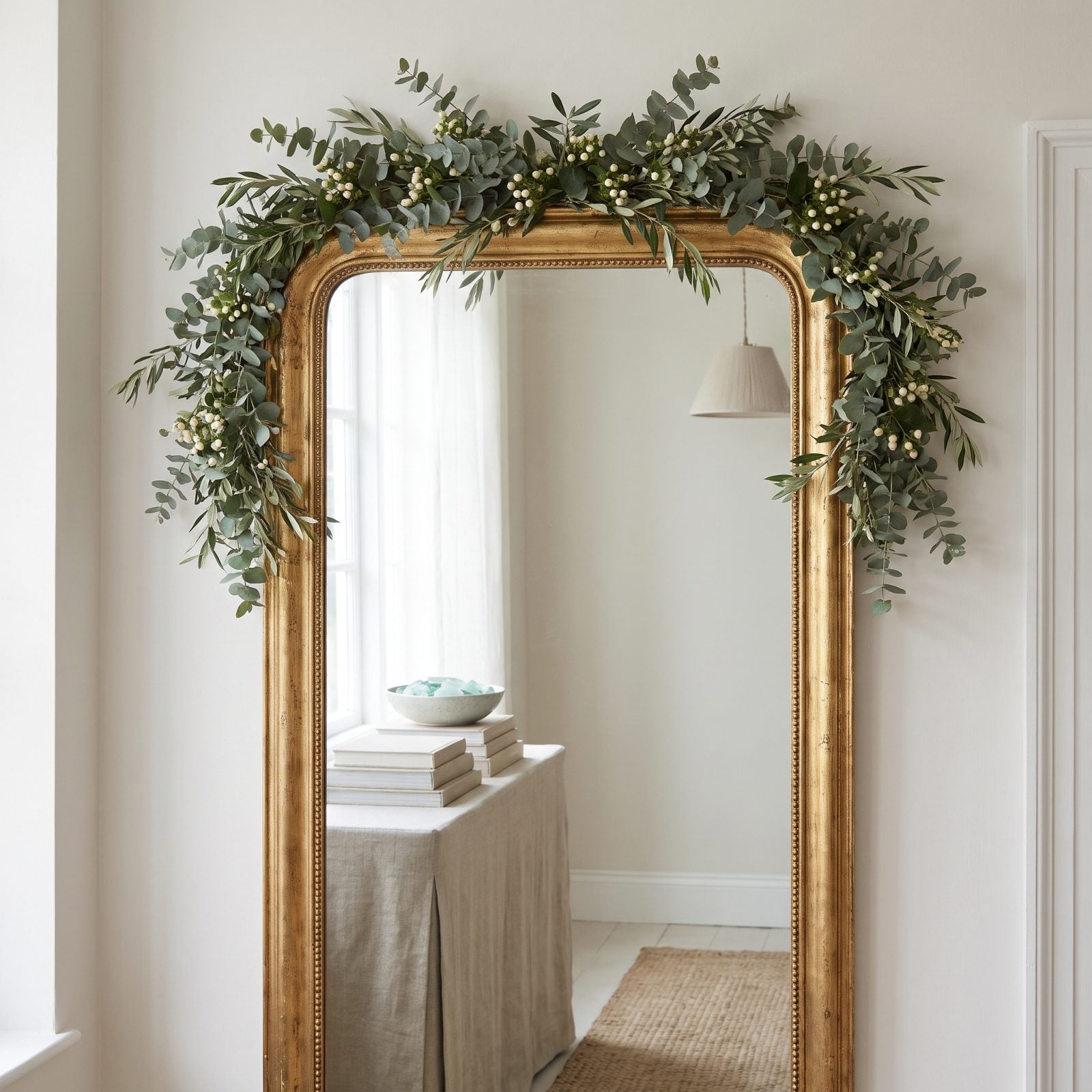
Skip the full wreath. A crown that sits on just the top third of a mirror looks lighter and lets the glass keep doing its job, bouncing light down a dark hallway.
Let it spill loosely down both sides. Pile eucalyptus, olive branches, white blossoms and moss across the top, then let long stems trail down each side of the frame. Tight, clipped greenery on a mirror reads as fake. The loose, airy version looks like you grabbed what was growing and tucked it in, which is exactly what happened.
26. Evergreen Halo Around the Dining Chandelier
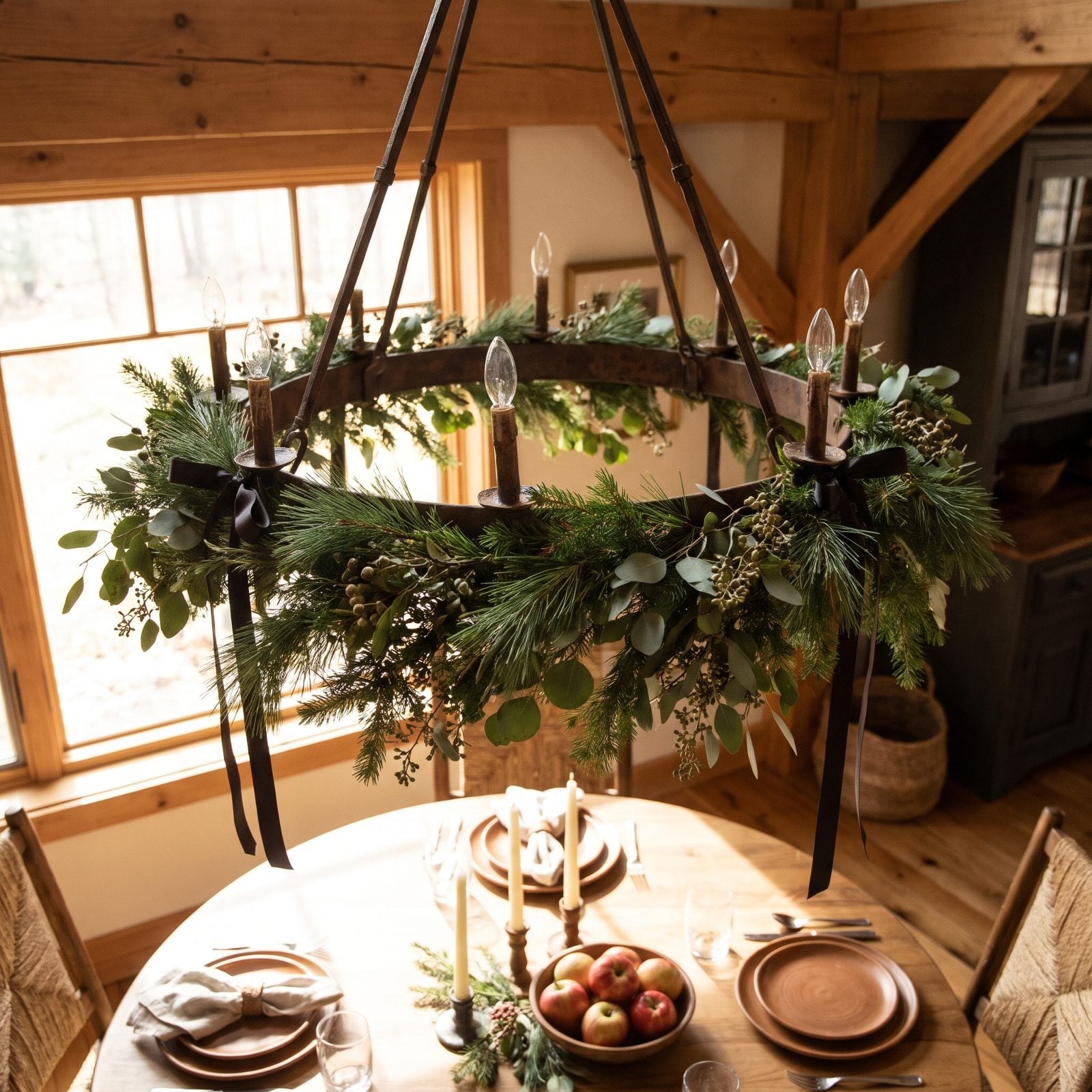
Everyone stares at this one during dinner and nobody can place it. A loose ring of cedar and pine woven through a chandelier’s arms turns an ordinary fixture into the centerpiece of the room, and it never touches the table at all.
Thread a few red dogwood twigs through so they poke out at odd angles. The bare red stems catch the bulb light and glow faintly. Keep greenery a safe distance from hot bulbs, and switch to cooler LED if your fixture runs warm. Fresh cedar near heat dries fast, and I would rather not explain why your dining room smells scorched.
25. Miniature Tabletop Tree Made From Short Clippings
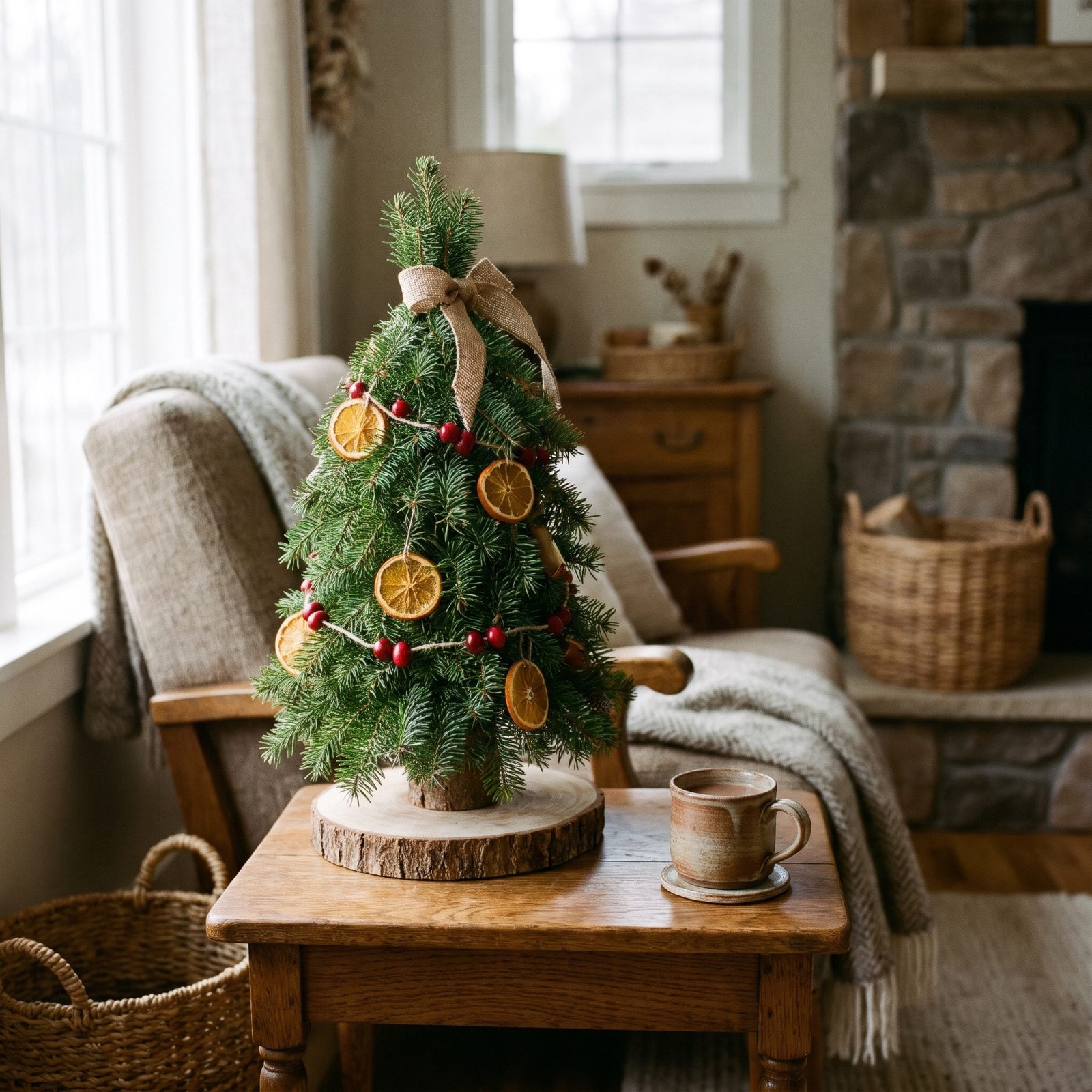
A foam cone and a bag of tip cuttings make a tree about two feet tall in twenty minutes. Push the longest sprigs in at the bottom, shortest at the crown, and trim as you go to hold the taper.
Honestly, the leftovers from pruning a bigger tree are perfect for this. Nothing goes to waste, and a little tree on a log stump and wood slice looks far more deliberate than it has any right to.
24. Bare-Branch Christmas Card Display
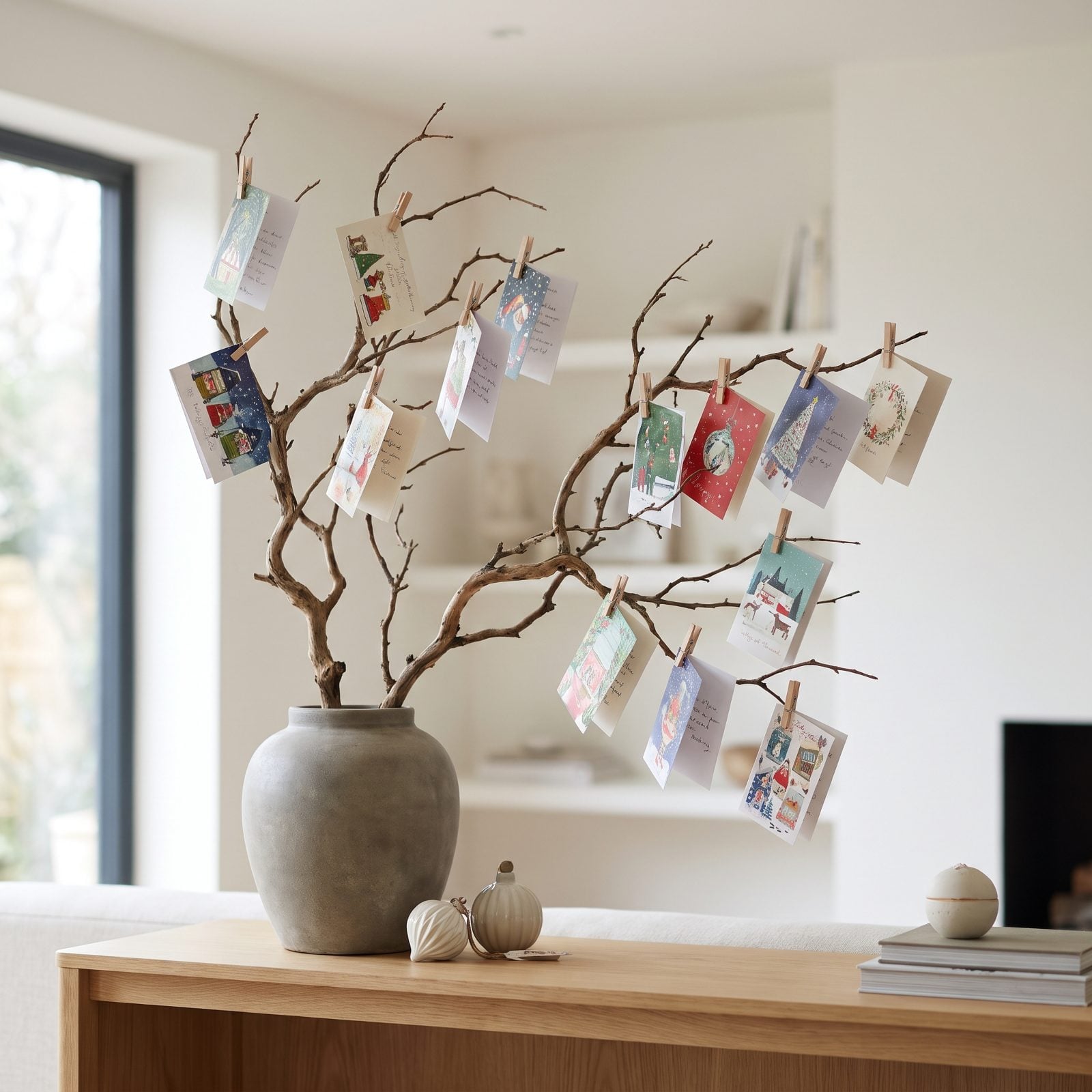
Cards pile up on the mantel and curl over by week two. One bare branch stood upright in a weighted vase fixes that, and it looks like something out of a gallery while it does it.
Pick a branch with plenty of forks — dogwood, birch, or a nicely gnarled bit of whatever came down in the last storm. Clip the cards on with small wooden pegs at different heights so they scatter rather than line up in a row. That bare twig against a plain wall throws a shadow that becomes its own decoration.
23. Rustic Stocking Rail Made From a Sturdy Branch
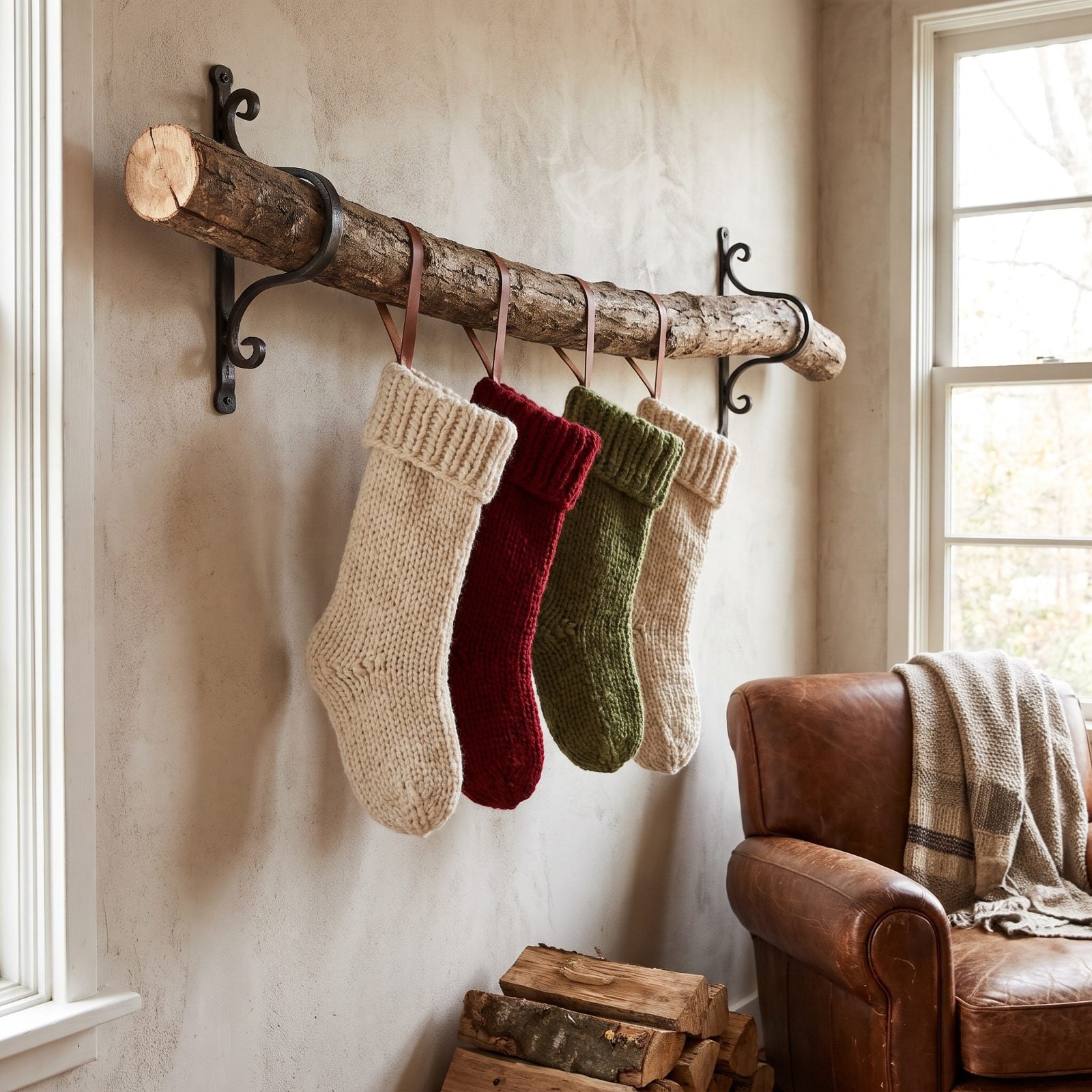
No mantel? A thick branch mounted to the wall gives you somewhere to hang stockings that looks intentional instead of improvised.
Pick something with heft. You want bark, a bit of natural curve, and enough strength to hold weight without sagging. Leave the bark bare and loop simple leather straps over it so the stockings drop from small loops just below the wood. The rough branch against soft knit stockings is the contrast doing the work, and it beats a plastic hook rail by a mile.
22. Woodland Christmas Scene Under a Glass Cloche
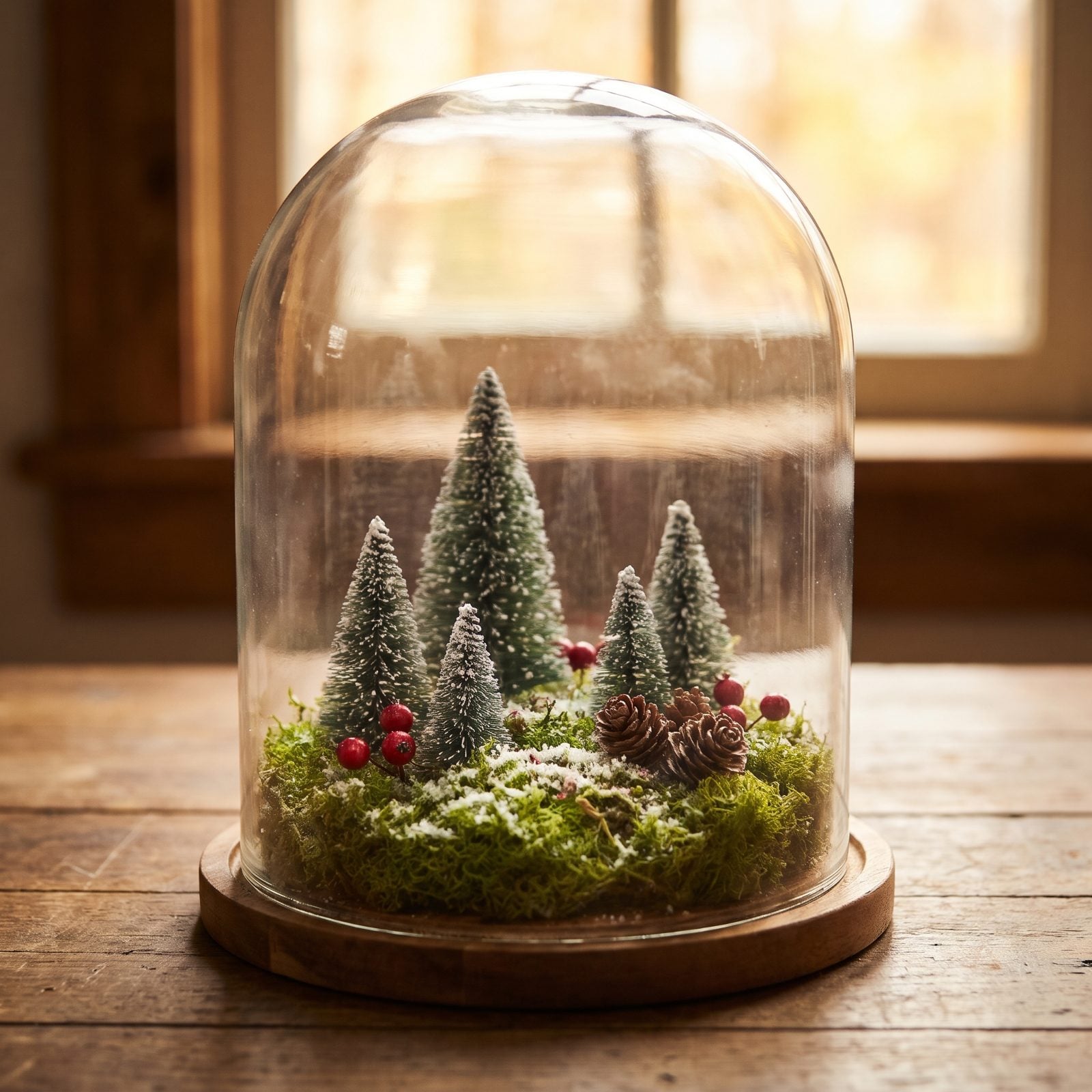
Under glass, a few small pieces turn into a whole little world. A patch of moss, a few flocked bottle-brush trees standing in for a miniature forest, some pine cones and berries, maybe a tiny ceramic deer tucked in the back.
The cloche does the magic. Anything looks precious when it’s displayed like a museum specimen, and the curved glass softens the scene with its own faint reflection. You build it once, then keep rearranging it every time you walk past. I’ve lost whole afternoons to it.
21. Long Dining-Table Centerpiece of Mixed Yard Greens
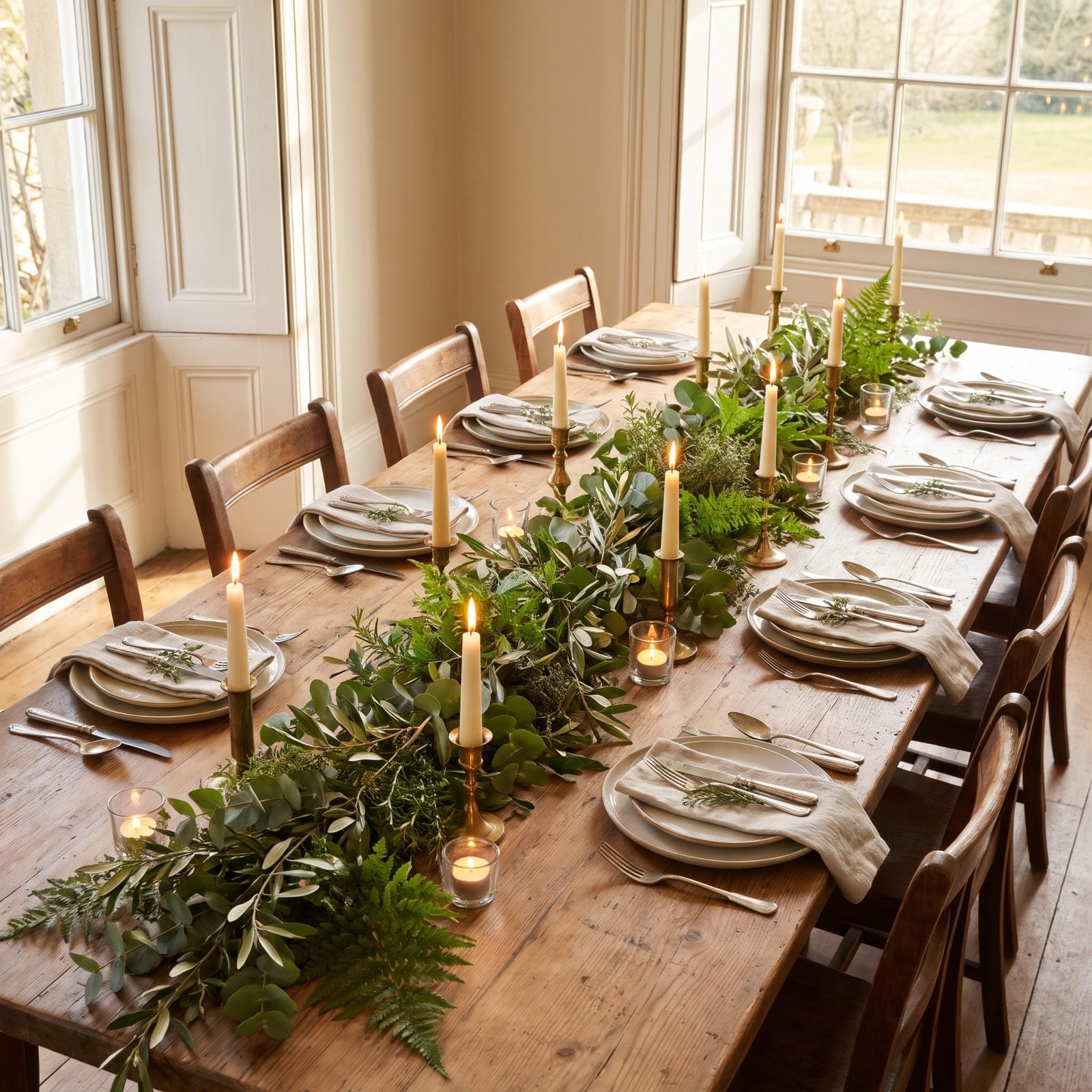
The best table runners aren’t bought, they’re pruned. A low ribbon of mixed greens down the center of a dining table, kept just a few inches tall so people can actually see each other across it.
Variety sells it. Eucalyptus for the body, ferns for broad feathery fronds, olive branches and seed heads for the airy bits that catch light. Tuck clusters of green seed heads through the whole run, set votive candles in clear glass holders at intervals, and it reads as effortless — even though it took a basket of clippings and a fair bit of fussing to get there.
20. Aromatic Herb Rings for Pillar Candles
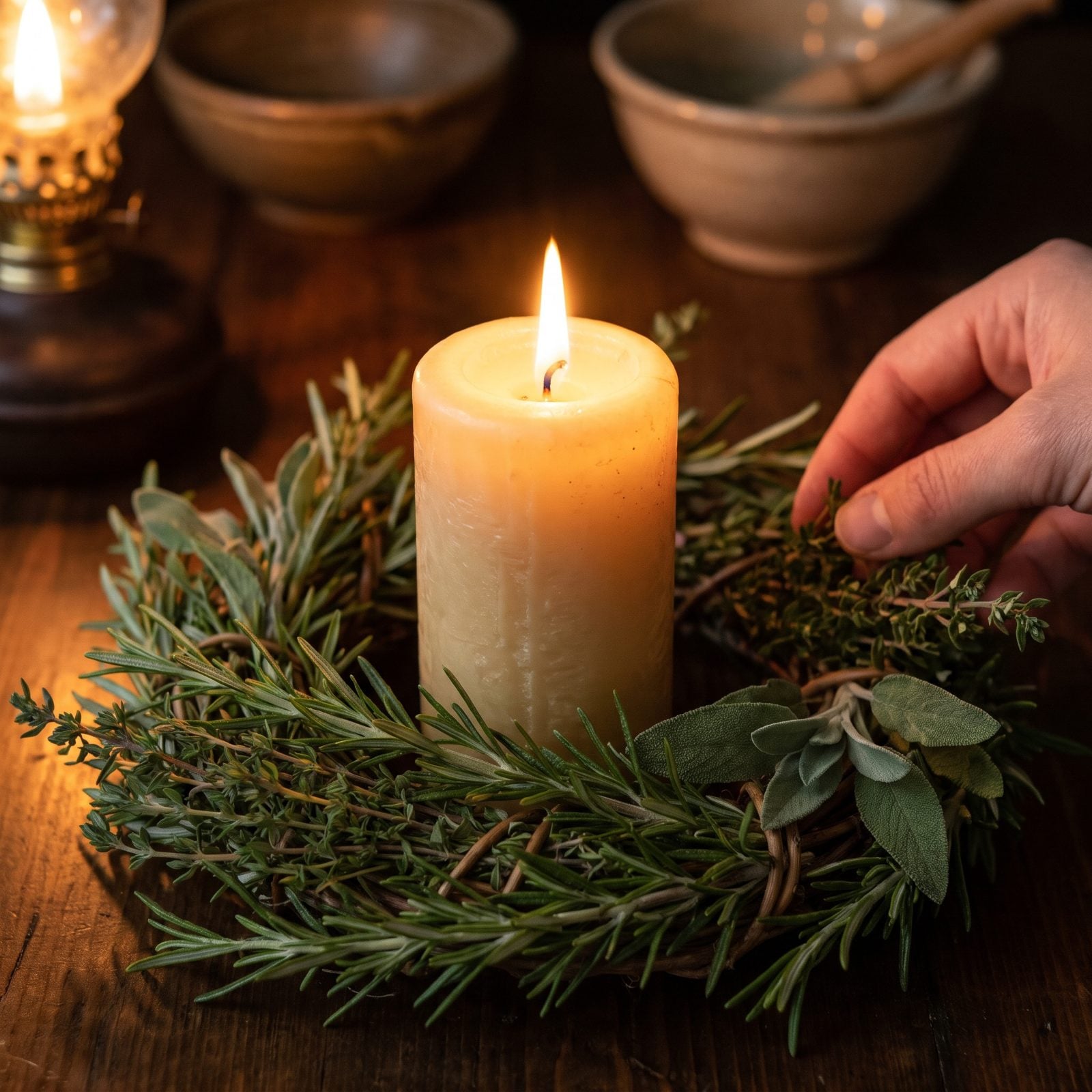
Rosemary smells like Christmas before you even light the candle. Little rings of herbs circling the base of a pillar give you scent and greenery in one small move.
Bend a few sprigs of rosemary and bay into a tight ring, wire it closed, slip the candle through the middle. As it burns, the heat lifts the oils and the whole room shifts. Keep the herbs low and clear of the flame, obviously. Dried-out rosemary near fire is a bad idea — I shouldn’t have to say it, but I’m saying it.
19. Pruned-Branch Log Holder for Taper Candles
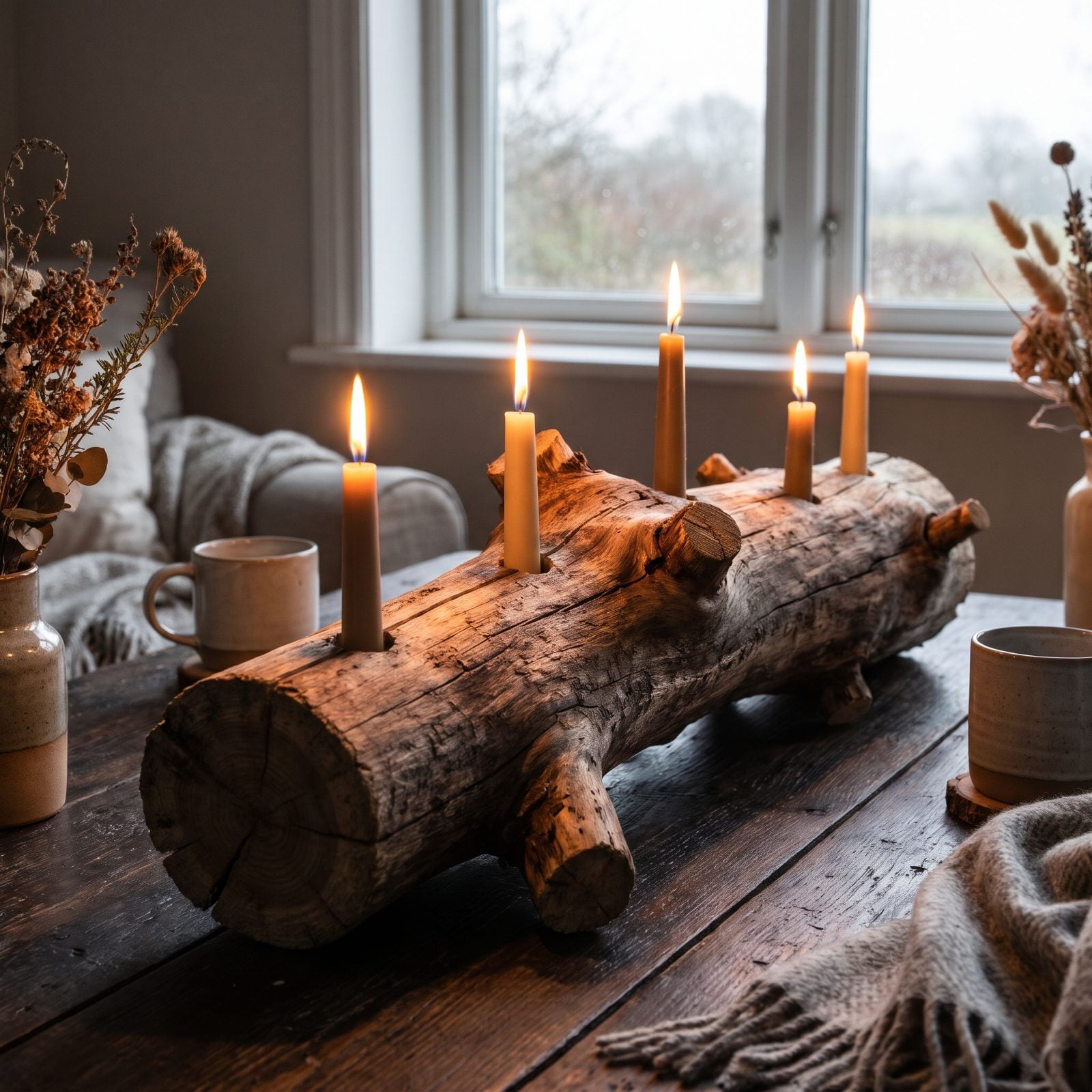
Pick a hefty fallen log about as thick as your thigh, cut limbs and all, and you’re halfway done. Drill five holes along the top, spaced so the candles don’t lean into each other, and you’ve got a centerpiece that cost nothing but a Saturday afternoon.
Cedar and birch work best because the bark holds. I tried this once with a punky old maple limb and it crumbled under the drill, so skip anything that’s gone soft. Tuck a few sprigs and berries around the base and the raw wood reads as intentional instead of leftover.
18. Floating-Candle Bowl With Holly Leaves and Berries
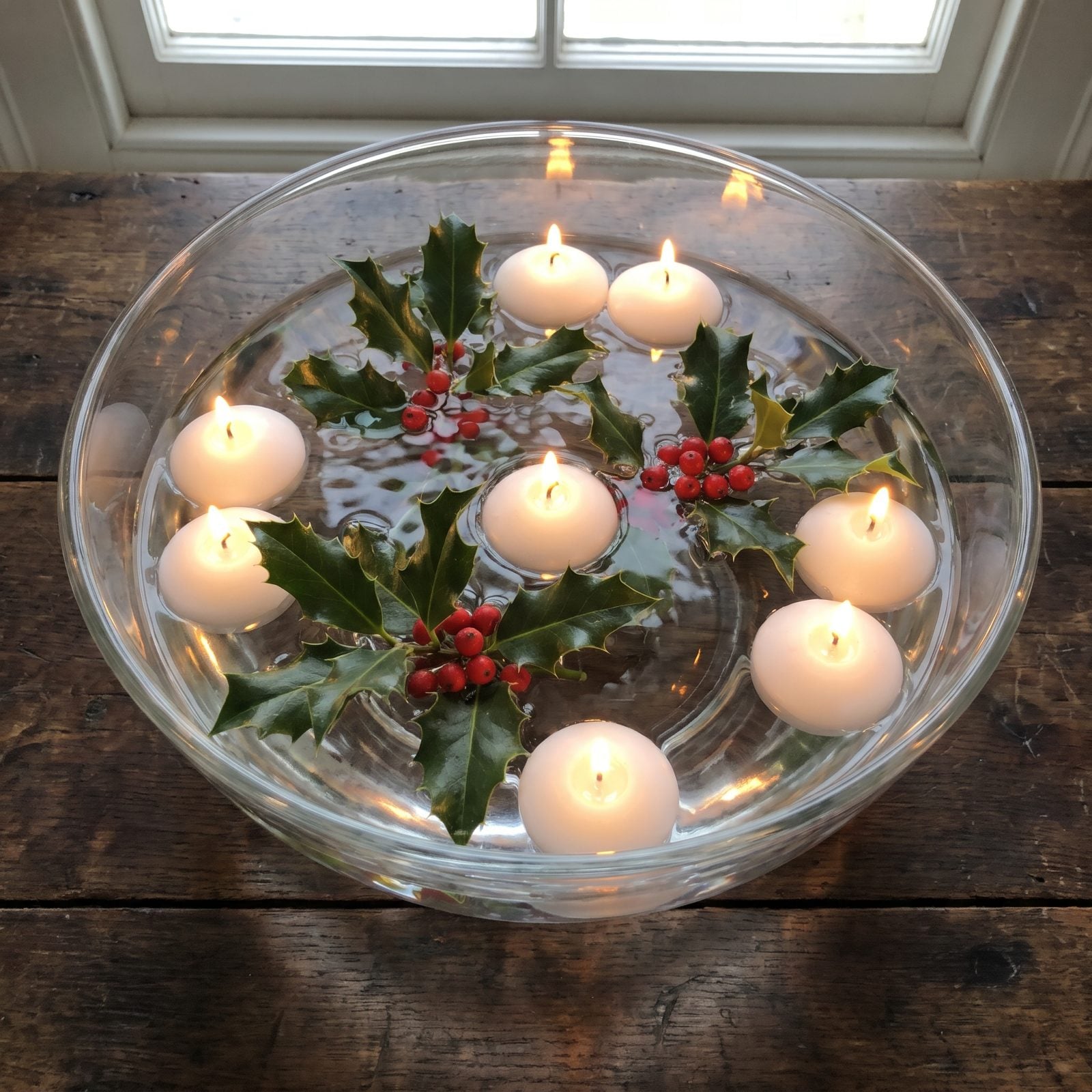
Water does something generous to candlelight. Fill a wide glass bowl, float a couple of white candles, and scatter holly leaves and berries across the surface. The flames double in the reflection and the whole thing looks far fancier than the effort it took.
One warning, though. Holly leaves are stiff and those points are no joke. Rinse the berries and remember they’re toxic if eaten, so keep this one up and away from curious grandkids and the dog.
17. Pressed-Leaf Stars for the Windows
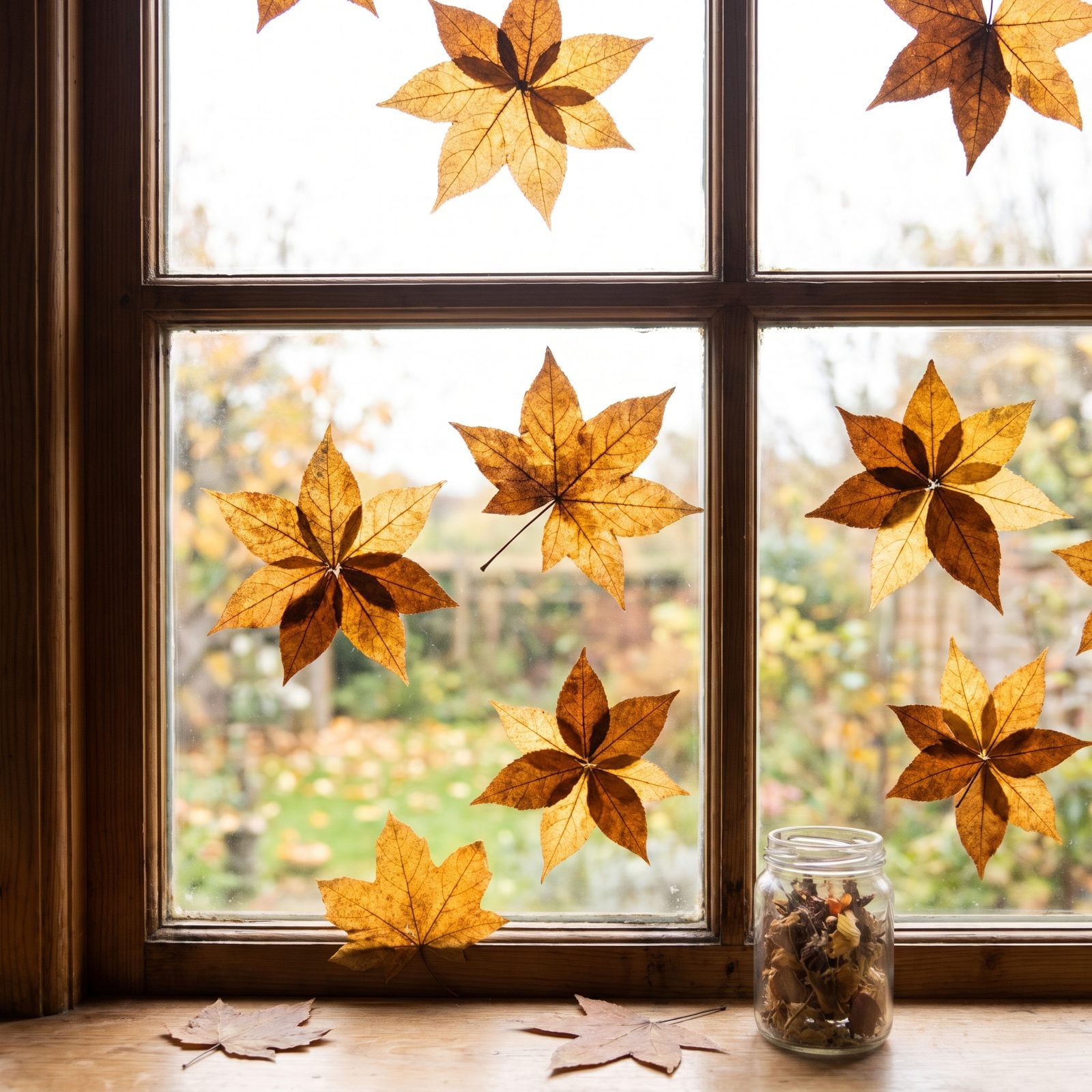
Flat leaves pressed under a heavy book for a week turn into something close to stained glass. Arrange five or six into a star, points out, dab the centers with a little glue, and hang them where the morning light hits.
Magnolia, maple, and anything with a strong vein network catch the sun best. The backlight turns the leaves translucent and you can trace every vein, which is the whole trick. I lost a batch to a damp windowsill once, so let them dry fully before they go up.
16. Vertical Botanical Wall Hanging on a Fallen Branch
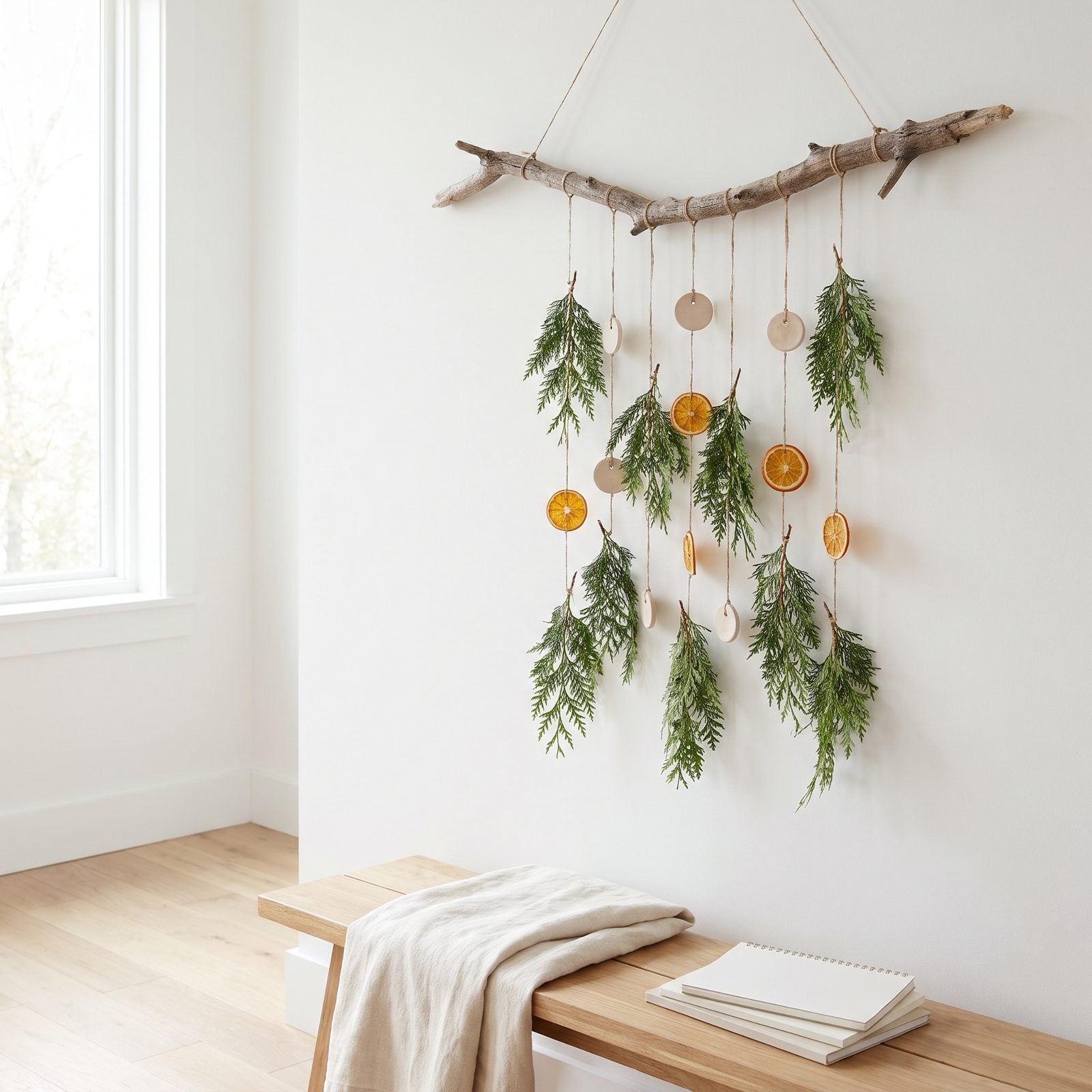
A fallen branch hung flat on the wall becomes a horizontal bar you can dress however you like. Tie on cedar sprigs, dried orange slices, and a few plain clay discs on twine so they trail down at different lengths. Asymmetry reads as design here, so don’t fuss over making both sides match.
Reach for this one if you’ve got a big blank wall and no idea what belongs on it. The branch does the heavy visual work, and the cedar just has to look alive.
The best wall art in the house might be the limb that came down in the last windstorm.
15. Framed Christmas Tree Made From Graduated Sprigs
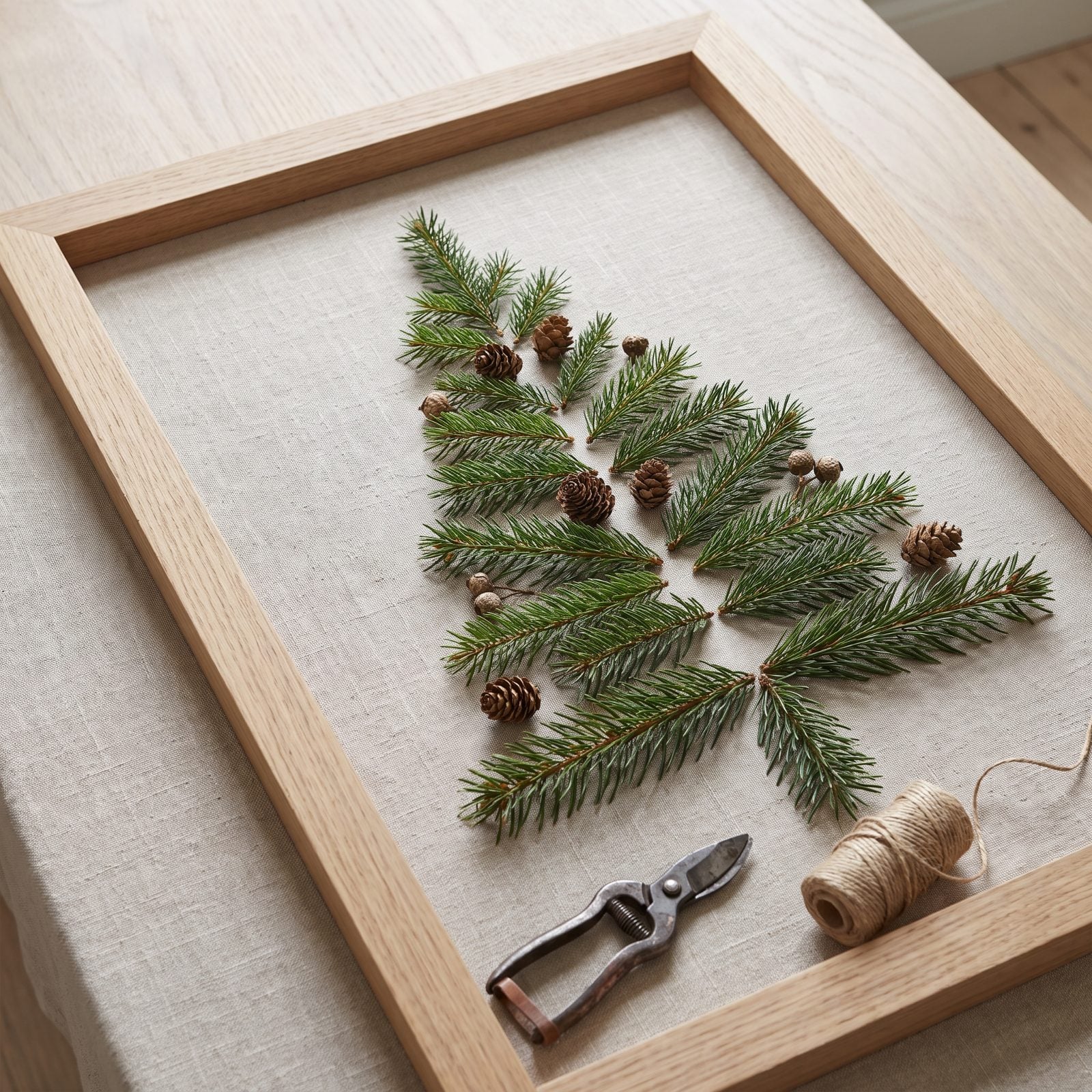
Cut sprigs in graduated lengths, longest at the bottom and shortest at the top, fan them out loosely inside a plain frame, and you’ve drawn a Christmas tree out of actual tree. Spruce keeps its deep green and stiff needles for weeks, which is why I pick it over softer greenery that flops the minute it dries.
Top it with a single red berry instead of a star if you want restraint. The loose, lopsided silhouette, straight on one side and flaring wide on the other, does enough on its own.
14. Leaf-Stamped Kraft Gift Wrap
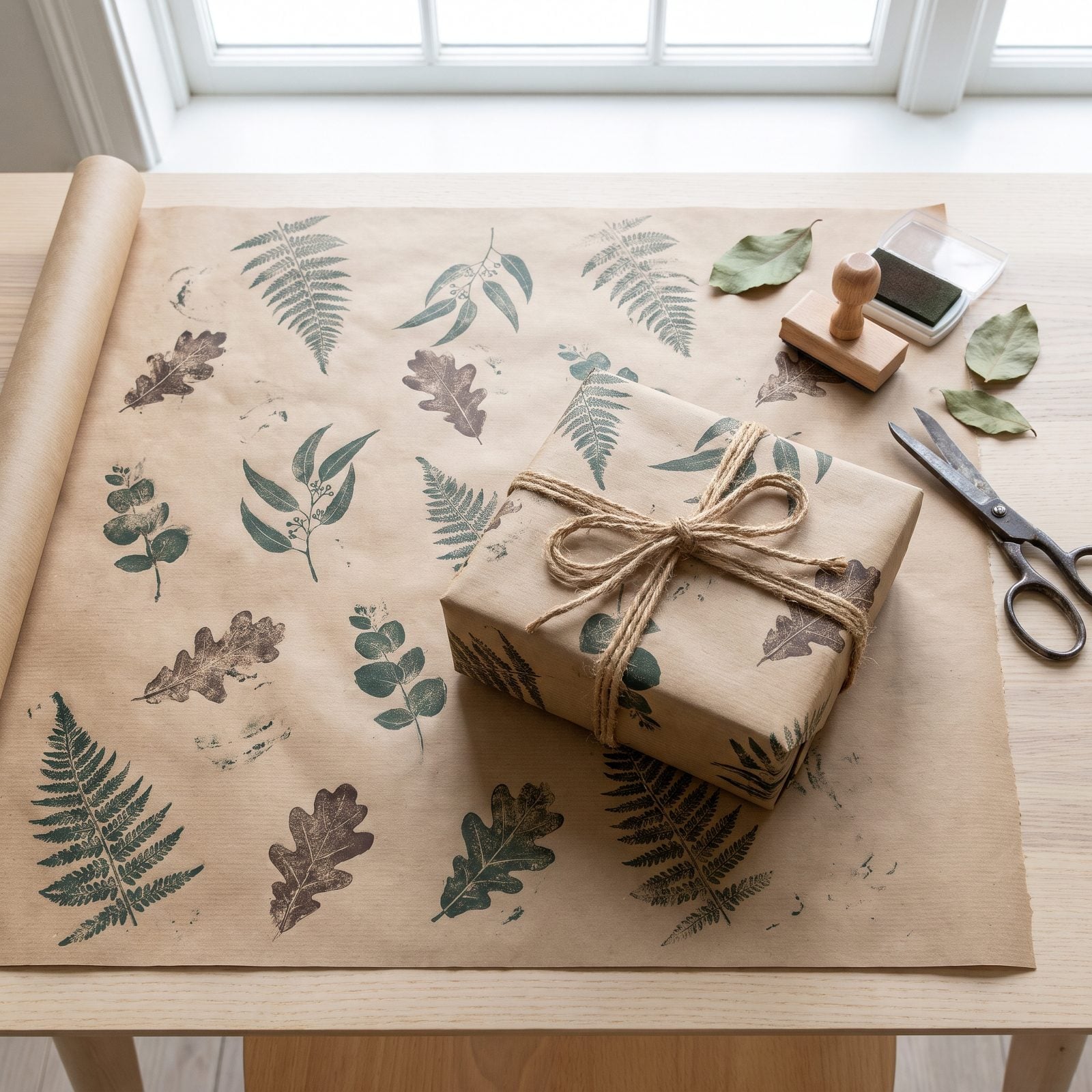
Brown kraft paper is cheap, recyclable, and a blank canvas. Brush a little acrylic or stamp ink onto the back of a fern frond or a boxwood sprig, press it onto the paper, and repeat. The leaf’s vein pattern transfers clean every time.
Let some prints come out heavier than others. That unevenness is what tells everyone you made it rather than bought a roll of it. Fern fronds give the finest detail, oak leaves the boldest shape.
13. Evergreen-and-Berry Gift Toppers
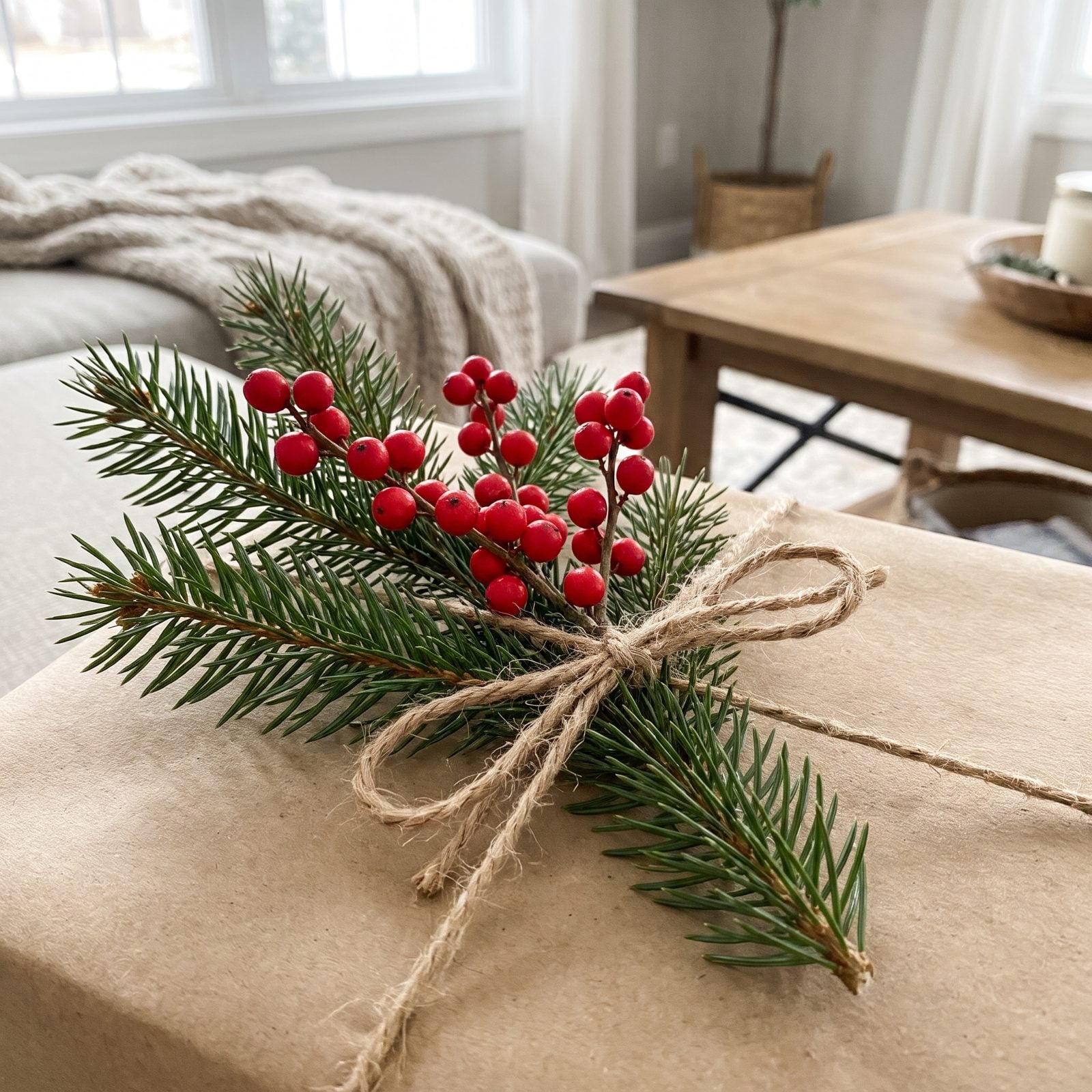
Skip the plastic bow. A short bundle of fir, cedar, and a cluster of winterberries tied on with twine says more about the care inside the box than any store-bought ribbon ever could.
Keep each bundle small or it overwhelms the gift. Three or four stems, one berry cluster, a knot of jute, done. Fresh greenery lasts days out of water, so assemble these the morning you’re handing things out, not the week before.
12. Rosemary Napkin Ties With Tiny Berry Clusters
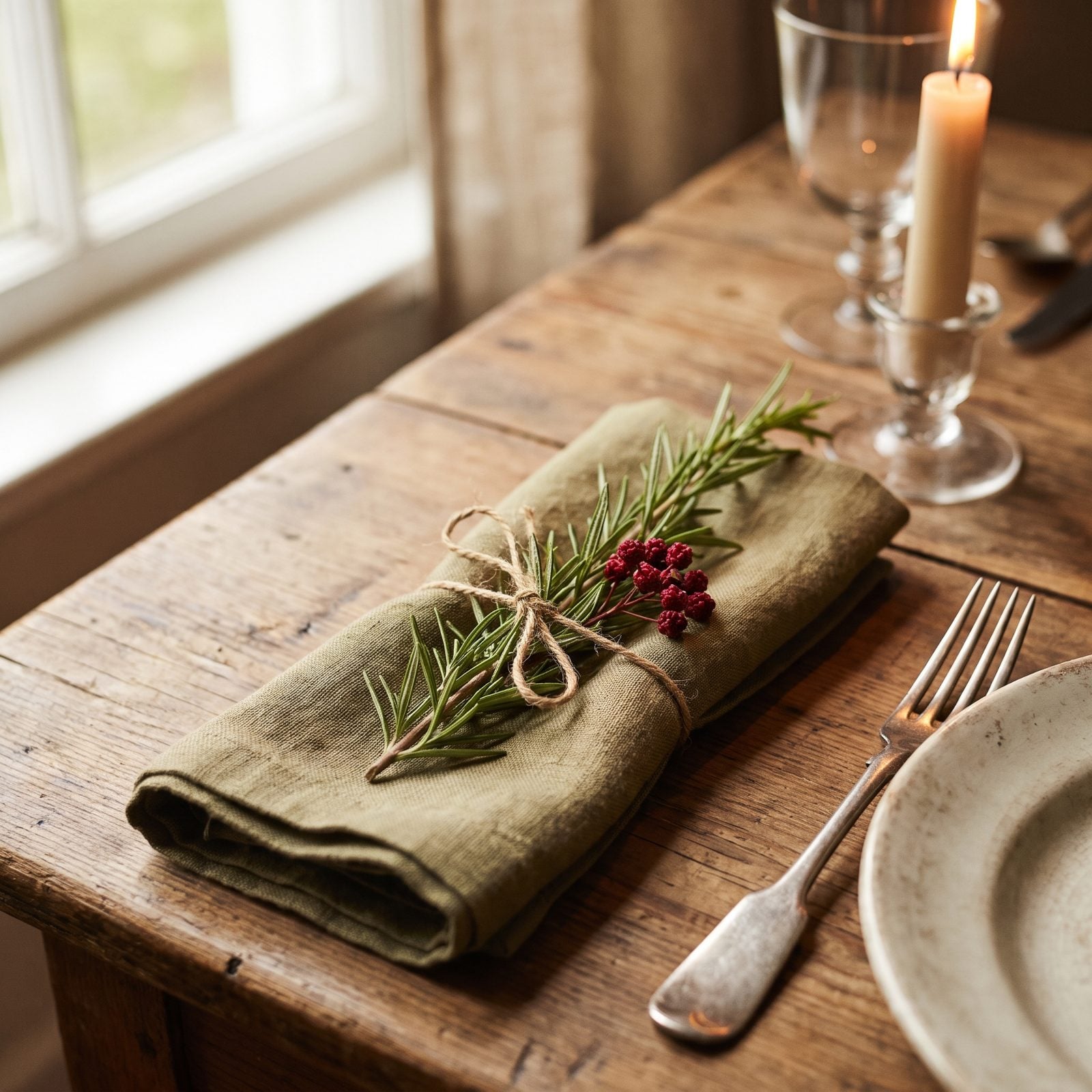
A sprig of rosemary wrapped around a folded napkin turns a plain place setting into something your guests notice before they sit down. Tuck two or three red berries into the tie for color.
The real bonus is the smell. Every time someone reaches for their napkin they catch a hit of rosemary, and that scent reads as warmth and welcome before anyone’s said a word.
11. Branch-Slice Place-Card Holders With Greenery
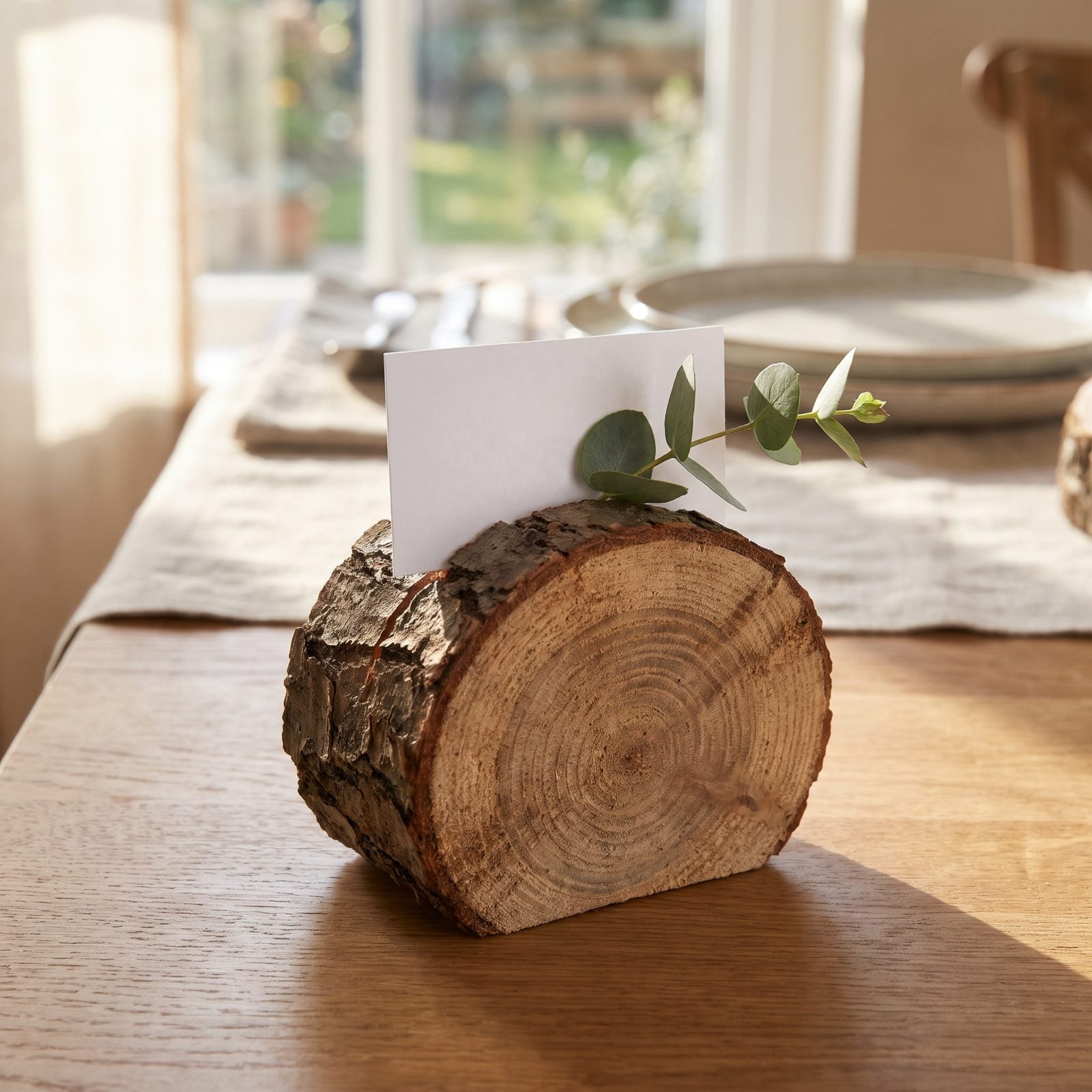
Cut a thick branch into rounds, make a shallow saw slit across the top of each, and slide in a card. The slit grips the paper so it stands upright on its own. Tuck a eucalyptus sprig beside it so it rests against the card and you’ve got a holder guests will actually want to take home.
Sand the cut faces so nobody catches a splinter reaching for the wine. Green wood splits less cleanly than seasoned wood, so cut from a branch that’s had a season to dry if you can.
10. Suspended Branch Installation Above the Dining Table
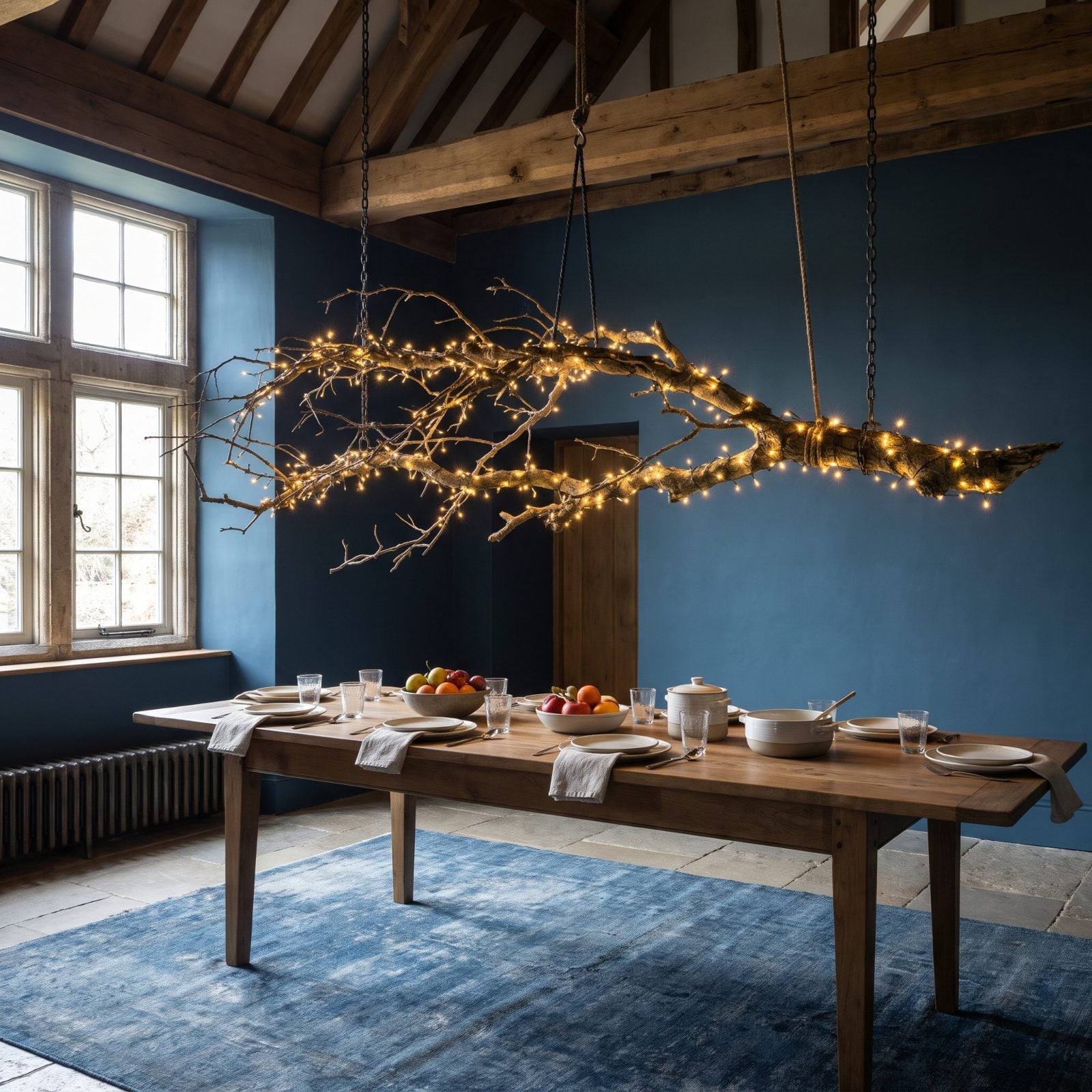
Here’s the showstopper, and it’s less work than it looks. Hang a long bare branch horizontally over the table from sturdy chains and rope, then wrap it end to end in warm white fairy lights, right out to the thinnest twigs. From below it glows. Guests look up and go quiet for a second.
Use two or three anchor points into a ceiling joist, never drywall alone, because a loaded branch gets heavier than you’d ever guess. Keep the center open so it frames the table instead of blocking the view across it. Wind the lights densely along every limb if you want the whole thing to twinkle.
Of everything here, this is the one that turns a regular dinner into an occasion. A branch that would’ve gone to the brush pile, wrapped in a string of fairy lights, somehow holding the whole room’s attention. Go cut one before the next storm does it for you.
9. Tiered Cake-Stand Forest of Mini Clipping Trees
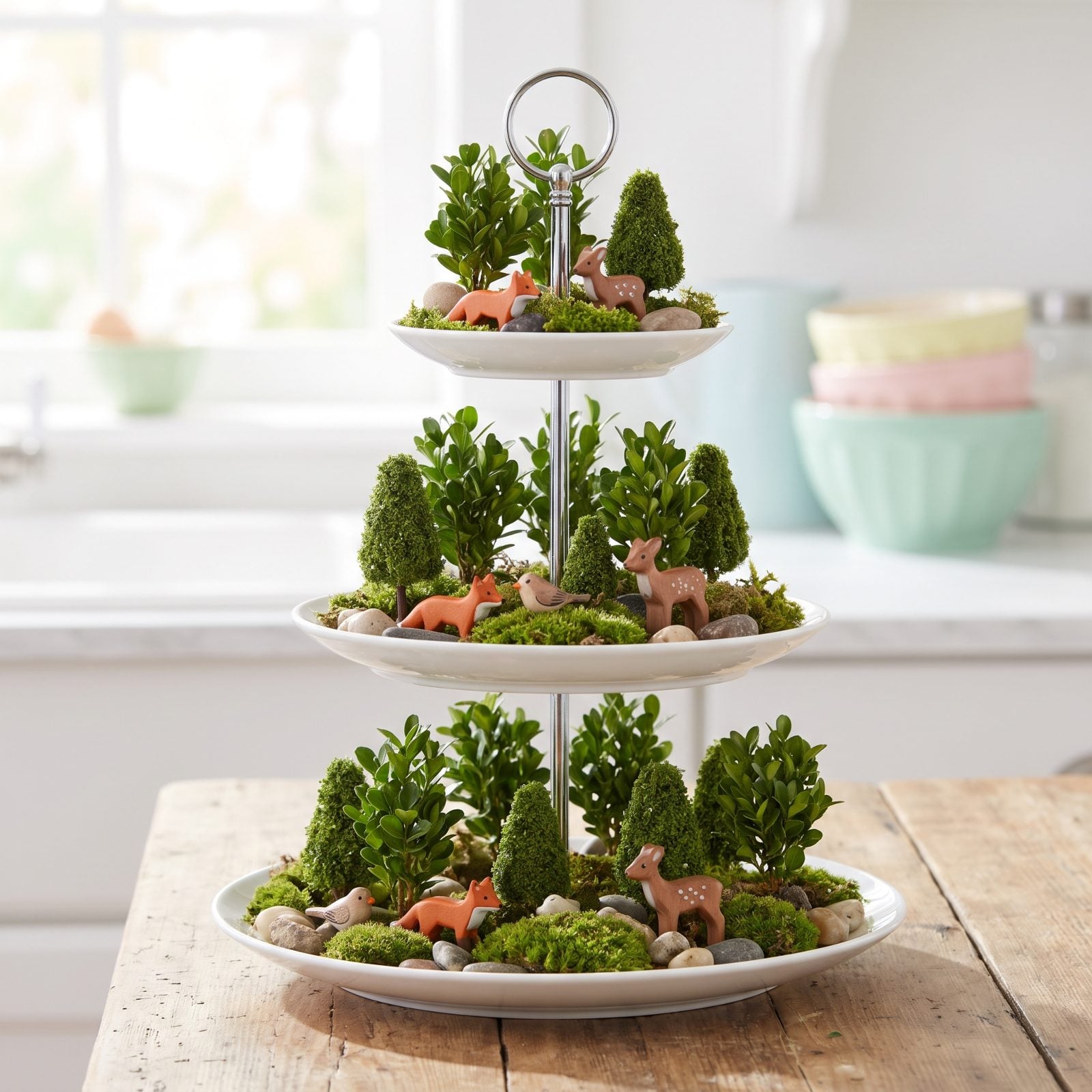
A cake stand was never only for cake. Stack three little forests of boxwood clippings and flocked miniature trees on the tiers and you’ve got a centerpiece that smells like the woods behind the house.
Push each boxwood sprig straight down into a bed of moss so it stands upright like a little tree, then tuck flocked model trees in between. Boxwood holds its shape for weeks. The flocked cones never droop, so they keep the forest’s evergreen outline crisp. Vary the heights so the whole thing reads as a hillside and not a row of soldiers lined up for inspection.
8. Balanced Twig Mobile With Leaves and Berries
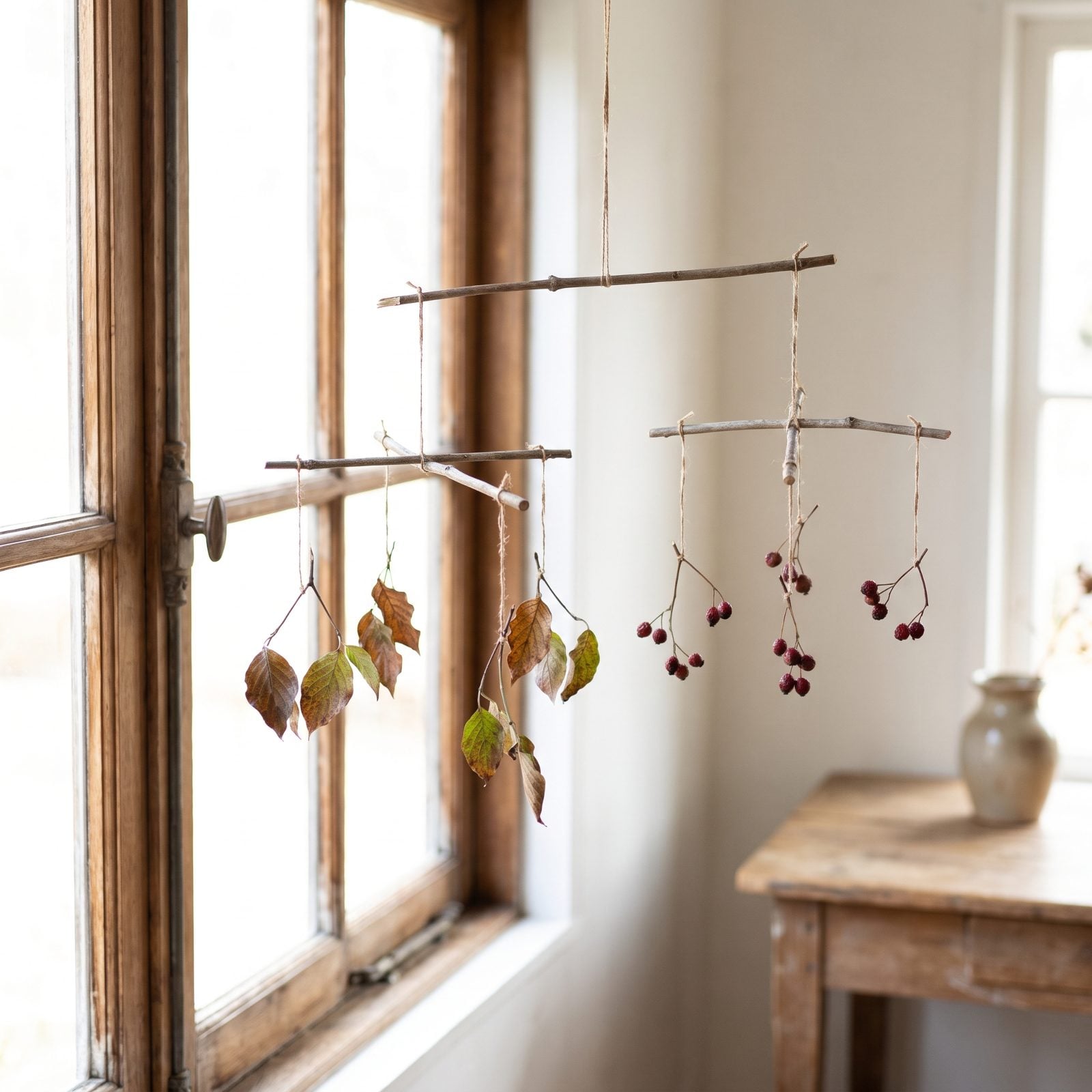
Hang one of these near a window and the whole thing turns in the draft from the heating vent, slow as a planet.
Balance is everything. Hang a long straight stick from a single string, tie shorter sticks below it with twine, tie something to each one, then slide the strings along the sticks until it levels out — that fussy sliding-and-testing is the whole craft of it. Sprigs of brown and russet autumn leaves, a few still edged with green, on one side, a cluster of red berries on the other, a bare dogwood switch stretched out on the long diagonal. It ends up looking like a Calder sculpture that spent the night outdoors.
I’ve made these too heavy and watched them hang like a broken umbrella. Pick dry, seasoned sticks and keep everything you hang from them light. Leaves and berries, nothing heavier.
7. Aromatic Clipping Pomander Tied With Velvet Ribbon
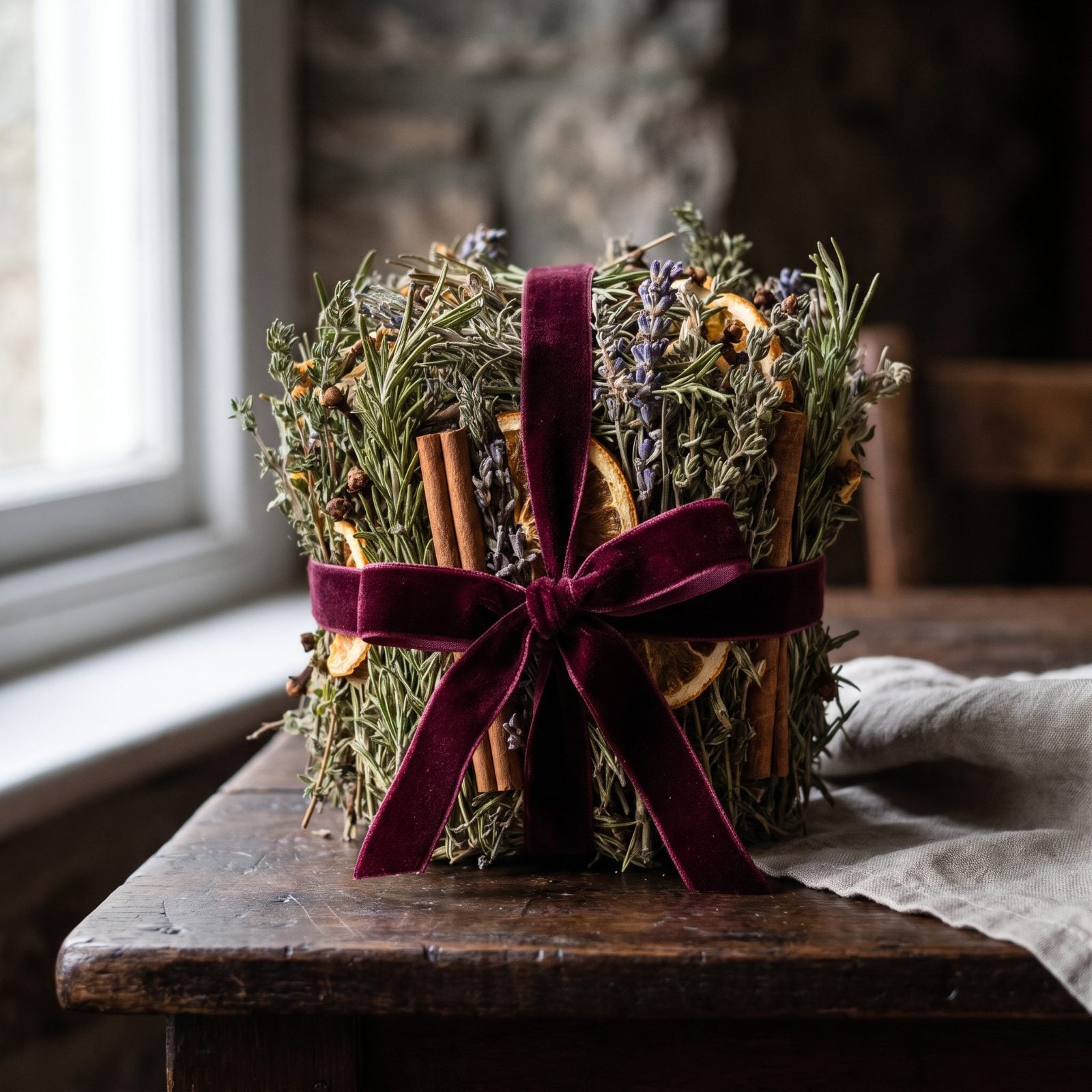
This one earns its keep by smell alone. Rosemary, bay, a little boxwood for body, all bundled upright and packed tight until it reads as a dense green cylinder, flat on top like a wrapped gift. Brush past it and the kitchen smells like Sunday dinner.
Tie it off with wide velvet ribbon in deep crimson, crossed over the top and finished in a bow like a present, and set it on a table or sideboard. The velvet does something the greenery can’t. It catches the light and goes almost black in the folds, which makes the silvery rosemary look even brighter beside it.
6. Dried-Hydrangea Globe Baubles

Dried hydrangea has a color nobody can quite name. Faded slate, old rose, the green of a page left too long in the sun. Pack those papery florets tight around a foam ball and you get a bauble that looks like it was dug out of a grandmother’s attic trunk.
Here’s where timing decides everything. Cut the blooms in late summer once they’ve gone crisp on the shrub, not soft. Pick too early and they slump brown; catch them at the right moment and they hold that dusty antique color for years.
5. Twig Angels With Leaf Wings
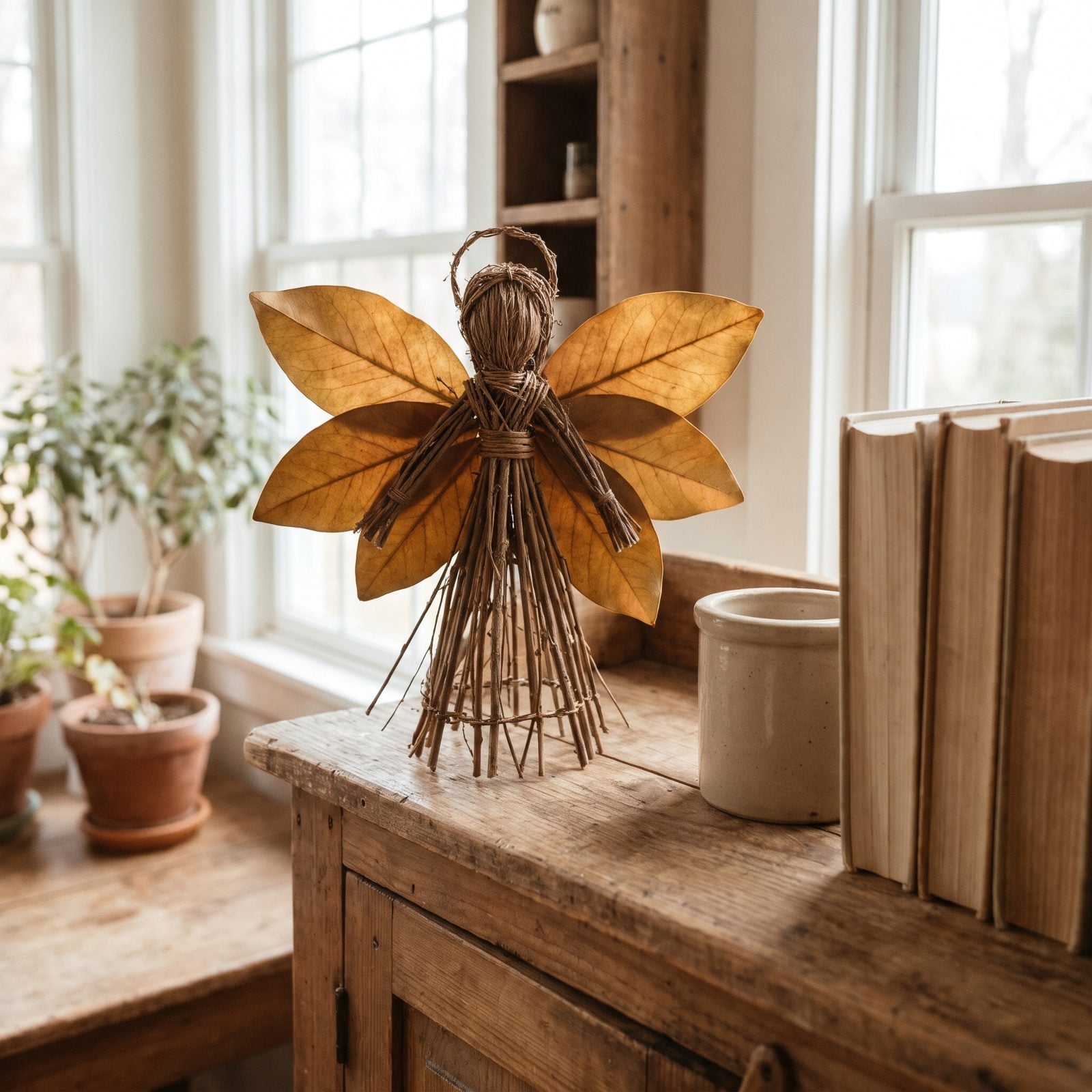
Bundle a handful of birch twigs for the body, fan a dozen magnolia leaves behind for wings, weave a little ball of twigs for the head. That’s an angel. Children figured this out long before Pinterest did.
Magnolia leaves are the hero here — stiff enough to hold a wing shape, with that brown suede back that catches light like felt. Tie off the neck with a few wraps of twine and you’re done.
4. Woven-Vine Christmas Bells
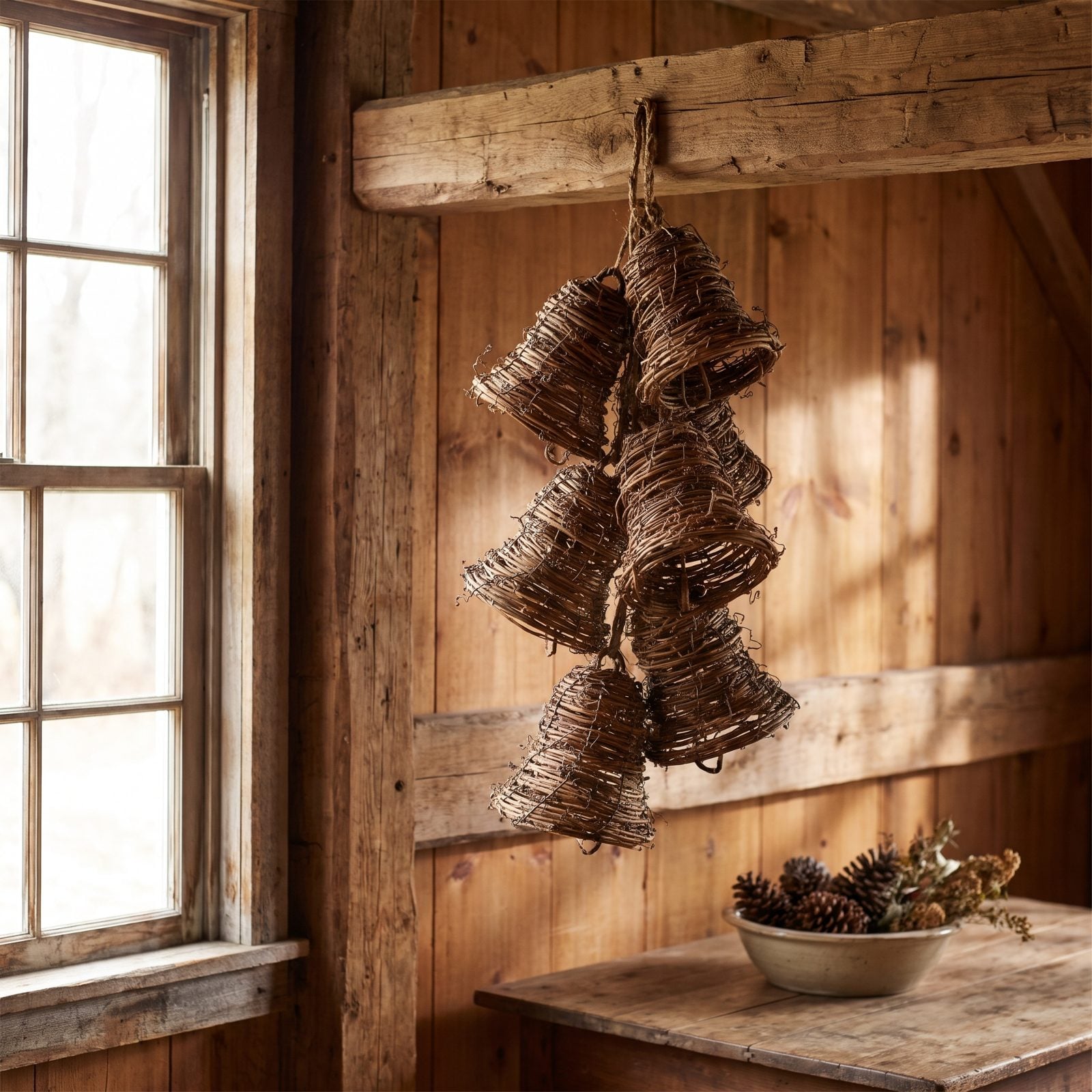
Grapevine wants to curl. Stop fighting it, work with it, and a bell shape shows up almost by accident.
Soak the vine first so it bends without snapping, then coil it around a bell-shaped form — or honestly just your own hand — and let the tendrils tangle where they want. Leave the inside hollow and clapperless. These never ring, obviously. They just hang from a beam on a loop of twine, looking like something a clever elf dropped on his way out.
3. Dried-Grass Sunburst for a Blank Wall
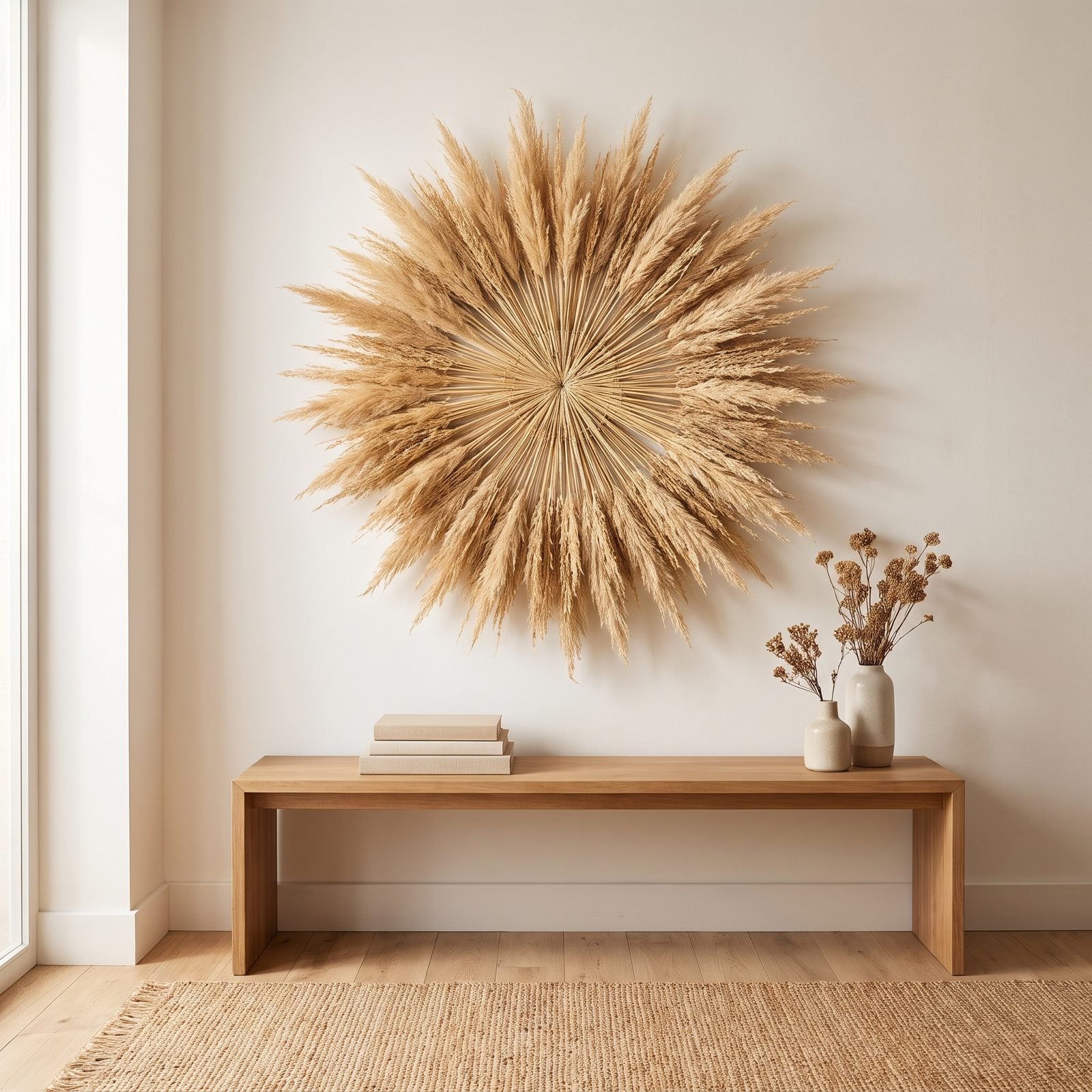
That empty wall over the console has been bothering you since October. Here’s the fix, and it costs nothing but an afternoon.
Cut the tall ornamental grasses and the seed-headed stuff gone to feather in the back border. Bind the bases into a tight hub and fan the plumes out in a full circle until you’ve got a wild halo two feet wide — wheat, oat, soft gold, all that late-season color most people rake straight into the compost.
Catch it with side light and the feathery tips go translucent. It reads as expensive. It was free.
The grasses most people cut down in November are the ones that look like spun gold on a wall in December.
2. Christmas Crackers Decorated With Herb Sprigs
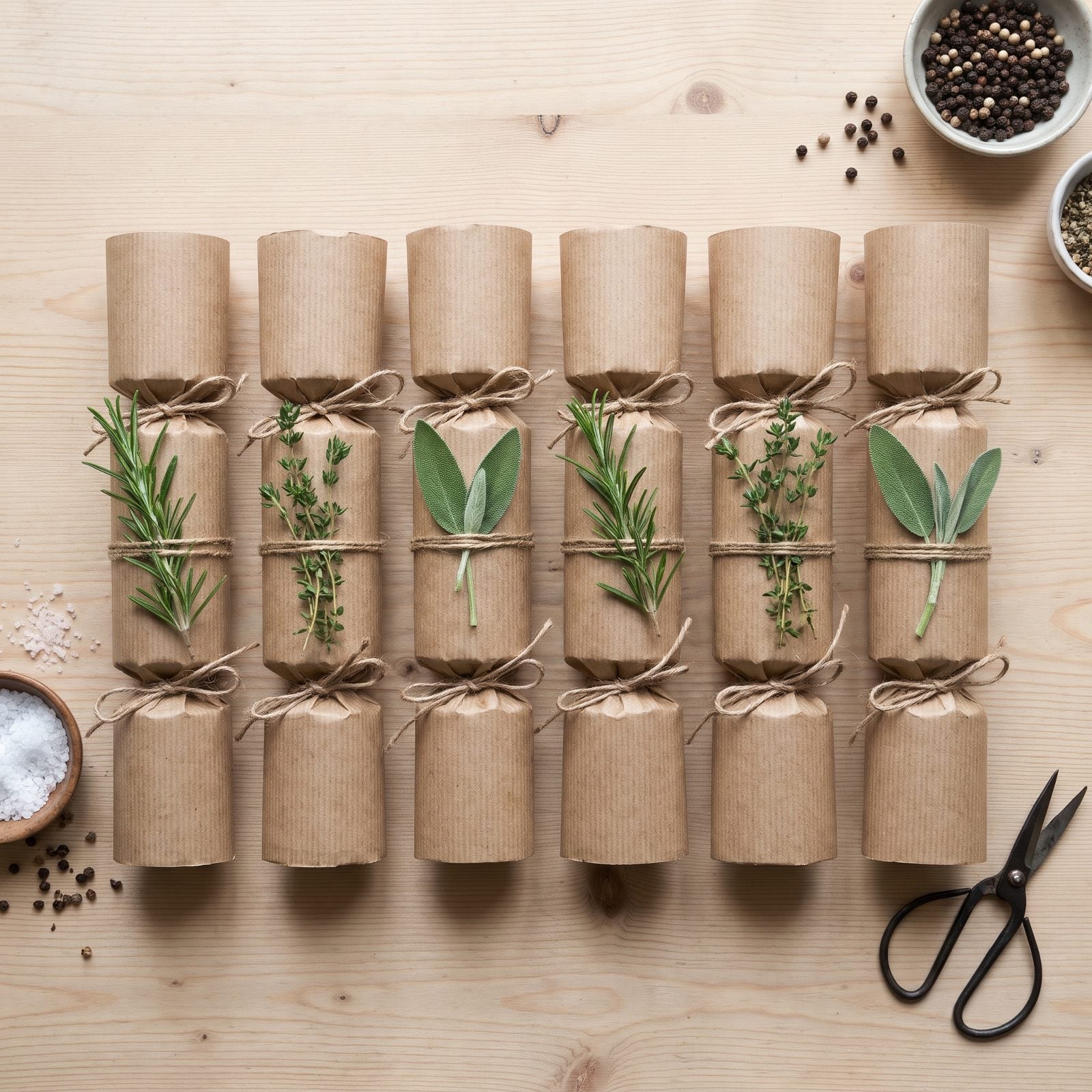
Shop crackers come in loud foil that ends up in the bin before dessert. Wrap your own in brown kraft paper instead, tie each end with twine, and tuck a single herb sprig under the knot at every place setting.
Rosemary at his place, bay at hers, a cedar frond for the kids. Five minutes per cracker, and the table smells faintly of the garden before anyone sits down. Guests always, always want to keep the sprig.
1. Old Boots Planted With Cedar and Red-Twig Dogwood
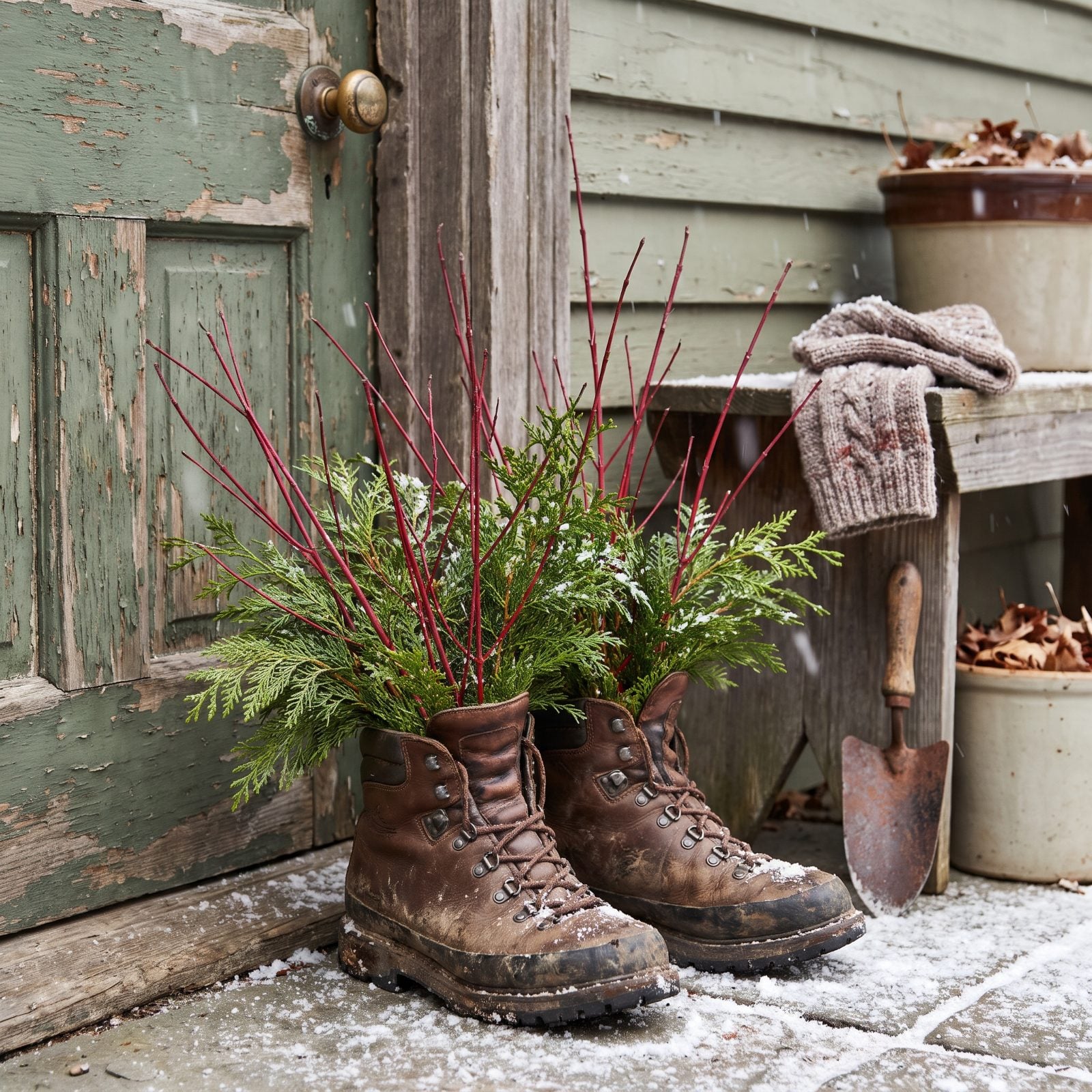
Those old boots by the back door — too far gone to wear, too stubborn to throw out. Fill them with wet floral foam or just damp soil and plant them up for the front step.
Cedar boughs standing tall, a few red-twig dogwood stems shooting up bare and crimson, more loose cedar sprigs tucked into the second boot. Come winter those dogwood stems are the brightest red in the whole yard, brighter than any ornament. Set the boots at a slight angle on the stone, like somebody just stepped out of them.
It’ll outlast most store-bought arrangements, and it costs you one pair of ruined boots you were never going to wear again.