
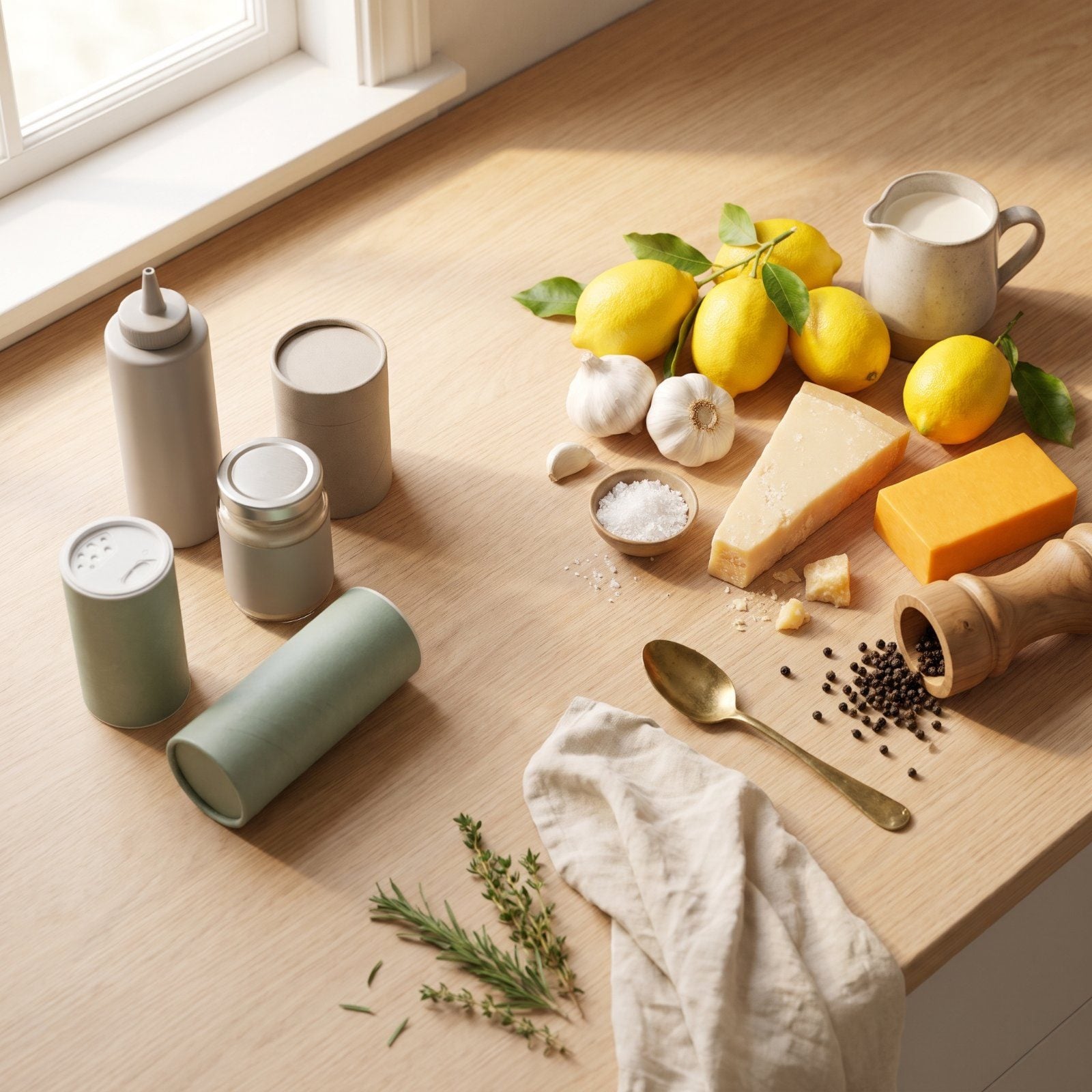
Walk through a working kitchen’s walk-in cooler and you’ll notice what isn’t there. No squeeze bottles of lemon juice, no jar of grey minced garlic swimming in acid, no aerosol can of whipped cream hissing in the door. Line cooks and chefs aren’t snobs about this stuff for the fun of it. Most learned the difference the hard way, tasting a sauce that went flat or a cheese that seized into rubber. The swaps below cost a few minutes more and almost always less money. They’re the quiet upgrades that separate food that works from food that just fills the plate.
Please note that some of the images in this article were created with the assistance of AI.
39. Bottled Lemon Juice vs. Whole Fresh Lemons
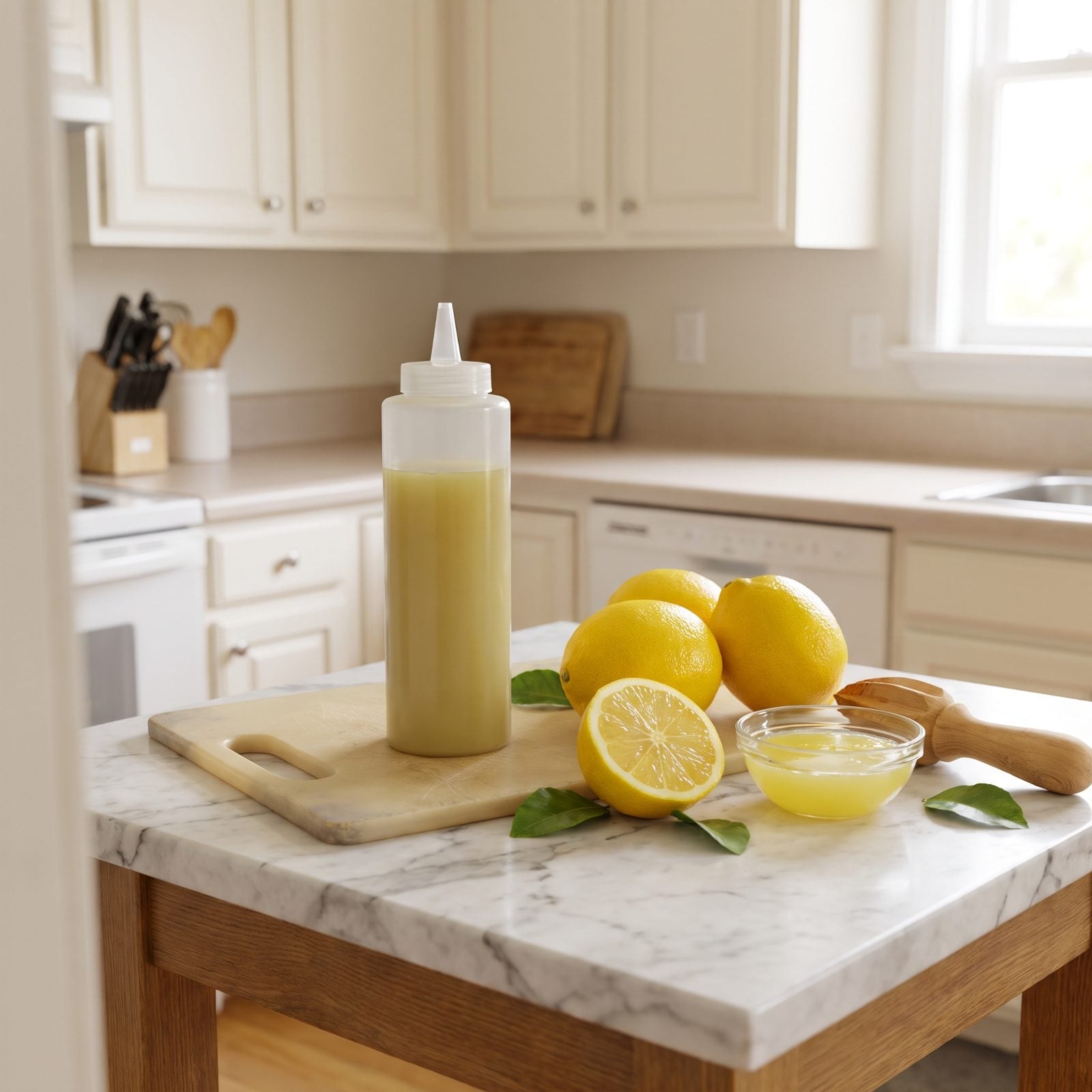
Crack open a bottle of the shelf-stable stuff and give it a sniff. It smells like lemon-flavored window cleaner, because the preservatives that keep it stable also strip out everything bright. What you lose is the oil in the peel — the high floral note that makes a lemon taste alive.
Fresh juice hits differently in a vinaigrette or over fish, and then there’s the zest, which most cooks treat as the real prize. One lemon gives you juice for a pan sauce and zest for everything else. The bottle gives you sour. Nothing more.
38. Jarred Minced Garlic vs. Firm Garlic Bulbs
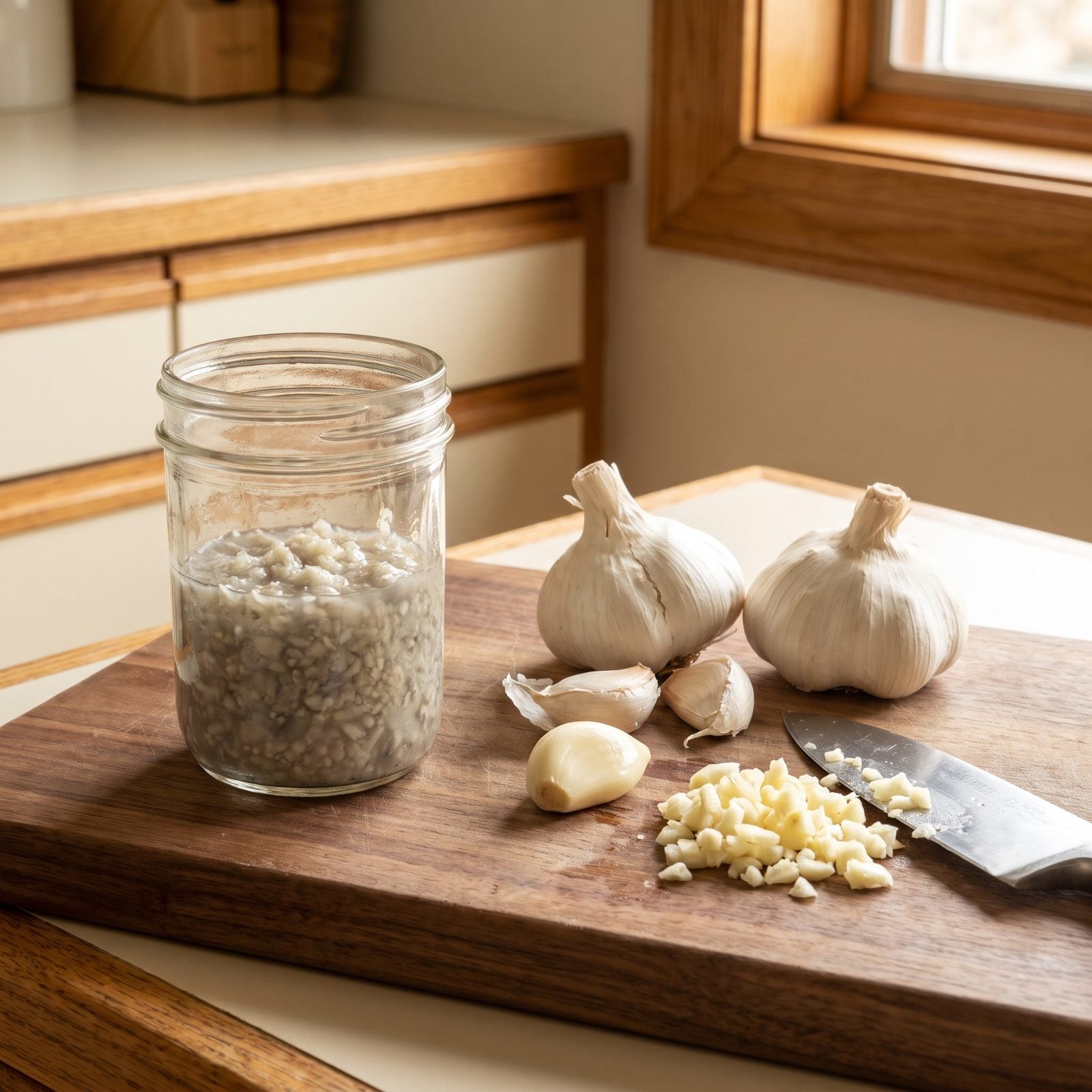
Jarred garlic tastes like garlic’s distant cousin who moved away and changed. The acid it sits in keeps it shelf-stable and mutes its bite into something dull and slightly tinny. You’ve smelled the difference the second you crack the lid.
Fresh cloves do something jarred never can — the flavor shifts depending on how you cut them. Crush a clove and it turns sharp and hot. Slice it thin and it goes mellow, almost sweet in the pan. A whole bulb keeps for weeks in a cool cupboard. Plenty of cooks buy the jar out of pure laziness, and their cooking gets noticeably better the week they stop.
Asked whether pre-minced garlic is ever acceptable, a celebrity chef said “It changes the flavor. There’s a chemical they put in the jar. It doesn’t even look like garlic anymore.”
37. Pre-Ground Black Pepper vs. Whole Peppercorns
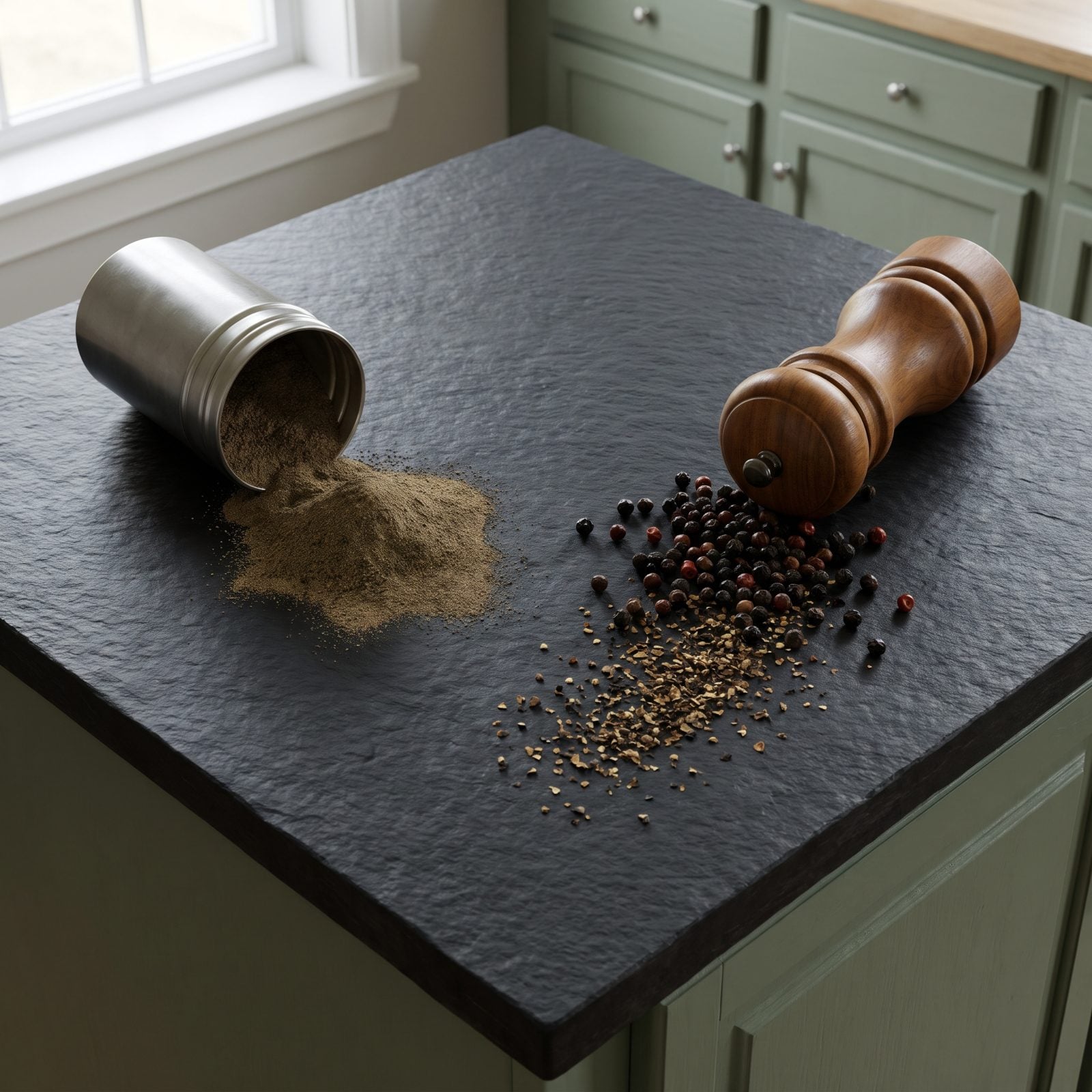
The volatile oils in a peppercorn start fading the moment it’s cracked. By the time pre-ground pepper reaches the shelf, most of its aroma has evaporated, and you’re left with a brown dust that brings heat but barely any fragrance.
A mill of whole peppercorns gives you both. Grind coarse for a steak crust, fine for a delicate sauce — the smell alone tells you the difference. And a tin of whole peppercorns lasts years.
36. Fine Table Salt vs. Kosher Salt
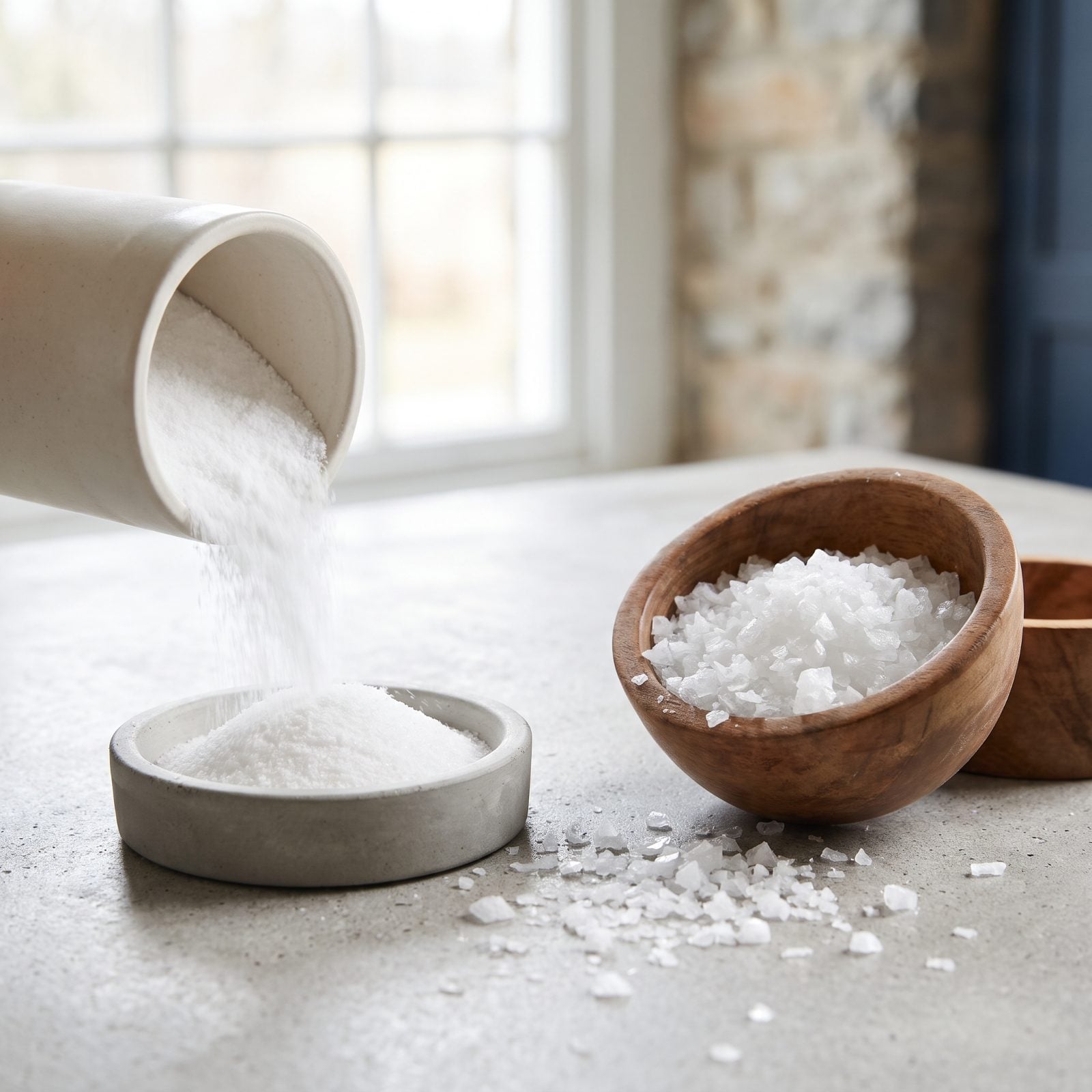
Pick up a pinch of each and your fingers tell the whole story. Fine table salt packs tight and dissolves instantly, which makes it brutally easy to over-season. Most of it also carries added iodine and an anti-caking agent that leaves a faint metallic edge.
Kosher salt’s bigger flakes hand you control. You feel exactly how much you’re grabbing, and it scatters evenly across a roast or a steak. This is the whole reason restaurant food tastes properly seasoned and yours sometimes doesn’t. Switching means recalibrating your hand, because the two measure differently by volume — but it’s the single cheapest upgrade in any kitchen.
35. Shelf-Stable Grated Parmesan vs. a Wedge of Parmesan
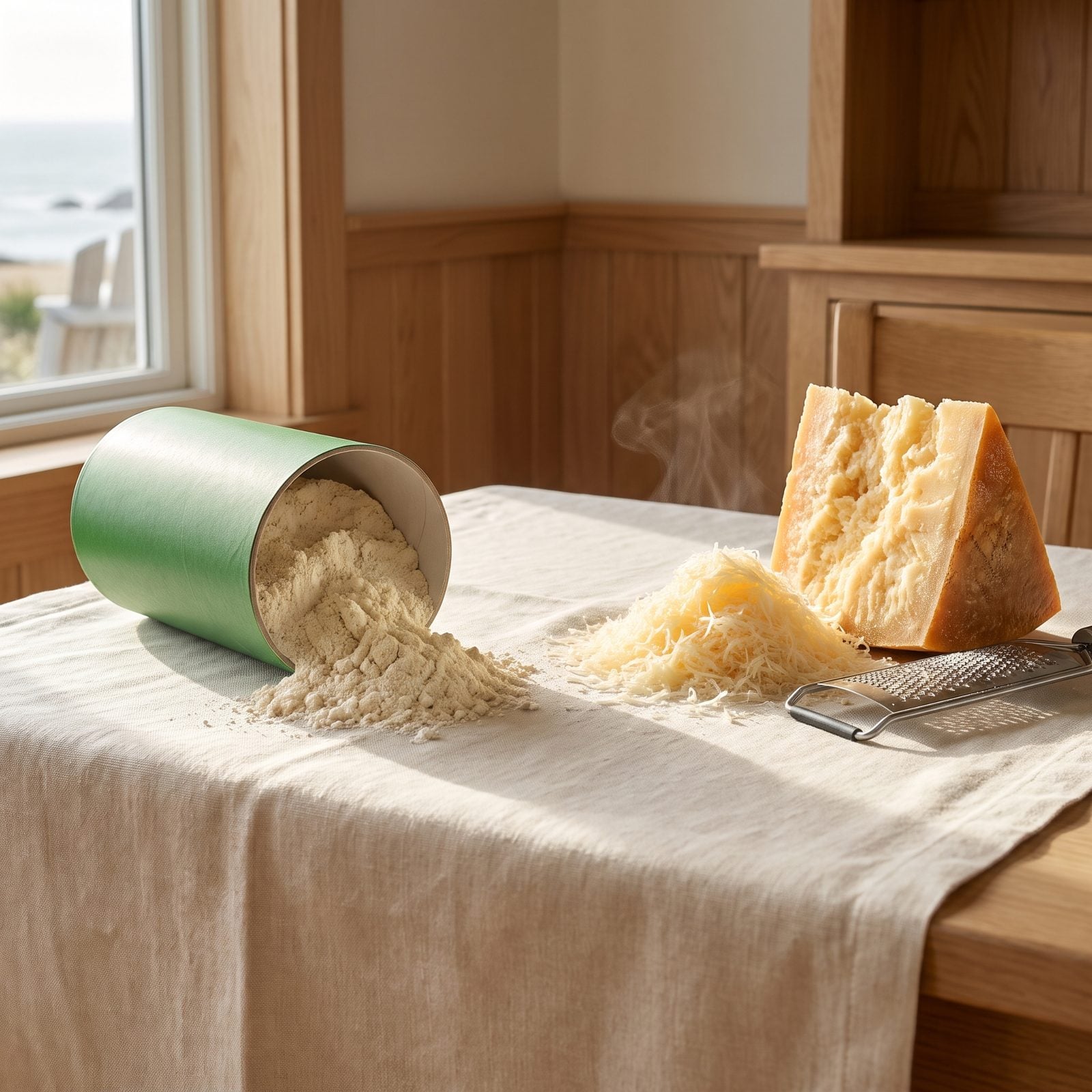
The powder in the green shaker is to real parmesan what instant coffee is to espresso. It’s often a blend padded with wood pulp and other cheeses, dried until it tastes like salty dust. Some versions contain barely any actual parmesan at all.
A proper wedge of aged Parmigiano has those crunchy white crystals, the ones that tell you it’s spent a couple of years developing flavor. Grate it fresh and it carries nutty, savory depth no shaker can touch. The rind goes into soup to deepen the broth. Nothing on that wedge gets wasted.
34. Canned Cheese Sauce vs. Real Melting Cheese
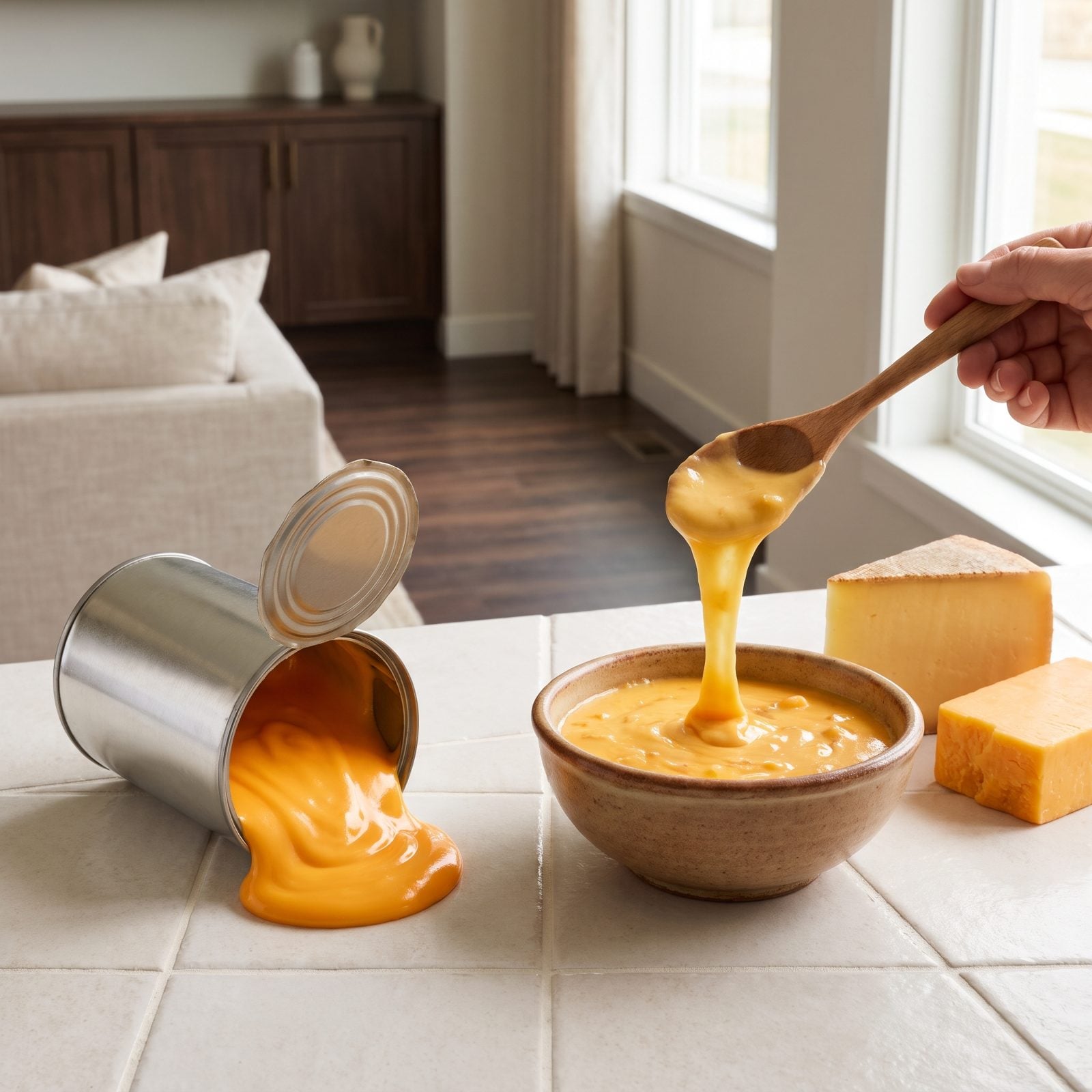
Canned cheese sauce pours the same way every single time, which is exactly the problem. That unnatural, uniform ooze comes from emulsifiers and oils engineered to stay smooth at room temperature forever. It tastes like the idea of cheese drawn from memory.
Real melting cheese takes a few more minutes but rewards you with actual flavor. A little gruyere or a sharp cheddar melted with a splash of milk gives you something glossy and deep. You control the salt, the sharpness, the thickness. The can gives you one flavor, forever, with no way to adjust it.
33. Margarine vs. Unsalted Butter or Olive Oil
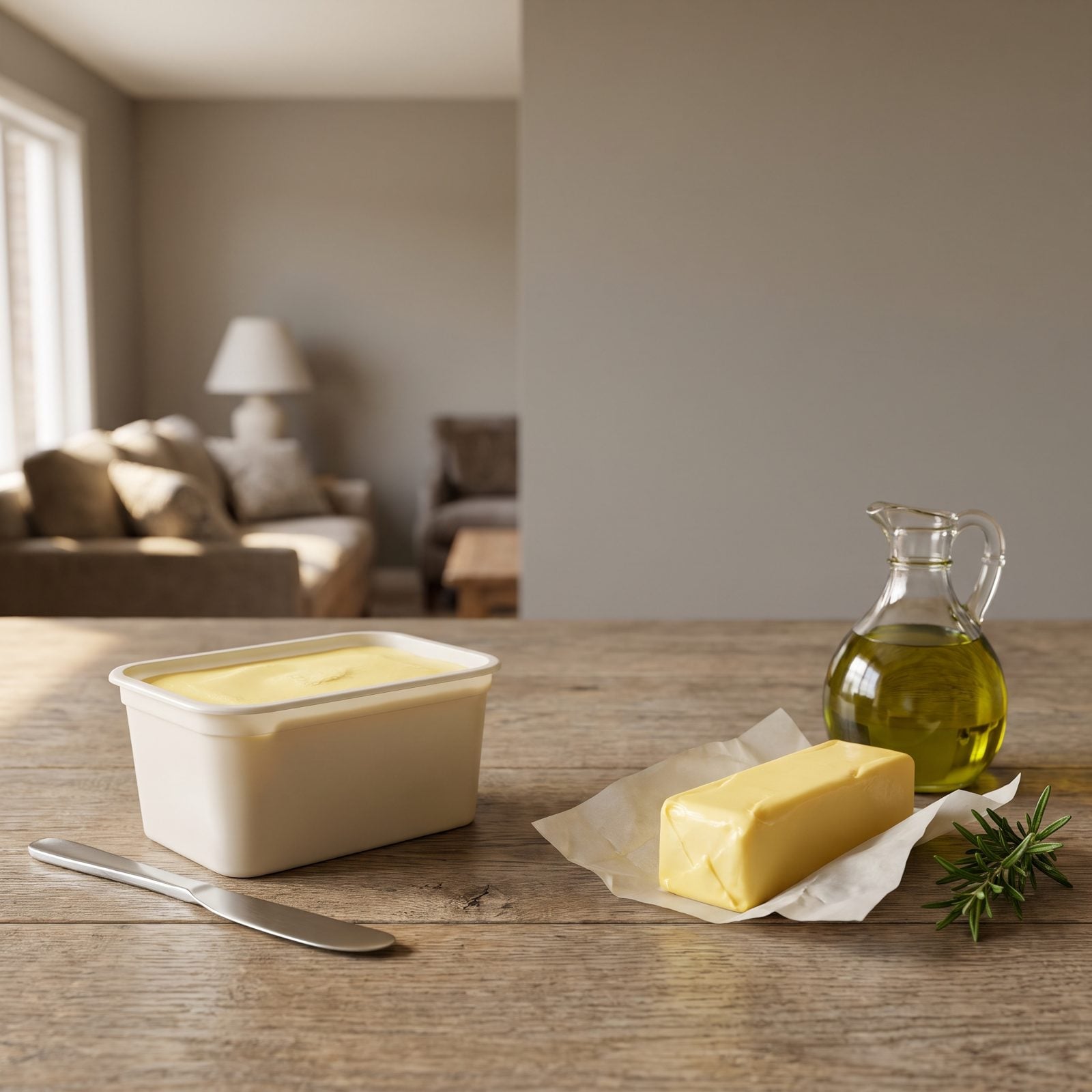
Margarine was invented to imitate butter cheaply, and it still tastes like an imitation. Built from refined oils and often hydrogenated, it melts into a slick, flat layer with no real flavor underneath. In baking it behaves oddly. On toast it just sits there.
Butter browns and foams and carries flavor because it’s actual cream churned to solid. Good olive oil brings its own grassy, peppery character to a pan. Between the two, you can cook almost anything. Keep unsalted butter around and you decide the seasoning instead of the factory.
32. Aerosol Whipped Cream vs. Fresh Heavy Cream

Spray the aerosol onto a slice of pie and watch the clock. Within minutes it collapses into a watery puddle, because it’s mostly air, sugar, and propellant gas holding a shape it can’t keep.
Cream whipped by hand holds its peaks for hours and tastes like dairy instead of sweetened foam. You decide how sweet, how stiff, how much vanilla goes in. A couple of minutes with a whisk or a mixer and the texture is thick enough to stand a spoon in. Once you’ve had the real thing on a cobbler, the can starts to look like a cruel joke.
31. Flavored Coffee Creamer vs. Milk or Cream
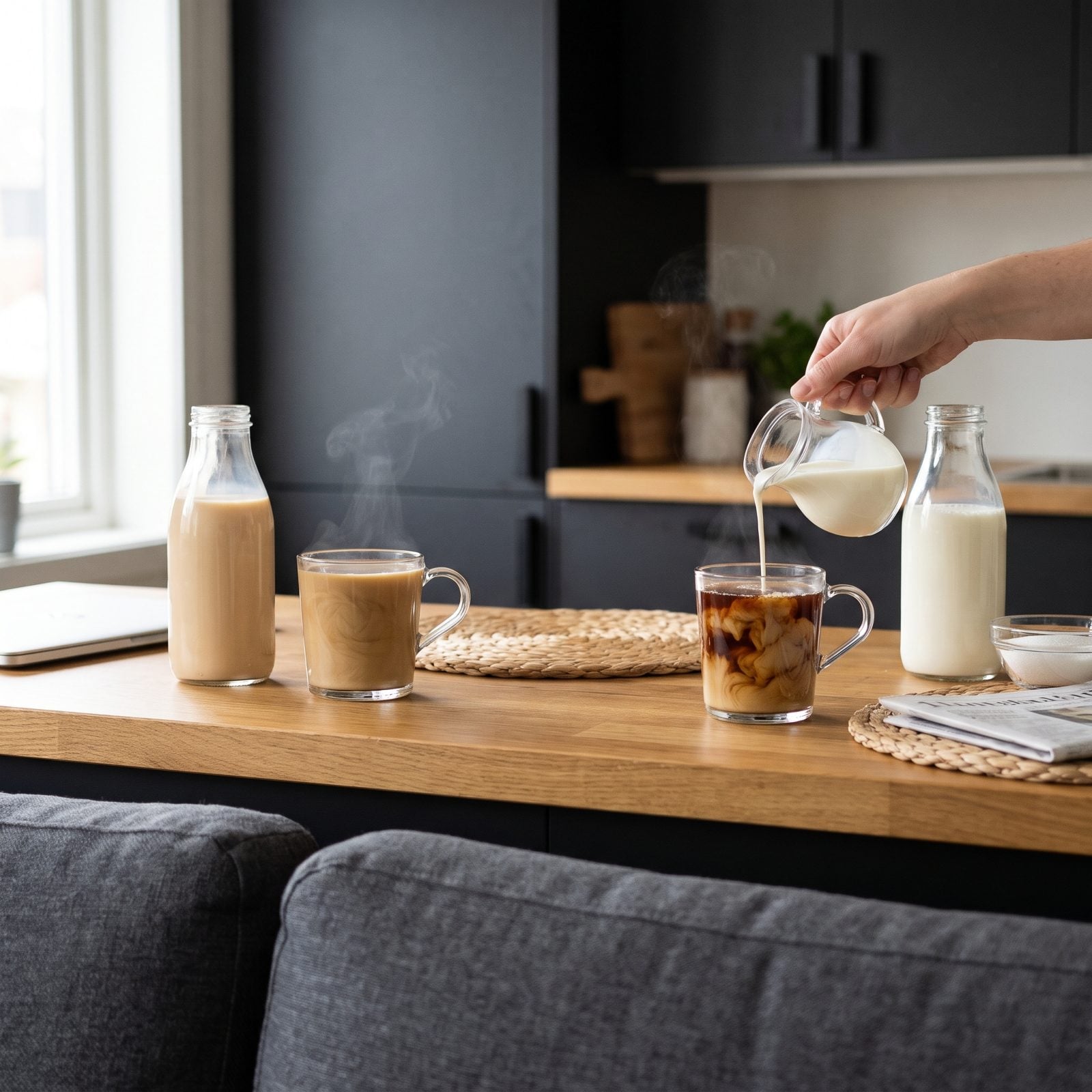
Read the back of a flavored creamer and you’ll often find no cream at all. Water, oil, sugar, and a list of flavorings engineered to taste like hazelnut or vanilla that never met an actual nut or bean. The color? Additives, not dairy.
A splash of real milk or cream does something the bottle can’t — it softens coffee’s edge while letting the coffee stay coffee. Want flavor? A little real vanilla or a cinnamon stick in the pot does it honestly. The creamer masks what’s in your cup. Real dairy complements it.
30. Imitation Vanilla vs. Pure Vanilla Extract
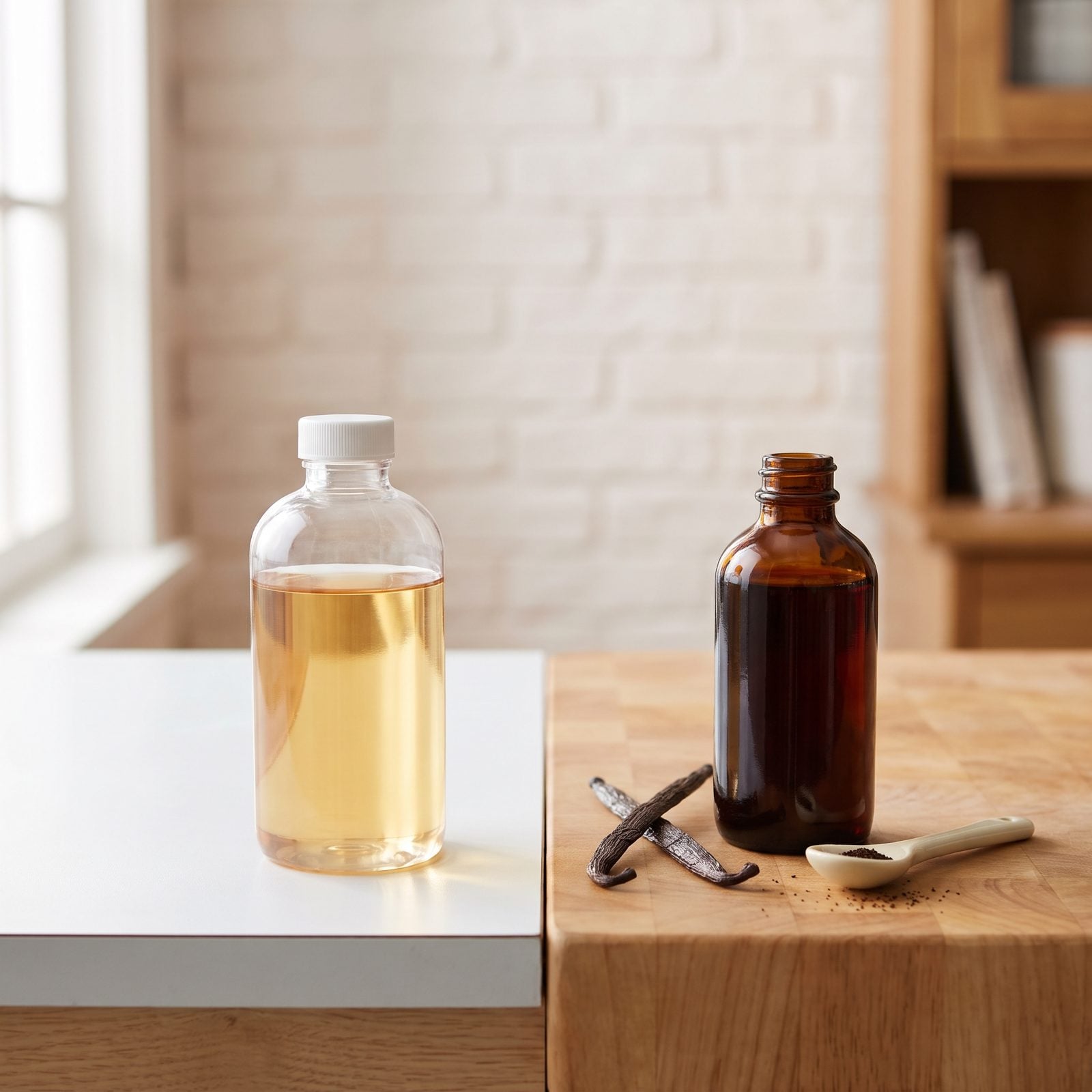
Smell them side by side and the lie falls apart. Imitation vanilla is mostly vanillin cooked up from wood pulp or petroleum, one note pretending to be a whole chord, while the real thing carries hundreds of aromatic compounds. That’s why a good extract smells like something and the fake smells like the idea of something.
You’ll spend more on the real bottle. Not much, in the scheme of a cake. And in anything where vanilla is the star — custard, plain shortbread, a bowl of whipped cream — the difference is loud. You taste it immediately.
Even a sensory scientist who sometimes settles for imitation in baking says “But if I were making ice cream, I would definitely use a nice vanilla extract because it’s such an integral part of the flavor profile.”
29. Artificial Pancake Syrup vs. Pure Maple Syrup

That thick glossy stuff in the jug-shaped bottle? Mostly corn syrup, caramel color, and a whisper of maple flavoring. It coats a pancake like paint.
Real maple syrup is sap boiled down from trees, gallons in for a fraction of a gallon out, and it tastes like the forest it came from — woodsy, a little mineral, almost smoky in the darker grades. Costs more, yes, but you use less because it actually tastes of something, and a bottle lasts in the fridge for ages. We keep a jar of the dark robust kind for cooking and the amber for pouring. Once you switch, the fake stuff tastes like syrup-scented sugar water. Which is precisely what it is.
28. Salted Cooking Wine vs. a Drinkable Dry Wine

Cooking wine is a trap sold in the vinegar aisle. It’s low-grade wine loaded with salt so stores can sell it without a liquor license. That salt throws off your seasoning before you’ve added a single pinch, and the wine underneath was never any good to start with.
The old rule holds: if you wouldn’t drink it, don’t cook with it. Skip the expensive bottle. A plain dry white or a modest red you’d happily pour at dinner works beautifully, and you get to drink the rest while you stir.
Recalling instructors who banned cooking wine outright, a culinary school graduate explains “The reasoning was cooking wine is full of salt, preservatives, and sweeteners.”
27. Synthetic Truffle Oil vs. Fresh Mushrooms
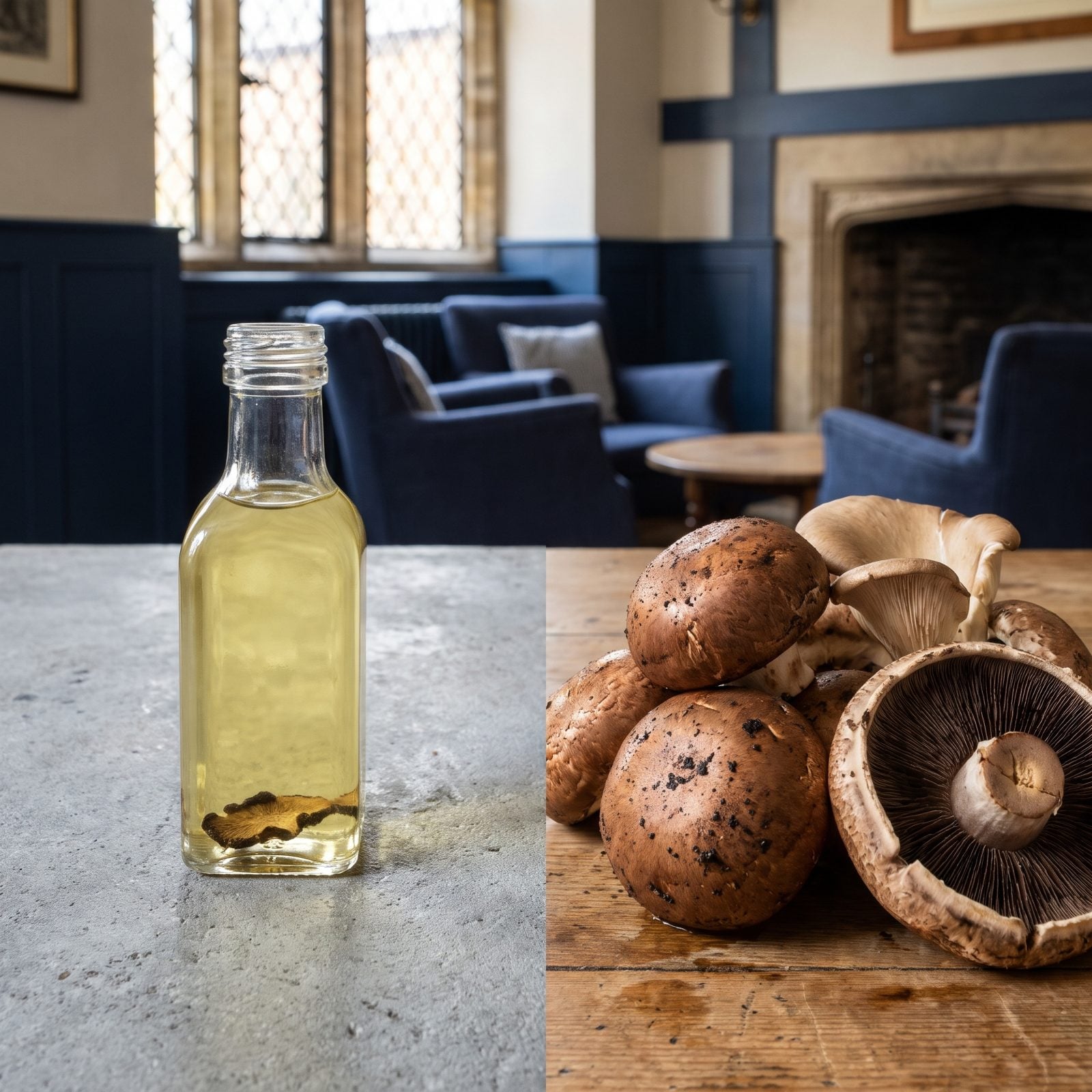
Almost nobody says this out loud: most truffle oil has never met a truffle. The aroma comes from a lab-made compound called 2,4-dithiapentane, a single aggressive note that bulldozes everything else on the plate. One drizzle and your pasta smells like a candle.
For actual earthy, savory depth, fresh mushrooms do far more honest work. A pile of browned cremini or a torn oyster mushroom crisped in butter gives you that woodsy funk with layers behind it — real food, real complexity. Want genuine truffle? Buy the fungus in season and shave it fresh. The oil is a shortcut to a flavor that isn’t even there.
26. Nonstick Cooking Spray vs. a Neutral Cooking Oil
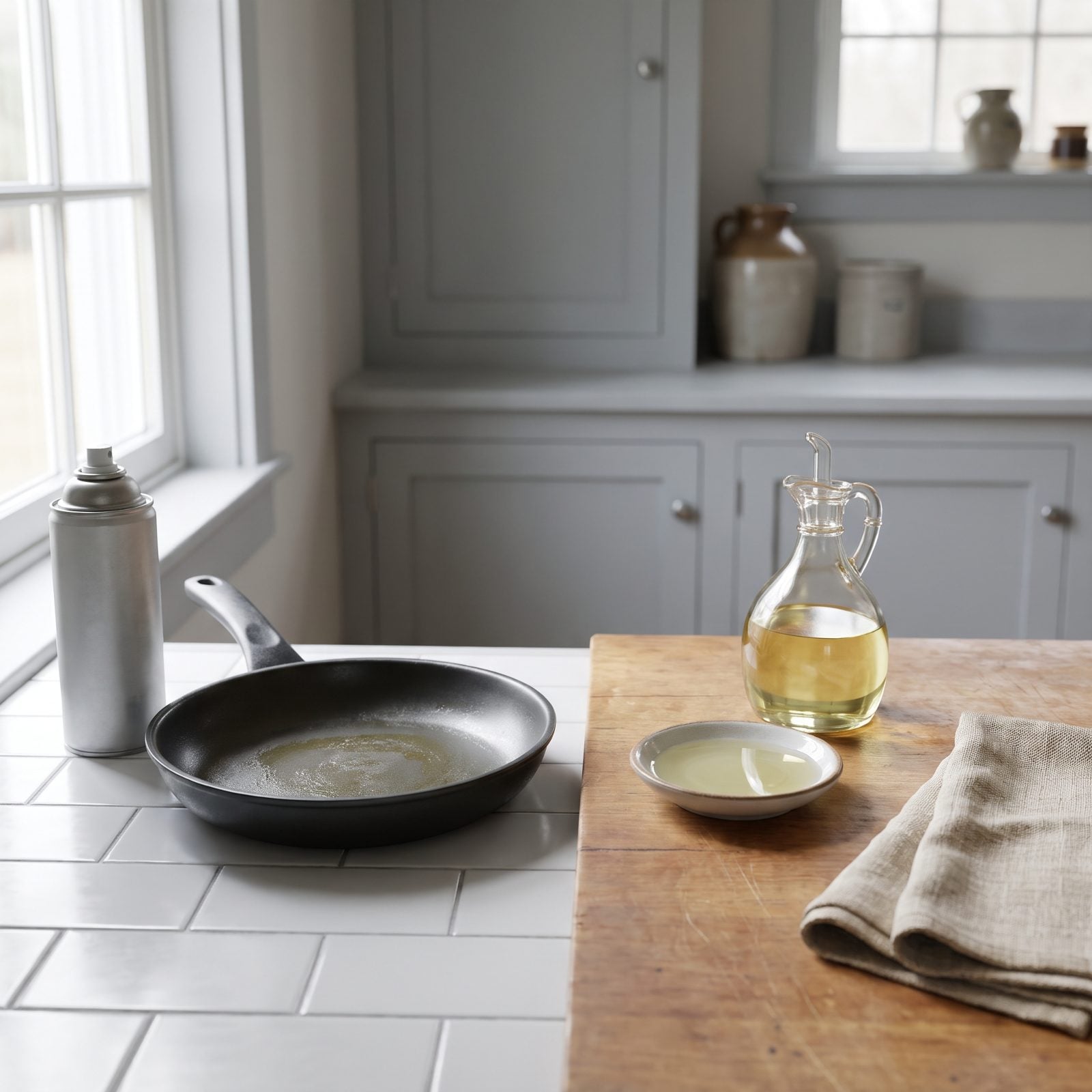
Cooking spray seems harmless until you notice the gummy brown film it bakes onto your pans. Most sprays carry propellants, lecithin, and anti-foaming agents that build up and slowly wreck the very nonstick surface they’re supposed to protect.
A little neutral oil — grapeseed, avocado, plain refined canola — does the same job without the residue, and you control exactly how much goes down. Pour a small puddle, wipe it around with a paper towel, done. Cheaper per use, too. One twenty-minute session scrubbing that lacquer off a sheet pan is usually enough to ban spray for good.
25. Bottled Salad Dressing vs. Oil, Vinegar, and Mustard
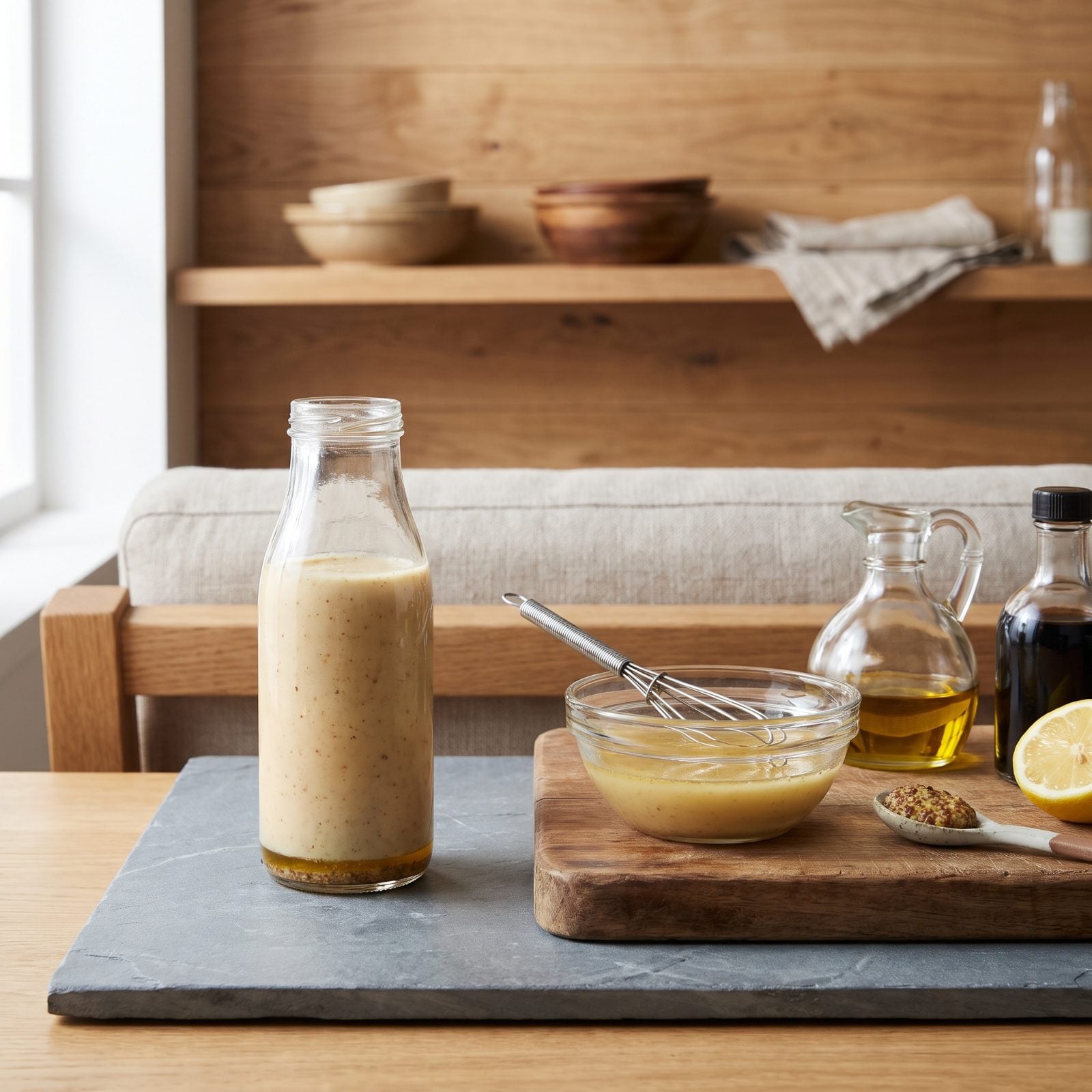
Read the back of a bottled dressing sometime. Sugar, gums, stabilizers, and enough preservatives to carry it through a geological age. It has to taste the same in month ten as it did in month one, and that stubborn consistency is the enemy of anything fresh.
A vinaigrette takes less time than finding the bottle in the fridge door. Oil, an acid, a spoon of mustard to hold it together, salt, pepper — whisk it or shake it in a jar. It tastes brighter, you can swing it any direction you want, and there’s no gum coating your greens.
Three ingredients and thirty seconds beats a bottle that’s been sitting in your door since last spring.
24. Bottled Marinade vs. Fresh Citrus, Vinegar, and Aromatics
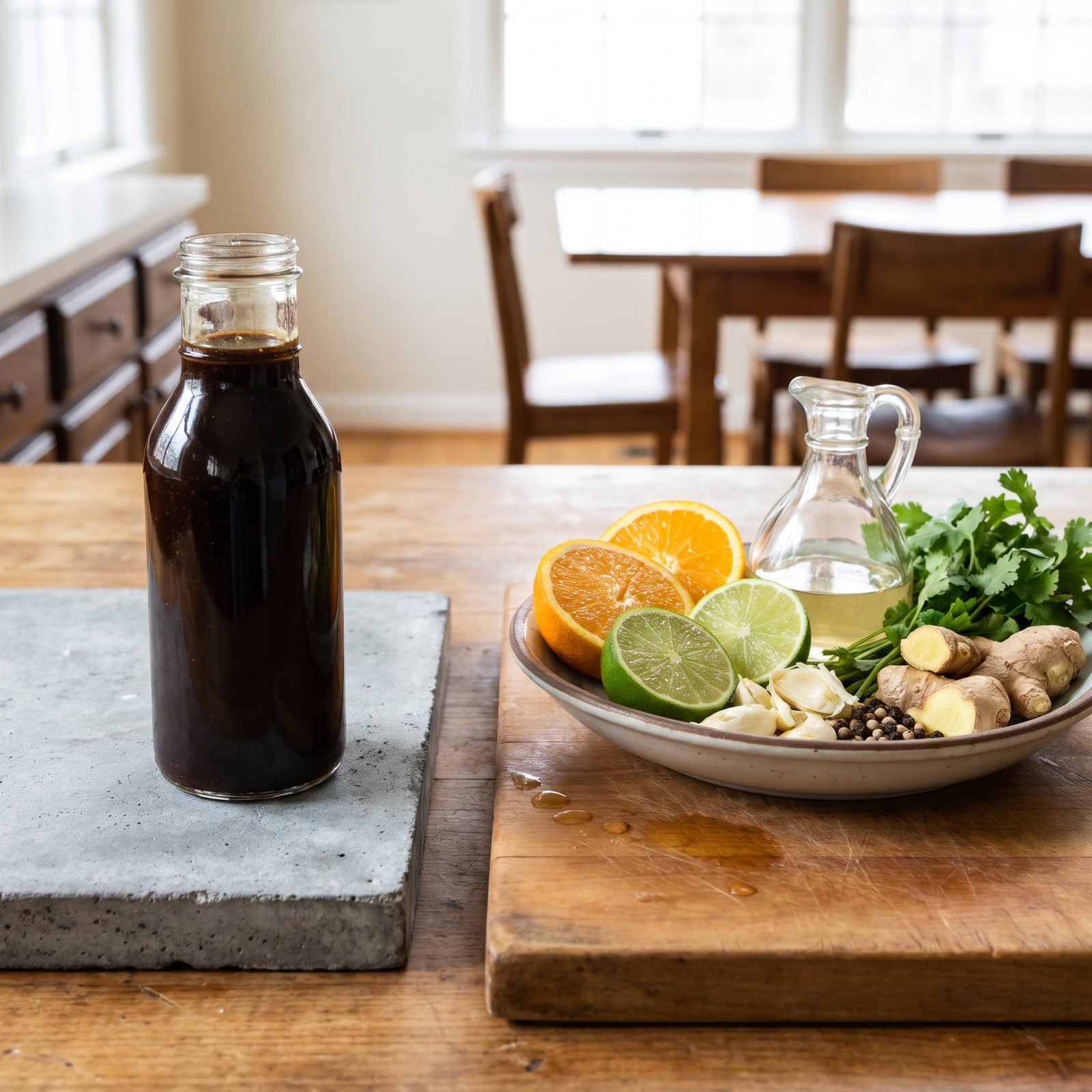
Bottled marinades lean hard on sugar and salt because those are cheap and they cover for everything else. Which is why so much grilled chicken tastes identical no matter which bottle poured it — sweet, salty, vaguely smoky, nothing underneath.
Fresh citrus does something the bottle can’t. The acid actually works on the meat, tenderizing and brightening, while garlic, ginger, and a handful of herbs give you flavor with a pulse. Squeeze a couple of limes, add vinegar, smash some garlic, toss in whatever aromatics you’ve got. It tastes like you cooked, not like you shopped.
23. Seasoning Packets vs. Individual Herbs and Spices
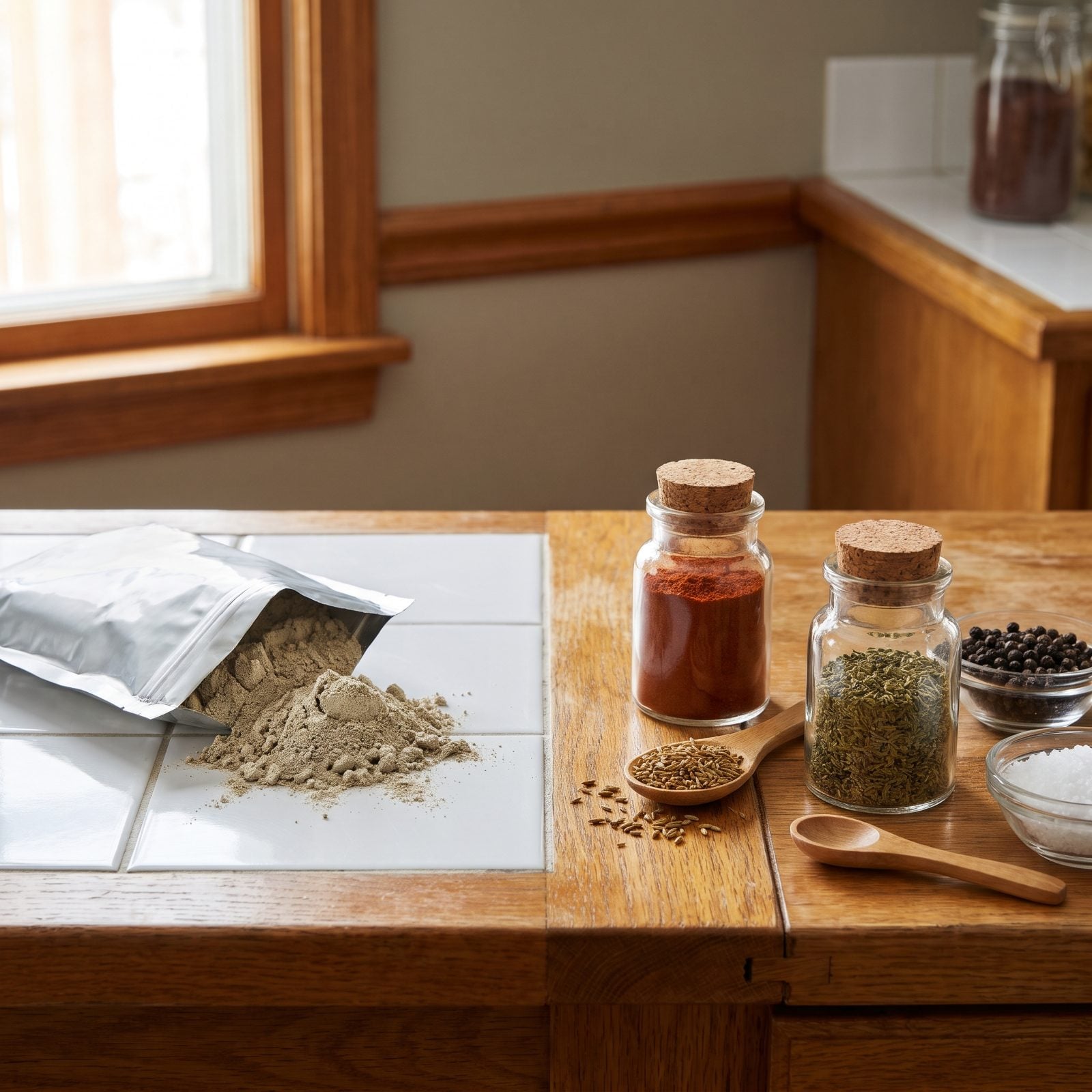
A taco or chili packet is mostly salt, a heap of anti-caking agent, and spices ground so long ago they’ve gone flat. You pay a premium for the convenience of not opening four jars.
Keep a small rack of the usual suspects — cumin, paprika, oregano, chili powder, garlic — and you can hit the same flavors with far more punch, plus you steer the salt yourself. Ground spices fade after a year or so. Buy small and smell before you trust them, because a tired jar of cumin is doing nothing for you.
22. Powdered Gravy Mix vs. Quality Stock
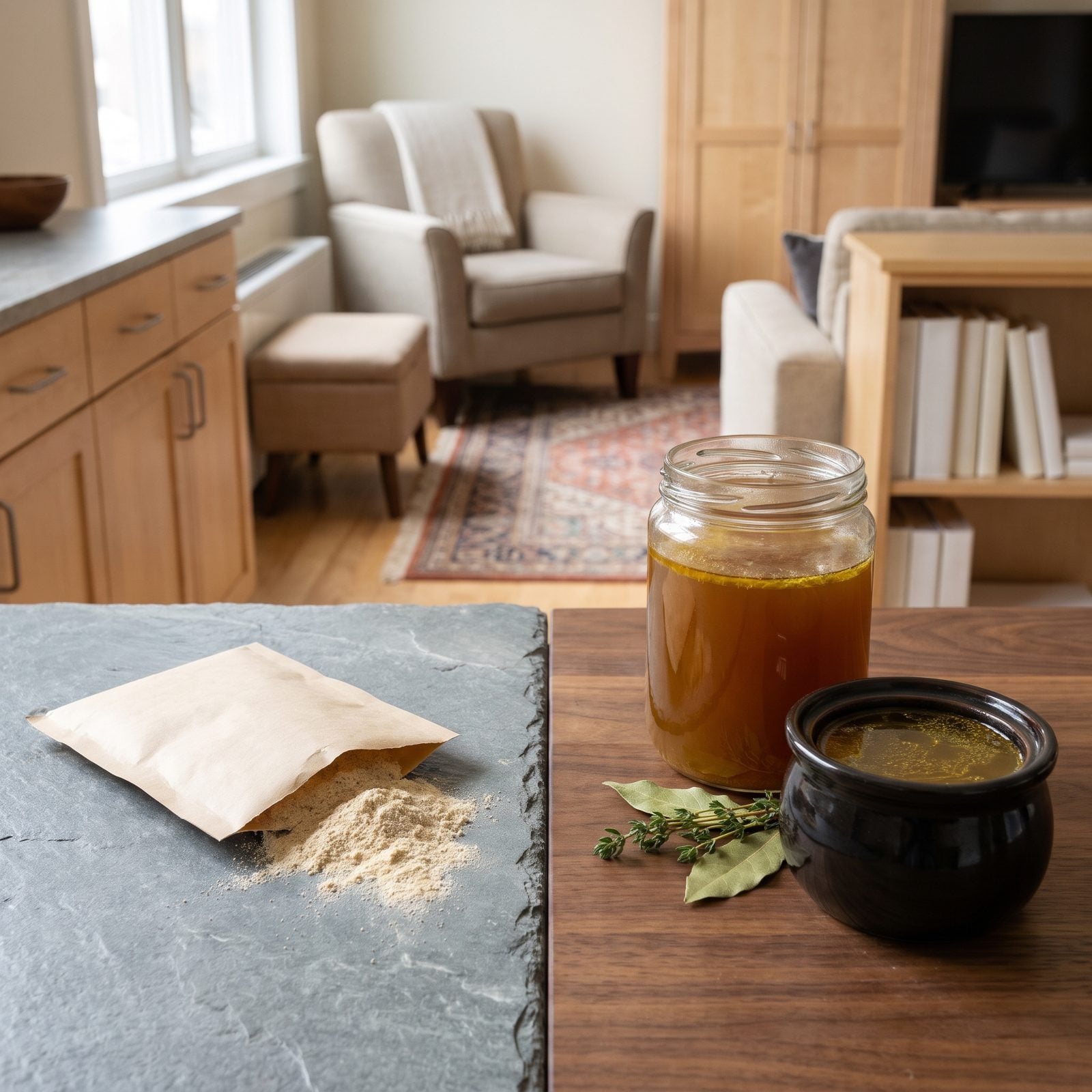
Powdered gravy mix is salt, starch, and browning agent that tastes like salt, starch, and browning agent. It thickens, sure. It just never tastes like the pan drippings it’s pretending to replace.
Real gravy starts with the fond — those browned bits stuck to the roasting pan — loosened with good stock. The stock carries the actual meat flavor, the fond carries the depth, and a roux or a slurry does the thickening. It’s barely more work than boiling water, and nobody at the table reaches for the envelope again.
21. Hard Bouillon Cubes vs. Low-Sodium Stock or Concentrated Base
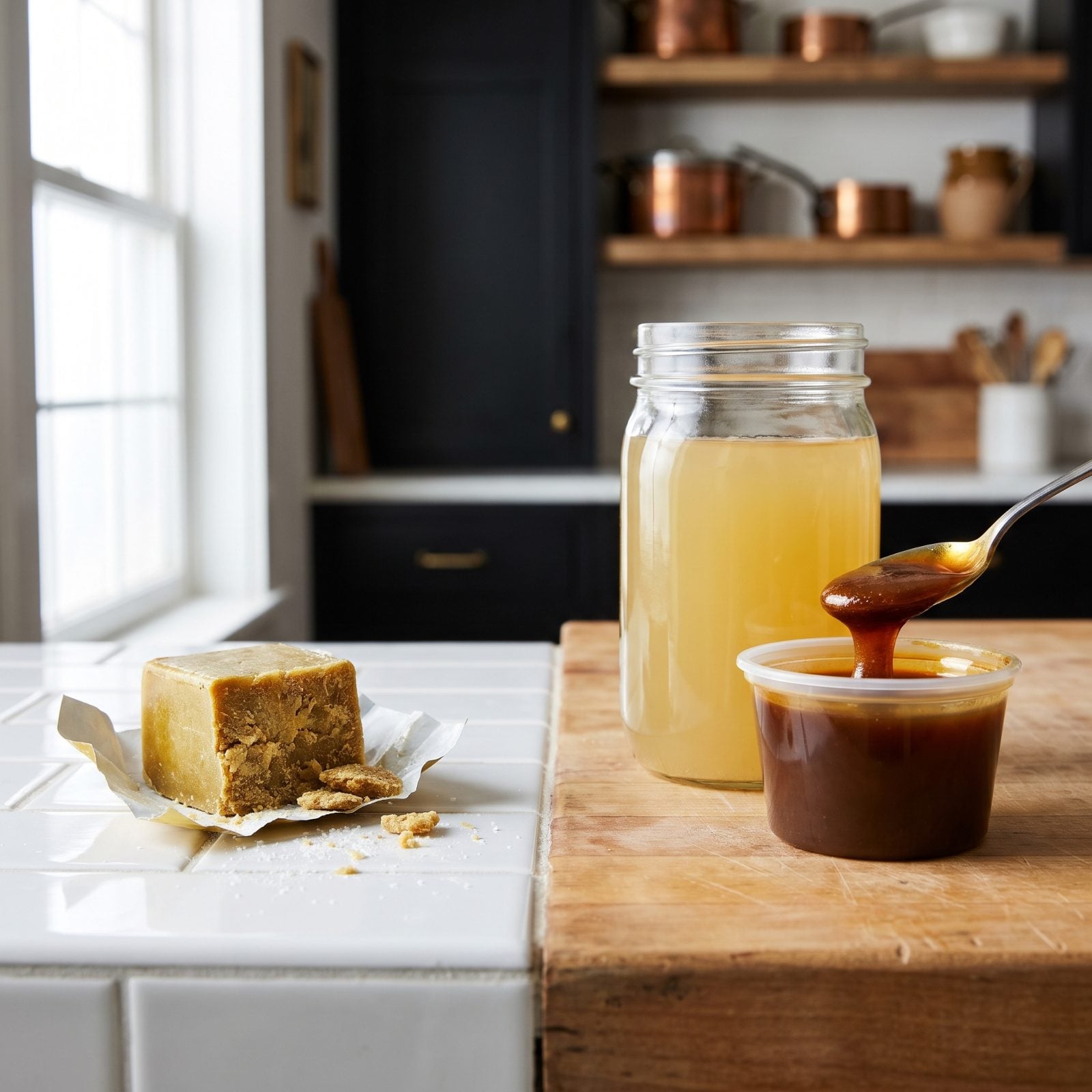
A bouillon cube is basically a brick of salt with the vague memory of a chicken that once walked past. One cube can pack a startling amount of sodium, which means you’ve seasoned the whole dish before you’ve tasted it.
Low-sodium stock gives you room to build flavor on your own terms. Want the convenience and the storage of a cube? Reach for a concentrated stock base instead — the glossy, paste-style tubs. More actual meat and bone flavor, far better control of the salt, and a little spoonful stirred into water beats the cube every time. Keep one in the fridge and you’ll never miss the foil-wrapped version.
20. Sugar-Heavy Jarred Pasta Sauce vs. Whole Canned Tomatoes
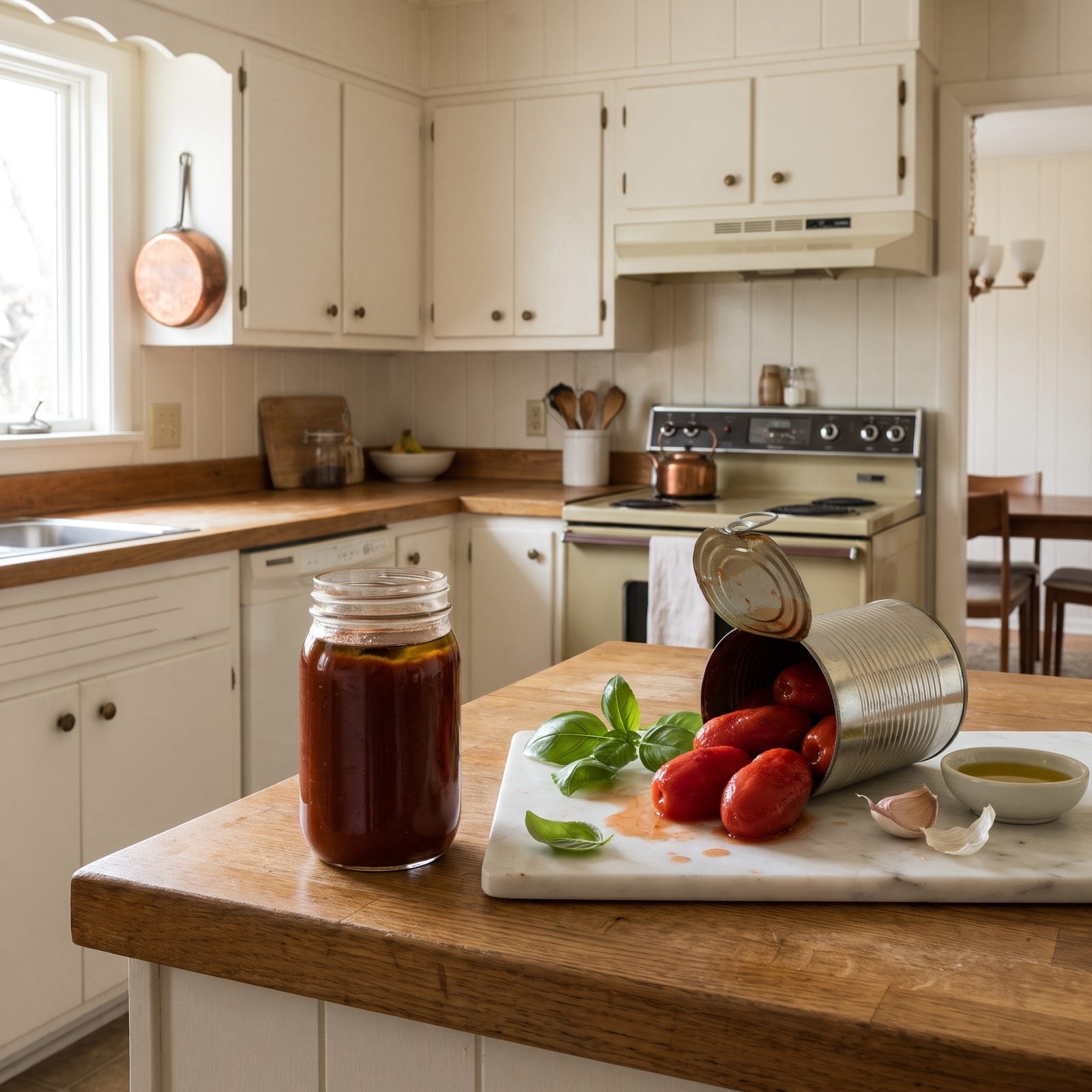
Read the back of a jar sometime. Somewhere between the tomatoes and the herbs sits sugar, usually high on the list, because that jar was engineered for a shelf and not for a Sunday.
Whole canned tomatoes are the opposite. Picked ripe, canned fast, nothing added but a little salt and sometimes a basil leaf. You crush them yourself and the sauce tastes like it has a pulse. Chefs reach for them to keep a grip on the sweetness, the salt, and the length of the simmer.
19. Instant Mashed Potato Flakes vs. Whole Potatoes
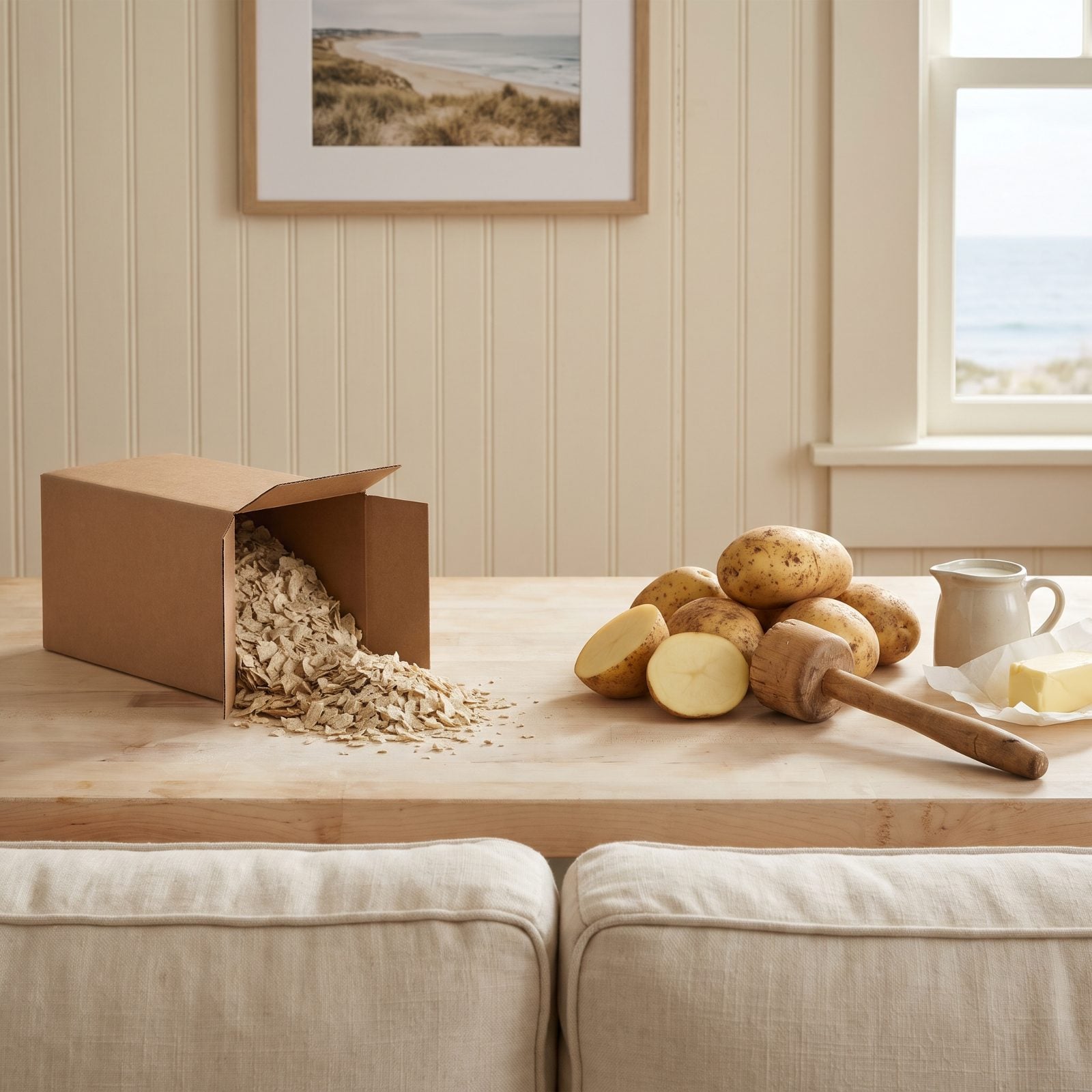
Instant flakes save you maybe fifteen minutes and cost you everything that makes mashed potatoes worth eating. They go gluey, taste faintly of cardboard, and shrug off butter instead of soaking it in.
A real potato has texture, a waxy or starchy personality, a willingness to drink cream. Chefs pick the variety on purpose: fluffy russets for airy mash, Yukon Golds for that buttery density. You can’t season a flake back to life, no matter how much optimism you bring to the box.
18. Instant White Rice vs. Long-Grain Rice
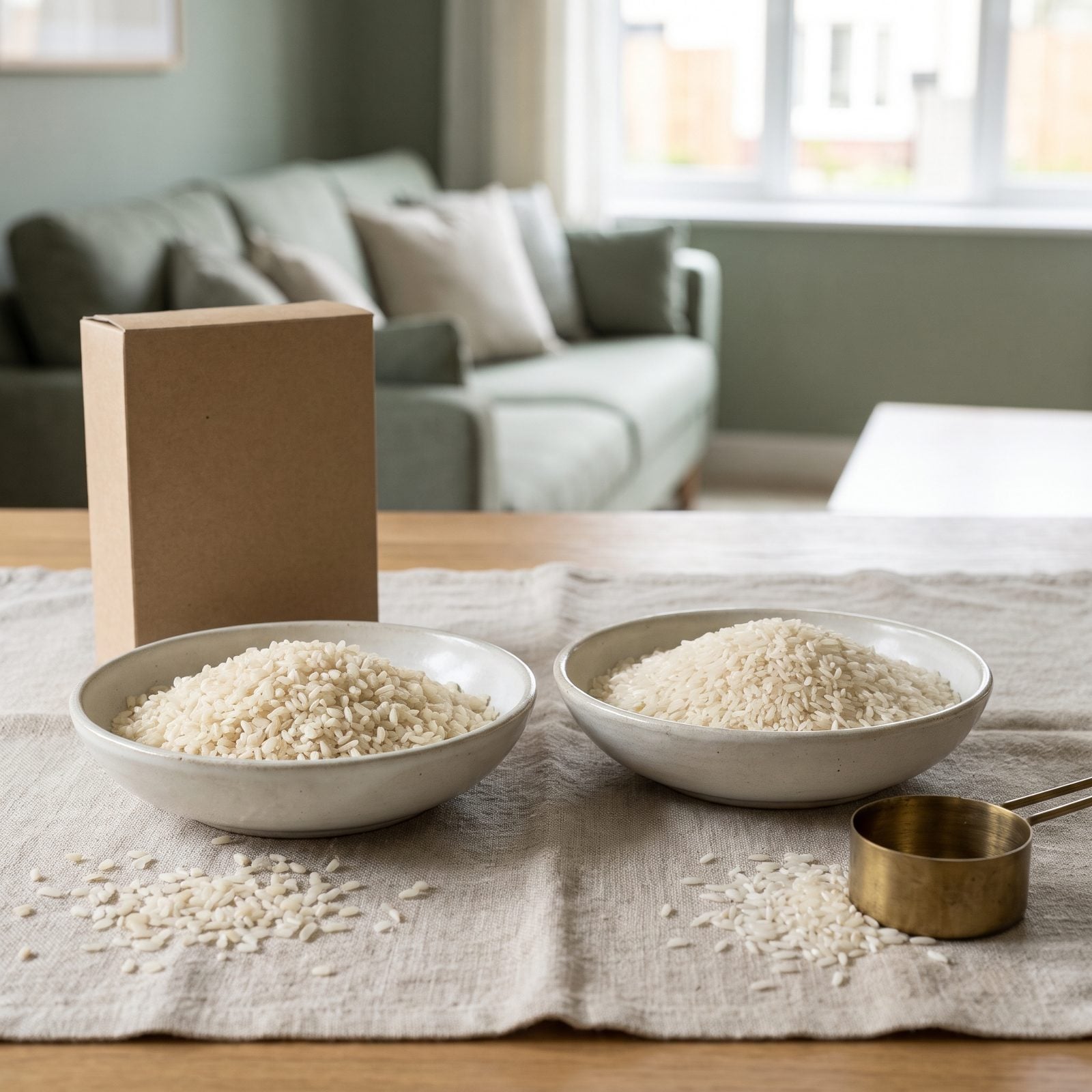
Instant rice is rice that already got cooked, dried, and crushed a little so it rehydrates fast. Convenient, sure. Also mushy, broken, and bland by the time it lands on your plate.
Real long-grain rice gives you separate, tender grains that hold their shape and carry flavor. Twenty minutes of actual cooking buys you a side dish that tastes like something rather than packing material. Rinse it first and it comes out even better.
17. Flavored Oatmeal Packets vs. Plain Rolled Oats
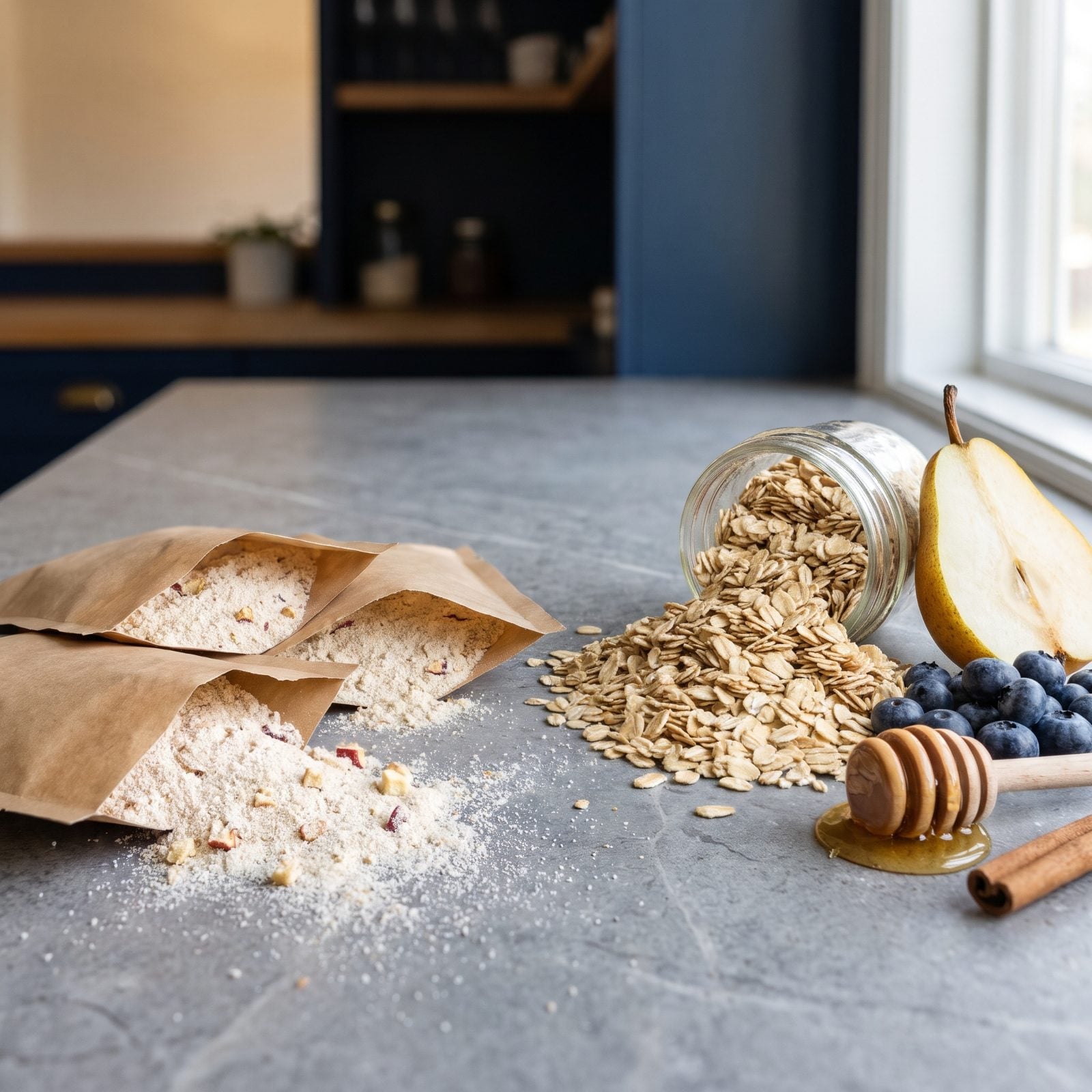
Those little packets are mostly powdered oats and sugar with a few sad apple specks for show. One pours out closer to a milkshake than a breakfast.
Plain rolled oats cost less, keep longer, and give you oats with actual chew. Sweeten them your way, with real fruit or a spoon of honey, and you know exactly what went in. The packet already decided for you. Plain oats hand the decision back.
16. Complete Pancake Mix vs. Basic Baking Staples
Just add water. That’s the whole pitch, and it’s also the problem. Water-only mixes skip the egg and the real fat, so you end up with flat discs carrying a chemical tang from leavening that’s been sitting in a box for who knows how long.
Flour, baking powder, an egg, milk, a little melted butter — that’s the entire list, and you probably have most of it already. Fresh leavening lifts higher. A real egg browns better and holds the stack together. Cooks keep the staples around because that same shelf of ingredients makes pancakes, biscuits, and a dozen other things. The box makes pancakes and only pancakes.
15. Boxed Cake Mix vs. Separate Baking Staples
A boxed cake mix leans on emulsifiers and shelf-stabilizers to survive months in a warehouse. It works. It also tastes like it survived months in a warehouse, that slightly artificial vanilla hum baked into every slice.
From scratch means flour, sugar, butter, eggs, and real vanilla, and you find the difference in the crumb: tighter, moister, actual flavor instead of flavoring. Bakers skip the box for a practical reason, not snobbery. Those five staples become any cake they feel like making, not the one the box dictates.
14. Canned Pie Filling vs. Fresh or Frozen Fruit
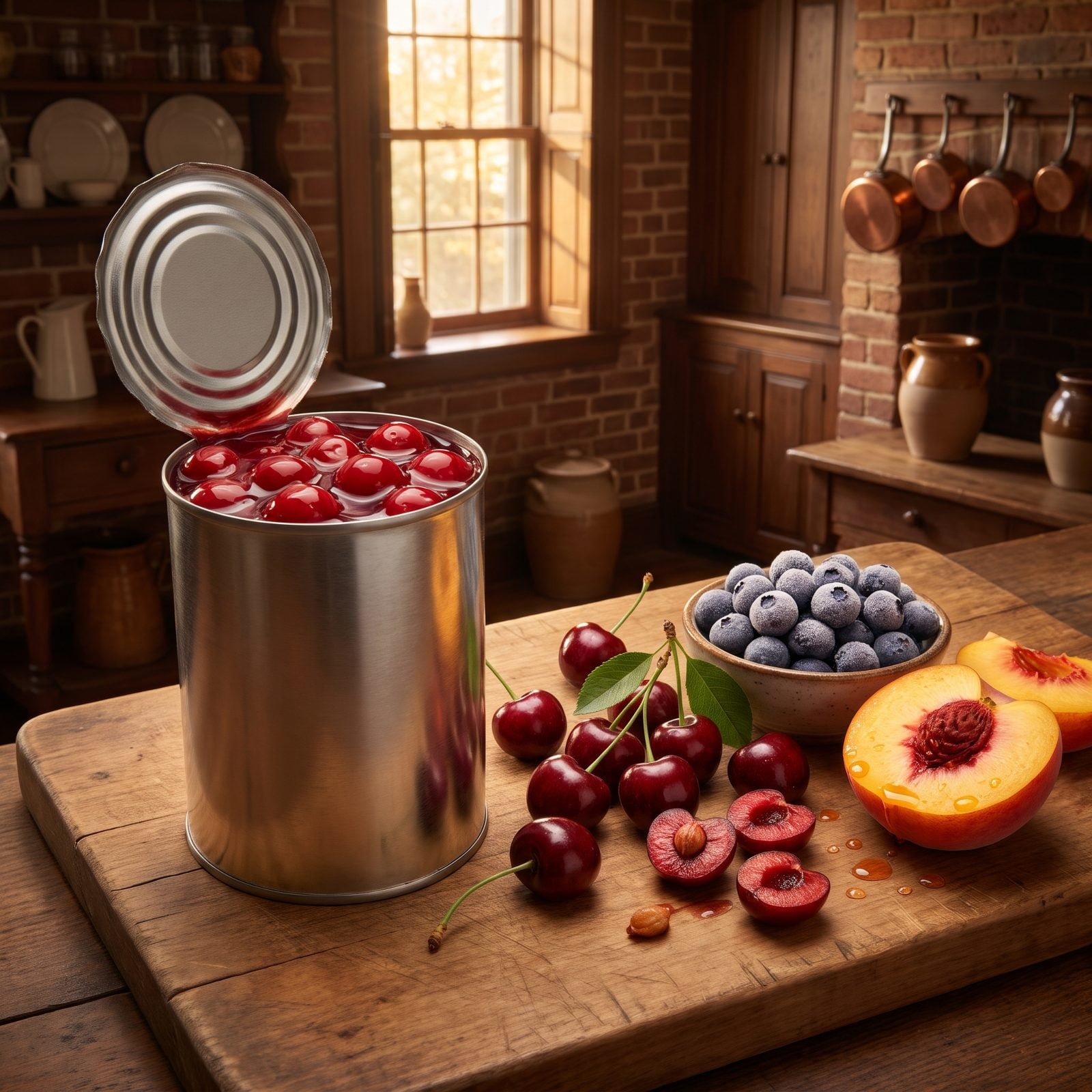
Crack open a can of pie filling and you get fruit swimming in a gel thick enough to hold a spoon upright. It’s sweet to the point of flat, and every cherry has that identical jarred sameness.
Fresh or frozen fruit tastes like fruit, tart edges and all. Frozen gets picked ripe and flash-chilled, so it’s often livelier than whatever’s been trucked across the country to your produce aisle in January. Cook it down with a little sugar and a thickener, and you control how sweet, how loose, how real it ends up.
13. Ready-Made Tub Frosting vs. Butter and Real Chocolate
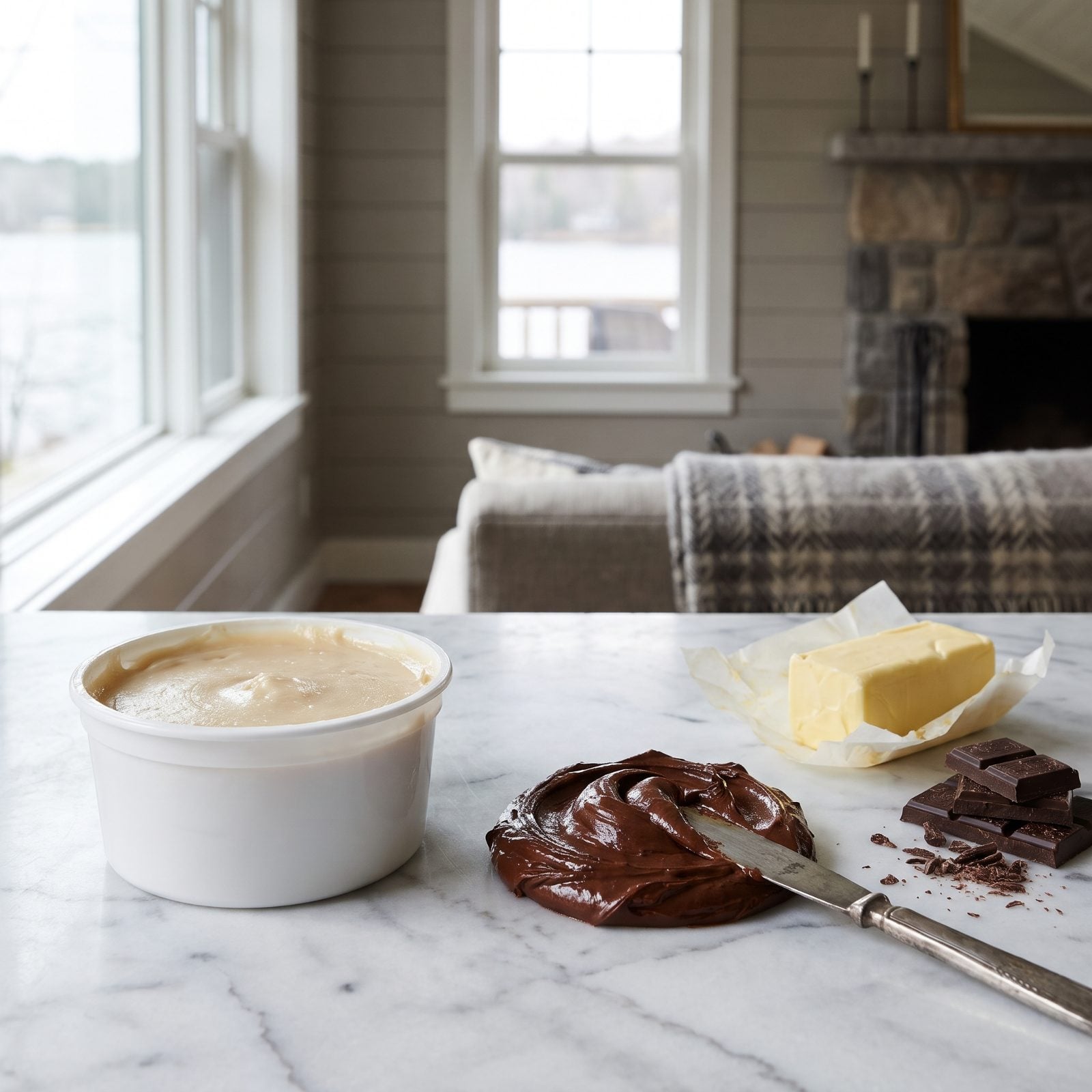
Tub frosting holds its shape in a warm truck because it’s built on hydrogenated oil rather than butter. That stability costs you flavor, and it leaves a film on your tongue like candle wax.
Real buttercream is butter whipped with sugar, plus melted chocolate when you want it. It tastes of butter and cocoa because that’s all it is. Bakers skip the tub for one blunt reason: the shortcut shows up on your tongue, and no amount of sprinkles hides it.
The frosting is the last thing a bite of cake touches. It’s a strange place to cut the corner.
12. Cardboard-Tube Breadcrumbs vs. Day-Old Bakery Bread
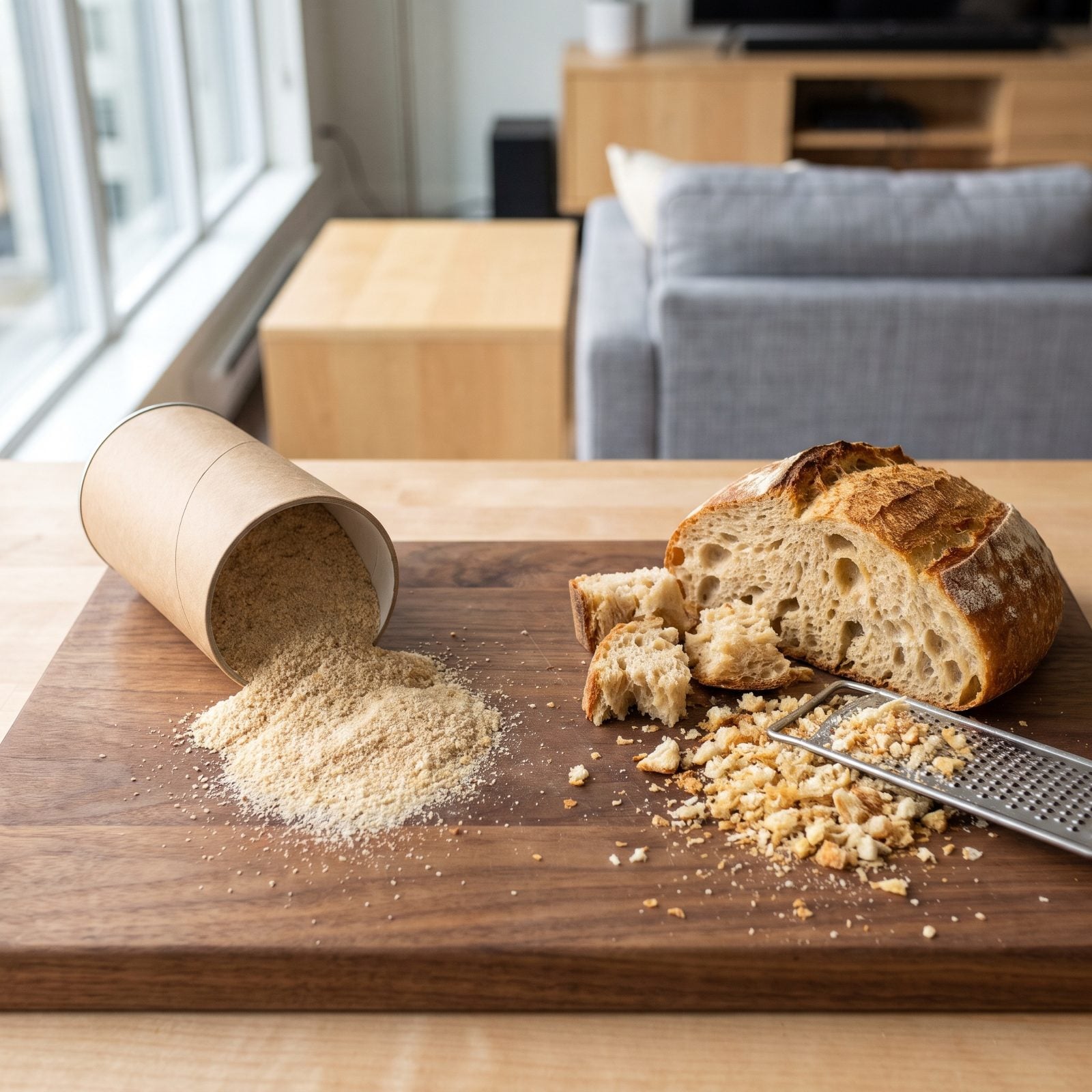
The crumbs in the tube have been sitting there since before you bought them: bone-dry, shelf-stable, flavorless by design. They coat things and add nothing.
A day-old loaf you’d otherwise toss becomes crumbs with texture and toast and the taste of real bread. Tear it, dry it, grate it, and you’ve got craggy crumbs that crisp into a golden crust instead of a pale dusting. Waste nothing, taste everything.
11. Boxed Croutons vs. A Crusty Loaf
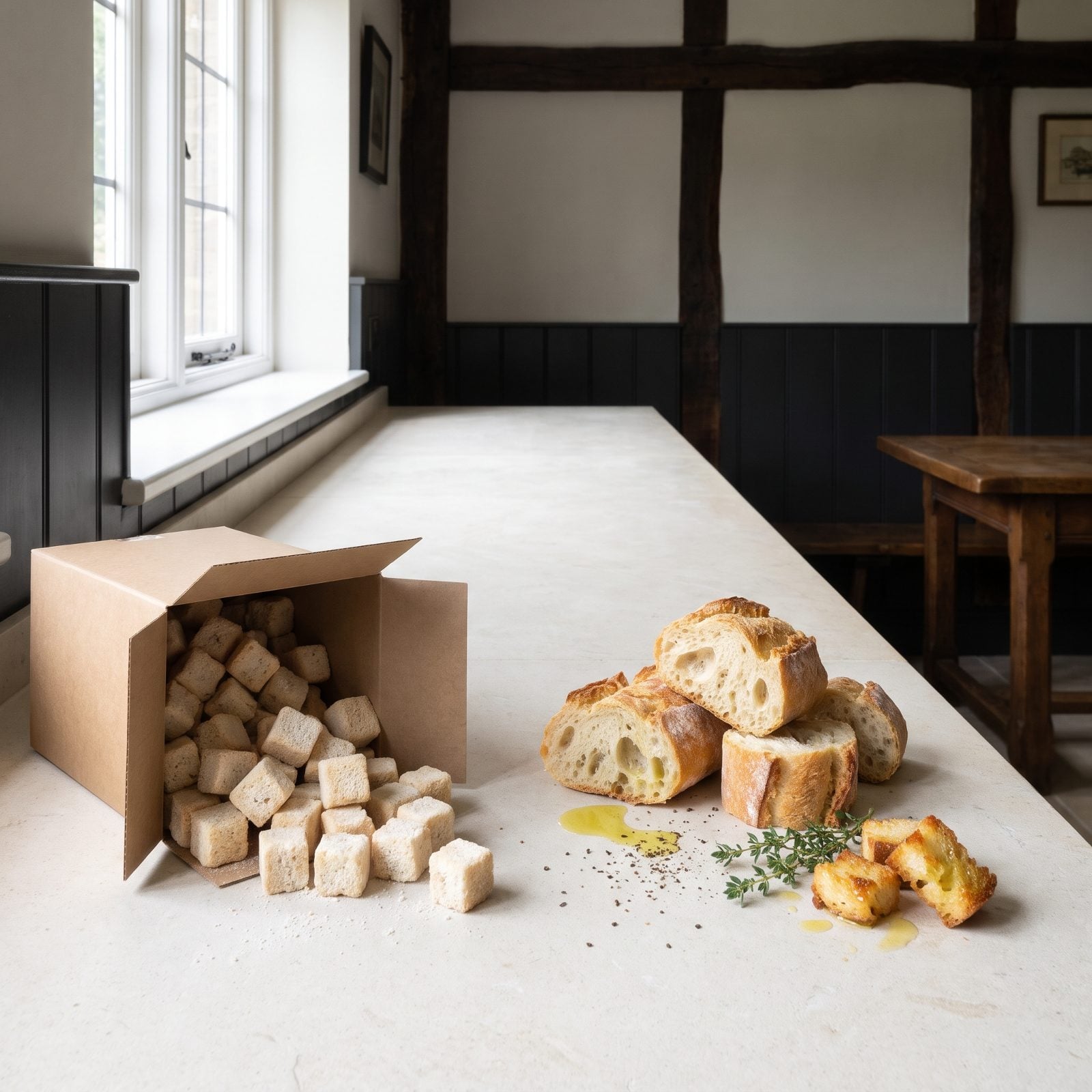
Boxed croutons are reliably the same, which is exactly the trouble. Uniform little cubes, hard as dice, carrying a seasoning that tastes mostly of salt and whatever oil they got sprayed with months back.
Tear up the end of a good loaf, toss it with olive oil and whatever’s in the spice drawer, roast it ten minutes. Crunch on the outside, a little give inside, real bread flavor. The irregular shapes are the whole point, since each one grabs dressing differently. A salad lives or dies on that last crunchy bite, so make it yourself.
10. Pre-Chopped Onions vs. Whole Onions
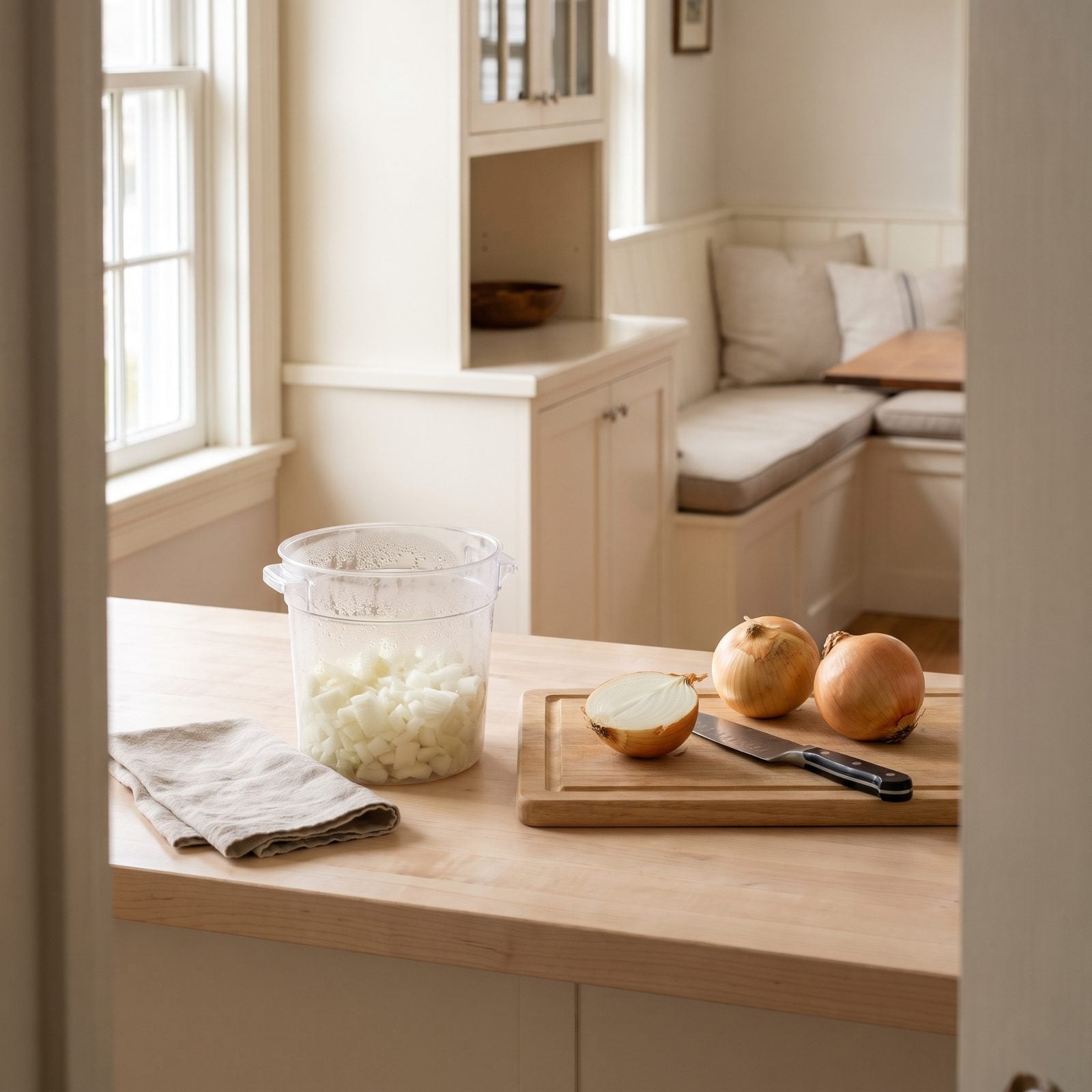
Crack open a tub of pre-chopped onion and the smell tells you everything. That sulfurous, slightly sour whiff is the onion already breaking down, hours or days before you carried it home. Cut onion oxidizes fast, and the flavor goes flat and oddly sweet in the worst possible way.
A whole onion keeps for weeks in a cool, dry spot, costs a fraction per pound, and the ten seconds you save at dinner isn’t worth that muddy taste. Chefs dice onions all day long. Not one of them reaches for the pre-cut tub.
9. Pre-Sliced Mushrooms vs. Whole Firm Mushrooms
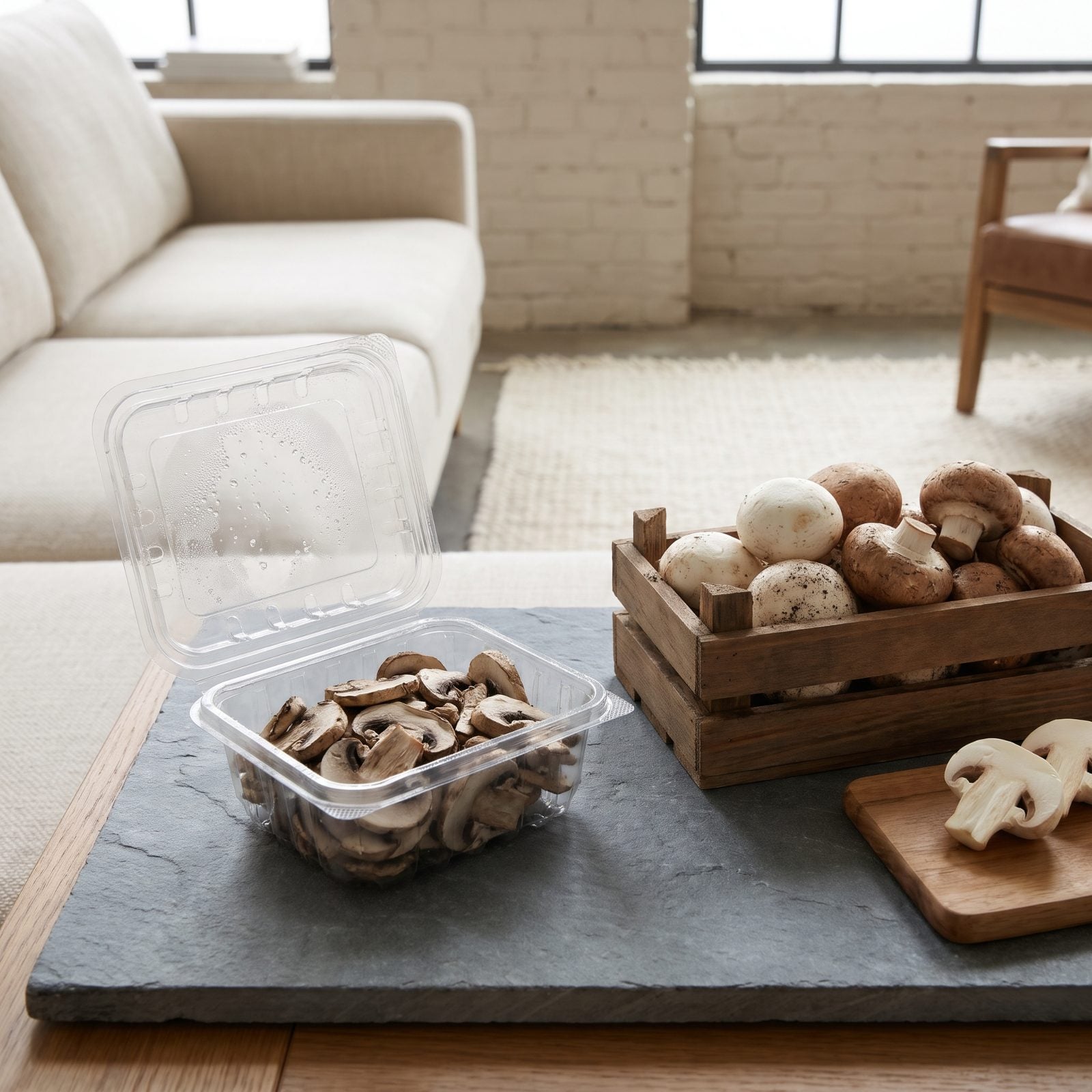
Pre-sliced mushrooms are where moisture goes to die. Every cut surface weeps, so by the time the package reaches the shelf the slices have that grey, slippery look nobody wants in a pan. They oxidize into a dull brown too, which reads as old even when the date swears otherwise.
Buy whole mushrooms with tight, pale caps and slice them when you need them. They brown better, taste nuttier, and you can wipe them clean with a damp cloth instead of drowning the poor things. And here’s the quiet advantage: whole mushrooms let you judge freshness by eye, which the pre-sliced bag works hard to hide.
8. Bagged Baby Carrots vs. Full-Size Carrots
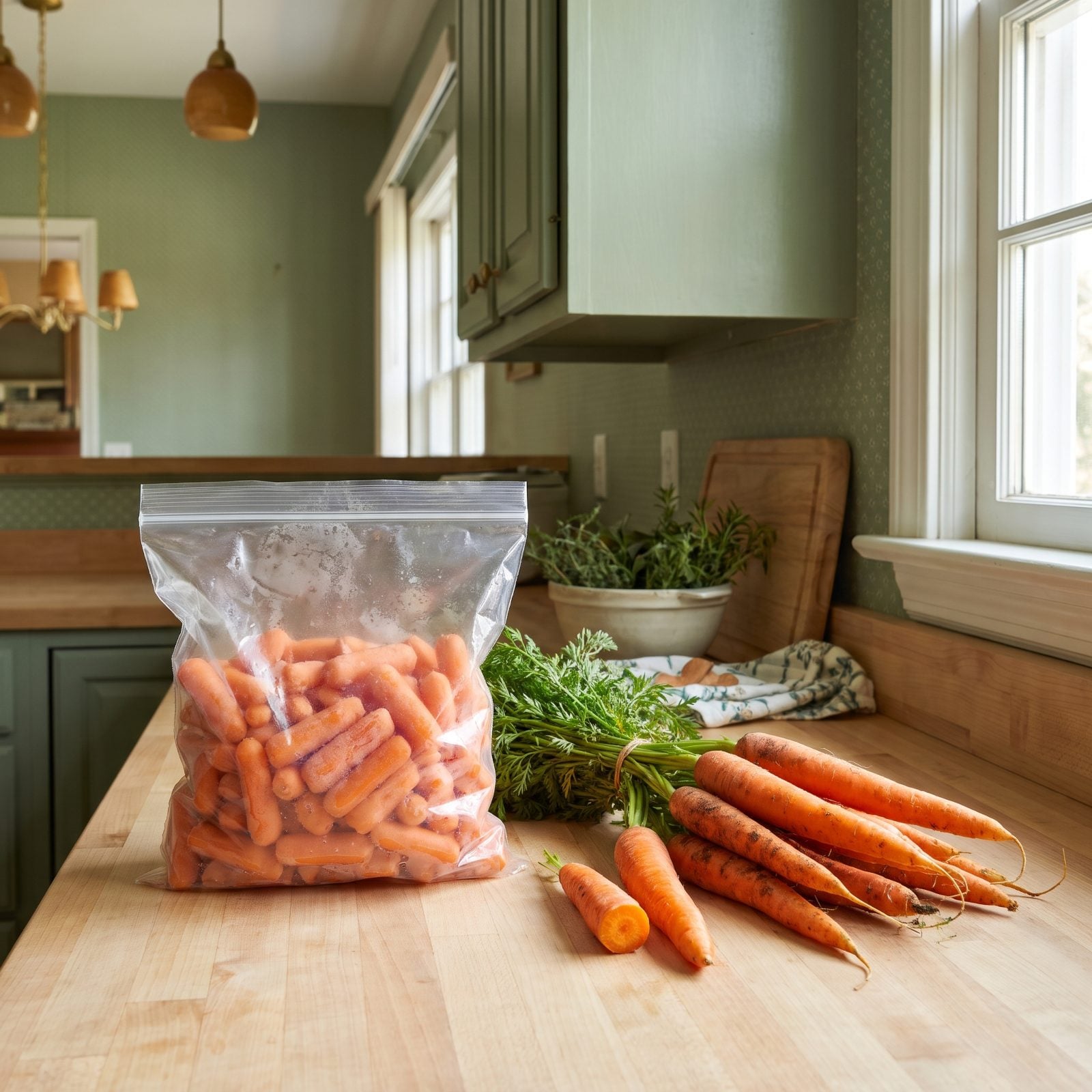
Baby carrots aren’t babies. They’re full carrots whittled down by machines, then bathed and bagged. That pale white film you sometimes spot? That’s the carrot drying out, not chlorine, despite the rumor that refuses to die.
The real trouble is flavor. All that cutting and washing strips the sweetness, leaving something watery and faintly bitter behind. Full-size carrots hold onto their earthy sugar, cost less per pound, and last far longer in the crisper drawer.
7. Pre-Cut Fruit Trays vs. Whole Ripe Fruit
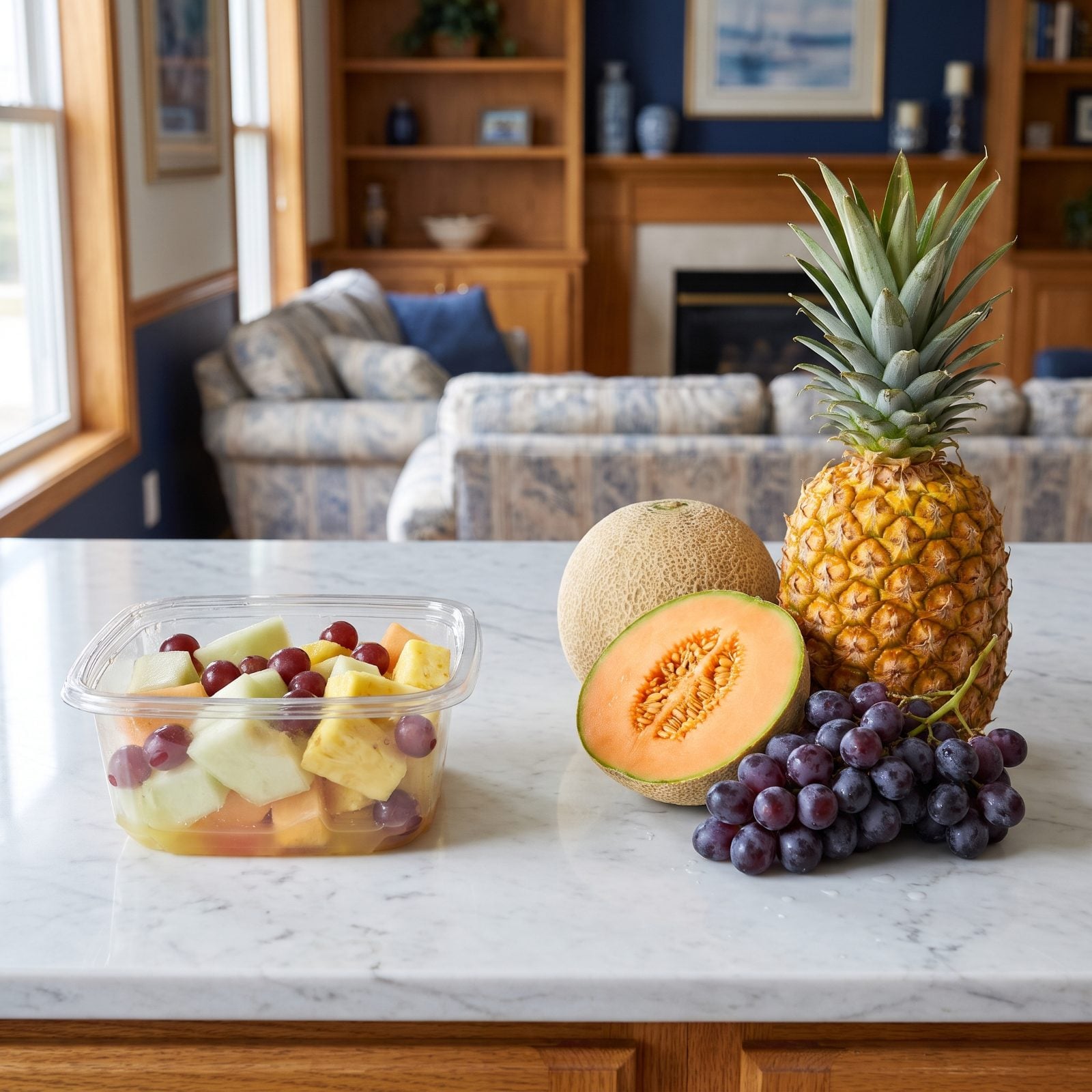
Those fruit trays sweating under the deli lights are convenience at its most expensive. You pay double, sometimes triple, for fruit cut who knows when, sitting in its own weeping juice and losing texture by the hour.
Cut fruit also spoils faster, because every exposed surface invites bacteria and the sugar that made it appealing starts to ferment. Whole ripe fruit holds its shape, costs far less per pound, and lets you smell and press it before you commit. A ripe cantaloupe gives slightly at the blossom end and smells sweet right through the rind. The tray tells you none of that.
6. Bagged Chopped Lettuce vs. Whole Heads of Lettuce
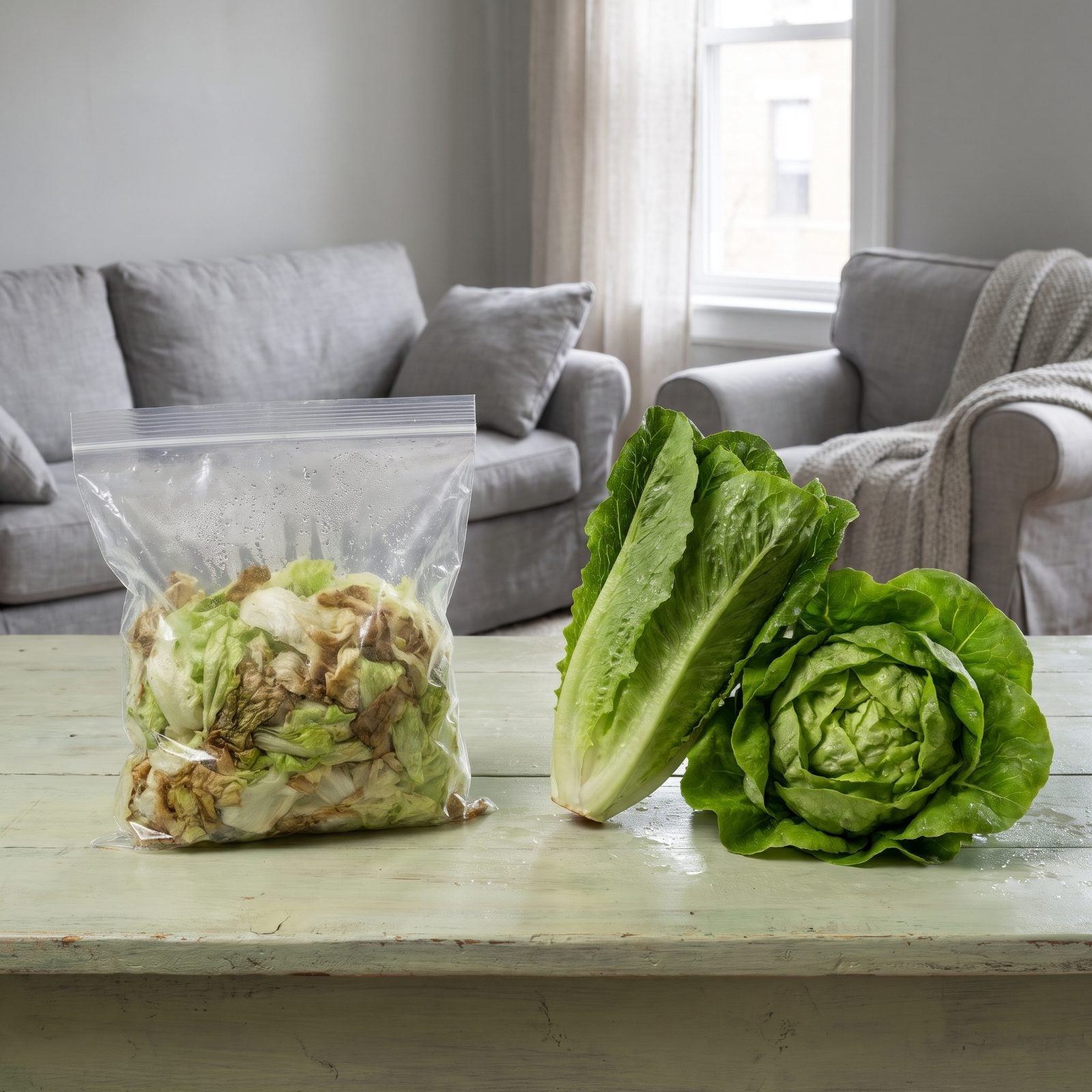
Chopped lettuce starts rusting the moment the blade touches it. Those pinkish-brown edges on bagged greens are oxidation, and the washing process that keeps it “fresh” rinses away the crispness that made lettuce worth eating in the first place.
Buy a whole head. It stays snappy for a week or more, costs less, and spares you the faint plastic-bag taste that clings to pre-cut greens. There’s a food-safety angle too, since bagged salads have been behind more than a few recalls over the years. A head you wash yourself is one you can trust.
5. Packaged Hard-Boiled Eggs vs. Fresh Shell Eggs
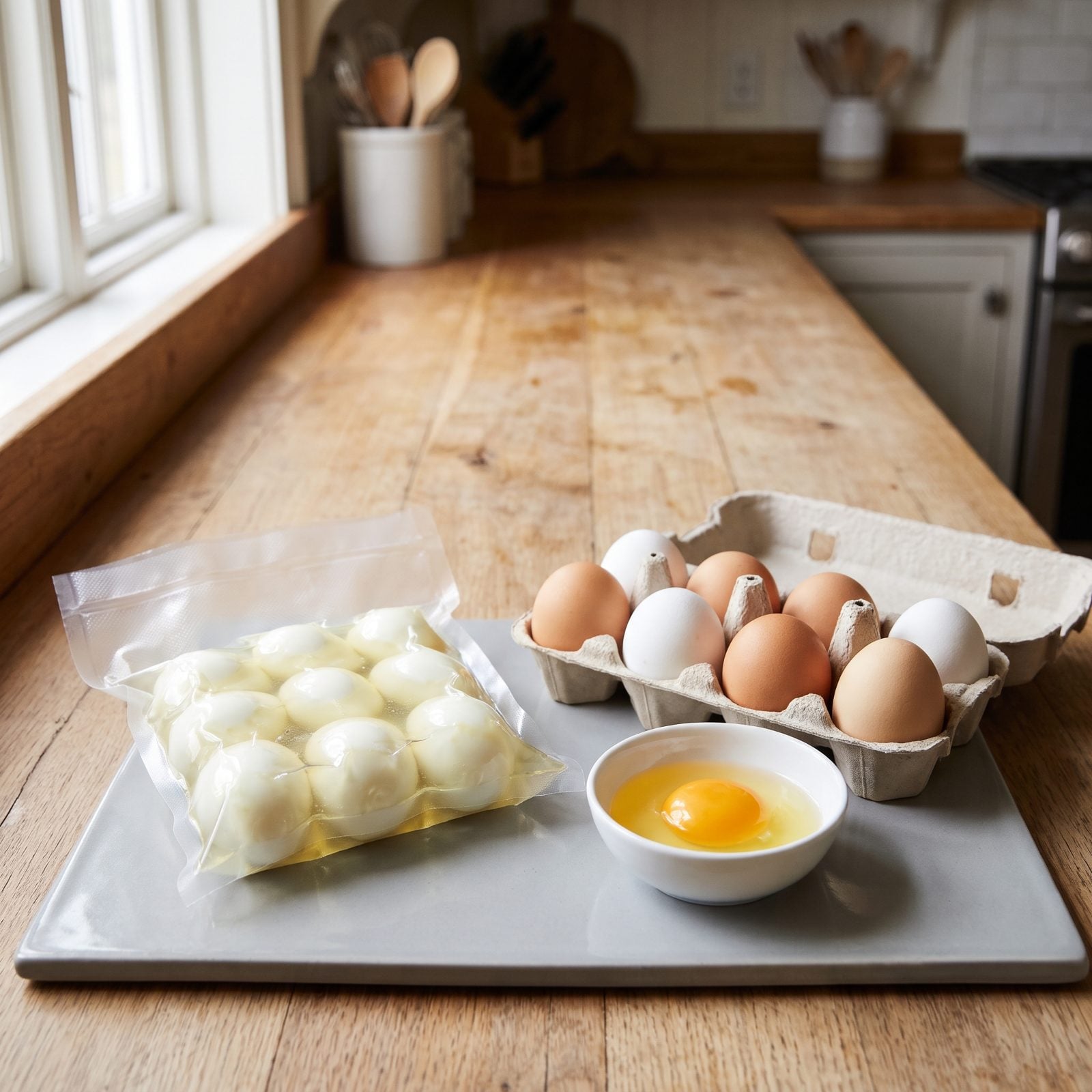
Peeled eggs swimming in brine have a texture any cook can spot across a room: rubbery whites, a faint vinegar tang, and a yolk that went chalky somewhere in processing. The convenience is real. So is the fact that you get a worse egg every single time.
Fresh shell eggs give you a yolk that stands up tall, a white that holds its shape, and a flavor the vacuum pack simply can’t fake, all for a fraction of the cost.
4. Frozen Preformed Burger Patties vs. Fresh Ground Meat
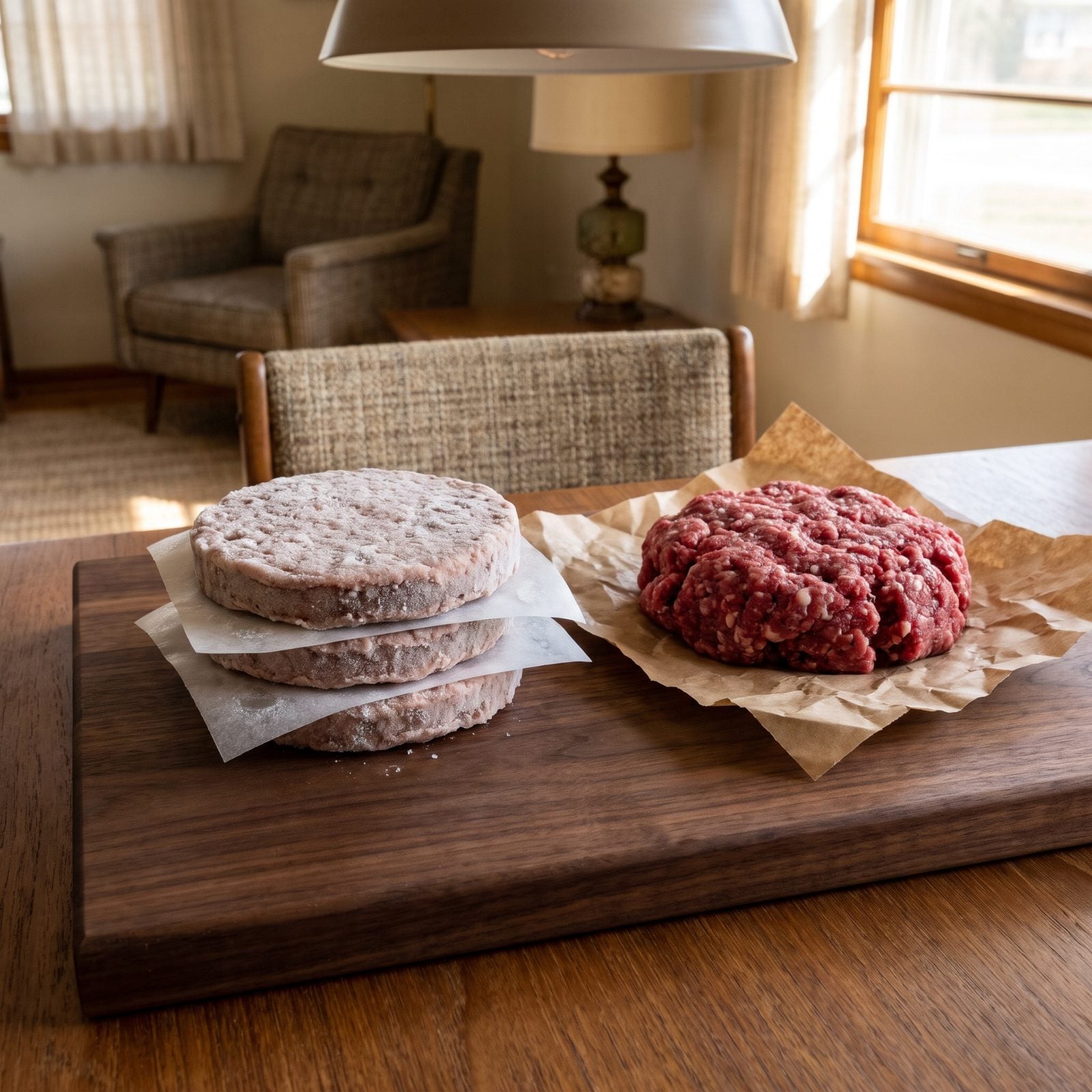
Preformed frozen patties get pressed so hard they turn dense, which is why they cook up tight and hockey-puck grey instead of juicy. Freezer time only makes it worse. That faint off-flavor comes from ice crystals that formed, melted, and formed again in the case.
Fresh ground beef, shaped by hand with a light touch, cooks into something with actual texture. You control the fat ratio, the salt, the size. A loosely formed patty with a dimple pressed into the center stays flat and cooks evenly. Takes about a minute. The difference on the plate is not subtle.
3. Frozen Meatballs vs. Fresh Ground Meat and Seasonings
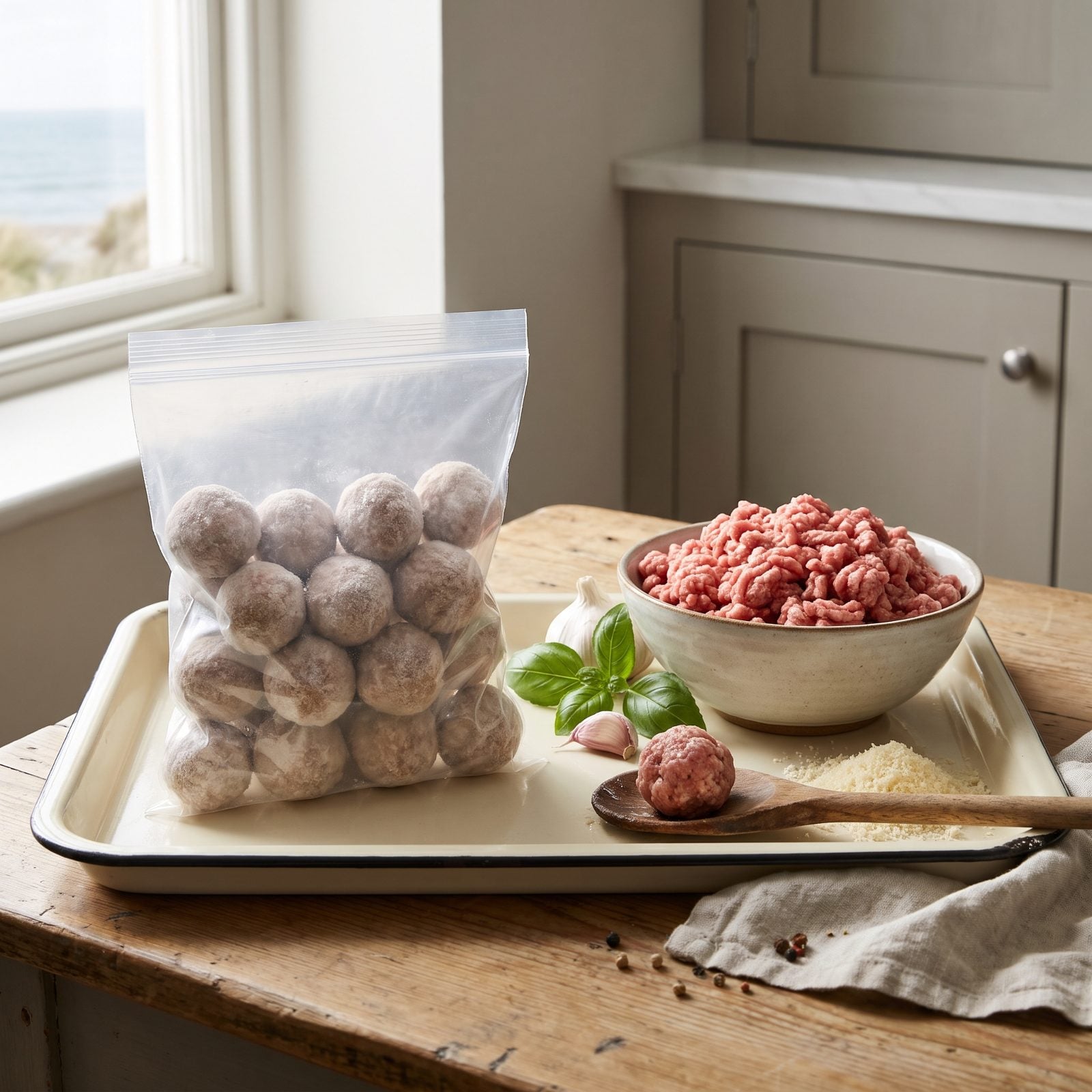
Bite into a frozen meatball and it’s all the same, which is exactly the problem. Uniform grind, uniform seasoning, uniform rubbery chew. They’re built for shelf life, not flavor, and the fillers holding them together taste like, well, filler.
Roll your own and you decide everything: the herbs, the garlic, how much cheese, how coarse the grind. They don’t have to be perfect spheres. Slightly uneven ones brown better anyway. A few minutes of hands-on work and you end up with something that tastes like the meat it came from instead of a frozen compromise.
2. Breaded Frozen Chicken vs. Plain Chicken Cuts
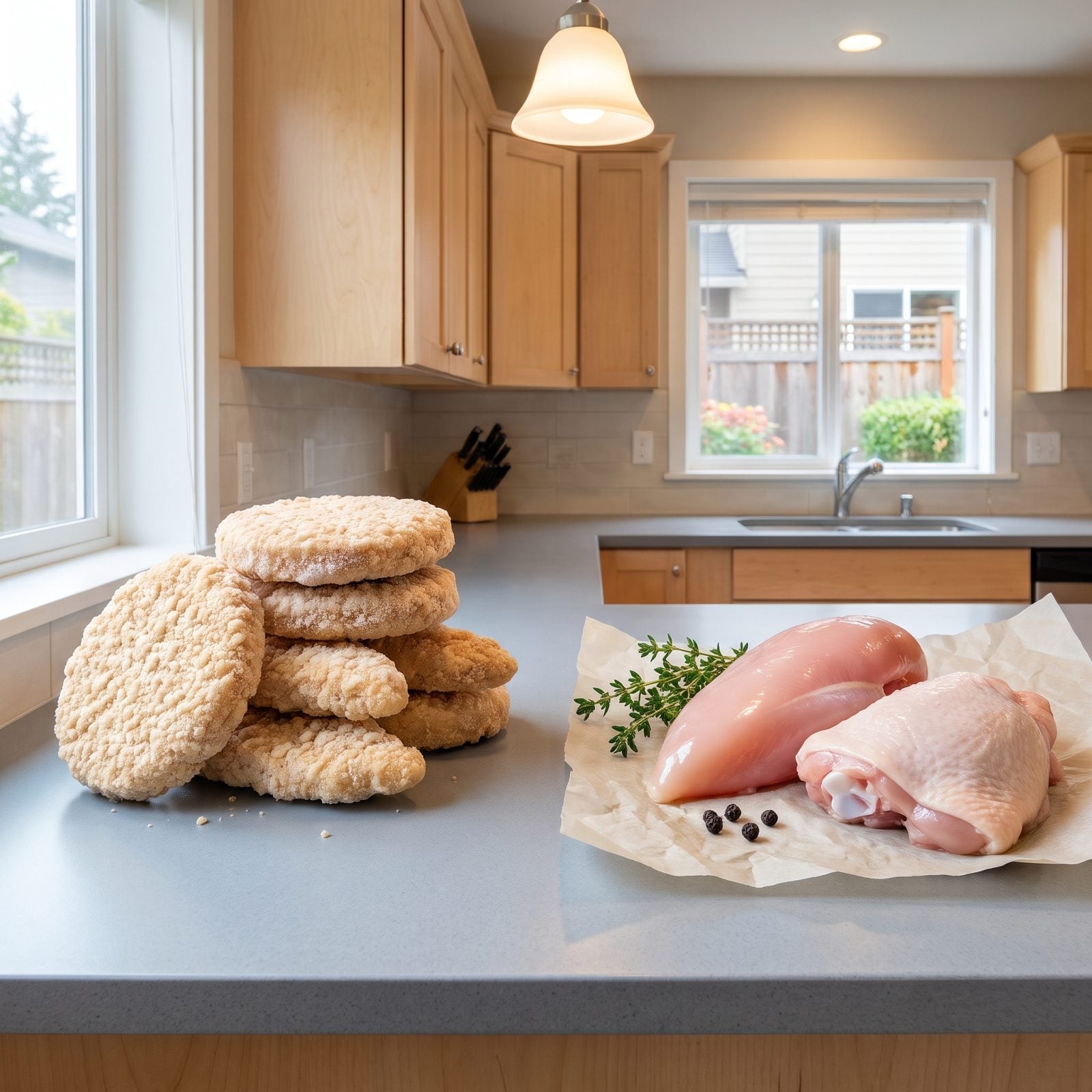
The breading on frozen chicken is doing a lot of hiding. Underneath that pebbly beige coating sits a reformed, pressed piece of meat held together with binders, and the batter soaks up freezer flavor the whole time it waits.
Plain chicken cuts cost less per pound and hand you full say over the coating, the seasoning, and how far you cook it. Dredge and fry a fresh breast yourself and the crust shatters instead of flopping into sog. Best of all, you know exactly what the meat is, which the mystery patty never admits.
1. Dried Parsley Flakes vs. Fresh Flat-Leaf Parsley

Dried parsley is a texture, not a flavor. Those faded flakes shed most of their volatile oils the moment they dried, and shaking them over a finished dish adds little beyond a green fleck and a vague hint of hay.
Fresh flat-leaf parsley brings a clean, peppery brightness that wakes up everything it touches. It’s cheap, it keeps for a week standing in a glass of water like cut flowers, and it does the one job the dried stuff can’t: finishing a plate with actual life. Look, most dried herbs earn their spot in the rack. Parsley isn’t one of them, and we’ll stand by that.