
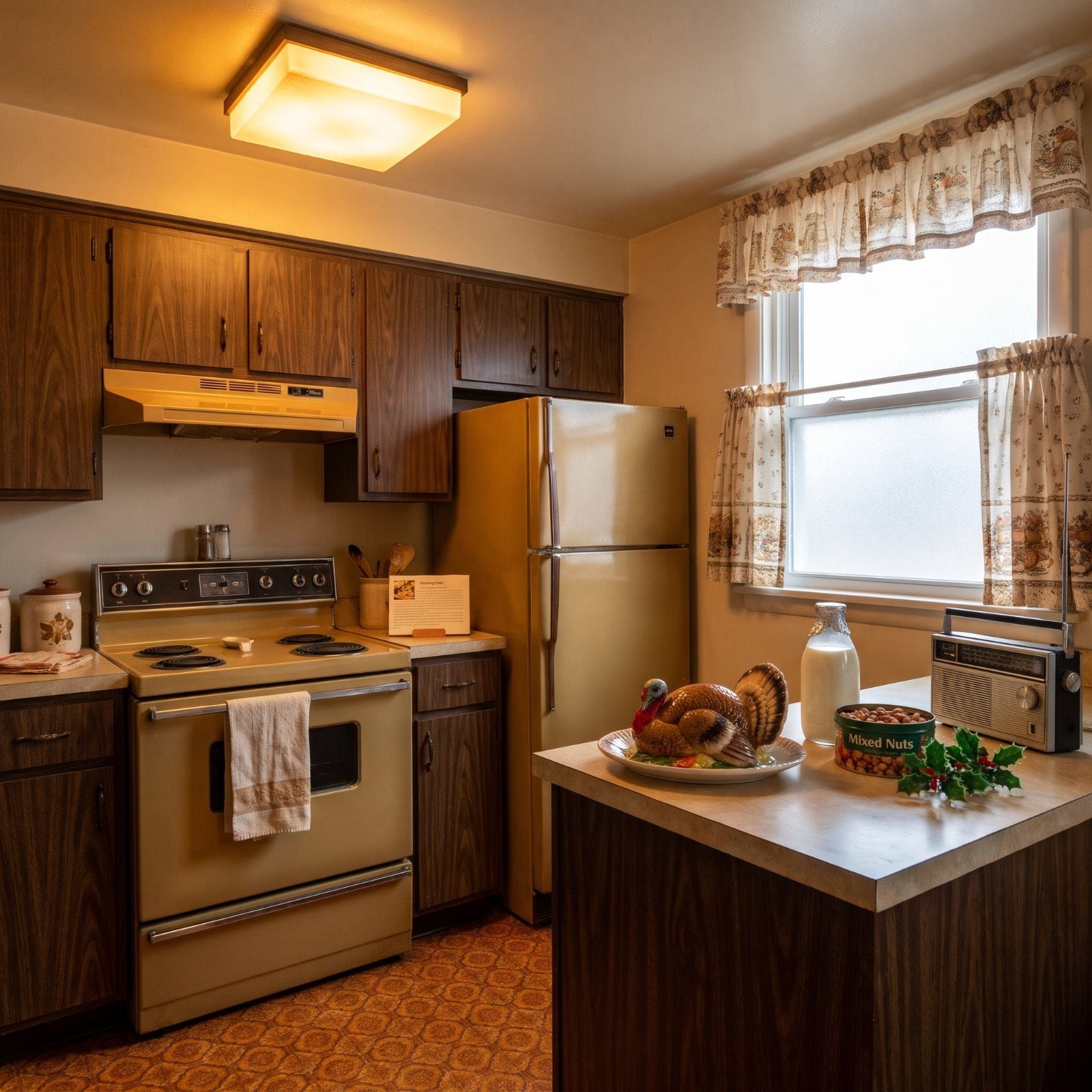
The hum came first. A refrigerator the color of corn stood next to a range the shade of a penny, both working overtime the morning the turkey went in. Open a kitchen door in December 1970 and you walked into a room built around one job: feeding a crowd and wiping up after it fast. Almost everything in that room has quietly disappeared since. Not because it broke. Because taste moved on. Here is what packed those warm, cluttered, hardworking holiday kitchens, and why you almost never see any of it today.
Please note that some of the images in this article were created with the assistance of AI.
31. The Harvest-Gold Refrigerator Standing Guard Beside a Coppertone Range
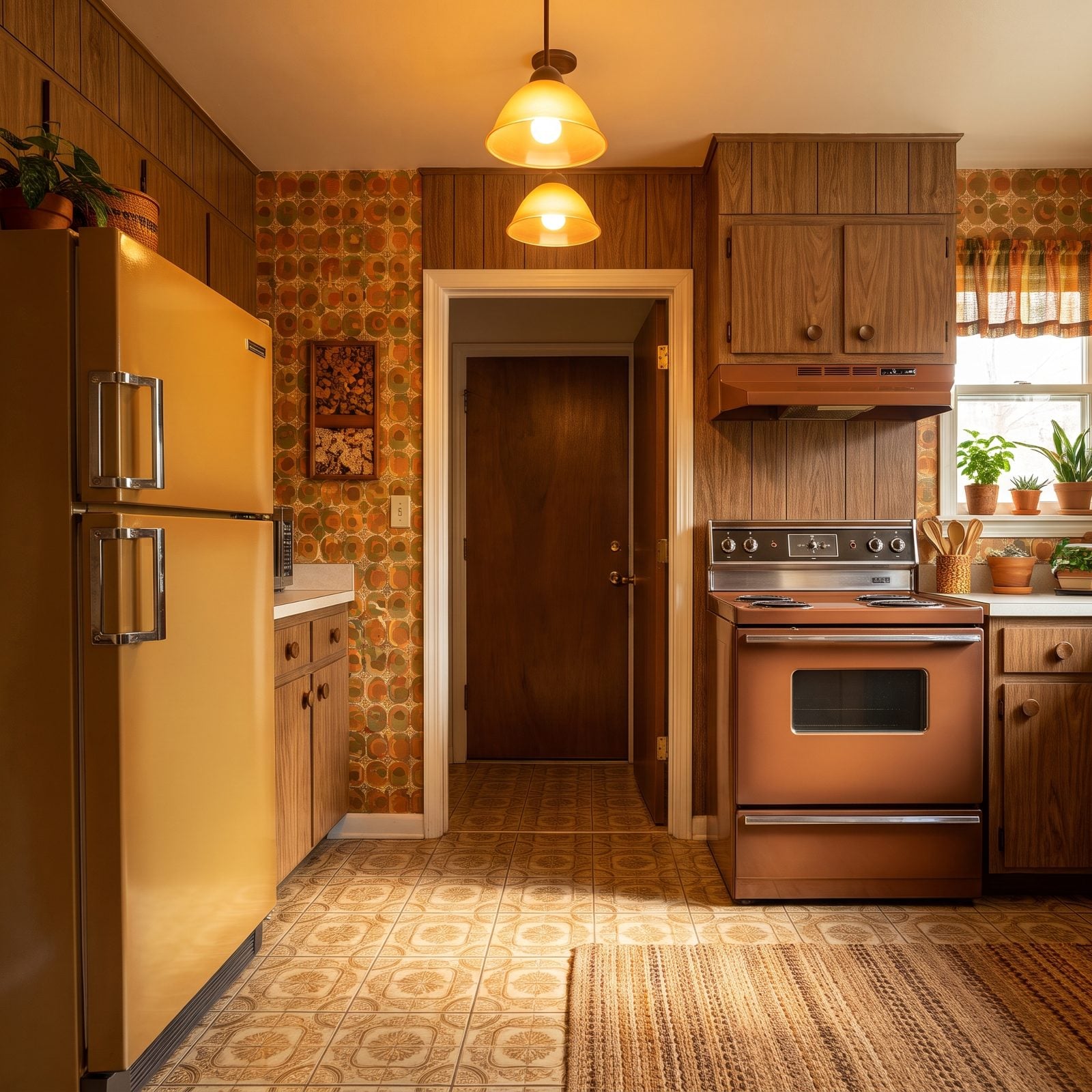
Two colors ran the show, and neither of them was white. Harvest gold and coppertone sold by the millions because a matching appliance set was a status move, the way a kitchen announced it had arrived. You picked a palette and committed — fridge, range, dishwasher, sometimes the toaster too.
The holidays pushed both machines to the edge. That gold fridge held a brined bird and six casseroles waiting their turn while the copper range ran all day, one oven doing the work two ovens do now.
30. Dark Wood-Grain Laminate Cabinets Dressed Up with Ornate Hardware
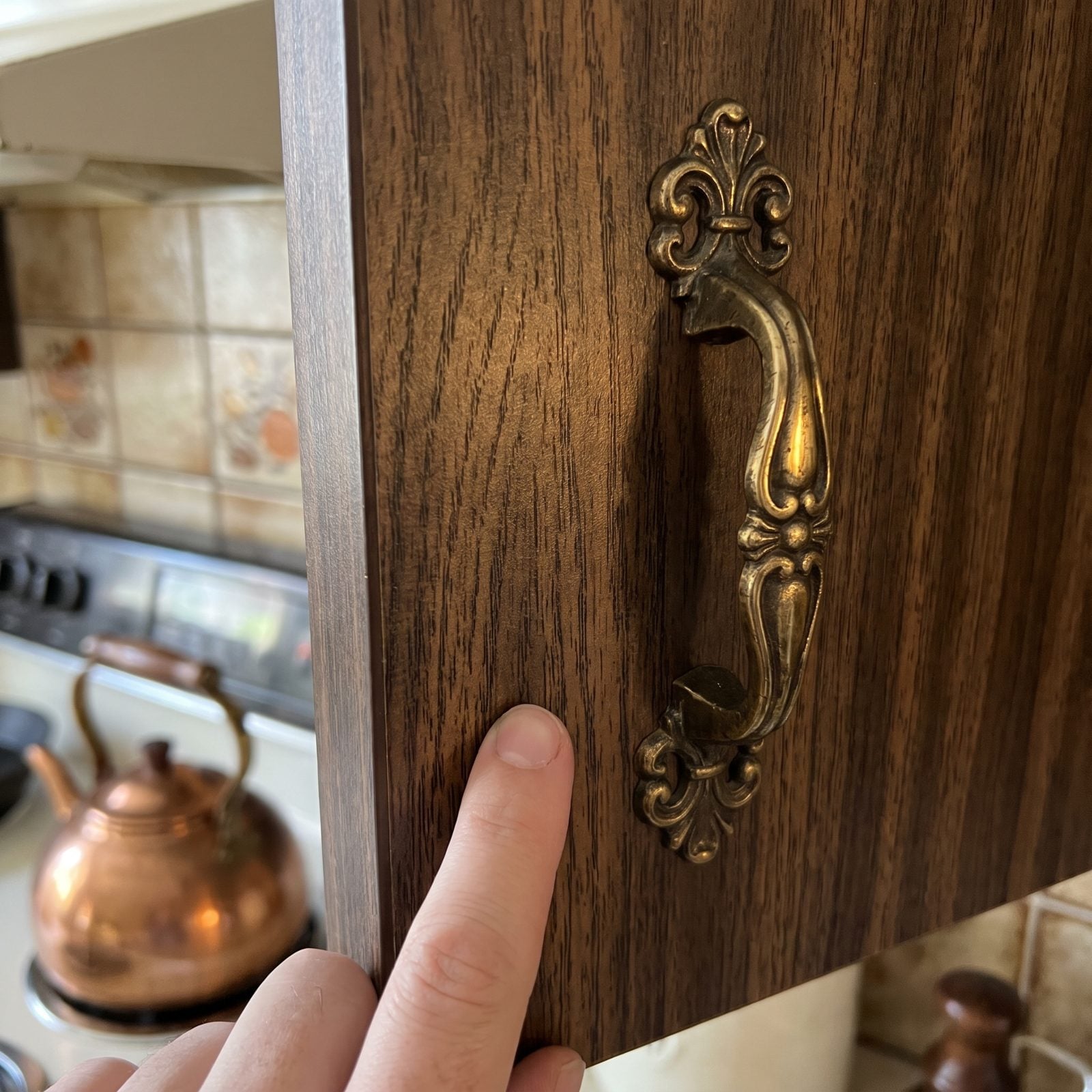
The cabinets looked like wood from across the room and felt like something else entirely up close. Laminate over particleboard, printed with a walnut grain so dark it drank the light. The doors often wore fake colonial detailing — routed panels, scrolled brass pulls with a deliberately antiqued finish.
Nobody says this part out loud. Those cabinets lasted. The laminate shrugged off decades of greasy fingers and holiday steam, and people tore them out for looks, never for failure.
29. Orange-and-Brown Sheet Vinyl Running Wall to Wall Underfoot
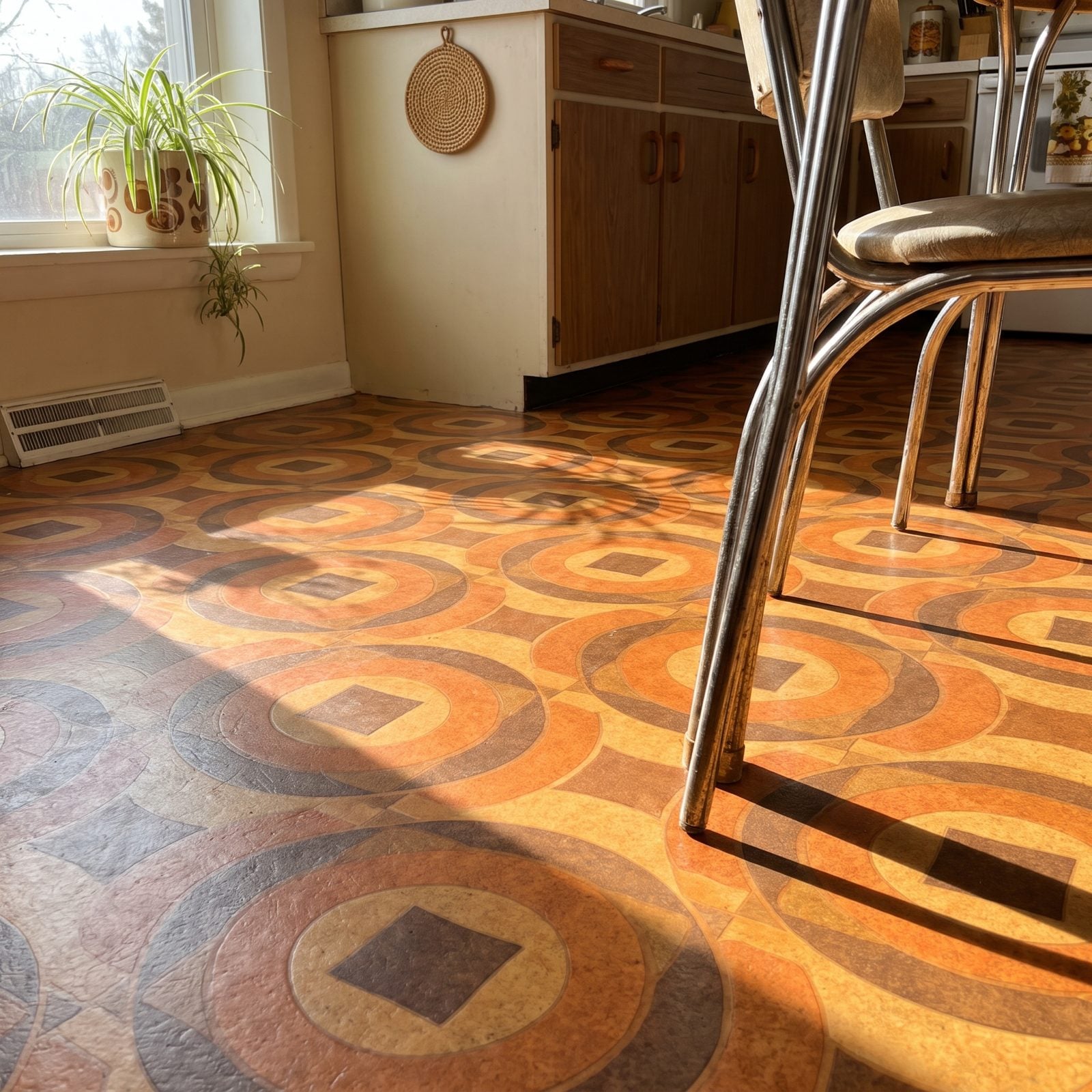
No grout lines. No seams every twelve inches. One giant sheet, rolled out and glued down, printed with a pattern loud enough to hide every crumb and spill the season could throw at it. Faux brick was everywhere, and so was that mustard-and-orange hexagon that seems stamped into the national memory.
It was practical to a fault — you mopped it in minutes and it forgave standing in one spot for hours while gravy got made. The downside showed up at the edges, where it curled, and under a dropped pot, where it tore and could not be patched invisibly.
28. The Chrome Dinette Set with Vinyl Chairs You Could Wipe Clean
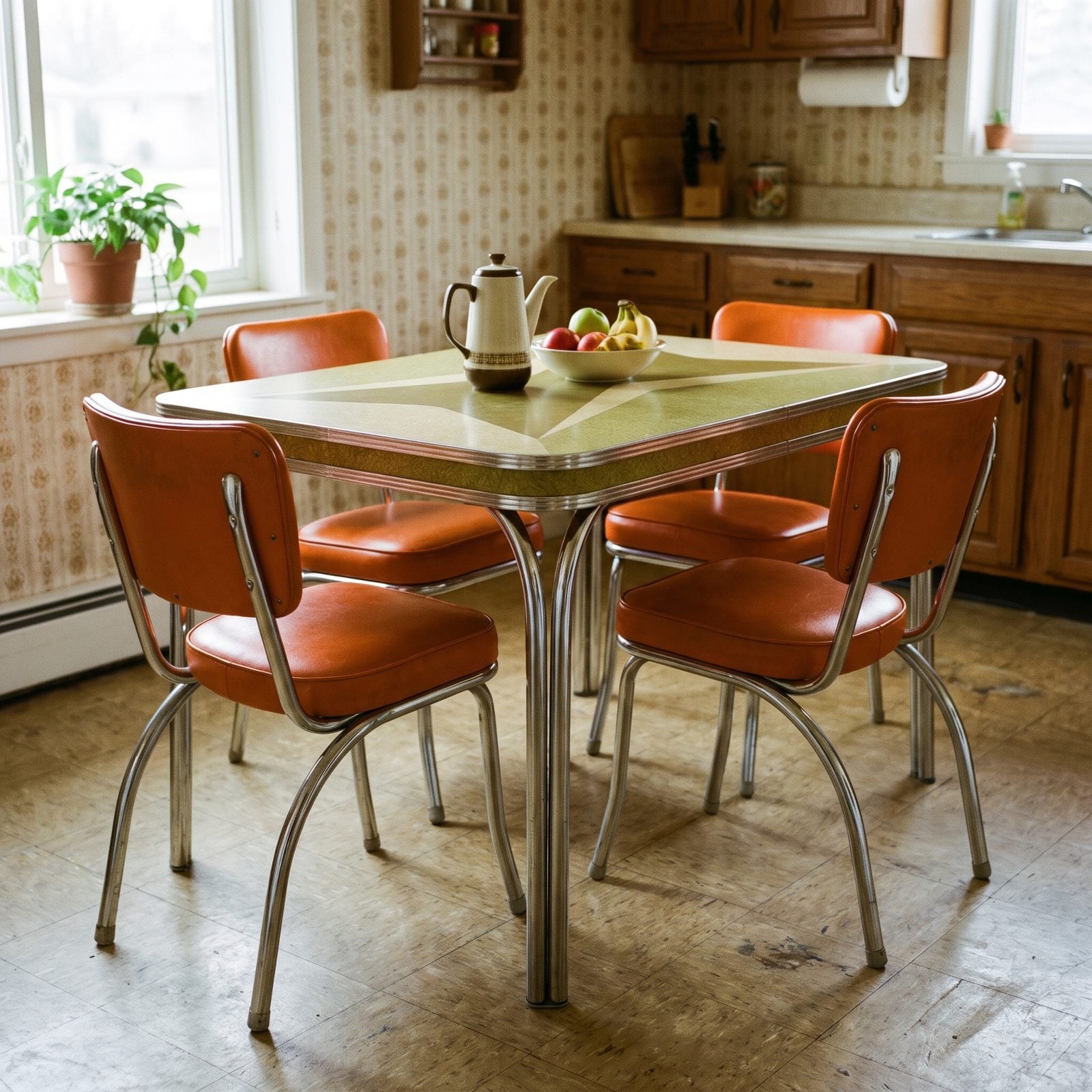
The dinette was where the kids ate while the dining room got the good dishes. Chrome legs, a Formica top in a boomerang or marbled pattern, chairs padded in vinyl so slick a spilled glass of milk beaded up and waited to be wiped.
Those chairs were a parent’s defense system. Cranberry sauce, candle wax, a thumb-full of frosting — all of it came off with a damp rag. Try that on a linen-upholstered chair.
27. The Scalloped Wood Valance Hiding the Light Above the Sink

A short wooden skirt, scalloped or notched along the bottom, ran across the top of the window above the sink. It matched the cabinets and did one quiet job: it hid the light tube tucked behind it, so the glow fell on your hands and dishes without a bare bulb in your eyes.
You rarely see them now because the whole look reads as fussy to modern taste. A shame, honestly. That hidden task light over the sink solved a real problem, and open-concept kitchens still fumble it.
26. Printed Café Curtains Framing the Lower Half of the Window
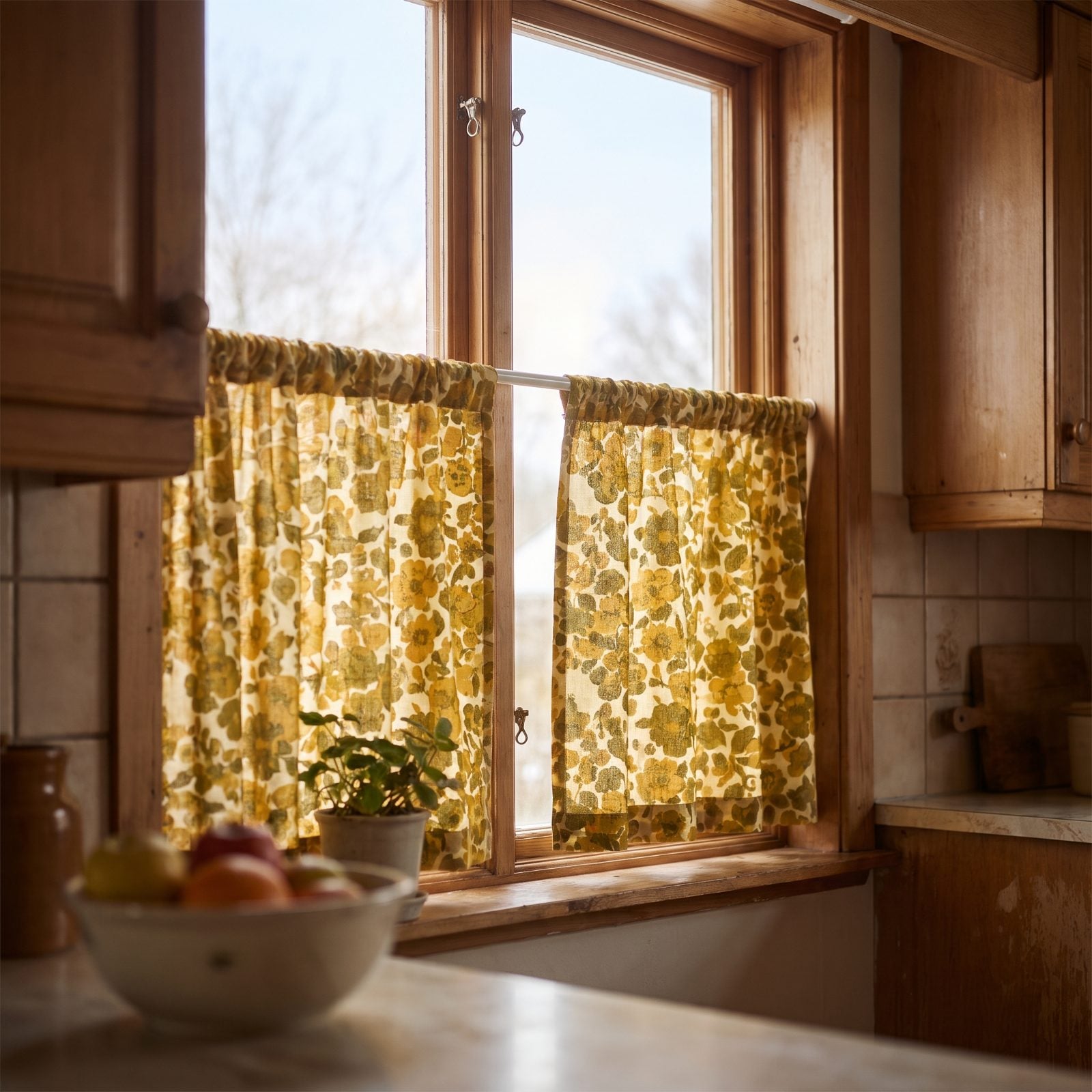
Half a curtain, hung from a tension rod at the sash line, covering the bottom panes and leaving the top open to the sky. Café curtains did exactly what a kitchen wanted — privacy at eye level, daylight up top, and a busy little print to echo the plates.
Roosters. Gingham. Tiny strawberries. The patterns were cheerful and relentless, and come Christmas a lot of homes swapped in a holly or candy-cane set for the month. Cheap fabric, washable, easy to change — that’s the whole reason they ruled the window.
25. The Boxy Fluorescent Ceiling Panel Flooding the Room with Flat Light

One enormous glowing rectangle in the ceiling, a frosted plastic panel over a bank of fluorescent tubes, and the whole kitchen lit up like an insurance office. Bright, cheap to run, shadowless — which cooks liked when they were chopping at midnight.
The light itself had a faint green-white cast that made the turkey look a little gray and the gravy look sadder than it tasted. And everybody has peered up at one of these and spotted the single moth trapped inside the panel, there since who knows when. We do not miss that light. We really don’t.
24. The Serving Hatch Where Holiday Platters Got Passed Through the Wall
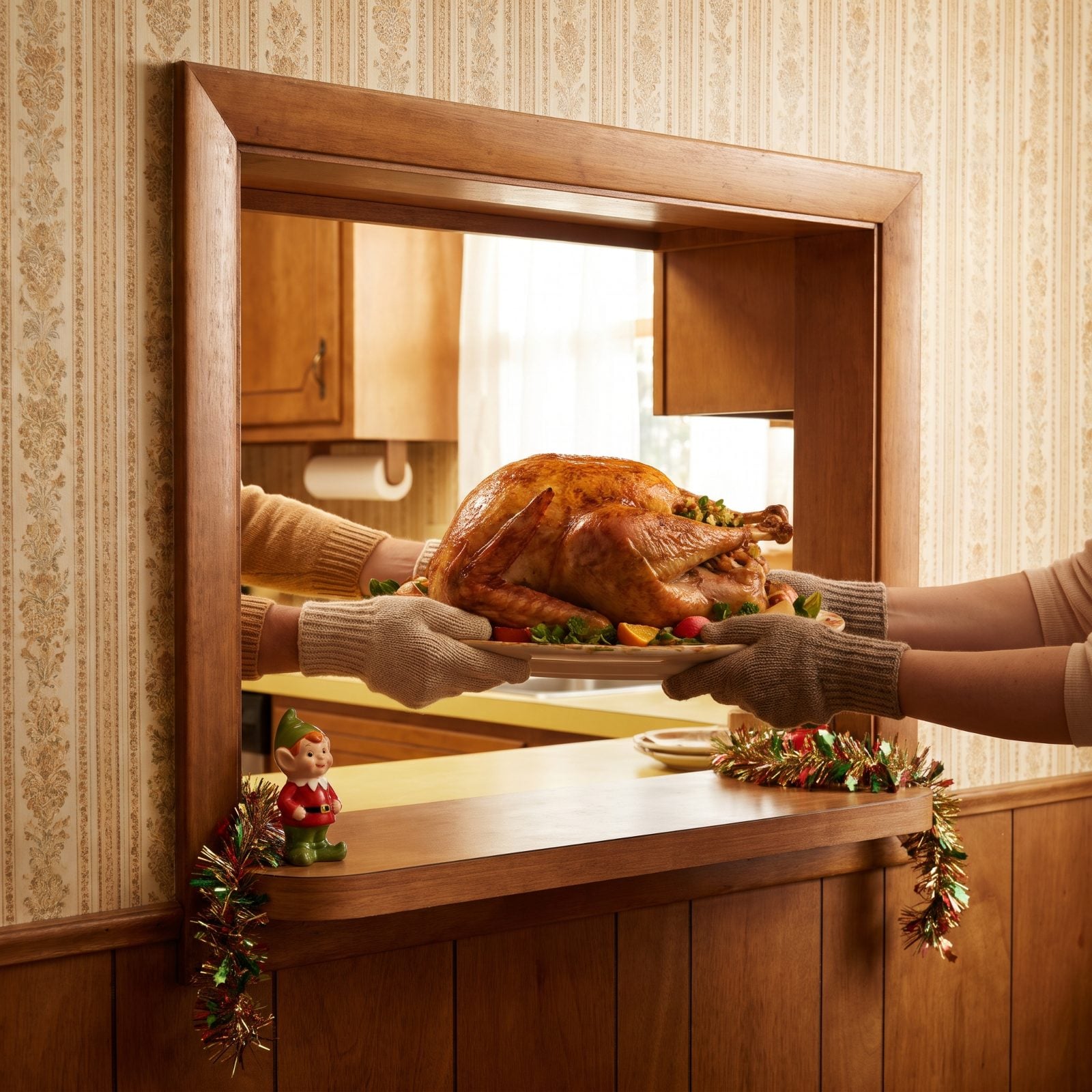
A window in the wall, no glass — just an opening with a little shelf, so dishes could travel from stove to table without anyone hauling them around through a doorway. On the big days it ran like an assembly line, the cook plating on one side, a hand reaching from the other.
Here was the open-concept idea in miniature, decades before anyone knocked the whole wall down. People loved it for parties and for the sense of staying connected to their guests. Then the entire wall started coming out, and the clever little hatch had nothing left to do.
23. The Pull-Chain Wall Exhaust Fan Humming Away the Turkey Steam
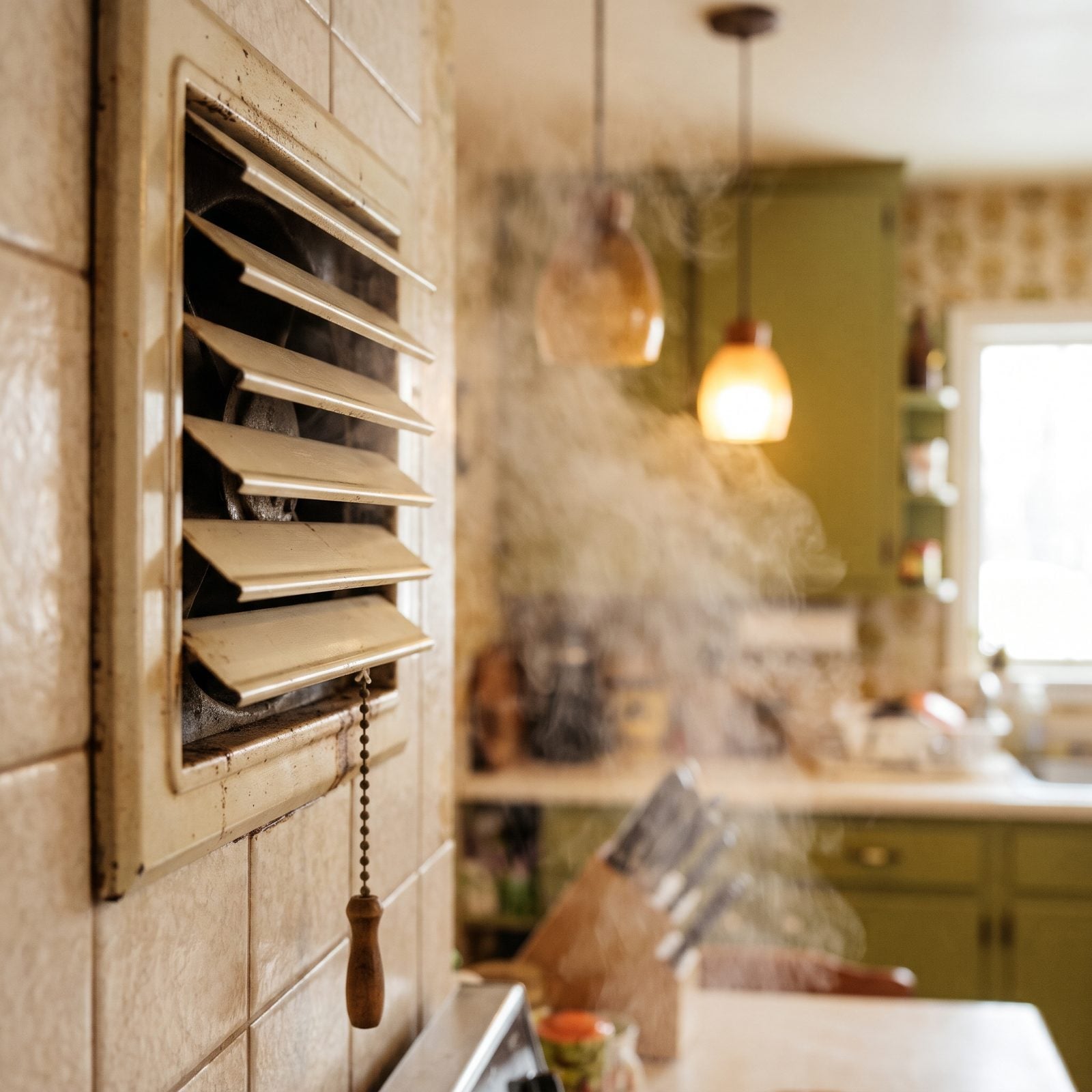
Before the big overhead hood took over, plenty of kitchens vented straight through the wall. A square fan with louvered flaps, worked by a beaded pull-chain, that you yanked when the windows fogged and the turkey smell got thick.
The flaps rattled. The chain always needed a second tug. And on a cold holiday morning you felt a little draft sneak back in through the louvers — the quiet downside nobody mentions about venting through an exterior wall. Still, when the kitchen filled with steam and the smell of a roasting bird, that homely little fan earned its keep. Go find one still running somewhere. They’re out there.
Showing off a never-used pull-chain wall fan from that era, a mid-century renovation blogger explains: “This ventilating fan was meant to be installed directly through an exterior kitchen wall so that, when turned on, the back flap is forced open, sending smokes and smells directly out into the great outdoors.”
22. A Portable Black-and-White Television on the Counter
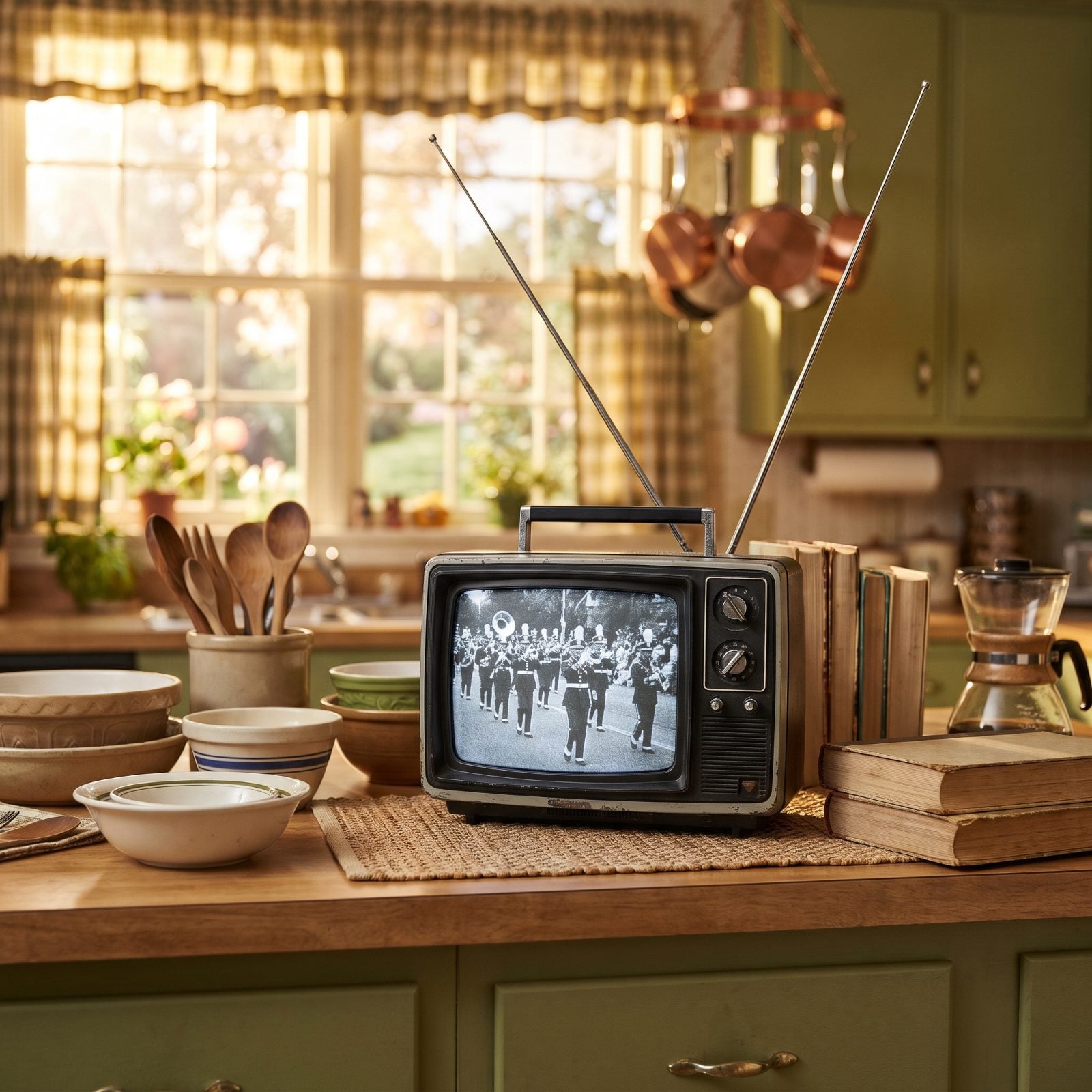
The little set lived on the counter for exactly one reason every November: the parade. You cooked with one eye on grainy floats drifting across a nine-inch screen while stirring a pot on the stove, the antenna twisted at a hopeful angle to kill the snow.
These portables weighed more than they looked, and they ran hot. The picture rolled if a truck went by outside. Nobody minded, because the whole point was company while you worked — a voice in the kitchen that wasn’t asking when dinner would be ready. Honestly, we miss that more than we expected to. A phone propped against the sugar bowl isn’t the same.
21. An Ashtray Set Out with the Hors d’Oeuvres
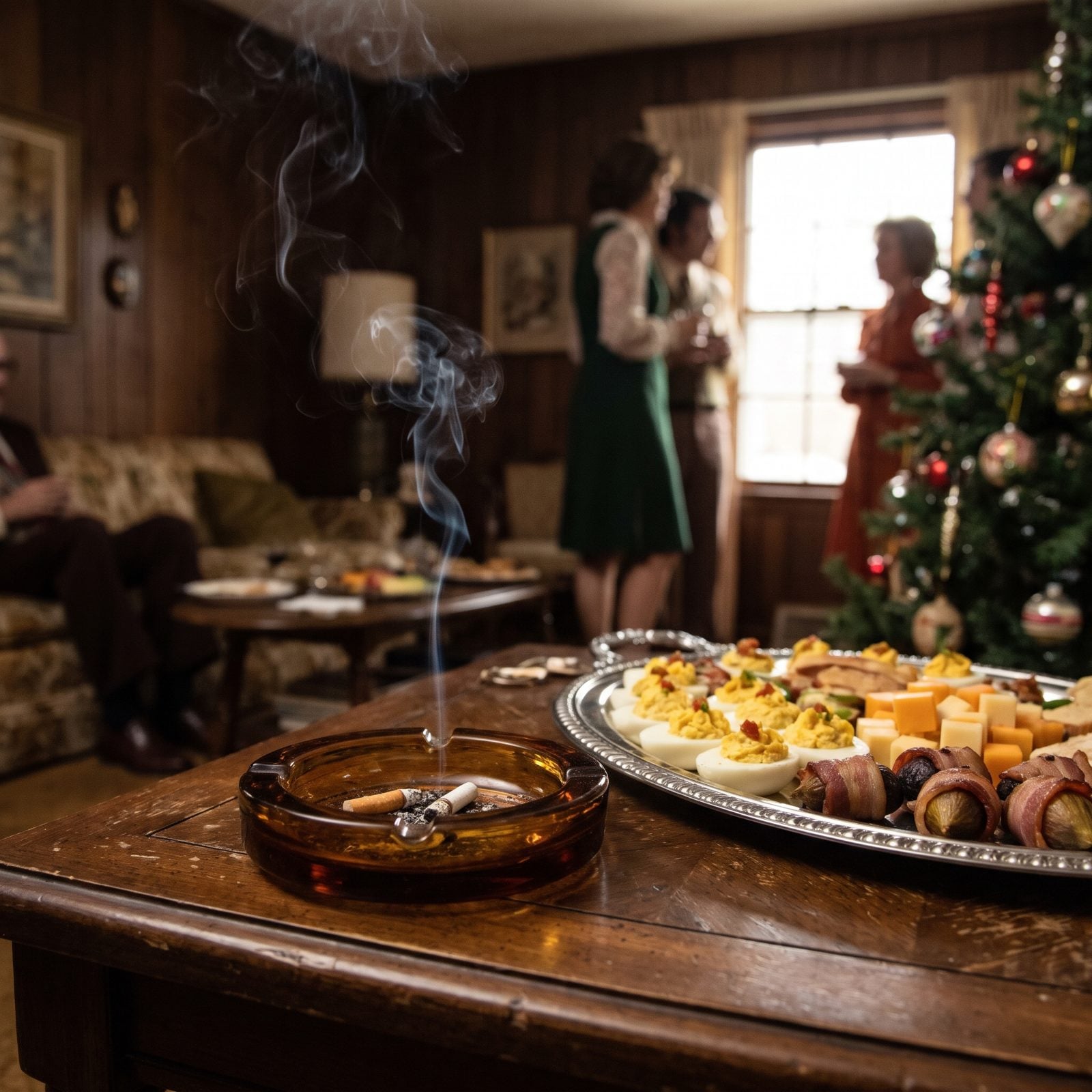
You set out ashtrays the way you set out coasters. One on the coffee table, one by the hors d’oeuvres, a fancy smoked-glass number brought out just for company. Guests smoked in the house, over the deviled eggs, during dinner, and nobody blinked.
The heavy glass ones doubled as decor — they had weight, a satisfying thunk when you set one down. Walk into any holiday party in 1970 and you walked into a blue haze that everyone considered perfectly normal. That smell soaked into the drapes and stayed until spring.
20. An Electric Carving Knife at the Turkey Platter
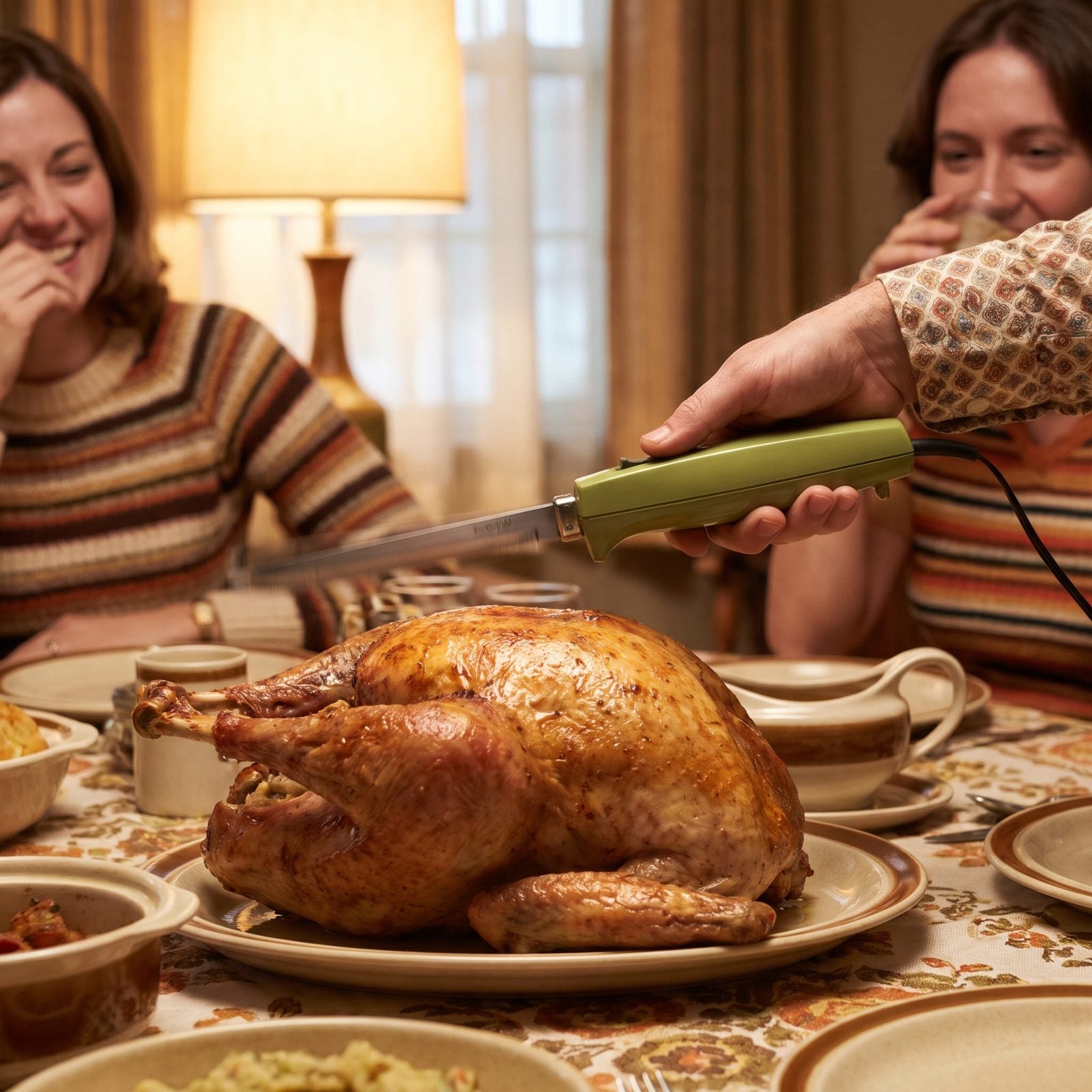
Dad’s big moment. The electric carving knife came out of its box once, maybe twice a year, and it buzzed like a dentist’s drill while it cut turkey into shockingly even slices — two serrated blades sawing in opposite directions, a cord snaking across the table, a faint whiff of warm electric motor.
It was a gift nobody asked for and everybody got. Weddings, Christmases, you name it; the thing lived in a cabinet the rest of the year. A good sharp blade and a steady hand does the job better and quieter. But the buzz was the sound of the meal beginning, and that counted for something.
19. A Stovetop Percolator Keeping Coffee Hot
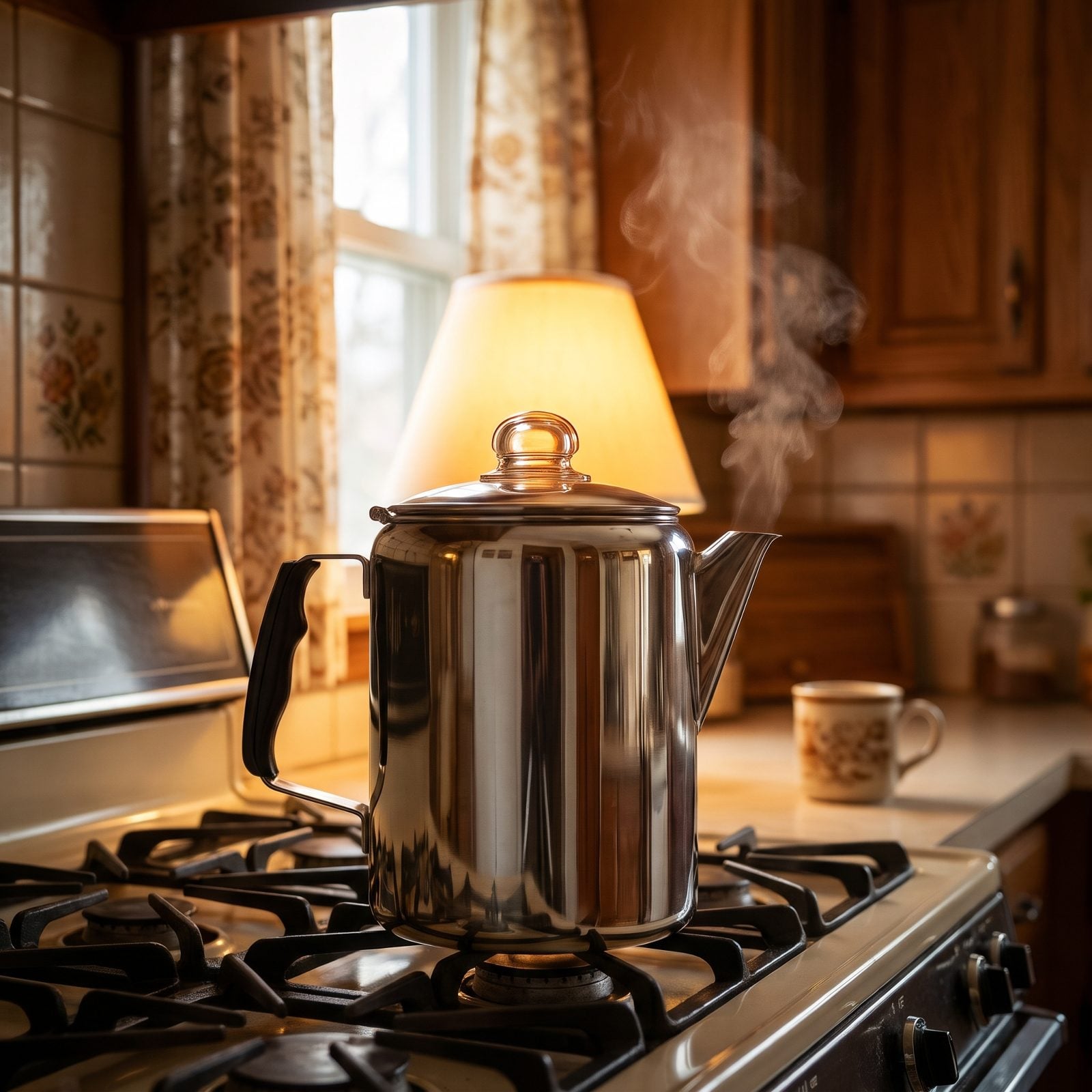
You knew coffee was ready by sound and sight. The gurgle of water forcing up the stem, the little glass knob on the lid going from clear to amber to dark brown, the whole kitchen smelling like a diner.
A percolator didn’t brew so much as boil, over and over, which made the coffee strong and a little bitter and exactly what people expected. It sat on a low flame through the whole afternoon, topped up as guests drifted through. Drip machines were arriving, but the percolator held its ground on plenty of stoves because people liked what it made.
Explaining why the old percolator tasted the way it did, a specialty coffee writer describes the cycle: “The brewed coffee drips back down into the chamber — where it’s heated again, pushed back up the tube, and run through the same grounds a second time.”
18. An Orange Fondue Pot for Holiday Guests
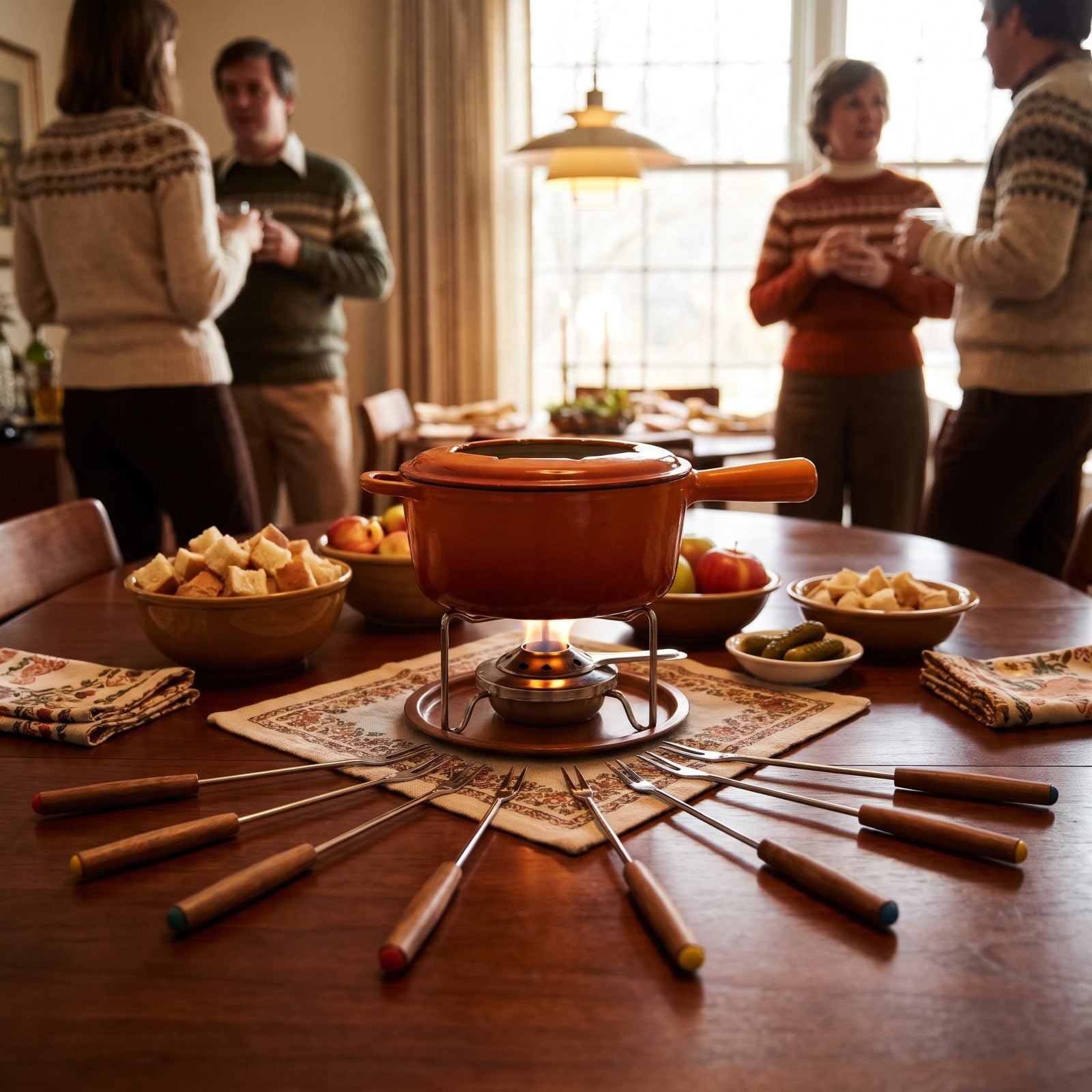
For a stretch there, fondue was the height of sophistication. A communal pot with its lid on, long forks fanned out flat on the table around it, and bowls of bread cubes waiting while guests sipped wine nearby. House rule: lose your cube in the pot, and you owed a kiss or a drink.
The pots came in that specific holiday orange, enamel over cast metal, perched on a little stand with an open flame underneath. Social, slow, slightly dangerous. Then it vanished almost overnight, packed into basements, reappearing only at garage sales where you can still find them for a few dollars, barely used.
17. A Church Key Beside a Saucer of Discarded Ring-Pull Tabs
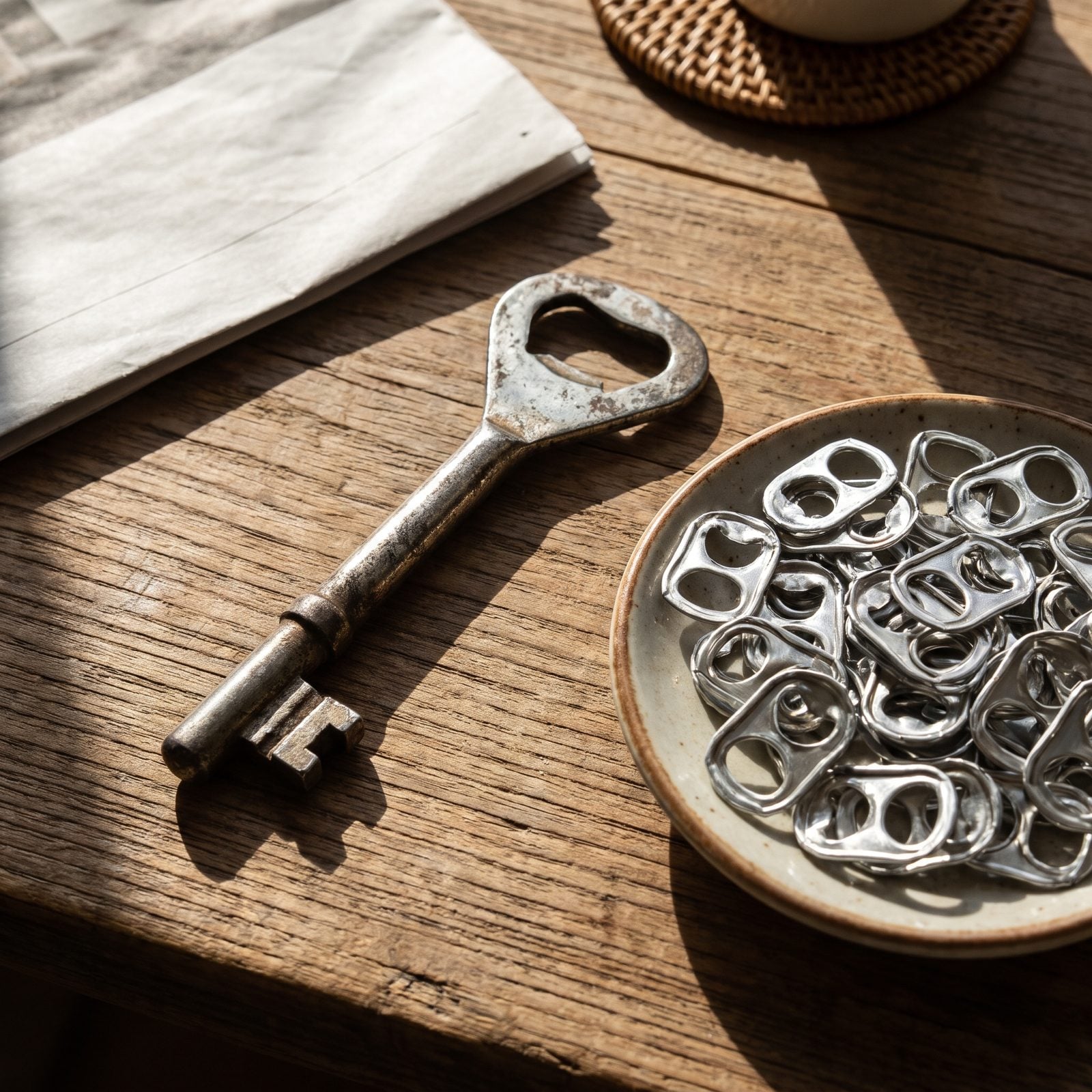
Two openers for two eras, living on the same counter. The “church key” was the slang for the flat steel opener that punched triangular holes in juice cans and pried off bottle caps. You needed one, because cans didn’t open themselves yet.
Then came the pull-tab, and with it a small ritual. The first rings came all the way off, and people dropped them into the can and occasionally swallowed one — which is exactly why the design got changed to the stay-on tab we have now. Those loose rings ended up in a saucer on the counter, a small aluminum pile you had to put somewhere.
16. Aluminum Ice Trays with Lift-Up Levers
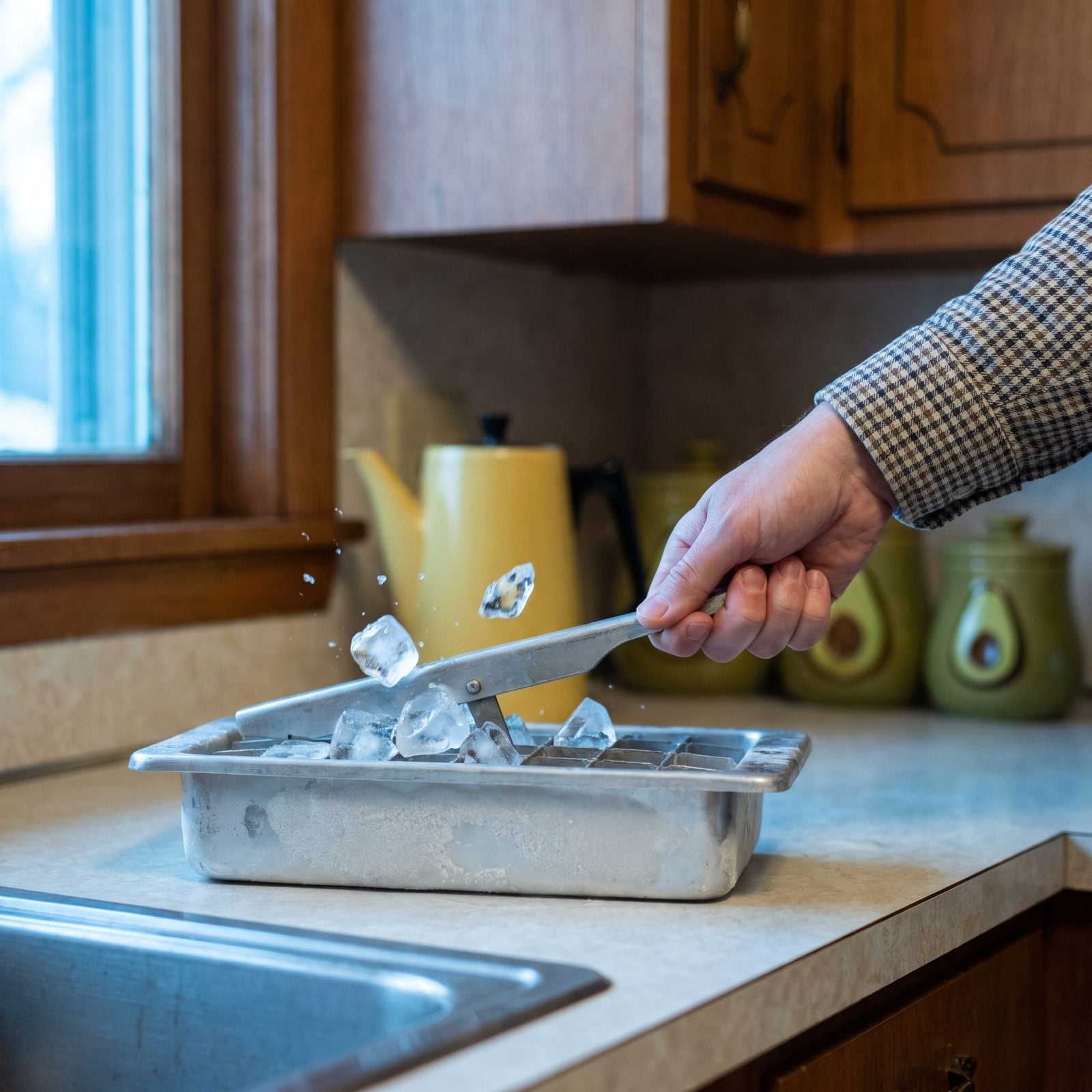
Before the icemaker in the door, you made ice with your hands and a lever. The aluminum tray had a metal grid inside and a handle you yanked up, which cracked the cubes free with a sound like a small machine breaking.
It stuck to wet fingers. It left a metallic taste some people swore they could detect. And at a holiday party, it never kept up — you refilled it constantly, slopping water across the freezer shelf, building that fist of frost in the back nobody ever defrosted. Flimsy plastic trays killed it, and the automatic icemaker buried it. Still, there was a brute honesty to that lever.
15. An Aluminum Cookie Press with Screw-On Discs
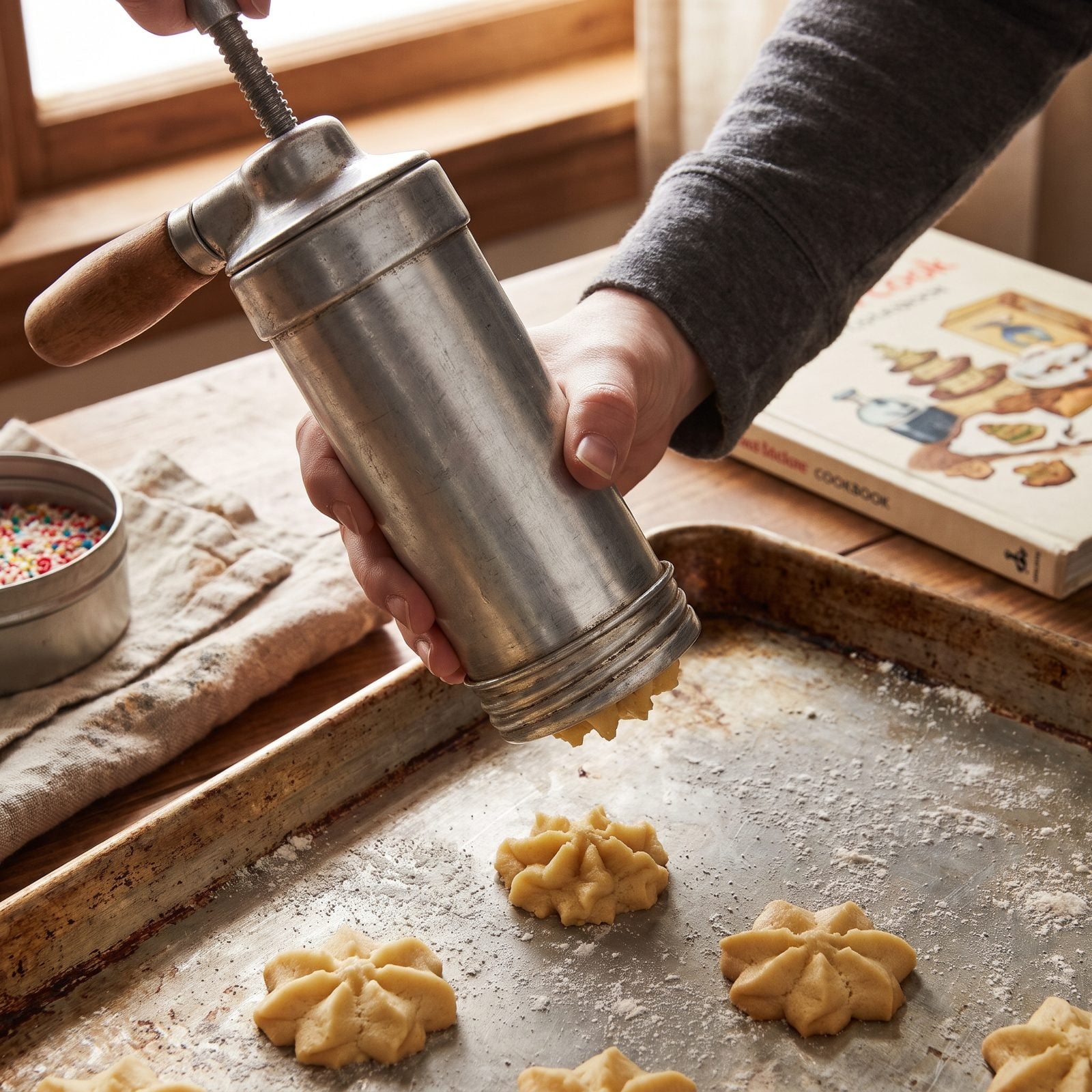
The spritz cookie press was a once-a-year appliance, and half the battle was dough temperature. Too cold and it wouldn’t push. Too warm and your trees slid off the sheet into sad green blobs.
We never once got a clean wreath out of ours. The discs clogged, the pressure went uneven, and you’d end up with a tray of cookies in various stages of identity crisis. People today buy pre-cut dough and skip the whole ritual, which is faster, obviously. But nobody stands over a log of slice-and-bake cussing at a wreath disc.
14. Shortening Scooped from a Metal Crisco Can
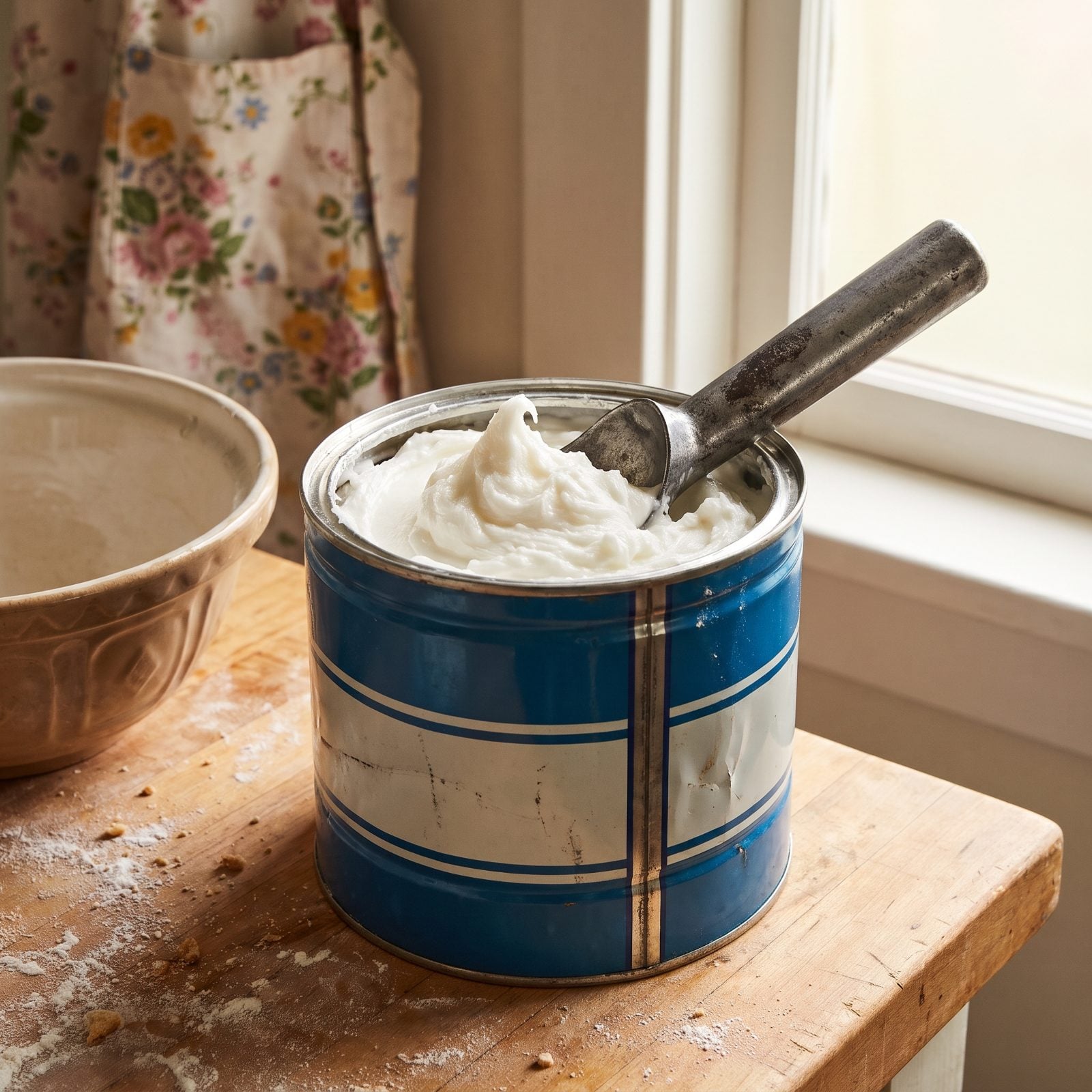
Butter has its fans, but in 1970 the pie crust came out of a can. Shortening gave you flake and height, and a tin of it sat in nearly every pantry next to the flour sack.
The scoop was its own small technique. You packed it into the measuring cup, leveled it with a knife, and prayed your crust wouldn’t shrink in the oven. Modern bakers have mostly gone back to butter for the flavor, which is fair enough. But the old crowd will tell you a shortening crust holds its edges better, and they’re not wrong.
13. A Speckled Enamel Roaster Holding the Turkey
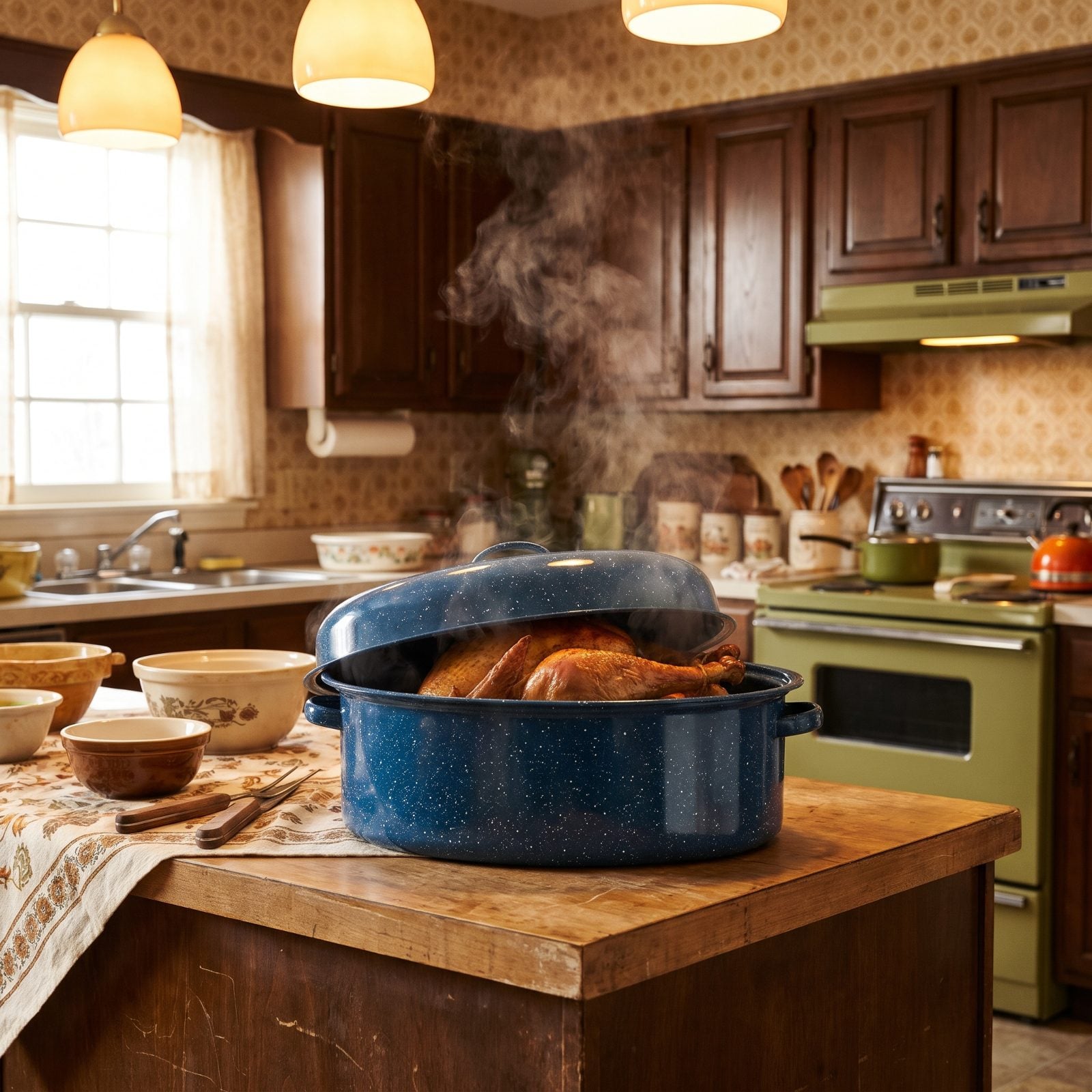
That blue-speckled roaster outlived the oven it came with. Granite-ware enamel went into practically every holiday, big enough to swallow a twenty-pound bird and chipped at the handles from decades of hauling.
Here’s what people forget: the lid meant you steamed the turkey half the time rather than roasting it. You got a moist bird but pale skin, so everyone cranked the heat uncovered at the end to brown it. Cooks spatchcock and roast open on a sheet pan now, and the speckled roaster got demoted to storage, or the garage, or a garden shed holding birdseed.
12. Patterned Pyrex Casseroles in Metal Serving Cradles
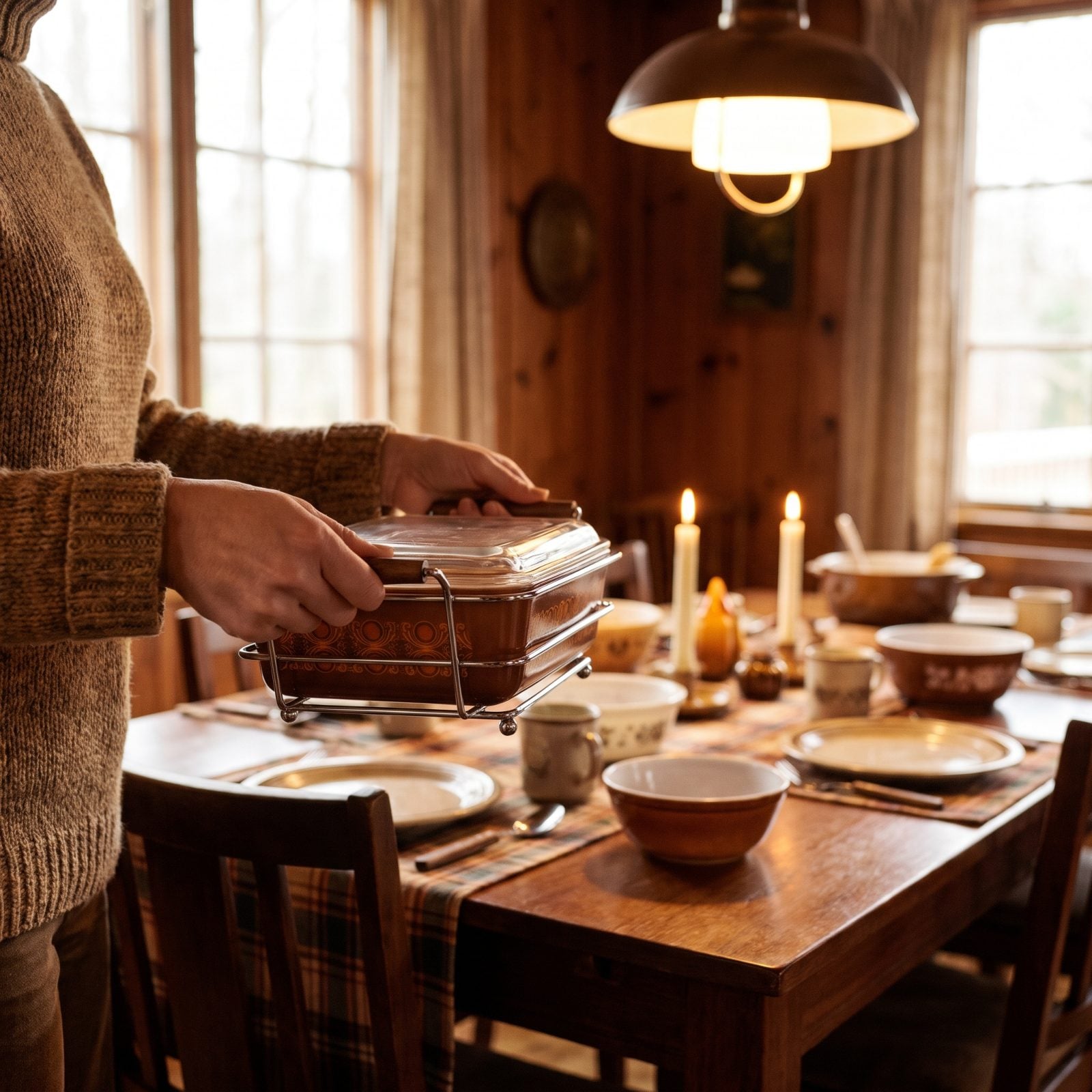
The casserole arrived in a chrome cradle, and that cradle made it furniture. You could carry the green bean dish straight from oven to table and set it down over a tea light that kept it warm through dinner.
Collectors chase these patterns now. Butterprint, Snowflake, Gooseberry — names that mean real money at estate sales. Back then they were just the everyday dishes that happened to be pretty. Most survived because the glass is nearly indestructible. The cradles, though? They rusted, got tossed, and now sell separately for more than the casserole cost new.
Describing Corning’s old promotional casseroles, a longtime Pyrex collector notes that “most were in the form of a single dish with a cover, in a unique color or pattern, and often including an accessory such as a trivet or candle warmer cradle.”
11. A Copper-Colored Gelatin Mold Hung on the Wall
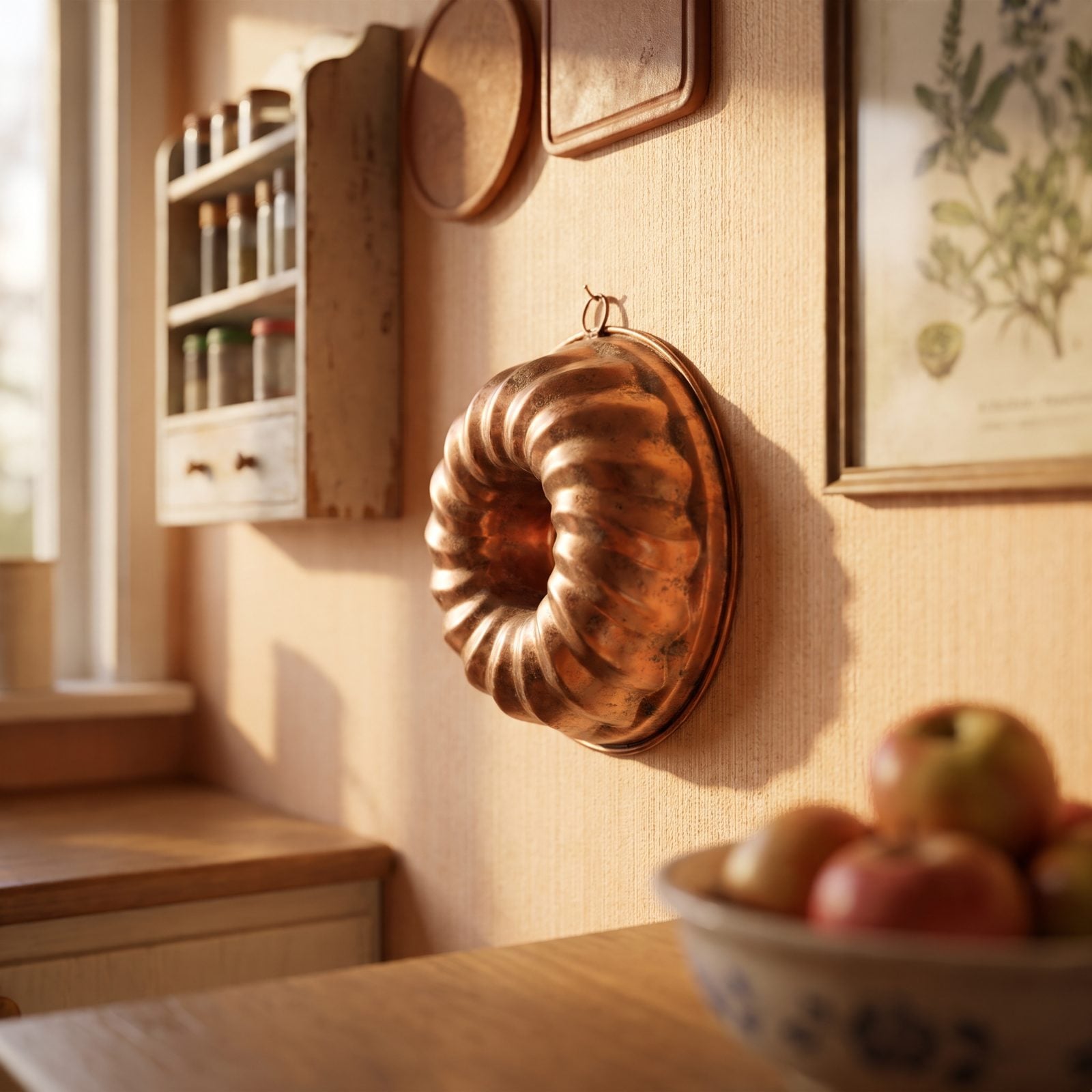
Half the molds on the wall never held gelatin. They were decoration, the copper catching light over the counter like kitchen jewelry, and only two or three actually got filled at the holidays.
The fluted ring was the workhorse. You oiled it, poured, chilled, then dunked the base in warm water for the nerve-wracking flip onto a plate. Sometimes it came clean, sometimes it came in pieces, and that gamble was half the fun. Copper molds still turn up in thrift stores for a couple of dollars because almost nobody makes ring salads anymore.
10. A Savory Aspic Ring as the Buffet Showpiece
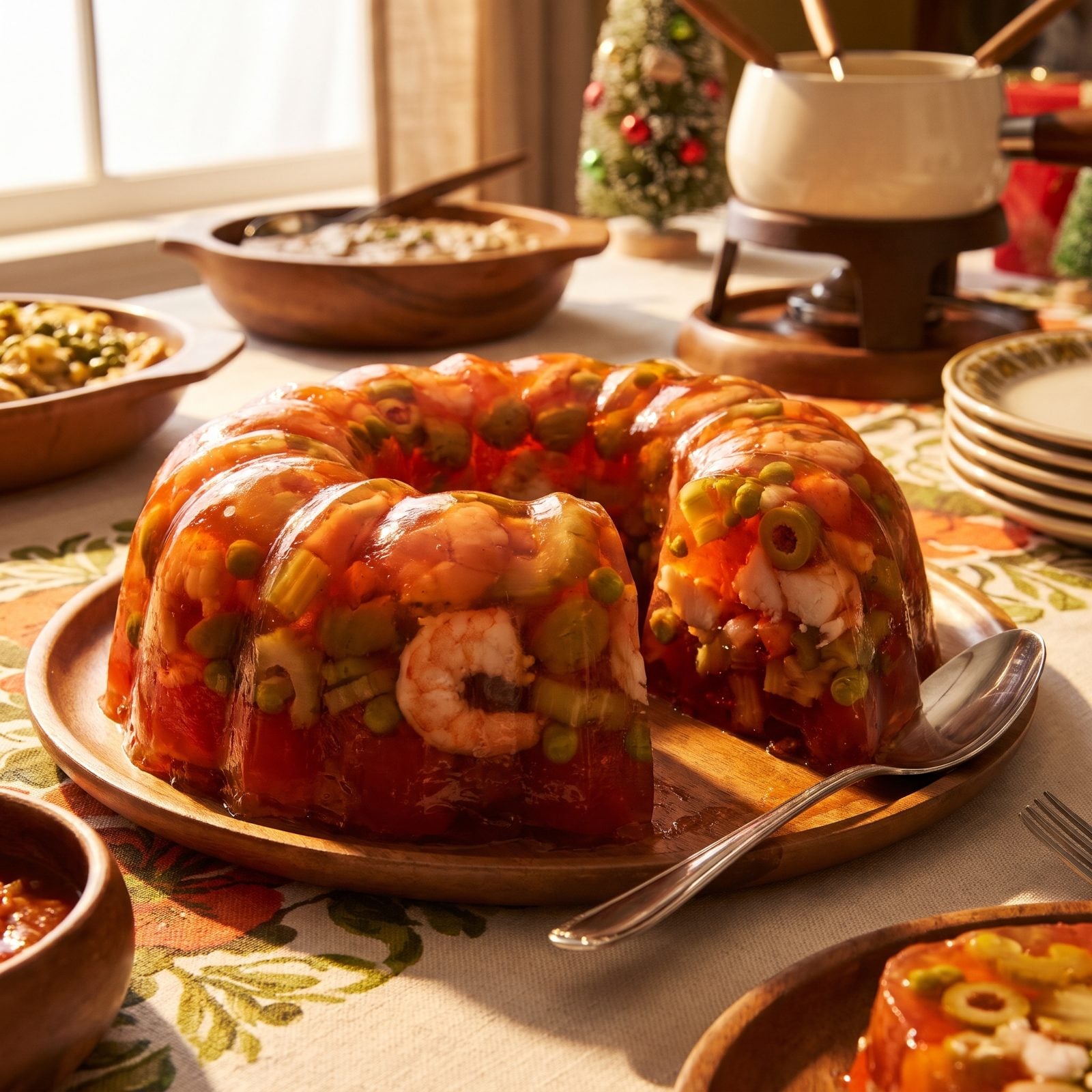
Aspic announced that you’d gone to trouble. A savory gelatin ring, tomato or consommé based, with vegetables and shrimp suspended inside like insects caught in sap. It wobbled, it gleamed, and it sat dead center on the buffet demanding respect.
Real talk, most people under fifty would push it to the far end of the table today. Savory gelatin fell out of favor hard, and good riddance according to some. But it was never bad cooking. Fussy, yes — meant to show off a cook’s patience and a family’s good china.
9. A Cut-Glass Relish Tray of Celery, Olives and Pickles
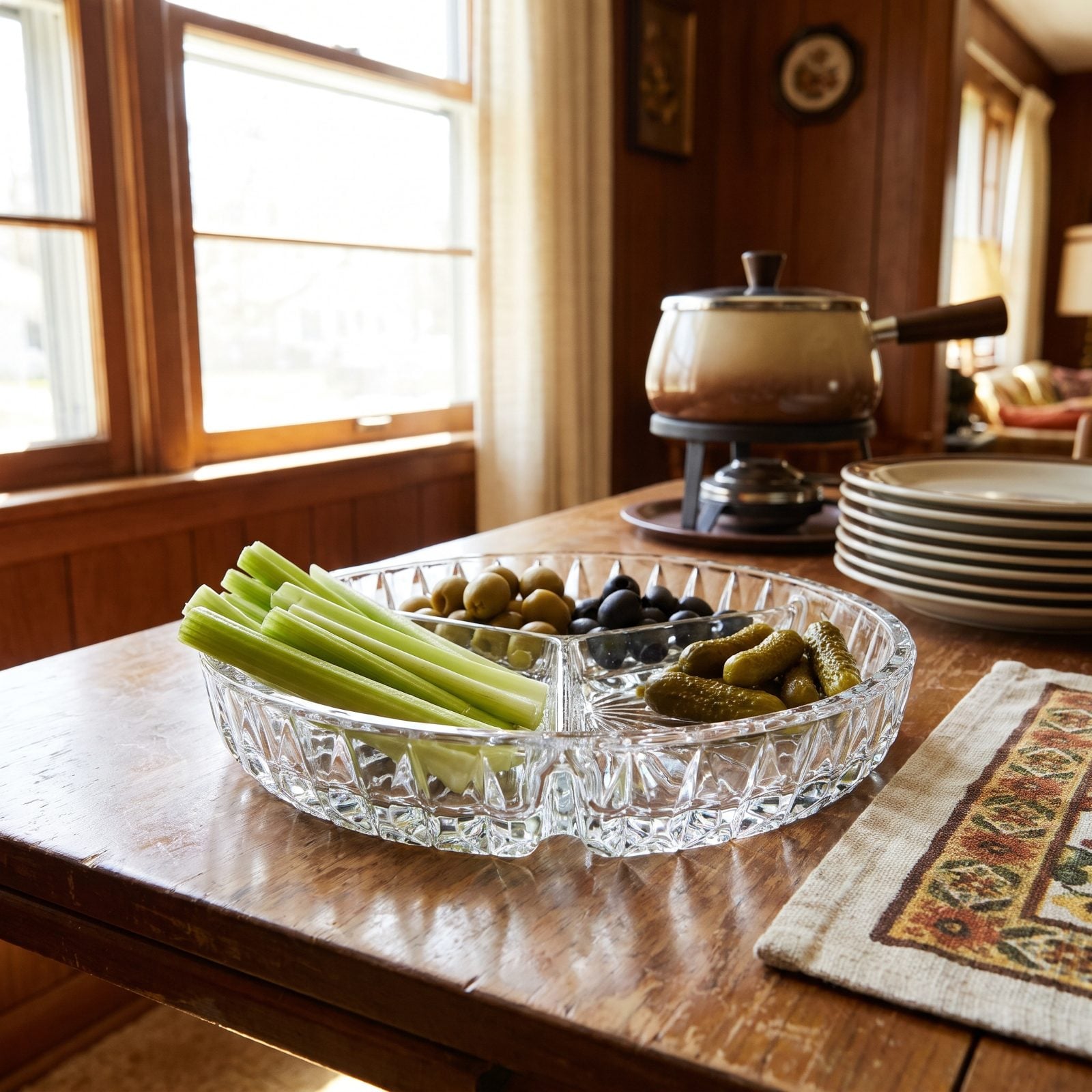
Before anyone said the word “charcuterie,” there was the relish tray. Celery, green olives, black olives, sweet pickles, maybe a few radishes carved into roses by someone with time on their hands.
It lived in the china cabinet all year and came out twice, maybe three times. The compartments mattered. You didn’t want olive brine bleeding into the celery. And the kids picked it clean before the turkey hit the table, which was the real reason it existed — to keep everyone busy while the kitchen finished its work.
8. A Nut-Crusted Cheese Ball with a Tiny Spreader
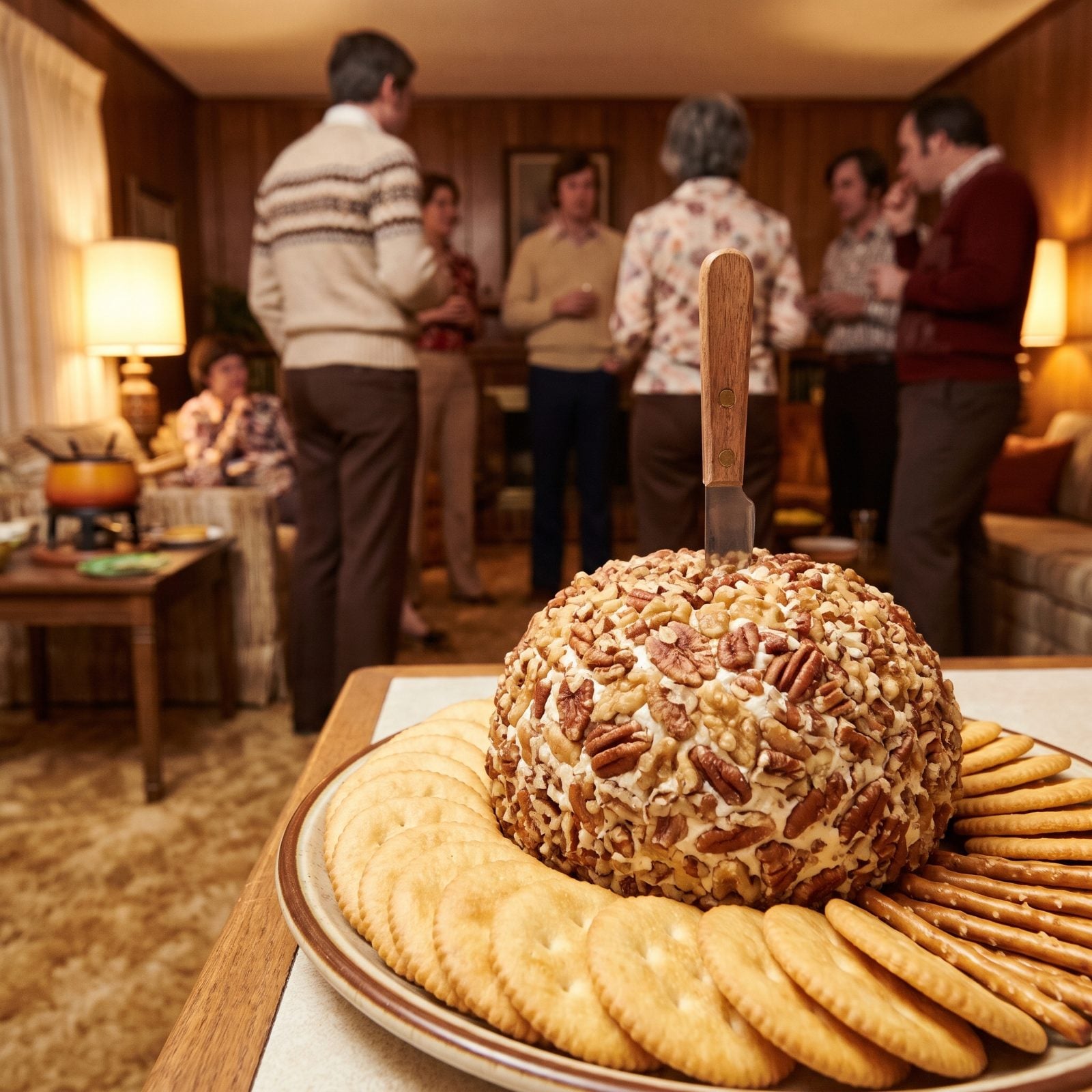
The cheese ball meant the party had started. Softened cream cheese and sharp cheddar mashed with Worcestershire, shaped into a sphere, rolled in pecans, stuck with a little spreader meant for exactly this.
It never really disappeared, which makes it the survivor of the bunch. But the tiny spreader did. Those little brass or bone-handled knives came in gift sets and now vanish into junk drawers. Try making one and you’ll see why it stuck around: ten minutes of work, and it empties a cracker box faster than anything else on the table.
7. A Sherbet Punch Bowl with a Floating Ice Ring
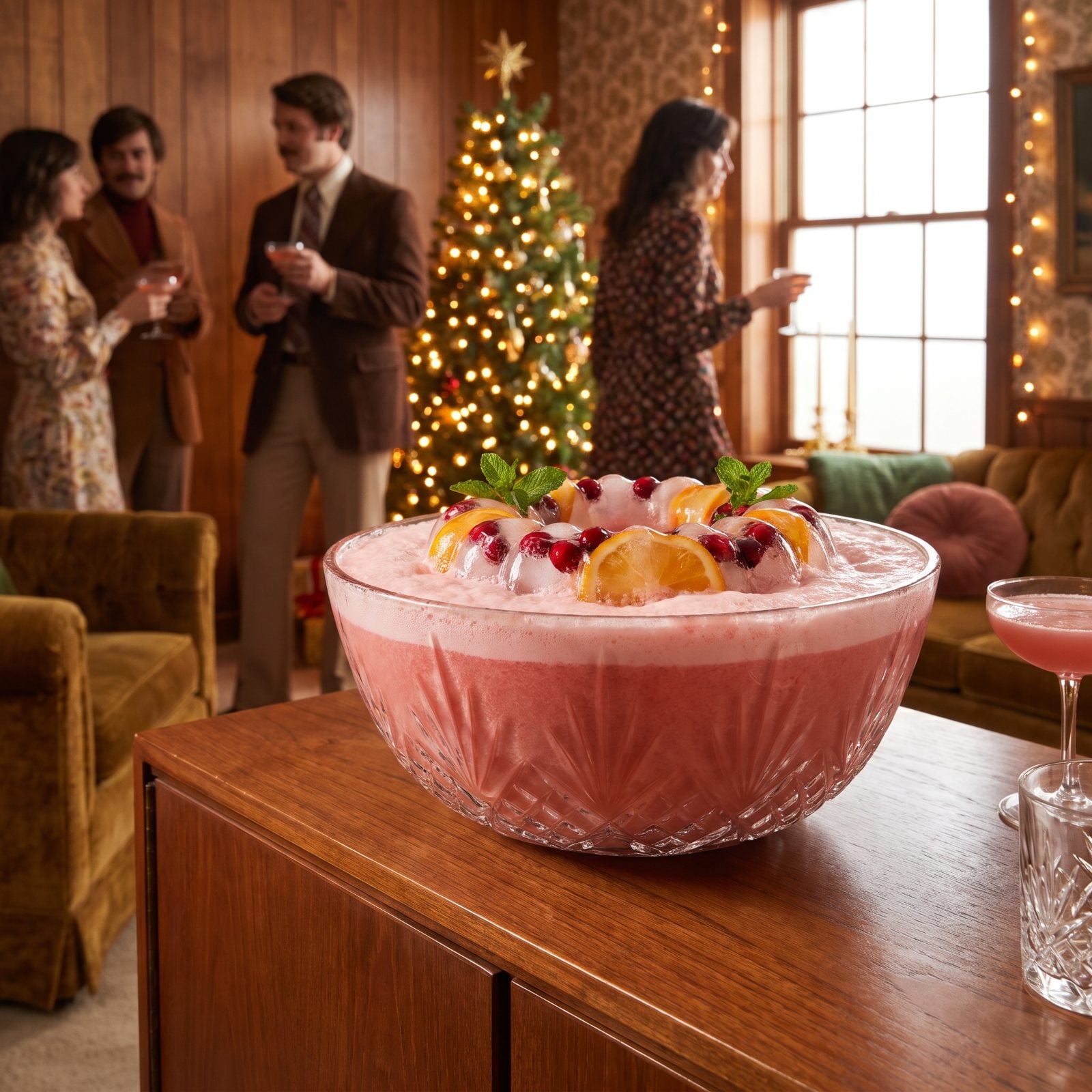
Pink punch, foamy on top where ginger ale met melting raspberry sherbet, with an ice ring bobbing in the middle like something out of a snow globe. The matching cups hung on little hooks around the rim.
The ice ring was the clever part. You froze fruit and water in a ring mold so your punch stayed cold without watering down, because a bag of loose cubes dilutes everything into sad fizzy juice within the hour. Punch bowls got shoved to the back of the cabinet when wine took over holiday hosting. Pull one out at a party now and watch grown adults light up like they’re twelve again.
6. Cocktail Sausages Simmering in an Electric Warming Dish
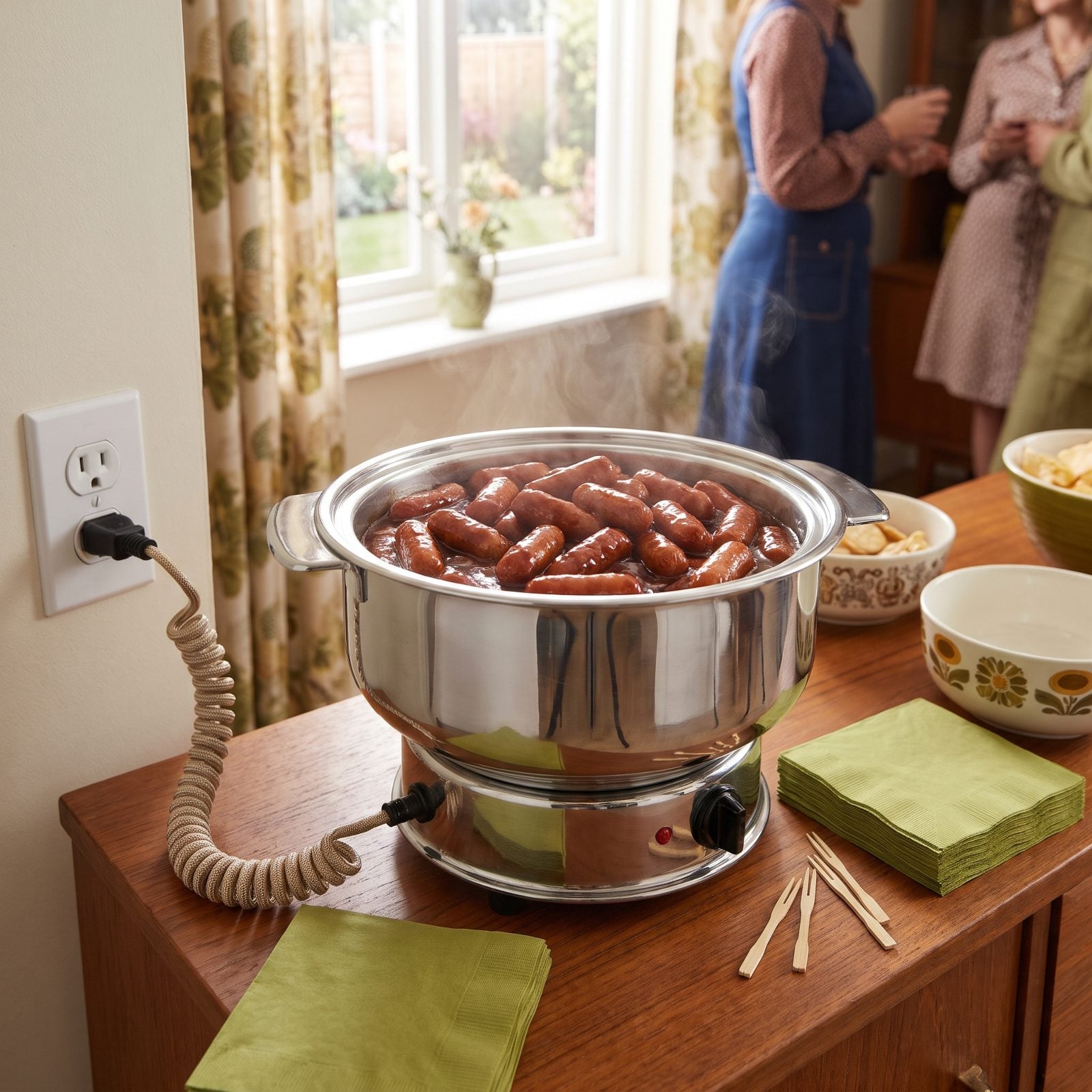
Every holiday party had one. That little chrome dish, cord trailing to the nearest outlet, sausages swimming in a sauce of grape jelly and chili sauce that nobody admitted they loved. The jelly thing sounds wrong until you taste it, and then you understand why the pan was always empty by eight.
The warming dish itself is the part that vanished — we traded it for slow cookers and sheet-pan everything. But there was a certain confidence in a hostess who plugged in a sausage buffet and walked away while the appliance did the hosting and she refilled drinks.
5. Holiday Leftovers Sealed Into Foil Freezer Trays
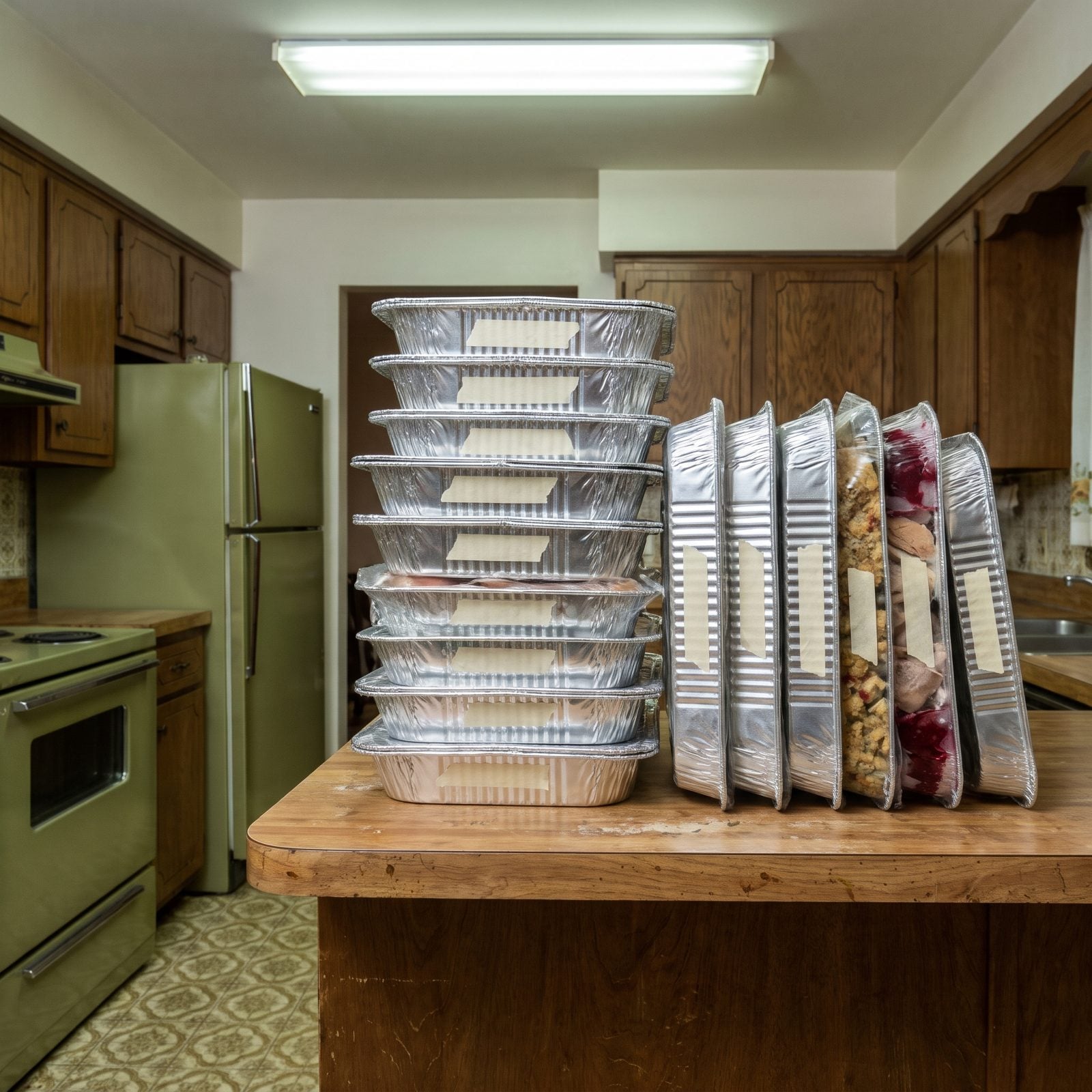
Before plastic containers took over the freezer, dinner got portioned into foil trays and stacked like library books. You’d write the date on the lid with a grease pencil — turkey and potatoes in one compartment, beans in the other, a whole meal waiting under the ice.
The genius was the reheat. That same tray went straight into the oven, no dishes to wash, no food touching a pan. Cheap enough to toss and sturdy enough to reuse if you flattened them out carefully, which thrifty households absolutely did.
4. Returnable Glass Soda Bottles Racked in a Wooden Crate
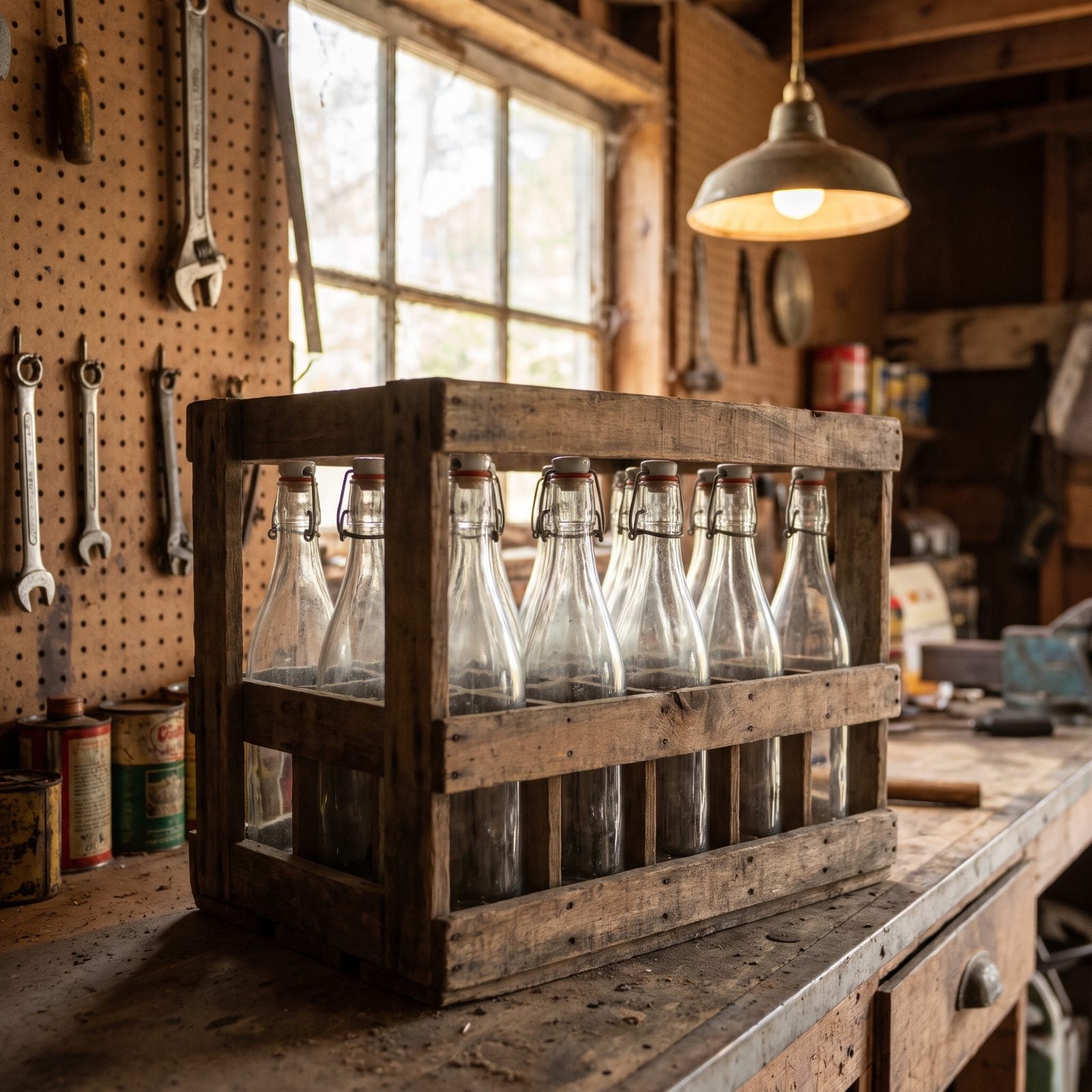
The soda didn’t come home in a plastic sleeve. It came in a slotted wooden crate of heavy glass bottles you were trusted to bring back, with a deposit on every one — a few cents that turned empties into currency a kid could cash in.
Returning the crate was a real errand at the holidays, when a house burned through root beer and ginger ale by the case. You rinsed the bottles, loaded them back into their dividers, and hauled the whole lot to the store. Then the loop started over.
3. Quilted Covers Tucked Over the Toaster and Mixer
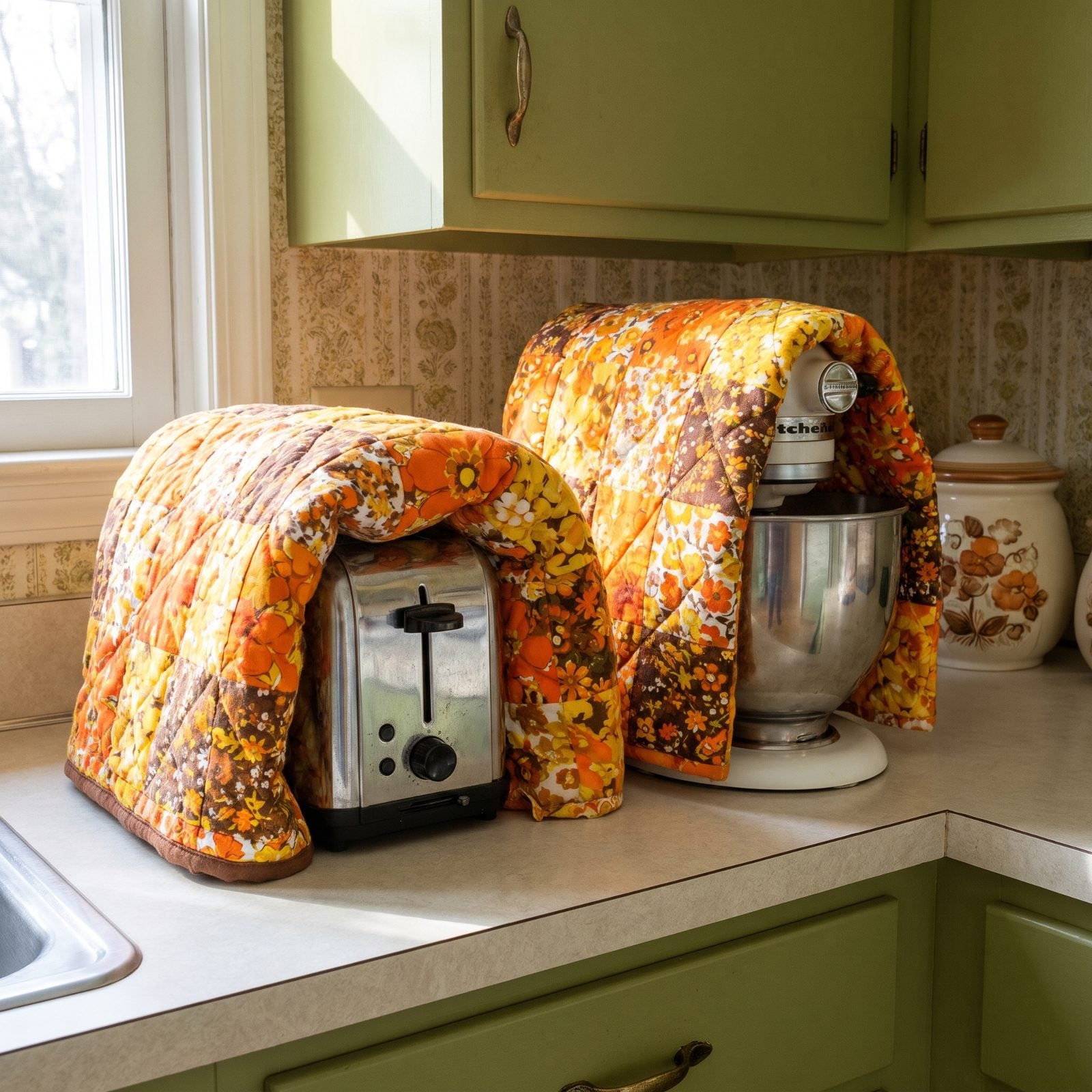
Appliances wore clothes. The toaster had a quilted jacket, the mixer a matching one, both sewn from the same floral cotton as the pot holders. Half dust cover, half decoration. The reasoning was practical and a little vain at once: keep the crumbs and grease off the chrome, and make the counter look dressed instead of cluttered.
We find these at estate sales now, faded and soft, and we always pause. Somebody measured their own toaster and sewed it a coat. That kind of domestic effort doesn’t really have a modern equivalent.
2. A Hard-Plastic Santa Cookie Jar Guarding the Counter
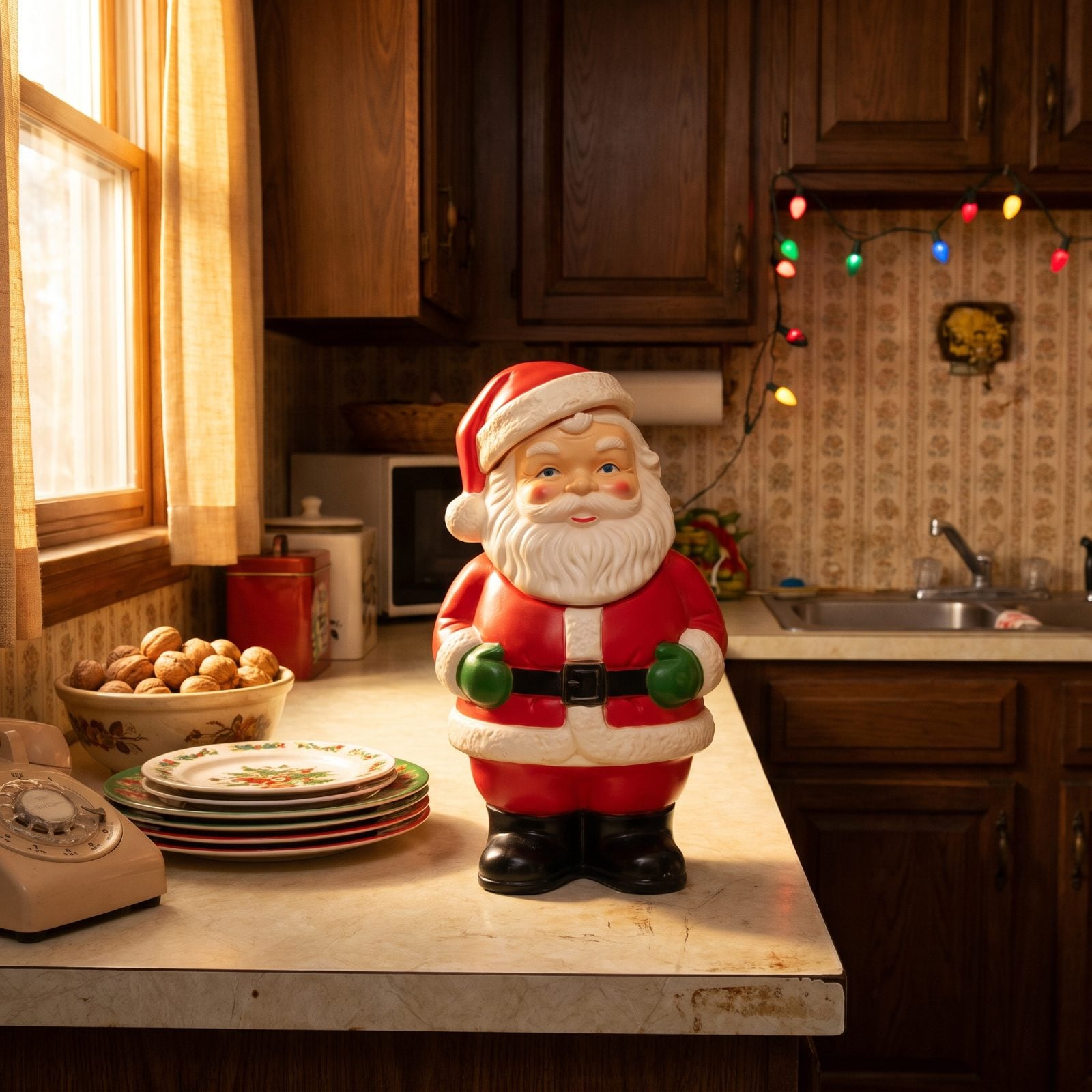
Not ceramic. Plastic. Lighter, cheaper, and built to survive a kid prying his head off twelve times a day. The lid was his whole head, and the seam where it lifted usually got sticky with sugar by mid-December.
He only appeared at Christmas, living the rest of the year in a basement box — which is exactly why he felt like an event when he came out. A jar that showed up once a year carried more weight than the everyday one ever could.
1. A Light-Up Ceramic Christmas Tree Glowing on the Counter
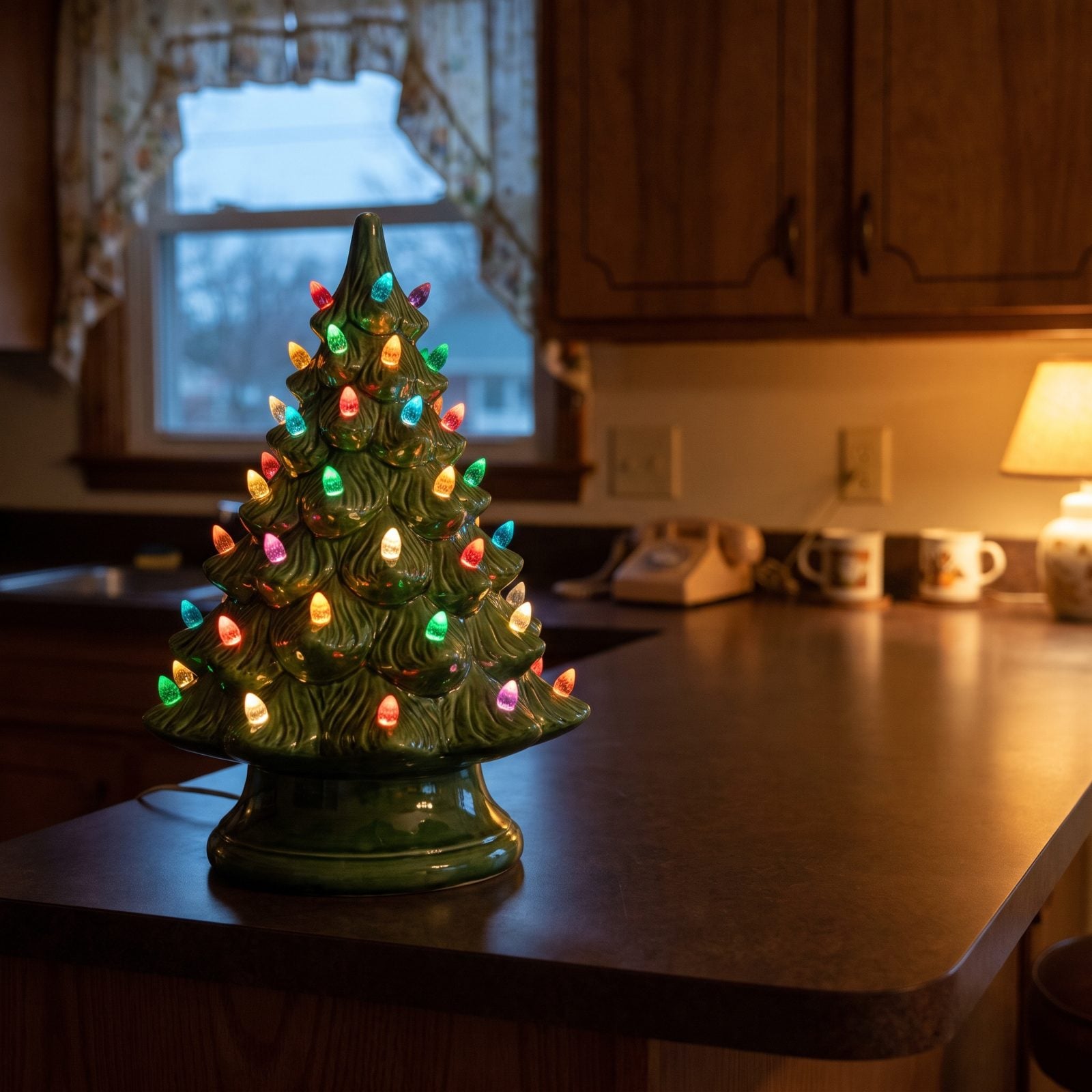
Someone’s aunt made it in a ceramics class, and nearly every family had one. A hollow green tree, poked with dozens of tiny colored plastic pegs, a single bulb inside turning the whole thing into a quiet lantern. No tree skirt, no timer. You plugged it in, it glowed, and the kitchen felt like the holidays.
These are back, honestly. People hunt the originals at antique malls and pay real money for the molded ones with the little birds on top. The ceramics-studio version never fully left — it just moved from the counter to the collector shelf.