
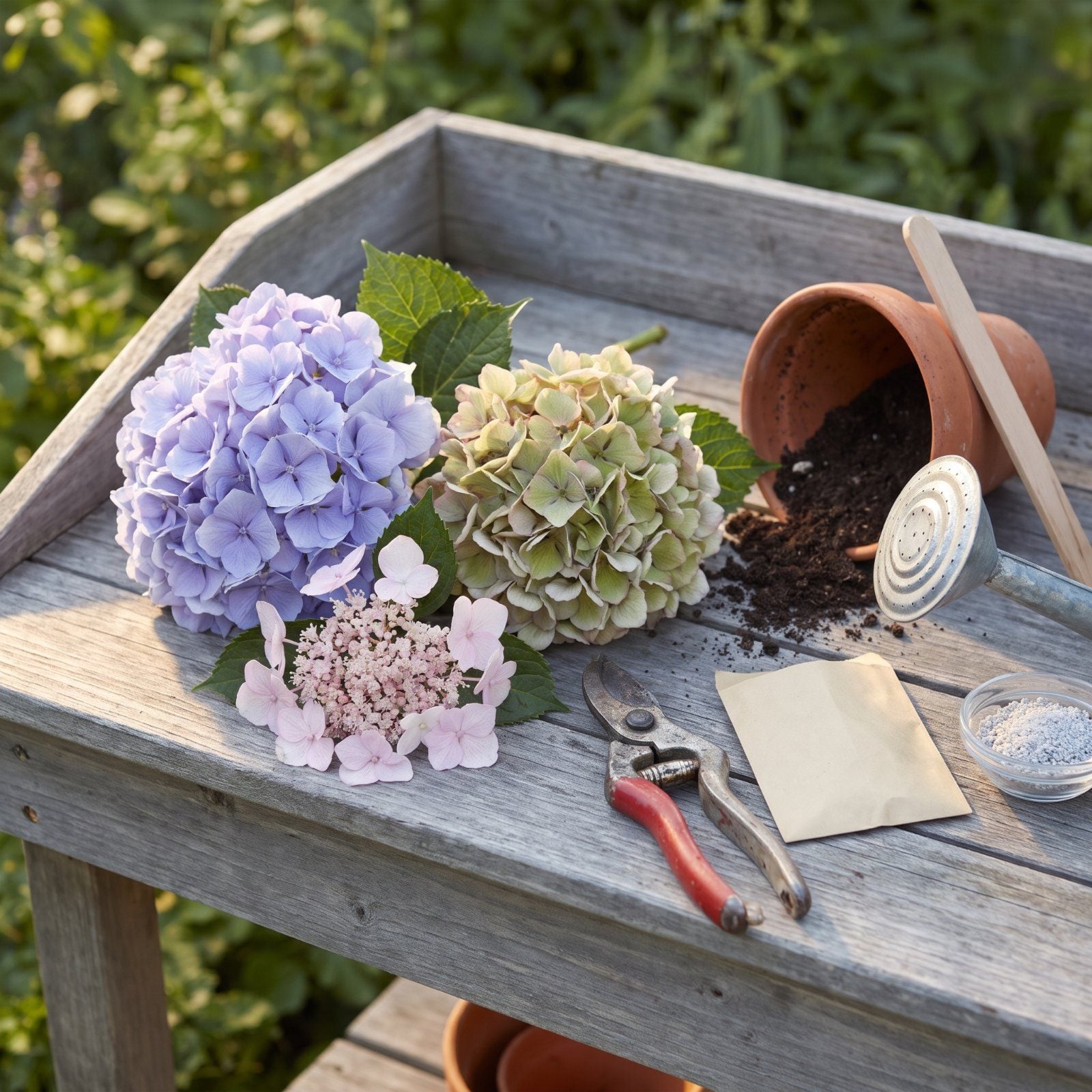
A hydrangea with leaves the size of dinner plates and not a single bloom will make you question everything. You watered it. You fed it. You talked to it, maybe, and still nothing. Most hydrangea trouble comes down to a handful of fixable mistakes, and almost none of them are your green thumb failing you. Bloom timing, pruning windows, soil chemistry, and the occasional rogue April frost do most of the damage. Here are the real answers to the questions that send people combing through gardening forums at midnight.
Please note that some of the images in this article were created with the assistance of AI.
39. Why Is My Hydrangea Growing but Not Blooming?
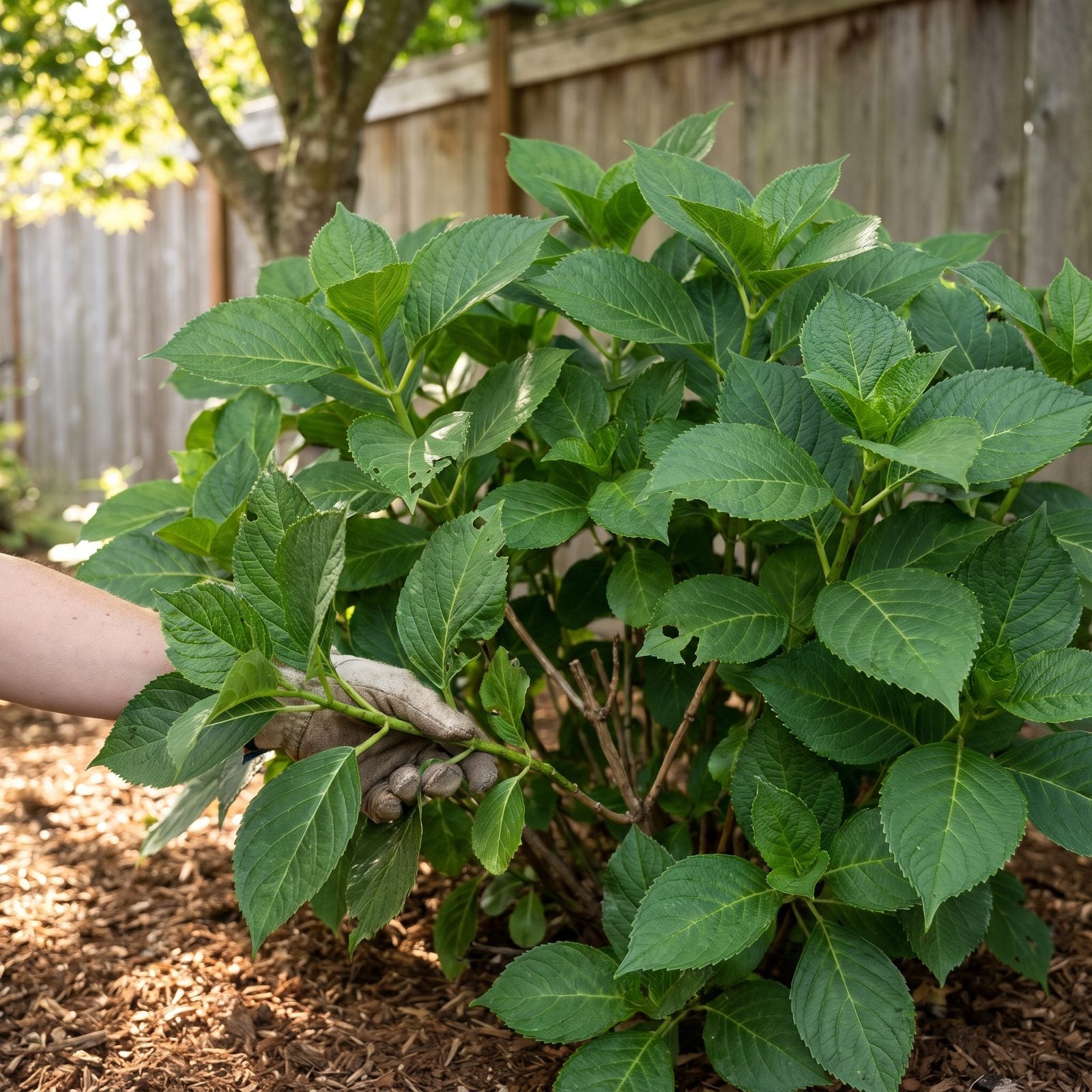
Leaves everywhere and not a bud in sight usually points at one of three culprits: you pruned at the wrong time and lopped off next year’s flowers, a frost nipped the buds, or your plant sits in too much shade. Too much nitrogen fertilizer does it too, pushing leafy growth at the expense of blooms.
We killed a season of flowers this exact way, feeding a lawn fertilizer that drifted into the bed. Green and gorgeous. Completely barren. If your hydrangea is young, give it patience — some need a couple of years in the ground before they settle in and put on a show.
38. When Am I Actually Supposed to Prune My Hydrangea?
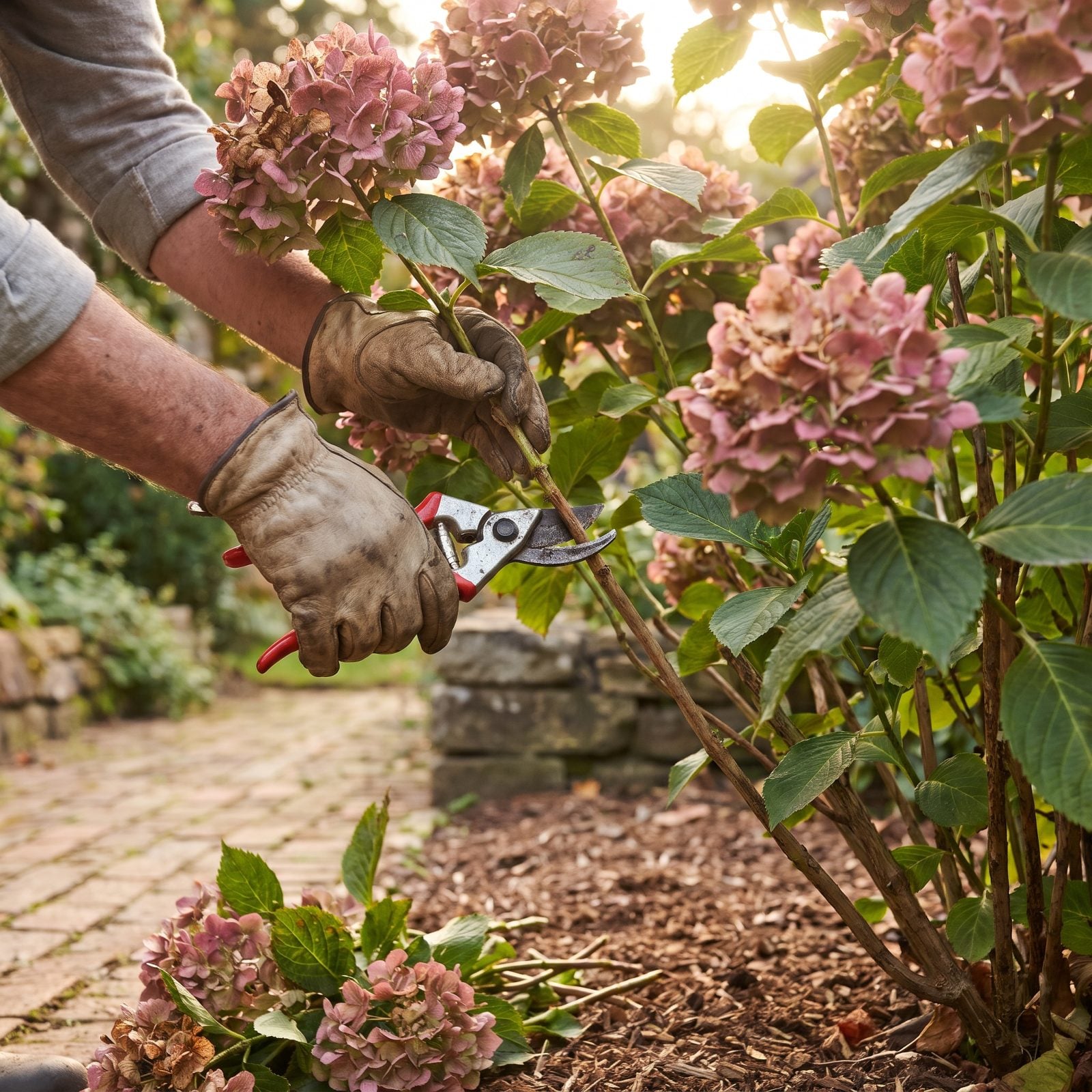
The honest answer? It depends entirely on your variety, which is why generic pruning advice ruins so many plants. Cut the wrong hydrangea in fall or early spring, like taking a mophead down hard to its woody base in autumn, and you remove every bloom before it opens.
Bigleaf and oakleaf types get a light cleanup right after they finish flowering in summer, and that’s it. Cut those long, leafy flowering stems in autumn and next year’s buds go with them. Panicle and smooth hydrangeas, the ones that bloom on new wood, can take a harder cut in late winter or very early spring. When in doubt, skip pruning for a year and watch when it blooms. The plant will tell you more than any chart.
37. How Can I Tell Whether My Hydrangea Blooms on Old or New Wood?
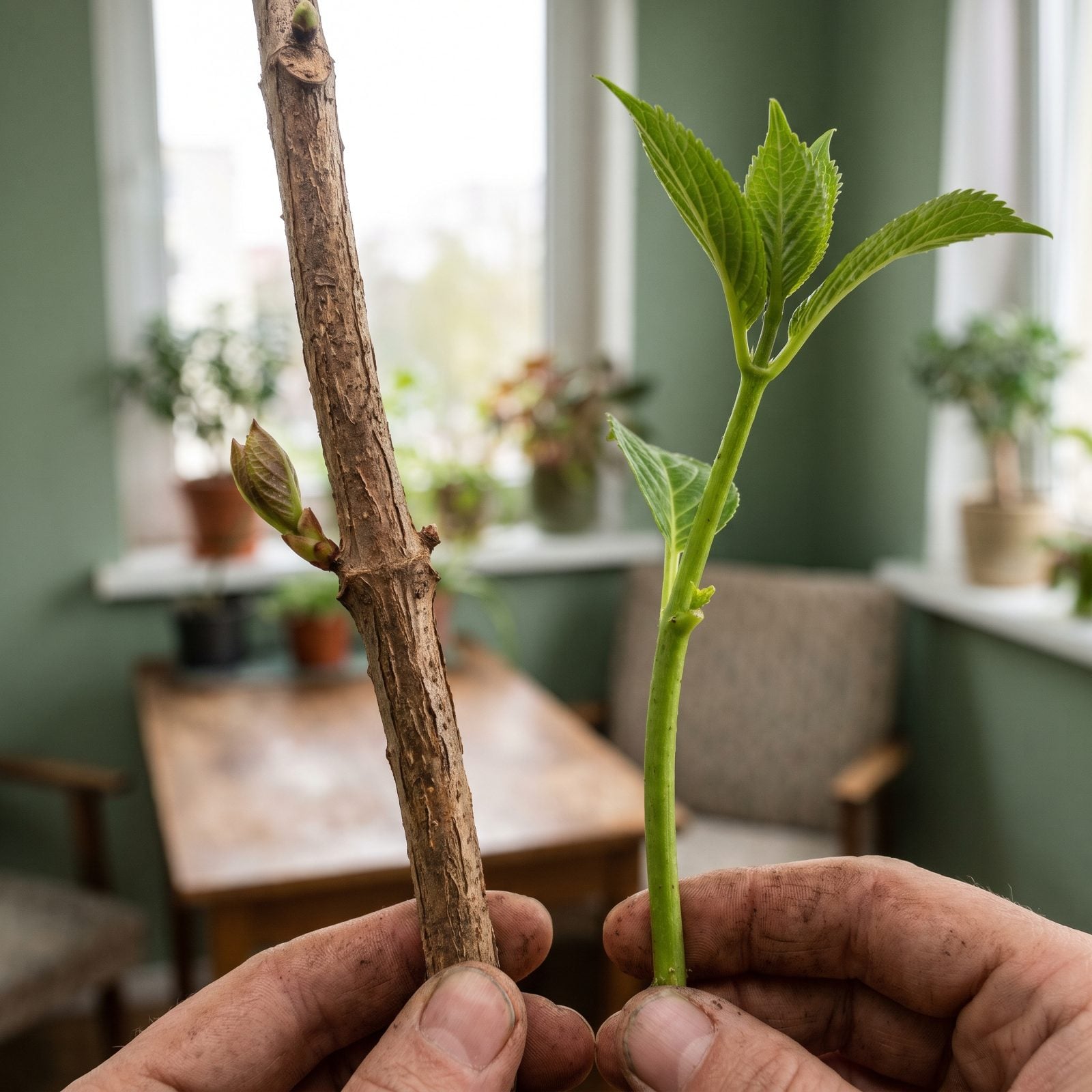
This single question solves most pruning disasters. Old wood means the plant forms next year’s flower buds on this year’s stems, late in summer. New wood means it makes buds on fresh spring growth.
A quick field test. If your hydrangea blooms in early summer and the flowers fade by midseason, it’s likely old wood — bigleaf, oakleaf, mountain. Blooms later, peaking in mid to late summer and running into fall? You’re probably looking at new wood: panicle and smooth.
36. Should I Cut Off Hydrangea Flowers After They Fade?
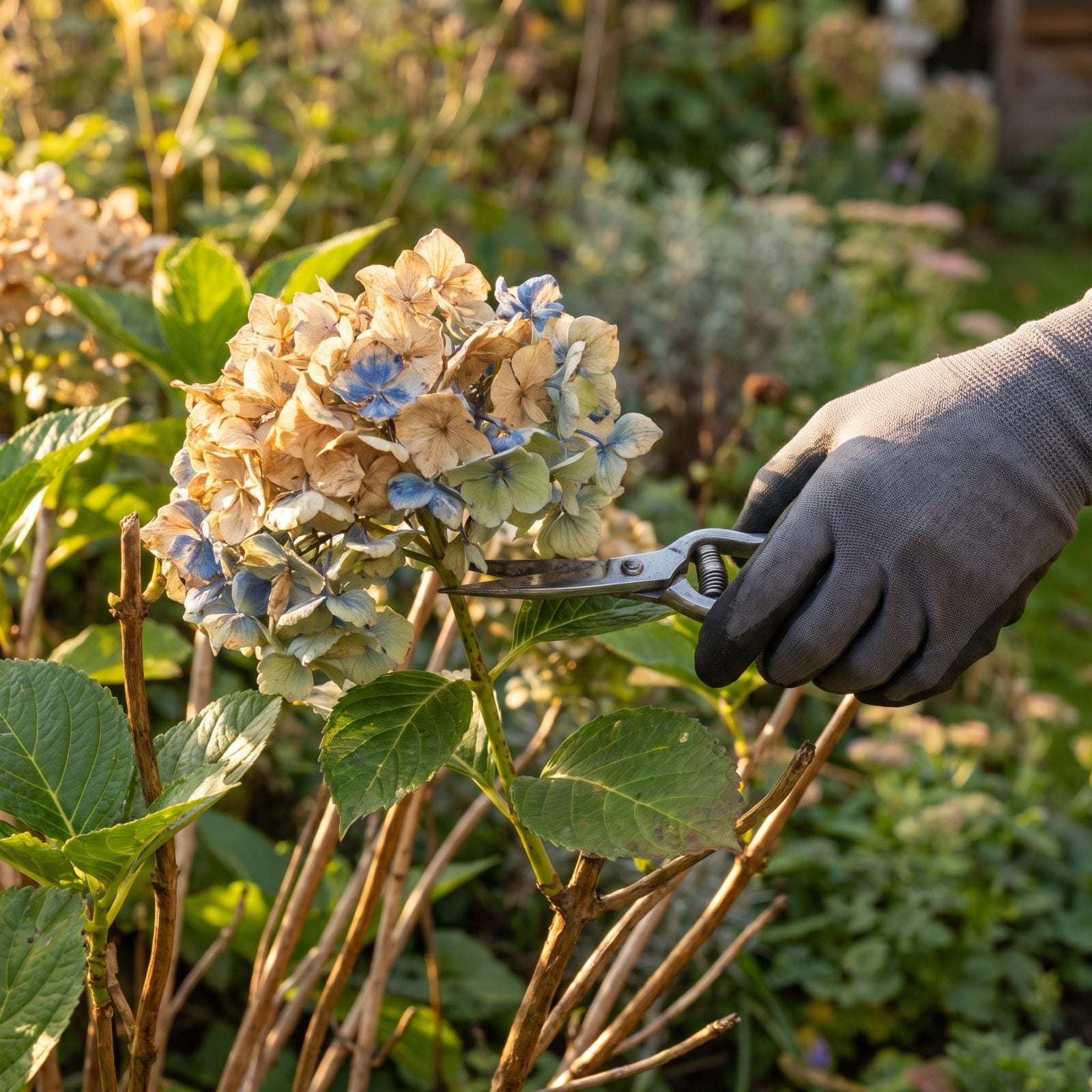
Deadheading a hydrangea is optional, and it’s more about looks than health. Snip spent blooms off just below the flower head if the brown is bugging you. The plant won’t mind either way.
One caution: on old-wood types, don’t cut too far down in late summer or you’ll remove the fat buds forming for next year. And honestly, I leave the dried heads on panicle and smooth hydrangeas all winter. Frost settles on them, they catch the low sun, and a bare garden gets a little texture for free.
35. Can a Hydrangea Bloom More Than Once in a Season?
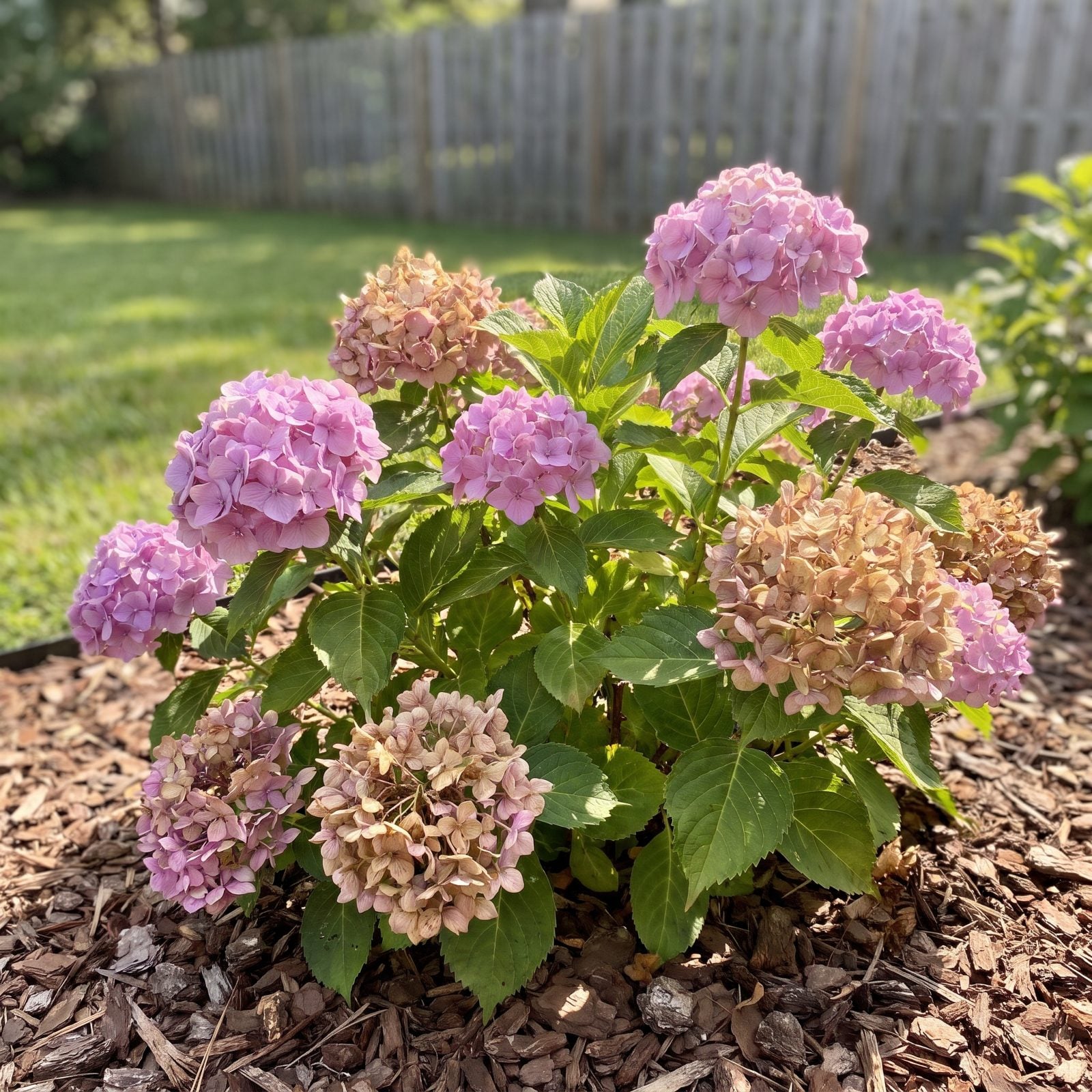
Yes, if you’ve got the right plant. Reblooming varieties were bred to flower on both old and new wood, so they open an early flush, rest, then send up a second round later in summer. Endless Summer kicked off the whole category years back and it’s still the one people recognize.
Deadhead the first flush, feed lightly, and you nudge that second wave along. The old-school single-bloomers give you one glorious month and that’s your lot. No amount of coaxing changes their nature.
34. Will a Late Frost Stop My Hydrangea From Blooming?
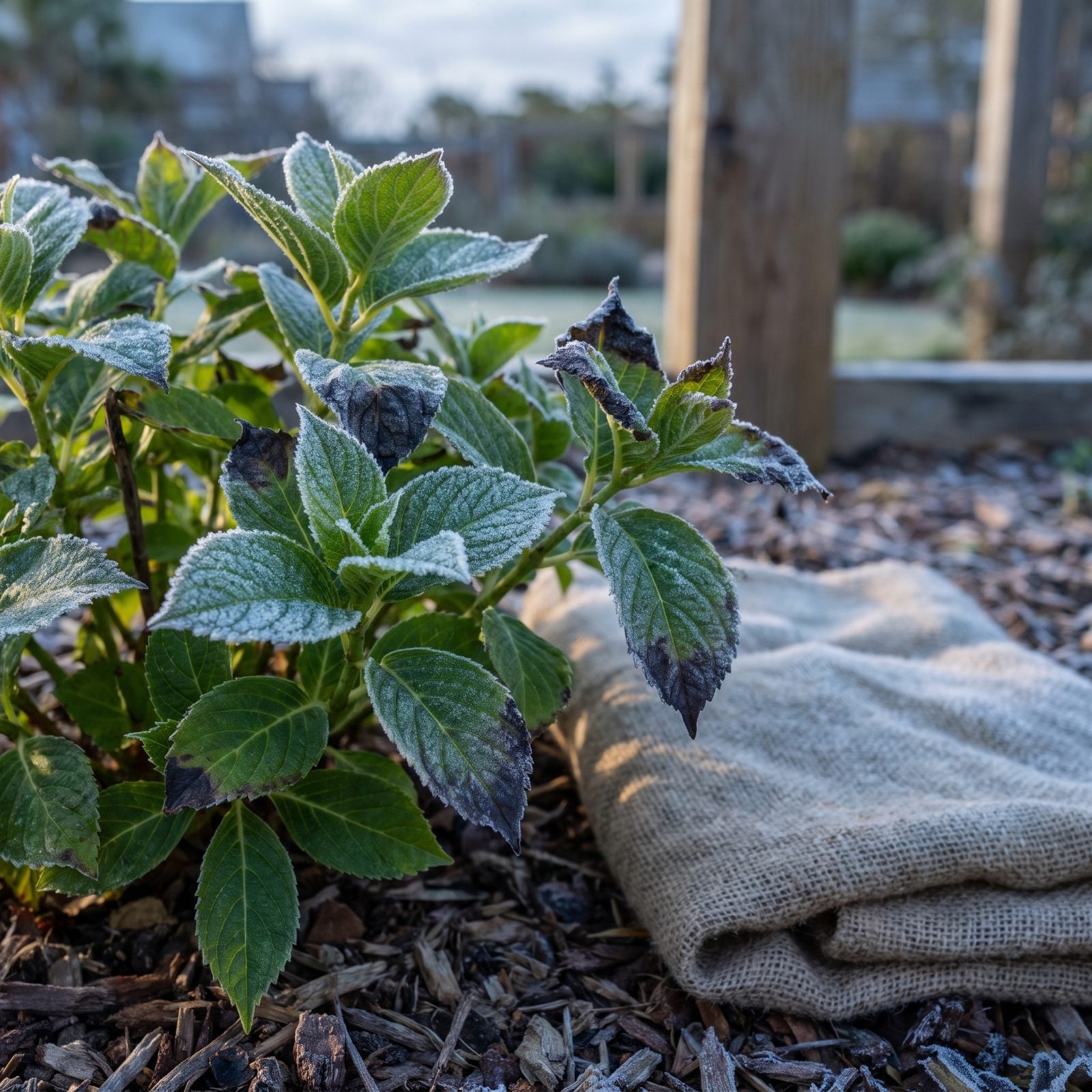
A late frost is the quiet bloom-killer nobody warns you about. On old-wood hydrangeas, the flower buds have already formed and are swelling in early spring, and one hard late-April night below freezing can zap them. You get a full season of leaves and zero flowers, even though the plant looks perfectly healthy.
New-wood types shrug this off because they bloom on growth that hasn’t appeared yet. If a frost is forecast and your buds are breaking, throw an old sheet or a frost cloth over the shrub overnight. It’s a nuisance. It also saves your summer.
33. Can I Turn My Hydrangea Blue or Pink, and Can White Blooms Change Color?
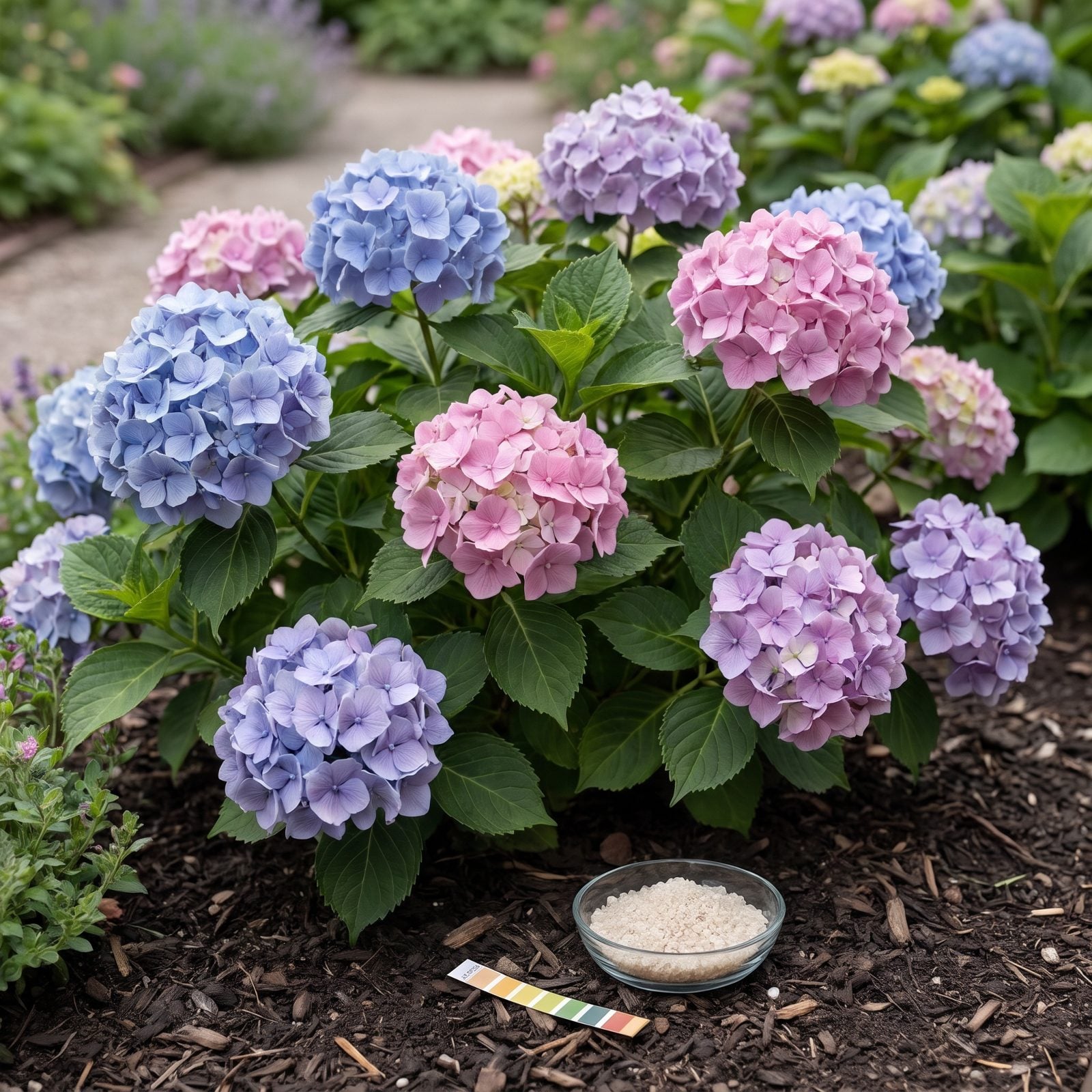
Here’s where the science gets fun. On bigleaf hydrangeas, bloom color follows soil chemistry. Acidic soil frees up aluminum the plant can absorb, and you get blue. Alkaline soil locks the aluminum away, and you get pink. Garden sulfur or aluminum sulfate pushes blue; garden lime pushes pink.
It takes a season or two, and the color often comes out mottled before it settles. One thing it cannot do: a white hydrangea has no pigment to shift, so no amount of soil tinkering turns it blue or pink. Panicle and smooth types don’t respond to this at all. Save your sulfur.
32. Why Are My Hydrangea Flowers Turning Green?
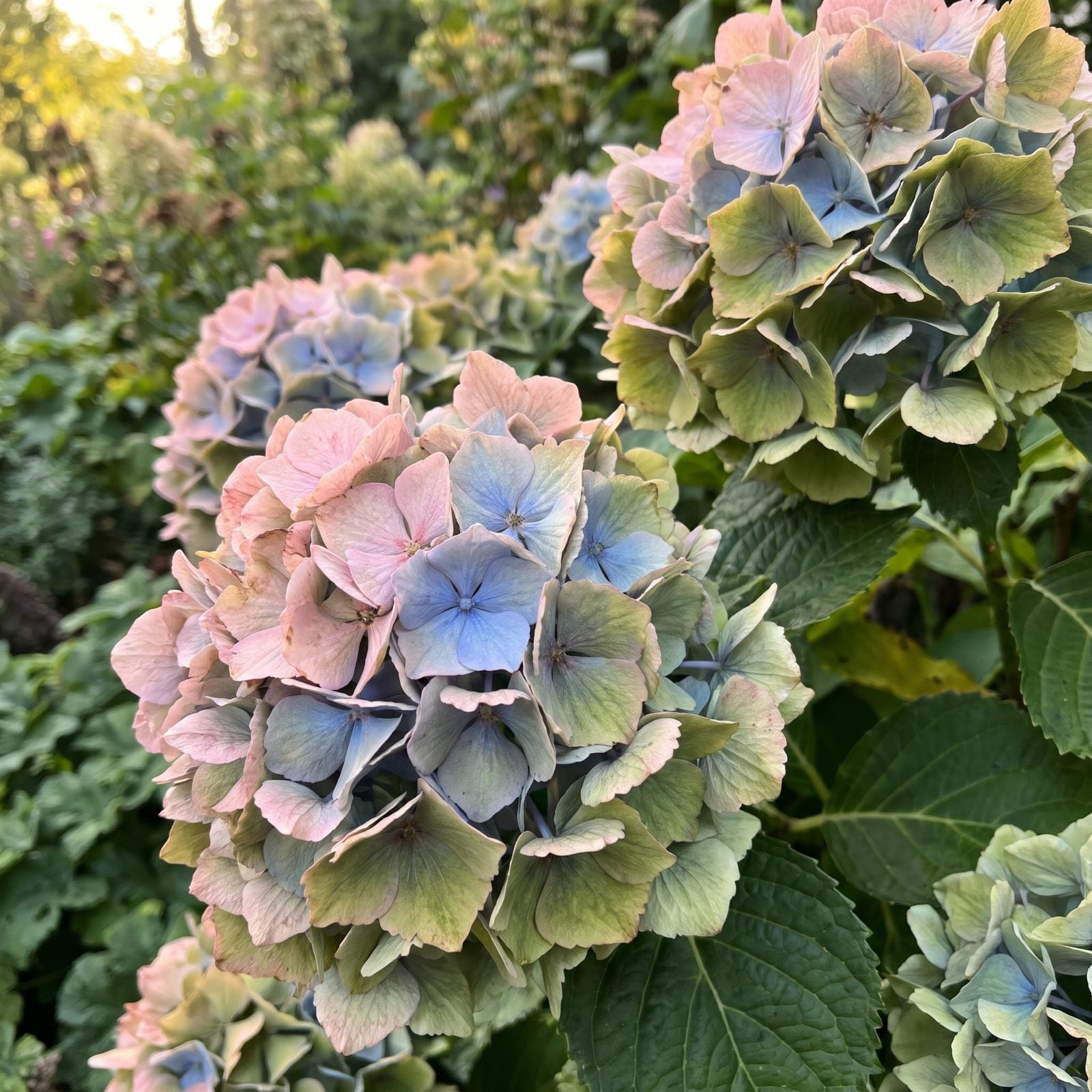
Green blooms rattle people, but they’re almost always normal. As hydrangea flowers age, the pigments fade and the natural green of the plant tissue shows through. It’s the bloom winding down, not a disease, and florists actually prize those antique green heads for arrangements.
A plant that opens green from the very start and never colors up can signal a phytoplasma issue, which is rare and not curable. But a bloom that was pink or blue in June and drifts green by August? Leave it. That’s just the back half of its life, and it’s lovely in a dried bouquet.
31. Why Are My Hydrangea Blooms Turning Brown So Quickly?
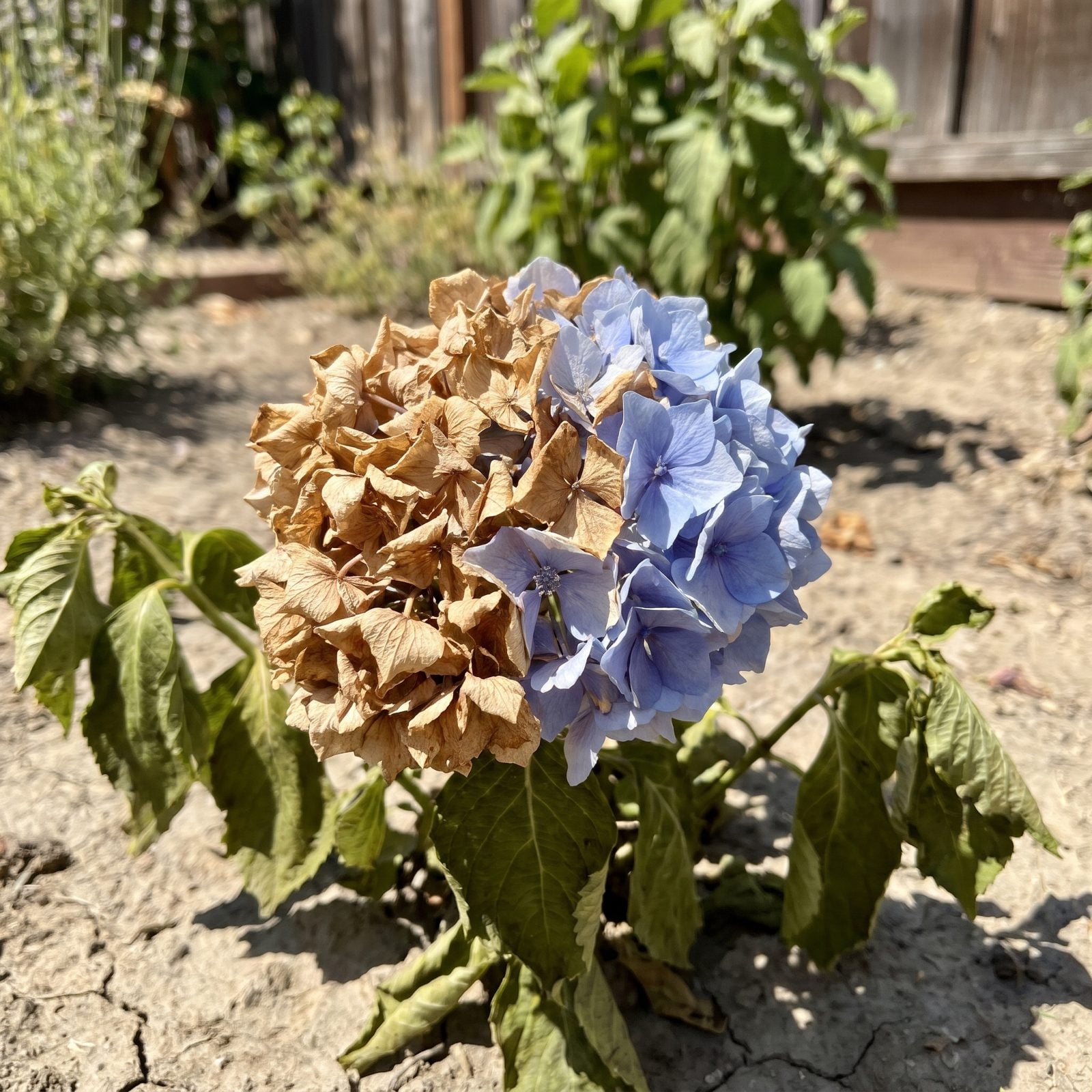
Brown, crispy blooms almost always mean too much heat and too little water. Hydrangeas drink a lot, and an afternoon of blazing sun with dry roots scorches the petals from the edges in.
Move a container-grown plant out of hot afternoon sun, mulch the base to hold moisture, and water deeply at the roots rather than over the flowers. Overhead watering in full sun can make it worse, the droplets acting like tiny magnifiers.
30. Why Does My Hydrangea Droop Every Afternoon?
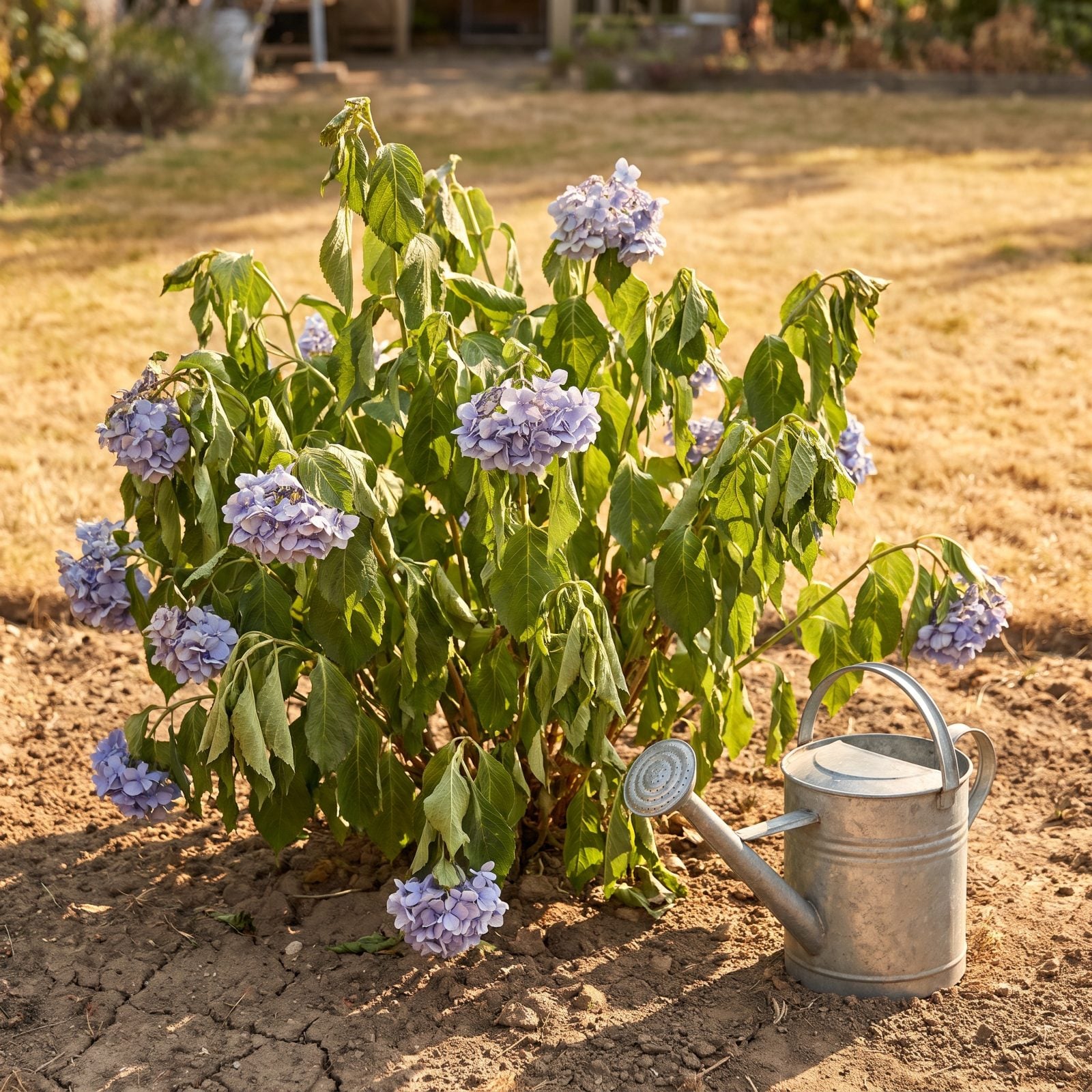
The afternoon flop is the most misread hydrangea behavior there is. Those big soft leaves lose water faster than the roots can replace it on a hot day, so the plant wilts to protect itself, then perks right back up by evening or the next morning. Looks like an emergency. Usually isn’t.
If it’s still limp first thing in the morning, that’s your real distress signal — water deeply then. Panic-watering a drooping plant every afternoon can waterlog the roots, which is a worse problem than a little midday sulking. Check the soil two inches down before you reach for the hose.
29. What Does an Overwatered Hydrangea Look Like?
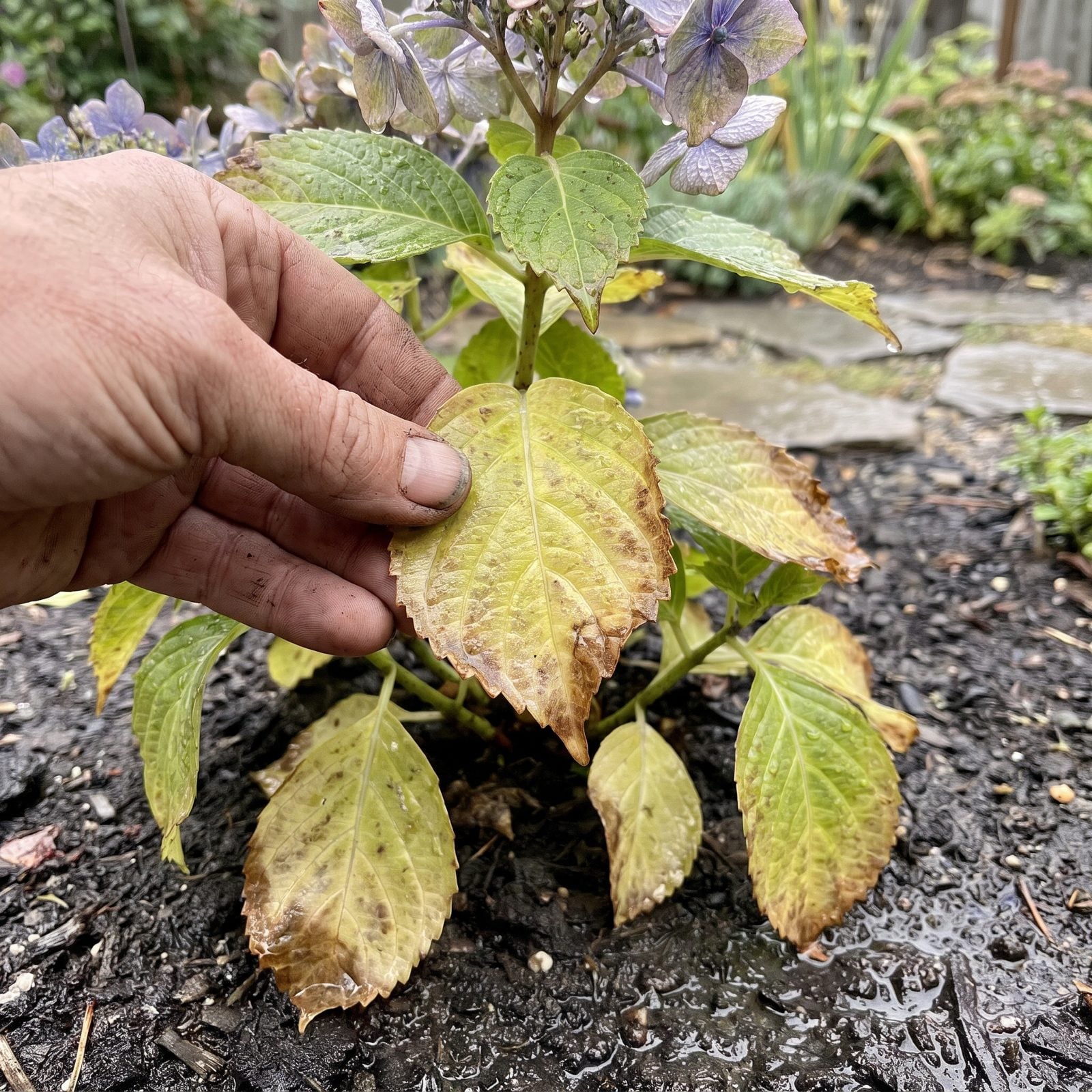
Cruel trick: an overwatered hydrangea and a parched one look almost the same. Both wilt. Both droop. People see the flop, reach for the hose, and do the exact wrong thing.
Overwatering shows up in the leaves first — yellow from the bottom up, soft and limp rather than crispy, the whole plant sulking in a waterlogged way even when the sun stays hidden. Stick a finger two inches into the soil. Wet, with a faintly sour smell? Back off.
28. Can Hydrangeas Grow in Full Sun?
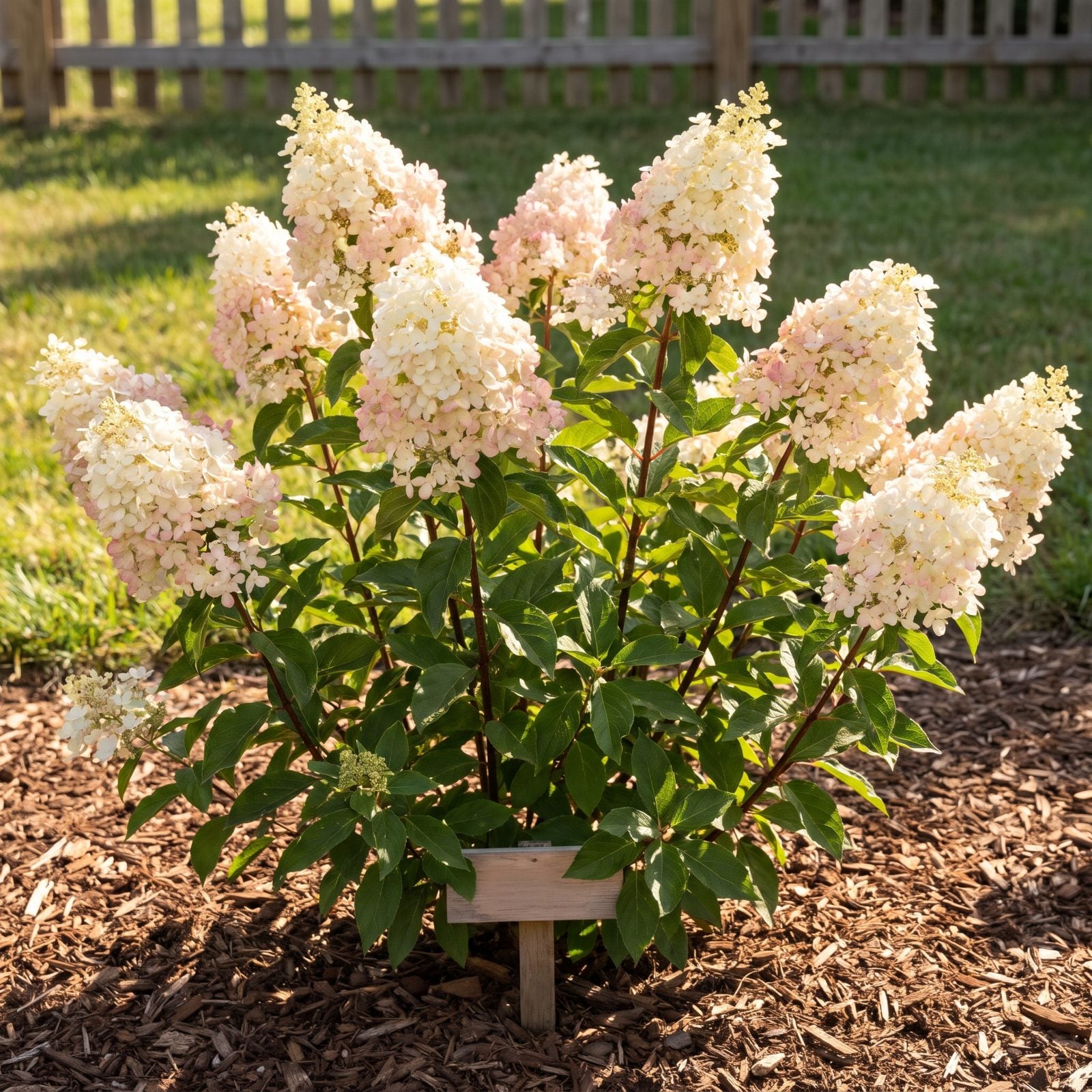
Depends entirely on which hydrangea you’ve got, and nobody at the garden center bothers to mention it.
Panicle hydrangeas — the cone-shaped white ones like ‘Limelight’ — and smooth types like ‘Annabelle’ handle full sun fine, especially up north. But the bigleaf and mountain types, those blue and pink mopheads everyone covets, will cook in all-day southern sun. Scorched petal edges, crispy leaves, blooms that faint by noon.
In hot climates, give the fussy ones morning sun with afternoon shade. Cooler zones are a different story. Most hydrangeas there want far more sun than they get, which is exactly why the one lurking in deep shade behind the garage manages four flowers and a mountain of excuses.
27. What Fertilizer Does a Hydrangea Actually Need?
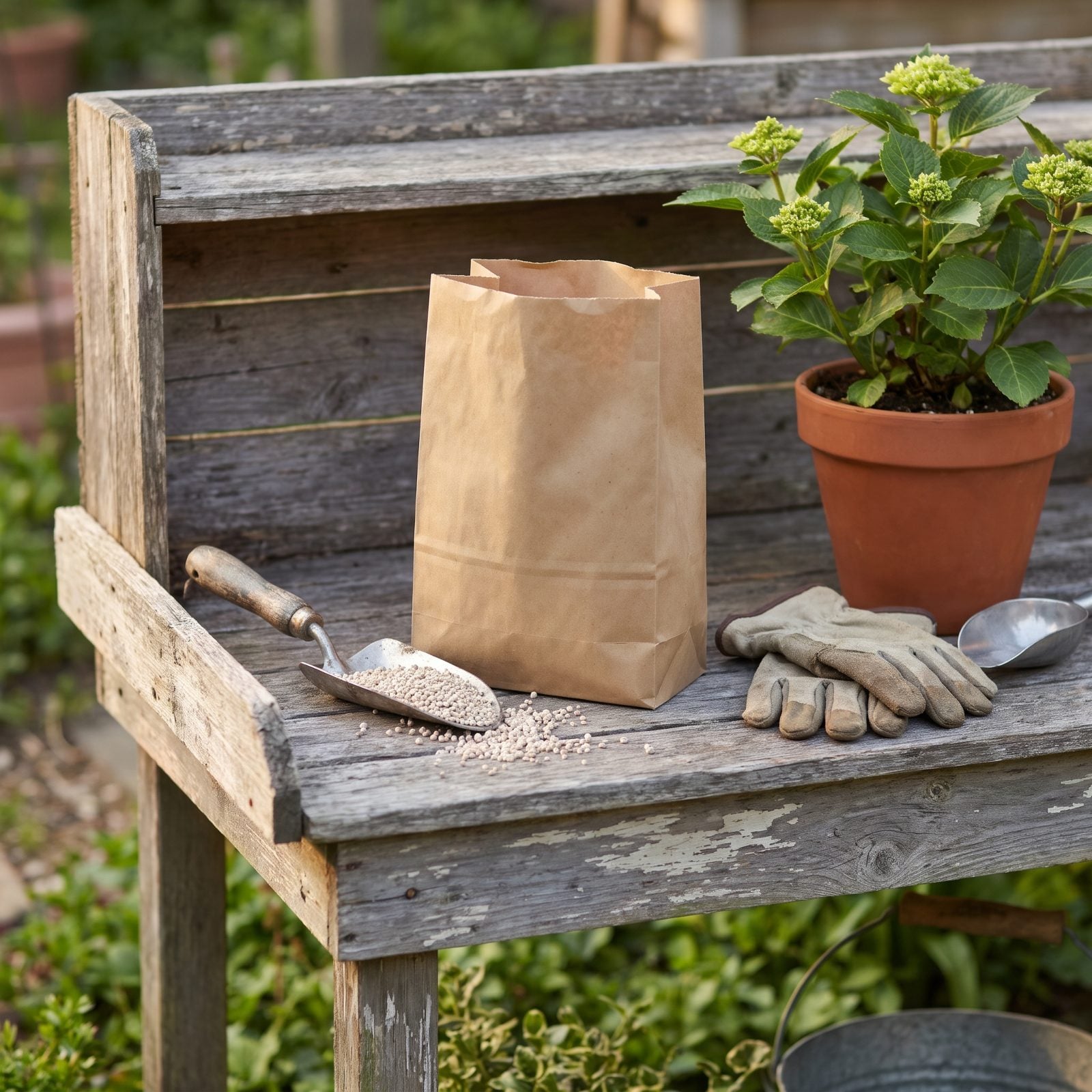
Most hydrangeas are overfed, not underfed.
One application of a balanced slow-release granular fertilizer in early spring covers the whole year. Something in the general 10-10-10 neighborhood, worked lightly into the soil around the base, and you’re done. You’re feeding a shrub, not running a hydroponics lab.
Push too much nitrogen and you’ll grow a lush green bush with barely a flower on it — the classic rookie heartbreak. All leaf, no bloom? Your fertilizer is probably the villain. Hold the feed, work in some compost, and let the thing settle down.
26. How Deep Should I Plant a Hydrangea?
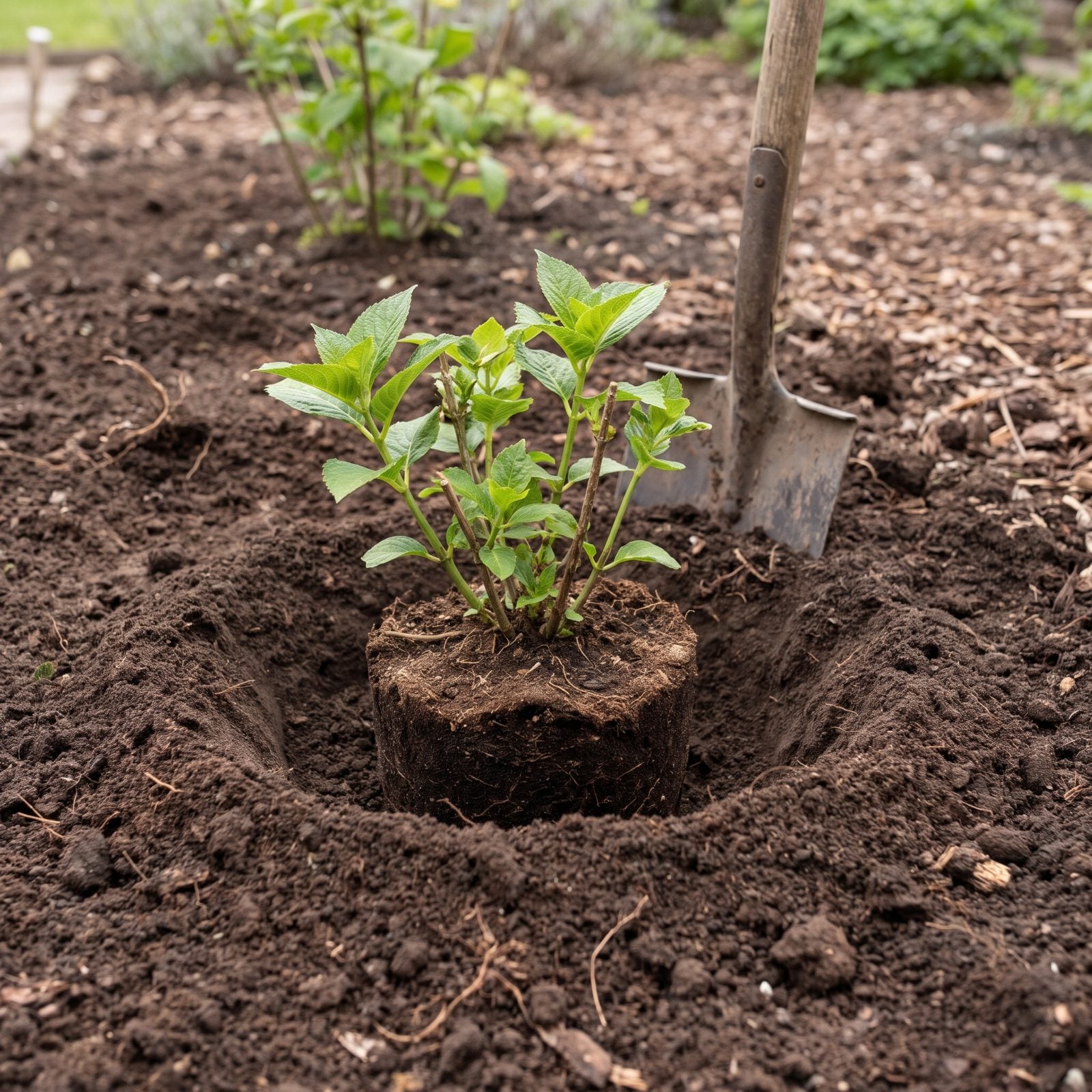
The number one planting mistake is burying the thing too deep.
A hydrangea wants the top of its root ball sitting level with the surrounding soil, or even a hair above it. Dig the hole wider than it is deep. Twice as wide as the root ball is the old rule, and it’s a good one — loosened soil around the sides is what lets young roots push outward.
Bury the crown and you’ve invited rot. Plant it high instead, backfill gently, water it in to settle the air pockets, then mulch around it. And keep the mulch off the stems — piling it against the wood is how people quietly rot their own plants.
25. Can Hydrangeas Survive in Heavy Clay?
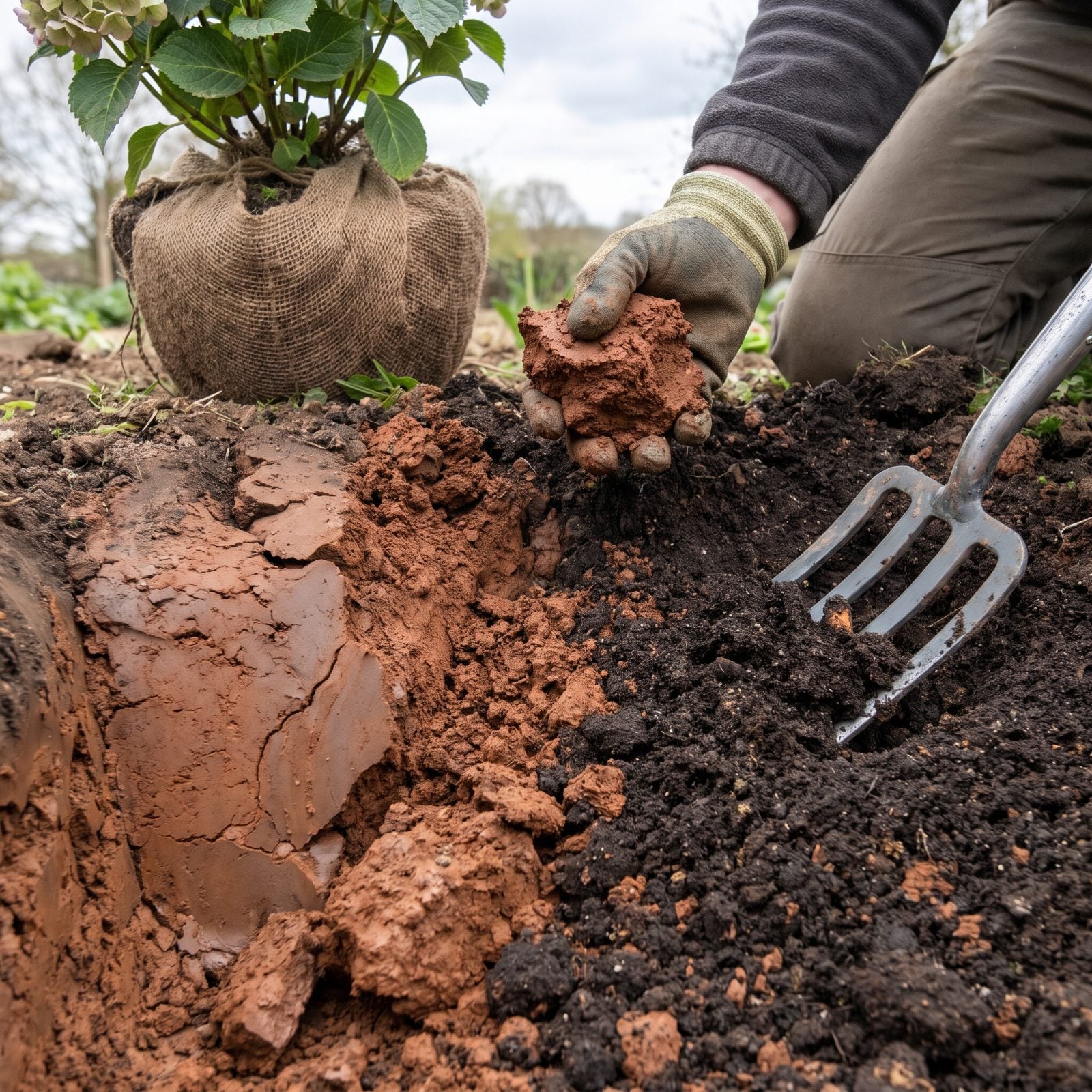
They can. But clay has a way of killing hydrangeas slowly, from the roots up, over winter.
The clay itself isn’t the enemy — it’s the water clay refuses to drain. Roots left standing in soggy ground through a cold, wet winter rot, and come spring you’re left wondering why a plant that looked perfectly healthy in October simply never woke up.
Two fixes work. Amend a wide area with compost and coarse organic matter before planting, not just the hole, because a pot of good soil dropped into a sea of clay becomes a bathtub. Or plant slightly raised, so the crown rides above the sodden zone. Panicle hydrangeas, for what it’s worth, put up with heavier ground than the mopheads ever will.
24. Can I Grow a Hydrangea Permanently in a Pot, and How Big Should It Be?
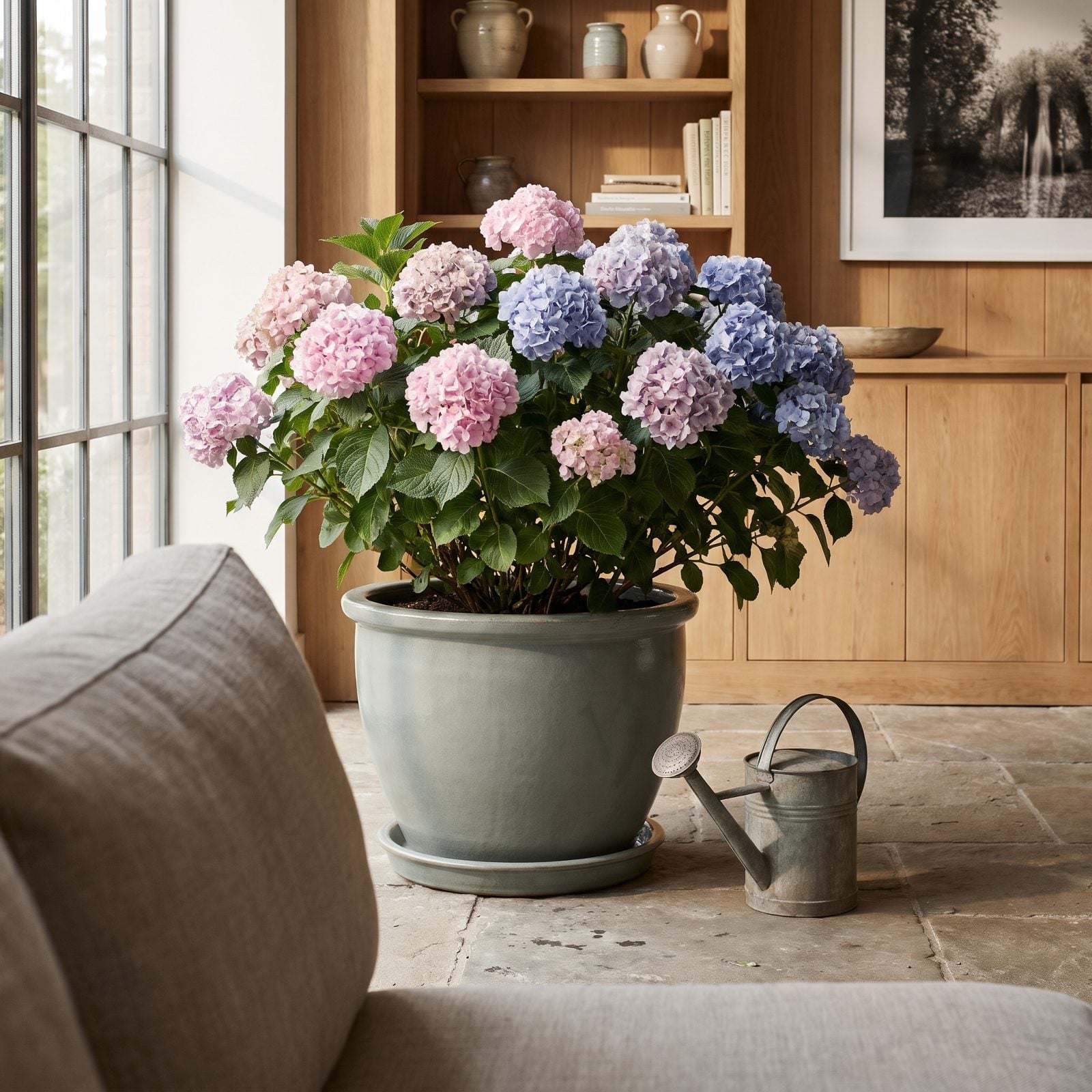
Yes — a potted hydrangea can live happily for years, provided you don’t cram it into a pot that’s too small. Which is exactly what almost everyone does.
Go big. A container at least 18 to 24 inches across, with real drainage holes. Small pots dry out by lunchtime in summer, and a hydrangea’s entire personality is built around not drying out. More soil volume means more forgiveness on the day you forget to water.
Use a quality potting mix. Garden soil compacts into something close to concrete inside a container, so skip it. Expect to water nearly every day through July heat, feed lightly in spring, and repot or root-prune every few years once it goes rootbound.
23. Can I Move a Large, Established Hydrangea?
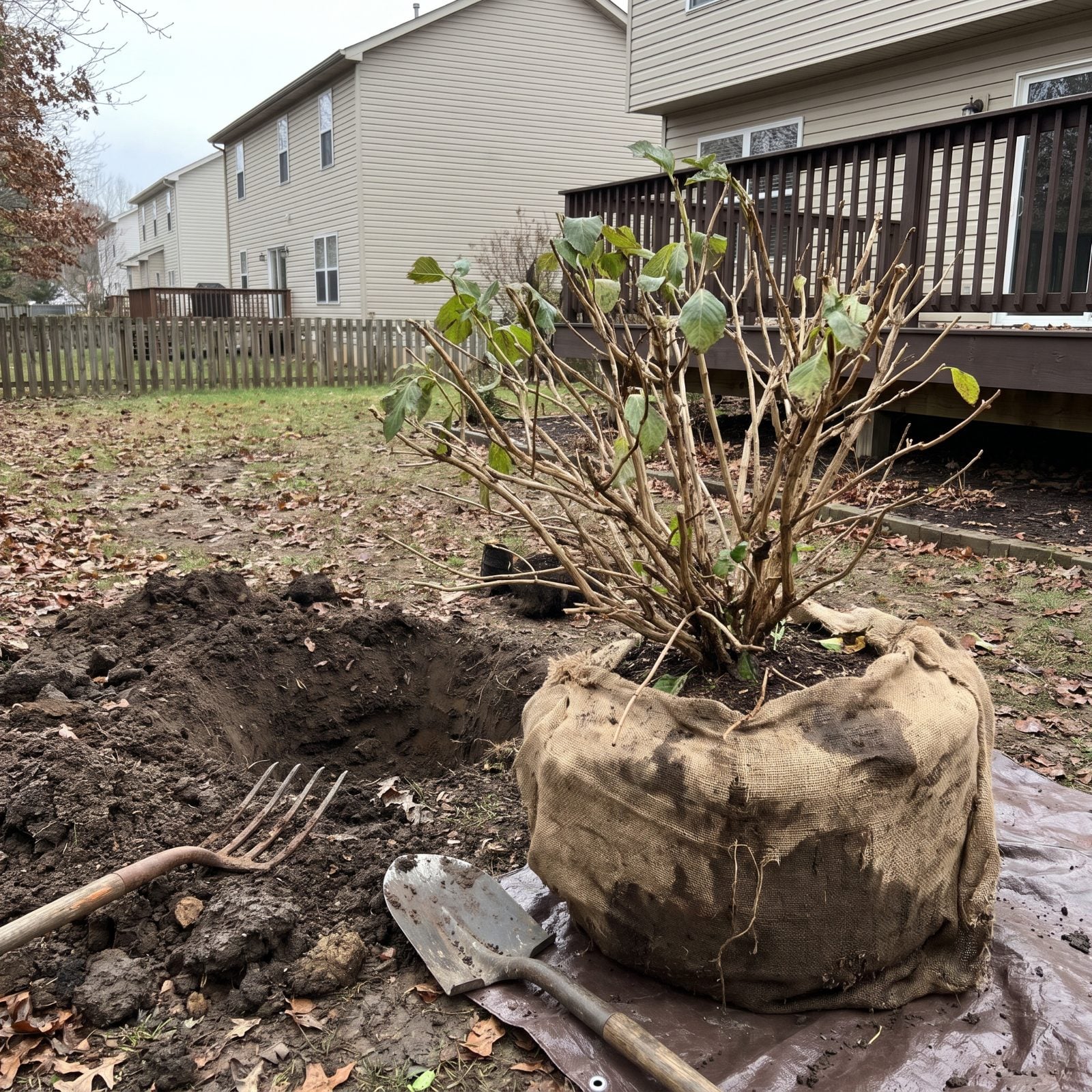
You can, and one thing above all decides whether it survives: timing.
Move it dormant — late fall after the leaves drop, or very early spring before it wakes. Dig as wide a root ball as you can physically wrestle out of the ground, because the feeder roots you’re trying to save live out near the dripline, not snug against the trunk.
Water deeply the day before you dig so the soil clings together and the shock eases. Replant right away at the same depth, water hard, and brace yourself. A moved hydrangea often sulks for a season and skips a year of good bloom. Normal. Not a death sentence.
22. Do Hydrangeas Need Winter Protection?
Most established hydrangeas in their proper zone need nothing. People bundle up plants that would’ve sailed through just fine.
The exception is the bigleaf and mountain crowd — those blue and pink mopheads — grown in cold climates. They bloom on old wood, so next year’s flower buds are already sitting on this year’s stems. One brutal cold snap kills the buds, and you’re left with a lush, healthy, utterly flowerless plant. Heartbreaking in a quiet way.
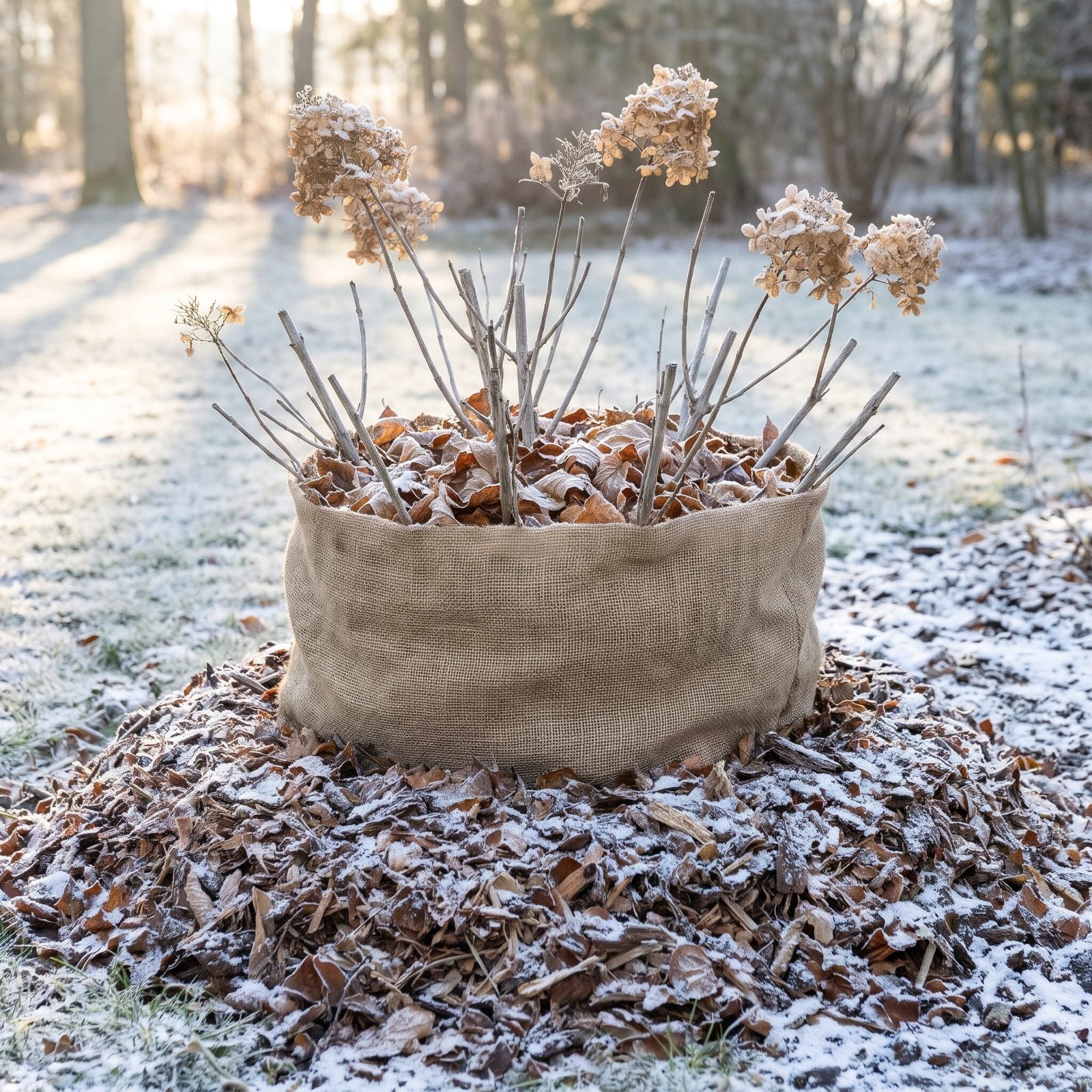
If that’s you, mound mulch around the base after the ground freezes, and gather the stems into a burlap sack stuffed with dry leaves in the harshest zones. Panicle and smooth hydrangeas bloom on new wood and are far tougher, though a young smooth hydrangea still appreciates a leaf-stuffed wrap through its first harsh winter or two. The low-drama choice, honestly.
21. How Can I Tell Whether Bare Hydrangea Stems Are Dead?
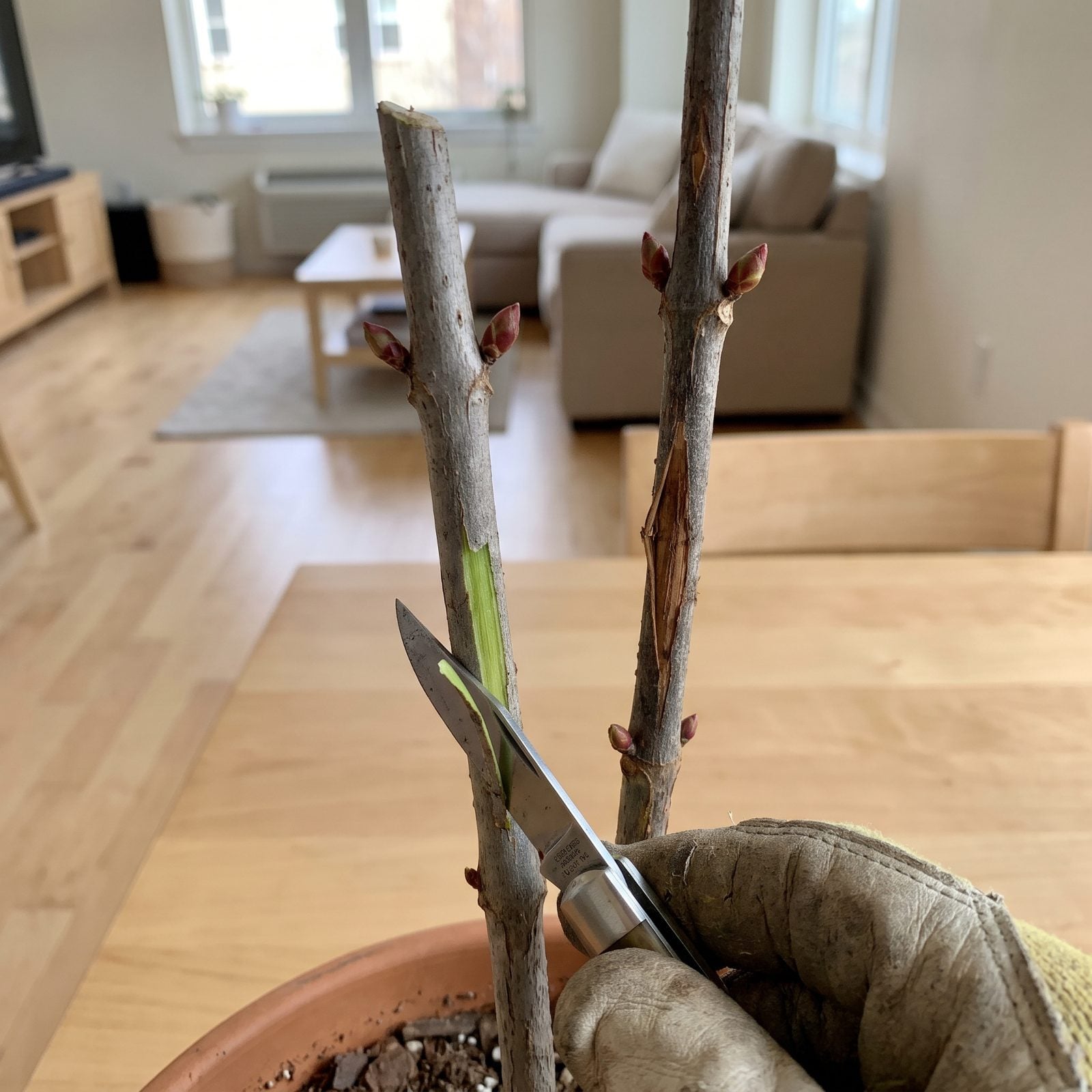
The scratch test settles it in two seconds.
Take a thumbnail or a small knife and scrape a thin bit of bark off a stem. Green and moist underneath means living wood; brown, dry and brittle means that section is gone. Work your way down until you hit green, and there’s your cut line.
Now the hard part — patience. Hydrangeas leaf out late, and a stem that looks like a dead twig in April is usually just loafing around. Don’t hack everything to the ground in a fit of spring frustration. Wait until the plant has clearly broken bud, usually mid to late spring, then cut out only what stayed brown and lifeless.
20. Why Are My Hydrangea Leaves Turning Yellow?
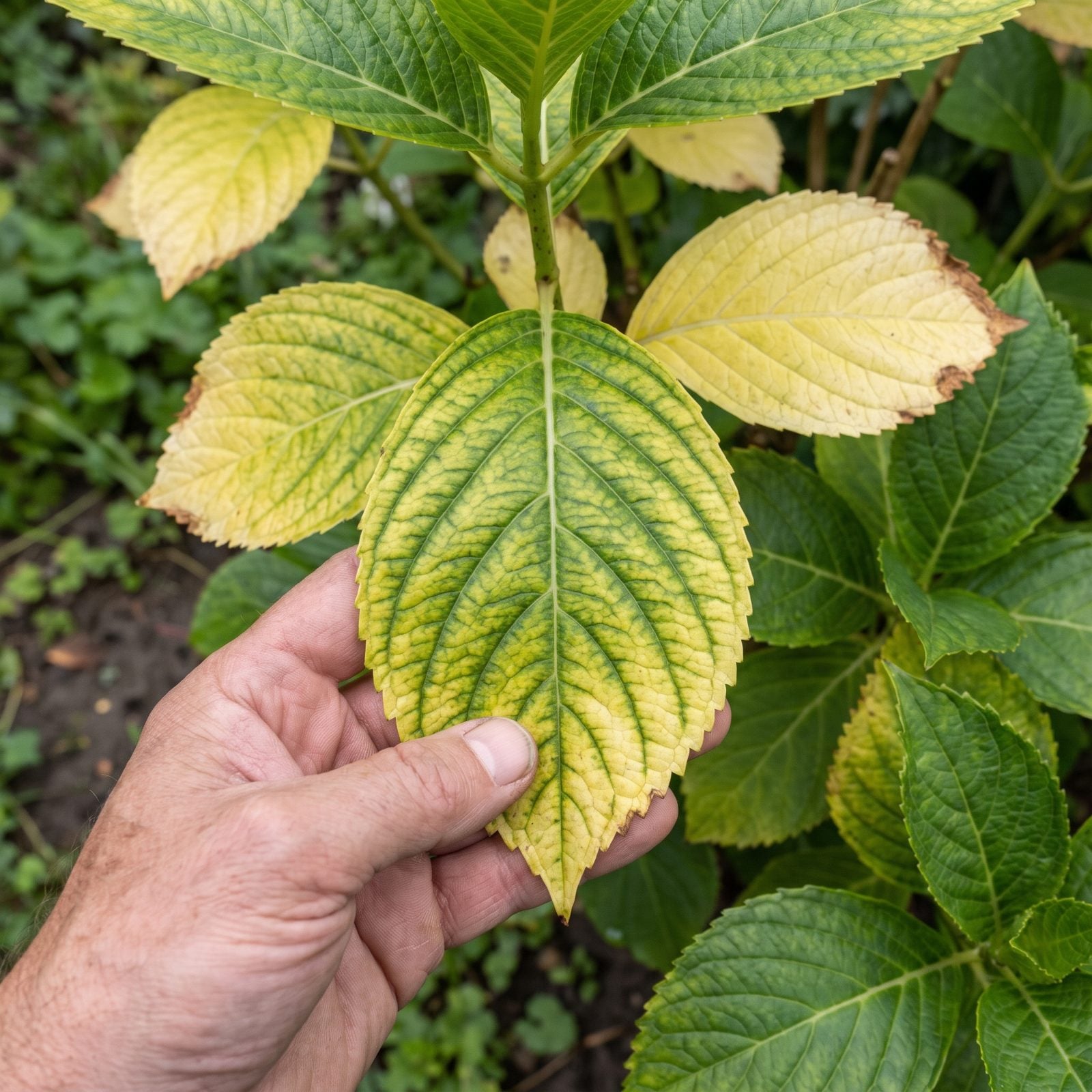
Yellow leaves are the plant talking, and the pattern tells you what it’s saying.
Yellow leaves with veins that stay stubbornly green? That’s chlorosis, usually an iron or nutrient hitch tied to soil pH. Whole lower leaves going evenly yellow and dropping points to overwatering or soggy roots instead. And a few old leaves yellowing at the bottom late in the season is just the plant aging, nothing worth losing sleep over.
Before you treat anything, check your watering and drainage, because those cause most of the yellowing people pin on nutrients. If the vein-green chlorosis pattern does show up, a soil test plus a chelated iron supplement is the honest fix. Guessing with random feed tends to make it worse.
19. What Causes Black Spots on Hydrangea Leaves?
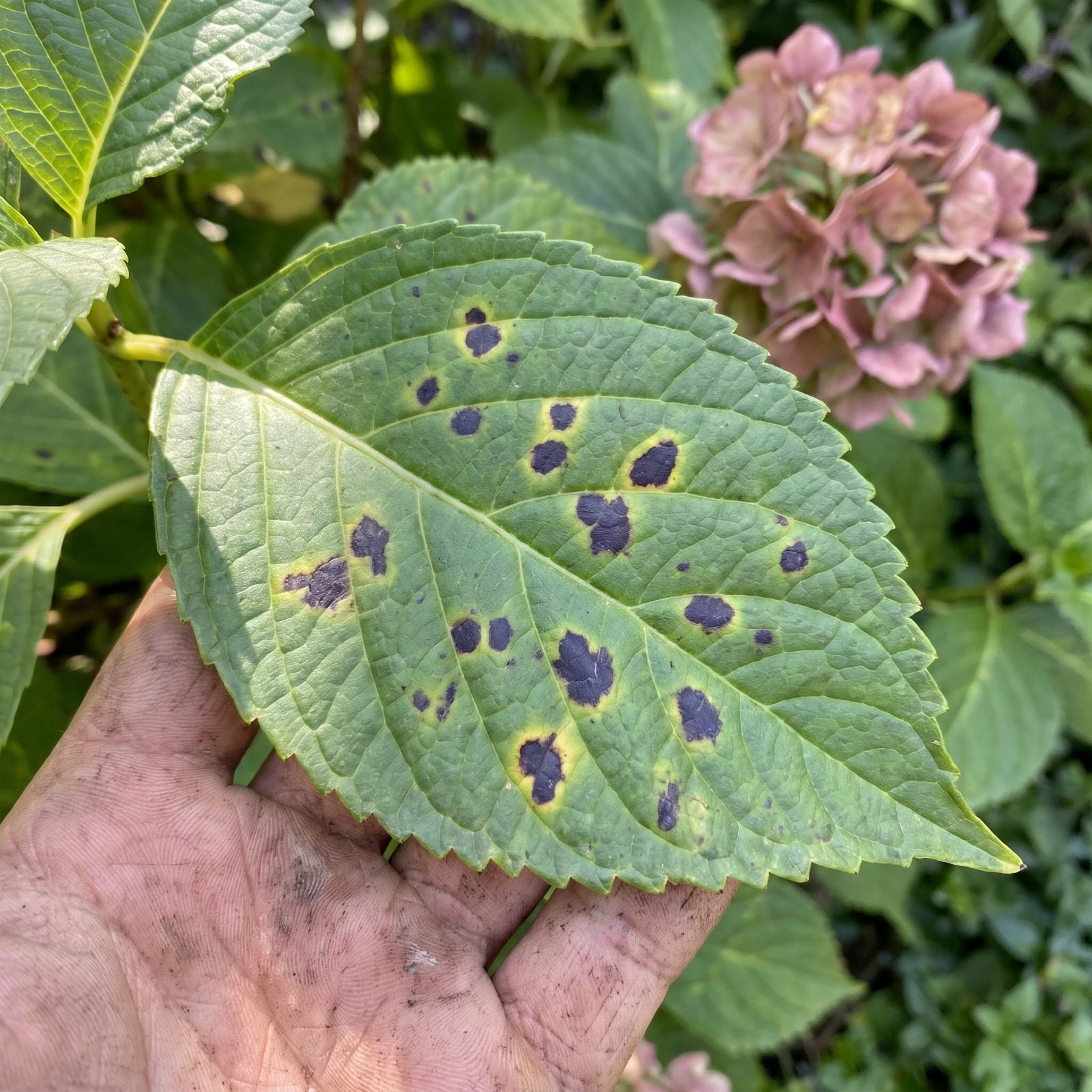
Those spots are almost always a fungal leaf spot, usually Cercospora, and they start low on the plant where water splashes up from the soil. You’ll see small purple-brown dots that swell into tan centers ringed in dark, worst in a humid, crowded summer.
Good news: it’s cosmetic. Looks alarming, almost never kills a healthy hydrangea. Rake up fallen leaves so spores don’t overwinter there, water at the base instead of overhead, and thin a few interior stems to let air move through. We ignored ours for a whole August once and the plant bloomed fine the next summer anyway.
18. How Do I Treat Powdery Mildew on a Hydrangea?
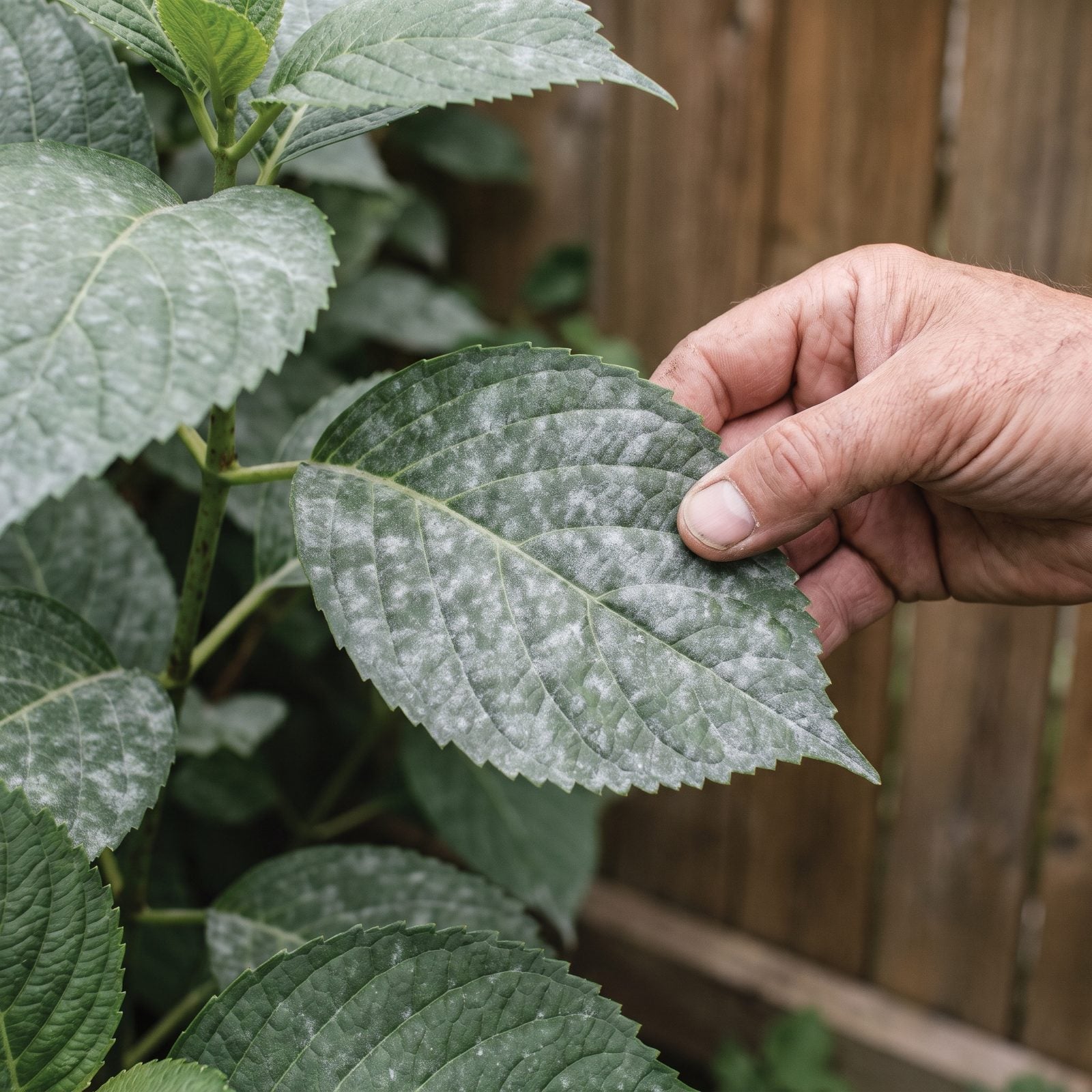
Powdery mildew shows up as a dusty gray film, mostly on hydrangeas stuck in shade with poor airflow. It thrives in that odd combo of warm days, cool nights, and still air.
Fix the conditions first, don’t just reach for the sprayer. Open up the plant, move pots apart, stop crowding it against a wall. For active spots, a diluted horticultural oil or potassium bicarbonate spray works, and so does the old milk-and-water trick some gardeners swear by. Spray in the morning so leaves dry before dark, and never in blazing sun or you’ll scorch them.
17. Why Are the Edges of My Hydrangea Leaves Brown and Crispy?
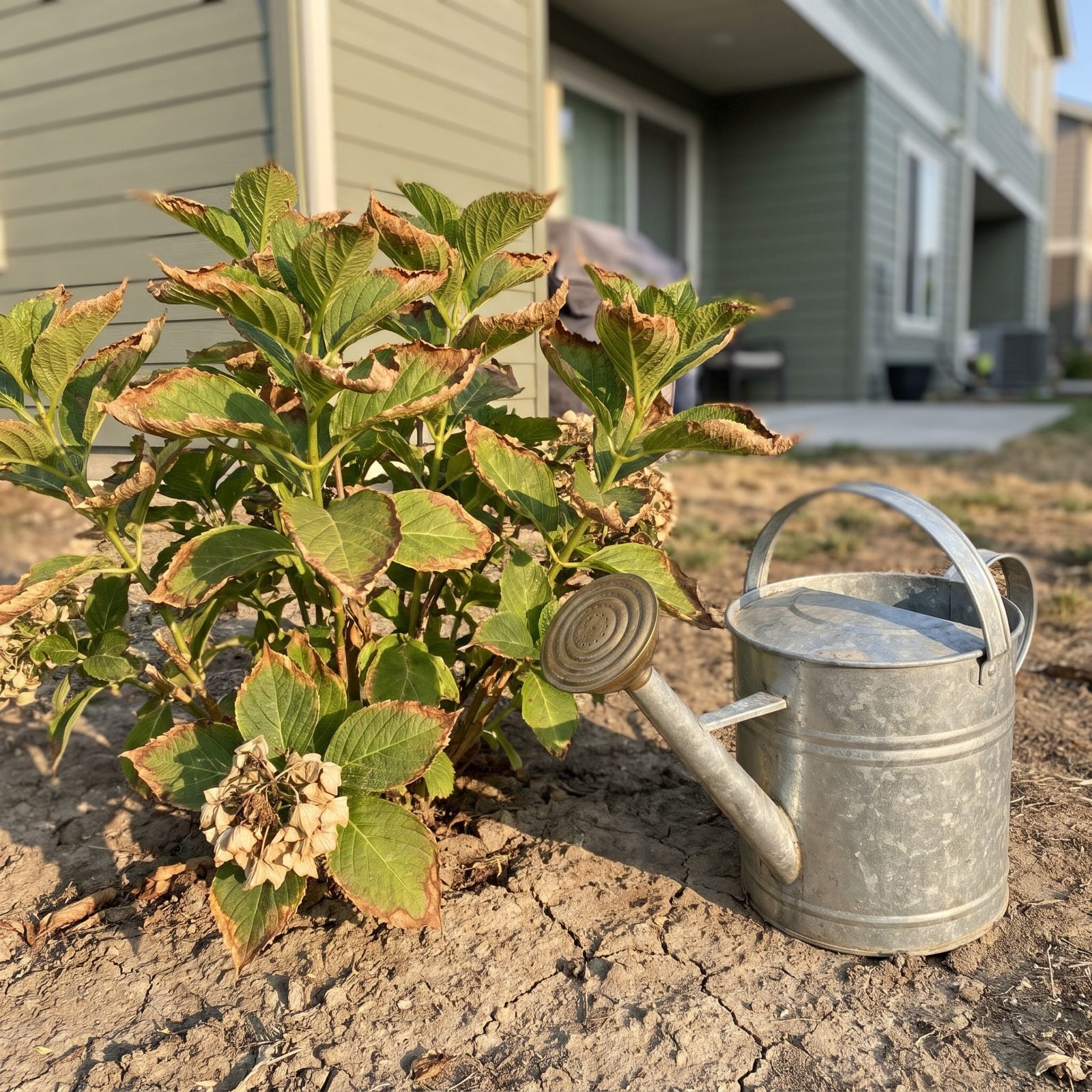
Crispy edges mean the plant ran out of water faster than it could drink. Hydrangeas are thirsty things, and in July heat or too much direct sun the leaf margins dry and brown before the rest catches up. Basically a sunburned, dehydrated plant.
Deep soak the roots two or three times a week in hot spells rather than a daily sprinkle. A couple inches of mulch keeps the soil cool and holds moisture. If the plant bakes in harsh afternoon sun, it may want a shadier spot. And watch the feeding, because fertilizer salt burn produces the exact same crisped look.
16. What Is Chewing Holes in My Hydrangea Leaves?
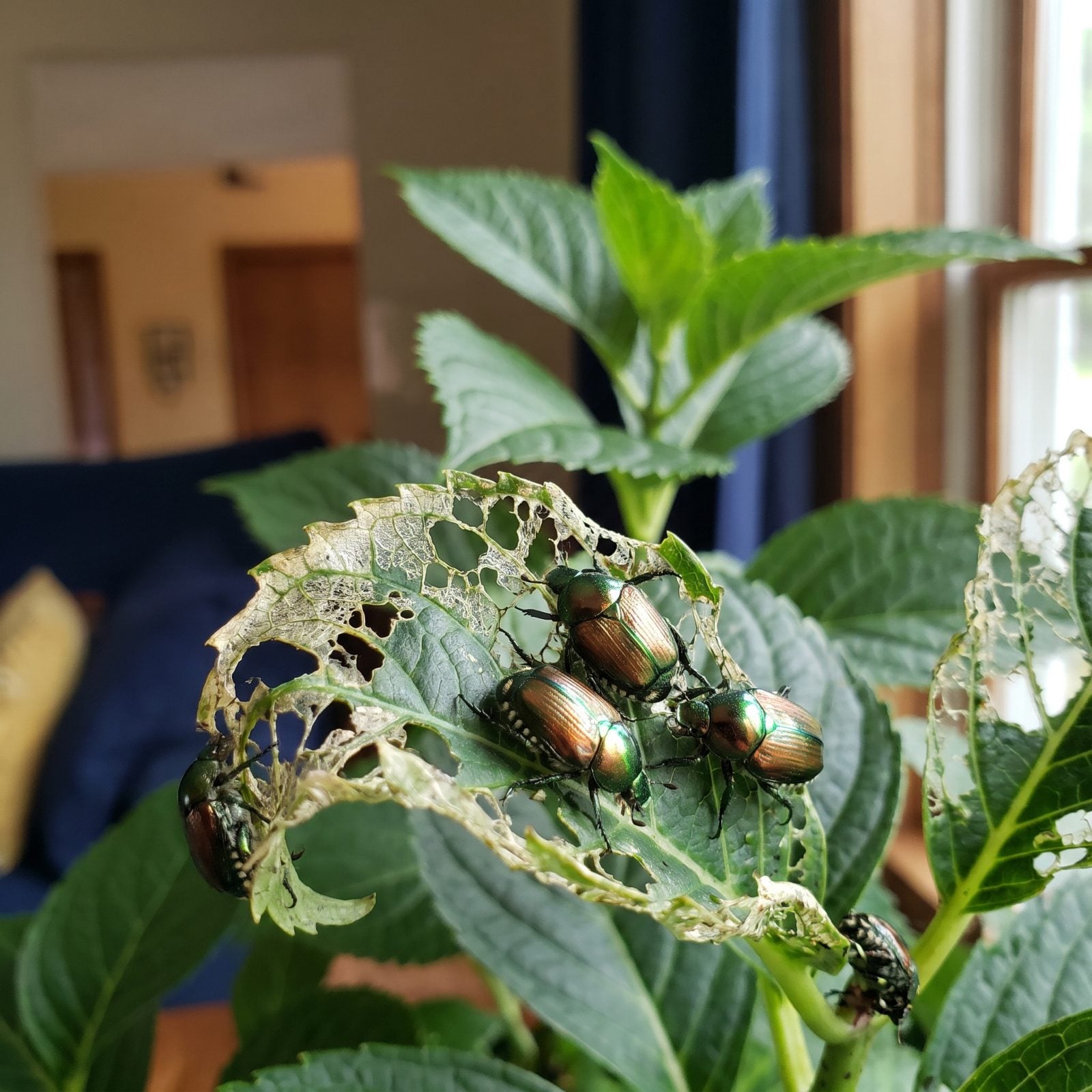
Ragged holes punched through the middle of leaves usually point to beetles, Japanese beetles especially, who feed in daylight and leave a lacy skeleton behind. Clean notches cut from the edges? Often weevils or caterpillars working at night. Silvery slime trails mean slugs.
Hand-picking beetles into a jar of soapy water at dawn, when they’re sluggish, beats most sprays. Those beetle bag traps lure in more beetles than they catch, and we stopped using them after one summer of basically advertising our garden to every beetle in the county. For slugs, shallow beer traps or a copper collar around prized plants does the job.
15. Will Deer Eat Hydrangeas?
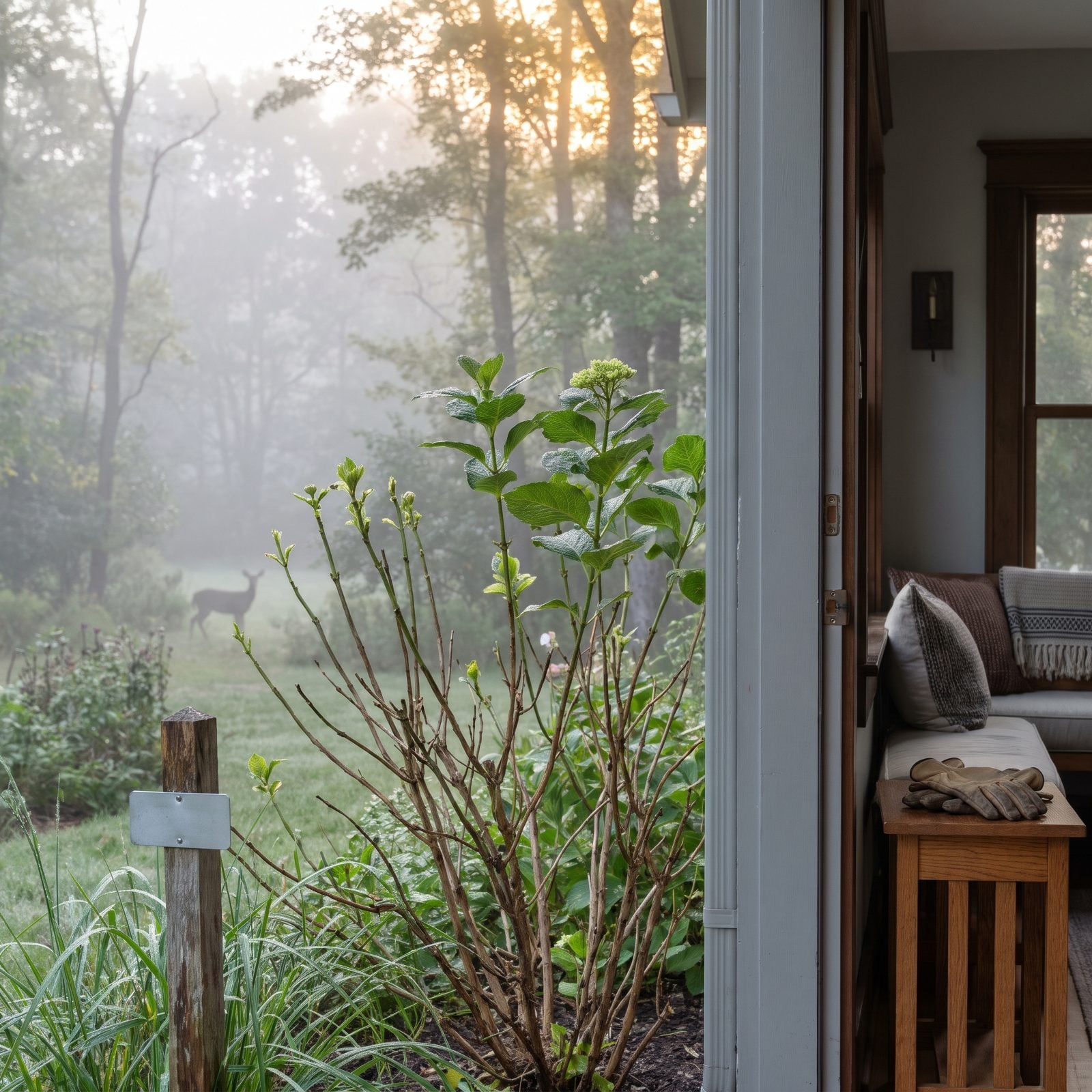
Yes, and they’re not shy about it. Deer treat hydrangeas like a salad bar, going after tender new growth and flower buds first, which is why you’ll find stems grazed flat right when you were waiting on blooms.
No hydrangea is truly deer-proof. Oakleaf and panicle types get hit less than the soft, juicy bigleaf kind, and rotating repellent sprays helps because deer learn to tune out any single smell. But a fence is the only thing that reliably works. Anyone who tells you one spray solves it hasn’t met a hungry doe in February.
14. Can I Grow a New Hydrangea From a Cutting?
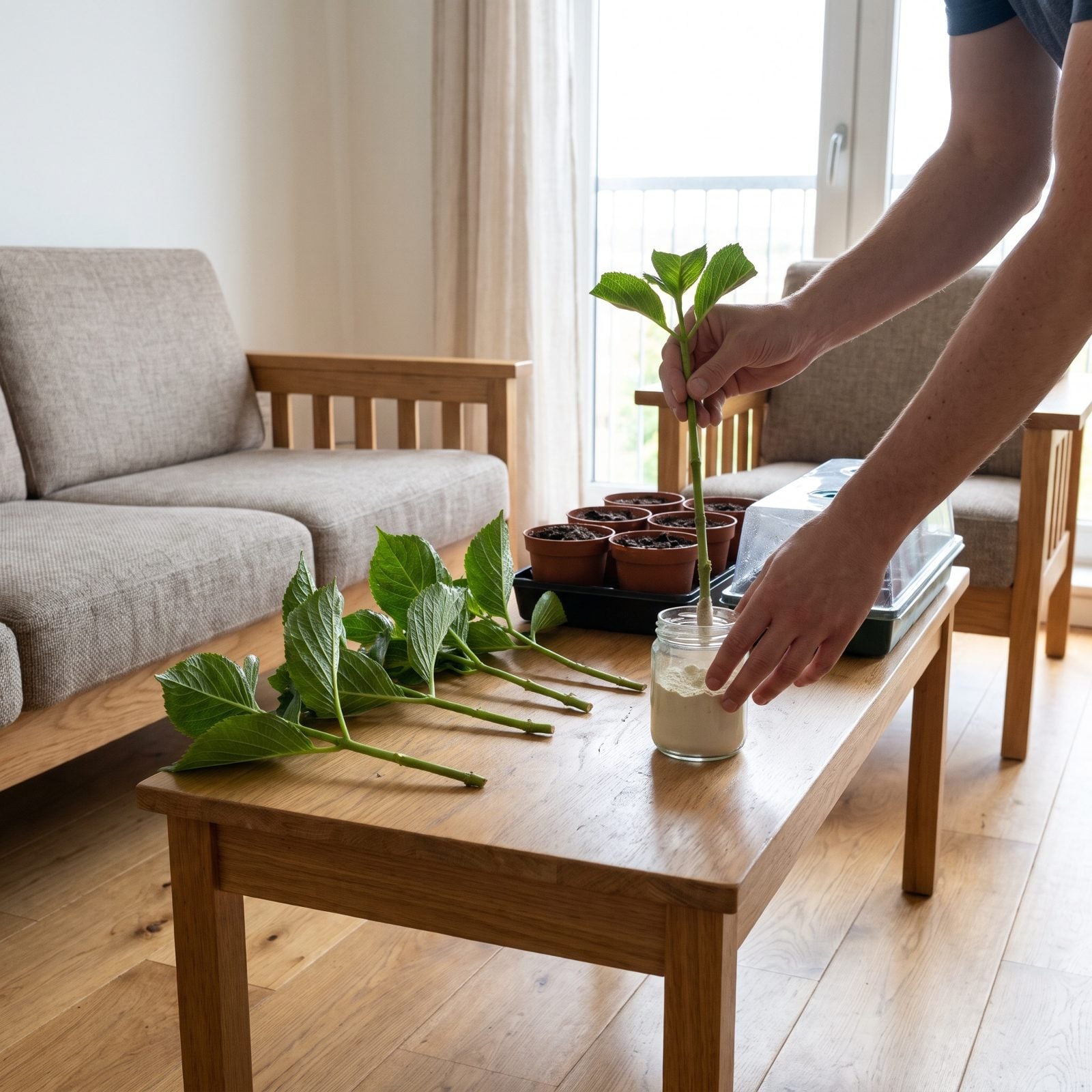
Hydrangeas root easily, which makes them one of the most satisfying plants to multiply for free. Take a softwood cutting in early summer, a nonblooming shoot about four to six inches long, strip the lower leaves, and leave just a few at the top so the cutting isn’t losing water faster than it can replace it.
Dip the end in rooting hormone, push it into moist potting mix, and keep it humid under a plastic dome or a cut-off bottle. Roots usually form in a few weeks. Keep the whole thing out of direct sun while it works. Pot up a dozen and give the extras away.
13. Can I Divide a Hydrangea Like a Perennial?
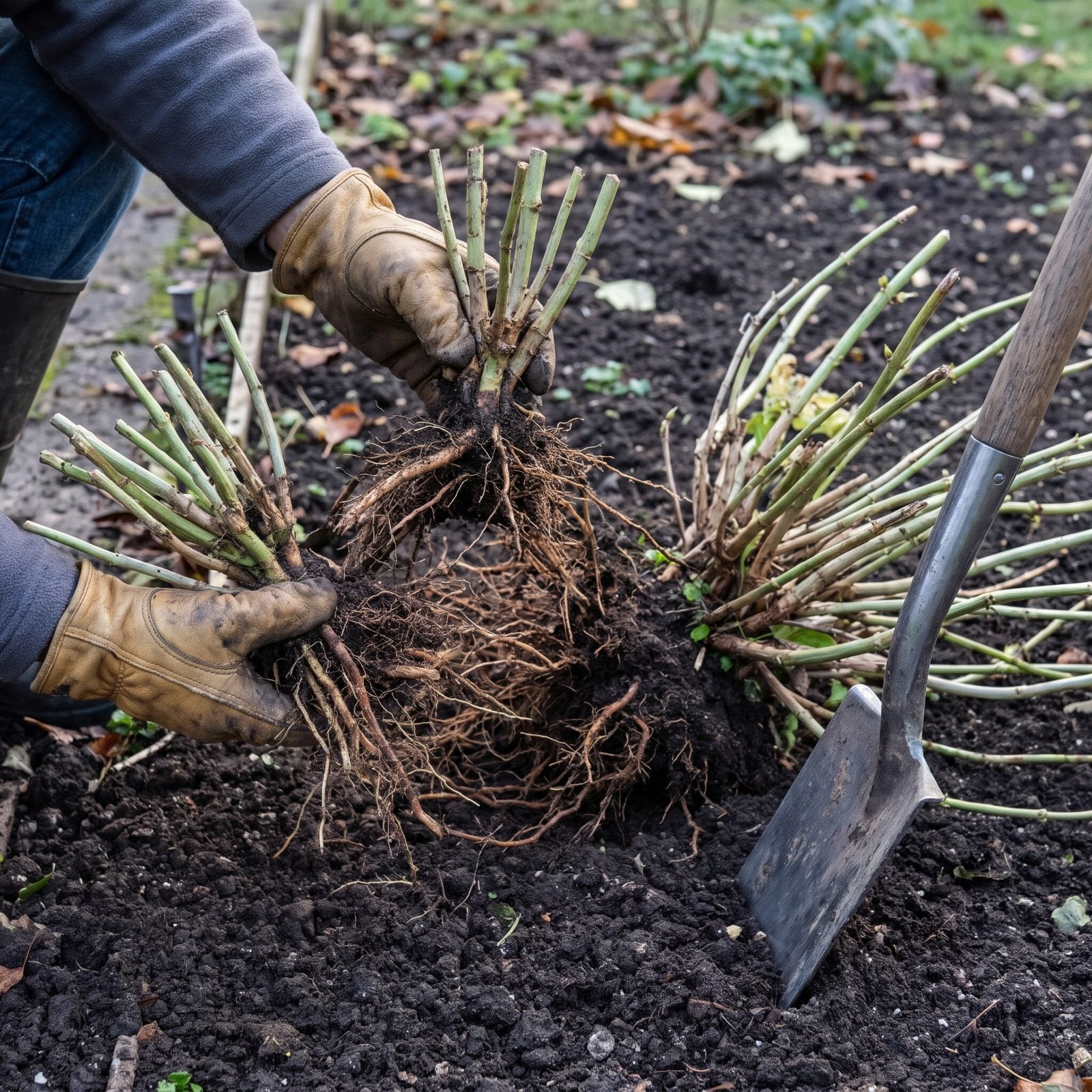
Sort of, but it’s fussier than splitting a hosta. Hydrangeas grow from one woody crown rather than a loose clump, so you can only divide an older plant that’s already thrown up separate stems from the base with roots of their own.
Dig the whole plant in early spring or fall while it’s dormant, then cut cleanly through the crown so each piece has stems and a decent chunk of root. Replant right away and water deeply. Expect a sulky season while each division settles in. For most people, cuttings are the easier route, and you don’t have to disturb a happy plant to get them.
12. Can a Florist Hydrangea Be Planted Outside?
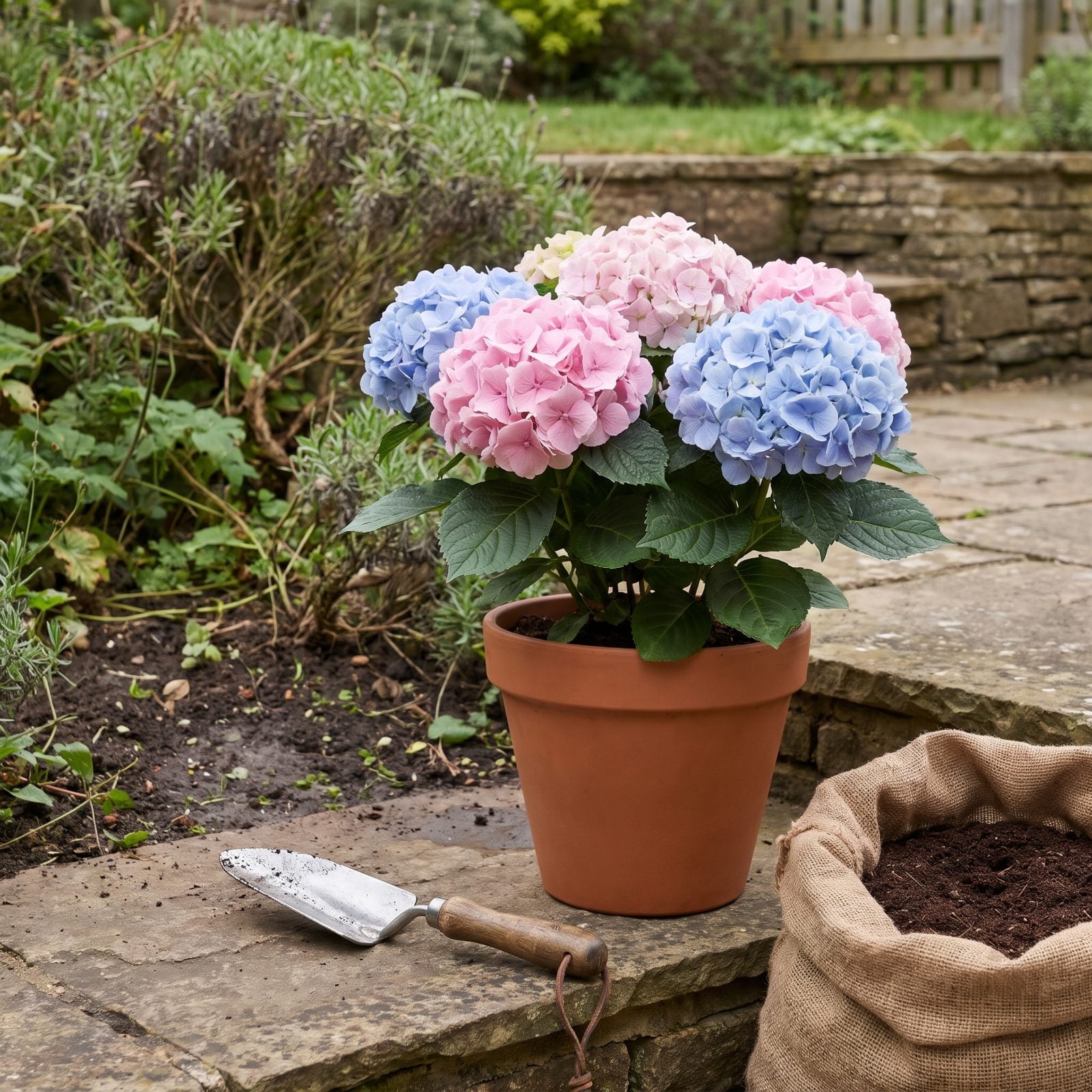
You can try, and sometimes it pays off, but go in with low expectations. Those gift-shop and grocery hydrangeas are forced in greenhouses and bred for a knockout pot display, not for surviving your winter.
Most are bigleaf types hardy only to roughly zones 6 and warmer, and even then they often lose their flower buds to cold. Plant it out after frost in dappled shade, keep it watered, and treat any future blooms as a bonus. If you’re in a cold zone, enjoy the pot indoors and don’t feel guilty when it fades. It did its job.
11. Why Do Cut Hydrangeas Wilt as Soon as They Enter a Vase?
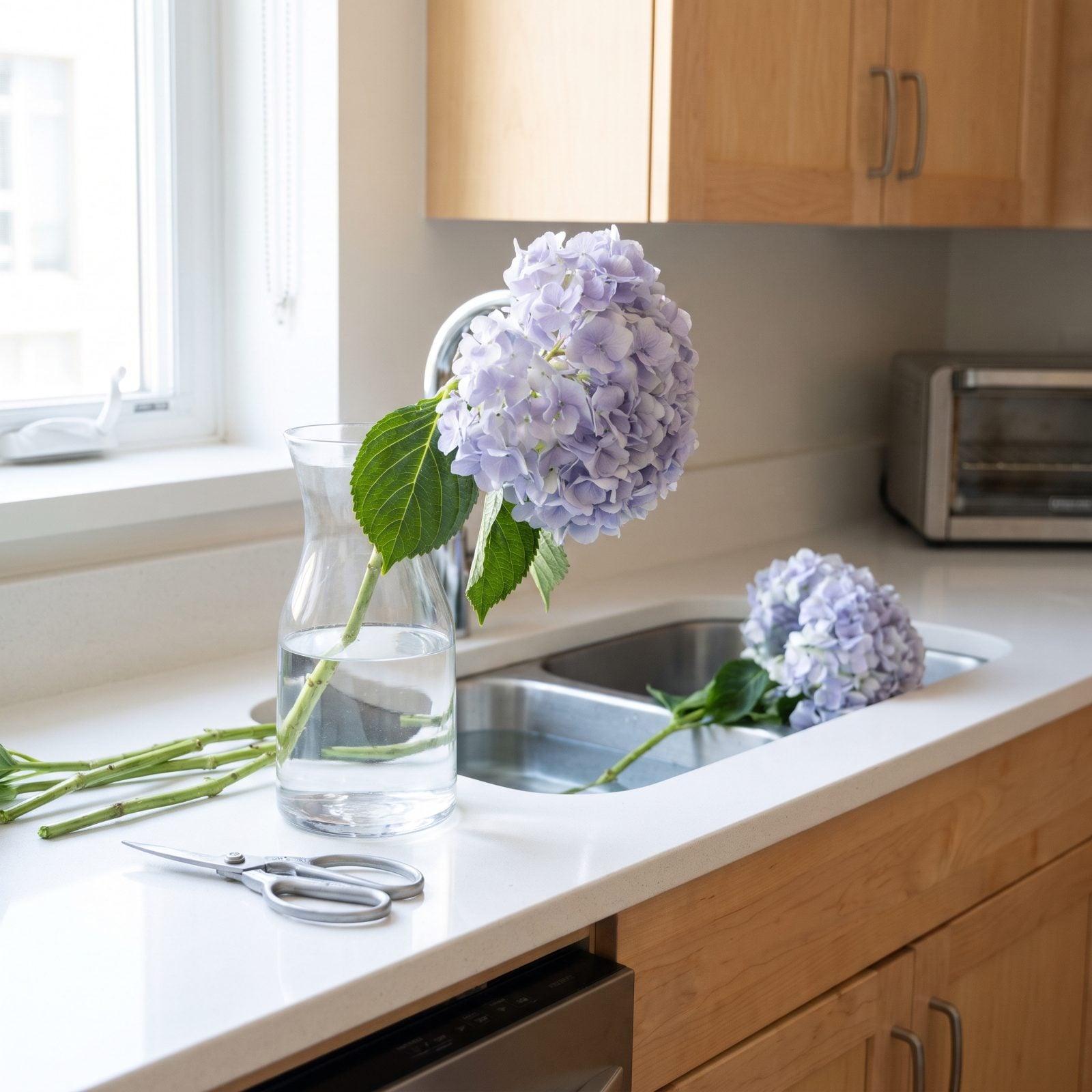
Hydrangeas drink through their stems and their petals, which is the part nobody tells you. They wilt fast because a sticky sap seals off the cut stem within minutes, and because the papery blooms shed moisture through their surface faster than most flowers.
Cut the stem on a sharp angle under running water, then dip the very tip in boiling water for about thirty seconds, or sear it with a flame, to break that sap seal. For an already-flopped bloom there’s a rescue move: submerge the entire flower head in cool water for an hour. It plumps back up like nothing happened.
10. How Do I Dry Hydrangea Blooms Without Them Shriveling?
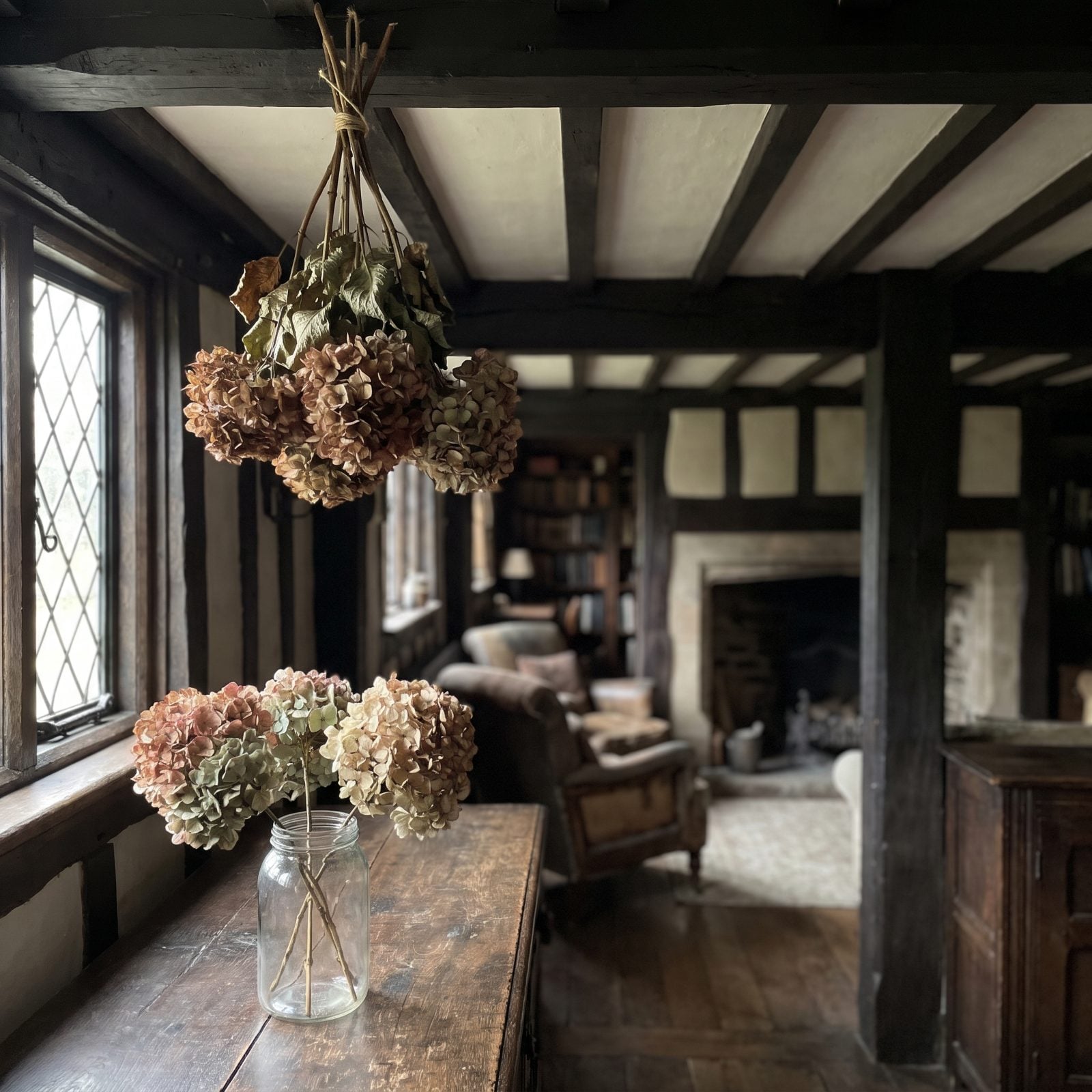
Timing matters more than any method. Pick them too early and hydrangeas shrivel into sad little raisins. Leave them on the plant until the blooms feel papery and slightly leathery to the touch, usually late summer into fall, once the colors fade to antique rose, green and parchment.
Cut them then, strip the leaves for the vase (for hanging, a few can stay on), and either stand them in a vase with just an inch of water that you let evaporate, or hang them upside down in a dry, dark spot. Air-dried this way, they hold their shape for a year or more. Picked fresh and green, they collapse every time.
9. Why Are My Hydrangea Stems Flopping Onto the Ground?
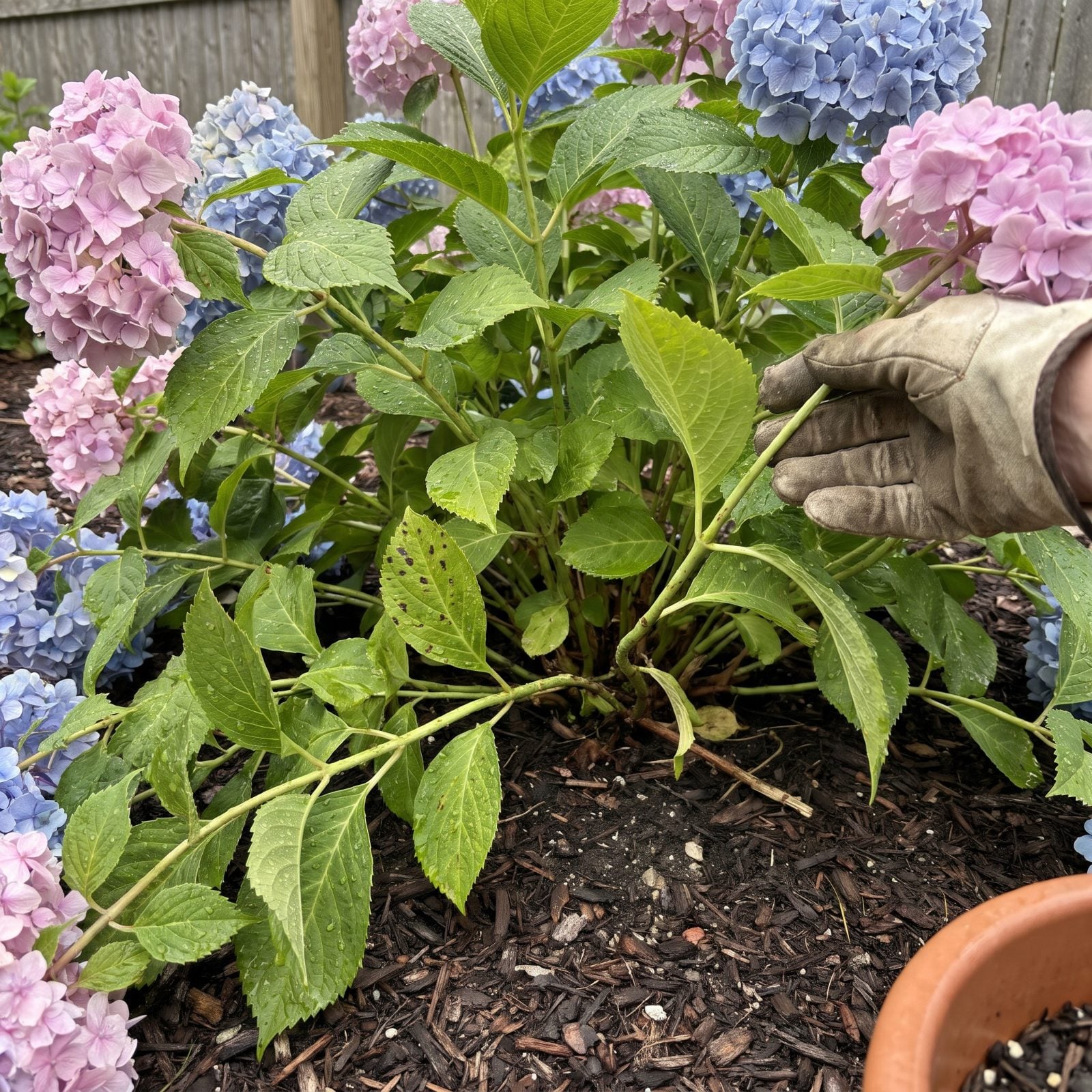
Flopping is almost always a feeding and sun problem pretending to be a mystery. Too much nitrogen pushes out soft, fast growth that can’t hold a wet bloom, and too little sun does the same, with stems stretching toward the light and going lanky.
The rain just reveals it. A big mophead soaks up water like a sponge and a weak stem gives up. So if yours flop every June, stop feeding high-nitrogen lawn fertilizer anywhere near them, and check whether some tree grew up and quietly stole their morning sun. I ignored this for two seasons and blamed the weather. The weather was fine.
8. Why Won’t My Climbing Hydrangea Attach to the Wall?
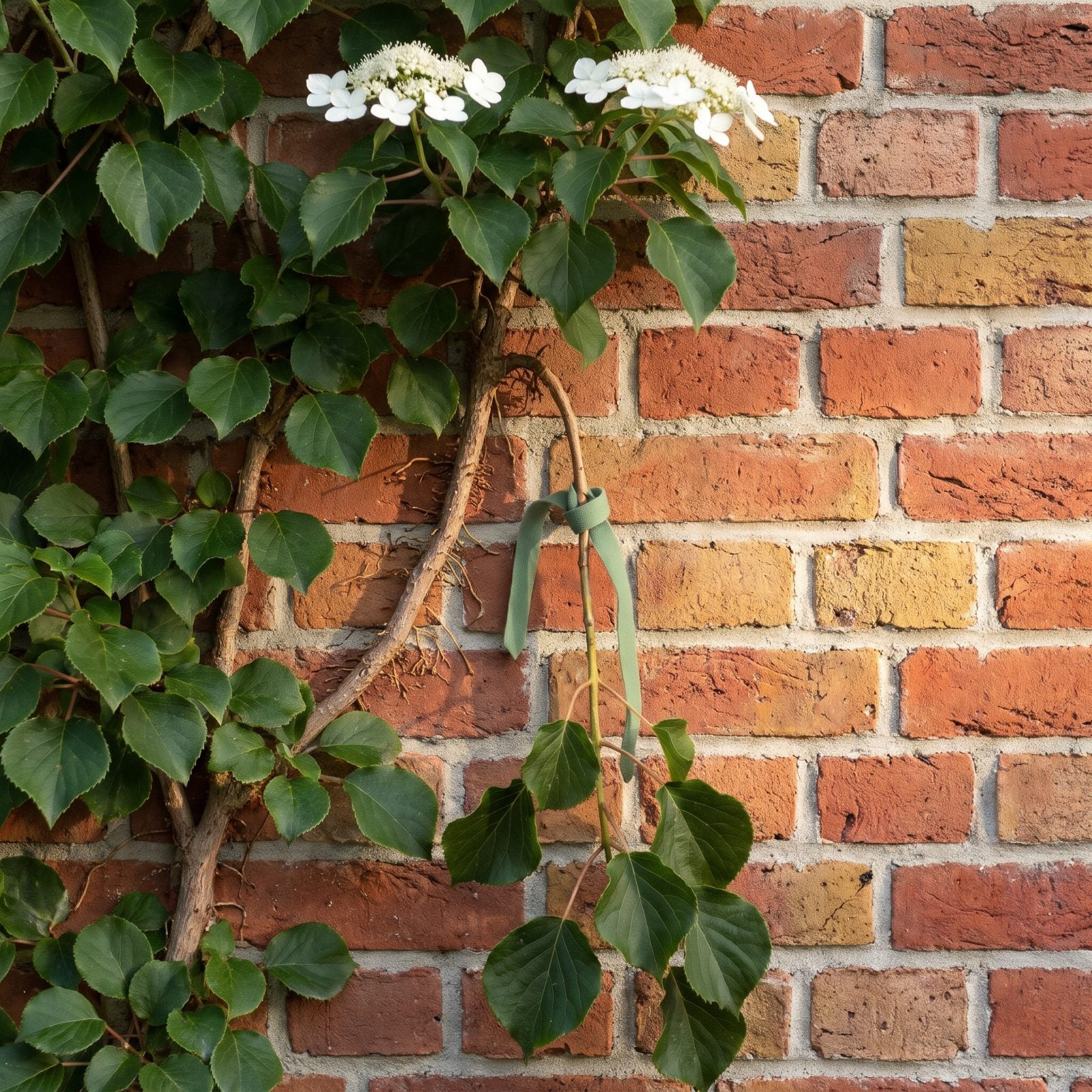
Patience, mostly. Climbing hydrangea is famous for sitting still for two or three years before it does anything, then suddenly swallowing a whole wall. The old nursery line: first it sleeps, then it creeps, then it leaps. Annoyingly accurate.
It also needs a rough surface to grab. Those tiny aerial roots can’t grip smooth painted siding or vinyl, so give it brick, stone, or a trellis, keep the base shaded and the roots moist, and tie new growth in loosely until it catches on. And whatever you do, don’t yank the loose stems to “help” — you’ll snap off the very rootlets trying to anchor.
7. How Do I Identify the Type of Hydrangea I Own?
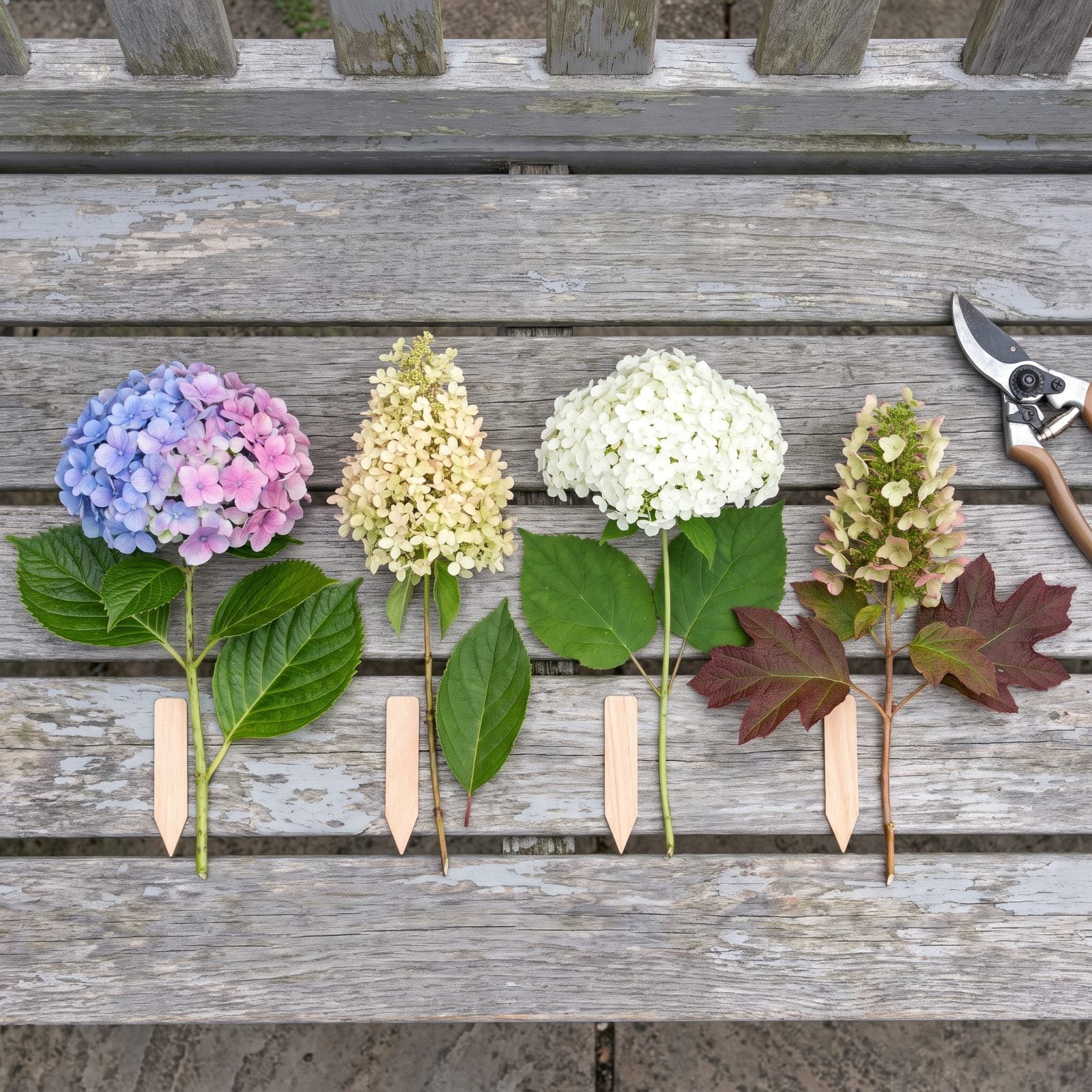
The leaf tells you more than the flower. Flowers fool people, because color and shape shift with age and chemistry. Leaves don’t lie.
Run the quick checks. An oak-shaped lobed leaf means oakleaf. A cone-shaped bloom on a tough, sun-happy shrub is a panicle type, think ‘Limelight.’ Round mophead or flat lacecap blooms on glossy broad leaves point to bigleaf, and a big white dome on a floppy, soft-stemmed shrub is usually smooth hydrangea, the ‘Annabelle’ crowd.
Why bother? Because the type decides when you prune, and that’s not plant-nerd bragging rights — get the ID wrong and you’ll cut off next year’s flowers.
6. Is a Tree-Form Hydrangea an Actual Tree?
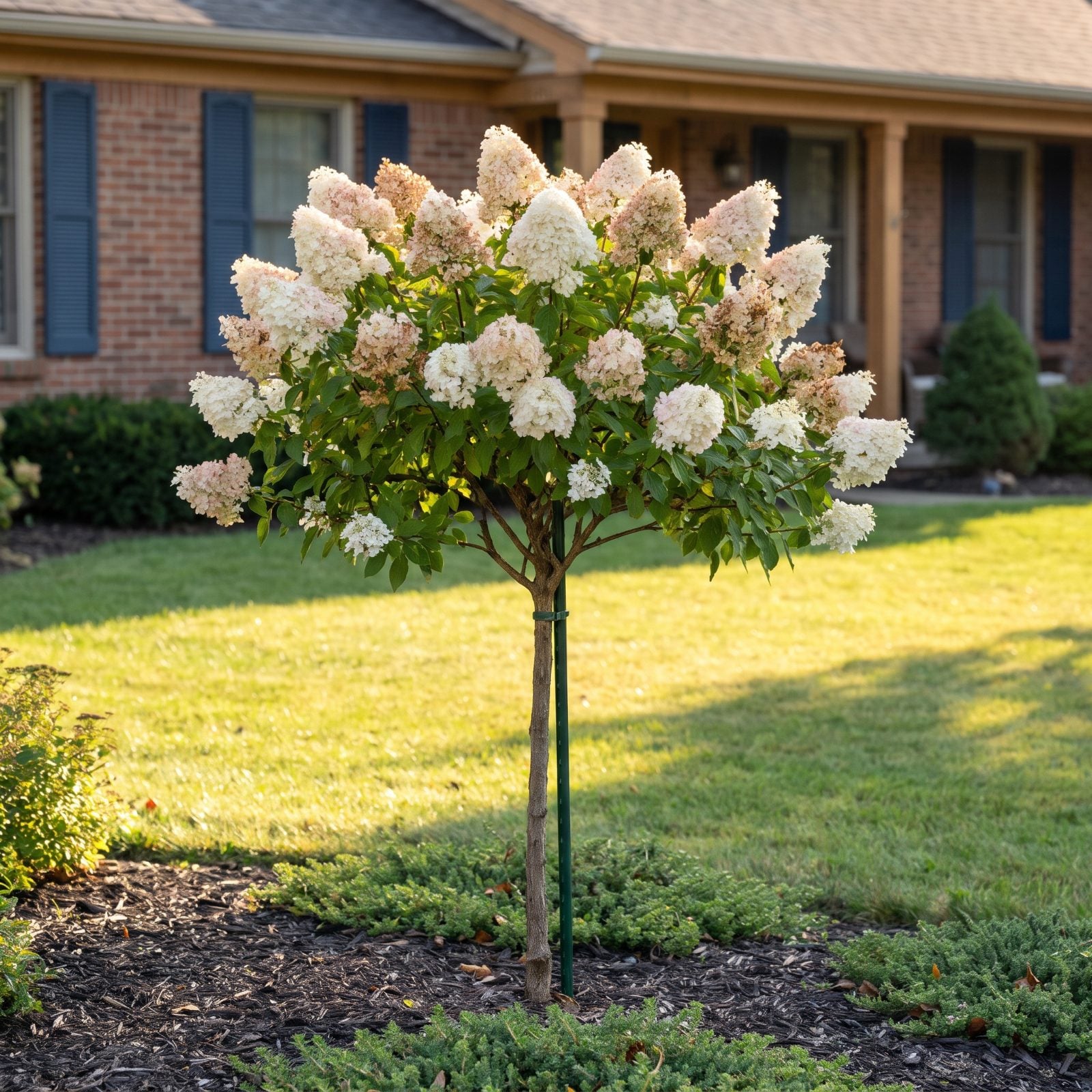
No. It’s a shrub wearing a trench coat.
A tree-form hydrangea, almost always a panicle type, is a regular multi-stem shrub that a grower trained to a single trunk with everything else rubbed off early. Gorgeous, convincingly tree-like, and yet it has no true tree trunk and no deep tree root system underneath.
Which means it needs babysitting. Keep the stake on longer than feels necessary, because a heavy wet flower head on a skinny trunk snaps in a storm. Watch for suckers at the base and along the stem too. Rub them off while they’re tiny, or your “tree” quietly turns back into a bush.
5. Can Hydrangea Roots Damage a Foundation?
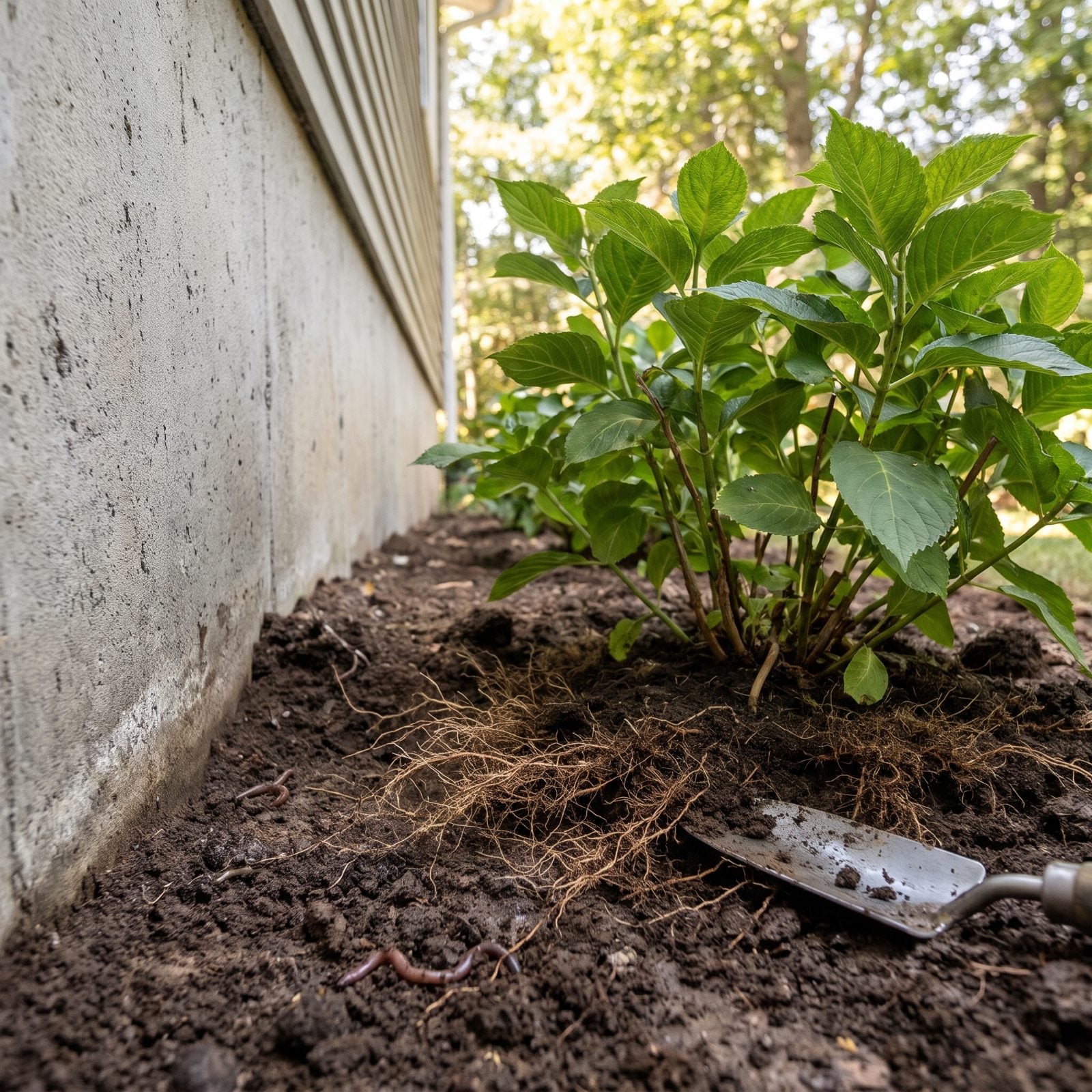
Relax. Hydrangeas have shallow, fibrous, fine roots, not the deep thirsty taproots that crack concrete. That’s a willow problem, maybe a poplar problem. Not this one.
The only real caution is spacing, and that’s for the plant’s sake, not the house’s. Crammed six inches from a wall, a hydrangea gets baked by reflected heat, bone-dry soil under the eaves, and no airflow, which invites mildew. Give it eighteen inches to two feet of breathing room and you’ll never think about your foundation again.
4. Is Peeling Bark on a Hydrangea a Sign of Disease?
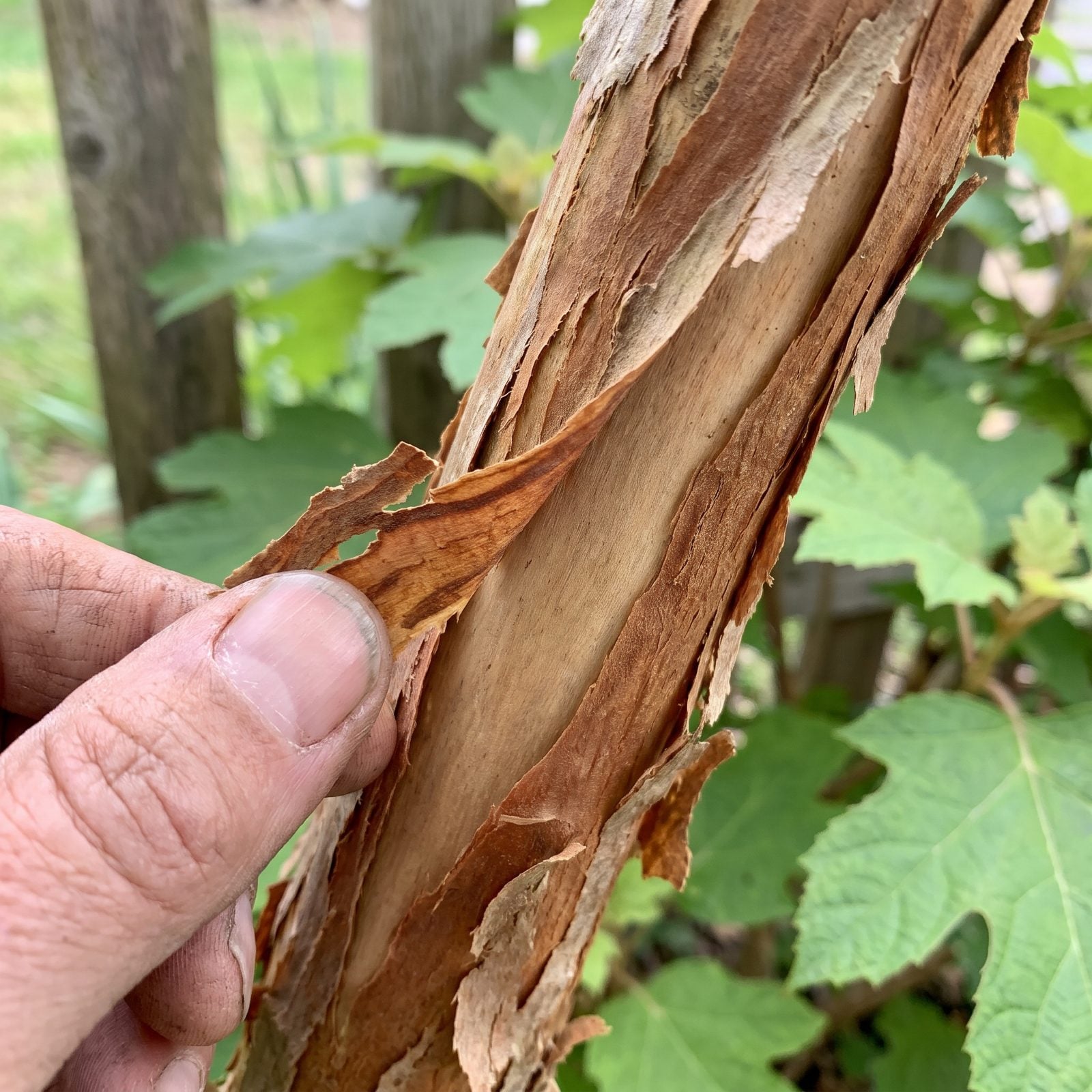
On an oakleaf hydrangea, peeling bark is the plant showing off, not dying. Mature oakleafs develop gorgeous cinnamon bark that shreds and curls in papery strips, and it’s honestly one of the best reasons to grow them for winter interest.
So before you panic, check what type you’ve got and how old the stem is. Old, healthy wood exfoliating is normal. What isn’t normal: mushy black stems, sunken dark cankers, or bark peeling alongside wilting leaves and oozing. That combination says fungal or boring-insect trouble, and that wood should come out.
3. Can I Shear a Hydrangea Into a Neat Ball?
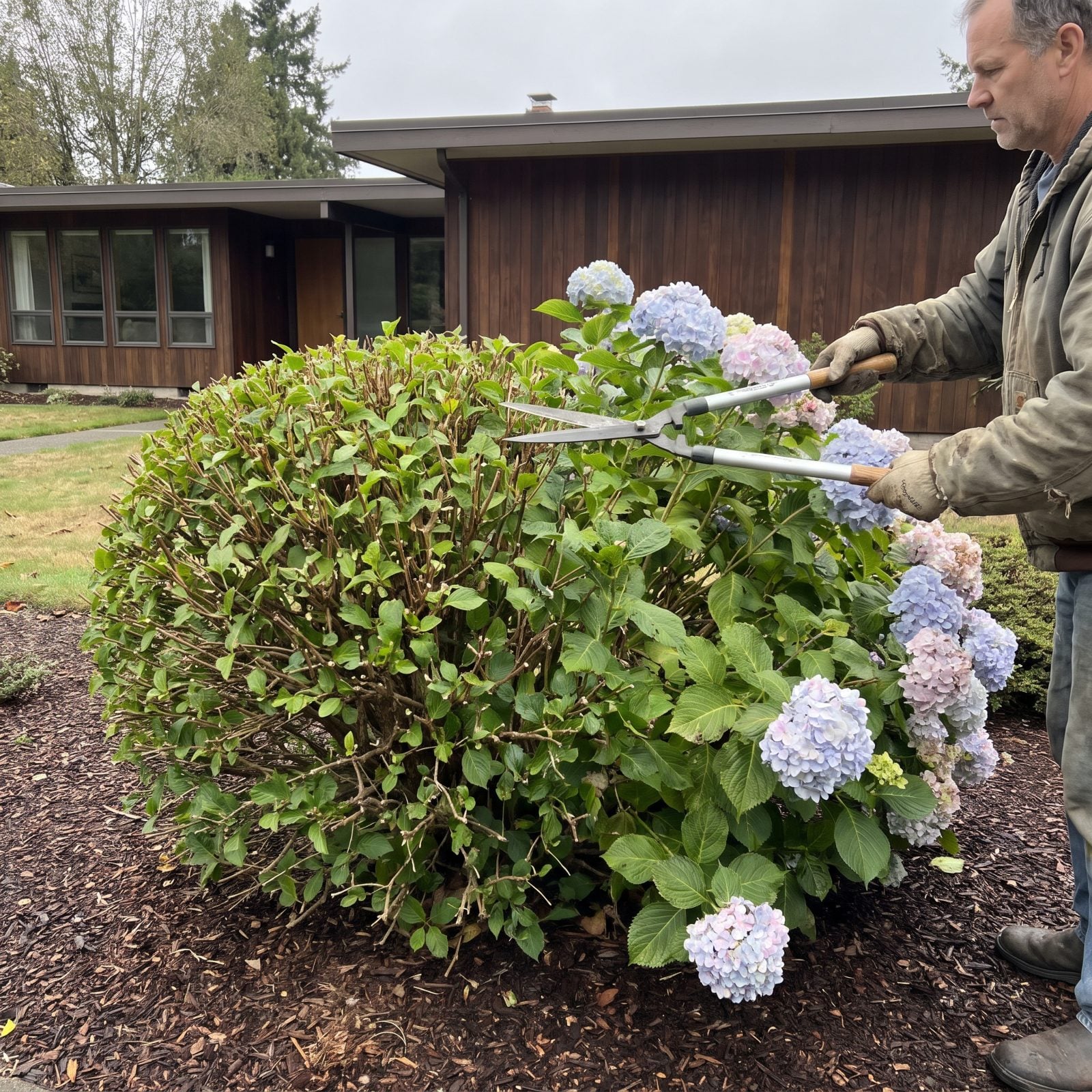
You can. You probably shouldn’t.
Shearing a hydrangea like a boxwood is how you get a healthy green ball that never blooms. On bigleaf and oakleaf types especially, those outer buds you’re slicing off are next summer’s flowers, so you end up with a tidy shrub and a whole season of disappointment.
Panicle and smooth types take harder cutting because they flower on new growth, so a tree-form ‘Limelight’ can tolerate a shaping snip. Even then, hand-prune. Reach in, cut individual stems to a bud, and let the natural shape do the work. A hydrangea sheared into geometry always looks like it’s being punished.
2. How Do I Rejuvenate an Old, Woody Hydrangea?
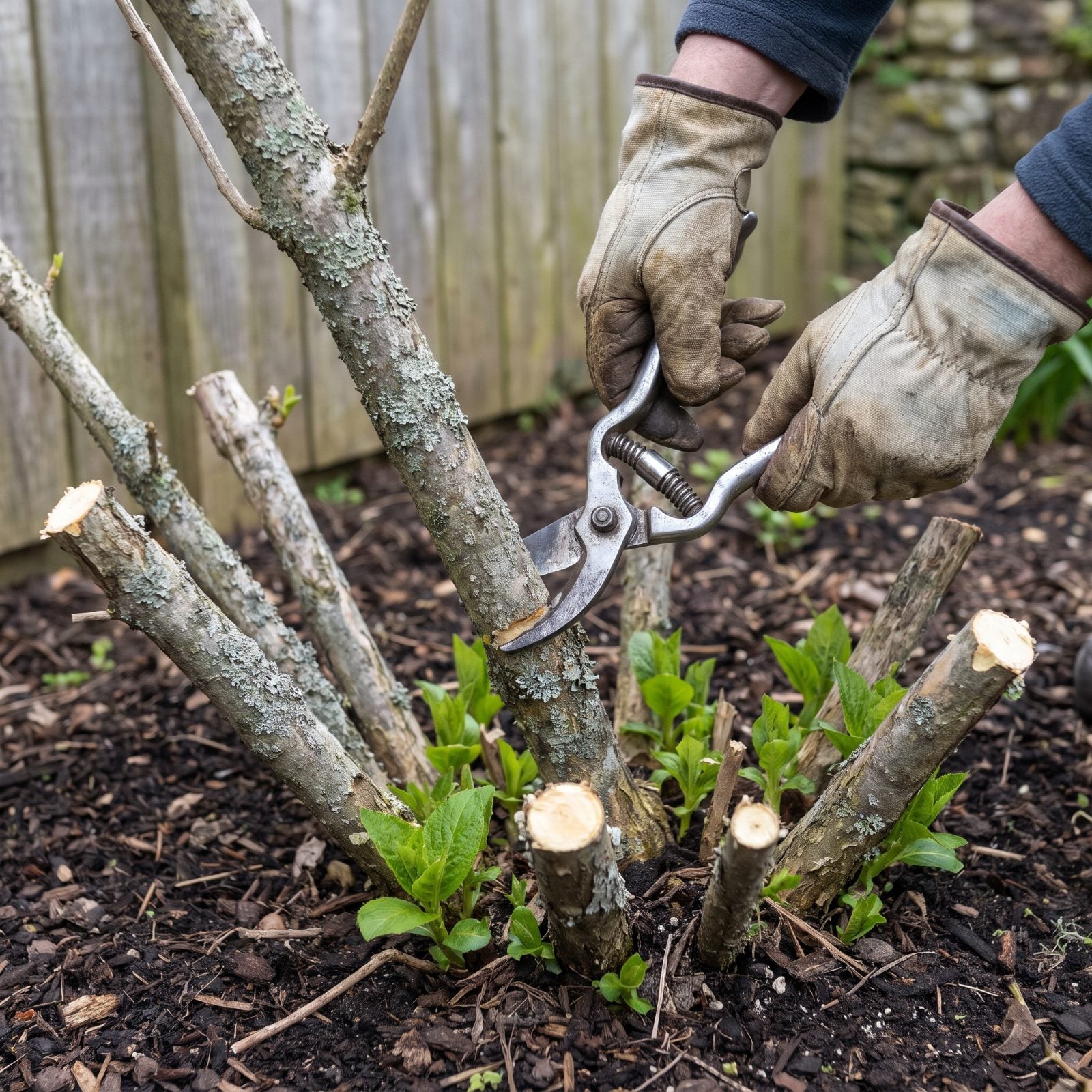
Old and woody doesn’t mean done. Most tired hydrangeas just need the oldest wood taken out so light and energy can reach fresh growth.
The gentle method takes three years. Each spring, cut out the oldest, thickest, grayest third of the stems right down near the base. New vigorous shoots rise from the crown, and by year three the whole plant is young again without ever skipping a bloom season entirely.
Only smooth and panicle types tolerate the brutal version — everything chopped to about a foot in late winter. Try that on a bigleaf and you’ll stare at a leafy, flowerless shrub all summer.
1. Are Hydrangeas Poisonous to Dogs and Cats?
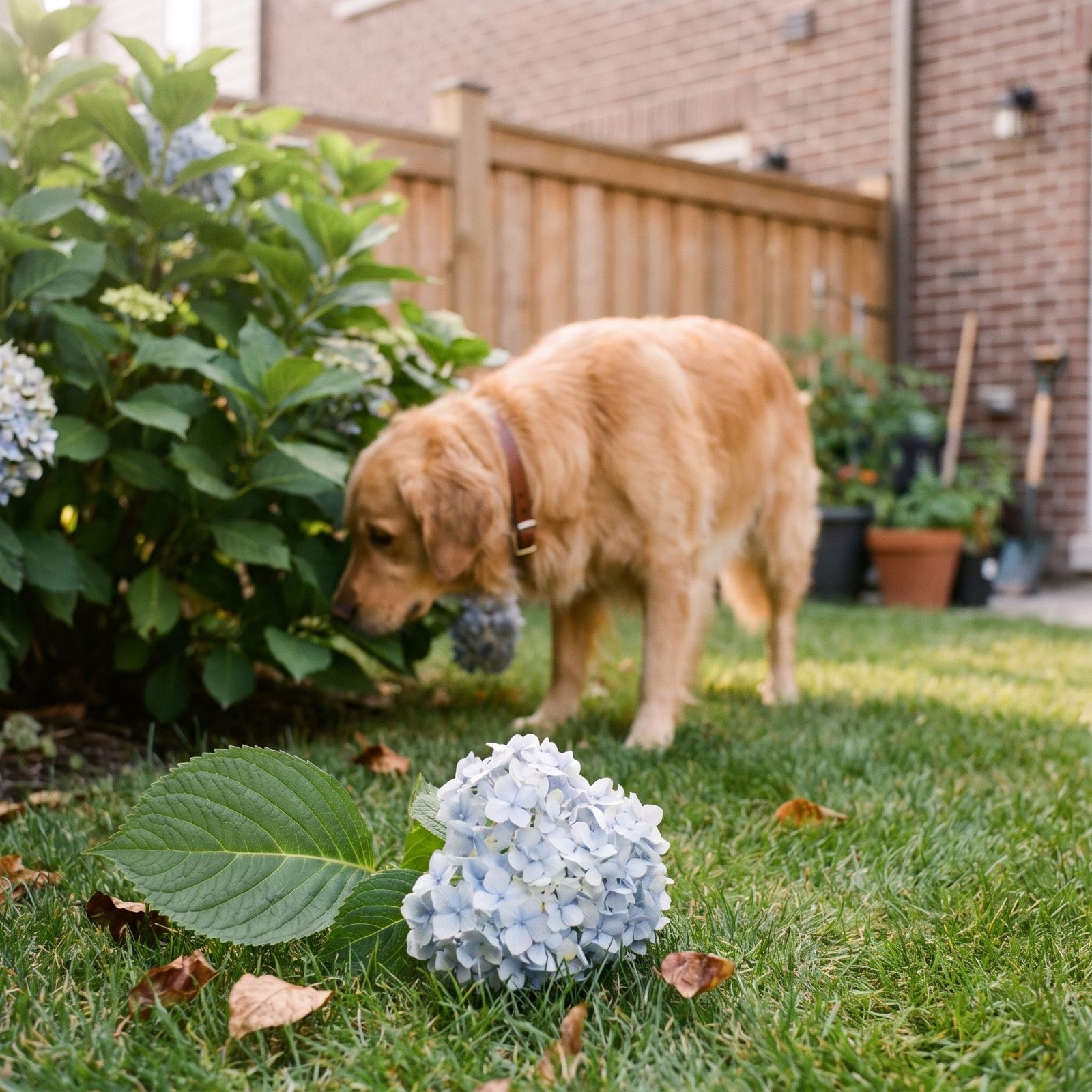
Mildly, yes. Every part of the hydrangea carries a compound that breaks down into a cyanide-type substance, and the leaves and flower buds hold the most of it.
Now the honest part. A dog or cat would have to eat a real quantity to get seriously sick, and most won’t, because it tastes bad. A nibble usually brings drooling, an upset stomach, vomiting, maybe some lethargy. Unpleasant, rarely life-threatening.
Still, call your vet or the ASPCA poison line if a pet really goes to town on one. Puppies and nosy cats are the actual risk, so plant with them in mind rather than banning the shrub outright.