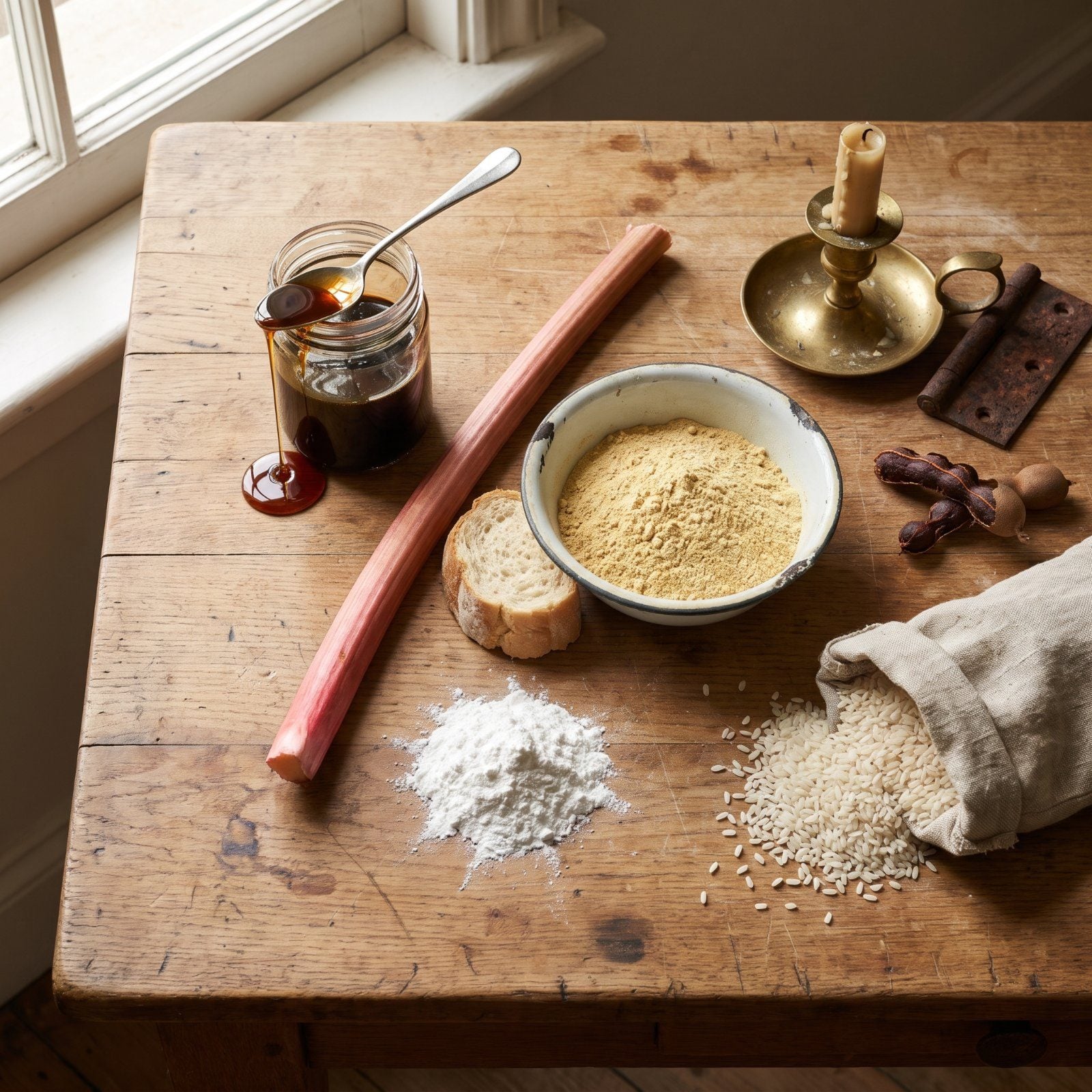
Open any cleaning cupboard and you’ll find a row of plastic bottles making promises, most of them doing roughly the same thing with a different scent slapped on top. What the labels never tell you is that some of the oldest fixes still outwork them, and they’ve been sitting in the pantry the whole time. Molasses dissolves rust. Rhubarb scrubs scorched pots, and stale bread lifts soot off wallpaper without water ever touching it. These aren’t folk superstitions dressed up for a blog — they’re chemistry that worked long before aerosol cans existed, and they still work now.
Please note that some of the images in this article were created with the assistance of AI.
26. Diluted Molasses for Rusted Iron Hardware
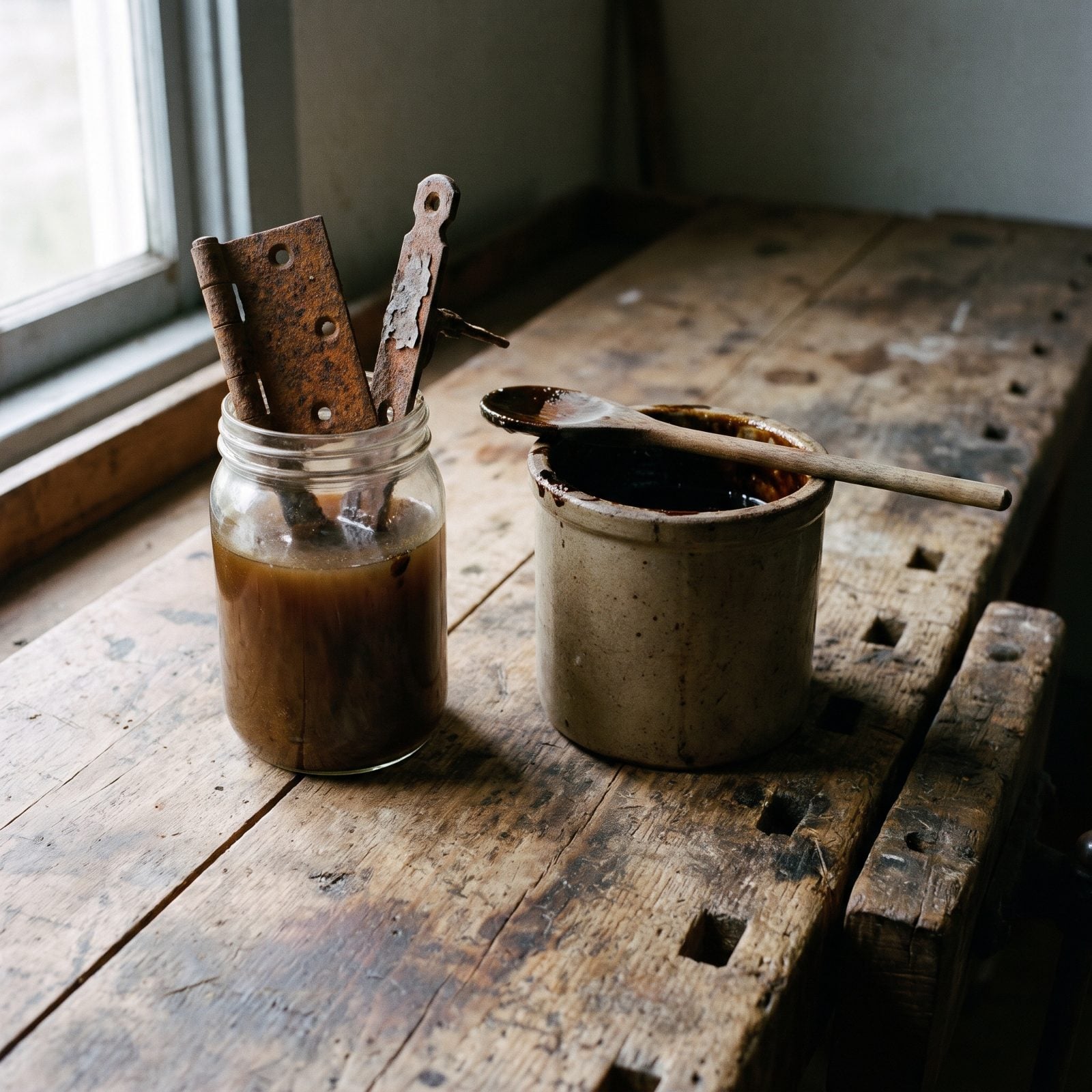
Rust is iron oxide, and molasses carries chelating agents that quietly grab those oxide molecules and pull them loose. Mix roughly one part molasses to nine parts water, drop your hinges or old tools in, and leave them a week or two. No scrubbing. No steel wool shredding your knuckles.
It’s slow going. Spray-on rust removers work in minutes, but they’re caustic and they eat the good metal along with the bad, whereas molasses only touches the oxide. The downside is the smell — like a brewery gone wrong by day five — so do this in the garage.
25. Stale White Bread for Sooty Wallpaper
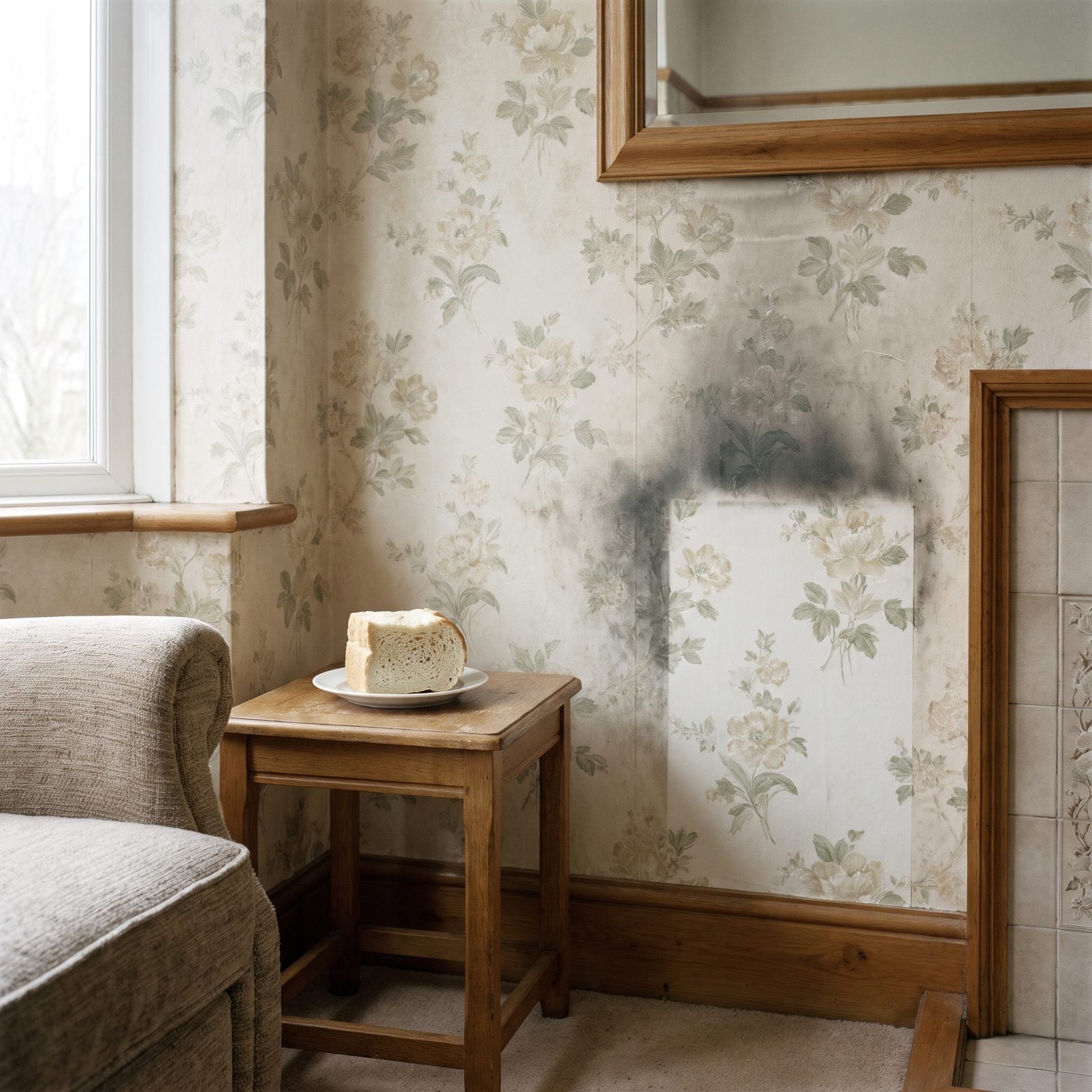
Water is the enemy of wallpaper. Wet it and the print bleeds, the paper buckles, and you’ve turned a stain into a disaster. Stale bread sidesteps all of that by lifting soot dry.
Tear a thick slice, cut off the crust, and rub the soft inside across the sooty paper in gentle downward strokes. The dense crumb works like a soft eraser, grabbing the greasy carbon particles and crumbling away with them — just rotate to a clean face as it darkens. Chimney sweeps and museum conservators both still reach for this on surfaces too delicate for liquid. Honestly, it beats any spray on anything you can’t get wet.
24. Rhubarb Stalks for Stained Cooking Pots
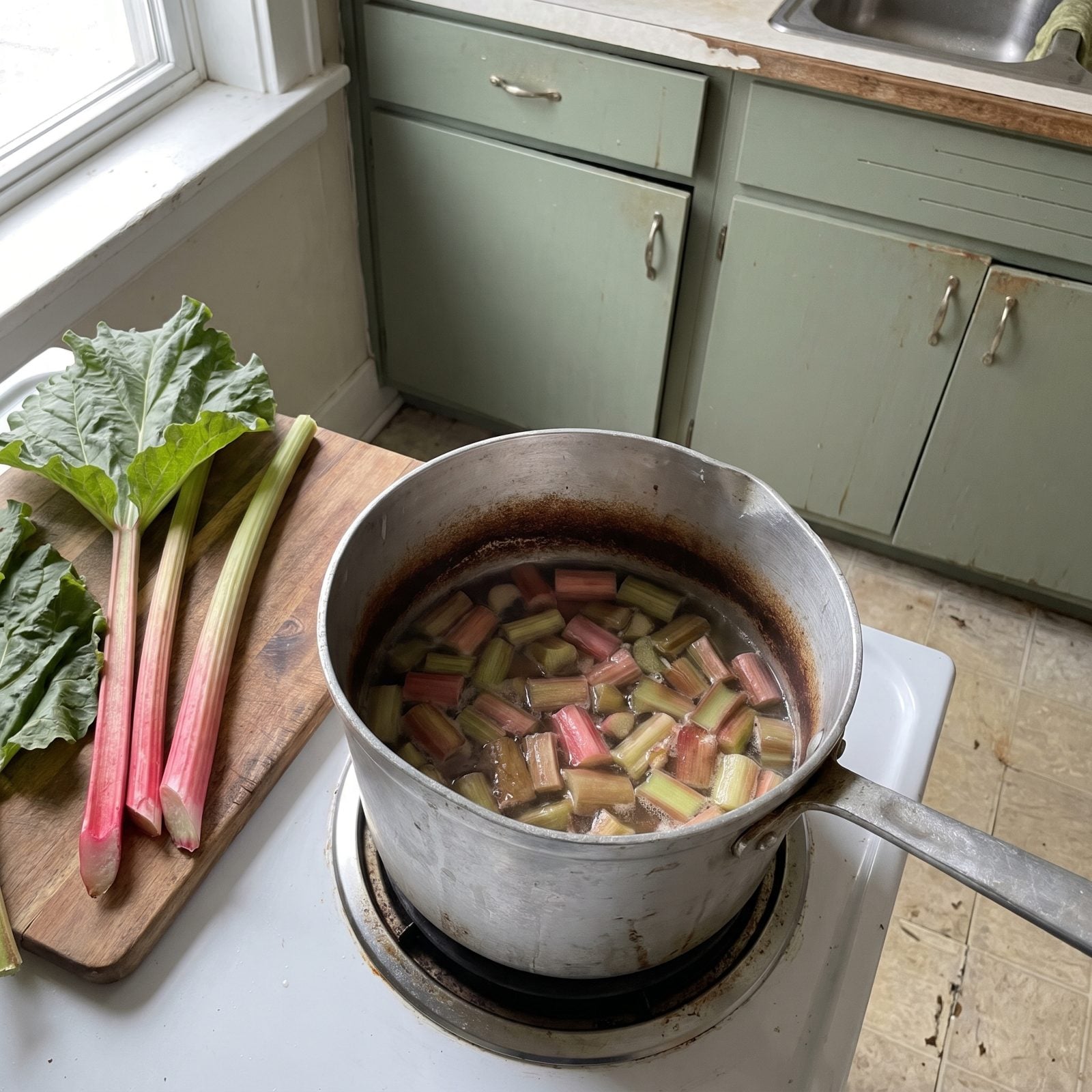
Scorched a pot and scrubbed yourself hoarse? Fill it with water, toss in a few chopped rhubarb stalks, and boil for ten minutes.
The oxalic acid in rhubarb dissolves burnt-on residue and lifts discoloration off aluminum and stainless alike, and you’ll actually see the stain loosen while it simmers. The leaves are toxic, so stems only, and don’t drink the liquid — but for cleaning it’s gentle on the metal and far kinder than a scouring pad.
23. Tamarind Pulp for Tarnished Brass
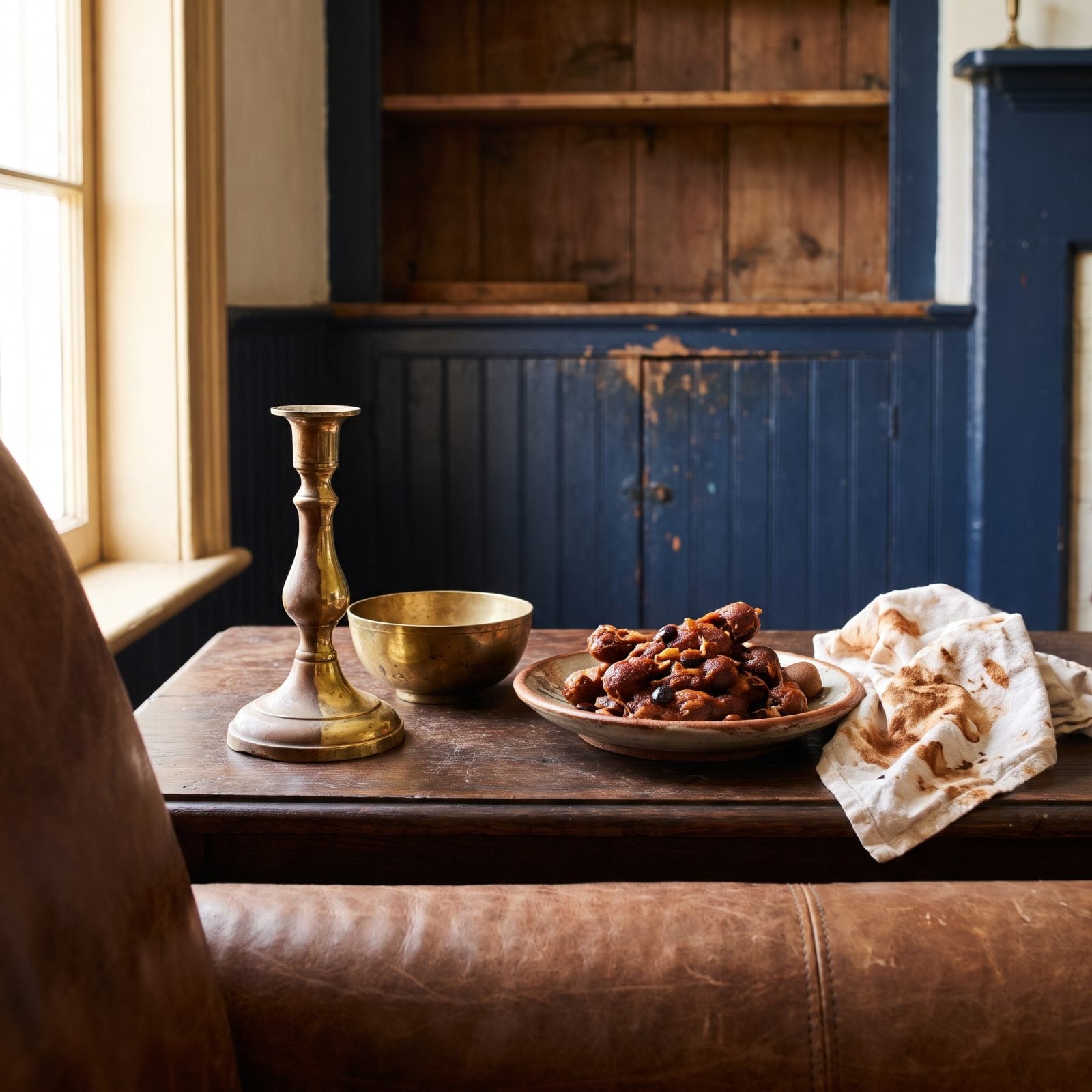
Tamarind is loaded with tartaric acid, which cuts through the dark oxide film that dulls brass and copper. In South and Southeast Asian homes it’s been the standard brass polish for generations.
Rub a little of the softened pulp onto the tarnished metal with a cloth, work it over the surface, then rinse and buff dry. The mild acidity dissolves tarnish without the harsh fumes of commercial metal polish, and it leaves brass genuinely bright — not just coated in a chemical film that flakes off within a month.
22. Dry Mustard for Odorous Glass Jars
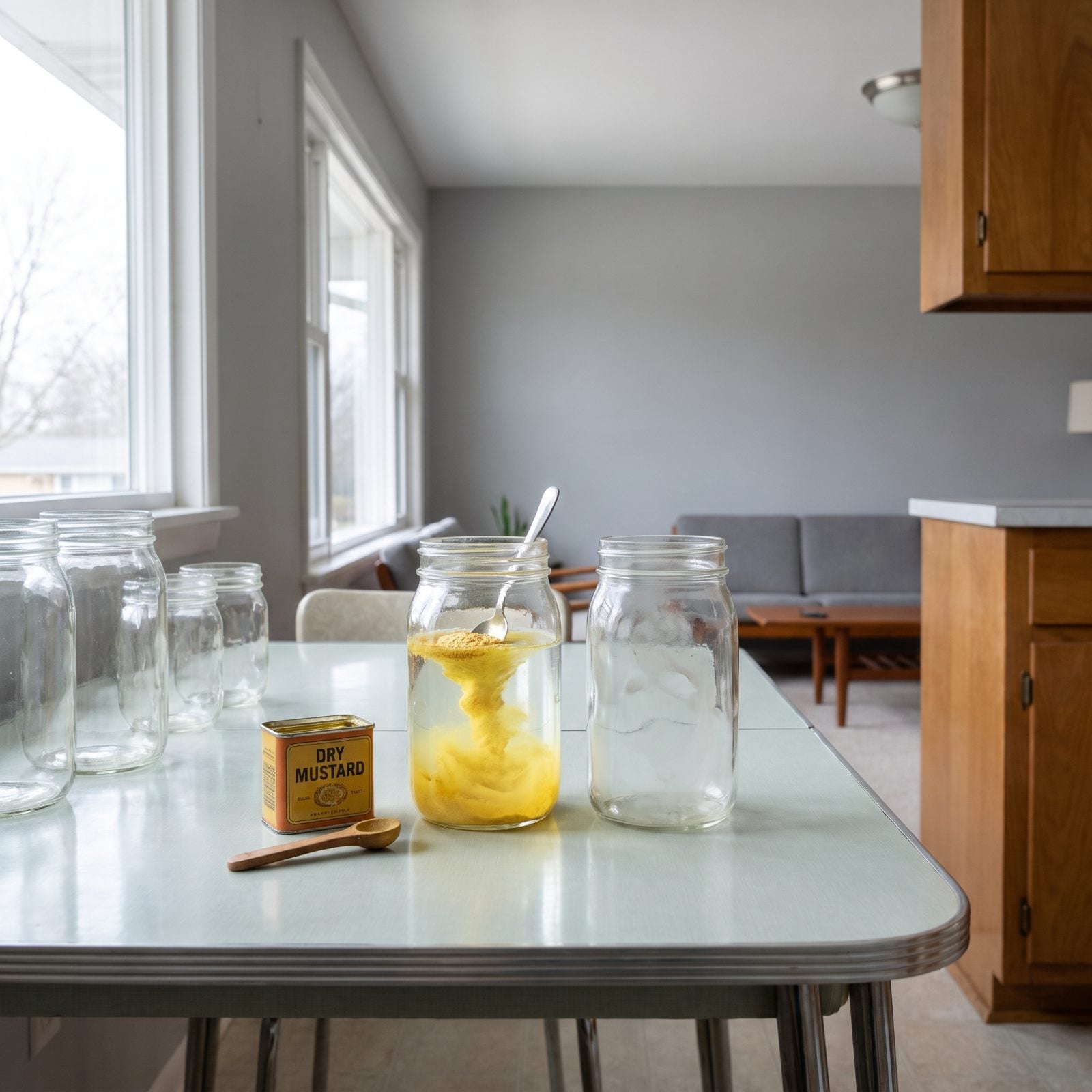
A pickle jar that still smells like pickles after three washes is maddening. Dry mustard fixes it.
Add a teaspoon of mustard powder, fill with warm water, cap it, and shake. Let it sit an hour, then rinse. The compounds in mustard neutralize stubborn food and fermentation odors that soap just swirls around — it beats baking soda for sharp, lingering smells like garlic, fish and brine, and it won’t leave a residue flavor in whatever you store next.
21. White Chalk for Greasy Fabric Stains
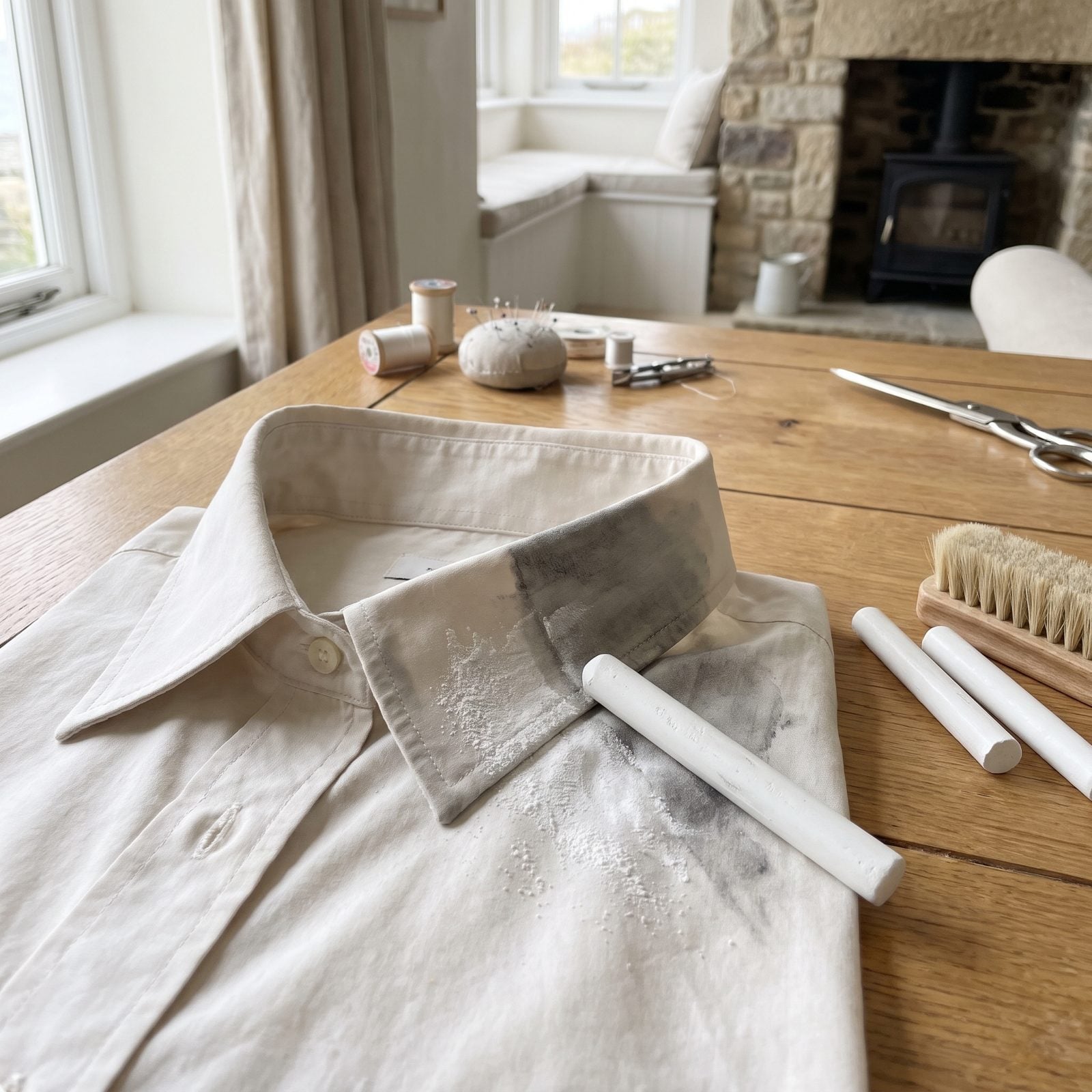
Chalk is a quiet absorbent. Rub a stick of plain white chalk over a fresh grease spot on a collar, cuff or tablecloth, and the porous calcium carbonate soaks the oil right out of the fibers before it sets.
Leave it a few minutes, brush off the powder, then launder as usual. For fresh grease it beats spray stain treatments, which can actually drive oil deeper into synthetic weaves. Keep a stick in the kitchen drawer. It can rescue a good napkin without anyone even leaving the table.
20. Cream of Tartar for Discolored Aluminum
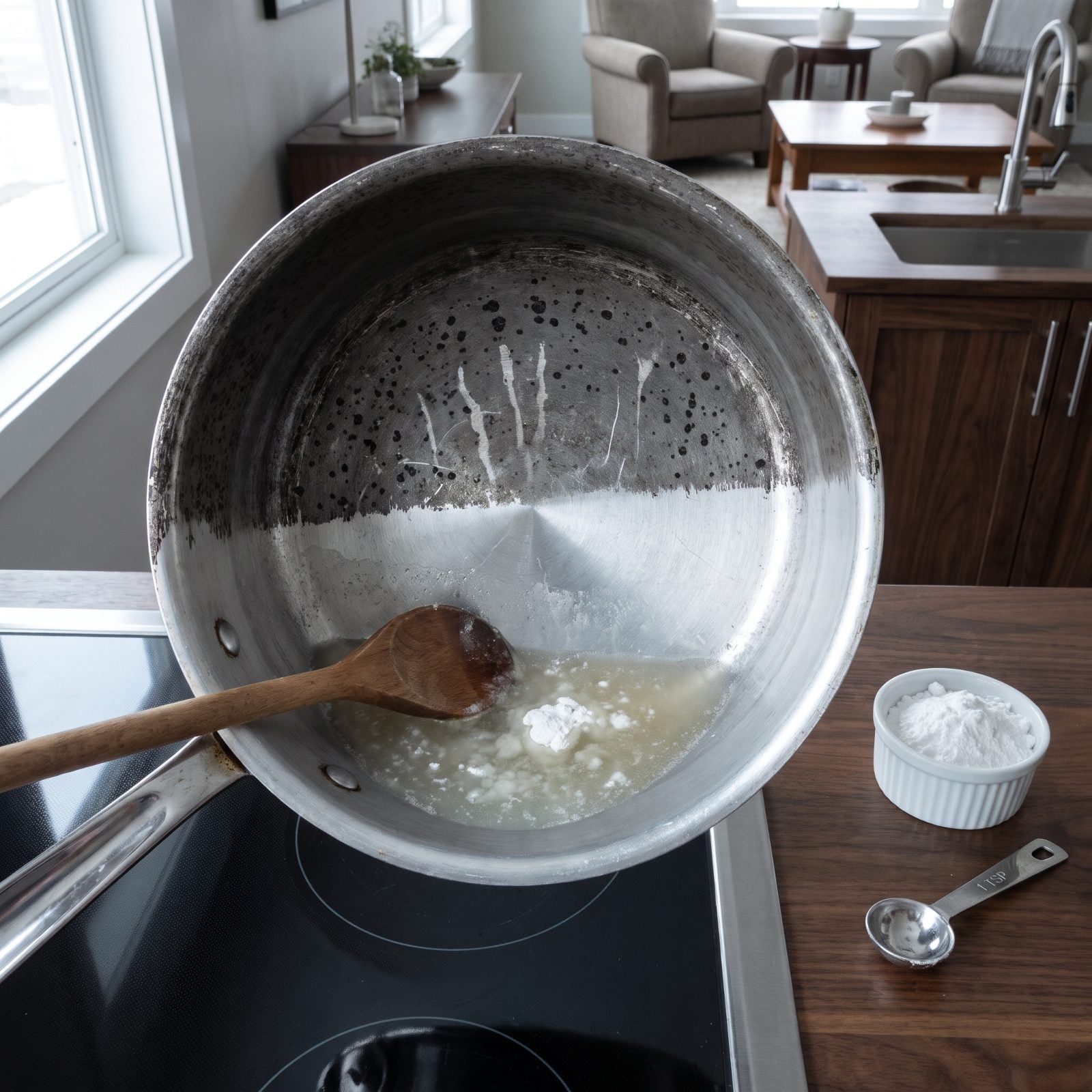
Aluminum pans go grey and splotchy over time, especially after cooking anything alkaline. Cream of tartar — a mild acid left over from winemaking — brings the shine back.
Stir two tablespoons into a quart of water, boil it in the discolored pot for ten minutes, then wash normally. The acid strips the oxidation and the dark mineral deposits without pitting the metal.
19. Uncooked Rice for Narrow-Necked Bottles
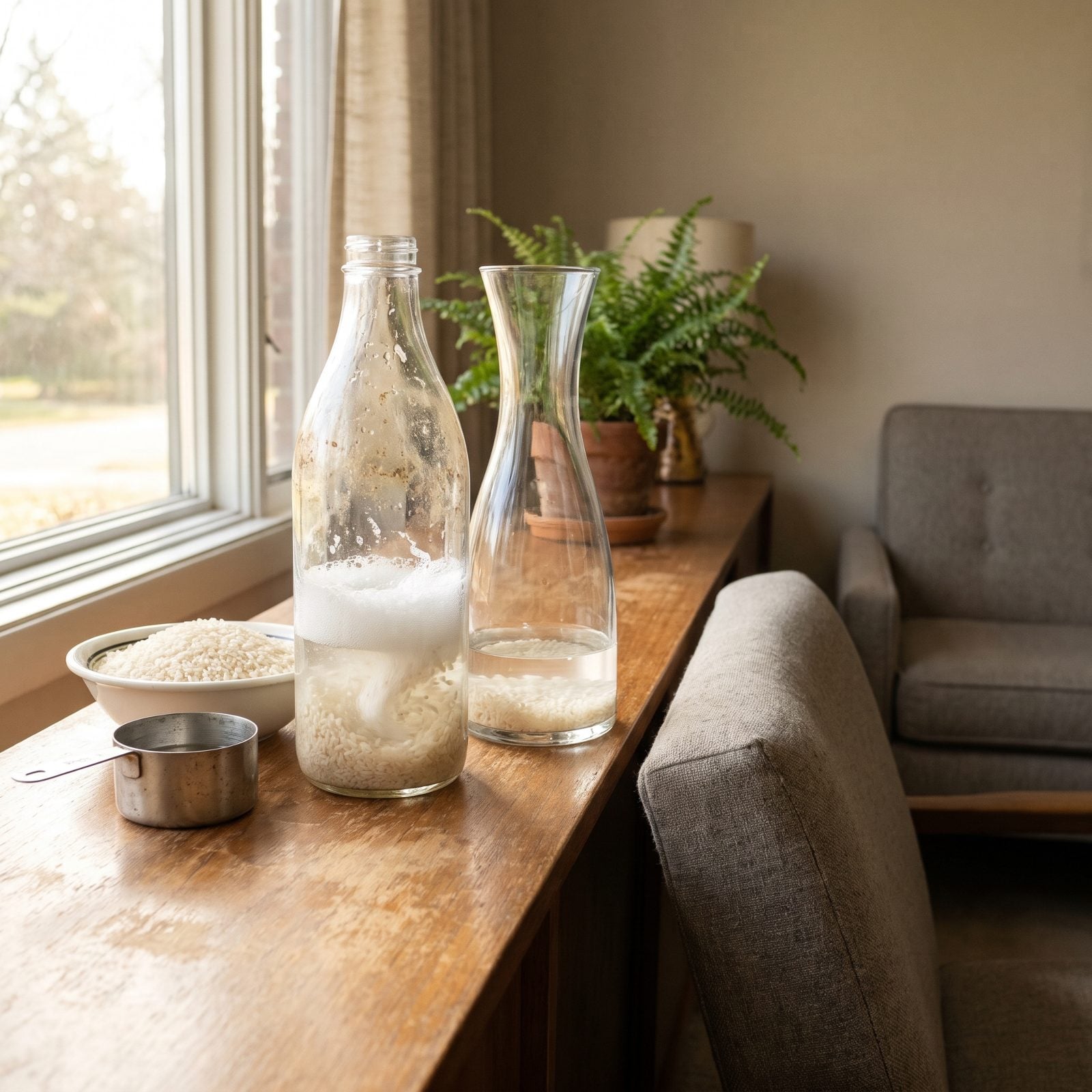
No bottle brush reaches the bottom of a narrow decanter, and that’s exactly where the gunk lives. Uncooked rice does.
Pour in a handful of dry rice, a squirt of dish soap and some warm water, then swirl hard for a minute. The grains act as a mild abrasive, tumbling against the inside walls and scouring off sediment, wine film and cloudy mineral residue that water alone leaves behind. Rinse out the rice and you’re done — cheaper than those weighted cleaning beads sold for the very same job, and it was the original trick anyway.
18. Glycerin for Dried Coffee and Tea Stains
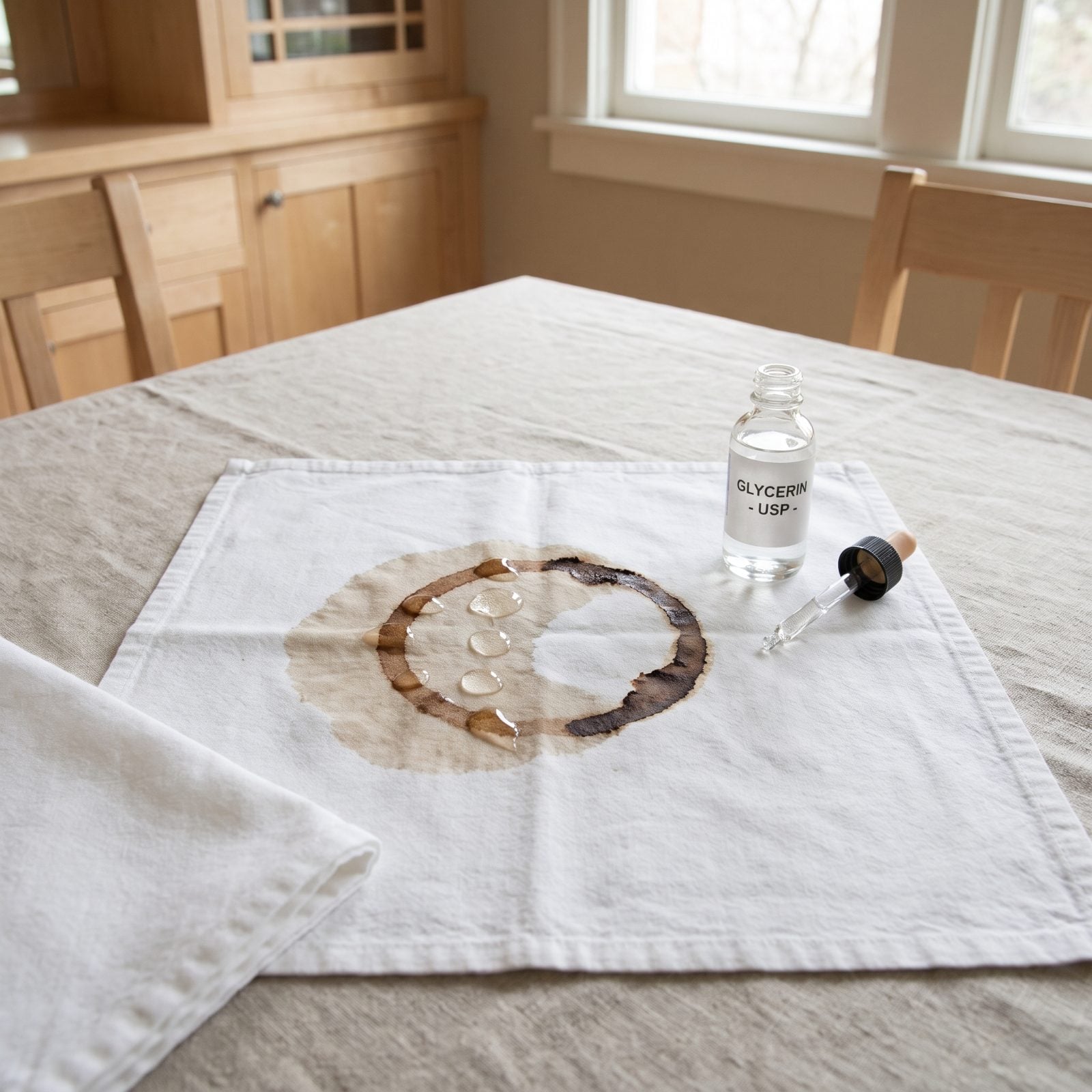
Old coffee and tea stains are tannins that have bonded tight to the fibers, and by the time you notice them a spray cleaner just sits on top.
Glycerin — the thick clear syrup in your baking cupboard — softens and loosens that dried tannin so it rinses free. Dab it straight onto the stain, let it sit fifteen or twenty minutes, then wash. It’s gentle enough for linen and cotton that bleach would wreck, and it’s often the rescue for a tablecloth you’d written off entirely.
17. Mayonnaise for Cloudy Water Rings on Wood
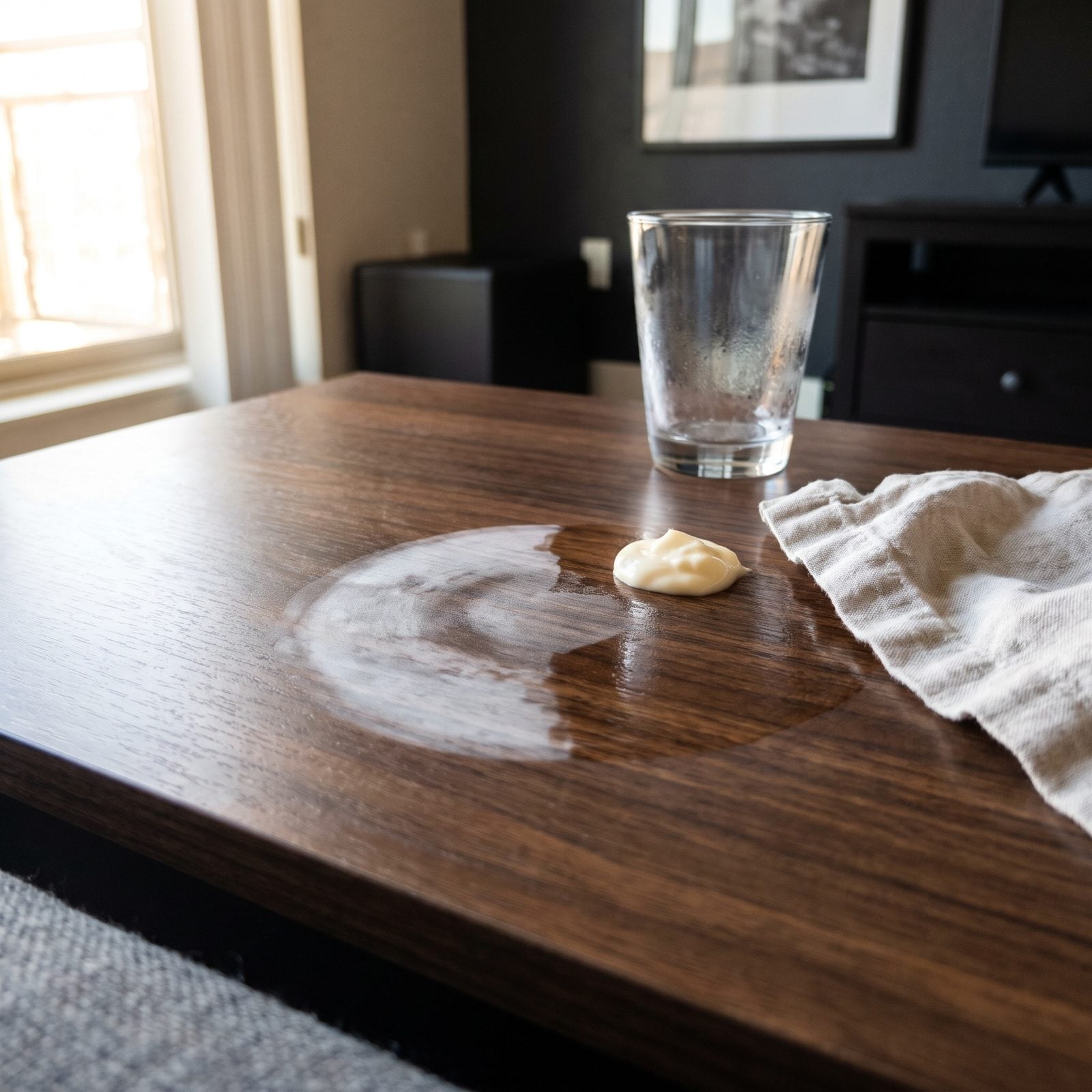
That cloudy white ring is moisture trapped in the wood finish, not in the wood itself. The oil in mayonnaise displaces it and draws the moisture out.
Smear a dab over the ring, leave it an hour — or overnight for a stubborn one — then wipe away and buff, and the white haze lifts with it. Furniture-polish sprays can’t touch this because they sit on top of the finish. Mayo gets underneath. It feels absurd the first time. But it’s saved more coffee tables than anything in the cleaning aisle, and if you’re skeptical, try it on a scrap of ruined wood first.
16. Ketchup Brings Tarnished Copper Back From the Dead
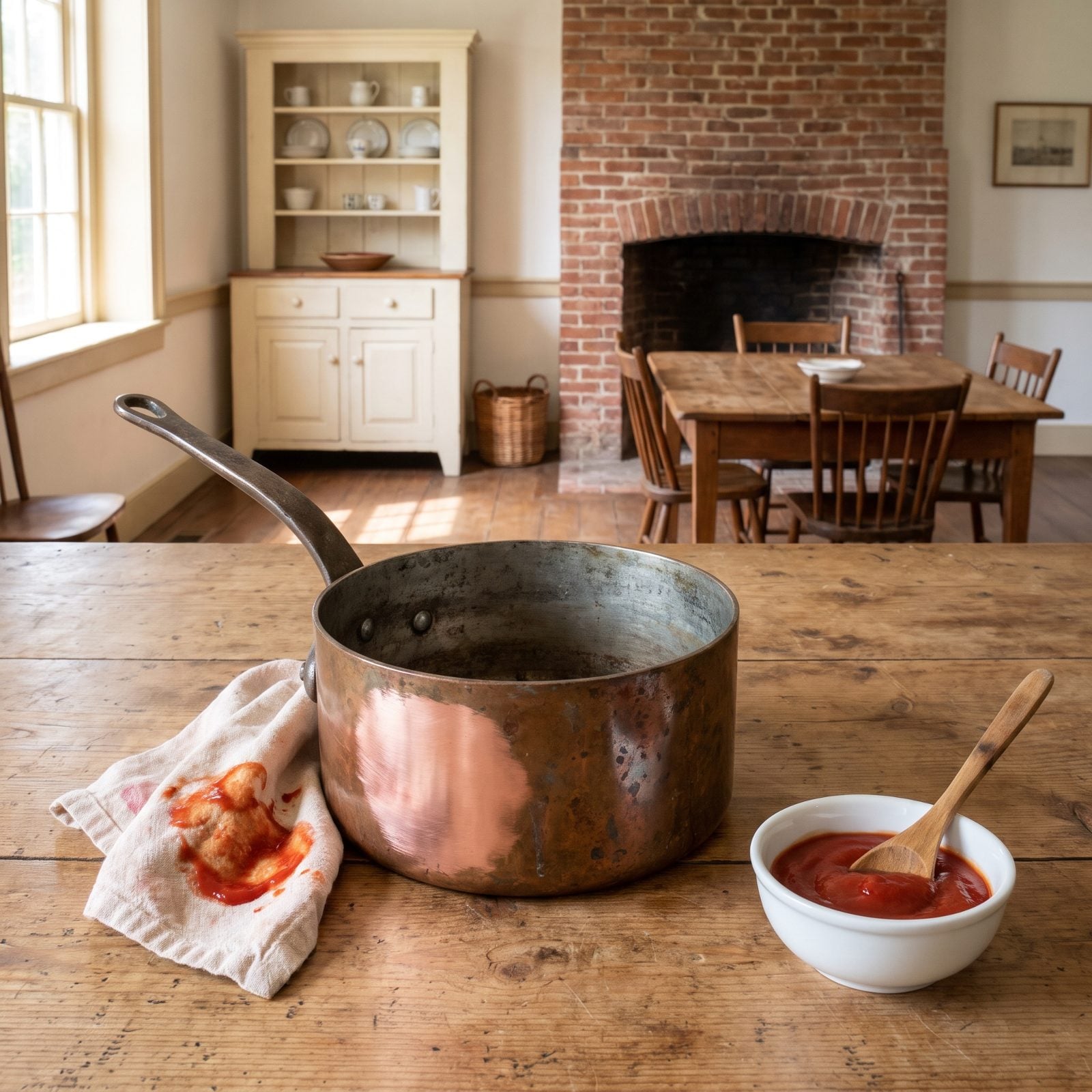
The acid does the work. Tomatoes carry enough mild acid, and the bottle already holds vinegar on top of that, which is plenty to eat through the oxidation that drags copper down to a sad brown. Smear a thin layer over the tarnish, leave it a few minutes, then rub with a soft cloth. The pink shows through almost before you’ve finished wiping.
Sounds like a prank, doesn’t it? It isn’t. Old-time cooks were doing this long before anyone bottled a dedicated copper polish, and it costs pennies against the fumes and the price of the specialty stuff.
15. Peanut Butter Loosens Chewing Gum Stuck in Hair
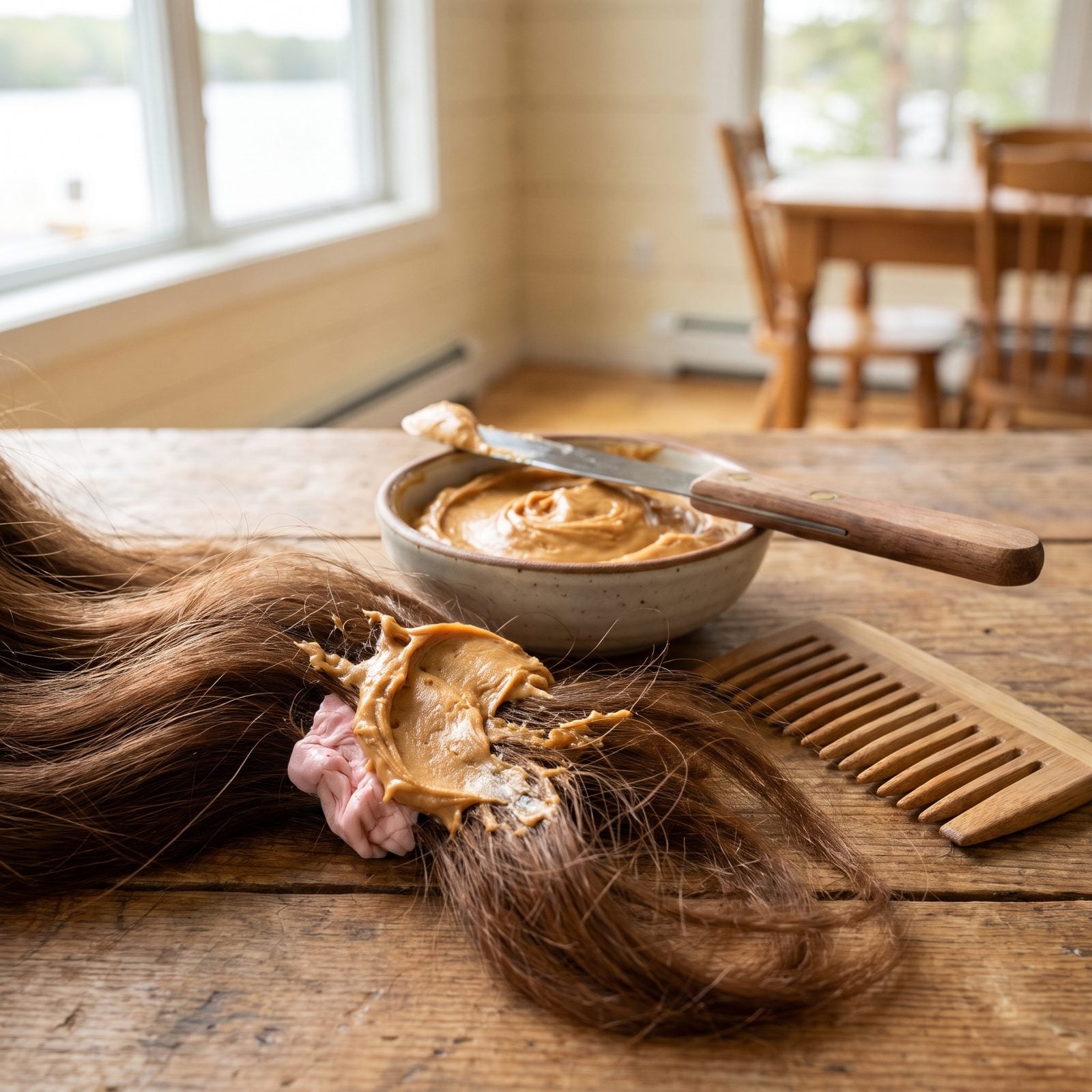
Oil beats gum. Peanut butter is mostly oil, and that oil breaks the grip gum has on hair, no yank-and-cry, no scissors. Work a generous dab right into the gummed strands, let it sit a minute, then slide the clump out with your fingers and comb through.
Smooth, not crunchy. Nobody wants to trade gum for peanut shards. A little dish soap afterward and the grease is gone.
14. Coconut Oil Dissolves the Sticky Ghost a Label Leaves Behind

That gray gummy film the label leaves? It’s resin, and resin hates fat. Rub coconut oil over the residue, give it ten minutes to soften the adhesive, then wipe it off with your thumb or a cloth. The way it surrenders is weirdly satisfying.
Jars you want to reuse, a new picture frame, the price tag some genius slapped dead center on a gift, it handles all of them. In cold months the oil goes solid in the tub, so warm a little in your palm first.
13. Olive Oil Lifts Pine Sap Off Pruners and Loppers
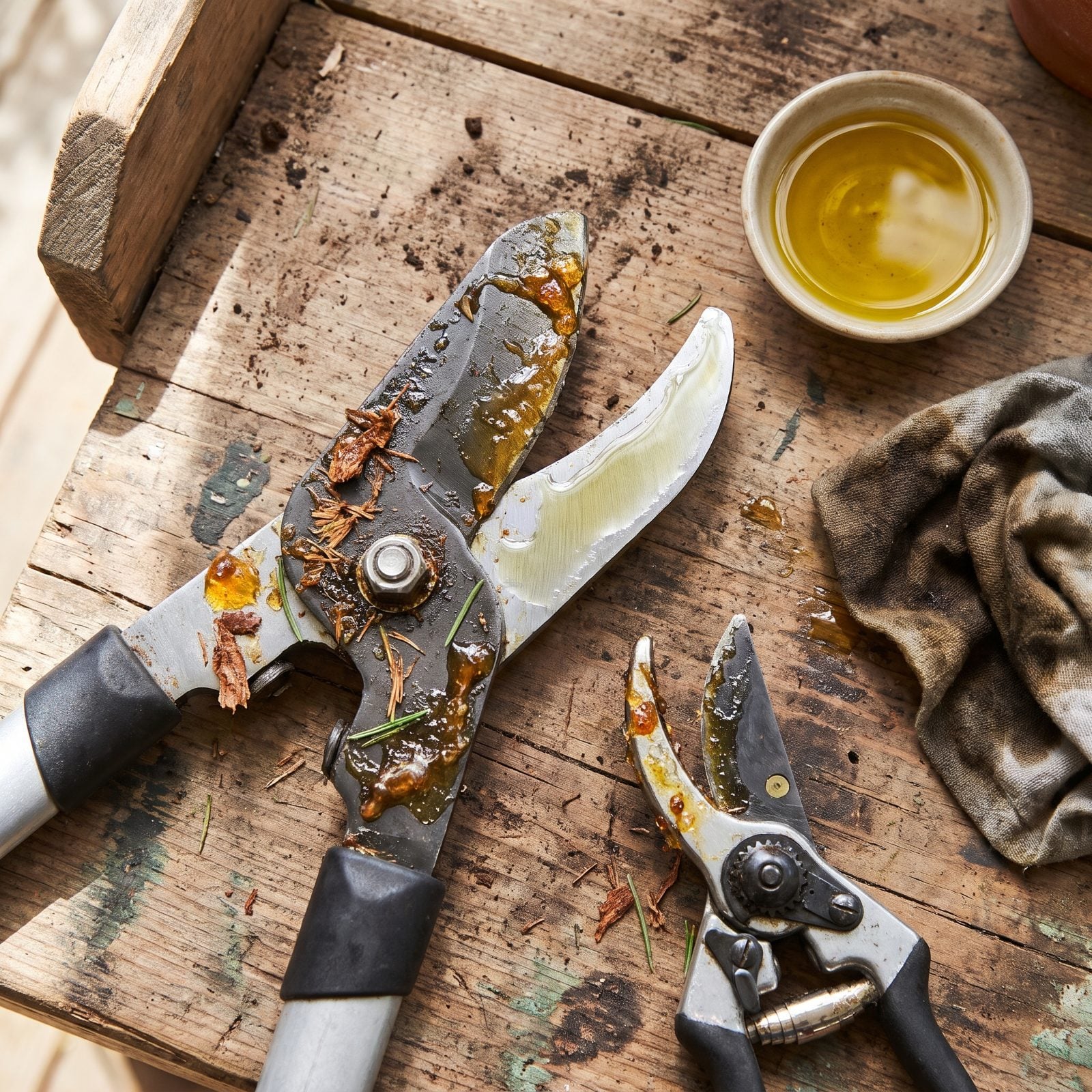
Sap gums pruning blades until they stick half-shut. Oil is the fix. Rub a little olive oil over the gummed steel and the sap breaks down in seconds, wiping away with the bark bits and needles still clinging to it.
And there’s a bonus. The thin oil film left behind fights rust, so the blades close clean next time out. Any cheap cooking oil does the job, so don’t waste the good single-estate stuff on your loppers.
12. Cornstarch Pulls Fresh Grease Out of Carpet Before It Sets
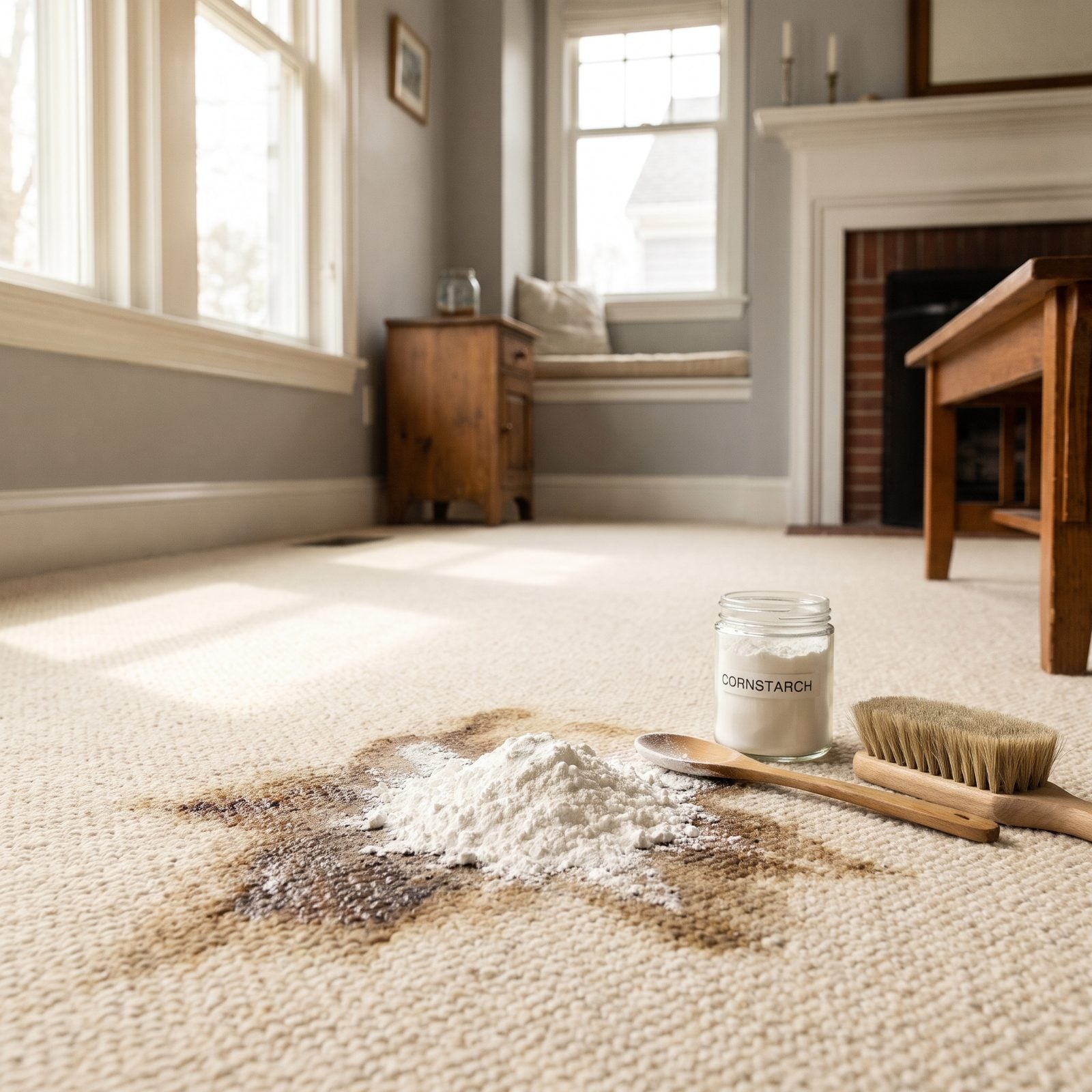
Speed matters with grease. Get to it before it soaks into the fibers and cornstarch drinks it right up. Pile a thick layer directly on the fresh stain, walk away for a few hours (overnight is better), then vacuum the whole clumped mess away.
Nothing in a spray bottle soaks up oil the way loose powder does. Blot any wet grease first, then bury it. On a pale wool rug, this little trick can save an afternoon from being ruined.
11. Coarse Salt Scours Crusted Cast Iron Without Stripping the Seasoning
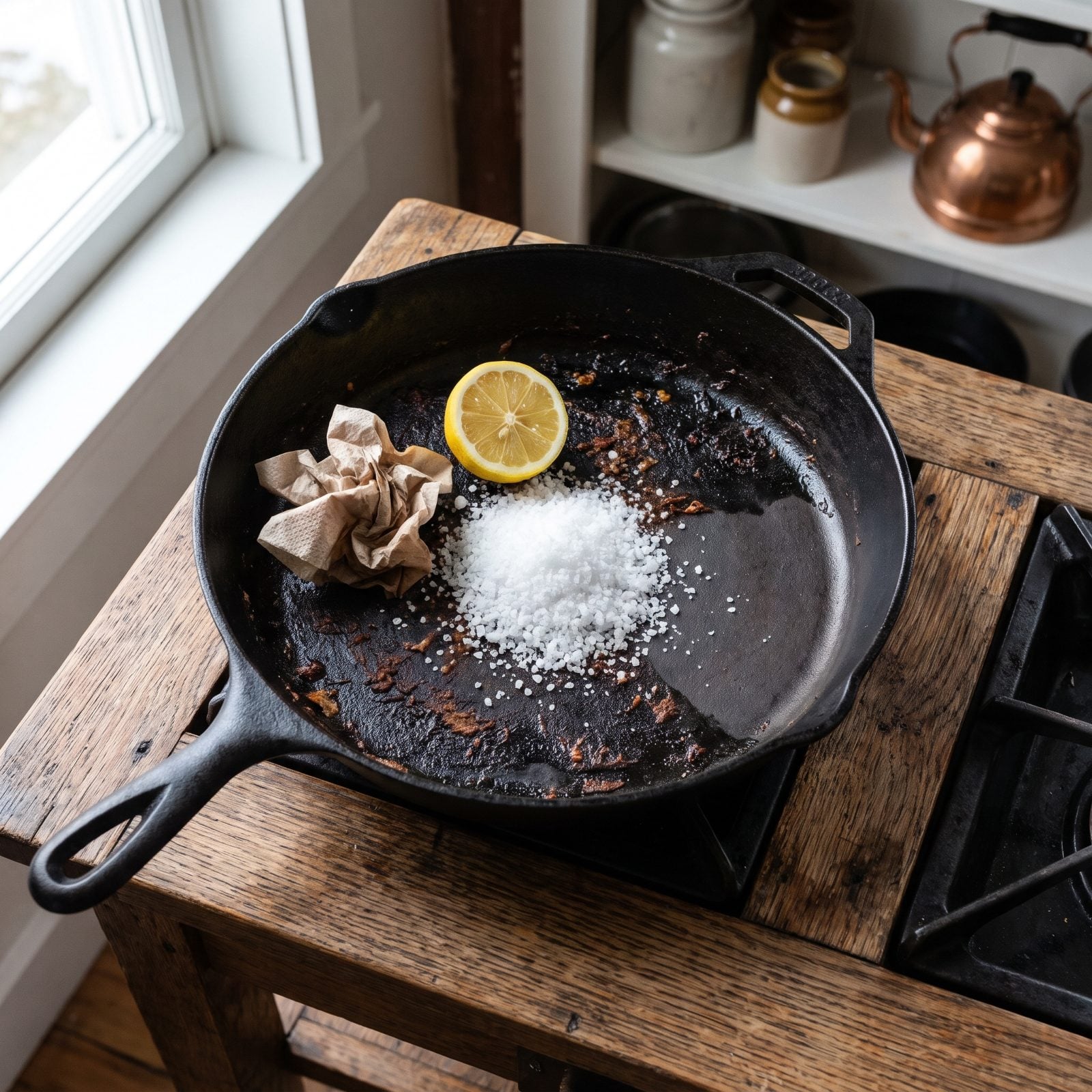
Soap is the enemy of cast iron. Salt is its friend. A handful of coarse salt scrubbed around with a wad of paper towel grinds off stuck food without touching the baked-on seasoning that makes the pan worth owning in the first place.
Add a halved lemon or a splash of water to work it into a gritty paste. Rinse, dry over low heat, wipe with a thin film of oil. The crust goes, the black patina stays.
10. Unflavored Vodka Clears Hazy Mirrors and Water-Spotted Chrome
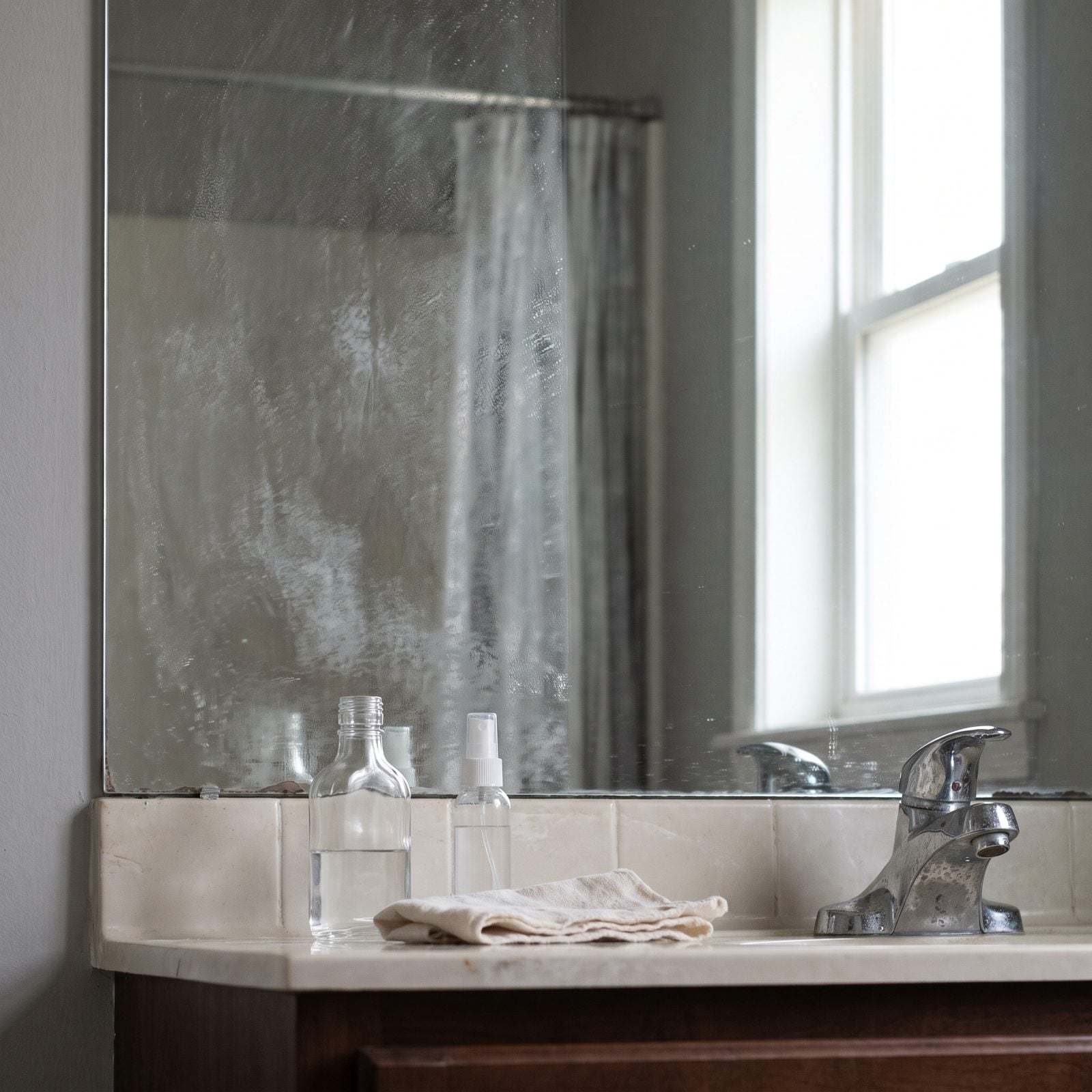
Cheap vodka makes glass disappear. The alcohol cuts through soap film and grease, then flashes off without leaving a single streak, which is the whole trick with mirrors. Mix it with a little water in a spray bottle, mist the glass, wipe with a lint-free cloth.
Chrome too. It dissolves the mineral haze that regular glass spray only smears around. Skip the good bottle, though. Bottom-shelf stuff works identically, and you’ll feel a lot less guilty about it.
9. Washing Soda Cuts Baked-On Grease From Range-Hood Filters
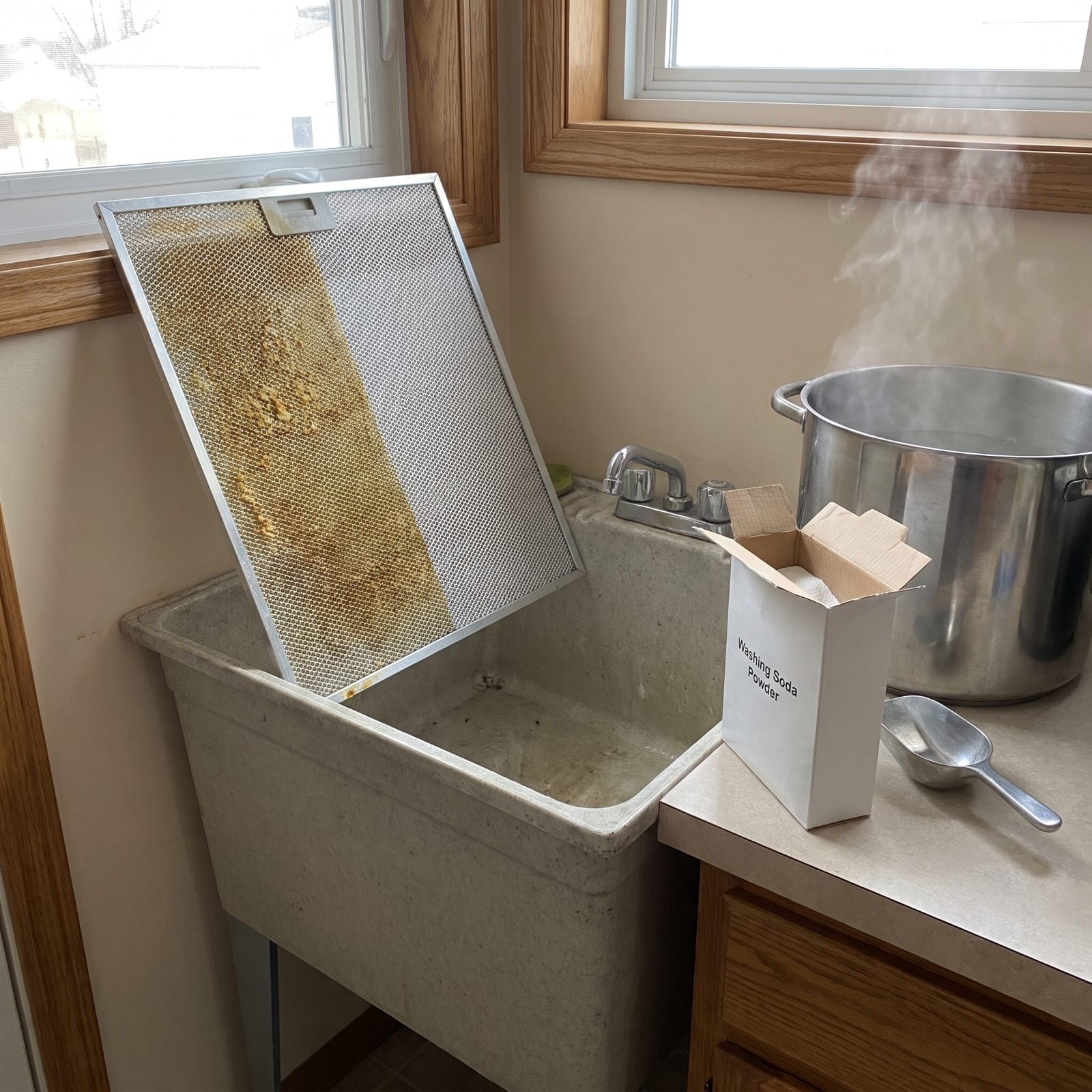
Range-hood filters hide months of grease most people never notice until it drips. Washing soda (sodium carbonate, the stronger cousin of baking soda) dissolves that baked-on gunk in a hot soak. A few spoonfuls stirred into a sink of near-boiling water, filter dropped in, and twenty minutes later it comes out bright.
Wear gloves. It’s alkaline and rough on the hands. But it strips grease no spray will touch, and your kitchen stops smelling faintly of last month’s bacon.
8. Traditional Soap Flakes Revive Dull Vintage Linoleum
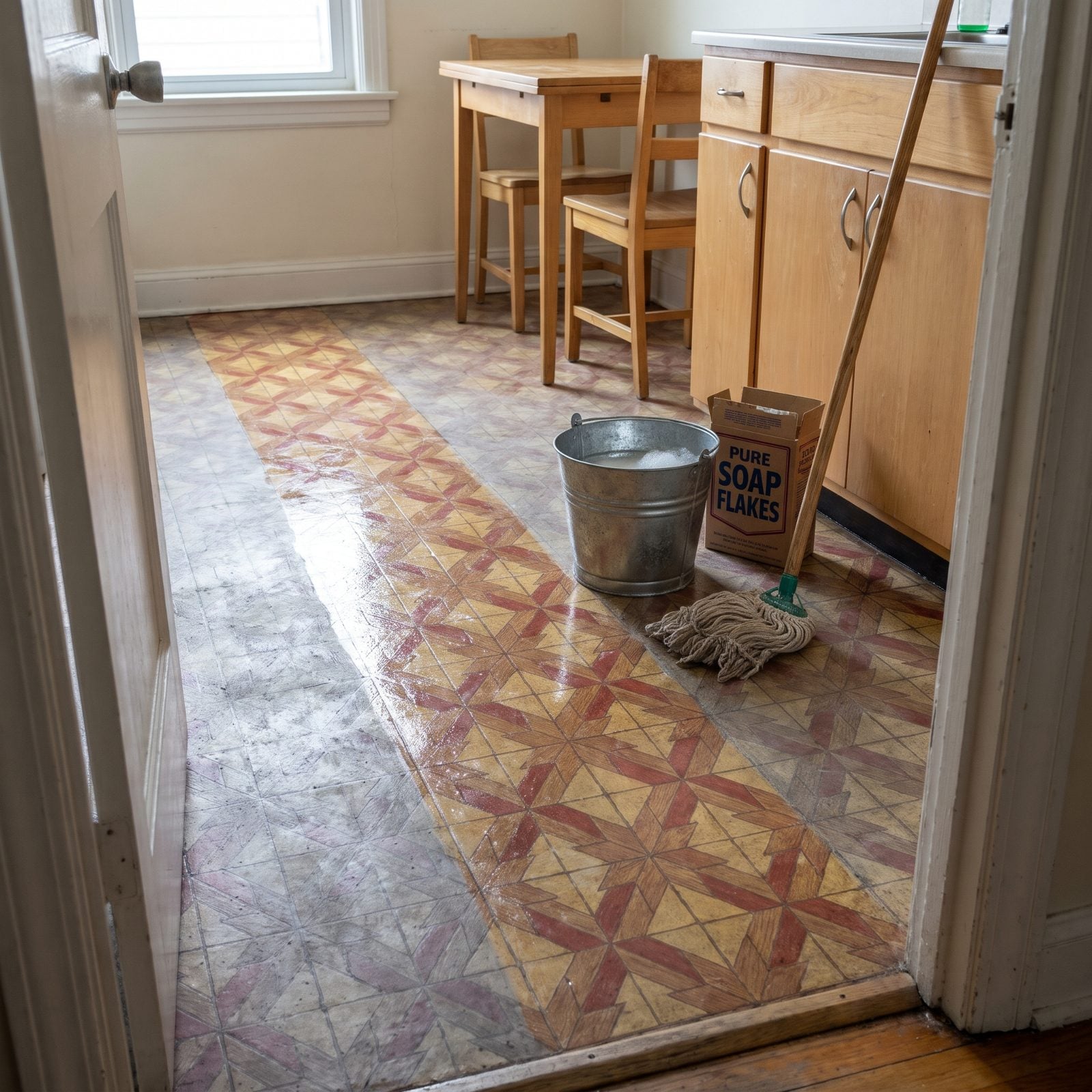
Old linoleum is finicky. Modern degreasers can dry it out and dull the pattern for good, which is exactly the opposite of what you want. Soap flakes dissolved in warm water clean the surface without stripping the finish that keeps genuine linoleum supple.
Here’s why that matters: real linoleum is made from linseed oil and cork, and harsh alkaline cleaners go to war with that oil. A mild soap solution lifts grime and leaves a faint protective film behind instead. Wring the mop nearly dry. Standing water is linoleum’s worst enemy.
7. Borax Scrubs Yellowed Stains Out of Porcelain Sinks
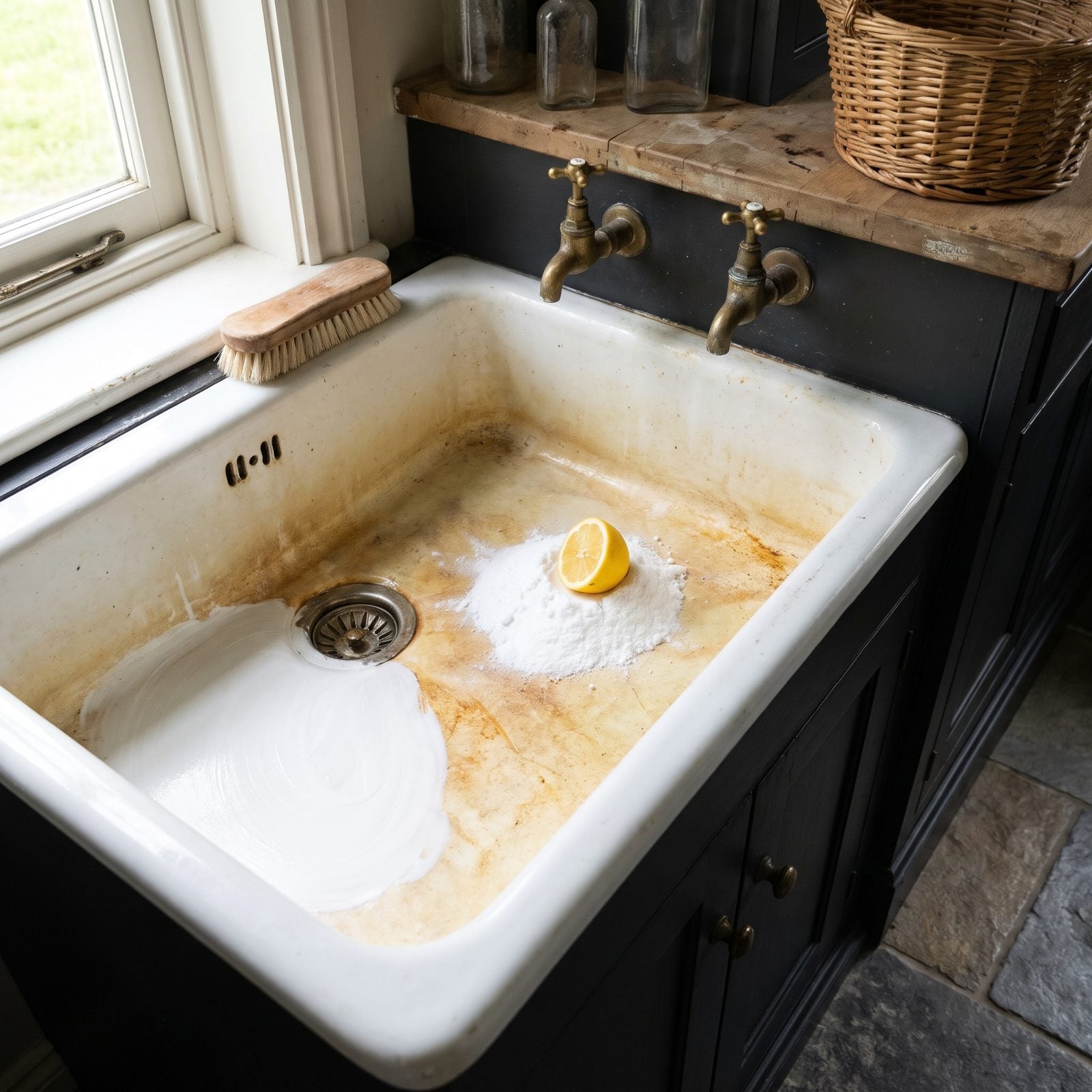
Porcelain yellows wherever water sits, around the drain, under the faucet, along the basin. Borax is the old answer. Sprinkle it over the dampened stains, scrub with half a lemon, let it sit, then rinse. The mild abrasion and the lemon’s acid together lift stains that sprays just glide right over.
It’s been a laundry and kitchen staple for generations because it’s cheap and it works. Keep it away from food surfaces and out of reach of kids and pets, then turn it loose on the sink.
6. Castile Soap for Grimy Painted Cabinets
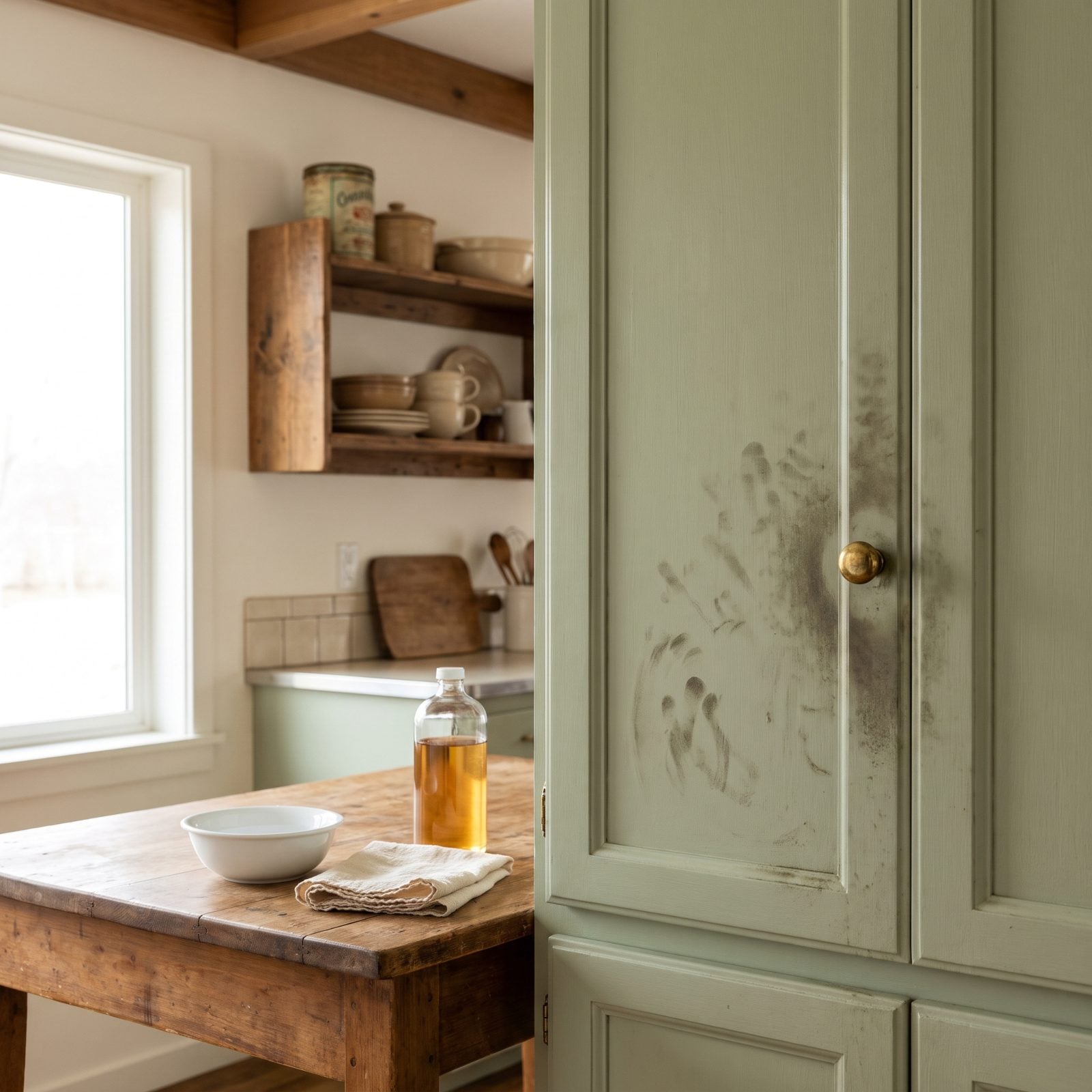
Grease on cabinet paint is a slow build. You don’t notice it until a slant of afternoon light catches the door and suddenly every fingerprint around the handle shows up like a confession.
Spray cleaners cut it, sure, but they also strip the finish over time and leave a chalky film on satin paint. Diluted castile soap does the reverse — a few drops in warm water, a soft cloth, and the grease lifts while the paint keeps its sheen. Gentle enough for those hand-painted cabinets people pay a fortune for, and cheap enough that you stop rationing it.
5. Citric Acid for Scale Inside a Kettle
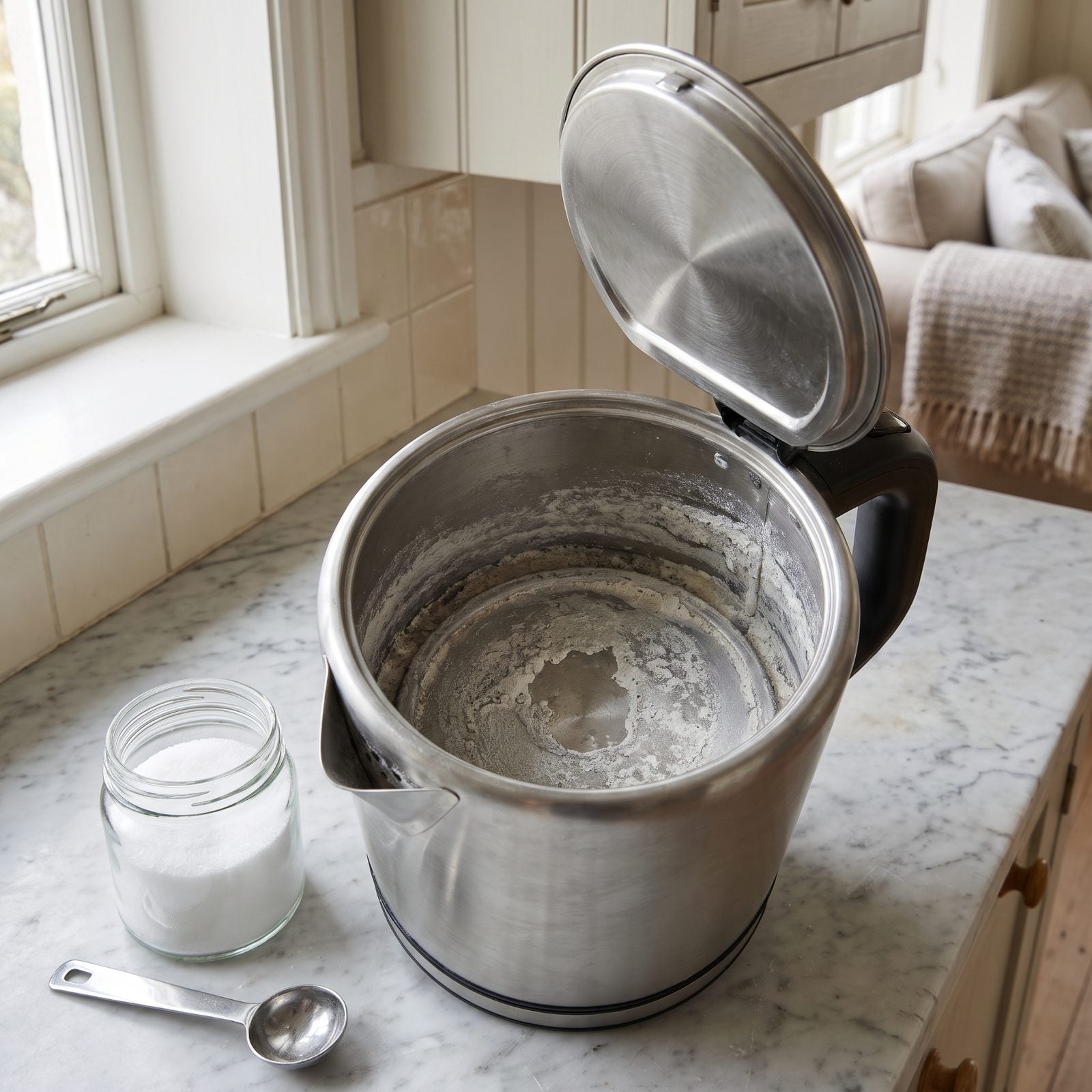
That chalky crust at the bottom of the kettle is calcium carbonate, left behind every time the water boils off. In hard-water regions it builds fast and starts flavoring your tea with a faint mineral edge.
Commercial descalers are mostly citric or lactic acid with a markup slapped on. So buy the acid straight. A tablespoon of citric acid crystals, fill with water, boil, let it sit twenty minutes. The scale fizzes loose and pours out — no scrubbing, no scratching the element, no plasticky smell lingering in the next ten cups.
4. White Vinegar for Mineral-Crusted Showerheads
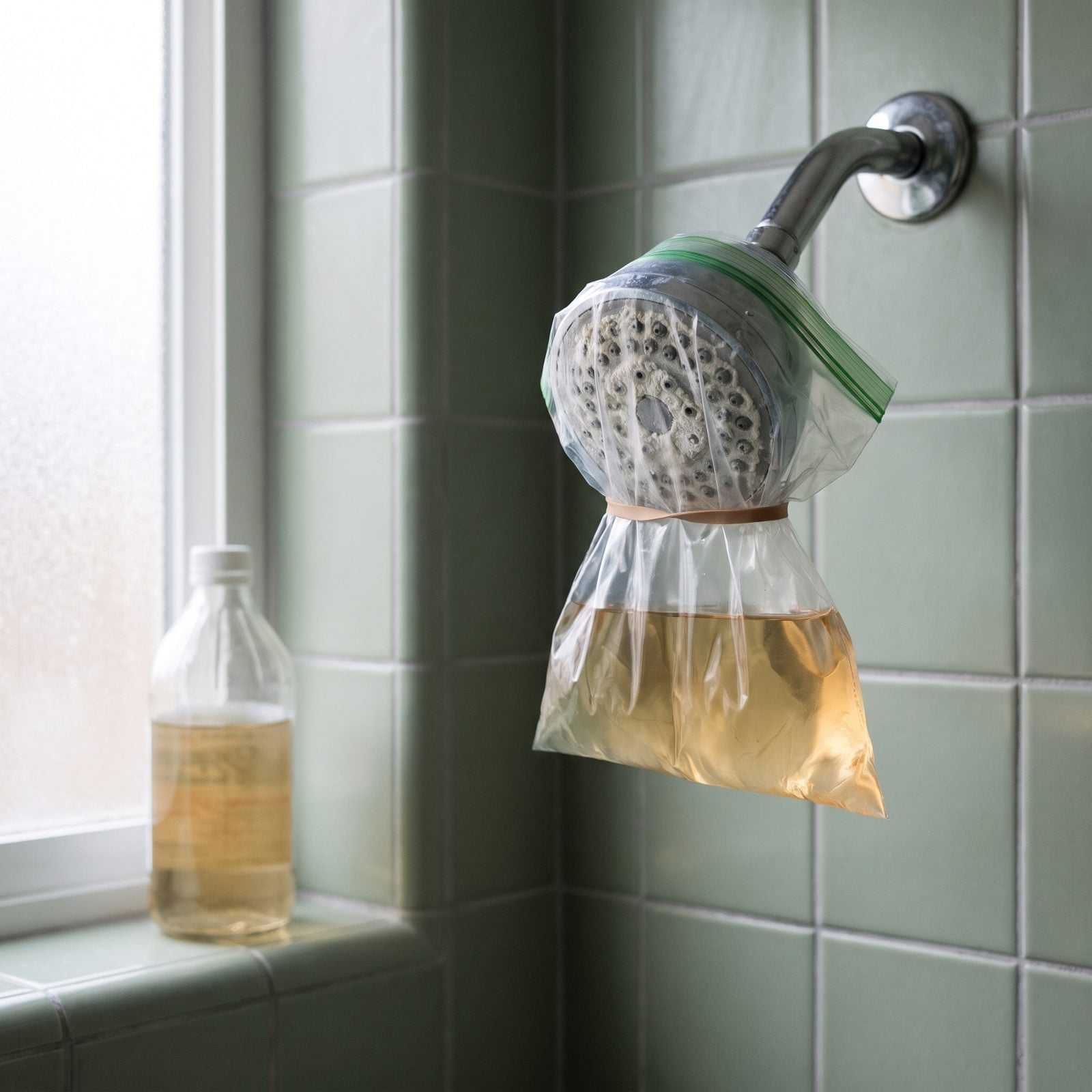
Half the holes in that showerhead stopped spraying, and now the water comes out sideways in weird little jets. That’s mineral scale blocking the nozzles from the inside.
The old bag trick still beats anything in a spray bottle. Fill a plastic bag with white vinegar, tie it over the showerhead so the nozzles are fully submerged — then walk away for a few hours. The acetic acid dissolves the deposits right where they sit. No dismantling. Run hot water after and the spray pattern comes back.
One caveat worth respecting: brushed nickel and some older brass finishes don’t love prolonged vinegar contact. Chrome shrugs it off. Check what you’ve got before you leave it overnight.
3. Lemon for Grease Inside a Microwave
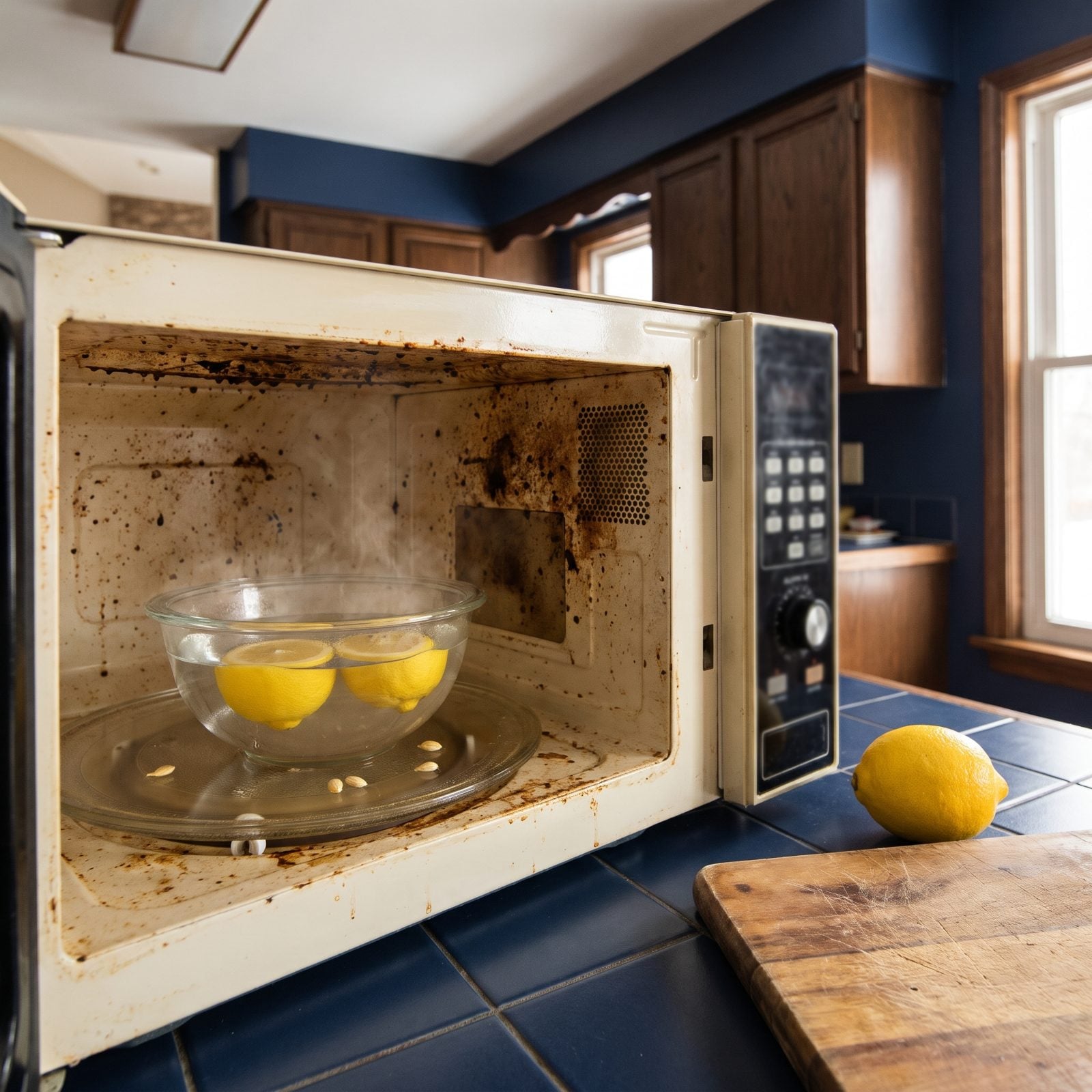
Steam does the scrubbing for you. Spray cleaners inside a microwave are a bad idea anyway — you’re misting chemicals into a box that heats your lunch.
Drop a couple of lemons into a bowl of water, run the microwave a few minutes until the window fogs, then let it steam a bit longer with the door shut. The acidic steam softens the baked-on splatter so it wipes off with a cloth instead of a scraper, and the lemon oil leaves the inside smelling clean rather than like fish reheated three days ago.
2. Baking Soda for Baked-On Oven Grime
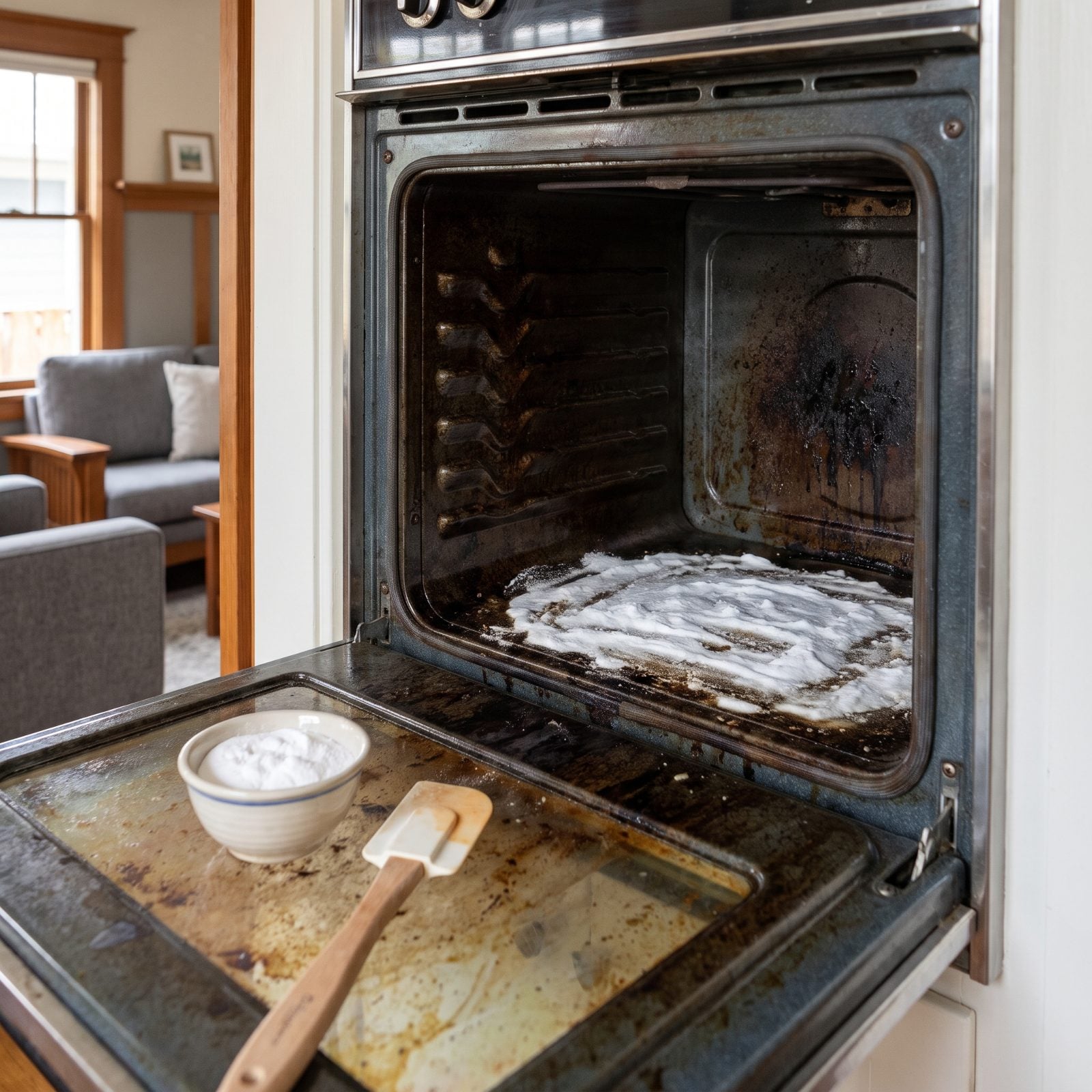
Commercial oven cleaner is the harshest thing under most sinks. The fumes alone will clear a room, and you still end up kneeling with a scraper.
Baking soda made into a paste is slower, but it works while you ignore it. Spread the paste over the baked-on spots and leave it overnight. By morning the alkaline paste has broken down the carbonized grease so it lifts with a cloth. Wipe with a little vinegar after and it foams the last residue loose.
It won’t touch grime in ten minutes the way the caustic stuff claims to. But the oven cleans itself while you sleep, and nobody has to evacuate the kitchen.
1. Hydrogen Peroxide for Stained Cutting Boards
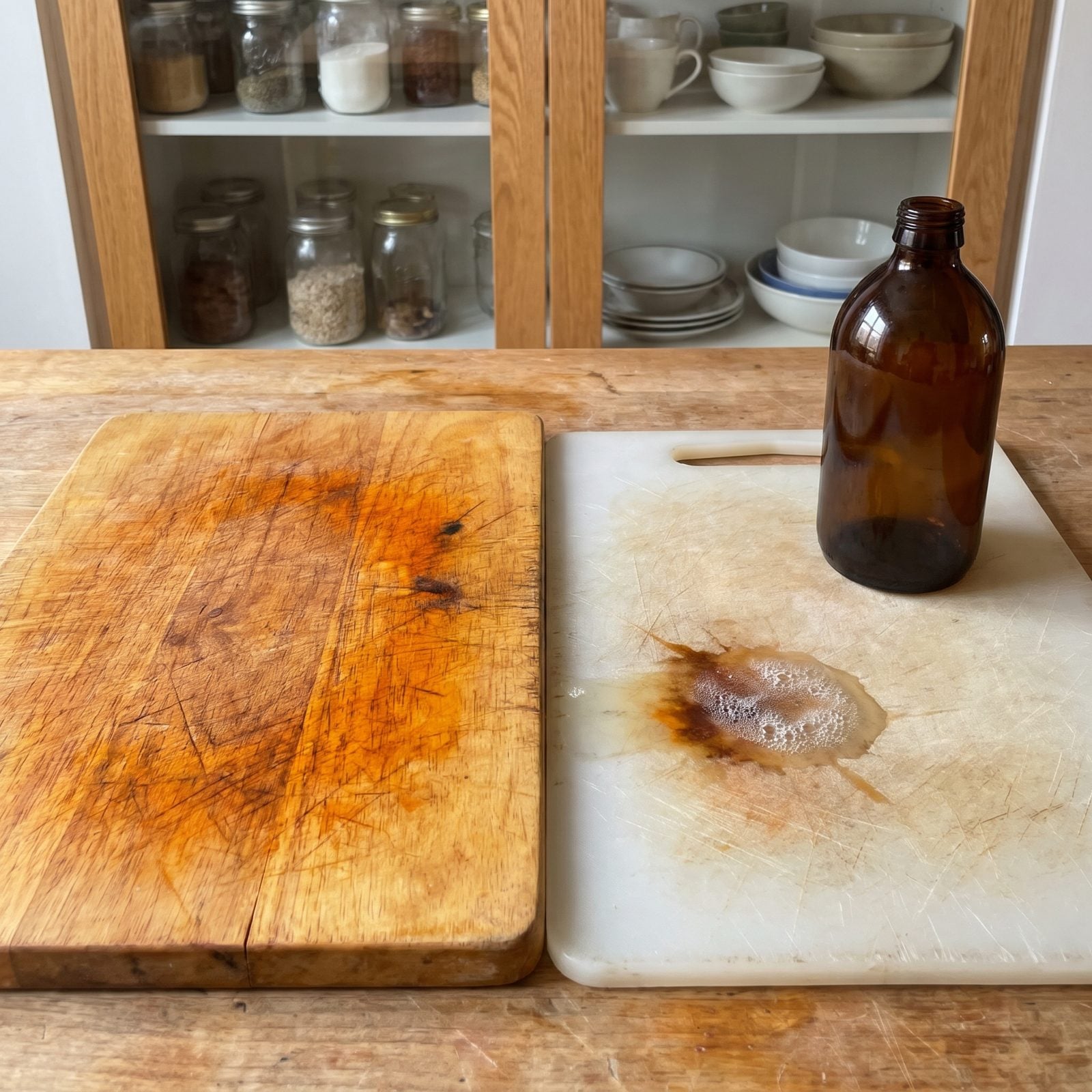
A cutting board collects everything — beet juice, raw chicken, the orange ghost of a hundred tomatoes. The stains are cosmetic. What’s living in the knife grooves is the real worry.
Hydrogen peroxide handles both. Pour it straight onto the board, let it fizz and sit, then rinse. It lightens the staining and knocks back the bacteria hiding in the cuts, and it does it without the bleach smell that makes everything taste faintly of a swimming pool. Works on plastic and bamboo. On raw wood, go sparingly and oil the board after so it doesn’t dry out and crack.