
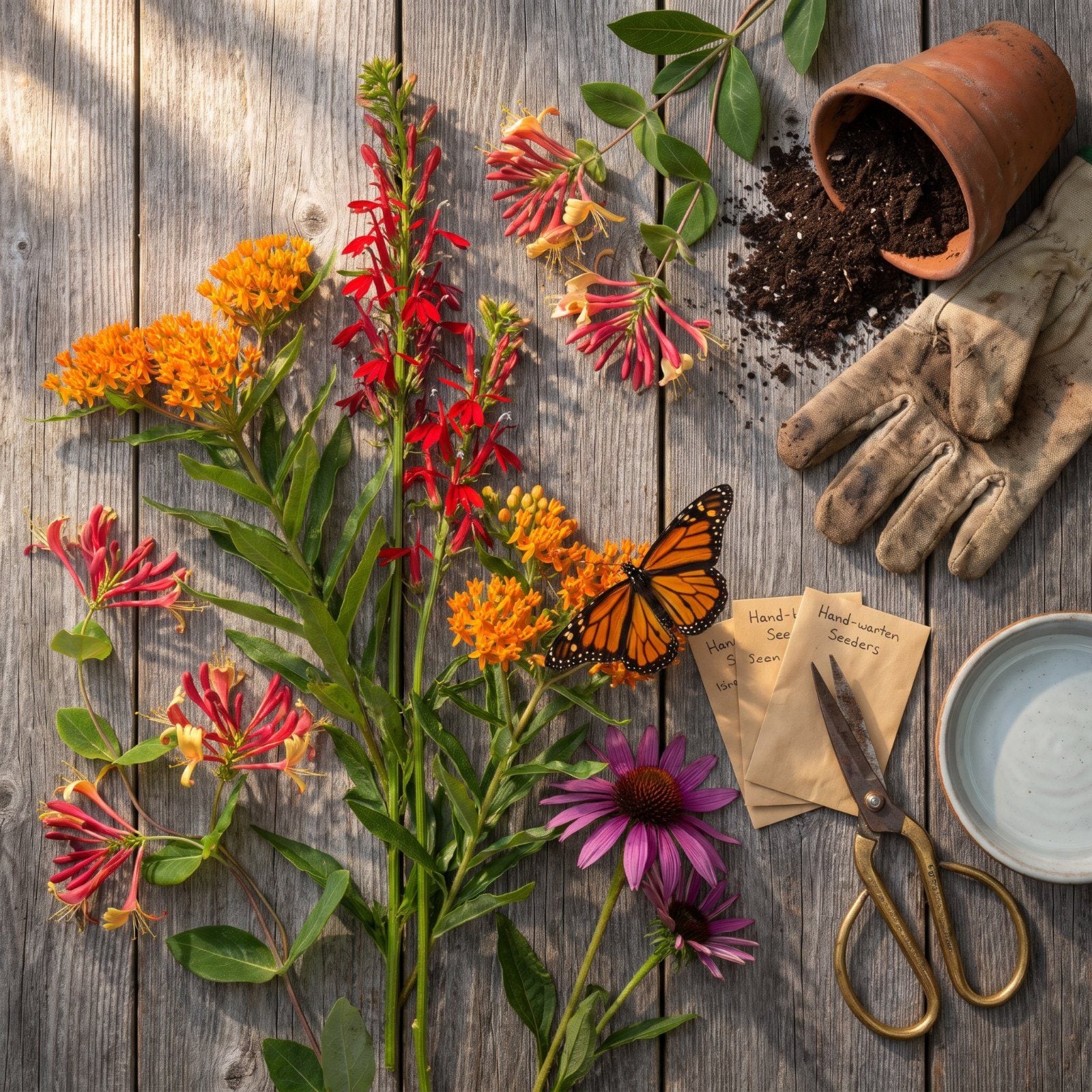
A ruby-throated hummingbird weighs about as much as a penny and burns through nectar like a tiny furnace. Keep one fed from spring into fall and you’ve done something real. The trick isn’t a plastic feeder full of red dye. It’s a run of native plants that bloom in sequence, mountains to coast, so there’s always something open when the wings show up. Everything below grows here, comes recommended by NC State Extension and the NC Wildlife Federation, and most of it belongs in Carolina soil the way kudzu never did. Plant a few. Watch what arrives.
Please note that some of the images in this article were created with the assistance of AI.
21. Butterfly Weed: The Orange Monarch Magnet That Thrives in Lousy Soil
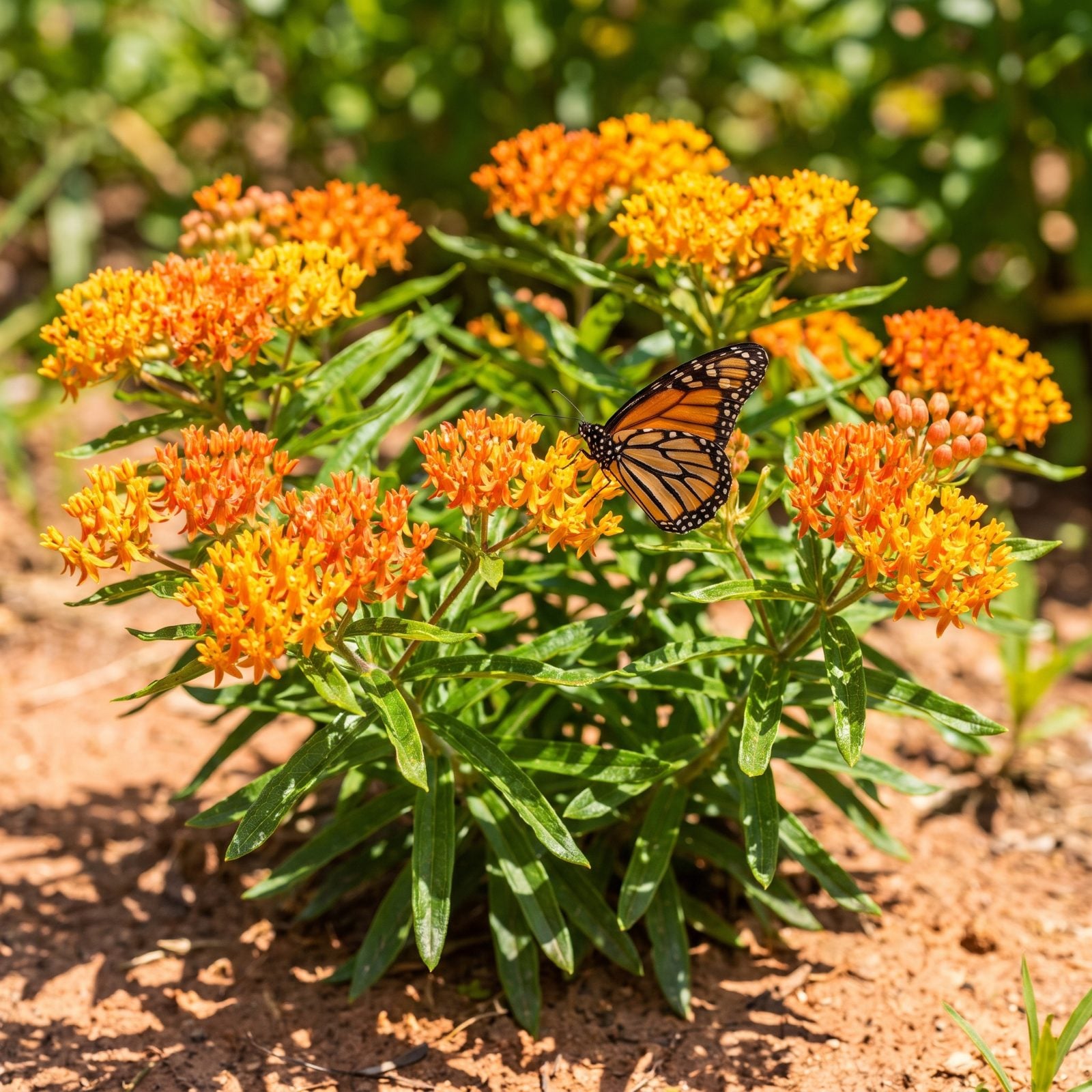
If you kill everything you plant, start here. Butterfly weed actually prefers the bad spots — the dry, poor, baked-by-afternoon-sun ground where your fussier plants throw in the towel. It runs one to two feet tall, blooms yellow-to-orange from spring well into late summer, and grows happily in all three NC regions.
It’s a larval food plant for monarchs, so caterpillars will chew the leaves. That’s the whole idea, not a problem. North Carolina crowned it the 1985 Wildflower of the Year, and it earned every bit of that honor.
20. Swamp Milkweed: For the Soggy Corner Nothing Else Will Grow In
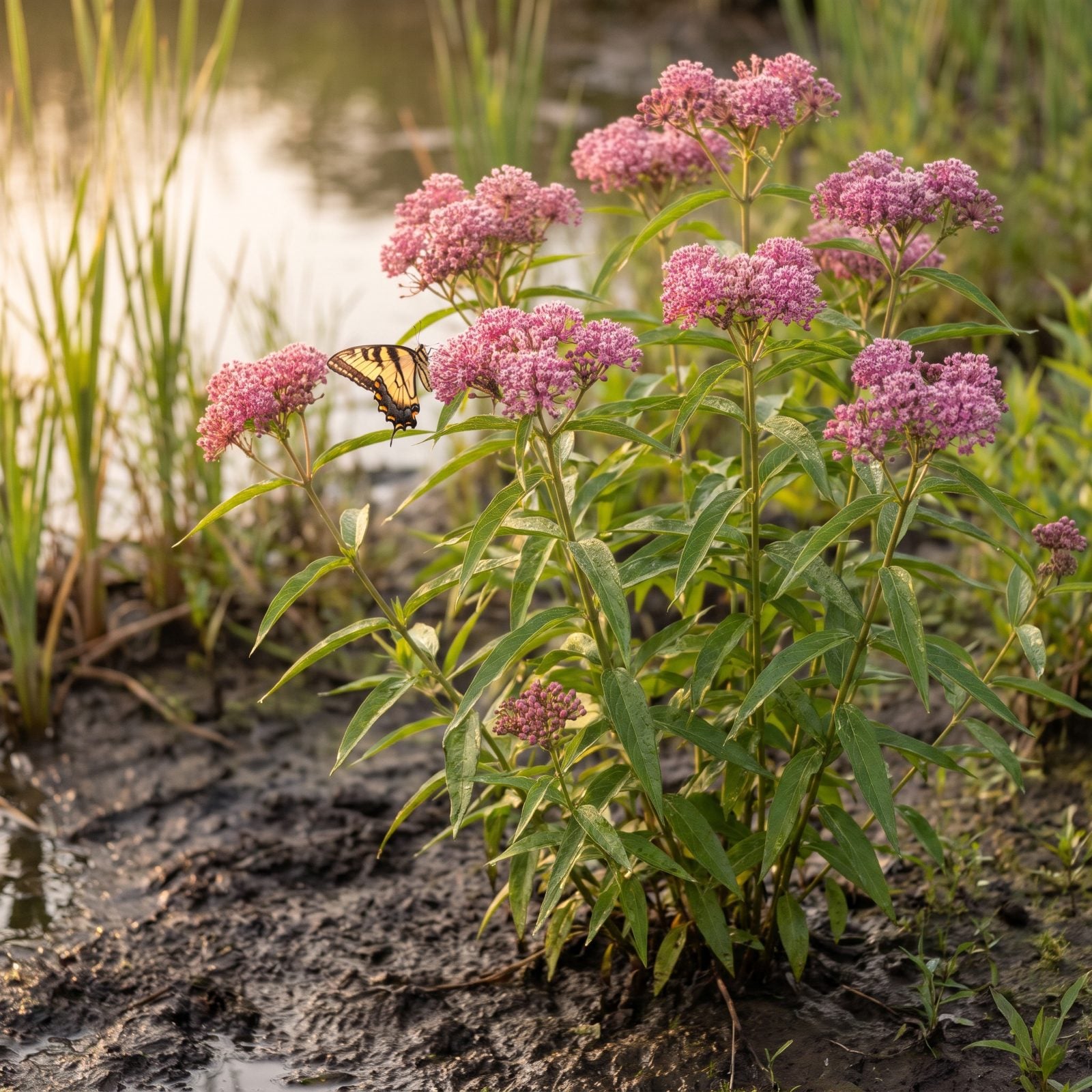
That low spot in the yard that stays wet after rain? The one where the lawn goes to die? Swamp milkweed wants it.
It climbs three to five feet, throws out pink-to-rose-purple clusters, and like its cousin above, hosts monarchs. Rain gardens, bog gardens, ditch banks, the margin of a pond — all fair game. It was NC’s 2005 Wildflower of the Year. Here’s the twist most people miss: despite the name, it adapts to drier ground too, as long as you’ve got moist clay or loam. Don’t let the word “swamp” scare you off an ordinary border.
19. Coral Honeysuckle: The Native That Behaves, Unlike Its Invasive Cousin
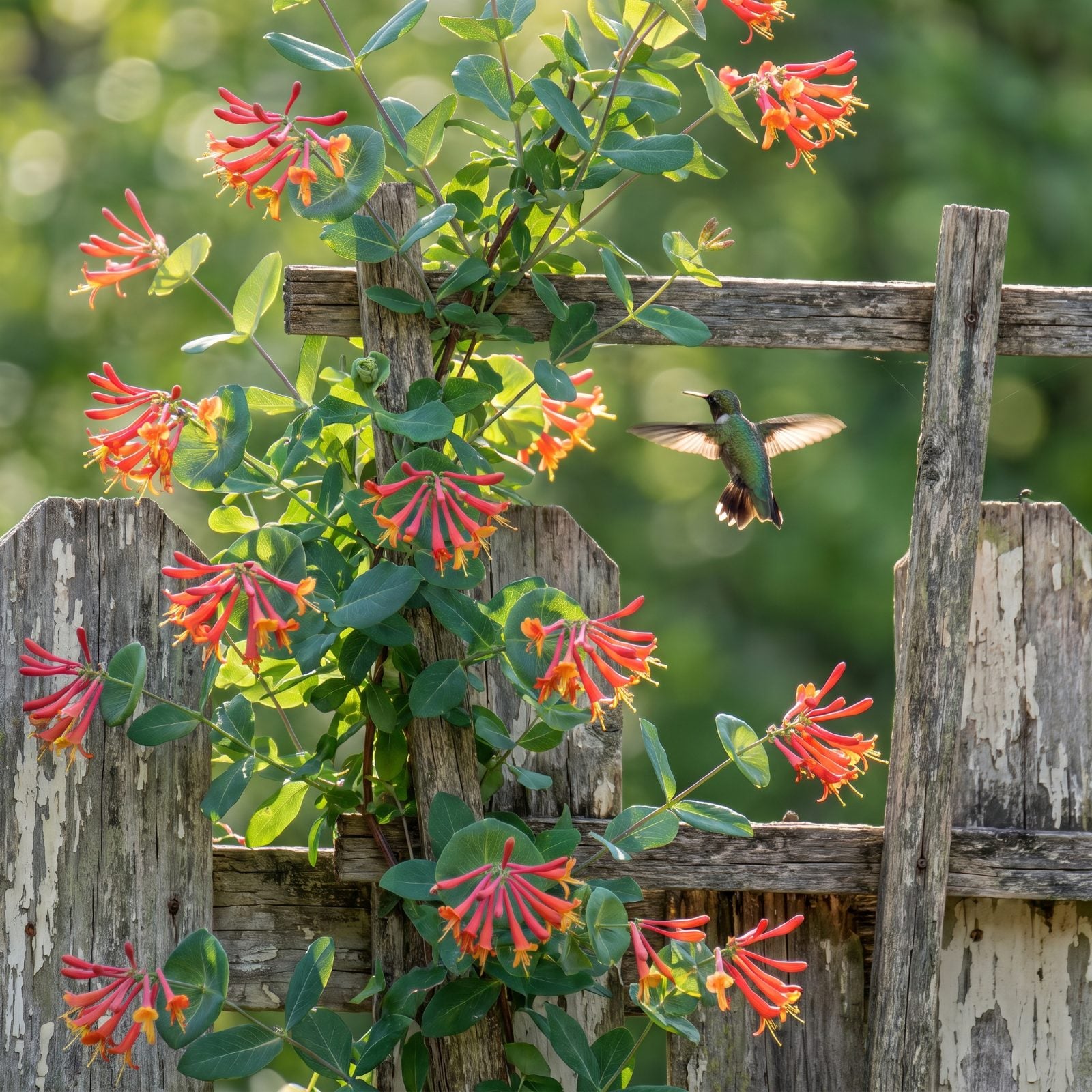
Everybody knows Japanese honeysuckle. It smells sweet and it swallows whole fence lines, trees, and small sheds given half a chance. Coral honeysuckle is the one you actually want.
Native to all three NC regions, it climbs ten to twenty feet on a trellis or fence and stays semi-evergreen. Red, red-orange, or yellow trumpet flowers show up roughly March through July. NC State is blunt about the main pollinator — hummingbirds — and the vine happens to be deer resistant and salt tolerant too, which makes it a coastal workhorse.
Plant the native, and you get the hummingbirds without the regret of fighting an invasive for the next decade.
Look for ‘Alabama Crimson’ for deep red, or the yellow ‘Flava’ if you want something softer.
18. Cardinal Flower: The Scarlet Spike Hummingbirds Fly For
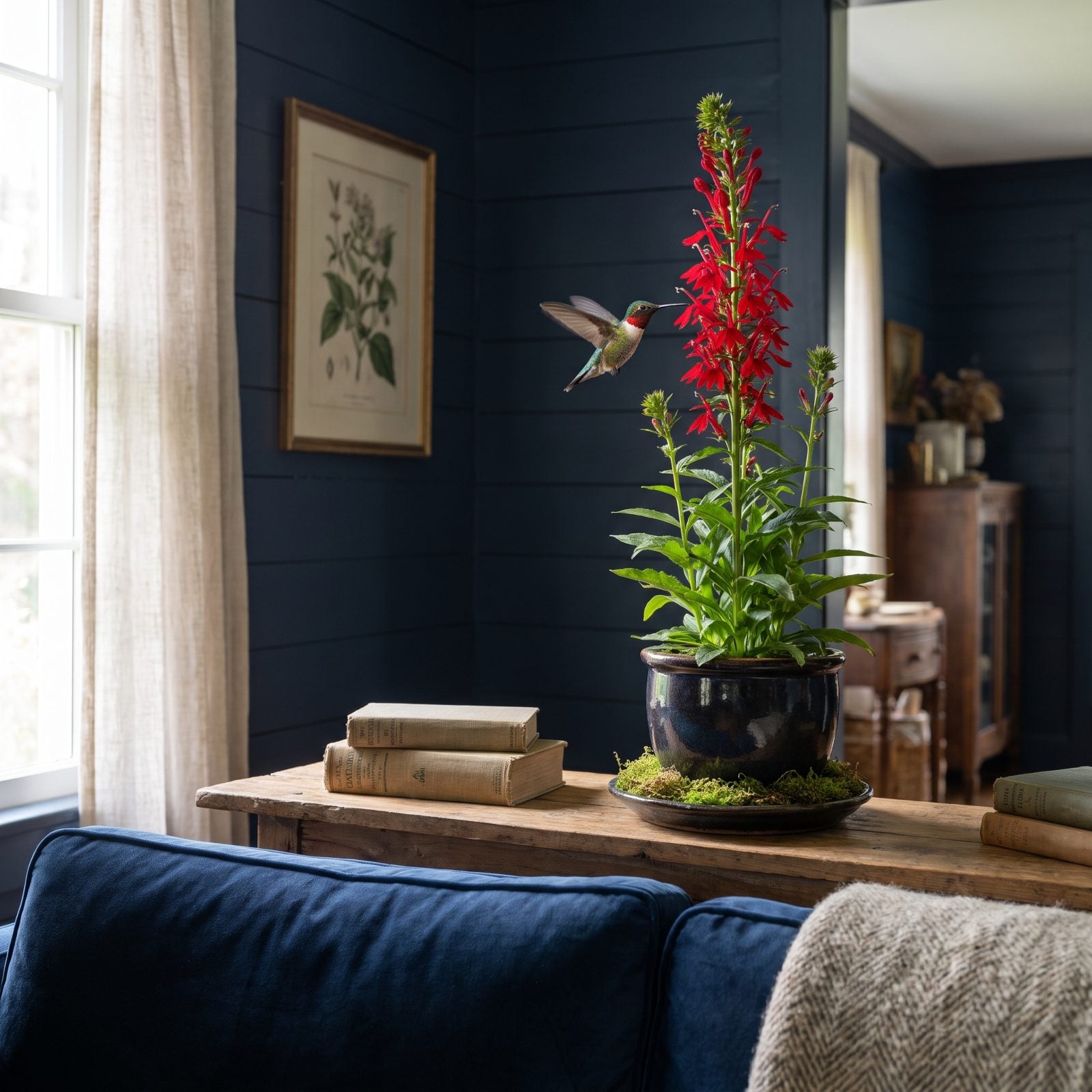
The red on a cardinal flower is almost aggressive. Pure scarlet spikes, two to four feet tall, blooming July through September when half the garden has already gone tired and brown.
Ruby-throats treat those tubular flowers like a favorite diner. One rule, and it’s non-negotiable: the soil can never dry out. Not once. That means a pond edge, stream bank or rain garden — or, in a pot, a deep saucer you keep topped up and a daily check, because containers dry out fast.
17. Crossvine: The Early Riser That Feeds the First Hummingbirds Home
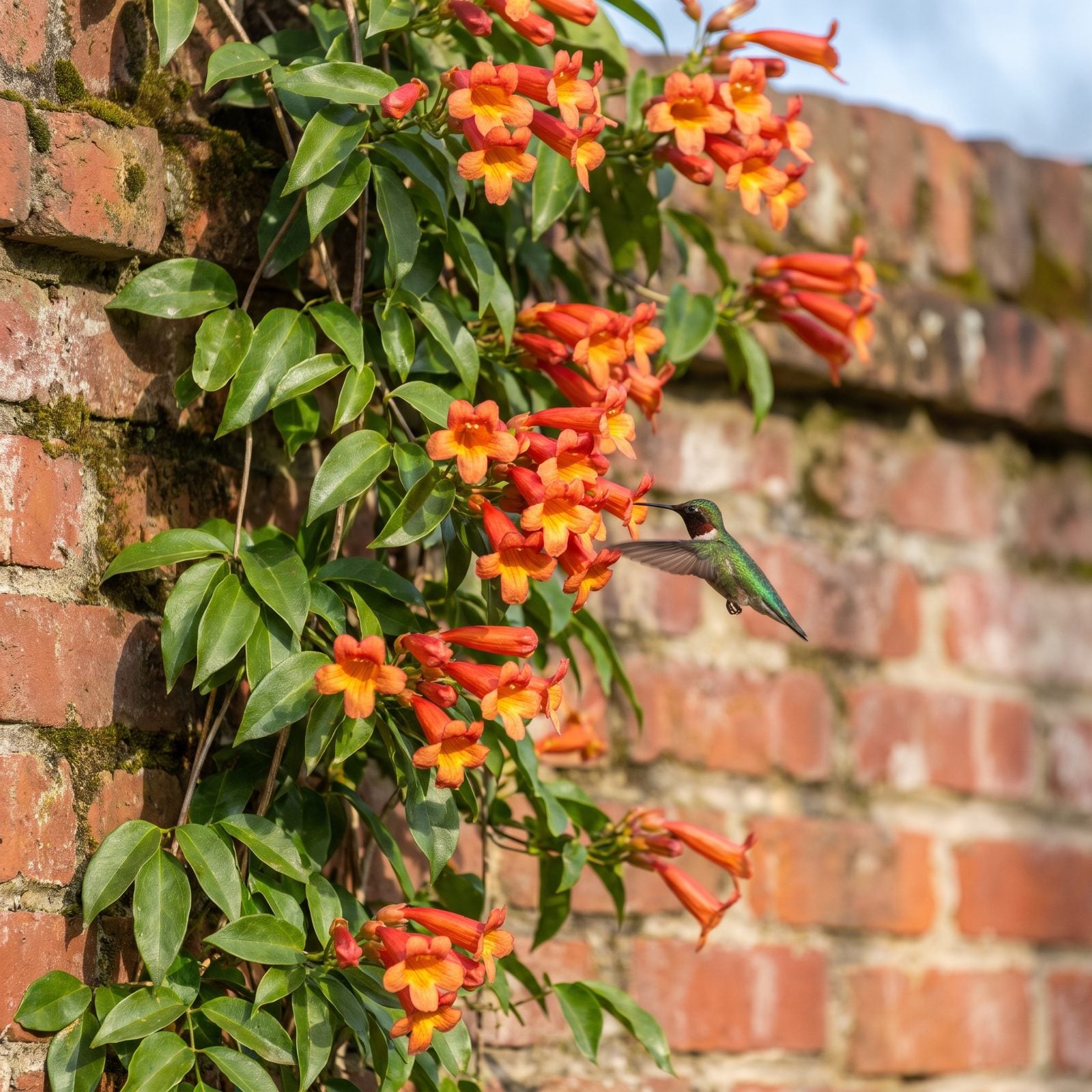
Timing matters more than most people think. A hummingbird back in March after a flight across the Gulf needs something open now, not in June.
Crossvine delivers. It blooms late winter into early spring, first food for the earliest arrivals. Tough Southeastern native, handles the coast, tolerates full shade — though it flowers harder in sun — and its leaves feed several sphinx moth caterpillars. Want real punch on a wall or arbor? ‘Tangerine Beauty’ is one of several cultivars with improved color.
16. Trumpet Creeper: Gorgeous, Beloved by Hummingbirds, and a Bit of a Bully
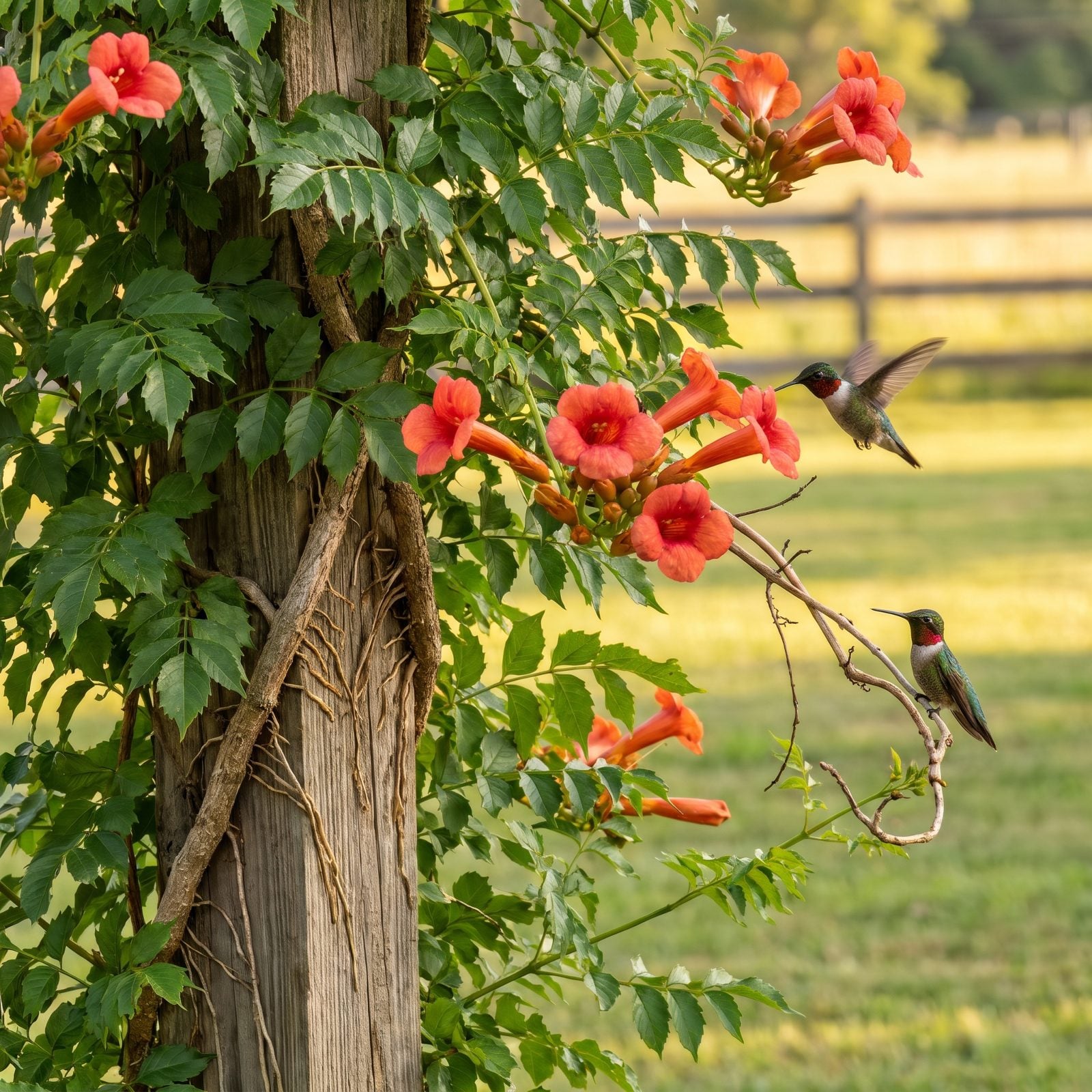
Hummingbirds adore it. Your neighbors may not.
Trumpet creeper is a native, and NC State lists it as a genuine hummingbird plant. The flowers are big, orange-red, and practically dripping. But the vine is heavy, climbs with aerial rootlets, and needs a real structure — not some flimsy trellis that’ll fold under it. The bigger headache? It suckers hard from underground runners and self-seeds everywhere. Leave it be and it forms colonies that smother whatever’s nearby.
NC State’s advice is practical. Plant it next to concrete or a regularly mowed area so the mower and the pavement keep it honest. Give it room to misbehave somewhere misbehaving costs you nothing.
15. Red Buckeye: A Small Tree That Blooms Before Anything Else Wakes Up
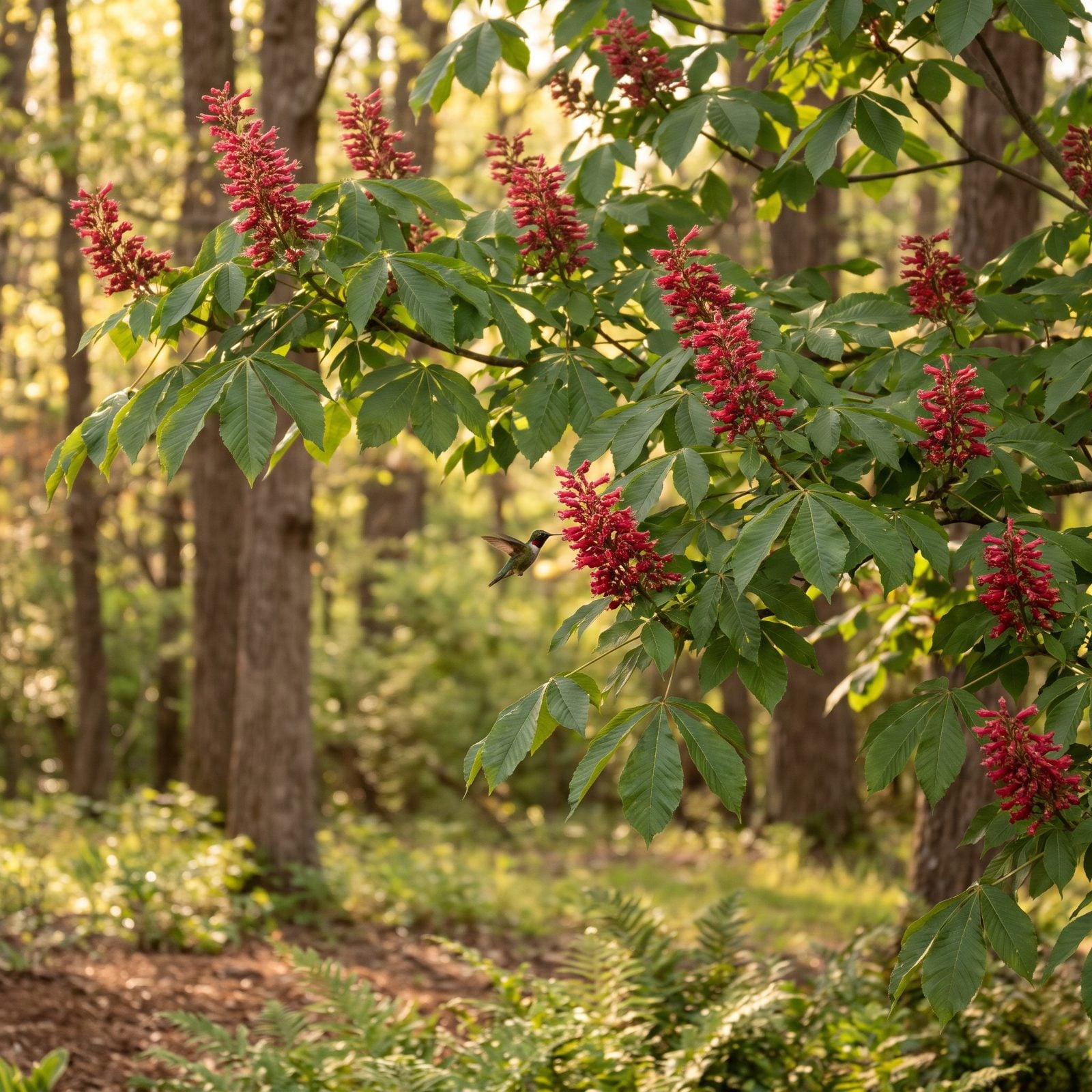
Most gardeners picture hummingbird plants as flowers. Red buckeye is a whole small tree doing the job — fifteen to twenty-five feet tall, native to the NC coast and Piedmont.
Its spring clusters run six to eight inches long, red and tubular, lasting about a month right when hummingbirds need them most. It likes part sun and moist, well-drained soil. Water it through dry spells or it drops its leaves early and sulks like a teenager.
One warning: NC State rates it high-severity poisonous, and the seeds, despite looking like edible chestnuts, are nothing of the kind.
14. Scarlet Bee Balm: The Blue Ridge Native With Leaves That Smell Like Mint
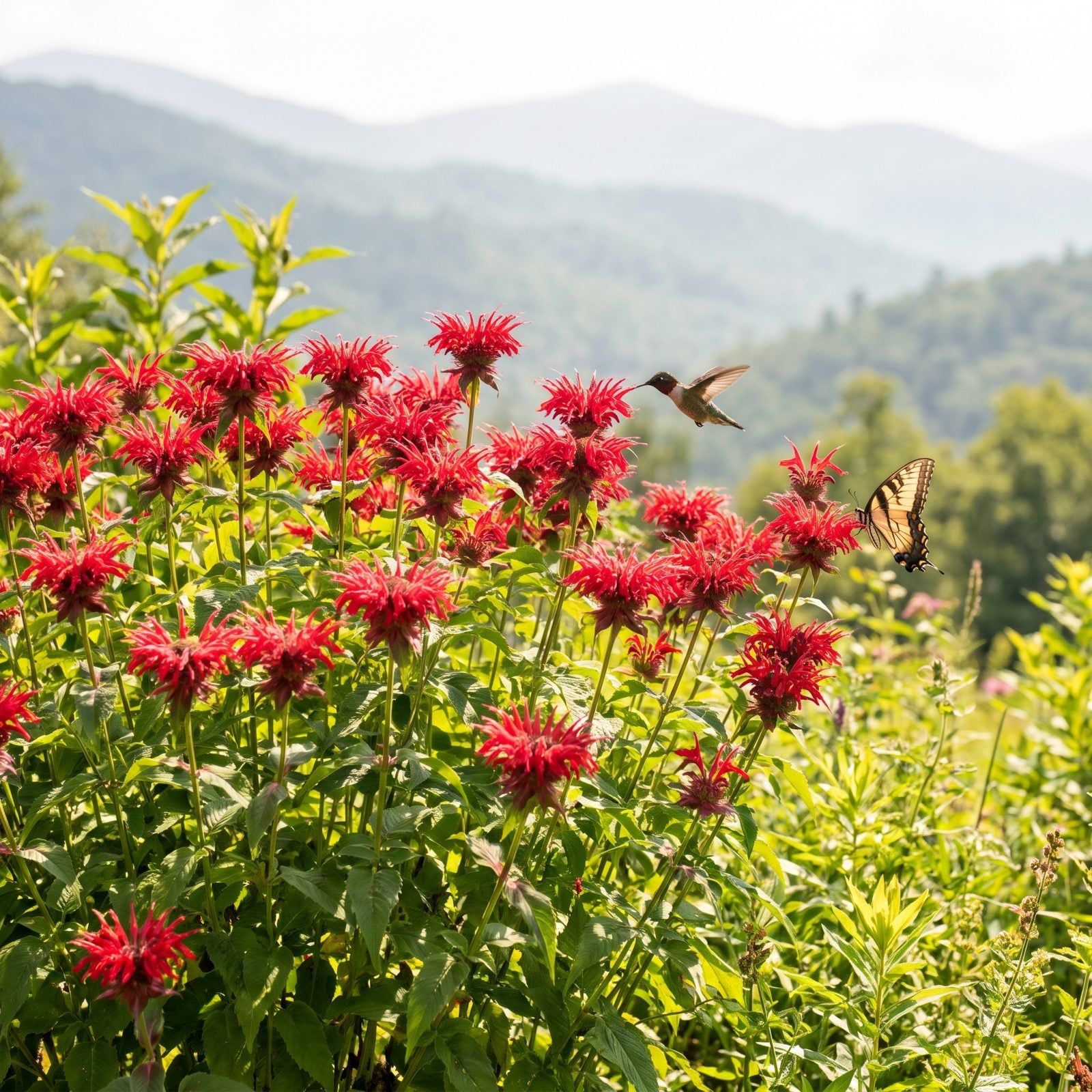
Crush a leaf of scarlet bee balm and your fingers smell like mint for an hour. It’s native to the NC mountains and the broader Appalachians, and in summer you can spot it blooming right along the Blue Ridge Parkway.
The red flower heads pull in hummingbirds, butterflies, and bees all at once. It wants moist, well-drained soil and full sun. One honest caution — it’s prone to powdery mildew and rust, so water at the base and never over the leaves. Give it air and it’ll reward you for years.
13. Wild Columbine: Nodding Red Lanterns for the Shady Edge
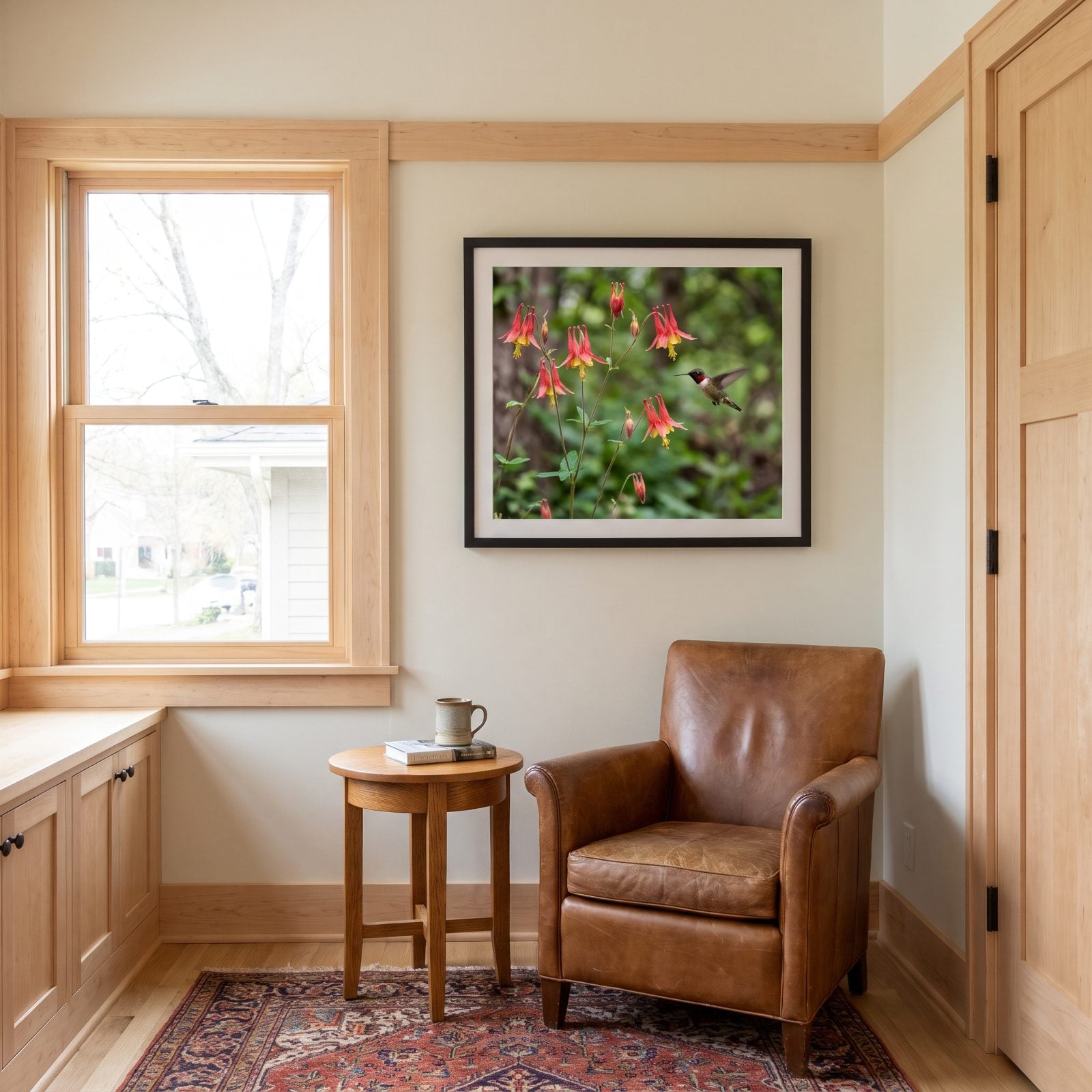
Columbine flowers look like little upside-down lanterns — red on the outside, yellow inside, with those odd backward spurs that hold the nectar. They open in early spring and hang on for about a month.
Up to three feet tall, it draws hummingbirds, butterflies, and bumblebees. It likes part shade and rich, moist soil, and it self-seeds with real abandon, which I count as a feature. Transylvania County Extension recommends it specifically for hummingbird gardens and containers. Tuck it along a shaded path and let it wander.
12. Fire Pink: The Scarlet Rock-Garden Native That Laughs at Drought
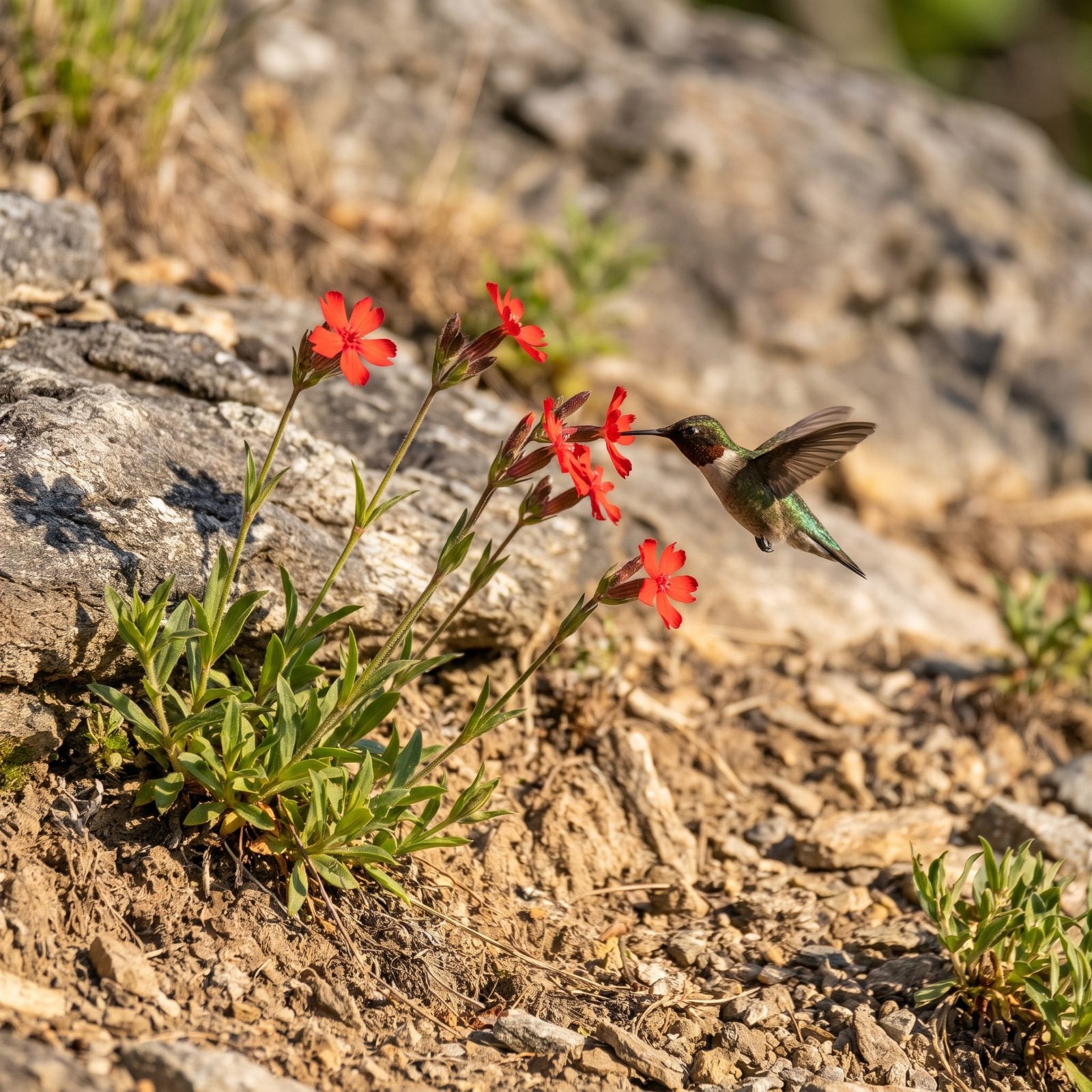
Where cardinal flower demands constant moisture, fire pink does the exact opposite. Dry, rocky, lean soil where most plants give up is where it’s happiest.
The scarlet five-petaled flowers, each tip neatly notched, bloom late May into early July and draw both butterflies and hummingbirds. NC State and Transylvania County Extension both flag it as a hummingbird plant, with Transylvania naming it among the eastern natives pollinated mainly by hummingbirds. Give it afternoon shade and well-drained ground, then step back. It handles drought better than you handle July.
11. Indian Pink: The Shade Garden’s Hummingbird Magnet
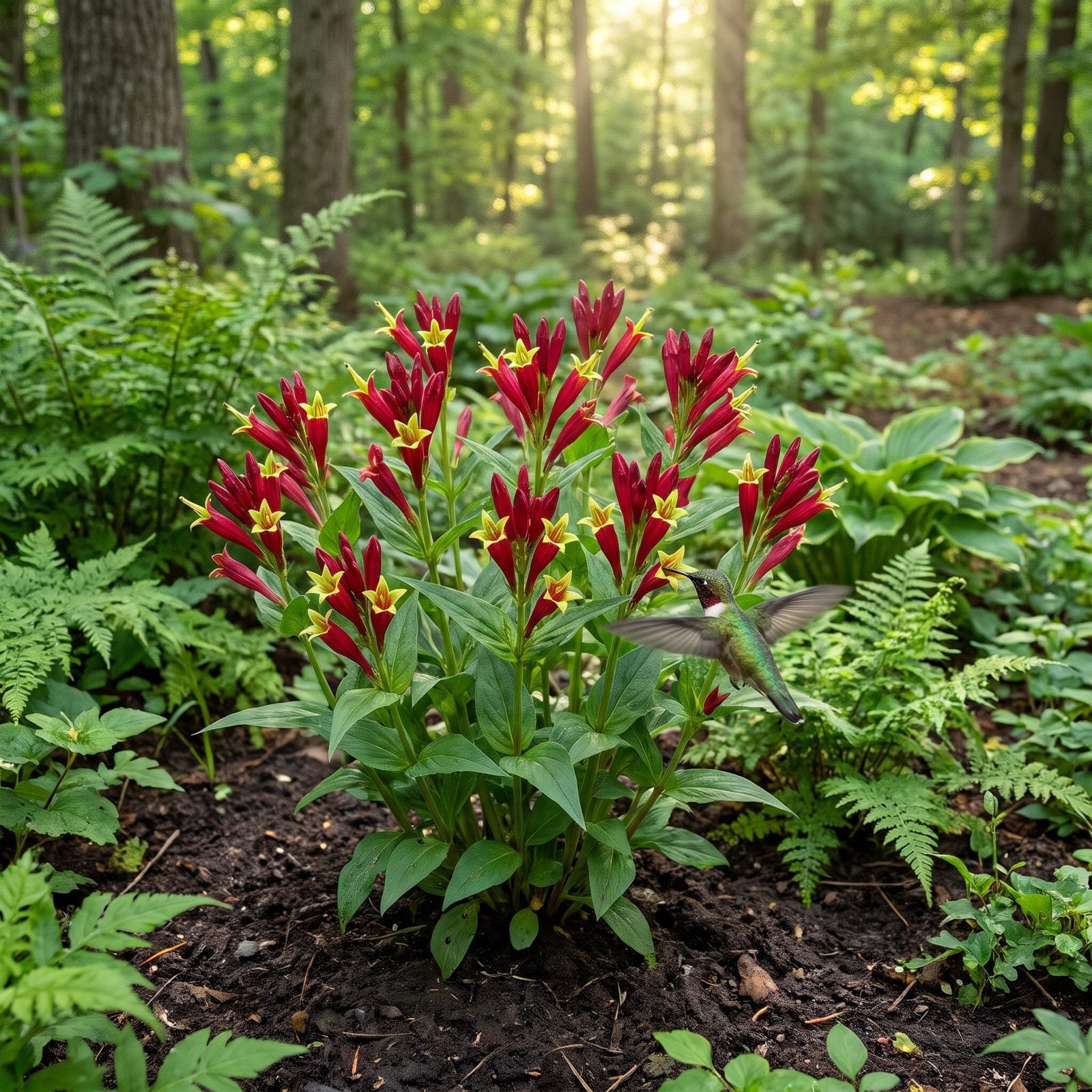
Most people think a shady spot means giving up on hummingbirds. Indian Pink proves them wrong. This foot-or-two native of moist Southeastern woodlands flowers in June, and the blooms are the whole trick: red tubes outside, a burst of yellow where they open at the top. Hummingbirds do most of the visiting, and most of the pollinating.
It’ll live in part to full shade. Give it a few hours of sun, though, and you’ll get more flowers. Keep the soil moist. One of the few genuinely good hummingbird plants for a dim corner.
10. Joe-Pye Weed: The Towering Butterfly Beacon for Damp Corners
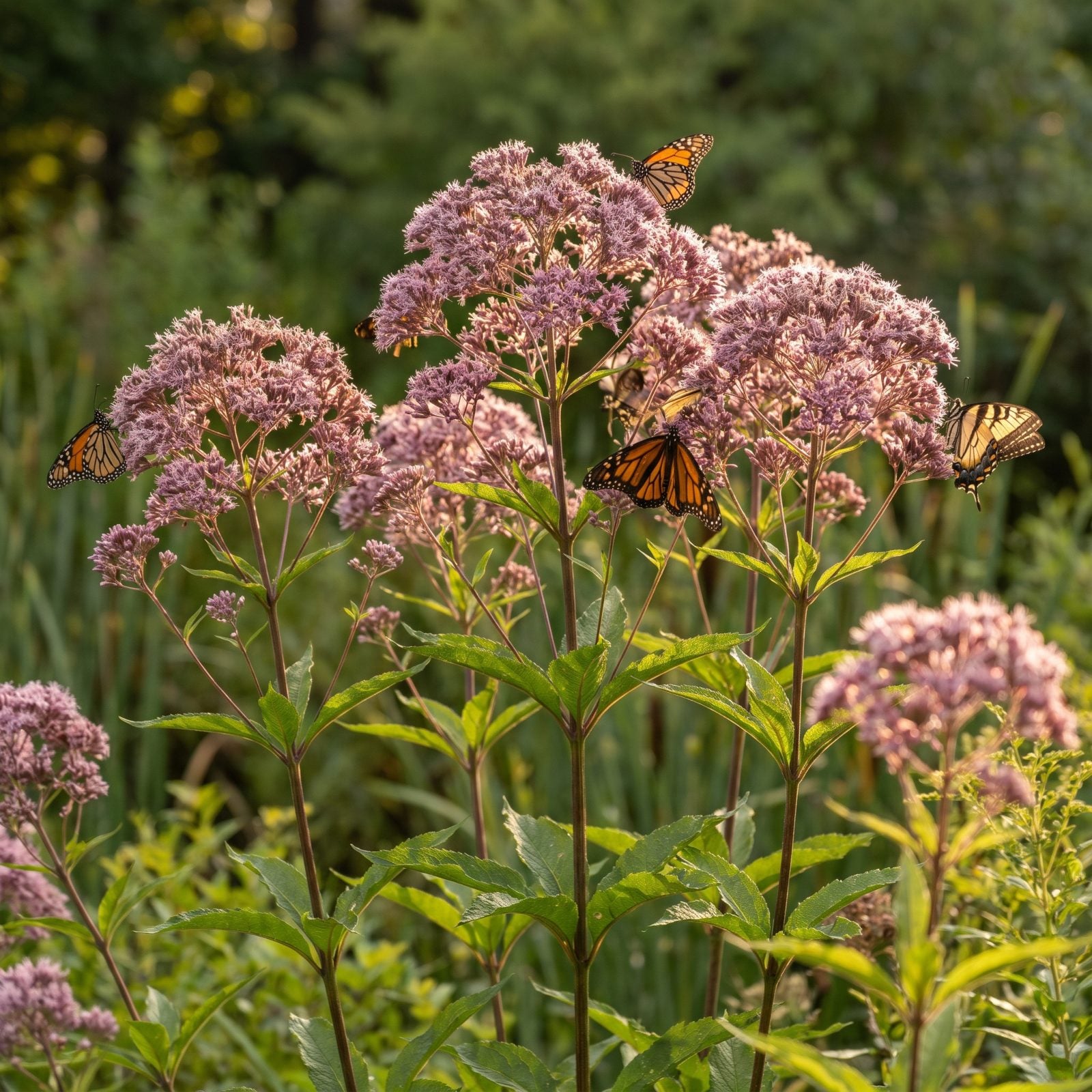
Don’t let the word “weed” fool you. Joe-Pye Weed is a native giant pushing past head height, and come July and August those dusty pink flower domes pull in more butterflies than almost anything else you can plant. NC State flat-out calls it wonderful for the job.
It wants moist soil, so stick it at the back or center of a damp bed where its height earns its keep. It feeds moth caterpillars too, so it’s doing work long before the butterflies arrive. Cut it to the ground in late winter and it comes roaring back.
9. Blazing Star: Purple Spikes That Laugh at Summer Humidity
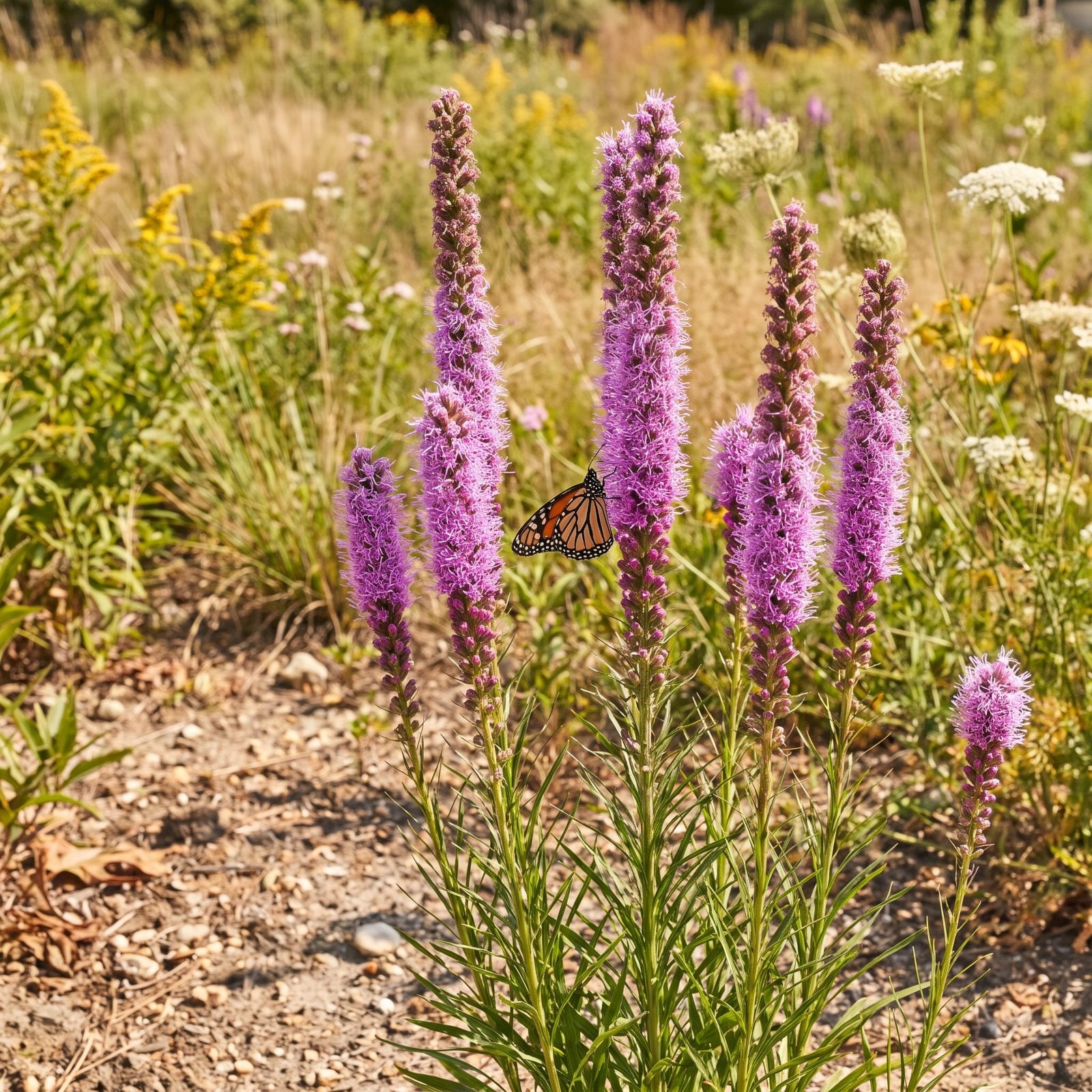
Vertical, violet, and tough. Blazing Star sends up flower spikes that can reach five or six feet and open from the top down, with tight buds still waiting lower on the stem, an odd little quirk that keeps butterflies and native bees circling back for weeks in midsummer.
The NC Wildlife Federation points out it handles our summer heat and humidity, which not every pretty flower can survive. It grows wild across the coastal and Piedmont regions anyway. Plant it in a drift rather than one lonely stem, let the seed heads stand for fall goldfinches, and it’ll earn its keep in any pollinator or rain garden.
8. New England Aster: Late-Season Fuel for Migrating Monarchs
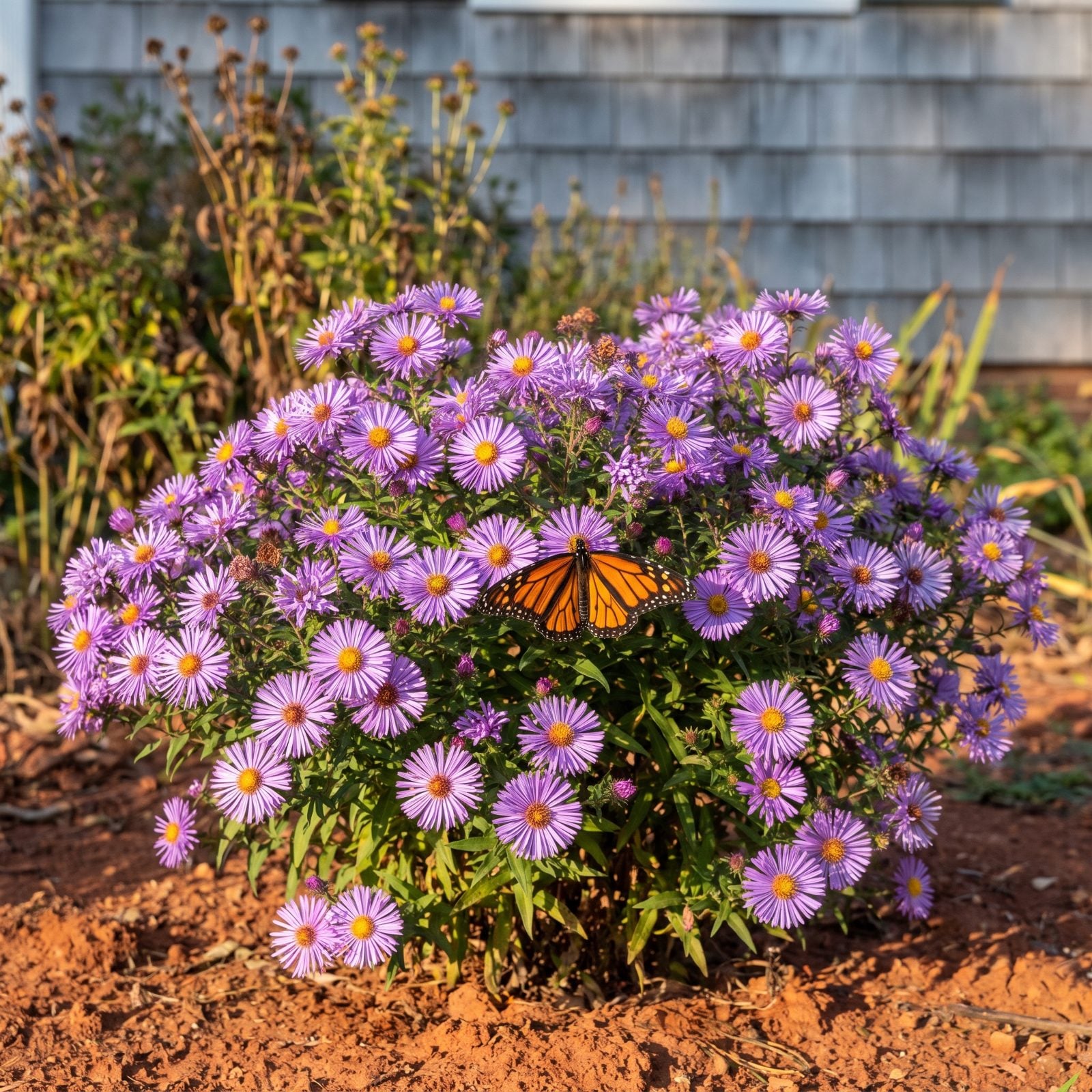
When most of the garden is winding down, this one shows up. New England Aster opens its purple-and-gold flowers in late summer and holds them well into fall, right when migrating monarchs are desperate for fuel.
It tolerates clay, which the NC Wildlife Federation says makes it a smart North Carolina pick. Give it full sun and good air circulation or powdery mildew will find it fast. It’s also a larval host plant for the pearl crescent butterfly, according to the NC Wildlife Federation, so the caterpillars cash in as well. Timing is the real gift. A late bloom plugs the gap other plants leave wide open.
7. New York Ironweed: Deep Purple at the Back of the Rain Garden
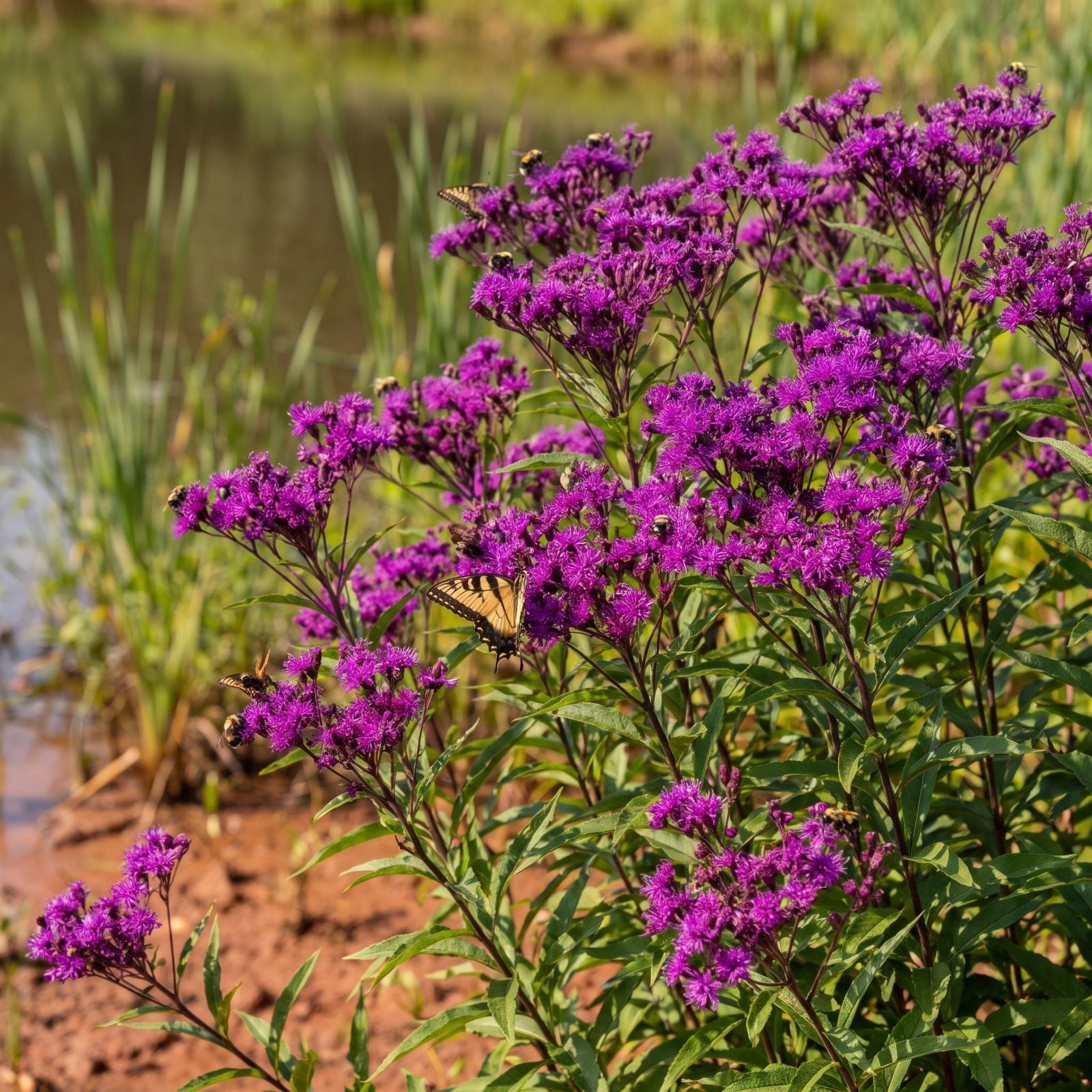
The purple on this one is almost unreasonable. New York Ironweed grows across every region of North Carolina, climbing well past your head in medium-to-wet clay or loam, and those late-summer flowers draw butterflies and native bees like a siren. Come fall, songbirds strip the seed heads clean.
It’s often planted around stormwater ponds for a reason: it drinks up the damp and looks good doing it. And if the full height feels like too much, prune it in spring to keep it shorter and bushier.
6. Garden Phlox: Fragrant Clusters That Feed Three Kinds of Visitors
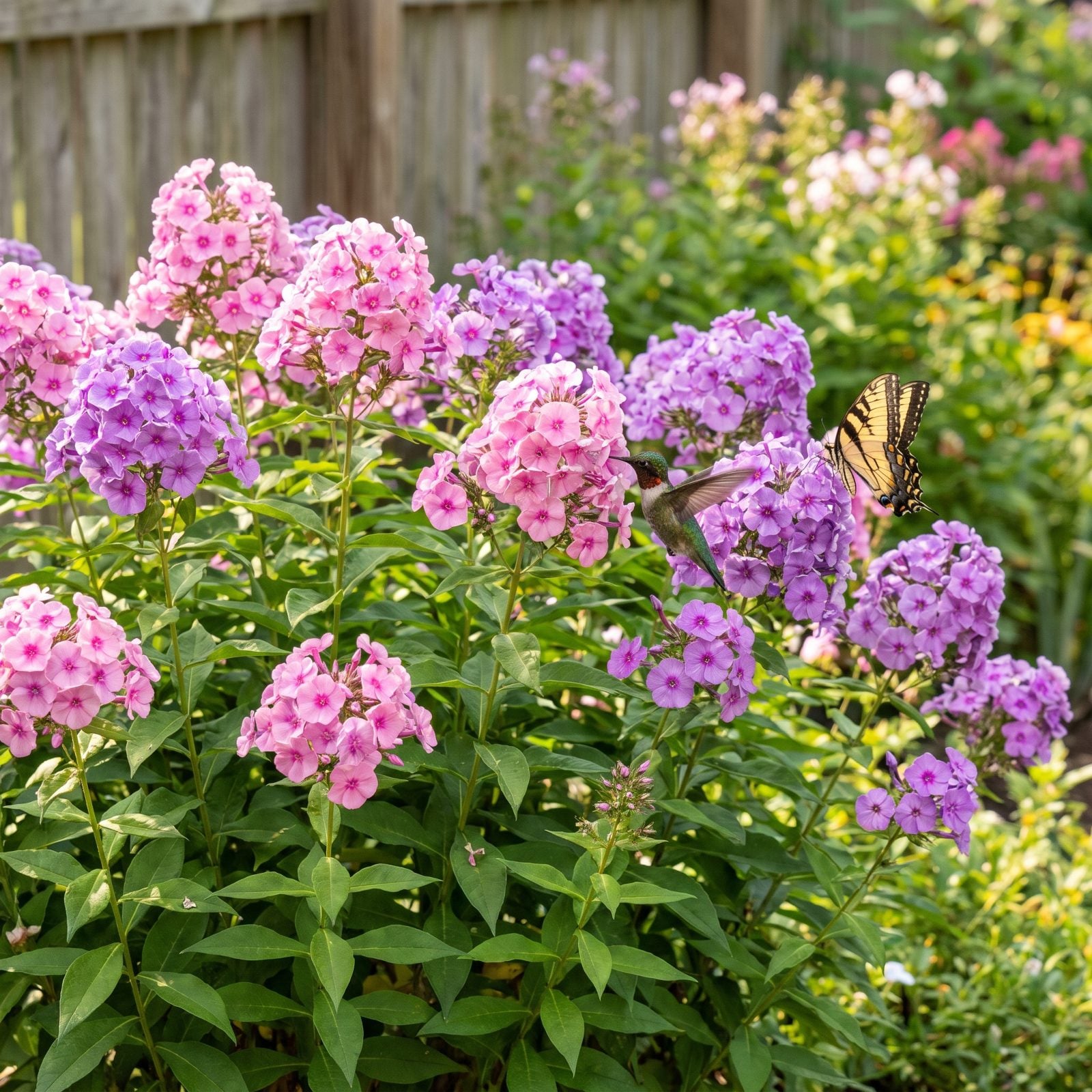
This is the cottage-garden classic that actually earns its spot. Garden Phlox grows two to four feet in all three NC regions, and from mid-to-late summer into early fall it throws up domed clusters of pink, purple or white tubular flowers. Those tubes pull a crowd. Hummingbirds, butterflies, and bees all work the same plant, sometimes at the same time.
Two habits worth building
- Deadhead spent clusters to push more bloom and stop it from seeding all over the place.
- Space your plants for airflow, because phlox and powdery mildew are old enemies and crowding guarantees a fight.
5. Buttonbush: The Oddball Shrub That Feeds 24 Species of Caterpillar
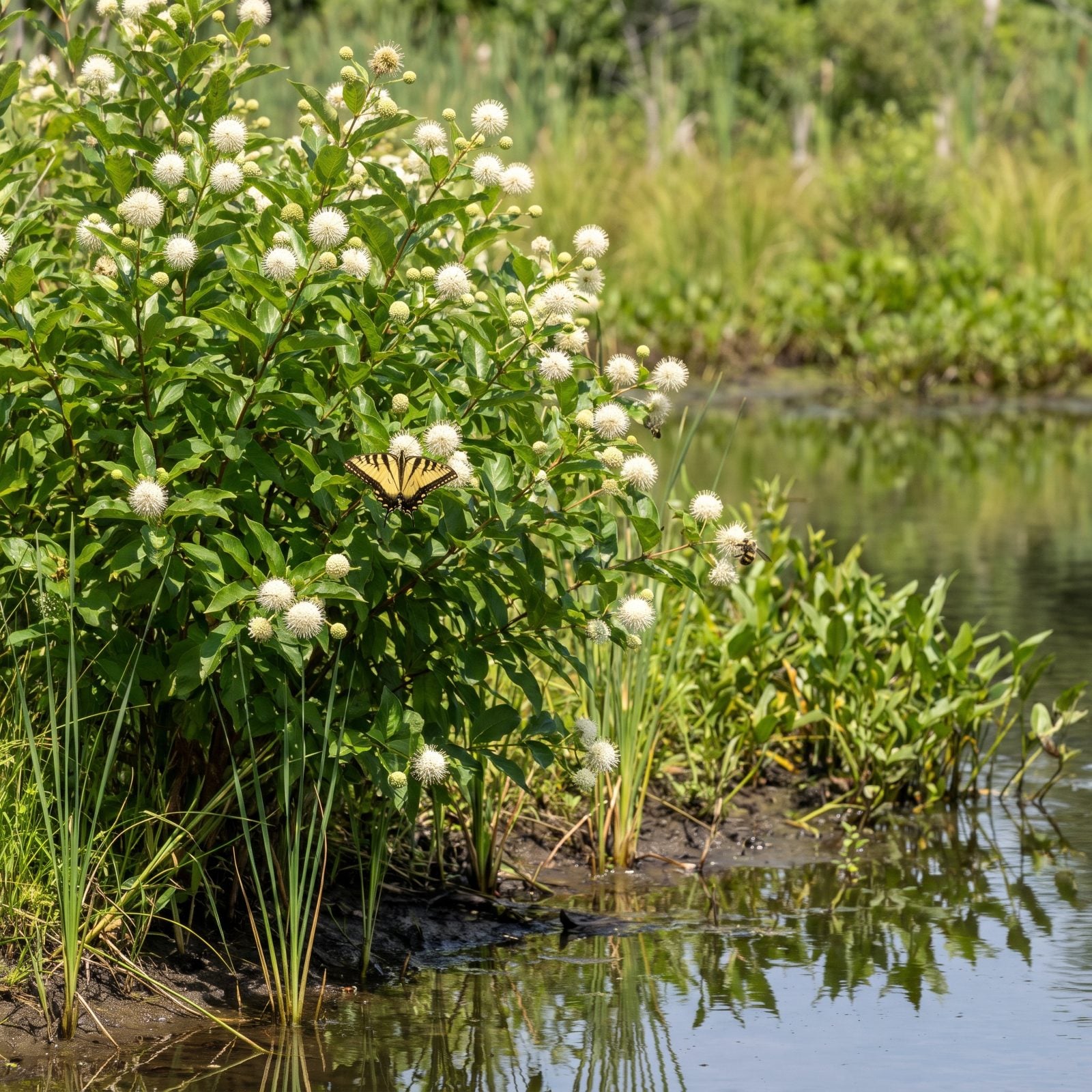
Those flowers look like little white pincushions. Or tiny fireworks frozen mid-burst. Buttonbush is a native shrub, five to eight feet, that grows in all three NC regions and lives for the spots where other shrubs sulk: rain gardens, pond edges, boggy low ground nobody else will touch.
From June to August the round heads feed bees, butterflies and hummingbirds, and NC State tags it specifically for swallowtails. But here’s the headline. Drawing on Doug Tallamy’s research cited by the NC Wildlife Federation, this one shrub hosts caterpillars for two dozen moth and butterfly species. That’s a startling amount of future pollinator from something so strange-looking.
4. Sweet Pepperbush: The Salt-Tolerant Shrub That Blooms in the Shade
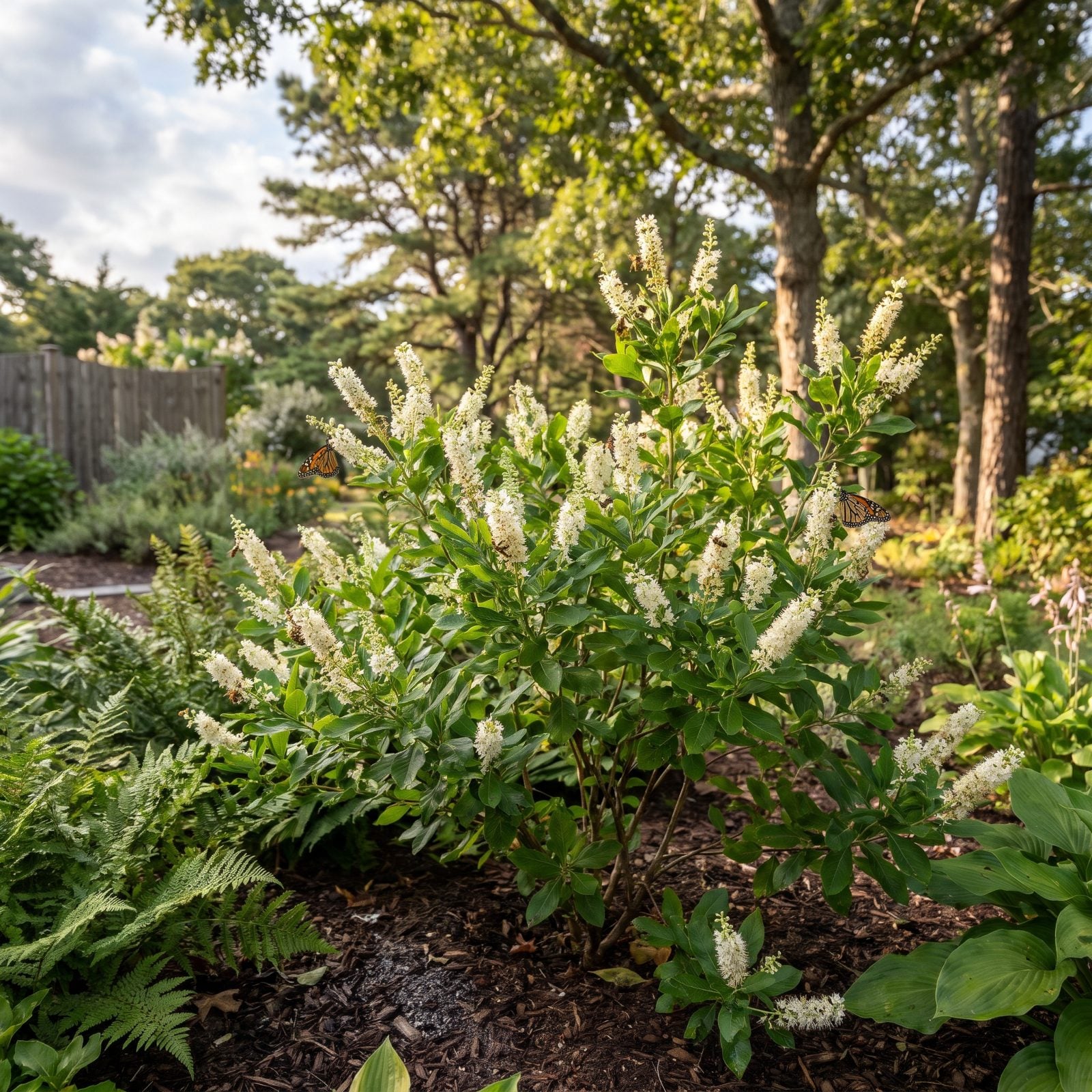
A shrub that flowers in shade, tolerates salt spray, and smells like summer? Sweet Pepperbush pulls off all three. It’s a Southeastern native of coastal swamps, which makes it a natural fit for coastal NC yards where salt knocks out fussier plants in a season.
Late summer, it sends up fragrant white spikes a few inches long that bring in bees, butterflies and hummingbirds. NC State notes it flowers in shade when little else bothers to. Keep the soil moist. And because it blooms on new growth, prune it in winter rather than spring. It usually settles somewhere around three to six feet.
3. Passionflower (Maypop): The Wild Vine That Feeds Butterflies and Feeds You
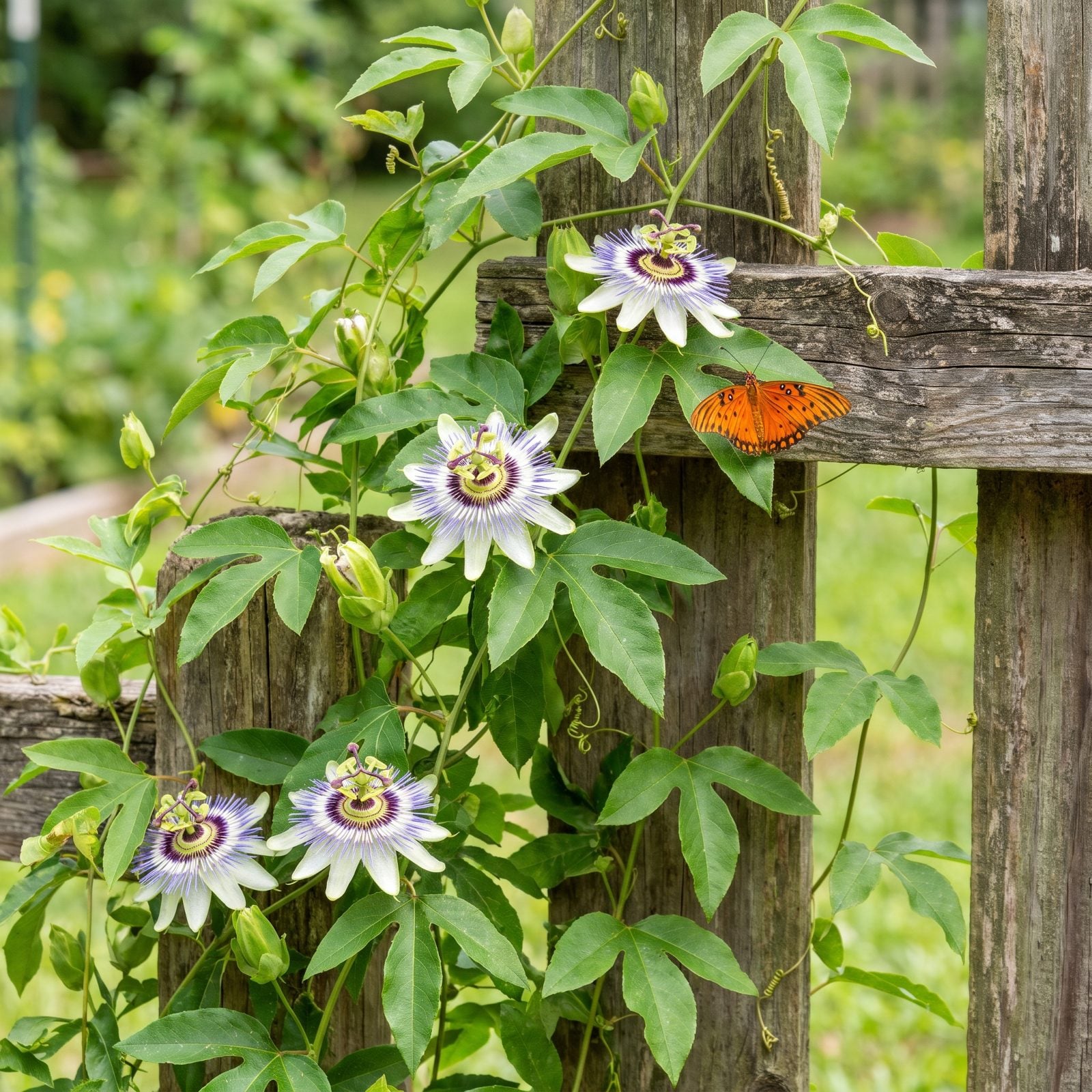
The flower alone looks like it wandered in off a tropical postcard: frilly white-to-purple petals with a fringed crown that seems far too elaborate to be a local. But Maypop is ours, climbing fences, trellises and arbors across all three NC regions.
It blooms through summer and early fall for bees, butterflies and hummingbirds, then hands you an edible fruit on top of it all. The leaves host gulf fritillary and variegated fritillary caterpillars, so expect some chewed foliage. That chewing isn’t damage. It’s exactly why you planted the thing.
2. Spicebush: The Woodland Shrub That Feeds Swallowtails Before Spring Arrives
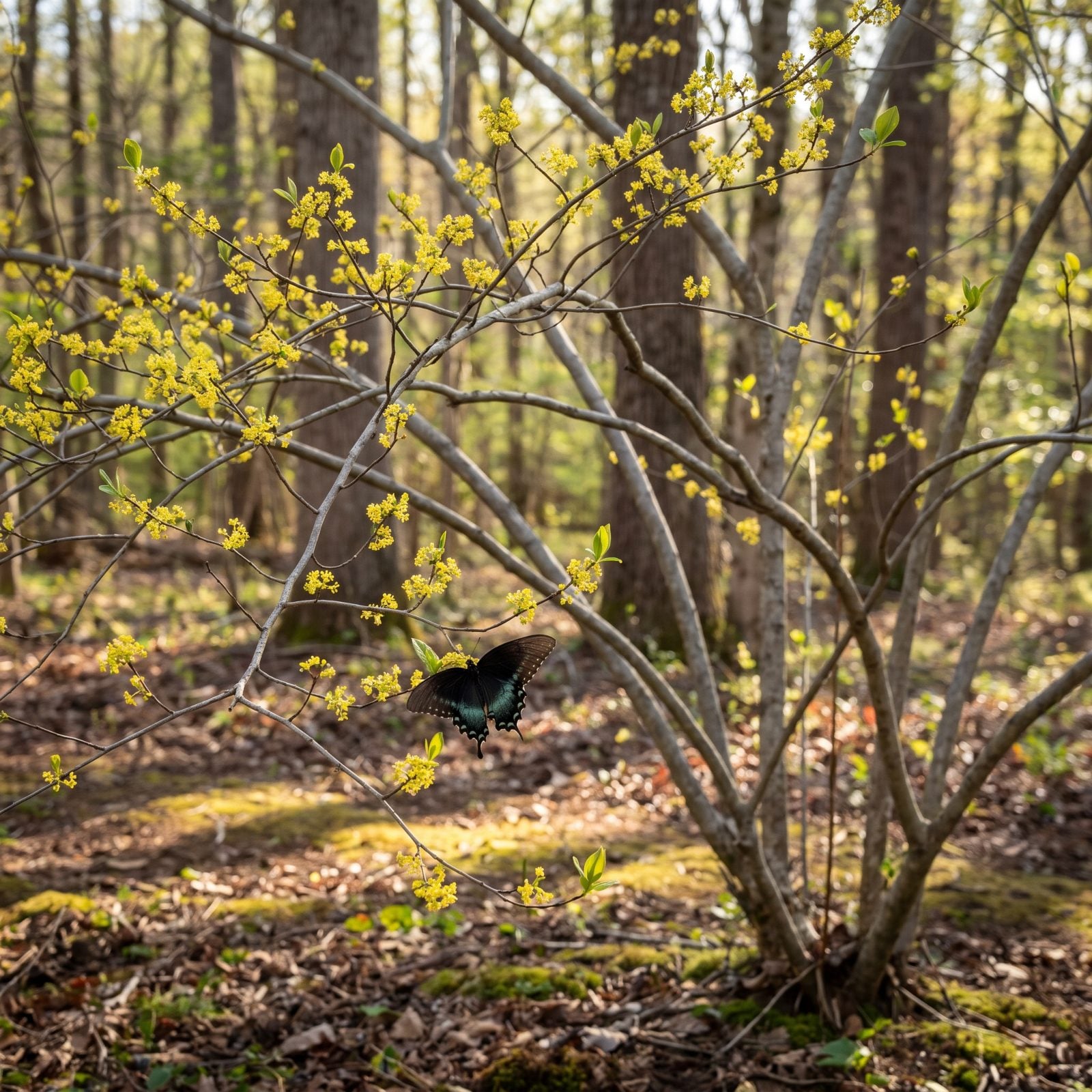
Most people plant for a May payoff. Spicebush shows up in March, right when the first butterflies and bees are starving and nothing else has opened for business. Those little yellow flowers studding the bare twigs look like almost nothing — and they turn out to be one of the earliest nectar bars in the woods.
It typically runs about 6 to 12 feet and grows across all three NC regions, mountains to coast. Give it part shade. It shrugs off the occasional flood and, once settled, tolerates drought too, which makes it a forgiving pick for that corner you can never quite figure out.
One catch. Only female plants make the red berries birds love, and they need a male nearby to pull it off, so plant two if you want fruit.
1. Scarlet Sage: The Reseeding Red That Keeps Hummingbirds Fed Until Frost
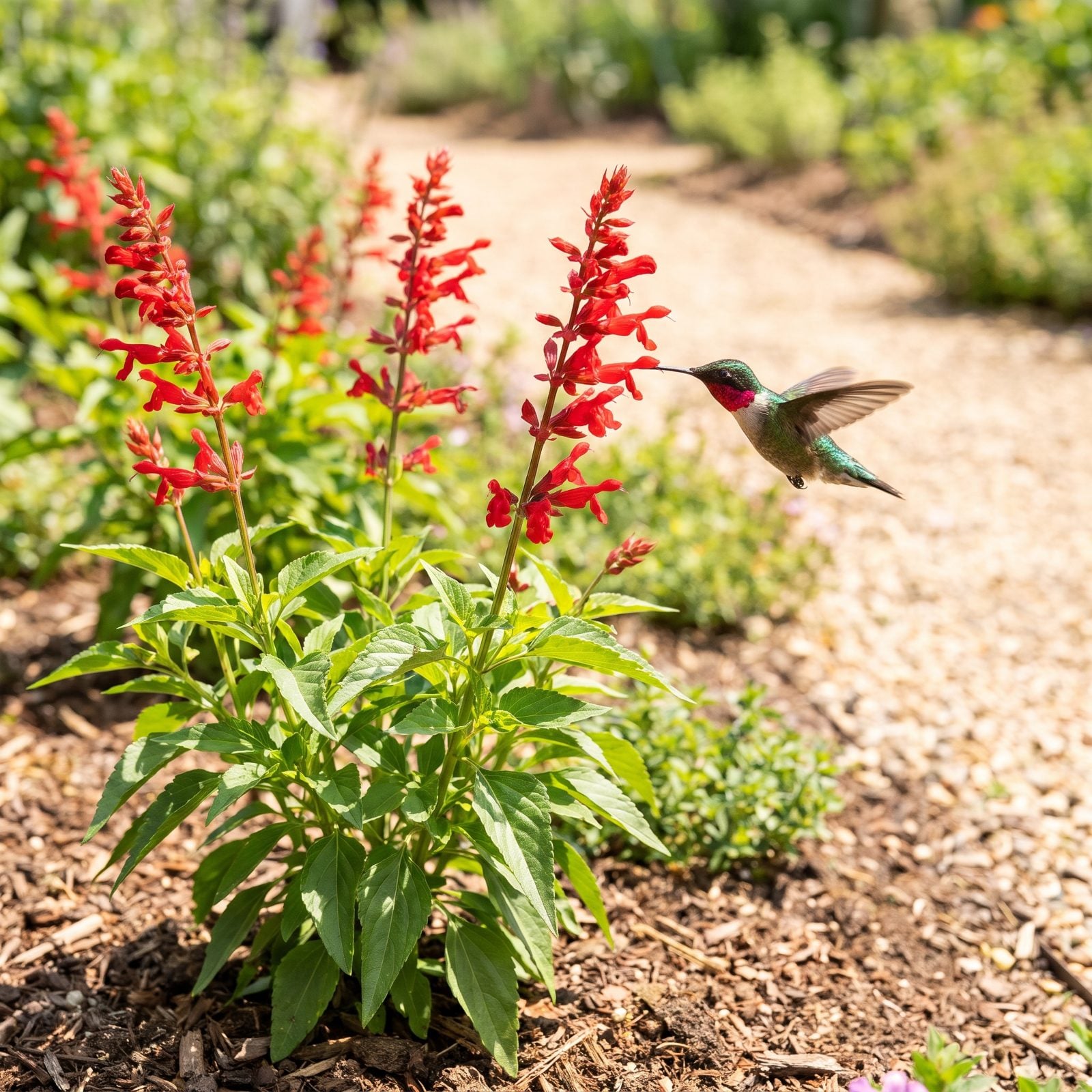
The honest part first: scarlet sage isn’t a North Carolina native. Its range runs coastal South Carolina to Florida and west to Texas, so in our gardens it behaves as a reseeding annual or a loose perennial. NC State still recommends it. Watch one hummingbird work those red tubes without stopping and you’ll understand why.
The flowers keep coming from early summer straight through the first frost, and that late-season stamina is the whole reason to bother with it. Ruby-throats start heading south in late August into September, and a plant still blooming then becomes a rest stop they’ll remember on the way out.
It handles drought, reseeds itself with real enthusiasm — maybe too much, if you’re the tidy sort — and NC State points it toward walkways, coastal yards and naturalized corners. Want something softer than fire-engine red? Reach for the pale coral-and-white ‘Coral Nymph’, or stick with the classic red of ‘Lady in Red’. The plant stands 1 to 3 feet tall and asks for almost nothing in return.