
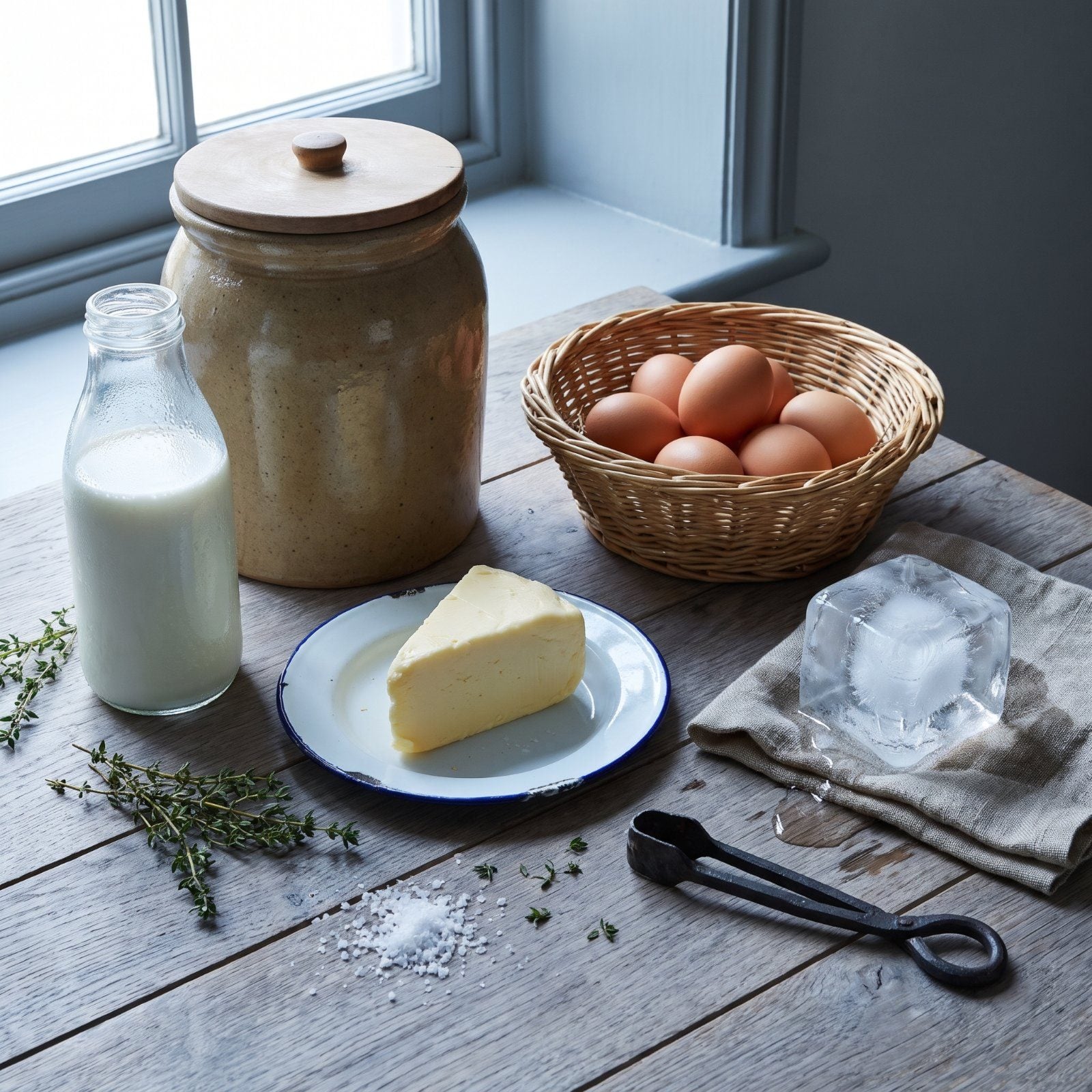
A block of ice cut from a frozen pond in January could still be cold the following August. That one fact ran an entire economy, and almost nobody remembers it now. Long before a compressor hummed in anyone’s kitchen, keeping butter firm and milk sweet took real cunning. People read the land for cold spots, dug into hillsides, parked crocks in creeks, and lowered dinner down wells on ropes. Some of their solutions were so good that versions still work today, no electricity required. Here are the cooling tricks that fed the world before the plug.
Please note that some of the images in this article were created with the assistance of AI.
26. Persian Yakhchals With Their Towering Domed Ice Chambers
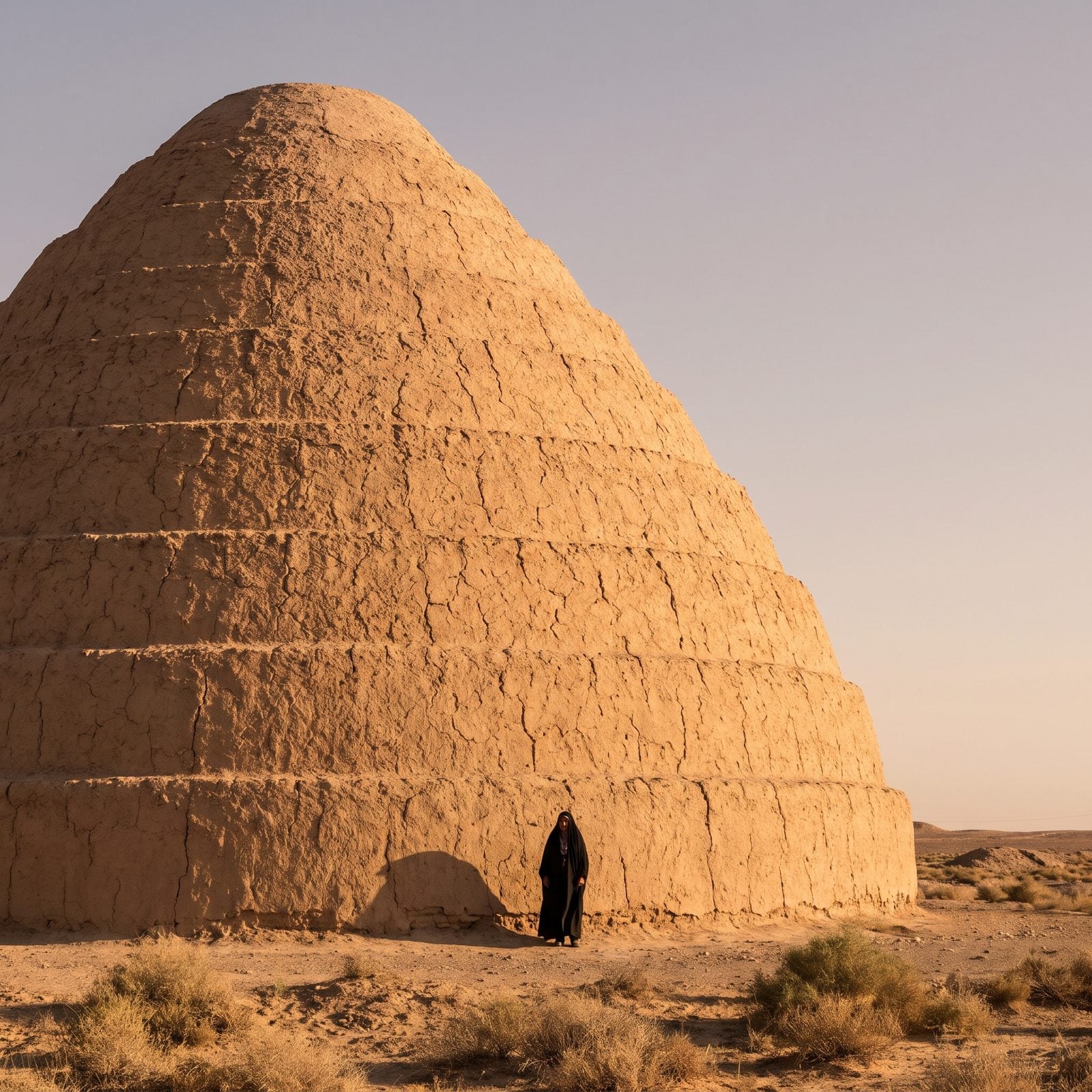
The Persians cracked this one around 400 BC, and it still humbles me. A yakhchal looks like a giant mud-brick beehive, but the clever part hides underground: a deep pit storing winter ice, wrapped in thick walls that barely let heat pass. On cold desert nights, shallow channels of water would freeze, and that ice got hauled inside before dawn.
The dome wasn’t decoration. Its shape vented hot air up and out while pulling cooler air down over the stored ice, so in a place that bakes past 100 degrees, they kept ice all the way through summer. No power, no moving parts. Just a brilliant read of how heat behaves.
25. Icehouses Stacked Floor to Ceiling With Harvested Pond Ice
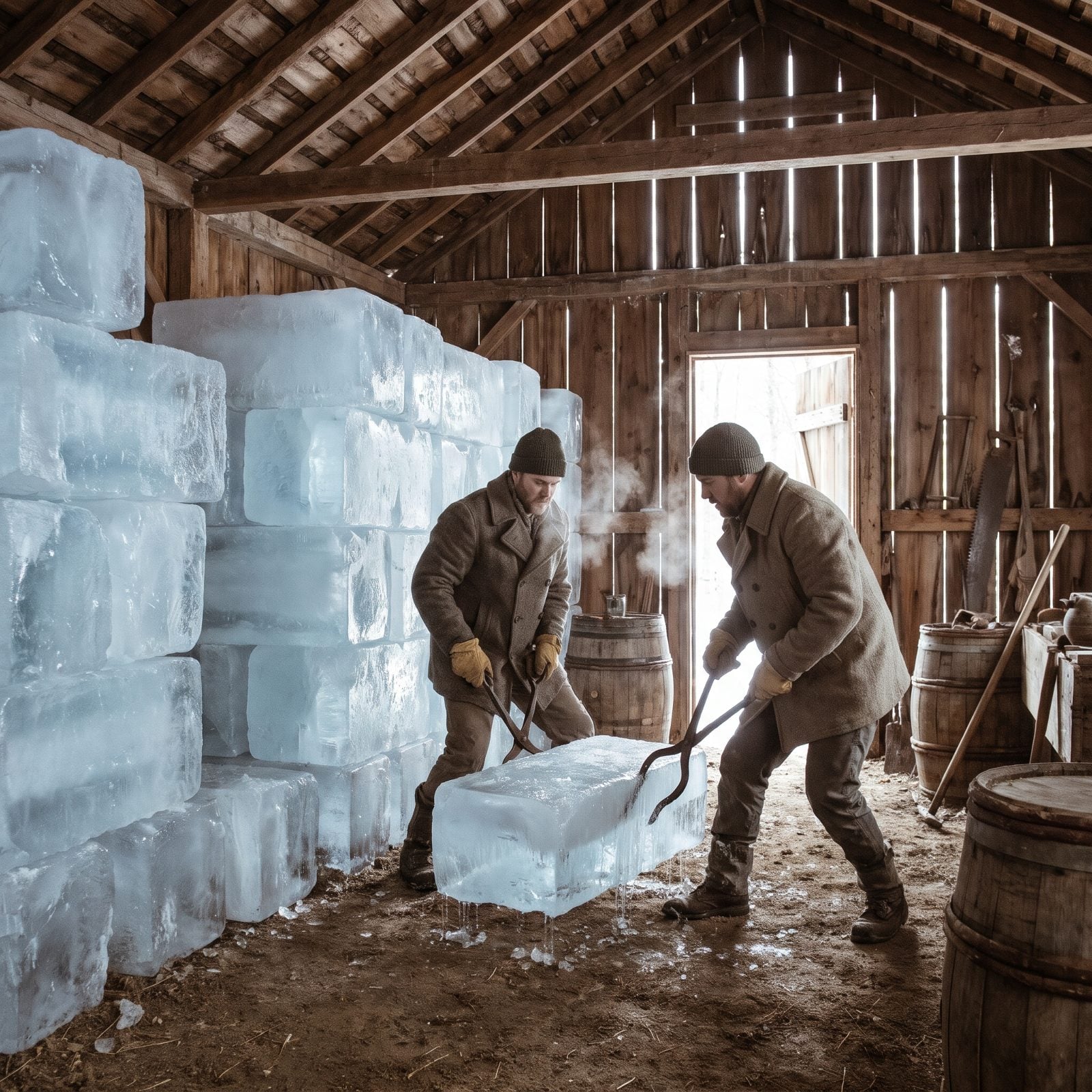
Before refrigeration, cold was a crop you harvested in winter and spent all summer. Crews cut huge blocks from frozen lakes and rivers, hauled them by sled, and packed them into plank-walled icehouses buried in sawdust and straw.
Done right, the loss was shockingly small — a well-built icehouse could carry ice from February into September with much of it intact. The trick was insulation: even with daylight slipping through gaps in the board siding, plenty of dry packing between the blocks kept the cold in.
Henry Thoreau watched ice cutters work Walden Pond in 1846 and wrote about it. That frozen water fed an industry that shipped New England ice as far as India.
24. The Household Icebox Fed by the Daily Delivery Block
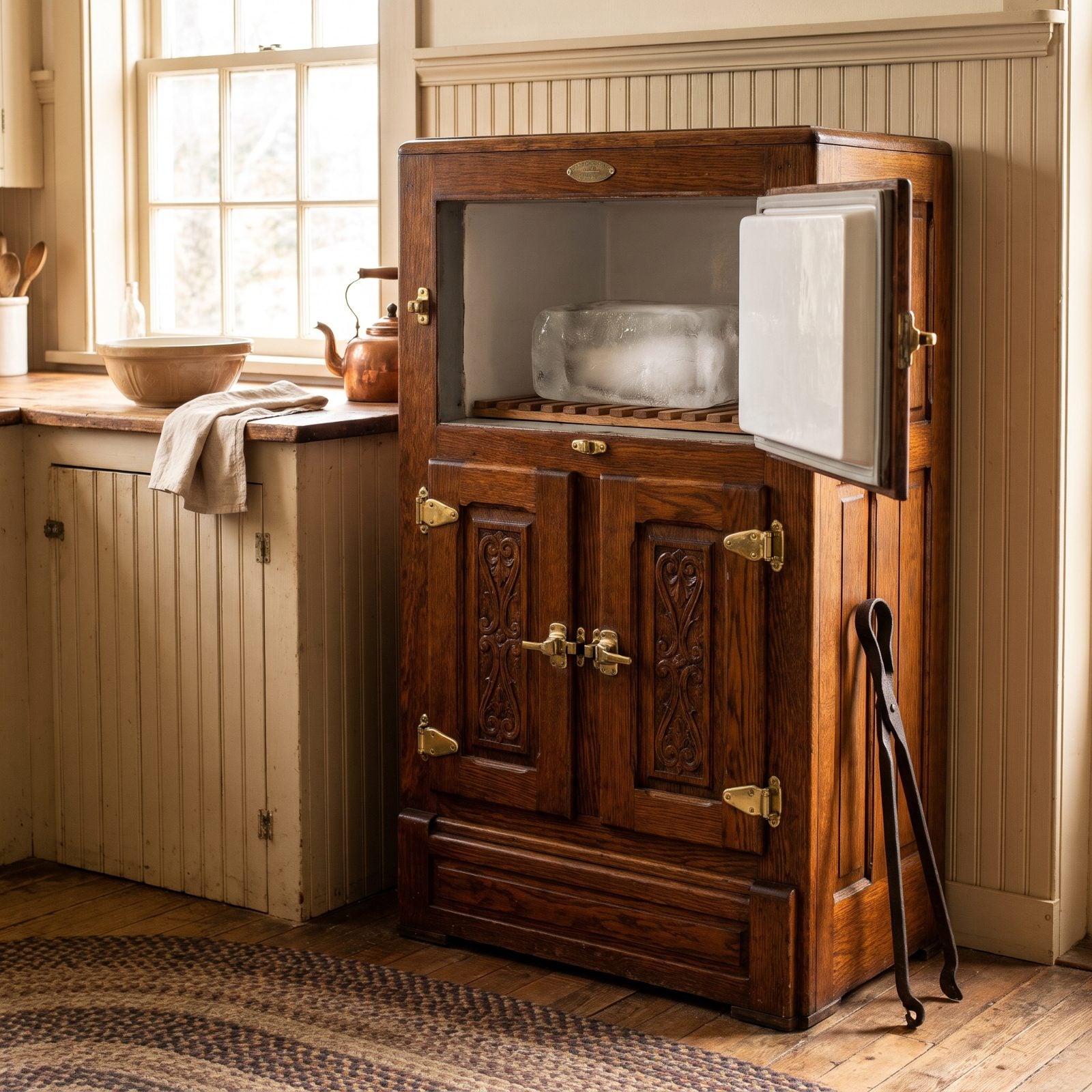
This is where the word “icebox” comes from, and plenty of people still call the fridge that out of sheer habit. The real icebox was an insulated wooden cabinet, usually oak, lined with zinc or tin. You set a block of ice in the top chamber and the cold sank down over your food.
Families put a printed card in the window telling the iceman how much to drop off: 25, 50, 75, or 100 pounds. He’d spot it from the street, grab the right block with his tongs, and heave it up the back steps.
Melt water drained into a pan underneath. Forget to empty it and you got a flood on the kitchen floor. I’d have forgotten it constantly.
23. Springhouses Built Right Over a Running Stream
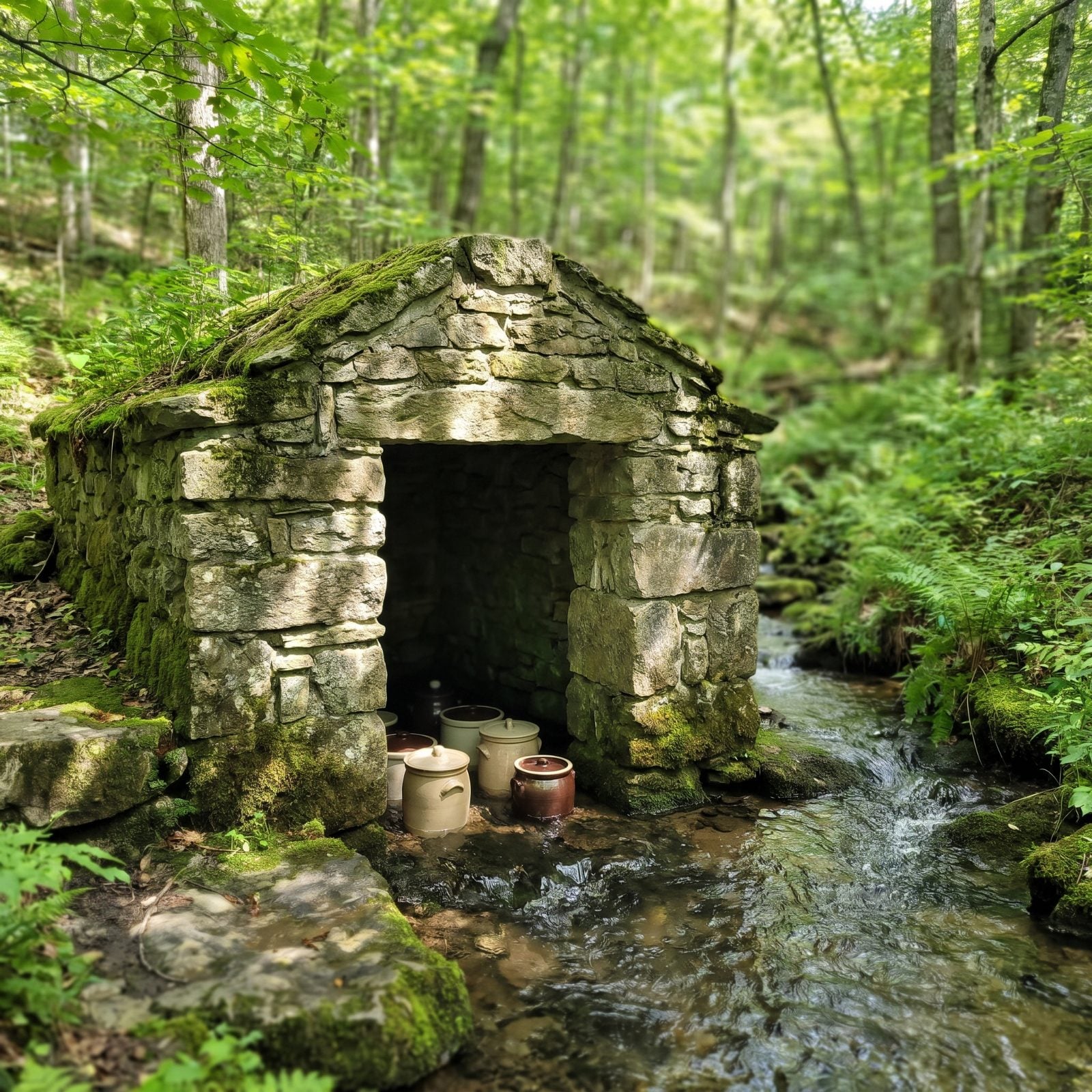
Groundwater comes out of the earth at a steady cool temperature year-round, somewhere in the fifties across much of the country. Build a small stone building over a spring, and you’ve got free cooling that never shuts off.
Milk cans and crocks sat right in the flowing water, which carried warmth away far faster than still air ever could. Butter stayed firm. Cream didn’t sour. Nobody paid a cent for it.
You still find these tucked into farmsteads across Pennsylvania and the Appalachians — squat stone boxes near the barn with water trickling through the floor. If you ever buy an old farm with one intact, don’t tear it down. It works.
22. Root Cellars Dug Below the Reach of Frost
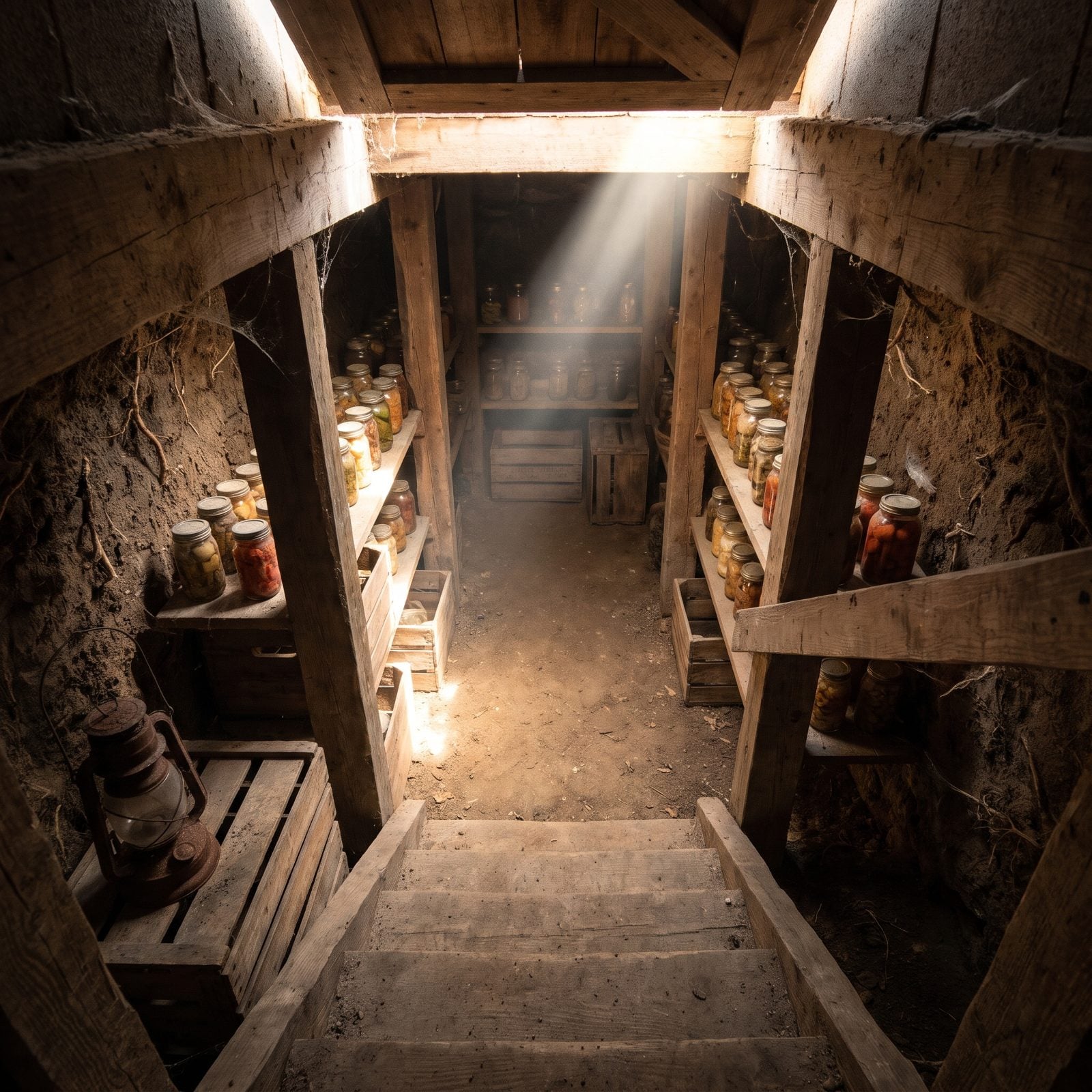
Dig deep enough and the ground holds a near-constant temperature in the forties or fifties no matter what the thermometer says outside. That’s the whole secret of a root cellar: get below the frost line and let the earth do the work.
These weren’t for ice or dairy so much as the harvest. Potatoes, carrots, turnips, apples, cabbages, and jars of canned goods rode out the winter in that cool, humid dark. A good one had a vent to let ethylene gas escape so a few apples didn’t spoil everything around them.
Humidity mattered as much as cold. Too dry and the carrots went rubbery; too damp and the onions rotted. People learned that balance the hard way — by ruining a few harvests first.
21. Natural Caves Pressed Into Service as Cold Storerooms
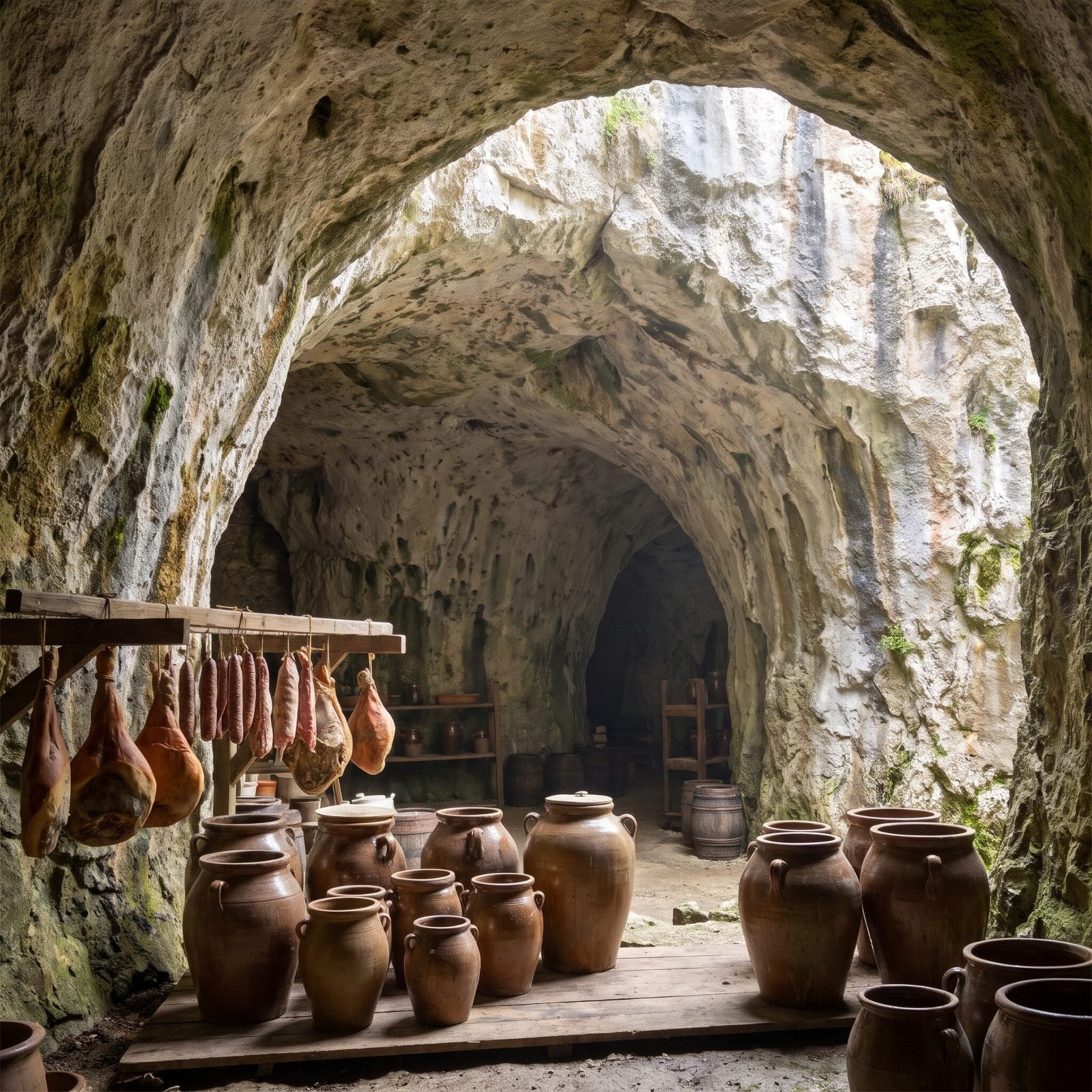
Why dig a cellar when the planet already made one? Natural caves hold steady, cool temperatures and high humidity, which turns out to be close to ideal for aging certain foods.
The French built an entire cheese tradition on this. Roquefort ages in the limestone caves of Combalou, where cracks called fleurines funnel cool, moist air across the wheels and encourage the blue mold that defines it.
Caves also sheltered wine, cured meats, and winter stores for any community lucky enough to have one nearby. Free, reliable, and already built. You just had to live near the right hole in the ground.
20. Dinner Lowered Down the Well in a Hanging Bucket
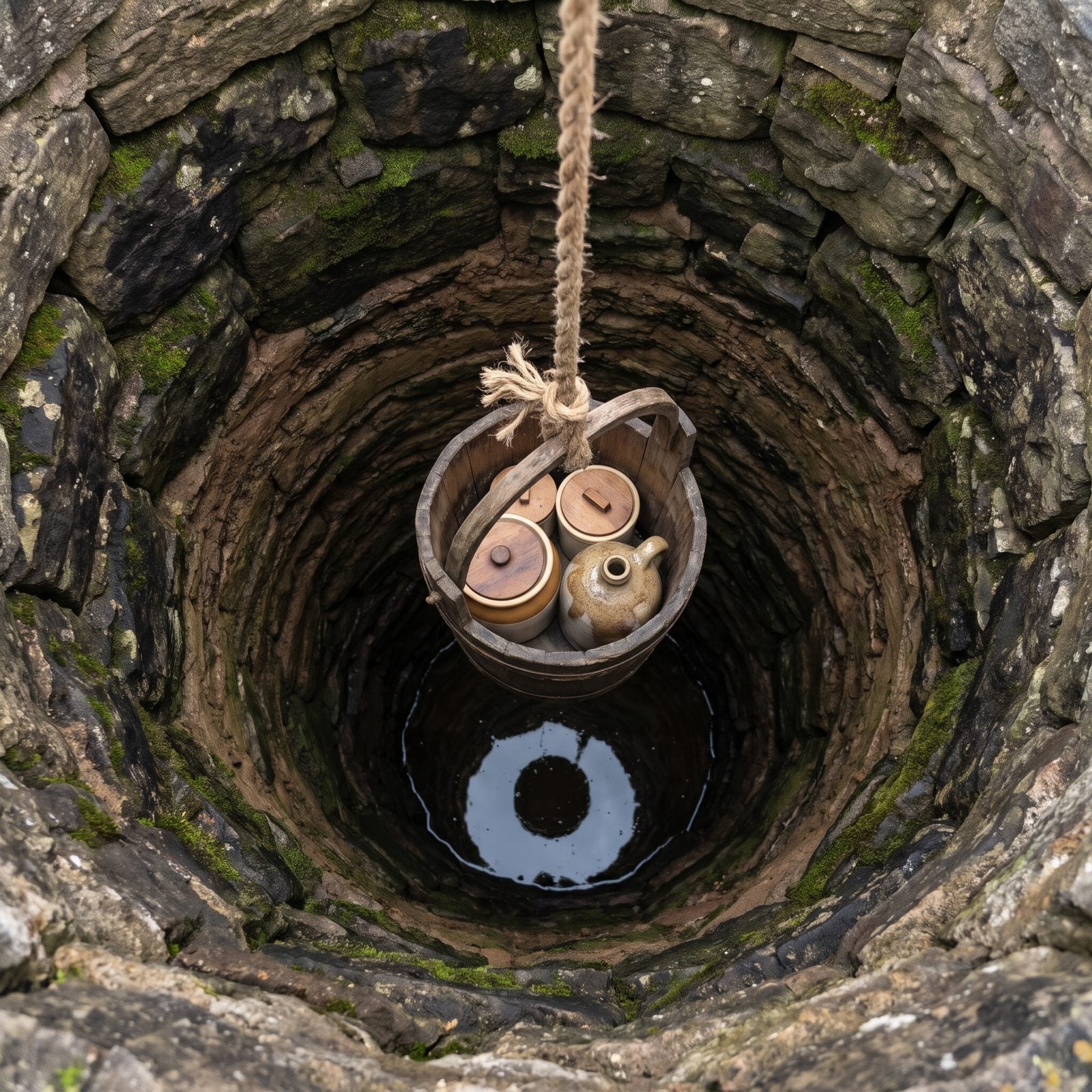
No springhouse? No cellar? You almost certainly had a well. People rigged a second bucket, dropped the butter and milk a few feet down, and tied the rope off at the top.
Down there, out of the sun and close to cool water, the temperature fell nicely. It was the poor man’s refrigerator, costing nothing but a length of rope.
The risk was obvious: drop the rope and your supper joins the drinking water. More than one farm kid got sent down after a lost pail of cream.
19. Lockboxes Anchored in the Bed of a Cold Stream
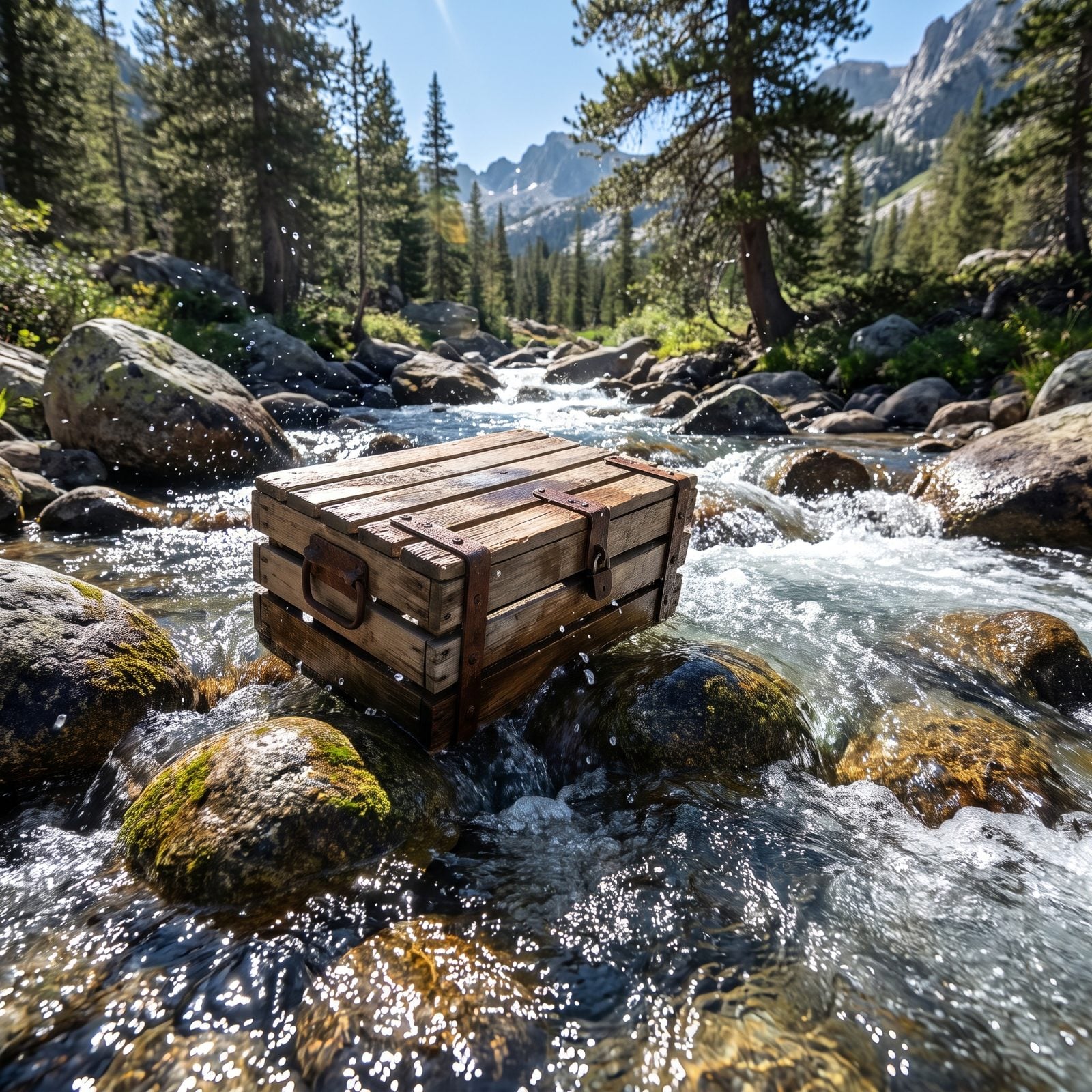
A cold mountain stream runs colder than any cellar, so people built slatted wooden boxes, bound them with iron straps, and set them in the current. Wedged on a rock with the stream rushing around it, the box let spray and cold water wash past the slats while the lid kept the food inside.
Fishermen and homesteaders used these to hold catches, dairy, and drinks. Moving water pulls heat away constantly, so the contents stayed genuinely cold, not just shaded.
The catch was theft and flood. A spring rise could carry the whole thing downstream, which is why a box resting loose on a boulder was always a gamble. Low-tech, sure. But it held cold better than anything you could manage above ground in July.
18. Snow Cellars Packed Into the Hillside Each Winter
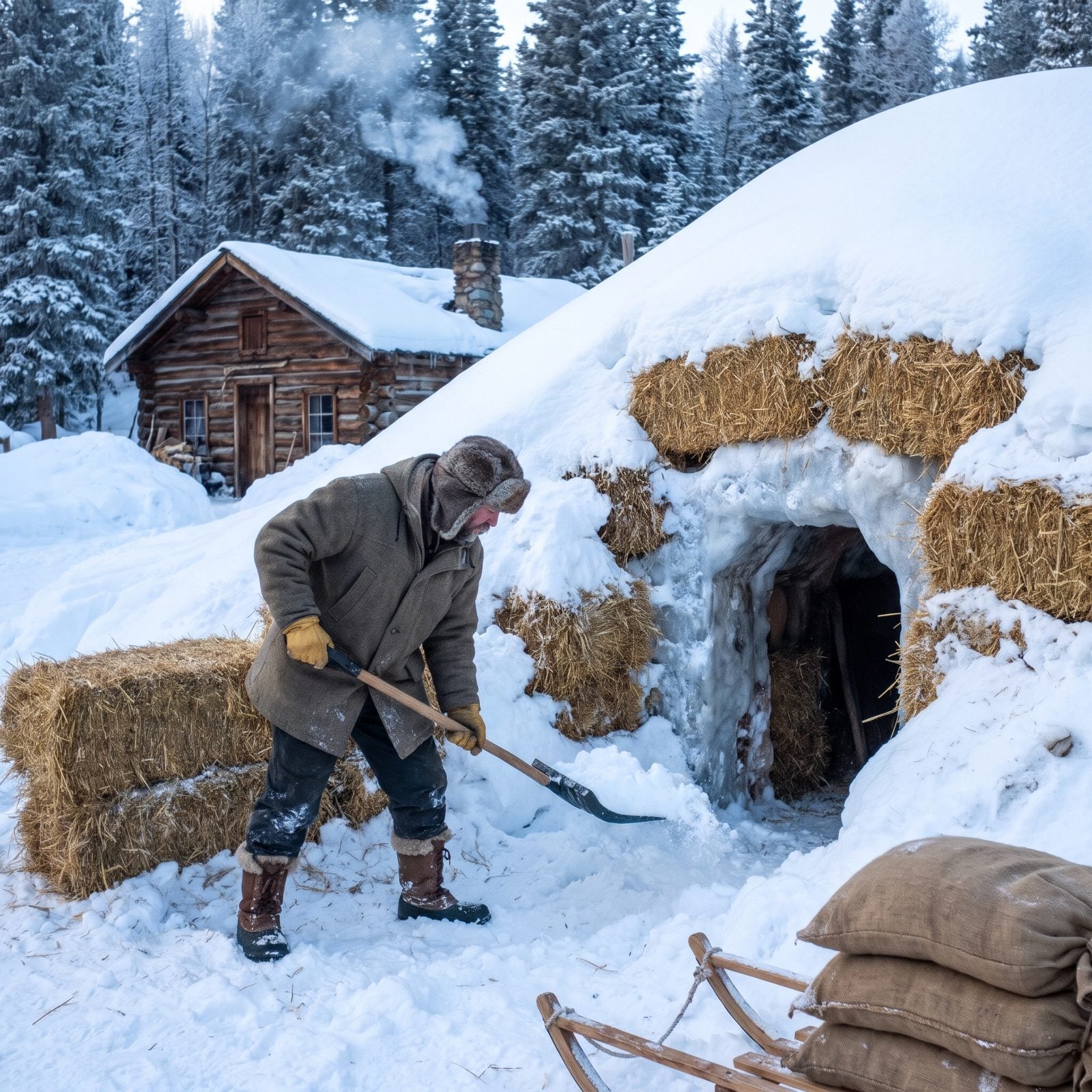
In snow country, the simplest cold store was snow itself. People dug pits and tunnels into hillsides, packed them with compressed snow and ice through winter, then insulated the whole thing with straw, bark, and turf.
Compacted snow is a surprisingly good insulator for its own cold. Layered deep and kept out of the sun, it held well past the thaw, and Nordic and Russian households leaned on these hard before iceboxes arrived.
Come summer, you’d chip off what you needed and reseal the opening fast. The sloppy ones lost their stash by June. The careful ones chilled their drinks in August.
17. Permafrost Cellars Carved Into Frozen Arctic Ground
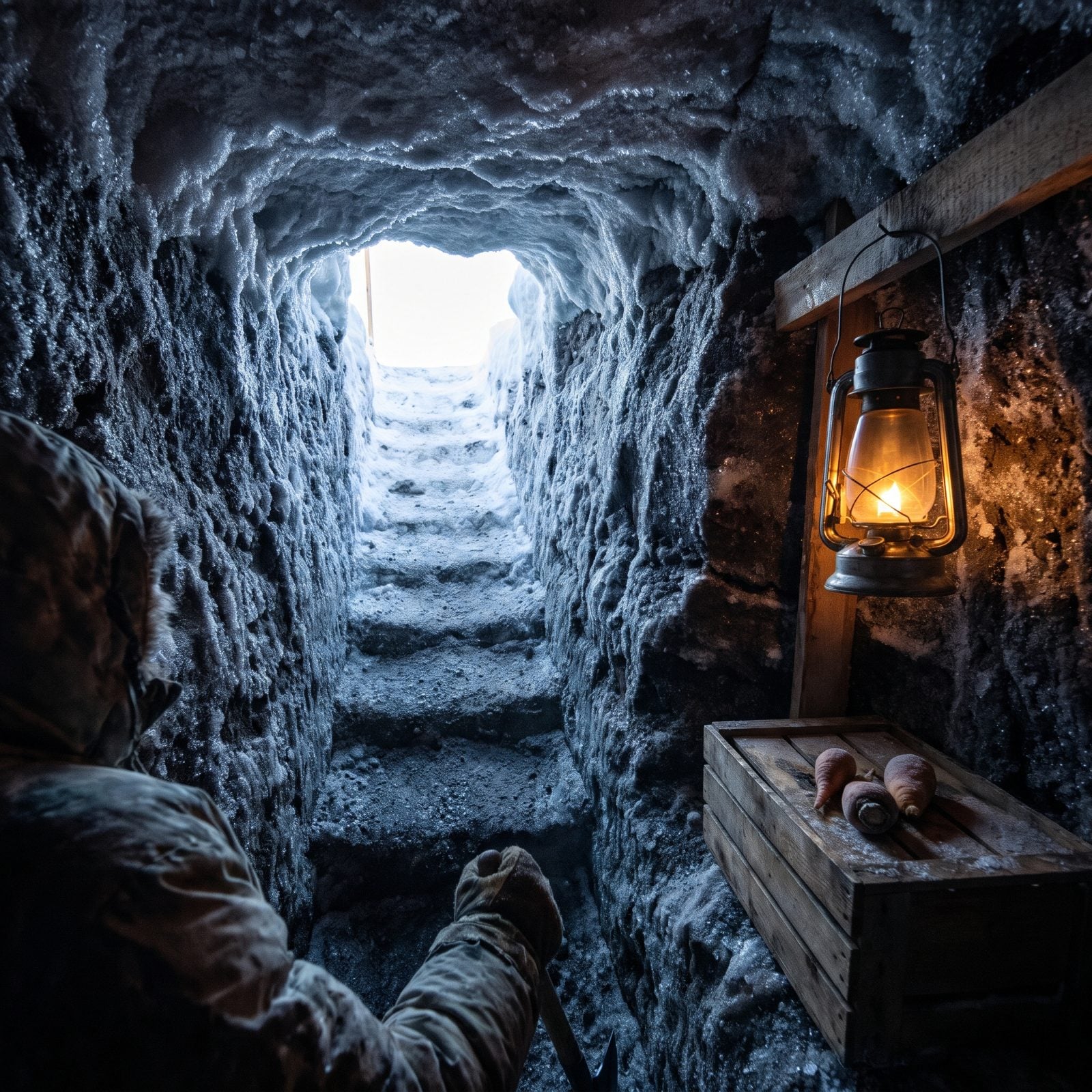
In the far north, the ground stays frozen year-round. Dig down into permafrost and you’ve built a freezer that never thaws — no ice needed, because the earth itself sits below freezing all summer.
Communities in Alaska and Siberia carved cellars straight into the frozen soil, shored them with timber, and stored fish, seal, and caribou meat through the warm months. The walls glittered with frost even in July.
There’s a real worry attached to these now. As the Arctic warms, some permafrost cellars are thawing for the first time in generations, and families who relied on them are watching stored food spoil. A cooling method that worked for centuries is being undone by heat.
16. Caches Cut Into Glaciers and Mountain Ice
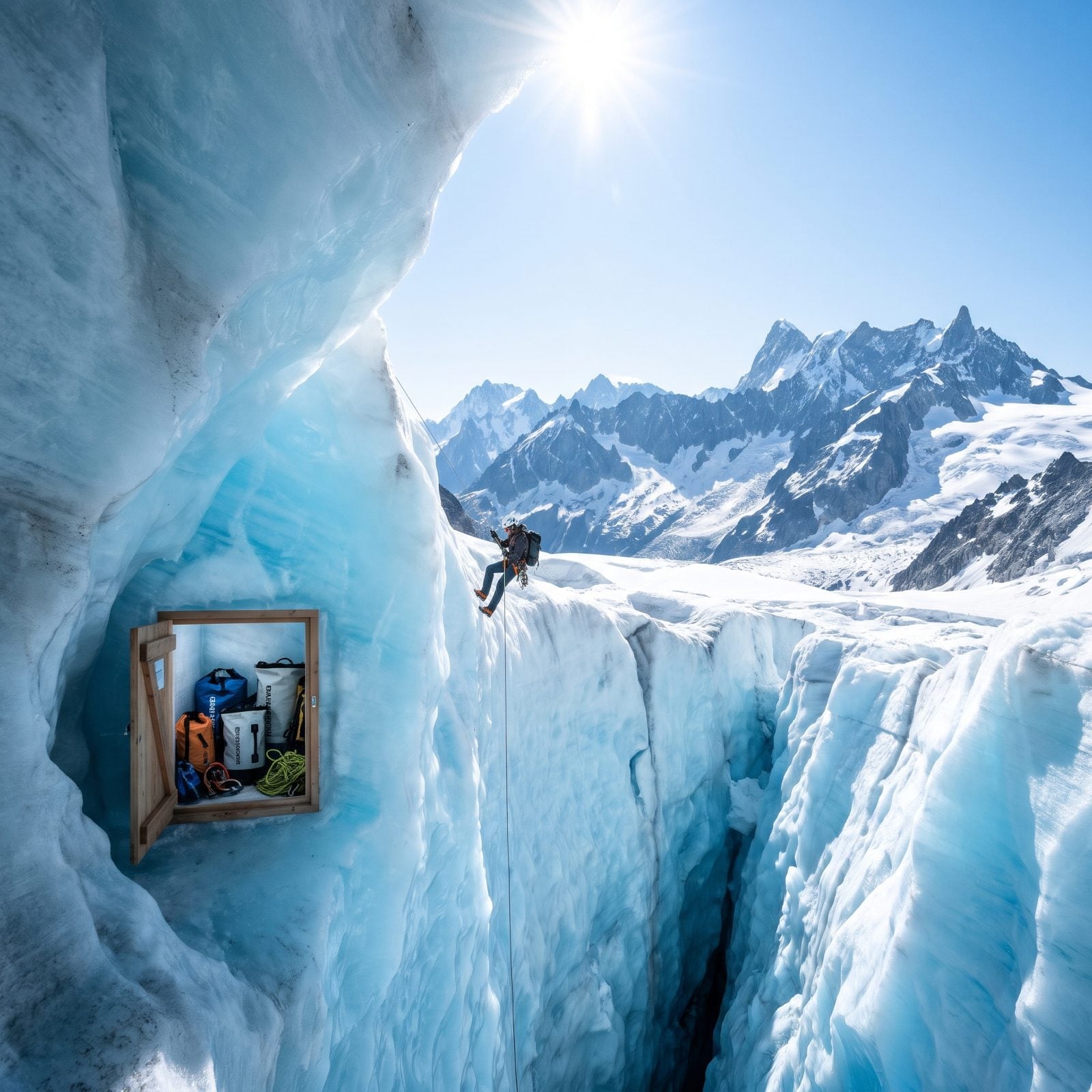
Modern mountaineers still go where the cold already lives. In the Alps and the mountains of central Asia, expedition climbers set framed wooden cabinets with hinged doors into glacier ice and crevasse walls, then stash food, fuel and bright nylon dry bags inside.
Getting it cold is never the challenge, since glaciers handle that for free. The real problem is shielding the cache from the summer sun, which is why the best ones are sunk deep into the ice wall behind a sturdy wooden frame and a hinged door that closes against the glare, even in a sunlit crevasse. A good one holds near freezing clear through July. You clip in with helmet and crampons, swing open the door, drop your red, blue and yellow bags inside, and the mountain does the rest.
15. Persian Cooling Rooms Fed by Qanats and Windcatchers
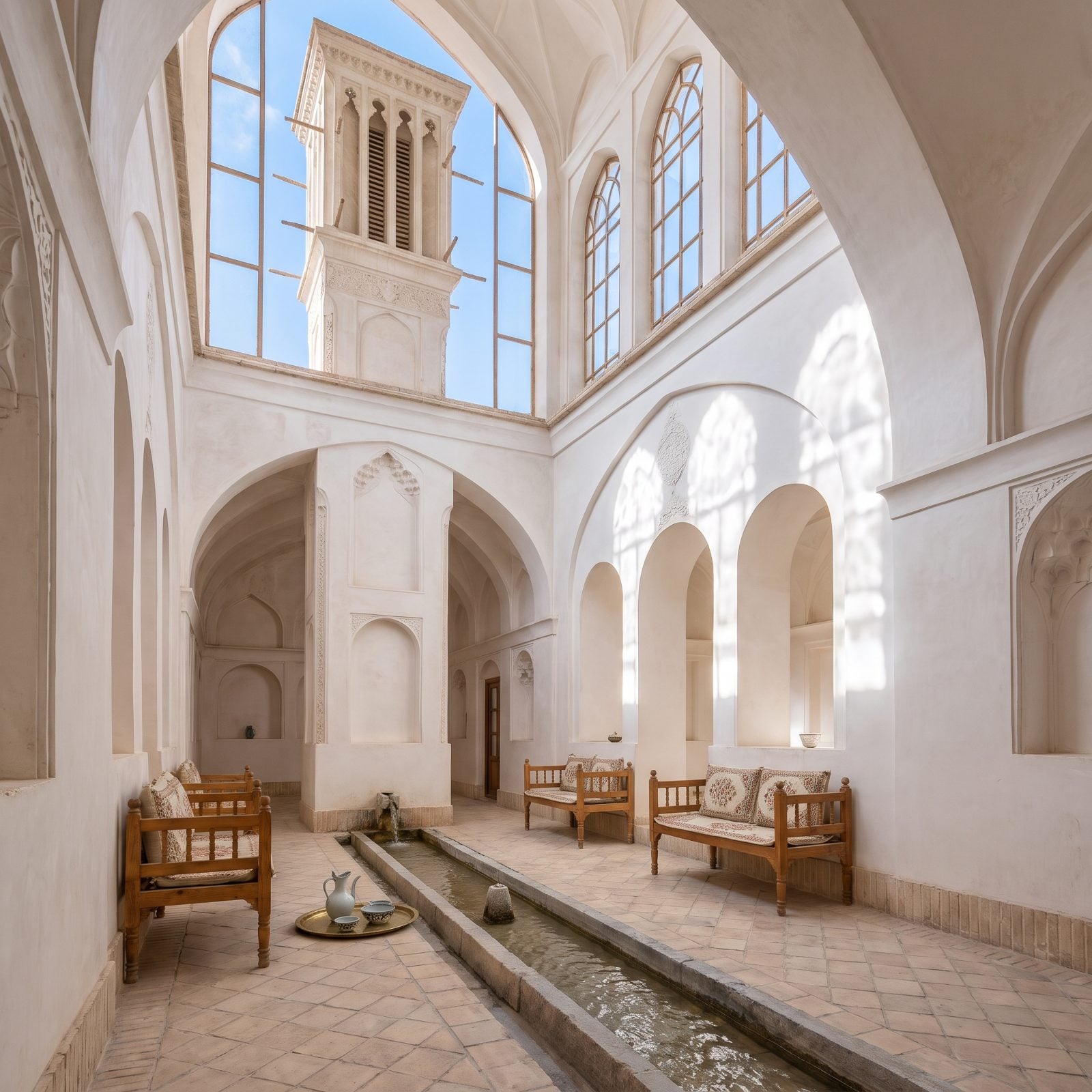
And here’s the clever part. The Persians cooled their food with wind and water that never once touched a motor.
A windcatcher, the bādgir, is a tall chimney that scoops breeze off the roof and drives it down into the house. Run that air across a channel of cool water fed by a qanat, an underground aqueduct bringing water from distant hills, and you get a draft that feels refrigerated. Store rooms built at the bottom of this airflow stayed cool and humid enough to keep dates, dairy and grain for weeks in a landscape that routinely baked past 110 degrees.
No fuel. No ice. Just geometry and evaporation doing honest work.
14. The Pot-in-Pot Zeer, Two Clay Jars and a Handful of Sand
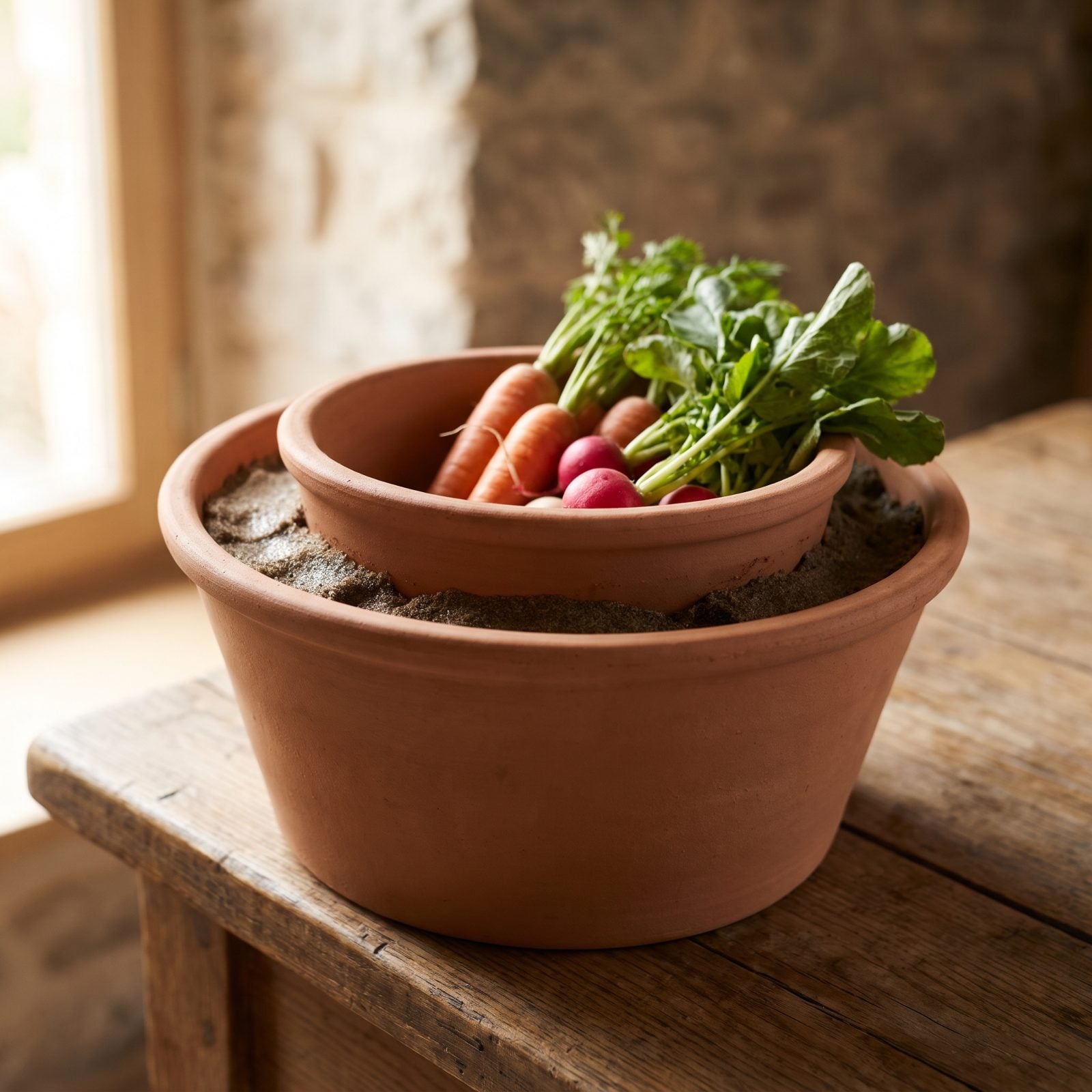
Two unglazed clay pots, one nested inside the other, the gap between them packed with wet sand. That’s the entire device. The zeer, still used across the Sahel and parts of North Africa, drops the inner chamber well below the surrounding air as water wicks through the porous outer pot and evaporates.
It’s the same chill you feel stepping dripping out of a pool. Keep the sand damp, park the thing in the shade with a breeze running past, and tomatoes that would rot in a day stretch to a week or more. Dirt cheap, breakable, and genuinely useful in places the power grid never reached.
13. The Australian Coolgardie Safe, Burlap and a Drip Tray
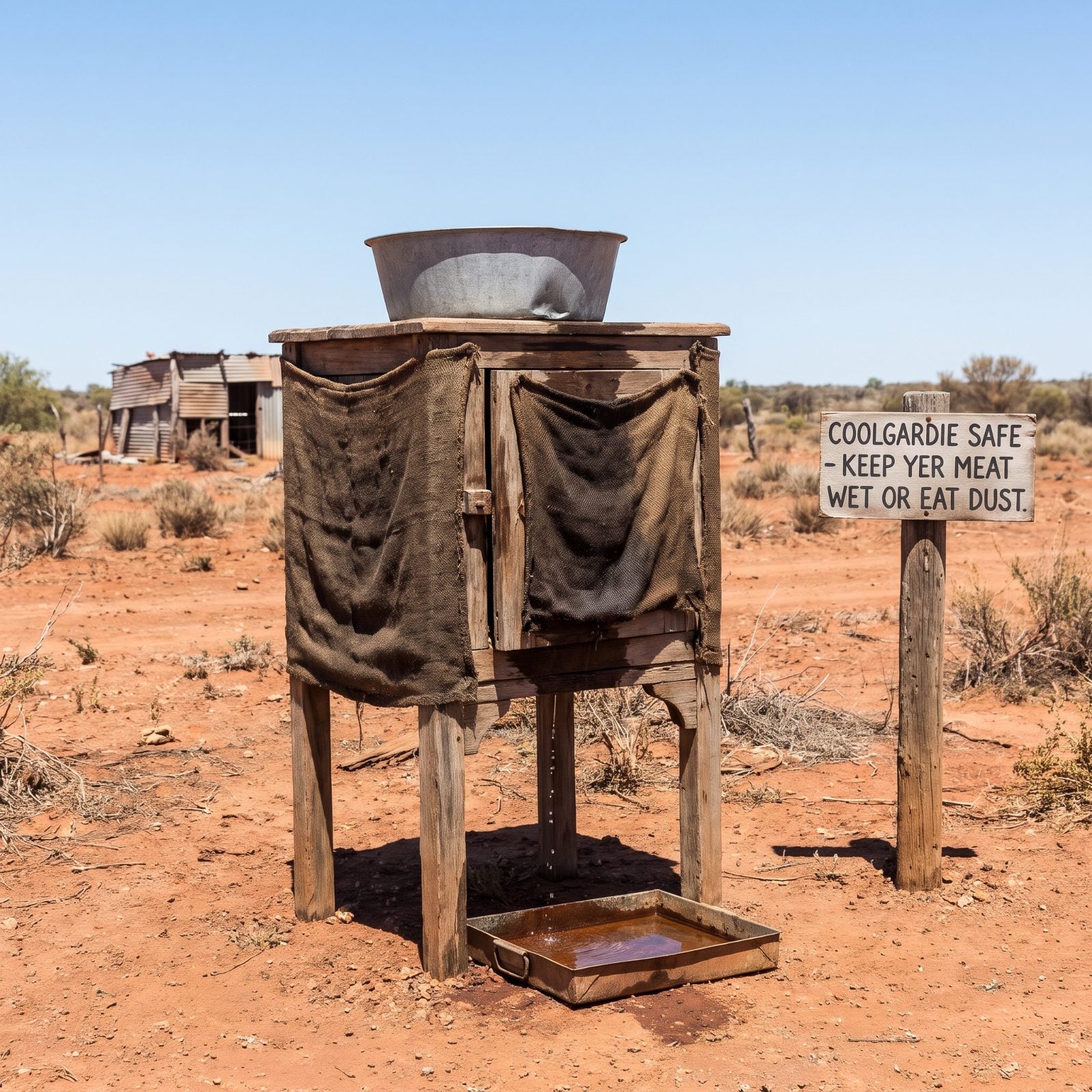
Gold miners in the Western Australian desert invented this one out of sheer desperation, and the safe took its name from the town of Coolgardie.
Picture a wooden cabinet with door and side panels, two pieces of hessian sacking pinned at their top corners and sagging down its front. A basin of water sits on top, the burlap is kept soaked and drips into a tray below, and the hot dry wind that makes the outback miserable suddenly becomes the thing that saves your butter. As the breeze pulls moisture off the wet cloth, the interior runs cool. Set it where the air moves and it carried milk and meat through brutal summers.
Humid heat kills evaporative cooling in many places. Out here the dry heat was the fuel.
12. Evaporative Charcoal Cabinets That Breathed Through Wet Coals
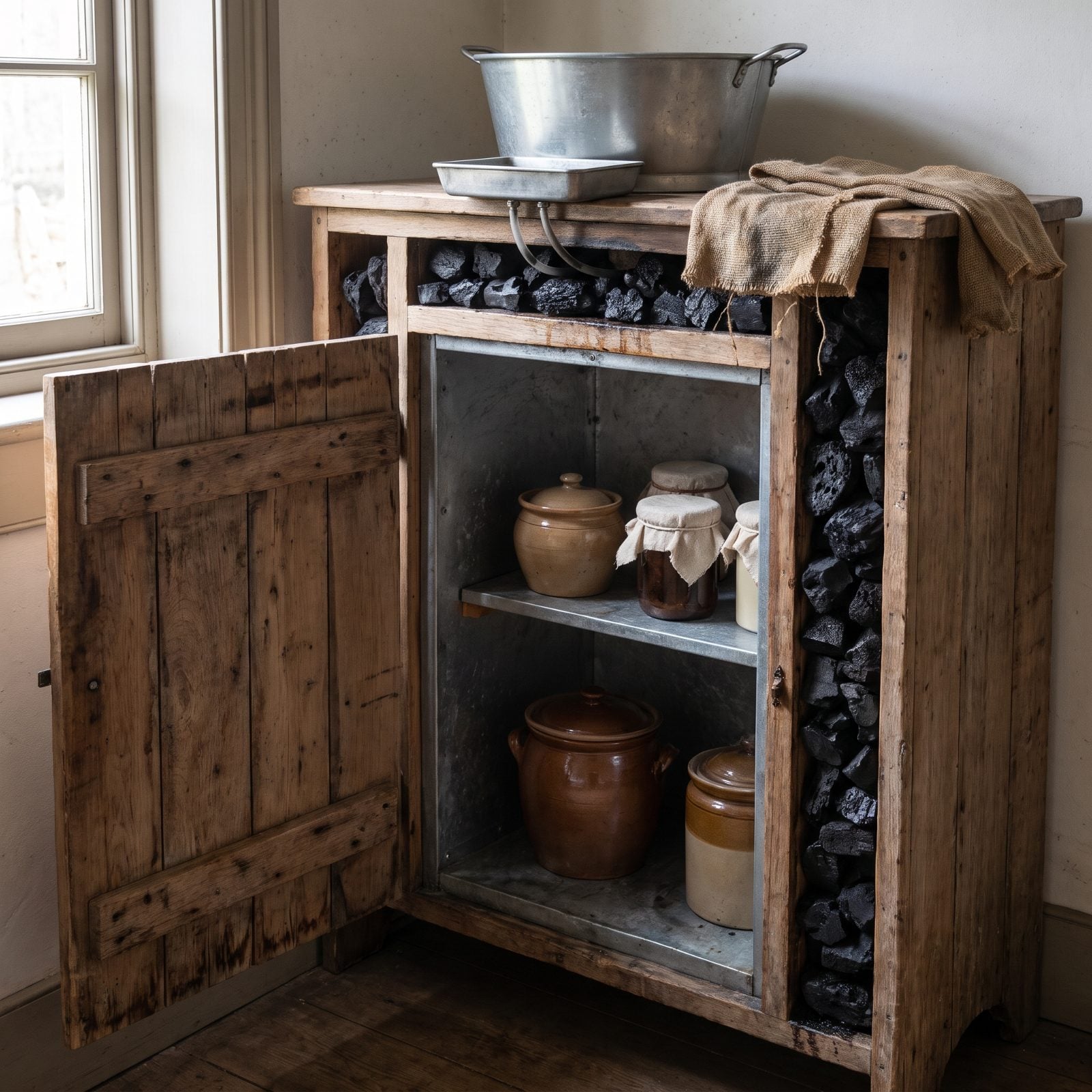
Charcoal cabinets were the quiet upgrade to the burlap safe. Instead of wet cloth, lumps of charcoal were packed into a hollow side wall and a top compartment around galvanized metal shelves, where they soaked up water dripping slowly from a reservoir up top.
Why charcoal, of all things? It holds water like a sponge and gives that water an enormous surface area to evaporate from. More evaporation means more cooling, and the metal-lined interior picked up the chill from the damp charcoal packed around it. You found these across hot stretches of India, Africa and the American South, keeping dairy and eggs usable in places where leaving food on the counter meant losing it by nightfall.
11. The North-Facing Larder, a Cold Room Built on Purpose
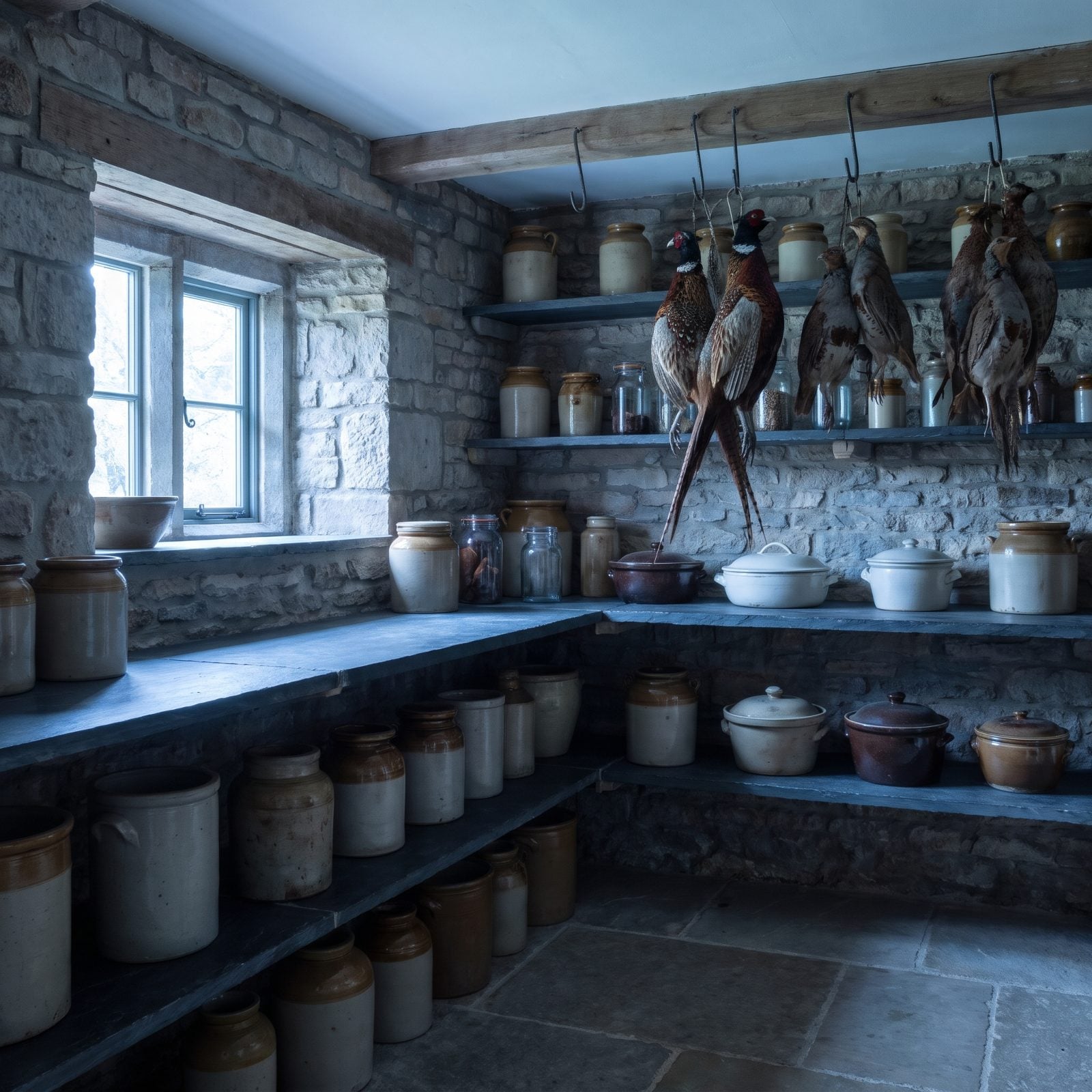
Before anyone wired a kitchen, the smartest cold storage came down to one thing: which way the room faced.
In the northern hemisphere a north-facing wall never catches direct sun, so a larder built against it runs several degrees cooler than the rest of the house. Add thick stone or brick, a cold slate or marble shelf, a small screened window for ventilation that also kept flies out, and you had a room holding pies, cold meats and dairy without a scrap of machinery.
Thousands of older British and American houses still have them. People use them as pantries now and never once realize the design is doing real thermal work.
10. The California Cooler, a Cupboard Vented to the Outside Air
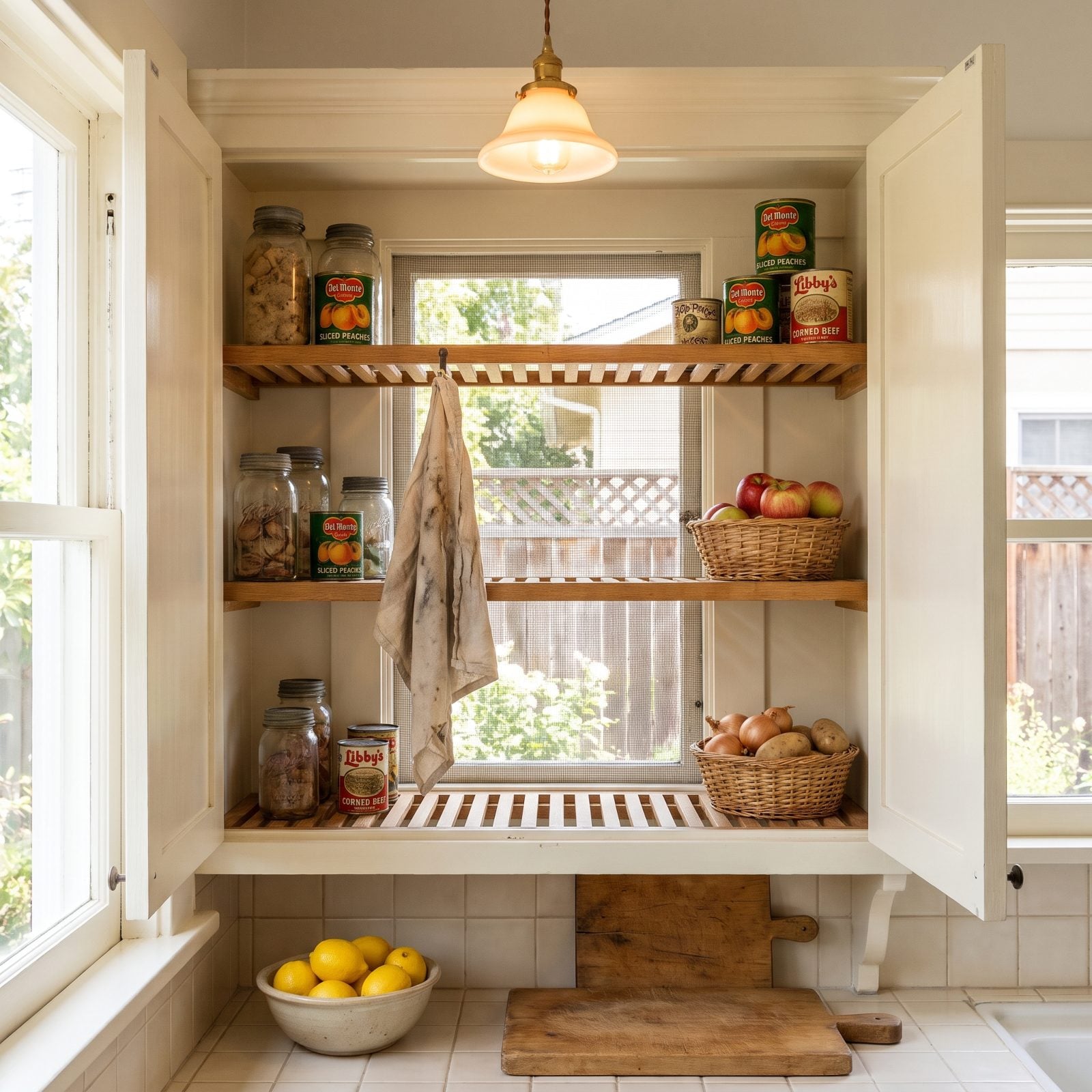
A cupboard that cheated by stealing cool air from outside. California coolers, a bungalow fixture from roughly the 1910s through the 1930s, were tall cabinets built into an exterior wall with a large screened opening at the back that looked straight out onto the shaded garden.
Cool outside air drifted in through the fine mesh, so a slow current crept through the cupboard all day long. Slatted shelves let that air circulate around everything inside. It kept onions, potatoes, eggs and hard cheeses comfortable in a mild coastal climate that never really needed refrigeration.
I love these. They crack the whole problem with airflow alone and not a single moving part. Own an old California house? Go check your kitchen walls. One might still be tucked in there.
9. Stone-Floored Dairy Rooms Where Butter Kept Its Shape
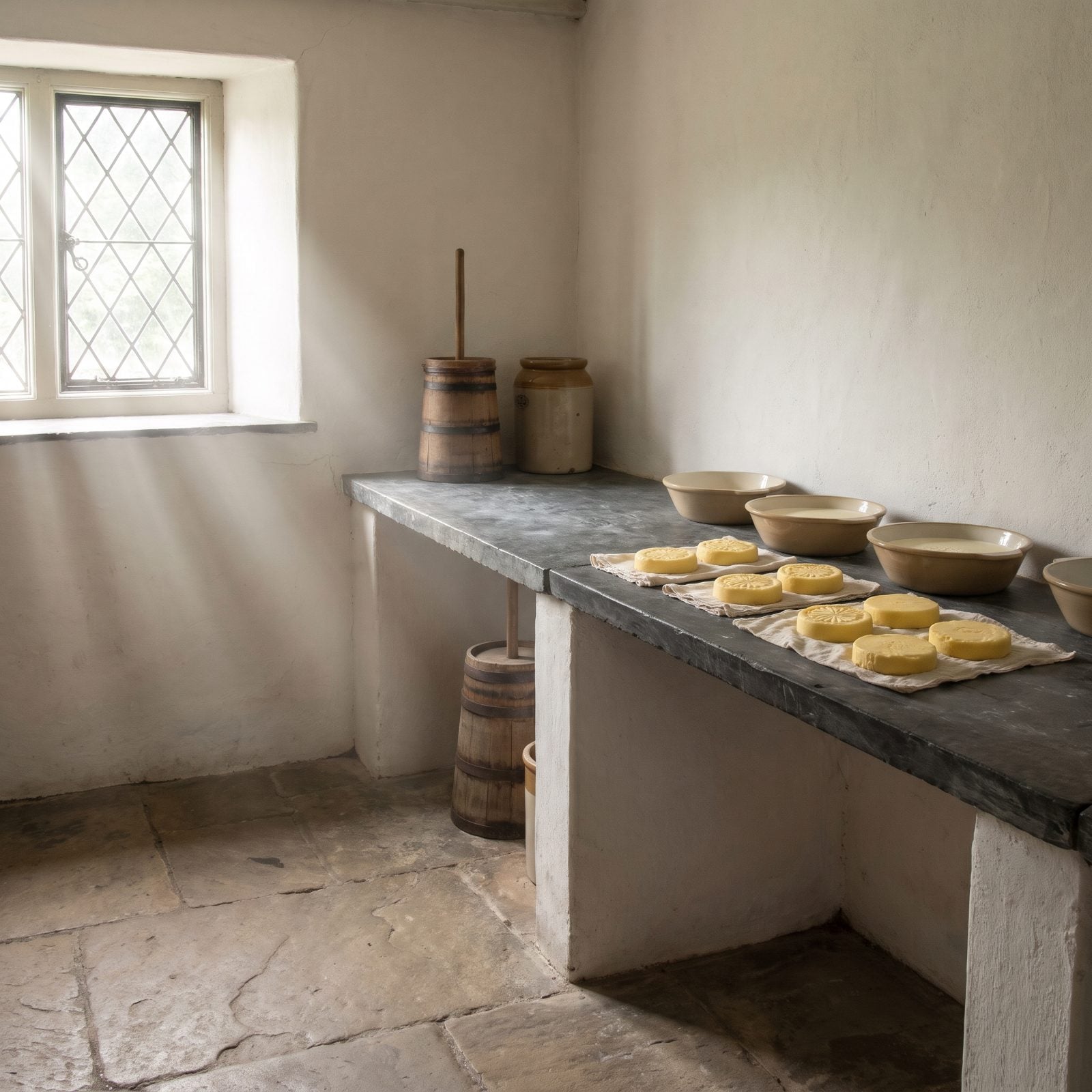
Dairy was the hardest thing on any farm to keep sweet, so farmers built whole rooms around the problem.
The classic dairy had a flagstone or slate floor, thick stone walls, north-facing windows and often a flow of spring water running through a trough. Milk went into broad shallow earthenware pans so the cream could rise, and the room ran cool and damp throughout. On hot days someone splashed water across the stone floor. As it evaporated it pulled heat from the air and nudged the temperature down one more notch.
Cool, damp, dim and ventilated. That combination kept butter firm and milk drinkable in a world with no fridge for miles around.
8. Cold-Weather Window Boxes, the Winter Fridge on a Sill
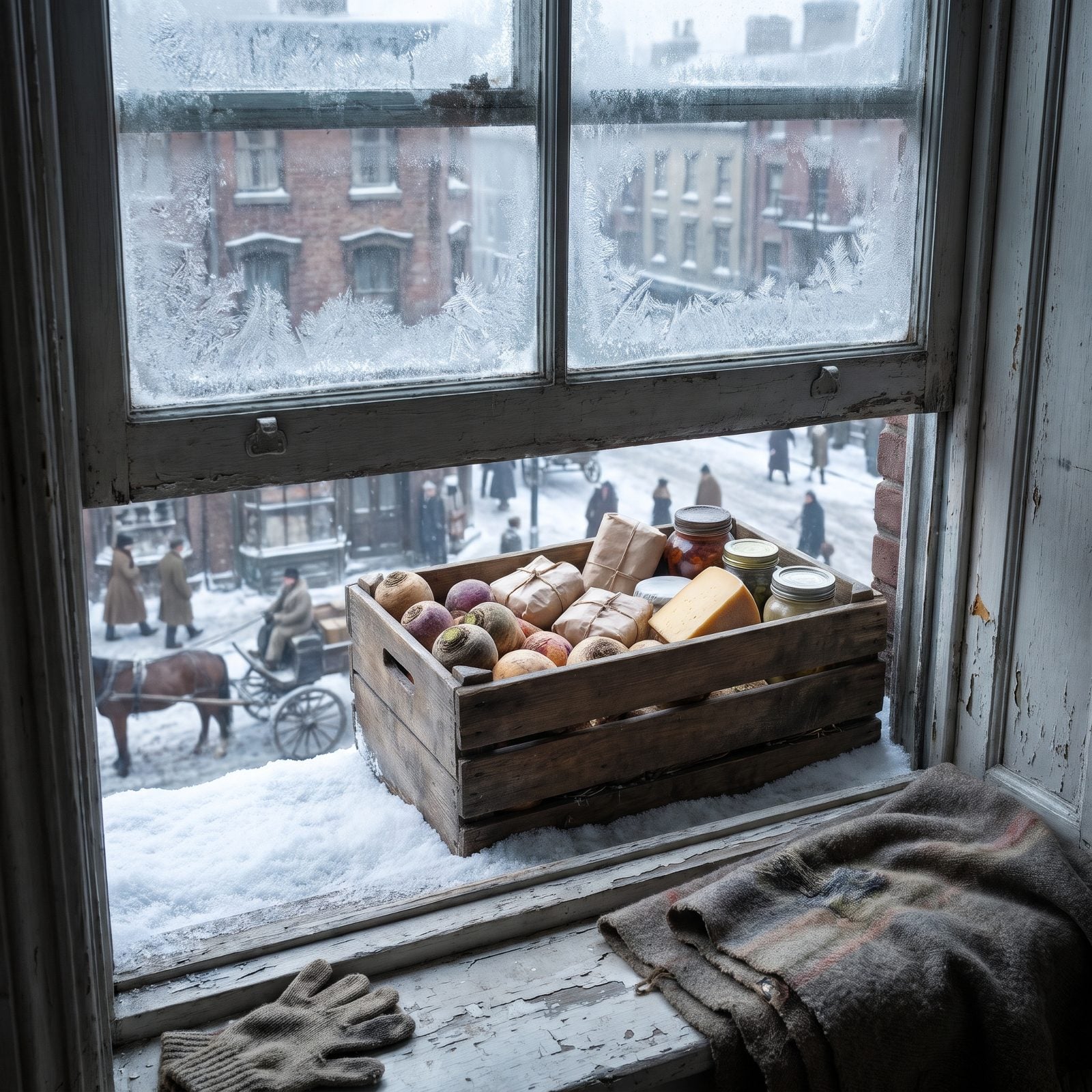
City apartments without a cellar had an obvious answer for half the year. They put the food outside.
In cold climates people mounted ventilated wooden boxes on the outside of a window, or just used the sill tucked between the storm window and the inner sash. From late fall through early spring the outdoor air did an icebox’s job for free. Milk, butter, meat and leftovers sat out there safely, sometimes a little too safely when a hard freeze turned the milk to slush.
Walk through older northern cities and you can still spot the brackets where these boxes once hung.
7. Shaded Outdoor Meat Safes Hung Where the Air Moved
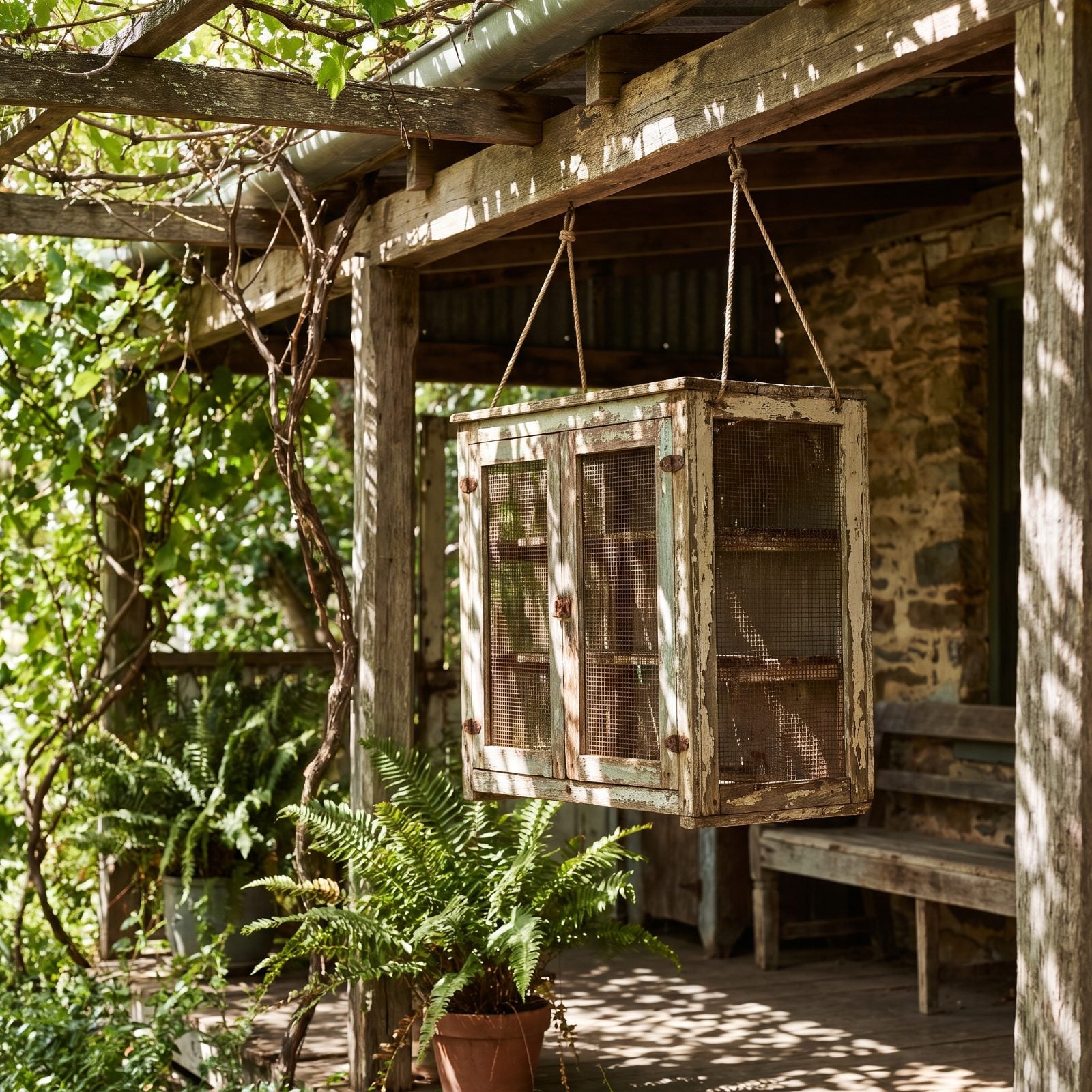
Here’s the humblest method of the lot, and the one you’ll find in old homesteads everywhere: a ventilated box hung in the shade where the breeze could reach it.
Meat safes carried punched tin or fine wire mesh on every side, letting air pass through while shutting out flies, wasps and scavengers. Hung from a shaded verandah or a tree branch, catching whatever moving air was going, the mesh box stayed cooler than any sealed cupboard and kept cured hams and wrapped joints safe between meals.
It didn’t freeze a thing. It didn’t need to. Shade, airflow and a good screen bought you the days you needed, and for most of human history that was plenty.
6. Stone-Lined Underground Cache Pits That Held a Season’s Worth
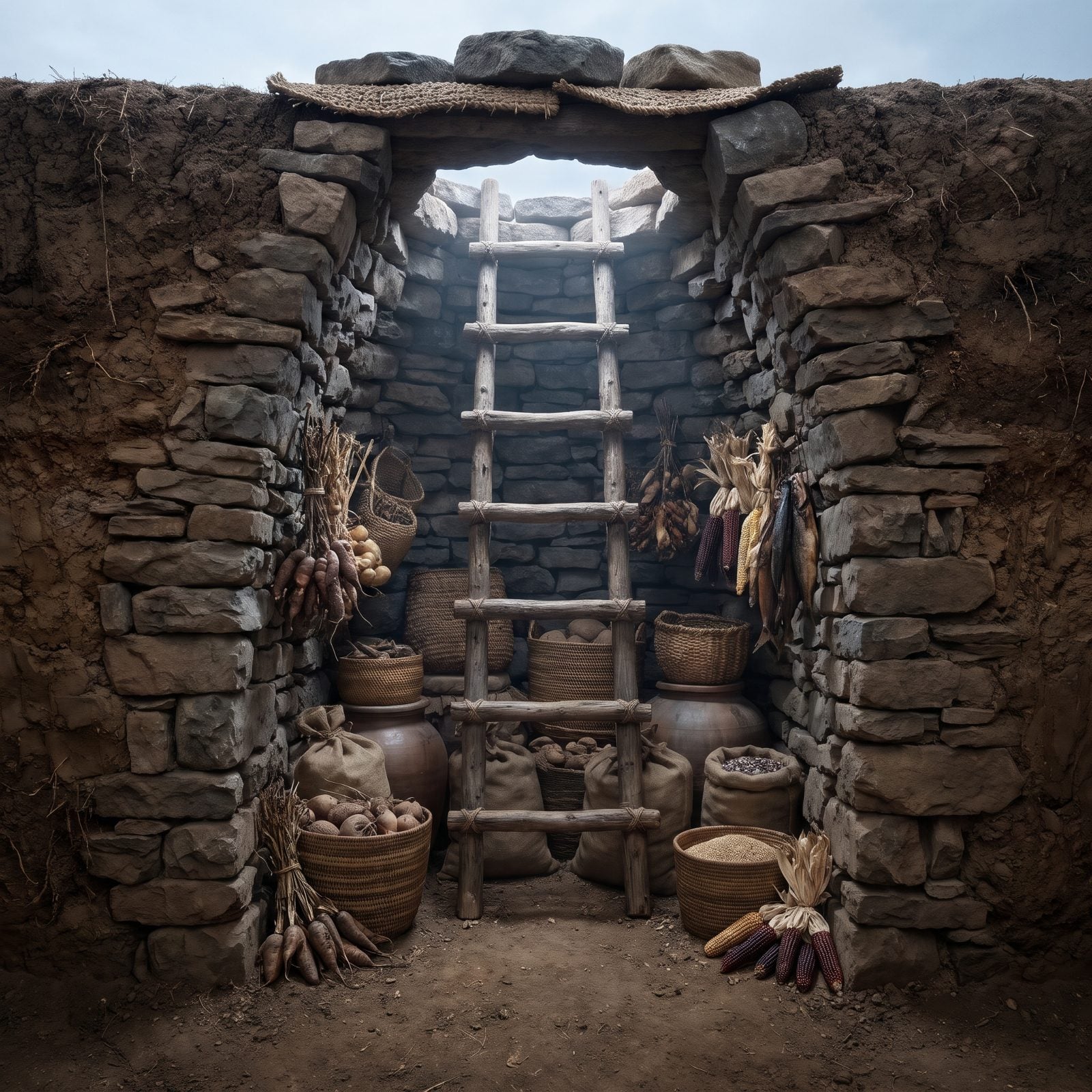
Before anyone owned a cold box, the ground itself did the work. Dig down a few feet in the right climate and the temperature steadies out, cool and constant, whatever the sun does overhead. Peoples across the Americas, from the Andean highlands to the plains of North America, lined these pits with fitted stone so the damp earth couldn’t rot what they stored.
The stone is the clever part. It holds the chill from the surrounding soil and lets it out slowly, so corn, potatoes, and dried fish kept for weeks instead of days. Pack sod around the lid and you’ve got a root cellar’s rougher, older ancestor.
5. Portable Ice Chests Packed with Straw and Wool for the Road
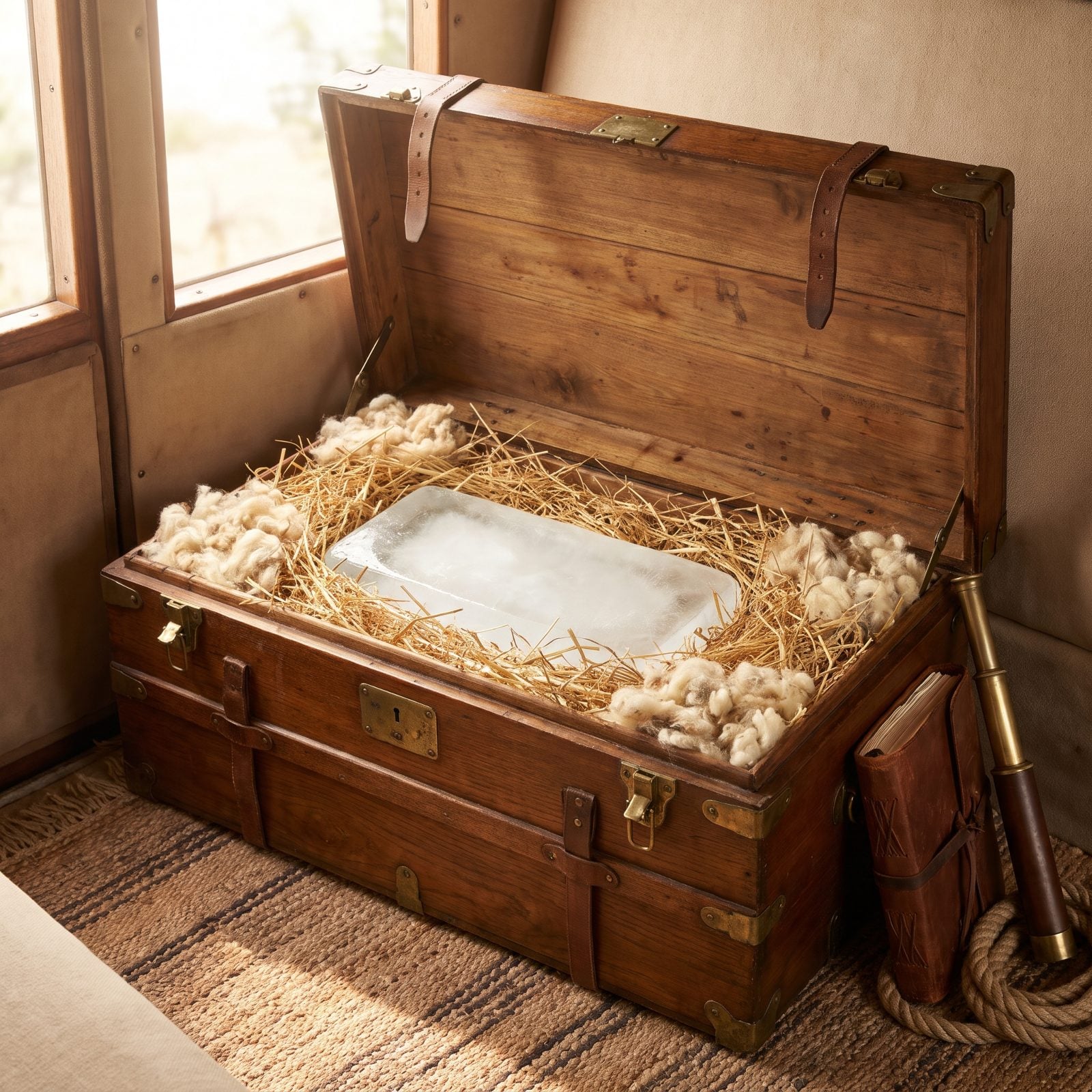
Straw sounds flimsy for the job of holding back a summer afternoon. But trapped air is trapped air, and a wall of packed straw or raw wool around a block of ice slows the heat creeping in, while a zinc or tin liner kept the meltwater from soaking everything it touched.
Travelers, market carts, and early picnickers all leaned on them. The ice shrank a little every hour, sure, but a well-packed chest could carry cream and cold drinks a full day’s ride without turning sour. The thicker you packed it, the longer it held — which happens to be the whole idea behind every cooler you’ve ever dragged to a lake.
4. Salt-and-Ice Baths That Dropped the Temperature Below Freezing
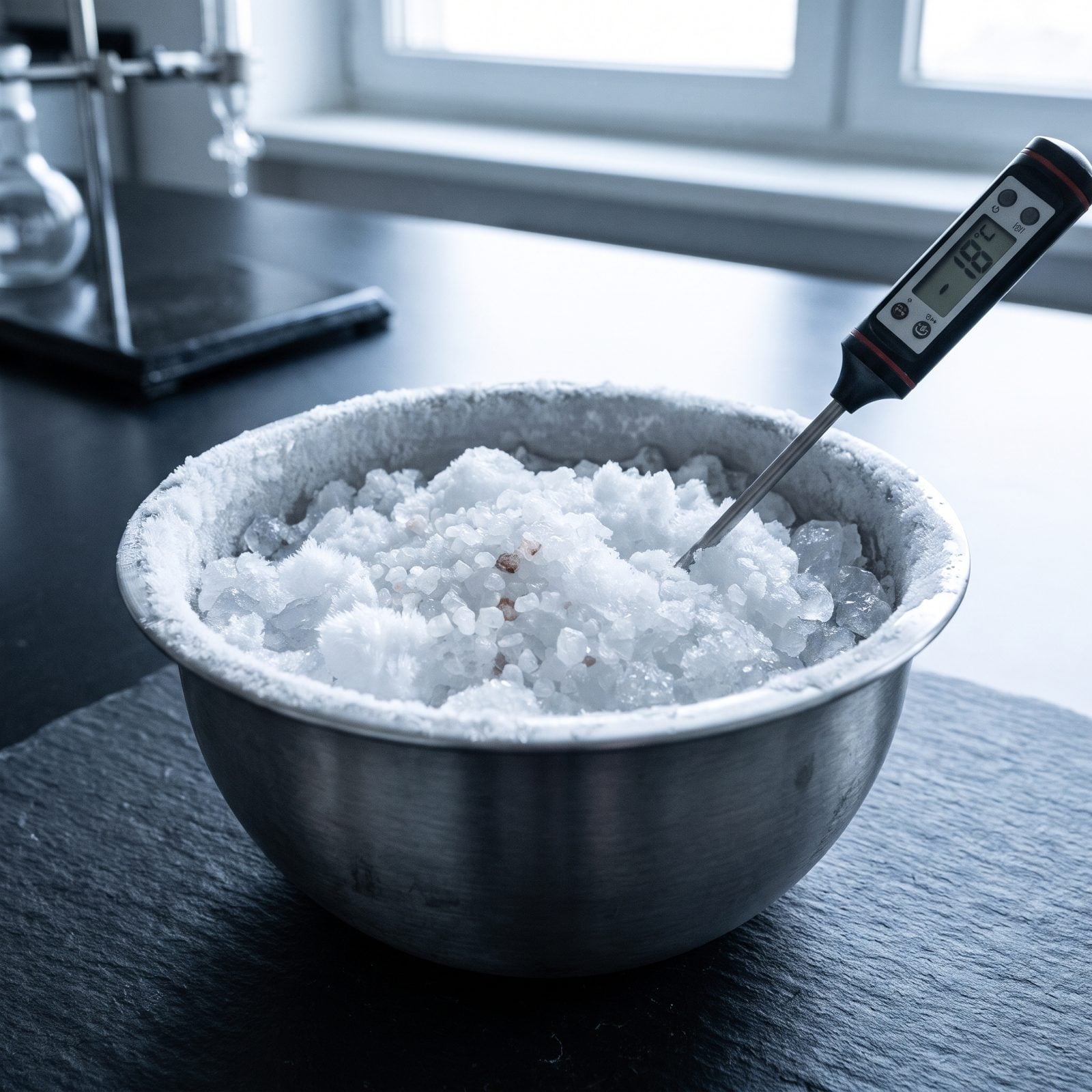
Add salt to ice and it gets colder. Counterintuitive, but true. Salt lowers the freezing point of water, so the ice melts, drags heat out of everything around it as it goes, and the whole bath plunges well below the plain-ice temperature of 32°F. A salted slurry can drop into the low twenties or colder.
That’s the secret behind hand-cranked ice cream and the first chilled cocktails. Sink a container of cream or a flask of wine into the salted ice, stir, and you’ve pulled warmth out faster than ice alone ever managed.
3. Insulated Ice Rooms Built Into the Hulls of Sailing Ships
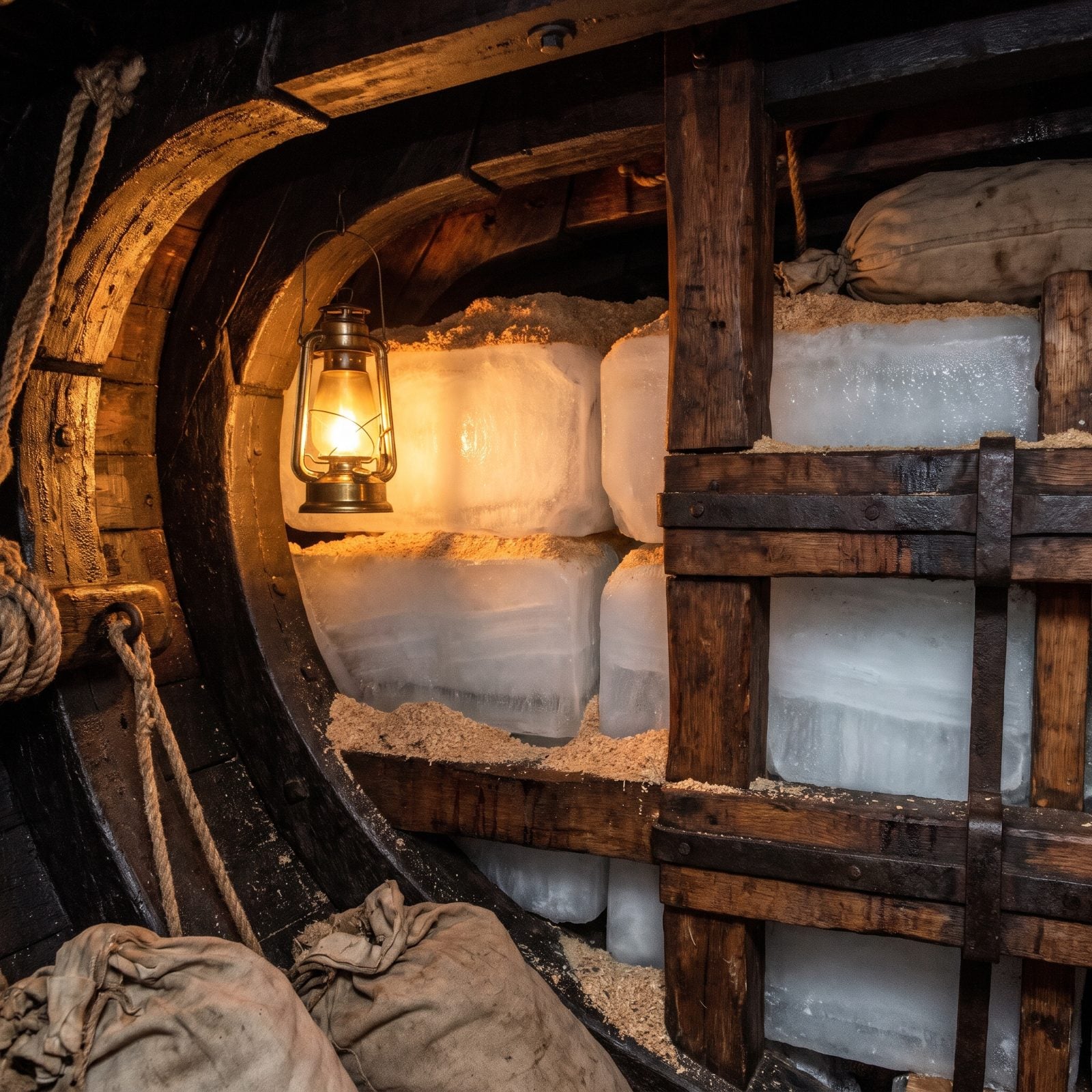
The global ice trade ran on this. Through the mid-1800s, ships hauled blocks of New England pond ice all the way to the Caribbean, South America, and even India — and the only thing between that cargo and a warm tropical sea was the insulation packed into the hold.
Builders stuffed the ice-room walls with sawdust, cork, or straw, sometimes a foot thick, and lined the floor to drain the meltwater away. A surprising amount survived the voyage. Enough that a Boston merchant named Frederic Tudor built a fortune selling frozen water to places that had never seen it.
2. Fresh Fish Boxed with Ice and Wet Seaweed at the Dock
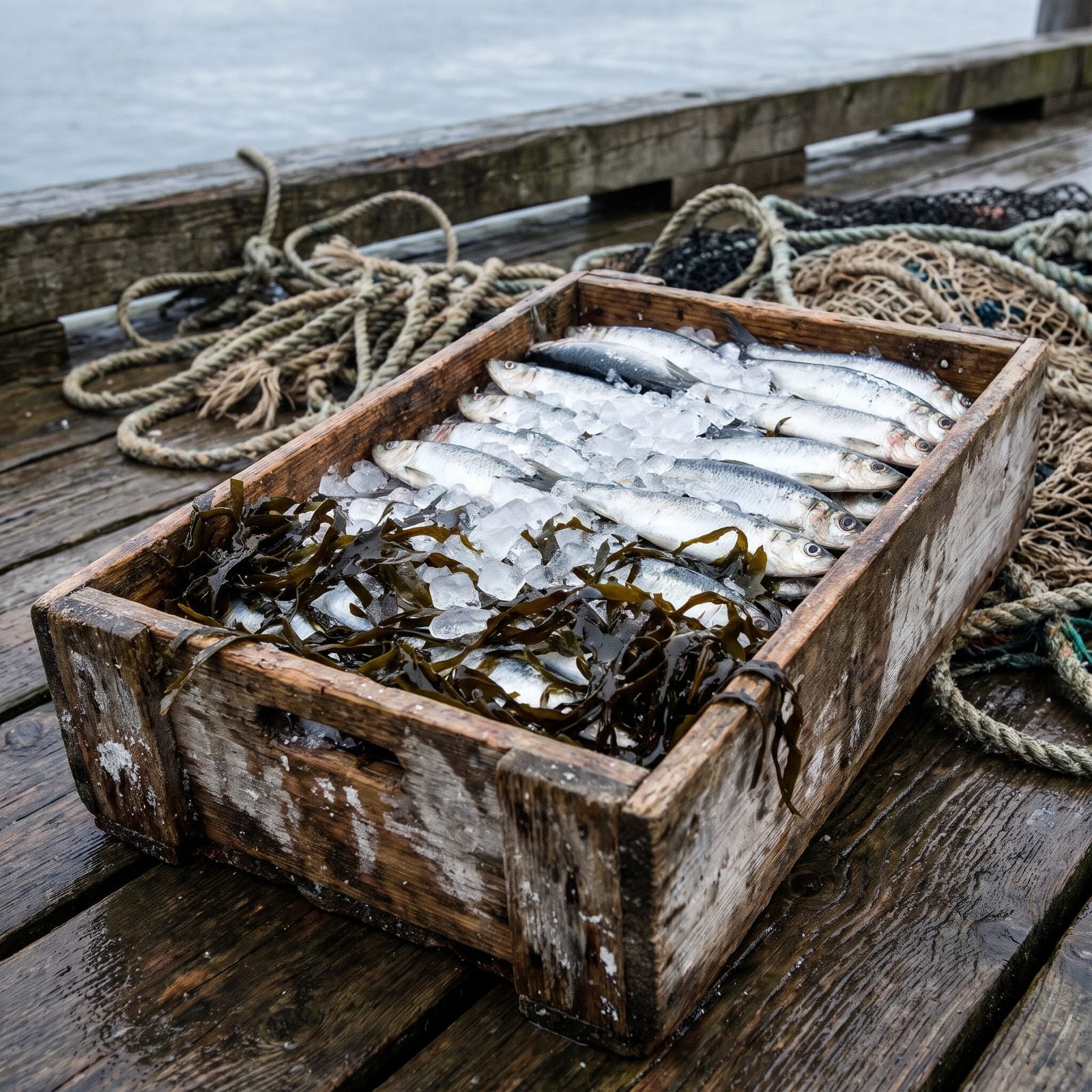
Wet seaweed pulls double duty here. It holds moisture against the fish so the flesh doesn’t dry and shrink, and as the water in it slowly evaporates, it draws a little extra heat out of the box. Layer it between crushed ice and the catch, and you’ve stretched freshness from the dock to the market stall.
Fishing towns from New England to the North Sea boxed their catch like this for generations. The combination earned its keep on the hottest days, when plain ice drained away too fast and the seaweed’s damp blanket bought a fishmonger a few more precious hours.
1. Shallow Pans That Made Ice Overnight in the Desert
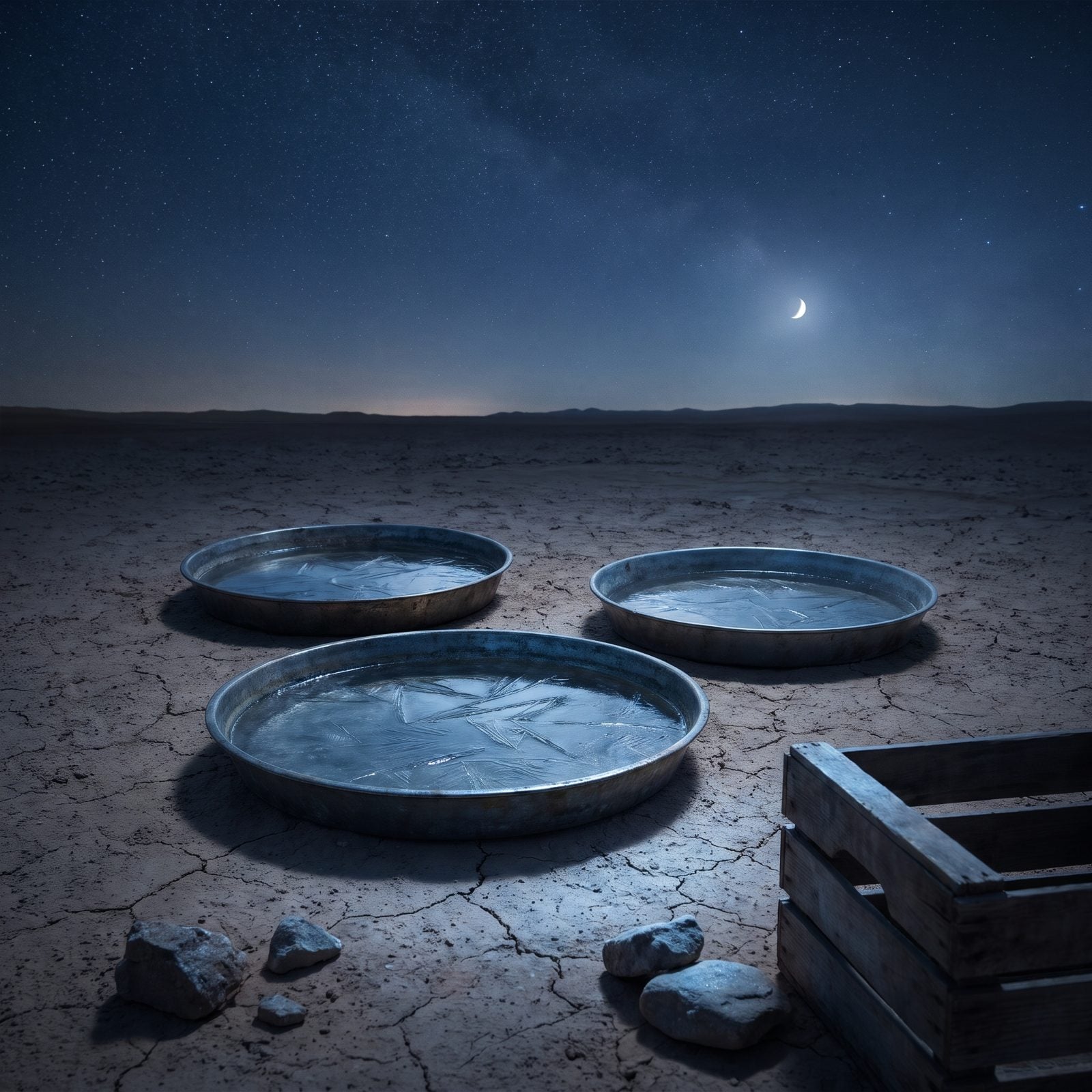
This one feels like sleight of hand, and honestly it almost is. On clear, dry nights water sheds heat straight up to the open sky faster than anything can replace it, so a shallow pan can freeze even when the air never actually hits freezing. Out among the boulders and scrub of a modern desert, a handful of wide metal pans set out on a cold, starry night gathered thin, feathery sheets of ice by morning.
Two things made it happen. A very clear sky, so the heat had somewhere to escape, and shallow water, so there was less mass to chill. Even sitting right on the bare, dry ground, the thin metal pans lose heat to the sky faster than the warm soil can creep back in to undo the night’s work. The ice was never thick — but there it was, in a place that never saw snow.