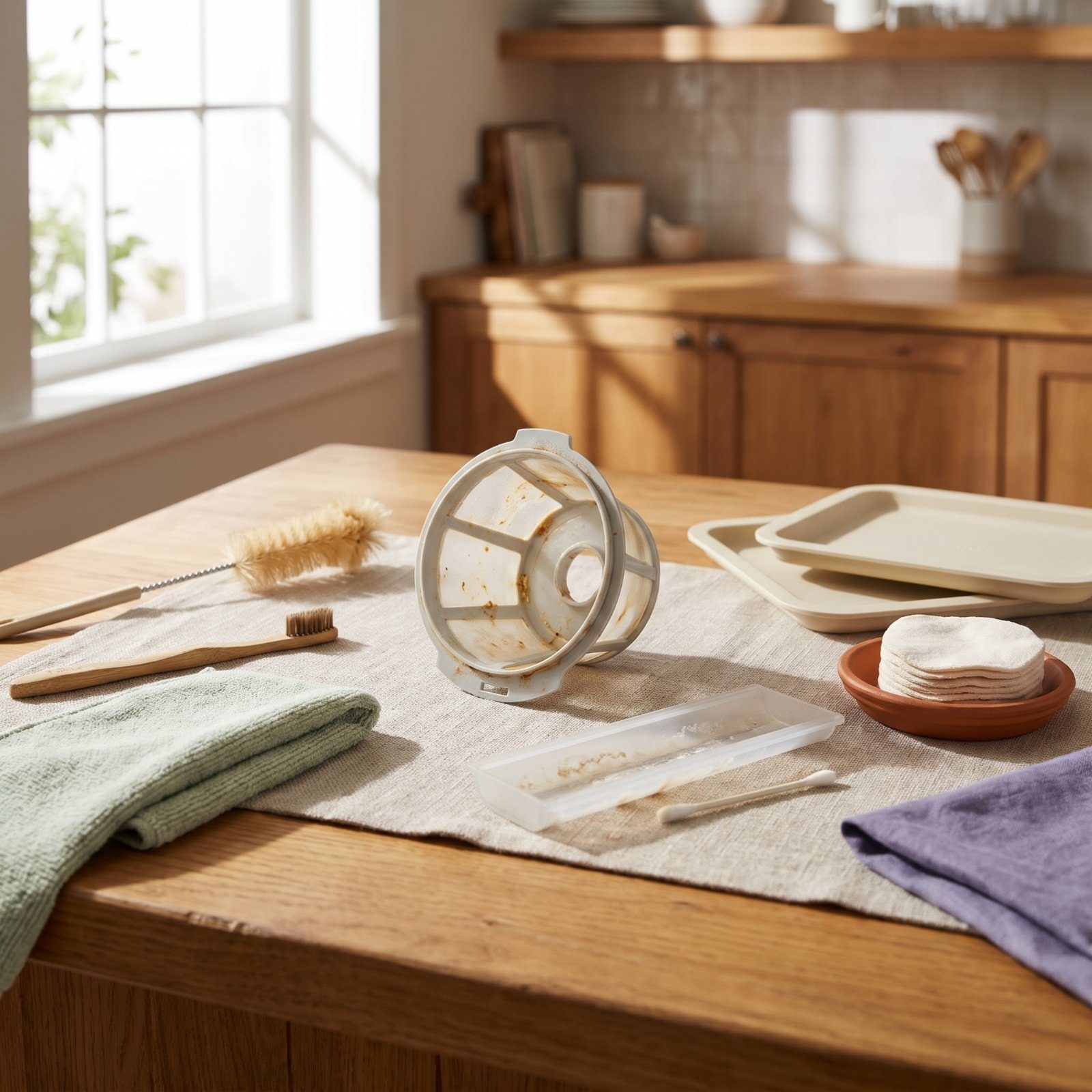
Run a finger under your dishwasher’s spray arm sometime. The gunk that comes back will change how you feel about the word “clean.” A spotless home is mostly theater. Your counters gleam and the floors shine, and three feet away a plastic channel is quietly growing something that smells like a gym bag left in a trunk all summer. These are the parts appliances were built with — the ones that collect water, lint, soap scale and crumbs, and that almost nobody thinks to open. The grime isn’t a failure of effort. It’s a failure of knowing where to look. So here’s where to look.
Please note that some of the images in this article were created with the assistance of AI.
43. The Refrigerator Drip Pan, Where Hidden Water Turns to Slime
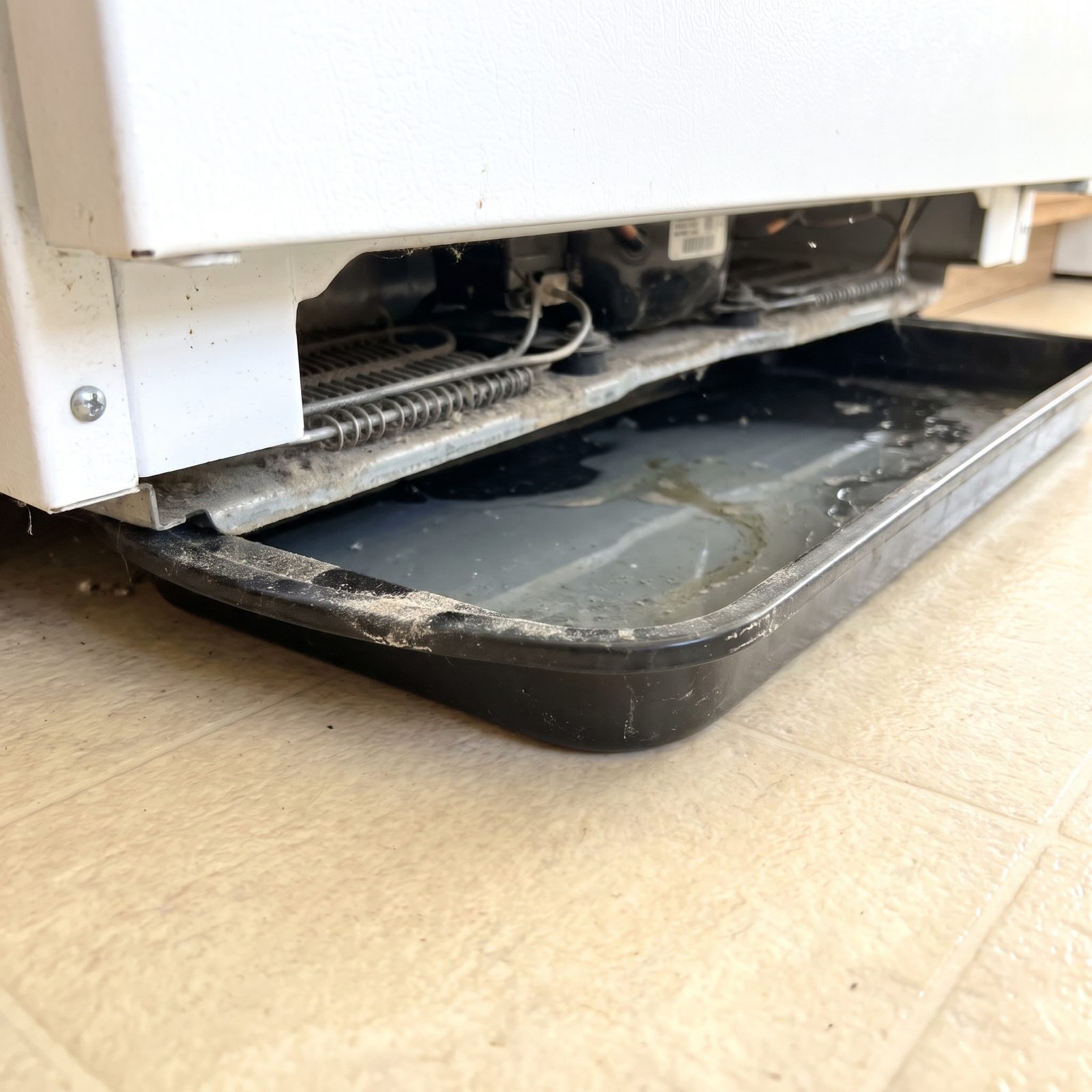
Your fridge makes water. Condensation runs down a drain tube and collects in a pan near the compressor, where it’s supposed to evaporate off the warm coils. Supposed to. In a humid house it never fully dries, and what sits there turns into a shallow soup of dust and mold.
Most people have never laid eyes on their drip pan — it hides behind the toe kick at the bottom front, or sometimes around back. That faint musty smell near the kitchen floor you keep blaming on the trash? Could be this.
42. The Garbage Disposal Splash Guard and Its Grimy Underside
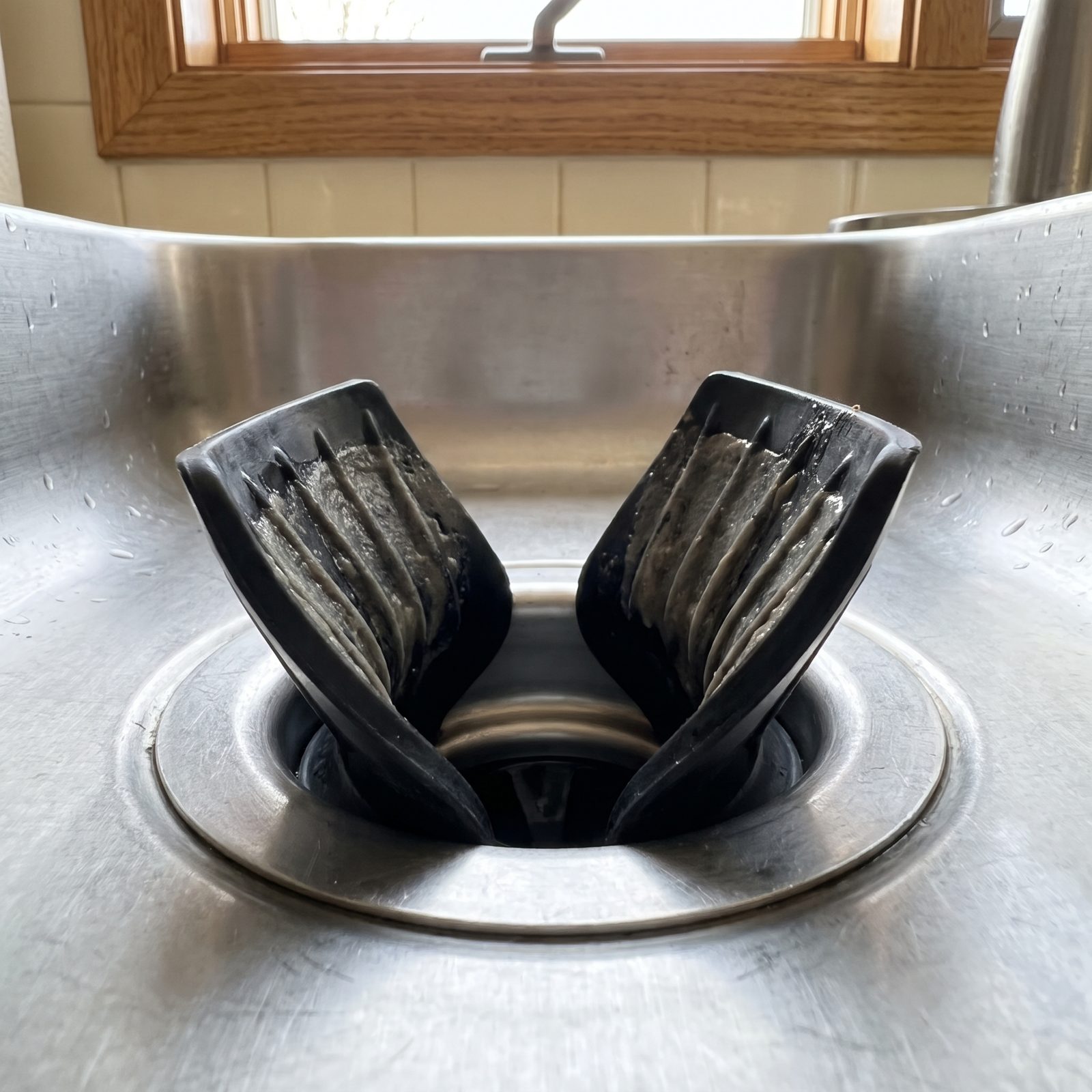
The black rubber splash guard in your disposal is easy to overlook. Pull its flaps up out of the drain and check their ribbed undersides. That’s where the real story is.
Everything you rinse down grabs onto those ribs and stays. It’s the single most common source of a sink smell that no amount of baking soda down the drain will fix — because the smell isn’t coming from the drain at all. It’s on the underside of those flaps, sitting on a surface you can actually reach and scrub.
An old toothbrush and dish soap, two minutes, done. On many models the whole splash guard pops out for a soak.
41. The Window Weep Holes That Can Clog and Pool Water
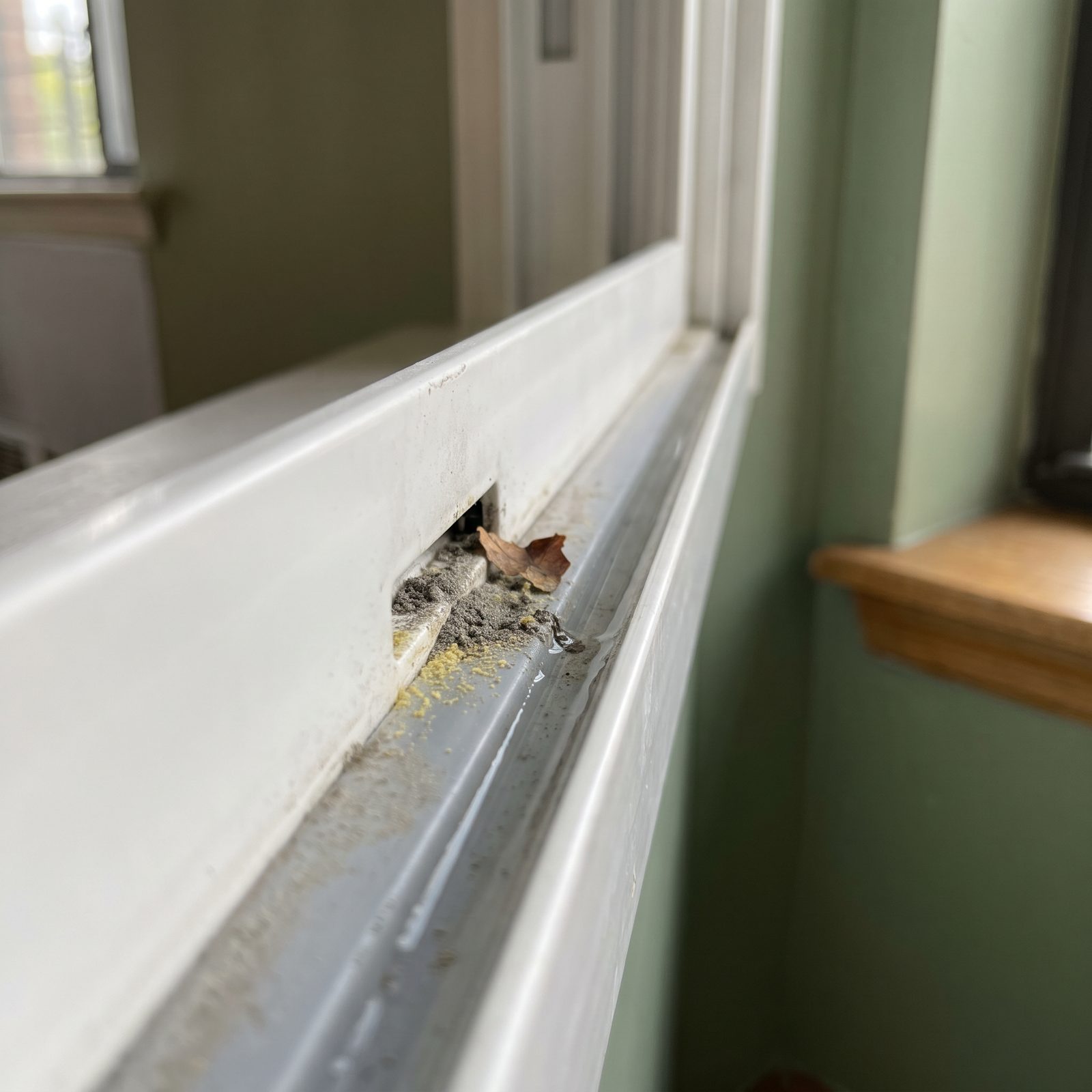
See those little slots along the bottom outside edge of your vinyl windows? Not design flaws. They’re weep holes, the drain route for rainwater that works its way into the frame.
Pollen, dust and spider webbing pack them solid over a few seasons. Clog one and water backs up in the track and sits against your sill, and over years that’s how moisture finds its way inside the frame.
Poke them clear with a toothpick, then pour a cup of water in the track and watch it drain out the bottom. If it doesn’t drain, keep poking.
40. The Sink Overflow Opening Where Buildup Hides Beyond the Rim
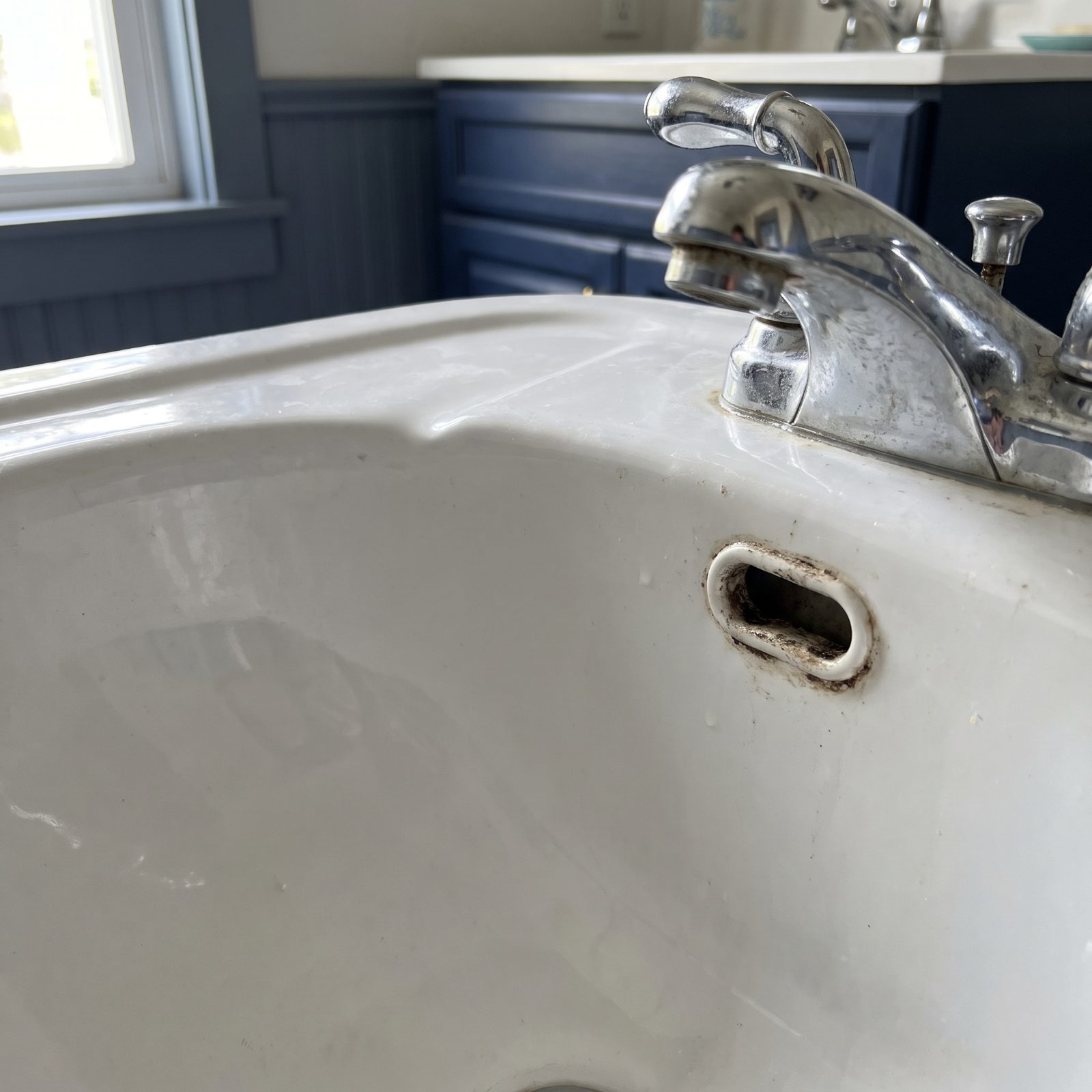
That little hole near the top of your bathroom sink keeps the basin from flooding onto the floor. It also connects to a hollow channel inside the sink that you can’t see and never clean.
Inside, a slick film of soap, skin and bacteria builds up for years, and it’s the reason a sink that looks clean can still throw off a sour whiff. Water passes through it every time you fill the basin.
A bottle brush and a little bleach solution, worked back and forth through the opening, reaches what a cloth never will.
39. The Dishwasher Filter Buried Under the Bottom Rack
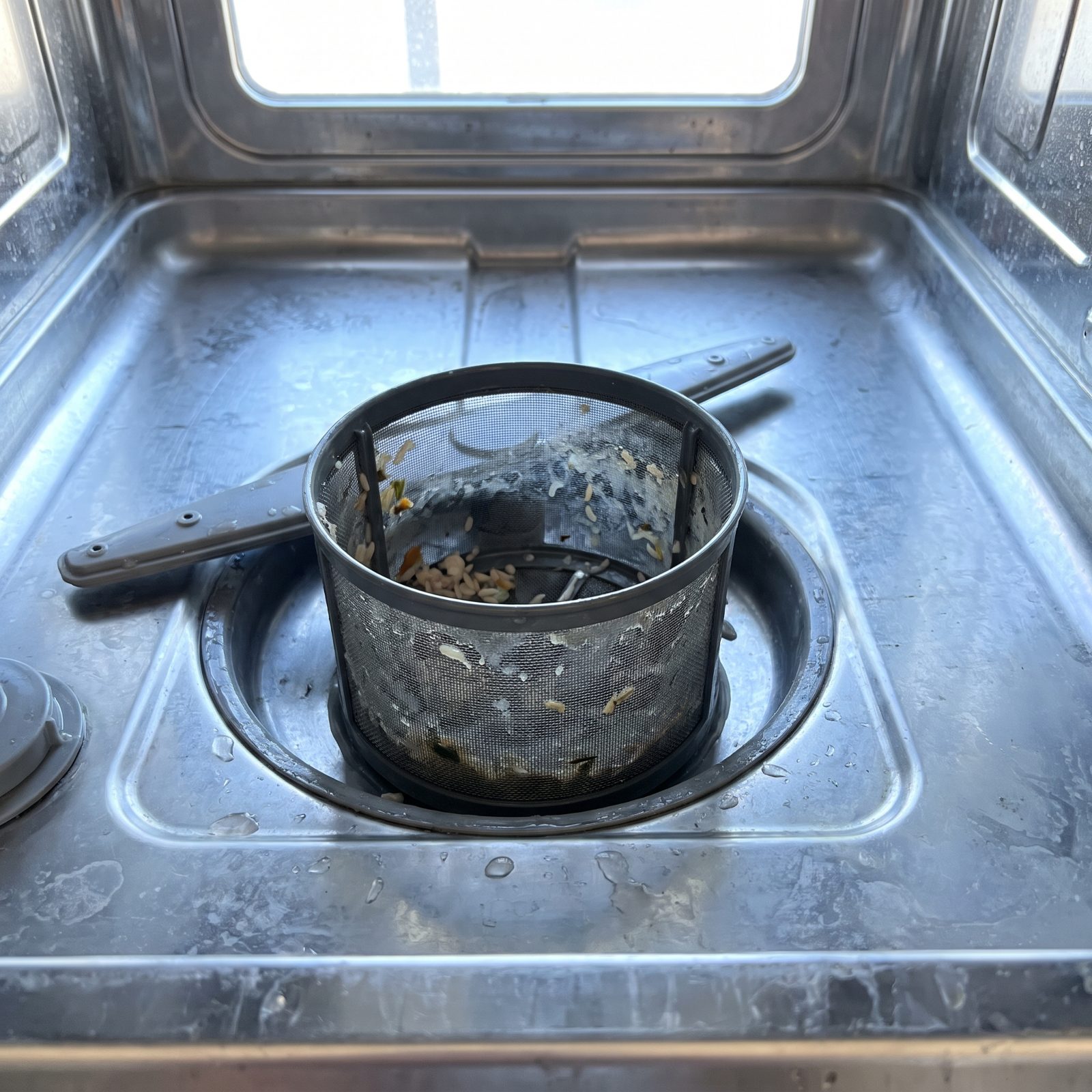
Here’s the part most people genuinely don’t know their dishwasher has.
Older machines had a grinder that chopped food waste. Most newer ones swapped that for a quieter manual filter — a mesh cylinder that drops into the sump in the floor of the tub under the bottom rack. It catches everything, and it only works if you empty it.
Leave it for months and you get cloudy glasses, a film on the plates, and a smell that opens the door to greet you. People buy whole new dishwashers over a filter they never knew to rinse.
Lift it out, run it under the tap, wipe out the sump it sits in, poke a toothpick in the holes. Once a month is plenty.
38. The Dryer Moisture Sensors That Residue Can Fool
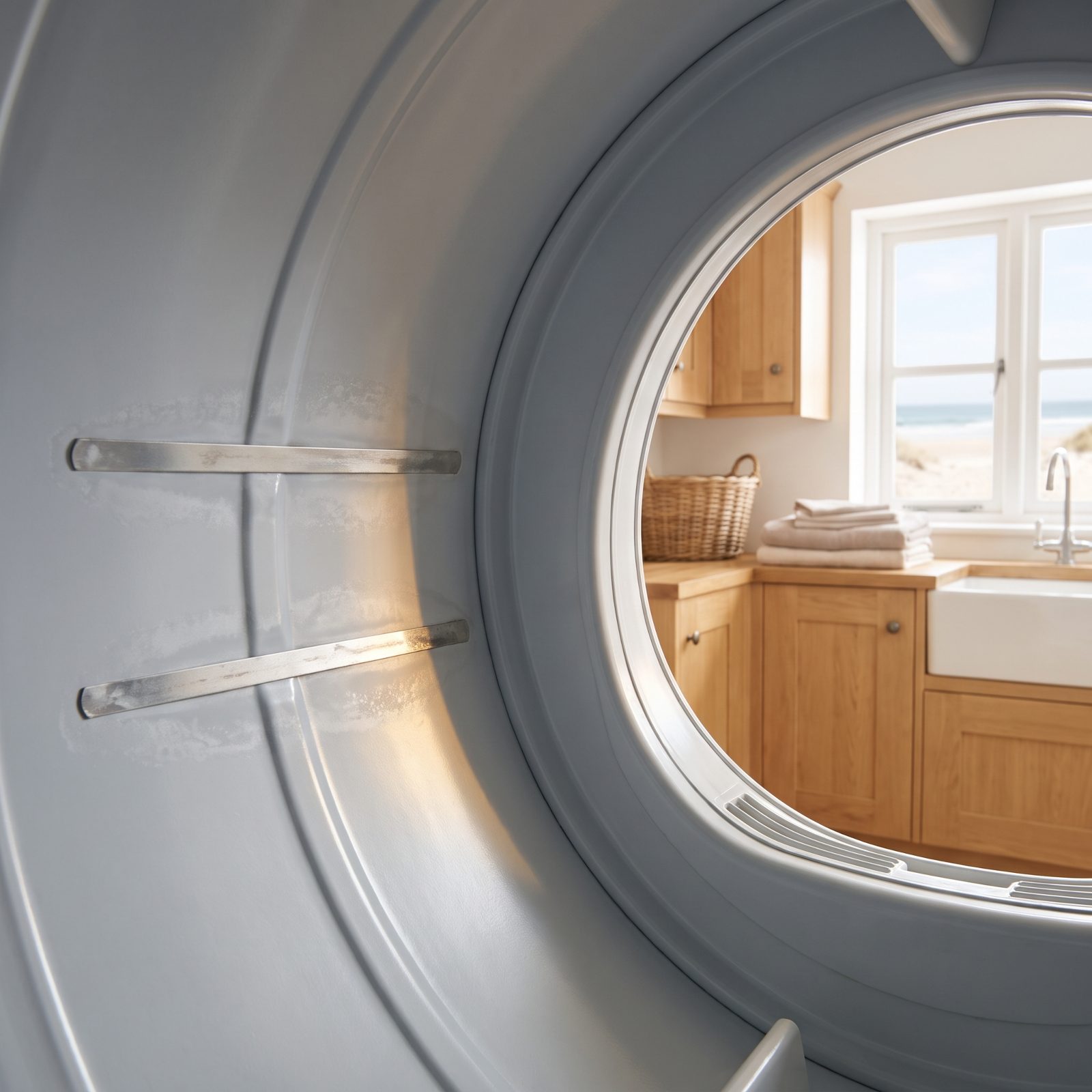
Most dryers don’t actually time your clothes. They sense when the load stops giving off moisture, using two thin metal strips inside the drum. Clothes touch the strips, the strips read the dampness, and the dryer decides when to quit.
Dryer sheets and fabric softener leave a waxy film on those strips. Coated, they read “dry” too early — so you pull out damp towels and run the whole thing again. Wasted energy, confused machine.
Find the strips near the lint trap opening and wipe them with rubbing alcohol on a cloth. That’s the whole fix.
37. The Refrigerator Ice Chute and Its Sticky Dispenser Door
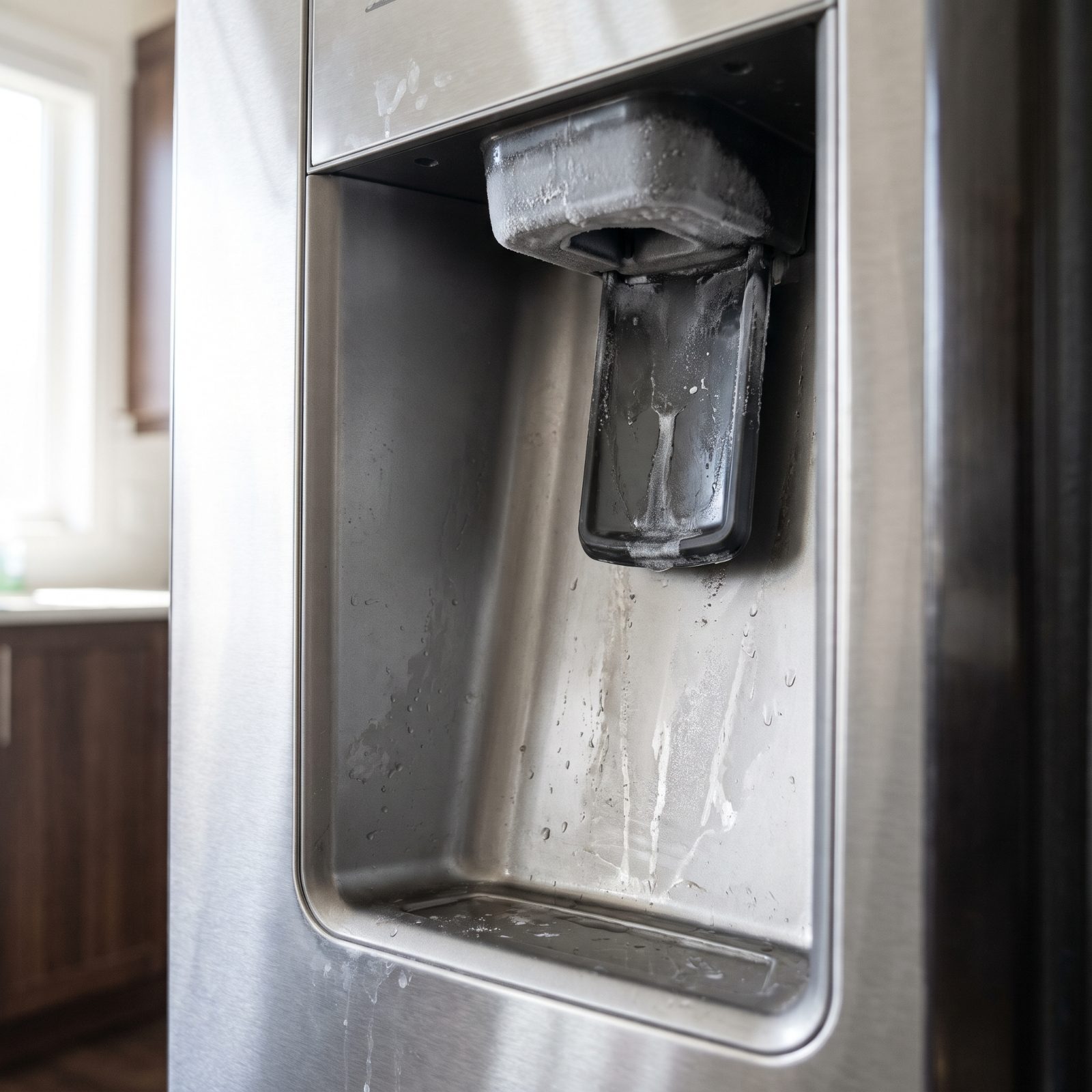
The ice chute is a damp, dark tunnel that touches every cube before it lands in your glass. A rubber flap seals it shut to keep the cold in, and it’s a magnet for drips, dust and whatever the kids pressed their cup against.
Residue films the opening and the flap edges, and in the humidity of that recess it doesn’t stay innocent for long. Your ice passes right through it on the way to your drink.
Wipe the chute and the flap with a vinegar-dampened cloth every couple weeks. Worth it for something that touches what you swallow.
36. The Robot Vacuum’s Cliff Sensors That Dust Can Blind
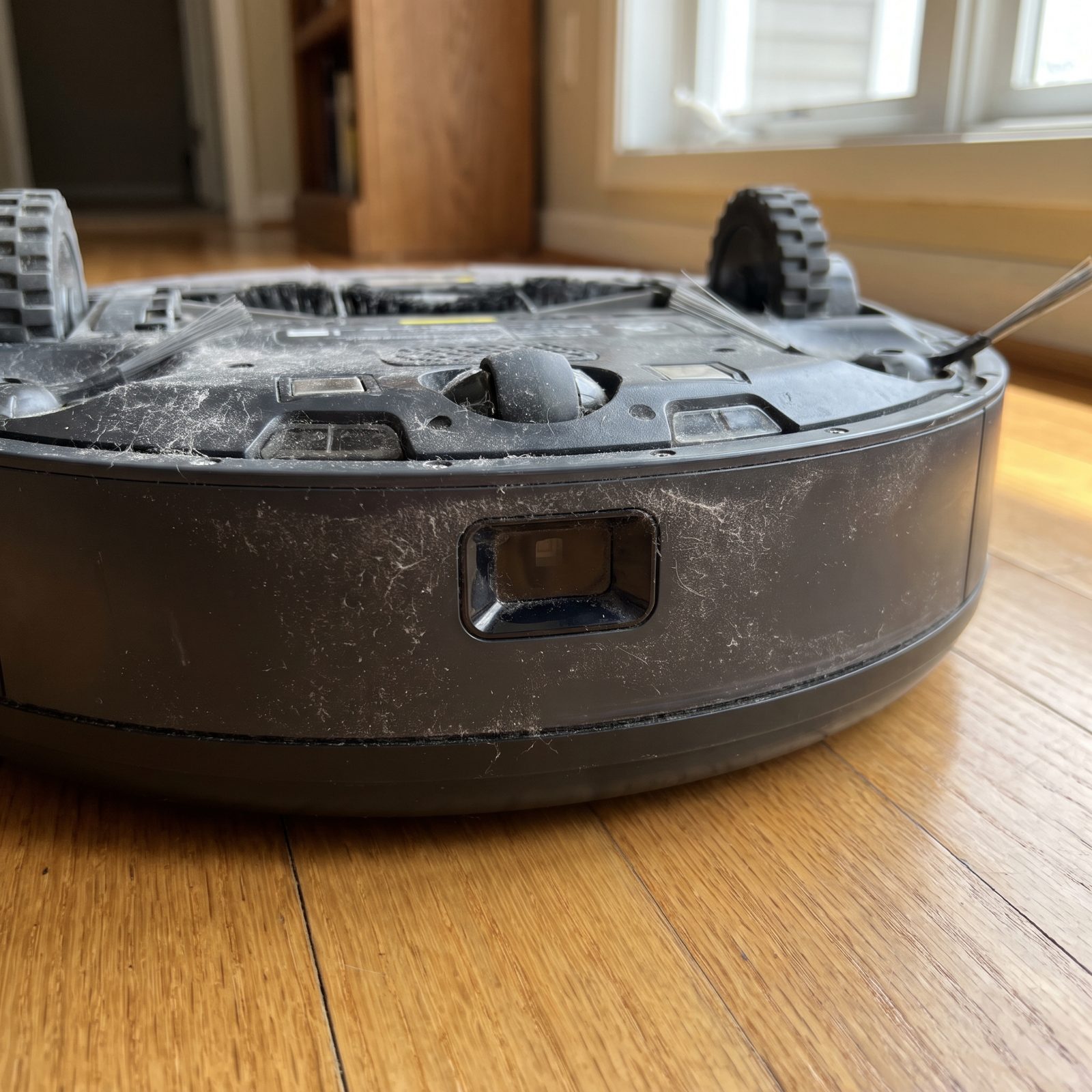
Flip your robot vacuum over. Those tiny shiny windows near the front edge are cliff sensors — infrared eyes that fire a beam at the floor so the thing doesn’t tumble down the stairs.
Dust settles right on them. When it does, the robot reads a safe floor as a ledge, backs away from nothing, and starts refusing to cross rooms or wandering in circles near the stairs like it’s lost its nerve.
People troubleshoot software and buy replacements over a dusty lens. A dry cotton swab across each sensor fixes behavior that looks for all the world like a hardware failure.
35. The Washing Machine Door Gasket Where Moisture Lingers
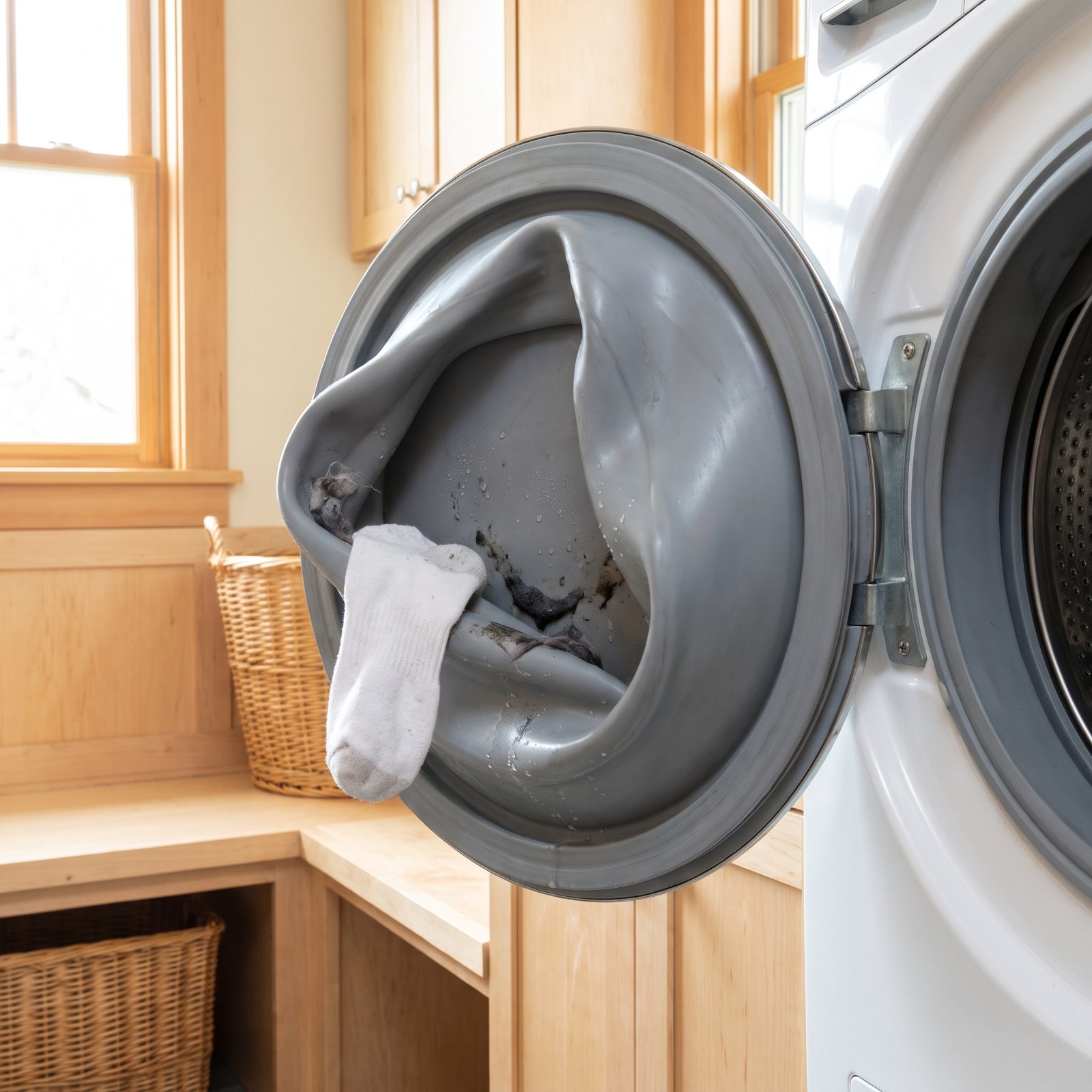
This is the one that bites front-loader owners.
The thick gray rubber gasket on the inside of the door sags into deep folds, hidden pockets that trap water after every wash. Lint, hair, grime and the occasional white sock settle in there and sit in the dark, damp and sealed shut by the next closed door.
That’s where the “my clothes come out smelling worse” problem lives. Not the drum. The gasket. Swing the door open and look — most people recoil at what’s folded into that seal.
Wipe it dry after loads, deep clean the folds weekly, and leave the door cracked open between washes so it can breathe.
34. The Shower Door Bottom Seal and Its Hidden Soap-Scum Channel
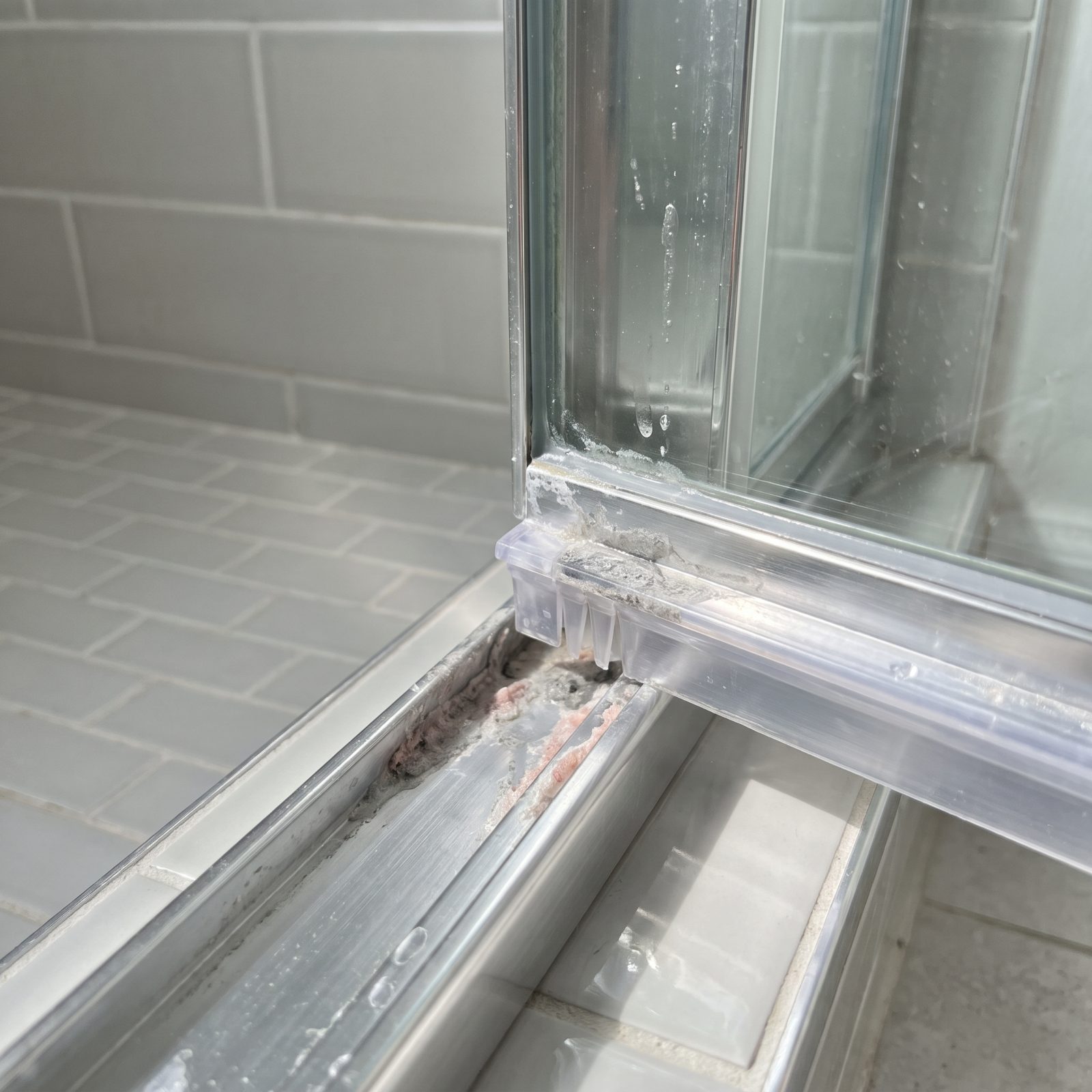
The clear plastic strip along the bottom of your glass shower door is a sweep seal, there to keep water from running onto the floor. Right below it runs the aluminum floor track the door slides in, and that open channel collects a crust of soap scum, hard-water scale and that pink film nobody likes to name.
You scrub the glass and the tile and never touch the track — even though the gunk is sitting right there in plain view, just low and tucked under the door. So it just keeps building while everything above it sparkles.
Slide the door aside, pour warm vinegar into the track, let it soak, then scrub the channel with a narrow brush. The amount that comes out is genuinely unsettling, and that’s the last word on the subject.
33. The Dryer Lint-Screen Slot, Escaped Lint Collects Below the Filter
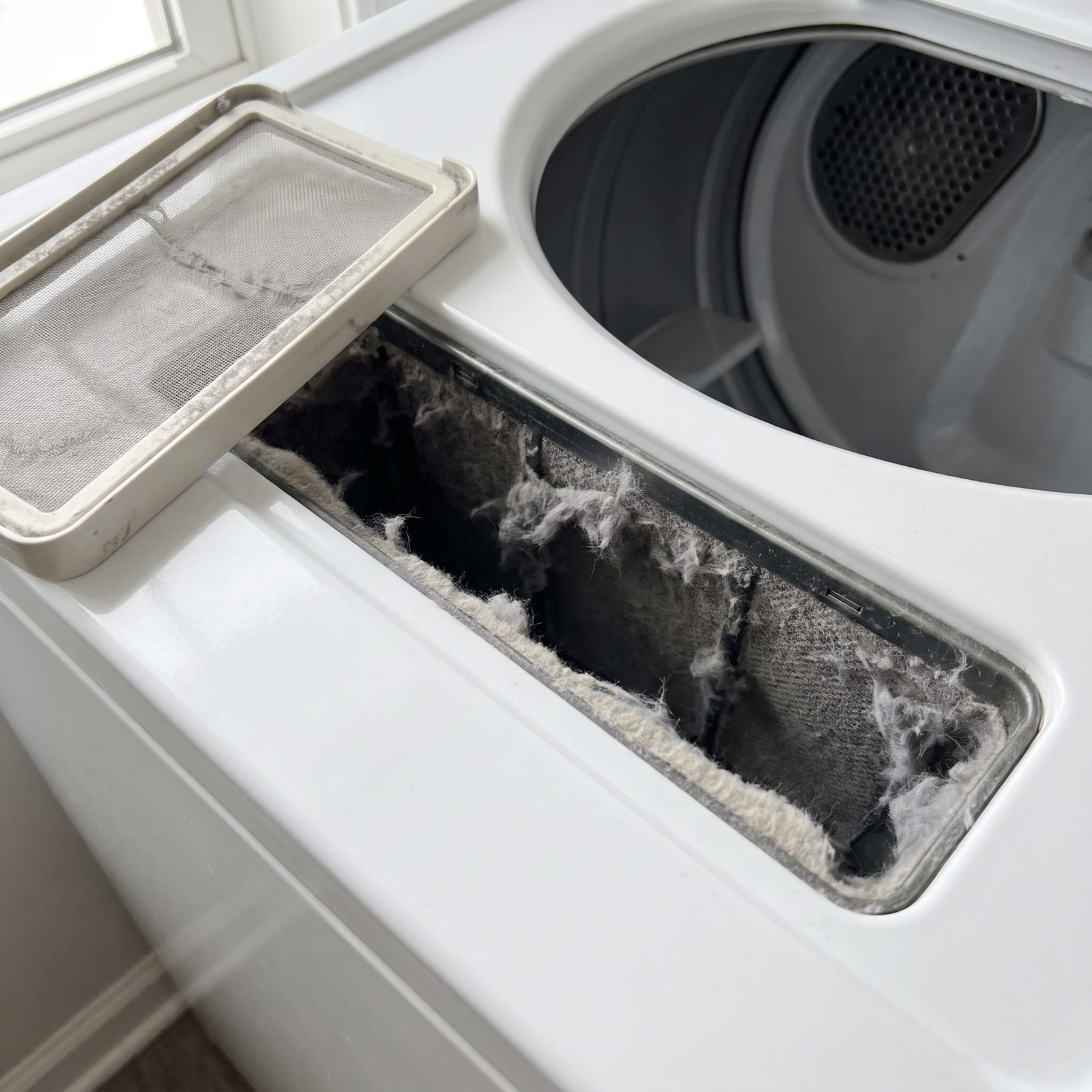
Everybody cleans the screen. Almost nobody looks at the hole it slides into — a dark slot that holds a surprising stash of lint, the stuff that slipped past the mesh and packed itself down into the sides where your fingers never reach.
Grab a vacuum crevice tool and a long bristle brush, then run them down the slot a couple times a year. The lint hiding there feeds the one spot in your house most likely to catch fire, and it sits well beyond the filter you’ve been dutifully wiping.
32. The Refrigerator Condenser Coils, Dust Makes Heat Harder to Release
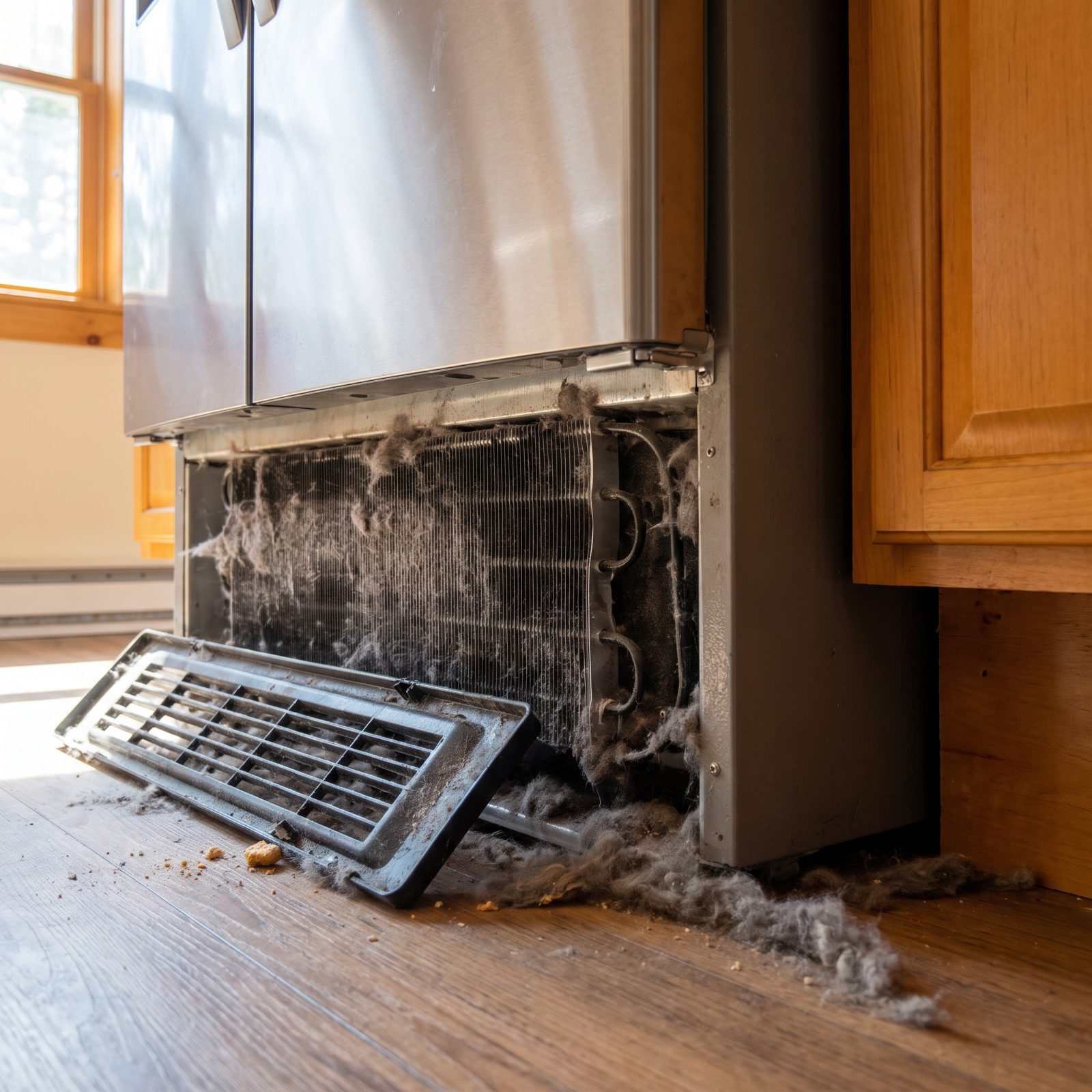
Behind or beneath your fridge sits a grid of coils whose entire job is dumping heat. Coat them in dust and they can’t, so the compressor works harder, runs longer, and wears out faster.
Pull the toe-kick grille or slide the fridge out, vacuum the coils, and brush the fins clean. Twice a year if you’ve got shedding pets, once if you don’t. A ten-minute chore that quietly cuts your energy use and buys the hardest-working appliance in the kitchen a longer life.
31. The Bathroom Exhaust Fan Housing, Dust Accumulates Beyond the Grille
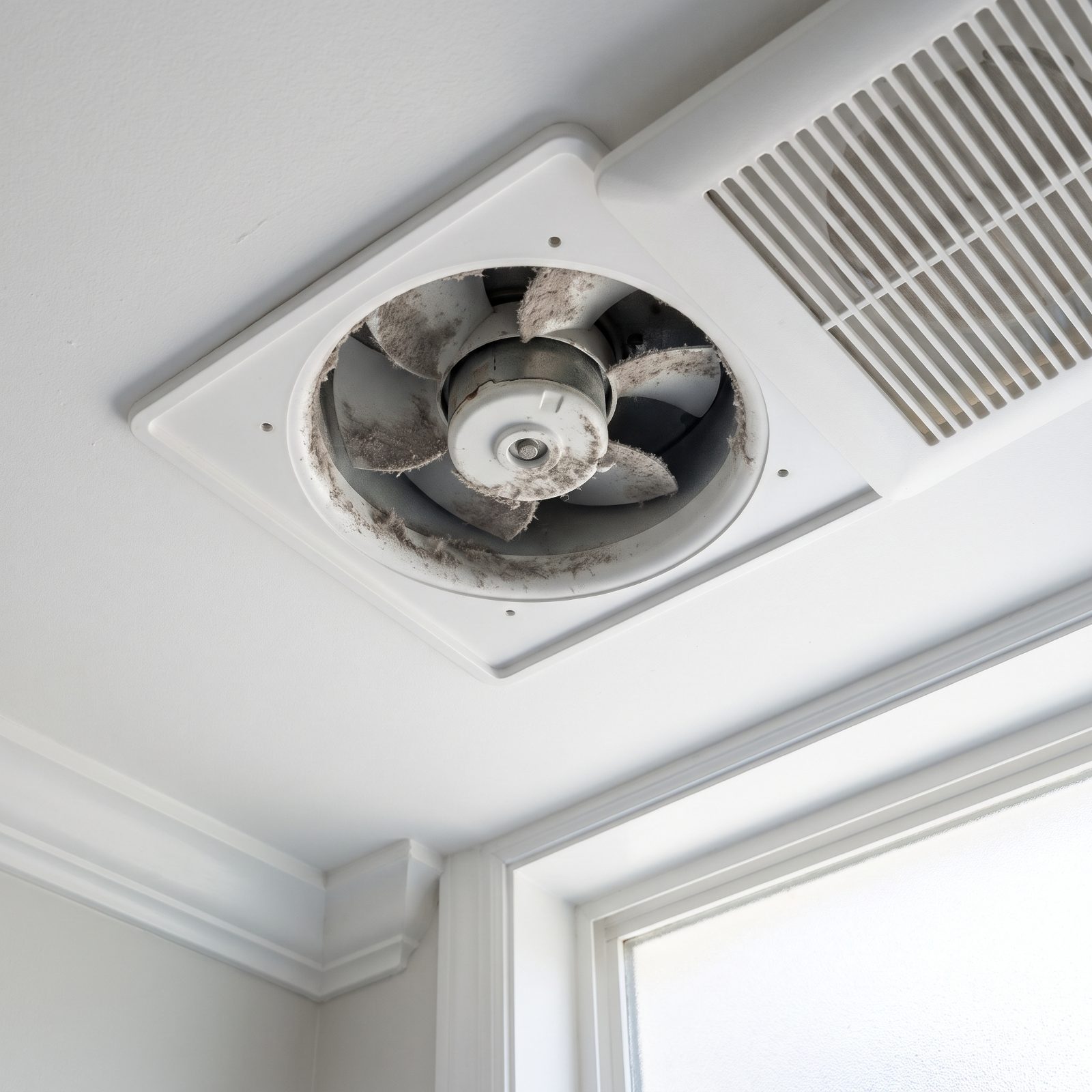
Pop the grille off your bathroom fan and look up. There’s a good chance the blades wear a felt coat of gray dust an eighth of an inch thick, and all that fuzz chokes the airflow the fan was installed to move. Your steam lingers. Your mirror stays fogged.
The grille wipes clean in the sink. The blades and housing want a vacuum and a damp cloth — power switched off first, please. A fan that actually pulls moisture out is your best defense against the mildew that creeps into grout and caulk.
30. The Dehumidifier Coils, Dust Restricts Airflow Across the Fins
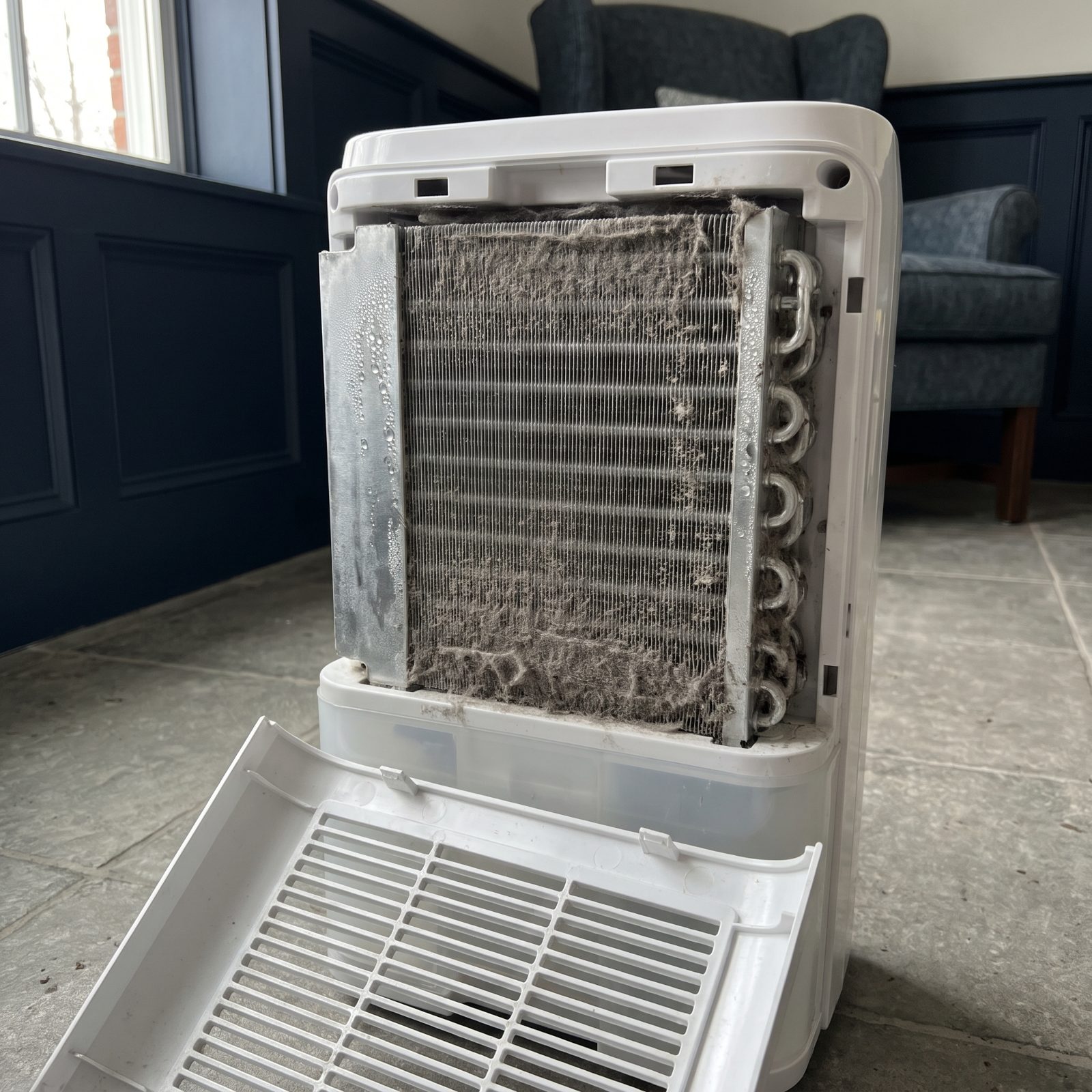
A dehumidifier pulls room air across cold coils to wring out the water, and those coils sit right behind the grille. Because the machine lives in damp basements, dust sticks to them like lint to wet wool.
Clogged fins mean the unit runs constantly and still leaves the air clammy. Unplug it, pull the front panel, and clear the fins with a soft brush and a vacuum. A clean coil empties the tank faster and keeps that musty basement smell from settling in.
29. The Range Hood Filter, Airborne Grease Clogs the Mesh
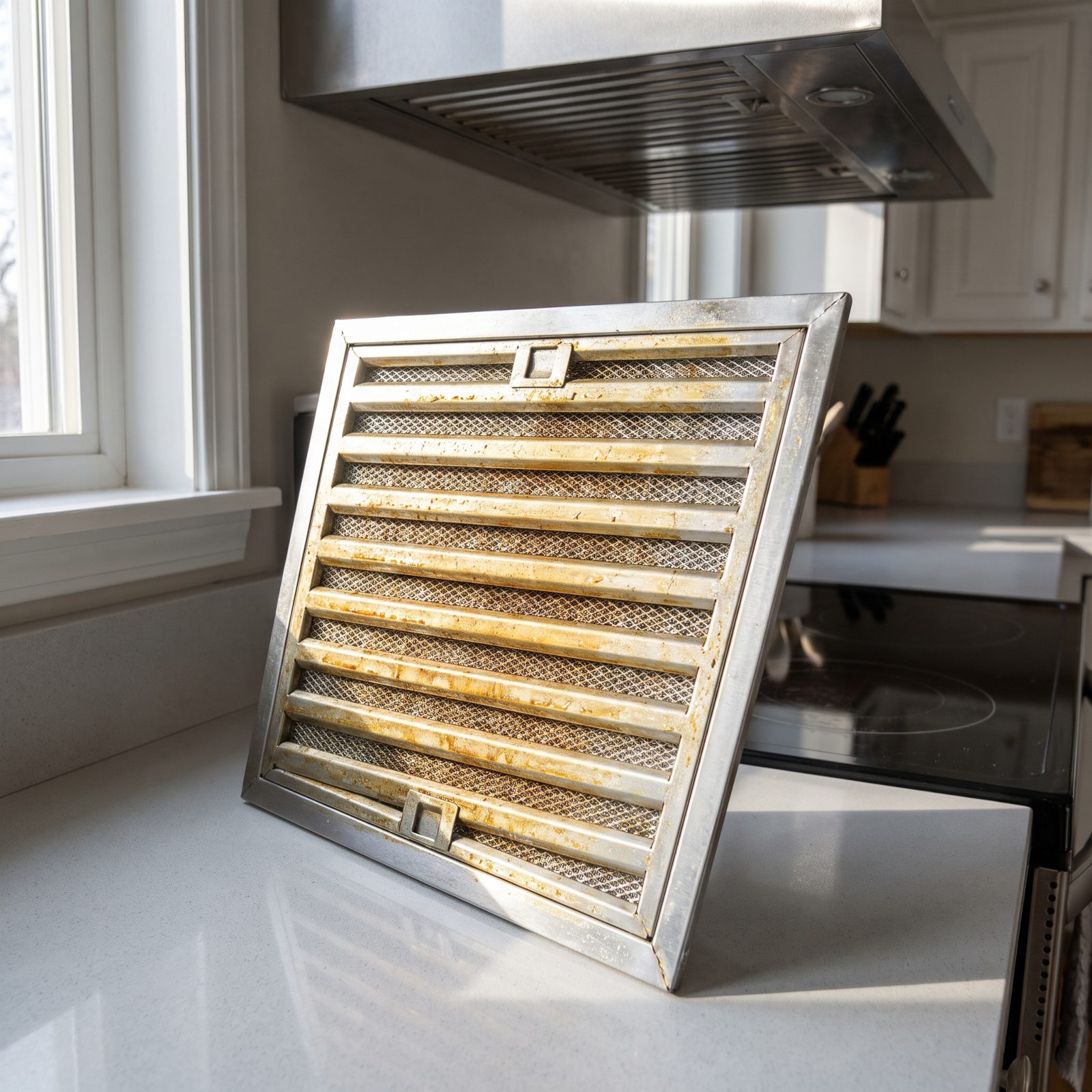
The metal filter under your range hood catches the grease your cooking throws into the air so it doesn’t coat your cabinets instead. Over a few months it goes tacky, then sticky, then it’s a clogged mesh that can barely breathe.
Most lift right out and drop into the dishwasher, or soak in hot water with a squirt of degreasing dish soap and a spoonful of baking soda. Monthly, if you fry and sauté a lot. A clean filter moves smoke and smell outside instead of parking it on your ceiling — and a saturated one is just more fuel hanging over an open flame.
28. The Faucet Aerators, Mineral Scale Hides Behind the Screens
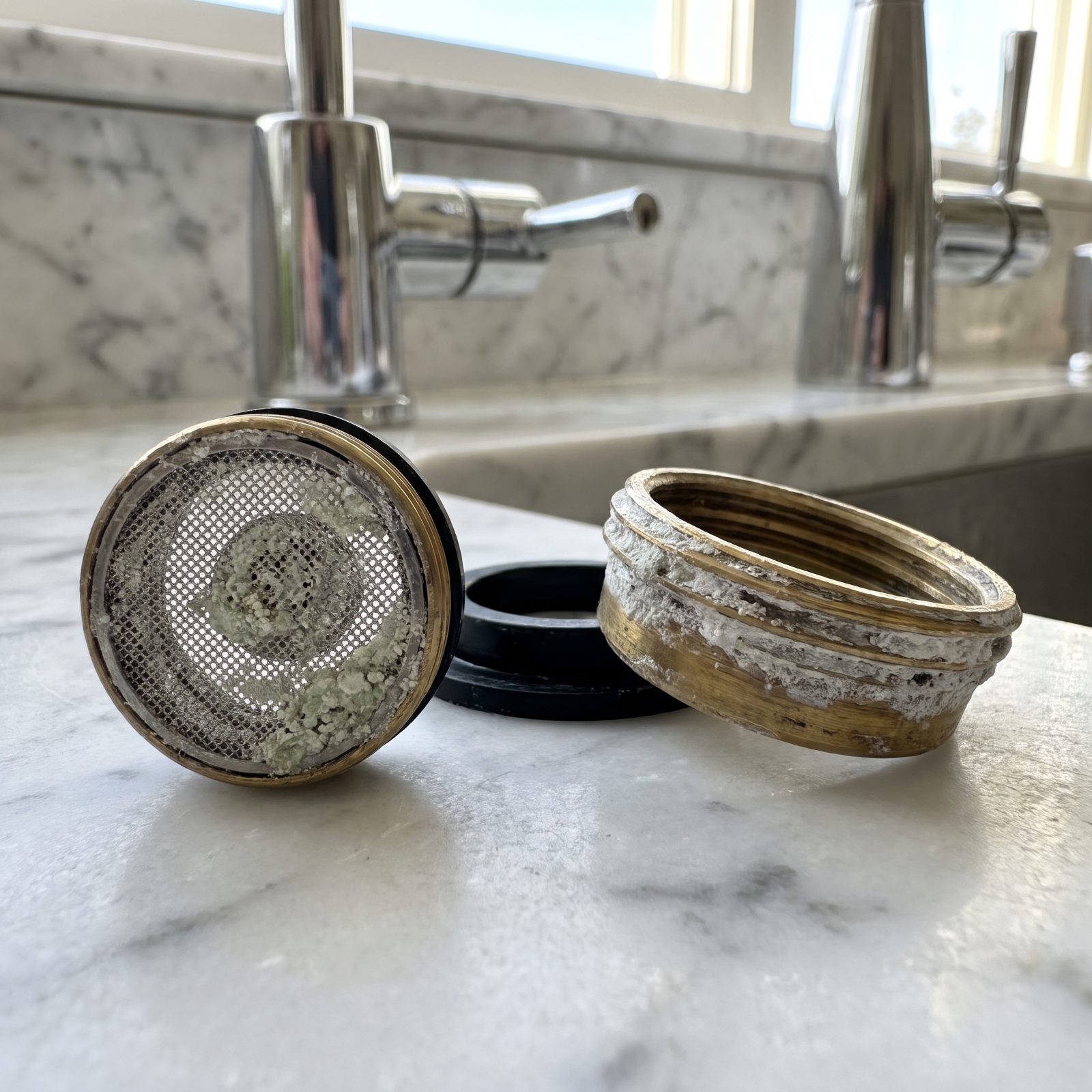
Weak faucet pressure usually isn’t your plumbing. It’s the tiny screen screwed into the tip of the spout, slowly bricked up with white mineral scale.
Unscrew the aerator — fingers often do it, or wrap pliers in a cloth — then pull the little parts out and soak them in white vinegar for an hour. The scale dissolves, and your stream comes back full and straight instead of spitting sideways at the backsplash.
27. The Inside of the Toilet Tank, Mineral Deposits Coat the Components
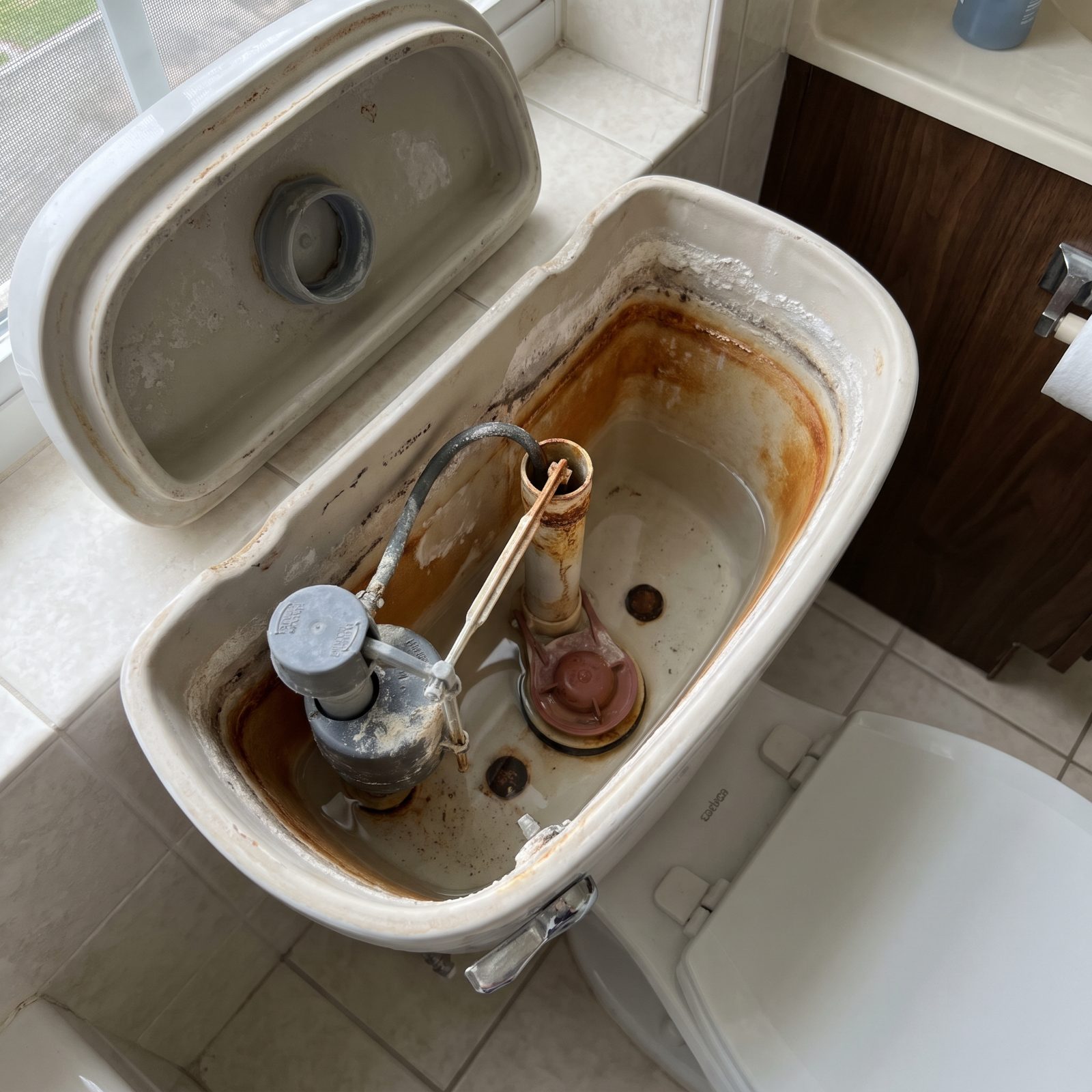
You scrub the bowl. The tank behind it — the part that actually runs the show — probably hasn’t been opened in years. Lift the lid and you may find orange staining and a crust of scale building on the flapper and fill valve.
That buildup is what turns a crisp flush into a lazy one and a rubber flapper into a slow, dribbling leak. Drain the tank, wipe the parts down, and treat heavy scale with a vinegar soak. Skip the drop-in bleach tablets, by the way. They chew through the rubber seals faster than the minerals ever would.
26. The Dishwasher Door Gasket, Food Residue Settles Along the Lower Edge
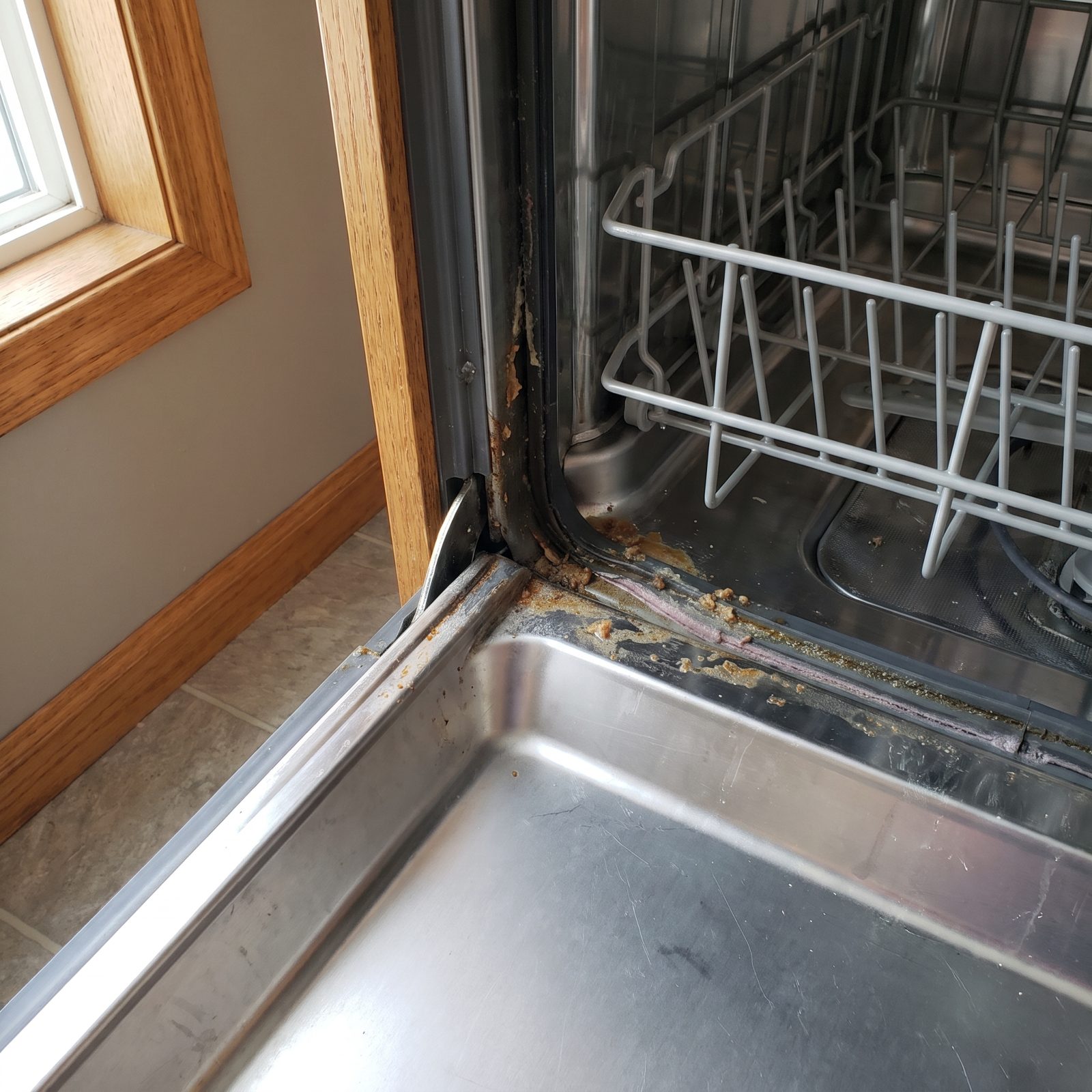
Run your finger along the rubber seal around your dishwasher door, especially if it has worked loose and is hanging out of its channel, and the grime that comes back explains a lot. The spray never fully rinses those grooves, so food softens there and sits.
Wipe it with a damp cloth and a little dish soap, paying attention to the folds and the sharp corner bend where the gunk packs in. That seal is often the whole source of the funk you smell when you open a “clean” dishwasher.
25. The Washing Machine Detergent Drawer, Softener Leaves a Sticky Film
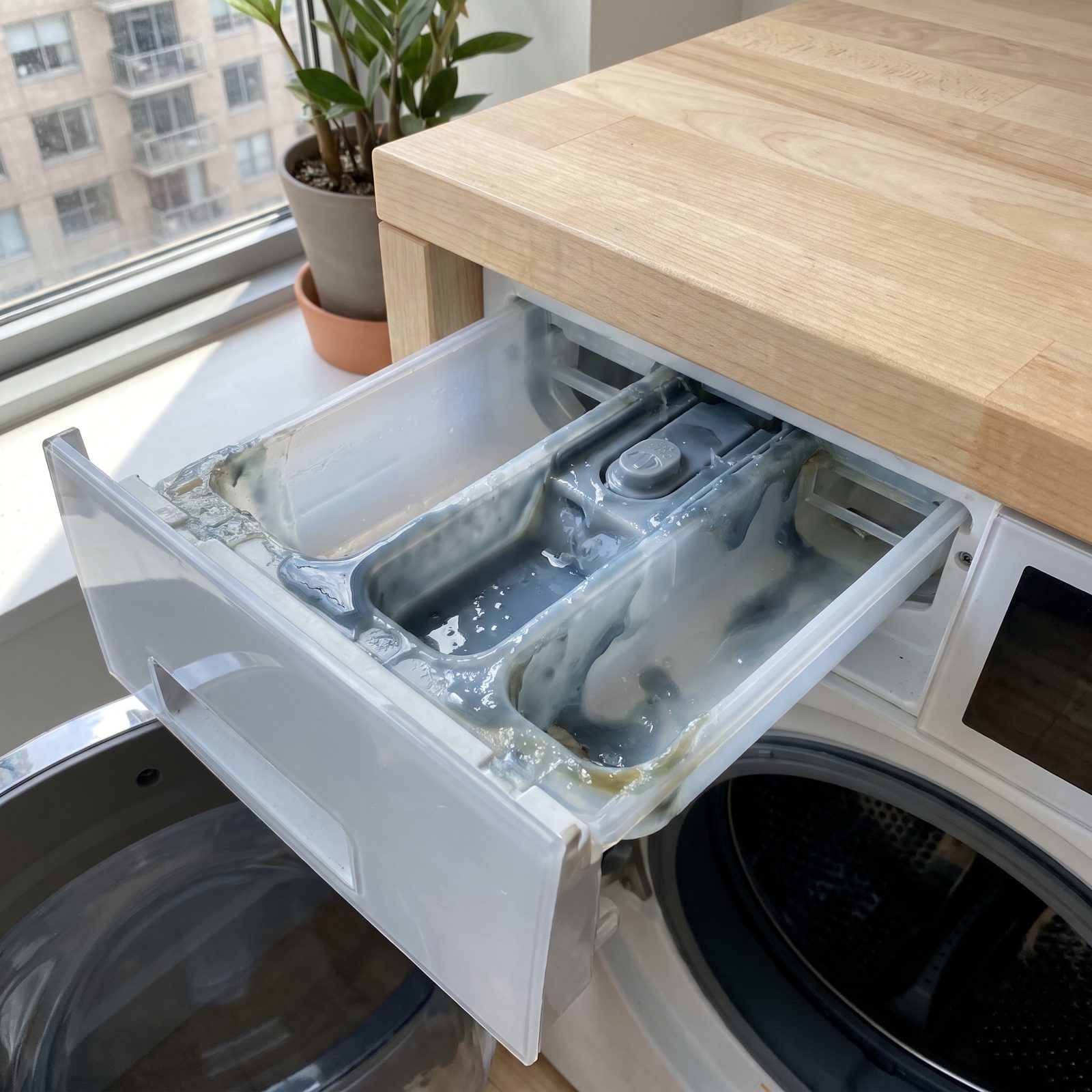
That slide-out drawer on the front of your washer isn’t self-cleaning, no matter how much soapy water passes through it. Fabric softener is the worst offender, drying into a sticky bluish sludge that lines the compartment and the little siphon cap.
Most drawers pull all the way out with a press of a tab. Soak it in hot water, scrub the compartments with an old toothbrush, and clear the siphon hole so softener actually dispenses. All that residue is a cozy home for mildew — a big reason modern washers start smelling in the first place.
24. The Refrigerator Gasket Folds, Crumbs and Spills Hide in the Creases
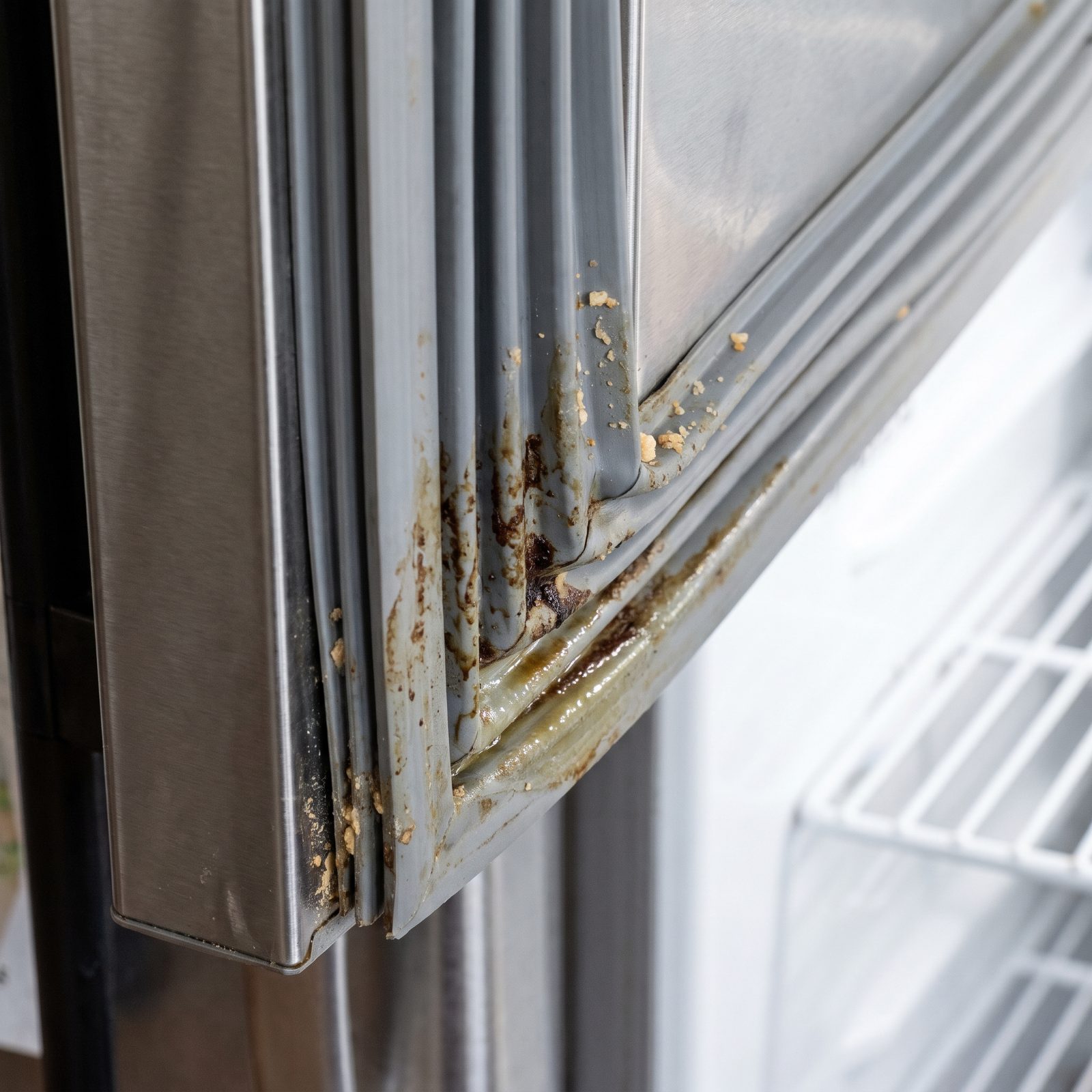
The rubber seal lining your fridge door folds like an accordion, and every crease is a pocket. Crumbs tuck in. Spilled juice dries sticky. Over time that grime stops the gasket from sealing cleanly, and a seal that doesn’t close flush lets cold air leak out, so the compressor runs more just to hold temperature.
Wipe the folds with warm soapy water and dry them well, then test the seal: close the door on a dollar bill and tug. If it slides out easily, the gasket needs cleaning or replacing, and your energy bill is already footing the difference.
23. The Freezer Ice Bin, Where Stale Ice Leaves Frost and Odors Behind
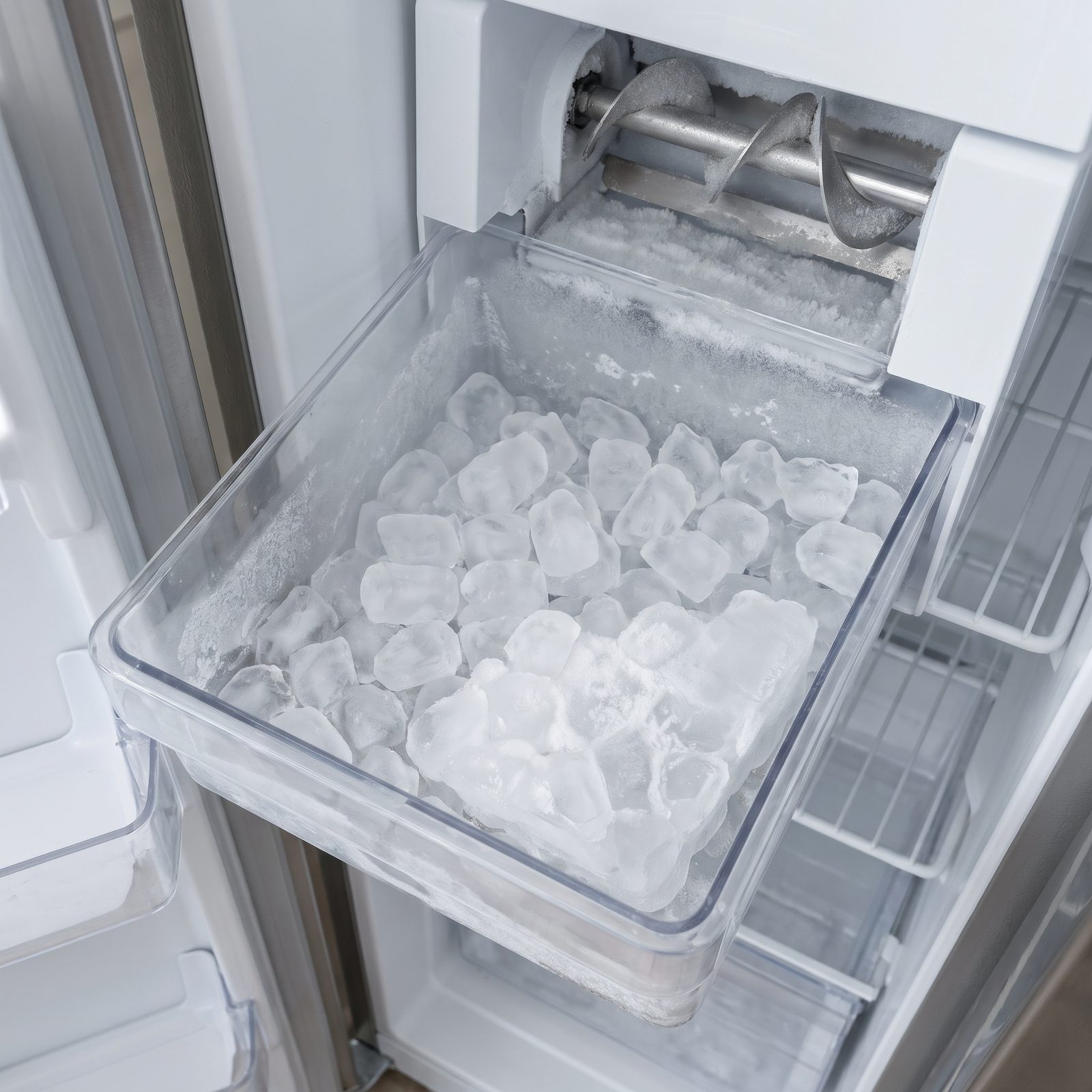
Ice is a sponge. It pulls in whatever your freezer is holding onto, which is why that last glass of water tastes faintly of last month’s leftovers. The bin itself is the real culprit, because cubes melt a little, refreeze, and leave a film on the plastic that nobody ever thinks to rinse.
Pull the whole bin out. Dump the old ice (yes, even the clean-looking cubes), wash it in warm soapy water, and dry it completely before it goes back. That last step matters more than it sounds — a damp bin frosts up fast and the whole cycle starts over.
22. The Coffee Maker Water Reservoir, Scale and Film Build Up Out of Sight
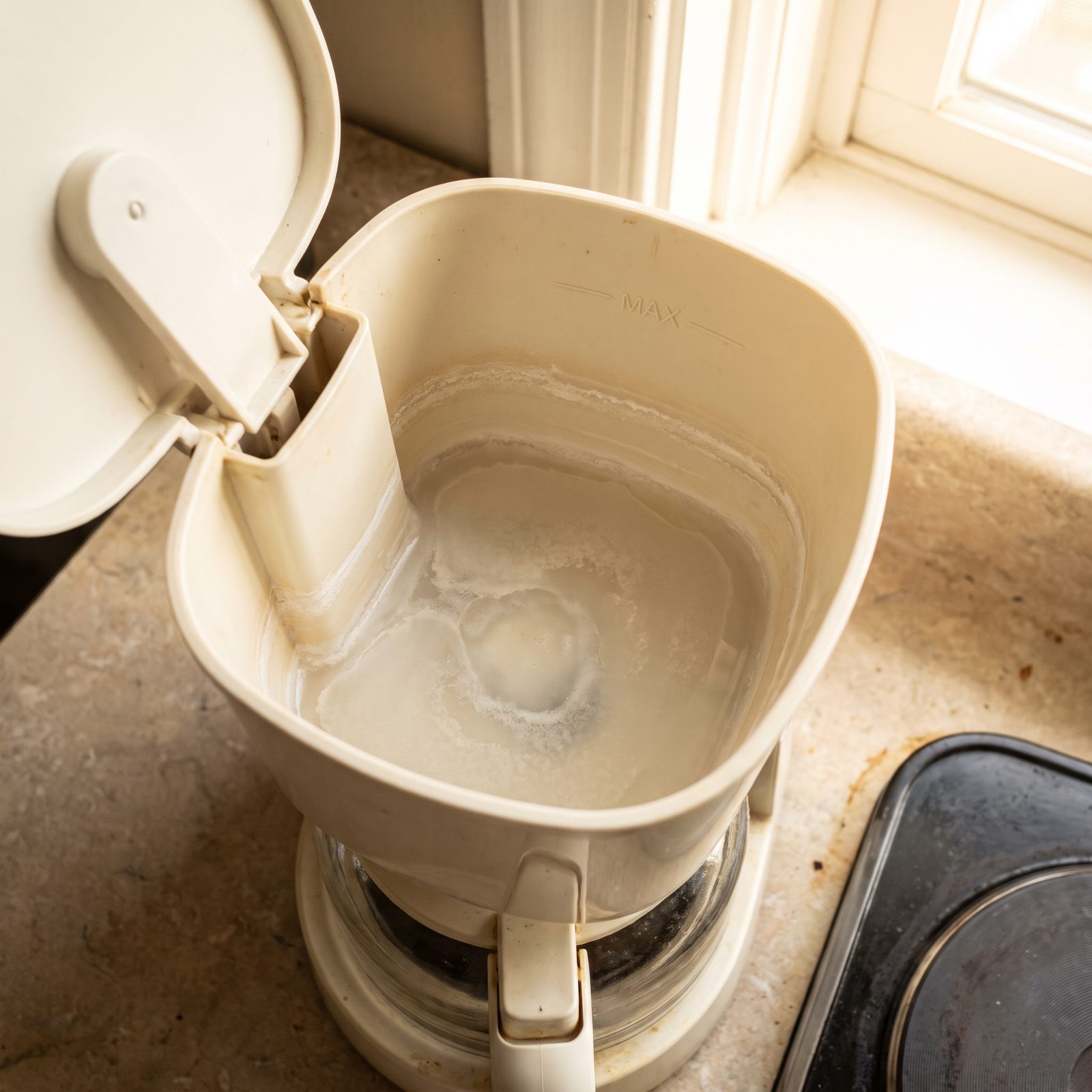
You clean the carafe. You never clean the tank. And the tank is where water sits warm and still for hours, which is exactly how mineral scale and film get their start.
Run a cycle of equal parts white vinegar and water, then two cycles of plain water to chase the vinegar smell out. Hard-water homes need this monthly, soft-water homes can stretch it longer. If your coffee has started tasting flat or faintly metallic, the reservoir is usually talking to you before the machine does.
21. The Blender Blade Gasket, Food Residue Settles Beneath the Rubber Seal
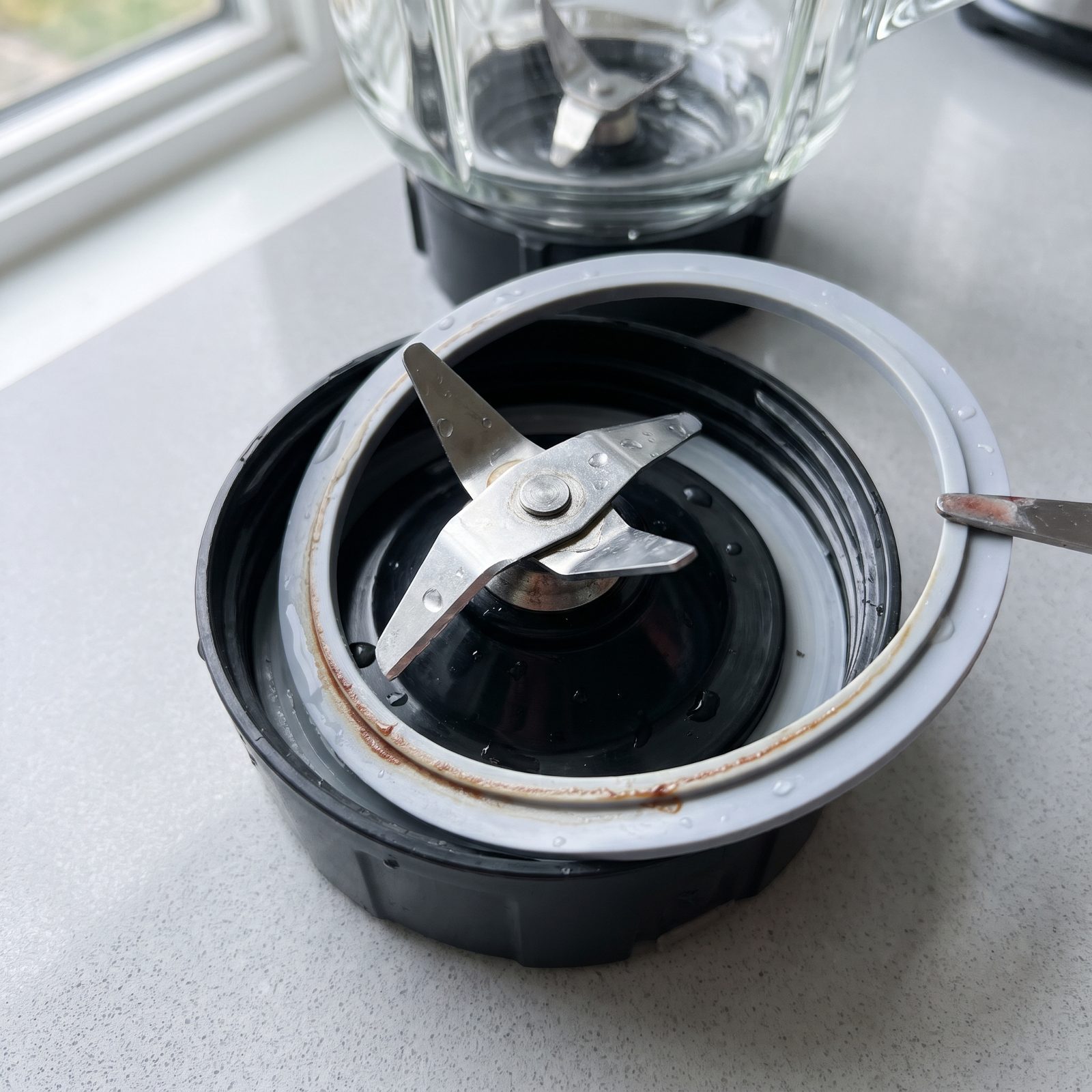
Nobody takes this part apart. But the blade base unscrews, and the little rubber ring under it lifts right out — and underneath, there’s a dried ridge of whatever you blended last week. Smoothie, pesto, that frozen margarita situation. It hides perfectly because the seal sits flush, and an assembled jar looks spotless from the top.
Unscrew the base, pop the gasket, wash both by hand. Keep the gasket out of the dishwasher, since the heat warps the rubber and then it won’t seal. A loose seal is how you end up wearing your next smoothie.
20. The Can Opener Cutting Wheel, The Tiny Blade That Touches Every Can
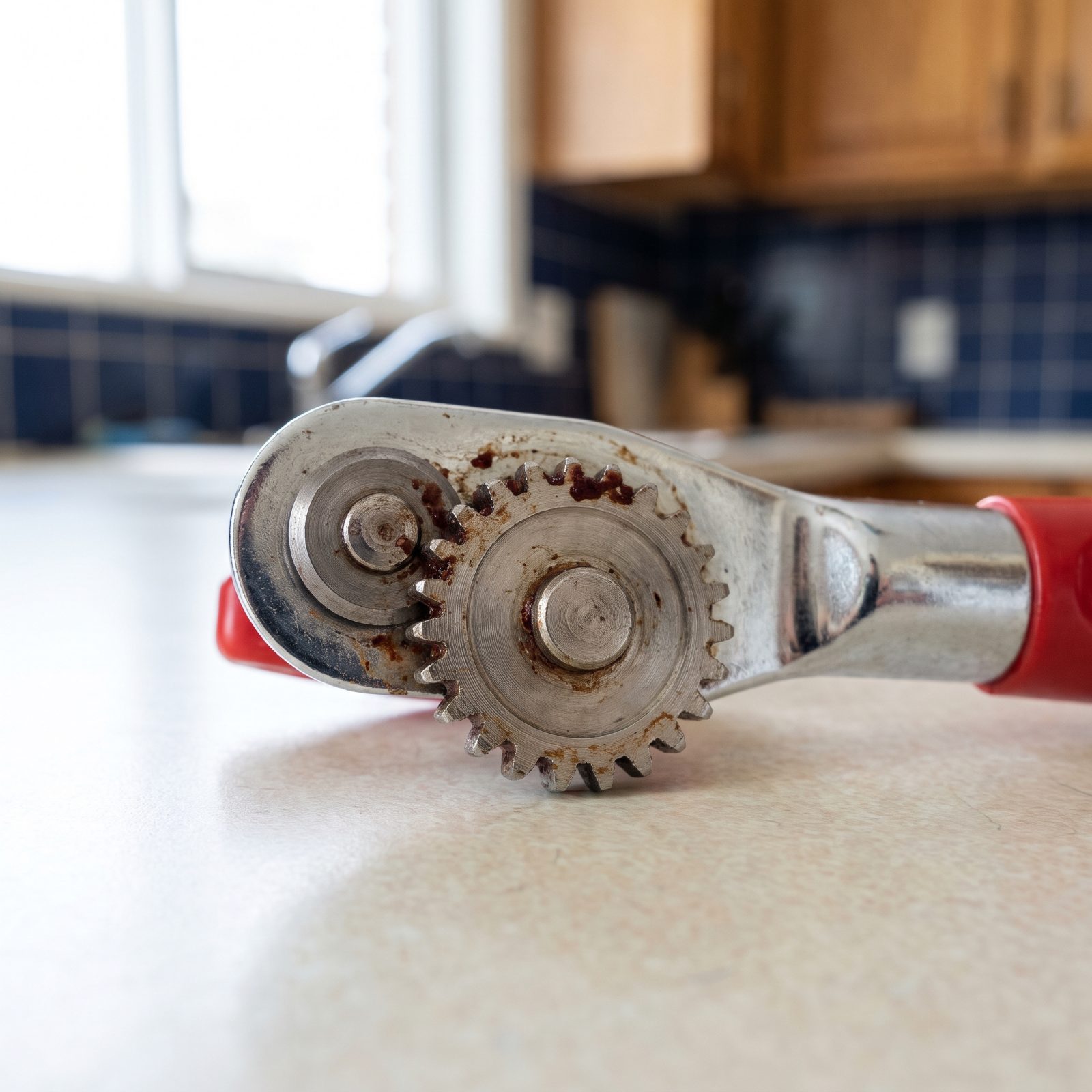
Think about what a can opener does. It slices into soup, beans, tuna, condensed milk, then drips back into a drawer to dry. That cutting wheel and the little gear beside it collect a crust of everything they’ve ever opened, and most people have never cleaned theirs once.
An old toothbrush and hot soapy water get into the teeth. Dry it well so the wheel doesn’t rust and seize up. If yours already drags and skips, residue in the gear is usually the reason — long before the blade itself actually dulls.
19. The Knife Block Slots, Narrow Openings That Swallow Crumbs and Dust
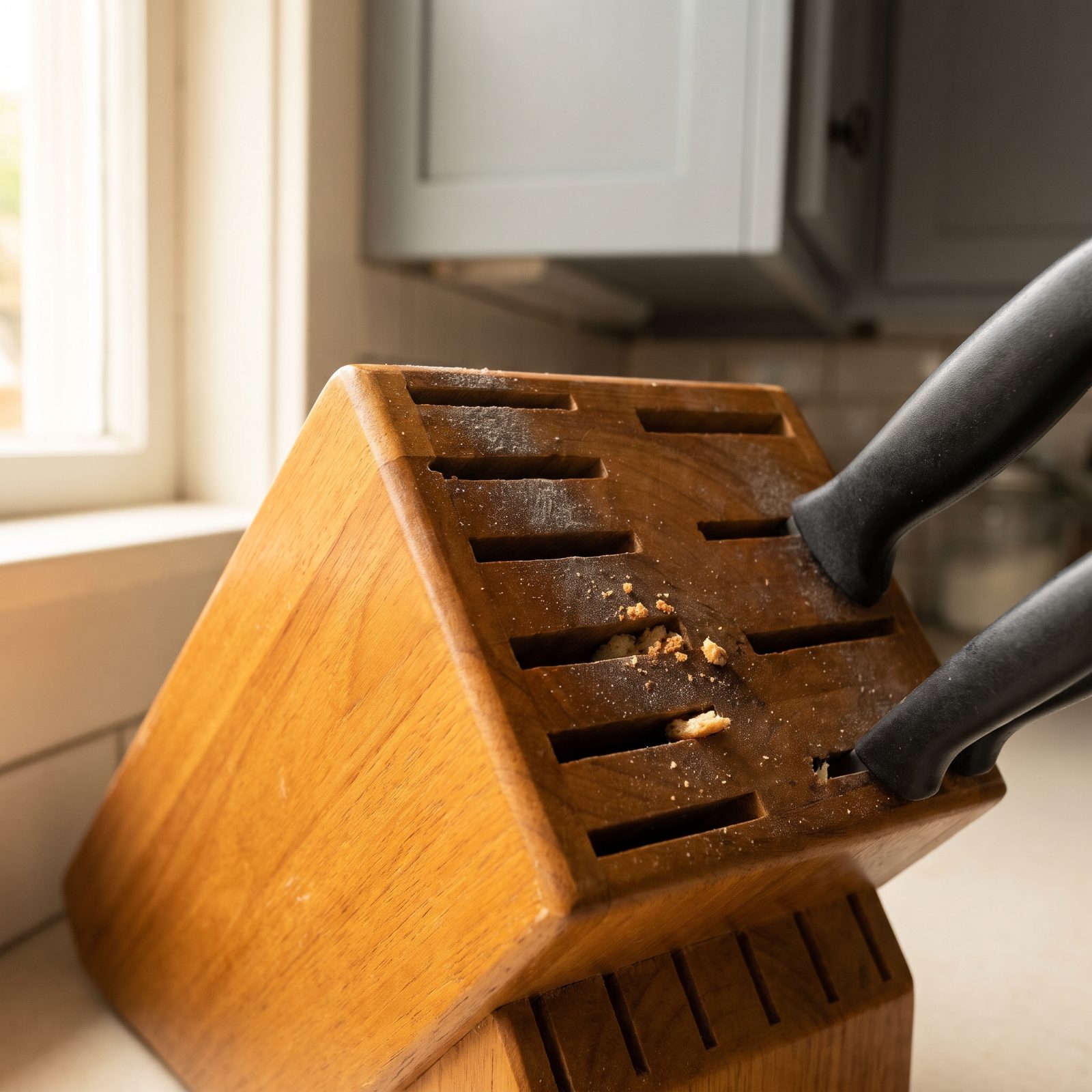
Pull a knife out, turn the block upside down over the trash, and prepare to be unsettled. Crumbs, dust, and the occasional thing you’d rather not identify settle into those slots and sit against clean blades every single day.
Empty every slot, shake it out, then run a thin bottle brush or a few cotton swabs down each one. Air-dry it face-down. Wood traps moisture, and a damp knife block is a problem nobody wants to picture.
18. The Cavity Beneath the Oven Drawer, The Crumb Pit Under Your Range
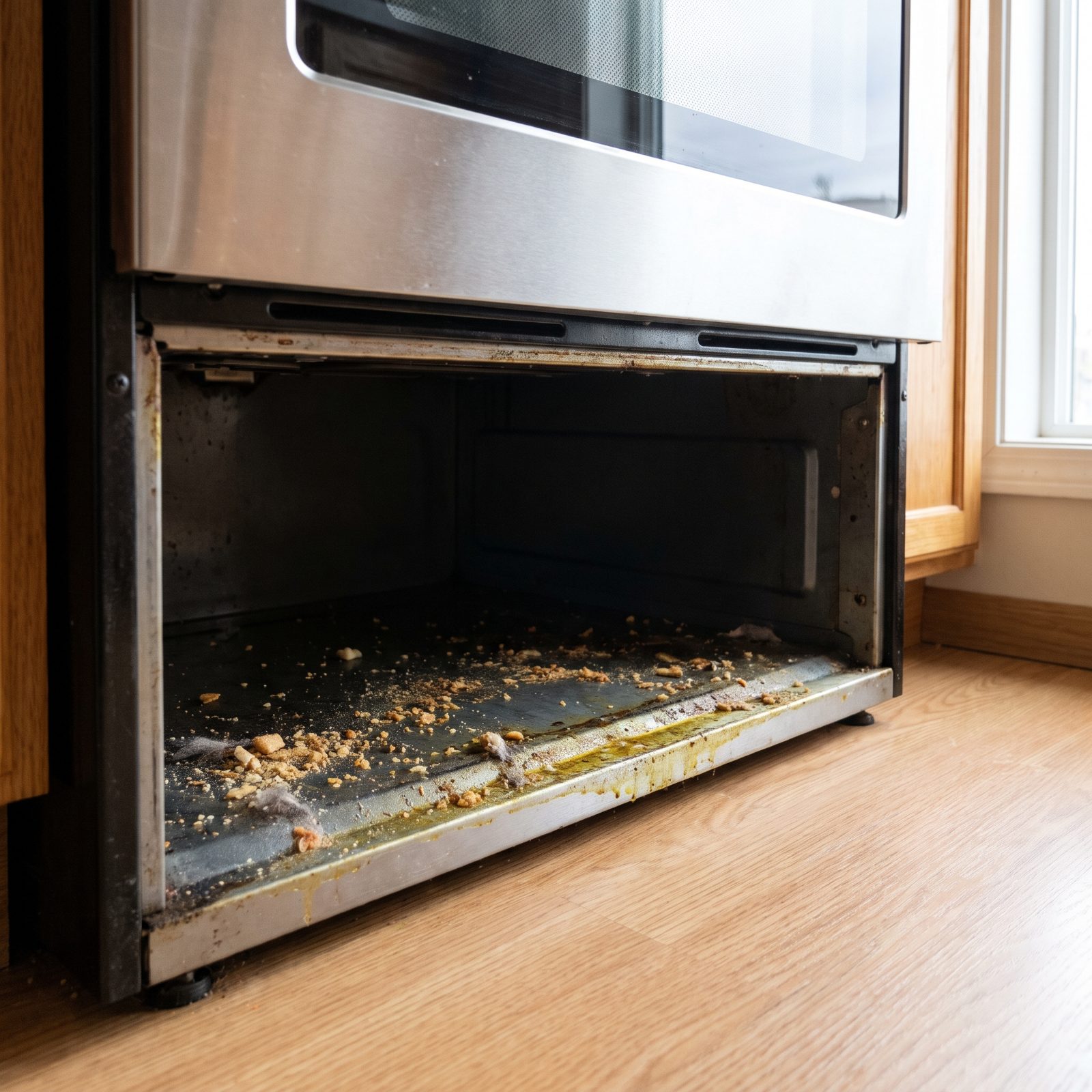
That bottom drawer isn’t just for pans. On most ranges it slides out completely, and the space it leaves behind is a crumb graveyard going back years.
Getting it out is simple: open the drawer fully, lift up slightly, and pull. Most slide off their tracks with that one motion. Shine a light into the cavity and you’ll see a carpet of crumbs, grease dust, and heat-baked grime. Vacuum it, wipe it, let it dry.
This one matters more than it sounds, because that grease is sitting right next to a heat source. Reason enough not to let it pile up.
17. The Undersides of Stove Control Knobs, Grease That Hides Behind the Dials
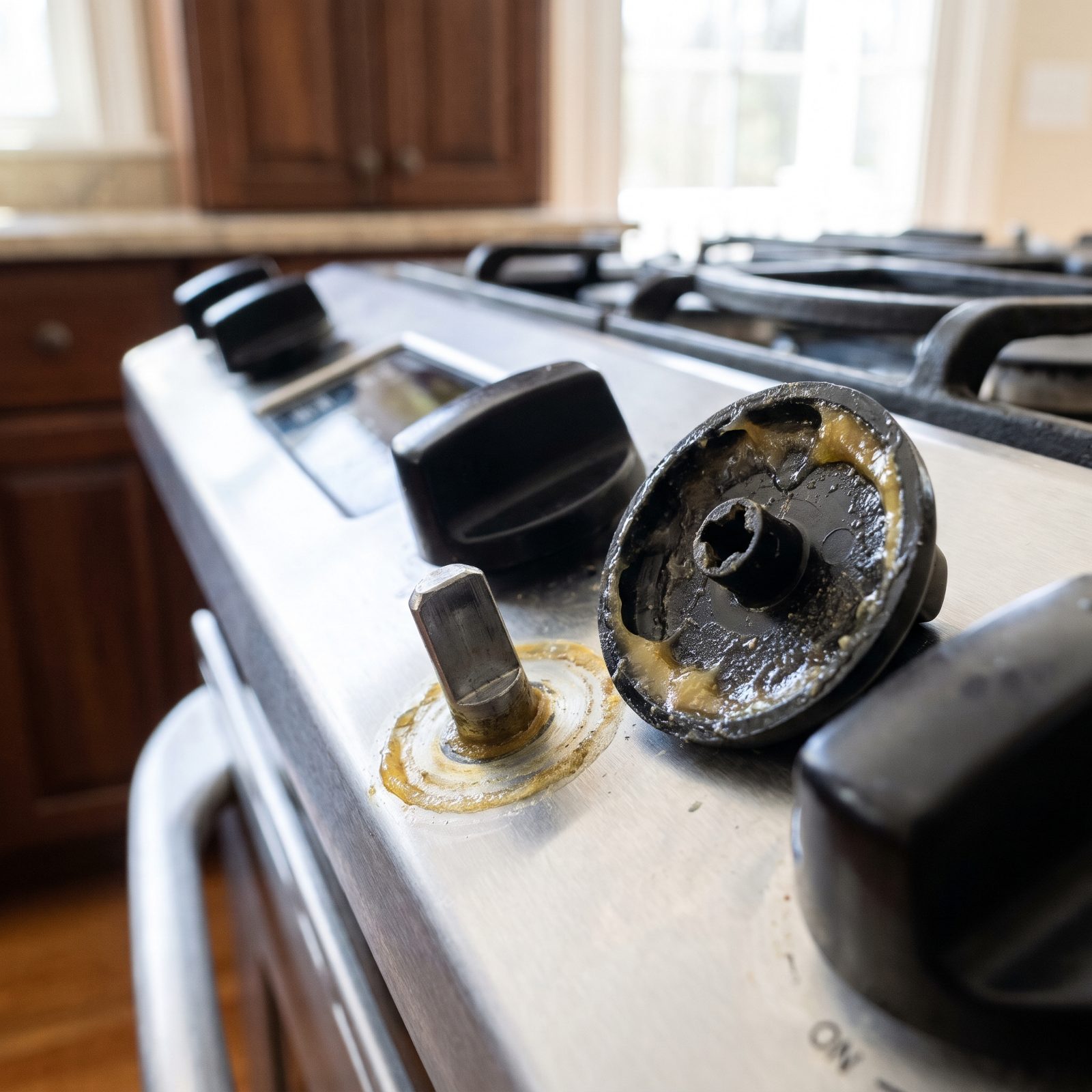
Most stove knobs just pull straight off. Give one a firm tug, it comes away in your hand, and the back of it tells a greasy story of every meal you’ve cooked. Cooking vapor rises, settles on the control panel, and slips behind the dials where a cloth can never reach.
Pull them all, soak them in warm soapy water, and wipe the exposed shafts and the panel underneath. Let everything dry fully before it goes back. If yours have position markings, snap a quick photo first so they return to the right spots.
16. The Gap Between the Stove and Counter, Where Spills Run Down Both Sides
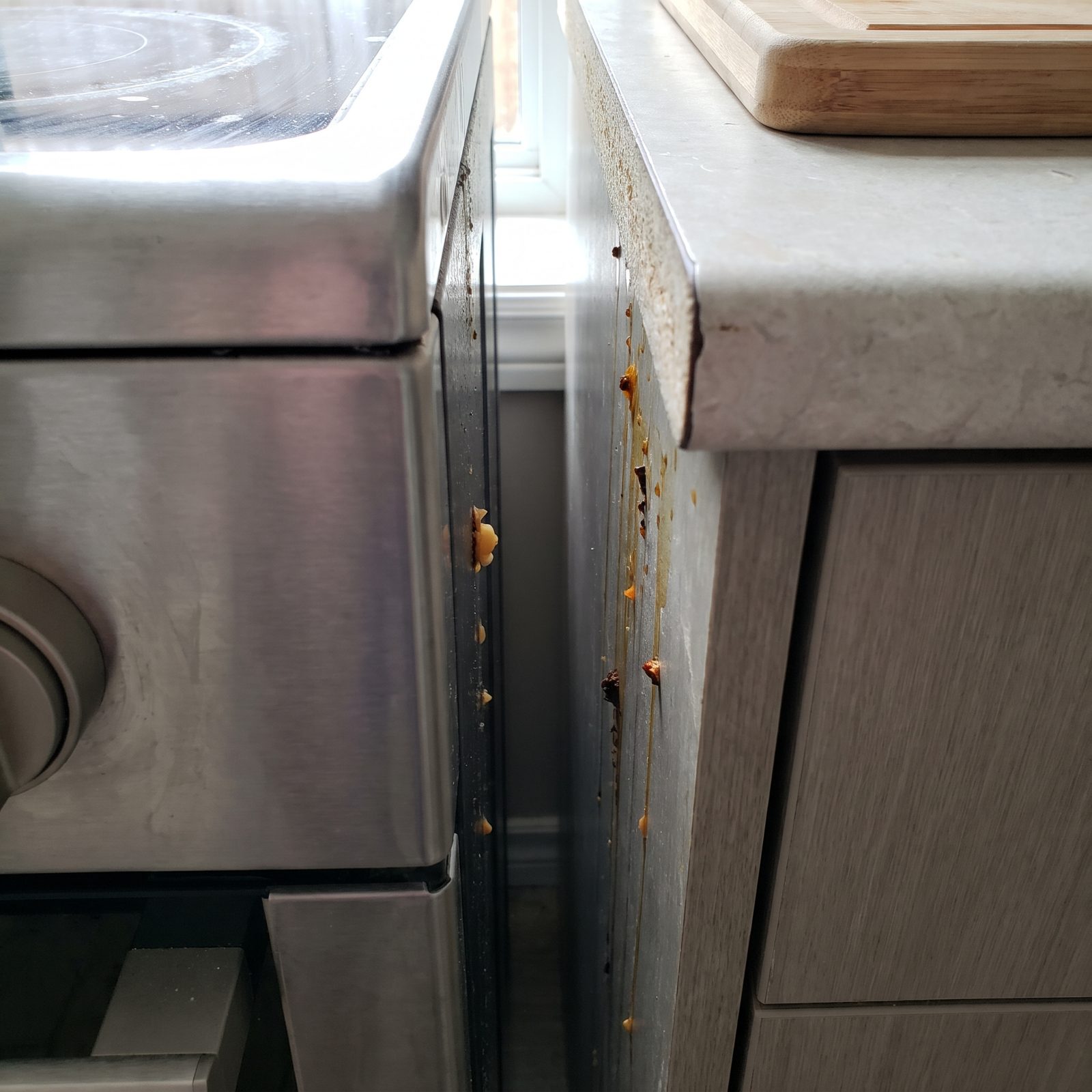
Oil splatters, pasta water, a spoonful of sauce that missed the pot — it all finds that half-inch canyon between your stove and the counter, and it runs down both walls where you’ll never see it.
If you can slide the stove out, do that and clean the sides. If you can’t, a flat scraper wrapped in a damp cloth reaches down into the gap. Afterward, lay a silicone gap cover across the slot to stop the next round from ever getting in. Cheap, reusable, and genuinely one of the better small fixes in a kitchen.
15. The Cabinet Toe-Kick Recess, The Dust Shelf Beneath Your Doors
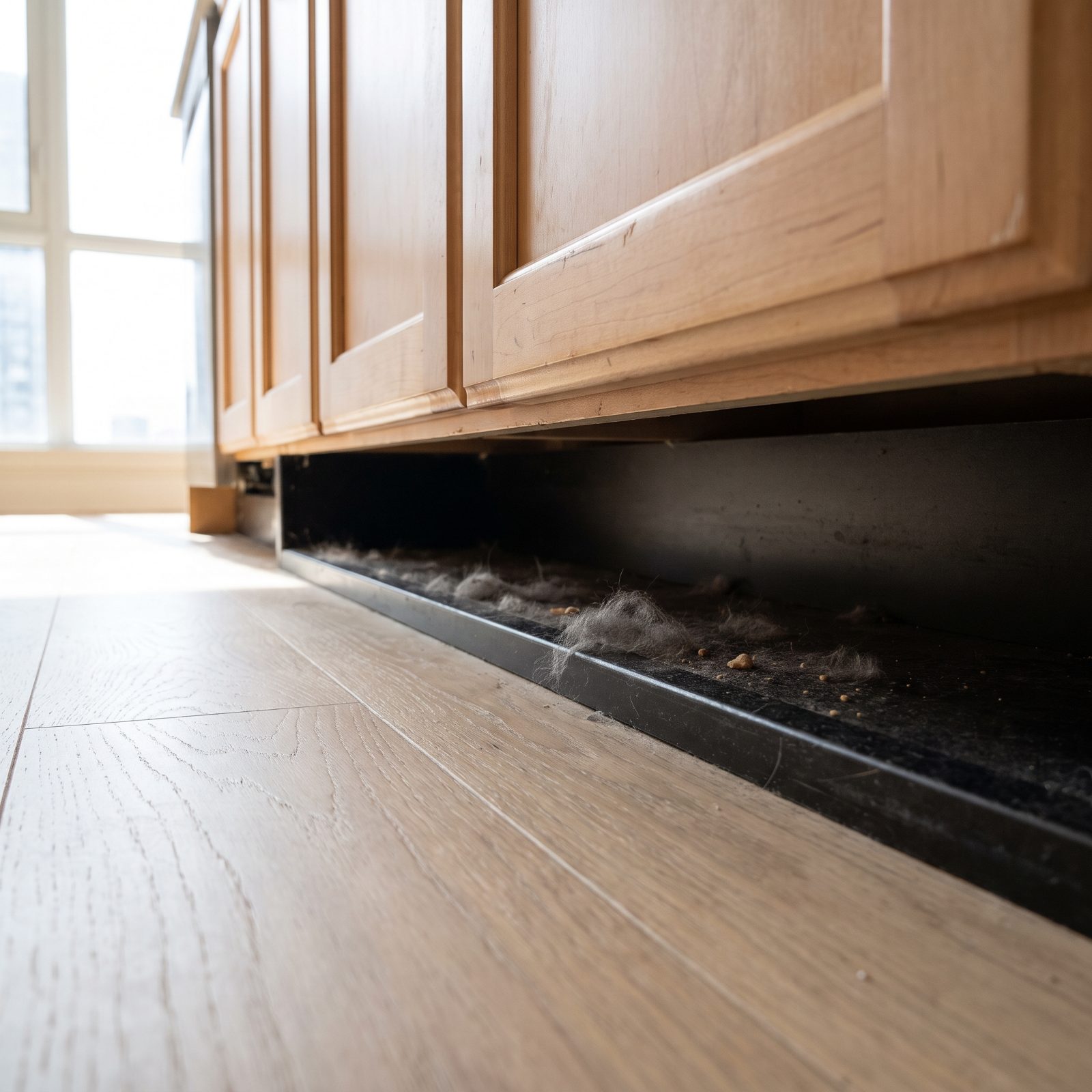
Get down on the floor and look under your lower cabinets. That recessed strip, the toe-kick, is a ledge the vacuum head glides right past, so dust and lint drift in and settle into a gray fuzz you’d never spot standing up.
Run a crevice attachment along it, or wrap a cloth around a yardstick and sweep the full length. It’s a two-minute job that makes the whole floor read cleaner, because your eye catches that dark line the second it’s gone.
14. The Trash Can Lid Hinges, Where Splashes Reach the Moving Joints
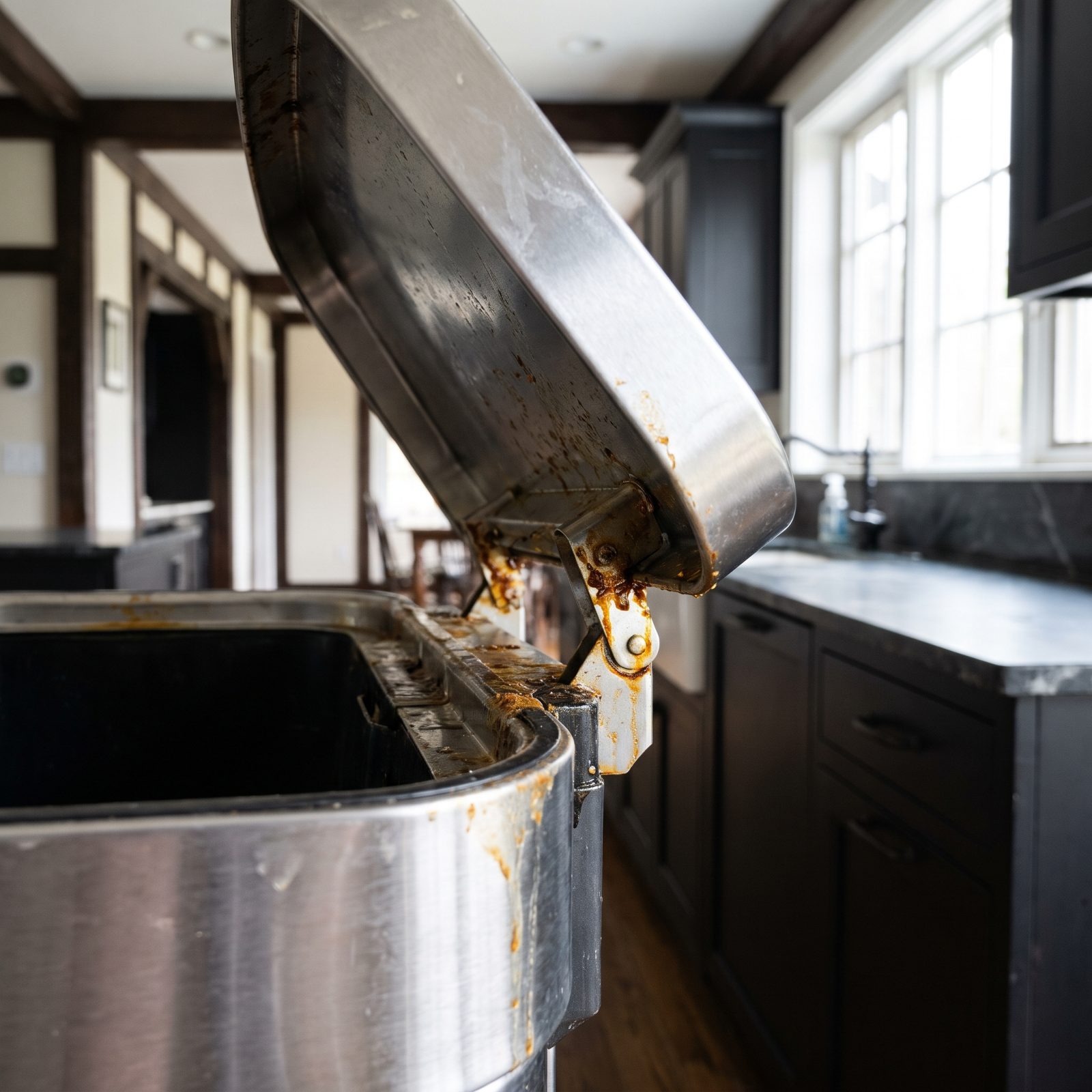
You wash the inside of the can. Maybe. But the lid hinges, the pedal mechanism, the underside of the rim get splashed with every toss and never wiped, so residue dries into the joints and the lid turns tacky and slow.
Wipe the hinge and the lid underside with a disinfecting cloth, and hit the pedal linkage too. A drop of mineral oil on a sticky hinge brings the whole thing back to life. Honestly, a trash can that works well is one of those small things you don’t appreciate until it quits on you mid-toss.
13. The Bottom of the Recycling Bin, Where Leaking Containers Leave a Sticky Film
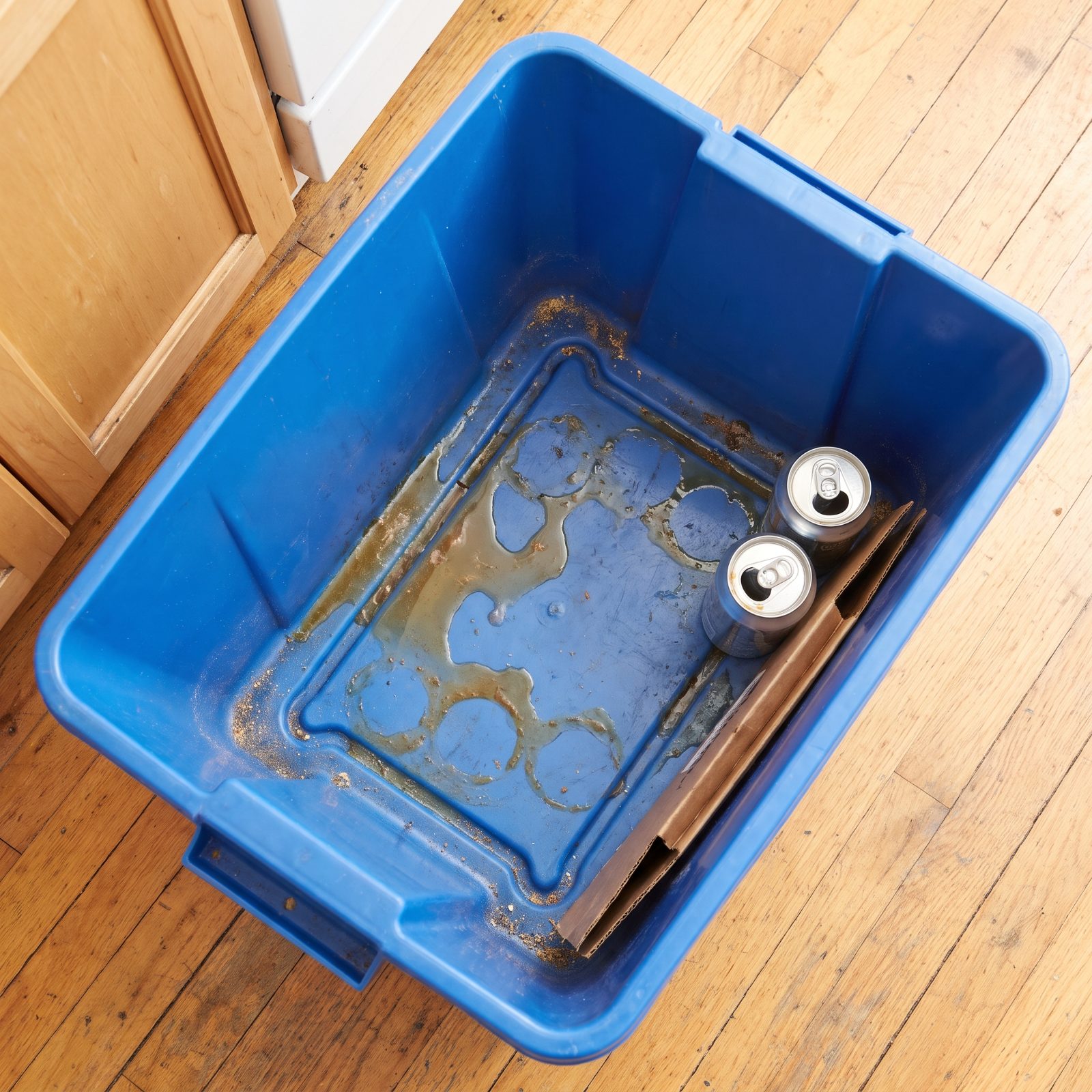
Rinsing containers before they go in feels like enough. It isn’t. Every half-empty kombucha and leaky yogurt cup drips to the bottom, dries, and builds a sticky amber film that pulls in dust like flypaper — and most people never lift the liner to look.
Fix it with a two-minute rinse: warm water, a splash of dish soap, bin tipped over the tub. Do it monthly and the smell you’ve been blaming on the trash can disappears.
12. The Vents on Smoke and Carbon Monoxide Alarms, Clogged With a Felt of Fine Dust
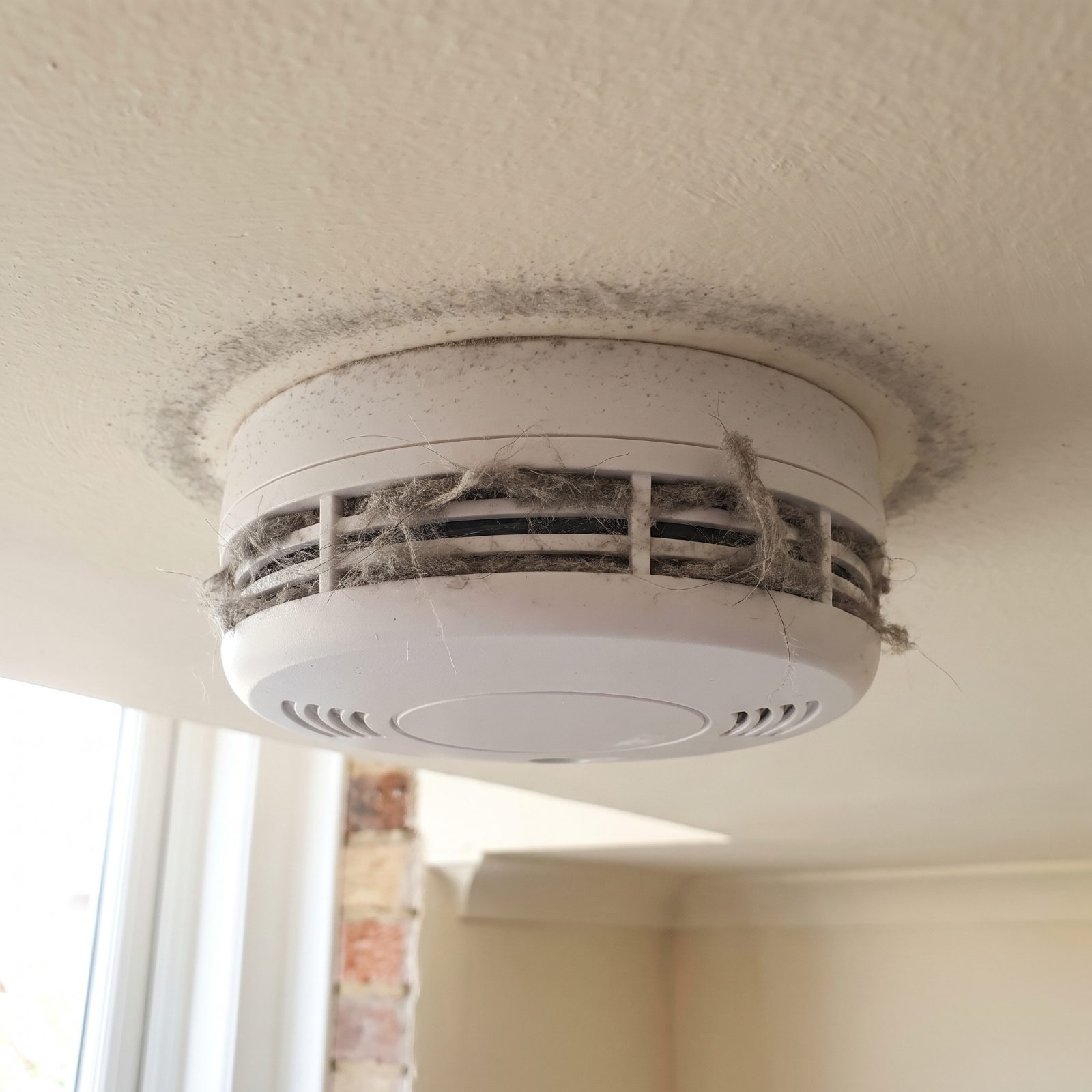
A dust-choked alarm senses smoke slower, and those vents are precisely where air has to pass to reach the sensor inside. Ceilings collect dust faster than anywhere else in the room, and those tiny slots catch every bit of it.
Every few months, vacuum the vents with a soft brush attachment. Never spray cleaner into them. A dead battery chirps to warn you; a dusty sensor just stays quiet, which is worse.
11. The Fins Inside Radiators, Where Dust Packs Into Channels You Can’t Reach
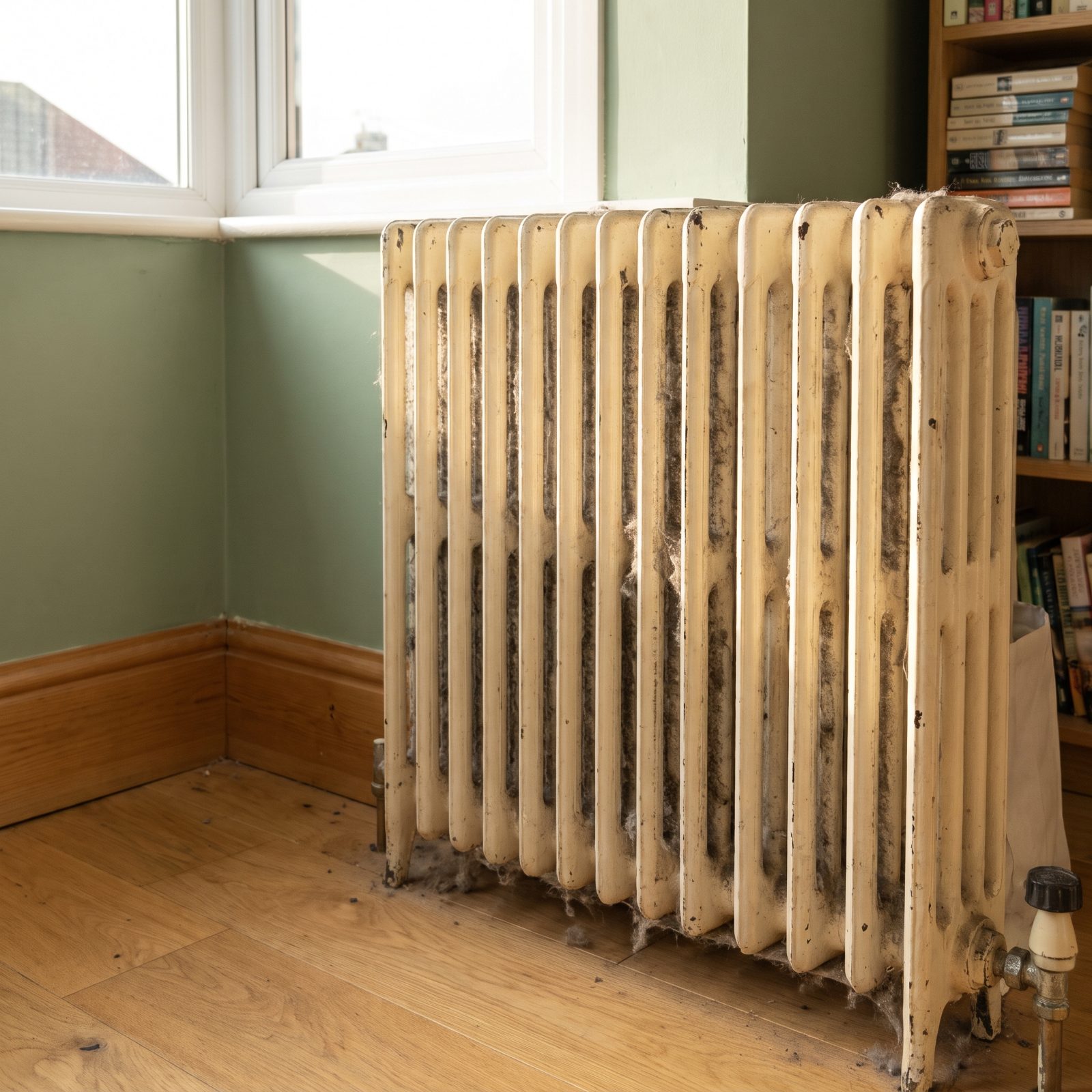
Those deep vertical channels are heat exchangers. Pack them with dust and the radiator works harder to warm the room, which lands on your bill. The dust bakes too — that’s the source of the burnt smell every autumn when the heating first kicks on.
A radiator brush, the long thin bristled kind, is cheap and built for exactly this job. Run it down the channels, catch the fallout with a damp cloth laid behind, and do it before heating season rather than during.
10. The Sliding Door Tracks, Where Grit Packs Hard Around the Rollers
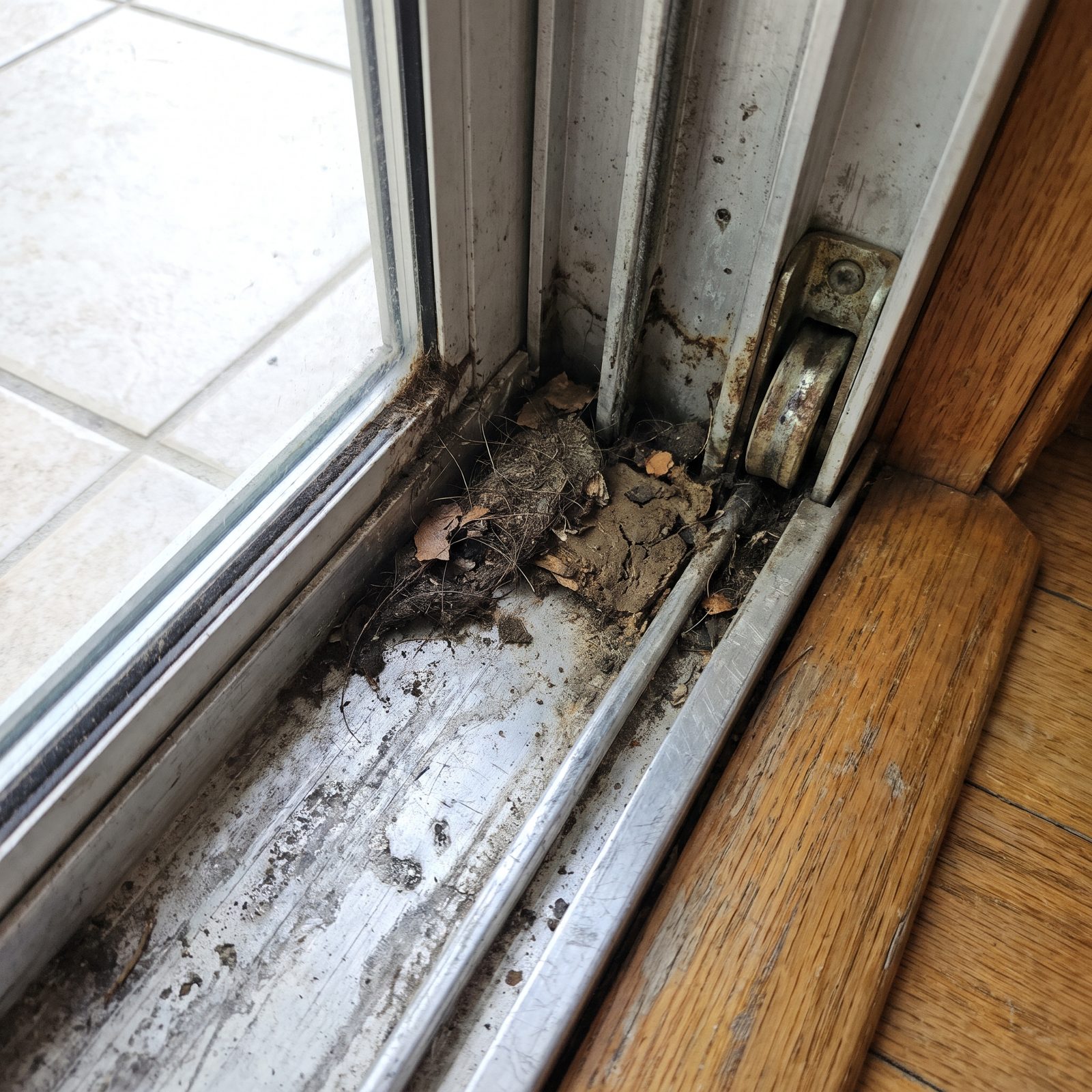
You notice the track the day the door starts fighting you. By then the grit has ground into the rollers and worn them flat, and that jerky, scraping slide is sandpaper doing damage you’ll pay to replace later.
Vacuum the loose debris first, then dig into the packed corners with an old toothbrush and a little vinegar. A dab of silicone spray on the clean track — not oil, which just grabs more grit — and the door glides again.
9. The Underside of the Stair Handrail, Touched More Than Anyone Admits
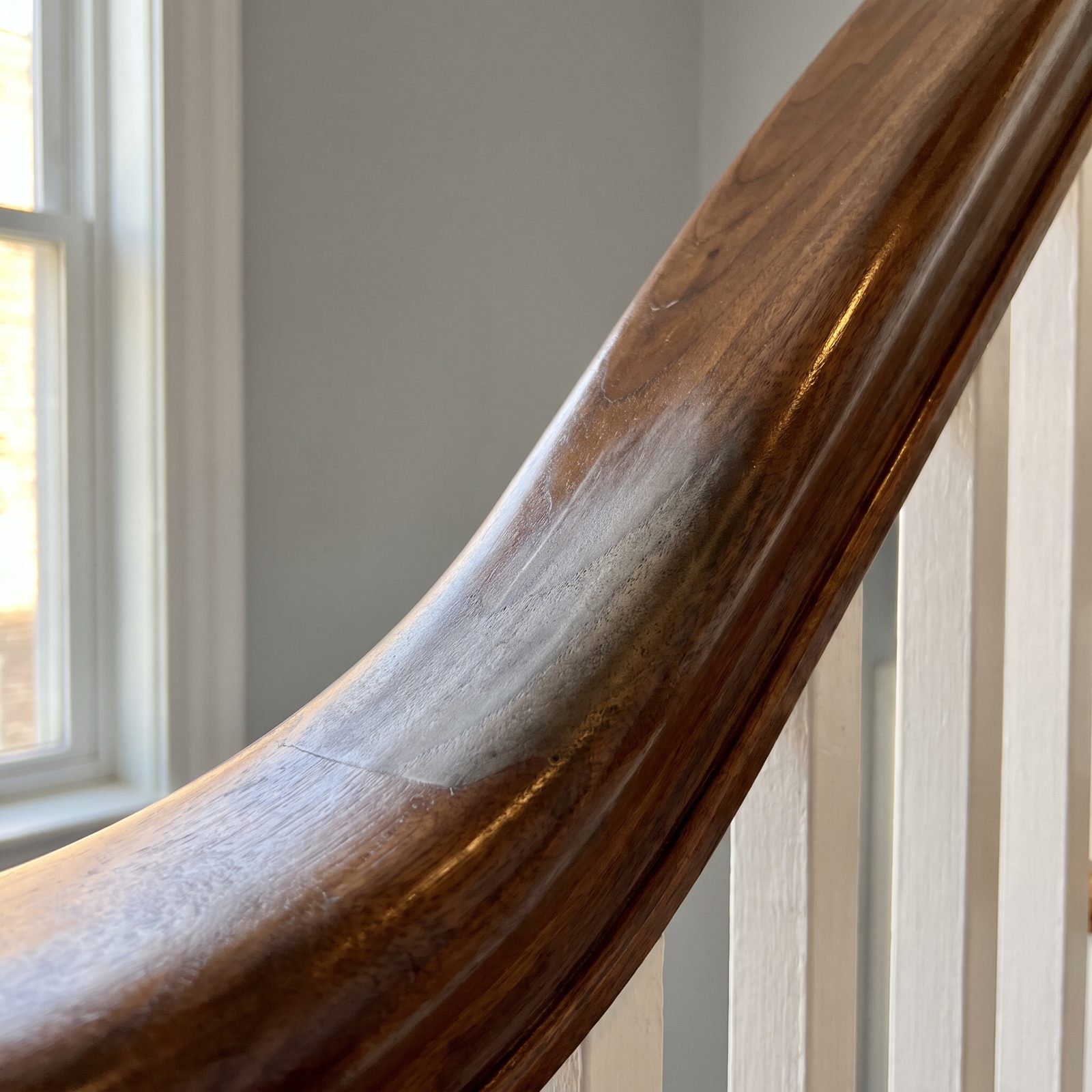
Watch how a hand actually grips a rail. The palm wraps the underside, the fingers do the holding, and that’s the surface nobody wipes. The top gets polished. The bottom collects months of skin oil and whatever was on everyone’s hands.
Once a week, run a wood-safe cleaner on a microfiber cloth along the underside. In a house with kids, or anyone recovering from illness, this is the most-touched surface you’ve never cleaned.
8. The Inside of Glass Light-Fixture Bowls, a Graveyard of Dust and Insects Overhead
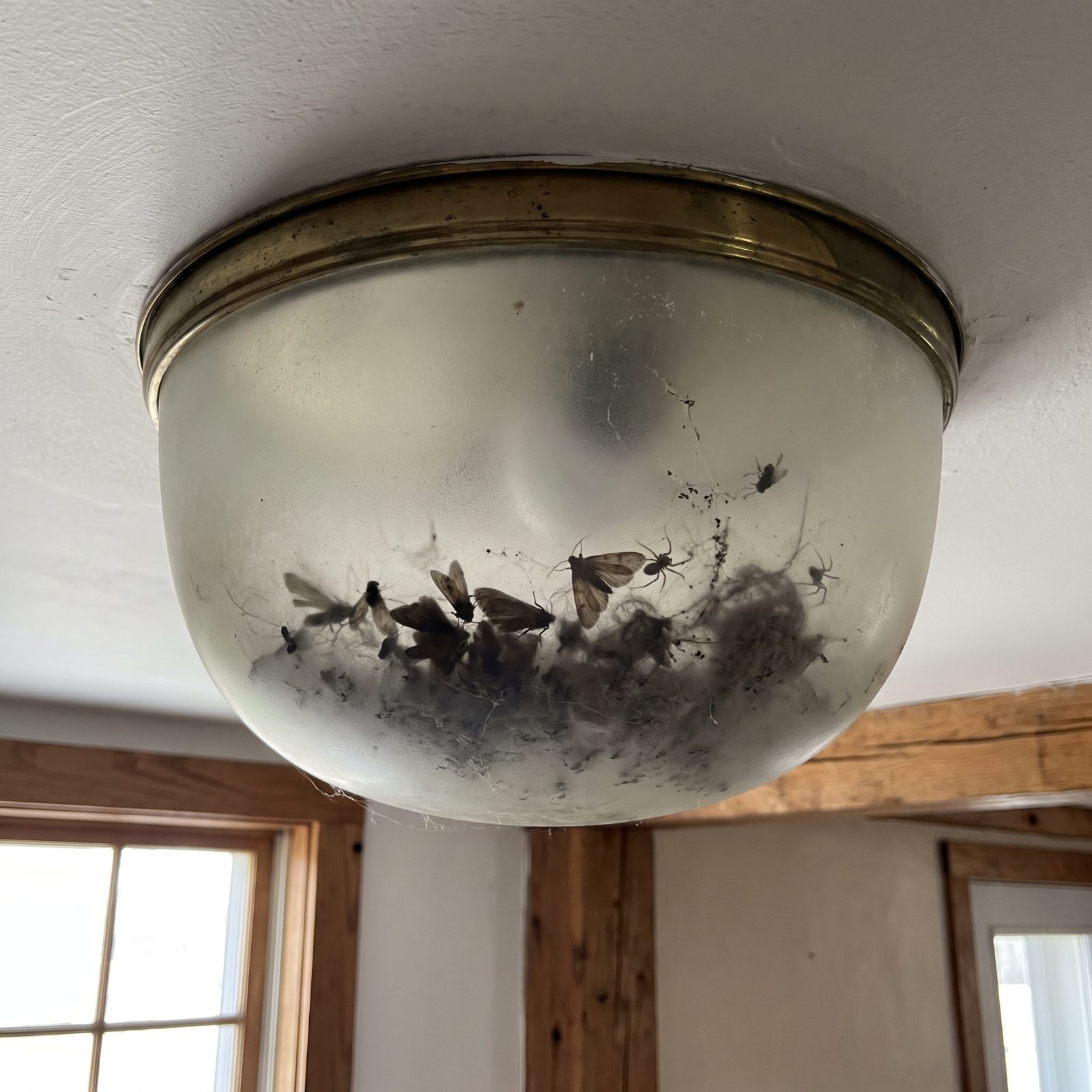
Switch the light off, look up, and you’ll see the shadows. Dust and the tiny insects drawn to the bulb’s warmth collect in the bottom of that glass bowl, which is why a perfectly good ceiling fixture still looks grey and dim.
Let the bulb cool first. Then unscrew the bowl and wash it in warm soapy water like a dish, drying it fully before it goes back. The room gets noticeably brighter — free upgrade, no shopping required.
7. The Seams Around a Mattress, Where Hair and Dust Settle Into the Piping
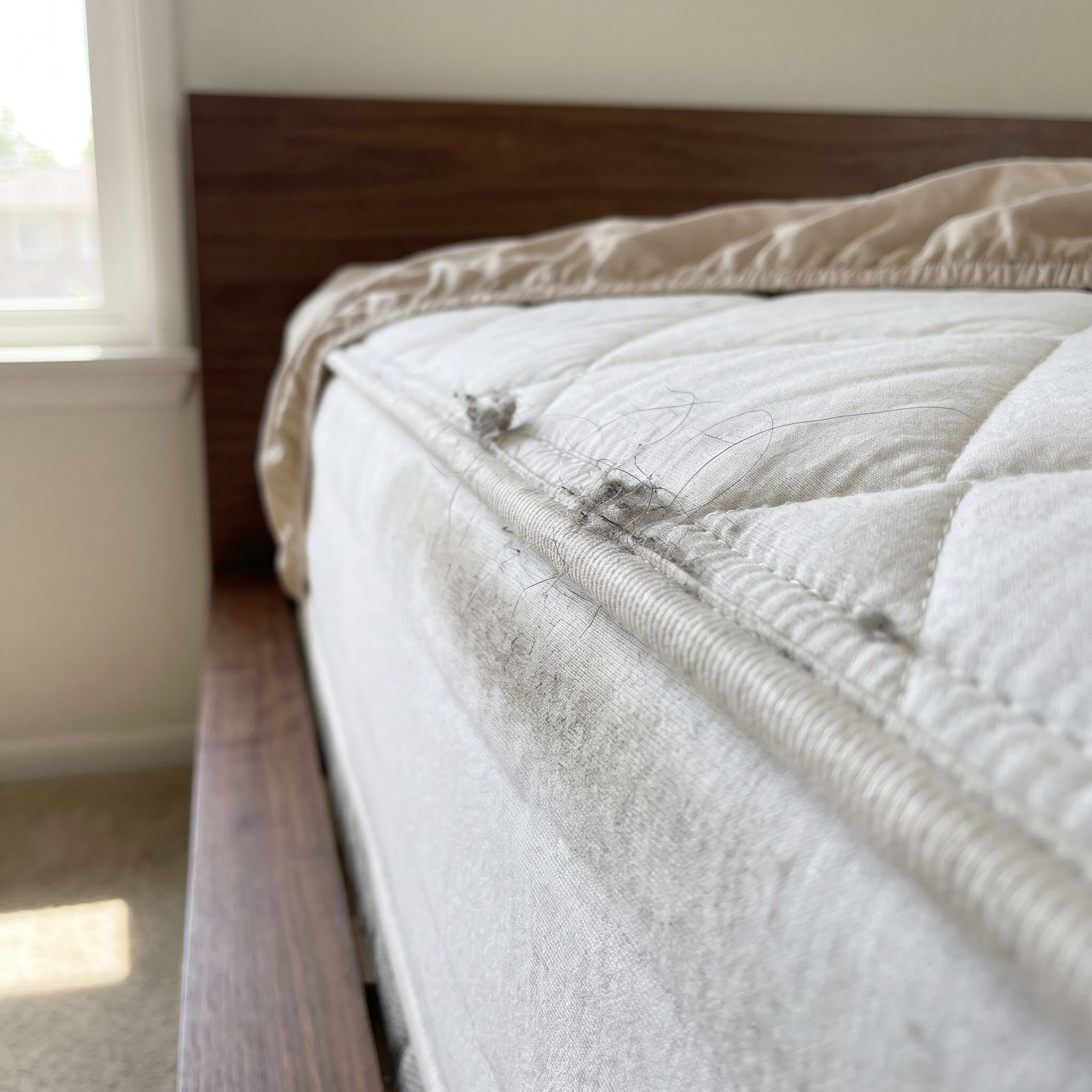
That raised cord of piping running around the edge is a trap. Hair, skin flakes and dust slide down and lodge in the stitched groove, right where the vacuum nozzle skims over without catching a thing.
Use the crevice tool and run it slowly along every seam, both sides, when you change the sheets. Two minutes, start to finish. If you’ve never done it, the first pass will tell you more than you want to know.
6. The Bed Slats or Platform, a Dust Field Hiding Right Under You
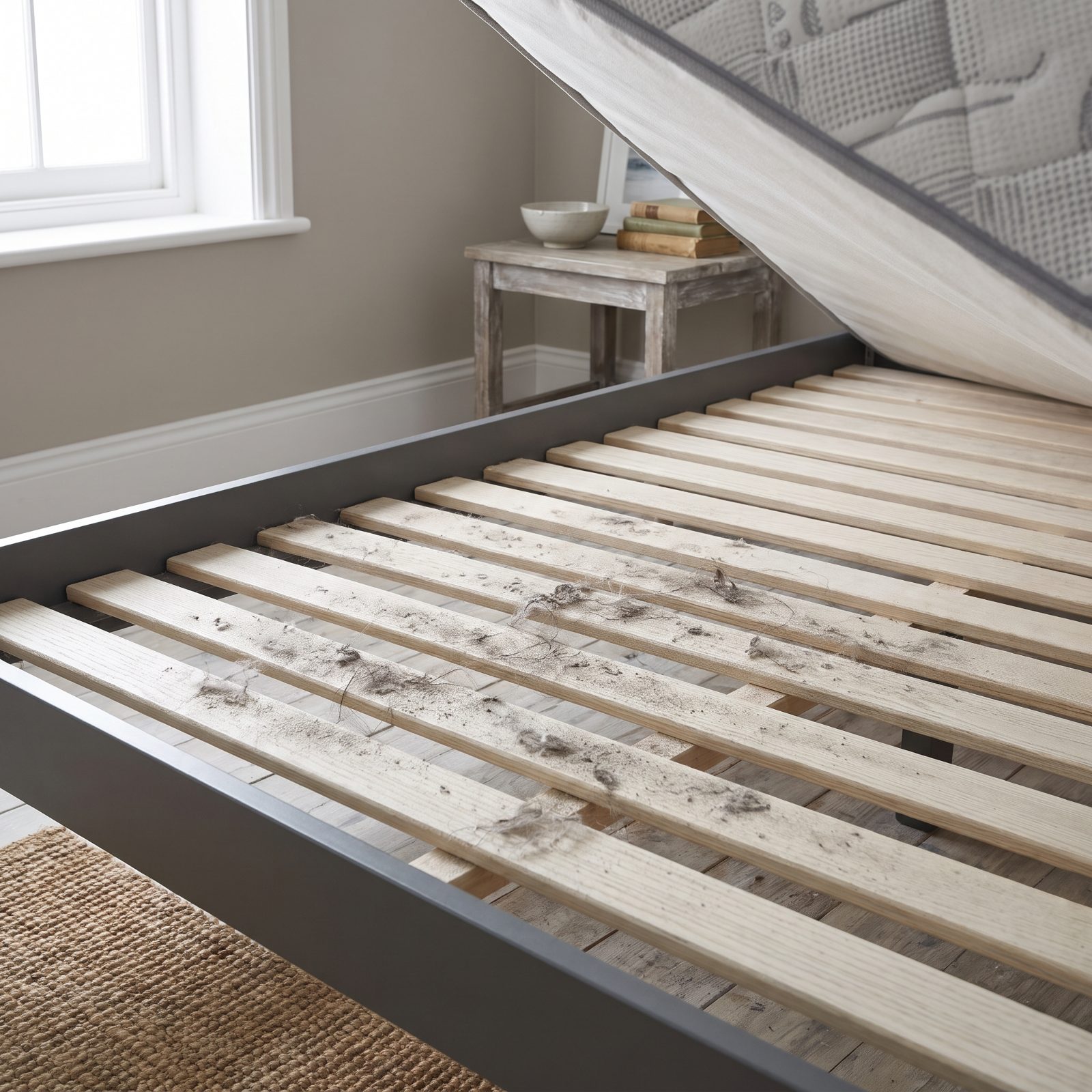
Lift the mattress once and you’ll understand. The slats below sit undisturbed for years, building a grey felt of dust that you breathe all night through the mattress above — the most overlooked surface in the bedroom, precisely because it’s the one you never see.
Twice a year, when you flip or rotate the mattress, vacuum the slats and the frame rails and wipe the wood with a barely-damp cloth. The air in the room feels different after, especially for anyone sleeping there with allergies.
5. The Mechanism Beneath a Recliner, Where Hair Winds Through the Hardware
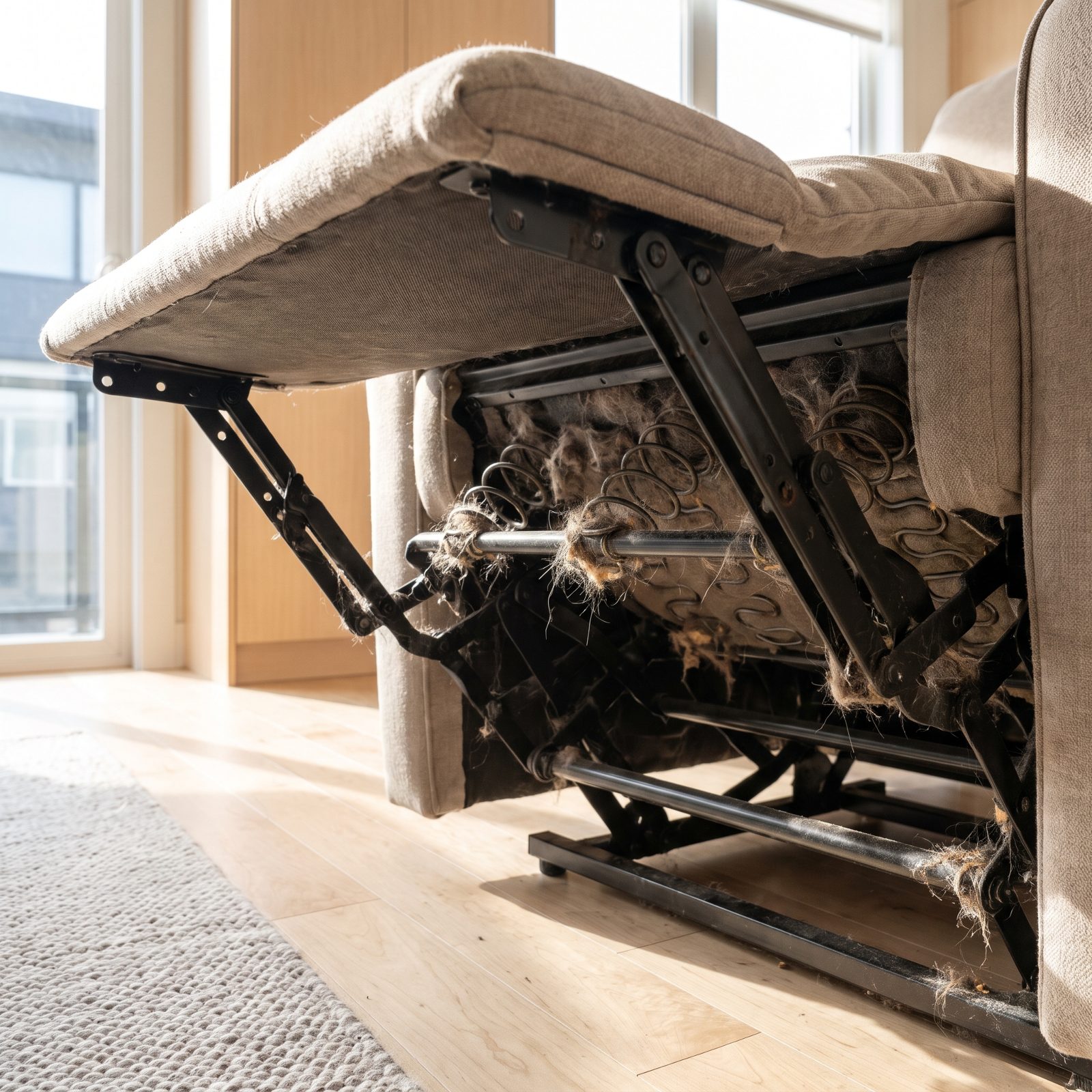
Tip a recliner back and look at the scissor mechanism underneath. It’s basically a rake. Pet hair winds around the pivots, crumbs wedge into the springs, and eventually something squeaks or sticks because the hardware is packed solid with debris.
Vacuum the mechanism with the hose, pick the wound hair off the joints by hand, then add a drop of silicone lubricant at the pivots. That squeak you’ve been living with usually traces straight back to this.
4. The Seams Around Remote-Control Buttons, a Trap for Skin Oil and Crumbs
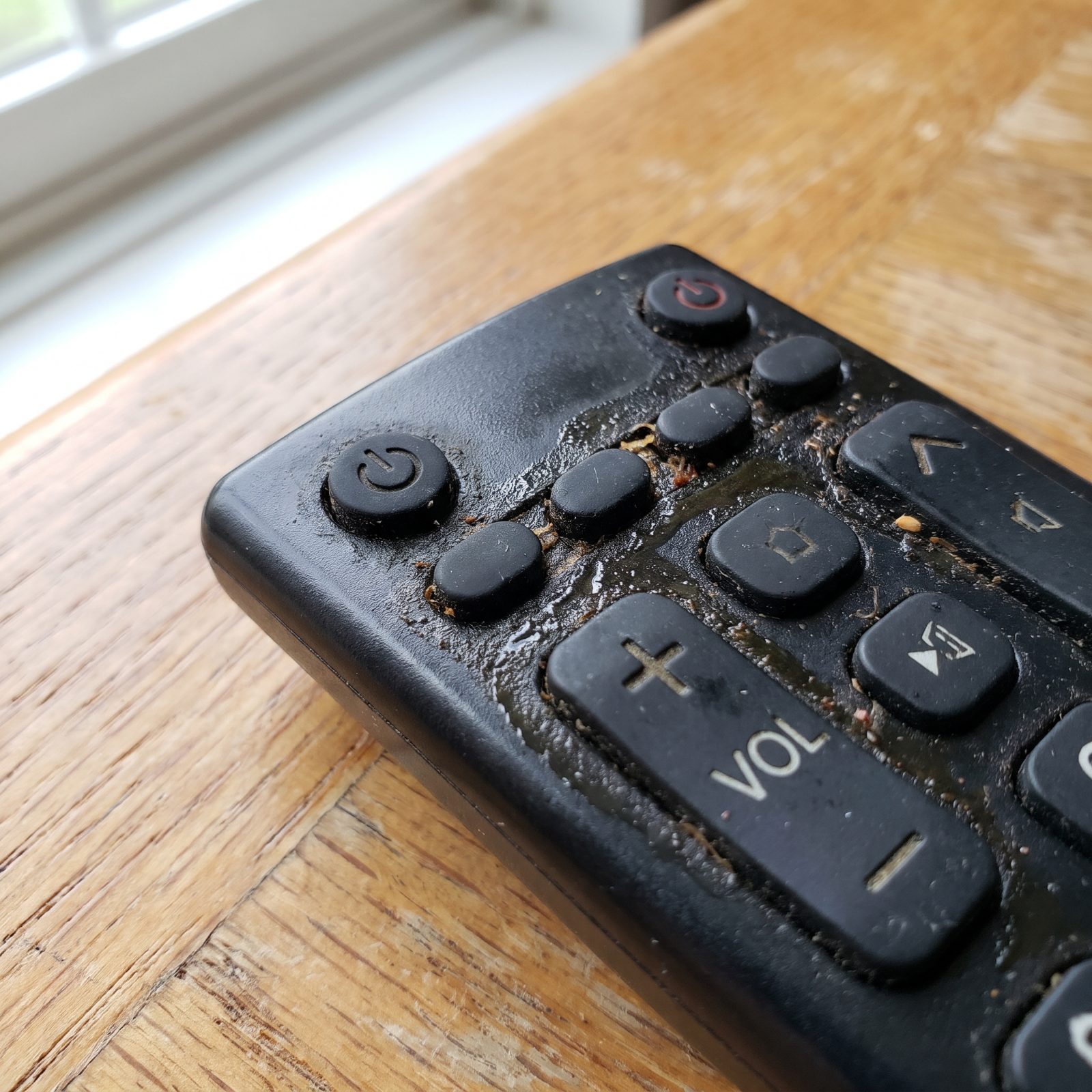
The remote lives in the dirtiest hand in the house and never gets washed. Skin oil, snack crumbs and dust pack into the tight seams around each button, past where any casual wipe reaches. Pick it up and you can feel the film.
Pop the batteries out first. Then run a cotton swab dampened with a little rubbing alcohol around every button seam. Grim work — and also the single most-touched object you probably clean the least.
3. The Leaves of Houseplants, Where Dust Settles in a Slow Gray Film
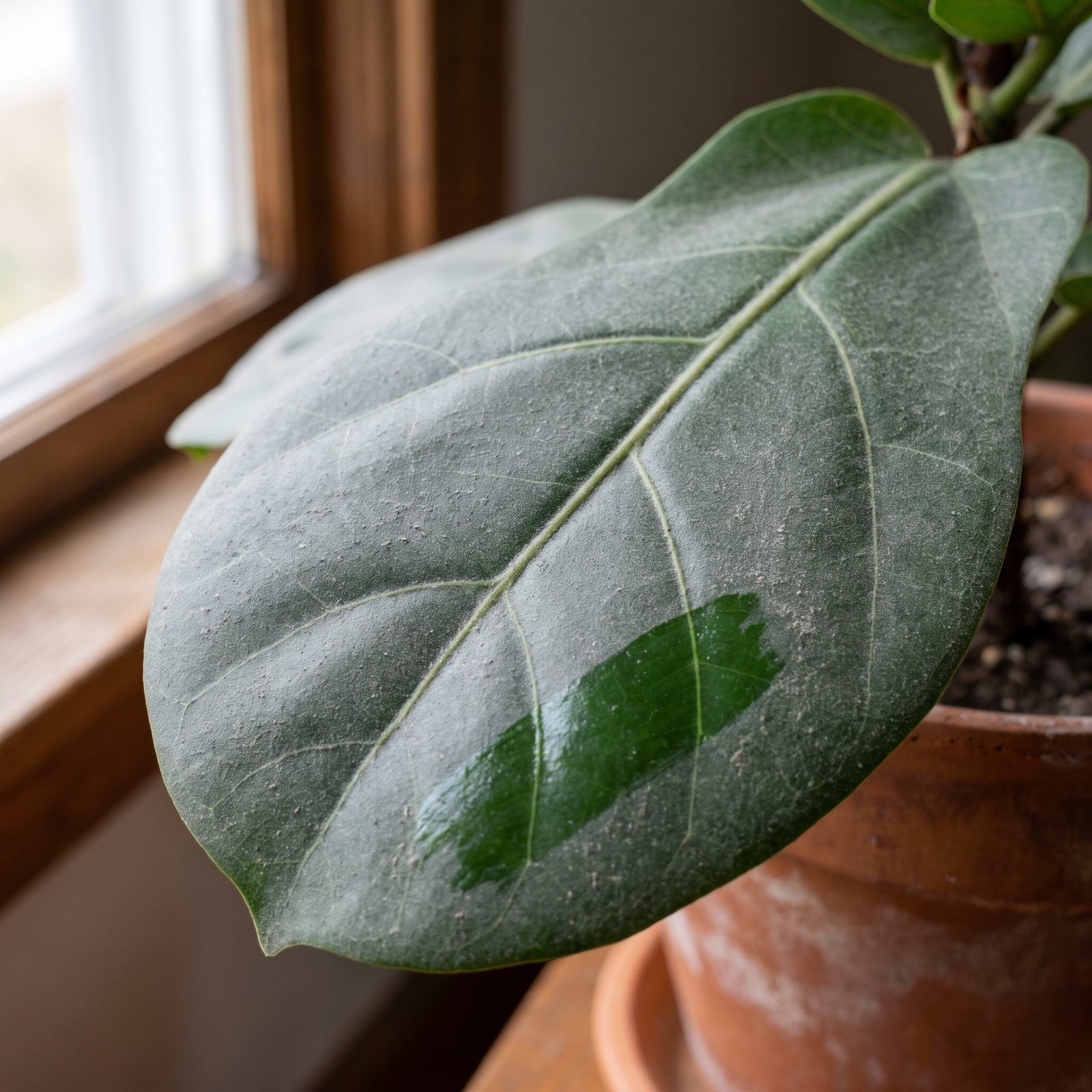
Dust does to a leaf exactly what it does to a solar panel: it blocks light. A houseplant breathes and feeds through those leaves, so a gray film on top means less photosynthesis and a plant that quietly grows slower than it should, for reasons nobody can see.
Run a finger across the top of a pothos that’s sat in one spot for a month. The streak you leave behind tells the whole story. Most people never think to clean a leaf. Leaves just read as self-cleaning, and outdoors they more or less are — rain handles it. Indoors there’s no rain, and the dust keeps piling up until you notice the plant sulking without knowing why.
2. The Base of the Toothbrush Holder, Where Drips Pool and Never Dry
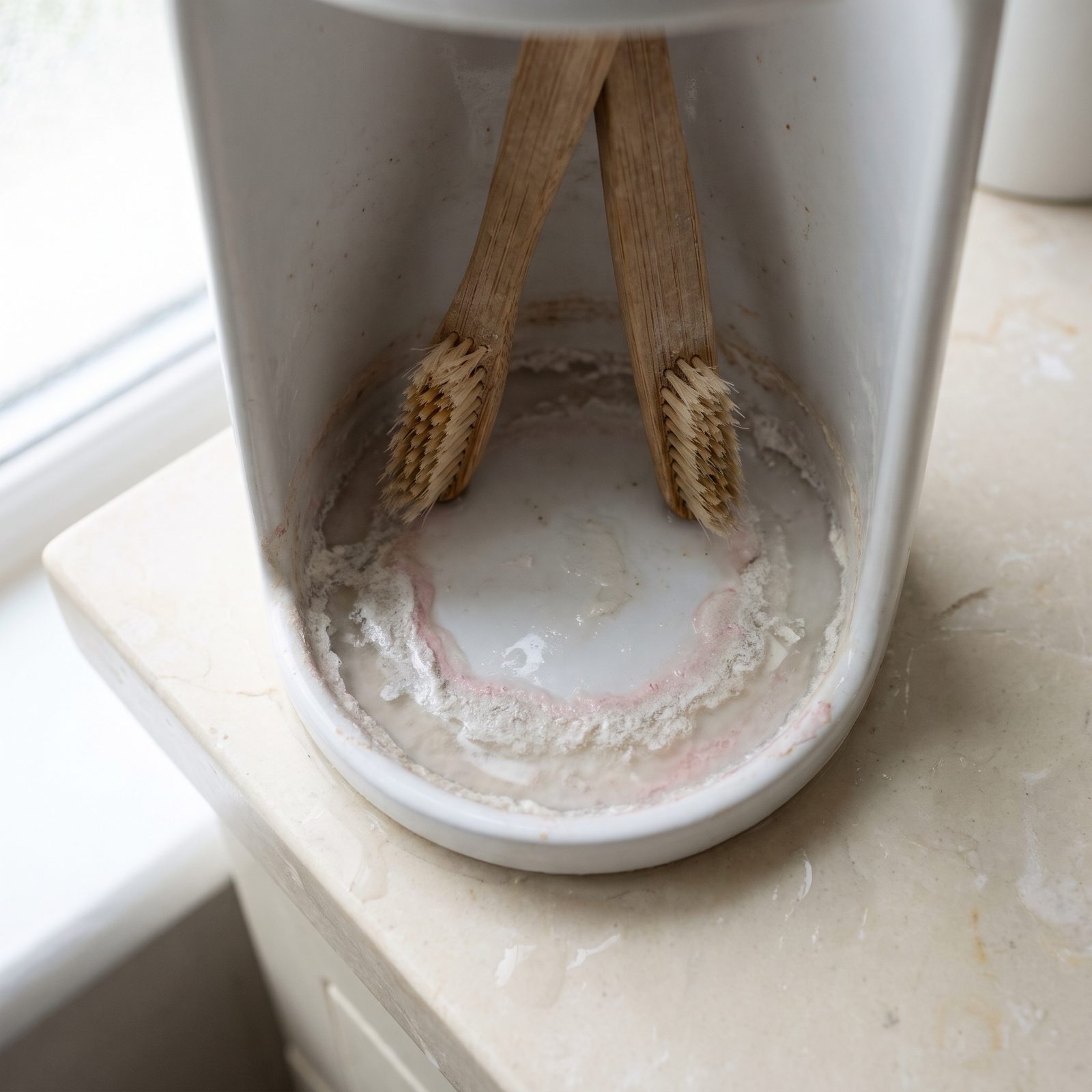
This is the part everyone misses. Water runs down a wet toothbrush and collects in the bottom of the holder, and that base almost never gets rinsed. It sits there dark, damp, and undisturbed between two toothbrushes that touch it every single day.
Tip one over sometime and look inside. The ring of cloudy scale and that faint film at the bottom? Weeks of accumulated drip. It’s one of the grimiest few square inches in an otherwise clean bathroom — precisely because it looks spotless from above.
1. The Hinges of the Toilet Seat, Where Residue Builds Around the Mounting Bolts
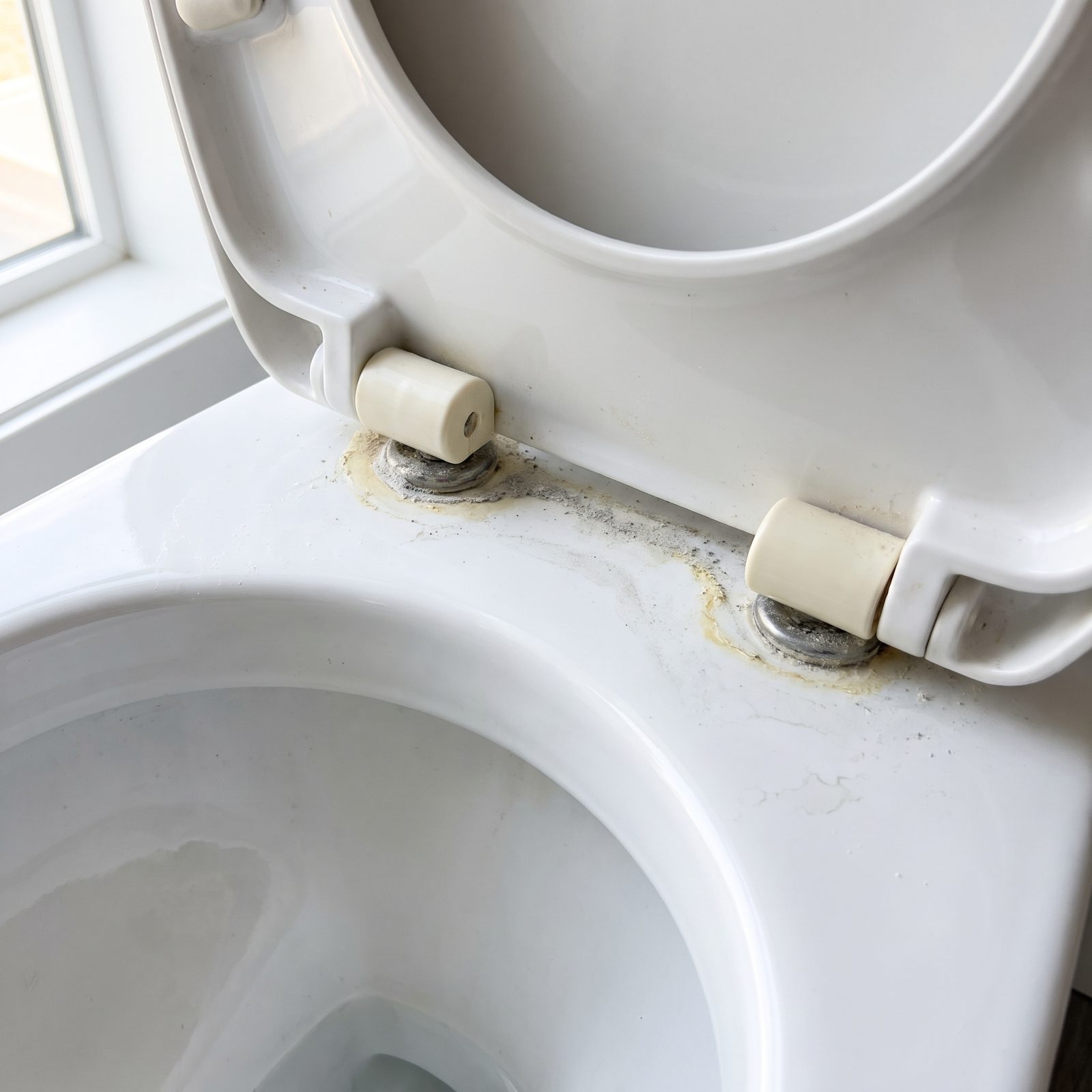
Everyone wipes the seat. Almost nobody lifts the hinge caps. That narrow band where the seat bolts to the porcelain traps splash, dust, and the sort of residue that explains a smell you can’t locate no matter how often you scrub everything else.
So pop the plastic covers up. Most seats have them, and they flip back with a thumbnail. What hides underneath is usually worse than anything on the seat itself, because a cleaning cloth has never once reached it. This is the spot that fails a white-glove test in a bathroom that otherwise looks immaculate — and honestly, it’s a little humbling the first time you see it.