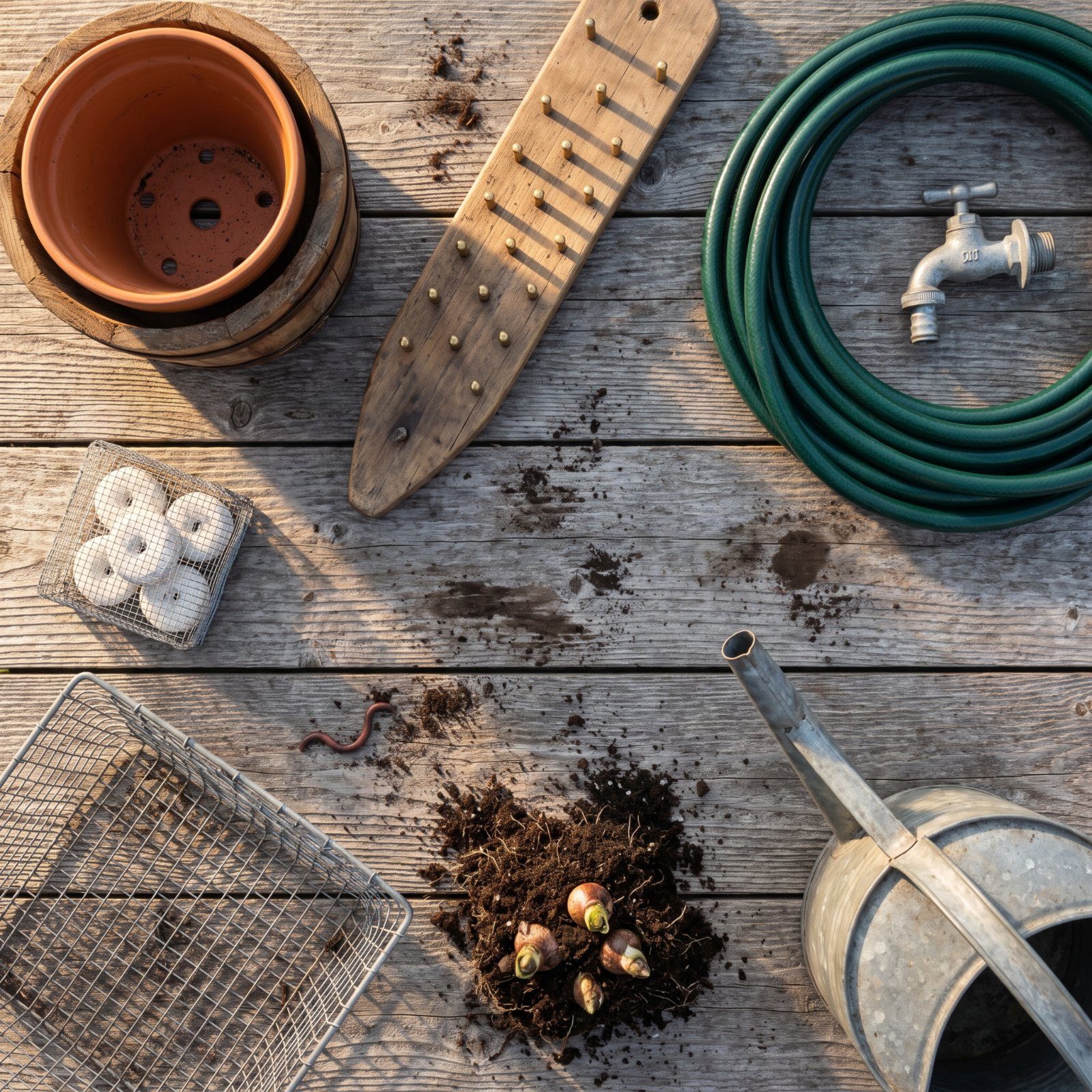
A frog drowned in a water trough once, and it rewired how one gardener looked at every container that holds water. Not grief, exactly. More the dawning sense that most backyard headaches are the same headache on loop: the hose crushes the same bed corner, the seedlings dry out the same way, the voles eat the same tulips every spring without fail. The fixes below are strange. A board full of pegs, a cage of mosquito dunks, a pot buried inside another pot — none of them look like much, and that’s rather the appeal. All of them stop a recurring problem cold, which is the only test worth anything out here.
Please note that some of the images in this article were created with the assistance of AI.
44. A Sunken Pot-in-Pot Nursery for Swapping Seasonal Displays
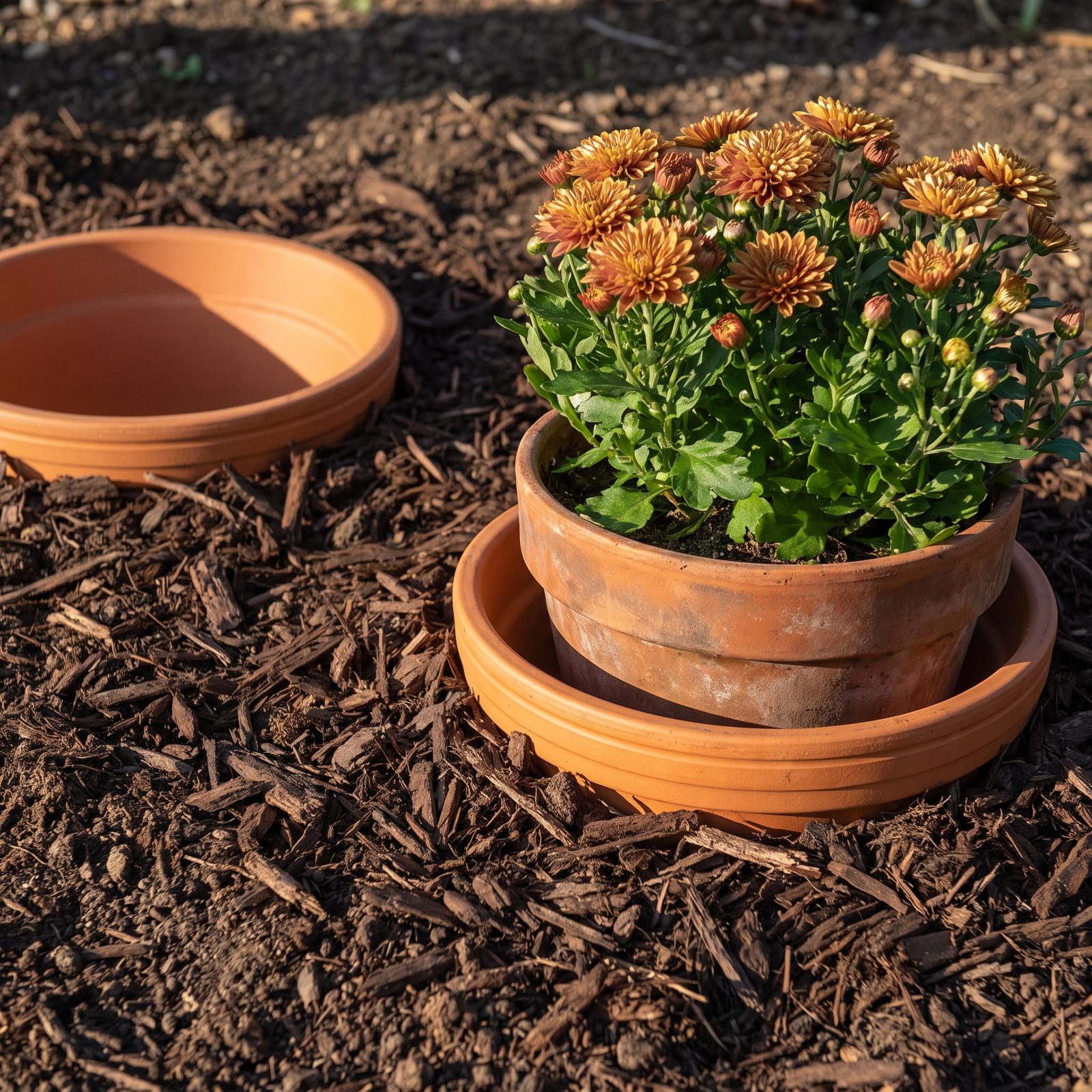
It looks almost dumb once you see it. You sink an empty pot permanently into the bed as a sleeve, then drop a potted plant inside. When the mums fade, you lift the pot out and slide a new one in — no digging, no disturbed roots, no raw gap in the border where something just died.
Garden centers have leaned on this trick for decades because it simply works. The display changes while the saucer never does. Tulips give way to annuals give way to ornamental kale, and the bed looks deliberate all year for about thirty seconds of effort per swap.
43. Stake-Mounted Hose Rollers That Protect Bed Corners
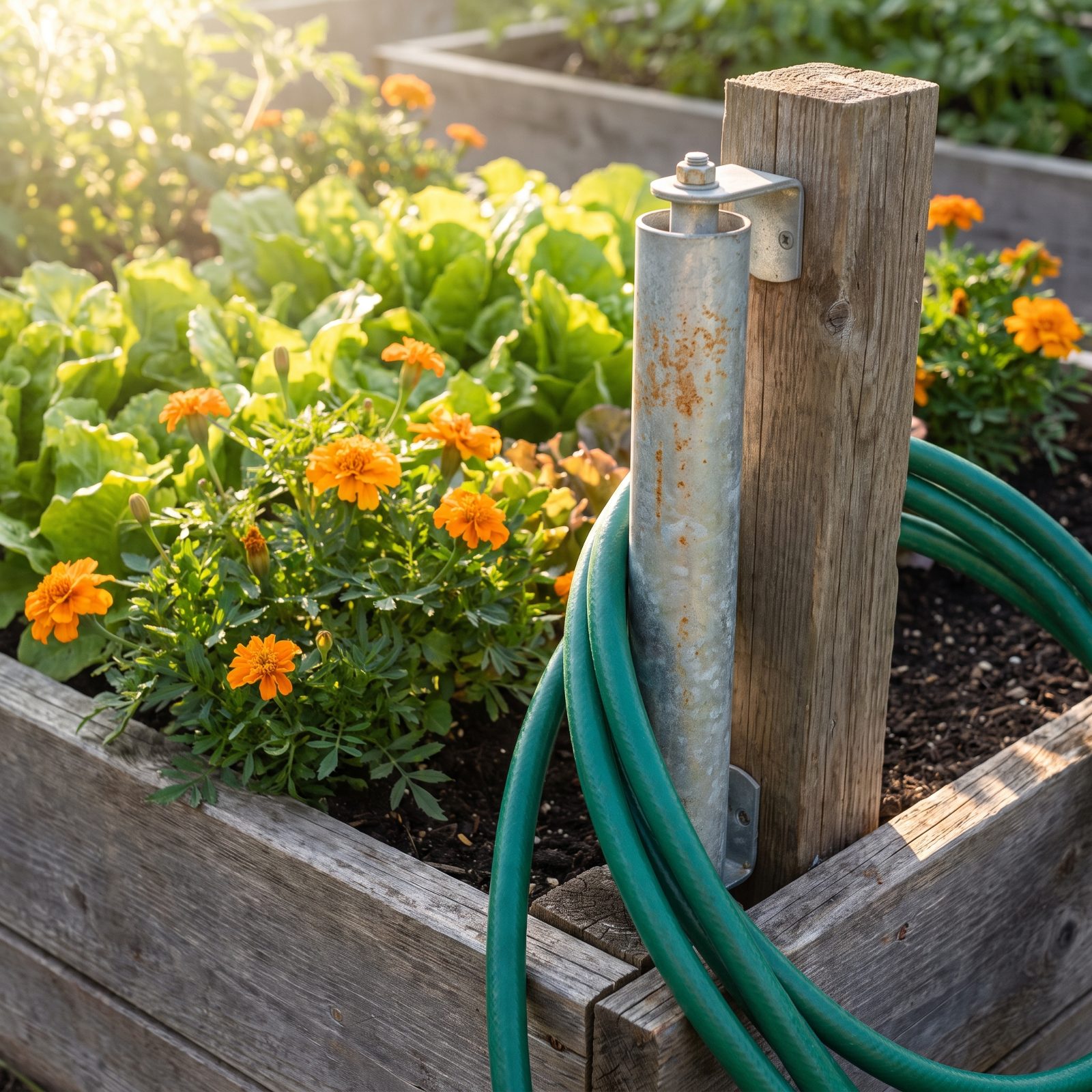
You’ve watched a hose drag across a bed and flatten everything in its path on the way to the far spigot. A sleeve guide at each corner ends that in one afternoon of fiddling with stakes.
It’s a wooden stake with a short metal pipe bracketed vertically alongside it. The hose loops around the pipe and post and gets guided past the corner instead of scything through your seedlings. Cheap to cobble together from a scrap post, a bolt and an offcut of metal pipe, and it pays you back every single watering.
42. A Mechanical Rain-Barrel Level Indicator Visible From Outside
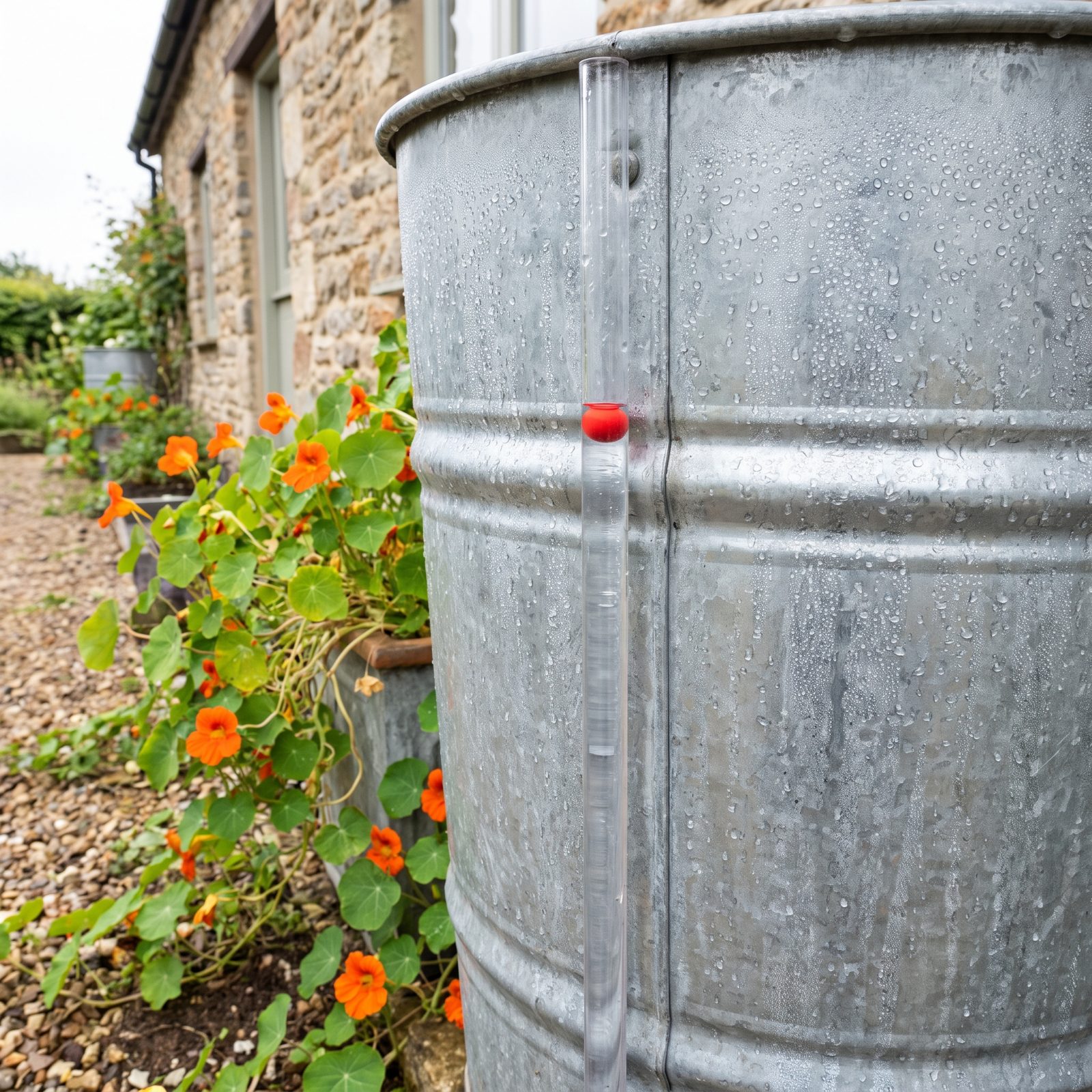
A rain barrel without a gauge is a guess. You tap it, you listen, you lift the lid and squint — a small daily ritual of self-doubt.
A float-and-tube indicator ends the squinting. A sealed tube runs up the side, a buoyant marker rides the water level, and you read the barrel’s volume from the porch the way you’d read a fuel gauge. You learn fast whether you’ve got enough stored to skip the tap through a dry week. Costs next to nothing and removes a nagging unknown.
41. A Textured Escape Ramp in a Water Trough or Steep-Sided Pond
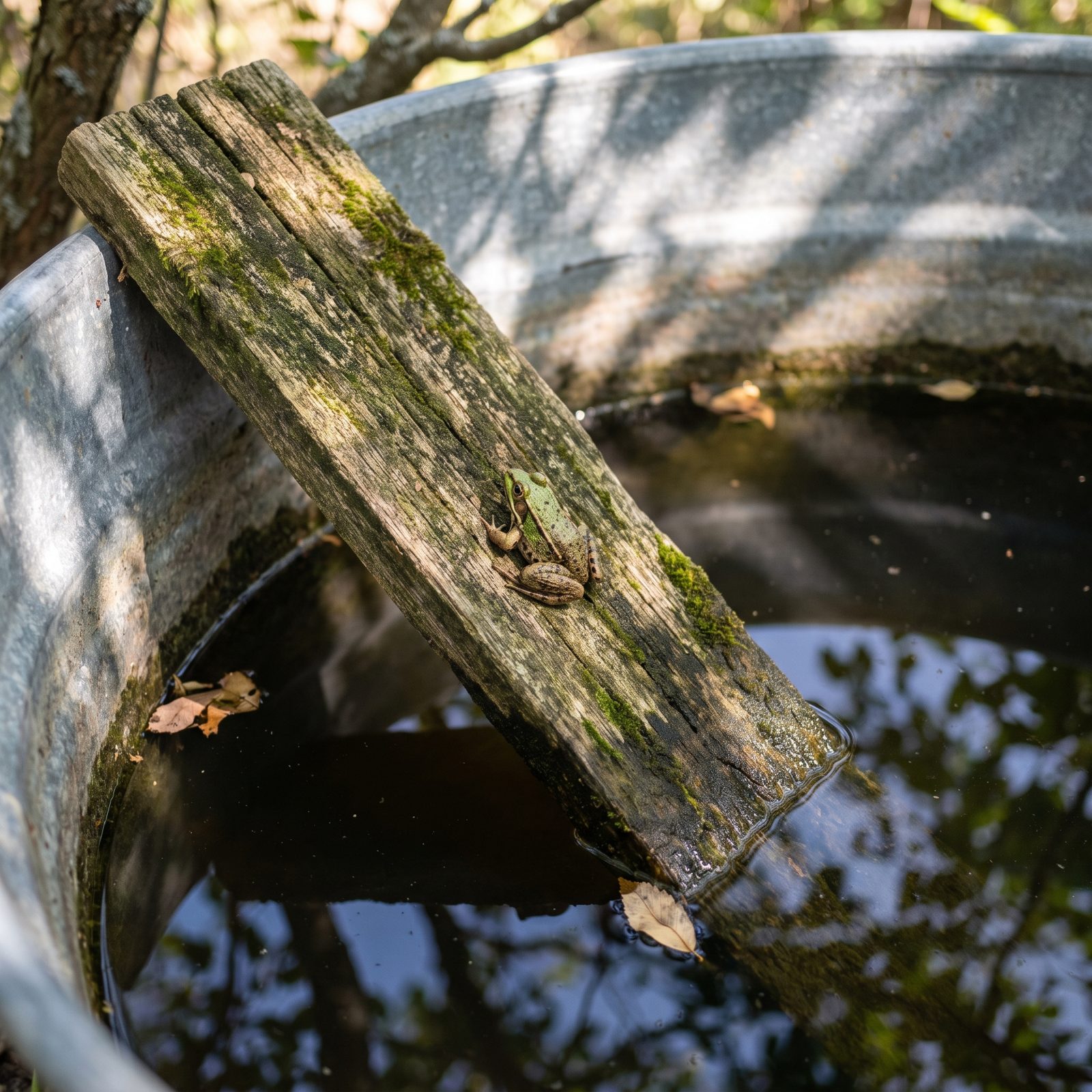
Any container that holds water and has smooth, steep sides is a trap for small creatures. Bees land to drink and can’t climb back out. Frogs fall in and tire. Young birds, chipmunks, the occasional hedgehog in some regions — slick walls, nothing to grip, a bad end.
A rough ramp from the bottom to the rim solves the whole thing. Use a branch, a textured board, a half-brick stack, anything with grip that breaks the water’s surface. Install it once and forget it, and a drowning hazard becomes a safe drinking spot.
40. A Secured Mosquito-Dunk Cage Inside Stored Rainwater
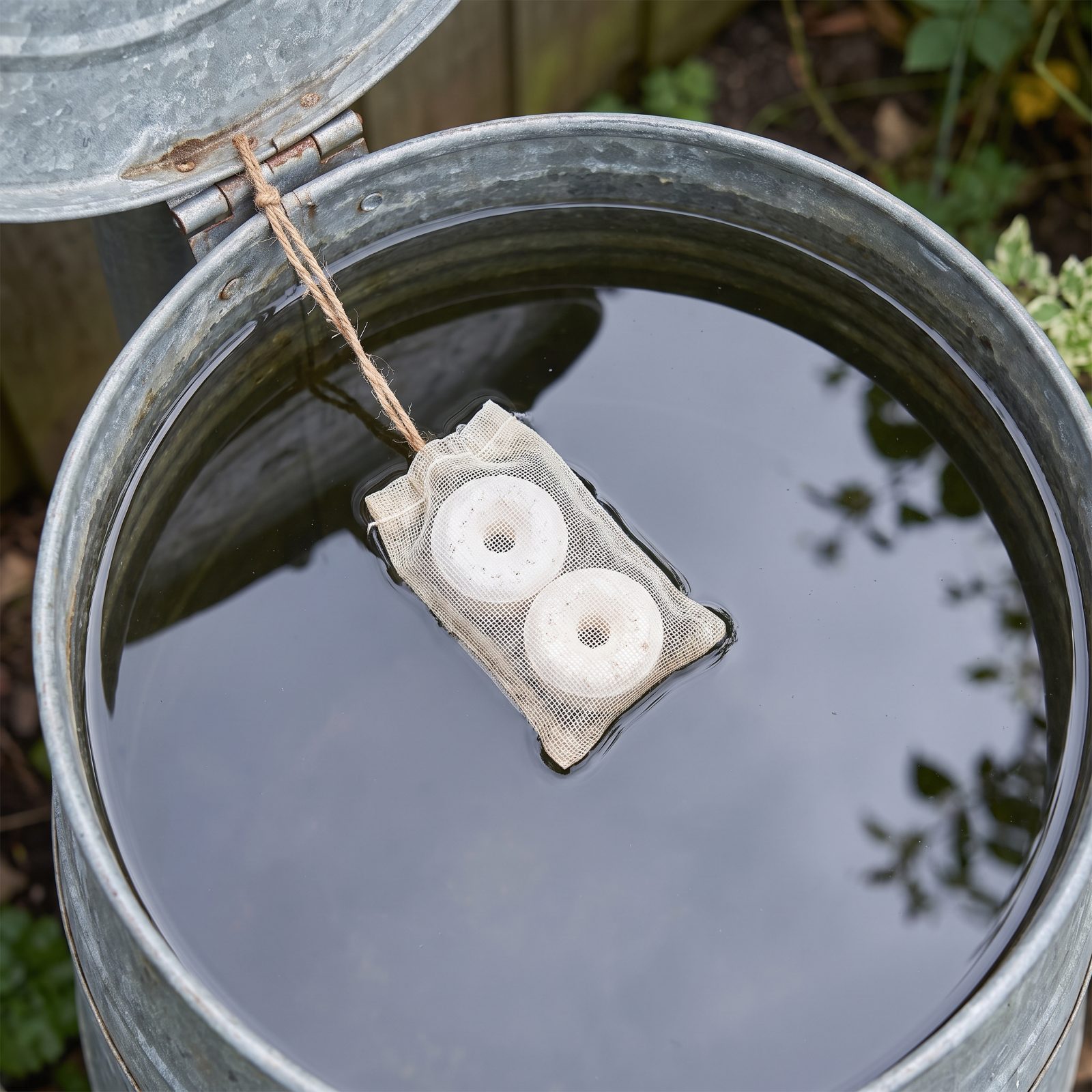
Stored rainwater breeds mosquitoes. That’s the one real downside of harvesting it. The fix is a bacterial dunk, Bti, which kills larvae and harms nothing else — but loose dunks drift out of reach or break apart before you can check on them.
So cage them. A small mesh pouch, tethered to the lid with a cord, keeps the dunk floating at the surface where larvae gather and lets you fish it out to check or replace. The water stays safe for the garden and useless to mosquitoes. Swap it roughly monthly through warm weather and you’re done thinking about it.
39. A Pegged Dibble Board That Spaces an Entire Seed Row at Once
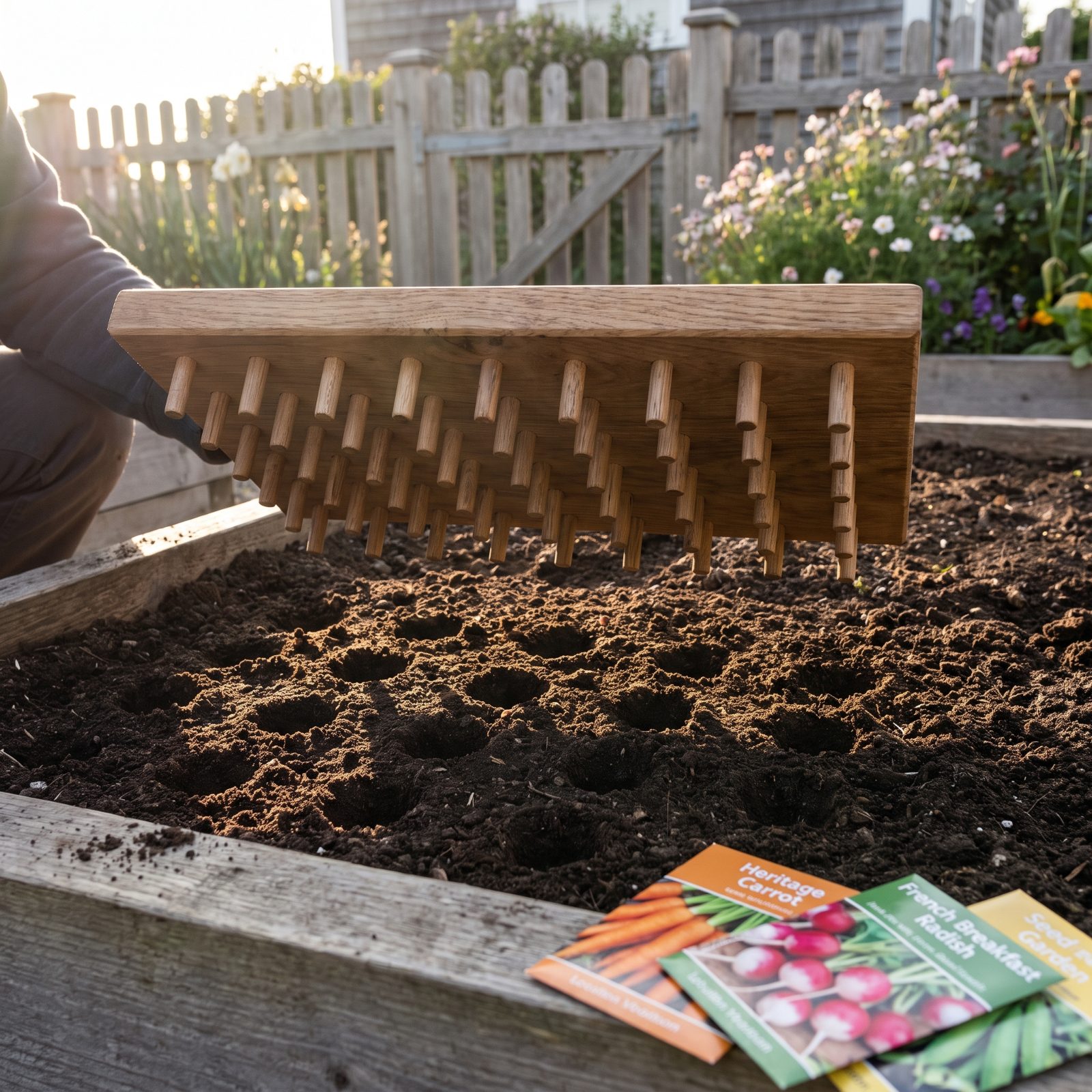
One press, a whole row spaced perfectly. A dibble board is nothing more than a plank with pegs set at your target spacing. Push it into prepared soil, lift, and there’s a whole bed of planting holes in a single motion — then firm and tidy any that come out wider, shallower or a little off the grid.
Speed is the obvious win. The quieter one is that uniform spacing means uniform light, airflow, and root room, which cuts disease and the whole tedious thinning chore later. People eyeball spacing and crowd their carrots every single year. This ends it.
38. A Bokashi Soil-Factory Tub for Finishing Fermented Scraps
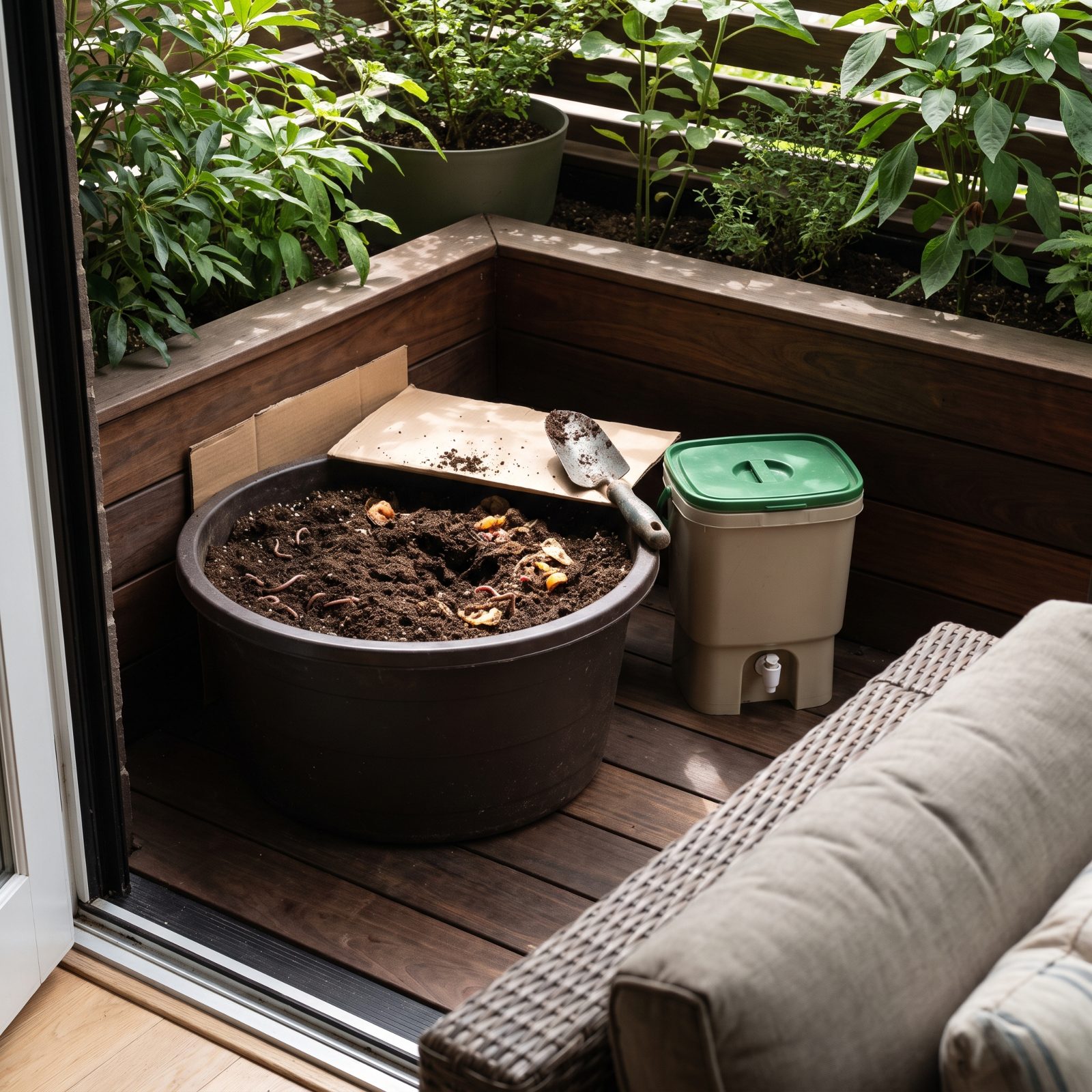
Bokashi ferments your food waste in a sealed bucket — even the meat and dairy a normal compost pile flatly refuses. But what comes out is pickled, not finished. It’s acidic, pre-digested, and nowhere near ready for roots.
Here’s where a soil-factory tub earns its keep. You bury the fermented mash in a dedicated container of plain soil, and the microbes finish the job in a couple of weeks, turning sour pickle into dark, sweet-smelling earth. It swallows the kitchen’s full output year-round, including all the stuff you were quietly binning before.
37. Hardware-Cloth Root Baskets That Protect Bulbs From Rodents
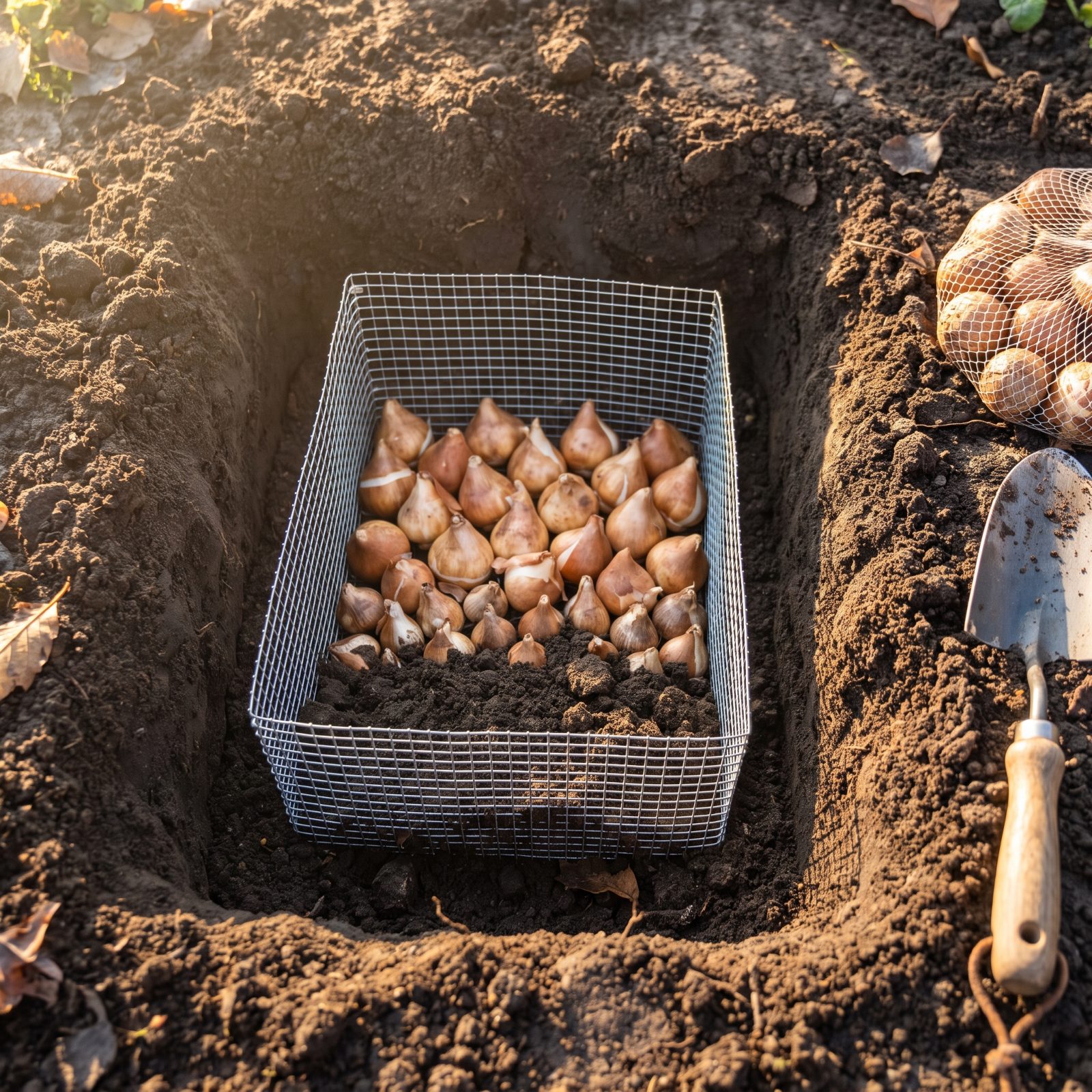
You plant a hundred tulips in October. By March, forty come up — because voles and squirrels treat a bulb bed like a buffet with a map.
A cage of galvanized hardware cloth around the bulbs stops the digging and chewing while roots and shoots pass right through the mesh. The plant never knows it’s in a basket. Buy ready-made ones or bend your own from leftover cloth; honestly, the smarter move is one wide shared basket for a whole cluster rather than a dozen fiddly single cages.
36. A First-Flush Diverter That Keeps Roof Debris Out of Stored Water
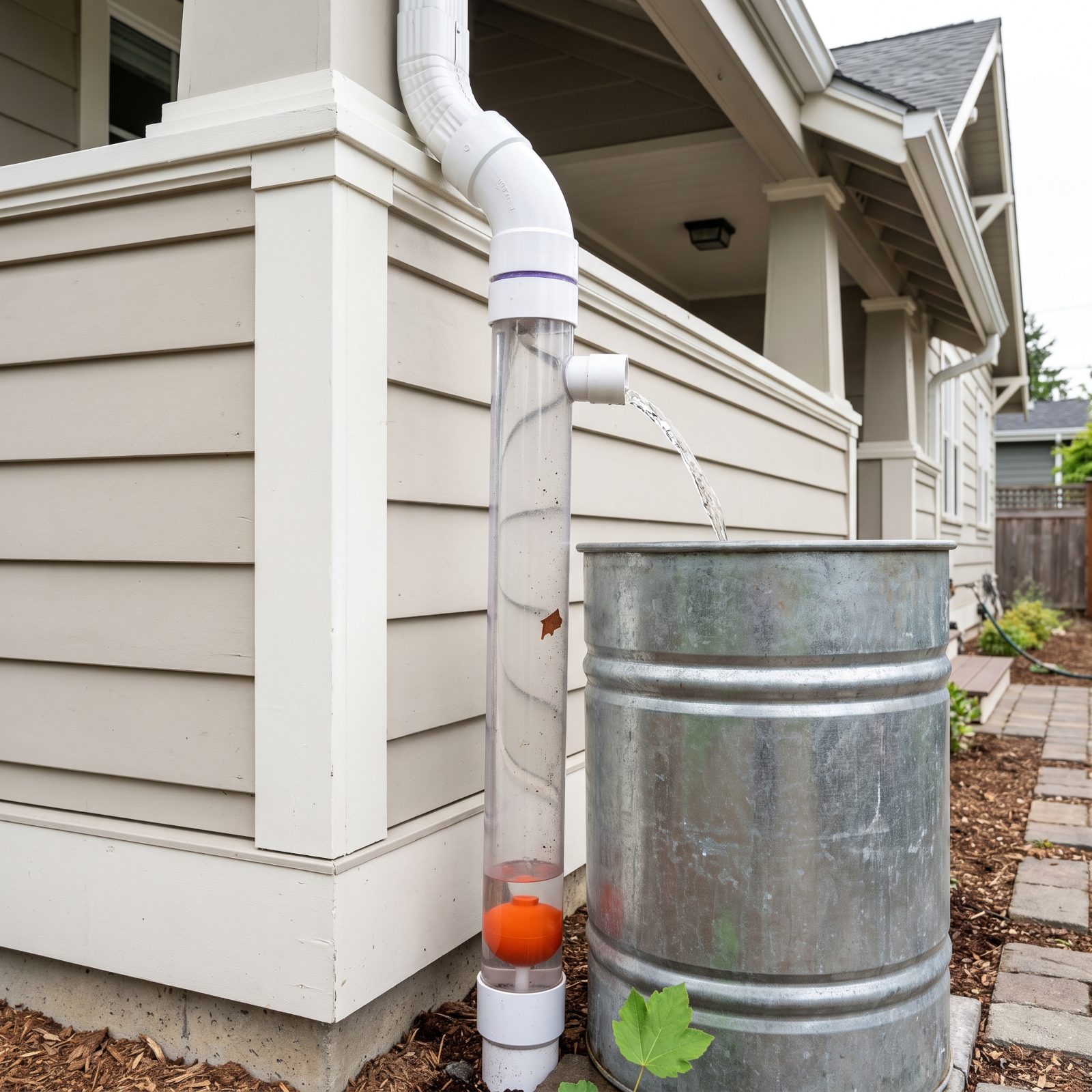
The first water off a roof in a storm carries everything — bird droppings, pollen, grit, the dead leaf that’s been baking in the gutter for three weeks. You don’t want any of that in your barrel.
A first-flush diverter catches that filthy initial surge in a clear standpipe, and a side outlet pours water into the barrel. An orange ball sits at the bottom of the pipe, and the clear walls let you see the dirty water collecting. Your stored water stays clearer, the barrel silts up far slower, and what you collect is actually usable on edibles. Of all the upgrades here, this is the one that separates a decent harvesting setup from a murky green tank nobody trusts.
35. A Capillary-Mat Bench That Waters Seedlings From Below
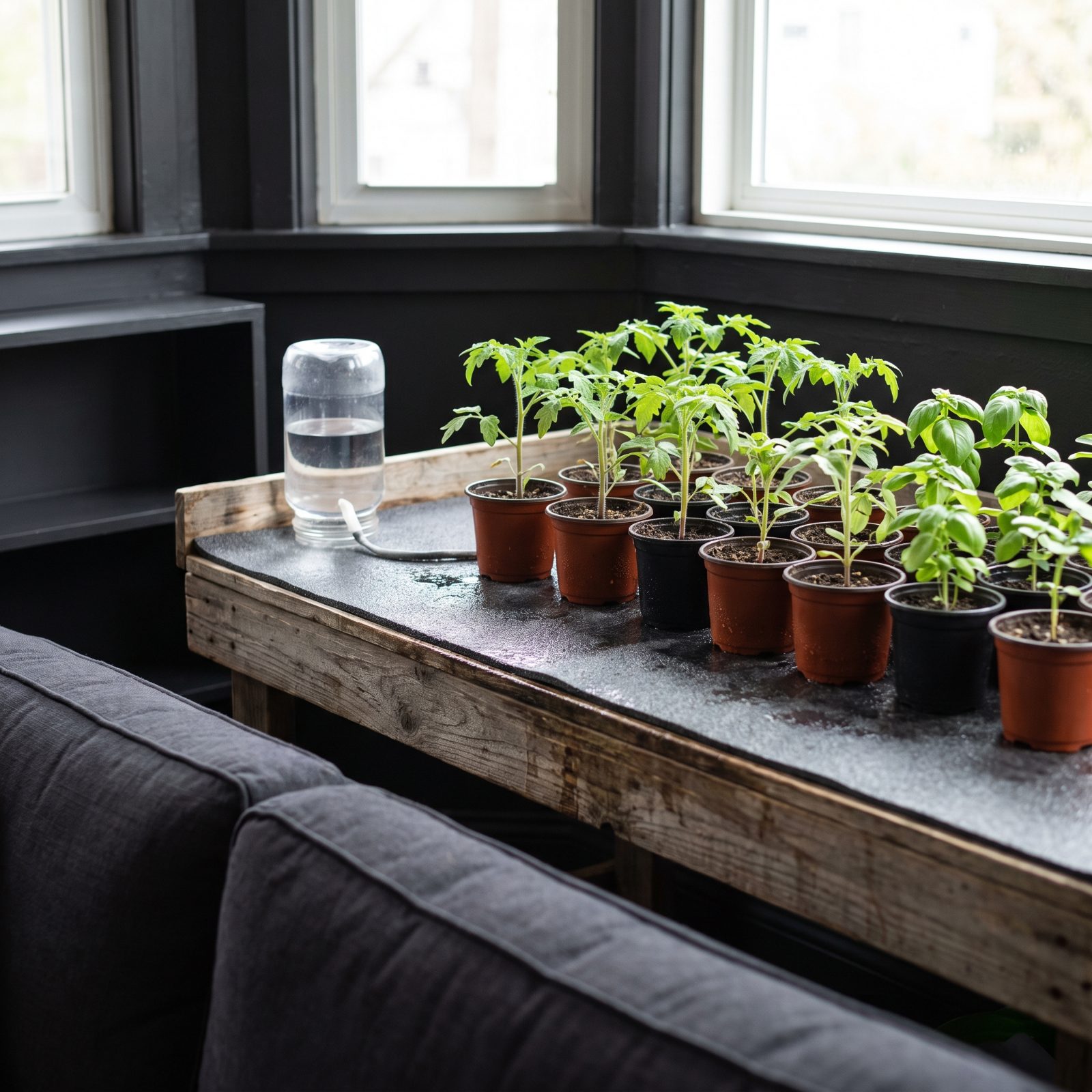
Top-watering seedlings is a losing game. You either flatten the tiny stems with the force of the stream or forget for a day and lose the whole tray to drying out. The stress shows up as weak, stop-start growth that never quite catches up.
A capillary mat flips the direction entirely. A thick fabric mat sits in a tray fed by a reservoir, and the pots wick up exactly as much water as their soil demands — no more. Roots grow down toward the moisture, which builds sturdier plants. And you can disappear for a weekend without begging someone to come water.
34. A Buried Terracotta Olla That Waters Roots Slowly
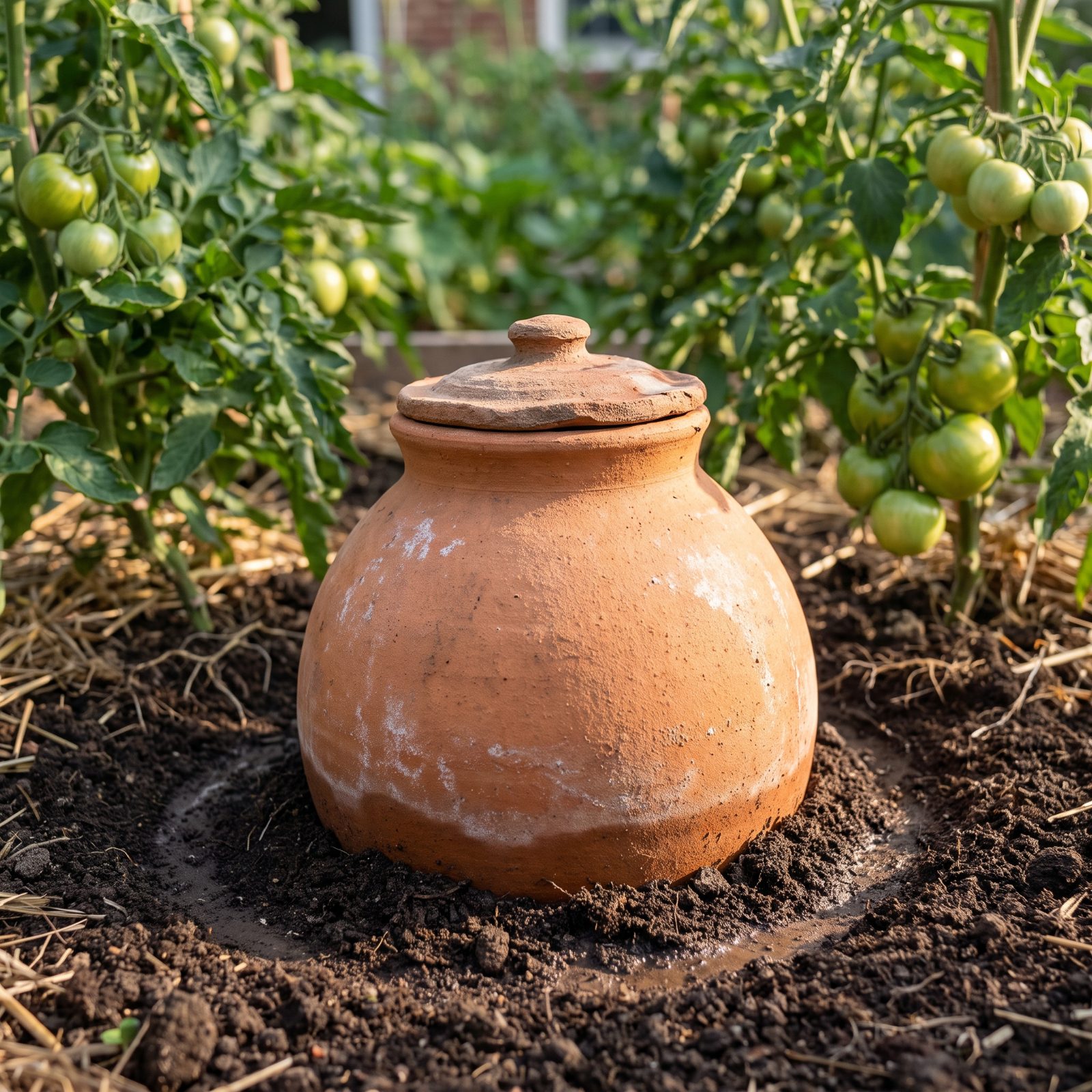
Water goes into the neck of a buried clay pot and seeps out through the walls over days, straight to the roots, with nothing lost to evaporation or runoff. The plant pulls what it needs through the damp clay, and nothing extra sits around breeding fungus gnats.
Ollas are ancient. People watered this way across North Africa, China and the American Southwest long before anyone dreamed up drip tape. An unglazed one wide enough to matter costs a modest amount at the garden center, or next to nothing if you seal two terracotta pots together with silicone and plug the drainage hole yourself.
33. A Worm Tower That Turns Kitchen Scraps Into Bed Fertility
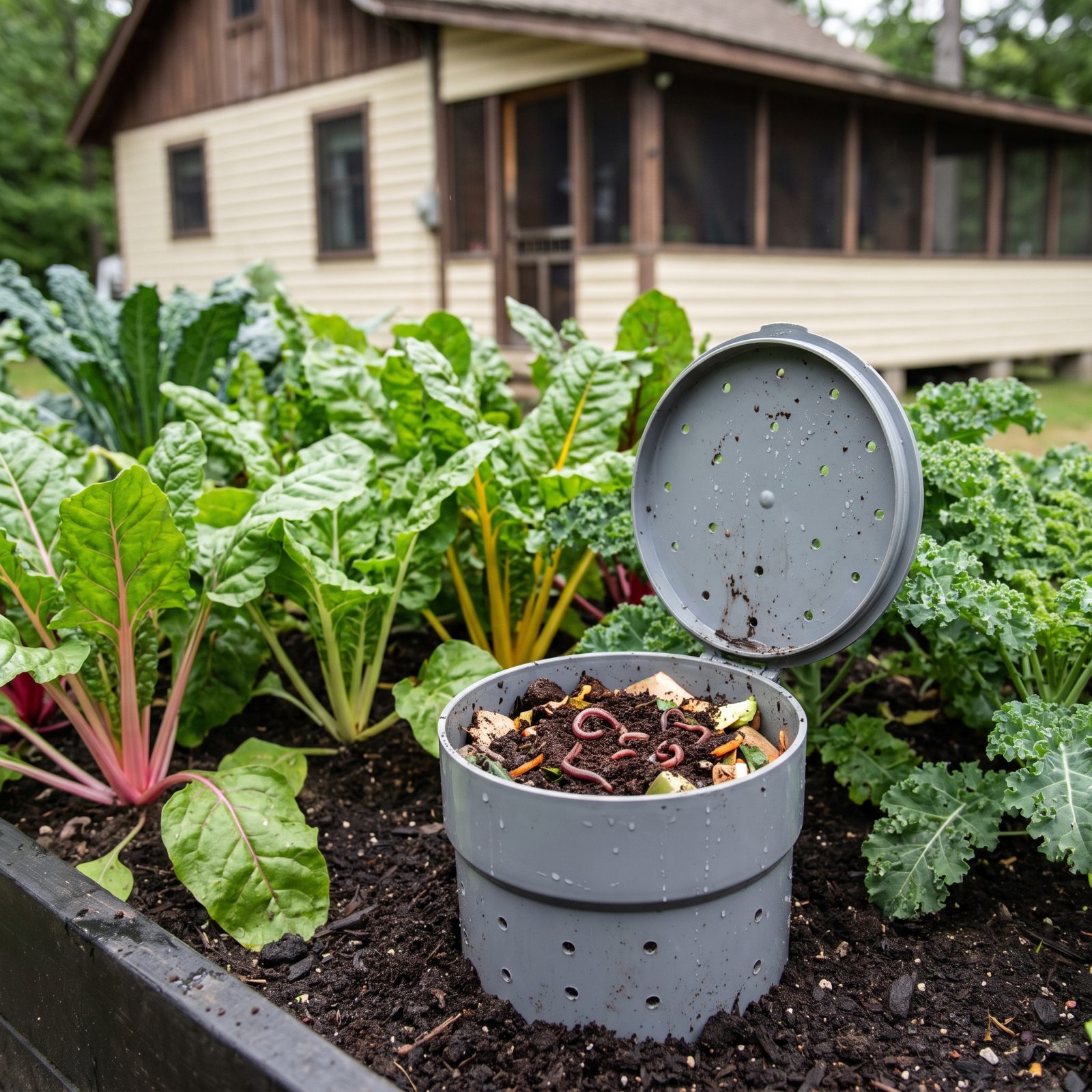
Take a length of pipe, drill it full of holes, and sink it into the middle of a bed. Fill it with kitchen scraps. Worms move in through the holes, eat, and spread their castings sideways through the soil exactly where your plants are rooting. You’re feeding the bed from the inside out.
Here’s the part almost nobody mentions: it only works in warm soil with living worms already present or added. Drop scraps into a cold, dead bed and they just sit there and sour. Stick to vegetable peelings, coffee grounds and crushed eggshell. No meat, no citrus, and go easy on the onion.
32. A Keyhole Bed With a Compost Basket at Its Center
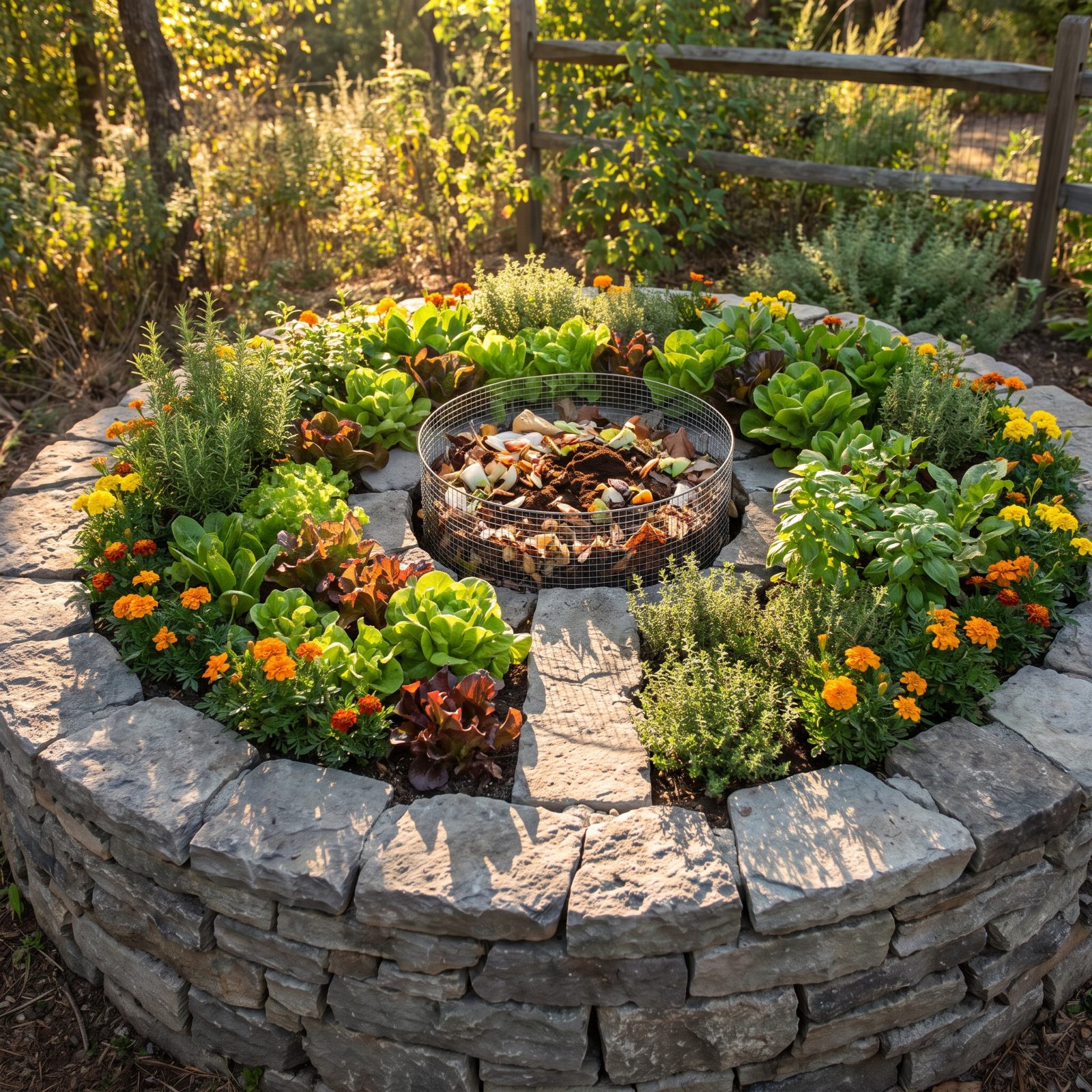
The design came out of Lesotho in the 1990s, built for dry ground and dry seasons. Picture a round raised bed with a narrow stone slab set across the planting ring so you can reach the middle, where a mesh basket holds compost. You water the basket, and the nutrients and moisture leach outward into the surrounding soil.
It solves two problems a standard bed can’t. You never step on your growing soil, and your compost feeds the plants on site instead of waiting in some far corner of the yard. The stone or brick walls soak up daytime heat and give it back overnight, stretching the season at both ends.
31. A Beetle Bank That Gives Ground Predators a Permanent Home
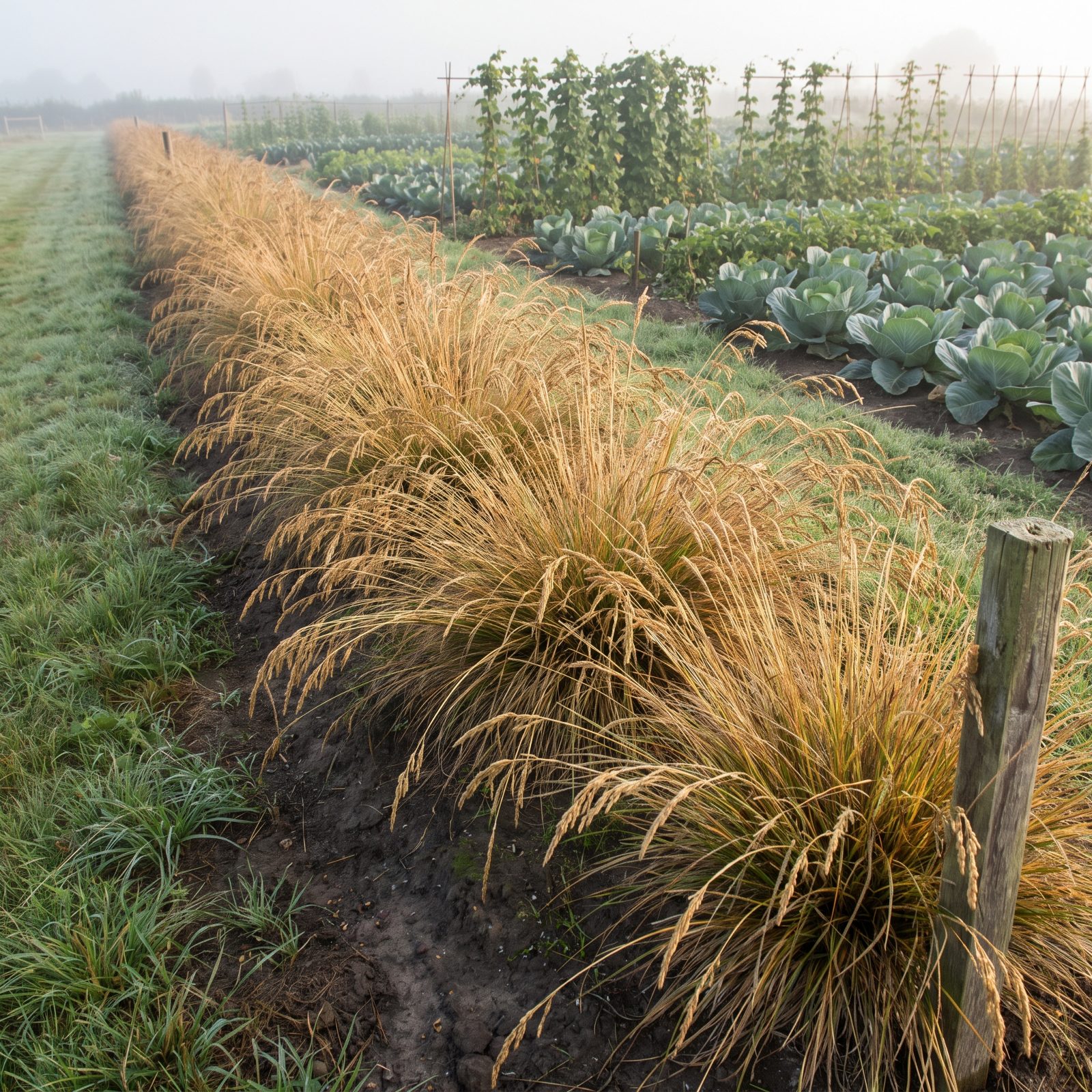
A long, low ridge of soil planted with clumping grasses, set through or beside your growing area. That’s all it is. The dense dry grass gives ground beetles, rove beetles and spiders somewhere to overwinter and breed, and these are the predators that eat aphids, slug eggs and cutworm larvae while you sleep.
UK farm trials have found banks like these can harbour big overwintering populations of predatory beetles. But the payoff is slow. Year one you’re mostly growing grass and doubting yourself. By year three the pest pressure on nearby crops drops in a way you can actually see.
30. A Dead Hedge That Contains Prunings and Shelters Wildlife
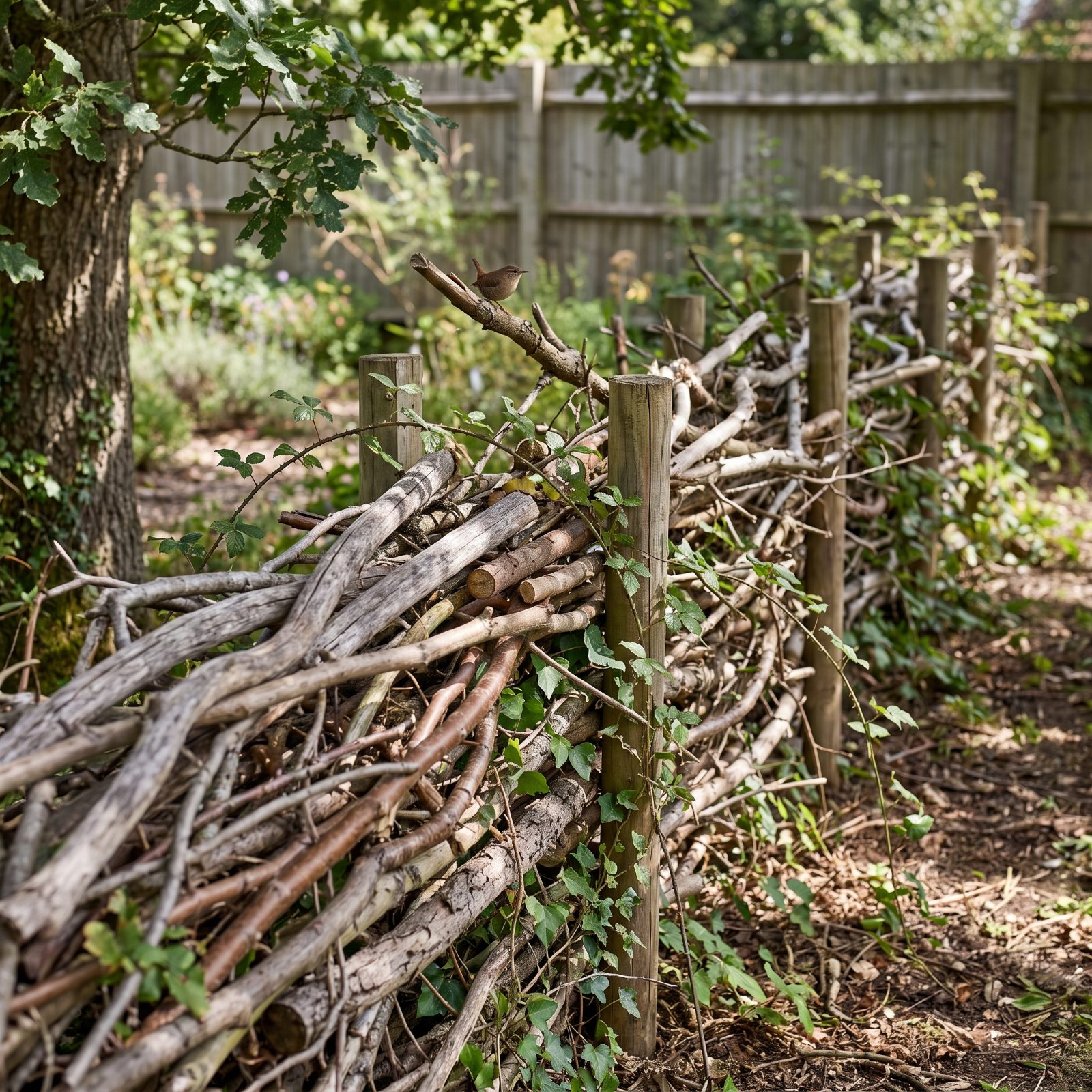
Two rows of stakes, a gap between them, and every prunings pile you’d otherwise haul to the curb stacked inside. A dead hedge is where garden waste goes to become useful. It’s a boundary, a windbreak, and a five-star hotel for wrens, hedgehogs, slow worms and overwintering insects all at once.
No chipper. No burning. No weekend green-waste runs. The pile rots down from the bottom, so you keep topping it up for years, and a section ten feet long swallows an astonishing volume of brush. People walk past them in old English gardens and assume they’re just untidy. Wrong. They’re a system.
29. A Stumpery That Converts Old Wood Into a Fern Habitat

The Victorians invented this one, and it’s having a comeback for good reason. You take old stumps, logs and root balls, arrange them in a damp shady spot, often upturned so the roots reach skyward, and plant ferns, hostas and woodland natives among them.
It answers a question every gardener eventually faces: what do you do with the shady, wet, miserable corner where nothing grows and nothing wants to? You stop fighting it. Rotting wood holds moisture, feeds fungi, and shelters beetles, newts and toads. The ferns love the cool damp.
28. A Roof-Tile Toad Shelter for Natural Pest Control
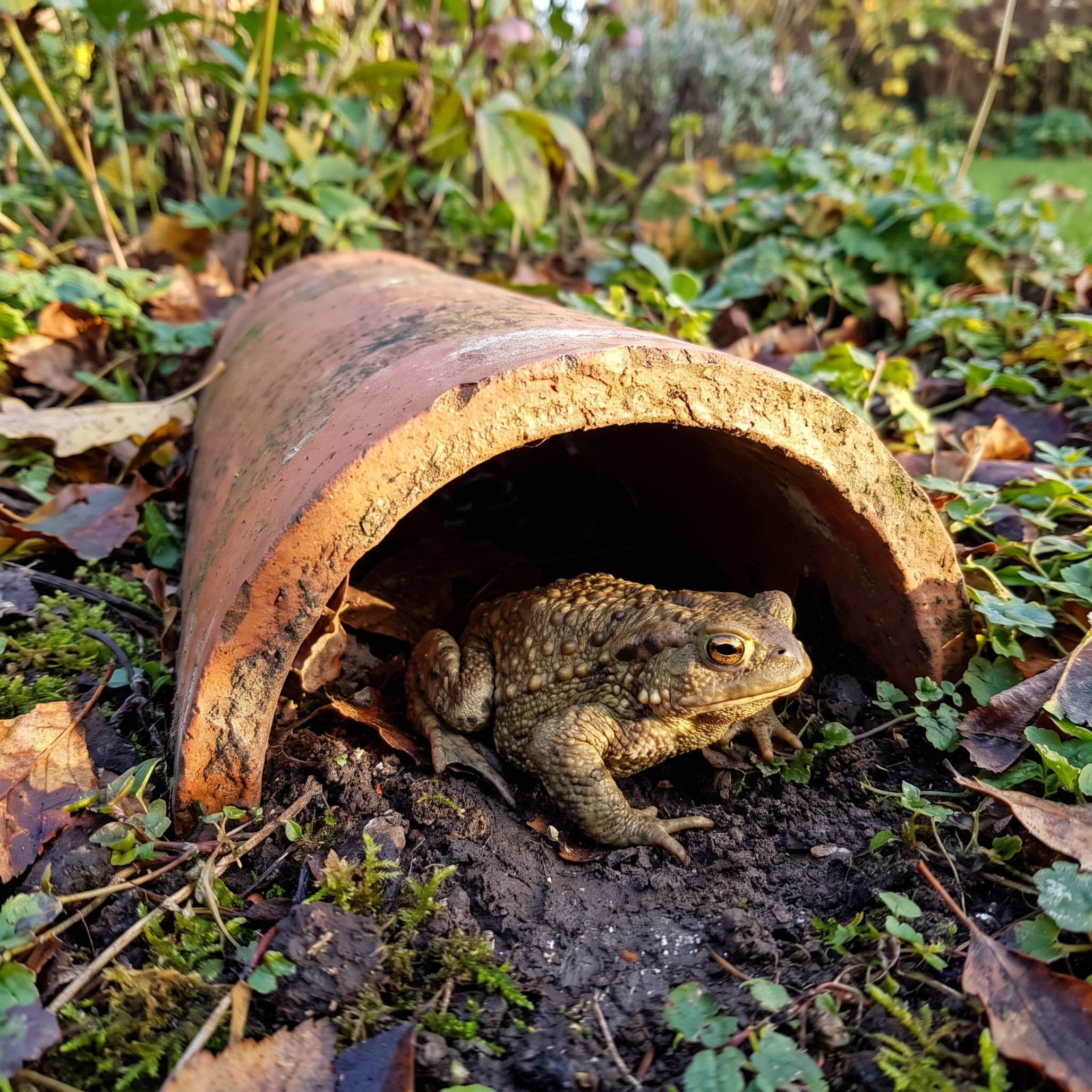
Half a broken roof tile, or an upturned chipped flowerpot with a doorway knocked out, tucked somewhere cool, damp and shaded. You’ve just built a toad house. A single resident toad works through an enormous quantity of slugs, beetles and insect larvae over a season.
Place it near a water source and out of the hot sun. Skip the cute painted ceramic ones sold in garden centers; toads want cool and dim, not decorative. And don’t tidy the corner where it lives. A little leaf litter and a nearby log pile seals the deal.
27. A Lidded Comfrey Barrel for Making Liquid Plant Feed
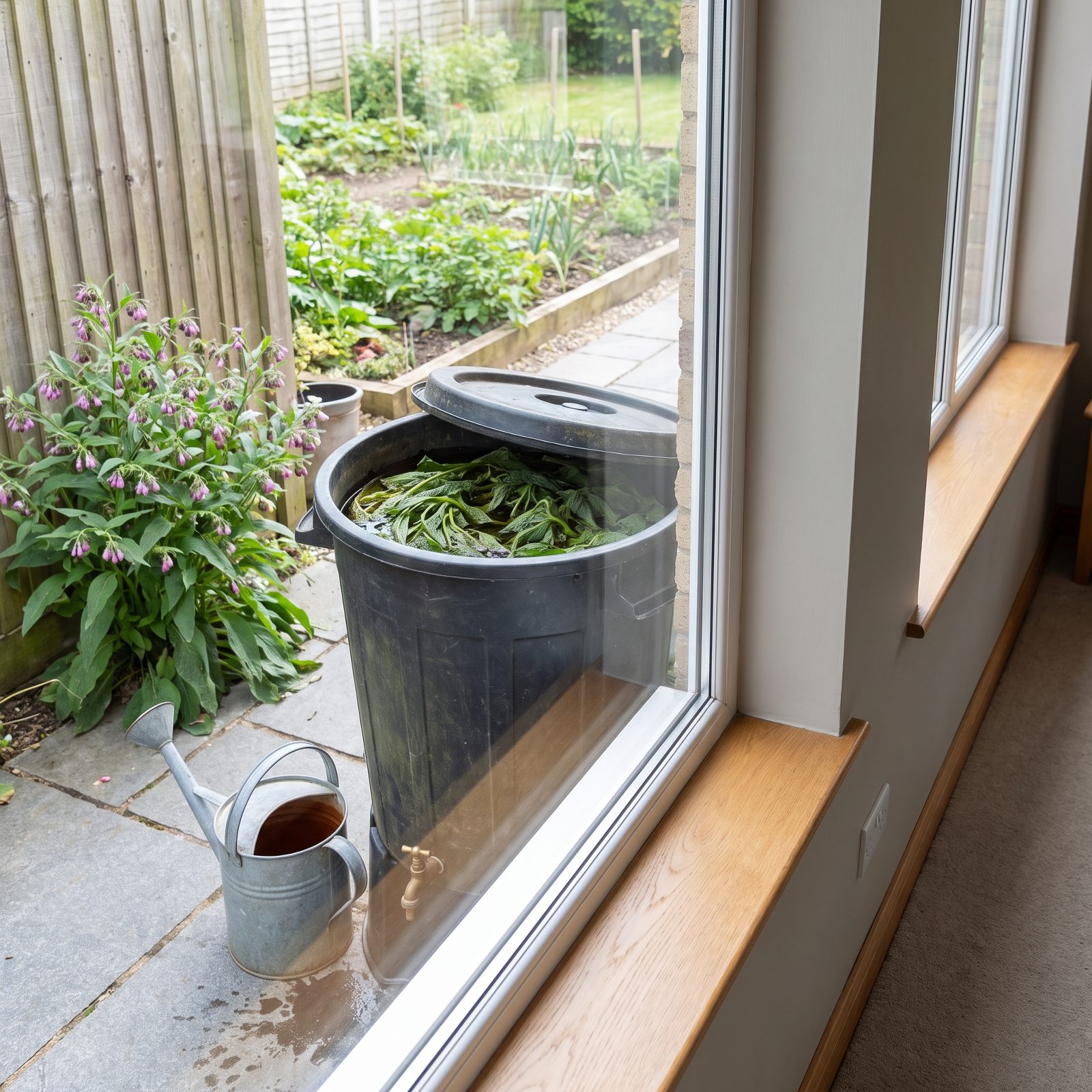
Comfrey roots dive deep and mine minerals most plants never reach, especially potassium. Cut the leaves, pack them in a barrel, weigh them down, and let them rot into a thick dark liquid you dilute and pour on tomatoes, squash and anything that flowers and fruits.
Fair warning about the smell. It is genuinely foul, the kind that clears a patio, which is the whole reason for the lid. Plant the sterile Bocking 14 variety. It won’t seed itself everywhere and turn into a thug you’ll fight for a decade.
26. A Bucket of Oiled Sand That Cleans and Protects Hand Tools

Fill a bucket with coarse sand and work in enough mineral or linseed oil to lightly dampen it. Every time you finish with a trowel or secateurs, plunge the blade in and out a few times. The sand scours off soil and rust while the oil coats the steel against moisture.
It’s the single cheapest habit that keeps an edge keen and the rust away for decades. Most people let good steel pit and seize in a shed over one wet winter, then go buy replacements. A bucket by the door fixes all of that for the price of a bag of sand.
25. A Weatherproof Mailbox Used as a Garden Tool Cache
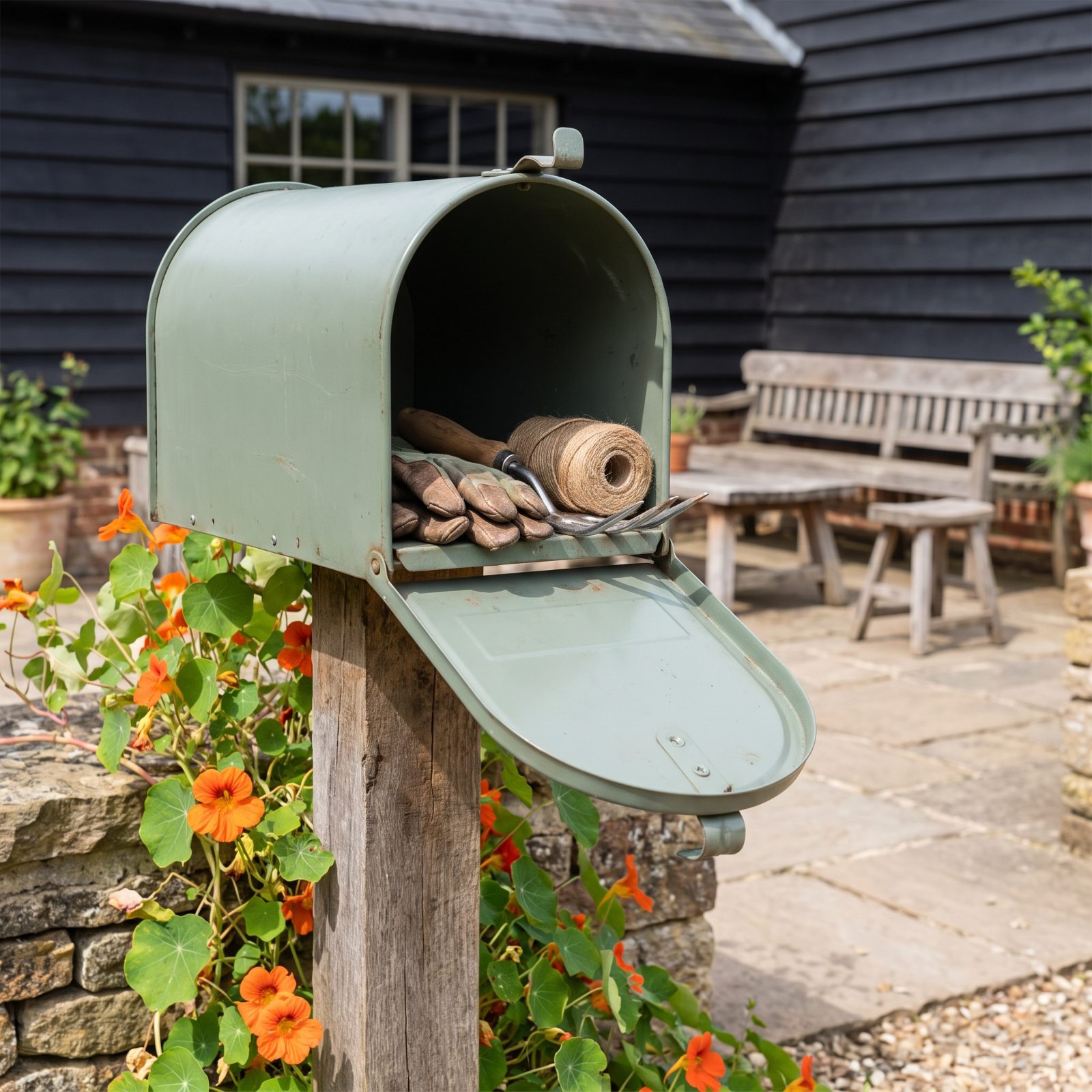
A galvanized or painted mailbox, mounted on a post right where you work, keeps your trowel, gloves, twine and labels dry and ready. No more trudging back to the shed four times. No more leaving the good secateurs out in the rain because you couldn’t be bothered to return them.
Sounds like a gimmick until you’ve used one. The door shuts out rain and squirrels, the flag doubles as a twine hook, and you’ll catch yourself finishing small jobs you used to put off. Mount a second one at the far end of a long plot. Future you says thanks.
24. A Potting-Bench Sink That Drains Into a Watering Can
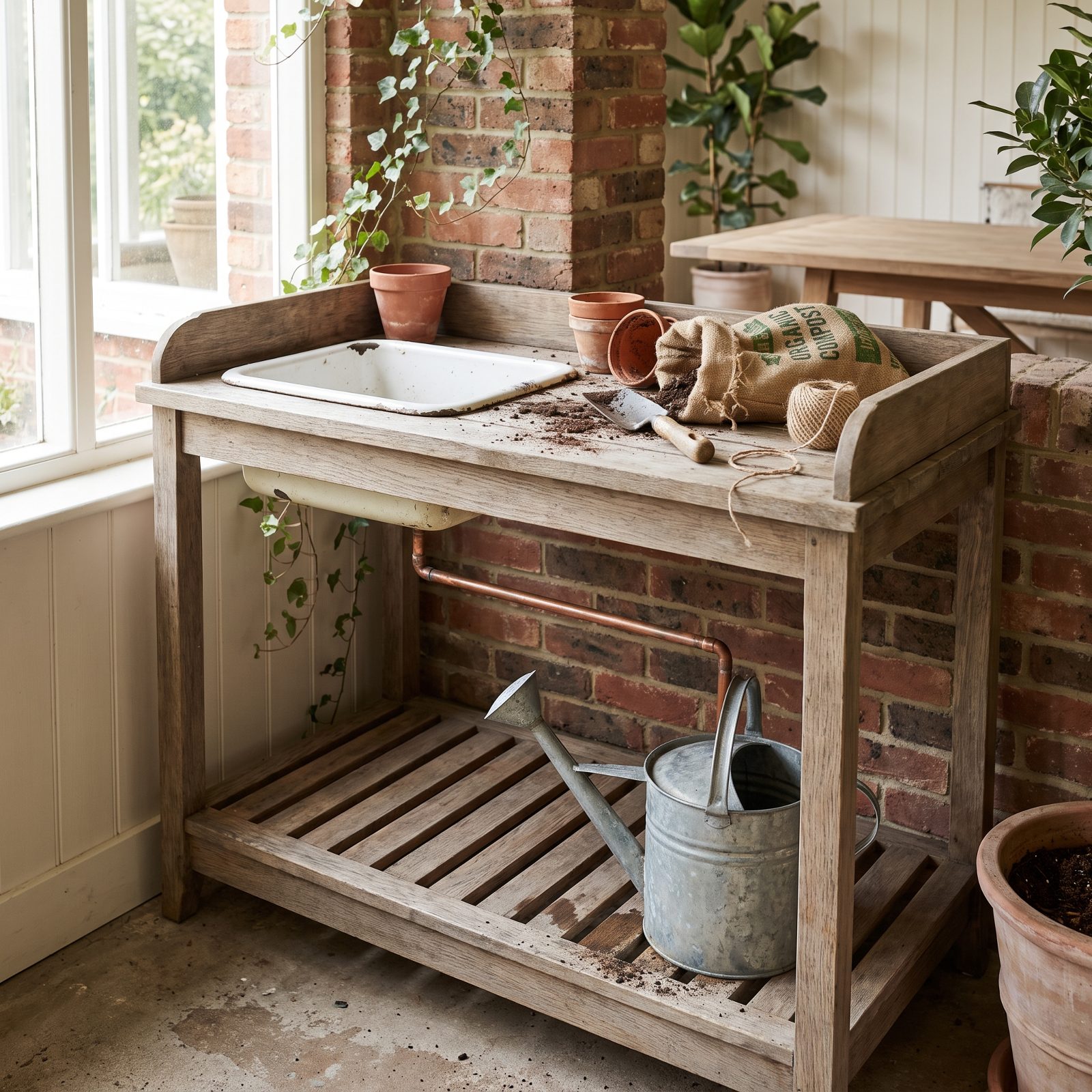
Most potting benches waste the one thing a garden always wants. You rinse roots, soak seed trays, splash a bit cleaning your hands, and all of it vanishes down a drain into nowhere.
So plumb that drain into a watering can instead. The sink empties straight into the can below, and by the time you’ve finished a morning’s potting you’ve captured a full load of weak, nutrient-flecked water ready for thirsty seedlings. No tap. No hose dragging across the lawn.
It’s a crude bit of plumbing and it works better than it has any right to — an old enamel sink, a stub of pipe, a can underneath. Honestly the hardest part is remembering to swap the can before it overflows all over the shelf.
23. A Hügelkultur Mound Built Around Buried Woody Debris
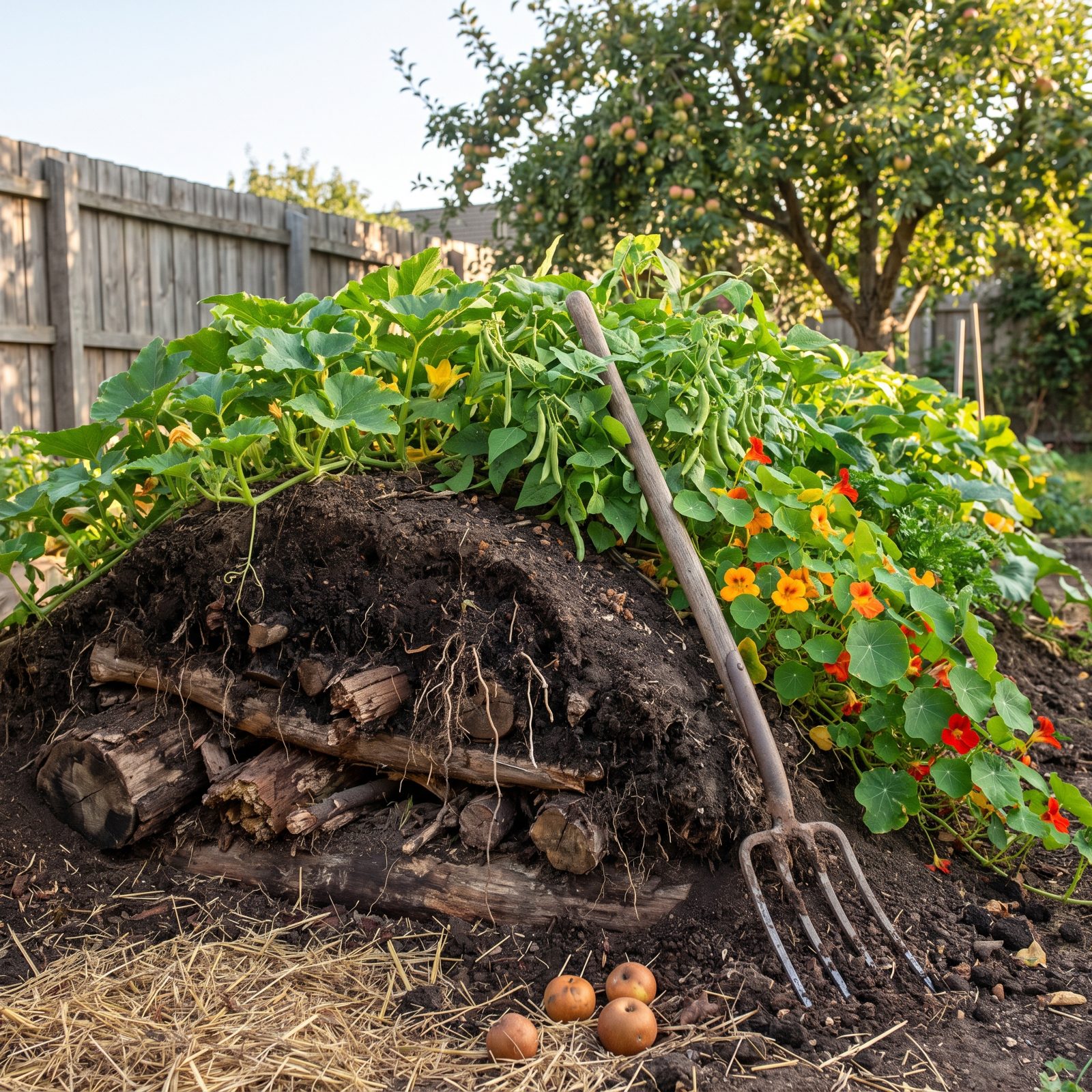
Burying wood sounds like a mistake. It isn’t. A hügelkultur mound stacks logs, branches, and prunings at its core, then buries the lot under soil and compost, and as the wood rots it turns into a slow-release sponge that holds water and feeds roots for years.
The payoff shows up in a dry August. Flat beds crack and wilt; a well-built mound stays damp deep down because the decaying timber works like a buried reservoir. You water far less. And all that garden debris you’d have hauled off to the tip becomes the thing feeding your best squash.
22. A Wicking Bed With a Water Reservoir Under the Soil
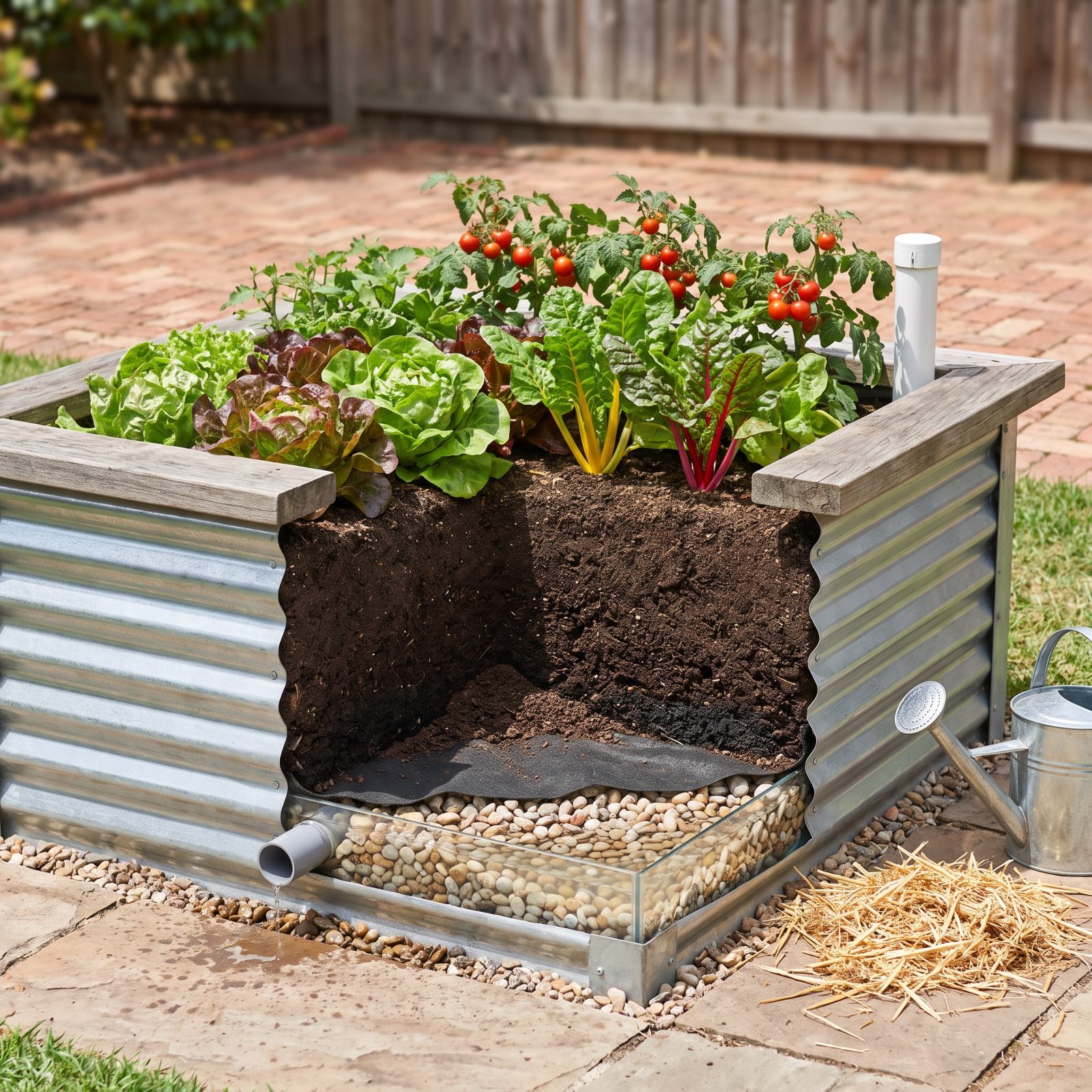
You’ve watched tomatoes flag in a heatwave the day after you watered them. A wicking bed fixes the timing. Water sits in a gravel reservoir below the soil, and the roots draw it up from underneath as they need it, where the sun can’t steal it first.
Top up through a fill tube maybe once a week in high summer instead of every single evening, and an overflow pipe stops you drowning the roots. For anyone who travels — or simply forgets — this is about as close as a bed gets to watering itself.
21. A Terracotta Rhubarb Forcer for Earlier, Sweeter Stems
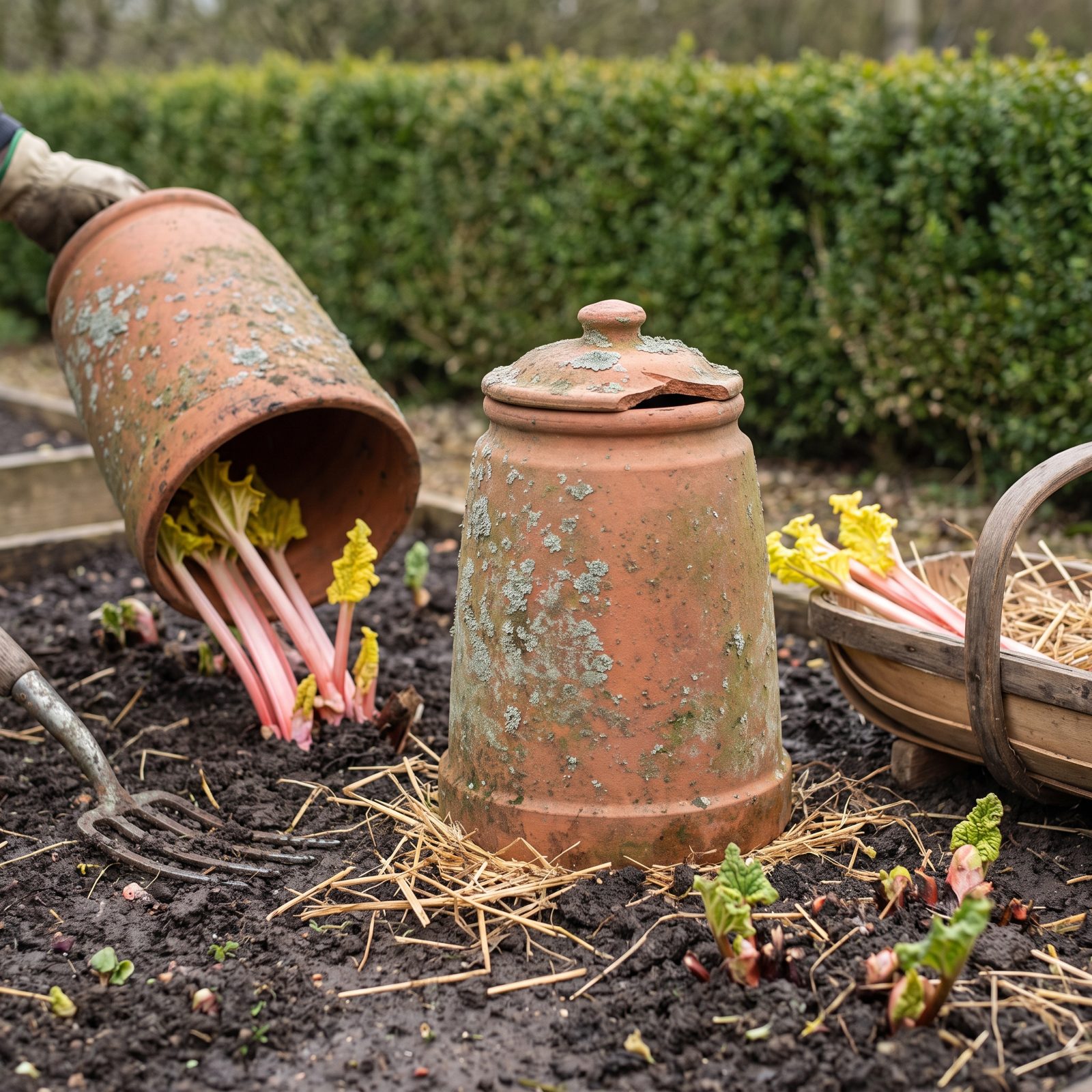
A terracotta forcer looks like garden theatre — a great clay bell plonked over a plant. It earns its keep. Set over a dormant rhubarb crown in late winter, it blocks light and traps a little warmth, and the plant stretches toward a door that isn’t there, producing long, tender, pale pink stems weeks ahead of the open-grown crop.
Forced rhubarb comes out noticeably sweeter and less stringy too, because the stems grow fast in the dark without toughening up. The trade-off: force a crown and it needs a full season off afterward to recover. Rotate between plants and you get the early treat without exhausting any single one.
20. A Water-Filled Plant Teepee That Buffers Sudden Cold
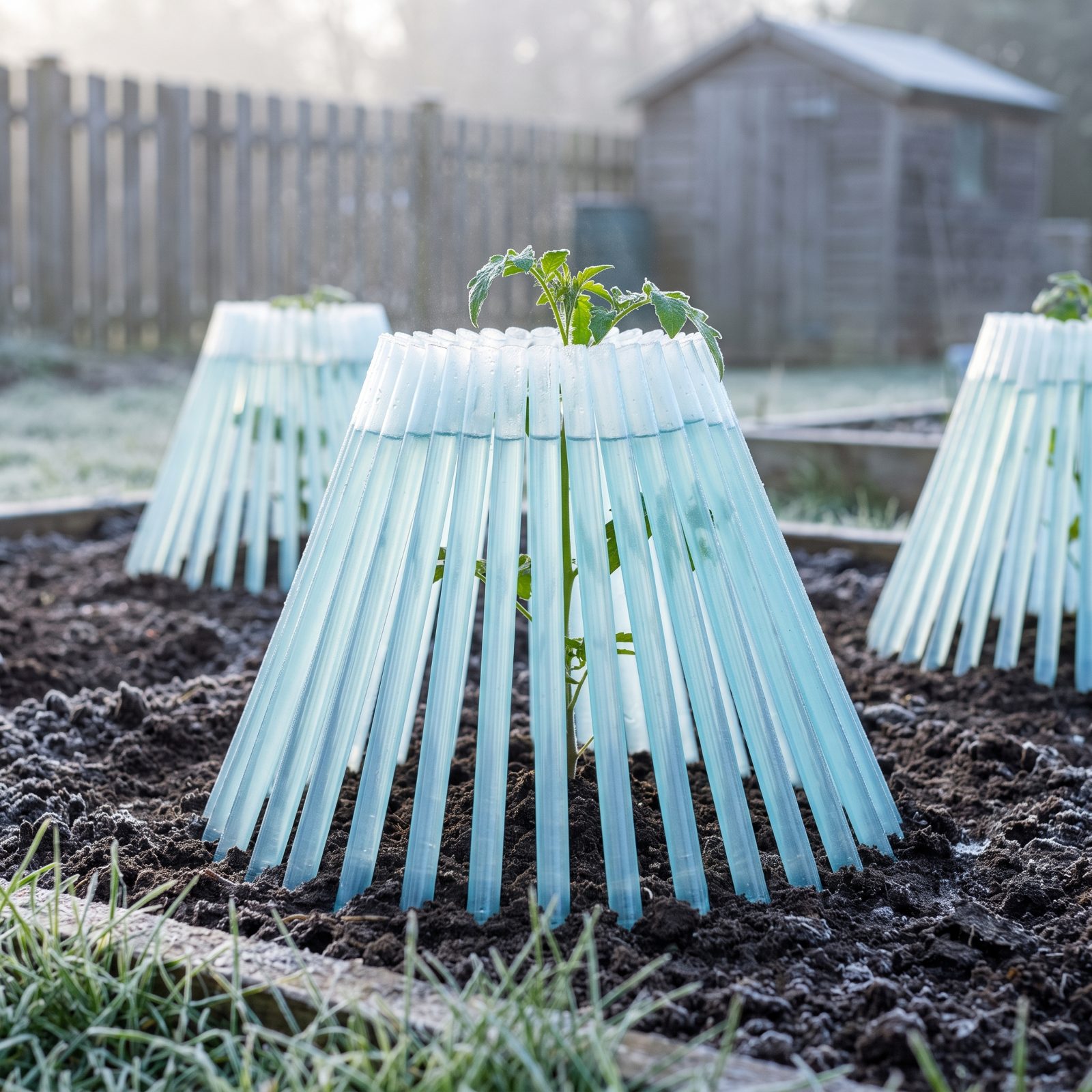
Cold snaps don’t kill tender plants slowly. They do it in one bad night. A water-filled teepee — a cone of tubes you fill from the hose — wraps a young plant in a thermal buffer that smooths out the swing.
Water gives off heat as it cools, so the tubes shed warmth overnight and hold the plant a few degrees above the killing point, then warm up again by day to give seedlings a head start. It buys you two or three weeks of early planting, which in a short season is the whole difference between a July tomato and an August one.
19. Pulley-Mounted Hanging Baskets That Lower for Watering
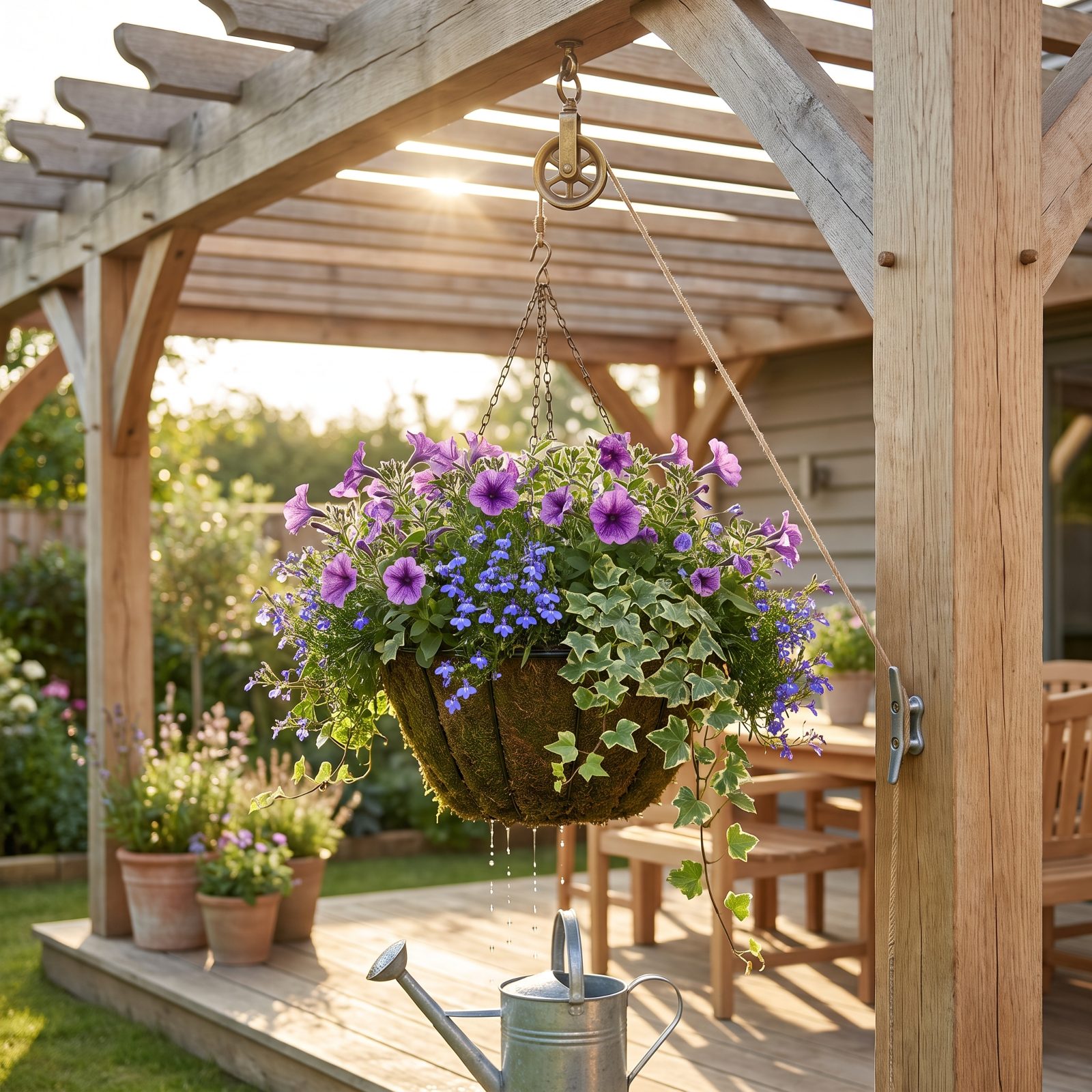
Hanging baskets dry out faster than anything else in the garden, and they’re always just out of reach. You end up on tiptoe with a wobbling can, half the water hitting your sleeve.
Mount the basket on a pulley with a cleat on the post. Unwind the cord, the basket drops to chest height, you water it properly, then haul it back up — takes seconds. Your back thanks you, the roots actually get soaked instead of a token splash, and you’ll stop quietly resenting the things by mid-July.
18. A Bog Garden Connected to the Pond Overflow
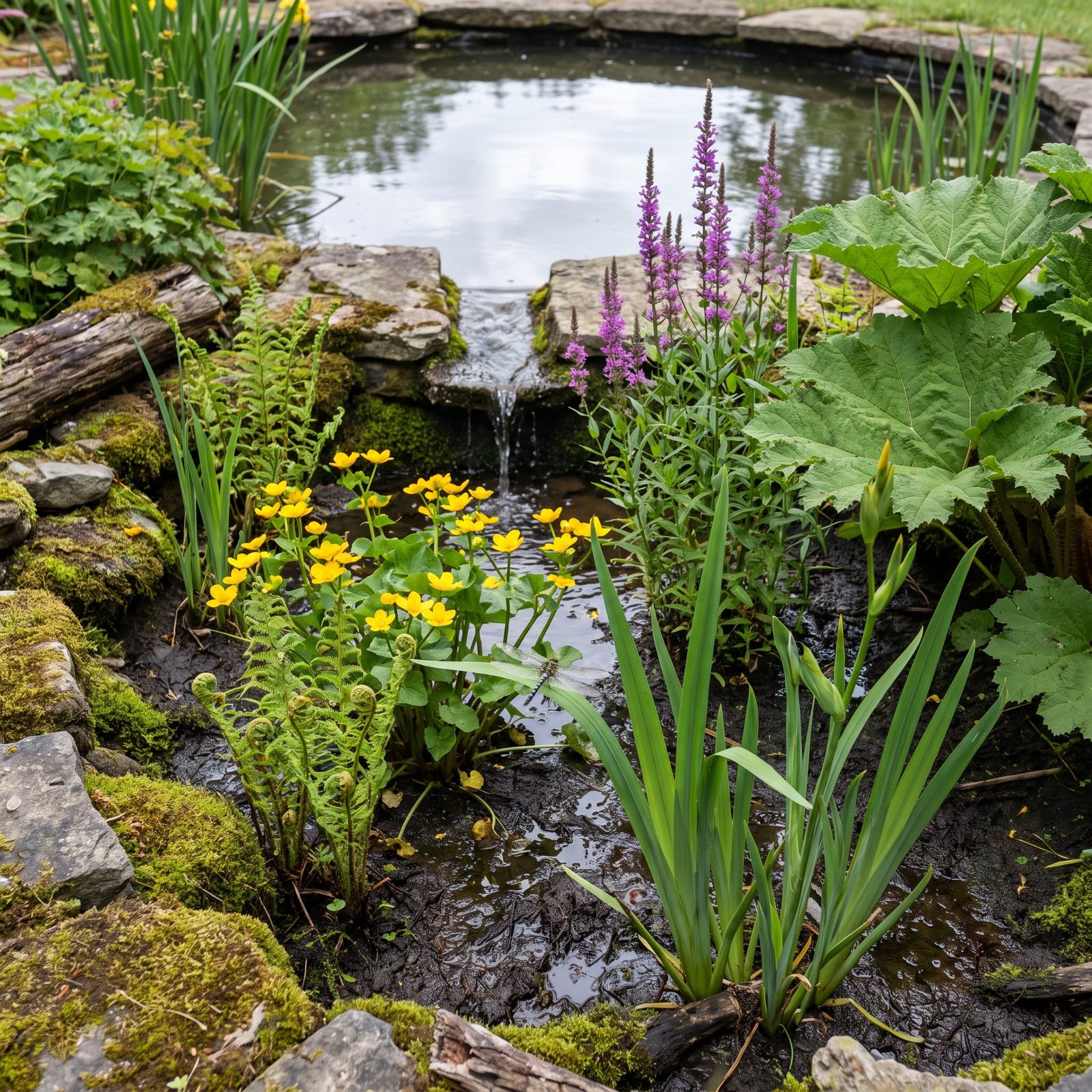
A pond that overflows in heavy rain is a nuisance. Pipe that overflow into a shallow, lined depression beside it and the nuisance becomes a bog garden — the richest plant habitat most backyards never get.
Permanently damp ground grows things nothing else will: marsh marigold, loosestrife, big-leaved rodgersia, native ferns. It mops up runoff that would otherwise flood the lawn. And the wet margin pulls in frogs, dragonflies, and the small hunting birds that follow them.
Best of all, it looks after itself. Every rainfall tops the bog up, so you’re never hauling water to the one patch of garden that needs it most.
17. A Properly Drilled Mason-Bee House With Replaceable Nest Tubes
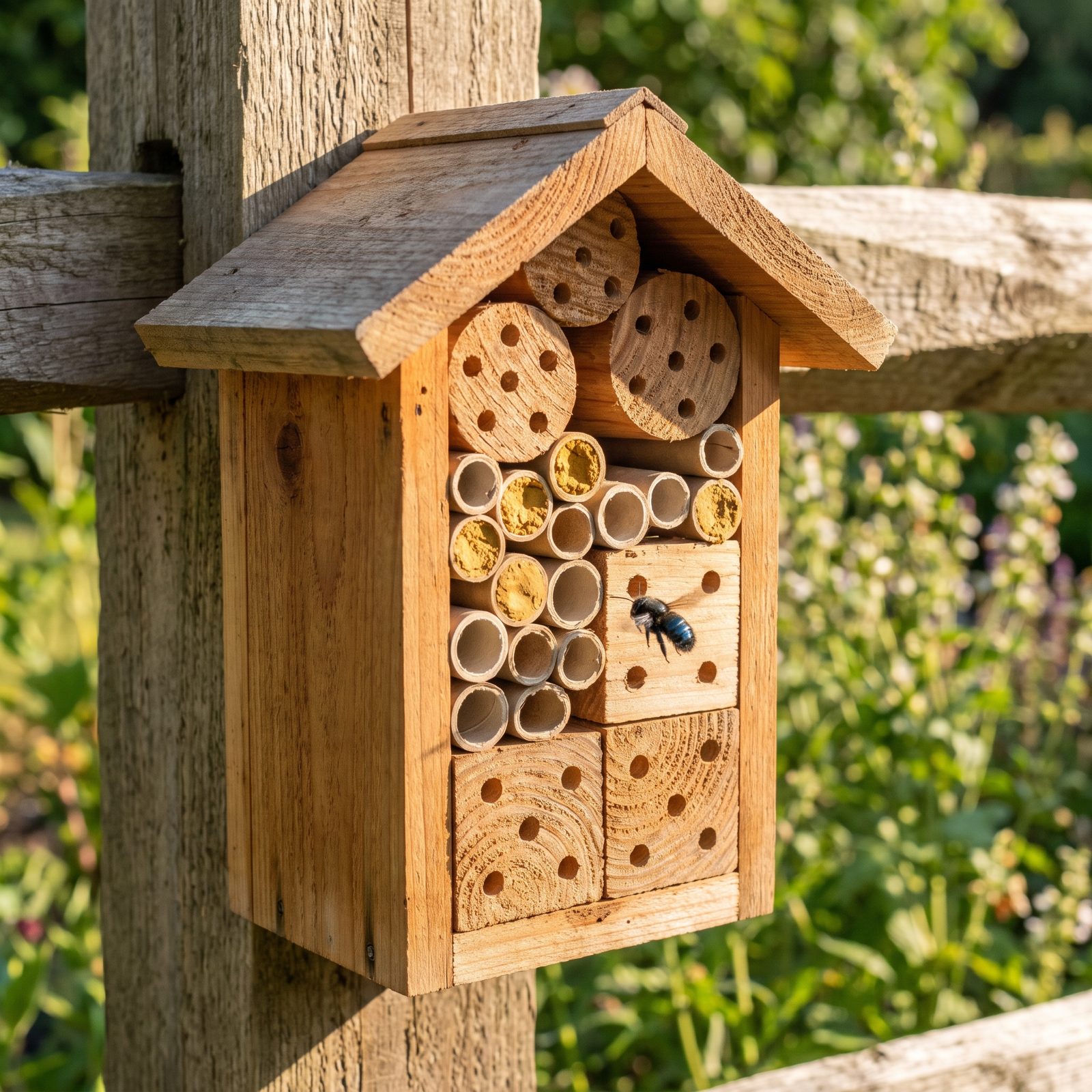
Most bee houses sold in garden centres are decorative and a bit useless. The holes are too few, too shallow, drilled rough so they splinter, and the cheap bamboo splits and rots. Mason bees are fussy tenants, and they notice.
A good one has plenty of deep, clean-drilled holes around 8 mm across, faces the morning sun, and sits where rain can’t drive straight in. The detail that matters most, and that most houses skip entirely, is replaceable tubes. Pull and clean them yearly — otherwise parasitic mites and fungus build up and quietly wipe out the colony you worked so hard to attract.
16. A Hedgehog Passage Cut Into the Base of a Fence
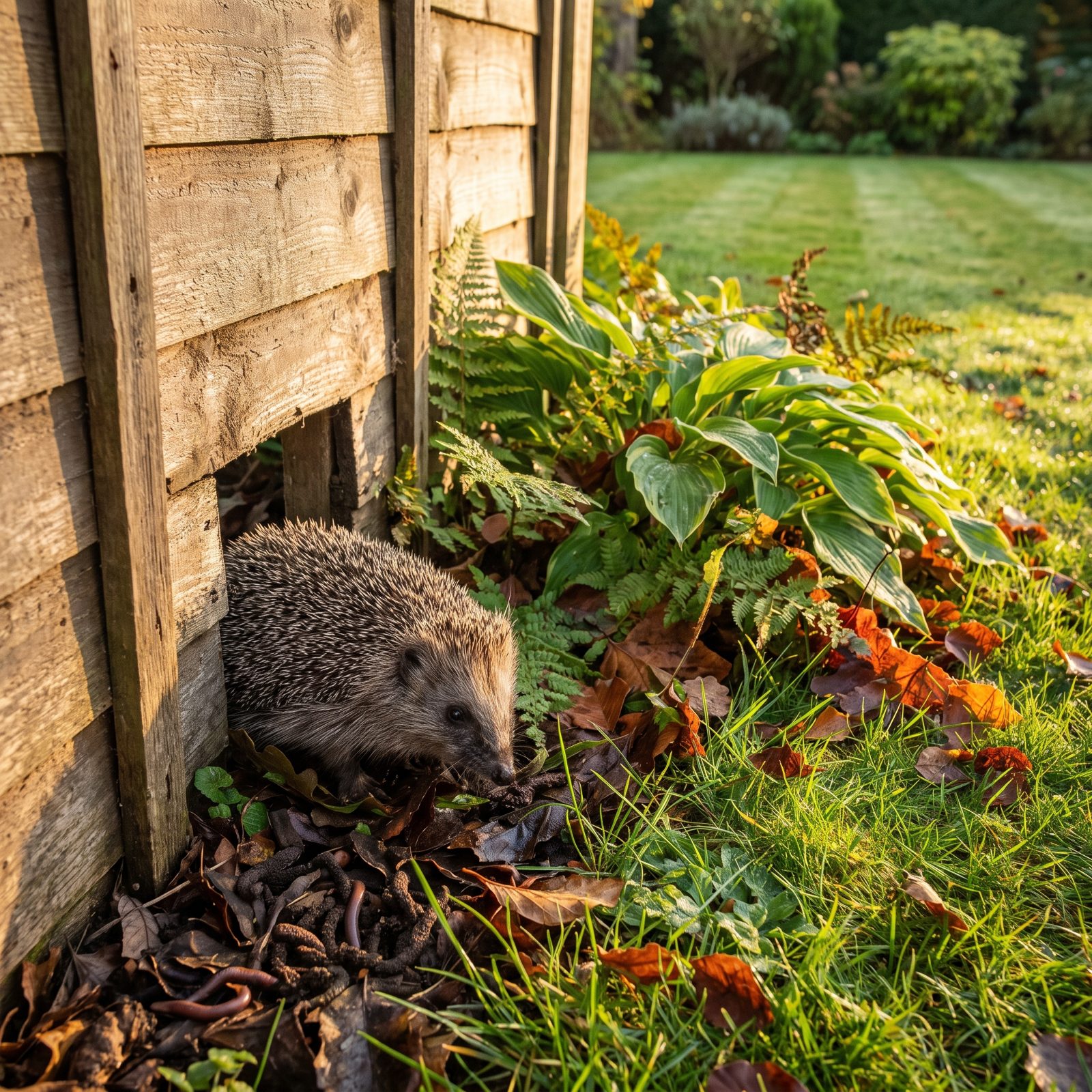
A hedgehog can roam over a mile in a single night hunting slugs and beetles. Solid fences chop a neighborhood into dead ends, and a garden it can’t leave is a garden it can’t feed in.
Cut a gap about five inches square at the base of the fence — big enough for a hedgehog, too small for most pets. Suddenly your plot connects to next door’s, and theirs to the one beyond, and the whole street turns into one foraging ground.
Those same hedgehogs then spend their nights eating the slugs chewing your seedlings. Free pest control that trundles in after dark and asks for nothing but a way through.
15. A Simple Raptor Perch Overlooking a Vole-Prone Plot

Voles will quietly ruin a vegetable plot, gnawing roots and bark from below where you never see them until the damage is done. Poison just moves up the food chain and takes out the very predators that would eat them. There’s a better tool, and it’s a stick.
Plant a tall post with a crossbar at the edge of the plot. Hawks and owls hunt by sitting and watching, and open ground with no vantage point goes unhunted. Give them a perch over the vole runs and they’ll pull shifts you never scheduled.
14. A Motion-Activated Sprinkler That Redirects Browsing Animals
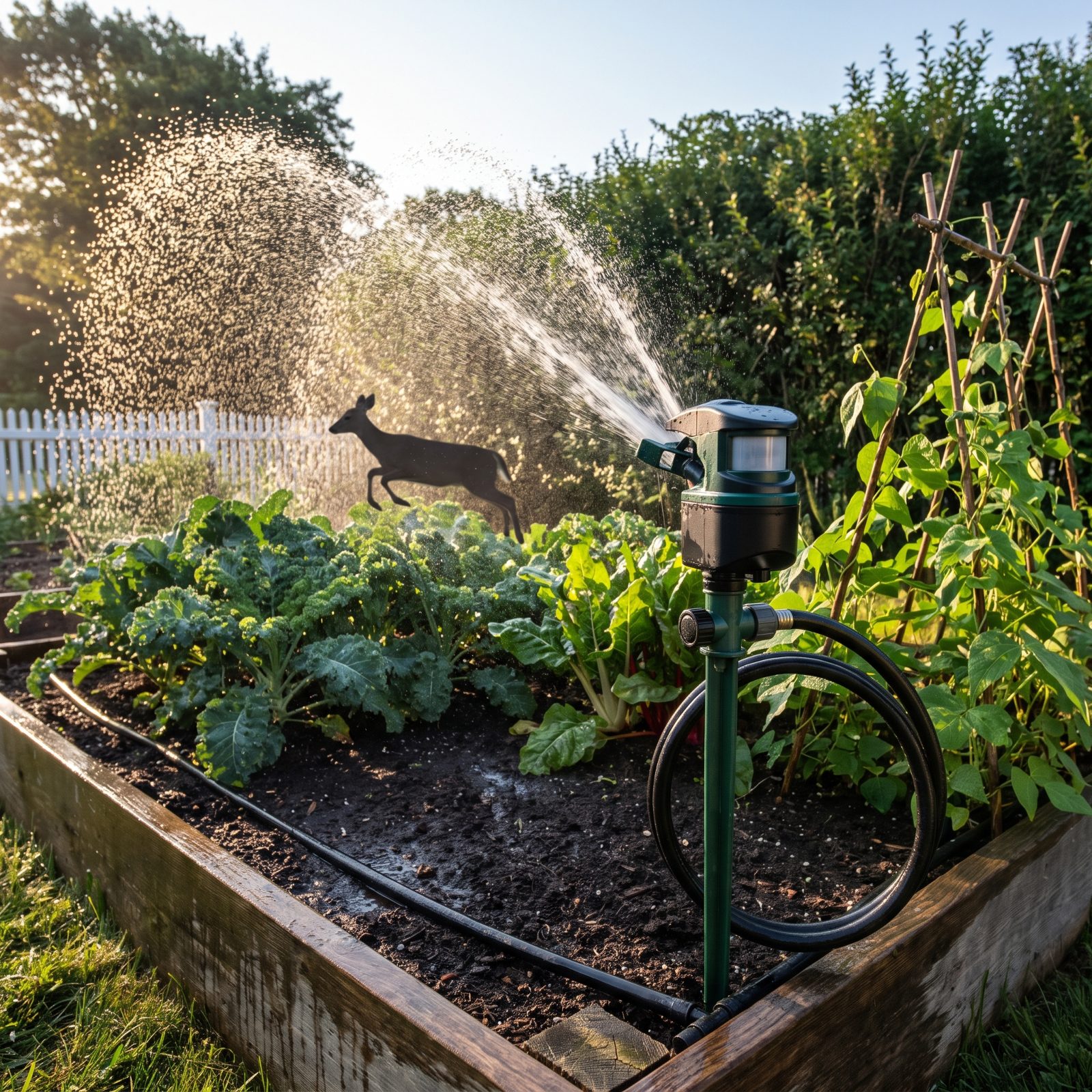
Nobody warns you that deer and raccoons learn your habits faster than you learn theirs. Plastic owls, hung soap, blood meal — all of it works for about a week until the animals call your bluff. A motion-activated sprinkler doesn’t bluff.
It fires a sharp burst of water the instant something crosses its sensor, and the surprise does the work rather than the wetness. Animals hate being startled far more than they hate getting damp. Because the trigger feels random from their side of things, they never settle into a routine around it.
Expect to pay somewhere in the range of a nice dinner out. Move it every few days so nothing gets wise to the arc.
13. A Low-Voltage Electric Slug Fence Around a Raised Bed
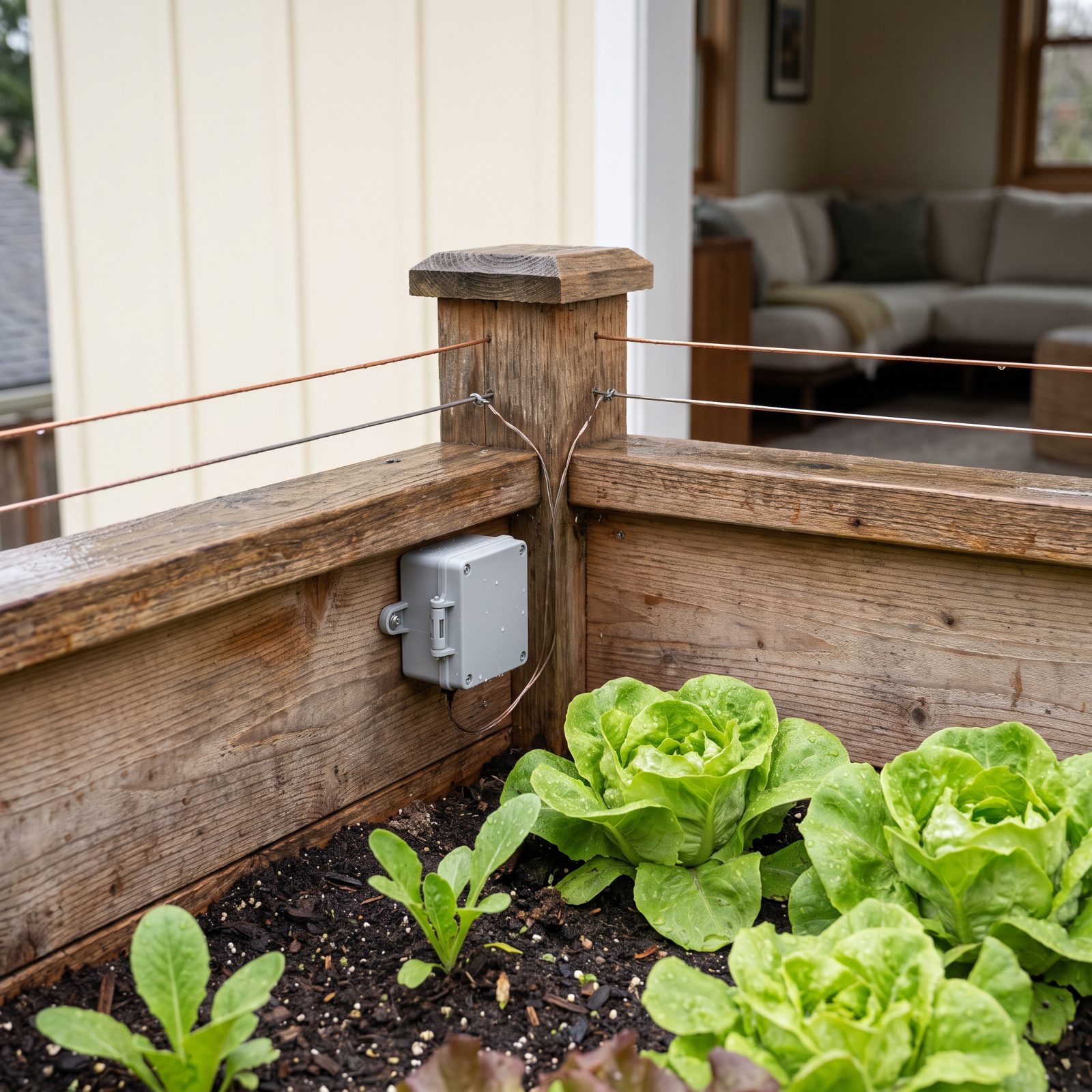
Slugs will ignore every trap you set and march straight for the seedlings you actually care about. A low-voltage slug fence stops them cold at the border.
It runs a tiny, harmless charge along two strands of wire strung through the corner post, running just above the top rail of the bed. A slug that climbs up and touches both strands completes the circuit, gets a mild zap it finds deeply unpleasant, and reverses course. No chemicals. No beer-filled saucers to empty, no squished bodies on your morning rounds.
One battery pack lasts a whole season. Set it up once and your lettuce finally has a fighting chance.
12. A Corkscrew Compost Aerator That Opens Dense, Airless Piles
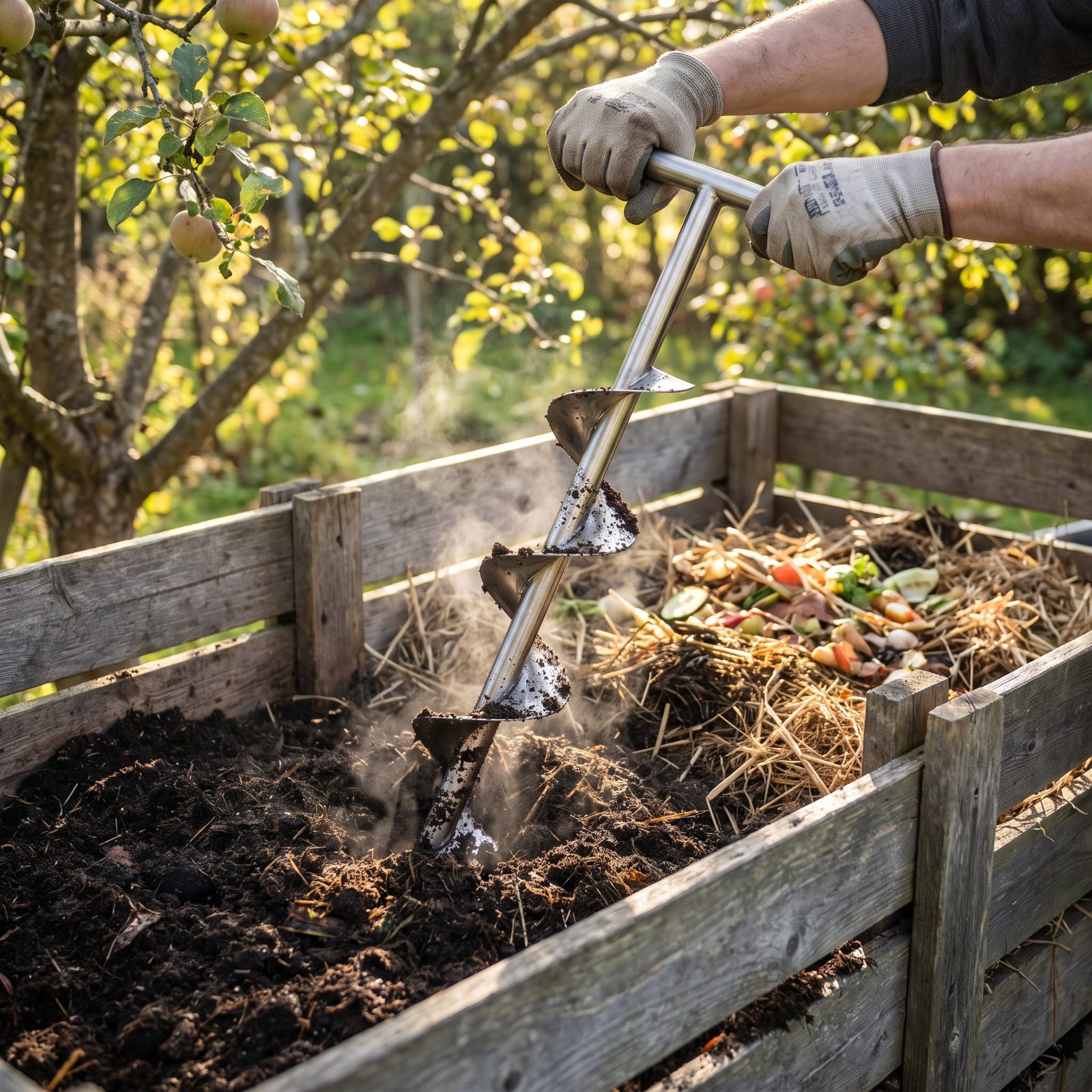
Turning a compost pile with a fork is a workout you didn’t sign up for, which is why most people skip it and end up with a cold, sour, airless mess. A corkscrew aerator changes the physics of the job.
You push it in, twist, pull. The spiral blade drags a plug of material up and leaves a shaft of air behind it, oxygen gets in, the microbes wake up, and the pile heats back up within a day or two.
Honestly, the smell test tells you everything. A pile that reeks of rotten eggs is starving for air, and ten minutes with one of these fixes it.
11. A Wire Leaf-Mold Cage That Stores Autumn Leaves Neatly
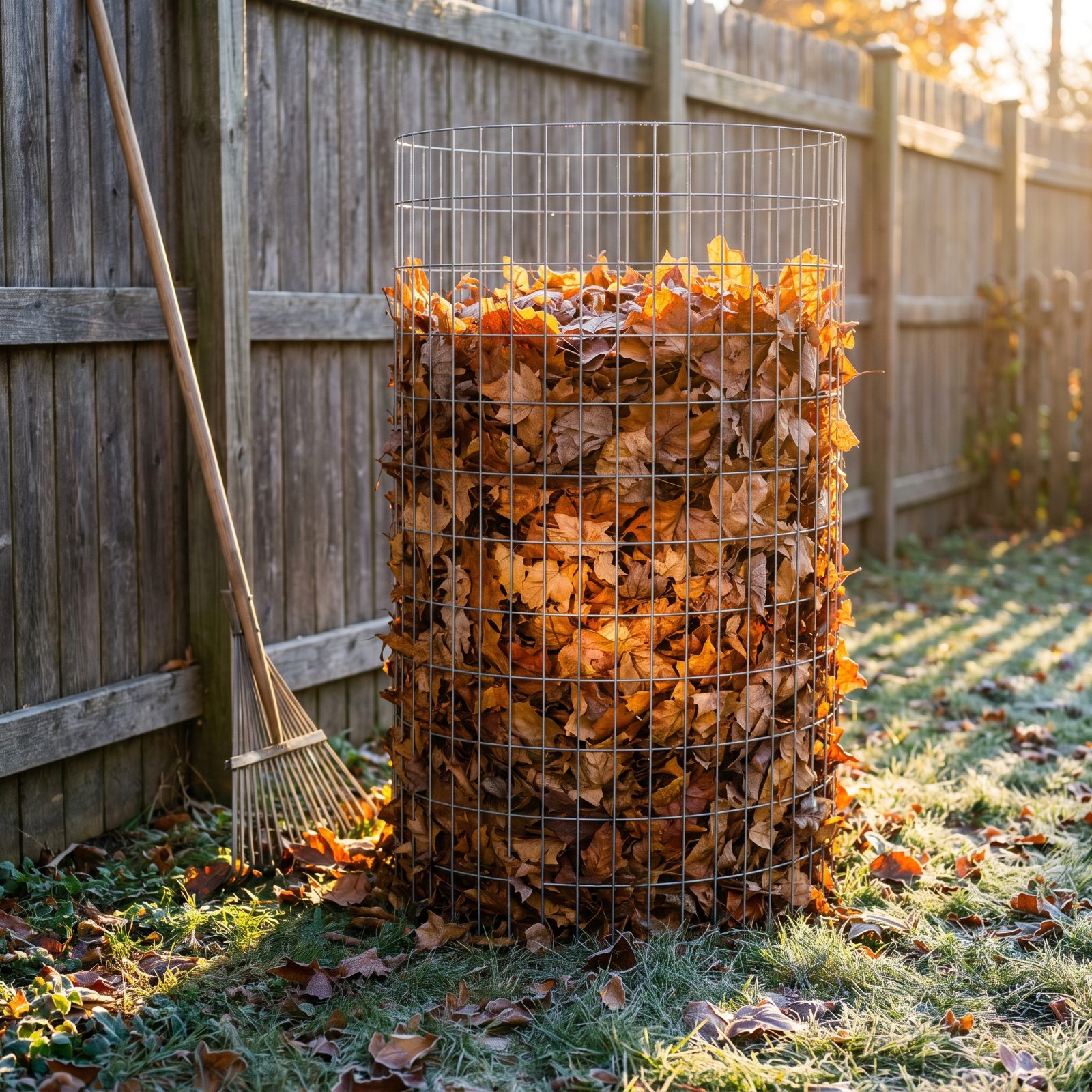
Leaves are the one free soil amendment that falls out of the sky, and most people bag them up and set them on the curb. A simple wire cage turns that waste into something precious.
Pile leaves into the cylinder, water them down, and walk away. Leaf mold doesn’t need turning or balancing the way compost does. Fungi handle the slow work instead of bacteria, and in a year or two you’ve got a dark, crumbly, sweet-smelling conditioner that holds water like a sponge.
10. A Hand-Cranked Rotary Sieve for Fast Compost Screening
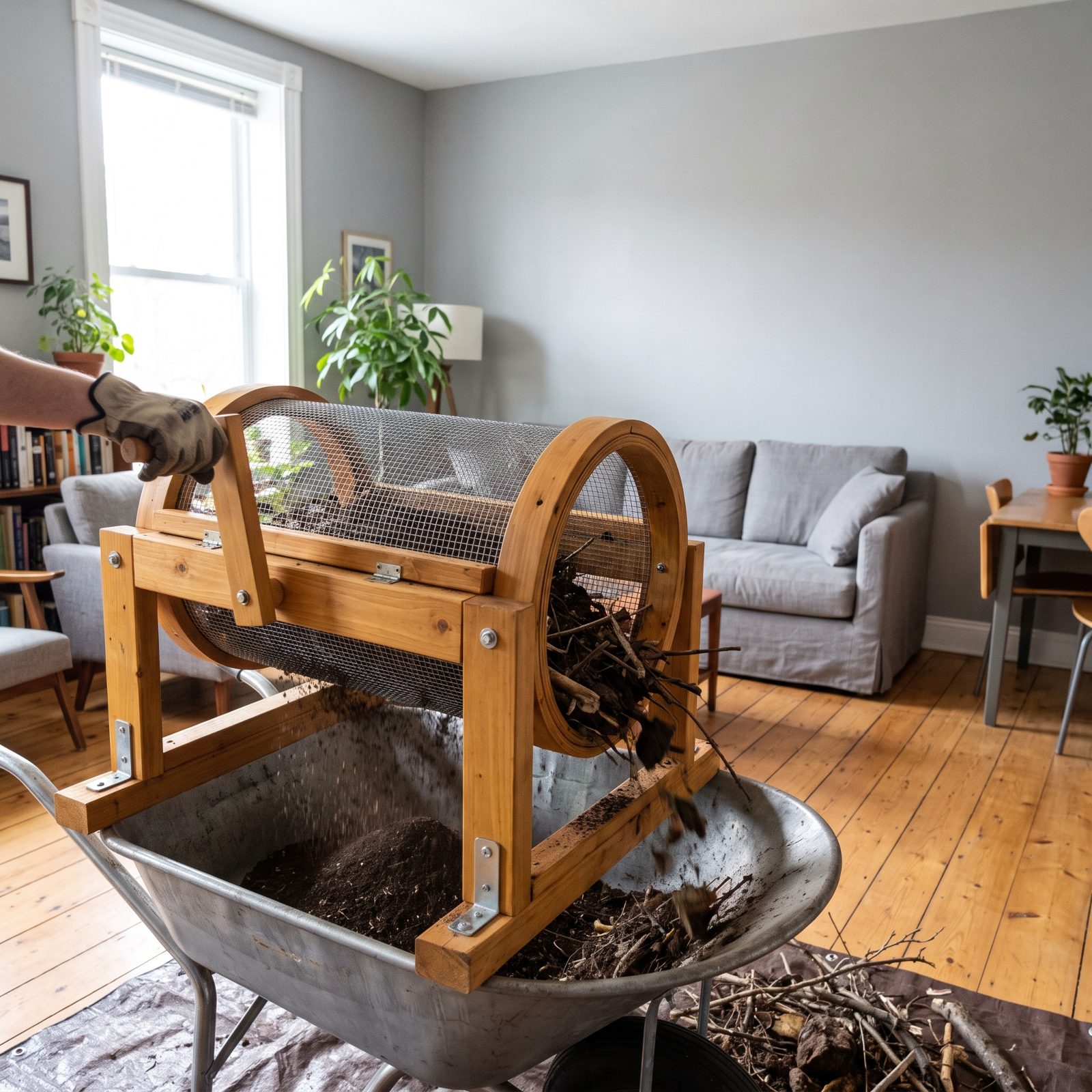
Finished compost is never actually finished. There are always sticks, stones, and half-rotted bits that clog your seed drills and look terrible in a container. Flat screens work, sure, but they’re slow and they wreck your wrists.
A rotary sieve — basically a mesh drum you turn with a crank — screens a whole wheelbarrow in minutes. Shovel the rough stuff in, crank, and clean fine material rains out underneath into the wheelbarrow — just pick out any sticks and coarse bits that land in there and toss them back on the pile for another round.
It’s the kind of tool you resent buying and then use every single weekend.
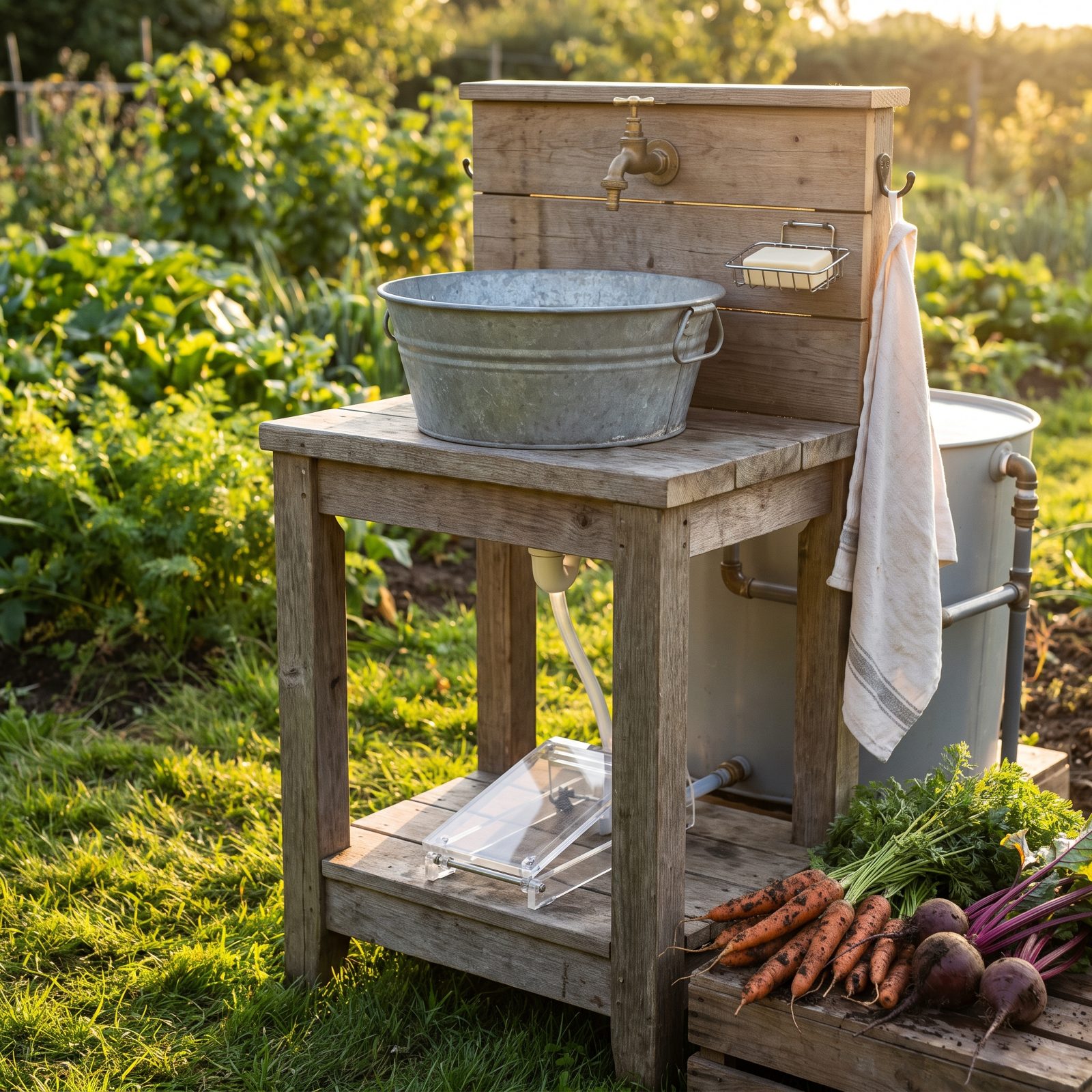
9. A Foot-Pump Handwashing Station Near the Growing Beds
You know the moment. Hands black with soil, phone buzzing in your pocket, and nothing to rinse with except the hose nozzle that soaks your sleeve to the elbow.
An outdoor wash station fixes a problem so small you never thought to solve it. Press the foot pump, water flows into the tub, and your hands are free to actually scrub. Nobody tracks a trail of mud through the house.
Set one near the beds with a bar of soap and a towel, and you’ll rinse your harvest on the spot instead of hauling grit indoors. Small addition. Changes the whole rhythm of a session outside.
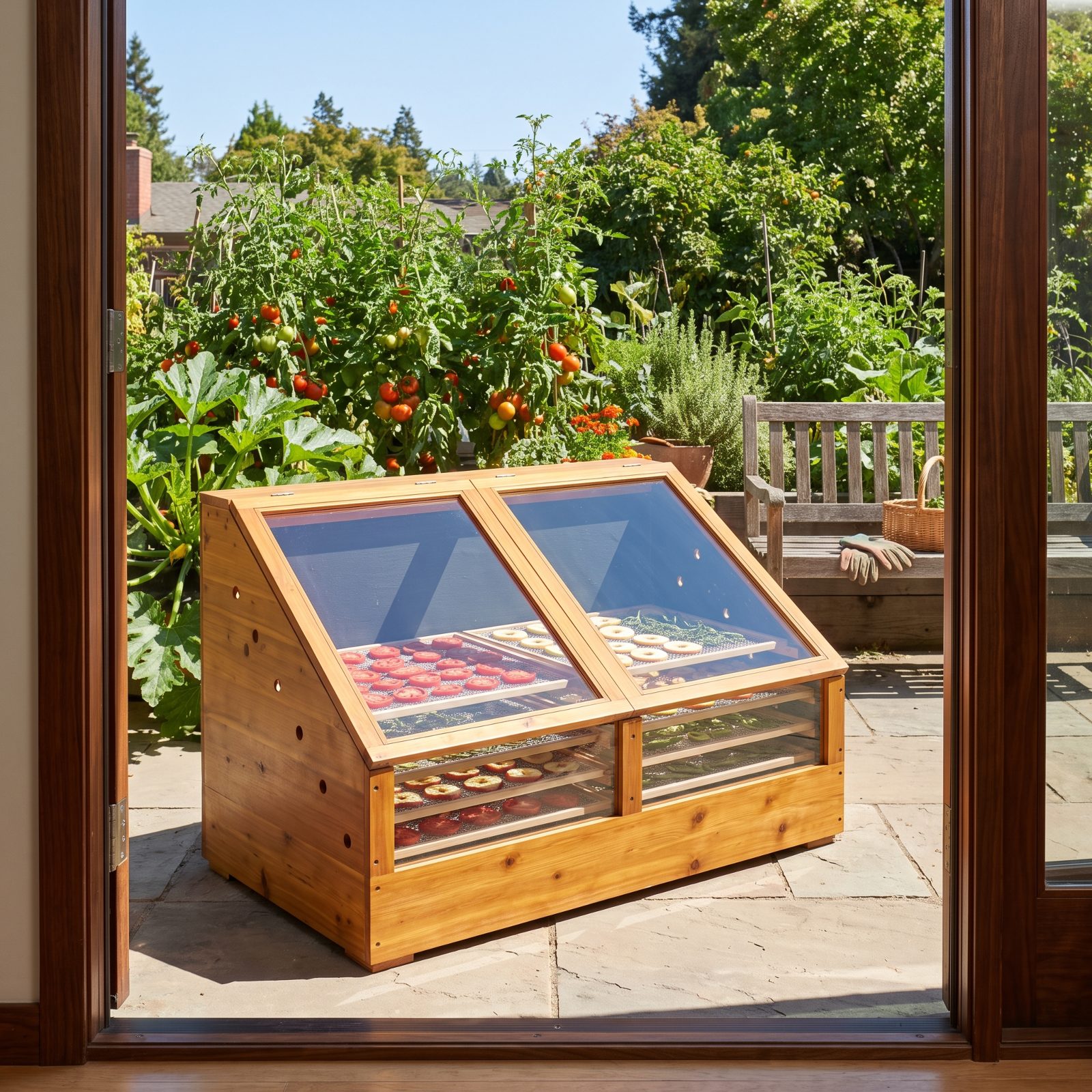
8. A Solar Food Dehydrator for Preserving Garden Gluts Outdoors
Every gardener hits the wall in August. A mountain of tomatoes, a glut of beans, more zucchini than any sane household can eat, and the freezer already crammed full.
A solar dehydrator runs on nothing but sunshine. A glazed, vented box traps heat and moving air, slow-drying slices of tomato, apple rings, herbs, and chili over a day or two. No electricity bill, no appliance humming on your counter, no extra heat dumped into an already-warm kitchen.
Dried produce stores for months in jars and takes up a fraction of the space. The real payoff comes in January, when you crack open a jar of your own sun-dried tomatoes and remember what summer tasted like.
7. A Raised Kneeling Rail Along a Frequently Tended Bed
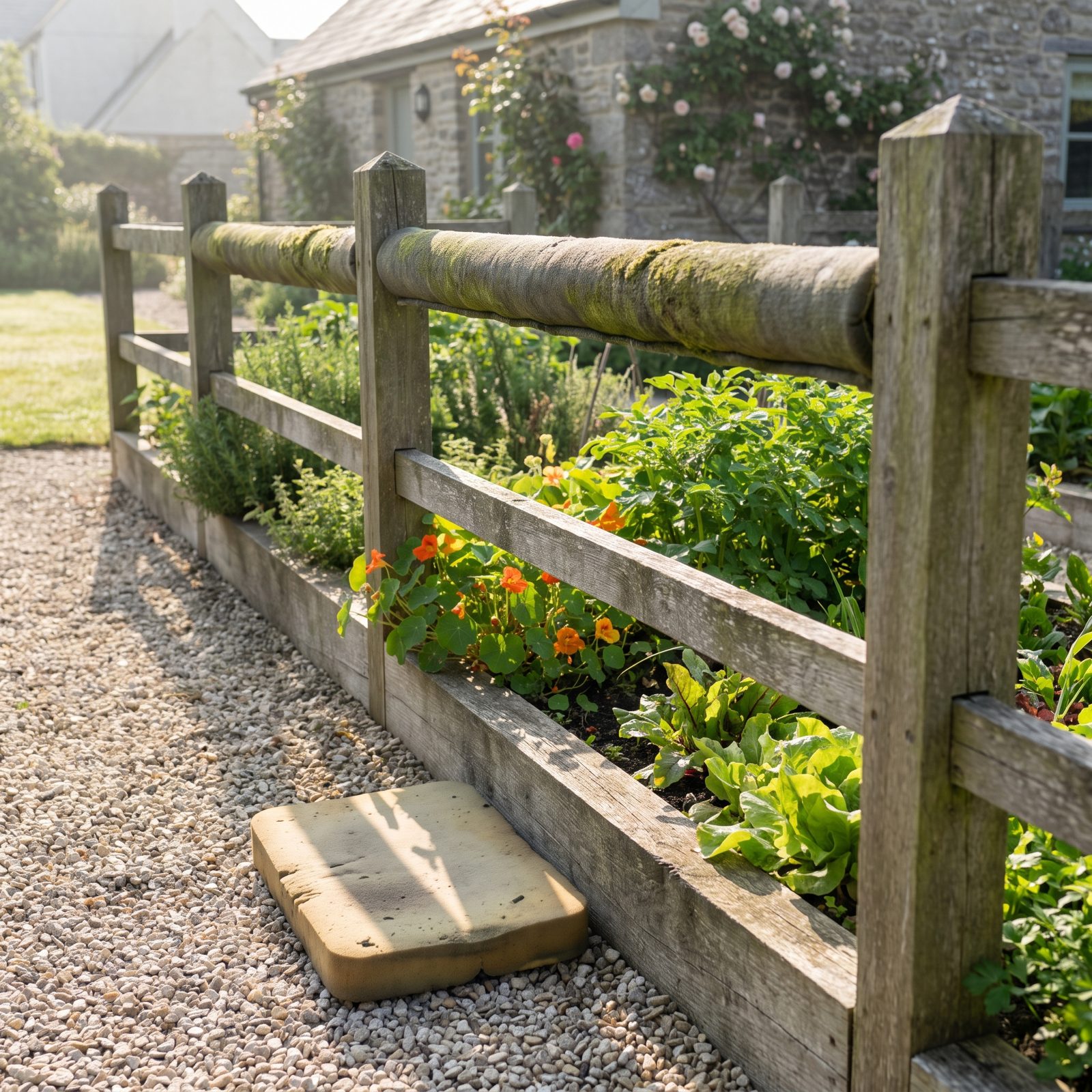
The beds that need weeding, thinning, and picking most often are the exact ones that wreck your knees and back the fastest. A raised kneeling rail is a strip of comfort hiding in plain sight.
It gives you something solid to push up from, and that’s the real issue. Anyone over 50 knows the trouble isn’t getting down to the soil — it’s the ungraceful business of getting back up. A rail at forearm height turns that whole struggle into one clean motion.
Pair it with a thick foam pad and you’ll stay out there twice as long without paying for it the next morning.
6. A Code-Compliant Laundry-to-Landscape Diverter for Reusing Water
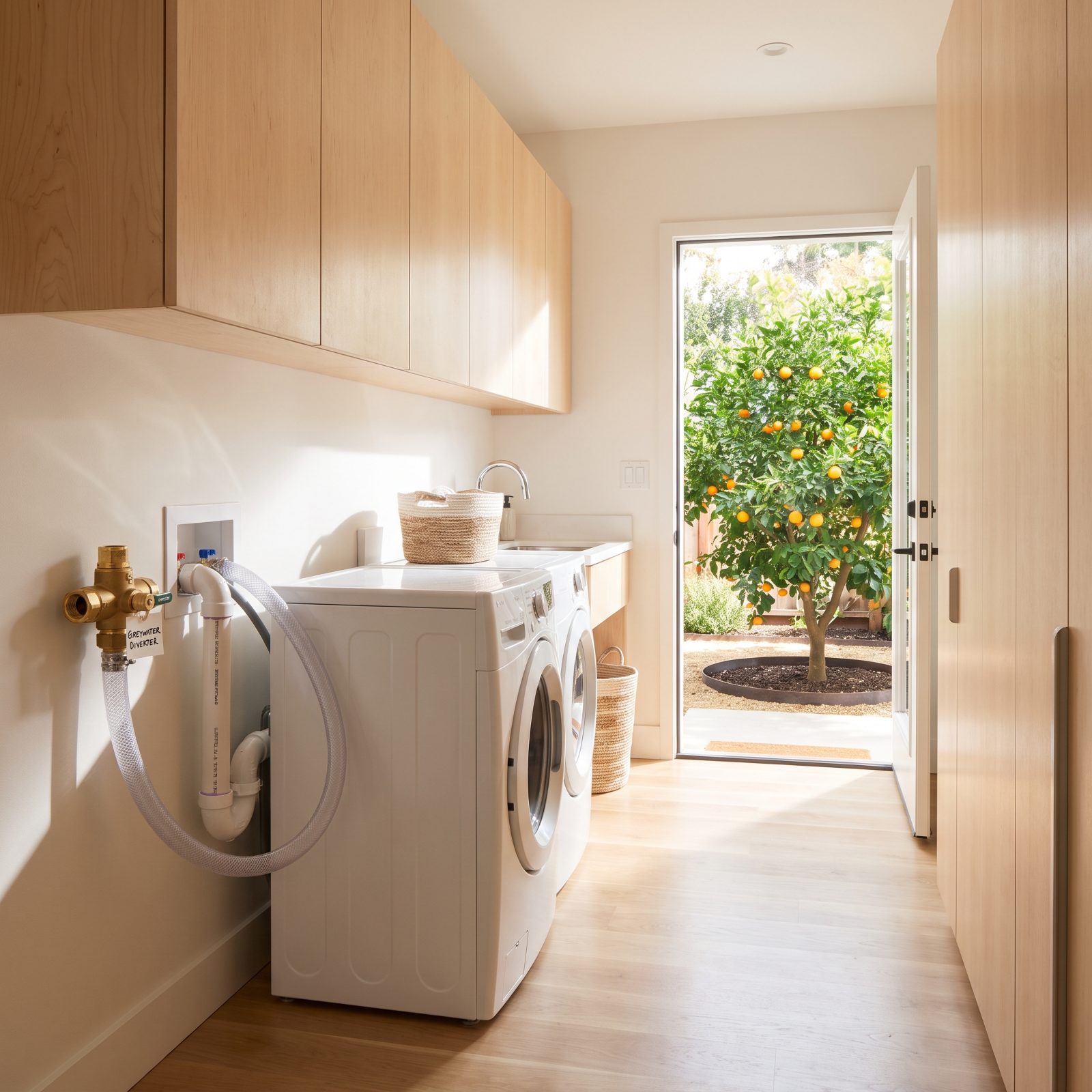
Hundreds of gallons of perfectly reusable water run down your laundry drain every week. A laundry-to-landscape system catches it before it disappears.
Once a diverter is properly connected to the washing machine’s drain line, it sends rinse water out to mulched basins around fruit trees and ornamentals instead of straight to the sewer. No pump, no filter, no tank. Flip the valve back to the drain whenever you’re washing something you’d rather not send out to the garden.
The catch — and it genuinely matters — is that rules vary by state and sometimes by county. Some places allow laundry-to-landscape without a permit; others require one. Switch to a plant-safe detergent and keep the outlets buried under mulch, never on bare soil or edible leaves.
5. A Banana Circle That Combines a Compost Basin With Heavy Feeders
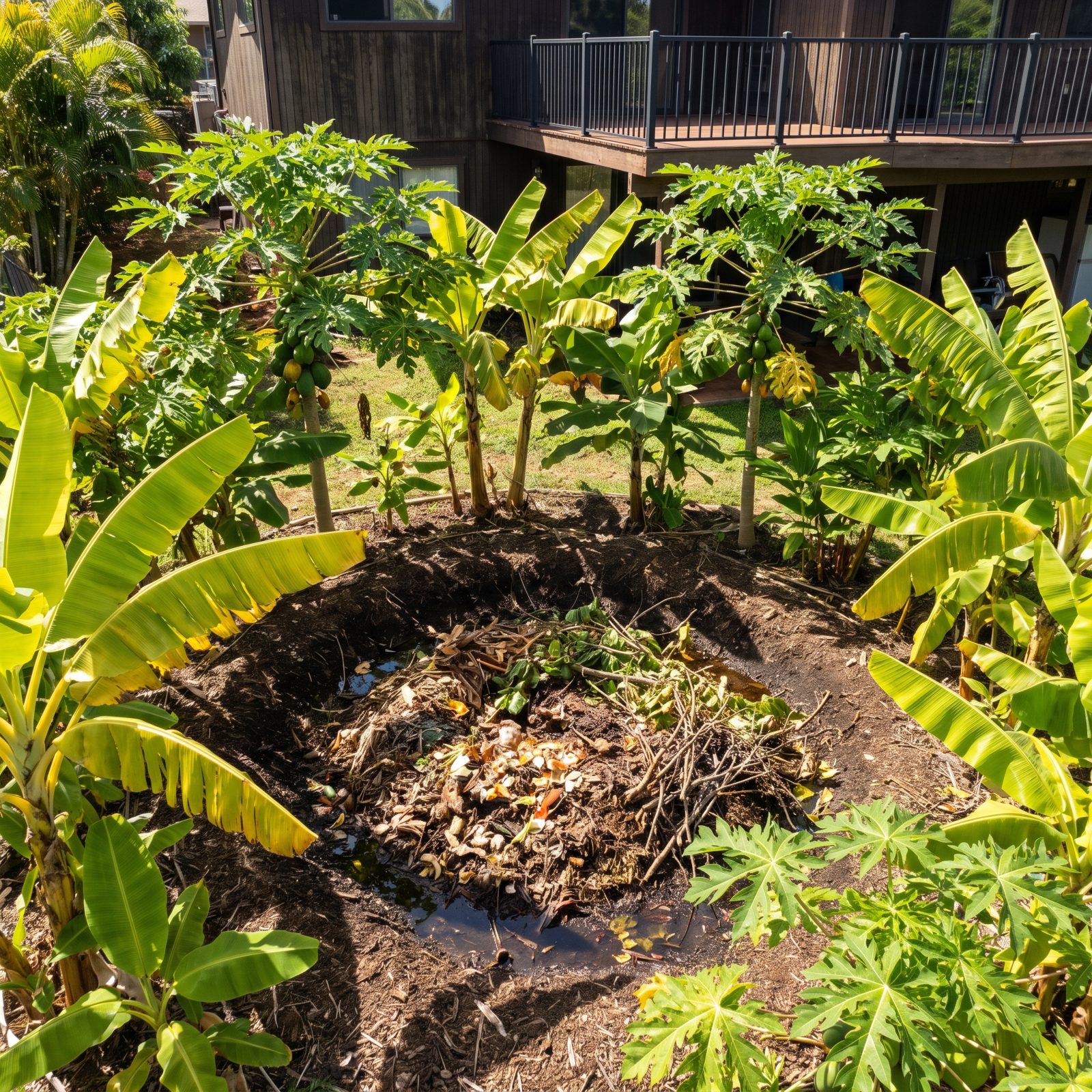
Here’s a trick borrowed from permaculture that works anywhere warm enough to grow bananas, and it’s far cleverer than it first looks.
You dig a shallow basin and plant hungry, thirsty crops in a ring around the rim — bananas, papaya, taro, whatever feeds heavily and drinks hard. Then you feed the center, not the plants. Kitchen scraps, prunings, and greywater all go into the pit, which breaks down into a slow-release feeding and watering station the roots tap into from every direction.
It solves three headaches at once: where to put compost, how to water heavy feeders, and what to do with a low wet spot in the yard. The plants shade the pit, the pit feeds the plants, and the whole arrangement runs itself once it’s established.
4. A Living Willow Tunnel That Throws Shade and Grows Its Own Supports

Push a bundle of fresh willow whips into damp ground in late winter and most of them root. That’s the trick almost nobody mentions — willow wants to grow so badly it practically does the work for you. Bend the rods, cross them, tie the joints with jute, and within a season you’ve got a shaded arch that shrugs off July sun.
The real bonus is the prunings. Every year the tunnel throws out fresh flexible rods, exactly what you need for pea supports, bean teepees, and loose plant ties. Free material, on repeat, forever.
3. A Planted Swale That Catches Rain and Feeds It Straight to the Roots
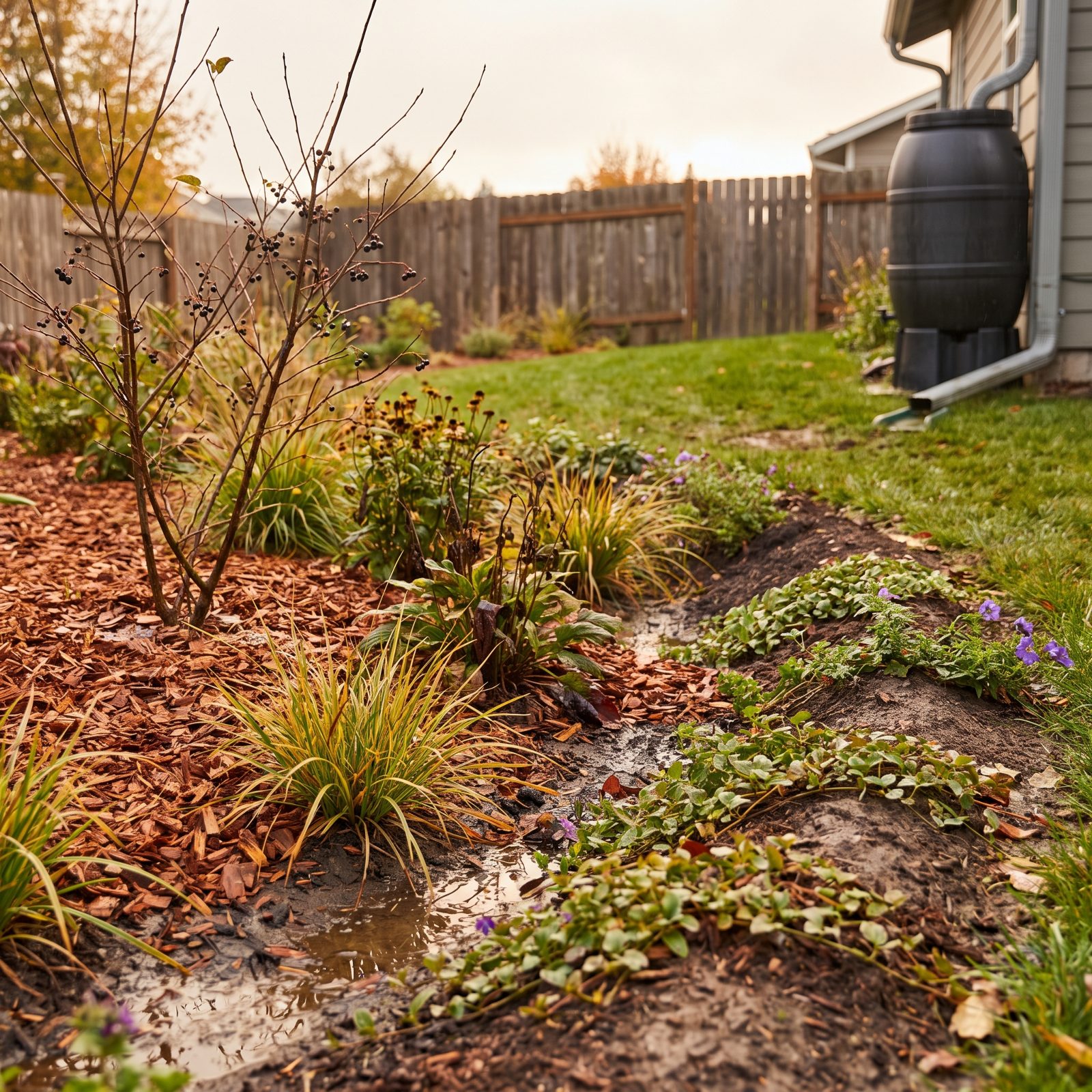
A swale is a fancy word for a shallow ditch dug along the slope so water stops running off and starts sinking in. Most backyards send rain straight down the driveway and into the storm drain — a swale grabs it and parks it right where thirsty roots can reach.
Here’s the part people get wrong. Dig it along the contour, not down the hill, or you’ve just built a channel that moves the problem faster. Plant the basin with deep-rooted perennials that don’t mind a soggy few hours after a storm. The payoff shows up during dry spells, when that stored water keeps nearby beds green while the neighbor’s lawn goes crisp and brown and sad.
2. A Container-Sized Wildlife Pond With a Shallow Landing Shelf
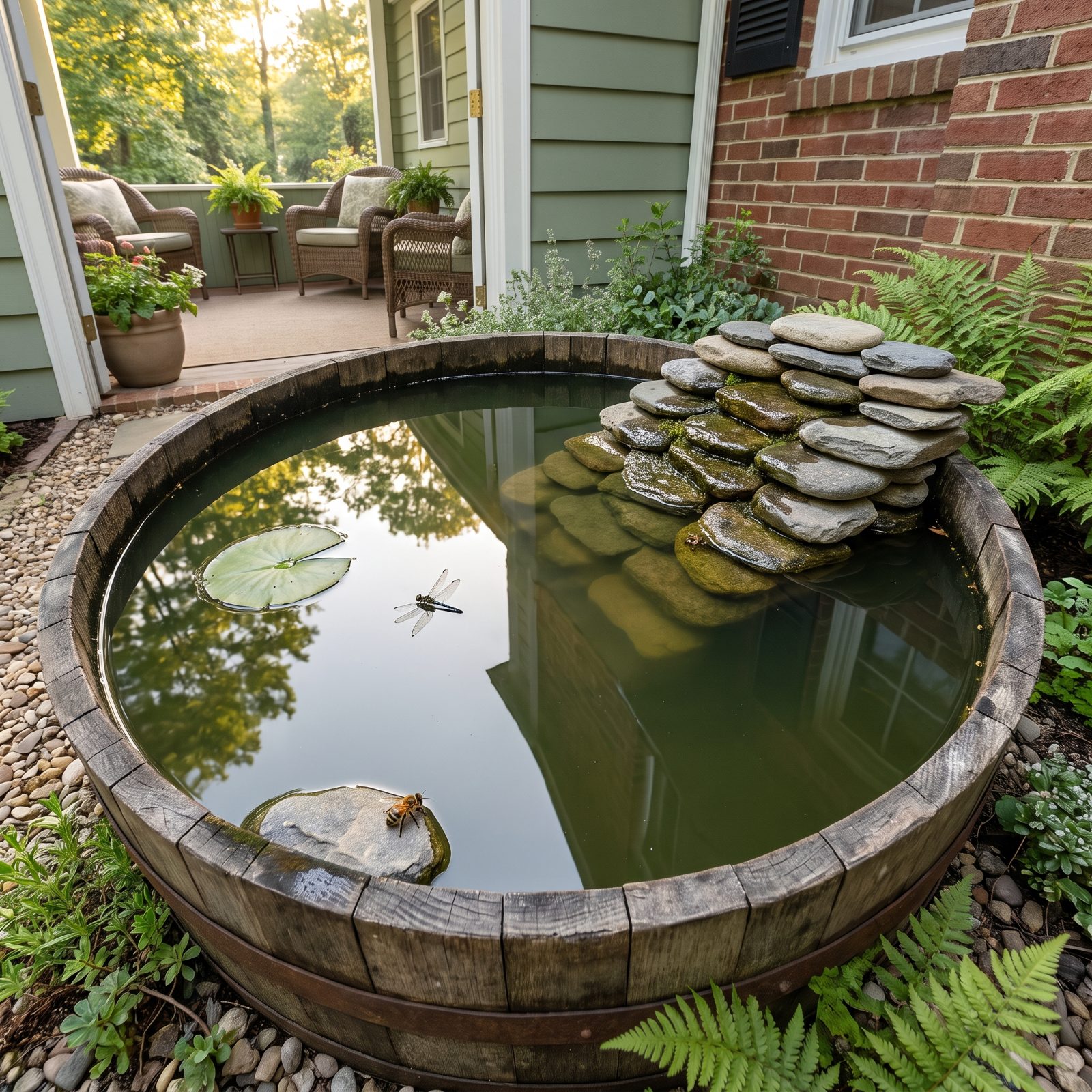
You don’t need a yard the size of a park to pull in frogs, bees, and dragonflies. A half-barrel or a wide glazed bowl sunk into a bed holds enough water to matter. One detail separates a working pond from a drowning trap: the shelf.
Stack flat stones into a slope that rises out of the water. Bees land on the wet rock to drink, and anything that falls in has a way back out. Skip the shelf and you’ll find dead insects floating by week two — grim, but true.
Leave the water plain. No fish, because fish eat the very larvae you’re trying to host.
1. A Spiral Herb Bed That Packs Several Climates Into One Footprint
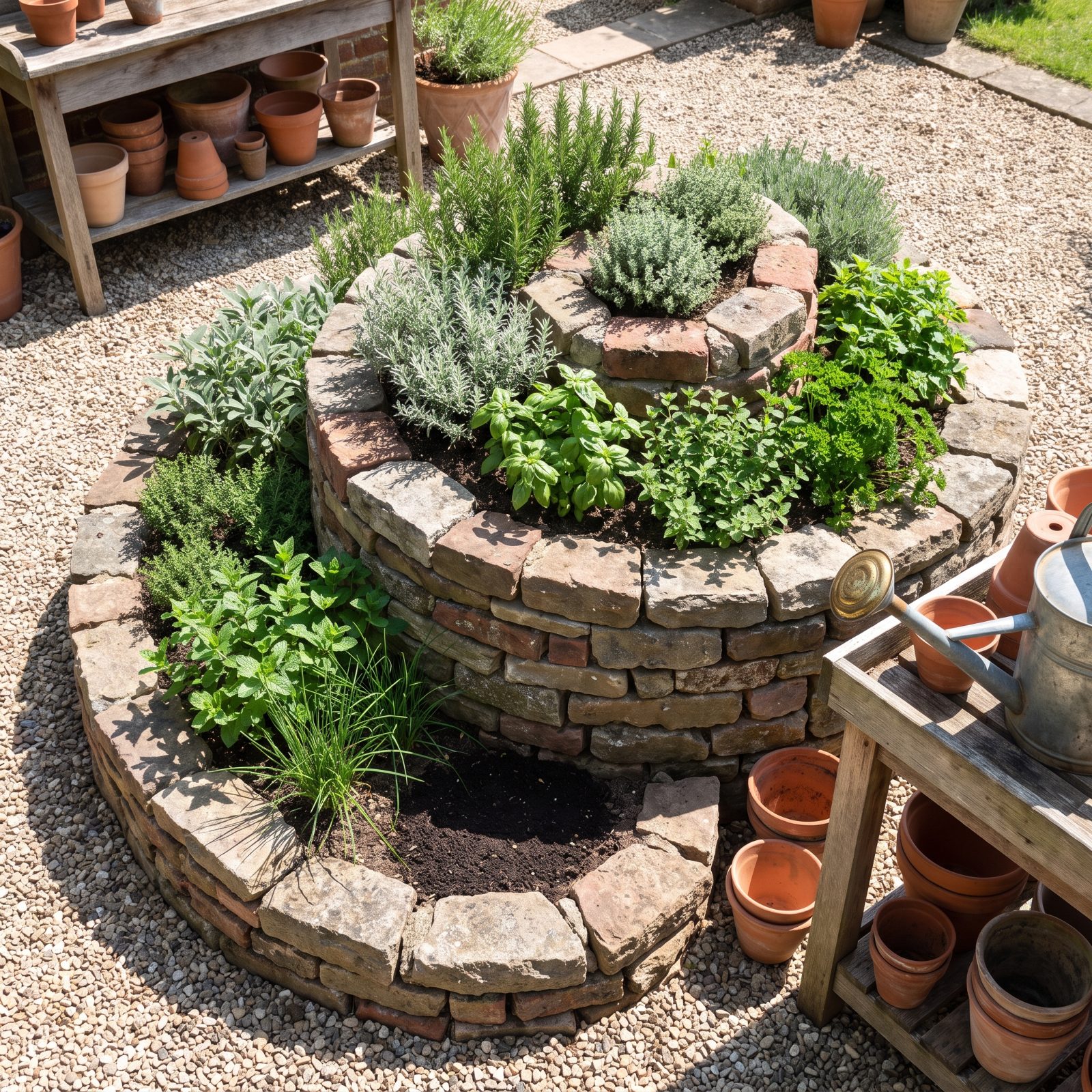
A herb spiral is a mound of stacked stone coiling upward, and the clever bit is that one small footprint hands you three or four growing conditions at once. The crest drains fast and bakes all day — heaven for rosemary and thyme. Work your way down the coil and it turns cooler, damper. At the shaded base, where water pools, mint and chives thrive in soil that would scorch anything planted up top.
So plants that can’t stand each other’s conditions end up living a hand span apart, each tucked into the exact spot it wants.