
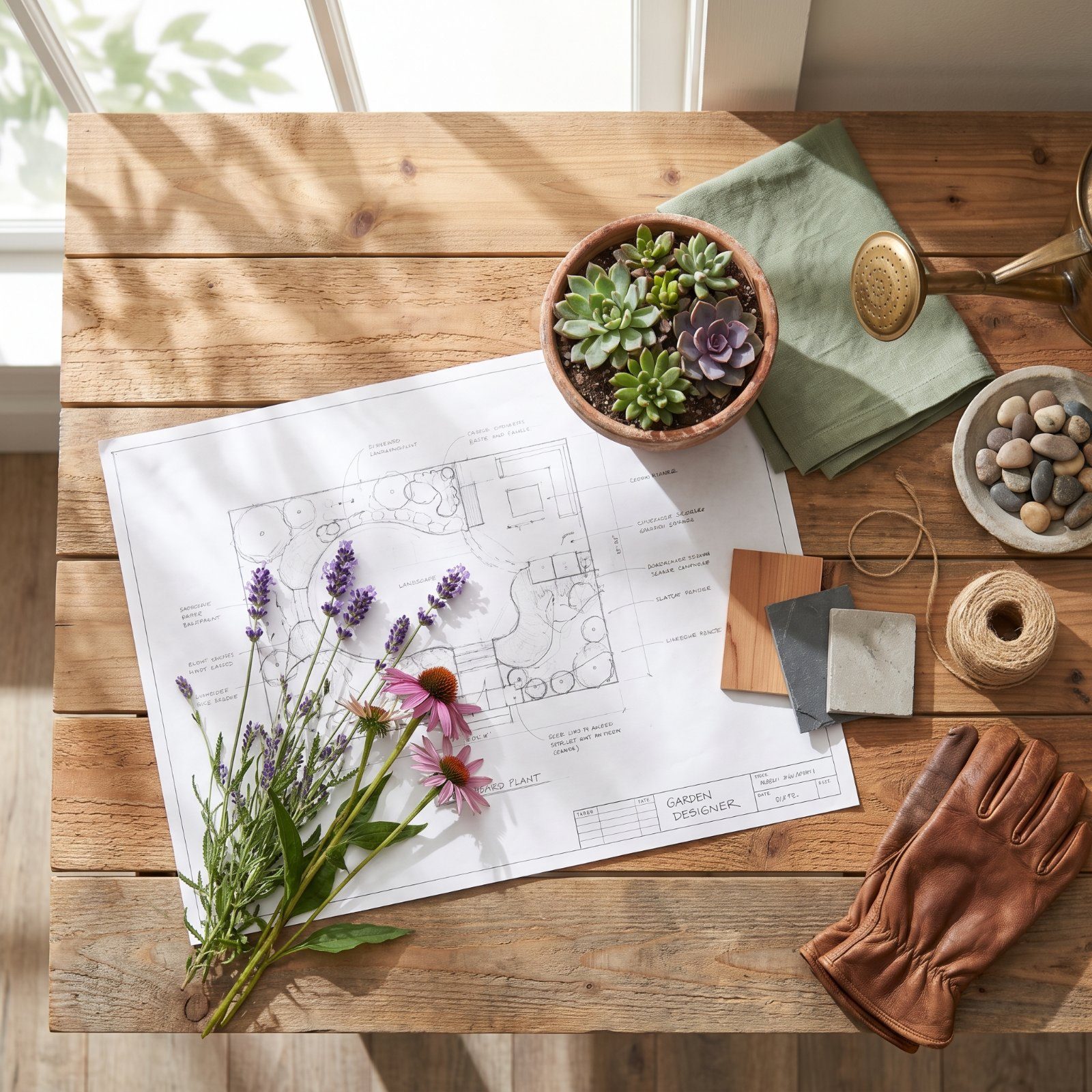
The humble rectangle of lawn is losing ground, and nobody’s mourning it. Water bills, hotter summers, and the slow realization that a yard can actually do something are pushing people to rethink the whole plot. Designers are already fielding the requests: fewer thirsty grass carpets, more spaces that cool you down, feed the bees, or hold a Saturday supper. Some cost a fortune. Some cost a weekend. All of them answer a question more homeowners are asking out loud — what if the back garden earned its keep instead of just sitting there looking tidy?
Please note that some of the images in this article were created with the assistance of AI.
46. Natural Swimming Pools That Filter Themselves With Plants
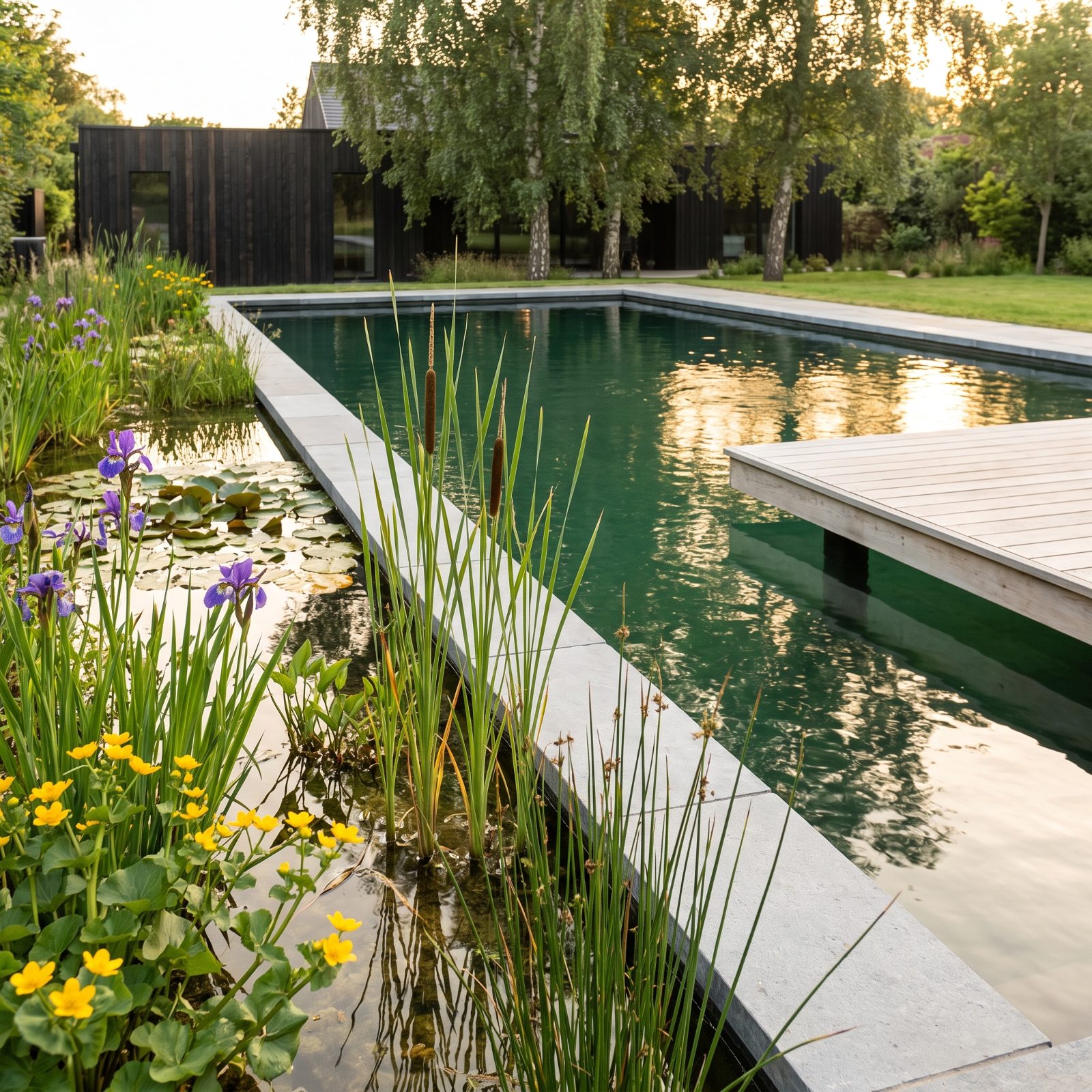
No chlorine, no blue plastic liner, none of that unmistakable public-pool smell clinging to your skin for two days. A natural swimming pool splits into two zones: the part you swim in and a shallow planted part where reeds, water iris and gravel do the cleaning. The plants eat the nutrients algae would otherwise feast on.
They’re not cheap to build — the planted filtration area pushes them past a conventional pool. But running costs drop, and the whole thing reads as a pond that happens to be swimmable rather than a chlorinated box plonked in the lawn. Frogs show up. Dragonflies too.
45. Native Pollinator Borders Buzzing From April to Frost
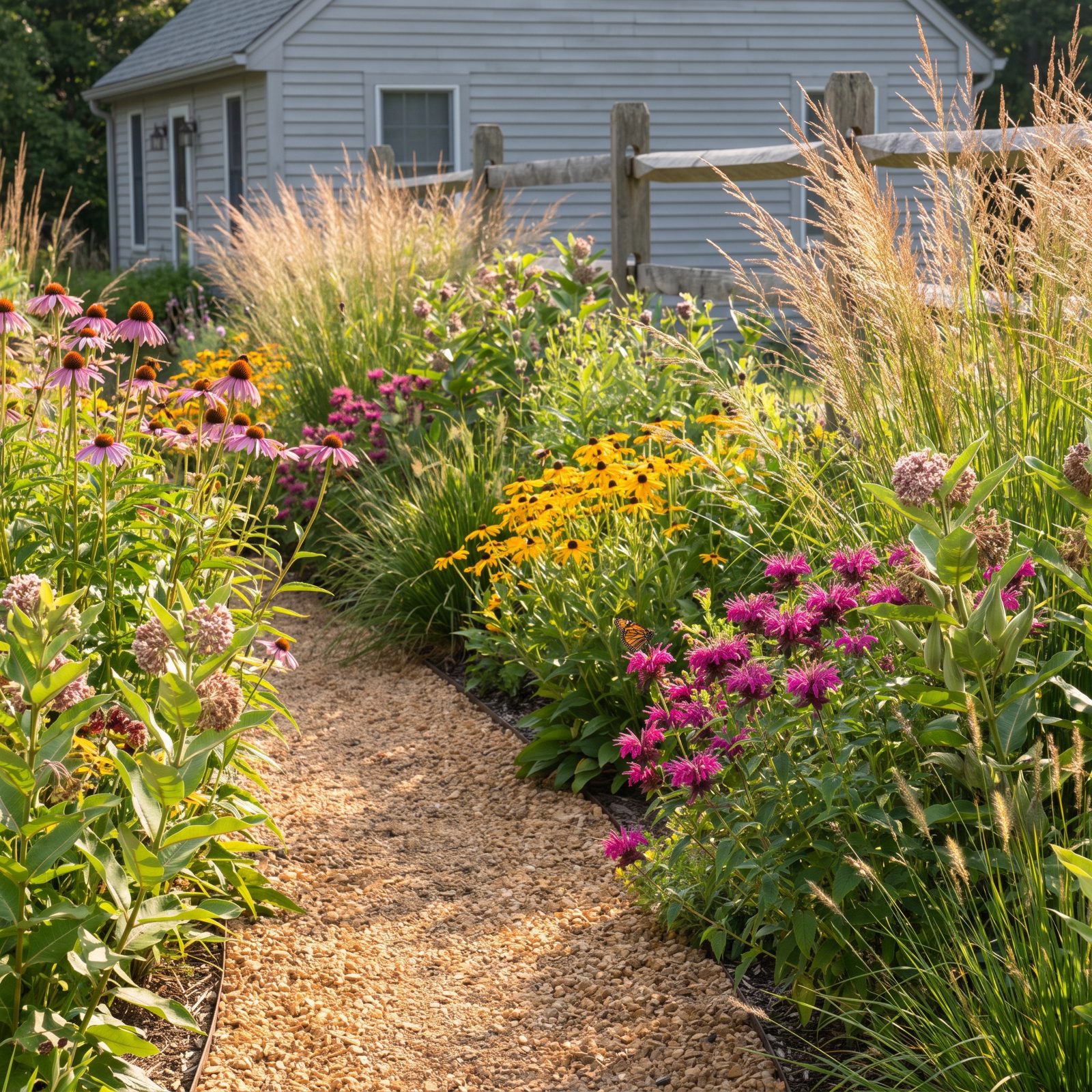
A strip of lawn supports almost nothing. A border of native perennials supports hundreds of species — and does it without you dragging a hose around in July.
Here’s the part most people miss: you need bloom in sequence, not all at once. Early bulbs, then midsummer coneflowers and bee balm, then asters and goldenrod carrying the show into October. A border that peaks in June and then goes quiet? That’s a dinner party where the food runs out at eight.
44. Louvered Pergolas That Open and Close With the Sky
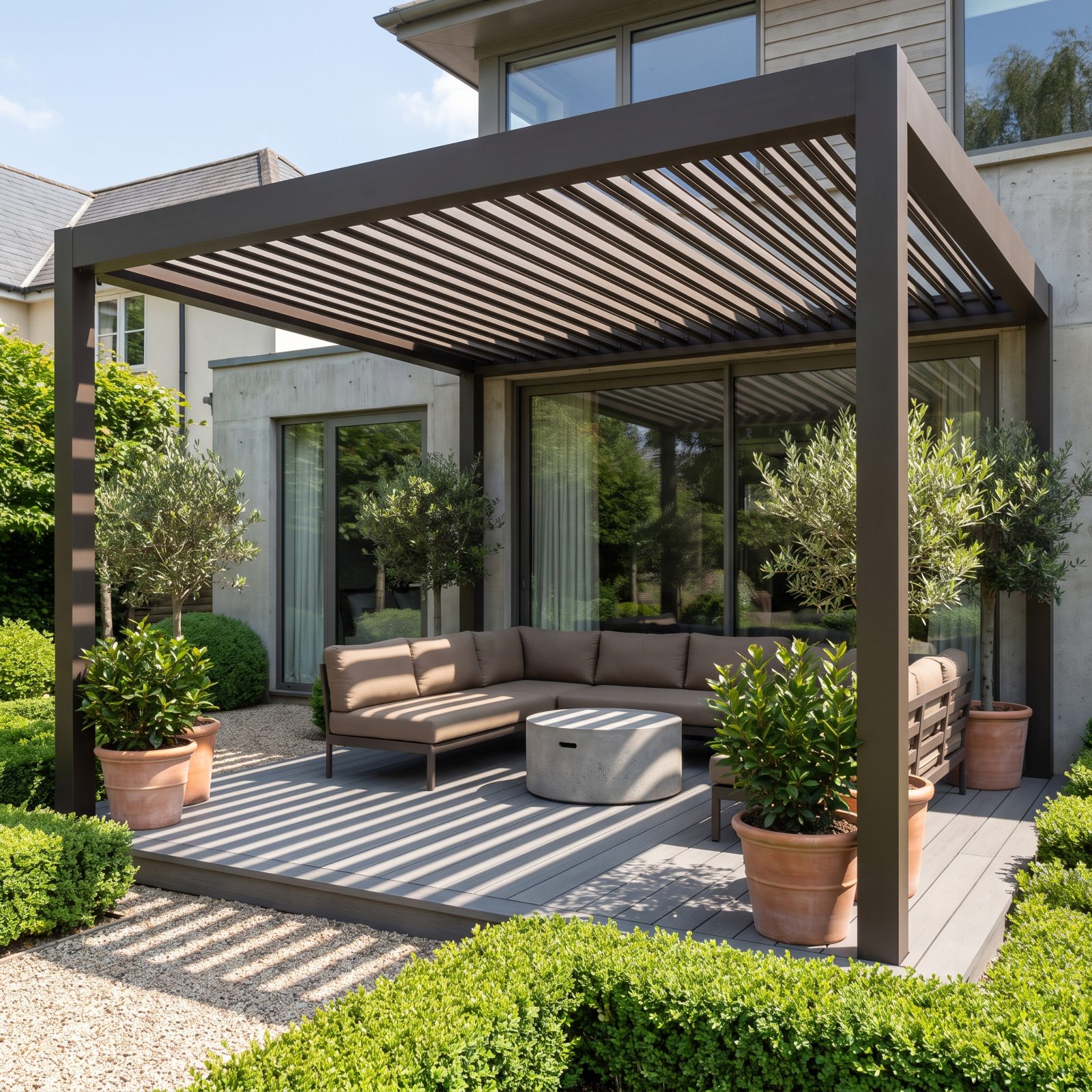
The old pergola gave you dappled shade and a surprise soaking the second a cloud opened. The louvered version fixes both. Rotate the slats for shade, close them tight against rain, lay them flat for full sun. Some run on a motor and a weather sensor that shuts the roof before the first drops land.
I’ll admit I was skeptical these earned the premium over a plain fixed canopy. Then I watched one swing from full sun to full cover in about fifteen seconds. Sold.
43. Insulated Garden Offices With a Real Floor and Real Heat
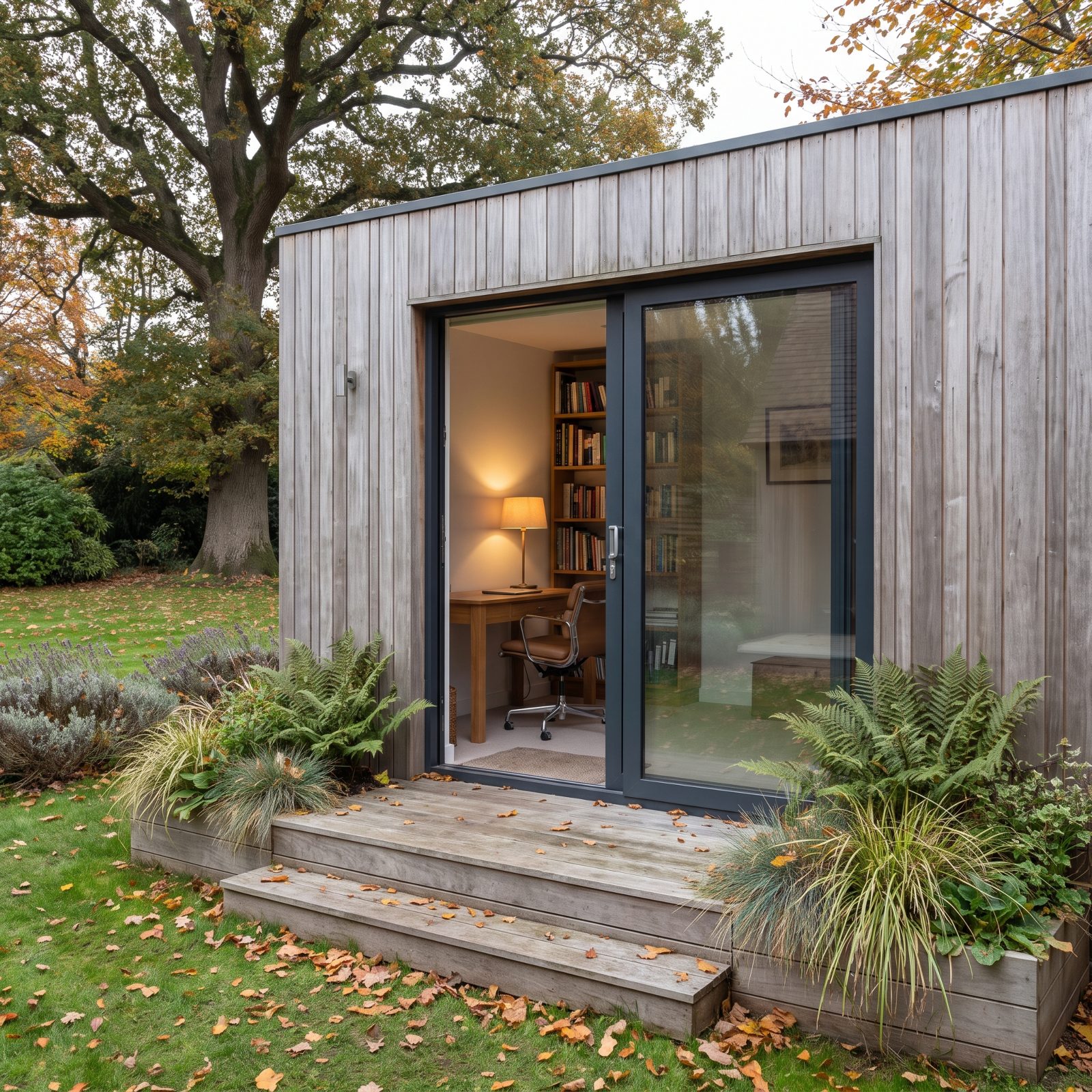
The shed-with-a-laptop phase is over. What people want now is insulated, wired, heated, and quiet enough to take a call from without a lawnmower bleeding into the audio.
What separates a good one from a damp regret is the floor and the ventilation. Skimp on the insulation beneath you and it’s an icebox by November. Skip the airflow and the glass fogs and mould creeps in. Done right, though, it’s a commute of about forty paces across the grass.
42. Rain Gardens That Catch the Downspout Instead of the Storm Drain
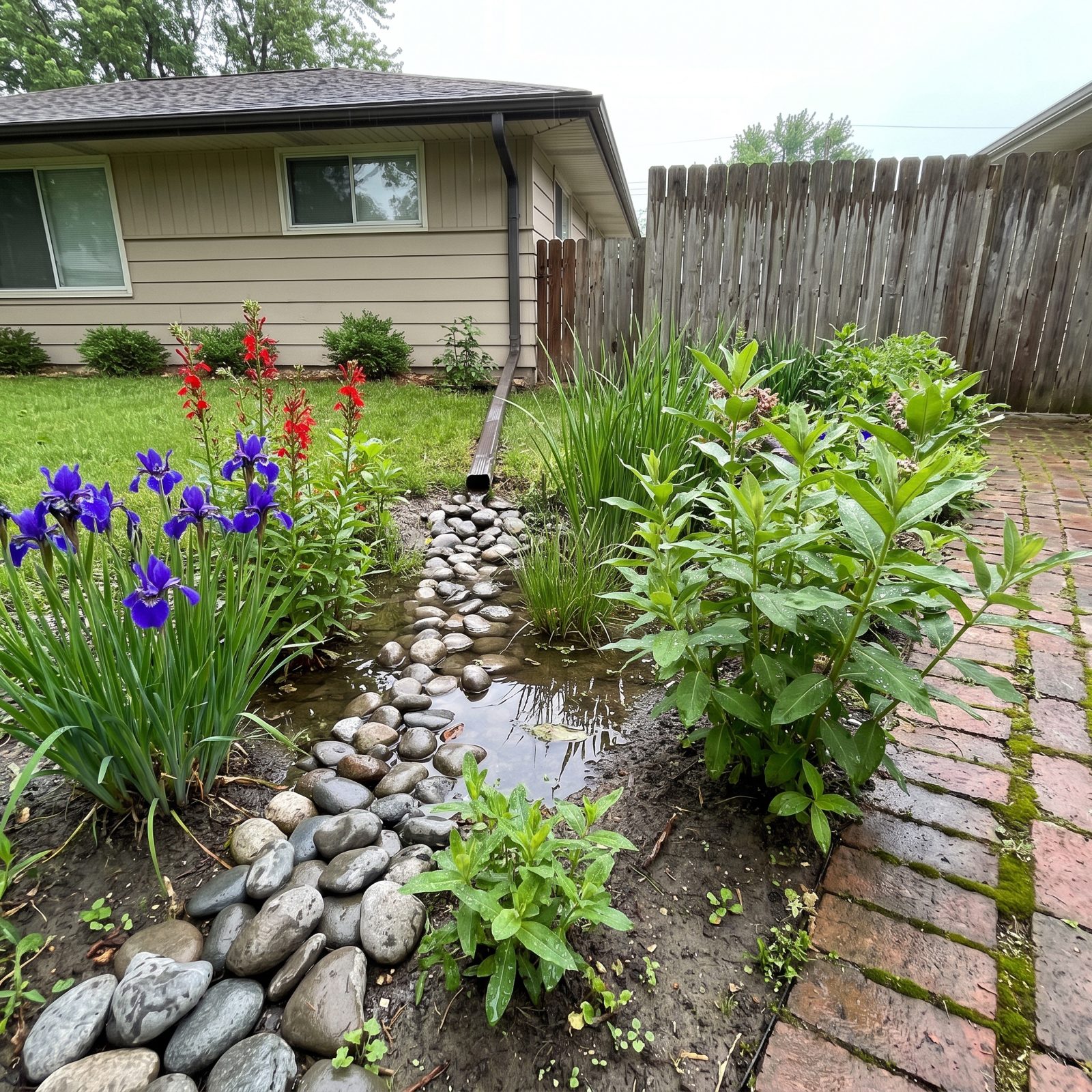
Every time it storms, the water off your roof races down the drive and vanishes into the storm drain, hauling a slug of fertilizer and road grime along with it. A rain garden interrupts that dash.
It’s a shallow scooped-out bed planted with things that don’t mind wet feet, set where the downspout empties. Water sits, soaks in, the plants drink it, and within a day the basin’s dry again. Cheapest item on this list, and probably the most useful during a wet spring. Dig it, plant it, done.
41. Compact Plunge Pools for Small Yards and Hot Afternoons
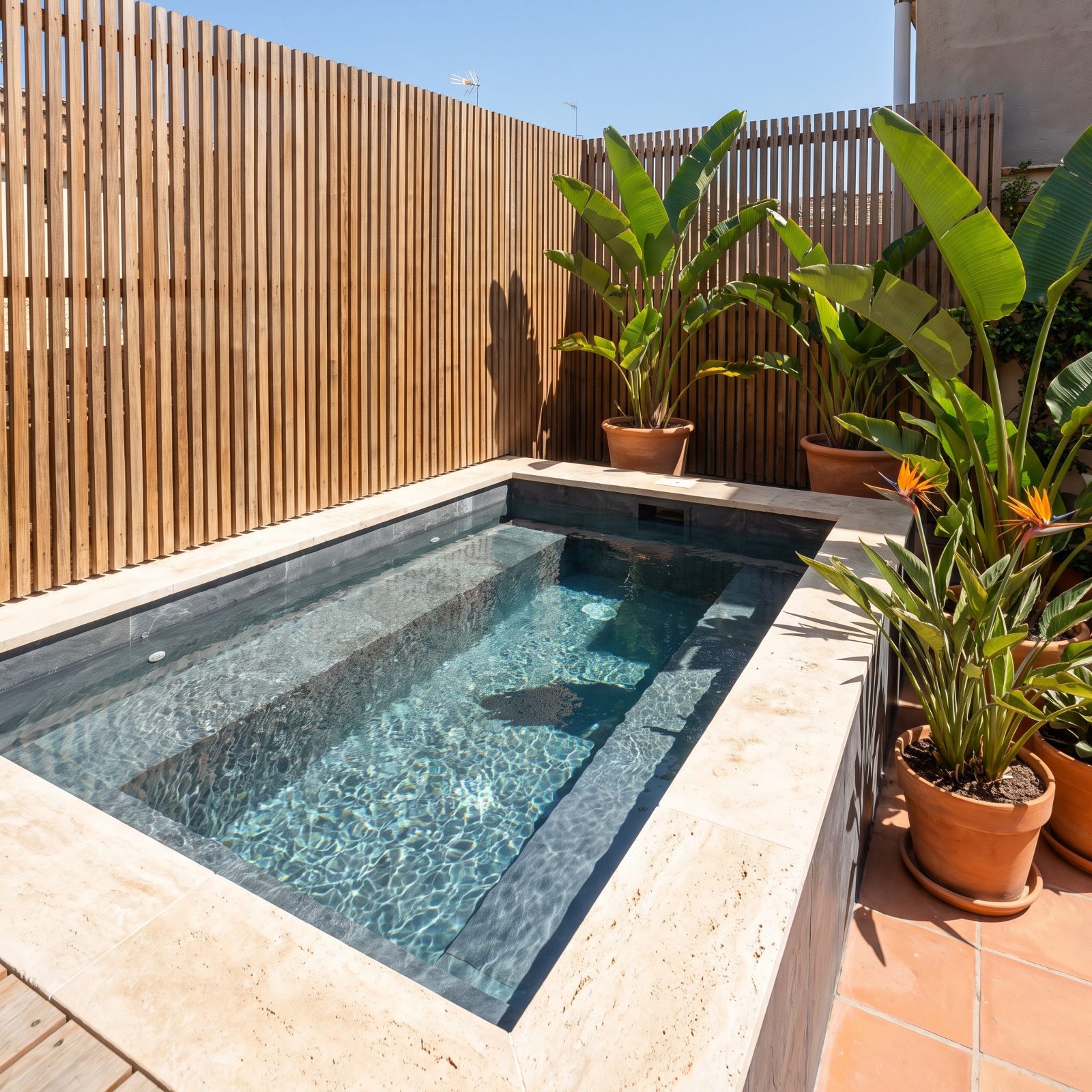
You don’t need to swim laps. You need to get wet, cool off, and sit in water with a cold drink in your hand. That’s the whole pitch for a plunge pool, and it’s landing with people who have small yards and zero interest in heating an Olympic rectangle.
Most run around eight to ten feet long with a built-in bench. Small footprint, small water bill, often a plug-and-play delivery instead of a six-week dig. Some come with a jet so you can swim against the current and pretend it’s exercise.
40. Cedar Outdoor Saunas That Earn Their Keep All Winter
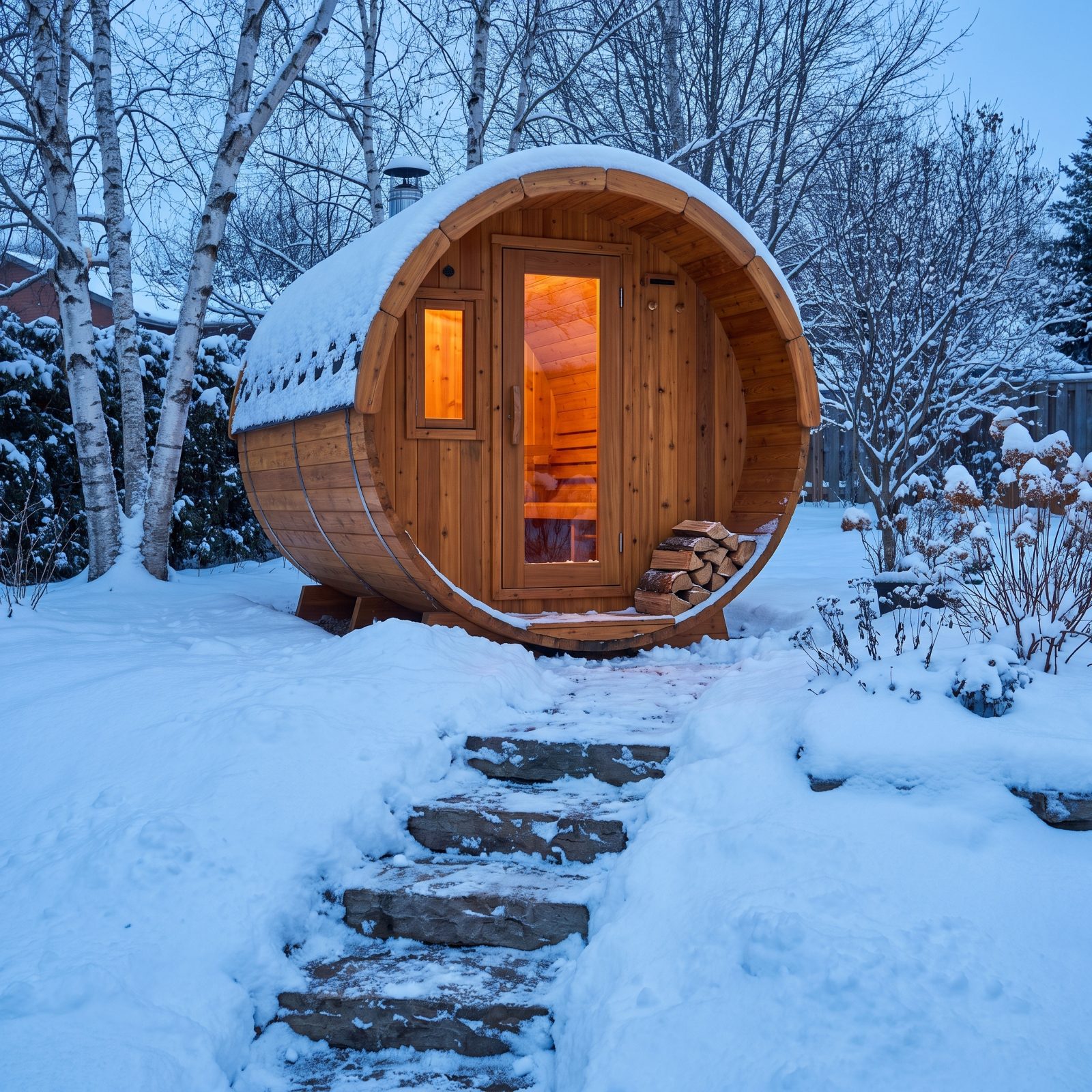
A pool sits empty five months a year. A sauna gets better the colder it gets. That’s the quiet logic behind the sauna request landing on more designers’ desks, especially up north where the backyard goes dormant and the hot box becomes the one reason to go outside at all.
Cedar is the wood of choice because it resists rot, stays cool to the touch, and smells faintly of the forest once it heats up. Barrel shapes heat fast; cabin shapes seat more. Either way, the real draw is that two-minute walk from heat to cold snow and back — people swear by it, and I’m not about to argue.
39. Four-Season Covered Garden Rooms You Use in December
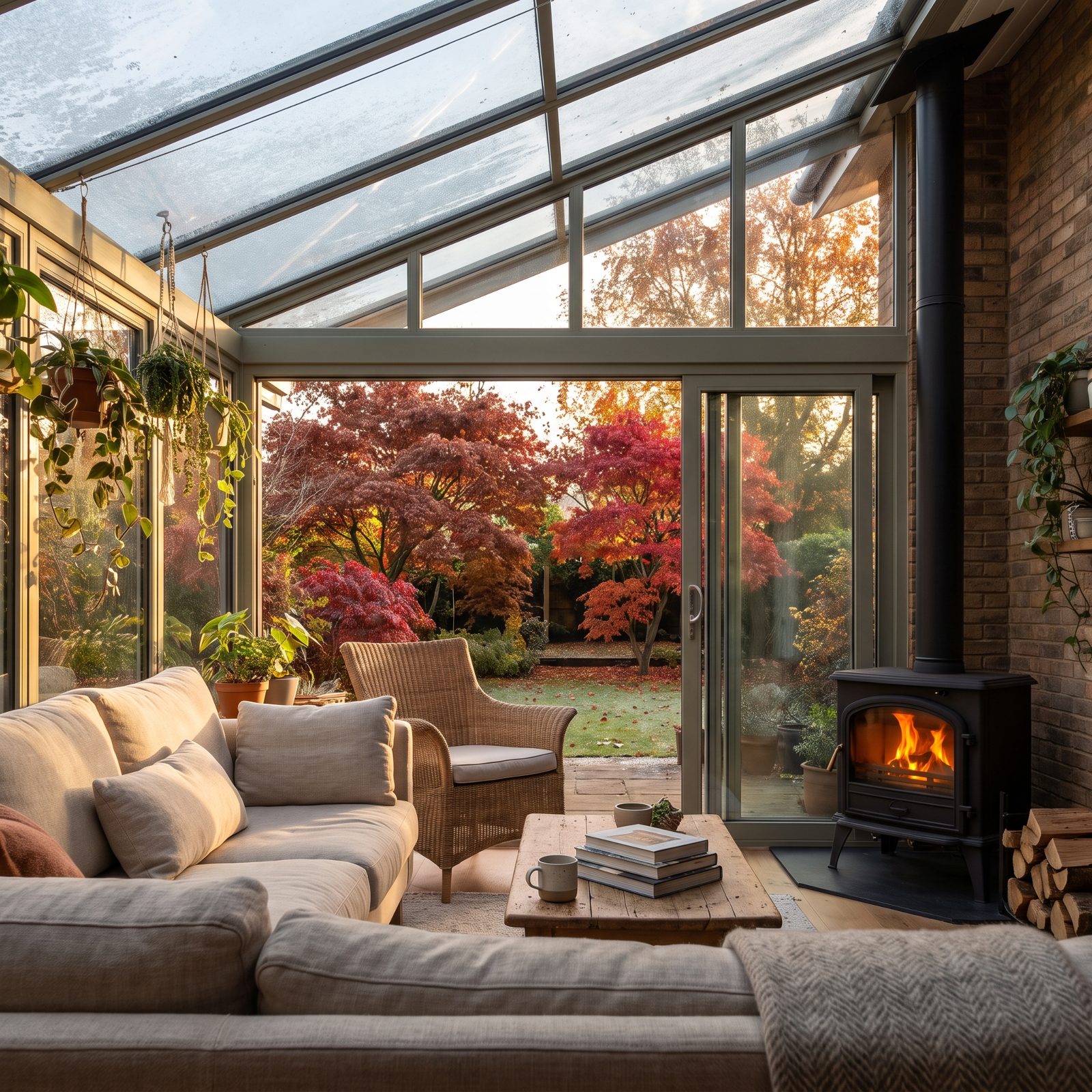
The screened porch had one job and quit the moment the temperature dropped. Its tougher sibling is the four-season garden room: glazed walls that slide wide open in July and seal shut in January, usually with a small wood stove or radiant heat to keep it usable while there’s frost on the grass.
The idea is to erase the line between inside and out without surrendering to the weather. Get it right and it becomes the most-used room in the house. Get it cheap and it’s a greenhouse — boiling in summer, freezing in winter. So don’t cut corners on the glass.
38. Full Outdoor Kitchens Built Around the Grill, Not Beside It
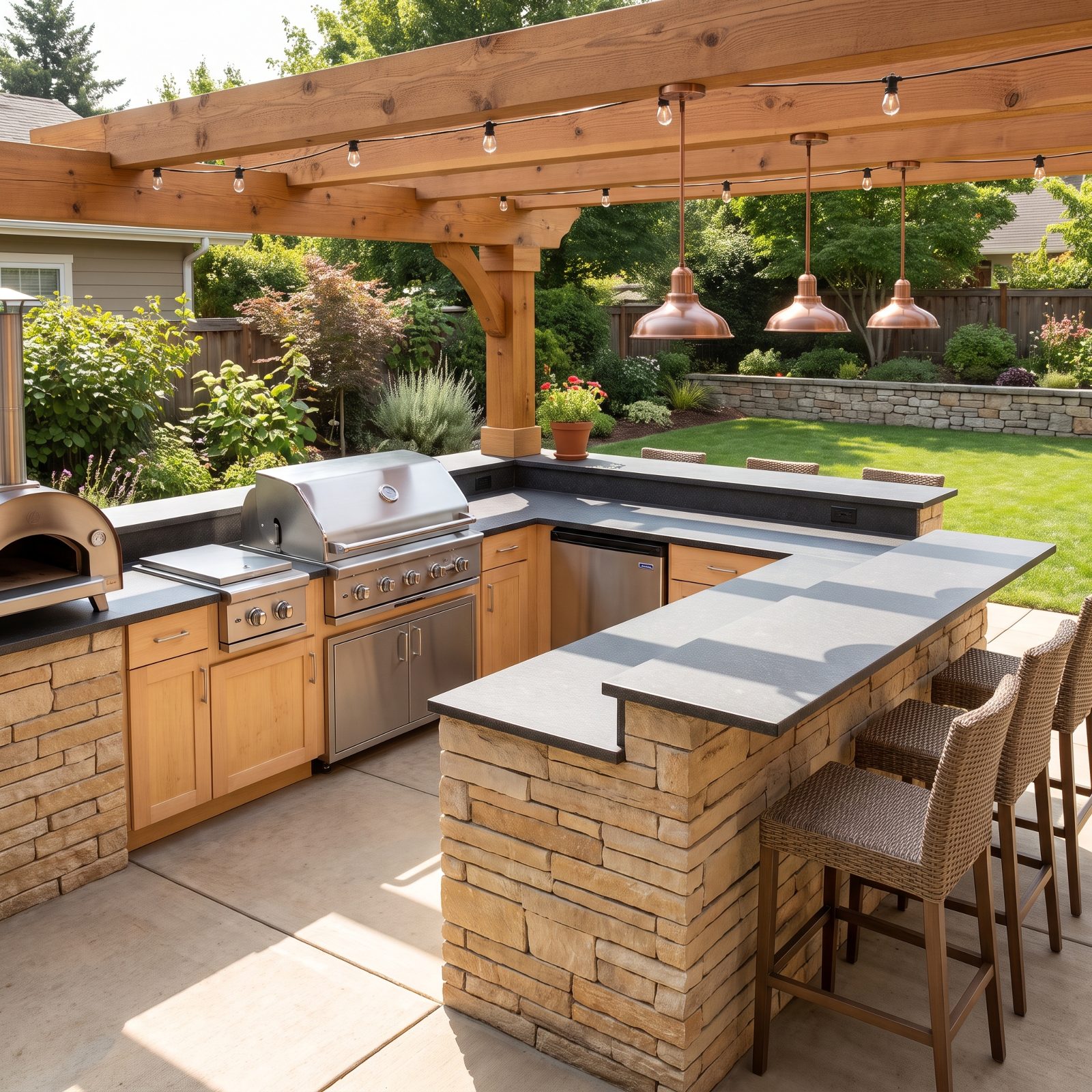
A grill on a deck is not an outdoor kitchen. An outdoor kitchen is counter space, a sink, cold storage, and a cook who never has to trek back indoors mid-meal while everyone else drinks in the garden without them.
The mistake people make is blowing the budget on a gleaming grill and leaving no landing space to actually work. You want counter to one side at minimum, ideally both. The pizza oven is the splurge everyone wants and maybe half regret once the novelty of making dough on a Tuesday wears thin. We say that knowing exactly where ours sits, unused.
37. Sunken Fire-Pit Lounges That Pull Everyone Into a Circle
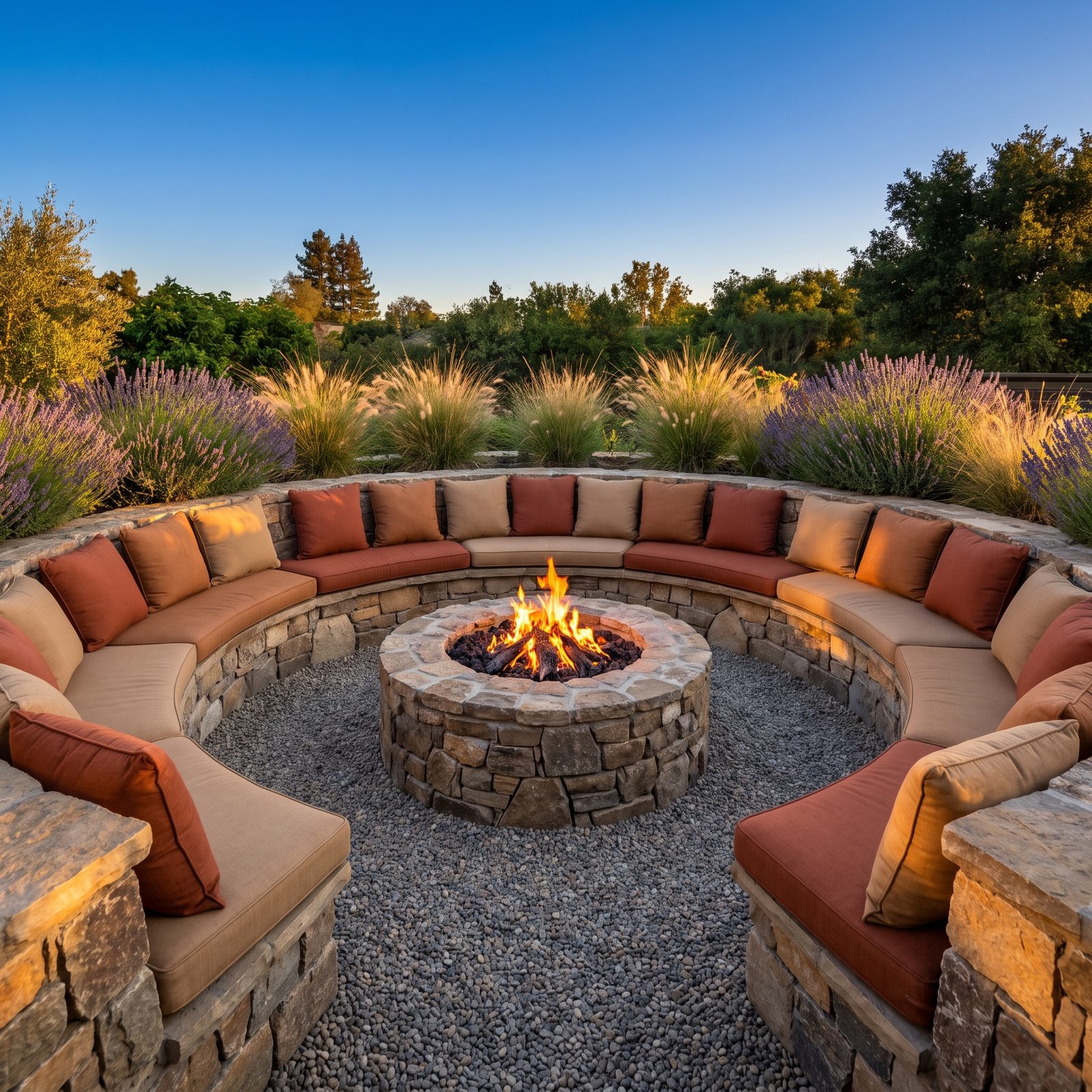
Drop the seating below grade and something odd happens socially that a scattering of patio chairs never manages: everyone faces in, knees almost touching, the fire at the center. Intimate in a way a standard patio just can’t fake.
The sunken version is a dug-out circle with built-in benches and a fire at its heart, usually faced in stacked stone over a pea-gravel floor that drains fast. People stay later around these. Nobody’s quite sure why, but the low walls and the ring seem to murmur: settle in.
36. Wildlife Ponds With Shallow Shelves
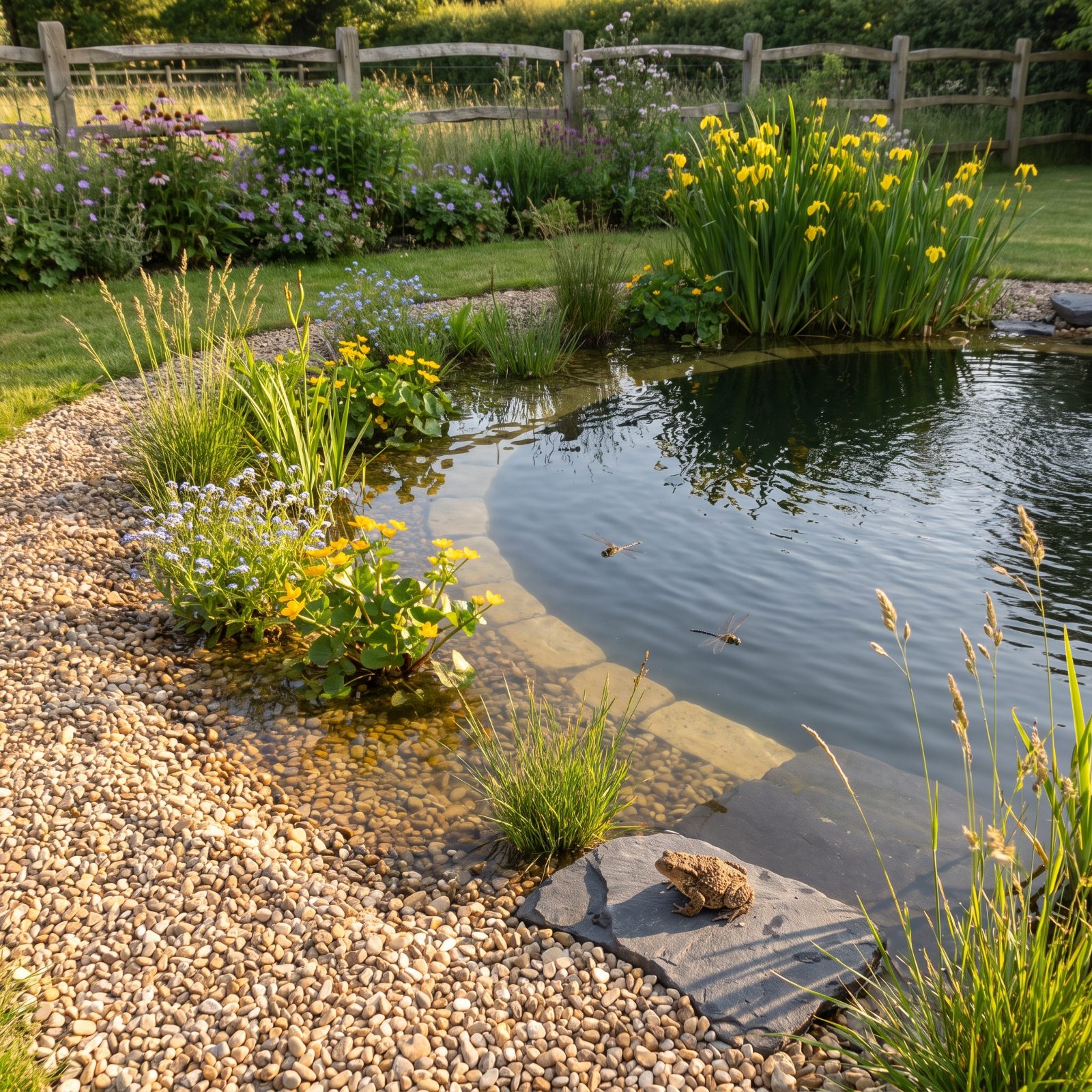
A pond without a sloped edge is a drowning trap for hedgehogs, frogs, and the neighbor’s cat. The shallow shelf is what saves them. A gently graded pebble beach lets creatures walk in and climb out, which turns a feature pond into something that actually hums with life by midsummer.
Designers keep pushing these because they pull double duty — habitat and water management at once. And you don’t need a big garden. A sunken half-barrel with a ramp of stones does most of what a formal pond does.
35. Gravel Courtyards That Drink the Rain
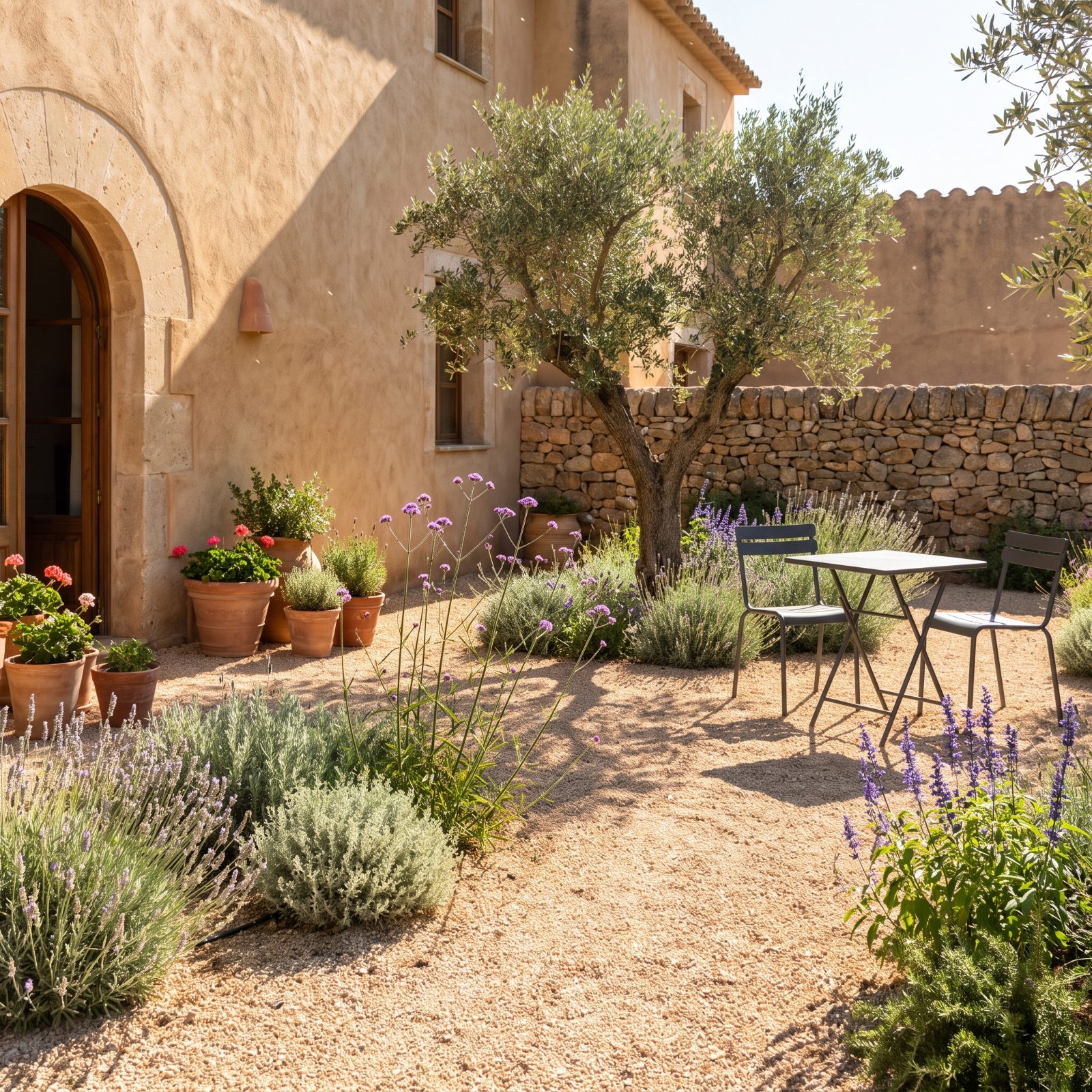
Lawn asks for water, mowing, and patience you don’t have. A gravel courtyard asks for almost nothing and looks better in a drought. No wonder designers keep steering people toward them.
Here’s where people go wrong: they lay gravel over plastic membrane and then wonder why it turns into a weedy, soggy mess. Plant straight into the ground and let the gravel work as a mulch. Lavender, thyme, and sea holly love the sharp drainage and self-seed into the gaps.
Gravel is the only surface that looks more intentional the more it’s left alone.
34. Permeable Paver Driveways
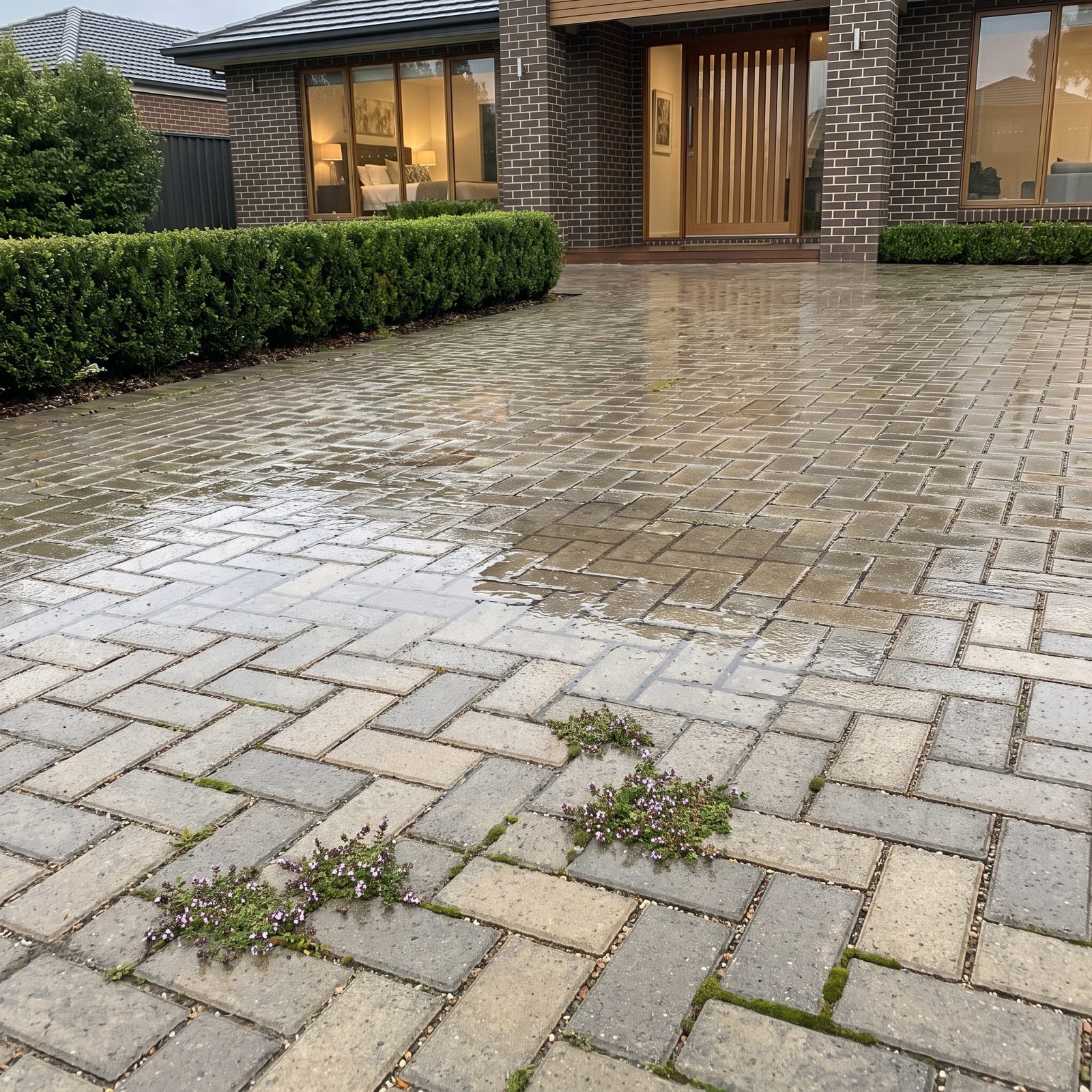
Standing water on a driveway tells you the rain has nowhere to go but your neighbor’s yard or the storm drain. Permeable pavers let it soak straight through the joints into a stone sub-base. Towns keep tightening rules on hard runoff, which is partly why designers now reach for these by default instead of treating them as the upgrade.
They cost more upfront than a slab of concrete — and anyone who quotes you an exact figure is guessing, because it swings wildly by region and base depth. And they only work while the joints stay open. Once the gaps clog with silt and moss, water sheets across the top and pools like it would on any hard surface.
33. Oversized Stepping-Stone Paths Through the Beds
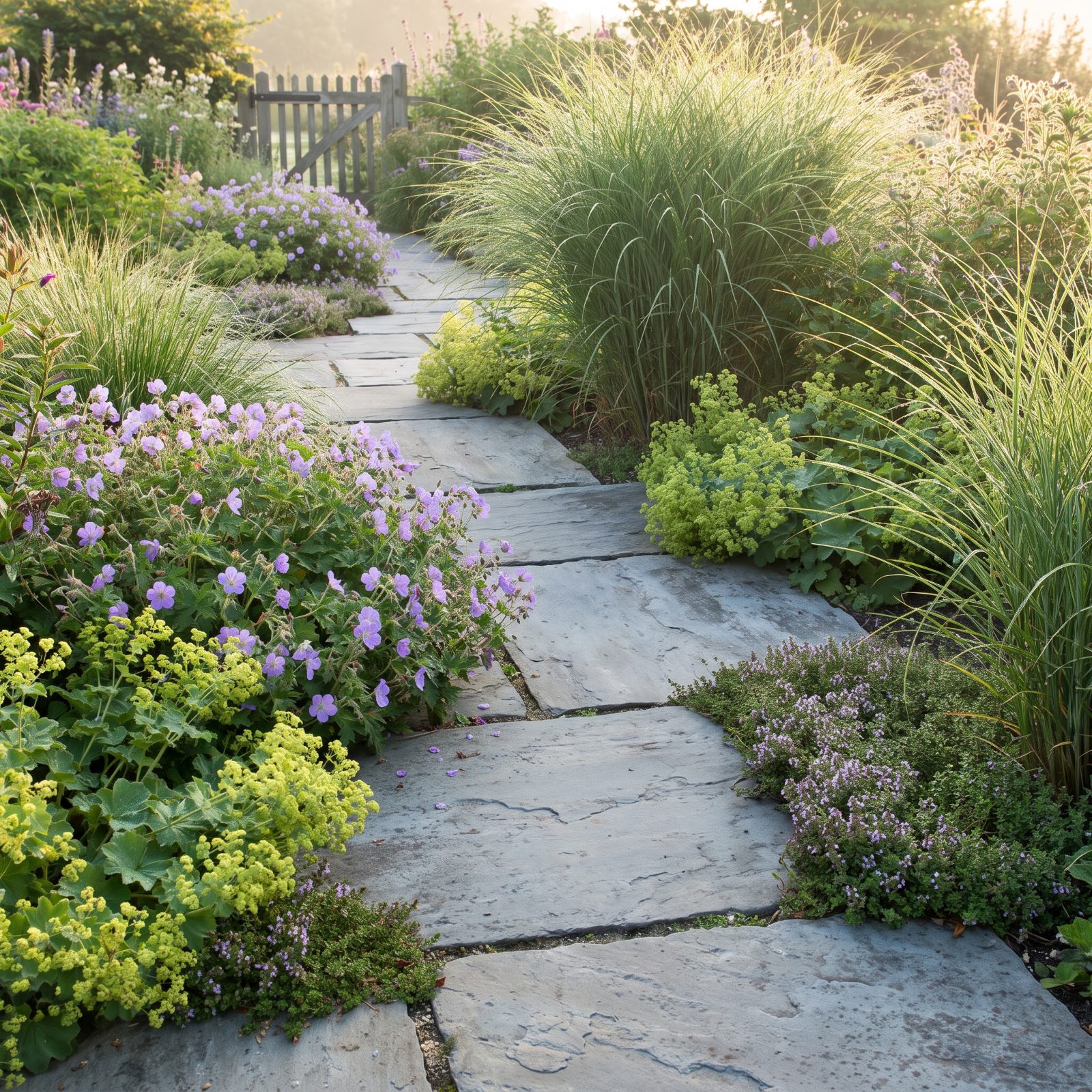
Big slabs read calmer than lots of fiddly little ones. Generous stones laid close together with only thin gravel seams let you walk into the planting without trampling it, while low-growing thyme spills over the path edges and releases scent when you brush past it.
Get the joints tight and you barely notice you’re on a path at all. Leave wide gaps and you’re mincing along like it’s a hopscotch grid. Keep the seams narrow so the stones read as one continuous walk.
32. Raised Boardwalks That Float Over the Planting
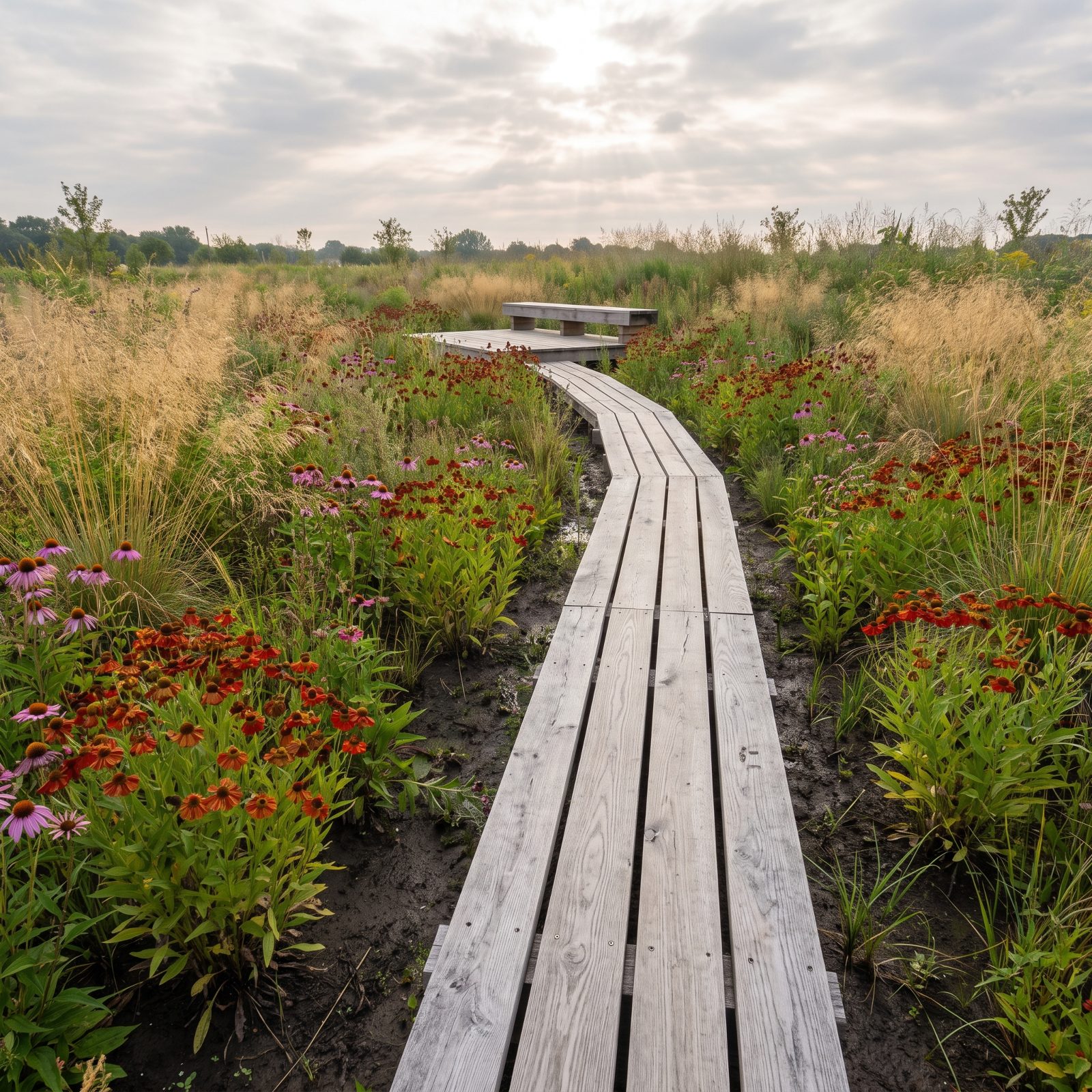
Boardwalks used to be a thing you saw at nature reserves, not in back gardens. That’s changing fast. Raise a timber walkway a few inches over the soil and you can plant right up to and under it, so you move through the garden rather than around its edges.
They come into their own over damp ground and rain gardens, where a solid path would sink or rot. The gaps between boards let water through and let low planting knit underneath. Go with a hardwood or thermally treated timber so it silvers gracefully instead of greening into a slip hazard.
31. Dry Creek Beds That Earn Their Keep
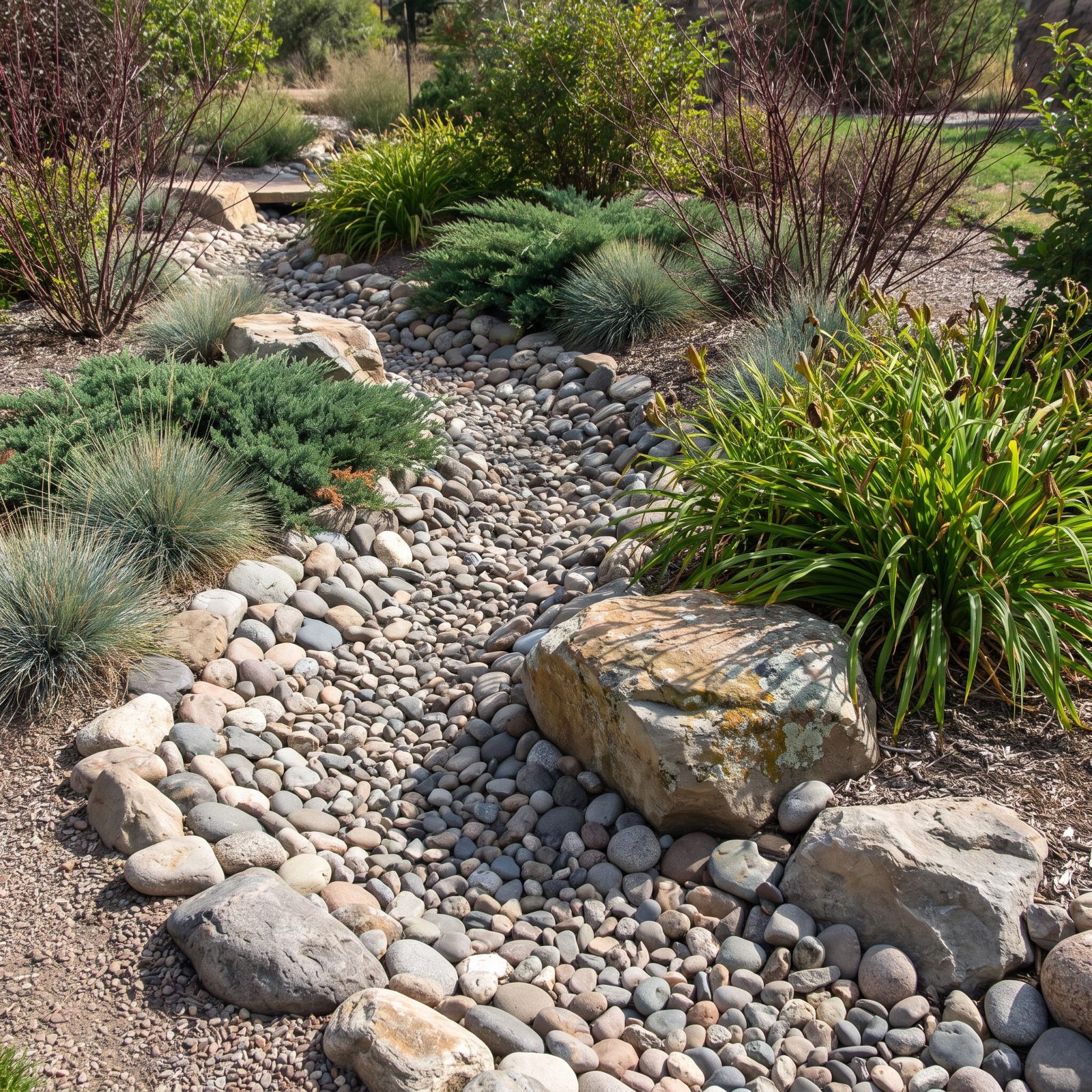
A dry creek bed looks like a decorative flourish and works like plumbing. On a slope, or a spot that floods, it channels stormwater away from the house and slows it down so it soaks in instead of racing off.
The fake-looking ones all share the same fault: uniform pebbles, a poker-straight line, zero variation. Real streambeds meander and sort their stones by size — big boulders on the outside of bends, fine gravel in the middle. Copy that and even a bone-dry bed reads like water used to run there.
30. Decorative Rainwater Cisterns
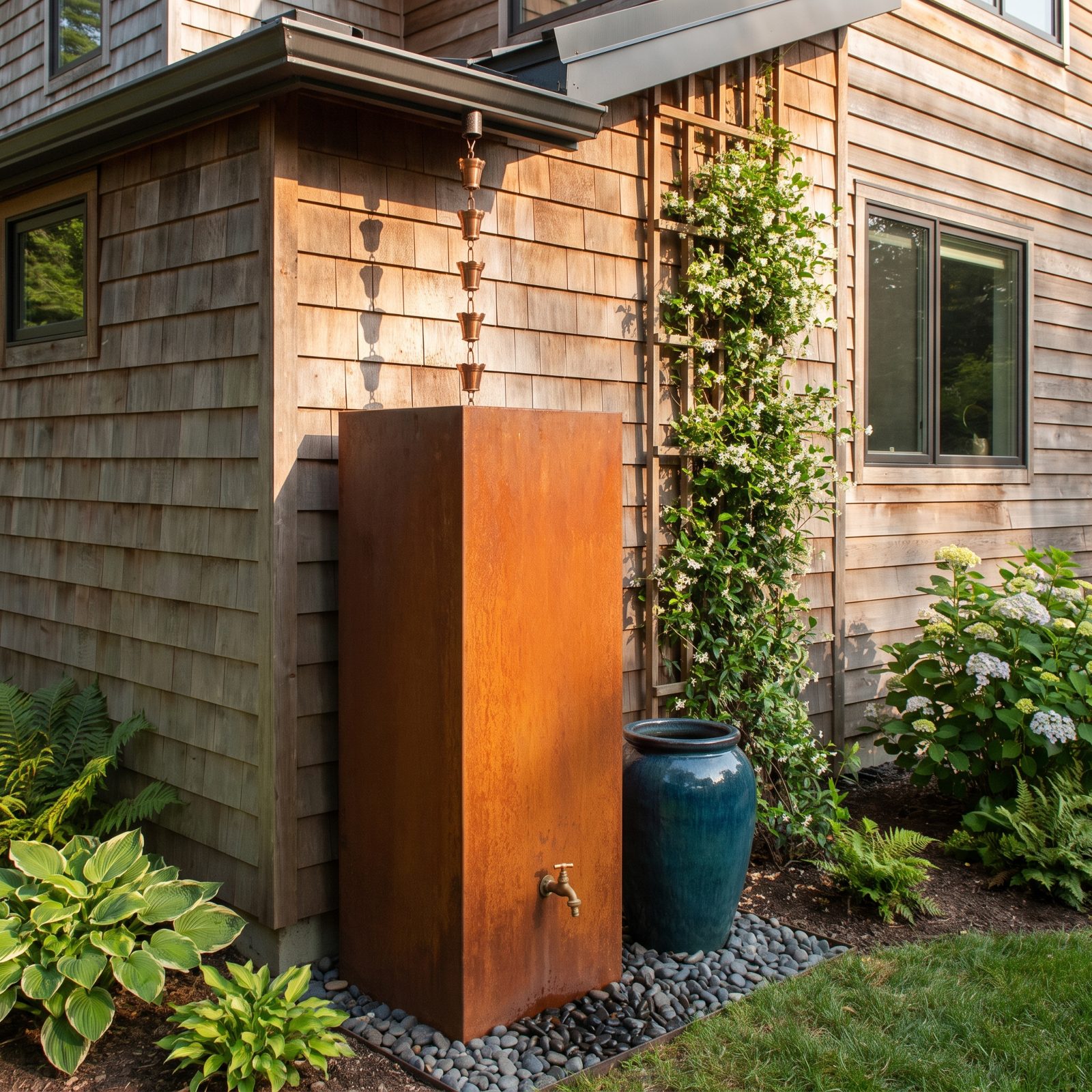
The water butt has grown up. Gone is the green plastic barrel shoved shamefully behind the shed. The new generation is built to be seen: corten steel columns, glazed ceramic jars, slimline tanks that pass for garden sculpture.
Why do designers love them now? Water rates keep climbing and summer restrictions keep tightening, so a tank that holds a few hundred gallons off your roof pays for itself in peace of mind. Swap the downpipe for a rain chain and the filling becomes a small show every time it rains.
29. Screened Compost Stations
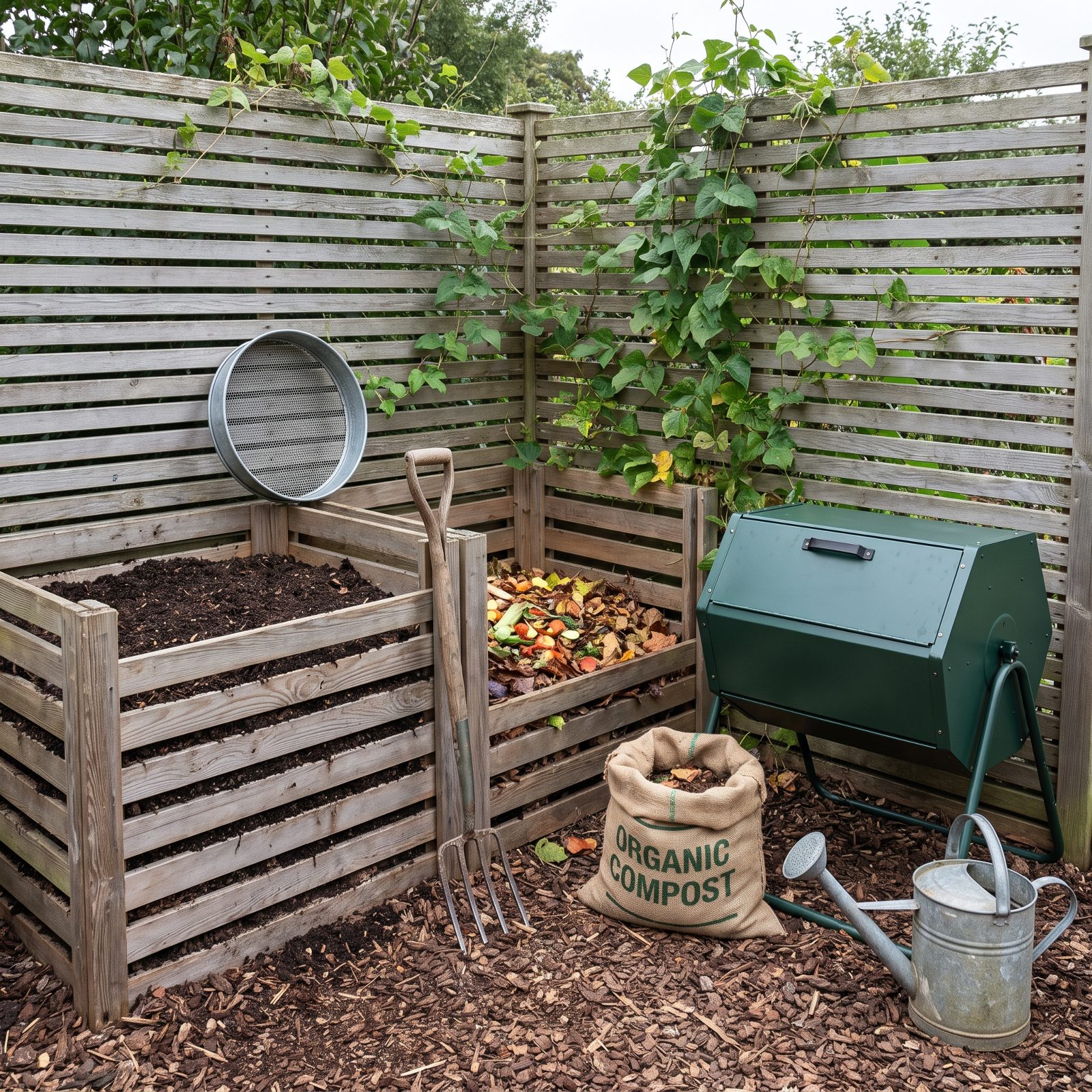
Nobody wants to look at a heap of rotting peelings. That’s the reason most people never compost at all — and it’s exactly what a screened station fixes. A slatted timber screen hides the works, keeps things looking deliberate, and still lets air move through the bays.
I resisted the two-bays-plus-a-tumbler setup for years. Thought it was overkill for a small plot. I was wrong. One bay that’s ready to use, one you’re filling, a tumbler that’s cooking — it turns the whole business from a smelly chore into a quiet, functioning machine in the corner.
28. Lean-To Greenhouses Against the House
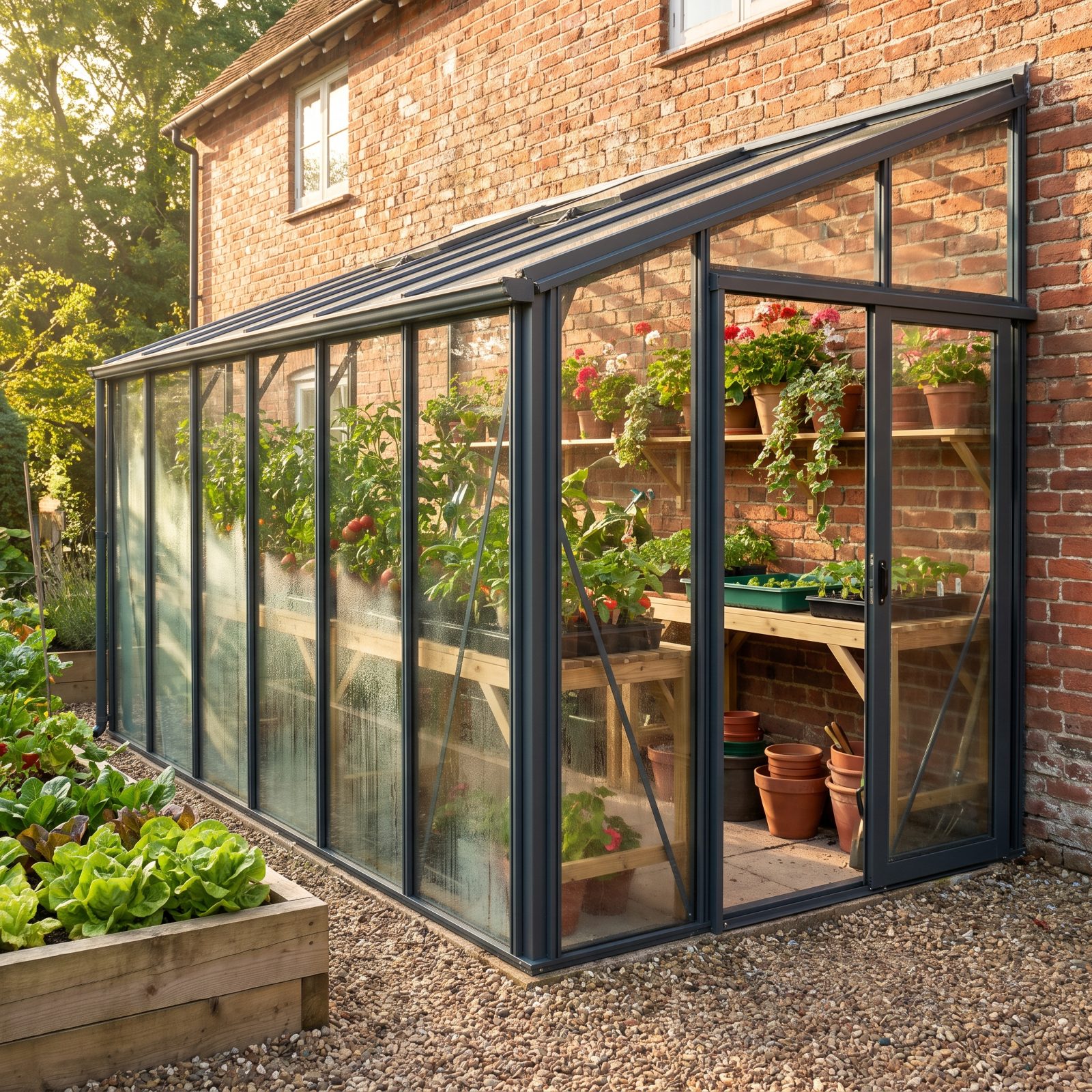
A freestanding greenhouse bleeds heat on all four sides. A lean-to leans against a wall that behaves like a giant storage radiator, soaking up sun by day and letting it back out at night. That borrowed warmth is why they stay usable deeper into the cold months.
They also sip less space and less money than a full glasshouse, which is why they keep turning up in smaller gardens. Set it against a south or west wall for the longest run of warmth. And prop the door open on hot days, or you’ll cook your seedlings — which, yes, I have done.
27. Design-Forward Potting Sheds
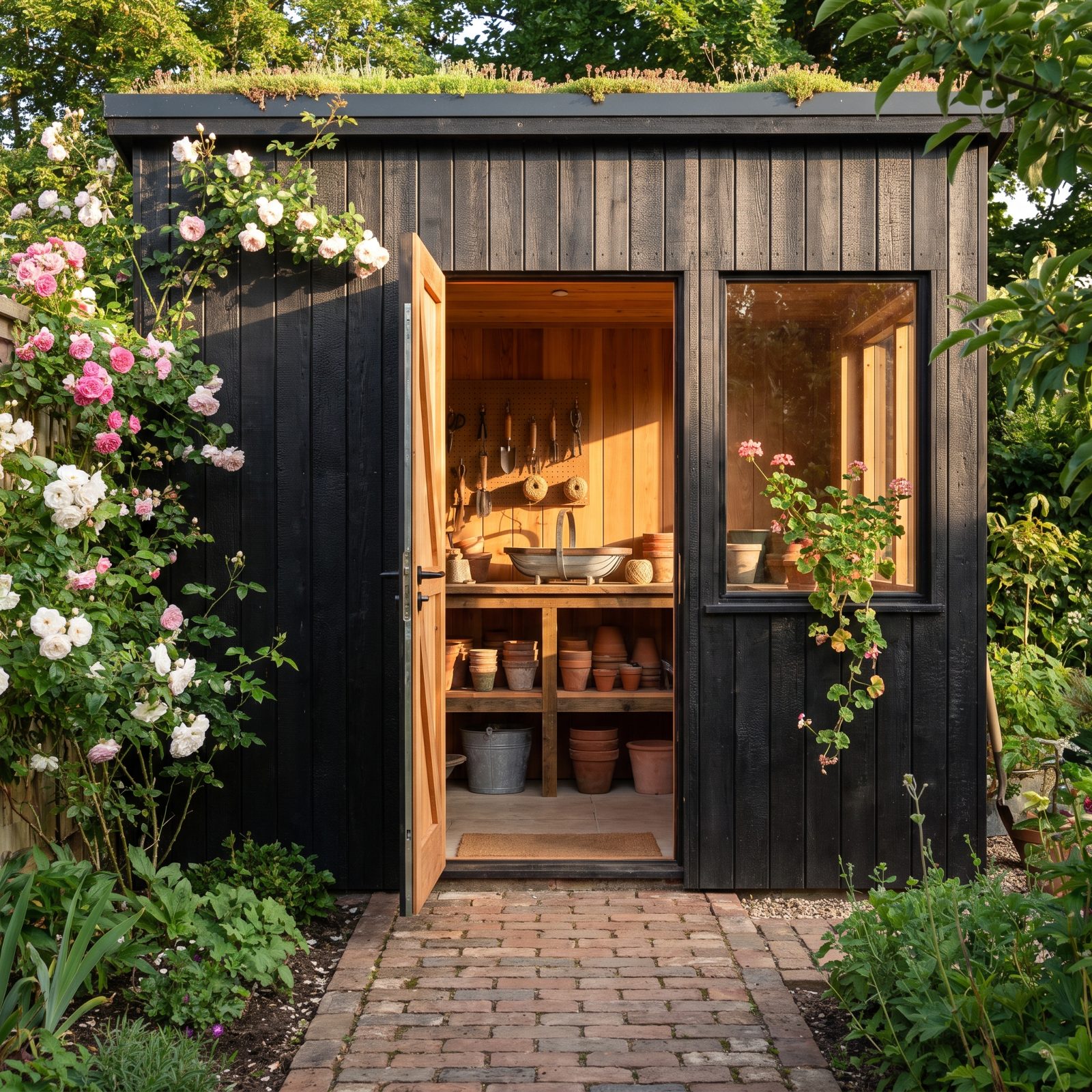
The shed is no longer where things go to be forgotten. Designers now treat the potting shed as a destination — a small building worth looking at from the house, with charred timber cladding, a sedum roof, a proper window over the bench.
There’s a quiet psychology at work. A space that looks considered gets used and cared for, while a slumped plywood box collects spiders and regret. Give the potting work a good bench, decent light, and tools you can actually find, and the tasks you used to dodge become the part of the week you look forward to.
26. Waist-High Kitchen-Garden Beds
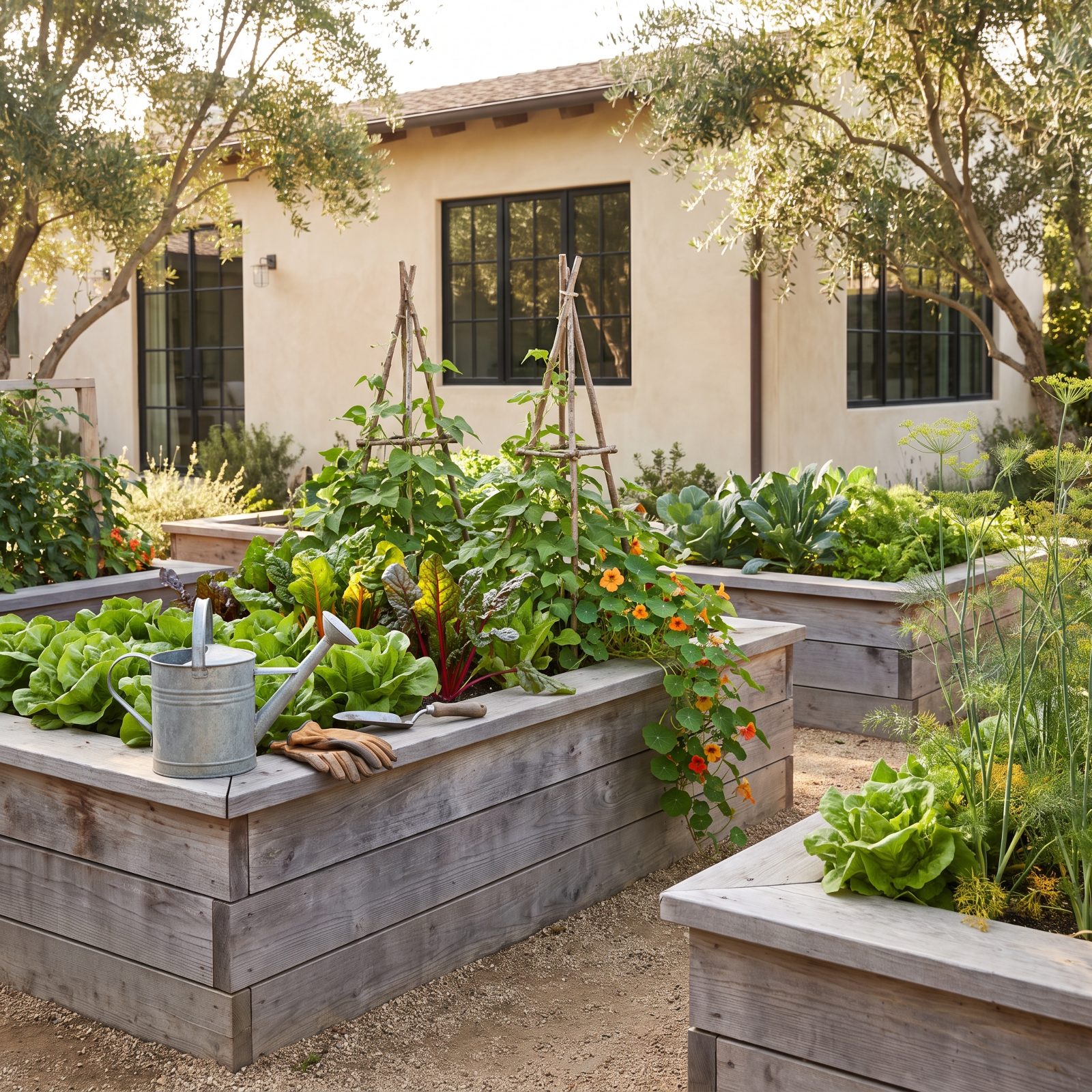
Bending over a bed on the ground wrecks your lower back. I learned that after one spring of planting left me walking like a question mark for a week. Raise the soil to roughly waist height and the problem never starts, which is why designers keep sketching these in for anyone who plans to still be gardening in twenty years.
They drain better and warm up faster in spring, and rabbits never quite figure them out. That capped top rail? It’s where your coffee lives while you work, or a seed tray waiting its turn.
25. Edible Hedgerows
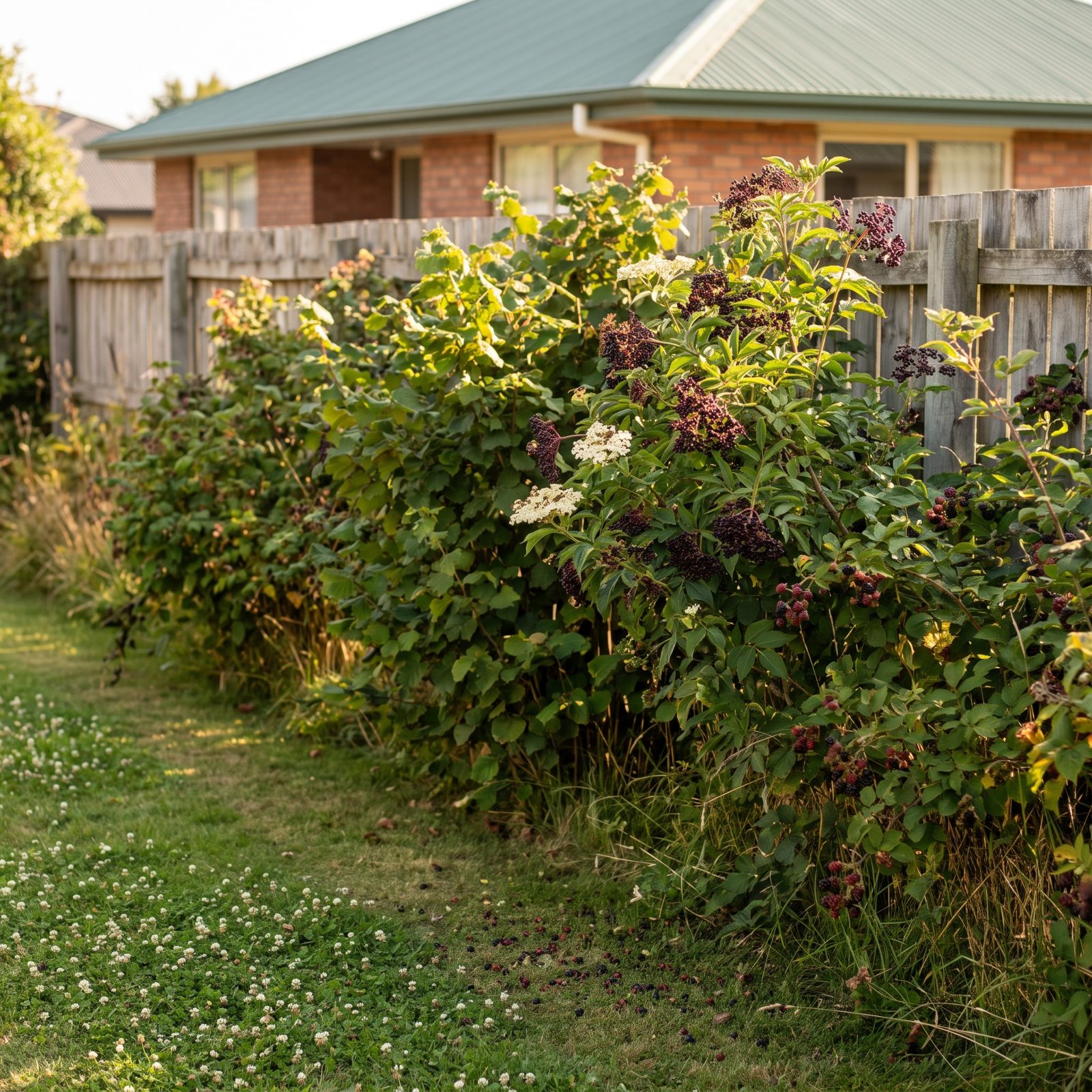
Your fence line is wasted real estate you’ve been paying taxes on for years. Stuff it with elderberry, hazelnut, currants and serviceberry and that dead edge becomes a food pantry, a bird sanctuary and a privacy screen all at once.
Yes, it’s messier than a clipped boxwood wall. That’s the whole idea. The gaps and the fallen fruit feed things, you get jam, the birds get breakfast, and the strip asks almost nothing of you once it’s rooted.
24. Espaliered Fruit Walls
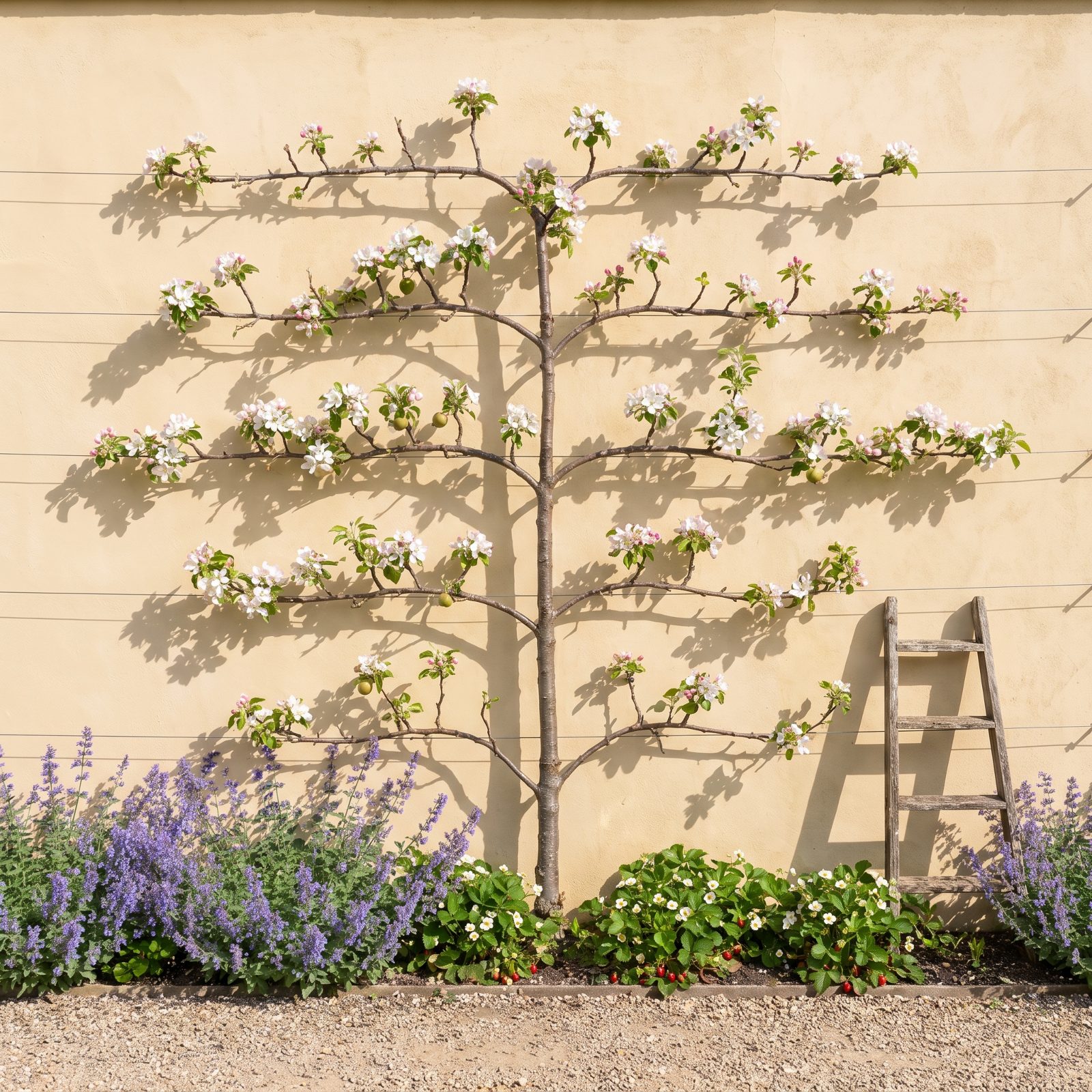
A fruit tree flattened against a wall is part orchard, part sculpture. Espalier trains apples, pears or figs into horizontal tiers only inches deep, so you harvest fruit on a plot the size of a hallway runner.
A south-facing wall soaks up heat and throws it back at the fruit, ripening things earlier than a free-standing tree ever manages. It takes patience, though — a few seasons of careful pruning to coax the shape right. I’ve butchered the first cut more than once. Done well, it reads like living architecture.
23. Dedicated Cut-Flower Beds
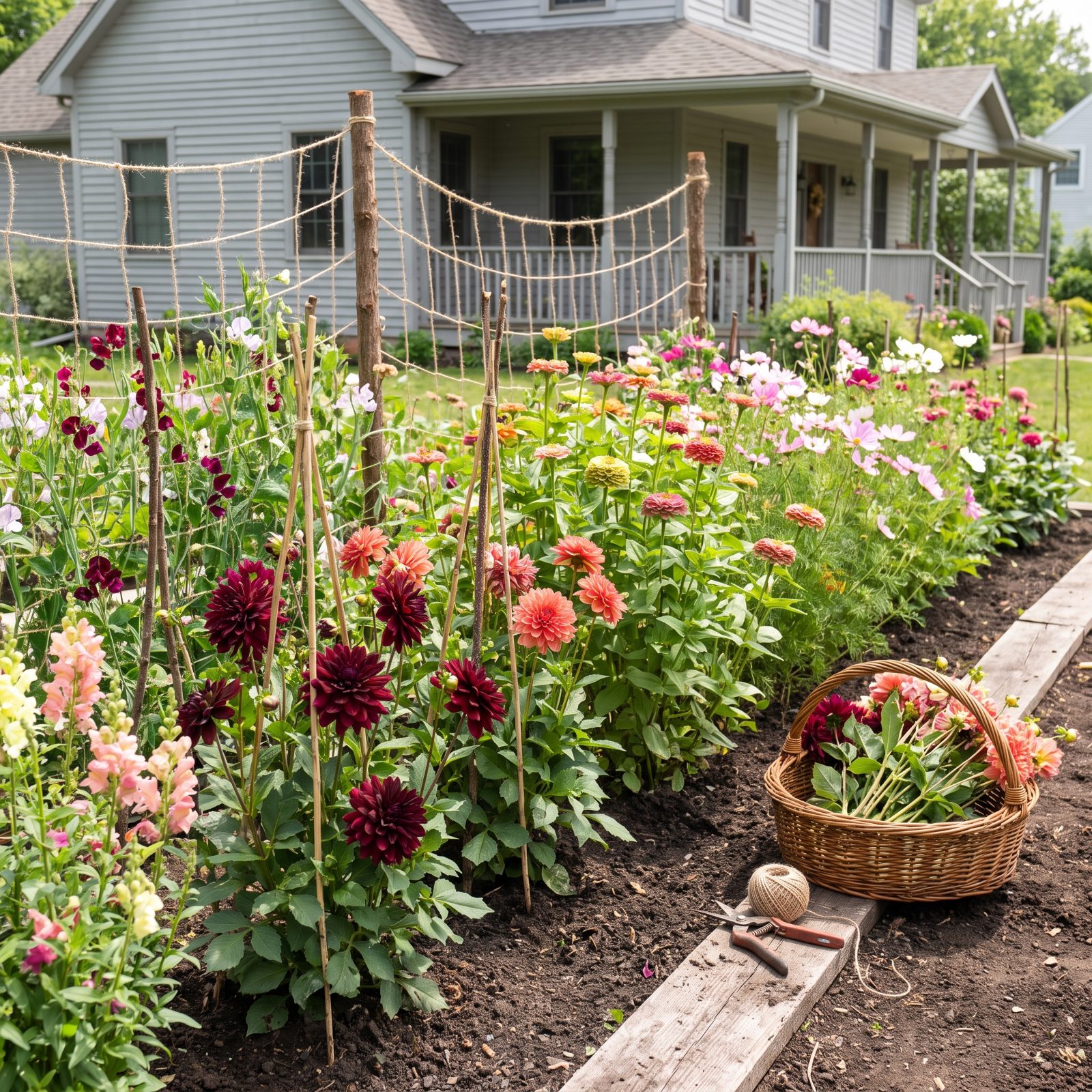
Nobody tells you this about buying flowers: you’re paying a premium for stems cut three countries away a week ago. A cut-flower bed solves that for the price of a seed packet.
The trick is keeping it separate from the display borders. Plant in rows, cut hard, and never feel guilty about the gaps. Dahlias, zinnias, cosmos and sweet peas crop for months if you keep snipping — the more you take, the more they throw back at you.
22. White-Blooming Moon Gardens
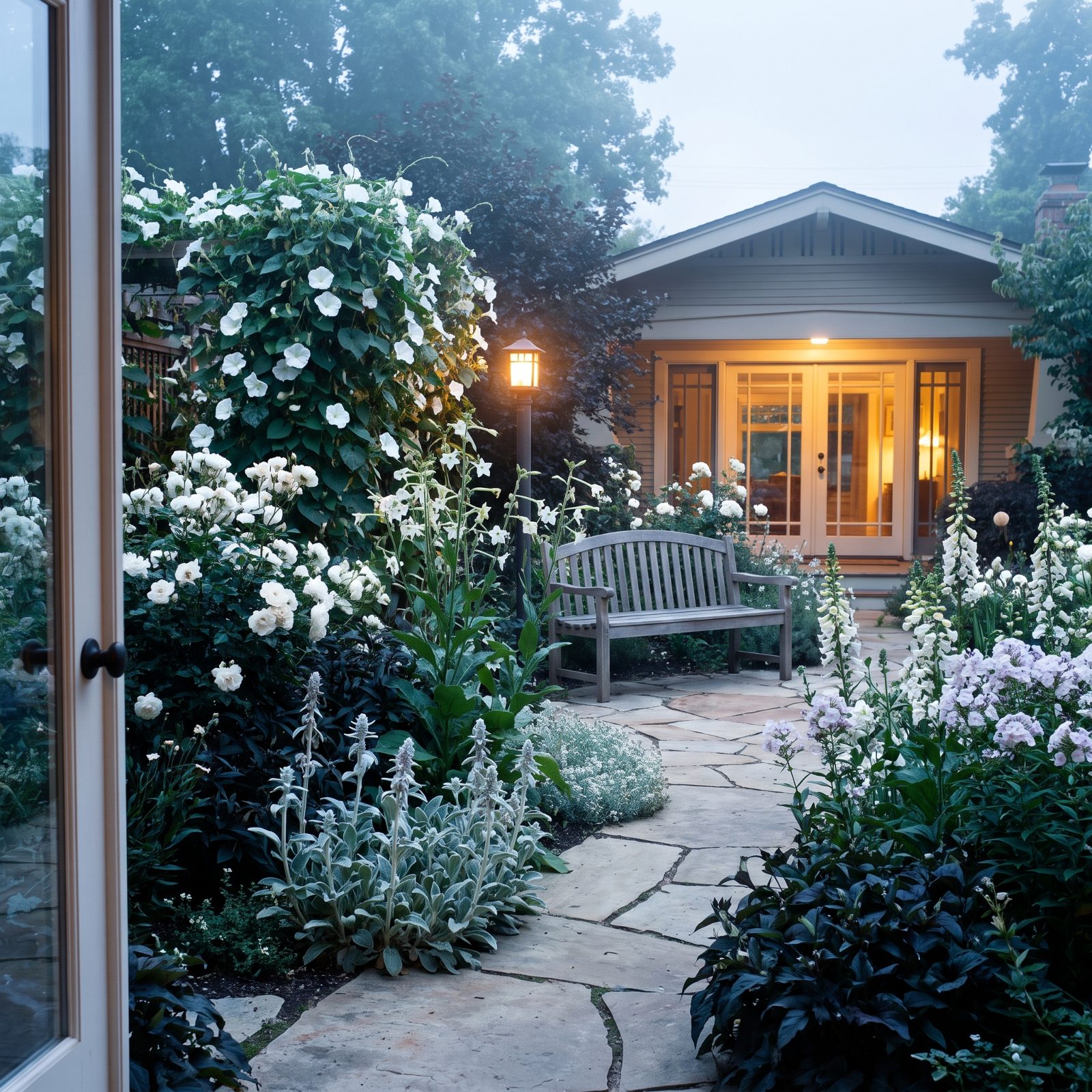
You plant most gardens for the daytime, then spend all your evenings in them anyway. A moon garden fixes that oversight. Pack it with white and silver — moonflower, nicotiana, lamb’s ear, pale roses — shades that cling to the last light and seem to float after everything else has gone dark.
Many of the pale night-bloomers are also the most fragrant, saving their scent for after sundown to pull in moths. Sit out there at nine on a warm evening and you’ll understand why.
21. Native Mini-Meadows
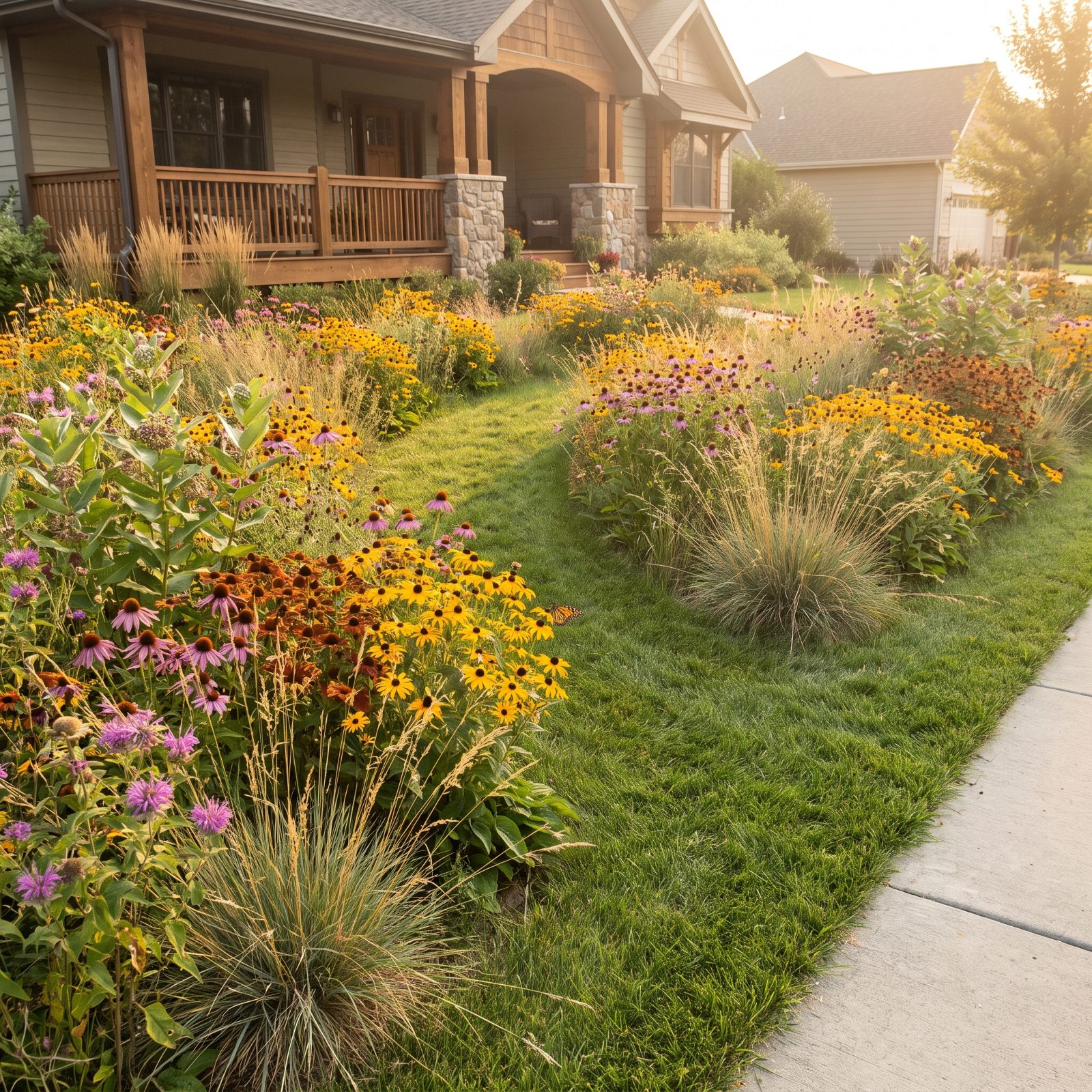
Swapping a patch of lawn for native meadow is one of the highest-impact moves you can make, and one of the laziest once it’s going. Regional grasses and wildflowers actually want your conditions, so they ask for little water and no feeding.
Here’s where people get it wrong: the edge. A wild sweep with no clean border just reads as neglect to the neighbors. Mow a crisp strip around it, or cut a path straight through the middle. That one gesture tells everyone the mess is deliberate.
20. Groundcover Tapestry Lawns
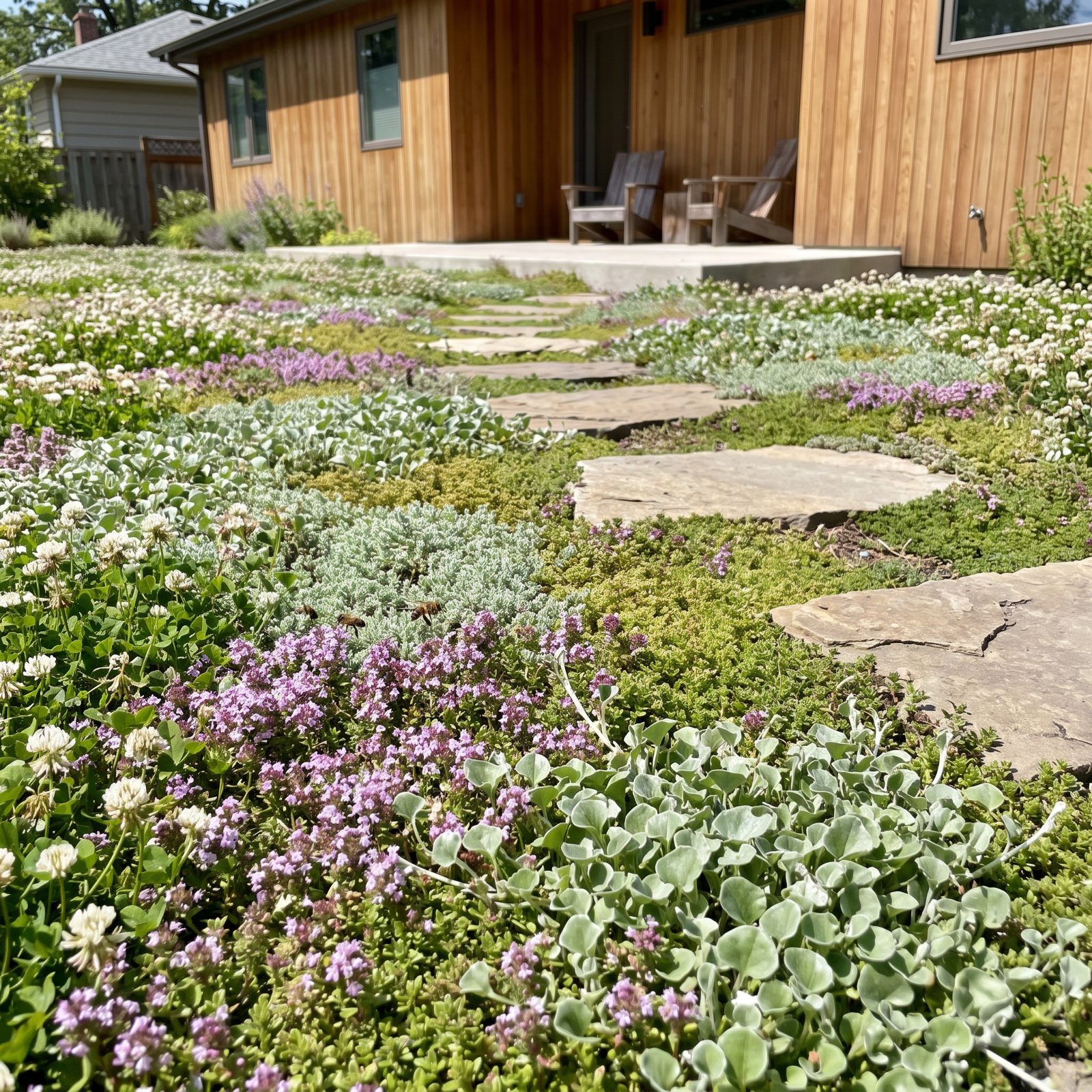
The weekly mow is a treadmill. A tapestry lawn steps you off it. Instead of one thirsty turf grass, you weave together low creepers — thyme, clover, chamomile, dichondra — into a soft patchwork that flowers, feeds bees, and shrugs off a dry spell with barely a complaint.
You can still walk on it, lie on it, let the dog roll in it. It just won’t need gas, a blade, or your Saturday. I hold a small grudge against the suburban lawn, if I’m honest, and this is my preferred revenge.
19. Ornamental-Grass Privacy Screens
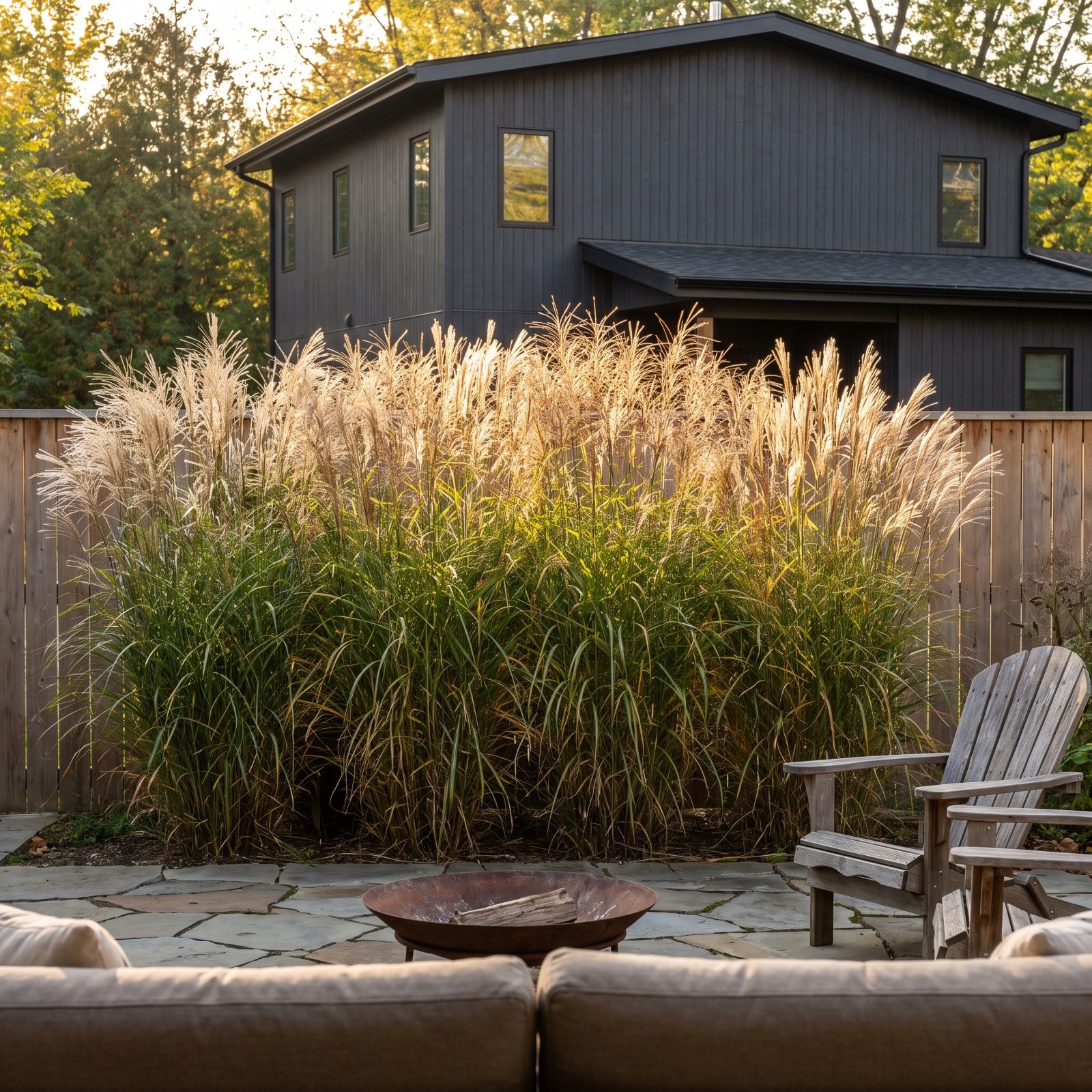
A fence says keep out. A wall of grasses says the same thing far more gently. Plant switchgrass or miscanthus in a dense row and by midsummer you’ve got a screen six or seven feet tall that sways, catches the light, and whispers in the wind.
Backlit at the end of the day, those seed heads turn to spun amber. They hold their structure through winter too, so you still get a screen in January when a hedge has gone bare and twiggy. One cut in early spring and they’re done for the year.
18. Shaded Woodland Groves
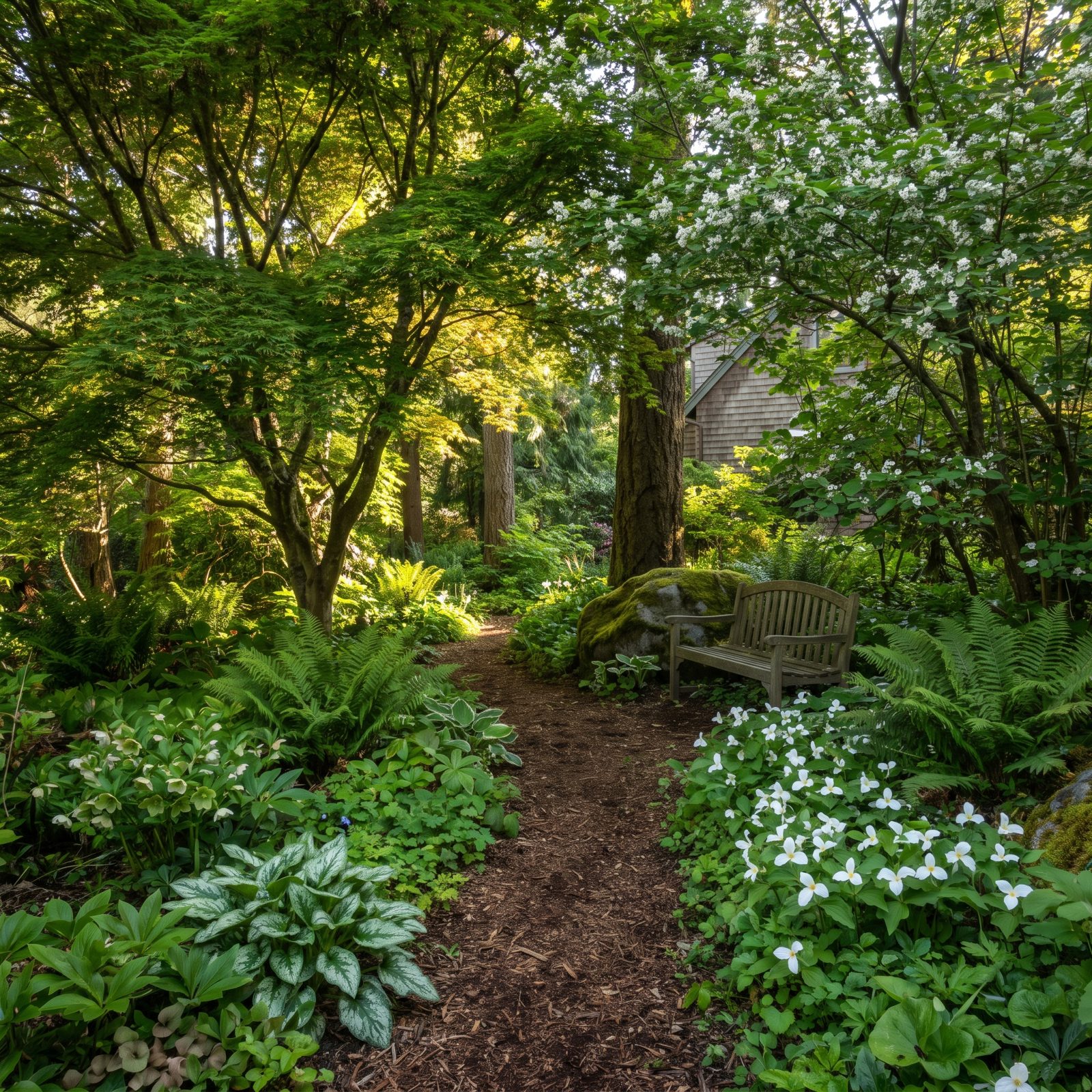
That damp, shady corner where nothing will grow? Stop fighting it. A woodland grove leans into the shade rather than resisting it, and shade plants happen to be some of the most texturally interesting things you can grow.
Layer it the way a real forest does: a small canopy tree, a tier of shrubs, then ferns, hostas, hellebores and early bulbs carpeting the floor. It’s the one part of the garden that stays cool and calm through August heat — the corner you’ll actually want to stand in when everywhere else is baking.
17. Statement Specimen Trees
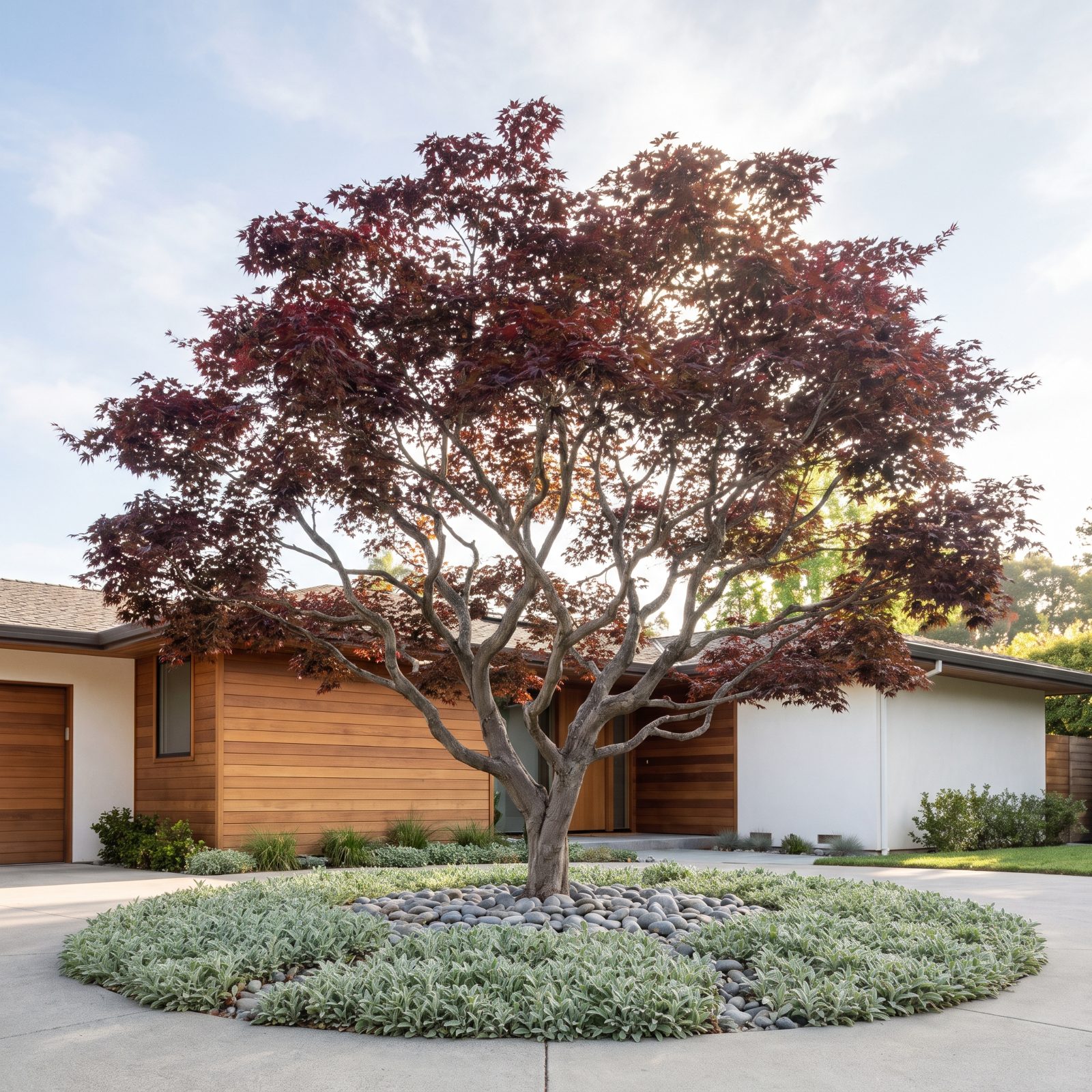
Every garden needs one thing your eye lands on first, and a well-placed specimen tree is the cheapest way to buy instant presence. A Japanese maple. A multi-stem birch. A weeping cherry. One tree with real character outperforms a dozen shrubs scrambling for attention.
Give it room. The most common mistake I see is crowding a beautiful tree with so much else that you never actually see it. Let it stand mostly alone, let its shape read against the sky, and the whole garden quietly organizes itself around it.
16. Architectural Topiary That Earns Its Keep in Winter
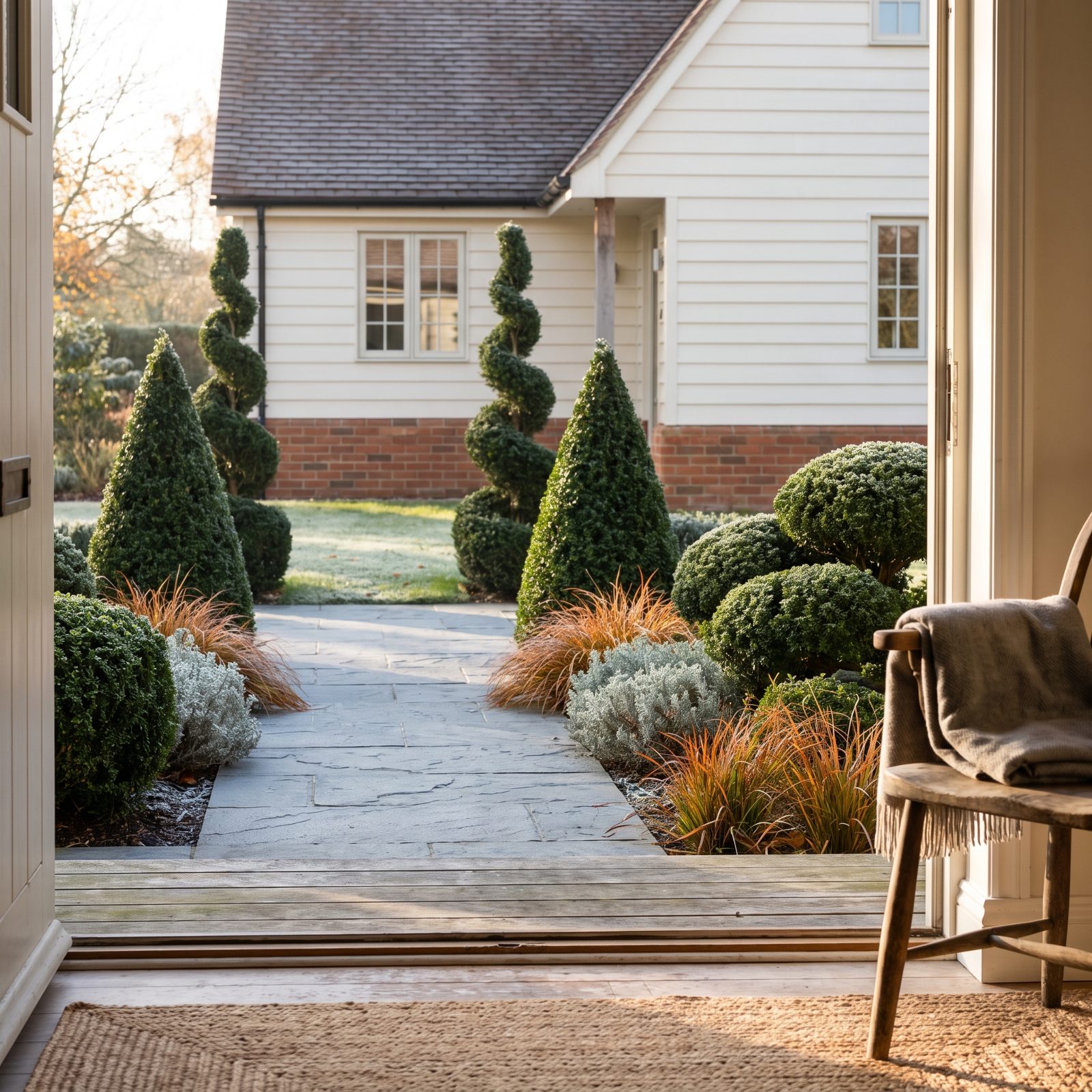
The plants doing the hardest work in a garden are the ones still standing in January. When the perennials have collapsed into mush and the trees are bare sticks, clipped evergreen shapes are what give you structure. That’s the case for topiary, and it’s a good one.
I used to think it was fussy — all those gardeners with their string lines and hand shears. Then I watched a neighbor’s border in February: everything flat and brown except two spiral yews holding the whole scene together like bookends.
Expect to trim twice a year, maybe three times for boxwood. Yew and holly forgive mistakes better than box, which also keeps catching blight. Buy a shape already established if you can stomach the price, because growing one from a whip takes most of a decade.
15. Hammock Groves Tucked Between Multi-Trunk Trees
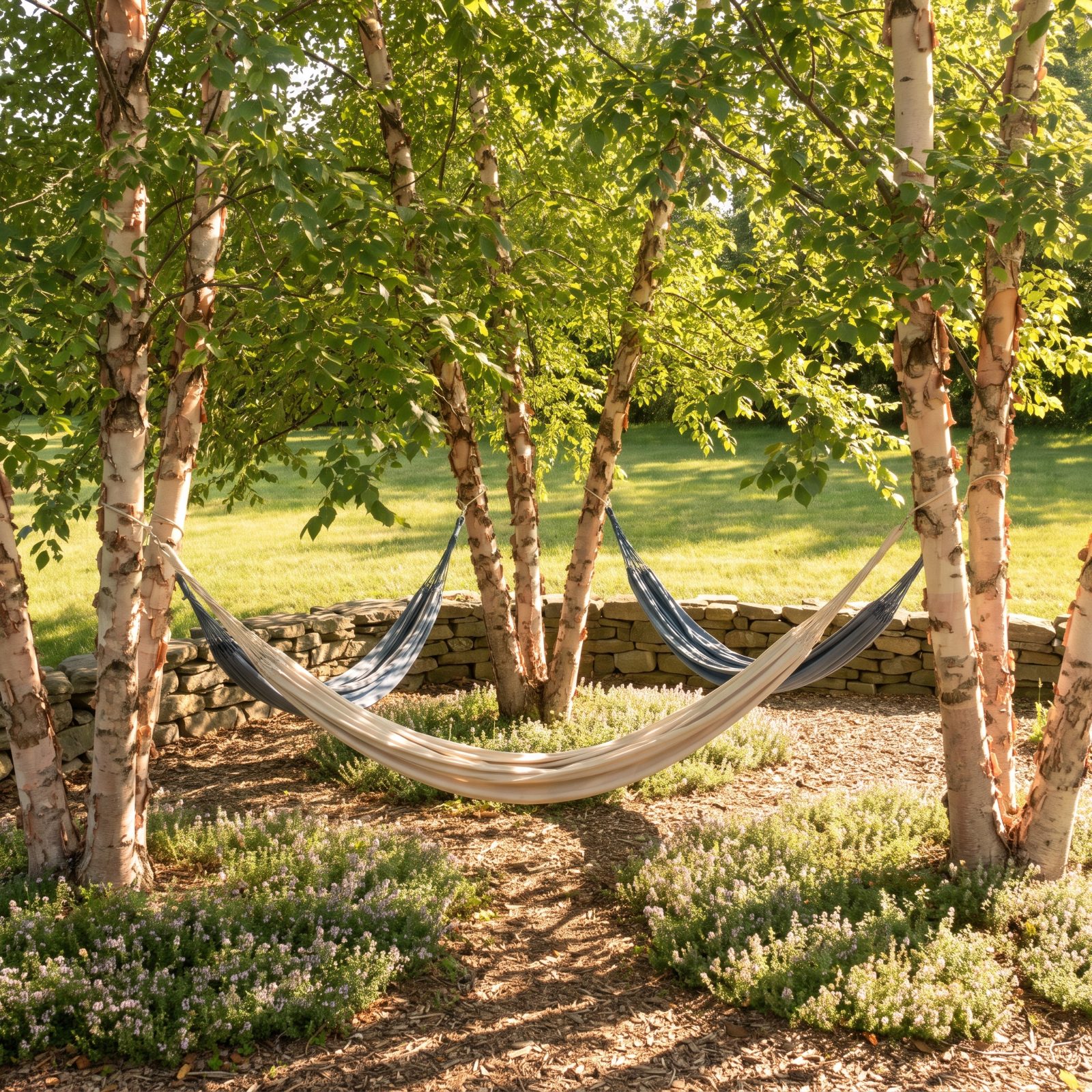
A grove isn’t one hammock. It’s a cluster, slung at slightly different heights between a stand of multi-trunk trees, so the space reads as a room rather than an afterthought.
River birch and multi-stem serviceberry work well because the trunks split low and spread, giving you anchor points without needing posts. Young trees? Use a sturdy frame and let the planting catch up around it.
The mistake people make is sun. A hammock in full afternoon glare goes unused by July. Site your grove where the canopy throws shade between two and five, and you’ll actually lie in it.
14. Modular Living Walls You Can Actually Maintain
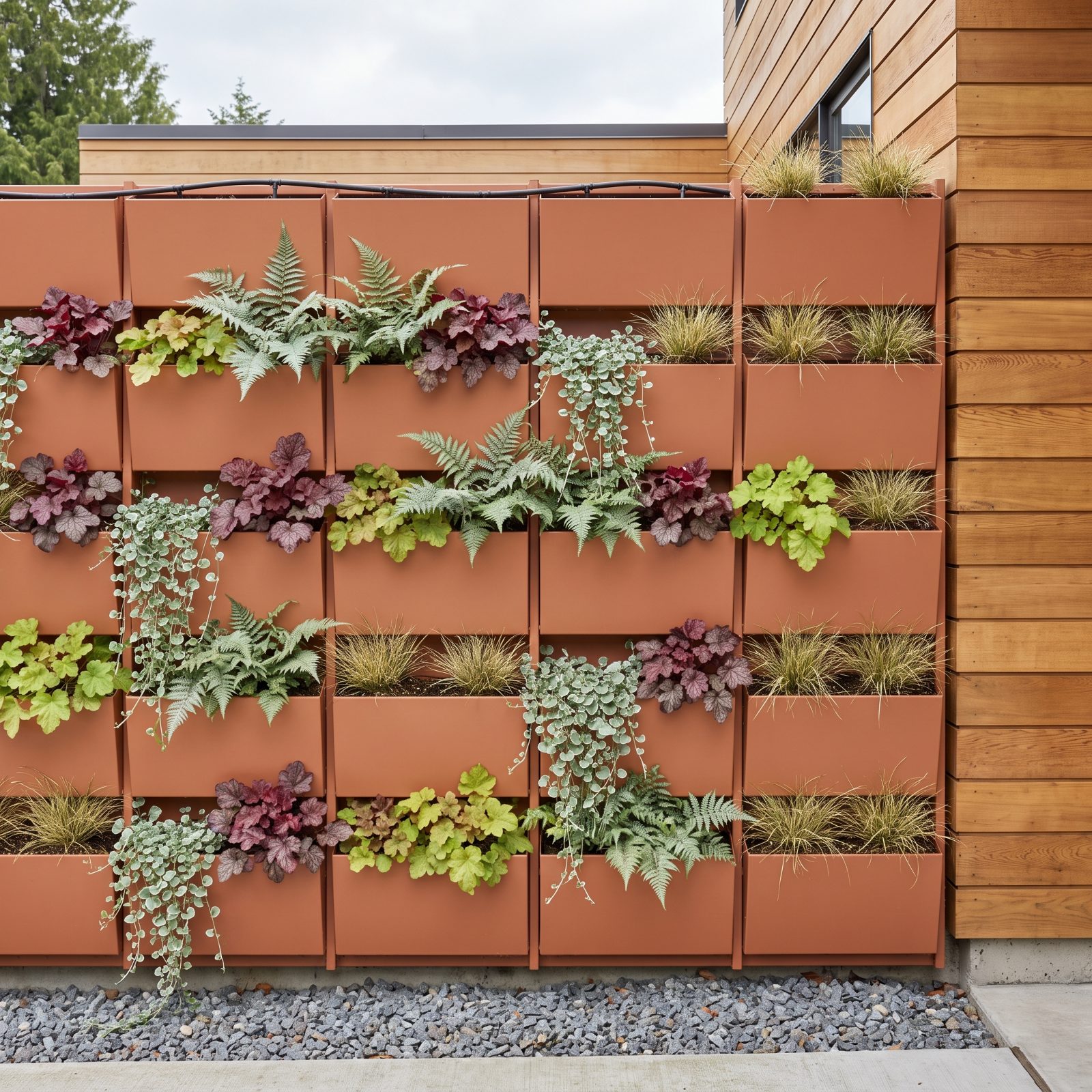
Living walls kill more plants than any other garden feature I know of. The glossy magazine versions are on life support, fed by irrigation rigs that cost more than the wall. The modular ones changing that use individual planter cassettes you can pull and swap.
Here’s the honest version: a failed section becomes one tray to replace, not a wholesale redo. Pick drought-tolerant, shallow-rooted plants — sedum, heuchera, small ferns, grasses. Skip anything thirsty.
And run drip irrigation on a timer, because hand-watering a vertical surface evenly is a fantasy you’ll abandon by week three.
13. Vine-Covered Garden Arches That Frame a View
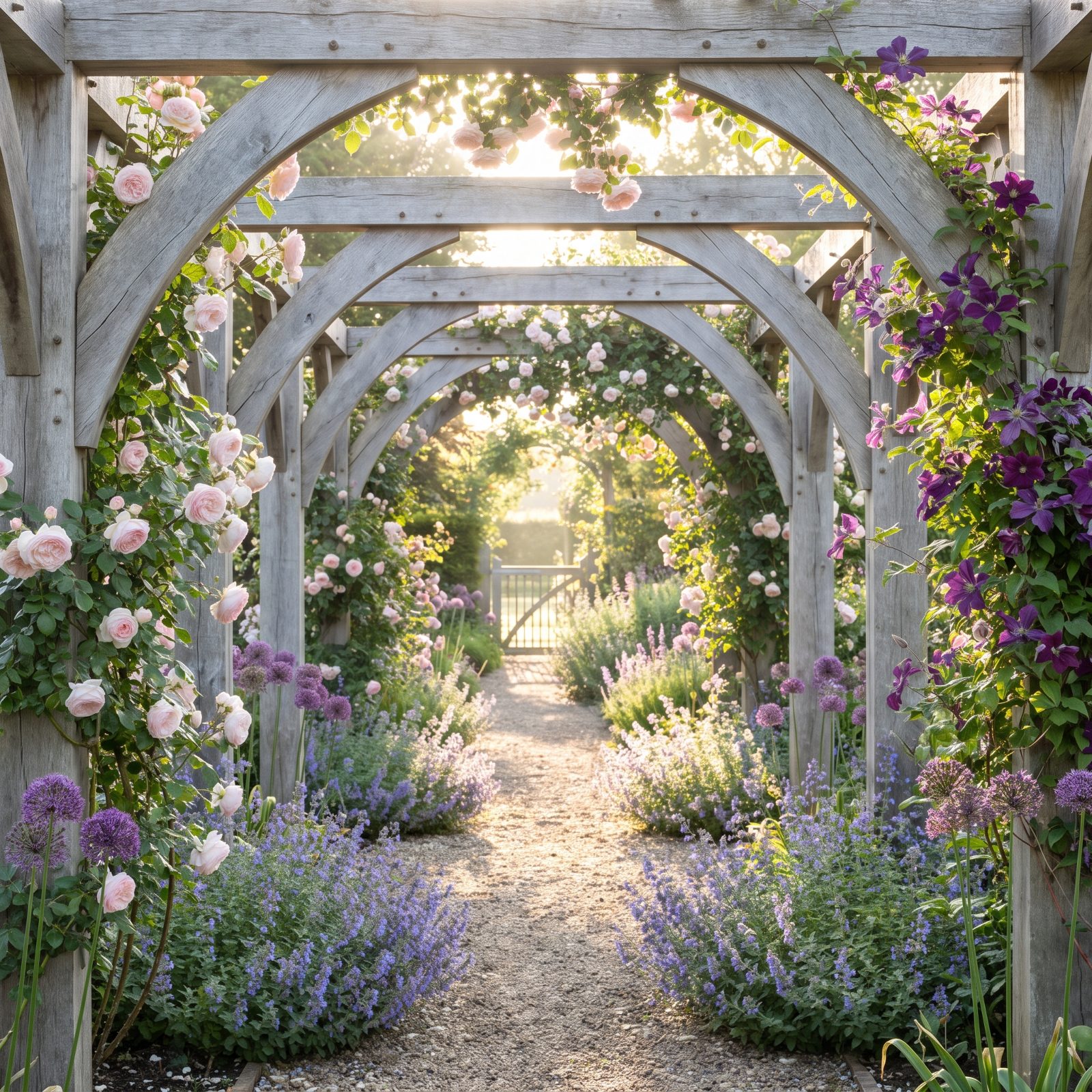
An arch does one job well. It frames what’s on the other side and makes you want to walk toward it, so even a short garden starts to feel like it has somewhere to go.
Choose your vine by how much patience you have. Clematis gives you color fast but dies back; climbing roses take two or three seasons to clothe the structure and need their canes tied in, not just left to flop. Wisteria will eventually crush a flimsy arch, so build heavy if you go that route.
Here’s the thing nobody mentions. Scent lands harder in an enclosed arch than out in the open, and a honeysuckle-covered span in June stops people mid-stride.
12. Corten-Steel Edging That Rusts on Purpose
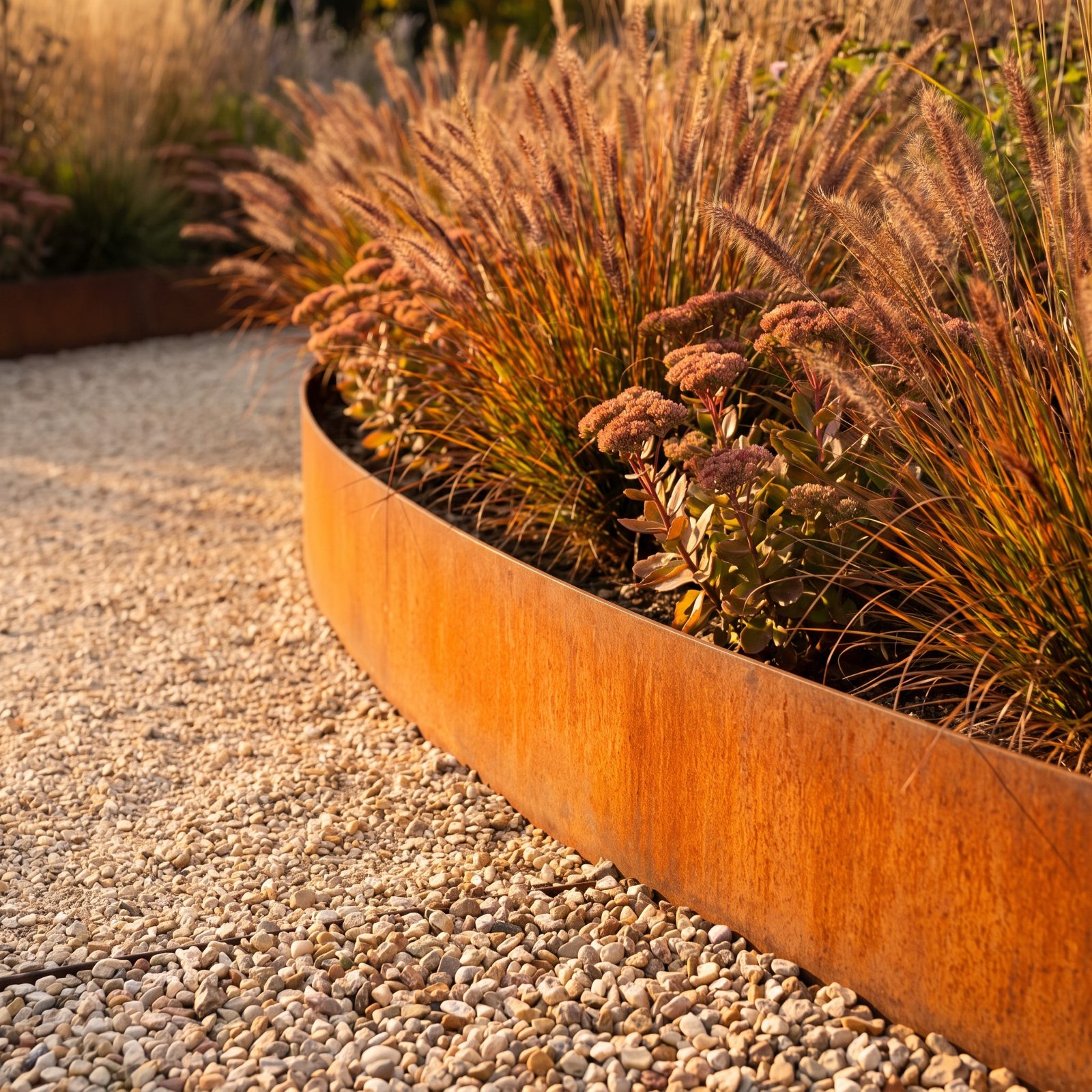
Corten steel edging arrives looking raw and grey, then rusts to a deep orange over a few months and stops. That’s the trick: it oxidizes to a stable patina and holds there for decades. The rust is the finish, not a sign it’s rotting.
It gives you a crisp line between gravel, lawn and bed without the plastic cheapness of the green roll stuff or the maintenance of timber. It bends into curves. And it almost disappears, because its color sits right next to the warm tones of soil and grass.
Fair warning: it will stain pale paving where it meets it during that first rusting season. Keep it off your limestone.
11. Boulder Seat Walls That Double as Retaining
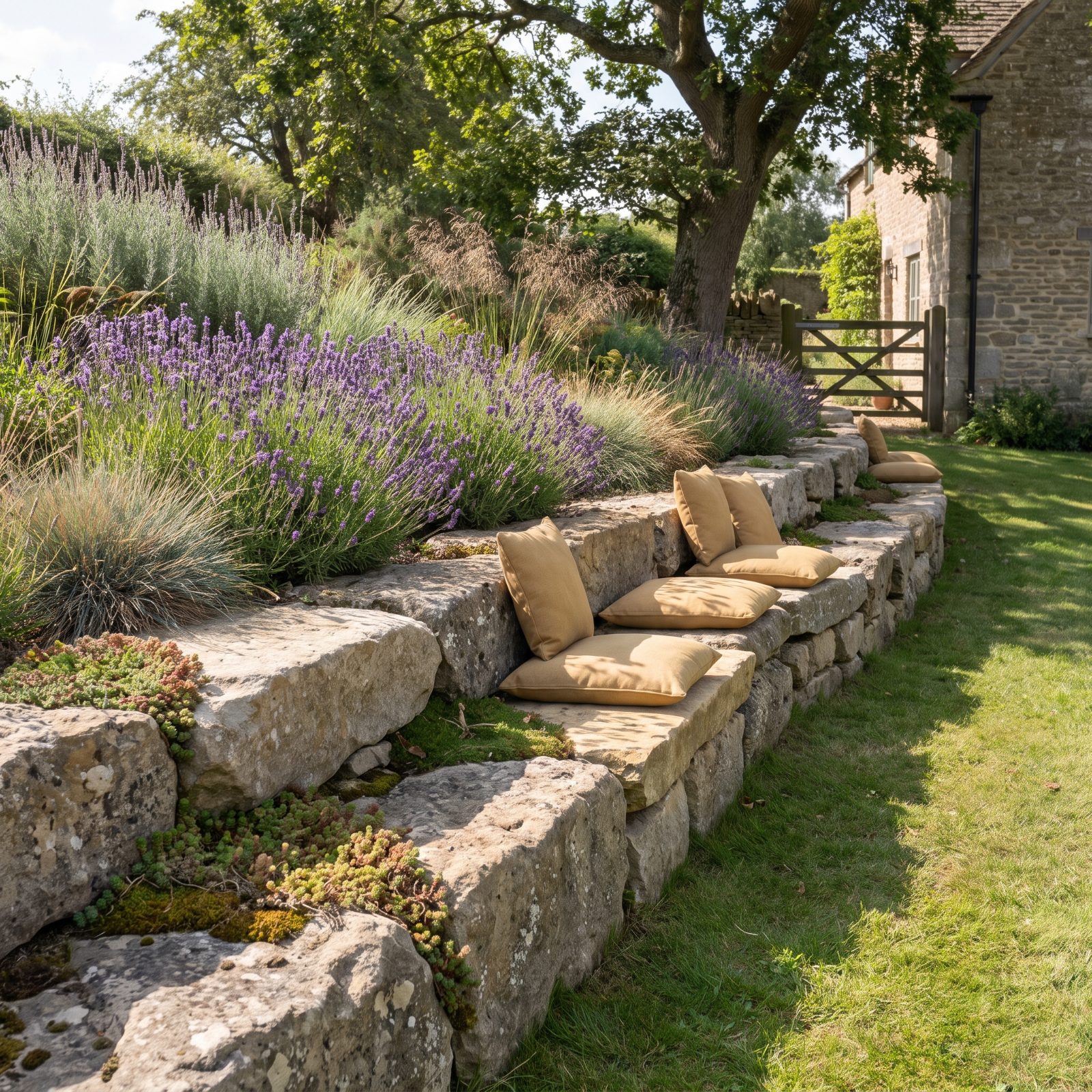
Why build a retaining wall and then buy separate benches when one structure can do both? A boulder seat wall holds back a slope and gives you a flat-topped ledge to sit on, and it looks like the hillside grew it.
Choose broad, flat-topped stone with a comfortable sitting height, roughly knee-level. Bed the boulders deep so they don’t shift. Tuck sedum and creeping thyme into the joints and within a season the wall softens.
Stone warms in the sun and holds that warmth into the evening. That’s the detail that makes people linger there after dinner without quite knowing why.
10. Planted Garden Steps With Thyme in the Risers
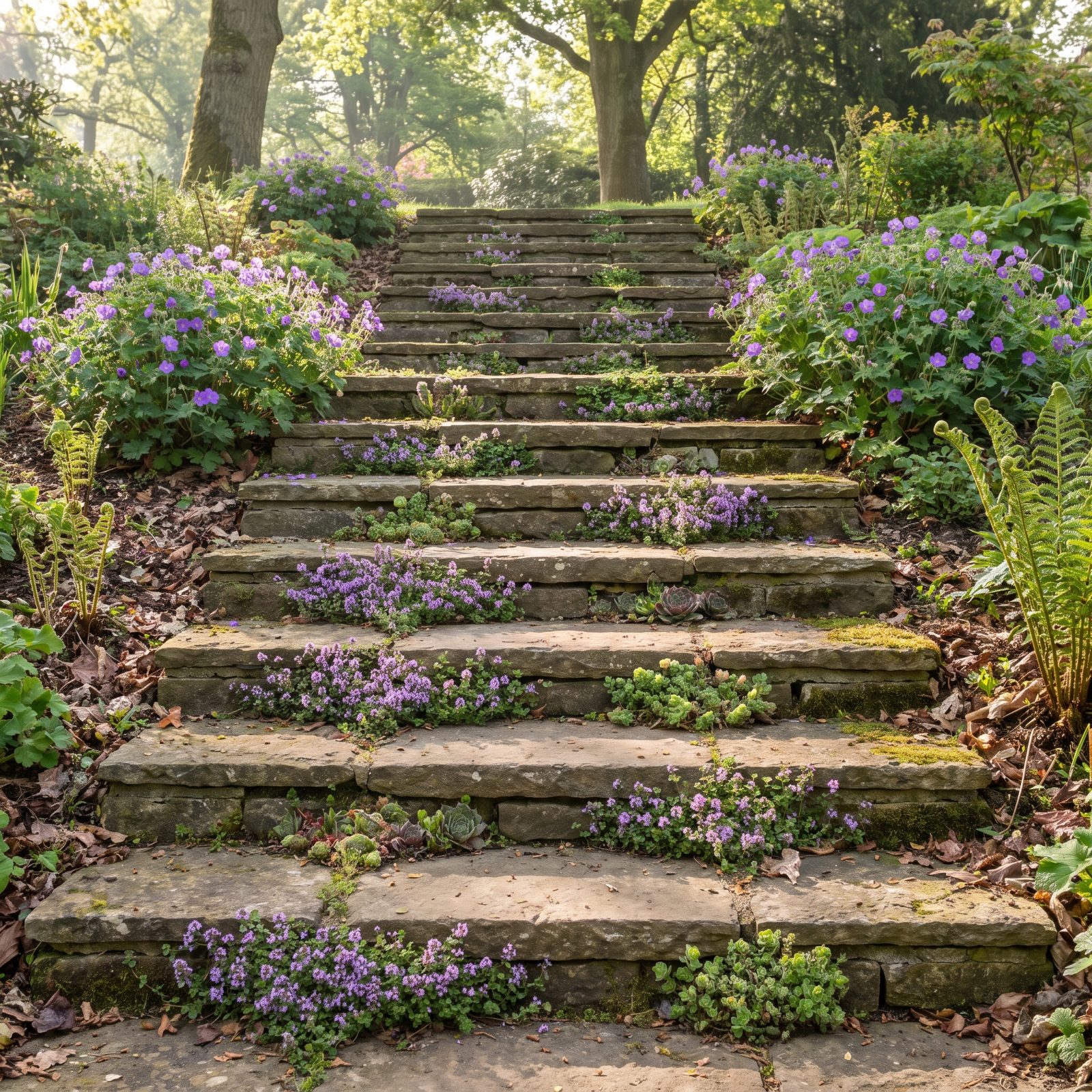
Steps don’t have to be a hard interruption between two planted areas. Leave gaps in the treads and risers, fill them with creeping thyme, pratia or alpine phlox, and the climb becomes part of the planting rather than a break in it.
Thyme is the classic choice because it tolerates being trodden, releases scent when you do, and stays low enough not to trip you. Build wide and shallow risers. Steep steps with plants crowding them become a sprained ankle waiting to happen.
Give the planting the sunnier edges of each tread where feet don’t land, and it’ll knit in without getting flattened.
9. Low Floating Decks That Hover Over the Ground
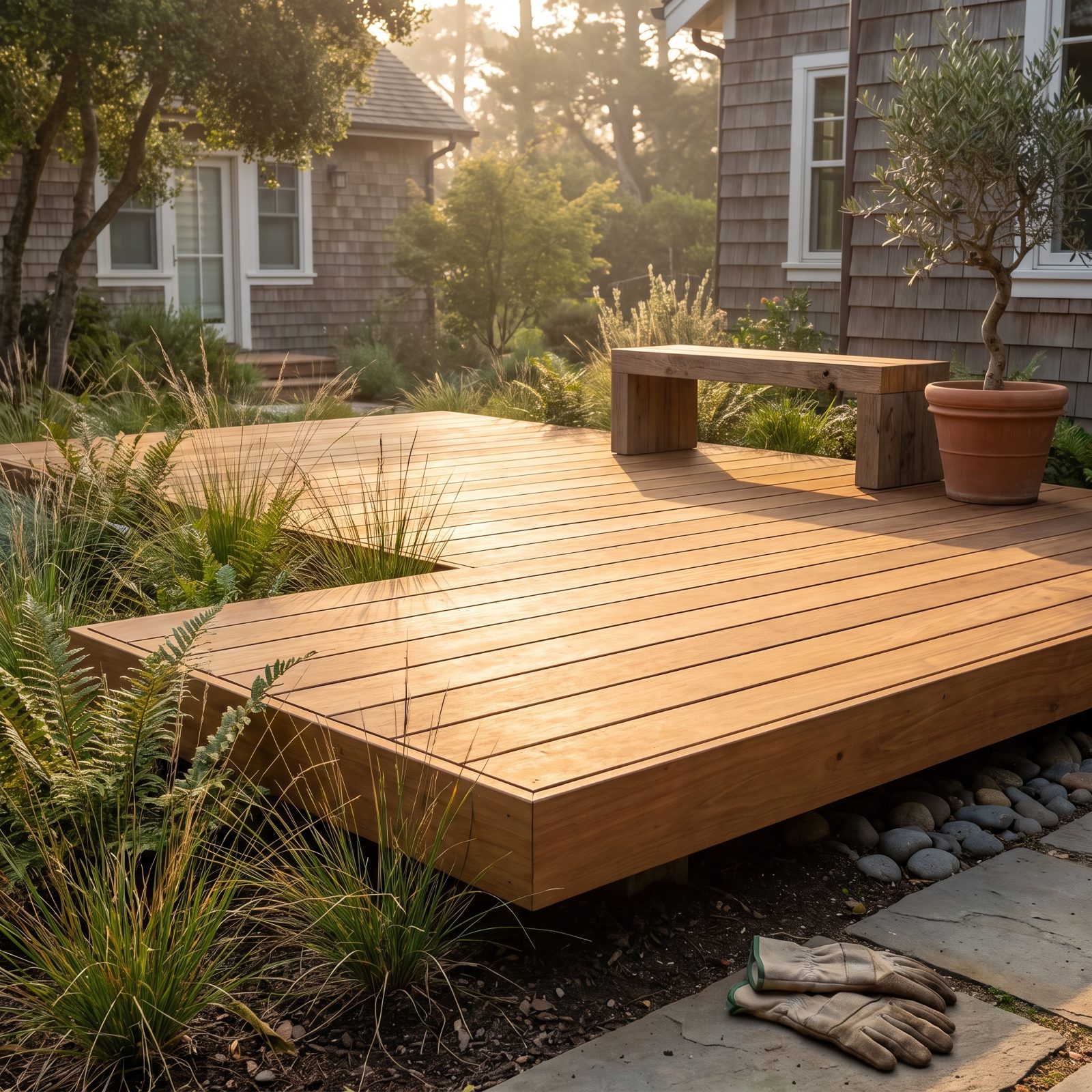
A floating deck sits low and tucks right up against the house, with a shadow gap under its edge so it seems to hover an inch above the planting. No handrails, no steps, no bulky posts. Just a plane you step up onto.
What makes it work is how it settles a flat, awkward patch of garden without dominating it. Build it from a dense hardwood like ipe if you can afford it; it silvers gracefully and shrugs off rot. Cheaper softwood works, but you’ll be re-oiling it forever.
Leave gaps for grasses to grow up through the edges and the deck looks like it landed in the garden rather than being bolted on.
8. Balcony Pocket Gardens Built for Small, High Spaces
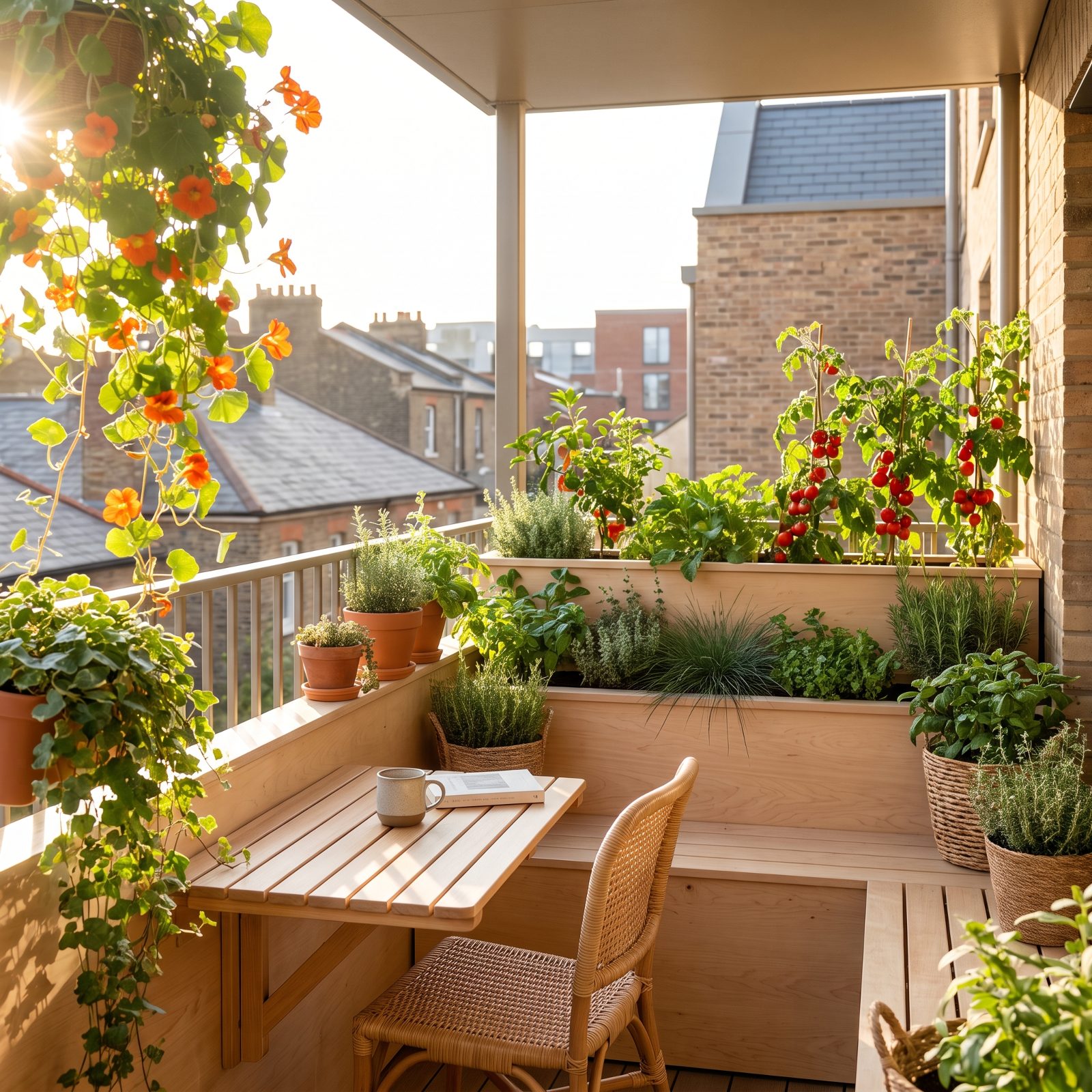
A balcony is not a small garden. It’s a different kind of garden entirely, and treating it like a shrunken border is how you end up with dead pots.
Wind and heat punish high, exposed spaces, and containers dry out in hours up there. The pocket-garden approach stacks planting vertically, uses tiered and railing planters, and leans on tough, shallow-rooted plants: herbs, dwarf grasses, trailing nasturtium, cherry tomatoes.
Weight is the thing people forget. Wet soil is heavy, and balconies have load limits. Use lightweight compost mixes and check what your structure can carry before you tile the whole thing in terracotta.
7. Narrow Reflecting Rills That Trace a Line of Water
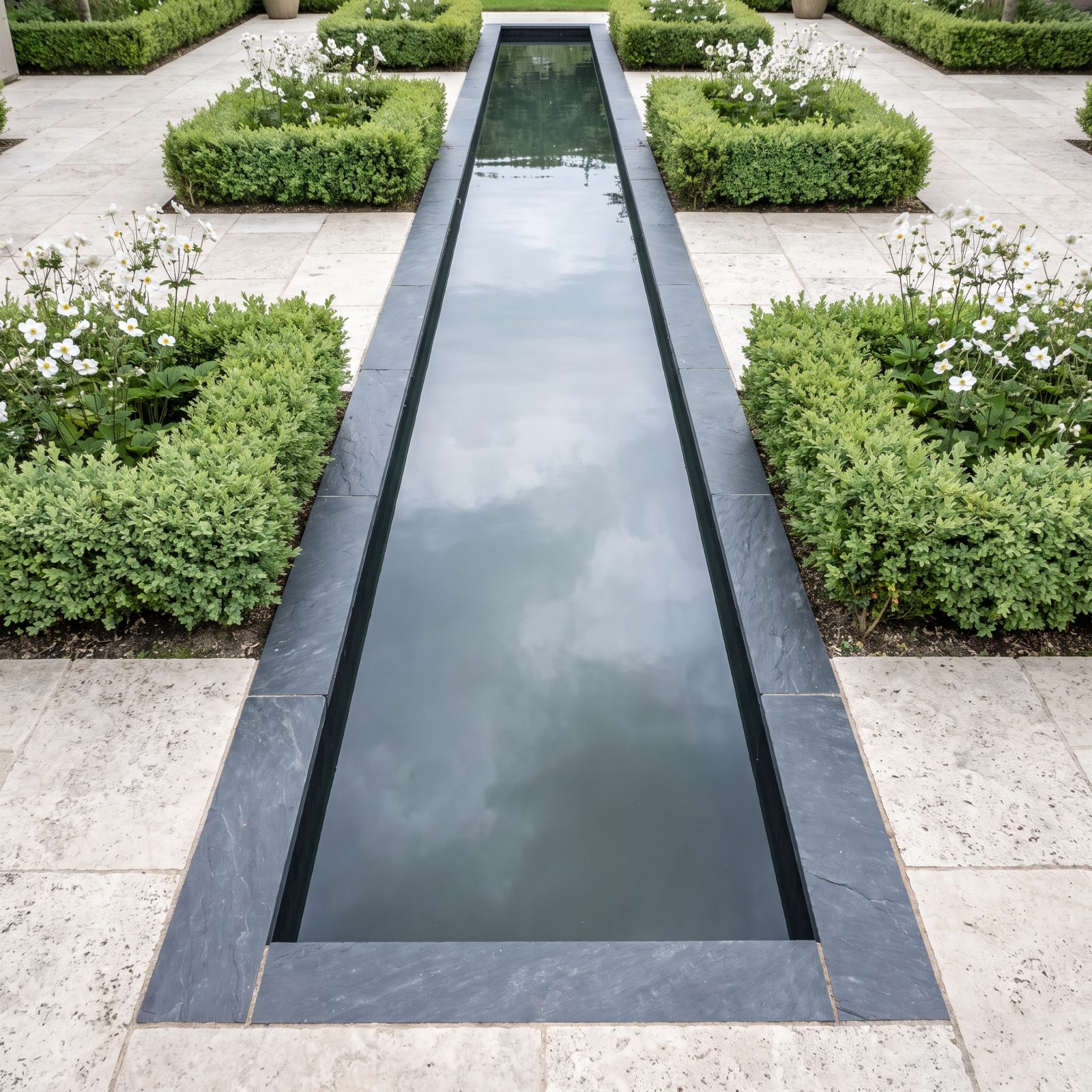
A rill is water at its most disciplined: a long, narrow canal, perhaps a metre or so across, running in a straight line through the garden. It isn’t about splash or spectacle. It’s the still surface, reflecting sky and planting, drawing your eye along its length.
The sound is subtle, a quiet trickle if it flows at all, which is exactly why it suits a garden meant for calm rather than drama. Line it dark so the water reads as a mirror.
Keep it running or it goes stagnant and green. A small recirculating pump handles that, and a strip of water does more for a sense of stillness than any seating ever will.
6. Sculptural Deadwood Habitats
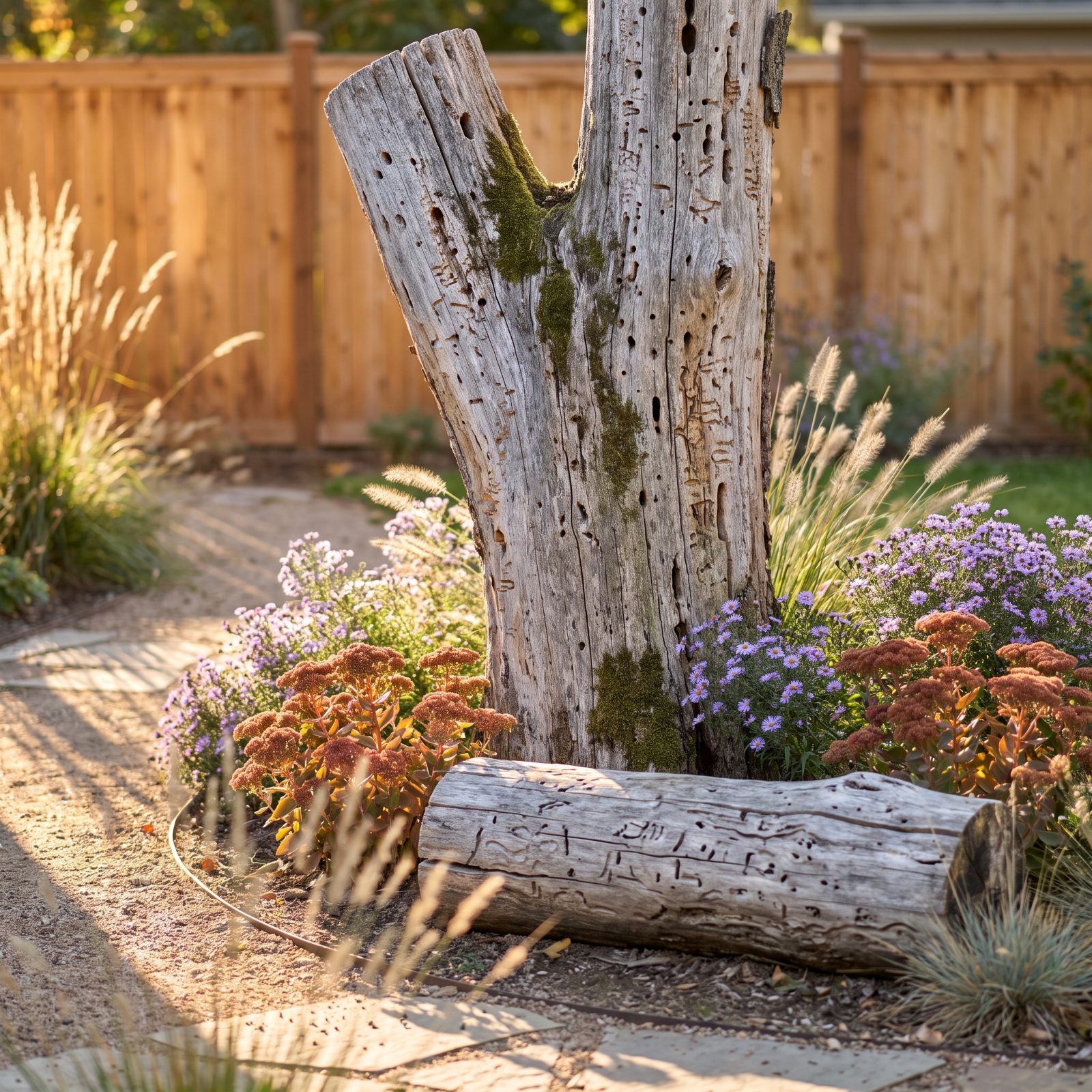
For years the advice ran one way: a dead tree comes down before it falls on something. Designers are quietly flipping that script.
A standing snag or a low mossy log, placed on purpose and pruned for safety, becomes the busiest address in the garden. Beetles move in, woodpeckers follow the beetles, and native bees nest in the soft tunnels left behind. You get a feature that changes texture across the seasons and asks nothing of you once it’s set.
The trick is intention. A random dead stump reads as neglect, but the same wood sited near a planting of grasses and sedum, with a path leading your eye to it, reads as a decision. I got this wrong for years, treating every dead limb as a chore instead of a resource — which still embarrasses me a little, honestly.
5. Wildlife Pass-Through Fences
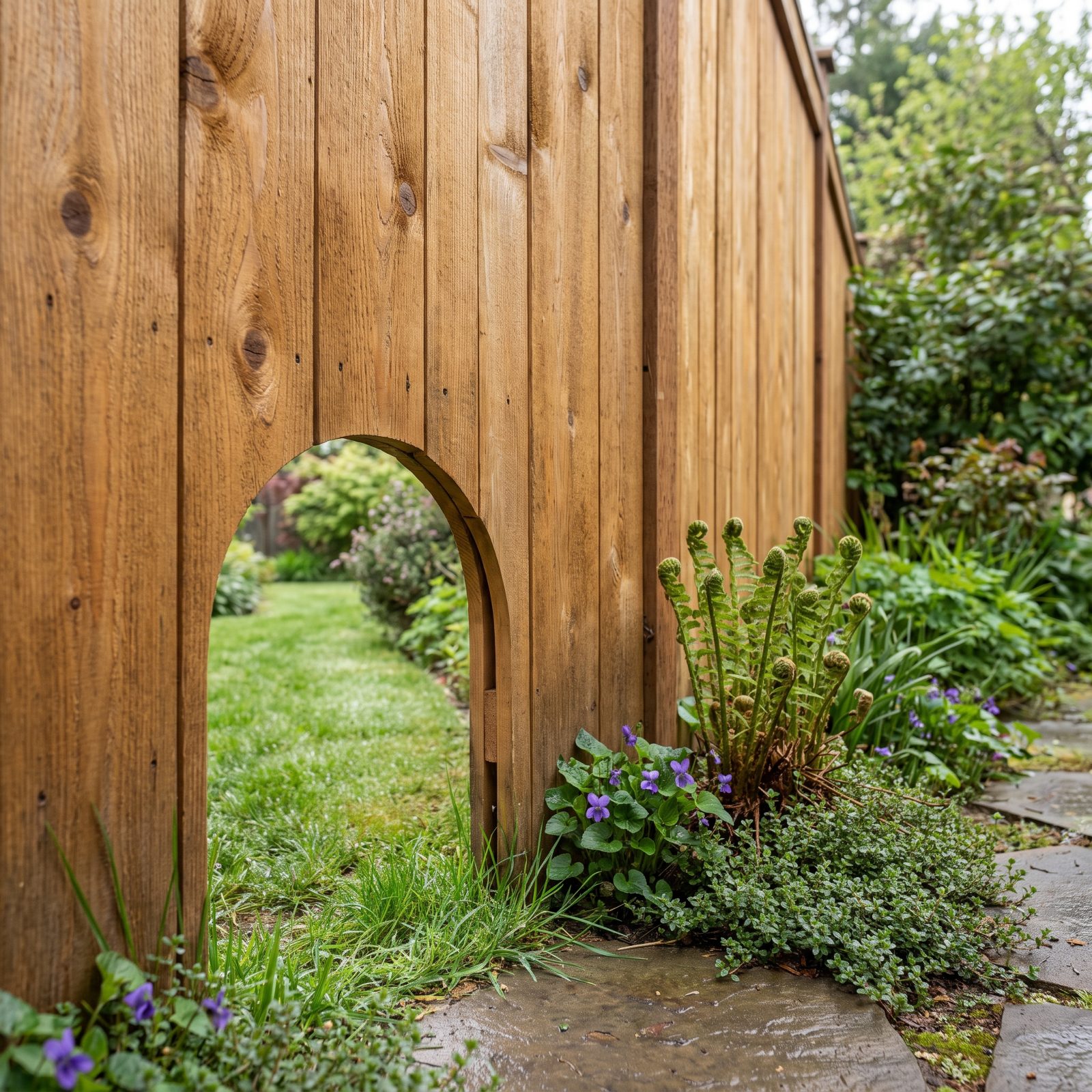
A fence that keeps everything out also keeps everything in. That’s the problem designers are solving with an arched opening cut into the boards.
Call it a hedgehog highway if you’ve read the British press, where the idea took off. A small opening, about five inches square, at the base of the fence lets creatures move between yards — frogs, toads, box turtles, the occasional hedgehog overseas. Your fence still holds its line, though an opening this size won’t stop a dog from bolting. The animals get connected territory instead of a maze of dead ends.
But here’s what nobody mentions. It only works if your neighbor plays along, because a tunnel into a wall helps nobody. Walk the property line, find the low spot where water already drains, and cut there.
4. Private Outdoor Showers
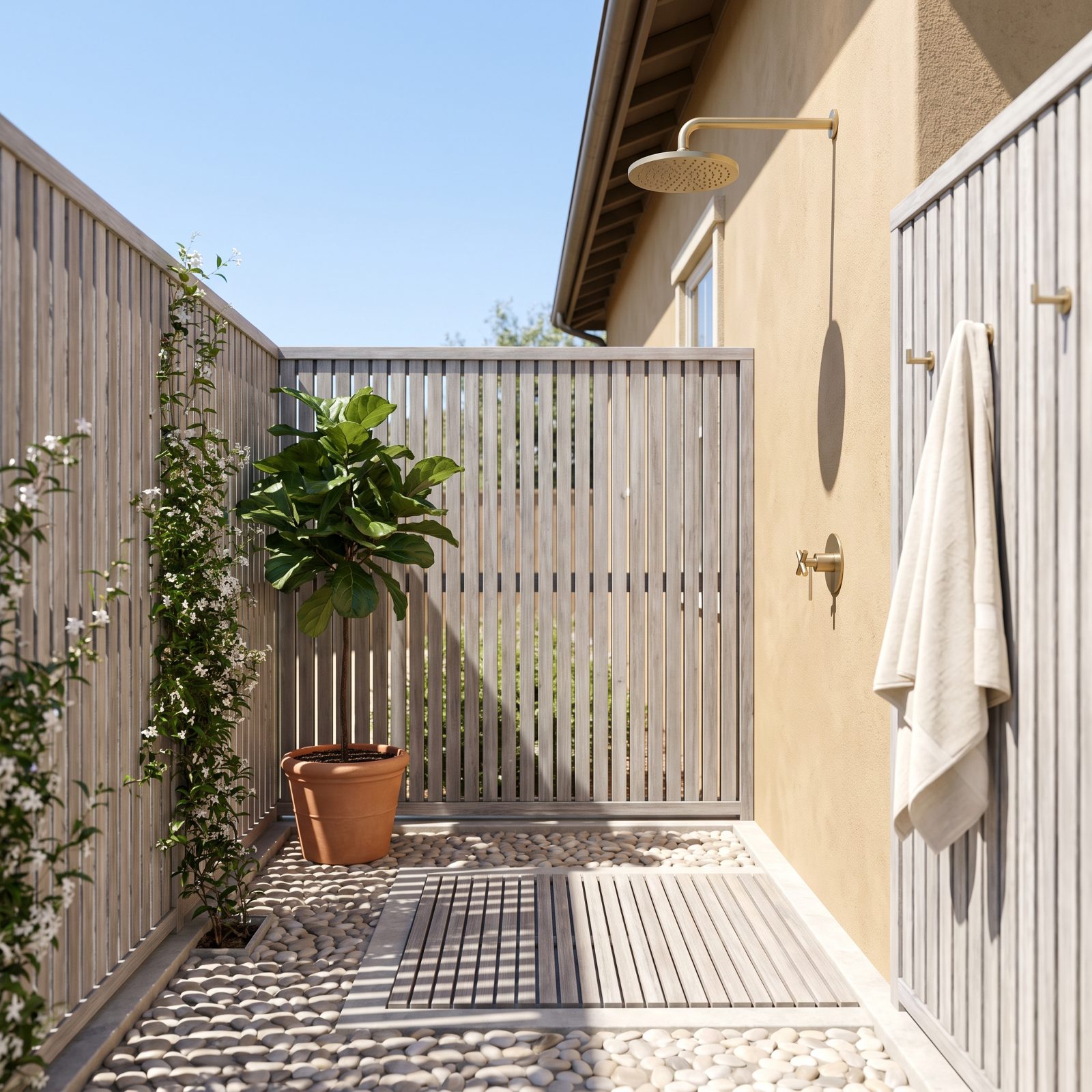
The outdoor shower used to belong to beach houses and nobody else. It’s wandering inland now, into regular backyards, and the reason is less glamorous than you’d think.
People garden dirtier than they admit. You come in from a day of mulching and compost and clay-caked knees, and nobody wants that tracked across a bathroom floor. A shower stationed by the back door settles the whole problem before you touch the house.
Budget runs wide. A cold-water-only setup fed off a garden spigot costs a modest pile of parts and little else. Plumb it for hot water with a proper drain and you’re into real money — it varies a lot by region and whether you need a permit.
3. Landscaped Dog Runs
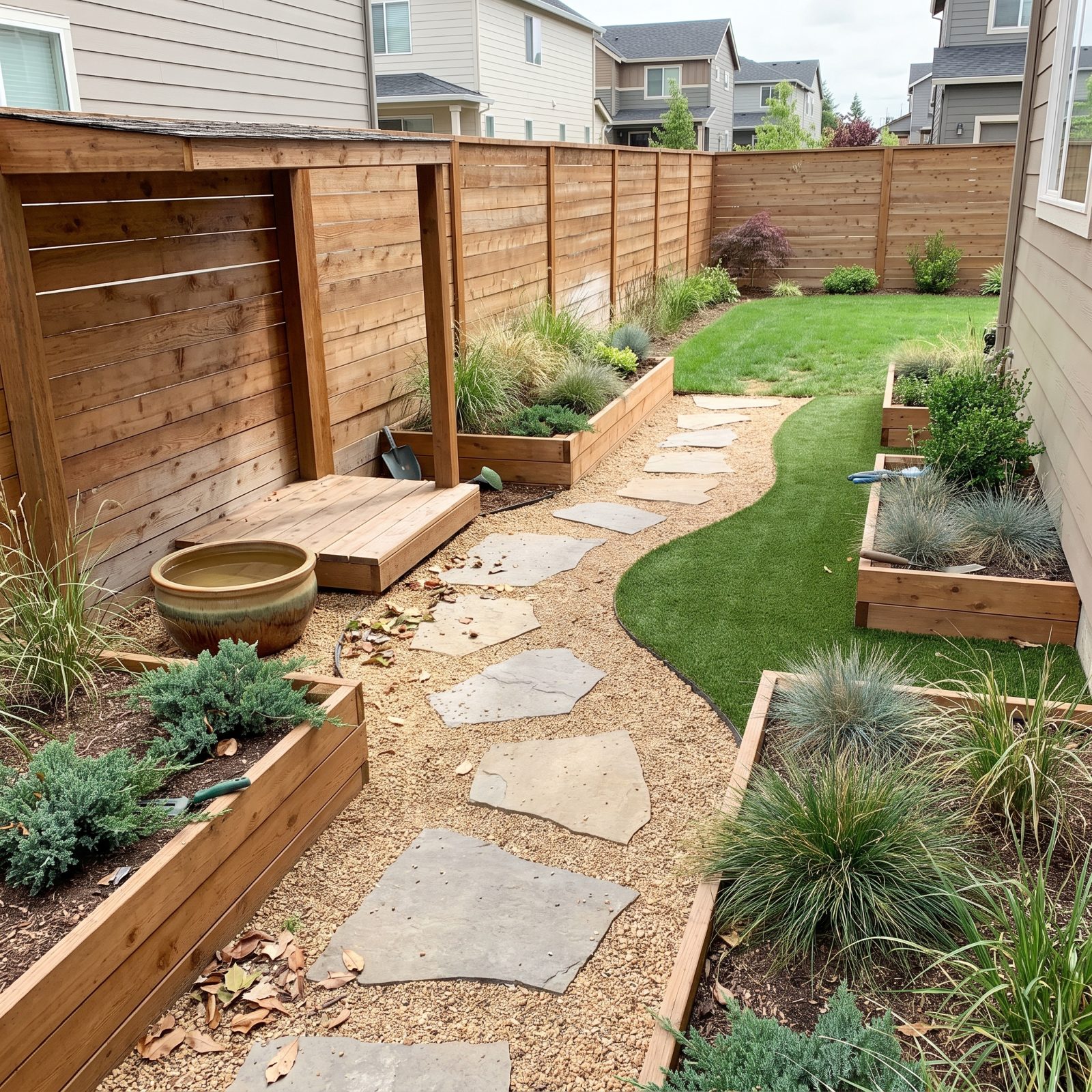
Most dog runs are an apology — a rectangle of bare dirt and chain-link bolted to the ugliest side of the house, built to contain a problem rather than solve it.
Newer thinking treats the run as part of the garden. Durable paths of pea gravel and flagstone that drain fast and never turn to mud. Beds of dog-safe planting (ornamental grasses, sedges, tough junipers, and crucially nothing from the toxic list). A shaded platform where the dog can sit and survey the whole yard.
Three things make it work:
- A surface that survives traffic and dries quickly after rain.
- Sight lines so the dog can see you and the street without barking itself hoarse.
- Shade that actually lands where the dog wants to lie, not where it looks good in a drawing.
Check your plant list against the ASPCA toxic database before you buy a single thing. Sago palm, foxglove, lily of the valley — all lovely, all capable of real trouble.
2. Natural Children’s Play Gardens
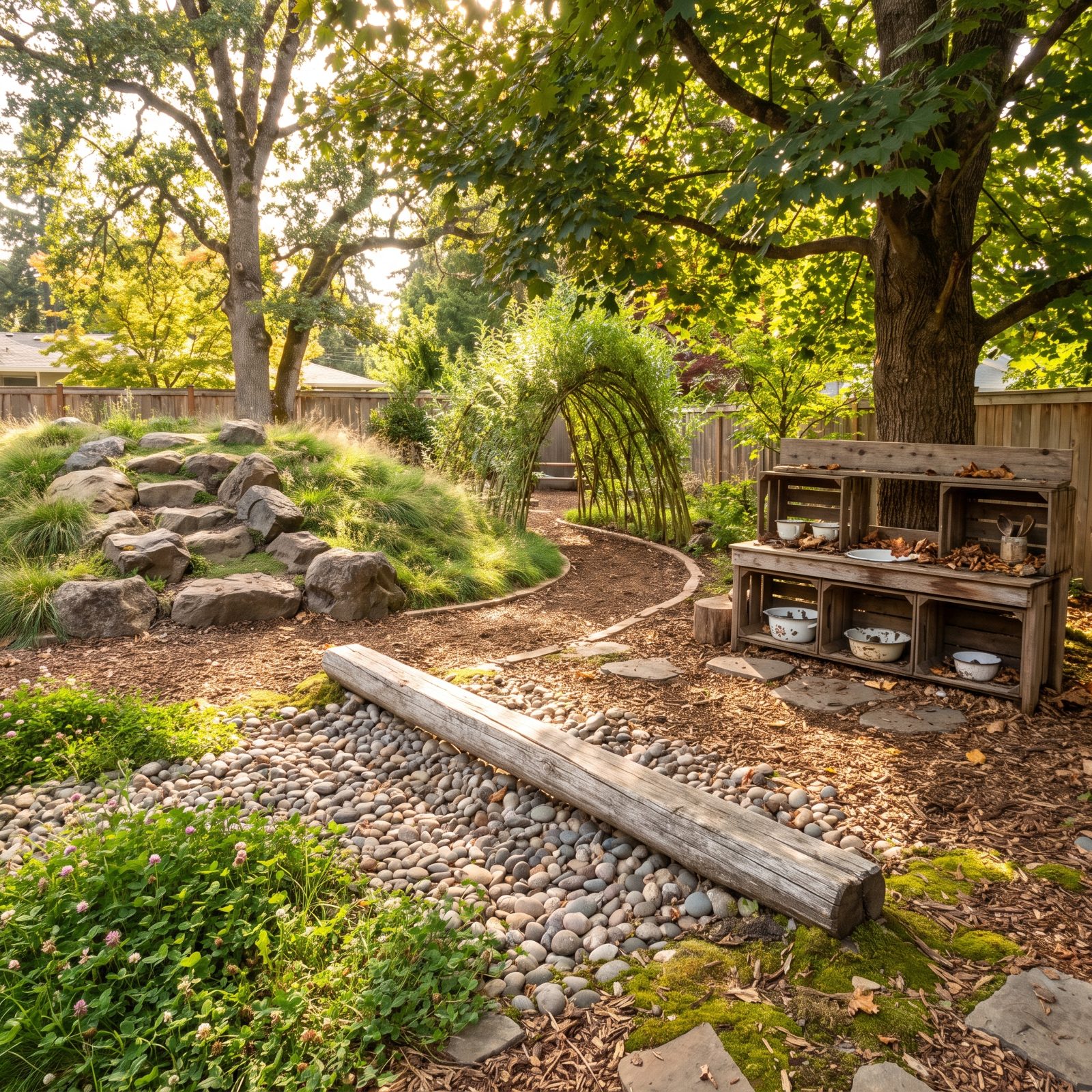
Plastic play sets fade, crack, and end up at the curb. What’s taking their place looks almost like it grew there.
A balance log. A boulder scramble, a willow tunnel woven from living whips, a mound of grass just steep enough to roll down. Children read these as open invitations rather than instructions. A plastic slide does one thing, while a log does whatever the kid decides it does that afternoon.
The mud kitchen is the part parents resist and kids love most. A few weathered crates, an old pot, access to water and dirt. Messy, yes. Also where a whole afternoon quietly disappears.
1. Dark-Sky Path Lighting
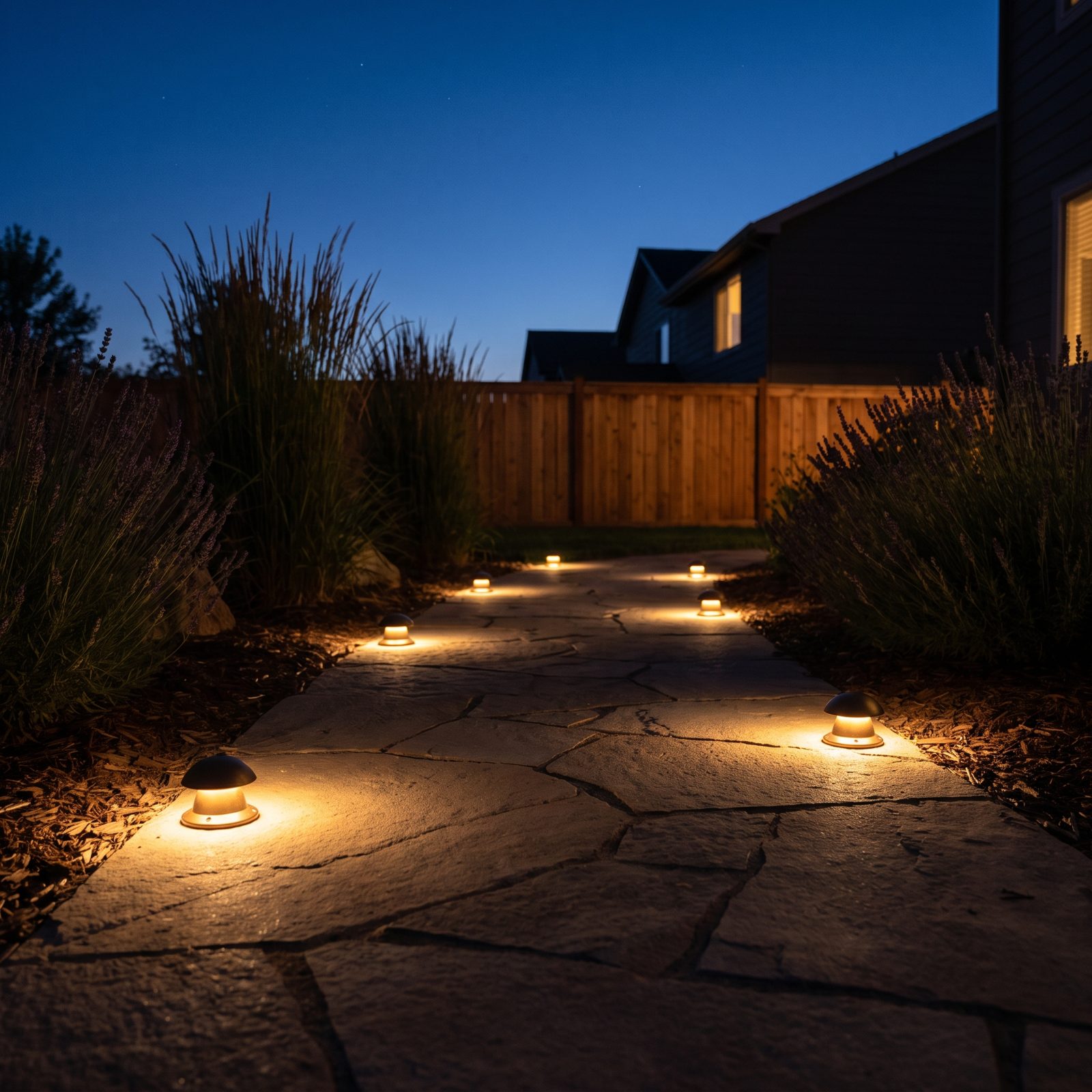
Walk most suburban streets after dark and you’ll see it: floodlights blasting upward, fixtures glaring into your eyes, whole yards lit like a parking lot. A lot of wasted light pointed at nothing.
Dark-sky path lighting goes the other way. Low fixtures, shielded and capped, throwing a warm amber pool straight down onto the stone where your feet actually go. The light does its job, the sky stays dark enough to see stars, and your garden keeps some mystery after sunset.
Two numbers matter. Warm color temperature (look for 2700 Kelvin or lower, closer to candlelight) and full shielding so no light escapes sideways or up. Harsh blue-white LEDs wreck night vision and disorient moths, fireflies, and migrating birds.
Fewer lights, placed low and warm, nearly always beats more. I will die on this hill.