
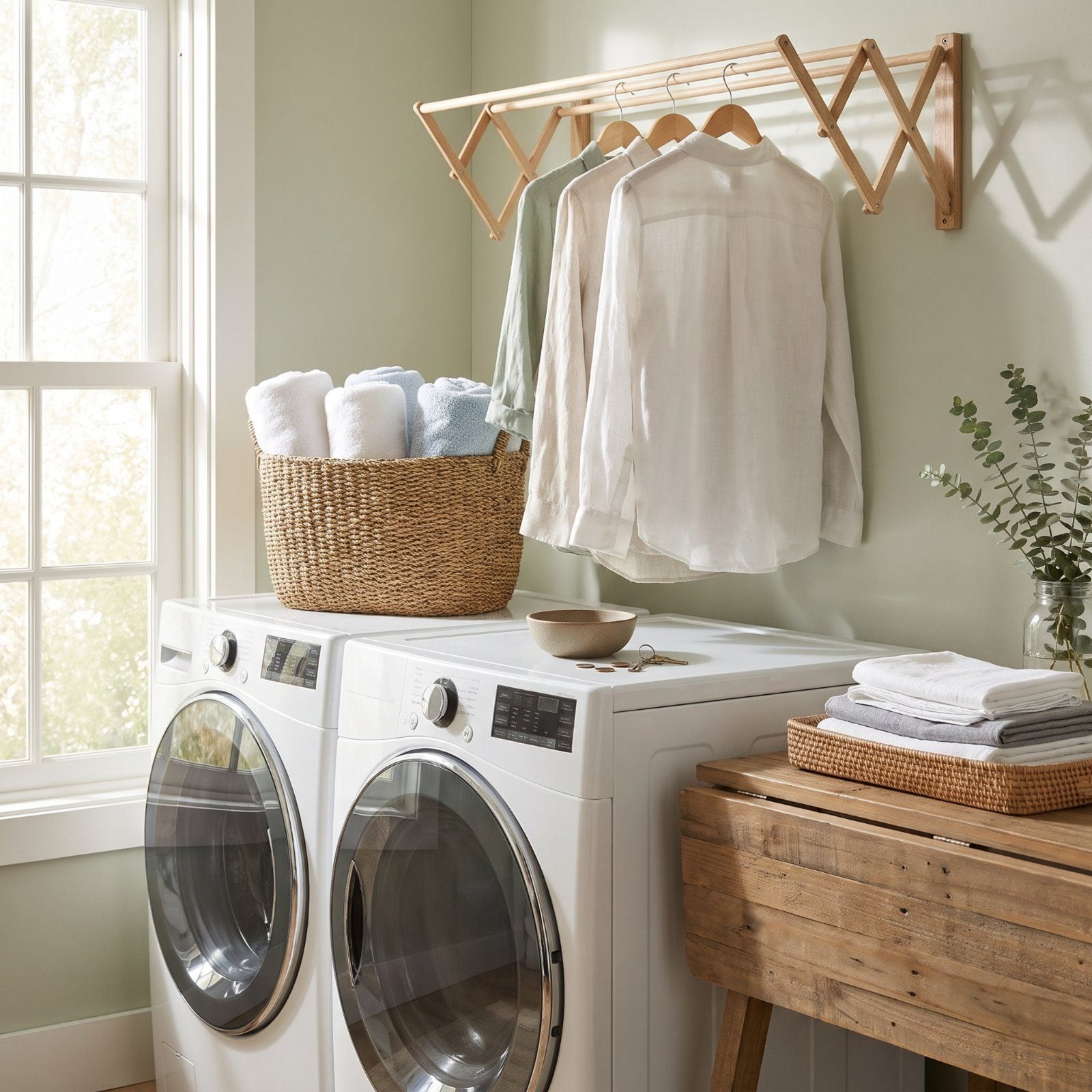
A basket of clean laundry sat on the couch for four days once, and nobody folded it. You know that basket. Laundry isn’t hard — it’s relentless, a chore that refills itself the moment you empty it. The tricks below won’t make it disappear. What they do is shave minutes off every stage, from the sort at the hamper to the stack in the drawer, and some of them repurpose tools you already own for jobs they were never built for. A few will sound slightly odd until you try them. All came from people who do a lot of laundry and got sick of doing it the slow way.
Please note that some of the images in this article were created with the assistance of AI.
33. Spin Hand-Washed Delicates Dry in a Salad Spinner
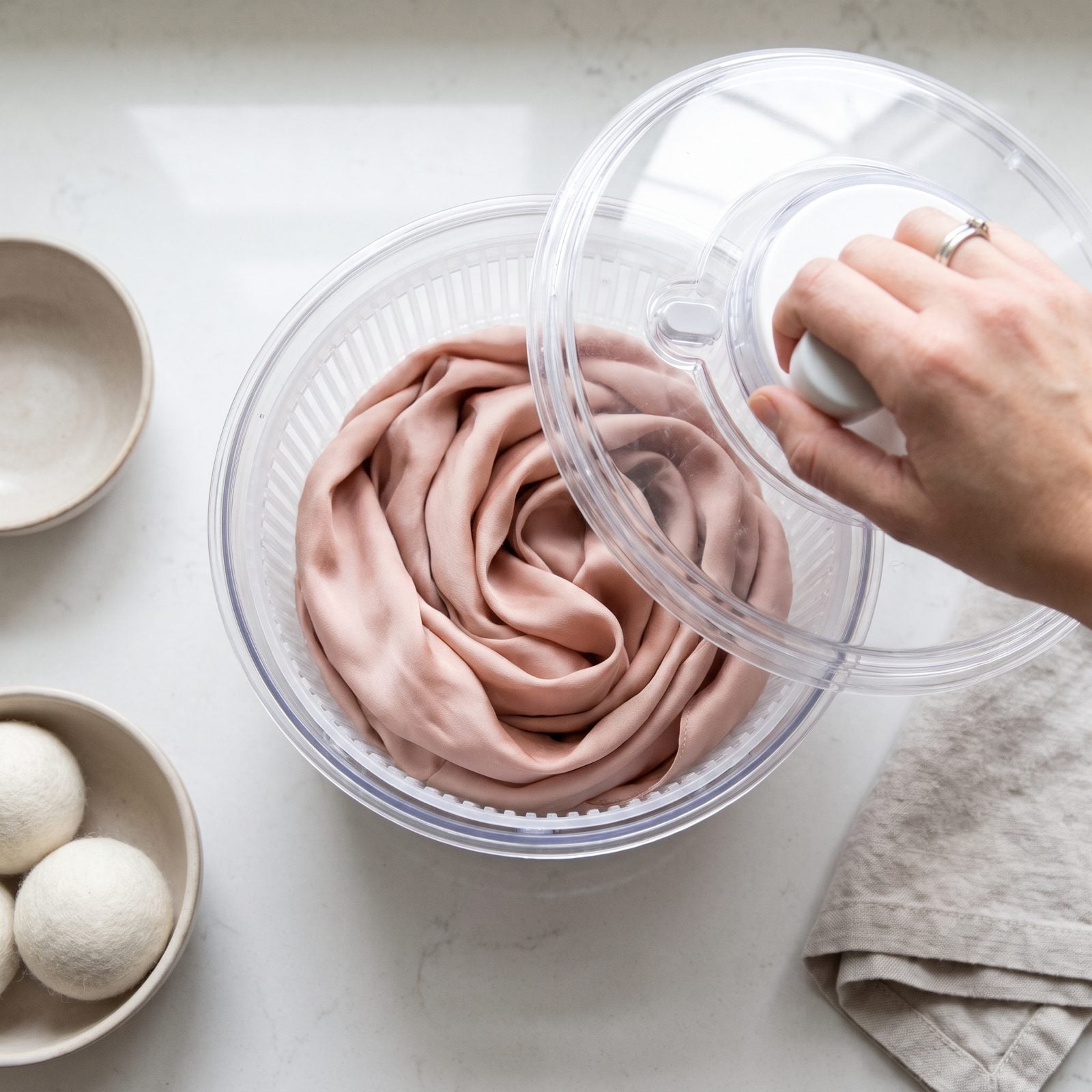
Wring out a wet silk blouse and you end up with a wrung-out silk blouse. Twisting breaks the fibers and leaves creases you can iron for ten minutes without winning.
So don’t twist. Roll the delicate loosely, drop it in the inner basket of a salad spinner, and crank — centrifugal force pulls the water out without a single wrung fiber. Your camisole comes out damp instead of dripping, which means it air-dries in a fraction of the time and never has to meet the dryer’s heat.
32. Toss a Dry Towel Into the Dryer Partway Through
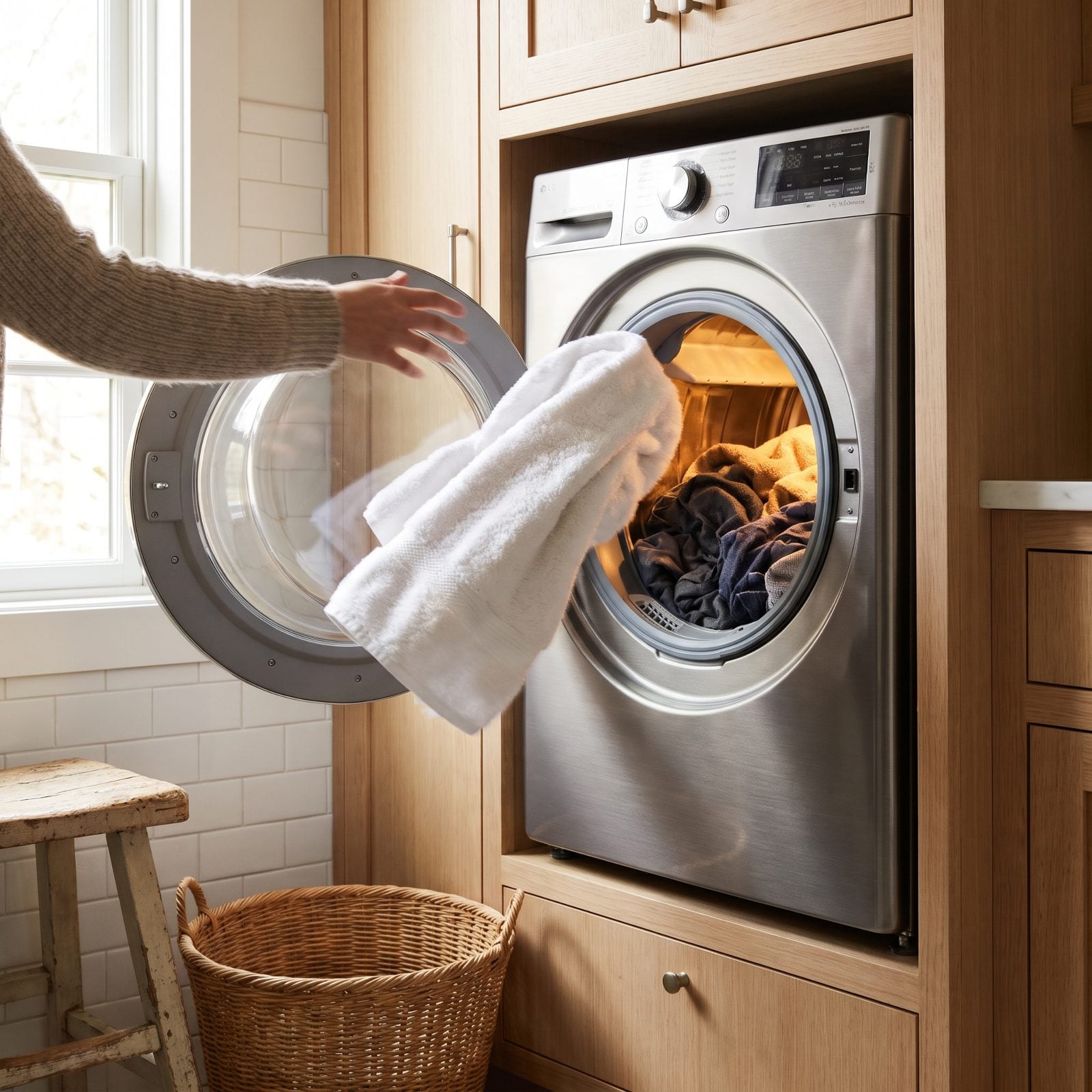
Now for the counterintuitive one. Adding a bone-dry towel to a half-dried load makes everything finish faster, not slower.
The dry towel grabs moisture off the wet clothes and spreads the heat around, so the whole load reaches dry at once instead of leaving you with crisp sleeves and a soggy waistband. Pull the towel at the twenty-minute mark and the rest races to the finish. Works best on smaller loads. Overstuff the drum and nothing moves, towel or no towel.
According to an appliance repair company president, as the wet and dry items tumble together “the dry towel absorbs some of the moisture from the wet clothes, reducing overall humidity in the dryer and allowing the clothes to dry faster”
31. Zip Each Sock Pair Into Its Own Mesh Bag
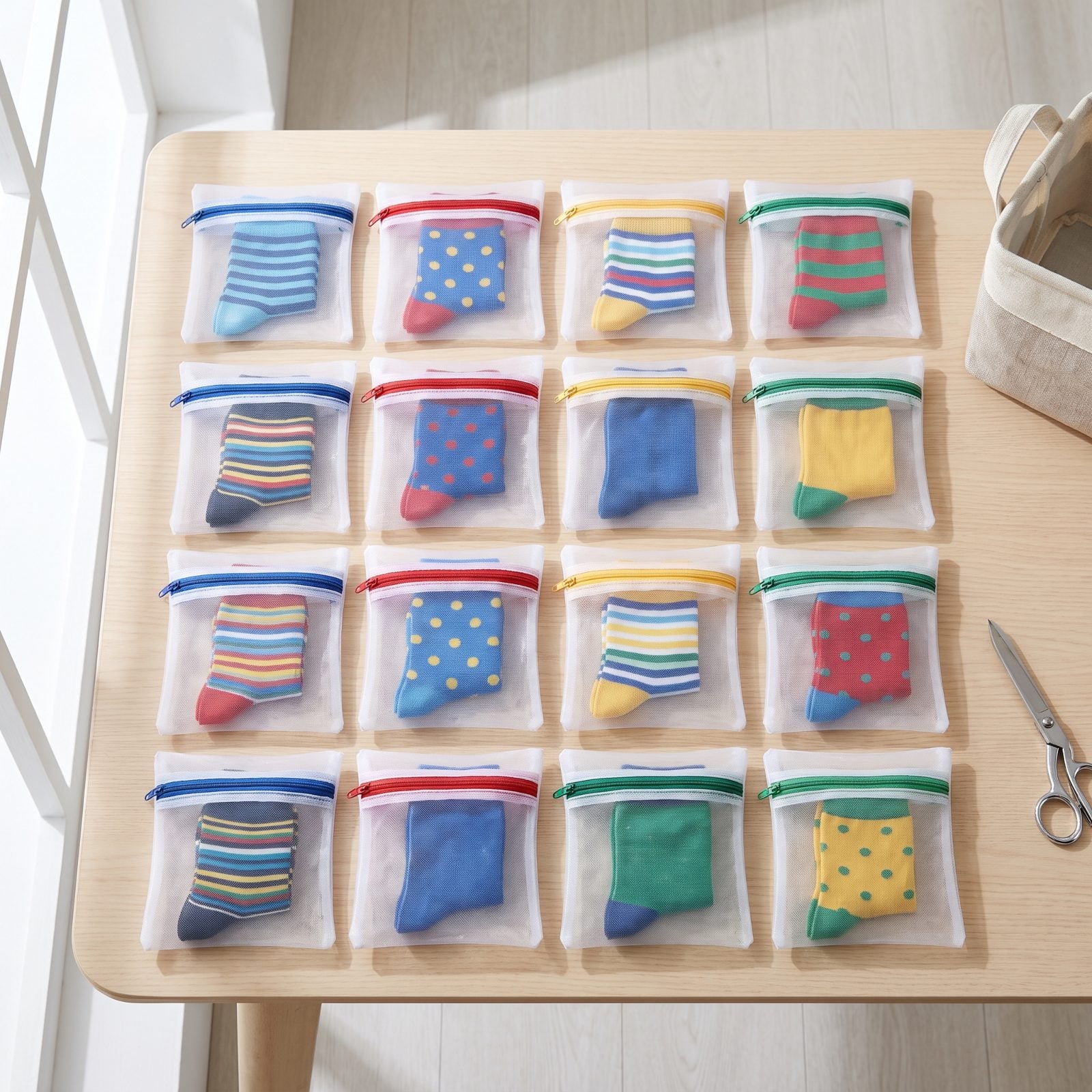
The dryer eats socks. Not a theory — a law of nature, and the single-sock drawer is your evidence file.
Zip each pair into its own small mesh bag before it ever hits the wash. In together, washed together, dried together, out together. No matching, no hunting, no orphan pile growing in the corner. You pull the bag out, the pair is right there, and it goes straight to the drawer still paired.
30. Park a Pocket-Emptying Bowl Right Above the Washer
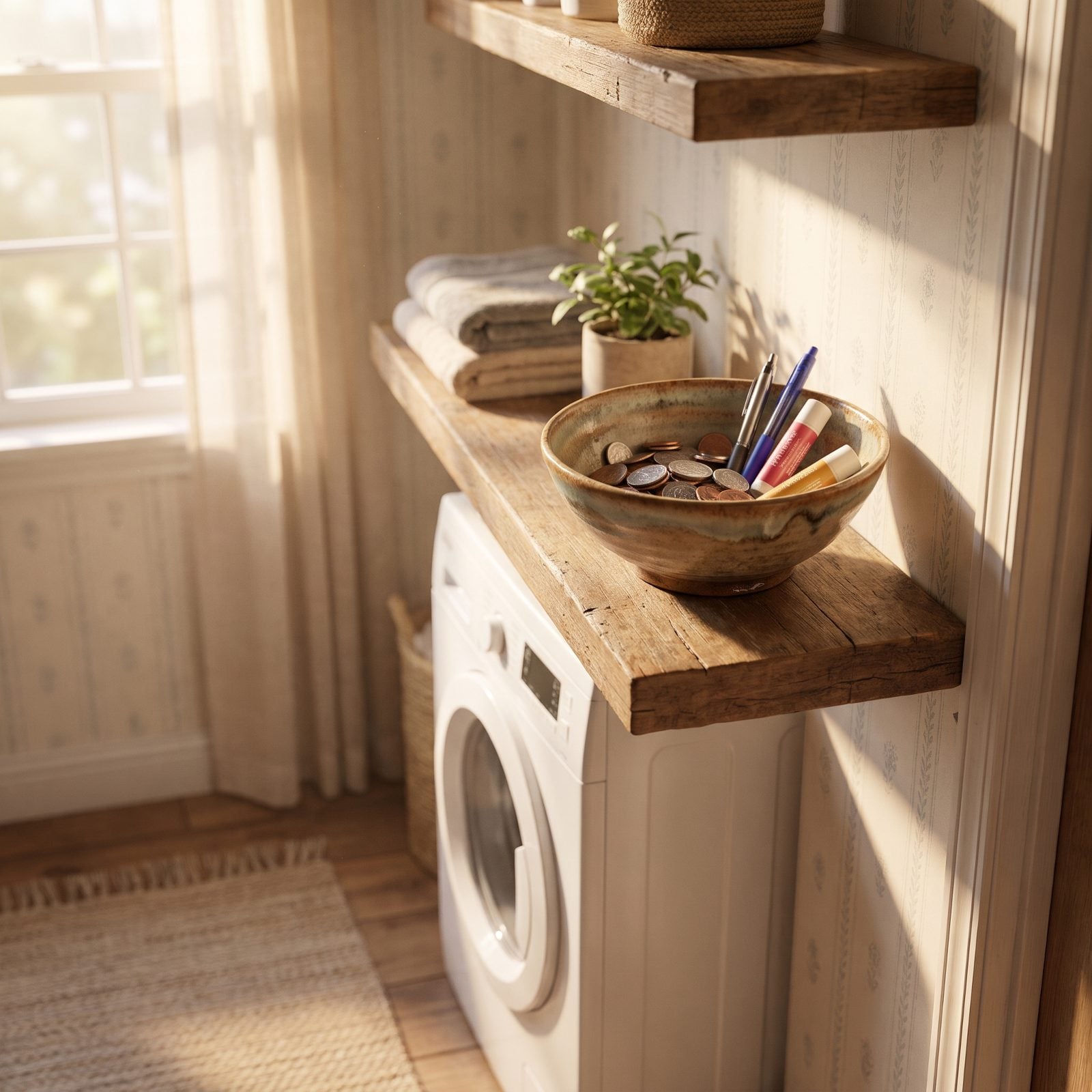
A pen through the wash writes a novel across your whole load. A forgotten lip balm turns into a waxy disaster on every towel. We have all learned this the expensive way.
Set a shallow bowl on a shelf above the washer and empty every pocket into it before the garment goes in — coins, receipts, that stray AirPod. The bowl becomes the checkpoint, and the habit sticks because it’s right there, impossible to walk past. Bonus: you’ll fish out a surprising amount of forgotten change over a month.
29. Presort Into a Divided Hamper as You Undress
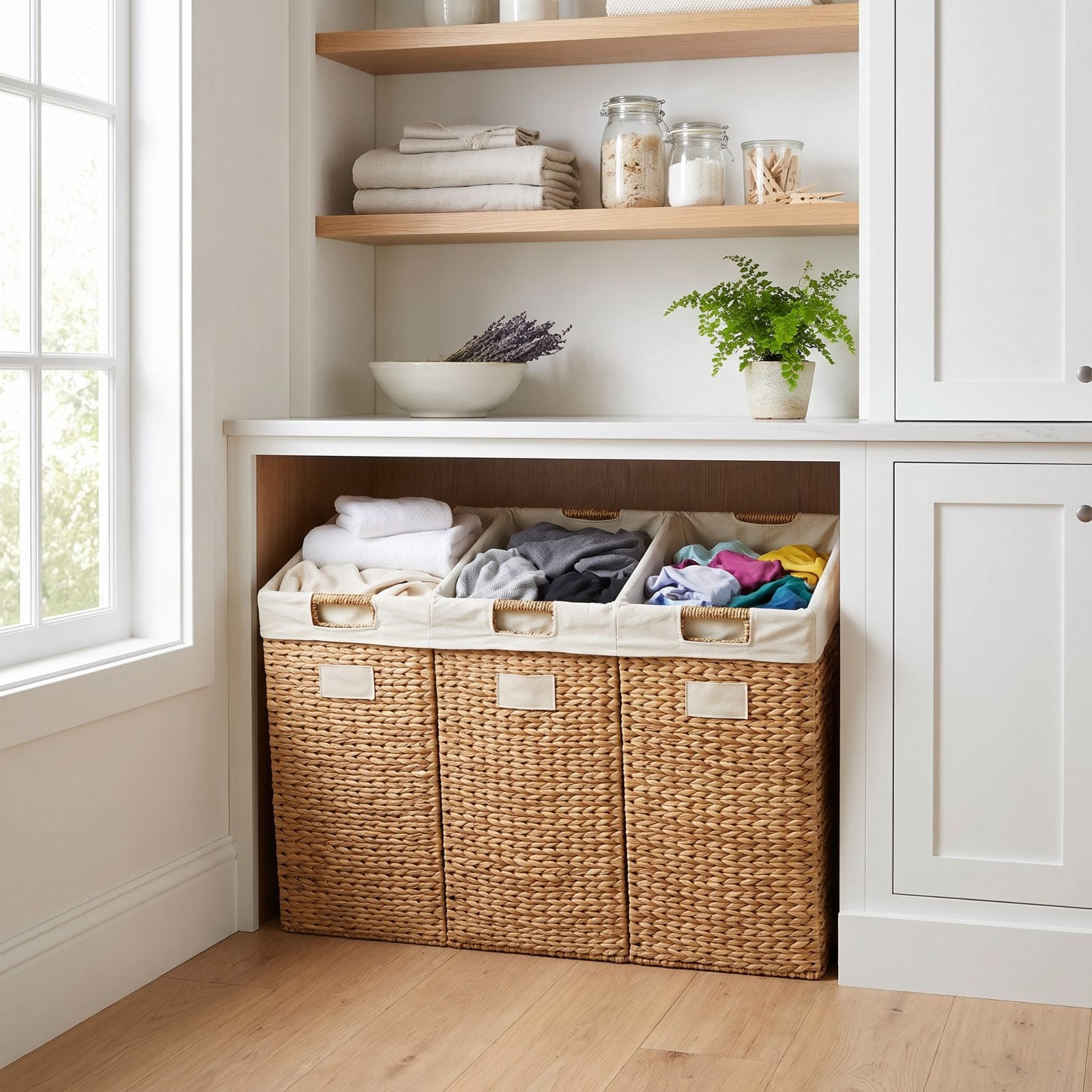
Sorting happens now or it happens later, and later means a pile on the floor and ten minutes of separating whites from darks while standing there resenting it.
A divided hamper shifts that chore to the one moment it costs nothing: when the clothes come off. Whites, lights and darks each get their own canvas-lined wicker basket as you undress. Fill a section and that section is a load — carry it straight to the machine and pour it in. No floor pile. No sorting session. No decision to make.
28. Clip the Stain Remover Straight to the Hamper
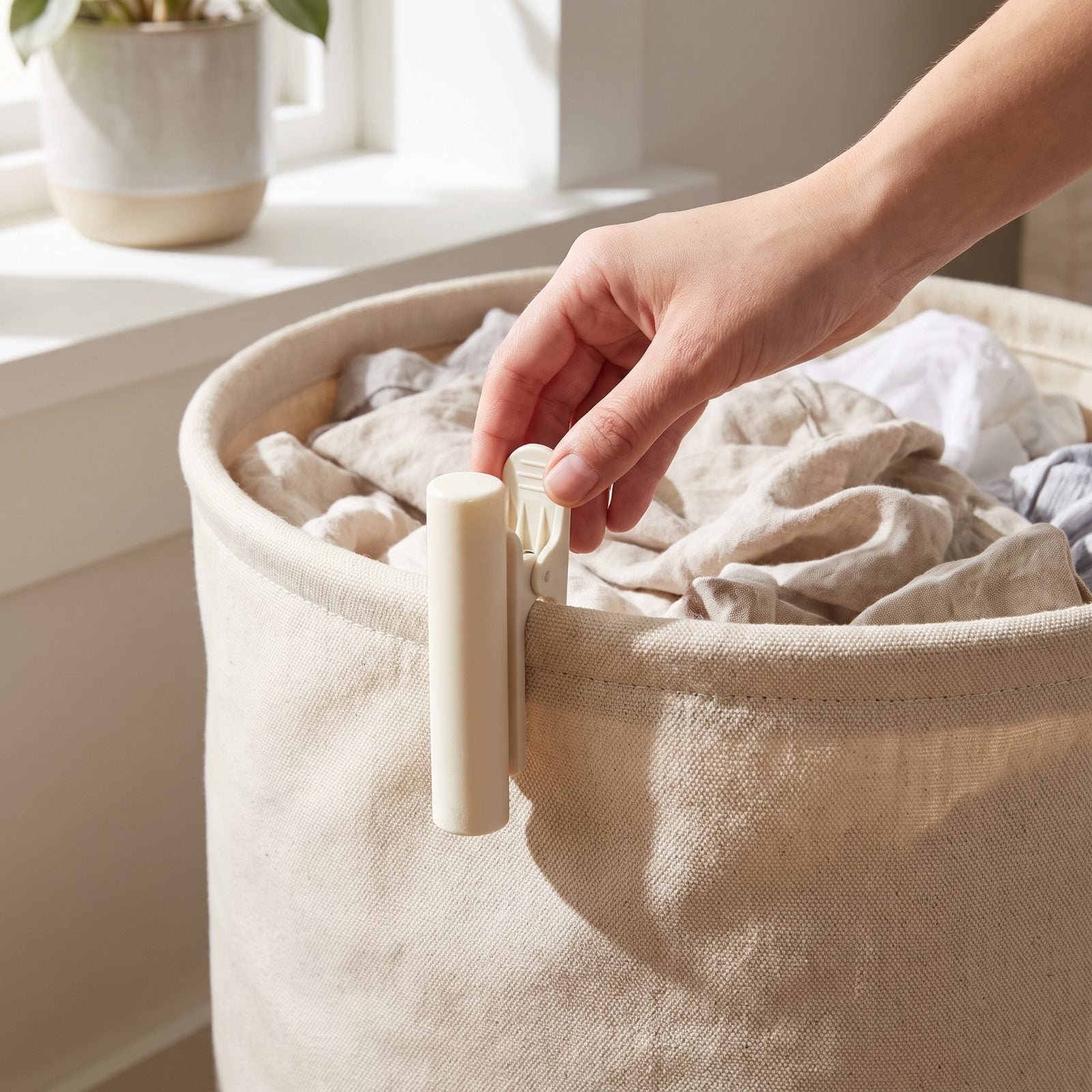
Stains come out when you treat them fast. The trouble is never knowing how — it’s the twelve-foot walk to the cabinet where the stain stick lives, which somehow never happens until the stain has set for good.
Keep the stain pen right at the hamper rim, held by its cream plastic clip fastened to the fabric. Spill something, strip the shirt, treat the spot before it goes in, all in one motion in the same spot. The remover sits where the dirty clothes land, so the treatment actually gets done instead of getting remembered too late.
27. Run One Person’s Clothes as a Single Load
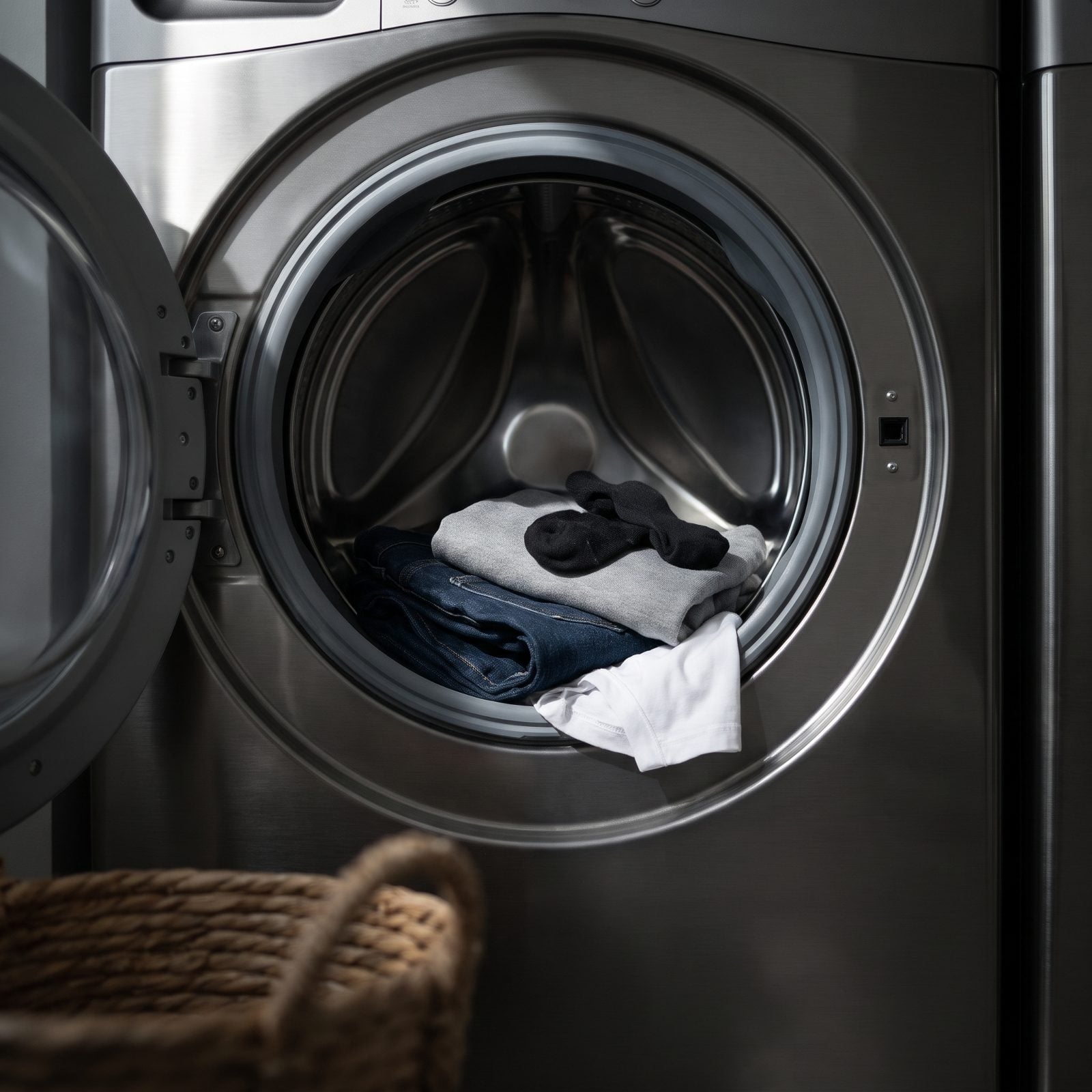
This one divides people, and I’ll say upfront it’s not for every household. But hear me out.
When each person’s clothes wash as their own load, the folded basket goes to exactly one dresser. No sorting the clean pile into four stacks, no “whose sock is this,” no shuttling between four bedrooms. One load, one person, one drawer — and the putting-away step, the step everyone secretly dreads most, collapses into a single trip. It shines in bigger households that run frequent loads anyway. For a couple it might just mean smaller, more frequent washes, which some people hate and some prefer.
26. Set the Delay-Start to Finish When You Walk In
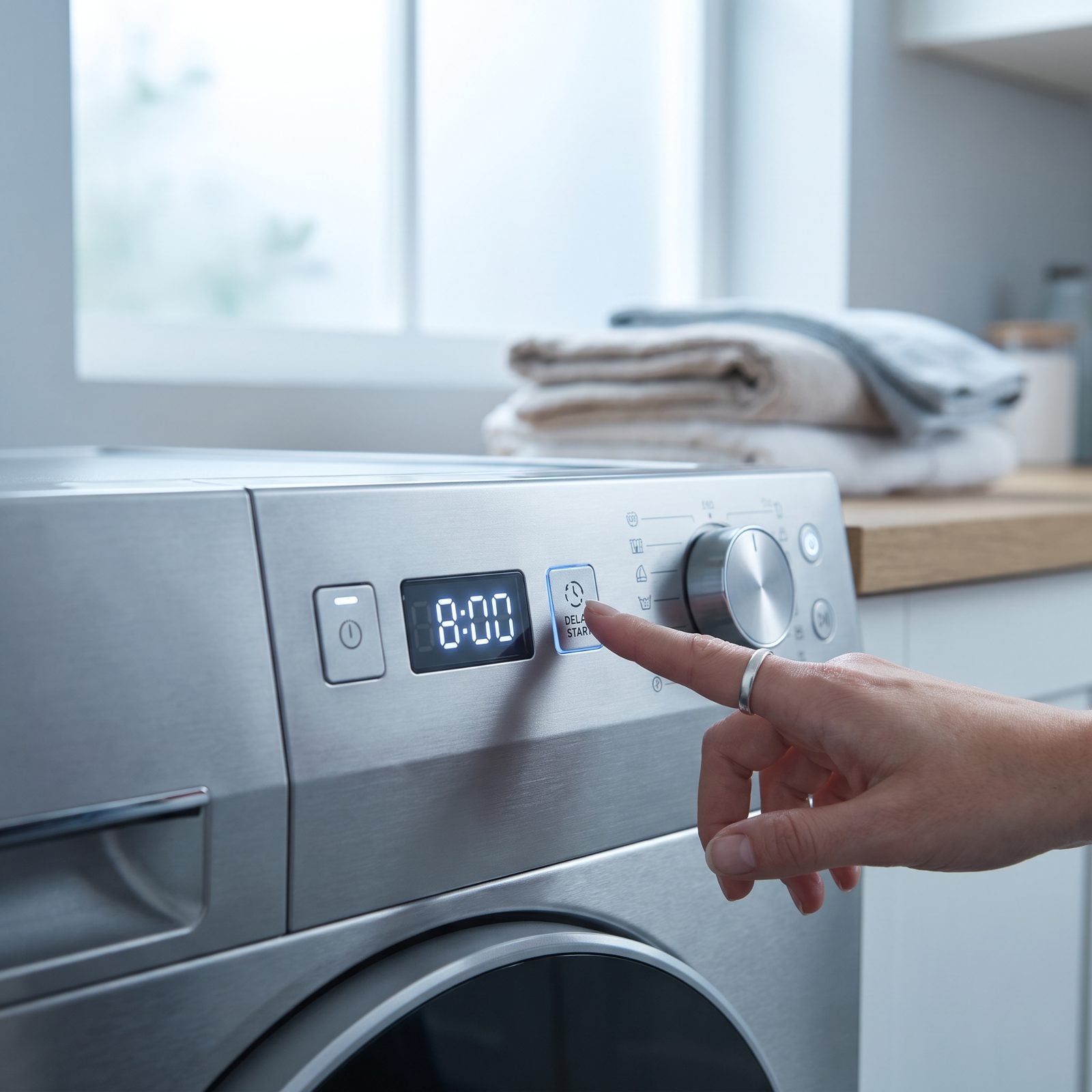
Wet clothes sit in the drum for hours and grow that sour, mildewy smell — and then you rewash the whole load. The delay-start fixes the timing problem.
Load the machine in the morning, set it to finish right before you get home, and walk in to a wash that just ended. Straight into the dryer, no souring, no rewash. If your area charges by time of use, it also runs the load during off-peak hours, so you may shave a little off the power bill without changing a thing.
Explaining where that musty smell comes from, an appliance repair shop owner notes: “Wet clothes left in the drum, or sealing a damp washer shut after every load, keeps moisture in so mold thrives.”
25. Pick the Quick Cycle for Lightly Worn Clothes
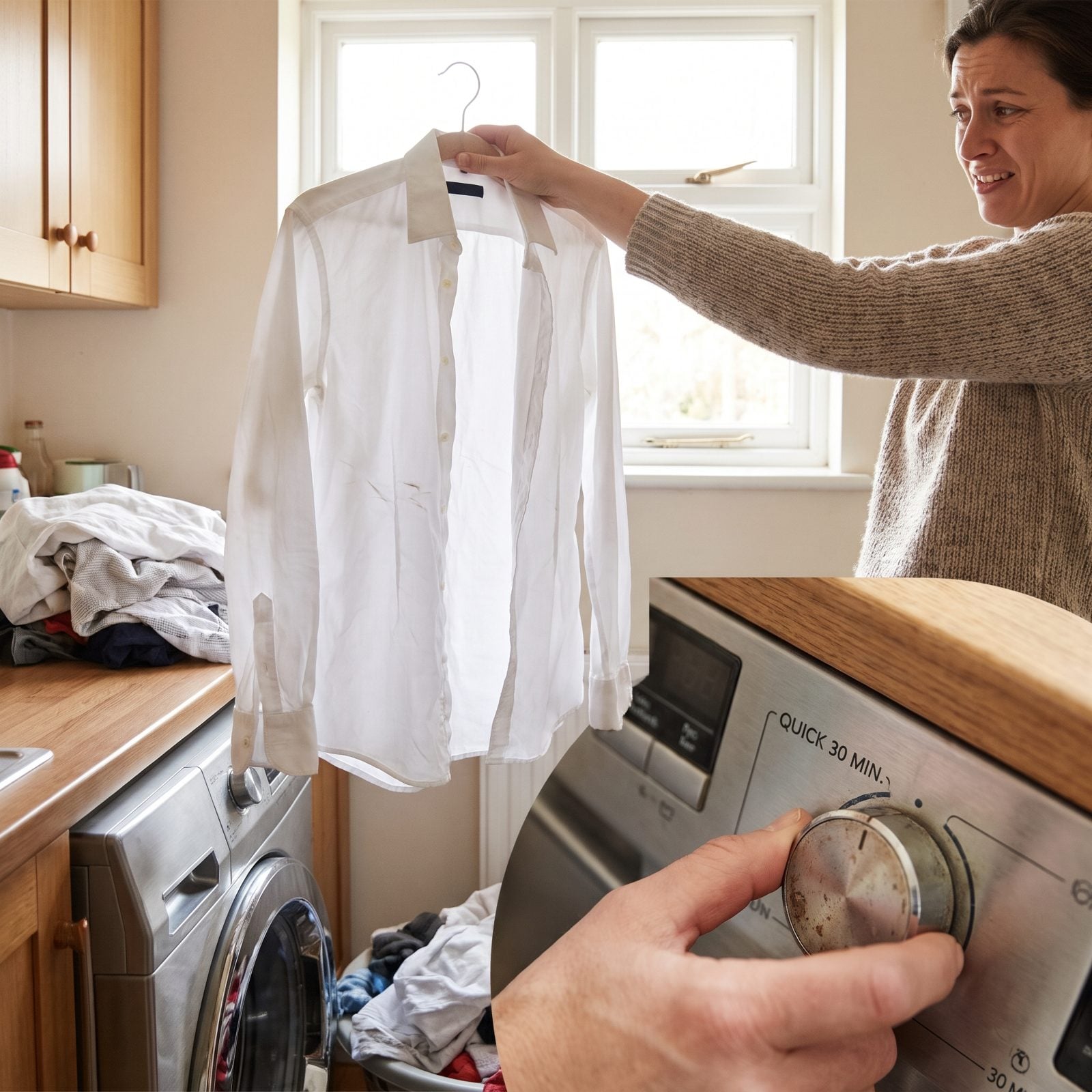
Most of what you wash isn’t actually dirty. It’s a shirt you wore for three hours to dinner, lightly creased, maybe faintly of you. It does not need an hour-long heavy cycle.
The quick cycle, roughly fifteen to thirty minutes, handles lightly worn clothes just fine while using less water and power. Shorter wash, shorter spin, and the load is out of the drum in a fraction of the time. Save the full cycle for gym clothes, kid messes, and anything that genuinely earned it.
Not for sheets, towels, or whites you need properly clean. For the merely rumpled, it’s the fastest honest wash there is. Alright, go reclaim your afternoon.
24. Crank the Spin Cycle to Wring Out Drying Time
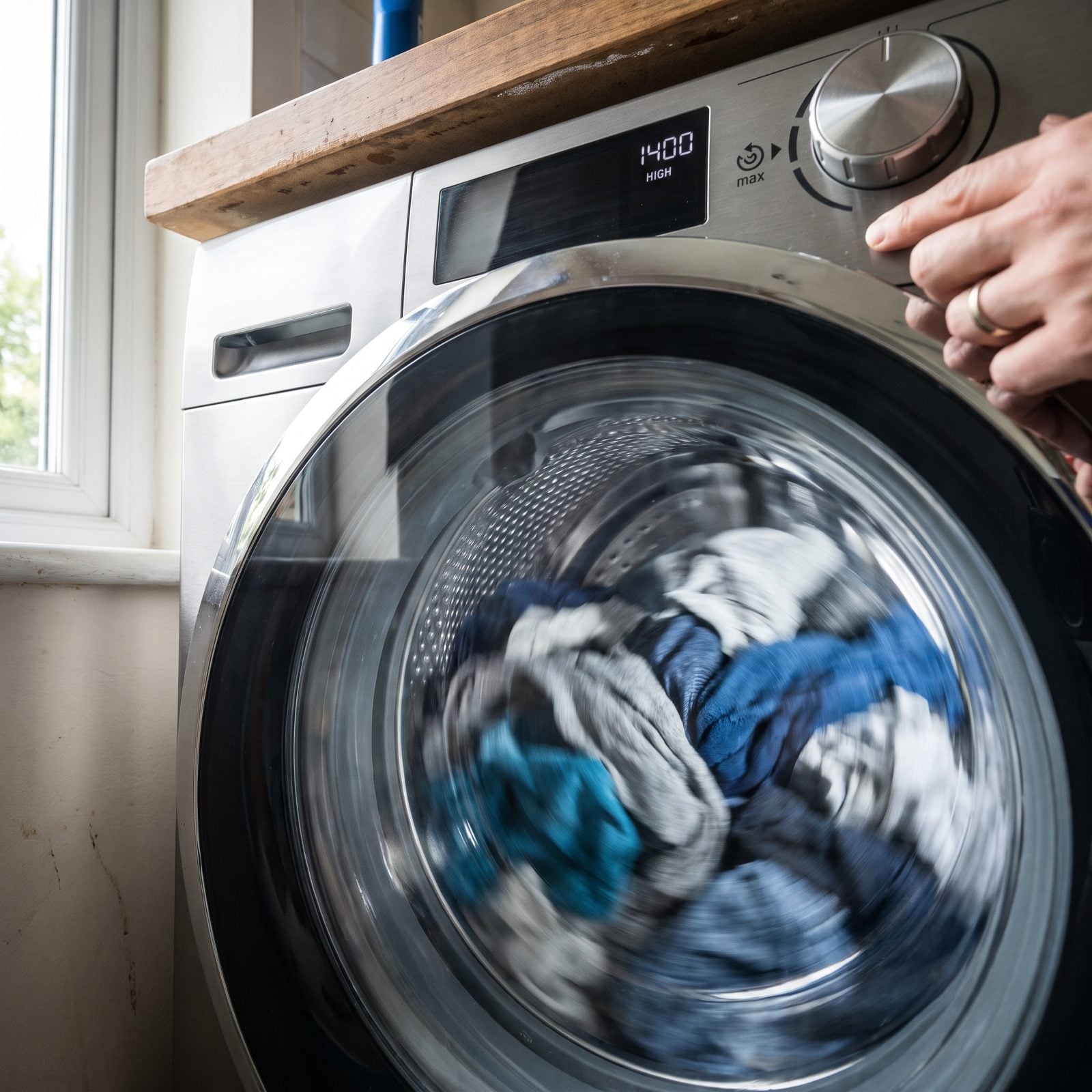
Your dryer is the slowest, most expensive part of the whole operation, and the spin cycle is the free fix nobody talks about. Water your washer flings out of the drum is water your dryer never has to cook off.
Bump the spin speed up on towels, jeans, and sheets so they come out barely damp instead of sopping. That can shave a full cycle off thick loads.
Go gentler on anything structured or lacy, though. High spin is rough on delicate knits, and I learned that the hard way with a sweater that came out looking wrung by hand.
Explaining why clothes should spin on high in the washer before drying, a laundry service pro says “It gets more water out up front, so your dryer isn’t stuck evaporating it all—which takes longer and uses more energy.”
23. Mark a Pump Bottle So You Stop Eyeballing Detergent
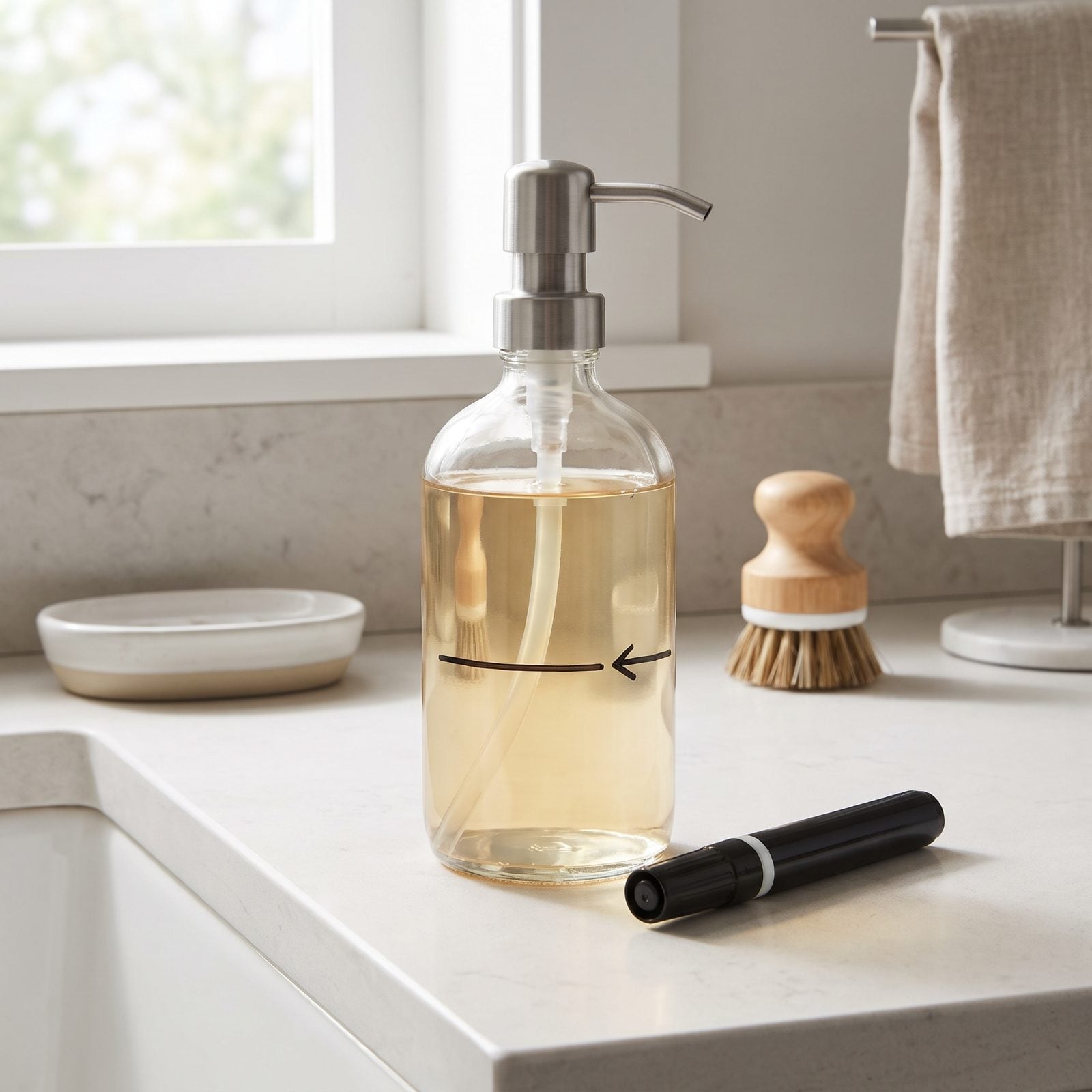
Those detergent caps are useless. Faded lines, sticky residue, and half the time you’re squinting at them over a running machine. A pump bottle solves all of it in one go.
Decant your detergent into a clear pump dispenser and count how many pushes equal one correct dose — two pumps for a regular load, three for a big one. Then you never measure again. You just press.
It feels almost too simple to matter. But once you’ve done a hundred loads without ever reaching for a crusty cap, you won’t go back.
22. Pour Less Soap and Skip the Second Rinse Entirely
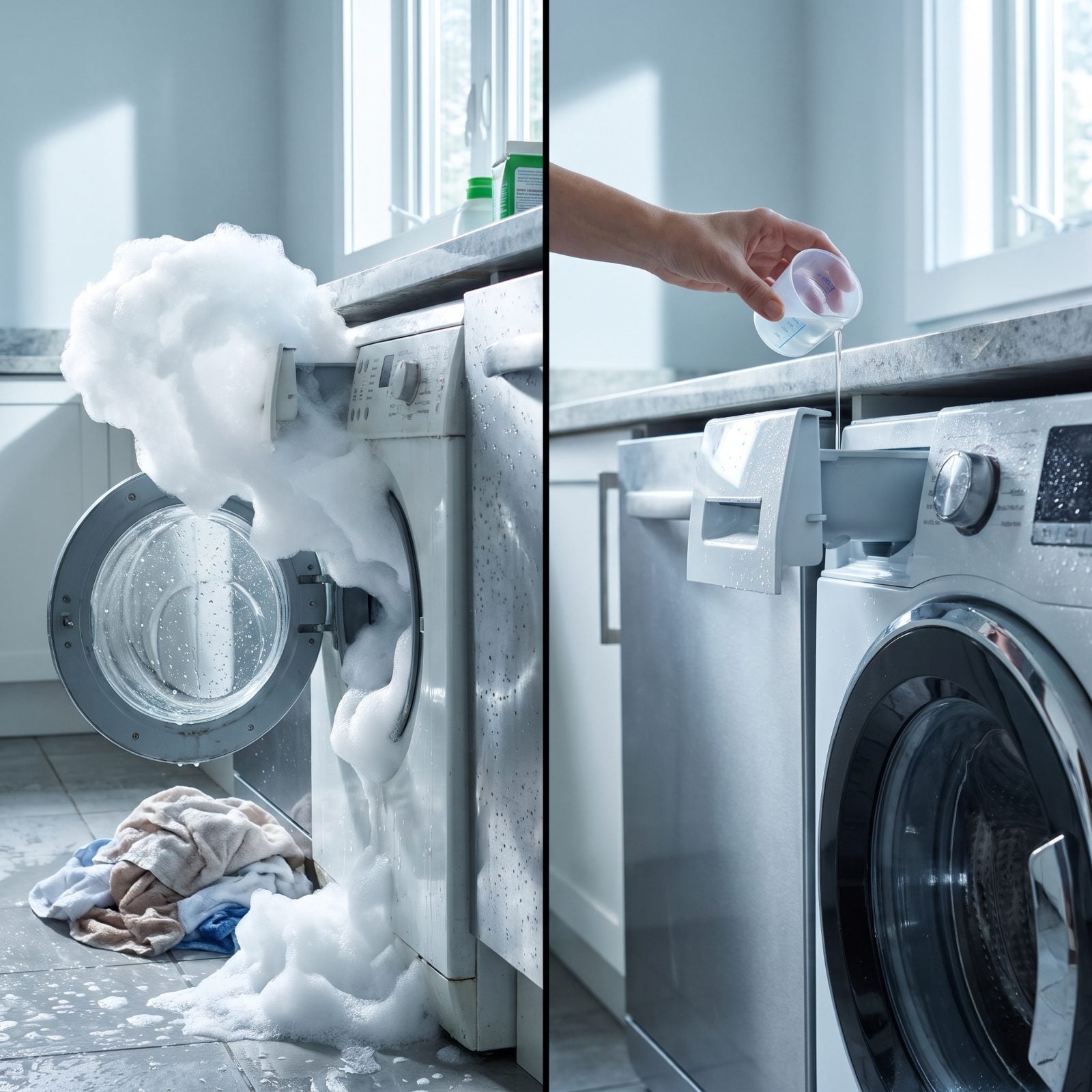
More soap does not mean cleaner clothes. It means more suds trapped in the fibers, and more water needed to rinse them back out. Most people pour roughly double what they actually need.
Cut your dose back and watch what happens. Clothes come out just as clean, towels feel softer, and your washer doesn’t have to run an extra rinse to clear the foam.
In a TikTok covered by one outlet, one maintenance repair technician warns that using too much HE detergent leaves residue building up inside the washer that eventually gets onto clothes.
21. Work Dish Soap Into a Fresh Grease Stain
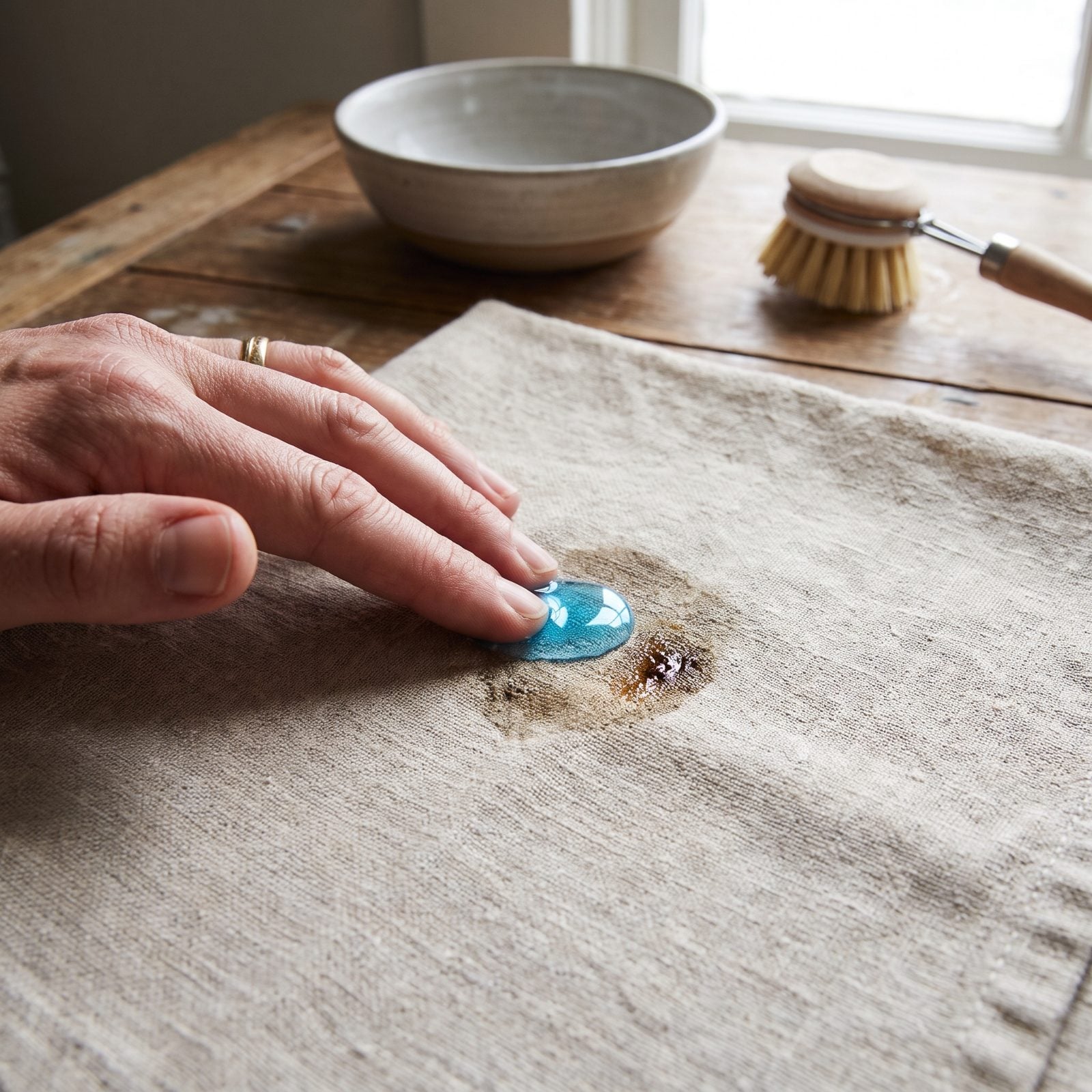
Dish soap was built to cut grease off dinner plates, and it doesn’t care whether that grease is salad dressing, butter, or bike chain oil smeared down a sleeve. It works on fabric for exactly the same reason it works on a frying pan.
Put a small drop right on the spot, rub it in gently with your finger, and let it sit a few minutes before the wash. Fresh grease lifts out far easier than set grease, so speed beats scrubbing every time.
Keep a cheap bottle by the laundry sink for this and nothing else. It’s the closest thing to a universal stain tool you already own.
20. Scrub a Grimy Collar With an Old Toothbrush
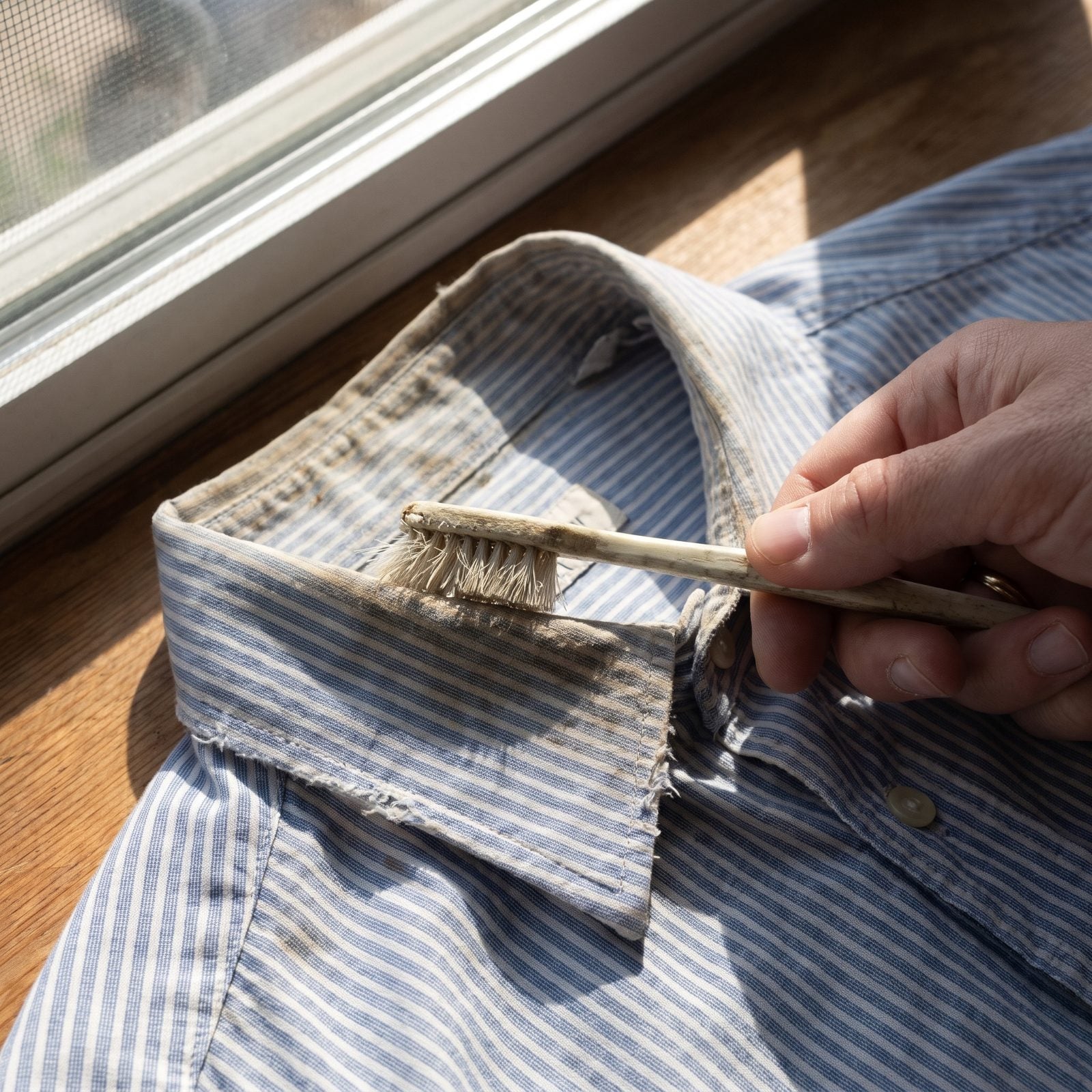
Collar grime is a mix of sweat, skin oil, and whatever happened to be floating in the air that day, and the washer alone barely touches it. A soft toothbrush does.
Dab a little detergent or stain remover on the collar, then work it in with small circles using a soft-bristled brush. The bristles push cleaner down into the weave where a rub with your thumb can’t reach.
Go soft, not savage. A stiff brush frays the fabric over time, and nobody wants a worn collar on an otherwise good shirt.
19. Run Cold Water Through a Blood Stain, Never Hot

Heat is the enemy here. Warm water cooks the protein in blood and bonds it to the fibers, which is the exact opposite of what you want.
Flush the stain under cold running water, letting the stream hit the spot directly and rinse the blood out of the fibers. Do it fast, while the stain is still fresh, and most of it leaves before you’ve even reached for soap.
Set-in blood is a bigger fight. But cold water on a fresh spot usually handles it before it becomes one.
18. Freeze Stuck Gum Solid With an Ice Cube
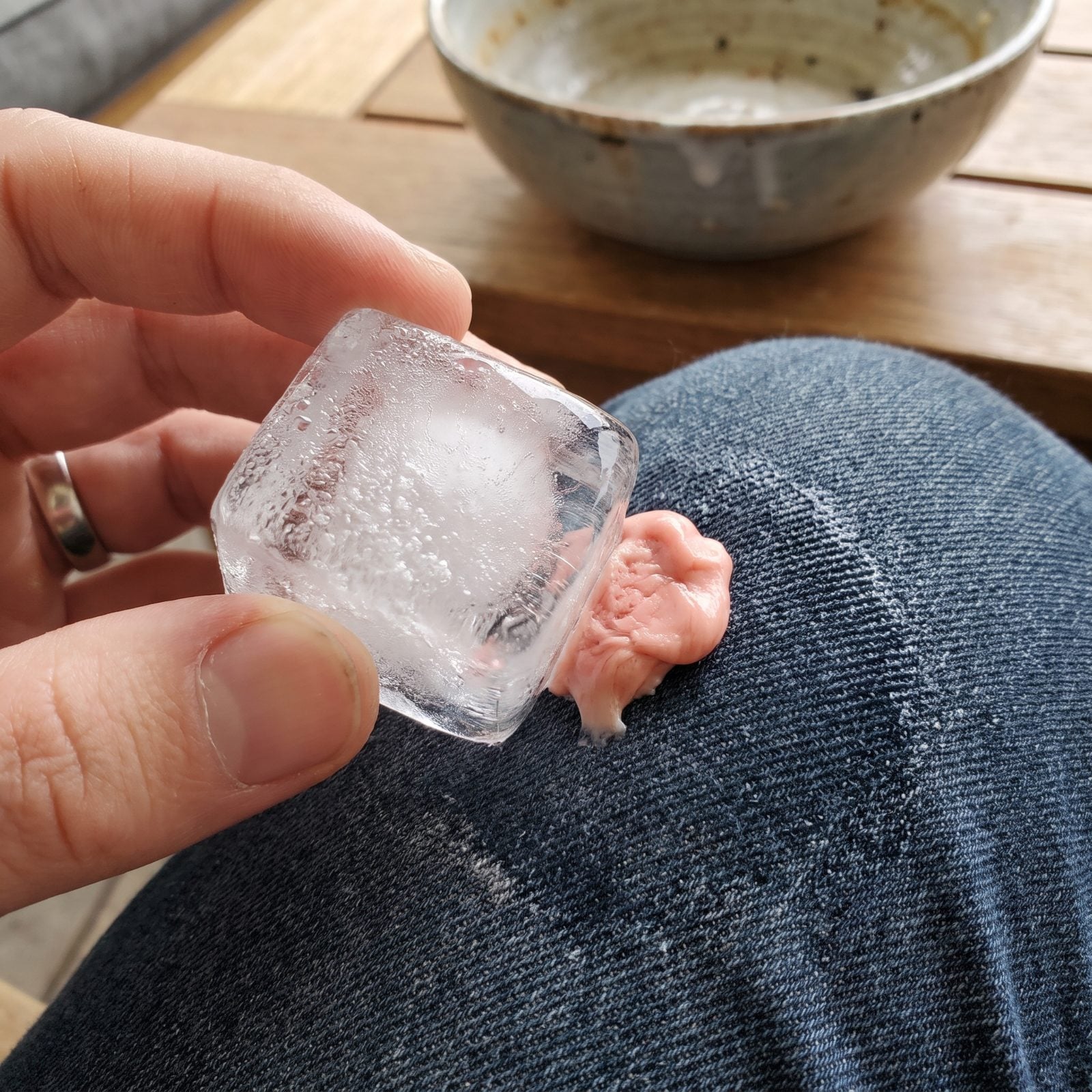
Gum is a nightmare at room temperature — soft, stringy, and it smears the second you touch it. Cold flips the whole problem on its head.
Hold an ice cube against the gum for a minute or two until it hardens into a brittle lump, then scrape it off with a dull knife or a spoon edge in one clean piece.
Same trick rescues candle wax and melted chocolate. Anything gooey gets easier to pry off once it stops being gooey.
Before any scraping, a dry cleaning shop owner advises hardening the gum first: “For a coat or a garment you are wearing, hold an ice cube in a plastic bag against the gum until it goes rigid.”
17. Drop a Color-Catcher Sheet Into the Mixed Load
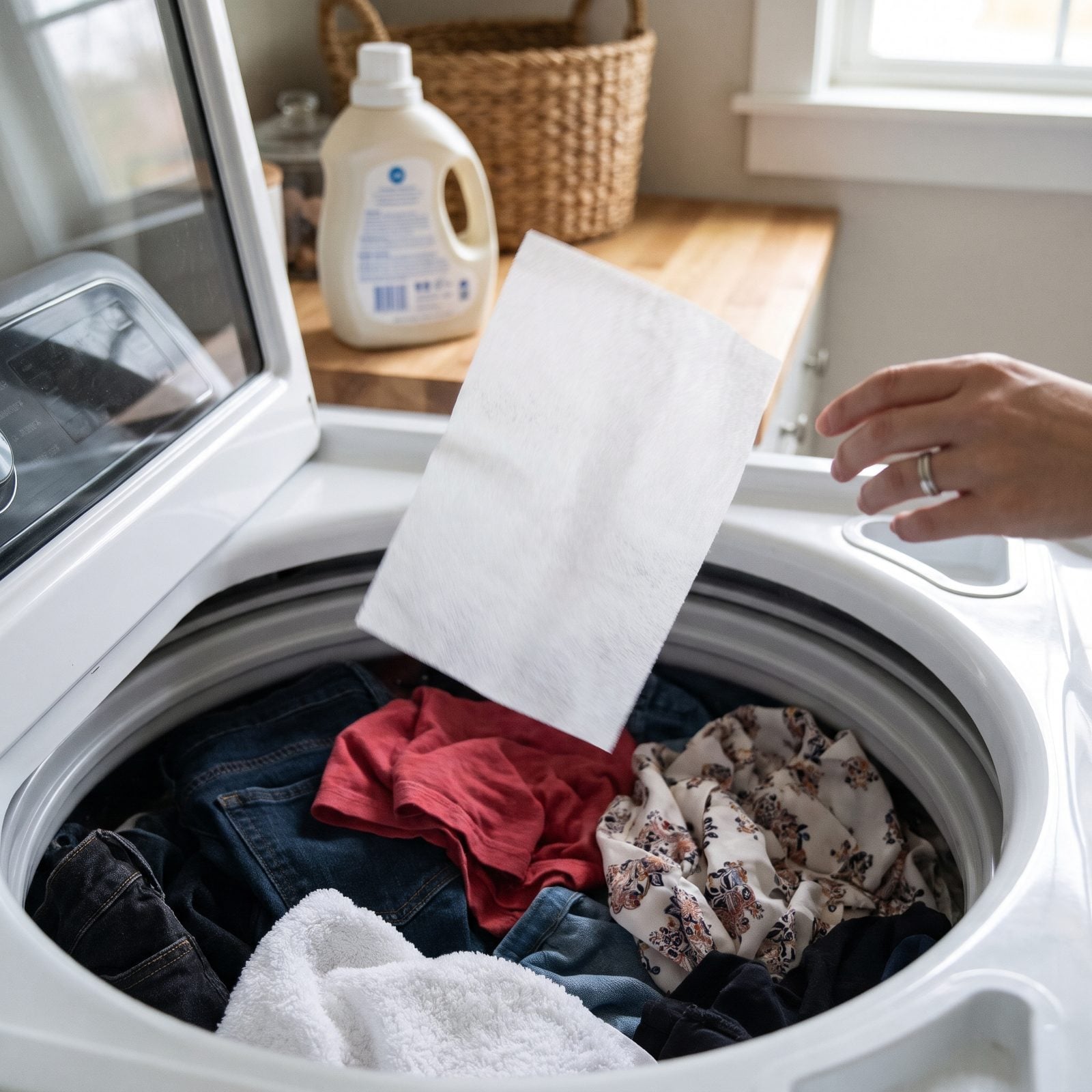
Sorting exists to keep a rogue red sock from turning your whites a sad shade of pink. A color-catcher sheet handles that job for you, right in the middle of the wash.
Toss one in with a mixed load and it grabs loose dye floating in the water before it can resettle onto lighter fabrics. You can run lights and darks together and skip a whole separate load.
It’s no magic insurance for brand-new, heavily dyed stuff, though. Wash a bright red shirt for the first time and still keep it alone. But for everyday mixed loads, these sheets quietly earn their keep.
16. Wash Towels Separately From Lint Magnets
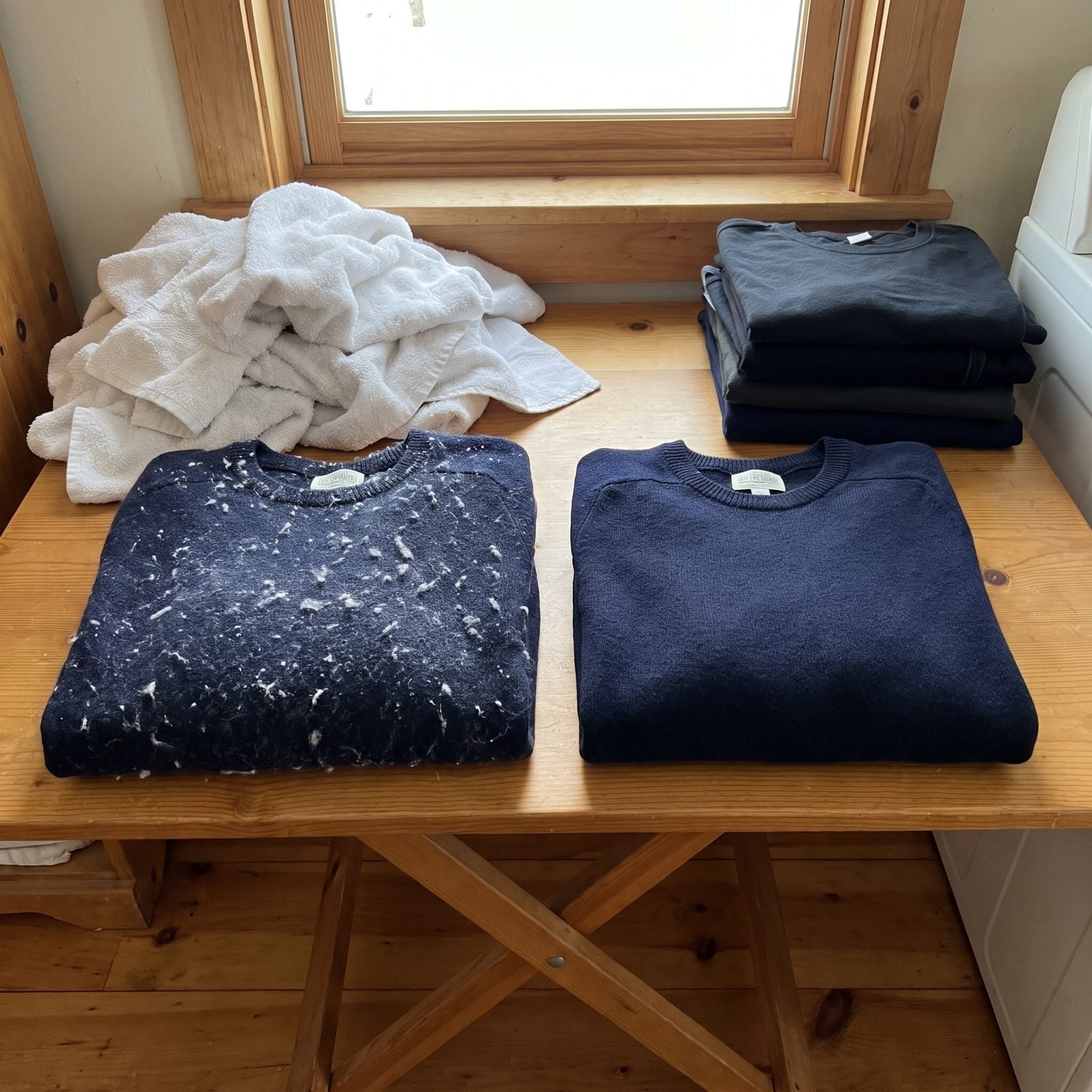
Towels shed. A lot. Wash them with anything knitted or fuzzy and you’ll spend the next ten minutes peeling lint off dark cotton like you’re grooming a cat.
Keep terry cloth with terry cloth, and the lint stays buried in the towel load where nobody sees it while your black leggings come out clean instead of speckled. Sounds fussy until you try it once and realize you’ve just erased an entire annoying step.
15. Group Clothes by Drying Speed
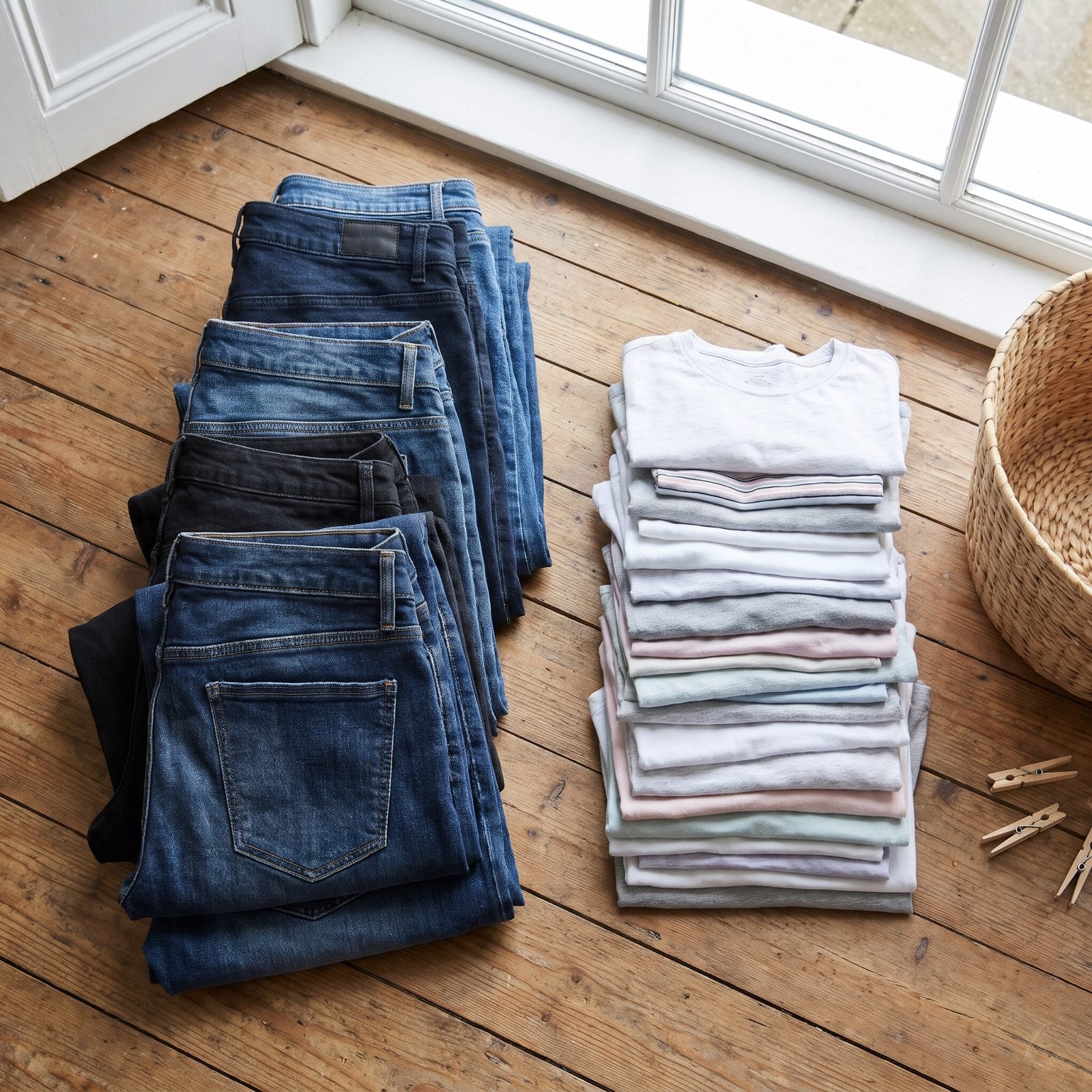
Heavy jeans and thin cotton tees don’t dry at the same rate. Toss them in together and you’re stuck choosing: run everything long enough to dry the denim and bake your shirts, or pull it early and fish out damp pockets and waistbands.
Sort by thickness instead. Light with light, towels and sweatshirts in their own load. Each batch finishes together, nothing over-dries, and you stop babysitting the machine. I held out on this for years because it felt like extra sorting. It isn’t — you’re just sorting by a smarter rule.
14. Use Wool Dryer Balls to Separate Fabrics
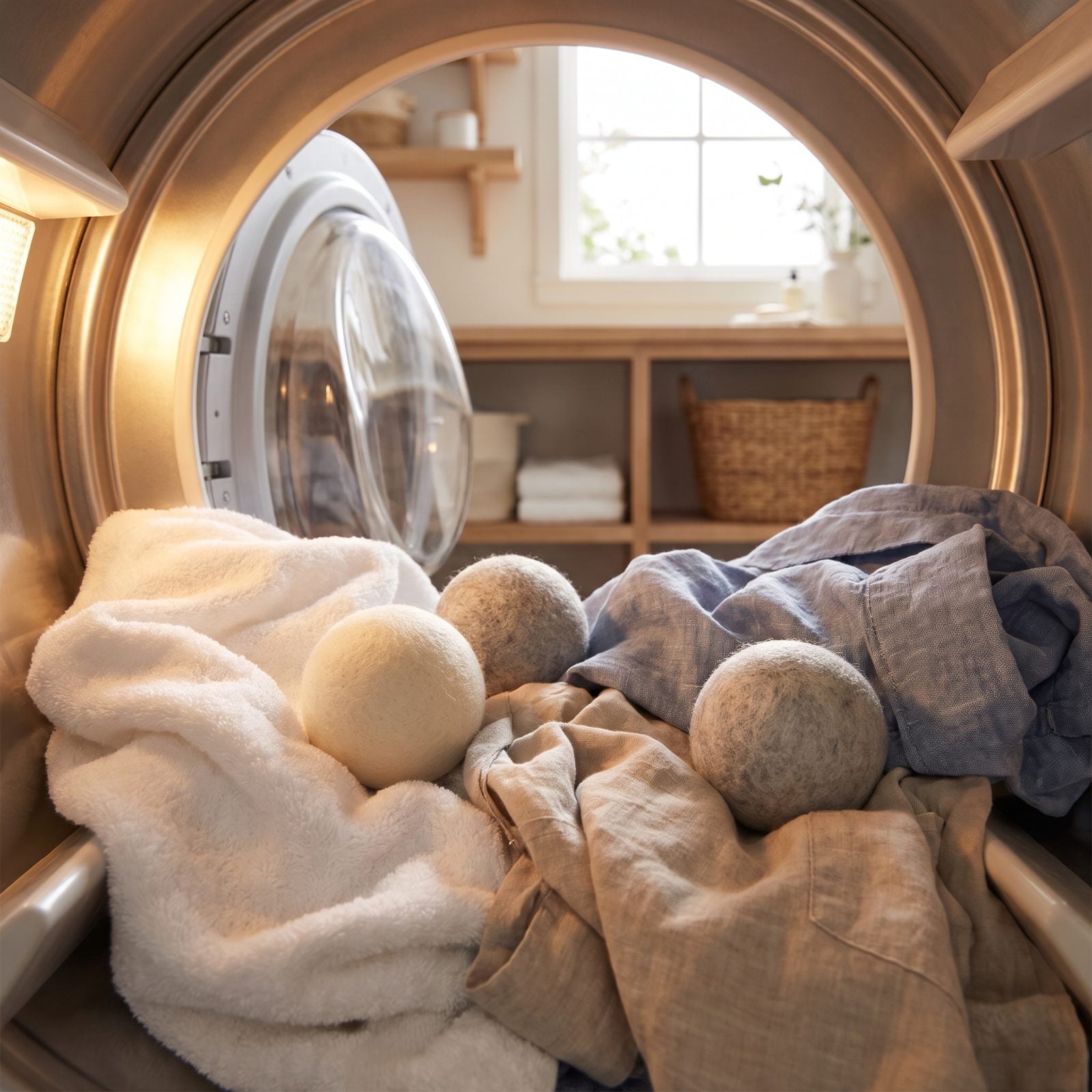
These little felted spheres pull more weight than you’d expect. As the drum spins, they bounce between garments and keep everything from clumping into one damp knot in the corner — more air gets in, things dry faster, and you skip dryer sheets entirely.
Three or four for a normal load, and they last for years. I was skeptical, figured it was another internet laundry myth. Then I timed a load with and without. The wool-ball load finished noticeably sooner. Fine. You win.
13. Shake Every Garment Before the Dryer
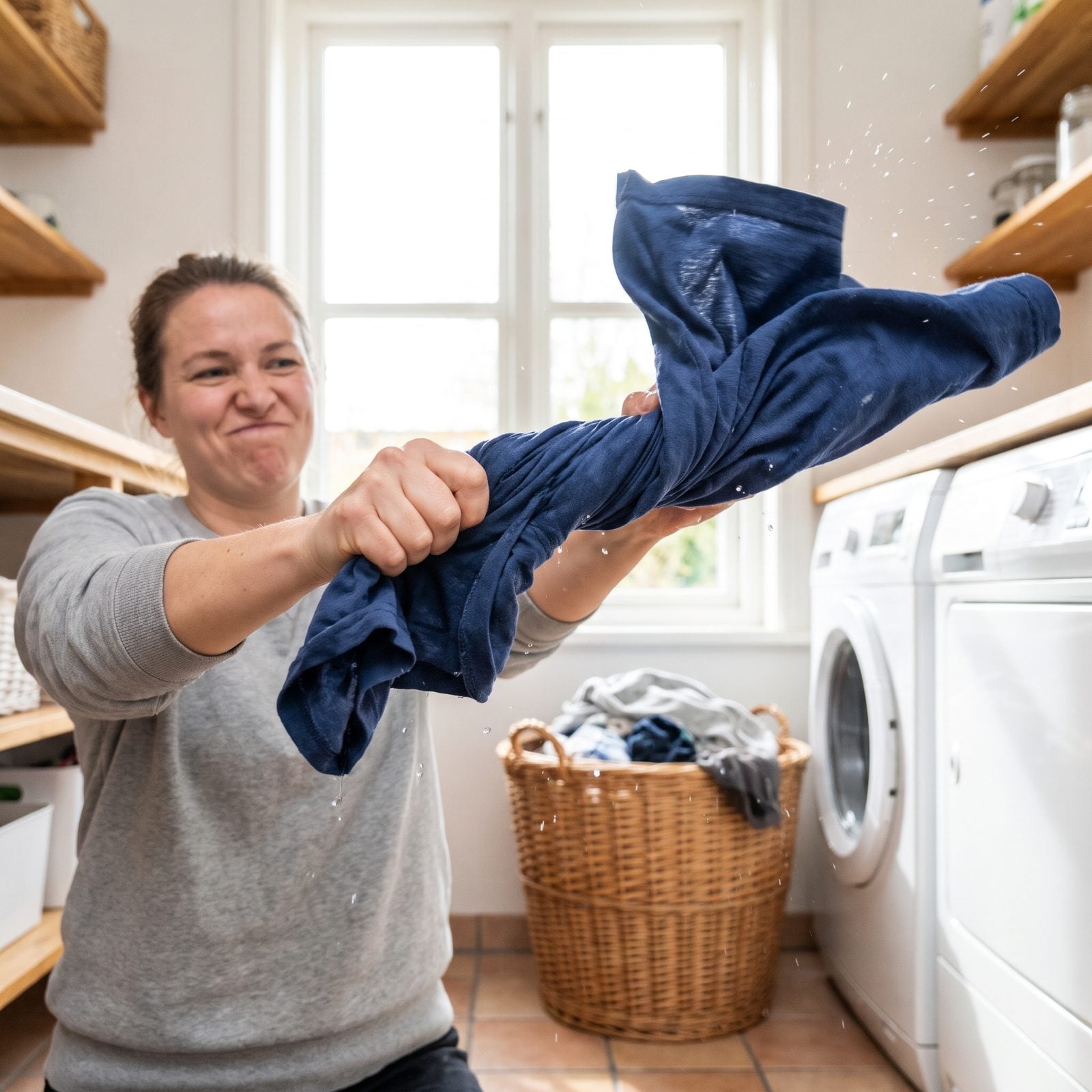
Pulled straight from the washer, clothes come out twisted and clingy, and if you throw them in the dryer like that they dry wrinkled, pressed into whatever creases they were holding.
Give each piece one sharp snap before it goes in. Shirts, pillowcases, anything that wrinkles. The snap knocks the fabric loose, spreads the weave, and lets hot air circulate instead of fighting through a wad. Fewer wrinkles coming out means less ironing — or, more honestly, less guilt about never ironing.
12. Air-Dry Shirts Directly on Hangers
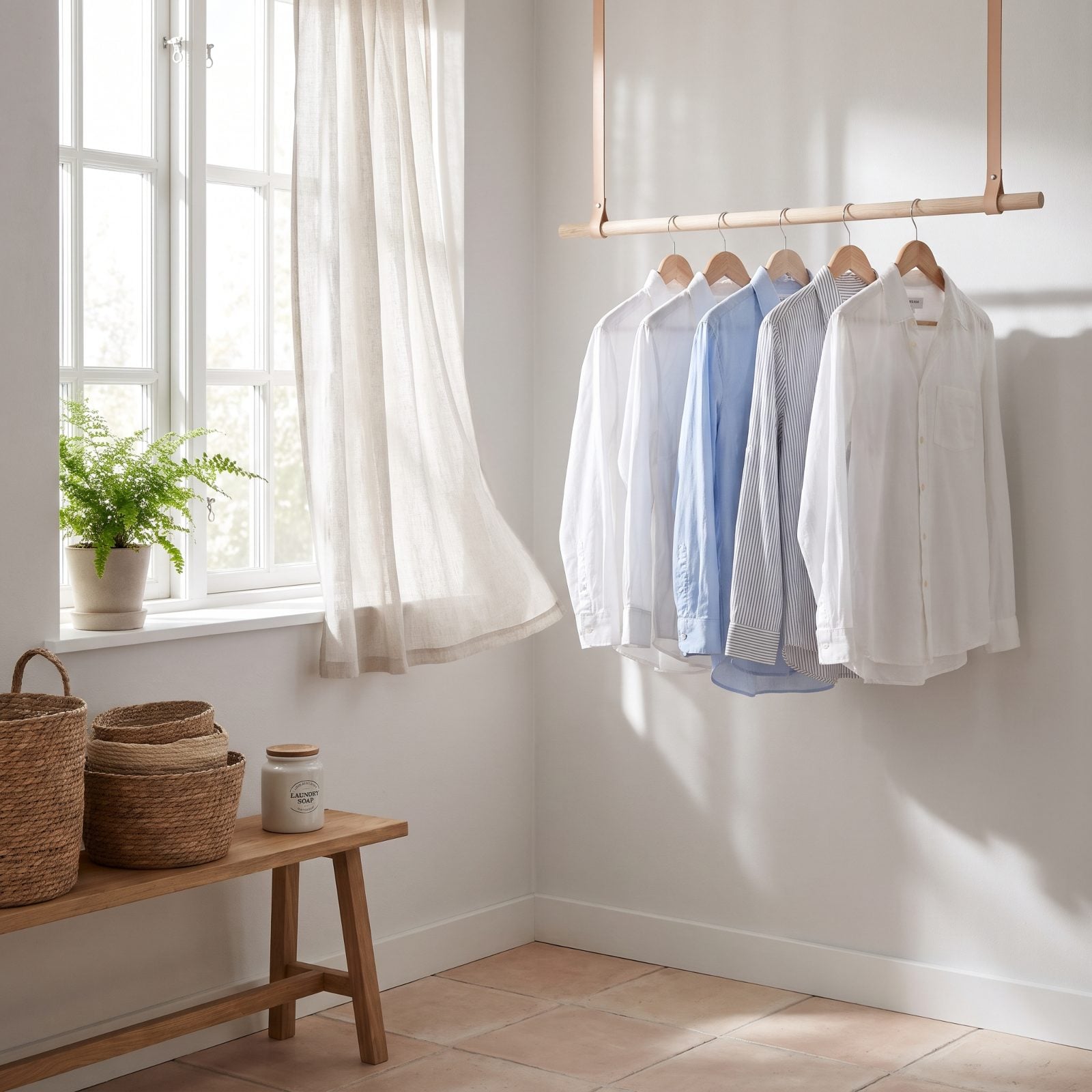
Skip the dryer-then-hang shuffle. Pull shirts from the washer, give them a shake, and put them straight onto hangers to dry.
Gravity does the pressing here. The weight of the wet fabric tugs wrinkles out as it dries, so most shirts come off the rod wearable with no iron at all. And they’re already hung, so you just move them from the drying rod to the closet — one motion instead of three, with collars that hold their shape far better than they ever do crushed in a dryer.
11. Use an Extra Tension Rod for Indoor Drying
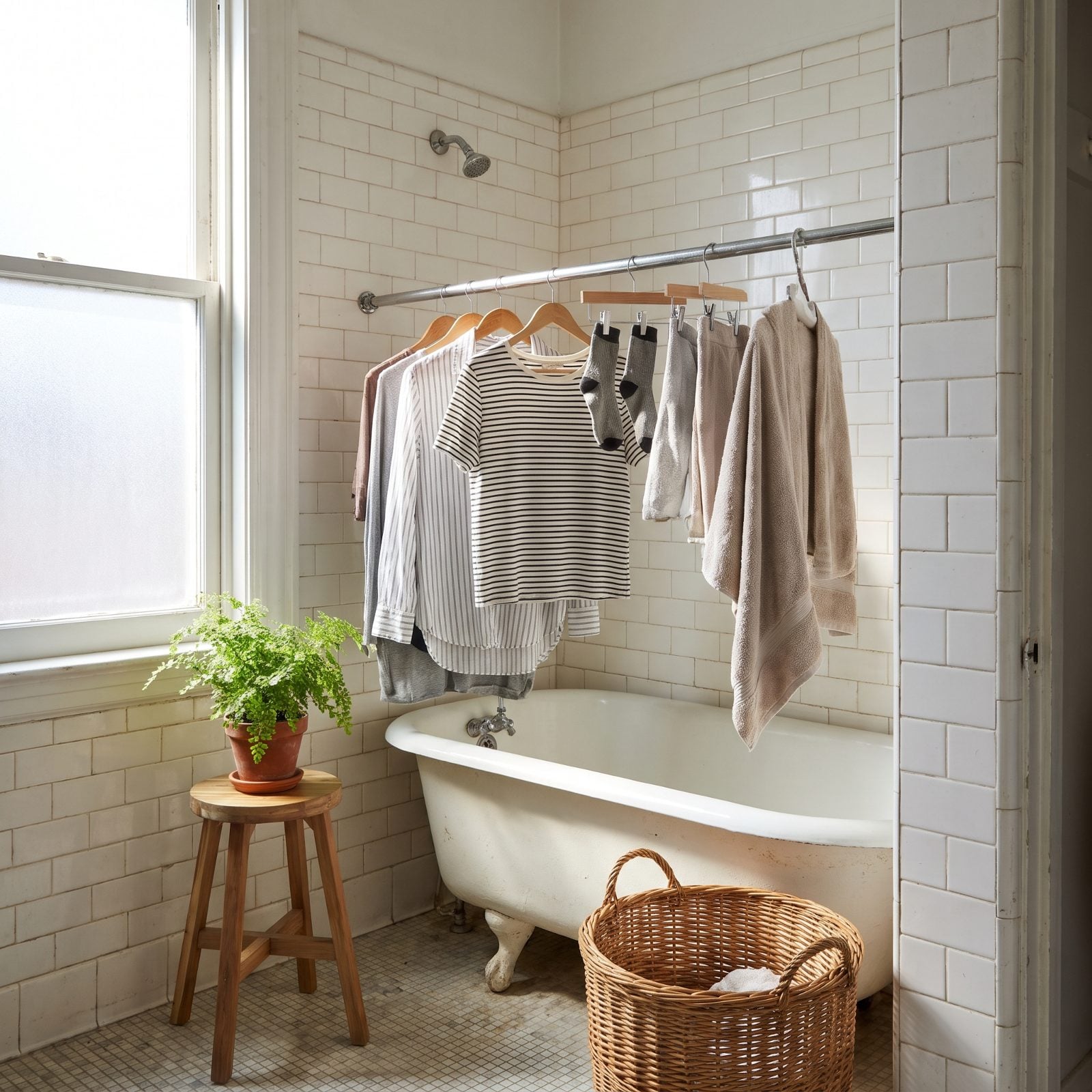
A spring tension rod costs a few dollars and turns dead space into a drying line. Wedge one between two walls in the laundry nook, across a bathtub, inside a closet, over the washer.
No installation. No drilling. No holes. When you don’t need it, twist it loose and tuck it away. I keep one permanently mounted above the machines and a spare in a drawer for the days a normal rack can’t keep up. For delicates that can’t go anywhere near the dryer, nothing touches it at the price.
10. Place a Fan Beside the Drying Rack
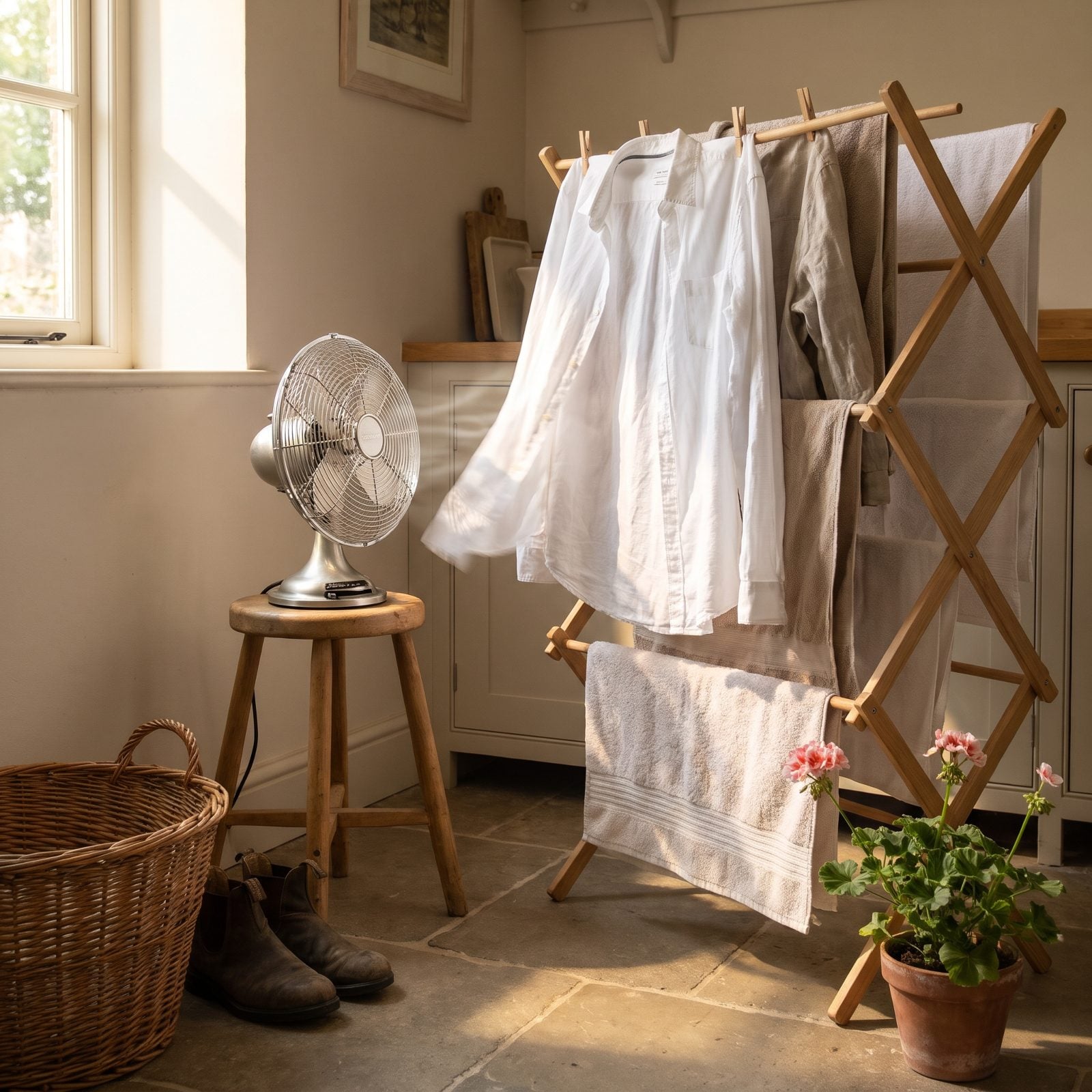
Air-drying indoors stalls out when the air just sits there. Clothes stay damp for hours, start to smell musty, and you begin to wonder why you bothered.
Point a fan at the rack. Moving air carries moisture away fast, and a load that would’ve taken all day finishes in a few hours — an oscillating one hits more pieces at once. This is the gap between air-drying that works and air-drying that leaves everything faintly sour by evening.
9. Roll Hand-Washed Clothes in a Towel
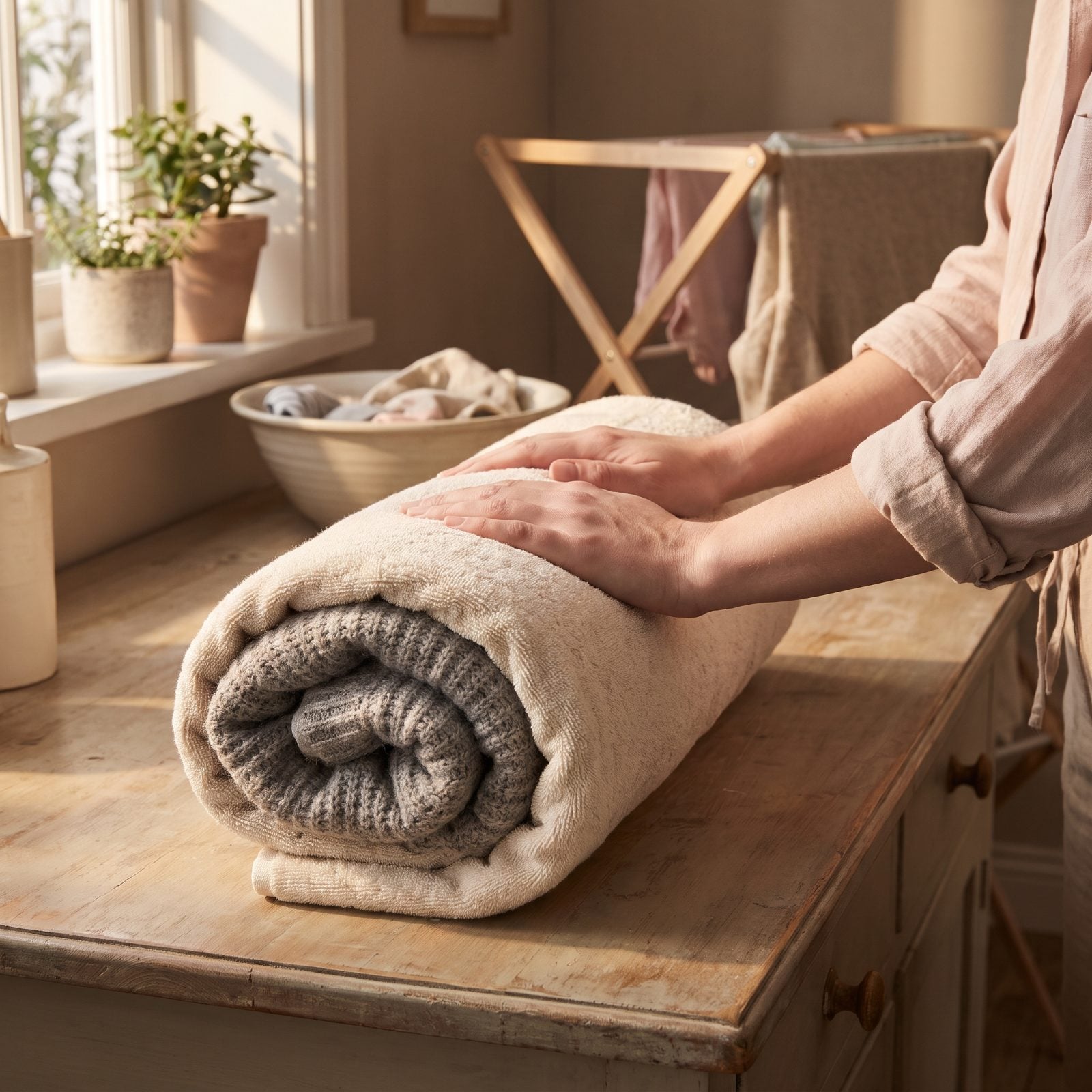
Wring a wet sweater and you stretch it out of shape, and you won’t notice until it’s dry and suddenly fits like it belongs to someone a good deal taller.
Do this instead: lay the garment flat on a dry bath towel, roll the whole thing up like a sleeping bag, and press. The towel pulls out most of the water without a single twist. Unroll, reshape flat, let it finish drying. Delicate knits and anything that warns against wringing keep their shape this way. One extra minute, one saved sweater.
8. Remove Shirts While Slightly Damp
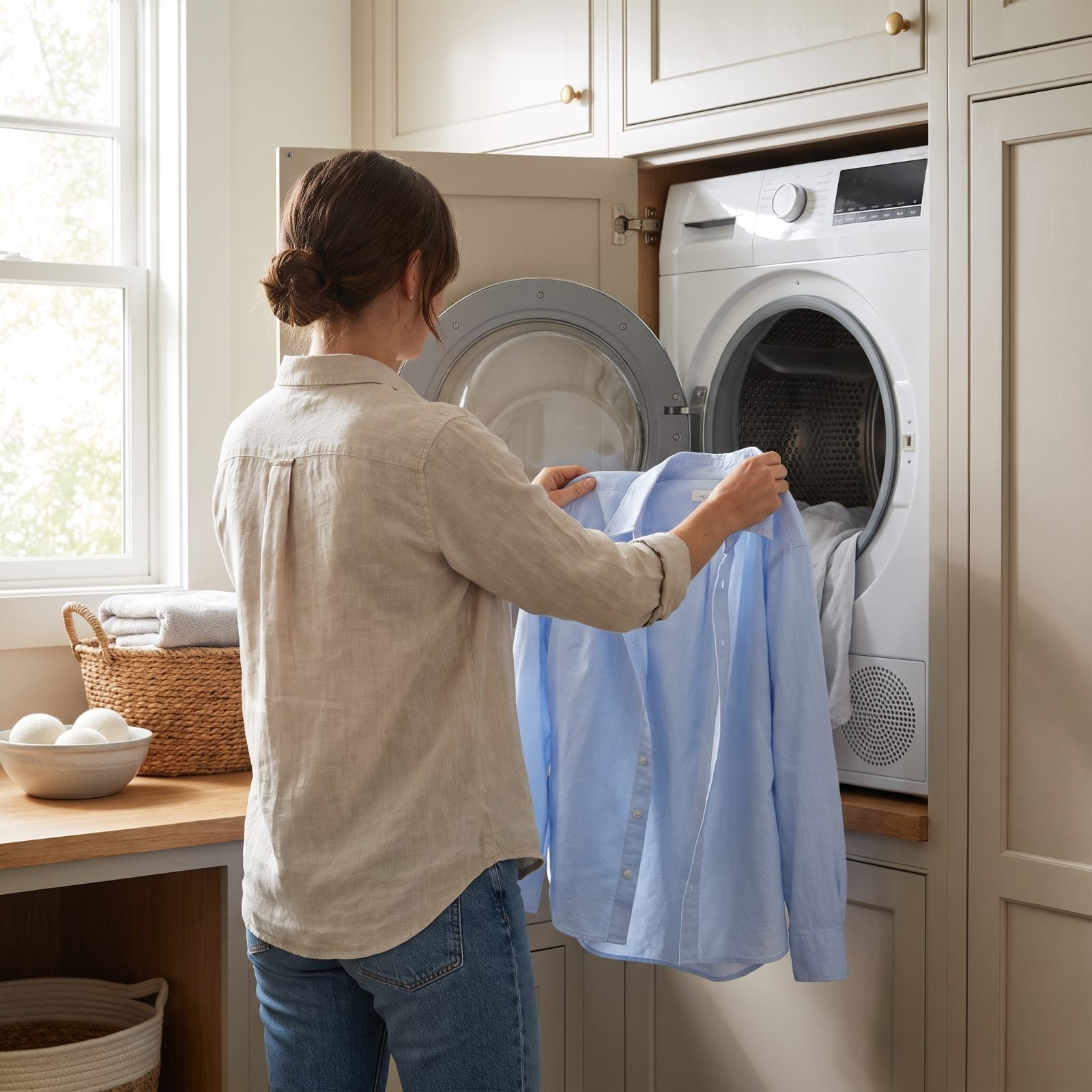
Those last few minutes in the dryer are where wrinkles bake in for good. Cotton that tumbles until bone-dry and crumpled has simply memorized whatever it was pressed against.
Pull shirts out while they’re still a touch damp, shake them, hang them, and the leftover moisture smooths the last wrinkles as they air-dry the rest of the way. You trade a hot wad of fabric for something that looks ironed without ever meeting an iron. I’d call it the laziest win on the list, and I mean that as high praise.
7. Toss a Few Ice Cubes in the Dryer to Steam Out Wrinkles
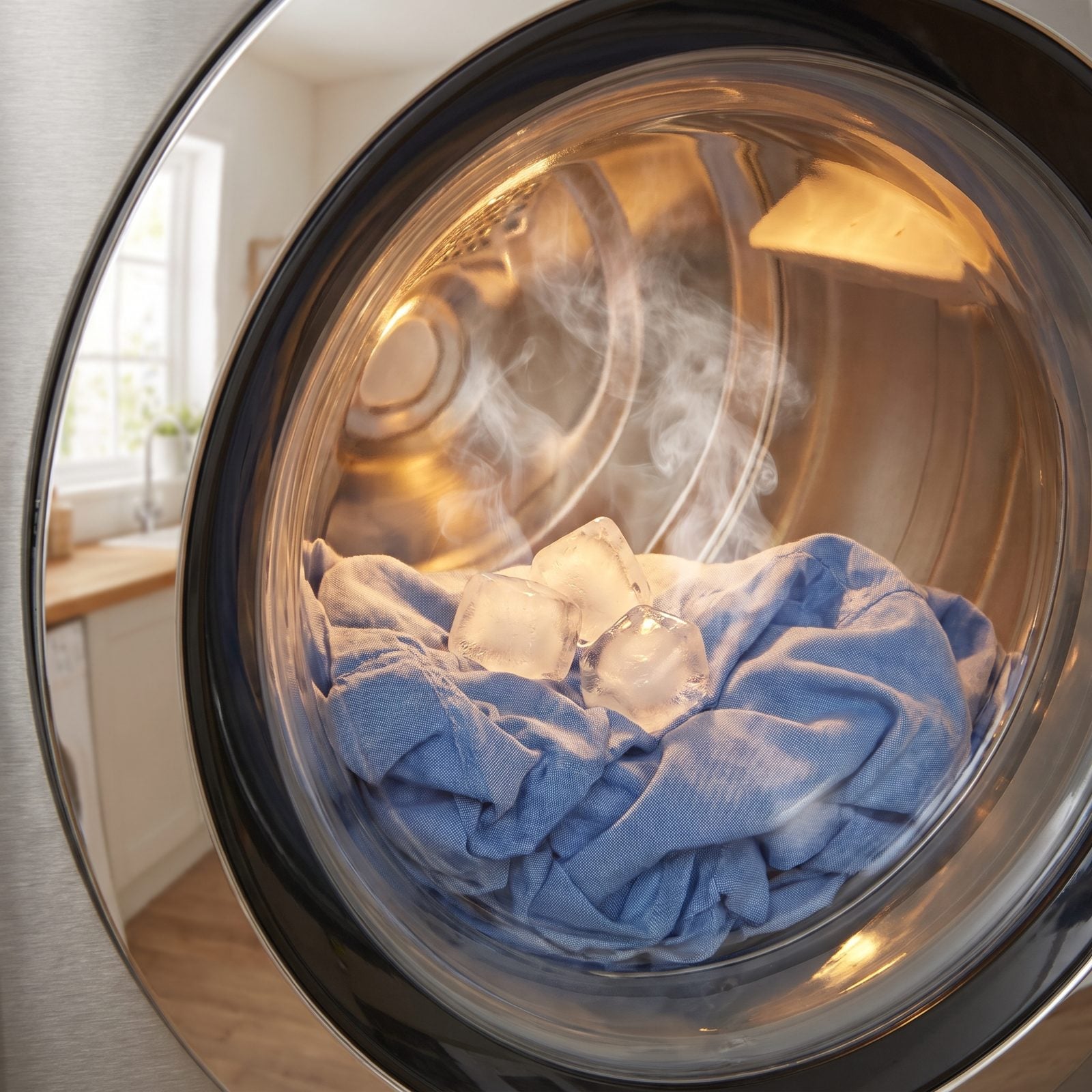
Three ice cubes, a shirt or two, ten minutes on high heat. The cubes melt and the trapped steam relaxes the creases, so you pull out something close to pressed without ever hauling out the iron.
It won’t rescue a bone-dry heap of linen. Best on a small load — two or three items, slightly damp if you can manage it. I swore this was a myth for years, right up until a pile of travel shirts came out smooth enough to skip the board entirely.
Backing the ice-cube trick for small loads, an appliance repair expert says “You can get quick results by adding a few pieces of already dry, lightweight clothing into your dryer with some ice and running a short cycle; two or three cubes should be enough.”
6. Keep a Row of Empty Hangers Right at the Folding Station
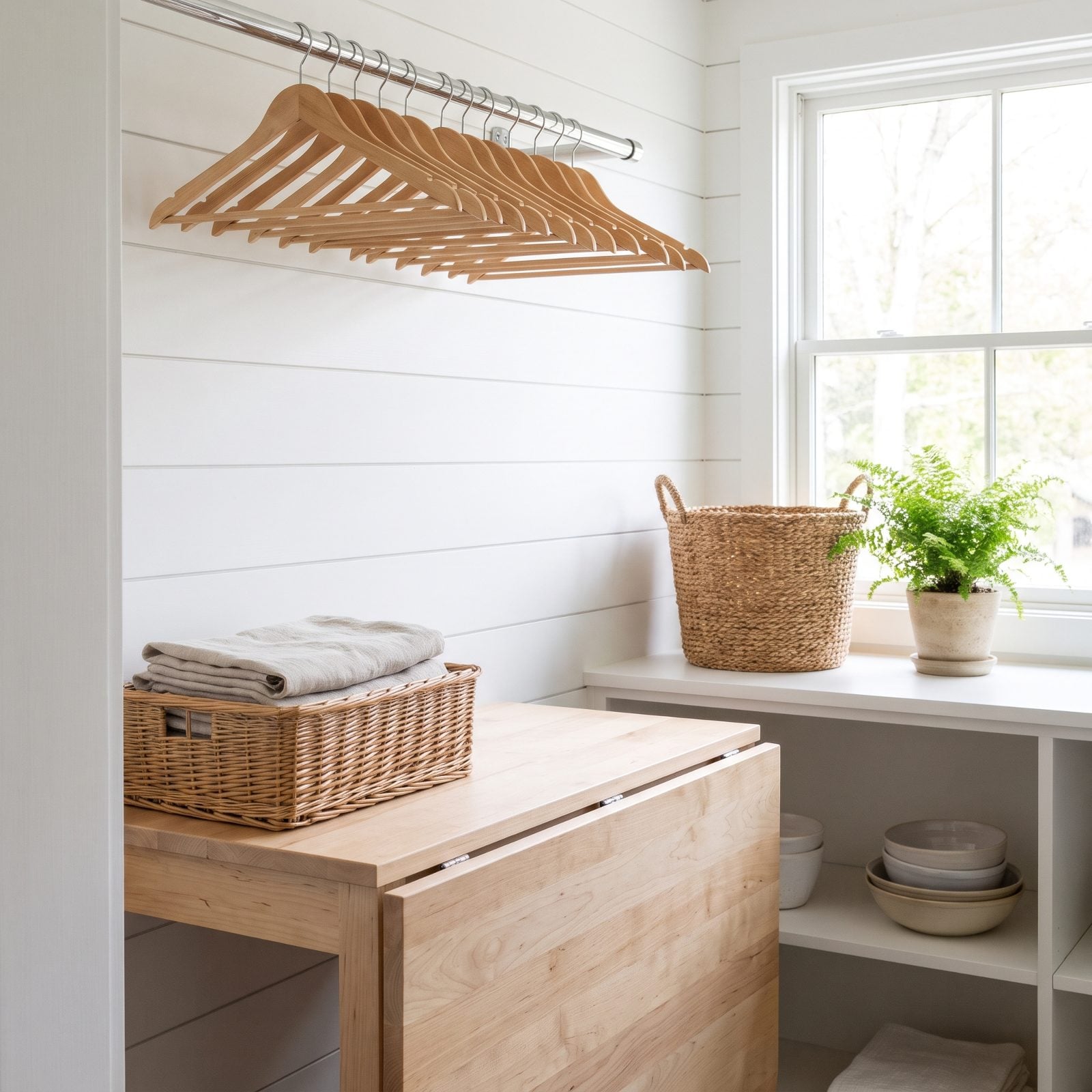
If the hanger isn’t within arm’s reach, the garment gets folded wrong and rehung later. Small problem — but it quietly costs you fifteen minutes a week.
So hang a handful of empties above wherever you fold. When a shirt or dress comes out that should really hang, it goes straight onto one and straight to the closet. No growing pile of “these need hanging” slumped on the dresser. Keep a mix: wooden for the structured pieces, slim velvet for anything that likes to slither off.
5. Fold T-Shirts in One Motion With a Flip Board
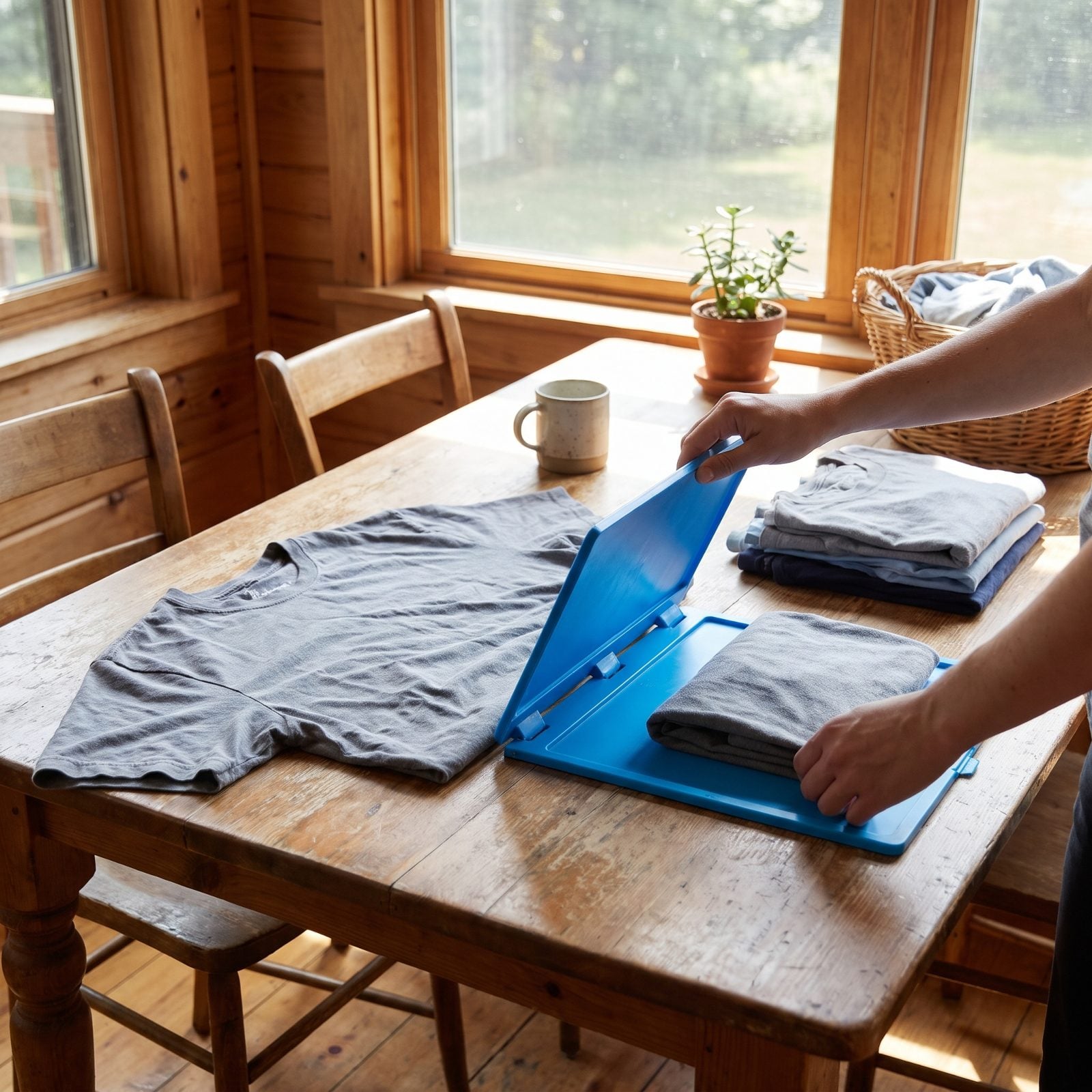
A folding board looks like something you’d never bother with — until you watch a lumpy drawer of shirts turn uniform in under a minute each.
Lay the shirt down, flip, flip, flip. Every tee lands the same size, so they stack square and you can file them upright in the drawer and actually see each one at a glance. Cardboard scavenged from a shipping box works just as well as the store-bought version. I resisted for years out of pure stubbornness, and now I won’t fold a tee without one.
4. Stop Folding Underwear, Socks, and Gym Clothes Entirely
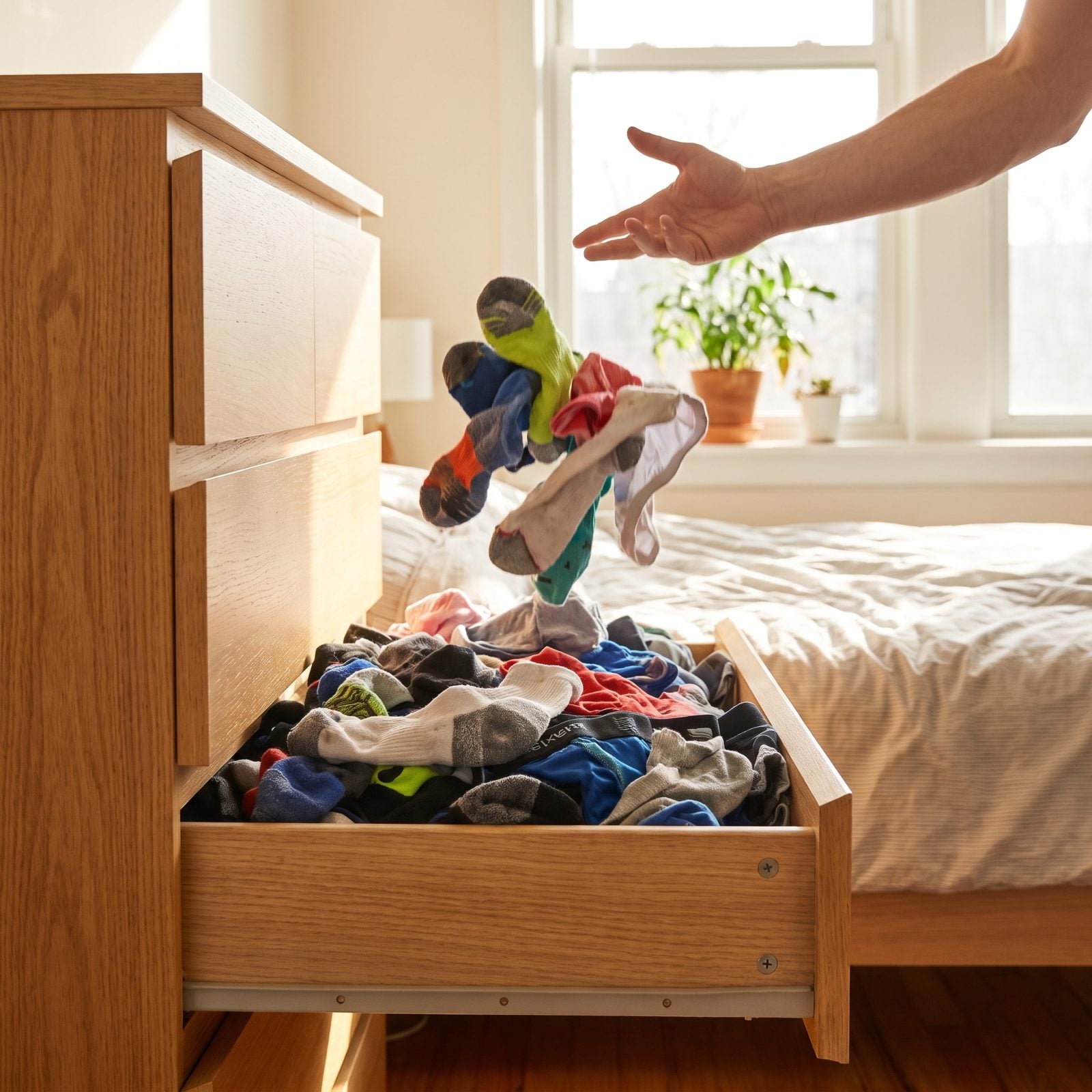
Nobody inspects your sock drawer. There’s no award for a crisply folded pair of briefs.
Underwear, socks, leggings, sports bras, all that stretchy stuff that springs back no matter what you do to it — it goes into the drawer loose, no folding, no matching. Drop in a couple of cheap dividers and you’ve got sections without any of the labor. Call it twenty minutes clawed back from a chore that was giving you nothing.
3. Carry Clean Shirts to the Closet on One Rod, Not in Your Arms

Hanging shirts travel terribly in your arms. By the time you reach the closet, half have slid loose and need re-hanging.
Thread everything onto one length of dowel or a spare closet rod, lift the whole bundle, and walk it over in a single trip. The hangers stay put, the shirts stay smooth, and you skip four separate trips with wrinkled cargo. A five-dollar dowel from the hardware store does it. The first time you try it, you’ll wonder why you spent years hugging slippery laundry down the hall.
2. Mark the Sheet Size Inside the Corner Pocket
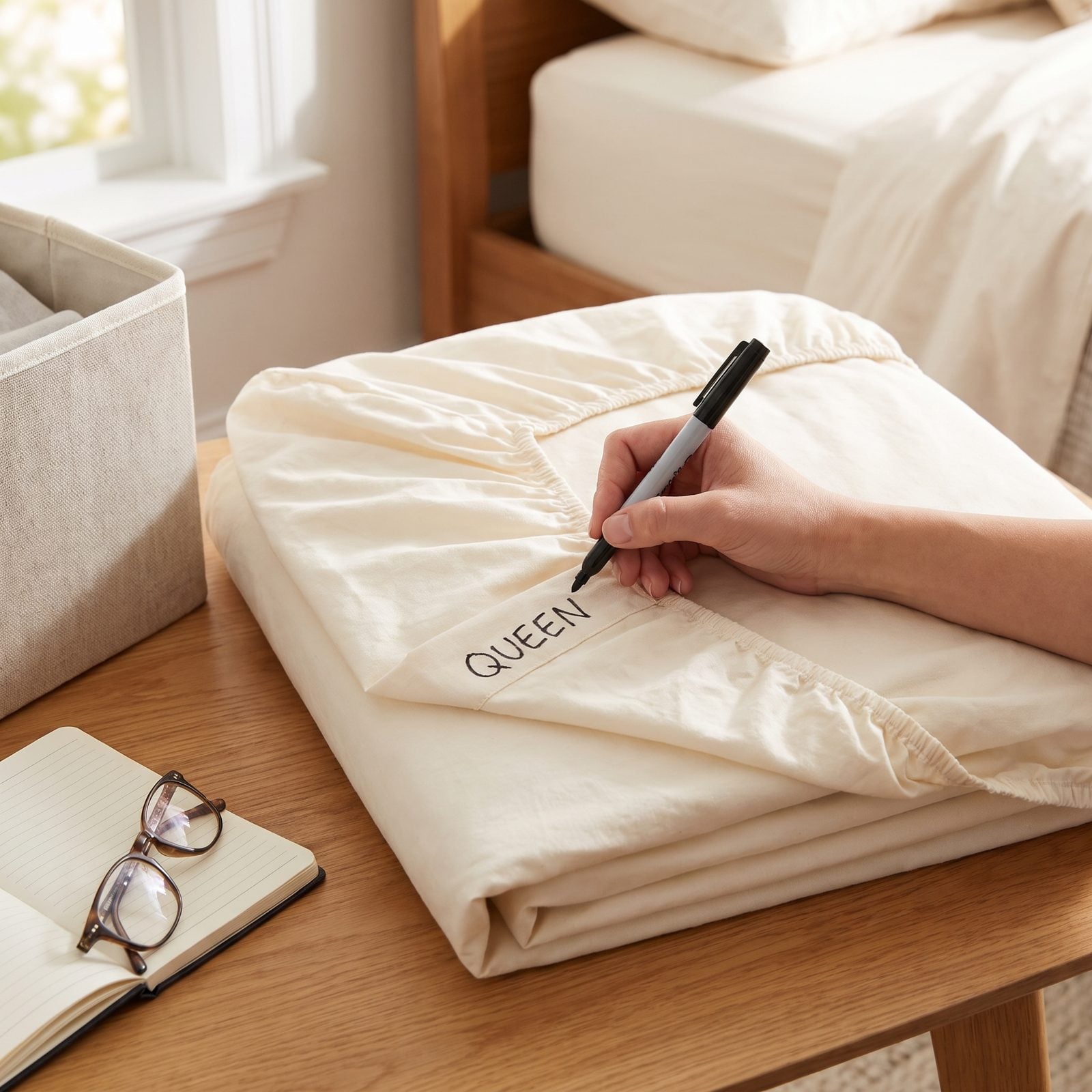
The eternal linen-closet riddle: queen or full? You hold the thing up, you guess, you make the bed, and then you discover you guessed wrong.
Write the size inside one corner pocket with a fabric marker — Twin, Full, Queen, King — small and permanent and hidden where no guest will ever spot it. Ten seconds per sheet, and the folding-day sorting game is over for good. Works a treat on flat sheets too, marked down by the hem.
1. Keep Towels Stored in the Room That Uses Them

The last step of laundry is the one that quietly eats your time: hauling stacks to five different rooms. Bath towels to one bathroom, hand towels to another, kitchen towels to the kitchen. Round and round.
Keep them where they get used instead. A shelf or basket of folded towels in each bathroom means you fold once and set them down three feet from where they live. No pilgrimage to the linen closet, no sorting by destination. The towels you grab daily shouldn’t live behind a closed door down the hall — stash them close, and put-away time drops to almost nothing because nothing has to travel.