
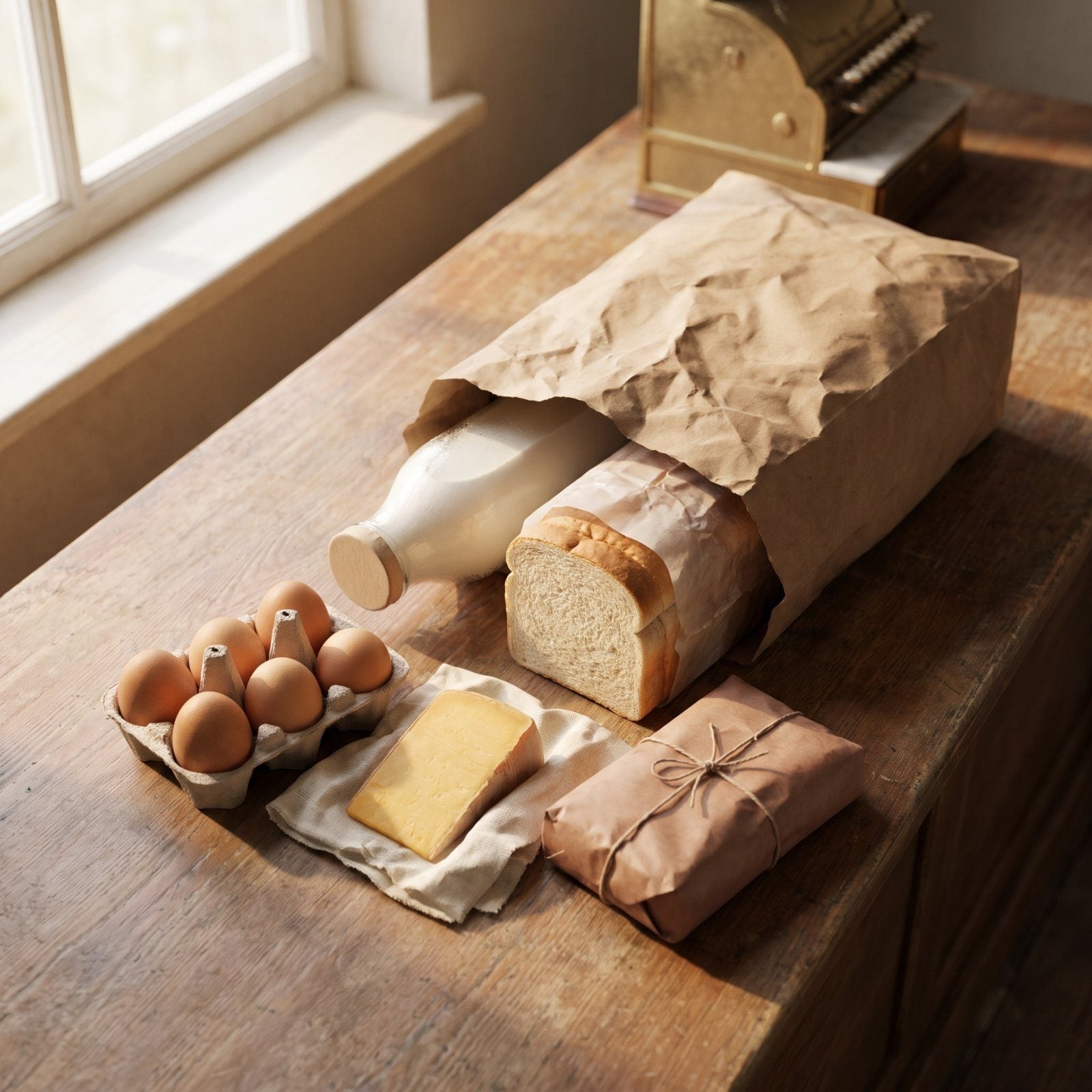
The milkman still knew your porch by name, and a week’s groceries fit in two paper sacks with change left over from a ten. Back then a family of five ate off the land and the butcher’s counter, more than the freezer aisle. The kitchen smelled of rendered fat and fresh bread more often than not. What went into that cart tells you how people lived, what they could afford, and what they figured a square meal looked like. Walk the aisles of a mid-century market with us and see what landed on the belt.
Please note that some of the images in this article were created with the assistance of AI.
38. Whole Milk in Returnable Glass Bottles
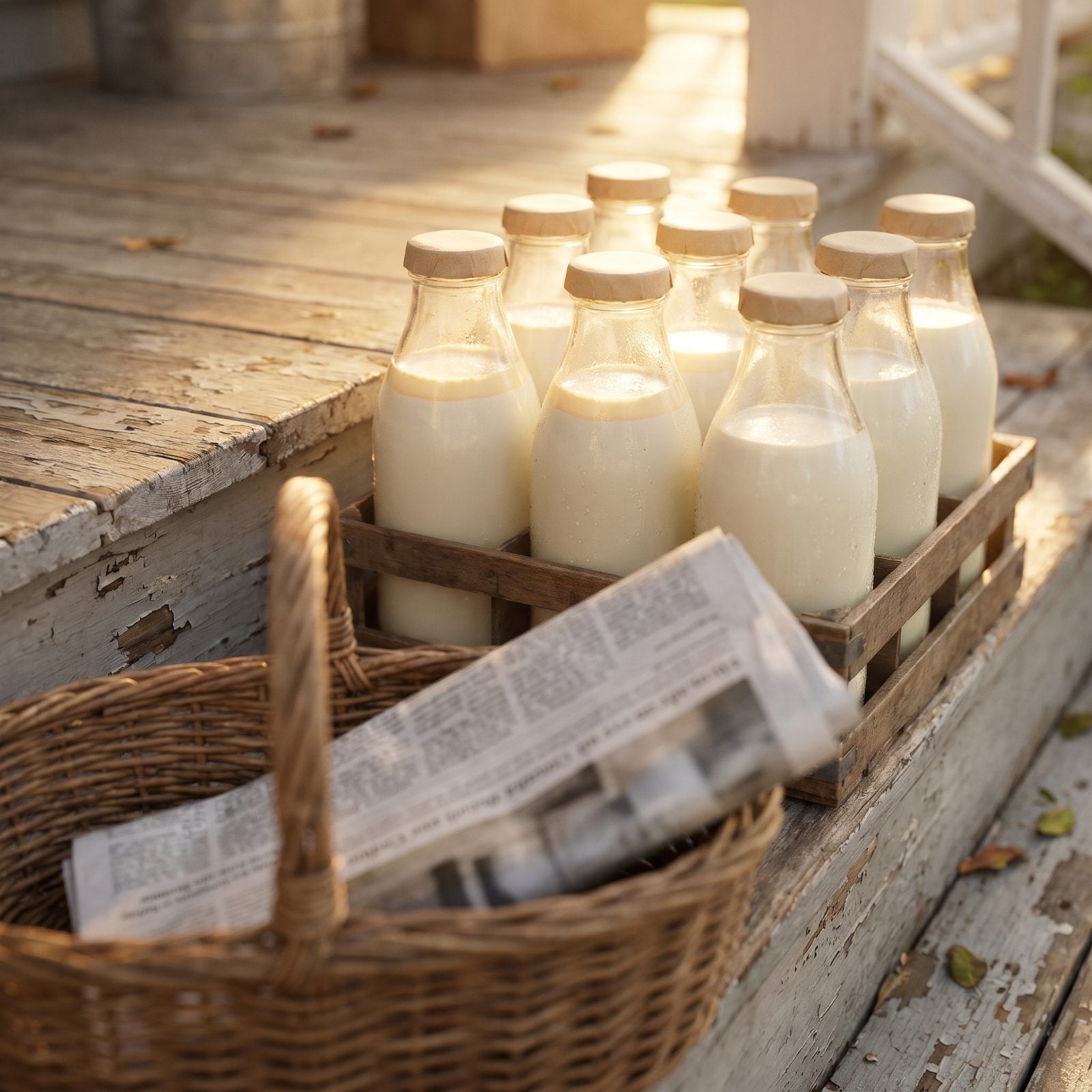
The cream rose to the top and you shook it down, or you didn’t and skimmed it for your coffee. Whole milk came in glass because glass came back. You rinsed the empties, set them on the step, and the milkman swapped them for full ones before you woke.
A family of five burned through bottles fast, which is why the insulated box by the door earned its keep. Delivered milk cost a few cents more than the market’s, but who wanted to haul it home warm?
37. White Sandwich Bread in a Waxed Wrapper
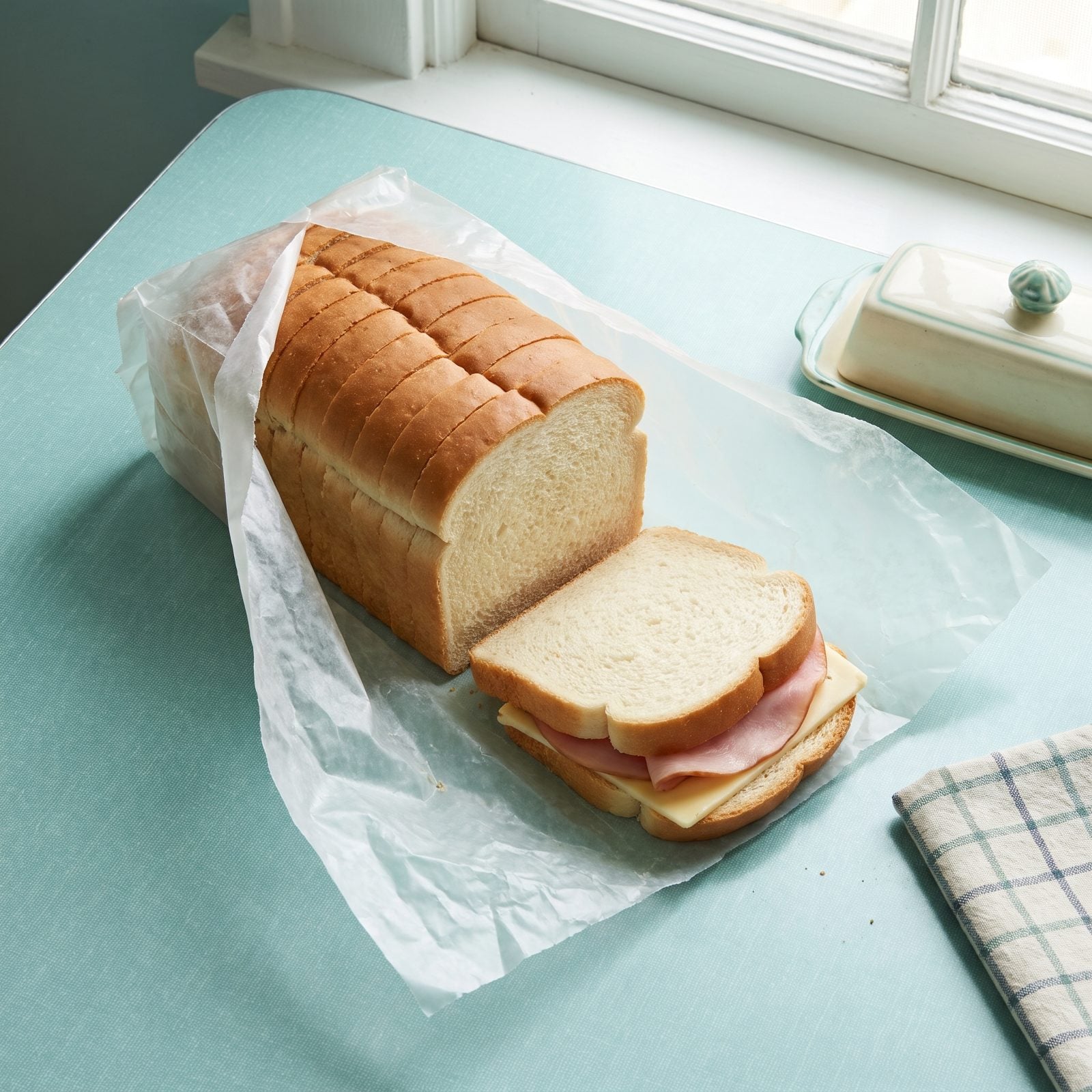
Sliced, soft, and white as a church shirt. This was the bread that made the lunchbox work: bologna on one, peanut butter on the next, crusts trimmed if you were lucky.
The waxed wrapper kept it fresh longer than you’d guess, though not forever, and a stale loaf turned into French toast or pudding instead of garbage. Nothing got tossed casually in a house with five mouths.
36. Eggs in a Molded-Pulp Carton
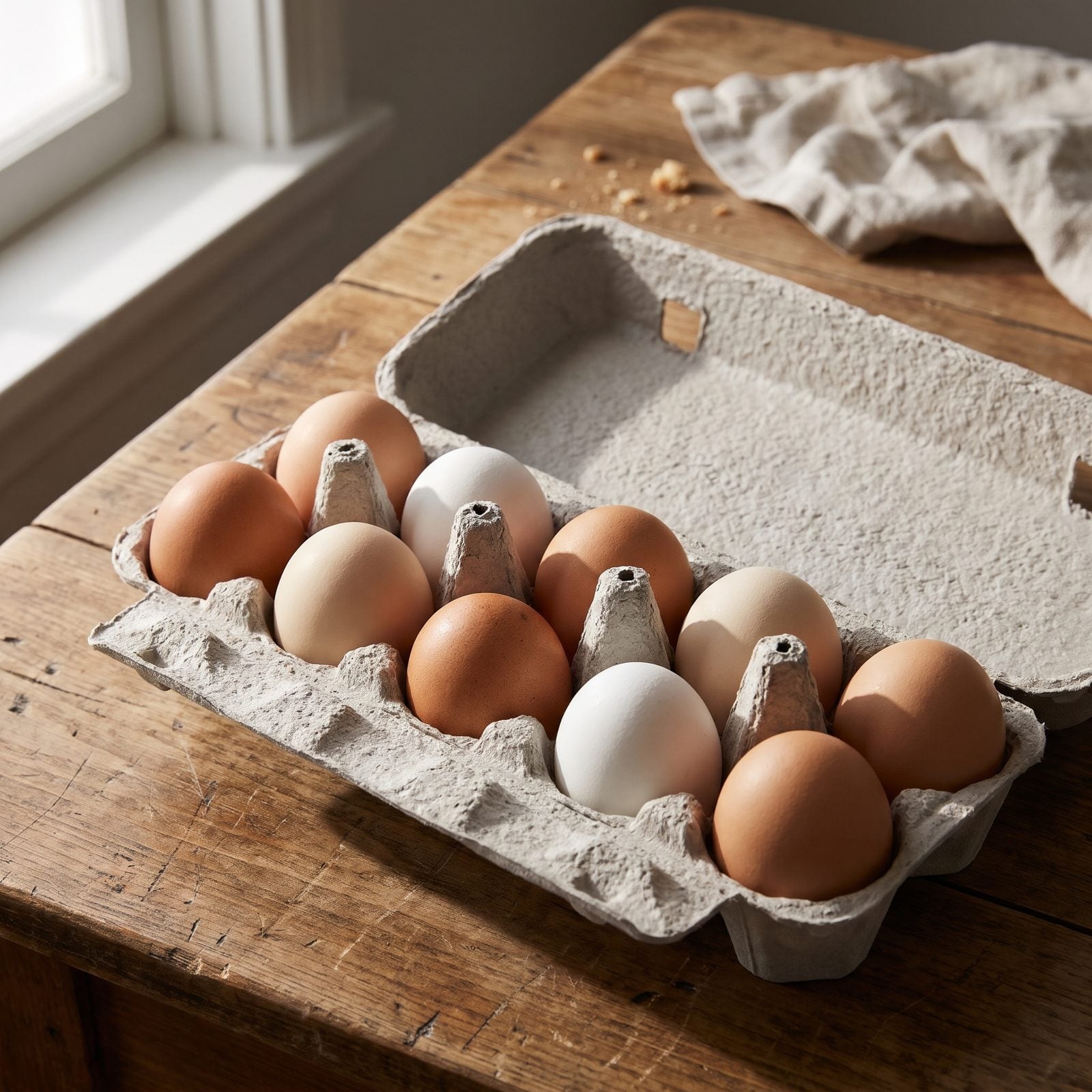
Eggs were cheap, honest protein, and a family of five treated them like currency. Scrambled for breakfast, hard-boiled for the picnic, beaten into a cake, stretched into an omelet when the paycheck ran thin.
The molded-pulp carton was a quiet marvel in its own right, invented decades earlier to stop breakage. You bought the dozen, lifted each one to check it, and spun any you suspected to feel whether it wobbled off-center.
35. Yellow Margarine in a Cardboard Carton
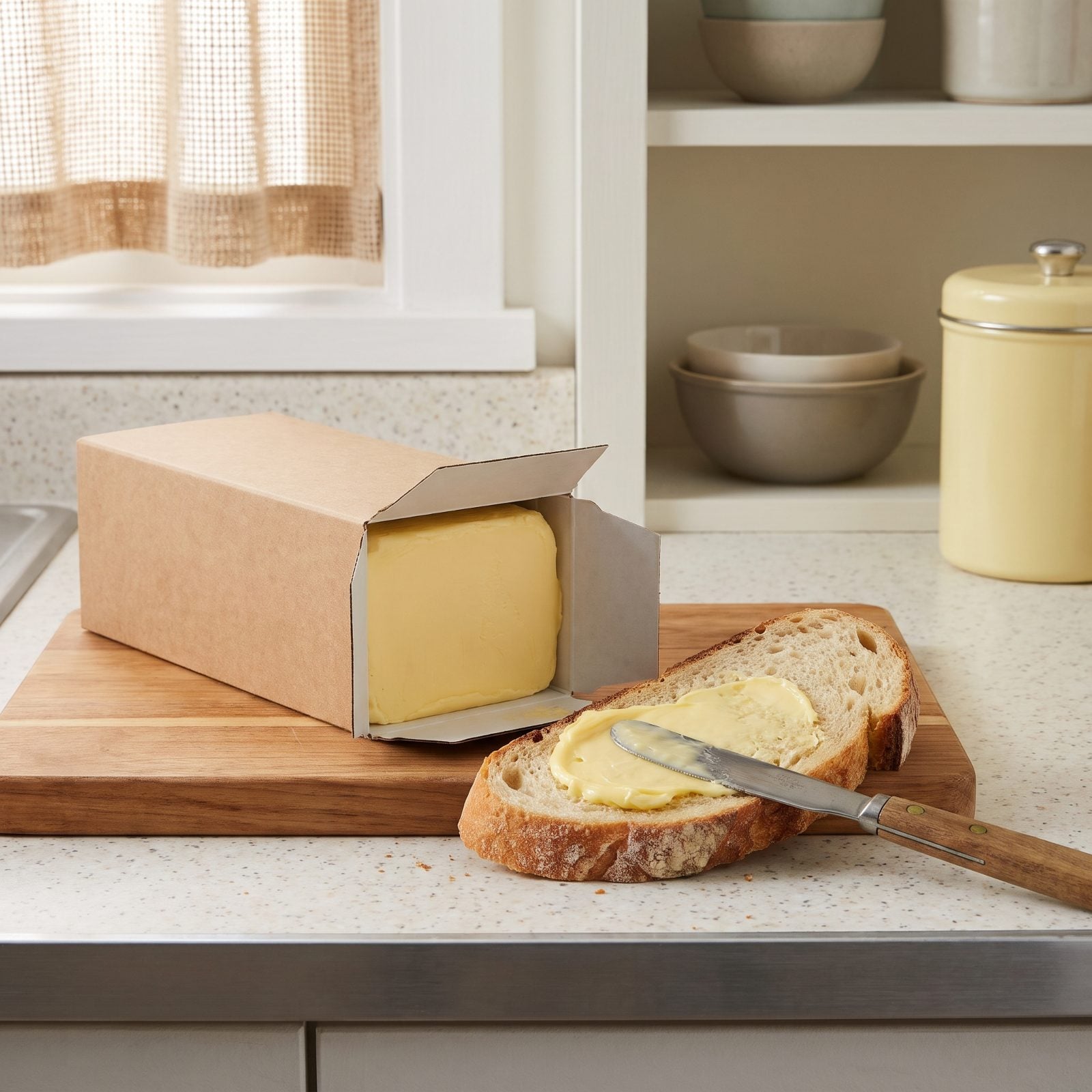
Cheaper than butter, and it spread straight from the box, which is why it landed in millions of carts. Margarine was the thrifty choice, and a big family did a lot of thrifty math.
What most folks forget: for years it came white, and some states banned the yellow outright to protect dairy farmers. You’d buy a pale block with a little dye packet and knead the color in by hand at the kitchen table. By the mid-fifties most of those old laws had finally folded.
Recounting the long fight between butter and margarine, a science history podcast host explains that “Even with a federal tax margarine was still cheaper than butter. And then World War II brought food rationing, and butter required more points.”
34. A Wedge of Cheddar Cheese
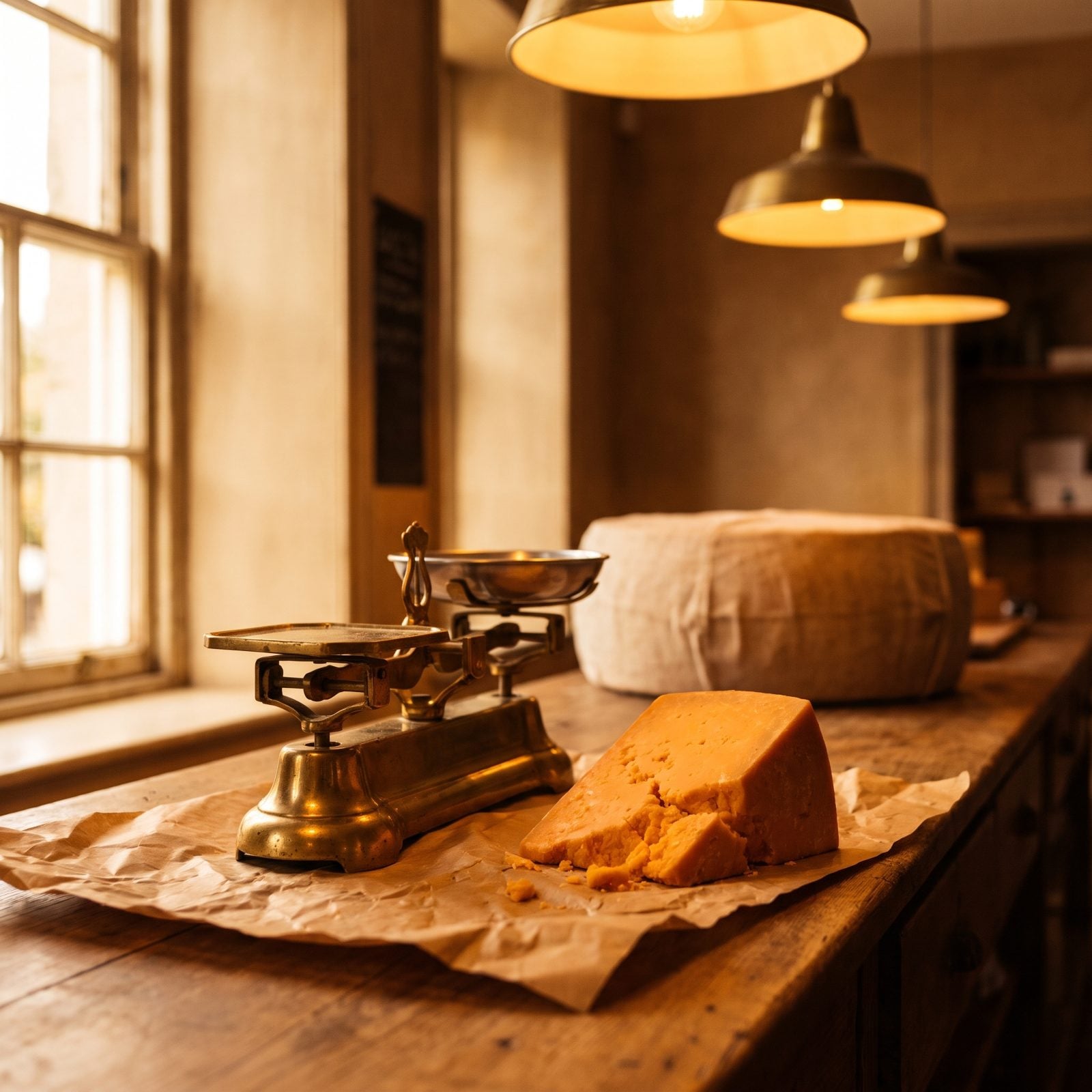
Cut fresh from a big wheel at the counter and weighed on the scale. You pointed, the clerk sliced, and it went home in waxed paper, not a vacuum pouch.
Cheddar did heavy lifting in a working household. Melted over toast, grated into a casserole, sliced thick with crackers when supper ran late. A sharp wedge kept for weeks in the cold box, and the dry rind at the end went into a pot of soup instead of the bin.
33. Ground Beef Wrapped in Butcher Paper
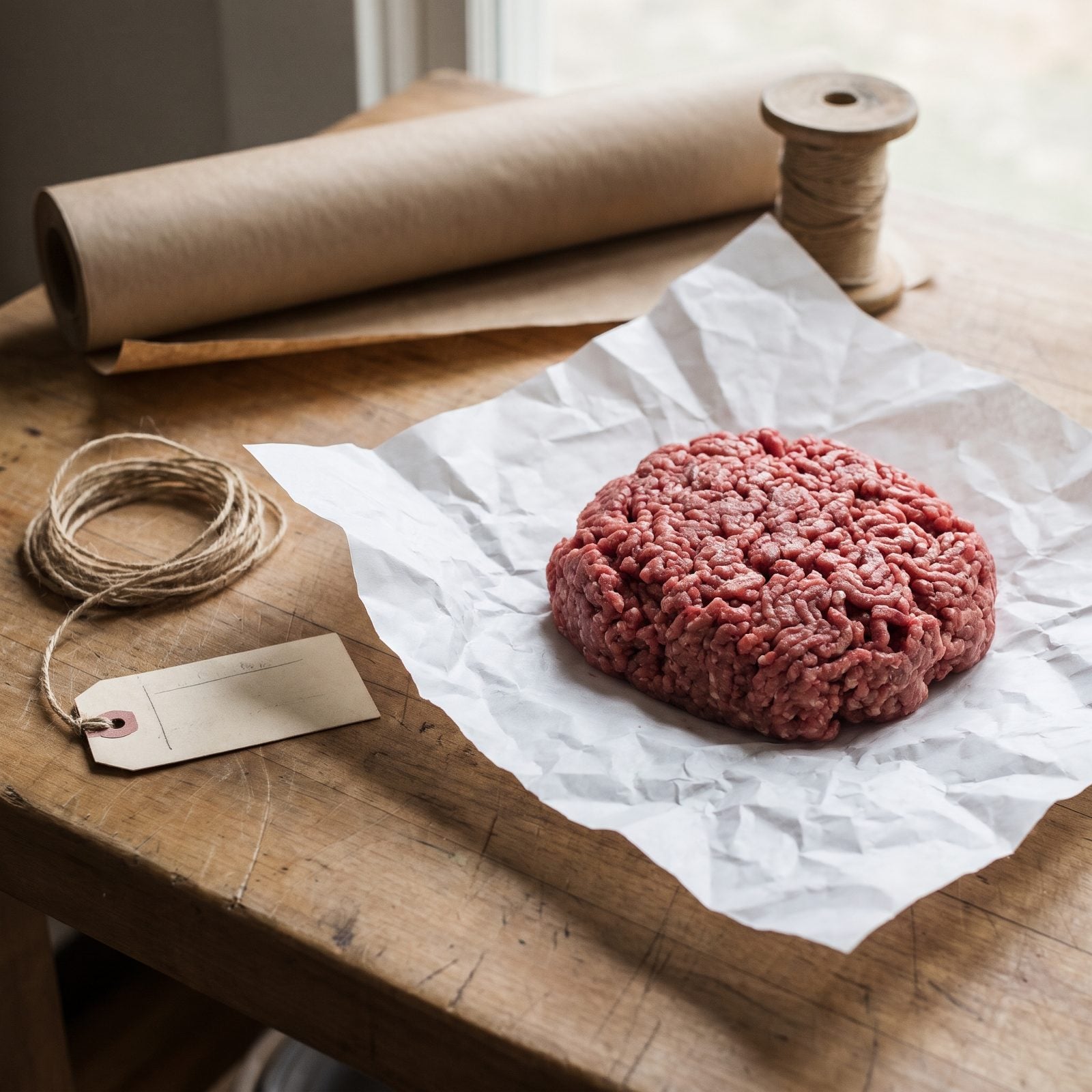
You asked the butcher for a pound and a half and he ground it while you waited, fat ratio to taste. That’s the detail nobody mentions now. The meat was ground that day, for you, not days earlier in a plant three states over.
Hamburger was the engine of the weeknight menu. Meatloaf stretched it with bread and an egg, and a skillet of it fed everybody for pennies a head.
32. A Beef Chuck Roast for Sunday Dinner
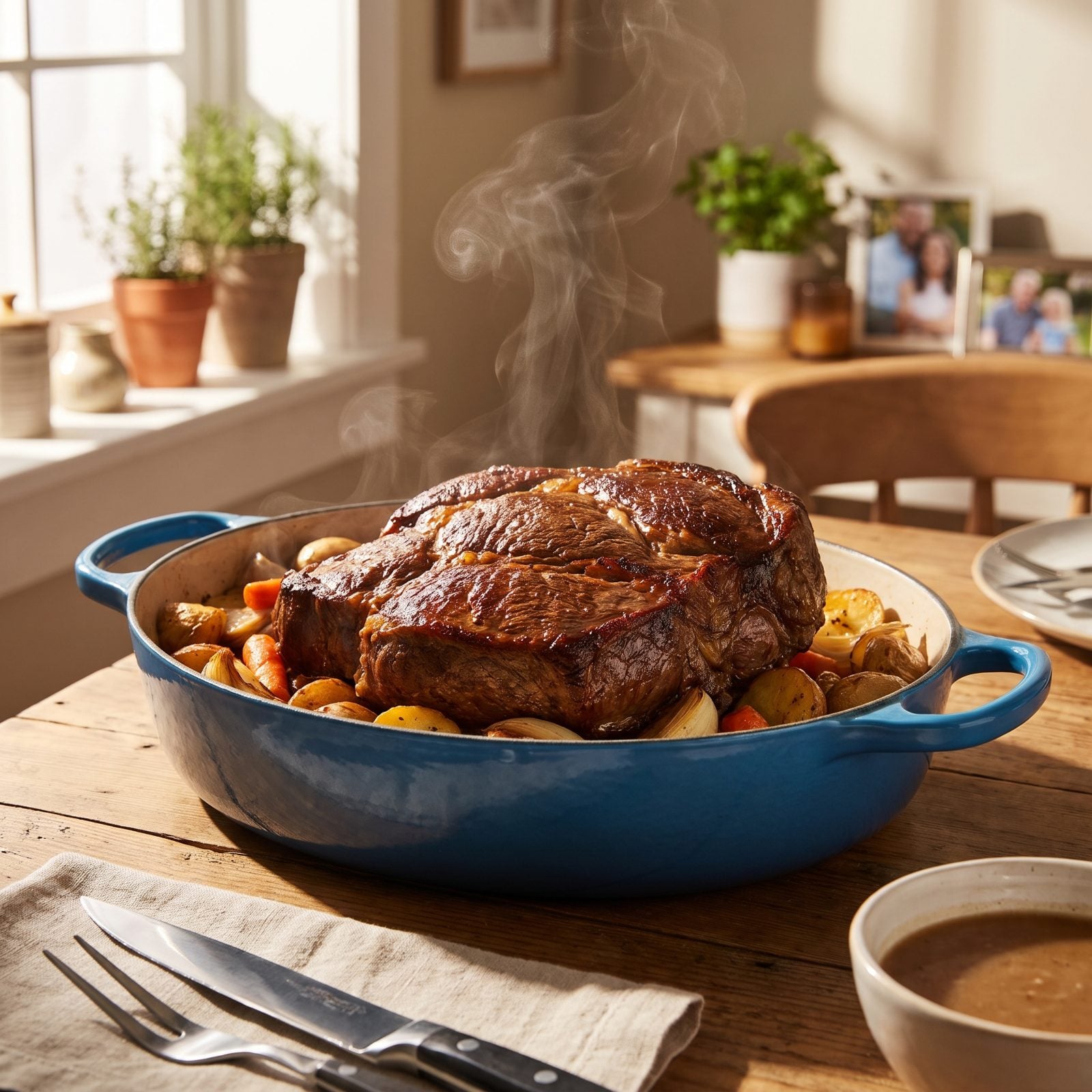
Sunday had its own cut. The chuck roast wasn’t tender and it wasn’t meant to be fast, so it went in the oven low and slow before church and came out falling apart by the time everyone sat down.
And here’s the economy of it: a tough, cheap shoulder roast fed five people, left meat for Monday’s sandwiches, and gave you a pot of drippings for gravy. The cheap cut, cooked with patience, beat the expensive one cooked in a hurry. Mothers knew this cold.
31. Thick-Sliced Breakfast Bacon
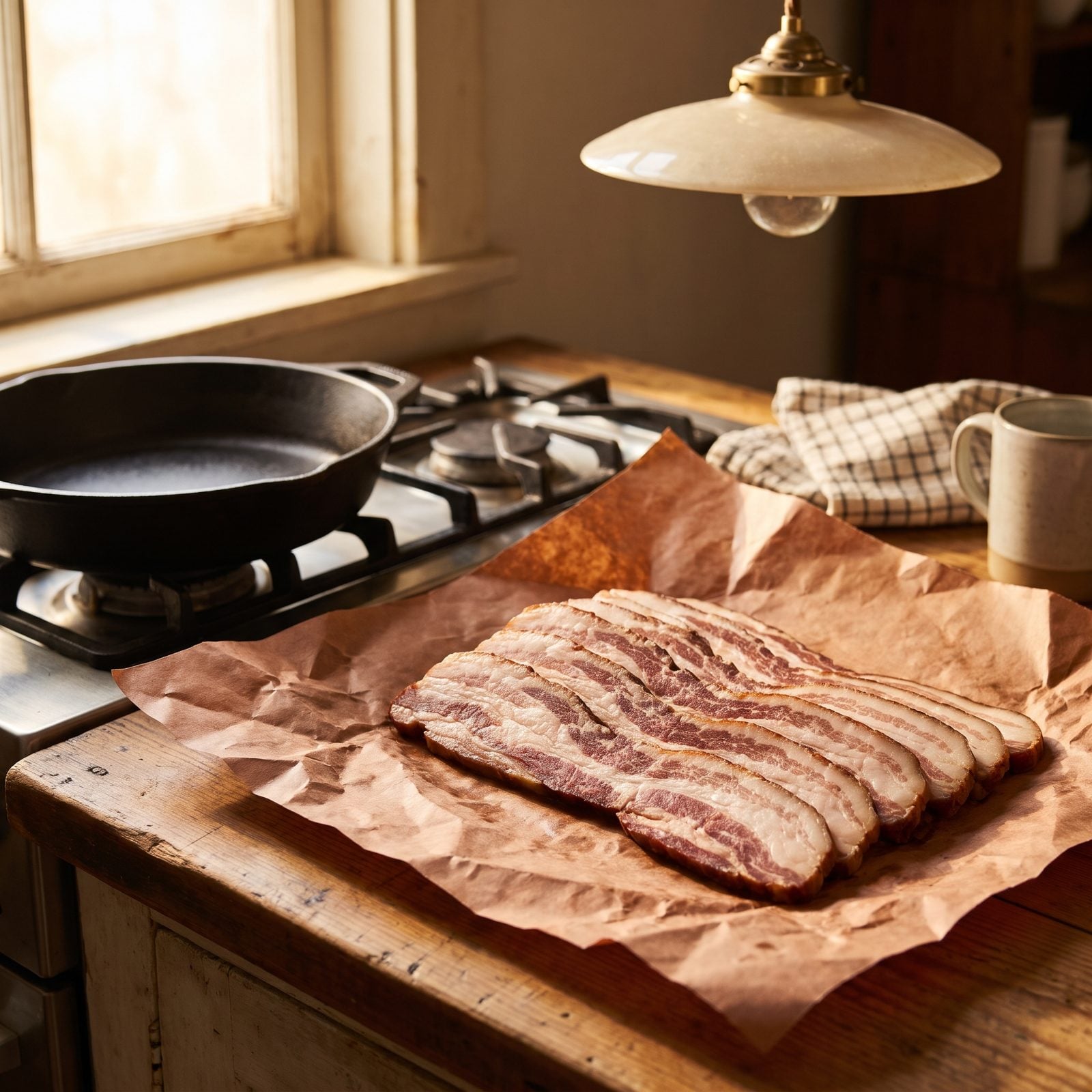
Sliced to order off a slab, thicker than the uniform strips you get now. The butcher set the blade where you asked and wrapped the stack in paper.
Bacon did double duty. You fried it for breakfast, then kept the grease in a can by the stove to cook everything else in. Nobody poured that fat down the drain. It was flavor you’d already paid for.
30. Fresh Beef Liver
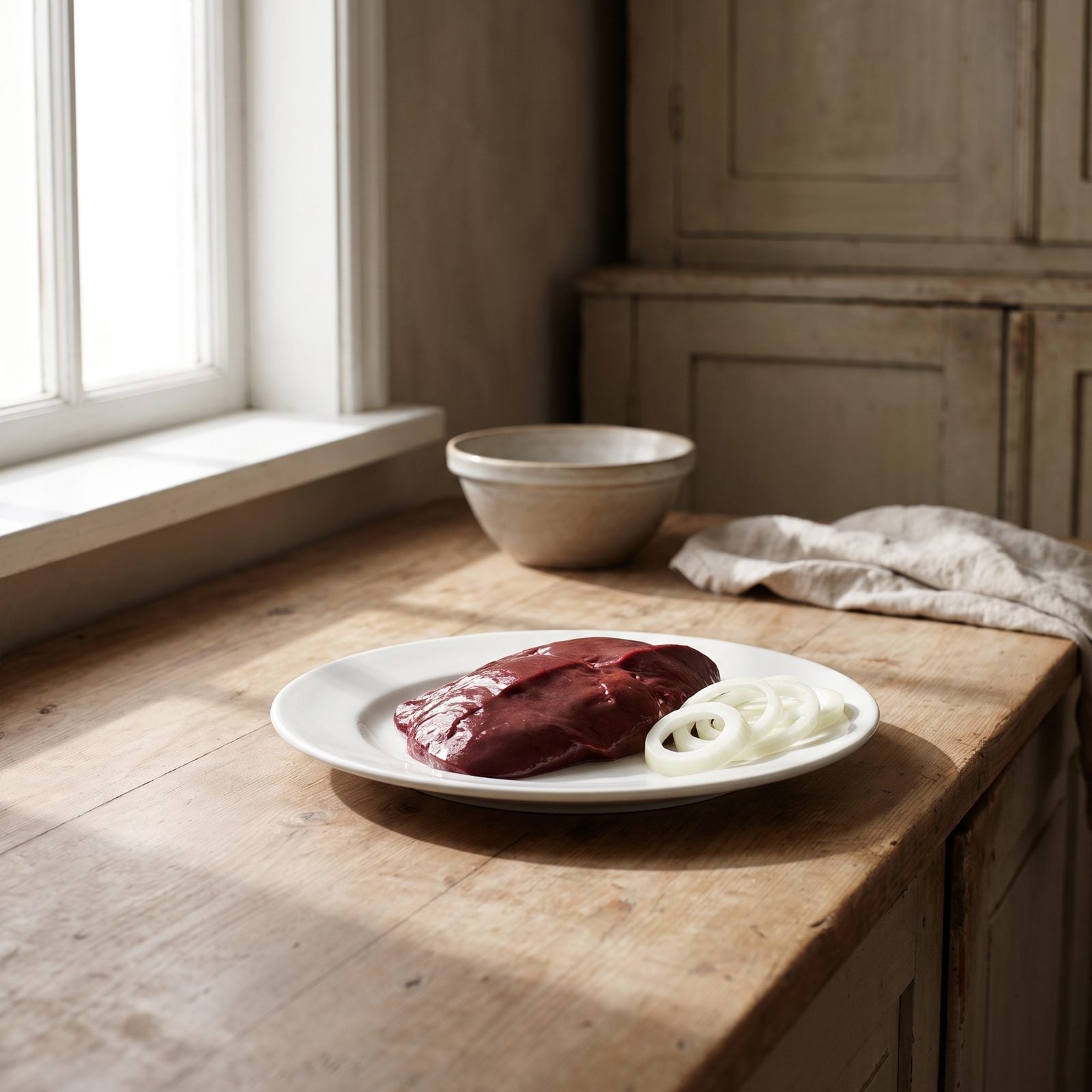
Cheap, iron-rich, and served whether the kids liked it or not. Liver and onions turned up on the table regularly because it cost almost nothing and the doctors of the day swore by it for strong blood.
Let’s be honest: this is the cart item that makes modern shoppers flinch. But a thrifty cook wasted no part of the animal, and organ meats were everyday food, not a chef’s novelty. A family on a budget ate what was good for them and good for the wallet, in that order.
29. A Whole Frying Chicken
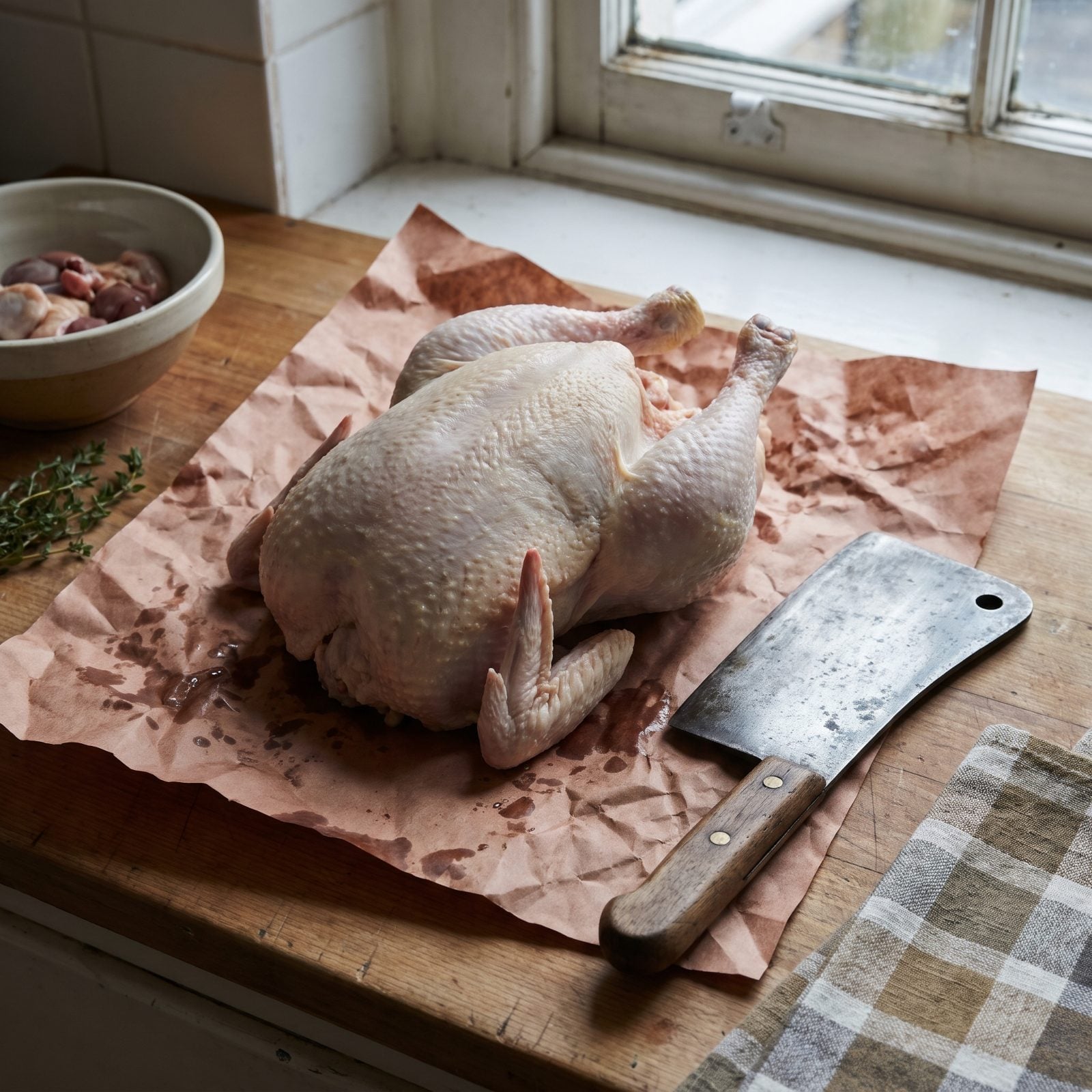
Whole, not in parts, because parts cost extra labor and labor cost money. You bought the bird, cut it up yourself, and saved the back and neck for stock.
Now here’s the surprise for younger shoppers. Chicken was a treat in the fifties, pricier than beef, often saved for a special supper. The broiler industry hadn’t yet turned it into the cheapest meat on the shelf, so a roast chicken on a Sunday meant the week had gone well.
And the giblets came free, tucked inside, the way the whole animal came home ready for a cook who knew what to do with every bit of it. That’s really the thread running through every parcel in this cart.
28. Canned Tuna Packed in Oil
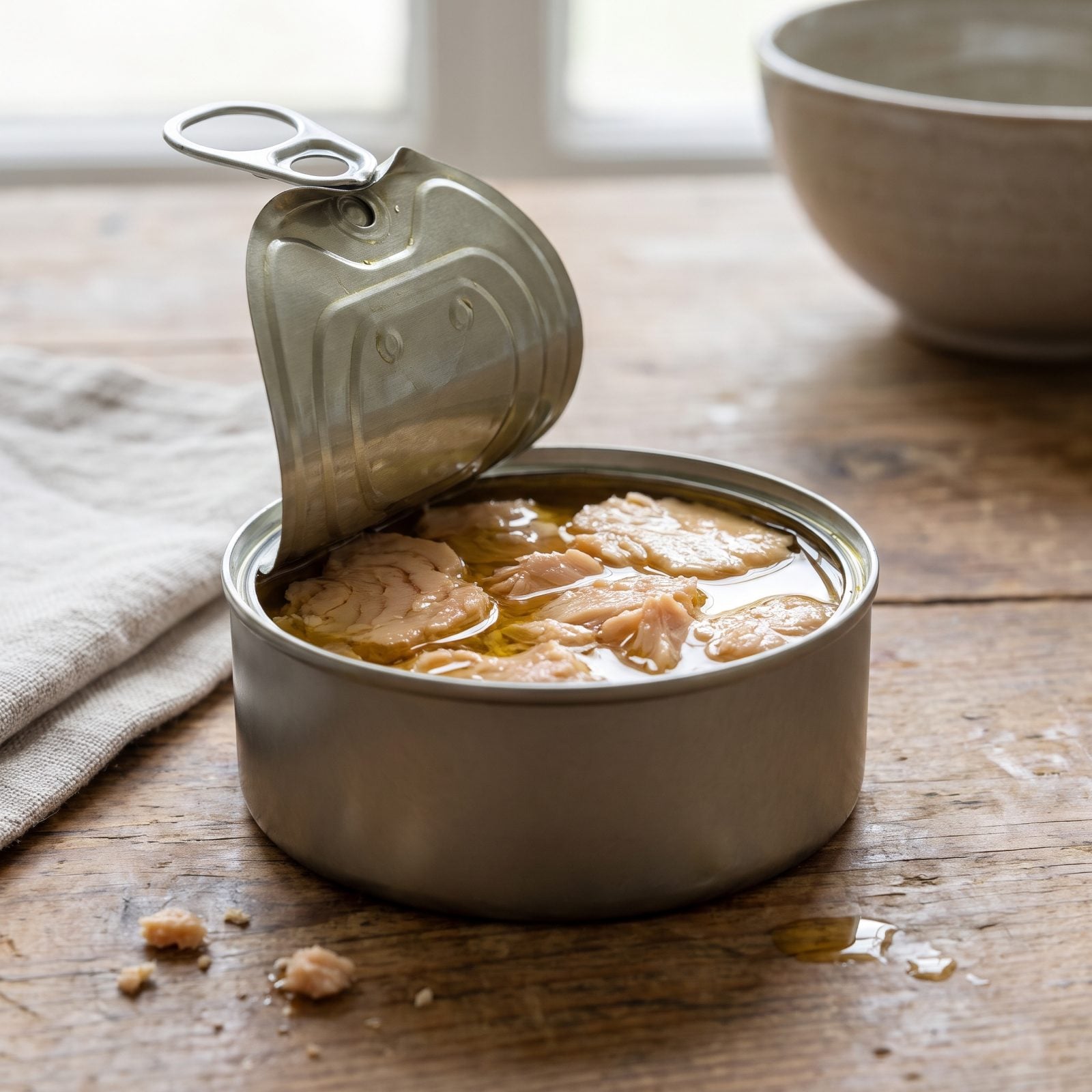
Oil-packed, not water-packed. That difference mattered in a 1950s kitchen because the oil wasn’t waste, it was the seasoning. You drained it into the pan, or you left it and let it slick the mayonnaise richer.
Tuna was the quiet workhorse of the weeknight — cheap protein, no refrigeration until you opened it, and it stretched across a family of five with noodles and a can of soup doing the heavy lifting. A tin cost pocket change.
27. Sliced Bologna from the Deli Counter
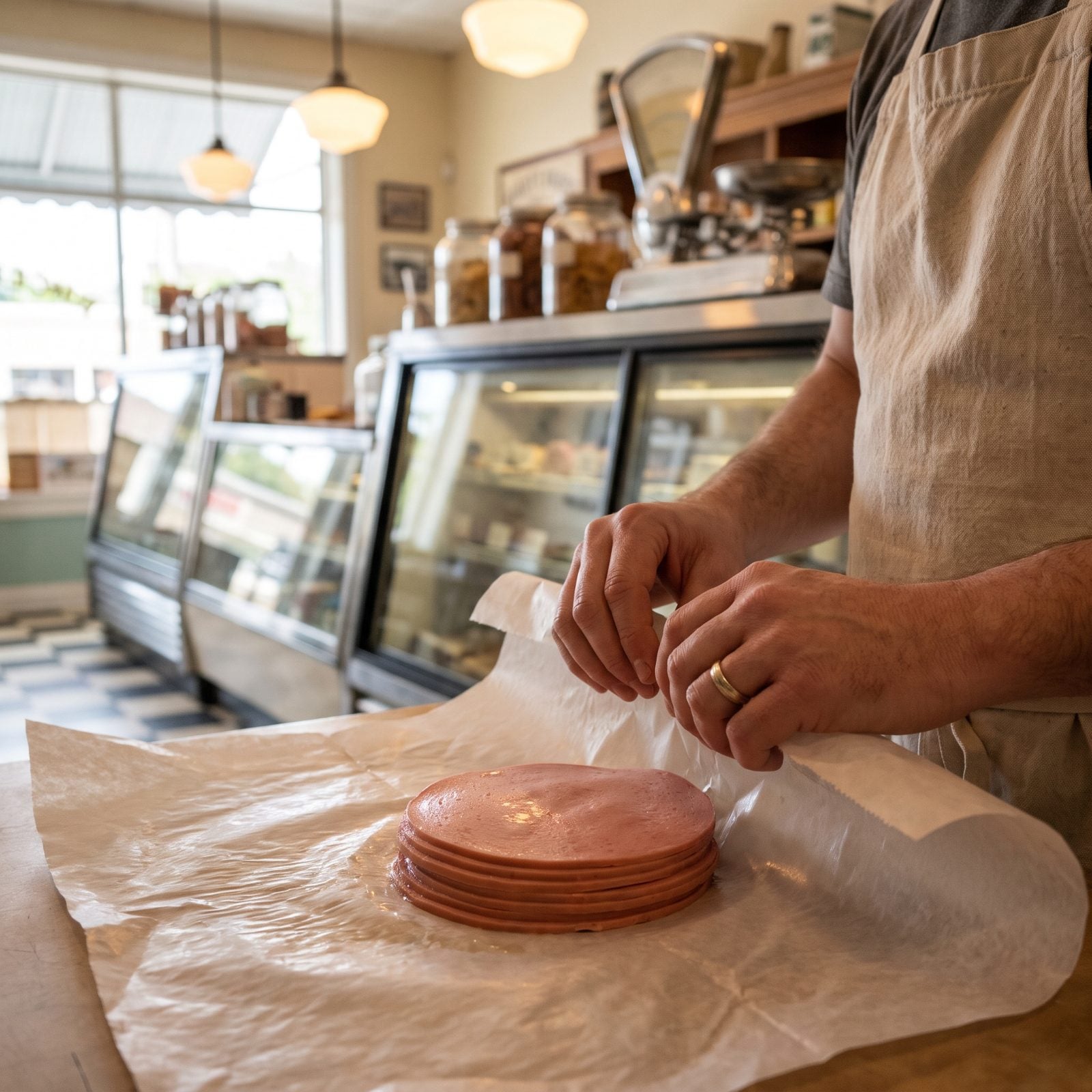
You pointed, the man behind the counter sliced, and he wrapped it in paper while it was still cool from the case. No pre-sealed packages, no sell-by date — the freshness was a handshake, not a label.
Bologna fed the thrifty household. Thick-cut for a hot griddle fry that curled the edges into a shallow bowl, or shaved thin for a lunchbox between two slices of soft white. A family of five could run a week of lunches off a pound or two without blinking at the bill.
26. Frankfurters in a Cellophane Package
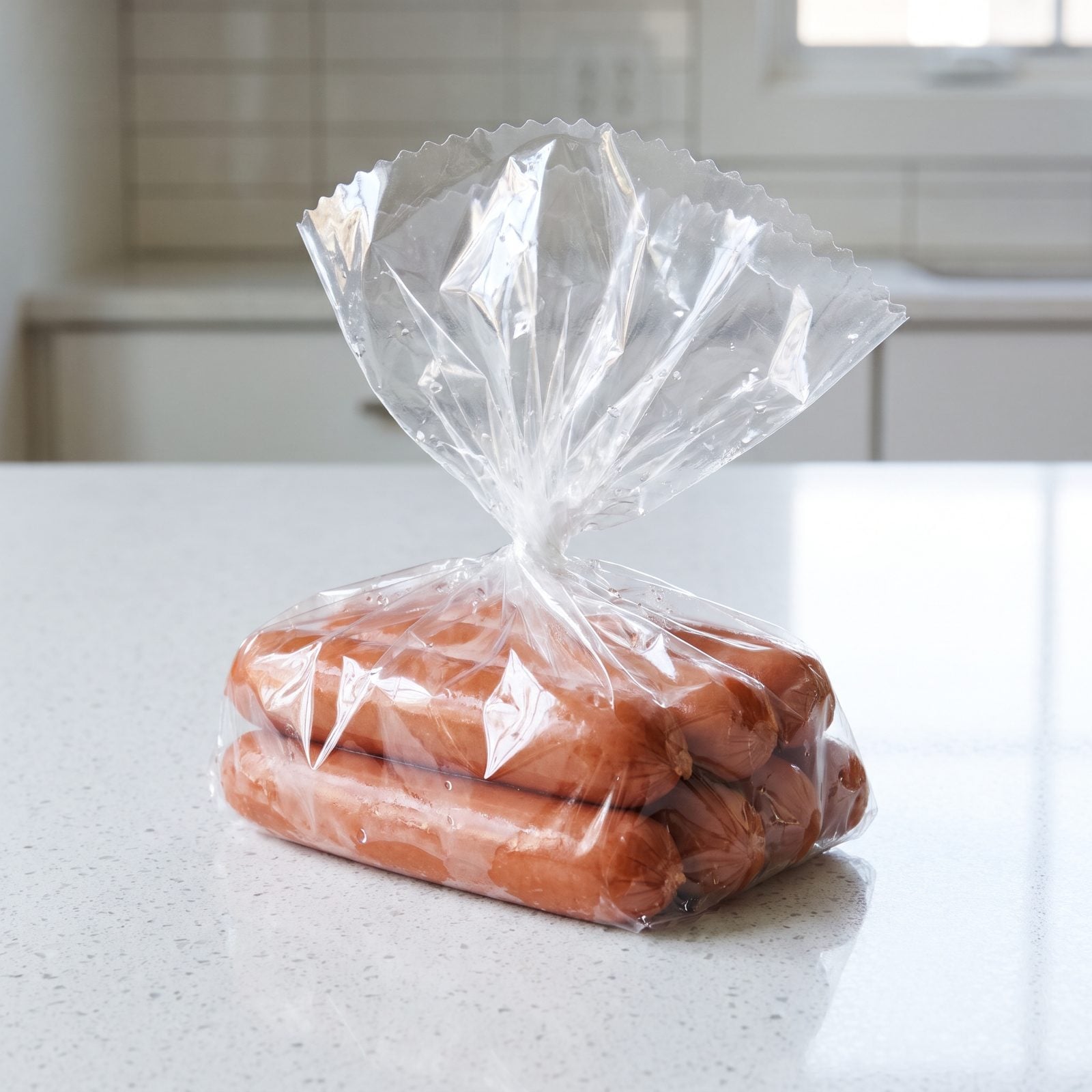
Cellophane was the modern touch. The frankfurters sat visible inside, the bag gathered and twisted shut at the top, and that transparency was half the sell — you could see exactly what you were getting.
Nothing stretched a food budget like a pack of franks. Boiled in a pot, split and griddled, or sliced into a pot of beans, they fed five for less than almost anything else at the counter. Fast, filling, and the kids never complained.
25. Potatoes in a Heavy Paper Sack
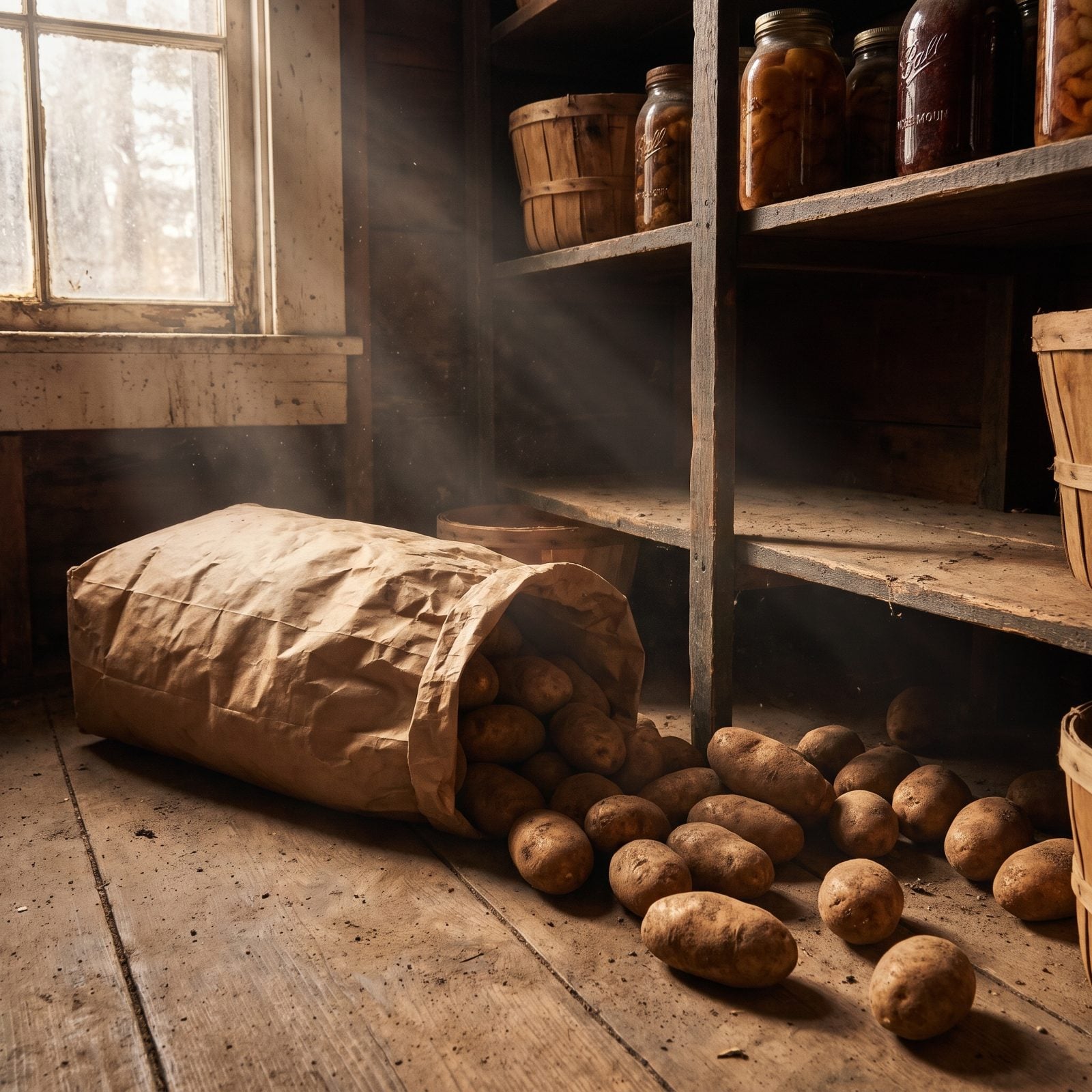
Sold heavy and sold cheap. The paper sack sagged with ten or fifteen pounds, and that bag lasted a family most of the month. Potatoes were the floor the whole dinner stood on.
You stored them in the dark, under the sink or down in the cellar, and they kept for weeks if you kept them cool. Mashed, boiled, fried, scalloped, baked whole in the oven. No cheaper way existed to fill five plates, and nobody pretended otherwise.
24. Yellow Onions in a Mesh Bag
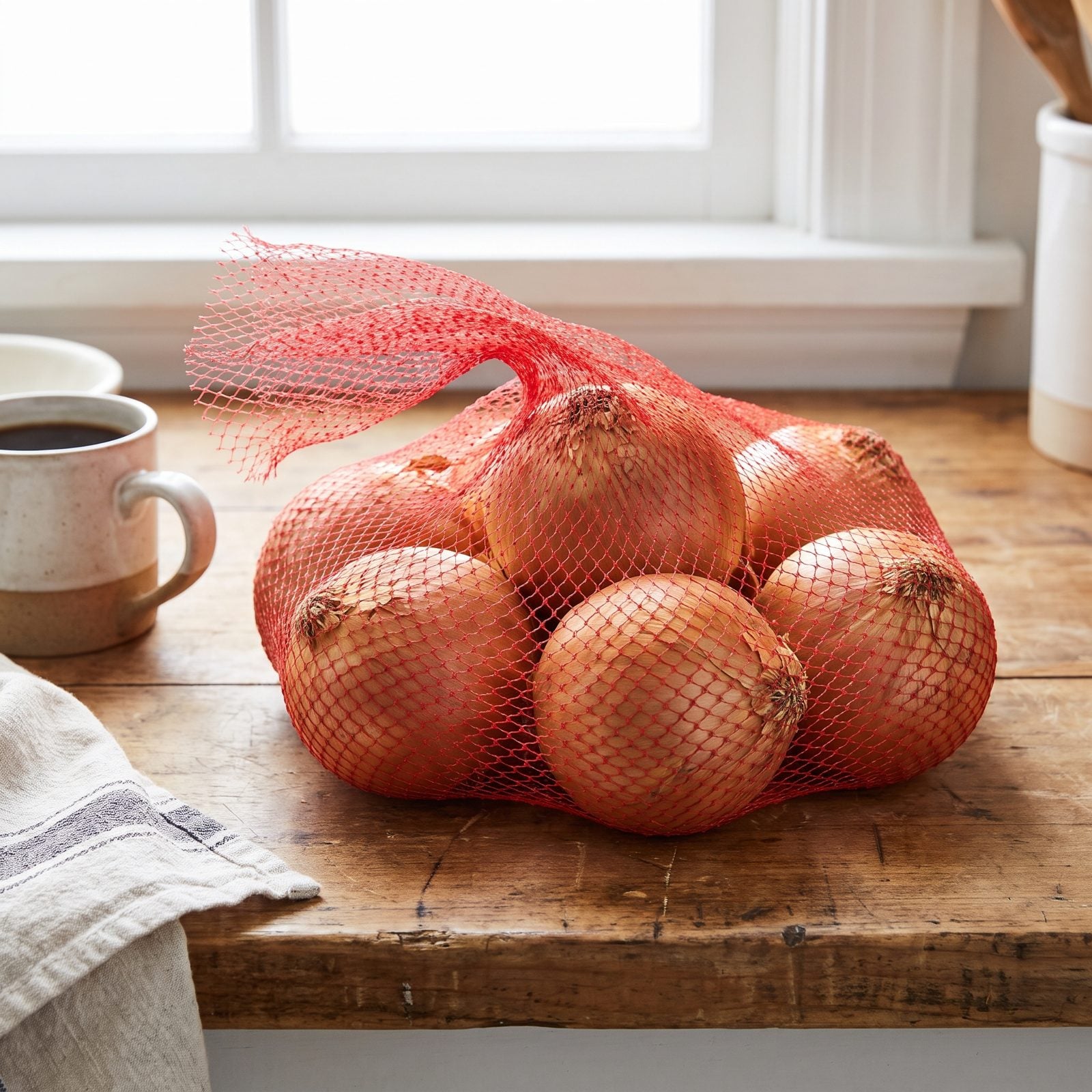
The red netting did two jobs. It let the onions breathe so they wouldn’t rot, and it showed you every bulb before you bought — clever packaging that cost nearly nothing.
No dinner started without one. An onion went into the soup pot, the meatloaf, the skillet of liver, the pan of gravy. A mesh bag sat in the pantry basket for weeks because onions keep and keep and keep. For a family cooking from scratch every single night, this was the cheapest flavor money could buy.
23. Carrots with Their Leafy Tops
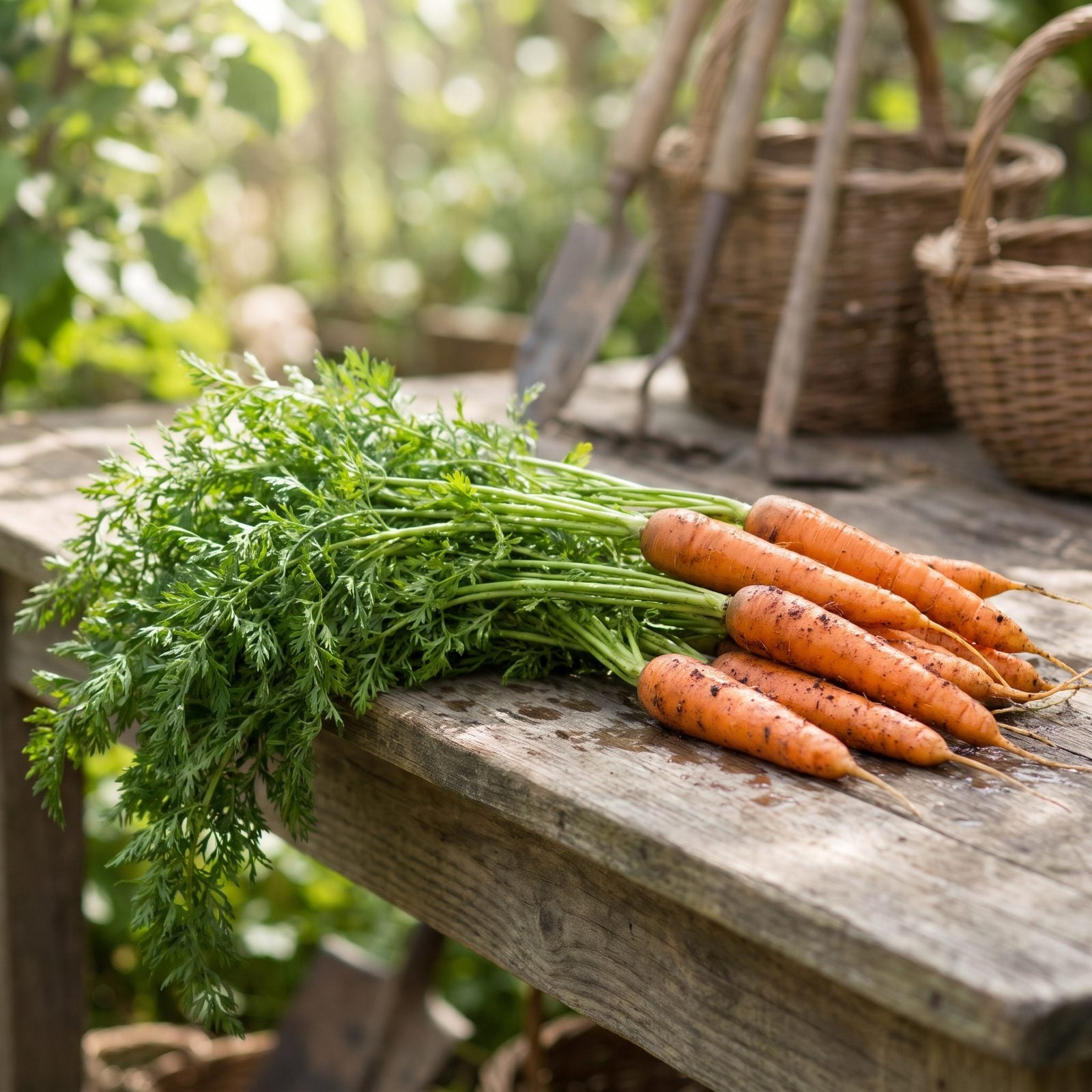
Tops still on, which told you two things: it was fresh, and nothing had been trimmed to fool you. The greens wilt first, so a droopy top meant the carrot had been sitting around.
Thrifty cooks didn’t toss those leafy tops, either. They went into the stockpot or got chopped into a soup for a faint grassy bite. The carrots themselves were a workhorse vegetable — cheap by the bunch, sweet when cooked down slow, good raw when the kids wanted something to crunch.
22. A Crisp Bunch of Celery
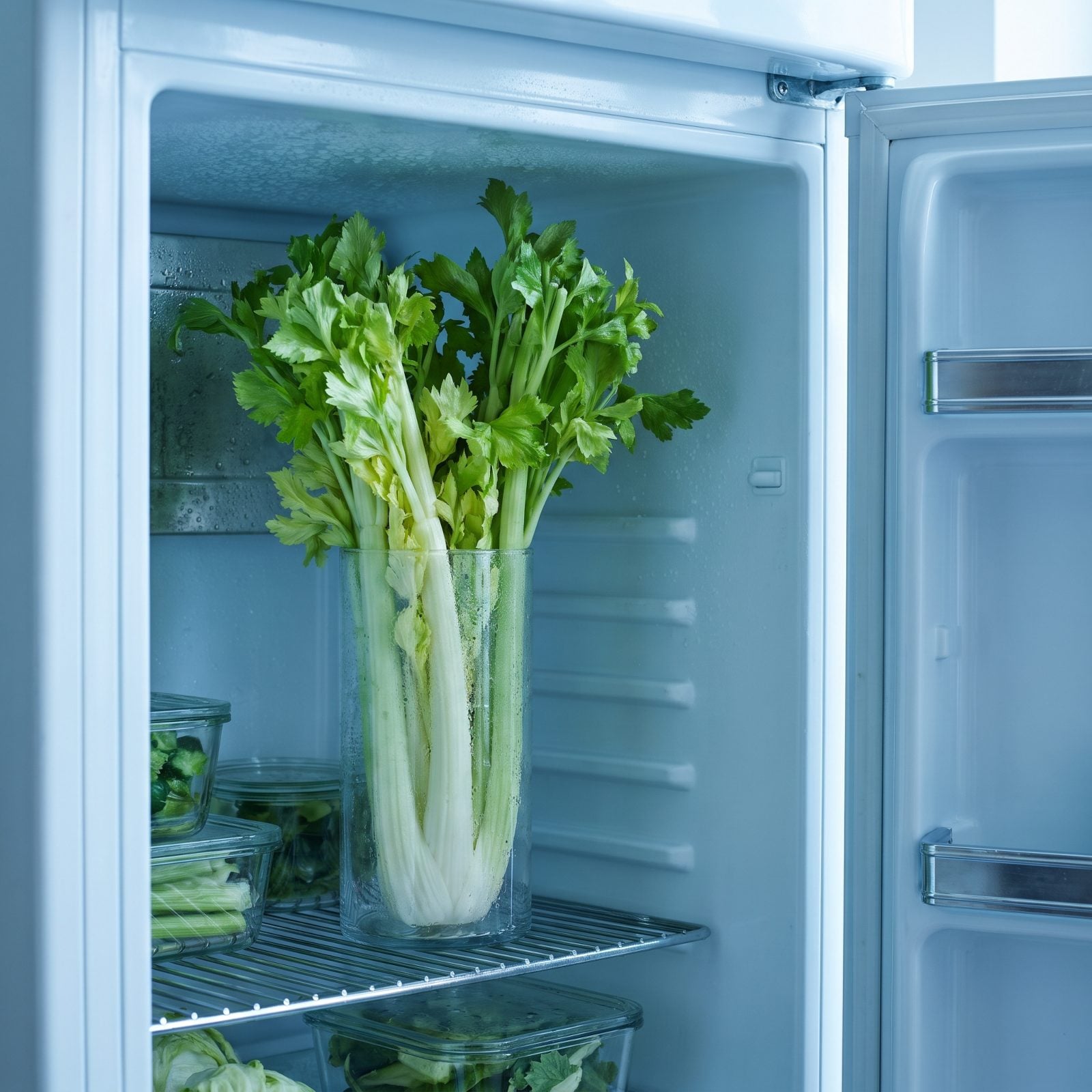
Celery stood in the icebox like a bouquet, and that was the point. Kept upright in water, it held its snap for a week or more.
It carried the soup and the stuffing and the tuna salad, the quiet third of every flavor base. And it pulled double duty as something to set out for guests — a few stalks on a dish, maybe filled with soft cheese, cheap and presentable at once. A bunch cost very little and worked in nearly everything a family of five would eat that week.
21. A Head of Iceberg Lettuce
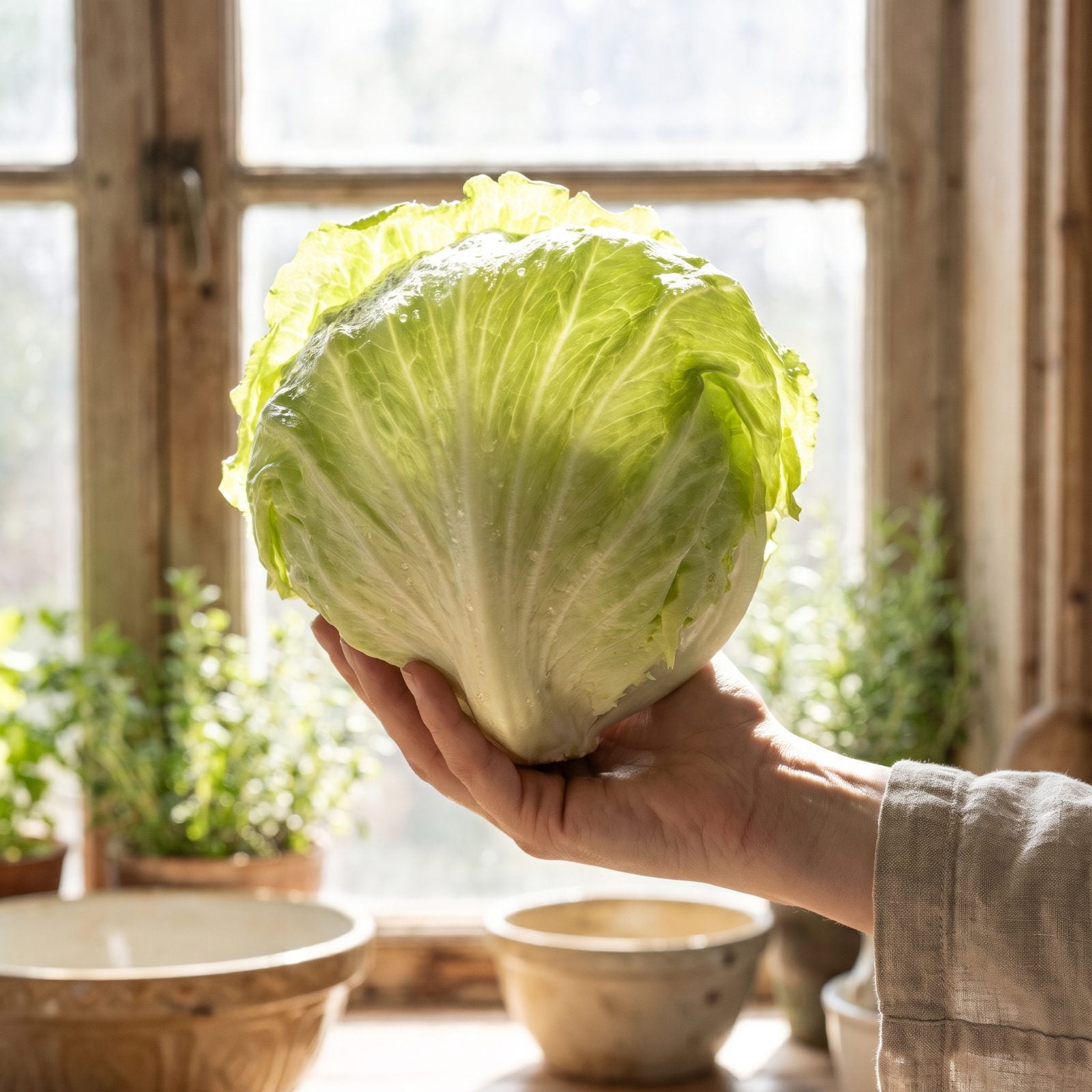
Round, heavy, and tight as a fist. You judged a good head by its weight and the squeak of the leaves — loose and light meant old.
Iceberg was the lettuce for most of the decade, and here’s why it earned the spot: it shipped well, kept for days, and held up under dressing without collapsing into mush. The wedge salad under a blanket of dressing was the dinner-party move, and a shredded pile went beneath everything from cold cuts to a scoop of cottage cheese. One head fed a full table and cost a dime or two.
20. Fresh Tomatoes in a Paper Produce Tray
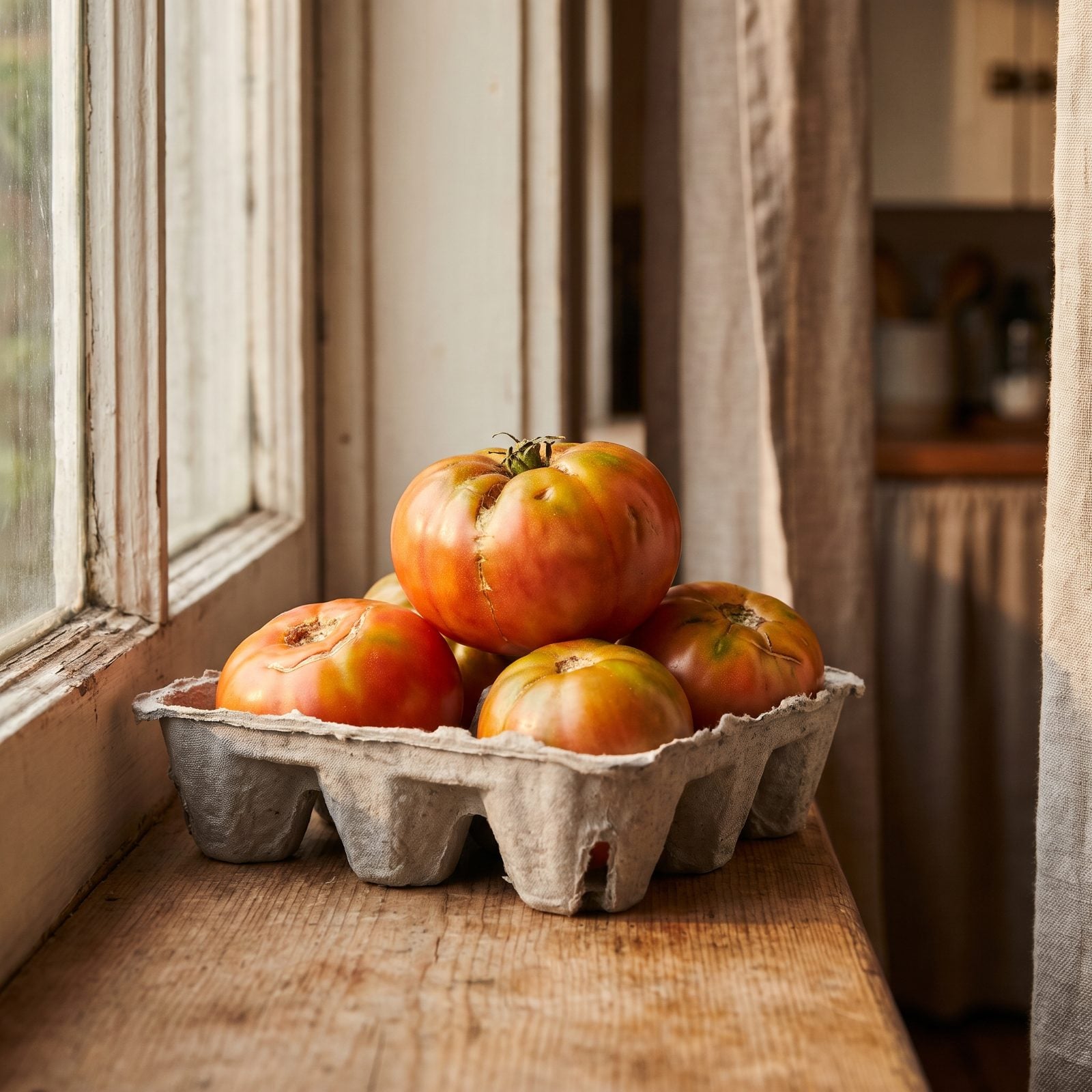
Tomatoes came seasonal and they came imperfect. A paper pulp tray held a few at a time, and the ripe ones had soft spots and uneven color because nobody had yet bred them to survive a cross-country truck ride.
That imperfection was the flavor. A summer tomato thick with salt on white bread was a whole lunch on its own. The rest of the year you reached for a can instead. Families bought them by the few when they were good and went without when they weren’t — a habit worth stealing back.
19. A Hand of Bright Yellow Bananas
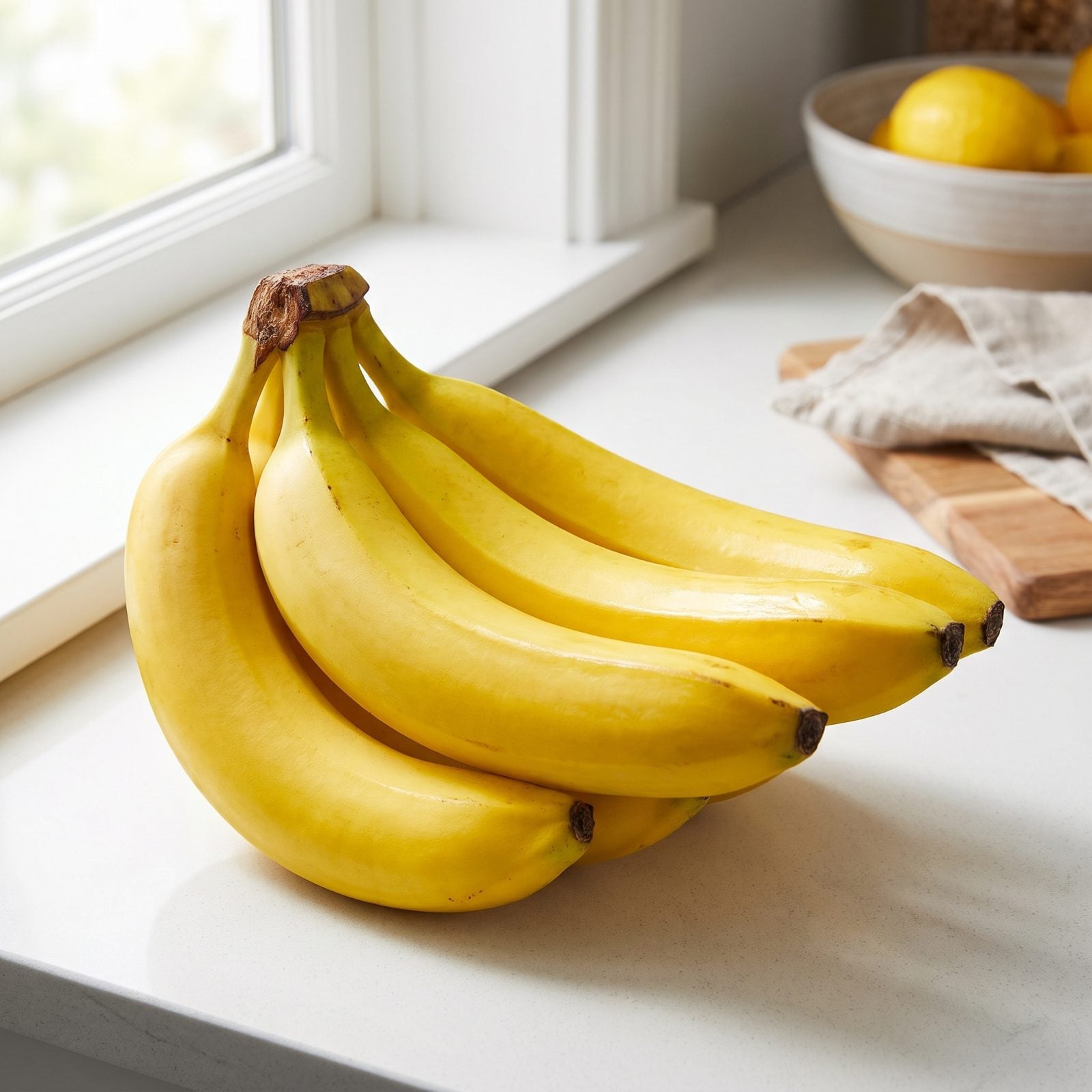
Bananas traveled farther than anything else to land in an American kitchen, and families bought them by the hand without once stopping to think about the miles. They came off the cart green and ripened on the counter by week’s end.
A nickel or so a pound bought enough for lunchboxes, cereal, and the inevitable loaf when three went soft at once. You learned to time the brown spots. Too green and they chalked up your mouth, too far gone and they went to baking.
18. Juicy Oranges in a Net Bag
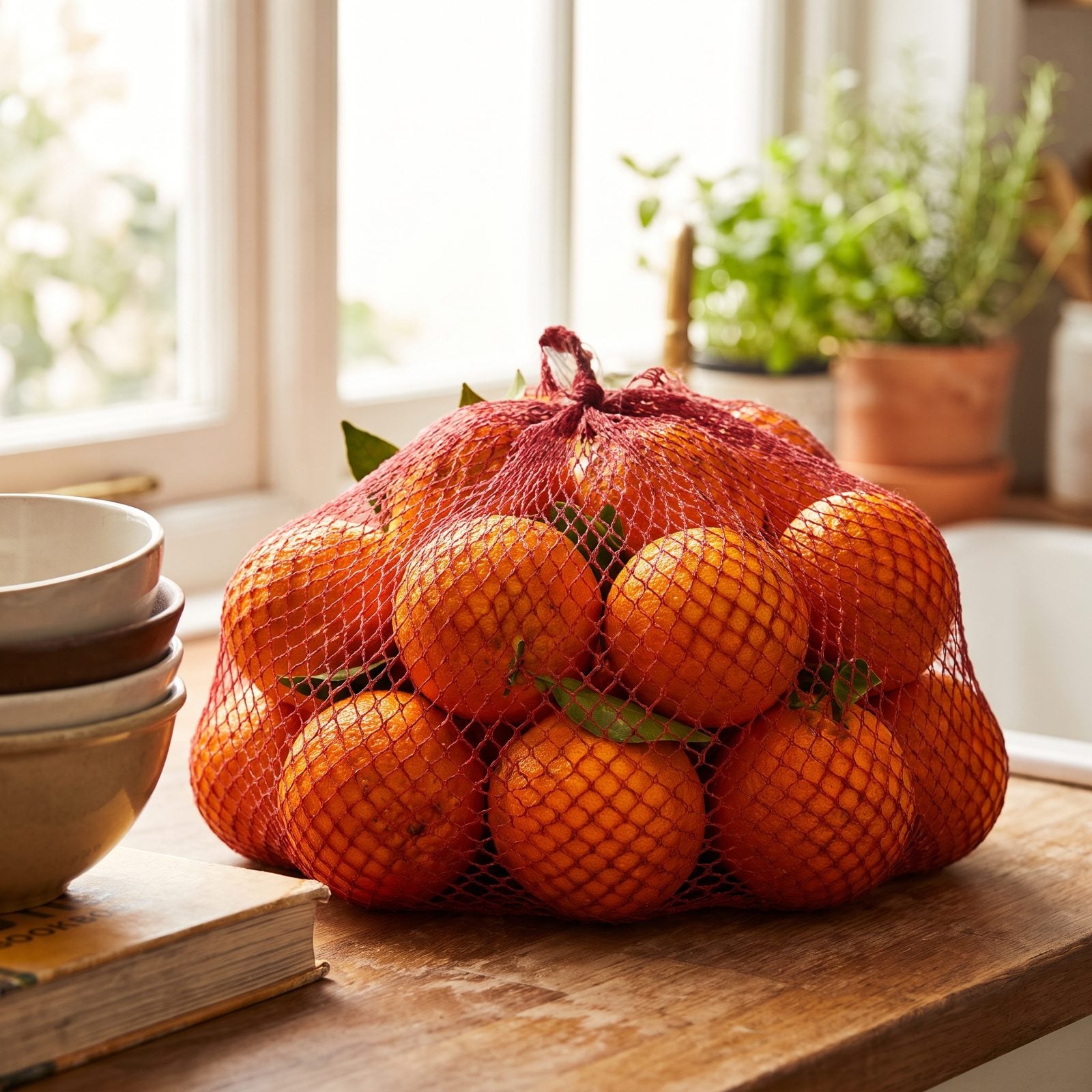
The net bag was a small bit of theater. That red mesh made the oranges inside look twice as orange, a merchandising trick so old nobody questions it anymore.
A family of five went through them fast in winter, when citrus was the one fruit that stayed cheap and showed up fresh. Half went into lunch pails, the other half into the squeezer on Sunday morning. The peels got tossed to the garden or left to scent the kitchen on the windowsill.
17. Canned Cut Green Beans
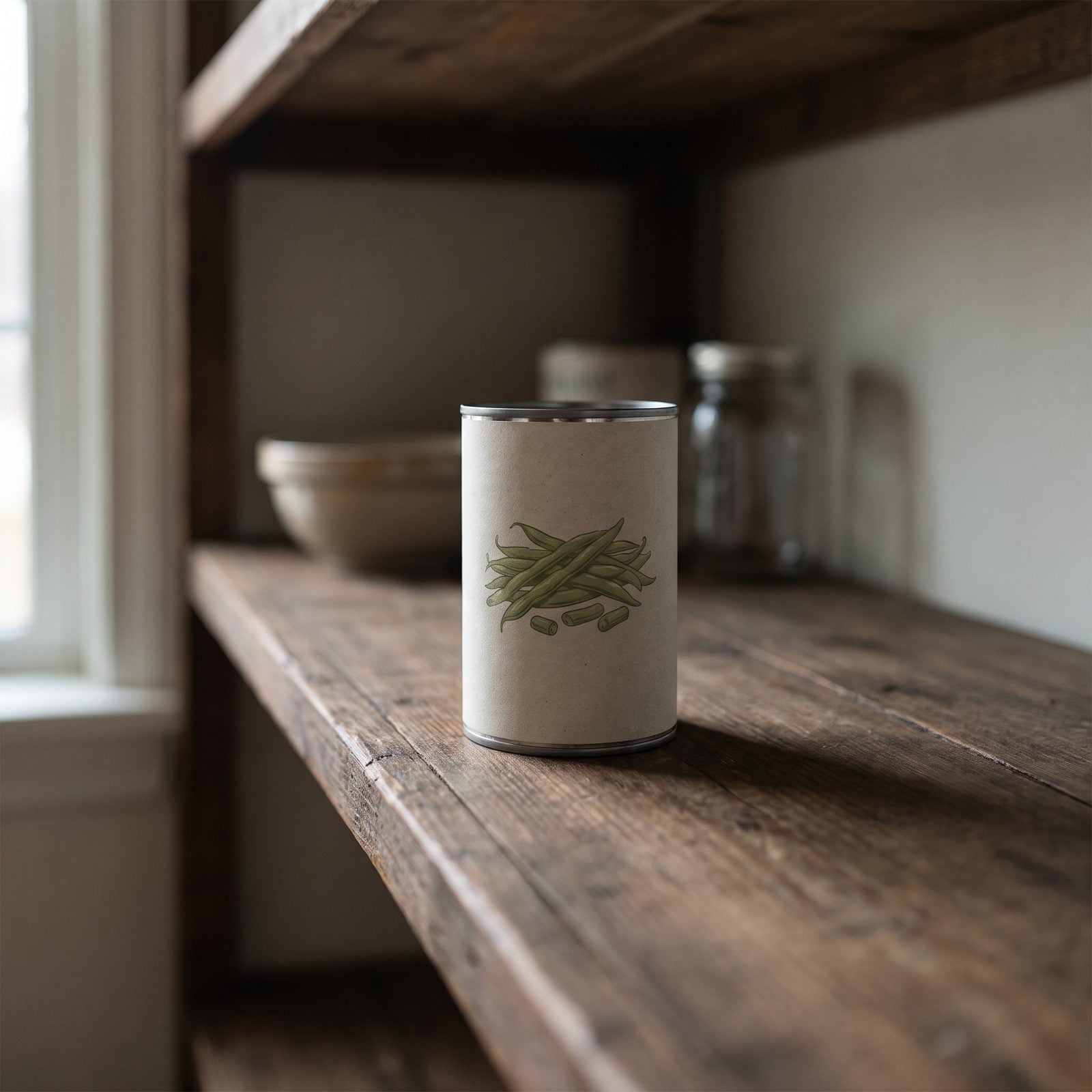
The can of cut green beans sat in every pantry like a quiet promise. Dinner was never more than an opener away.
Fresh beans meant snapping and stringing and a pot going for ages, and the can skipped every bit of it. You drained them, warmed them with a pat of butter, and the vegetable course was done before the meat finished resting. Nobody pretended they tasted like the garden. They tasted like reliable, and in a house with five mouths, reliable won most nights.
16. Canned Cream-Style Corn
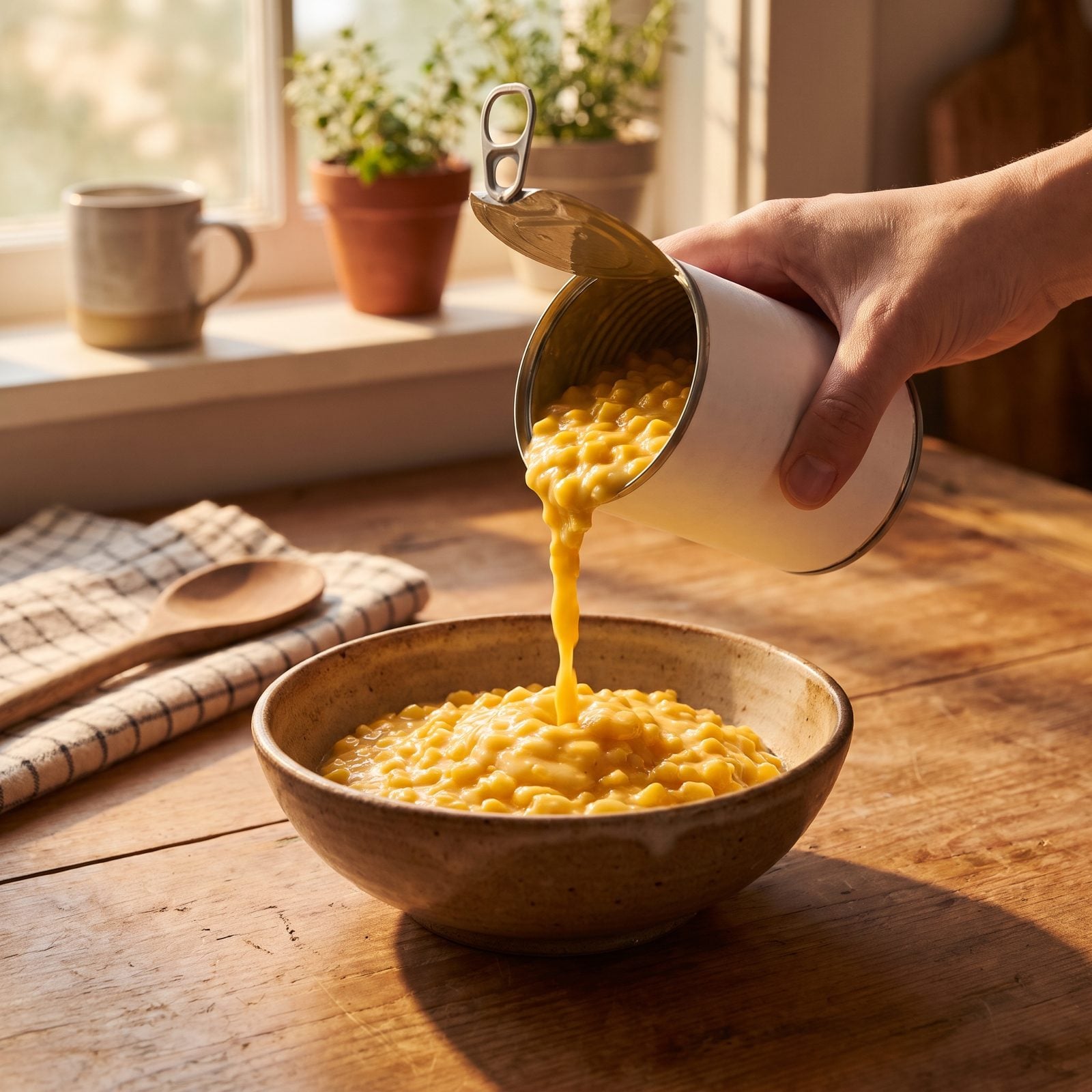
Cream-style corn was the sweet one, the can you reached for when plain kernels felt too thin for a cold night. Thick, golden, almost pudding-like, it went straight from can to pot to table with nothing added but heat and maybe a little salt.
Kids liked it because it was practically a dessert pretending to be a vegetable. It also slid into cornbread and corn pudding when a family stretched one dish across a crowd. Cheap, filling, and about as fussy as pouring a glass of water.
15. Canned Fruit Cocktail
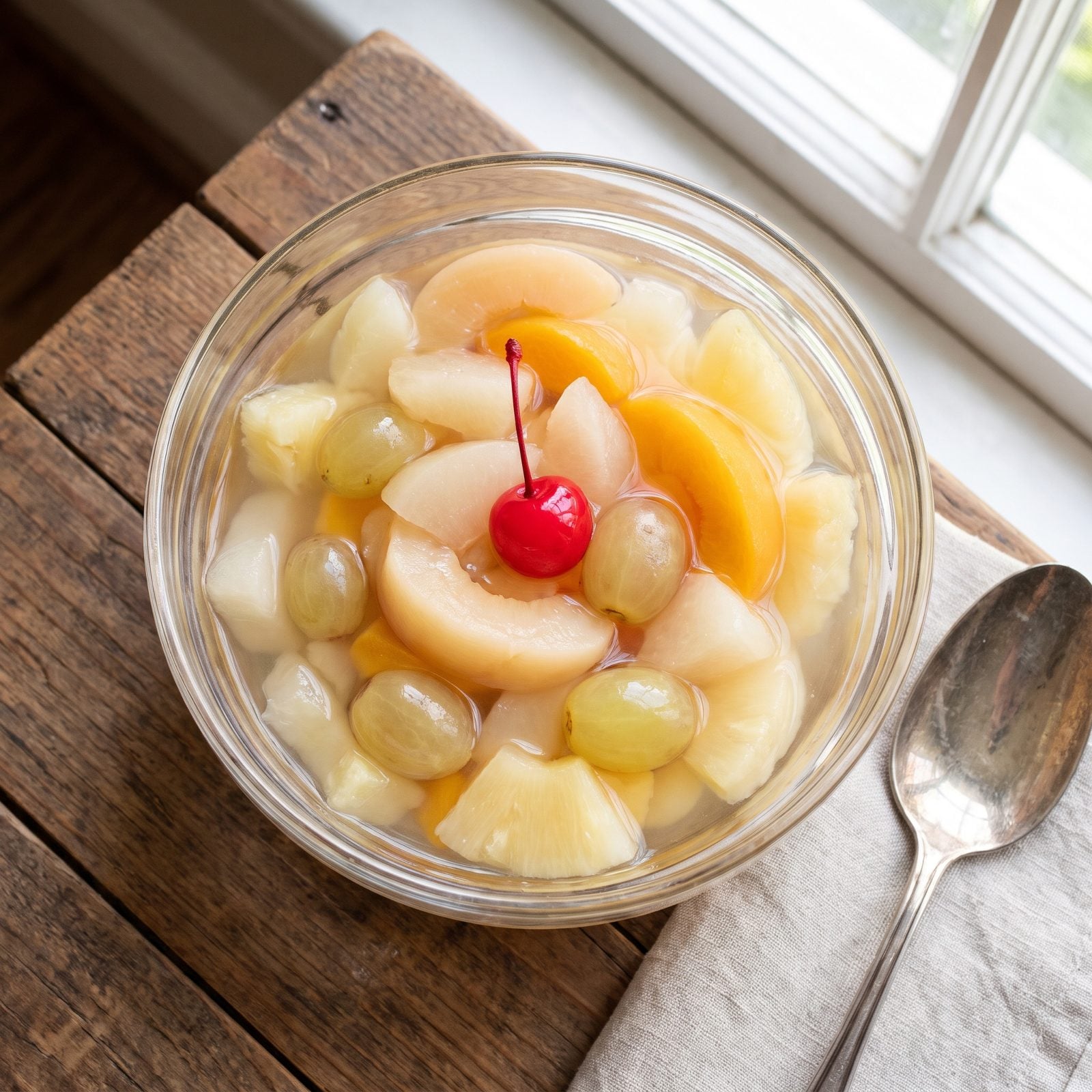
Every kid hunted for the cherry. Two halves per can if you were lucky, and a house of five turned it into a quiet negotiation.
Fruit cocktail was dessert when there wasn’t time for dessert. Chilled in the icebox, spooned into little pressed-glass dishes, maybe a dab of whipped cream on top for company, it showed up at church suppers, in gelatin molds, and on weeknights when the sweet tooth needed answering. The pears and peaches tasted of the syrup more than the fruit, and nobody minded one bit.
14. Frozen Peas in a Waxed-Paper Box
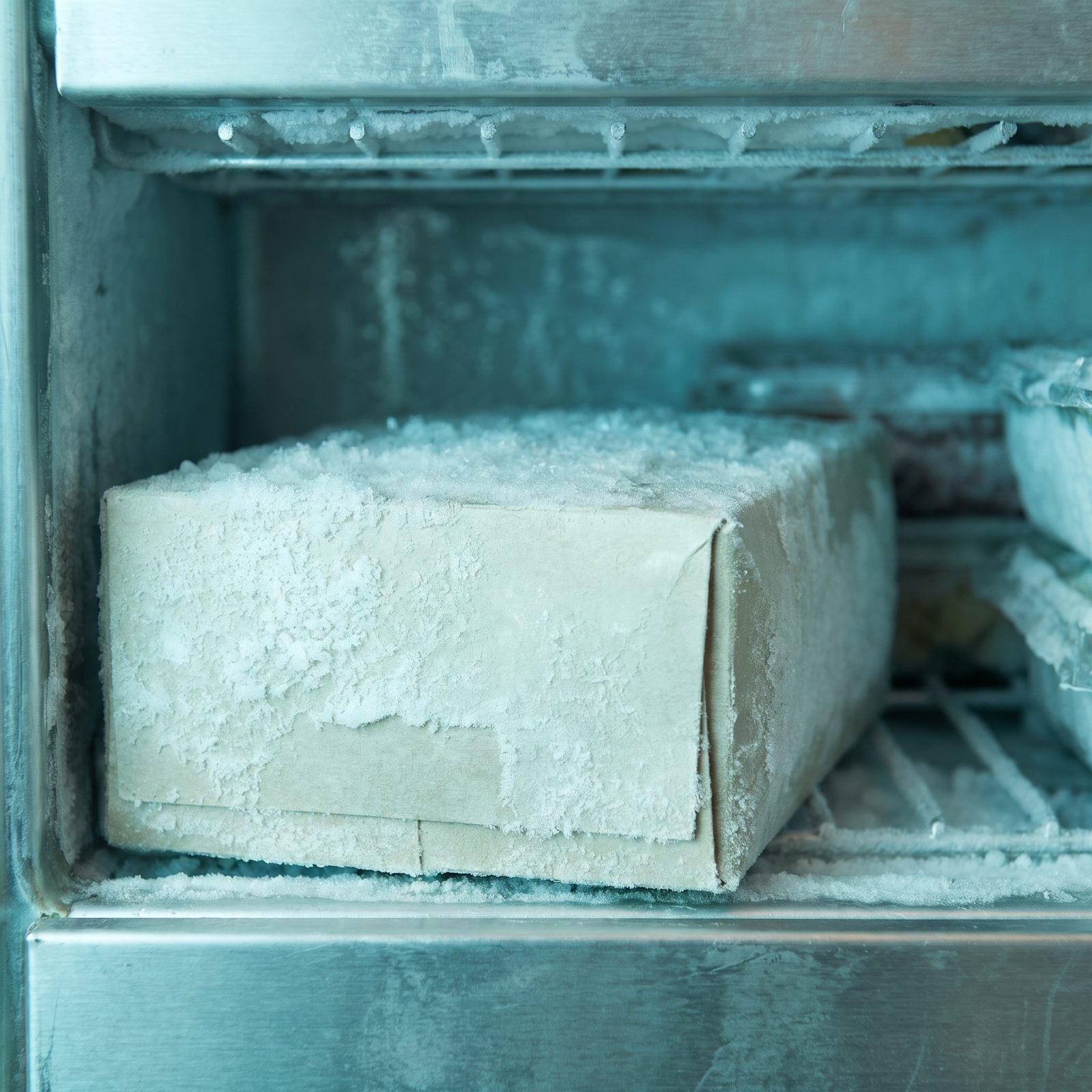
The waxed-paper box of peas marked a real shift. For the first time, a vegetable came out of the cold tasting close to fresh.
Flash-freezing was still a young wonder in these years, and the frozen food case was the newest aisle in the store. You dropped the brick straight into boiling water, no thawing, and dinner greened up in minutes. Families who could afford a freezer compartment stocked them deep. Peas were the gateway. Then corn, then spinach, then half the garden, all of it waiting in the frost.
13. Frozen Orange Juice Concentrate
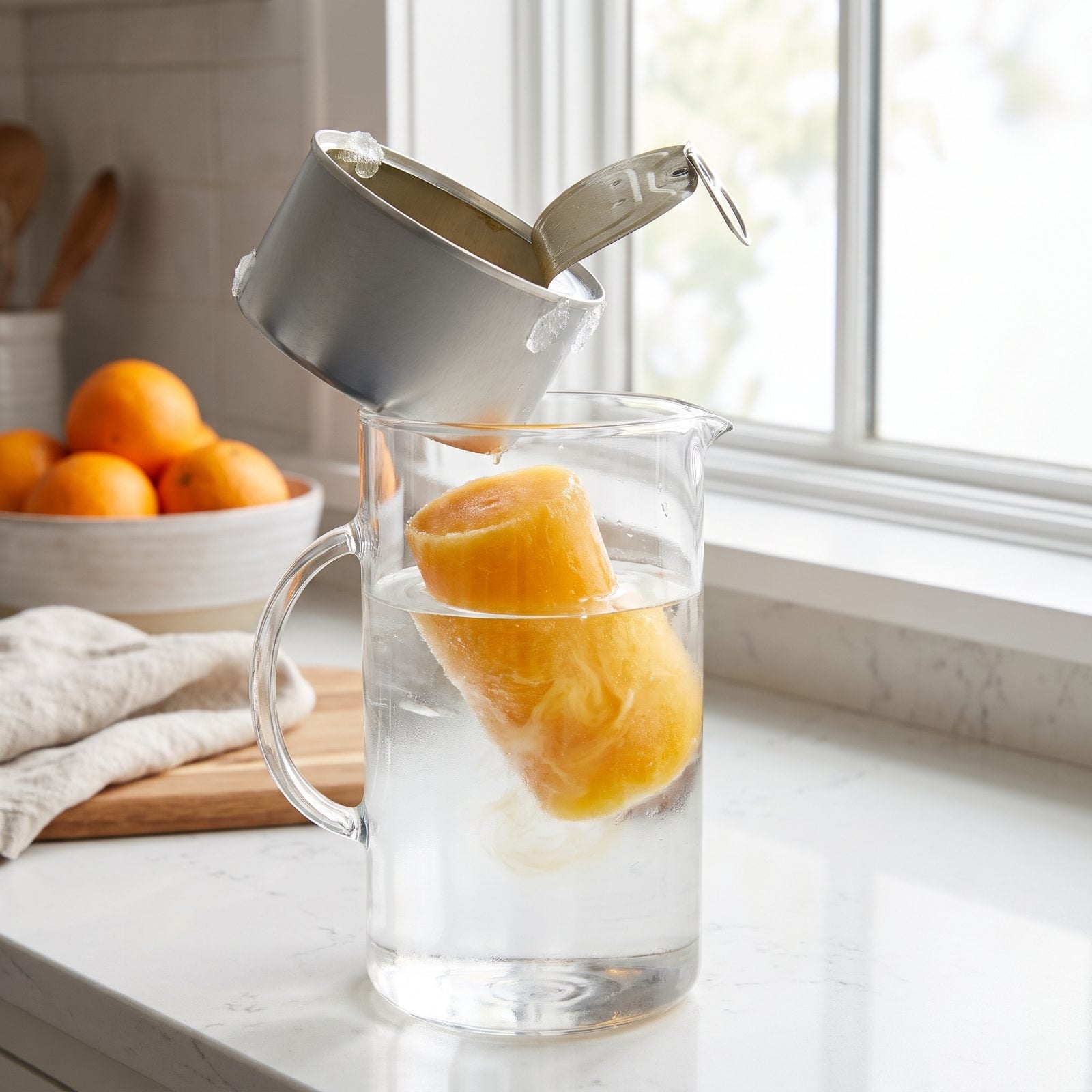
Three cans of water and a stir. That was orange juice in a hurry, and families took to it fast.
The little frozen slab, slid from a squat can, held juice shrunk down and locked in the cold until you wanted it, a genuine marvel of its moment. It beat squeezing a bag of oranges every morning before school, and it cost less too. The purists grumbled it tasted flat next to fresh. Everybody else was already out the door with a full glass. Convenience was the real flavor of these years.
12. All-Purpose Flour in a Printed Paper Sack
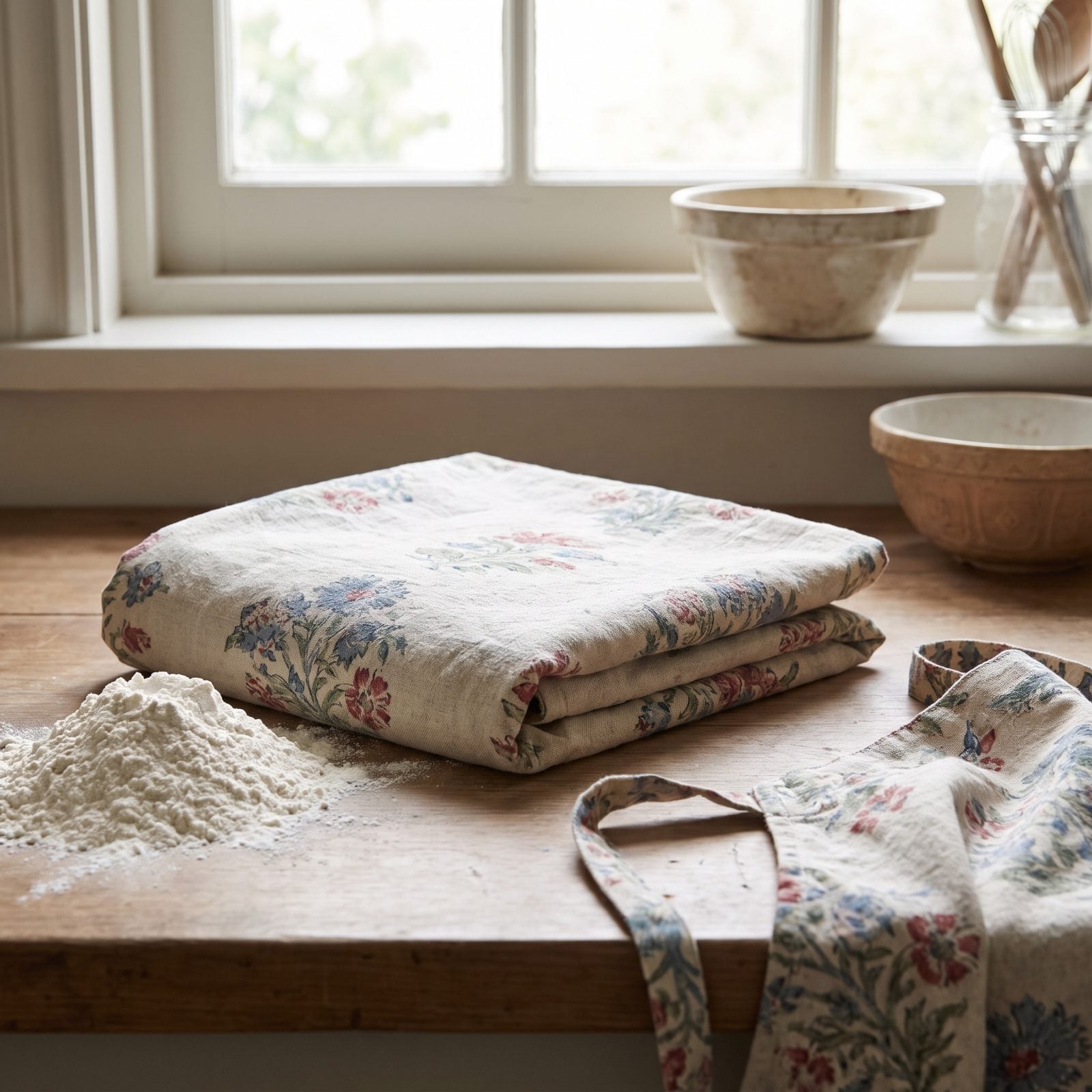
The flour sack earned a second life. Those printed cotton sacks got washed, cut, and sewn into aprons, dish towels, and kids’ shirts.
A family that baked bought flour in quantity, because bread, biscuits, pie crust, and gravy all started here. The sack lived in a tin bin to keep weevils out, scooped into day after day, and running low felt like running low on the week itself. Plenty of grandmothers could tell you which dress came from which sack, and that memory held better than the fabric ever did.
11. Granulated Sugar in a Paper Bag
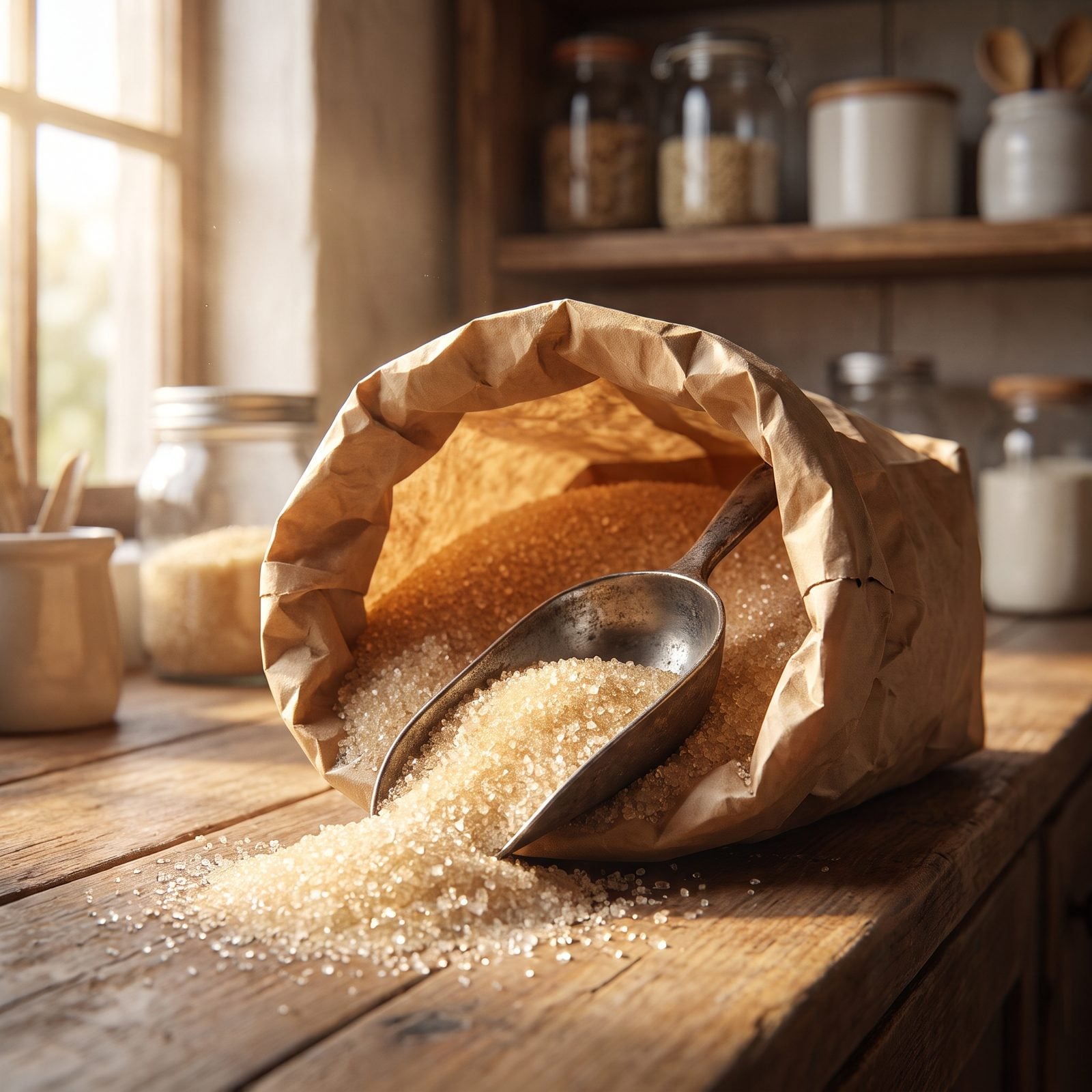
Sugar was bought in bulk and guarded like treasure. A family that canned, baked, and sweetened its coffee went through far more than you’d guess.
The paper bag got decanted into a ceramic canister on the counter, lid snug against ants. It sweetened the preserves in summer, the pies in fall, and the endless pitchers of iced tea all year. Anyone who remembers wartime rationing kept a careful eye on the level in the jar long after the rules lifted. Old habits around sugar stuck harder than most.
10. Old-Fashioned Rolled Oats
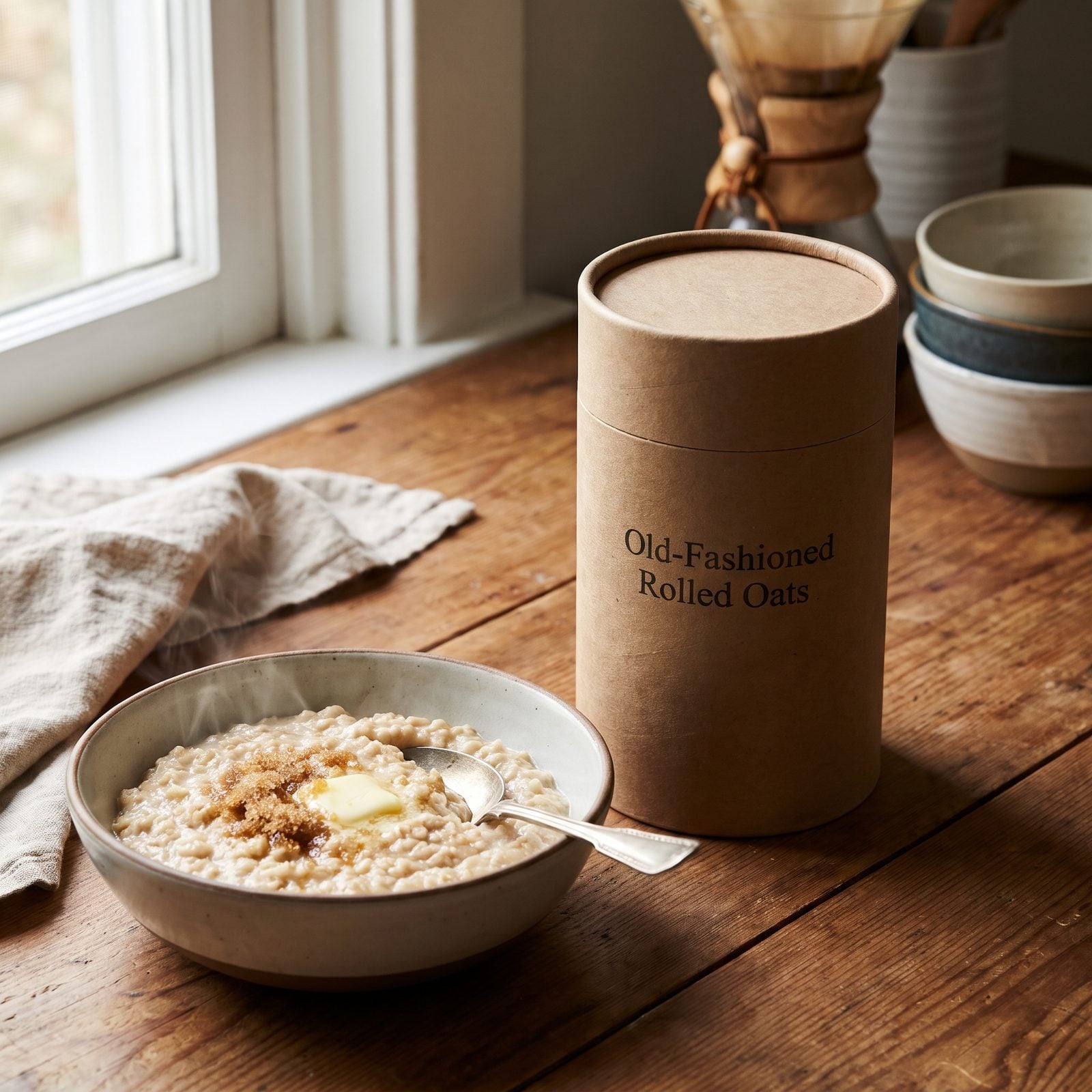
The round oat cylinder was breakfast’s workhorse. Cheap, filling, and able to send the kids to school with something warm in them.
It stretched where other foods couldn’t. A pot on the stove fed the whole table on a cold morning for pennies, and the leftovers turned into cookies by afternoon. Once empty, the cardboard tube got repurposed for buttons, nails, or a kid’s crayons. Few groceries worked this hard. Oatmeal fed the family and then kept paying its rent as a drawer of small treasures.
9. Boxed Corn Flakes, Poured Dry by the Fistful
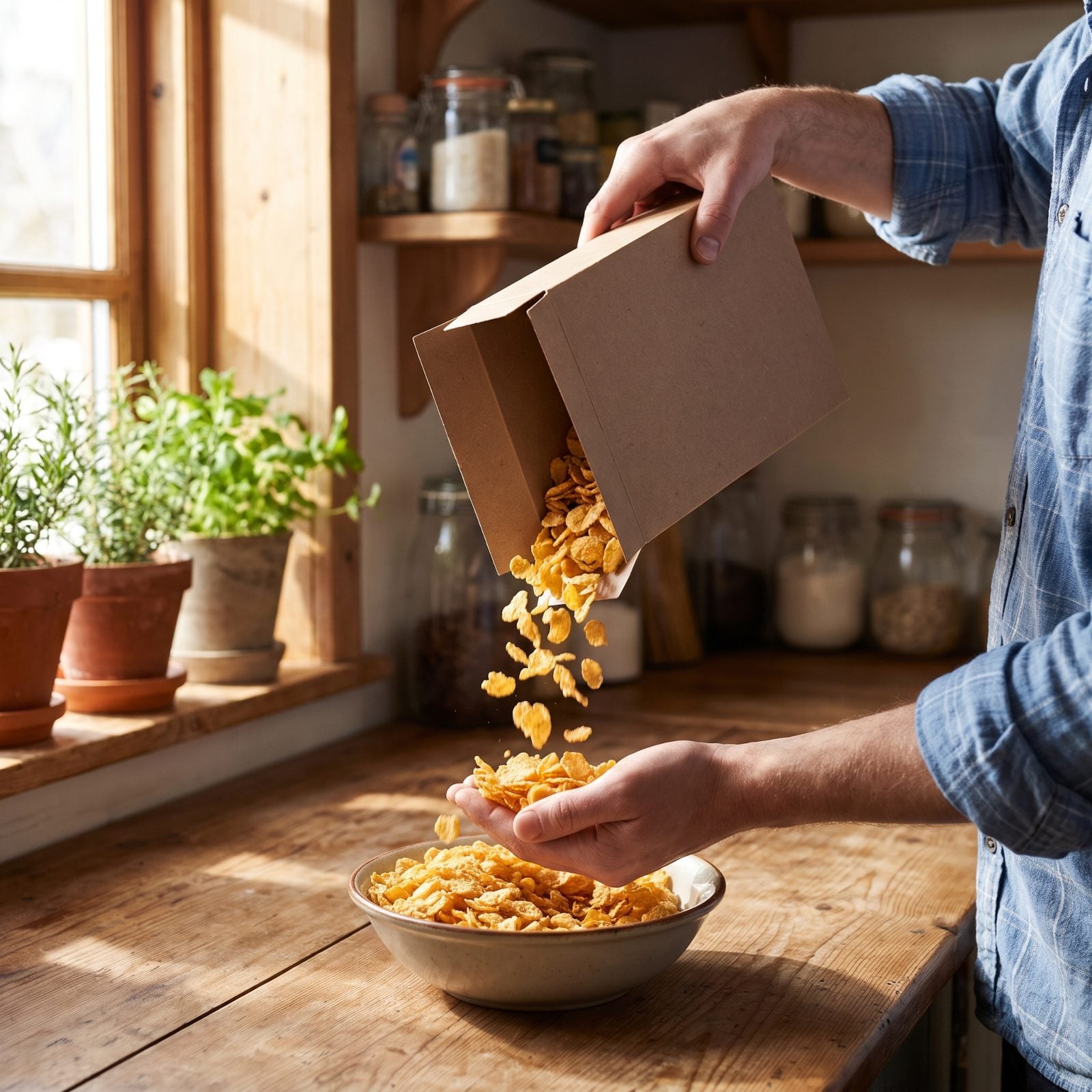
Corn flakes were the cheapest ticket to a quiet morning. A nickel’s worth stretched across a week of school breakfasts, and nobody expected more than that.
The carton rode near the top of the brown paper sack because it crushed if you buried it under the canned goods. You poured it dry, some kids ate it by the handful straight from the box, and that waxed inner liner always tore in the wrong place.
8. Elbow Macaroni Slouching in a Cellophane Bag
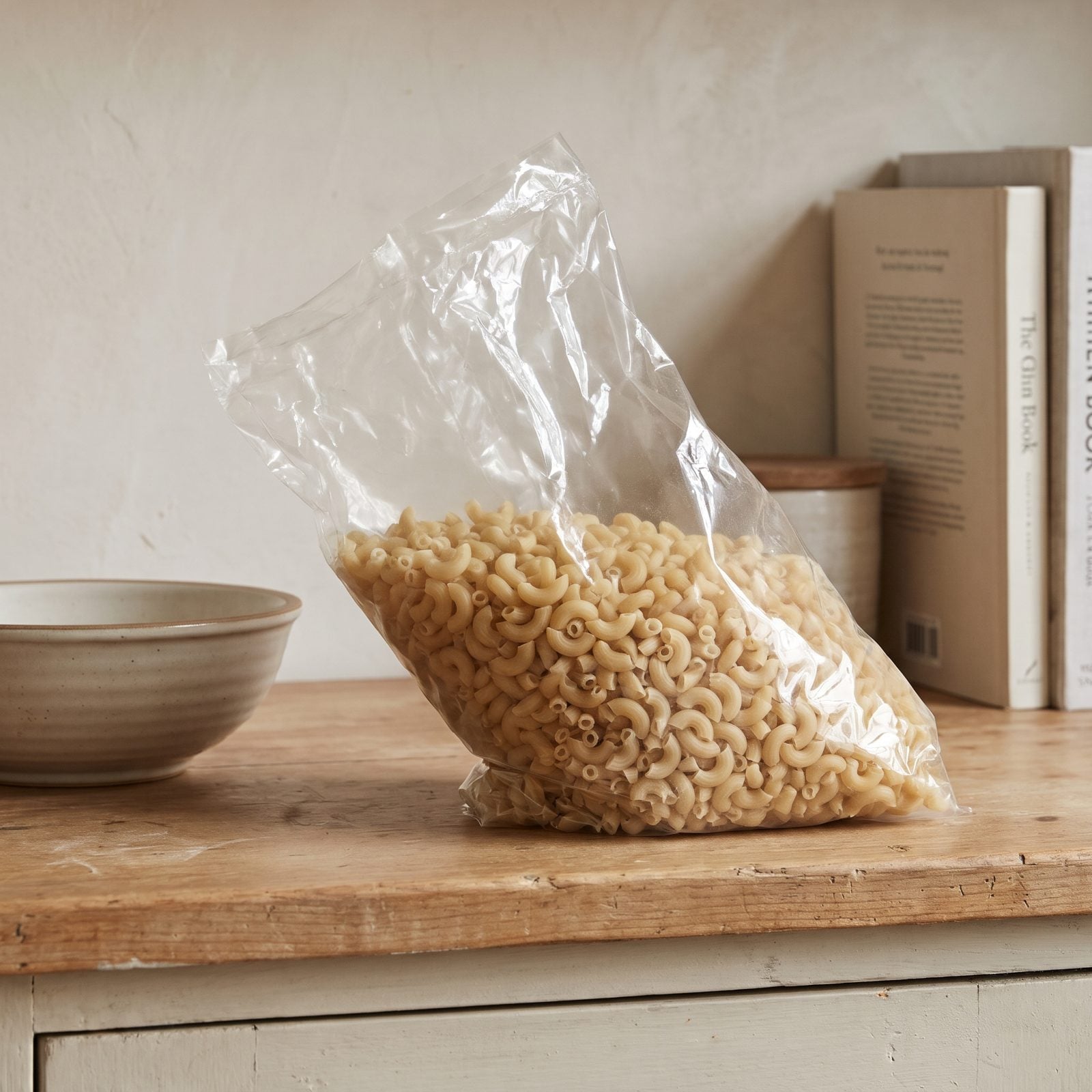
Macaroni was the quiet workhorse of the pantry. Cheap, filling, forgiving — it turned a little cheese and a can of tomatoes into a dinner that fed five without a single complaint.
You bought it loose in cellophane, not the sturdy boxes we know now. The bag slumped, the twist tie never held, and half of it migrated to the bottom of the cupboard as a fine dusting of broken elbows. A family of five tore through it fast.
7. Vegetable Shortening Scooped From a Metal Tin
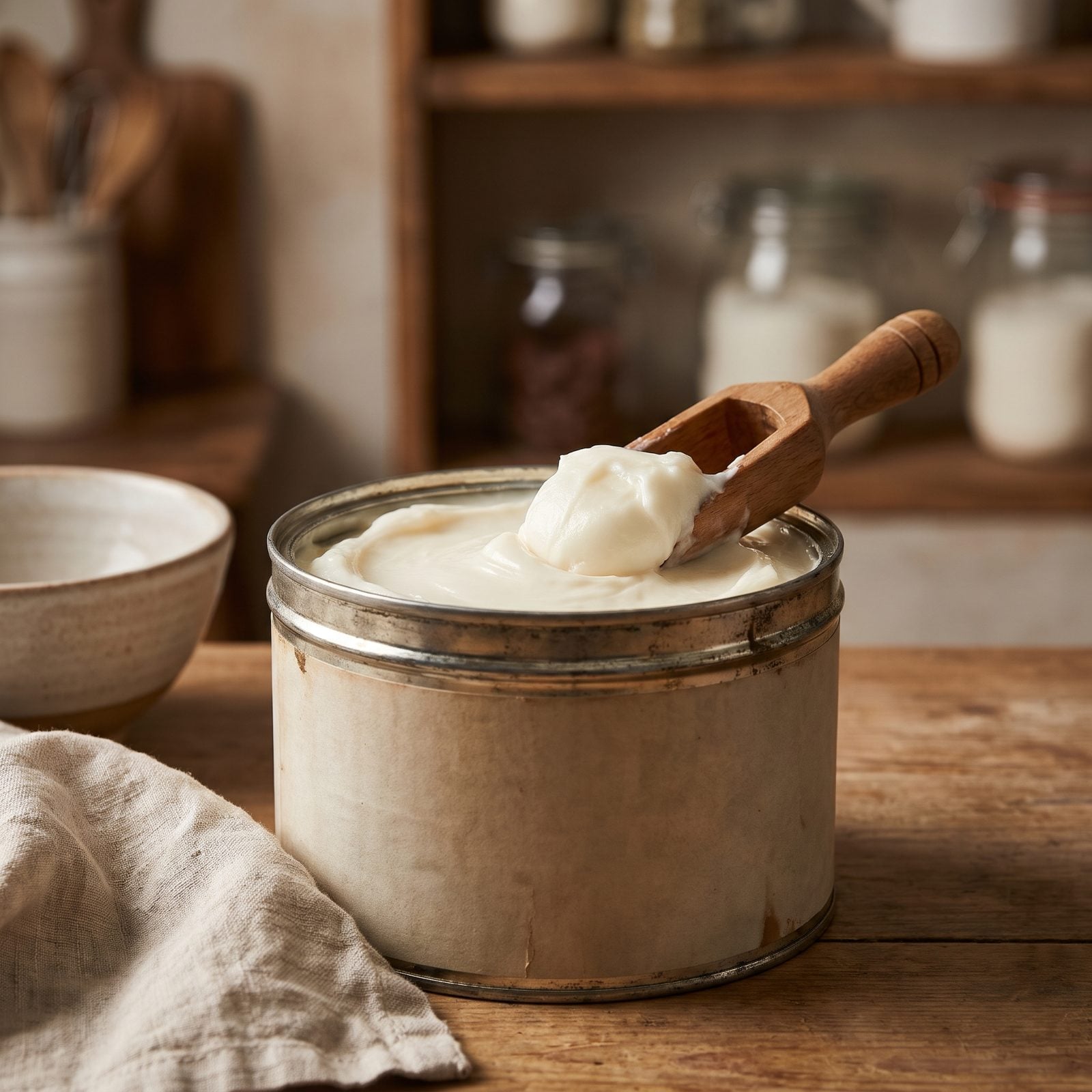
This was the fat that did everything. Pie crust, fried chicken, biscuits, greasing the pan — all of it came out of one tin that lived at the back of the counter.
The appeal is lost on most of us now. But shortening kept for months without refrigeration, which mattered a great deal in a kitchen where the icebox was small and the trip to the store happened once a week. You scooped it with a knife, leveled it against the tin’s edge, and the lid never quite sat flat again.
6. Evaporated Milk in Those Small Dented Cans
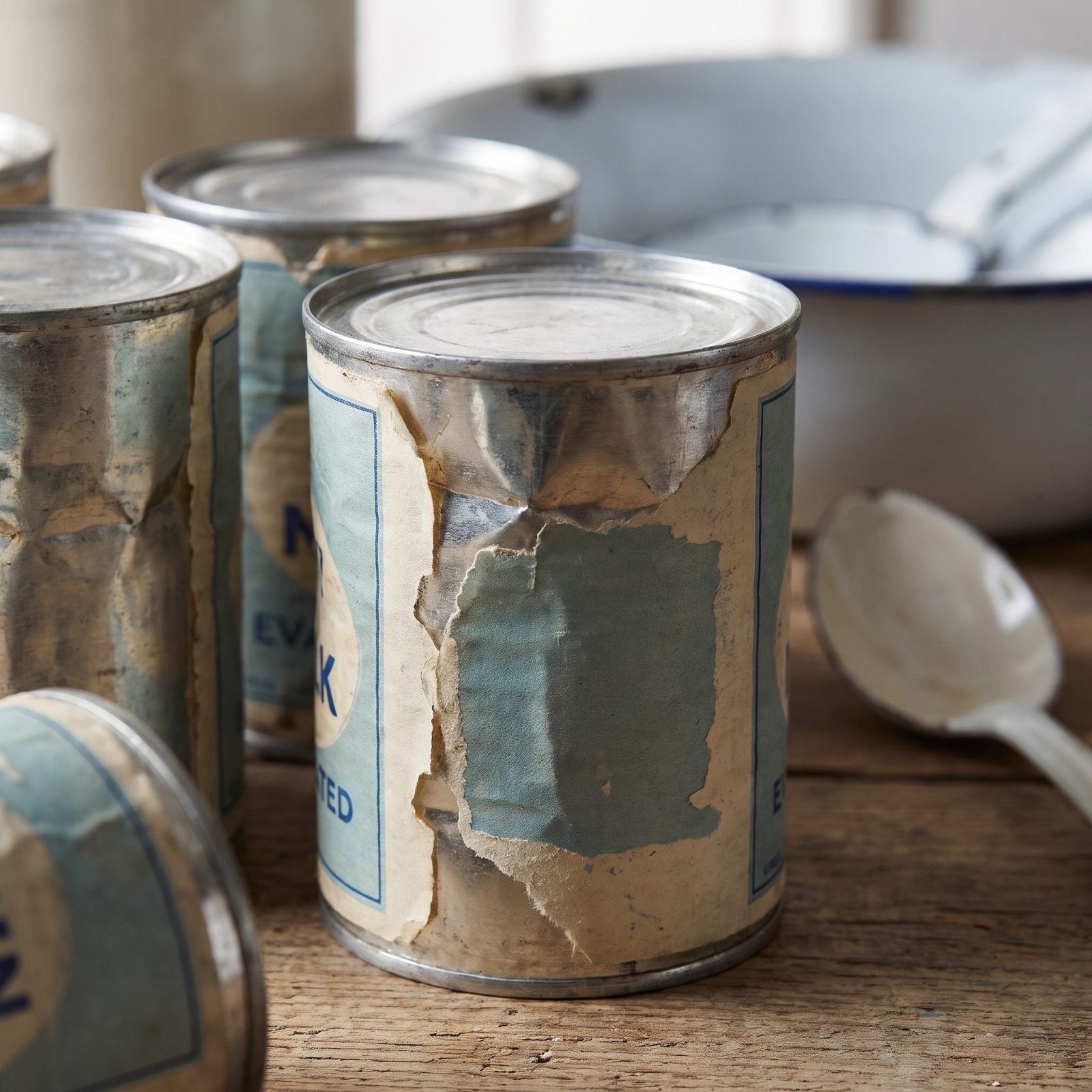
Between milkman visits, the little cans covered the gaps.
Evaporated milk went into coffee, over cereal in a pinch, into creamed everything. Two triangle punches opened it — one to pour, one to let the air in — and the can lived in the icebox with a scrap of waxed paper over the holes. A family that ran out of fresh milk mid-week never panicked, because there were always a few of these in the cupboard.
5. Creamy Peanut Butter That Came in a Glass Jar
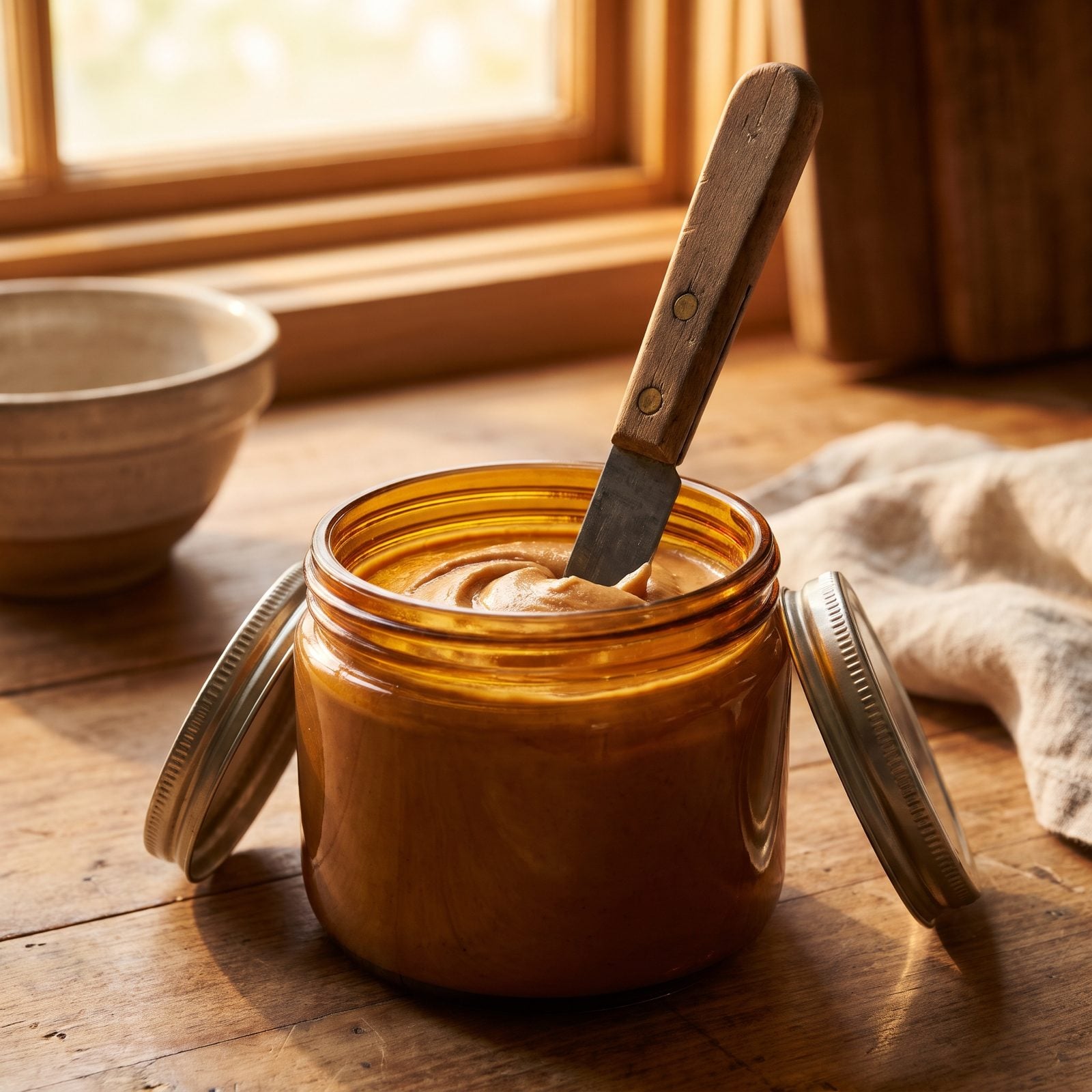
Peanut butter in glass had a heft the plastic tubs never matched. The jar was heavy, and when it ran empty you washed it out and it became a juice glass.
School lunches ran on this stuff. A jar lasted about a week in a house with three kids, scraped down to the corners where the knife couldn’t quite reach. You held it up to the window to see how much was left.
4. Grape Jelly in a Tumbler You Kept After
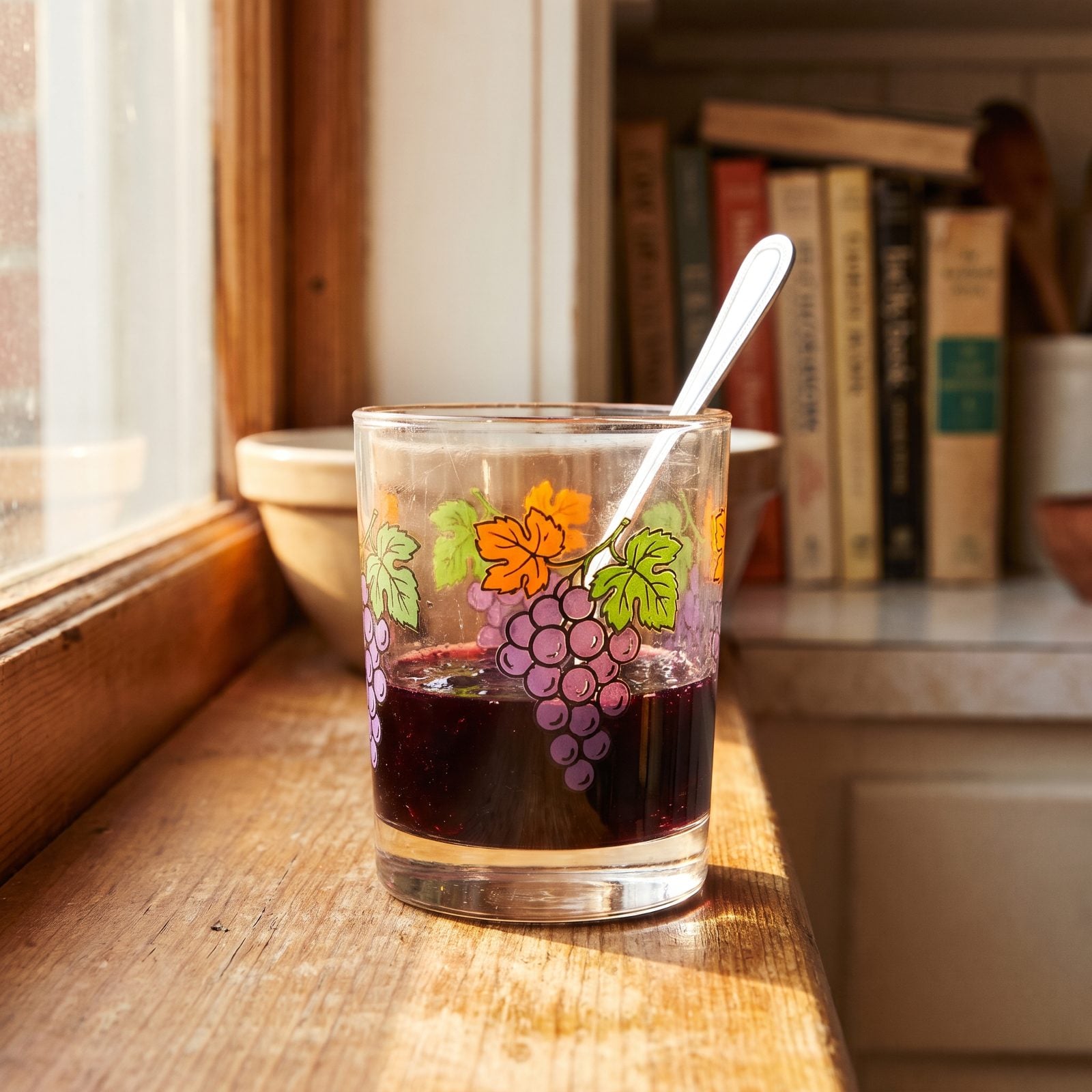
The jelly was almost beside the point. The real prize was the glass.
Grape jelly came in a squat printed tumbler, and once the jelly was gone the glass joined the daily rotation at the kitchen table. Whole sets got built one jar at a time over months. There’s something honest about packaging that assumed you’d keep it.
Writing about reuse habits that came before the zero-waste movement, a professional home organizer points out that “Welch’s first introduced their grape jelly jars designed to double as drinking glasses in the 1950s.”
3. Condensed Tomato Soup, the Can That Did Double Duty
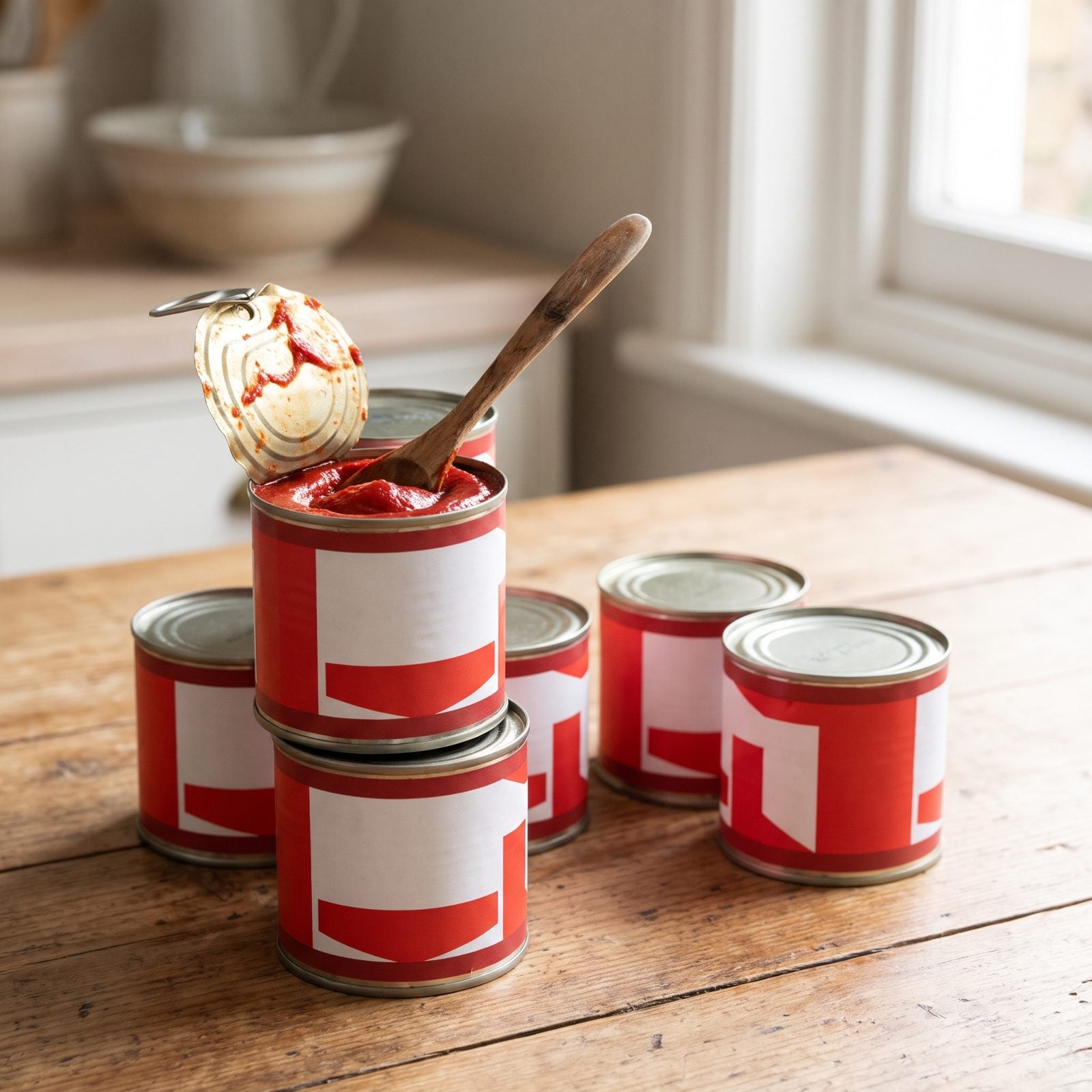
Half the cans in the cupboard were condensed tomato soup, and they weren’t all for soup.
You thinned one with milk for lunch on a cold day, sure. But the same can went into casseroles, meatloaf, and anything that needed a quick sauce. It was less a food than an ingredient that happened to come ready to eat. A family of five kept a shelf of these the way we keep a shelf of nothing anymore.
2. Fruit-Flavored Gelatin Dessert Mix in a Paper Box
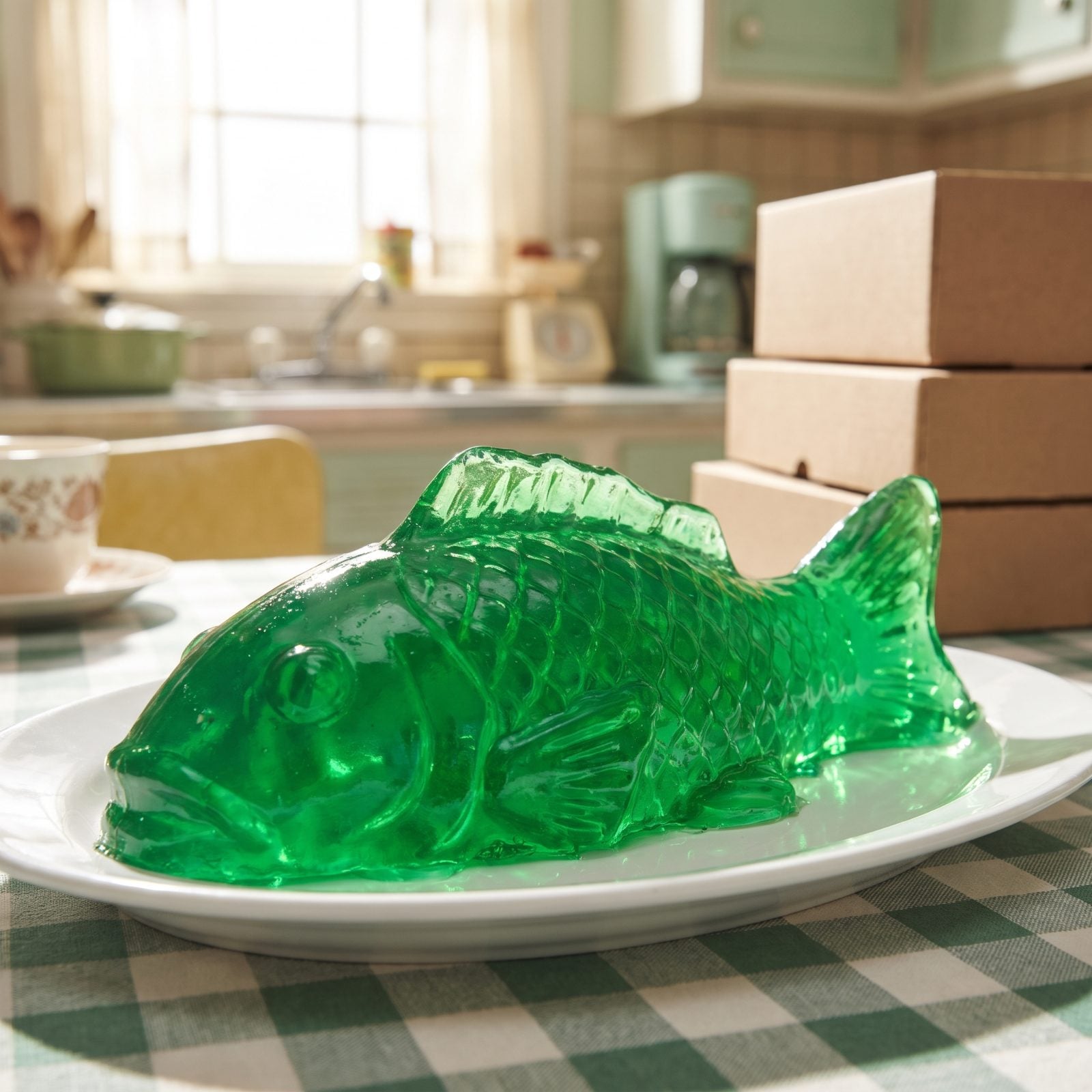
Gelatin was the fun one. It wiggled, it came in colors that don’t occur in nature, and kids lined up to watch it set in the icebox.
The box held nothing but sweet, bright crystals. You stirred them into hot water, poured it into a mold, and waited. Half the appeal was the suspense of whether it would turn out of the mold in one piece. It rarely did. And the salads folks built with the stuff? That’s a conversation for another day.
1. Boxed Layer Cake Mix, Dinner-Party Insurance in a Carton
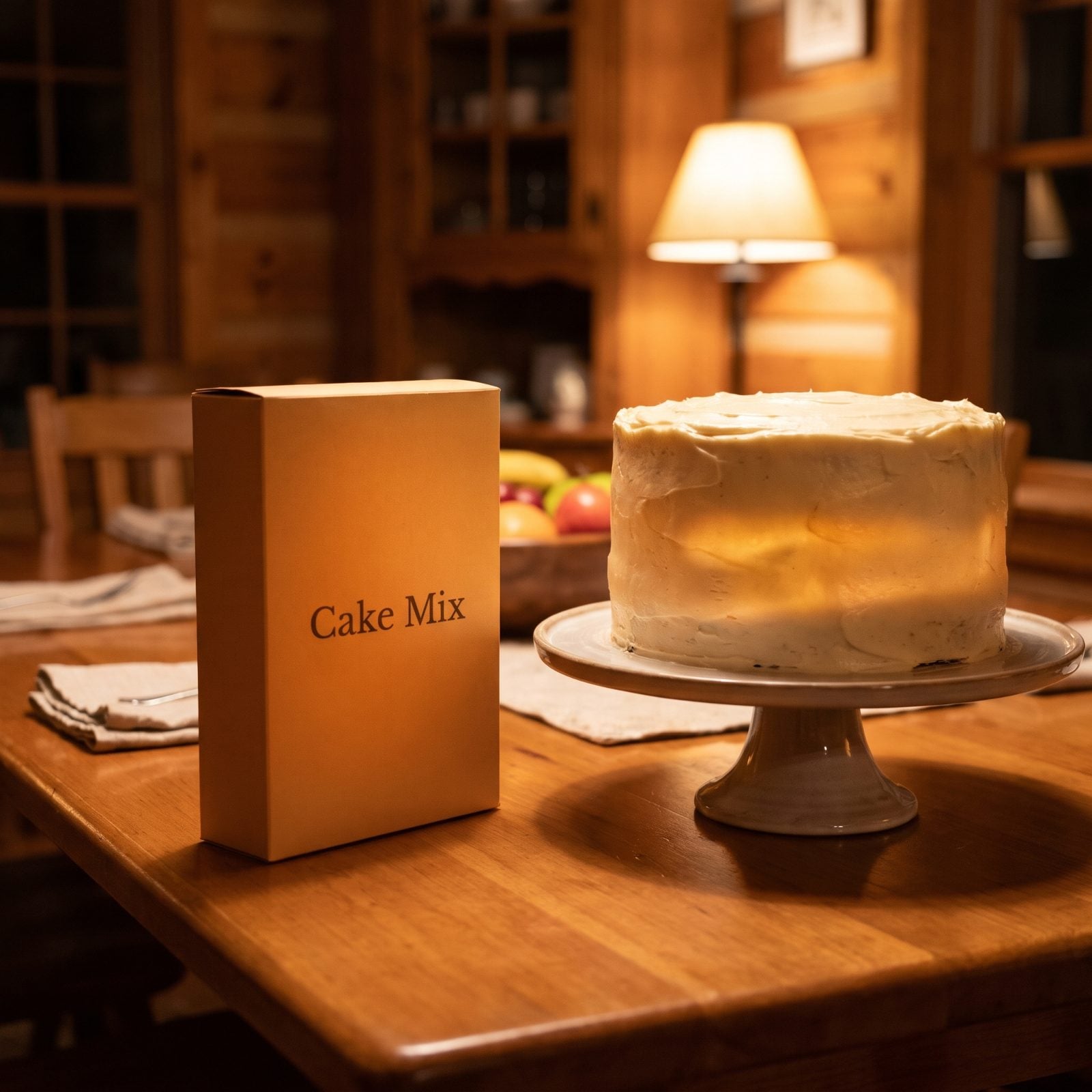
The cake mix in the cupboard was quiet confidence. Company coming on Sunday? You were covered.
A box, an egg, a little water, and twenty minutes of beating by hand gave you a layer cake that looked like you’d fussed. The frosting was your own, the cake came from the carton, and nobody at the table was any the wiser. This is the box that changed how a generation hosted, because it took the fear out of dessert.
Looking back at the postwar baking boom, a food history radio host notes that by 1950 “Americans seemed hungry for the convenience and affordability of a cake in a box, and, astonishingly, more than 200 companies entered the competition to get boxed cake mixes into the post-war kitchen.”