
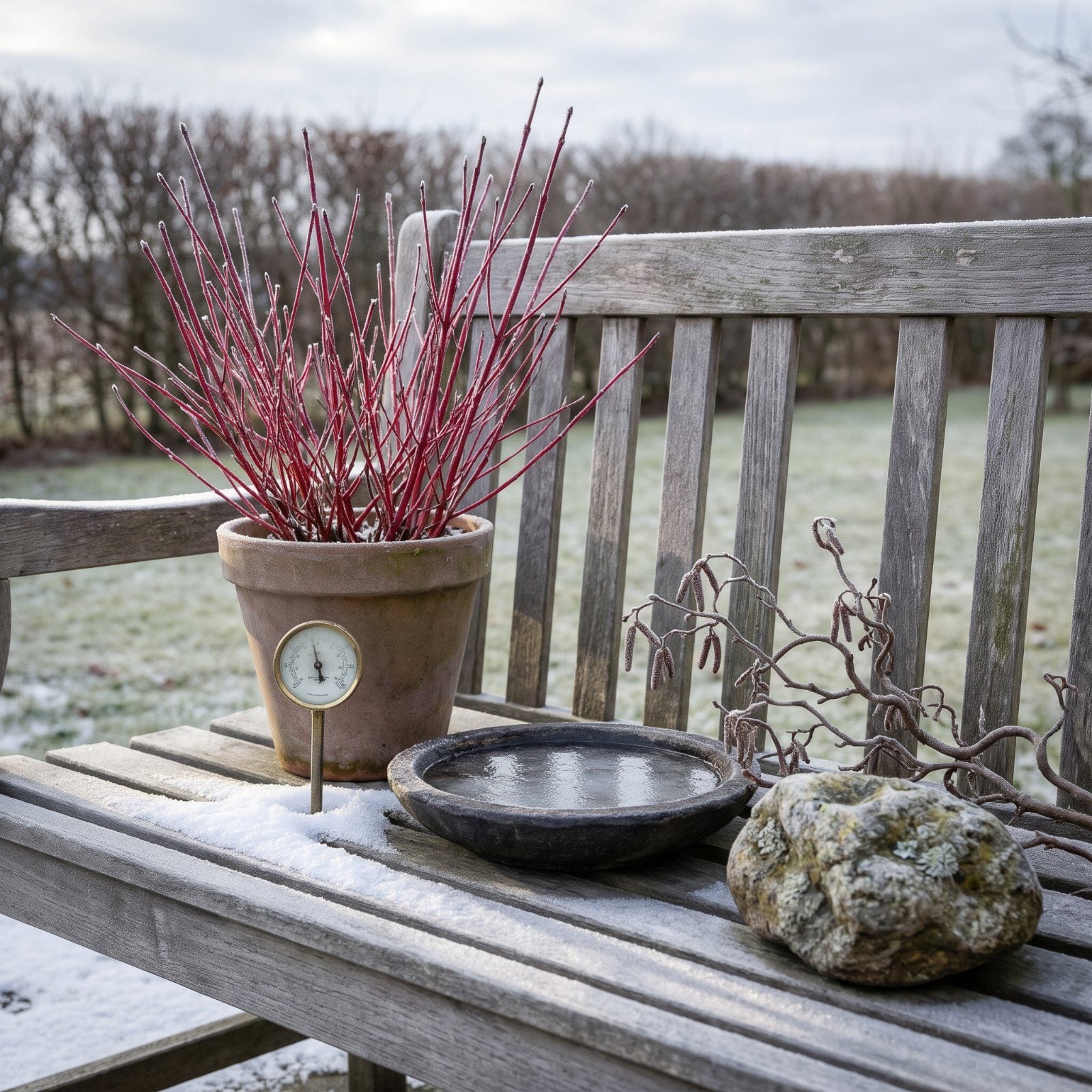
January gets a bad reputation in the garden. The borders are flat, the grass is the color of old rope, and most of what you planted last spring is sleeping underground or gone entirely. But a yard that holds your attention in the dead of winter is doing something the summer garden never has to — it earns its keep when nothing else is working. The features below add shape against a gray sky, feed the birds who stick around, and give you a reason to pull on boots and go look. Small moves, mostly. A few you can do this weekend.
Please note that some of the images in this article were created with the assistance of AI.
26. A Corkscrew Hazel With Twisted Bare Branches

Nothing else in the winter garden draws the eye like a plant that looks confused about which way to grow. Corkscrew hazel does its best work with the leaves gone. Every branch kinks and spirals, so the whole shrub reads like a piece of sculpture against a flat sky.
Then come the catkins. Late winter, those pale yellow lambs’ tails hang off the twisted stems, and suddenly there’s color where you forgot to expect any. Cut a few branches for a vase indoors and they’ll last for weeks.
One warning. Many are grafted onto straight rootstock, so if you spot a shoot coming up dead straight from the base, cut it out fast or it’ll take over.
Once the leaves drop and the twisted branches show, a garden center horticulturist says “Suddenly, everyone wants to know how to get one”
25. A Tiny Door Fixed to an Old Tree Stump
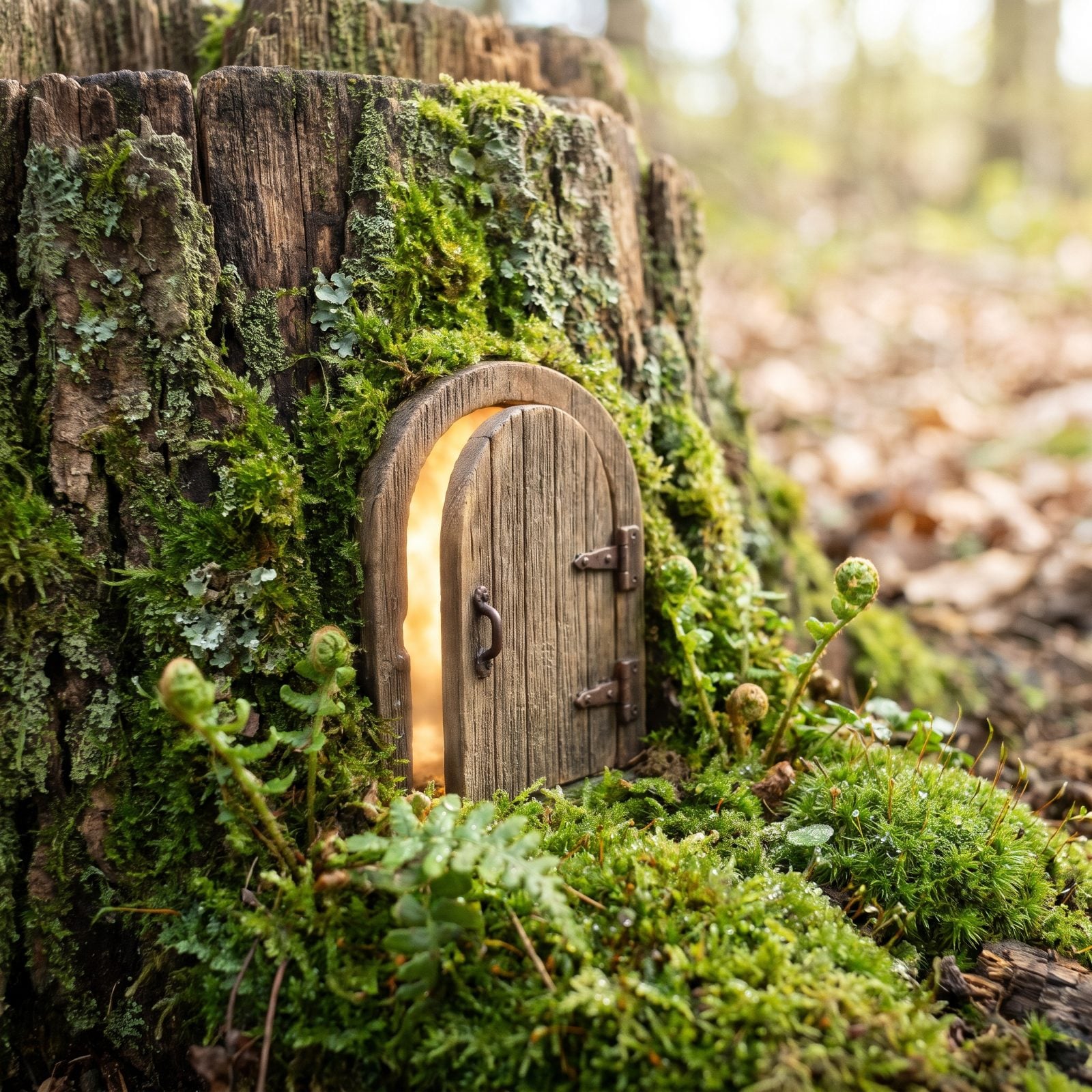
A stump is an eyesore right up until you give it a job. Screw a little wooden door into the side of a dead one, add a pebble for a step, and the whole rotting lump becomes the best thing in the yard for anyone under ten.
We put one on an old cherry stump we were too lazy to grind out, and we’ll admit it has outlasted several things we actually planned. Young visitors check it every time to see if anything’s moved.
Practical bonus: a rotting stump is a tiny ecosystem all its own — beetles, fungi, overwintering insects. The door just makes you feel better about leaving the habitat where it is.
24. A Cluster of Red-Twig Dogwood Stems
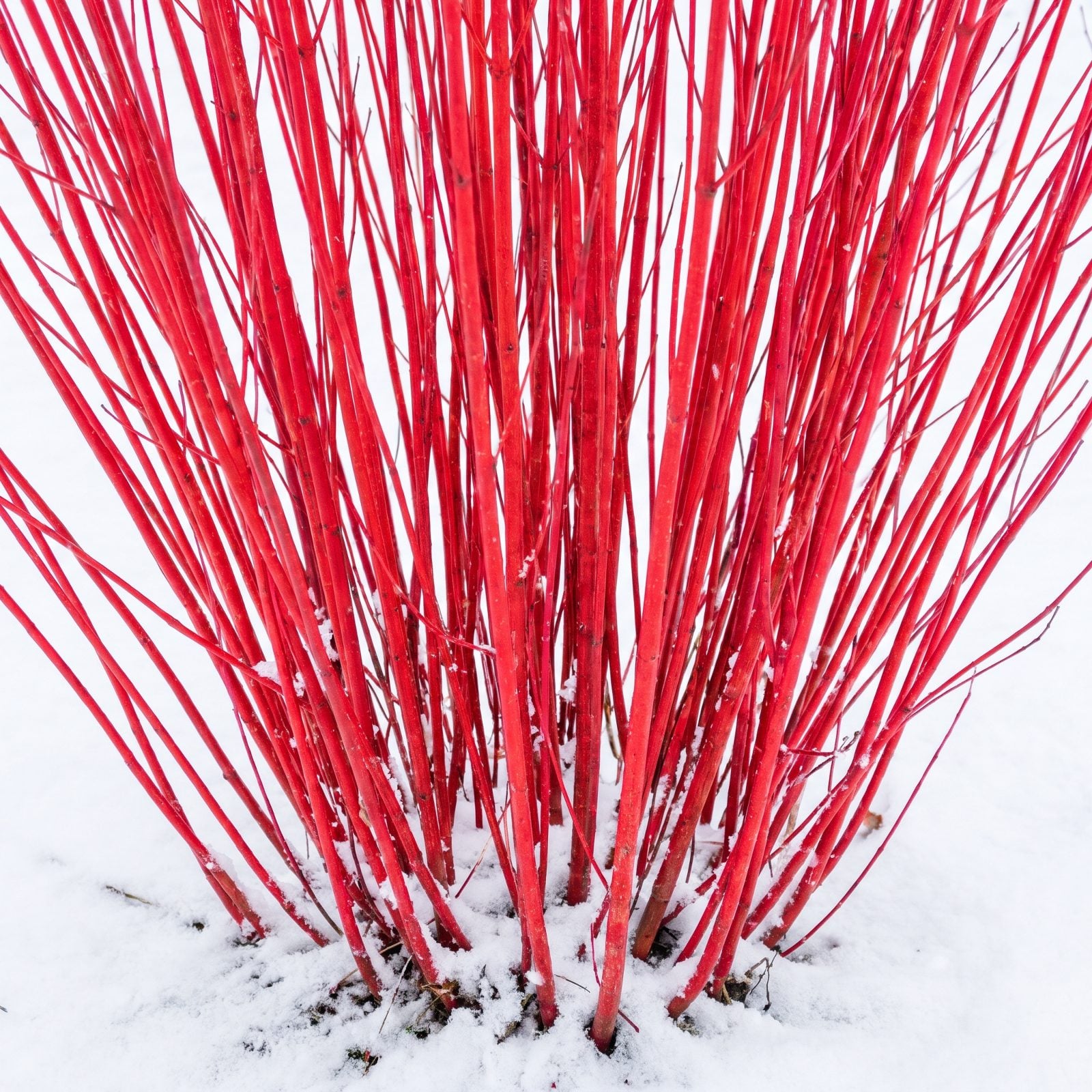
Red-twig dogwood is a plain green nothing all summer. Then the leaves drop and the stems turn the color of a fire engine, and against snow it’s the loudest thing in a hundred feet.
Most people miss the trick. The brightest color comes from the youngest wood. Cut a third of the oldest stems to the ground each spring and you keep that neon red coming — leave it alone for years and the color fades to dull brown bark.
As an extension gardening columnist puts it, “The brightly colored red bark only occurs on stems that are 3 years old or less.”
23. A Shallow Heated Birdbath
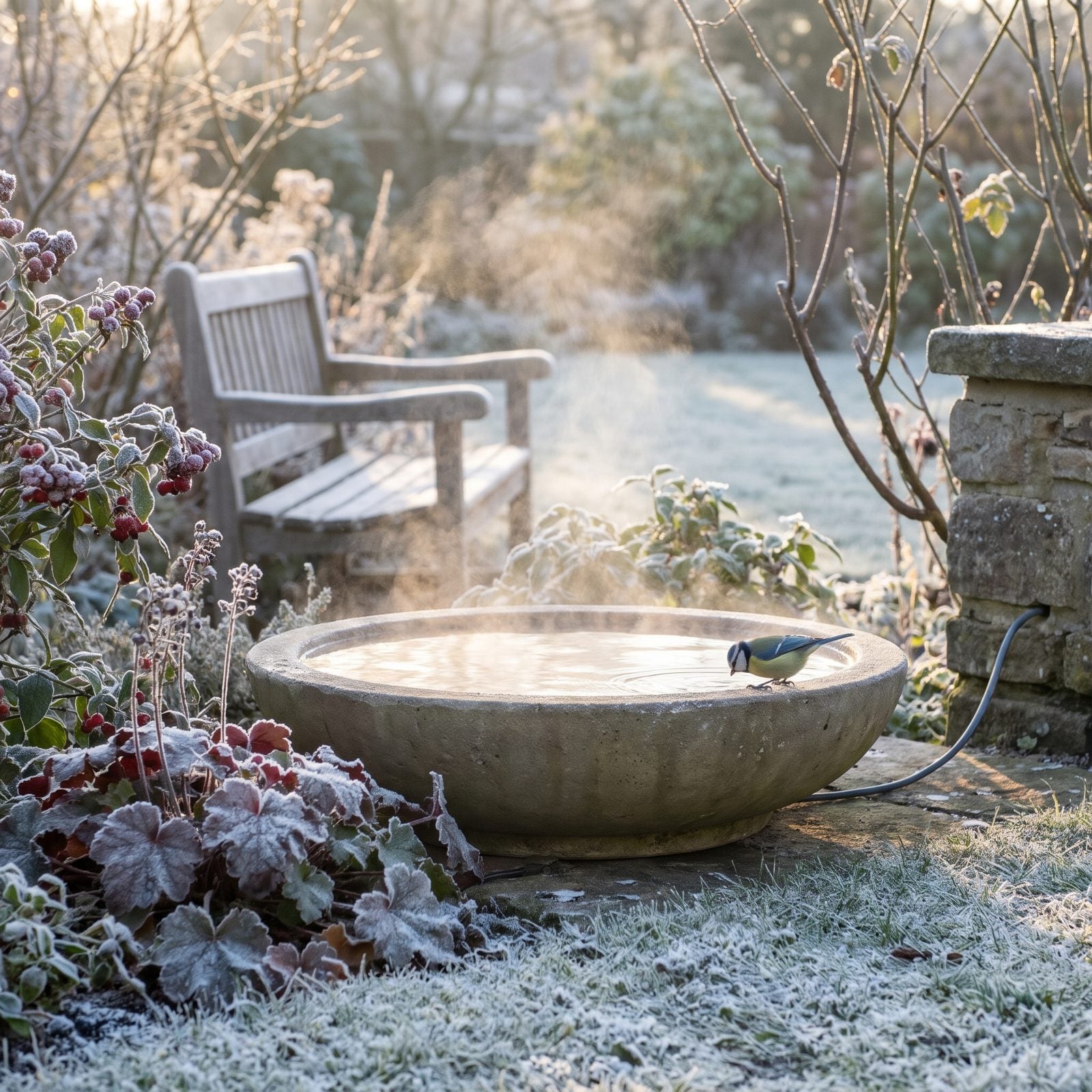
Birds can usually find food in winter. What they struggle to find is water that isn’t a block of ice.
A shallow heated birdbath — or a cheap thermostatic de-icer dropped into one you already own — keeps a patch of open water going on the coldest mornings. It costs pennies a day to run and brings in birds you won’t see at the feeder.
Keep it shallow, under two inches, with a rough bottom so small feet can grip. And skip the fountain pumps in a hard freeze. The moving water that looks charming in a catalog photo just freezes the pump solid.
As an avian behavioral ecologist puts it, “If water is frozen, it will cost birds a lot of body heat to melt.”
22. A Miniature Winter Village in a Planter
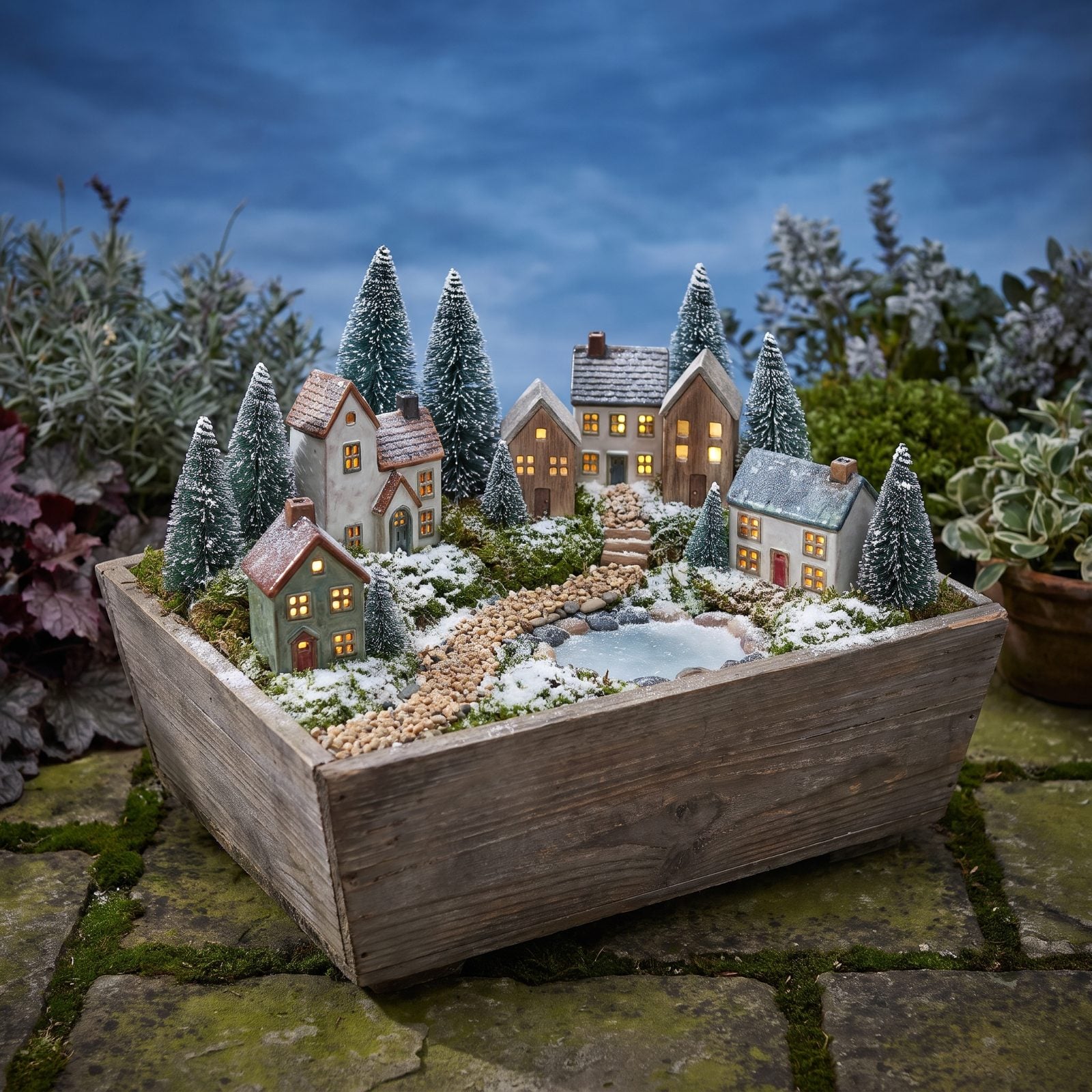
Your summer containers are sitting empty and sad right now. Fill one.
A planter turned into a miniature winter scene gives you something to look at from the kitchen window when the borders have nothing to offer. Small dwarf conifers for the trees, a few weatherproof model cottages, pebble paths, and real snow does the rest for free.
Tuck a battery fairy light inside one of the little houses so a window glows after dark. That small warm point of light does more for a frozen yard at five in the afternoon than any amount of daytime fuss. Just use outdoor-rated miniatures, or you’ll be replacing soggy cardboard by February.
21. A Suet Log Drilled With Feeding Holes
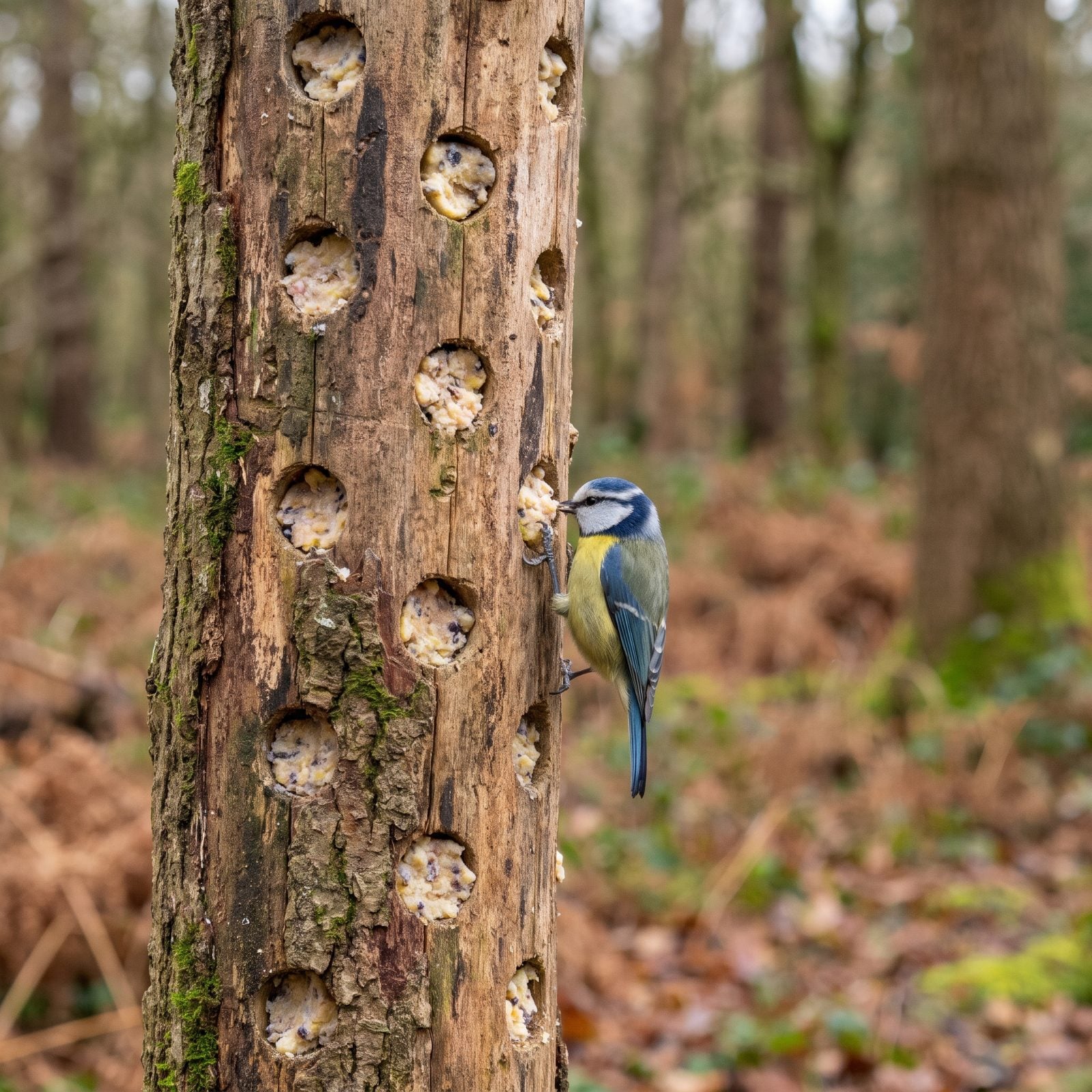
A section of log with holes drilled in it and those holes packed with suet is the most natural-looking feeder you can hang. Woodpeckers, nuthatches, and chickadees treat it like the real thing because it basically is.
Drill holes about an inch wide into any untreated hardwood log, pack them with suet, and hang it. That’s the whole project. It outlasts the plastic feeders and it doesn’t look like plastic.
Suet matters most in January because it’s pure fat, and fat is exactly what a small bird burns through overnight just to survive the cold. Skip it in high summer heat, though. It goes rancid and messy fast.
20. A Reflective Gazing Ball Among Bare Stems
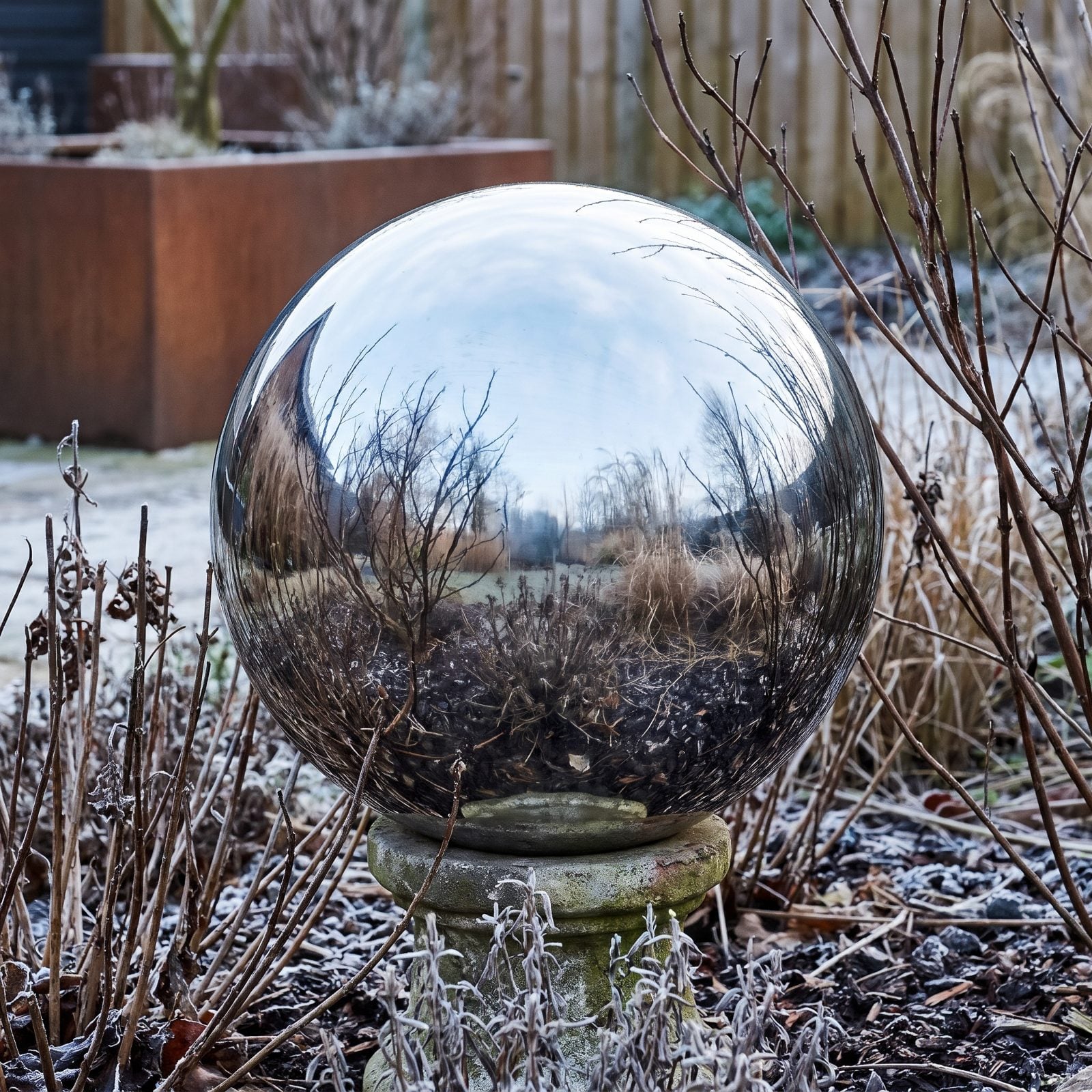
Gazing balls got stuck with a dated reputation, which is a shame, because in winter they earn their place. A mirrored sphere among bare stems catches what little light there is and throws it back, warped and doubled.
Put a cobalt or silver one low in a border where the branches arch over it. On a gray afternoon it reflects the whole tangle of twigs plus the sky, and suddenly a flat dormant corner has depth and movement.
19. A Patch of Black Mondo Grass
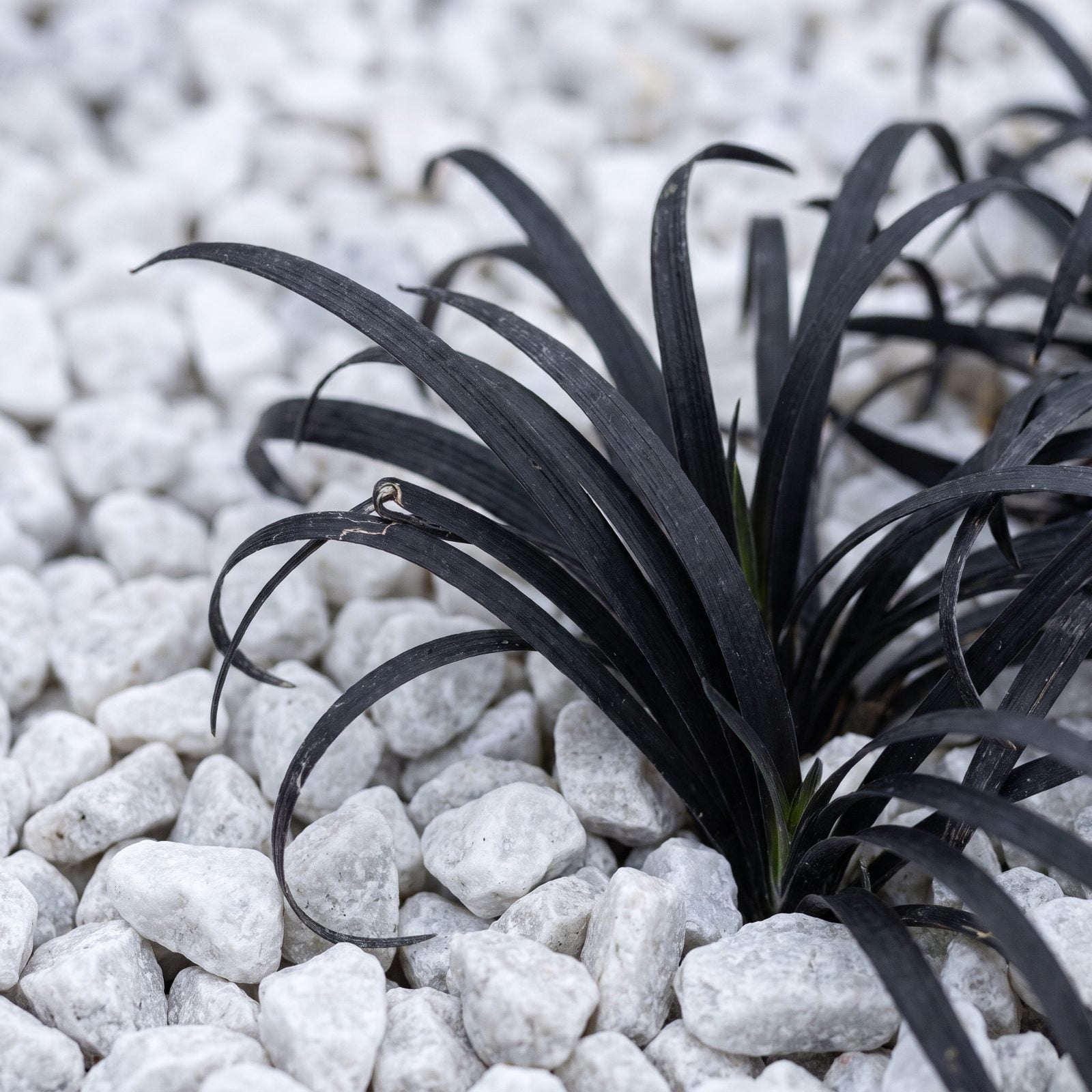
Most evergreens are, well, green. Black mondo grass is almost true black, and in a January border where everything else has gone pale and brown, that darkness reads as pure drama.
Against a dusting of snow it’s a graphic knockout. The strappy near-black blades hold their color straight through the cold — no dieback, no drooping.
It’s slow. Mine took three years to clump up into anything worth noticing, and I nearly dug it out in year one thinking I’d killed it. Patience pays here. Plant it somewhere you pass daily so you actually notice the contrast when snow falls.
18. A Snow Gauge With Oversized Markings

Half practical tool, half yard ornament. A snow gauge with big, easy-to-read markings lets you check the snowfall from the warm side of the window.
Stake it where you can see it from the kitchen, mark the inches in bold numbers, and it does double duty. The grandkids get a reason to run out and report the depth, and you get an honest answer to whether that storm was really a foot or just felt like it.
Paint the numbers a dark color so they read against white snow and gray light. A gauge you have to squint at helps nobody.
17. A Lichen-Covered Stone Cairn
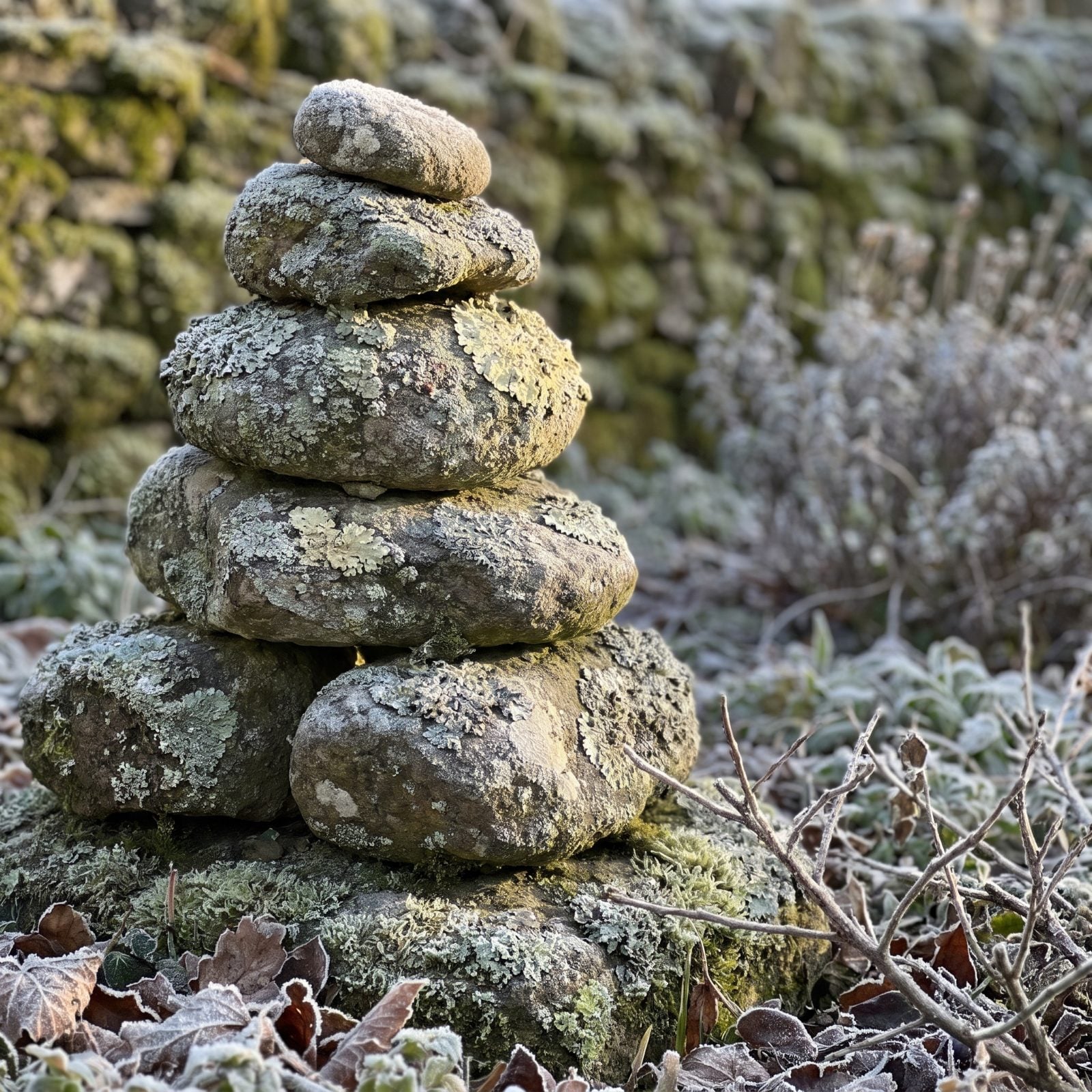
A stack of stones does something summer flowers can’t. It holds its shape, its weight, and its color through the hardest freeze without changing a thing.
Find flat local stones with lichen already on them — which means older stones from a wall, a field edge, a creek bed. Stack them into a loose column. The lichen gives you that pale sage and burnt-orange crust that looks fantastic rimmed with frost.
Set it where frost will gather on the top stones. That first hard morning, the whole thing rimes over and glows.
16. A Strand of Solar Lights Threaded Inside a Bare Shrub
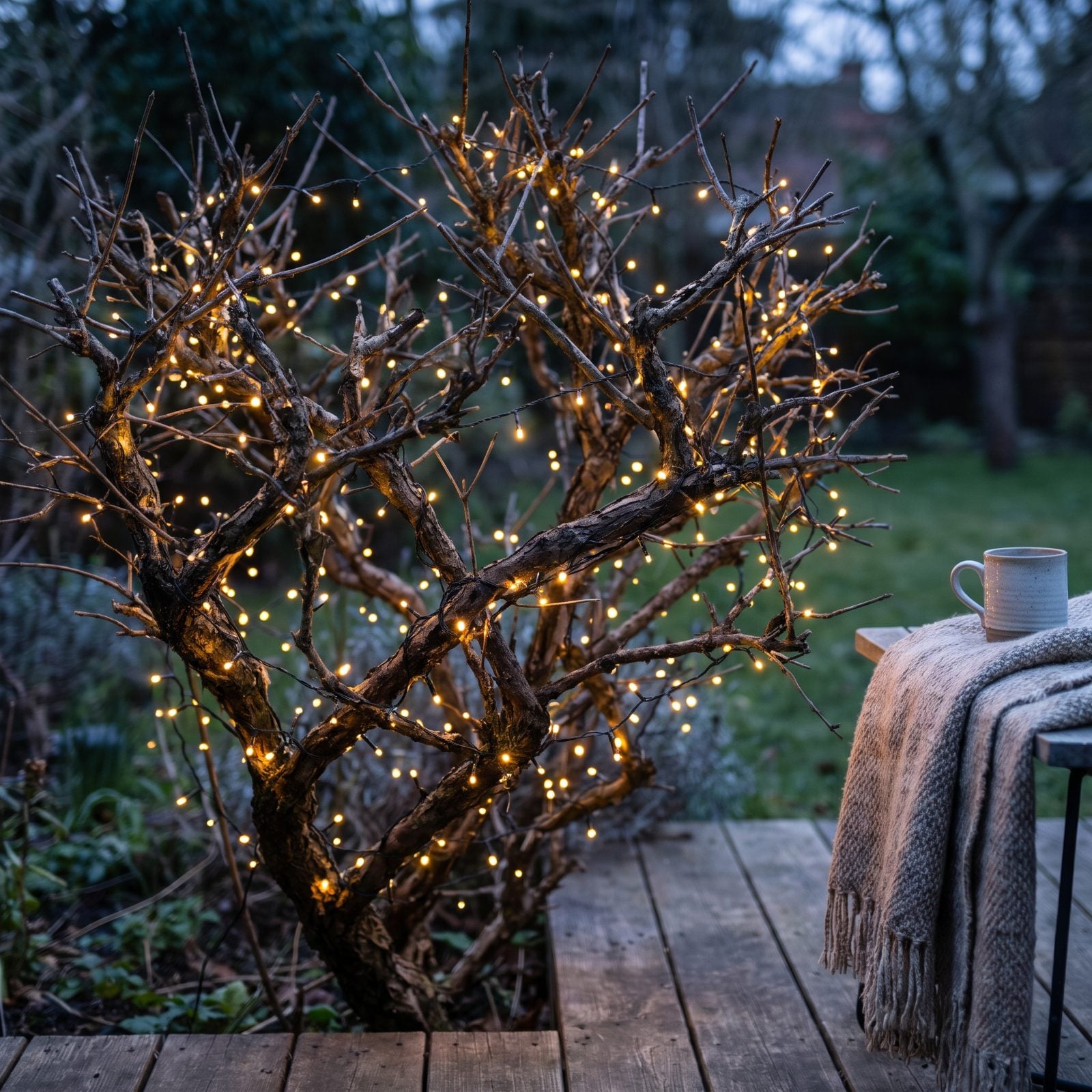
The cheapest piece of winter magic you can buy. A single strand of solar fairy lights, pushed deep into the dead-looking twigs of a dogwood or a bare hydrangea, turns the most skeletal shrub in the yard into the thing you stare at from the kitchen window at five o’clock, mug in hand, pretending you’re not just avoiding the washing-up.
Go for copper-wire strands with warm white bulbs. The cold blue ones read like a dentist’s office; warm white reads like candlelight caught in frost. The solar panel wants a few hours of weak winter sun, so stake it somewhere south-facing and don’t bury it under a bush.
15. A Small Owl Box Tucked Under the Eaves
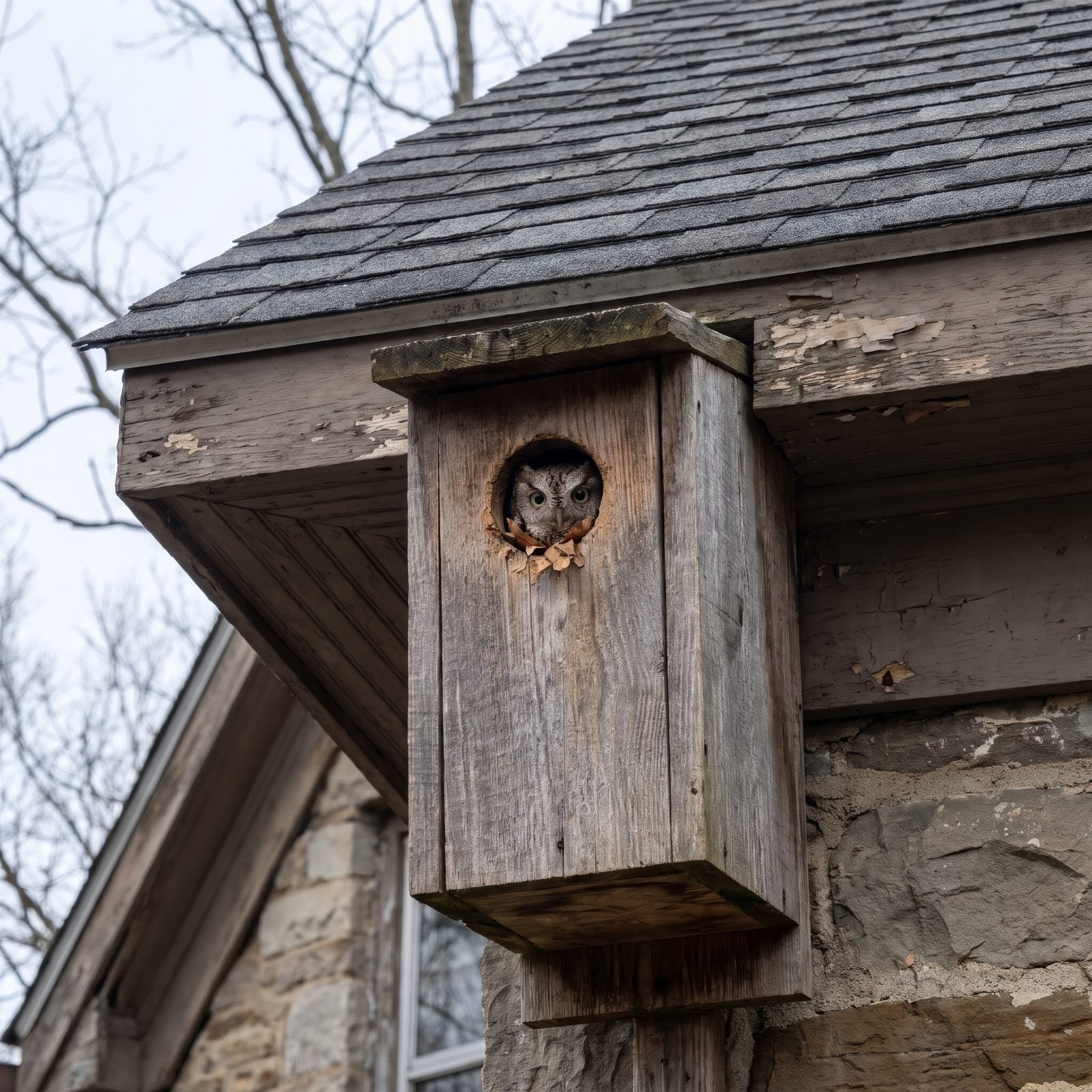
Most people hang a birdhouse the size of a coffee mug, then wonder why nothing moves in. An owl box is a different proposition. It’s bigger, it goes high, and it goes up in winter because tawny and barn owls start scouting nest sites in the dead months, long before anything else is thinking about spring.
Mount it under an eave or on a tall trunk, eight to twelve feet up, entrance facing away from the prevailing wind. You won’t see much. That’s the deal with owls. But on a still January night you may hear the first calls, and come spring there could be a tenant who spends all summer eating the voles out of your vegetable beds for free.
Asked when to put up an owl box, an Indiana ornithologist says winter is best: “This is a great time of year since owls are looking for winter roost sites”
14. A Set of Frost Bells Hung on a Branch
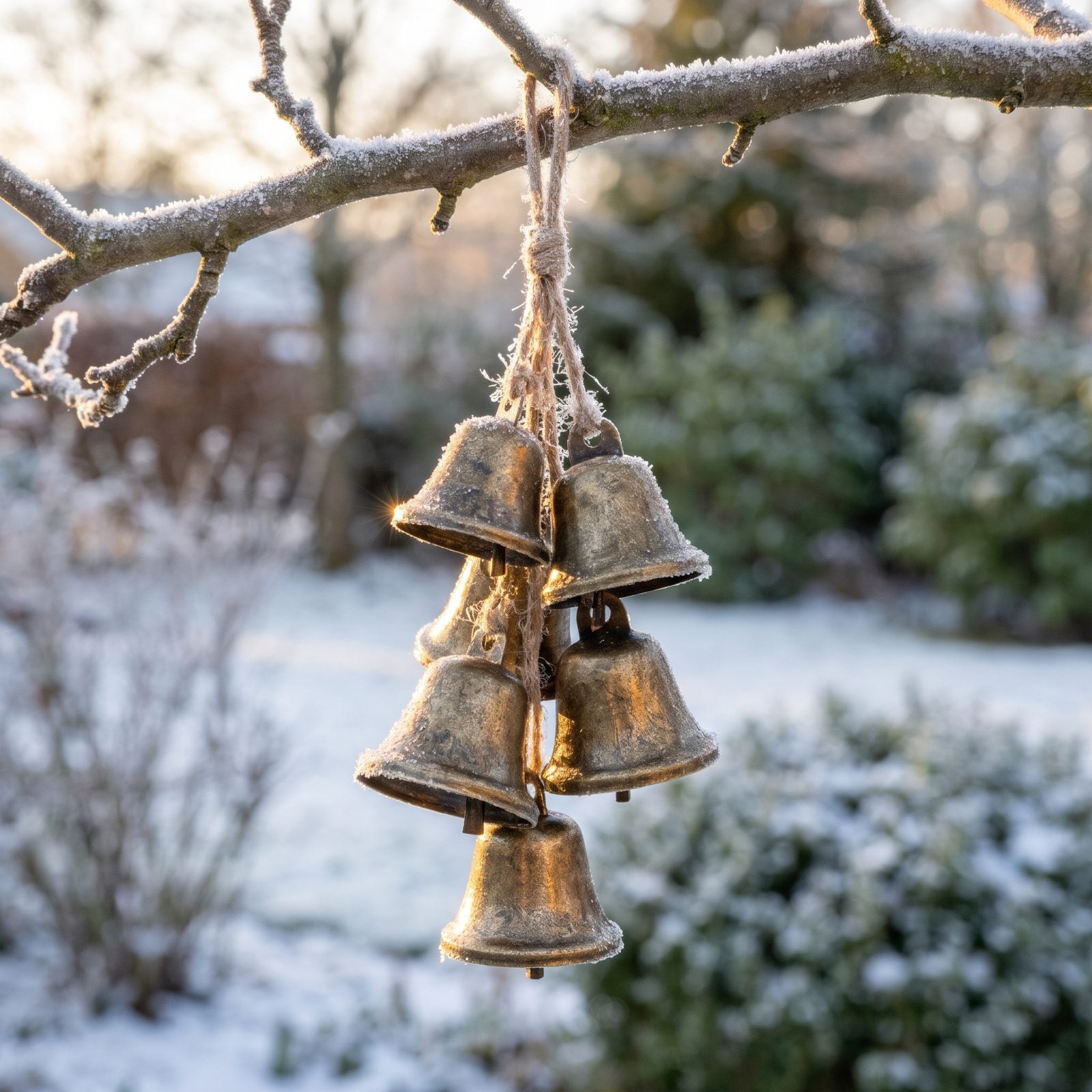
Winter is the quiet season. A bell is the answer to that.
Hang a small set of brass or copper wind bells on a bare branch near a path or a window, and you give the garden a voice it loses when the birds thin out and the leaves stop rustling. On a still frosty morning they barely move. When a cold front comes barreling through, they tell you before the weather app does.
Pick bells with a low, rounded tone rather than the tinny jangle of the cheap ones. You’ll be hearing this sound all winter, so it had better be a sound you actually like. Test it in the shop and ignore the looks.
13. A Dwarf Conifer Planted in a Galvanized Tub
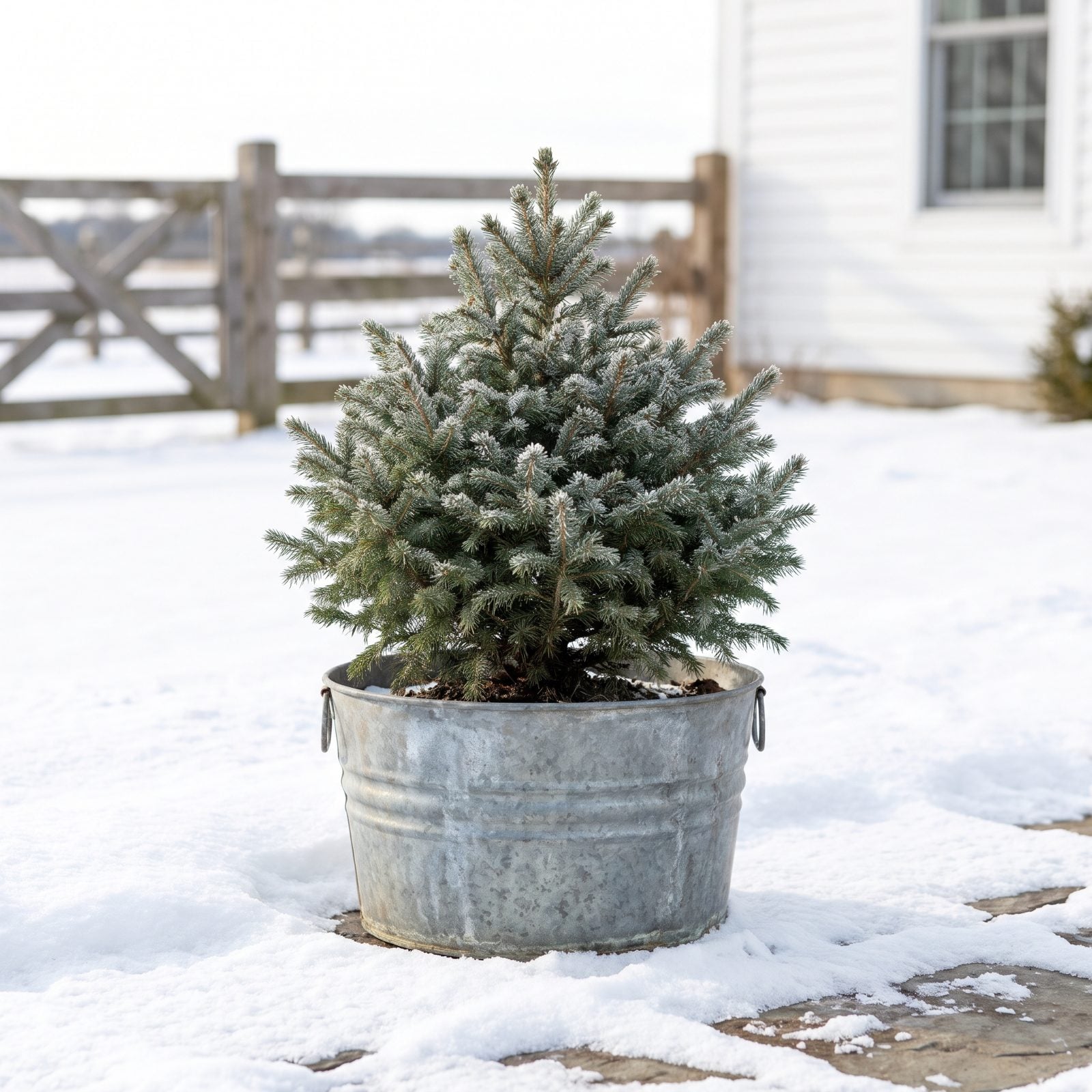
Nobody warns you about this with winter containers: the pot matters as much as the plant when everything else is bare. A dwarf conifer — say a blue ‘Montgomery’ spruce or a golden dwarf thuja — planted in an old galvanized tub gives you structure, color and a bit of shine all at once, sitting right where you’ll see it from the back door.
Dwarf means dwarf. These grow an inch or two a year, so one tub holds its shape for ages before it needs rethinking. Drill drainage holes in the metal if there aren’t any. A conifer sitting in frozen waterlogged soil will quietly die on you, and you won’t notice until March.
12. A Wire Orb Packed With Evergreen Cuttings
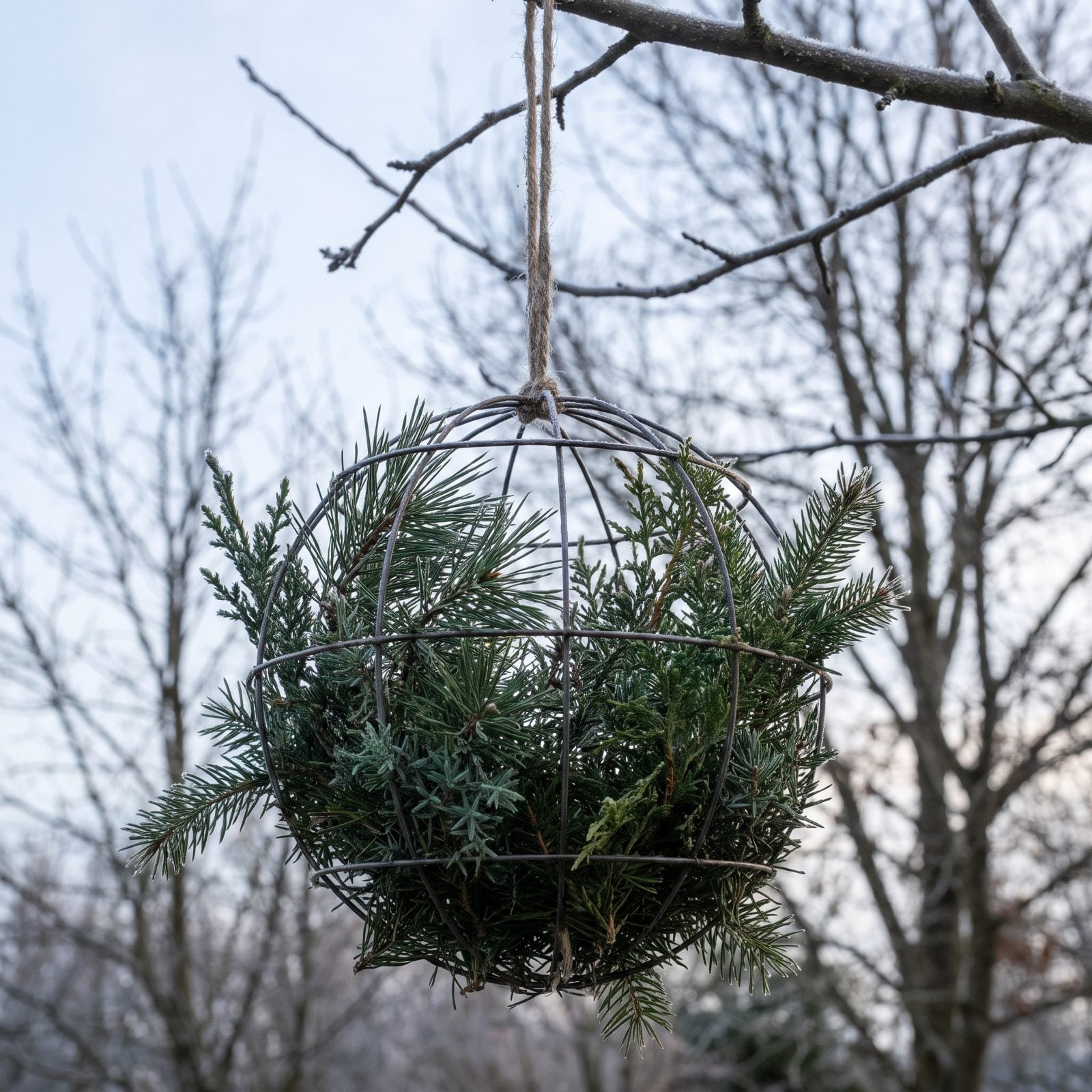
A hanging basket makes no sense in January. A wire orb packed with evergreen clippings makes all the sense in the world.
Take a cheap spherical wire frame, line it loosely, and stuff it tight with cuttings off your own garden: holly, ivy, box, spruce, a sprig of eucalyptus if you’ve got it. Add a few stems of berries and you’ve got a green sphere hanging where a basket of dead petunias used to be. Costs nothing but an afternoon.
The cuttings stay fresh for weeks because cold weather is basically a refrigerator. Mine usually look good right up until the snowdrops come up, at which point I feel slightly less bleak about the whole situation.
11. A Cold Frame Built From an Old Window Sash
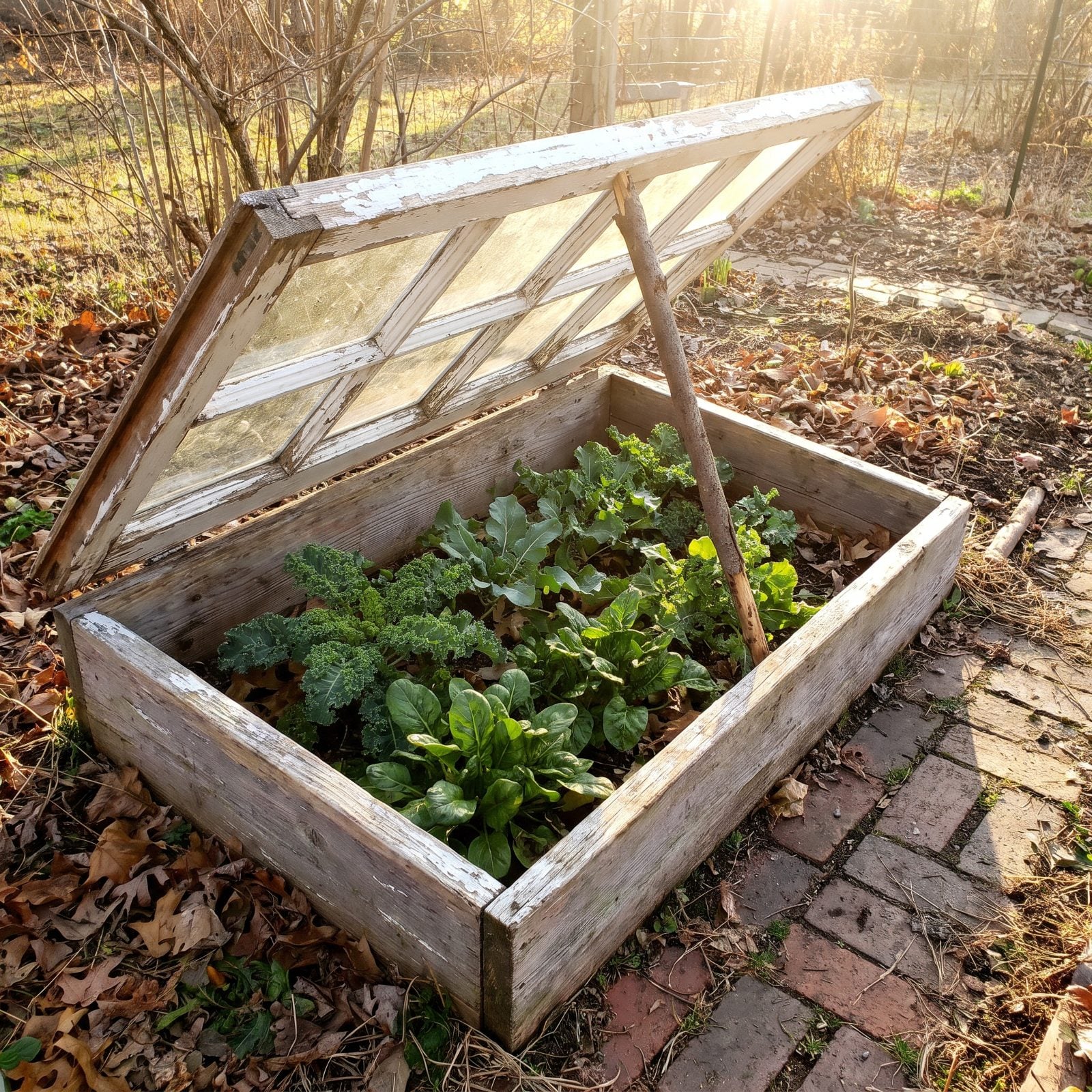
An old wooden window sash, too good for the skip, becomes the most useful thing in a January vegetable patch.
Lean it at an angle over a simple timber box and you’ve built a cold frame. The glass traps what little warmth the winter sun offers, and inside you can keep hardy salad leaves, winter lettuce, parsley and overwintering seedlings going weeks longer than open ground allows. A greenhouse the size of a coffee table, built from a window somebody threw out.
Prop the lid open a crack on milder days. Trapped condensation plus no airflow is how you grow mould instead of mâche — and I learned that the slow, disappointing way.
10. A Stone Face Peeking From a Garden Wall

Ivy frames this kind of thing. A cast-stone face set into a wall peers out between glossy ivy and soft ferns, half-hidden but never quite swallowed. Then the sun catches it, the green parts around it, and suddenly it’s looking back at you.
That’s the trick with wall ornaments. Site them where evergreen ivy and ferns will frame them without burying them, and one fixed object makes the whole garden feel quietly inhabited. A weathered green-man mask, or a small gargoyle tucked among green ivy and fern fronds with moss in its carved creases, is quietly one of the best things to look at in a sunlit garden.
9. A Teacup Bird Feeder Fixed to a Post
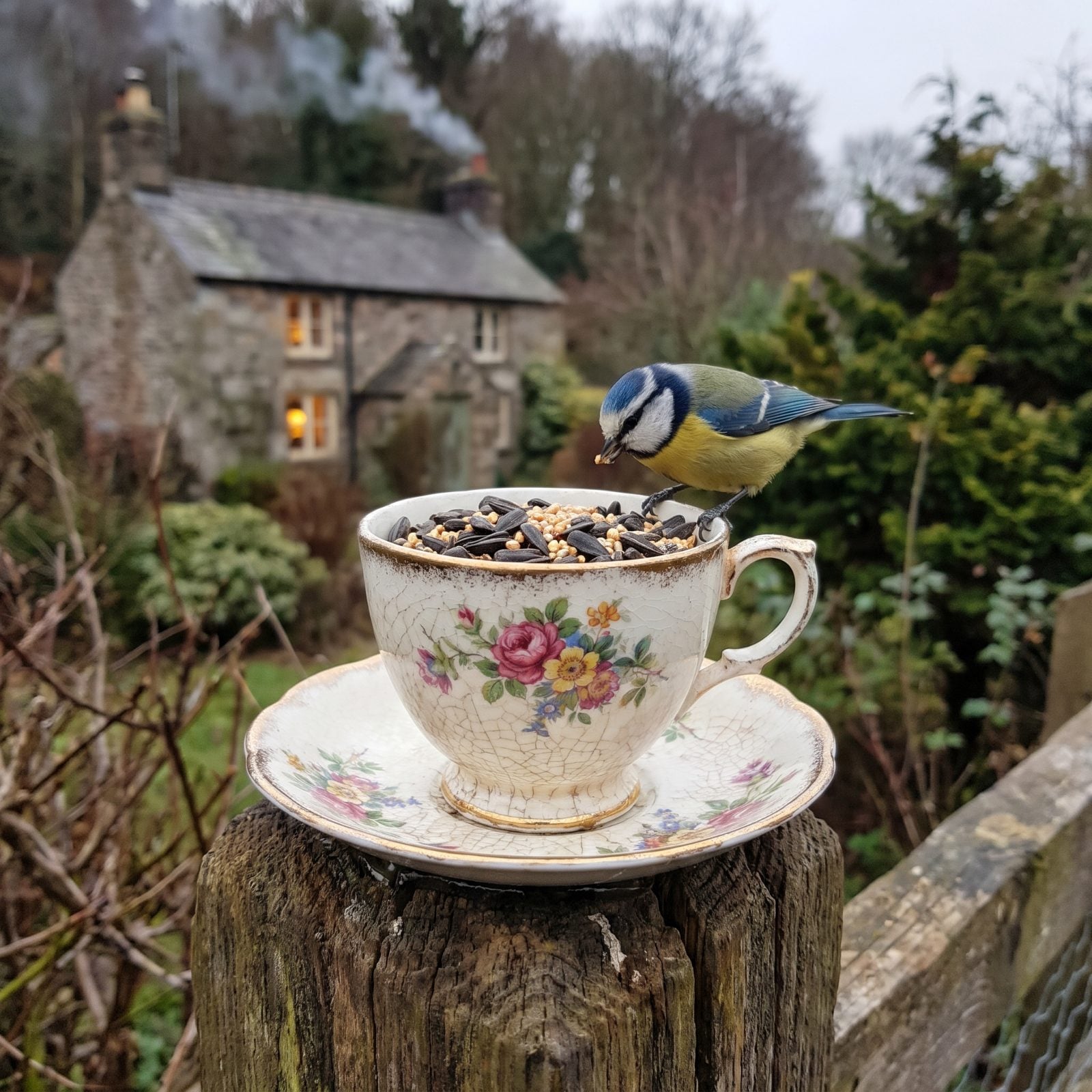
One orphaned china teacup, the saucer fixed flat on top of a fence post, the cup glued into the saucer so it sits upright, filled with seed. That’s the whole project.
In January, when natural food is scarce, small birds will work a feeder hard, and this one puts them at eye level somewhere you’ll actually see them. The floral pattern adds a spot of color to a grey morning, and there’s something about a blue tit perched on the rim of a rose-patterned teacup that genuinely improves the day.
8. A Pierced Metal Candle Lantern Among Bare Stems
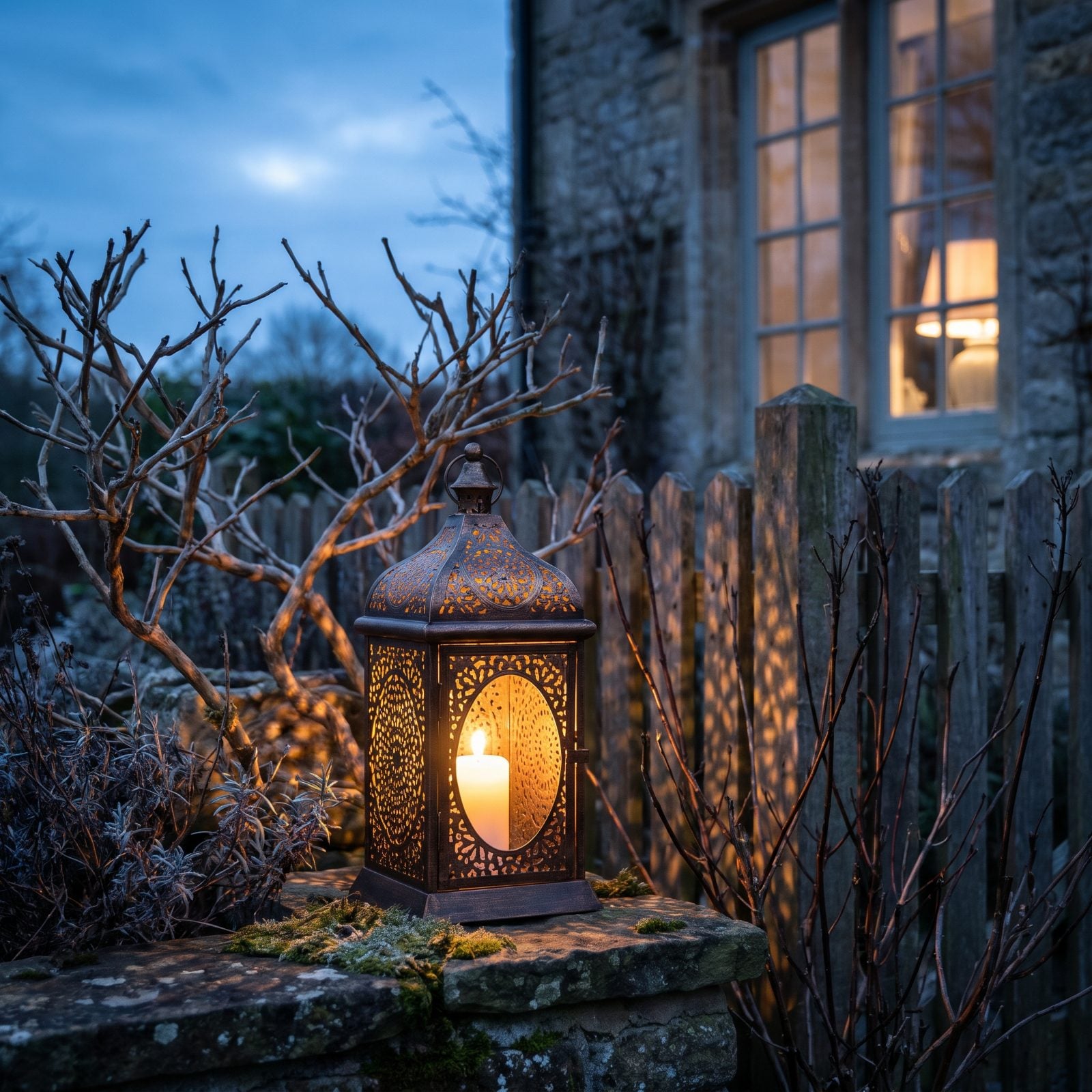
The low winter sun sets by four. A pierced metal lantern earns its keep in exactly that long blue hour.
Hang one from a shepherd’s hook among bare stems, drop in a candle or a flickering battery pillar, and the punched holes throw little points of light across the frost. The solar fairy lights give you a soft glow; the lantern gives you pattern — stars and dots scattered on the ground and up the bare branches.
Battery LED candles are the sensible choice outdoors, and I say that as someone who has relit a real candle in the wind three times before admitting defeat and shuffling back inside.
7. A Brush-Pile Hedgehog Shelter Tucked Behind the Shed
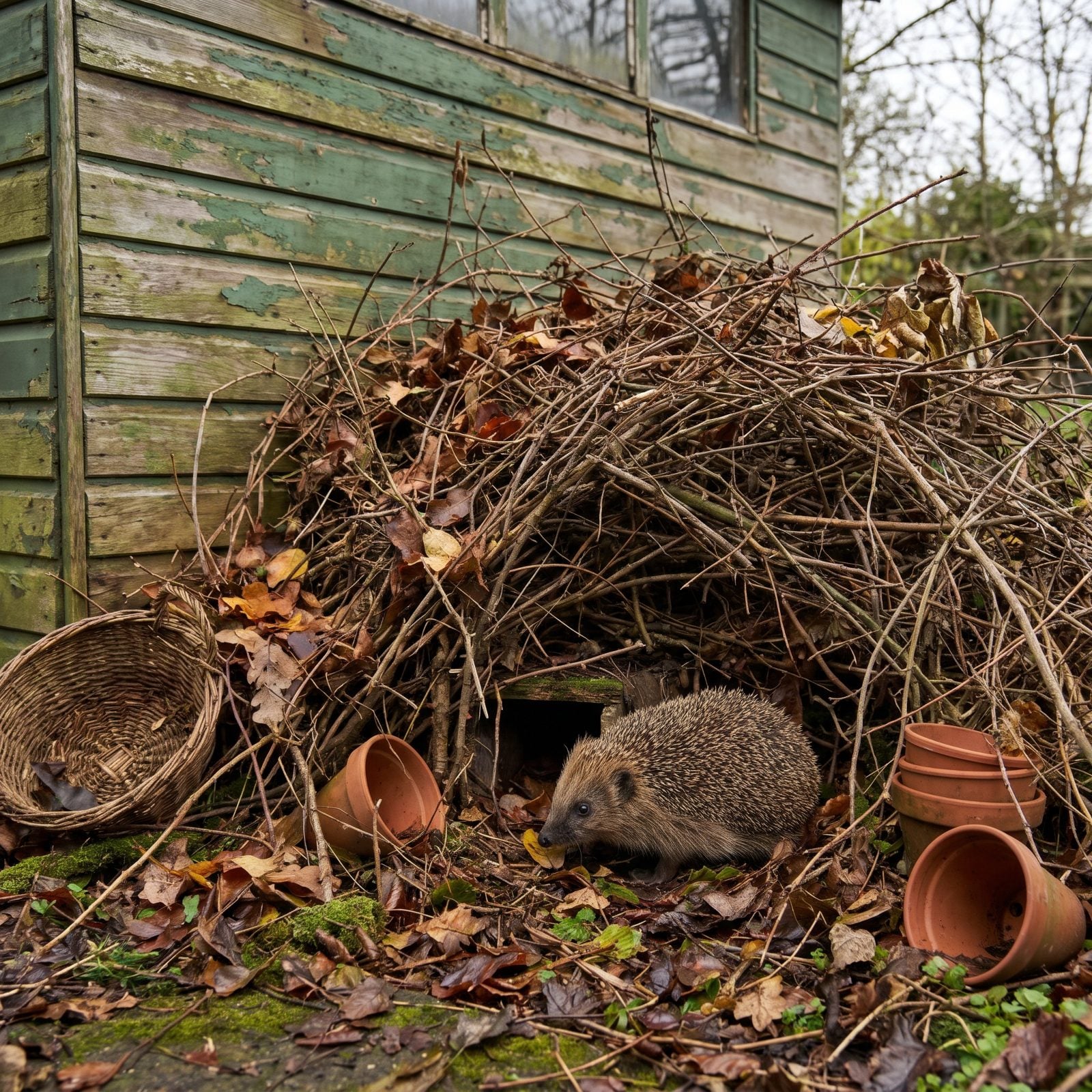
A hedgehog wandering your yard during a mild January spell needs somewhere to duck back into when the cold returns, and a brush pile gives it exactly that. Stack logs and snapped branches into a loose dome, roughly knee-high, then let leaves gather in the gaps.
The thing people get wrong is tidiness. A neat, tight pile is useless. You want air pockets, a lopsided base, an obvious way in. For years I raked every stick off my lawn and binned it, which I now realise meant chucking out free wildlife housing week after week.
As a wildlife advocate puts it, “Leave piles of dry leaves, logs and branches in a quiet and undisturbed part of the garden to provide hedgehogs with a warm place they may want to hibernate in over the winter.”
6. A Garland of Threaded Apple Slices for Hungry Birds
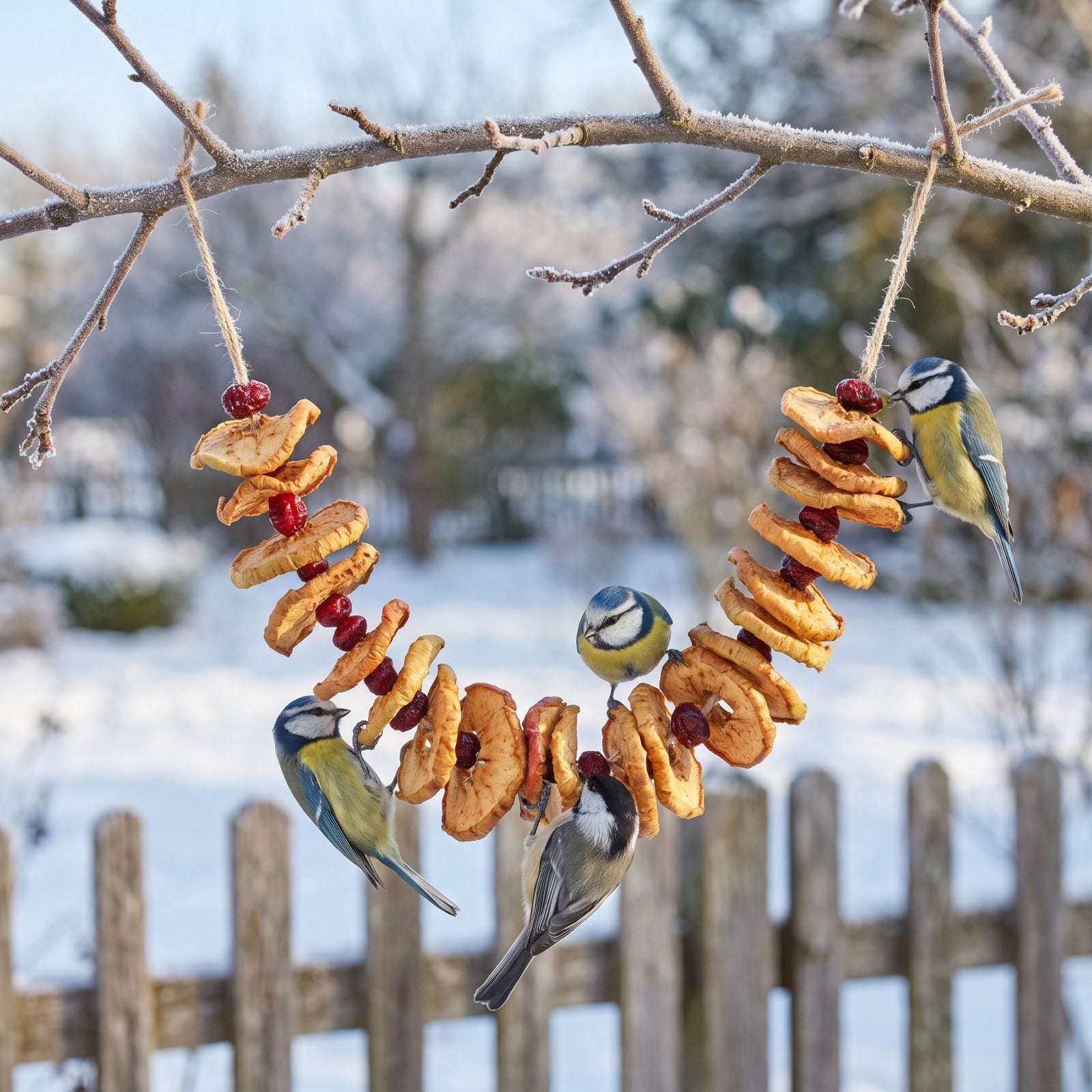
Threading apple rings onto twine takes ten minutes and feeds the birds for days. Core the apples, slice them into rounds, dry them in a low oven, push a string through the centres and hang the garland where you can watch it from a window. Blue tits in Europe, or chickadees in North America, work through them fast in a cold snap.
Skip anything mouldy, and don’t bother with the fancy supermarket rings loaded with sugar. Drying fruit you’d otherwise compost is the point. And there’s a quiet pleasure in watching a blue tit or chickadee pick at the last slice while you drink your coffee.
5. A Mosaic Stepping Stone That Catches the Low Winter Sun
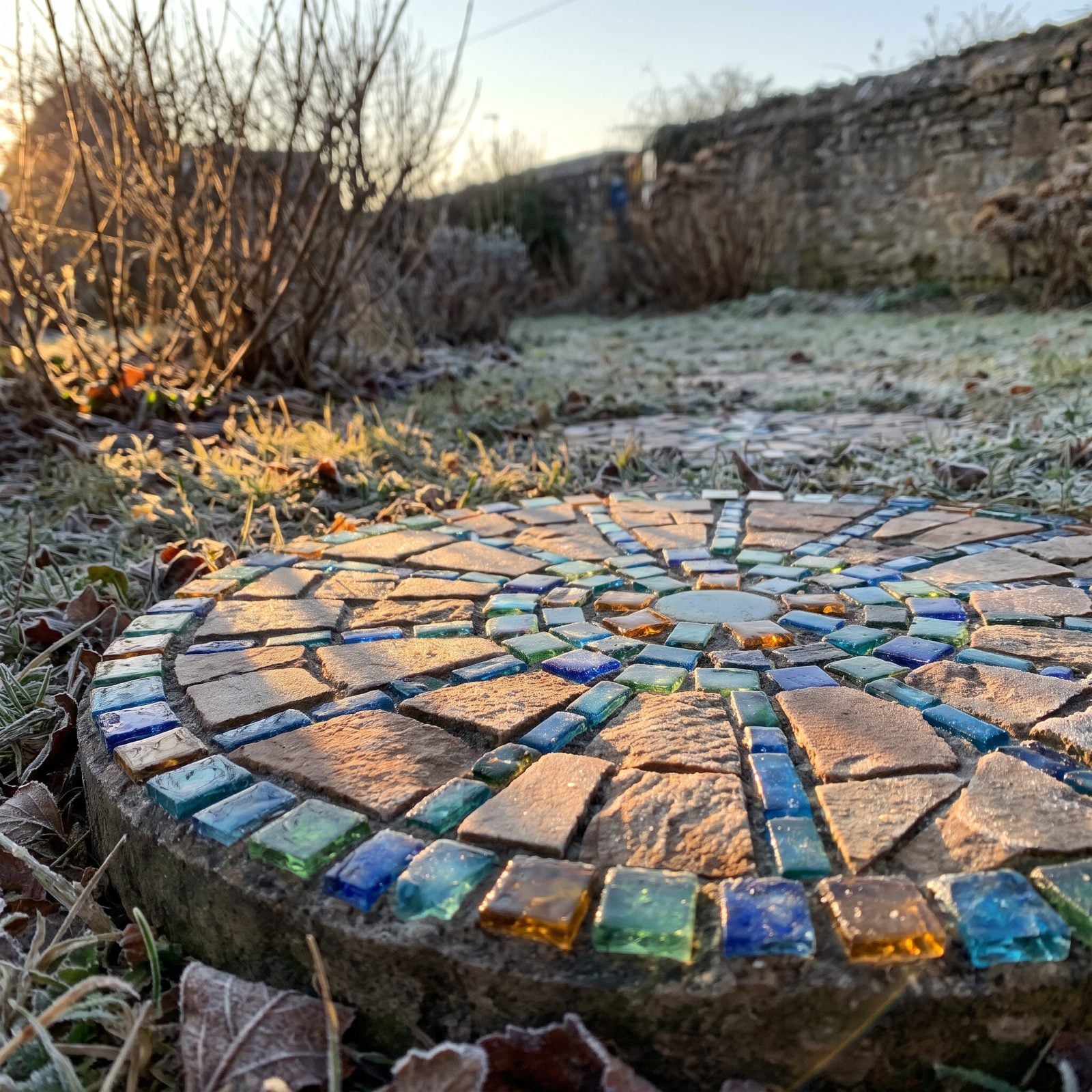
Winter light sits low and long, which is exactly when a mosaic stone pays you back. Glass and glazed ceramic set into the surface throw little glints of blue and amber across a yard that’s otherwise brown and grey. On a frosty morning the glass catches the sun first, glowing bright while the grass and fallen leaves right up to its edge stay rimmed in white frost.
4. A Miniature Stumpery Where Ferns and Beetles Overwinter
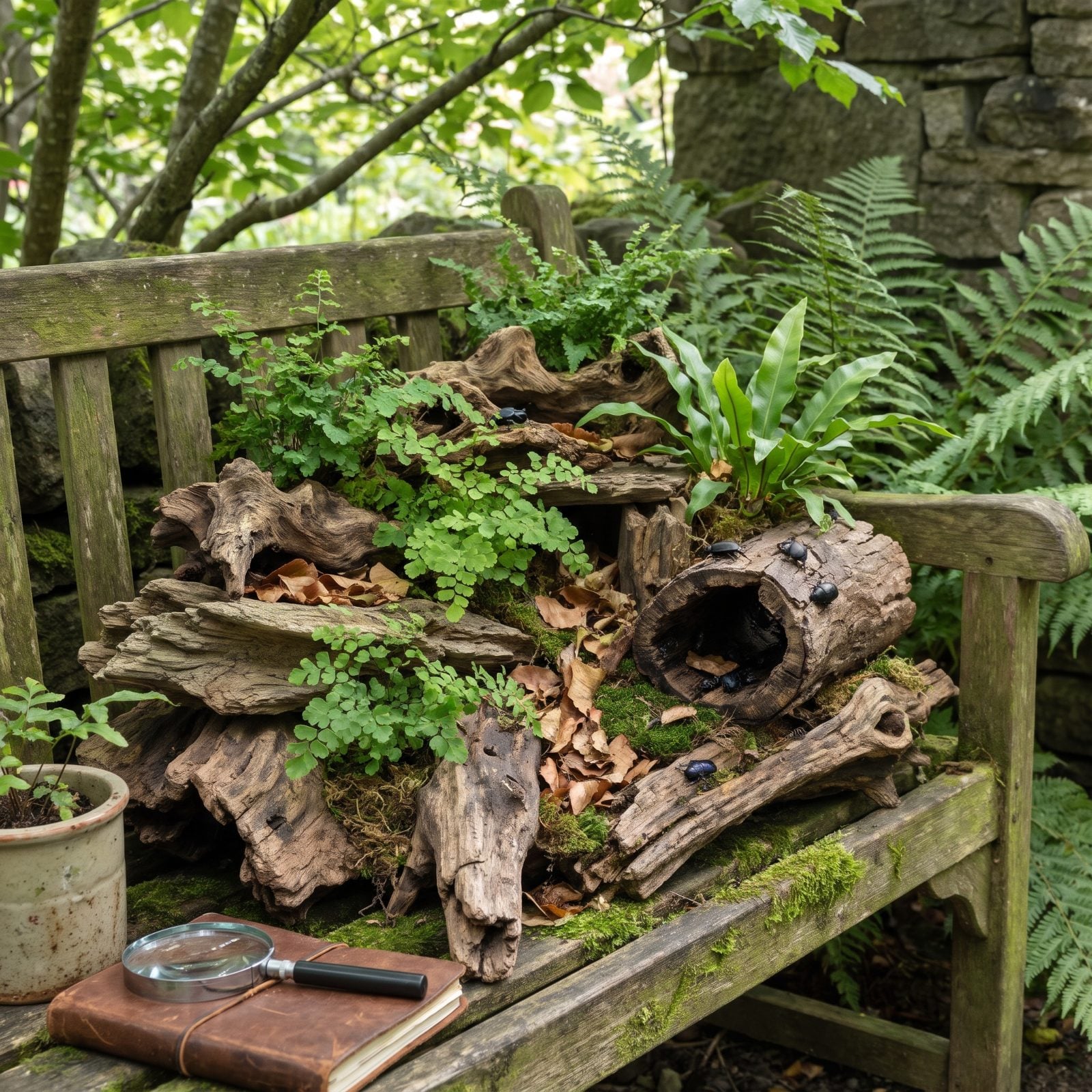
A stumpery is just stumps, roots and rotting logs stacked into a deliberate heap, and the Victorians were mad for them. Set a few in a shady corner, wedge hardy ferns into the gaps, and let moss do the rest.
The real work happens where you can’t see it. Decaying wood is overwintering quarters for beetles, woodlice and the larvae of all sorts of useful insects, which in turn feed birds come spring. It looks ancient within a single season. Honestly it’s the laziest good-looking feature in the whole garden, and I mean that as high praise.
3. A Short Boardwalk Across the Muddiest Patch of Lawn
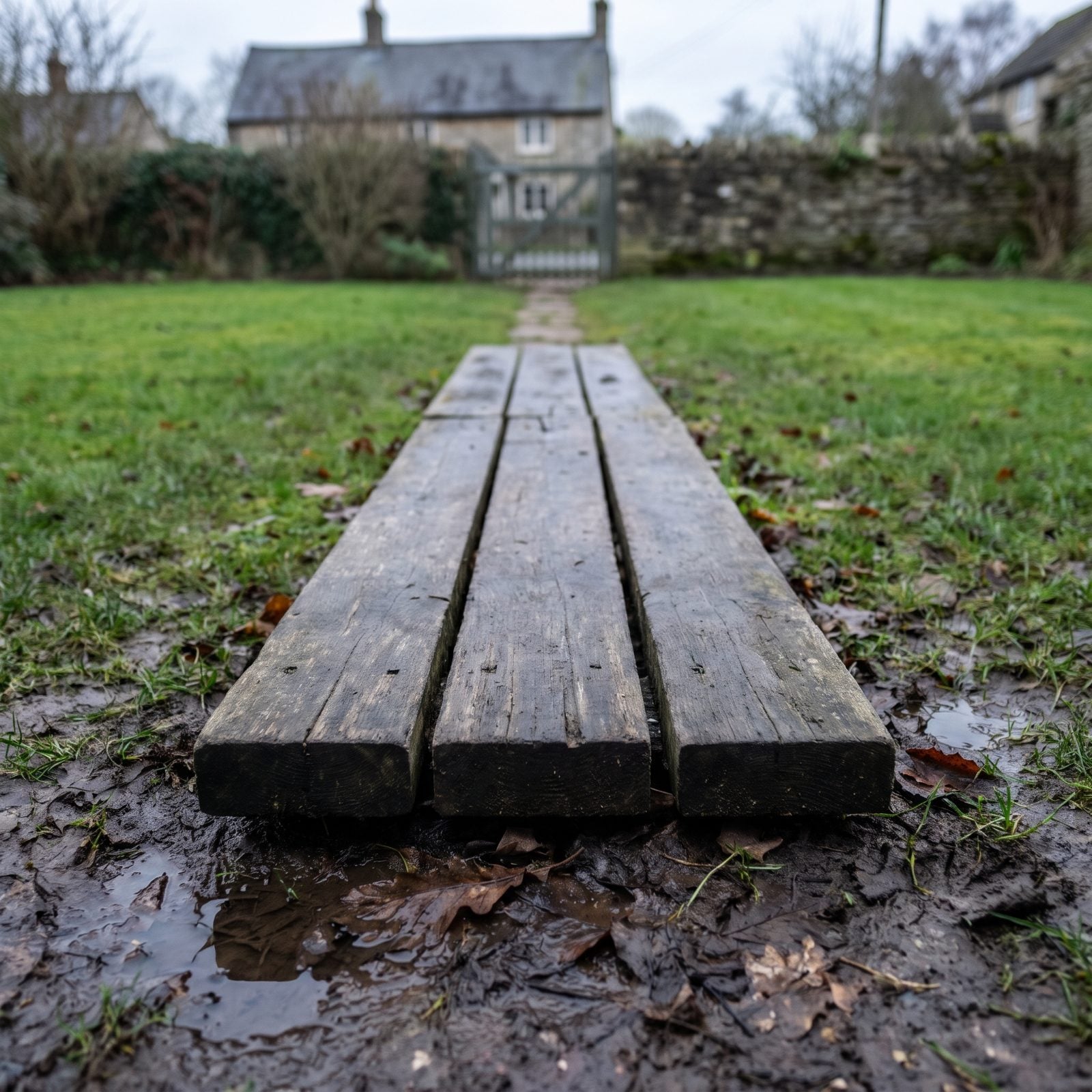
Every garden has the spot that turns to soup in January. The low corner, the path to the compost, the gate everyone uses. A short run of timber boards lifted on a couple of bearers gets you across without wrecking the grass or carrying mud indoors.
It doesn’t need to be grand. Three or four planks, slightly raised, with a strip of chicken wire tacked on top so it isn’t lethal when frosted. I put off building mine for two winters and spent both of them scrubbing boot prints off the kitchen floor.
2. A Glass Bell Jar Protecting the First Emerging Bulbs
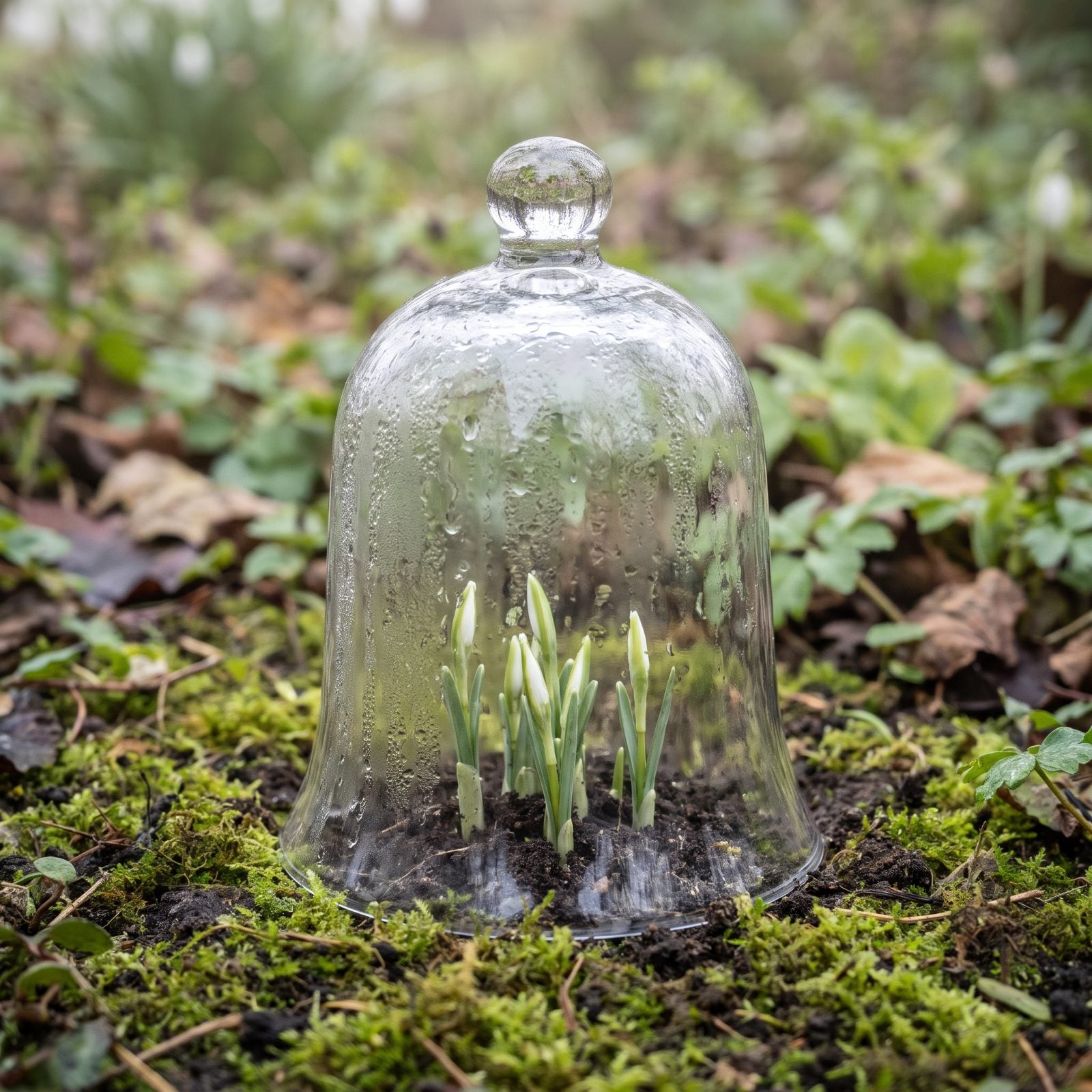
Snowdrops and early crocus don’t need coddling, but a glass cloche over the first shoots does two things. It shelters them from the worst battering sleet, and it turns a muddy bed into something worth crouching down to look at. Frost blooms on the glass, the green pushes up beneath, and suddenly you’ve got a tiny terrarium.
Lift it on milder days so air moves, or you’ll cook the shoots the moment the sun comes out. An old glass dome from a junk shop works as well as a new one, often better.
1. A Pattern of Pinecones Pressed Into a Gravel Path
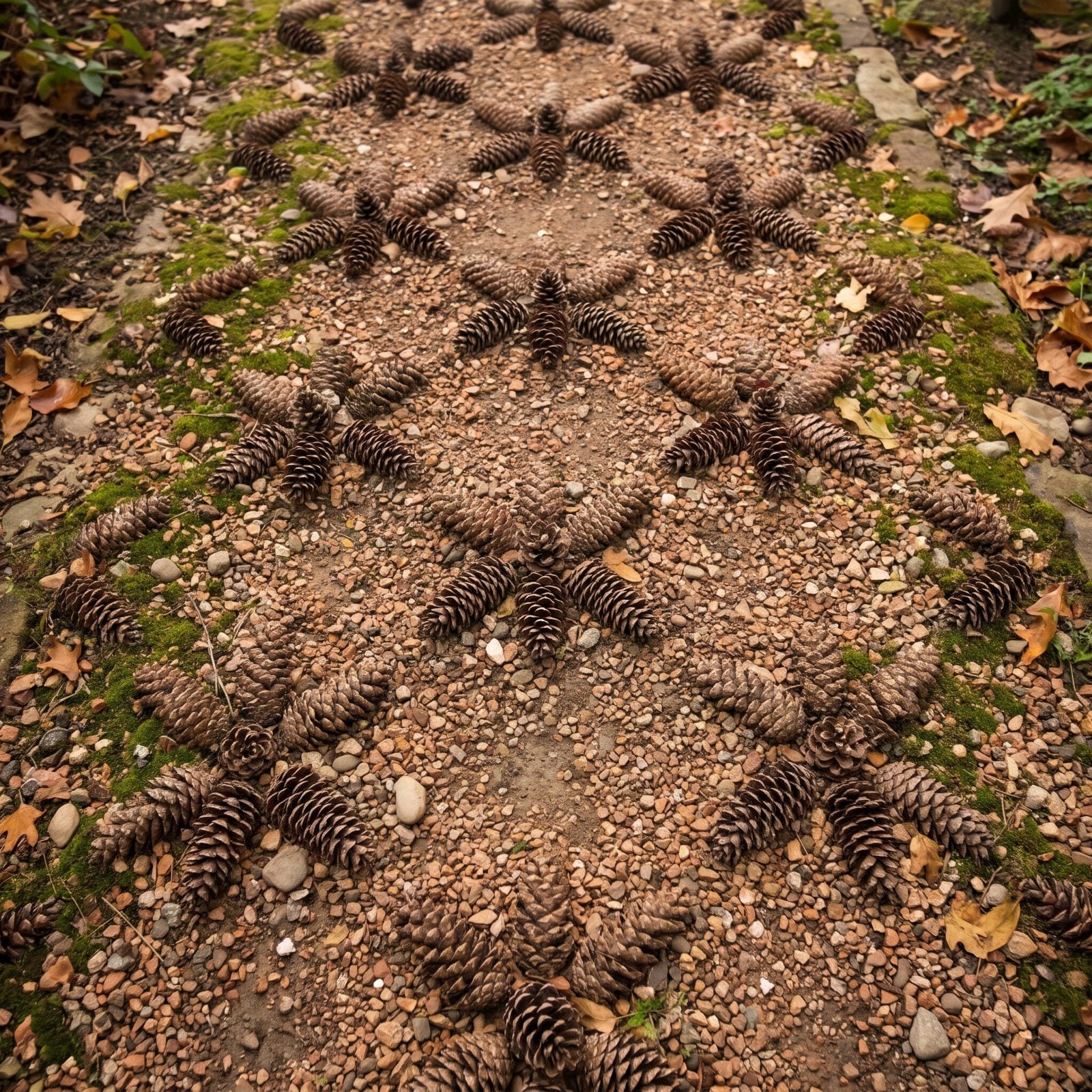
Pinecones pressed scale-up into gravel give a flat winter path texture and a bit of sound. Walk over them and there’s a faint crunch and rustle, which in a silent frosty garden counts for something.
They open and close with the humidity, so the pattern shifts between wet and dry. Wedge them firmly into the stones so they don’t scatter in the first gust. Collect them on an autumn walk and they cost nothing. It’s the sort of small, slightly obsessive detail nobody asks for and everybody comments on. Go collect a basketful.