
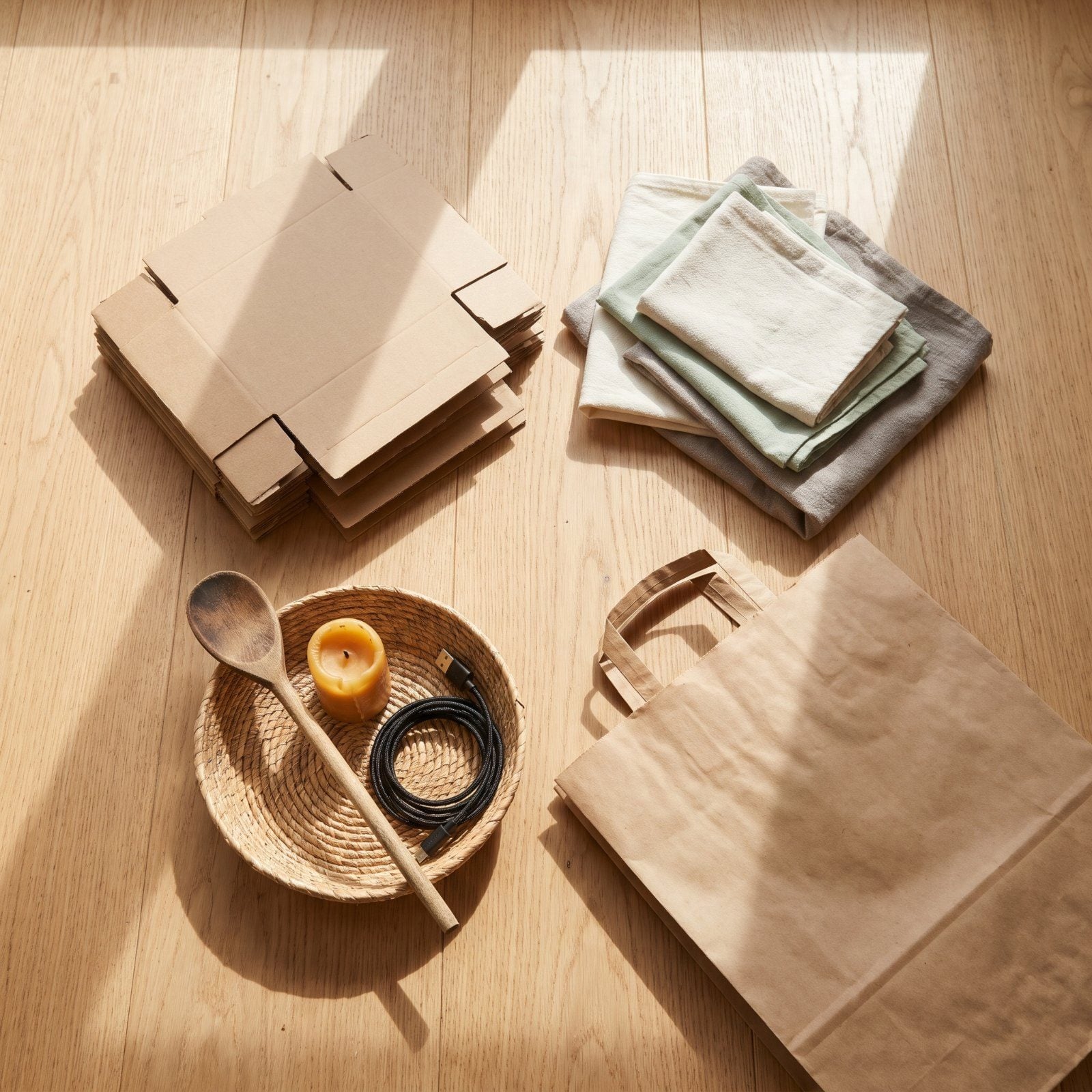
The first week of January smells like pine needles going brittle and cardboard waiting by the door. Everyone talks about buying less. Almost nobody mentions the stranger ritual that happens once the tree comes down: the slow, honest audit of what the house has been hoarding since last winter. Minimalists do this on purpose, and fast, before the resolve wears off. What goes out tells you more than what stays. Some gets donated, some recycled, and some belongs at a drop-off you’ve been avoiding because it’s a little inconvenient. Here’s what leaves, and where it should actually land.
Please note that some of the images in this article were created with the assistance of AI.
38. Last Year’s Paper Wall Calendar
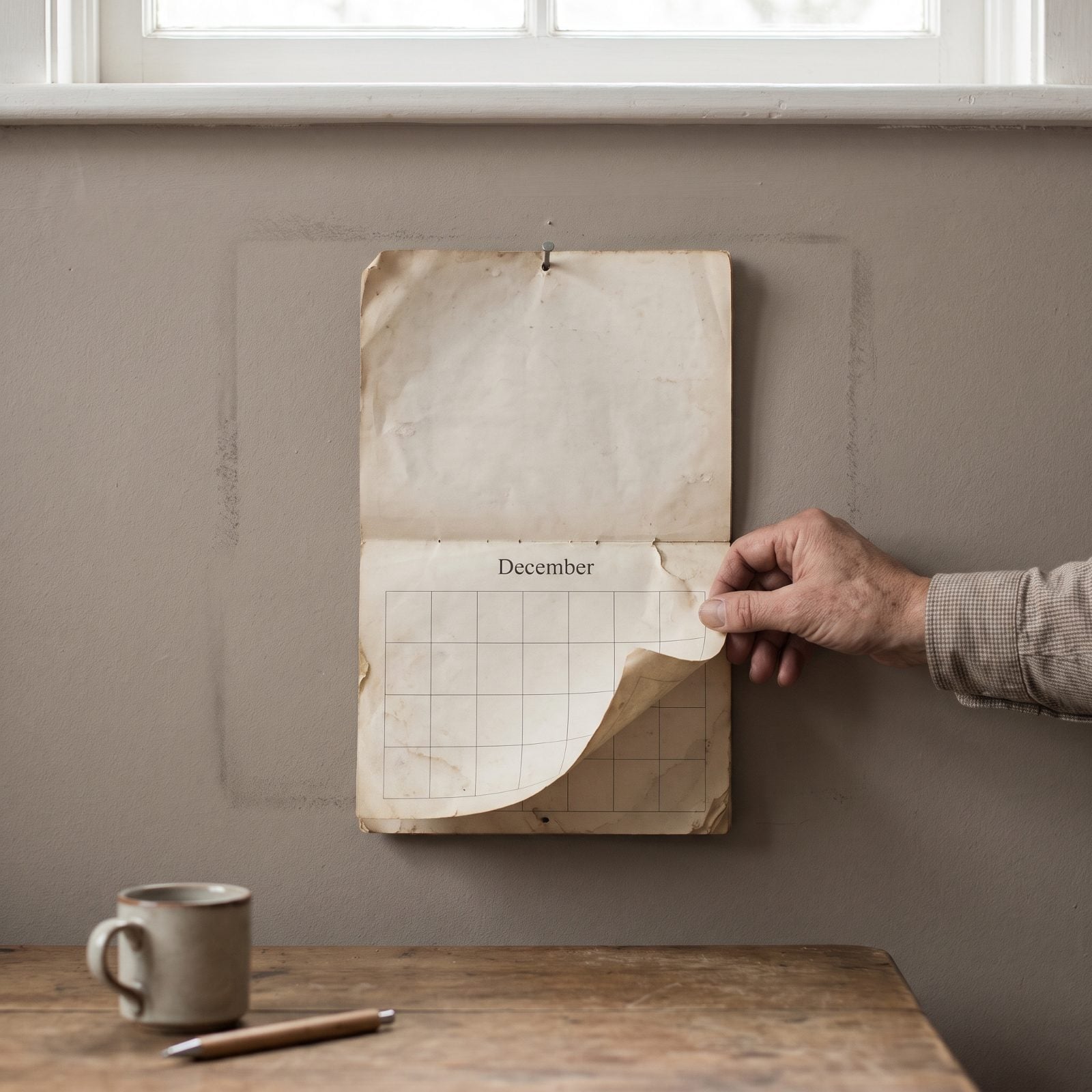
It’s done its job. Twelve months of dentist appointments and birthdays you half-remembered, and now it’s just paper wearing the ghosts of your old handwriting.
The glossy cover often has a plastic laminate or spiral binding, so pull those off before it goes in the bin. The inner pages recycle fine. Snap a photo of any months with real notes on them and the whole thing can leave the house.
37. The Unwanted Holiday Gifts Still in Their Boxes

You know the gift. The one you smiled about and then set on the guest bed, where it’s been quietly waiting for a verdict ever since. Keeping it out of guilt helps no one, least of all the person who gave it.
If it’s unopened and seasonal, a local shelter or charity shop will take it fast in early January, when donations usually slow down. Someone will genuinely want that candle set. It just isn’t you.
36. Christmas Ornaments That Finally Cracked
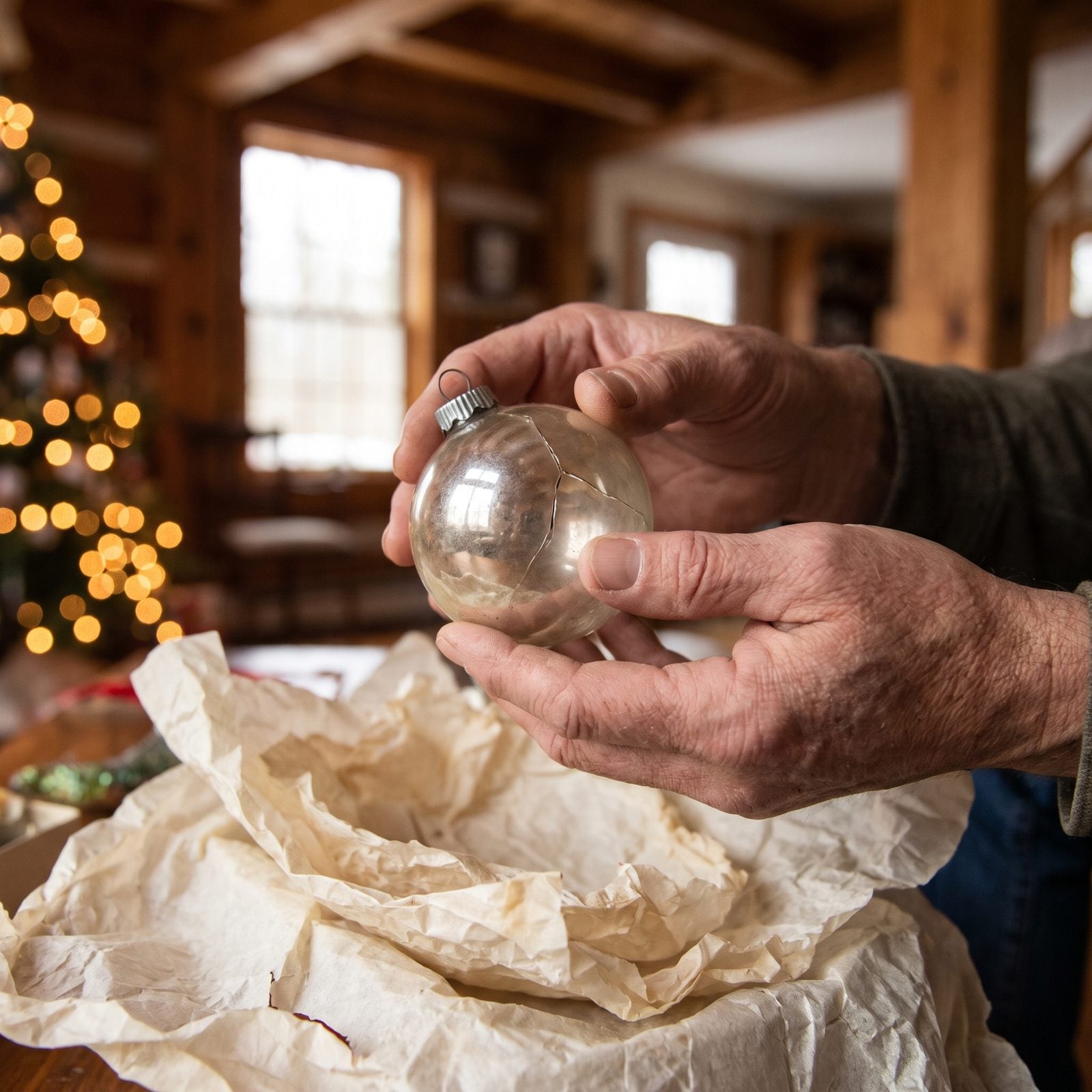
Sentiment keeps a lot of broken glass in circulation. That cracked bauble from your first apartment isn’t going back on the tree, and it’s a hazard waiting in a storage tote.
Shattered glass and ceramic ornaments aren’t curbside recyclable, so wrap the sharp pieces in paper before they go in the trash. Old incandescent light strings are a different story. Plenty of hardware stores and mail-in programs recycle them in January specifically.
35. The Decor That Stayed in Its Box All Year

Here’s the honest test minimalists run. If something lived in a box for all twelve months and you never once missed it, you don’t own it. You’re just storing it.
The vase you forgot you had, the extra candlesticks, the throw that never made it onto a couch. None of it earned its square footage. Donate it while it’s still clean and wanted, not in three years when it’s gone dusty and you can’t even remember what it looked like.
34. Expired Pantry Staples Hiding at the Back
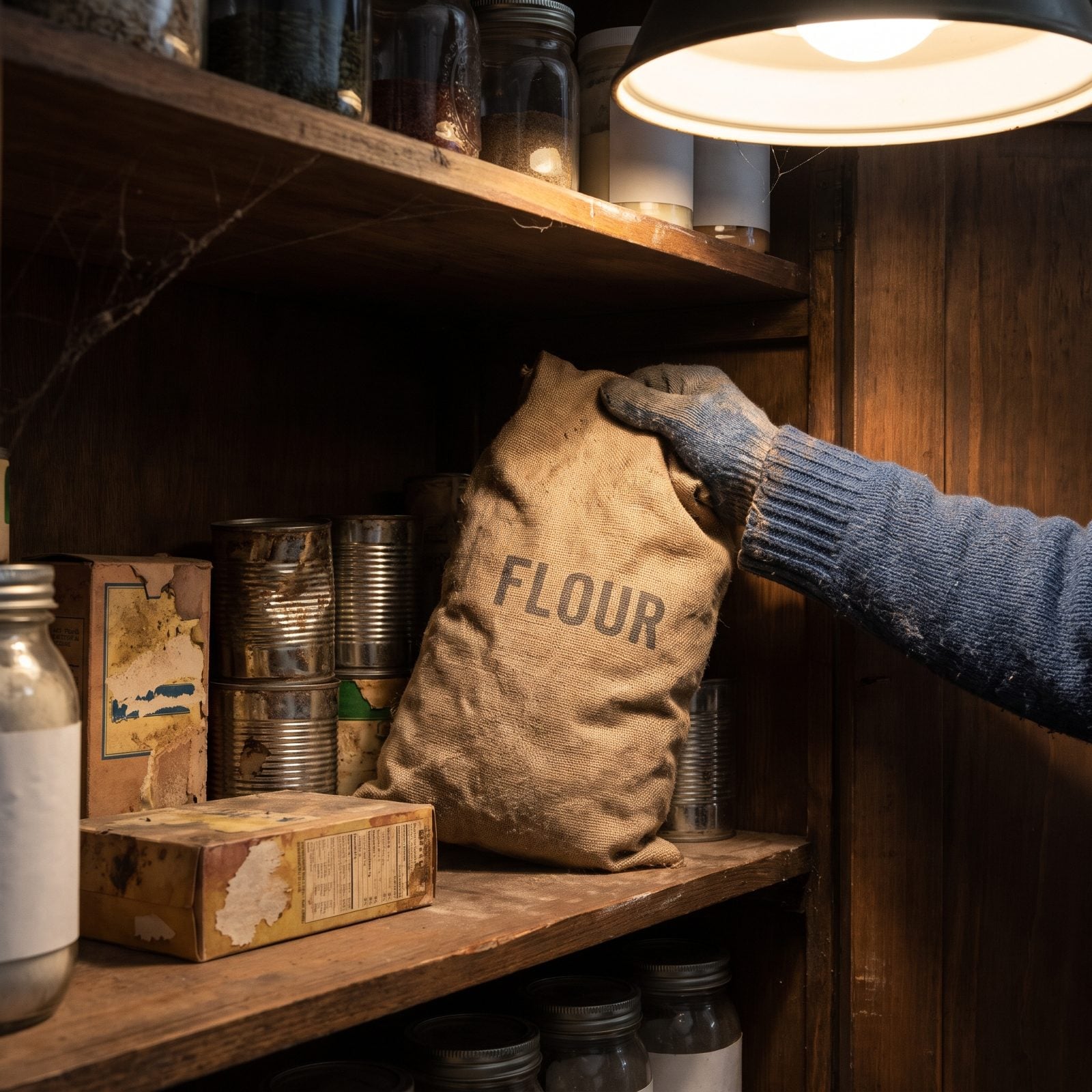
Pull everything forward. The back row of the pantry is where good intentions go to expire: the specialty flour you bought once, the quinoa from a phase you had, the dried herbs that lost their smell two summers ago.
Unopened and not too far past date? A food bank may still take it, so check their list first. Actually expired? Empty the cans and jars, recycle the containers, and compost the contents where you can. The pantry breathes easier and so do you.
33. The Mystery Packages at the Bottom of the Freezer
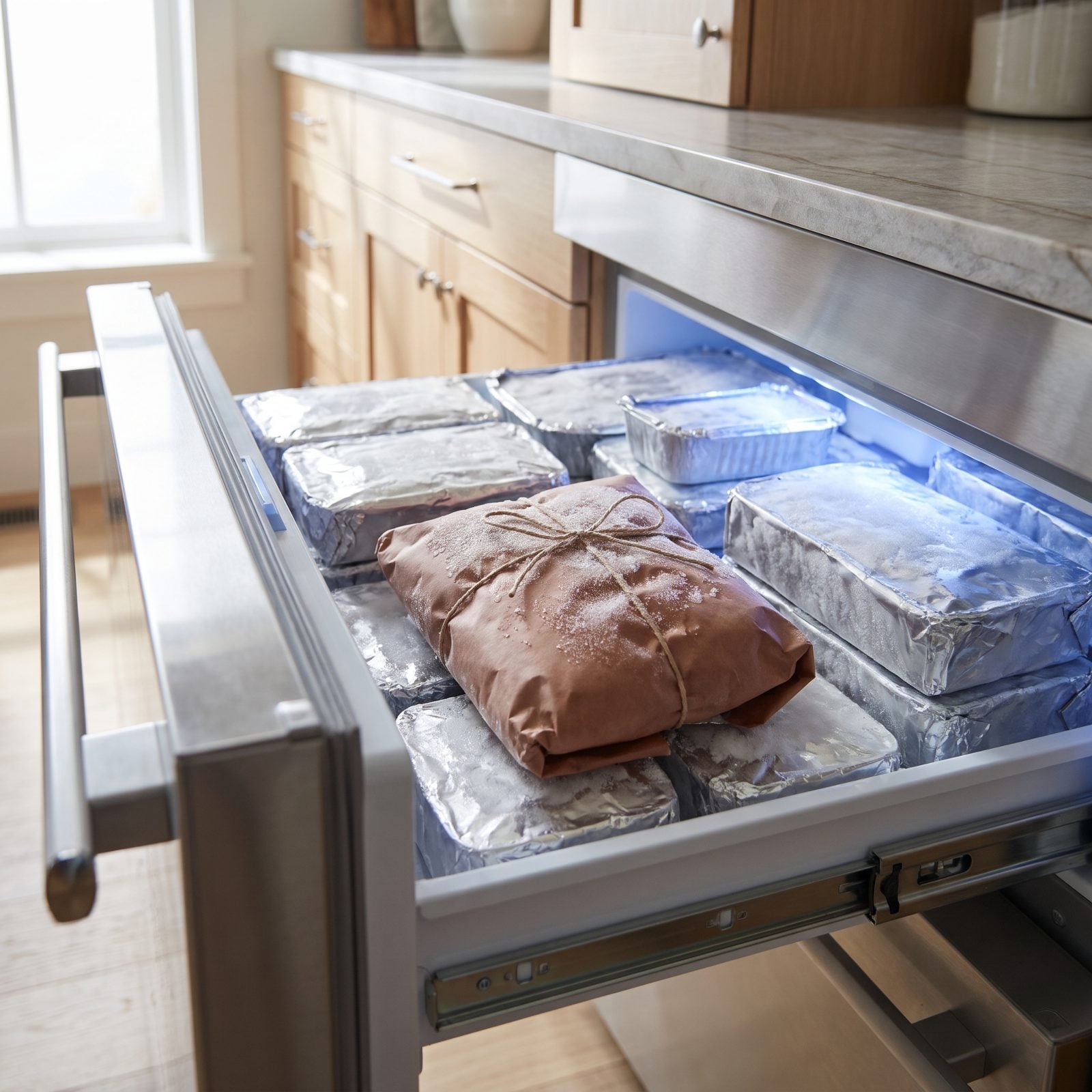
Every freezer has them. Foil bricks with no label, furred in frost, that you’ve been meaning to identify since roughly last spring. If you can’t tell what it is, it isn’t dinner anymore.
Freezer burn and a year of cold do food no favors. Compost what you can, scrape the rest into the trash, and recycle the clean containers. The real prize is the space, and the small freedom of opening that drawer without dread.
Describing what freezer burn does to meat left too long in the cold, a consumer-testing scientist with a biochemistry background explains “This leaves the previously moist cut of meat dehydrated, making its texture significantly denser and rubberier.”
32. The Condiments Nobody in the House Actually Likes
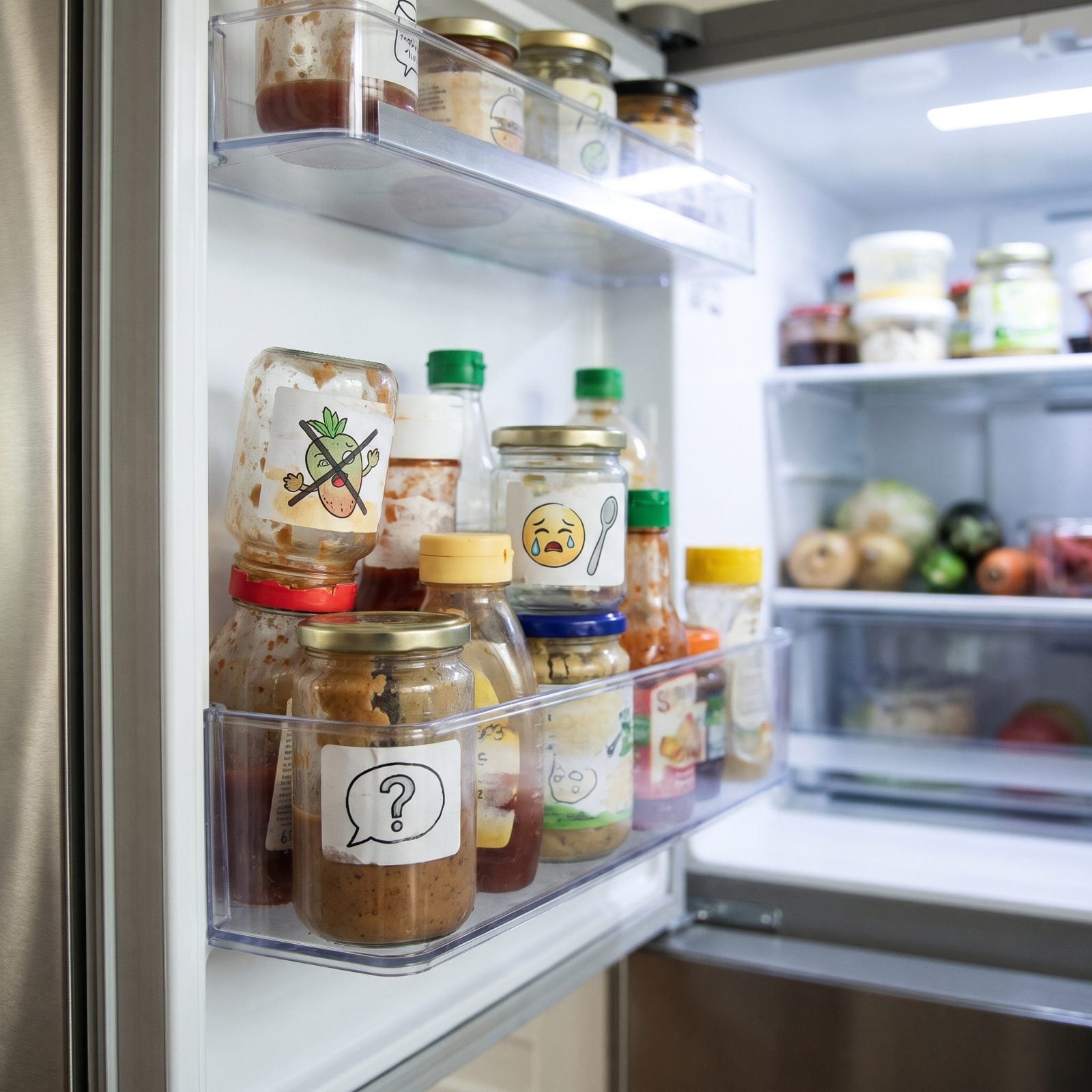
The fridge door is a graveyard of good intentions. That fancy chutney from a gift basket, the mustard bought for one recipe, the hot sauce with a crust sealing the cap shut.
If nobody’s reached for it in a year, nobody will. Scrape the contents into compost or trash, rinse the glass jars, and recycle them. You’ll be shocked how much door space opens up, and how much easier it gets to find the things you actually use.
31. The Drawer Full of Takeout Condiment Packets
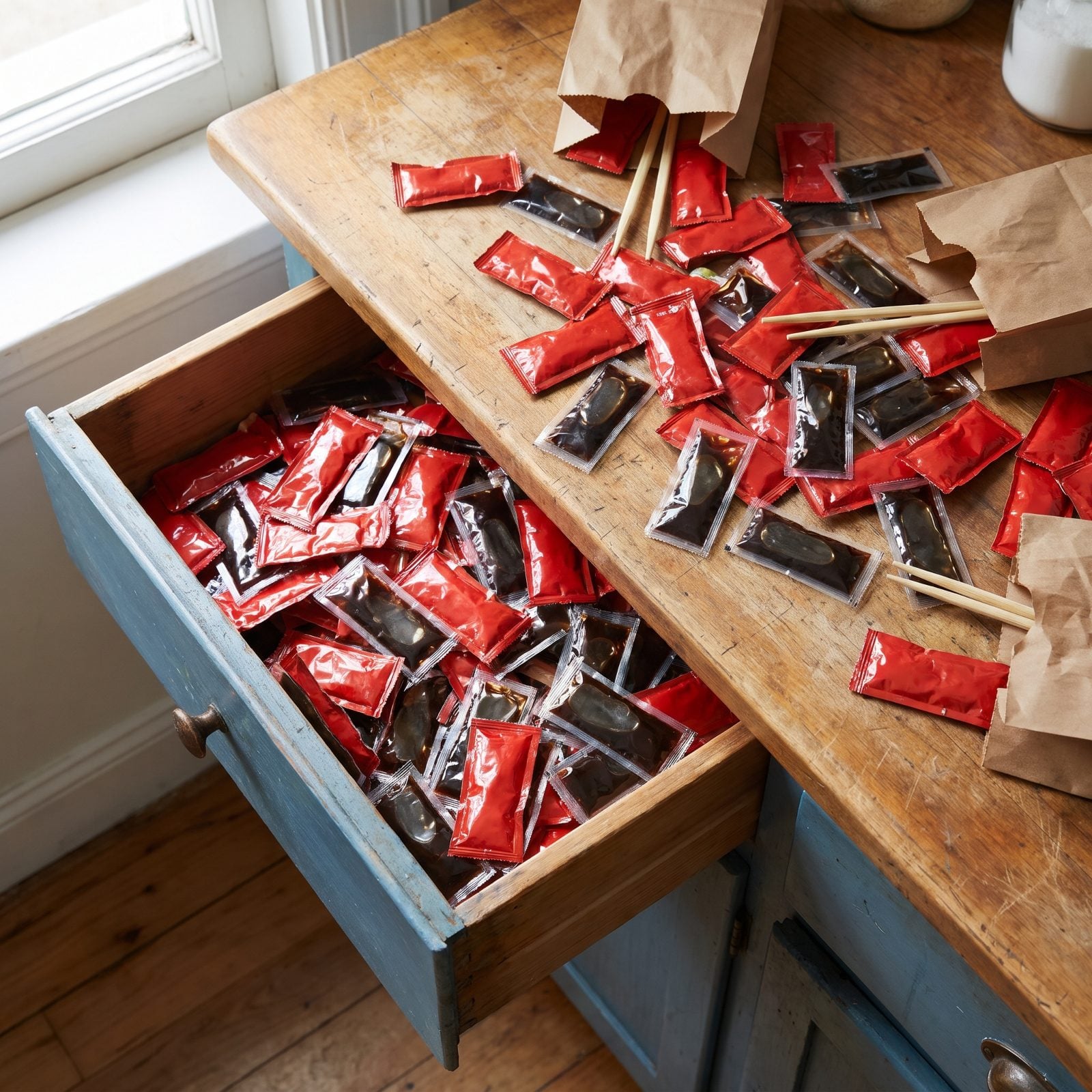
Somewhere in your kitchen is a drawer or a bowl holding dozens of soy sauce packets you will never use. Admit it. We all have the stash.
They feel too useful to throw out, which is exactly why they pile up for years. Most are already past their prime by the time you’d reach for one. These little foil sachets aren’t recyclable, so here’s one clean sweep straight into the trash. Then stop grabbing extras at the counter. You have enough mustard for a wedding.
30. Expired Medications Crowding the Cabinet

The medicine cabinet collects the most dangerous clutter in the house, and the kind people handle the worst. Expired antibiotics, old painkillers, cough syrup from a cold you got over last March.
Don’t flush them. Don’t toss the bottles in the trash, where labels and leftover pills are both a risk. Most pharmacies and many police stations run year-round take-back bins, and the DEA holds national drop-off days. That’s where these belong. One trip, and it’s the single most responsible clear-out on this whole list.
29. Expired Makeup That Should Have Gone Months Ago
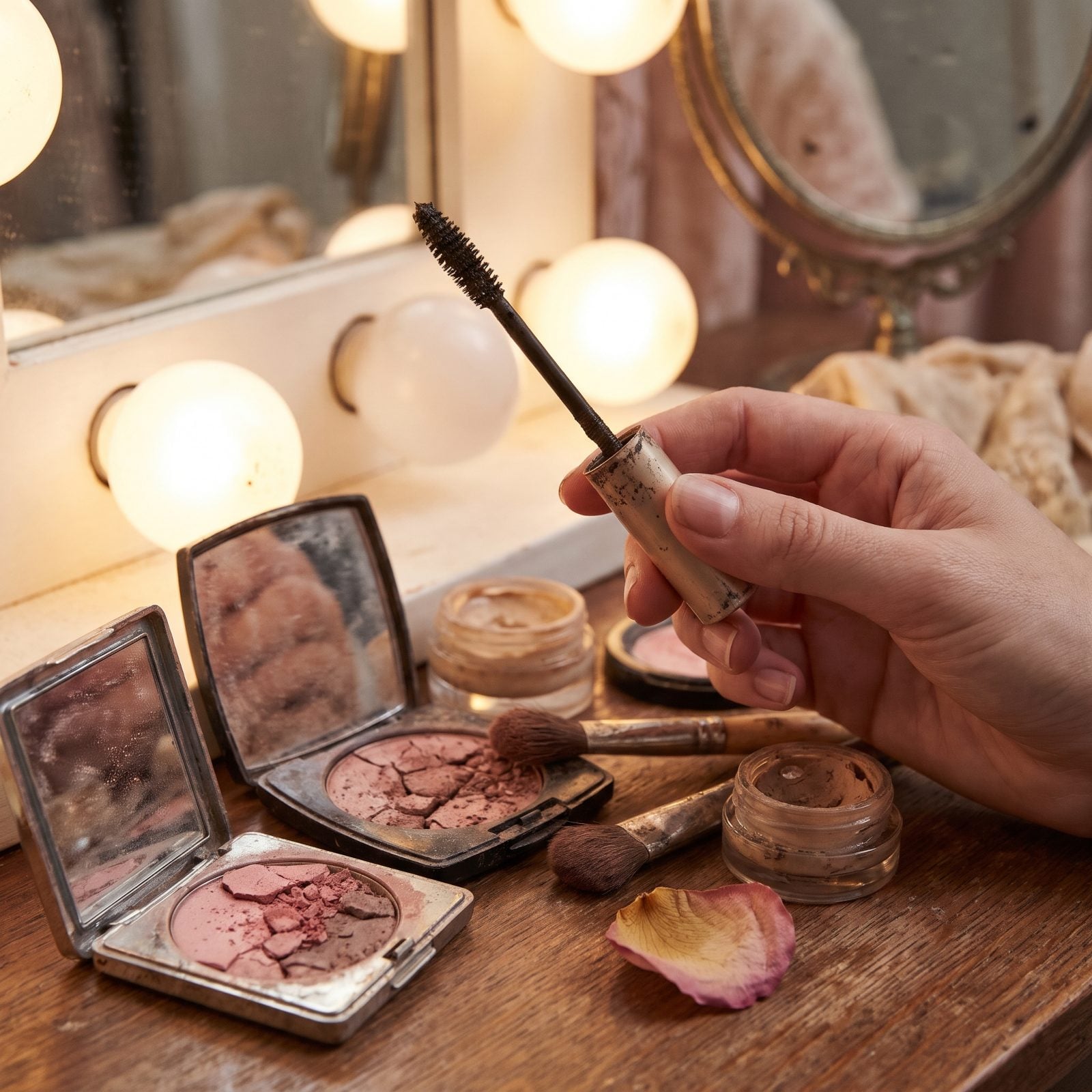
Makeup doesn’t last forever, and that mascara you’ve had for two years is a petri dish you’re holding up to your eye. The little jar symbol on the packaging tells you how many months it stays good once opened.
Dried foundation, cracked powder, the lipstick worn down to a nub you keep for no reason. Wipe out the containers and check whether the brand runs a return program, because some take back empties for recycling. The rest goes in the trash, and your morning routine gets honest again.
Explaining why she now throws out her mascara every three months, an ophthalmologist writes “Microbial organisms are present on your lashes and they can flourish in tubes and bottles when given the chance.”
28. Nearly Empty Toiletries Nobody Reaches For
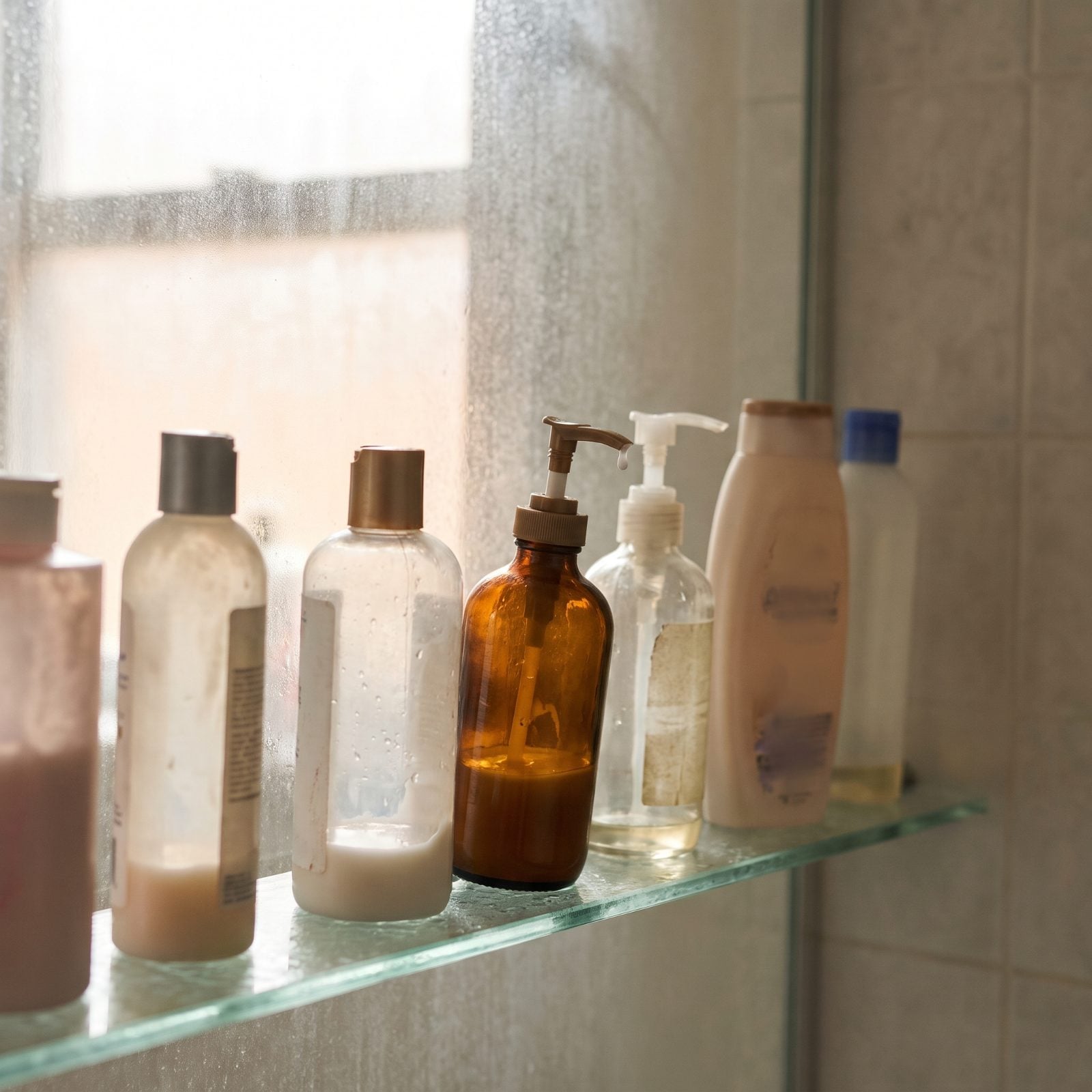
The shelf fills with bottles holding one sad pump of lotion each, and you keep them because they’re not technically empty. That’s the trap.
A product you’ve ignored for six months is a decision you already made. The shampoo that smelled wrong, the body wash that leaned too floral, the three-quarters-gone sunscreen from a trip two summers back — none of it is coming off the bench, and some part of you has known that for a while.
Empty the dregs, rinse the plastic, recycle what your program takes. You’ll gain back a whole shelf and the small relief of not knocking over seven things to reach your toothbrush.
27. Sample-Size Products Still Sealed in the Drawer
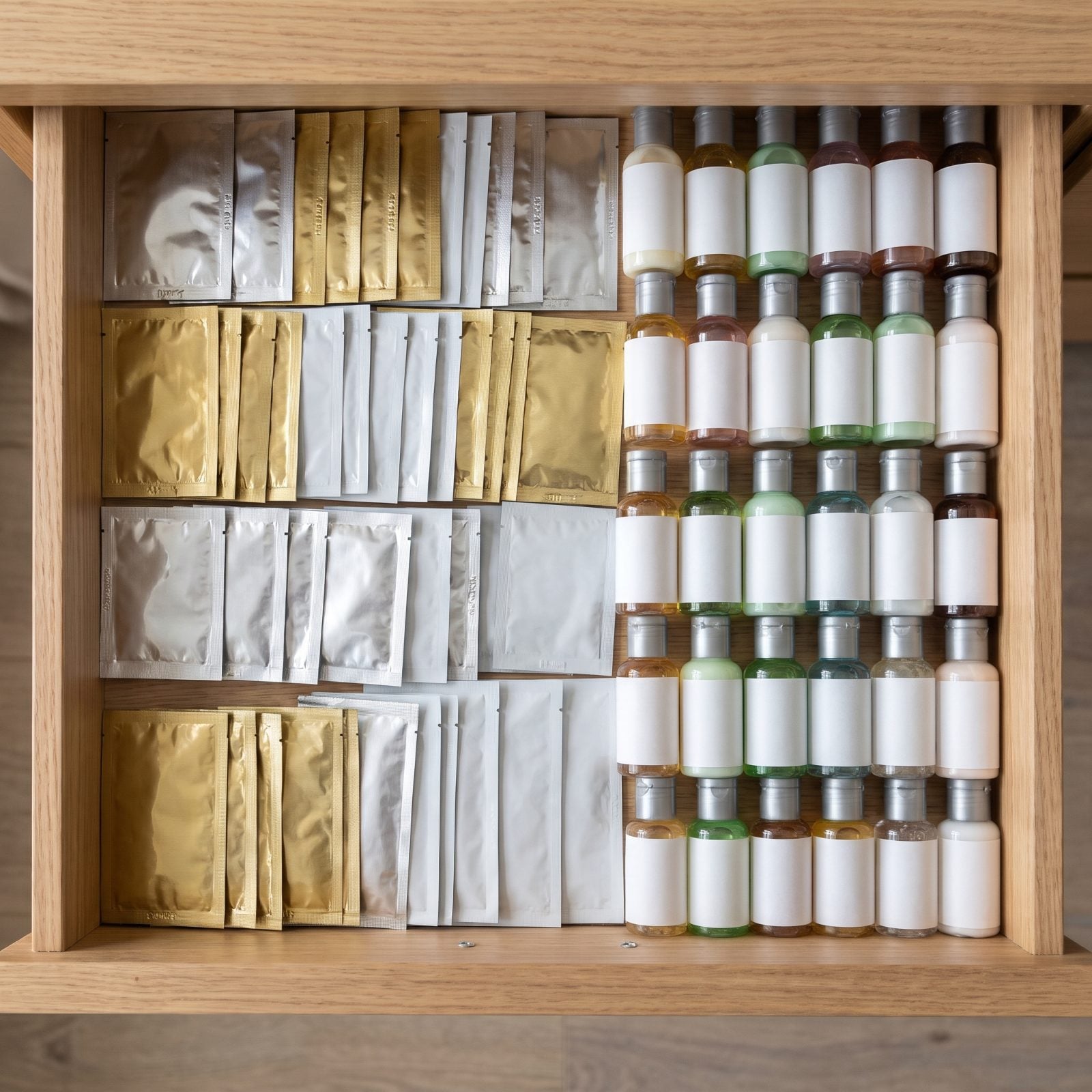
Freebies breed in the dark of a drawer. Every cosmetics order, every hotel stay, every gift bag drops another foil packet into the pile, and the pile never once shrinks on its own.
Here’s the honest part: you were never going to use most of them. A sample is a trial, and you’ve had years to try. So either it earns a spot in your routine this week or it goes.
Unopened ones in decent shape can go to a shelter or donation program that takes personal care items. The rest head to the trash without ceremony.
26. Dried-Up Pens and Dead Markers in the Junk Drawer
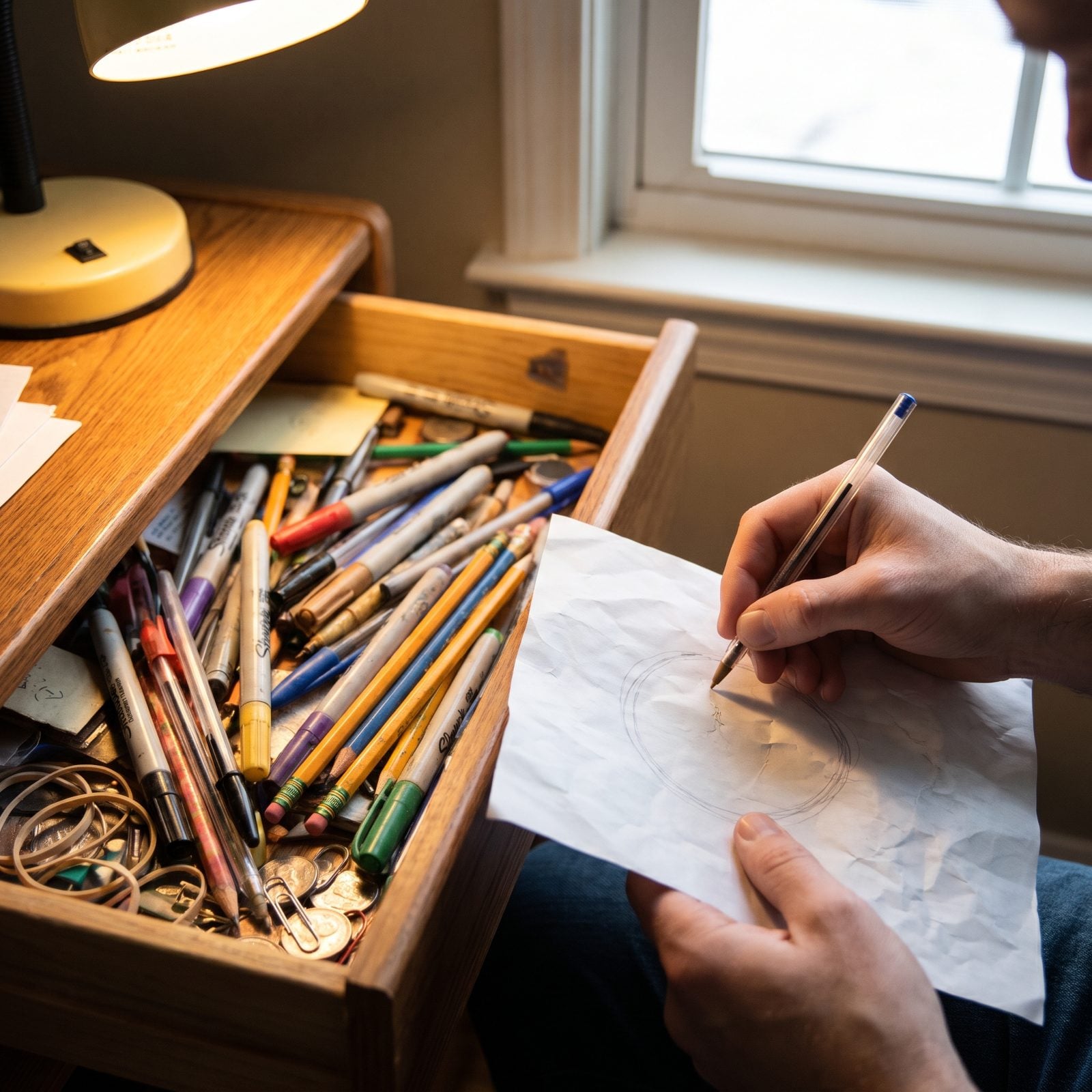
You know the test. You scribble a loop, nothing comes out, and you put the pen back in the drawer anyway. Next week you do it again with the very same pen.
Dead pens don’t rise from the dead. Dump the whole cup, test each one on a scrap of paper, and keep only the writers.
Some office supply retailers run pen and marker take-back programs, which beats sending a fistful of plastic to the landfill. Check before you chuck.
25. Receipts Long Past Their Return Window
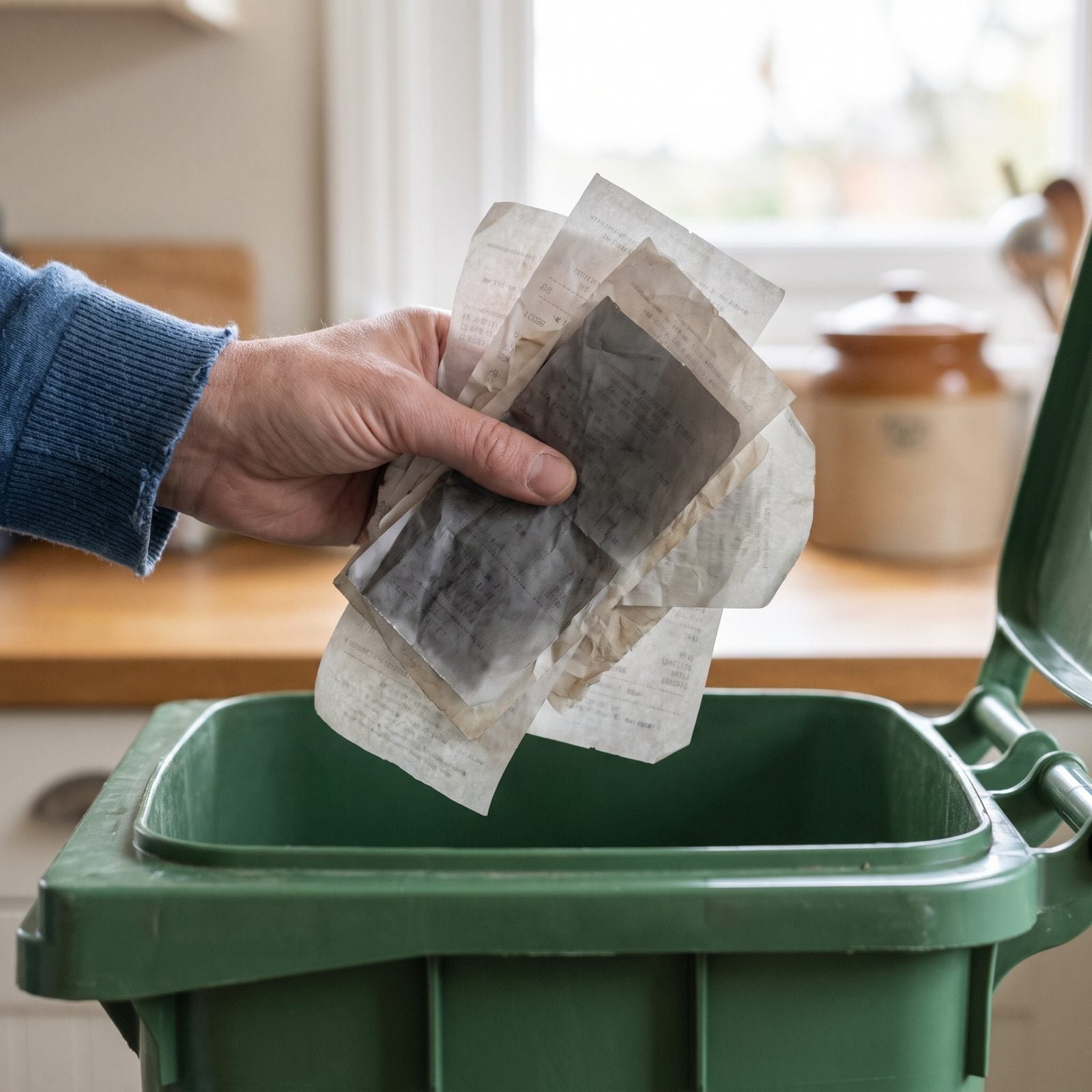
Thermal paper fades to a blank grey ghost within a year or two anyway, so half your hoard is already illegible.
Keep what matters: warranties, big purchases, anything tax-related or tied to an open return. The gas station coffee receipt from March is not evidence of anything. Let it go.
One caution before you dump the whole shoebox.
24. The Shipping Boxes and Bubble Mailers Stacked in the Garage
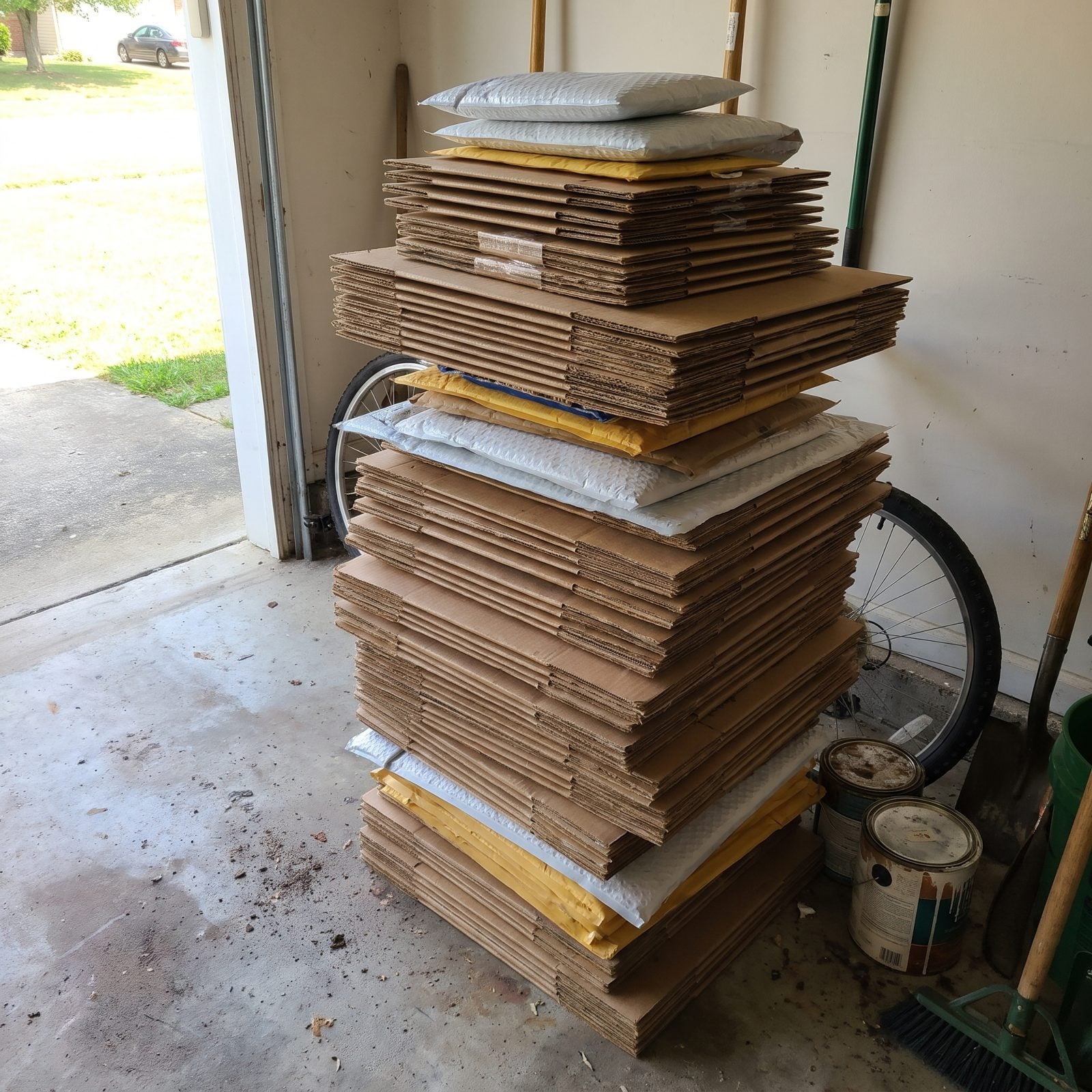
Everyone keeps “a few good boxes” in case they need to mail something, and then the few becomes a leaning tower you haven’t touched since the last move.
Flatten the cardboard and recycle it curbside. Clean, dry boxes make it easy.
The plastic air pillows and bubble wrap are the sneaky part — they don’t go in your household bin. Plenty of grocery stores collect soft plastic film at a front-of-store drop-off, so stuff a bag and drop it on your next run.
23. Instruction Manuals You Can Pull Up Online in Ten Seconds

That drawer stuffed with glossy booklets for appliances you’ve owned for a decade — when did you last open one?
Nearly every manufacturer posts the PDF online, searchable by model number in seconds, which makes the paper version dead weight.
Keep the handful tied to active warranties or anything genuinely hard to find, and recycle the rest with the paper. You’ll free a whole drawer and never once miss the multilingual booklet for a toaster.
If the answer lives in your pocket, the paperback copy is just storing dust.
22. The Box of Old Greeting Cards You’ve Kept for Years
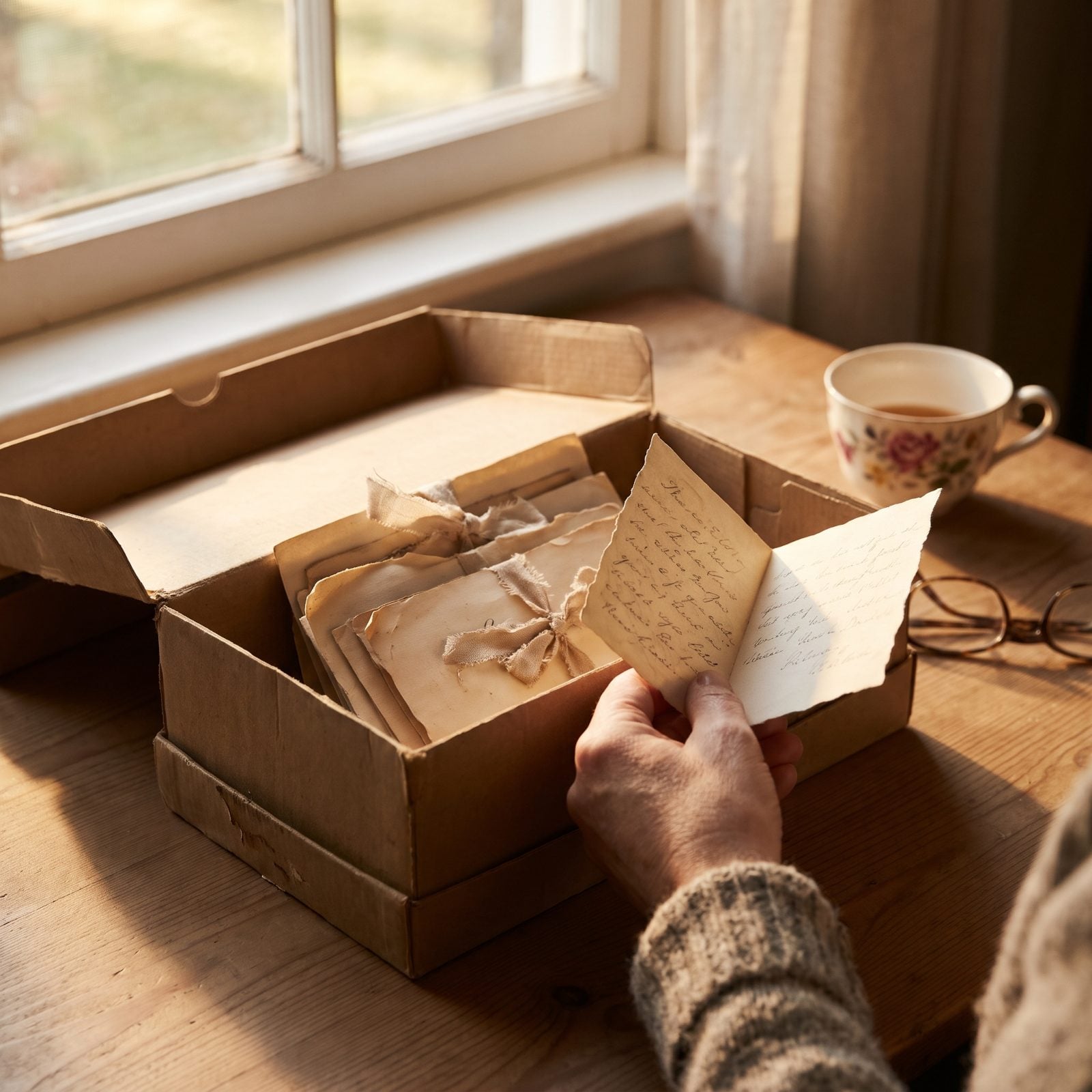
This is the hard one, and I won’t pretend otherwise. Cards carry handwriting from people you love, some of whom aren’t around anymore.
So be honest about which ones actually hold something. The card with a real note, a specific memory, a shaky signature from grandma: keep it. The generic store-signed one with just a printed verse and a name? That’s paper.
Photograph the few you’re torn about, then recycle the physical card. You keep the message and lose the shoebox. Cards with glitter or foil, by the way, usually can’t be recycled and go in the trash.
21. The Tangle of Reusable Shopping Bags Breeding Under the Sink
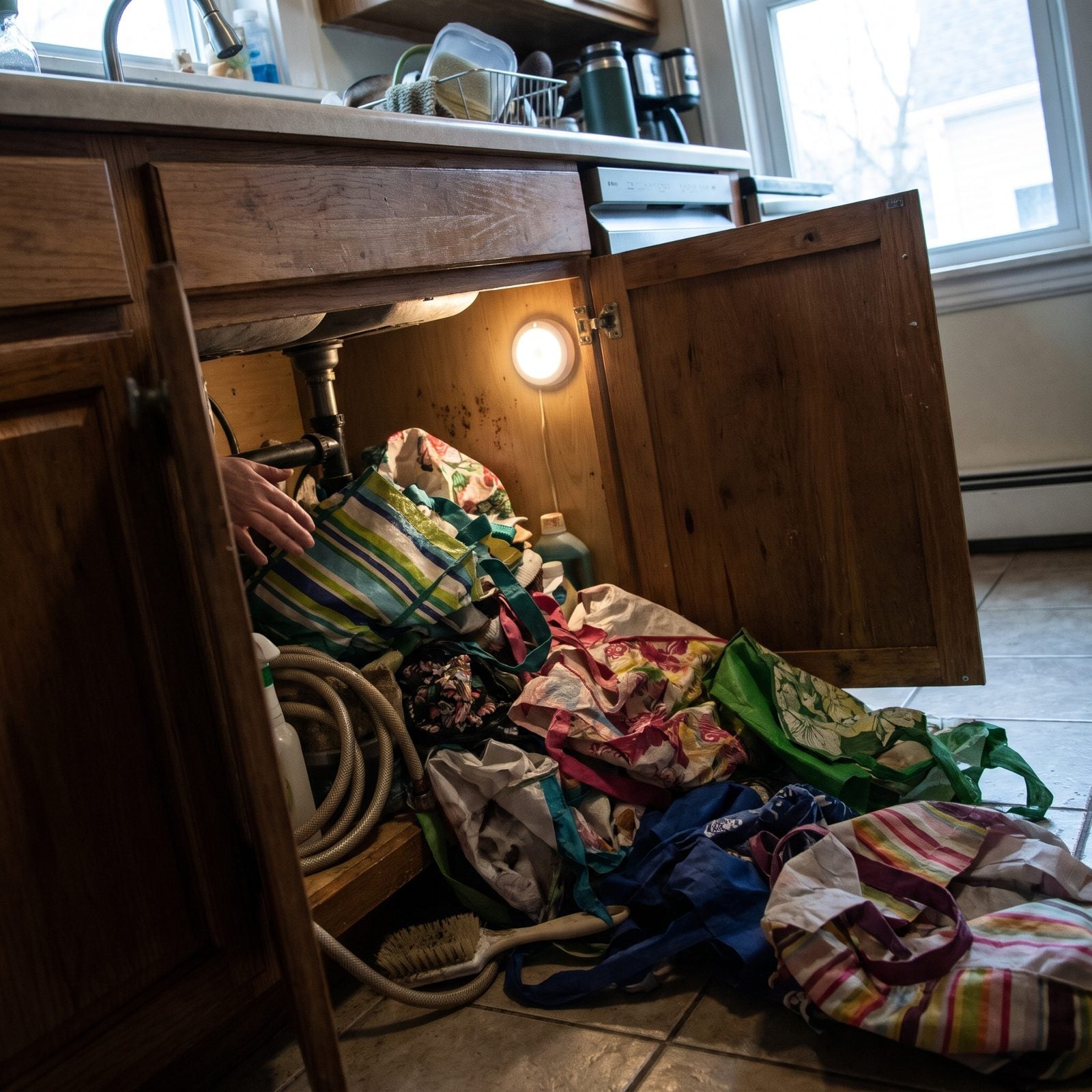
You bought reusable bags to cut down on waste, then accumulated forty of them. The irony is not lost on anyone.
Keep a sensible number that fits in your car or by the door. The frayed ones with broken handles have done their duty.
Worn-out cloth totes can go to textile recycling. The woven plastic grocery bags are trickier, so check whether your local store collects them. And clean, usable spares you’ll never need? A food pantry or thrift store will put them to work.
20. Cracked, Warped and Mismatched Food Storage Containers
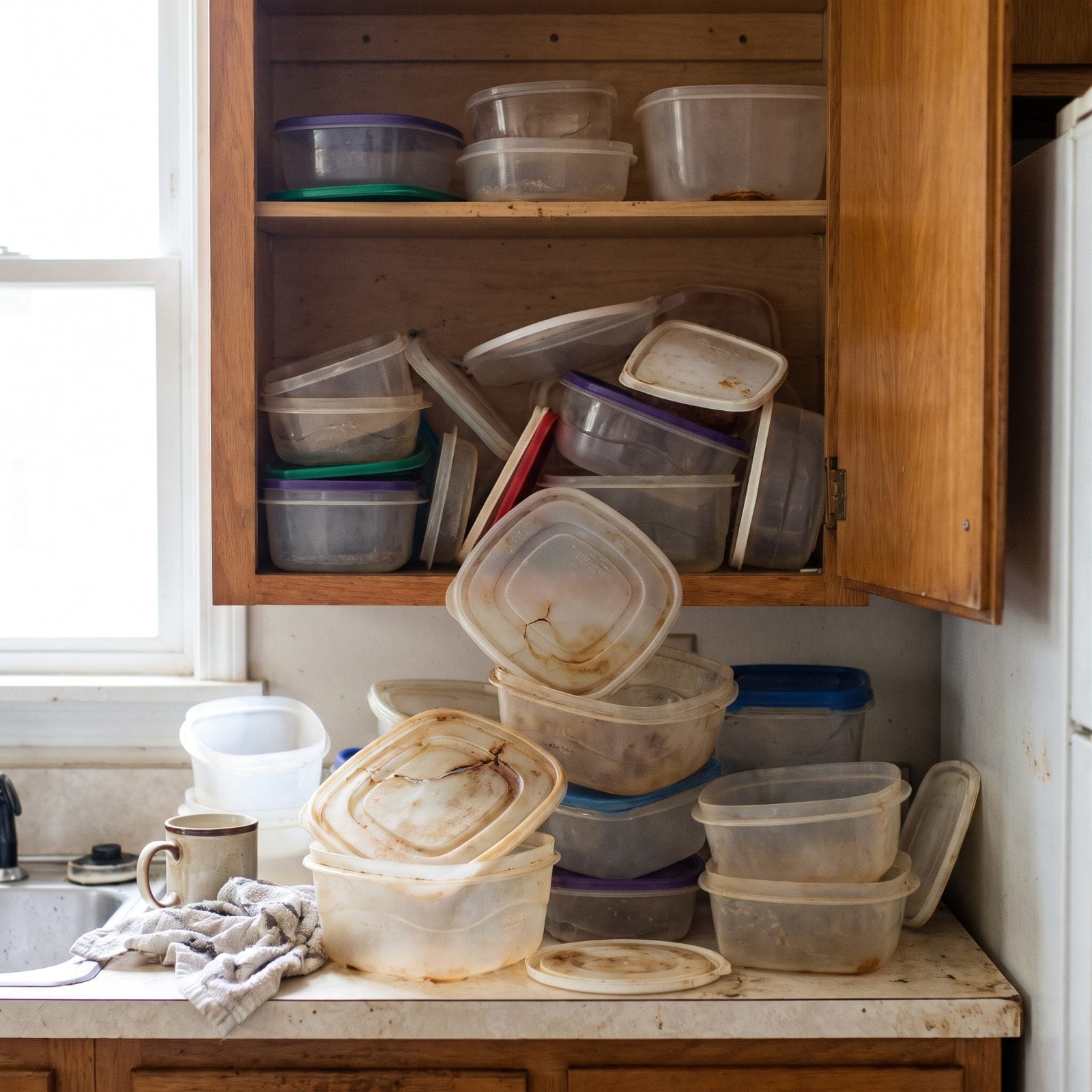
The container cabinet is a civil war. Lids with no bases. Bases with no lids. One warped survivor stained orange from a spaghetti sauce you made in 2021.
Match every lid to a base, and anything cracked, warped, or cloudy and scratched goes — worn plastic isn’t doing your leftovers any favors anyway.
Check the recycling number on the bottom before you toss, since many rigid food containers are accepted curbside once rinsed. The orphans with no partner left have served their time.
19. The Drawer of Duplicate Kitchen Utensils
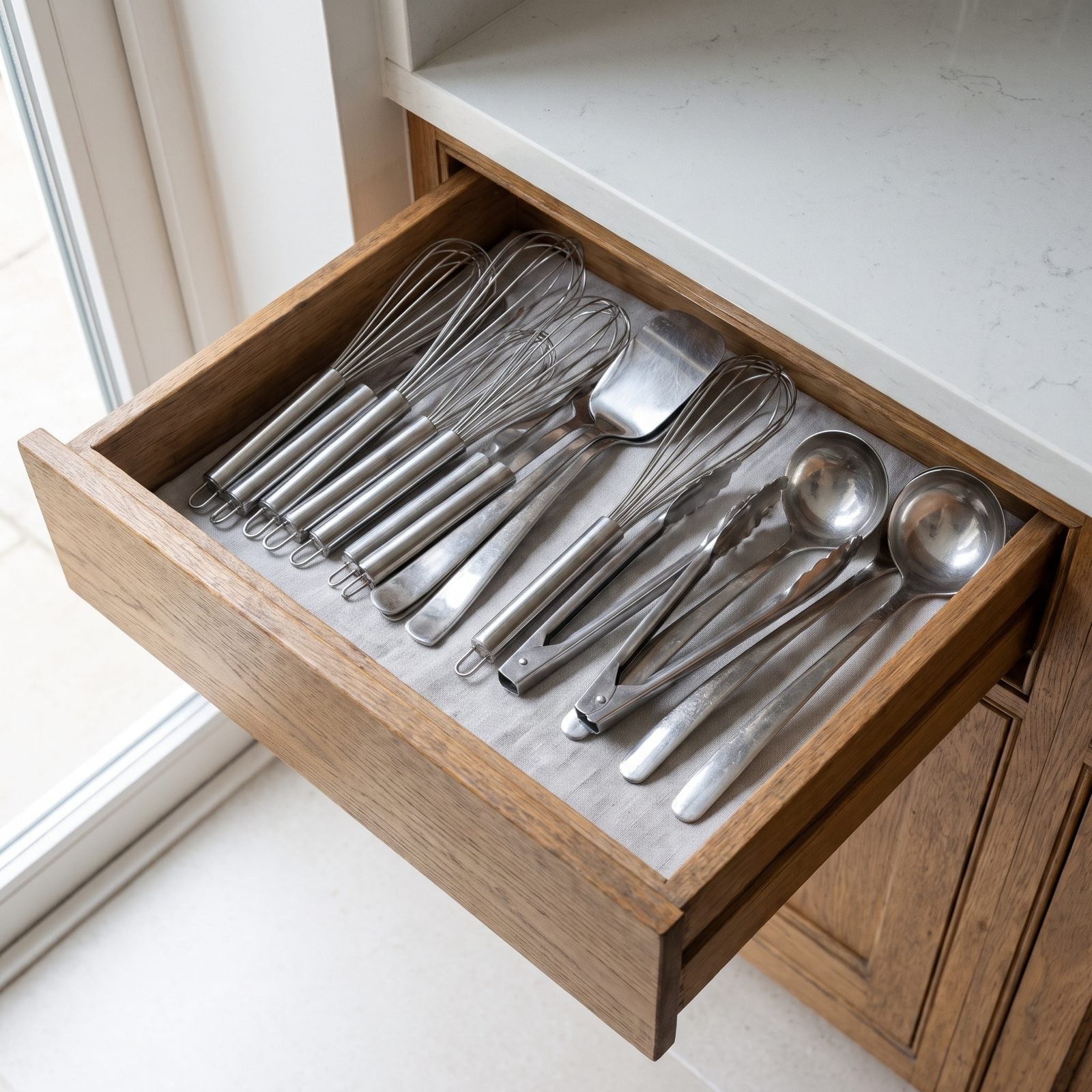
Open the utensil drawer and count the whisks. If it’s more than one, you already know the answer.
Kitchens breed duplicates like nothing else on earth. You buy a spatula, forget you own two, then inherit a third from a relative who downsized last spring. Nobody needs four peelers. Nobody uses the second can opener. Pick the one tool that actually works, box up the rest, and hand them to a thrift shop where someone setting up a first apartment will be genuinely grateful to find them.
18. The Tower of Promotional Coffee Mugs
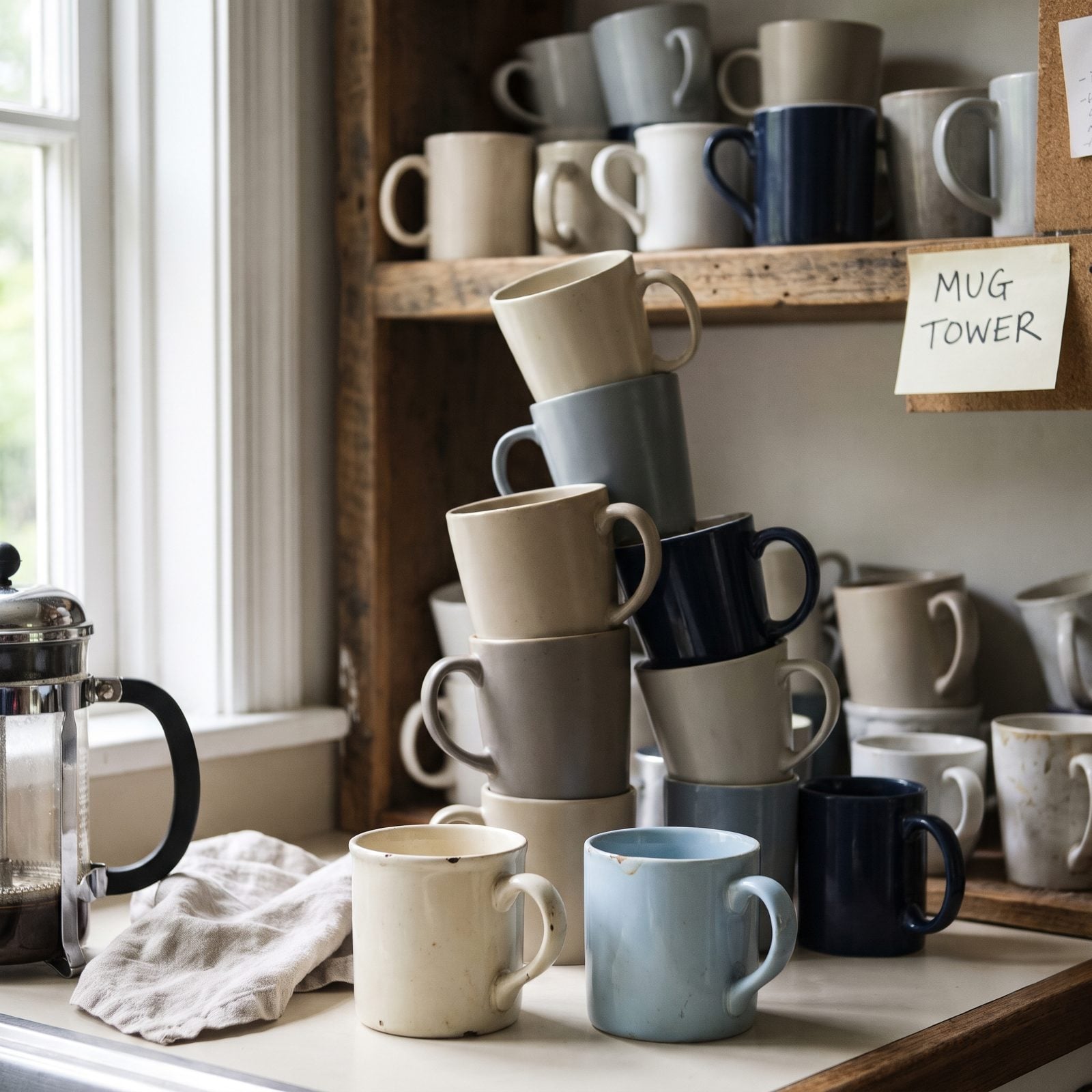
You have a shelf of mugs and you drink from two of them. Be honest.
There’s the conference giveaway, the bank’s free cup, and that one from a charity 5K you ran back in 2014 and swore you’d never forget. They multiply quietly, hogging the exact cabinet space you keep insisting you don’t have. Minimalists keep the four they actually like and let the rest walk. Donation bins take them. So do office break rooms, which is where half of them came from in the first place.
17. The Stack of Magazines You Already Read
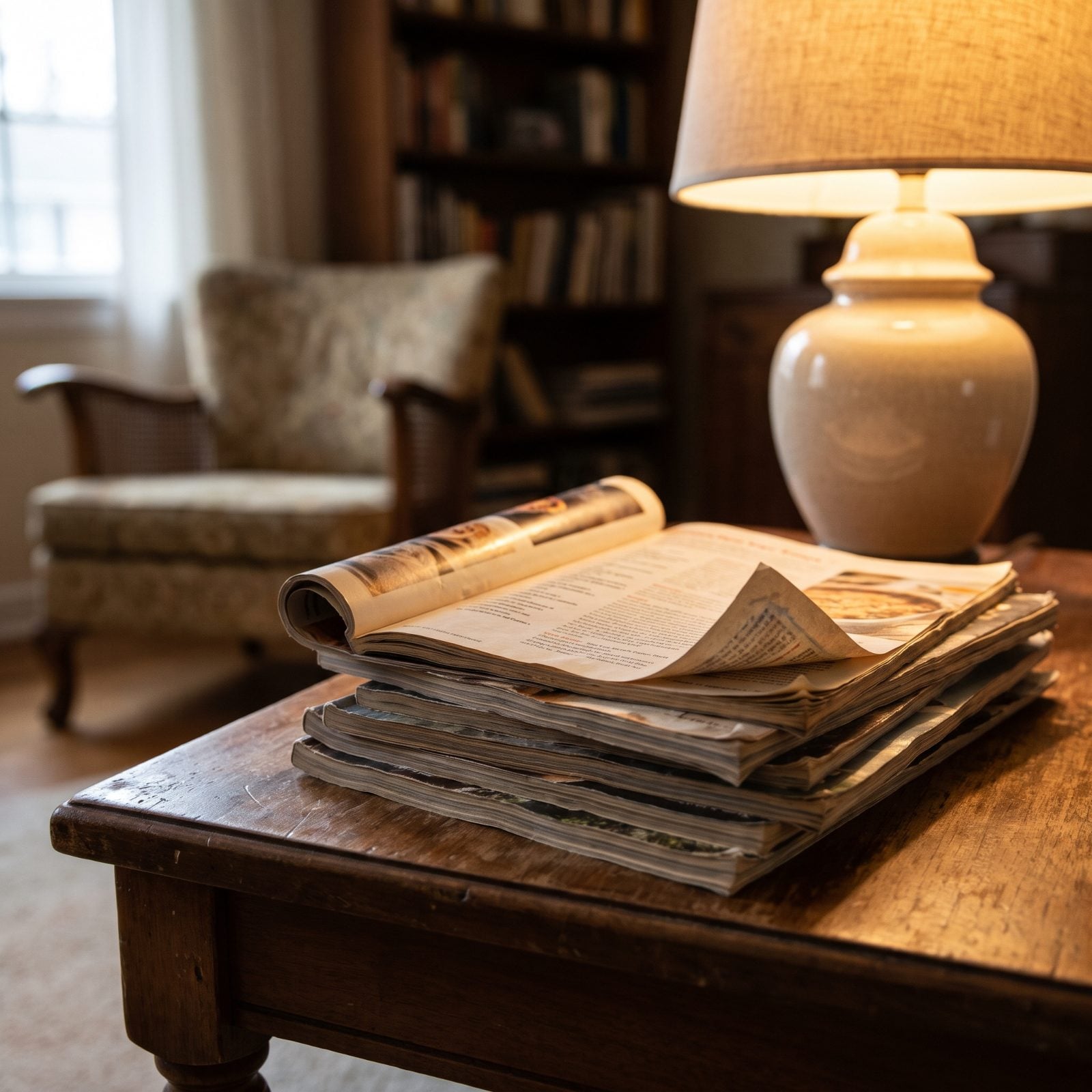
Here’s the truth nobody says out loud: you are never going to reread that magazine.
The recipe you saved is online. The article you meant to finish has already slipped out of your memory. Magazines pile up because tossing them feels wasteful, but a stack you’ll never open again isn’t a library — it’s clutter with nice covers. Tear out the two pages you genuinely want, recycle the rest, and reclaim the coffee table.
16. The Books Nobody Intends to Read

The aspirational bookshelf is a real thing. These are the books you bought to become a person who had read them.
That dense history. The business bestseller from 2011. The novel three people swore you’d love. If a book has sat unopened for two years, owning it isn’t the same as reading it, and the little pang of guilt it throws off every time you walk past is doing you no favors whatsoever. Keep what you love enough to read twice. Everything else goes to a library sale or a Little Free Library, where it meets someone who’ll actually crack the spine.
15. The Unfinished Craft Supplies You Swore You’d Get To

The half-knit scarf. The scrapbook you started in 2019. That bag of yarn you bought for a project whose name you’ve completely forgotten.
Craft supplies carry a special brand of guilt, because they stand in for a version of you with far more free time. But hoarding materials for projects you’ll never finish doesn’t honor the hobby — it buries it under a pile of good intentions. Keep what you’re actually using this week. Everything else goes to a school art room, a senior center, or a maker group, where somebody turns it into something today.
14. The Half-Used Paint Cans With No Matching Room
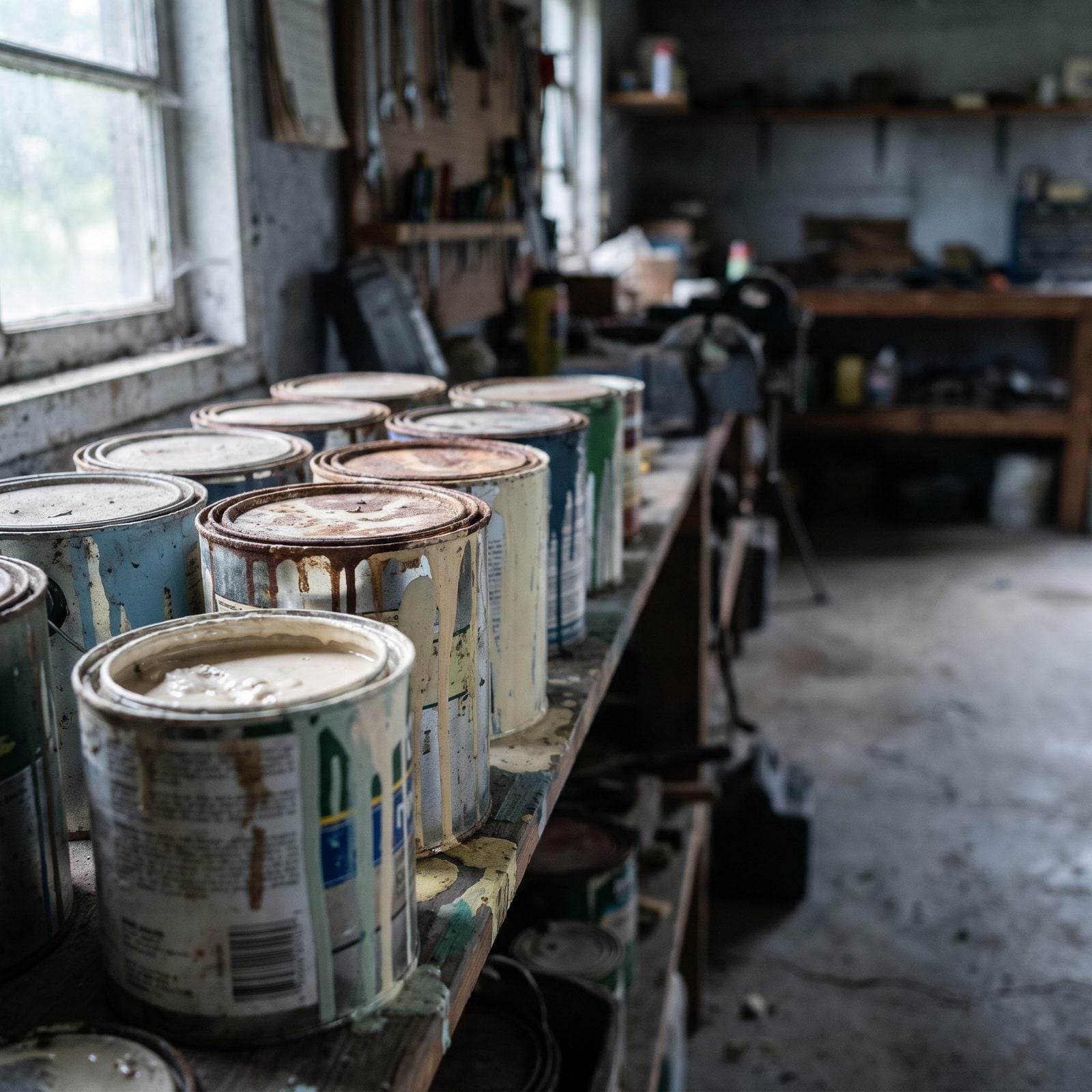
Every garage has them: the six cans of paint for walls that no longer exist, in colors you can’t remember choosing.
You keep them for touch-ups, of course. But the paint has separated, the room got repainted two color schemes ago, and you honestly can’t recall which can matches what anymore. Half-dried latex is dead weight. And here’s the part people get wrong — you can’t just toss wet paint in the trash.
13. The Clothes That No Longer Fit
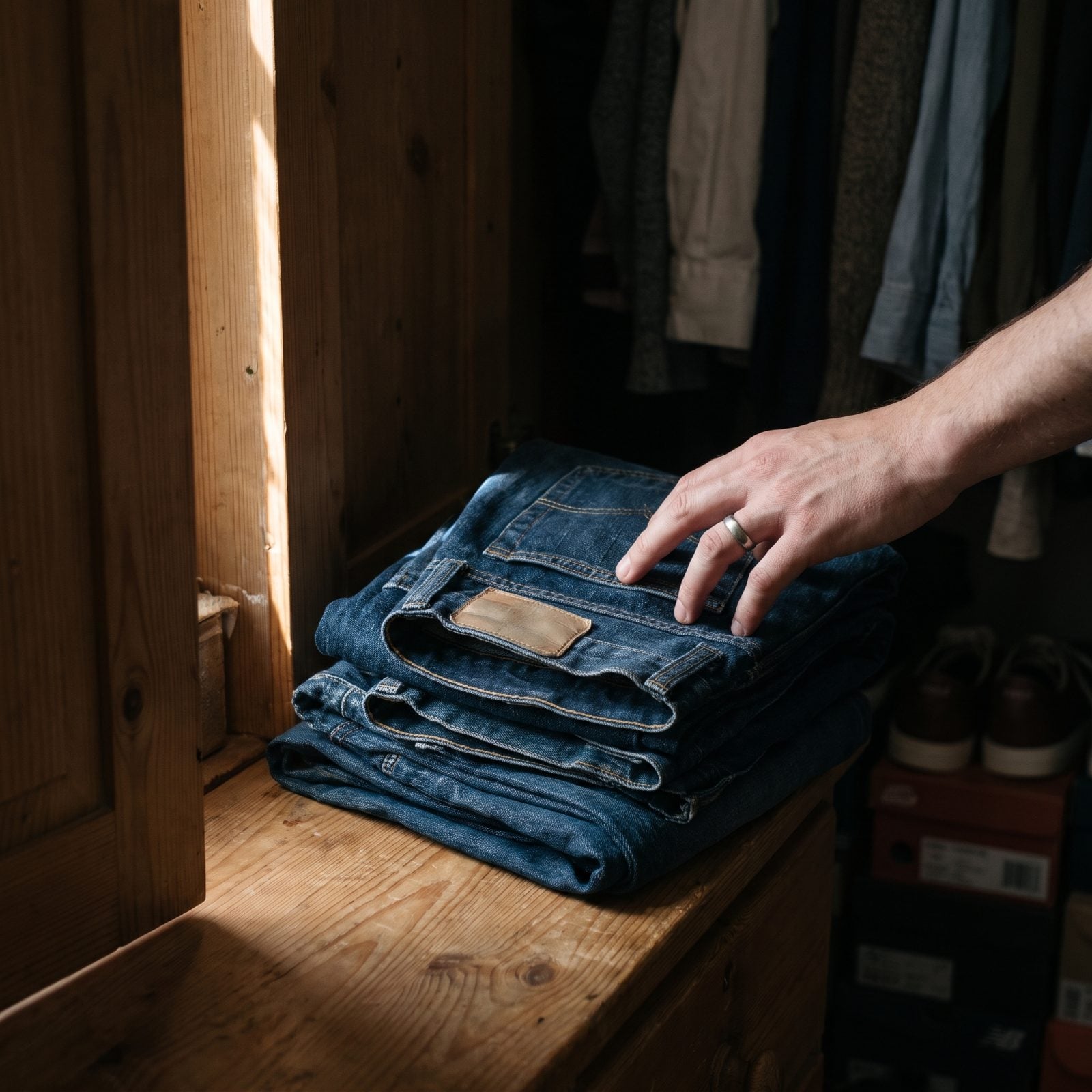
The jeans you’re keeping until they fit again have been waiting four years. They know. You know.
Clothes that don’t fit your current body hang in the closet as a daily small punishment. Dressing around sizes that don’t work eats your morning and chips at your mood before the coffee’s even brewed. So keep the clothes for the body you have right now, and send the rest to a donation center or a clothing swap — where they fit someone today instead of guilt-tripping you tomorrow.
12. The Shoes That Hurt Every Single Time

A shoe that hurts every single time isn’t about to start feeling better.
The pair that pinches, the heels that leave you limping by the second meeting, the boots you wear once a year and regret by noon — you keep them because they cost money. But that cost already happened, and no amount of willpower makes a painful shoe worth it. Donate them clean and lightly worn. Somebody with entirely different feet will love them, and your blisters will thank you for the rest of your life.
11. The Coats Not Worn in Two Winters
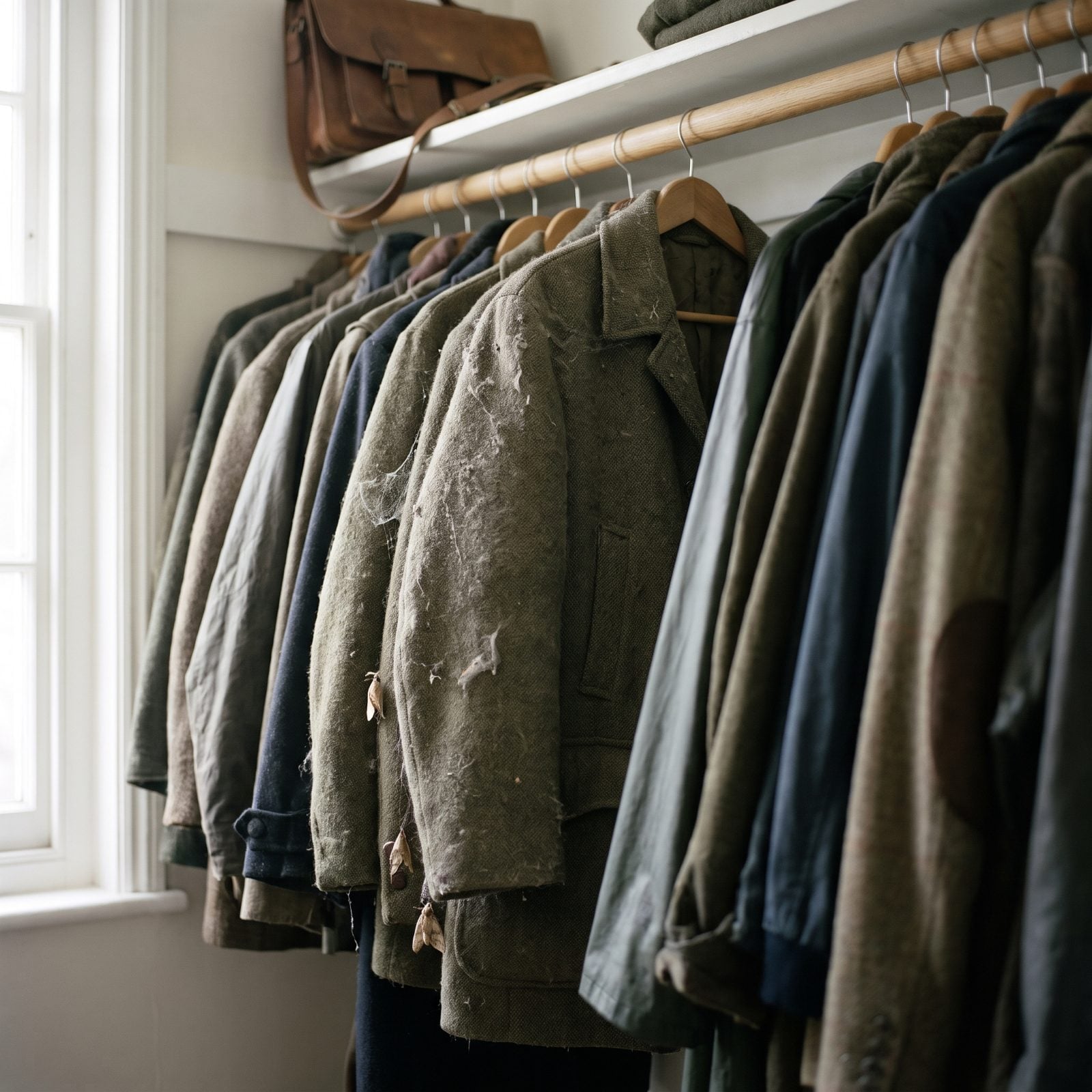
Count the coats in your closet. Now count the ones you’ve actually worn since two Januaries ago.
Outerwear hoards worse than almost anything. It’s bulky, it was expensive, and tossing a coat feels weirdly drastic. But a wool coat you haven’t touched in two winters is just sitting on the hook your everyday jacket needs. Keep the two or three you reach for, and send the rest to a winter coat drive, where warmth is a real need this time of year rather than a style preference.
10. The Single Socks Without Their Matches
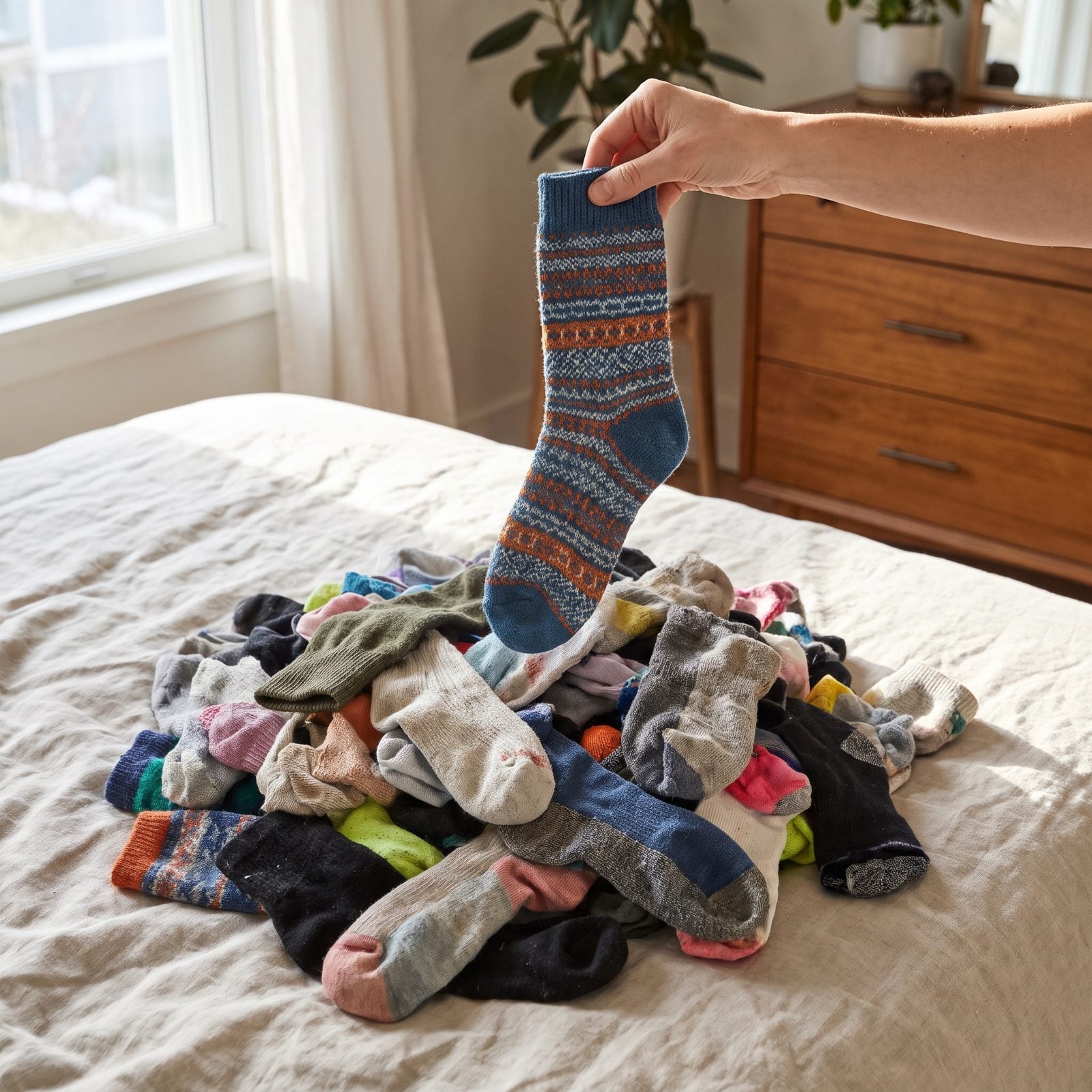
The orphan sock drawer is a monument to false hope. That twin is not coming back.
You keep lonely socks for a reunion that never arrives, and meanwhile they breed — a whole tangle of singles you sort and sort and never solve. Give them a deadline instead. Whatever’s still unpaired after one honest search goes out. Worn-out ones head to textile recycling, which takes fabric no thrift shop can use, while the good singles can patch a mop, pad a drawer, or buff a shoe.
Letting go of one sock is the smallest decluttering act there is, and oddly the most satisfying — which is probably why a January reset works at all. Start with the socks. Suddenly the rest of the house feels possible.
9. Stretched-Out Underwear You Keep Rationalizing
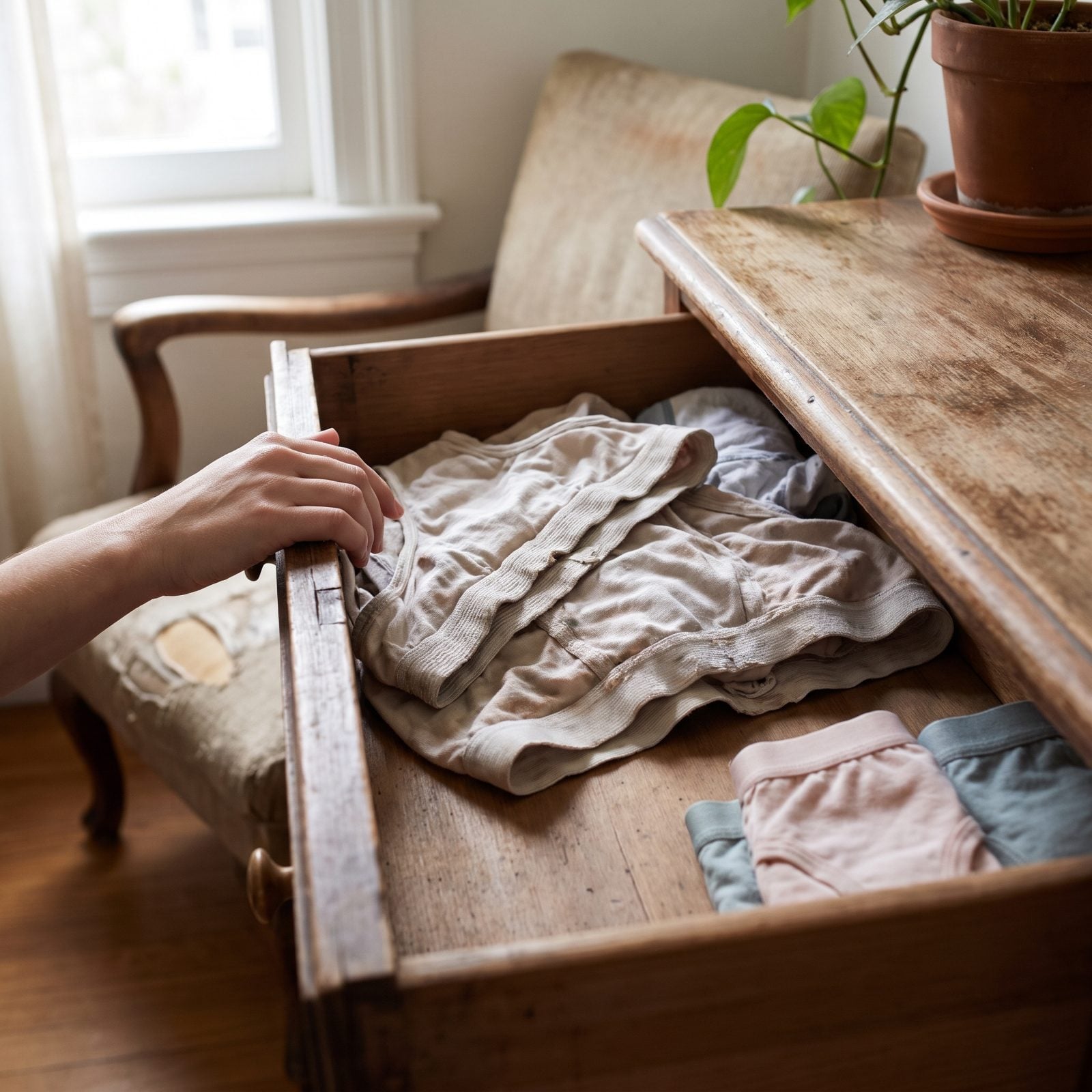
Nobody keeps a drawer of good underwear. You keep a drawer with four pairs you actually wear and eleven you’ve been meaning to toss since the last administration — the elastic gave out months ago, and you know exactly which ones.
These don’t get donated. Charities can’t resell worn undergarments, and asking them to is a small unkindness. Most textile-recycling programs take them, though, shredding them into insulation and rags. Bag them separately, mark the bag, drop it at a clothing-collection bin that accepts unwearables.
8. Bath Towels Worn Thin at the Fold
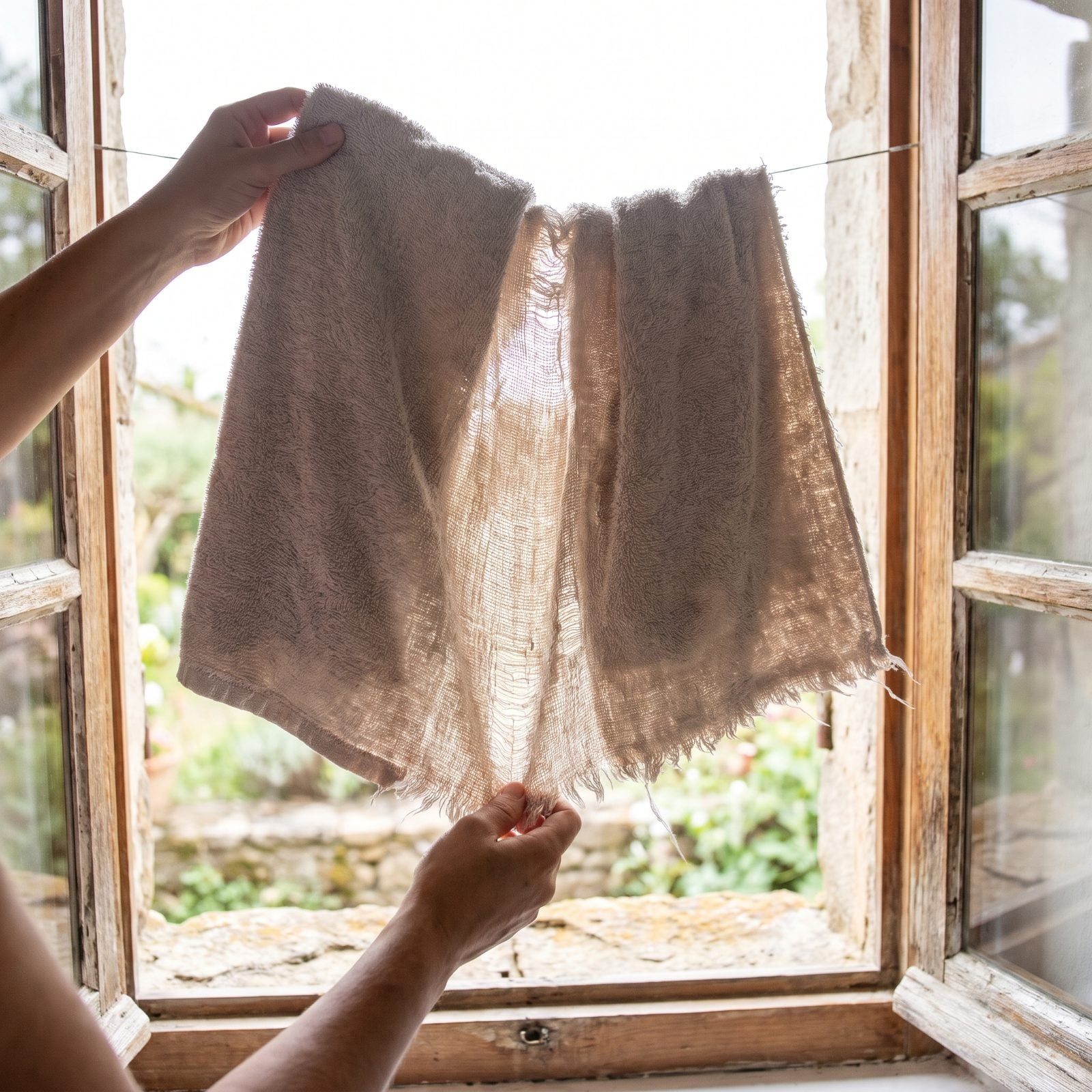
A towel that’s gone scratchy and thin at the center fold has stopped doing its one job. You dry off and still feel damp. That’s the signal.
And here’s the part that saves these from the trash bag: animal shelters want them. Dogs, cats, and recovering critters get wrapped in exactly the towels you’d never hand a houseguest. Call first, though — some shelters are drowning in donated towels and others are flat out, and which one you’re dealing with swings by the month.
Writing on her Substack, a dog blogger who adopted her dog from a shelter notes “Old towels, blankets, and sheets are hard to get rid of. Most second-hand and Goodwill stores won’t take them, but animal shelters want and NEED them.”
7. Costume Jewelry You Have Never Once Clasped
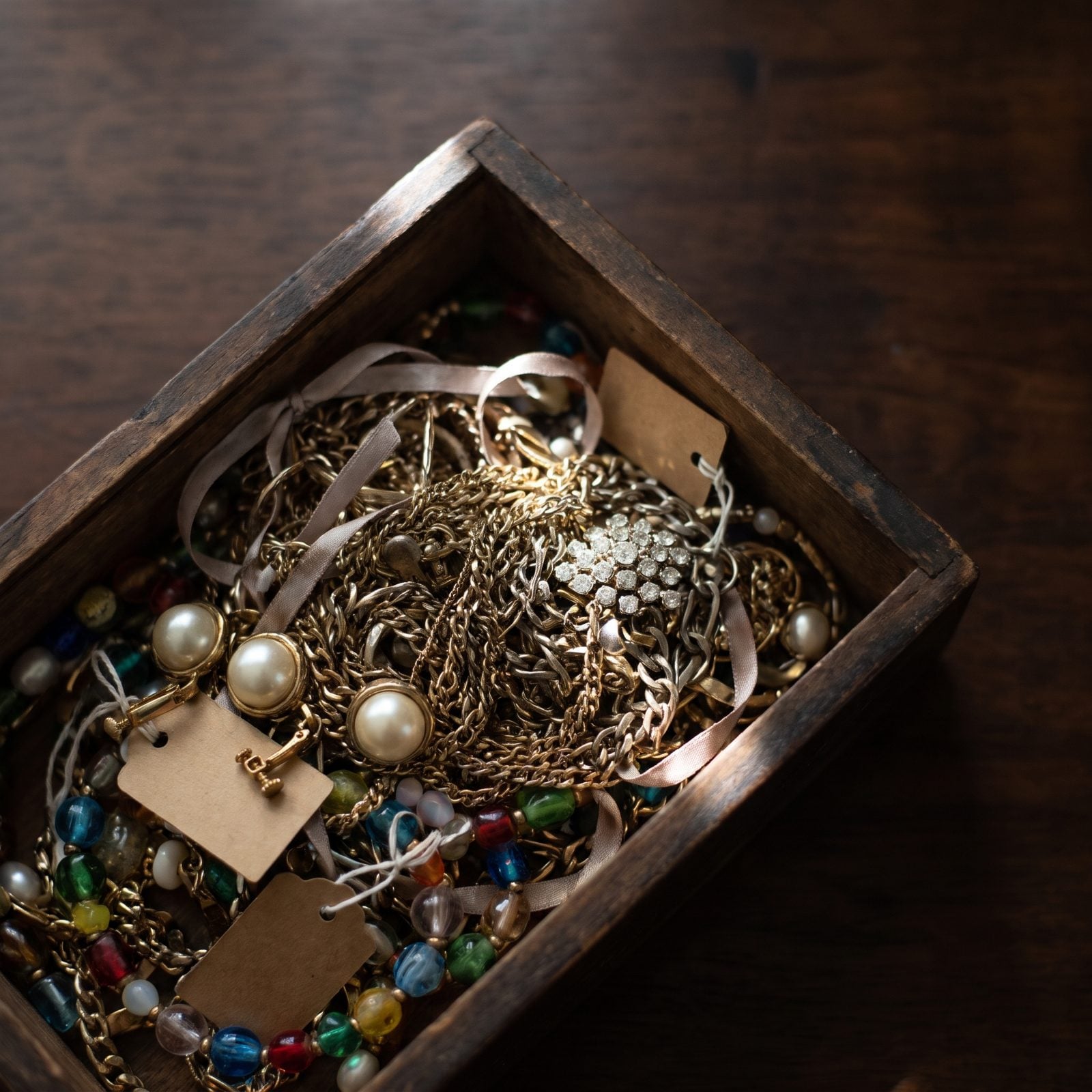
Everyone has the box. That jumble of chains and clip-ons that arrived via a gift, an estate sale, or a phase you don’t talk about. You’ve owned some of these pieces for a decade and worn them never. The tag is still on the brooch.
Costume jewelry donates beautifully. Thrift stores love it, theater and school drama departments love it more, and the dress-up bins at daycares genuinely need it. Detangle it, snip the tags, hand it to somebody who’ll actually put it on.
6. The Exercise Machine Draped in Laundry
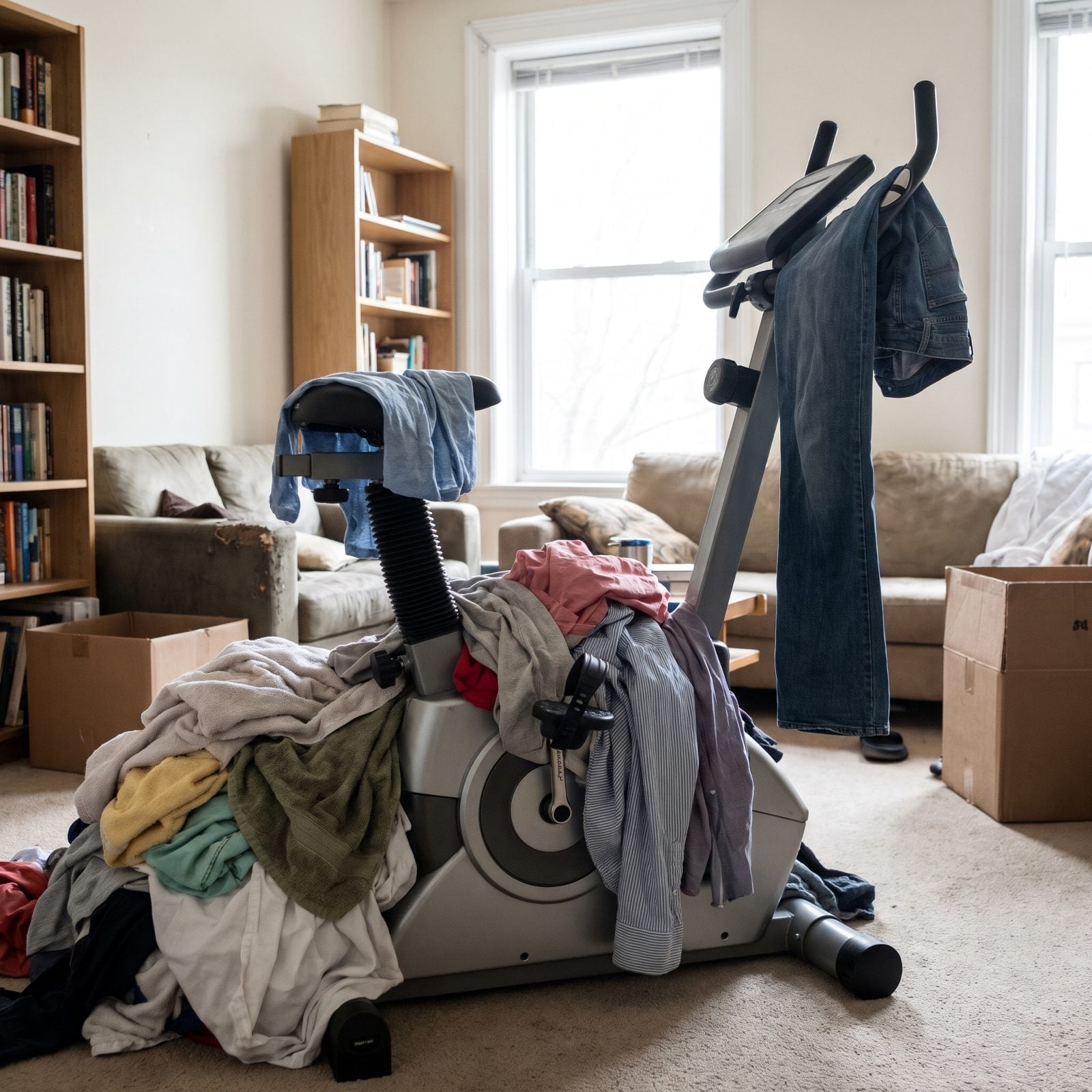
The exercise bike became a coat rack sometime around February of a year you’d rather not name. Be honest about whether it’ll ever be an exercise bike again.
Working equipment moves fast on local resale apps — often for actual money, because plenty of people are starting the same resolution you abandoned. Too heavy to fuss with? Community centers, schools, and some gyms take donations. Confirm it functions first. Nobody wants your seized-up elliptical as a charitable gesture.
5. The Drawer of Keys That Open Nothing
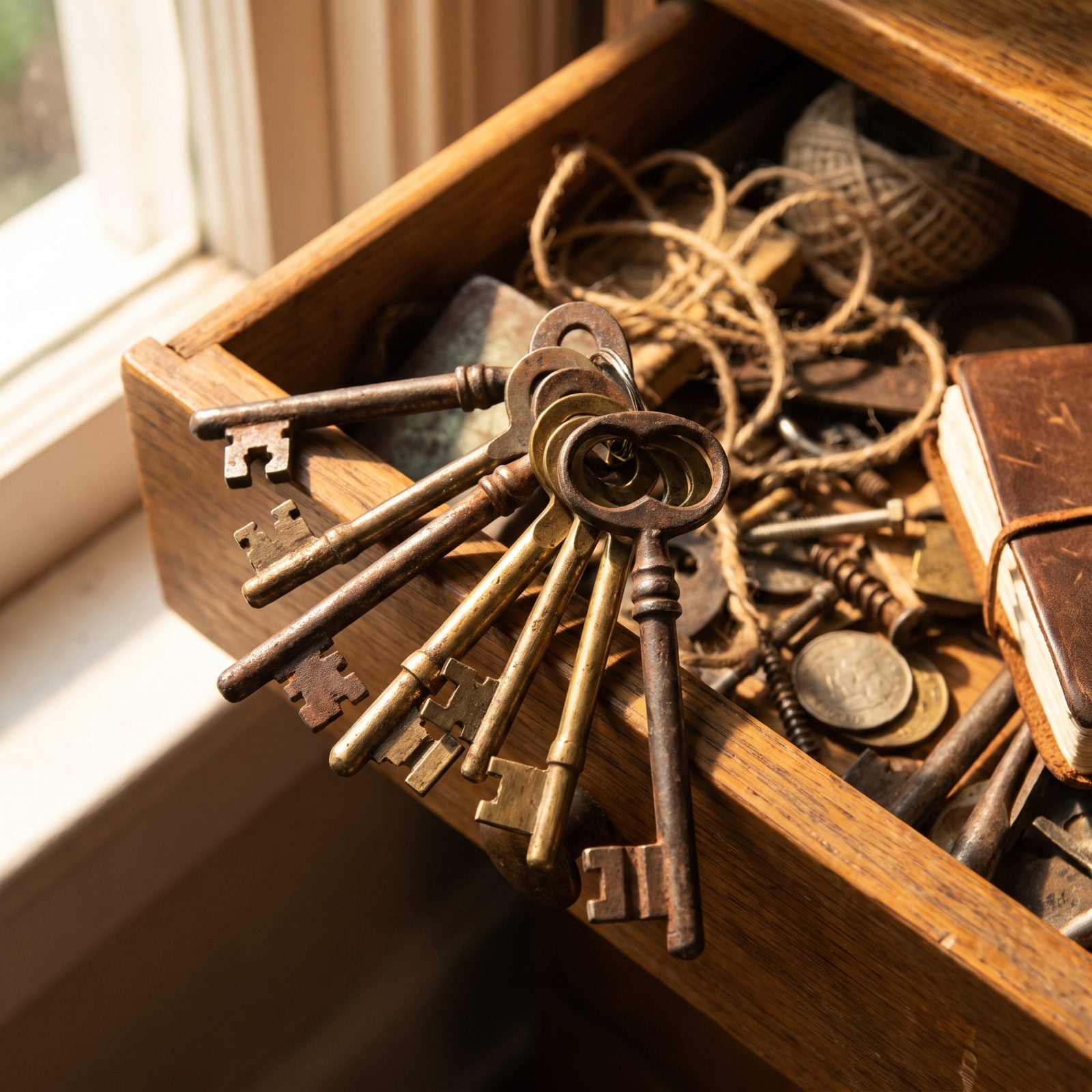
Every junk drawer has them — keys that belong to no lock in your current life. A deadbolt from two houses ago. A padlock whose body is long gone. A car you sold.
Keep them and you’re guarding doors that don’t exist. Keys are solid brass and steel, which puts them in scrap-metal recycling rather than the landfill. Scoop the mystery ones into a bag for the recycling center. Hang onto only the two or three you can actually name.
4. Remote Controls for Devices Long Gone
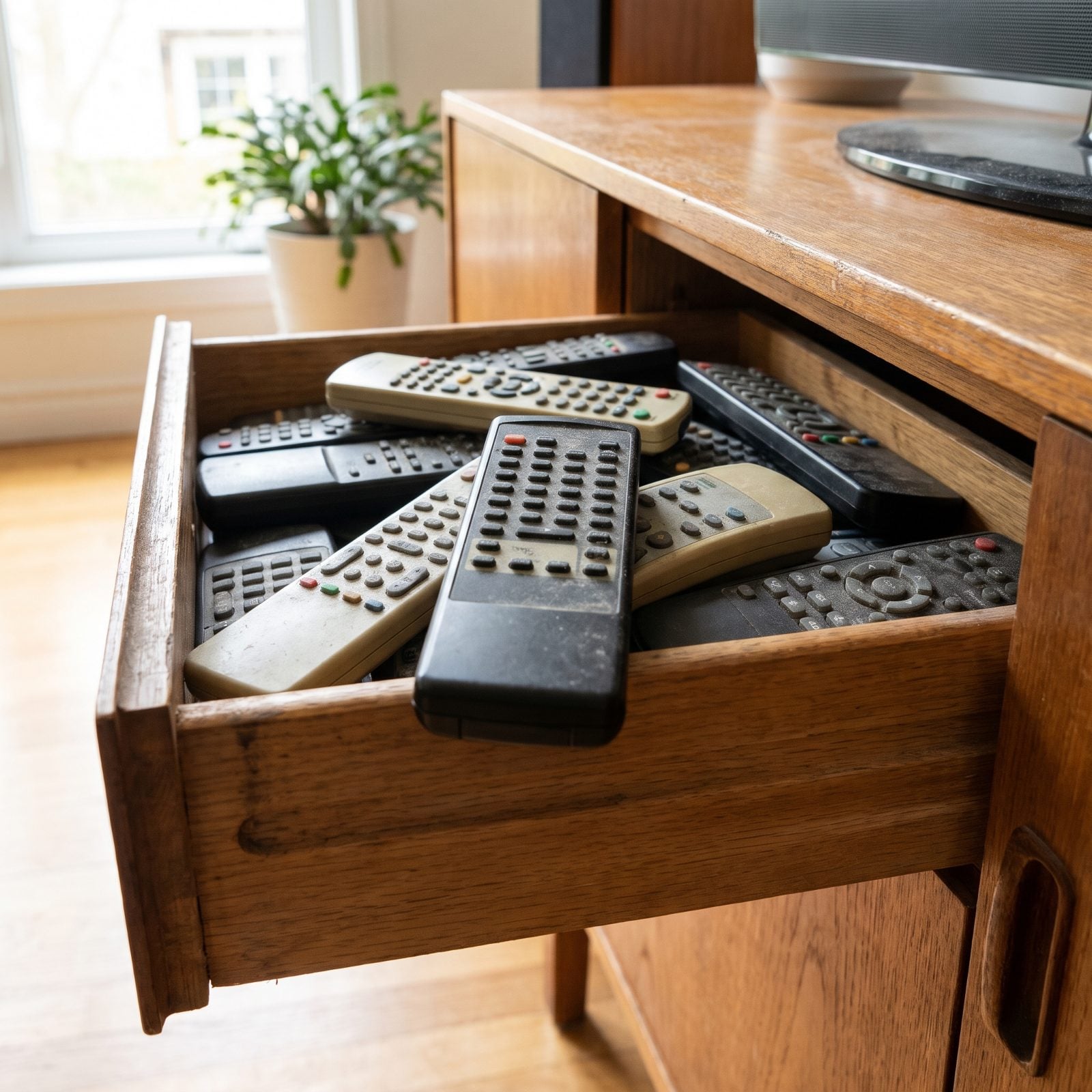
You own a remote for a DVD player that left the house years ago. Maybe three of them. They multiply in the TV-stand drawer like they’re breeding in there.
Remotes are electronics, so they belong in e-waste, not the bin. Pull the batteries first — batteries have their own disposal rules and should never ride along to the landfill. Most hardware stores and municipal recycling days accept both. One trip clears the lot.
3. Old Phones, Wiped Clean and Still Hoarded
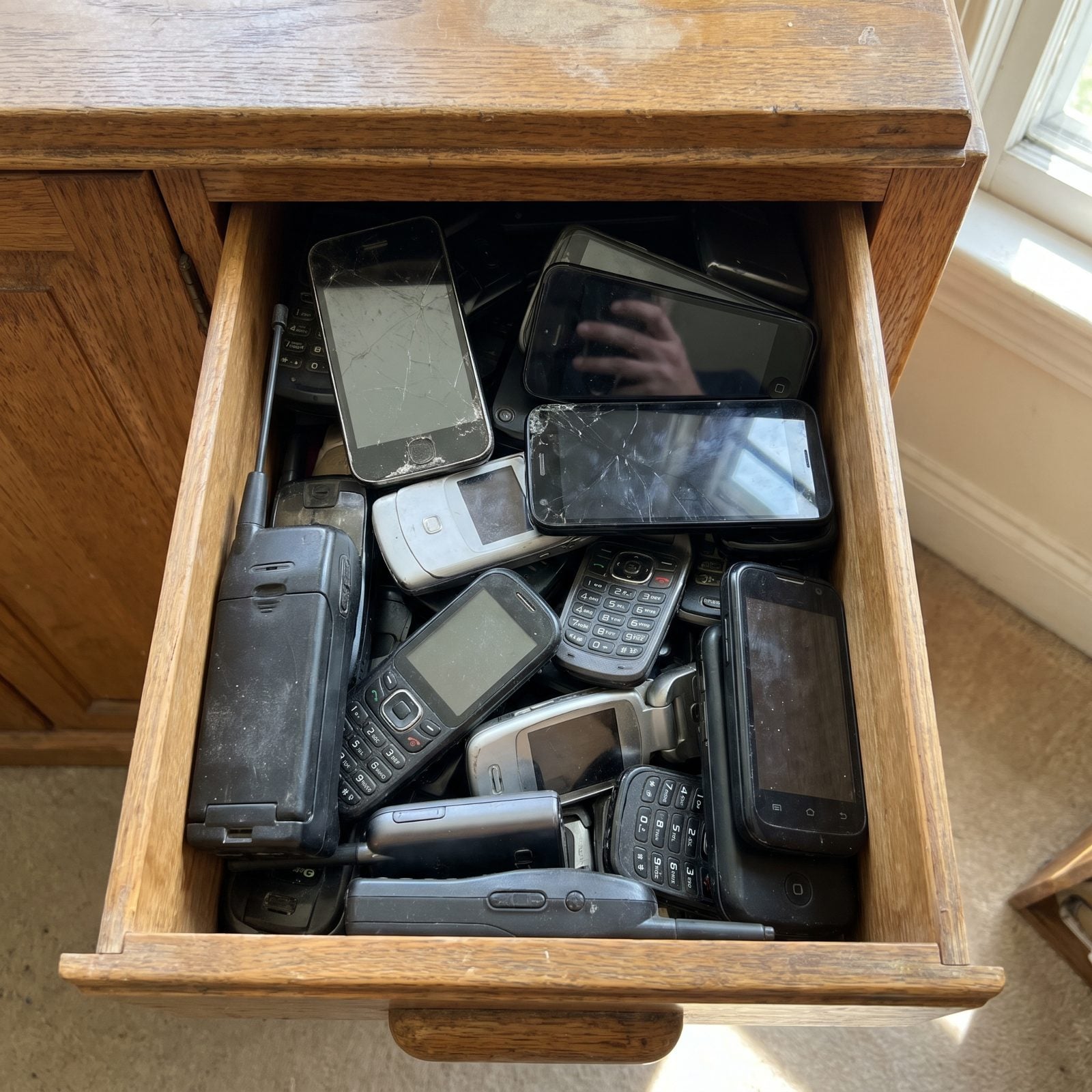
The phone drawer is a graveyard everybody keeps. Each old handset felt too valuable to toss and too outdated to use, so it just sat. Now there are more than a dozen, all dead, all obsolete, all technically still worth something as trade-in or recycling.
Wipe each one with a full factory reset before it leaves your hands, then pick a path: a carrier trade-in for credit, a certified recycler, or a program that refurbishes phones for people fleeing crisis situations. The lithium battery tucked inside is exactly why these can’t go in regular trash.
2. Board Games Missing a Key Piece
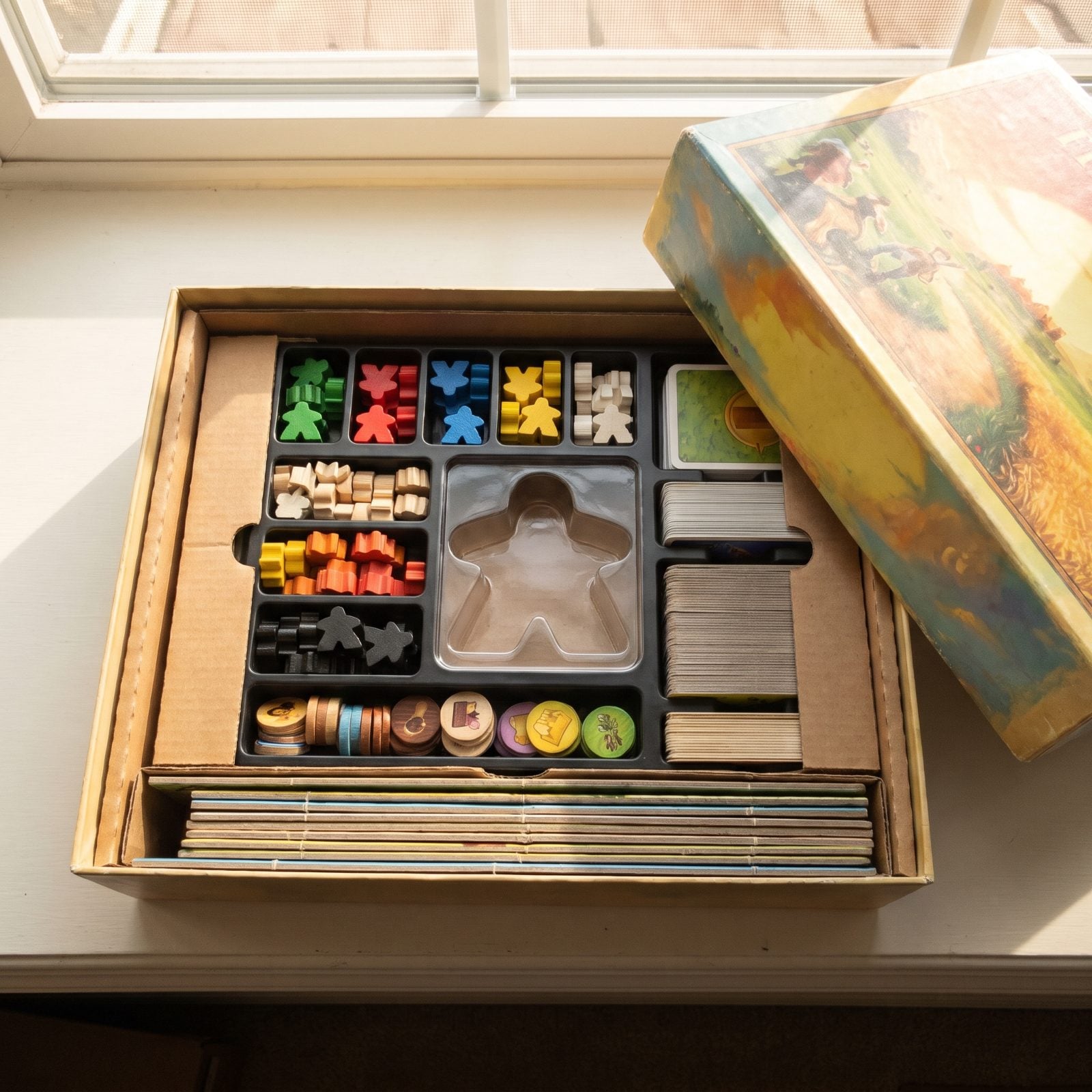
A board game missing its tiny top hat, the thimble, or exactly one card is no longer a board game. It’s a frustration you’re storing for a rainy day that will never, ever pick that box.
Complete games donate well to shelters and after-school programs. Incomplete ones don’t, and gifting a broken game just hands the frustration to somebody else. Salvage the good pieces for craft bins or game-night spares, then recycle the cardboard. Dice and meeples live forever in a jar on somebody’s shelf.
1. Toys the Kids Blew Past Years Ago
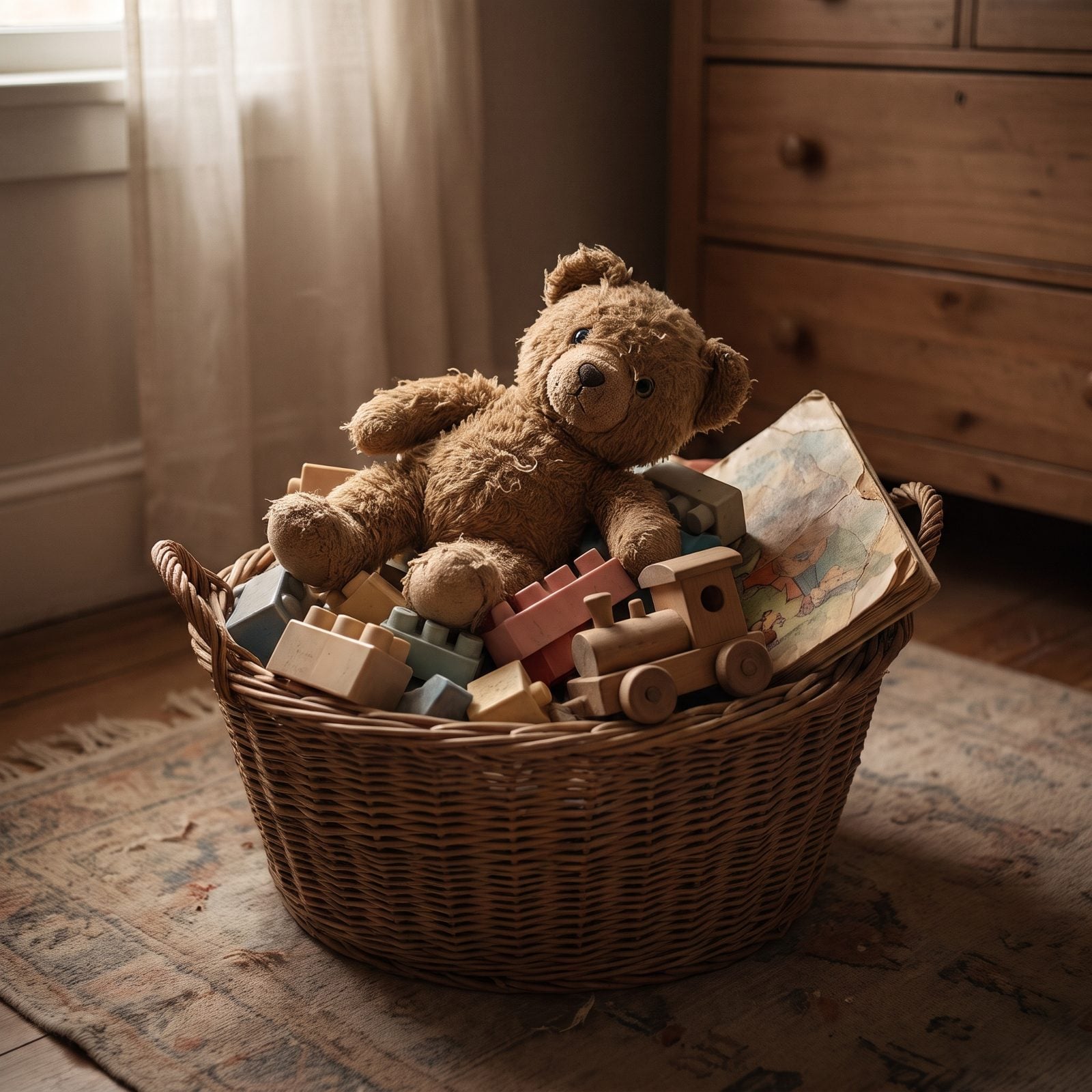
Kids outgrow toys faster than you can store them. The blocks, the ride-on car, the plush animal with the matted fur — all sitting in a bin long after the child who loved them moved on to a phone.
Clean, working toys with all their parts are gold to shelters, pediatric waiting rooms, and family-support charities. Wipe them down, test that nothing’s broken, and set aside anything recalled or running on a dead battery you can’t replace. A toy that still delights someone is a genuinely good thing to send back out into the world.