
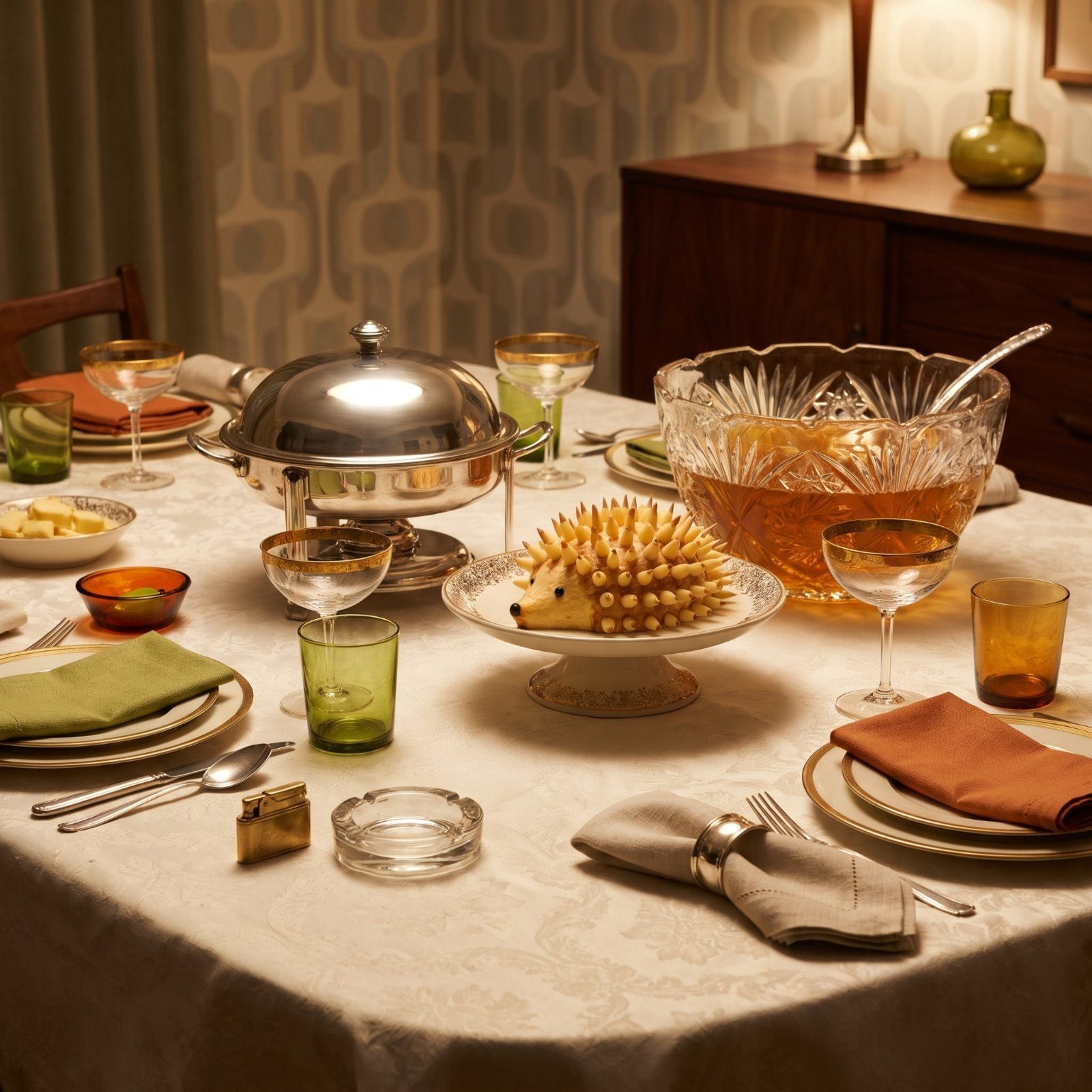
Somewhere in a hall closet there’s probably still a punch ladle wrapped in tissue, waiting for a party that stopped happening around 1972. The 1960s dinner party ran on a very specific set of props: molded gelatin that jiggled on command, cigarettes offered like after-dinner mints, and enough chrome and cut glass to blind a neighbor. These weren’t casual gatherings. They were staged, and the staging mattered because every piece sent a signal about the host. Dig into what actually sat on those tables and you find a lost grammar of entertaining, half of it delicious, half of it faintly alarming, all of it taken completely seriously.
Please note that some of the images in this article were created with the assistance of AI.
41. The Cream Cheese-Frosted Sandwich Loaf That Looked Like Cake
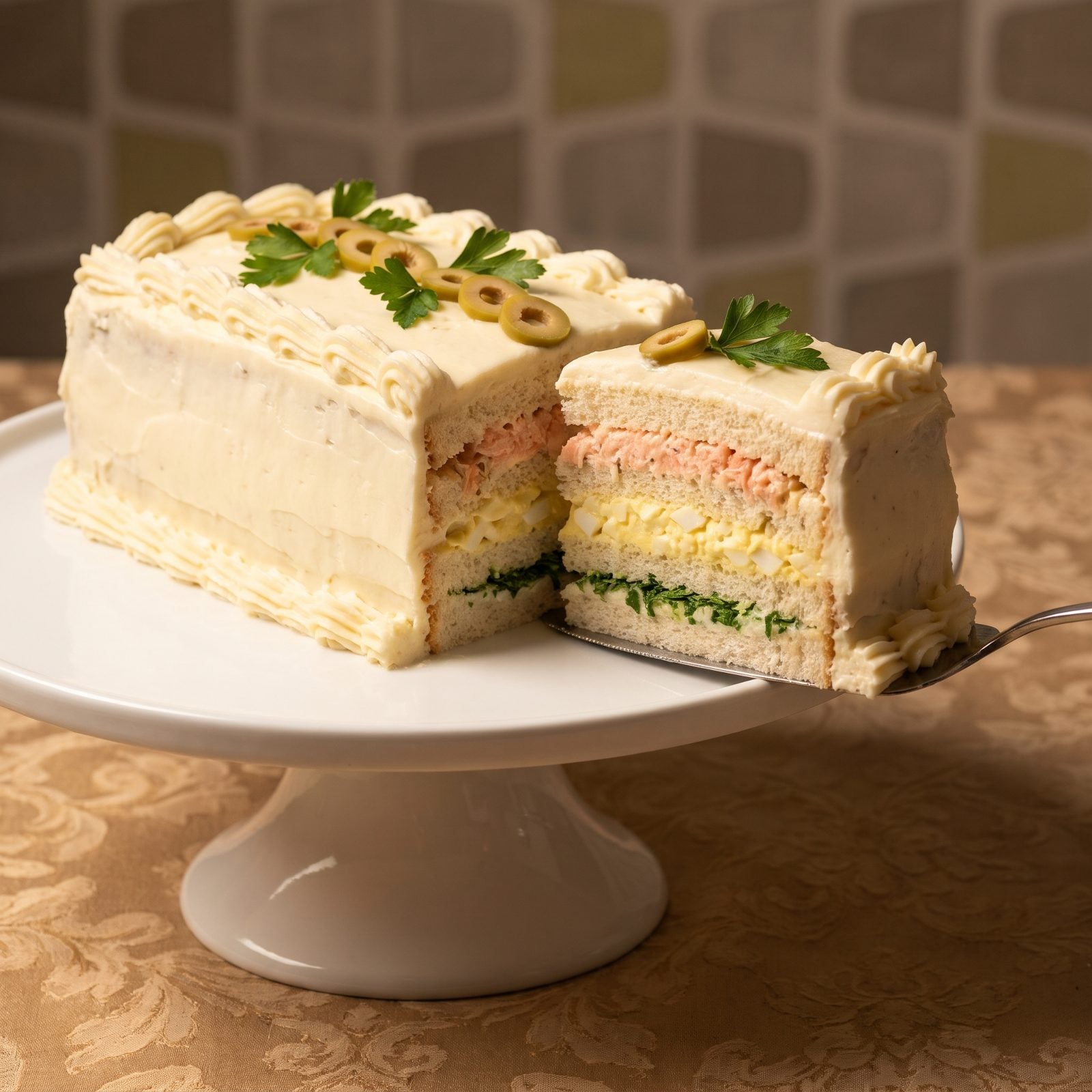
Imagine telling a dinner guest the cake is actually a sandwich. That was the whole trick. A frosted sandwich loaf stacked horizontal slices of bread with different fillings between each layer, salmon, egg, maybe a tinted watercress, then “frosted” the outside in softened cream cheese so it read as dessert until you cut it.
The payoff was the double-take: something that photographed like a birthday cake and tasted like lunch. It took real patience to build, and that was exactly the point. Effort was the message.
40. A Small Glass Ashtray Set at Every Place
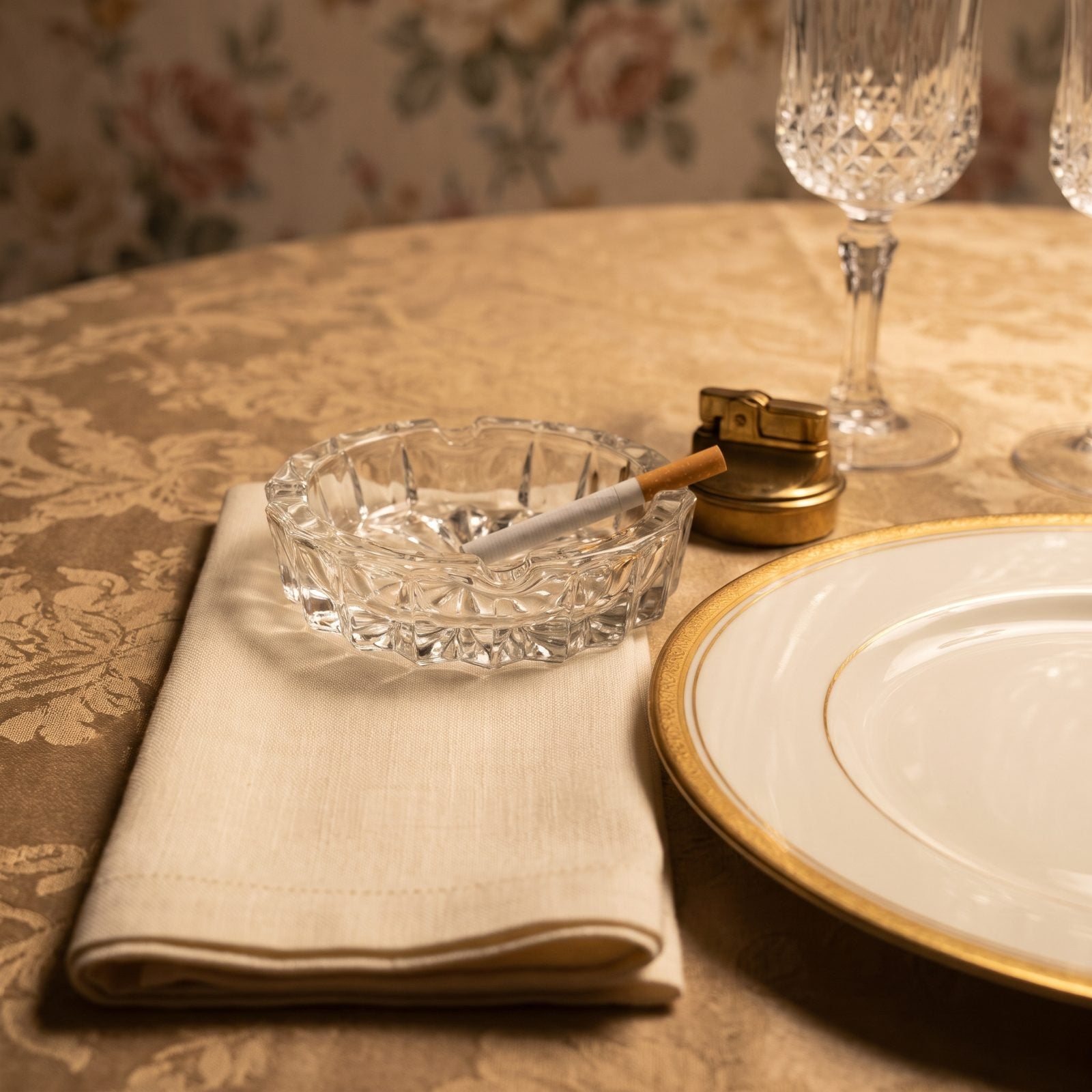
Here’s the detail that stops people cold today: the ashtray wasn’t by the door. It was at your plate. A small pressed-glass dish sat above the napkin at every setting, as standard as a salt cellar.
Smoking at the table wasn’t just allowed. It was expected. A good host kept a matching set, often with little cut grooves to rest a cigarette, and a table lighter within arm’s reach. You wouldn’t dream of making a guest hunt for somewhere to tap ash.
39. The Savory Aspic Mold That Jiggled on Its Own Plate
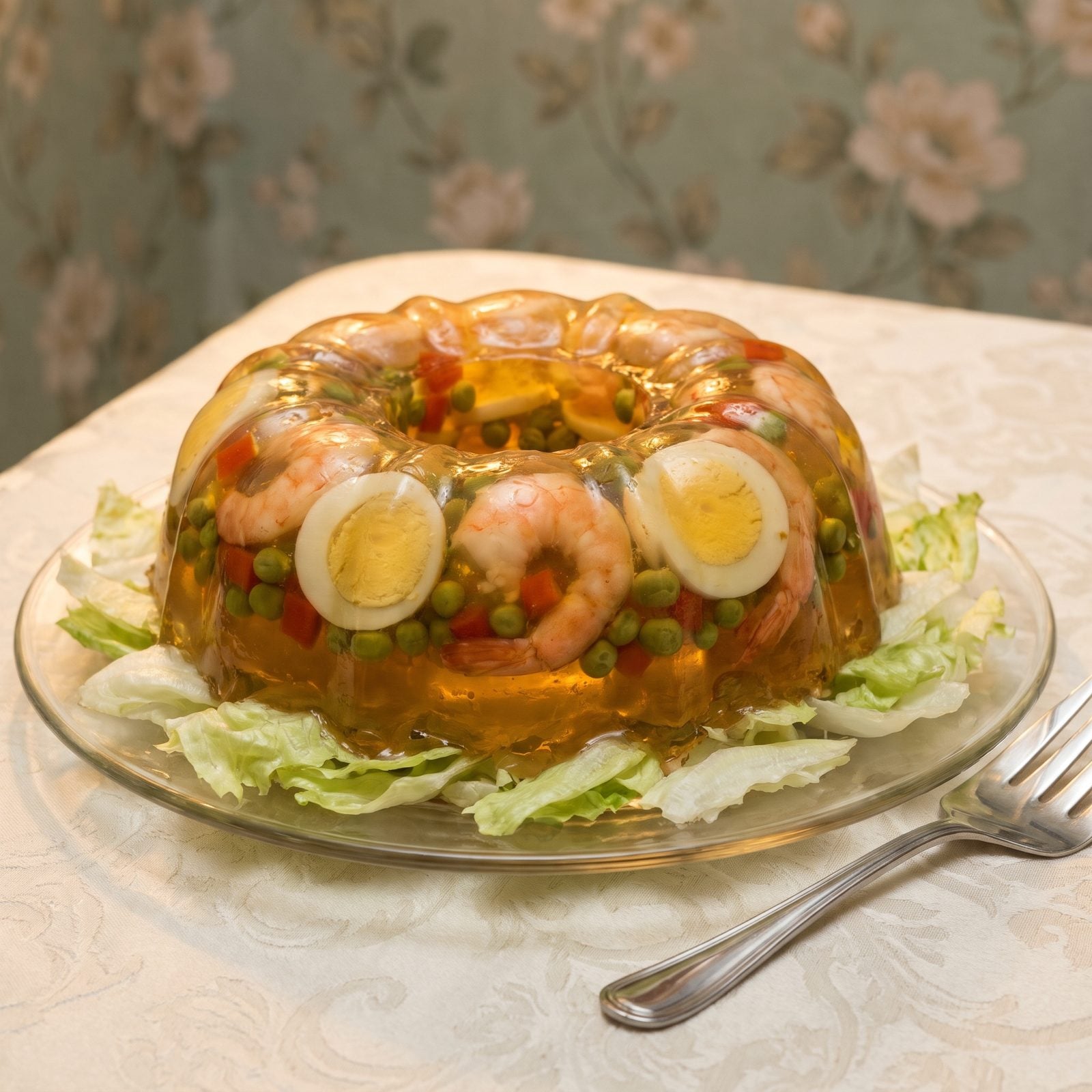
Nothing divides opinion like aspic. This was gelatin’s savory cousin, a clear or tomato-tinted jelly, often set with consommé, that suspended shrimp, vegetables, eggs or meat in a shimmering ring.
Let’s be honest: the look is more compelling than the flavor. But it made total sense in the era. Refrigeration was reliable, molded forms read as modern and controlled, and a perfectly unmolded aspic proved you could do a difficult thing without it collapsing.
A clean unmold was a quiet flex. If it slid out whole and held its shape, you had won before anyone took a bite.
The ring mold, the chilling time, the anxious flip onto the plate. Performance as much as food.
Looking back at the era of the savory mold, a chef and food blogger explains that “In the 1950s, gelatin dishes signified modernity, abundance and a hint of status tied to refrigeration and convenience”
38. The Cheese-and-Pineapple Hedgehog on Cocktail Sticks
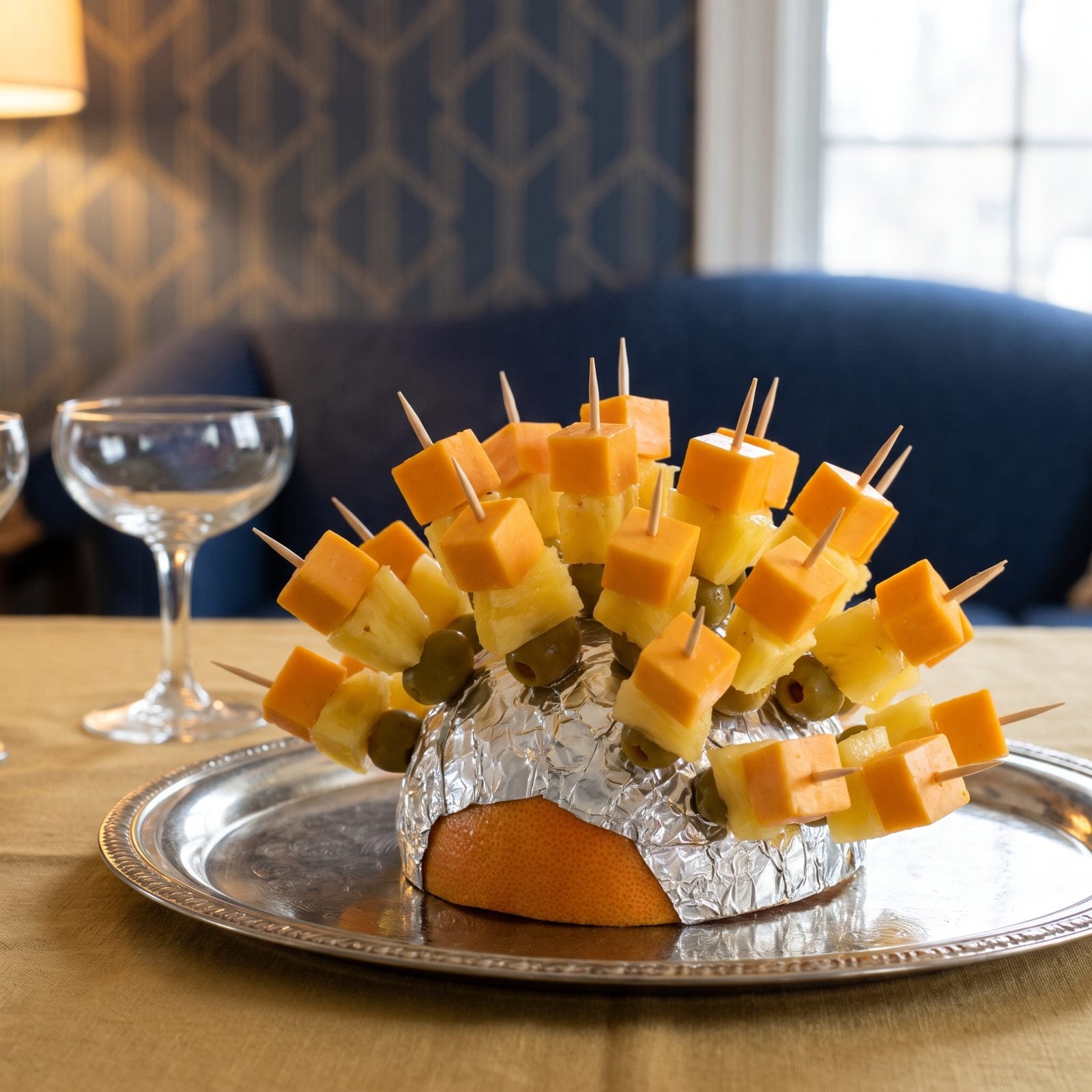
Take half an orange, wrap the dome in kitchen foil, and stud it with cocktail sticks, each one skewering a green olive at the base, a chunk of pineapple and a cube of cheddar on top. Congratulations, you’ve built a hedgehog.
It sounds like a joke now. It was dead serious party food, the sort of centerpiece that let guests graze without a plate. And the sweet-salty combination actually works, which is why it refuses to fully die.
37. The Silver-Plated Chafing Dish Keeping Swedish Meatballs Warm
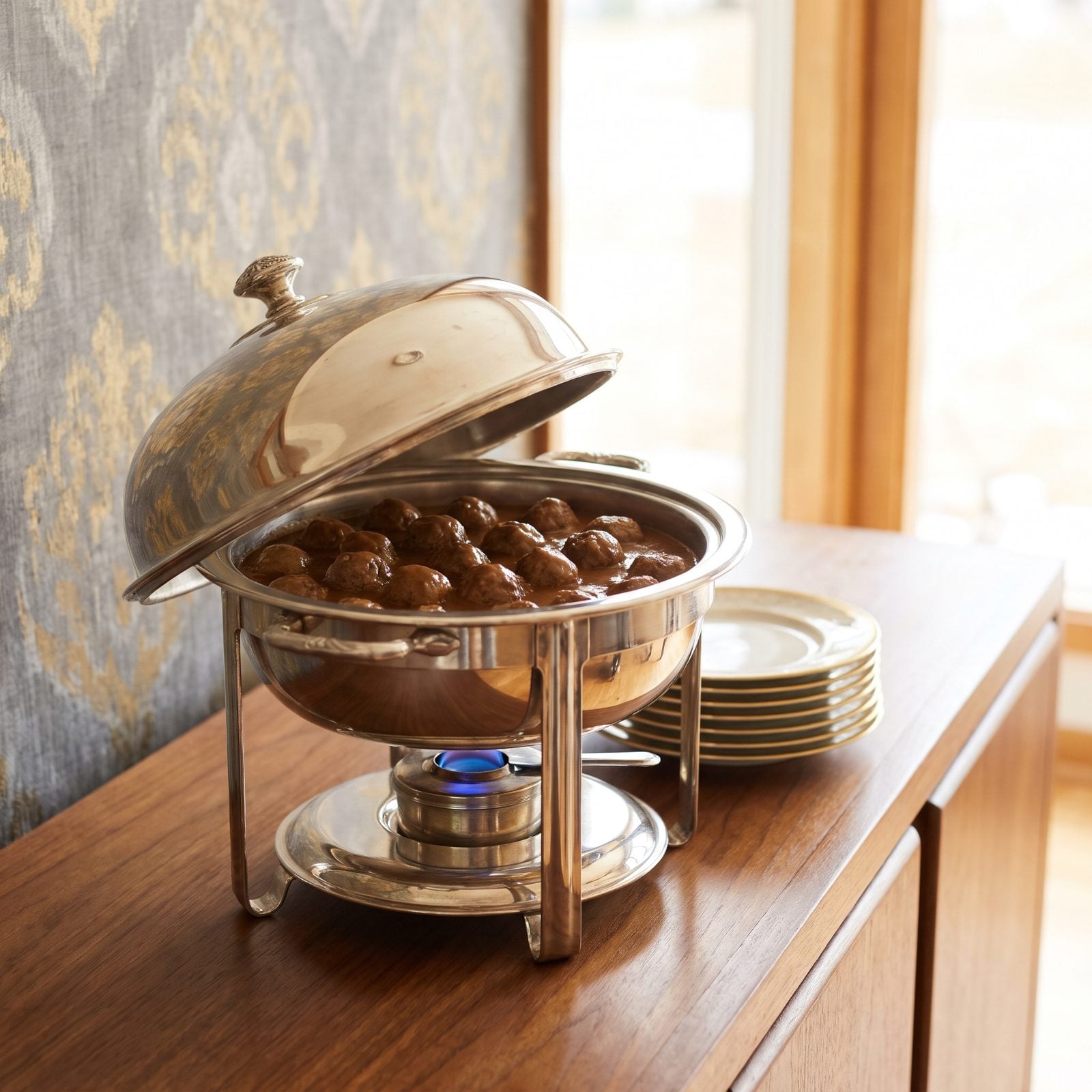
A chafing dish solved the host’s oldest problem: how to serve something hot without hovering over the stove all night.
The silver-plated version, with its domed lid and a little sterno flame underneath, held meatballs, creamed chicken, or a warm dip at the ready while you poured drinks. Call it the self-service engine of the buffet before anyone used that word.
36. Pressed-Glass Snack Plates With a Built-In Cup Recess
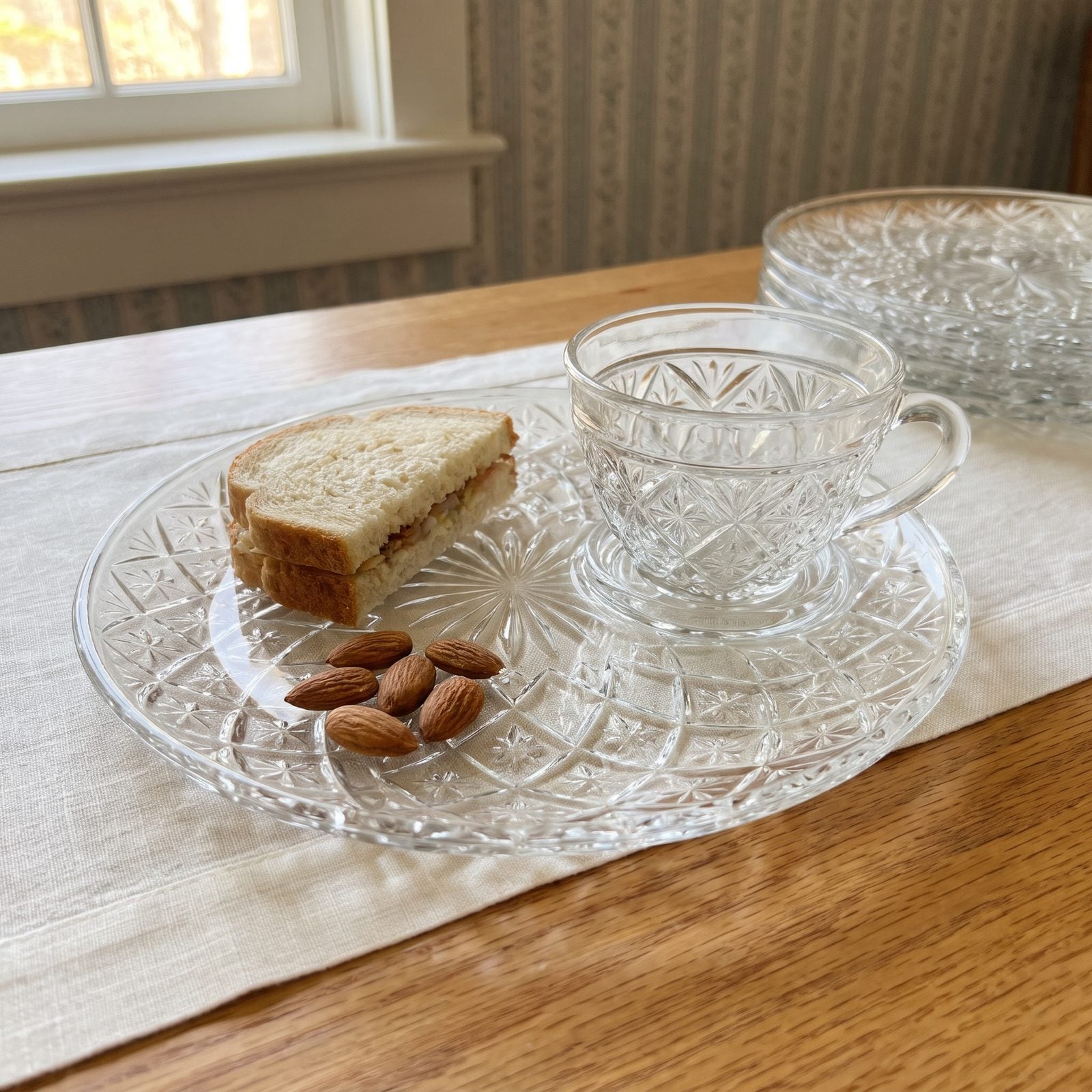
These are the plates that confuse people at estate sales. A shallow pressed-glass dish with a strange off-center ring molded into it, like a target that missed.
That ring held a matching cup. The design let a guest balance plate and cup in one hand at a standing party, free hand for a cigarette or a handshake. Sold in boxed sets of eight, often in swirling grape or diamond patterns, they were the finger-food fix for an age that entertained standing up.
35. Individual Shrimp Cocktail Glasses on a Bed of Ice
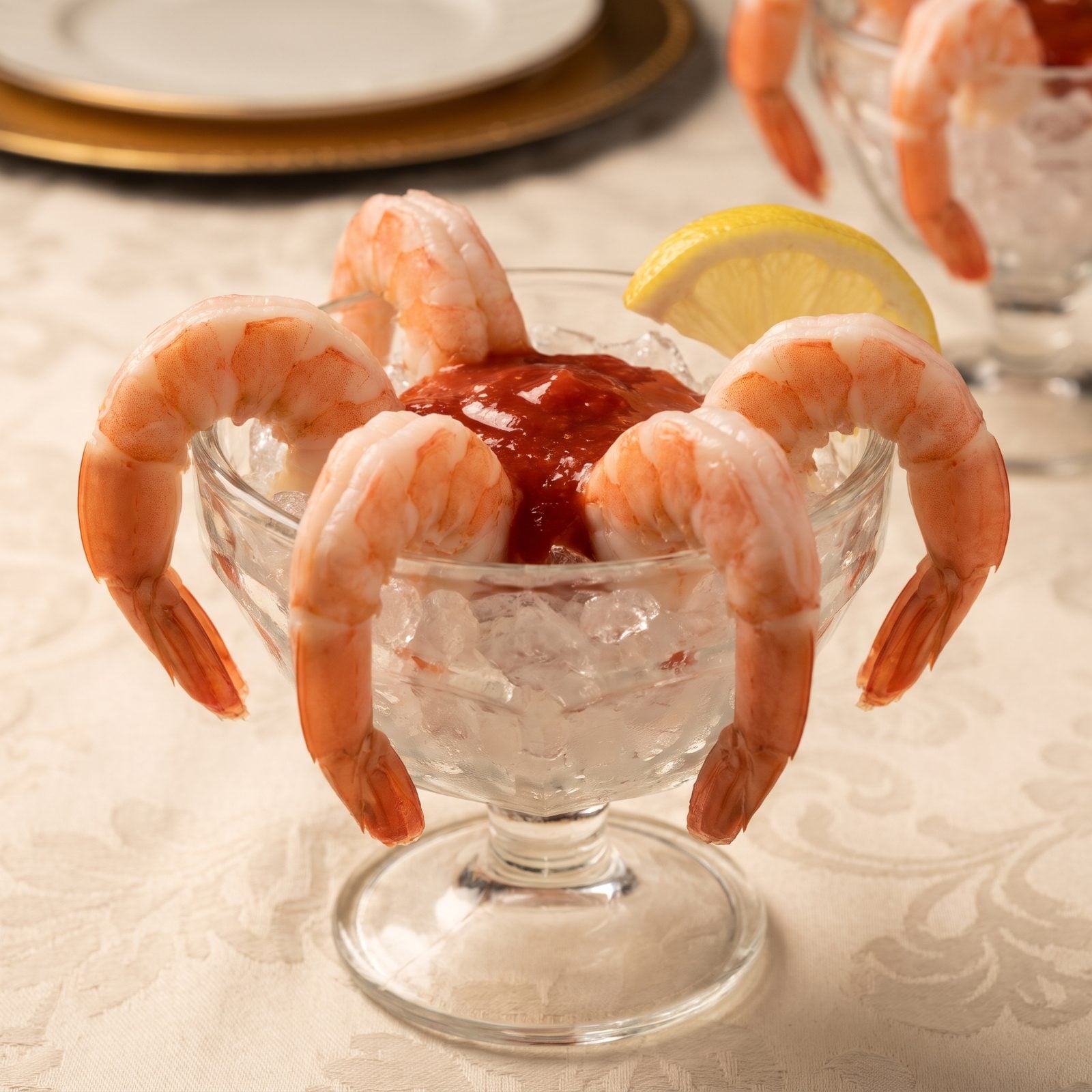
Shrimp cocktail was the opening act, and it got its own stemware. A footed glass, sometimes a double unit with a cup suspended inside a bowl of crushed ice, kept the shrimp cold and the sauce centered.
Guests got their own serving, tails hooked over the rim, sauce in the middle, a lemon wedge on the edge. It arrived at the table already plated, so the first course felt handled and expensive before the entrée showed up. Few dishes have announced “this is a real dinner” so efficiently.
34. The Electric Warming Tray That Lived on the Sideboard
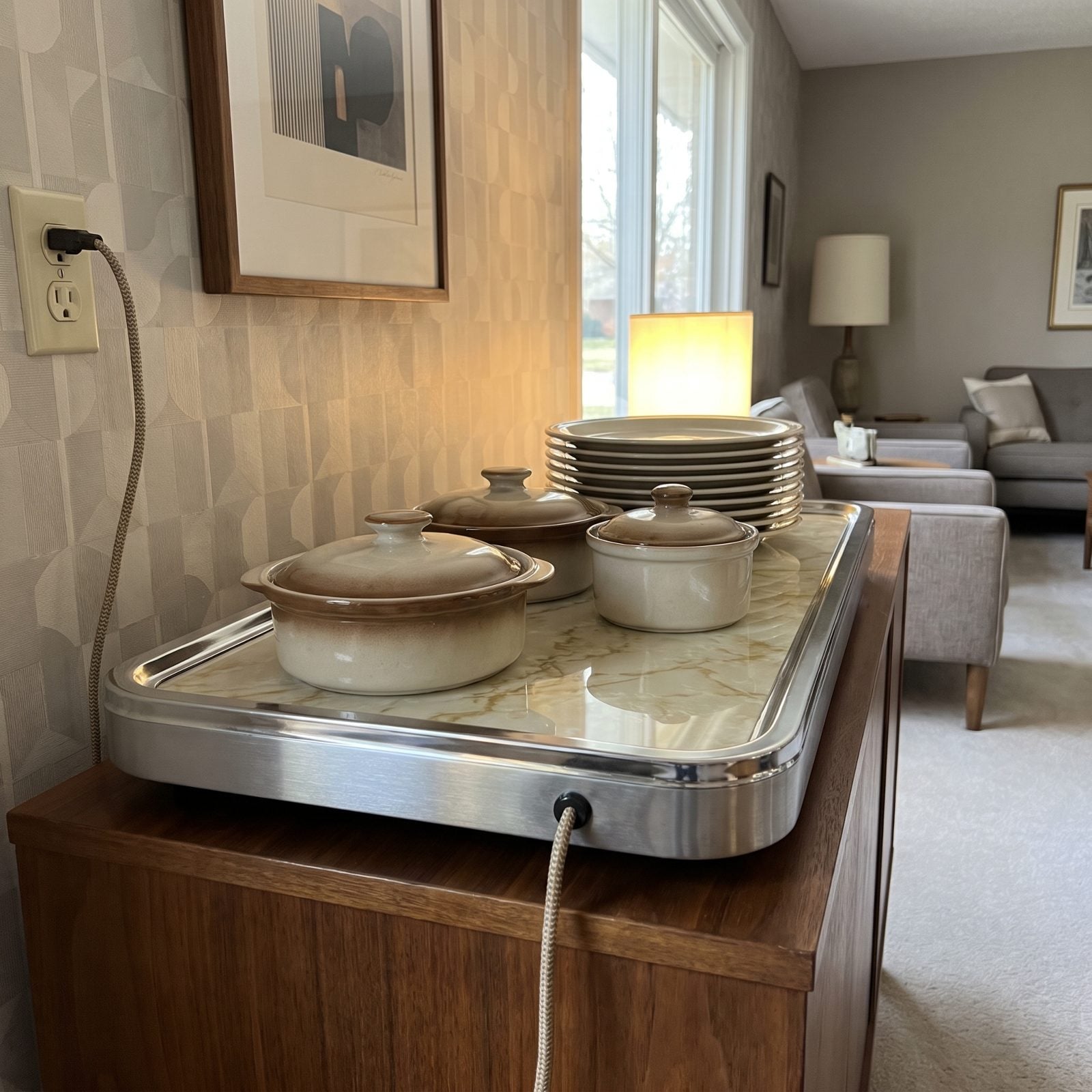
Every well-run household had one, usually stored upright behind the good china. The electric warming tray was a flat heated surface, often topped with faux-marble glass and a chrome rim, that kept serving dishes and plates hot through a long meal.
Here’s the unglamorous hero of hosting. Nobody admired it, but it quietly saved dinner, holding the casserole at temperature while the salad course ran long. The fabric-wrapped cord and the faint smell of warming glass are pure memory for anyone who grew up in that kitchen.
33. The Cut-Glass Punch Bowl With Cups Hanging From the Rim
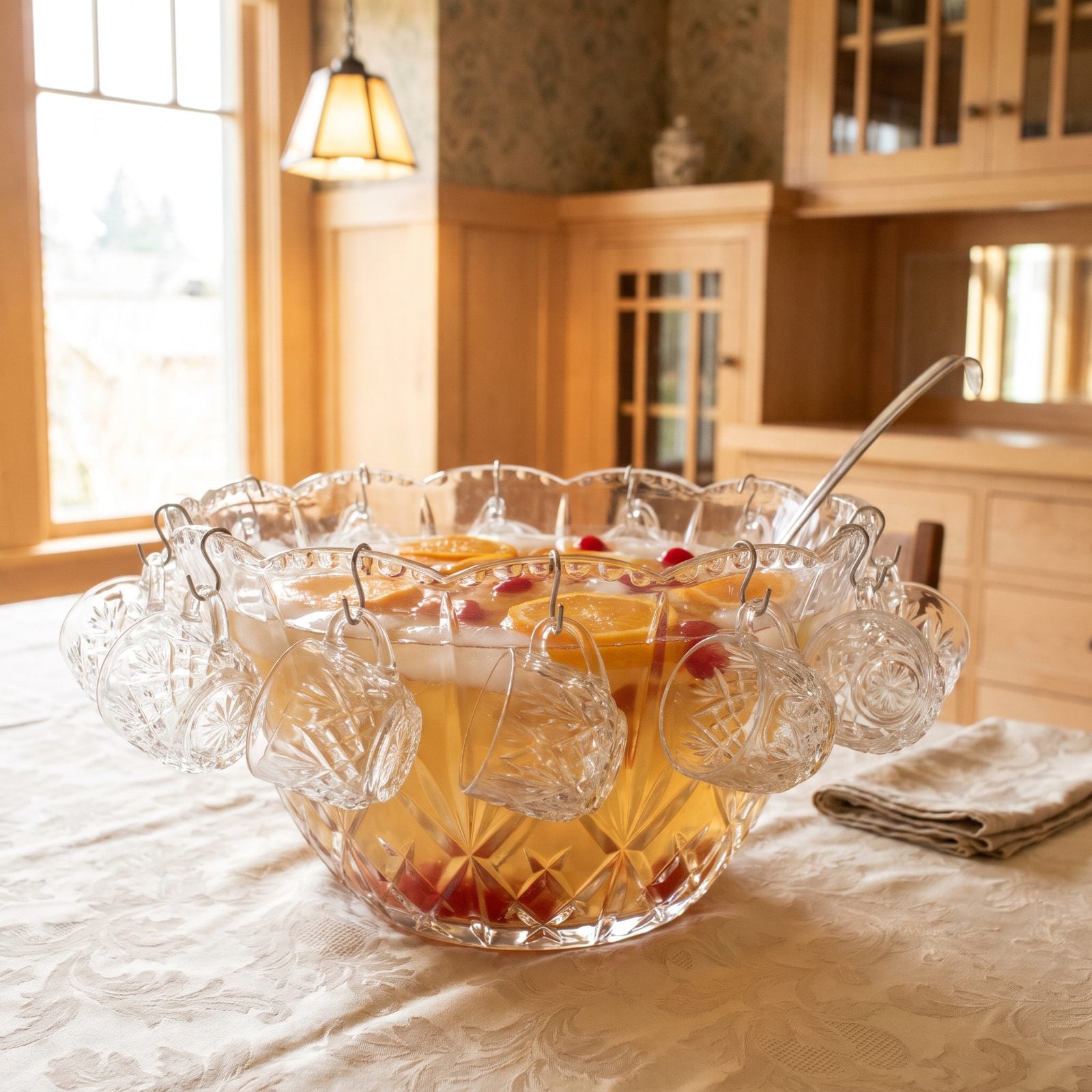
Picture the cut-glass punch bowl set out before guests arrived, cups already hooked around the rim like a crystal chandelier lying on its side. That was the welcome.
A punch bowl set, bowl, ladle, and a dozen matching cups on little hooks, was a standard wedding gift and a status object. The punch itself ranged from a boozy fruit blend to a creamy sherbet float.
Fill the bowl with a floating ice ring studded with fruit and you had a centerpiece that also served itself.
32. The Skewered Hors d’Oeuvre Tree Bristling With Bites
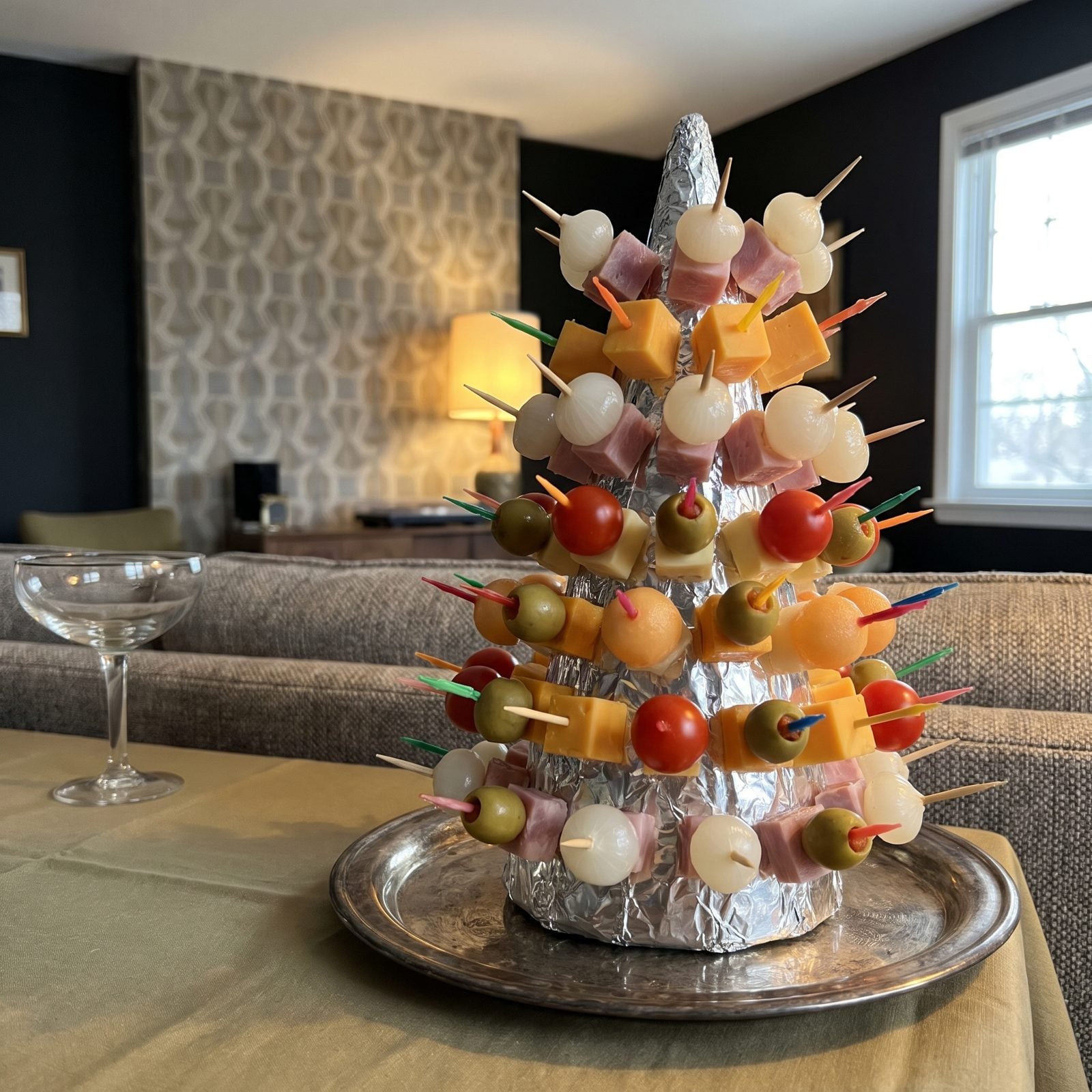
The hors d’oeuvre tree took the hedgehog idea and gave it ambition. A foil-wrapped cone or tiered frame, studded on every side with cocktail picks holding ham cubes, melon balls, olives, cheese, and little pickled onions.
It rose off the table like edible topiary and gave a crowd something to pick at while standing. The genius was angle and abundance. From any seat, a guest saw a wall of bites and a clear invitation to dig in.
31. A Fondue Pot With Color-Coded Forks
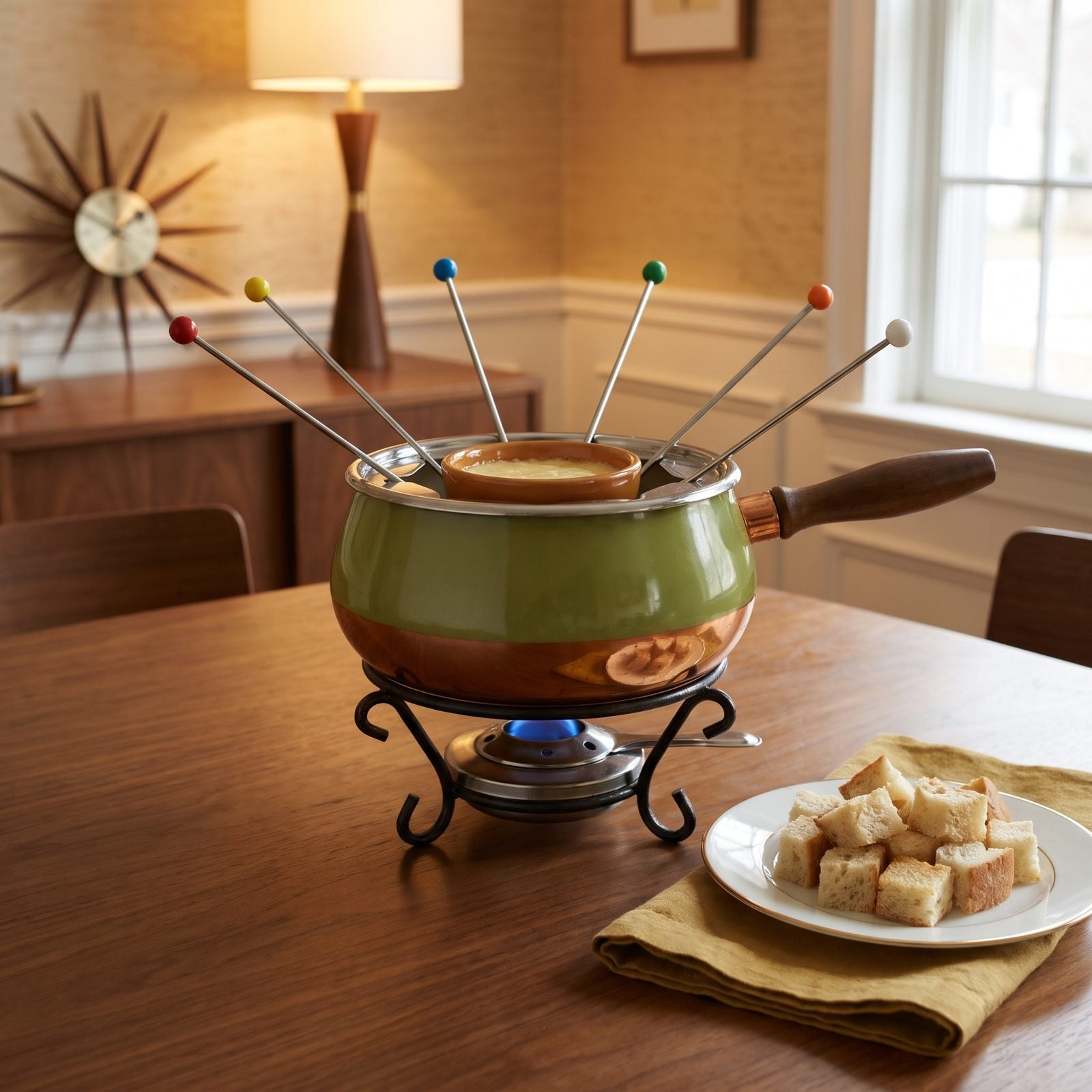
The color-coded forks were never decoration. Dunk your bread, the cheese webs, and suddenly nobody knows whose fork is whose. The little red bead was yours, the blue was his, and that one tiny detail saved a hundred quiet arguments over who double-dipped.
Fondue hit American tables in the early 1960s and stuck around because it did half the hosting for you. You set the pot, poured the Gruyère and the white wine, and the guests fed themselves. No carving, no plating — just melted cheese and a reason to lean in over the same pot.
30. A Ring-Shaped Gelatin Salad
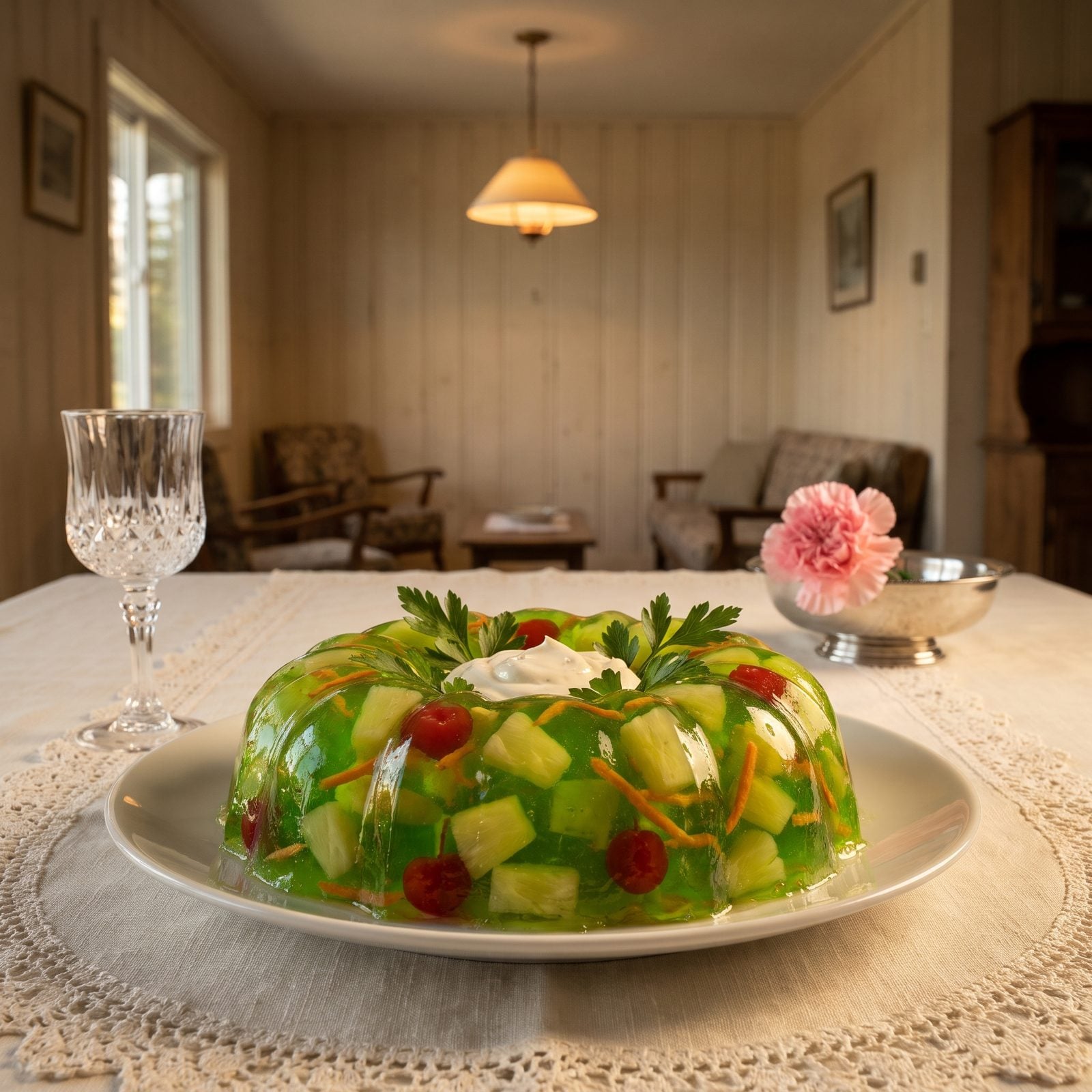
You either grew up eating these or you’ve only ever heard about them with a raised eyebrow. The ring mold was the point. That hollow center held the dressing, or a mound of cottage cheese, or more fruit — one dish doing the work of salad and centerpiece at once.
Suspending shredded carrot and pineapple in gelatin sounds strange now. Back then it read as modern and even a little luxurious, because flavored gelatin and a refrigerator reliable enough to set it were both fairly recent household wins. The jiggle was proof your kitchen had arrived.
29. A Roll-Around Hostess Trolley
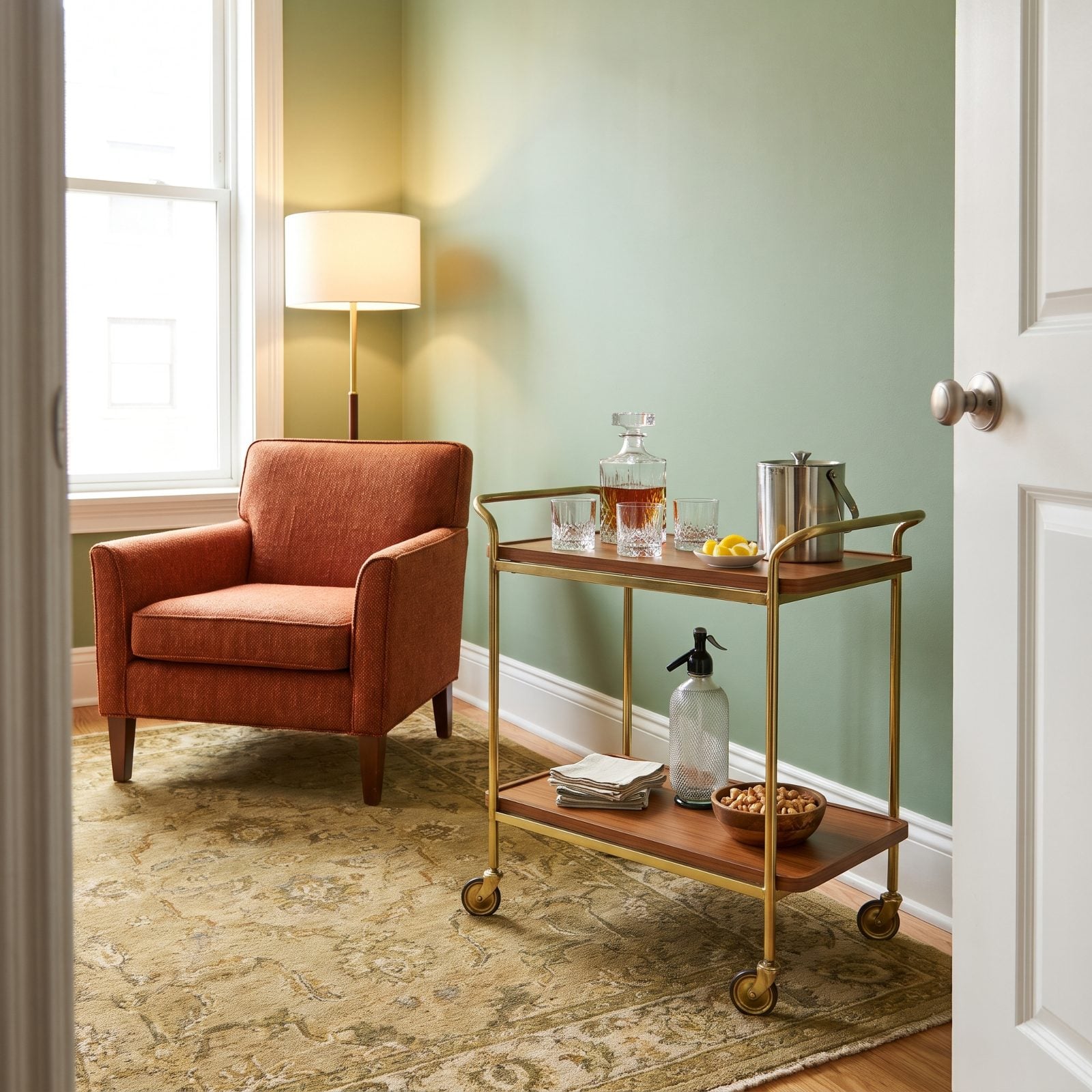
The trolley meant you never left the room. A good host doesn’t disappear into the kitchen every ten minutes, so you wheeled the party to the guests instead of the other way around.
Top shelf held the decanter, the ice bucket, the good glasses. Bottom shelf carried the backups, the napkins, the overflow. All of it rode on casters and glided from living room to dining room with a single push. The brass-and-laminate ones from this era turn up at estate sales now and get snapped up fast — because nobody builds furniture whose only job is keeping a conversation going anymore.
28. A Matching Chip-and-Dip Set
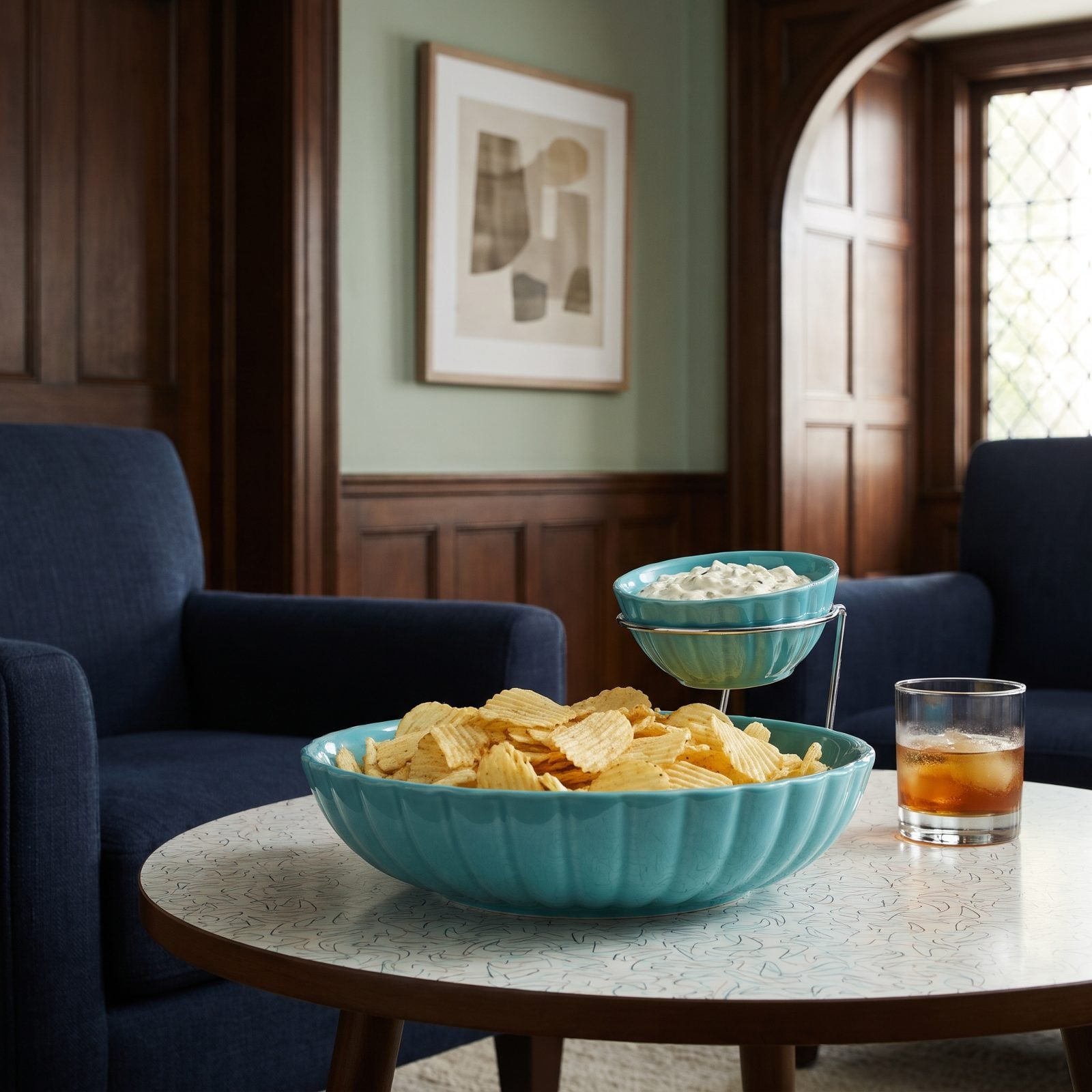
One bowl for chips, a smaller bowl clipped above it for dip. The whole contraption existed so you weren’t washing two mismatched dishes and so the dip didn’t wander off to the far end of the table.
The dip itself was usually sour cream and a packet of dried onion soup mix, stirred and chilled an hour. Humble stuff. But the matching glazed set made it look like you’d planned something — and you had.
27. A Divided Pressed-Glass Relish Dish
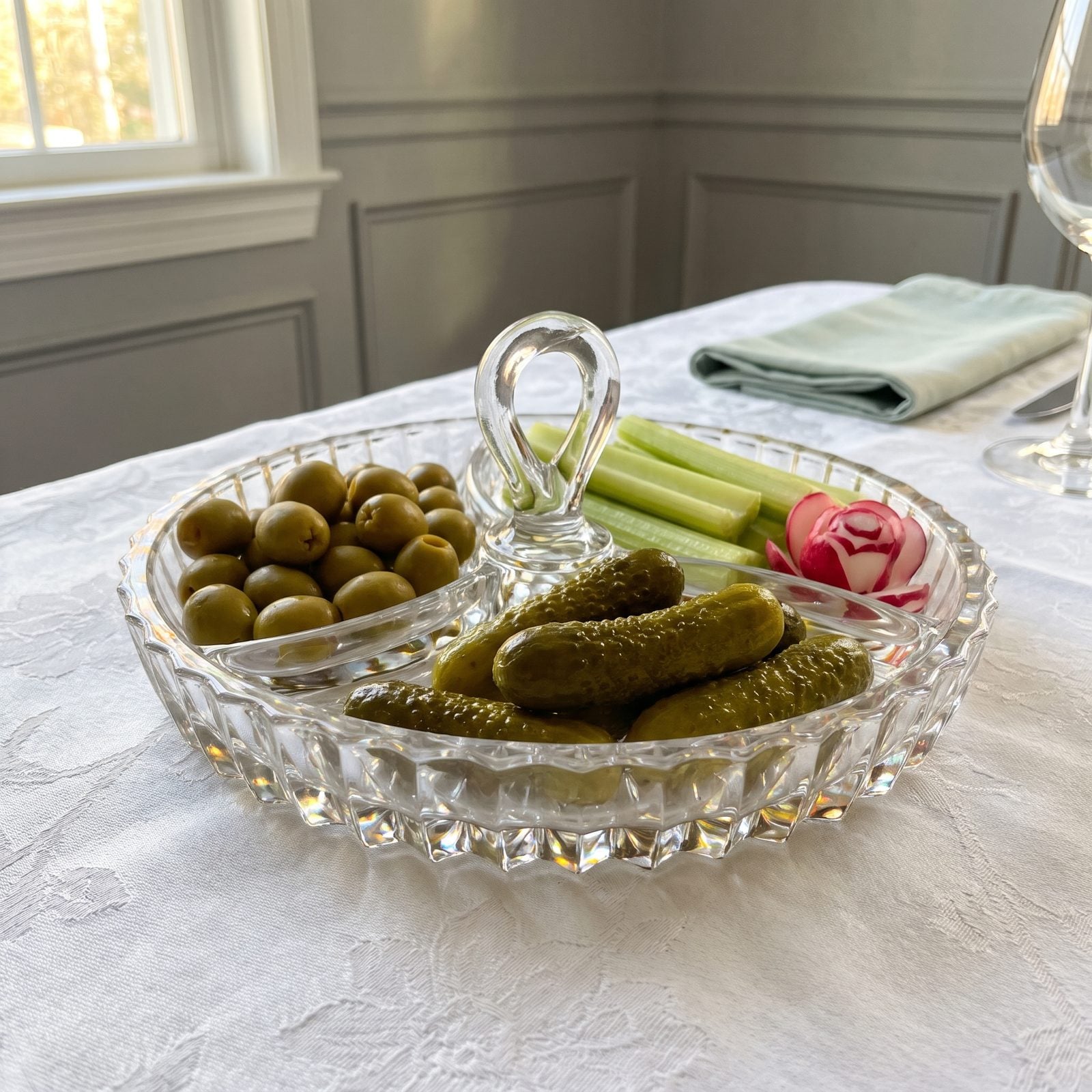
The relish tray was the warm-up act. Before the roast came out you nibbled — olives, gherkins, celery, maybe a few radishes carved into little roses by somebody with patience. Three or four compartments, one glittering piece of pressed glass, everything cold and crunchy and salty.
Pressed glass looked like cut crystal but cost a fraction, which is exactly why it filled so many china cabinets. Hold one up to the light and you still get those prismatic flashes off the starburst edges. They’re everywhere at thrift shops for a few dollars, and they’ve quietly come back as the smart hostess’s cheese-and-olive tray.
26. A Glass Deviled Egg Plate
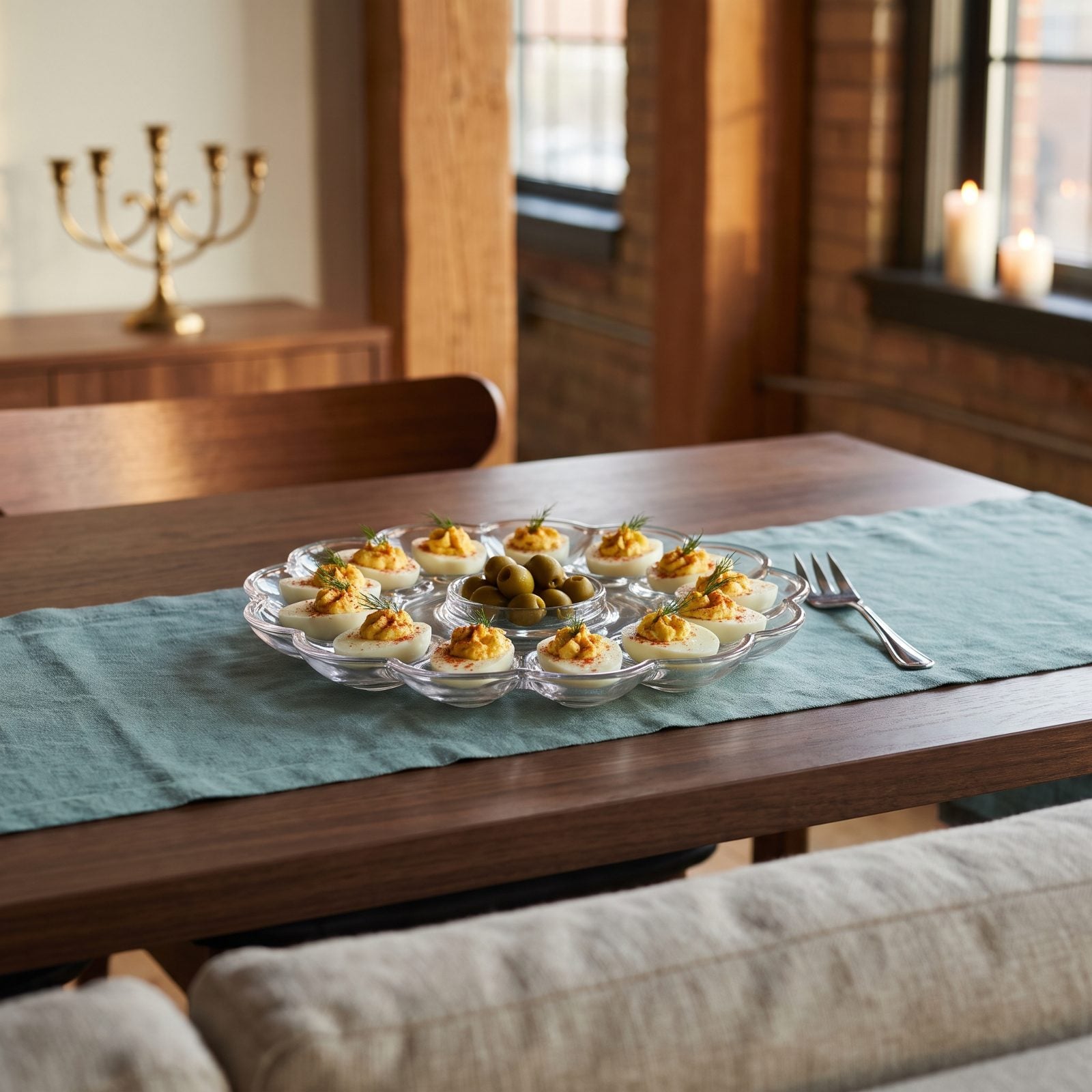
A plate built for exactly one food. Twelve little egg-shaped wells in a ring, so your deviled eggs didn’t skate around and tip over on the way to the table.
The eggs got a dusting of paprika on top every single time, less for flavor than for the color. You can find these glass plates for almost nothing now, and nobody mentions the obvious upgrade: the wells work just as well for cherry tomatoes, olives, or little rounds of cured sausage. The plate outlived the dish it was born to carry.
25. Rumaki on Cocktail Picks
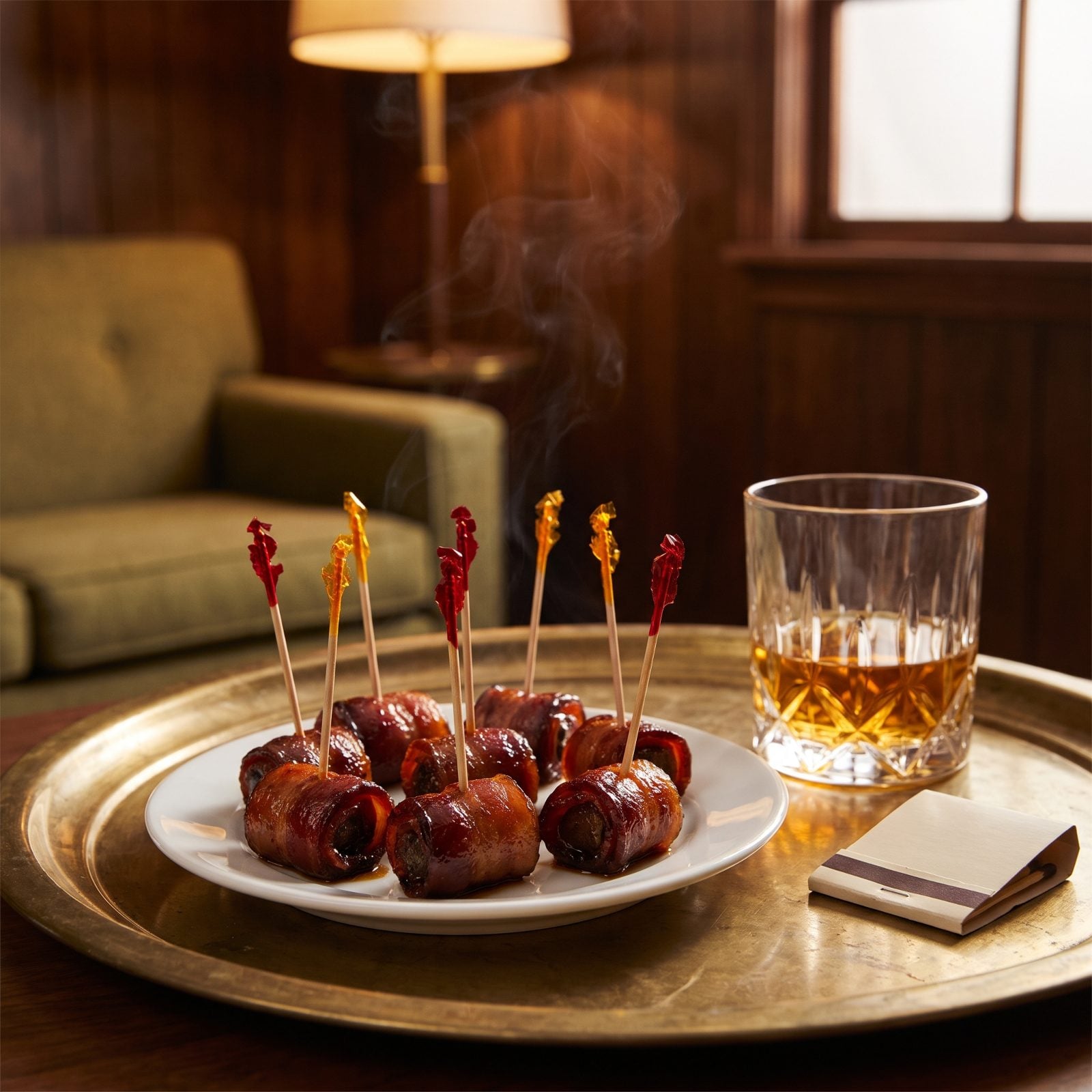
Water chestnut and a slice of chicken liver, wrapped in bacon, often marinated in soy and brown sugar, broiled until the bacon lacquered up, then speared with a frilly cocktail pick. That was rumaki — the height of worldly for a 1960s host.
It came out of the Polynesian restaurant craze, the tiki-bar moment that had suburbanites convinced soy sauce and pineapple meant the tropics. Half the draw was the pick itself: little cellophane frills that let you grab, eat, and keep your fingers clean while the other hand held a drink. A lot of hosts dropped the liver for a plain bacon-wrapped chestnut, and honestly, that version still slaps.
24. A Nut-Crusted Cheese Ball
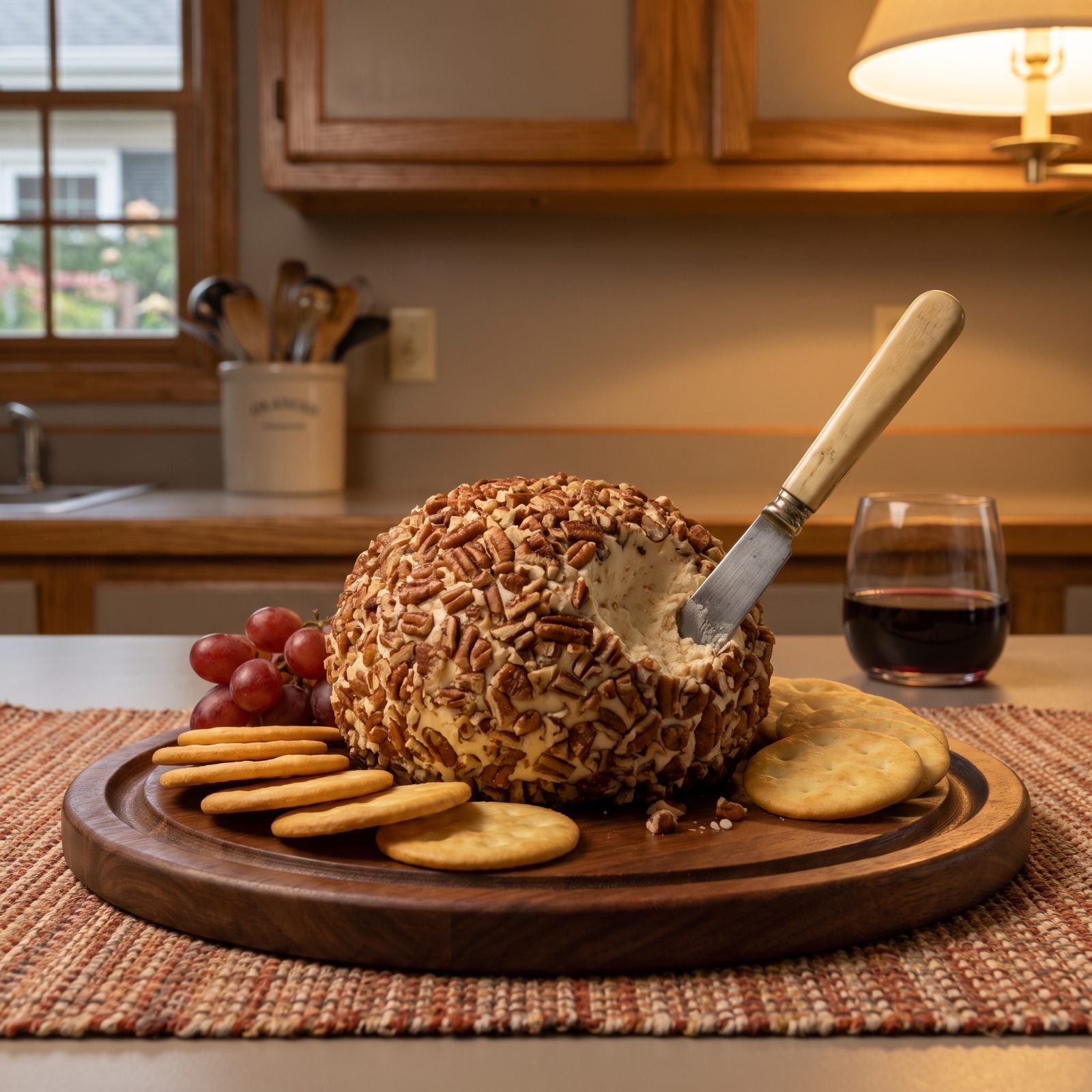
Cream cheese, sharp cheddar, a hit of Worcestershire and grated onion, all mashed together, rolled into a ball and rolled again in chopped pecans. Chilled firm, then set out with a spreader and a fan of crackers.
The nut crust was doing real work — keeping the soft cheese from smearing everywhere and giving your fingers something to grip. Made a day ahead, it waited in the fridge until guests arrived, the mark of a host who learned the hard way not to do everything at the last minute. The cheese ball never really went away. It just got embarrassed and left the party for a while.
23. A Nut Bowl With a Nutcracker and Picks
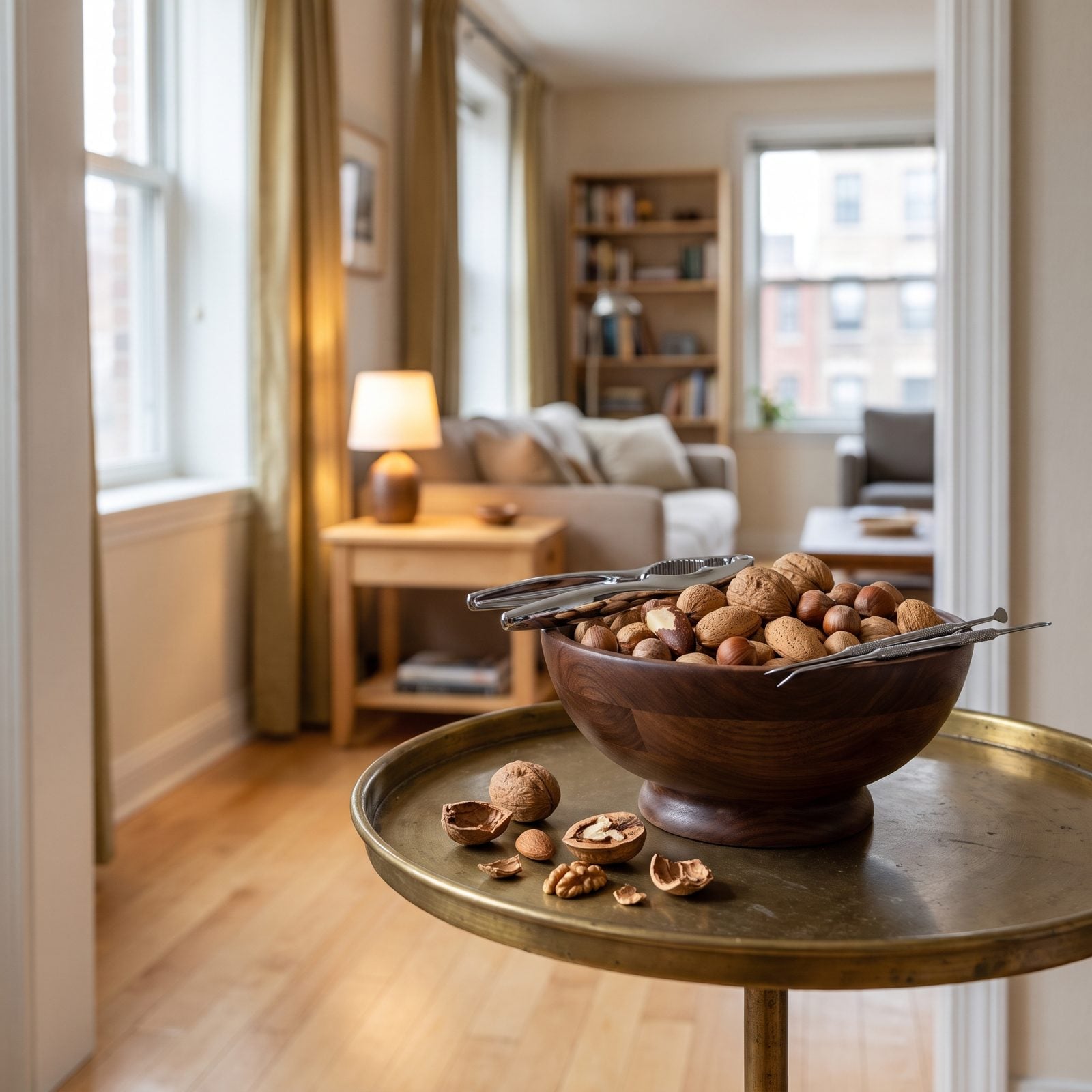
A bowl of whole nuts in the shell, with a chrome cracker and a couple of thin steel picks balanced on the rim. You cracked your own. Slowly. On purpose.
And that slowness was the genius of it. Shelled nuts vanish in two handfuls, but make a guest work for each almond and the bowl lasts the whole evening — the cracking gave idle hands something to do during the slow stretch of conversation. There’s a small psychology to it too: a task you can do without thinking makes a room of near-strangers relax faster.
22. Pastel After-Dinner Mints in a Compote
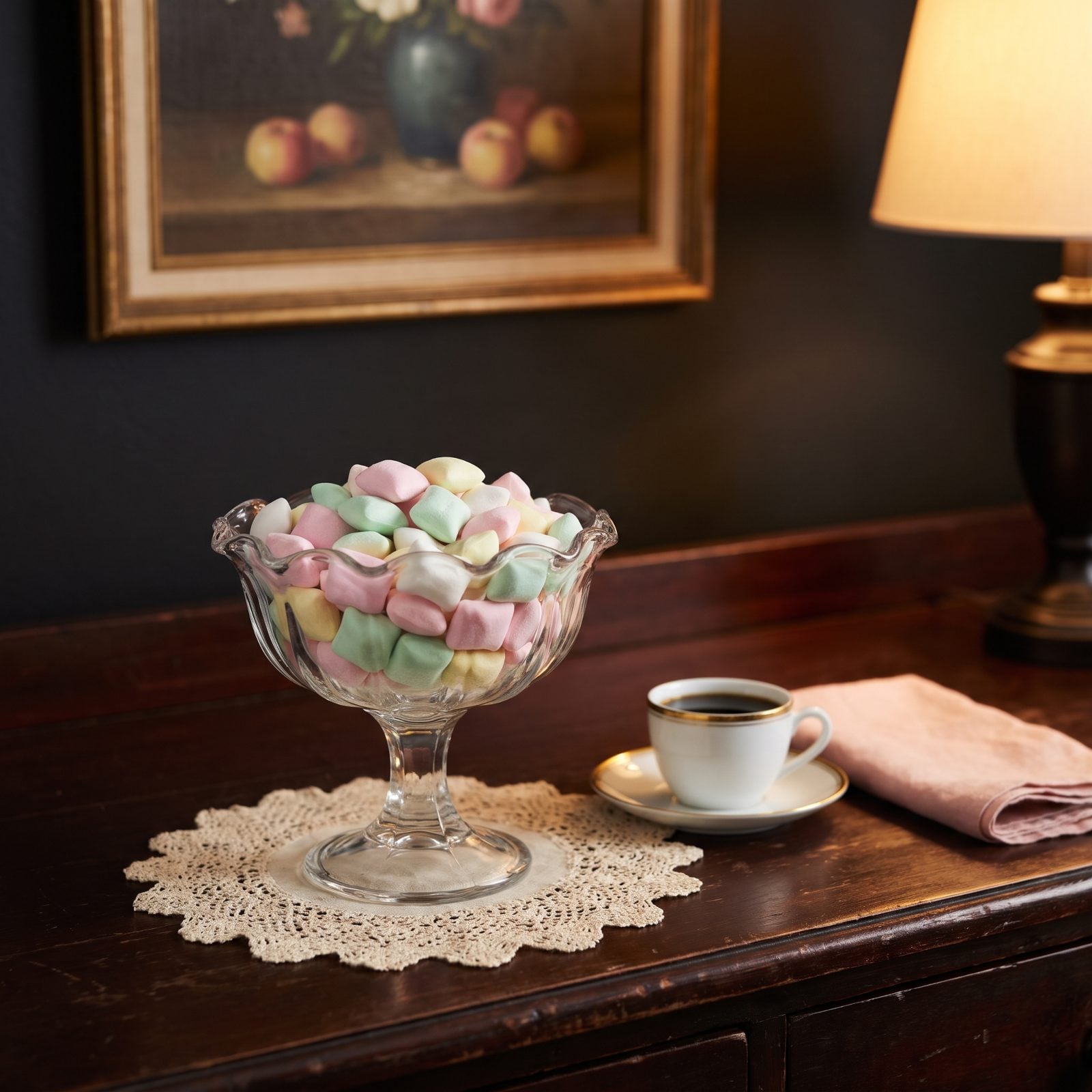
Dinner was done, the coffee was poured, and out came the little footed glass dish full of soft pastel mints. Pink, green, yellow, white. They dissolved on your tongue almost before you tasted them — a sweet, cool finish that didn’t ask you to pick up a fork again.
The compote mattered as much as the candy. Raising the mints up on that little glass pedestal told everyone the meal had a proper ending, the kind of small ceremony a thoughtful host doesn’t skip. Set it on the sideboard, let guests drift over, and you’d signaled the evening’s last and gentlest course without saying a word.
21. A Baked Alaska for the Grand Finale
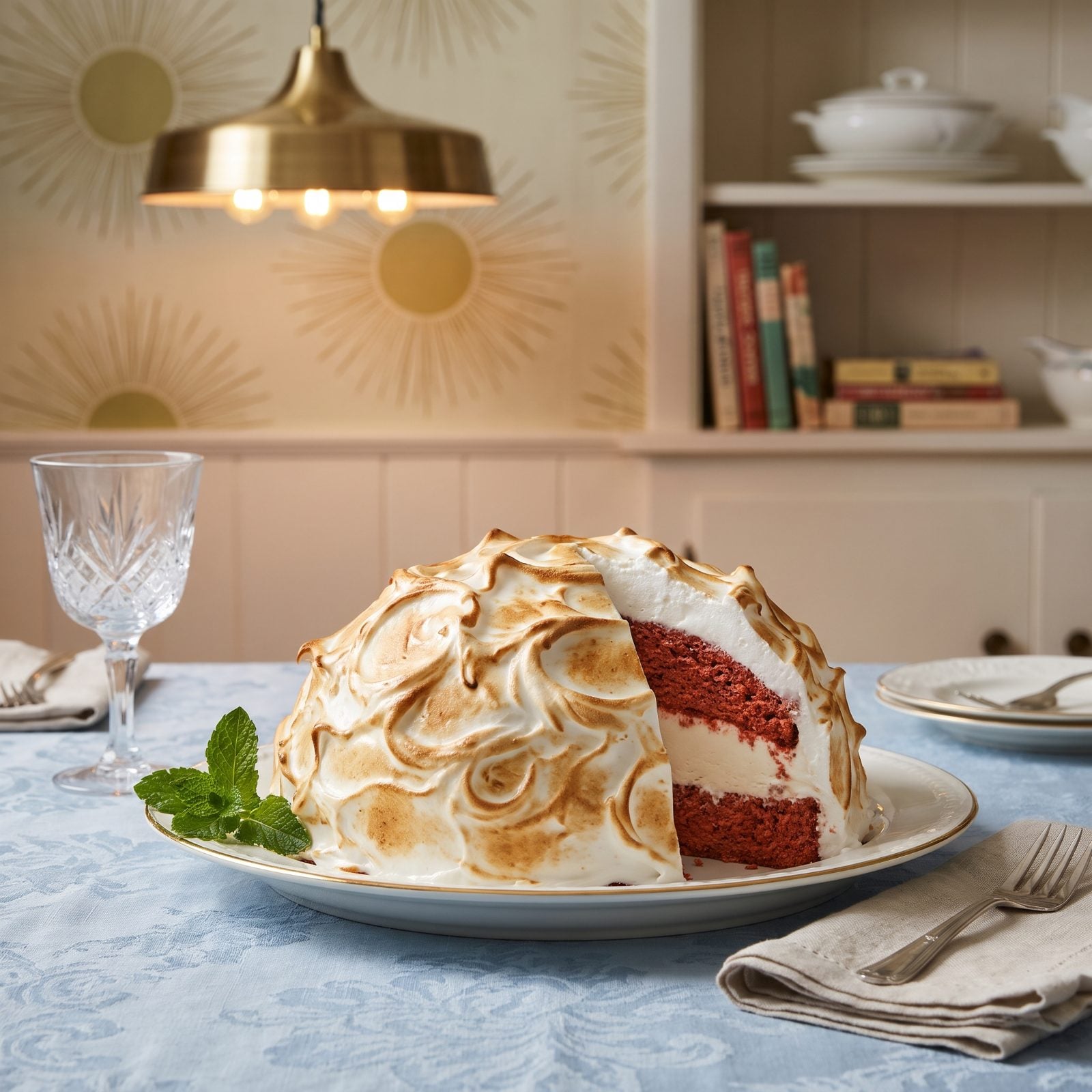
Nothing announced a hostess’s ambition quite like ice cream that came out of the oven still frozen. The trick is old, dating to the 1860s, but the 1960s made it the dessert of the aspirational dinner party. Cake on the bottom, ice cream in the middle, a thick blanket of meringue sealing the whole thing, then a blast of heat that browns the outside while the center stays cold.
The meringue is insulation, plain and simple. Whipped egg whites trap air, and air barely conducts heat at all. That’s the whole trick.
Still a fan of the retro showstopper, a former restaurant pastry chef says “It is like the thespian of desserts, over-the-top, always fun and center stage at a party.”
20. A Cherries Jubilee Tableside Setup
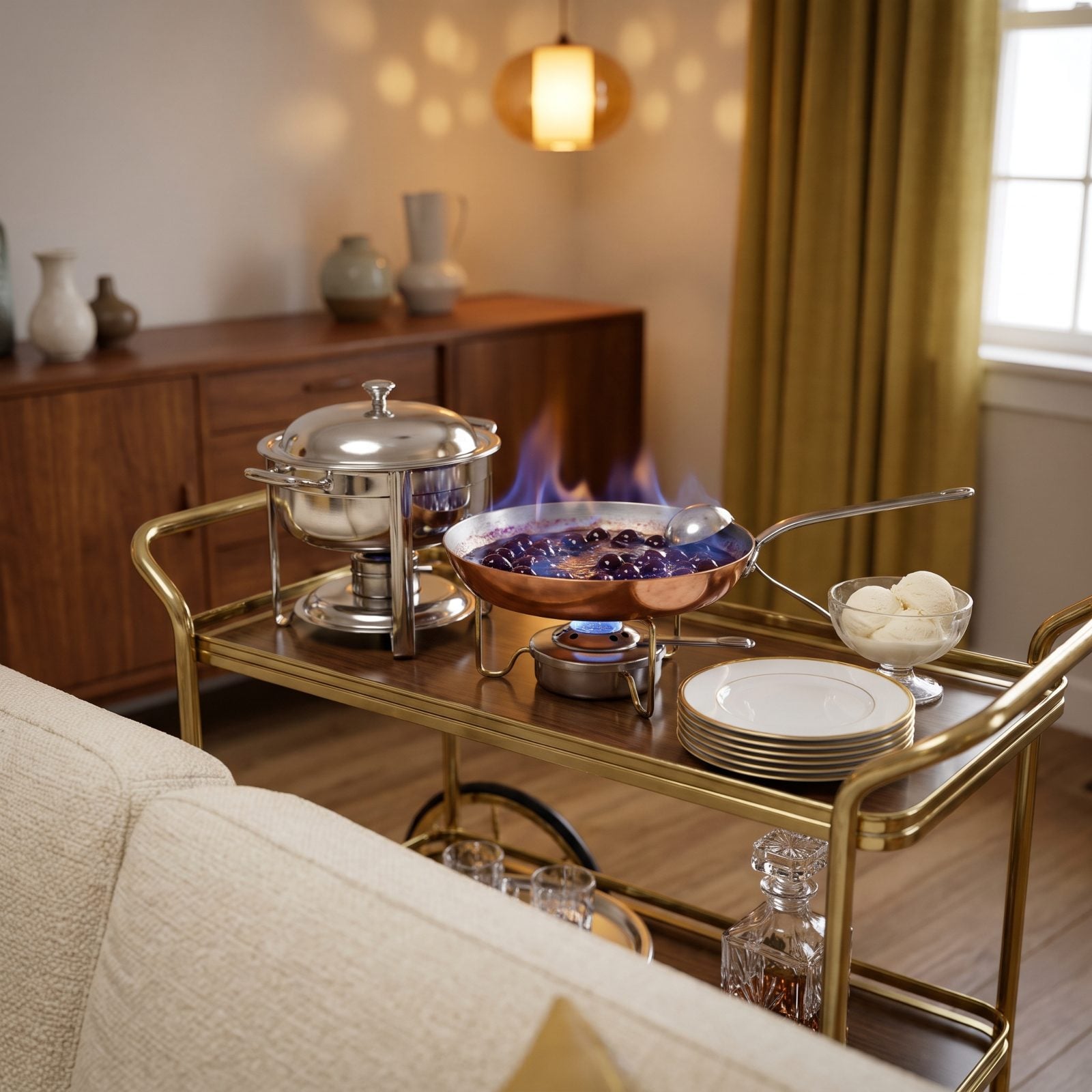
Flames at the table were the entire appeal. Cherries Jubilee gave the host a reason to stand, strike a match, and perform. The cherries and sauce were almost beside the point next to the spectacle of warmed brandy catching fire in a copper pan while guests leaned back from the heat.
Here’s what people get wrong. You don’t pour cold liquor over the pan and hope. The brandy has to be warm so the alcohol vapor ignites; a splash of cold spirits just sits there and sulks. The flame burns off some of the alcohol and mellows the rest, which is why the dessert tastes more of cherry than of raw liquor.
Escoffier gets credit for it, reportedly created for Queen Victoria’s Jubilee. By the sixties it was a standard move in any entertaining guide worth its salt.
19. An Electric Party Percolator
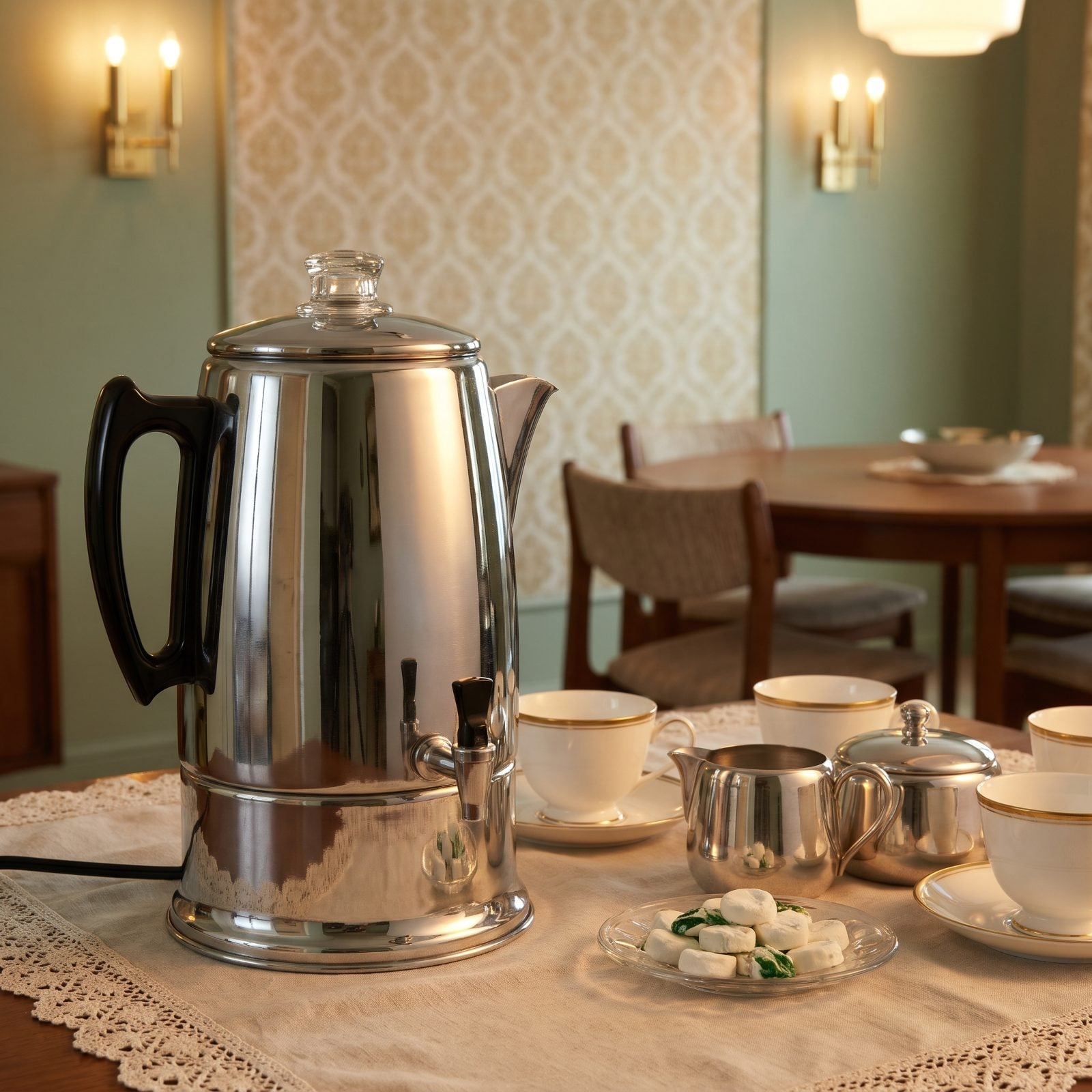
The gurgle was the signal. Dinner was winding down, the percolator came out, and that rhythmic bubbling against the glass knob meant coffee for everyone at once.
These chrome machines held a crowd’s worth and let a hostess leave the kitchen. Fill it, plug it in, forget it. Water cycled up through the tube, splashed over the grounds, and dripped back down, over and over, until the whole pot brewed itself.
18. A Glass Seltzer Siphon
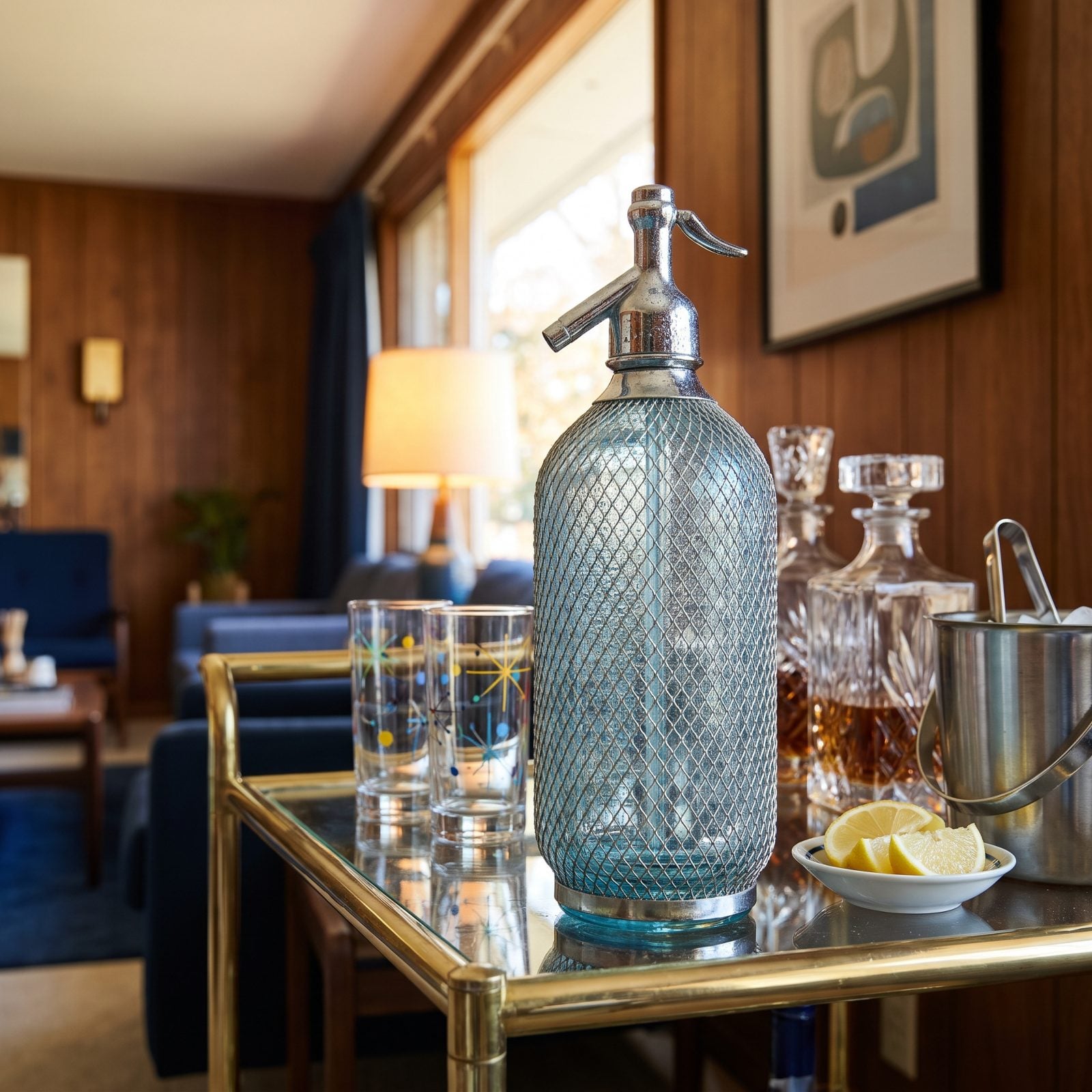
That hiss was the sound of a host who had his act together. The seltzer siphon pressurized carbonated water inside heavy glass, usually wrapped in a wire mesh cage so it wouldn’t send shards across the room if it failed. Press the lever, and a fizzing stream shot into your Scotch and soda.
You charged these with small CO2 cartridges, and the good ones kept water bubbly for days. No flat tonic, no running to the store — just a sturdy bottle on the cart that turned any drink into a proper one with a flick of the thumb.
17. Gold-Patterned Atomic Highball Glasses
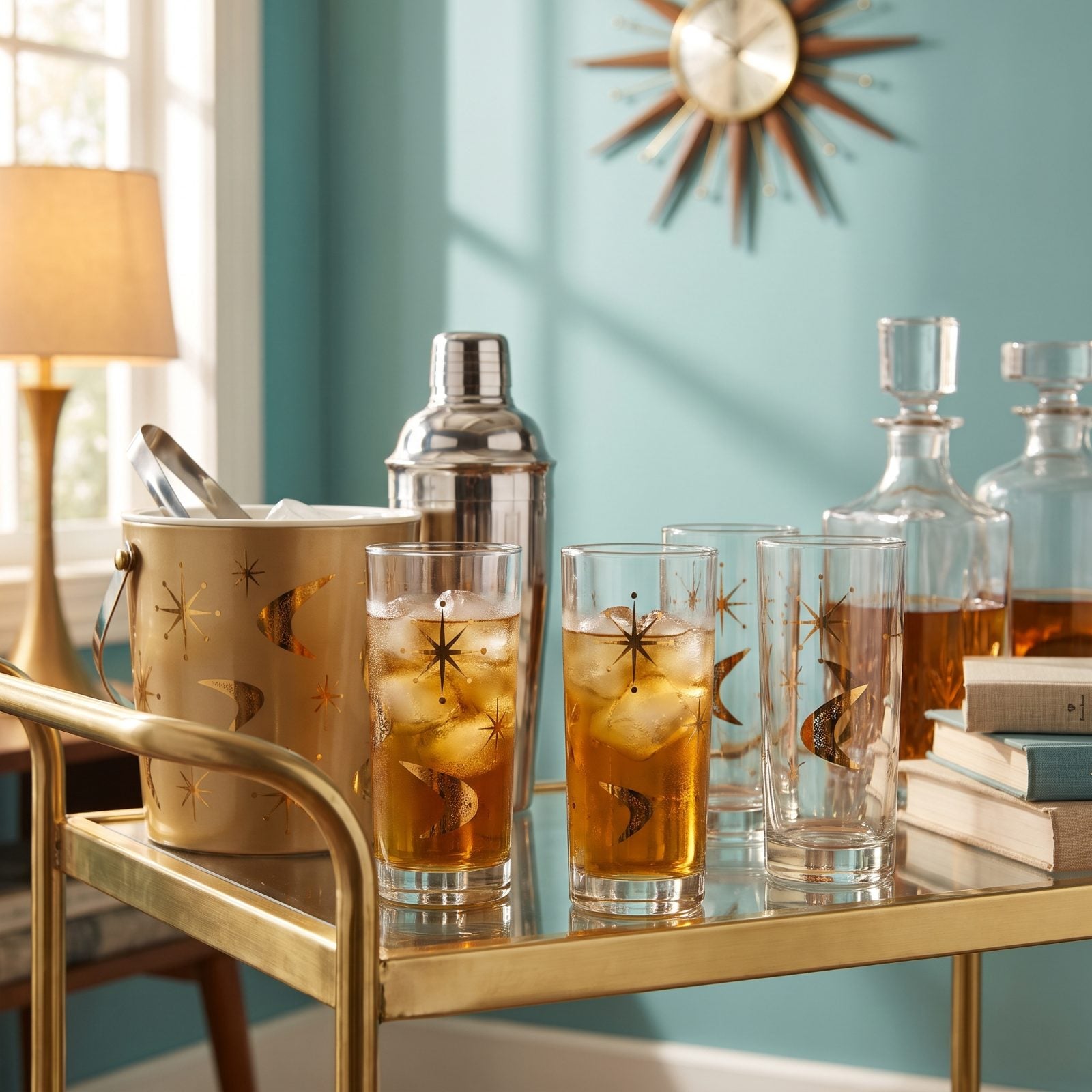
You know the pattern even if you’ve never named it: those gold starbursts, boomerangs, and spindly atom diagrams printed on tall straight glasses. They defined the era’s cocktail hour.
The gold was often real — 22-karat, fired onto the glass — which created the single rule everyone eventually learned the hard way. Never put them in the dishwasher. Detergent and heat strip the gold off in a season, leaving ghostly outlines where the pattern used to be. Hand-wash, or watch them fade.
Companies like Libbey turned these out by the carload, so survivors show up at estate sales all the time. A full set with bright, uneroded gold, though, is getting harder to find for exactly the reason above.
Describing the gold-printed barware of the period, a vintage glassware dealer points to “decorative glassware in 22-karat gold – think lavish and opulent cocktailware of the 1950s and 60s.”
16. Novelty Swizzle Sticks
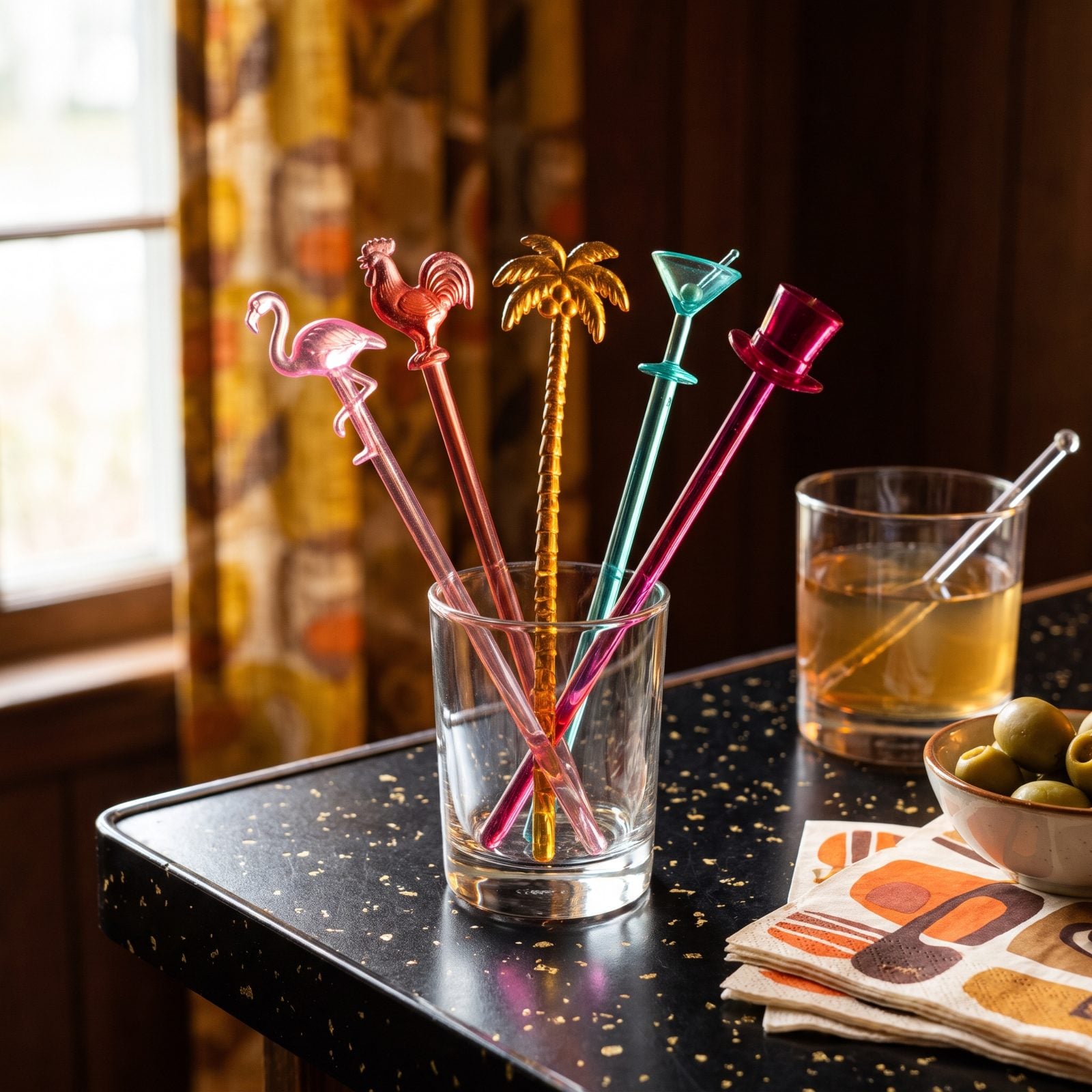
Little plastic batons topped with flamingos, roosters, palm trees, tiny top hats. The swizzle stick’s practical job was stirring a drink, but by the sixties its real job was conversation.
Bars and hotels printed their names on them, which turned a bar stick into a souvenir and, for countless travelers, a quiet trophy. Guests pocketed them. People built collections running into the thousands.
There’s even a word for the hobby: swizzlestick collecting. And the word “swizzle” itself? It comes from a 19th-century Caribbean rum drink you stirred with a notched twig snapped off the swizzle tree. The plastic flamingo is a long way from that twig, and somehow it still does the same job.
15. A Heavy Tabletop Cigarette Lighter
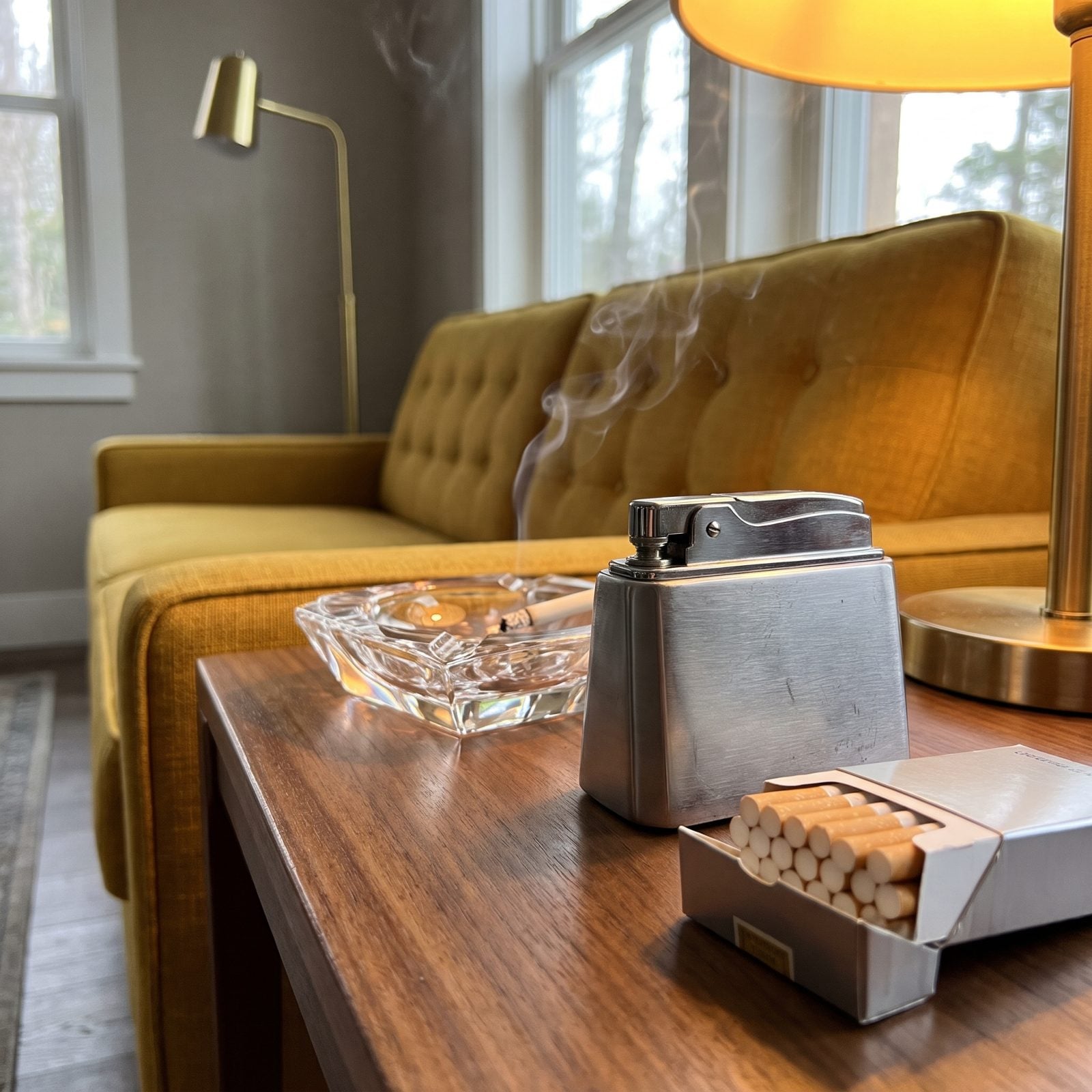
Smoking at the dinner table wasn’t just tolerated, it was expected, and a host accommodated it with style. The tabletop lighter was a serious object — heavy, often chrome or silver, built to stay put while a guest leaned in. You didn’t hand over a flimsy pack-of-matches lighter. You offered a flame from something that felt carved.
Many ran on lighter fluid with a flint wheel. Some used butane. A few fancy ones were electric, glowing a coil red at the press of a button. The point was permanence. It lived on the table and announced that smokers were welcome.
14. A Bowl of Personalized Matchbooks
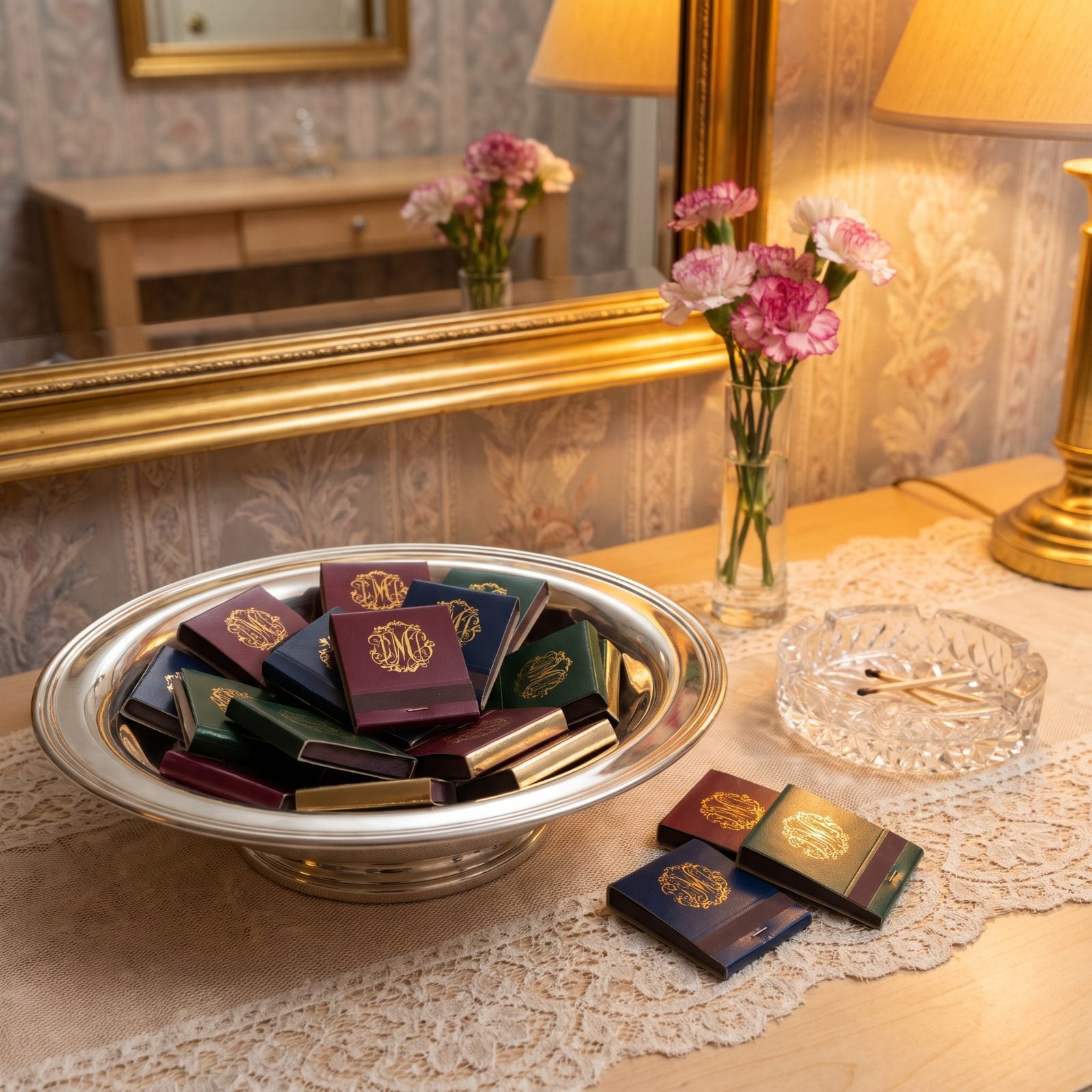
A dish of matchbooks by the door, each one printed with the family name in gold foil. A small, specific flex. You could order custom matchbooks cheaply, and plenty of households did, stamping them with a monogram or an address like a calling card that happened to light cigarettes.
Guests took them home. That was the idea — your name traveling into other people’s junk drawers and coat pockets, a tiny ambassador reminding everyone whose party they’d enjoyed.
Matchbook collecting, phillumeny, was a serious hobby then, and personalized covers are prized precisely because they’re one-offs. A matchbook printed for a single dinner party is about as close to a fingerprint as a bowl of matches gets.
13. Individual Salt Cellars With Tiny Spoons
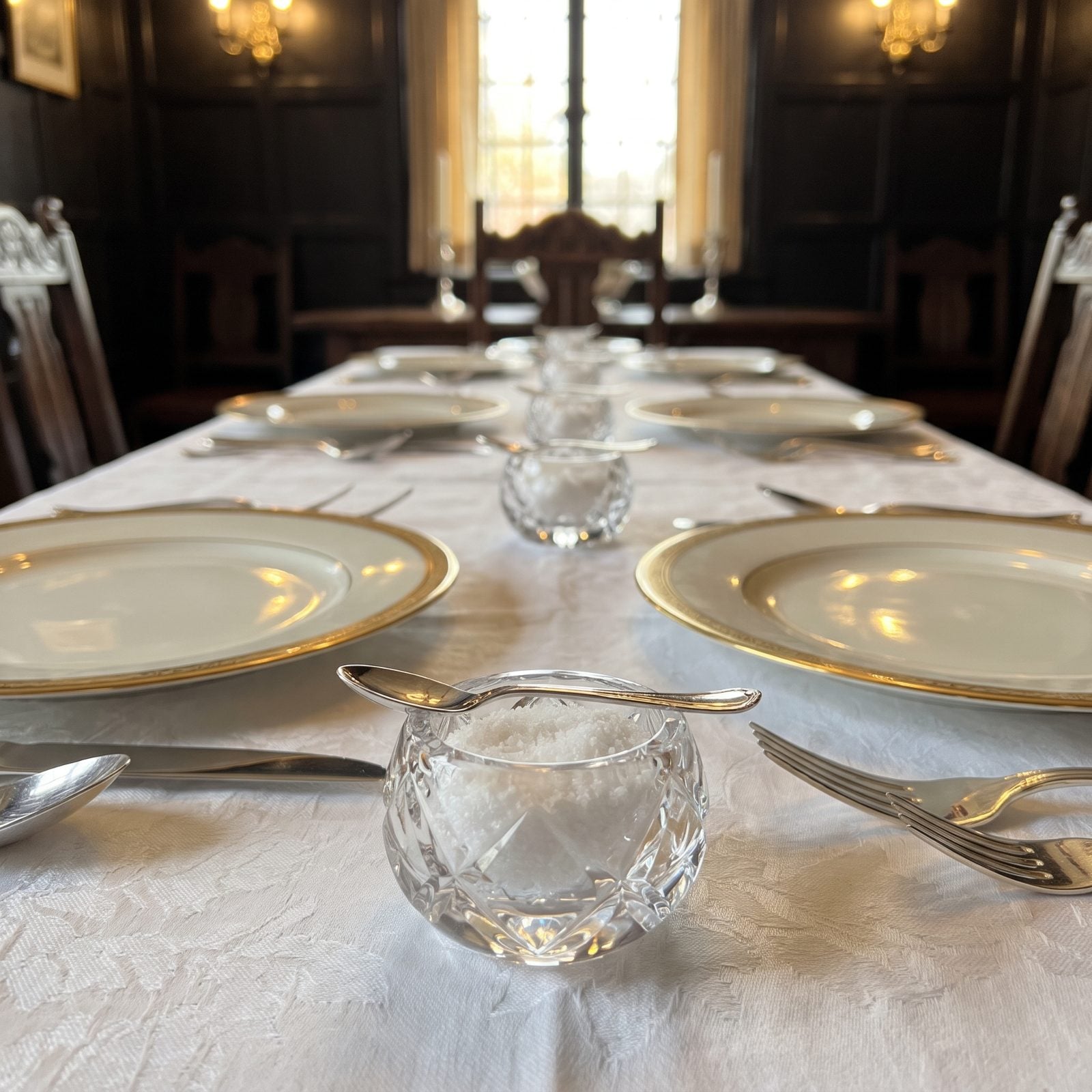
Before the shaker won, salt sat in the open. Individual salt cellars — tiny dishes of crystal or silver with a miniature spoon — were placed at each setting so every guest had their own. You spooned a little onto your plate’s rim and dipped as you ate.
Why cellars instead of a shaker? Humidity. Salt clumped in the damp, and early shakers clogged constantly. An open cellar let the host serve dry salt and let each diner help themselves without reaching across the table.
Then the shaker got better — anti-caking agents, a smarter design — and cellars faded from most tables. By the sixties they already read as formal, a deliberately old-fashioned grace note. The spoons were the detail nobody mentions: lose one, and good luck finding a replacement that fits.
12. A Mustard Pot With Its Own Tiny Silver Spoon
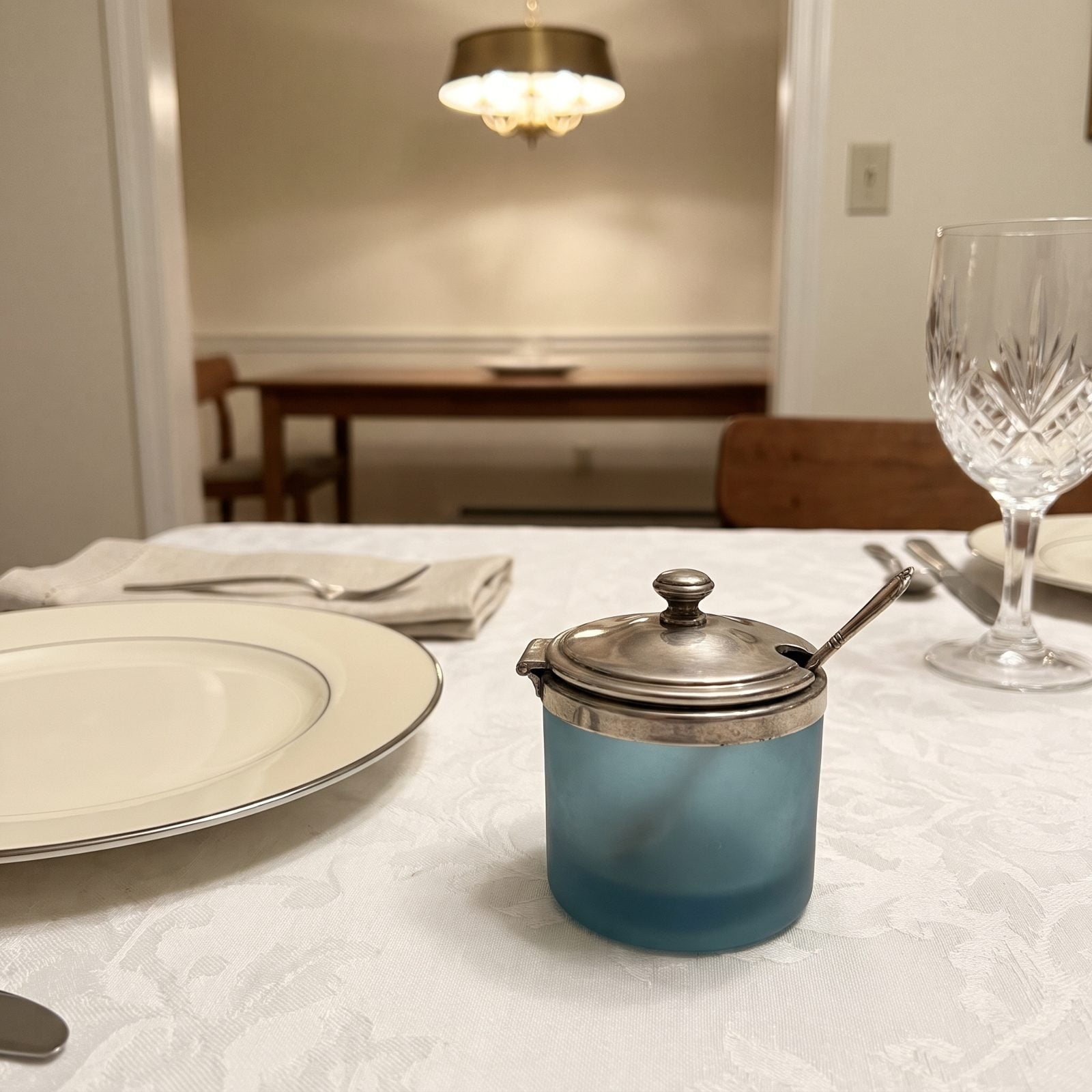
You didn’t scoop mustard with a knife. Not at a table that cared. The mustard arrived in a small silver or silver-plate pot, usually with a blue glass liner so the vinegar wouldn’t tarnish the metal, and it had its own little spoon no bigger than your pinky.
Why the fuss? Colman’s English mustard, mixed from powder, ate through bare silver if you let it sit, and the glass liner quietly solved that. Nobody noticed it doing the work. People still get this wrong at estate sales, buying the pot without the liner and then wondering why it’s corroded inside.
11. Individual Glass Butter-Pat Dishes at Every Place
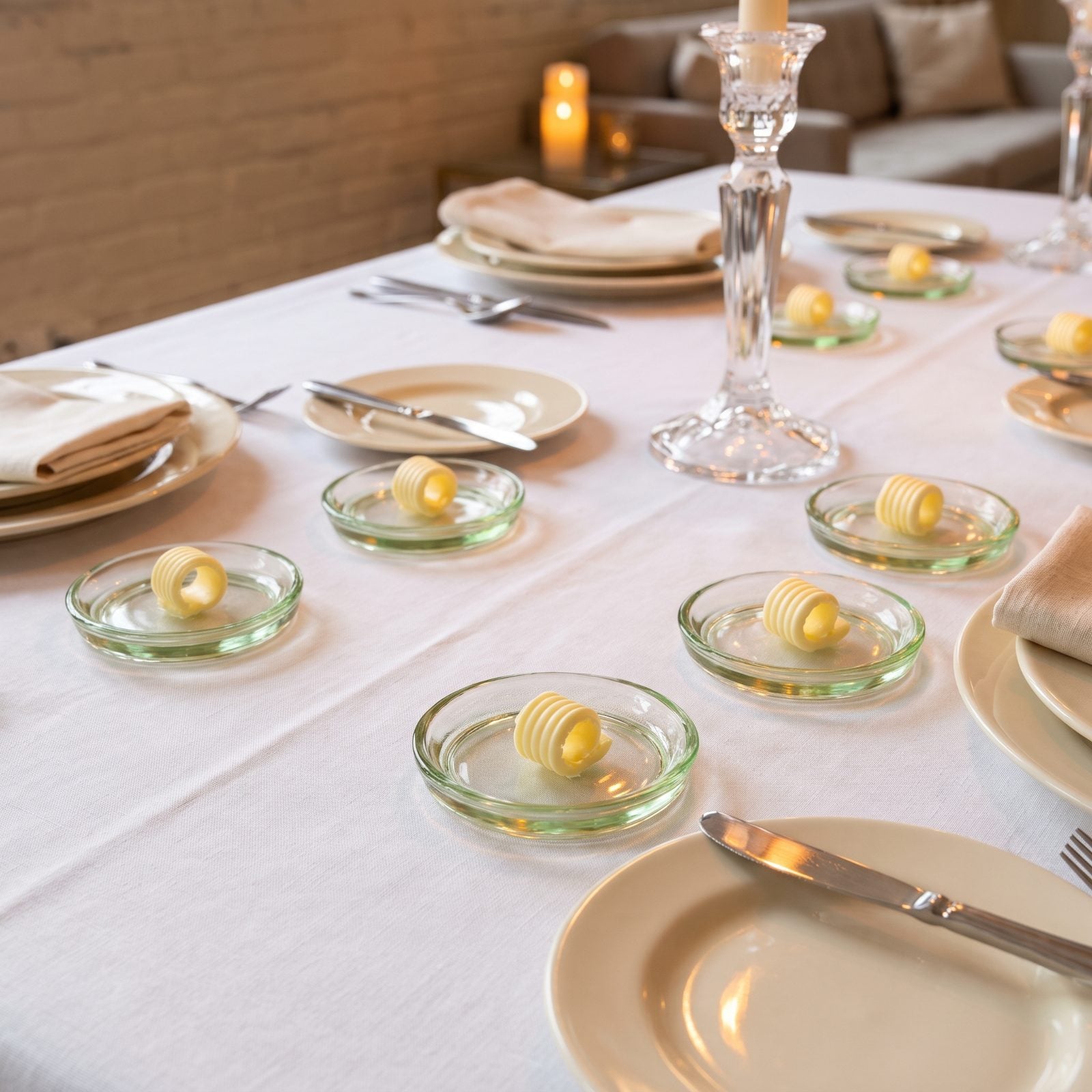
Each guest got their own butter. Not a shared dish passed around with a communal knife, but a small pressed-glass or crystal dish about the size of a saucer holding one curled pat, set just above the bread plate.
Part hygiene, part theater. A hostess who set individual butter-pats was telling you, without a word, that she’d thought about you specifically. The butter itself was often curled or stamped with a wooden mold, a whole lost craft on its own.
You can still find these glass dishes by the dozen in antique malls for a couple of dollars each. Most people now use them for salt, olives, or nothing at all.
10. Finger Bowls Floating on Small Underplates
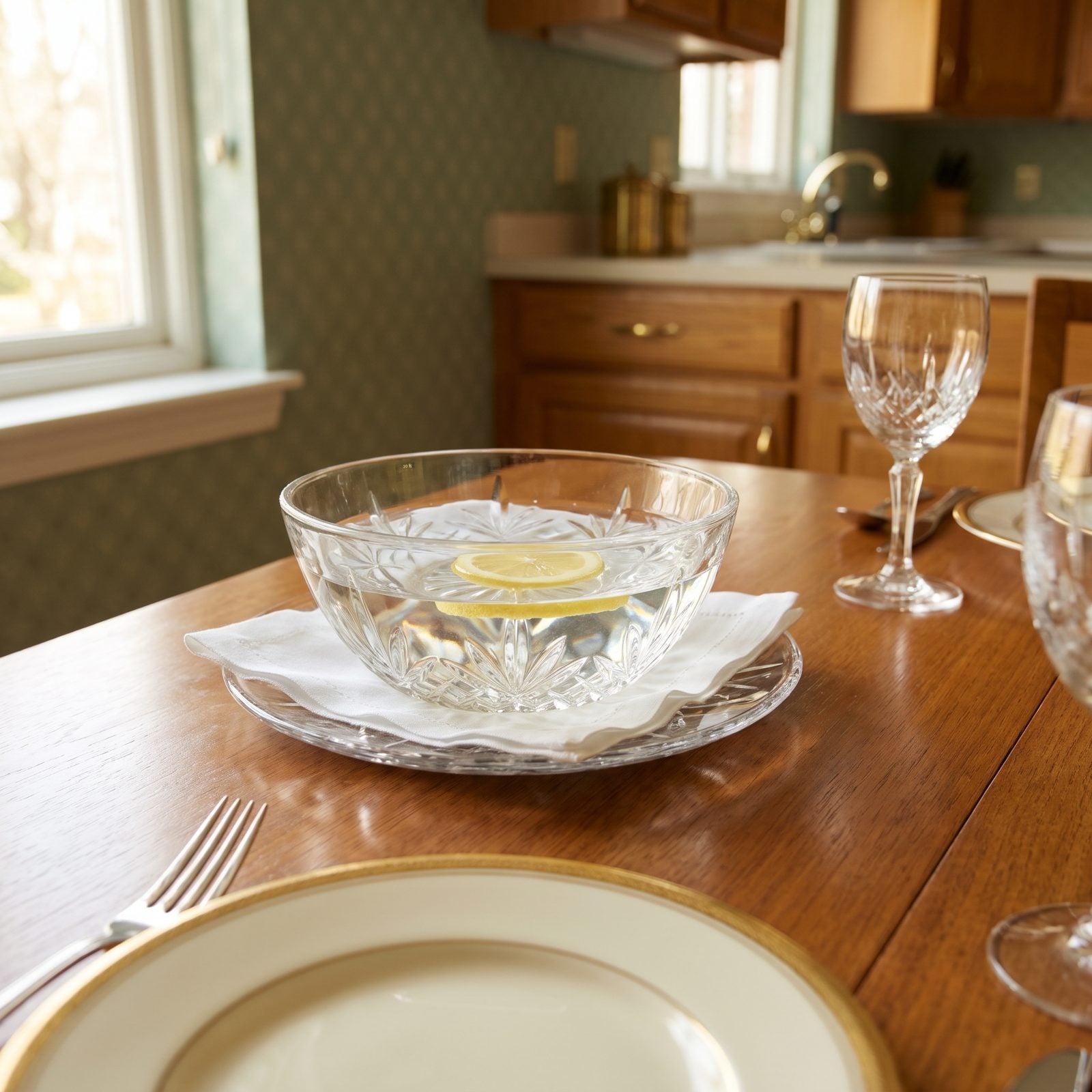
This one still trips people up at a fancy restaurant to this day. A small crystal bowl of water arrives, maybe with a lemon slice or a flower petal floating in it, and someone at the table drinks it.
It’s for your fingertips. After the fruit course, or after anything you ate by hand, you’d dip the tips of your fingers, one hand at a time, and dry them on your napkin. The lemon slice cut any lingering grease.
Emily Post covered finger bowls at length because even then people were confused by them. If you ever host one, warn your guests. Someone will almost certainly take a sip.
9. Crescent-Shaped Bone Dishes Tucked Beside the Plate
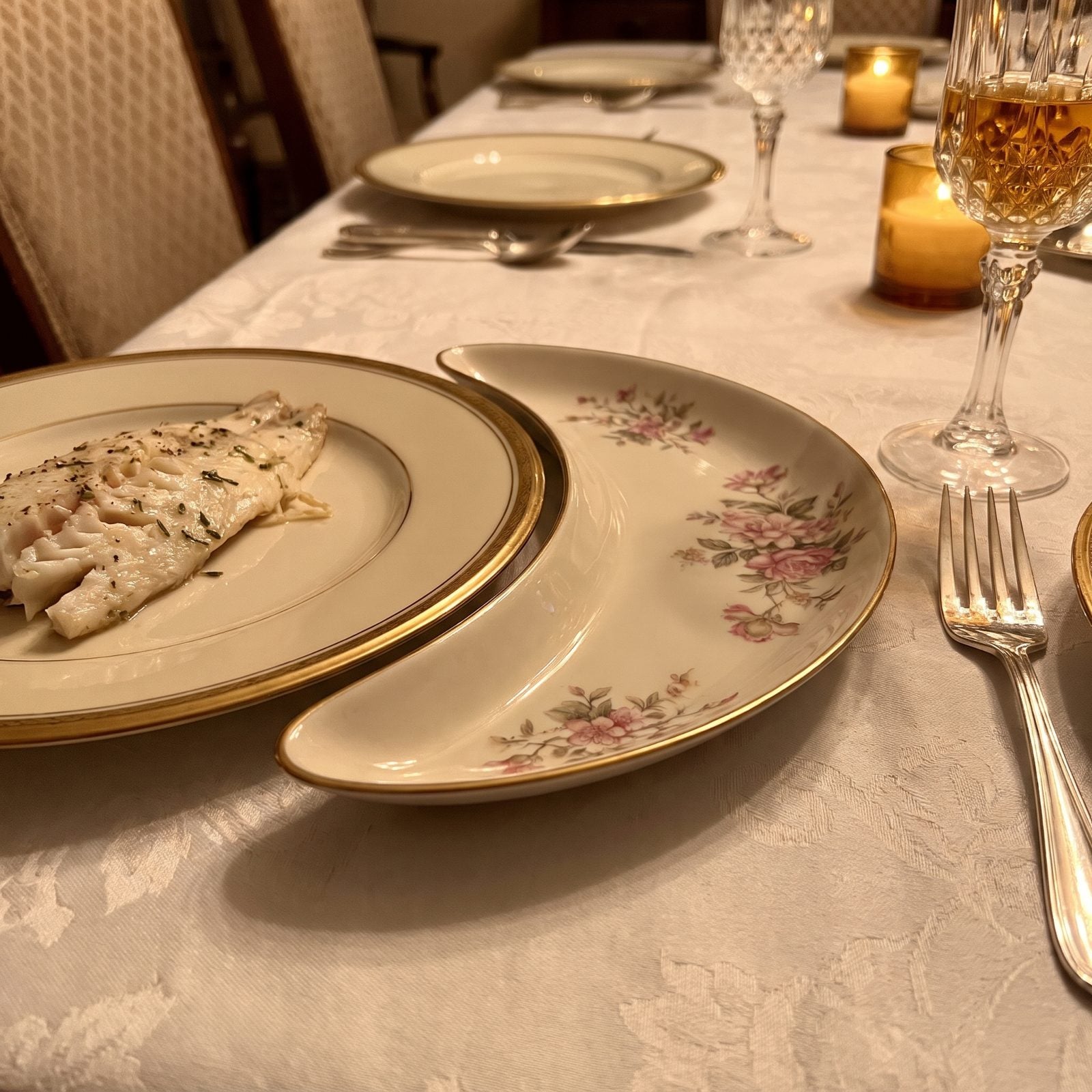
That odd little curved dish shaped like a quarter moon? It had a job. The crescent hugged the top edge of your dinner plate and held the debris you couldn’t eat: fish bones, fruit pits, olive stones, chop bones.
Bone dishes let you clear your plate of inedibles without making a pile at the rim or, worse, parking them on the tablecloth. They turn up most often in fish services, because a properly boned fish still surprises you.
8. Glass or Silver Knife Rests to Save the Cloth
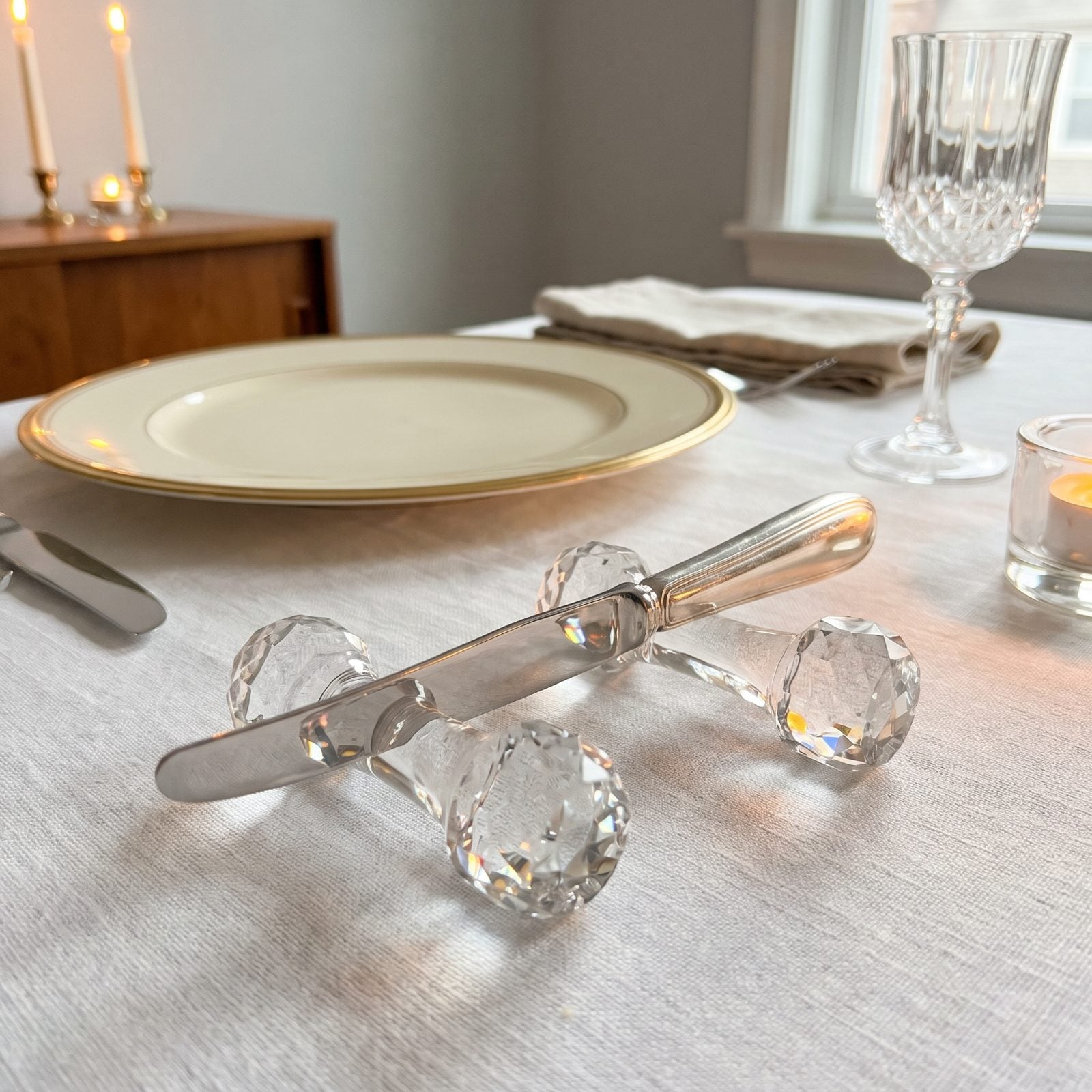
A knife rest is a tiny bar of glass or silver, often shaped like a little dumbbell or a stretching animal, that your knife lay across between courses.
The reasoning was practical and a little vain. A used knife laid flat smeared gravy across the white cloth, and at a less formal meal you kept the same knife across courses rather than issuing a fresh one each time, so the rest kept the blade off the linen.
Crystal ones throw little prisms of light when the candles hit them, which is probably why they survived long after the etiquette did. One of the prettiest useless things a table can hold, and that’s meant as a compliment.
Explaining why the little bars existed at all, an antique knife rest dealer writes that “To save soiling the table, or the tablecloth, if there was one, the utensils required something to rest on that kept them off the table.”
7. Silver Asparagus Tongs for the One Vegetable You Ate by Hand
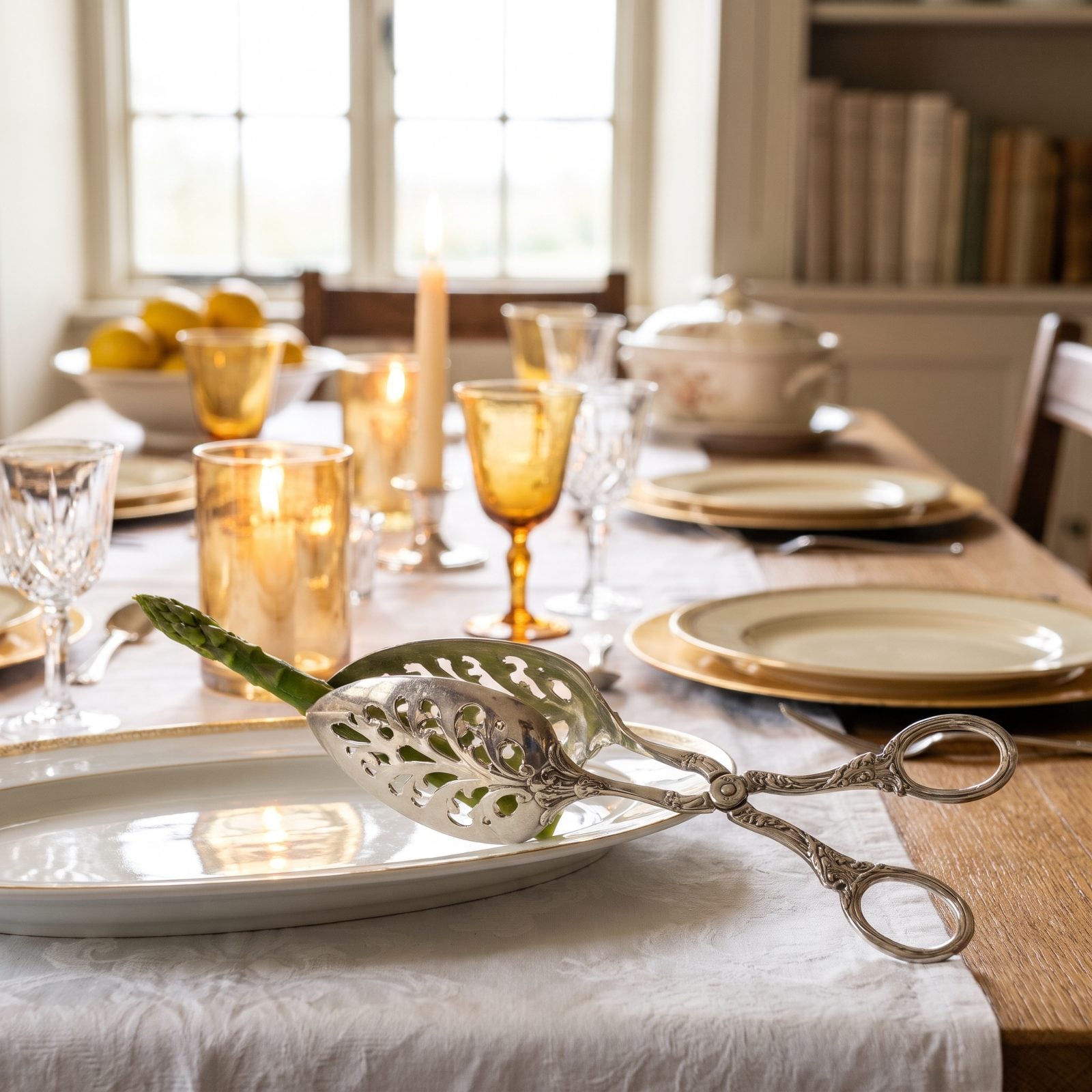
Asparagus was the respectable exception to the no-fingers rule. Victorian etiquette actually permitted eating a spear by hand, and the serving tongs existed so you could lift one dripping spear off the platter without flinging butter across the table.
These things are wonderful to look at. Wide pierced silver grips, sometimes a spring mechanism, built for exactly one food and nothing else.
And here’s the tell of a 1960s formal table: it owned tools for single foods. A whole drawer of silver, each piece with one job. We’ve traded all of it for a pair of salad tongs and a general shrug.
6. A Long Olive Dish With Its Own Two-Pronged Fork
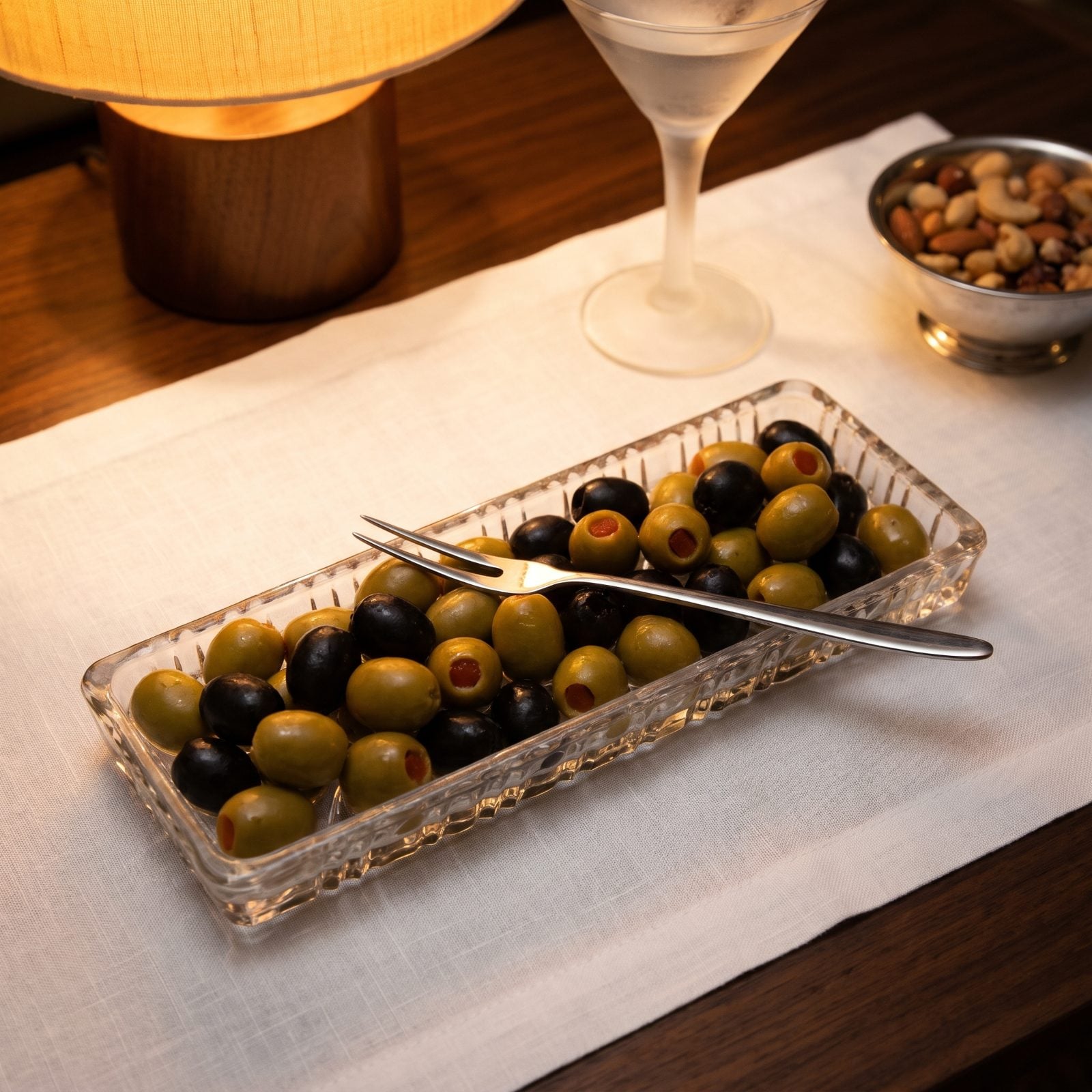
The relish tray’s star player. A long, narrow glass or silver dish, maybe eight inches end to end, holding olives, and perched on it a skinny little fork with two tines spaced just wide enough to spear one.
The two-prong design mattered. One tine lets the olive spin; two hold it still. Somebody actually thought about olives this hard.
Out it came during the cocktail hour alongside celery hearts, radishes and sweet pickles. Spearing your own olive with a dedicated fork instead of fishing it out with your fingers was the whole civility of the thing.
5. A Silver Crumb Tray and Matching Table Brush
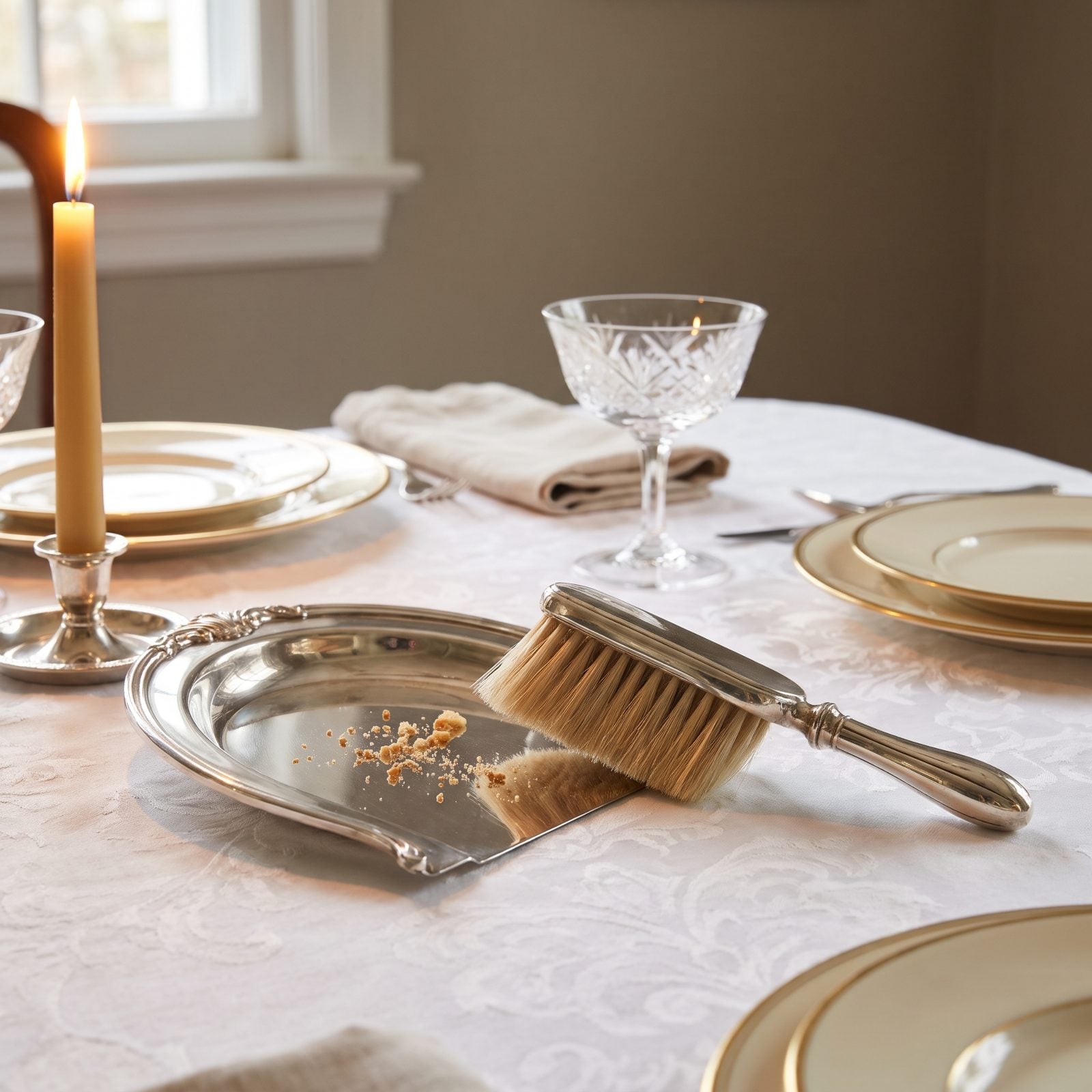
Before dessert came out, the table got cleaned. Not wiped with a rag, but swept, with a curved silver tray held against the cloth and a stiff little silver-handled brush pushing the crumbs into it.
This was the host’s quiet ritual, done between the savory course and the sweet, so dessert arrived on a pristine cloth. In a staffed house the butler did it. In a 1960s home, the lady of the house did it herself, which took a certain nerve to pull off smoothly in front of guests.
4. A Small Hostess Bell to Summon the Kitchen
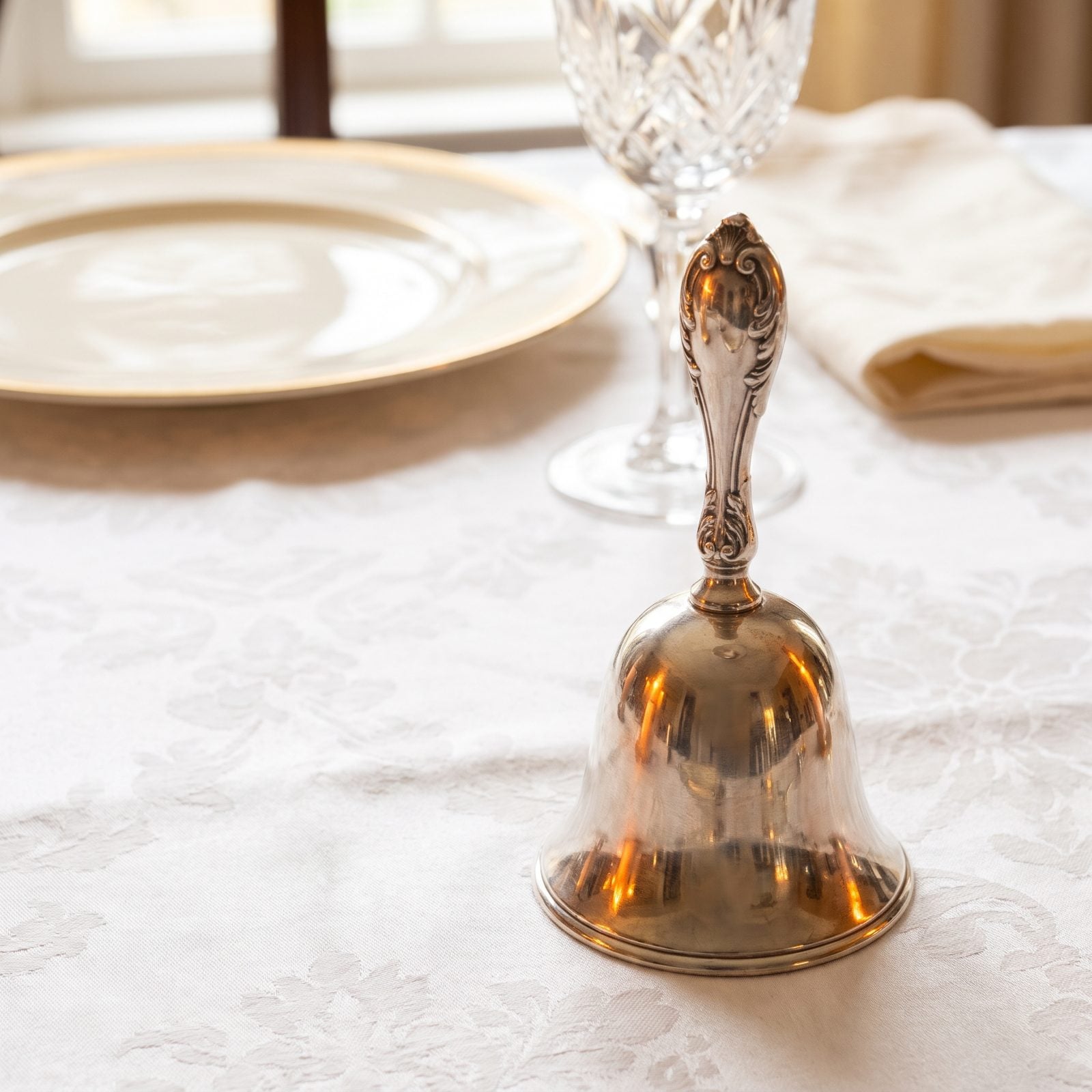
A small silver or porcelain bell sat by the hostess’s place. One soft ring signaled the kitchen to clear a course or bring the next.
Sometimes it was a push-button bell hidden under the carpet by her foot, a wonderfully sneaky bit of midcentury cleverness. Guests weren’t supposed to notice the mechanics, only the magic of plates appearing and disappearing on cue.
By the sixties, with hired help fading, the bell often just rang into an empty kitchen so the hostess could step out and plate the next course herself. The gesture outlived the staff it was invented to command.
3. Wax Drip Catchers Ringing the Tall Taper Candles
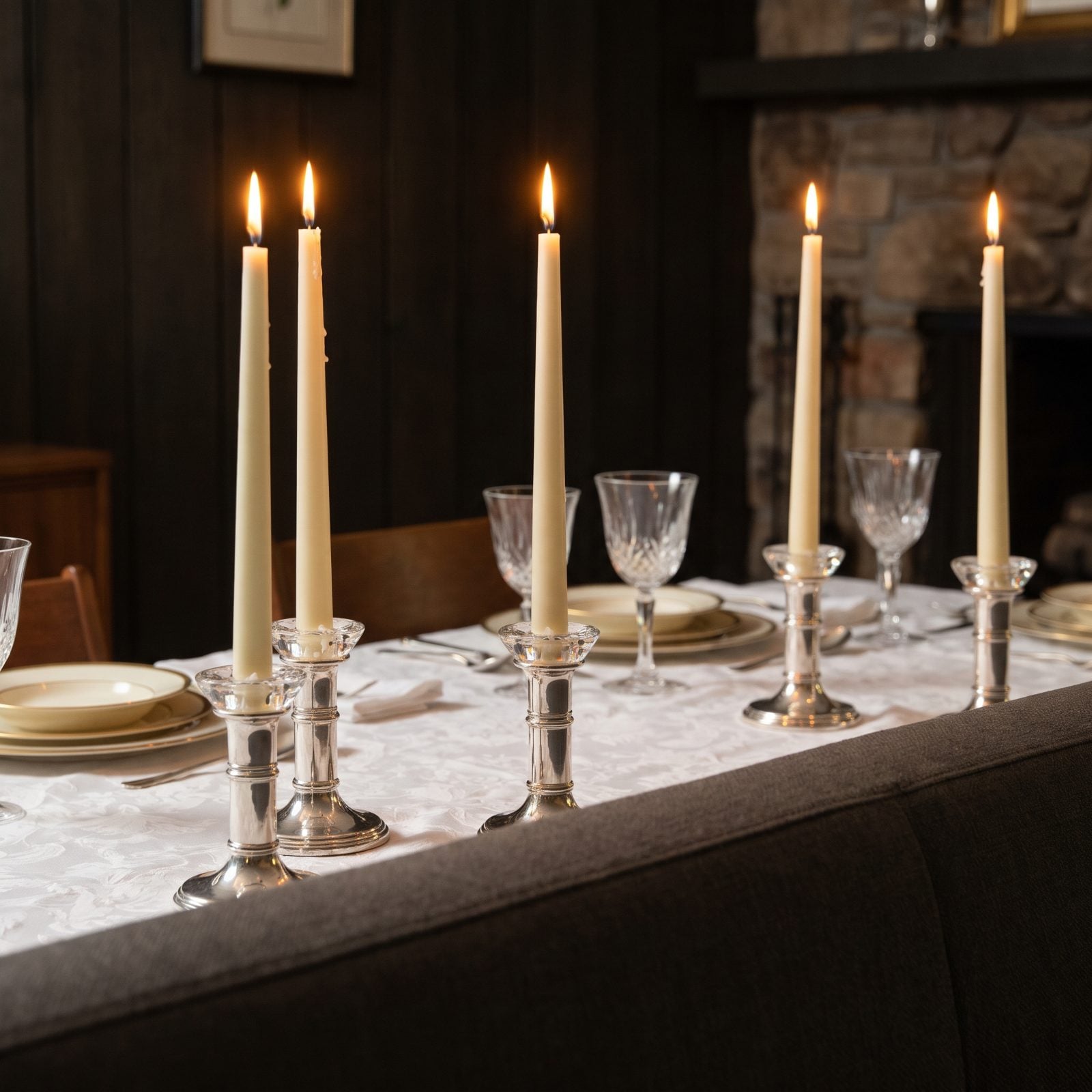
That little glass ring at the base of a lit taper has a proper name: a bobeche. It catches dripping wax before it runs down the candlestick and pools on your tablecloth.
Anyone who has pried dried wax off good silver or scraped it out of damask understands the appeal instantly. Faceted crystal versions pull double duty, breaking the candlelight into little sparks around each flame.
Modern dripless candles mostly killed the need. A shame, really, because the dripless ones never flicker the same way. The mess was worth it for the light.
2. The Low Floral Compote Held in Place by a Spiky Metal Flower Frog
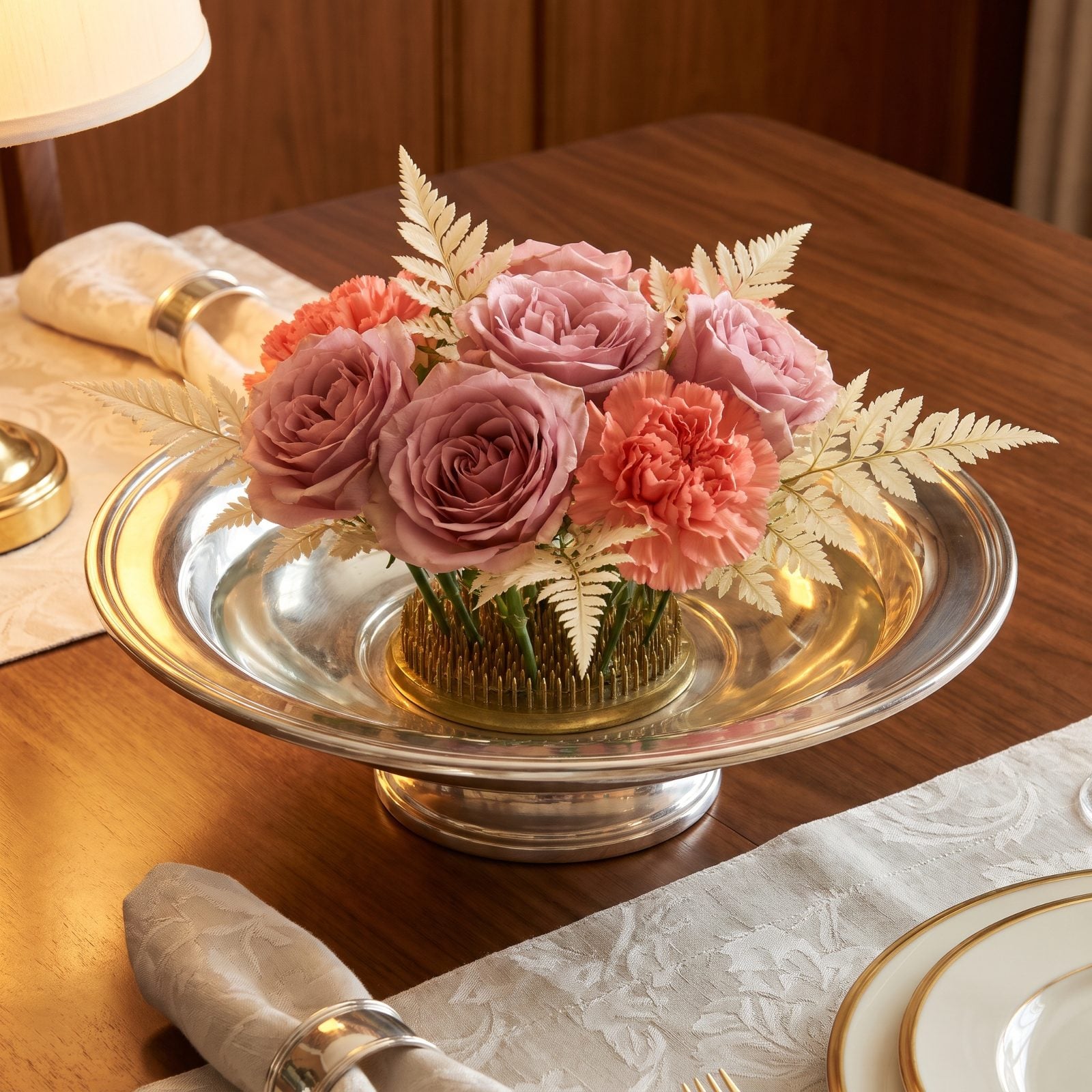
The whole point was that you could see over it. A tall bouquet blocks the person across from you, so hostesses kept the centerpiece low and dense, spreading wide instead of up. The secret under the water was the flower frog, a little dome of brass pins (or sometimes a glass block drilled with holes) that gripped each stem exactly where you placed it.
Nobody used floral foam at a proper table back then. The frog did the work and lasted for decades. You can still turn them up for a few dollars at estate sales, usually mistaken for junk.
Arrange it right and a compote of roses and fern sat below eye level while still filling the middle of the table. The trick hid in plain sight.
As one ceramic vase maker describes the hidden hardware, “A flower frog is a small, weighted holder — usually a metal base packed with upright pins — that sits in the bottom of a vase or shallow dish and holds flower stems exactly where you place them.”
1. The Little Basket of Pastel Guest Soaps Nobody Was Allowed to Use
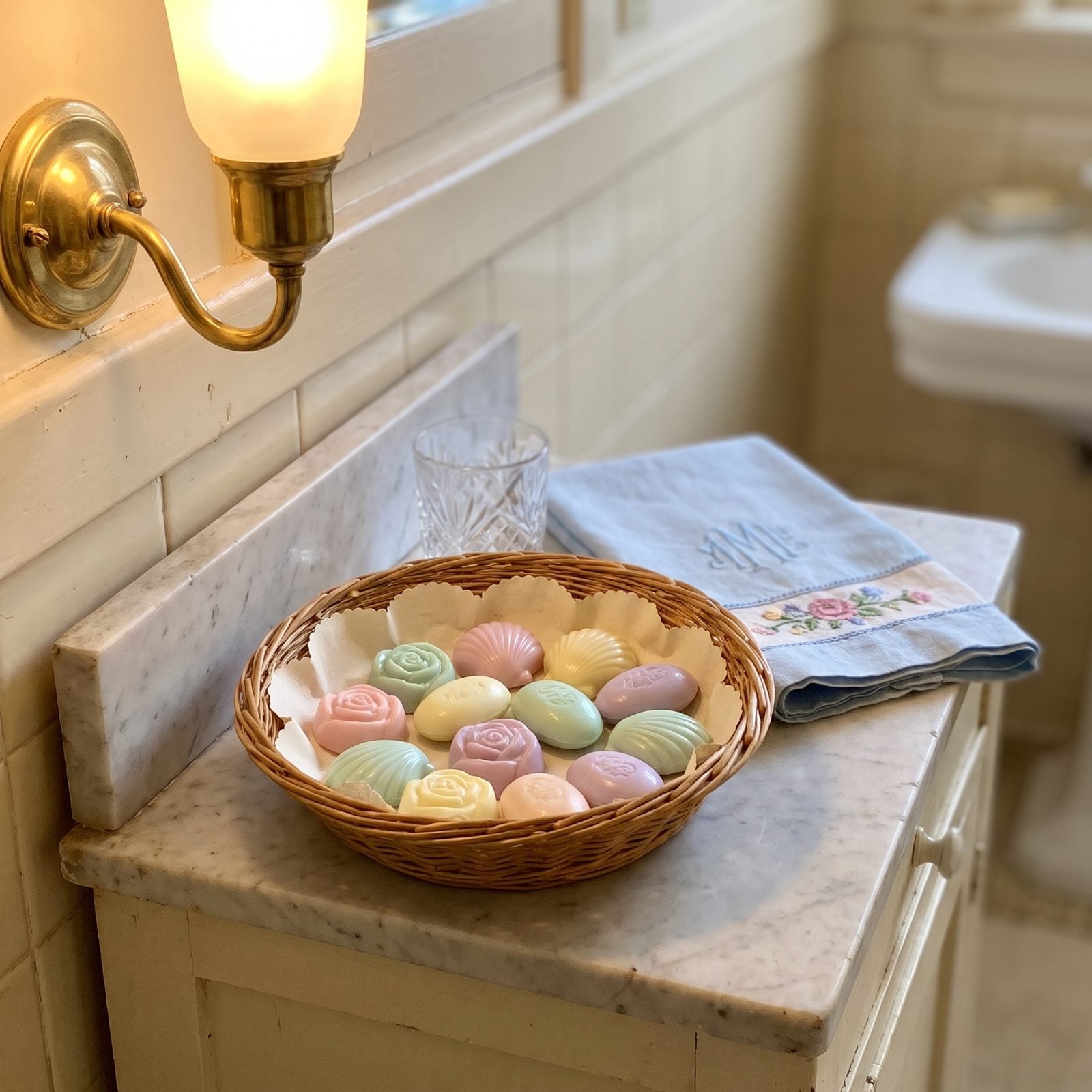
You knew the rule the second you saw them. Those tiny soaps shaped like roses and seashells, stacked in a basket by the guest-bath sink, were strictly decorative. Lather one up and you’d committed a small social crime.
They existed to say the house was ready for company. Nothing more. Most never lost a millimeter across years of dinner parties, which, honestly, tells you everything about how seriously people took the ritual.
Half of them carried a whiff of lily of the valley or rose, enough to perfume the whole powder room. Guests washed up with the plain bar hidden in the cabinet, and everyone understood the arrangement without a word.