
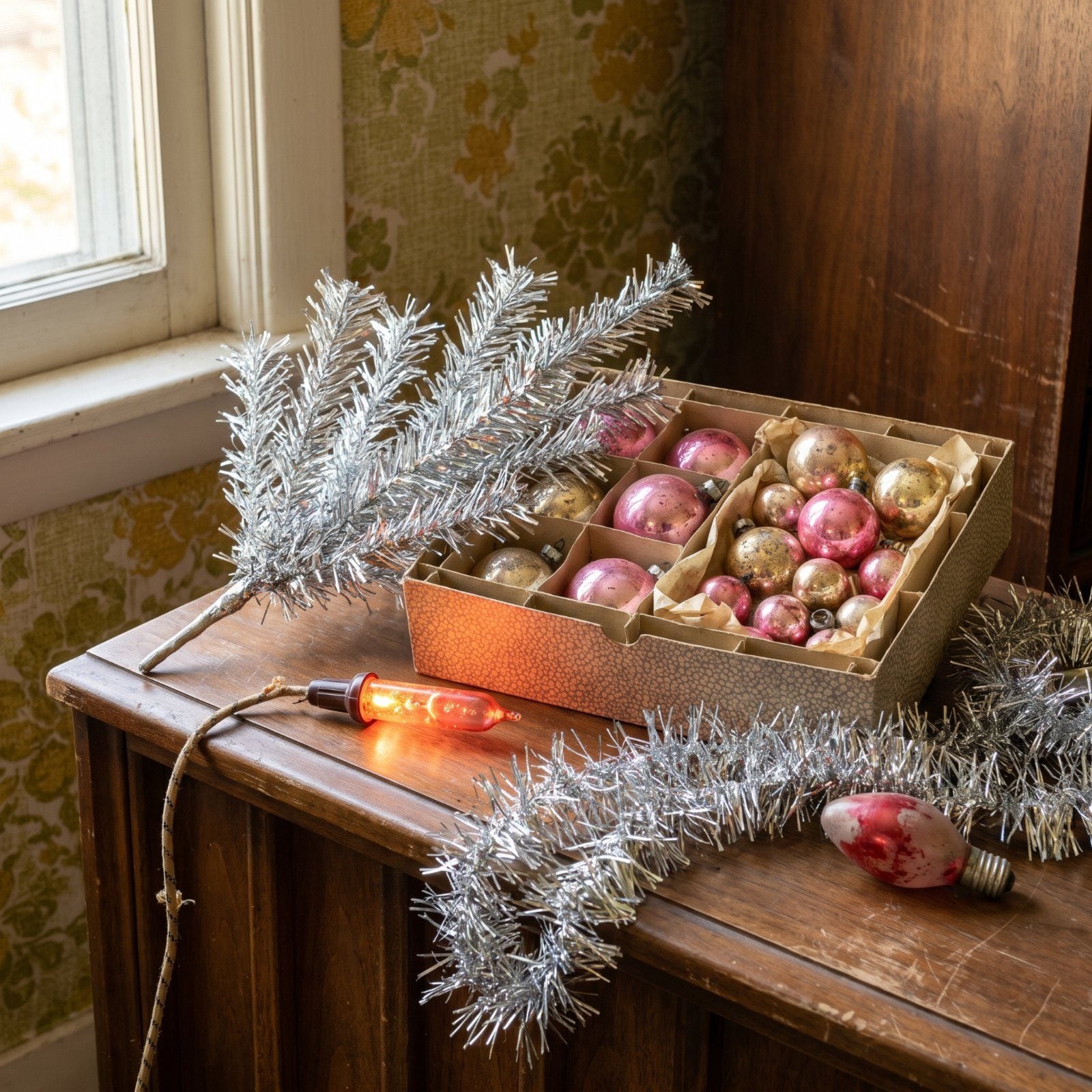
Somewhere in your parents’ attic, wrapped in yellowed newspaper, sits a shoebox that smells like dust and old electrical cord. Open it and the decade falls out. Aluminum branches that caught the porch light, a motor the size of a hockey puck spinning colors nobody asked it to spin, bubbling glass tubes. These were the things an American family pulled down from the hall closet the day after Thanksgiving, and for a few weeks they turned ordinary rooms into something stranger and brighter than usual. Most of it is gone now — retired, melted, or quietly thrown out. Here’s what filled those living rooms, and why it mattered.
Please note that some of the images in this article were created with the assistance of AI.
35. The Aluminum Christmas Tree That Shimmered in the Living Room
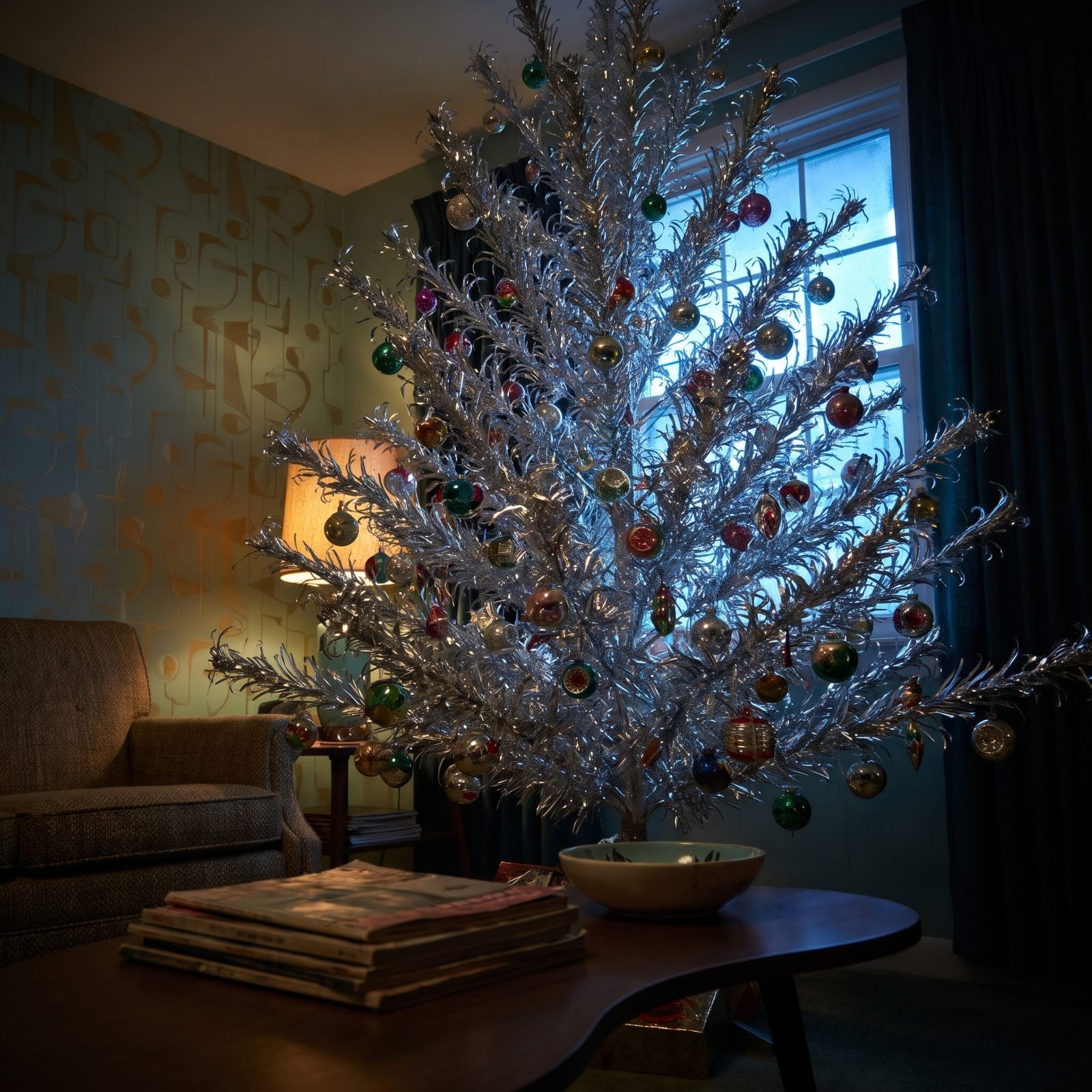
It arrived in a long box marked “Evergleam” and came apart into a bundle of what looked like silver bottle brushes. You slotted each branch into a numbered hole on the pole, and suddenly you had a tree made entirely of metal.
Here’s the part people forget: you never strung lights on it. Wrapping electrical cord around aluminum branches was a shock hazard, so the whole design assumed you’d light it some other way. That’s why these trees and the color wheels below are really one invention split in two.
Aluminum Specialty Company in Manitowoc, Wisconsin made them by the hundreds of thousands. A good original Evergleam now sells for real money, and the attic ones usually survived because metal doesn’t rot.
34. The Rotating Color Wheel Aimed Straight at the Branches
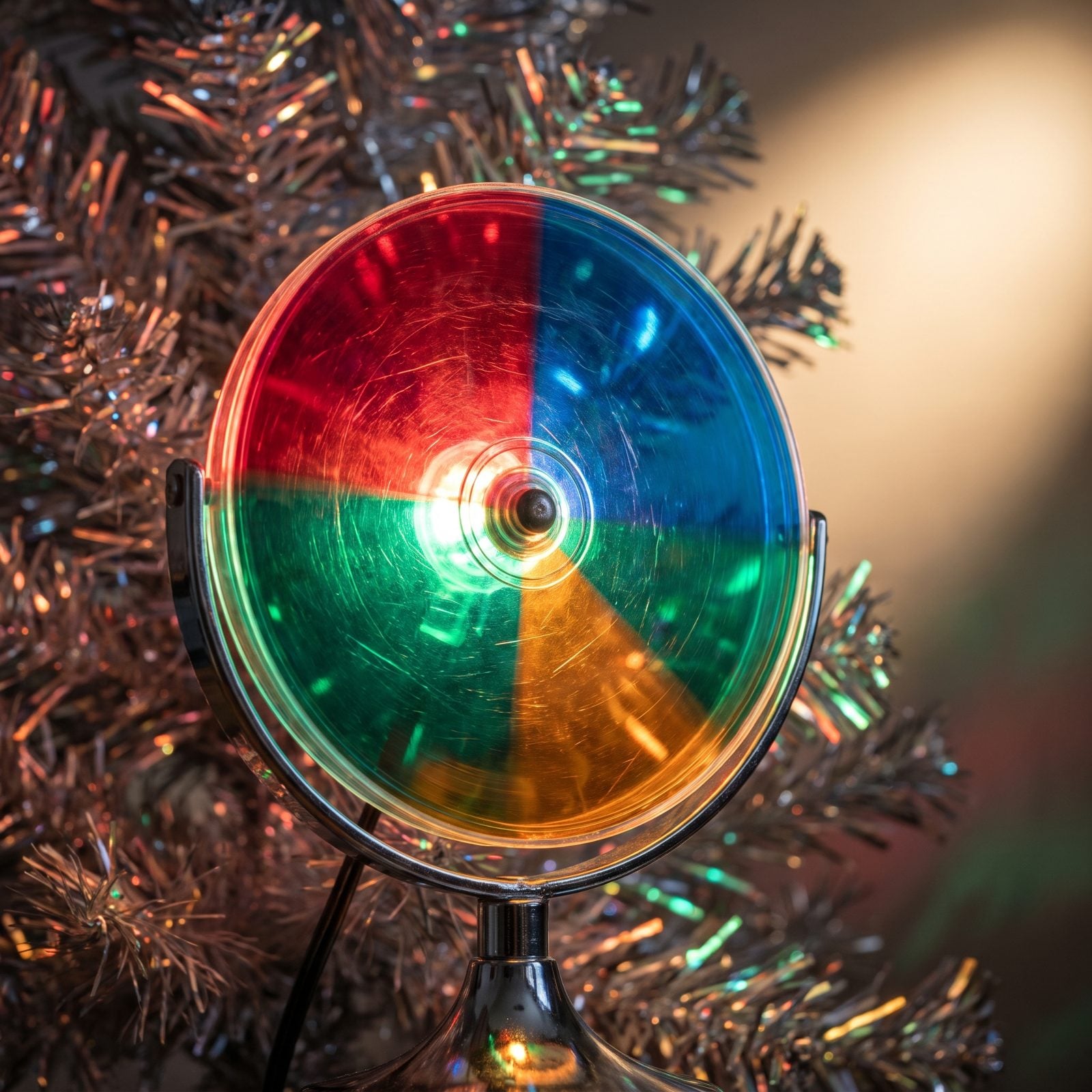
A spotlight on a stand, a slowly turning disc of colored plastic, and a motor that hummed just loud enough to notice when the house went quiet. Point it at the aluminum tree and the whole thing cycled through red, blue, green and gold, over and over.
The idea was simple. Since you couldn’t put lights on a metal tree, the color wheel did the job from across the room and made the branches look like they were changing color on their own.
They got warm. Really warm. The cheap ones overheated the plastic disc until the colors faded or warped, so if you find one that still spins, count yourself lucky.
Passing along a federal safety warning about metal trees, a midcentury renovation blogger notes “In fact, it seems that color wheels were devised to get right around the electric-hazard issue of stringing lights onto aluminum.”
33. Bubble Lights That Churned Like a Tiny Lava Lamp
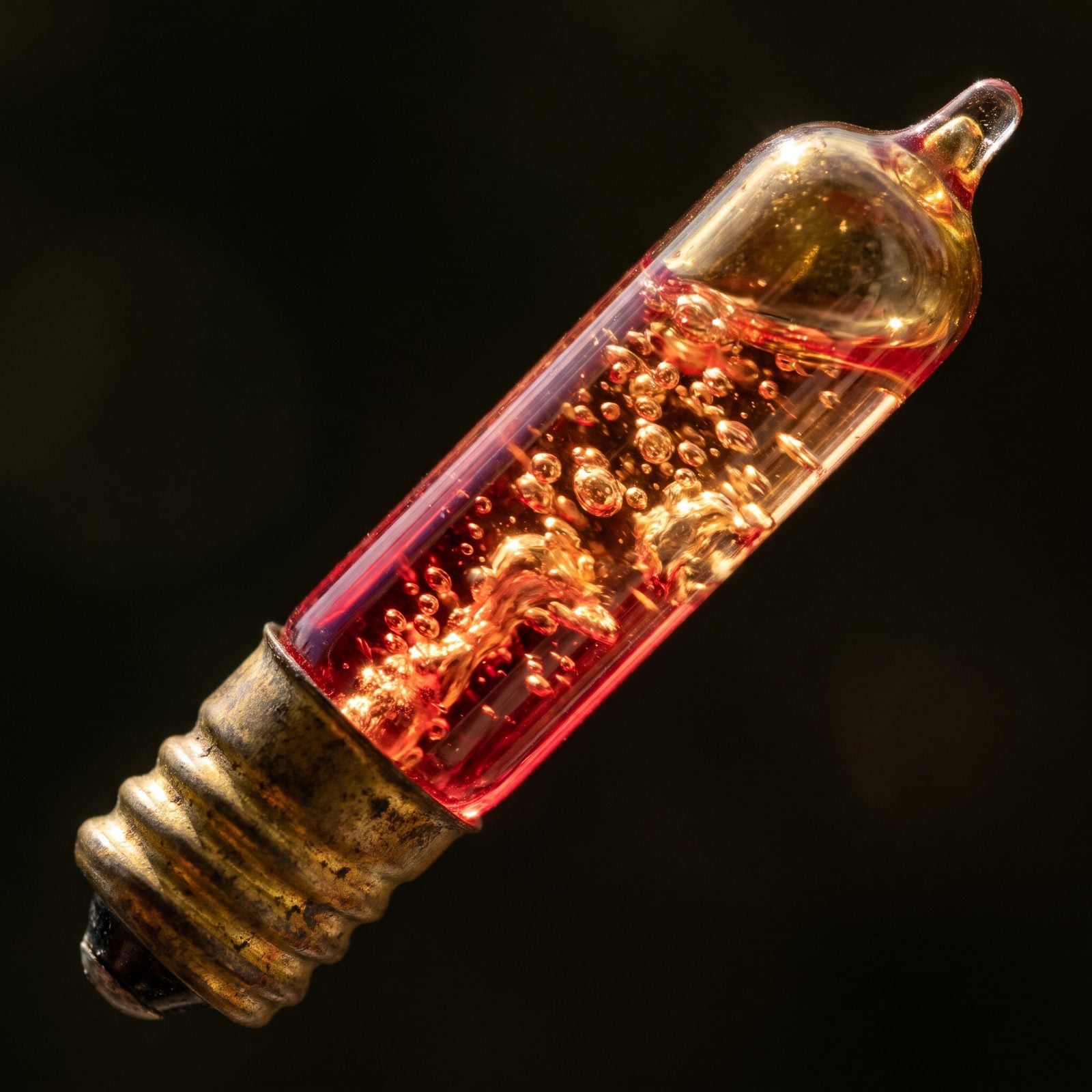
No Christmas light has ever been more hypnotic. Each one was a stubby glass capsule of red liquid, blushing amber near the top, screwed into a worn brass threaded base like an ordinary bulb. The heat warmed the fluid until it swirled with bubbles scattered all through it, and a child could watch a single capsule for an unreasonable stretch of time.
The liquid inside was usually methylene chloride, which boils at a low temperature — and that low boiling point is the whole trick. It’s also why you’d never want that stuff anywhere near your mouth today.
They needed a few minutes to warm up before anything happened. The waiting was part of it.
Explaining the low-boiling fluid inside each glass tube, a Christmas lighting supplier writes “When the bulb heats up, it warms the liquid until it vaporizes, sending bubbles rising through the tube.”
32. Fat C7 Bulbs With Their Painted Colors Flaking Off
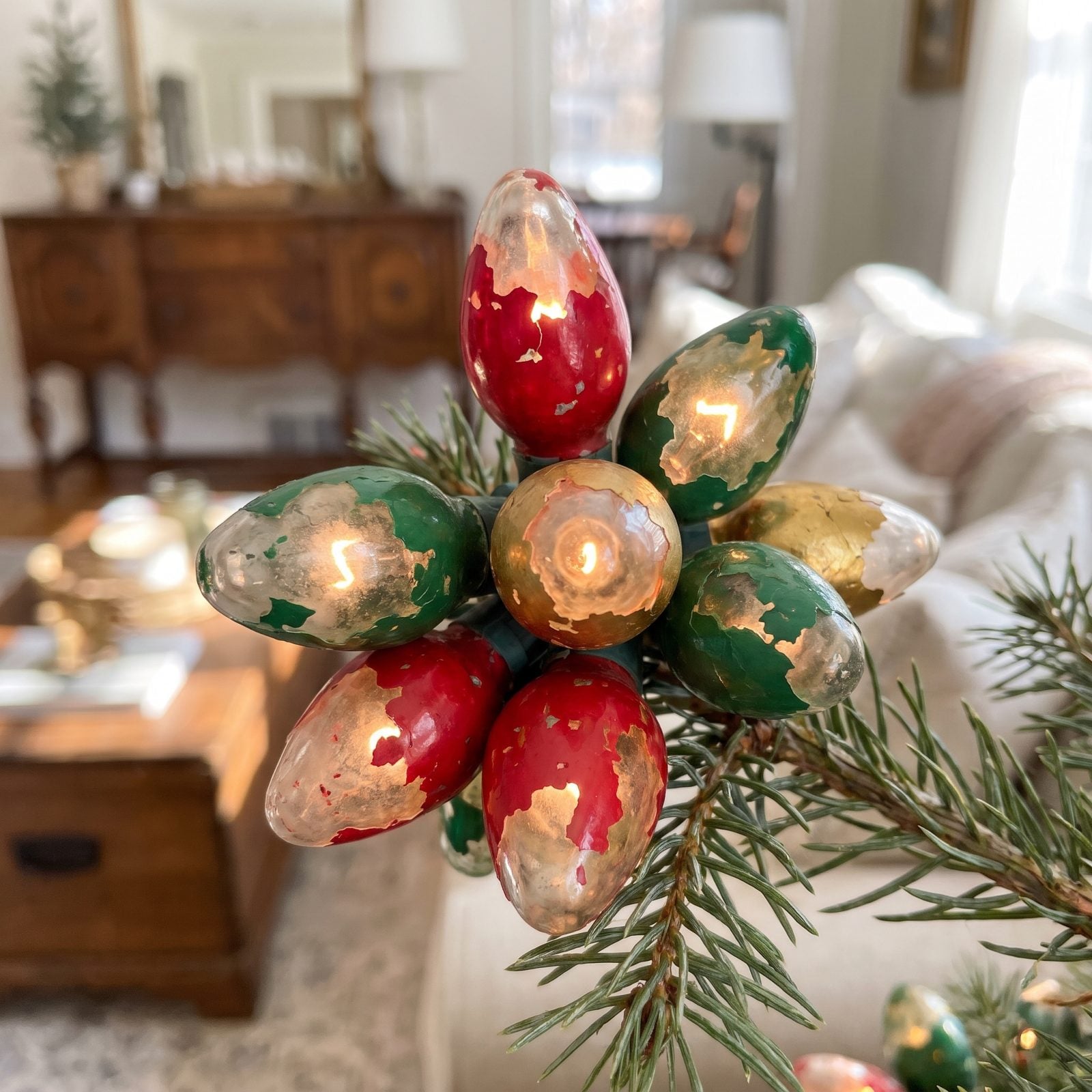
Before the pinprick mini-lights took over, Christmas lights were the size of your thumb and burned hot enough to warm your fingers. These C7 bulbs came painted in solid colors, and the paint was never built to last.
Every December you’d notice more chips, more bald spots where the glass showed through, more bulbs glowing a mongrel half-color. One dead bulb on an old series strand could take out the whole string, and finding the culprit was a test of patience.
They threw real heat. Parents told you not to let them touch the branches for a reason.
31. Fiberglass Angel Hair Draped Over the Nativity
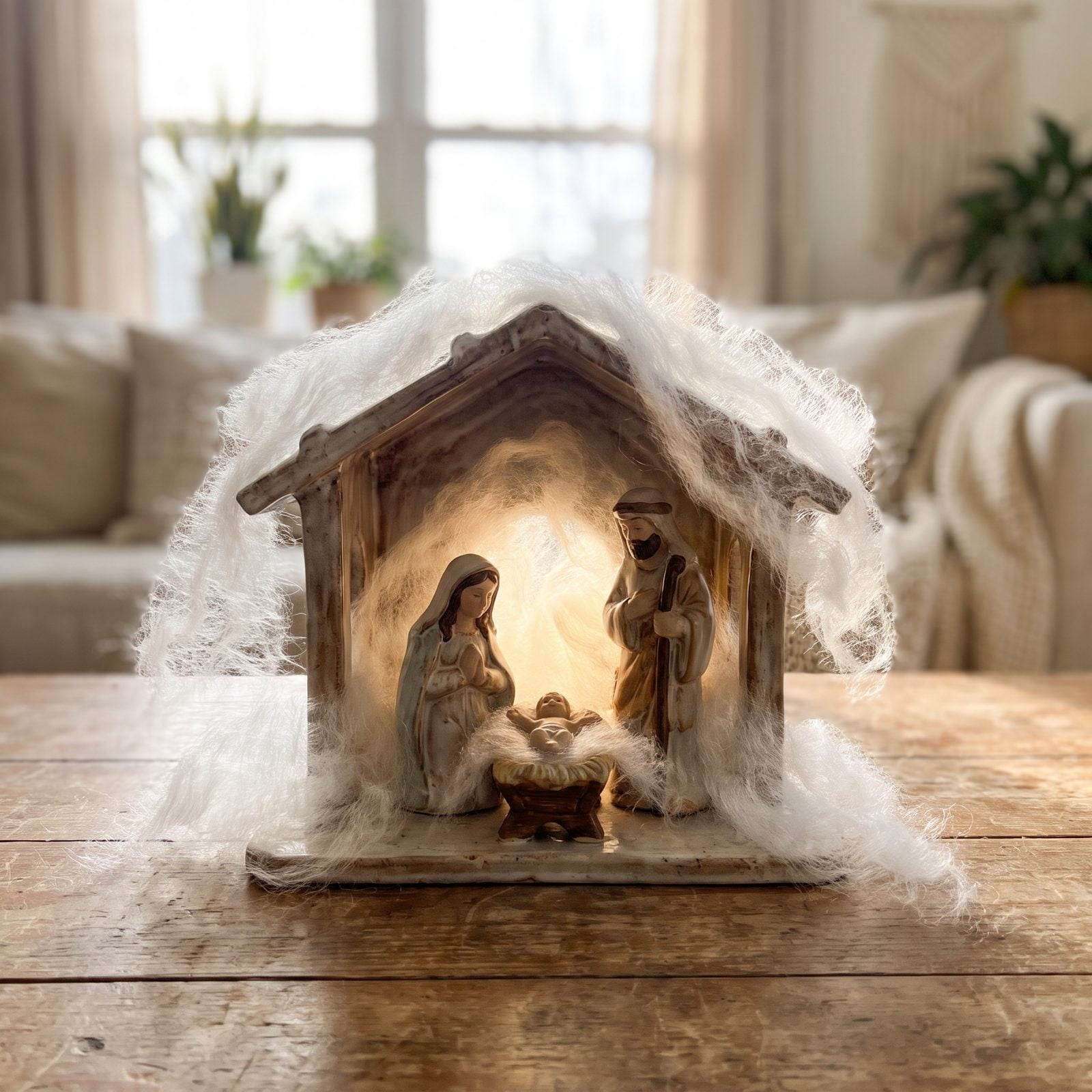
It came in a cellophane bag and looked like a cloud you could hold. You’d pull it thin and drape it around the manger scene so the figures seemed to float in a soft white haze, especially with a little light glowing underneath.
Nobody mentioned the catch at the time: angel hair was spun glass fiber. The strands were sharp enough to work into your skin, and they itched for hours. Handle a lot of it, and your hands knew by bedtime.
A decoration that looked magical and was quietly awful to touch — which may be the most 1960s thing about it.
30. Shiny Brite Ornaments Nestled in Their Divided Boxes
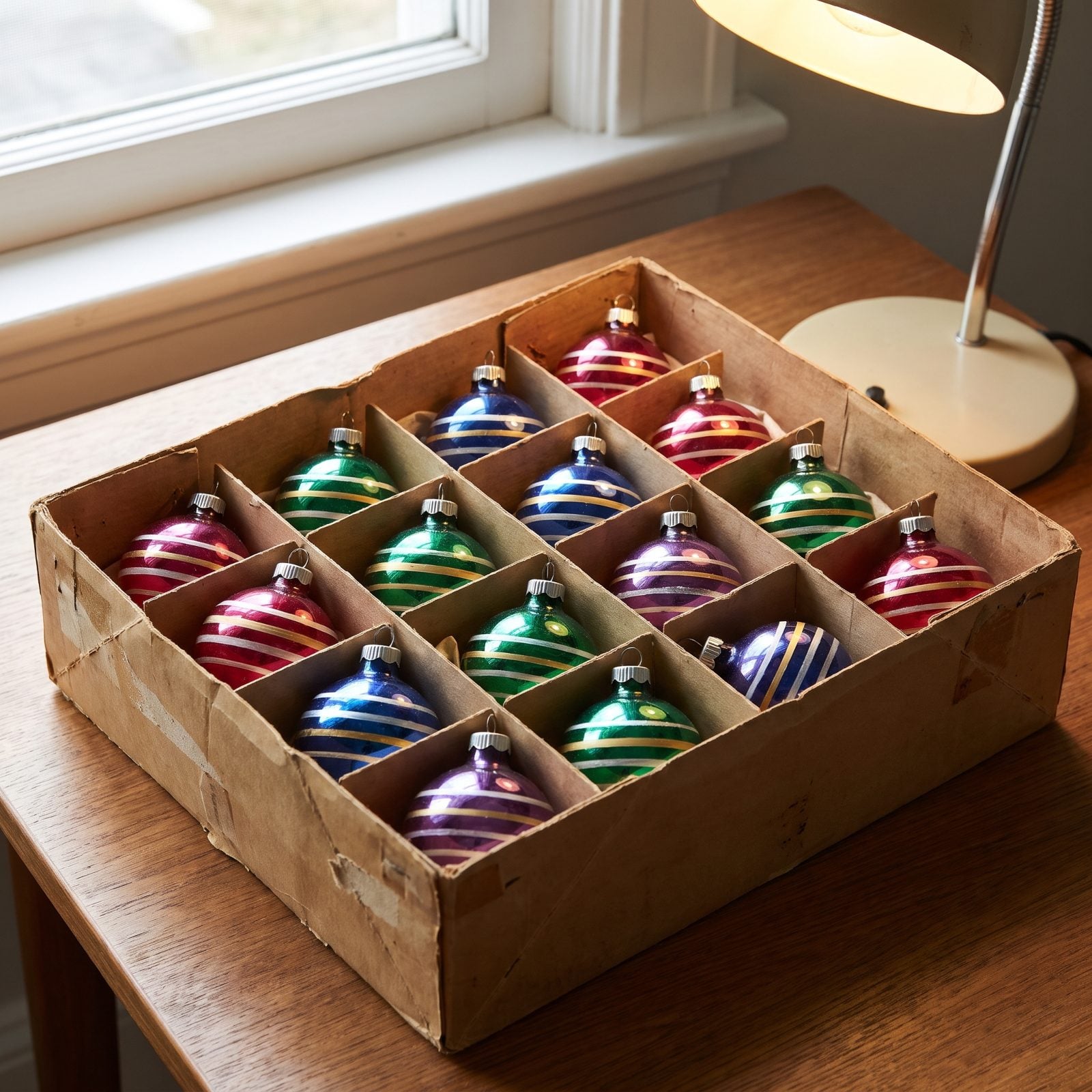
You knew a family tree by its ornaments, and in the sixties the odds were good they were Shiny Brite. Max Eckardt built the brand by convincing Woolworth’s that American-made glass ornaments could compete with the German imports, and then World War II handed him the market.
The hallmark was the divided cardboard box. Each ball got its own little cell so the thin glass wouldn’t clink against its neighbors, and those boxes are half the reason so many survived.
Wartime versions lost their silvering because the metal was needed elsewhere, so you’ll find clear or pastel ones with paper caps instead of metal. Those are the ones collectors chase.
You could date a household by whether the ornaments had metal caps or paper ones.
29. Indented Glass Ornaments With Glowing Reflective Centers
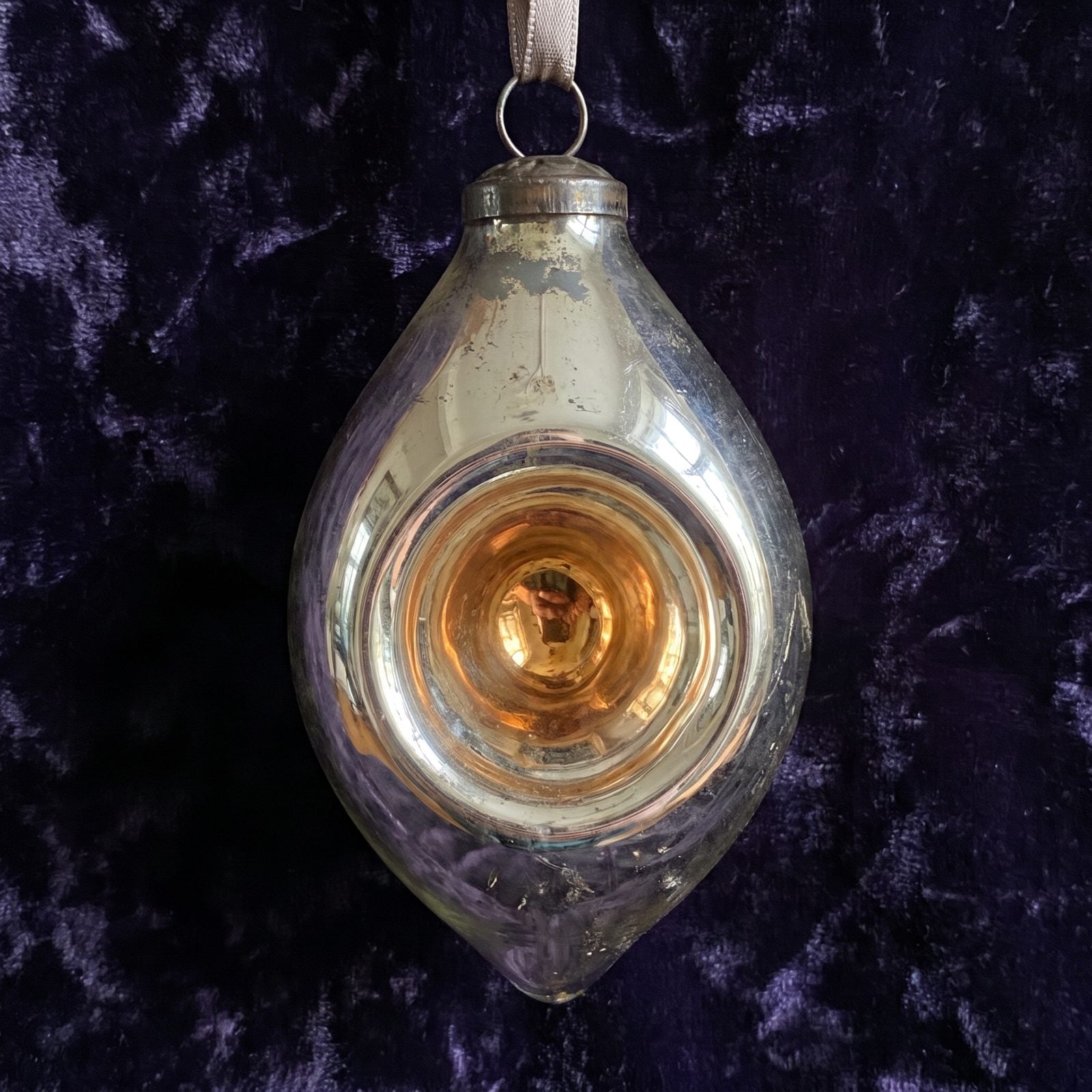
Turn one of these in your hand and you found a surprise: a deep dimple pressed into the glass, lined with a mirror finish that trapped the tree lights and threw them back at you. Hang it near a bulb and the indentation lit up like a tiny spotlight.
The effect worked because the concave mirror focused the light, the same principle behind a flashlight reflector. On a tree lit by those hot C7 bulbs, these ornaments practically glowed from the inside.
Fragile things, though. The glass was thin and the silvering flaked if it got damp.
28. The Light-Up Plastic Star That Crowned the Tree

At the very top sat the star, and in a lot of homes it was molded plastic lit from the inside by a single bulb that fed off the same strand running through the branches. It glowed a soft gold or white and leaned slightly — always slightly — no matter how carefully you set it.
The plastic yellowed with age and the glow dimmed as the bulb socket corroded. Still, it was the one ornament that stayed up highest, the last thing a child saw before being carried off to bed.
27. Silver Foil Garland With Its Fringed, Shimmering Edges

This was the finishing touch, and it was loud about it. A wide band of silver foil with a dense fringe cut along both edges, so it rippled and flashed with every draft and every passing kid. Draped across the mantel or swooped over the tree, it caught light from three directions at once.
It tangled if you looked at it wrong, and once it kinked you never got the strands to lie flat again. By January most of it was a crumpled mess bound for the trash, which is why intact lengths are hard to find now.
Static electricity made it cling to everything, including you. Walk past it in a wool sweater and a few strands followed you to the kitchen.
26. Aerosol Snow Sprayed Across the Windows

That white stuff in the corners never melted, which was exactly the appeal. A can of aerosol “snow,” a stencil cut from a cereal box, and the picture window was suddenly wearing a single frosty star.
Here’s what nobody mentions. It was murder to scrape off. Come January you were at the glass with a razor blade and a sour mood, still finding flecks of the stuff deep into February. Some folks sprayed it straight onto mirrors and the bathtub surround, which looked wonderful and cleaned up miserably.
25. Accordion-Fold Paper Bells Hanging From the Ceiling
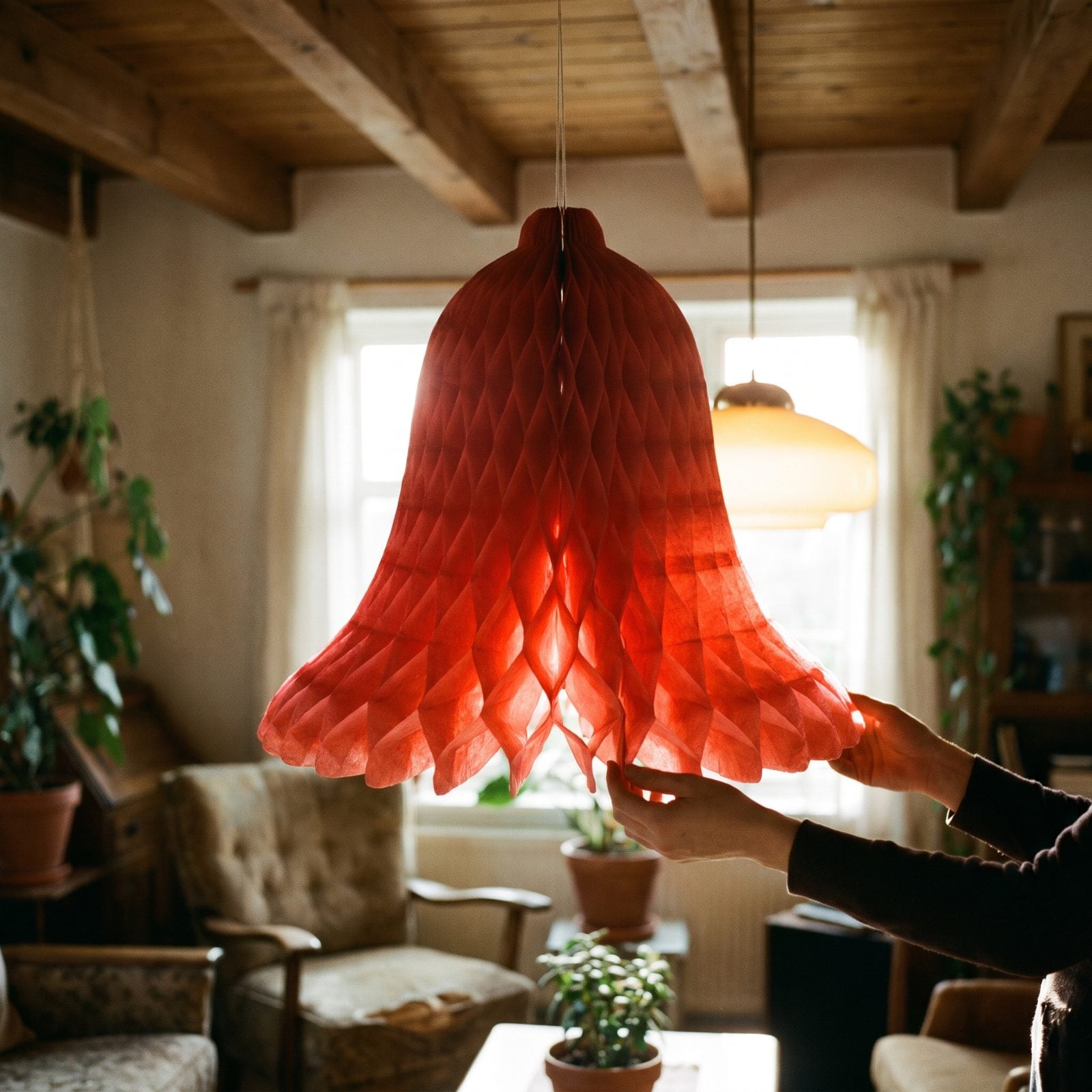
Flat as a folder one minute, a plump three-dimensional bell the next. You unfolded the honeycomb tissue, hooked the two halves together with a little paper tab, and hung it from the light fixture or the doorway with a thumbtack.
Red was the classic. Silver and gold showed up too. They cost next to nothing and crushed if you so much as looked at them wrong, which is precisely why so few survive in decent shape. Smart families stored them flat between sheets of cardboard, pressed and safe for next year. The rest of us jammed them into a box and spent every December mourning the creases.
24. A Crepe-Paper Christmas Fireplace
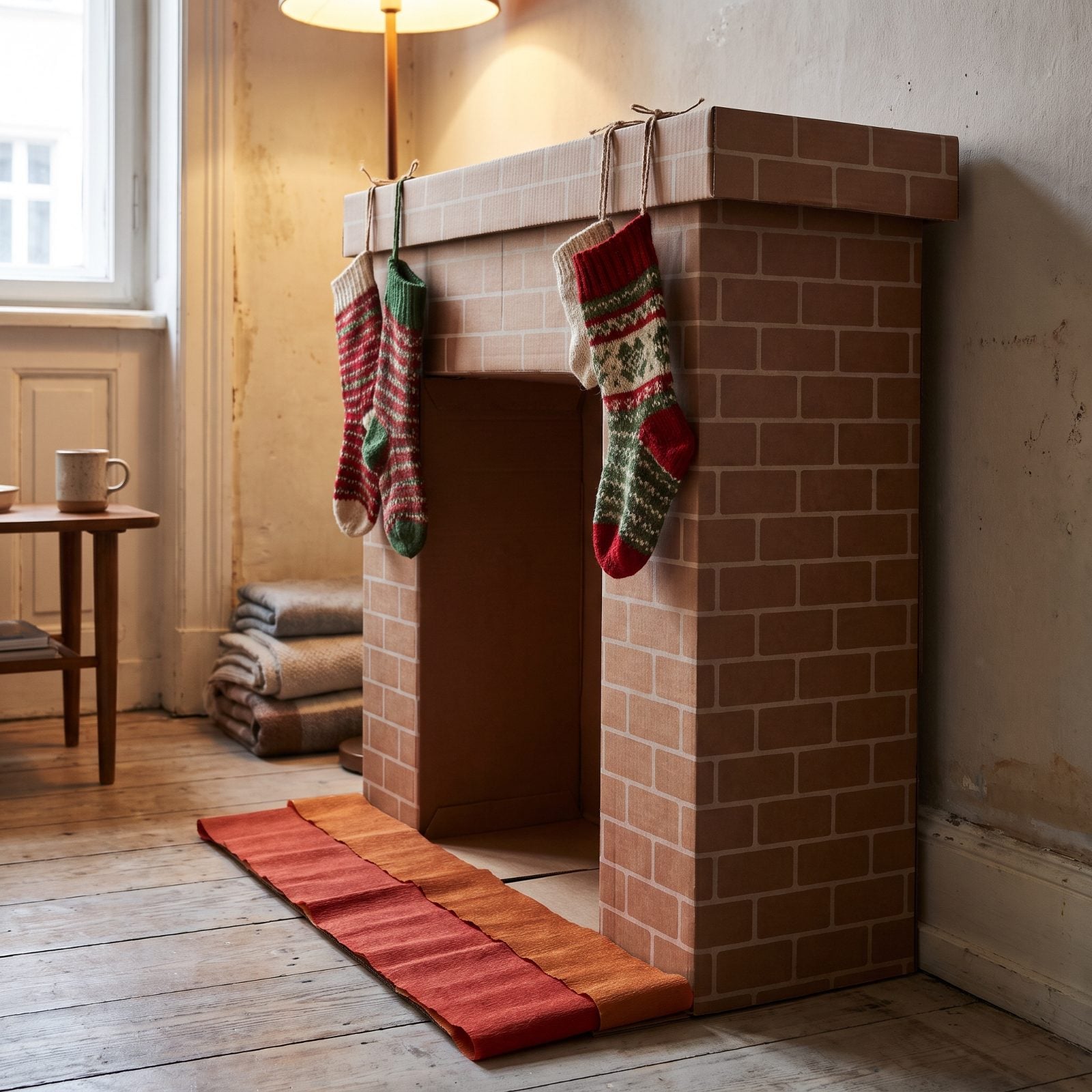
Apartment with no chimney? No problem. For a dollar or two you got a flat-pack cardboard hearth covered in brick-printed crepe paper, you folded it into shape, and your living room suddenly had somewhere to hang the stockings.
The good ones came with a cardboard log and a little bulb behind red cellophane that flickered when you plugged it in. It fooled exactly no one and warmed exactly nothing. Kids loved it anyway, because it gave Santa a believable way in and gave the stockings a place to belong.
23. A Cardboard Christmas Village Covered in Mica Snow
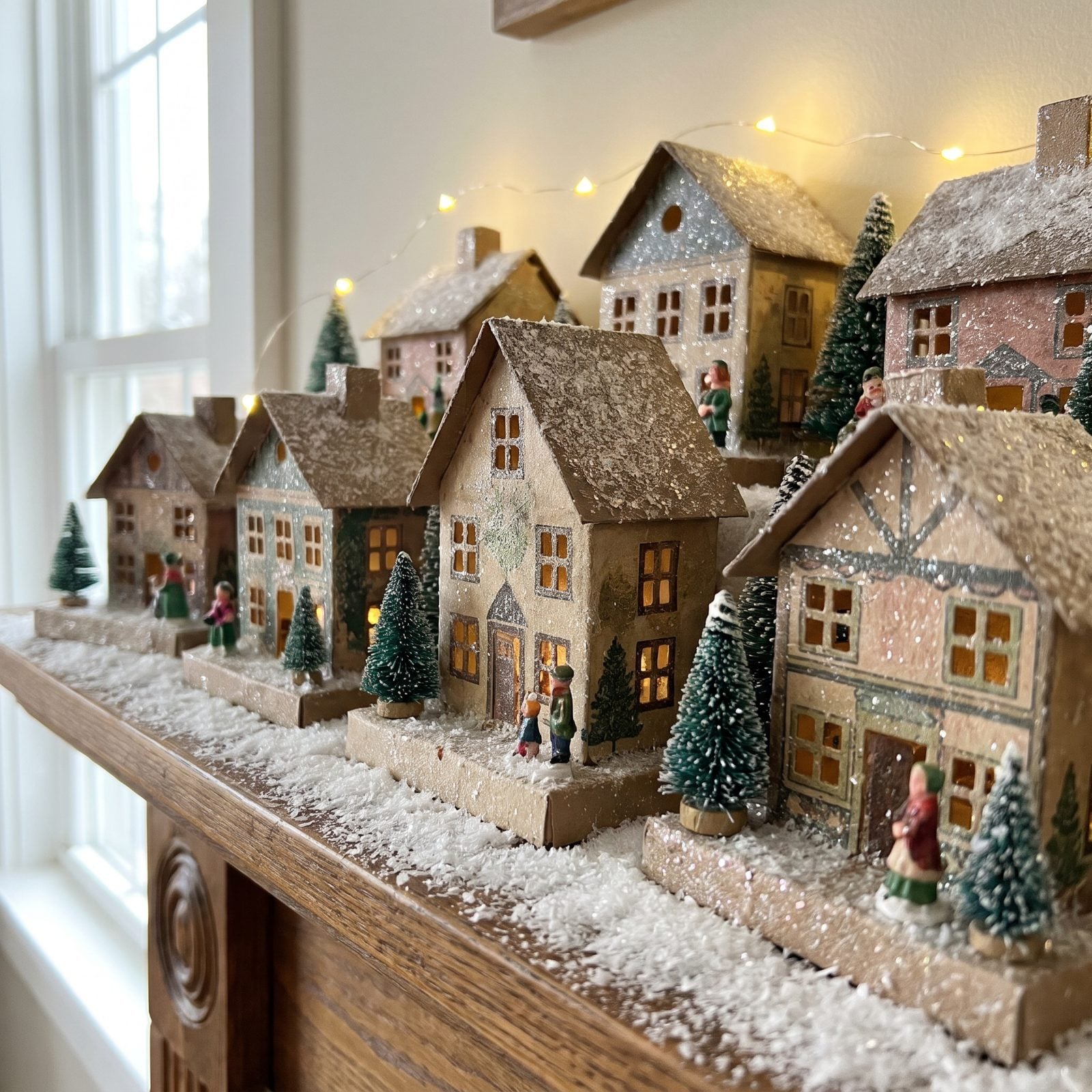
These little printed houses go by “putz” or “glitter houses,” and the sparkle came from mica, a flaky mineral scattered over wet glue while the cardboard dried. Hold one near a lamp and the whole roof glints.
Many had a hole punched in the back for a single bulb, so the cellophane windows glowed amber. Add a mirror for a pond, some bottle-brush trees, a wad of cotton for drifts, and you’d built a whole frozen town on top of the piano.
Collectors prize the Japanese-made ones from before the war, but plenty of families bought cheap boxed sets at the five-and-dime and loved them just as hard.
22. Gurley Wax Christmas Candles Too Pretty to Burn
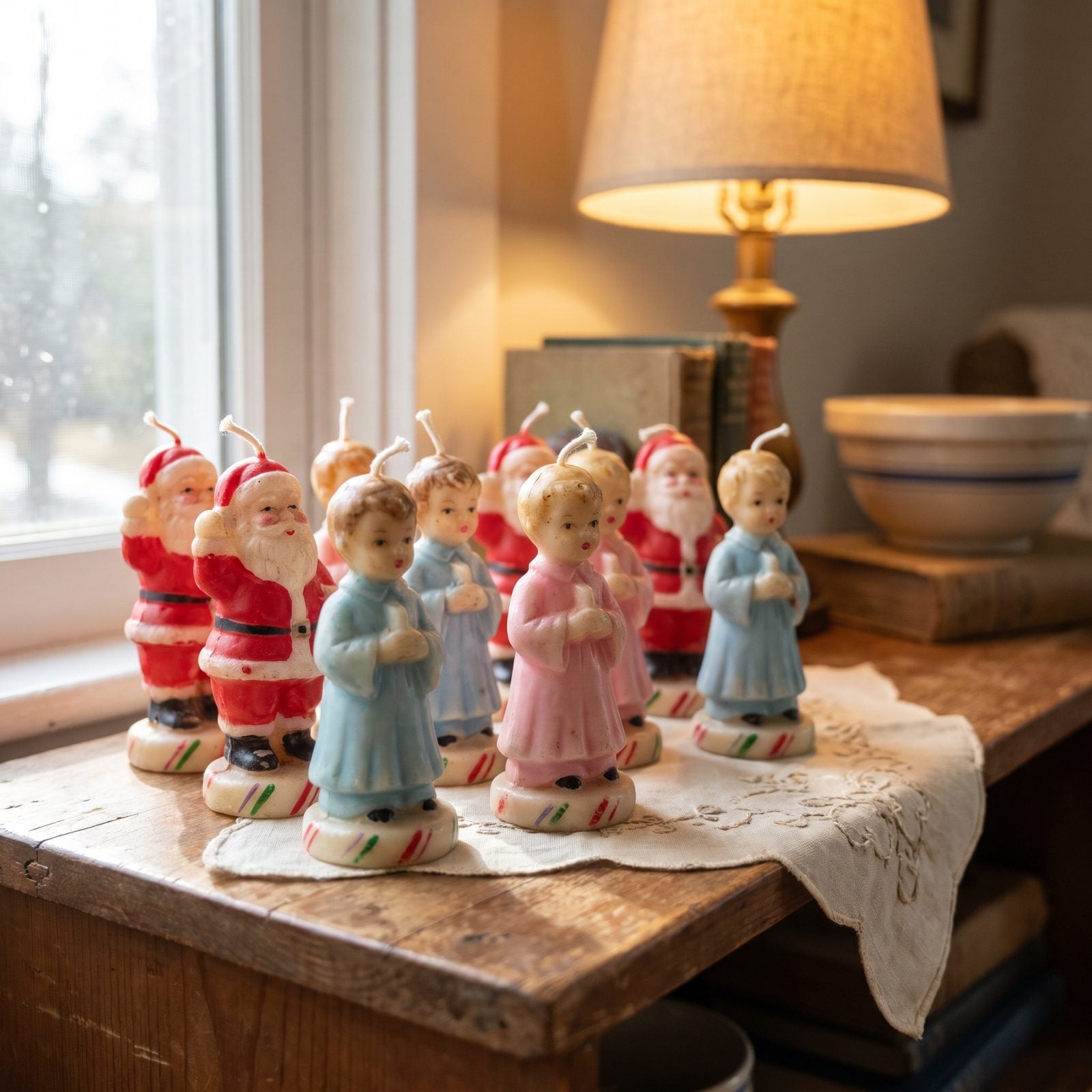
Little wax Santas, snowmen, choir boys and candy-striped pillars, each topped with a wick that almost never saw a match. That was the quiet joke of a Gurley candle. It was a candle you flatly refused to light.
The Gurley Novelty Company of Buffalo turned these out by the millions from the 1940s into the ’60s, cheap enough for the dime store and cute enough to keep for decades. Pull them out every year, line them on the sill, tuck them back into tissue paper come January. Some families still have the exact same snowman from Eisenhower’s second term.
21. A Blow-Mold Santa Glowing on the Porch

You always knew the house that went all in, because a Santa glowed on its porch. Hollow plastic, molded in one piece, a lightbulb dropped in through a hole in the base, and a long orange extension cord snaking back to the outlet.
Companies like Union Products and Beco made them, and the glow did all the work. On a dark December street, that soft red Santa was a beacon for every kid in the back seat craning to see whose yard had one.
The paint wore thin on the nose and the boots first, and a well-loved blow-mold shows it.
20. A Wreath Made From Crinkled Green Cellophane
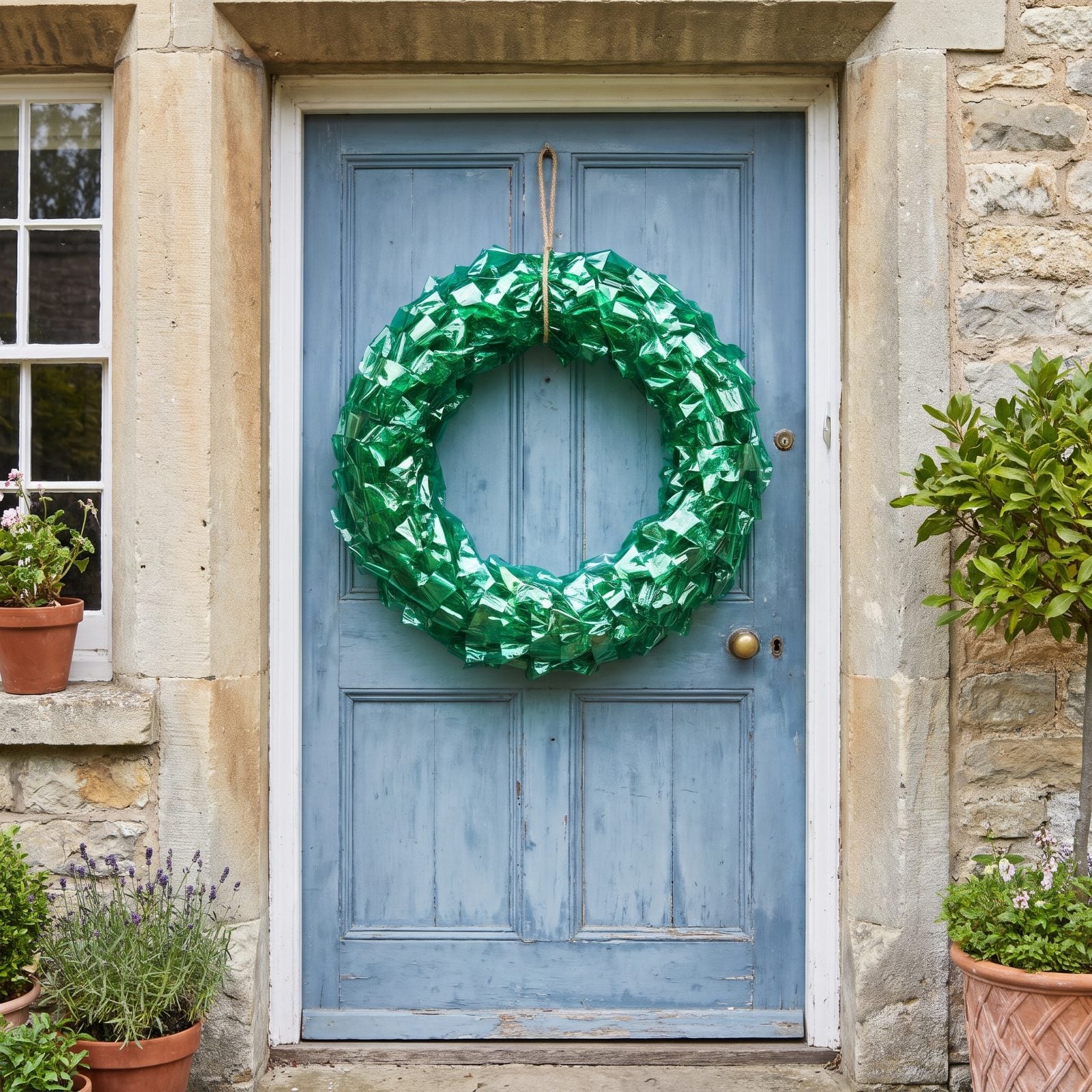
Before plastic greenery got convincing, there was the cellophane wreath: strips of crinkled green film bunched onto a wire ring until it fluffed out into a shiny, crackly circle. It caught the porch light. It rattled in the wind.
Honestly, it looked nothing like a pine wreath, and nobody minded. It was weatherproof, it folded away flat, and a red bow covered a multitude of sins. The dime store sold them for pocket change, so they turned up on apartment doors and classroom bulletin boards alike.
19. A String Display Holding Dozens of Mailed Christmas Cards
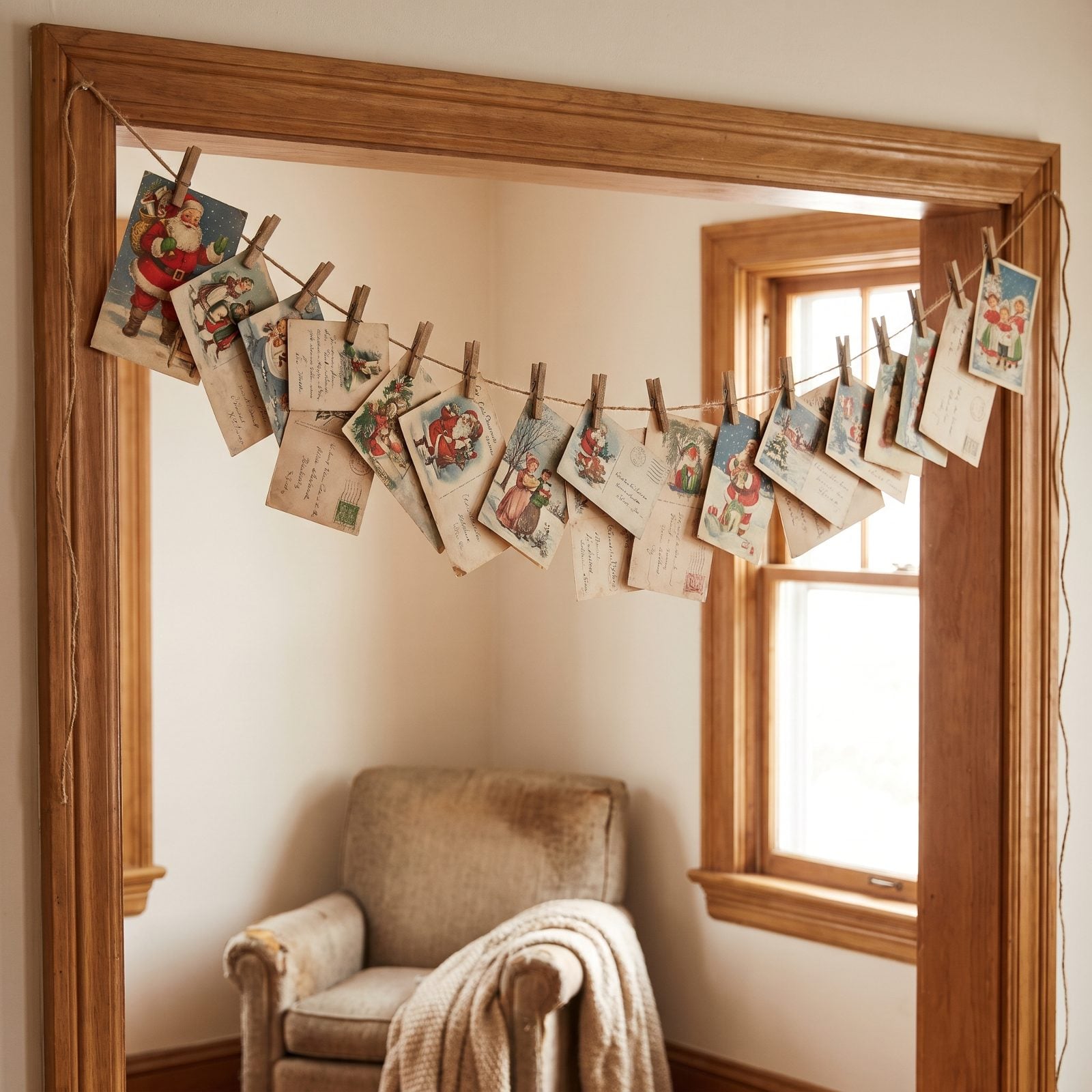
The mail carrier brought the decorations. Every card that arrived went straight up on display, clipped with wooden clothespins to a length of jute twine strung across the doorway, tucked into a folding cardboard holder, or taped around the frame of the arch between rooms.
By the week before Christmas the whole wall had become a mosaic of other people’s taste in Santas. And there was a little social scorekeeping in it, if we’re honest. A thin string meant a quiet year. A string sagging under fifty cards meant a family that kept up with everybody on the block.
18. A Stack of Mail-Order Christmas Catalogs
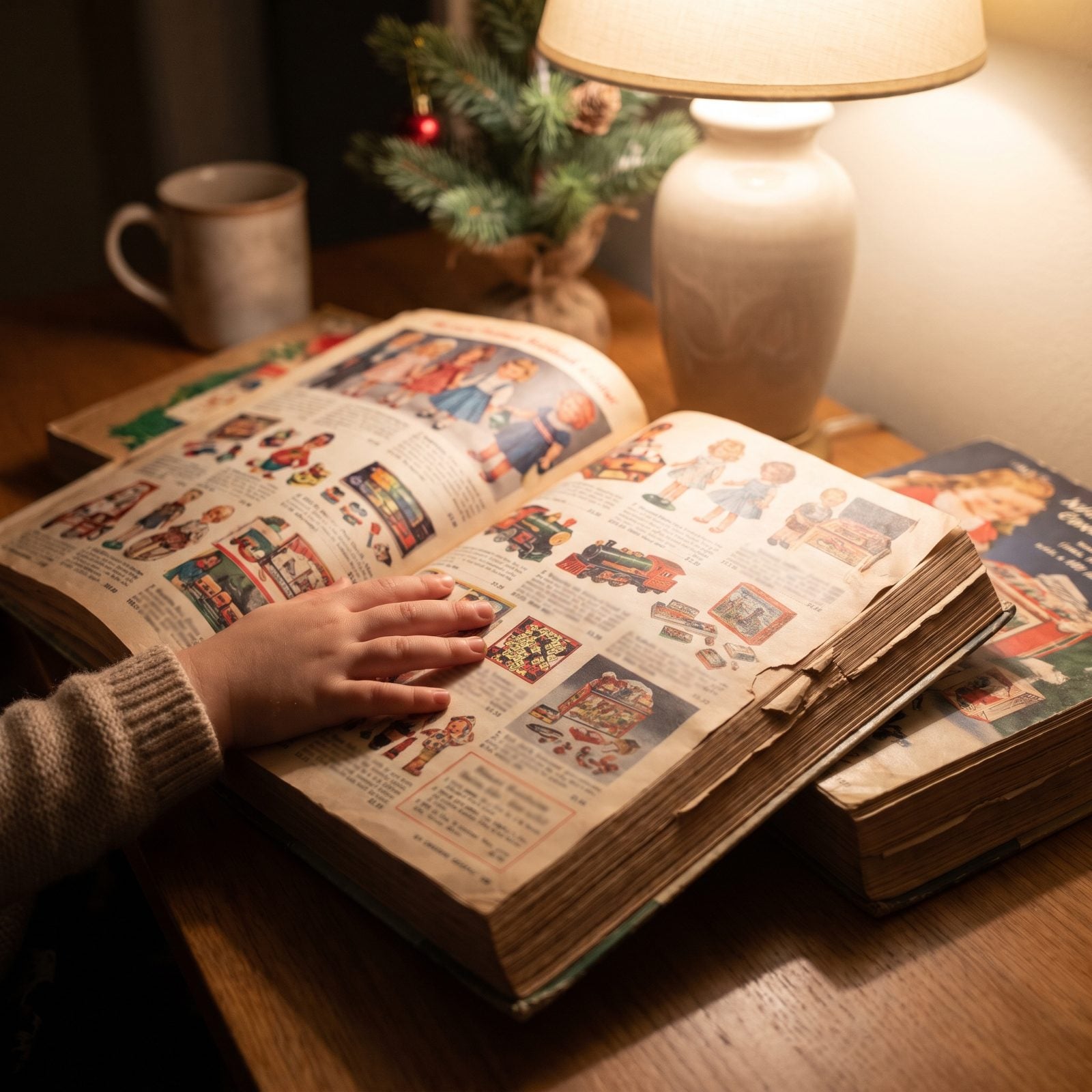
When the thick catalog landed in the mailbox, the real Christmas season began. Sears called its holiday book the “Wish Book,” and the name told a kid everything.
Hundreds of pages, and the toy section was the one that got dog-eared, crayoned and fought over at the kitchen table. You circled what you wanted. You folded down corners. You read the same doll or chemistry set blurb until you knew it cold.
Parents, meanwhile, used the thing to actually shop, ordering by mail or phone weeks ahead so the box arrived in time to hide in the closet. Half store, half dream, and it cost nothing to flip through.
17. The Console Television Glowing With a Holiday Variety Special
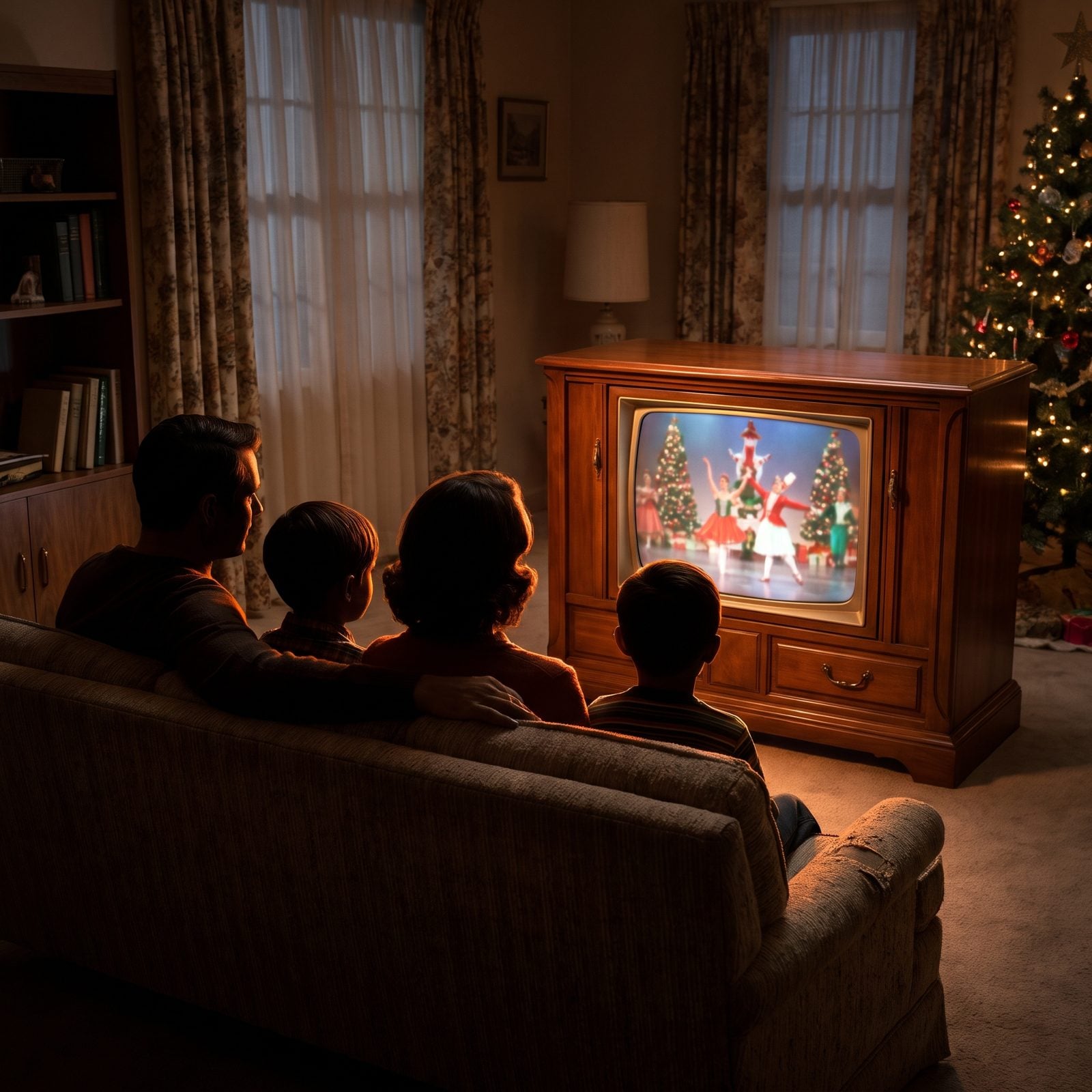
Before the special even started, the whole family rearranged itself around that cabinet. The set took a good five minutes to warm up, blooming slow from a bright dot to a full picture, and you learned patience whether you wanted to or not.
The television was furniture first and electronics second: hand-rubbed walnut veneer, four stubby legs, a top wide enough for a nativity scene and a dish of ribbon candy. Bob Hope, Andy Williams, Perry Como in a cardigan singing by a fake fireplace. One channel. No pausing. And if someone got up to adjust the vertical hold, nobody dared leave their seat.
16. The Hi-Fi Console Spinning a Scratchy Christmas LP
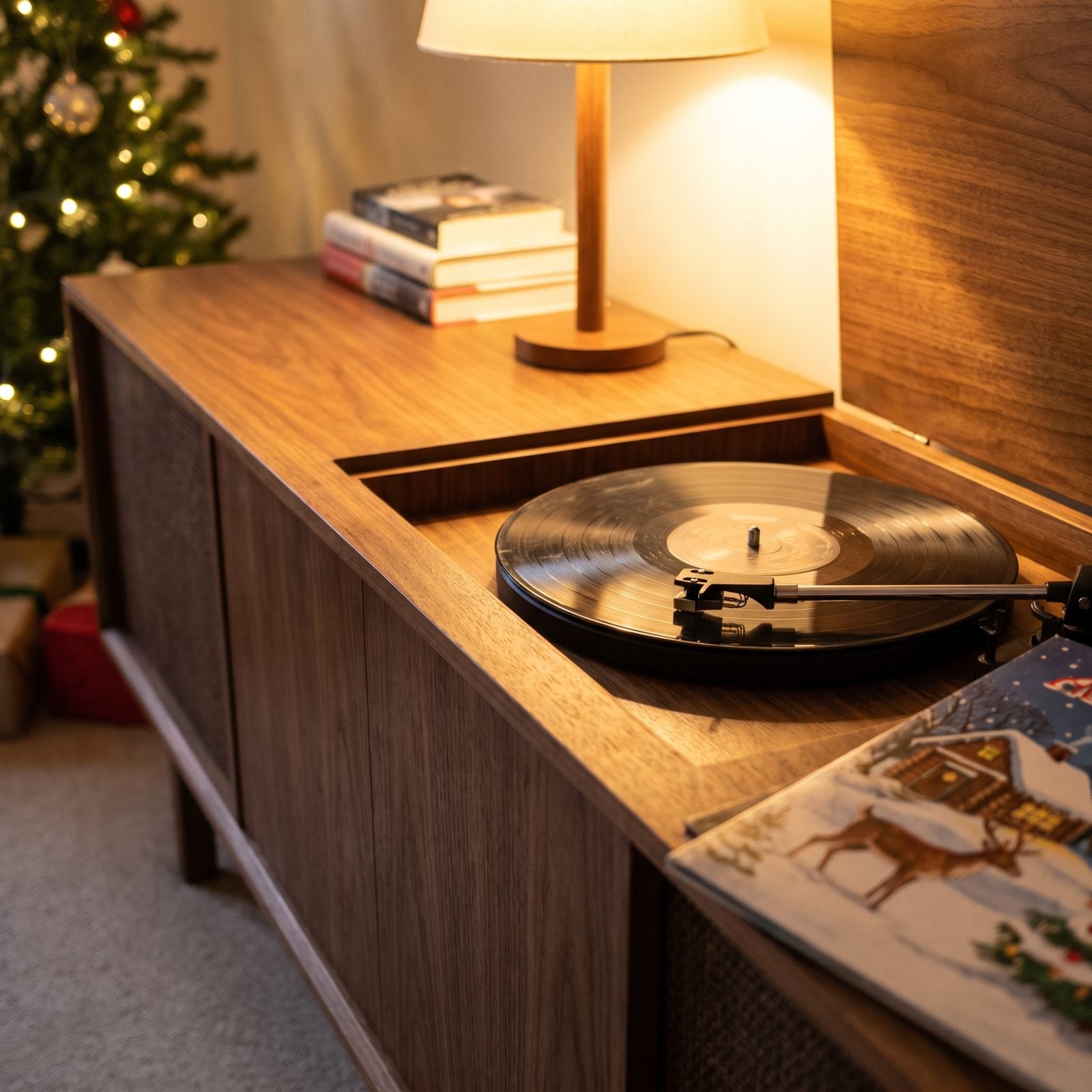
The hi-fi console was the biggest piece of furniture most families owned that wasn’t a bed — six feet of veneer housing a turntable, a tube amplifier, and speakers behind cloth grilles that hummed before the needle even dropped.
Christmas meant pulling out the same handful of records every year. Johnny Mathis. Nat King Cole. And then the Firestone and Goodyear holiday collections families got practically free at the tire store, which is one of the stranger facts in American music, because a tire company pressed some of the most-played Christmas albums in the country.
I love that the sound was imperfect. The warm crackle, the slight warble when someone walked heavy across the floor — it sounded like a room, not a file.
15. The Reel-to-Reel Recorder Catching Family Voices
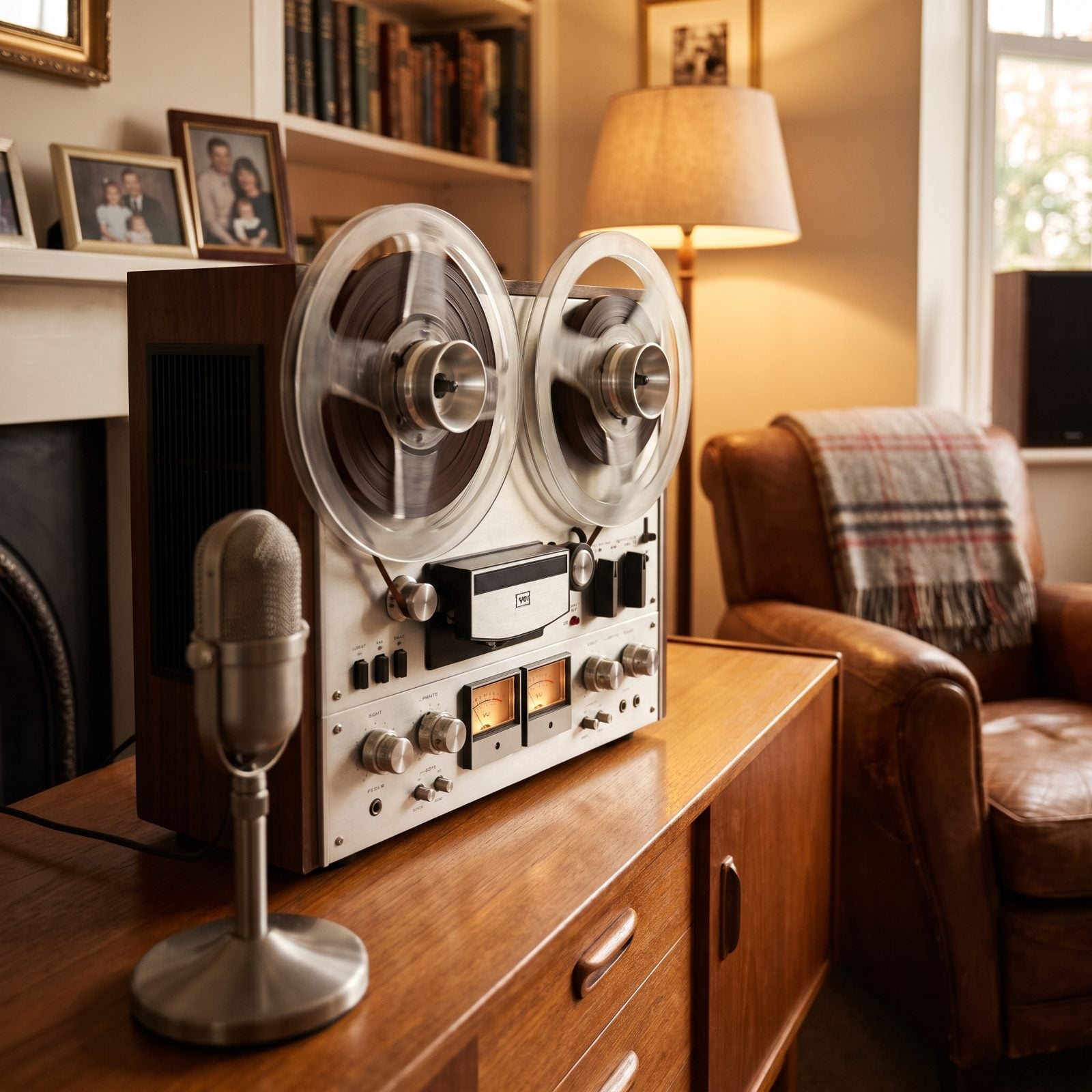
Film captured faces. The reel-to-reel caught what film couldn’t: the voice. Grandfather’s throat-clear before he told a joke, a toddler mangling a carol, the specific sound of a long-gone kitchen at full volume.
And then families recorded these tapes and rarely played them, which is the quiet tragedy of the format. The machines were finicky, the tape degraded, the playback deck broke before anyone got around to listening. If you’ve opened a box in an attic and found a stack of unlabeled reels, you know the feeling.
Noting that home reel-to-reel decks have been out of production for decades, a tape digitization specialist warns “A tape that could last a hundred years or more can still be lost within a few decades if there is no way left to play it.”
14. The Super 8 Camera Loaded for Christmas Morning
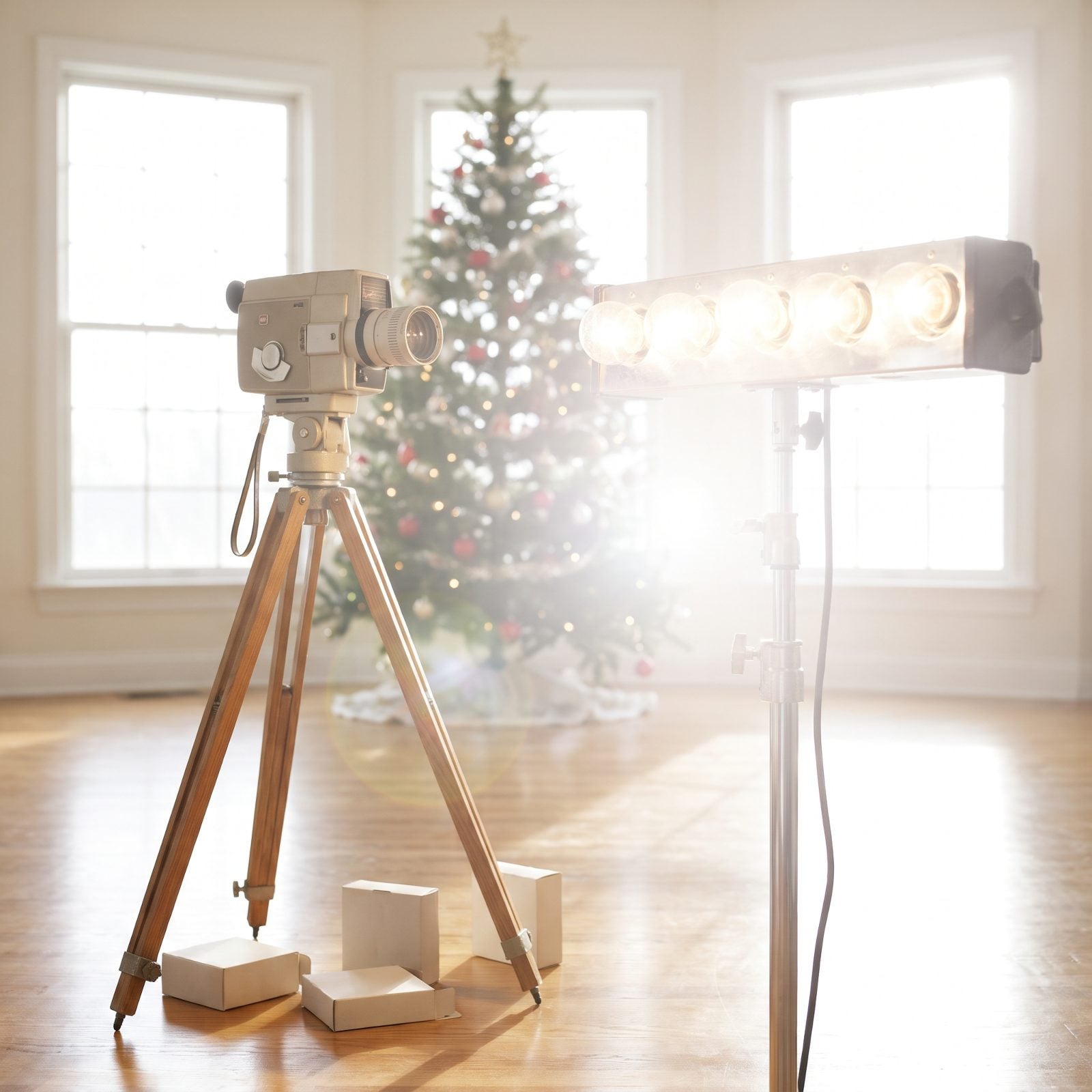
Here’s the detail nobody mentions about those glorious home movies: they were silent, and they were lit like an interrogation.
Super 8 film, introduced by Kodak in 1965, came in a drop-in cartridge that made filming almost foolproof. The hard part was the light. Indoor film needed a blinding movie light bar on its own stand beside the camera, so every Christmas morning scene features squinting children shielding their eyes from the glare. That’s why everyone in the footage looks mildly annoyed to be alive.
Three minutes a cartridge. No sound, no instant replay. You shot it, mailed it off, and waited two weeks to find out whether the whole thing was out of focus.
13. The Flashcube Camera Standing Ready by the Tree
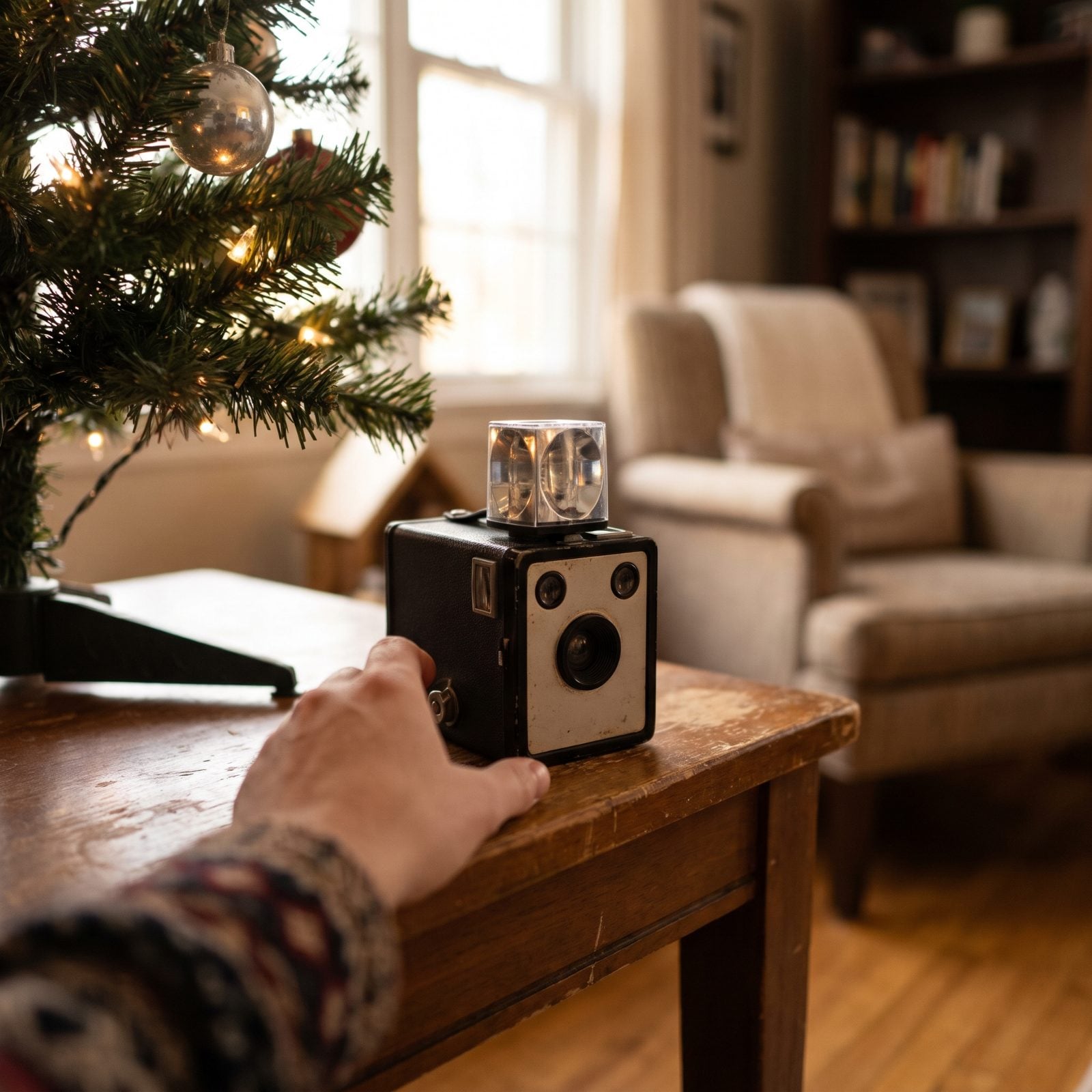
The flashcube changed the rhythm of a family gathering. One cube, four flashes, and it rotated itself after each shot — four pictures before you had to dig for a new cube, with that little mechanical click every single time.
Each bulb fired exactly once, then sat there spent and useless, a tiny glass monument to a photo you’d see three weeks later. Half of them came back with a thumb in the corner or a cousin blinking.
12. The Rotary Telephone Carrying the Long-Distance Holiday Call
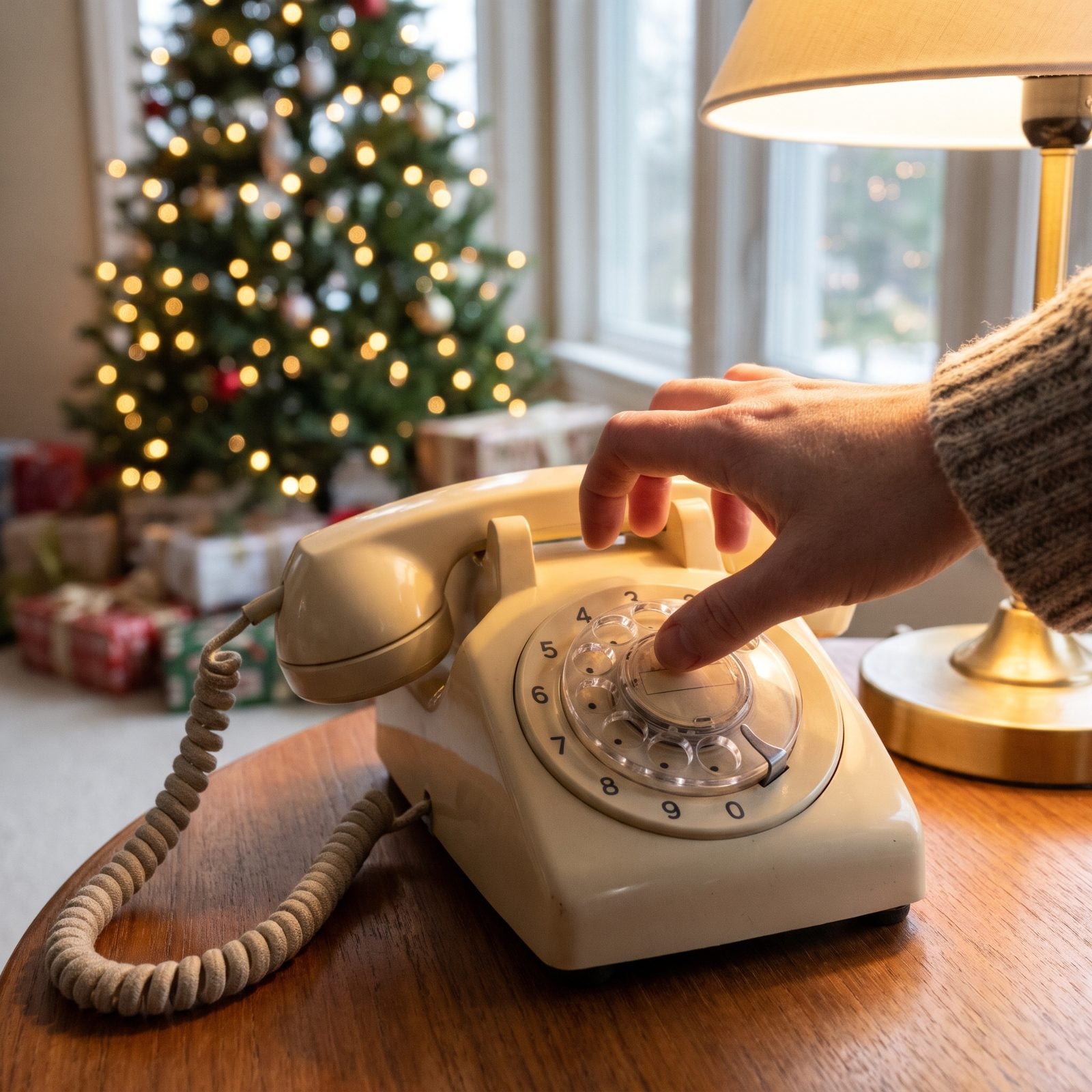
You planned the long-distance call. You didn’t just make it.
Long distance cost real money in the 1960s, billed by the minute, and holiday rates were a genuine budget line. Families waited for the cheaper evening window, gathered everyone in the hall by the phone, and passed the heavy handset from hand to hand while the clock ran. Kids got coached ahead of time: say hello, say thank you, give it back.
The dial took its sweet time returning after every number. Misdial that last digit and you started the whole slow rotation over. There was a ceremony to reaching someone far away that a thumb tap has quietly erased.
11. The Bowl of Tom and Jerry Batter Waiting for the Mugs
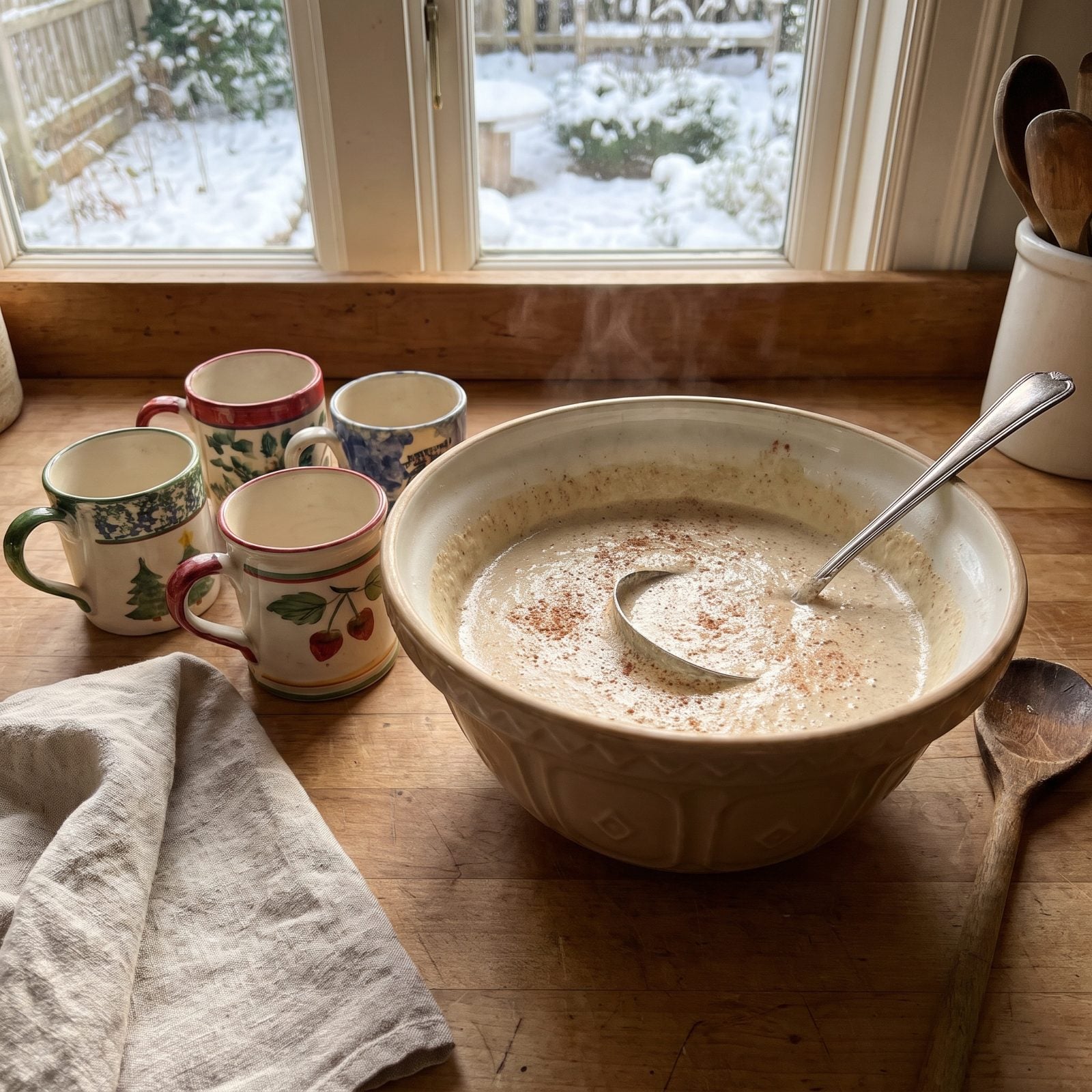
Half the country has never heard of a Tom and Jerry, and the other half can still picture their grandmother’s set.
It was a hot winter drink built on a whipped batter of eggs, sugar, and spice — spooned into a mug, topped with hot milk or water and a pour of brandy or rum, then dusted with nutmeg. Families bought the ceramic bowl-and-mug sets specifically for it, usually lettered in gold and hauled out only between Thanksgiving and New Year’s.
The batter was the whole trick, and it kept the drink light and foamy instead of flat. Some households skipped the spooning and stirred the hot milk straight into the bowl, so it went into the mugs steaming and thin enough to ladle. And no, it has nothing to do with the cartoon cat and mouse. The drink came first by about a century.
As a Chicago pub co-owner puts it, “It’s the same recipe, same method, same guy in the basement making the batter”
10. The Cut-Glass Punch Bowl and Its Ring of Matching Cups
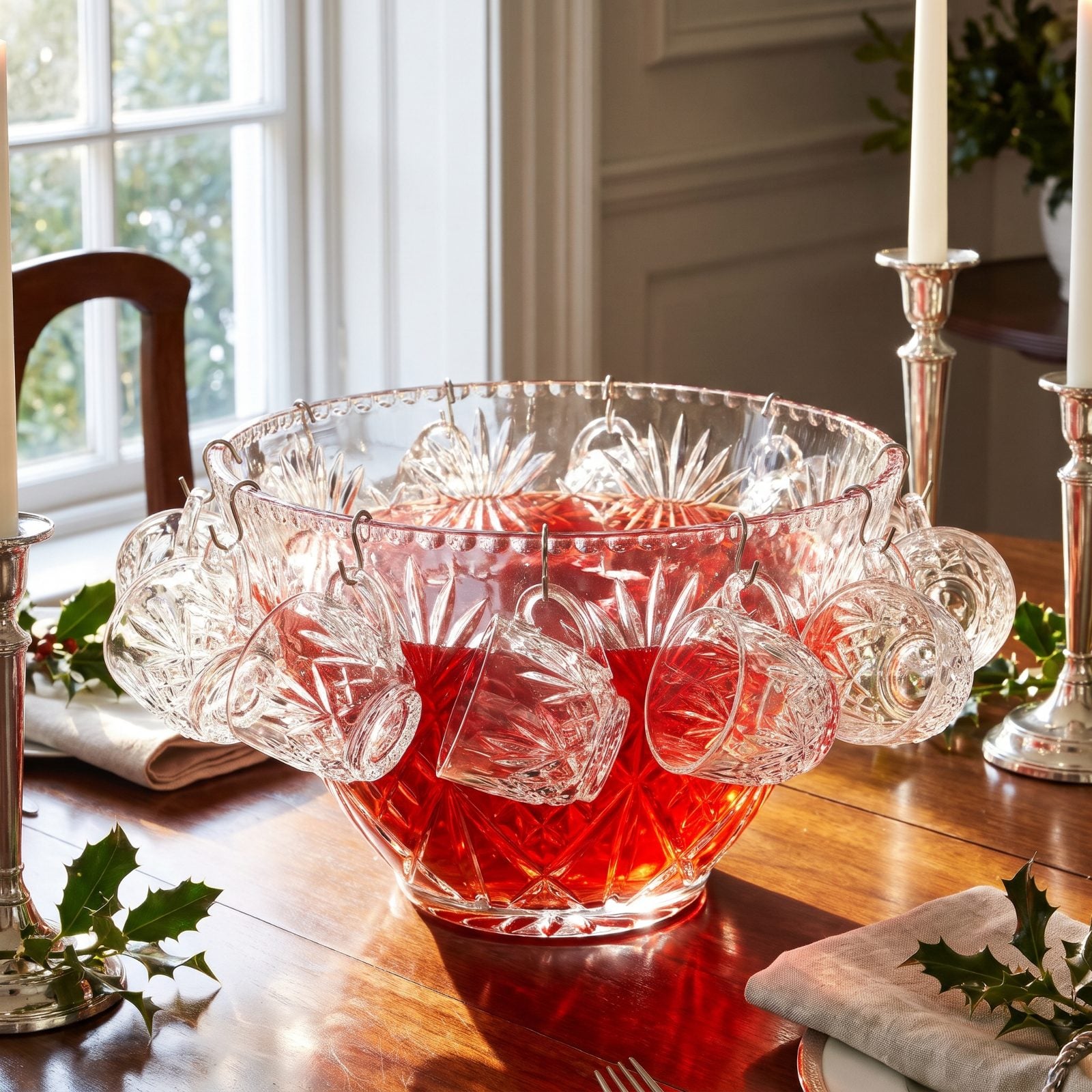
The punch bowl only came down from the top shelf for occasions, and Christmas qualified.
Cut glass or pressed glass, with a dozen little cups that hung from the rim on tiny hooks, it turned a card table into something that felt formal. The punch itself was usually non-threatening — ginger ale, sherbet, a can of fruit juice, maybe a frozen ice ring with cranberries suspended inside so it chilled the whole bowl without watering it down.
The ice ring was the flex. Anyone can pour soda over cubes. A frozen wreath of fruit said somebody planned ahead.
Most of these sets survive today precisely because they got used twice a year and washed by hand. Check the back of a relative’s china cabinet and you’ll likely find one, still intact.
9. The Silver-Plated Relish Tray of Pickles and Olives

The relish tray is the most forgotten star of the 1960s holiday table.
Before the turkey came out, a divided tray of pickles, olives, celery, radishes, and pickled onions sat at the center of the table like an edible appetizer most households took completely for granted. Black olives on fingertips were a child’s unofficial job. Green olives stuffed with pimiento were the grown-up section.
8. A Bowl of Unshelled Nuts With a Metal Nutcracker
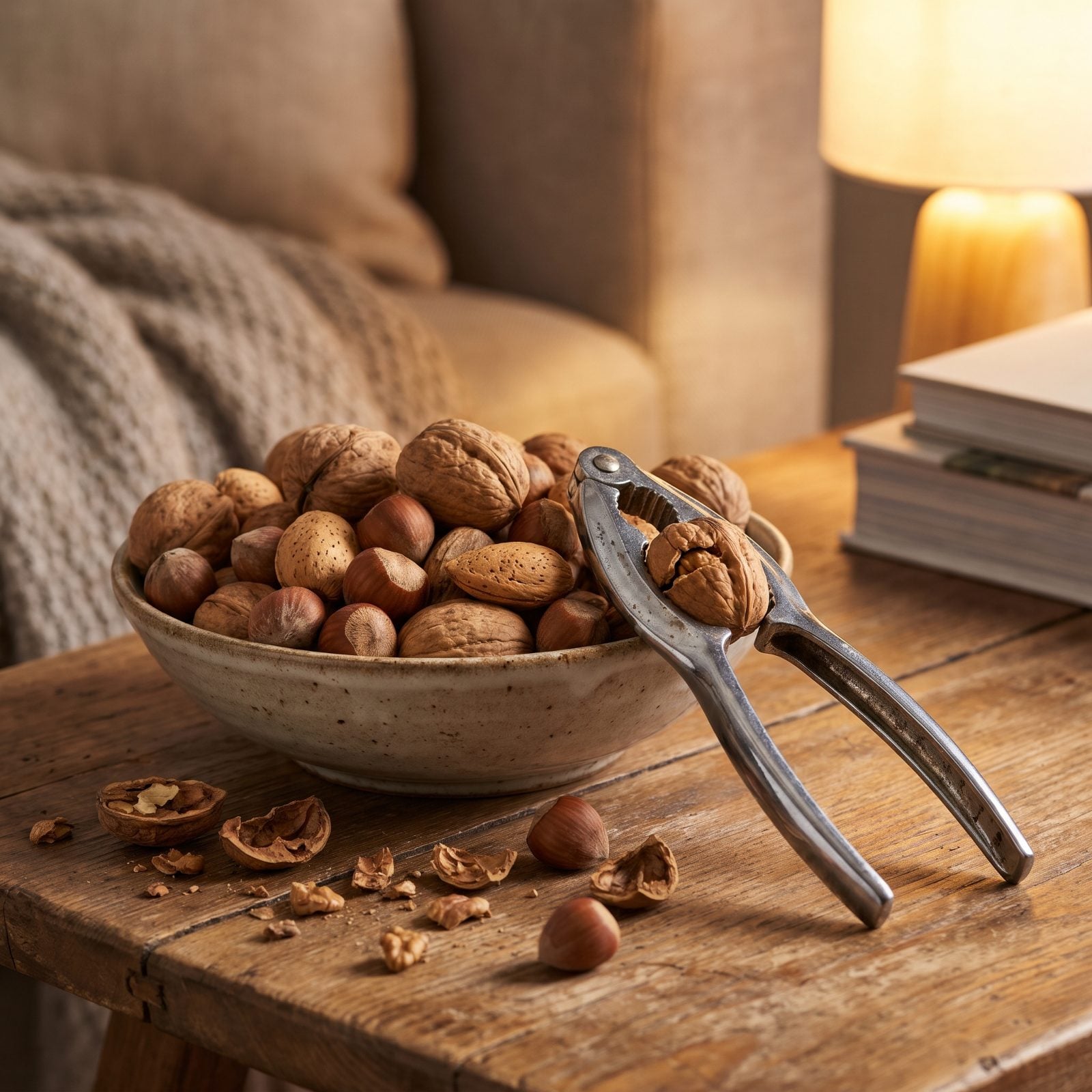
Every holiday living room had one: a bowl of nuts nobody could open without a fight. The metal nutcracker did the heavy work, those scissor-style chrome handles you squeezed until a Brazil nut finally surrendered or shot clear across the room and vanished under the couch.
People forget the nuts weren’t really a snack. They were an activity. You sat, you cracked, you talked, and you picked shell fragments out of the rug for a week afterward. A bowl of mixed nuts kept idle hands busy through the slow hours between dinner and dessert, and it cost almost nothing to fill.
7. A Jell-O Mold Shaped Like a Holiday Wreath
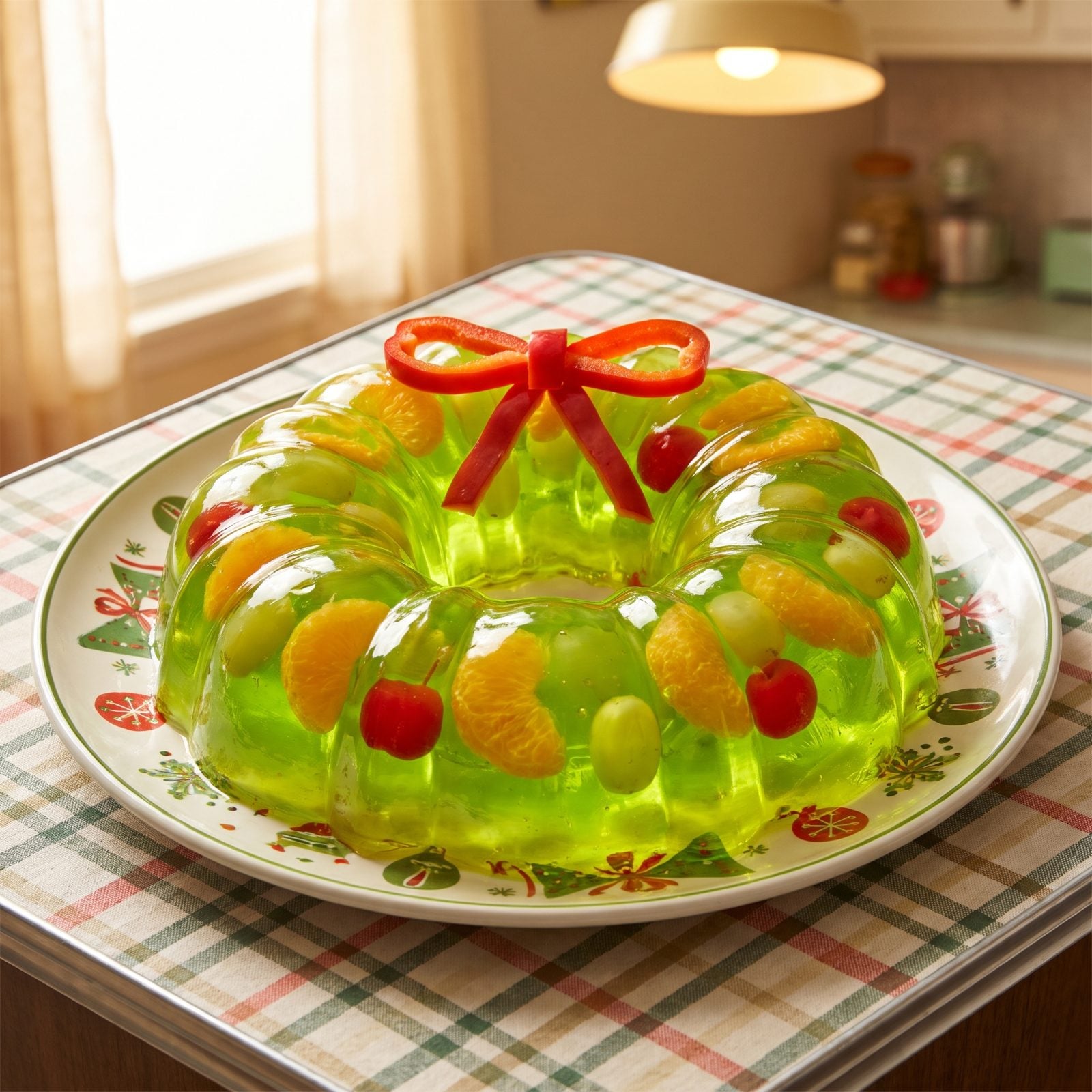
Lime green gelatin, suspended fruit, a pimento bow. Somebody spent real effort making this thing look like a wreath, and you were expected to eat it as a salad.
Gelatin molds ruled the 1960s table because they looked like a feat of construction. A jiggling ring that held canned pears mid-air felt like a small miracle to a home cook, and the aluminum mold itself was cheap and lived in every kitchen drawer. The flavors we’d find alarming now — lime with cottage cheese, anyone? — were a point of pride then.
I’ll admit it. These rarely tasted good. But they photographed beautifully, and in an era of casseroles, that counted for plenty.
6. An Electric Carving Knife Beside the Roast
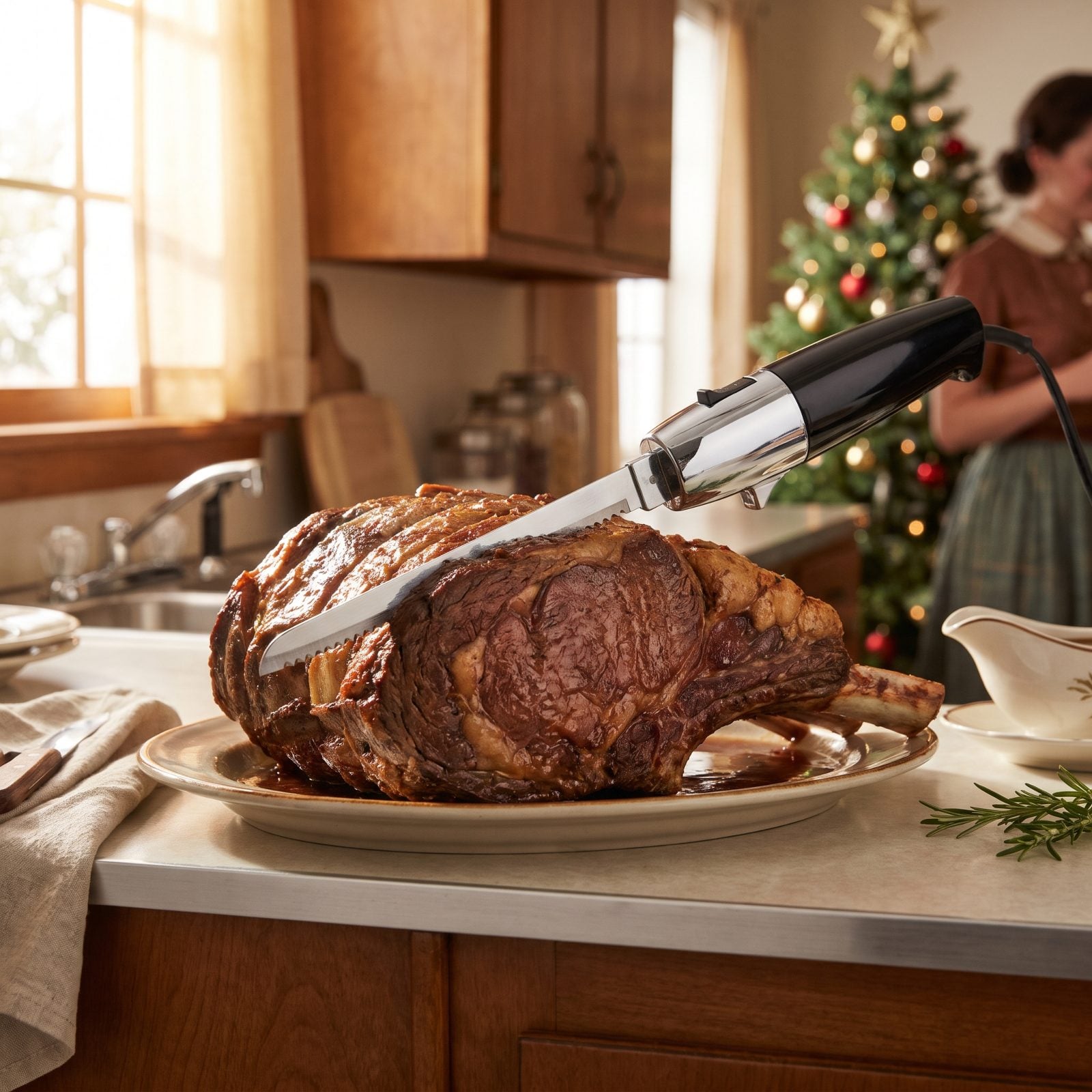
The electric carving knife was the gadget that said your family had arrived. It hit kitchens in the early 1960s and became the must-have Christmas gift almost overnight — a long serrated blade buzzing through a roast like it was butter.
Nobody mentions the downside. The thing was loud, a bit terrifying, and produced slices no cleaner than a sharp regular knife in a steady hand. But cleanliness wasn’t the appeal. The appeal was the novelty, the hum, the sense that the future had finally shown up at the holiday table. You brought it out for the holiday roast and nothing else, then boxed it up for the other eleven months.
5. A Countertop Percolator Brewing After-Dinner Coffee
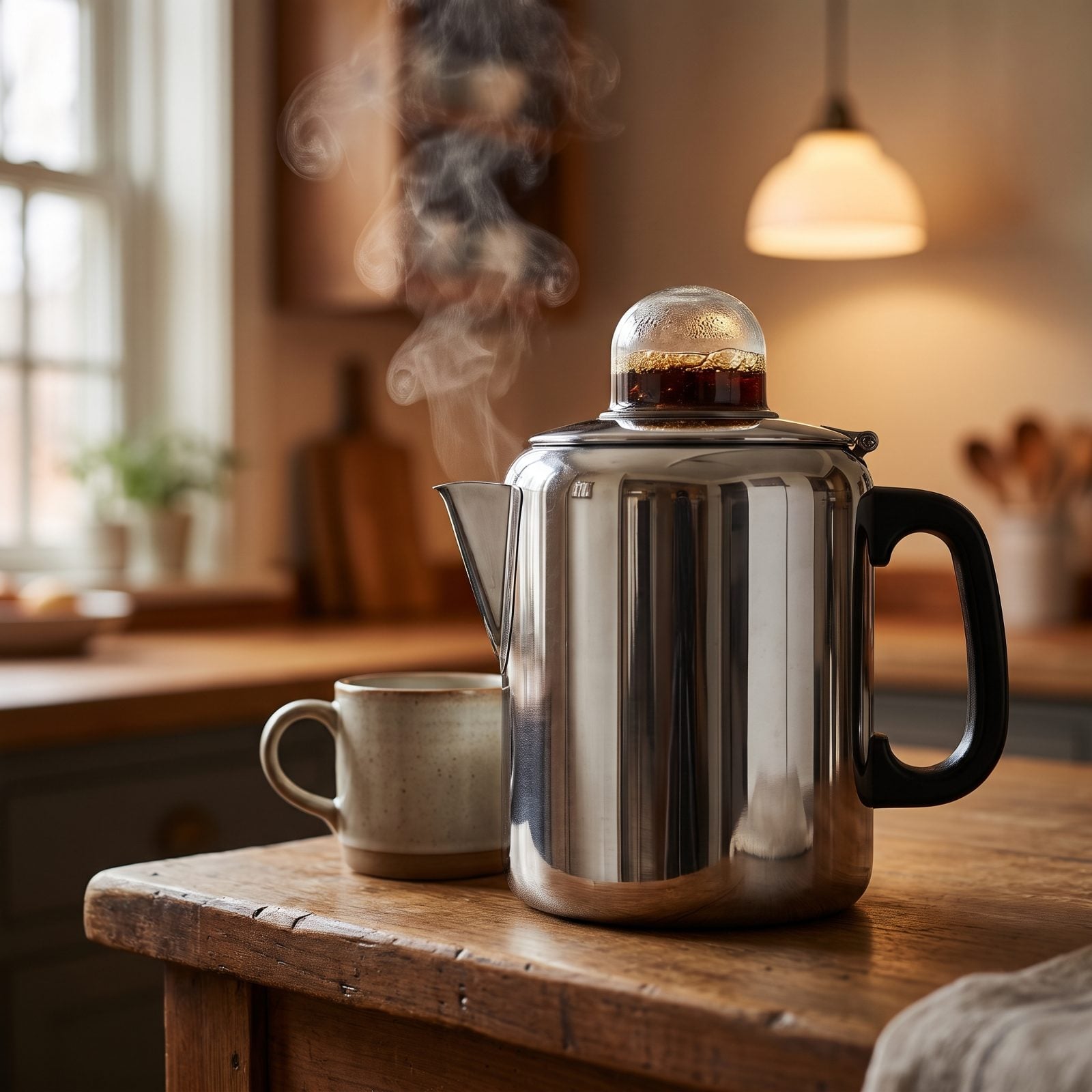
You knew dinner was winding down when the percolator started its rhythmic gurgle. That bubbling glass knob on top, the one you watched darken from clear to amber to deep brown, was the sound of the adults settling in for the long haul.
Percolators made strong, hot, slightly over-extracted coffee, and everyone drank it black or drowned it in cream. The gleaming chrome model came out for company and sat proudly on the counter — ceremony as much as caffeine.
Because a percolator passes boiling water over the grounds again and again, a former barista says “This usually results in over-extraction of the coffee grounds, giving a very bitter flavor to the brew.”
4. A Jar of Mucilage Used for Holiday Crafts
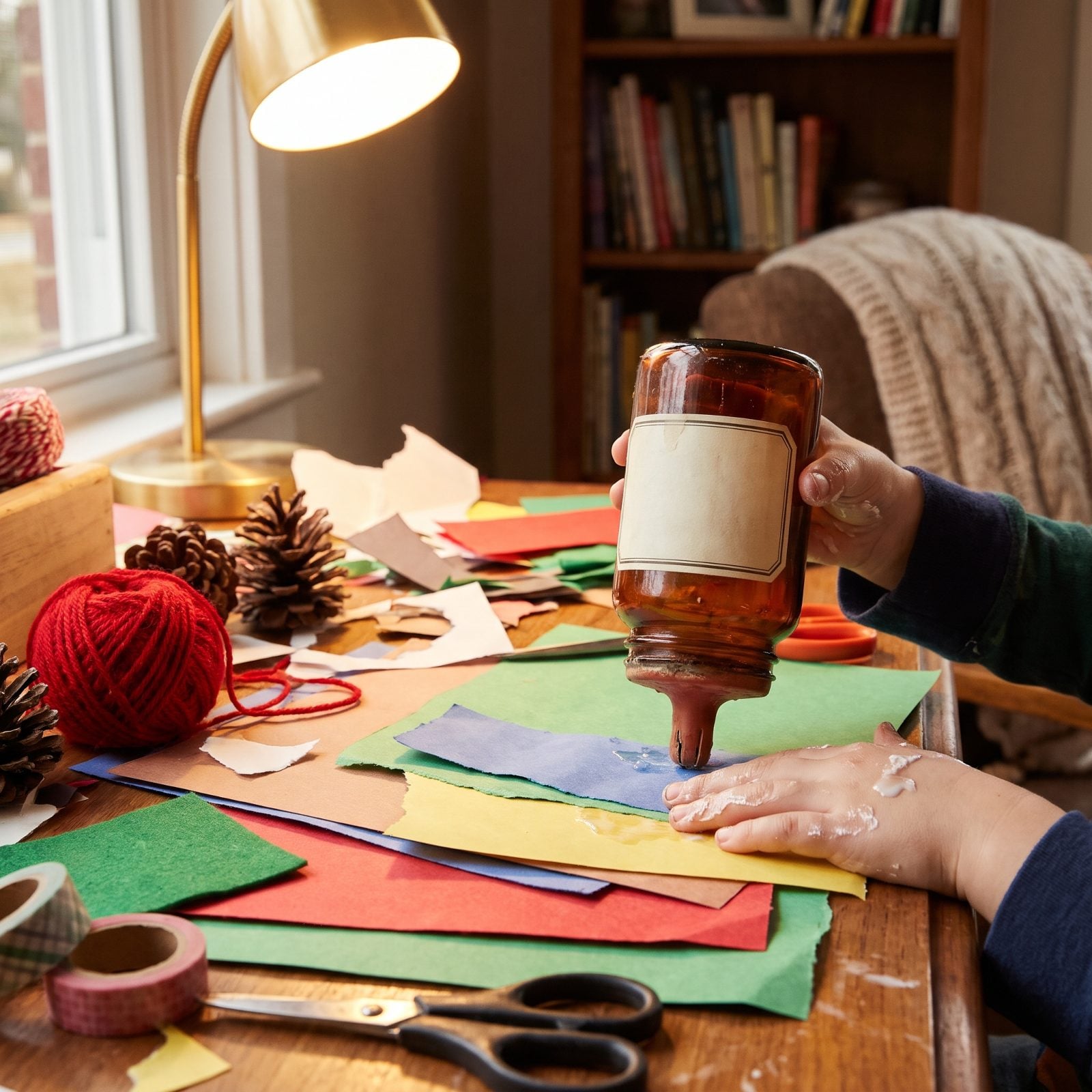
Before glue sticks and craft-store glitter guns, there was mucilage — that amber jar with the rubber slit on top you pressed down to spread a thin, honey-colored film across construction paper.
It smelled faintly of almonds and school. Kids used it to build paper chains, cotton-ball snowmen and lopsided ornaments that parents hung on the tree with real pride. The applicator always clogged, you’d peel a dried skin off the top, and your fingers ended up tacky for hours afterward.
Mucilage came from plant gums, which is why it never held anything heavy and curled your paper as it dried. Nobody cared. The afternoon was the point, not the glue.
3. A Metal Toy Train Circling the Tree
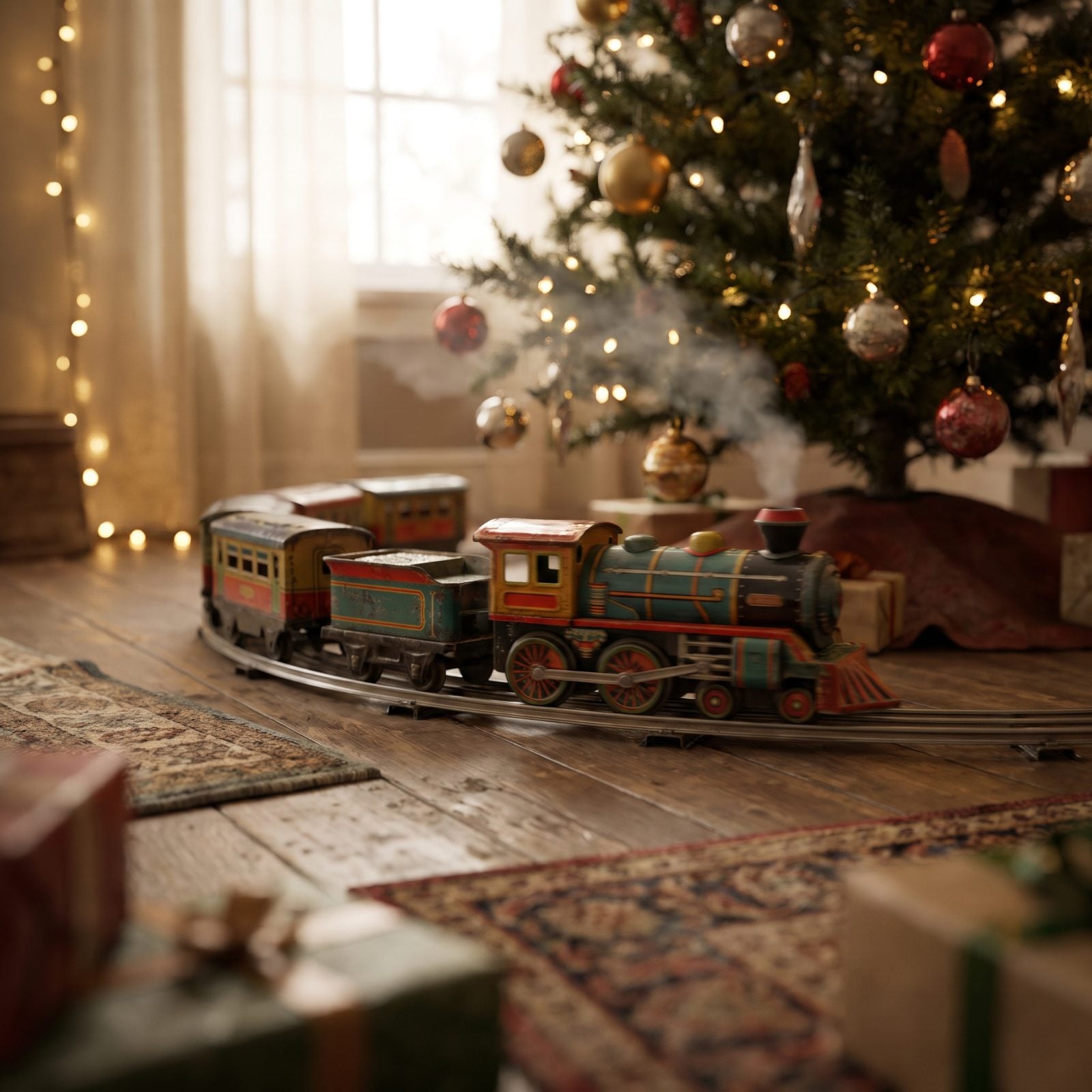
Low to the floor, smelling faintly of ozone and smoke fluid, the toy train was the beating heart of the room beneath the tree. Lionel and American Flyer ruled the era with heavy die-cast engines that actually puffed vapor and whistled.
These weren’t delicate. A good set got handed down, dented and repainted, running the same loop of track every December for decades. Dad usually claimed it was for the kids. Dad usually ran it himself.
Recalling kids who dropped in extra smoke pellets and cranked up the voltage, a toy train restorer writes “That is why so many postwar smoking locomotives are found with burned-out coils and hopelessly clogged chambers.”
2. A Battery-Operated Tin Santa Toy
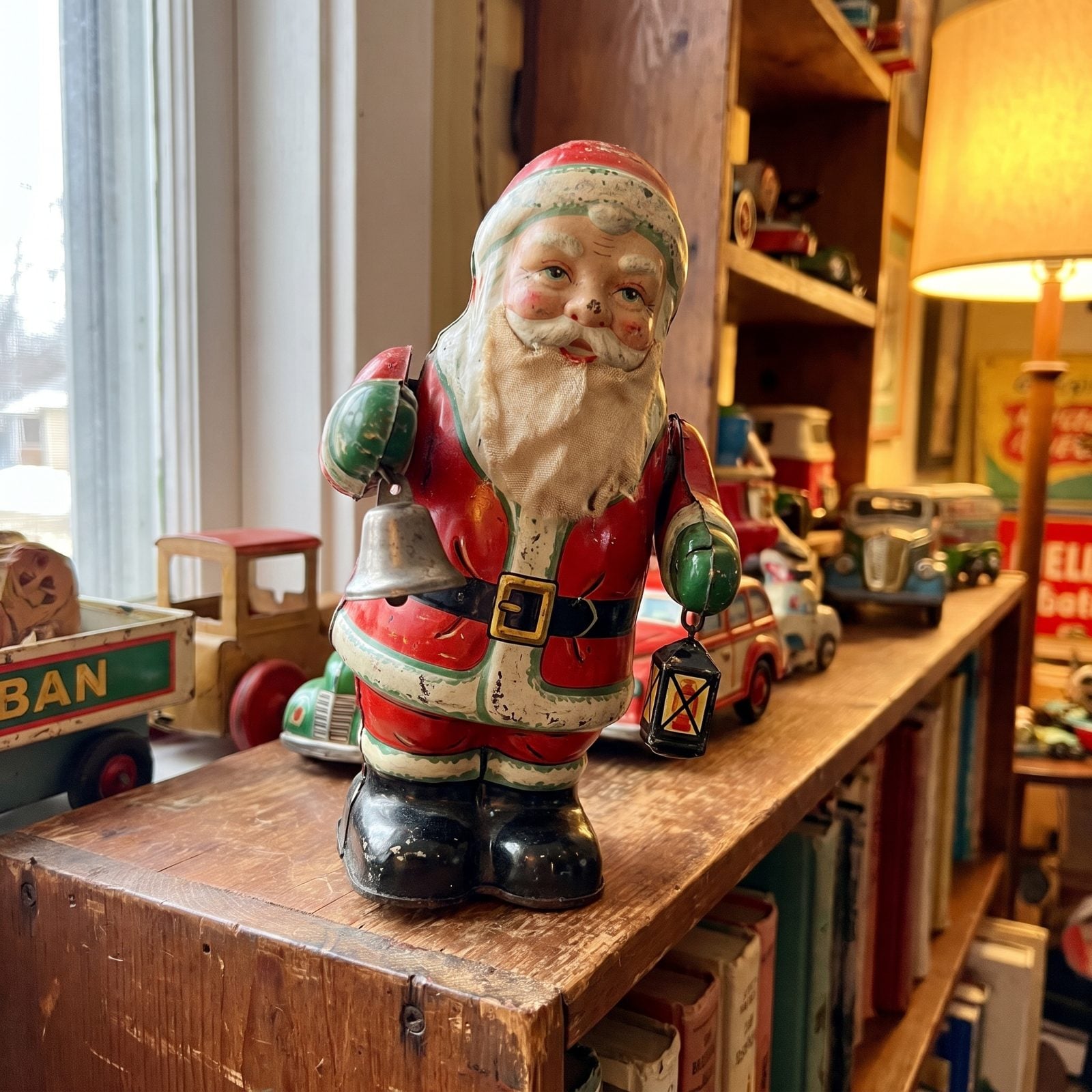
Flip the little lever and the tin Santa came alive — ringing a bell, lifting his lantern, maybe shuffling in a slow circle with a mechanical clack. Most came from Japan, where postwar toymakers turned out lithographed tin figures by the shipload.
They were cheap, gloriously detailed in printed color, and powered by a couple of D batteries that leaked by February. The mechanisms were crude and jerky, which somehow made them more charming, not less.
Collectors now pay real money for the ones that survived with their boxes. Back then they were five-and-dime impulse buys that ran until a gear stripped or the batteries corroded, and then they got tossed. That’s exactly why the survivors are rare.
1. Heavy Lead-Tinsel Icicles Draped Strand by Strand
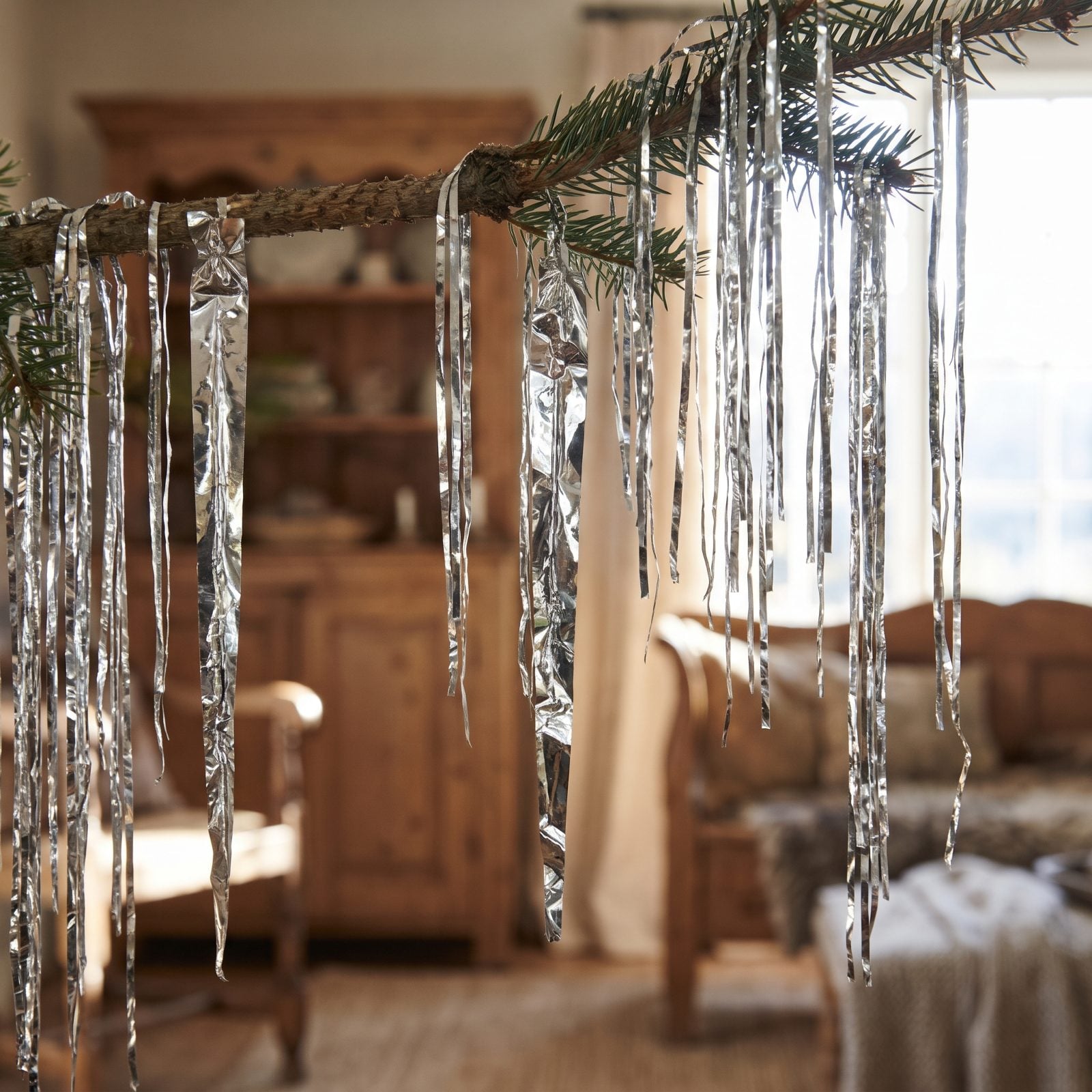
The tinsel of the 1960s was different, and anyone who hung it remembers why. It was made of metal foil, so the thin strands hung heavy and straight, like real icicles, instead of floating off into a static-clingy mess.
Some hung it one strand at a time; others looped it over the branch by the handful. There was the careful way — draped evenly — and the quick way — wrapped and flung in clumps — and families held strong opinions about which camp they belonged to.
Lead tinsel was phased out by the early 1970s over safety concerns about lead exposure, especially around children and pets. The plastic stuff that replaced it never hangs the same. If you remember tinsel that crumpled into heavy, crinkled icicles and caught the light like hammered metal, that’s the old foil you’re remembering.
Remembering how her family saved the strands every year, a vintage lifestyle blogger writes “In my kidhood, we carefully removed the tinsel and draped it on a sheet of cardboard to use year after year. Who knew that tinsel we were plucking was made of lead?”