
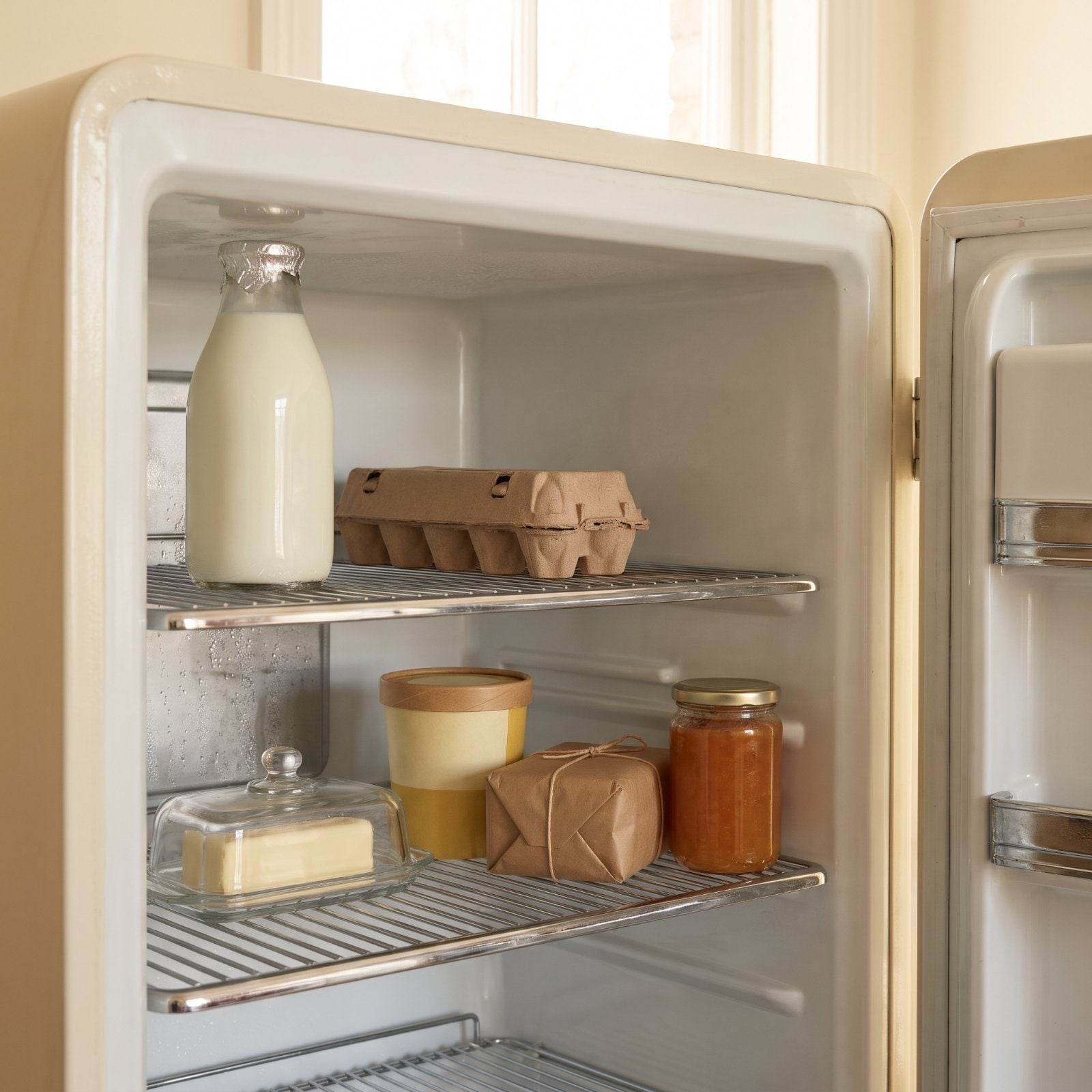
Pull the handle and the whole thing sighs shut behind you with a rubber thunk. Inside, nothing looks like what you’d find today. No squeeze bottles. No barcodes. No clamshell anything. Just glass, wax, foil and butcher paper doing the work plastic does now. A 1960s family fridge told you what people actually ate before convenience came shrink-wrapped — heavier food, fewer brands, and a lot more leftovers covered with a plate instead of a lid. Here’s a shelf-by-shelf look at what sat on those chrome racks, why it was there, and what quietly disappeared.
Please note that some of the images in this article were created with the assistance of AI.
37. Milk in a Glass Bottle or Waxed Carton
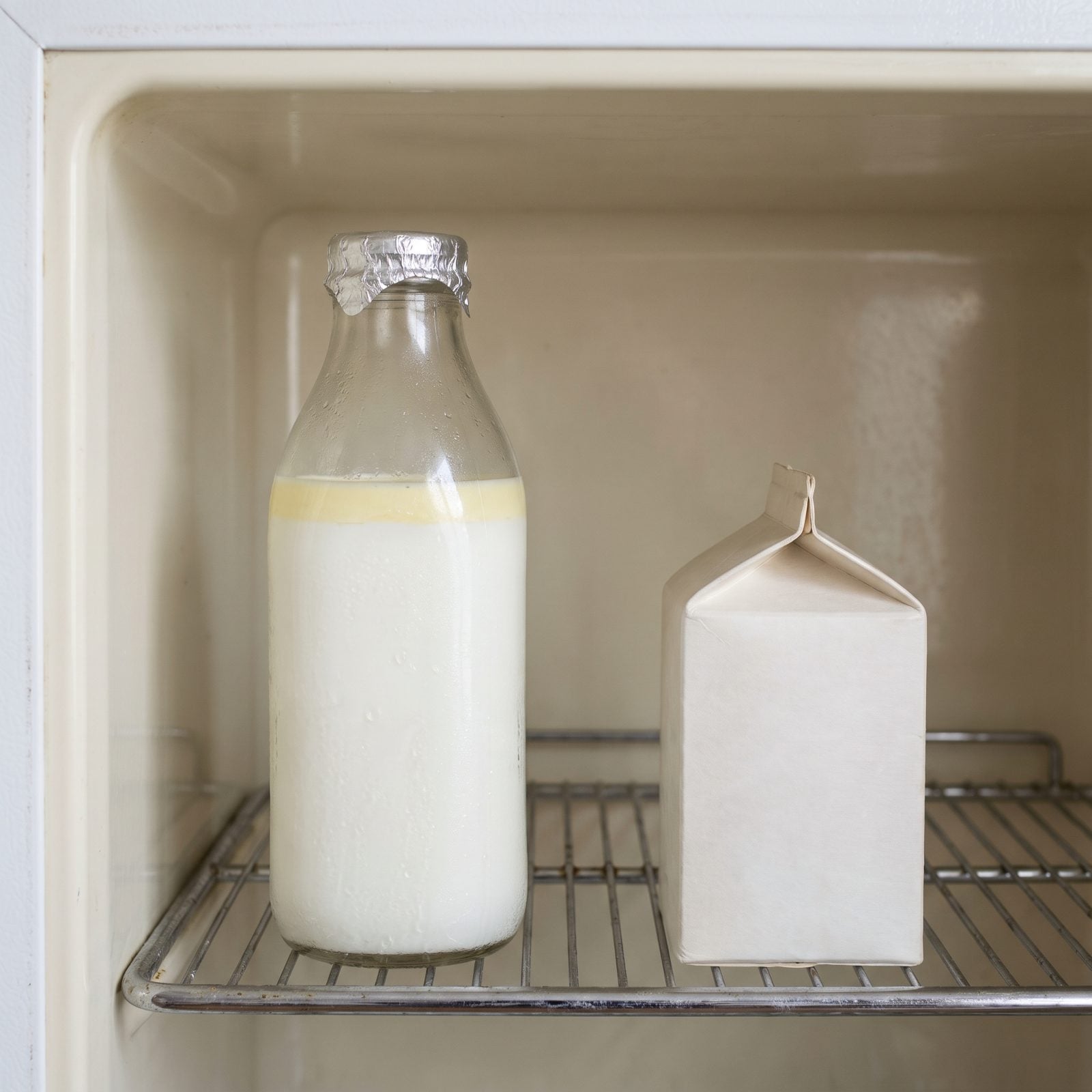
First thing you’d reach for, and the heaviest. Whole milk sat in a returnable glass bottle, often still cool from the morning delivery, with a disk of cream risen to the top you had to shake back in. Nobody drank skim. That was the point of milk.
As the decade went on, the waxed carton showed up right alongside the bottle — lighter, disposable, and slowly the milkman lost his route to the grocery store. You could taste the difference, or at least people swore they could.
36. Eggs in a Paper-Pulp Carton
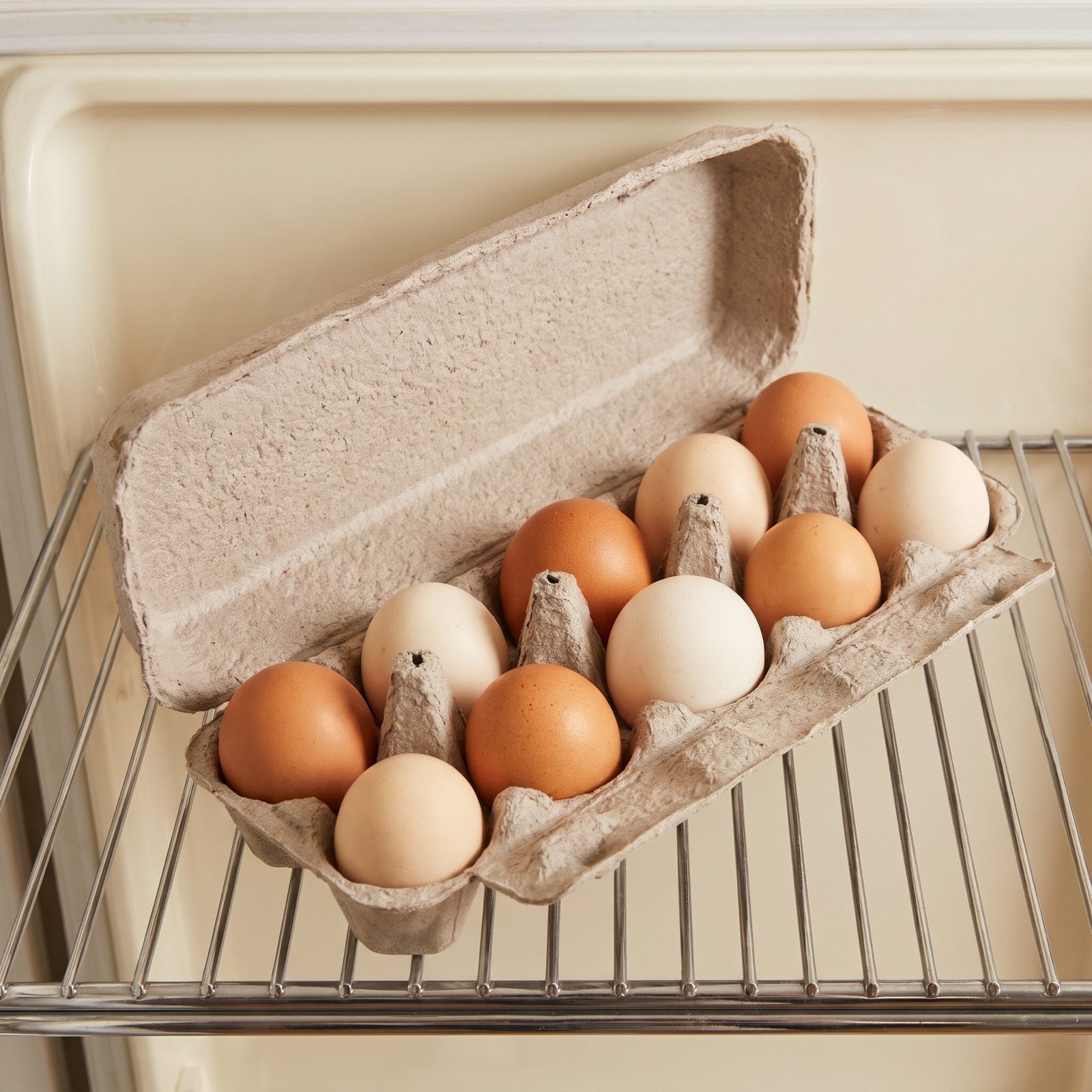
A dozen eggs in a rough molded carton the color of oatmeal, usually parked right in the door shelf with the little egg cups built in. Those indented shelves tell you how central eggs were. Breakfast was eggs most mornings, and a cake meant three or four more.
The shells weren’t the uniform jumbo you see now. You’d get a mix of sizes, mostly brown with a few white ones, because grading was looser and the farm was closer to the carton.
35. Butter in a Covered Glass Dish
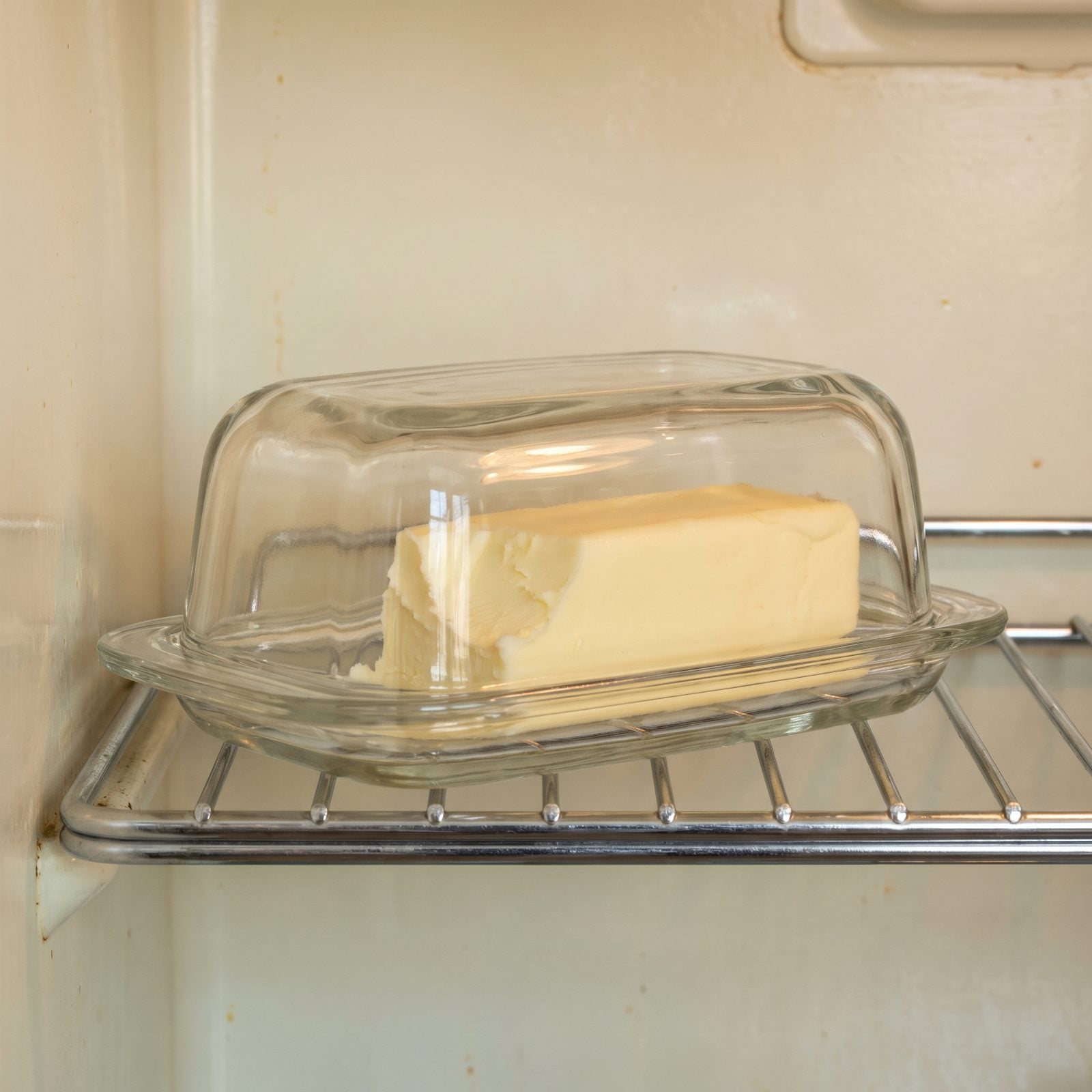
The butter lived in a glass dish with a lid, and it was real butter, no apology needed. People cooked with it, fried eggs in it, and spread it thick on store bread. A covered dish kept it from picking up the smell of everything else in a crowded fridge, which butter does like a sponge.
Some households kept it on the counter instead, soft and spreadable, and both camps were certain the other was wrong. That argument has not aged a day.
34. Processed Cheese Wrapped in Waxed Paper
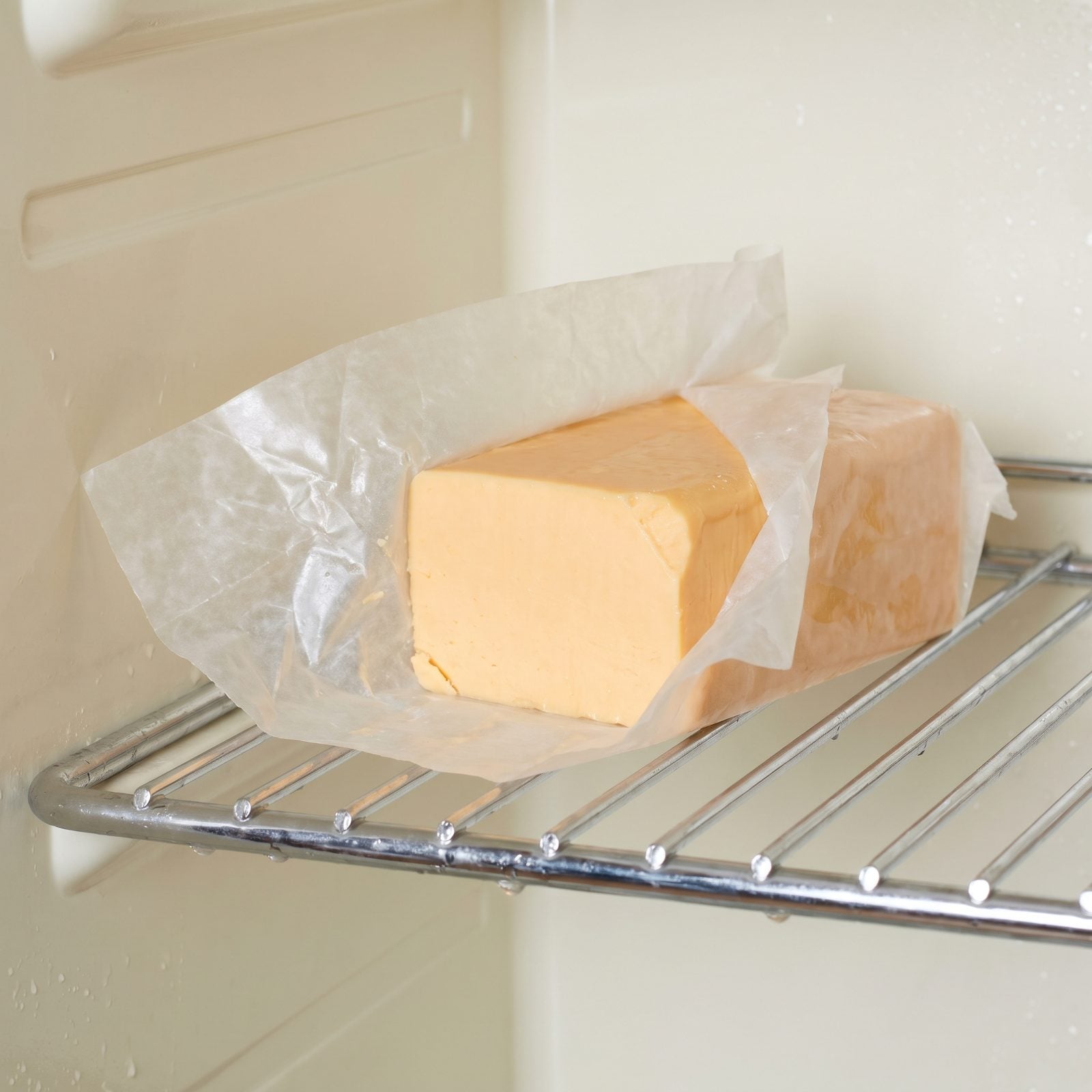
A dense rectangular loaf of orange cheese, sliced to order at the counter and folded into waxed paper. This was the cheese of the grilled sandwich and the macaroni casserole, prized because it melted smooth instead of breaking into oily strings.
It wasn’t trying to be anything fancy. Reliable, it kept well, and it did exactly one job perfectly. There’s a reason your grandmother’s grilled cheese tasted the way it did and yours doesn’t quite match.
33. Cottage Cheese in a Waxed Carton
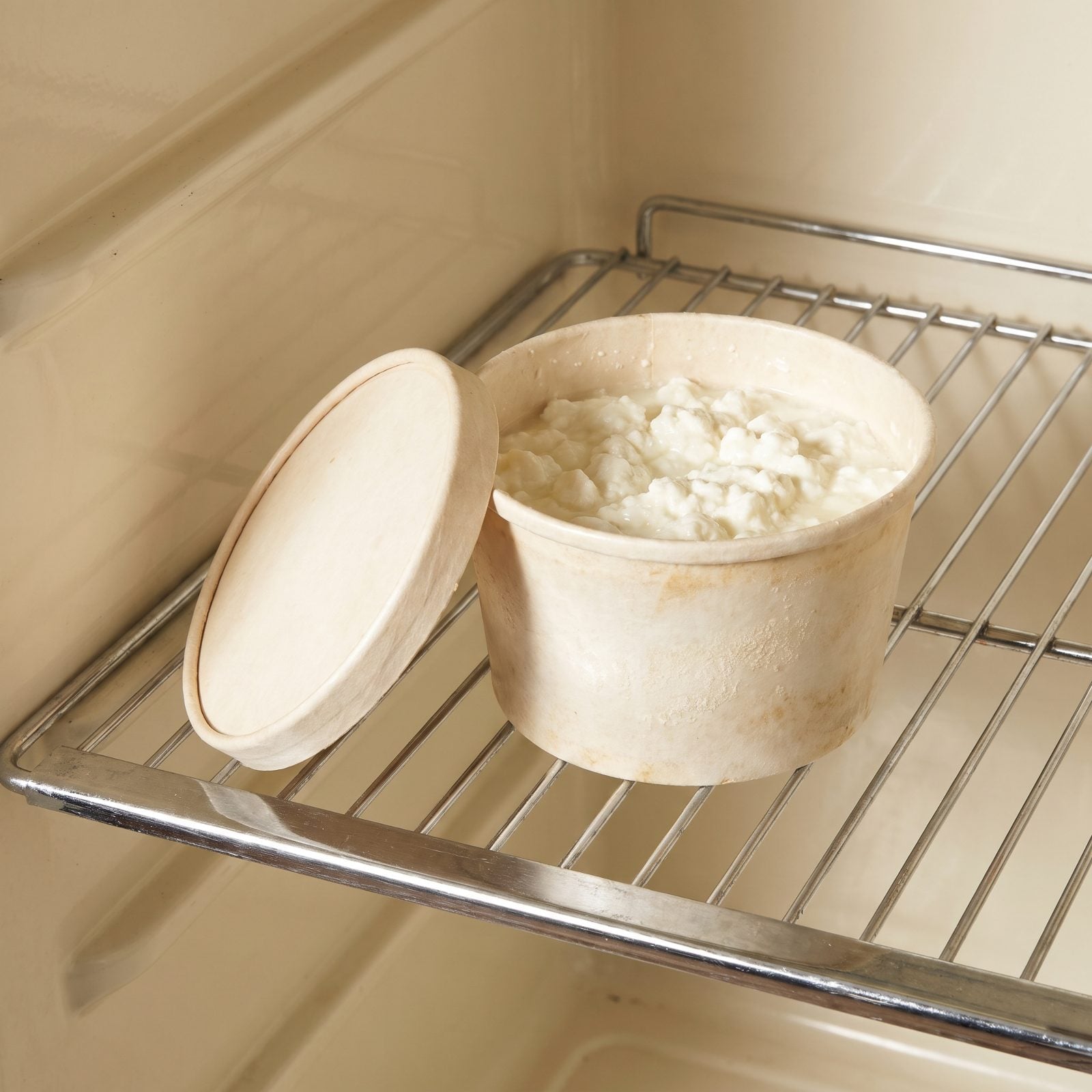
Cottage cheese had a place on the shelf that’s hard to explain now. It was the diet food and the lunch food and the thing you put a canned peach half on when company came. A scoop with fruit counted as a salad.
It came in a waxed tub with a lid you had to pry, and it never lasted long because somebody was always eating it straight with a spoon.
32. Bacon Wrapped in Butcher Paper
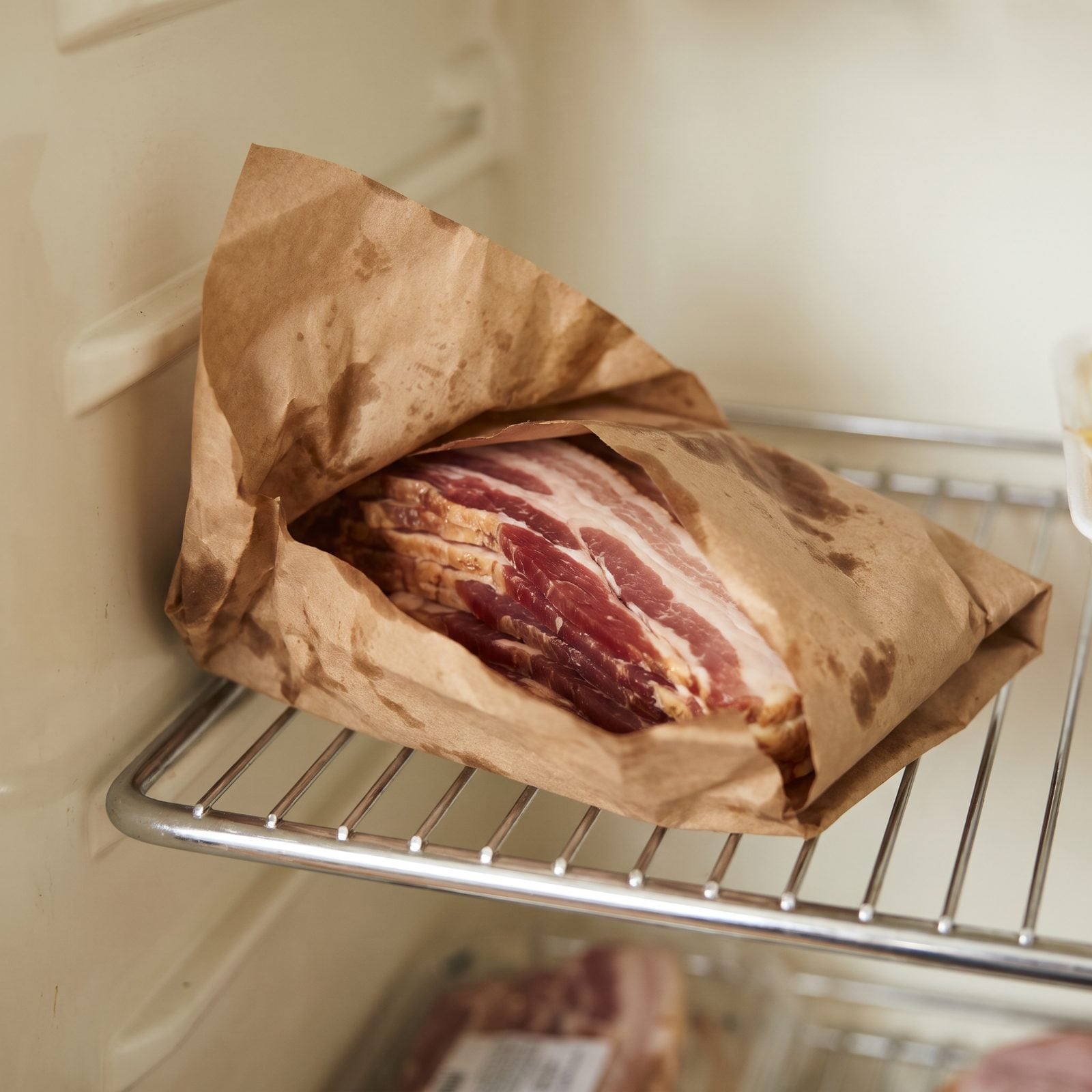
Not the flat sealed pack you buy now. This was a parcel from the butcher, cut thicker, wrapped in brown paper, the fat creamy and the smell of it on a Saturday morning filling the whole house.
And nobody threw out the drippings. The grease went into a tin or an old coffee can kept by the stove, and it got used again for eggs, for frying, for cornbread. A fridge that had bacon in it also had a can of bacon fat somewhere nearby, no question.
31. A Chunk of Bologna for Sandwiches
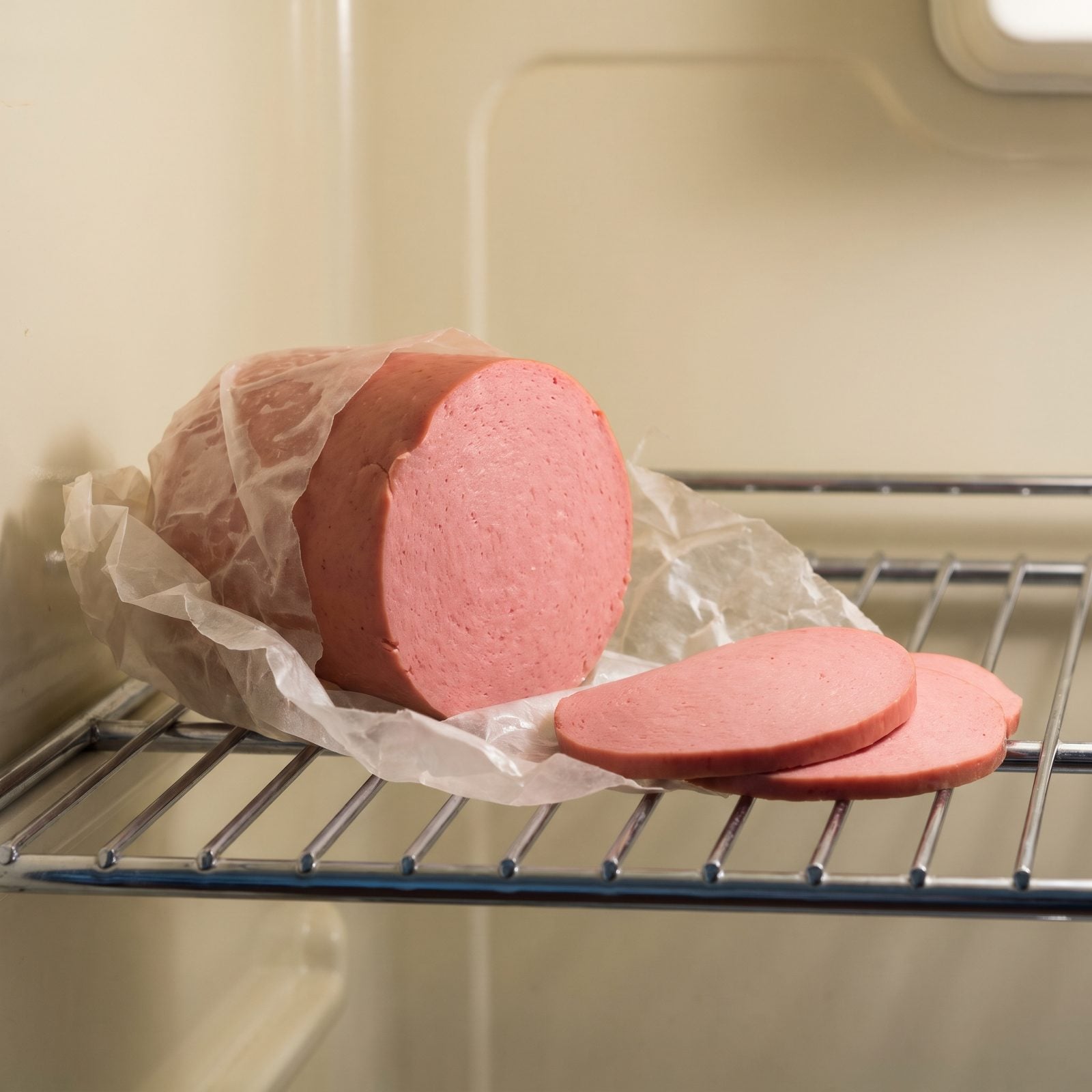
Lunch, five days a week, for a generation of kids. A chunk cut from the counter, sliced thick at home, laid on white bread with mustard or that pale margarine. Cheap, filling, and it kept.
Some folks fried a slice in a pan until the edges curled up into a little bowl. That was practically a hot meal. You either grew up with it or you didn’t, and if you did, you can taste it reading this.
30. A Package of Frankfurters
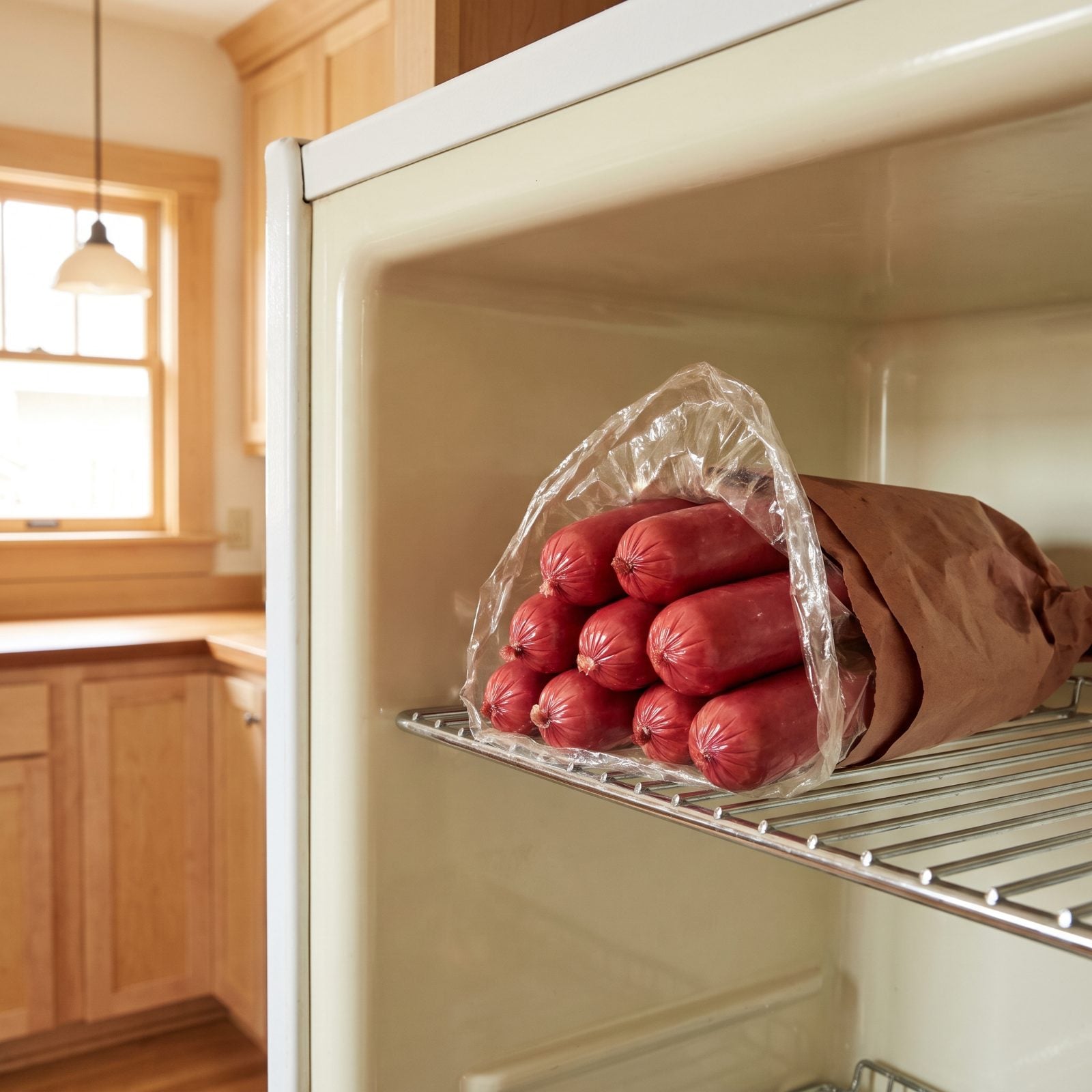
The weeknight bailout. A package of franks and a few buns meant dinner was solved, and the kids were happy about it. Boiled, griddled, split and filled with cheese — endlessly flexible for a tired cook.
They turned up at every summer cookout too, but the fridge kept a spare pack year round. Cut into a pot of beans, they stretched a meal to feed everybody at the table.
29. Cold Meatloaf Covered With Foil
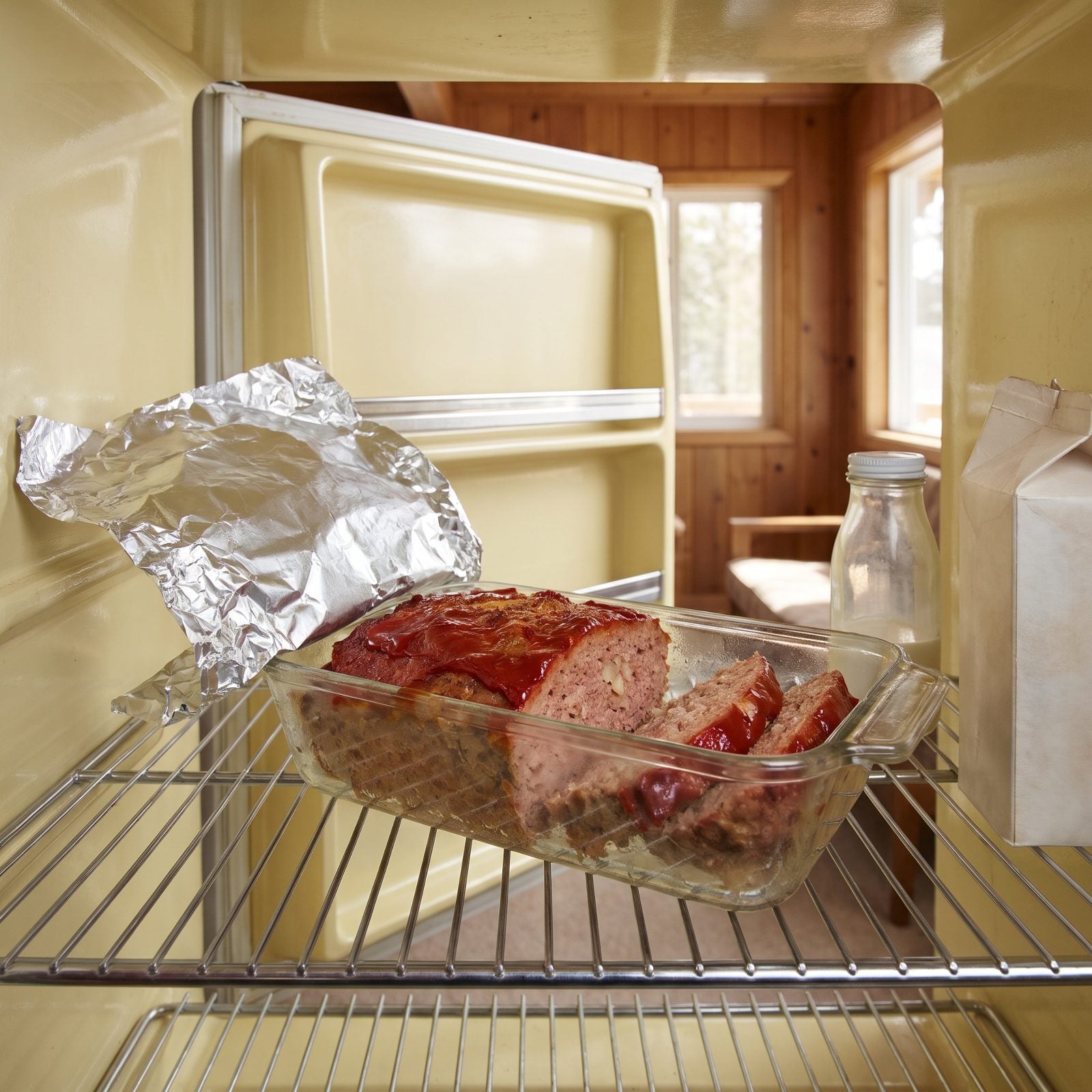
Half a meatloaf under foil was practically a given. The glaze had set into a tacky red skin overnight, firm enough to lift in one piece, and the loaf sliced clean and cold without falling apart.
Here was a leftover that didn’t need reheating to earn its keep. A slab of cold meatloaf, a line of ketchup, soft bread. Lunch, handled. And the foil had been reused so many times it crackled with old creases.
28. Leftover Fried Chicken
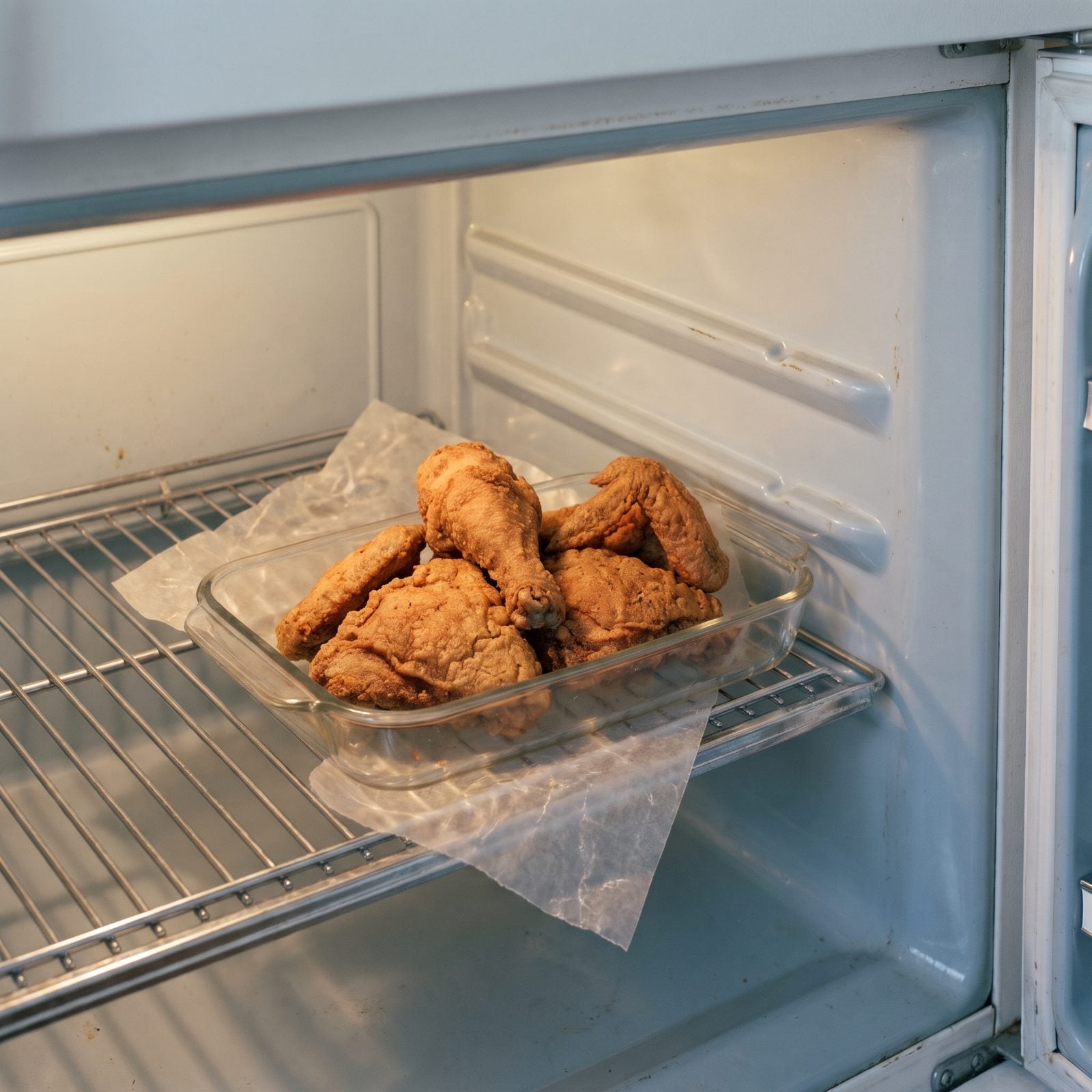
The quiet truth about fried chicken? It was better cold the next day, and everyone knew it. The crust tightened in the cold box, the meat firmed up, and the whole thing turned into picnic food without the picnic.
It lived on a glass dish or in waxed paper, never covered too snugly, because a tight wrap turned the crust soggy and that was close to a crime. Pulled straight from the shelf and eaten over the sink, it was a reward for whoever got to the fridge first.
27. A Half-Finished Family Casserole
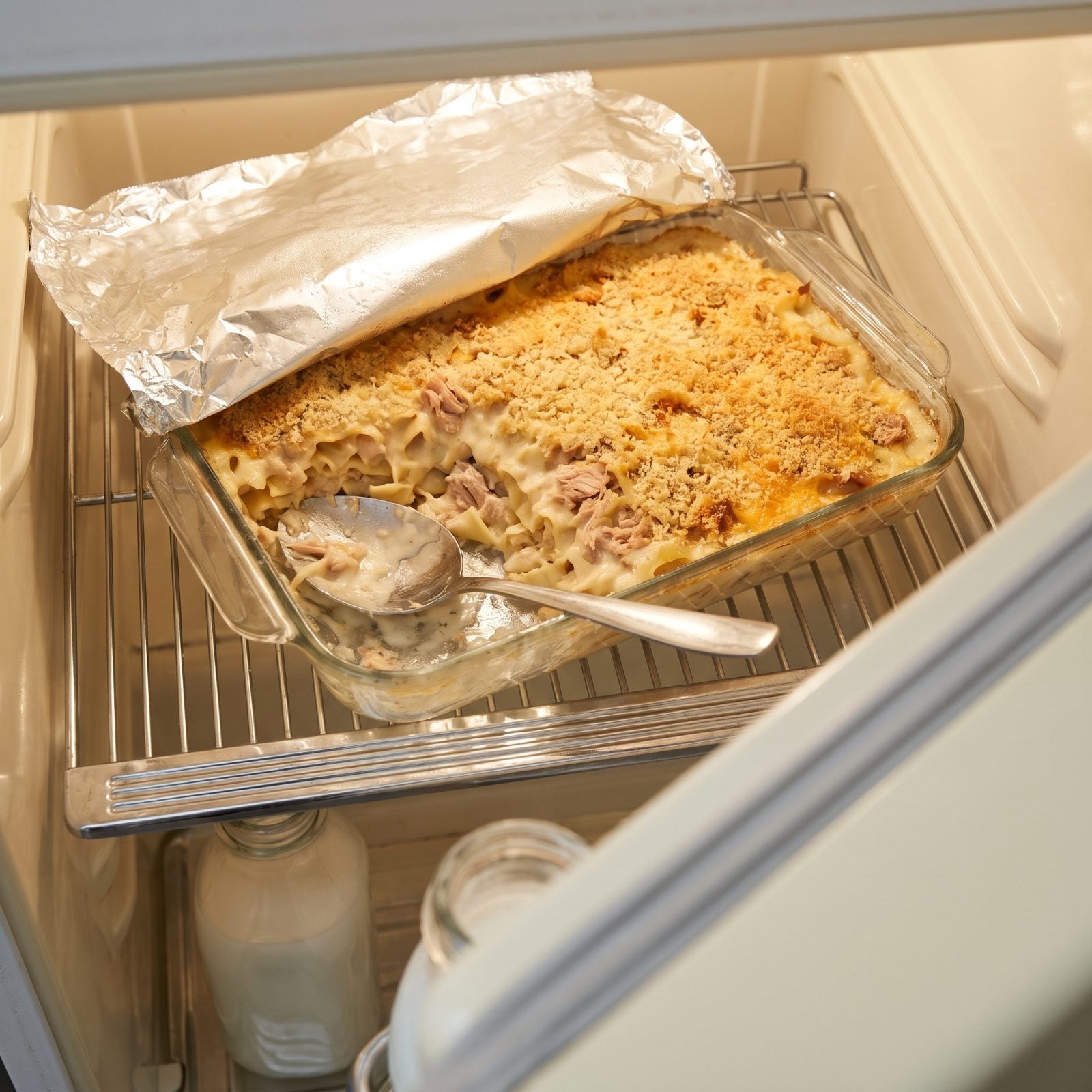
The casserole ran the whole midcentury fridge. One dish, cream-of-something sauce, noodles or rice, whatever meat was on hand, topped with crumbs and baked until bubbling. What survived dinner went straight in the cold box, dish and all.
Overnight the sauce set into something sliceable. It reheated into a second dinner, or someone who genuinely preferred it cold got to it first. That glass dish was so standard it basically lived on rotation between the oven and the shelf.
Nobody transferred it to a smaller container. The whole point was less work, not more.
26. Potato Salad for the Next Supper
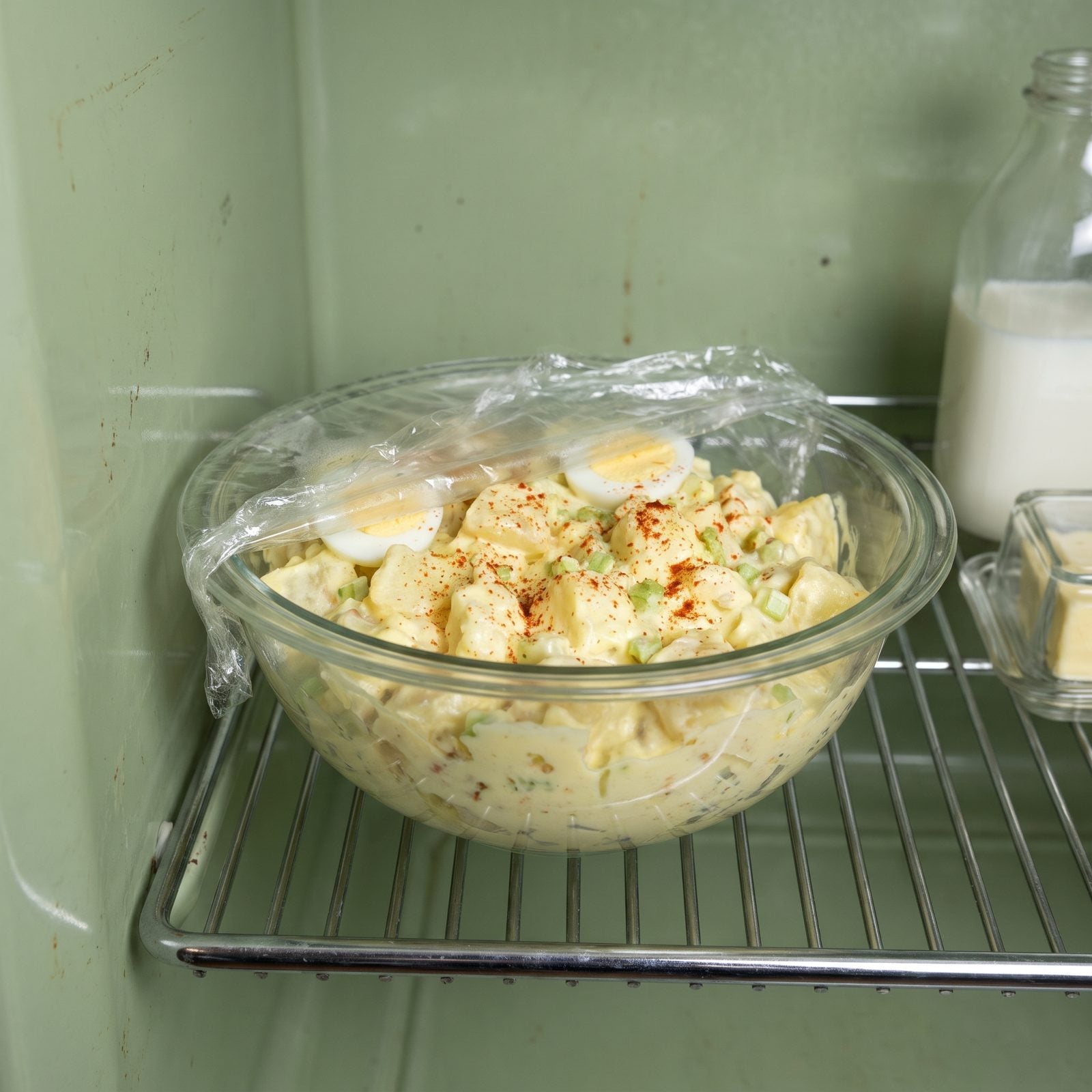
Potato salad got made in volume and expected to last. A big glass bowl of it, dusted with paprika, held its place on the shelf through a couple of suppers.
The flavor deepened the second day as the dressing soaked into the potatoes, which is why plenty of cooks made it ahead on purpose. Covered loose, pulled out cold, served alongside whatever meat was going. It carried a lot of weeknight meals.
25. Deviled Eggs on a Serving Plate
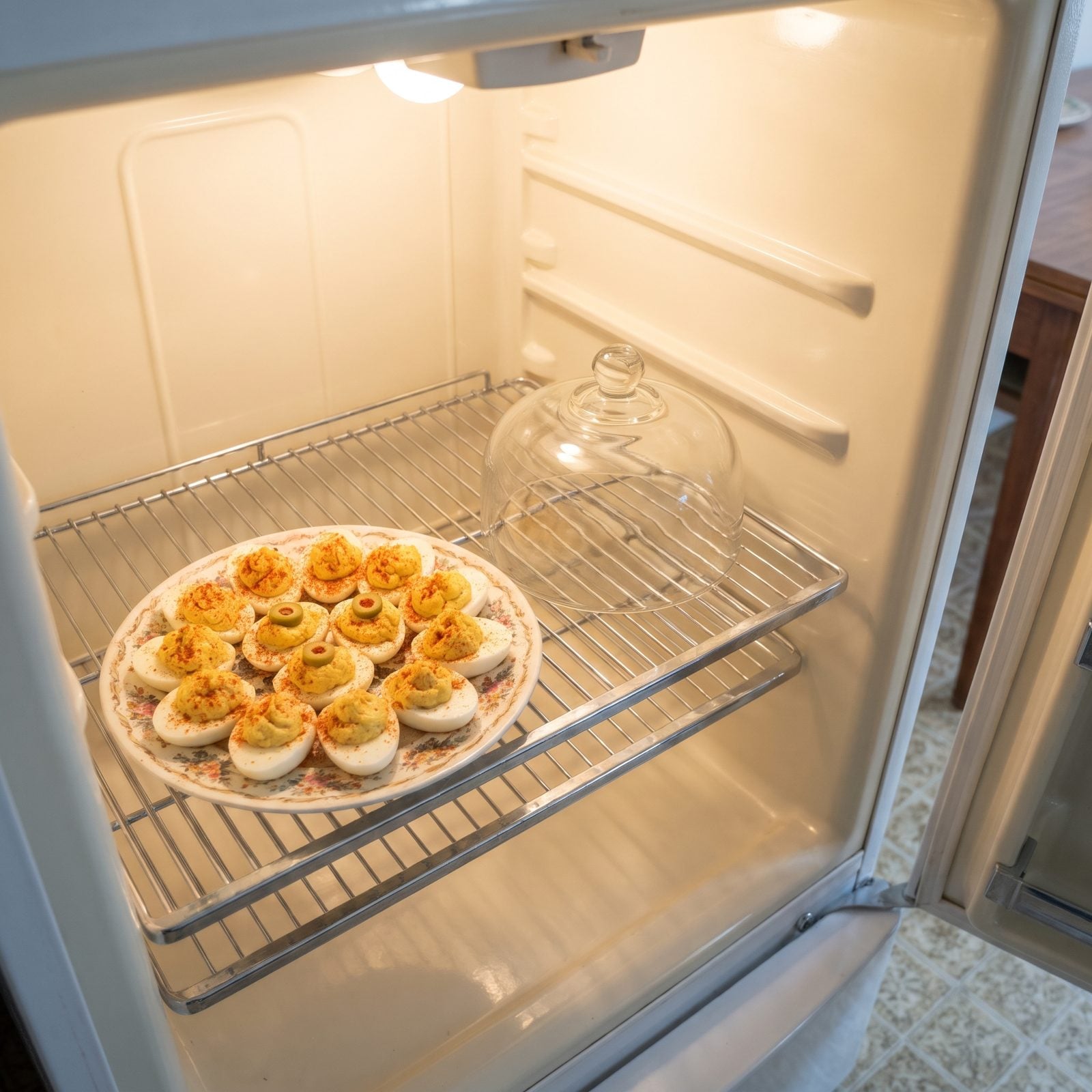
Deviled eggs weren’t leftovers so much as a standing presence. Made for company, made for a holiday, made because there were extra eggs, they sat on their own plate taking up real estate on the shelf.
The filling firmed up overnight into neat little mounds you could pick up without a fork. Paprika on top, maybe an olive sliver. They vanished in ones and twos until the plate held nothing but a smear of yellow and a few flecks of red.
24. A Molded Gelatin Salad
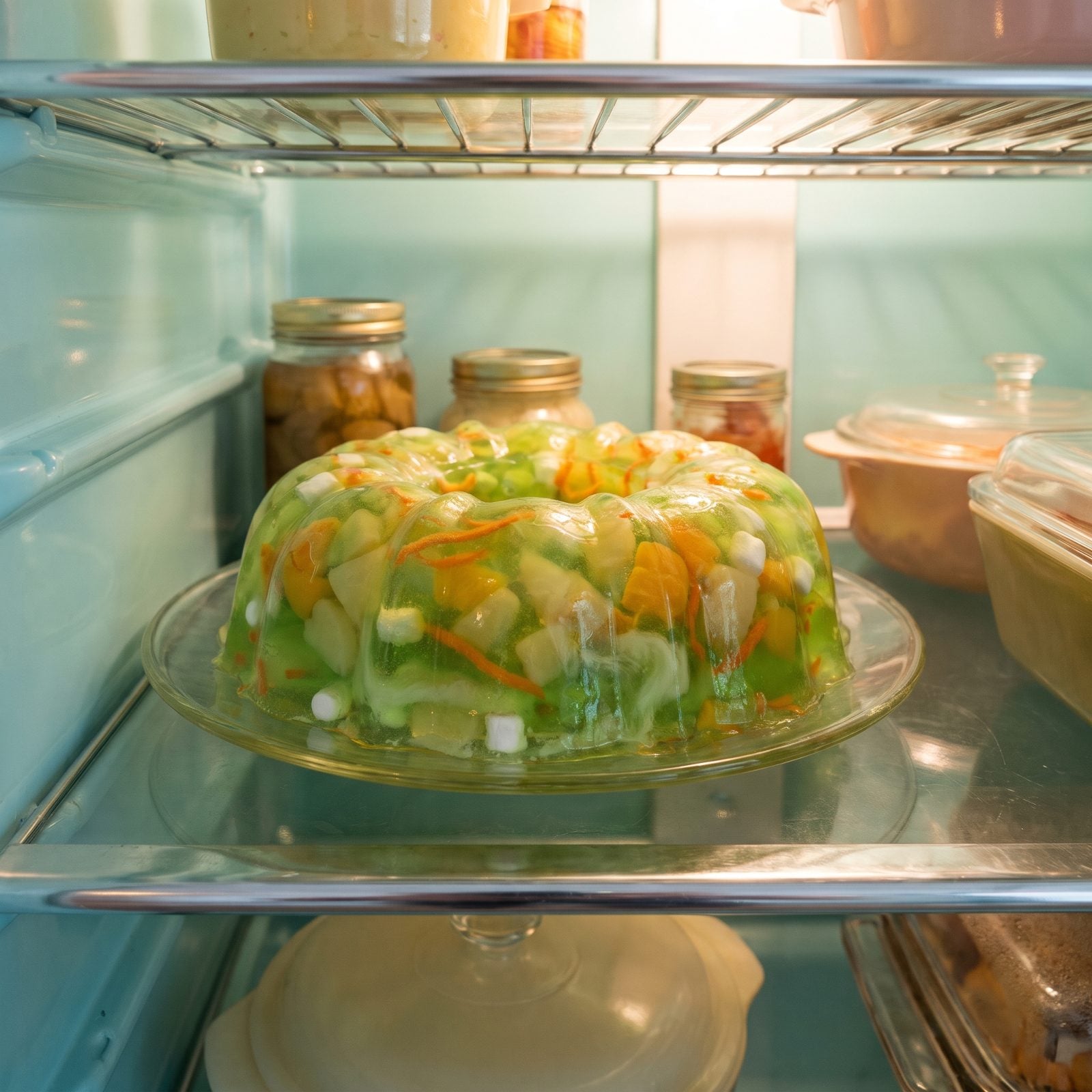
The molded gelatin salad is the thing people remember with a mix of fondness and horror. Both reactions are fair. Lime gelatin was not above holding shredded carrot, canned pineapple, cottage cheese, even shredded cabbage, all suspended in a wobbling ring.
It had to chill for hours, so the fridge nearly always had one setting up. And these weren’t desserts. They were salads, served with the meal, on a plate, with a straight face.
23. A Head of Iceberg Lettuce
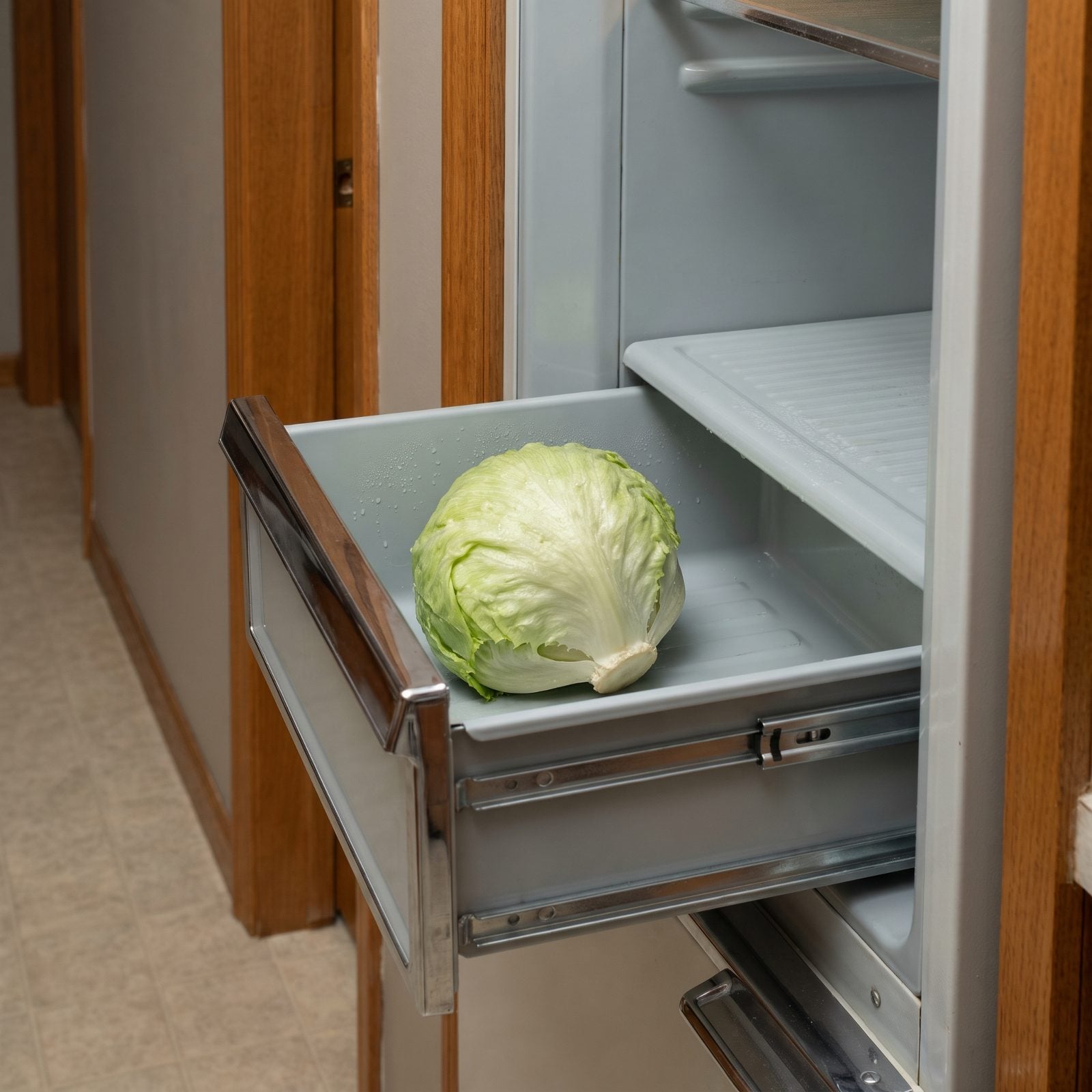
Iceberg was the salad. Not a salad green, the salad green. Pale, crisp, watery, and sturdy enough to survive a week in the crisper, it anchored the wedge salad and the dinner side with equal confidence.
Flavor was never the selling point. Crunch was. A cold iceberg wedge under a pour of orange French or thick blue cheese dressing was dinner-party standard, and the head lived in the drawer wrapped in nothing fancier than its own outer leaves.
22. Celery Stalks in the Crisper
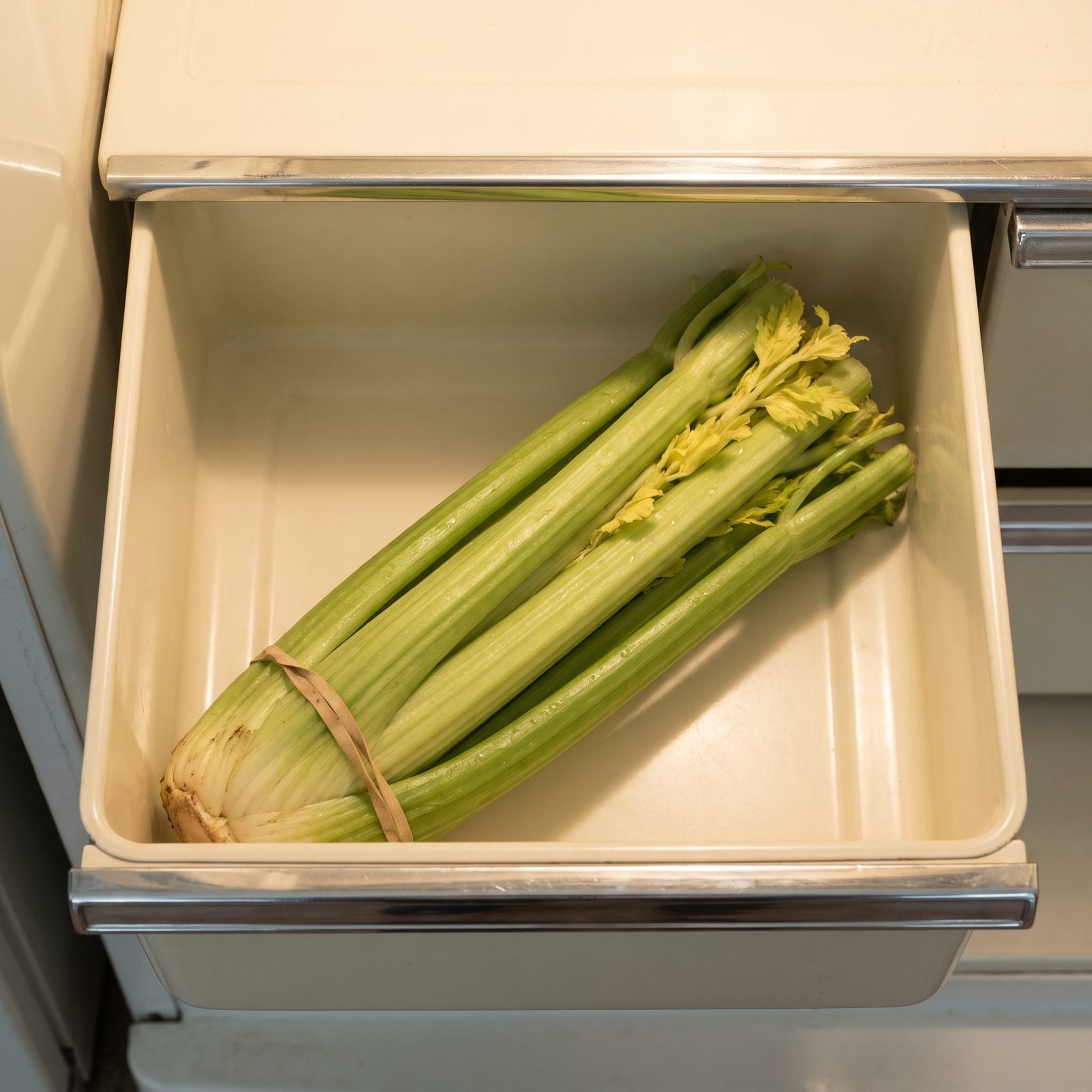
Celery did more work than it ever got credit for. It went into the casserole, the potato salad, the stuffing, the tuna. It got cut into sticks and stuffed with cheese spread for company, and the leafy tops went into the soup pot.
A bunch in the crisper was a given, slowly bending soft toward the end of the week. By Saturday the last few stalks had gone rubbery, which is exactly when they went into the pot where nobody would notice.
21. Carrots in a Cellophane Bag
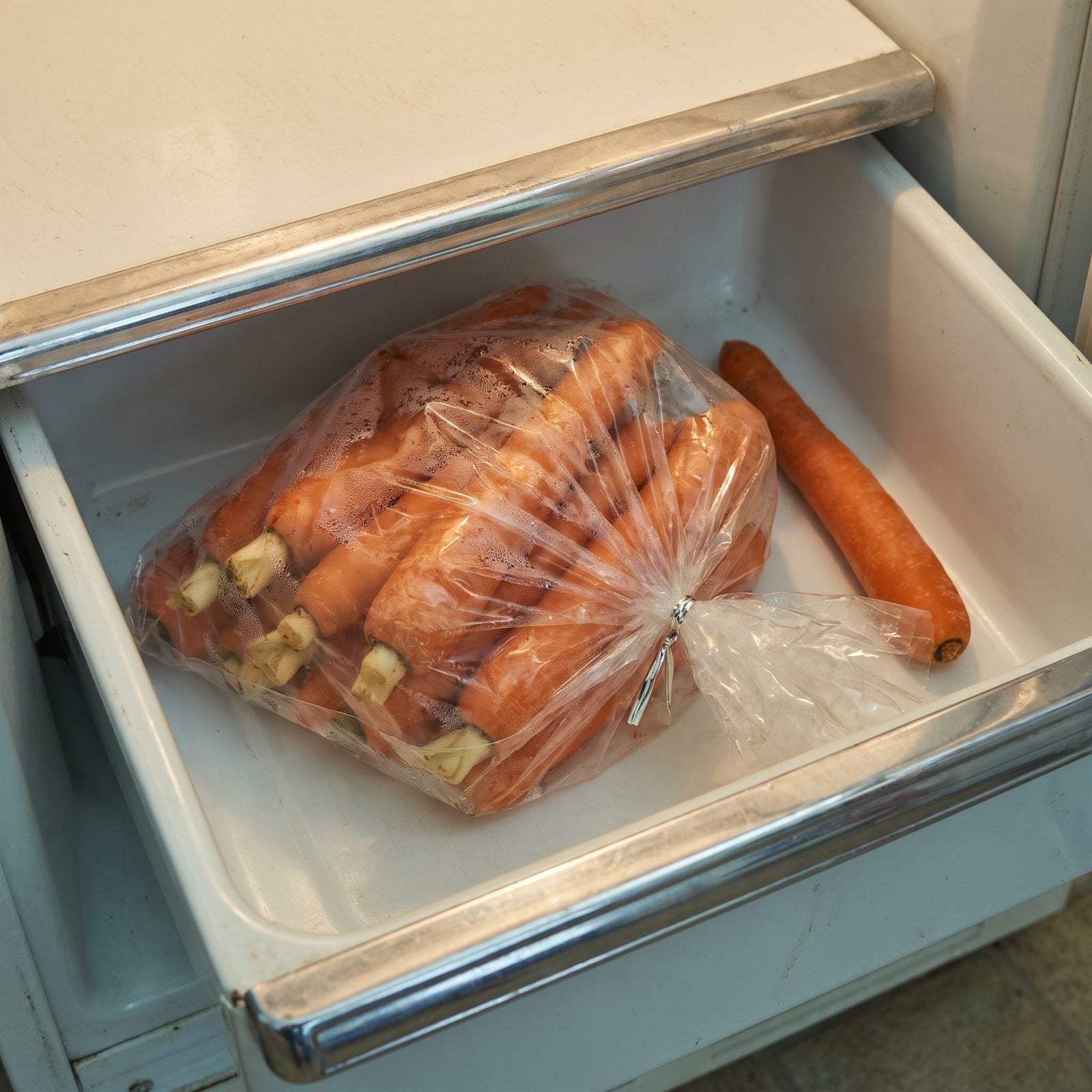
Carrots came home in cellophane, gathered and twisted at the top, and that bag went straight into the crisper to wait its turn. Workhorses, not snacks.
They got peeled into coins for the pot roast, grated raw into that gelatin salad, cut into sticks for the relish tray. The bag fogged with condensation and the carrots went a touch bendy if they sat too long, but a stubborn one always rolled loose in the drawer, forgotten until it rattled.
20. A Glass Jar of Dill Pickles Sweating on the Top Shelf
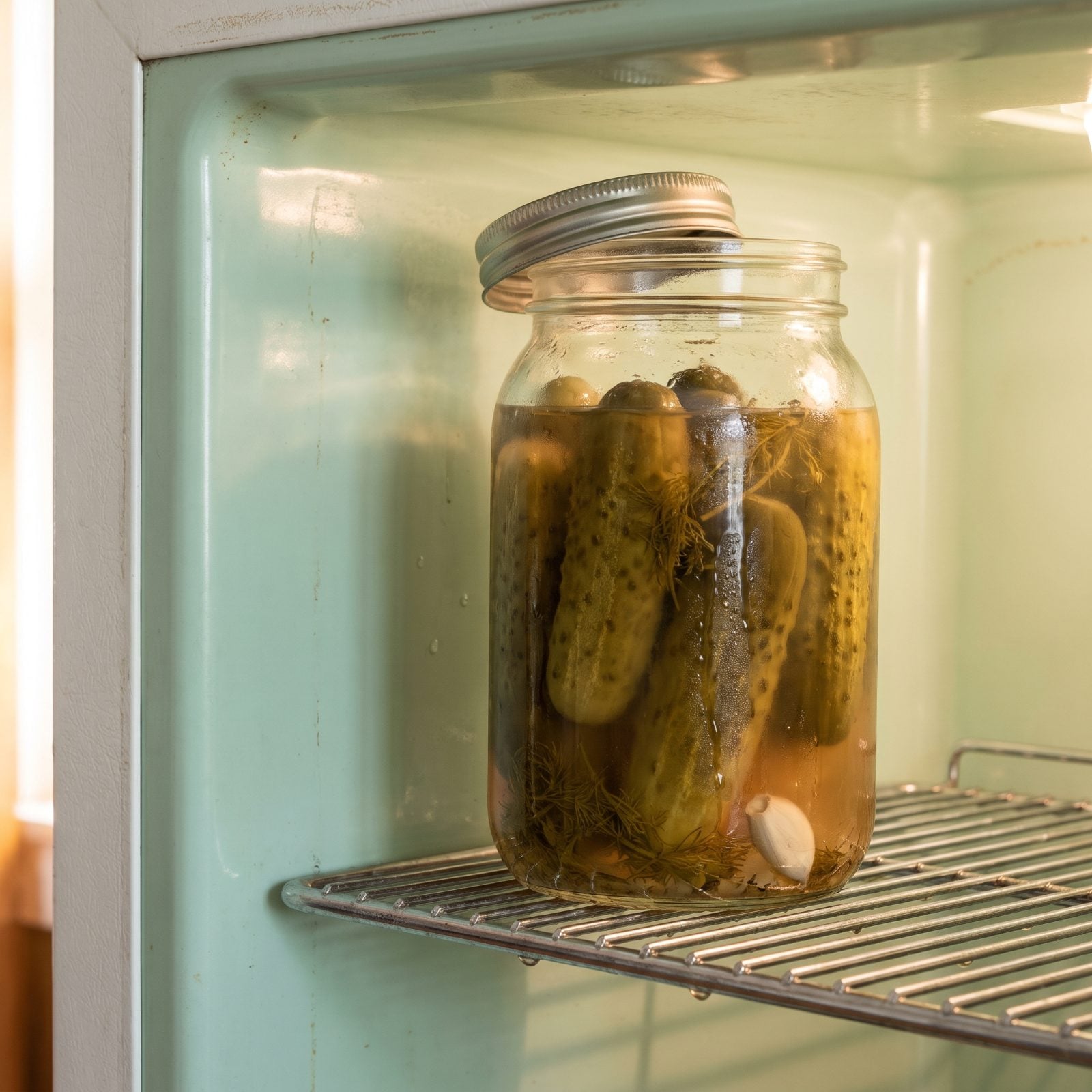
Every family had a jar, and everyone had an opinion about who finished them off and shoved the empty back in the fridge anyway. The brine clouded over time and the lid stuck, so you ended up fishing the last pickle out with a fork because your fingers wouldn’t reach.
Whole dills. Not the neat little stackers you buy now. They landed on the plate next to the sandwich without anybody asking, and a good cold one on a hot afternoon settles something in you that nothing else quite manages.
19. A Squat Jar of Pimento-Stuffed Green Olives
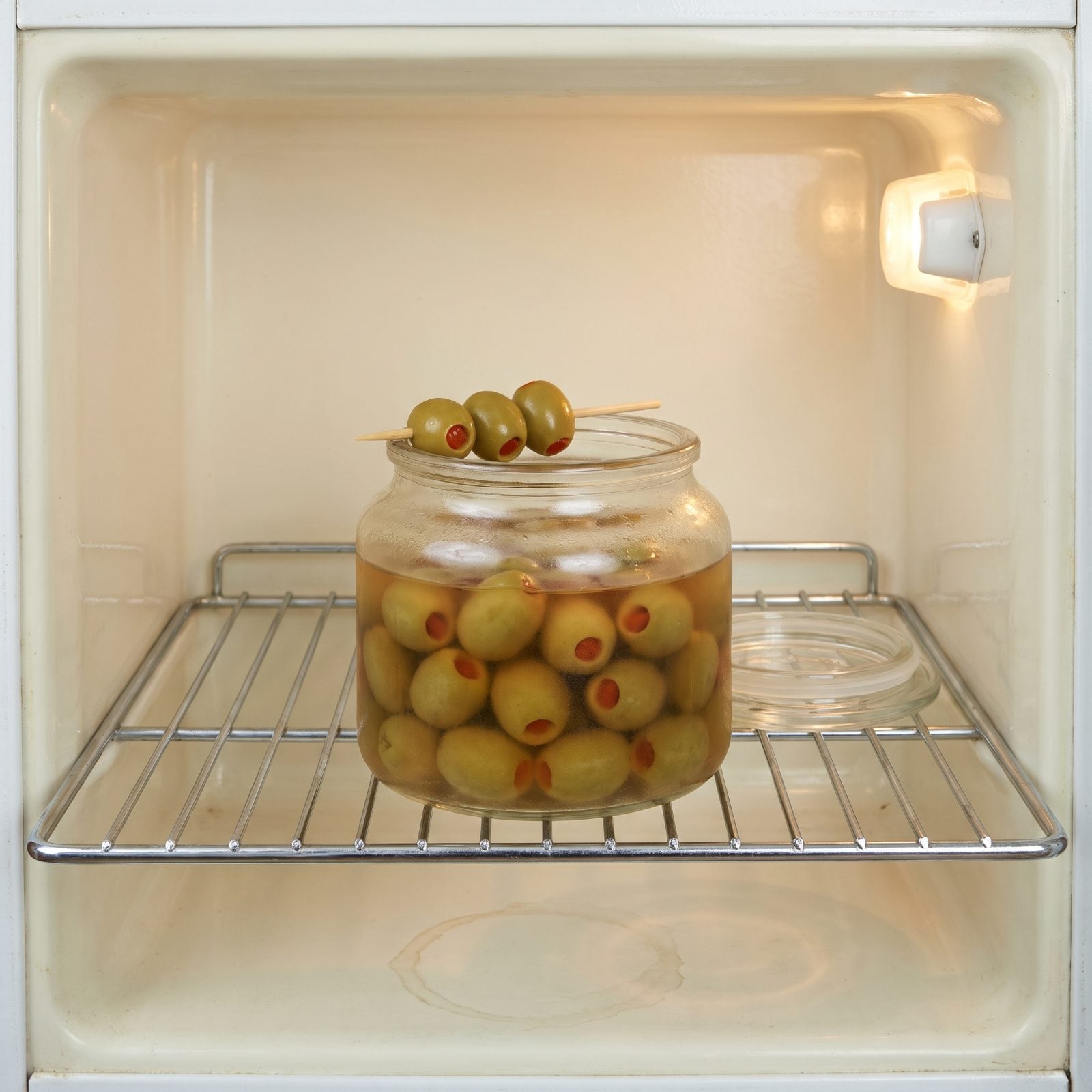
These weren’t for eating straight from the jar. Not officially, anyway. They came out when company did, dropped into a cocktail or speared onto a relish tray alongside celery and radishes.
The pimento was the whole trick — a sliver of sweet red pepper tucked into each olive, back when somebody somewhere still stuffed them by hand. Spear two or three, call it an appetizer, and nobody argued.
18. A Wide Glass Jar of Mayonnaise With a Spoon Left In
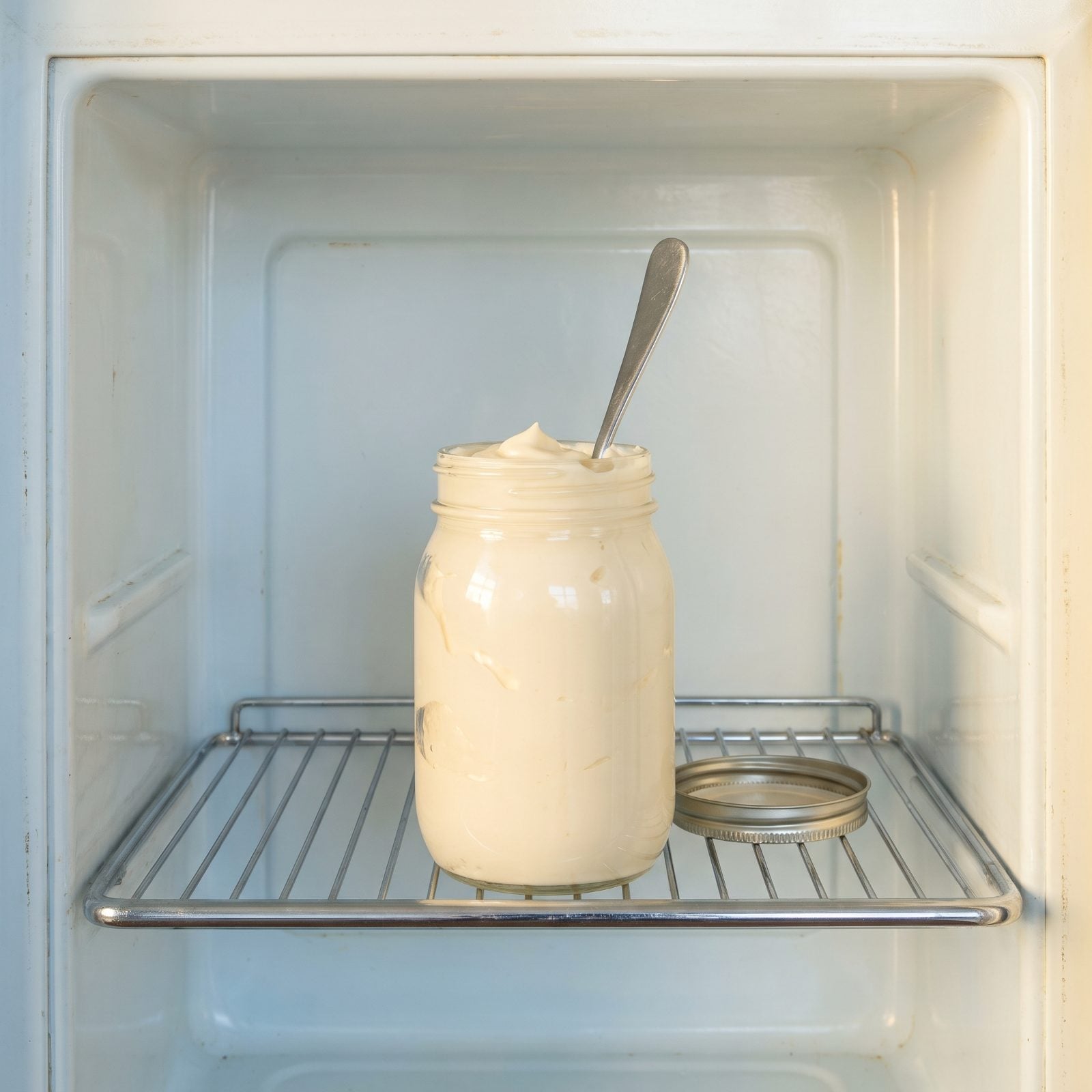
The jar lived in the door or on the top shelf and got into everything — potato salad, deviled eggs, a cold sandwich, tuna pulled right from the can. There was always a spoon or a dull butter knife standing in it, and heaven help you if you double-dipped after the mustard knife.
Thick, pale, almost custardy, and you spread it edge to edge without a second thought. I’ll admit the glass jar beat the squeeze bottle for one reason. You could actually scrape the last of it out.
17. A Glass Bottle of Ketchup Standing Neck-Down
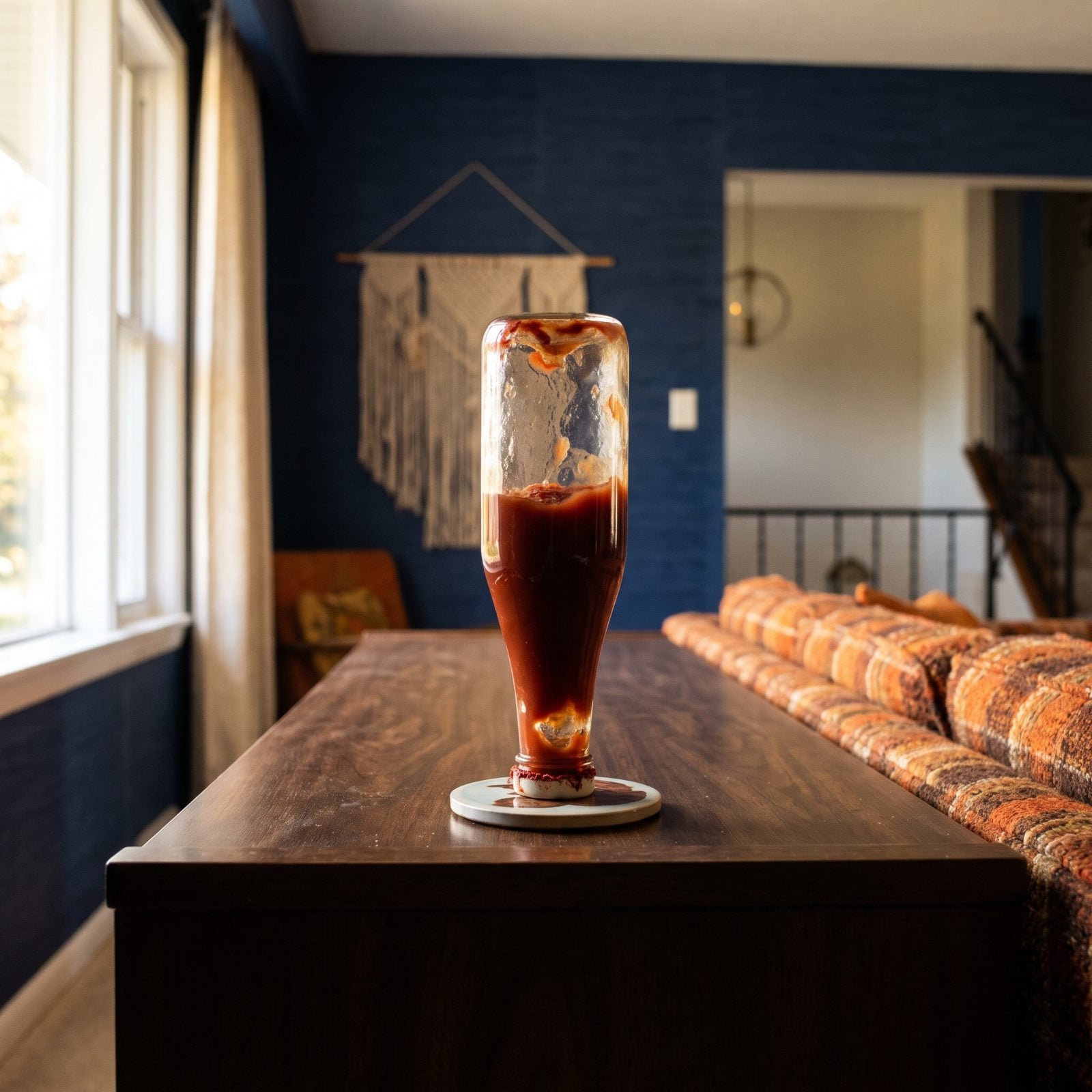
This was the bottle that taught a whole generation patience. You held it at an angle, waited, smacked the base of the neck, and still got nothing — until a flood came all at once and drowned your eggs.
Dried crust around the opening every single time. Someone always put it back with the cap barely on. And it went on everything, even things that had no business meeting ketchup, which is a hill some of you will still die on.
16. A Short Jar of Prepared Yellow Mustard
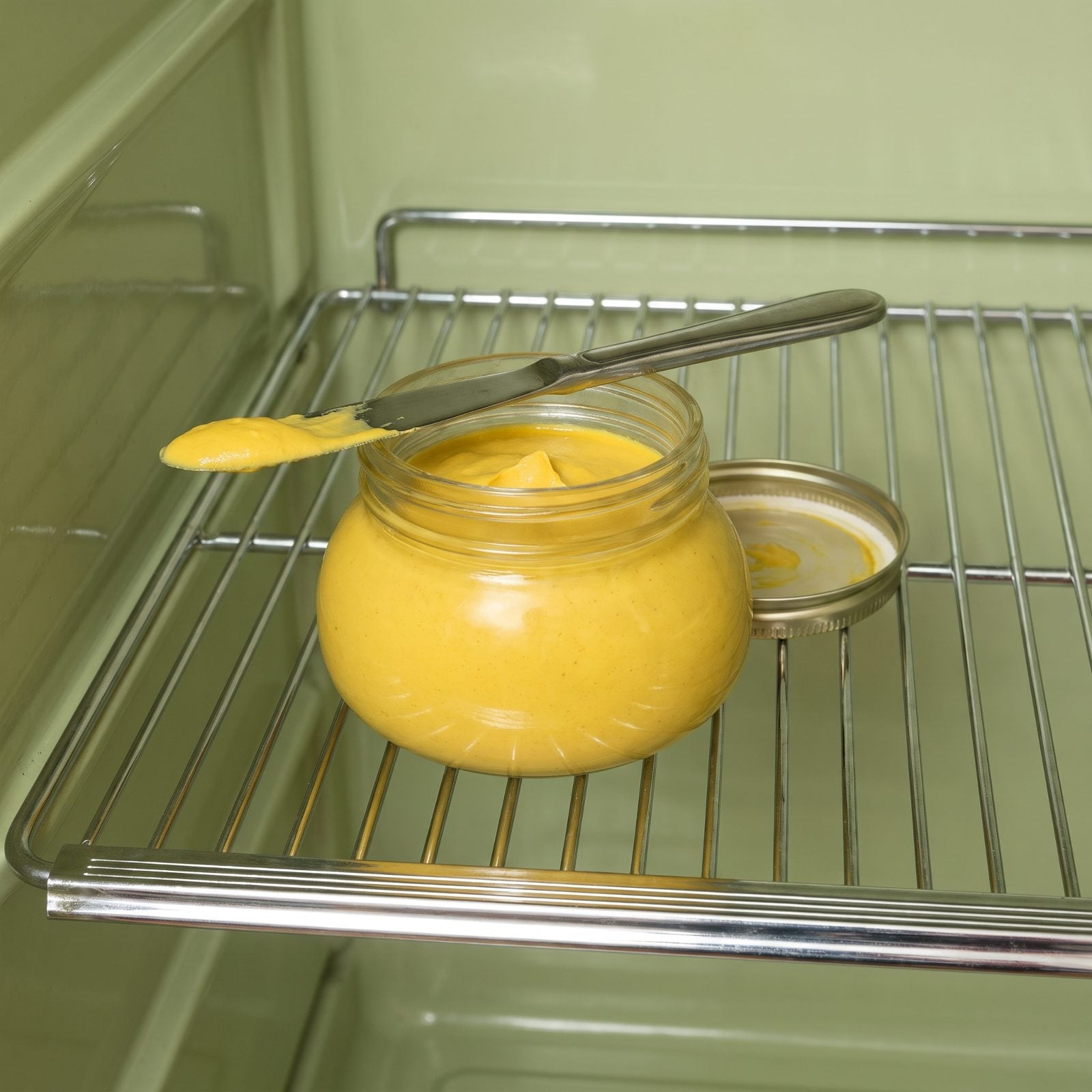
Loud, cheerful, the exact yellow of a school bus. This was the mustard — not the grainy stuff, not the brown deli kind your uncle liked, just plain prepared yellow, sharp enough to clear your sinuses on a bad day.
It went on hot dogs and bologna and nothing fancier. A thin bright stripe, and that was the whole philosophy right there.
15. A Jar of Grape Jelly With a Thin Purple Ring Inside
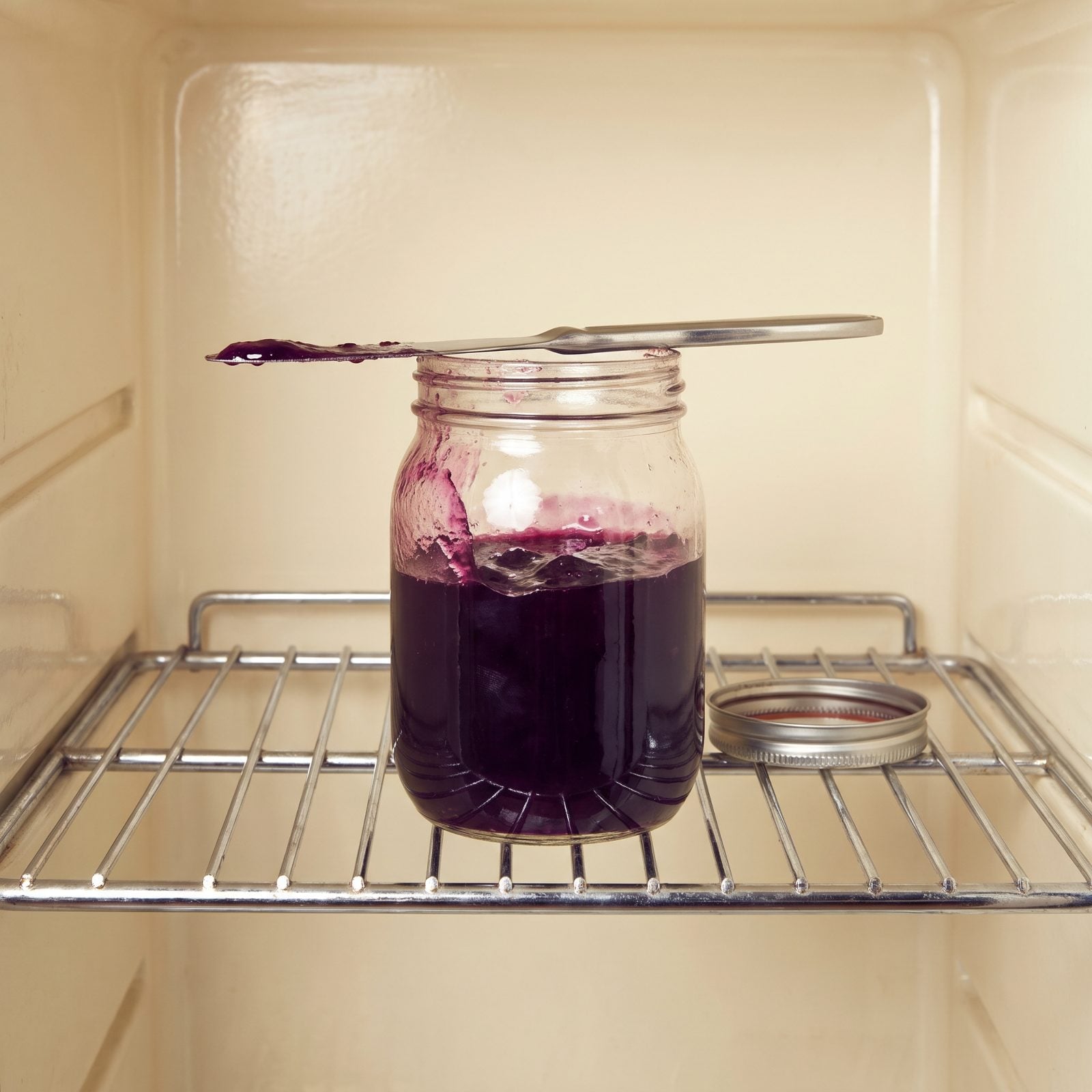
Grape or strawberry, and the house usually picked a side. Grape glowed almost purple-black in the jar, jiggled when you bumped it, and left a crust around the inside rim no matter how careful anyone was.
The real crime? Jelly knife going into the peanut butter and leaving streaks. Every family had one culprit, and everyone knew exactly who it was.
14. Canned Peaches Tipped Into a Glass Serving Bowl
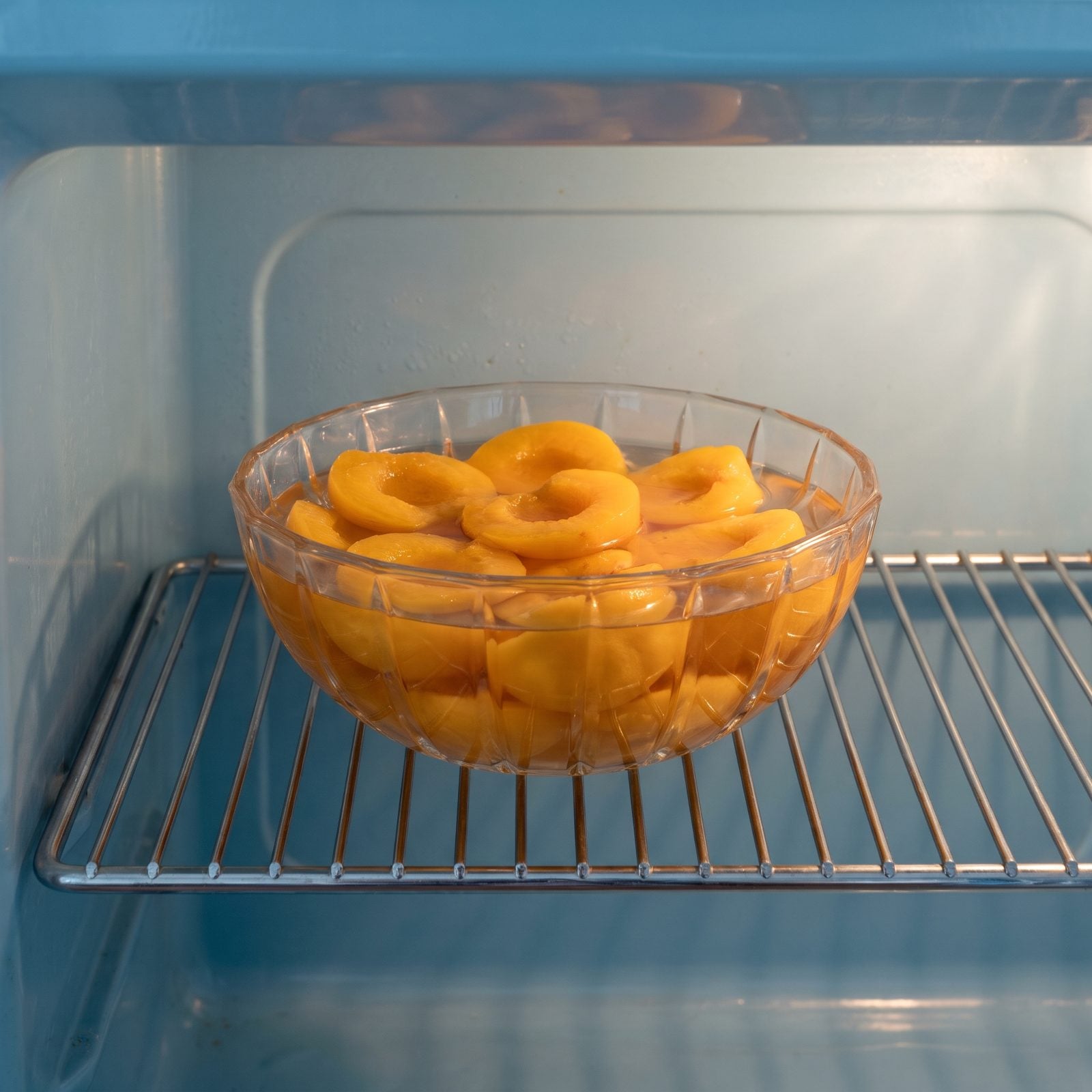
Nobody served peaches from the can at the table. That would have been rude. So they got tipped into a cut-glass bowl, syrup and all, and chilled until the metal taste faded and they turned cold and sweet.
Dessert on a weeknight, spooned over cottage cheese for lunch, or just eaten standing at the open fridge with the light on your face. The syrup pooled at the bottom was the reward for finishing the fruit, and you drank it.
13. An Opened Can of Evaporated Milk With Two Punched Holes
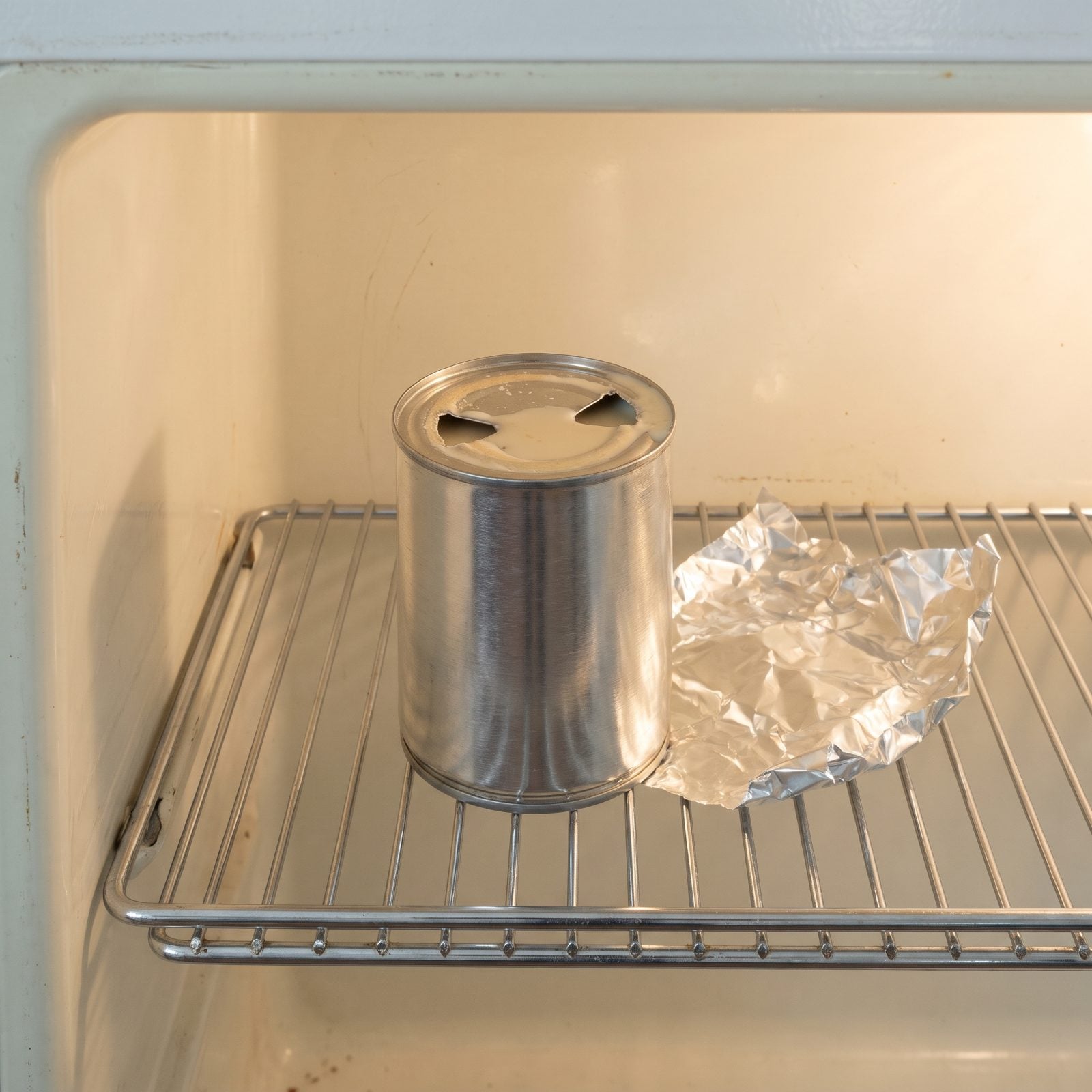
Two triangle holes punched with the church key, a scrap of foil crimped over the top, and back in the fridge it went for next time. This was the milk that stretched a recipe or splashed into coffee when the fresh carton ran dry.
Thicker than regular milk, a little caramelized tasting, with a dried ring crusted around the pour hole that you wiped off with your thumb. Not glamorous. Just always there when you needed it.
12. Orange Juice Mixed From a Frozen Concentrate Can
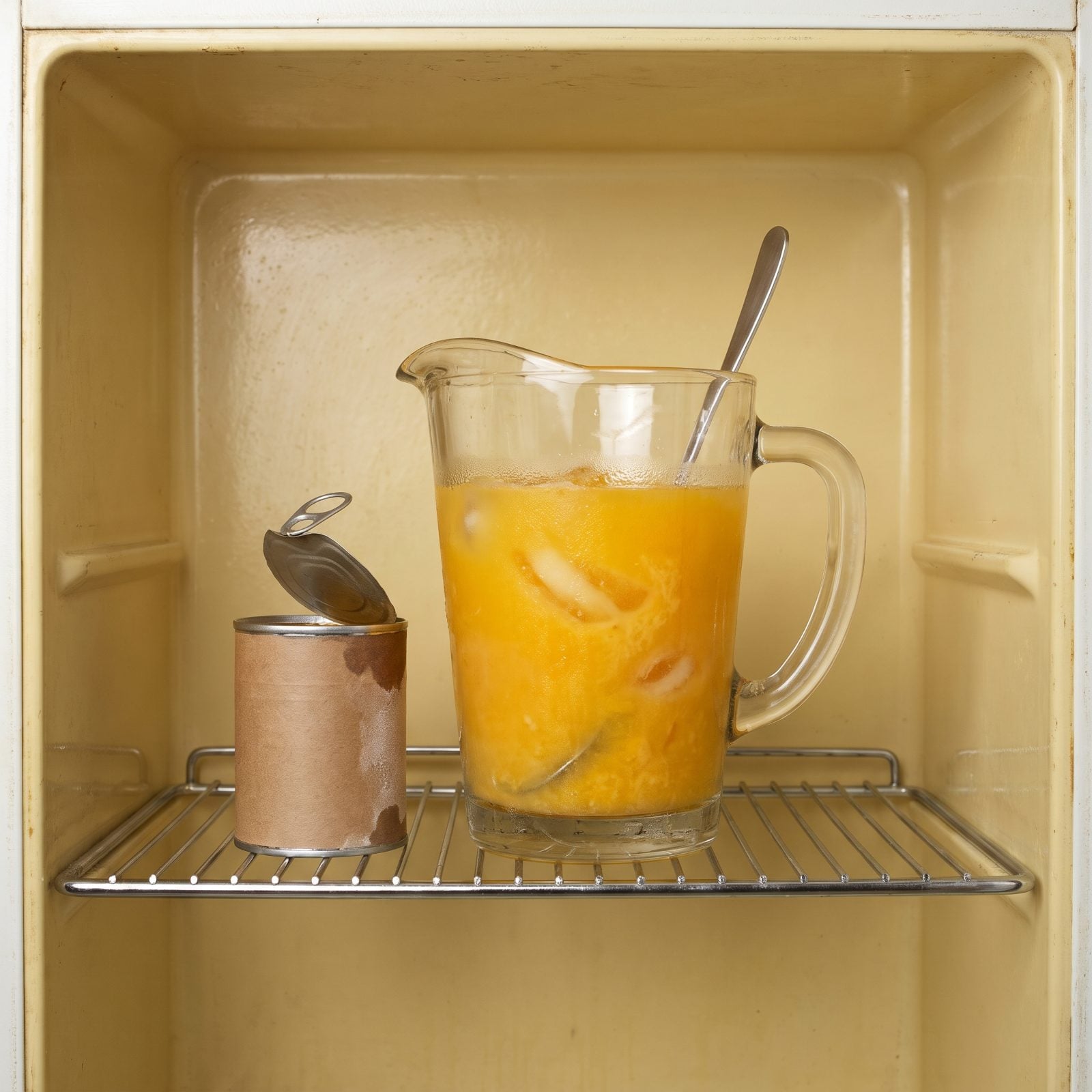
Fresh squeezed was a Sunday thing. The rest of the week, breakfast came from a frozen cardboard cylinder you thawed just enough to dent, then stirred into a pitcher with cold water and a long spoon.
A few stubborn chunks never quite dissolved, so the first glass was watery and the last one was strong. You learned to stir it again before you poured. Honestly? I liked it better than fresh, and I know how that sounds.
11. A Pitcher of Bright Powdered Fruit Drink
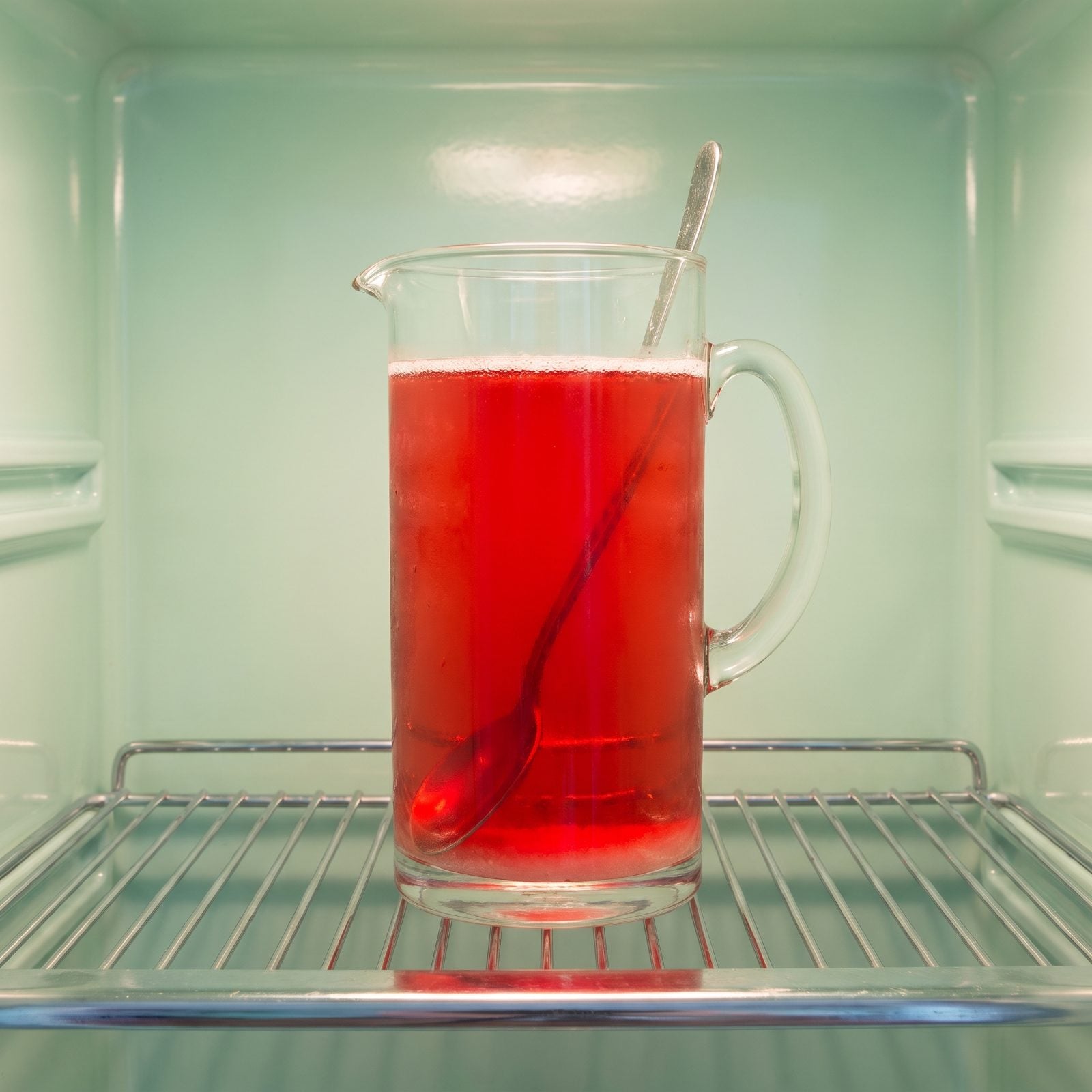
The color alone told you summer had arrived. A powder, a cup of sugar nobody measured, cold water, and a pitcher that stained red at the bottom and never quite came clean again.
Kids drank it by the gallon on the porch steps, lips ringed red, the ice already melted down to slivers. It cost next to nothing and tasted like exactly what it was. Which was fine. At eight years old, cheap and cold was the whole appeal.
10. Freshly Brewed Iced Tea in a Glass Pitcher
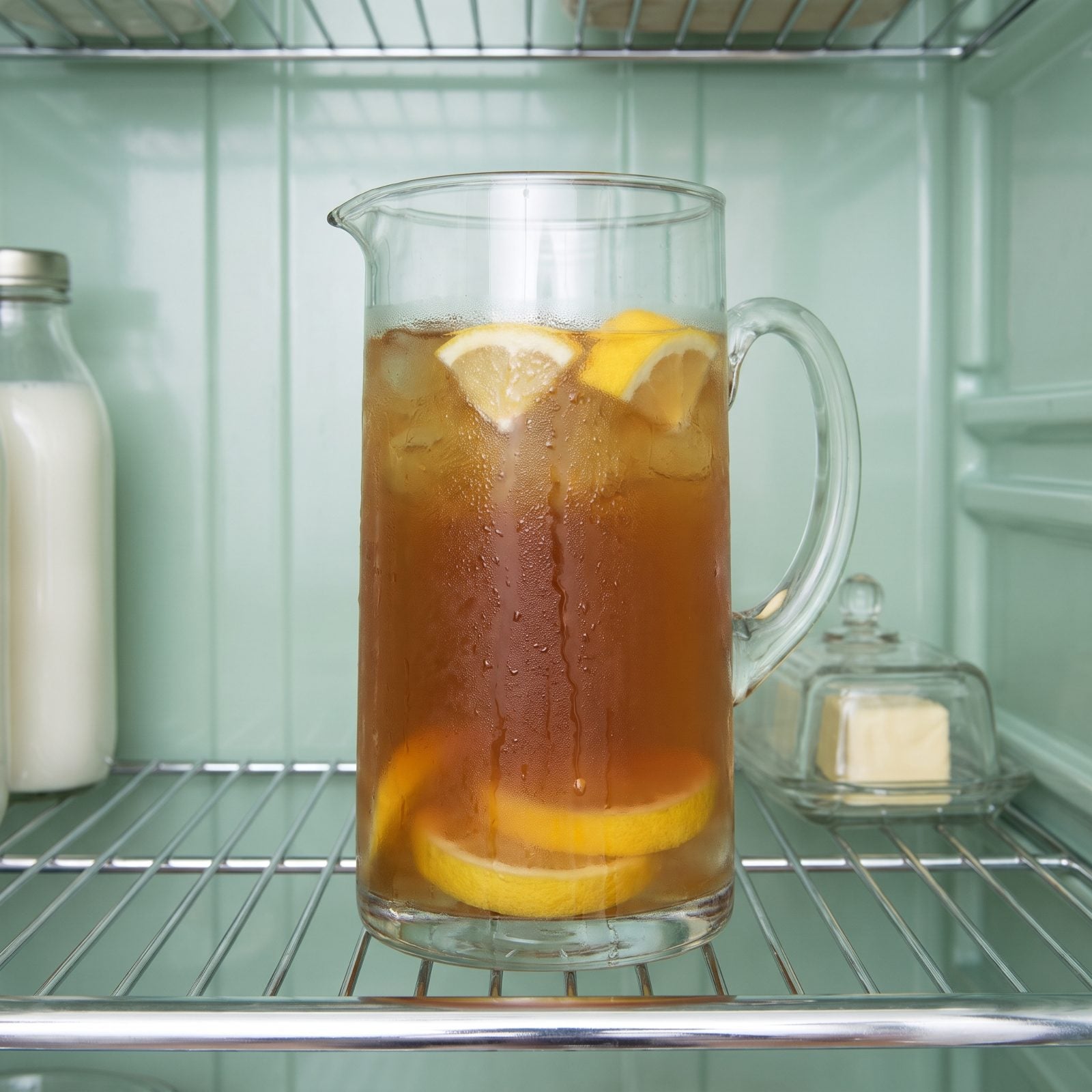
Sun tea and stovetop tea both ended up here, in a glass pitcher that lived on the shelf all summer. You brewed it strong because it had to survive the ice later, and nobody measured the sugar — it went in warm, dissolved, and turned the whole thing slightly cloudy, which was how you knew it was real.
The lemon was not a garnish. It was structural. And the pitcher was almost always a little sticky near the handle, because somebody poured a glass and didn’t wipe it down.
9. Returnable Glass Soda Bottles in the Door Rack
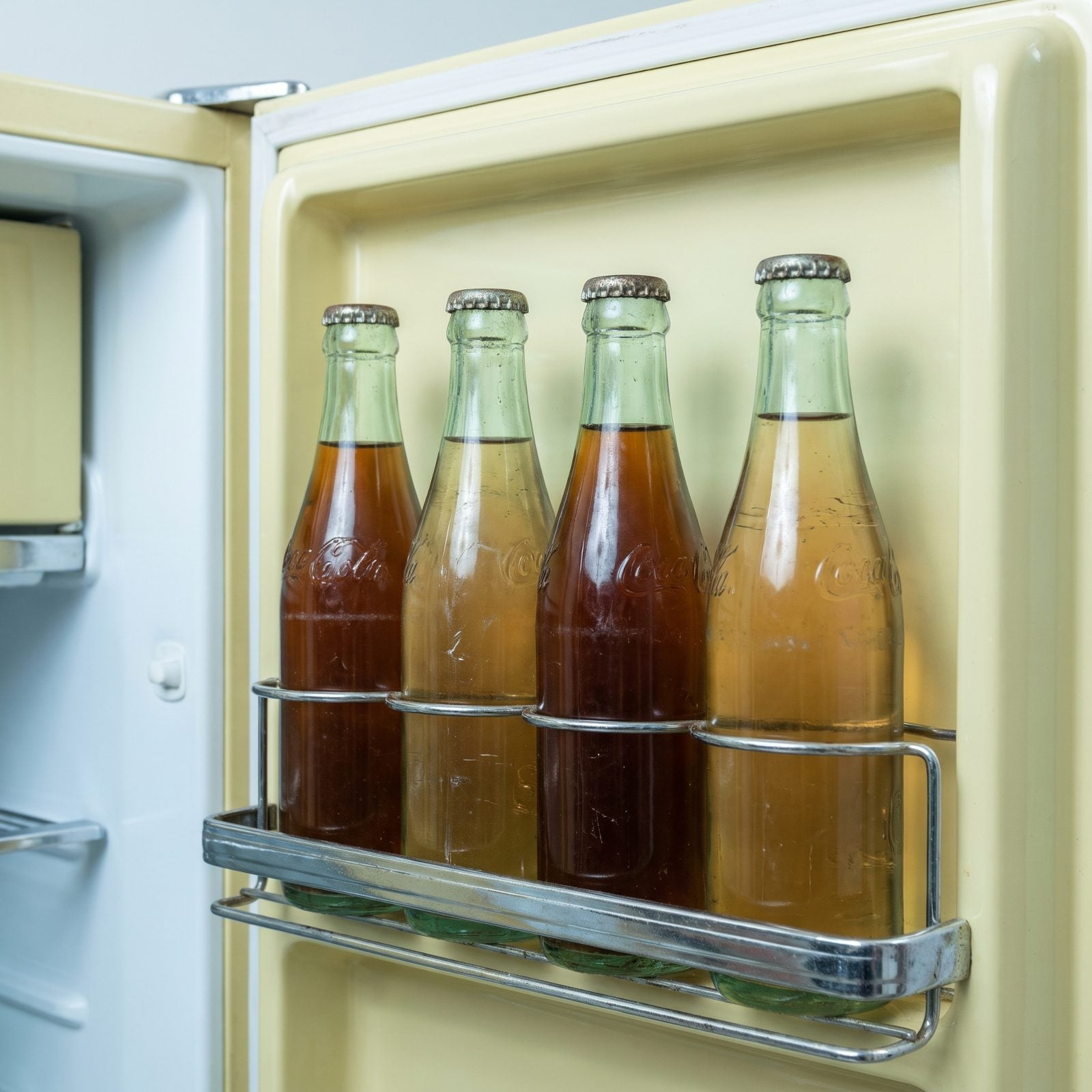
Those bottles weren’t trash. They were money. Two cents, a nickel, whatever your corner store ran, and you hauled the empties back in a wooden crate that clinked the whole way.
The glass was thick and heavy and scuffed from making the round trip so many times — you could feel it had been refilled. A soda tasted better out of cold glass, and I will not be talked out of this. They stood upright in the door rack like soldiers, and the one in back was always the warm one nobody wanted.
8. Pudding Setting Up in Individual Glass Bowls
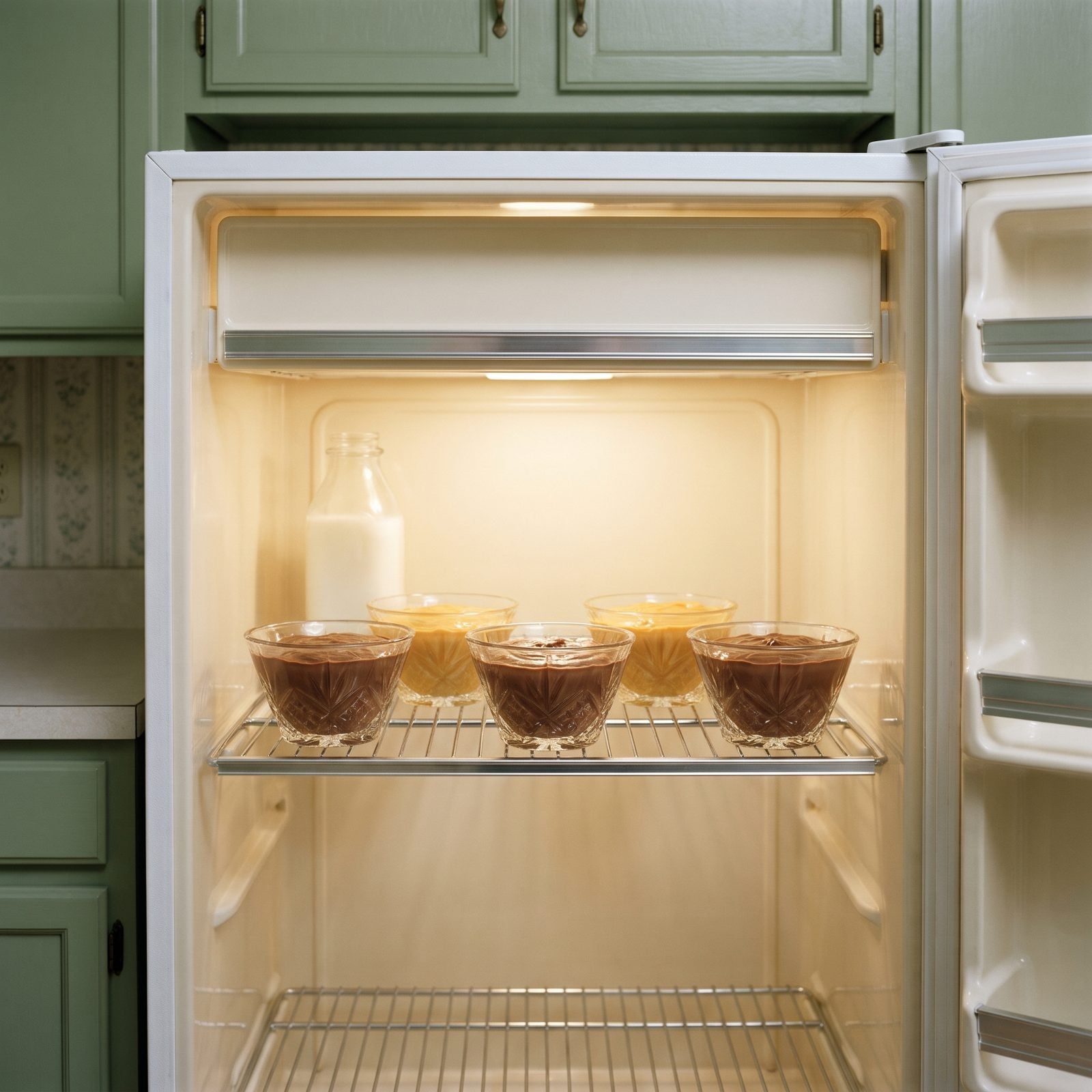
The skin on top was the whole debate. Some people pressed waxed paper down to stop it. Some people lived for it. No middle ground in a 1960s household, and the pudding set up in whatever small glass bowls the kitchen happened to own.
You made it on the stove and stirred until your wrist ached, then portioned it out so everyone got their own. Dinner wasn’t over until you checked the fridge and counted the bowls.
7. A Cream Pie Hiding Under a Metal Cover
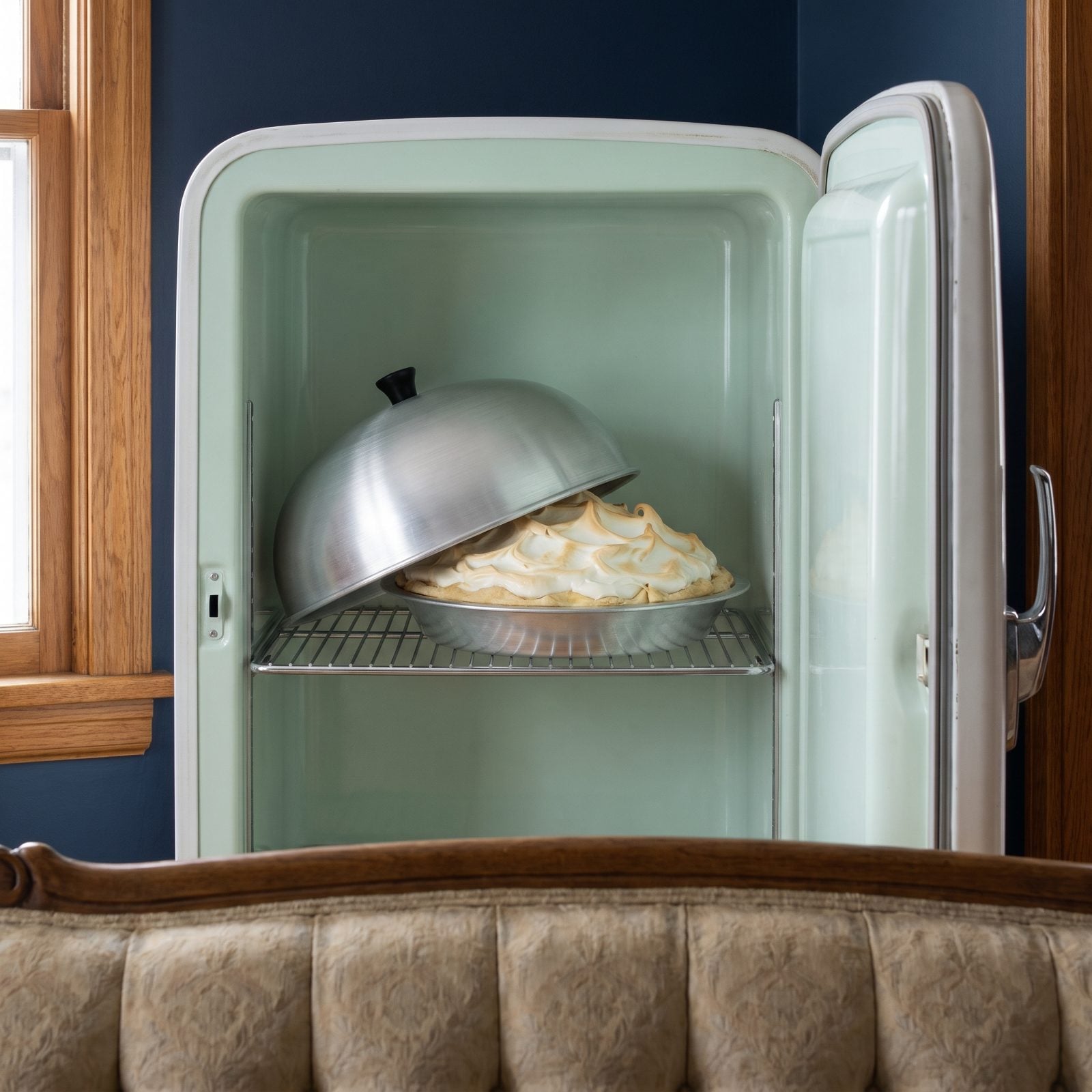
The dome was aluminum, polished smooth, with a knob on top you could lift with one finger. Under it sat the Sunday pie, and you were not supposed to touch it before company came.
Everybody touched it anyway. The meringue had those toasted peaks — or maybe it was whipped cream going soft in the cold. The cover kept the icebox smells off it, which mattered more than you’d think in a fridge sharing space with onions and last night’s fish.
6. Refrigerator Biscuits in a Cardboard Tube
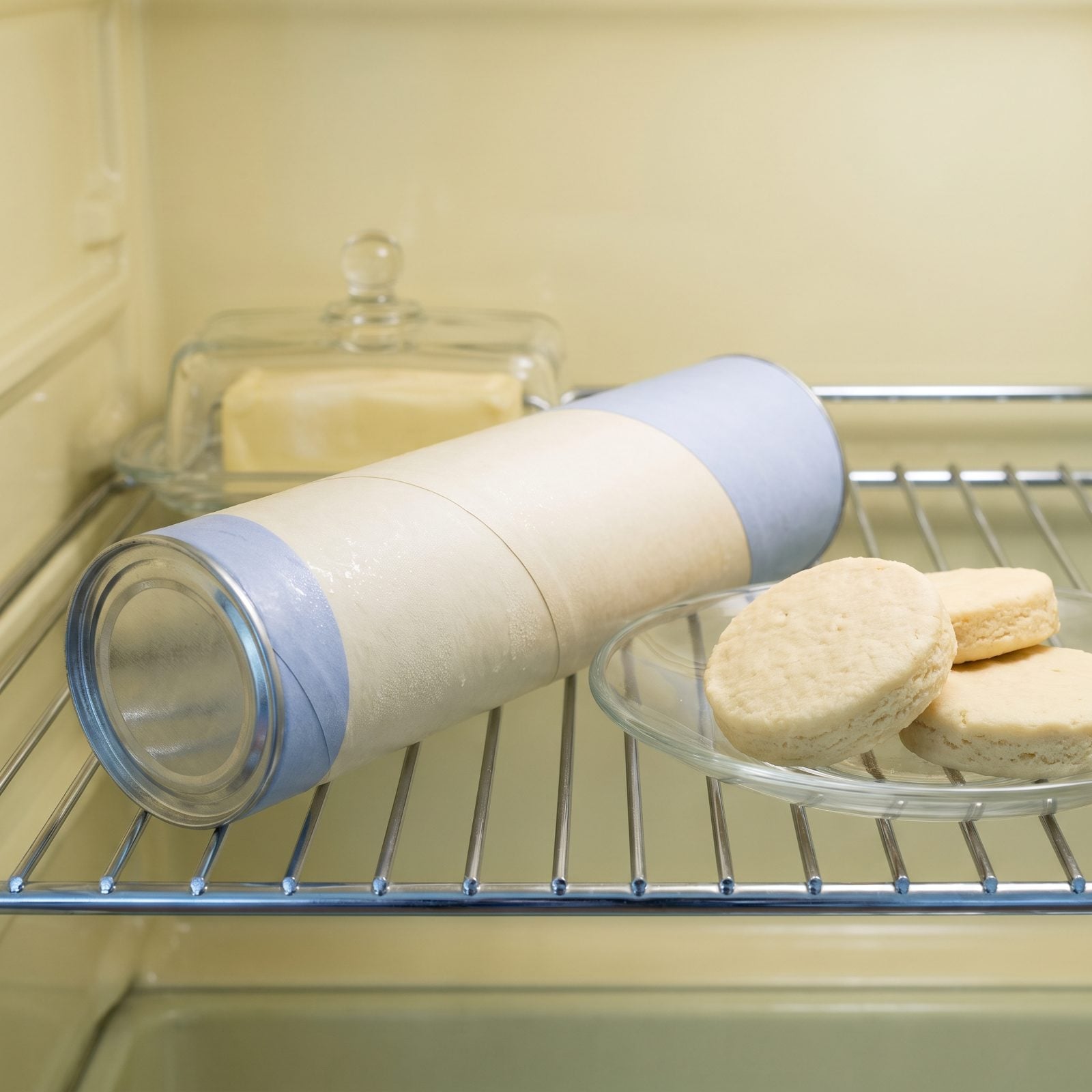
You knew the sound. The whack against the counter edge, the paper tube popping open with that little gasp, the dough practically leaping out at you. Half the fun of biscuits was the ambush.
These lived in the cold because the dough had to stay firm. They were the shortcut your grandmother maybe sniffed at and your mother absolutely used on a weeknight. Hot biscuits in twelve minutes, no flour cloud, no rolling pin — a small miracle, and nobody apologized for it.
5. Metal Ice-Cube Trays With the Pull-Up Lever
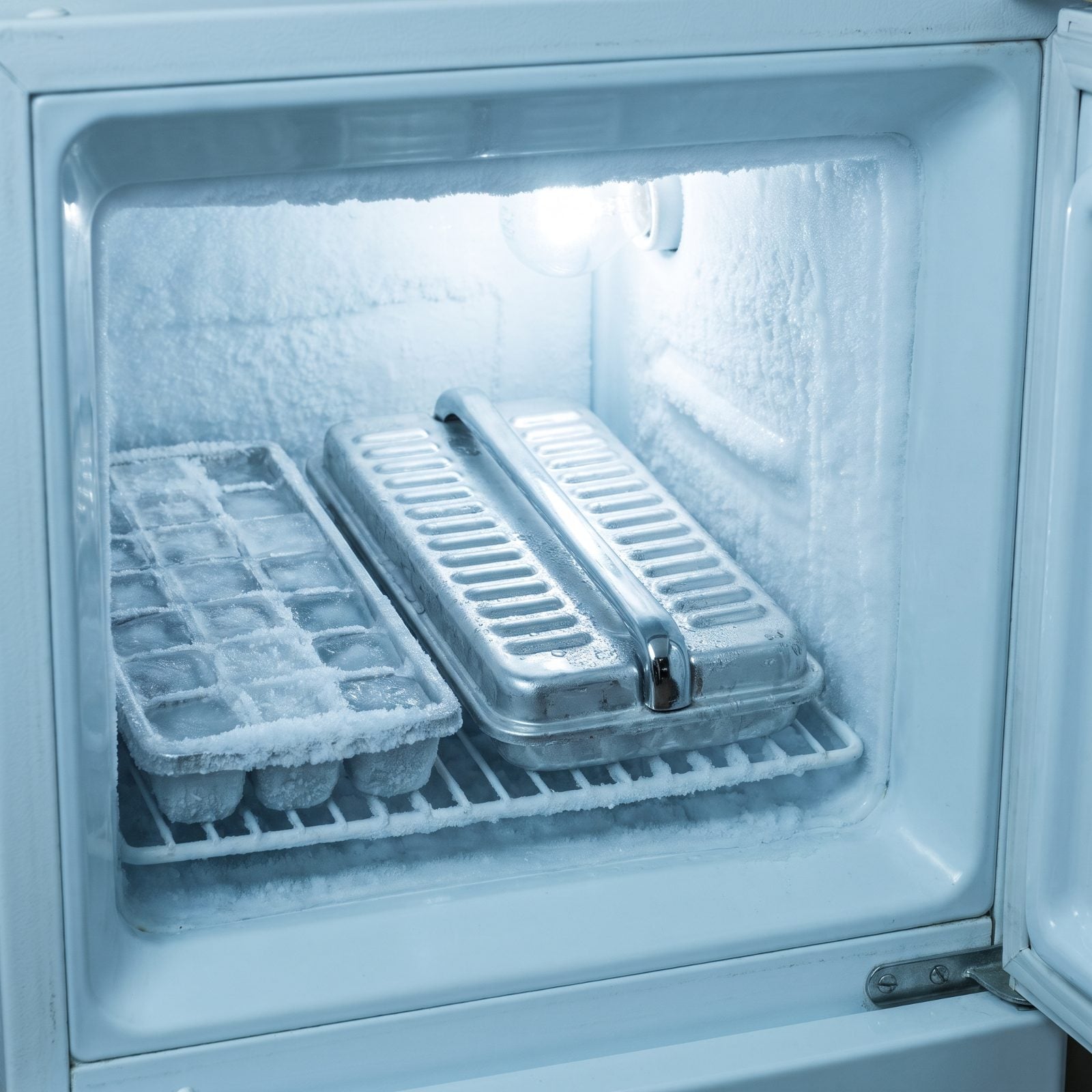
The lever was supposed to free the cubes in one clean pull. In practice you yanked it, three cubes came loose, and the rest stayed welded in — so you ran the tray under the tap, which half-melted everything, and started over.
Those aluminum trays were cold enough to stick to wet fingers. Anyone who grew up with them remembers that little jolt. We complain about automatic ice makers breaking, but at least they don’t bond to your skin.
4. A Cardboard Carton of Hand-Scooped Ice Cream
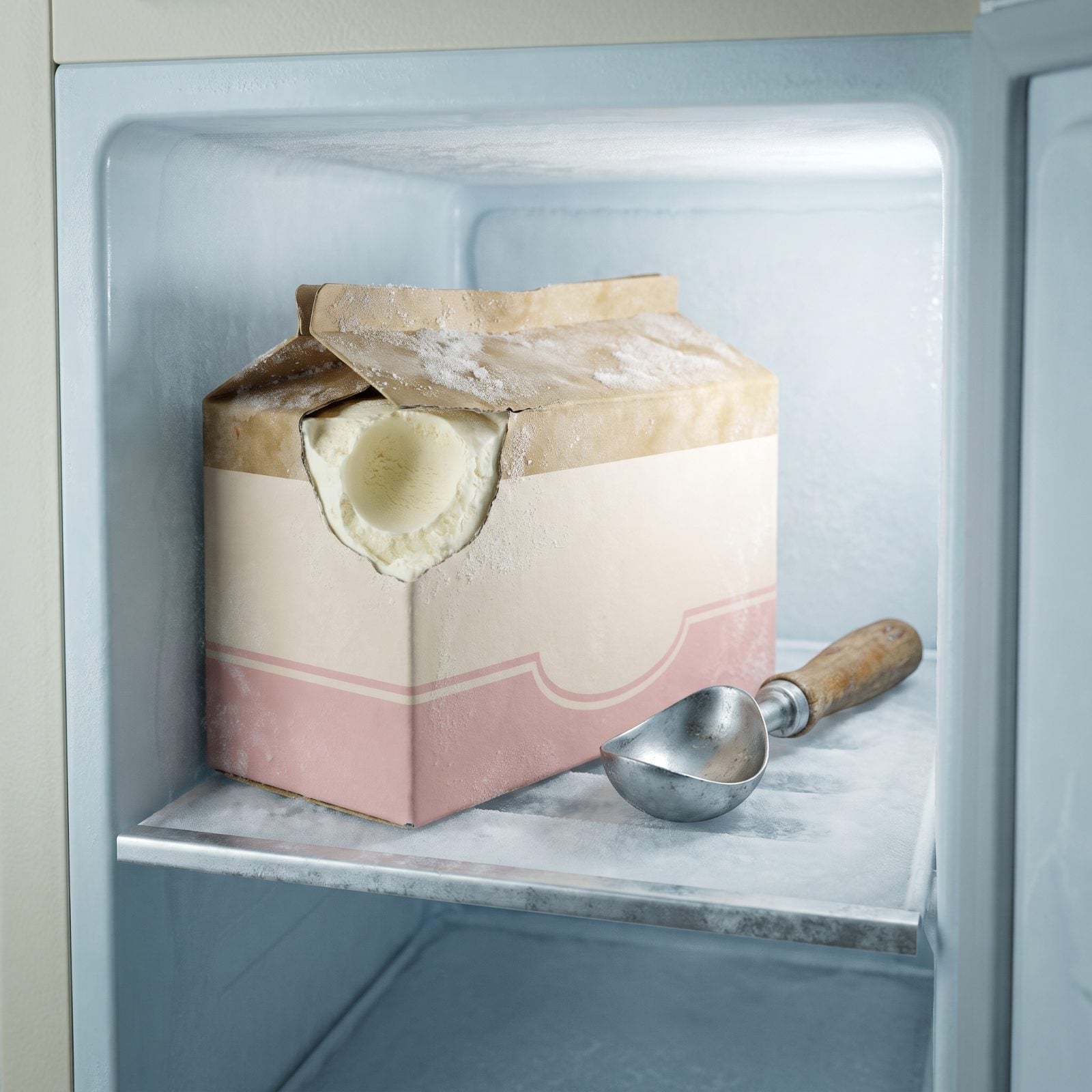
You pulled it out and let it sit before you even tried. Freezer-hard ice cream bent a spoon, so you waited, listening to it tick as it softened.
The carton was waxed cardboard, usually a half gallon, usually vanilla with maybe neapolitan if someone was feeling fancy. The top flaps stayed shut, so someone tore a ragged hole in the side wall and scooped straight through the cardboard. Freezer burn crept in at the corners and you ate around it. Dessert in that house meant a bowl, a spoon, and a short wait by the open freezer door.
3. Frozen Peas in a Waxed Paper Box
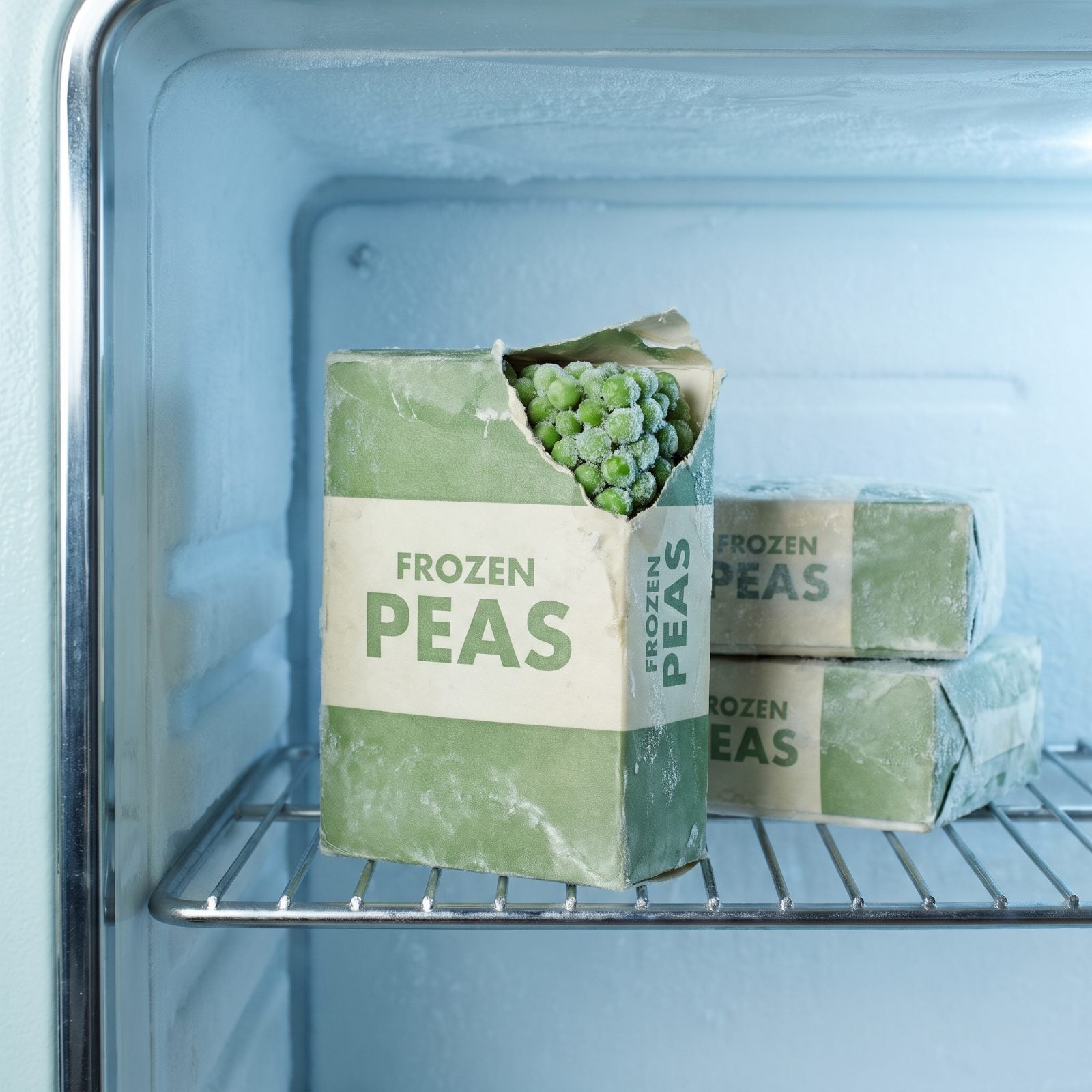
Flash-frozen vegetables felt almost modern, a little marvel of the age. Peas in winter. Corn in March. You didn’t have to shell a thing.
The box was waxed paper, stiff from the cold, and the peas inside clumped into a frozen brick if the freezer ever cycled warm. You dumped them straight into boiling water — no thawing, no fuss — and they came out that electric green, tasting closer to summer than anything out of a can. The carton always had one torn corner where somebody poured out half and crammed it back in.
2. Fish Sticks in a Brightly Printed Carton
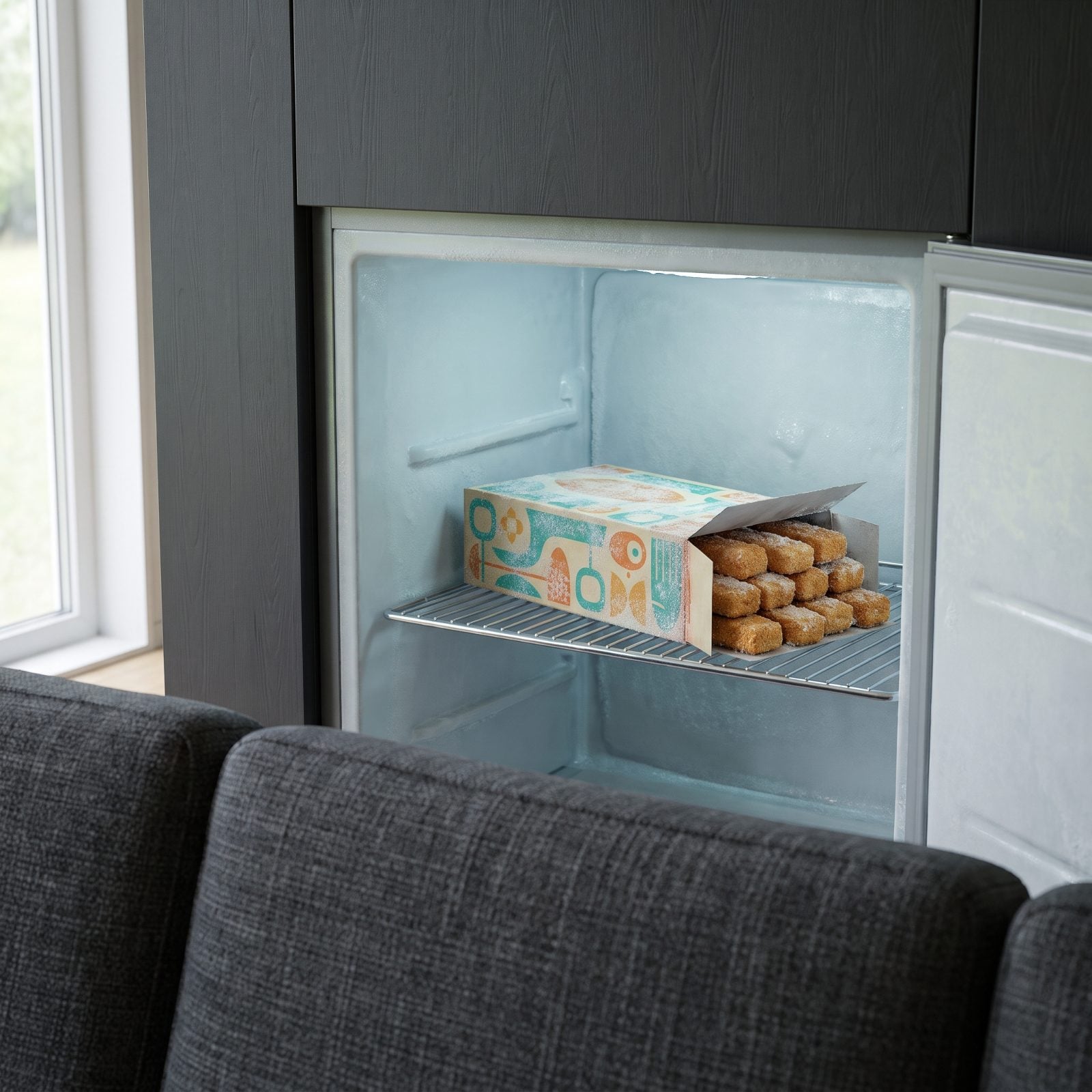
Friday dinner, solved. The carton was bright, the graphics almost shouting at you from the freezer, and inside sat neat rows of breaded sticks you lined up on a baking sheet without a second thought.
These showed up in the mid-1950s and by the ’60s they were a weeknight institution — the answer to a Catholic Friday or just a tired Tuesday. Kids loved them. Parents loved how fast they were. Nobody asked too many questions about the fish. You squeezed a lemon or dunked them in ketchup and called it supper.
1. The Foil-Tray Frozen Dinner Stacked in the Freezer
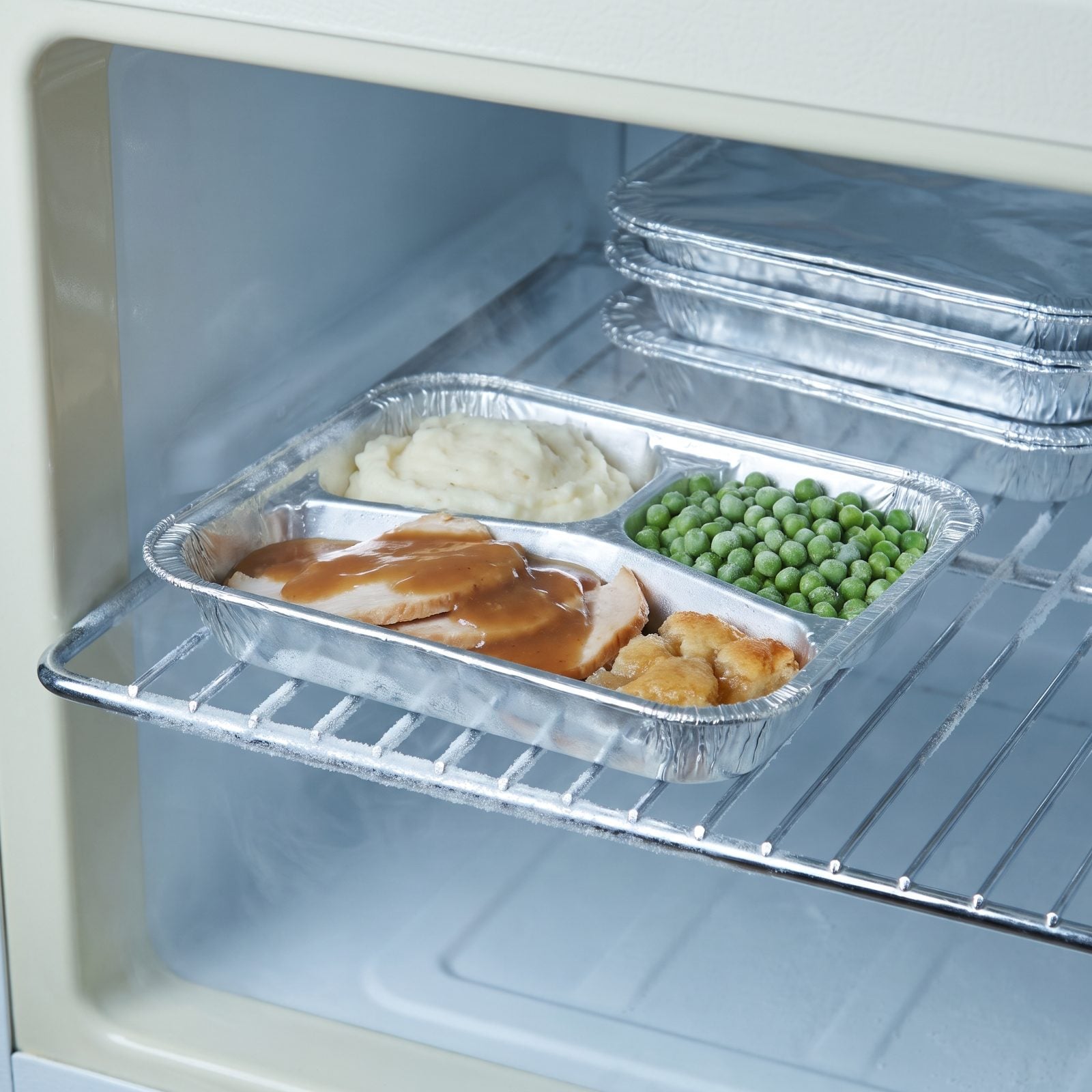
Dinner in a tray you could throw away. That was the whole pitch, and it worked because the foil compartments kept the gravy away from the peas and potatoes, the oven did the rest, and nobody washed a thing afterward.
Those trays lived stacked flat near the back, cold-welded together until you pried two apart with a thumbnail. The peas always came out a little tired. The stuffing corner, browned and soaking up the gravy? That was the prize, and everyone at the table knew exactly who was eyeing it.