
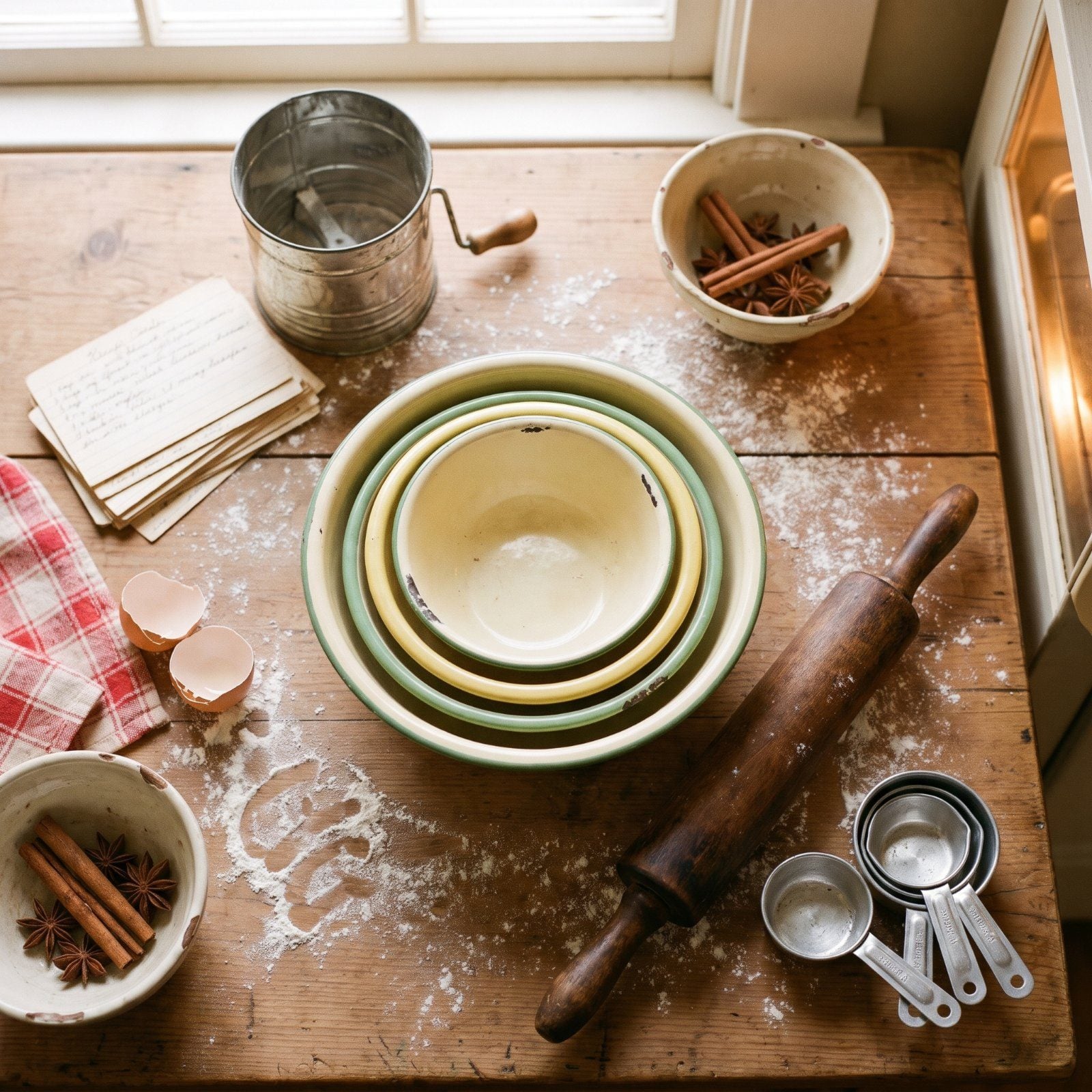
The oven door squeaked when it opened, and you knew that squeak before you knew the alphabet. Grandma’s kitchen on a baking day ran on a logic nobody wrote down: flour in the air catching the window light, a radio low in the corner, the particular clatter of metal against ceramic. Nothing matched and everything belonged. The tools were older than your parents and they worked better than anything you own now. These are the objects and small rituals that made that room unmistakable — the ones that turn up in memory the second you smell cinnamon hit a warm pan.
Please note that some of the images in this article were created with the assistance of AI.
33. The Oilcloth-Covered Kitchen Table
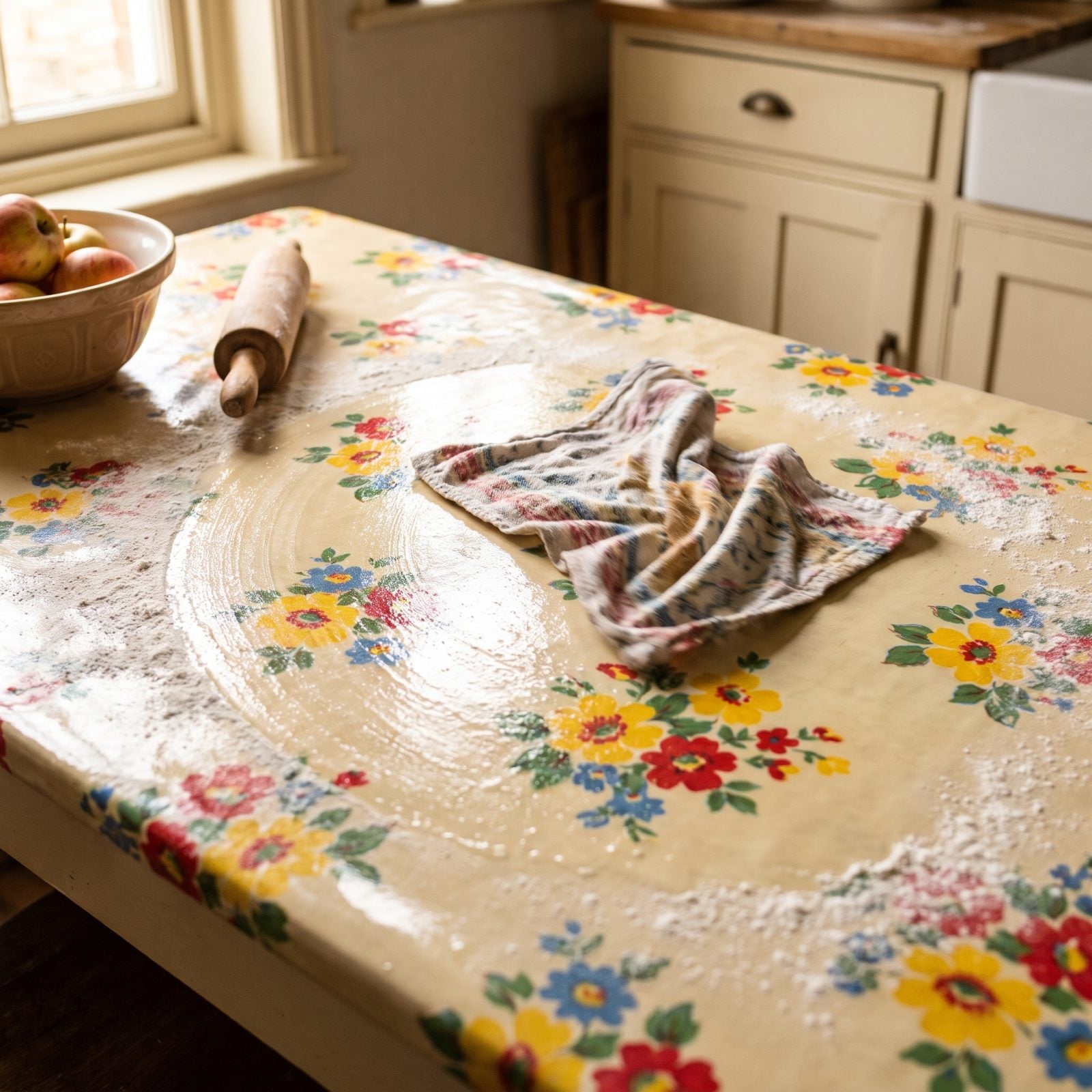
You wiped it with a damp rag and it was clean. Oilcloth was the original no-fuss surface — slick, forgiving, so a spilled cup of sugar or a slip of raw egg meant nothing. The pattern told you which table it was before you walked in: cherries, roosters, little bunches of grapes.
Roll out dough on it long enough and the print wears pale in one spot, a ghost of every pie that ever crossed it. Nobody replaced the cloth when it faded. That faded oval was proof the table did its job.
32. The Matching Row of Baking Canisters
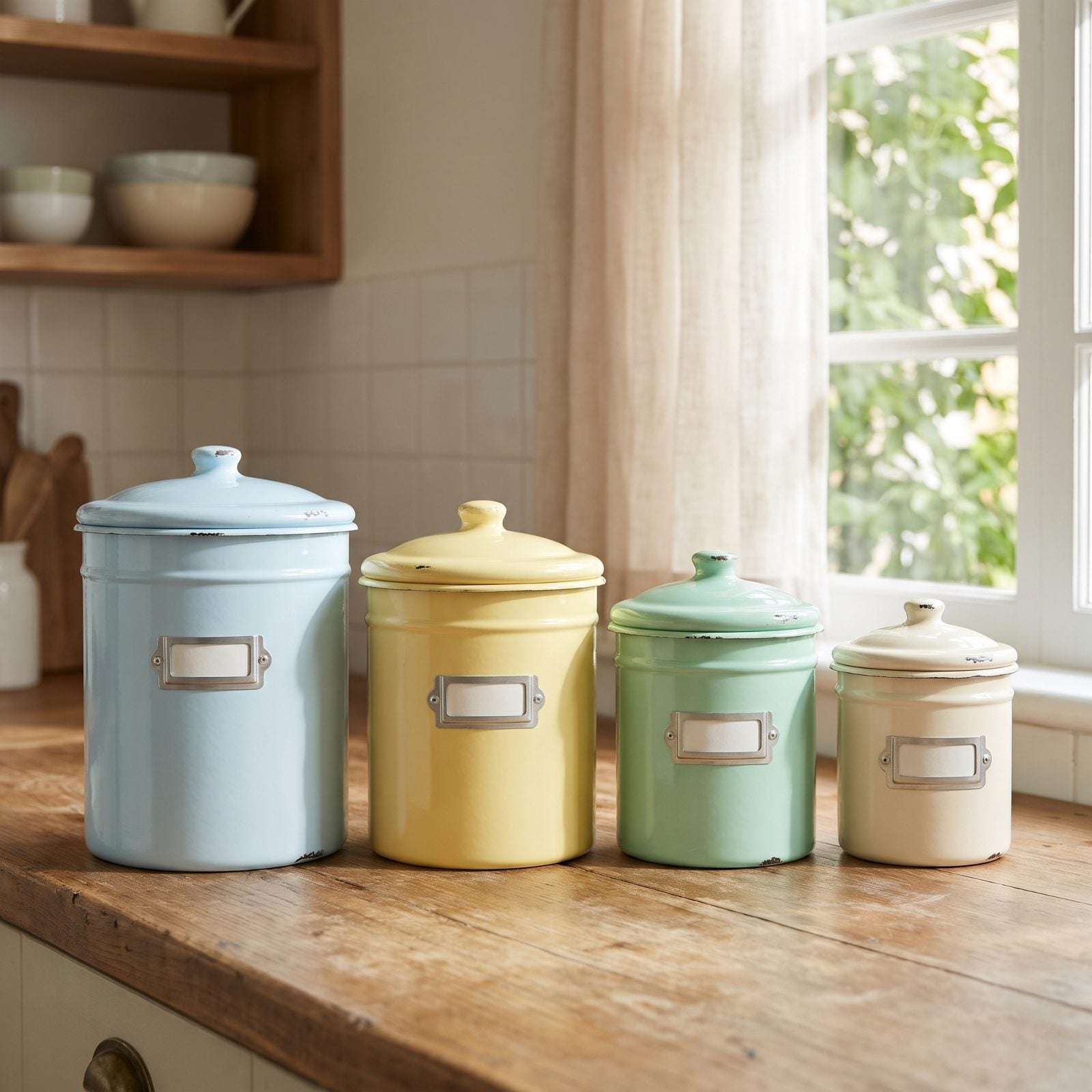
Big to small, left to right, always in that order. Flour, sugar, coffee, tea. The set came matched and stayed matched for thirty years because nobody got rid of a dented one.
The flour canister had the worn lid, the one lifted a hundred times a December, and you could reach for it without looking. That muscle memory is half of what made the kitchen feel like home: everything lived in its one spot and never moved.
31. The Hand-Cranked Flour Sifter
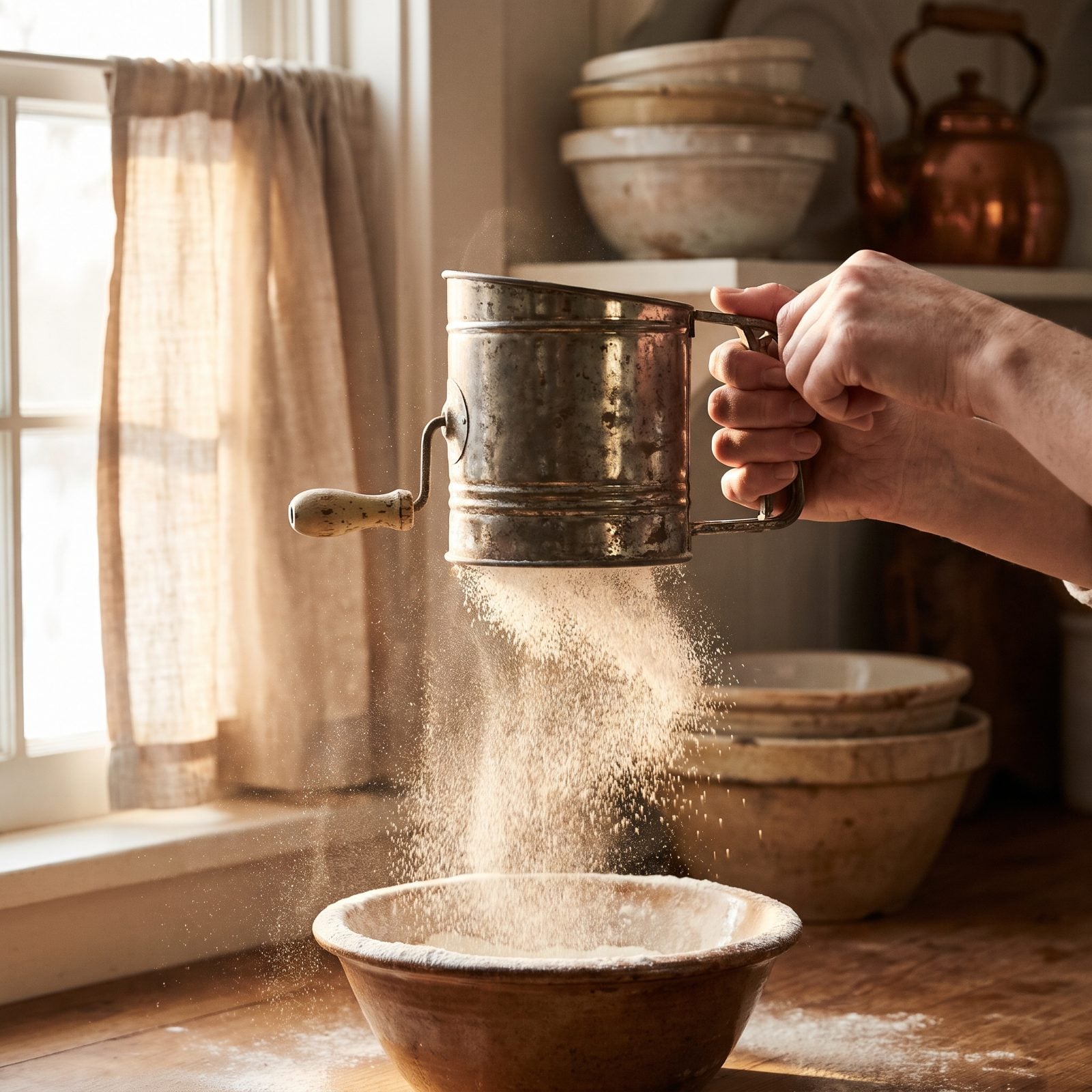
That sound. A soft mechanical whir and a snow of flour falling into the bowl. The crank handle was worn pale from thousands of turns and it always stuck a little at the start before it caught.
Modern flour comes pre-sifted, so most of us skipped this and never missed it. But watch an old sifter do its job and you understand why it stayed in the drawer: it caught the lumps, aerated the flour, and handed a kid something to do that felt important. Everyone wanted a turn.
Explaining why old recipes insisted on sifting, a vintage-recipe cookbook author says “Flour as we know it today is much different than flour maybe our grandmothers baked with”
30. The Nest of Heavy Mixing Bowls
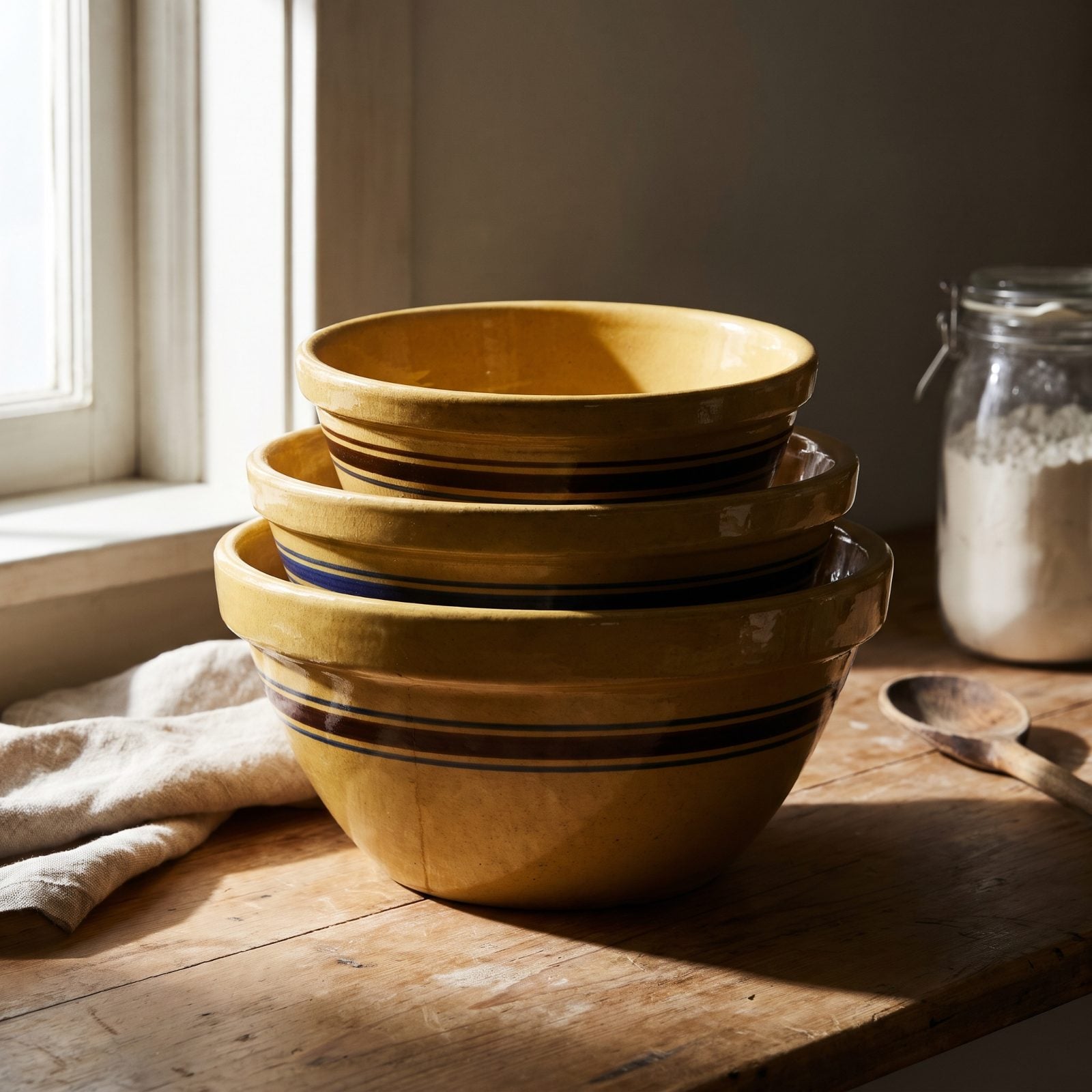
You needed two hands and a hip to move the big one. These bowls weighed a ton, and that was the feature, not the flaw — beat anything in them and they stayed put, no skating across the counter.
The set nested into one tidy stack when you were done, biggest to smallest, a little Russian doll of baking. Usually one bowl had a chip or a hairline crack and got demoted to “the one for cracking eggs.” Every set had one.
29. The Wooden Spoon Darkened With Age
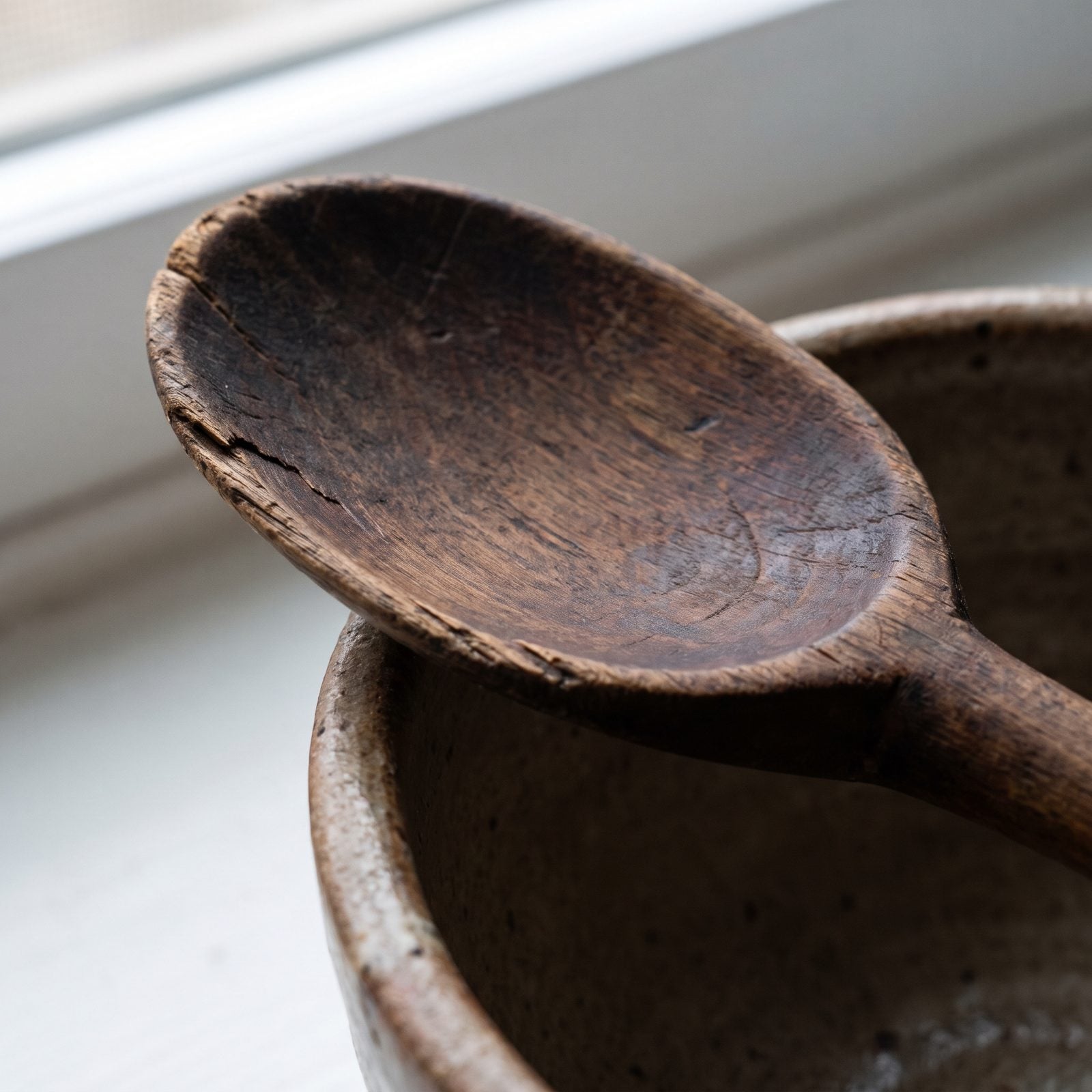
One spoon did everything. Darkened to the color of strong tea, edge worn thin on the left side from a lifetime of scraping bowls held at the same angle, you could pick it out of a drawer of twenty in the dark.
I’ll admit I used to think a stained wooden spoon meant nobody cleaned it properly. Wrong. That color is seasoning — decades of butter and vanilla soaked into the grain. A new spoon feels like a stranger by comparison.
28. The Humming Hand Mixer
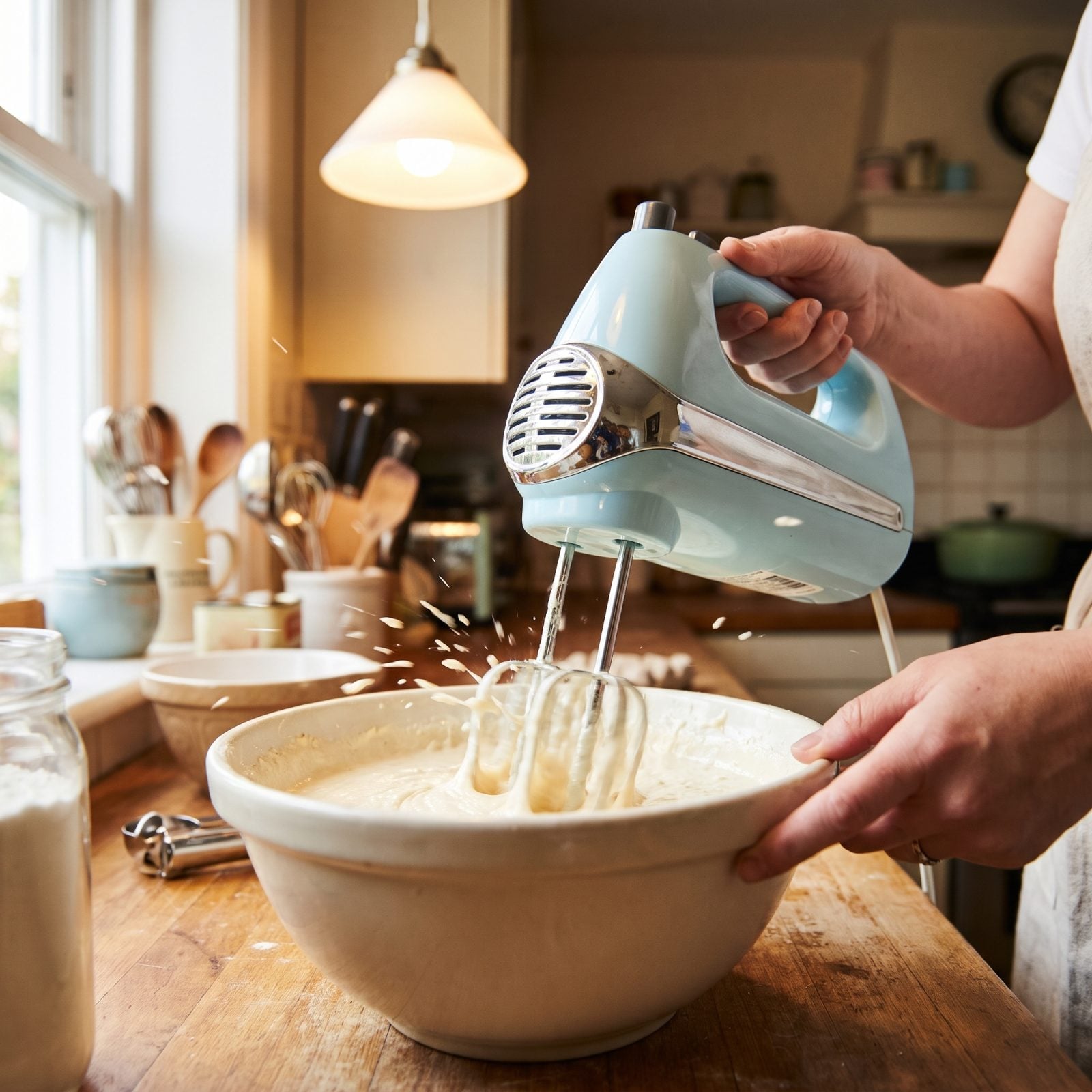
It had a sound you could feel in your teeth — a low drone that climbed to a whine when the batter thickened, and you learned to read the pitch like a mechanic reads an engine.
These things lasted decades. Pale turquoise or buttery cream, a cloth-wrapped cord that frayed at the plug, heavy enough to be a workout for your wrist. When the beaters came out for licking, baking day had reached a kid’s favorite part.
27. The Ring of Metal Measuring Cups and Spoons
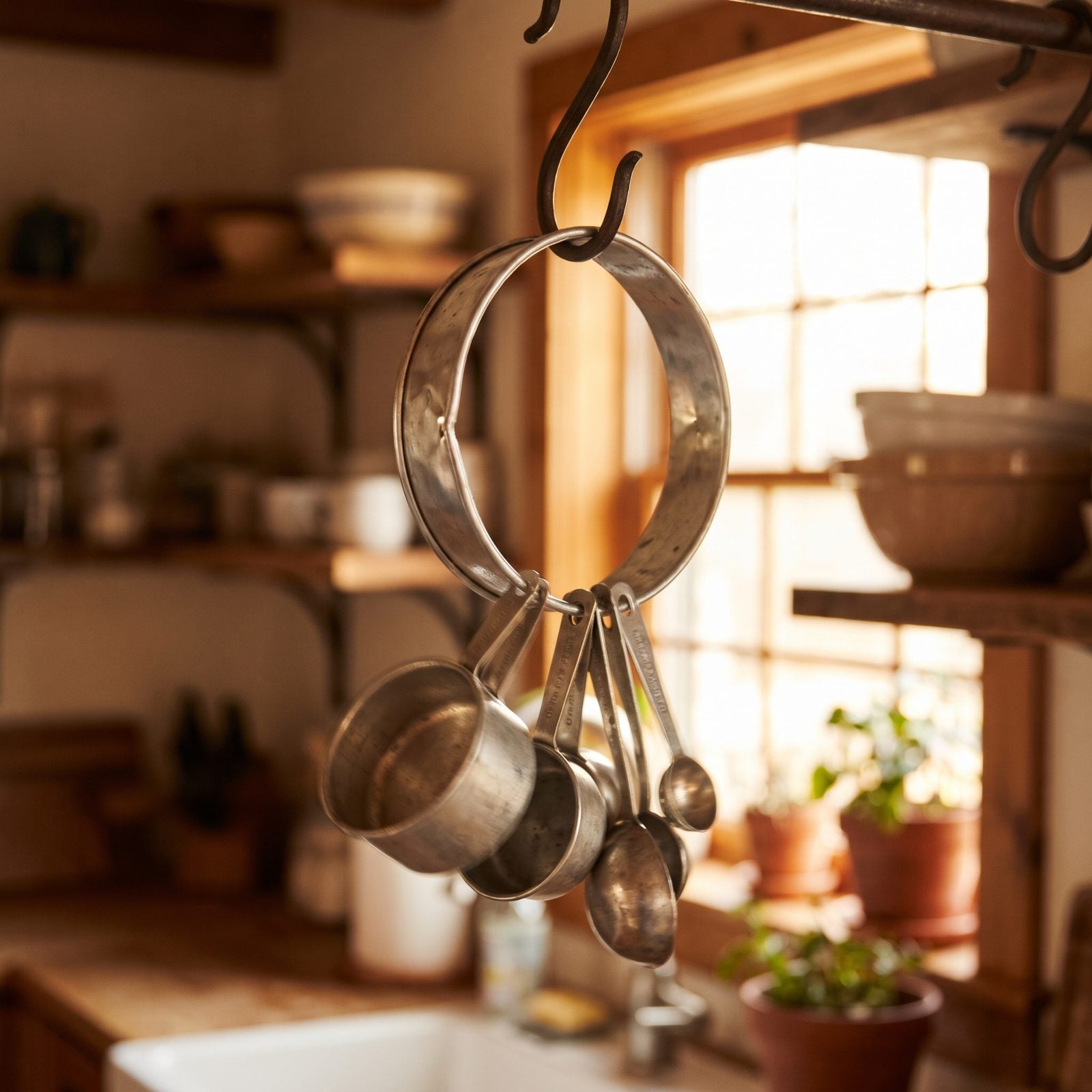
They lived on a ring and they jingled. That tiny clatter when you lifted them off the hook was the overture to the whole day.
The numbers stamped into the aluminum wore smooth from washing, so you measured by feel and memory as much as by sight. Dents everywhere. The quarter-teaspoon always went missing. Somehow the set survived every move, every kitchen, every grandkid who used them as a drum.
26. The Well-Worn Wooden Rolling Pin
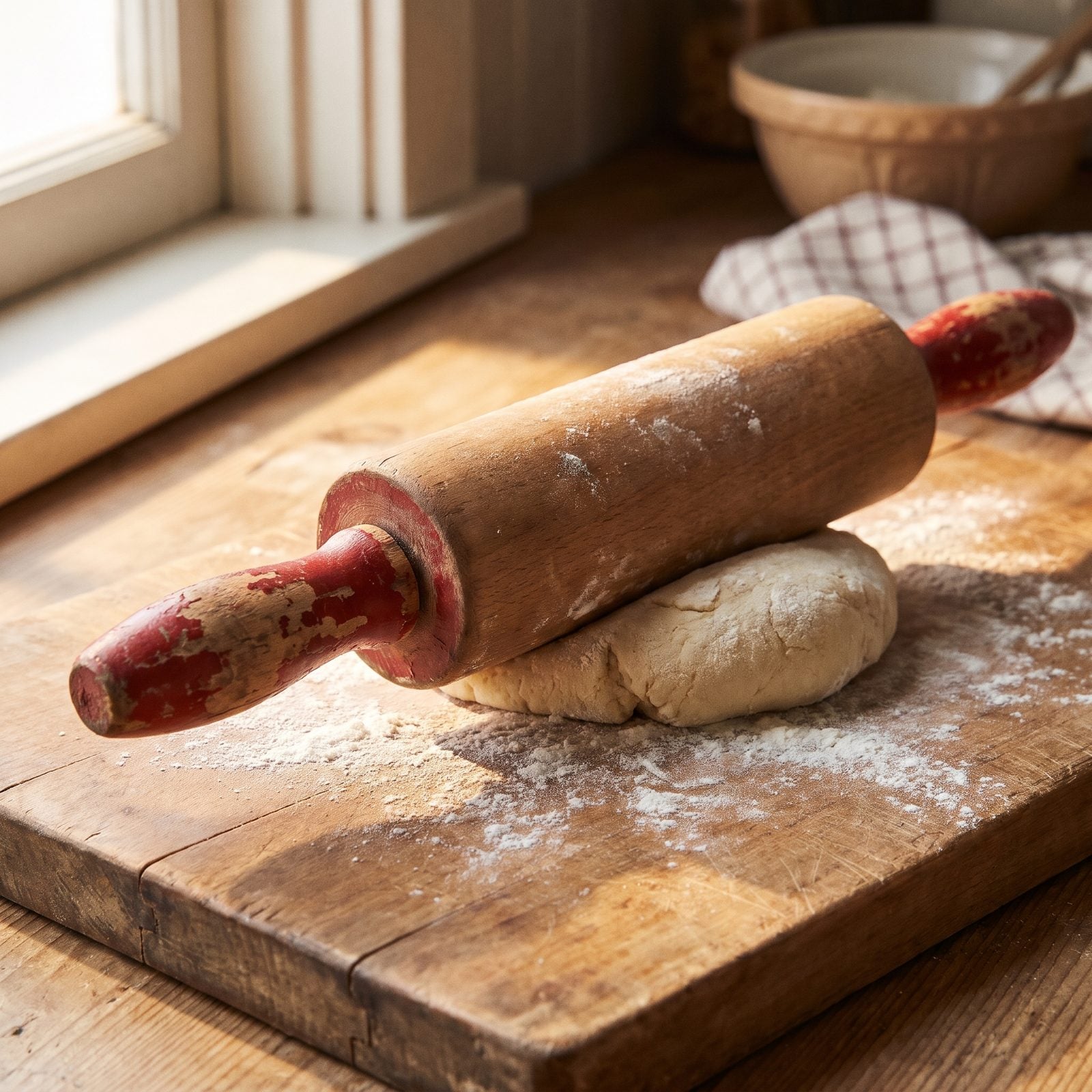
The handles spun a little loose and clicked when they turned. Red paint chipped down to bare wood right where the hands gripped — a worn map of exactly how it was held.
You never really washed it. A wipe and a quick rub, because water warps good wood and nobody had the patience to ruin a pin that already knew the job. The barrel darkened over the years into a glossy sheen you couldn’t buy if you tried. And this is the one object on the list that ends up on a grandchild’s counter, still rolling pie crust, still doing exactly what it did in 1948.
25. The Tin Cookie Cutters in Familiar Shapes
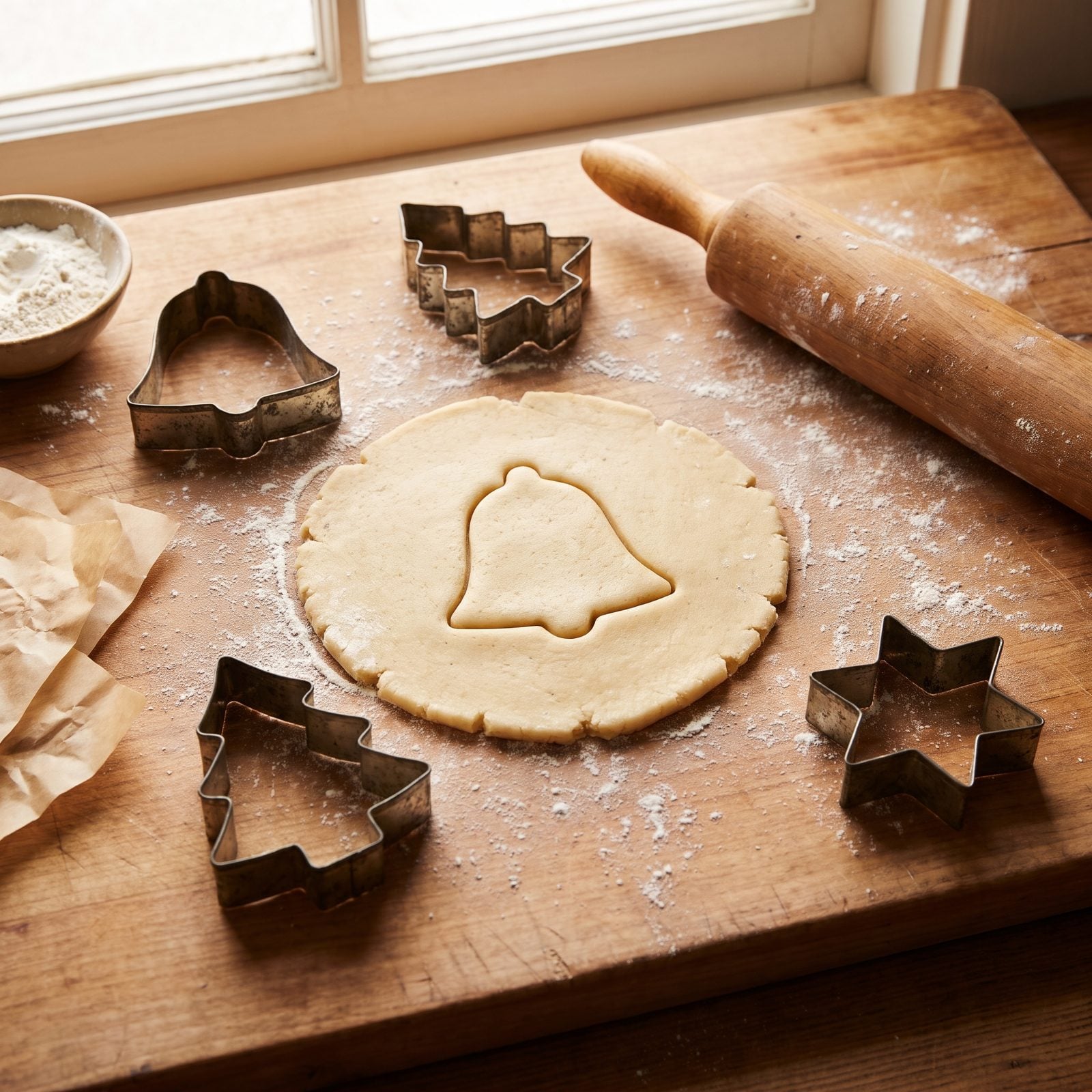
You knew the shapes before you could read. The bell with the little dent, the tree whose bottom branch had gone crooked from decades of pressing. These were tin, not plastic — a soldered seam you could feel under your thumb, an edge that cut cleaner than anything sold today.
They came out of a dented coffee can kept for exactly this and nothing else. The star always got lost first, and the gingerbread figure always lost a foot in the transfer to the sheet, and nobody minded. A missing foot was practically tradition by then.
24. The Metal Cookie Press With Patterned Discs
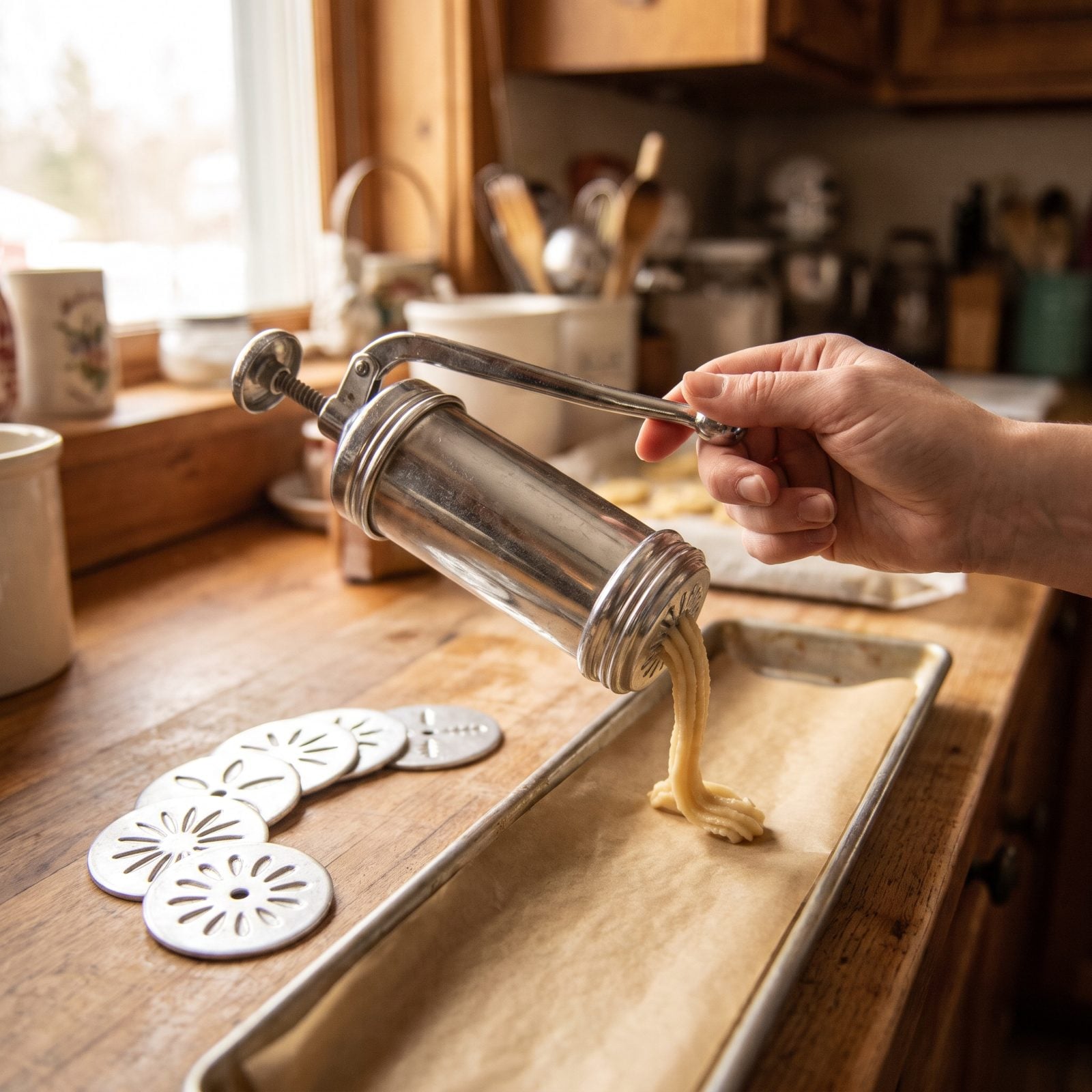
Half the fun was the mechanism. You twisted the handle, the dough spiraled out through a stamped disc, and if the sheet was warm the whole cookie slid instead of sticking — the catch nobody ever warned you about. The pan had to be cold or your design smeared into a blob.
The discs lived loose in the box, a little tin alphabet of flowers and wreaths and that ridged Christmas tree everyone fought over. Spritz cookies came from this press and almost nothing else did. Light, buttery, gone in two bites.
23. The Stack of Darkened Baking Sheets
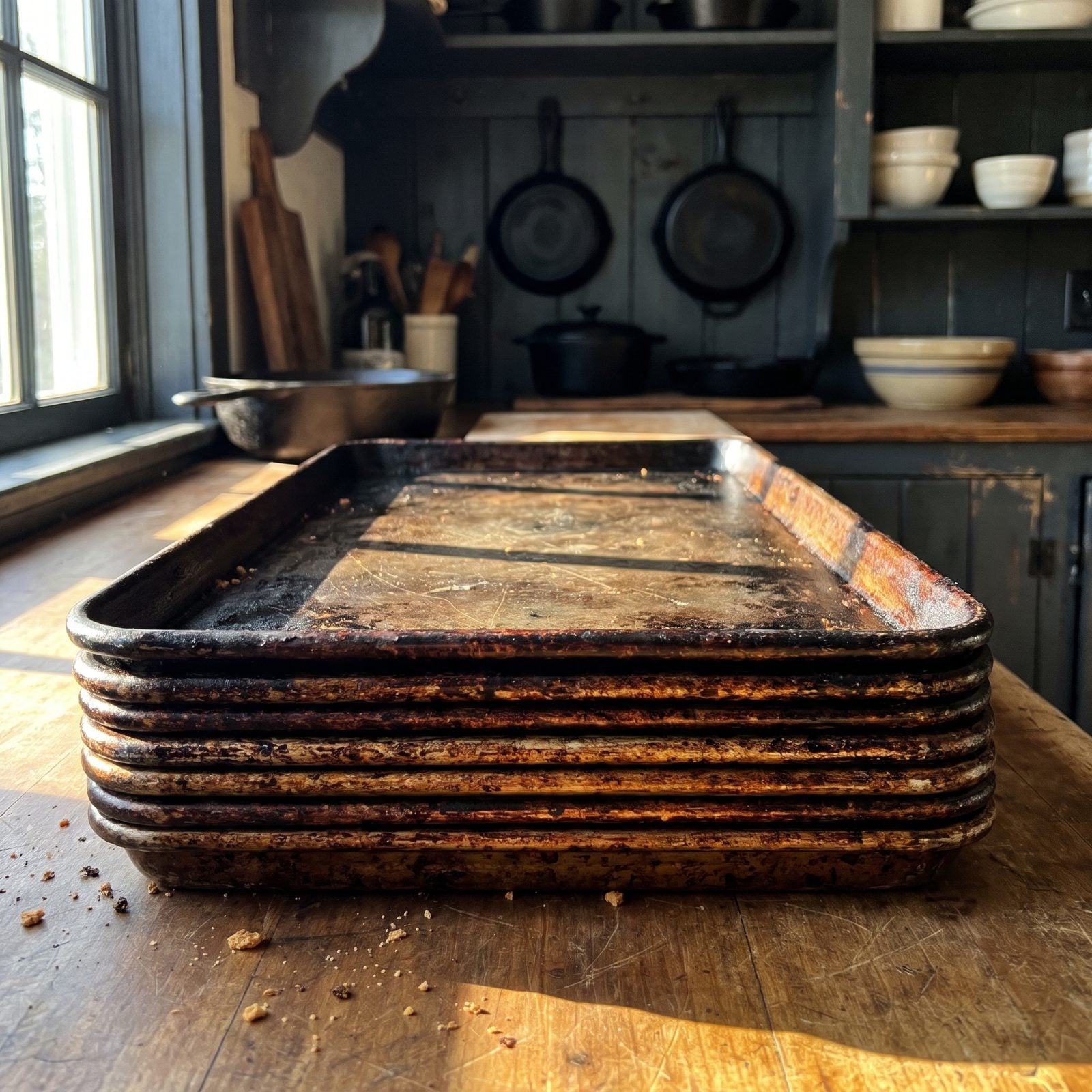
Nobody scrubbed these back to silver. You couldn’t have if you tried. Decades of butter and heat had turned them the color of strong tea, and that dark patina was no accident — those sheets baked more evenly than anything brand new.
They came out two or three at a time, warped just enough to rock on the counter, each one carrying a map of old burn rings nobody had the heart to scour off.
22. The Folding Wire Cooling Racks
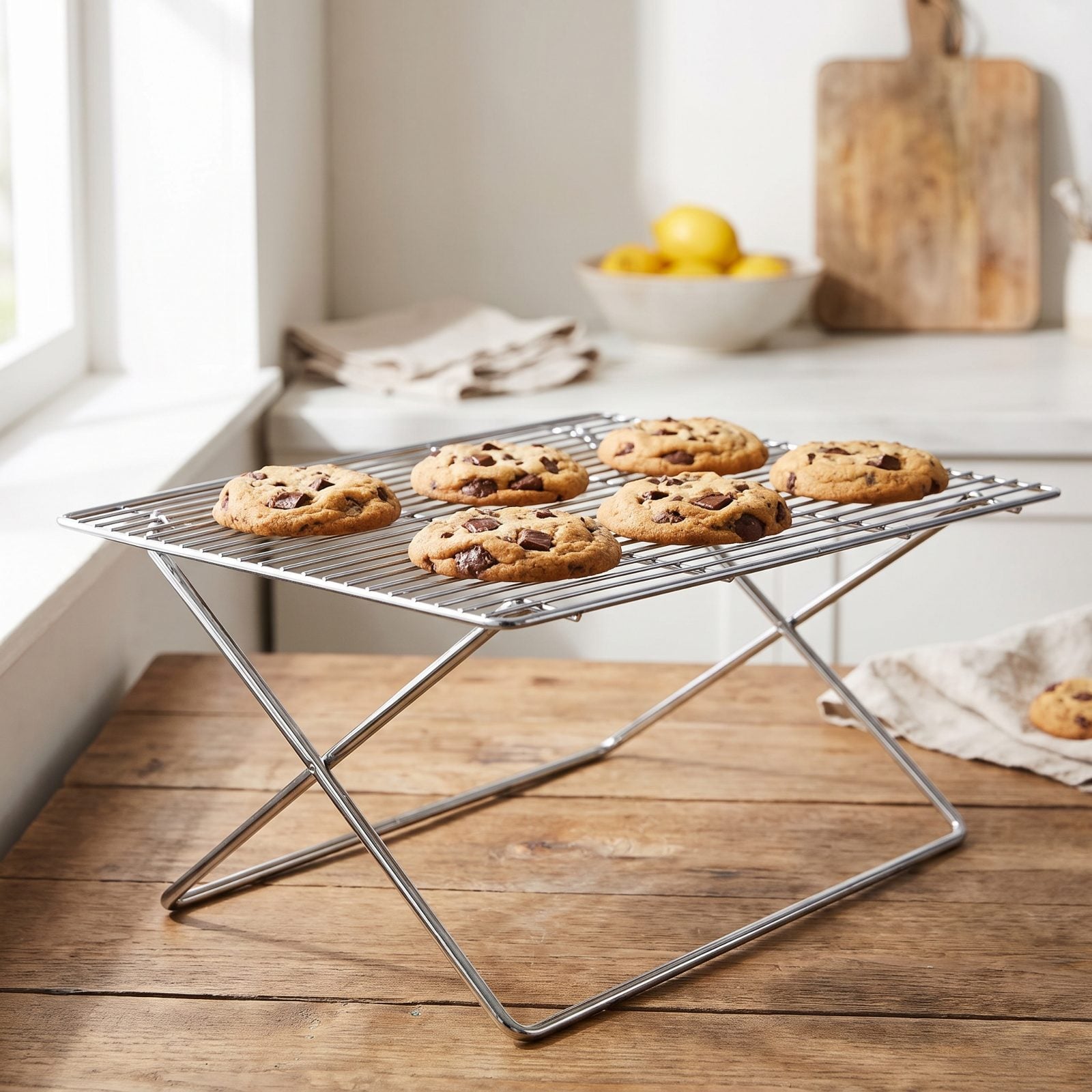
These little folding racks were the unsung workhorses of the whole operation. Thin wire, tall scissoring legs that lifted everything a good inch or so off the counter — plenty of room for air to move underneath so the bottoms didn’t go soggy.
They collapsed flat for the drawer and sprang open with a satisfying snap. When every rack was full and the counter still had sheets waiting, someone would start laying cookies out on spread newspaper, which worked fine and horrified nobody.
The wires left faint grid marks on the softest cookies. You learned to flip those ones over before the plate went out.
21. The Ticking Windup Kitchen Timer
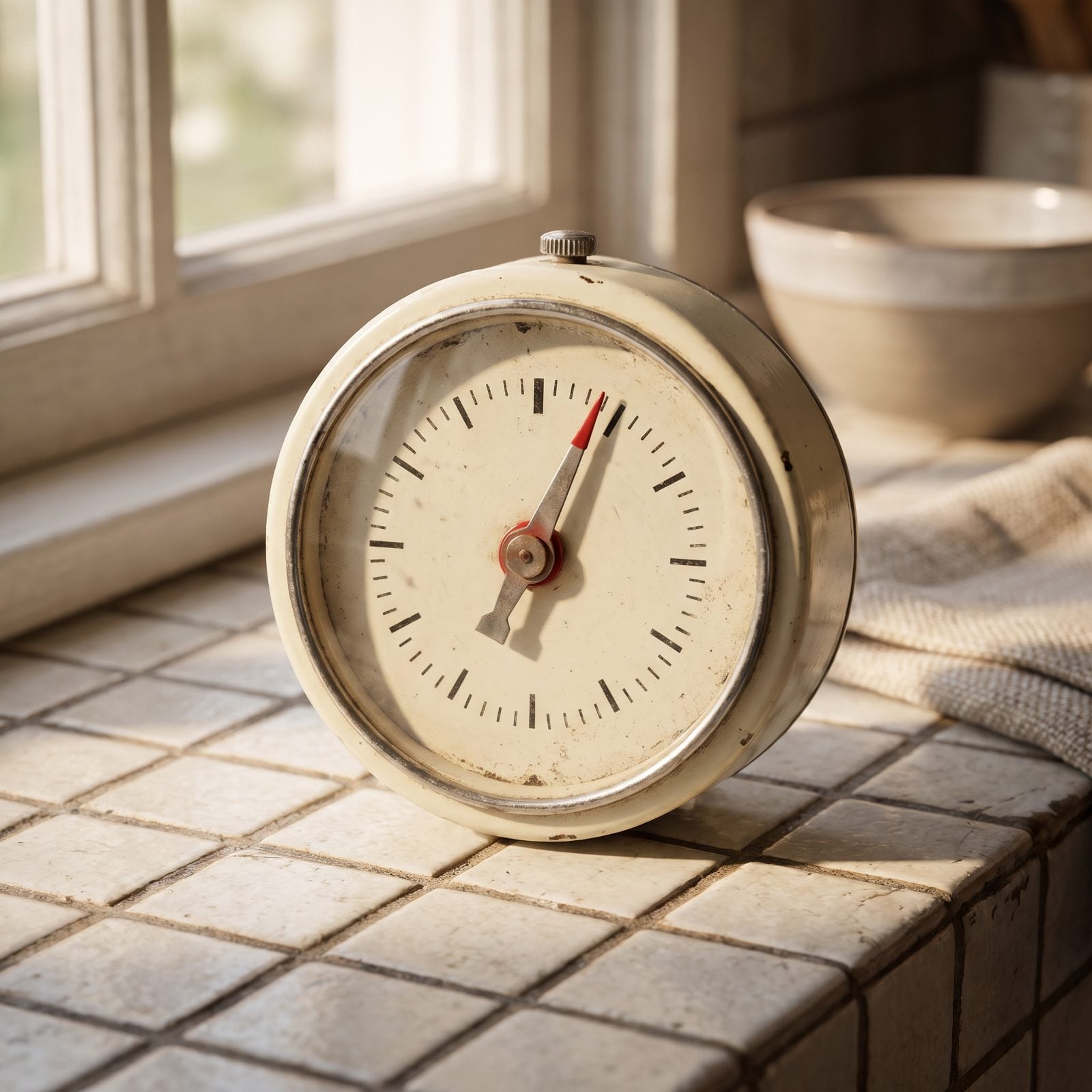
Twist it past the mark, let it unwind, and that steady tick became the heartbeat of the afternoon. No screen. No beep. Just a mechanical whir building toward a bell that rattled the whole counter when it finally let go.
You could hear it from the next room, which was the entire idea. Reassuring and faintly maddening, both at once.
The bell didn’t politely chime. It went off like a fire alarm, and somebody always jumped.
20. The Quilted Potholders Beside the Stove
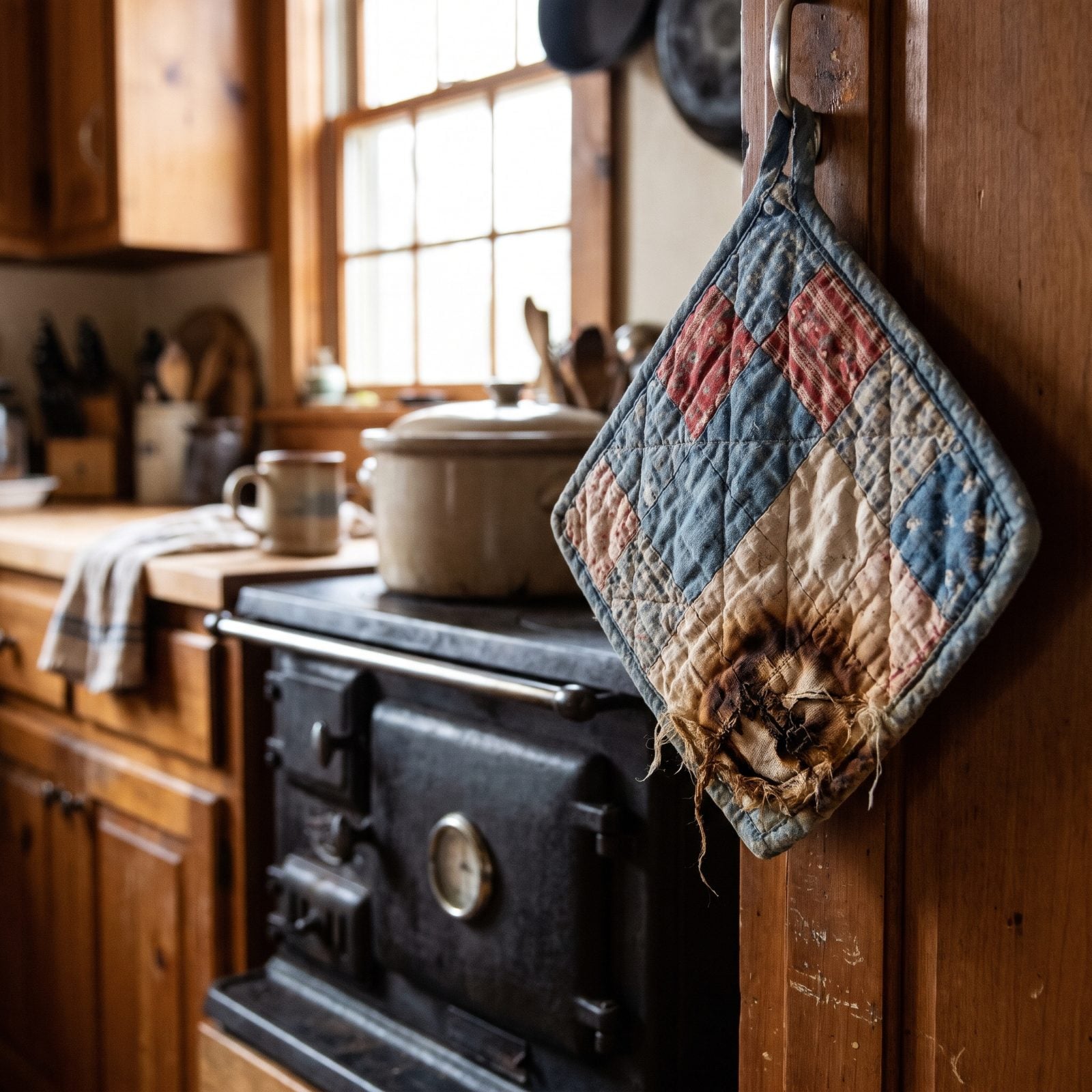
Every one of them had a scorched corner. That brown triangle told you which end got grabbed in a hurry, year after year, pan after pan. Nobody threw them out over a little burn mark — you just rotated to the good corner.
Homemade usually, quilted from calico scraps, hung on a nail within arm’s reach of the oven door. They went flat and thin over time until you could practically feel the heat through them, which is when somebody finally sewed a new batch. Alright, grab the one without the hole.
19. The Butter Softening in a Covered Dish
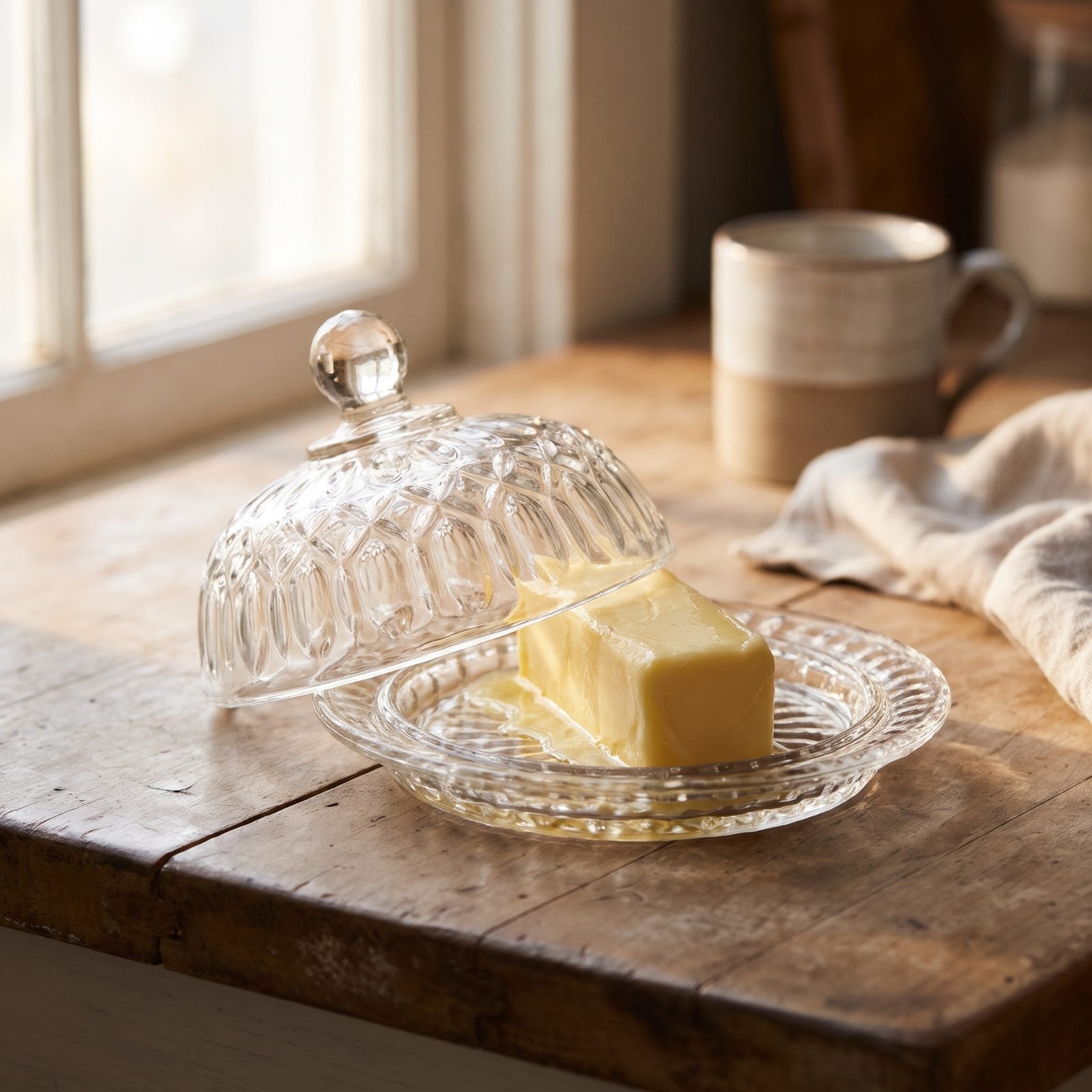
You couldn’t rush it and you couldn’t skip it. Butter straight from the icebox turned to crumbs in the bowl, so it came out early, under a glass dome or a saucer flipped over a plate, and sat near the warm oven until your finger left a soft dent.
Room-temperature butter creamed smooth and held air, which is why the cookies came out tender. The timing was pure instinct. Too soft and it went greasy, too cold and nothing mixed right.
18. The Firm Lump in the Brown Sugar Crock
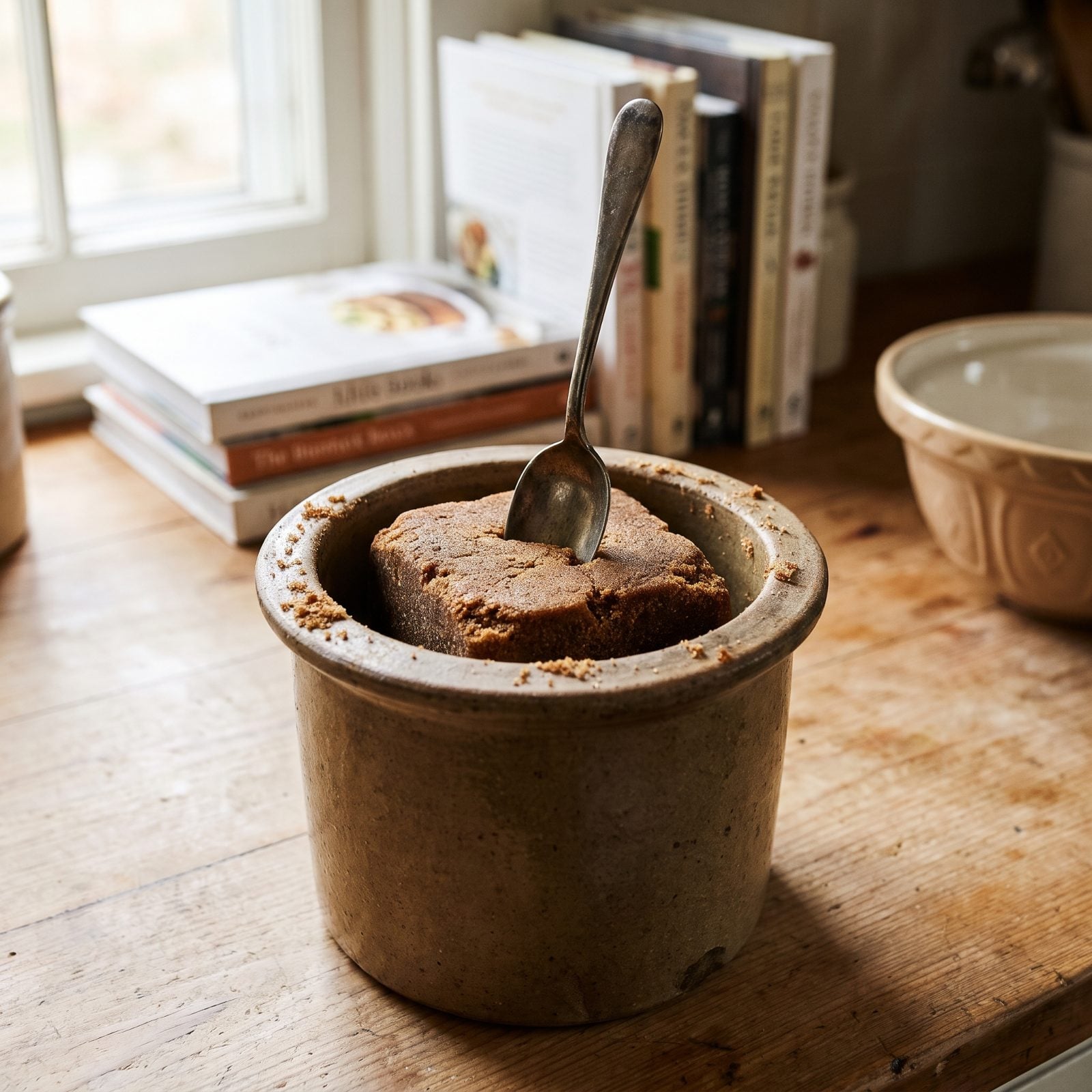
Pack it down into the crock, walk away for a week, and you came back to a brick. Brown sugar did this every single time, and every kitchen had its own fix.
The old trick was a slice of bread laid right on top. The sugar pulled the moisture from it and went soft again by morning. Some crocks had a little fired-clay disc you soaked in water instead. Either way, there was always a moment of chipping at a stubborn lump with a spoon while everything else waited.
Describing the slice-of-bread fix, a recipe developer and consultant writes “When placed together, the brown sugar will absorb the moisture from the bread, softening it to its former glory.”
17. The Sticky Jar of Dark Molasses
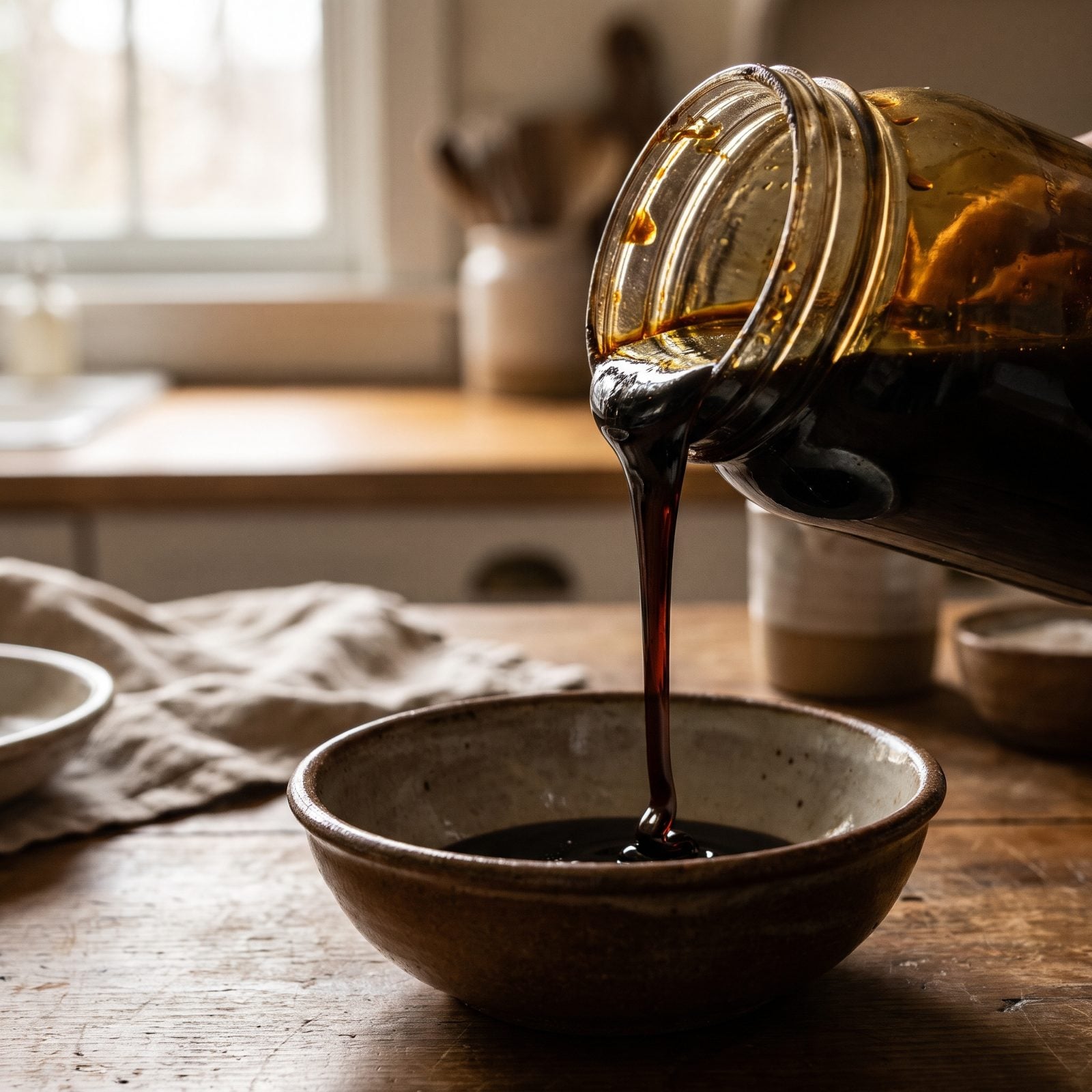
Pour it slow or you’d be sorry. Molasses came out in that unhurried dark ribbon that took its own sweet time, and the lid never quite screwed back clean, which is why the jar always stuck to the shelf.
This was the smell of gingerbread and dark spice cookies — deep, almost bitter under all that sugar. You measured it in a greased cup so it would slide out whole instead of coating everything.
16. The Lineup of Warm Holiday Spices
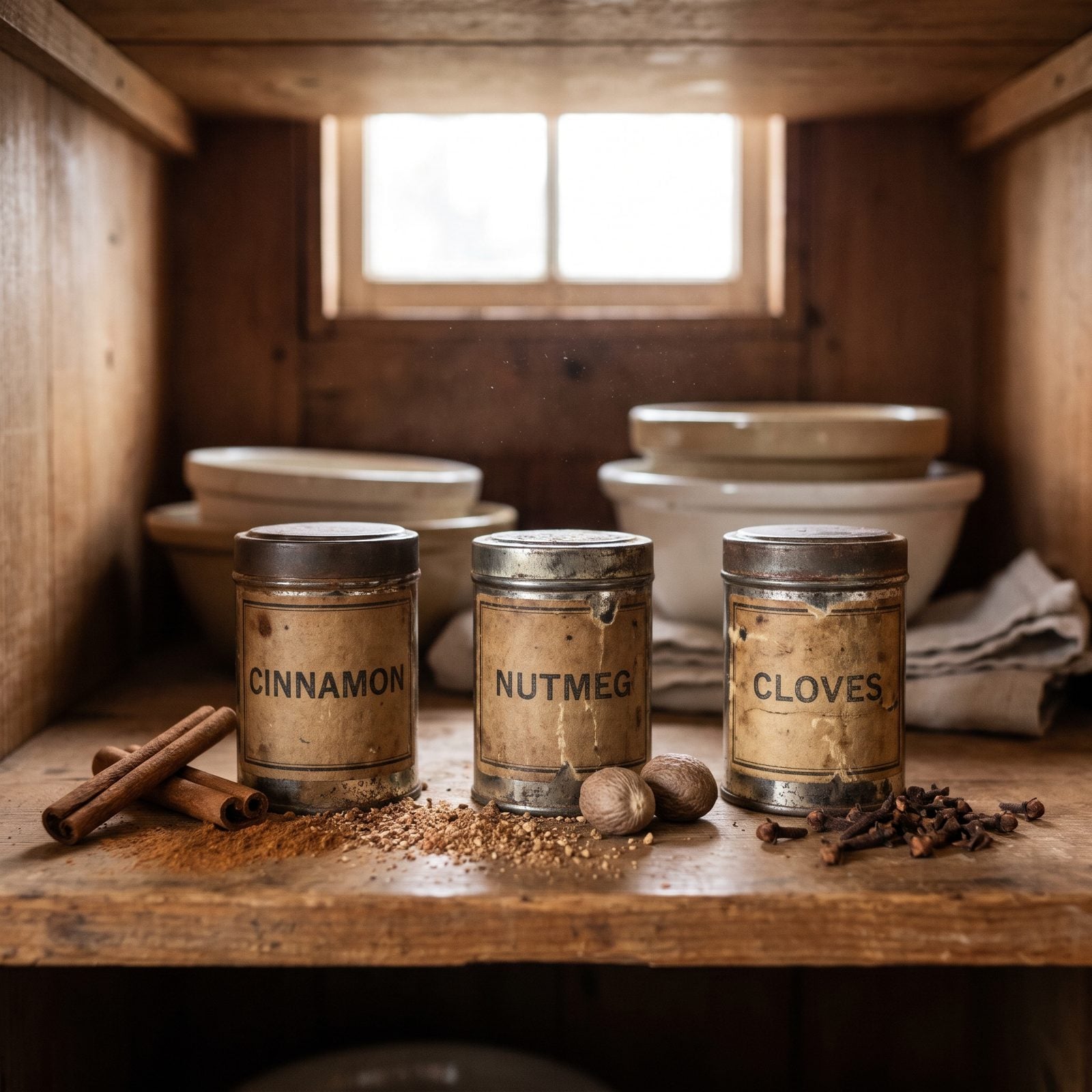
Cinnamon, nutmeg, cloves, ginger, allspice. The holiday lineup came down from the cupboard together, the tins a little rusted at the seams, the labels worn soft from handling.
There was usually a whole nutmeg and a tiny grater, because the pre-ground stuff in a tin never smelled like much by December. Grating it fresh filled the kitchen in a way nothing else could, and you smelled the day before you saw a single finished cookie.
Honestly, half these tins were older than they had any business being. Spices fade. But lining them up mattered more than whether the cloves still had any punch left.
15. The Nut Bowl and Its Heavy Metal Nutcracker
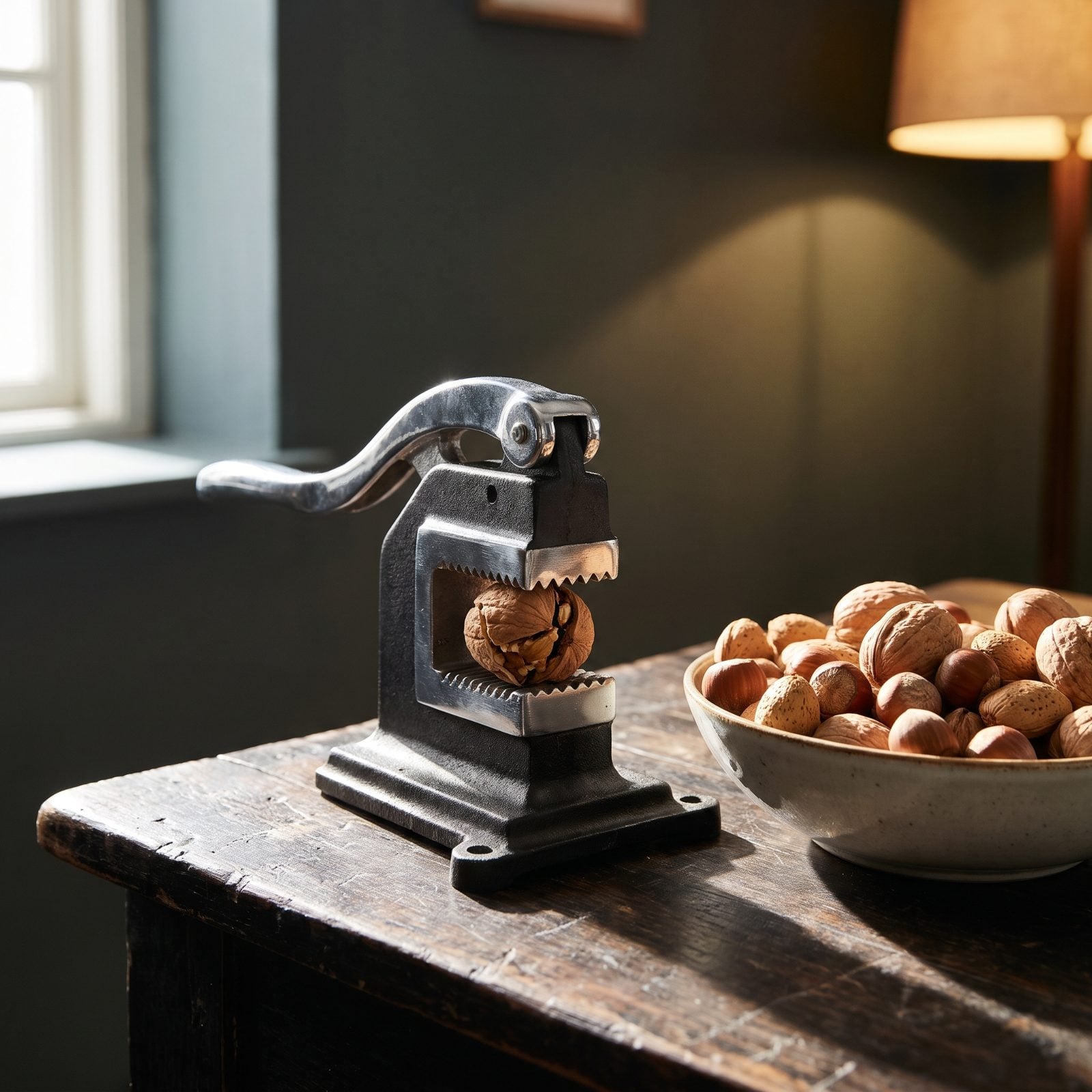
That nutcracker weighed a ton and lived in a drawer you weren’t supposed to open. Chrome, cold, built like a tool from a factory floor.
Cracking nuts was a whole job, usually handed to whoever was underfoot. You pressed the lever, the shell gave with a sound like a small bone, and half the time the meat came out in crumbs instead of clean halves. The bowl held walnuts and hazelnuts mostly, plus a handful of almonds that nobody could ever crack right.
Store-bought shelled nuts existed. They just weren’t trusted the same way.
14. The Jewel-Colored Candied Fruit and Citrus Peel

Red and green cherries that looked like costume jewelry. Candied peel the color of stained glass. These were the ingredients that said fruitcake and nothing else.
They came in little tubs and lived in the back of the pantry most of the year, waiting. The texture was strange — part gummy, part crystalline, sweet in a way that felt old-fashioned even then. Half the people at the table hated fruitcake and said so loudly, and the other half quietly ate three slices.
13. The Little Bowls of Red, Green, and Blue Colored Sugar
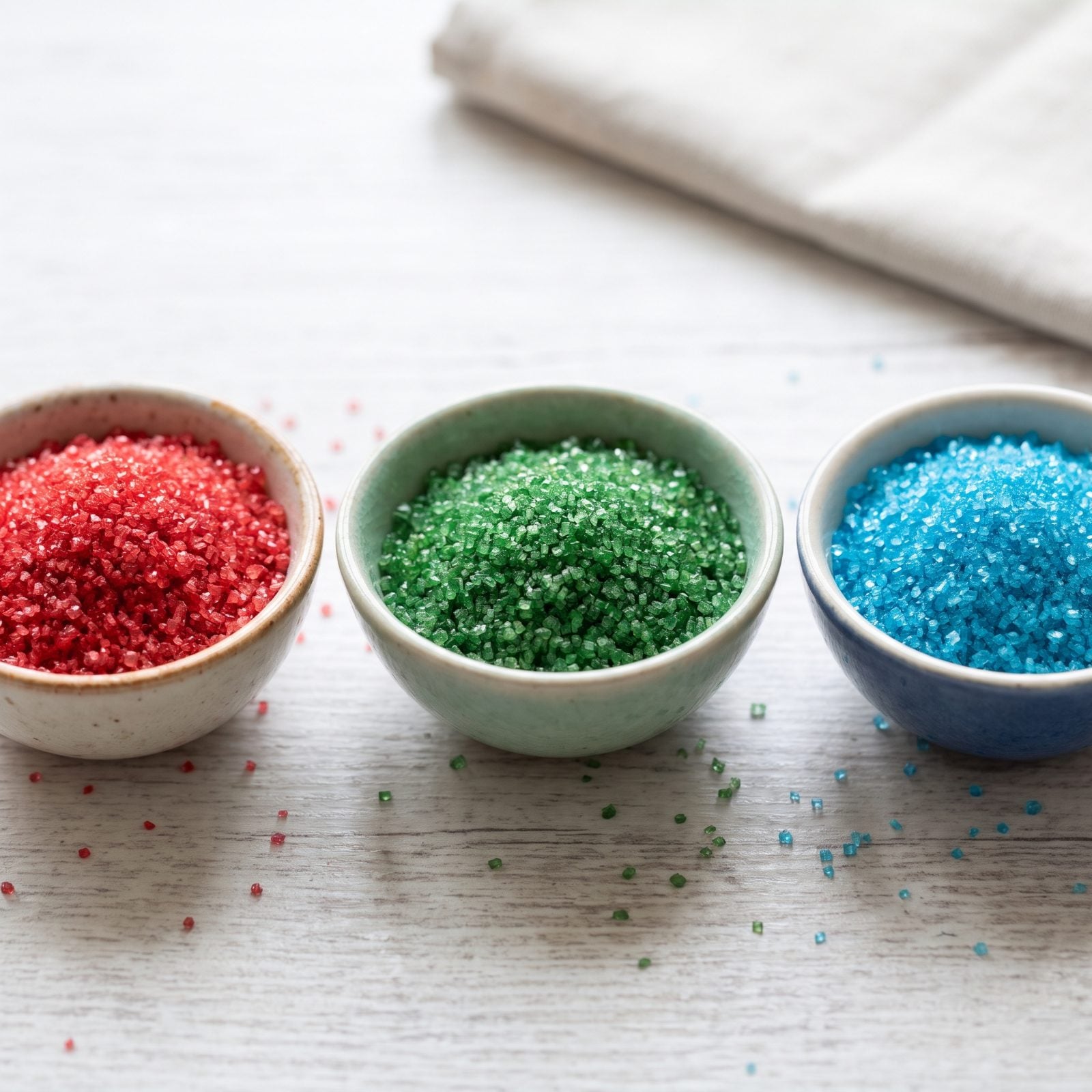
Tiny bowls lined up in a row, each one a different candy color, the sugar coarse enough to catch the light and sparkle.
This was the part the kids actually got to do. You pressed a cut-out cookie into the red, shook off the excess, and inevitably dumped half the bowl on the floor. The colors never stayed in their own lanes — by the end, the green had red flecks in it and everybody’s fingers were stained.
Nobody minded. Sparkle was the whole idea.
12. The Covered Bowl of Dough Chilling on the Back Porch
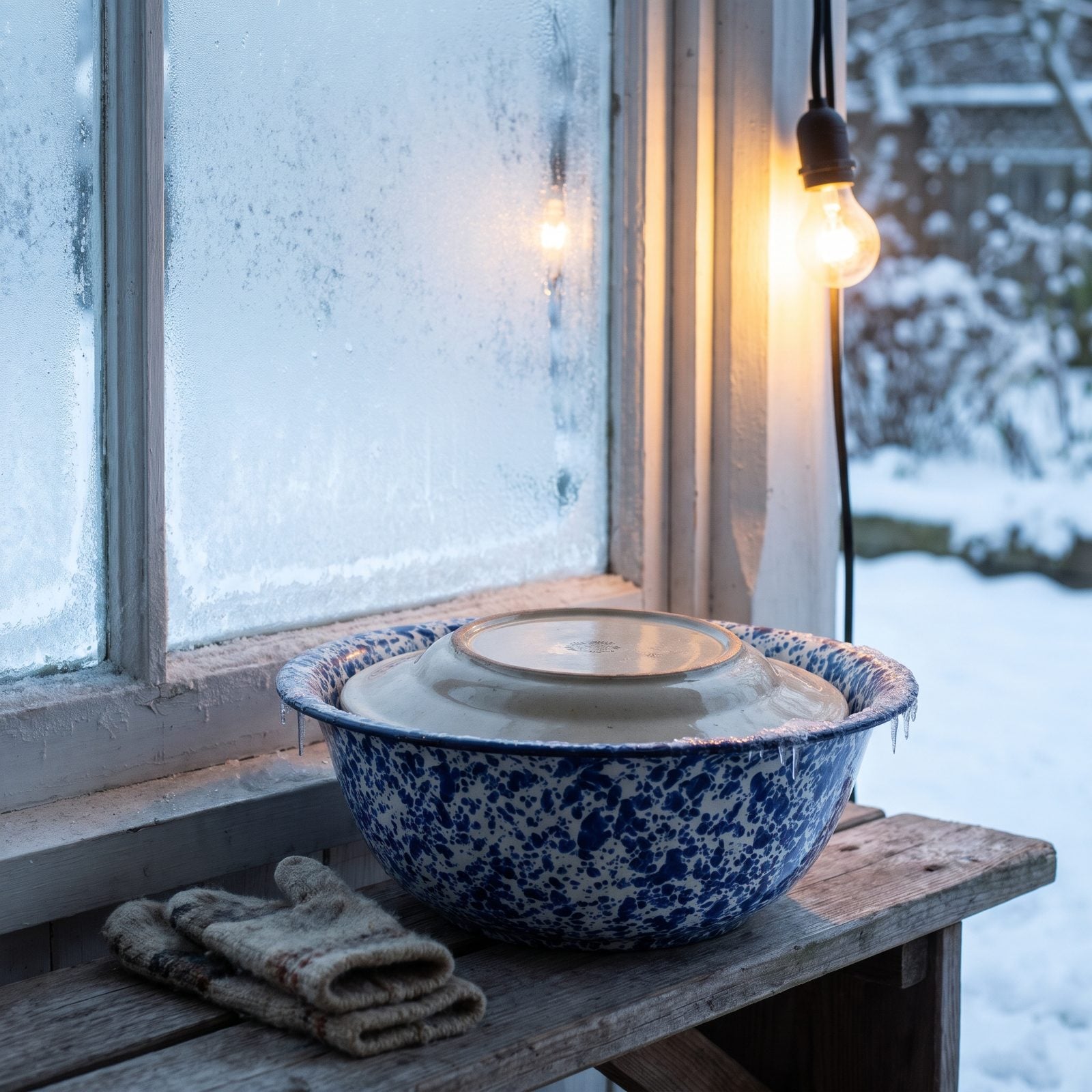
The refrigerator was full, so the dough went out on the porch — covered with a plate, a cloth, maybe a dishtowel weighted with a jar lid against the wind.
Cold weather was free refrigeration, and everybody used it. The dough firmed up out there in the real December air while the kitchen stayed warm and loud. You learned not to go poking around that bowl, because disturbing the chill meant the rolling went wrong and the cut-outs spread into blobs.
11. The Lone Test Cookie Pulled Early to Check the Batch
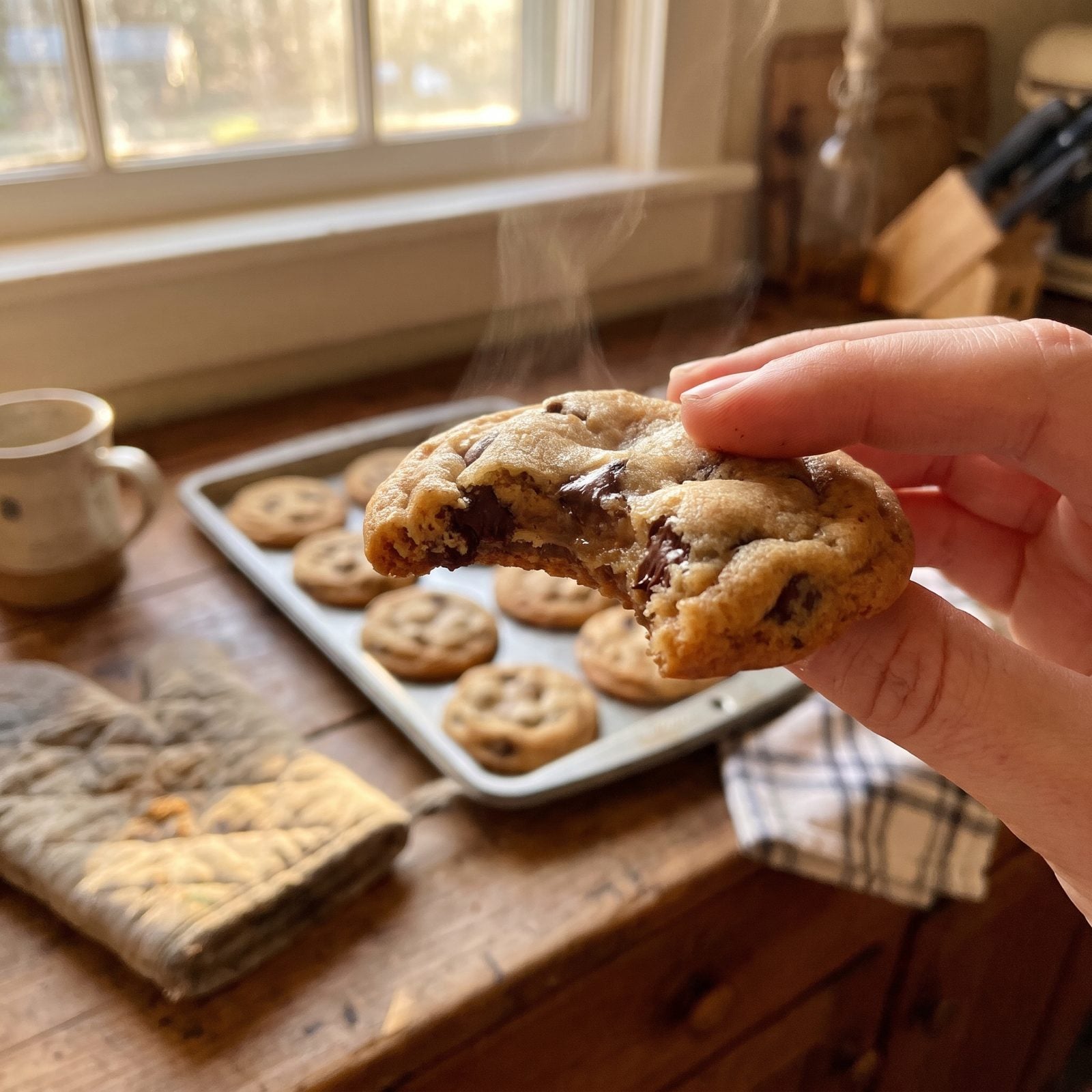
The first one out never made it to the plate. It got eaten standing up, hot, as a scientific necessity.
Somebody had to taste-test. Was it too sweet? Baked through? Did it need another minute? Urgent questions, all of them, demanding immediate sacrifice. The test cookie was quality control dressed up as a treat, and the person doing the testing always seemed to need several more samples to be really sure.
10. The First Batch With Edges a Shade Too Dark
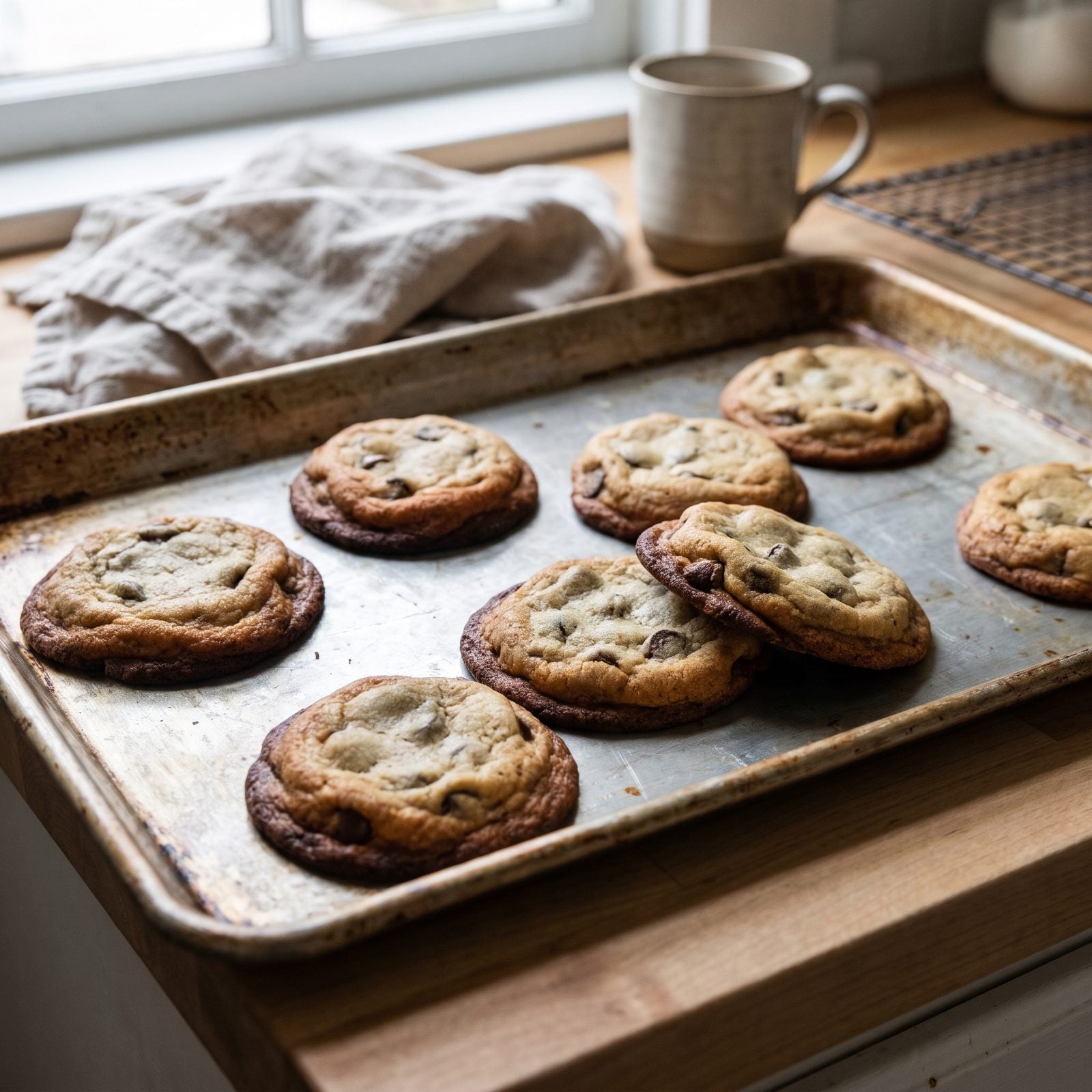
Every oven ran a little hot in one corner, and the first batch paid for it. Edges gone bronze, a couple of them tipping toward burnt.
You learned your oven by ruining the first tray. After that you knew to rotate, to pull a minute early, to not trust the dial. The dark ones didn’t go in the trash — they went on a plate labeled, informally, for the people who like them crunchy. There were always exactly enough of those people.
There’s a reason not to trust the dial, as a food blogger and baker points out: “Ovens rarely run exactly at the temperature you set”
9. The Odd-Shaped Cookie Made From Dough Scraps
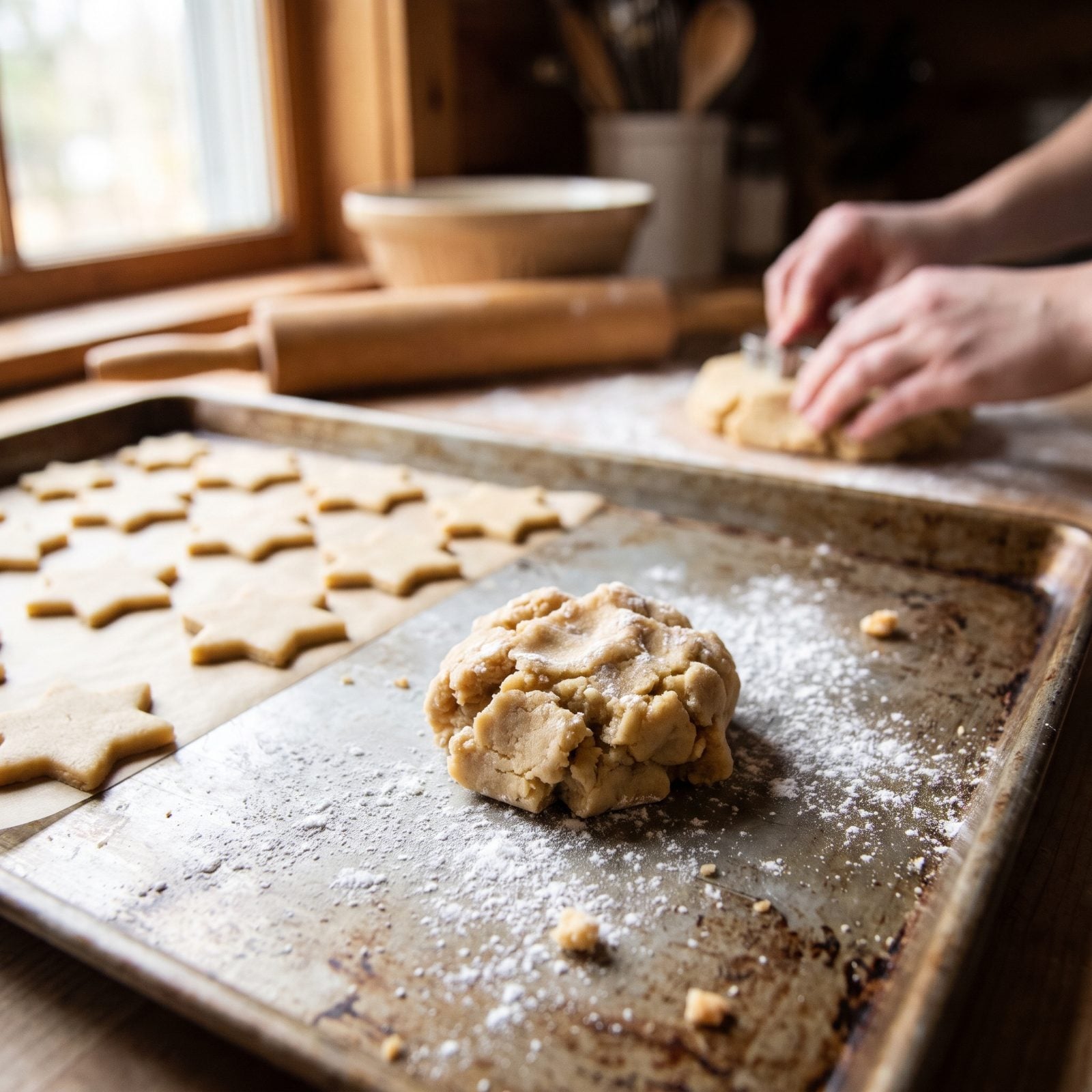
Every rolled batch ended the same way, with that last scrap of dough too small for a proper cutter and too good to throw out. So it got patted into whatever shape it wanted to be and shoved onto the pan next to the bells and the stars.
That one baked a little darker, a little flatter, a little wrong. And it was always the first one gone. The ugly cookie was the family cookie — nobody photographed it, everybody remembered it.
8. The Cookies Cooling on Every Available Surface
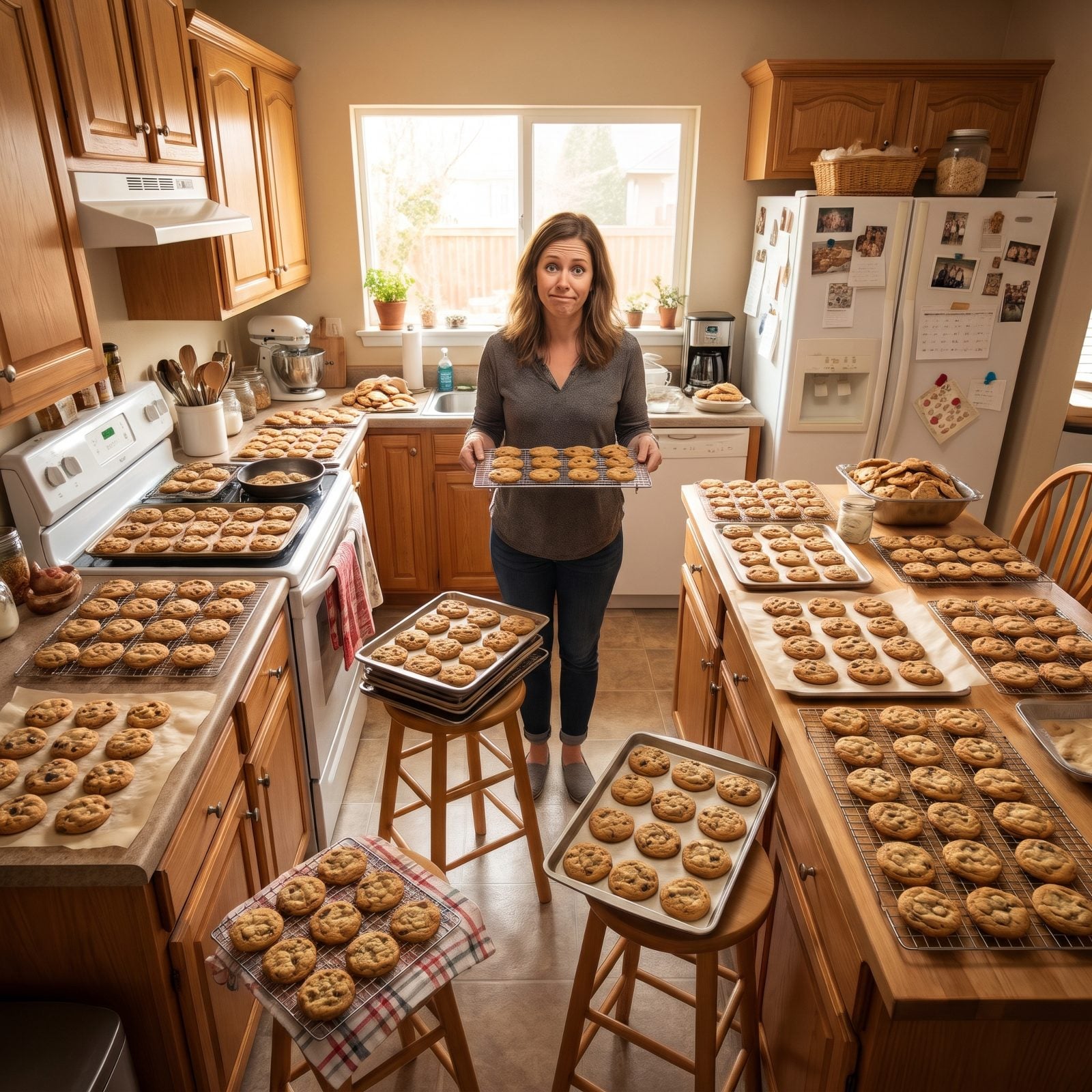
At some point the pans ran out of landing space and the cookies colonized the house. Cooling racks first. Then dish towels spread over the table, then waxed paper laid across the counters, and when those filled up, the top of the washing machine out in the mudroom.
You learned to walk through the kitchen sideways. You learned that “don’t touch” applied to about forty square feet of surface. And you learned exactly which rack held the batch nobody was counting.
By mid-afternoon there was nowhere left to set down a coffee cup, and that was how you knew it had been a good day.
7. The Ridged Spritz Cookies From the Cookie Press
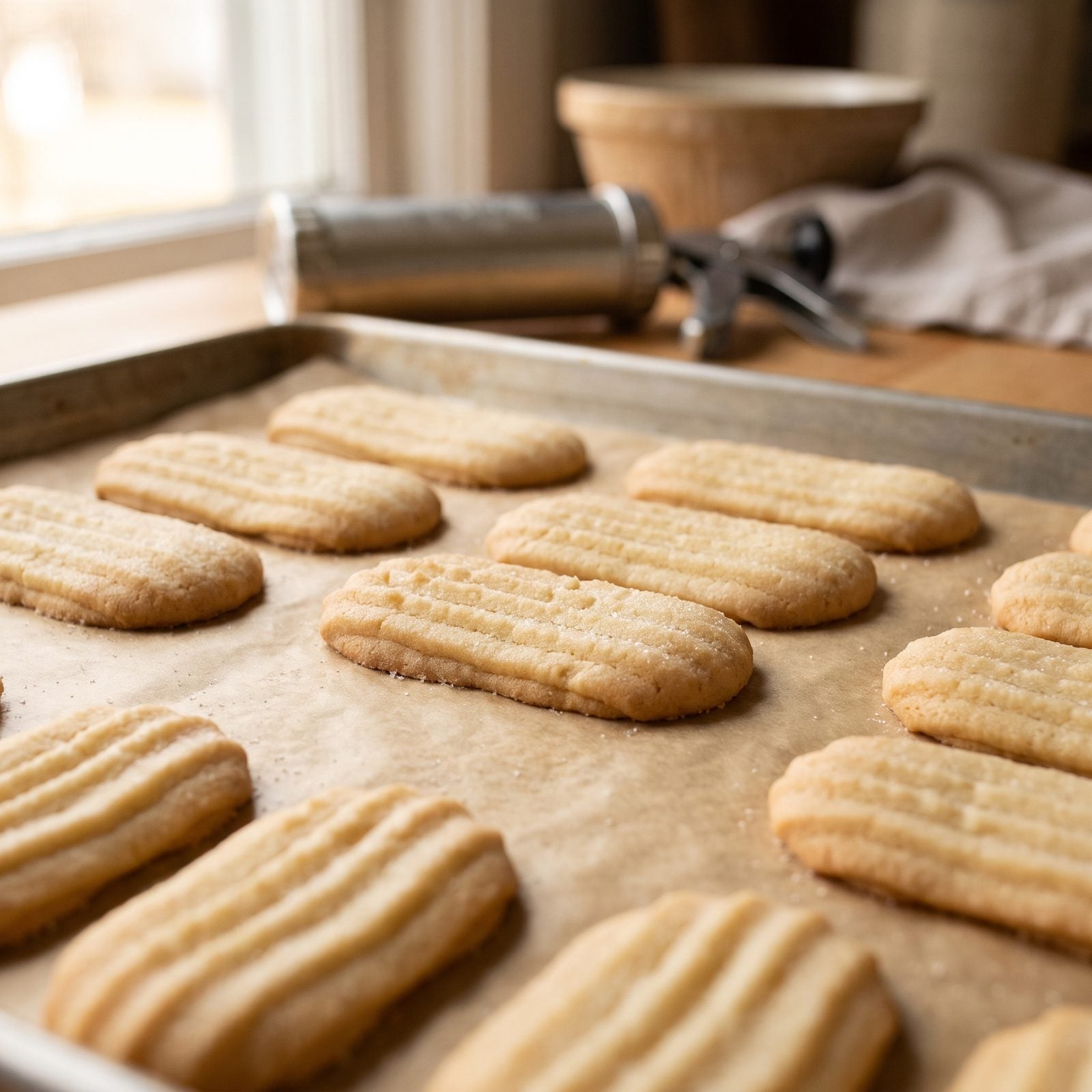
The cookie press was finicky, and everyone pretended to know how to use it. You cranked the plunger, lifted the barrel, and either a clean ridged finger appeared on the sheet or a sad lump did. No middle ground.
Spritz dough had to be just right — cold enough to hold its grooves, warm enough to let go. Get it wrong and you spent twenty minutes scraping the press and swearing softly. Get it right and you turned out those pale little ovals by the dozen, each one striped with neat parallel ridges.
Proof that spritz dough has to be just right comes from one baking recipe developer, who admits “I broke two cookie presses while developing spritz cookie recipes because my dough was too stiff.”
6. The Gingerbread People With Uneven Expressions
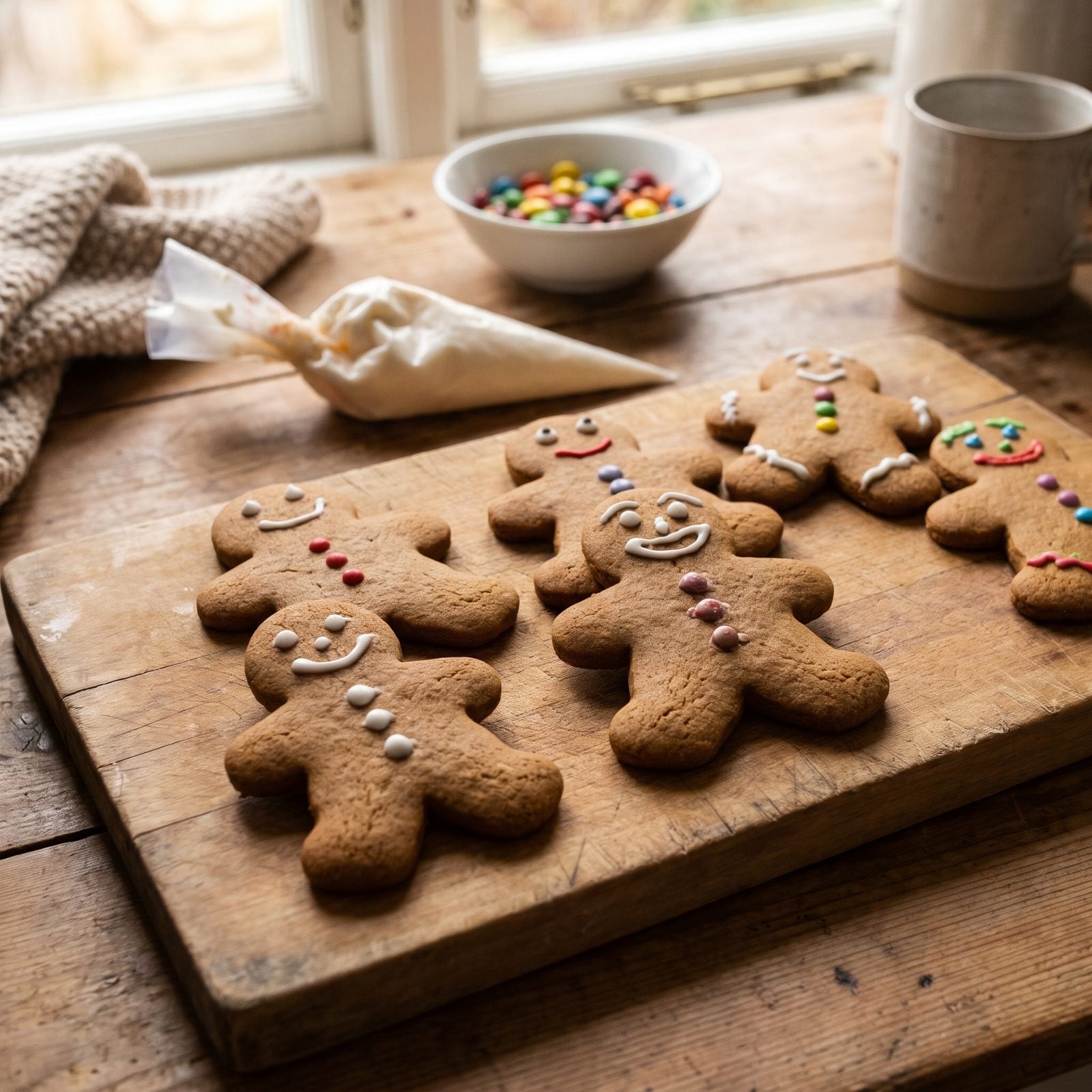
Not one of them matched. The icing came out of a paper cone with a mind of its own, so one got surprised eyebrows, another got a smile that slid clean off its face, and a third ended up looking vaguely suspicious of the whole operation.
But it’s the smell that stays with you. Dark, warm, a little sharp, filling the whole room while they baked. You could tell the gingerbread was in the oven without ever setting foot in the kitchen.
5. The Jam Thumbprints With Jewel-Like Centers
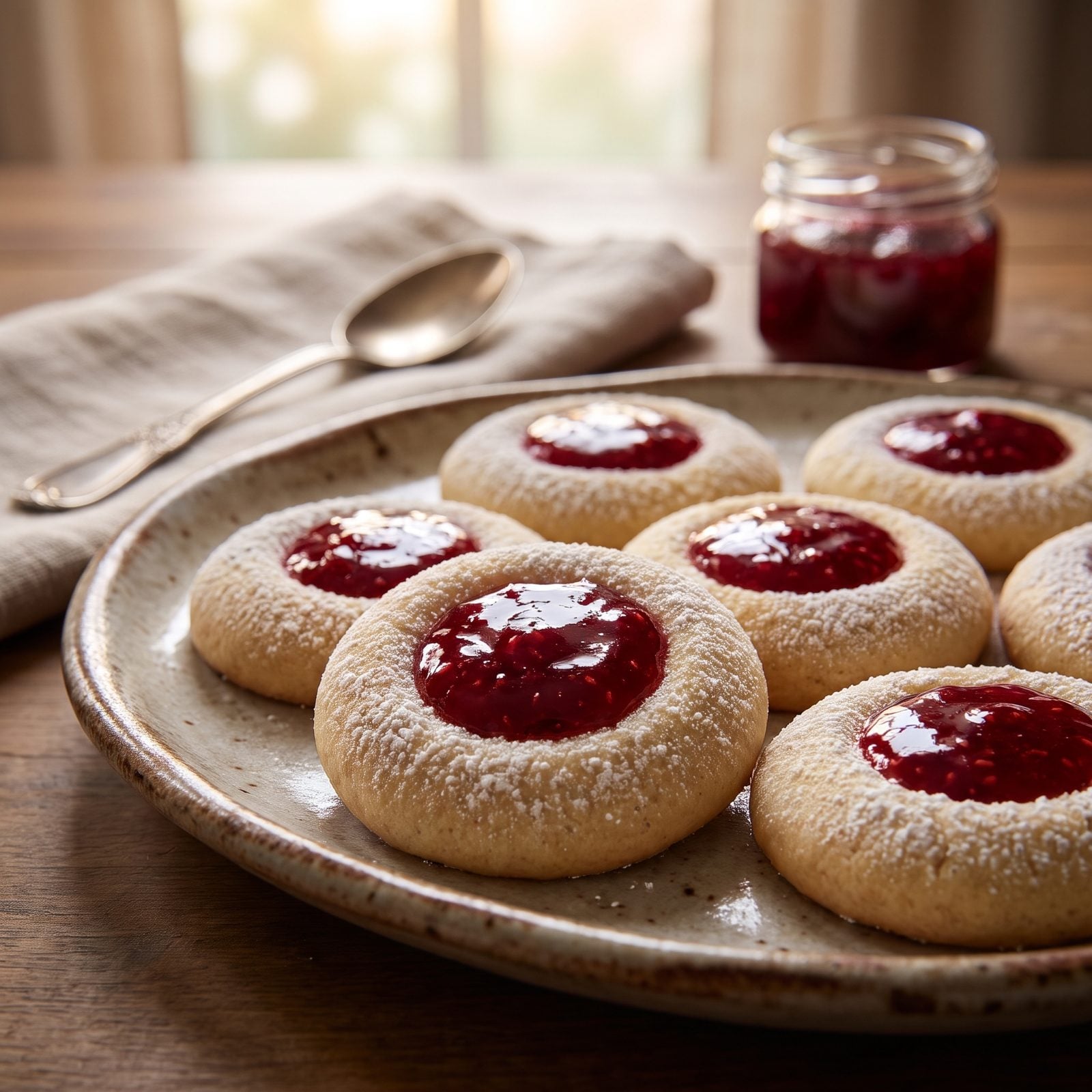
The thumbprints were the fancy ones, the cookies you set out when company came. Each got a little well pressed into the center, then a spoonful of jam that went glassy and bright as it baked.
Everyone had their loyalty. Red was the classic — that deep ruby seedless raspberry. The purple centers tasted of grape or plum, the amber ones of apricot, and there was always one holdout who scavenged the plate for whichever flavor was running out first.
4. The Powdered-Sugar Crescents Lined in Rows
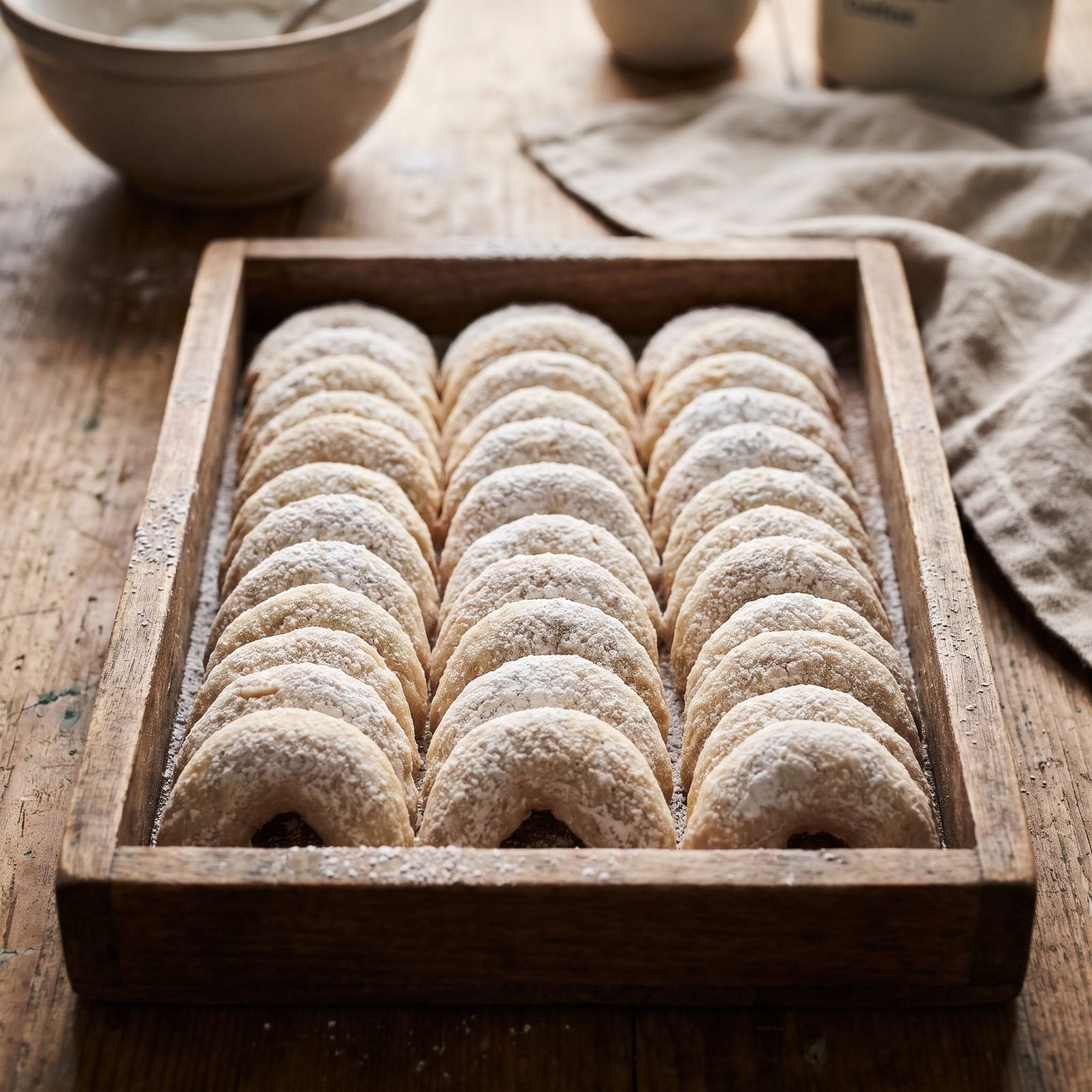
You knew them before you knew their name. Little pale moons rolled in powdered sugar, lined up so close they almost touched, and the whole sheet looked like it had been snowed on indoors.
Call them crescents, Russian teacakes, Mexican wedding cookies, snowballs — same idea, different grandmother. The nuts got ground fine and the dough barely held together, and the one rule nobody skipped was rolling them in sugar twice. Once while warm, so it melted and stuck. Once cool, so it stayed white.
3. The Dented Metal Tins Lined With Wax Paper
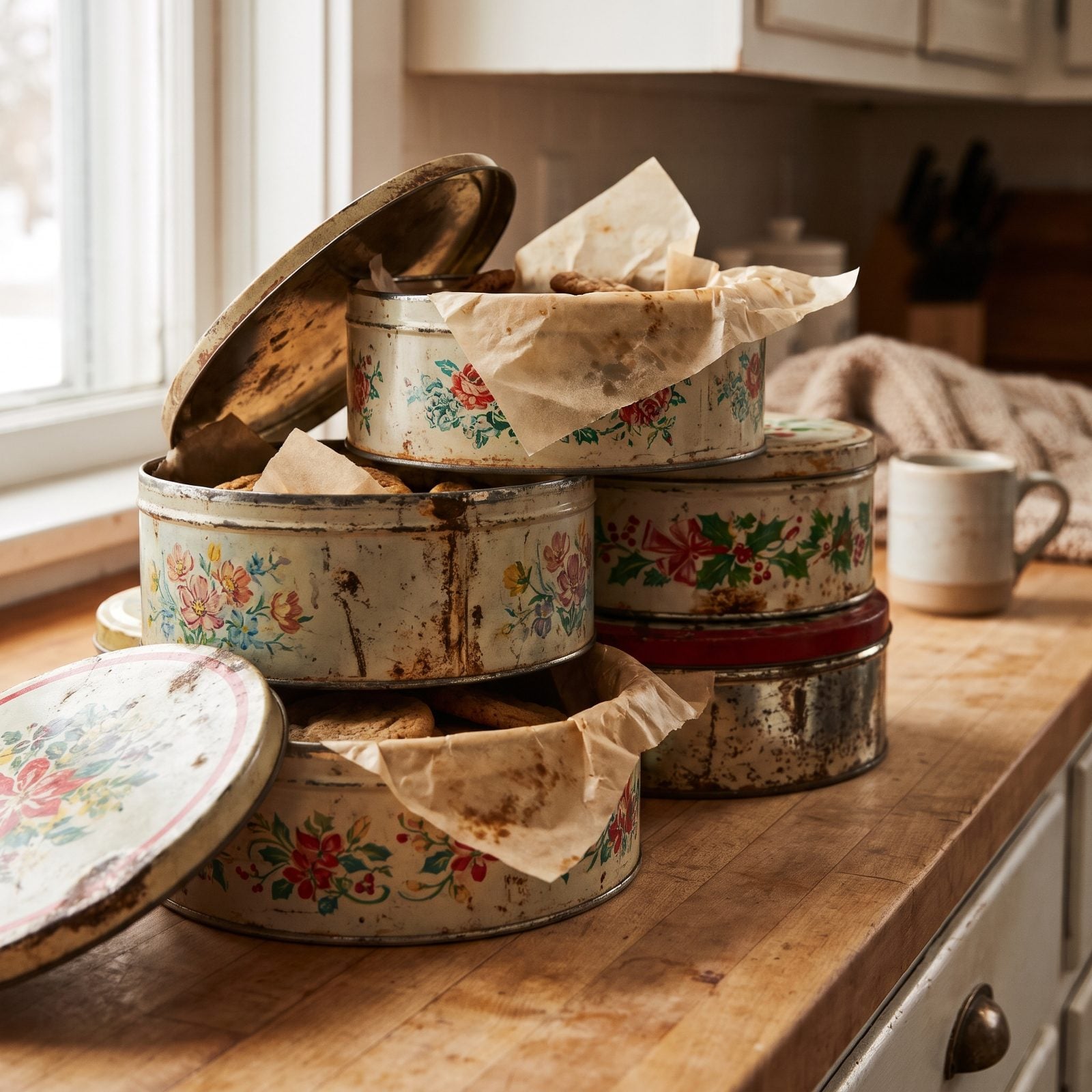
Nobody bought these tins on purpose. They arrived full of someone else’s shortbread one December and simply never left the house.
The paint chipped, the lids stopped fitting quite right, and the hinge on the big one squeaked loud enough to announce itself from the next room. A sheet of wax paper went down first, then cookies in layers, each type kept apart so the ginger didn’t bully the vanilla.
A cookie tastes better out of a scratched old tin than any bakery box. I will die on this hill.
2. The Slice of Bread Tucked In to Keep Cookies Soft
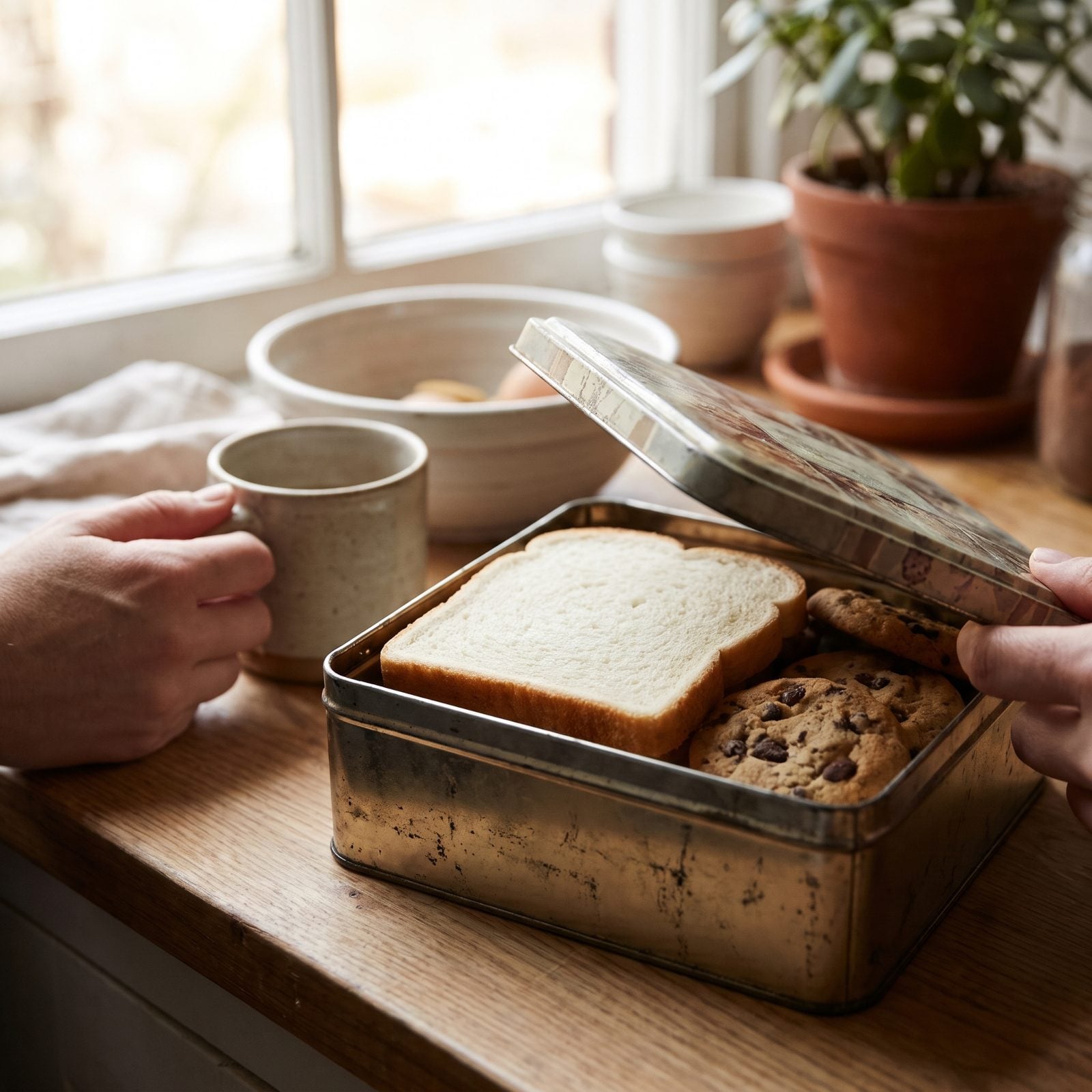
A slice of plain white bread, laid flat right beside the cookies, lid shut. Half the grandchildren figured it was an accident and ate around it.
It was no accident. The bread goes stale so the cookies don’t — it surrenders its moisture to the dry air in the tin, and the cookies stay tender for days longer than they had any right to. Swap it out when it turns hard as a cracker.
Asked why the old bread trick works, a baker’s hotline expert explains “Fresh white bread has a lot of moisture. When stored with cookies, it creates a humid environment, and the cookies absorb that excess moisture”
1. The Hidden Stash in the Highest Cupboard
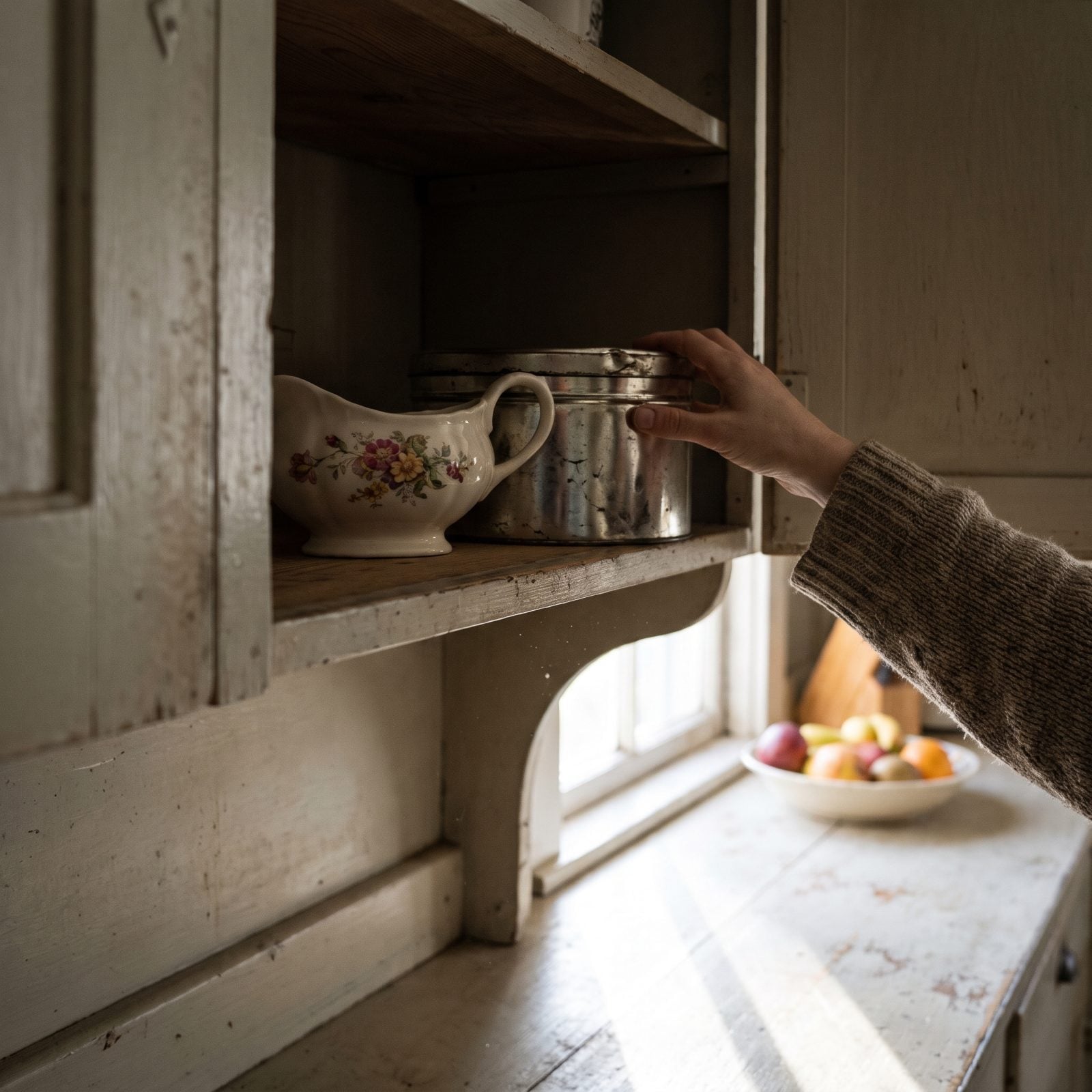
One tin never made it to the table. It lived on the top shelf, shoved behind the good gravy boat, where small hands couldn’t reach and grown ones had to really want it.
That was the real stash — the crescents that came out perfect, the pecan ones counted out for Christmas Eve, saved back so the Tuesday raiders couldn’t touch them. You learned which step stool squeaked. You learned the exact hour the kitchen emptied.
Finding that cupboard was half the fun of the whole month. Getting caught was somehow part of it too.