
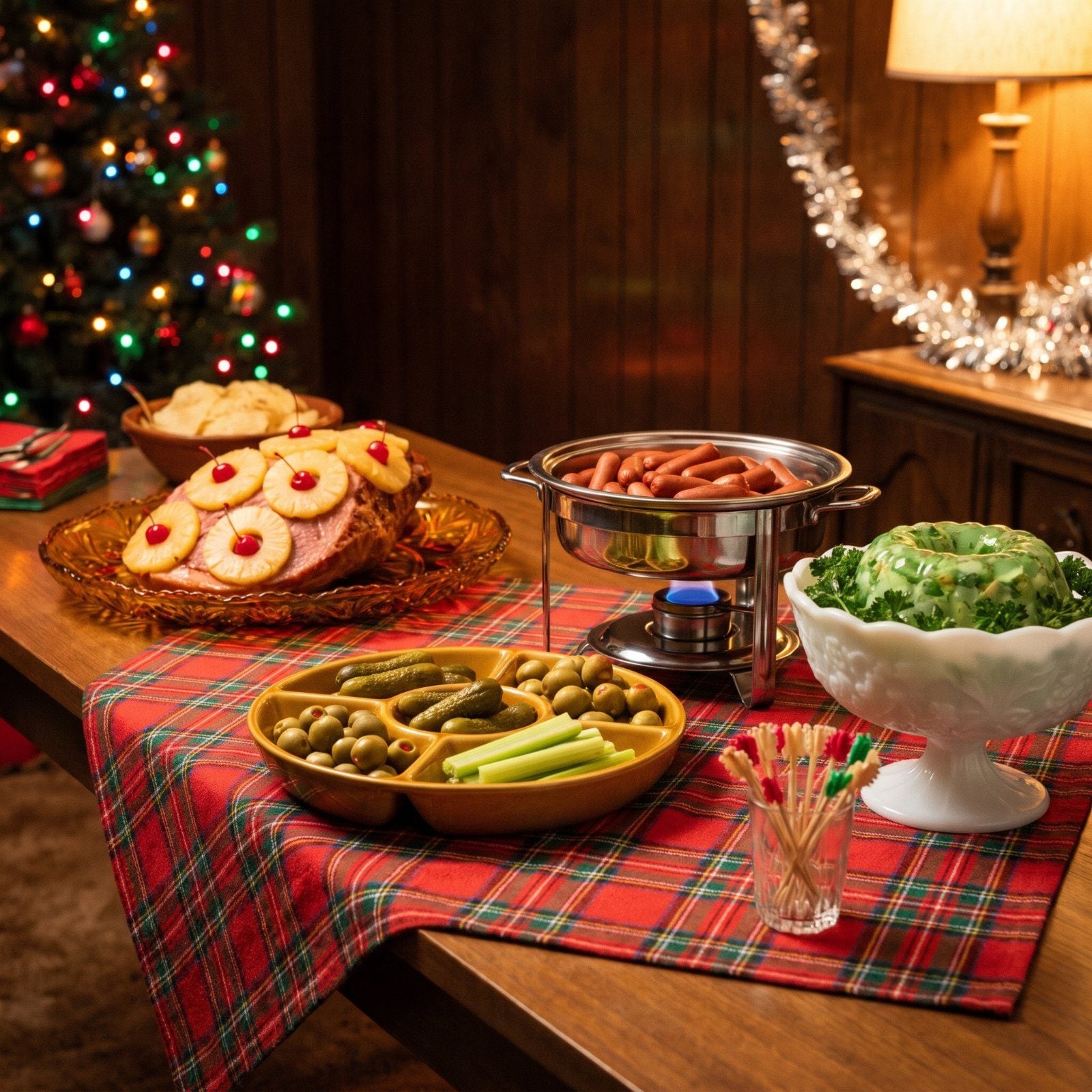
The smell hit you at the door. Ham studded with cloves, something warm bubbling under foil, a fondue pot clicking as its flame caught. Christmas Eve in the 1970s ran on a buffet table rather than a sit-down affair, and everyone circled the spread with a paper plate and a toothpick, picking as they went while the TV murmured carols in the next room. Divided glass trays. Chafing dishes borrowed from a neighbor. Frilled picks standing in a glass of their own. Below are the plates and party bites that showed up year after year, along with the serving pieces that made them feel like an occasion.
Please note that some of the images in this article were created with the assistance of AI.
30. The Glazed Ham Crowned With Pineapple Rings
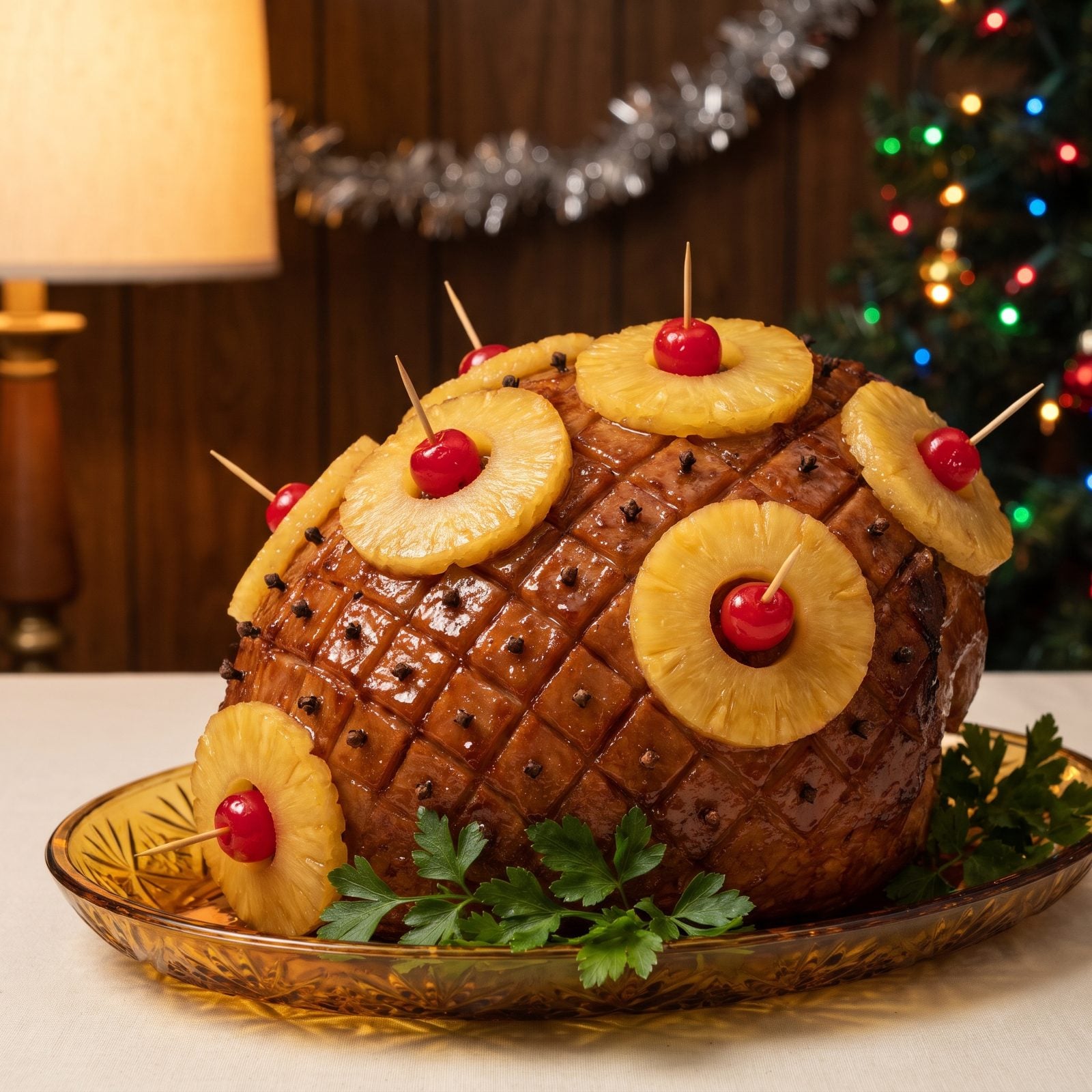
The centerpiece, and everyone knew it. A ham this size fed the whole relation and left enough for sandwiches through New Year’s, while the pineapple-and-cherry crown wasn’t decoration so much as a rule nobody voted on but everyone followed.
The glaze did the heavy lifting. Brown sugar and the canned pineapple juice cooked down into something sticky and dark that caught the holiday lights. You carved it standing up, in your good clothes, while someone hovered with a plate.
29. The Platter of Neatly Sliced Roast Turkey
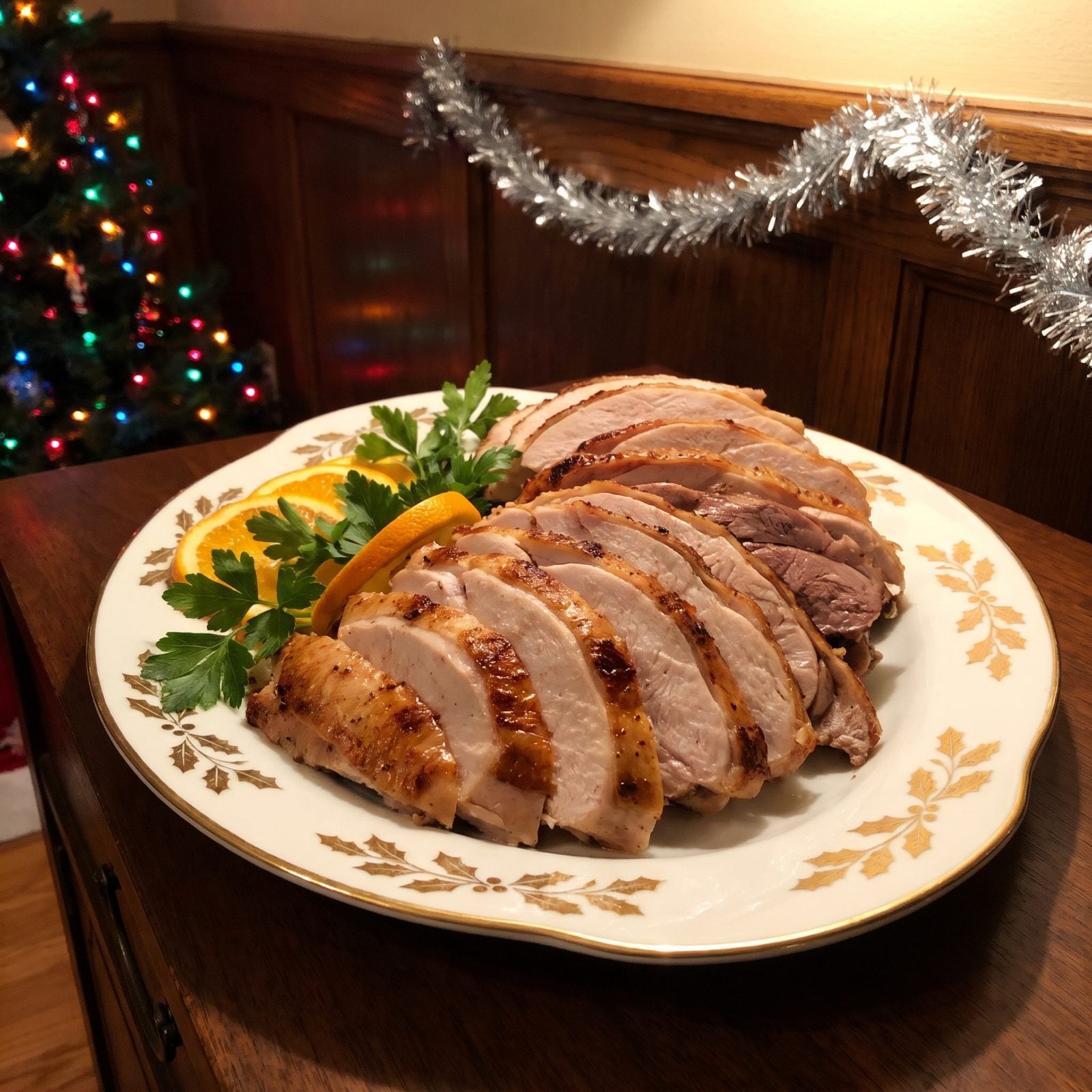
The quieter cousin to the ham, and the smart host served both. Turkey gave the buffet a second protein that felt less sweet, and the leftovers practically begged to be sandwiches.
People forget that in the 70s nobody left a whole bird sitting out to carve all night. You roasted it that afternoon, sliced it cold or barely warm, and fanned the pieces on a platter so guests could serve themselves without wrestling a carving fork. Less drama. More parsley.
28. The Bubbling Casserole of Scalloped Potatoes
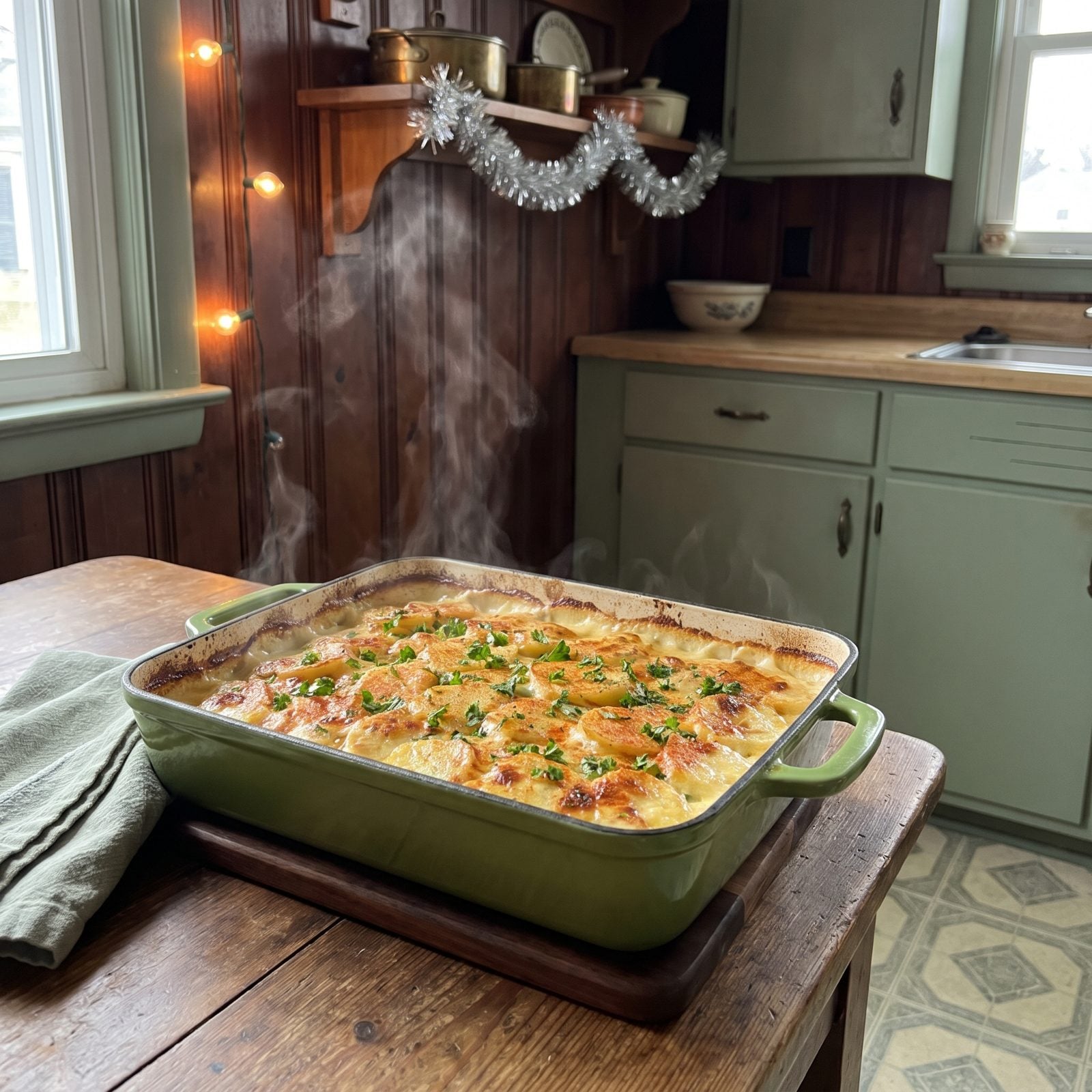
The dish that held the table together. Every buffet needs a starch that stays good sitting out, and scalloped potatoes did the job for an hour without complaint.
They came in that heavy enameled casserole, avocado green or harvest gold, the kind that lived in the oven more than the cupboard. The top went crisp and golden while the inside stayed creamy, and the corner pieces got fought over. I’ll say it plainly: the corner is the best part, and anyone who tells you otherwise is being polite.
27. The Green Bean Casserole With a Crisp Topping
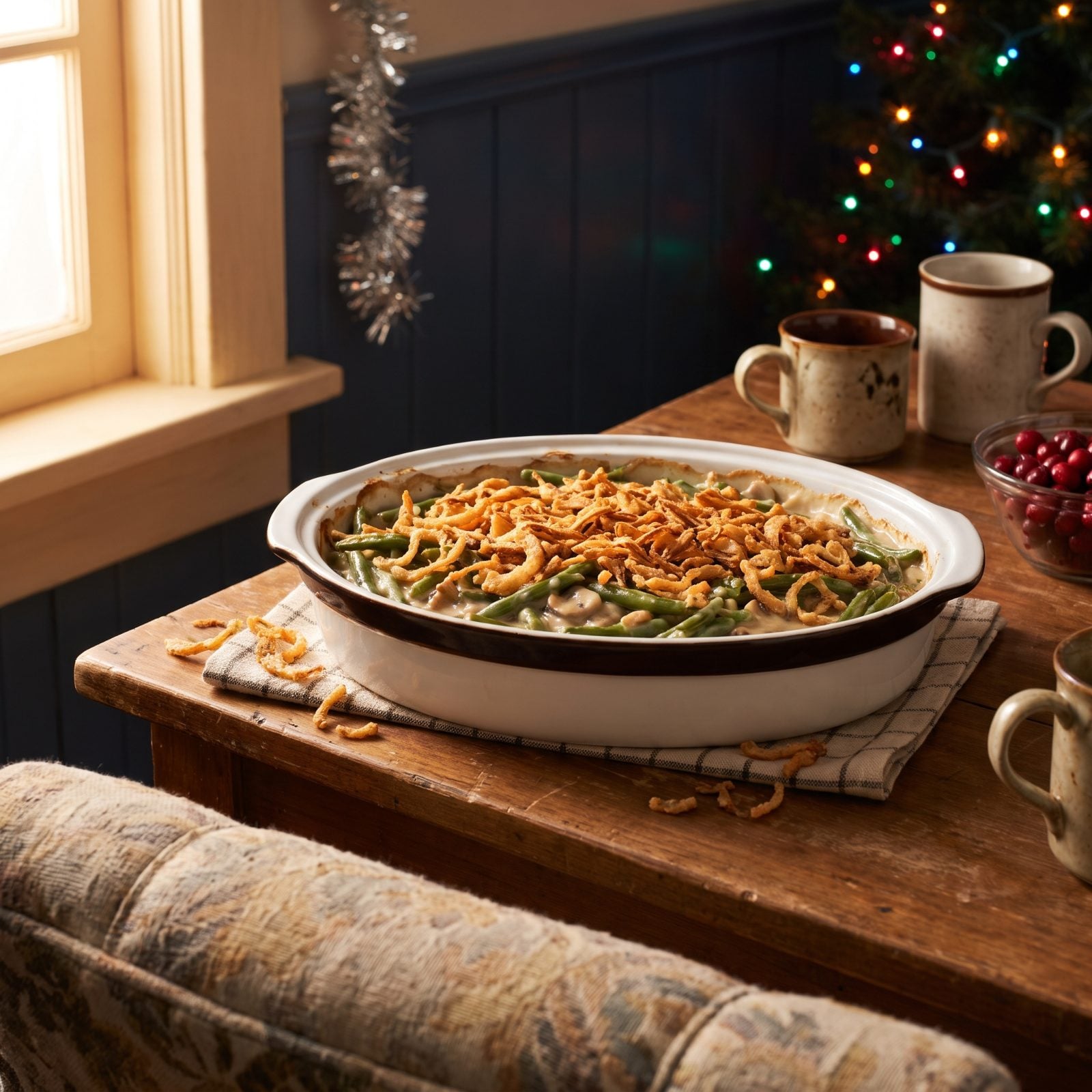
You’ve seen this exact dish at every holiday table since the Eisenhower years, and the 70s is when it became unskippable. Beans, a can of mushroom soup, and a crown of crisp fried onions on top.
What makes it work is pure contrast: soft beans, creamy sauce, and that crunchy onion lid that goes soggy if you topped it too early. The host who sprinkled the onions on at the last minute knew something.
26. The Basket of Soft Dinner Rolls Under a Cloth Napkin
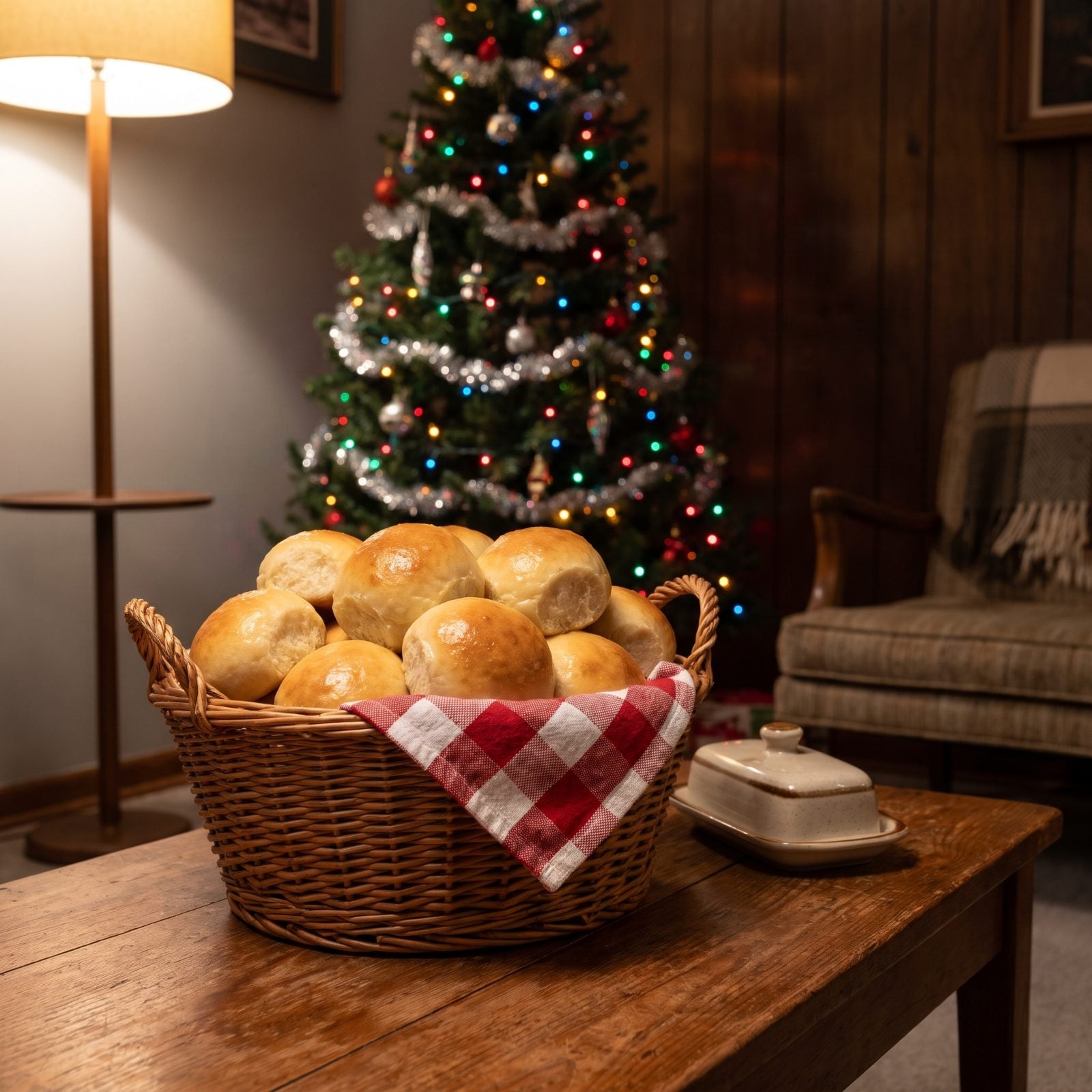
Humble, and the first thing to empty. Soft rolls tucked into a basket under a napkin so they’d stay warm, or at least pretend to.
The napkin wasn’t just for looks. Flip it back and the steam had kept the rolls pillowy; leave them bare and they went cool and stiff. These were the vehicle for ham-and-mustard midway through the night, the thing you grabbed on a second lap around the table.
25. The Chafing Dish Full of Swedish Meatballs
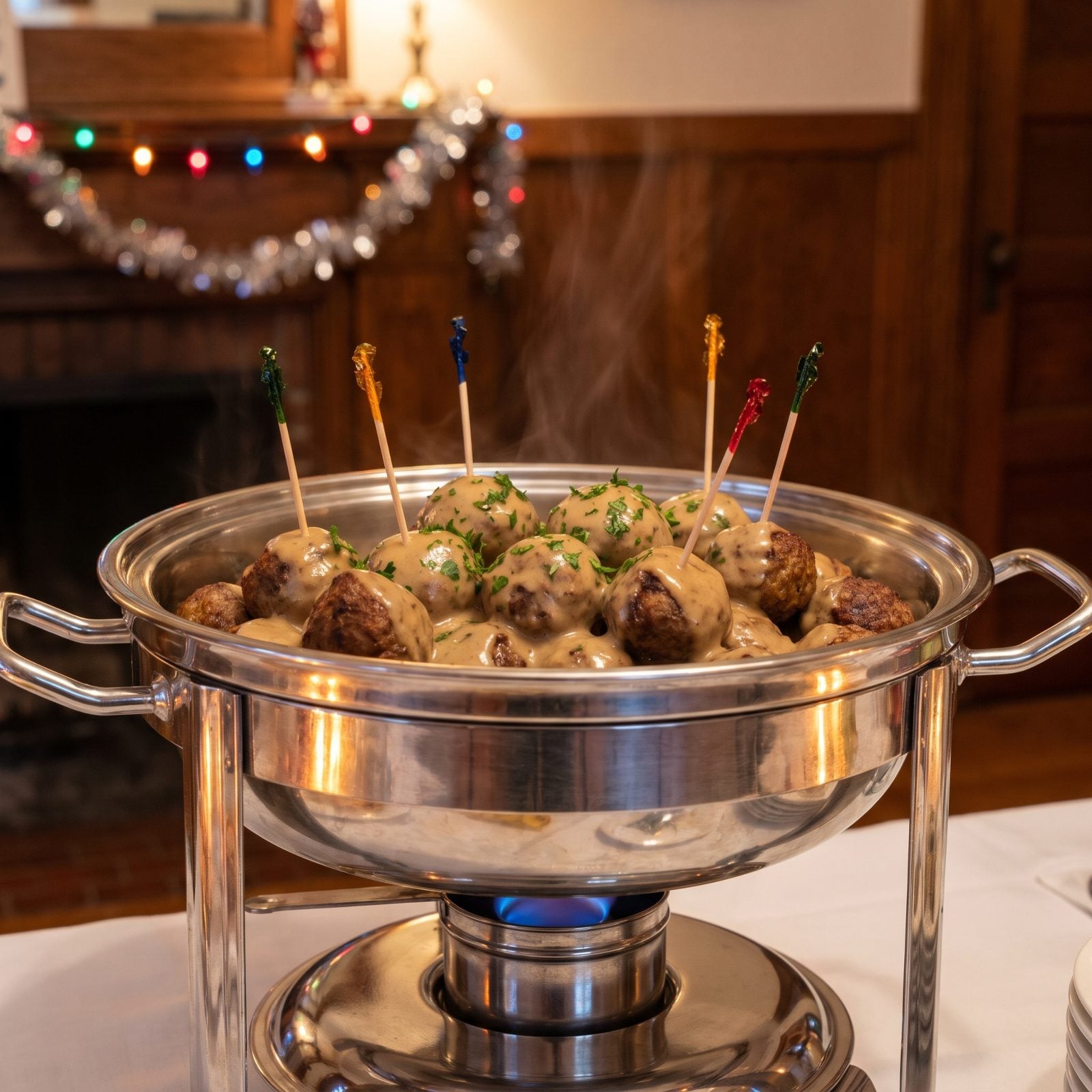
The chafing dish was the status symbol, and the meatballs were what you put in it. Little browned spheres swimming in a creamy brown gravy, kept warm over a flickering flame all evening.
This is where the party-bite era really showed itself. You didn’t sit down for meatballs. You stood by the dish with a frilled pick, snagged two, talked for a minute, came back for two more. The flame underneath was half function, half theater, and I think everyone knew it.
The chafing dish didn’t just keep food warm. It announced that this was a party, not a dinner.
24. The Cocktail Sausages Speared With Frilled Picks
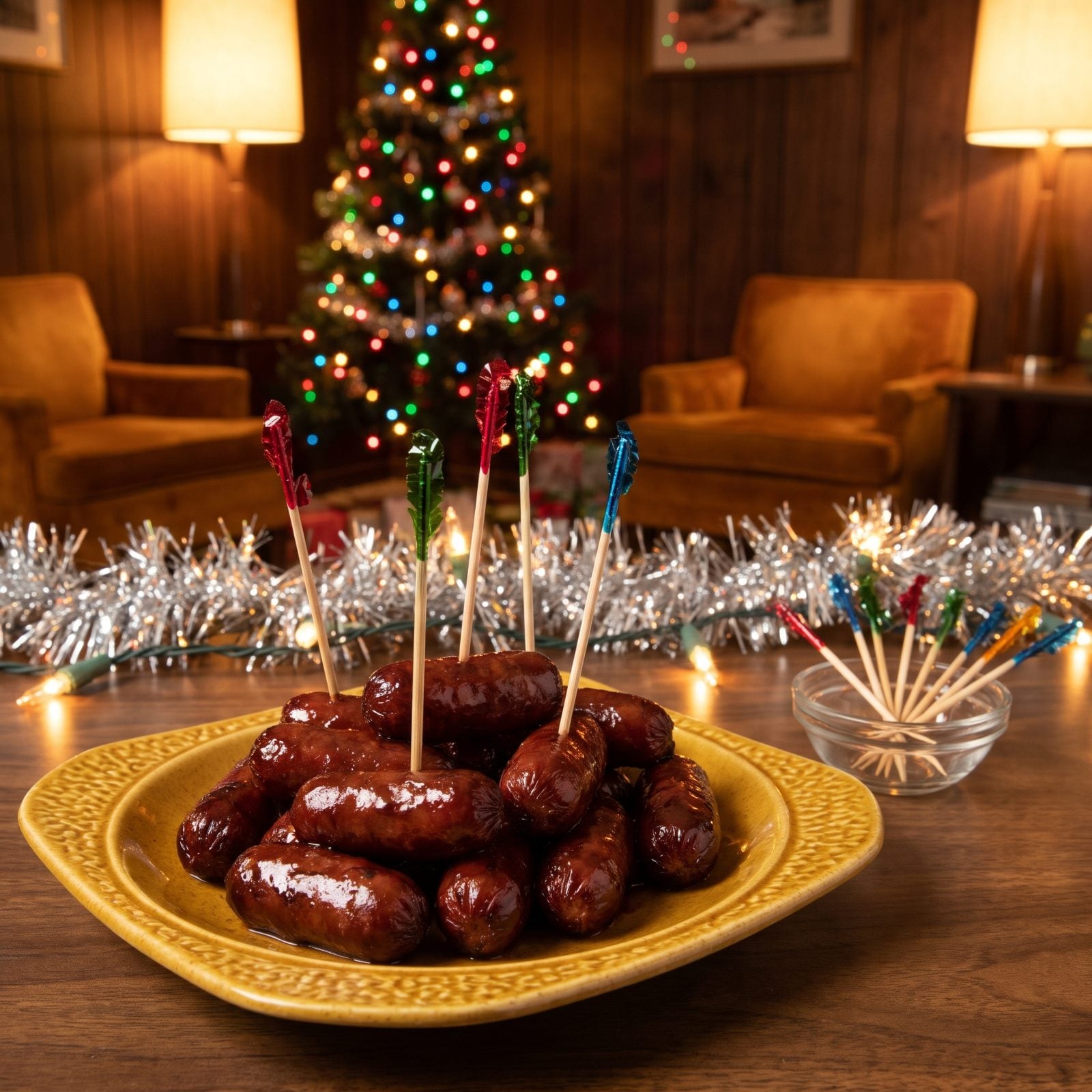
Tiny sausages in a sweet-and-tangy glaze, usually simmered in grape jelly and chili sauce, which sounds wrong and tastes exactly right. Served warm, speared, gone fast.
The frilled picks were the whole personality here. Little cellophane tufts in red, green, and gold turned a cocktail sausage into something festive. Kids collected them. Adults kept going back when they thought nobody was counting.
23. The Bacon-Wrapped Rumaki on Toothpicks
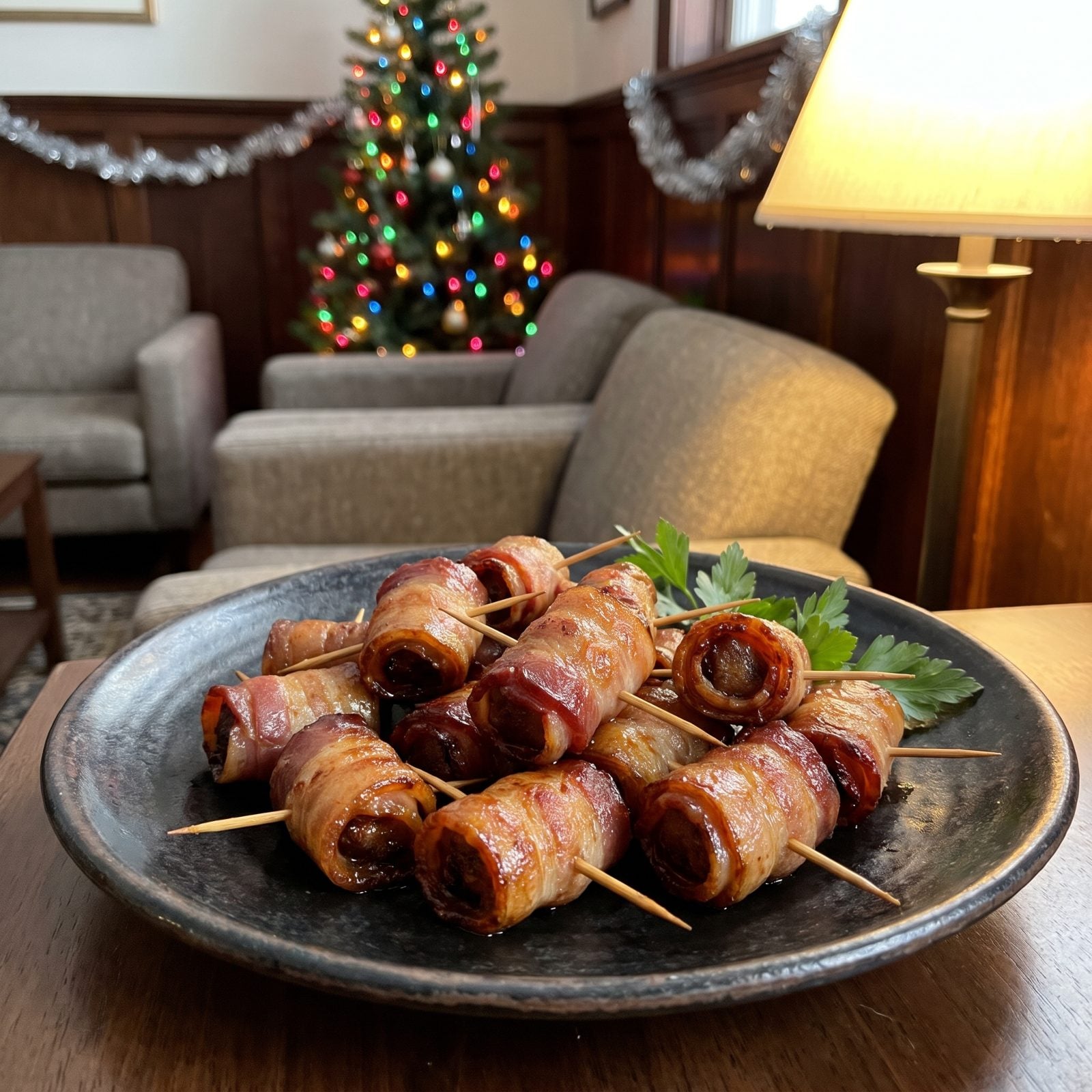
The exotic one. Rumaki carried a whiff of tiki-bar glamour into the suburban living room: chicken liver and a slice of water chestnut, wrapped in bacon, soaked in a soy-and-ginger marinade, then broiled till the bacon crisped.
It sounds fancier than it was to make, which is exactly why hosts loved it. One bite, salty and smoky with that surprise crunch of water chestnut in the middle. Some folks skipped the liver and nobody told on them.
A food history writer explains that rumaki was traditionally made from chicken livers and water chestnuts wrapped in bacon, then marinated in a sweet-savory soy and ginger sauce. (via a food history writer)
22. The Tray of Baked Stuffed Mushrooms
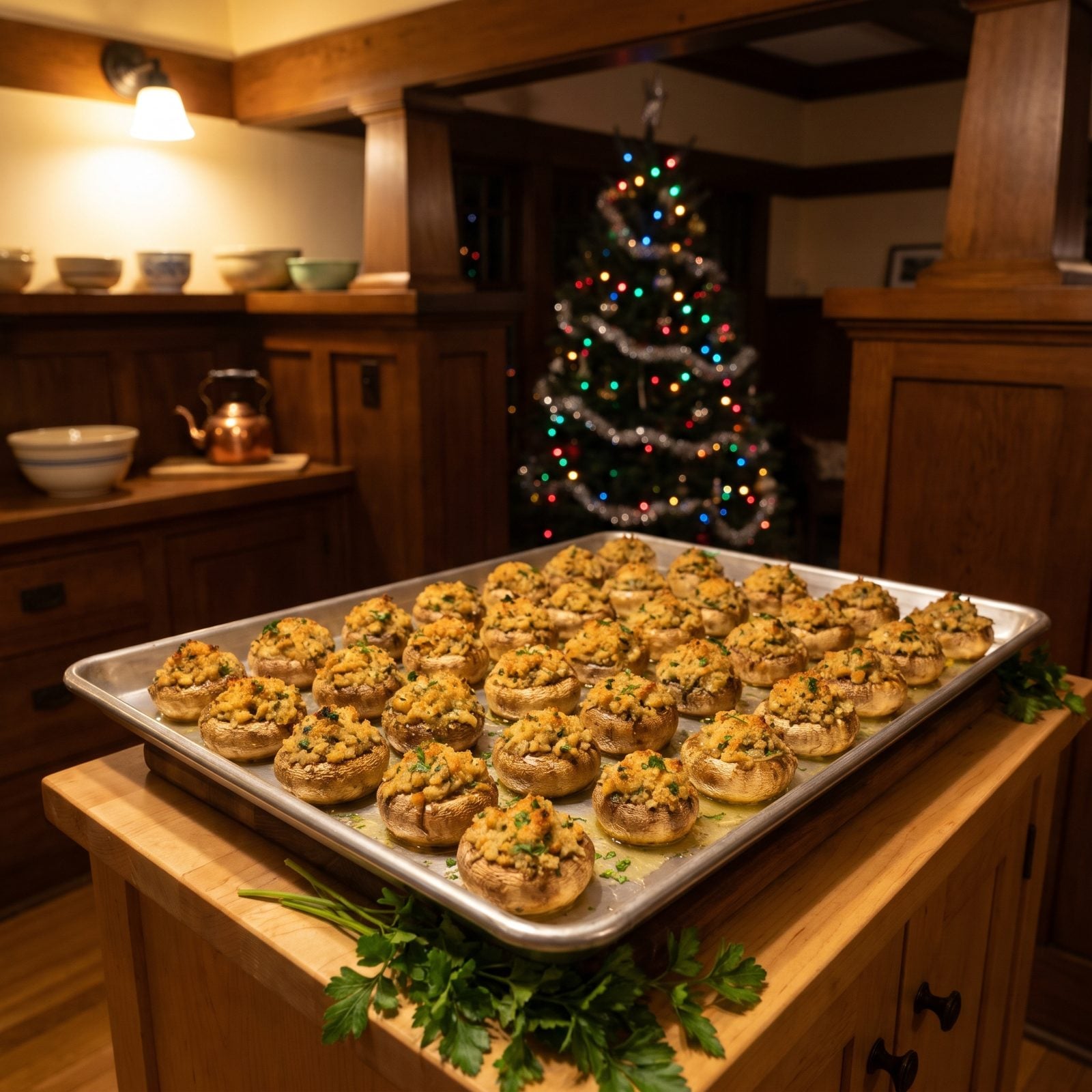
The appetizer that felt a little grown-up. Button mushroom caps hollowed out and packed with a buttery breadcrumb-and-herb filling, then baked until the tops went golden.
Warm, savory, two bites at most. They sat on a silver tray near the meatballs and disappeared at roughly the same rate, and a little sausage worked into the filling turned them into a small event. I’ve never once walked past a tray of these without taking one.
21. The Shrimp Cocktail Arranged Around a Glass Bowl
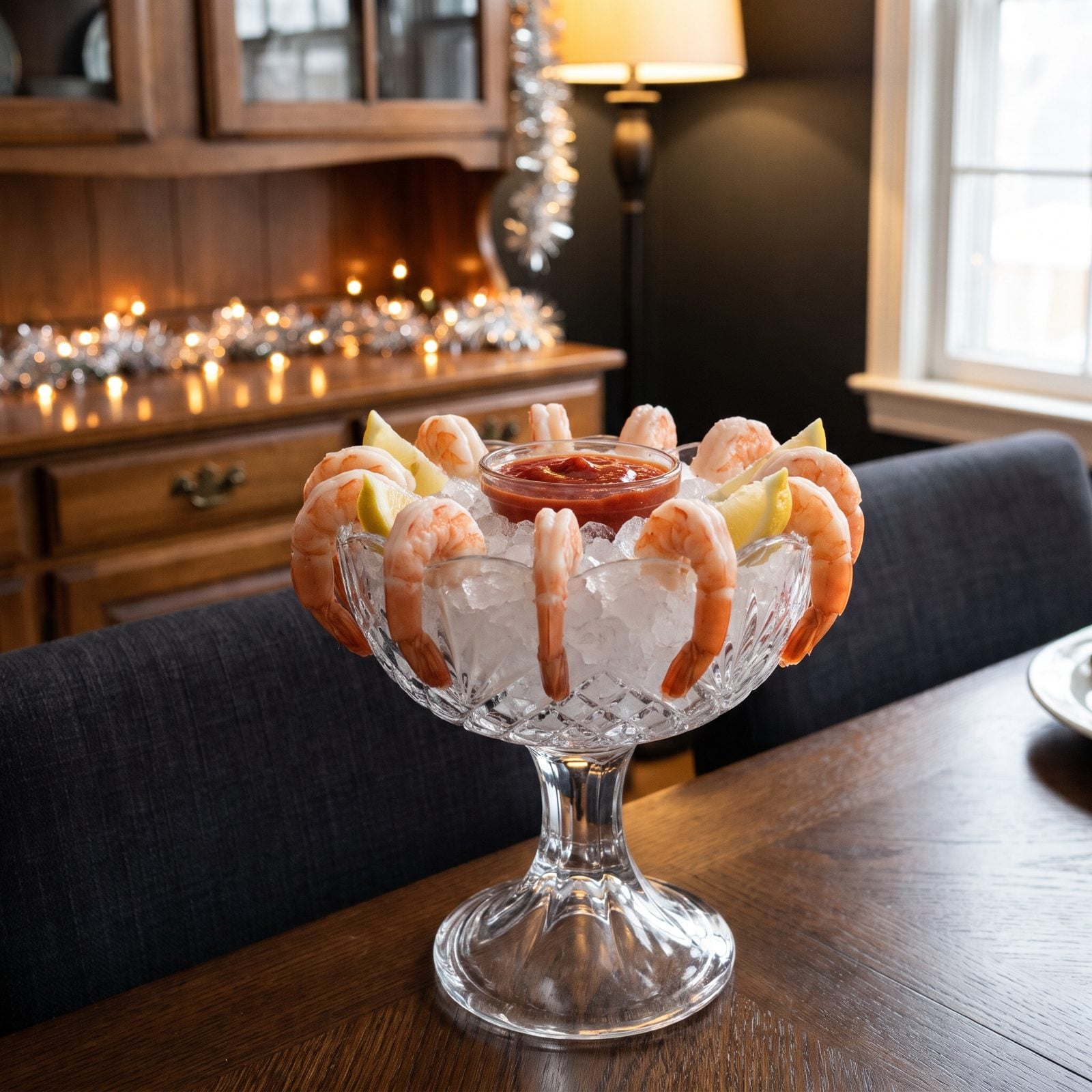
The splurge. Shrimp meant you’d spent a little, and hanging them tail-down over the rim of a footed glass bowl of ice was pure showmanship.
That red cocktail sauce sat in the center, sharp with horseradish, and you dunked and ate standing over the dish. Everything about it signaled occasion: the cut glass, the crushed ice, the lemon wedges. It read as fancy in a decade that didn’t ask for much to feel fancy.
20. The Paprika-Dusted Deviled Egg Platter
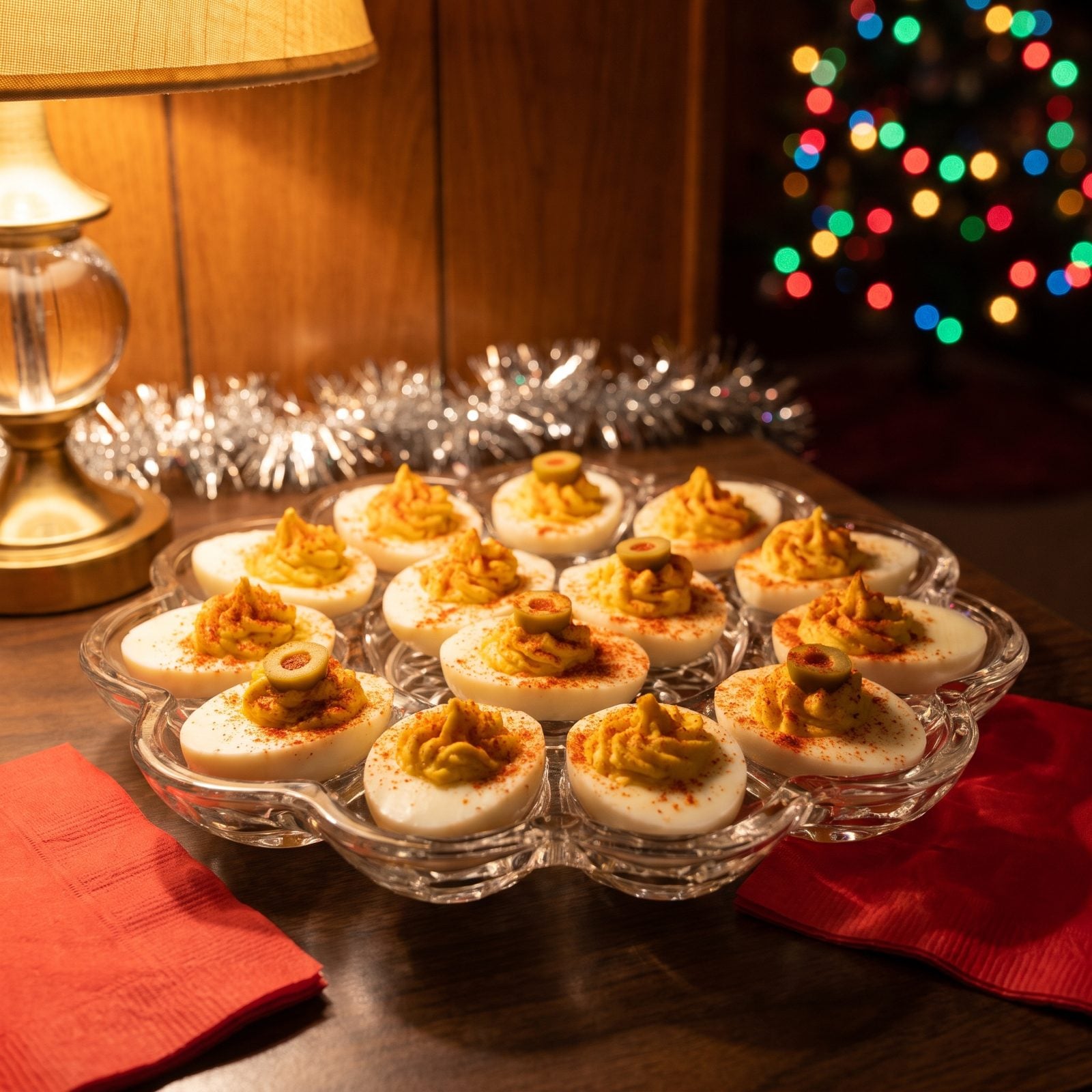
Every family had the one dish reserved for deviled eggs — that glass tray with the dozen little dimples, the one that lived in a cabinet eleven months of the year and only came out for this. When it appeared, you knew the party was serious.
The paprika was mostly for looks. It added almost no flavor, just that red dusting across the pale yellow swirl so the platter photographed well under the Instamatic flash. A sliced olive on top? That meant someone in the house was feeling ambitious.
As a food historian puts it, “Later, the deviling became associated with cayenne pepper or paprika. The popularity of prepared mayonnaise meant that condiment soon supplanted butter as the primary ingredient.”
19. The Crustless Finger Sandwiches Cut Into Triangles
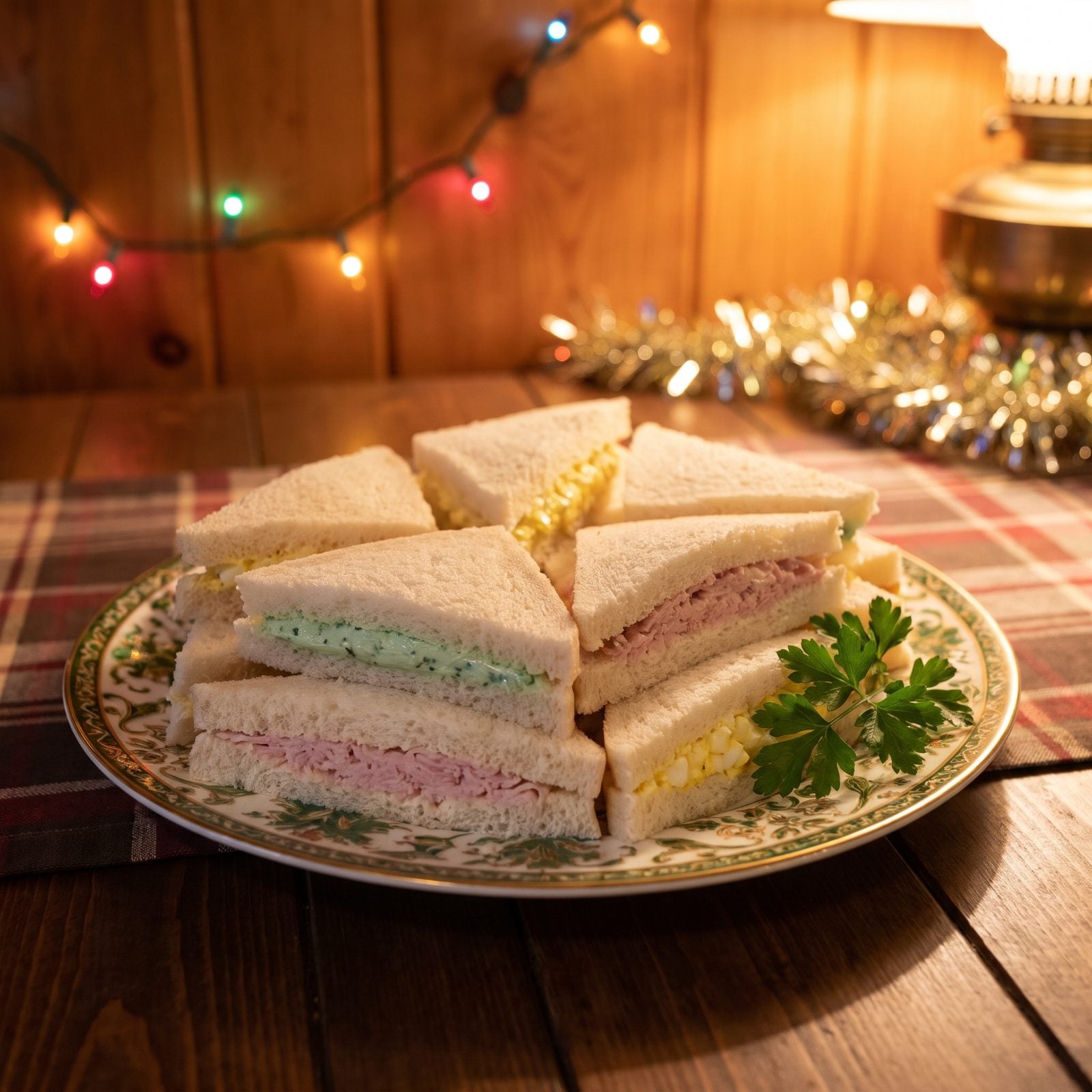
Cutting the crusts off was the whole point. It said you’d fussed, that these little triangles were for guests and not for somebody’s lunchbox. Soft white bread, pastel fillings, and the whole platter would vanish in about twenty minutes.
Ham salad, egg salad, maybe a cream cheese tinted faintly green for the season. Nobody ate just one. Two bites each, stacked in neat rows, and that triangle cut somehow made a dozen slices of bread look like something you’d serve the neighbors — which, I suppose, was the entire magic trick.
18. The Cracker-Covered Cheese Ball
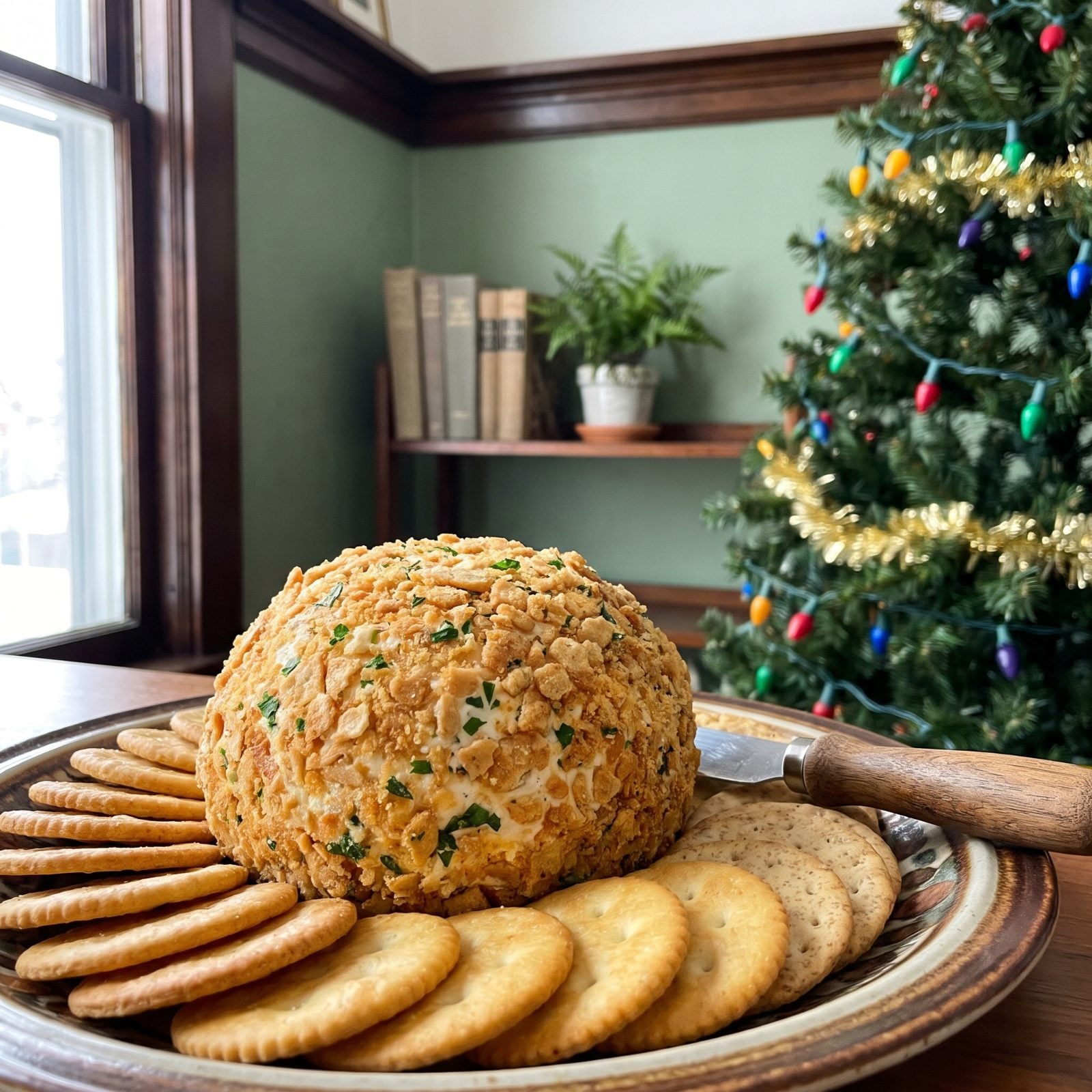
The cheese ball was the showpiece, and everyone knew it. Rolled in crushed walnuts, sometimes shaped by hand into a snowman or a pinecone, it sat ringed with crackers on the table daring you to make the first dent.
Nobody admits this, but a good cheese ball is just softened cheese, a little onion, and a nut coating that makes it look intentional. The crust did all the heavy lifting. Crack through it and underneath it was the same soft spread you could’ve smeared out of any carton.
17. The Bubbling Pot of Cheese Fondue
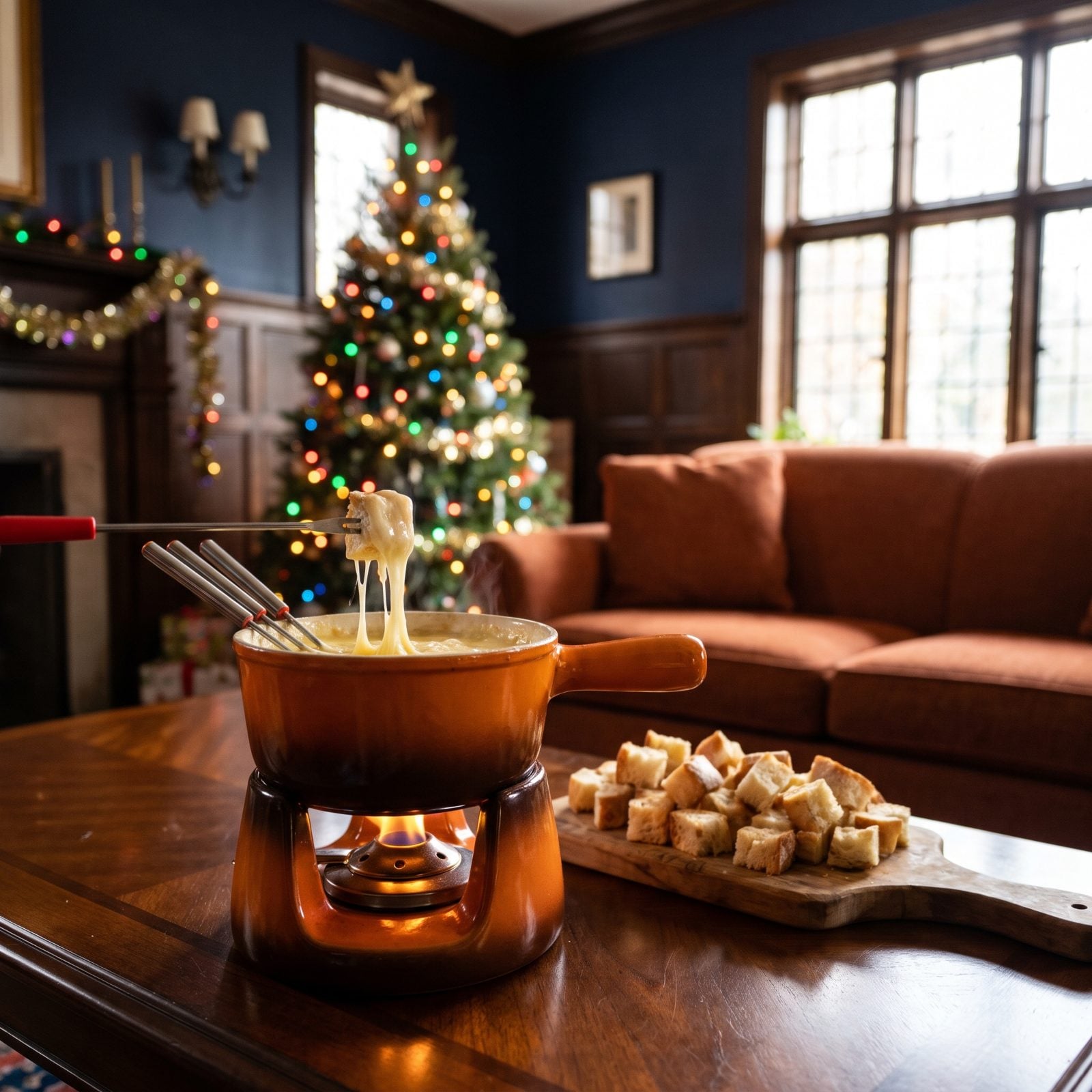
You remember the forks. Long and silver with a little red band near the handle, they leaned together in the pot, and the ritual of spearing a cube and swirling it through the pot turned eating into a group sport.
Fondue hit hard in the seventies. By Christmas Eve half the country had a ceramic pot going over a little flame on the buffet, bubbling with melted cheese and a splash of wine. And the rule — the real reason anyone paid attention — was that if you dropped your bread in the pot, you owed someone a kiss.
A food culture writer credits an aggressive 1970s marketing campaign by Swiss cheese cartels with giving fondue its cozy reputation tied to Alpine skiers, New England winters and chalets. (via a food culture writer)
16. The Divided Relish Tray With Olives and Pickles
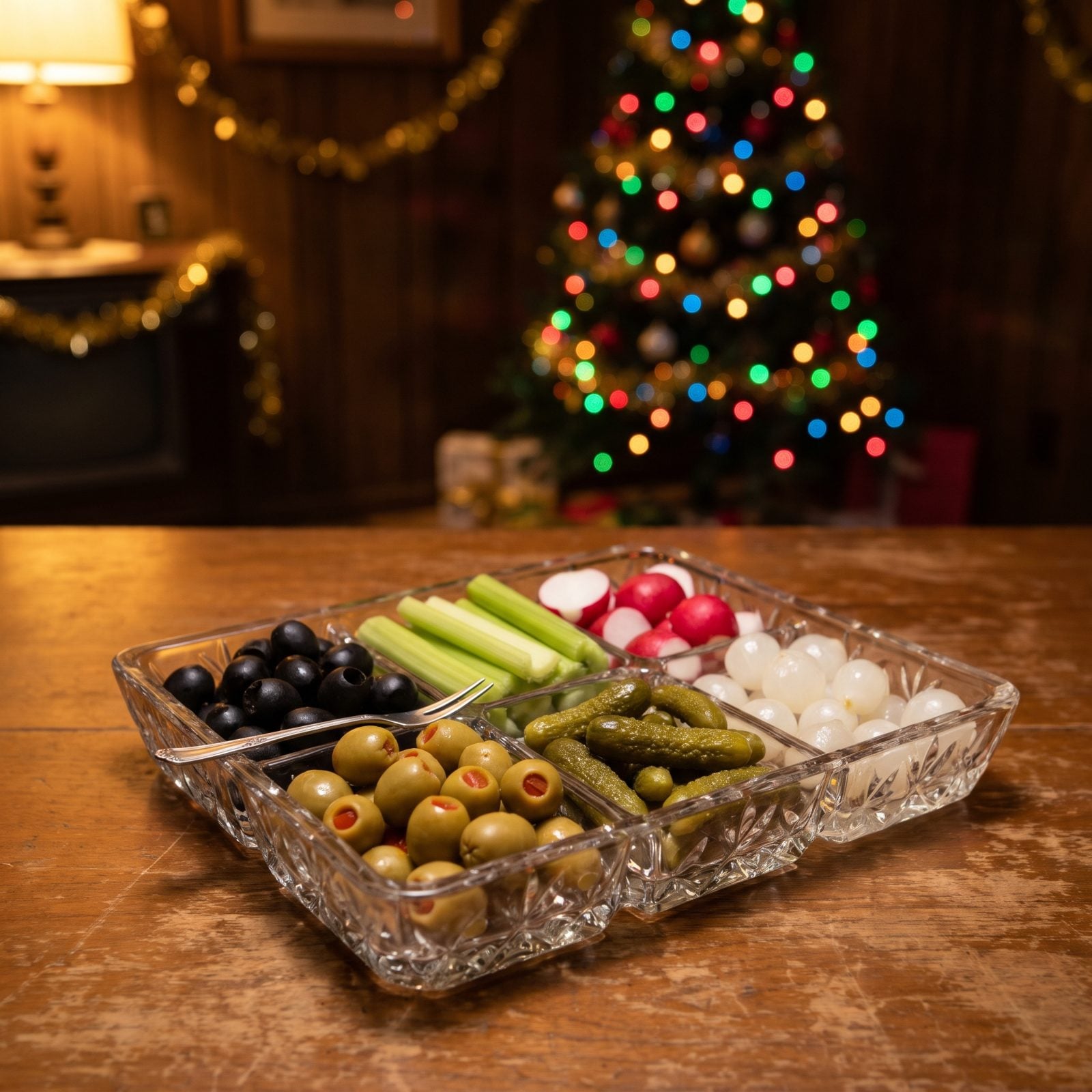
The relish tray was the quiet workhorse of the buffet. Nobody raved about it, nobody skipped it either, and the divided glass dish kept the black olives from touching the sweet pickles like a tiny salad bar of condiments.
Kids put the black olives on their fingertips. That was the law. Celery sticks, radishes cut into little fans, green olives stuffed with pimento, maybe a few pickled onions for the adults who wanted something sharper. It filled space and gave your hands something to do between the heavier plates.
15. The Ridged Potato Chips With Onion Dip
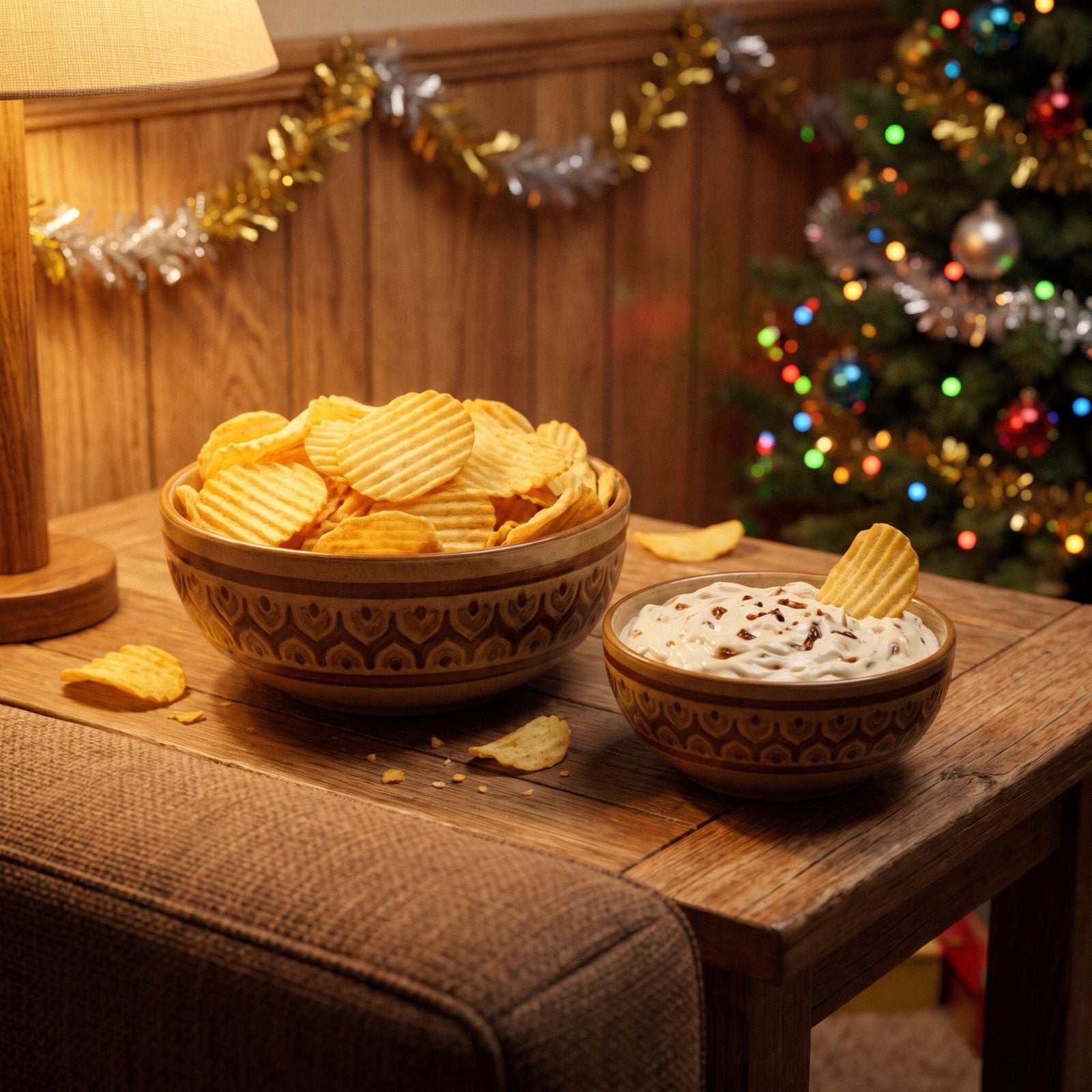
The ridges mattered. A flat chip couldn’t carry a load of thick onion dip, but a ridged one scooped it up and held on, which is why those dominated the bowl at every party.
The dip was almost always the same: sour cream stirred together with a packet of dried onion soup mix. That was it. Two minutes of work, and it tasted like childhood. I still make it exactly that way and have no plans to apologize for it.
14. The Chilled Clam Dip Surrounded by Crackers
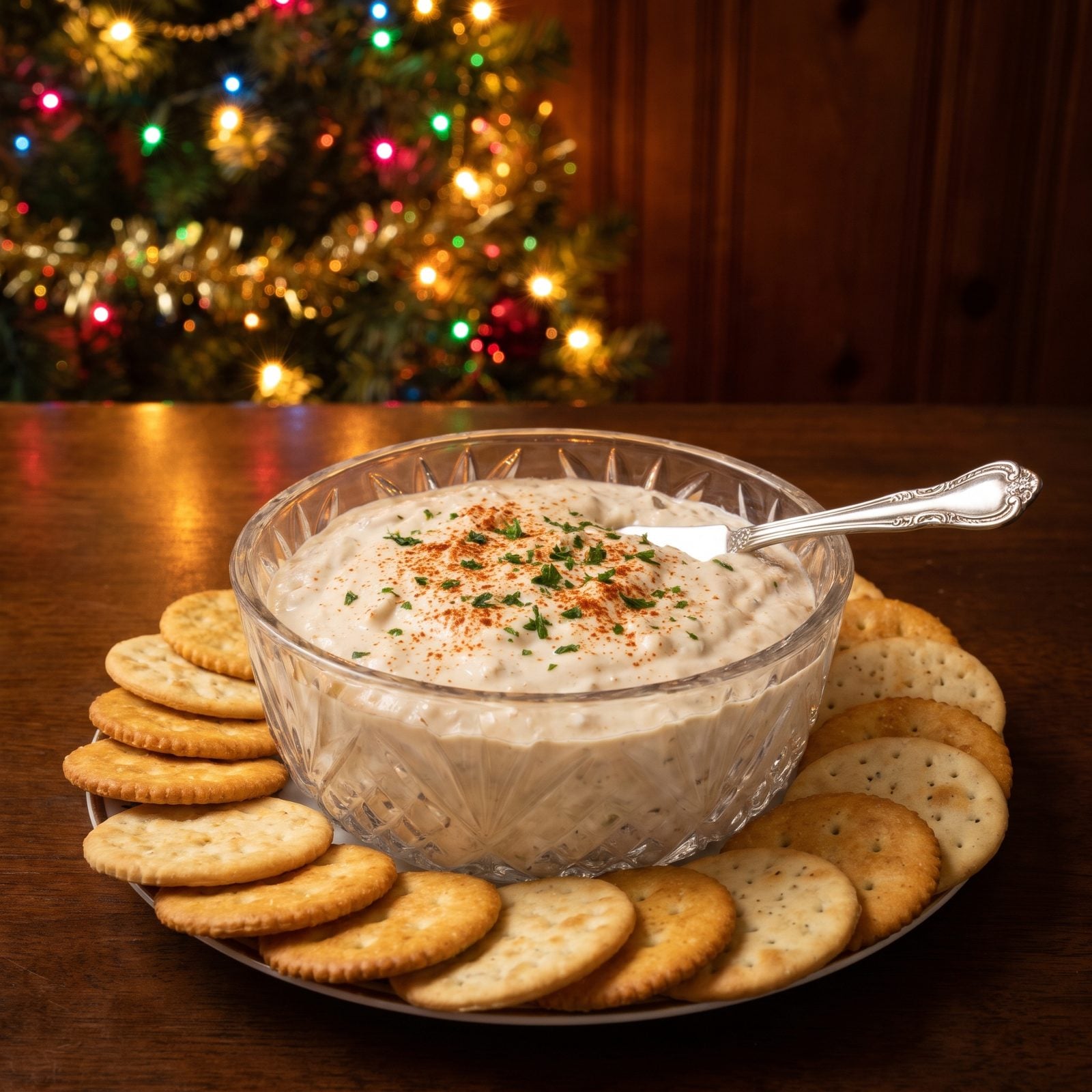
Clam dip made a gathering feel grown-up. Cold, creamy, a little salty from the minced clams, spread on a buttery cracker and gone in one bite. The chafing dishes were for the hot stuff; this one stayed cold, and somehow that was exactly why people loved it.
It leaned on canned minced clams and softened cream cheese, the kind of pantry math that built half the seventies buffet. The red dust on top was there again — doing its usual decorative shift for the camera and bringing nothing else to the table.
13. The Cut-Glass Bowl of Mixed Nuts
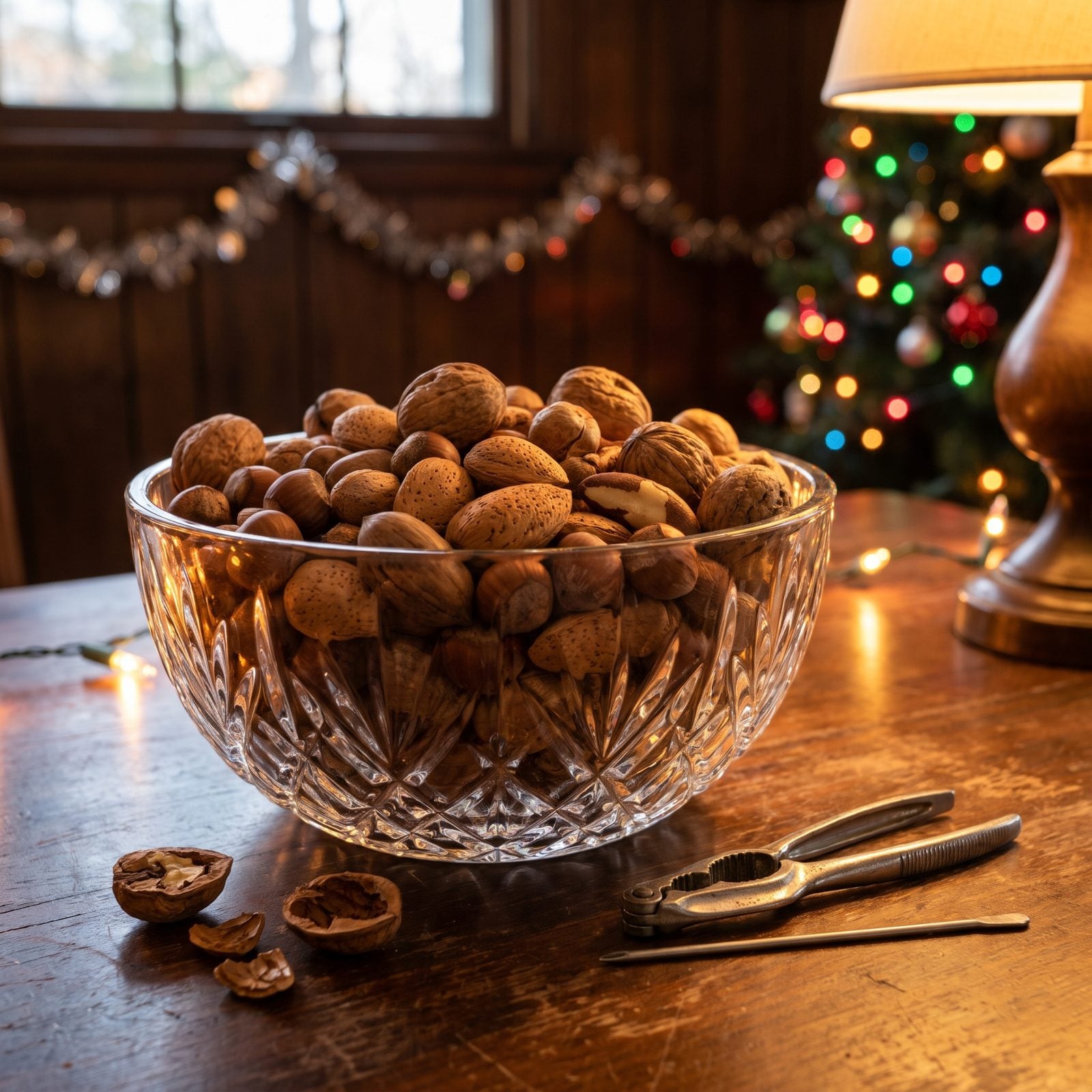
This one was less a snack than a chore disguised as one. A heavy cut-glass bowl heaped with nuts still in the shell, a metal nutcracker that pinched your fingers, and the satisfying crack of a walnut giving way after a genuine fight.
The Brazil nuts always lost. Nobody could crack those things cleanly, so they just sat at the bottom until New Year’s. But the bowl itself — that faceted glass throwing light around the room — was half the reason it stayed out all season.
12. The Big Bowl of Seasoned Cereal Snack Mix
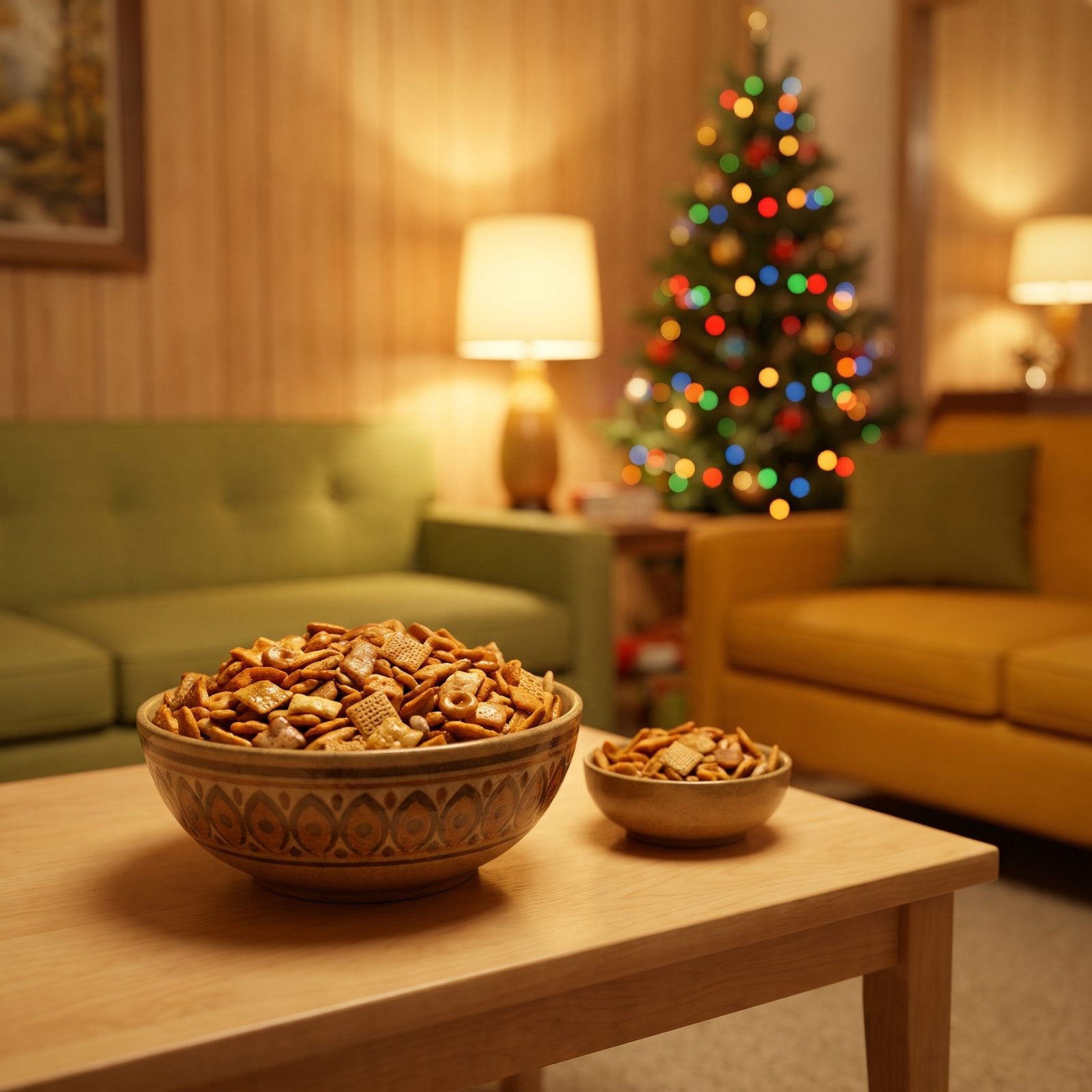
You could smell it before you saw it. That buttery, oven-toasted, slightly peppery smell of cereal mix coming out of the oven filled the whole house, and it meant the holidays had officially started.
Toasted cereal squares, pretzels, little crackers, nuts — all tossed with melted butter and seasonings and baked low and slow until the batch turned savory and crisp. People hovered. It was the one dish that disappeared faster than anyone could refill it.
11. The Apple-and-Celery Waldorf Salad
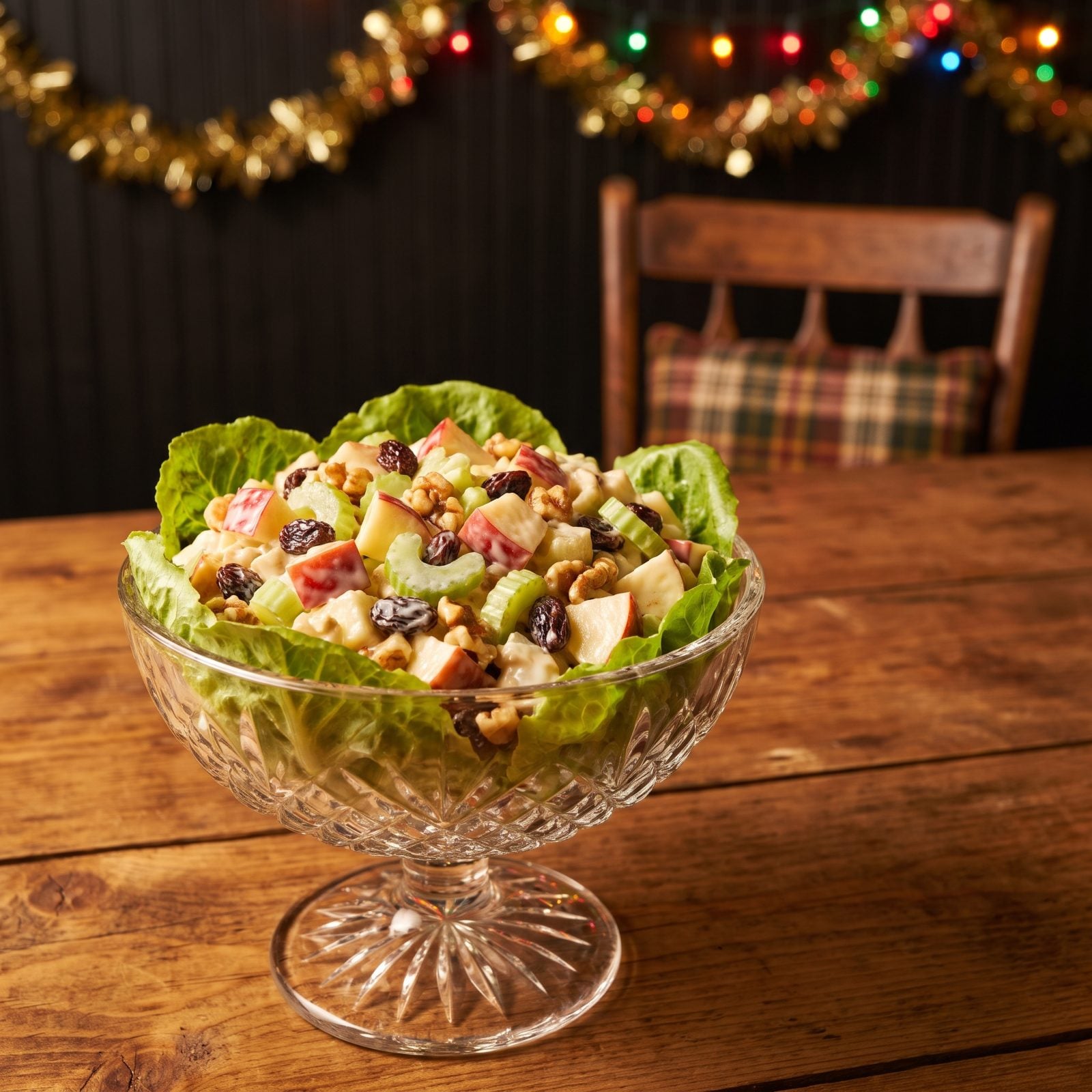
The Waldorf salad was the table’s attempt at something fresh among all the butter and cream. Crisp apples, celery, walnuts, and a little raisin sweetness, bound in mayonnaise and served on lettuce in a footed glass bowl.
It feels fancy because it’s old. The recipe dates to a famous New York hotel in the 1890s, a pedigree the seventies happily claimed at holiday parties. But really it was there for the crunch — a little relief after the cheese ball and the chips.
Half the buffet was soft and creamy, so the dish that crunched earned its place without trying.
10. The Jewel-Toned Gelatin Salad Ring
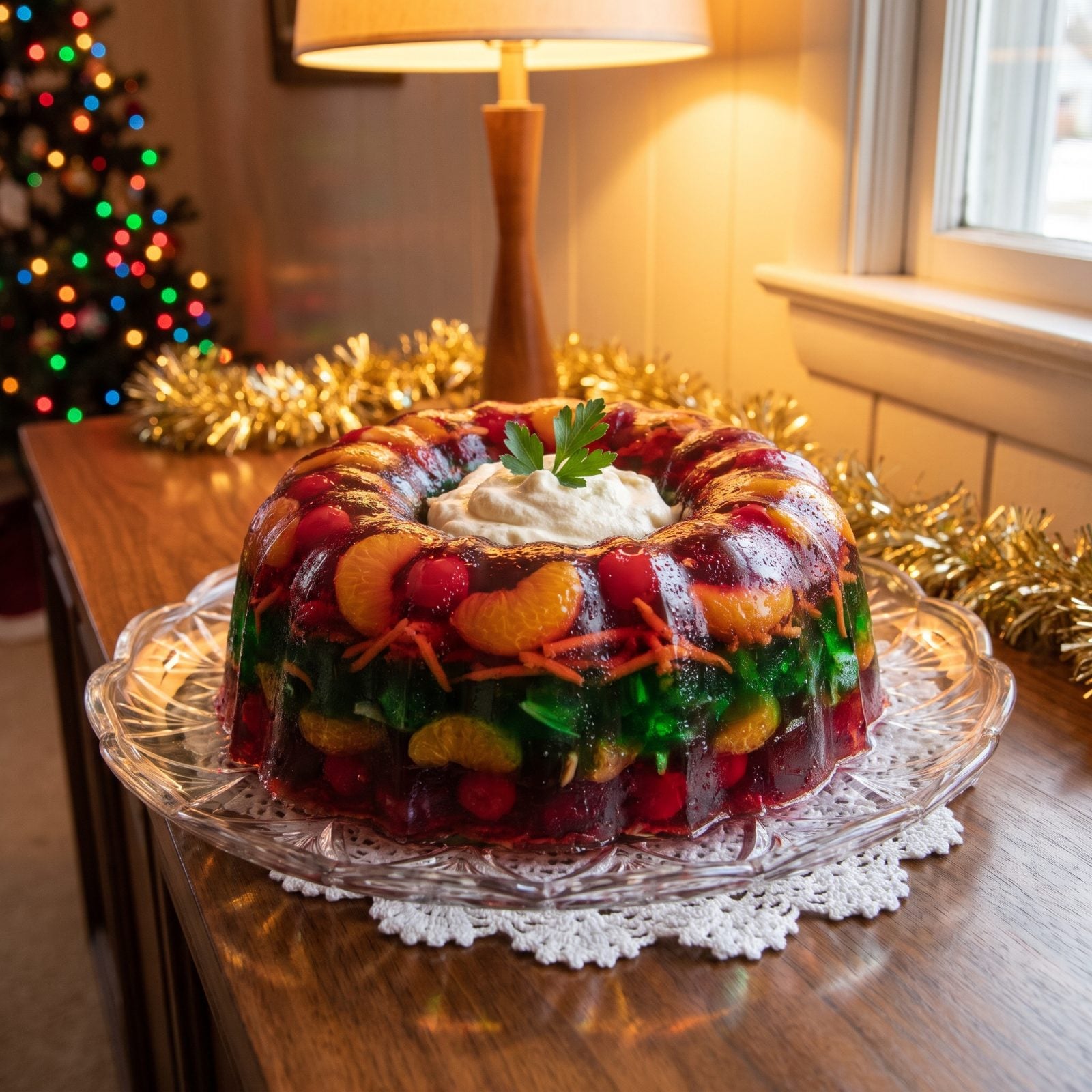
Nothing said company’s coming in 1972 quite like a gelatin salad standing upright and flatly refusing to fall over. The ring mold was the whole trick. You poured it, chilled it overnight, dipped the mold in warm water for exactly one second, then flipped it onto a plate while holding your breath.
Suspended fruit was the real status symbol. Getting mandarin segments and cherries to float evenly instead of sinking to the bottom meant you’d chilled the whole thing to the right half-set stage first, and believe me, everyone at the table could tell when you hadn’t bothered.
9. The Fluffy Ambrosia Salad Topped With Cherries
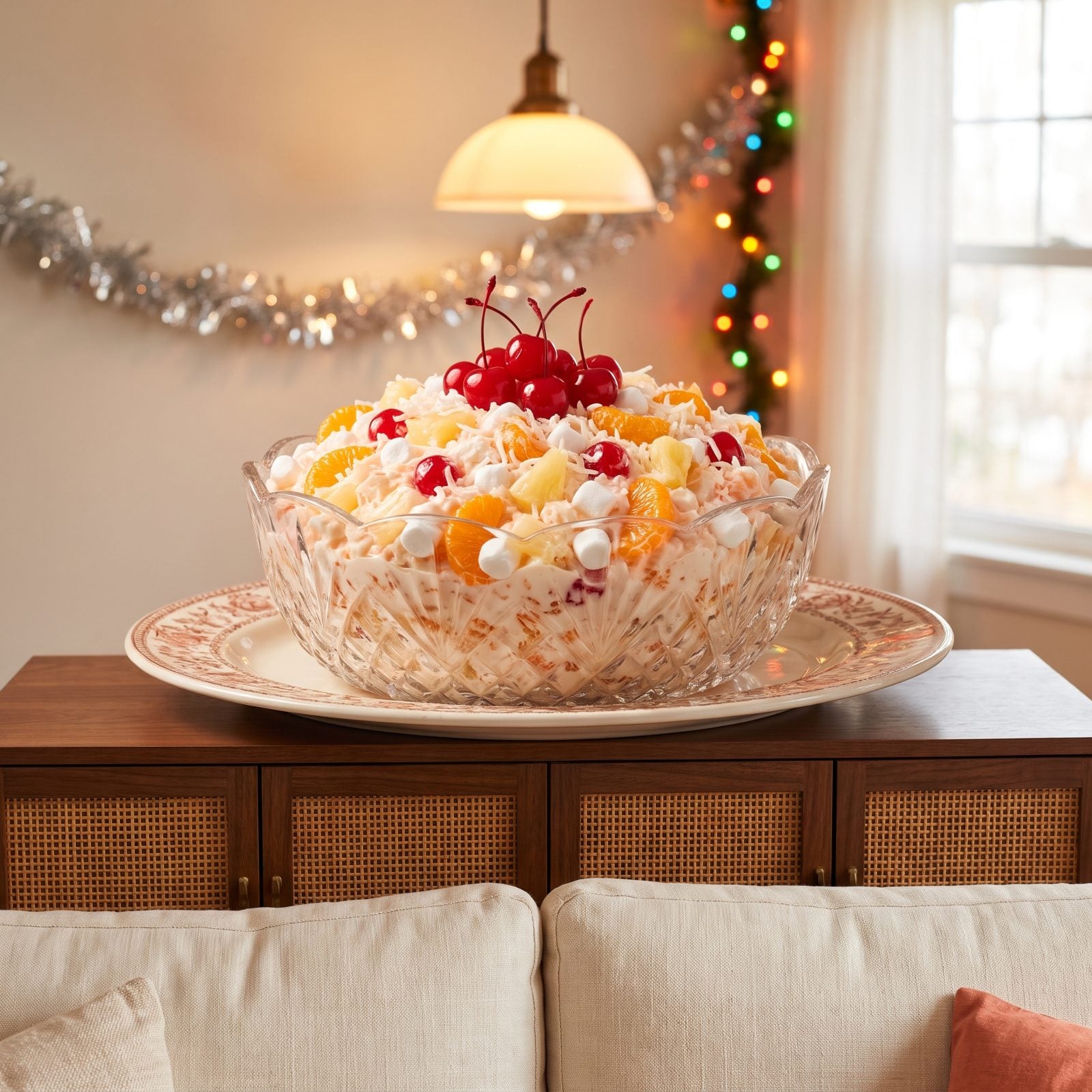
Half dessert, half salad, fully committed to the marshmallow. Ambrosia lived in that delicious gray area where nobody could tell you it didn’t belong next to the ham.
The cherries on top did the heavy lifting here. Mix them through and they tinted the whole bowl a faint, regrettable pink. Most hosts split the difference: a bright stemmed cluster on top for show, and more cherries folded through until the creamy base went faintly pink.
8. The Shimmering Savory Aspic Mold
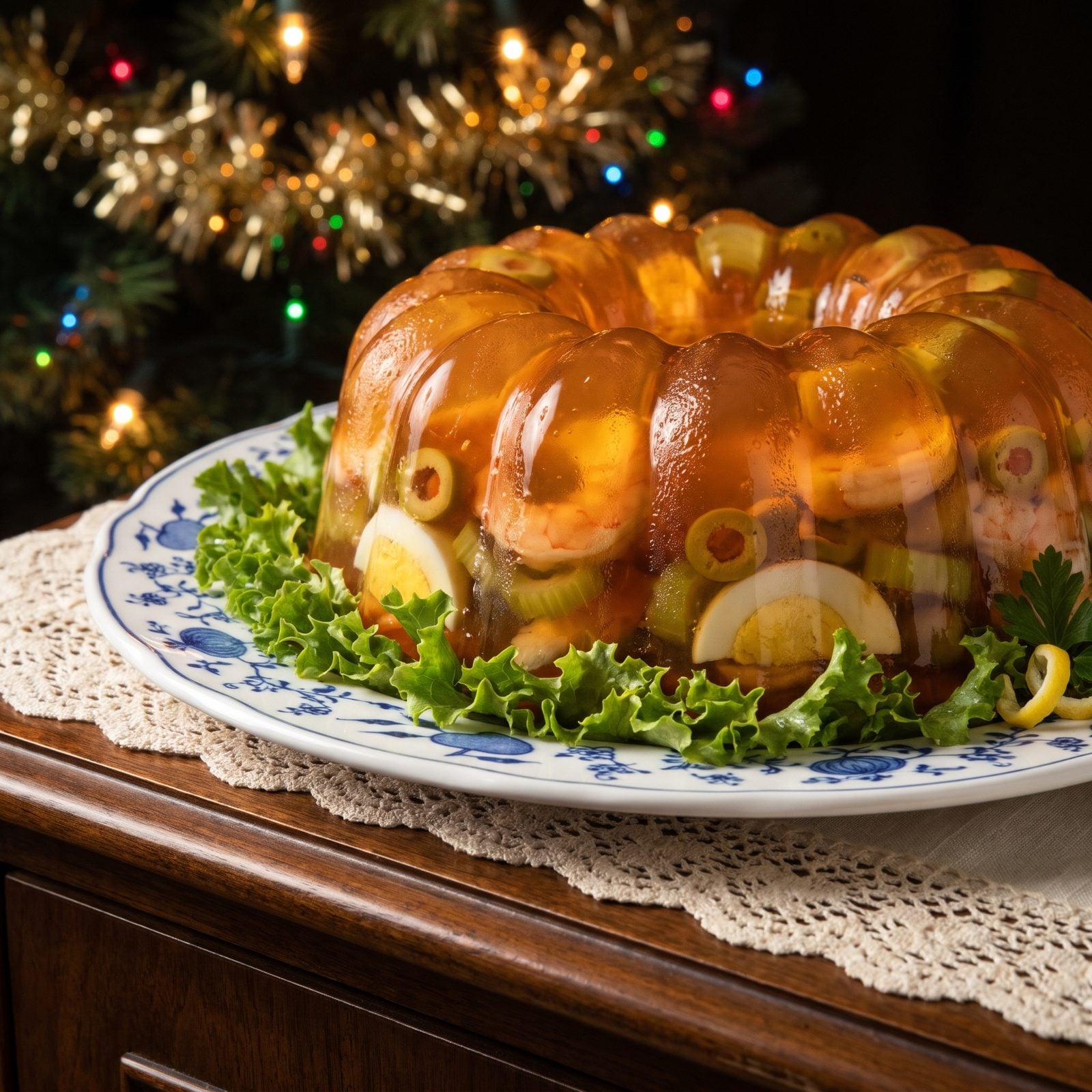
This is the one that makes modern eaters flinch, and I’ll admit it’s an acquired taste. Savory aspic took the whole gelatin trick and pointed it at shrimp, olives and tomato juice instead of fruit.
Done right it was tangy, cold and surprisingly good with crackers. Done wrong it was a tomato-flavored brick. The difference came down to one thing almost nobody mentions anymore: you had to taste the liquid before it set, because once it firmed up there was no rescuing bland.
7. The Dark Fruitcake Decorated With Glazed Fruit
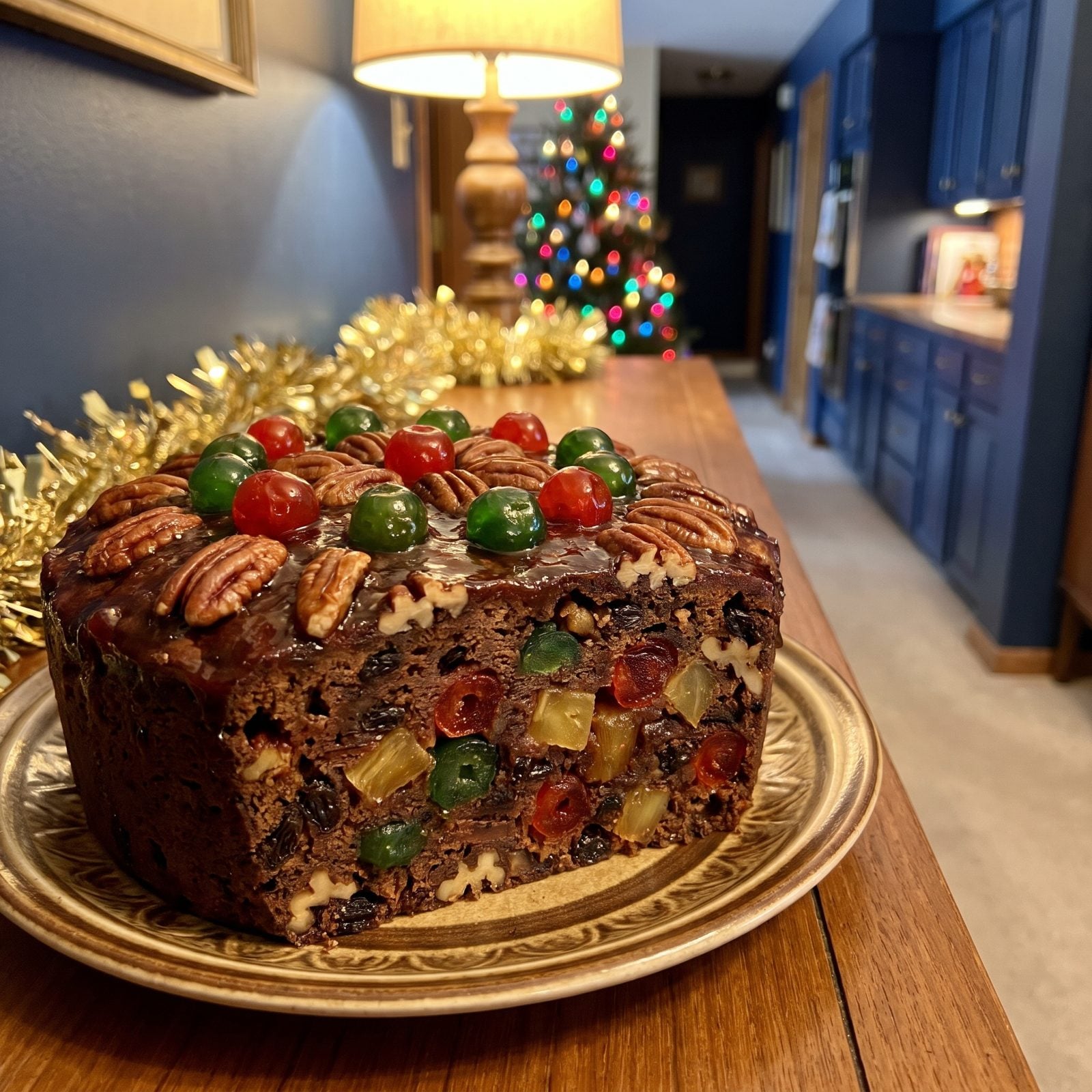
The most slandered cake in America, and I’ll defend it until the last crumb.
A proper fruitcake wasn’t a doorstop. It got baked weeks ahead, wrapped in cloth, and fed a spoonful of spirits now and then so it aged dark and dense and almost chewy. Those glazed cherries and pecans on top? They were the giveaway that somebody had been planning this since November.
The jokes all came from the store-bought bricks. Nobody was ever mean about the homemade one that showed up on the Christmas Eve table.
6. The Platter of Miniature Mincemeat Tarts
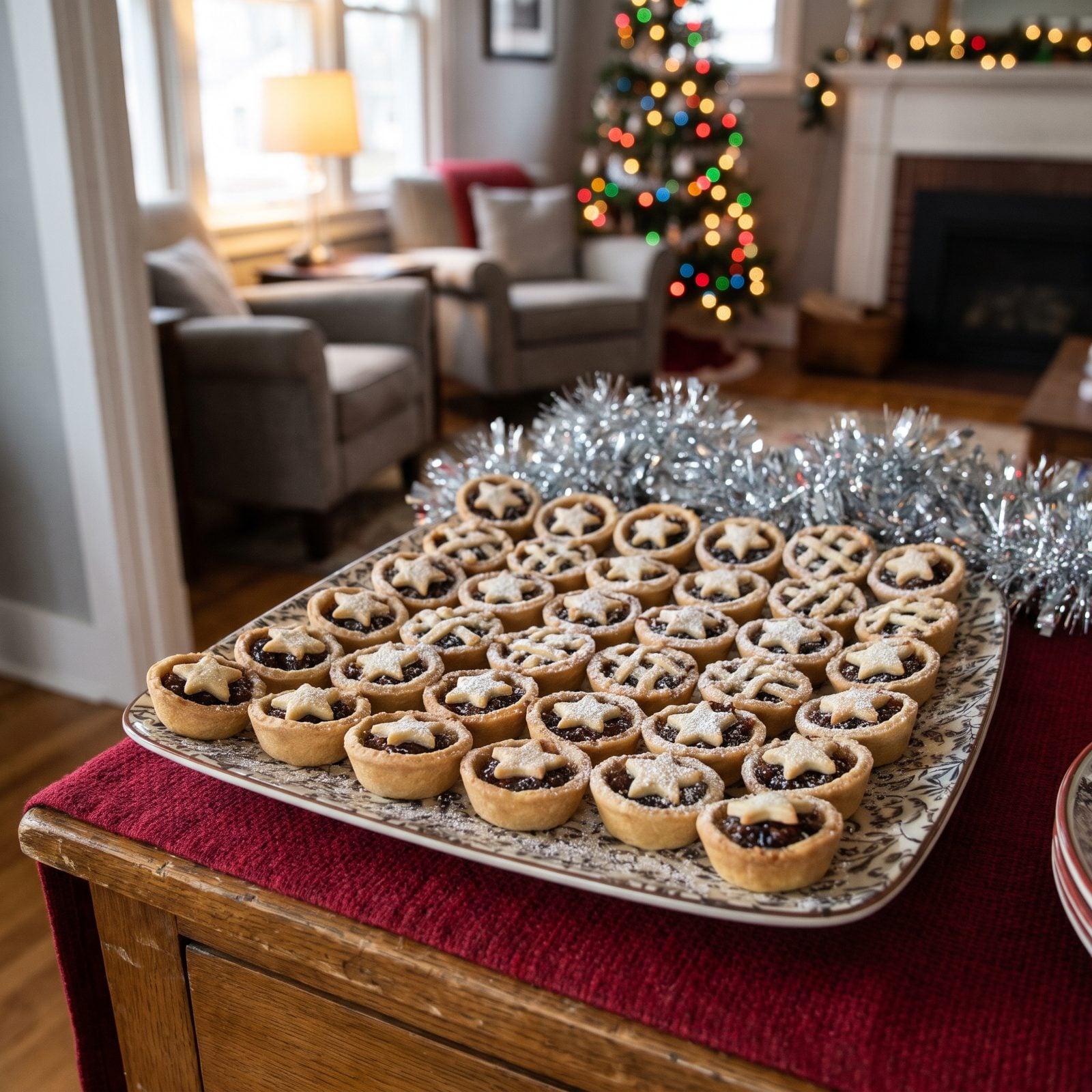
Two-bite tarts carrying a strange amount of history for their size. Mincemeat used to actually contain meat, suet and all, before it slowly morphed into the spiced fruit-and-spirit filling most people spooned into these little shells.
They traveled well, which is why the platter was usually one somebody brought rather than baked on-site. A dusting of powdered sugar hid any cracked tops. And a warm one with coffee at the end of the night was the quiet reward the host saved for themselves.
As a British food historian puts it, “made largely of minced meat, usually mutton or beef, plus suet, dried fruit and spices – very much a rich person’s dish.”
5. The Tiered Tray of Christmas Cutout Cookies
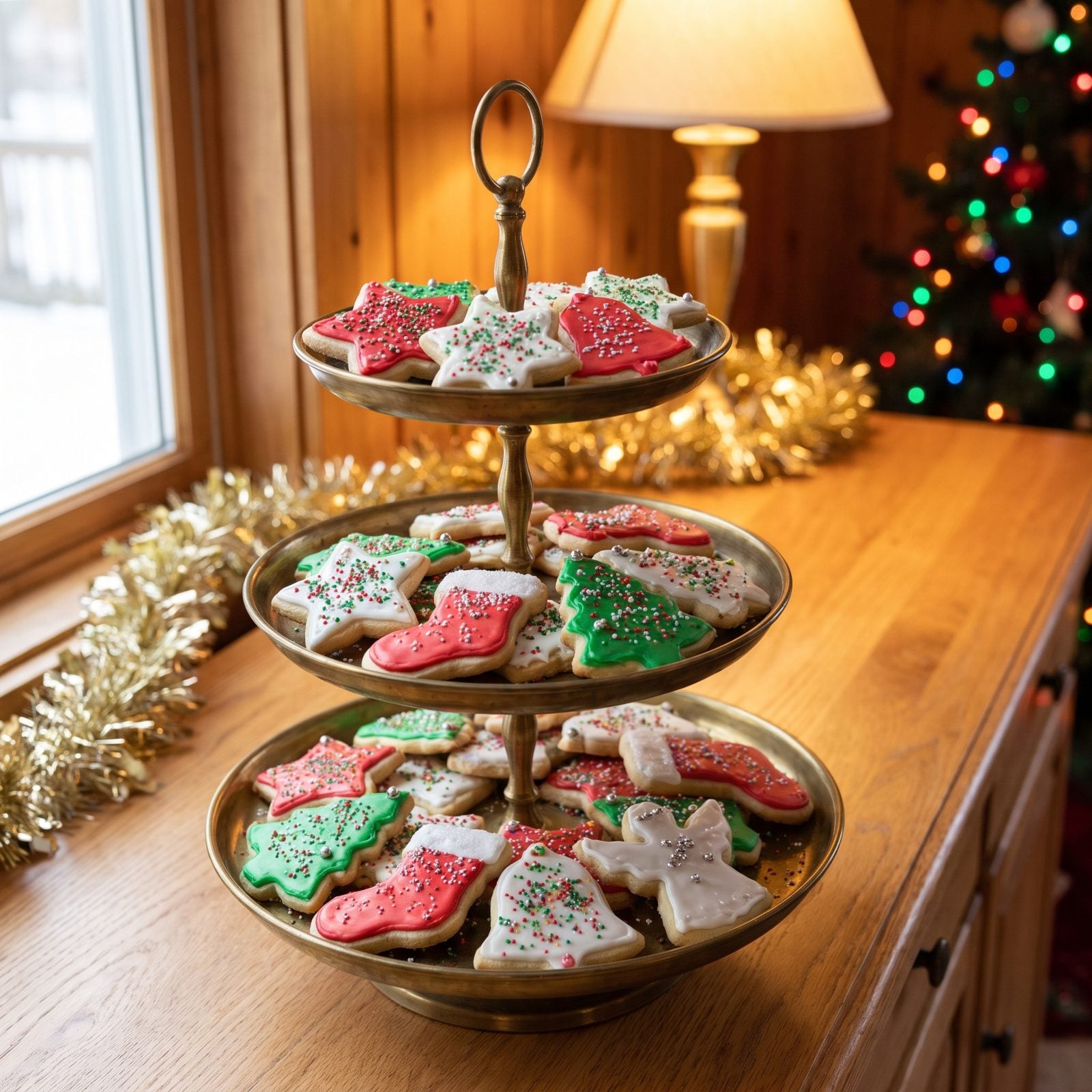
These were never really about the taste. The sugar cookie base was just a canvas, and the whole exercise was the decorating, which usually happened the afternoon before with kids balanced on kitchen chairs.
You could always spot the ones a child had iced. Too much red. A tree that was mostly sprinkle. A snowman wearing what looked like regret. Those vanished first.
4. The Plate of Chocolate Fudge Squares
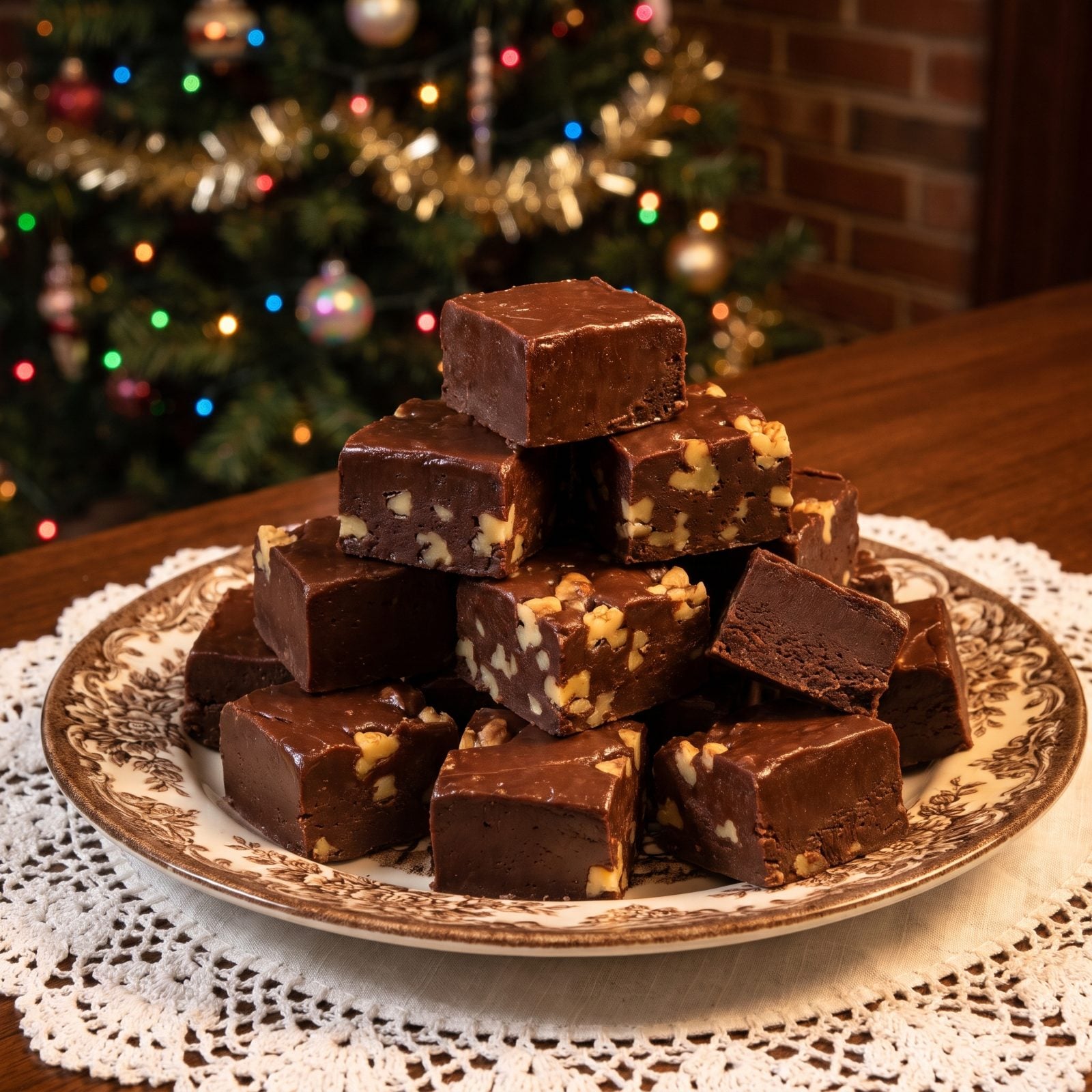
Fudge separated the patient cooks from everybody else. The whole thing lived or died on the candy thermometer and the stirring, and anyone who’s suffered through grainy fudge knows exactly what happens when you stir it at the wrong temperature.
When it worked you got dense, glossy squares that cut clean and sat heavy in the hand. Walnuts were the usual add-in. Cut small, because one square was plenty and everyone already knew it.
As a university food scientist puts it, “That’s because the crystals didn’t get dissolved, or you didn’t stir the fudge fast enough or at the right temperature.”
3. The Sugar-Dusted Rum Balls in Paper Cups
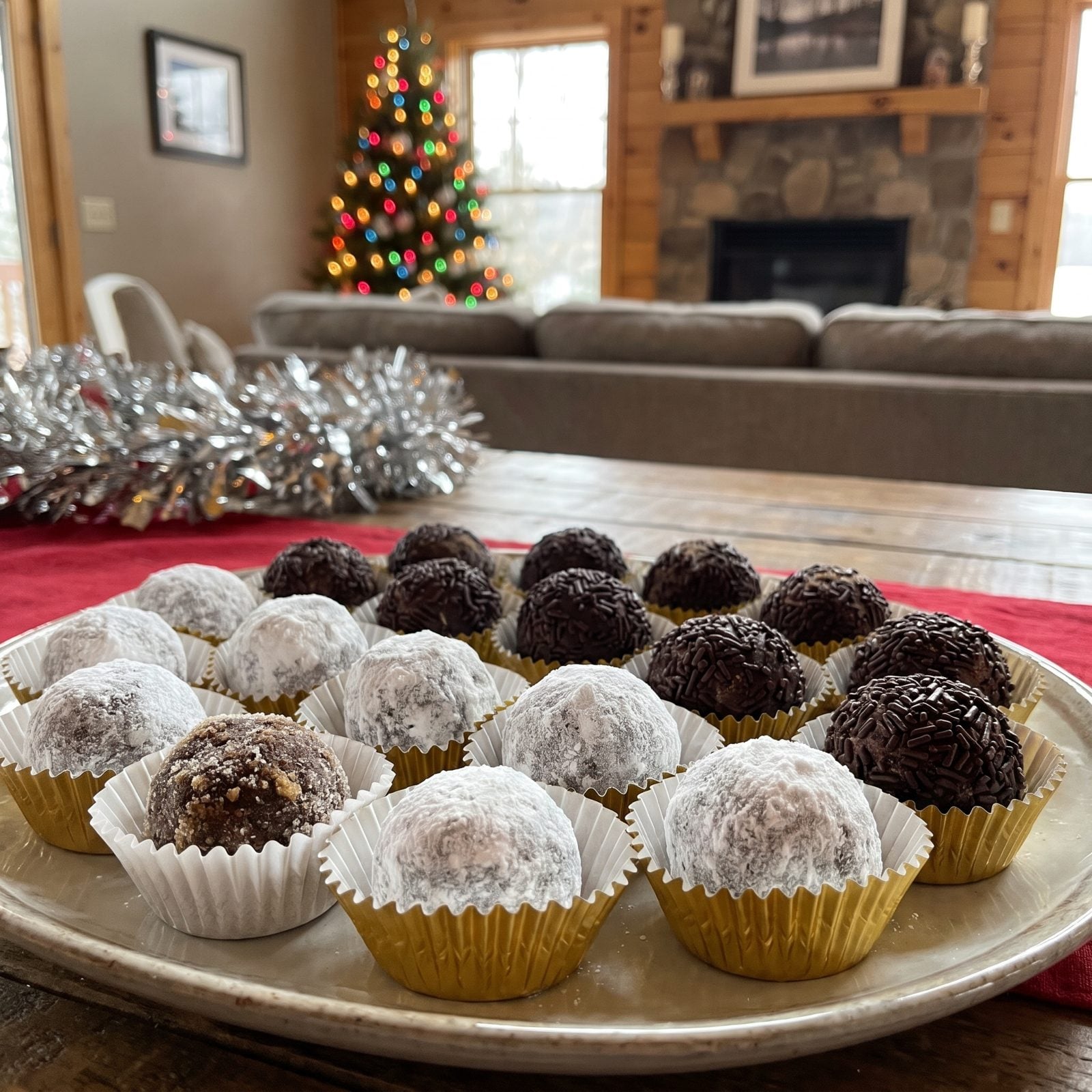
The grown-up candy, and everyone at the table knew it. No baking involved. Just crushed cookies, cocoa, a generous pour of dark rum or bourbon, rolled into balls and left to firm up in the fridge.
Those little paper cups were practical and a bit sly. They kept the powdered sugar from going everywhere, and they also made it awfully easy for an adult to palm three without anyone keeping count.
2. The Cut-Glass Bowl of Creamy Eggnog
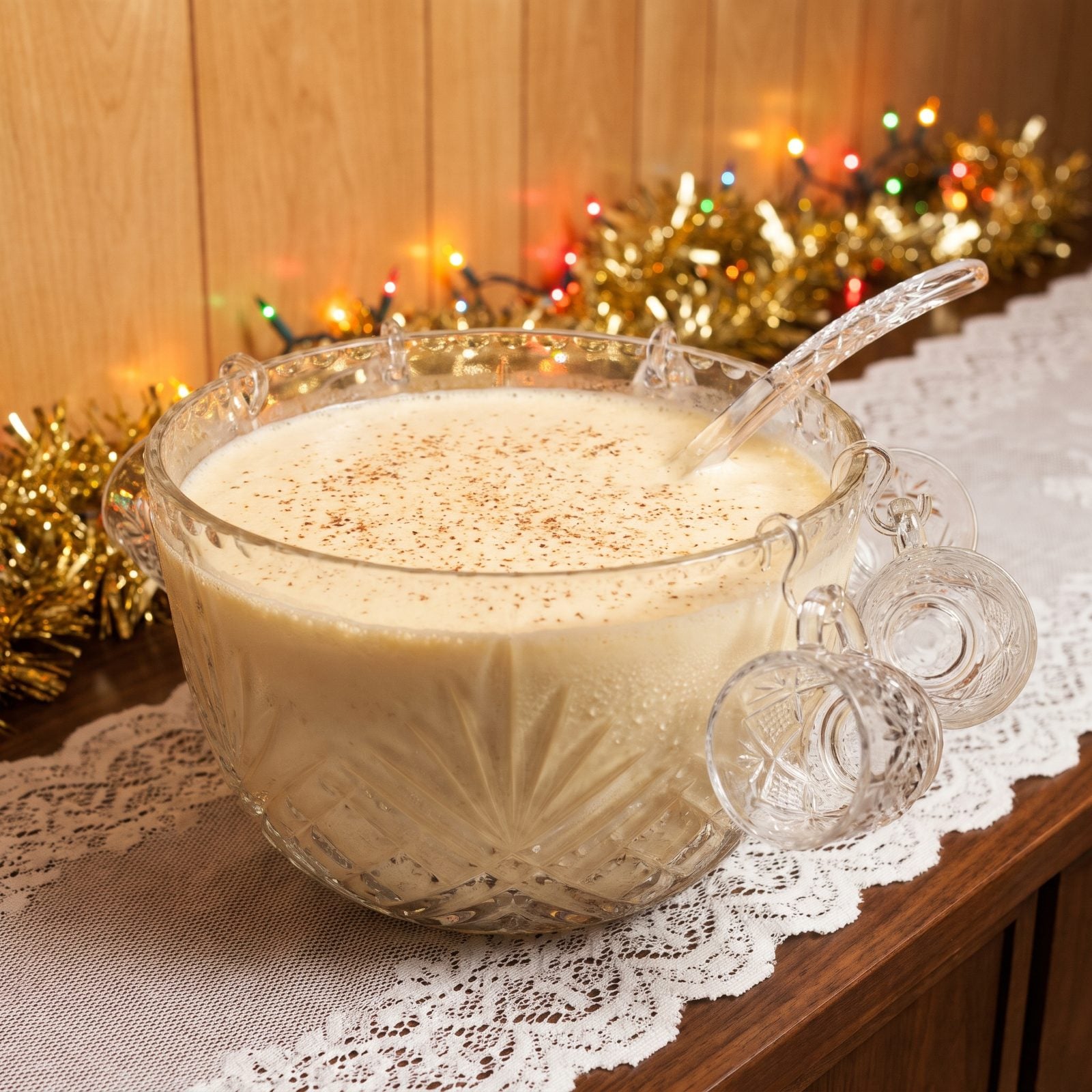
The cut-glass punch bowl came down from the top cabinet maybe twice a year, and eggnog was one of those occasions.
Thick, pale yellow, dusted with fresh-grated nutmeg across the top. There was always a quiet understanding about which end of the bowl had been spiked and which hadn’t, communicated entirely through raised eyebrows.
That ladle clinking against the crystal is one of those sounds that pulls the whole night back the second you hear it.
1. The Bright Red Holiday Punch With Floating Citrus Slices
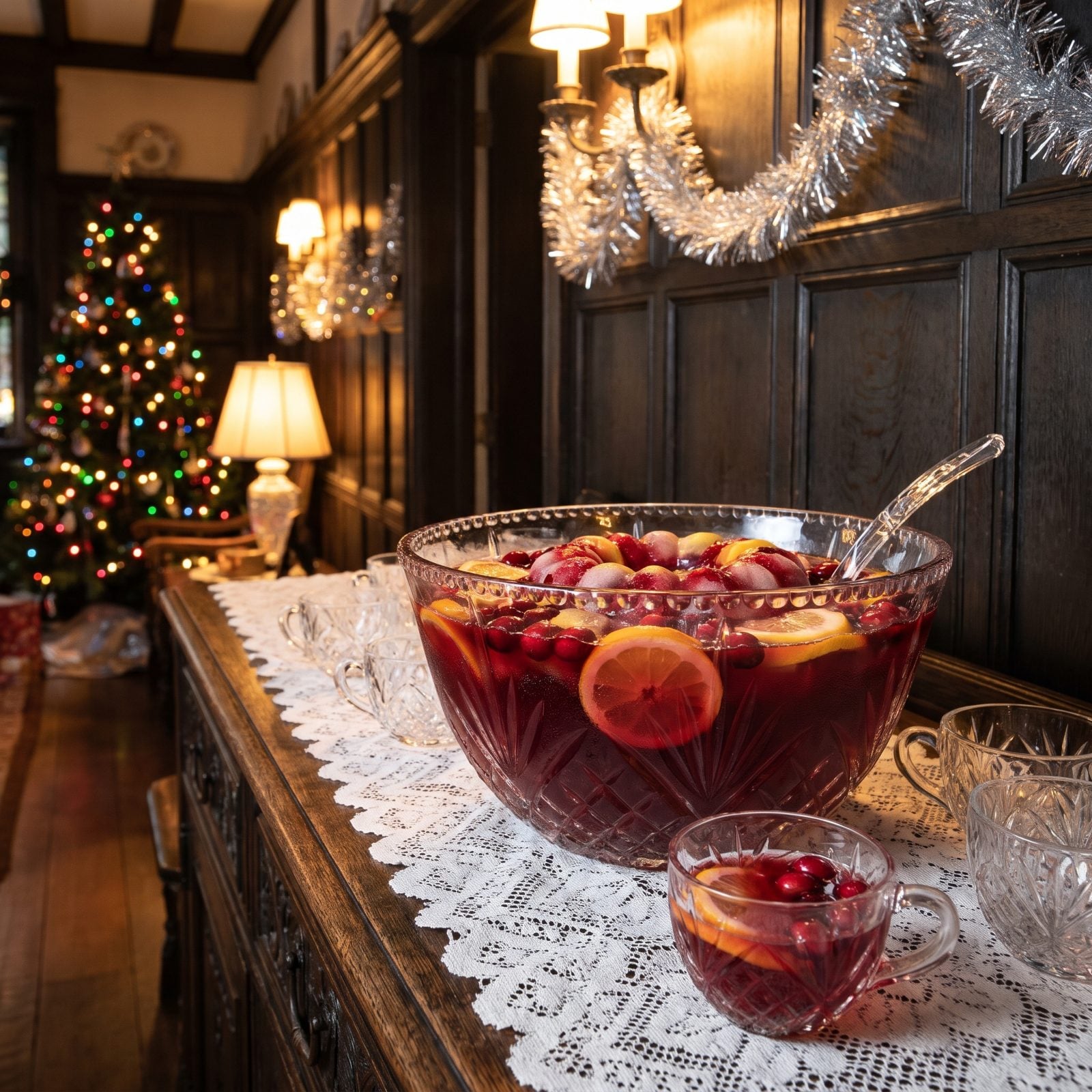
The centerpiece drink, and the one the kids were actually allowed to have. Sweet, red, fizzy, with orange and lemon wheels bobbing on top like tiny life rafts.
Plain ice cubes did the job here, heaped right in with the fruit. They chilled the punch fast, though they did water it down as they melted. Smart hosts kept the bowl topped up and added fresh cubes as needed. Warm punch by the second hour was the mark of an amateur, and I’ll stand by that.