
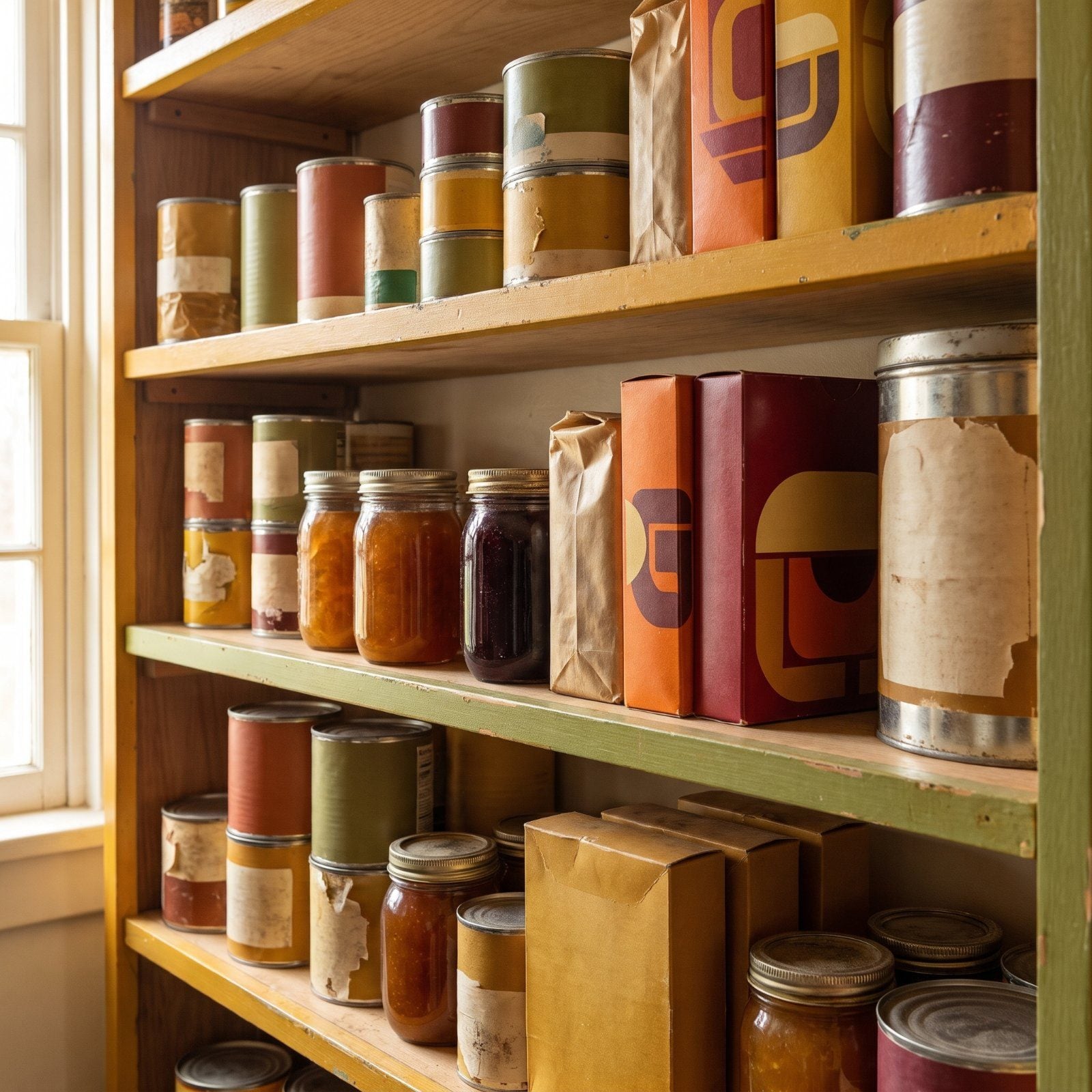
Open a kitchen cupboard in 1974 and the shelf stared back with flat geometric labels, dull aluminum lids, and a palette of harvest gold and avocado that bled straight out of the wallpaper. These were the cans and boxes that fed a family between paychecks — shelf-stable, affordable, ready when the night ran long. Half of them turned up at church potlucks, and most outlasted whatever was rotting in the fridge. Here’s a walk down that shelf, past the fruit cocktail and the shortening tin, into the quiet workhorses of a decade that trusted a can opener more than a cookbook.
Please note that some of the images in this article were created with the assistance of AI.
49. Canned Fruit Cocktail With Those Bright Red Cherries
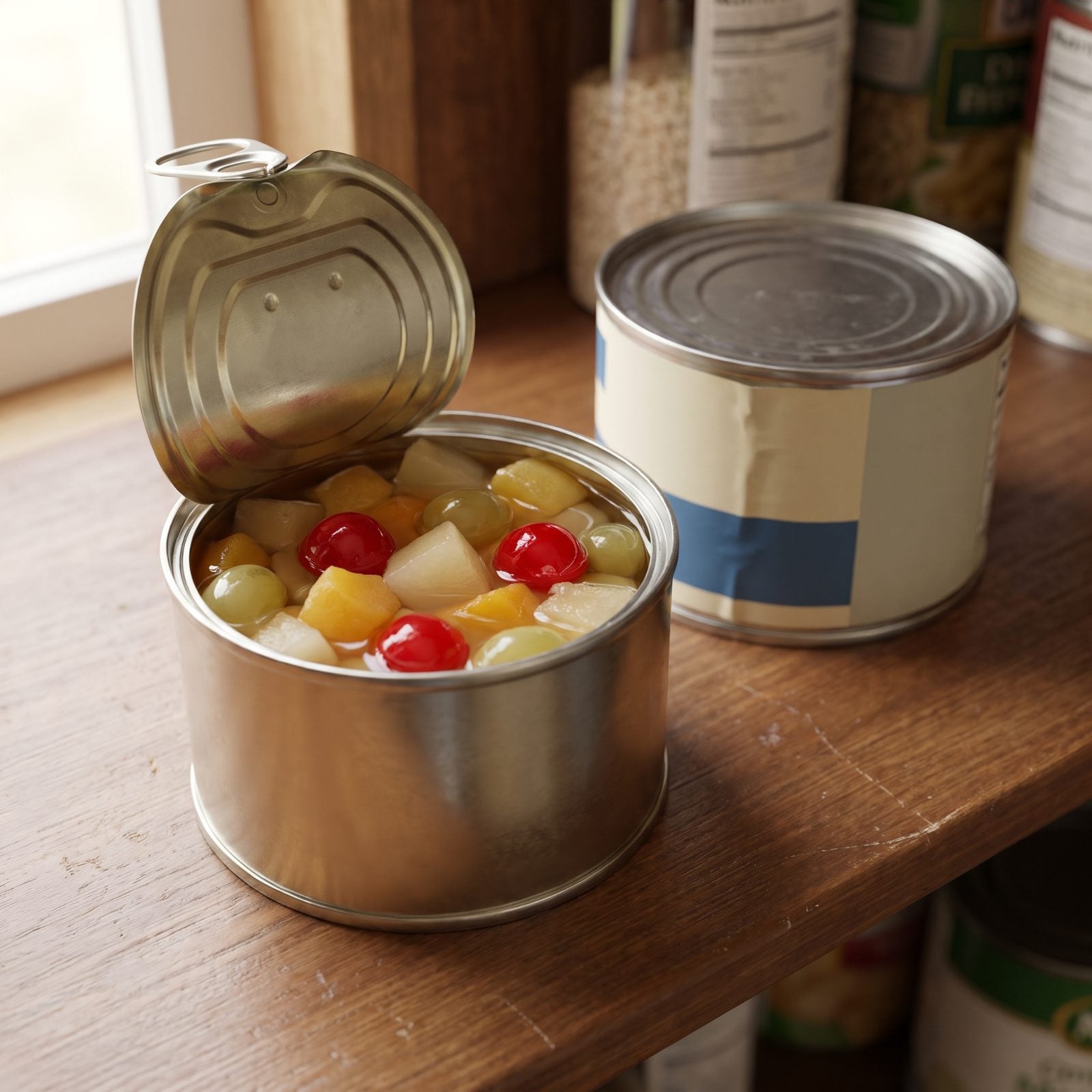
Every can held the same lottery: who got the cherries. Two halves, maybe three, swimming in a sea of beige pears and mystery grapes dyed a red that existed nowhere in nature. You fished for them with a fork, and you fought for them.
This was dessert on a Tuesday, the topping on cottage cheese, the thing folded into every ambrosia salad at every family reunion. The syrup was sweet enough to drink. Plenty of kids did, straight from the can once the fruit was gone.
48. Canned Peach Halves Drowning in Heavy Syrup
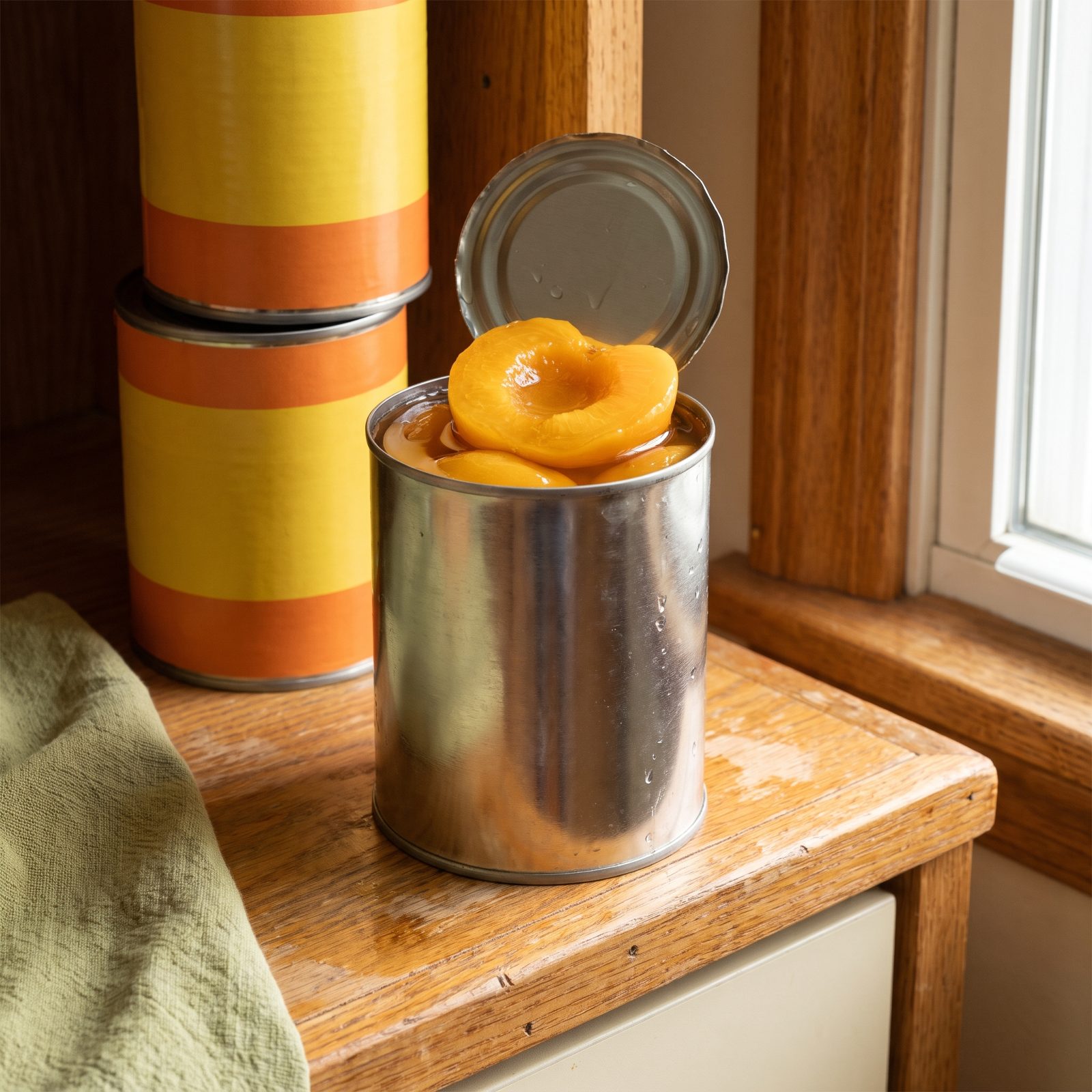
Heavy syrup. The label said it like a promise, and it kept it. Those peach halves came out firmer and sweeter than anything you could buy fresh in February, which is exactly why they mattered.
You spooned them over vanilla ice cream, lined them up on a baked ham, or ate them cold over the sink. The cavity where the pit used to be held a little pool of syrup — and everyone knew that was the best bite.
47. Towering Stacks of Condensed Soup Cans
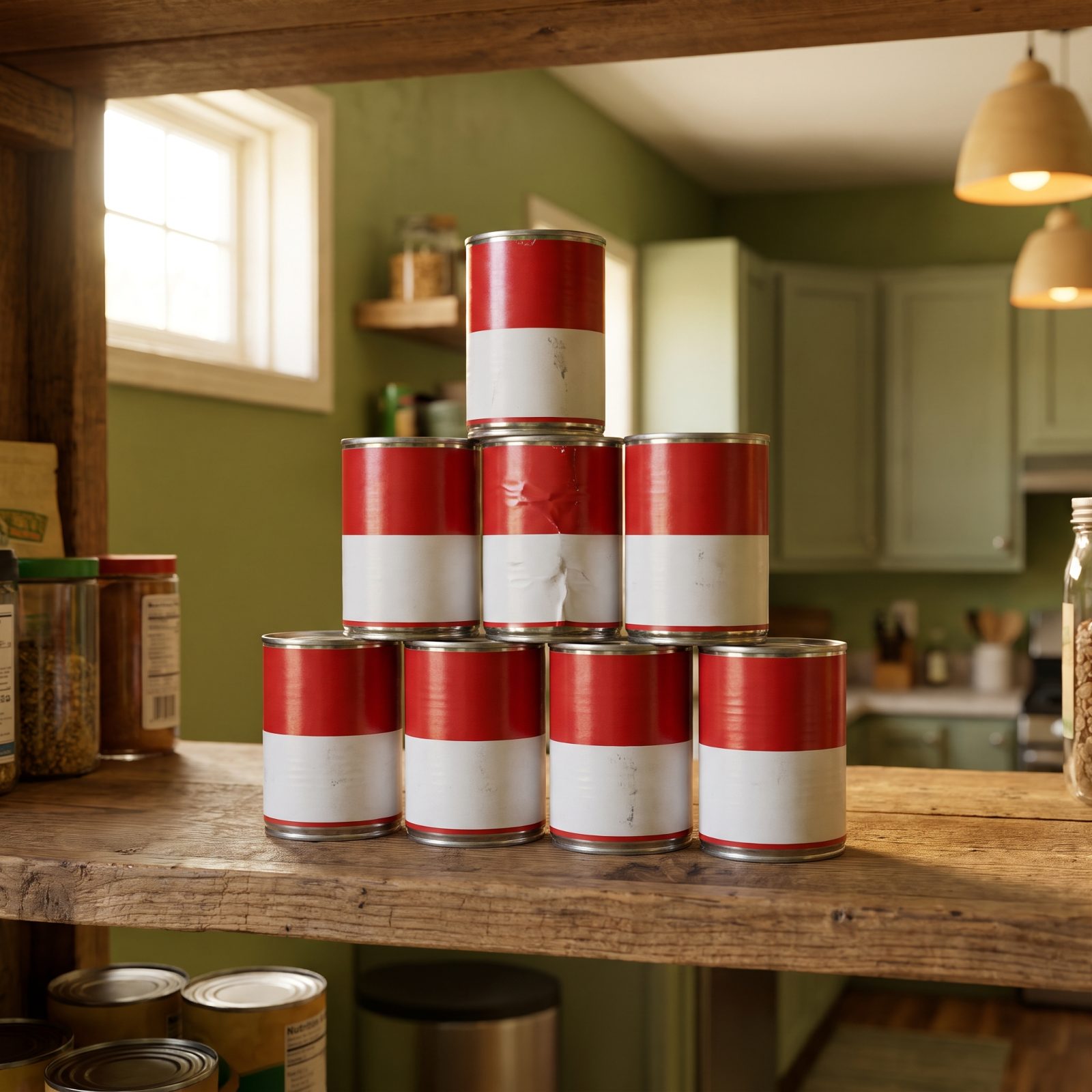
The quiet backbone of the whole decade. Nobody kept one can of condensed soup — you kept a wall of them.
Half went into actual soup, thinned with water or milk on a cold night. The other half never saw a bowl. They were sauce, they were binder, and they were the reason the green bean casserole existed and the tuna noodle thing held together.
A can of cream of mushroom was less an ingredient than a cooking technique.
46. The Big Can of Vegetable Shortening
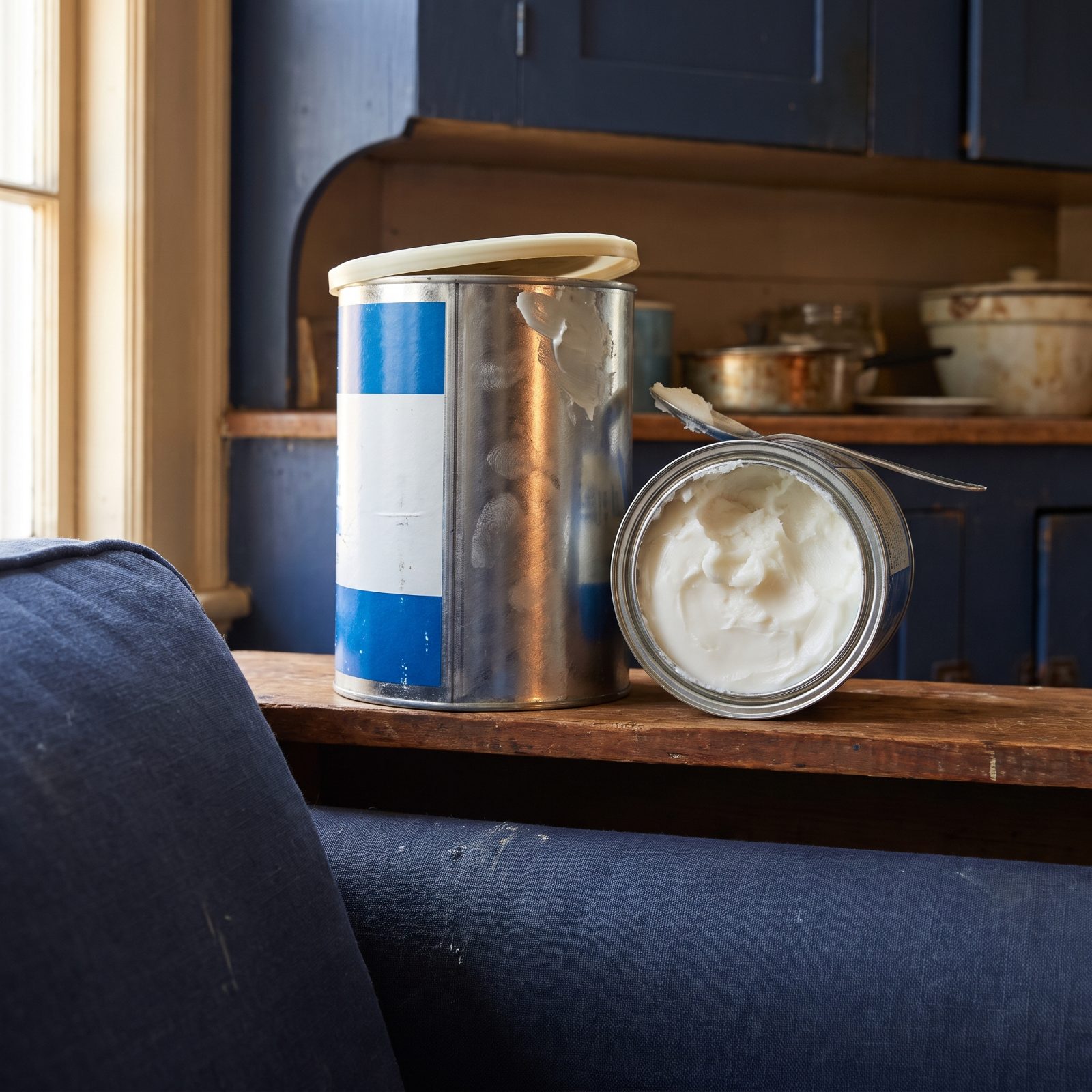
It lived on the shelf, not in the fridge, and that always baffled the grandkids later. A big tin of white fat you could keep for a year without a second thought.
Pie crust. Fried chicken. The grease you measured in heaping spoonfuls with no guilt whatsoever. The lid never went back on quite right, so there was always a thin crust of hardened shortening around the rim. Plenty of kids grew up thinking that was just how the tin came.
45. The Tumbler-Shaped Jar of Grape Jelly
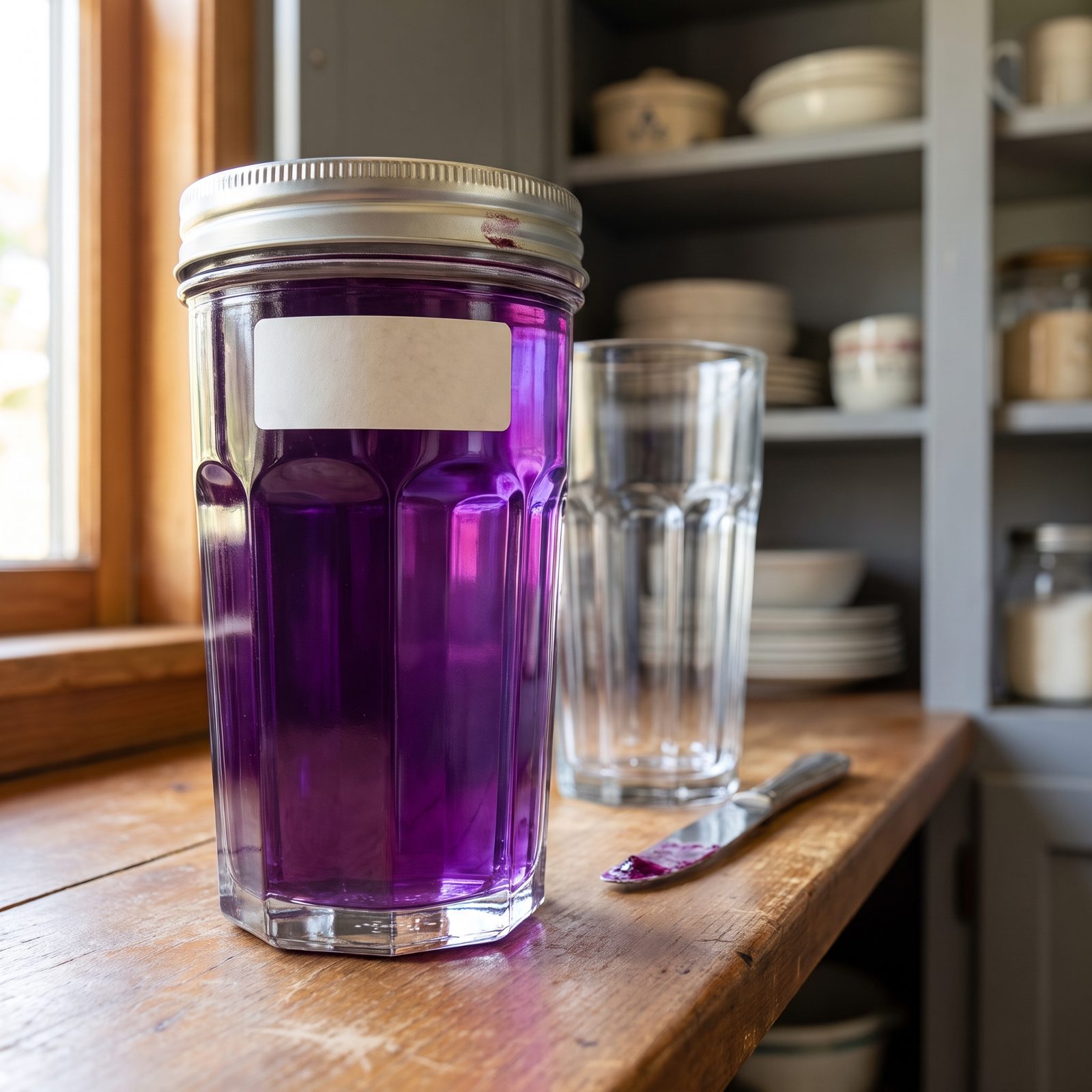
The jar was the real product. The jelly came along as a bonus.
Once it ran empty, that faceted tumbler went straight into the cupboard with the everyday glasses, and half the family’s drinkware carried a label-glue ring you could never quite scrub off. Building a matched set took patience and a lot of peanut butter sandwiches.
The jelly itself was pure, wobbling, electric purple. It cut clean with a knife and held its shape on the bread, which is more than you can say for the fruit spreads that came later.
Looking back at jelly jars that doubled as drinking glasses, a professional home organizer notes “Throughout the 50s, 60s, and 70s, the company targeted children with glass vessels featuring popular characters from Davy Crockett, The Flintstones, Archie, Warner Brothers and Peanuts.”
44. Rainbow Boxes of Gelatin Dessert Mix
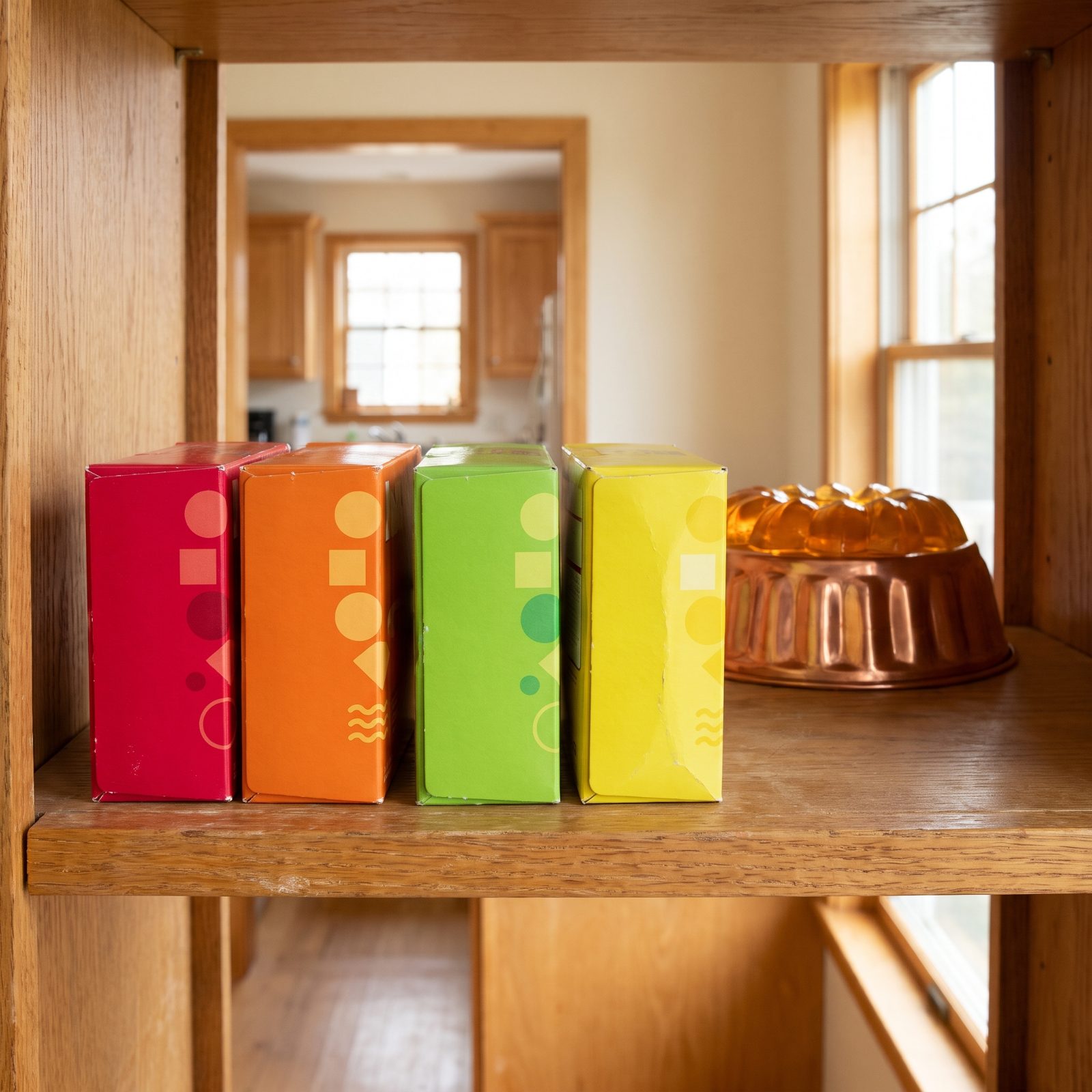
No pantry held just one flavor. You bought them in a little rainbow and lined them up by color, which meant the green went stale while the red vanished first.
These boxes built an entire genre of food. Molded salads with carrots suspended in lime. Layered parfaits for company. And the famous ring mold that showed up at every potluck, quivering on its platter, fruit cocktail trapped inside like a prehistoric bug in amber.
43. Boxes of Instant Mashed Potato Flakes
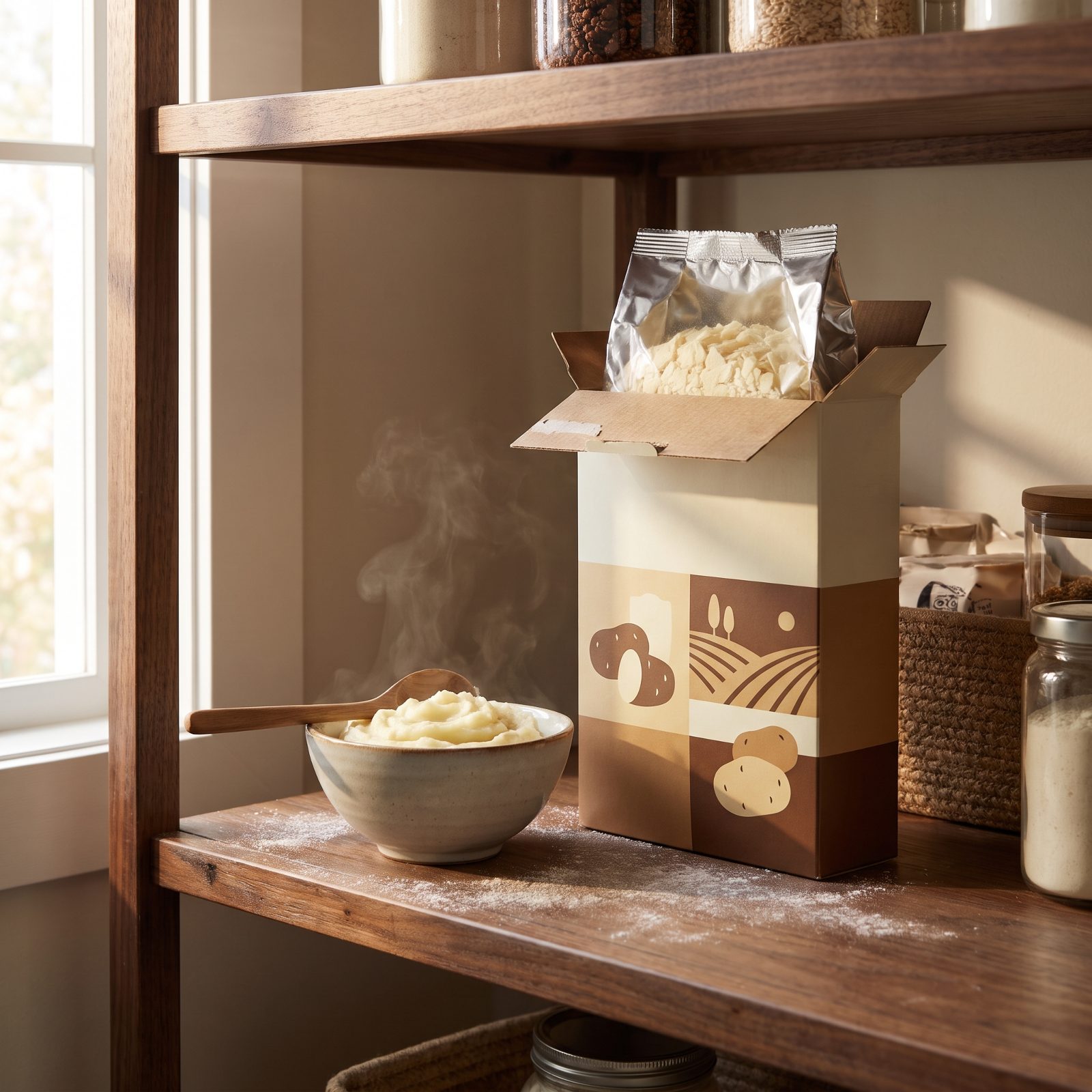
Peeling potatoes took time nobody had on a weeknight. The flakes took four minutes and a kettle.
Were they as good as the real thing? No. Anyone who says otherwise is remembering it fonder than it was. But hot butter and enough salt covered a multitude of sins, and when you were feeding four kids before a 6 o’clock program, good enough was a feast.
42. The Blue Box of Macaroni and Cheese Dinner
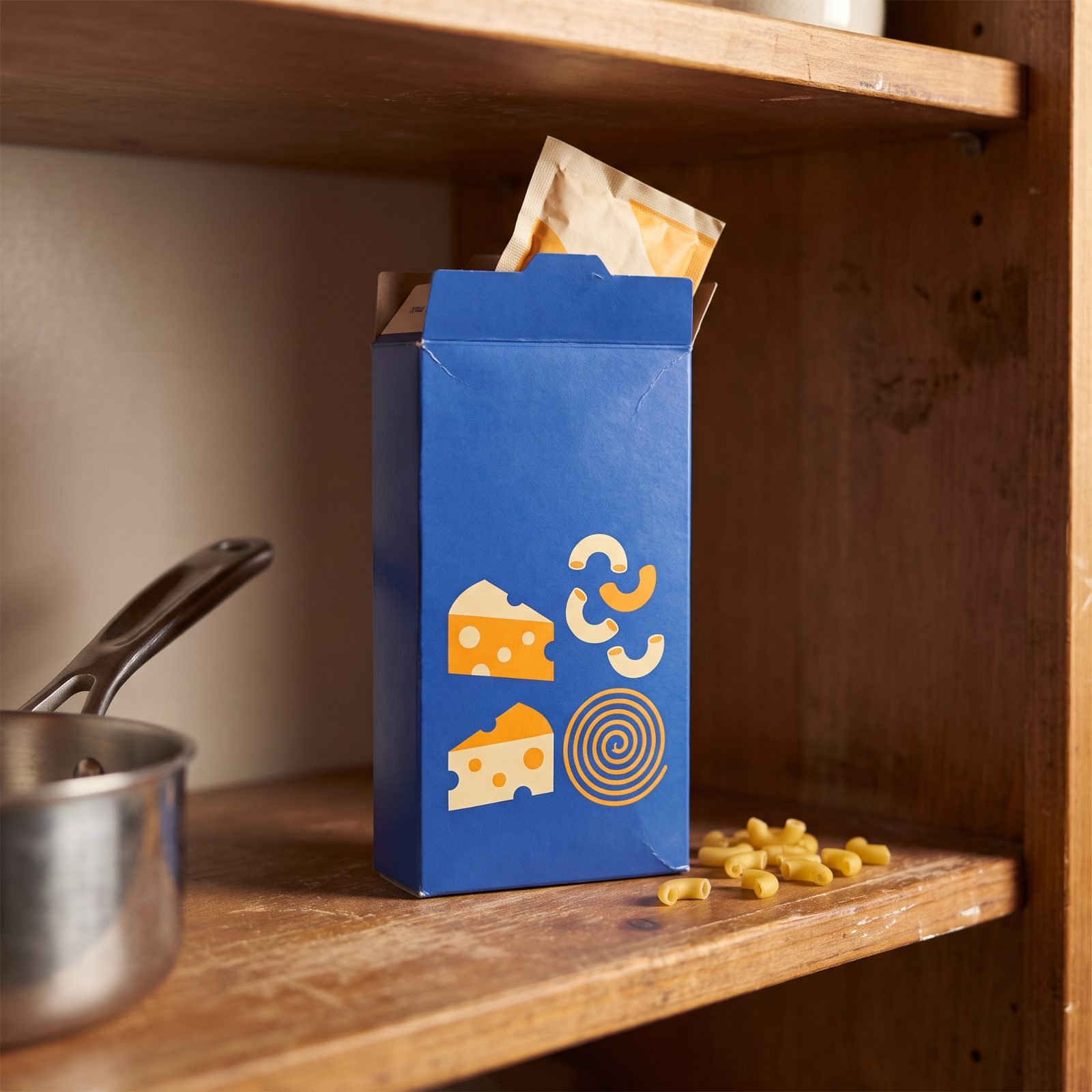
The box that raised a generation. Cheap, fast, and orange in a way that looked nothing like cheese and tasted exactly like childhood.
The ritual never changed. Boil the little elbows, drain them, and then the moment of truth: you tore open the paper packet of fluorescent powder, added butter and a splash of milk, and stirred until it went creamy. Half the kids in America could cook this before they could tie their shoes.
41. Cans of Ready-to-Heat Spaghetti
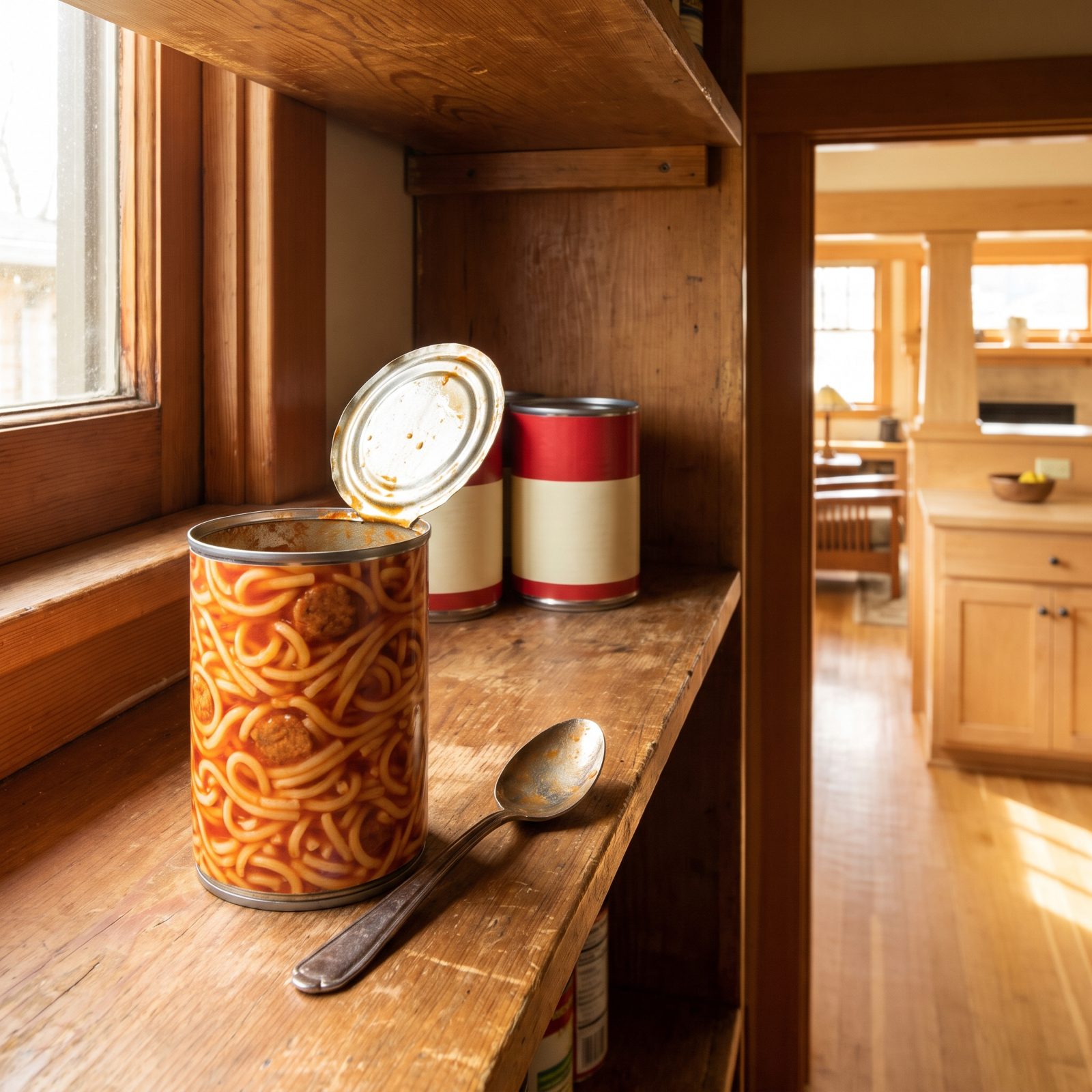
Lunch for one, no skills required. Open the can, dump it in a pot, heat, eat. The sauce was more sweet than tomato, the noodles were short and soft and never al dente in their lives, and children adored every orange bite.
It stained everything — your shirt, the pot, the corner of your mouth. That cheerful red-orange was the color of latchkey afternoons and Saturday cartoons, eaten straight from the pan to save on dishes.
40. Cans of Chunk-Light Tuna
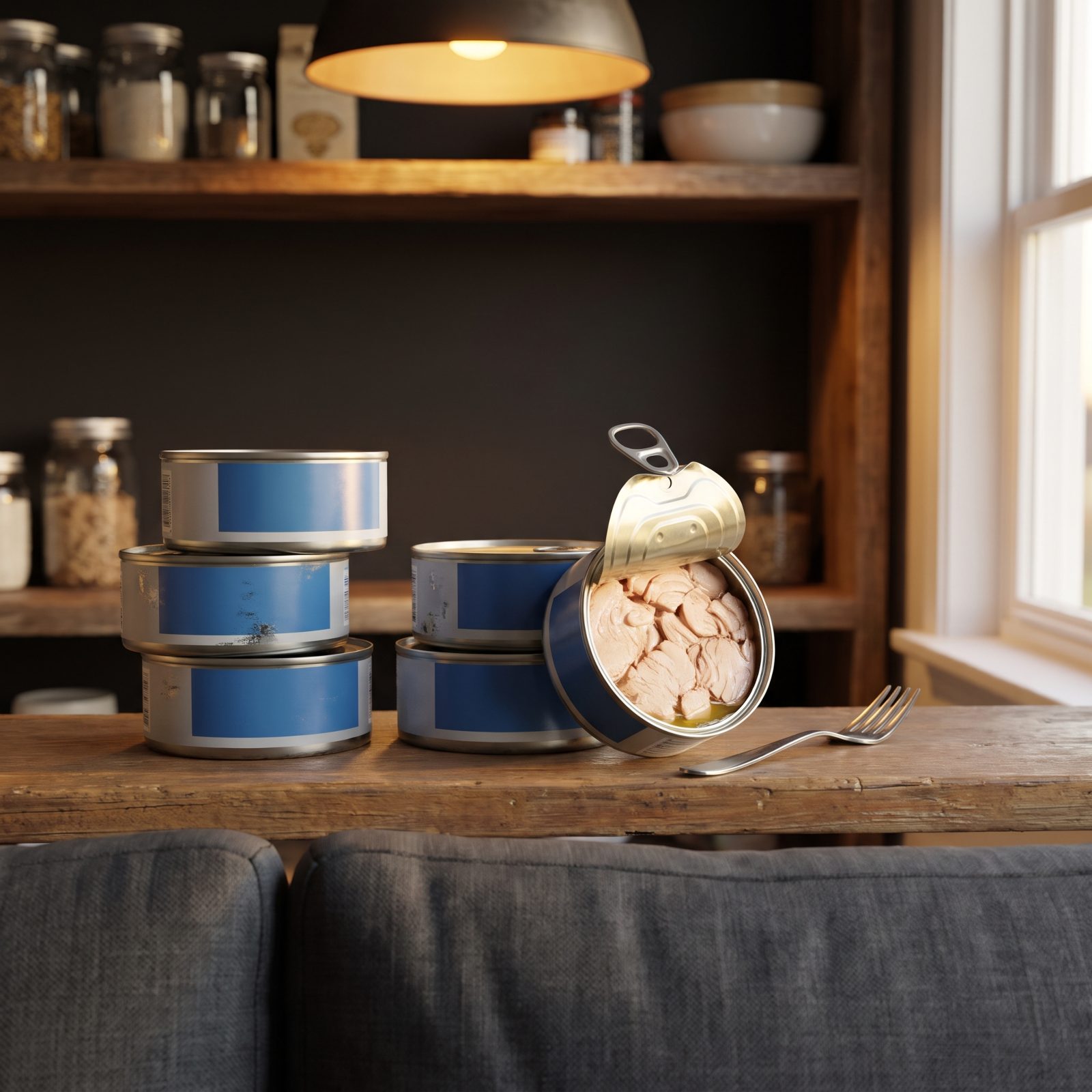
The most dependable can in the house. When money was tight or the week was long, there was always tuna.
Drained and forked into a bowl, it became a sandwich with mayo and celery, or the hot dish with noodles and that can of mushroom soup, or the melt that bubbled under the broiler on a Friday during Lent. It kept forever. It saved dinner more times than anyone bothered to count.
39. Canned Cream-Style Corn, Thick and Unapologetic
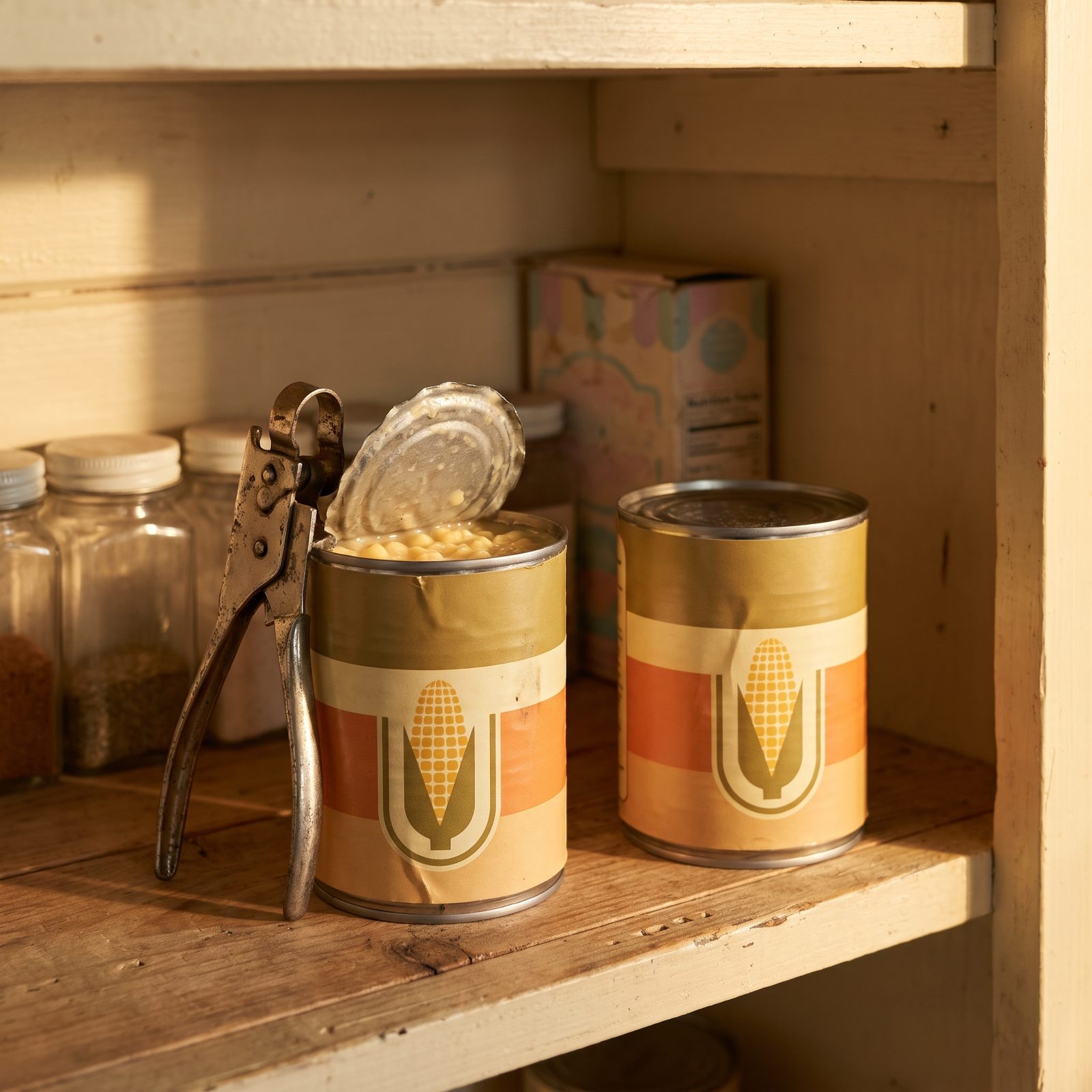
Thick, almost pudding-like, nothing like the crisp kernels off a summer cob. Cream-style corn was its own food entirely, and you either loved the sweetness or poked at it with deep suspicion.
It went into cornbread batter, into chowders, or straight onto the plate as a side that needed no help whatsoever. The cans always felt heavier than they looked.
38. Canned Sweet Peas, the Soft Green Dot on Every Plate
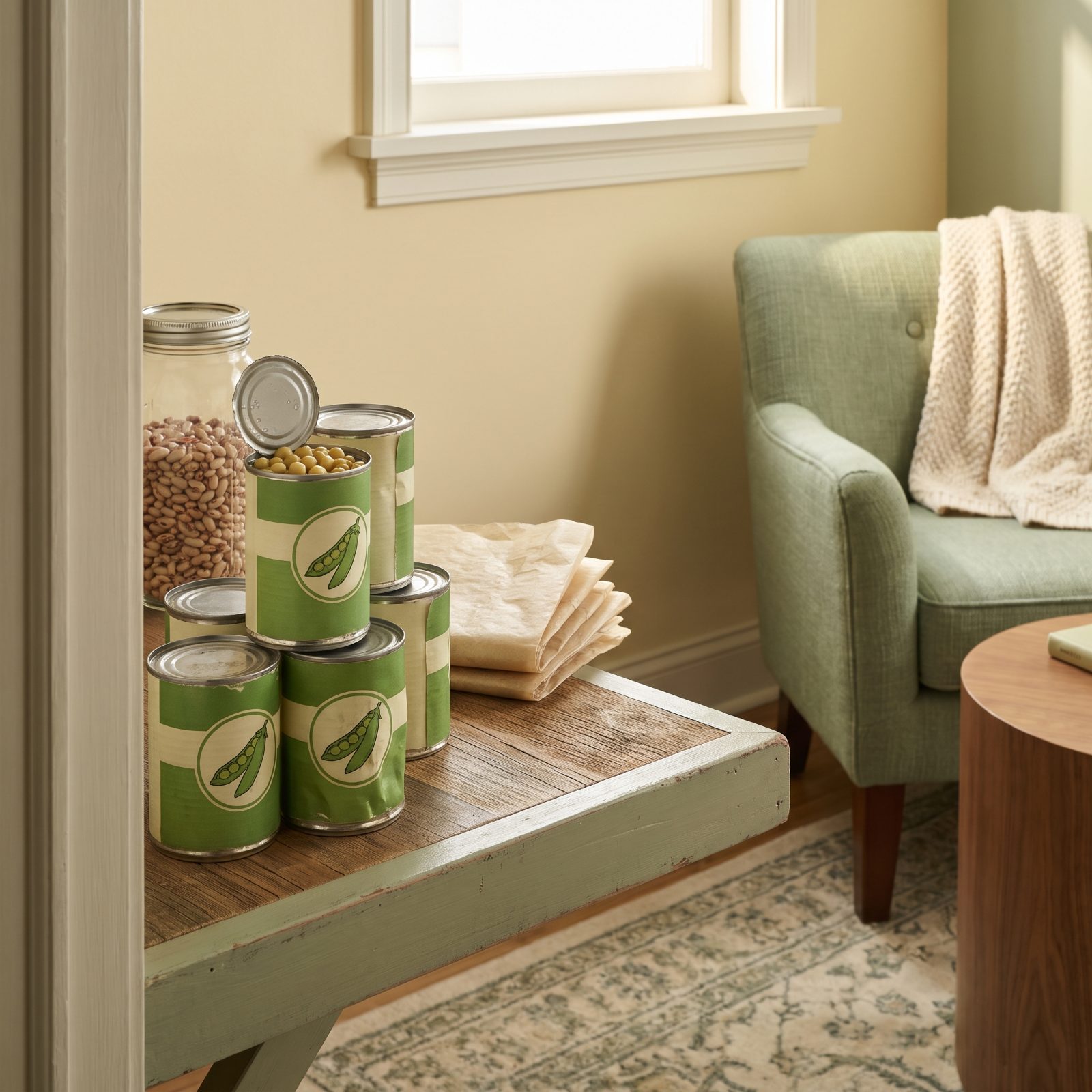
The most dependable green on a weeknight plate. Boiled meat, a scoop of mashed potatoes, and a spoonful of these peas warmed straight from the can.
Tiny, uniform, faintly sweet, with a soft give that kids learned to roll under their forks. Admittedly, canned peas are nobody’s idea of a delicacy. But there was real comfort in how utterly reliable they were, every single can the twin of the last.
37. Canned Whole Tomatoes, the Start of Every Sauce
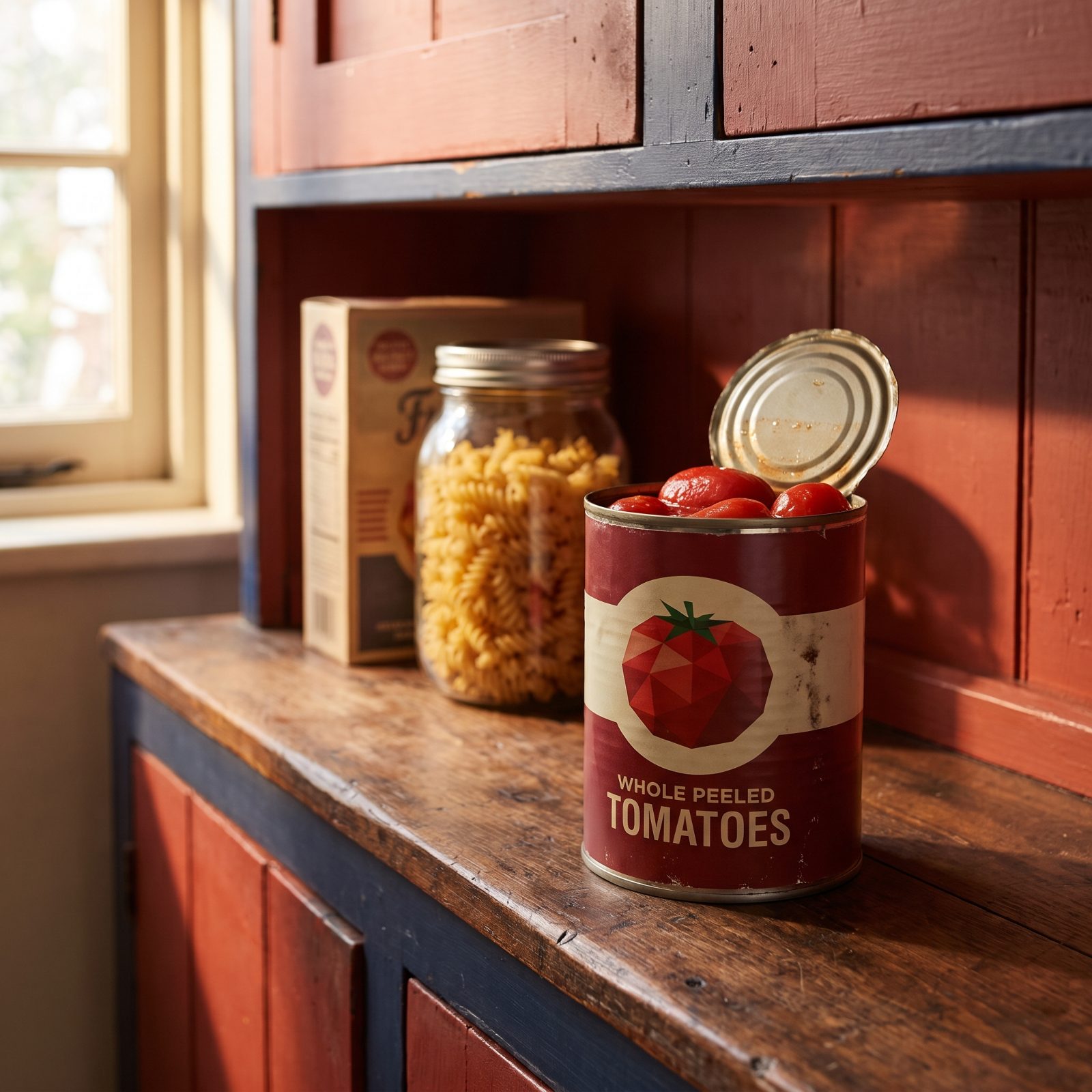
Everything started here — spaghetti sauce on a Wednesday, chili on a cold Sunday, a quick soup when the garden gave out. The whole tomatoes came swimming in their own juice, and you crushed them by hand against the side of the pot.
They were the one canned good that outclassed the fresh version half the year, especially in February when the pink supermarket tomatoes tasted like absolutely nothing at all.
36. Canned Pineapple Rings, the Sweet Surprise on Shelf Three
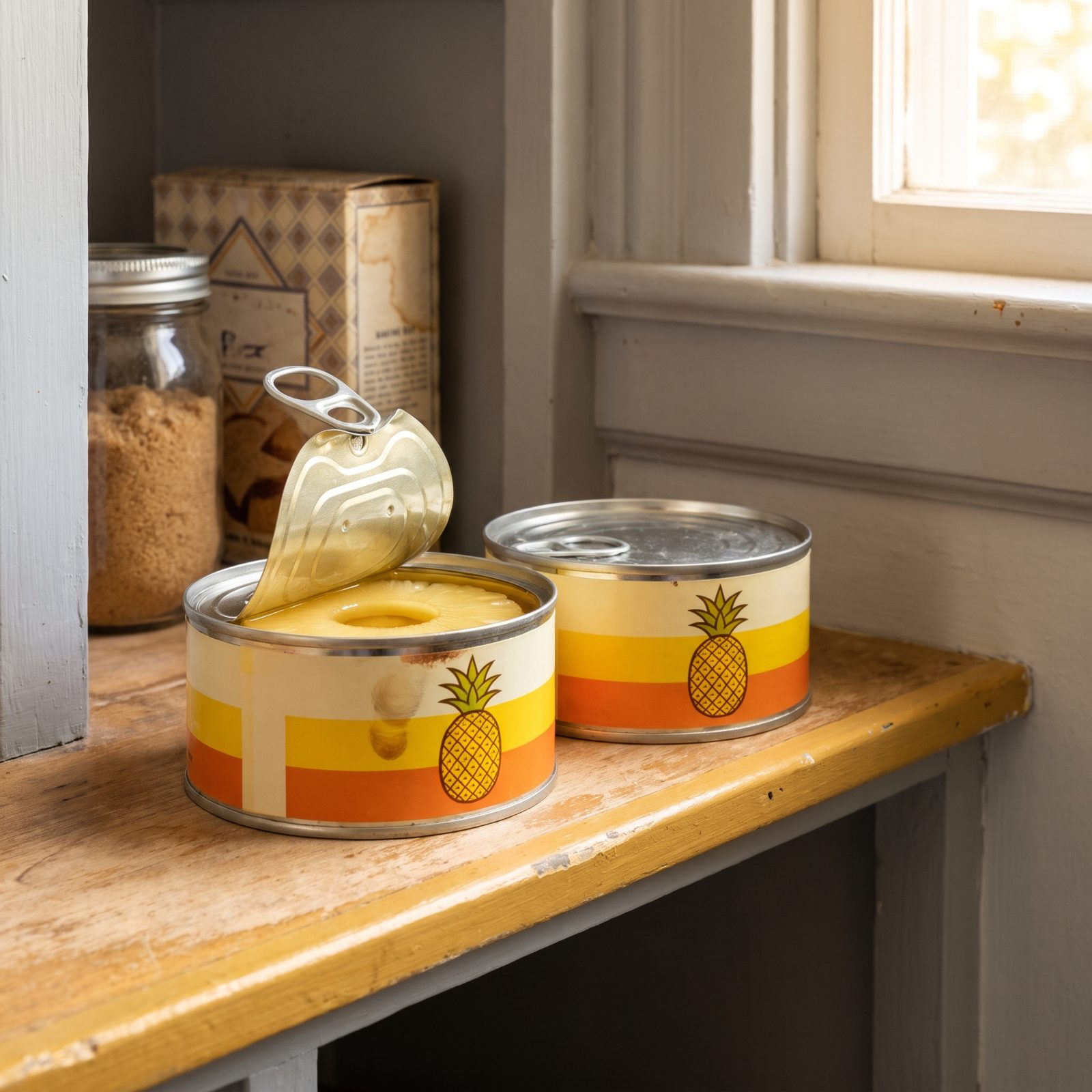
Pineapple upside-down cake. Ham with a ring perched on top like a crown. Those golden hoops carried a whole category of 1970s cooking on their shoulders.
To a kid there was something close to magic in them — tropical fruit, in your landlocked kitchen, in the dead of winter. The syrup got poured over everything, and the empty can got rinsed and saved for pencils.
35. Small Jars of Maraschino Cherries, the Glossy Red Garnish
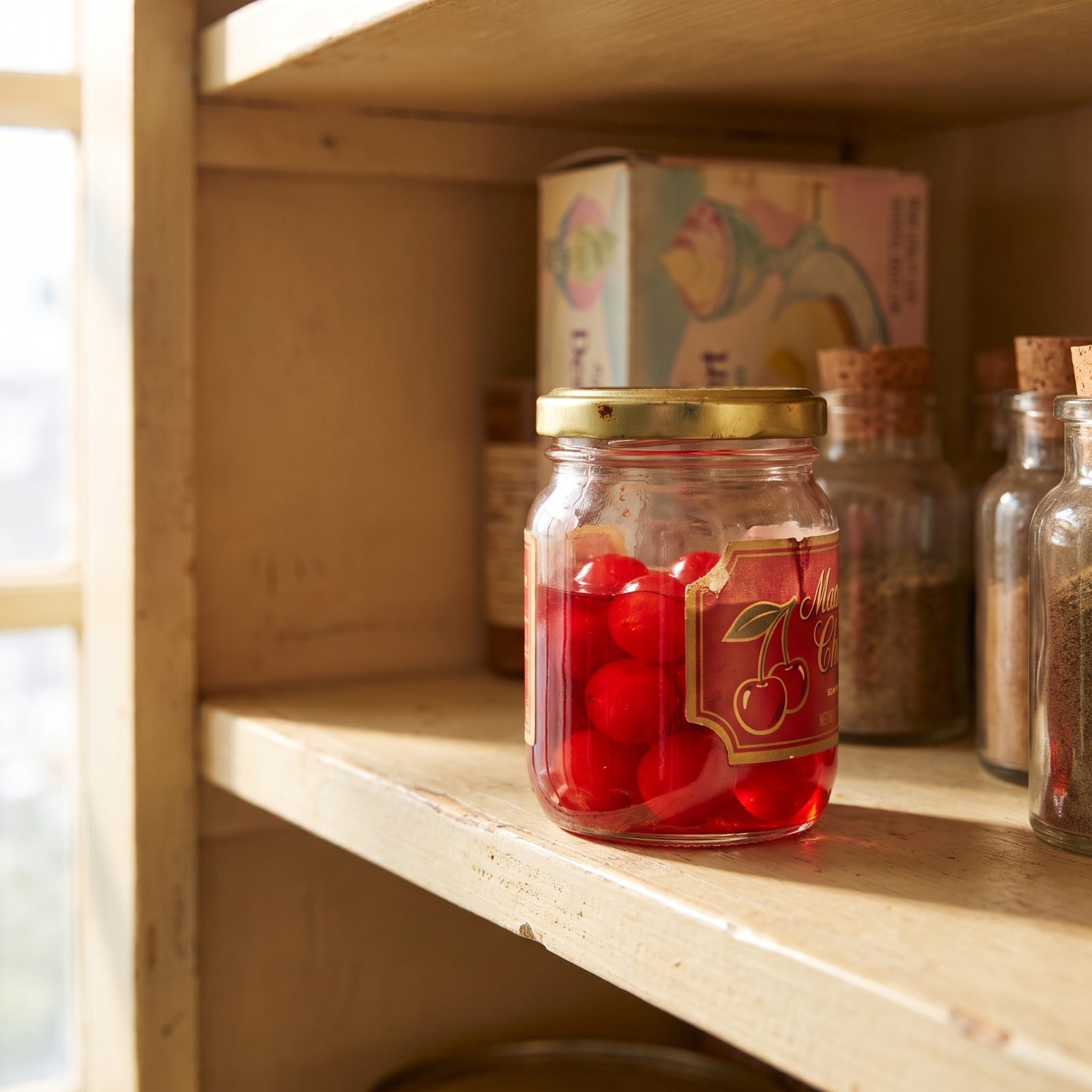
Unnaturally red and glowing like a taillight. Nobody questioned the color — ever. You fished one out for a sundae, speared one onto a toothpick for the fancy drink nobody was actually drinking, dotted them across the top of a holiday ham.
The jar lasted forever. You’d find the same one at the back of the shelf two Christmases later, cherries still bobbing, syrup gone slightly thick.
Explaining where the jarred cherry came from, a university pilot plant manager says “The modern maraschino came out of some of the research to help do just that, add value to an abundant crop that was grown in the region.”
34. Glass Jars of Applesauce, Smooth and Faintly Sweet
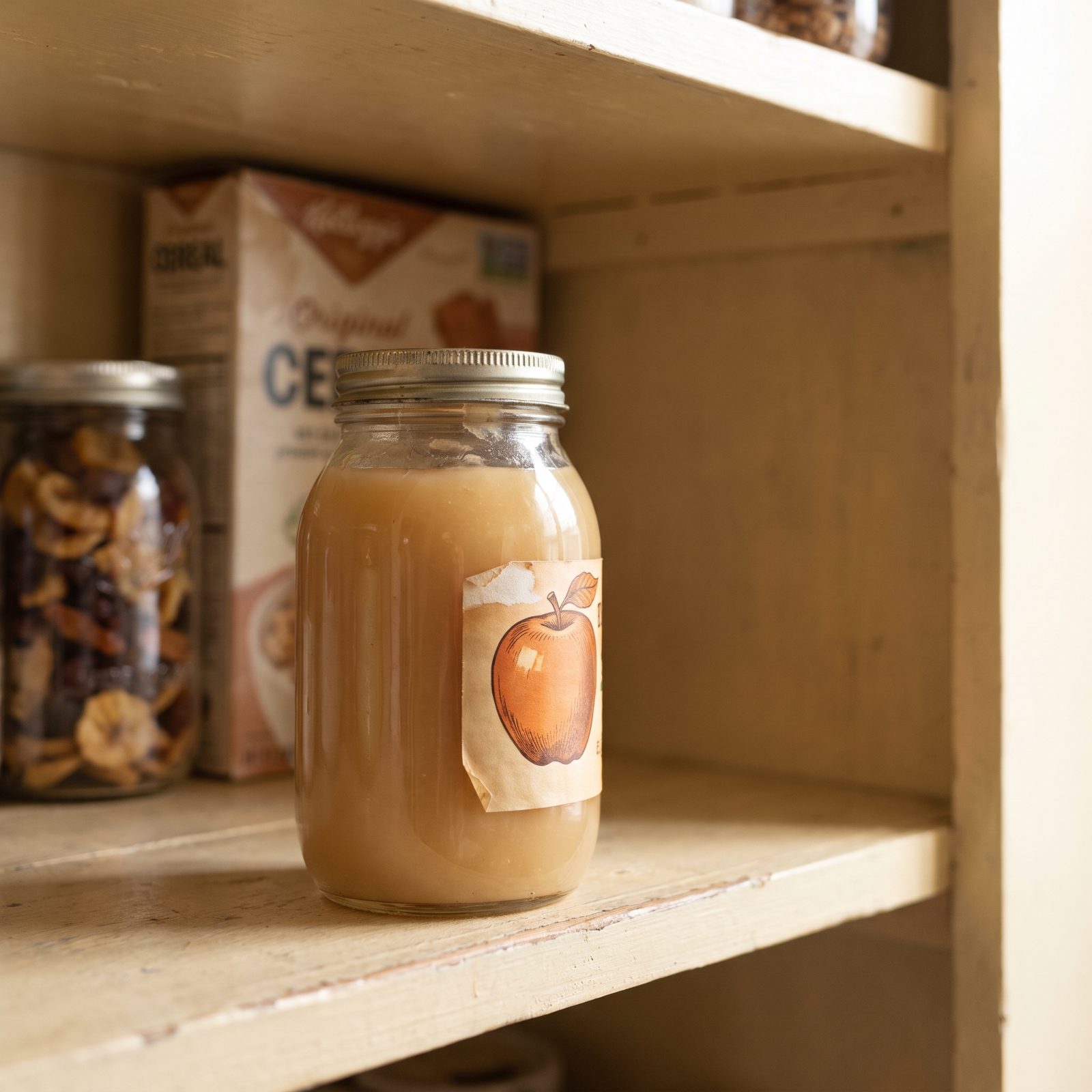
The gentlest thing in the whole pantry. Applesauce went beside pork chops, into lunchboxes, and to whoever was home sick with a stomach that couldn’t handle much else.
Smooth, warm-tan, faintly cinnamon or not depending on the jar. You could eat it cold straight from the fridge with a spoon while standing at the open door — which plenty of kids did far more often than their mothers would have liked.
33. Cans of Baked Beans, the Ready-Made Side Dish
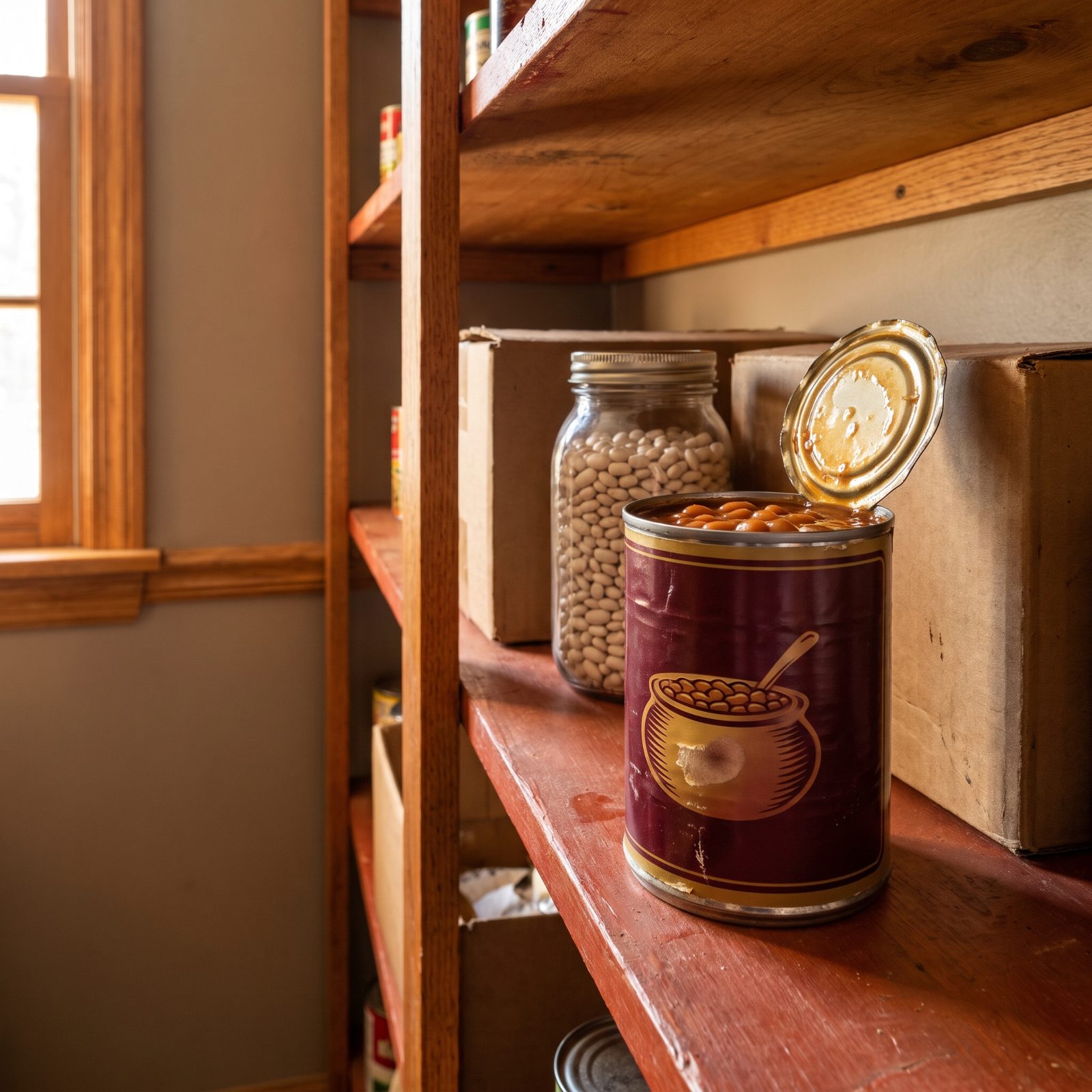
A cookout without a can of these was barely a cookout at all. Dump them in a pot, maybe doctor them with a little mustard and brown sugar if you were feeling ambitious, and you had a side dish nobody would turn down.
Thick, smoky-sweet, held together in a molasses sauce that clung to the spoon. They also made a fine hot lunch poured over toast on a day when cooking felt like too much.
32. Canned Corned Beef Hash, the Saturday Breakfast in a Can
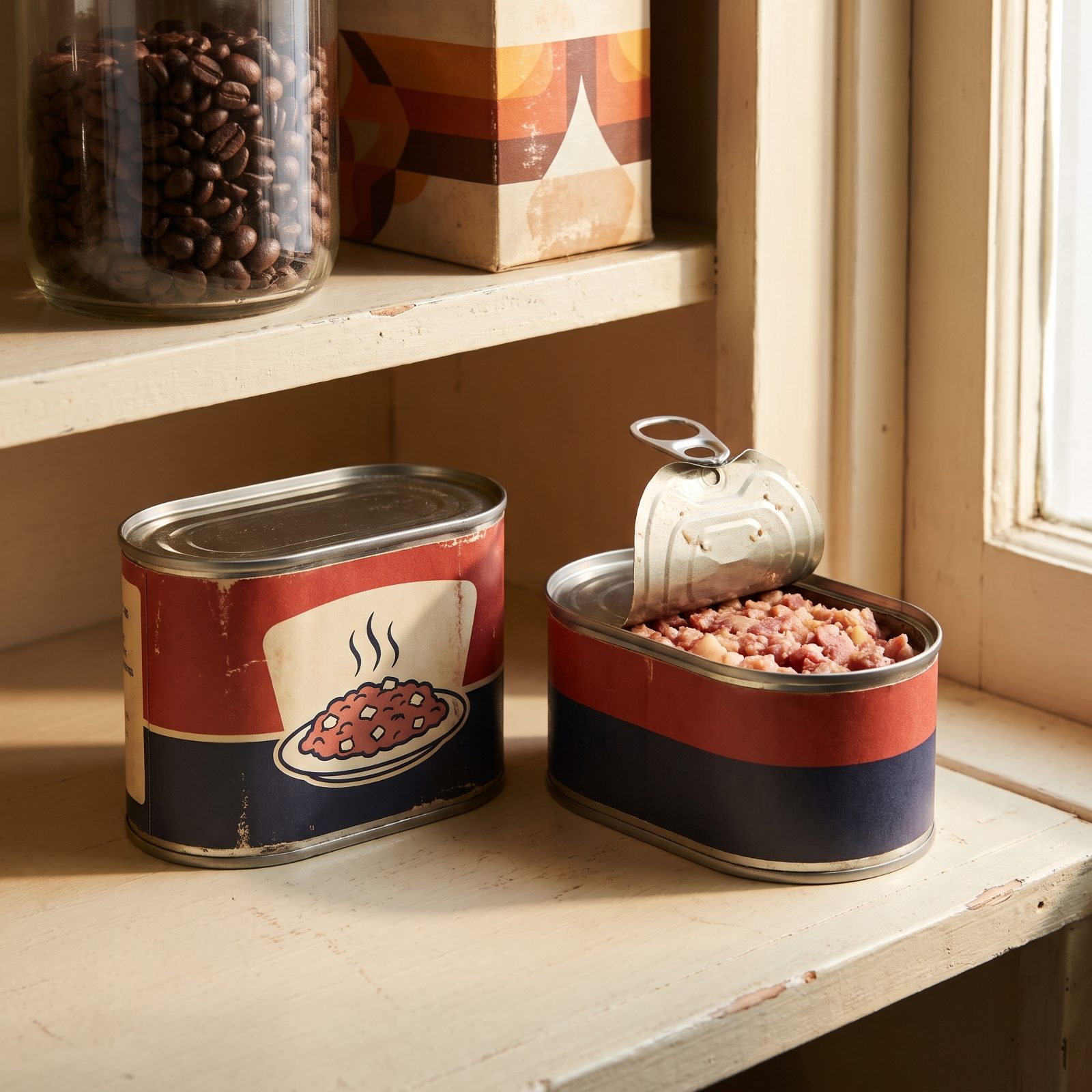
Dump it into a hot skillet, press it flat, and leave it alone until the bottom crusted up. That crust was everything, and if you stirred it too soon you ruined the best part.
Corned beef hash was Saturday morning, or a cheap dinner, or whatever the can decided it wanted to be. A fried egg on top sealed the deal. It looked like nothing much coming out of the can, then smelled incredible the second it hit the pan.
31. Cans of Evaporated Milk, the Can That Did Everything
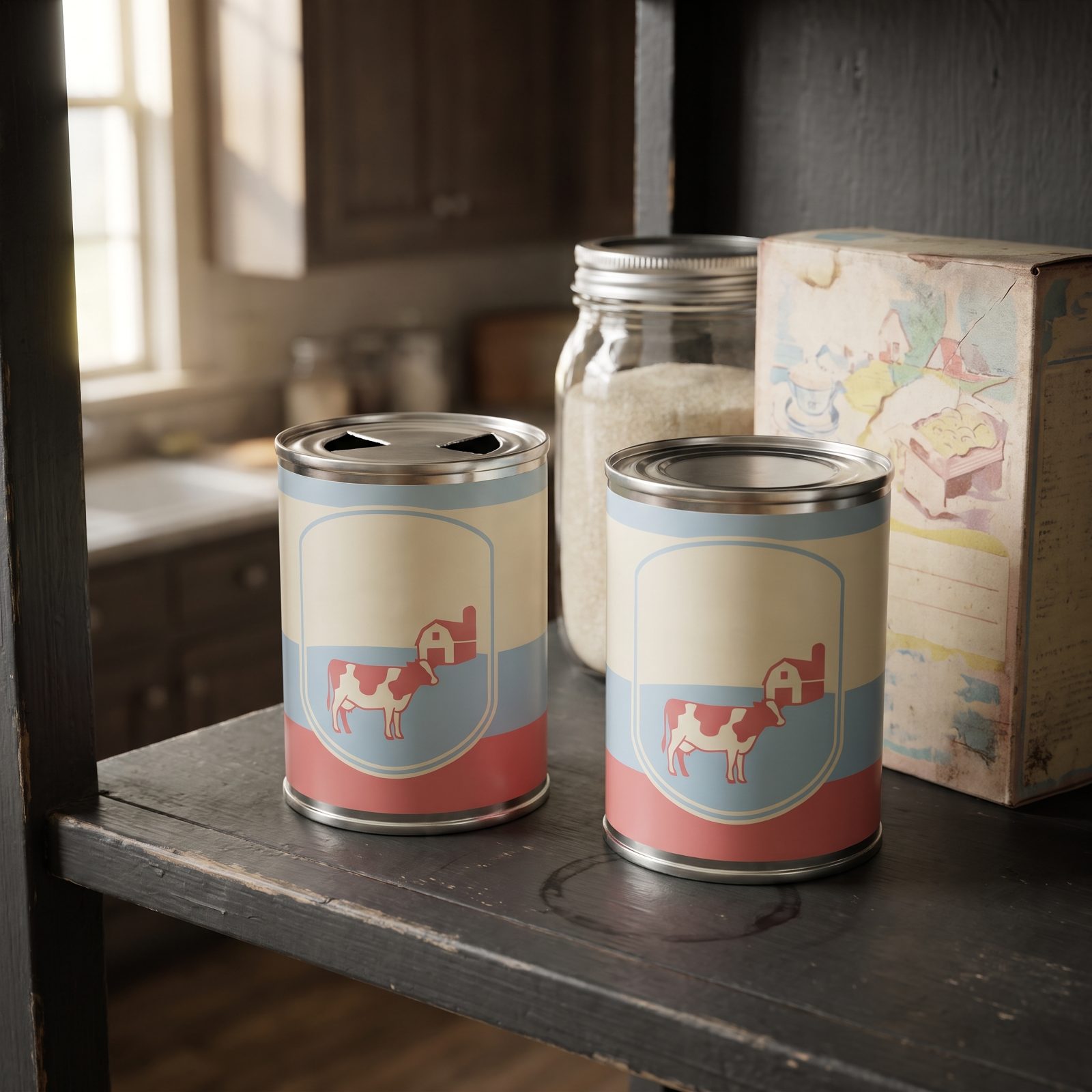
The quiet overachiever of the shelf. Pumpkin pie leaned on it, and so did fudge, creamed soups, coffee when the fresh milk ran out, and half the holiday desserts in the recipe box.
You opened it with two triangle punches on the lid, one to pour and one to let the air in. Afterward the can sat in the fridge with a little square of foil pressed over the holes. Hardly anyone drank it straight, and there’s a very good reason for that.
30. A Large Jar of Creamy Peanut Butter
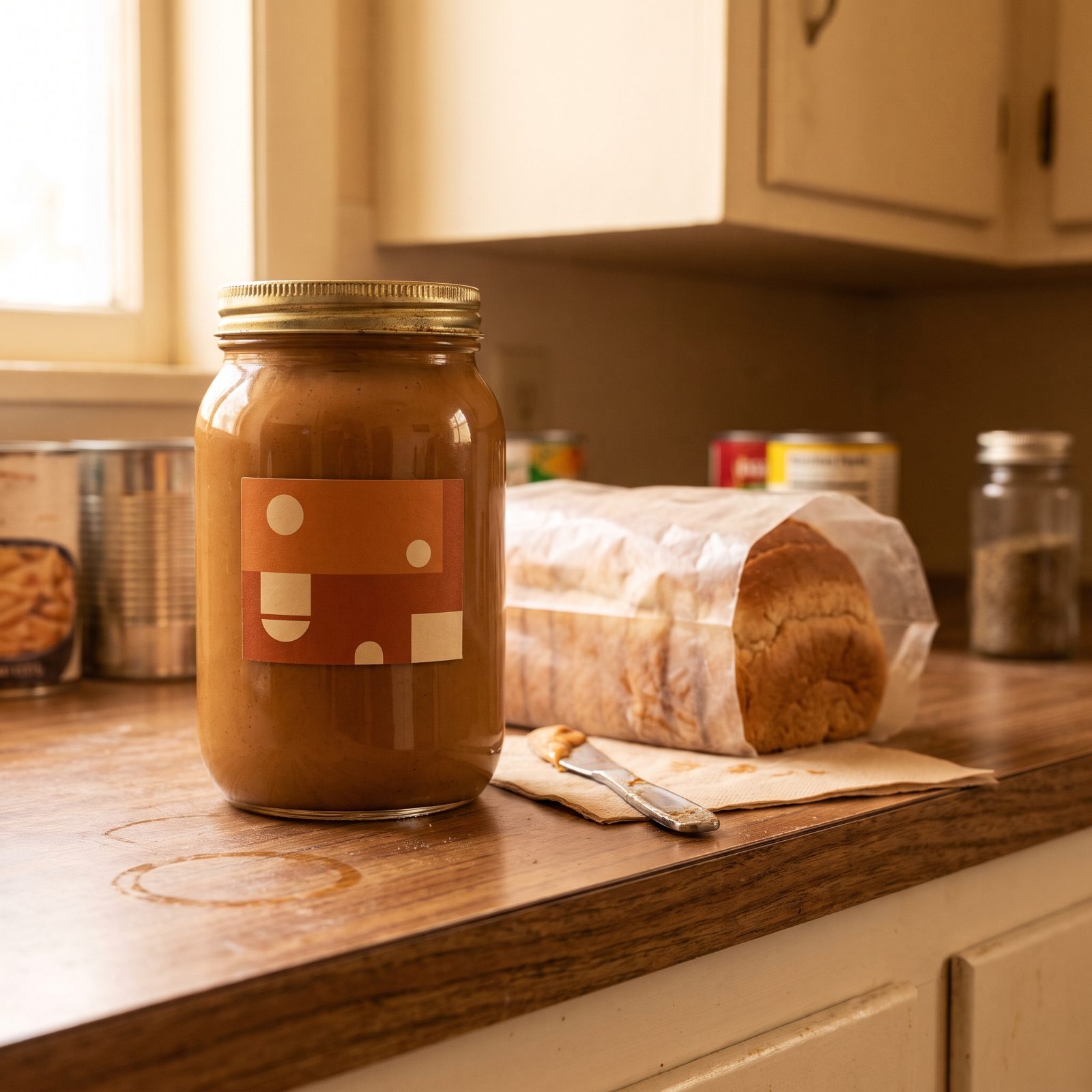
Every kid in the house knew exactly where the line was. You could see it through the glass, the smooth caramel surface sinking lower each week until the knife had to scrape the corners. One jar carried an entire decade of lunchboxes on its back.
The creamy-versus-crunchy argument split families clean down the middle, and nobody ever switched teams. What the oil-separated natural kind now sells as authenticity, the 1970s household filed under nuisance. The sweet, shelf-stable, perfectly spreadable stuff won every single time.
29. Long Boxes of Dried Spaghetti
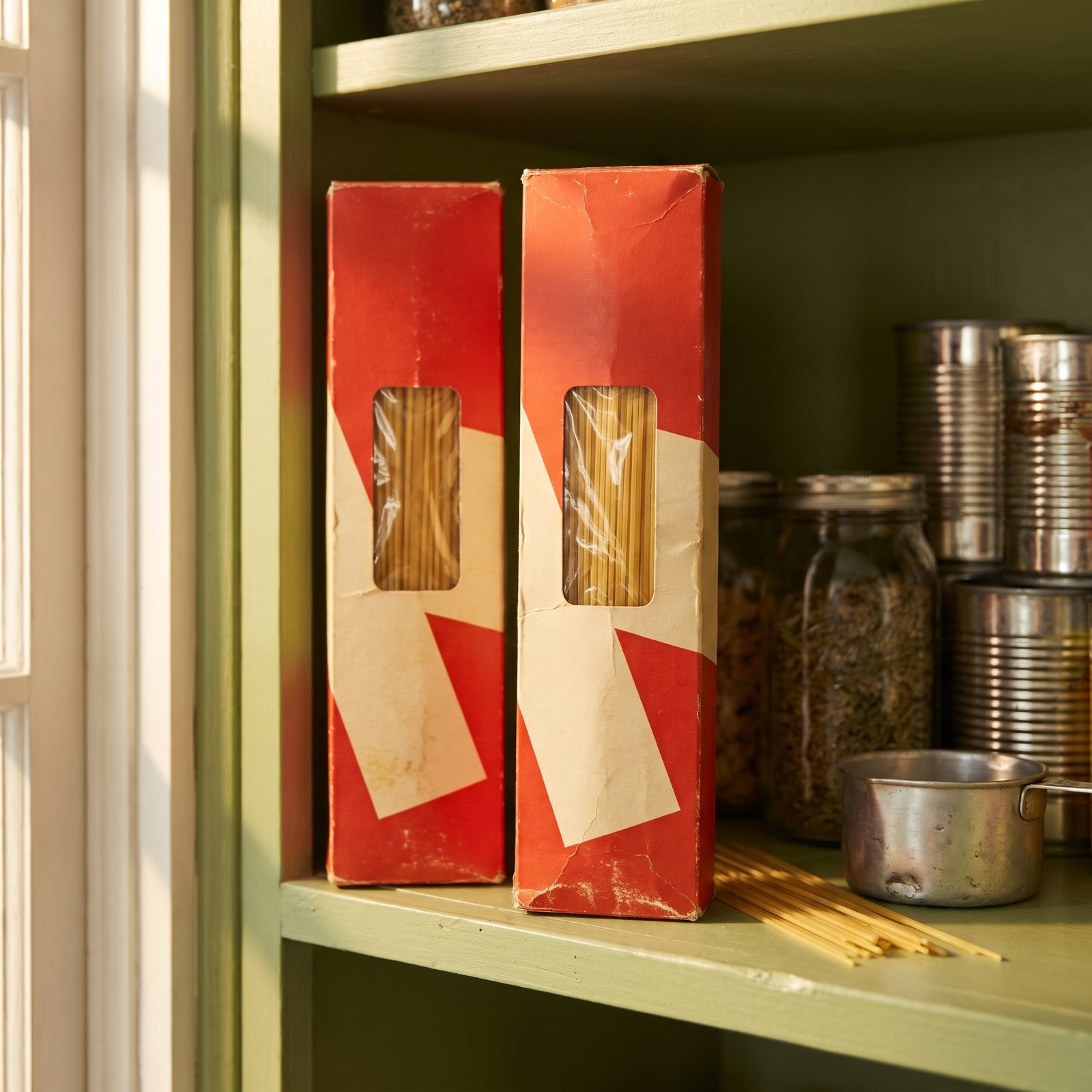
Spaghetti night ran on a rhythm you could set a clock by. The box came down, the strands went into the tallest pot in the cabinet, and somebody always snapped them in half before the water boiled — which kicked off arguments that are, apparently, still unresolved in certain households.
That long box of pasta lasted forever, cost almost nothing, and stretched a pound of ground beef into dinner for six. That was the whole job. It never once flubbed it.
28. Cellophane Bags of Wide Egg Noodles
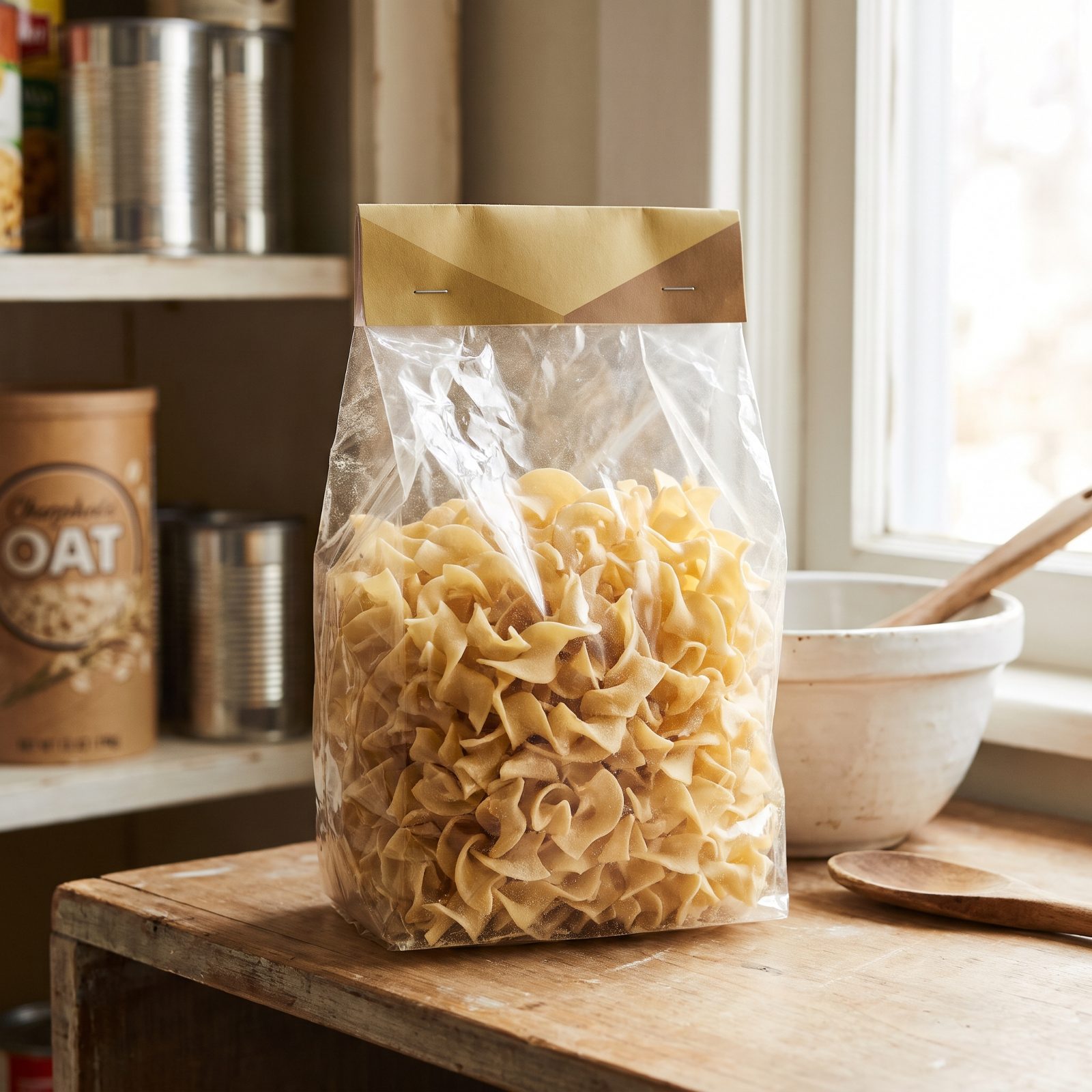
These were the comfort noodles. Wider and softer than spaghetti, a little richer from the egg, they belonged to the slow-cooked stuff — beef stroganoff, tuna casserole, chicken and noodles that simmered until the whole house smelled like Sunday.
The cellophane bag crackled when you opened it and never resealed right, so the leftover noodles got clothespinned shut and shoved to the back of the shelf. You’d rediscover them months later, perfectly fine. Dried egg noodles don’t go bad. They just wait.
27. A Cardboard Box of Long-Grain White Rice
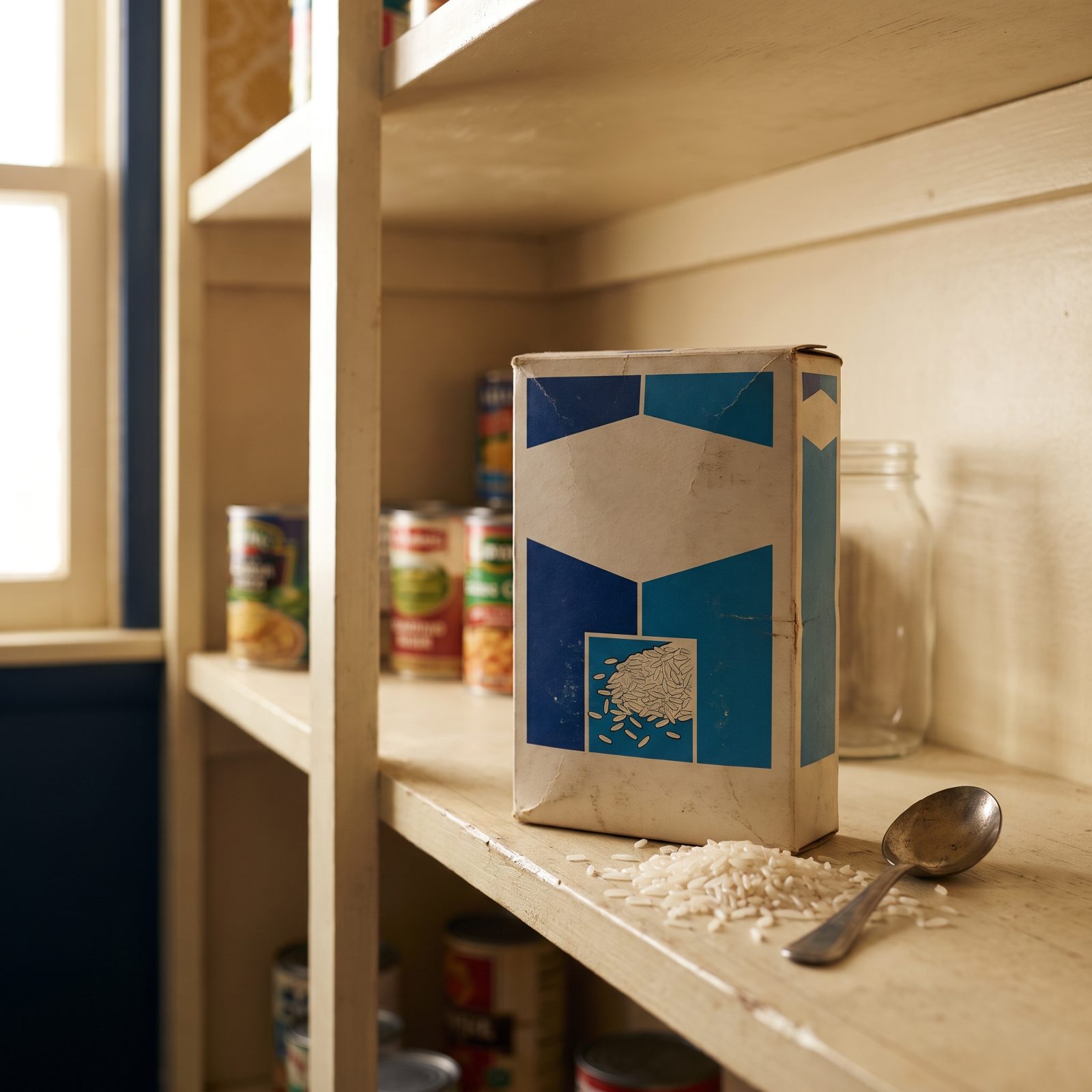
The box with the little cardboard pour spout you could never close right. Rice was the quiet workhorse of the pantry, turning up under chili, next to pork chops, in the casserole, soaking up every last drop of gravy on the plate.
Long-grain ruled because it cooked up separate and fluffy instead of sticky — the whole point in a household that held firm opinions about rice. A box of it kept for a year without anybody giving it a second thought.
26. Bags of Dried Pinto or Navy Beans
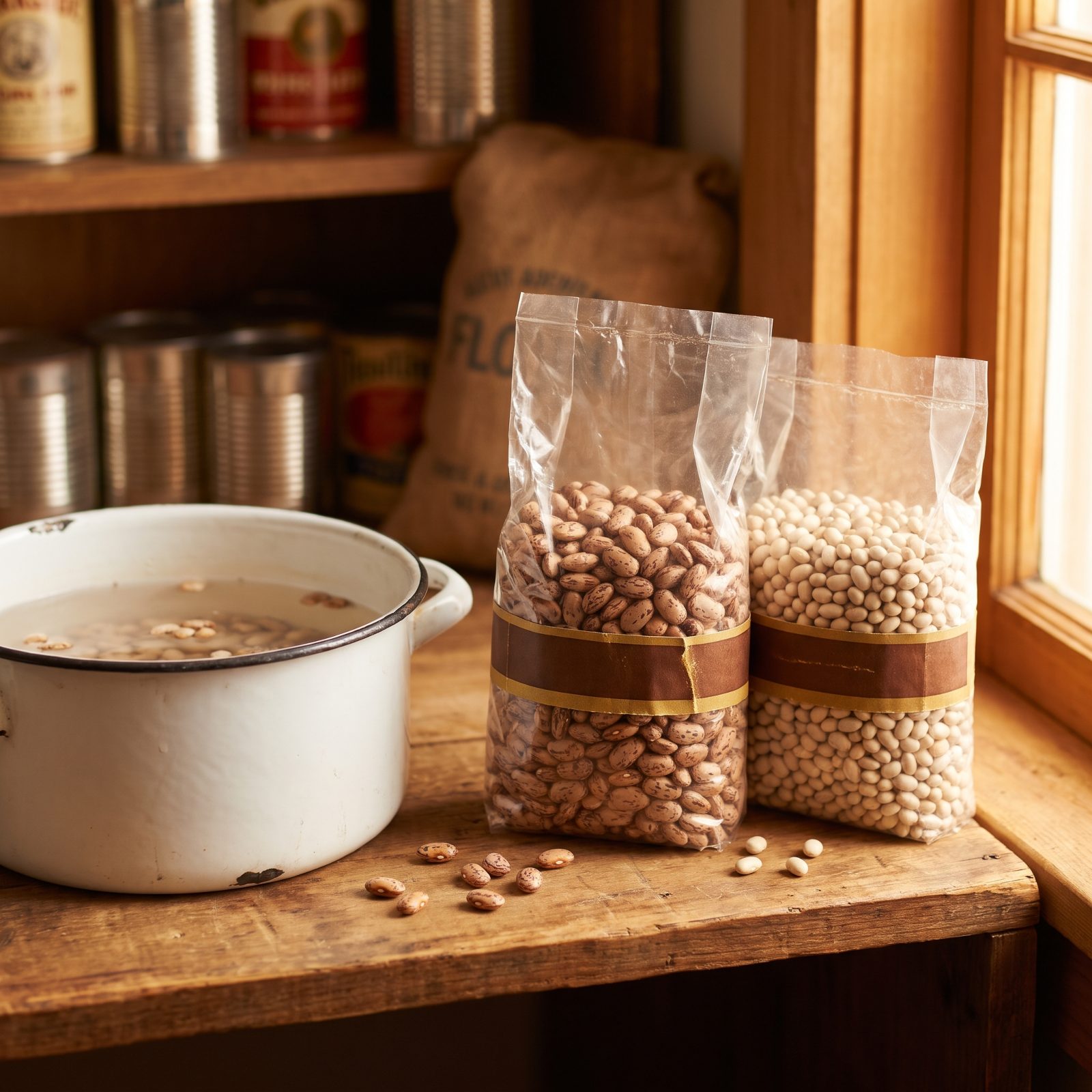
Cheapest protein in the house, and the one that demanded the most patience. You picked through them first, hunting the stray pebble that could crack a tooth, then let them soak overnight in a bowl on the counter. Nobody rushed beans.
Pintos for chili and refried; navy beans for the long simmer with a ham bone saved off Sunday dinner. A bag cost pocket change and fed the whole table.
25. A Paper Sack of All-Purpose Flour
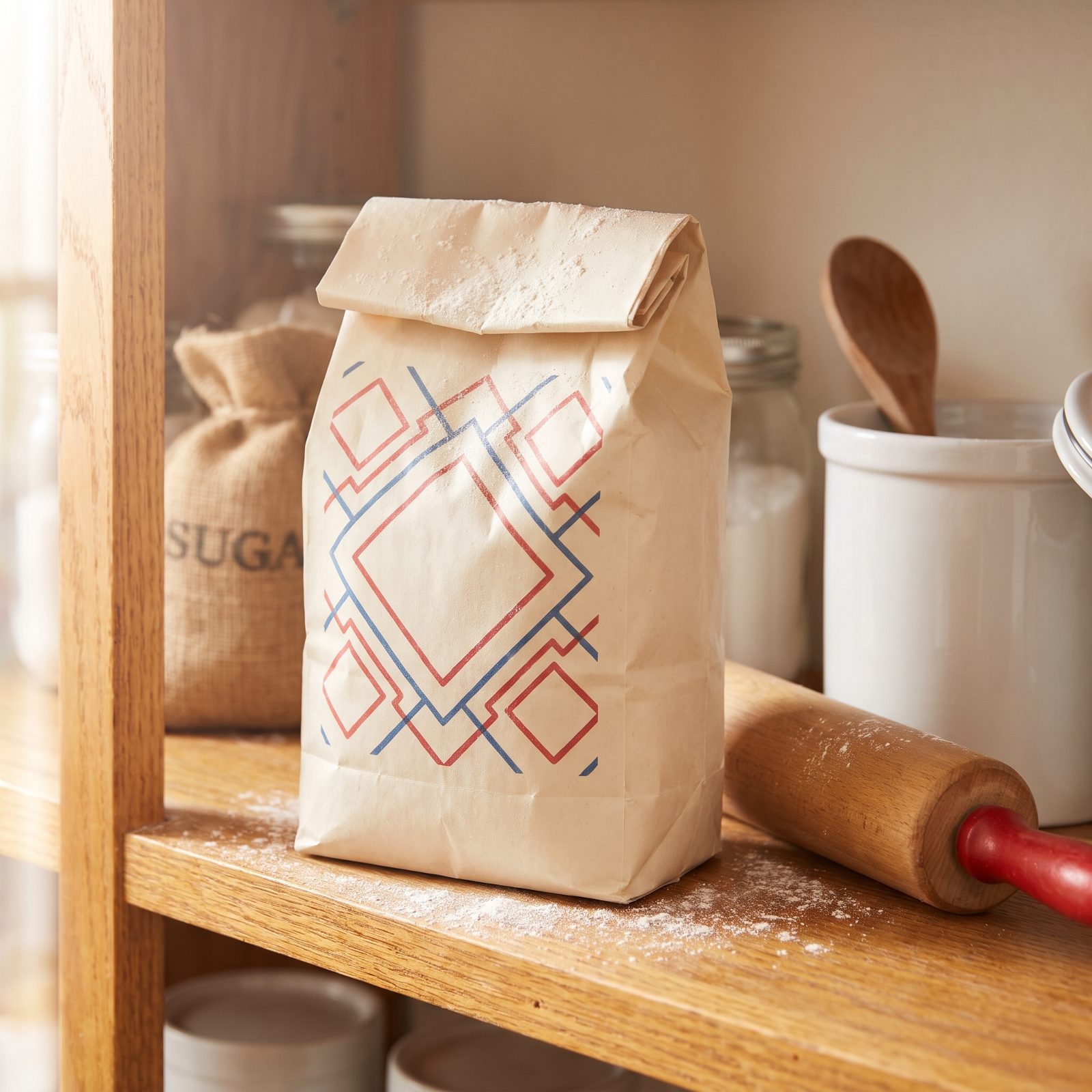
You could read a kitchen off the state of its flour sack. The well-used one slumped, soft at the corners, dusted white around the fold, a little flour always escaping onto the shelf below. Baking happened here, and it happened often.
Most households poured it straight into a ceramic canister with a tight lid. Left in the paper, flour drew in every bit of moisture and, worse, the occasional unwelcome visitor. Weevils were a real conversation in the 1970s pantry, and anyone who baked knew the sinking feeling of spotting one.
24. A Paper Sack of Granulated Sugar
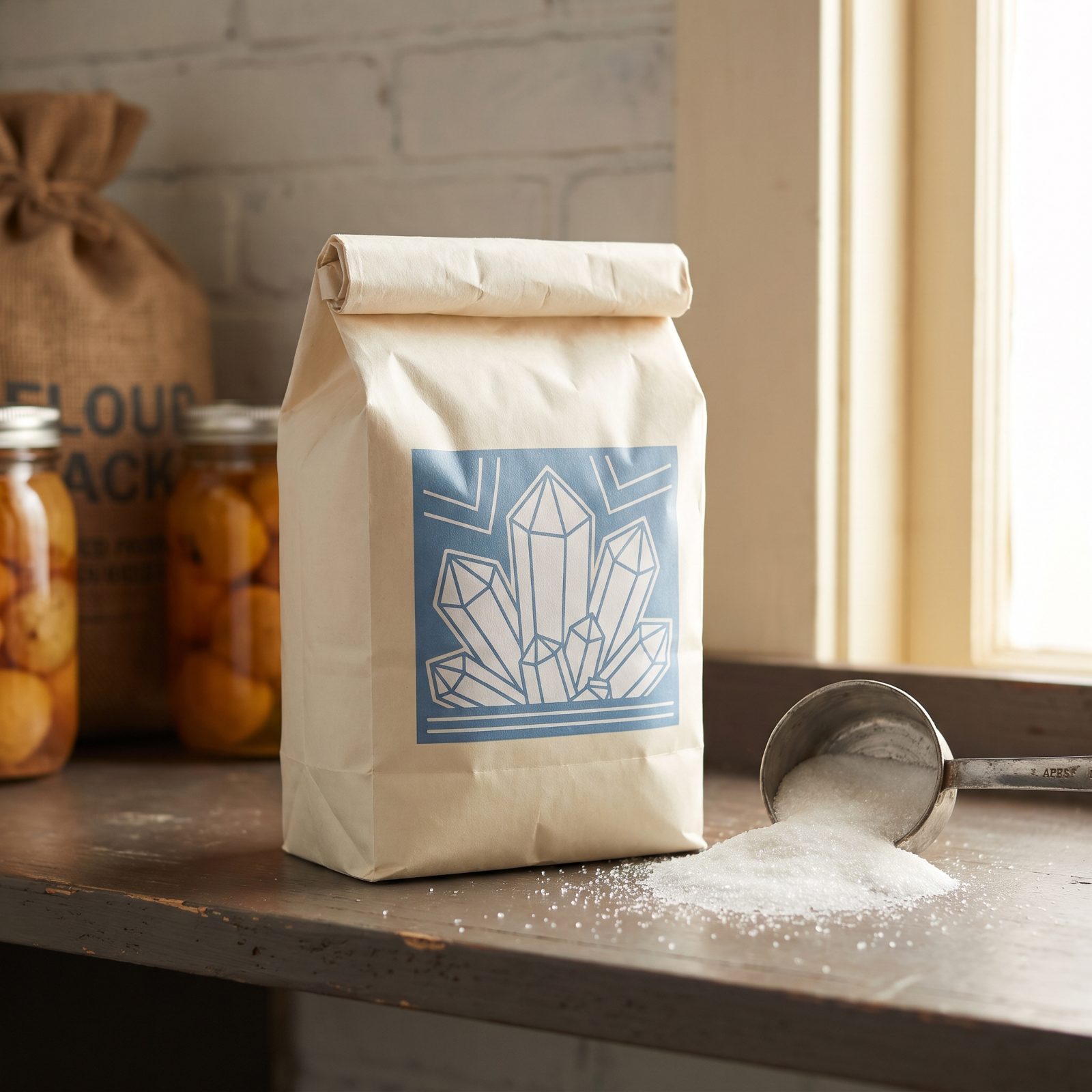
Sugar got used by the cup, not the spoonful. It went into the morning coffee, the iced tea pitcher that lived on the counter all summer, every pie and cake and batch of cookies the oven turned out. The sack emptied fast.
Leave it too long in the paper and it hardened into a brick you had to bust up with the handle of a wooden spoon. The canister households were the smart ones — though honestly, most of us learned that the hard way.
23. A Round Cardboard Canister of Rolled Oats
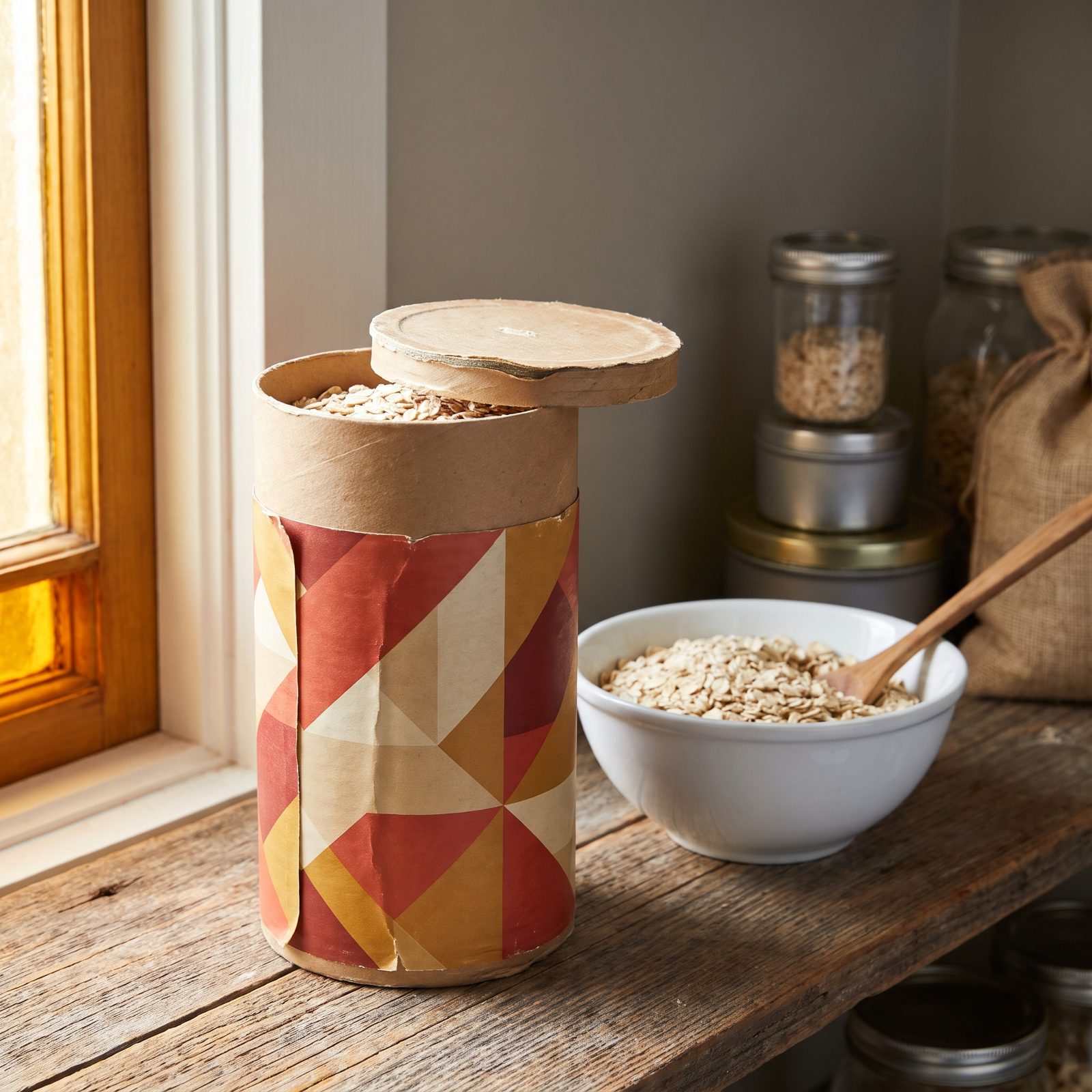
The round canister was the one everybody kept after it emptied. Crayons, buttons, loose screws, whatever. But before that second life, it held breakfast on the cold mornings — the kind of oats that wanted a pot and a stove and five minutes of stirring, not a packet and hot water.
That pull-off lid never sat flat again once you’d opened it. And the oats earned their keep well past cereal: cookies, meatloaf filler, the crumbly topping on a fruit crisp. They paid for that shelf space three times over.
22. A Box of Complete Pancake Mix
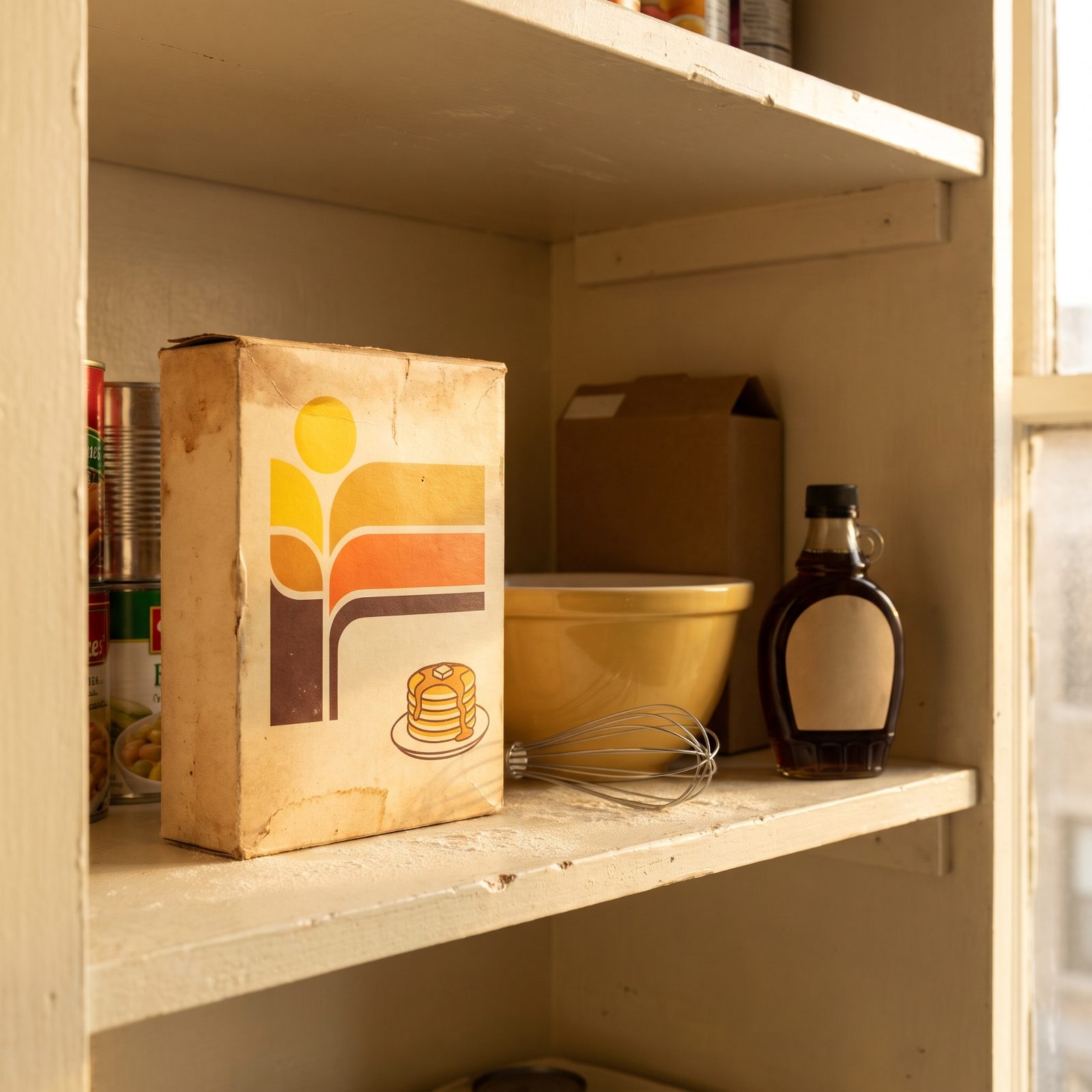
Weekend breakfast’s shortcut, and it felt like a small miracle to a busy household. Add water, stir, pour, flip. The complete mix already had everything folded in, so there was no measuring and no fuss — just pancakes on a Saturday while cartoons ran in the other room.
Purists kept flour and baking powder on hand and made them from scratch. Everybody else grabbed the box. The box won more mornings than anyone around here wants to admit.
21. A Box of All-Purpose Biscuit Baking Mix
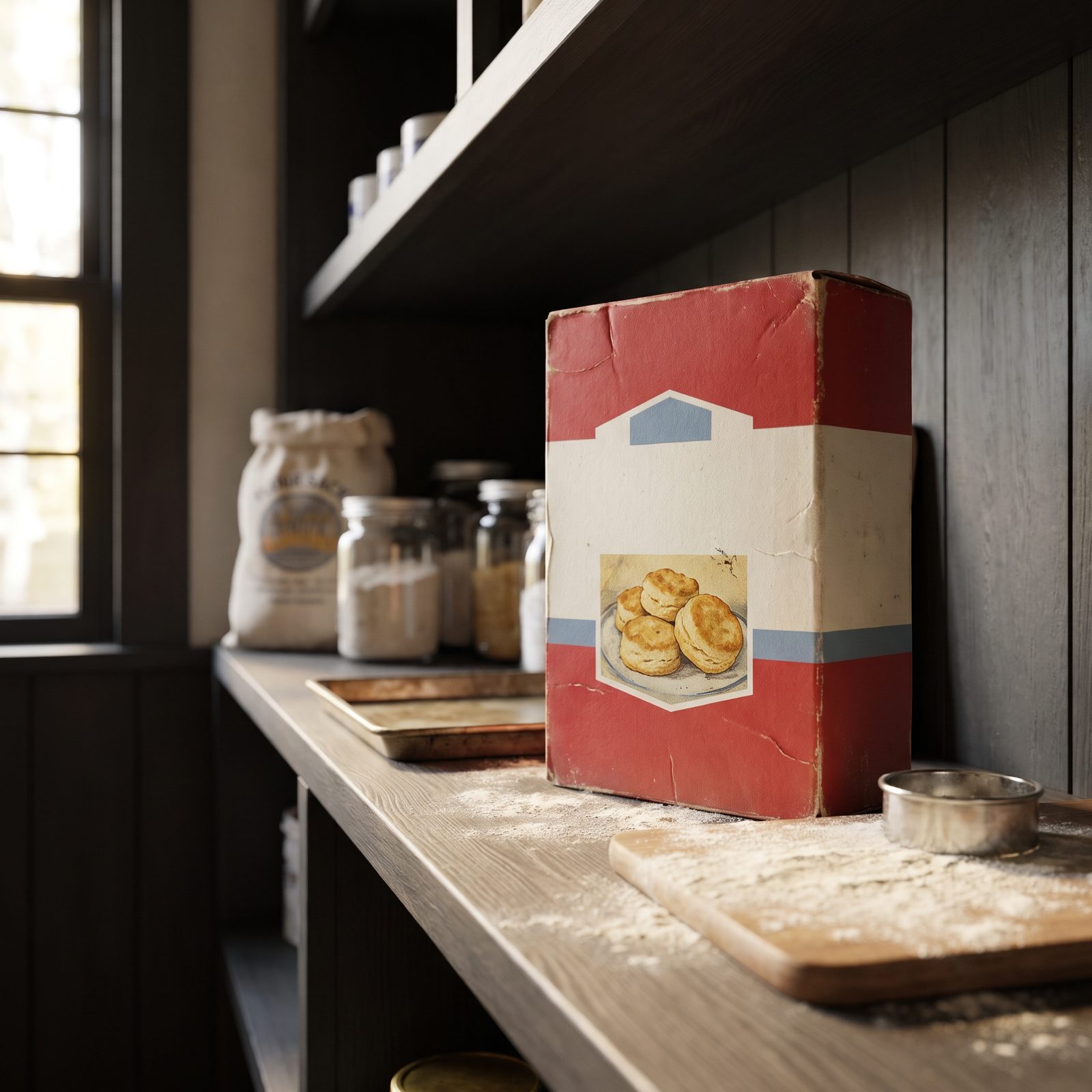
This box did the work of half the baking cabinet. Biscuits, obviously, but the side panel promised far more — dumplings, pancakes, coffee cake, the crust on a chicken pot pie. Flour and shortening and leavening already cut together, which quietly erased the messiest step of biscuit-making.
For a household feeding people on a schedule, the box was insurance. Dinner needed stretching? A dessert materialized out of nowhere? The biscuit mix answered. Never fancy, never pretended otherwise. Just reliable — and in a 1970s kitchen, reliable beat fancy on most nights.
20. Boxes of Layer Cake Mix
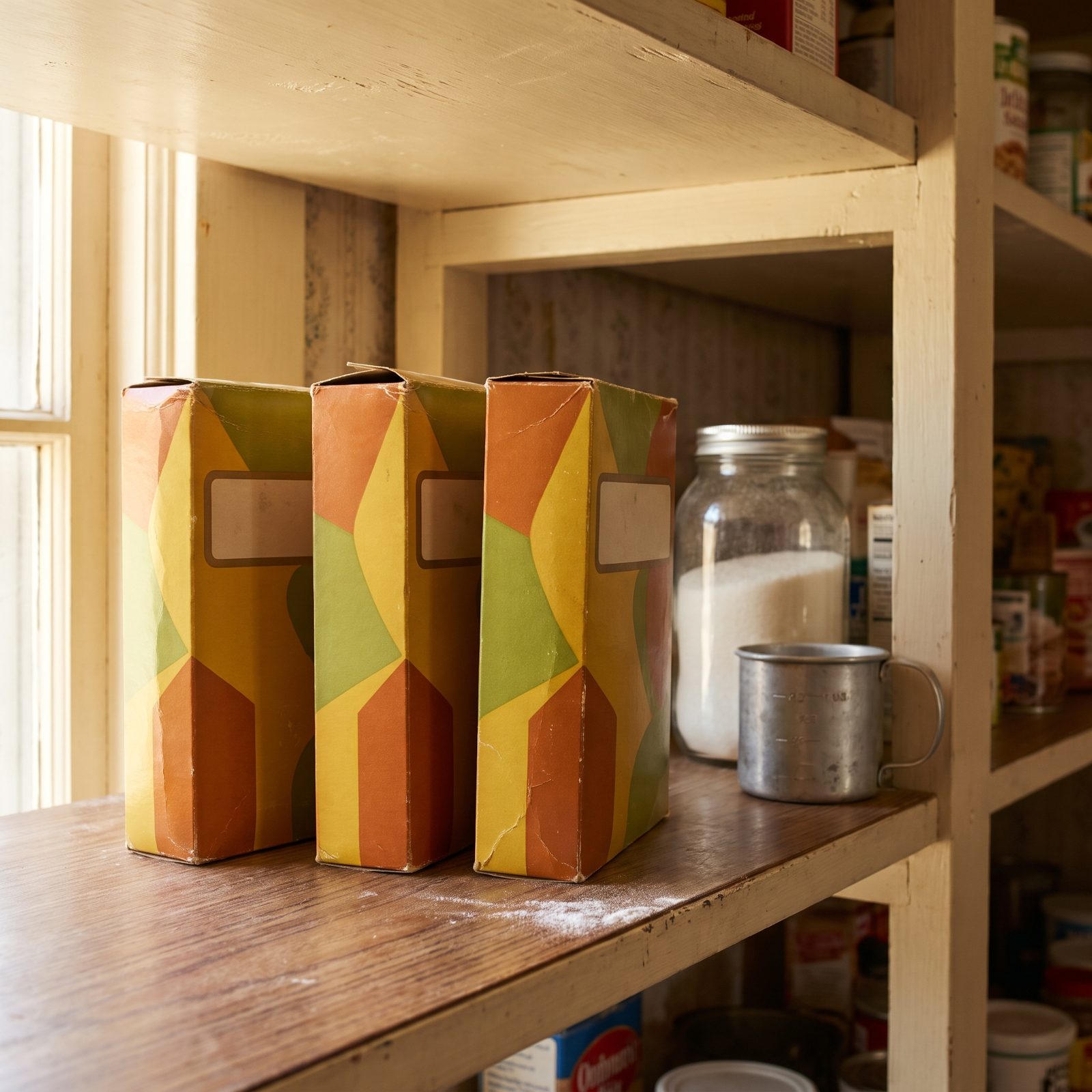
Two eggs, a cup of water, oil. You knew the back of that box by heart, and so did half the neighborhood. Boxed cake mix was the great equalizer of 1970s birthdays, turning anyone who could run a hand mixer without splattering the cabinets into a baker.
The best part was the smell when you tore the inner paper seal — dry, sweet, faintly chemical, pure promise. Yellow for most occasions. Devil’s food when you wanted drama, and a white mix for the fussy relatives who’d notice. Once the frosting went on, though, nobody admitted it came from a box.
19. Boxes of Instant Pudding Mix
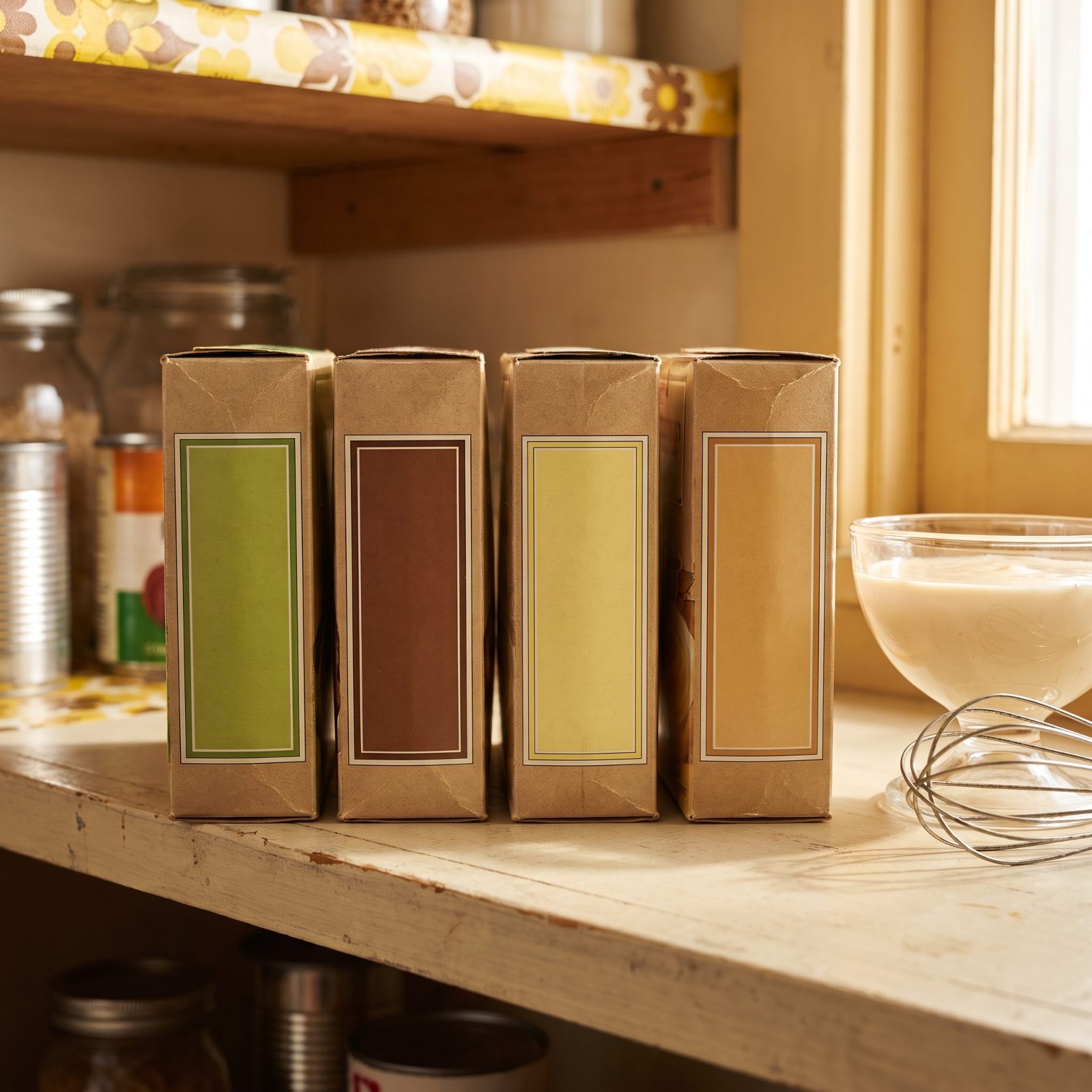
Pour, whisk, wait five minutes, and you had dessert while your hands were still wet. Instant pudding was the fastest sweet thing in the house, which is exactly why it vanished so fast.
Chocolate and vanilla were the backbone, but butterscotch had its loyalists. The real trick nobody bothered printing on the box? Pudding was a building block. It went into pie shells, got folded into whipped topping, stacked into parfait glasses in layers with crushed cookies — one cheap box doing the work of four fancier things.
18. A Can of Ready-Made Frosting
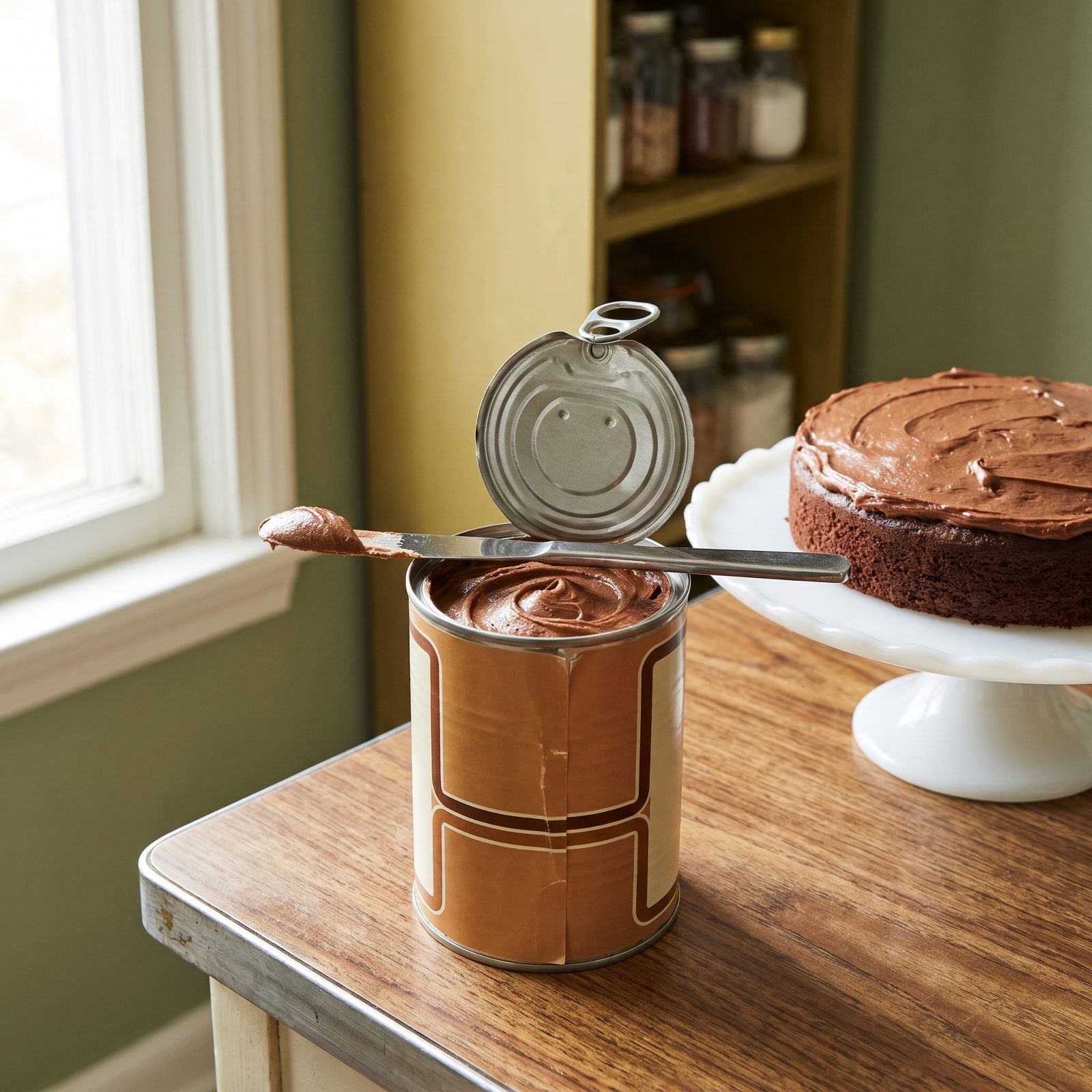
The can of frosting was the quiet confession of the 1970s kitchen. You made the cake from one box, then crowned it from another, and somehow that felt like cheating twice.
Peeling back that metal lid revealed a dense, glossy spiral that never quite looked like anything you’d whip up by hand. It spread too easily and tasted a little too sweet, in the way kids absolutely loved and adults pretended to tolerate. Chocolate and vanilla ruled, with the occasional pastel for an Easter cake.
17. Baking Soda and Baking Powder Tins
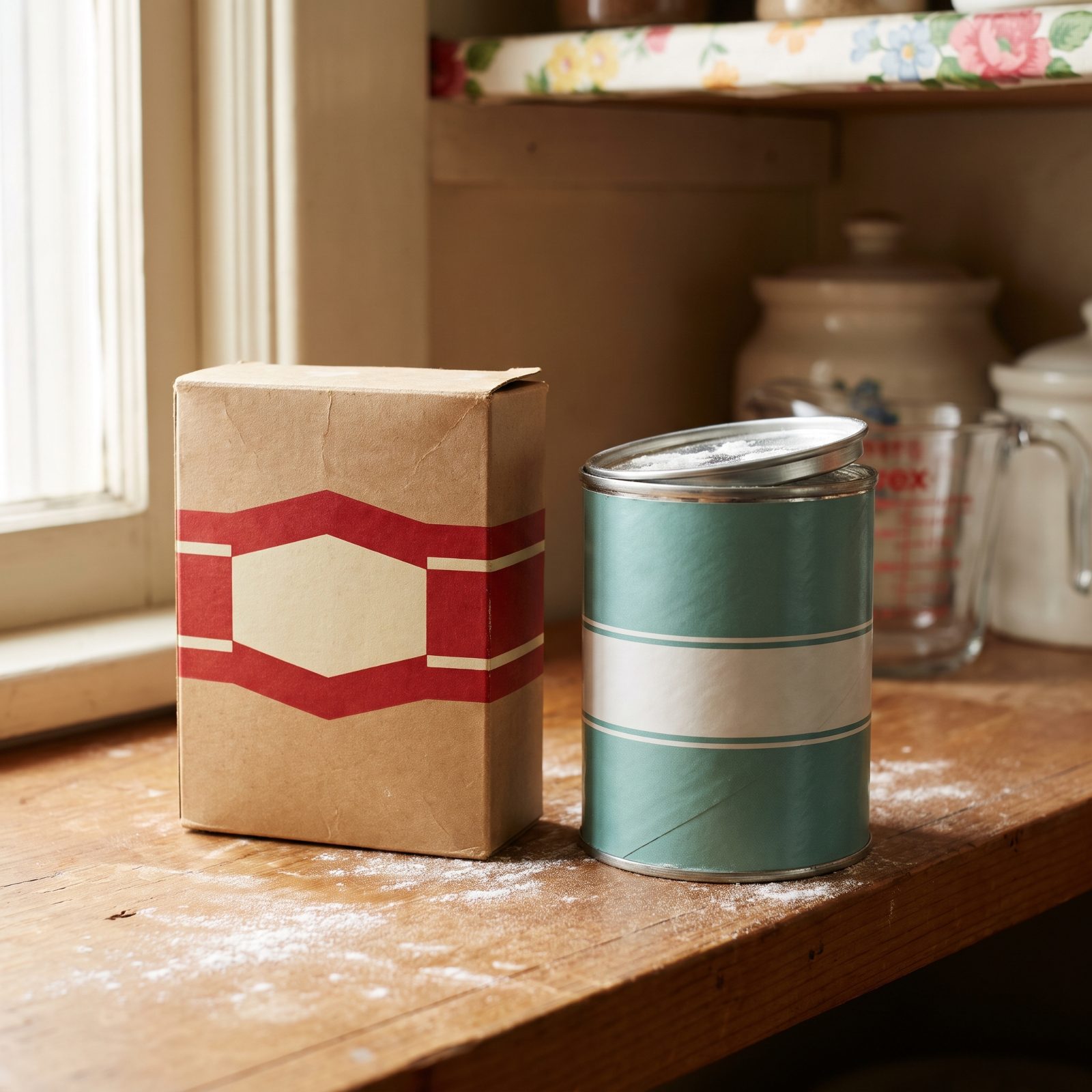
Two little containers, endlessly confused, and the source of a thousand flat cakes. Baking soda needs an acid to do its job; baking powder brings its own. Mix them up and your biscuits sit there like hockey pucks.
The soda box pulled double duty. Open and shoved to the back of the fridge to kill the smell of last week’s casserole, a spoonful in a glass of water for heartburn, scattered down the drain with vinegar for the volcano trick the kids begged for. That humble box did a lot more than bake.
Sorting out the two leaveners, a cooking school instructor explains “The difference is that baking soda needs an acidic liquid in order to work, whereas baking powder will be activated by any liquid the first time”
16. A Glass Bottle of Tomato Ketchup
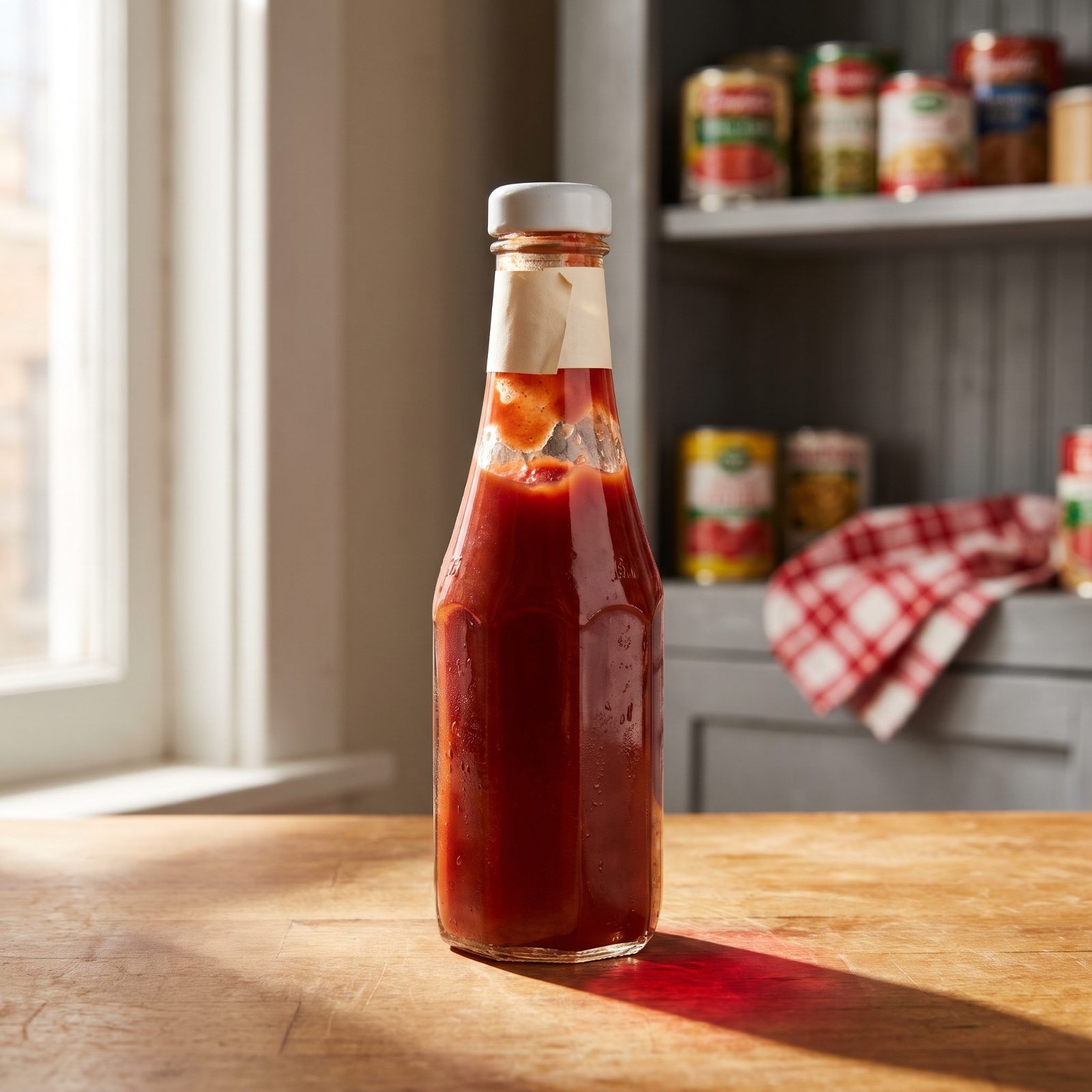
You hit the bottom. Everybody did. That tall glass bottle held its ketchup hostage, and the only way out was the flat-palm slap on the base, or the family trick of sliding a knife down the neck to break the seal.
In most houses it lived on the counter, not the fridge. It went on everything a kid could reach: meatloaf, scrambled eggs, the questionable Tuesday casserole. The heavy glass clinked when you set it down. Plastic squeeze bottles would eventually win, but they never had that satisfying thunk.
15. A Squeeze Bottle of Yellow Mustard
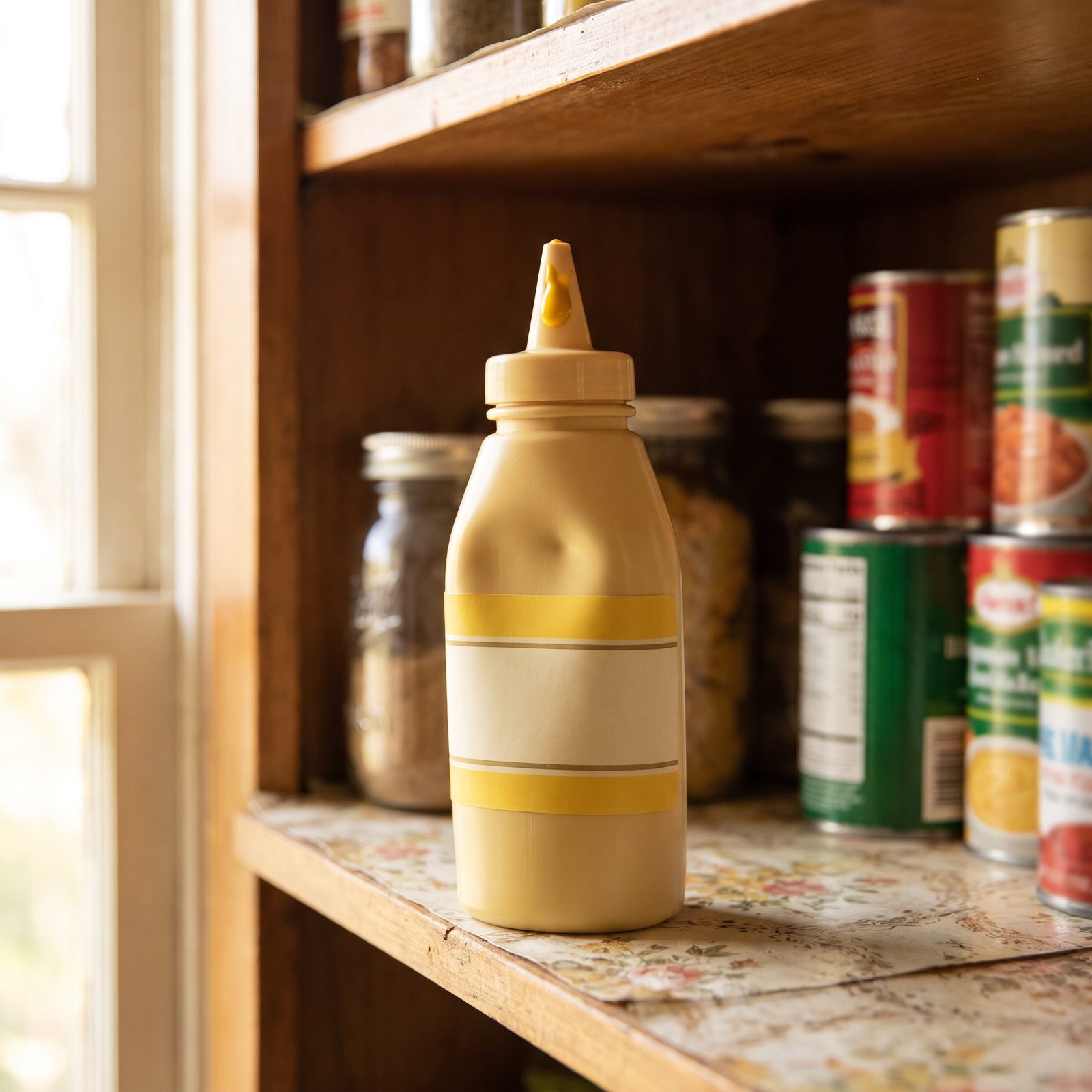
That squeeze was the sound of summer. One firm press and a ribbon of neon yellow landed across a hot dog at every backyard cookout in the decade.
Plain yellow mustard asked for nothing fancy. No seeds, no fuss, just a sharp tang and a color that didn’t exist anywhere in nature. The bottle always ended with that embarrassing sputter when it ran low, half mustard and half air. And there was always a crusted ring of dried yellow around the cap that nobody ever wiped off.
14. A Wide Jar of Mayonnaise
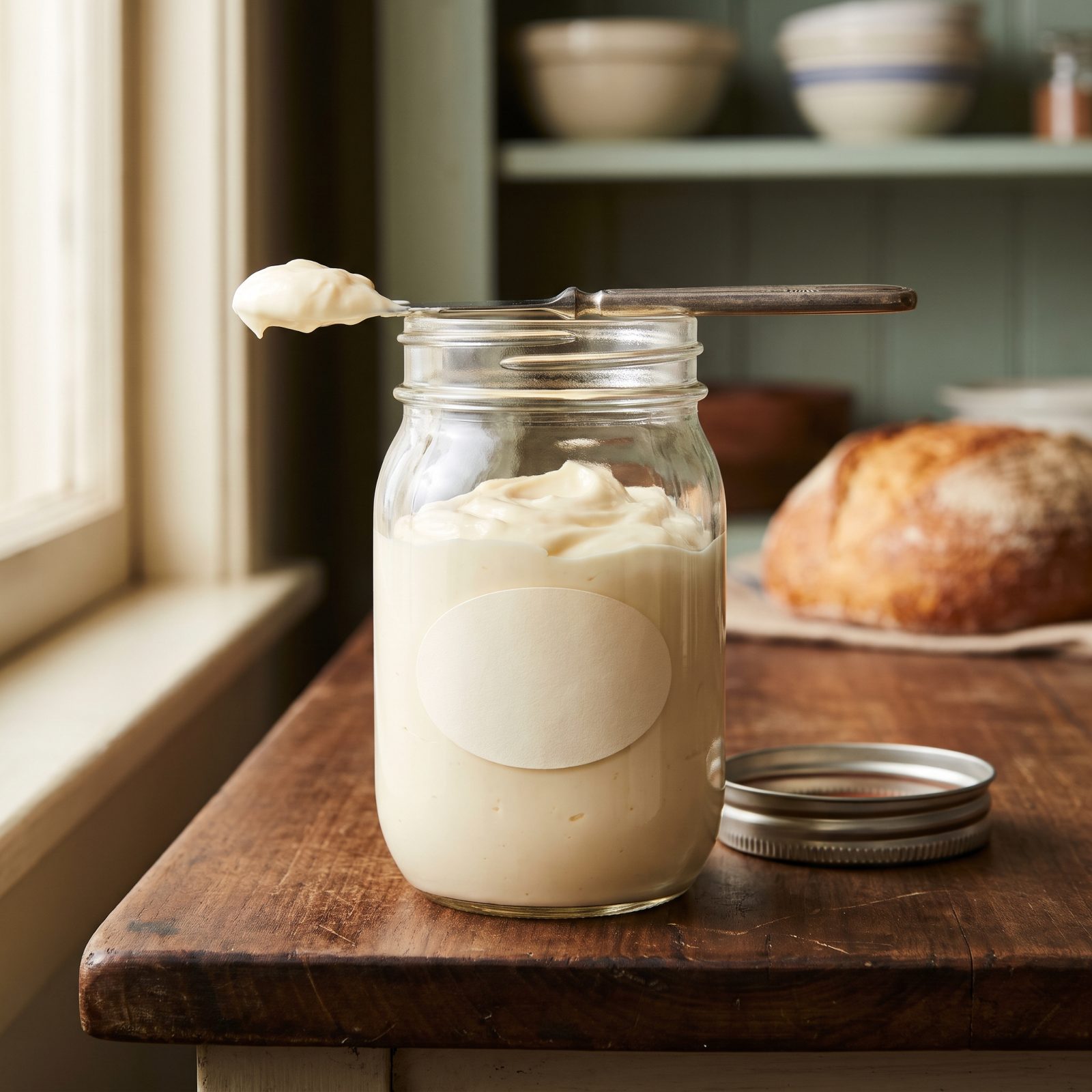
The jar’s wide, threaded mouth let you go straight in with the knife. You still had to angle the blade just so to swipe a full load across the bread without scraping your knuckles on the glass. That wide mouth meant business.
Mayonnaise held the whole lunch together — tuna salad, egg salad, the sandwich that turned leftover roast into Monday’s meal. It bound the deviled eggs and the potato salad that sat out too long at the church potluck. And the empty jars never hit the trash. They got rinsed and promoted to drinking glasses, nail-and-screw holders, or canning duty.
13. A Jar of Sweet Pickle Relish
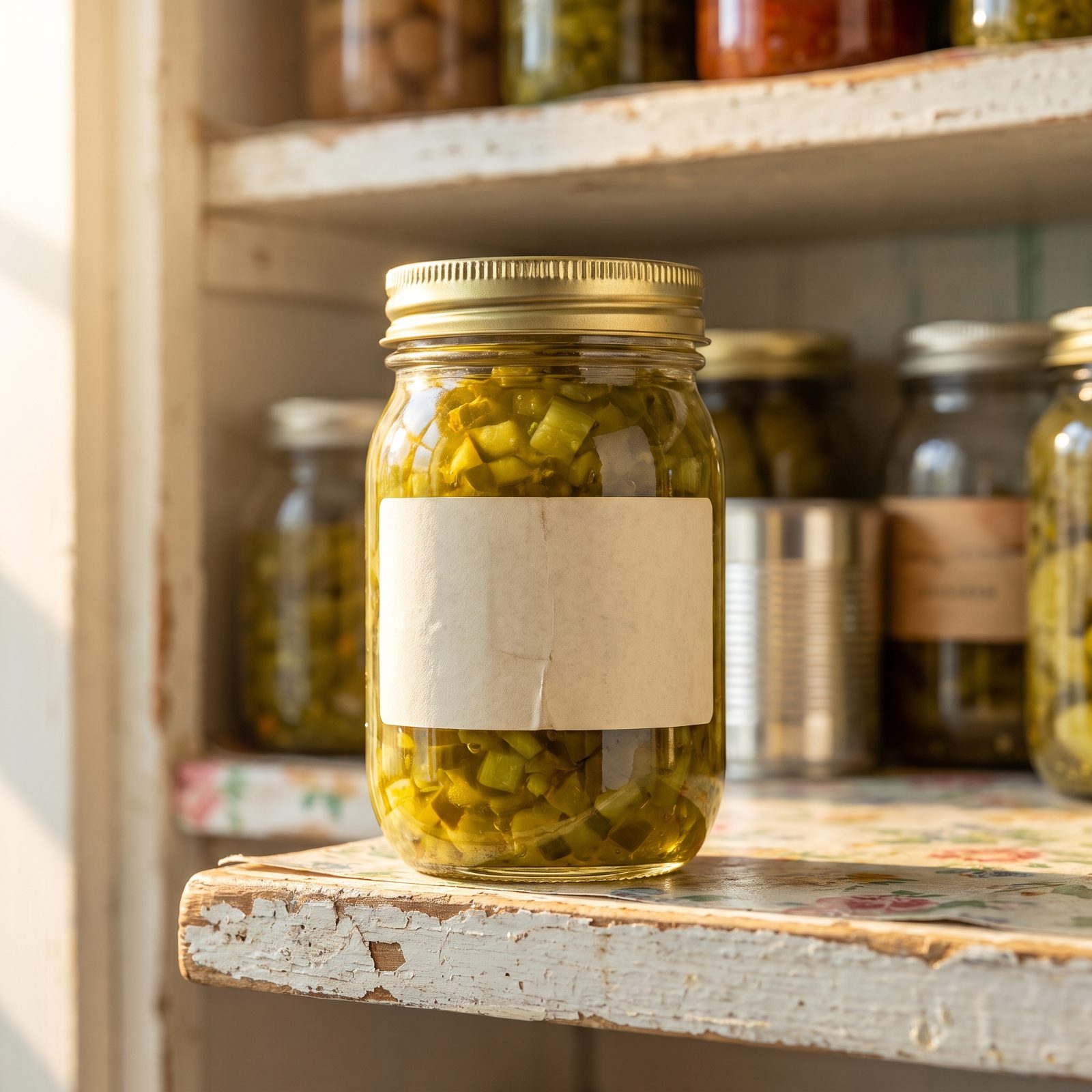
That almost unreal shade of green. Sweet pickle relish glowed in the jar like something off a science-class shelf, and we spooned it onto everything without a second thought.
It was the secret handshake of homemade tartar sauce and the thing that turned plain mayo into a passable thousand island. A spoonful stirred into deviled egg filling. A line of it down a hot dog next to the mustard. The brine ran syrupy sweet, and the little chopped bits clung to the spoon no matter how you tapped it.
12. A Large Jar of Dill Pickles
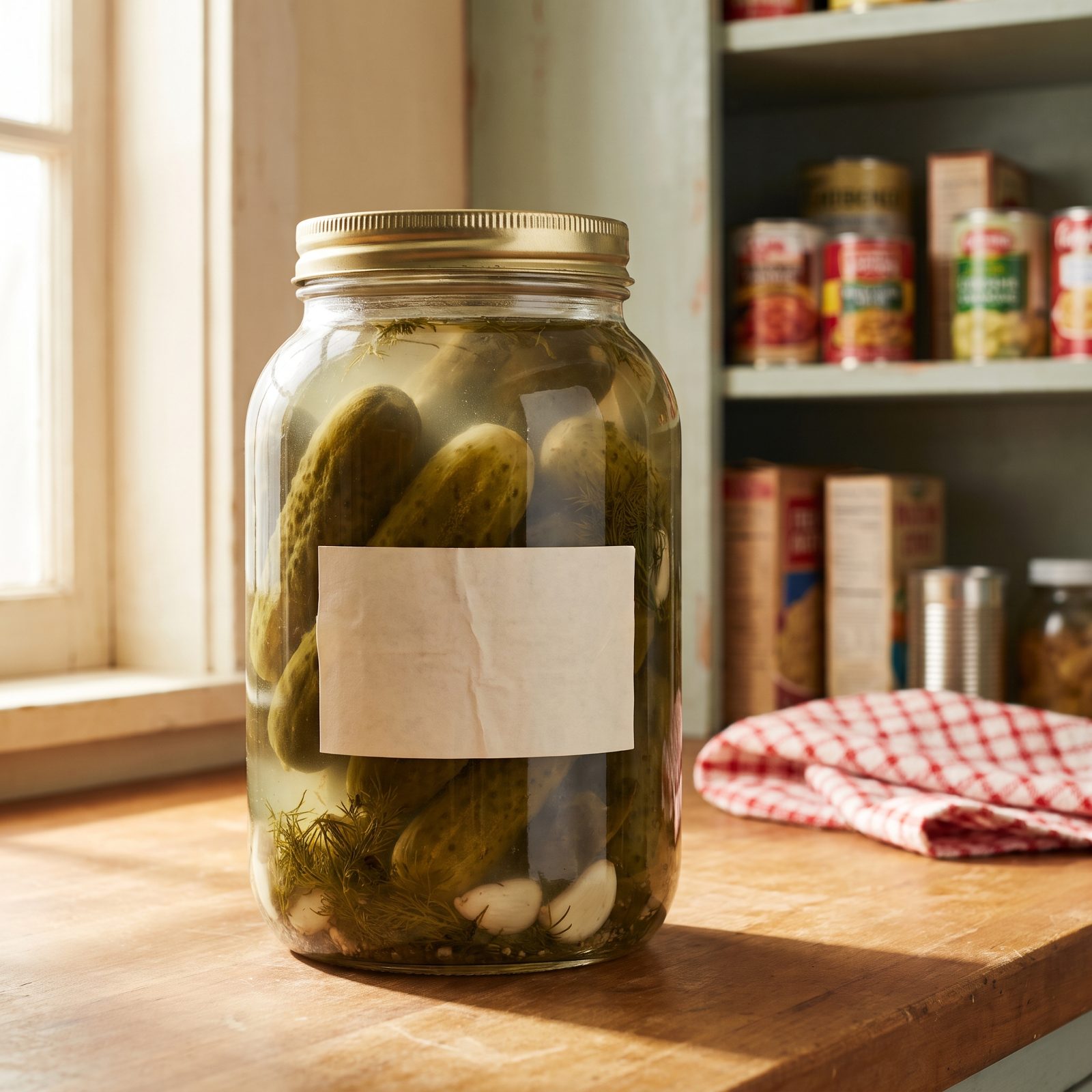
The big jar you could barely lift one-handed. Fishing a pickle out meant rolling up a sleeve or, if your mother wasn’t looking, going in with your fingers and getting brine down to your elbow.
Whole dills, crisp and sour, with fronds and garlic drifting in the cloudy liquid. Some families kept it in the garage fridge because the jar hogged too much room next to the milk. The brine never went to waste — it flavored a batch of potato salad, and more than one person out there has drunk the last of it straight from the jar. No judgment here.
11. Foil-Wrapped Bouillon Cubes in a Jar
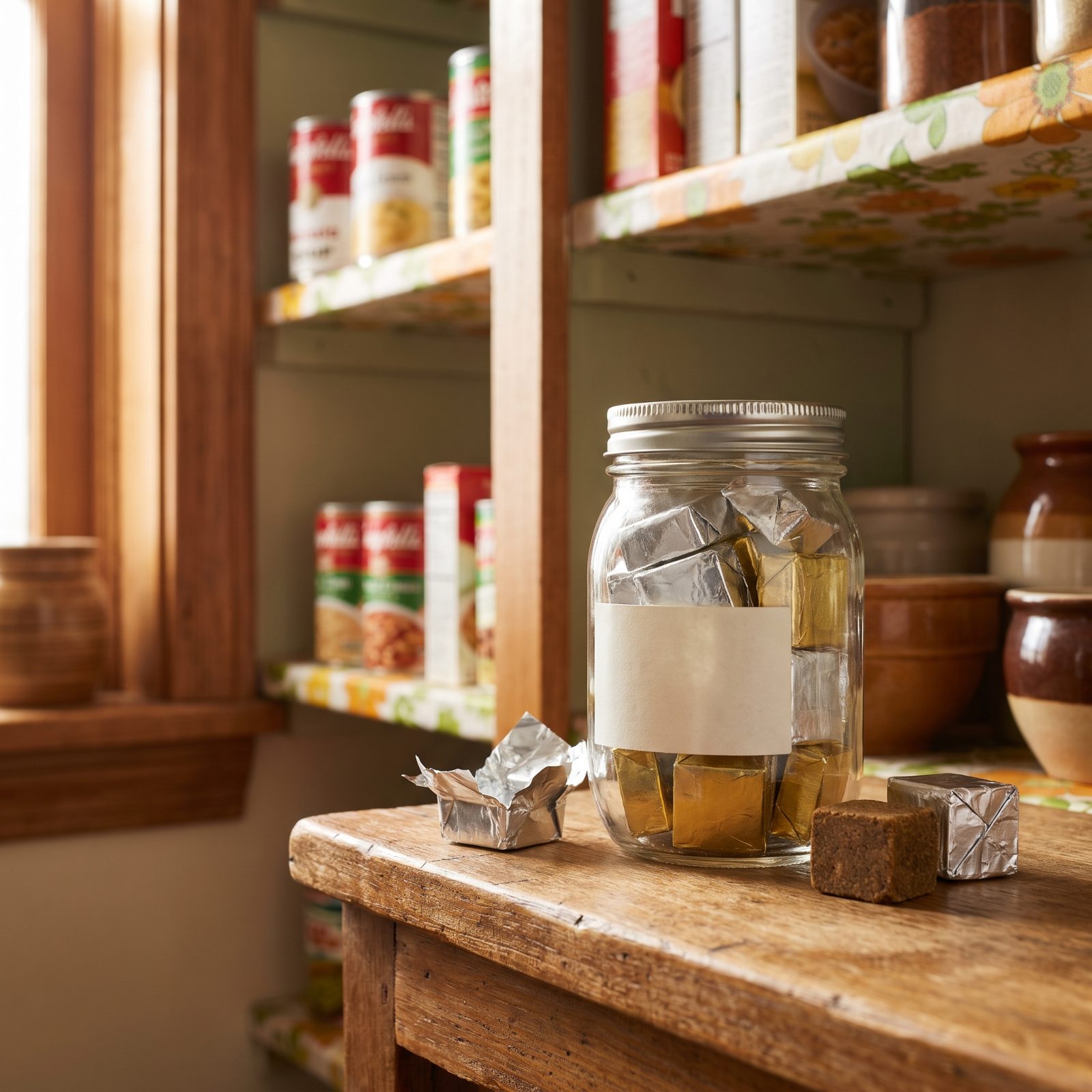
Little foil bricks, each one a cup of soup waiting to happen. You peeled back the crinkled wrapper, dropped the cube into hot water, and watched it dissolve into something that smelled like dinner.
Beef and chicken, mostly, kept in a jar so they didn’t roll loose in the drawer. They were the shortcut behind half the gravies and rice pots in the house, the salty backbone of a soup that started with whatever was left in the crisper. One cube could rescue a bland pot of anything.
10. Packets of Dry Onion Soup Mix
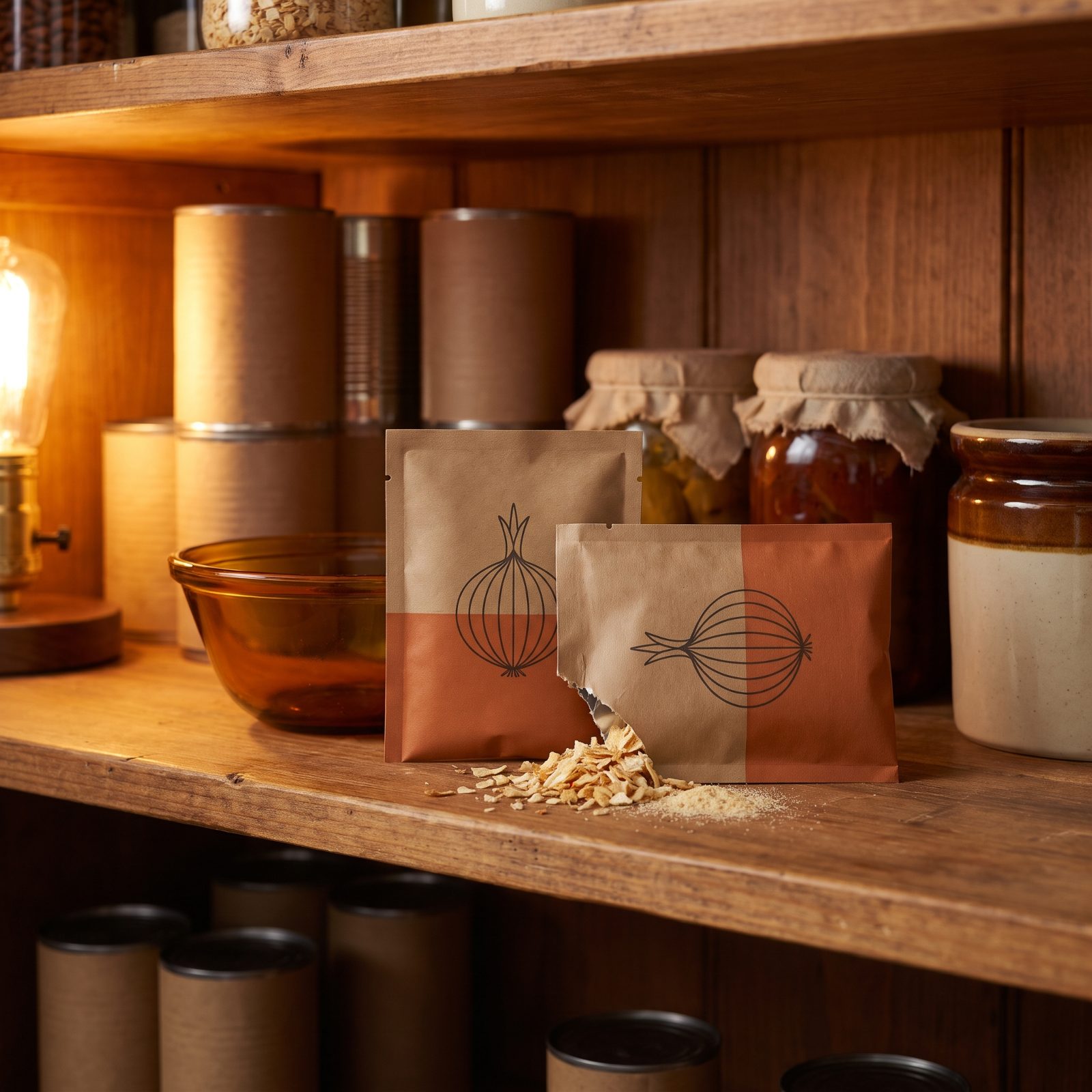
Half the recipe cards in the house leaned on these. A packet went into meatloaf, got stirred into sour cream for party dip, and dusted a roast before it hit the oven. Nobody pretended it was from scratch, and nobody cared.
What people forget is how much salt got crammed into one little envelope — you tasted the dried onion and the bouillon dust before anything else cooked down. That was the point. Instant flavor, no chopping, no crying over a cutting board.
9. A Jar of Instant Coffee Crystals
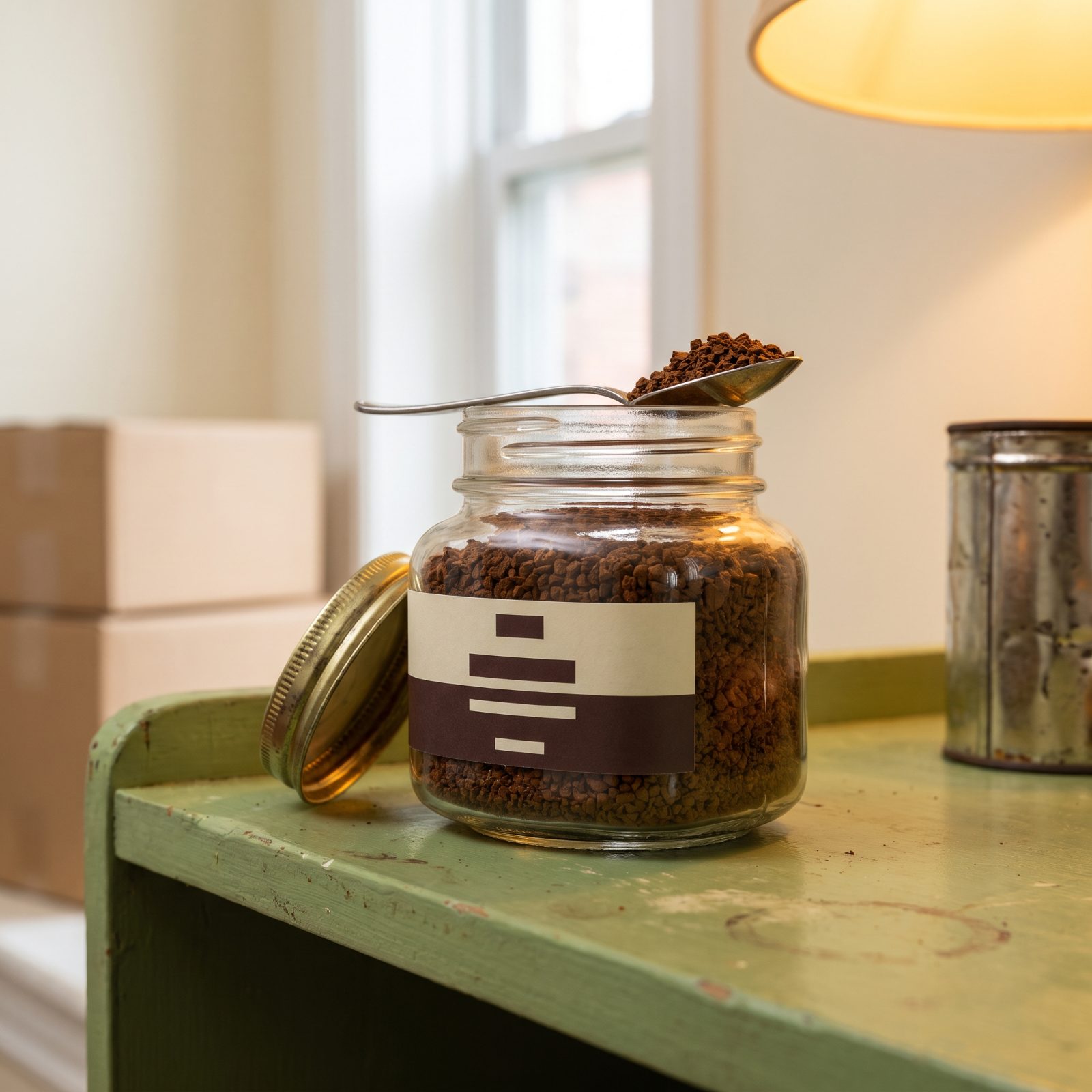
A spoonful into a mug, hot water on top, and breakfast had its engine running. Instant coffee was never about flavor. It was about speed, and about a jar that wouldn’t go stale on you the way a bag of grounds might.
Admittedly, the smell when you cracked a fresh jar beat the cup it made. Sharp, almost chocolatey, then gone the second water hit it. But a working family doesn’t grind beans at six in the morning. A spoon and a kettle got the job done.
8. A Jar of Powdered Coffee Creamer
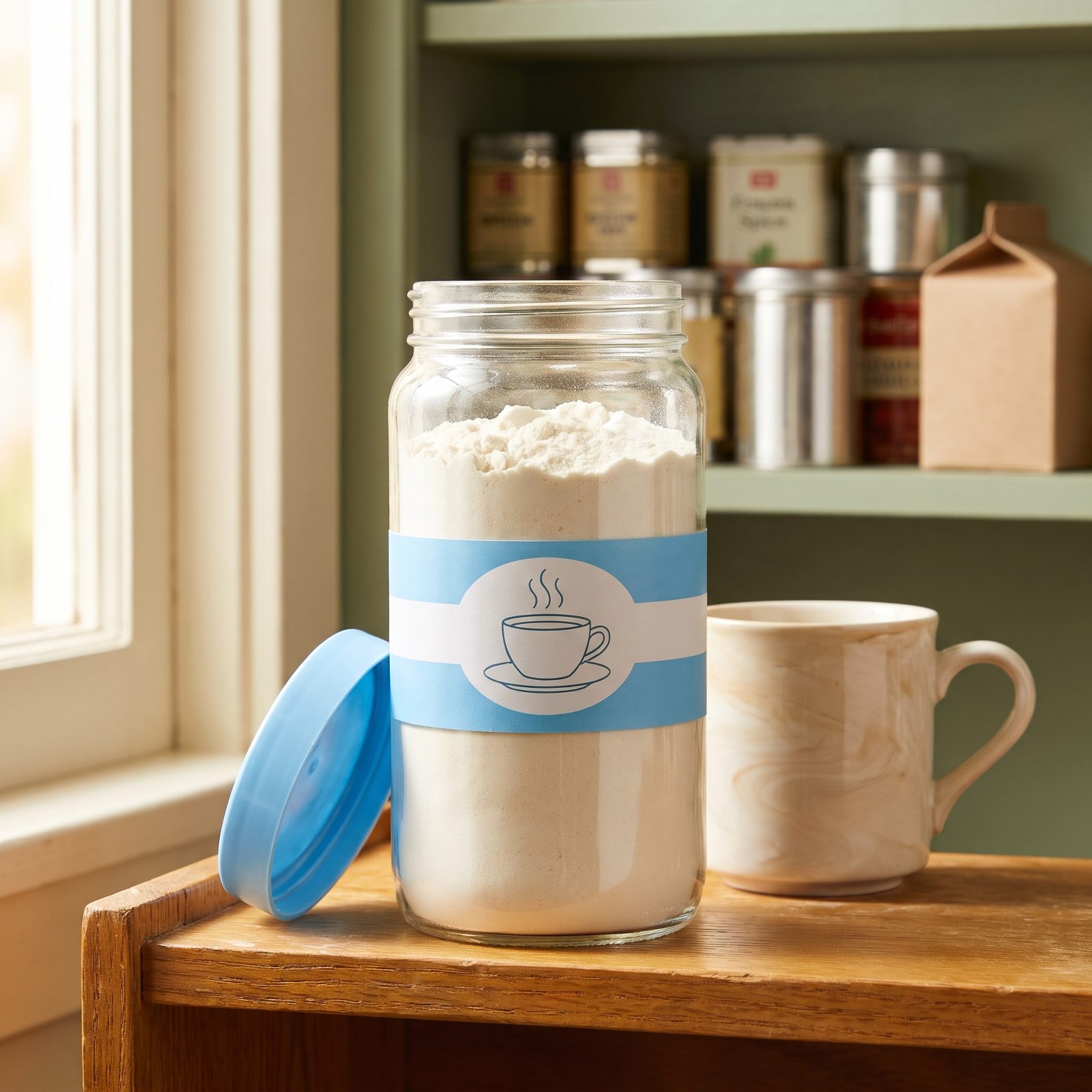
The powder that turned black coffee the color of a paper bag. No refrigeration, no sour milk surprise, just a dry scoop that dissolved into something approximately creamy.
Nobody said it out loud, but it didn’t really taste like cream. It tasted like sweetened dust that got close enough. And it sat on a shelf for a year without a worry, which beat a carton of milk gone off in July.
7. A Canister of Chocolate Drink Mix
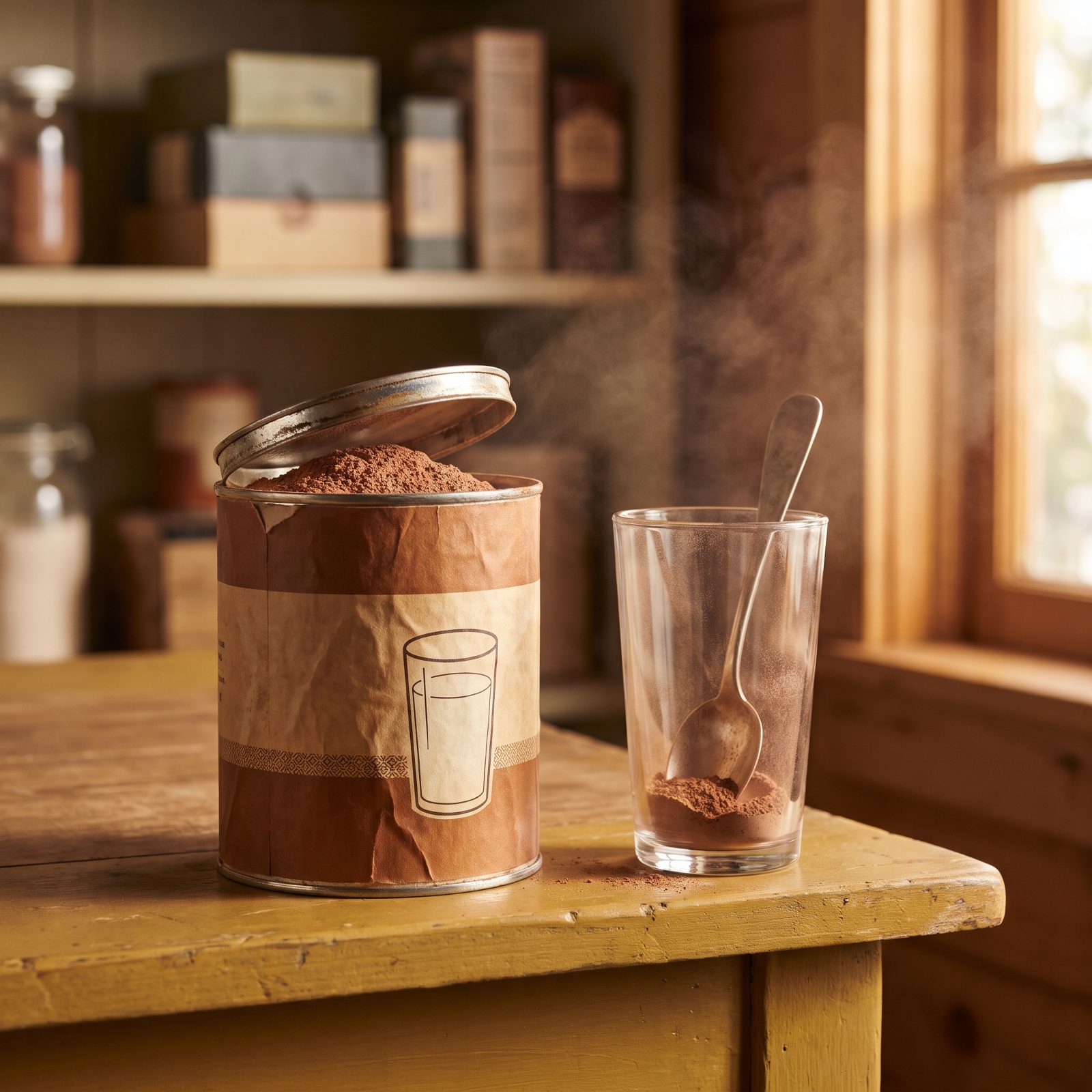
Two scoops, a glass of cold milk, and a spoon that clinked against the sides forever because the powder never fully quit floating. Kids did the stirring. Kids also drank the sweet sludge at the bottom.
Some brands insisted it was fortified with vitamins, which gave parents permission to call it almost nutritious. The real appeal was simpler — it was the fastest way to make milk vanish from a reluctant drinker, and every mother knew it.
6. Packets of Powdered Fruit Drink Mix
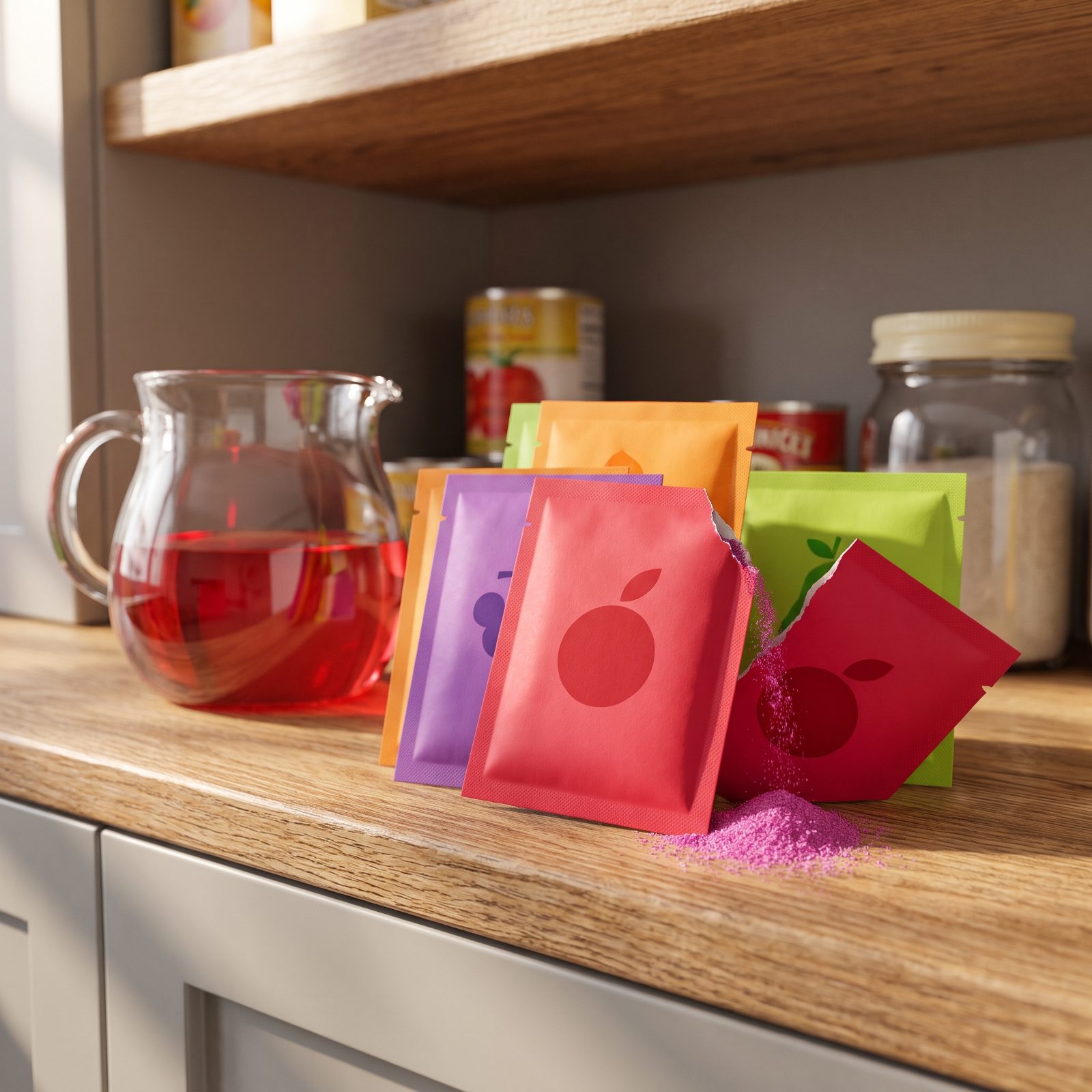
A packet, a cup of sugar, a pitcher of water, and summer was solved. These things stained everything they touched — fingers, countertops, the mustache on a six-year-old who drank it faster than a human should.
The colors had almost nothing to do with the fruit named on the front. Red was just red. Purple was aggressively purple. That was half the fun. You weren’t drinking grape juice, you were drinking something no fruit could ever actually produce, and at a dime a packet, pitcher after pitcher kept coming.
5. Saltine Crackers in Waxed-Paper Sleeves
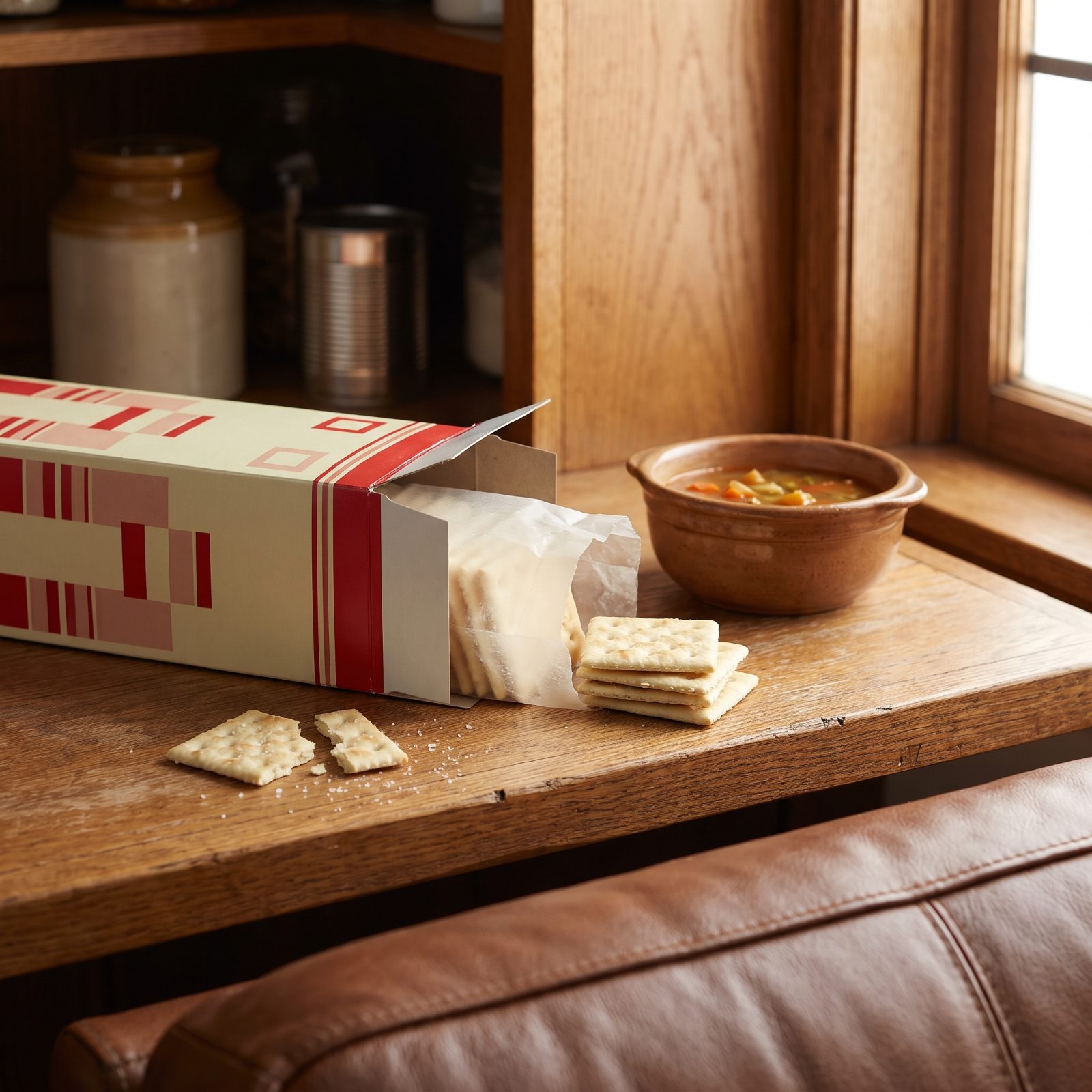
The sleeve was the clever part. Waxed paper kept them crisp, and once you tore it open there was no going back, so the whole column got eaten in a week whether you planned to or not.
They floated in soup, carried tuna salad, and got crushed to top a casserole. A plain cracker with a smear of butter was a snack nobody questioned. And those salt crystals on top? The whole personality of the thing.
4. A Box of Vanilla Wafer Cookies
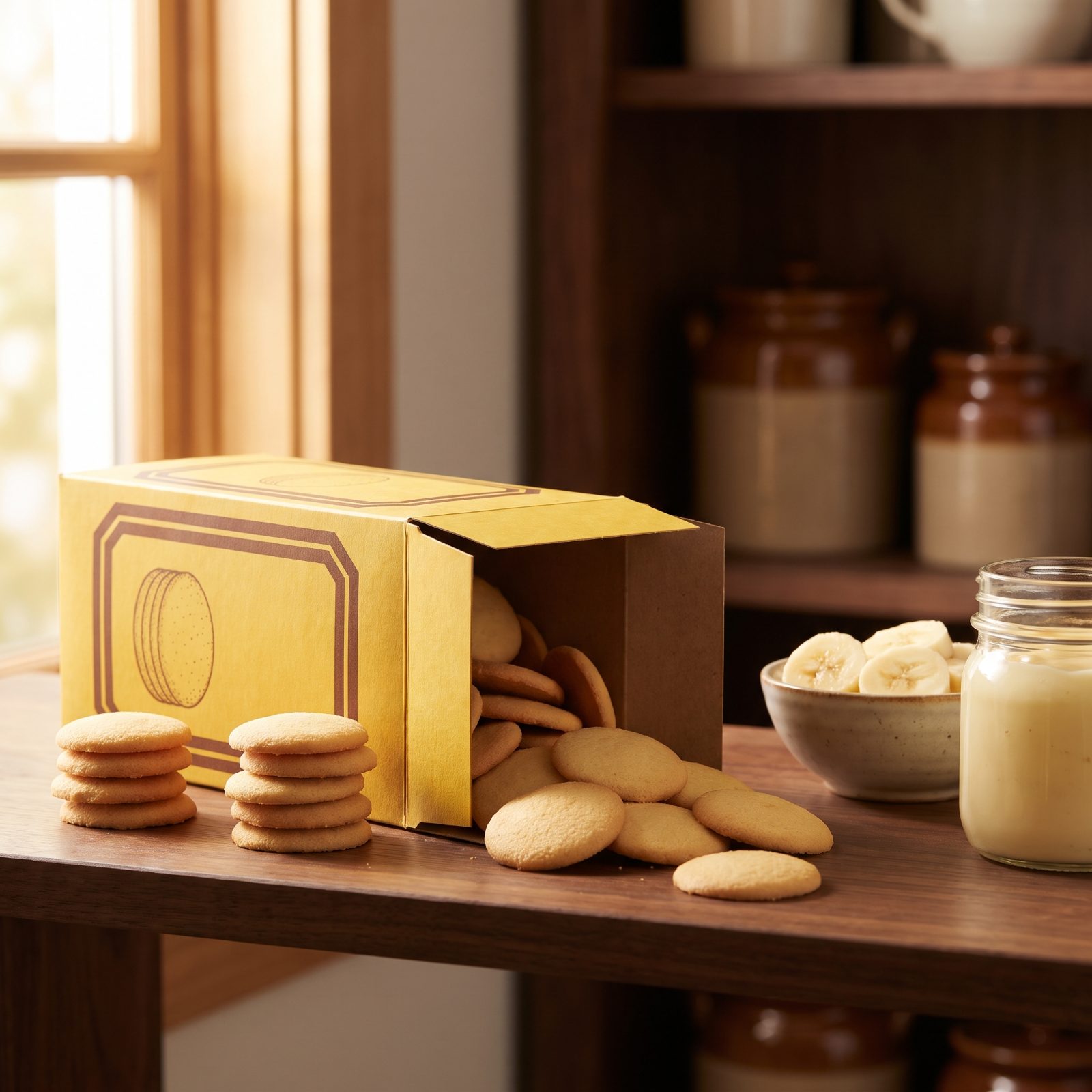
Half the box got eaten straight from the box. The other half was reserved, always, for the layered banana pudding that showed up at every potluck, church supper, and Sunday table.
Plain and a little sandy on their own, they turned soft and cake-like soaked in pudding overnight. That was their trick — a cookie that improved by sitting in custard. It’s still hard to walk past a yellow box without picturing a glass dish pulled from the back of the fridge.
3. A Foil-Lined Bag of Potato Chips
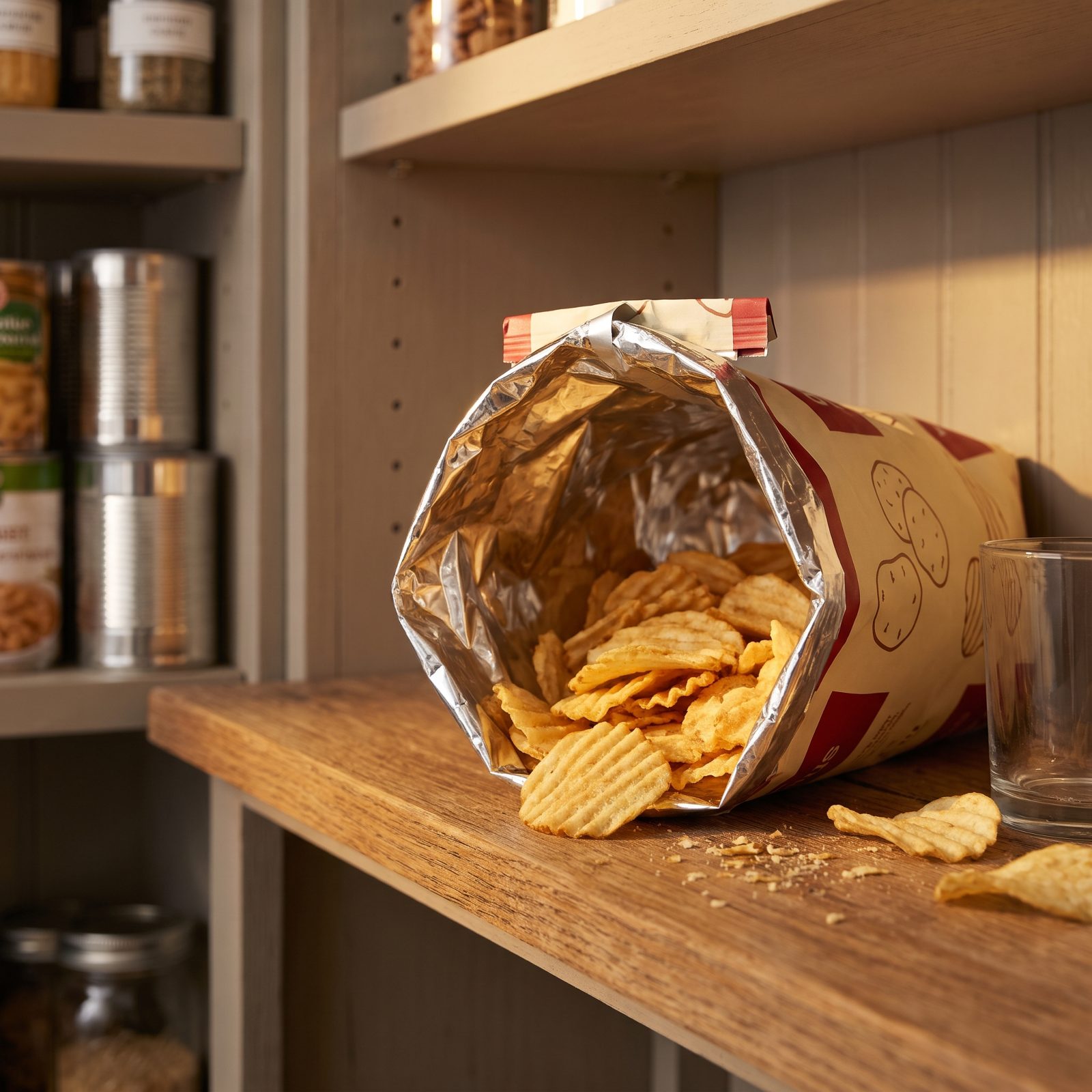
Before plastic, chips came in a bag with a foil lining and a top you rolled down to keep them crisp. It never really worked past day two. By the weekend the bottom was a drift of salty gravel you ate anyway.
These were a treat, not a daily thing. A bag got opened for company, for a card game, or for lunchboxes if you were lucky. And the greasy fingers were part of the deal, wiped on a napkin if there was one, on your jeans if there wasn’t.
2. A Jar or Bag of Popcorn Kernels
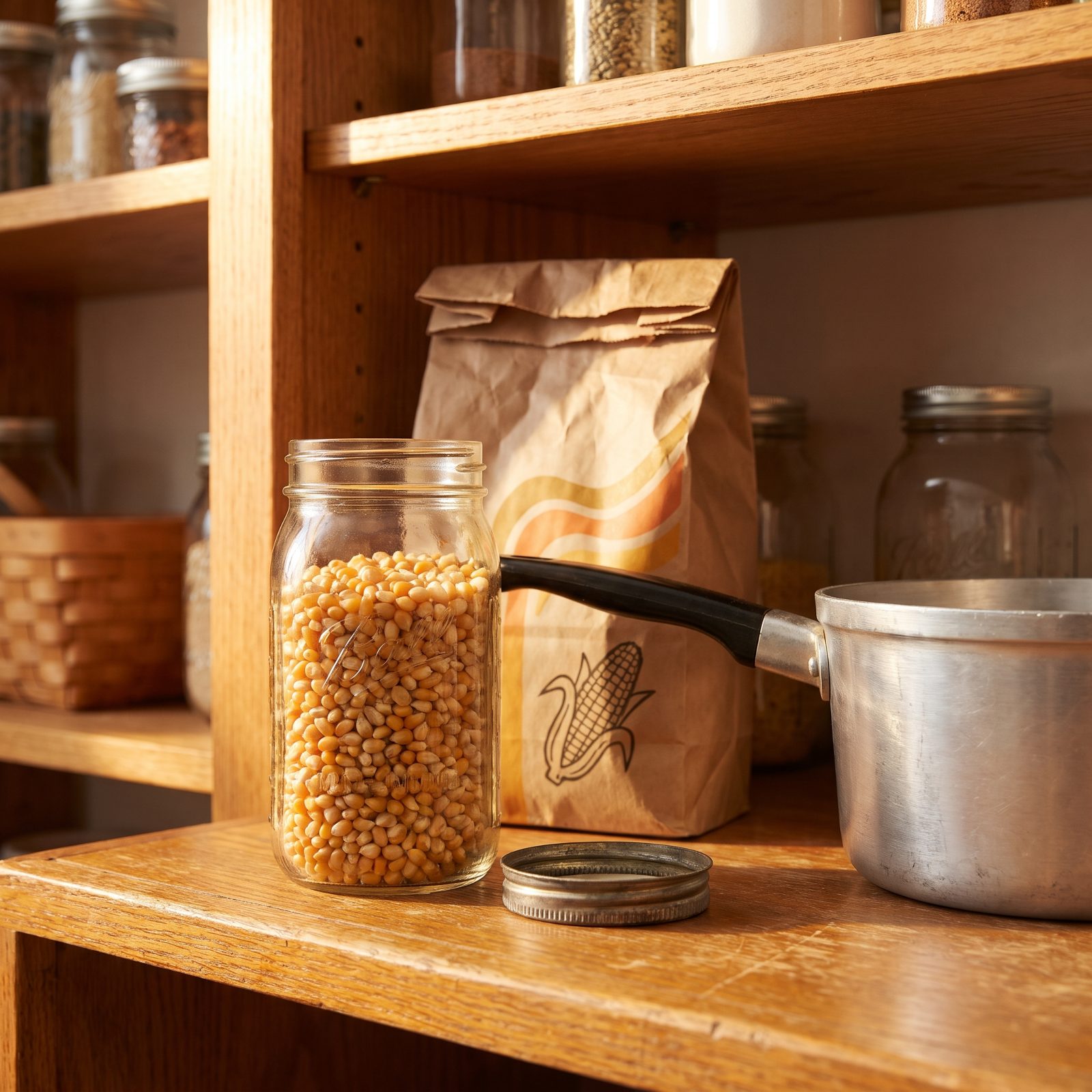
Microwave bags didn’t exist yet. Popcorn meant a heavy pot, a slick of oil, and a lid you held down while shaking the whole thing over a burner. You listened for the pops to slow, then pulled it before the bottom scorched.
Timing was a skill. Pull too early and you left a layer of unpopped kernels, the ones that cracked a molar later. Pull too late and the kitchen filled with smoke. Getting it right felt like a small victory every single time.
1. A Vacuum-Sealed Can of Mixed Nuts
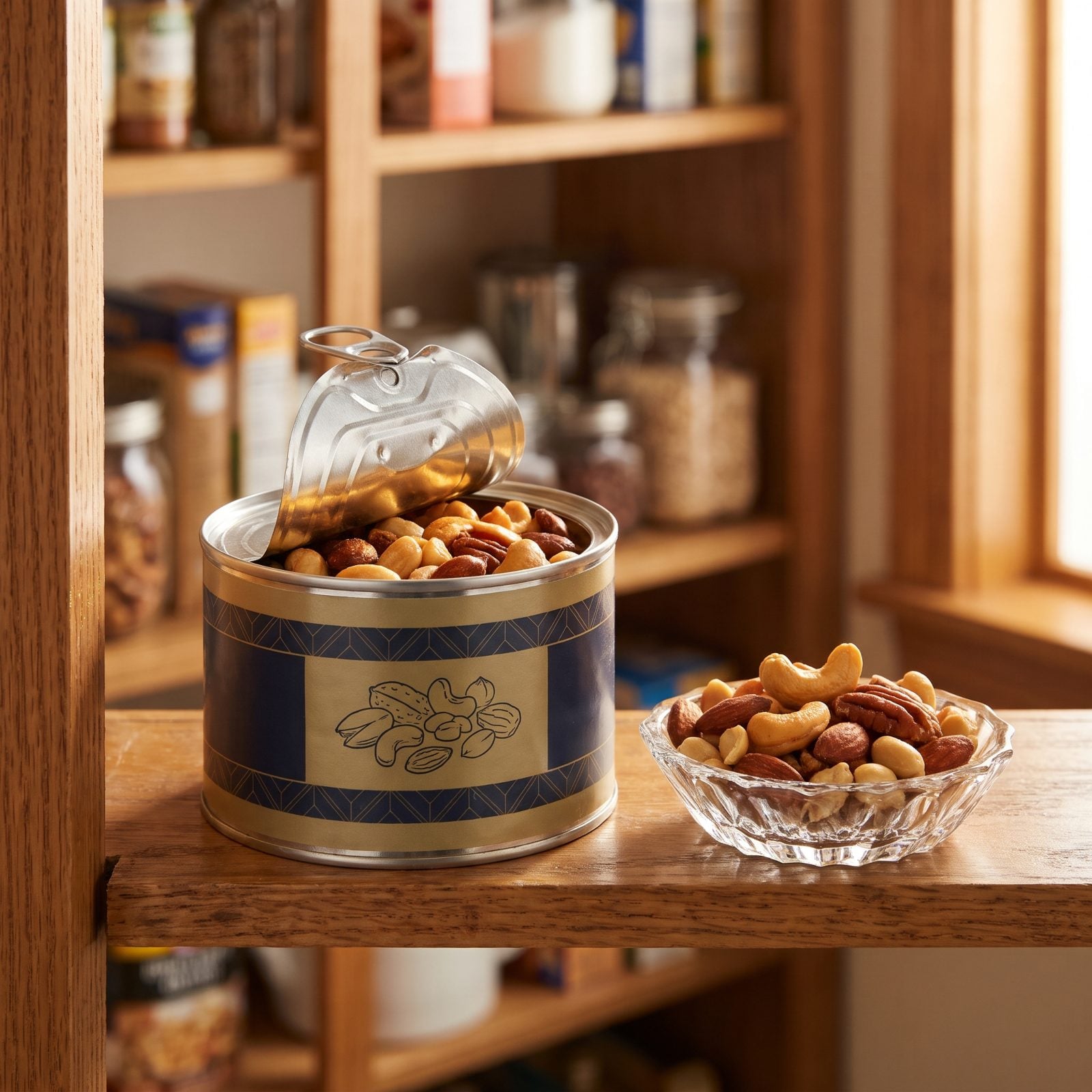
The hiss when you peeled back the foil told you the can was still good. That vacuum seal was the whole promise: these would last until the holidays, and they were meant for company, not snacking.
Everybody picked out the cashews first. The peanuts got left for last, sometimes forgotten entirely, rattling around the bottom until the next party. A cut-glass dish of these on the coffee table said the good guests were coming, and said it without a word.