
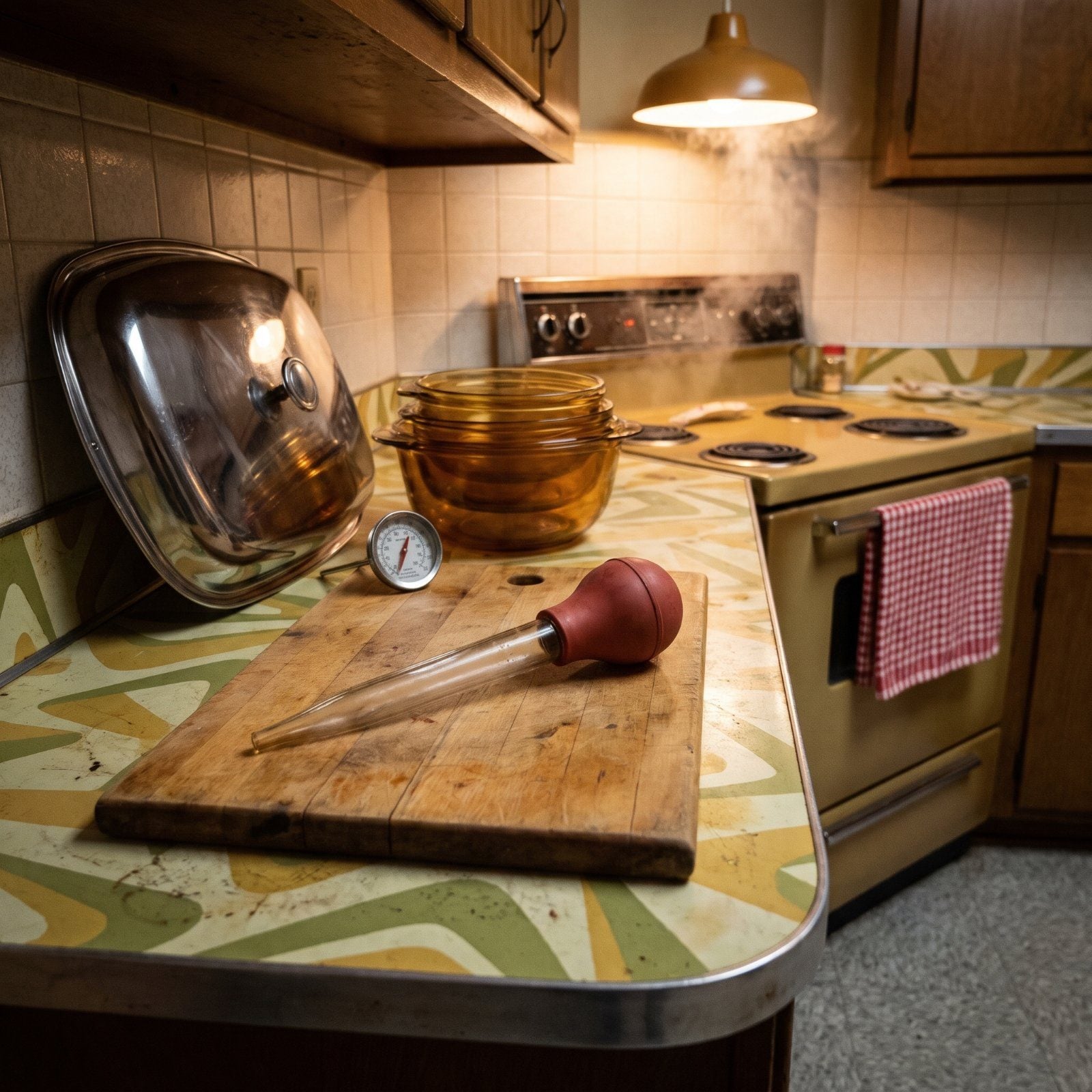
The turkey went in before the parade started, and nobody owned a machine to tell you when it was done except a dial you squinted at through greasy glass. A 1965 Thanksgiving kitchen ran on heavy metal, rubber bulbs, and tools handed down instead of thrown out. No nonstick coatings peeling off into the stuffing. No air fryer on the counter. Just enamel, cast iron, and a range built like a tank. We pulled one of these kitchens apart object by object, and what turns up is a whole way of cooking that mostly vanished. Here’s what did the work.
Please note that some of the images in this article were created with the assistance of AI.
31. The Freestanding Enamel Range at the Center of Everything
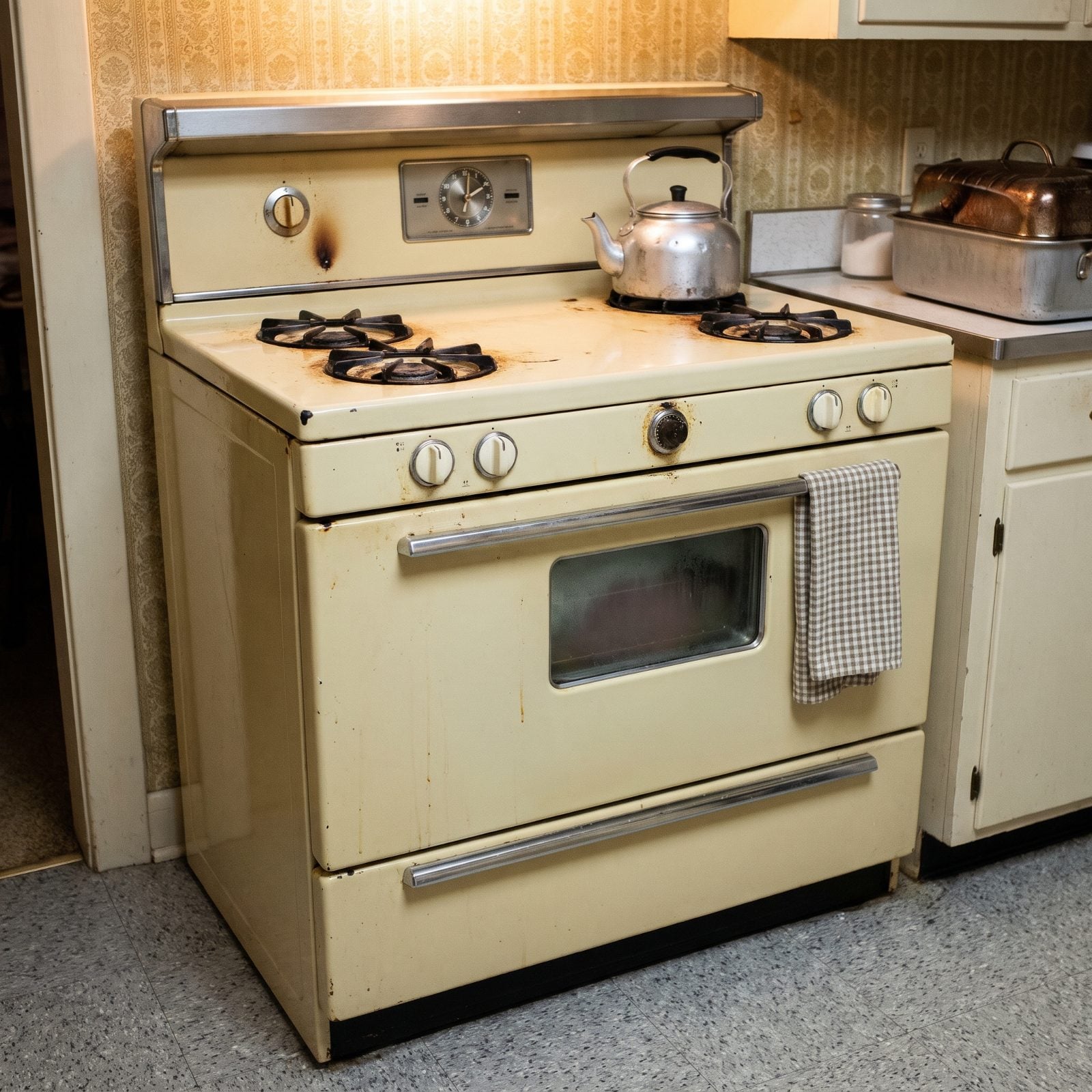
This was the main heat source in the room, and on Thanksgiving it worked harder than anyone in the house. One oven, four burners, and no second wall oven or countertop gadget picking up the slack. You planned the whole day around what could fit inside it and in what order.
The enamel coating is what gave these ranges their shelf life. Chip it and it rusted, so people babied the surface and wiped it warm. Plenty are still running in rural kitchens today, which tells you something about how they were built.
30. The Deep Oval Roasting Pan With a Domed Lid
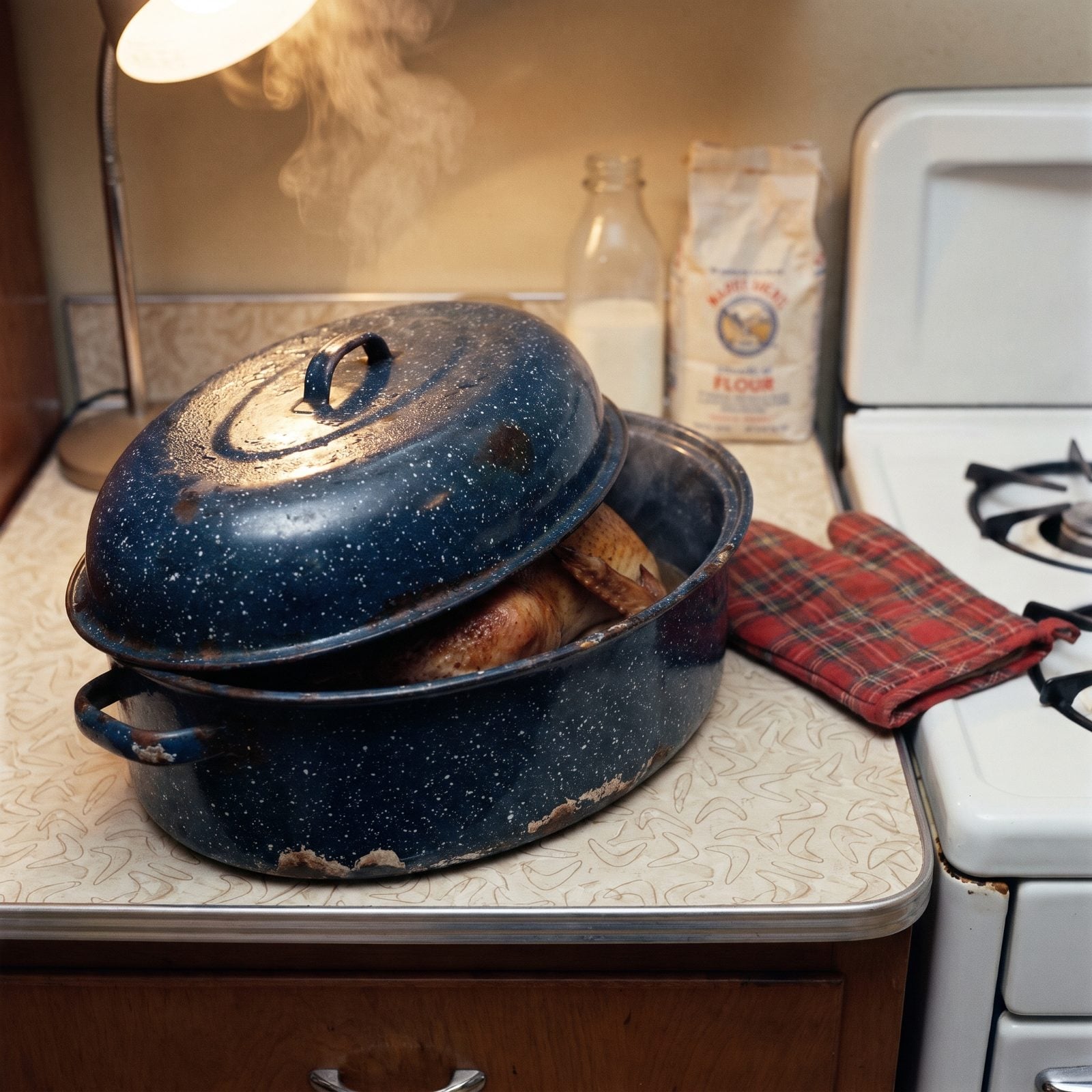
Big enough to swallow a twenty-pound bird and then some. The domed lid is the trick everyone forgets about now. It trapped steam for the first stretch of roasting so the turkey didn’t dry out, then came off for the last hour so the skin could brown.
Most were speckled blue graniteware, light enough to lift but tough enough to outlast the marriage. And here’s the economy of it: you roasted the bird in it, then made gravy from the drippings in that same pan right on the stovetop. One vessel, start to finish.
29. The Glass Turkey Baster With Its Rubber Bulb
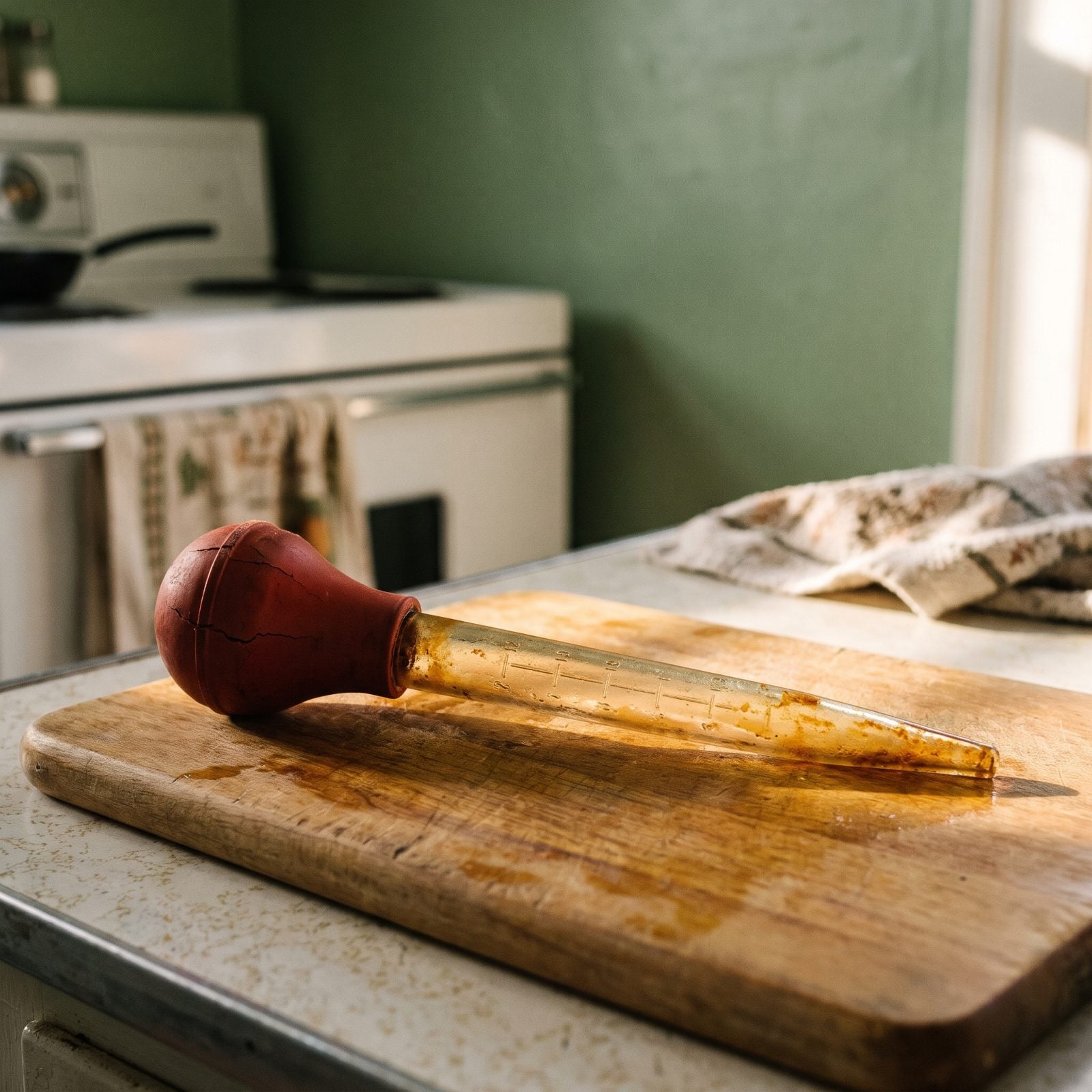
You squeezed the bulb, dunked the glass tube into the hot drippings, and let go. Simple physics doing holiday work.
The glass ones broke if you dropped them, and the rubber bulb eventually cracked and had to be swapped out, which is why the tube usually outlived two or three bulbs. Cooks swore basting kept the bird moist. Whether it did much is still argued, but opening the oven every half hour to squint at the turkey was half the appeal. It made you feel useful.
28. The Dial Meat Thermometer Checked Through the Oven Door
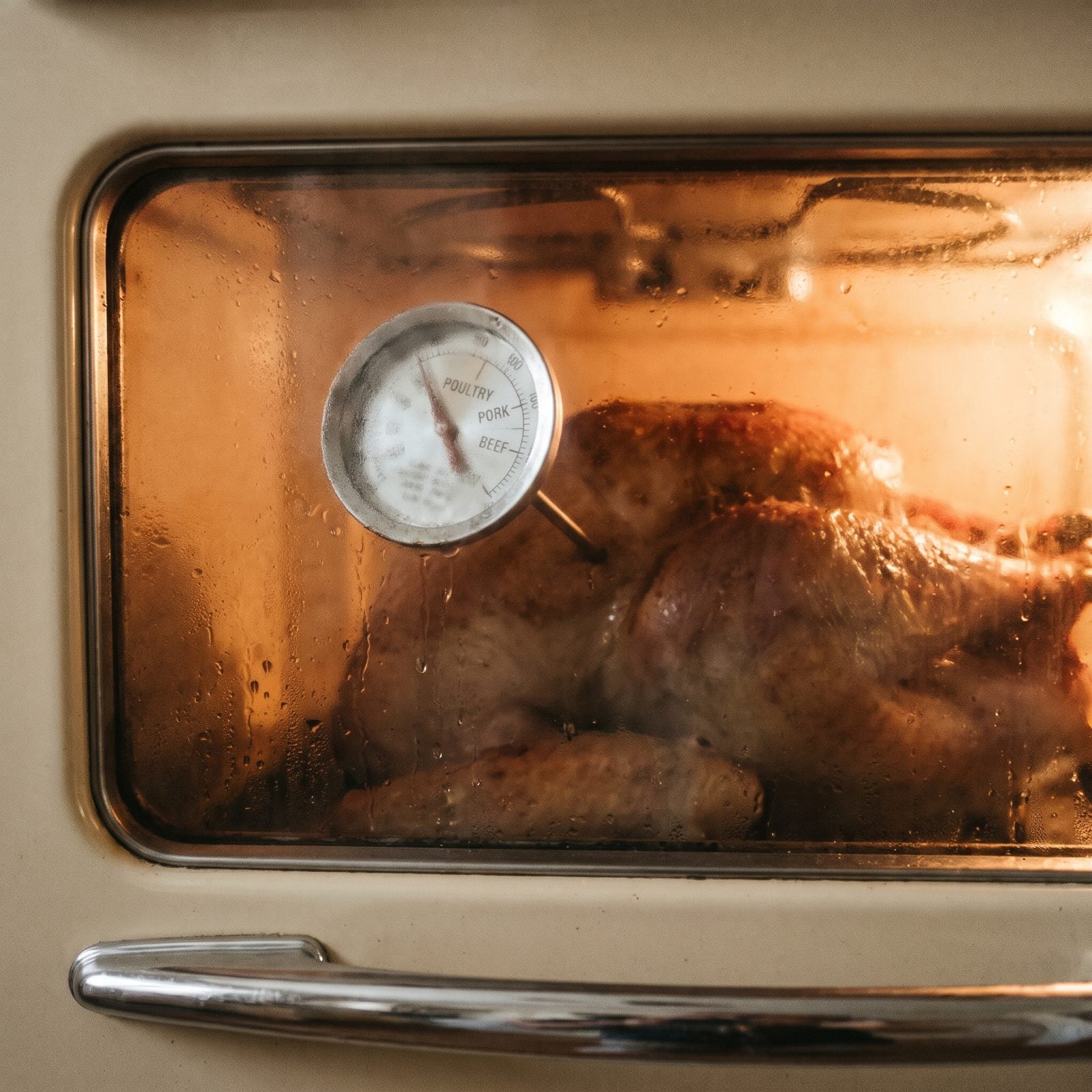
This was the closest thing to technology the turkey got. A spring-dial thermometer you jammed into the thigh before the bird went in, then read through the oven window so you didn’t have to open the door and drop the temperature.
The dial had little labels: poultry, pork, well-done, rare. No batteries, no beep, just a needle that crept toward done over six hours while you kept crouching to check it. They were never dead accurate, and the spring drifted with age, but a cook who knew her own thermometer knew exactly how to read its lie.
27. The Newfangled Electric Carving Knife
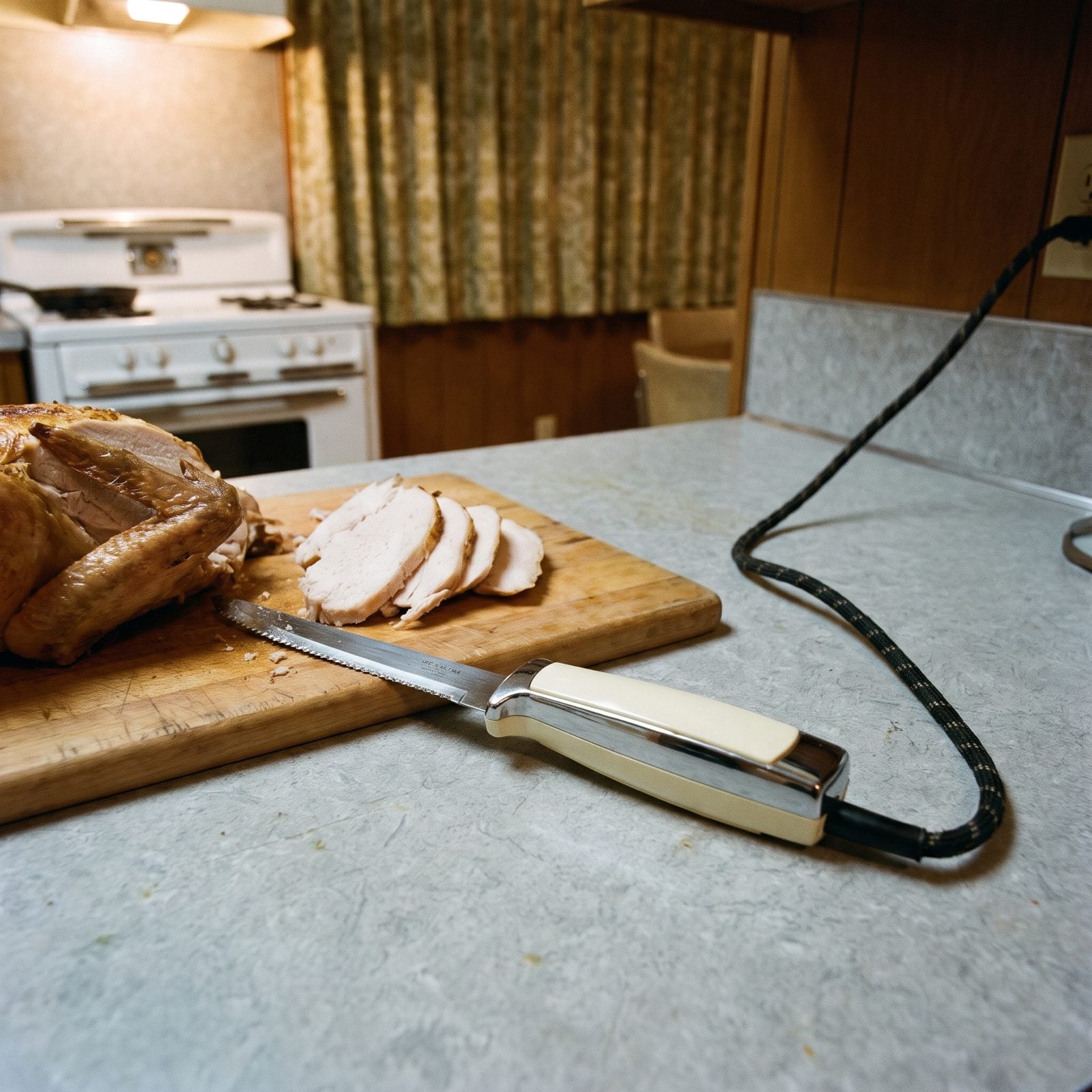
By 1965 this was the gadget that came out from under the tree and made it onto the Thanksgiving table. Twin serrated blades that buzzed back and forth, promising to carve the bird into neat even slices without the carver breaking a sweat.
The man of the house usually got handed this duty, partly because it plugged in and partly because it looked like a power tool. It worked, mostly. It also whined like an angry bee and scattered crumbs everywhere. Half the households that owned one went right back to a sharp carving knife by the following year.
26. The Heavy Cutting Board With a Juice Groove
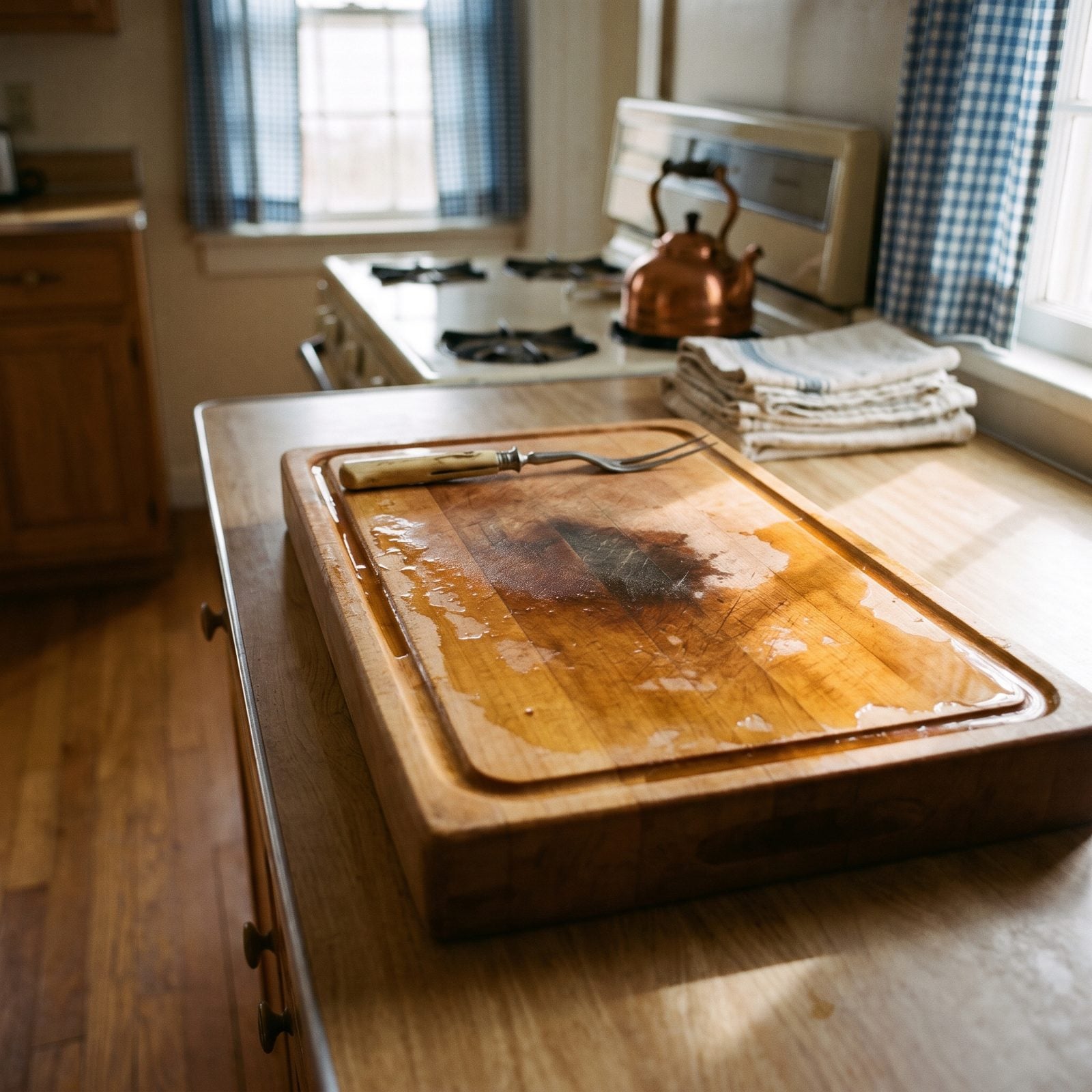
A good one weighed a few pounds and had a trench carved around the rim to catch the juices that ran off the turkey. That groove kept the counter clean and gave you a little reservoir to spoon back over the meat.
These boards were maple or beech, oiled by hand and never soaked. A cook who respected her board would’ve recoiled at the idea of dunking it. The scars from decades of carving were a kind of record.
As one cutting board maker explains, “Carving a rested turkey or a rack of ribs releases a surprising amount of liquid. A groove holds it on the board.”
25. The Seasoned Cast-Iron Skillet That Never Left the Stove
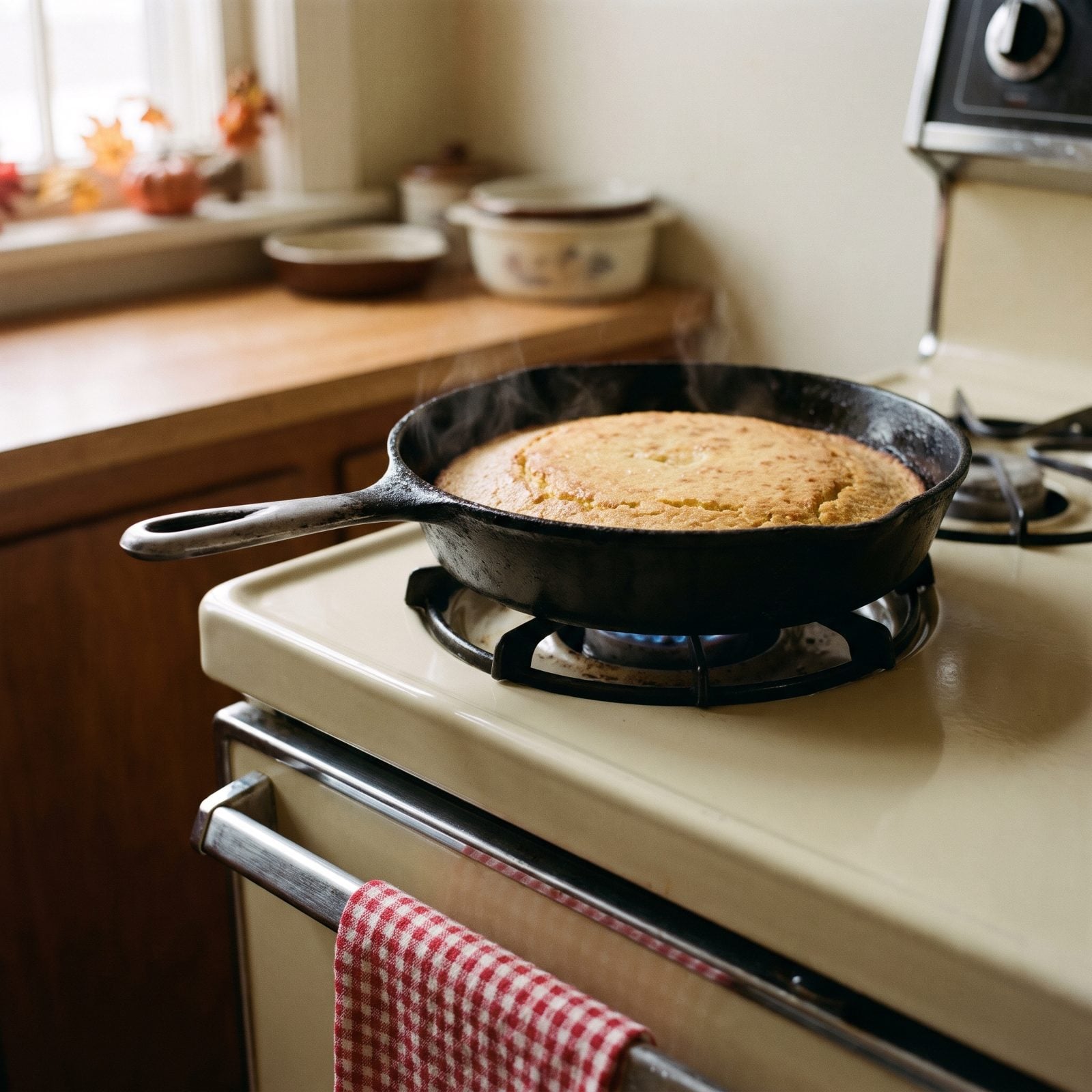
Some skillets lived on the stove the way a cat lives on a windowsill. Permanent. This one had been seasoned by a generation of bacon, cornbread, and fried everything, and nobody dared scrub it down to bare metal.
On Thanksgiving it baked the cornbread for the dressing, crisped the giblets, or held the overflow of whatever wouldn’t fit in the oven. A well-kept cast-iron pan beats most of what we buy now, and it cost a few dollars back then. The trick was never the pan. It was the forty years of patience baked into it.
As a biscuit baker and author puts it in her cast-iron care guide, “Cast iron is like Southern family jewelry—it should be passed down through the generations along with all the stories about the family members who used it.”
24. The Glass Casserole Dish Nested in a Metal Carrier
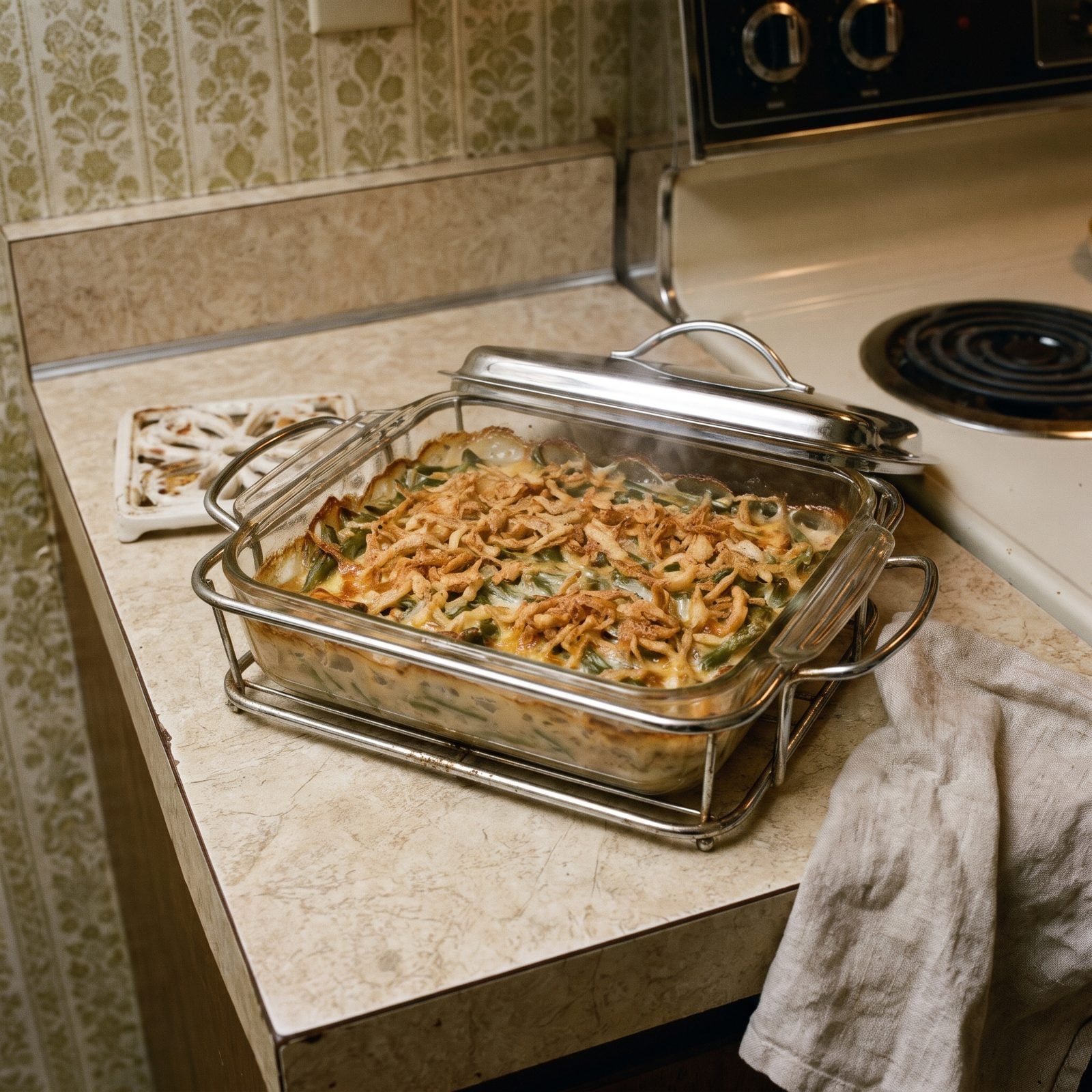
The casserole dish you could see through, sitting snug in a chrome carrier with a handle and a lid. That carrier is the forgotten hero. It turned a dish too hot to hold into something you could walk down the street to a neighbor’s house.
Potluck Thanksgivings ran on these. The glass dish went from oven to table to car, and everyone knew whose casserole it was by the dish alone.
23. The Divided Serving Dish That Kept Vegetables Apart
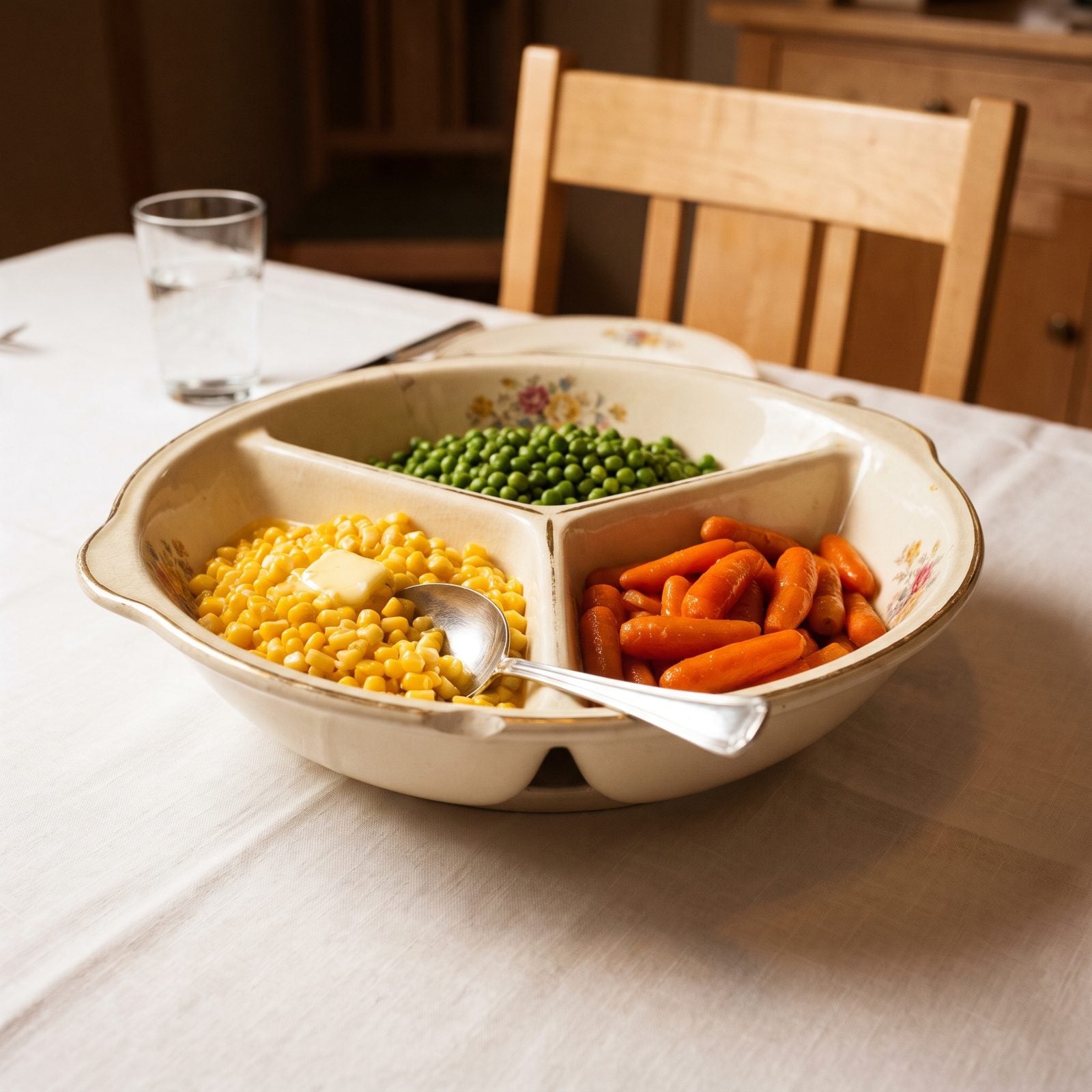
Peas touching the corn was apparently a crisis worth solving, so the divided serving dish existed to keep every vegetable in its lane. Two or three compartments, usually cream ceramic with a gold rim and a flowery pattern that matched nothing else on the table.
It saved space and dishes at once. Instead of three separate bowls crowding a loaded table, you had one piece doing triple duty. Practical dressed up as pretty, which is the most 1965 thing a serving dish could be.
22. The Gravy Boat With Its Matching Underplate
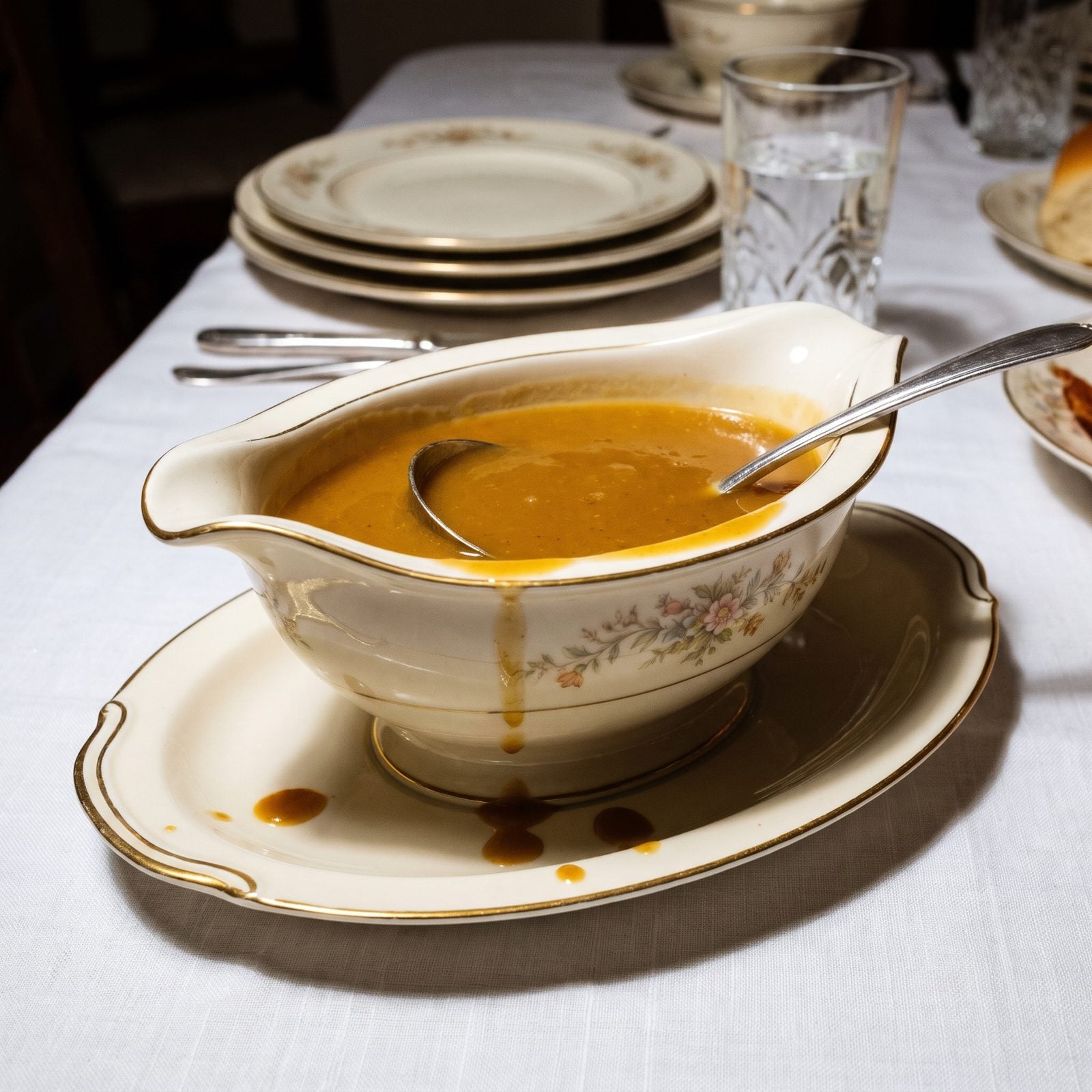
The one piece of the good china that earned its keep. A gravy boat with a spout, a second pointed lip at the other end, and an underplate to catch the drips so you didn’t leave a brown ring on the tablecloth.
It came out once or twice a year and spent the rest of its life in the back of the hutch behind the glass doors. That matching saucer, usually fused to the boat or sold alongside it, is what separated a proper table setting from a plain one. Small detail. People noticed anyway.
21. The Hand Mixer With Chrome Beaters
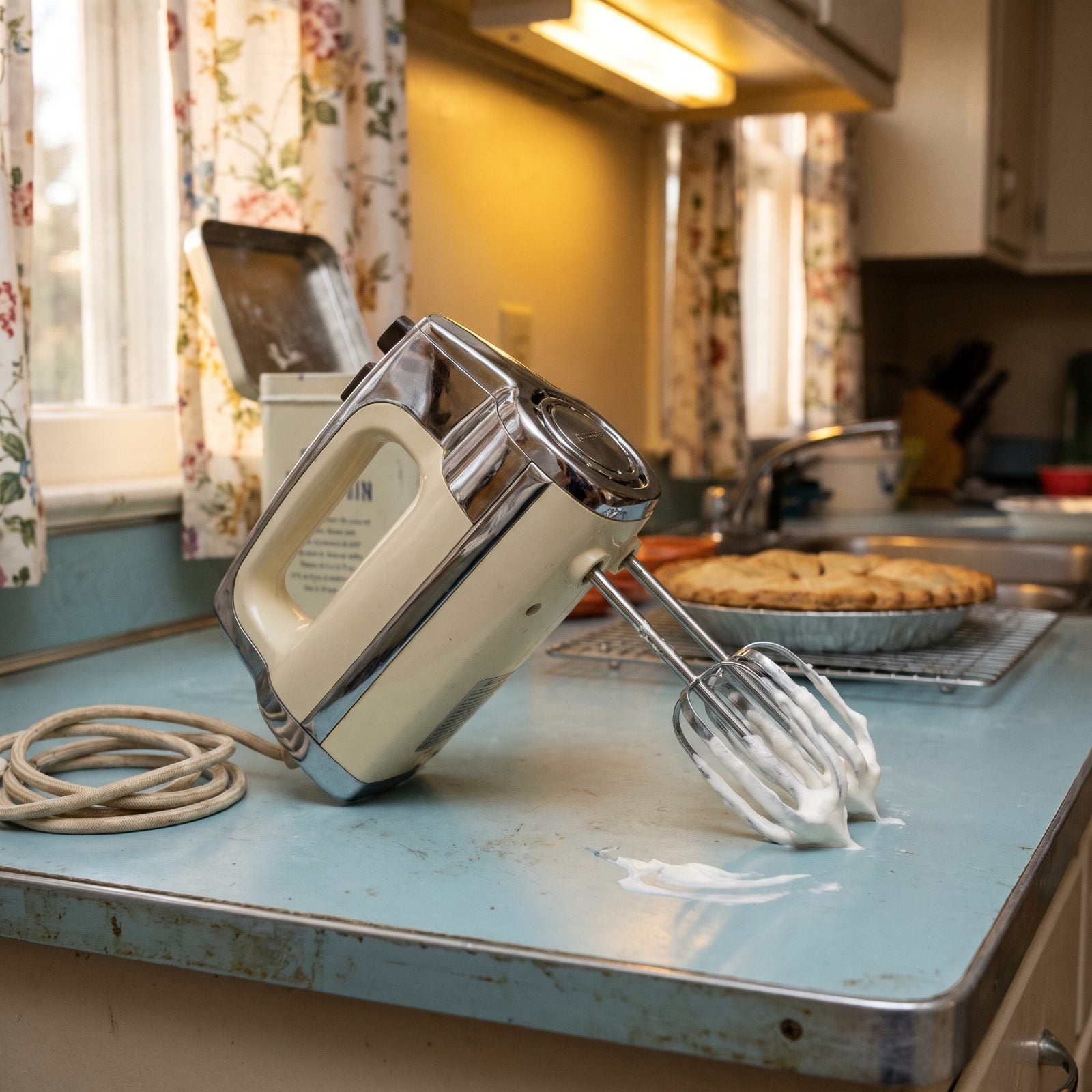
Lighter than the big stand model, and you could chase the batter around the bowl with it. The beaters locked in with a satisfying click and ejected with a button when you were done, which felt like a small marvel in a kitchen otherwise full of hand cranks.
The cloth-wrapped cord was the giveaway. Those cords frayed, stiffened, and eventually got taped. A working one today is a minor trophy. Whipped cream for the pie, egg whites, cake batter — all of it came out of this thing with a hum you could hear from the next room.
20. The Countertop Electric Percolator Making Coffee All Day
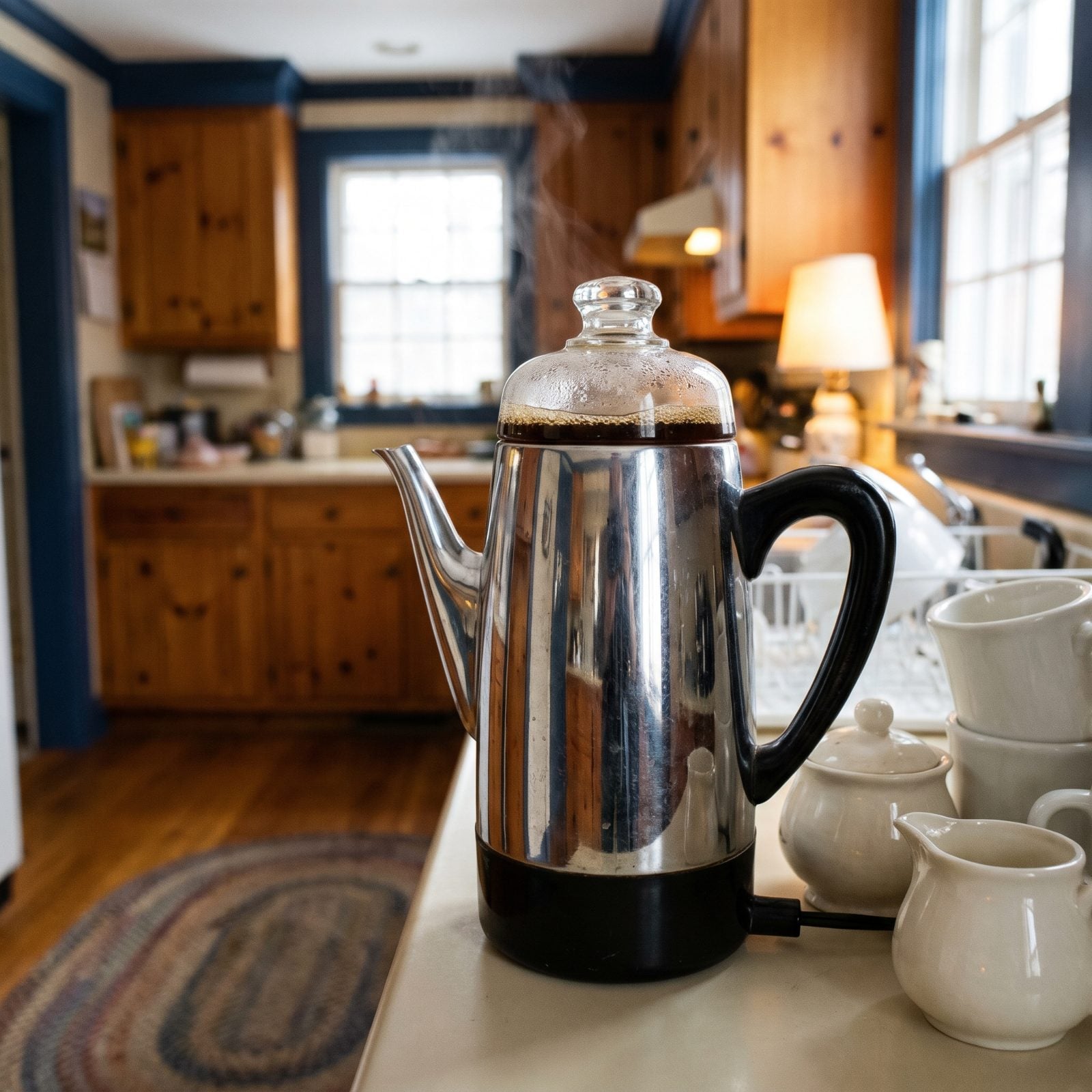
You plugged it in that morning and it stayed on. The glass knob on the lid let you watch the coffee jump up and darken, so you knew how far along it was without lifting a thing.
It made coffee that got stronger and more bitter as the day wore on, and nobody minded. By the time the relatives arrived, it had been going for hours. That smell was half of what a holiday kitchen smelled like.
A percolator never stopped. It just got more serious about its work as the afternoon went on.
Even a percolator manufacturer concedes that “When coffee is brewed too long or exposed to excessive heat, the grounds can over-extract and produce harsh flavors.”
19. The Hand-Crank Ice Crusher for Holiday Drinks
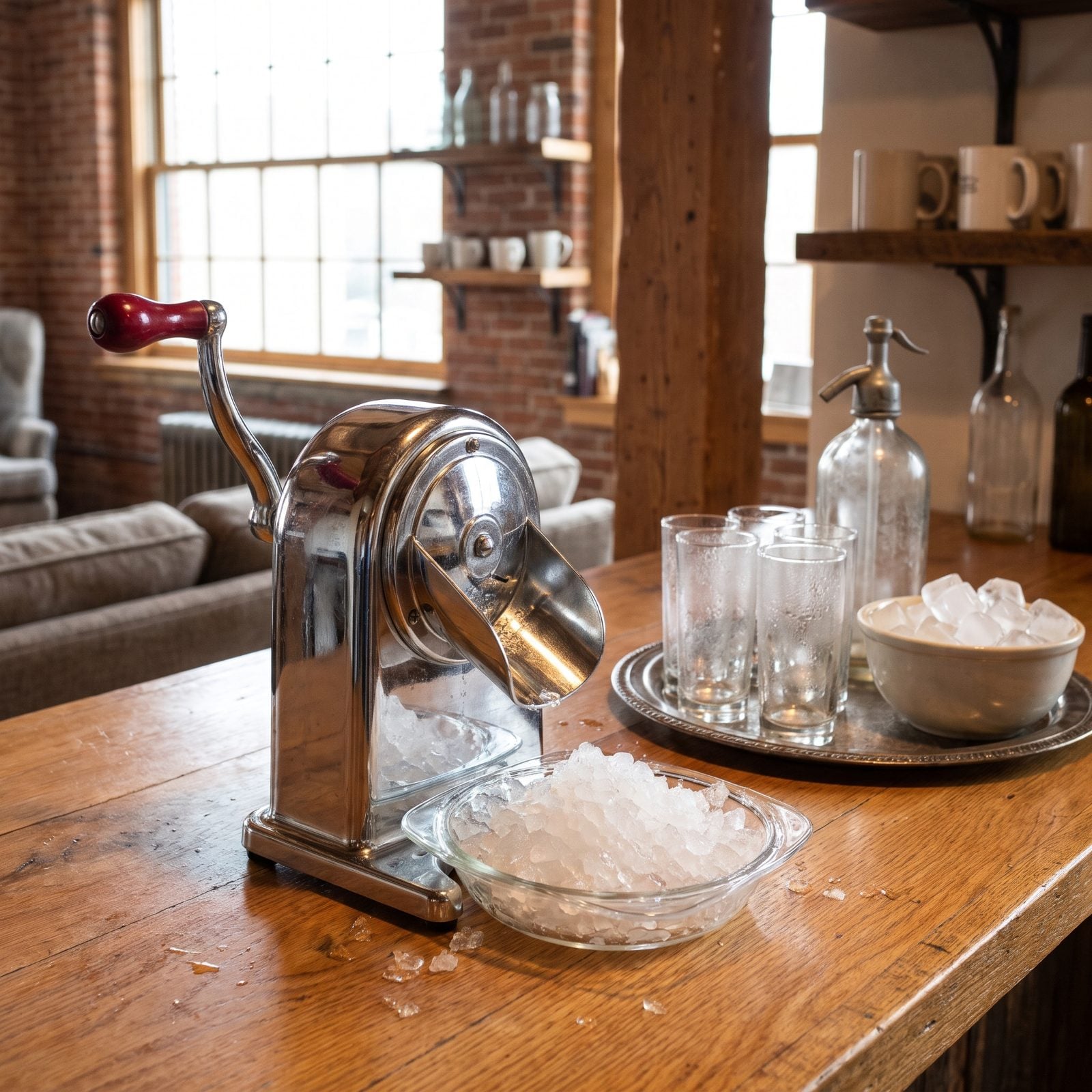
Crushed ice wasn’t something you bought in a bag. You made it, cube by cube, feeding them into a chrome hopper and cranking until the shards rattled into the dish below. Come the holidays it came out for cocktails and the kids’ sodas alike.
Honestly, it was a little bit of theater. The clatter, the chrome, the cold mist off the hopper. A simple machine that made a plain drink feel like an occasion. There’s a lot to be said for tools that do almost nothing except make the moment better.
18. The Rounded Refrigerator With a Thick Chrome Handle
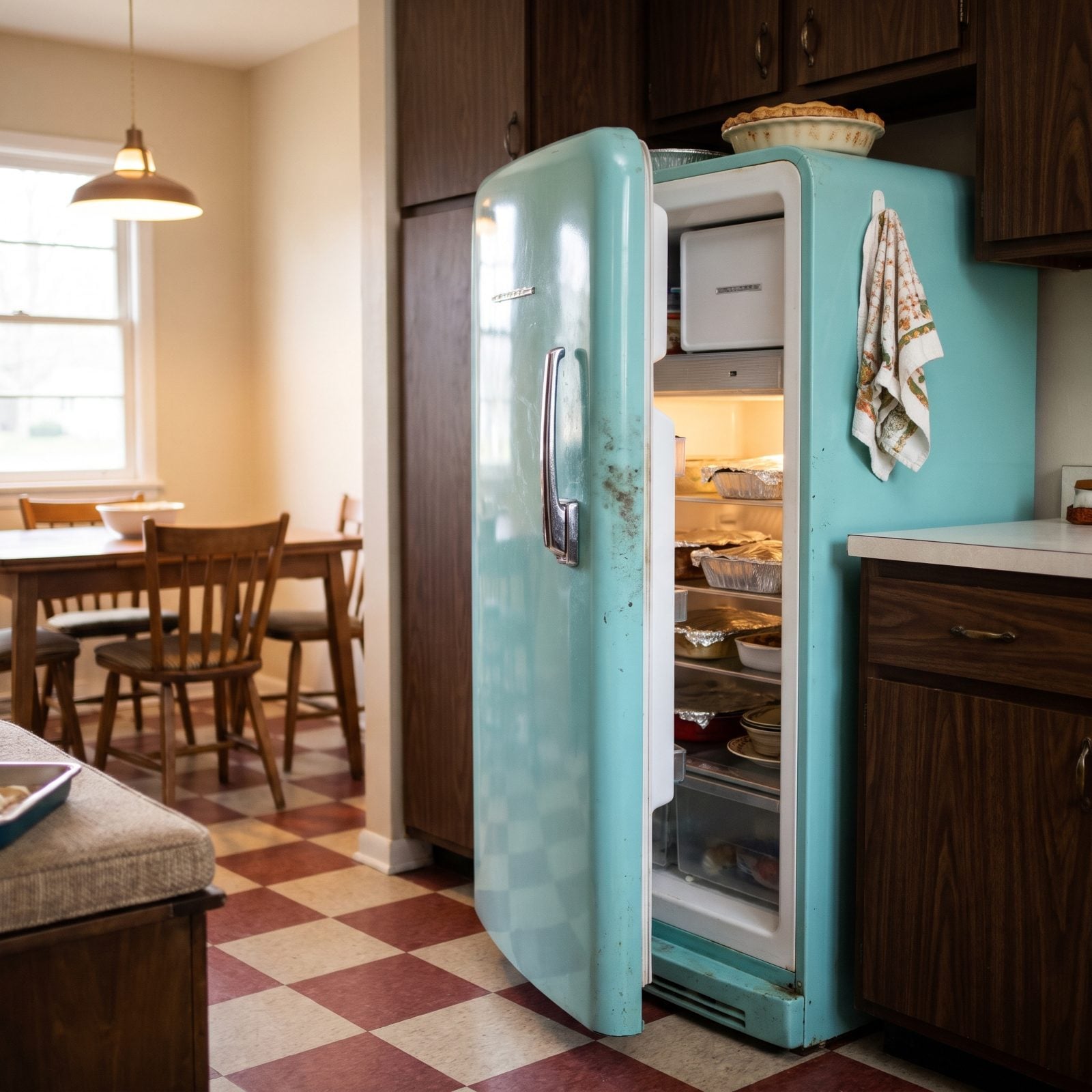
Soft corners, a single tall door, and a handle you grabbed and pulled like you meant it. No touch latch, no magnet strip. The door shut with a heavy thunk you could hear across the house.
The freezer was a tiny frosted box inside the main compartment, barely big enough for the ice trays and a carton of ice cream. On Thanksgiving that fridge worked overtime, every shelf jammed with covered bowls and a pie balanced on top because nothing else would fit.
17. The Aluminum Foil Roll Saved for Important Leftovers
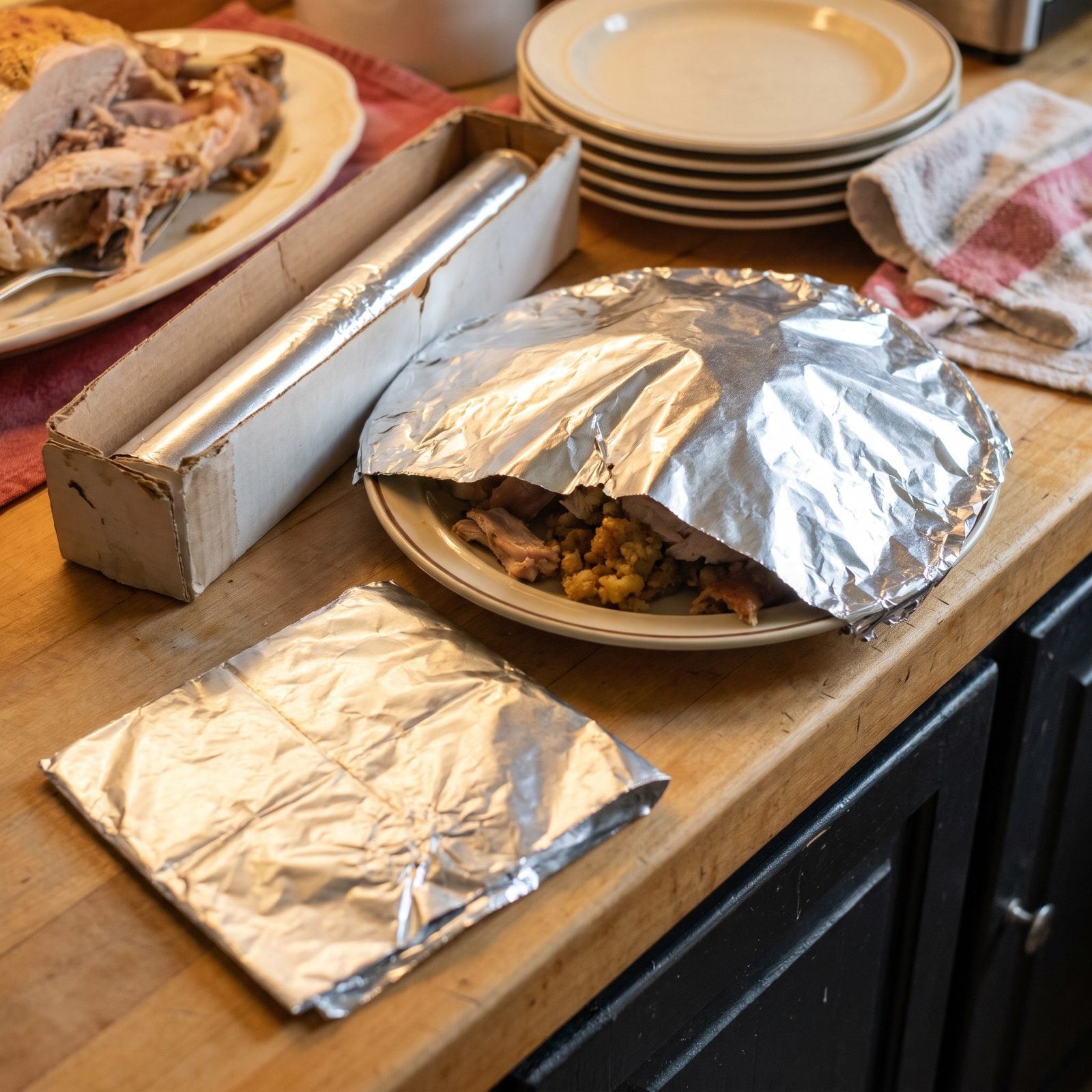
Foil wasn’t disposable in this house. You tore a sheet, covered the good leftovers, and the bigger, cleaner pieces got smoothed flat afterward and tucked back in a drawer for next time.
Everyone who grew up in these kitchens knows the drawer. Folded squares of used foil, slightly crinkled, waiting for a second or third life. The habit came out of the war years and the Depression before that, and it stuck. Plenty of grandmothers did this to the very end, and plenty of grandkids still can’t throw out a clean piece of foil without hearing about it.
16. The Flour and Sugar Canisters Lined Up on the Counter
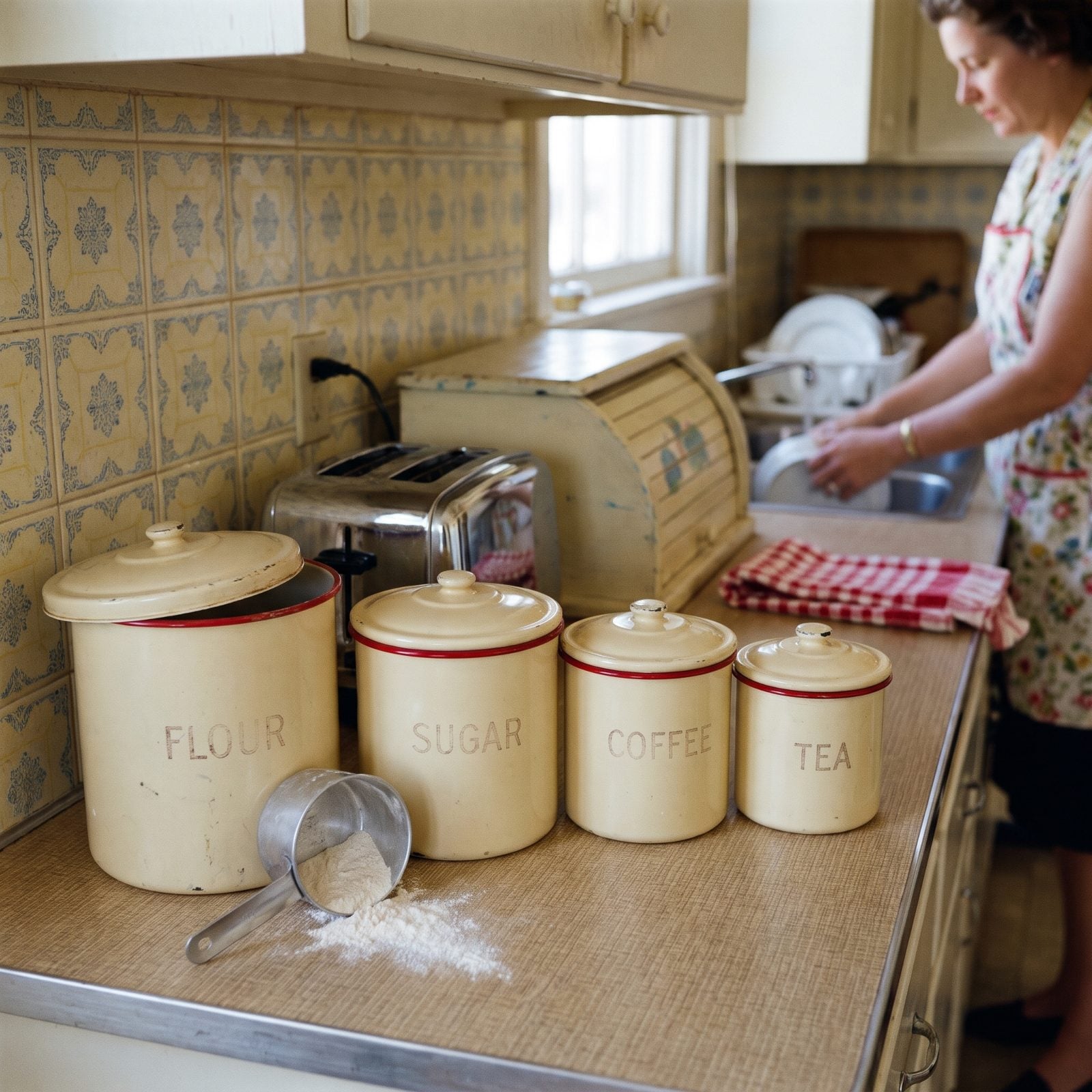
Four canisters, biggest to smallest, lined up like they were posing for a photo. Flour, sugar, coffee, tea. The order never changed because moving them felt vaguely wrong.
These lived on the counter all year, which tells you something about how a 1965 kitchen worked. Bulk staples out in the open, within arm’s reach, refilled from paper sacks. And by Thanksgiving morning the flour canister was running low, so somebody had to run out for more — a last-minute trip in a cold car. You know the one.
15. The Wooden Recipe Box Stuffed With Handwritten Cards
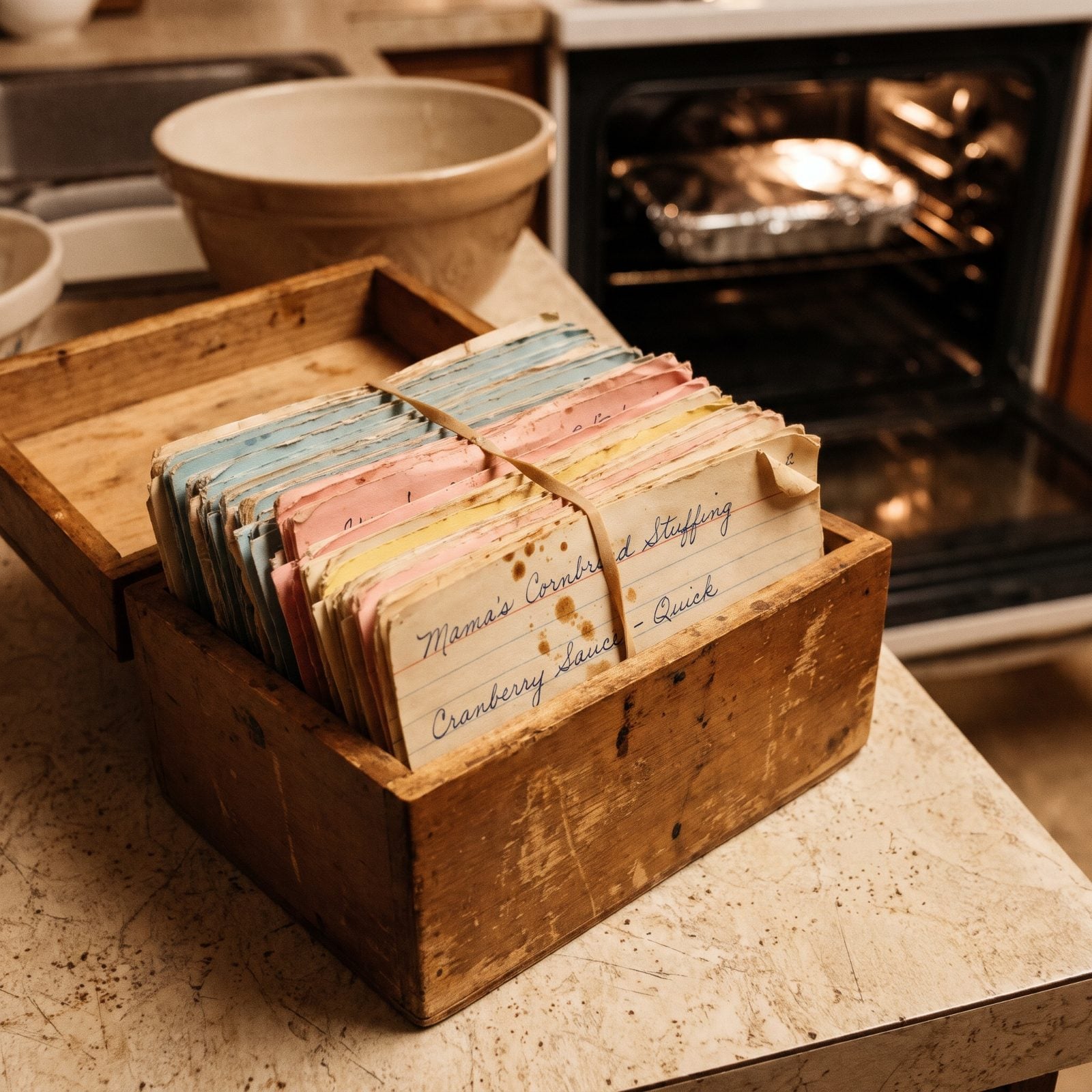
The box was wood, the lid never quite closed, and the cards inside were a mess. That was the point.
Every card carried the fingerprints of whoever wrote it. Cursive that leaned left, cornstarch smudges, a note in the margin reading “too much salt, do half.” Some came from a neighbor, some from a cousin two states away, copied out by hand because that was the only way to keep a recipe before you could print one.
The Thanksgiving cards sat up front, worn softest of all — the dressing, the pie, the thing nobody could make quite the same way ever again.
A recipe box was the only cookbook that knew your family by name.
14. The Holiday Apron With an Oversized Front Pocket
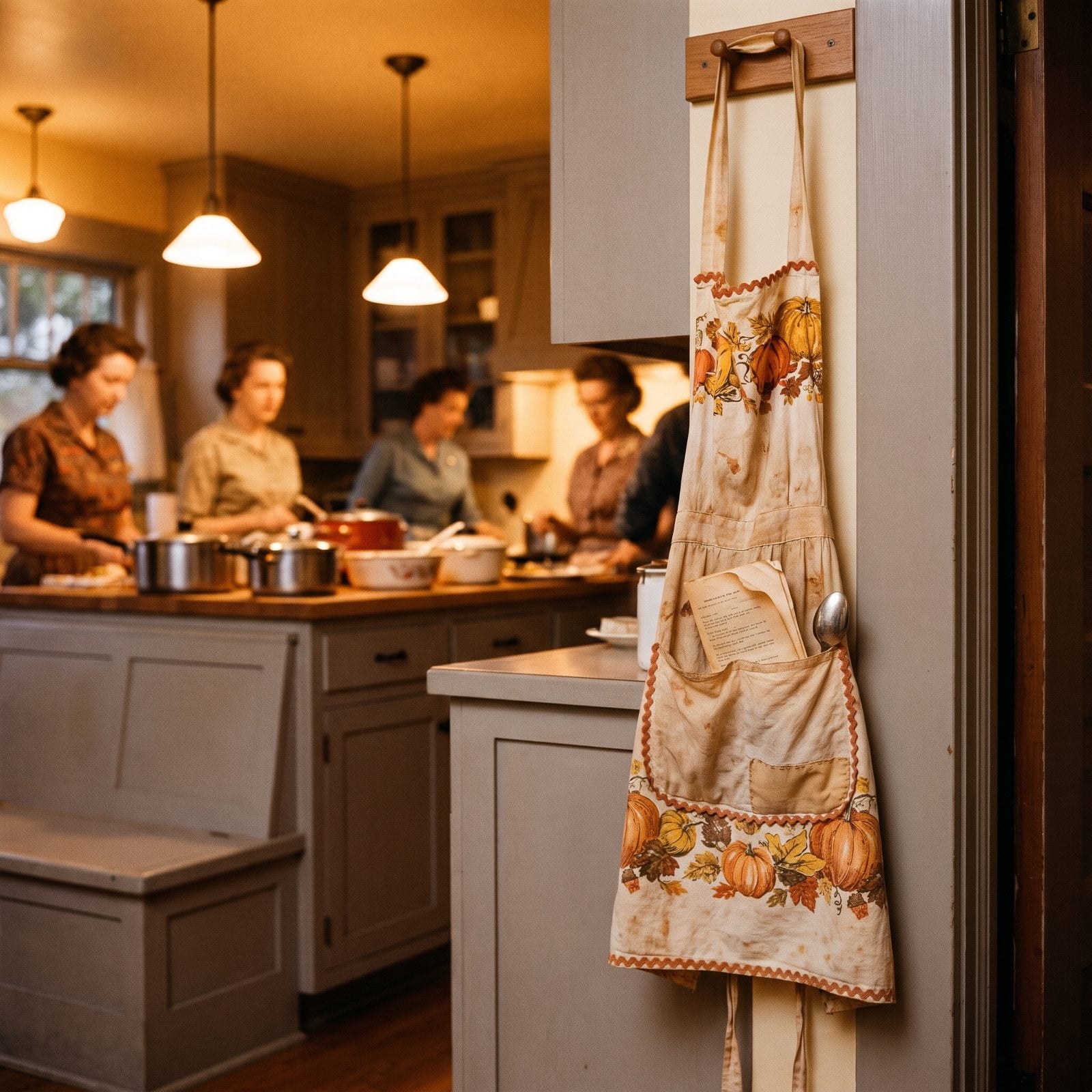
That front pocket was a whole command center — a folded shopping list, a pencil stub, a crumpled tissue, sometimes a wristwatch taken off so it wouldn’t catch batter.
The apron came out once a year dressed for the occasion, printed with little turkeys or autumn leaves or a harvest scene that nobody loved but everybody expected. It tied high at the waist, the rick-rack trim gone a bit limp from years of washing. Half the reason to wear it was so you wouldn’t ruin the good dress underneath before the guests arrived.
13. The Hand-Crocheted Potholders Hanging Near the Range
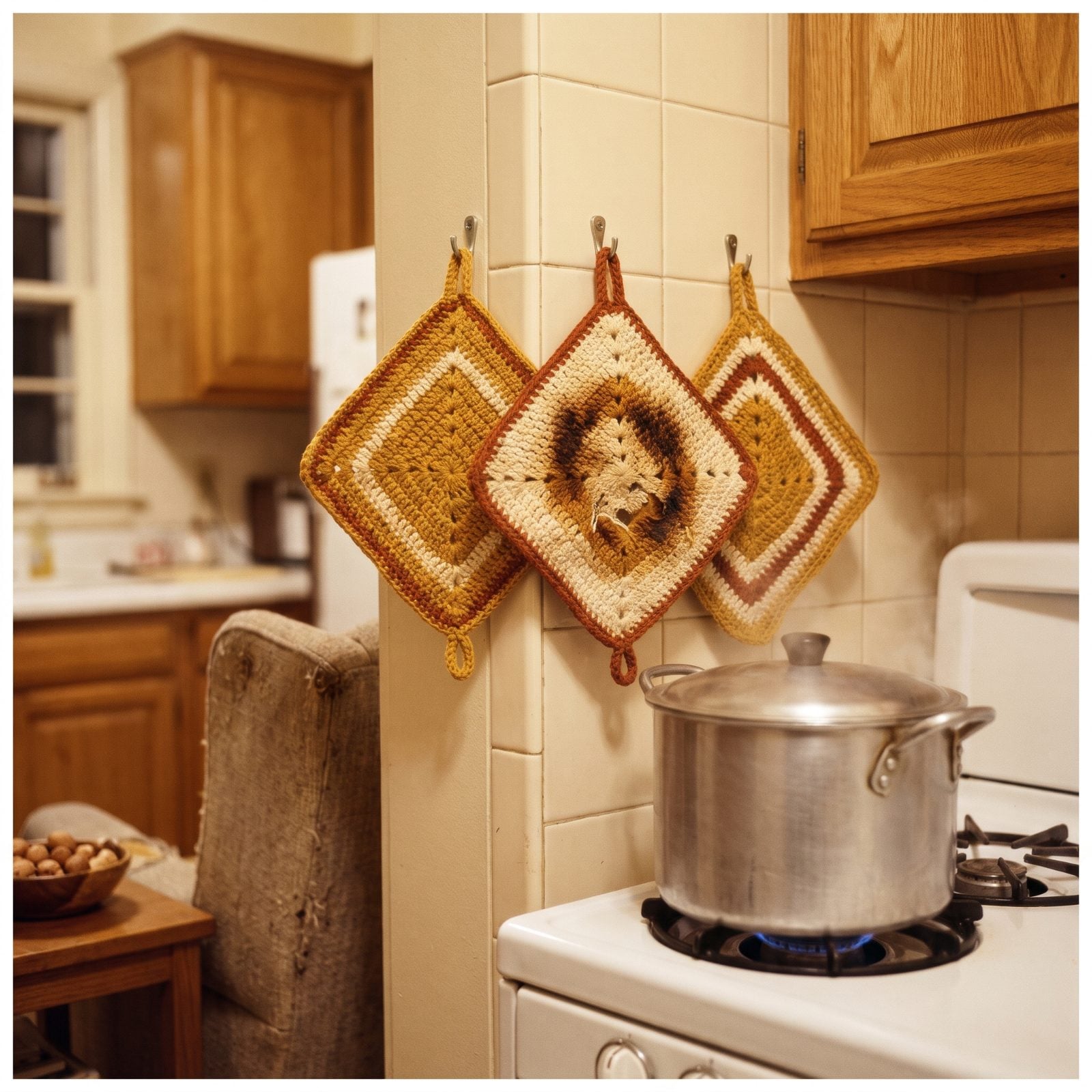
Somebody in the family made these, and everybody knew who. The stitches gave it away.
Crocheted potholders were the kind of thing cranked out by the dozen over winter and handed around at Christmas, so a 1965 kitchen usually had a small pile in mismatched colors. The prettiest ones hung on the wall for show. The ugly, scorched one lived within grabbing distance of the oven and did all the real work.
12. The Striped Cotton Dish Towels Draped Over the Oven Handle
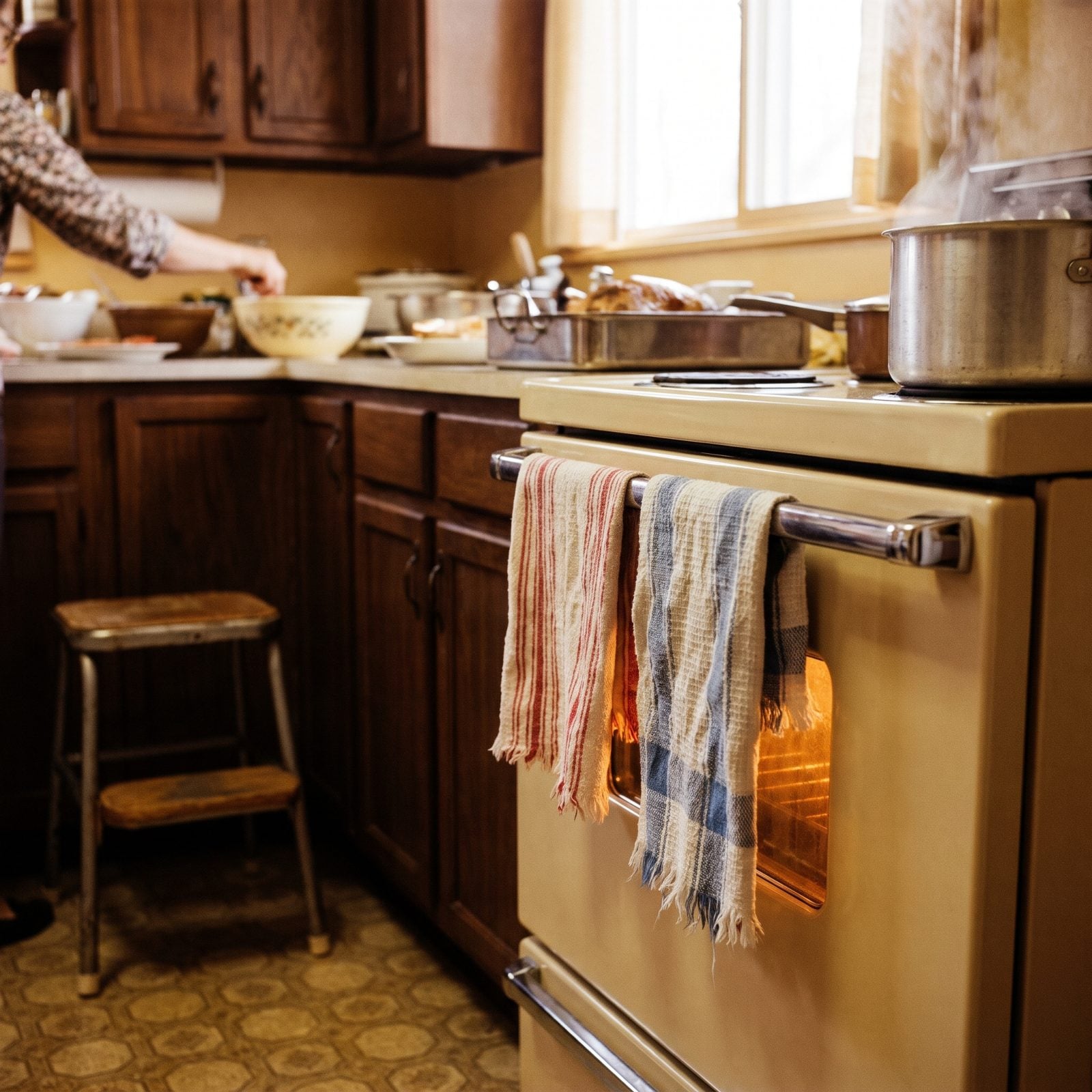
Red stripe and blue stripe, slung over the oven handle, damp by noon.
These towels did everything — dried the good dishes, wiped the counter, grabbed a hot lid in a pinch when the potholder wandered off, blotted a forehead on a warm kitchen afternoon. The stripes were woven cotton, flat and thin, the kind that got softer and more useful the more you washed them. A fresh stiff towel was almost disappointing. You wanted the limp old favorite with the frayed corner.
11. The Chrome Step Stool That Doubled as an Extra Seat
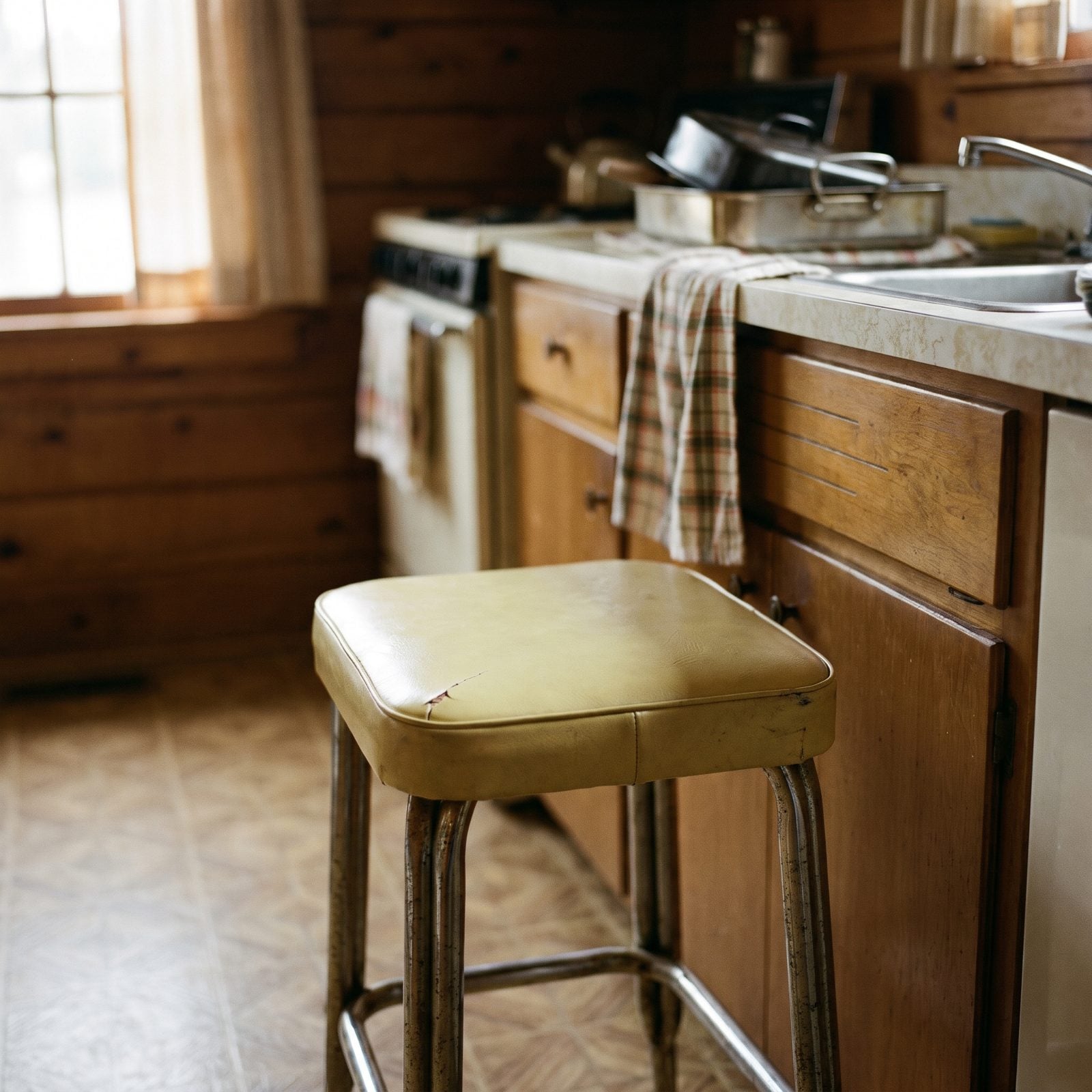
A chrome frame, a footrest rail, and a vinyl seat the color of a diner booth. The stool earned its keep twice over.
Most days it reached the top shelf where the roasting pan hid all year. On Thanksgiving, with the table full and chairs borrowed from the bedroom, it turned into an extra seat — usually the kid’s seat. You sat a little lower than everyone else, the vinyl cold at first, the chrome legs running nearly straight down like a bar stool’s, your feet hooked on the rail.
10. The Patterned Linoleum Floor Under Every Pair of Busy Feet
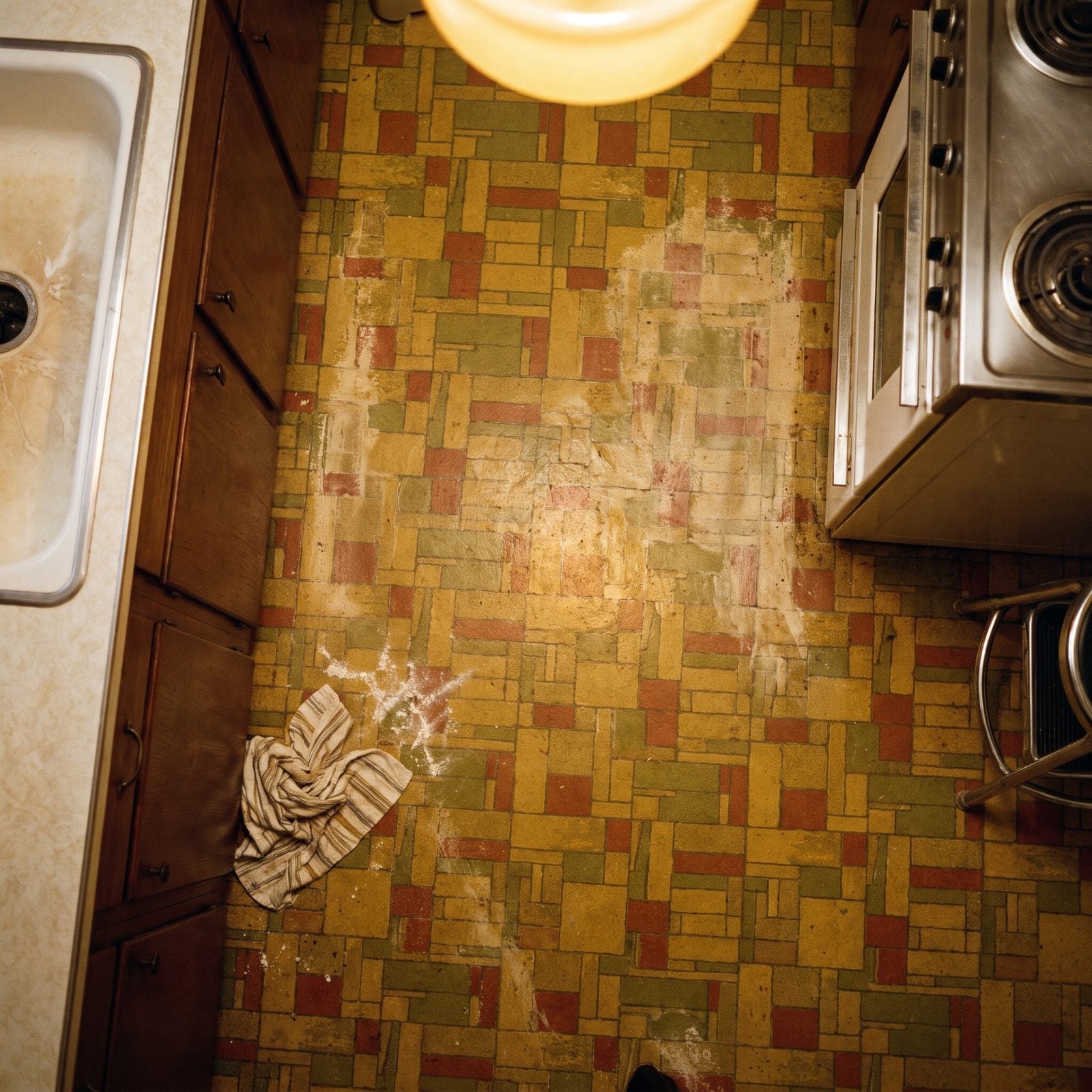
Look down. The whole holiday happened on this floor.
Linoleum came in patterns meant to hide crumbs and scuffs — speckled golds, little geometric shapes — and it mostly did its job. What it couldn’t hide were the wear paths, pale tracks rubbed thin right in front of the stove and the sink by years of the same feet doing the same turns.
By late afternoon it was a hazard. Gravy drip here, a stray green bean there, a damp patch by the sink. Somebody always said “watch the floor” and somebody always didn’t.
Explaining why it works in kitchens, an interior designer says “Linoleum is comfortable, you can get it wet, and you don’t have to worry about dropping knives on it”
9. The Laminate Countertop Finished With Shiny Metal Edging
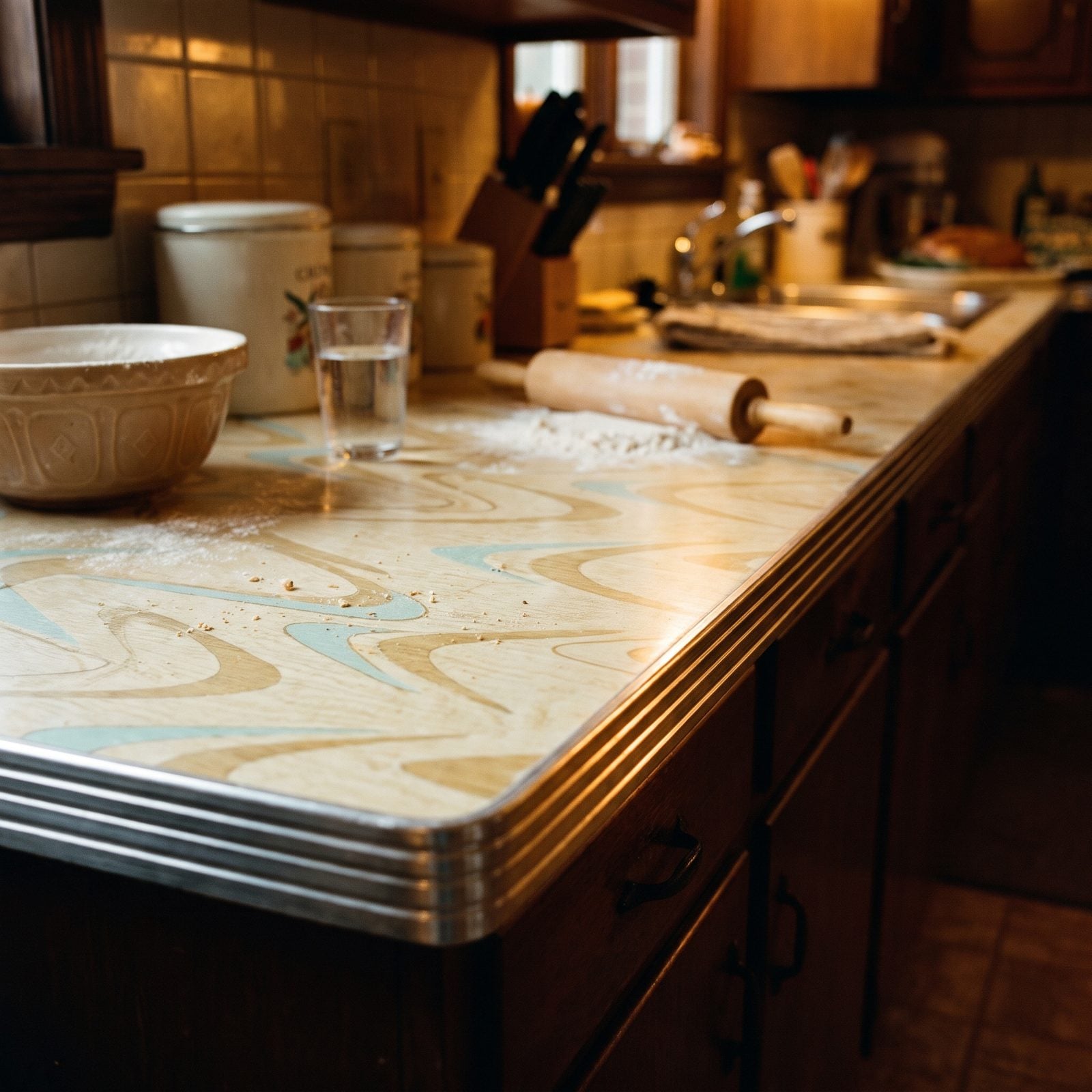
Run your hand along the front edge and you’d feel it. A ribbed strip of aluminum, cool and slightly sharp at the seam, capping the laminate like trim on an old car.
The laminate itself came in patterns that scream 1965 now: boomerangs, speckles, pale turquoise flecked with gold. That metal edging showed up everywhere for a reason — it protected the fragile front lip from chips and gave the whole counter a finished, faintly industrial shine.
By the end of the day it was covered in flour and ringed with the ghost of a cold glass. You wiped it down with the striped towel and it went right back to gleaming.
8. The Painted Metal Cabinets With Rounded Pulls
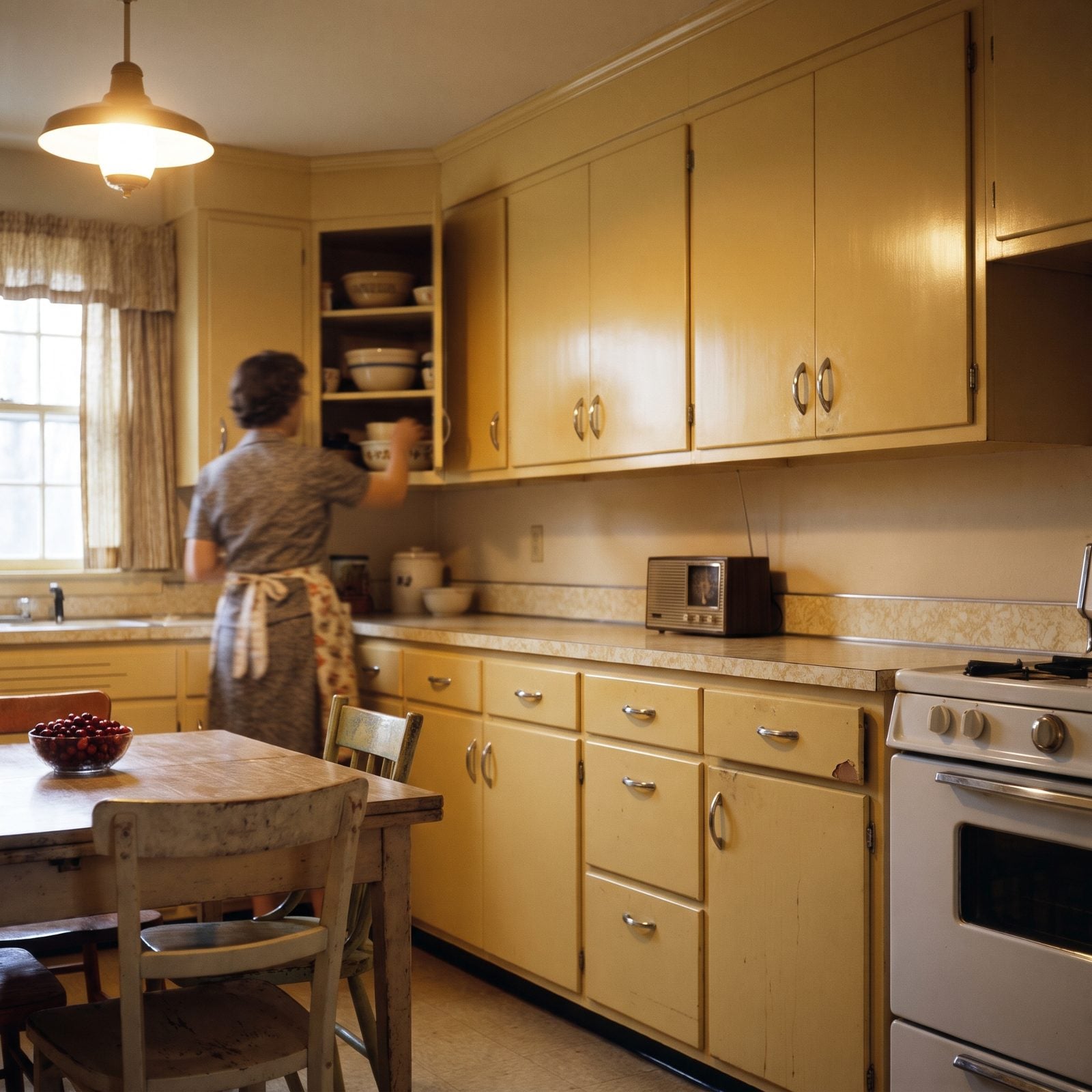
Steel, not wood. If you grew up with these, you remember the sound: a drawer rolling shut with a tinny clunk that no particleboard box has made since. The enamel came in colors that read as cheerful then and slightly institutional now — buttery yellow, mint, a pale coral that showed every fingerprint you laid on it.
The rounded chrome pulls were the giveaway, cool to the touch and easy to grab with a flour-dusted hand. Nearly impossible to break, too. People scrubbed these cabinets with the same cleanser they used on the sink and the enamel just took it.
According to a cabinet refinishing firm that writes about restoring metal cabinets, “Many older homes still have original steel cabinets from the 1940s–1960s, which can become a beautiful design feature when restored.”
7. The Long Fluorescent Ceiling Fixture Lighting the Preparations
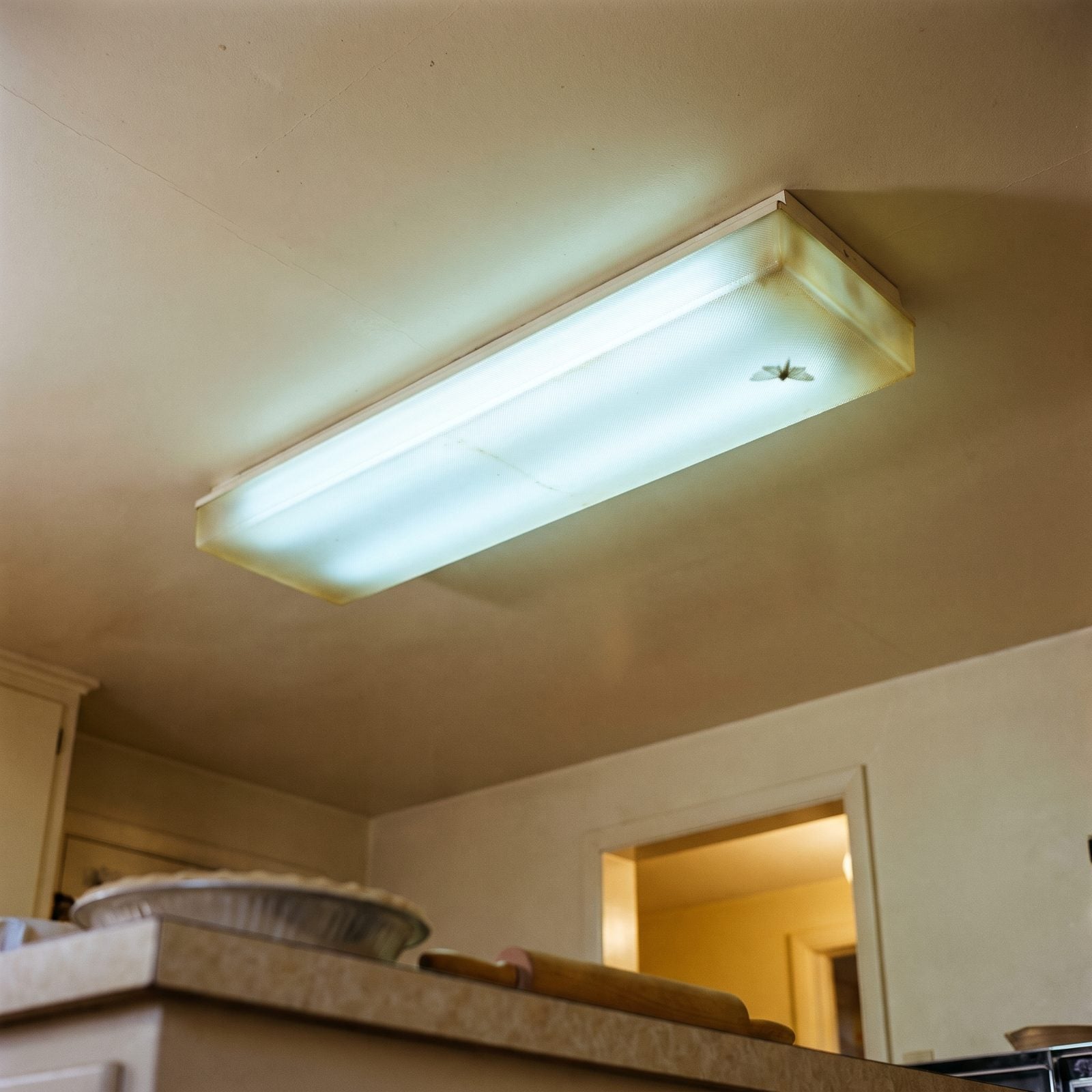
The one light in the house that made nobody look good. A long tube behind a frosted plastic panel, humming faintly, buzzing when it got old, flickering on with a stutter before it committed.
And yet it earned its place. Thanksgiving prep ran for hours, and this fixture gave you the flat, shadowless brightness you needed to see whether the gravy had lumps. Kitchens of this decade prized function over flattery — the dining room got the chandelier, the kitchen got the tube.
6. The Small Table Radio Carrying Holiday Music and Weather Reports
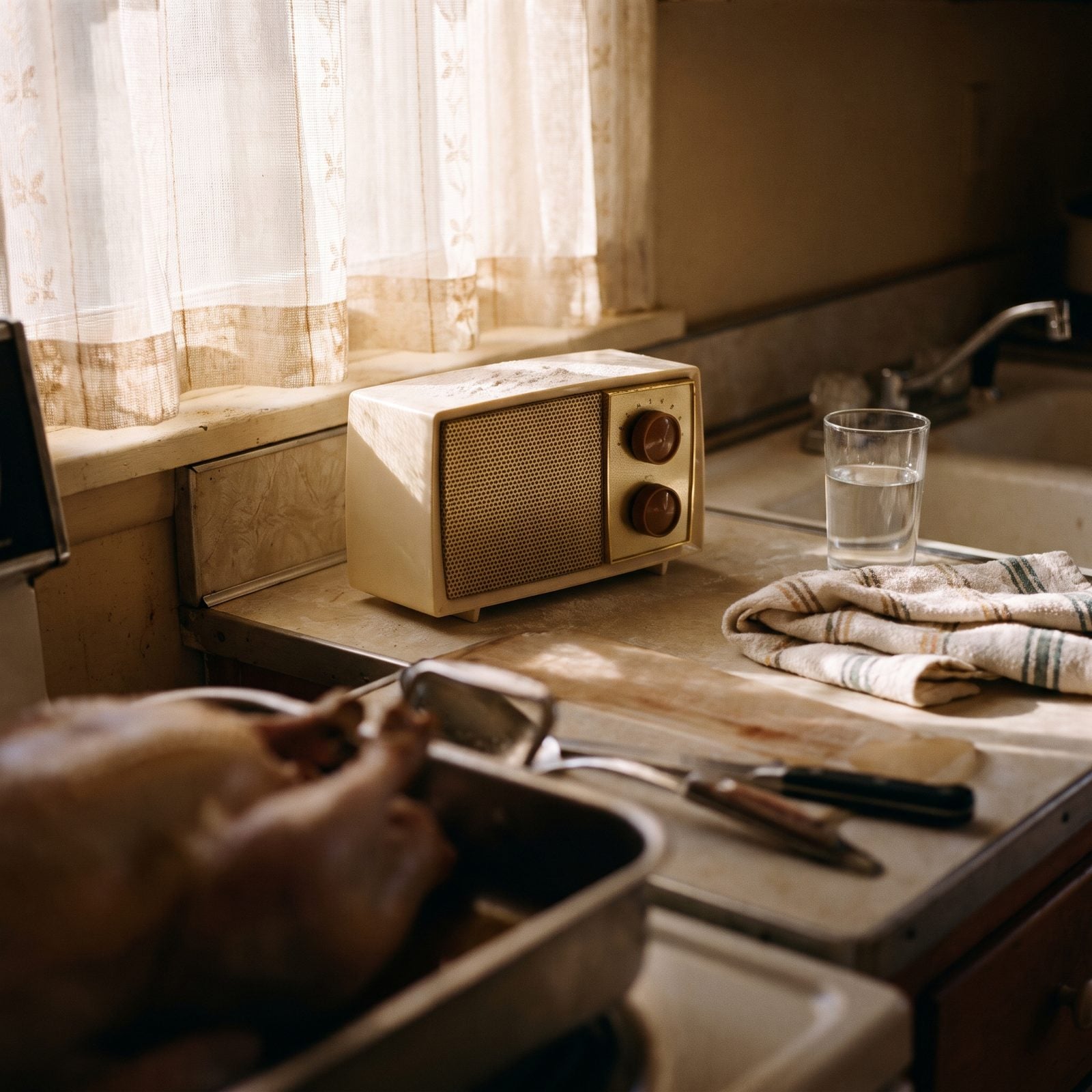
Before anyone put a television in the kitchen, this little box did the work. A cream plastic case, two knobs, and a dial you nudged with a fingertip until the static cleared.
It gave you the morning weather, which mattered when half the family was driving in, and it carried the parade in audio from room to room. Later in the day, while the bird roasted, it played music low under the clatter of pots. Nobody sat and listened. It was company while you worked.
5. The Wire Cooling Racks Holding Finished Holiday Pies
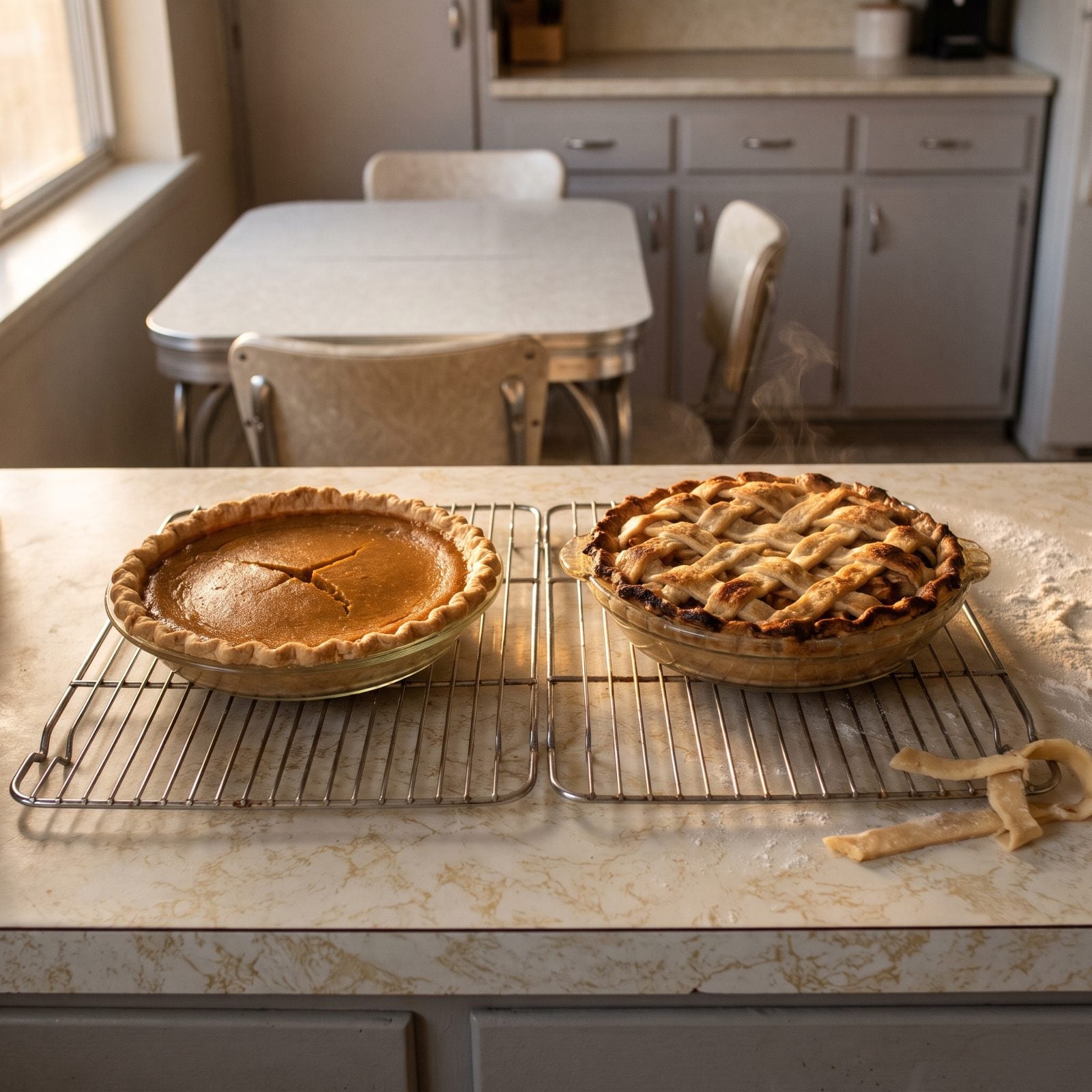
Two thin chrome grids, lifted a half inch off the counter on little feet, doing one humble job: letting air move under the pies so the bottom crust didn’t steam itself soggy.
On Thanksgiving these racks were full by mid-morning. The pumpkin cracked slightly across the top as it cooled, which is exactly how you knew it was set, and the apple sat golden under its woven lattice. The whole house smelled like it for hours.
The pie guide from bakers at a flour company instructs: “Remove the pie from the oven, and set it on a rack to cool. The filling will be quite liquid at first, but will set as the pie rests.”
4. The Cut-Glass Relish Tray Filled for Early Arrivals
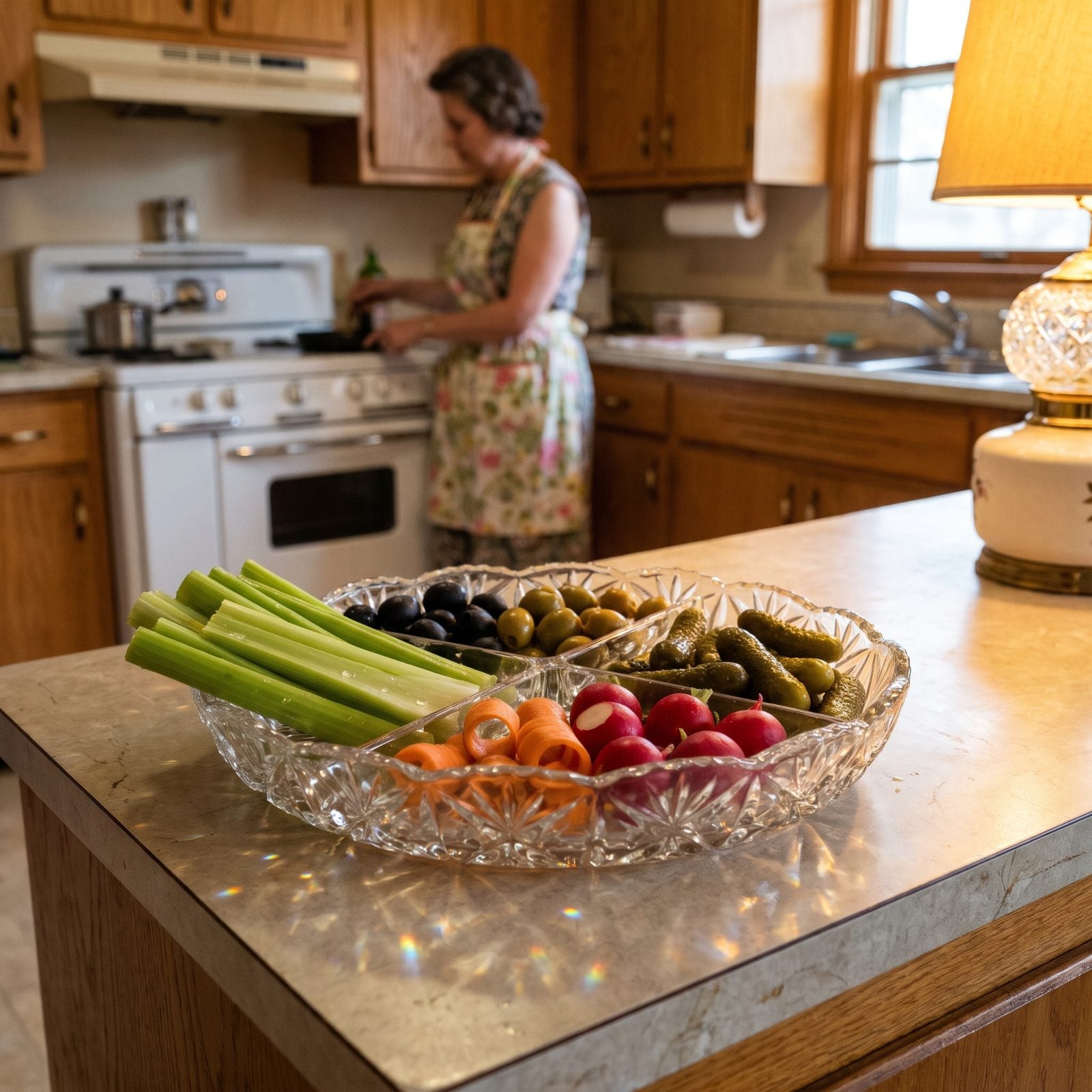
The first thing set out, and the first thing picked at. A divided dish of pressed, cut glass that threw little rainbows when the light hit it, loaded up before anyone rang the doorbell.
Celery. Olives. Those tiny sweet pickles. Radishes cut to look like roses if the cook had the time, carrot curls if she really did. It kept the early guests busy and out of the kitchen, which was half its purpose. The other half? It looked like a holiday the second it landed on the counter.
3. The Electric Warming Tray Keeping Serving Bowls Hot
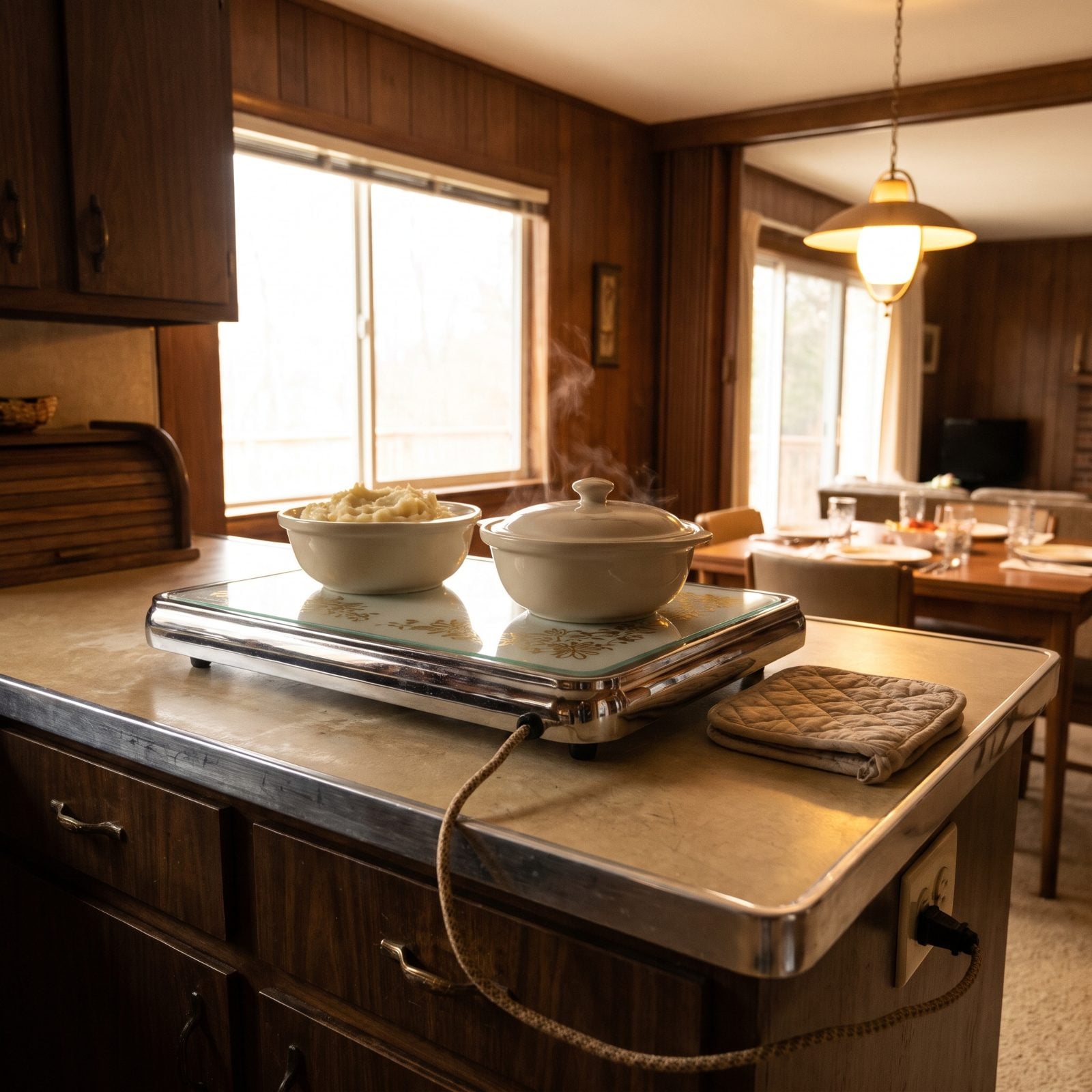
A flat plug-in slab that held a low, steady heat, so the mashed potatoes weren’t cold by the time the turkey got carved. Chrome rim, a decorated glass top, a cloth-wrapped cord that ran to the one free outlet.
It solved the oldest problem of a big meal: everything finishes at a different time, and the table seats twelve. You staged the bowls here and kept them going until the call to sit down.
2. The Vinyl-Padded Folding Chairs Borrowed for Extra Guests
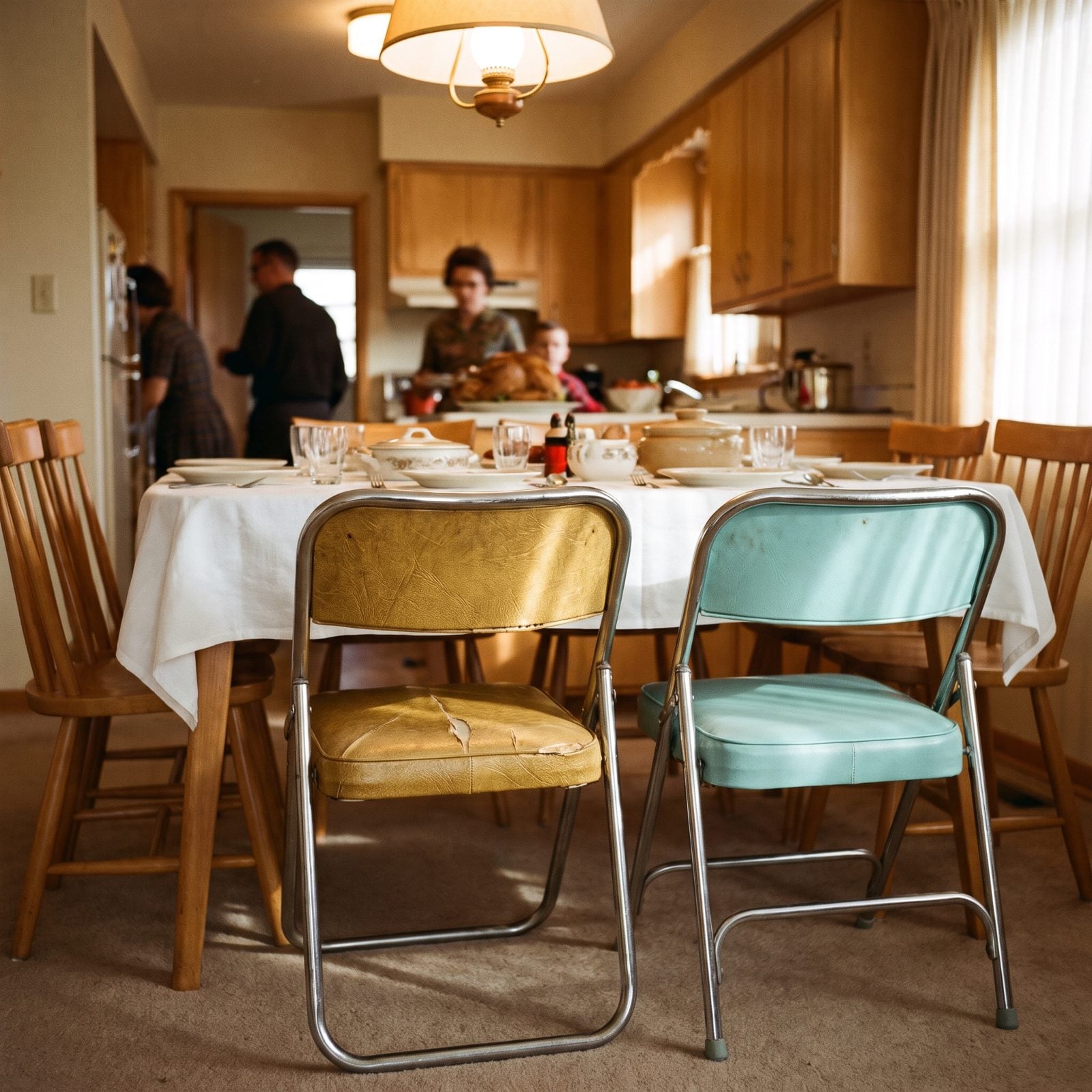
You could always tell who got the folding chairs. They didn’t match the dining set, they sat a little lower, and the vinyl was cold against the backs of your legs until you’d been there a while.
Every family seemed to own two or four, kept flat in a closet or down the basement, dragged up when the guest count crept past what the real chairs could hold. Gold vinyl. Turquoise. A padded seat that hissed air when you sat down hard.
1. The Folding Card Table Pressed Into Serving Duty
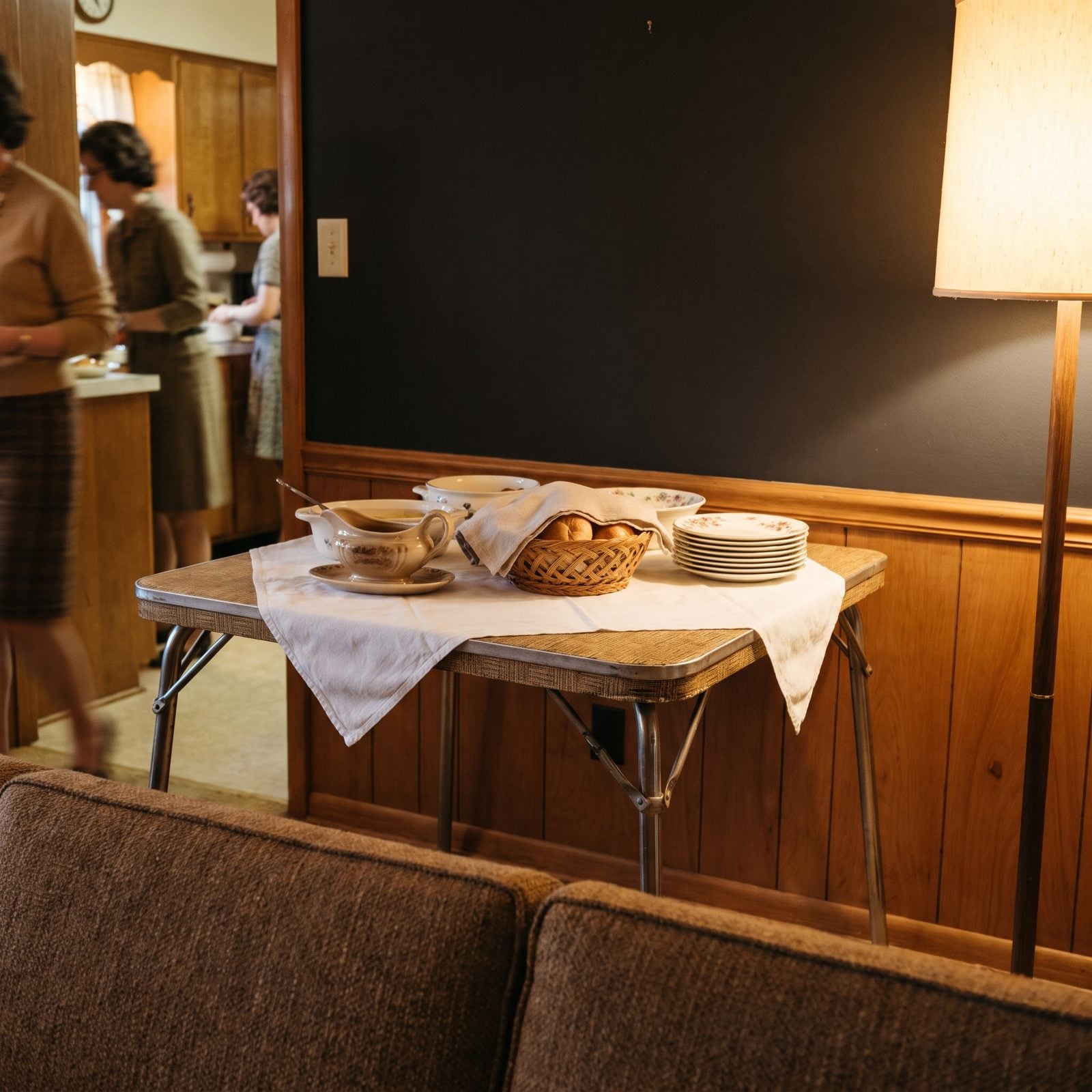
When the dining table filled up, the card table came out. Square, wobbly on one leg, a vinyl top printed to look like something nicer than it was. Thrown open against a wall and draped with a cloth, it became a staging counter, a kids’ table, or an overflow dessert station — whatever the day needed.
It was the most versatile furniture in the house precisely because nobody respected it. You could spill on it. You could fold it flat and forget it until Christmas.
Every well-run holiday had a second surface nobody planned for and everybody used.