
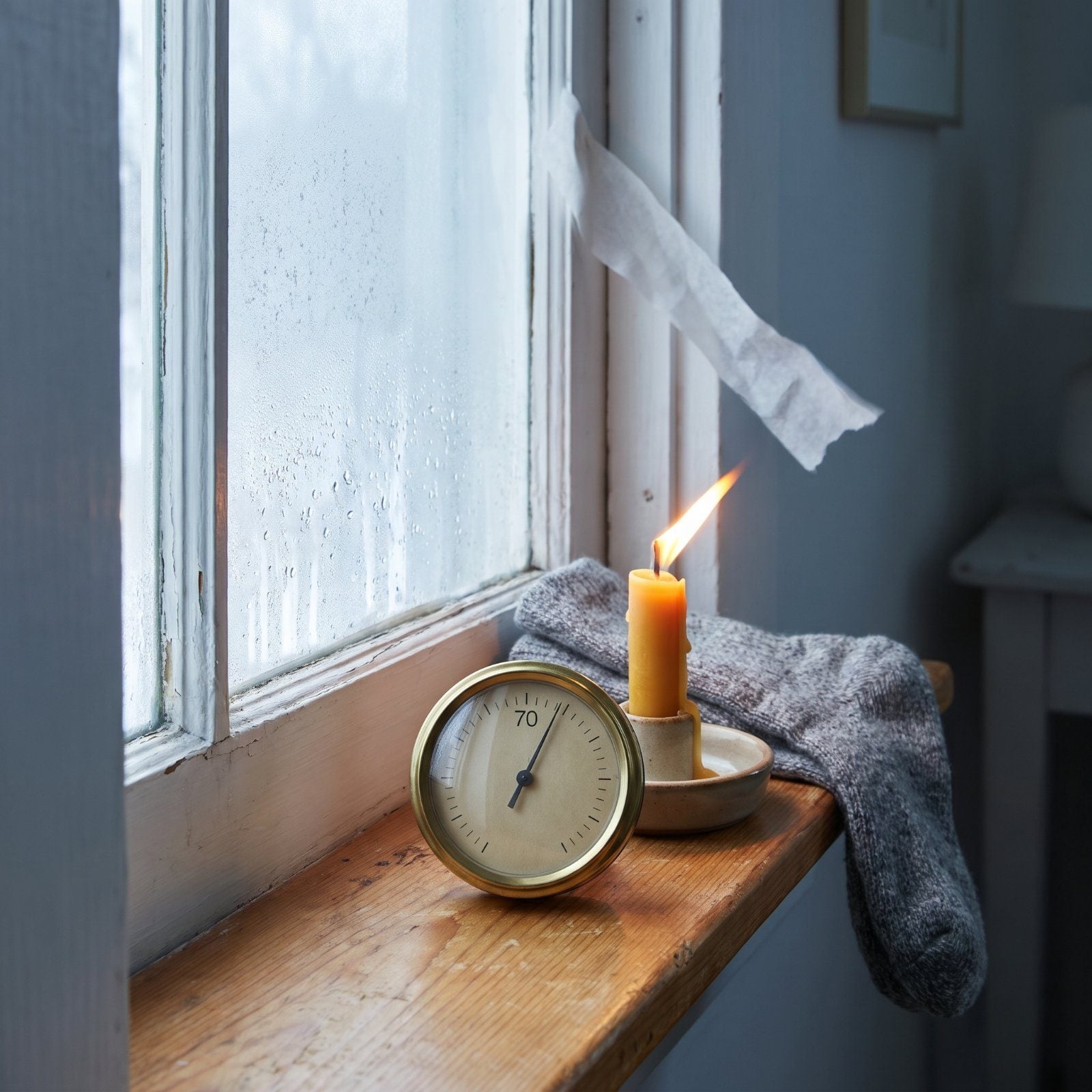
The furnace runs. The thermostat insists it’s 70. And you’re still wearing socks to bed, eyeing the blanket like it owes you money. That gap between what the number claims and what your skin reports is where the warmth leaks out, degree by degree. Some of it is physics you can feel with the back of your hand. Some of it is a decision somebody made years ago, hidden behind a sofa or above a ceiling nobody ever checks. A few are just visual tricks your eye plays after dark. Here’s what turns a well-heated room into a place you never quite thaw out in.
Please note that some of the images in this article were created with the assistance of AI.
32. A Front Door With Daylight Showing Around It
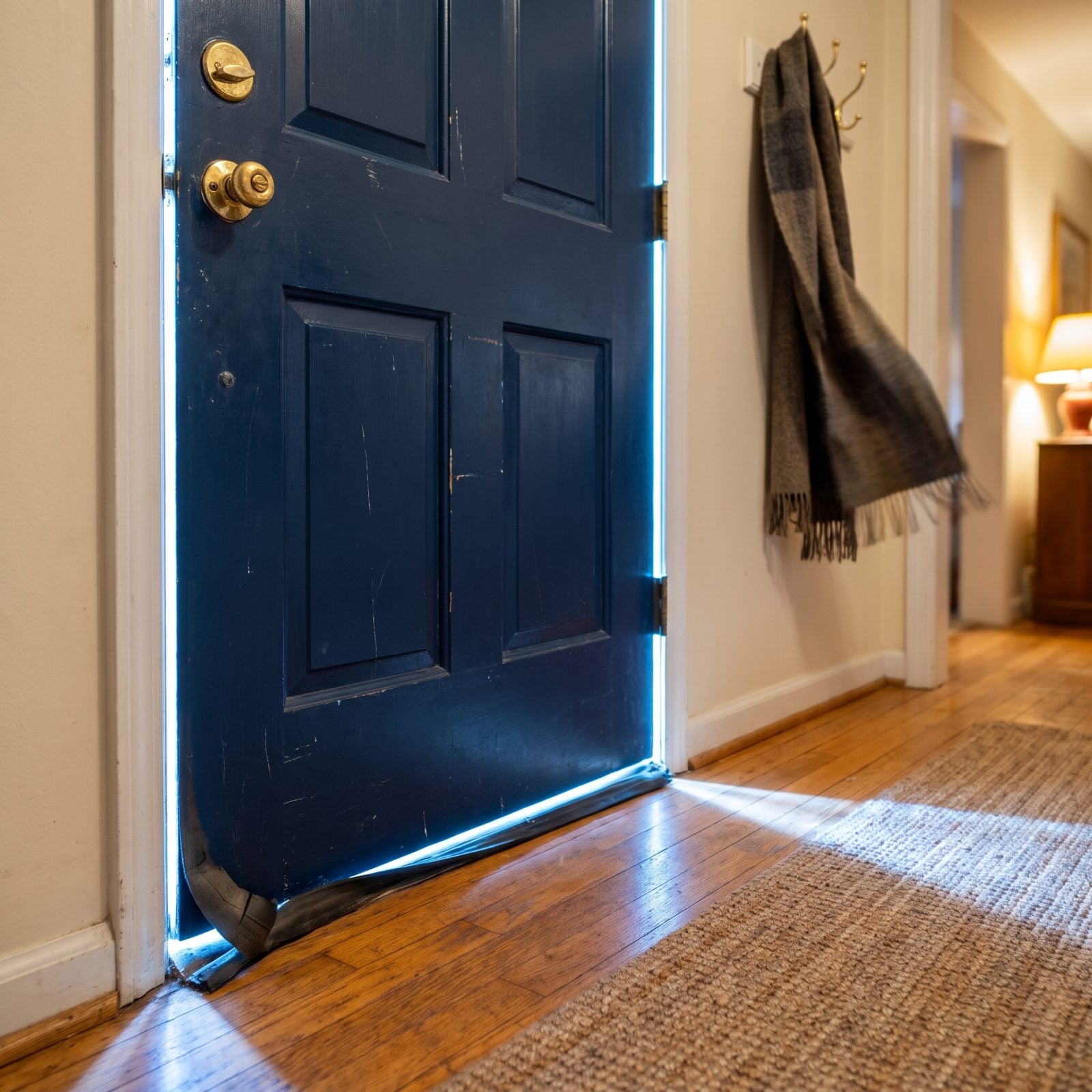
Stand in your entryway at midday and look at the shut door. If you can see light tracing the edges, you’re heating the yard. That bright line is a gap, and air moves through gaps the way water finds a crack in a dam.
Blame the bottom threshold first. Weatherstripping gets brittle, flattens, peels, and nobody notices because who stares at the base of a door? A door sweep and fresh foam tape cost less than a decent takeout order, and the draft stops that same afternoon. I ignored mine for two winters and cursed the furnace the whole time.
31. Single-Pane Windows
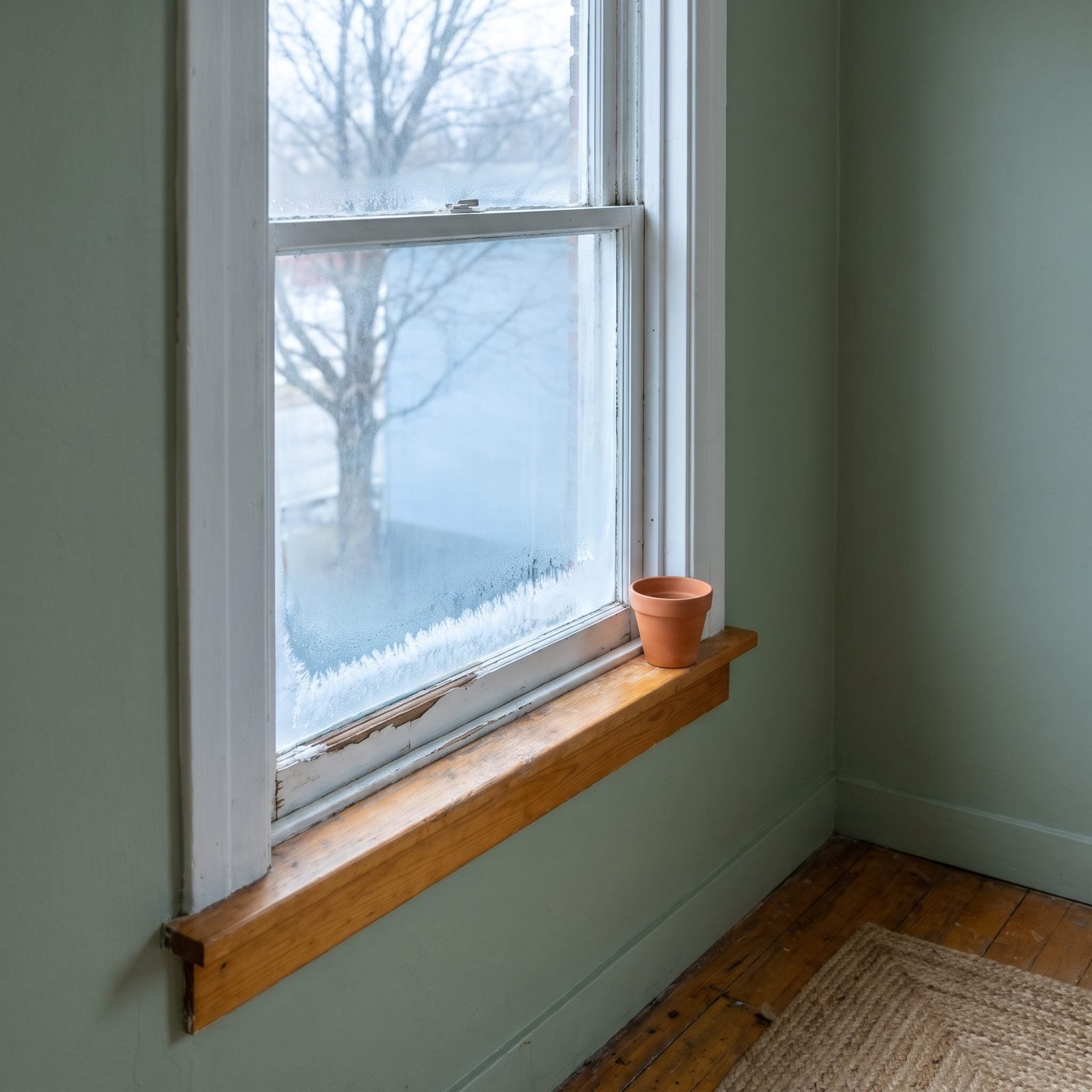
Put your palm flat against an old single-pane window on a cold night. That chill radiating off the glass registers as a draft even when the window is perfectly sealed, because the glass itself becomes a cooling surface that pulls heat from your body and the room around you.
Full replacement is expensive and not always worth rushing into. Interior storm panels, heavy insulated curtains, or a tight-fitting shrink film kit cut the loss dramatically for pocket change. The film looks temporary because it is. But it works, and I’d rather have an ugly warm room than a pretty cold one.
30. Heating Vents Blocked by a Sofa
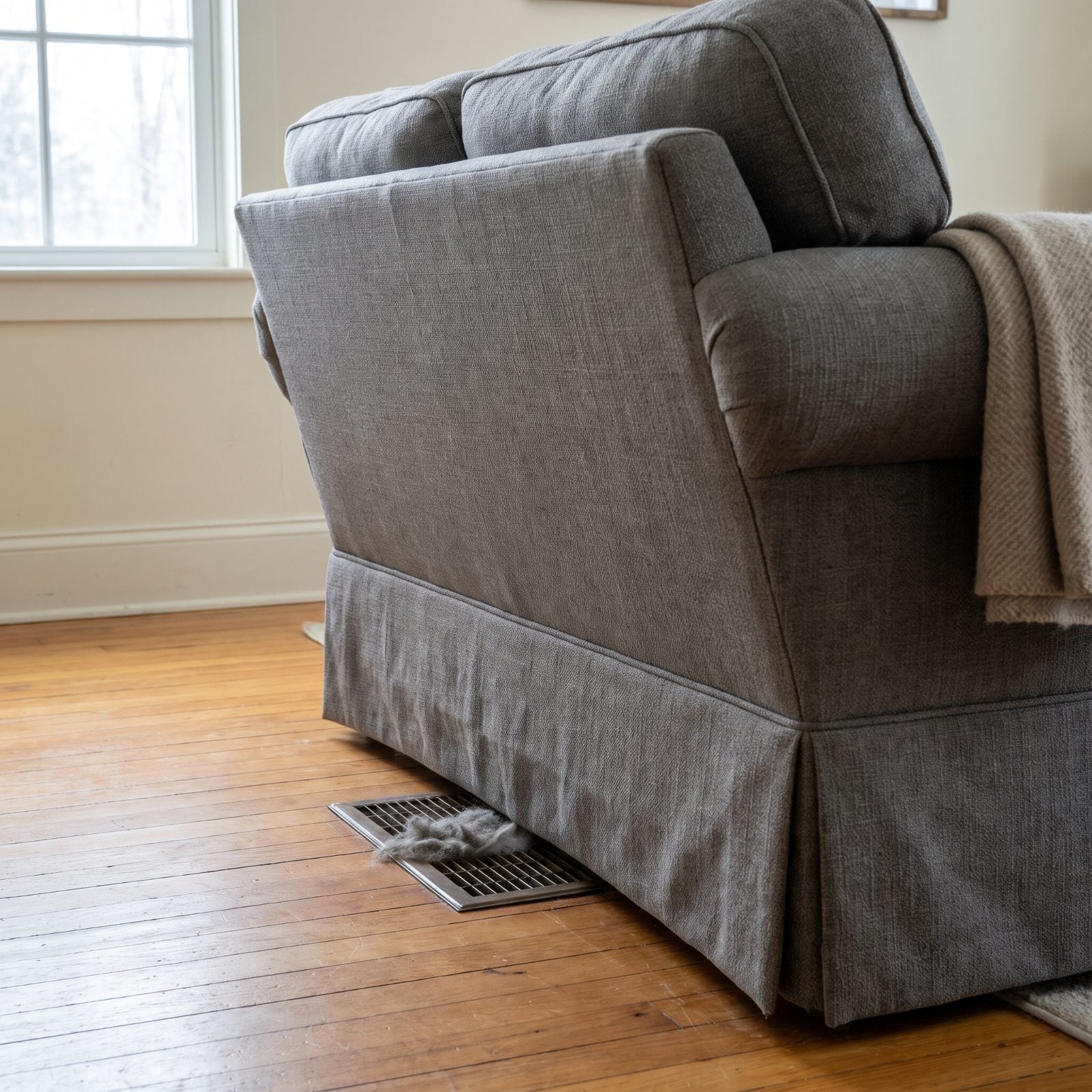
You rearranged the room for the TV, and now the sofa sits dead on top of a floor register. The furnace is doing its job just fine. The warm air simply has nowhere to go but up into the underside of your couch cushions.
Blocked vents starve a room of the heat you’re paying for, and in forced-air systems they can throw off the pressure balance for the whole house. Pull furniture back a few inches, or use a plastic vent deflector to push the airflow out into the room instead of up a cushion. Drapes puddling over a vent do the same damage, quietly, all winter.
29. Thin or Patchy Attic Insulation
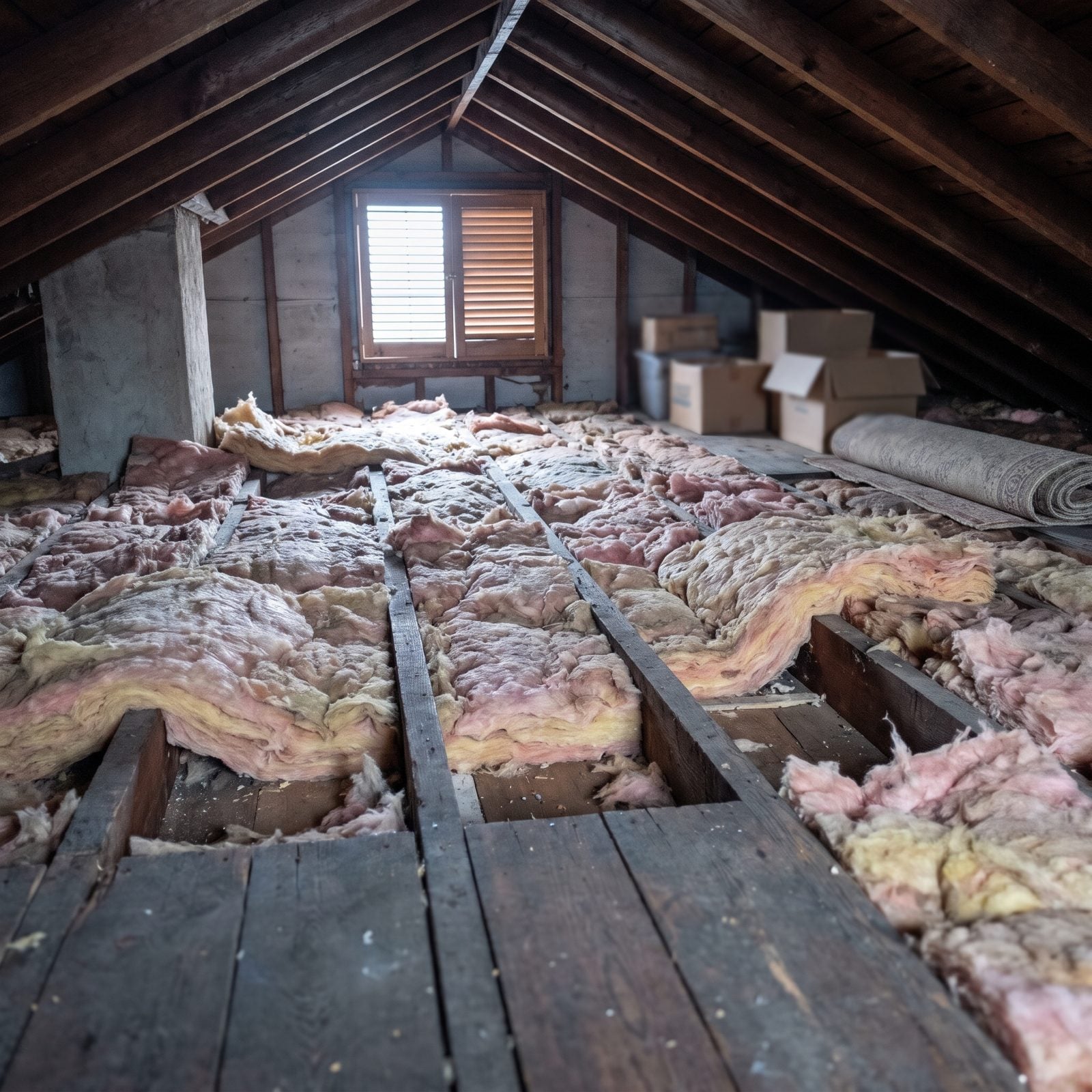
Heat rises, and a thin attic lets it keep rising right out the top of your house. Poke your head up there. If the insulation barely covers the joists, or slumps in sad compressed patches with bare wood showing between them, that’s your warmth clocking out early.
Insulation gets rated by R-value, which is just resistance to heat flow. Most older homes fall short of what’s recommended for their region. Blown-in cellulose or fiberglass laid over the existing layer is one of the better returns you’ll get on a home for the money. Watch for even coverage — a gap in insulation leaks heat the way a hole in a sweater does.
28. Leaky Ductwork in an Unheated Attic
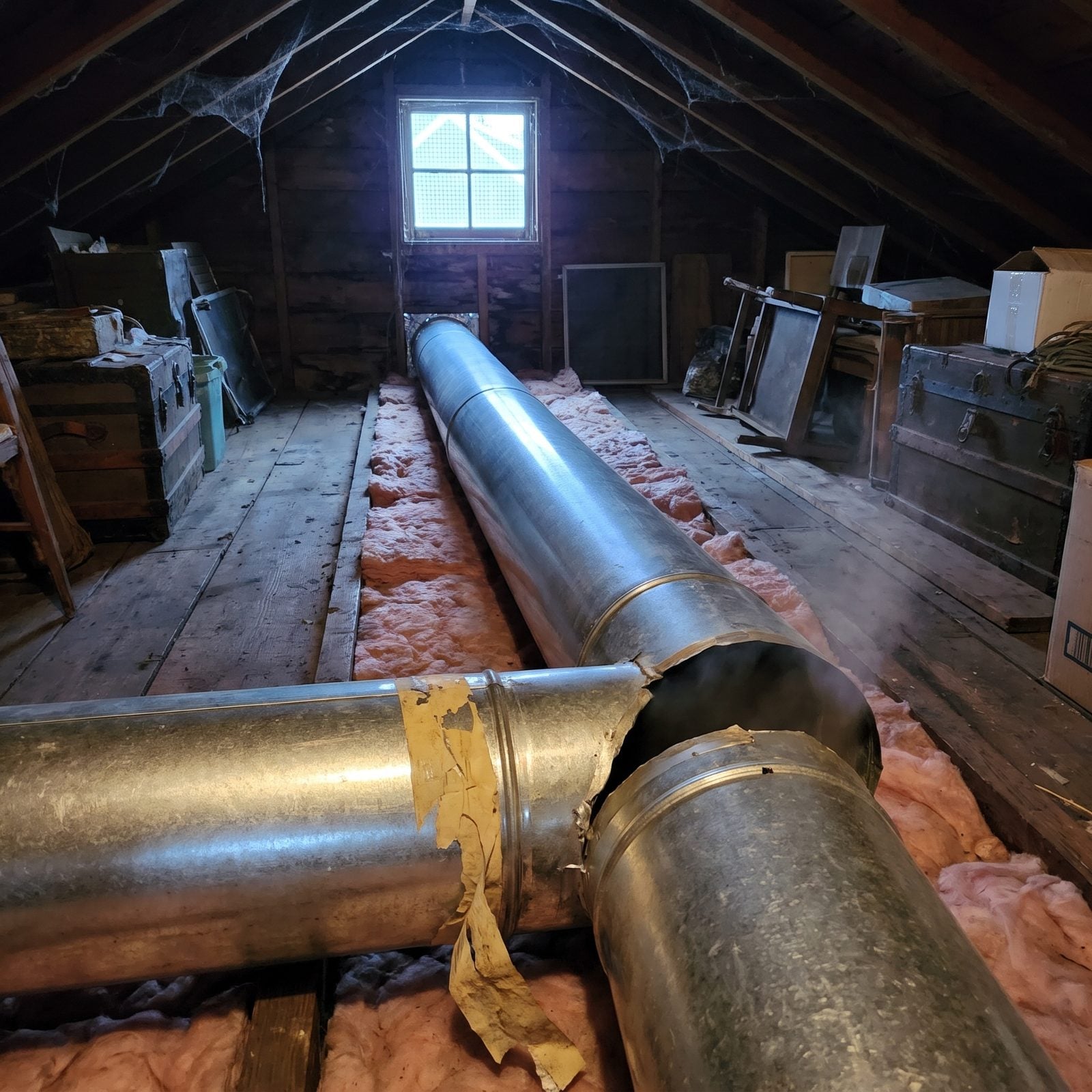
This one’s cruel. Your furnace heats the air, sends it through ducts, and if those ducts leak in a cold attic, you’re literally paying to warm the space above your ceiling. The air never reaches the room it was aimed at.
Disconnected joints, torn tape, gaps at the seams — common, and almost never visible from inside the house. Seal them with mastic or proper foil tape (not the cloth “duct tape” that dries out and quits) and the heat stays in the pipe where it belongs.
Writing about supply ducts that leak in attics and crawl spaces, a building scientist puts it bluntly: “You paid to heat or cool it, and now it leaks out before getting to your living space.”
27. A Portable Air Conditioner Left in the Window
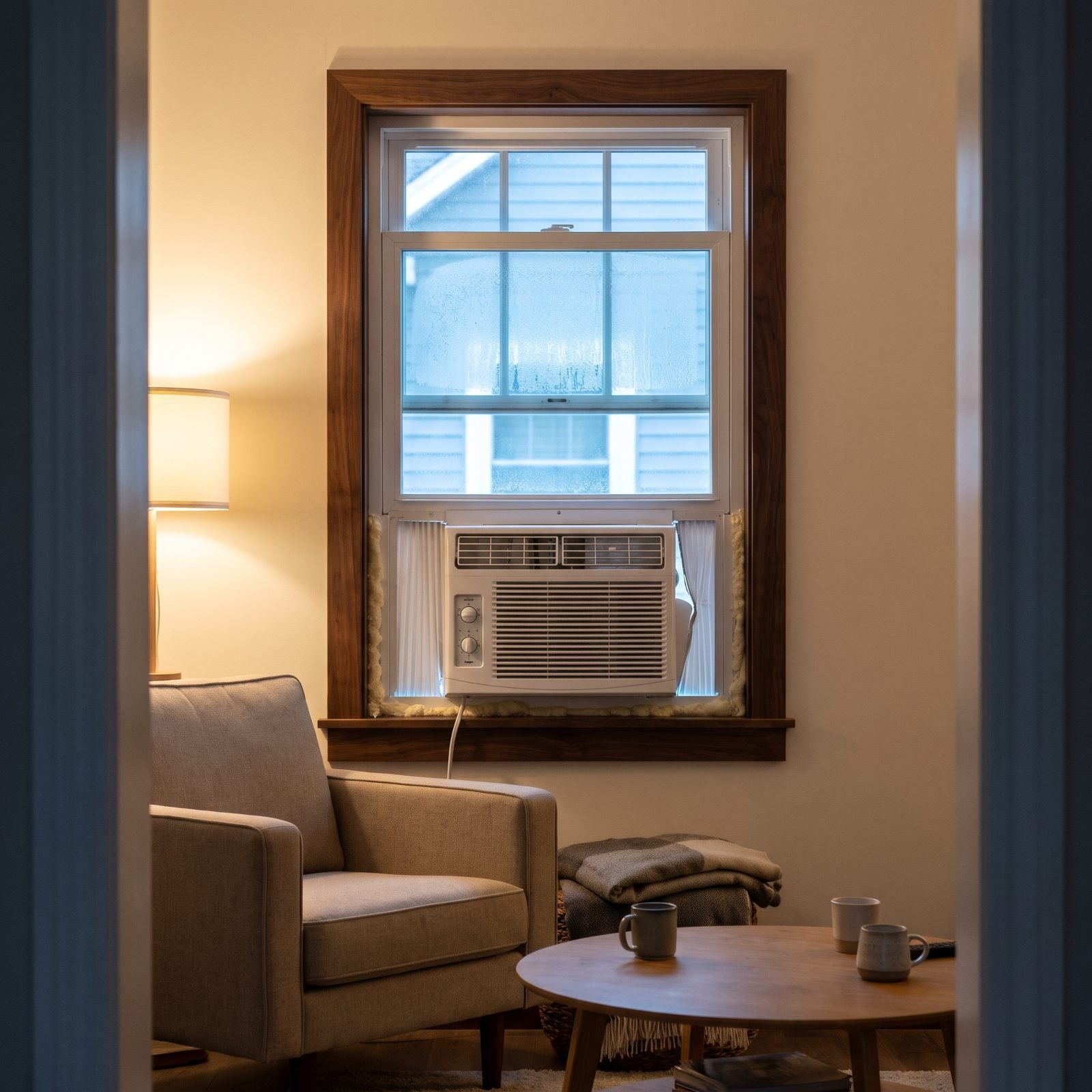
That window AC you left in after Labor Day isn’t insulating anything. Its foam side panels and thin plastic shell are the opposite of a wall, and those accordion filler strips shrink and gap over time. Cold air pours in around and through the whole contraption all winter.
Pull it out, store it, close the window properly. Too heavy to wrestle out solo? Mine always is. At minimum, fit an insulated AC cover inside and out and stuff the gaps. A unit left in year-round is a cold spot you built on purpose.
26. A Thermostat Reading Warm Kitchen Air
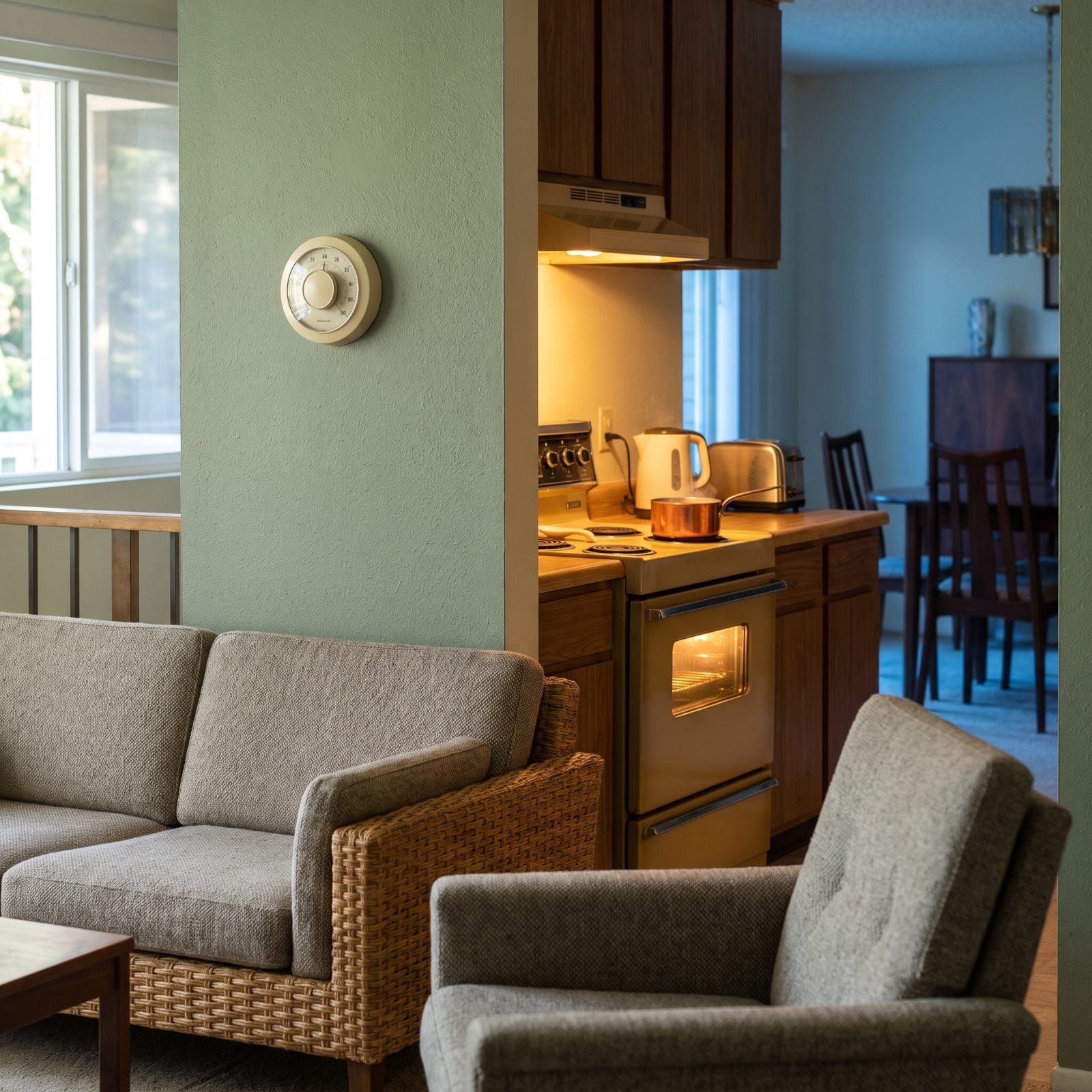
If your thermostat lives near the kitchen, the stove, a sunny window, or a heat vent, it’s being fooled. It reads the warm little pocket of air around it, decides the whole house is toasty, and shuts the furnace off while the far bedrooms sit cold enough to see your breath.
This is a placement problem, not a furnace problem. Thermostats belong on an interior wall, away from direct heat sources and drafts, at roughly chest height. You can’t always relocate one easily. But knowing it’s lying to you explains a lot — the hottest room in the house is sometimes the one deciding everyone else goes without.
25. An Uninsulated Floor Over a Crawlspace
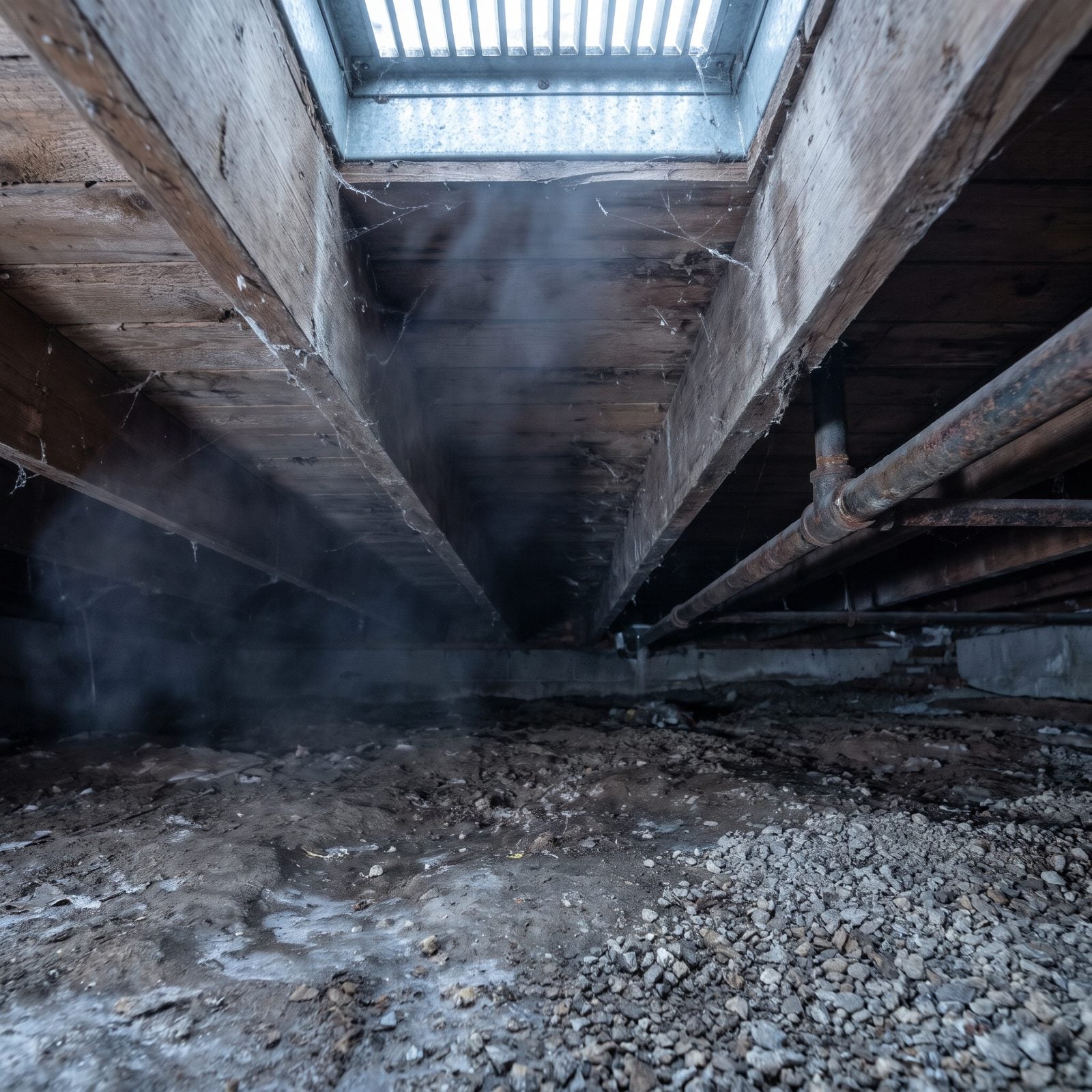
Cold feet in a heated house usually trace straight down. A floor sitting over an open crawlspace or vented foundation has cold air pressing up against its underside all winter, and that chill soaks right through into the room above.
Insulate between the floor joists from below, vapor side facing up toward the warm house, and the difference is noticeable. It’s grubby, awkward work in a tight space, so plenty of people hire it out. Worth it. A warm floor changes how an entire room feels even when the air temperature hasn’t budged a degree. I underestimated this one for years and just wore thicker socks like a fool.
24. Bare Glass After Sunset
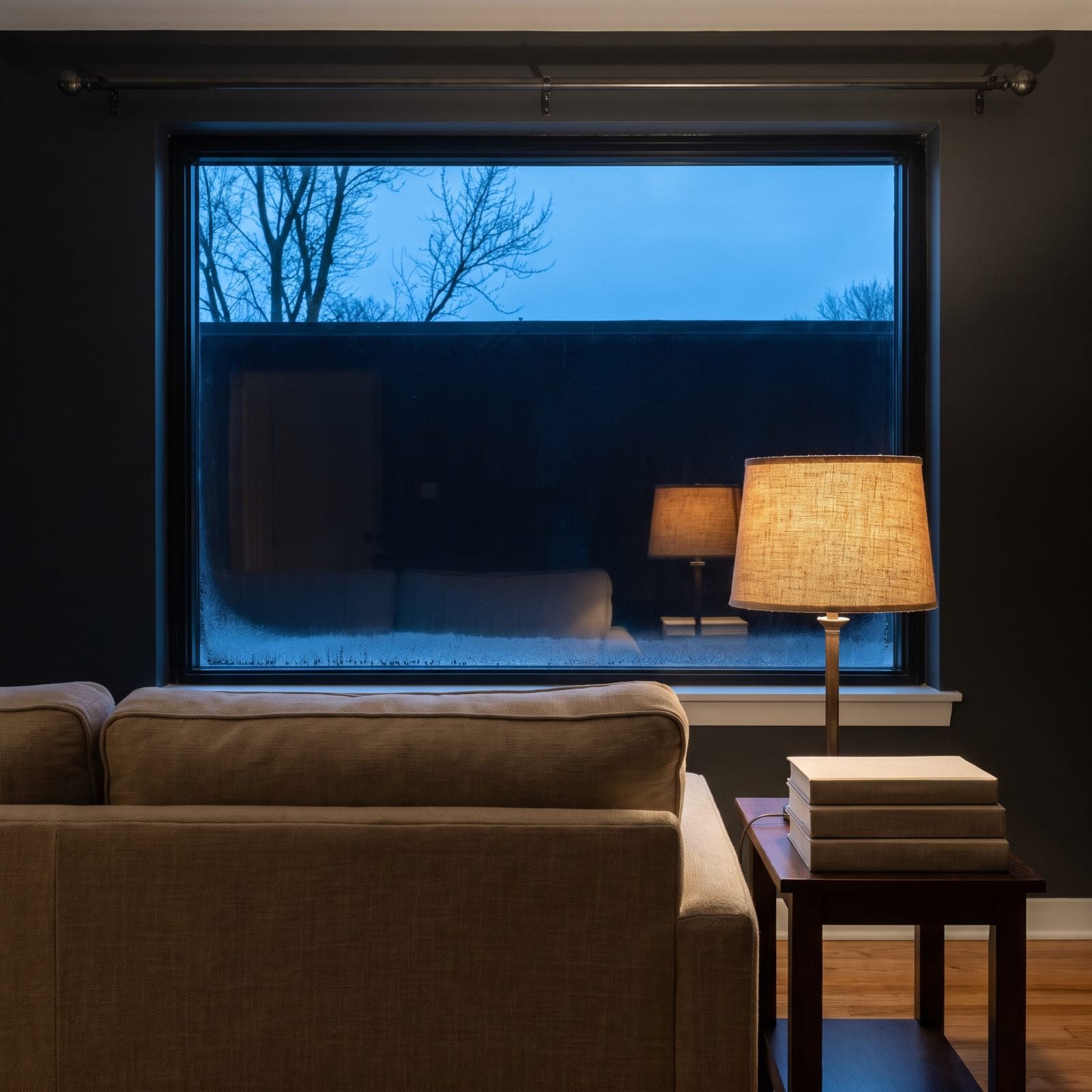
A wall of bare glass at night feels cold even when it isn’t leaking a drop of air. Once the sun drops, the glass turns into a dark cooling surface and your body reads it as a chill, the same way it registers an open freezer across a room. Your eyes agree. A black uncovered window after dark just looks cold.
So hang something. Heavy lined curtains, a thermal Roman shade, or cellular blinds trap a layer of still air against the glass and cut both the real heat loss and the perceived chill. Close them at dusk, open them at dawn to catch free solar warmth. It’s one of the cheapest fixes on this whole list, and the one your eyes thank you for first.
23. An Unsealed Attic Hatch Dumping Heat Upstairs
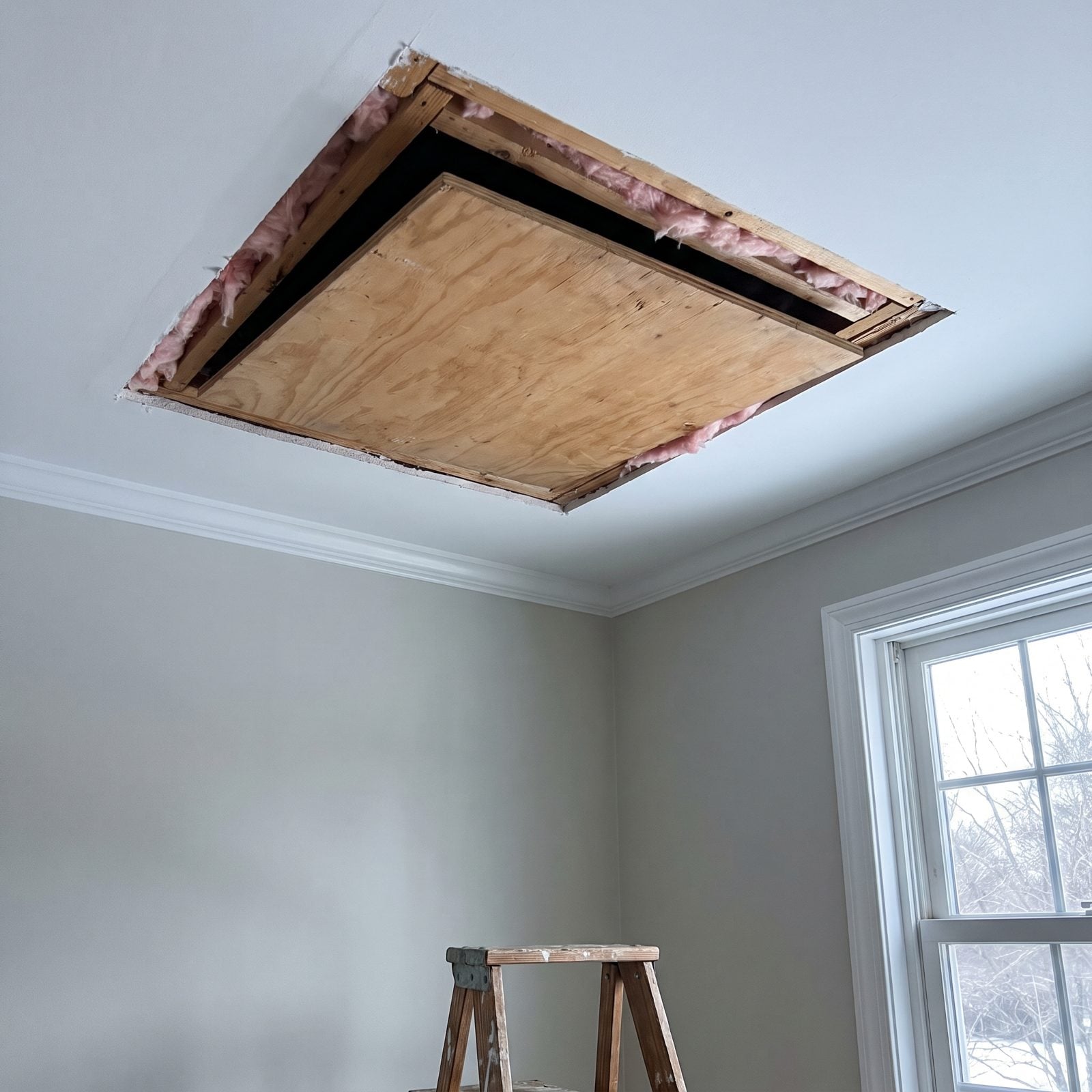
Heat climbs. That’s physics, not opinion, and the attic hatch is the first escape route it finds. A typical access panel is just a thin sheet of plywood resting loosely in a frame with nothing to hold or seal it. Once it gets knocked askew like this one, it leaves a gaping hole with pink insulation spilling out into the room, and warm air from your whole upstairs pours straight up all winter.
You feel it as a cold spot in the hallway and a furnace that never quite rests. Look up at the hatch. Is the panel hanging crooked, with a dark gap and insulation drooping out? The heat you paid for is going straight into an unheated attic.
22. A Furnace Filter Clogged Gray With Dust
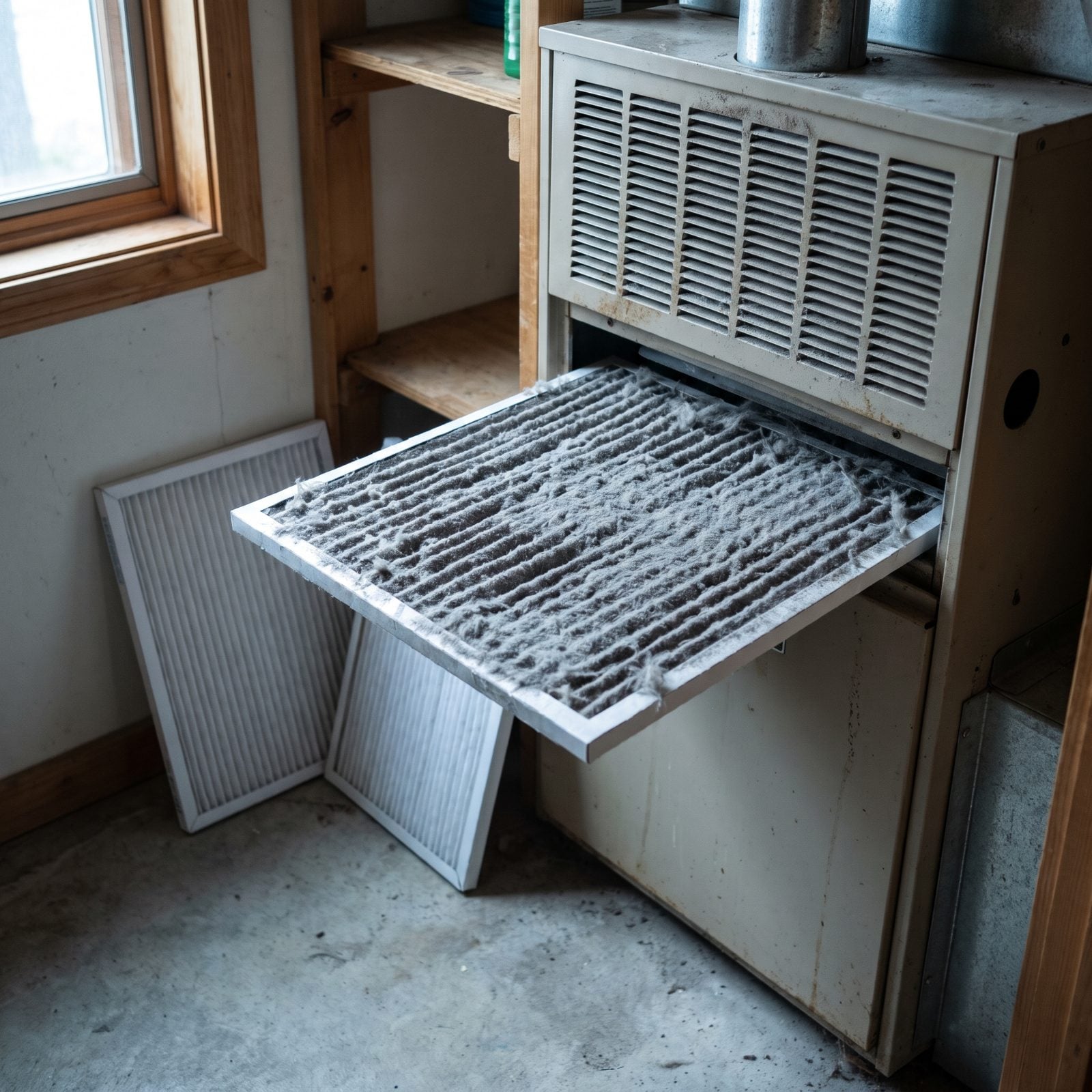
I ignored mine for a full winter once and spent weeks blaming the thermostat. The filter was the culprit the whole time.
A filter packed with dust and pet hair chokes the airflow. The furnace still burns fuel and makes heat, but that heat can’t push through the ducts fast enough to reach the far rooms. So the house feels thin and uneven — toasty near the vents, miserable everywhere else — while the blower motor works itself toward an early grave.
Hold a clogged one up to a light. If you can’t see through it, air can’t get through it either. Swap it every couple of months and keep spares on a shelf so there’s no excuse.
21. Loose Window Sashes That Rattle in the Wind
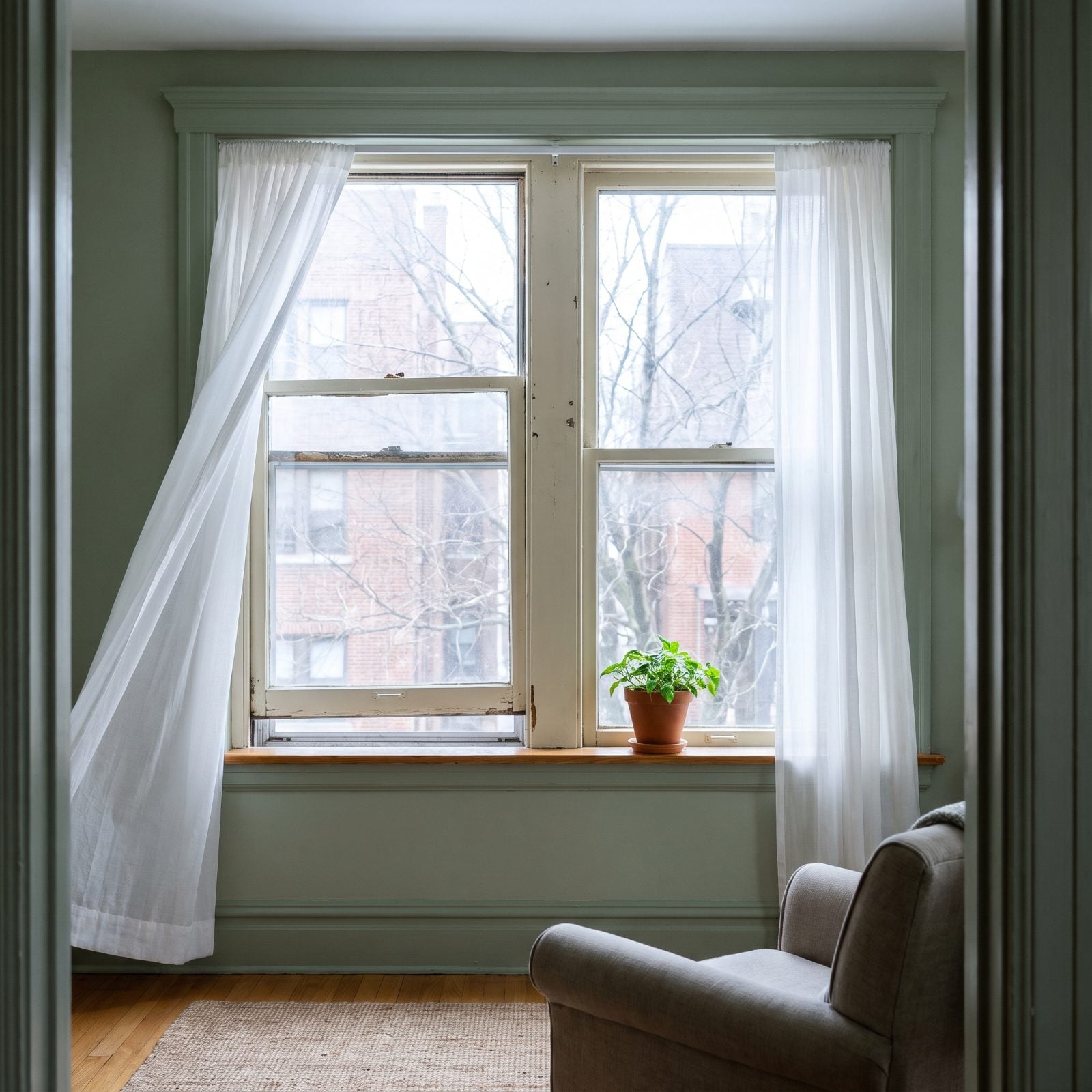
You know the sound. A gust hits and the window buzzes in its frame like something trying to get in. That rattle is air moving where it shouldn’t, through gaps between sash and frame that opened up as the wood aged and the hardware wore loose.
The curtains tell on it too. Raise the lower sash a few inches on a windy day and they billow halfway across the room, and a loose sash lets a quieter version of that same draft through even when the window is shut. Every draft you feel is heated air leaving while cold air slides in to replace it, usually right at sitting height where it bugs you most. Temporary rope caulk or a fresh bead of weatherstripping buys you a season. New sash locks that pull the window tight against its stops fix it for real.
20. A Room Built Over the Garage
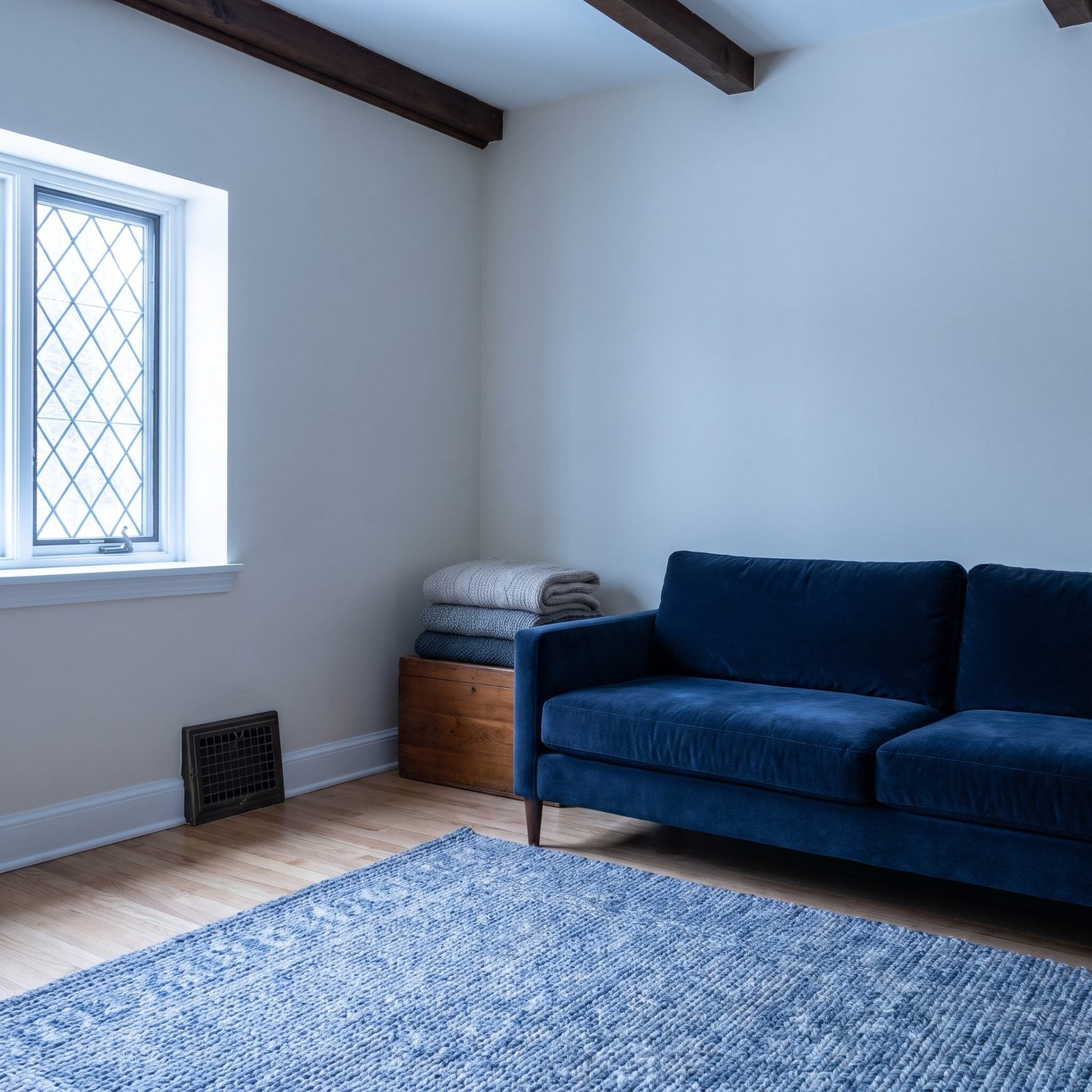
The bonus room over the garage is almost always the coldest room in the house, and it isn’t your imagination.
That floor sits directly above an unheated, uninsulated space. The garage swings to outdoor temperatures all winter, and the chill soaks straight up through the floor joists into the room above. Builders often skimp on insulation in that cavity because nobody sees it and nobody complains until February.
Insulating the garage ceiling from below is the real fix. A thick rug only treats the symptom you’re standing on.
19. A Whole-House Fan Left Open All Winter
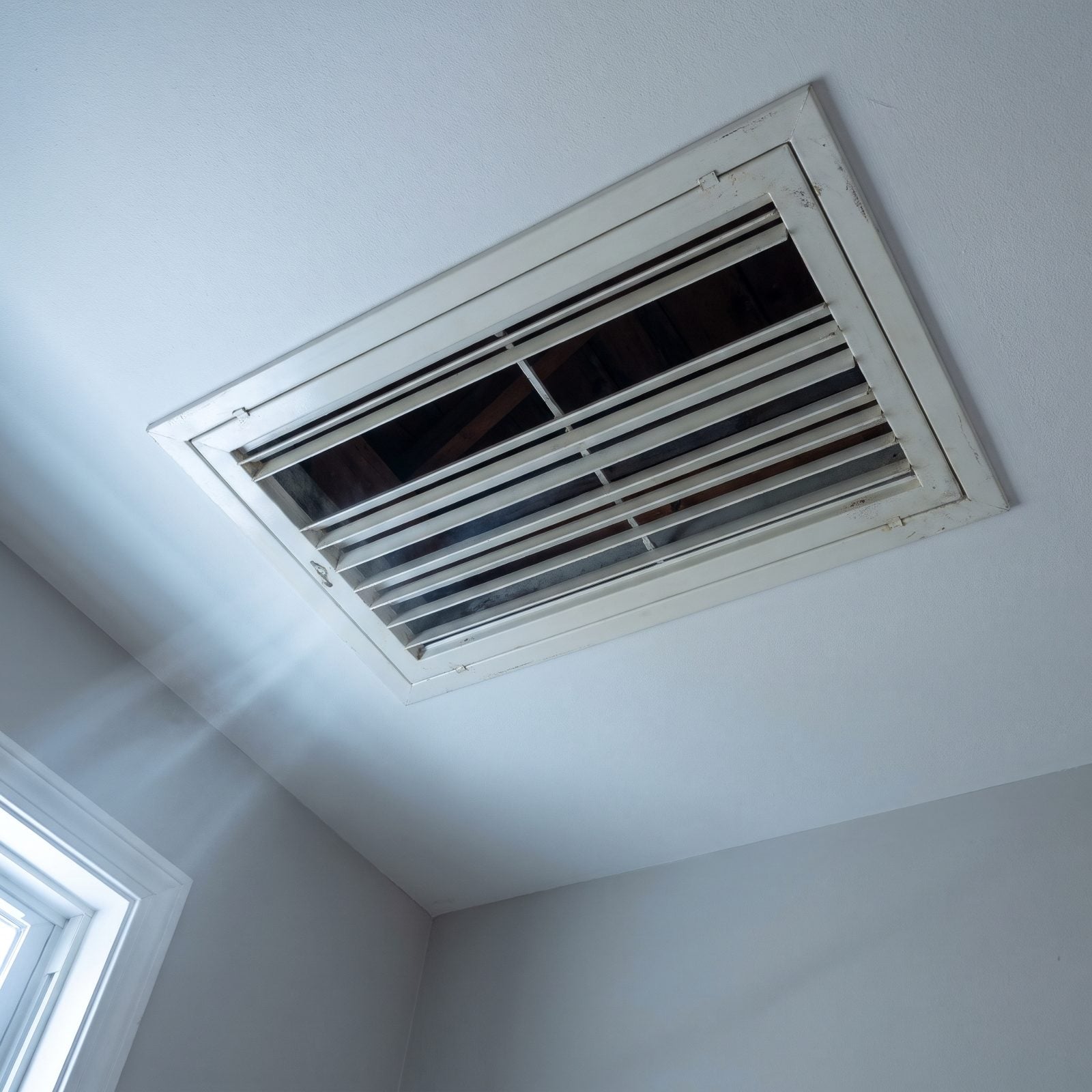
Summer’s best friend becomes winter’s worst enemy. A whole-house fan is a giant louvered opening in your ceiling, and those thin metal shutters never seal tight. Warm air pushes up through the gaps and vanishes into the attic, around the clock, right above your head.
Most people forget the thing is even there once the weather cools. Stand under it on a cold evening and you can sometimes feel the chill pouring down. A rigid insulated cover — boxed over the louvers from the attic side, or fitted below the grille — shuts the hole for the season. Cheap to make, easy to forget, and it matters more than you’d think.
As a second-generation home inspector puts it, “Whole-house fans can be a major source of energy loss during the winter. Without a doubt, one of the worst sources of air leakage into the attic space is an opening for a whole-house fan.”
18. Missing Insulation Along the Exterior Walls
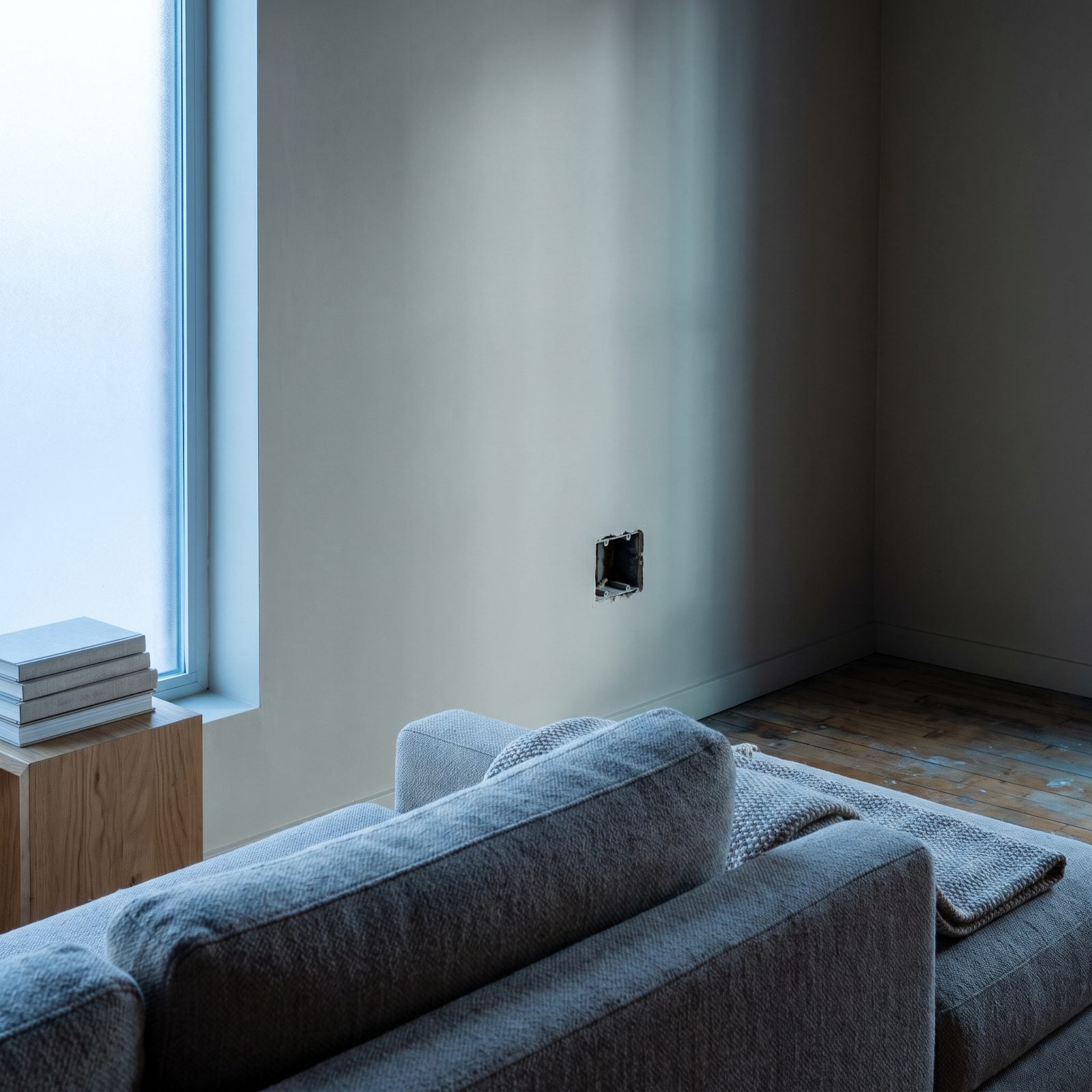
Some walls just feel cold to the touch, and that’s the tell. Press your palm flat against an outside wall in January. If it feels noticeably colder than an interior wall, there’s little or no insulation in the cavity behind it.
Older homes and certain budget builds skipped wall insulation entirely, or settled it over the decades so it slumped to the bottom and left the top of the wall bare. Cold radiates off that surface and pulls the warmth out of you even when the thermostat reads sixty-eight.
17. A Boiler With Air Trapped in the Radiators
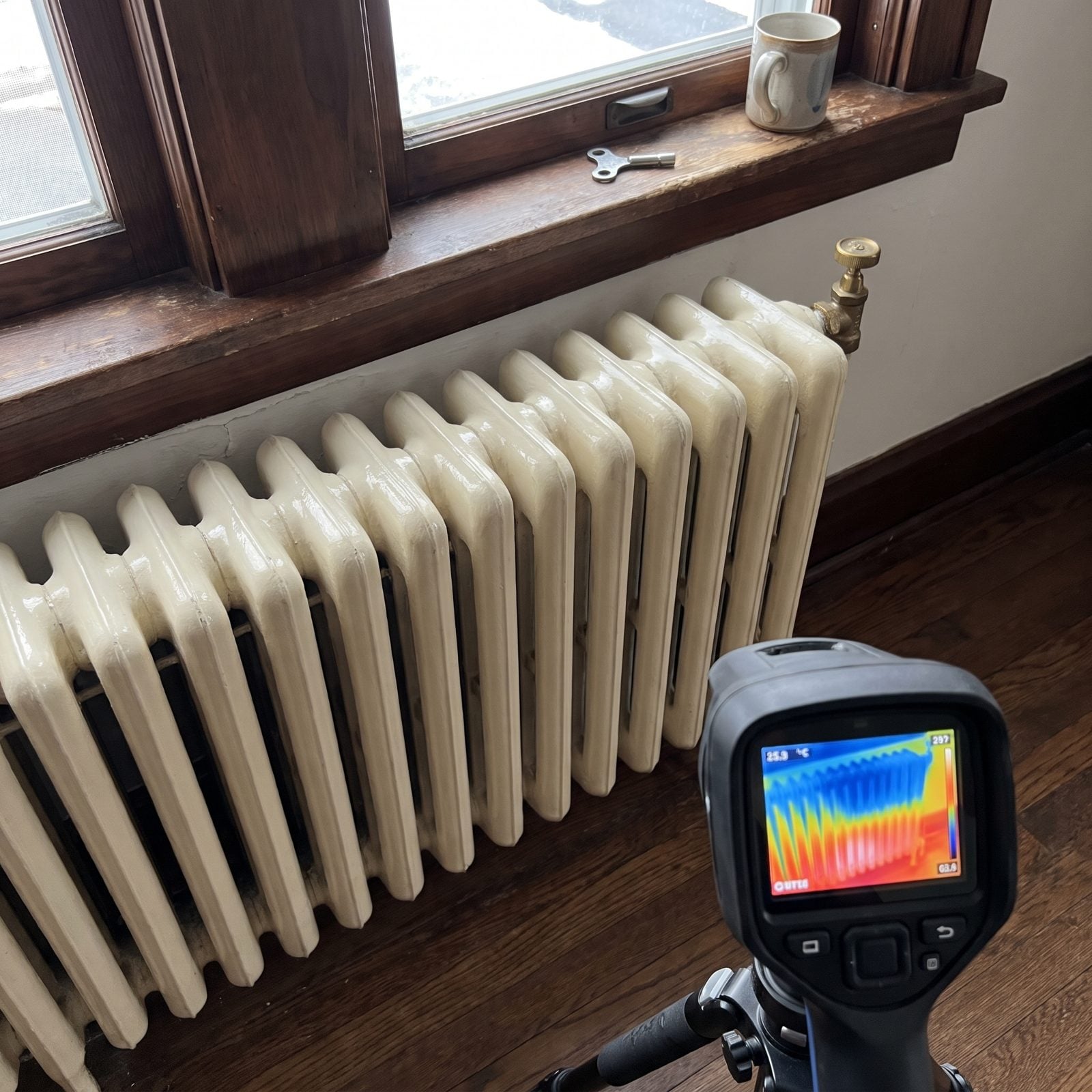
Half-warm radiators are a quiet, fixable thief. In a hot-water heating system, air gets trapped at the top of the radiators over time. Hot water can’t rise into the space the air is holding, so the bottom heats up fine while the top stays stone cold. You’re getting maybe half the output you paid to produce.
Feel one when the heat’s been on a while. Warm at the bottom, cold up top — that’s air stuck inside. Bleed each radiator with a small key, cracking the valve until water hisses out instead of air, and the whole surface comes back to life. Ten minutes, and most people never learn how.
As a gas heating engineer puts it, “Air, being lighter than water, naturally rises to the highest points in the system — which means it collects at the top of radiators, creating a cold air pocket that prevents hot water from filling the whole radiator.”
16. Recessed Lights Leaking Heat Into the Attic
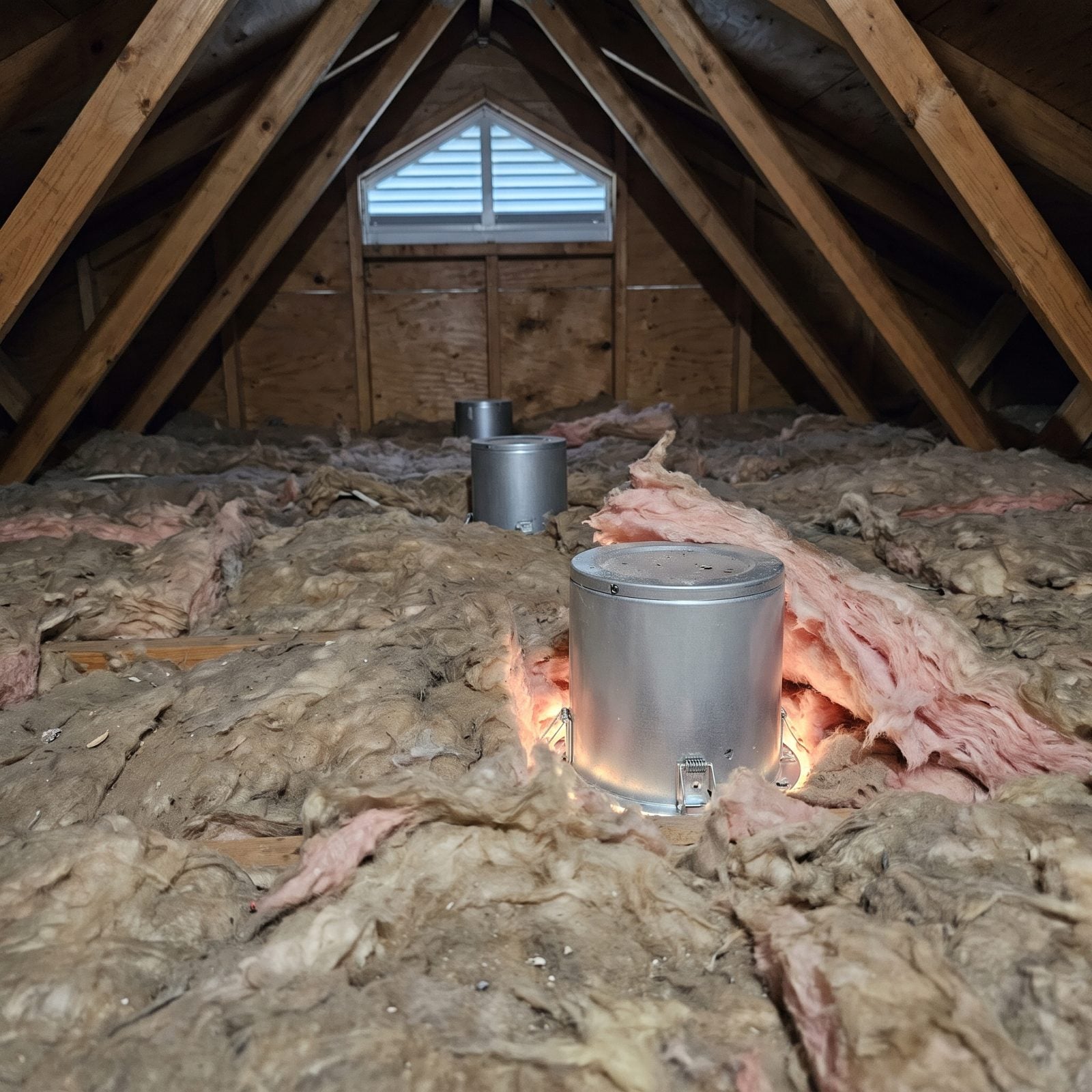
Every recessed light in your top-floor ceiling is a hole punched straight into the attic.
Older can fixtures weren’t built airtight. Warm household air rises through the gaps around the housing and the holes for the wiring, carrying your heat up into the cold attic all night long, and dozens of lights across a ceiling add up to a surprising amount of leaked air.
From inside the attic you can sometimes catch the fixtures glowing faintly around their edges. That glow is a draft you can actually watch. Seal the housings with airtight covers, or swap to gasketed LED units, and the gaps close — along with those random cold patches you feel drifting down from the ceiling.
15. An Uninsulated Basement Rim Joist
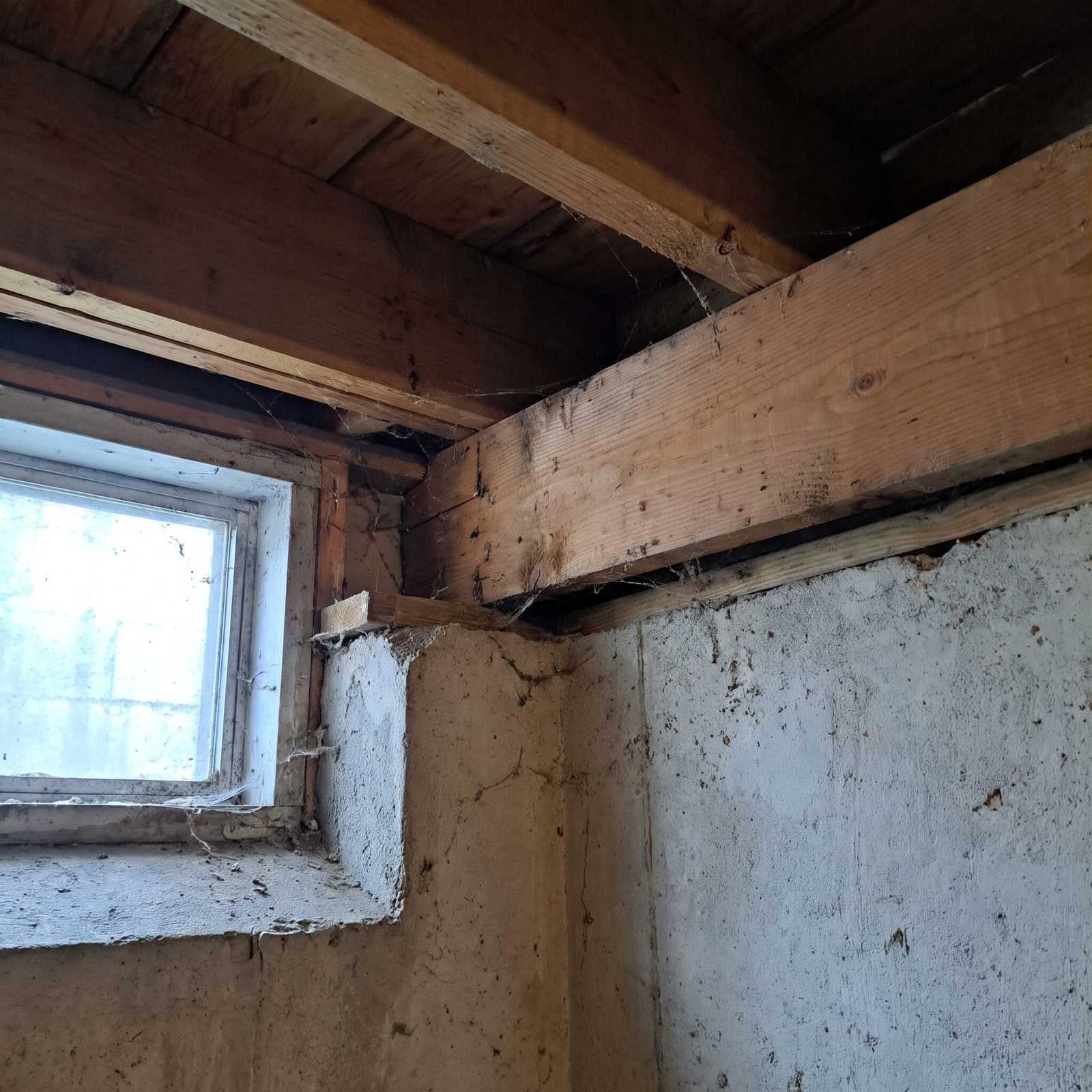
The rim joist is the band of wood that caps your foundation, where the house frame sits down on the concrete. In most basements it’s completely bare, and it leaks cold like a row of open windows you never knew you had.
Cold air seeps in through the gaps where wood meets concrete, pools low, then creeps across the floor and up the stairs into the rooms above. That’s why your first floor feels drafty around the ankles even when the thermostat is perfectly happy.
14. An Aging Furnace That Short-Cycles
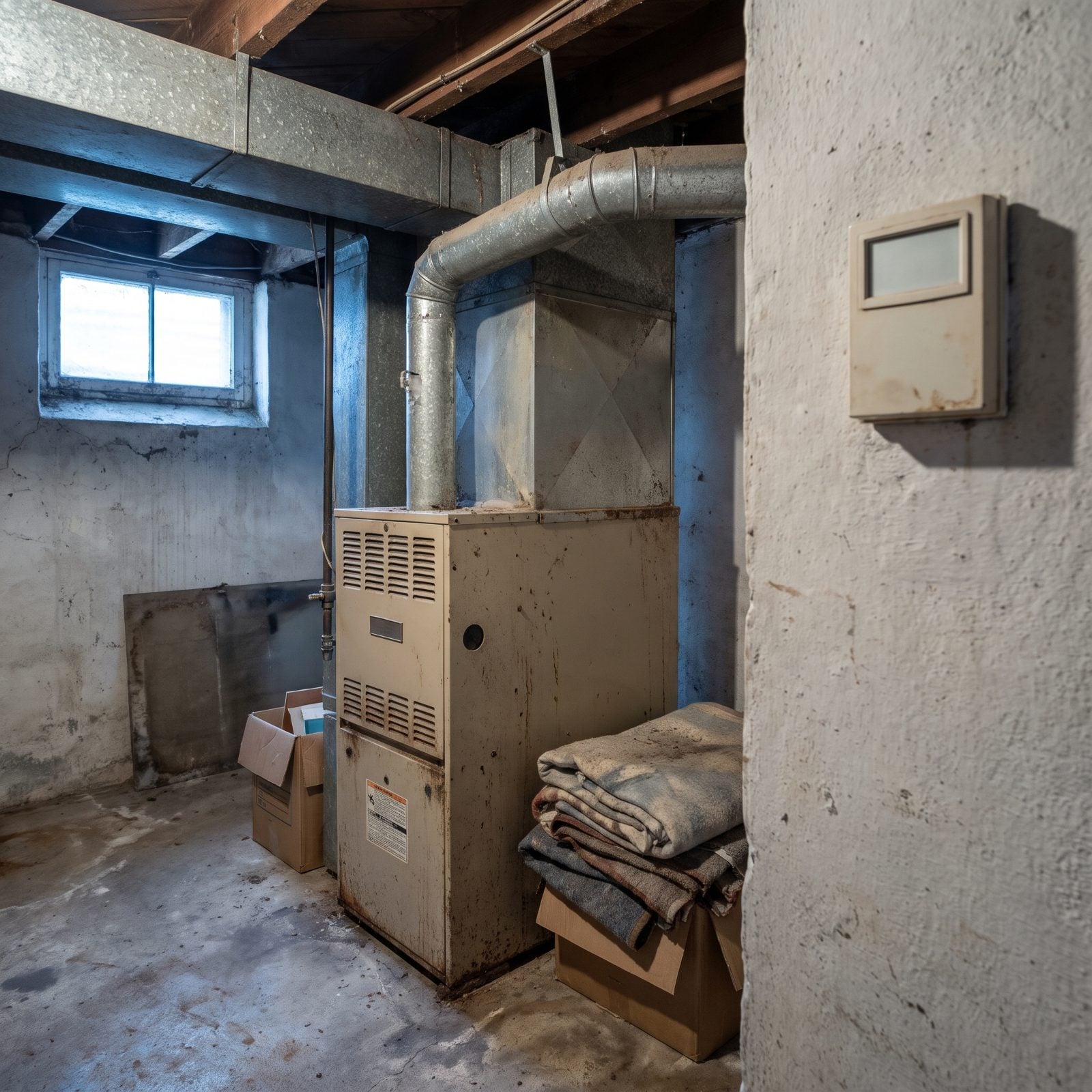
A furnace that fires up, runs a minute, shuts off, then fires again a few minutes later is short-cycling — a miserable way to heat a house.
Each burst warms the air right at the vents but never runs long enough to reach the far corners or even out the temperature. You get a house that’s hot and cold at once, with a power bill climbing while comfort drops. The causes range from an oversized unit to a failing sensor to — yes — that clogged filter again.
Is the burner kicking on far more often than it used to? Don’t wait. An aging furnace that short-cycles is usually an old furnace telling you its number is nearly up.
13. A Cold Skylight Over the Living Area
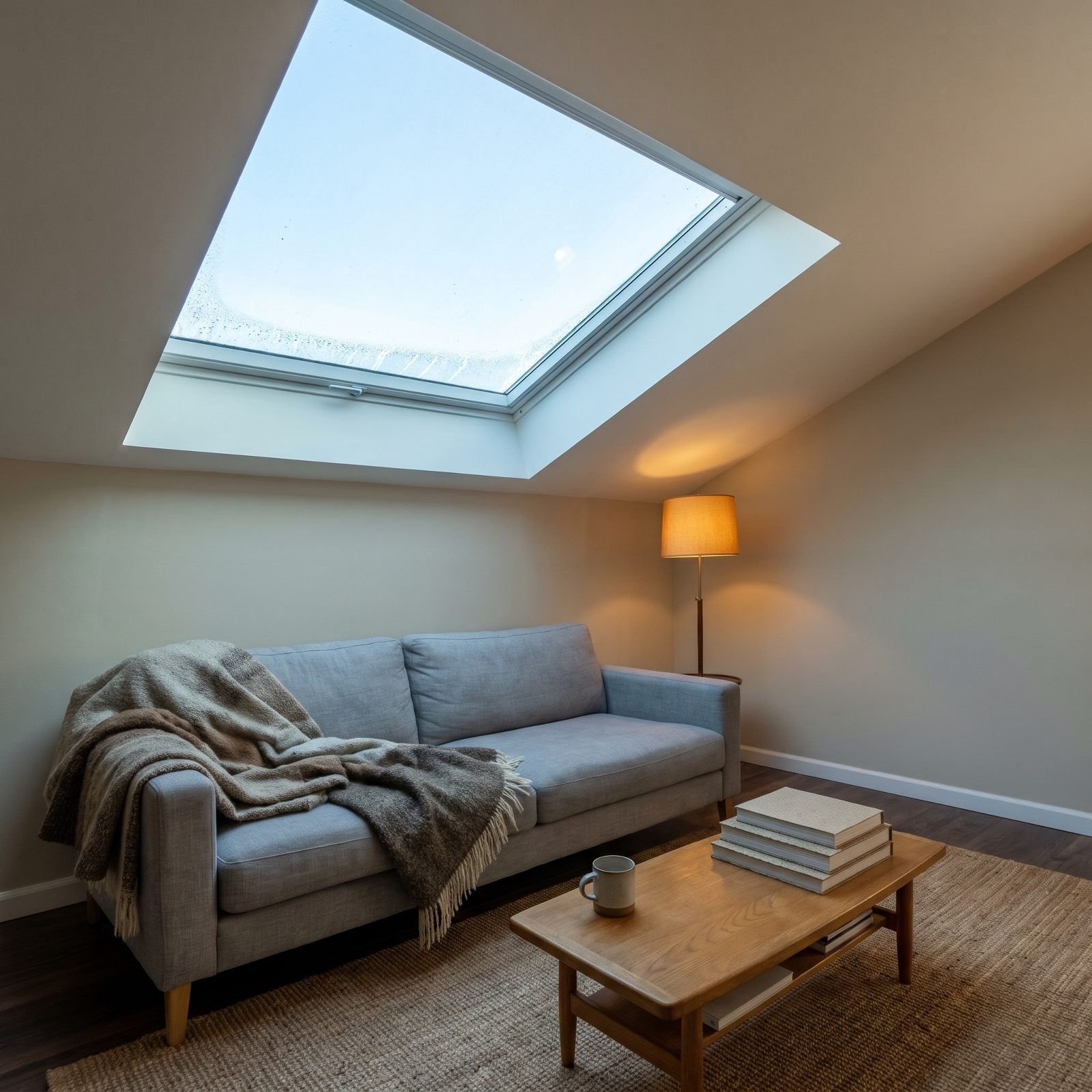
Glass is a terrible blanket. A skylight is a hole punched in your best-insulated surface, and single-pane or aging units bleed heat all winter while the cold glass chills the air right below. That chilled air sinks straight onto the couch you parked under it — which, naturally, is exactly where you want to sit.
The giveaway is condensation on the inside of the frame. See water beading there on a cold morning and you’re watching warm indoor air hit cold glass and lose. An insulated cellular shade built for skylights helps a lot. Costs a fraction of reglazing, too.
12. An Exhaust Fan Flap Stuck Open
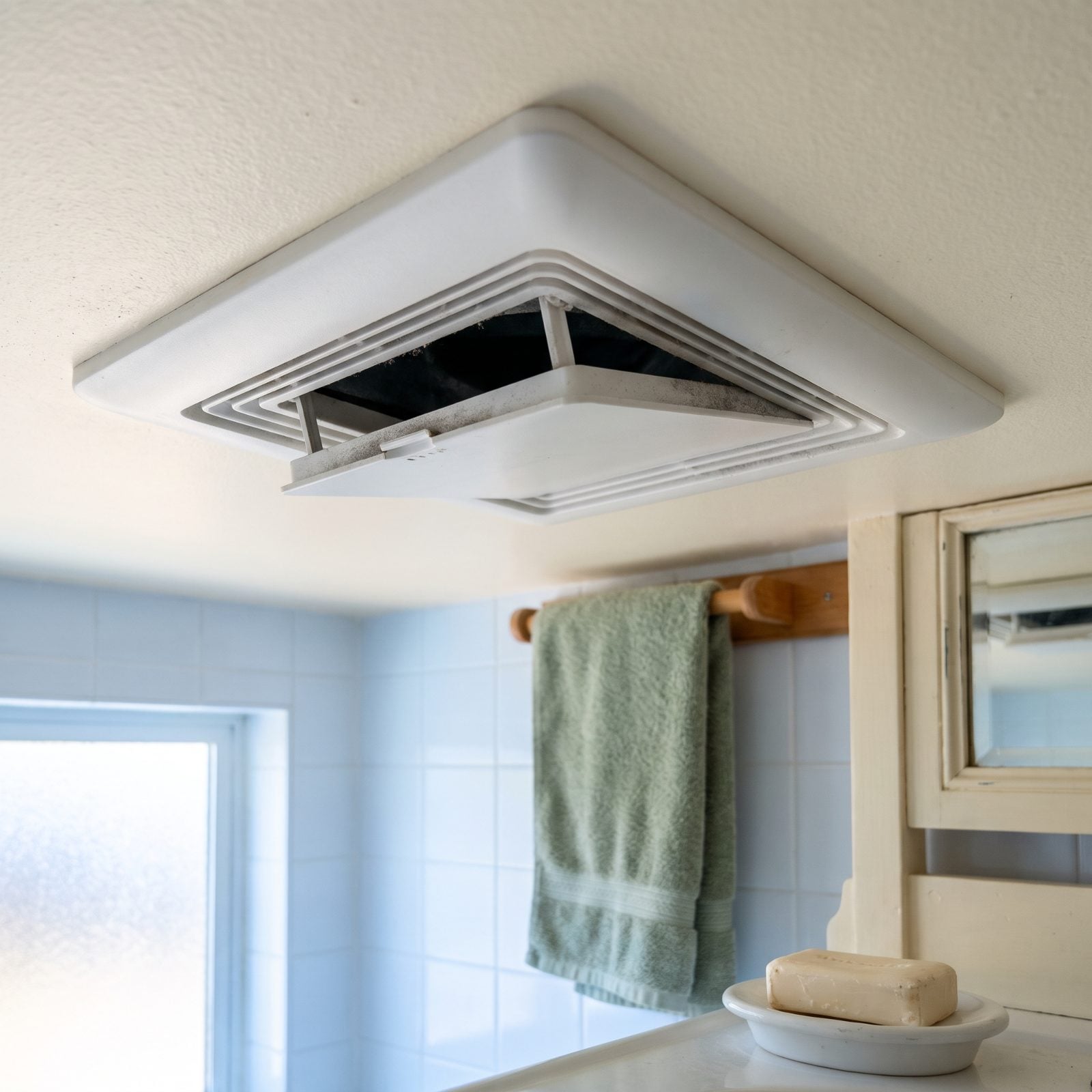
That little hinged flap on the side of your bathroom or kitchen exhaust fan housing is supposed to swing shut when the fan switches off. Grease, lint, and years of use gum it up, and it hangs open. Now you’ve got a straw running from a warm room straight to the cold roof, pulling heated air out around the clock.
I ignored one in a rental for two winters because the fan still worked. The fan working has nothing to do with the flap sealing. Look up at the side of the housing and see if the flap closes flat. If it droops, a cheap damper replacement or a draft-blocking cover handles it in an afternoon.
11. Cold Air Rising Through Floorboard Gaps
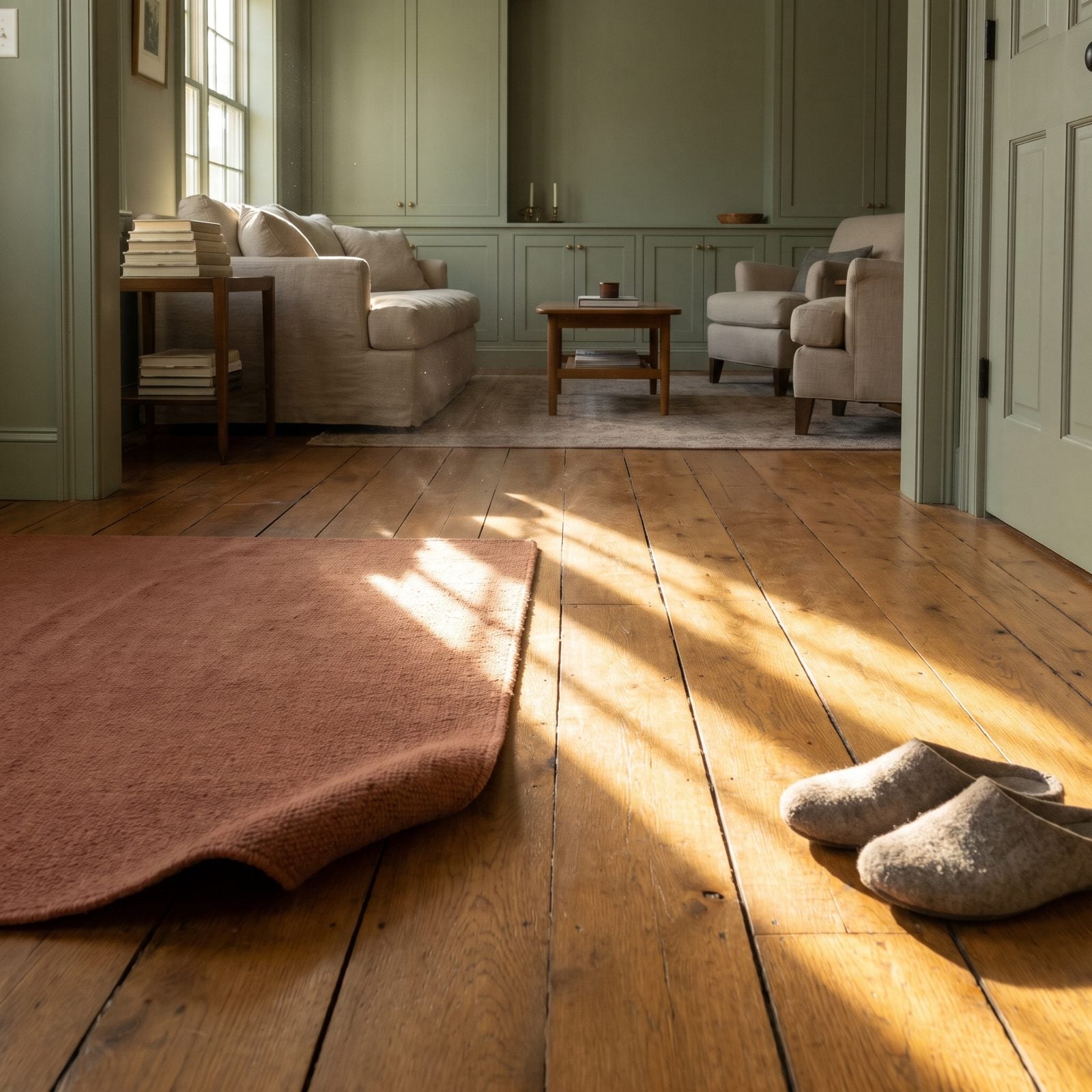
Old plank floors over a crawlspace or unheated basement are honest about one thing: they leak. The gaps between boards let a steady ribbon of cold air up at exactly ankle height, which is why your feet are freezing while the thermostat swears the room is seventy.
Windy days are the worst. Wind pressurizes the space below and shoves air up through every seam. A rug with a dense pad over the worst stretch is the quick patch. Sealing from underneath, down in the crawlspace, is the real fix — and it’s the single most effective thing most people never bother to do.
10. A Poorly Balanced Heating System
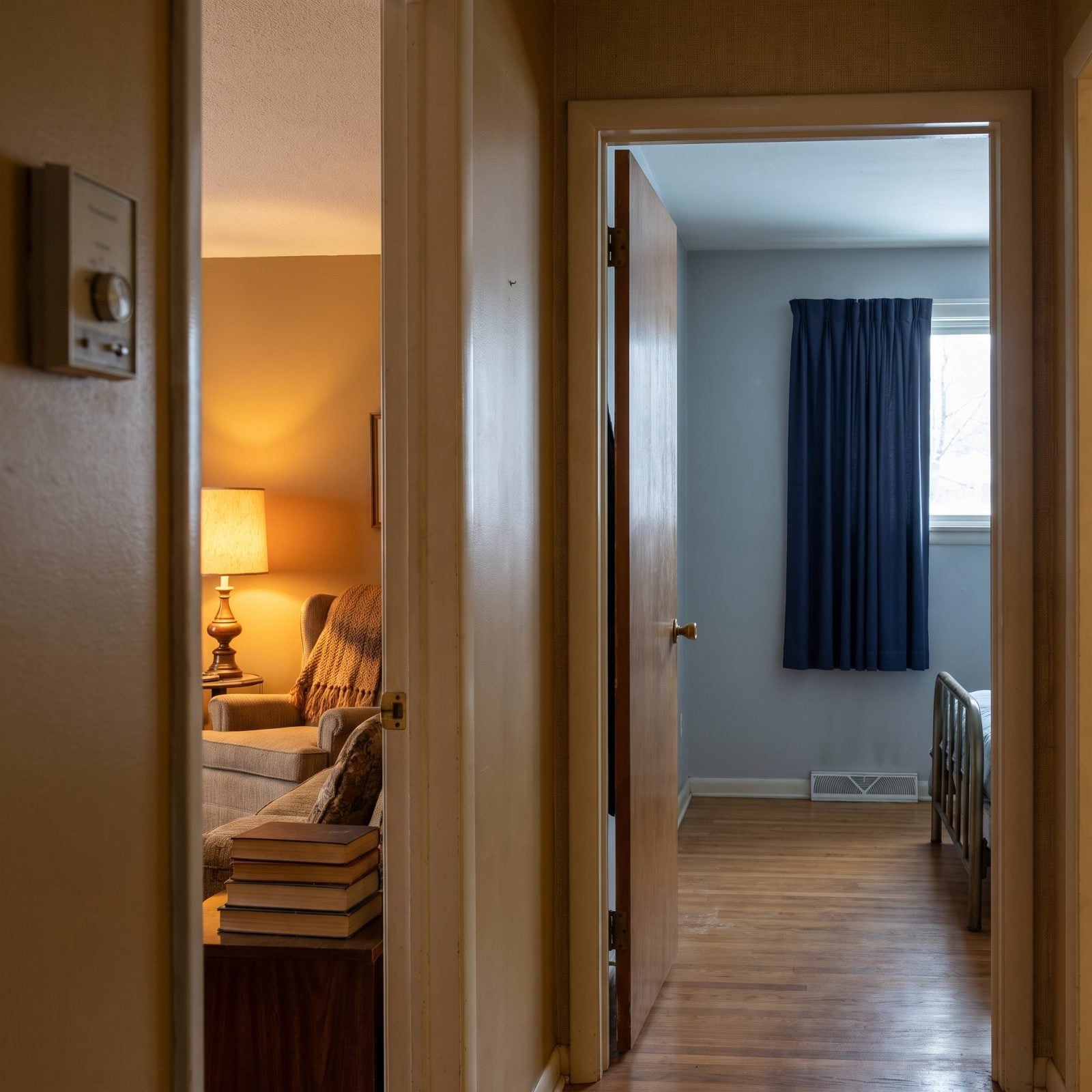
One room roasts while another stays stubbornly cold, and you blame the room when the fault is the whole system. Unbalanced ductwork sends most of the warm air to the easy rooms and starves the ones at the end of the run.
Here’s what people miss. The thermostat lives in a warm room, decides the house is fine, and shuts off while the far bedroom sits at sixty. You can nudge this with the adjustable dampers on your supply registers, closing the hot rooms a touch to push more air toward the cold ones. Getting it truly dialed in usually takes a tech balancing the system by hand.
The thermostat isn’t measuring your house. It’s measuring one spot, and acting like it speaks for the whole place.
9. A Dryer Vent Damper That Will Not Close
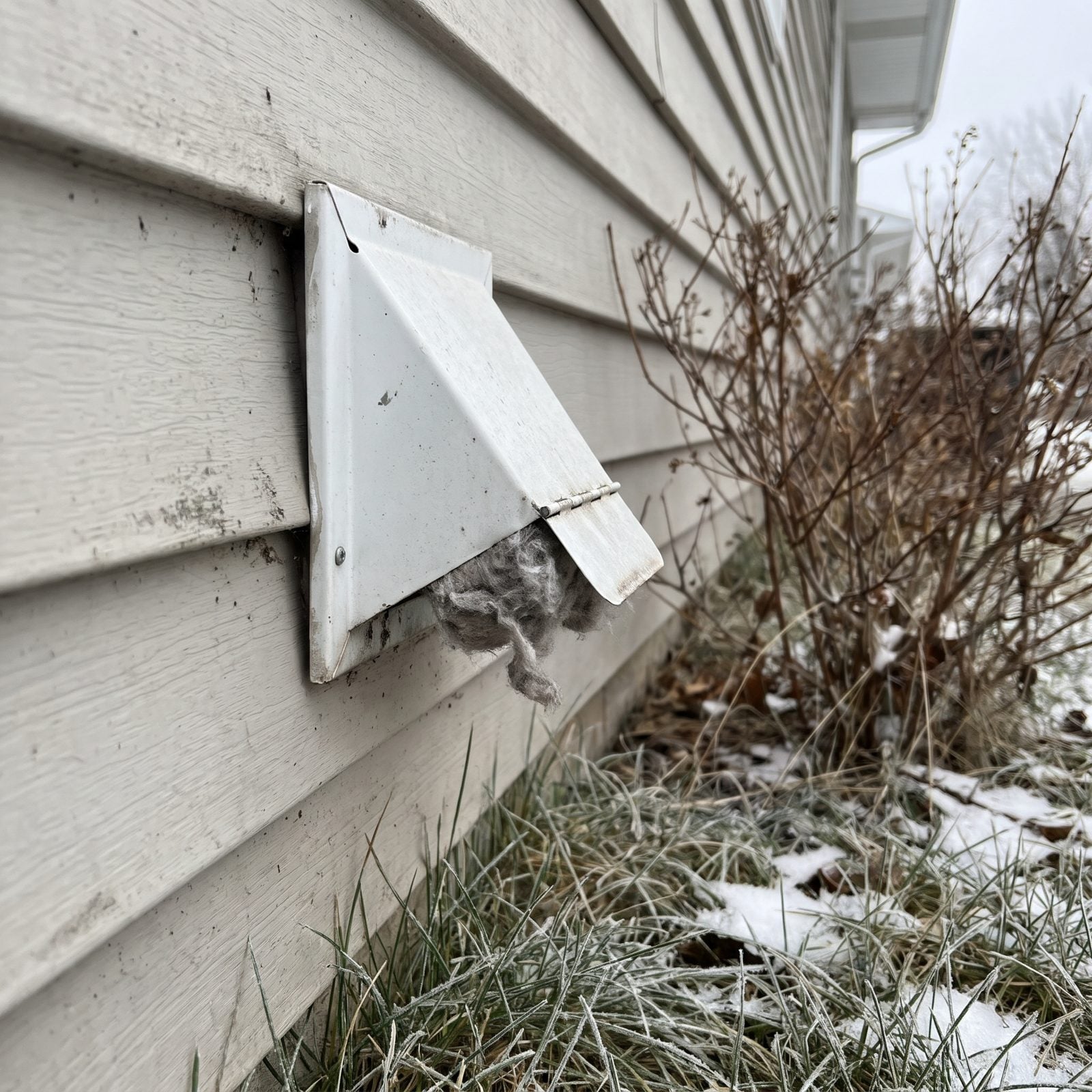
Walk outside and look at the dryer vent hood on your wall. If the flap’s hanging open, lint has wedged it, and your heated house is venting straight to the yard through a four-inch pipe every minute the dryer sits idle.
A quiet, constant leak — and a fire risk on top of it, so you knock out two problems with one fix. Clear the lint, and if the flap is cracked or sagging, swap the hood or add a backdraft damper down the line. Ten minutes. I put it off for a full season once and could genuinely feel the cold rolling off the laundry wall.
8. A Draft Coming Through Electrical Outlets
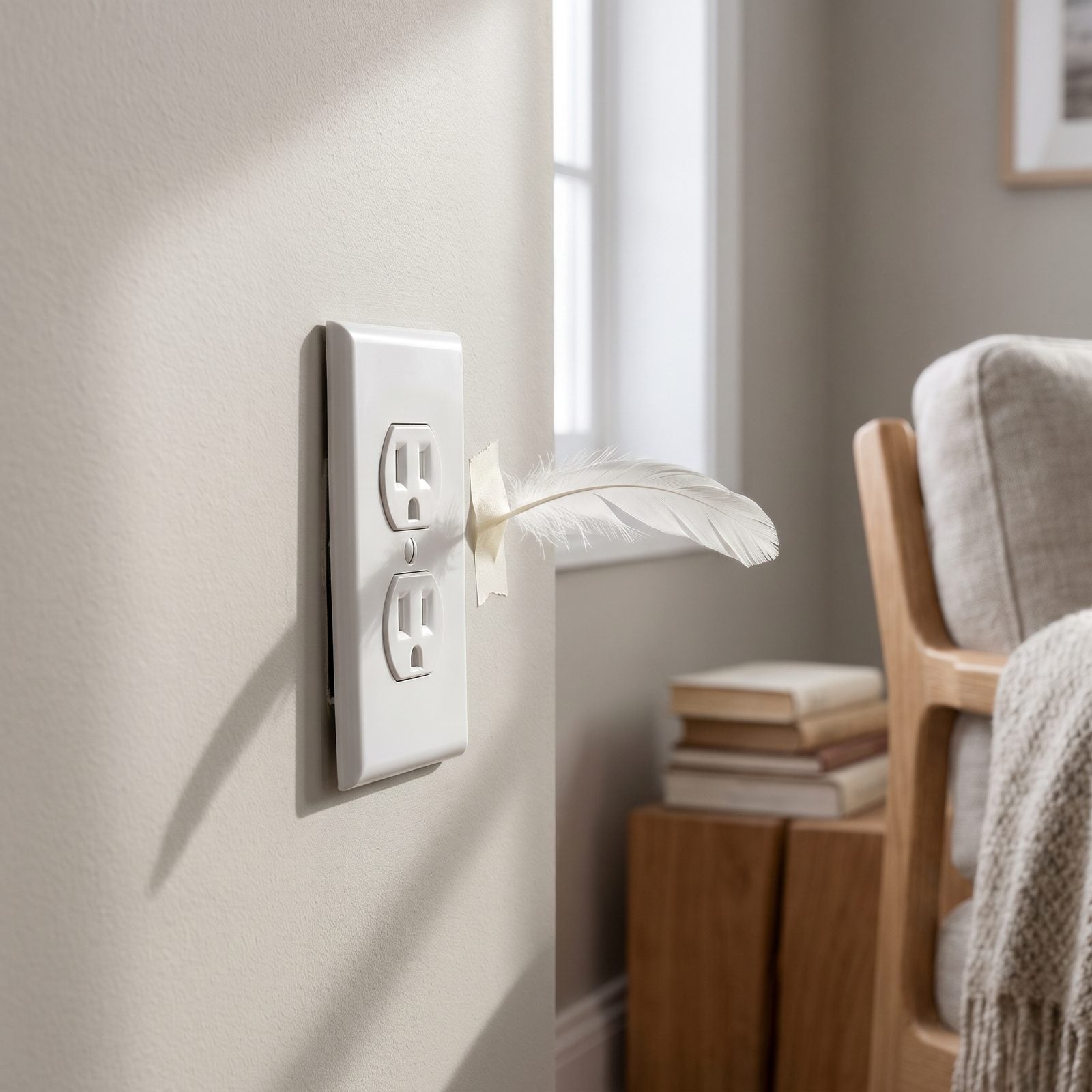
Outlets on exterior walls are little wind tunnels. The electrician cuts a hole, the box sits in an uninsulated cavity, and cold air seeps around the edges of the plate. Hold a hand near one on a windy day and you’ll feel the draft.
The fix is almost insultingly cheap. Foam gasket sealers sit behind the cover plate — a couple of bucks for a pack. Pull the plate, drop in the gasket, screw it back. Nobody notices them, nobody ever thinks to check, and they quietly shut down one of the sneakiest leaks in the house.
7. An Uninsulated Bay Window Seat
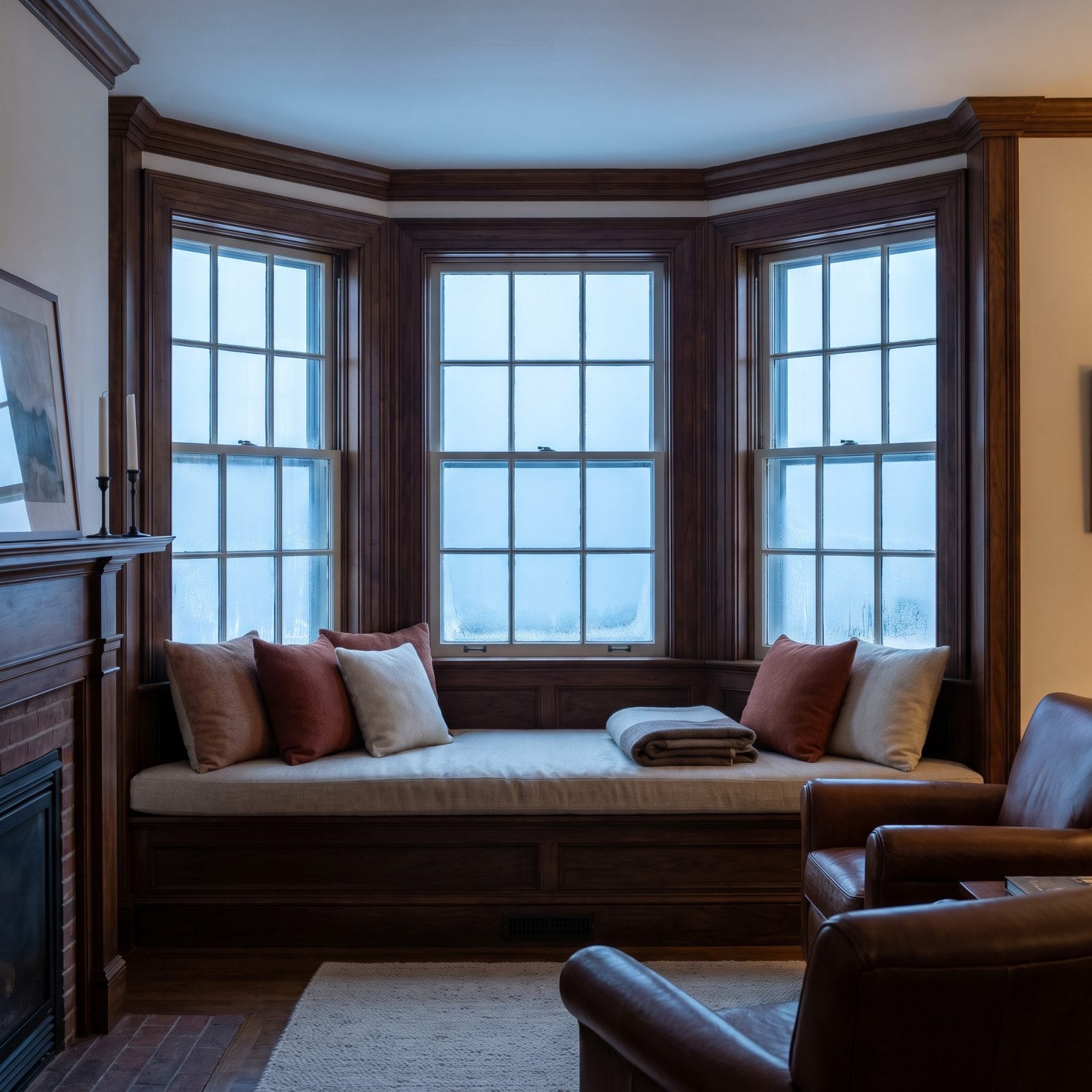
A bay window seat looks like the coziest spot in the house and usually feels like the coldest. It juts out past the heated envelope, wrapped in glass on three sides, and the cavity under the bench is almost always an afterthought nobody insulated.
Cold radiates off the panes and pools in that little alcove, so the dreamy reading nook sits a few degrees below the rest of the room. Lined curtains you can draw at night make a real difference. Insulating the cavity under the seat and the kneewall around it closes the gap for good. Until then, keep a heavy throw out there. You’ll want it.
6. Return-Air Grilles Covered by Rugs
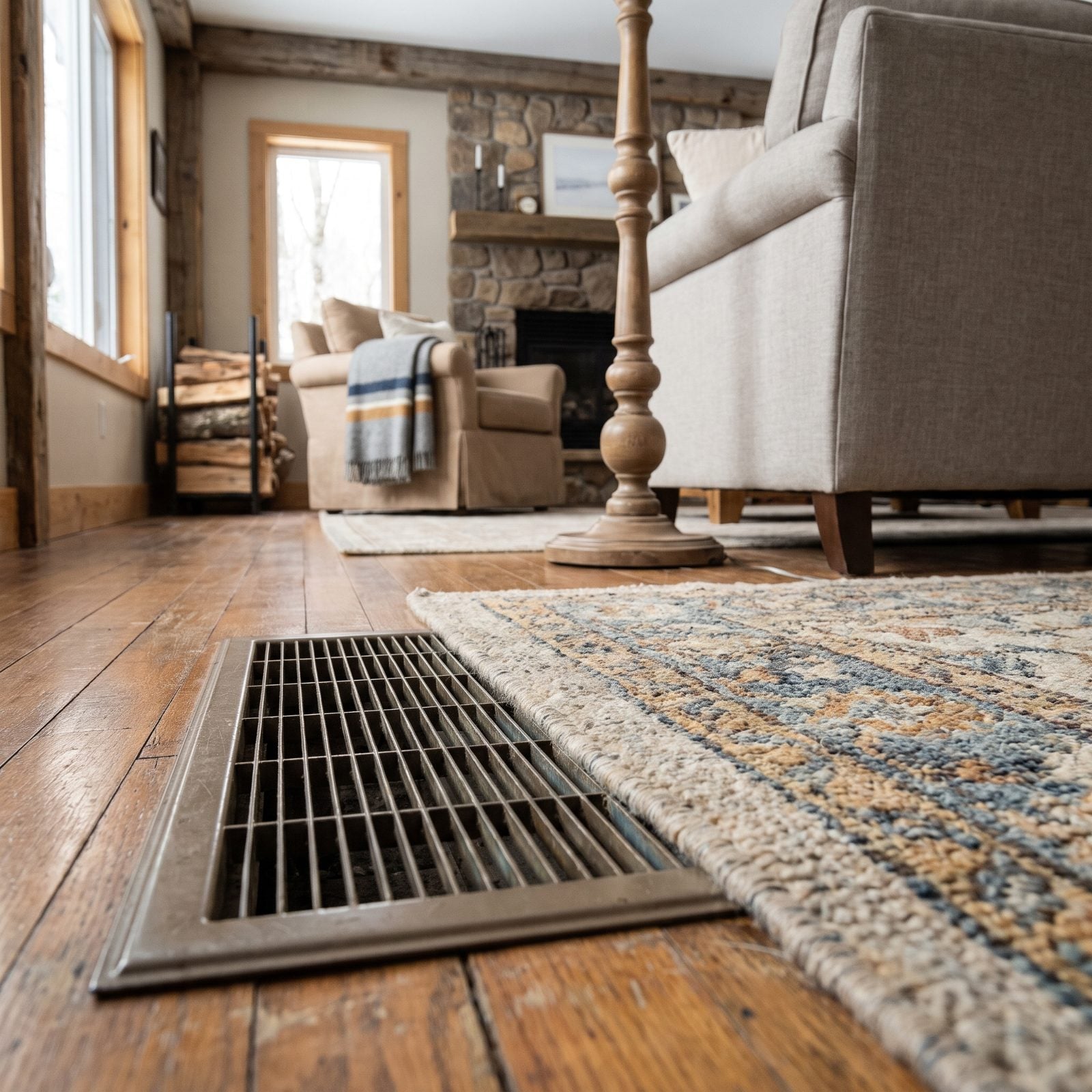
Your heating system has two jobs: push warm air in, and pull room air back to be reheated. The return grilles do the pulling, and they’re usually big, plain, and easy to forget — so people park a sofa on top of one or slide a rug across it.
Choke the return and the whole thing struggles to circulate. Rooms heat unevenly, the furnace labors harder, and you can’t figure out why. Walk the house and find every return grille. They need clear air on all sides. No rug, no bookshelf, no armchair.
5. Warm Air Collecting Under a High Ceiling
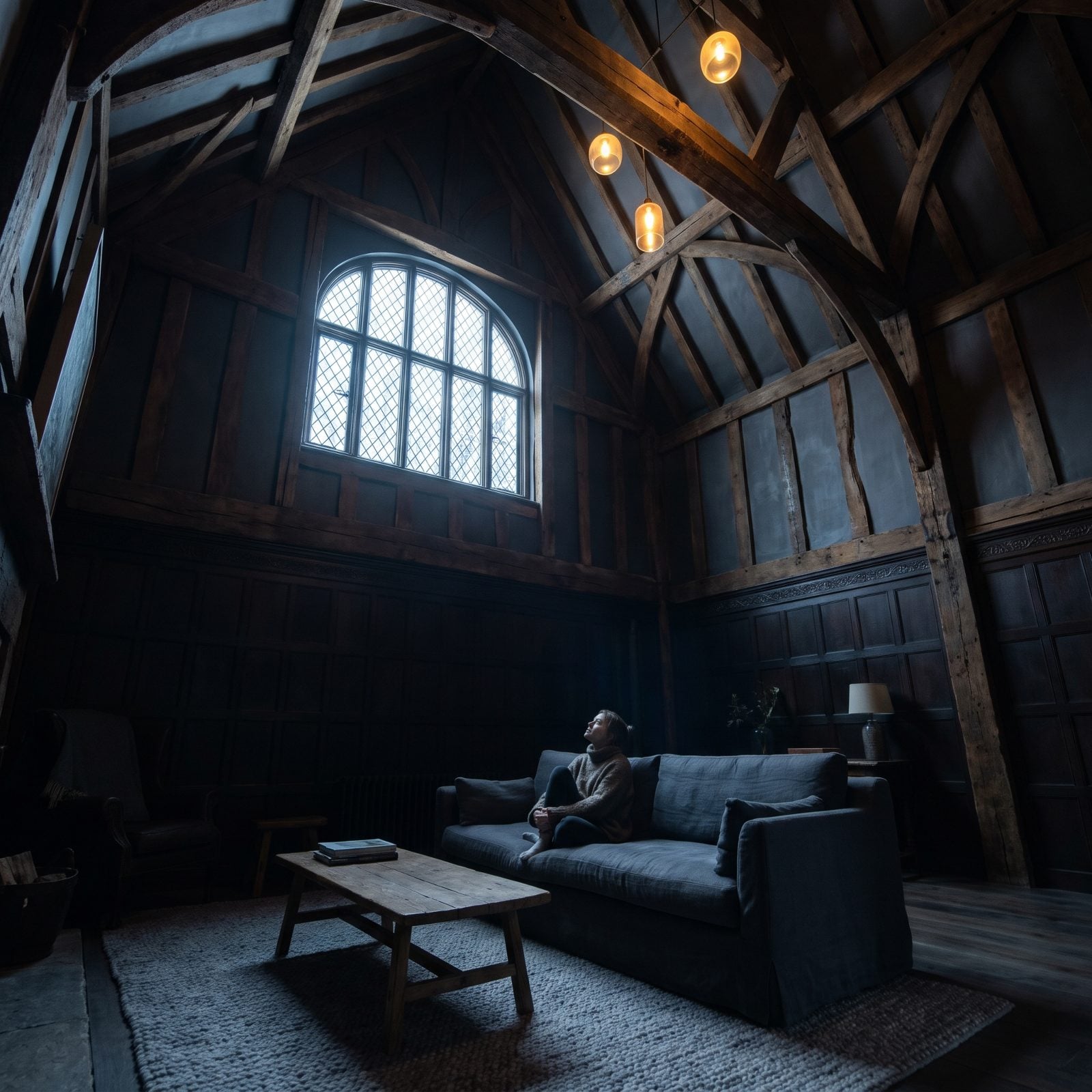
Height is a heat trap. Vaulted ceilings and open lofts look spectacular and behave badly in winter, because all your expensive warm air floats to the top of the room and just sits up there, nine feet above anyone’s head.
You’re heating the attic you can see. The living zone down where the furniture lives stays cool, so the thermostat keeps calling for more heat to serve a layer of warmth nobody can reach. A ceiling fan on winter mode helps push it back down. So does zoning done right, and in really tall rooms, a proper destratification setup if you want to get serious about it. Gorgeous ceilings cost you. Worth knowing before you fall in love with the volume.
4. The Stairwell That Siphons Your Heat to the Second Floor
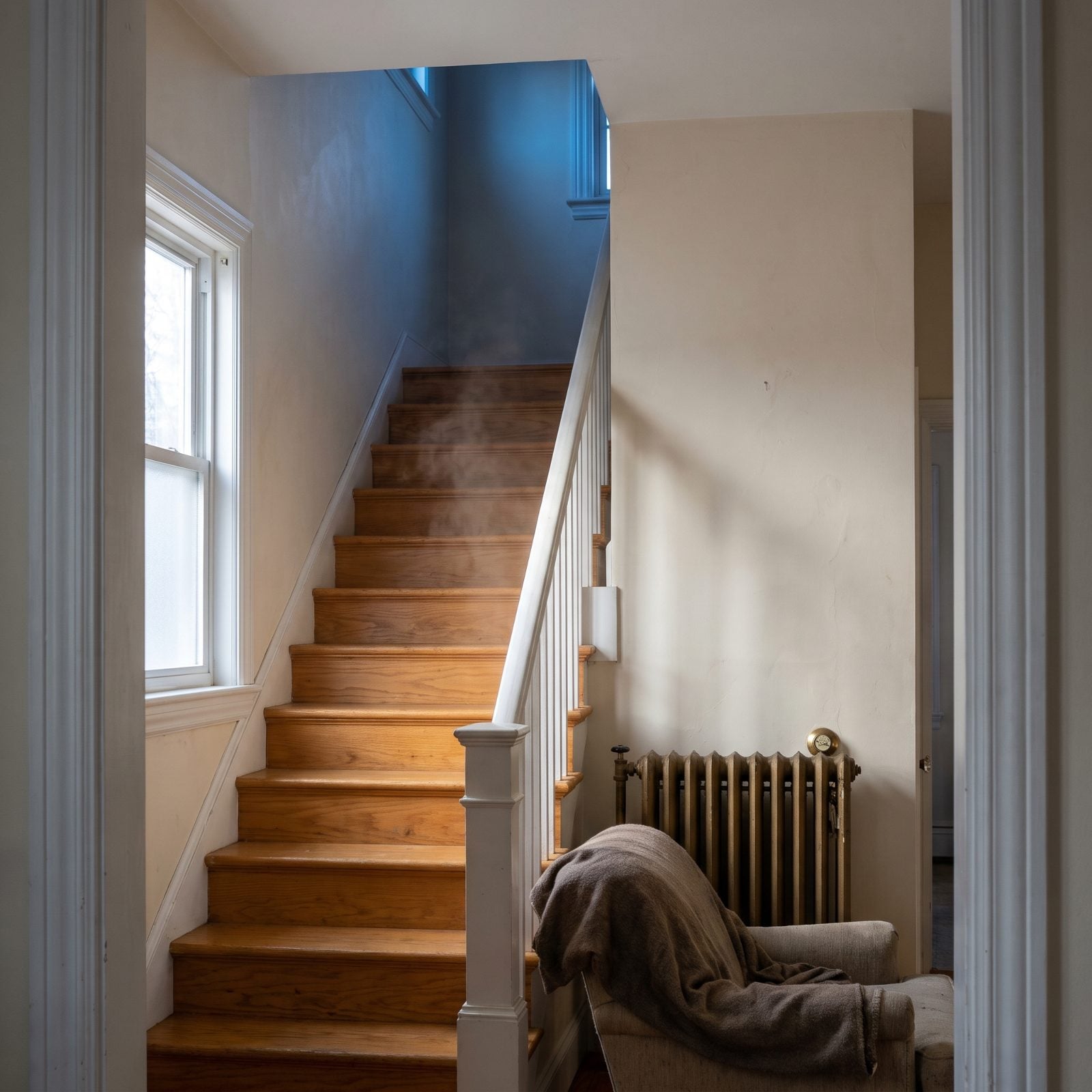
Heat does one thing without being asked: it climbs. An open stairwell is basically a chimney for your warm air, pulling it off the main floor and dumping it into bedrooms nobody’s standing in at 6pm.
You feel it as a cold spot at the bottom of the stairs that no amount of thermostat-nudging fixes. The furnace runs, the upstairs roasts, and the room you actually live in stays stubbornly cool.
A curtain or a panel across the stairwell opening breaks the draft. Looks a little odd, works like a charm.
3. Acres of Bare Tile With Nothing to Soften the Chill
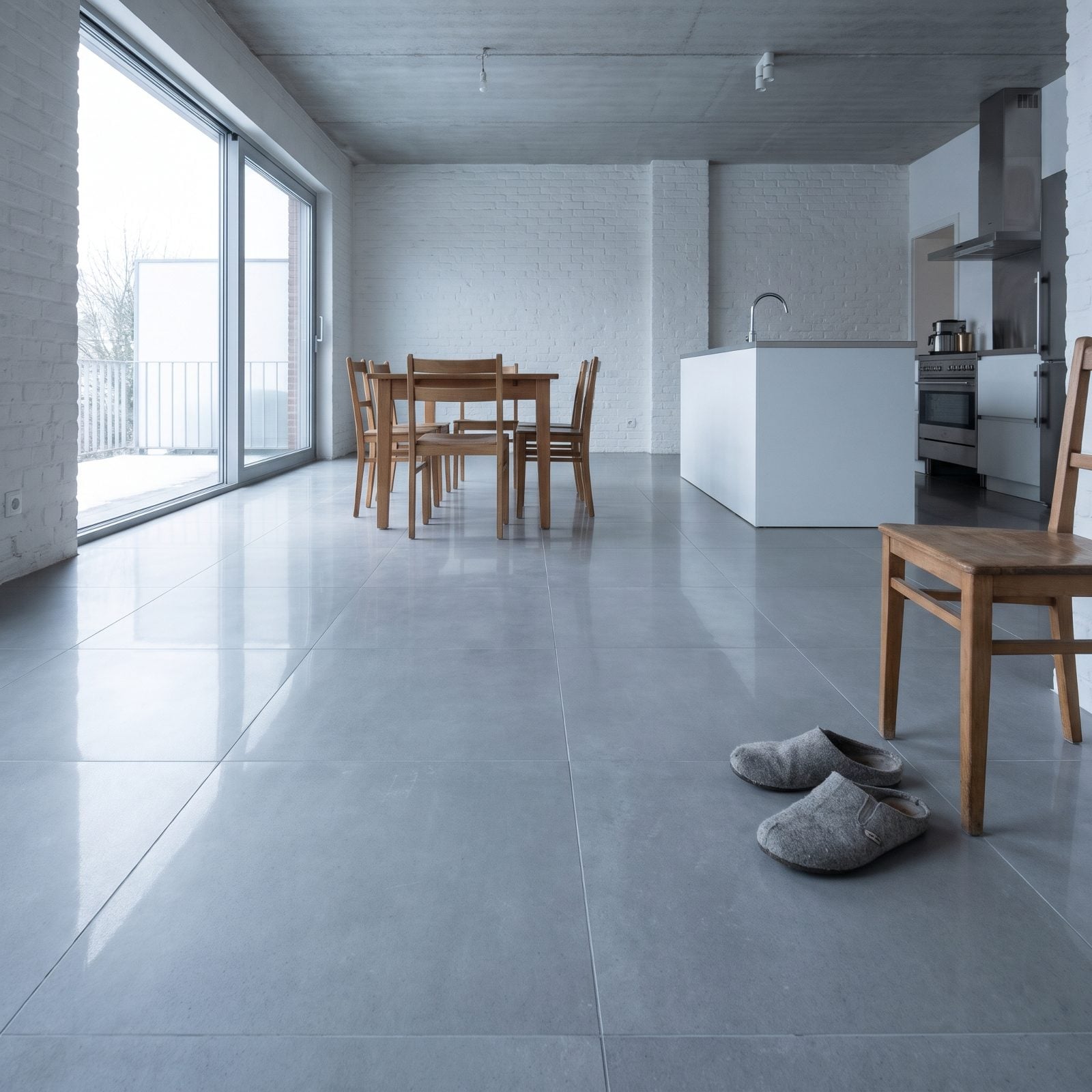
Tile doesn’t hold warmth. It takes yours. Step onto a bare porcelain floor in socks and your feet report back instantly that the room is cold, even when the air isn’t.
Big uninterrupted runs of tile read as hard and clinical before you’ve registered the actual temperature, and your brain is already shivering on sight. I grew up in a house with a kitchen like a hockey rink. You learned to keep slippers by the door or you paid for it.
A thick wool or jute rug over the main standing zones changes everything — insulation for your feet, plus a visual cue that says warm.
2. Leather Seating That Hits You Like a Cold Car Seat in January
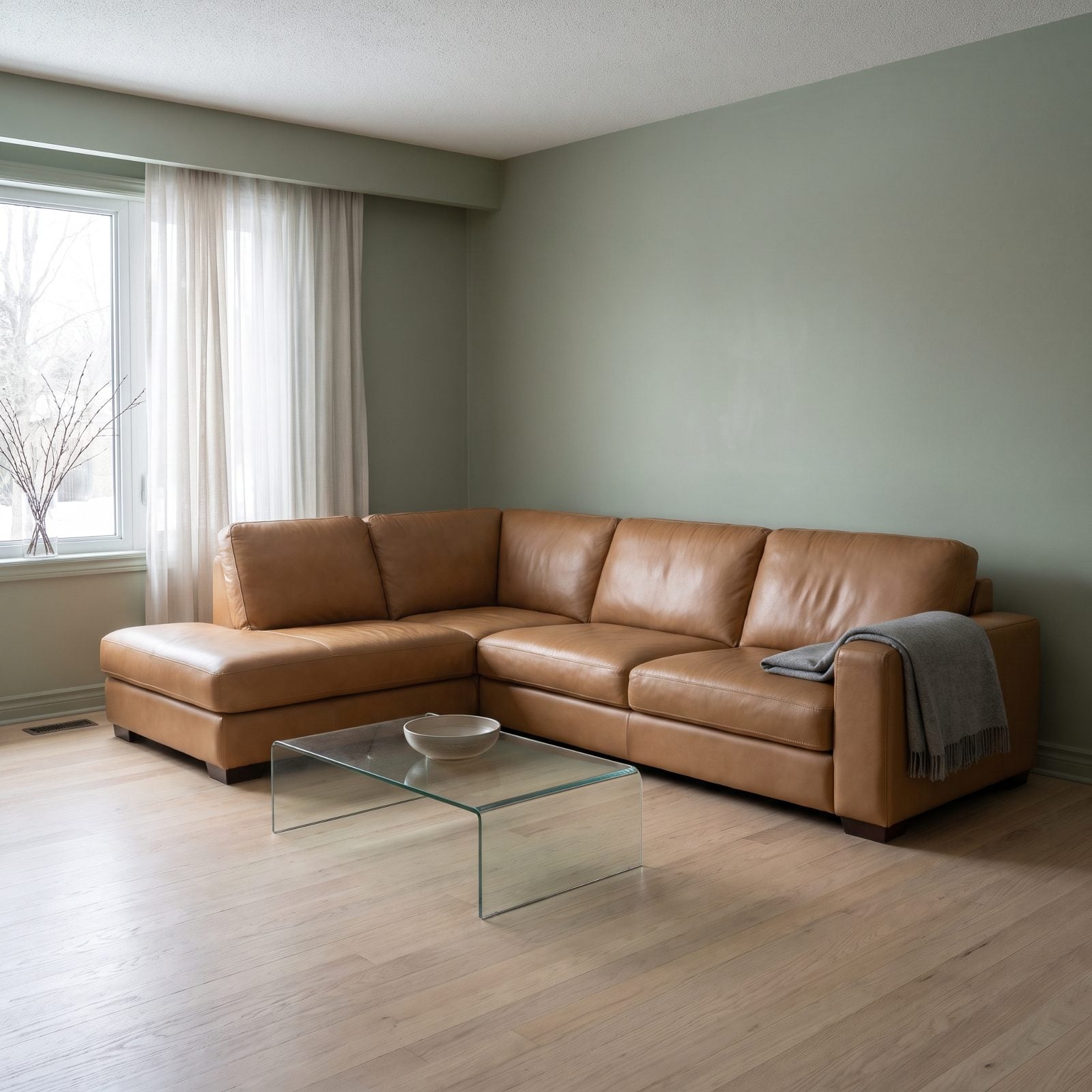
You know the feeling. You sit down on leather in January and it steals the heat right out of you — that same first-contact shock a parked car seat gives you.
Leather looks handsome and wipes clean, so plenty of people default to it. But it pulls heat away from your body faster than fabric, which is why it feels cold to the touch even in a heated room.
Throw blankets and a couple of textured cushions break the contact. Sheepskin, chunky knit, anything with pile. The leather stays, the chill goes.
1. Harsh Blue-White Bulbs That Make a Warm Room Look Frozen
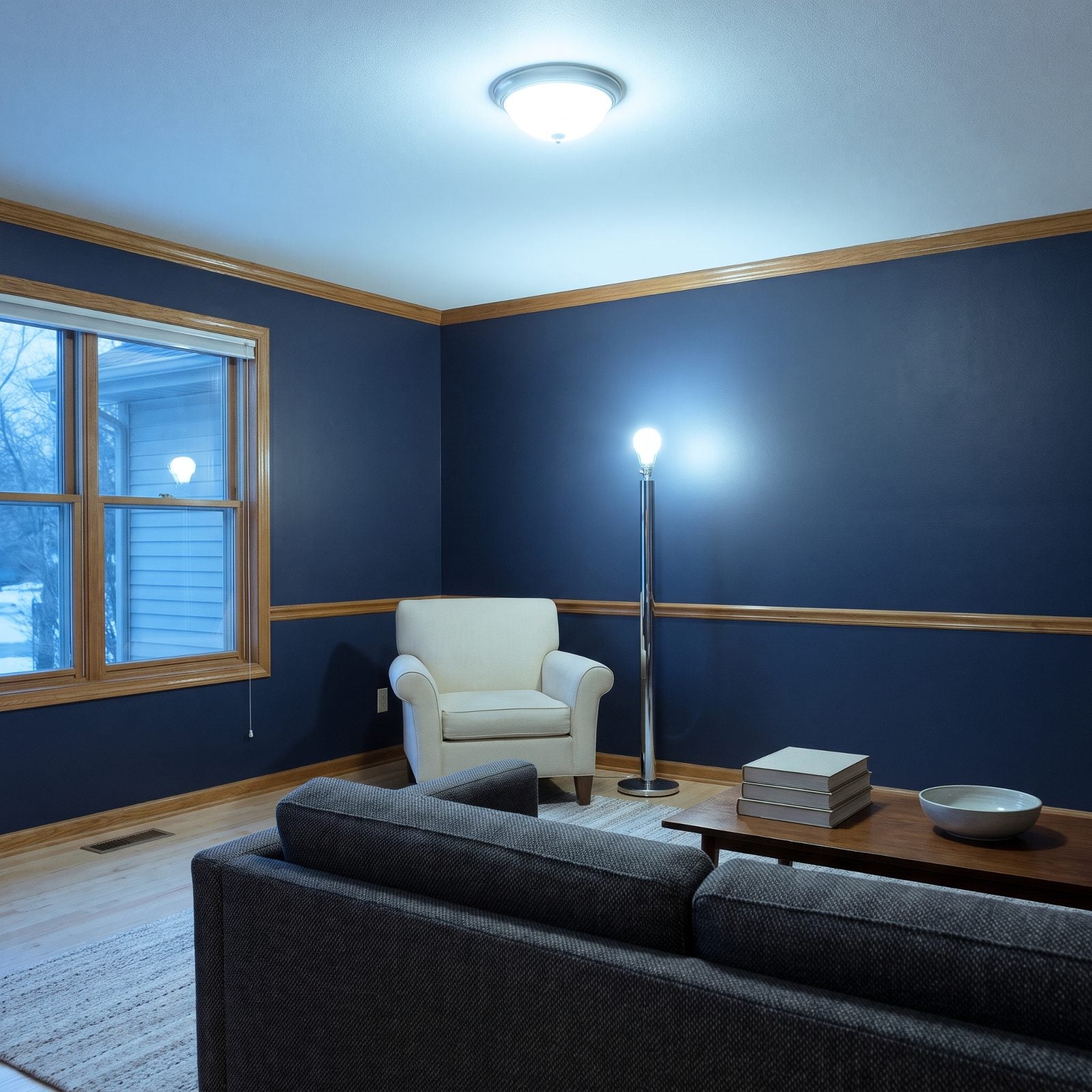
Flip on a 5000K daylight bulb in your living room and the whole place turns into a walk-in freezer. Nothing changed on the thermostat. Your eyes just told you it’s cold.
Blue-white light reads as institutional — hospital corridor, parking garage, late-night office. We associate that cool cast with sterile, unheated places, so a cozy room lit that way quietly fights you.
Warm bulbs in the 2700K range throw an amber tone that mimics firelight and old incandescents, and the room’s actual temperature doesn’t move an inch. It just stops feeling like a morgue.
I swapped every cool bulb in my house one winter. The difference was absurd for something that cost a few dollars a socket. Go do it.