
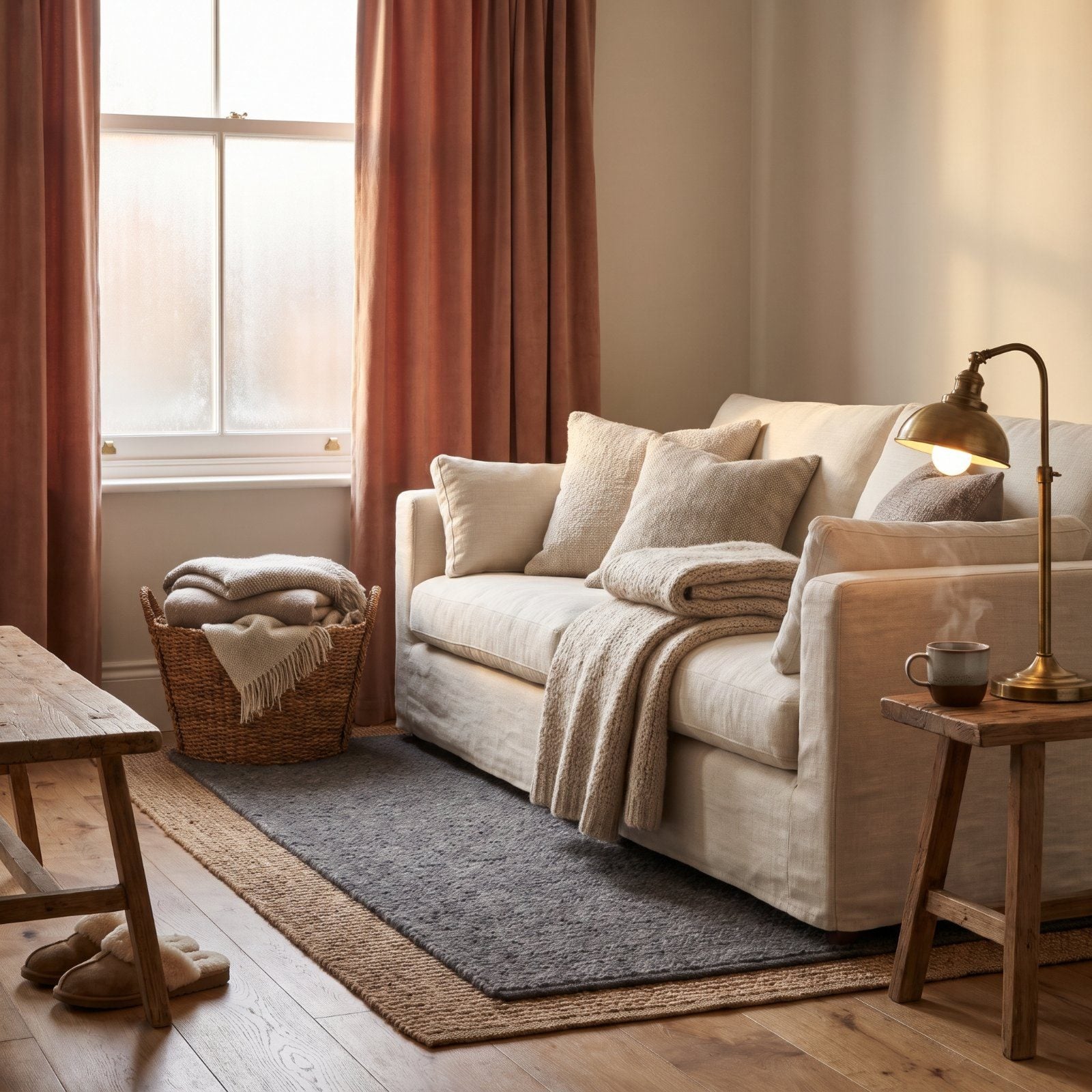
A cold house isn’t always about the furnace. Sometimes it’s a two-inch gap under the back door that nobody ever thought to check. Or a ceiling fan still spinning the wrong way in January, quietly pulling warm air up and out of reach. Here’s what I’ve noticed: the homes that feel good all winter rarely run their heat higher than yours. They just do a handful of small, repeatable things, most of them cheap, a few of them free, all of them learned the hard way. Steal these before the first real freeze settles in.
Please note that some of the images in this article were created with the assistance of AI.
28. They Let Winter Sun In, Then Draw Thick Curtains Before Dusk
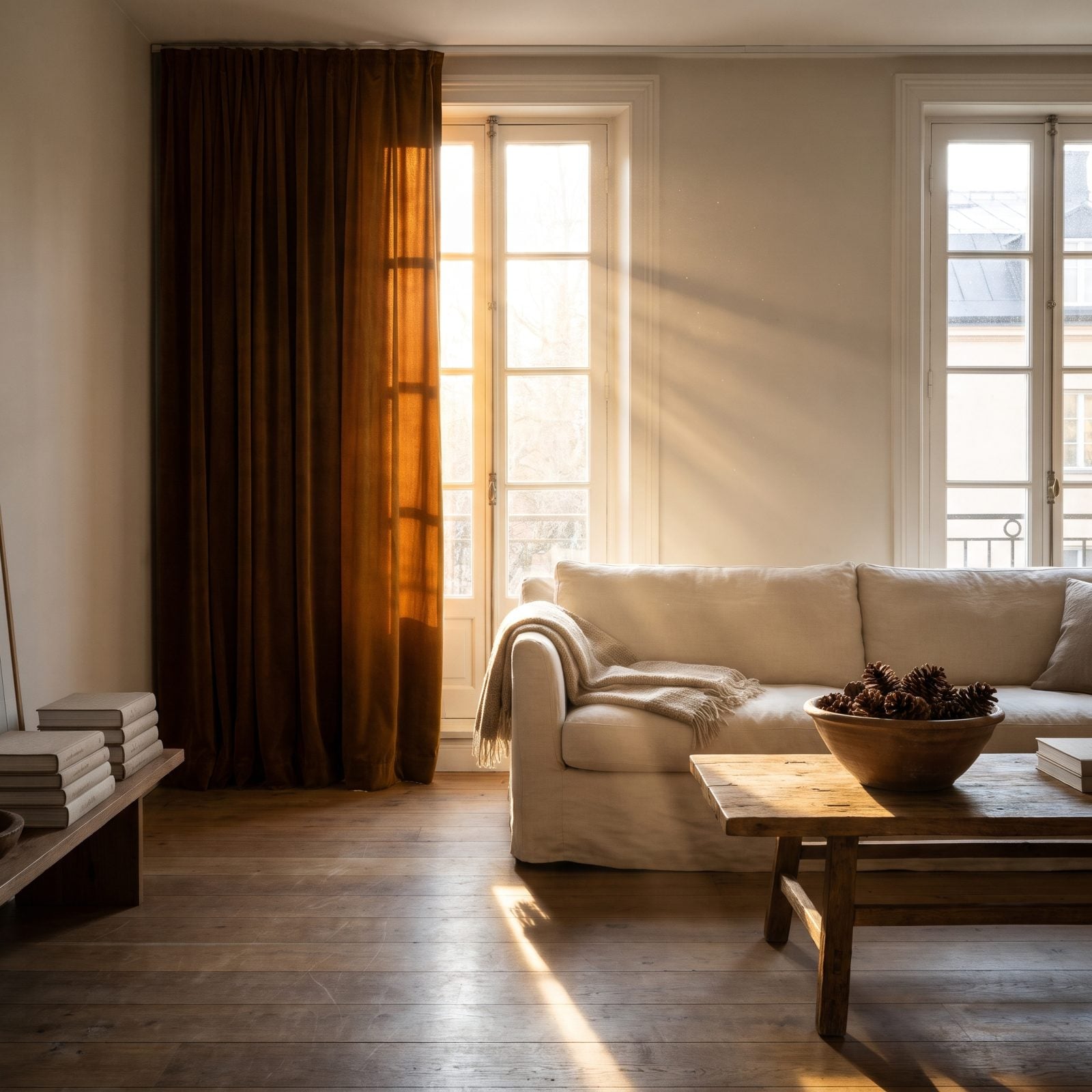
The sun does free work if you let it. On a clear winter day, south-facing windows pull in real heat from late morning through mid-afternoon, so open everything, pull the curtains back, and let that low sun hit the floors and furniture.
Then close it all before the light goes. Glass loses heat fast once the sun drops, and a thick lined curtain is basically a second wall. Open in the morning, shut before dusk.
27. They Layer Rugs Over Cold Hard Floors
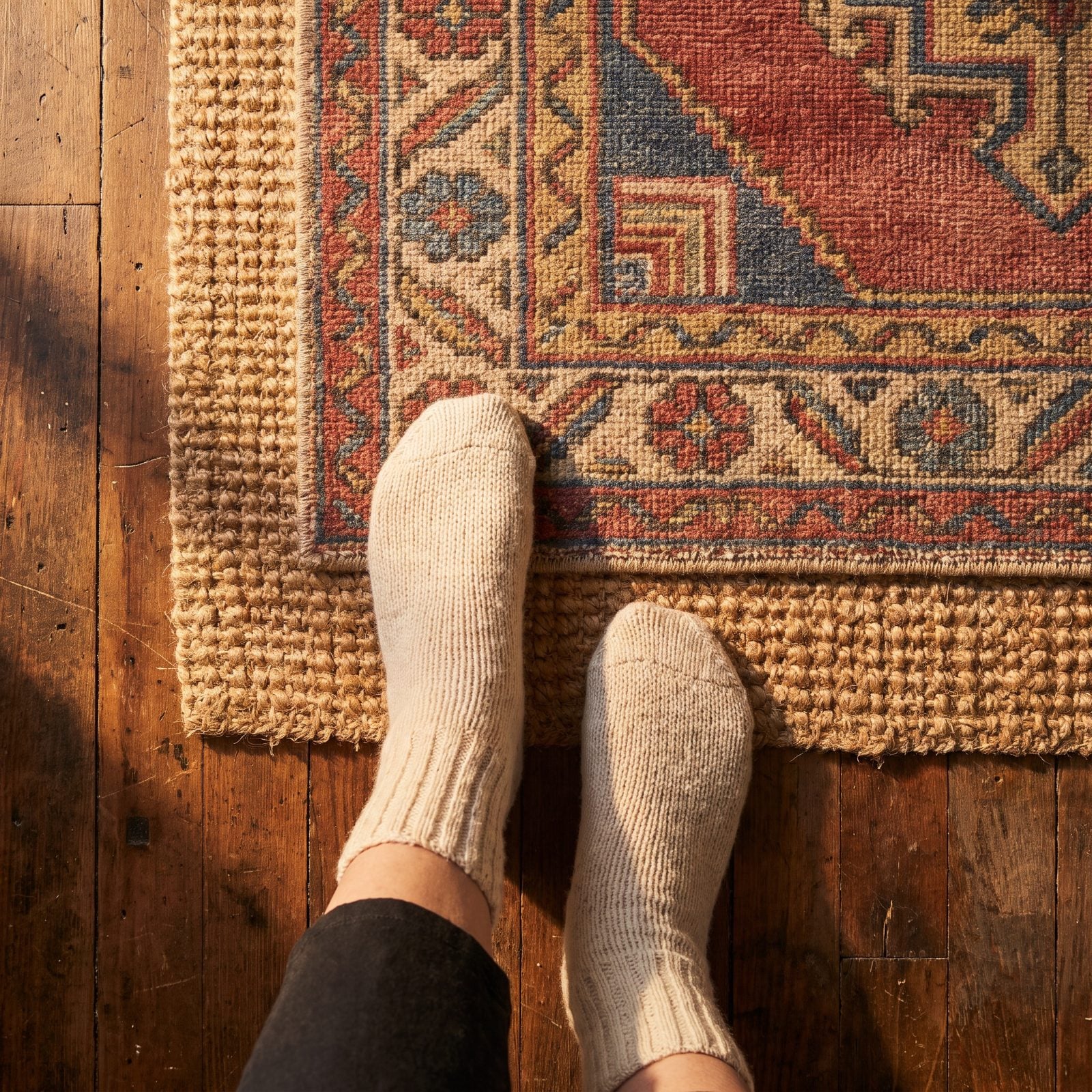
Bare floors are heat thieves. Tile and hardwood pull warmth straight out of your feet, and a cold floor makes the whole room read colder than the thermostat claims.
Layering solves it. A flatweave base rug for coverage, a wool or shag piece on top for softness underfoot, and the double layer traps the air that actually does the insulating. I ignored this for years in a house with old pine floors and spent every January in two pairs of socks. One good wool rug fixed what the furnace couldn’t.
26. They Keep Wool Blankets in a Basket Within Arm’s Reach
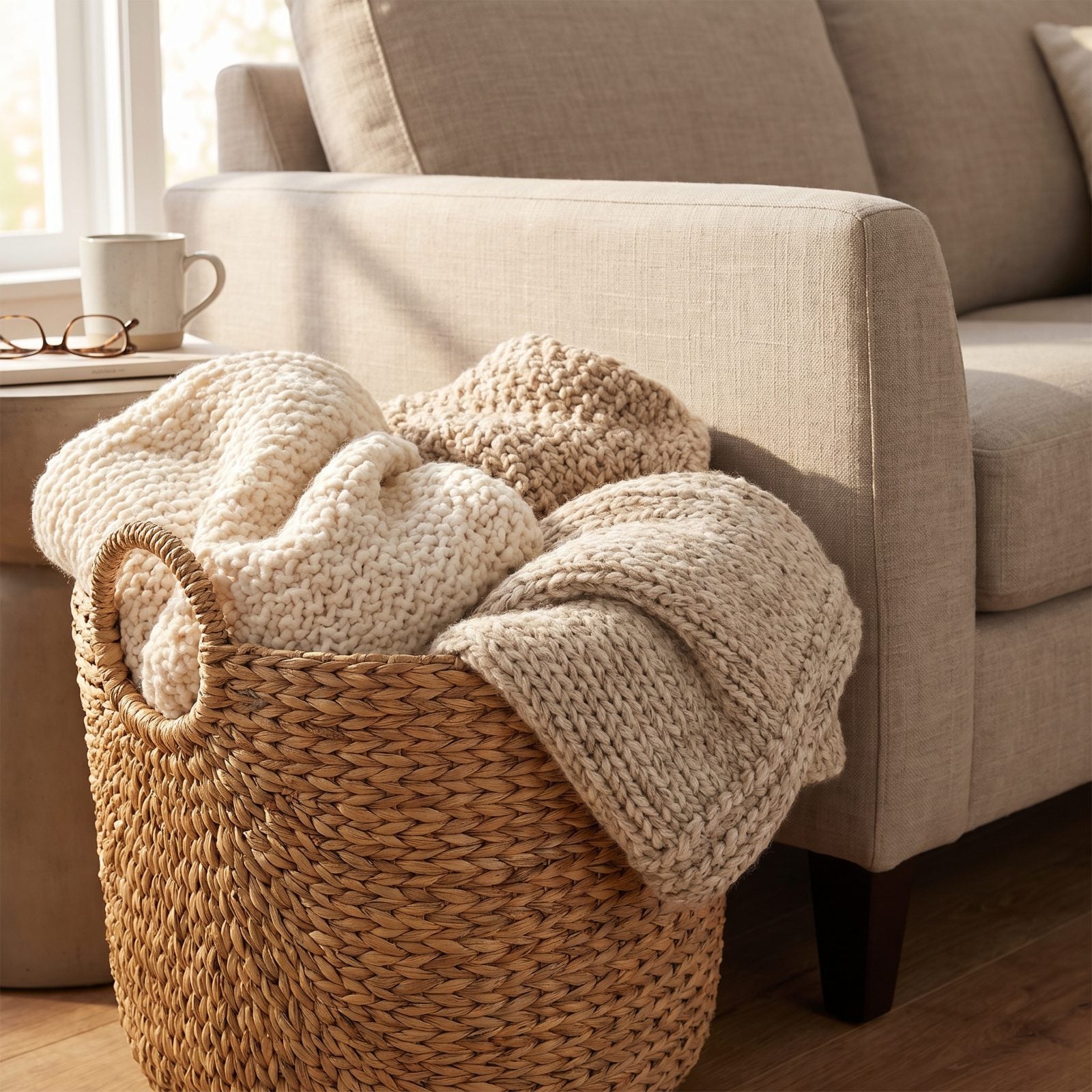
The blanket you have to go find is the blanket you never use. Keep them where you actually sit.
A basket by the sofa does two jobs: it makes grabbing a throw automatic, and it means you reach for wool before you reach for the dial. Every degree you don’t nudge the heat up is money you keep. Wool over fleece, if you can swing it, because it holds warmth even when it’s a little damp and lasts decades.
25. They Layer Lamps With Warm-White Bulbs
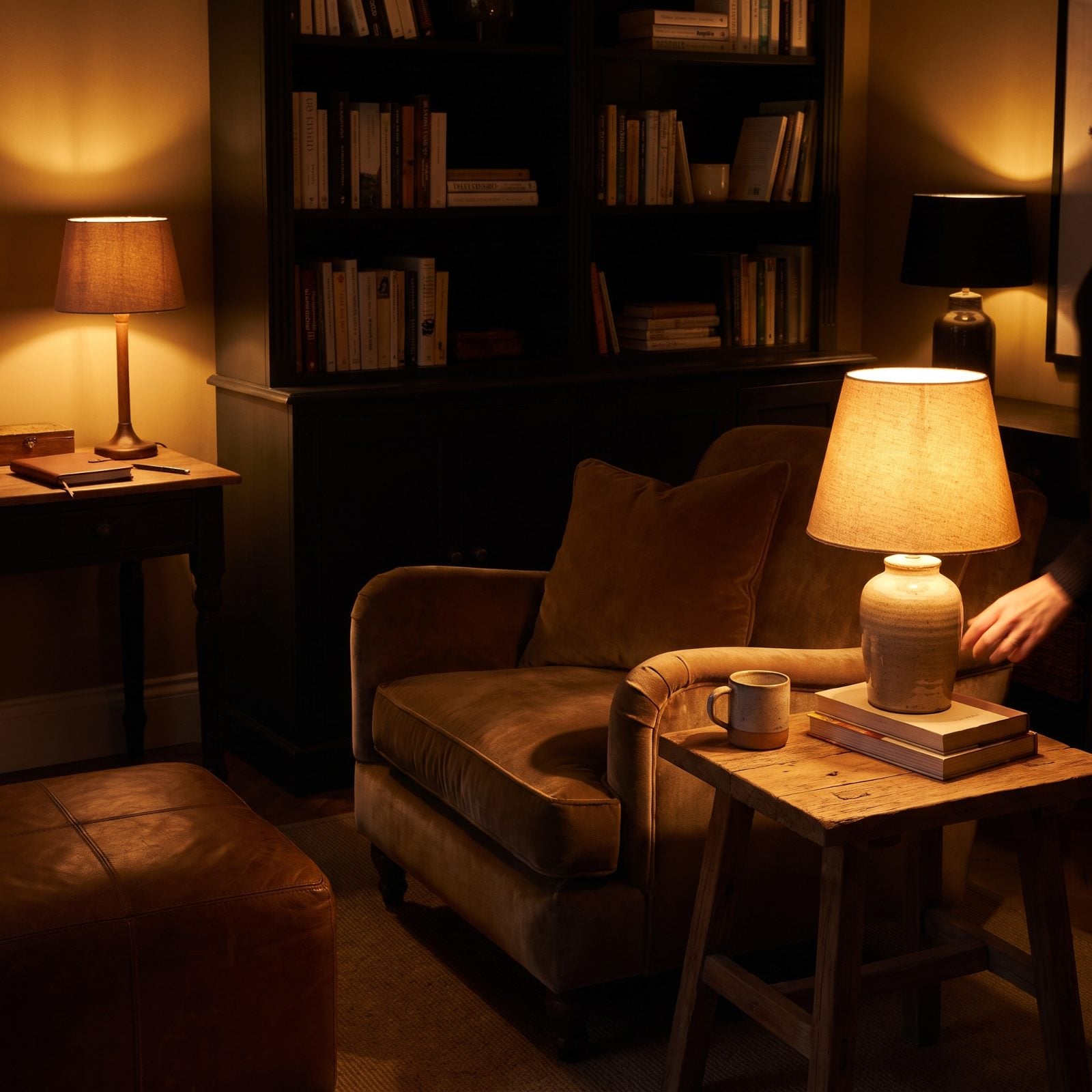
One bright ceiling light makes a room feel like a dentist’s office in winter. Three or four small lamps make it somewhere you want to stay.
It’s all in the bulb. Look for warm-white, around 2700K on the box, that soft amber tone instead of the blue-white glare of standard LEDs. Spread the lamps at different heights: floor, table, shelf. Those low pools of light read as warmth even before the furnace catches up.
In a guide to layered lighting, an interior designer notes “Most designers recommend warm white bulbs in the 2700K to 3000K range for living rooms, bedrooms, and dining rooms, because the soft, golden tone flatters skin and wood and makes spaces feel inviting.”
24. They Keep Slippers Beside the Entryway
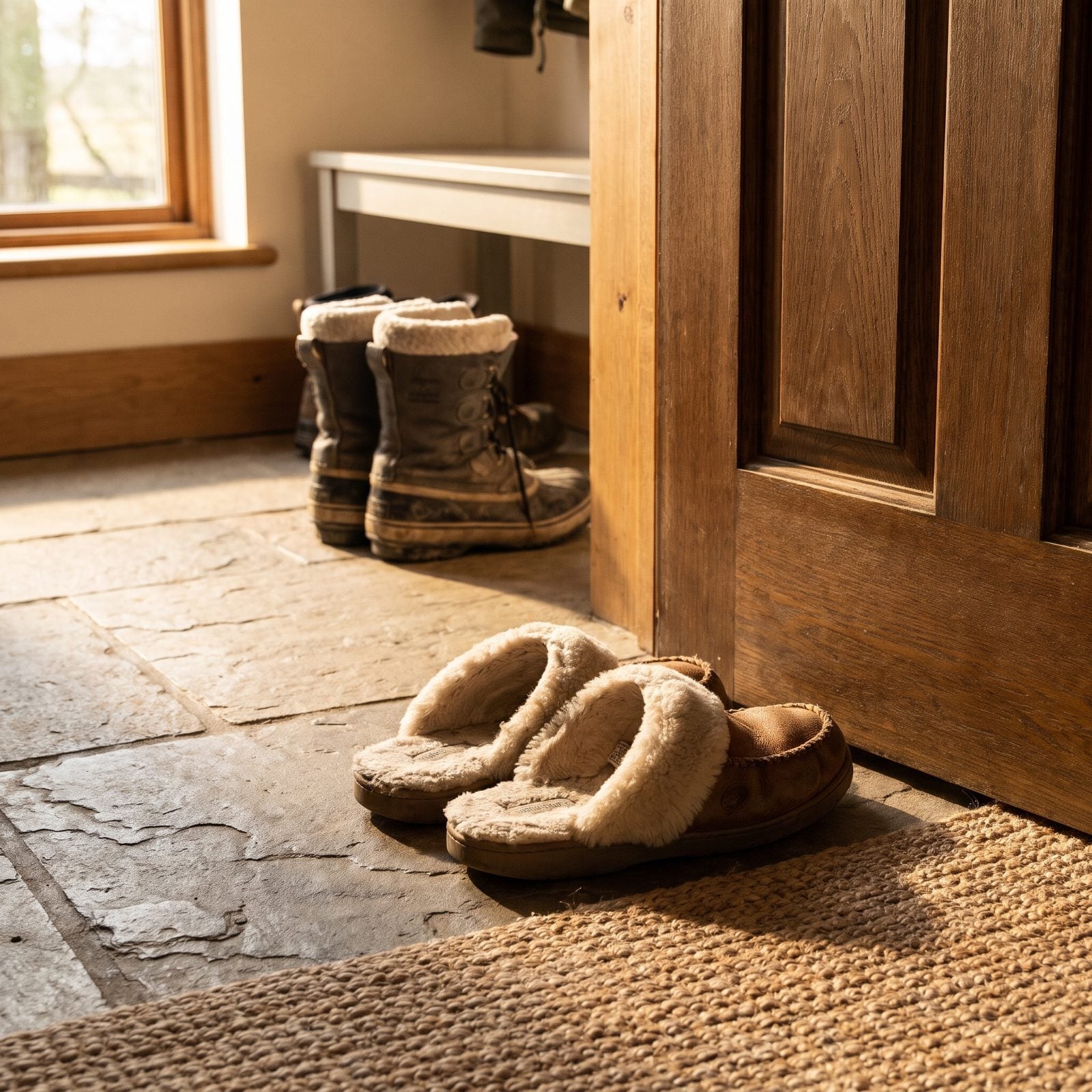
Cold feet read as a cold house, full stop. The fastest comfort upgrade in winter costs less than a pizza and lives by the door.
Slippers at the entryway become a habit the second you walk in. Shoes off, slippers on, and suddenly the floors stop mattering. Sheepskin or a lined wool pair holds up best. It sounds almost too small to count, but warm feet change your whole read of the room.
23. They Put Draft Snakes at Exterior Doors
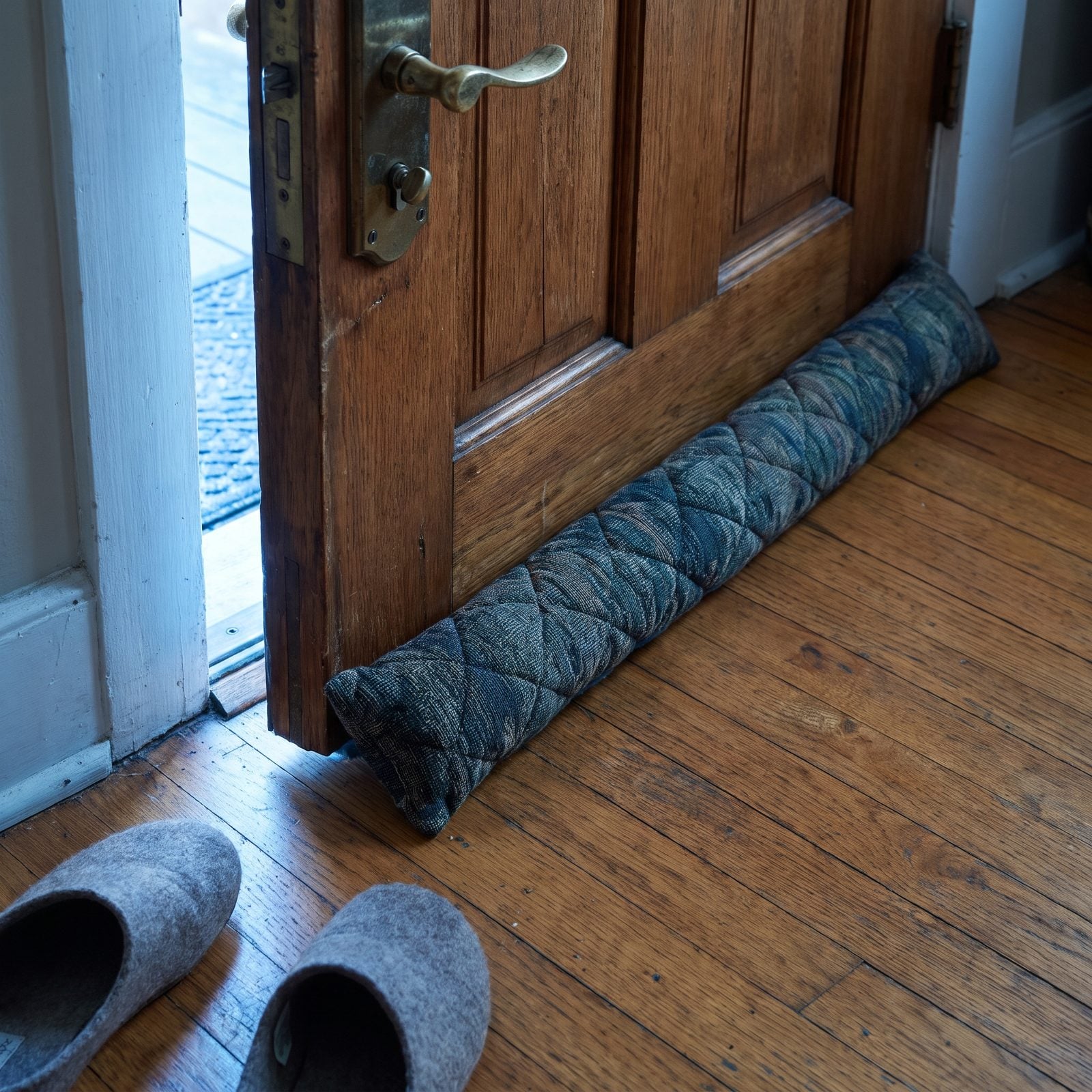
Hold your hand at the bottom of your front door on a windy night. That cold stream crossing your fingers is heat leaving, and money with it.
A draft snake is the oldest trick there is, a weighted fabric tube laid along the bottom of the door, so it’s already in place to seal the gap the moment you swing the door shut. Buy one, or sew a leg of old corduroy and fill it with dried rice. Not elegant. Dead effective, though. Keep one at every door that opens to the outside, including the one from the garage.
22. They Reverse the Ceiling Fans for Winter
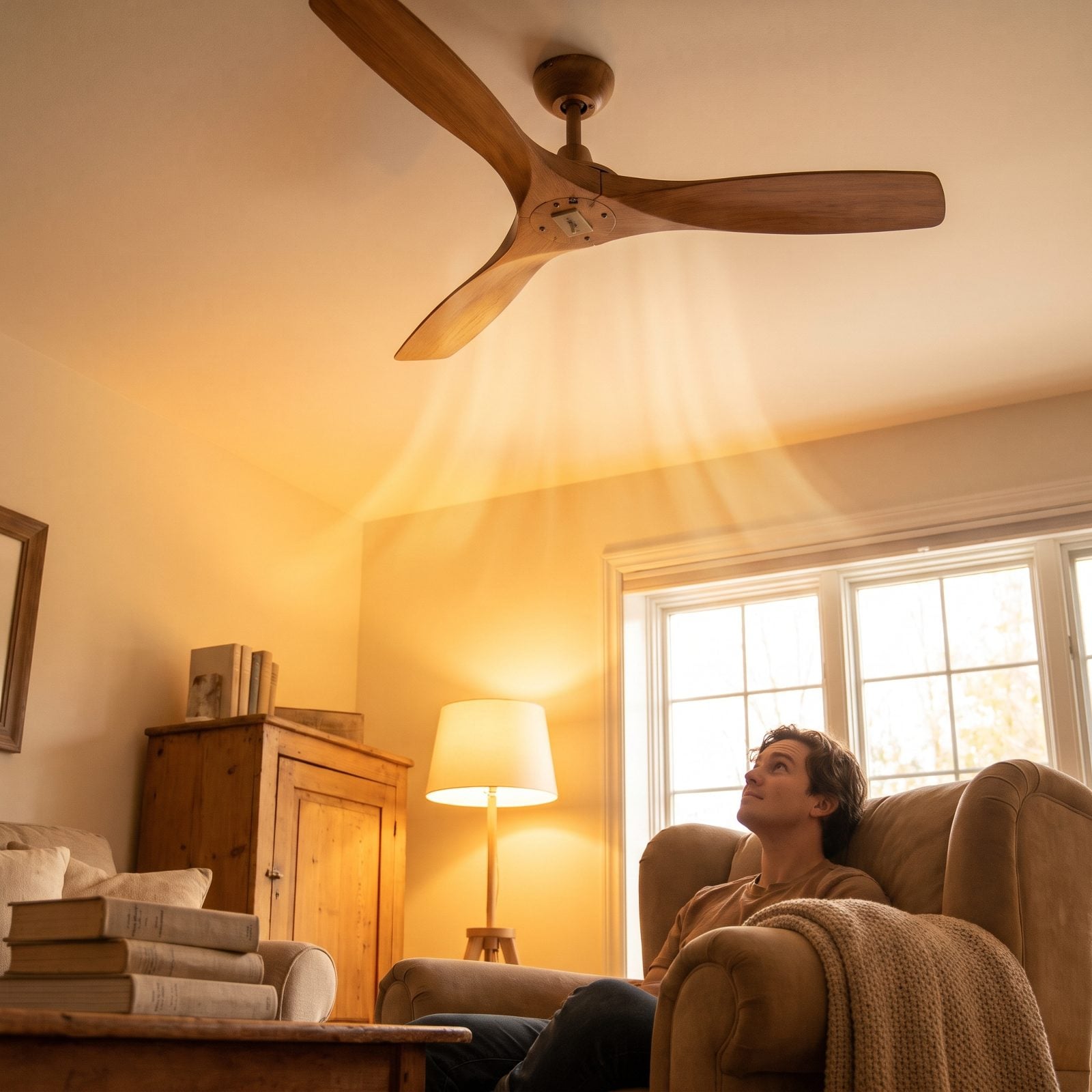
Warm air collects at the ceiling. In a room with any height to it, that’s a reservoir of heat sitting uselessly above your head.
Flip the little switch on the fan housing so the blades spin clockwise, then run it on low. Instead of blowing air down at you, it draws cool air up and nudges the trapped warm air gently down the walls. No breeze you can feel, just a more even room. Most people have never touched that switch. Go find it.
According to an HVAC contractor that has served homeowners since 1959, “In winter, reverse the fan to clockwise and drop it to the lowest speed setting. The blades pull cool air upward, pushing the warm air that collects near the ceiling back down along the walls.”
21. They Bleed Radiators Before Heating Season
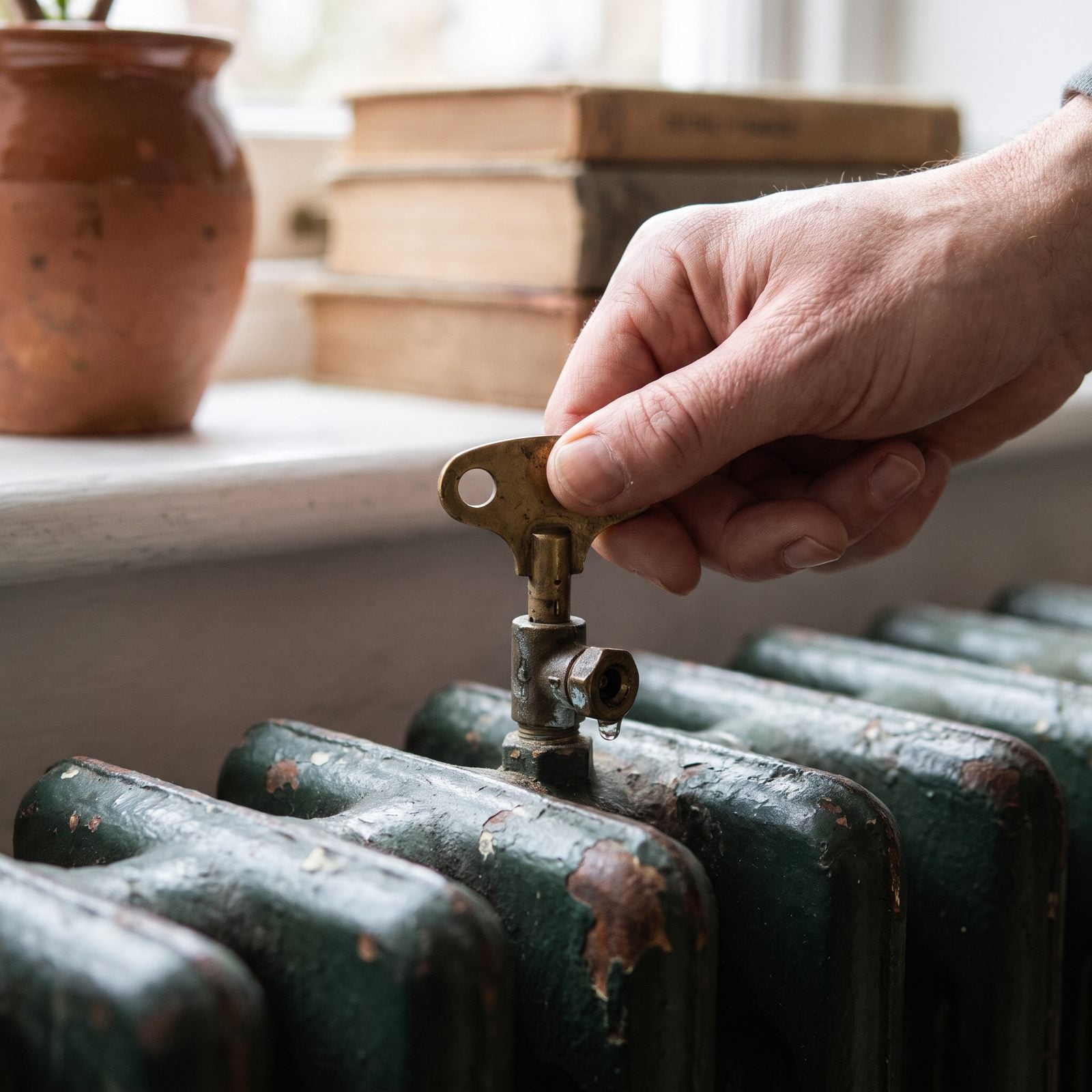
If the bottom of a radiator gets hot but the top stays cool, air is trapped inside and your room is only getting part of the heat it’s paying for.
Bleeding fixes it. With the heat off and cool, a small radiator key opens the valve, you let the trapped air hiss out, then close it the second water appears. Keep a cloth under it. It’s a five-minute job per radiator at the start of the season, and a cold bedroom often turns out to be nothing more than a pocket of air that never got released. Alright, go find that key before the first freeze.
As a gas engineer who services home boilers puts it, “A radiator that is warm at the bottom but cold at the top has trapped air inside. Bleeding it takes five minutes and you do not need a plumber.”
20. They Keep Heating Vents Clear of Furniture
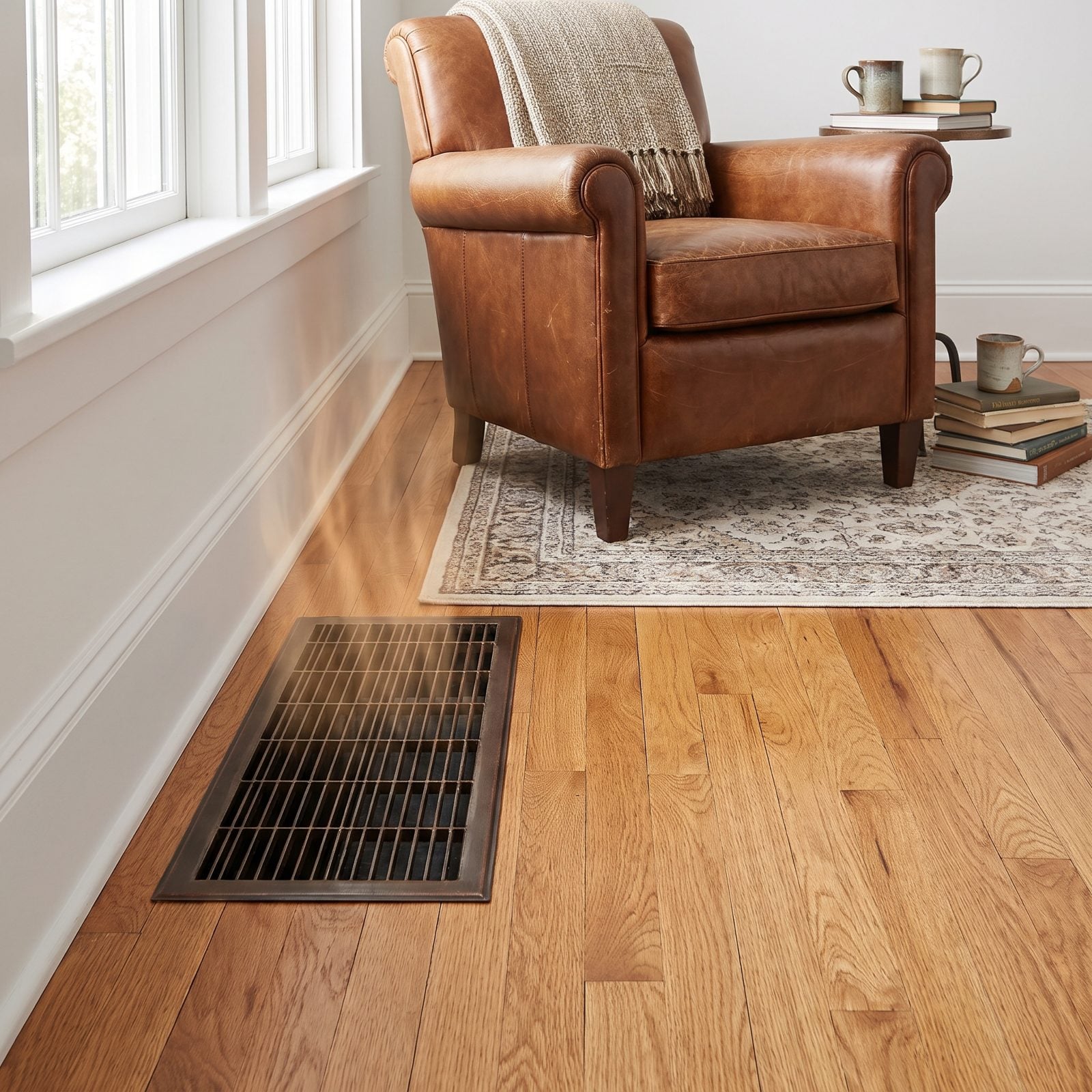
The least glamorous habit on this list is also the one that quietly fixes a cold room. Push a sofa over a floor register and you’ve built an expensive radiator for the underside of your couch cushions. The warm air has nowhere to go.
I got this wrong for years in an old rental, wondering why one corner stayed arctic while the thermostat insisted everything was fine. The fix cost nothing — I moved a bookcase eight inches and the whole room changed.
As a heating and cooling contractor warns, “A couch, cabinet, or bed too close to a vent can slow the air moving through a room and leave comfort uneven.”
19. They Run a Humidifier When the Air Turns Dry
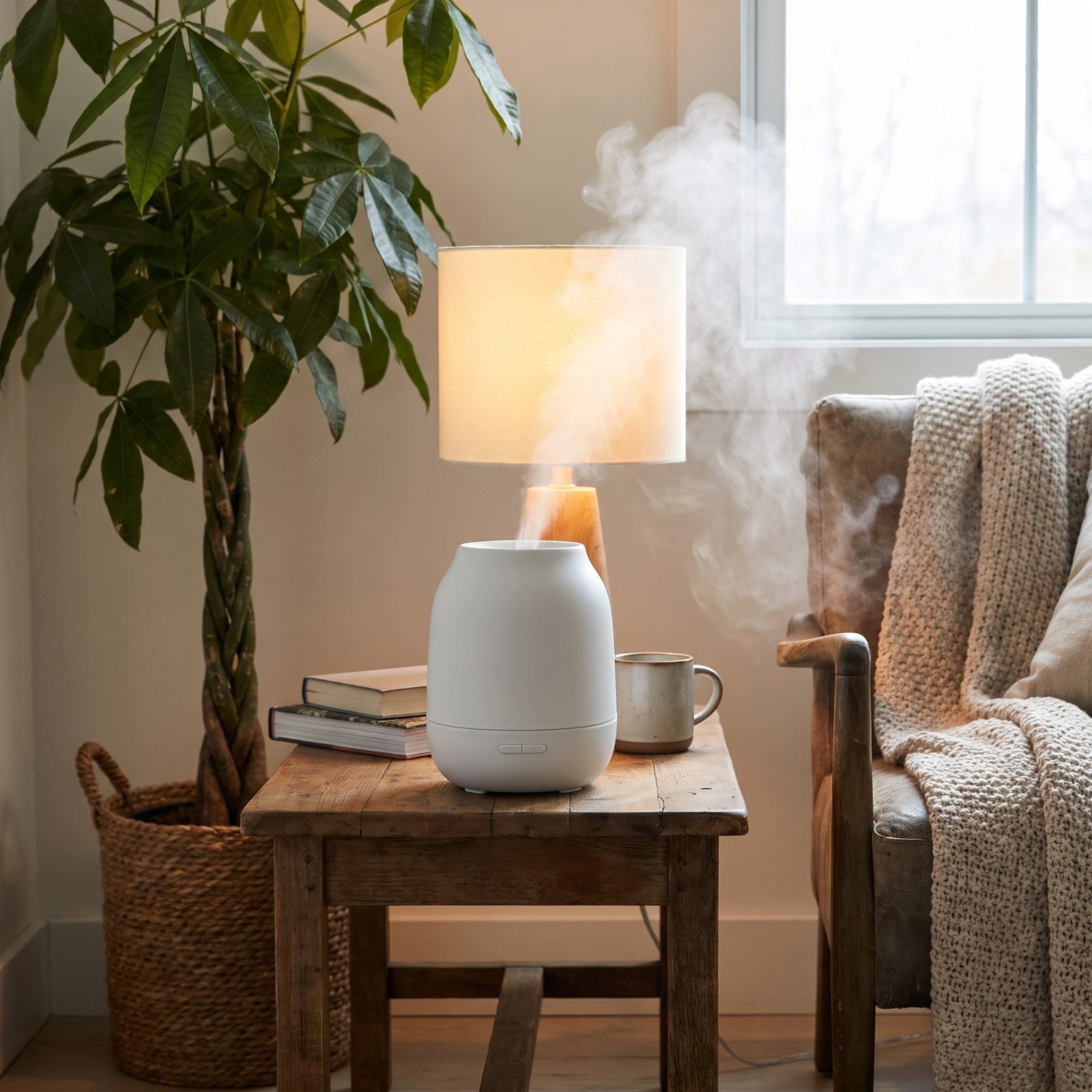
Winter heat is thirsty. It pulls moisture out of the air, out of your skin, out of the wood furniture that then starts creaking like an old ship. A room at the right humidity feels warmer than a dry one at the same temperature, so you can nudge the thermostat down and not notice.
Cool-mist units are the easy choice for most bedrooms. Clean the tank often — a neglected humidifier turns into a science experiment nobody asked for, and it’ll remind you with a smell.
18. They Add Flannel Sheets Before the First Freeze
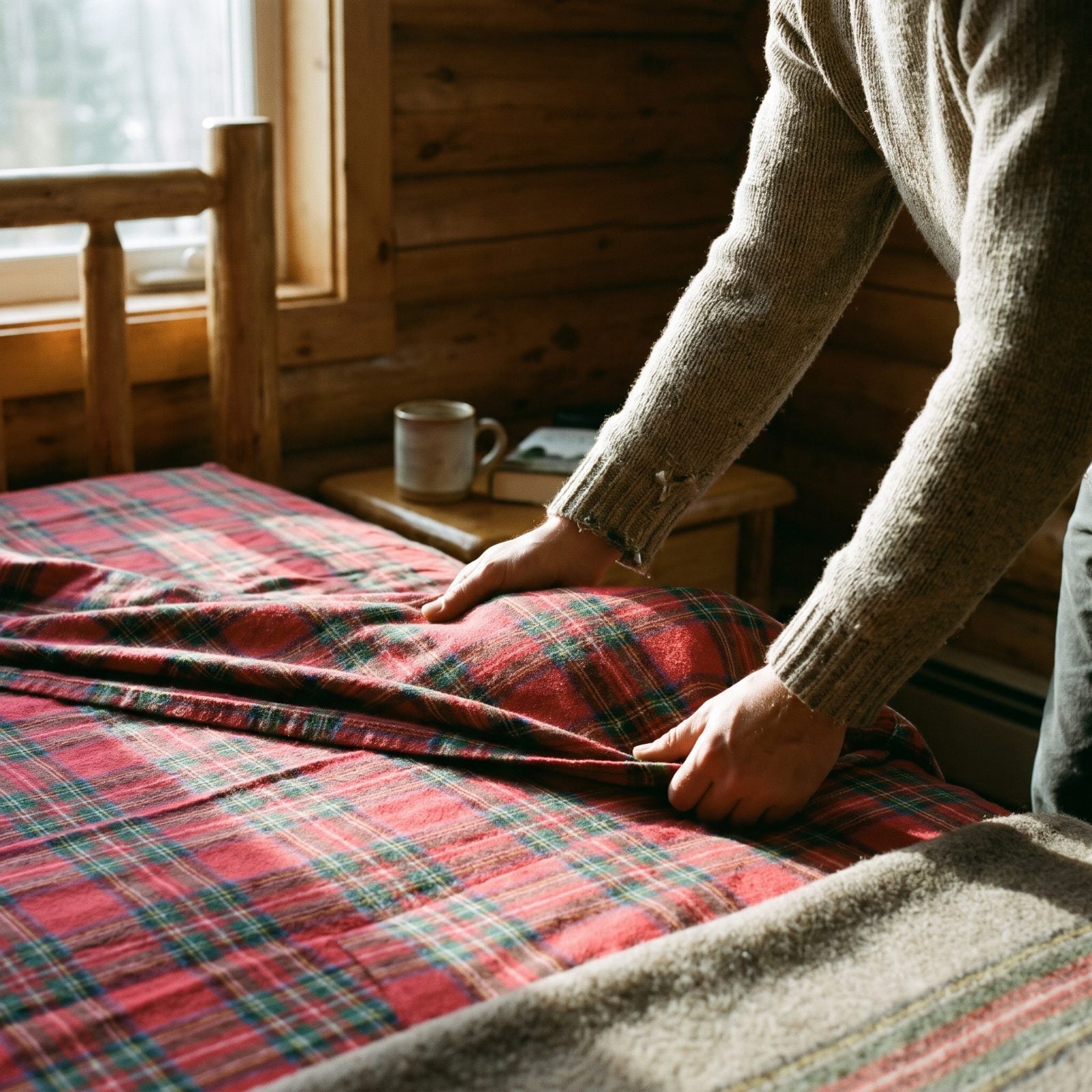
The trick with flannel is timing. Swap your crisp cotton percale for brushed flannel the week before the first real cold snap — not in January, when you’re already freezing. That brushed nap traps a thin layer of warm air against you, so the bed stops feeling like a slab you have to heat from scratch every night.
Good flannel is measured in grams per square meter, and the heftier weaves hold up for years. The cheap thin stuff pills into a sad fuzzy mess by February.
17. They Warm the Bed With a Hot-Water Bottle
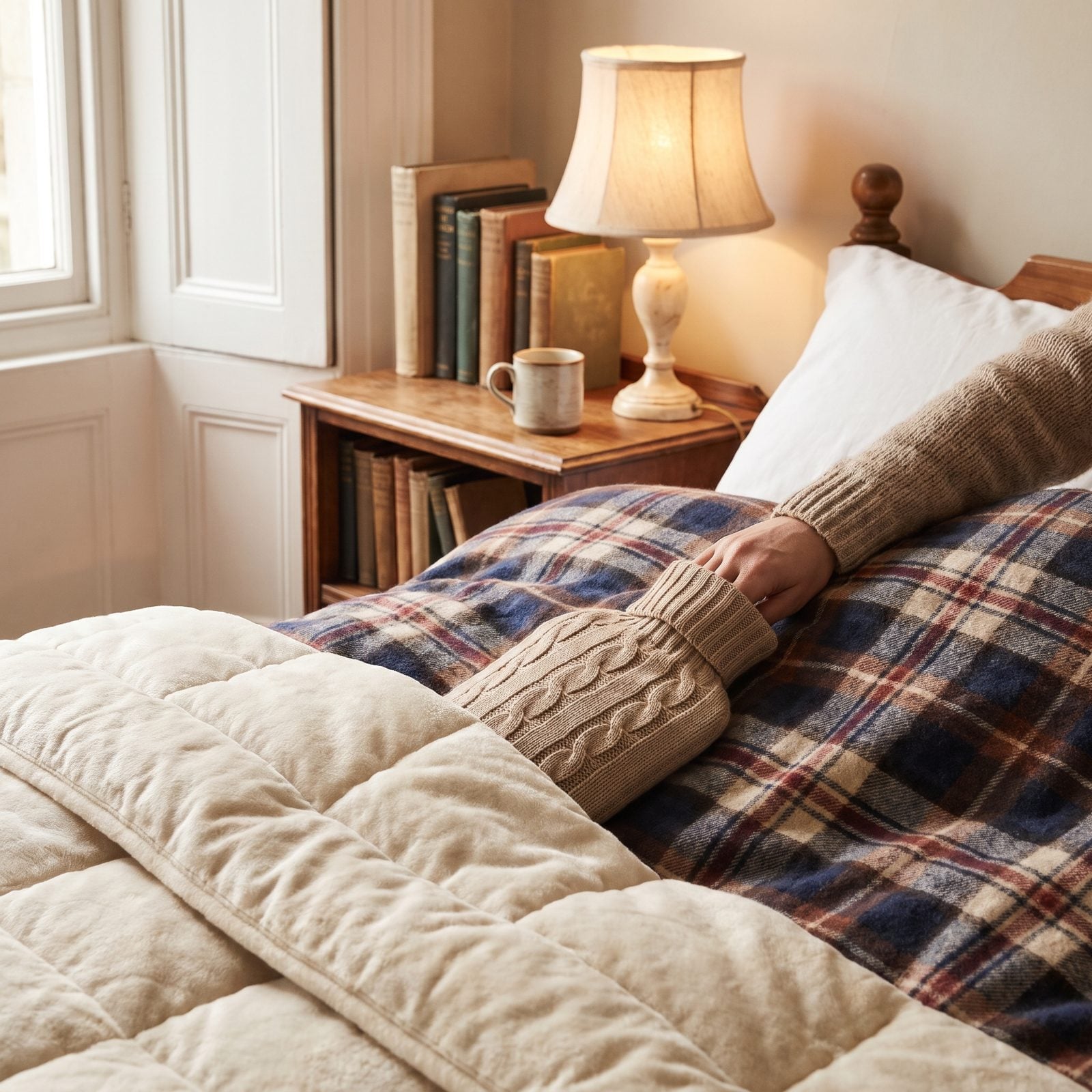
Your grandmother was onto something. Fill a rubber bottle with hot (not boiling) water, slide it between the sheets twenty minutes before bed, and you climb into warmth instead of a cold trap that steals your body heat for the first hour.
Knit covers aren’t decoration. Bare rubber against bare skin is a quick route to a burn, and the cover holds the heat longer too — a good one stays warm past midnight. It costs a few dollars to run and asks nothing of your electric bill, which is more than I can say for most things that keep me warm.
16. They Use an Electric Throw During Quiet Evenings
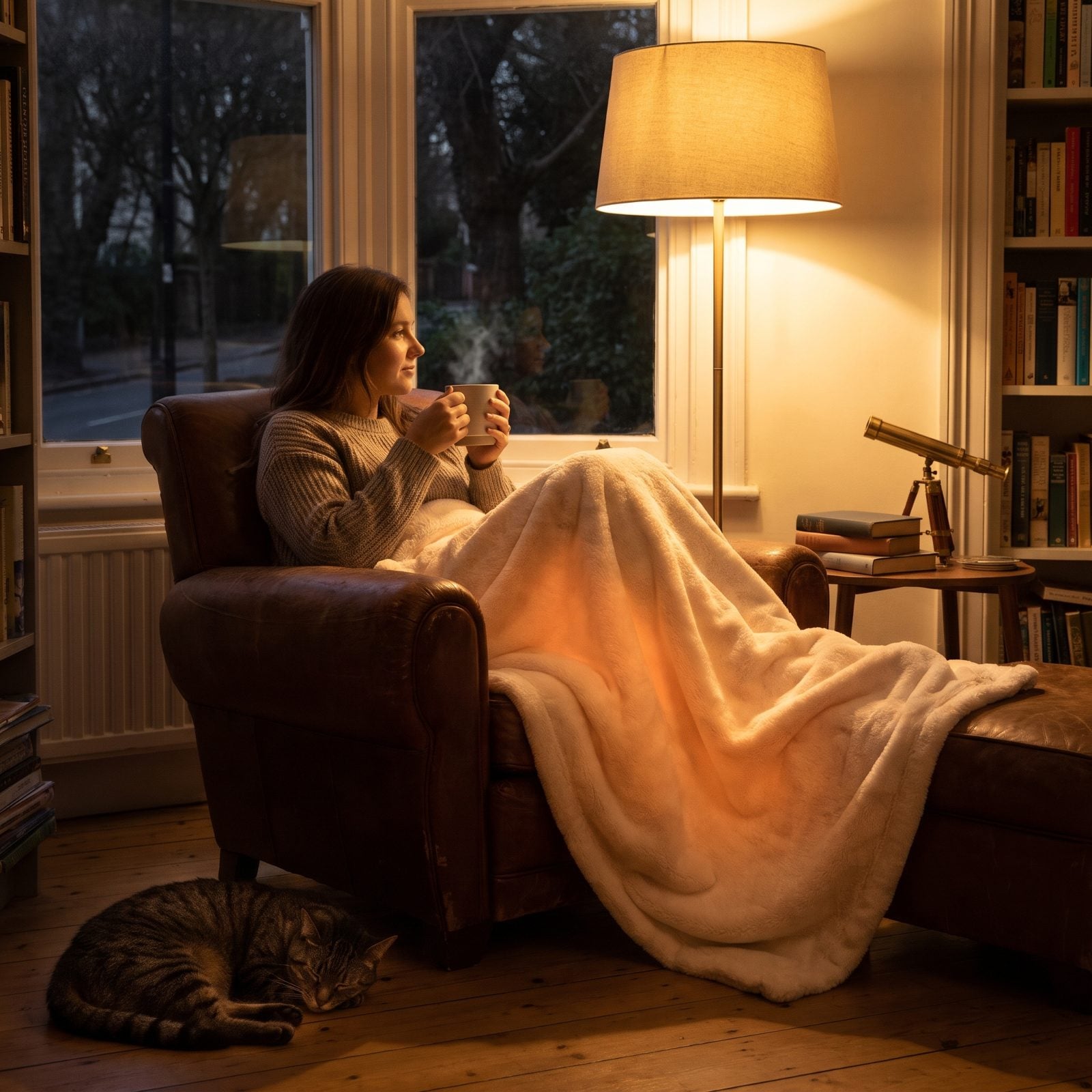
Heat the person, not the house. On a quiet evening you don’t need the furnace roaring to keep an empty hallway at seventy degrees — you need your lap warm. An electric throw draws about as much power as a couple of light bulbs and lets you drop the thermostat a few degrees without a single shiver.
Look for auto-shutoff and a controller you can actually find in the dark. The fancy ones have zones. Honestly? One steady low setting is plenty.
15. They Light Candles at Dusk
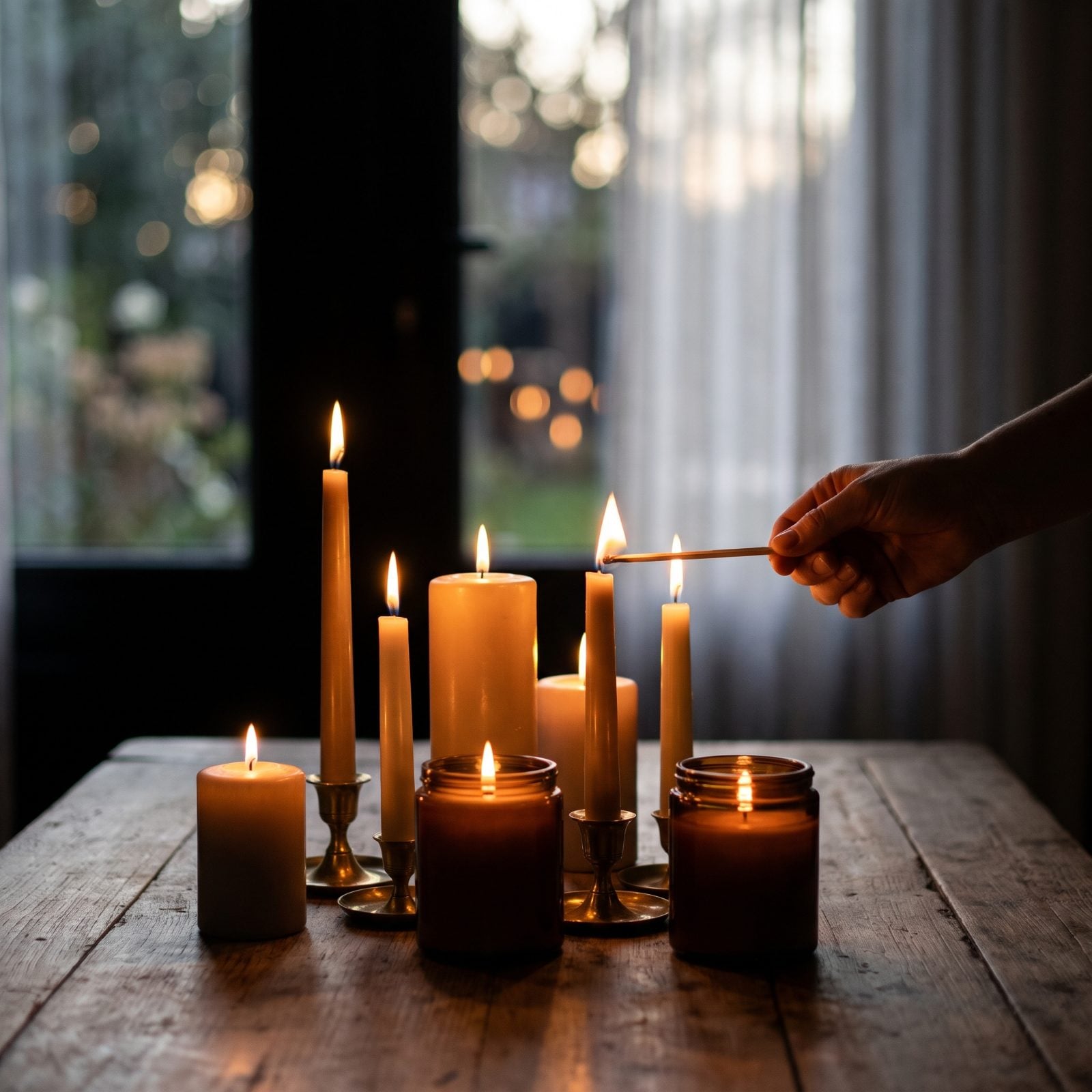
A candlelit room feels warmer even when the thermostat says otherwise, and there’s a reason for it. Our brains read a flickering flame as warmth and safety, a holdover from when fire was the only thing between us and a cold night. Light a few at dusk and the room softens.
Cluster them in odd numbers at different heights for the best glow. Beeswax burns cleaner than cheap paraffin and smells faintly of honey. And please — never leave one burning in a room you’ve walked out of. A warm home isn’t worth that.
14. They Drape Sheepskins Over Cold Chairs
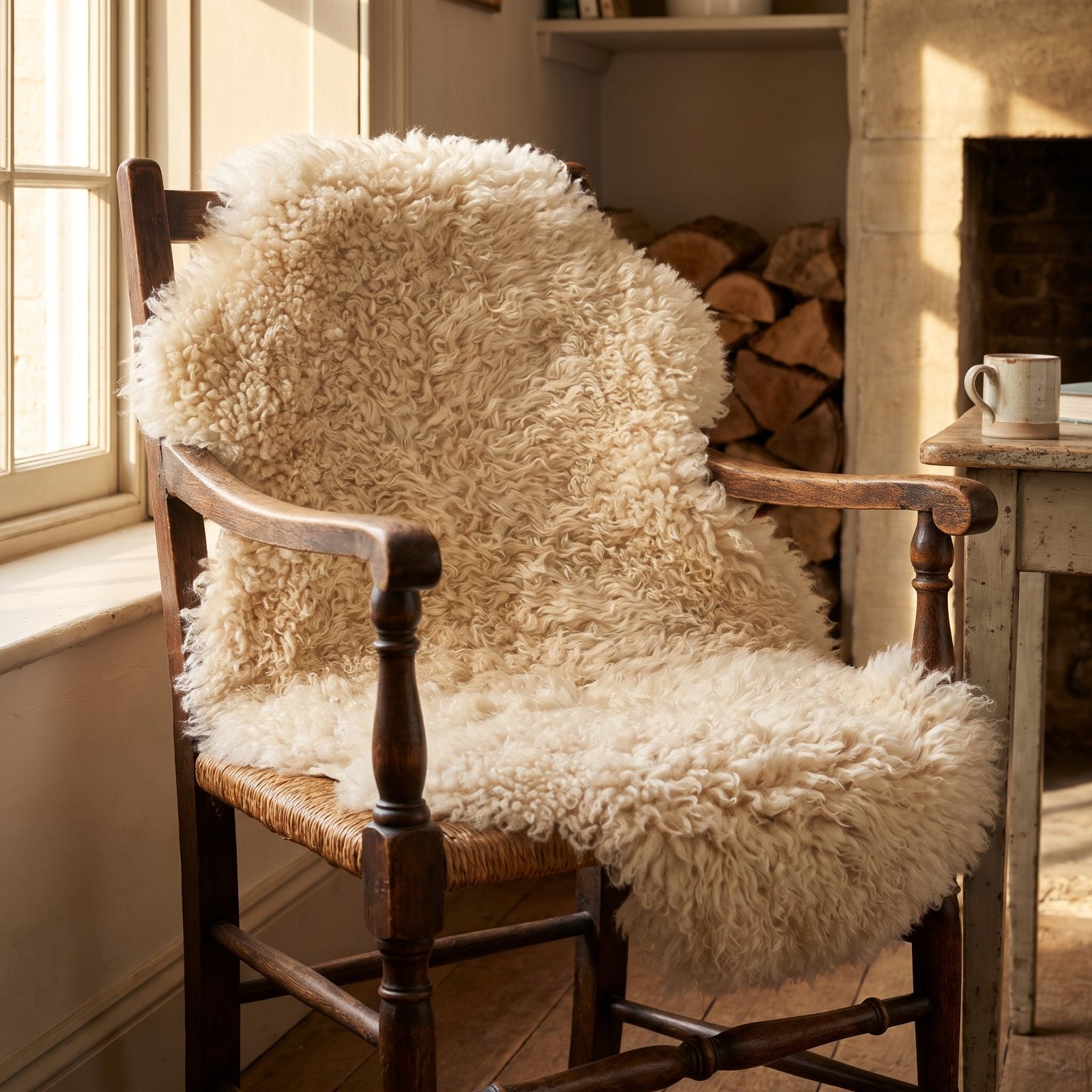
A wooden or metal chair in winter is a small act of hostility against your body. It pulls heat out of you the second you sit down. A sheepskin fixes that instantly, and it looks good doing it.
Real wool insulates whether you’re sitting on it or not, because the crimped fibers trap warm air the way a down jacket does. Natural ivory ones read soft and bright and go with almost anything. Shake them out now and then — they shed a little, especially new ones, and that’s the price of the warmest seat in the house.
13. They Clean the Fireplace Glass Regularly
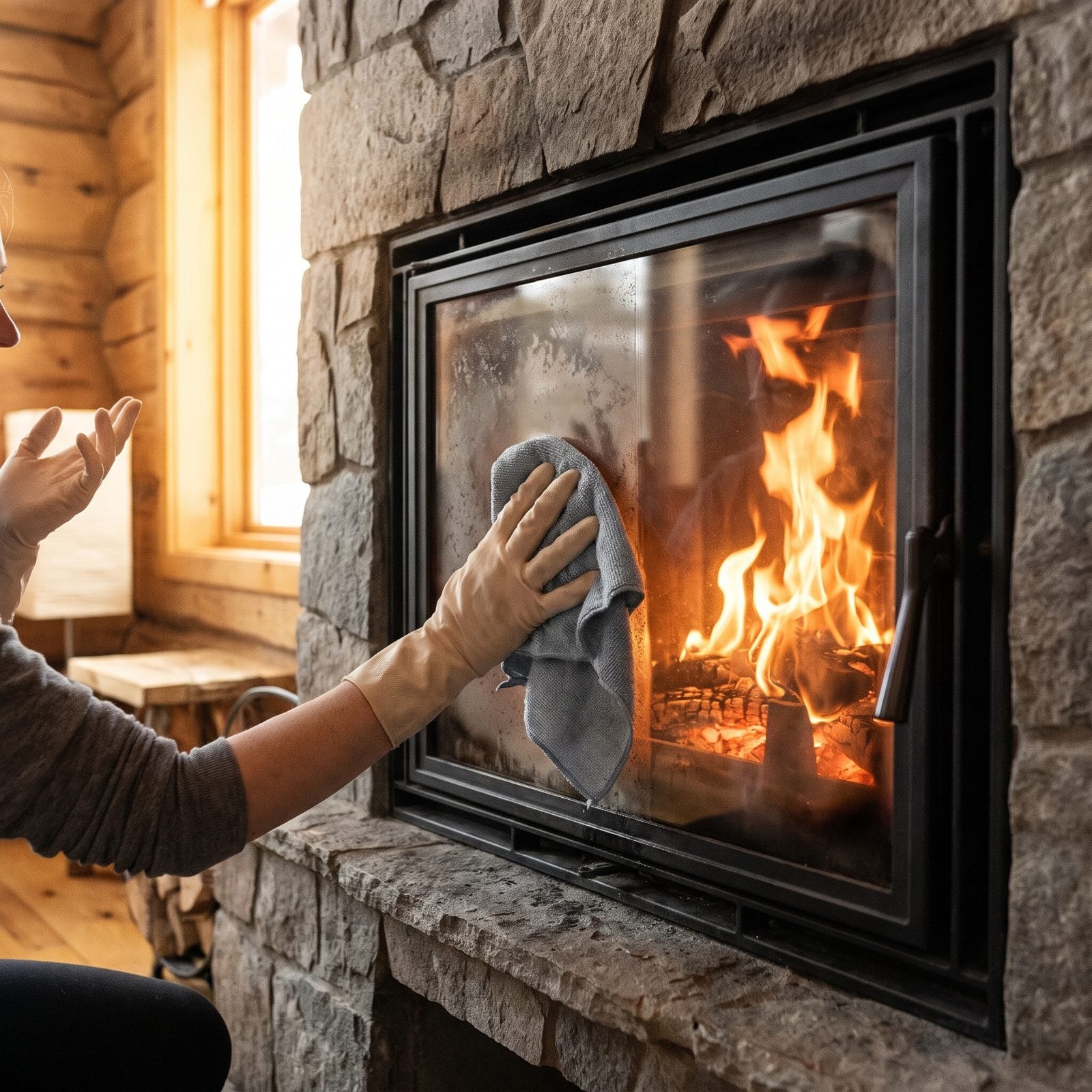
A fire loses half its magic behind sooty glass. That grey haze builds up fast, especially with slow, smoldering burns, and it dims the one thing you lit the fire for in the first place. The light.
The old trick still beats everything: pull on rubber gloves, dab a grey microfiber cloth in a little cool fireplace ash, and wipe the glass in circles. The fine ash is a gentle abrasive. Buff with a clean fold of the cloth and the flames come back to life. Wait until the fire is out and the glass is completely cold, though. Never wipe it while flames are burning behind it. Let it be the last thing you do before the next fire.
According to a chimney sweep with fifteen years around fireplaces, “Cool ash on a damp newspaper cuts fireplace soot better than anything in a spray bottle, and it costs nothing.”
12. They Simmer Citrus Peels and Spices on the Stove

Scent is the fastest route to a home that feels warm before you’ve touched the thermostat. A pan of water at the barest simmer with orange peels, a couple of cinnamon sticks, and a handful of cloves fills the whole house in minutes, and it beats any plug-in air freshener on earth.
Keep it low and keep an eye on the water. It’ll boil dry if you forget it, and a scorched pot smells like the opposite of welcome. Top it up through the afternoon. Save your citrus peels in the freezer and you’ll always have the makings on hand.
11. Set Up a Dedicated Hot-Drink Station
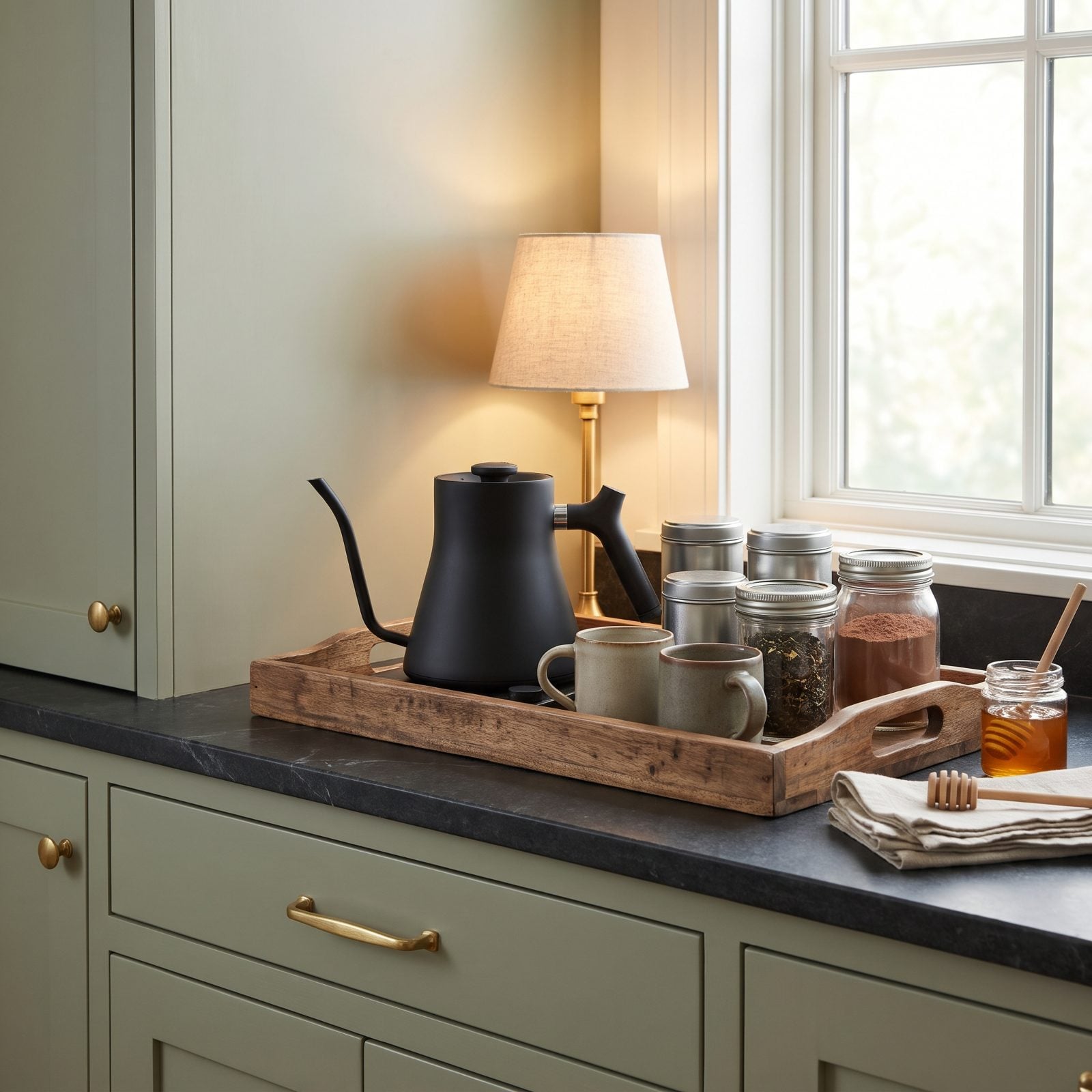
Give the kettle a home. One small stretch of counter, a tray, the mugs you actually reach for, and whatever warms you — cocoa, strong black tea, that instant cider nobody admits to loving. When everything lives in one spot, you make the drink instead of standing there debating whether it’s worth the effort of digging the mugs out of a cupboard.
I resisted this for years because it felt fussy. Then I set one up on a whim, and the house started smelling like cinnamon by default. A warm drink in hand changes how a room feels before you’ve touched the thermostat.
10. Keep a Soup Pot in Regular Rotation
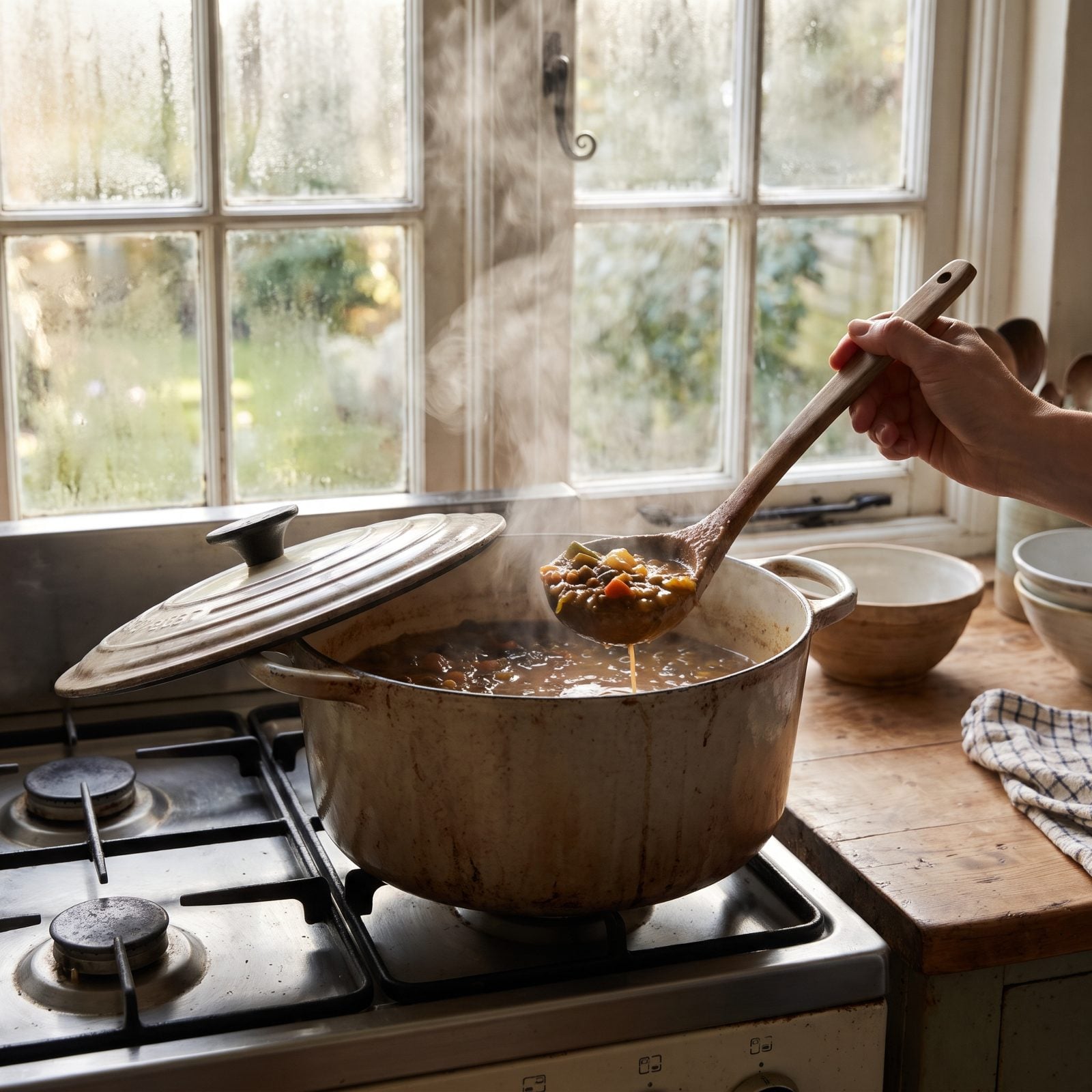
A pot of soup pulls double duty — it feeds people and heats the kitchen while it does it. The stove runs low for an hour, steam fogs the window, and the whole floor of the house warms a degree or two for free.
No recipe, no plan. Beans, whatever vegetables are going soft in the drawer, a parmesan rind if you’ve got one. It reheats better than it cooked, which makes Tuesday easier.
9. Bake Something on the Coldest Afternoons
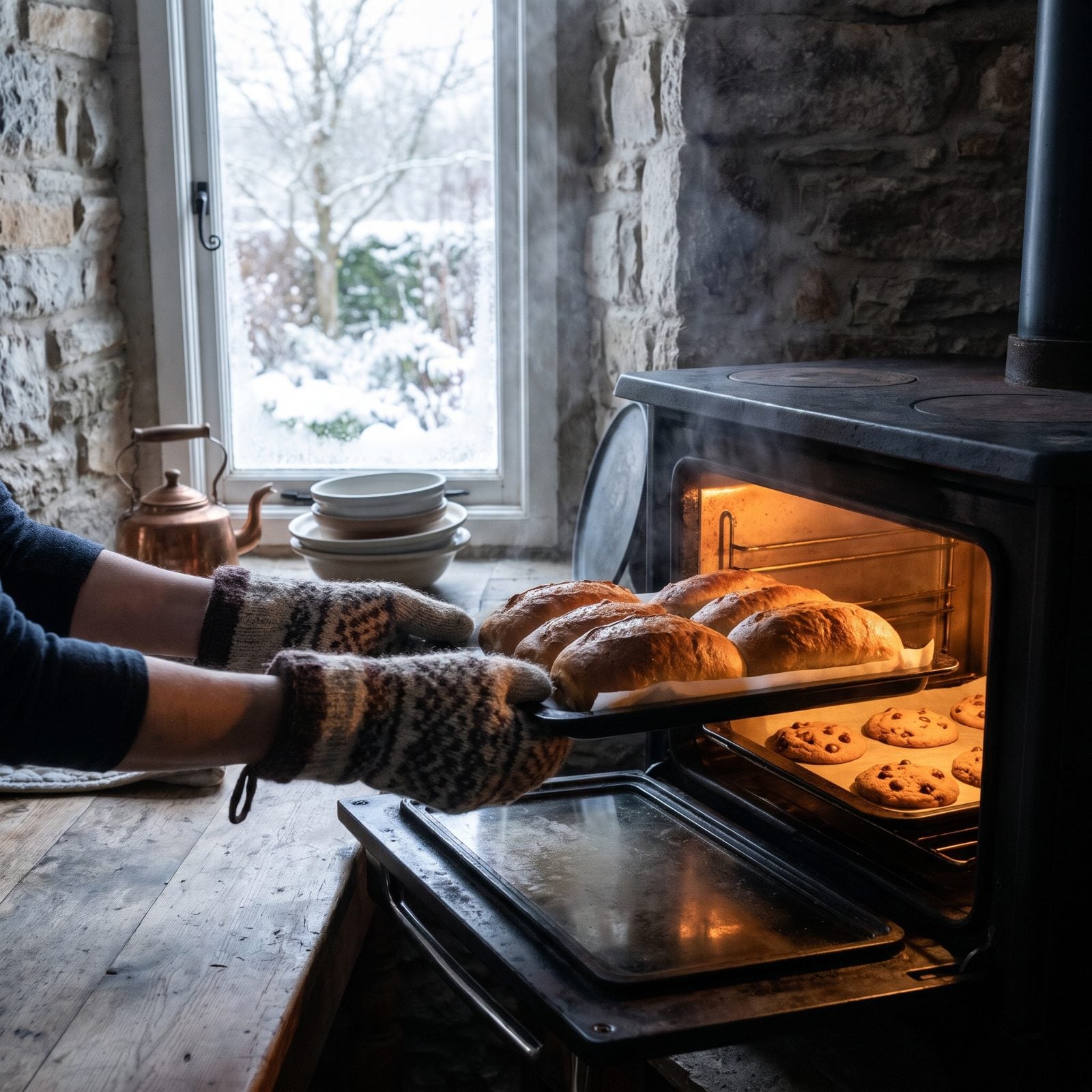
Nothing resets a cold house like the oven at 375. Bread, a sheet of cookies, a pan of roasted roots — pick whatever, because the food is almost beside the point. What you’re really after is the heat pouring out of the oven door and the smell that reaches the far corners of the house before the timer does.
On the gray afternoons when leaving feels like too much, baking hands you a small, achievable thing with a warm payoff. The kitchen holds that warmth for an hour after. Open-plan homes catch it best.
8. Serve Dinner at the Table Instead of the Television
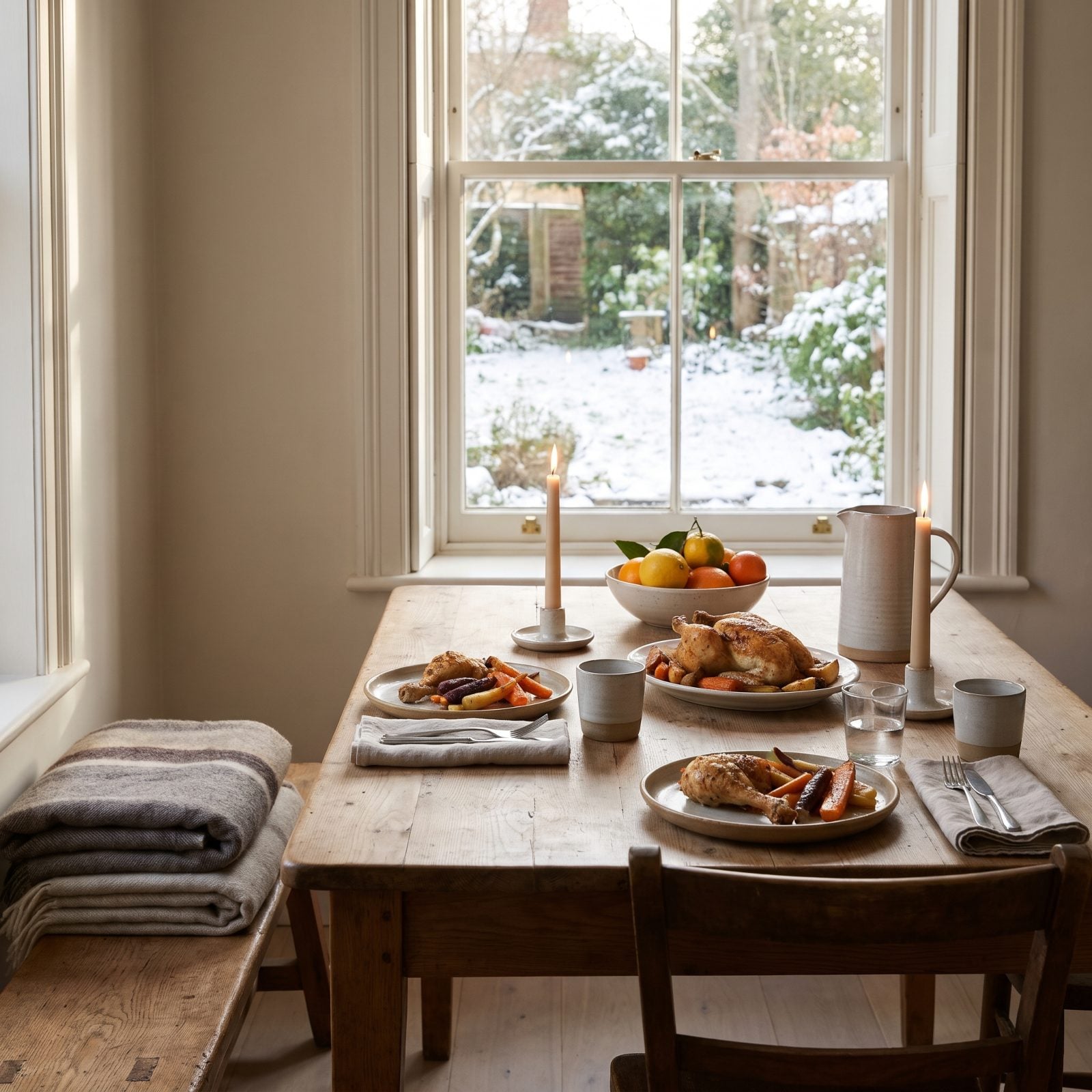
Winter makes the couch magnetic, so the table has to earn the trip. Light two candles. That’s it. A lit table reads as an occasion even when dinner is leftover soup, and the candles do all the heavy lifting.
Eating facing each other instead of a screen slows the meal down and makes the house feel inhabited rather than just occupied. I’m not precious about it — we eat in front of the TV plenty. But a few table nights a week change the temperature of the whole season.
7. Set Up a Winter Drop Zone With a Bench, Boot Tray and Covered Baskets
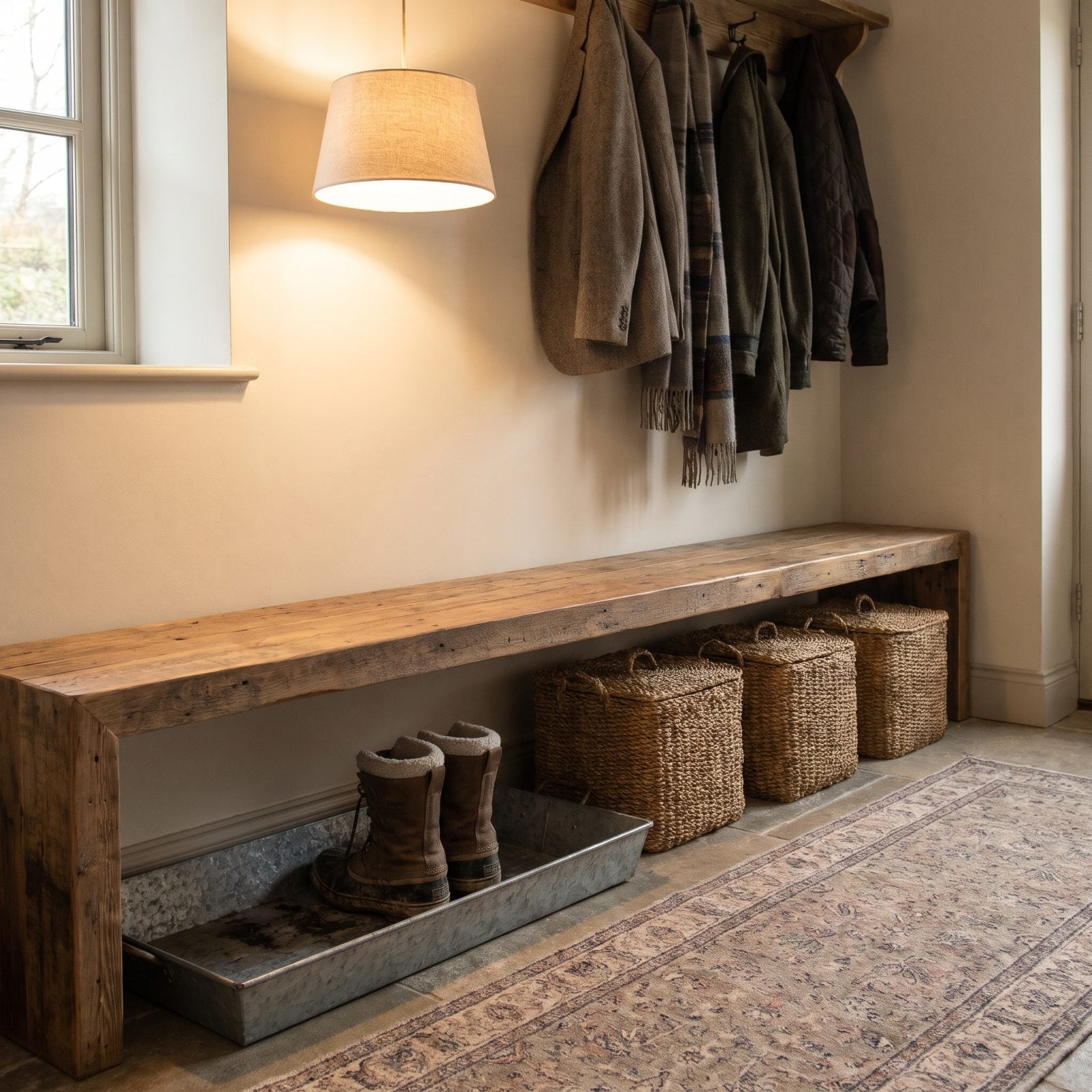
The front hall decides whether winter feels managed or feral. You want a bench to sit and pull boots off, a tray to catch the melt, and baskets with lids so the clutter of mittens and ear warmers disappears from sight.
The part people skip is the lids. An open basket of gloves just looks like a pile of gloves. Cover it and the same mess reads as tidy. Cheap trick, works every time.
6. Hang Damp Coats Where Air Can Circulate
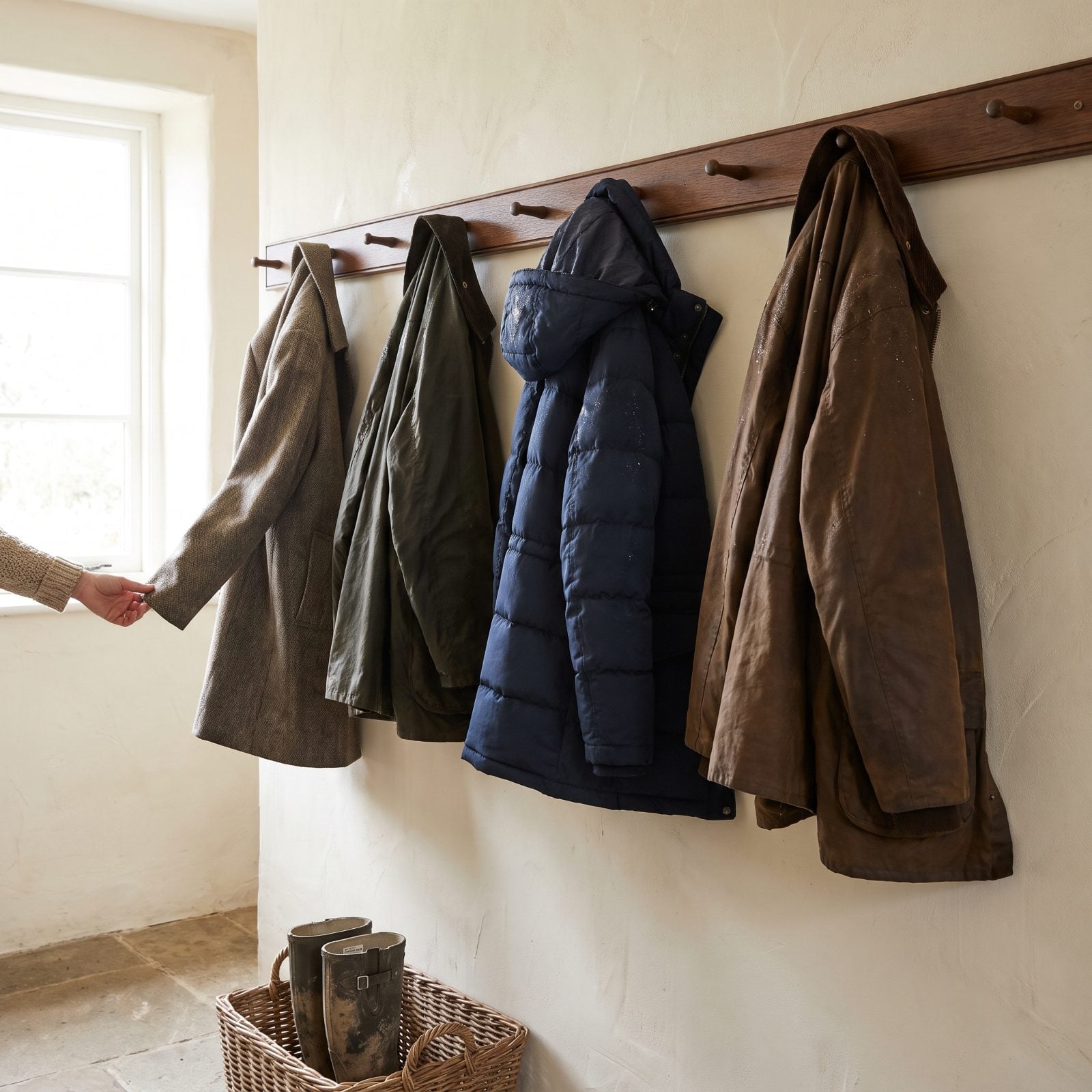
Crammed onto one overloaded hook, a wet coat stays wet, and by February your hall smells like a locker room. Give each coat its own peg with a gap between. Air moves, the wool dries, the mildew smell never gets a foothold in the first place.
A peg rail spaced wider than feels necessary is the whole fix. Bonus: nobody fights the tangle of straps every morning.
5. Place an Absorbent Runner Inside the Front Door
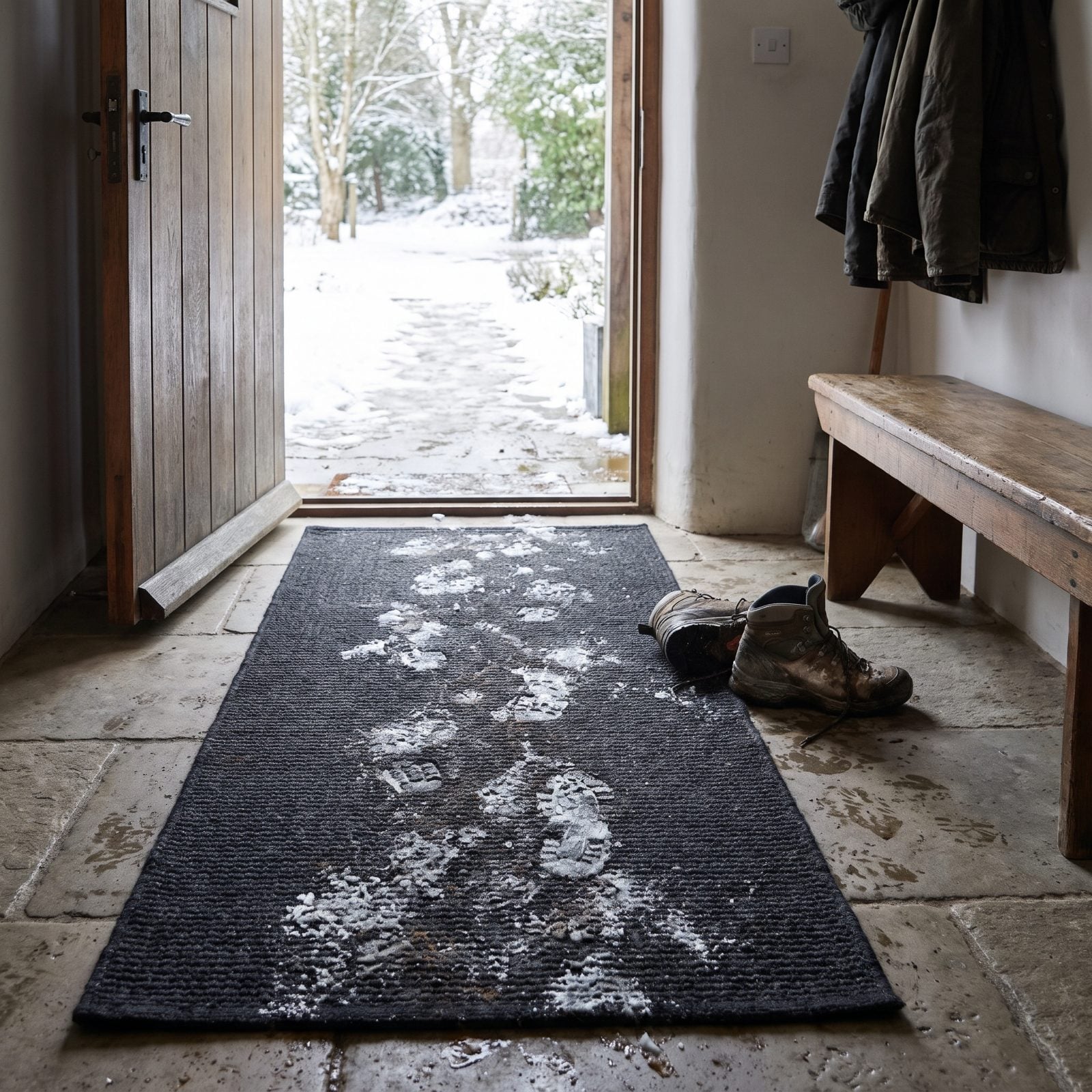
Snow doesn’t stay snow once it crosses the threshold. It turns into grey slush, road salt, and a trail of it tracked clear to the kitchen. A long absorbent runner right at the door catches the worst of it before it spreads.
Pick something washable and darker than you’d choose in summer, because salt stains show, and a rug you can toss in the machine beats scrubbing the floor every night. The jute-and-cotton kind grips grit better than a flat decorative mat.
4. Keep Spare Quilts in Guest Rooms
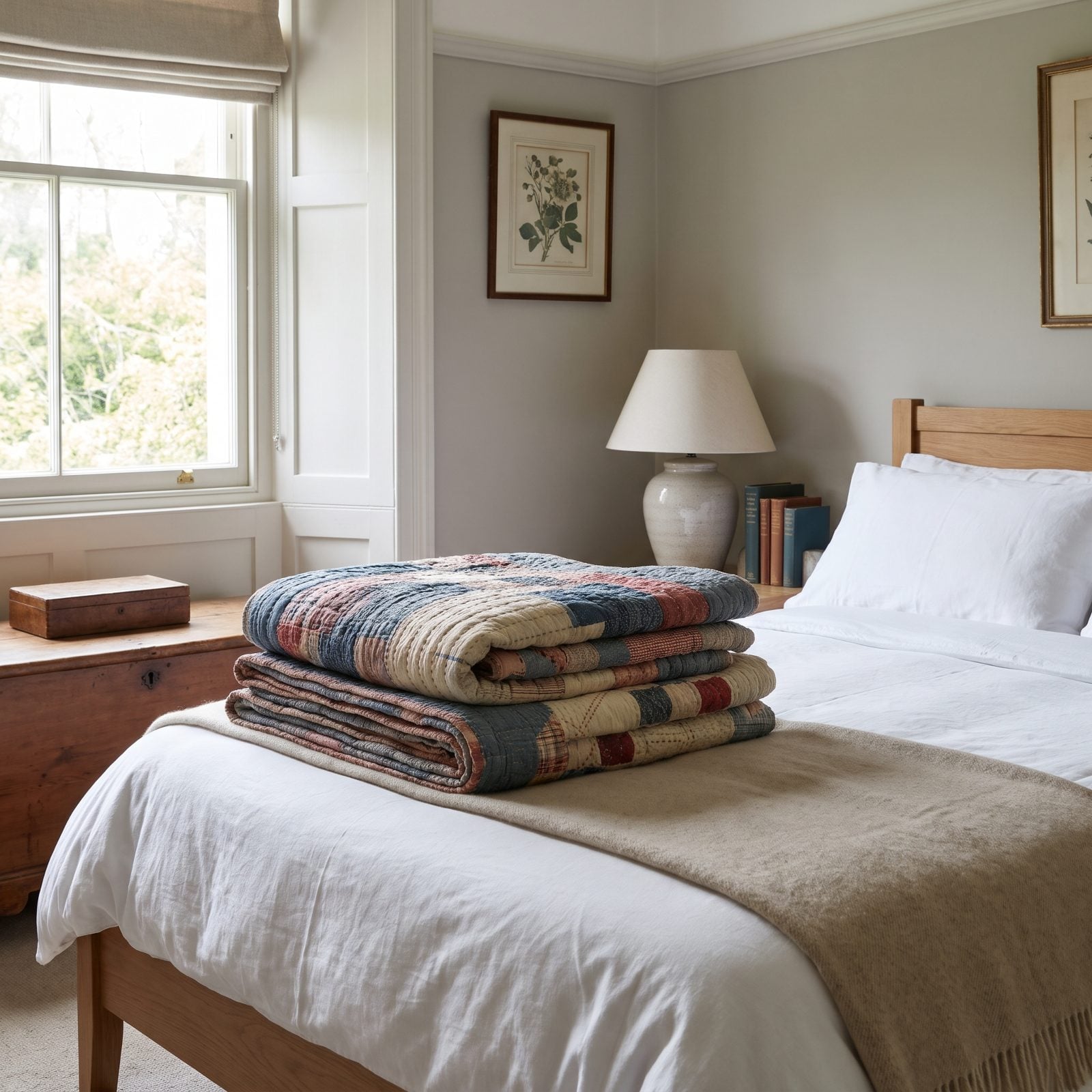
Here’s the quiet hospitality everyone notices and nobody mentions — a stack of quilts within arm’s reach of the bed. A guest who gets cold at 2 a.m. shouldn’t have to wander a dark house hunting for warmth, or lie there being polite about it.
Fold two or three at the foot of the bed. More than you think anyone needs. It signals the room was readied for a person, not just made up, and that does more than any decorative pillow ever will.
3. Bring In Evergreen Branches, Pinecones and Dried Orange Slices
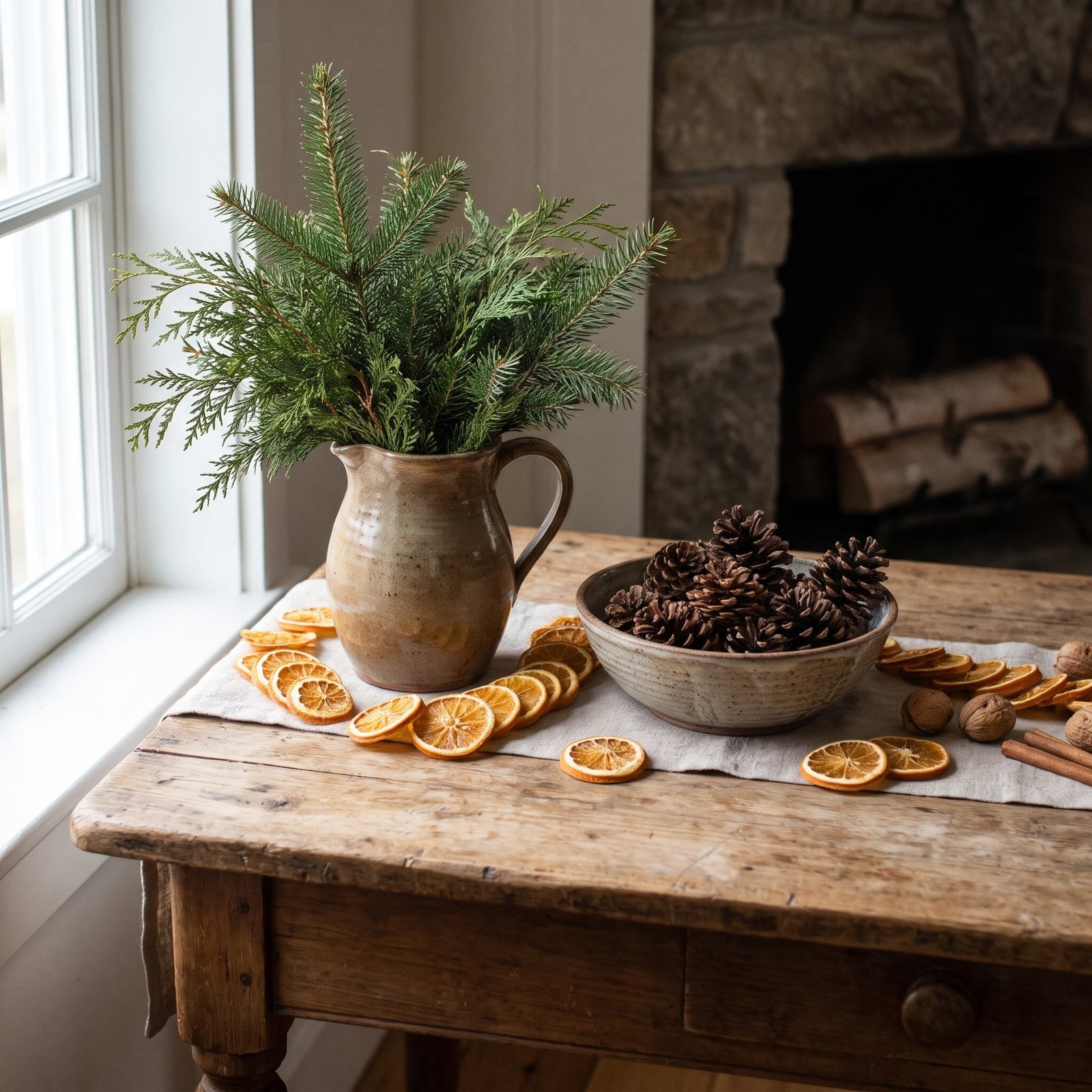
You can buy winter decor or you can walk outside and cut it. A handful of evergreen boughs in a pitcher, a bowl of pinecones off the lawn, orange slices dried low in the oven until they go translucent and smell like the holidays.
The oranges are the sleeper hit. Strung on twine or tucked in a bowl, they catch the light like stained glass and scent the room faintly for weeks. Costs nothing but a slow oven and an afternoon you were home anyway.
2. Play Soft Background Music in the Evening
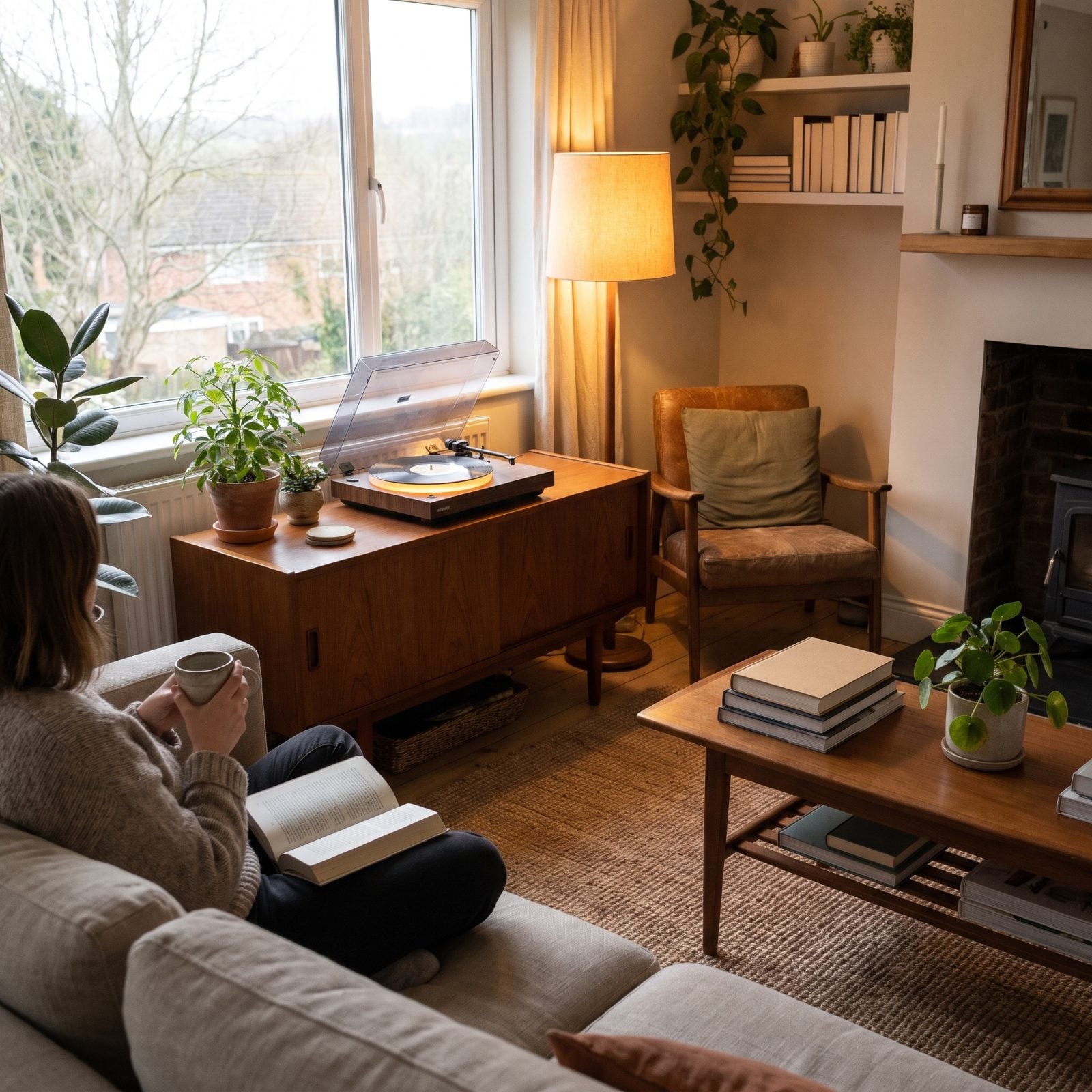
Silence in a cold house at night can feel heavy, almost echoing. Low music fills that space without demanding attention, and the room shifts from empty to occupied.
Keep it quiet and keep it instrumental, or you’ll end up listening instead of living. Think of the kind of thing you’d half-hear in a good café — under the conversation, under the sound of someone washing a pan. A house with a little music running feels like someone cares that you’re in it.
1. We Carve Out a No-Phone Wind-Down Corner
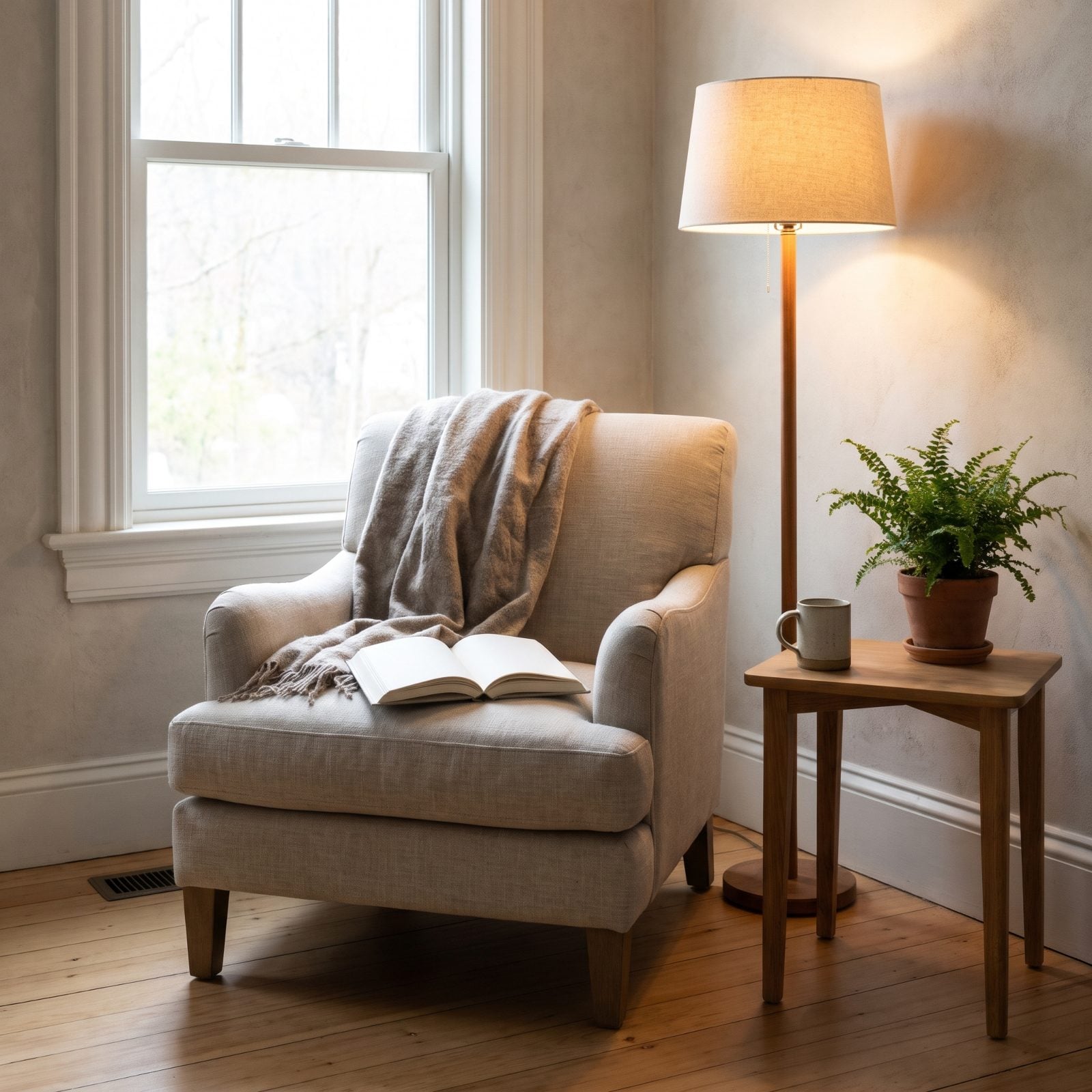
Your living room already has a spot that wants to be this: the chair nobody fights over, tucked near a lamp and just out of the main traffic. Claim it. Put a soft lamp there, a wool throw, a stack of actual books, and nothing that charges.
Here’s the odd part. The chair matters less than what you took away from it. A screen in your hand keeps your nervous system braced for the next ping, and the moment it’s out of reach, the body finally reads the room as safe. Warmth in winter is as much about feeling unguarded as it is about the thermostat.
I resisted this for ages. A corner’s a corner, I figured — how much could a throw and a lamp really do? Turns out they did almost nothing. What actually worked was the dumb little rule that the phone lives in the other room while I’m sitting here, and that one rule did more than all the soft furnishings combined.