
The photographer parks across the street and sits there a minute. Not stalling. Reading. A good one can tell you which window has a torn screen, which shrub ate the porch light, and exactly when the sun will stop fighting the front door, all before unpacking a single lens. The camera is the last tool they reach for. The eye comes first, and it catches the stuff you stopped seeing years ago because you walk past it every single day. So here’s what gets sized up in that first slow look, and why it quietly decides whether your listing photos pull people up the driveway or scroll them right past.
Please note that some of the images in this article were created with the assistance of AI.
44. The Direction of Sunlight on the Front Façade

Houses have a best hour, and it’s rarely the one you’re free. East-facing fronts want morning; west-facing fronts want late afternoon. Shoot at the wrong time and the whole façade goes flat and grey, or the roofline throws a hard shadow straight down the front door like a slammed shutter.
So the photographer checks which way your house points before anything else, because no amount of editing rescues a front that was fully backlit, the sky blown out white behind it and the brick turned the color of wet cardboard.
43. Vehicles Left in the Driveway or Outside the Garage
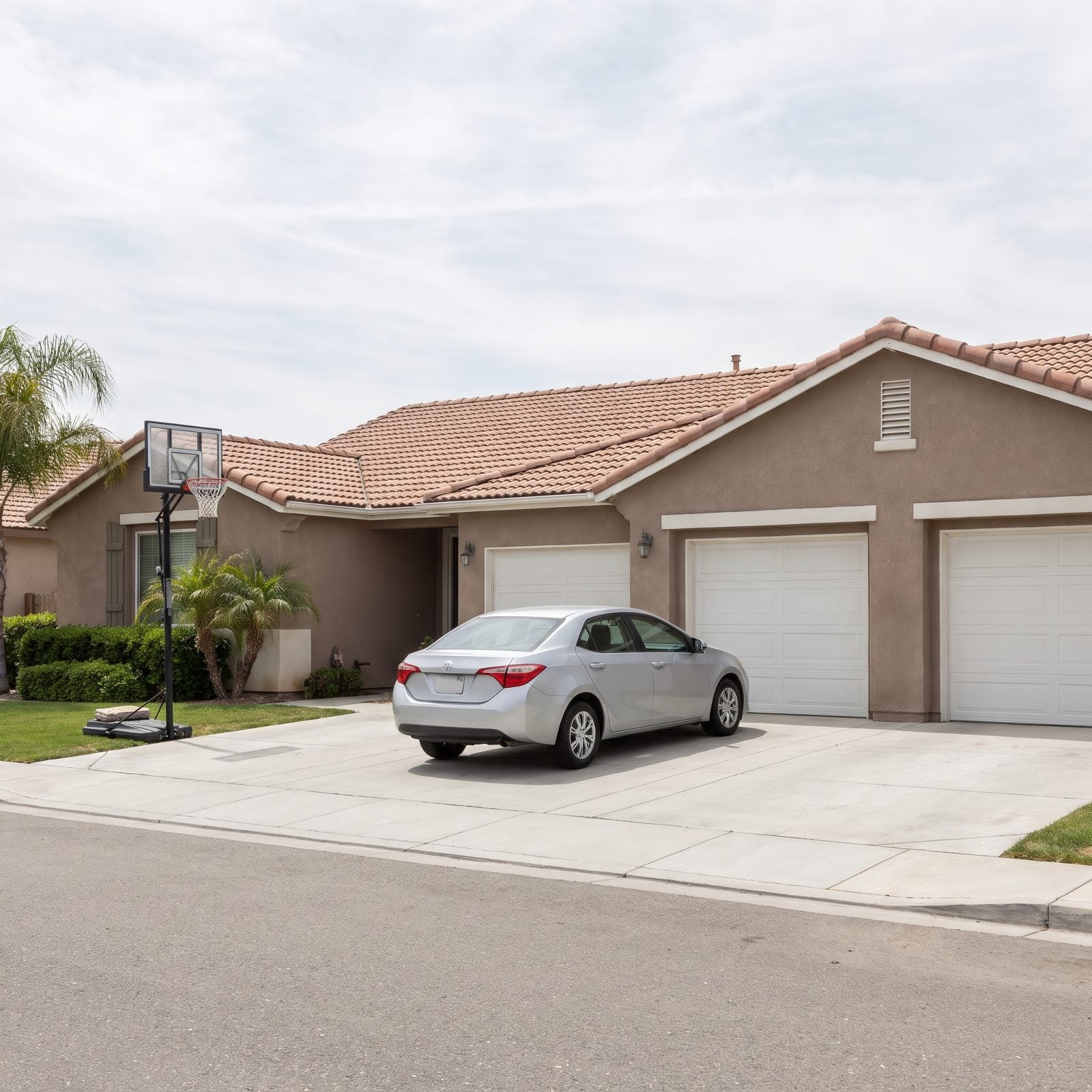
A pickup with a ladder rack, a minivan with a stick-figure family on the back glass, the neighbor’s boat on a trailer. All of it ends up in frame, and all of it drags the eye away from the house you’re trying to sell.
Cars date a photo and shrink a driveway, which is why the photographer wants everything gone, including whatever’s parked in front of the garage doors. Those should read as clean closed planes, not a parking lot.
Move the vehicles down the block. Yes, all of them. I once watched a gorgeous craftsman get upstaged by a lime-green Jet Ski, and let me tell you, it’s not a fight the house wins.
In a pre-shoot checklist for exteriors, a real estate photographer tells sellers to “Park vehicles away from the house or in the garage.”
42. Oil Stains and Cracked Paving in the Driveway
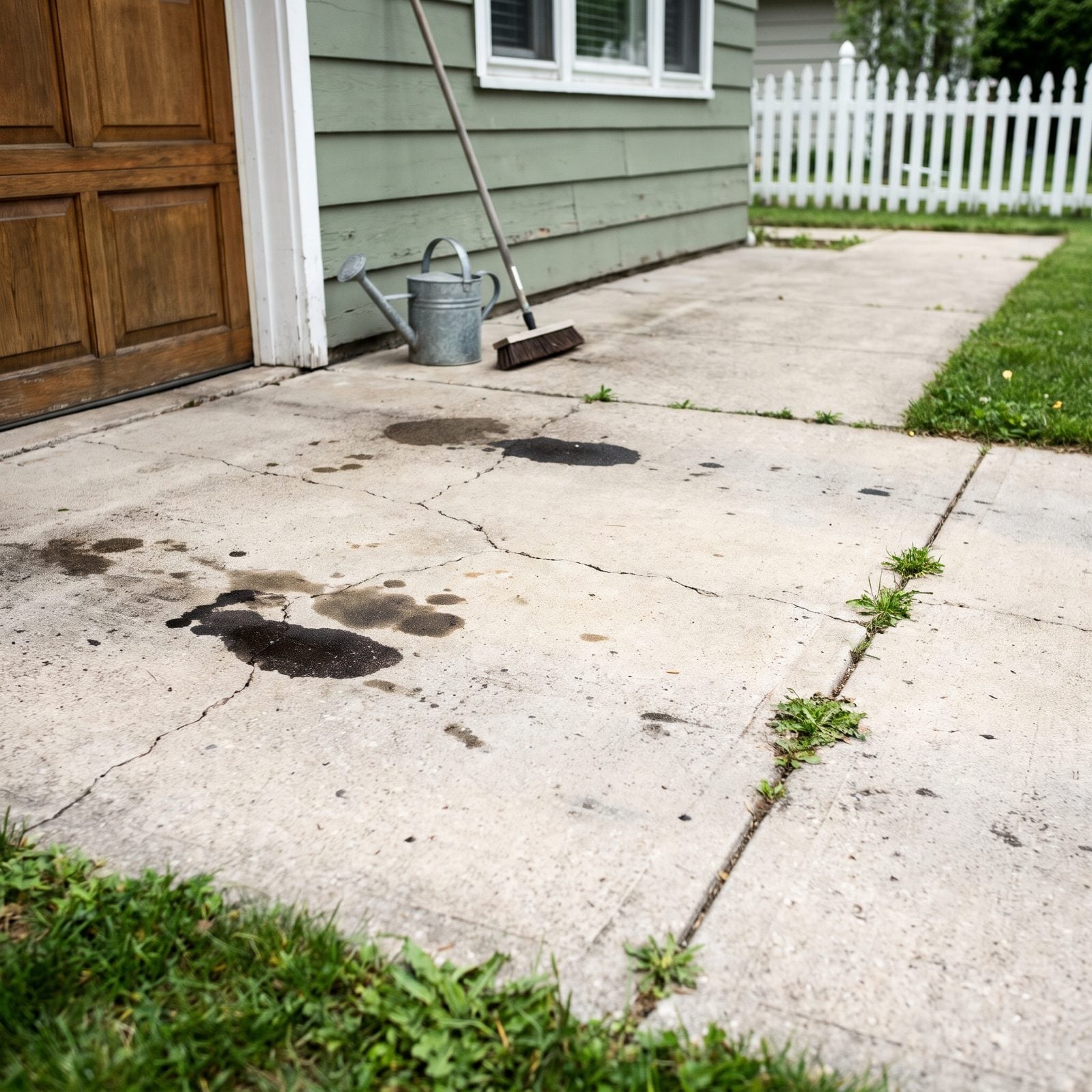
That dark Rorschach blot where the old sedan used to sit reads as neglect even when it’s just a tired gasket. Cracked, weed-stitched concrete does the same. The surface telegraphs how the house has been kept, and the brain fills in the rest.
A good photographer flags it before the shoot so you can get a degreaser and a stiff brush on it, or at least pick an angle that keeps the worst of it out of frame. But there’s a limit to what a wide lens can politely ignore. A driveway split like a dry lakebed is going to show, and no clever framing hides that.
41. Patchy Grass and Untrimmed Lawn Edges
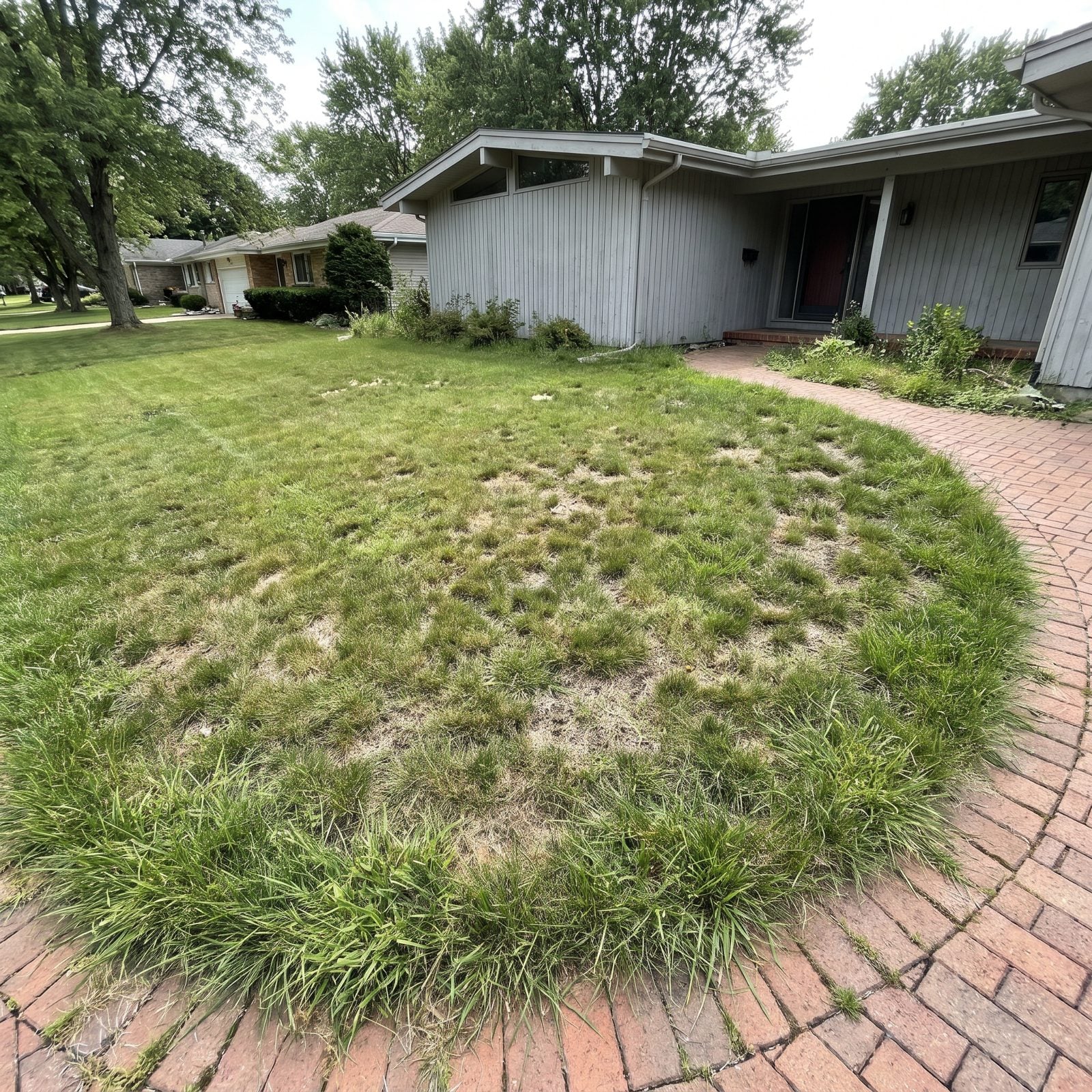
The lawn doesn’t need to be a golf green. It needs an edge. Mowed turf that fades into shaggy, unedged borders tells the eye the care stopped halfway, and a wide shot shows every ragged inch of it.
Patchy bald spots photograph darker than they look in person, almost like scorch marks. The photographer notes the season too, because dormant winter grass is a lost cause, and sometimes the honest move is to shoot tight and let the architecture carry the frame.
40. Shrubs That Conceal Windows or Architectural Details
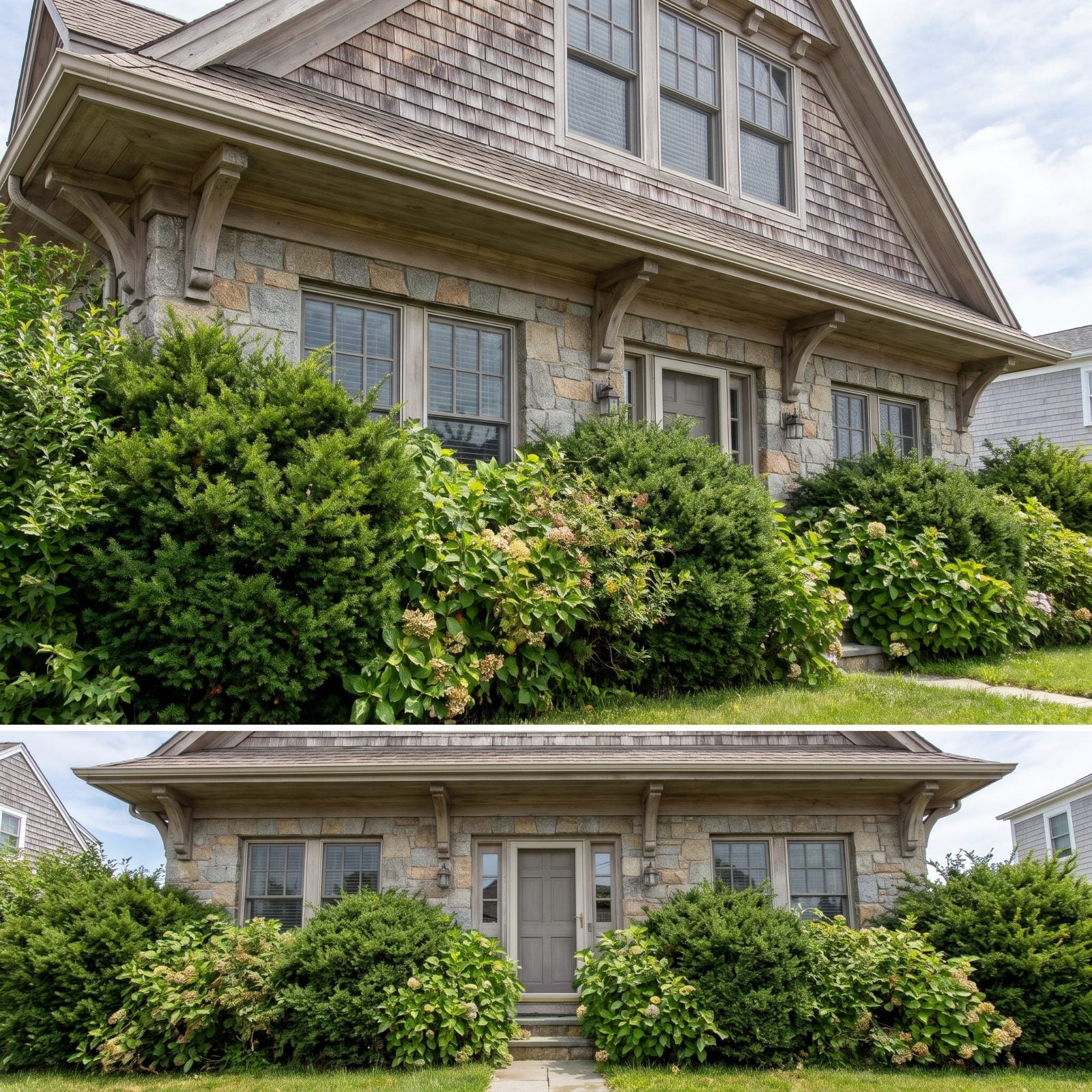
Plant a little juniper by the window and twelve years later it’s eating the house. Overgrown foundation shrubs swallow sills, cover porch rails, and blot out the exact details that make a home look like a home instead of a green lump.
What the photographer is really after is the bones. The gable bracket, the stone sill, the shape of the entry. If the hedge hides half of that, expect a request for a trim before the shoot, because you can’t sell charm nobody can see.
A camera can only show what the gardener left visible.
39. Gutter Streaks, Siding Grime and Porch Cobwebs
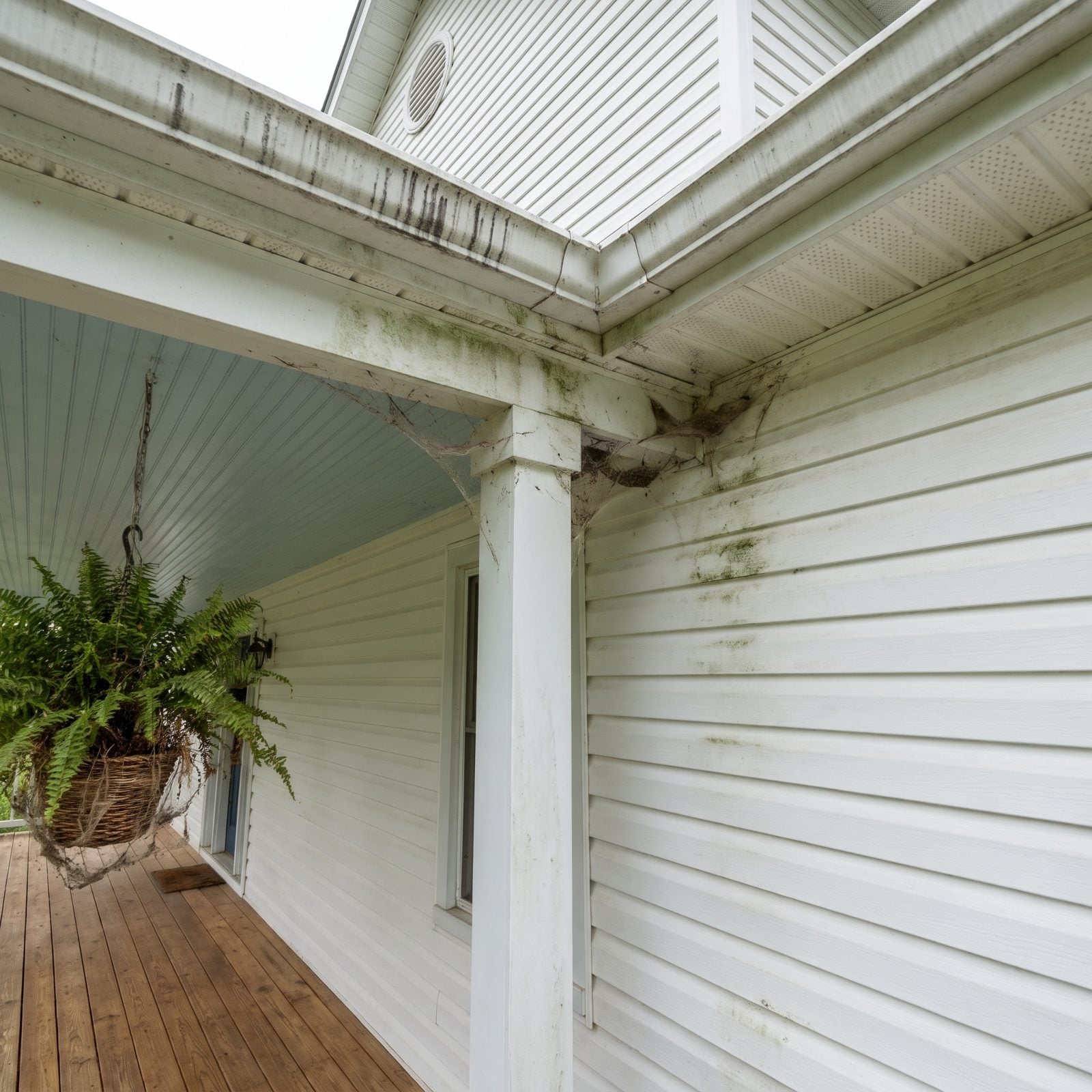
Those vertical grey streaks running down from the gutters have a name. Tiger striping. Most people stop seeing them within a week of their appearing, but a camera lens never does, and neither does the photographer squinting up at your eaves.
Green-black algae on north-facing siding, a film of road grime, a porch corner strung with cobwebs that catch the light. All of it photographs as dinge.
Explaining where tiger striping comes from, a gutter installer writes “This striping occurs when dirt, debris, and pollen build up near the lip of the gutter. As moisture is attracted to these elements, it drips down the gutter, causing black lines and markings.”
38. Whether the Front Door Creates a Clear Focal Point
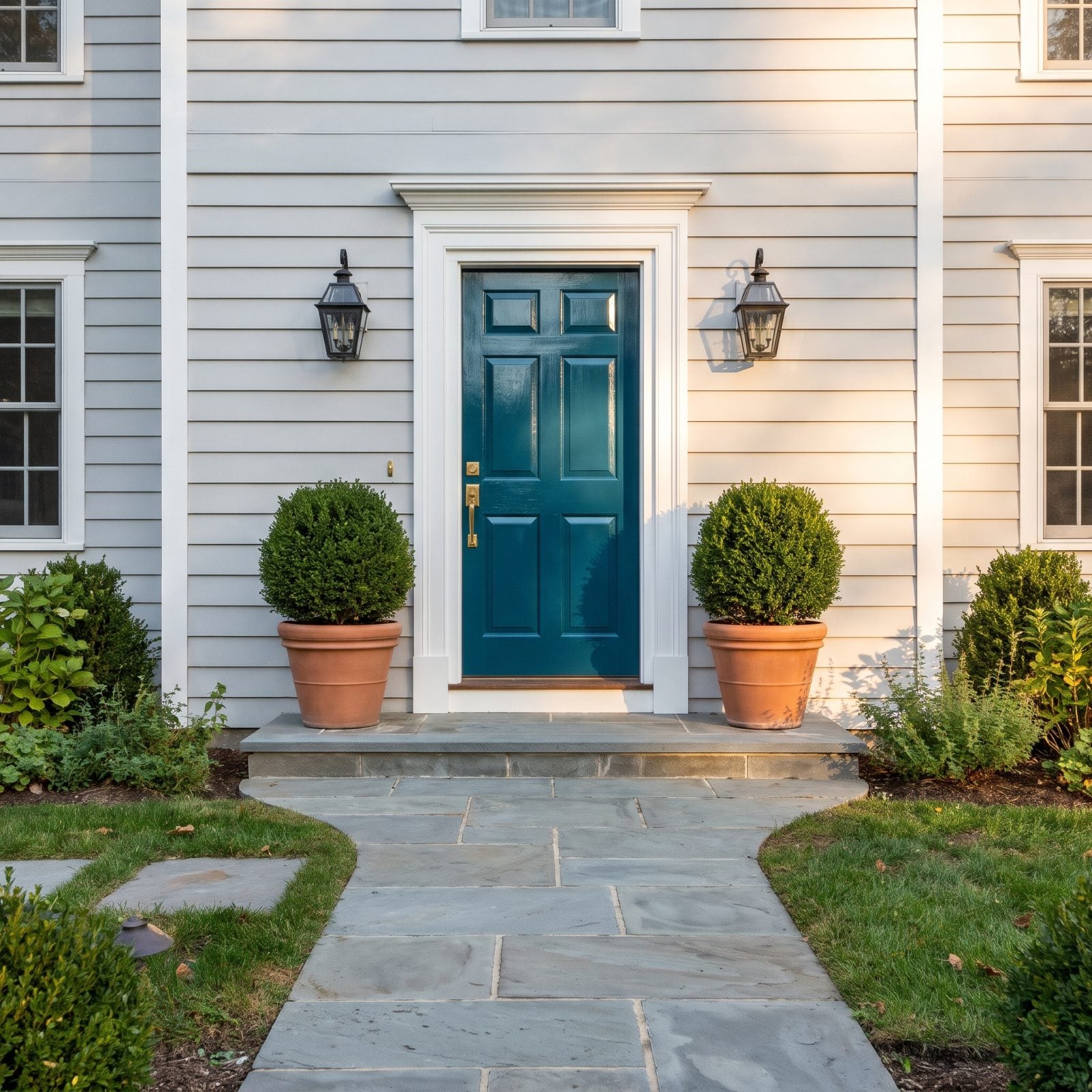
Every good exterior shot needs somewhere for the eye to land, and the front door is almost always it. The photographer is reading whether your door actually pulls focus or gets lost in a wash of beige-on-beige where nothing says look here.
A painted door, a pair of pots, a lantern on each side. These aren’t decoration; they’re composition. They give the lens a destination and the viewer a reason to picture walking up.
If your door is the same color as the siding and flanked by nothing, it vanishes. A quiet focal point is no focal point at all.
37. Dirty Window Glass and Torn Insect Screens
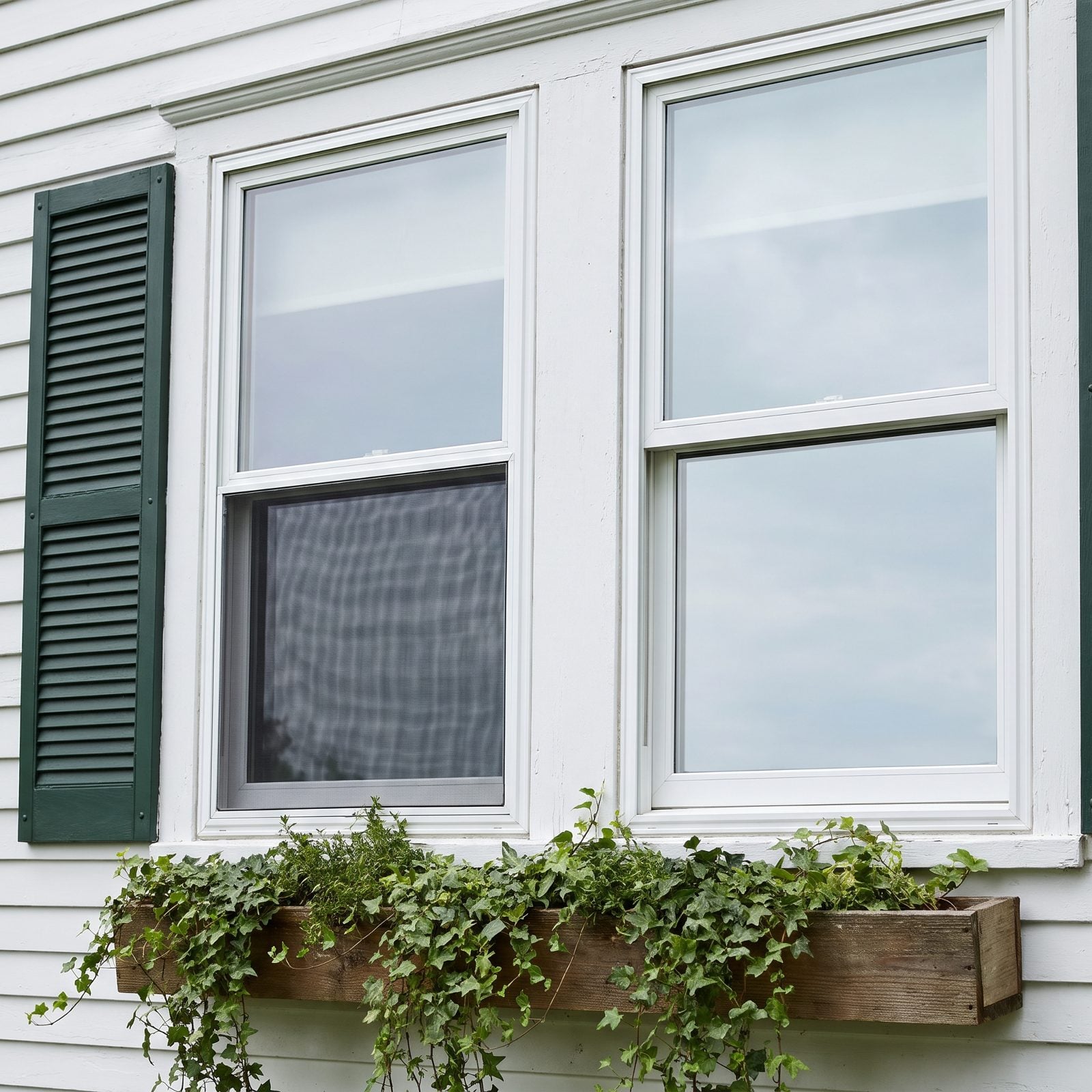
Grimy glass photographs as a flat grey haze that quietly steals the light and makes the rooms behind it look dim. Pollen film, water spots, the dusty bottom corner nobody wipes. The lens catches all of it.
Torn or dented screens are worse, because they read as damage. A ripped screen on a front window suggests the whole house is a little broken, fair or not.
So the photographer often asks that screens come off the windows that’ll be shot. Clear glass lets the light in and lets the eye out to the garden, and that’s half the trick of a bright interior photo.
36. Blinds and Curtains Hanging at Uneven Heights
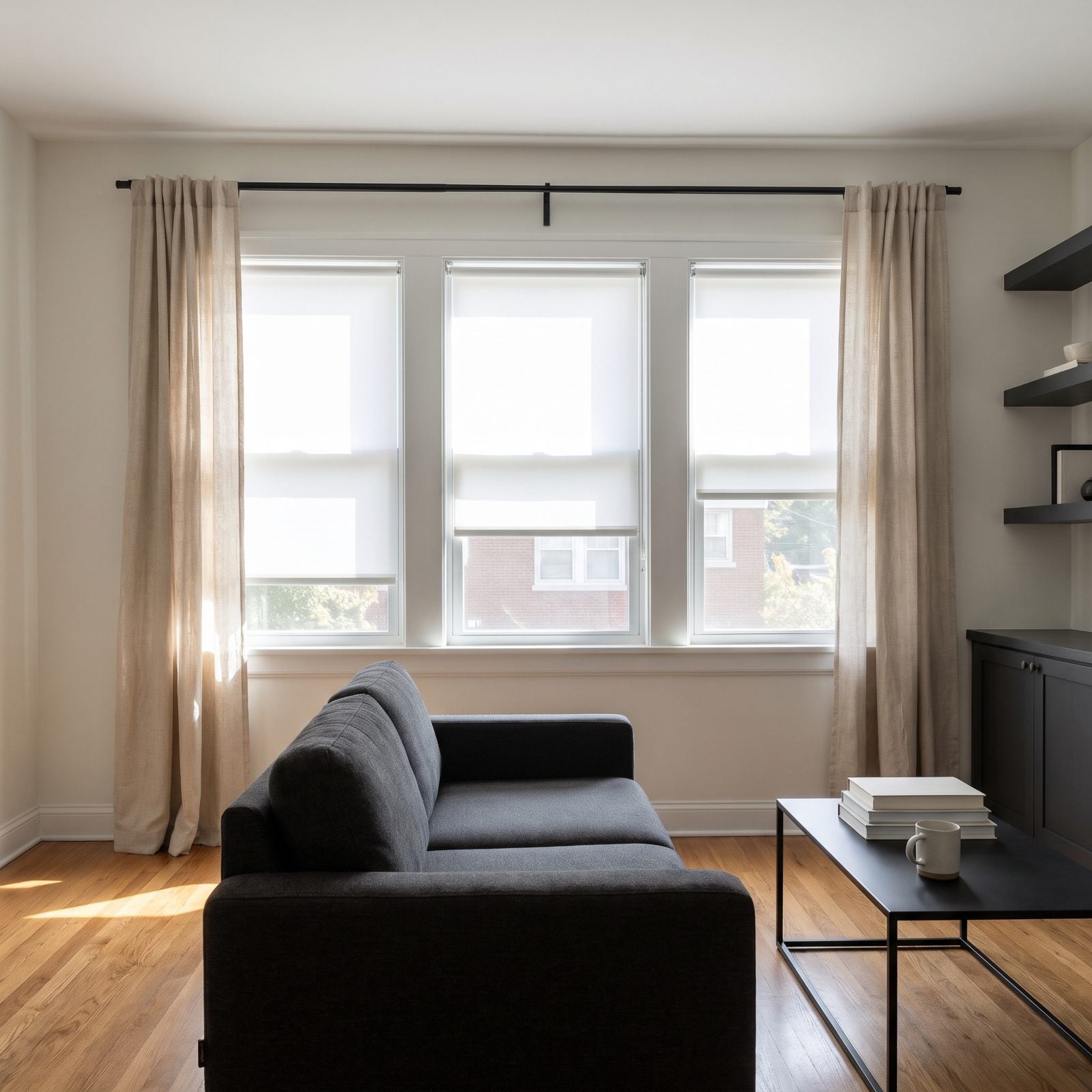
This one’s almost invisible until you see the photo, and then it’s all you can see. Three windows side by side, blinds pulled to three different heights, like a mouth with crooked teeth.
Uneven window treatments make a tidy room feel subtly off, and nobody can quite say why. It reads as carelessness your conscious mind barely registers but your gut absolutely does.
35. Distracting Views Visible Through the Windows
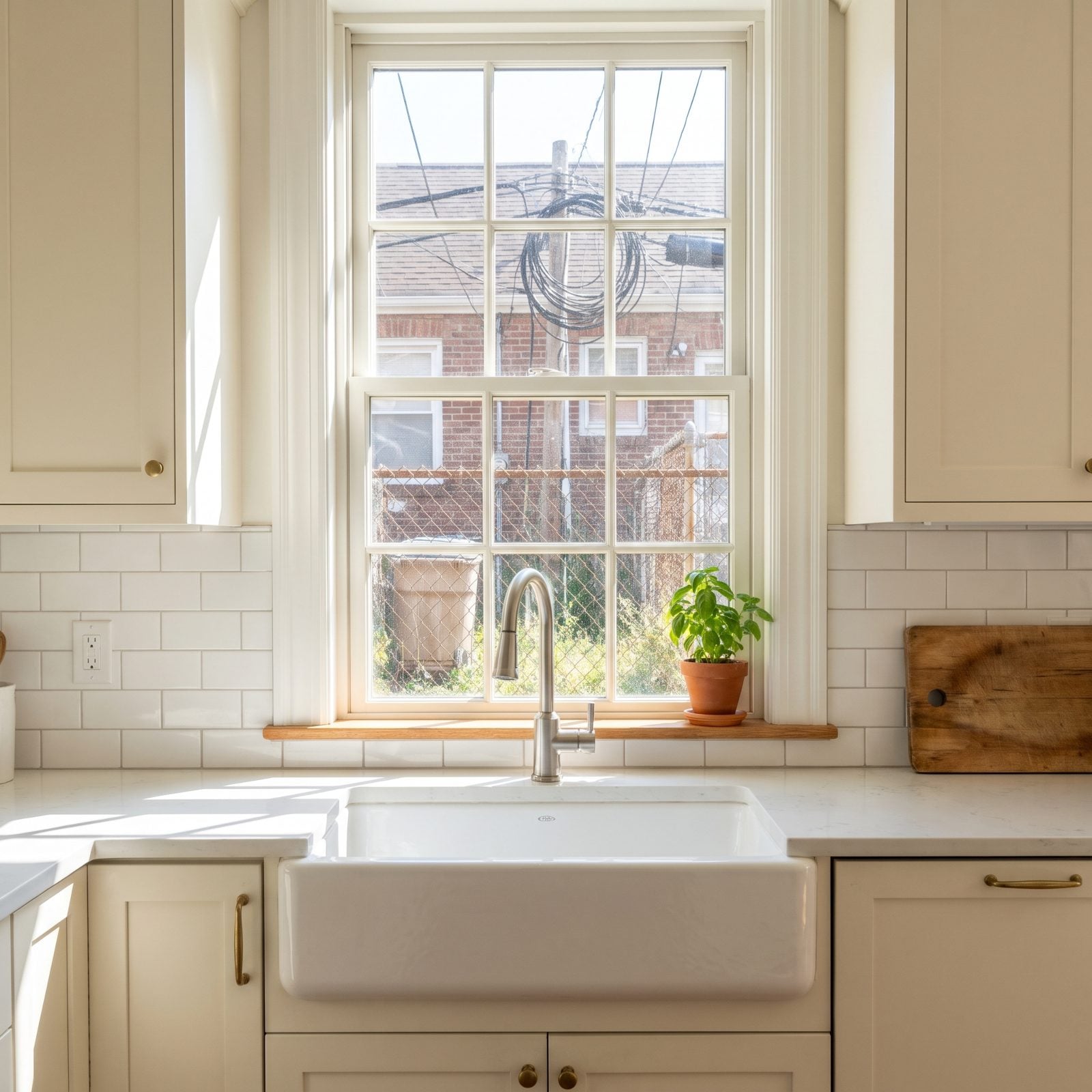
The window is a second photograph inside your photograph, and nobody warns you about it. A great kitchen falls apart the moment a viewer notices the neighbor’s rusted trampoline framed dead center in the glass.
A photographer’s first move at a window is to lean in and look out. Power lines, a peeling fence, the recycling bins, that above-ground pool next door — all of it reads loud on a bright day. The fix is often a sheer curtain, a half-drawn blind that keeps the light but softens the mess, or an angle that swings the lens past the worst of it.
34. The First Sightline From the Front Door
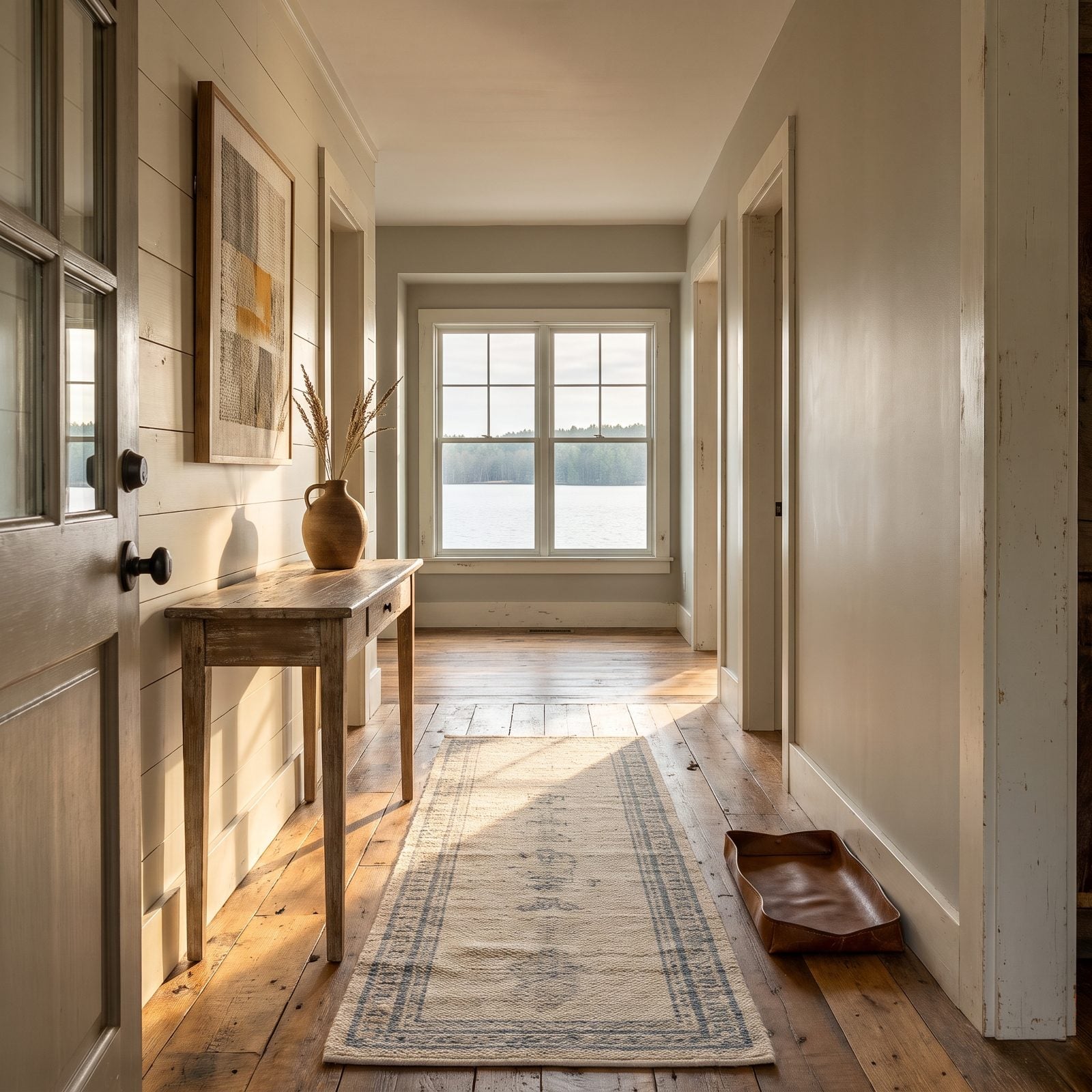
Buyers scroll past dozens of listings, and the entry shot is the handshake. What sits in that first straight line from the door decides whether they stop.
Photographers hunt for the clean sightline, the view that pulls the eye deep into the house toward a window or a focal point. A coat rack buried in jackets kills it. So does a laundry basket parked at the bottom of the stairs, or a wall of family calendars and dog leashes hanging right where the lens lands.
I’ve watched a good house get a bad lead photo for exactly one reason: nobody moved the overflowing shoe pile six feet to the left. That’s all it was.
33. Rooms Without an Obvious Purpose
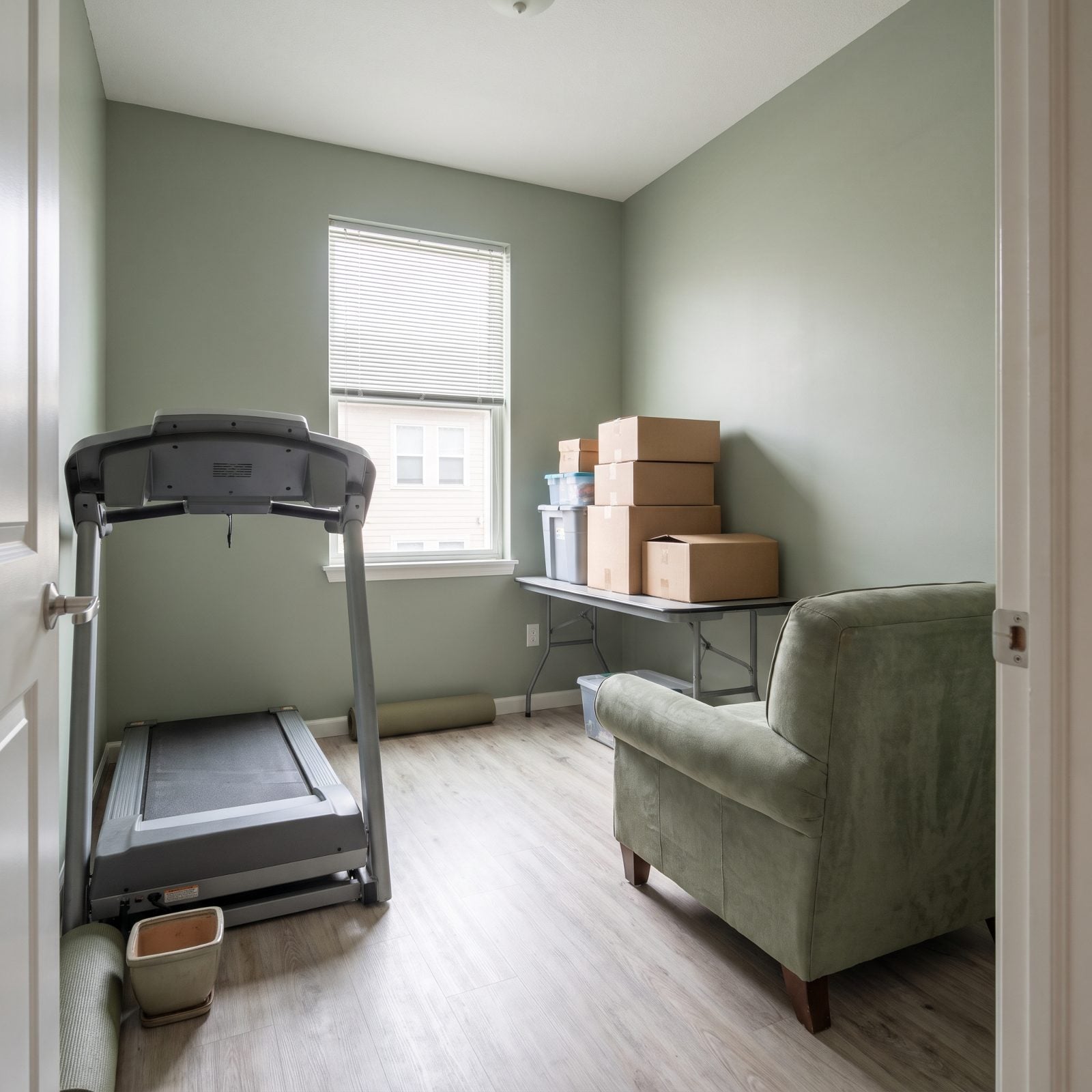
A room that can’t say what it is photographs like a question mark. You know the one. The spare bedroom holding a treadmill, a dress form, two boxes marked “garage,” and a chair nobody sits in.
Buyers can’t price a mystery. A photographer will either stage it toward a single believable use — an office, a nursery, a reading nook — or shoot it tight enough that the confusion doesn’t spread into the frame. One clear function beats five half-functions every time. Give the room a job before the camera asks what it does.
32. Furniture That Is Too Large for the Room
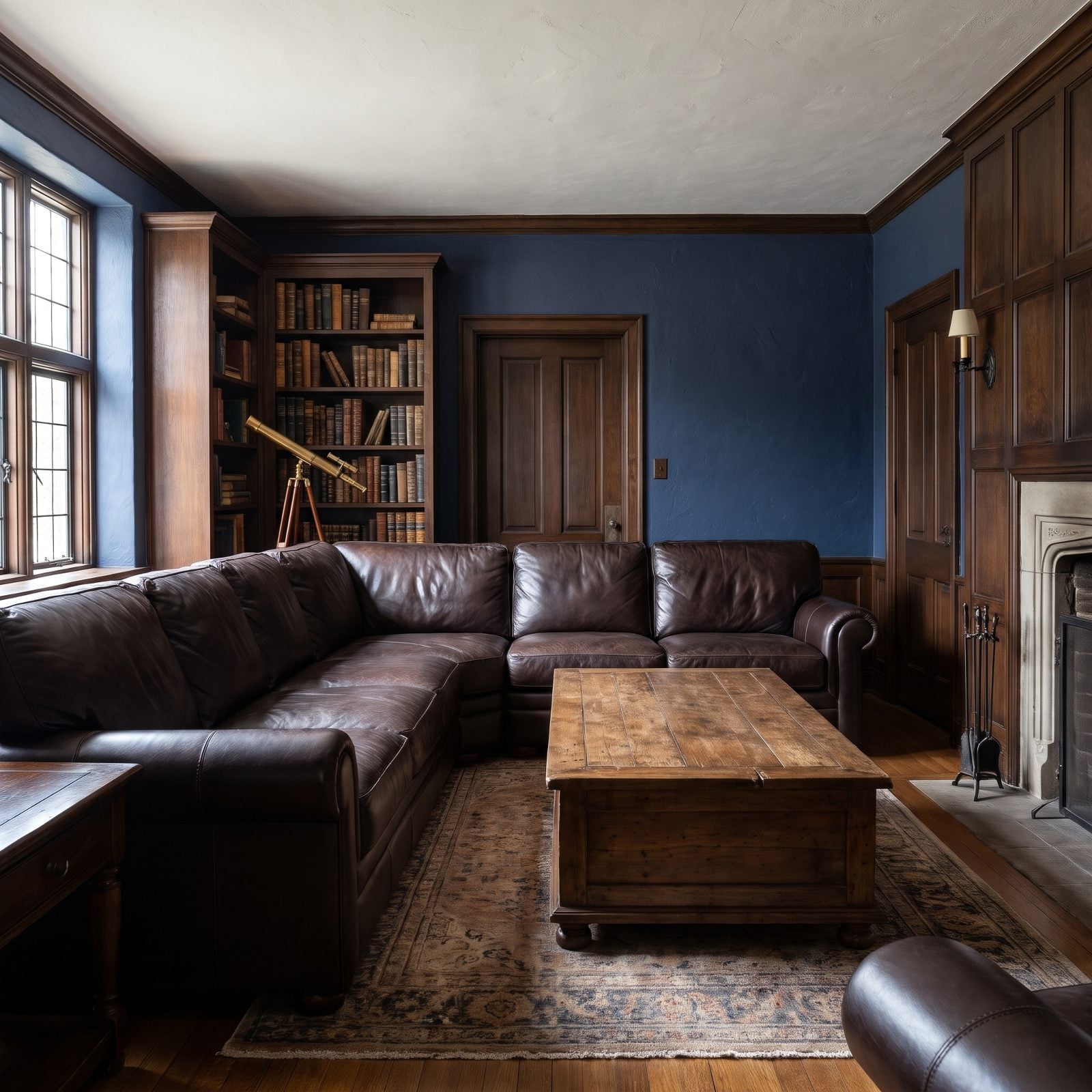
Oversized furniture shrinks a room on camera far worse than it does in person. A wide-angle lens exaggerates whatever’s closest to it, so that enormous sectional reaches out and swallows the floor.
Photographers eyeball the gap between furniture and wall the second they walk in. When a bulky recliner or a king bed in a small room eats every inch of breathing space, the pro either pulls a piece out entirely or angles the shot to hide the pinch. Empty floor photographs as spaciousness. Full floor photographs as a storage unit.
Fewer, smaller pieces nearly always win here, which runs against every instinct you have about filling a room.
31. Furniture That Blocks Natural Walking Paths
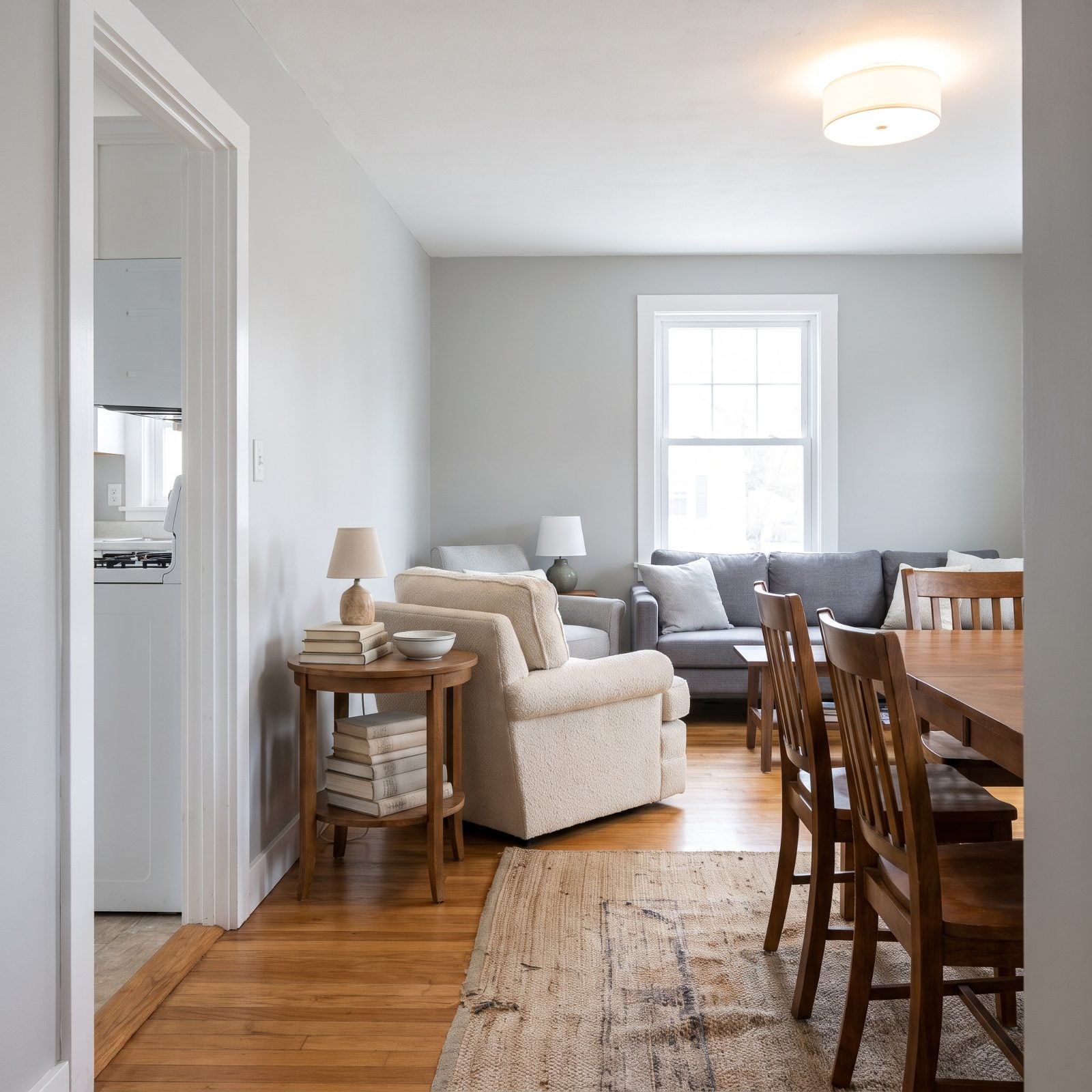
There’s a difference between full and blocked. A room can hold a lot of furniture and still feel open if the eye can trace a clean path through it.
Photographers read flow the way a plumber reads pipes. Where does a body walk from the door to the window to the couch? Drop an ottoman dead in that lane and the photo feels congested even when there’s technically room. Pull that one piece to the side and the whole composition opens up.
30. Clutter and Small Decorations Creating Visual Noise
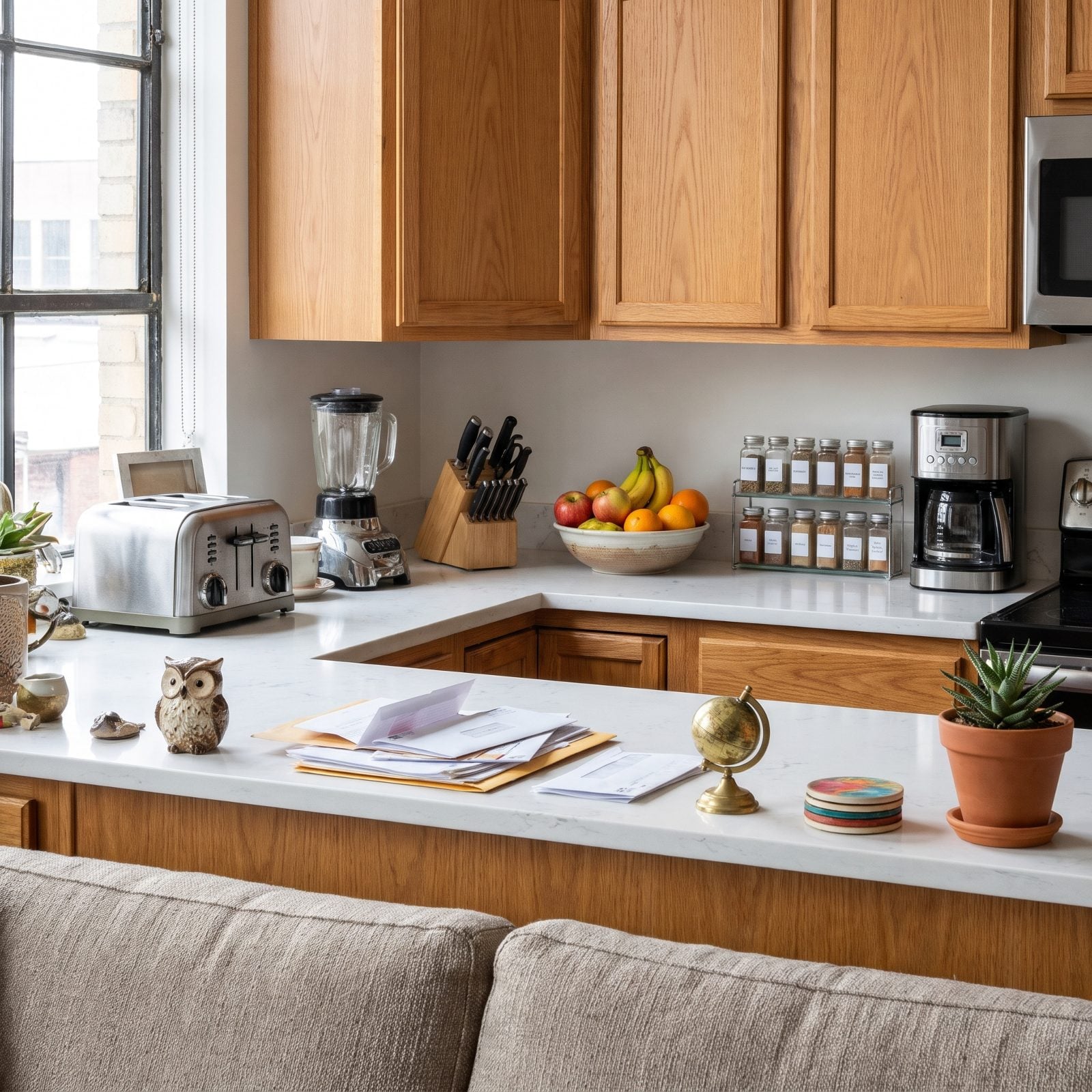
Clutter isn’t dirt, and that’s what trips sellers up. A spotless counter can still be a mess on camera because the eye counts objects, and twelve small things read as chaos no matter how clean they are.
The photographer’s rule is brutal: strip the surfaces down to almost nothing. Three objects on a counter photograph as intentional. Nine objects photograph as a yard sale. Those little decorative accents — the rooster, the mason jar of utensils, the bowl of fake lemons — add tiny competing dots of color the eye has to sort through.
I used to think an empty counter looked cold. On camera it looks calm. There’s a real difference, and the camera only ever sees the second one.
29. Family Photos, Documents and Valuables That Reveal Private Information
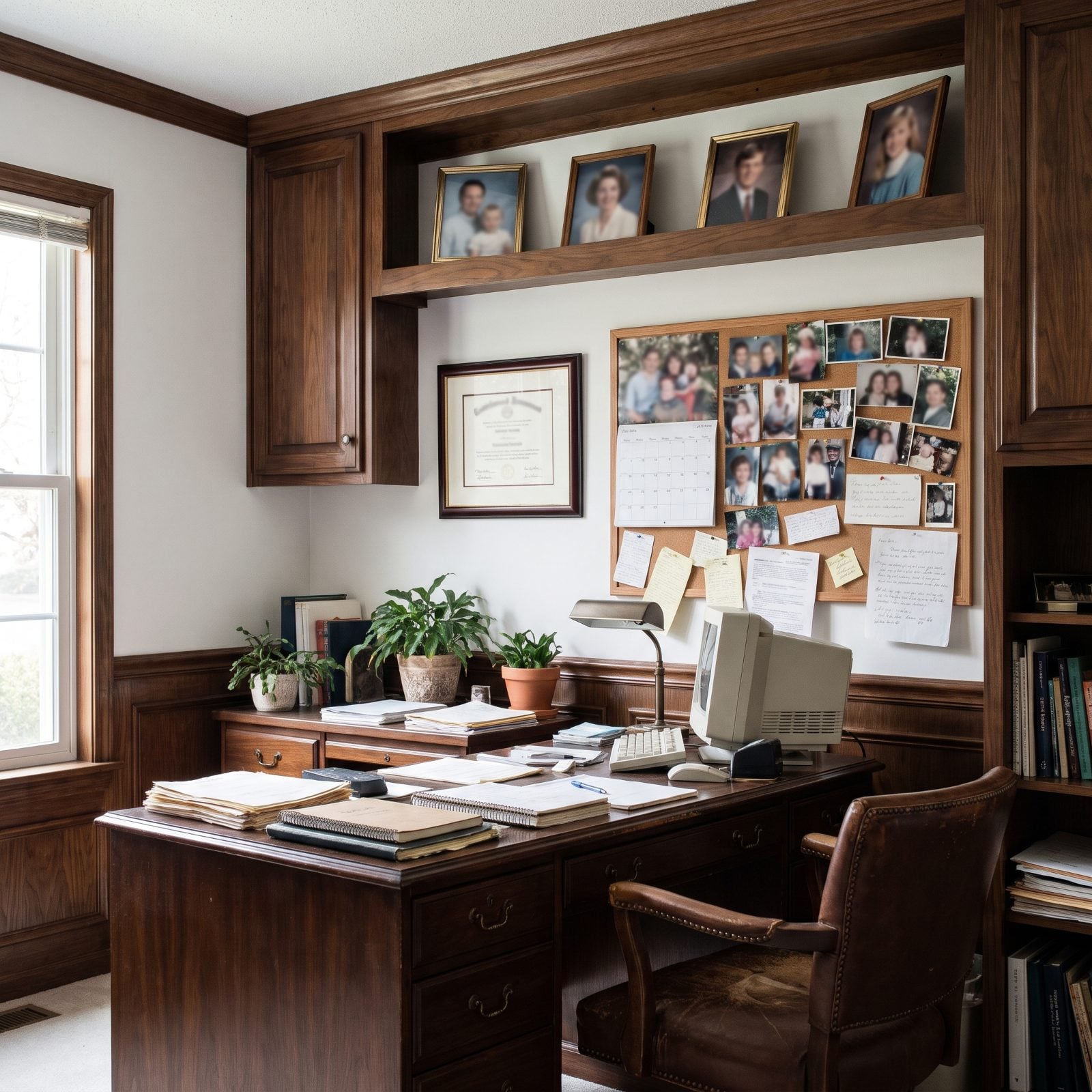
Every listing photo goes to the entire internet, and a surprising amount of a stranger’s life leaks out of a casual shot. The photographer scans for it on the walkthrough.
Family portraits that make a home identifiable. A diploma or an award with a full name. Mail or paperwork left on a desk. A calendar listing exactly when the house will be empty. Visible jewelry, cash, a gun safe, prescription bottles on the nightstand. A good photographer clears all of it — not because it ruins the shot, but because a wide-angle lens broadcasts your private world to buyers, browsers, and whoever else is scrolling at 2 a.m.
28. Pet Bowls, Beds, Litter Boxes and Scratched Surfaces
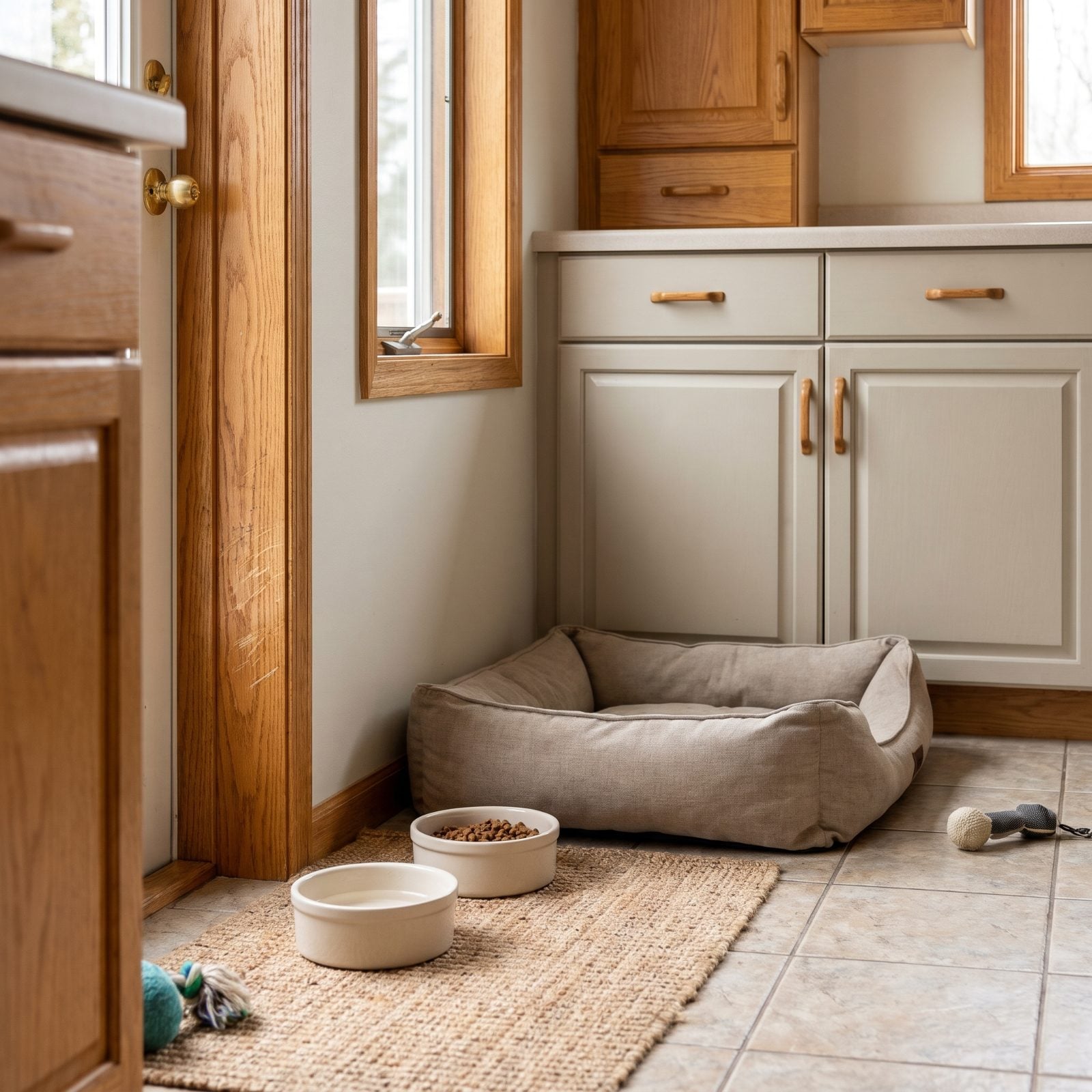
Buyers love animals and recoil from the evidence of them. One of the odd contradictions of a home tour.
Photographers sweep for the tells: food bowls on a mat, a hair-matted bed, a litter box lurking in a bathroom corner, claw marks raked down a door frame. None of it says “cozy.” It says “this carpet has a smell I can almost see.” So the gear gets tucked away, the beds go in a closet, and the scratched surfaces get angled out of frame or shot in softer light where the damage disappears.
27. Toys and Children’s Gear Taking Over the Frame
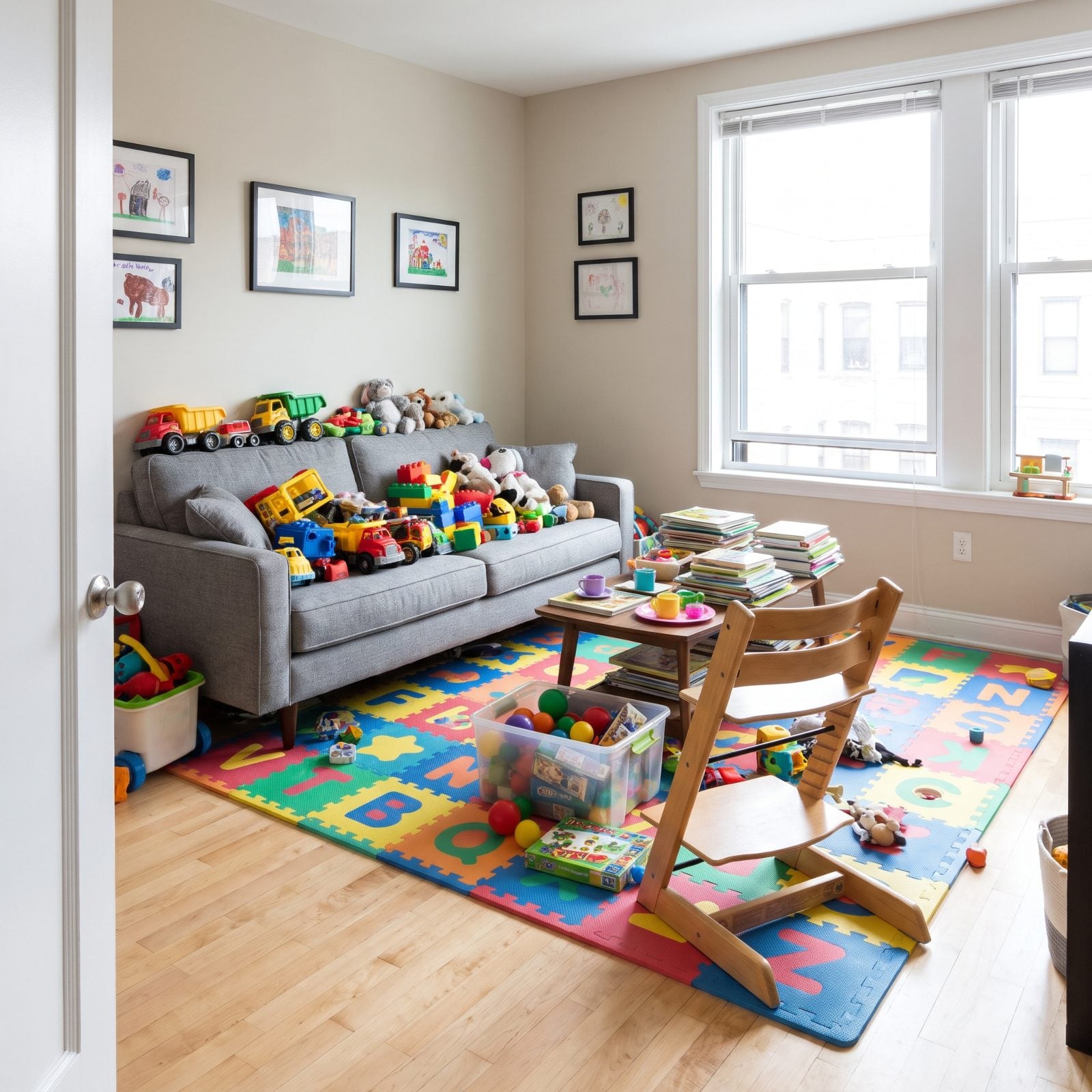
Bright plastic is a color bomb in a neutral room. A play kitchen, a bouncer, a bin of blocks — those saturated reds and yellows grab the eye and won’t let go, pulling attention clean off the room you’re trying to sell.
Children’s gear also shrinks a space fast, same as oversized furniture, because there’s so much of it and it’s scattered low across the floor where the camera reads the square footage. Photographers want it gathered into one closet, not spread as proof the room is a nursery. A buyer should be able to picture their own life here, and that’s hard to do standing in someone else’s playroom.
26. Burned-Out Bulbs and Mixed Lighting Color Temperatures
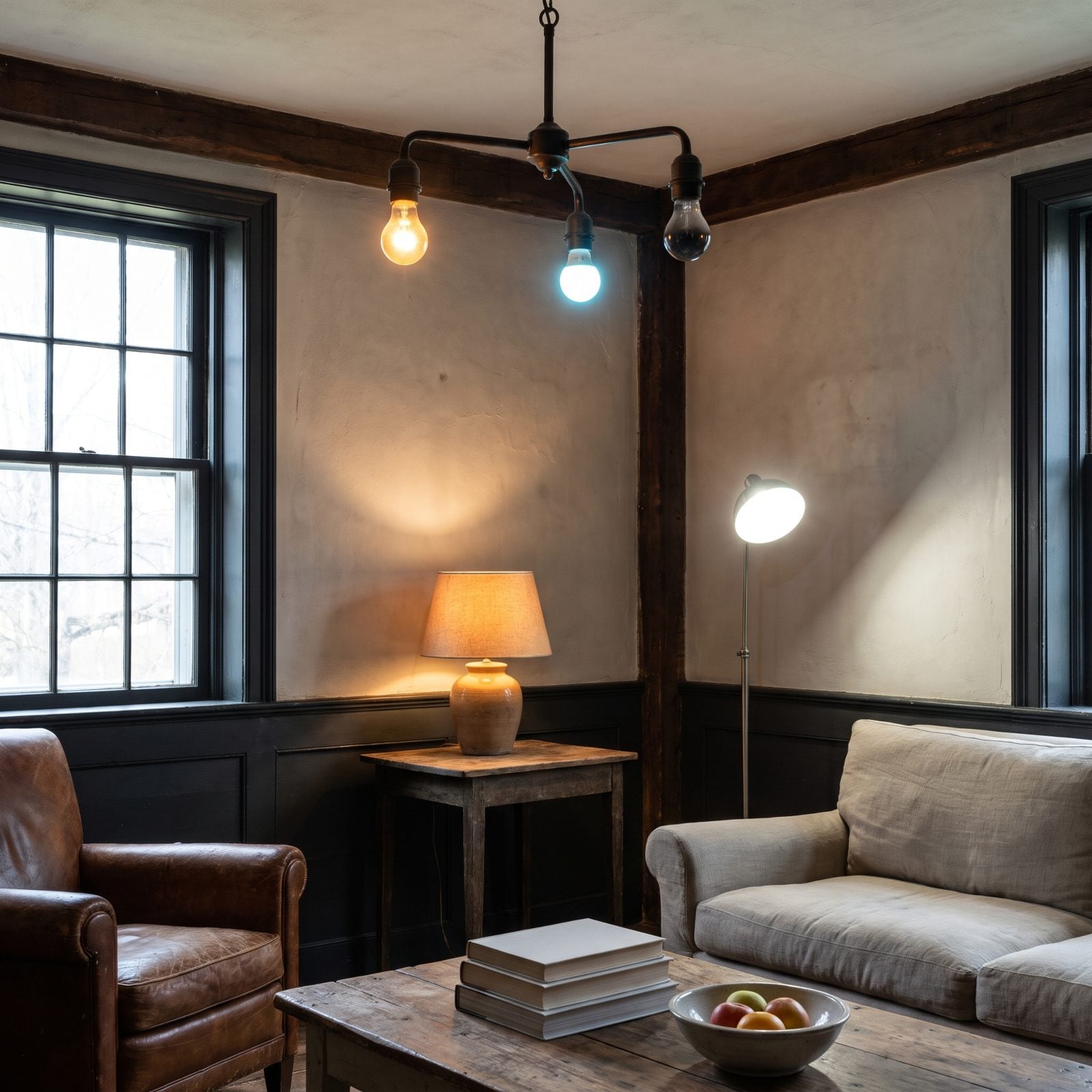
Here’s the detail nobody outside the trade thinks about. A single burned-out bulb leaves a dead socket the camera renders as a shadowy hole, and a room with one warm bulb and one cool bulb photographs with a sick green or orange cast that no amount of editing fully saves.
Photographers check every fixture before they shoot. They want all the bulbs working and all of them the same color temperature, usually a consistent warm white across the whole house. Mixed lighting is the single most common reason an interior photo looks “off” in a way viewers feel but can’t name.
Match your bulbs. It’s the cheapest upgrade in the entire process, and it does more work than most people’s furniture. Alright, go check your lamps.
In a shoot-prep guide for sellers, one real estate photographer warns “Mixing bulb types (e.g., matching warm yellow halogen bulbs with bright white LEDs) can distort the color accuracy of a room.”
25. Reflections That Quietly Snitch on the Photographer and the Clutter Behind the Lens
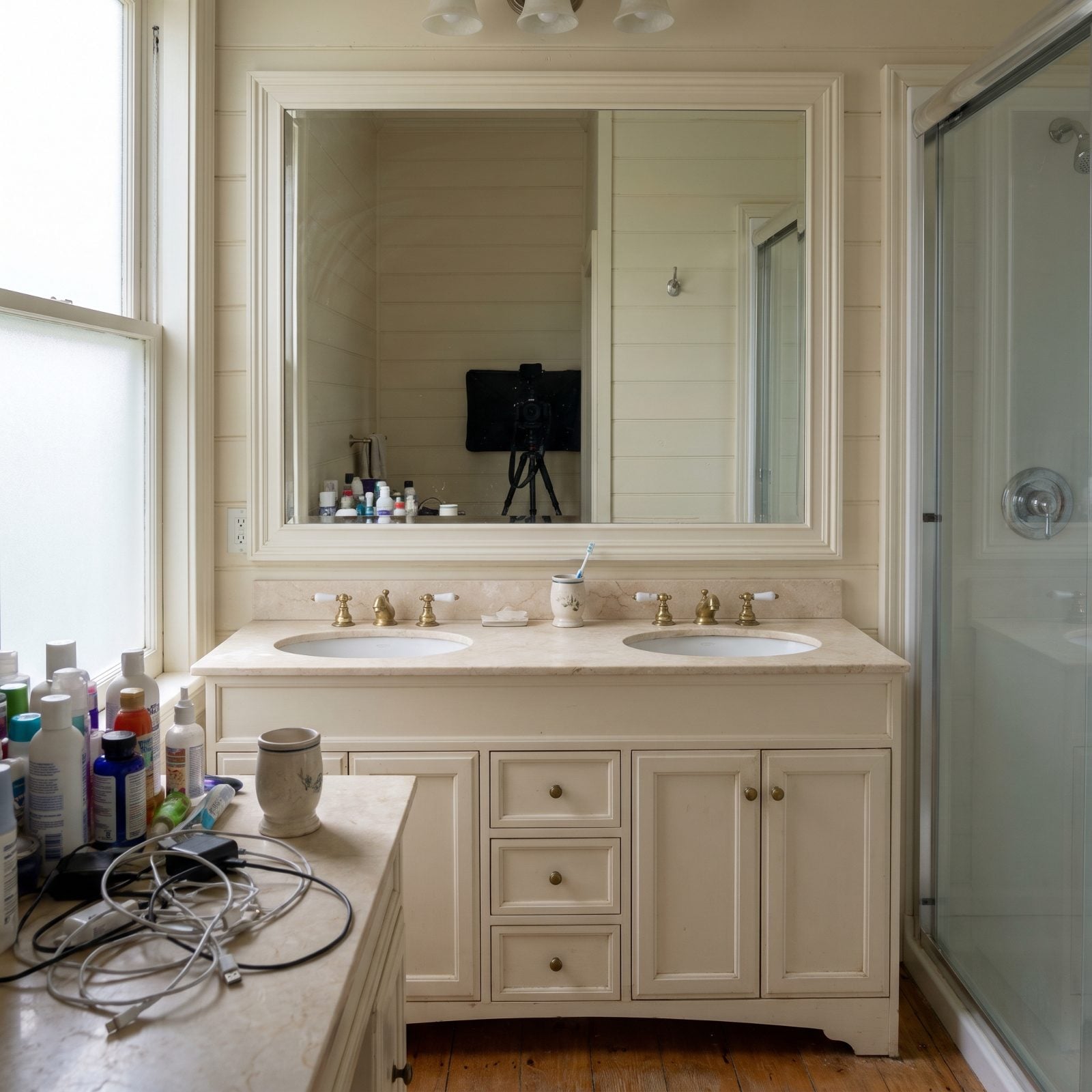
Mirrors are tattletales. So are polished faucets, glass cabinet doors, oven fronts, and anything with a shine.
So the scan here is for reflections. A pro checks every glossy surface in frame for a ghosted outline of themselves, the tripod, or the laundry basket they shoved just out of shot. I have seen listings go live with a photographer plainly visible in a shower door. Once you spot one you cannot unsee it, and neither can the buyer.
The fix is angle and distance — sometimes shooting from the side, sometimes killing one light. Cluttered counters count double, because a mirror doubles them.
24. Bold Wall Colors and Big Leafy Plants Throwing Color Where You Don’t Want It
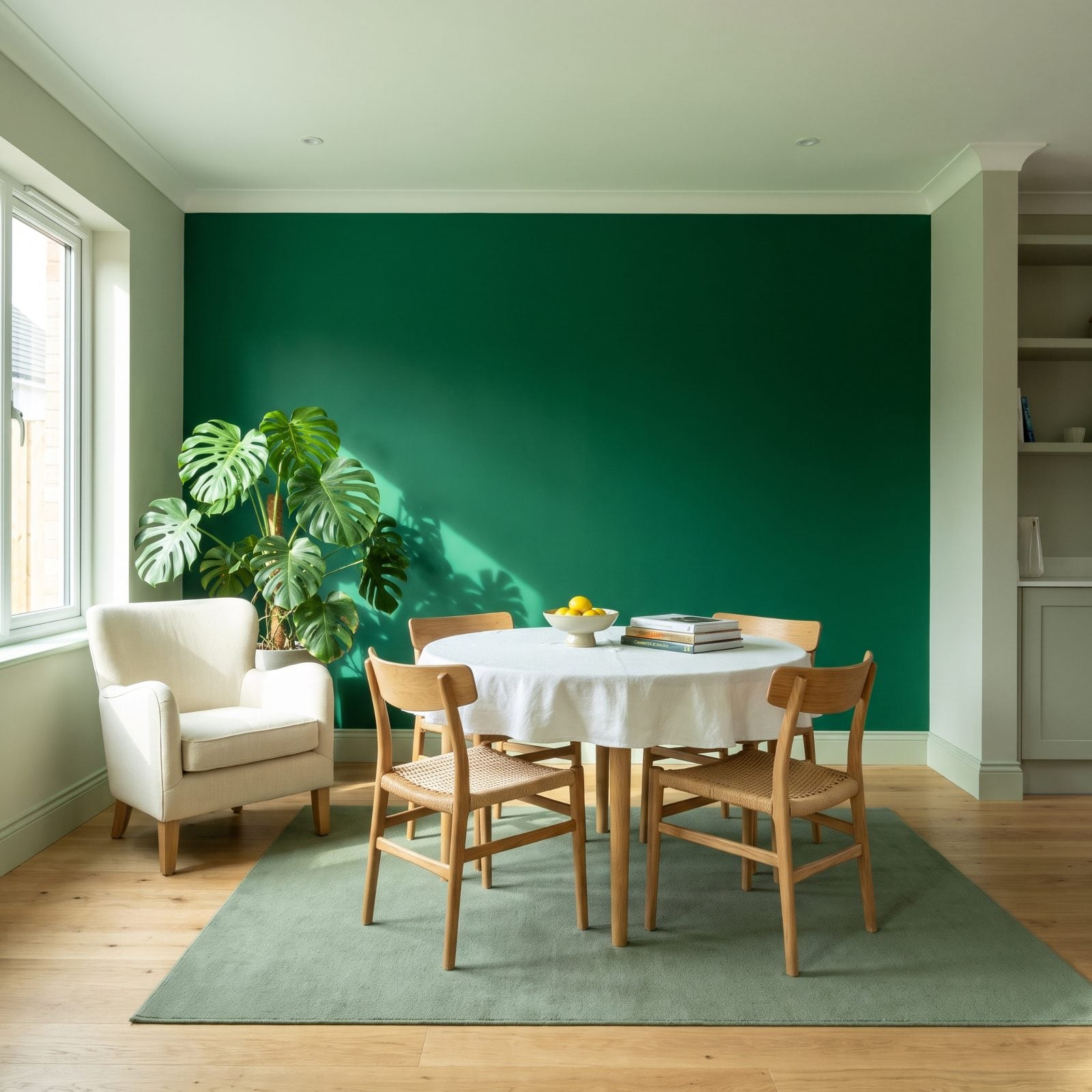
Color bounces, and it bounces where you’d rather it didn’t. A deep green accent wall throws a faint wash onto the white ceiling. A red room tints the sofa pink. And a big potted plant parked by a window can lay a sickly cast on skin tones and pale fabric.
Photographers call this color contamination, and it’s a nightmare to correct cleanly — fix the ceiling and you wreck the wall. Sometimes the answer is to move the plant, reangle the shot, or just accept this room will be a harder edit than the one next door.
23. Whether There’s Actually Room to Plant a Tripod and Step Back
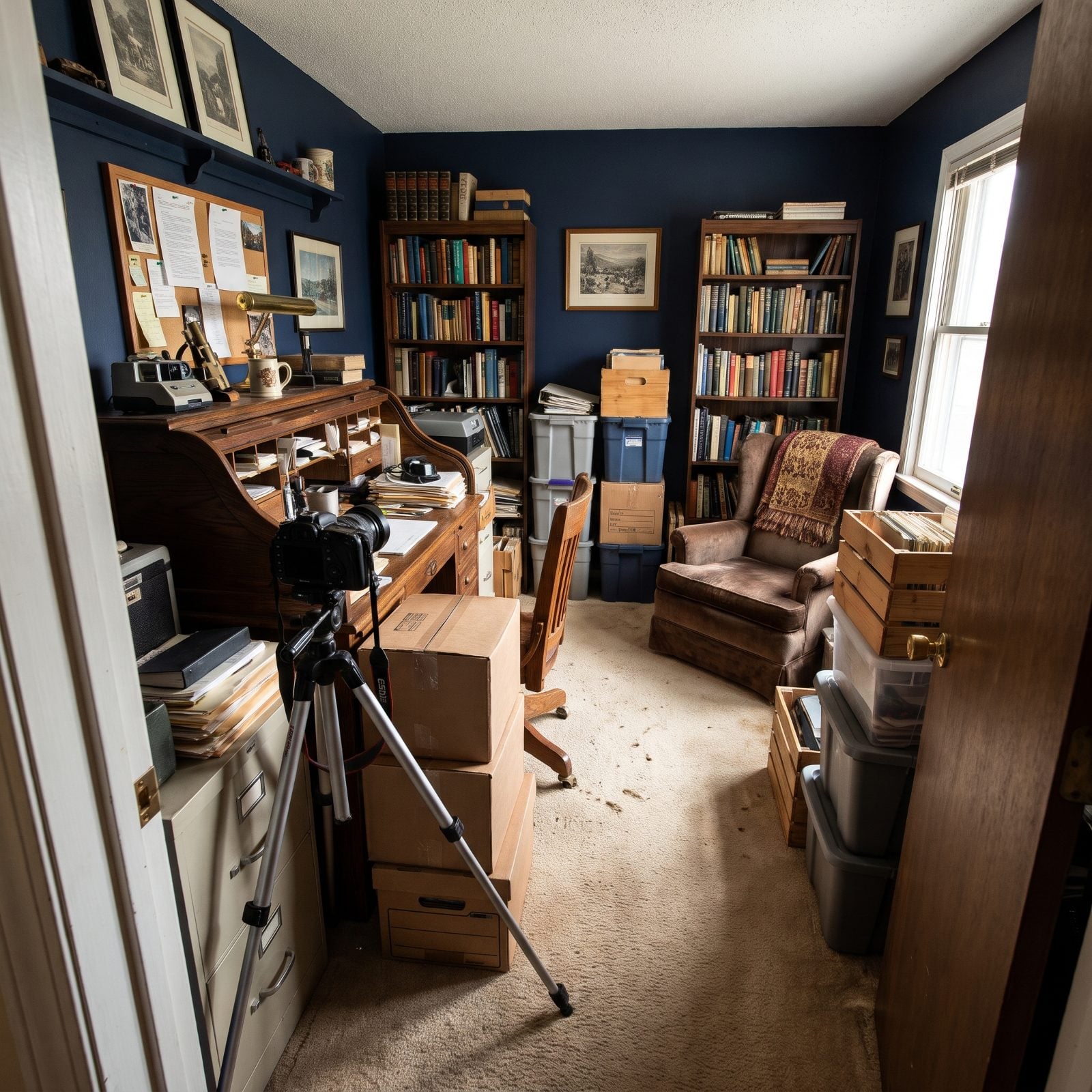
A camera needs to breathe. It wants to back into a corner, splay the tripod legs, and shoot across the whole room.
Over-furnished spaces make that impossible. When every corner holds a chair or a stack of bins, the photographer gets jammed against a wall and has to shoot from a bad, cramped position that makes the room look smaller than it is. Which is the exact opposite of what everyone wants.
22. Walls and Doorframes That Have to Read as Dead-Straight Verticals
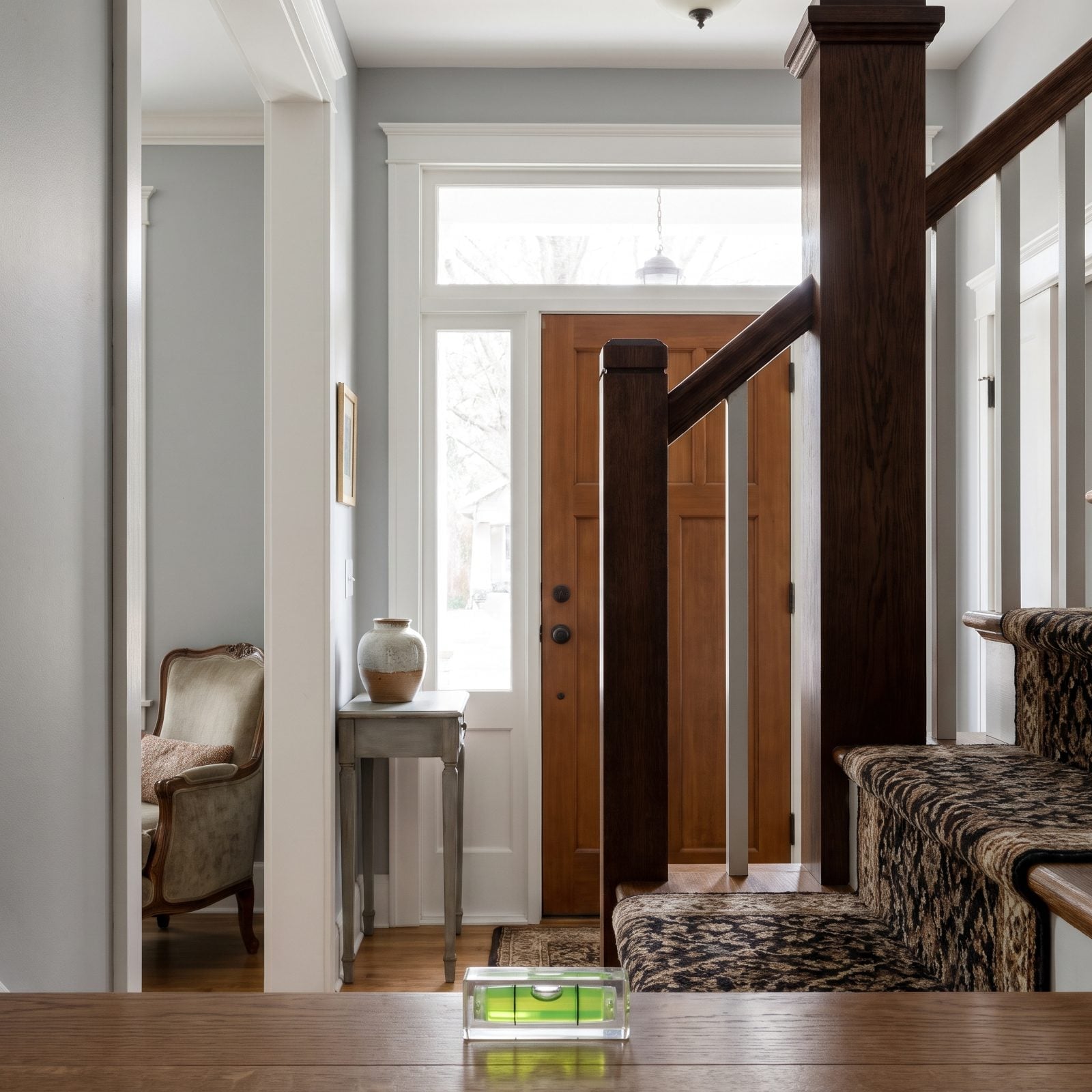
Tip a wide-angle camera up or down even slightly and the walls start to lean like a funhouse. Doorframes converge. The whole house looks like it’s quietly toppling over.
Pros obsess over keeping the camera perfectly level so vertical lines stay vertical — the single thing that separates a polished listing from a snapshot. Software can straighten lines, sure, but it crops and stretches the image to do it, costing you resolution and room.
That’s why you’ll catch a photographer fussing with a bubble level before they ever frame the shot. Looks fussy. Makes all the difference.
21. Tiny Rooms That Warp the Second a Wide-Angle Lens Points at Them
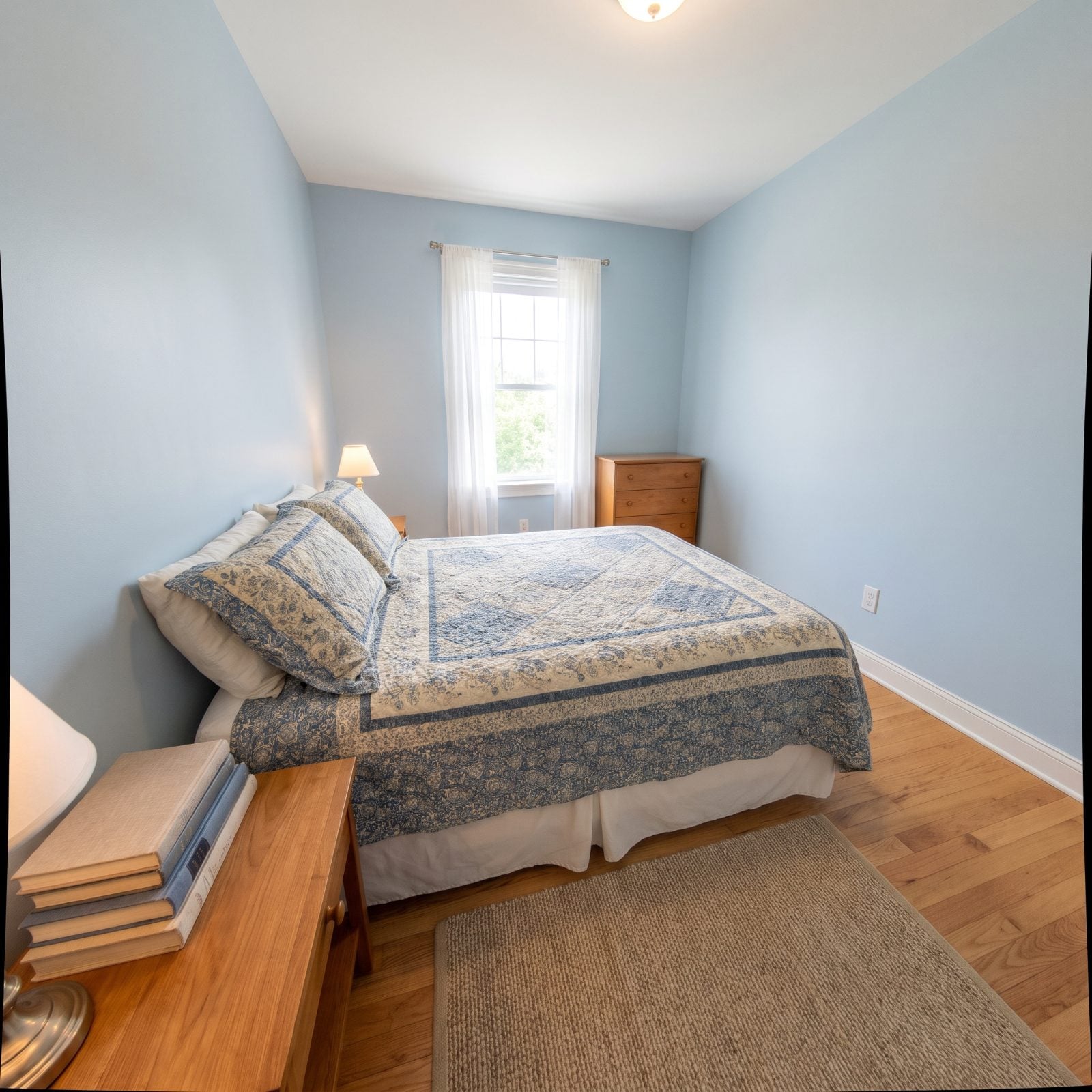
Small rooms and wide lenses have a bad relationship. The lens makes the space look bigger, which is the point — but it also stretches whatever sits near the edges and shoves the far wall off into the distance.
A photographer scopes out the tight rooms first, because those are where the honesty slips. A nightstand too close to the lens balloons to twice its size. A powder room can end up looking like a hallway. The workaround: shoot from a doorway corner, pick a slightly less dramatic focal length, and keep foreground objects out of the stretch zone.
20. Nail Holes, Scuffed Paint, Chipped Tile and Battered Baseboards
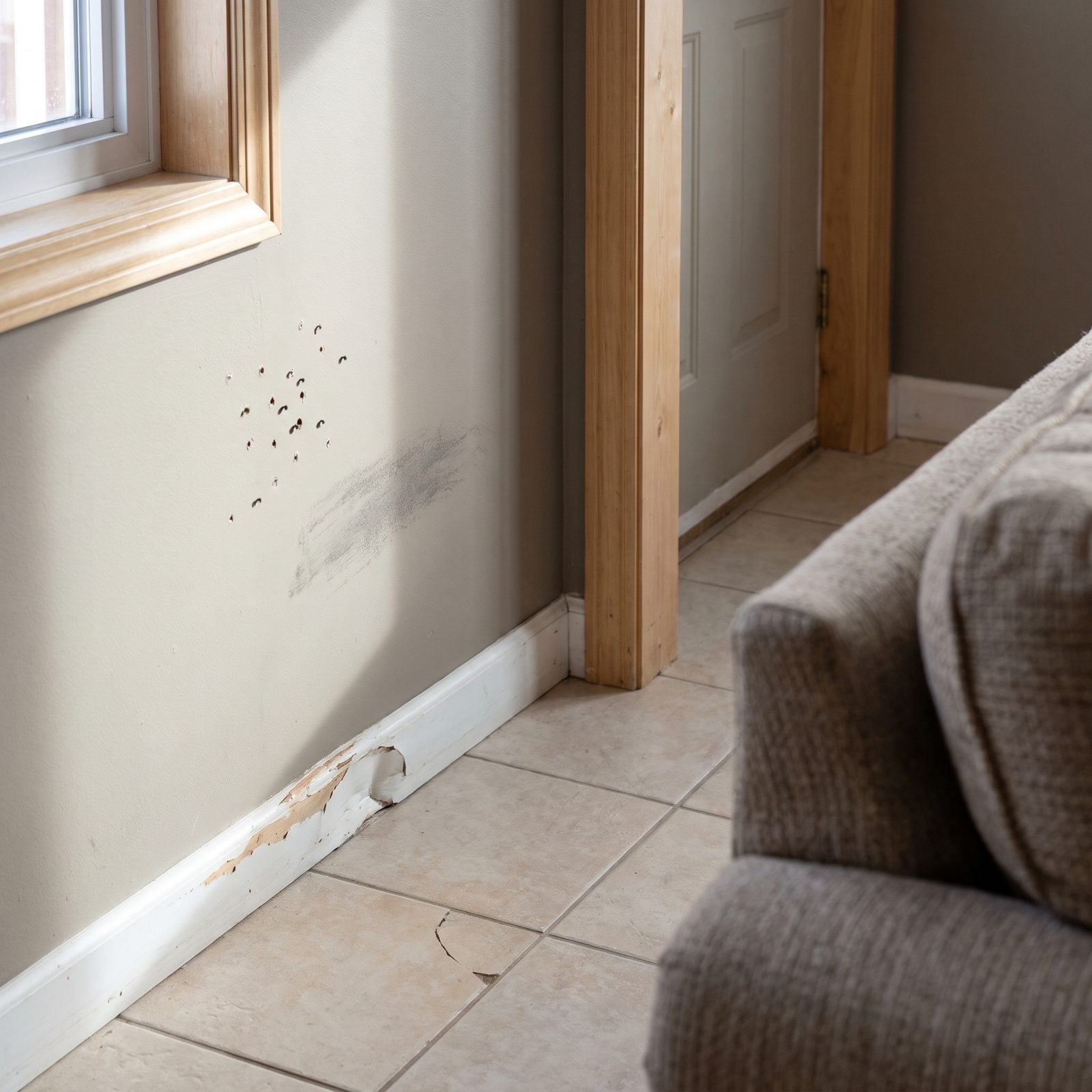
The eye forgives a scuff in person. The camera does not.
Raking daylight across a wall throws every nail hole, every scuff, every dented baseboard into sharp relief. What you walk past a hundred times a day shows up as a smudge the buyer fixates on. Chipped grout and cracked tile are worse, because they read as neglect even when they’re purely cosmetic.
This is one of the cheapest fixes on the list. A tube of spackle, a dab of touch-up paint, a magic eraser on the switch plates. A couple hours of grunt work spares you an afternoon of editing and a listing peppered with tiny distractions.
19. Artwork Hung Crooked, Too High, or the Wrong Size for the Wall
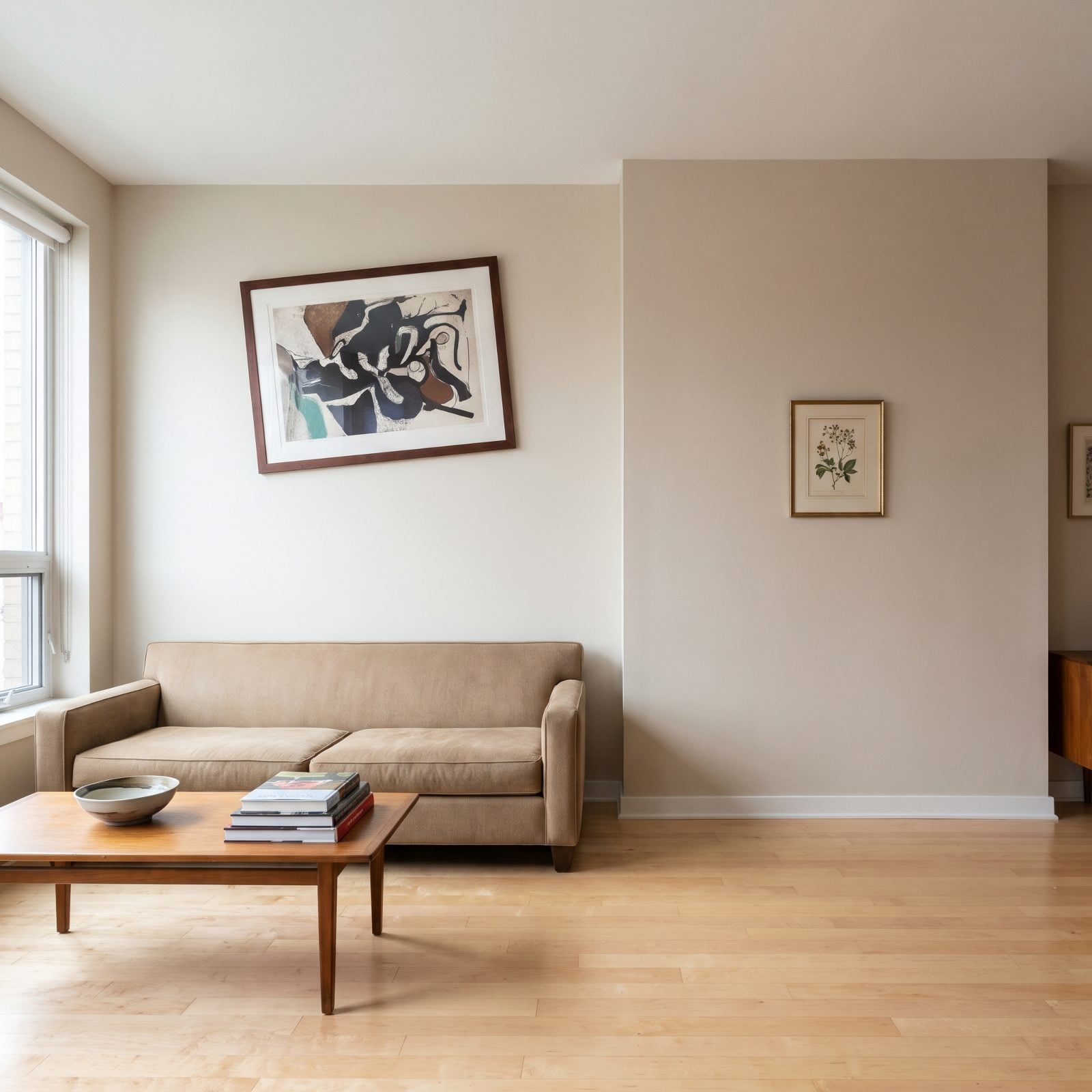
A crooked frame is a splinter in the eye. The camera finds it instantly and holds it there.
Scale is the sneakier problem. One postage-stamp print marooned on a huge wall makes the room feel unfurnished, while a giant canvas crammed over a small sofa makes the wall feel cramped. Hang the art too high — floating a foot above the furniture — and you break the connection between the piece and the room below it.
A pro will straighten frames without asking, because it costs nothing. The scale issues they just work around, since you can’t rehang a whole gallery wall mid-shoot.
18. Area Rugs Sitting Crooked or Bunching Up at the Corners
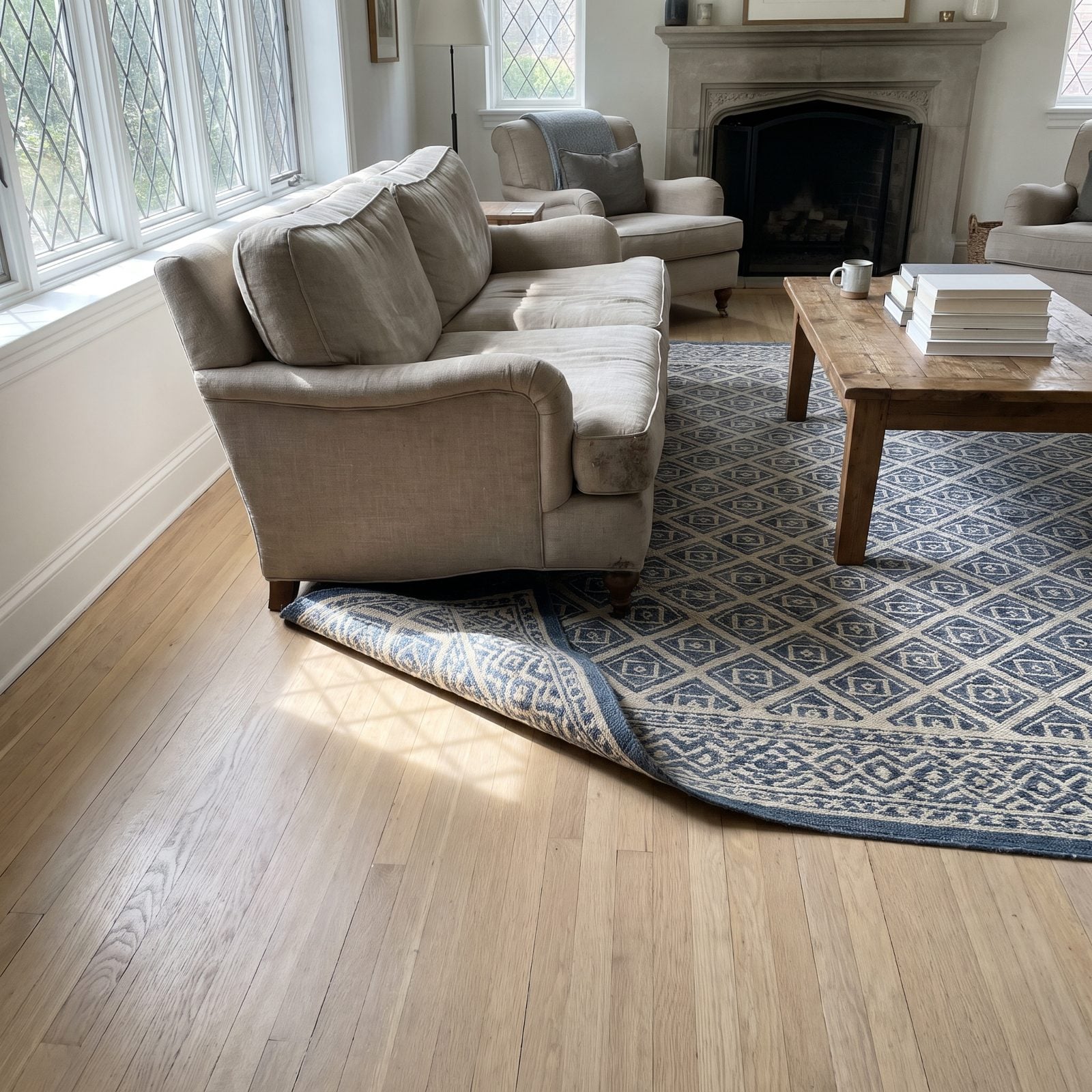
A rug sitting a few degrees off square nags at the eye without anyone knowing why. The whole room feels vaguely wrong.
Photographers want rugs running parallel to the floorboards or the walls, corners flat, no curled edge catching a shadow. A bunched corner is the worst offender — it throws a little shadow line that reads like a dark stain in the final image, and nobody notices until the listing’s already up.
Quick fixes before the camera comes out: square the rug to the room, smooth the corners, slide a sofa leg onto it to pin it true. That’s the whole secret. Alright, go check yours.
17. Visible Power Cords, Chargers and Extension Leads
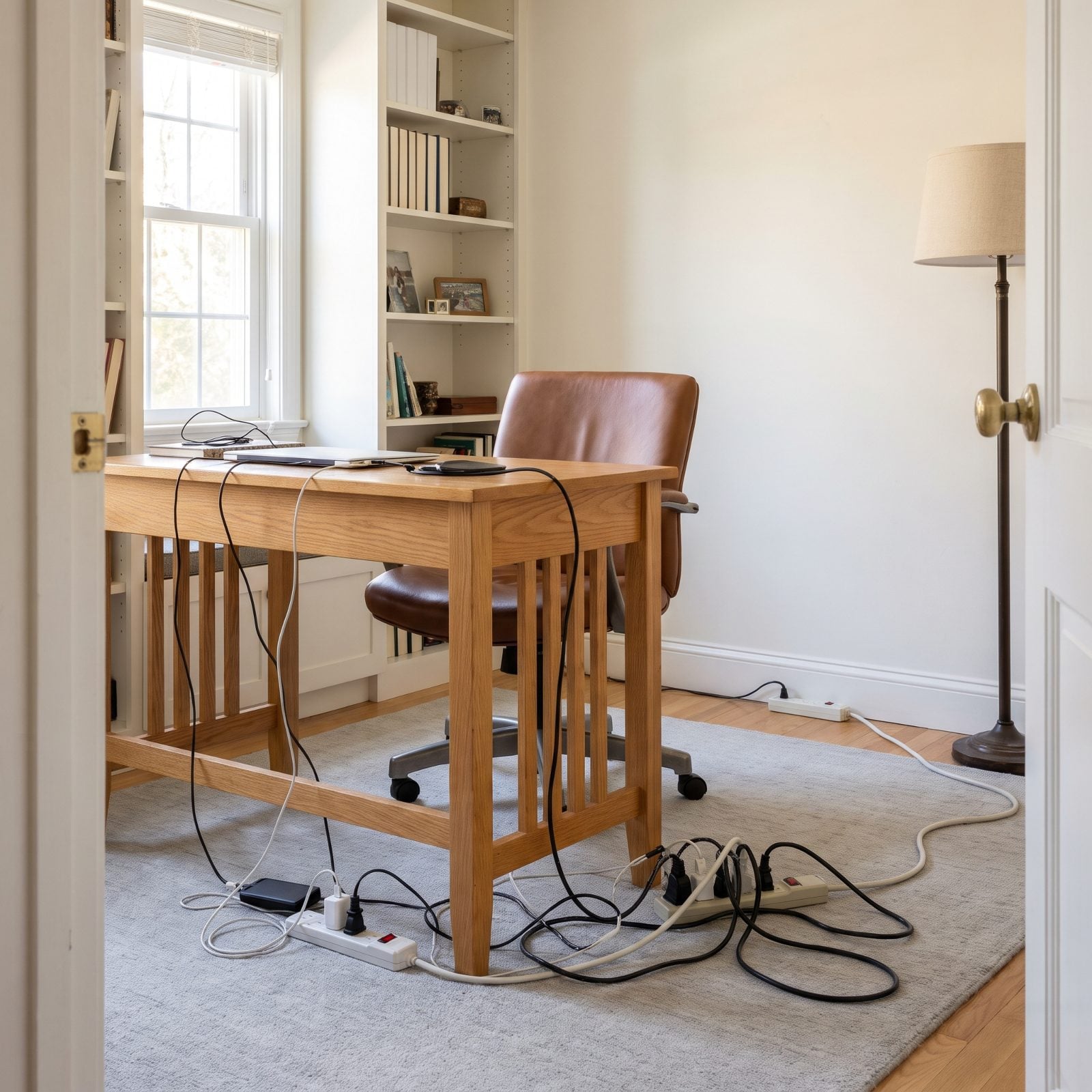
Cords read as chaos long before the brain names what they are. A single charger dangling off a nightstand pulls focus in a photo the way a loose thread pulls a sweater. Why do we notice them so much? Because the camera flattens depth, so that extension lead running along the baseboard stops being background and becomes a line your eye follows straight out of frame.
The fix is dull, and it works. Unplug what isn’t needed, tuck the rest behind furniture, coil the slack. I used to leave a phone cable draped over the headboard and could never figure out why the bedroom shots looked restless. That was why.
16. Televisions and Computer Screens Left On

A powered-on TV is a black hole dropped in the middle of a photo. The screen either throws a bright glare that blows out the exposure or freezes on a half-image that dates the shot the second someone recognizes the show. Either way, the eye goes there first and refuses to leave.
Dark screens photograph as clean, reflective surfaces that settle back into the room. So turn everything off — monitors, tablets propped on counters, even the little glowing clock on the microwave if you can swing it. Blank glass behaves. Lit glass competes.
15. Moving Ceiling Fans That Can Cause HDR Ghosting
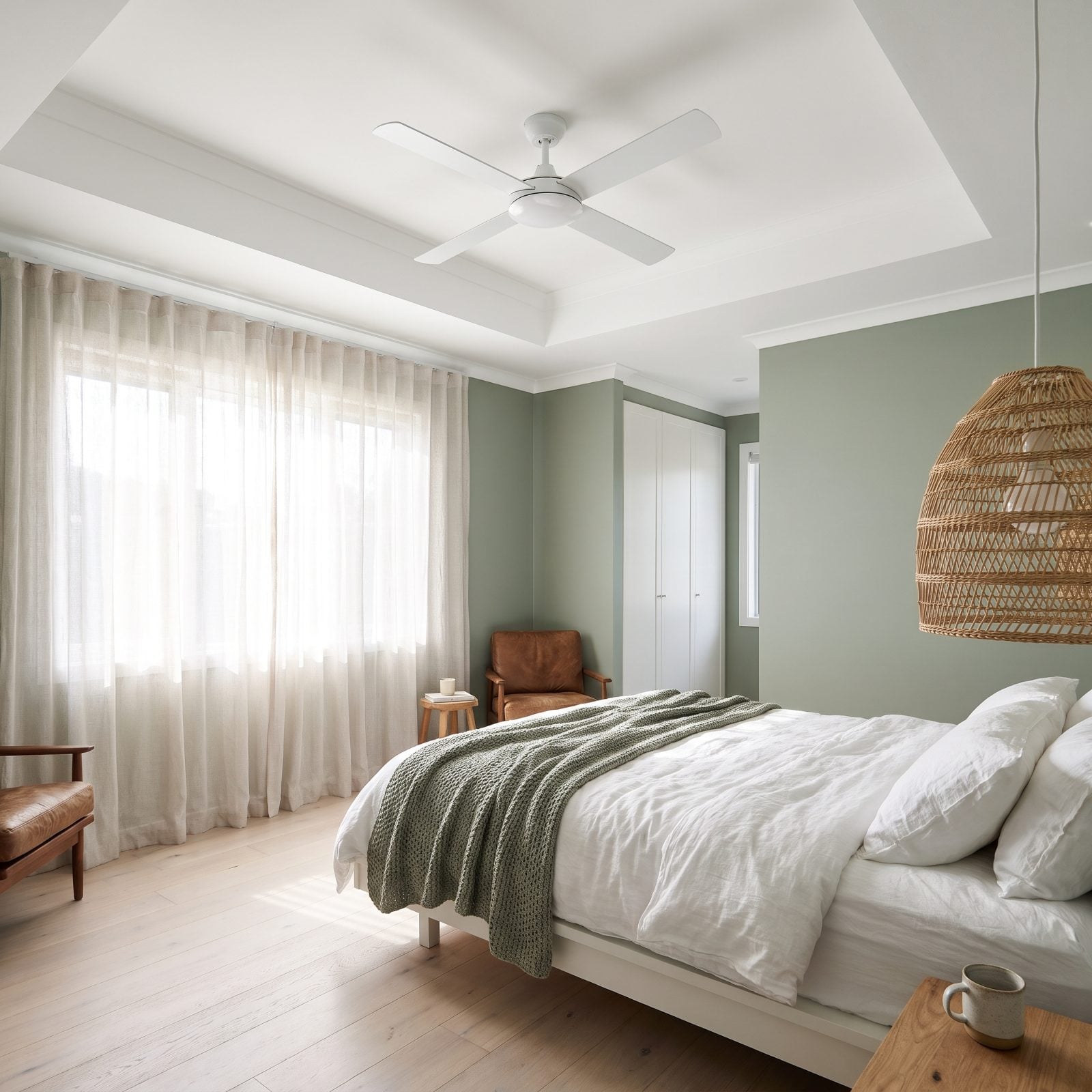
This one trips up almost everybody. Real estate photographers shoot HDR, firing several exposures and blending them into one. A spinning fan moves between those frames, so the blades dissolve into a translucent smear or ghost two sets of shadows across the ceiling. It reads like a camera malfunction.
Switch every fan off before the photographer arrives, and give it time to stop completely. A still fan becomes a clean architectural detail; a moving one quietly wrecks the frame. The nasty part? You usually can’t spot the damage until the images come back.
Describing a three-exposure bracketed shoot, one interiors photographer advises “Make sure you’ve cleared the room of anything that might cause ghosting across multiple exposures. Ceiling fans should be turned off”
14. Dishes, Water Spots and Cleaning Supplies Around the Sink
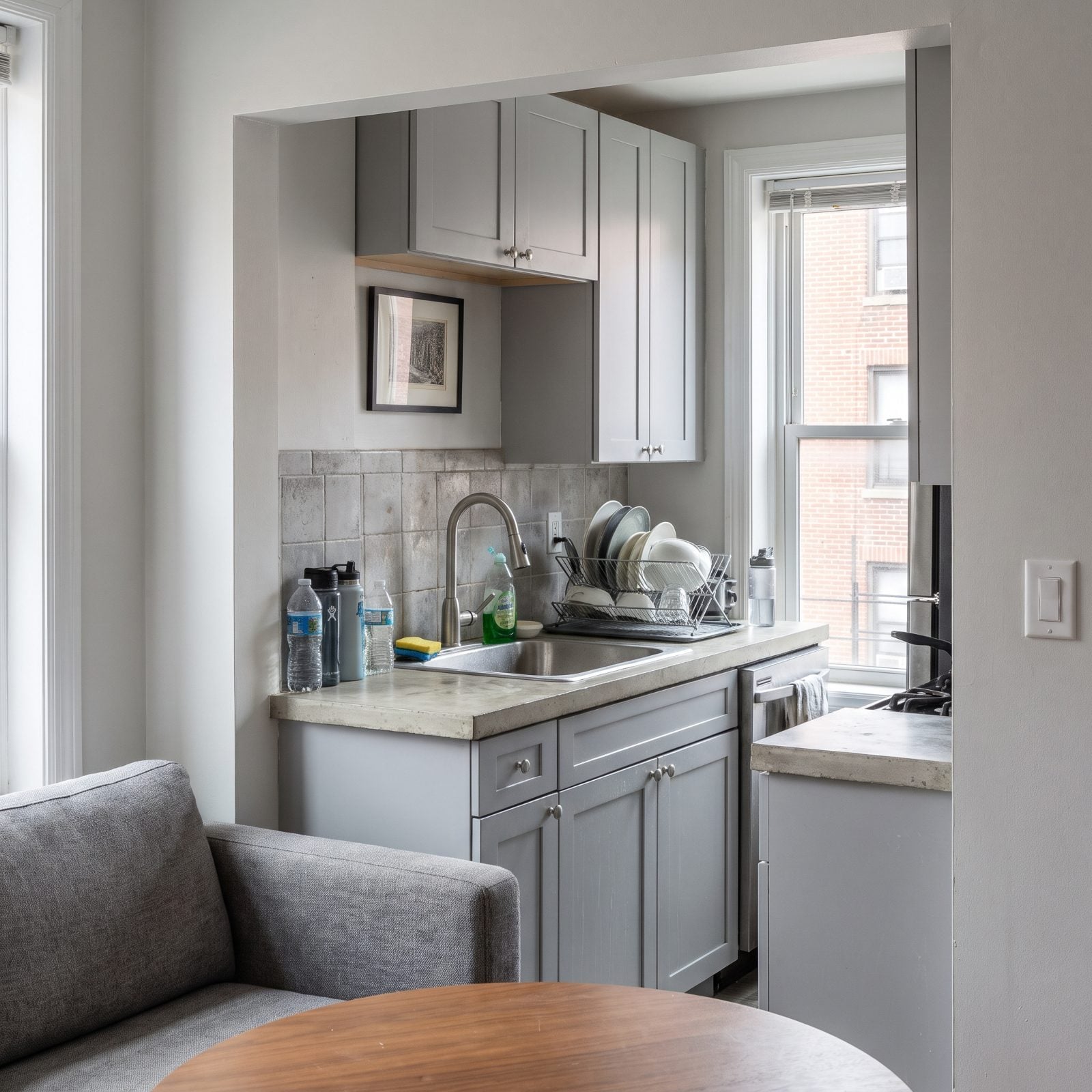
The sink is where staging quietly collapses. A lone coffee mug, a damp sponge wedged behind the faucet, the dish soap bottle parked beside the basin, water spots drying on the basin — each one is small. Together they announce that someone just walked away mid-chore.
Empty the sink completely. Wipe it dry, since standing water and spots catch the light and photograph grimy. Then hide the dish soap, the scrub brush, the rubber gloves. Nobody wants proof of chores in a listing, even though every one of us does them.
13. Fingerprints and Streaks on Stainless-Steel Appliances
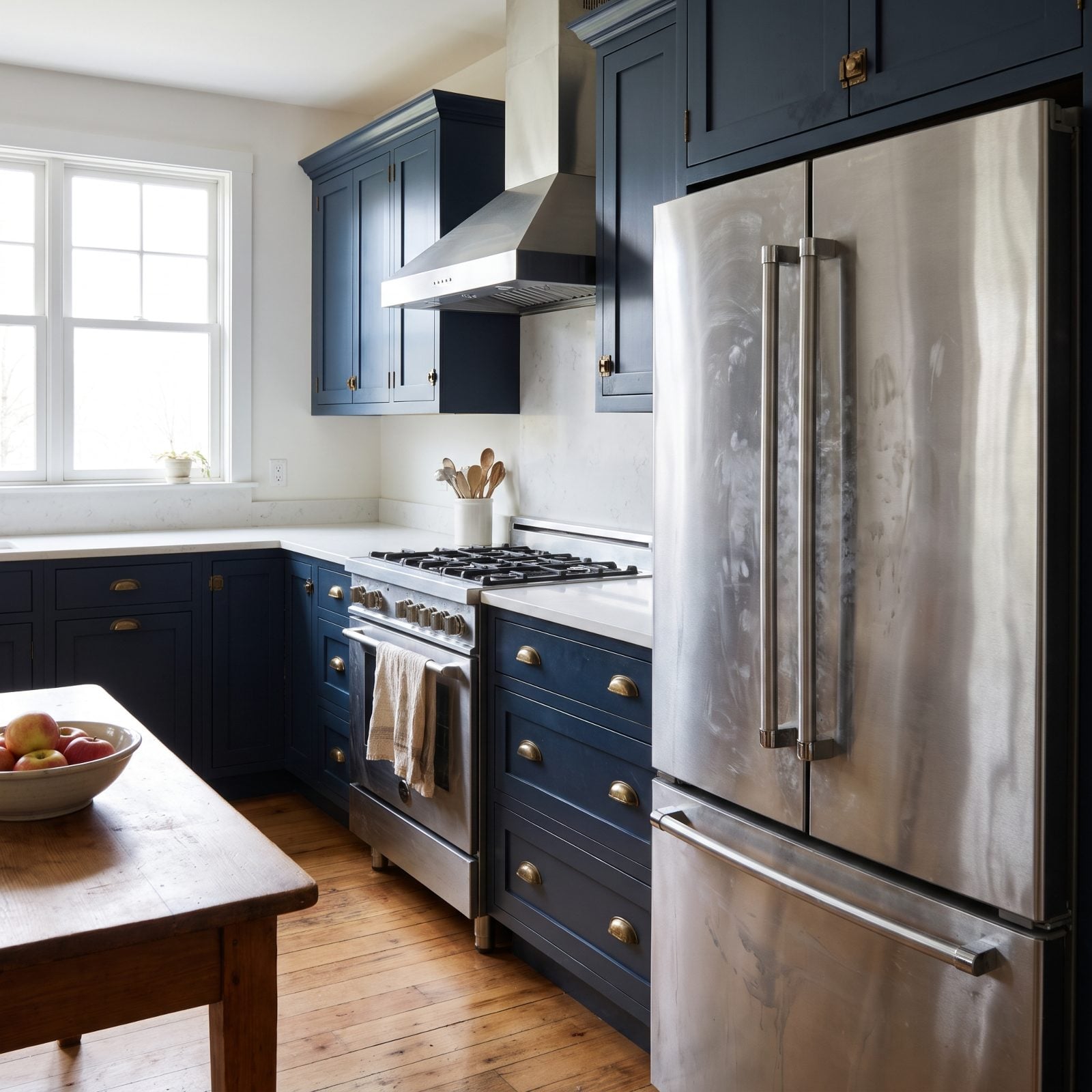
Stainless steel is a mirror that remembers every hand that ever touched it. Fingerprints, palm smears, the ghost of a sticky note — all of it surfaces under the bright, even light a photographer brings. And stainless amplifies glare, so a smudged fridge door can look downright greasy in a way the human eye forgives but the lens never will.
Wipe every stainless surface, following the grain, right before the shoot. Fridge, dishwasher, range hood, oven. A clean reflective panel makes the whole kitchen read newer than it is.
12. Cabinet Doors and Drawers Left Open or Misaligned
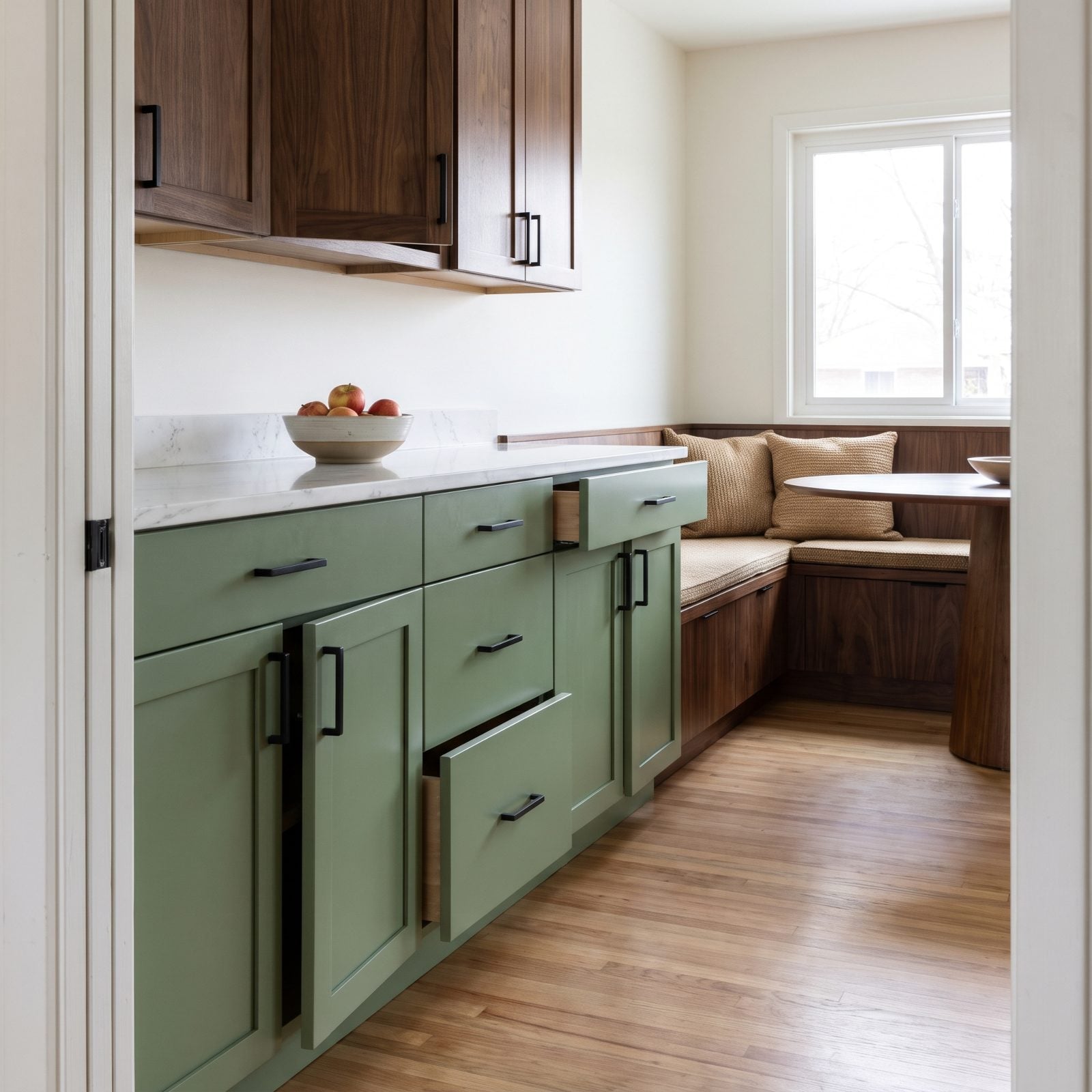
One drawer left cracked open throws off an entire wall of cabinets. The eye reads cabinetry as a grid of clean vertical and horizontal lines, and a single open door snaps that rhythm like a crooked picture frame. All at once the kitchen looks unfinished.
Close everything flush. And while you’re at it, nudge any door hanging lower than its neighbor — a loose hinge shows up glaringly in a straight-on shot. Misalignment is one of those things you stop noticing after a week of living with it, and then it’s the only thing a stranger sees.
11. Magnets, Calendars and Papers Covering the Refrigerator
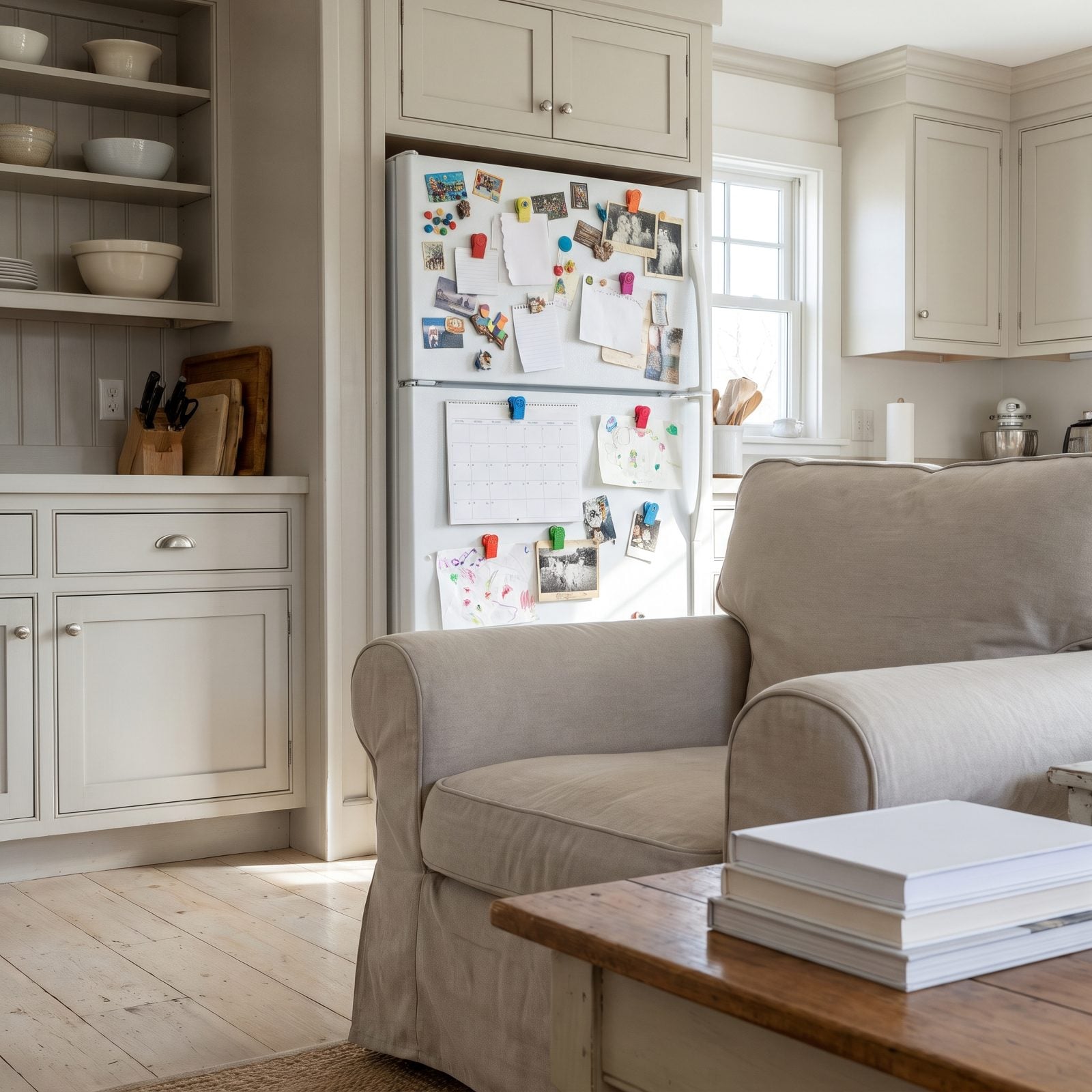
The fridge door is the family bulletin board, and that’s exactly the trouble. A grocery list, a kid’s drawing, the dentist reminder, a magnet from a pizza place three towns over. In a photo it collapses into visual static — and worse, it’s intensely personal. Buyers need to picture their own life in the space, not read through yours.
Strip it bare. Everything comes off: magnets, papers, the calendar, the novelty bottle opener. A blank fridge front is restful, and restful is what closes the sale.
On a home-prep checklist for kitchens, a real estate photographer instructs sellers to “Empty the fridge of all magnets, photos, and notes.”
10. Raised Toilet Lids and Visible Spare Bathroom Supplies
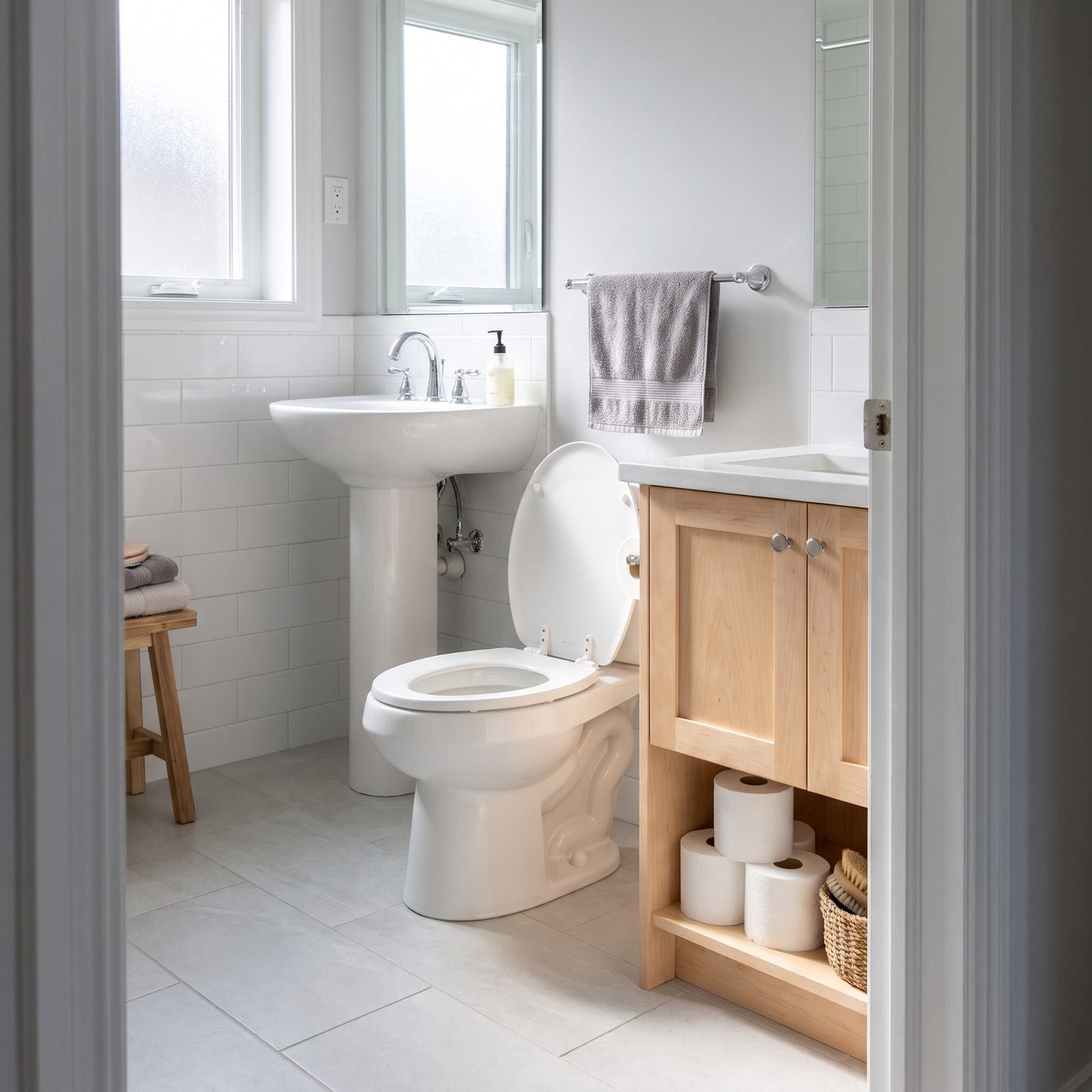
An open toilet lid is the first thing anyone’s eye lands on in a bathroom shot, and there’s no delicate way to put it: it looks bad. Close it. Every single time. A shut lid turns the toilet into a quiet white shape instead of the star of the show.
Then clear the supporting cast — the spare roll tower, the plunger, the toilet brush, the stack of extra paper under the window. Store all of it out of sight. Buyers already know these things exist; they just don’t want the evidence in a listing, and honestly, neither do I.
At the top of the bathroom section of a photoshoot prep guide, one real estate photographer writes “Put ALL toilet seats and lids down.”
9. Toiletries and Cleaning Products Covering the Vanity
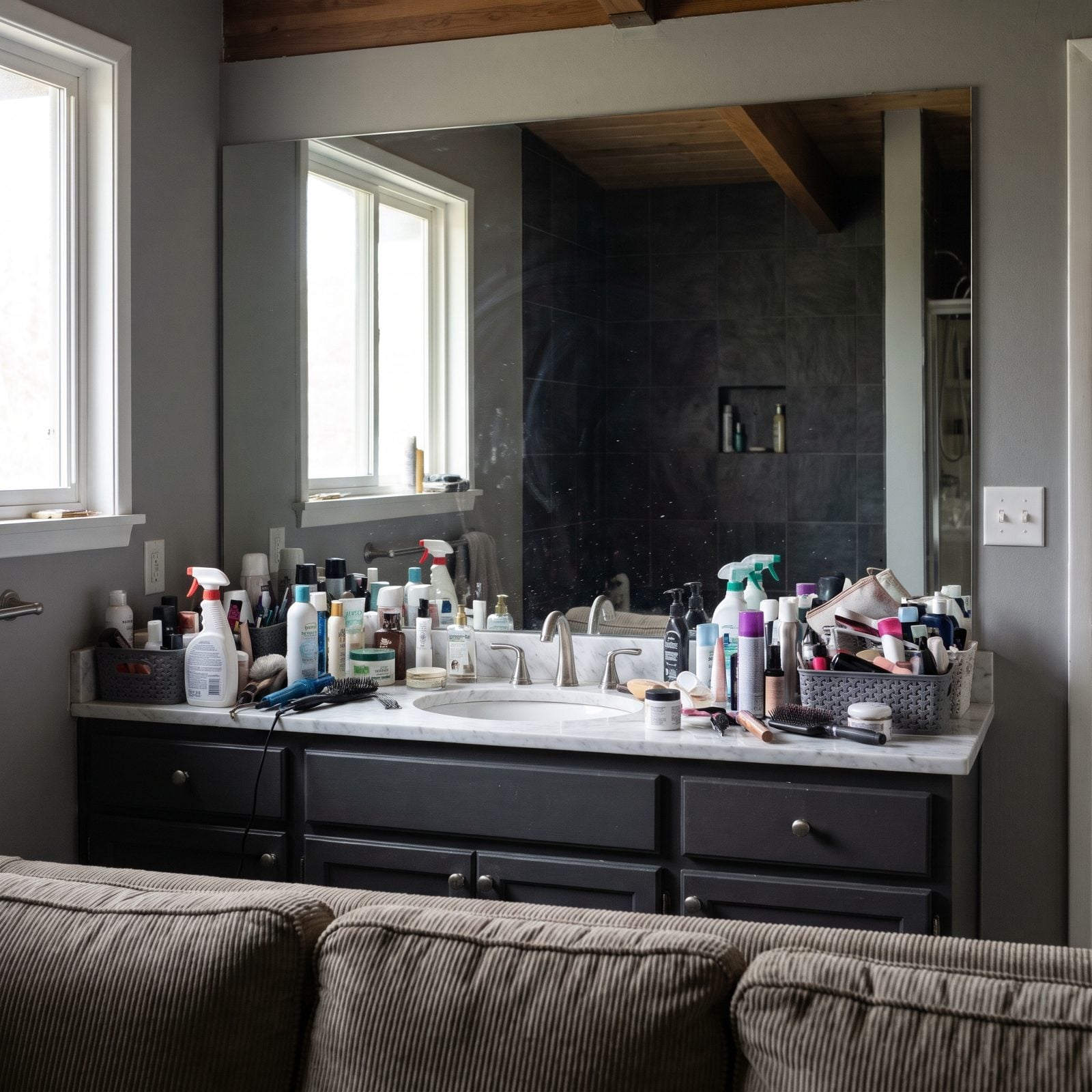
A vanity buried under shampoo bottles, toothbrushes, makeup and a half-squeezed tube of something reads less like a bathroom and more like a medicine cabinet that exploded. The camera tallies every single item, and a crowded counter shrinks the room while quietly killing the spa feeling a buyer came hoping for.
Clear nearly all of it. Keep one deliberate object — a plant, a single clean soap dispenser — and sweep the rest into a drawer or a tote you stash in the car. Bare counters photograph as calm and spacious, and that calm is the whole mood you’re selling. It costs nothing but five minutes and a willingness to hide your own life for one afternoon.
8. Towels That Are Mismatched, Wrinkled or Poorly Hung
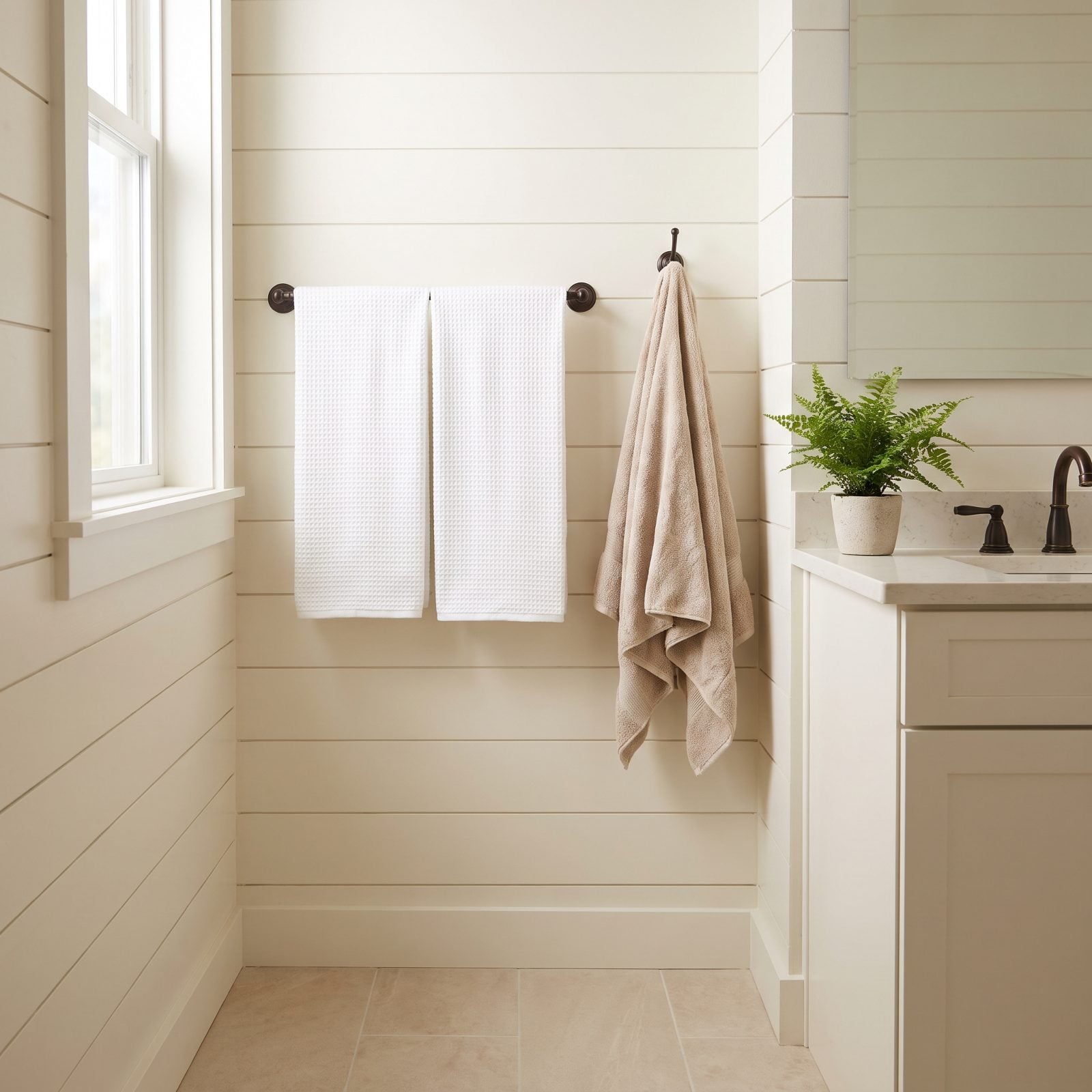
A bathroom towel is doing more work in a photo than you’d think. Fresh white towels, folded in thirds and hung with the edges matched, read as hotel. A damp, wrinkled towel in a color that fights the tile reads as somebody’s actual Tuesday.
Matching matters here. Three mismatched towels say the household is improvising, while one clean set, folded identically, says the room is cared for. Photographers will often ask you to swap in white before they shoot, because white never clashes and it bounces light.
7. Wrinkled Bedding and Flattened Pillows
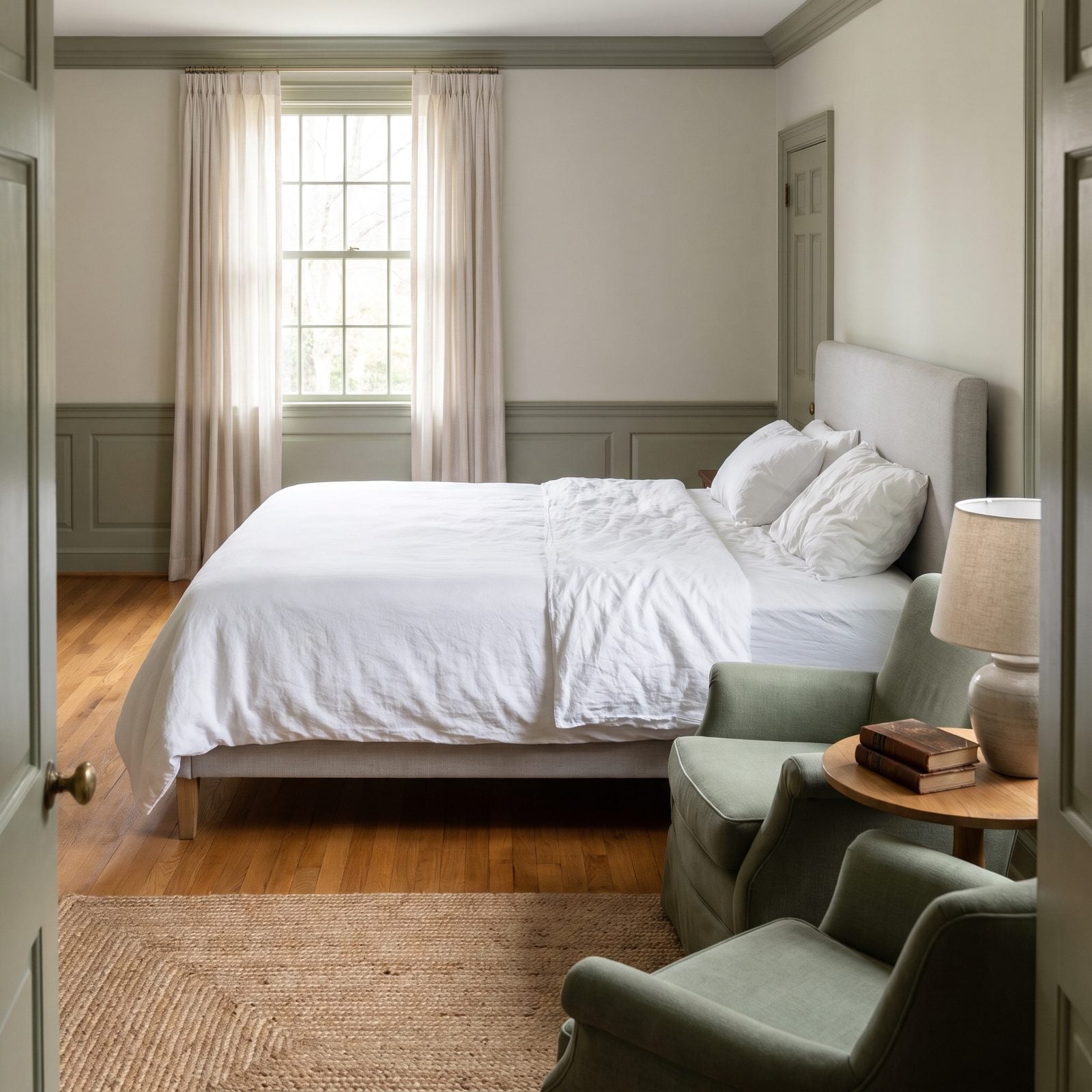
A bed is the biggest object in most bedrooms, so wrinkles show up at a size nothing else can match. The camera flattens everything, and flat pillows look flatter still on a screen. Those slumped, over-loved pillows that have molded to the back of a skull? They photograph like disappointment.
Smooth the duvet tight, iron out the creases where you can, and plump the pillows so they stand up on their own. A karate chop down the center of each one is an old staging trick that gives them a tailored dent and height all at once.
6. Whether the Fireplace Looks Clean and Ready to Feature
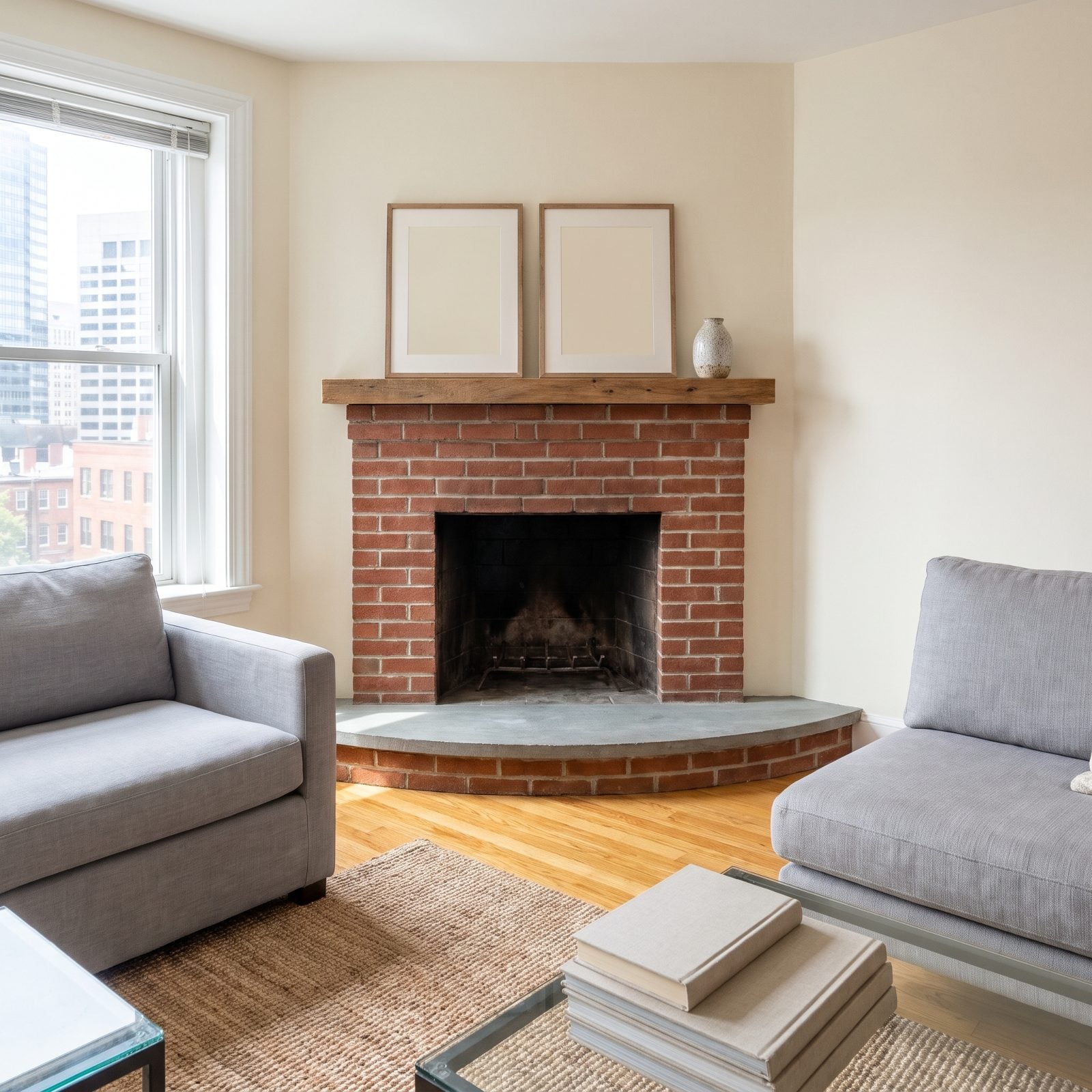
A fireplace is a selling feature, which means the camera will go hunting for it. A firebox full of cold ash and a hearth streaked with soot turn that feature into a chore the buyer can already picture themselves hating.
Sweep it out. Wipe the soot off the surround. A clean firebox with a tidy grate of fresh logs photographs better than a heap of ash, because it reads as ready rather than recently used.
And the mantel is its own small stage. Clear the clutter, keep two or three objects of varying height, leave breathing room. A crowded mantel shrinks the whole wall.
5. Wilted Houseplants and Plants Blocking the Light
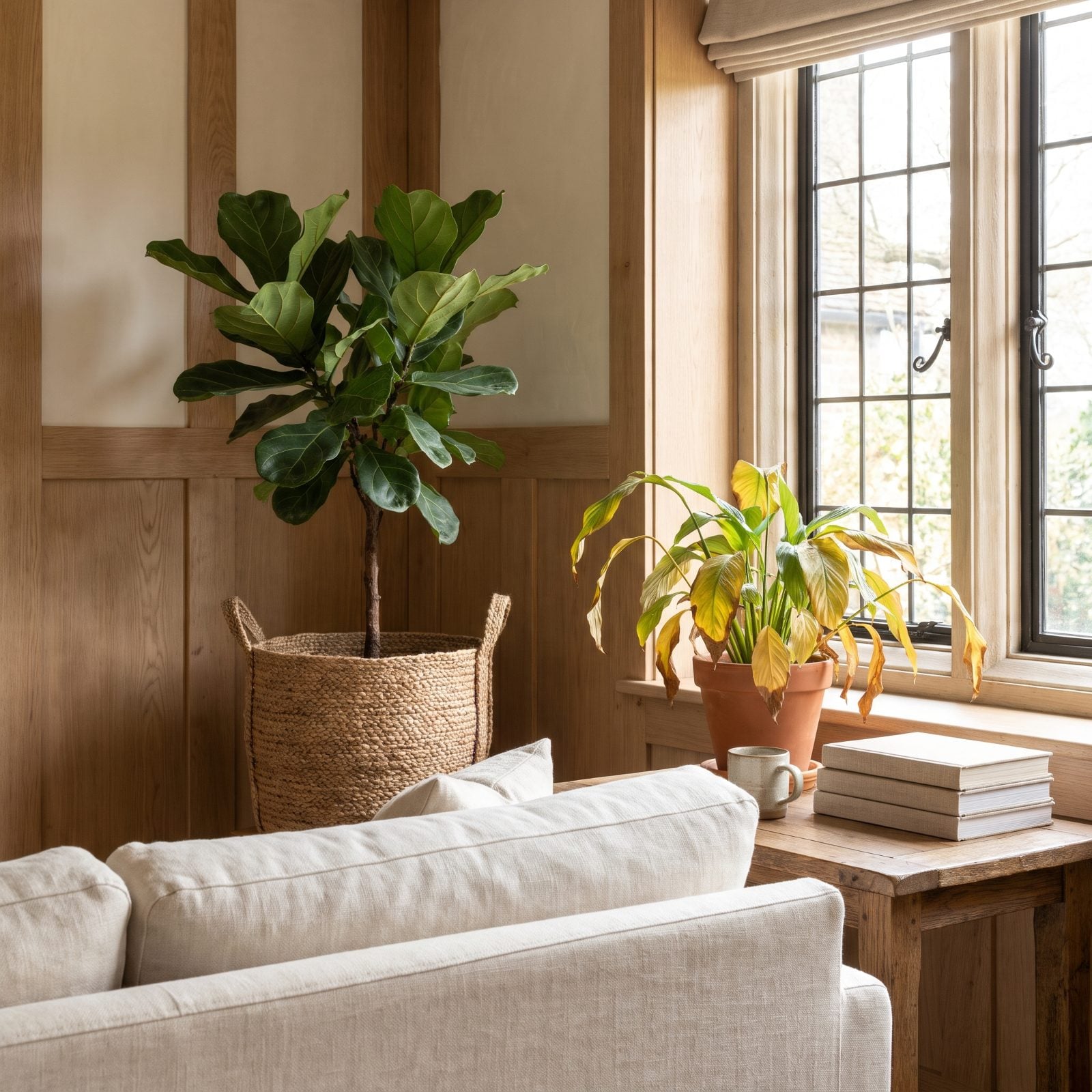
I have killed enough houseplants to know a sad one on sight, and a camera is crueler than I am. Yellowing leaves and droopy stems read as neglect, and they drag the viewer’s eye straight to the dying thing instead of the sunny room around it.
The bigger issue is placement. A plant parked on a windowsill blocks the very light the photographer is chasing, so move the greenery away from the glass before the shoot and let the daylight pour in. One healthy plant beats three struggling ones. When in doubt, haul the invalids out of the frame entirely.
4. Patio Furniture That Obscures the Outdoor Living Space
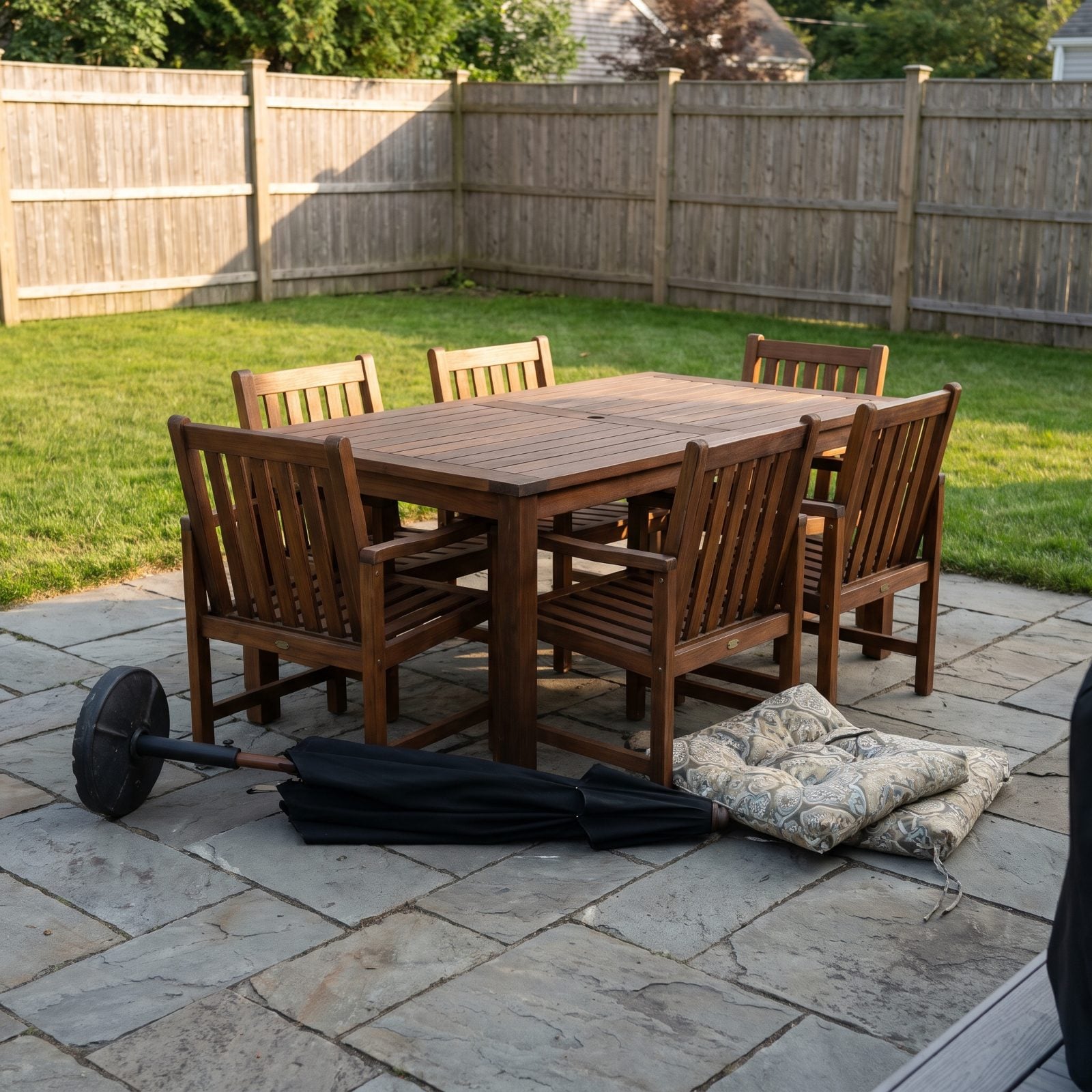
Outdoor space sells, and a patio crammed edge to edge with furniture sells it short. When a dining set, three loungers, a grill and a cooler all fight for the same slab, the camera simply can’t show the buyer how much room is actually there.
So pare it down to one clear vignette: a table and chairs, or a pair of loungers, with open paver visible around them. Outdoors, the empty space does the selling. It lets the eye measure the square footage instead of tripping over stuff.
3. Cloudy Pool Water, Pool Covers and Loose Pool Equipment

Clear blue water is the shot. Green or cloudy water is a liability the camera renders in full, unflattering detail, and no buyer looks at a murky pool and thinks relaxing.
Run the pump and balance the chemistry a few days ahead so the water reads crisp and blue on photo day. Then clear out everything nobody wants in frame.
- Pull the cover off entirely. A half-rolled cover looks like a chore in progress.
- Stash the vacuum hose, skimmer pole and chemical jugs out of sight.
- Sweep the deck so the coping looks clean right to the water’s edge.
2. Garage Floors and Storage Areas Visible in the Listing
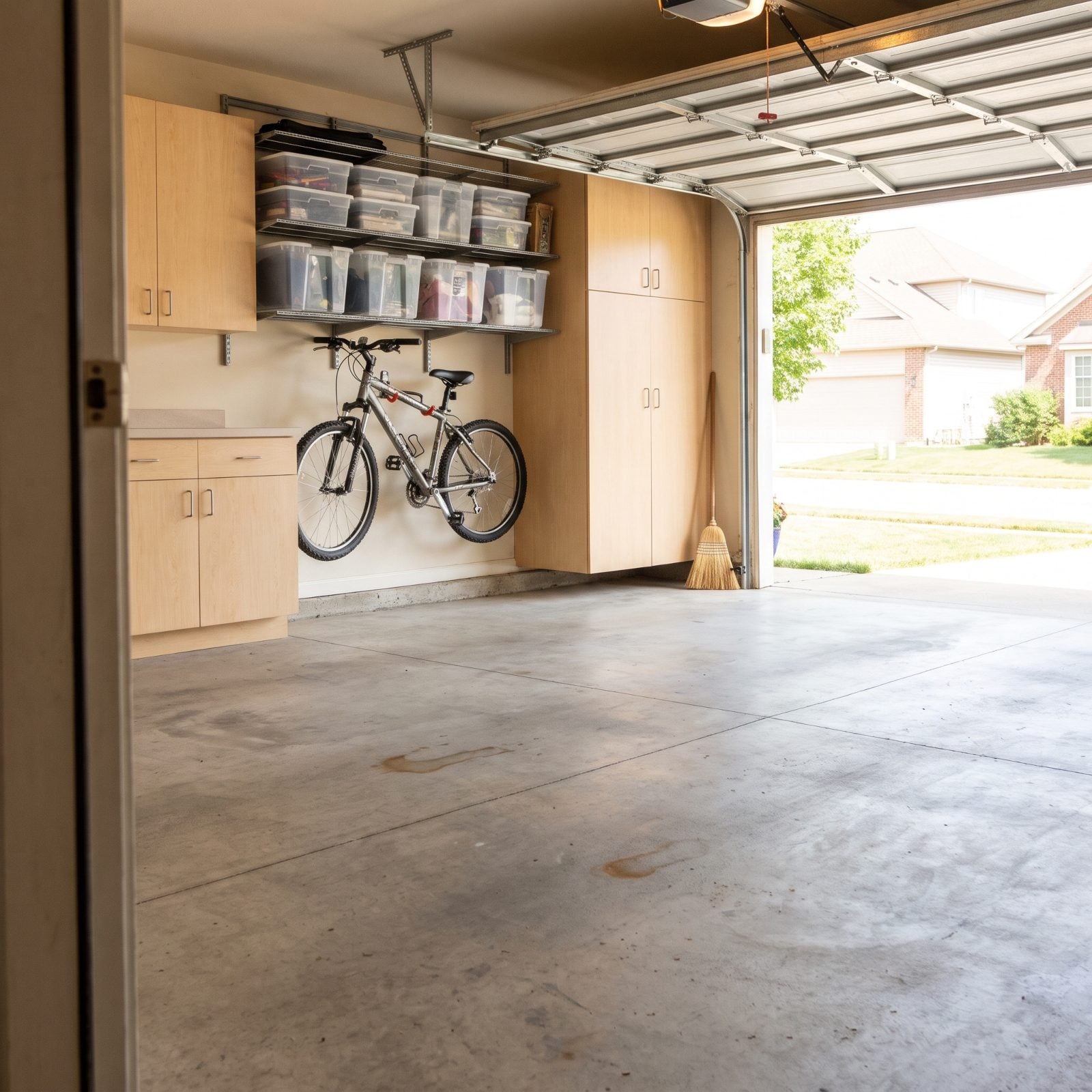
Buyers care about garages more than sellers expect, and a cluttered one photographs like a warning. Boxes stacked to the ceiling and an oil-stained floor tell the viewer there’s never enough storage in this house — the opposite of what you want to say.
Sweep the floor and hit the worst oil stains with degreaser. Get bins off the ground and onto shelves so the concrete shows. A garage that reads as organized makes the whole property feel bigger, because storage is square footage people can imagine filling with their own junk.
1. Holiday Decorations That Make the Photographs Look Dated

A listing photo outlives the season it was shot in. A tree in the window in July, or a pumpkin on the porch in March, tells every buyer exactly how long the home has been sitting — and that’s a conversation you don’t want starting in their head before they even walk in.
Strip the seasonal stuff out. Garland, wreaths, string lights, inflatable anything. A season-neutral room ages well and keeps the focus on the architecture. The one exception photographers sometimes allow is a tasteful, timeless shot captured specifically for a winter listing, and even then they keep it restrained. Alright, go take the lights down.
Arguing that seasonal decor dates listing photos, a resort-town realtor points out “A Christmas tree in the corner? That tells buyers your home has been on the market since December.”