A good cleaner reads a room the way a tracker reads a trail. Walk into any home and the evidence is already laid out: a stripe of gray where carpet meets wall, a cloudy ring on the kitchen island, a patch of dust that hides every time the bathroom door swings open. None of it is random. Each mark records air currents, missed angles, and habits repeated a few hundred times, and the pros notice because they know what causes each one. Learn to read the same clues, and your own house starts confessing things you never thought to look for.
Please note that some of the images in this article were created with the assistance of AI.
32. Dark Lines Along Carpet Edges Reveal Filtration Soiling
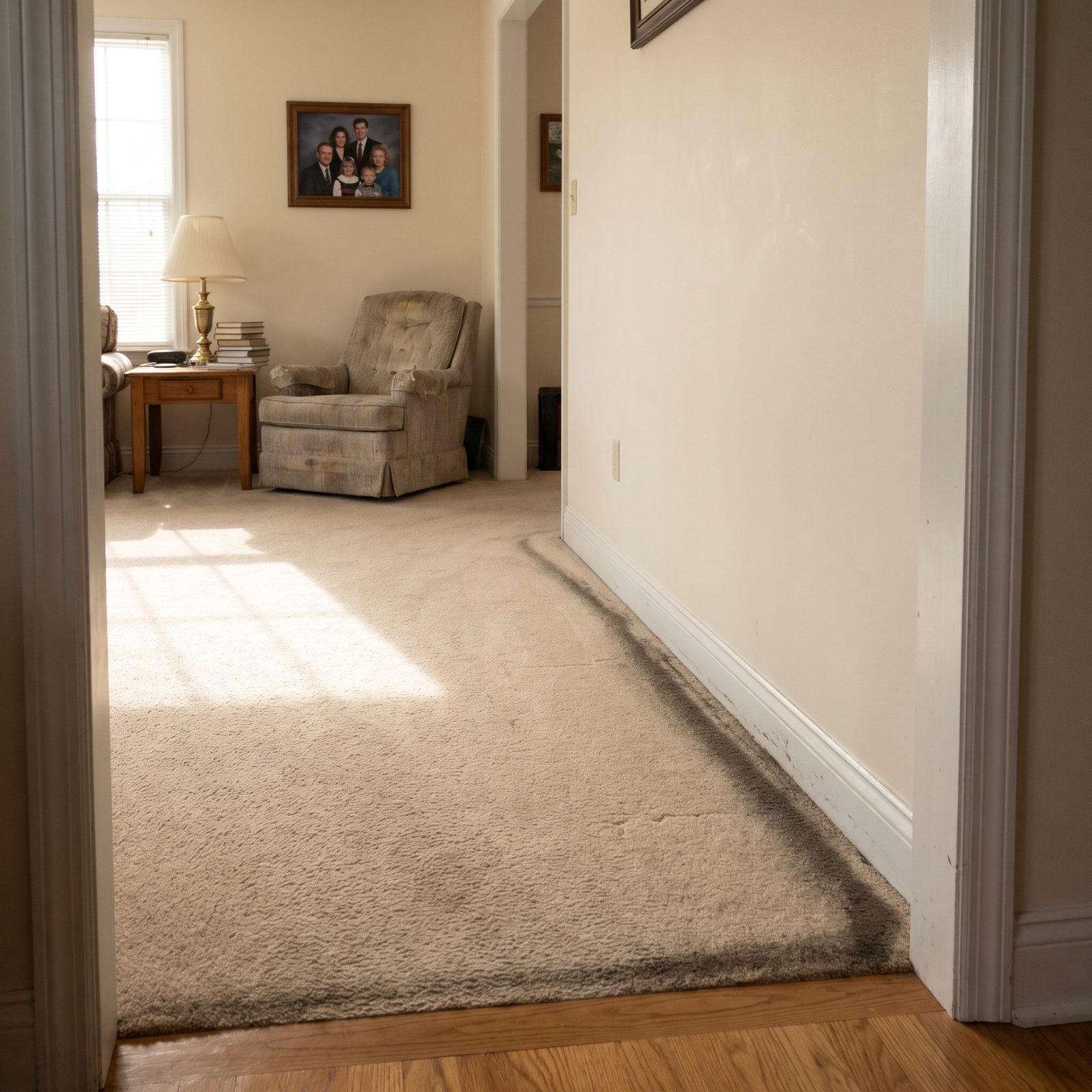
That grimy stripe hugging the baseboard isn’t dirt you tracked in. It’s dirt the air carried. Warm indoor air gets pulled toward the gaps beneath baseboards and under walls, and your carpet edge acts like the last filter it passes through, catching fine soot, skin cells, and combustion particles on the way out. That’s why the line comes out so sharp and so even, following the wall like a drawn pencil mark.
You can vacuum the open floor every week and never touch it, because a vacuum head rarely reaches flush into that crease. A crevice tool worked firmly along the edge is the only real fix, and even then it comes back.
31. Triangular Dirt Patches in Corners Expose Mop Limitations
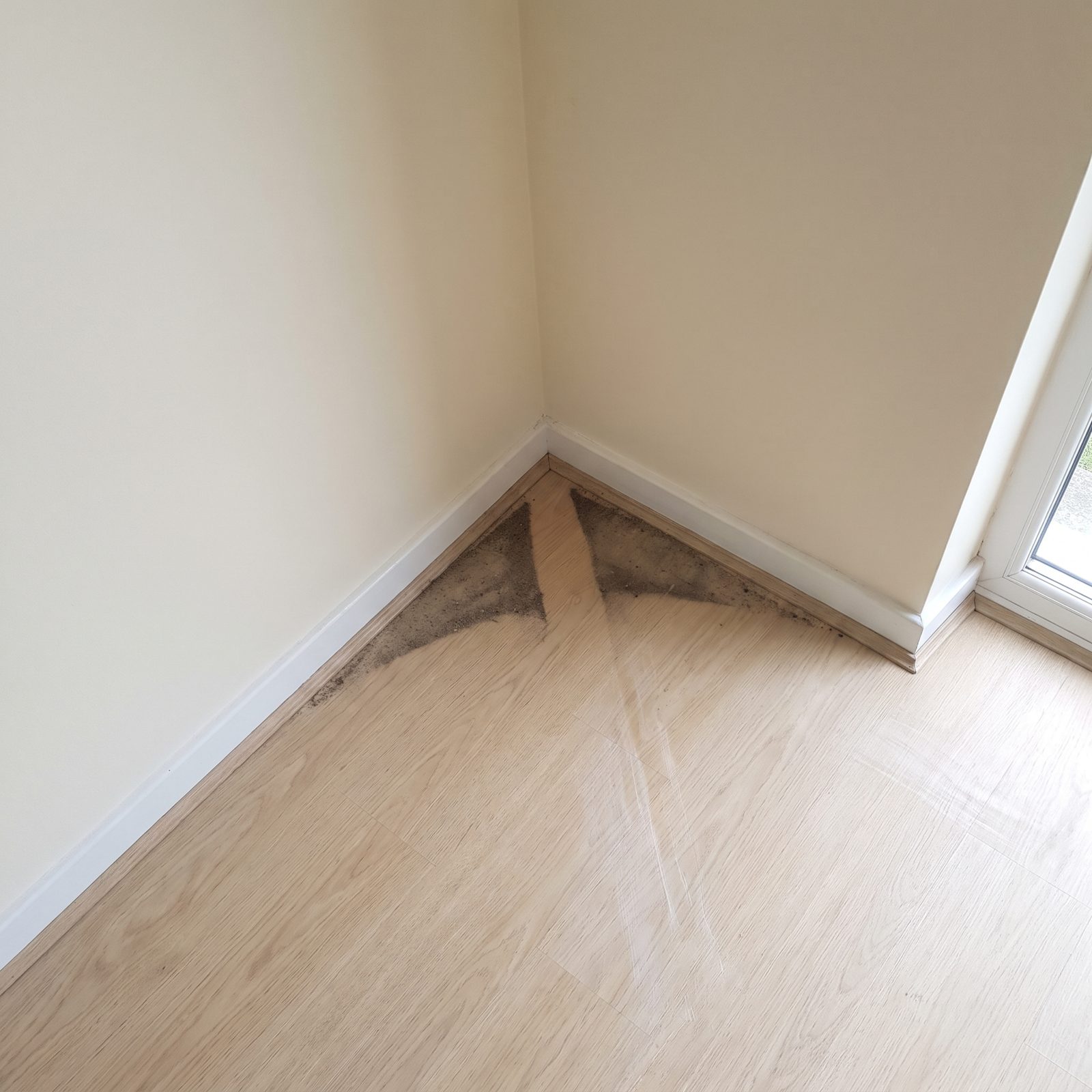
Look at the corners of any mopped floor and you’ll often see two little triangles the mop forgot. It’s geometry, plain and simple. Push a mop diagonally into a corner and it cleans a straight stripe right to the point. But the head is narrower than the angle is wide, so the wedges along each baseboard on either side of that stripe get missed. Soil collects there week after week while everything around it gets clean.
Cleaners spot these instantly because they’re trained to work corners by hand or with a squared cloth. A quick pass with a damp rag wrapped around a finger clears what the mop structurally cannot.
30. A Sticky Floor With a Shiny Film Signals Too Much Cleaner
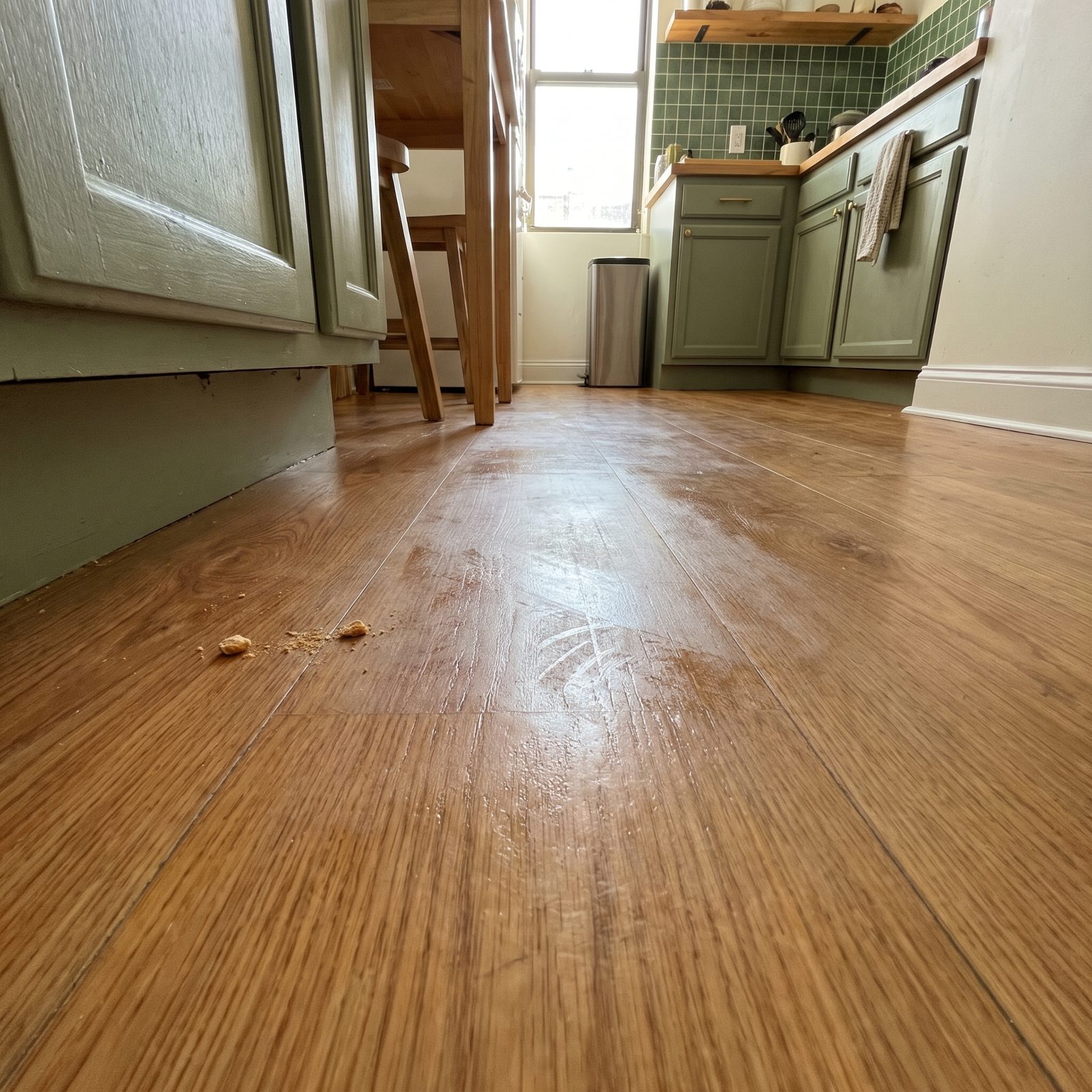
More cleaner does not mean cleaner. When a floor feels slightly tacky underfoot or shows a dull, hazy sheen in low light, the usual culprit is overdosing the mop solution and skipping the rinse. The soap never fully lifts off. It dries into a thin sticky layer that then grabs every crumb and dust mote that lands on it.
So the floor that gets the most product often looks dirty fastest. Cut the dose, go back over with plain water, and you strip the film and reset the surface.
29. Darkened Grout Along Walking Routes Identifies Tracked-In Soil
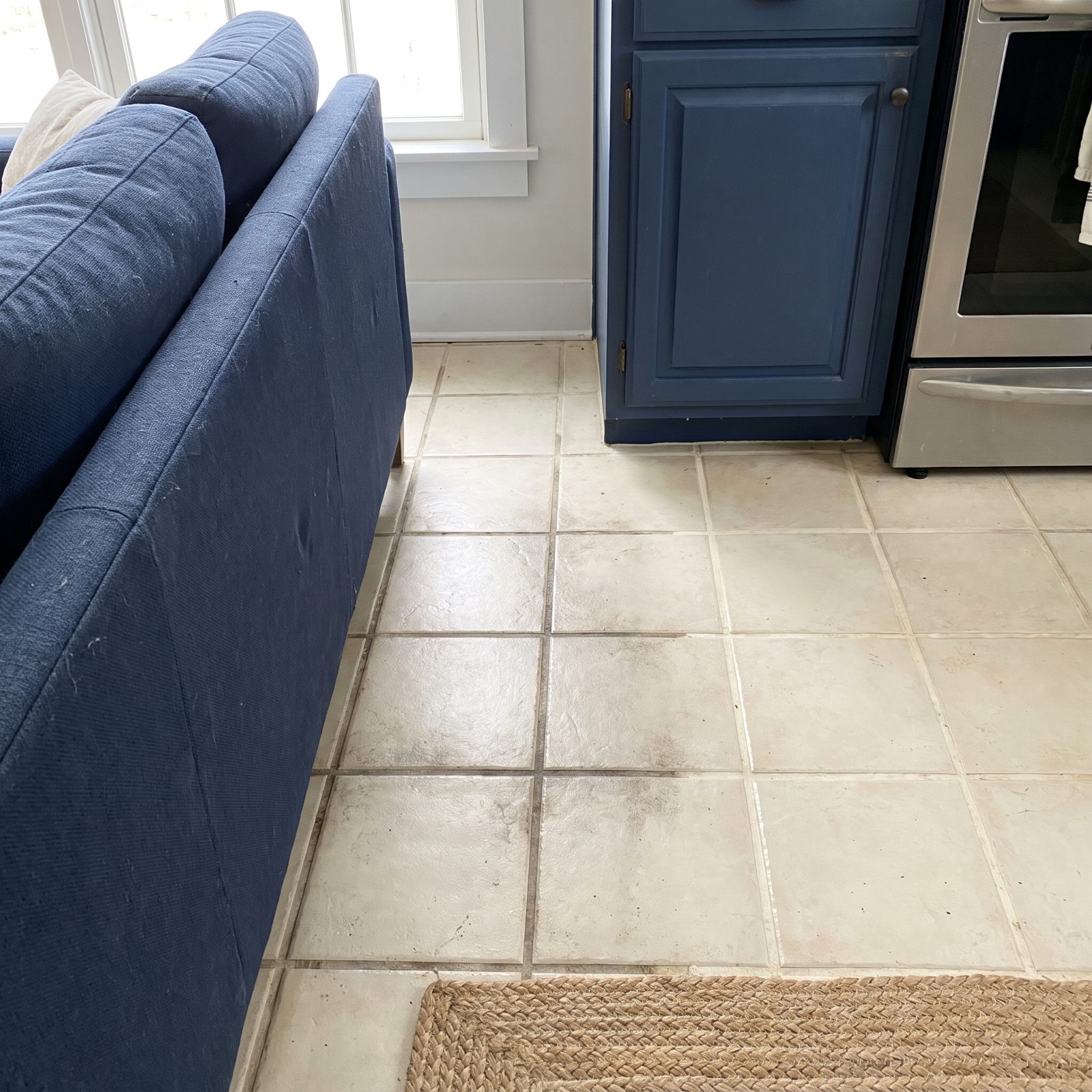
Grout tells the truth about foot traffic. The lines running down the middle of a room, where everyone walks, darken to a dull gray while the grout tucked under a cabinet or beside the fridge stays close to its original color. That protected strip is the cleaner’s reference point. It shows exactly what shade the grout is supposed to be, and how far the rest has drifted.
Tracked-in soil is abrasive, and it packs into the porous grout faster than the tile around it. Regular mopping glides over the low grout line and barely touches it. That’s why grout almost always needs a brush, not a mop, and a little patience along the busy lanes.
28. Gray Halos Around HVAC Registers Point to Escaping Dust
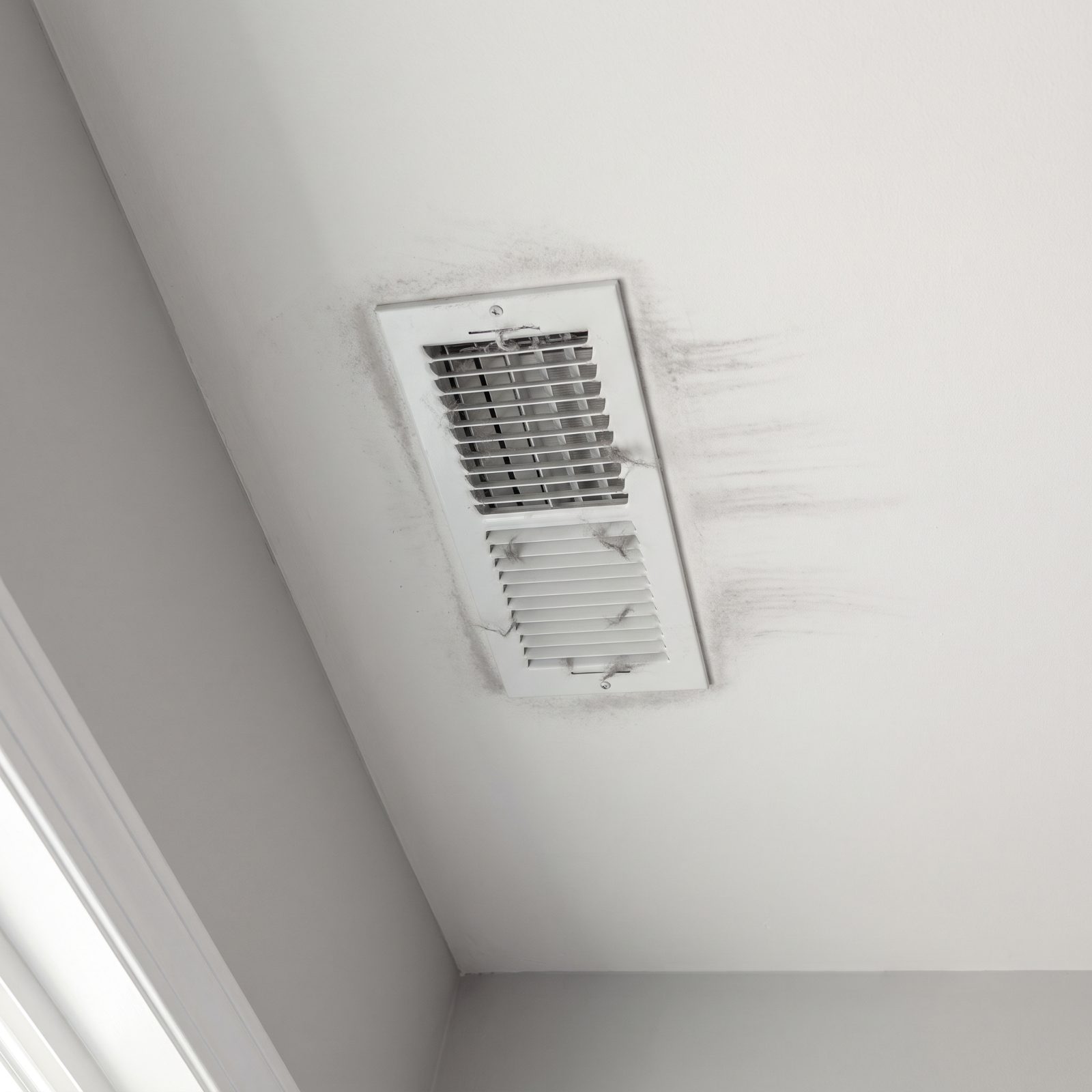
That smudgy gray outline around a ceiling or wall vent is dust escaping where it shouldn’t. Air moving through the ductwork carries fine particles, and when a register’s seams leak or the filter is overdue, that dusty air brushes the paint around the opening and leaves a shadow. The halo even hints at direction, streaking along the way the air flows.
Pros read it as a maintenance flag more than a cleaning one. Wipe the stain and it’ll return unless the filter gets changed or the register gets resealed. The mark is the symptom, not the disease.
27. Dust on the Leading Edges of Ceiling-Fan Blades Shows Airflow Patterns
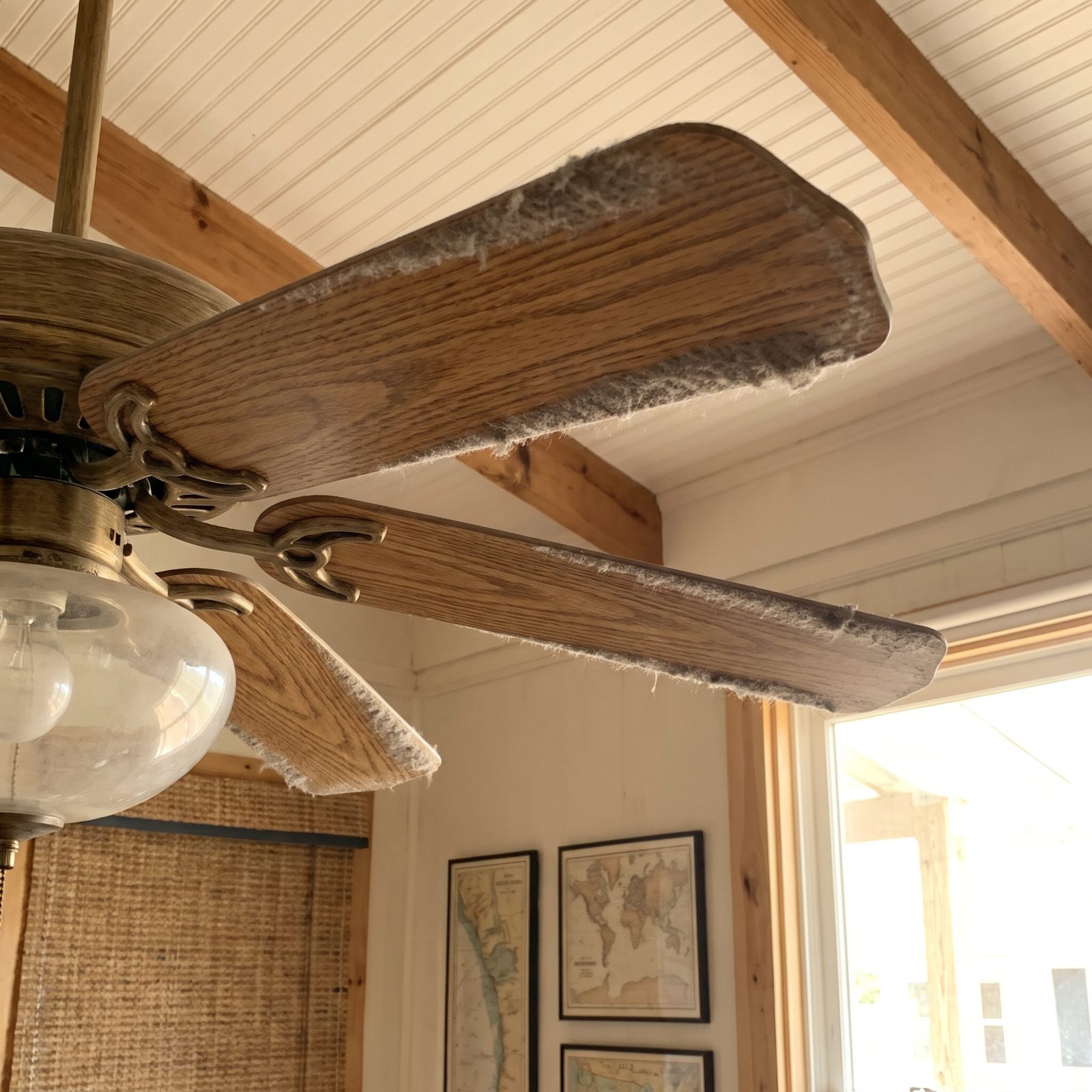
Here’s a counterintuitive one. On a ceiling fan, the heaviest dust doesn’t sit flat on top of the blade. It builds along the front, the leading edge that slices through the air. The blade works like a tiny plow, shoving against airborne particles and packing them into a felt-like ridge right at the edge.
So when a cleaner tips a blade and sees that fuzzy stripe, it’s a time stamp. A fan dusted regularly never accumulates it. A fan that’s been skipped for months wears the proof on its edge, and wiping only the broad top face misses the dirtiest part entirely.
26. Cloudy Patches on Stone Counters Suggest Chemical Etching

A dull, cloudy patch on a polished stone counter usually isn’t grime. It’s damage. Marble and other calcium-based stones etch when they meet anything acidic, a splash of lemon, a wine ring, even some all-purpose sprays. The acid eats a microscopic layer of the polish and leaves a spot that scatters light instead of reflecting it.
The giveaway is that it won’t wipe away. Cleaners test with a damp cloth, and when the haze stays put, they know it’s etching rather than soil. It’s a repair job for a stone pro, and a warning to keep harsh products off the surface for good.
25. The Shape of Shower Soap Scum Reveals the Spray’s Reach

Soap scum maps the water. That chalky white film in a shower doesn’t coat everything evenly. It clusters where mineral-rich droplets land again and again and dry in place, usually in a fan or arc radiating from the showerhead, while the outer glass the spray rarely reaches stays clearer.
Read the shape and you can see the throw of the water. It’s hard-water minerals plus soap residue baking on, and the heaviest buildup sits in the spray’s bullseye.
24. Dust Along One Edge of Every Blind Slat Reveals Incomplete Wiping
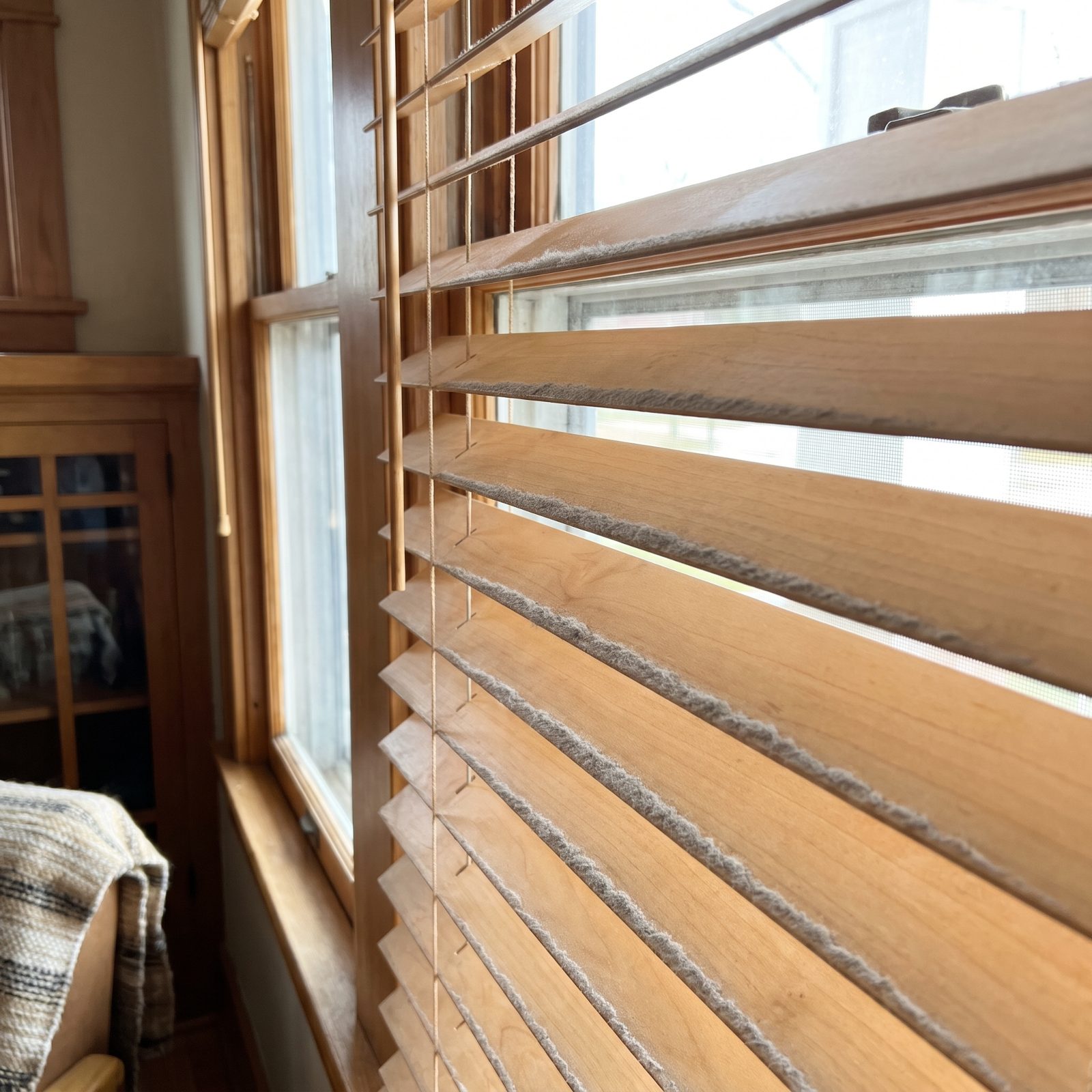
A striped dust pattern down a set of blinds gives the game away. When someone wipes only the flat face they can see, the thin edge never gets touched. Multiply that across twenty slats and you get a repeating gray line down the whole stack, identical on every one.
Cleaners catch it because they close the blinds, wipe, then flip and wipe again. The uniformity is the tell. Random dust looks scattered. A matching stripe on every slat means the same shortcut, taken the same way, every time.
23. Dust Islands Behind Open Doors Expose Hidden Floor Sections
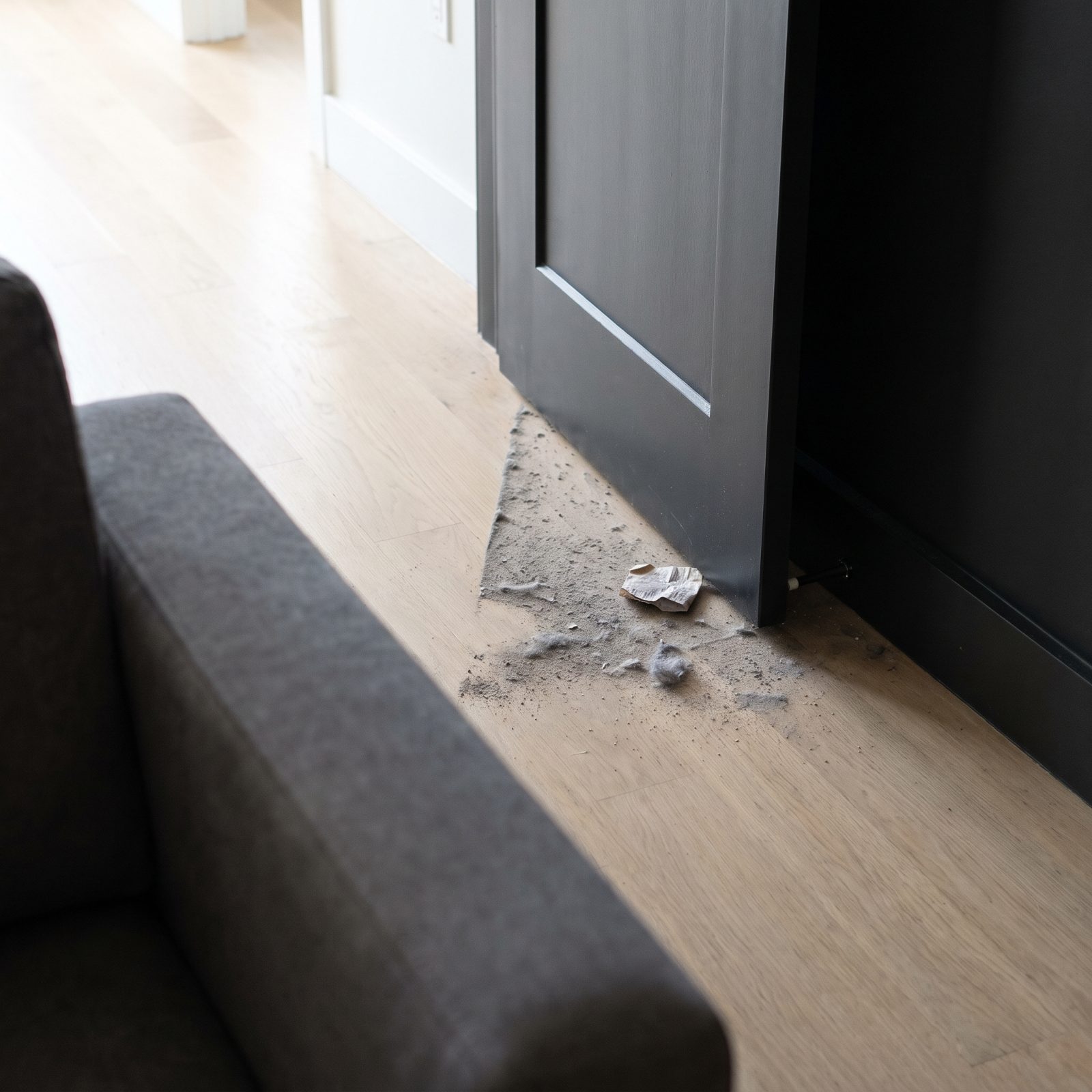
Open a door that’s always left open and you’ll often find a little island of dust behind it. A door parked in the same spot for weeks screens off the floor behind it, so the vacuum sweeps the room it can see, the door never moves, and that shielded wedge quietly collects lint and grit nobody notices.
It’s one of the first spots a cleaner checks, along with under beds and behind the couch, because it reveals the real cleaning routine. A floor can look spotless in the open and still hide a patch nobody’s touched in a month. The fix is almost insultingly simple. Move the door.
22. A Darkened Handrail Underside Reveals the Main Grip Zone
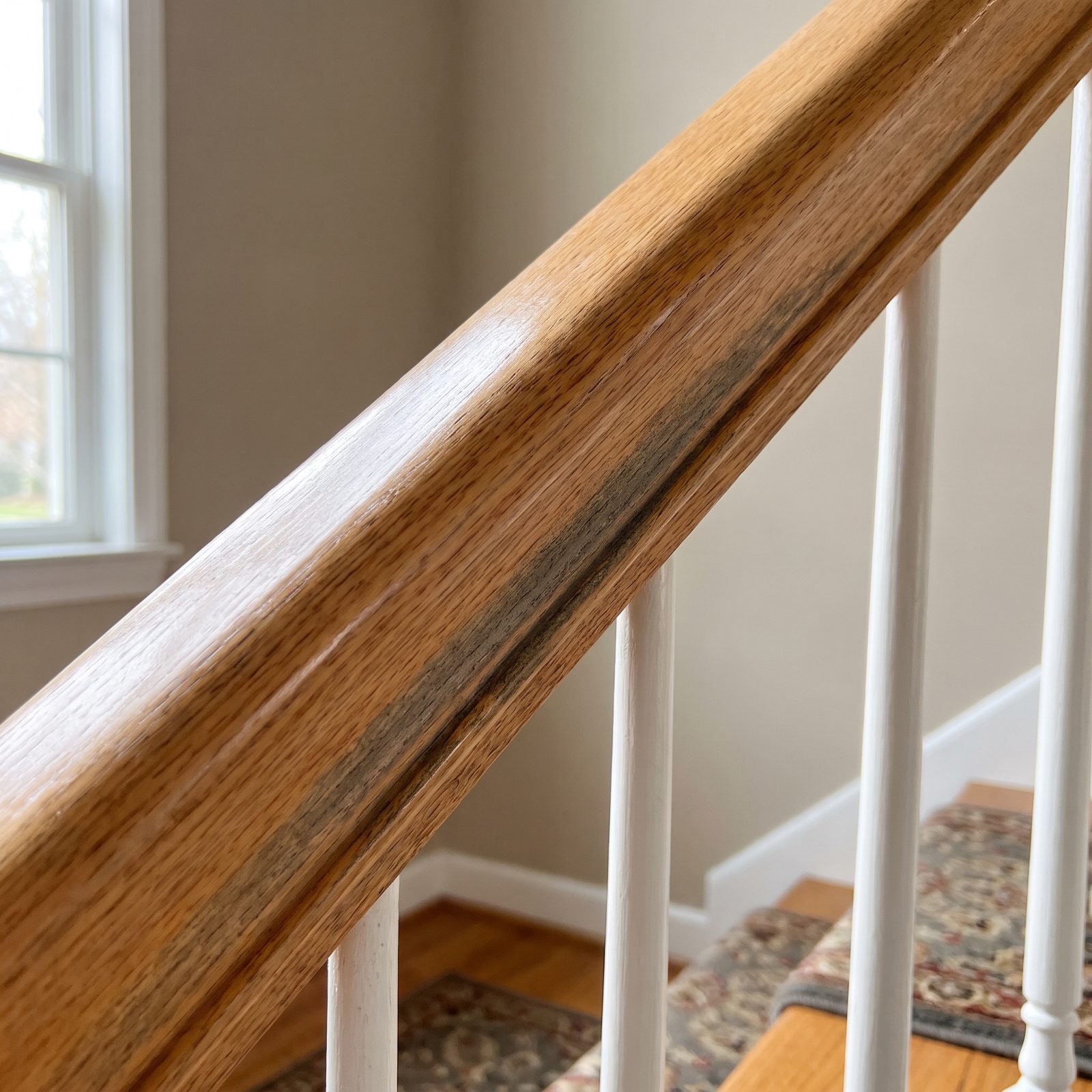
Flip your hand over on the rail. That’s the part you actually touch. The top gets wiped because it’s visible, while the underside, where your fingers curl and grip, almost never does.
Professional cleaners check there first because it tells them how the whole house gets cleaned: by sight or by logic. A gleaming top rail with a greasy grey band underneath means someone wipes what they can see and stops. Over months that band turns tacky from skin oils and settles right into the grain.
21. Strong Fragrance at the Entry Can Be Masking an Odor Source

Walk into a house that smells aggressively of vanilla or linen and a cleaner’s radar pings immediately. Fragrance isn’t suspicious on its own. Fragrance stacked three layers deep at the front door usually is.
Candle, plug-in, and spray all going at once? That’s a tell. Something underneath needs covering, and the real culprits are rarely dramatic: a damp doormat, a spot of mildew behind a radiator, pet residue worked into the baseboard, or standing moisture in a nearby closet.
Scent masks. It never removes. A good cleaner’s instinct is to switch the fragrance off and follow the nose to the actual source instead of trusting the perfume.
20. A Saturated Entry Mat Predicts Dirt Throughout the House
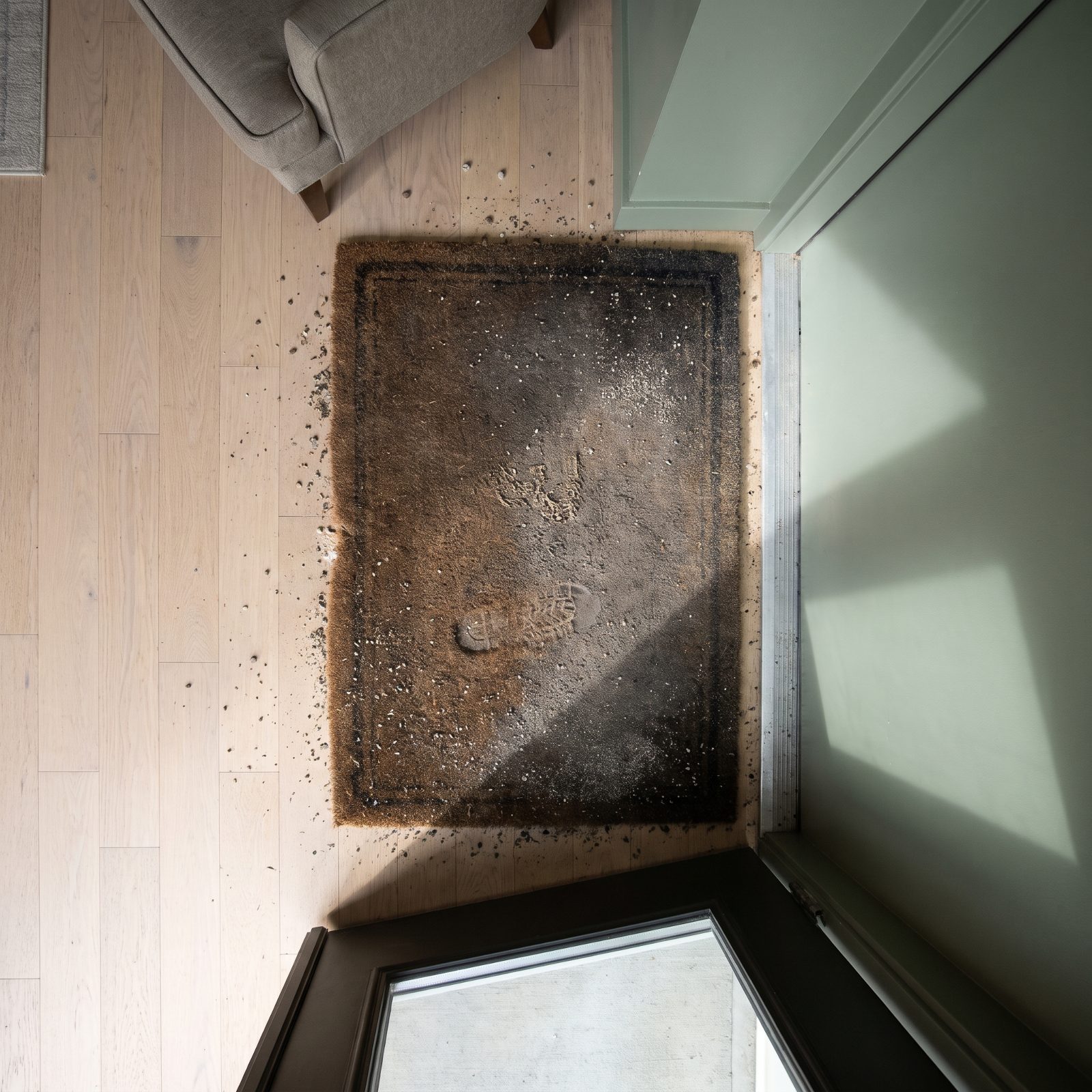
A mat only works until it fills up. After that it stops cleaning shoes and starts loading them.
Once the fibers pack solid with grit, every arriving foot picks particles back up and carries them deeper into the home. The mat flips from barrier to distribution point. And cleaners can read the state of a whole floor from the darkened, compacted center of that one square by the door.
19. Dust Halos Around Televisions and Routers Come From Static
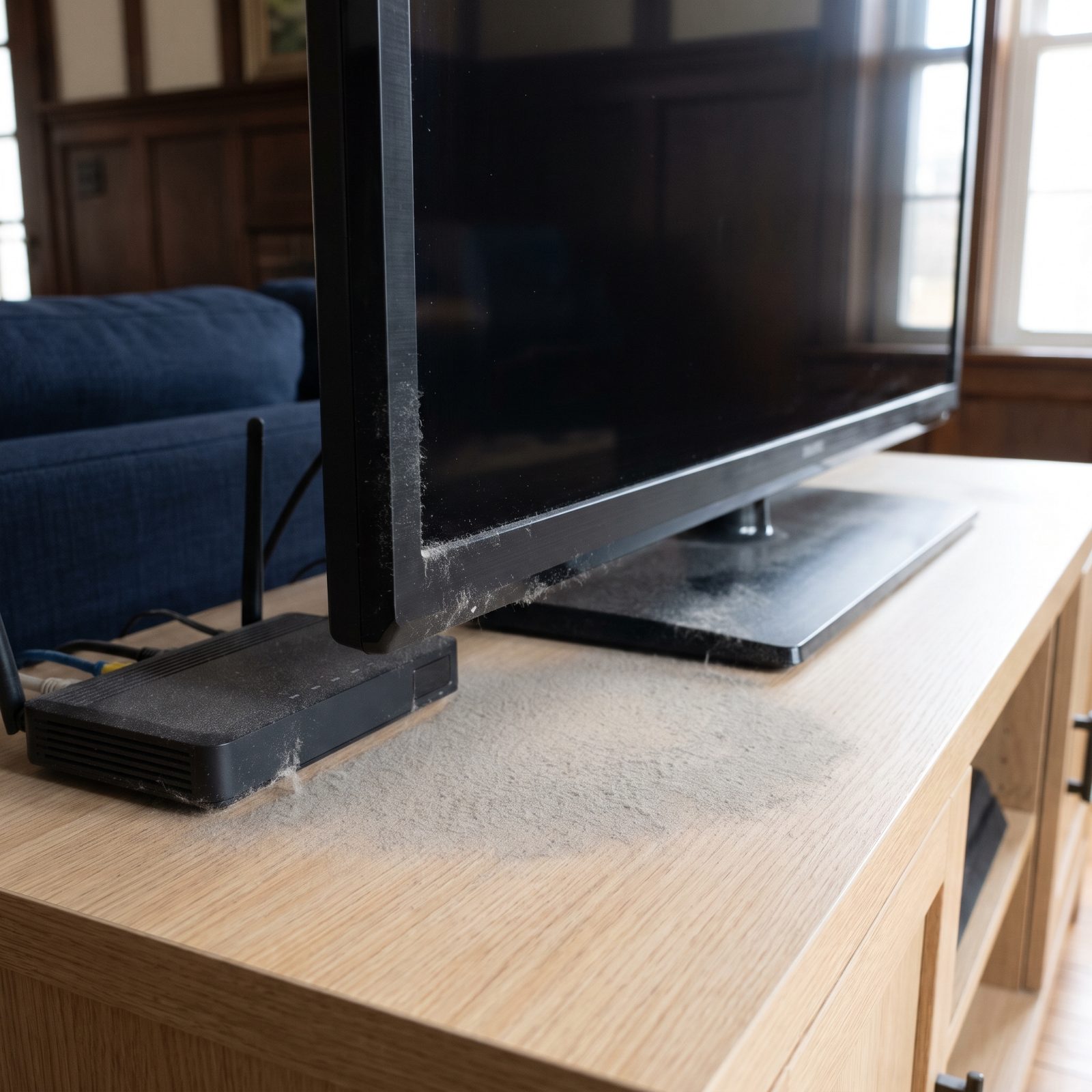
Notice how the dust gathers around your TV and router and piles up thickest on the shelf right in front of them. That isn’t random. Warm electronics build a small static charge, and fine airborne particles get drawn straight to it.
What you end up with is a soft grey halo clinging to bezels, vents, and cable clusters while an even heavier grey patch settles on the bare shelf right in front of them. Cleaners spot it instantly, because it means two things at once: the dusting rounds skip the gadgets, and those gadgets are quietly collecting more than their fair share.
18. A Tacky Range Hood Signals Aerosolized Cooking Grease

Press a fingertip to the front of a range hood that hasn’t been degreased in a while. It comes away tacky. That stickiness is cooking oil that went airborne, drifted up, and settled.
Every sauté and sear sends a fine mist of fat into the air. It lands on the nearest surface above the heat, which is the hood, and then it grabs every passing dust particle like flypaper. The outcome is a soft, dull film that dry wiping won’t budge.
Cleaners treat a tacky hood as a reliable clock. The thicker and stickier the layer, the longer it’s been since anyone took a proper degreaser up there.
17. Crumbs Packed Into Cabinet Toe Kicks Mark a Cleaning Boundary
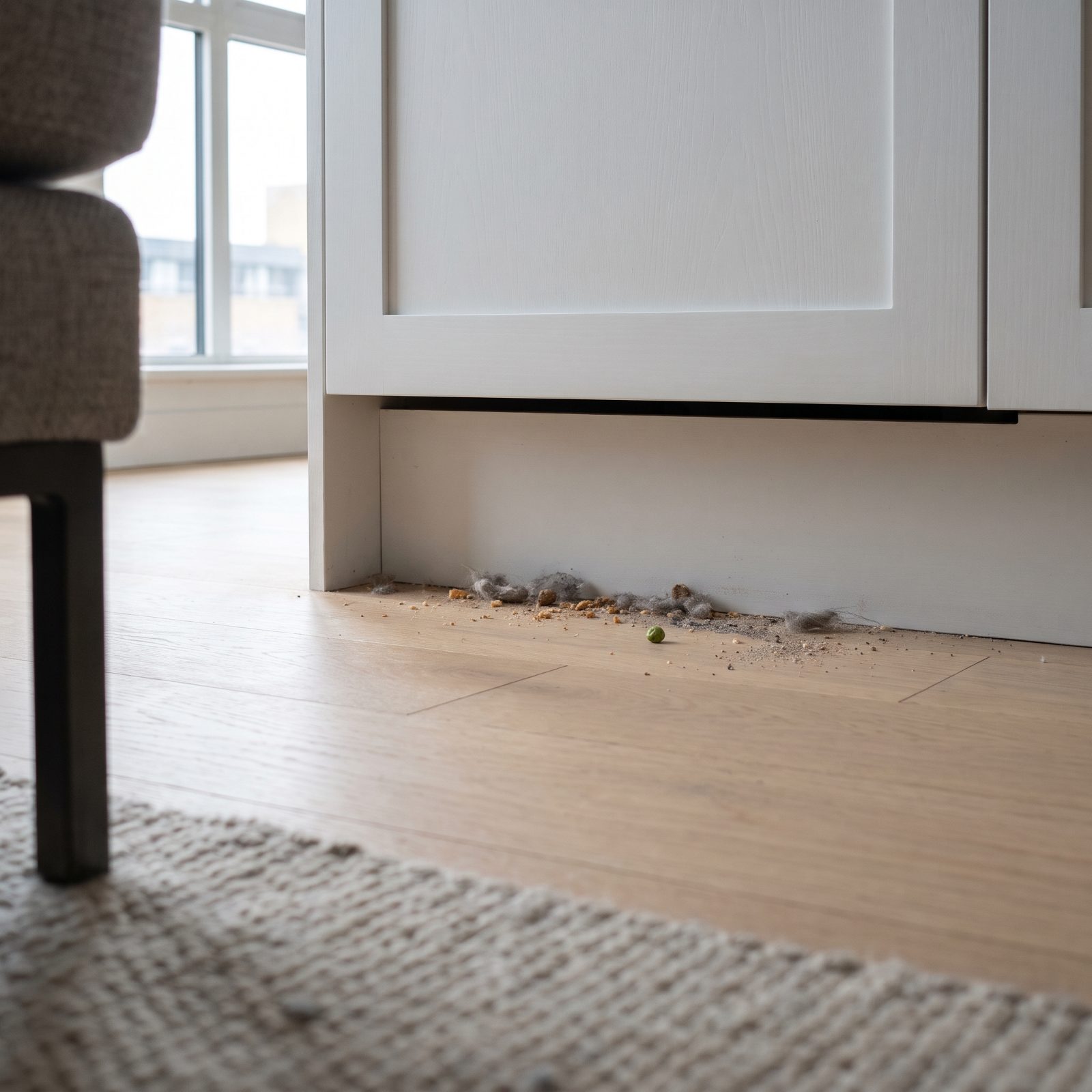
The toe kick is that shadowed gap under the cabinet where your foot almost reaches. It’s also where a broom quietly hides its failures.
Sweeping tends to push debris toward the edge rather than lift it out, so the recess catches whatever gets shoved that way: crumbs, dust, the occasional dried pea. A cleaner crouching to check that strip is reading a boundary. The floor in front is swept. The inch under the lip is the line past which nobody reaches.
16. Food Specks Inside Drawer Pulls Reveal High-Touch Buildup
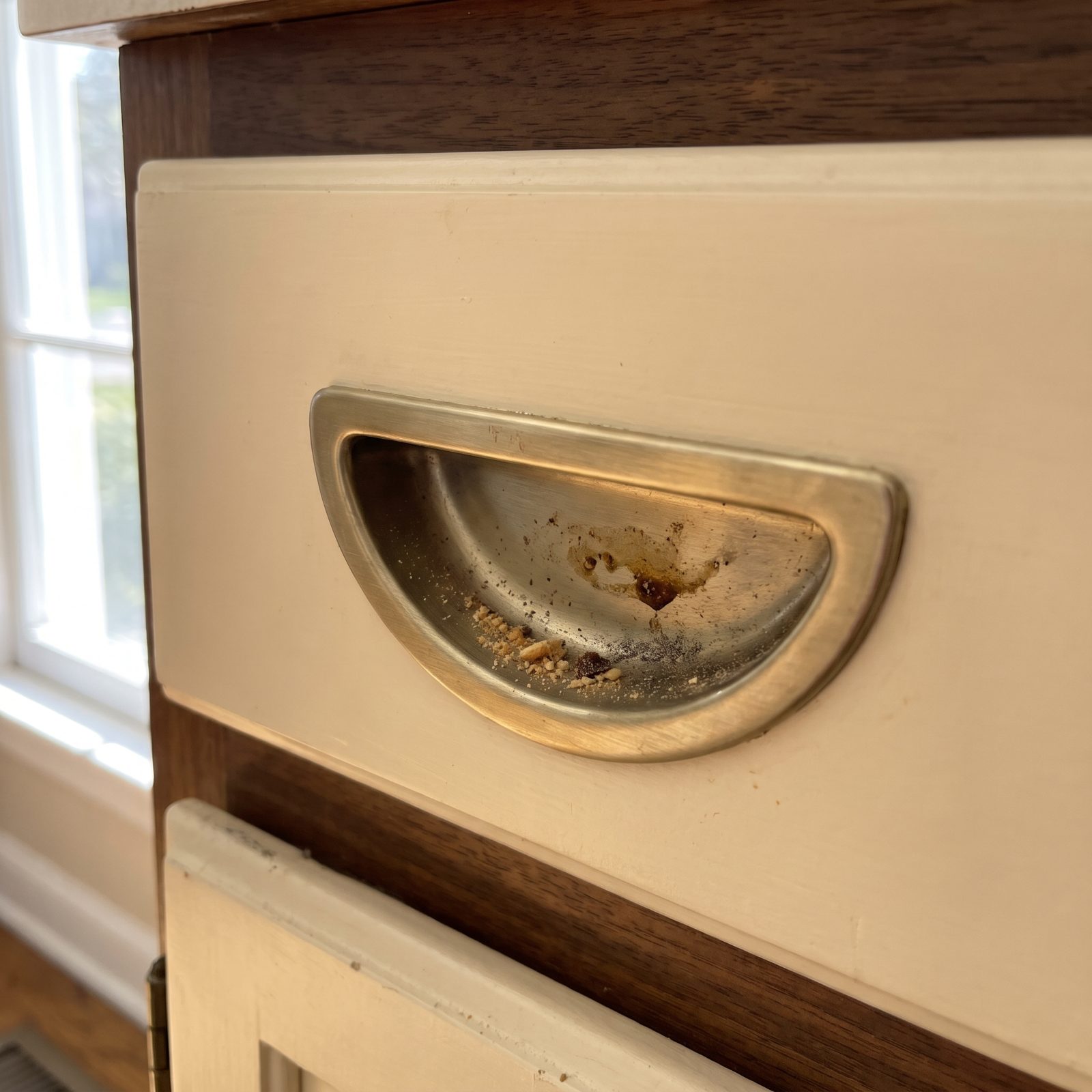
Flat cabinet fronts wipe clean in one pass. The handles don’t, and that’s where the real evidence lives.
Recessed and cup-style pulls collect residue in their hollows: food specks from mid-cooking hands, a sticky film, dust that bonds to all of it. A cloth dragged across the drawer face glides right over the handle without ever reaching inside the curve. So cleaners go straight for those recesses, high-touch and low-attention, the exact combination that builds grime nobody notices until they run a fingernail through it.
15. A Dark Dishwasher Gasket Can Harbor Trapped Food Residue
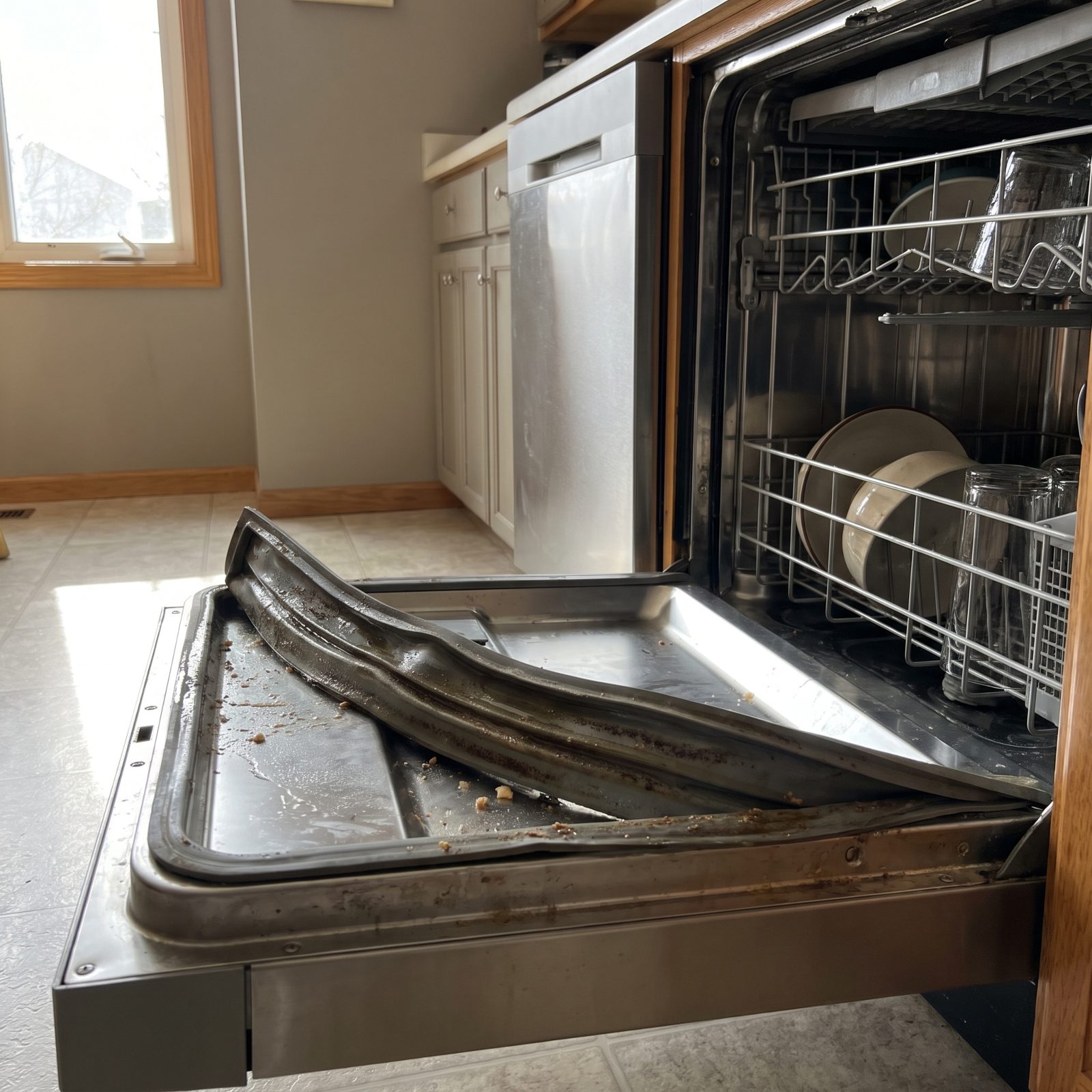
The dishwasher cleans everything except itself, and the gasket proves it.
That rubber strip around the door has grooves that stay damp between cycles. Food particles slip in, moisture keeps them company, and a dark, crusted film builds up along its length and the door edge. Most people never look closely until it gets bad.
Cleaners do, because a discolored gasket is one of the surest signs that appliance maintenance stops at loading and unloading. Wiping along that strip and the door edge with a damp cloth every week or two is all it takes. Almost nobody does it.
14. A Mineral Ring Around the Faucet Base Identifies Persistent Splashing
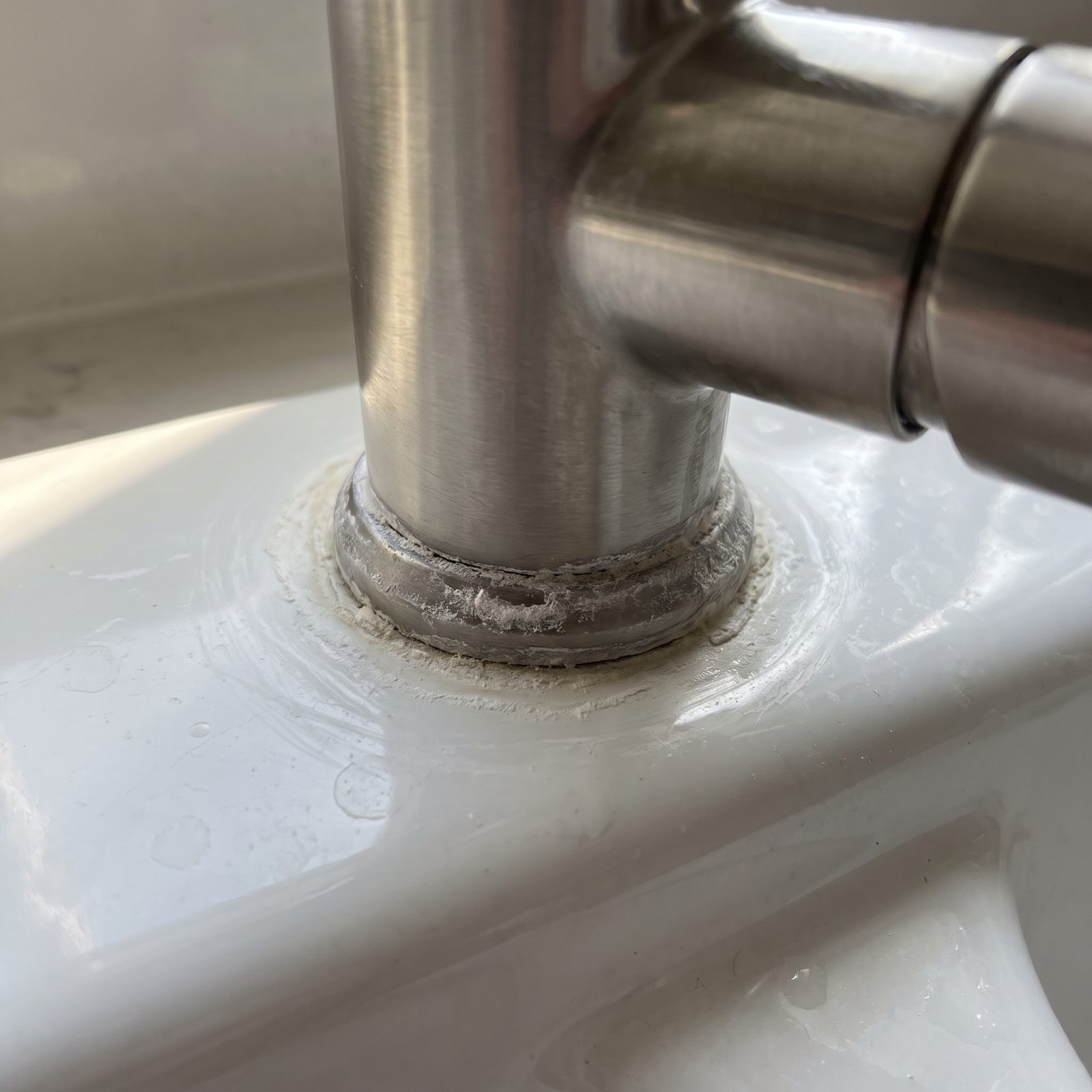
Look where the faucet meets the sink. That pale, crusty ring is a story about physics, not neglect, though it becomes a maintenance story fast.
Every splash pools briefly at the base, then evaporates and leaves its dissolved minerals behind. Do that a few hundred times and you’ve got a chalky ridge welded around the joint. Cleaners read it as the spot where surface wiping never dug in, because by the time a ring forms, a swipe won’t lift it. It needs acid, patience, and usually an old toothbrush.
13. Blackened Shower-Door Tracks Hold More Than Surface Dirt
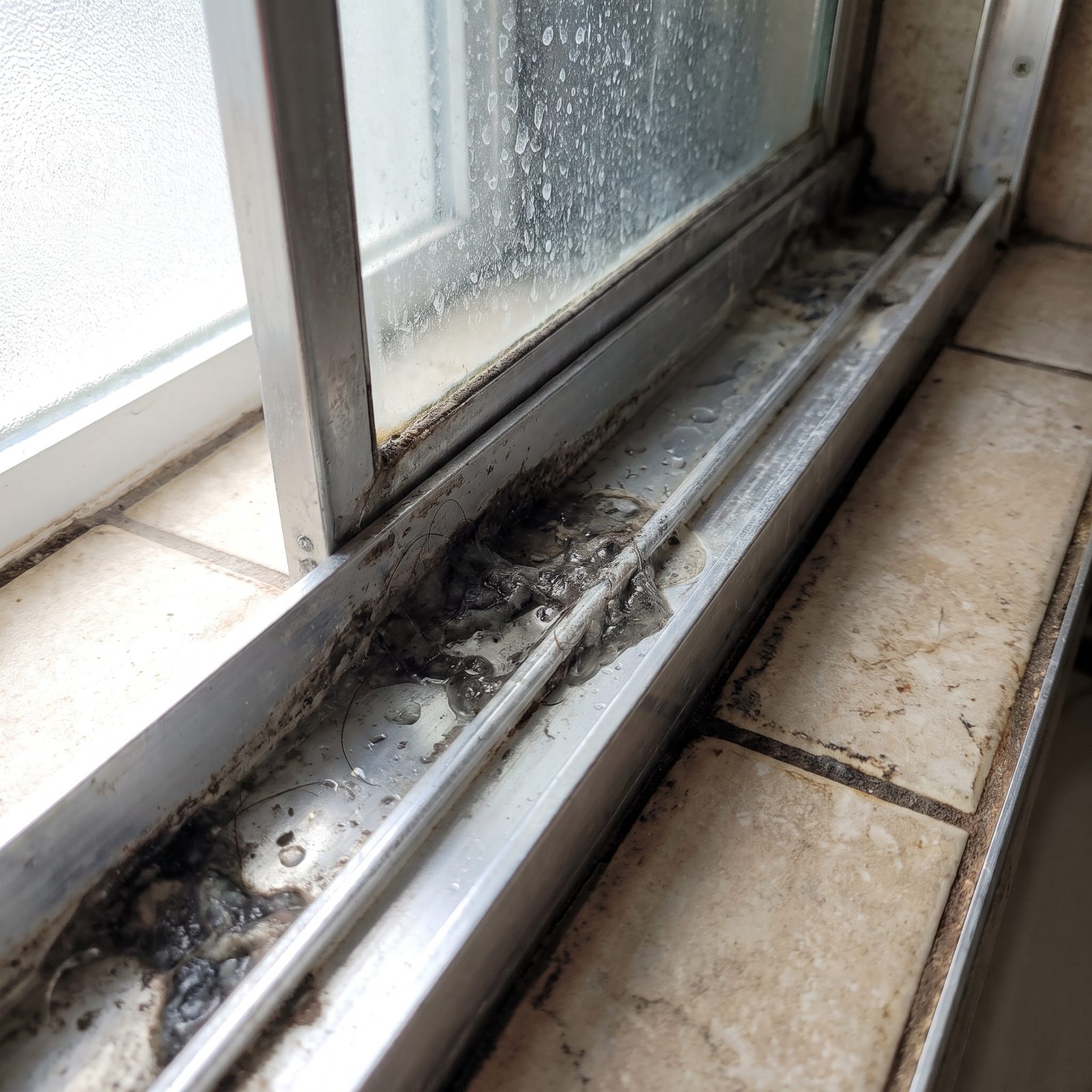
The narrowest gap in the bathroom hides the worst of it. Those bottom shower-door tracks are built to catch runoff, which means they catch everything the runoff carries.
Water settles into the channel and doesn’t fully drain. Add soap scum, loose hair, and skin residue over a few weeks, and the mix turns into a dark sludge wedged somewhere a sponge physically can’t reach. Cleaners hit it with a thin tool and vinegar because scrubbing the glass above never touches the problem below.
12. Dust Ridges on Baseboard Tops Show Whether Edges Get Detailed
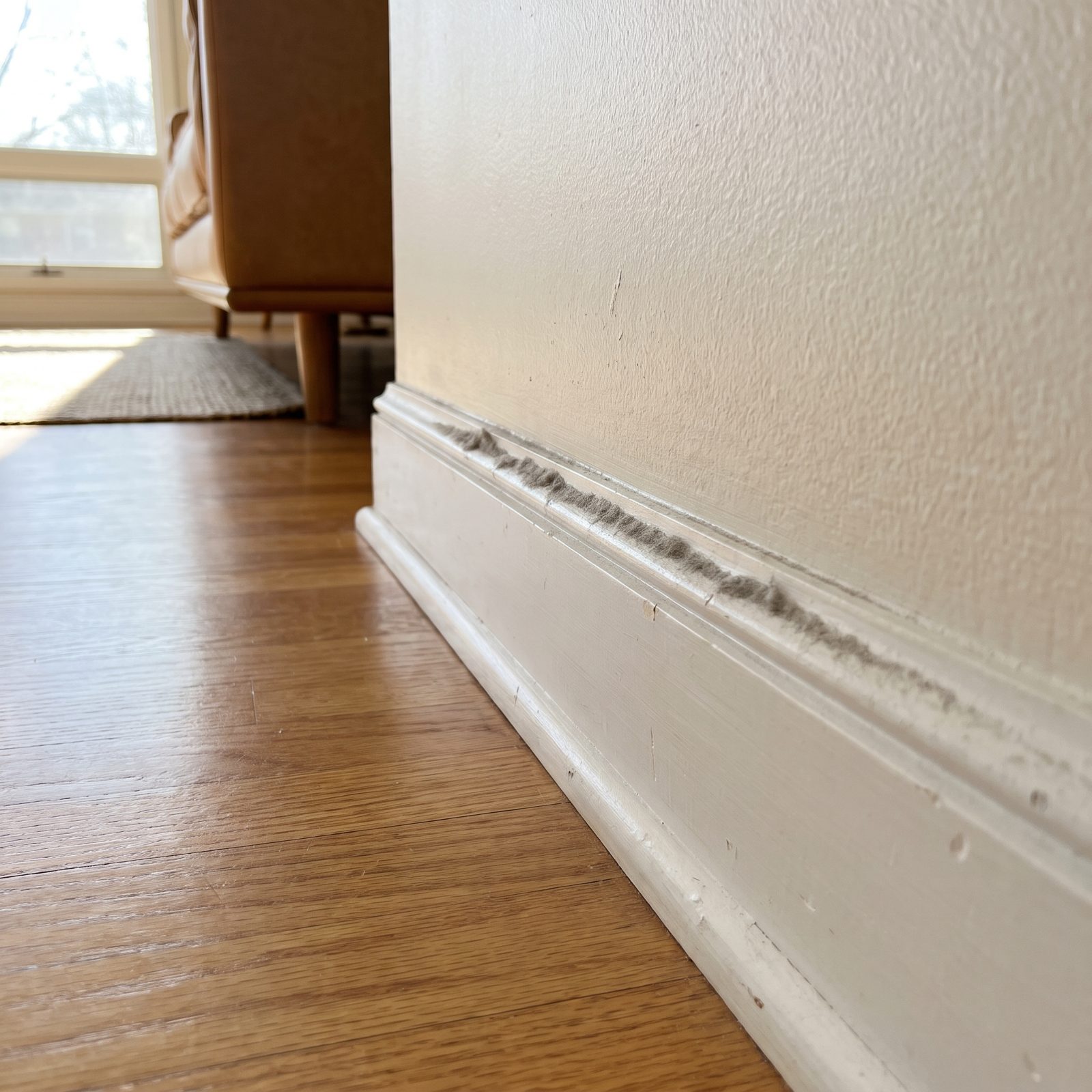
Floors get the attention because they show. The top of a baseboard sits at knee height and never catches your eye straight on, which is exactly why it collects a grey fur of dust that can sit undisturbed for months.
A cleaner runs a finger along that ledge before anything else. Clean finger, somebody is detailing the edges. Grey finger, the vacuuming is happening but the trim work isn’t. And a gleaming floor next to a dusty ledge actually makes it worse — it tells you the cleaning stops at eye level.
11. Curtain Hems That Touch the Floor Collect Hair and Fine Debris

A curtain that kisses the floor is doing a job you never asked it to do. The fabric sits there all day catching hair, lint, and the fine grit that drifts along every floor, acting like a stationary dust mop that nobody ever wrings out.
Run your hand up the inside of a long hem sometime. That felted grey stuff you pull off is the same debris that would otherwise be floating in the air. It matters most in homes with pets or long-haired residents, where the bottom foot of a pale curtain can turn a shade darker than the rest before anyone notices.
10. Cobwebs in Ceiling Corners Reveal Undisturbed Zones
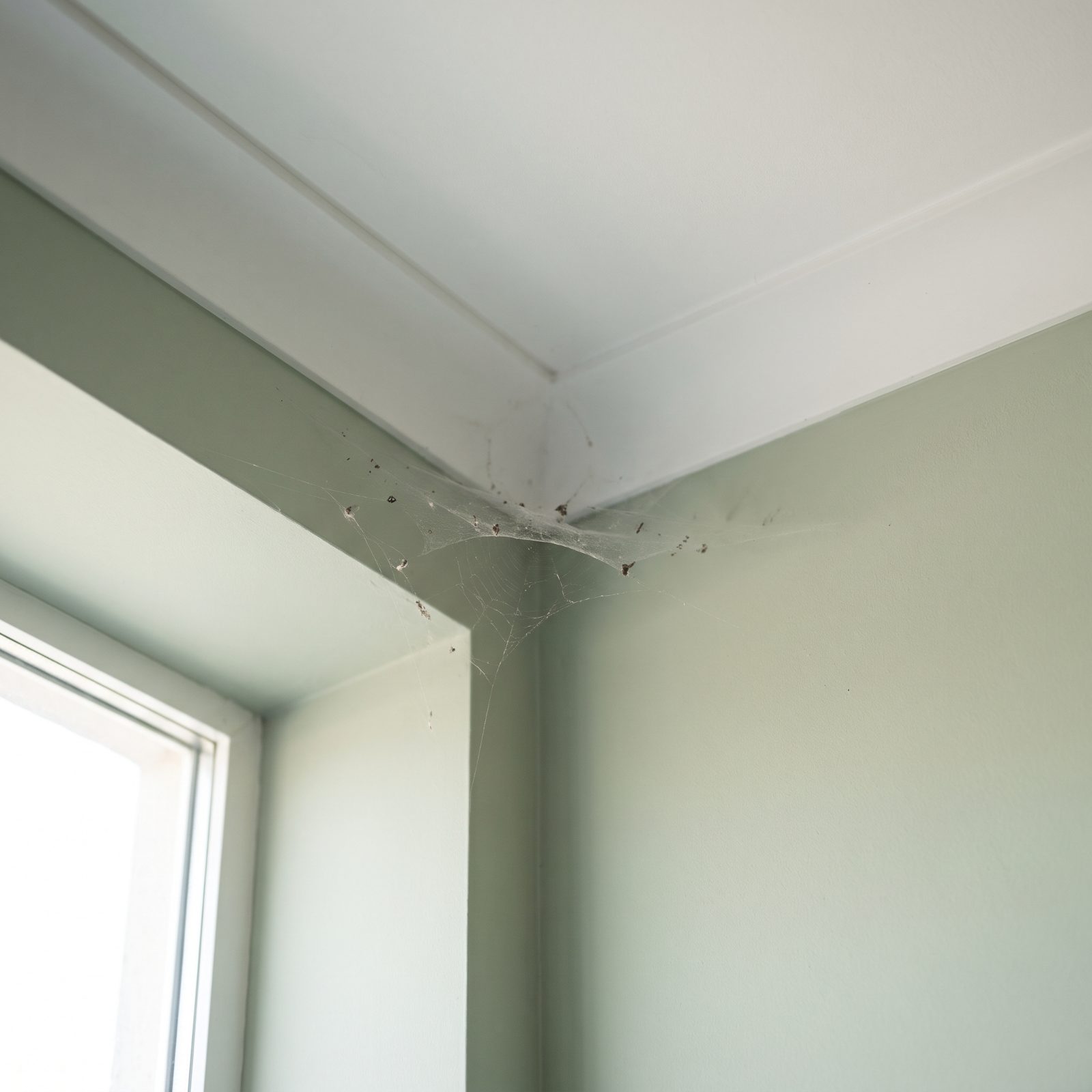
Spiders are honest witnesses. A web survives in a ceiling corner only where nothing has moved for a while, which maps out every spot a duster never reaches.
The web itself is almost beside the point. What hangs on it is the tell: airborne lint and fine dust snag on the strands and build up, turning a fresh strand into a grey rope over a few weeks. A cleaner glances at the four corners of a ceiling the way a mechanic listens to an engine. One loaded web, and they know the overheads get skipped.
9. Dusty Cable Bundles Create Hard-to-Reach Debris Traps
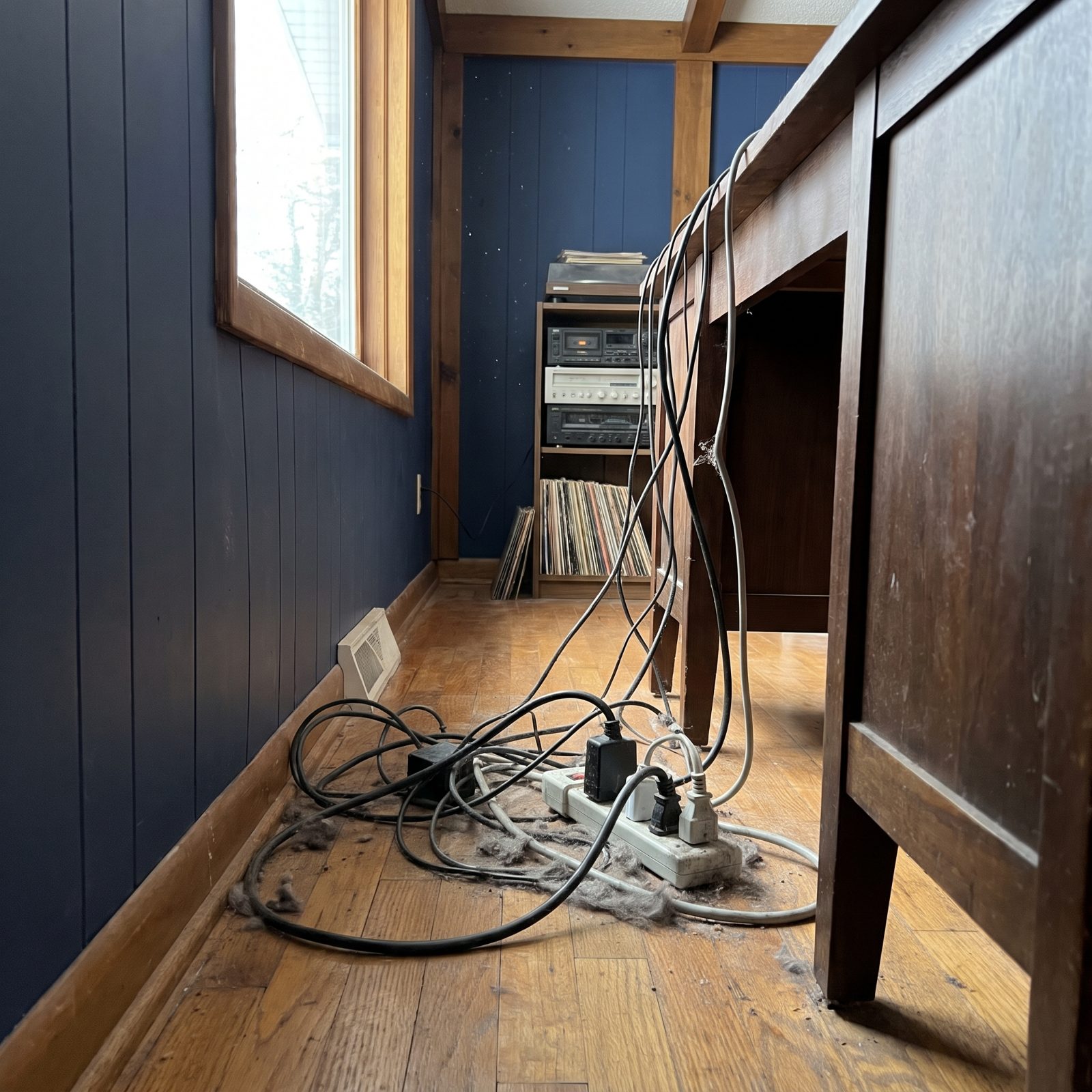
Cords are a cleaning dead zone. They sit behind the desk, behind the television, pressed into the gap where no vacuum head fits, and they do two annoying things at once: they gather lint like a magnet, and they physically block the tool that would remove it.
Static plays a part, pulling fine dust onto the plastic sheathing. Over months the whole bundle grows a felt coat. Pull one cable loose and you’ll see the clean floor it was hiding and the grey outline it left behind — which is why a tidy, routed cable run reads to a cleaner as a home where someone actually gets back there.
8. Blackened Door-Threshold Grooves Track Outdoor Soil
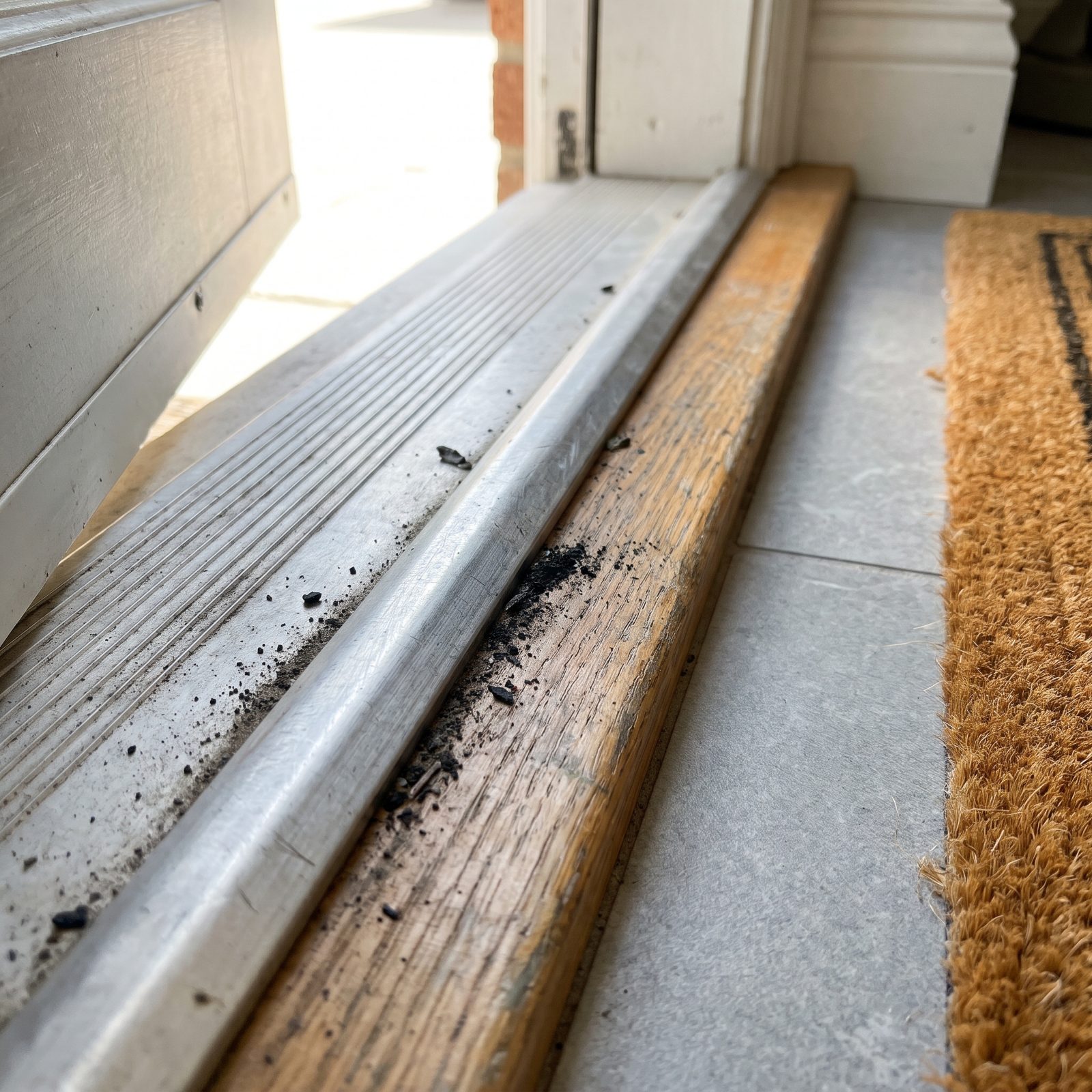
The floor right past the door can be swept to a shine while the threshold itself stays filthy. Those textured strips and grooves exist to grip shoes and block drafts, and they grip grit just as well, holding outdoor soil long after the broom has passed over the smooth floor beside them.
Honestly, this is one of the easiest things to miss, because the eye slides right over the transition. A toothbrush and a damp cloth along the grooves pulls out a surprising amount of black. Think of the threshold as the border crossing for every bit of dirt that enters — and it keeps a toll.
7. Shiny Upholstery Arms Signal Embedded Body Oils

Look at where hands land. The arms of a well-loved chair pick up a faint sheen over time, the weave flattened and slightly darkened, because skin leaves oil and oil pulls dust into the fibers and holds it there.
No amount of vacuuming fixes a burnished arm. That’s what separates surface dust from grime worked deep into the cloth. The sheen is cumulative contact made visible, a quiet record of every arm thrown over the side during a long evening of television. Cleaners read it instantly — the upholstery gets sat on daily and deep-cleaned rarely.
6. A Residue Ring Under the Trash-Can Lid Exposes Missed Splashes
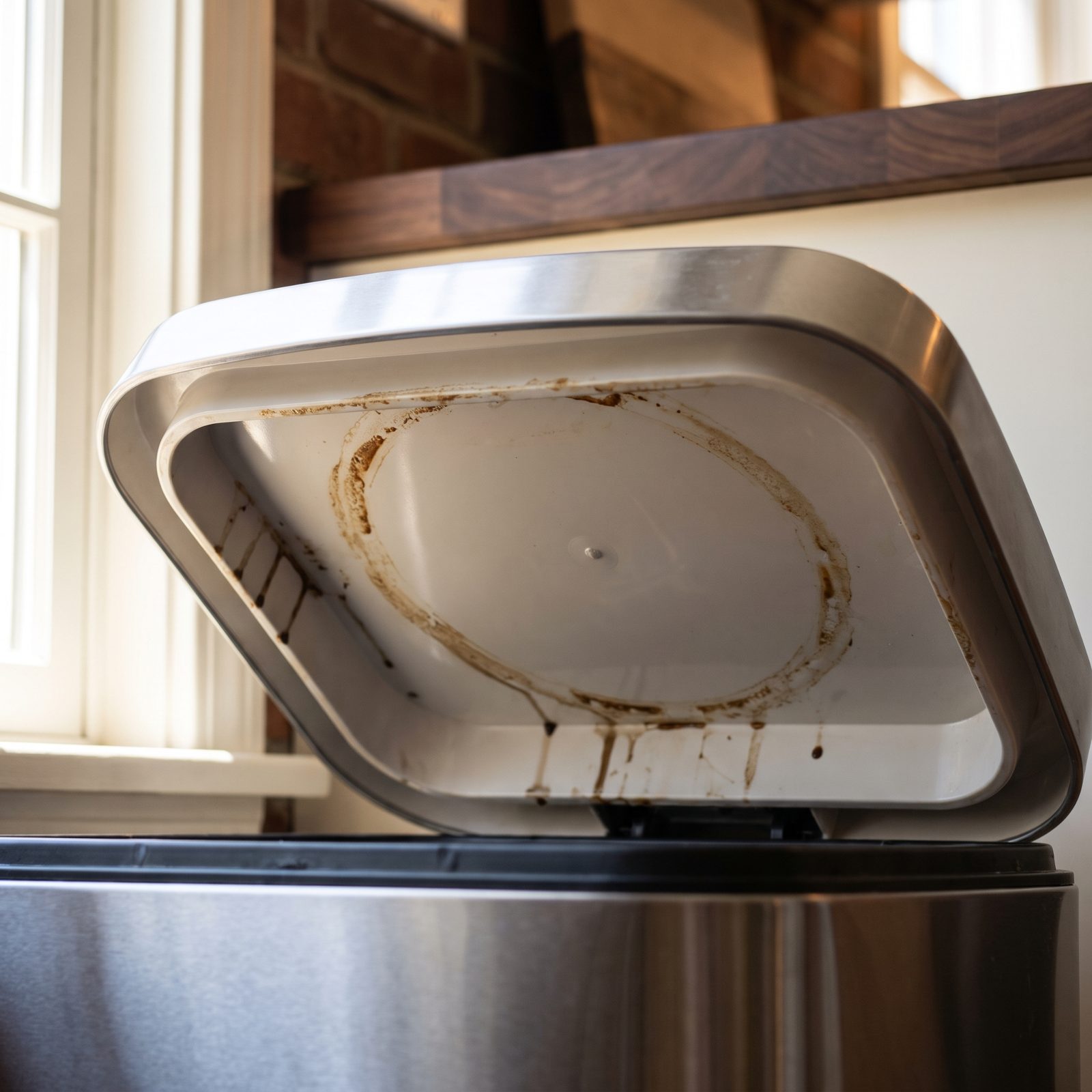
The outside of the bin gets wiped. The underside of the lid almost never does, and that’s where the evidence lives. Every time something drops in, droplets fly up and catch on that hidden surface, drying into a sticky ring that builds a film nobody sees until they flip it over.
It’s usually the source of a smell people chase around the kitchen for days, too. The bag looks fine, the floor is clean, and the odor is coming from six inches of unwashed stainless steel directly above it.
5. A Dirty Vacuum Exhaust Can Redistribute Fine Dust
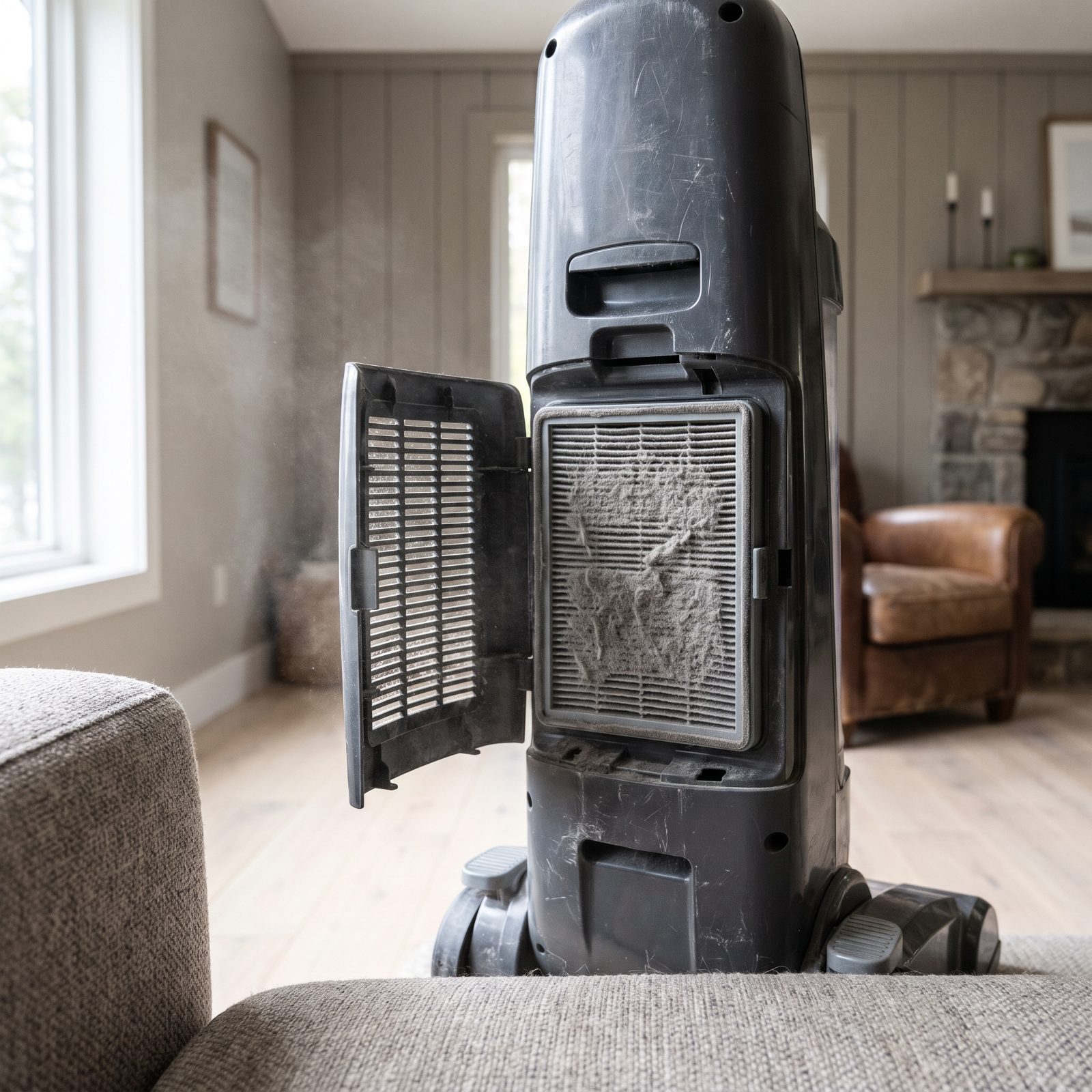
A vacuum is supposed to remove dust, not relocate it. When the filter clogs or the bag fills, the motor keeps pulling air but the trap can’t hold the finest particles, so a thin plume of dust blows straight back out the exhaust and resettles across the room you just cleaned.
This one fools people for years. The floor looks done, the canister is full, and a fine grey haze is being puffed onto every surface at ankle height. Does the room smell faintly dusty right after vacuuming? Then the machine is part of the problem, not the solution.
4. A Sour Mop Head Can Spread Odor Instead of Removing Dirt
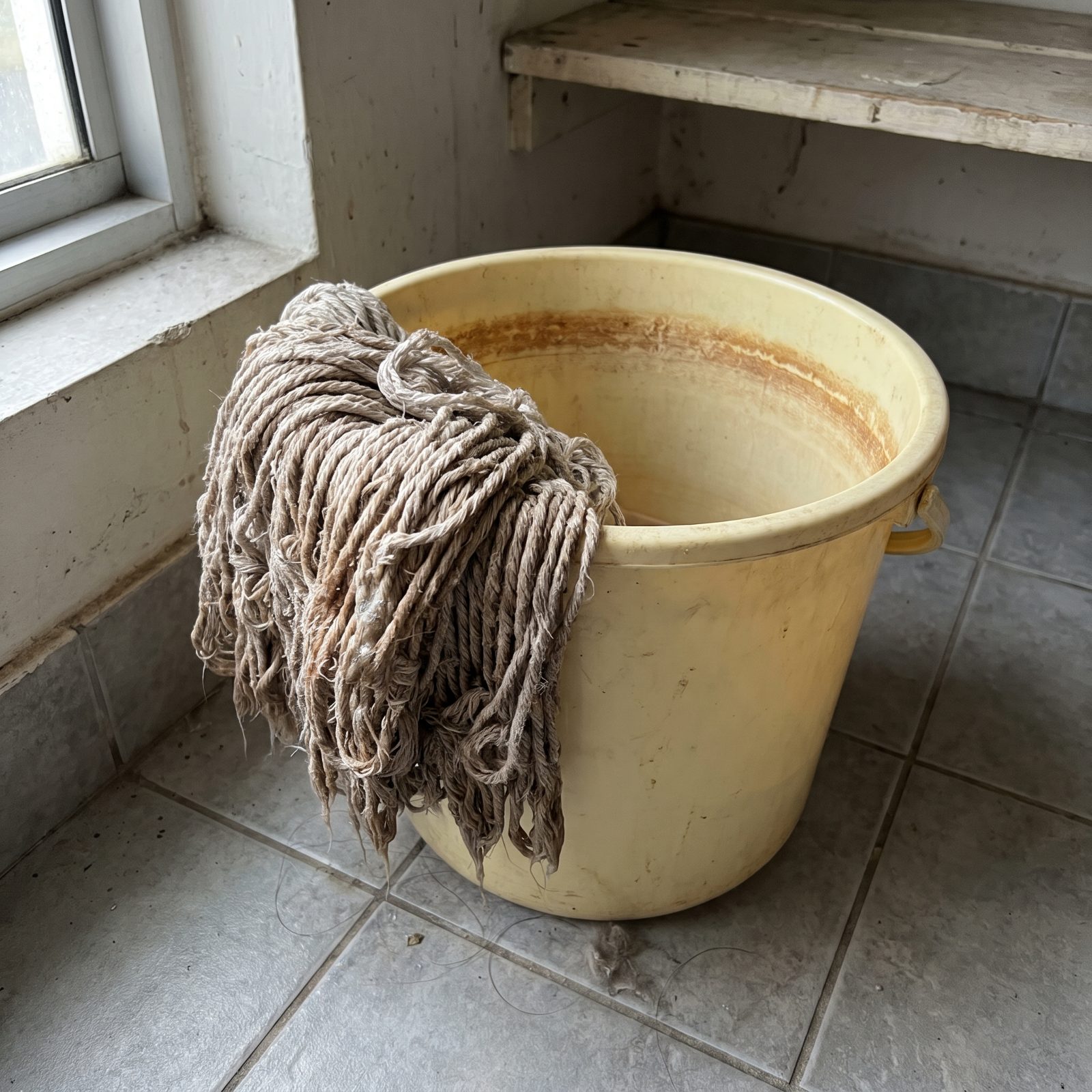
A mop that’s put away wet turns into a problem. Trapped moisture plus the dirt it collected feeds bacteria, and within a day or two the head sours. After that, every pass across the floor smears a film of smelly water around rather than lifting anything.
The giveaway is a floor that smells worse after mopping than before. People blame the cleaner in the bottle. But the real culprit is a tool that never got rinsed clean and never dried fully, sitting head-down in a bucket growing its own weather. Wring it out, rinse it, and hang it to dry with the strands hanging free.
3. Window-Track Corners Collect Insects, Soil, and Condensation Residue
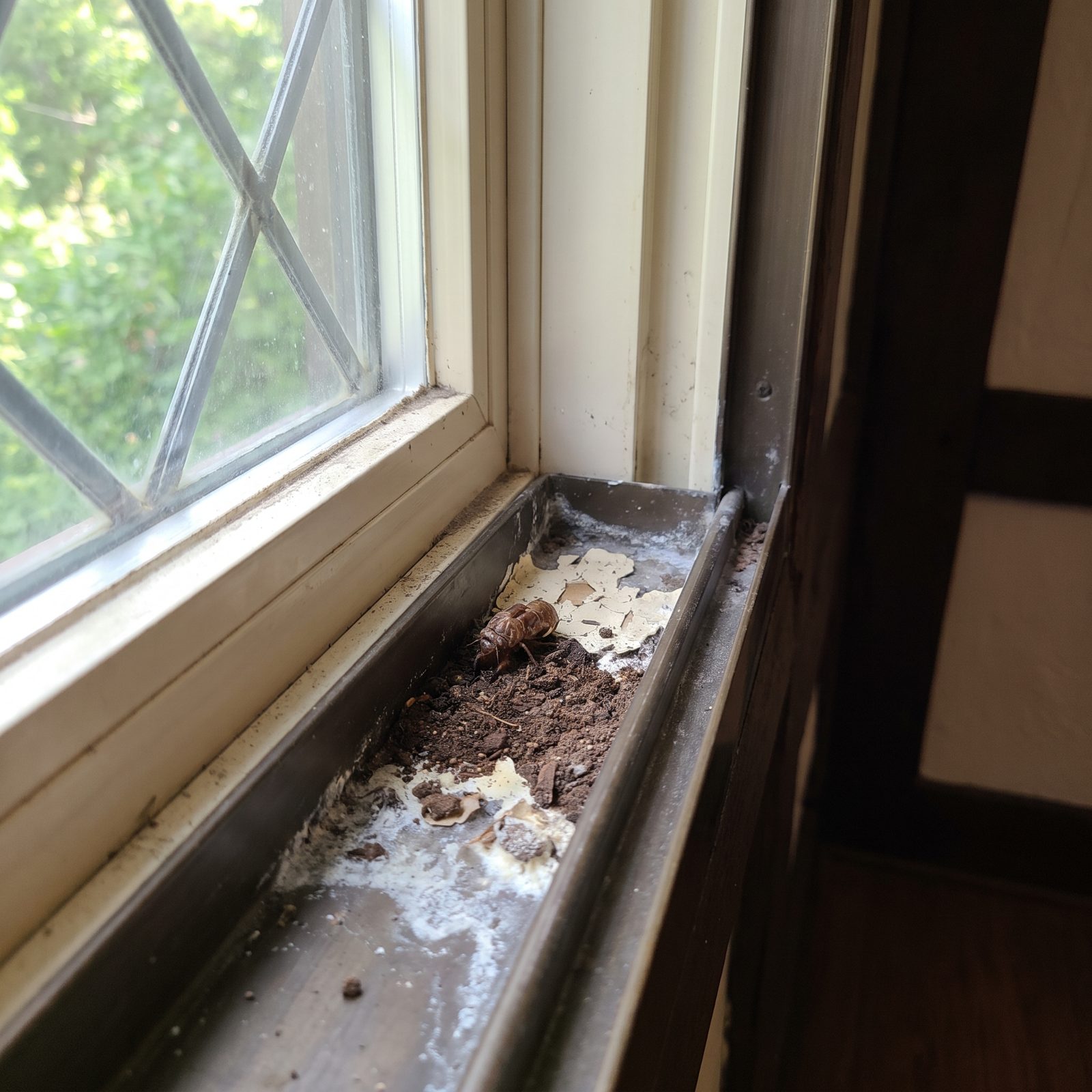
The window track is a trap by design — a narrow channel that catches debris from both directions: dust and lint from inside, soil and insects from outside, all of it mixed with the chalky residue that condensation leaves when it dries.
Nobody cleans these casually. You can’t get a cloth into the corner where it all collects, and that’s precisely why cleaners check them. A gritty track corner says the windows get wiped on the glass and ignored everywhere else. A stiff dry brush loosens the packed debris, then a damp cloth picks it up, and the drain holes at the bottom stop clogging.
2. Yellow-Brown Film Near Ceilings That Isn’t Ordinary Dust
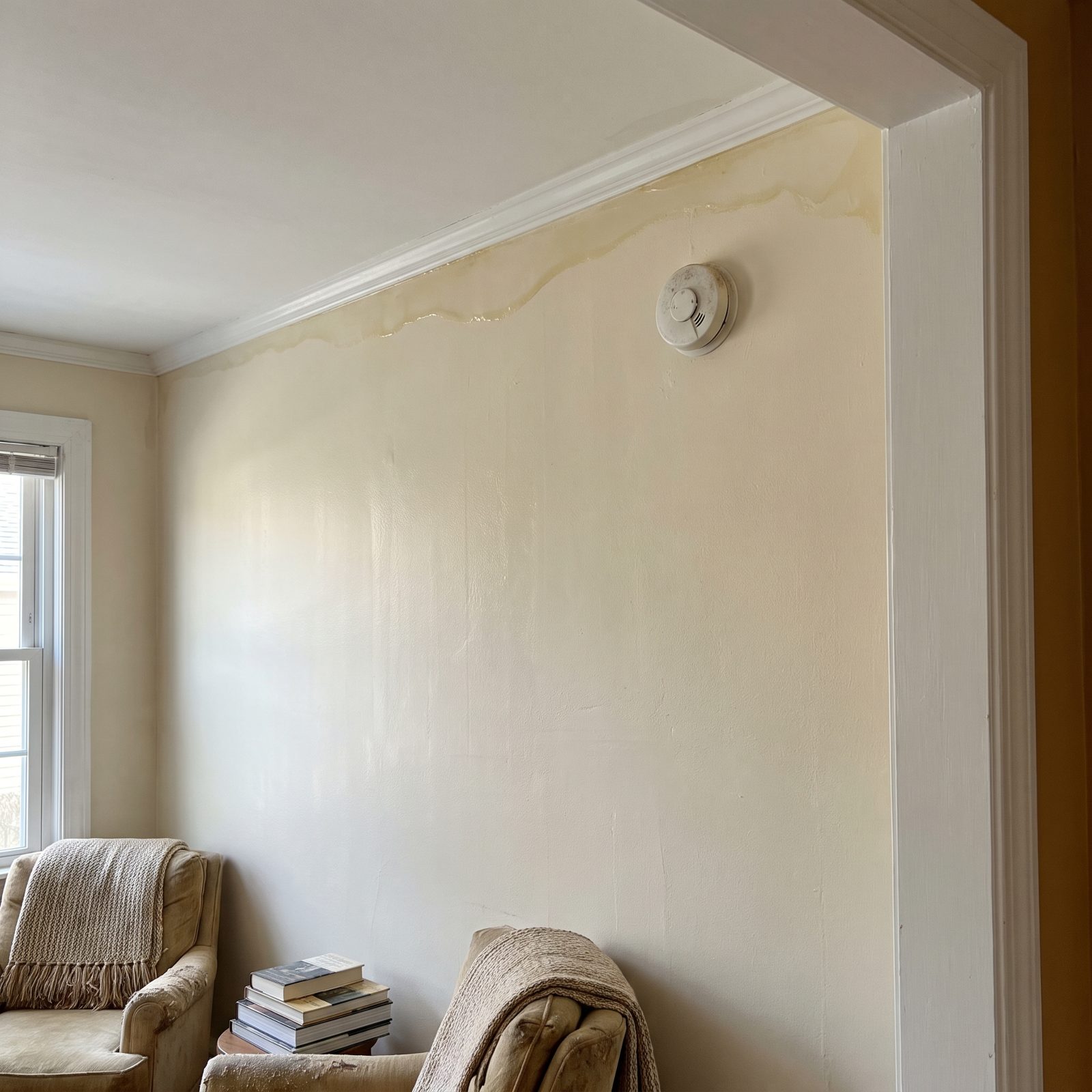
Run a damp cloth across that upper wall and watch what happens. Dust lifts and smears grey, but this stain doesn’t budge. The colour is in the paint, not on it. That’s the tell. Ordinary dust sits on top of a surface; leak residue soaks into it.
It forms where water seeps down from above. It often shows up as a sharp, wavy band just under the crown molding. A roof leak, failed flashing, even an overflowing tub upstairs all leave the same tea-coloured yellow-brown tide line. A cleaner spots it in seconds, because that hard, wavy edge catches raking light while clean paint beside it reads cool.
1. A Damp Smell Near the Basement That No Surface Scrub Will Fix
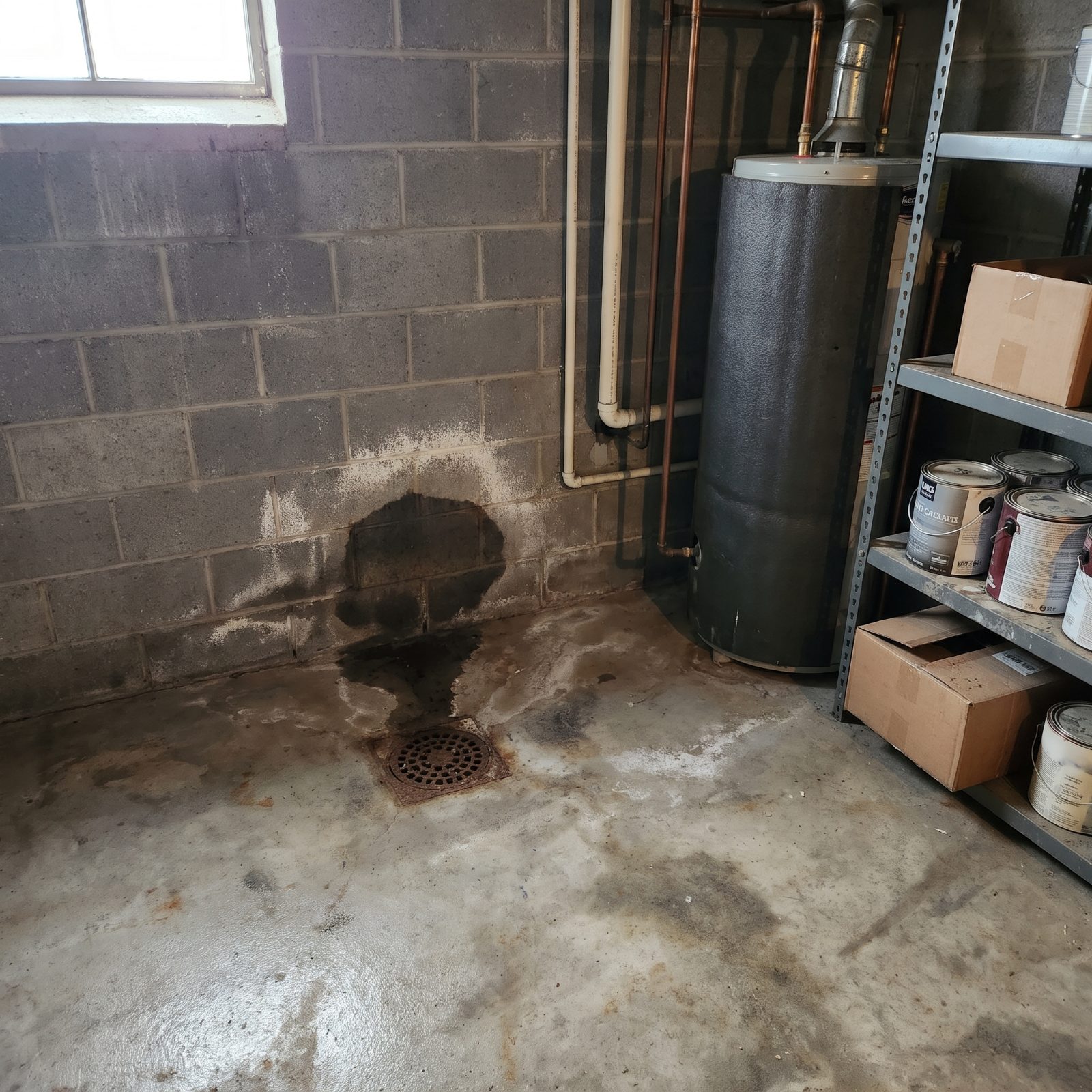
That earthy, slightly sweet mustiness hits you before you reach the bottom step, and the first instinct is almost always the wrong one: reach for the air freshener. The smell isn’t on a surface, so no amount of scrubbing or spraying touches it.
A damp smell is moisture announcing itself. Water is coming in somewhere, or it isn’t getting out. A pro reads the clues scattered around the junction — a chalky white bloom on the block (that’s efflorescence, mineral salts left behind as water wicks through and evaporates), a faint tide line near the floor, rust at a pipe fitting, condensation beaded on cold metal. Each one points upstream to a source. Follow them and you stop guessing.
The honest answer? This one usually isn’t a cleaning job at all. It’s a leak, a grading problem, or a room that simply can’t breathe.
Mask it with a fragrance and the moisture keeps working behind the scenes. Fix the water, though, and the smell walks out on its own.