
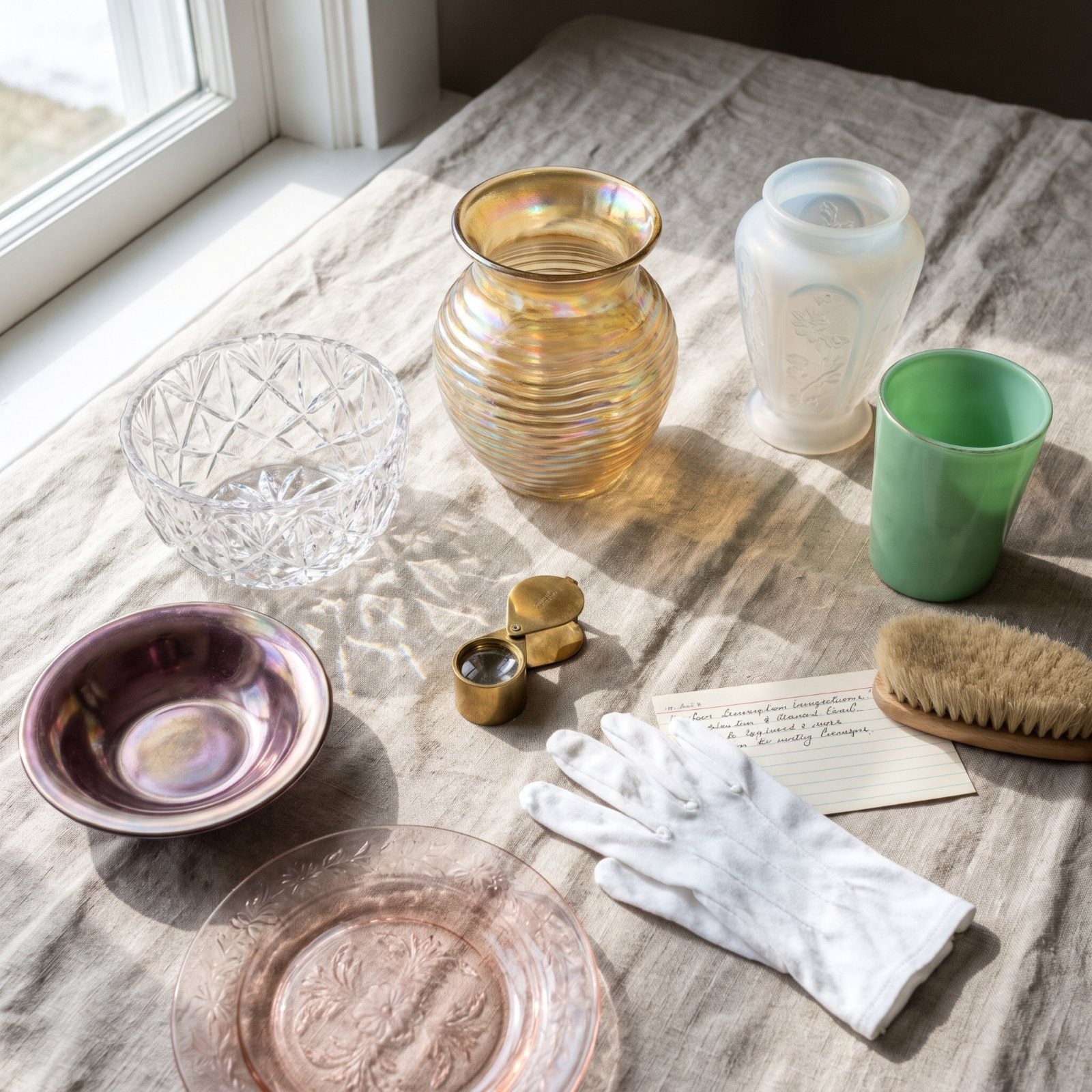
That iridescent bowl on the back shelf might be worth more than your dining table. Most people see old glass as clutter and haul it to the thrift bin without a second look. Some of it really is clutter. But some of it is Tiffany, or Lalique, or a Depression-era pattern collectors have chased for decades. Here’s how to tell the difference before the donation truck pulls away.
Please note that some of the images in this article were created with the assistance of AI.
46. Tiffany Favrile Glass: The Iridescence Everyone Imitates
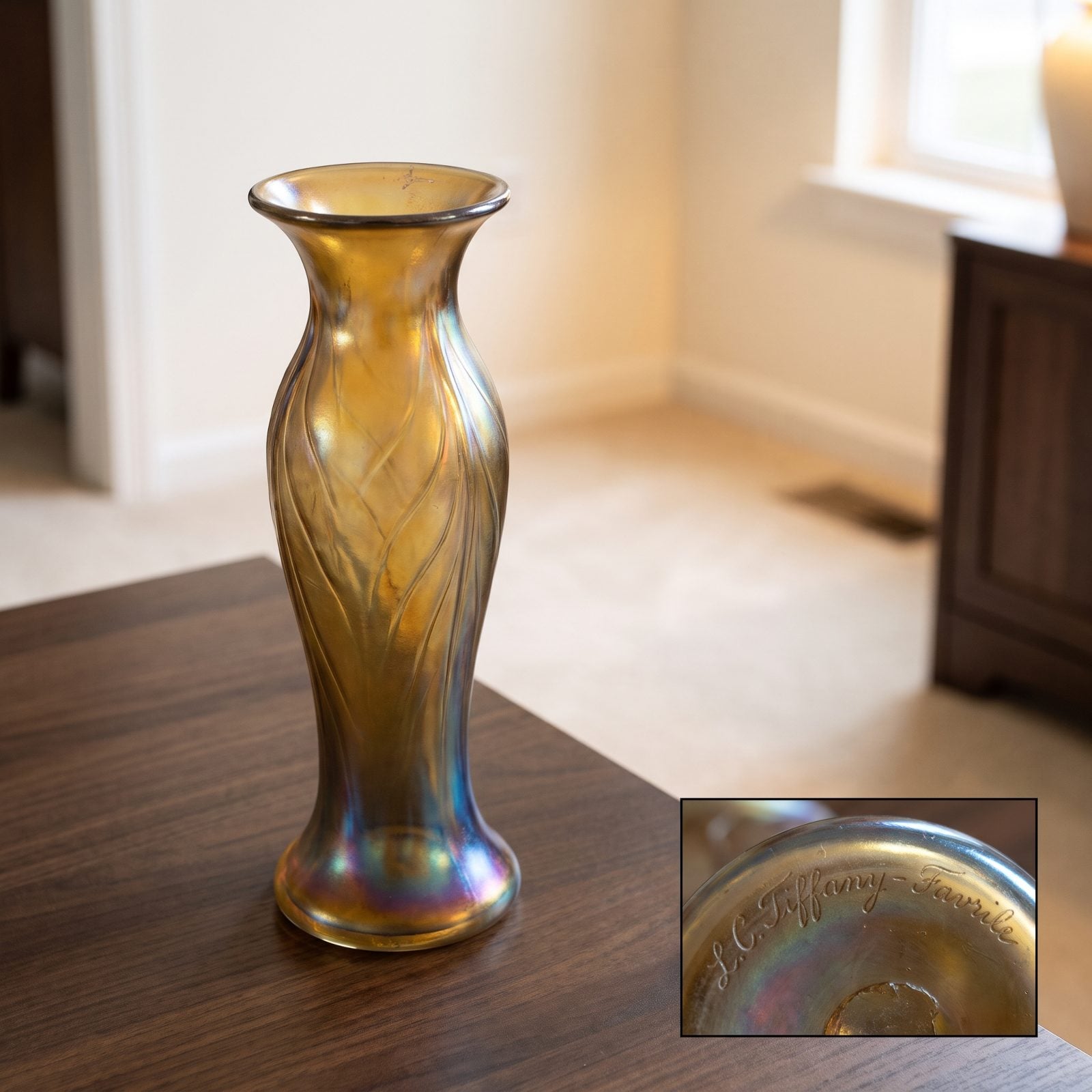
That soft, oily rainbow sheen is the tell. Louis Comfort Tiffany patented Favrile in 1894, and the iridescence lives inside the glass rather than sprayed on top. Hold it to the light and the gold shifts to blue, then violet, like gasoline on a puddle.
Check the base. Genuine pieces carry an engraved signature, often “L.C.T.” or “Louis C. Tiffany,” sometimes with a number. Fakes and later imitators exist by the truckload, so the mark matters.
Most people assume anything iridescent is Tiffany. It almost never is. Loetz and dozens of others made similar work. But if the signature checks out, this is the kind of piece that funds a vacation.
45. American Brilliant Period Cut Glass: Weight That Gives It Away
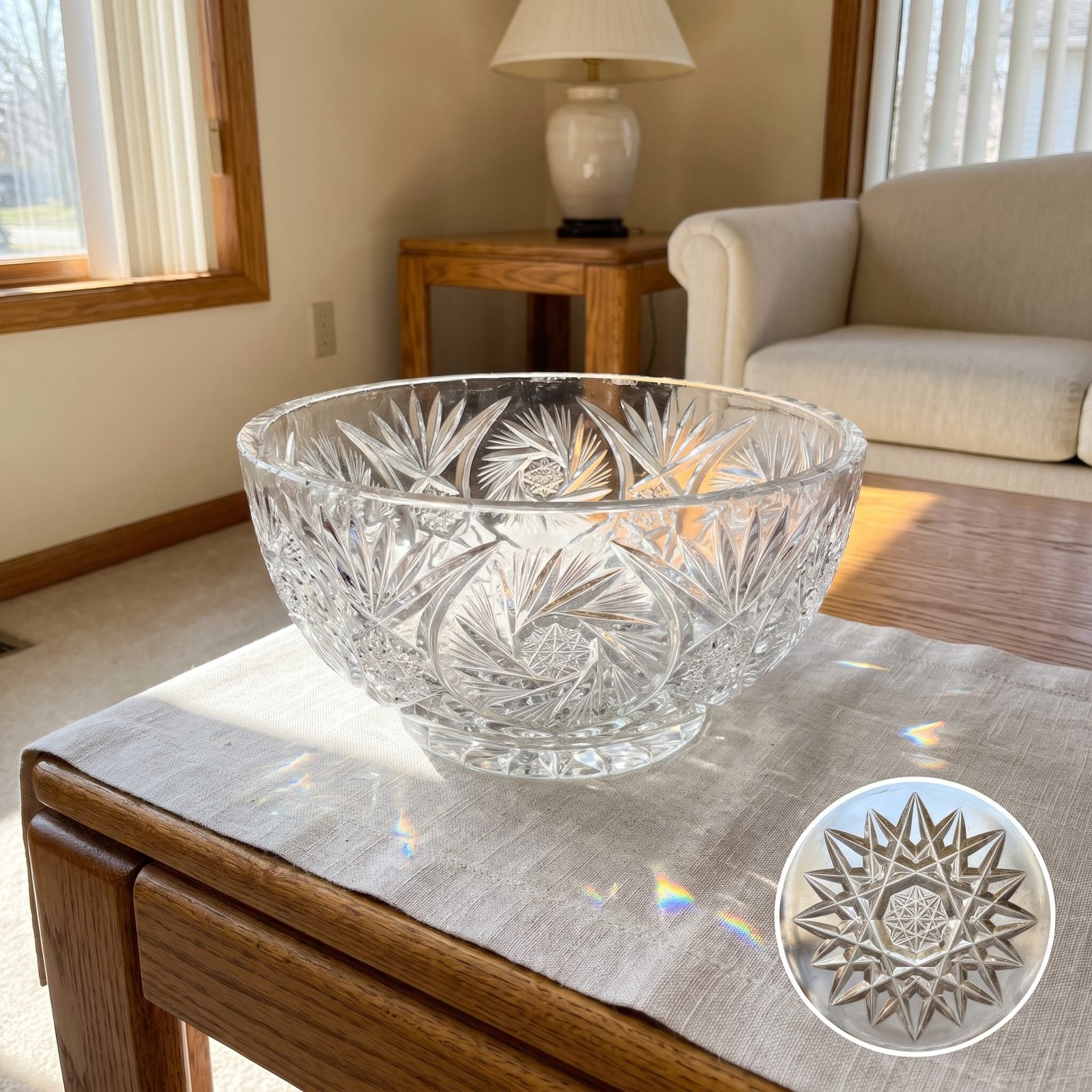
Pick it up. If a small bowl feels like it could anchor a boat, you may be holding American Brilliant Period cut glass, made roughly 1876 to 1917. The lead content makes it heavy, and the cutting runs deep enough to catch your fingernail.
Run that fingernail across the pattern. Genuine pieces have sharp, crisp mitre cuts, hobstars, fans, strawberry-diamond fields. Molded imitations feel rounded and dull by comparison. Real cut glass rings with a long, clear note when you flick the rim.
The best examples carry an acid-etched signature near the base: Hawkes, Libbey, Dorflinger. No signature doesn’t mean no value, but it sure speeds up the research.
44. René Lalique Glass: Frosted Figures and a Molded Signature
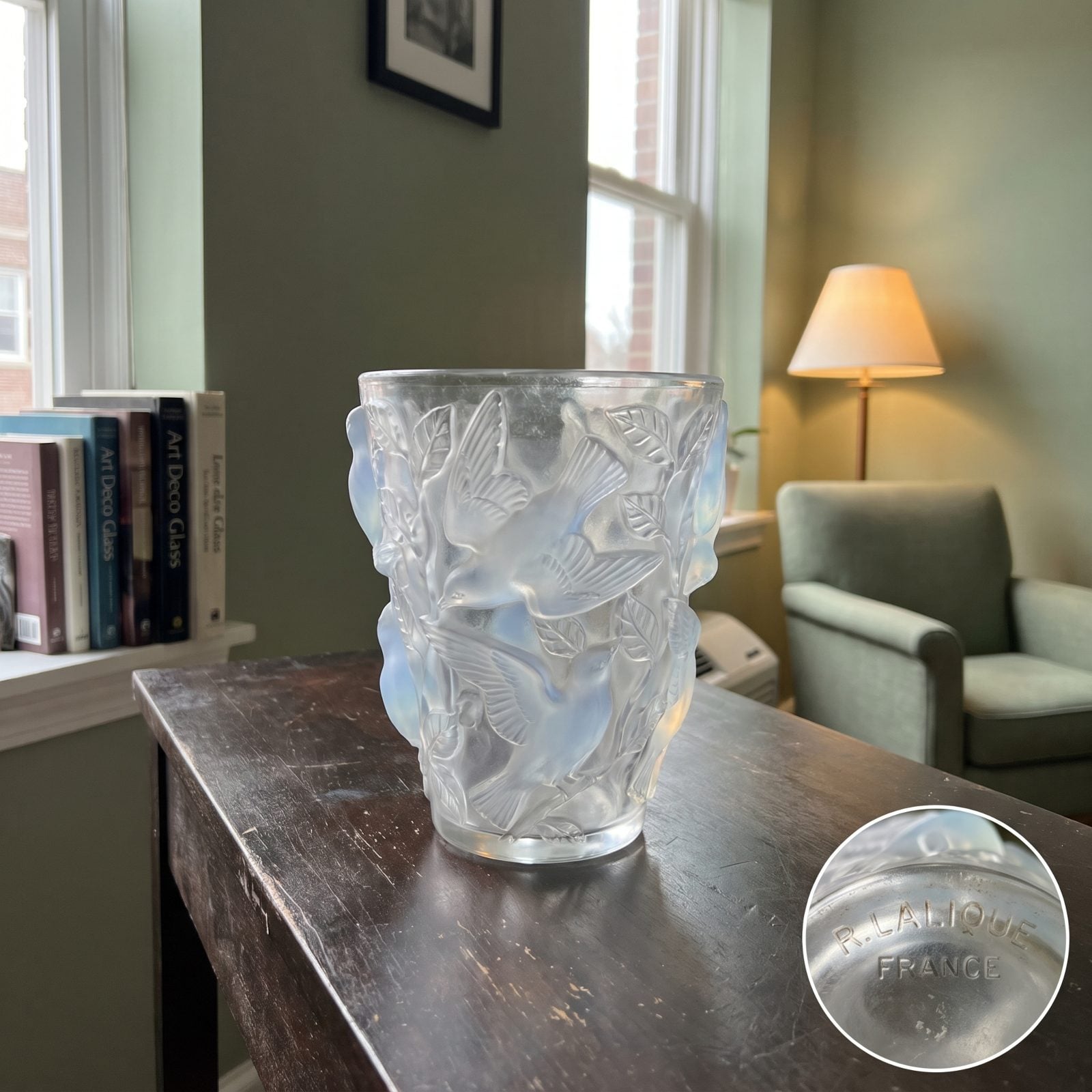
Frosted glass with figures in relief points straight at Lalique. René Lalique moved from jewelry into glass around 1910 and made Art Deco pieces defined by satin-frosted surfaces, molded nudes, birds, leaves, and a pale opalescent blue-white glow when light hits the thicker sections.
Look for the signature molded or engraved into the base. “R. Lalique” with an “R” generally means it was made before his death in 1945, the collectors’ sweet spot. Pieces marked only “Lalique” came later and fetch less, though still far from nothing.
43. Gallé Art Glass: Carved Cameo Layers and a Hidden Star
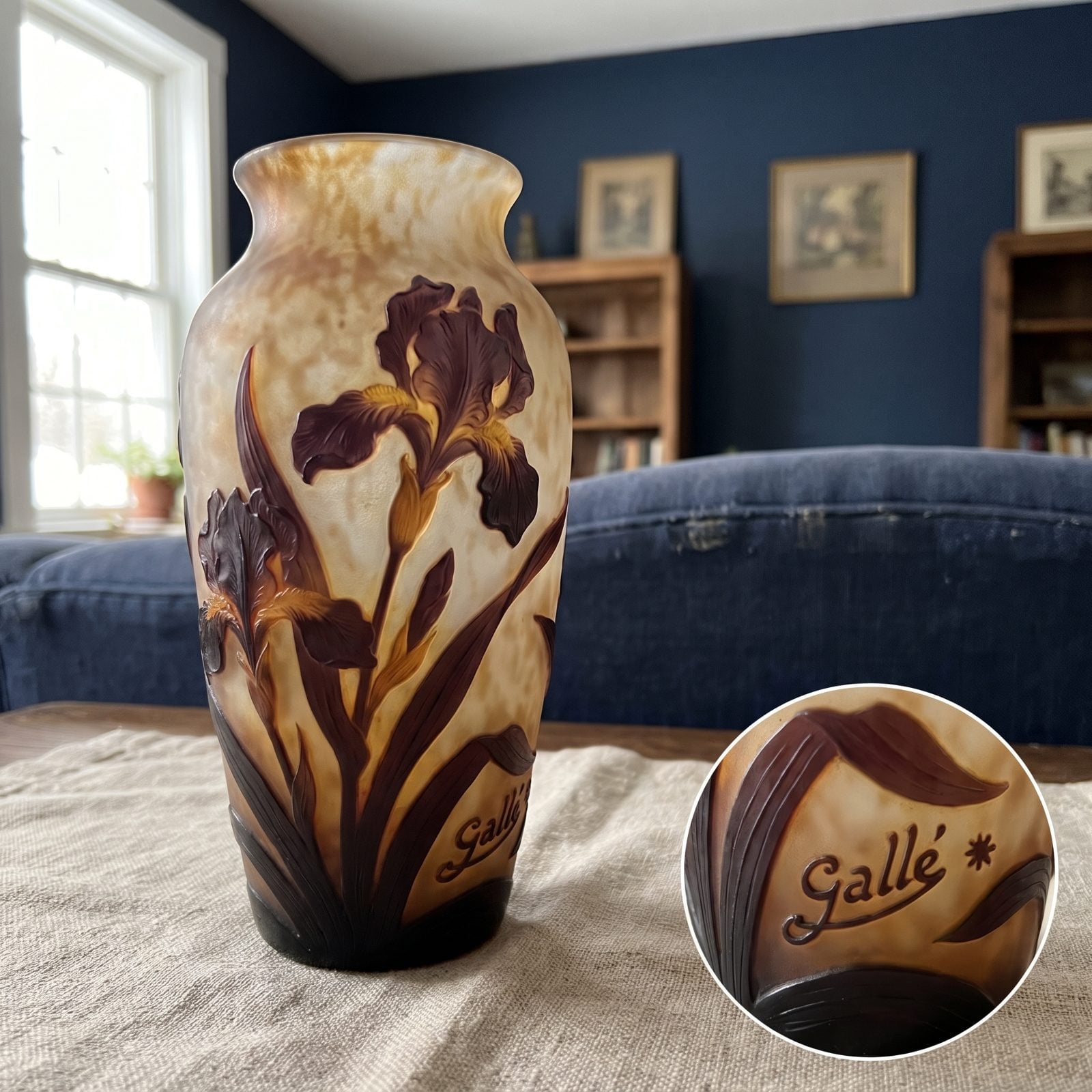
Run your fingers over the surface. If you feel raised floral designs in a different color from the background, carved rather than painted, you’re likely looking at cameo glass, and Gallé was the master of it.
Émile Gallé built his pieces from multiple layers of colored glass, then etched and wheel-carved away the top layers to leave flowers, leaves, and whole landscapes standing in relief. The signature is usually worked right into the design.
Here’s the detail most people miss. A small star near the Gallé signature means the piece was made after his death in 1904, by the factory continuing his work. Star pieces are worth real money, but the ones made in his own lifetime climb higher still.
42. Daum Nancy Glass: Enameled Scenes Under a Cross-of-Lorraine Mark
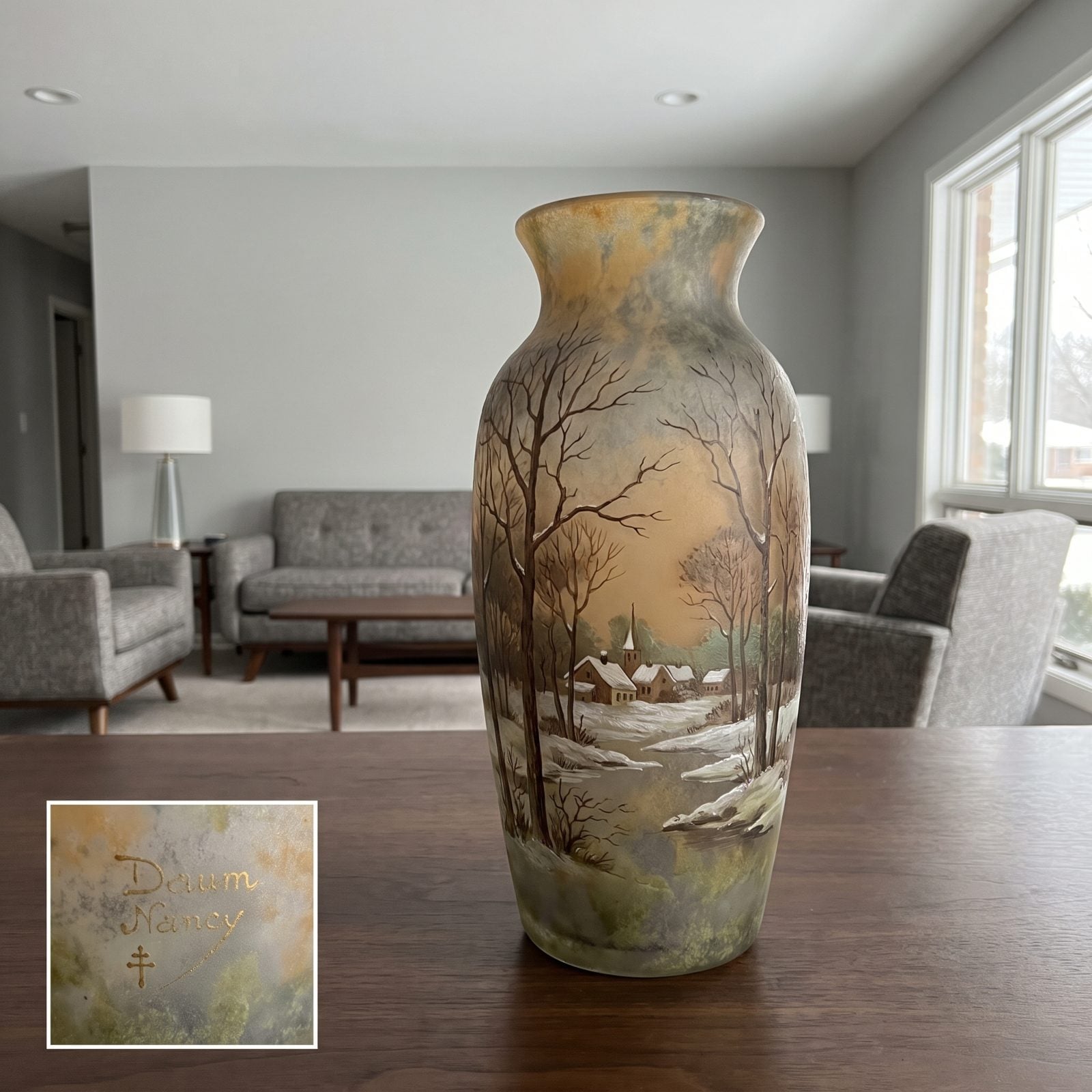
From the same French town as Gallé came Daum Nancy, and the two get confused constantly. Daum leaned harder into enameling, painting detailed scenes, winter forests, rainy streets, landscapes, over mottled, acid-etched backgrounds that look almost weathered.
The giveaway is the signature. Daum pieces carry the maker’s name alongside a small cross of Lorraine, the double-barred cross tied to the Lorraine region. Find that cross and you’ve narrowed things down fast.
41. Loetz Iridescent Glass: The Great Tiffany Lookalike
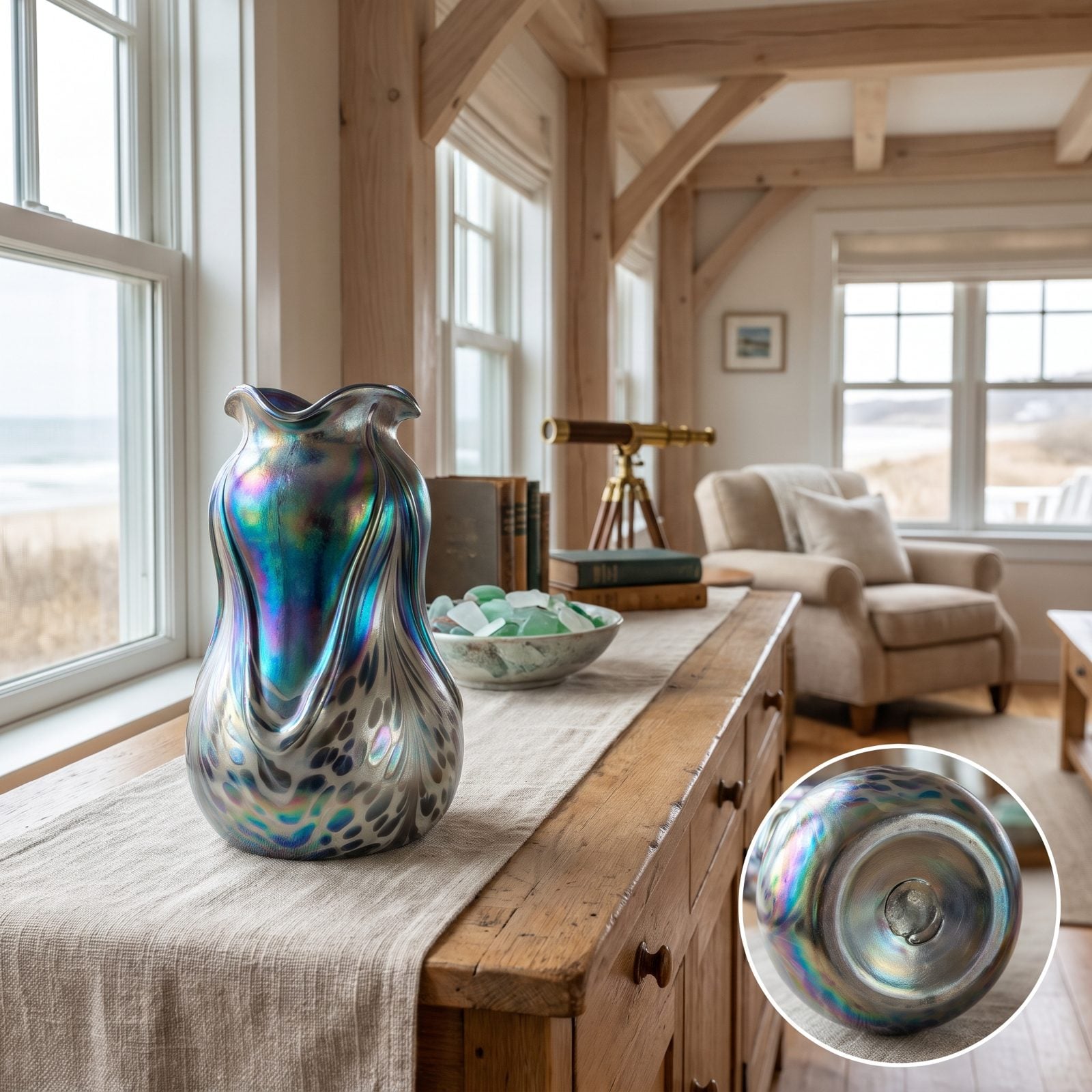
This is the piece people mistake for Tiffany, and sometimes they’re right to get excited anyway. The Loetz glassworks in Bohemia made iridescent art glass so fine that Tiffany himself worried about the competition.
Look for intense oil-slick iridescence over wavy, combed, or spotted surfaces. That “papillon” butterfly-wing texture is a Loetz hallmark, and the forms flow with Art Nouveau curves.
Now the frustrating part: most Loetz was never signed. Dealers often sold it unmarked, which means plenty of genuine pieces sit in thrift stores labeled as nothing at all. Unsigned, iridescent, and gorgeous? Research it before you assume it’s worthless.
40. Steuben Aurene Glass: Gold and Blue With a Fleur-de-Lis
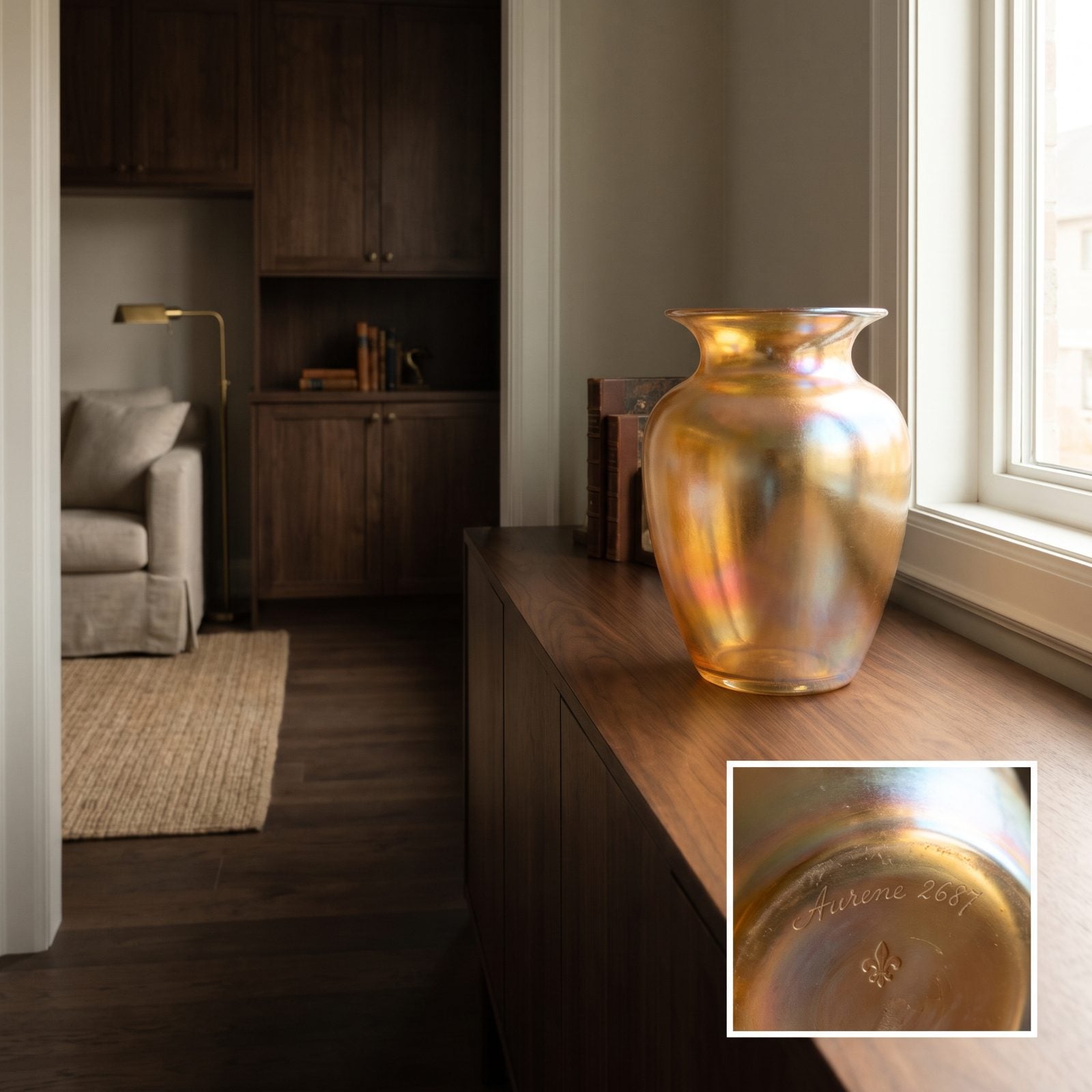
Frederick Carder’s Steuben works in Corning answered Tiffany with Aurene around 1904. The look is cleaner than most art glass, smooth, unpatterned surfaces that let a mirror-bright gold or deep cobalt-blue iridescence carry the whole piece.
Gold Aurene glows warm, with amber and pink undertones. Blue Aurene is rarer and more valuable, a deep cobalt with silvery shimmer. Both feel sleek where Loetz and Tiffany feel textured.
Check the base for an engraved “Aurene” with a shape number, often beside a small fleur-de-lis. That signature separates the real thing from the many imitators who chased this exact finish.
39. Moser Enameled Glass: Jewel Tones and Gilded Detail
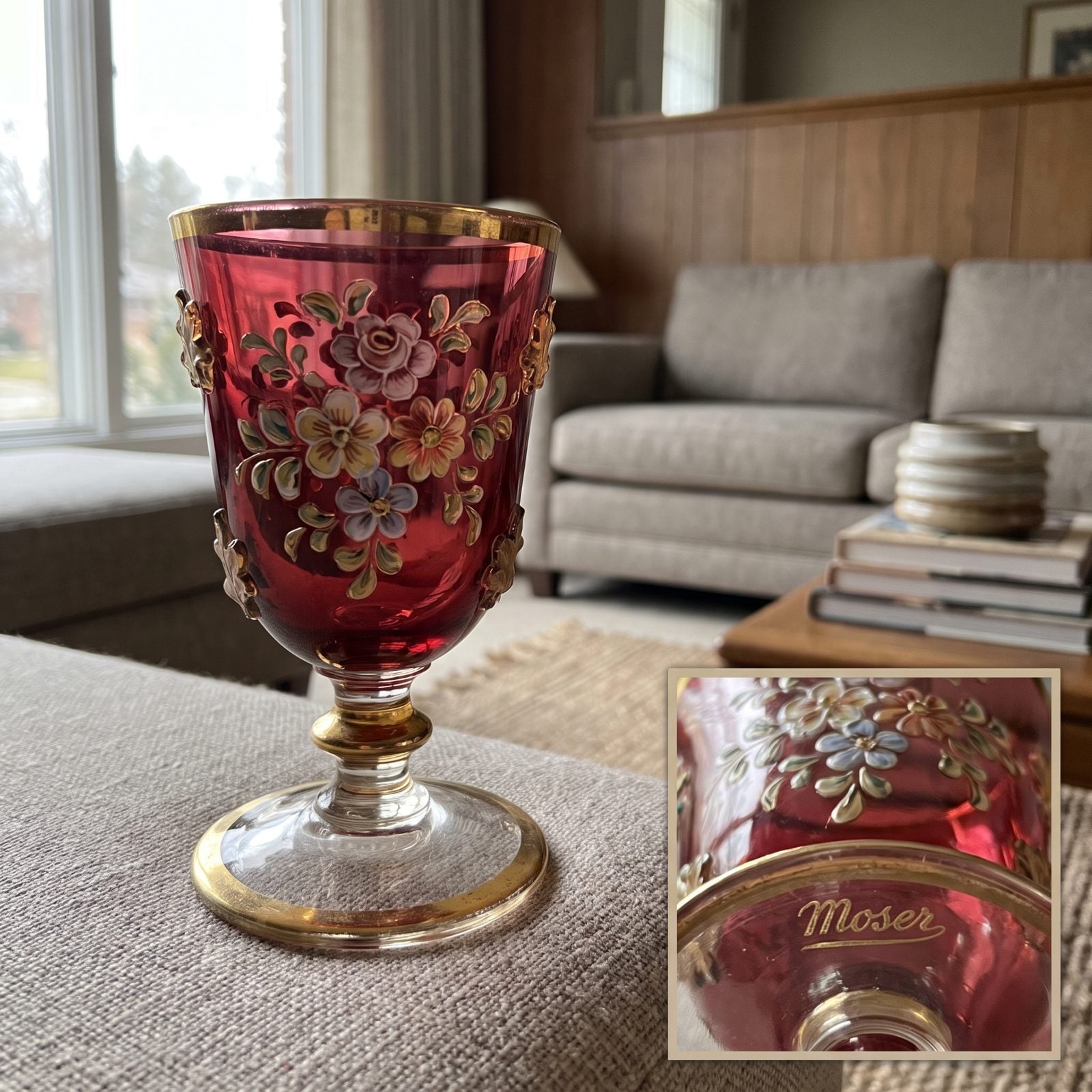
Jewel-toned glass crusted with raised enamel and real gold points toward Moser, the Bohemian firm Ludwig Moser founded in 1857. Their work favors deep cranberry, amethyst, and emerald, often with hand-painted florals standing proud of the surface and gilded bands catching the light.
The enamel should feel raised when you touch it, and the gold detail is applied, not printed. Some pieces feature tiny applied glass acorns and oak leaves, a recurring Moser motif.
Run your thumb along the gilt edges. Genuine old gilding wears unevenly over a century of use, thin in the handled spots, thick where fingers rarely reach. That honest wear often tells you more than any mark does.
38. Depression Glass: Cheap Then, Collected Now
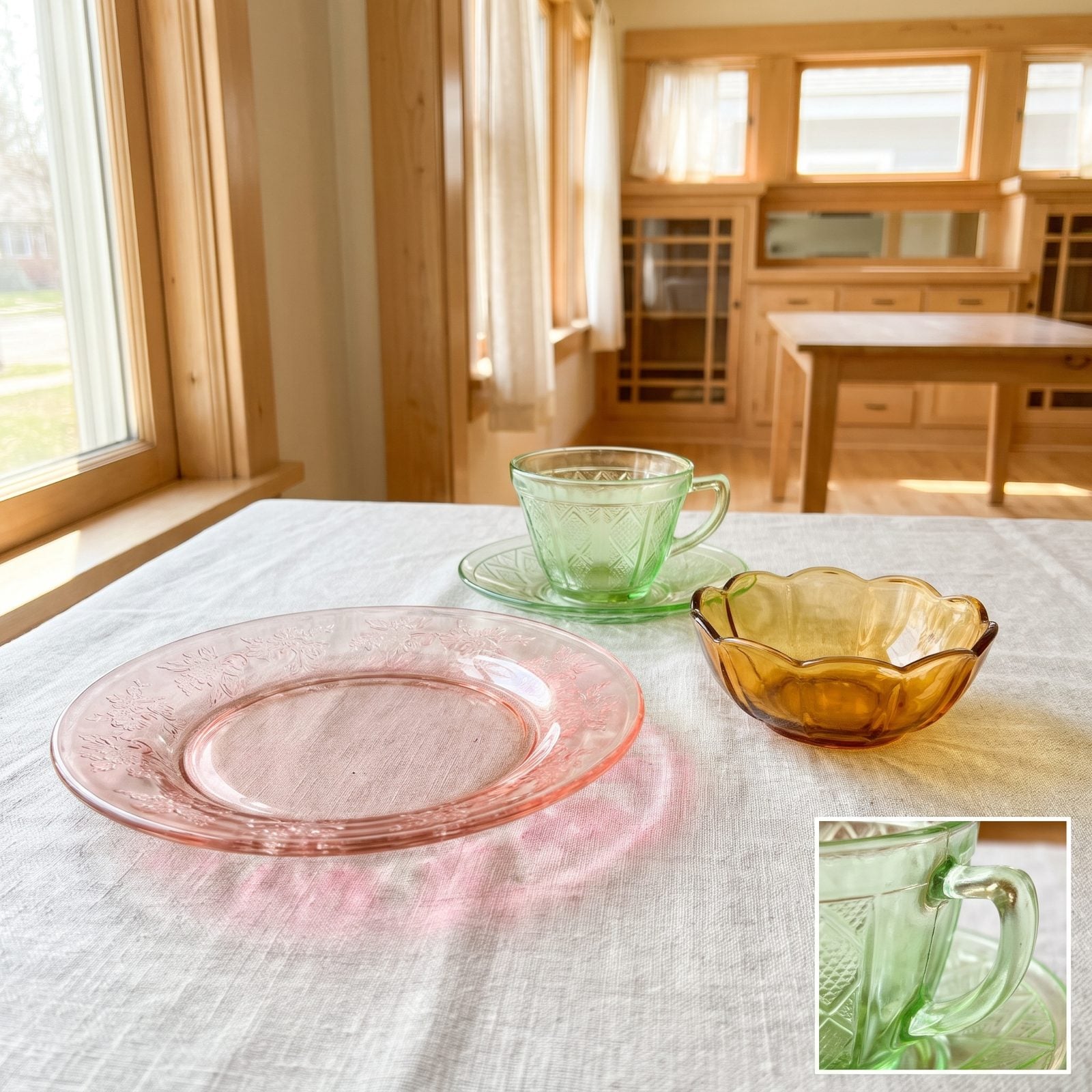
Your grandmother might have gotten these free inside a bag of oatmeal. Depression glass was mass-produced from the late 1920s through the 1940s, cheap, colorful pressed tableware in pink, green, amber, and cobalt, often handed out as a promotion.
Value lives in the pattern and the color. Cameo, American Sweetheart, Royal Lace, Mayfair, collectors know them all by name. Hold a piece to the window and the color glows, mold seams show, and you’ll spot small bubbles and imperfections from fast production.
Pink and green are common. Cobalt blue, red, and certain hard-to-find patterns command the real money.
37. Carnival Glass Bowls: The Marigold Shimmer Worth a Second Look
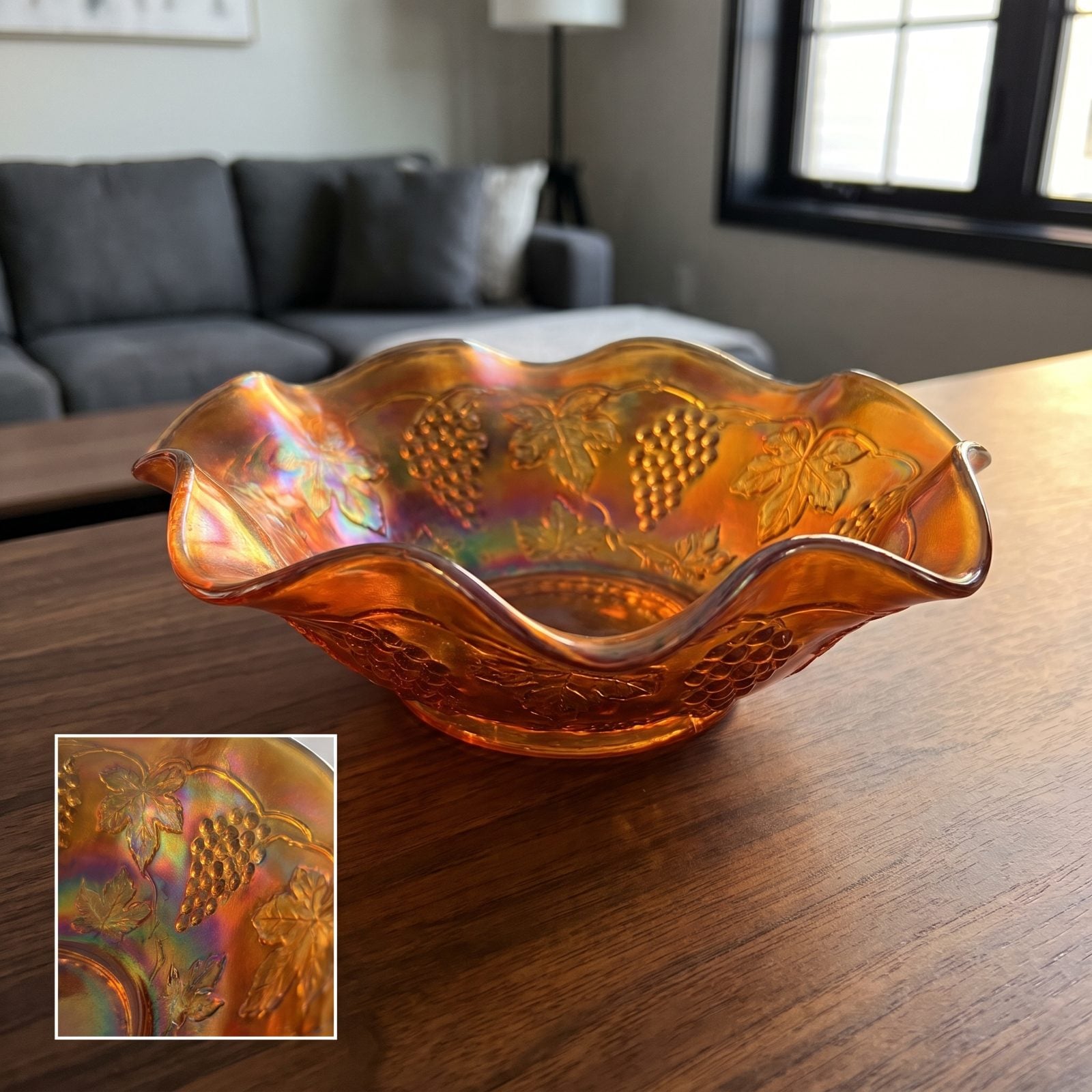
The oily orange shimmer gives it away instantly. Carnival glass was pressed, patterned tableware sprayed with metallic salts to fake the look of expensive art glass, made from roughly 1907 into the 1920s. It earned its name because it really was handed out as carnival prizes once it fell out of fashion.
Marigold, that warm orange-gold iridescence over a clear base, is the most common and least valuable. The money hides in the base color underneath the sheen.
Tilt the bowl toward the light and look past the shimmer. Amethyst, green, and especially red or ice-blue base glass turns a common prize into a collector’s target. Patterns matter too, peacocks, grapes, and certain rare molds pull premiums.
36. Victorian Milk Glass: The Opaque White That Fooled Generations
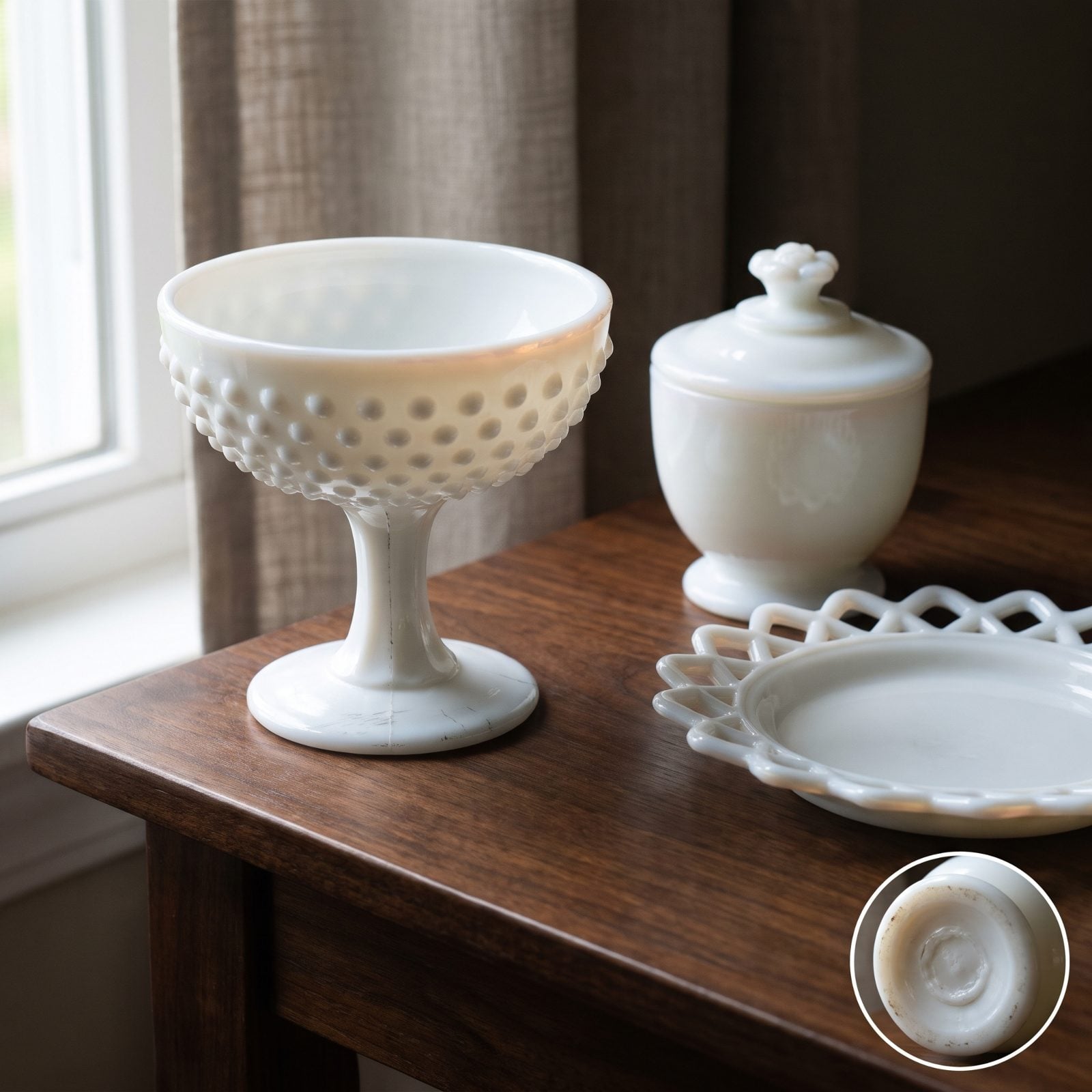
Hold a piece of true Victorian milk glass up to a window and watch the rim. If the edge flashes a faint orange-red glow where the light passes through, you may have the real thing. Collectors call it the ring of fire, and it comes from the metal oxides baked into 1800s formulas. Modern reproductions almost never pull it off.
Most milk glass is common and worth little. Those hobnail pieces your grandmother kept on the dresser sell for a few dollars, no more. What’s worth a second look are early American or English examples with that opalescent edge, unusual lattice work, or painted enamel decoration that somehow hasn’t flaked off over the decades.
Check for mold seams and honest base wear before you assume age. Repro milk glass tends to feel too even, too white, too perfect.
35. Jadeite Kitchen Glass: That Soft Green Everyone Suddenly Wants
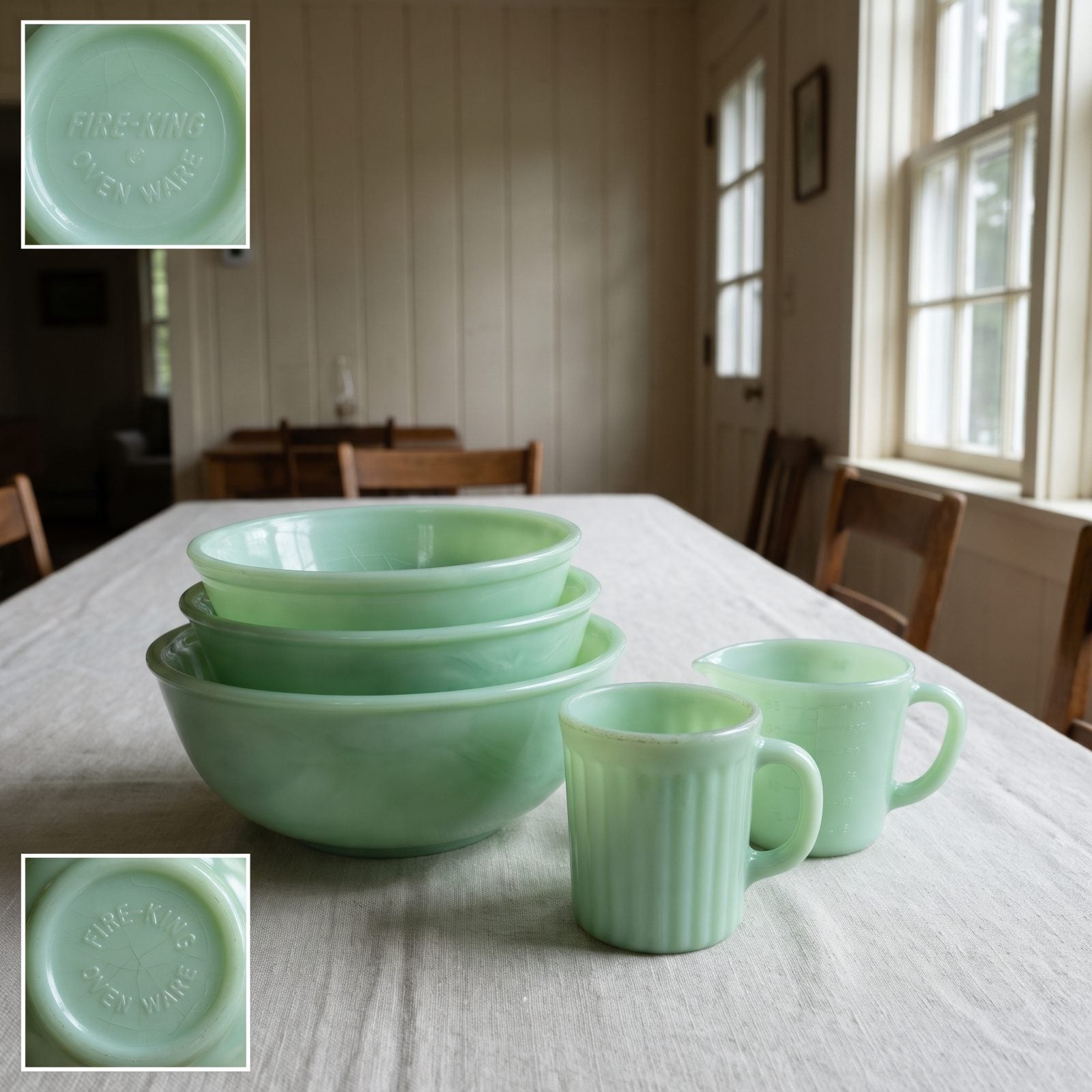
Green glass for green diner counters. Jadeite started life as cheap Depression-era dinnerware dressed up to look like fancy jade. Then a certain homemaking celebrity started collecting it in the 1990s, prices went silly, and a bowl that cost a nickel in 1945 started pulling serious money at auction.
Three makers dominate the field, and knowing which one you’ve got matters enormously:
- Fire-King, made by Anchor Hocking, the most common and the backbone of most collections.
- Jeannette Glass, slightly older, often a touch darker in tone.
- McKee, the earliest, and the one that makes collectors sit up straight.
Flip the piece. An embossed maker’s mark on the base is what separates a thrift-shop throwaway from something worth listing with care. And watch for the modern reproductions that have flooded in since the revival. New jadeite often glows oddly under blacklight and feels lighter than you’d expect for its size.
34. Burmese Glass: The Pink-to-Yellow Shade That Shouldn’t Exist
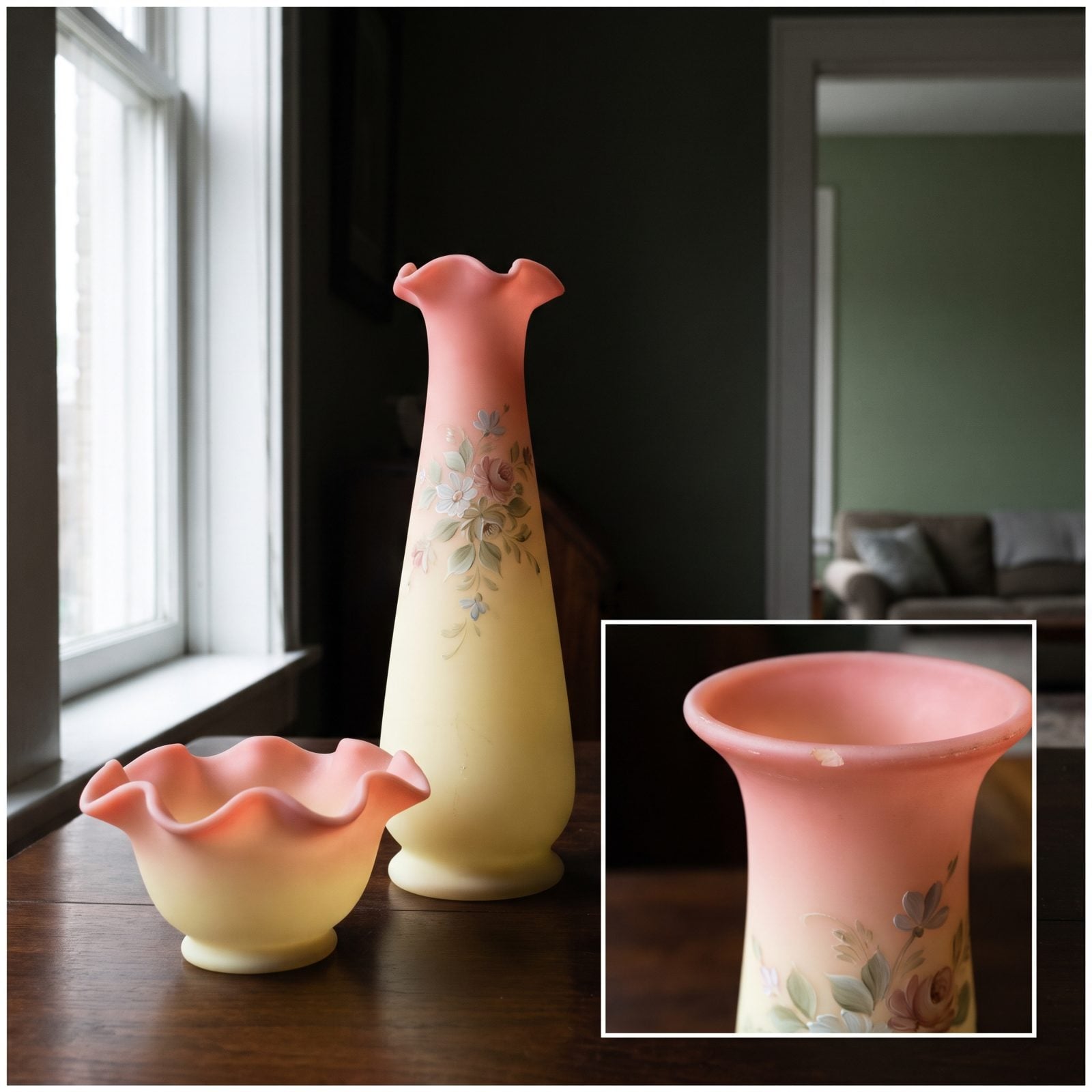
Here’s a glass that can’t make up its mind. Burmese shades from soft pink at the top to creamy yellow at the bottom, and the color isn’t painted on. It’s baked in. Uranium and gold in the formula react to heat, so the areas reheated at the furnace turn pink while the rest stays yellow.
Thomas Webb in England and Mount Washington in America made the finest examples in the 1880s. Genuine old Burmese fluoresces bright green under a blacklight because of that uranium content. A cheap test, and a reliable one.
Satin-finished Burmese has a matte skin. Glossy examples exist too. Both are collectible if the color gradient is genuine and the fluorescence checks out.
33. Mary Gregory Glass: White Children Painted on Colored Glass
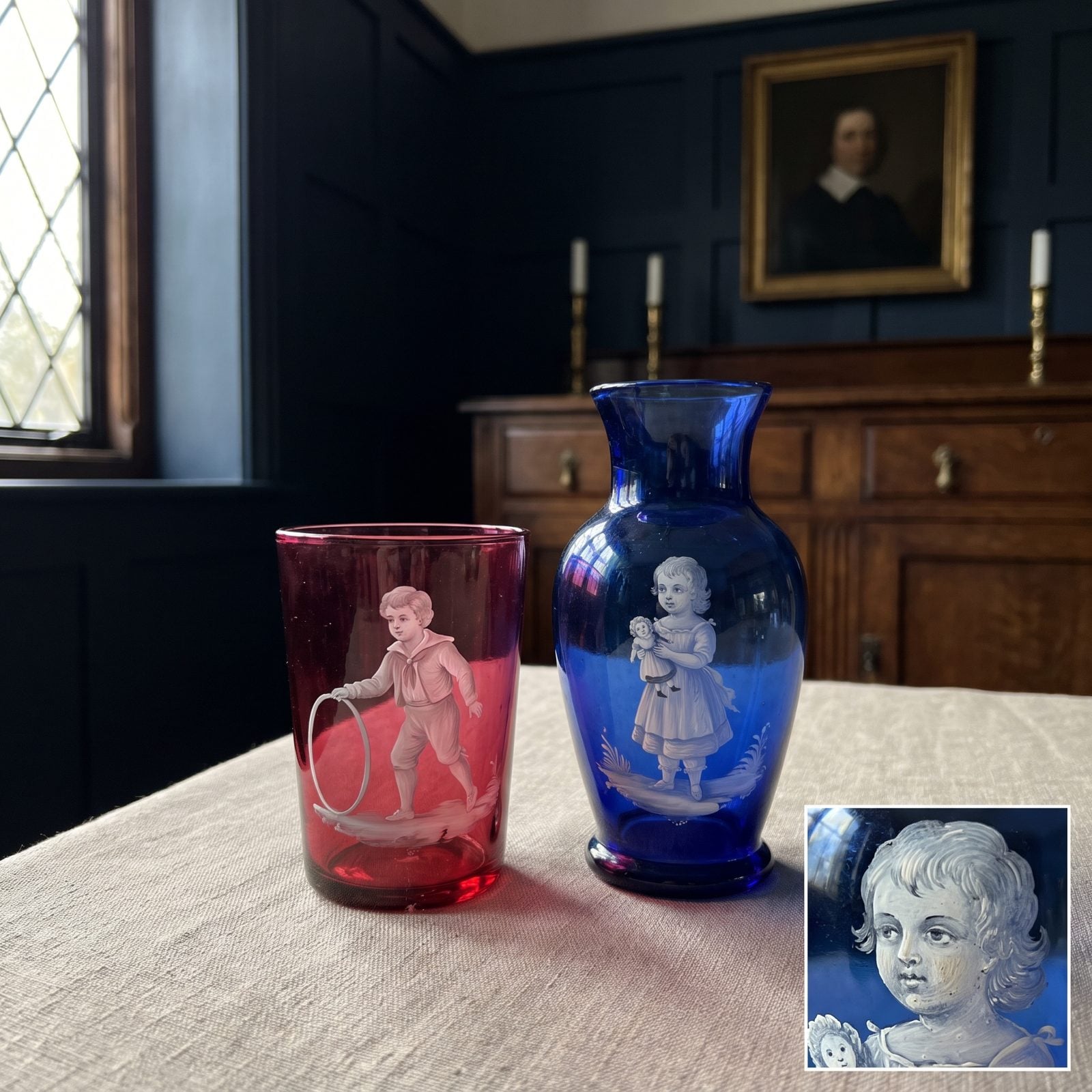
Children in old-fashioned clothes, painted in white enamel on cranberry or cobalt glass, usually frolicking through some vaguely Victorian meadow. That’s the signature, named after a real woman who decorated glass at the Boston and Sandwich Glass Company.
The catch nobody mentions: most Mary Gregory glass has nothing to do with Mary Gregory. The style got copied endlessly in Bohemia and sold under her name long after. The name describes a look, not a maker.
Value lives in that little white figure. Finely painted faces with tinted flesh tones usually mean an earlier European piece. Flat, all-white figures tend to be later or reproduced. Richer base color, more delicate brushwork, more reason to research before the thing ends up in a donation box.
Reproductions are everywhere. If the glass feels suspiciously light and the painting looks printed rather than brushed, be suspicious.
32. Bohemian Overlay Glass: Ruby Cut Through to Clear
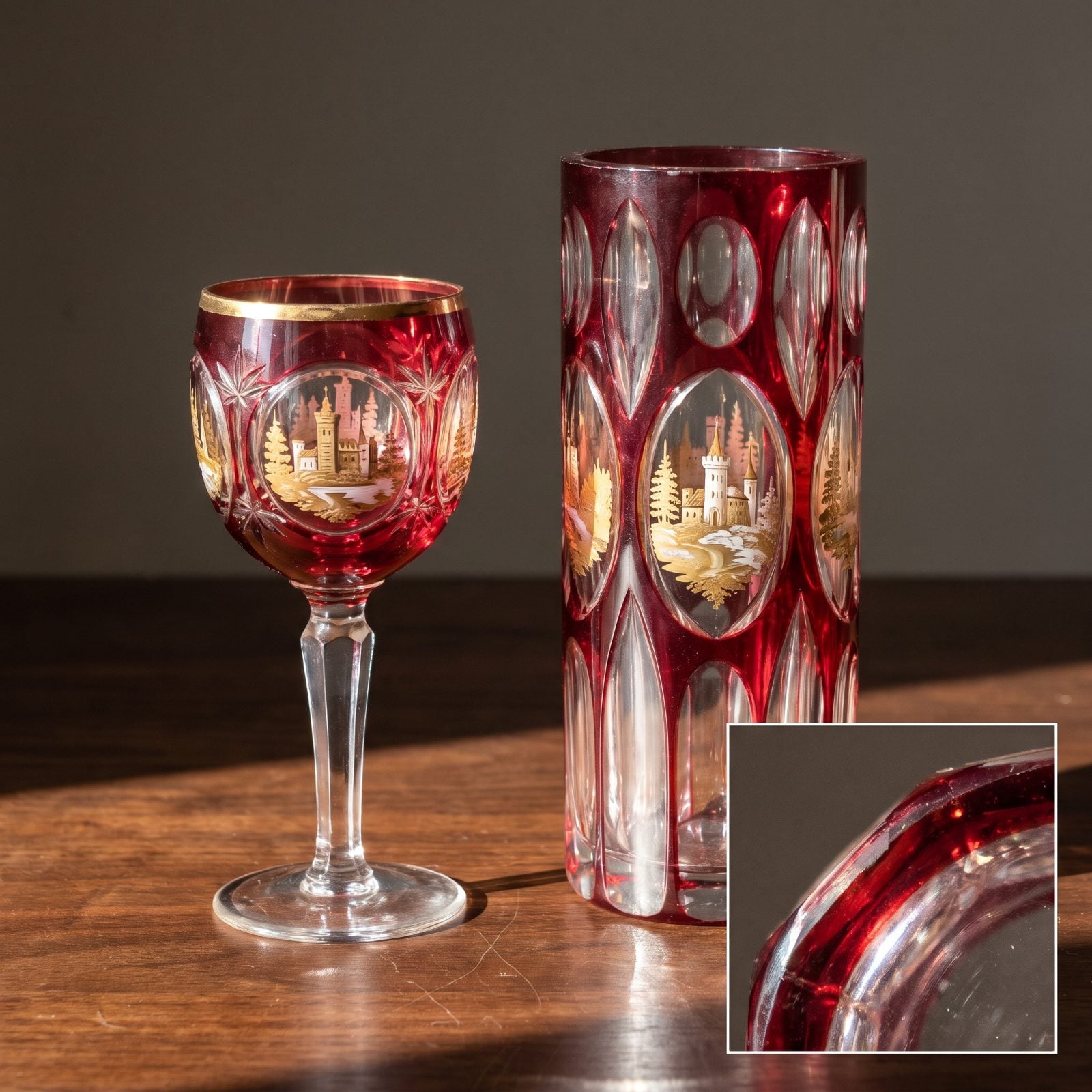
Two layers of glass, one cut away to reveal the other. That’s overlay, and the Bohemians of the 1800s were its undisputed masters. A rich ruby or green skin flashed over clear crystal, then wheel-cut into windows and panels so the light plays between the colors.
The best examples hide painted scenes inside those clear windows. Castles, deer, forest hunts, often touched with gold. The cutting tells you most of what you need to know. Crisp, deep, geometric facets catching light from every angle point to skilled hands and real age.
Later mass-produced overlay exists and sells modestly. Fine hand-cut Bohemian work is a different conversation entirely.
31. Cameo Glass: Carved Layers That Took Months by Hand
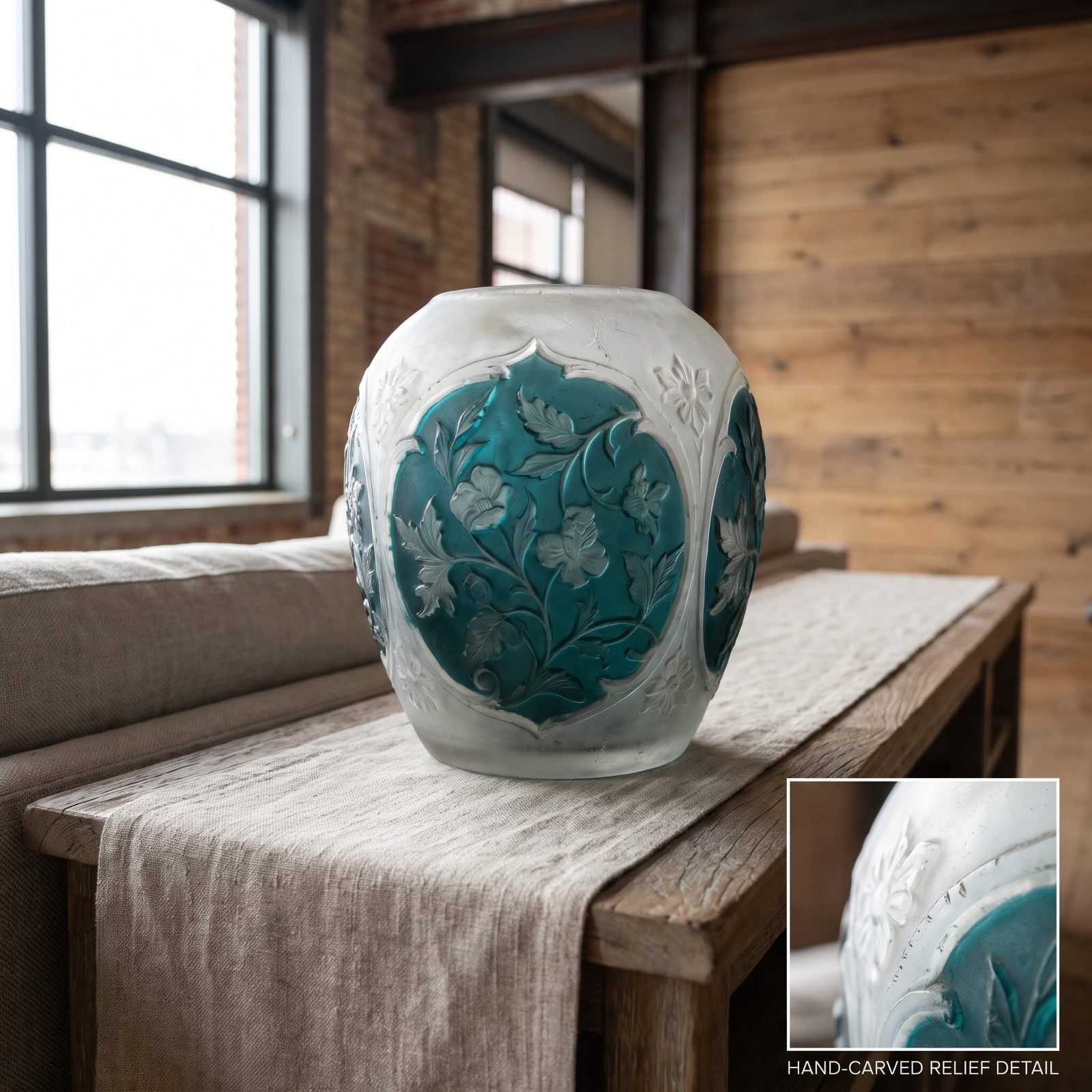
The aristocrat of the whole family. Cameo glass is built from layers of different colors, and then an artist carves the outer layer away by hand to leave a raised design standing in relief against the darker ground beneath. We’re talking months of work on a single vase.
English makers like Thomas Webb and the Woodall brothers produced the pinnacle in the late 1800s. French workshops followed, and this is where the names you’d kill to find turn up. Gallé and Daum signed pieces in this technique that now sell for thousands, sometimes far more.
Look for a signature worked right into the carved pattern. But here’s the trap. Modern reproductions look similar at a glance and are worth a fraction. Run your fingertips over the relief. True hand-carved cameo has crisp, varied depth; the acid-etched versions feel flatter, more uniform.
Suspect you’ve got a signed French cameo piece? Stop and research before you do anything at all.
30. Venetian Latticino Glass: Spun White Threads Inside Clear Glass
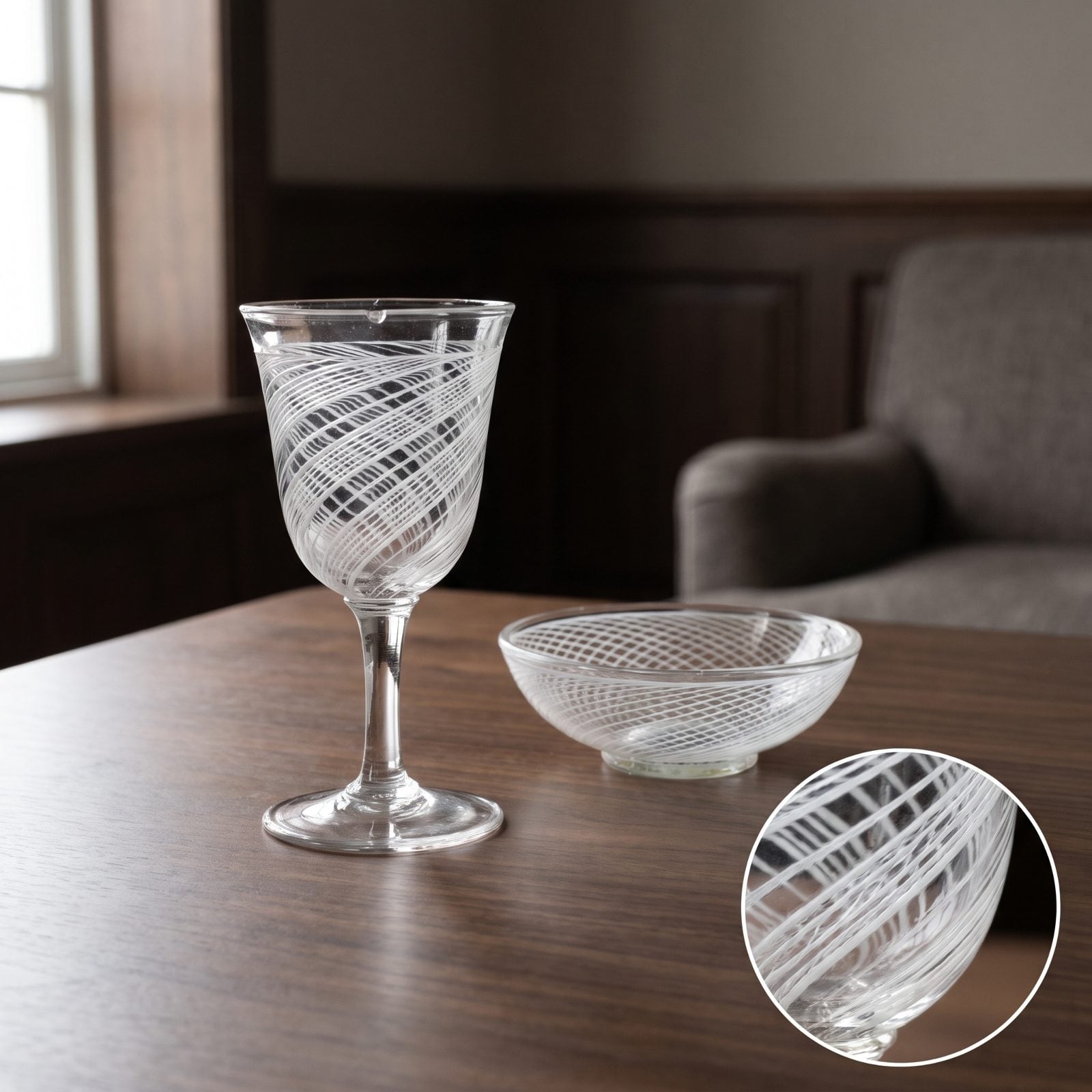
Look closely and you’ll see white threads of glass spun into lace, spirals, and nets, all trapped inside clear crystal. The Venetians on the island of Murano perfected this centuries ago and guarded the technique so fiercely that glassmakers were forbidden to leave.
Latticino, sometimes called filigrana, turns up in goblets, bowls, and compotes with impossibly thin walls and delicate ribbon stems. Finer, more intricate thread work means a more skilled hand behind it.
Dating Venetian work is tricky because Murano still makes it beautifully today. Age it by the wear on the foot, the color of the glass, and the weight. Older pieces often feel lighter and show gentle base scratching from a long life shuffled around assorted shelves.
29. Millefiori Paperweights: A Thousand Flowers Frozen in Glass
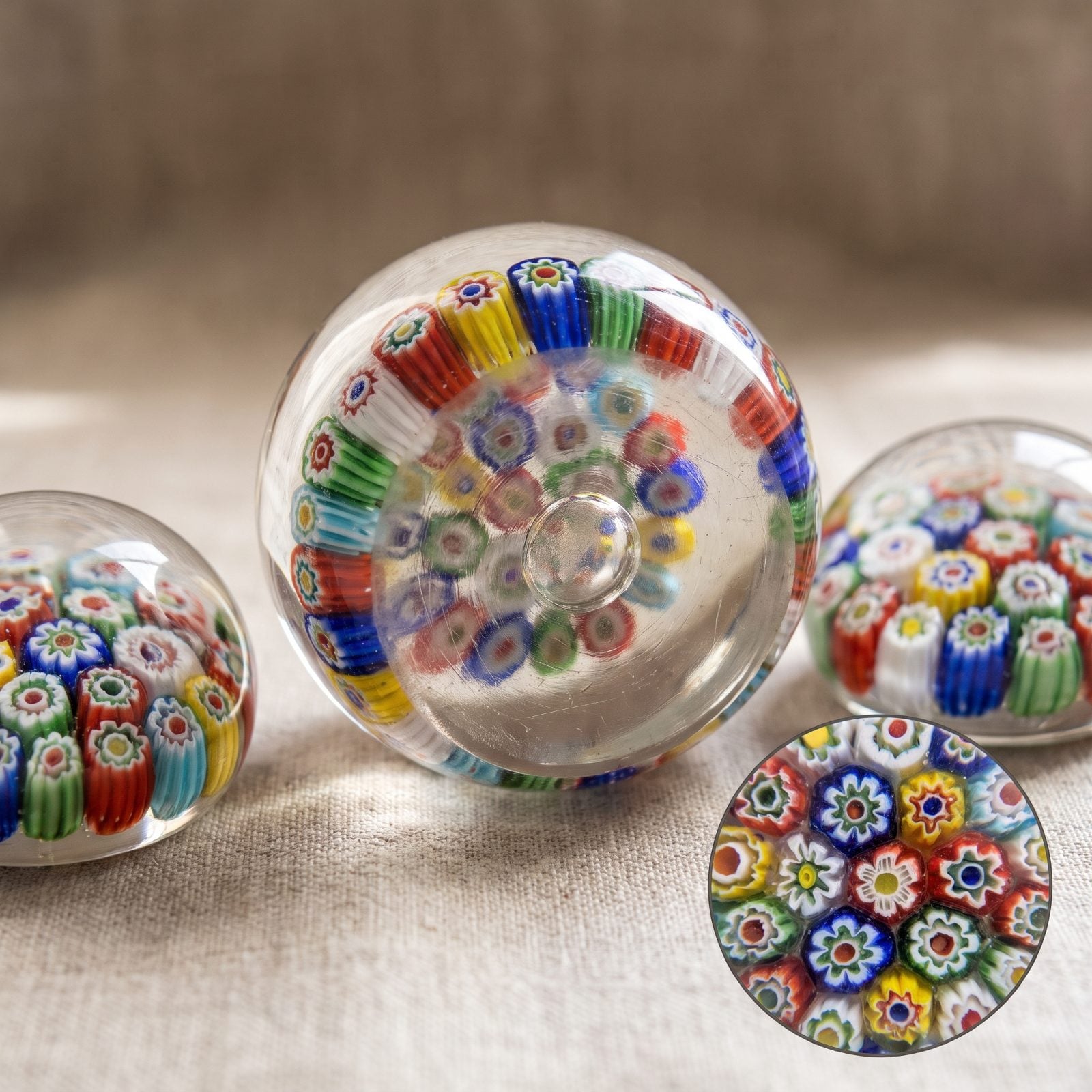
Mille fiori means a thousand flowers, and that’s exactly what you see when you look down into one of these glass domes. Hundreds of tiny colored canes, each sliced from a longer rod, arranged into patterns and sealed under clear glass forever.
The French makers from the mid-1800s are the holy grail. Baccarat, Saint Louis, and Clichy produced weights that serious collectors chase across the world, and a single antique Clichy weight with the right pattern can fetch thousands.
The devil is in the tiny details. Collectors hunt the famous Clichy rose, a particular cane that looks like an open pink-and-green bloom tucked among the others. Finding one changes everything.
Modern weights are everywhere. Many are lovely and worth almost nothing. Weight, clarity, the precision of the cane arrangement, and any tiny dated or lettered cane hidden in the design all matter. If a paperweight feels heavier and clearer than you expected, and the canes are packed with near-mechanical precision, don’t donate it on a whim.
28. Wave Crest Glass: Painted Milk Glass With Fancy Metal Fittings
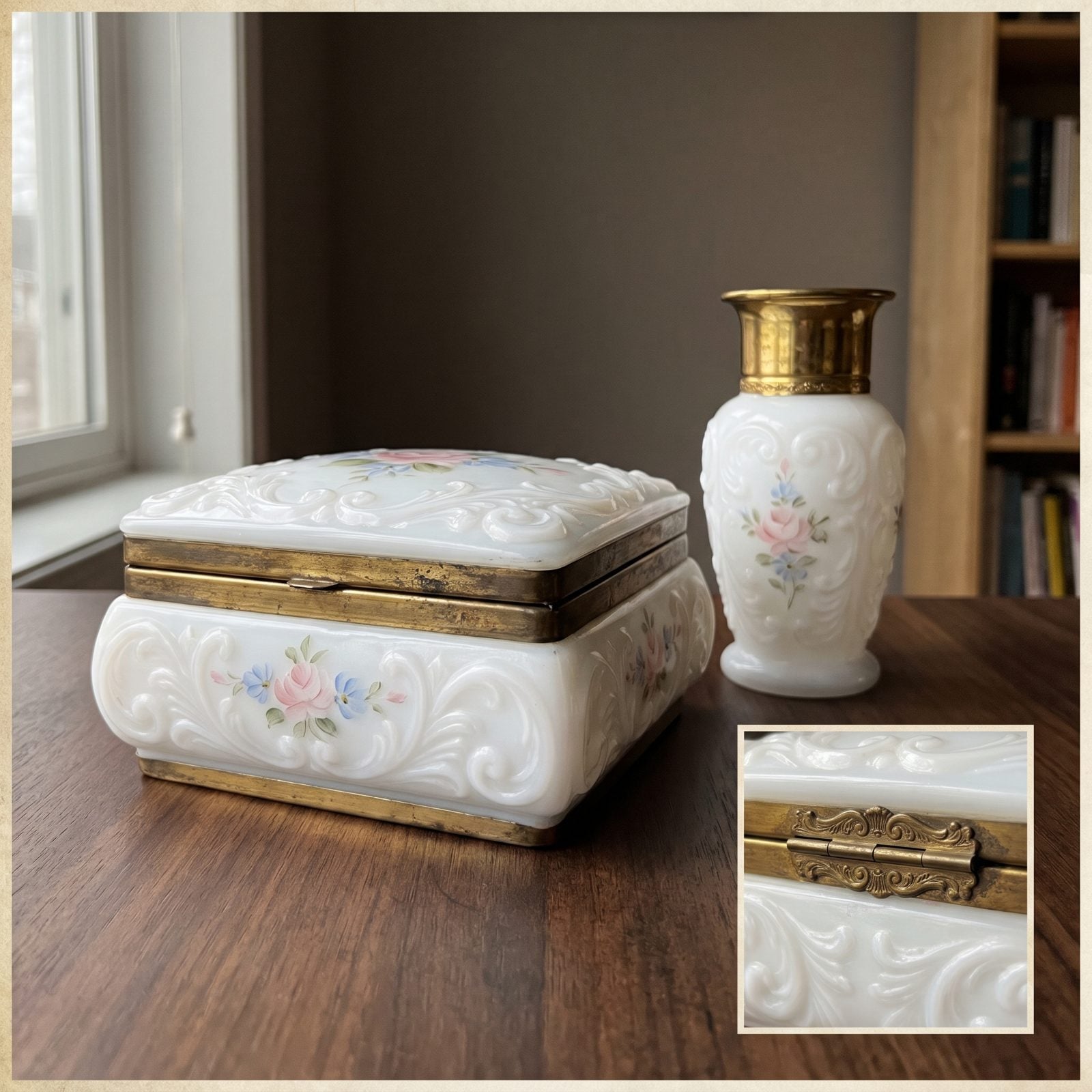
Puffy opaque glass boxes and vases, molded with scrolls and wave patterns, hand-painted in soft pastels, and dressed up with ornate metal collars and hinges. That’s Wave Crest, made by the C.F. Monroe Company in Connecticut around the turn of the last century.
These were the fancy dresser and vanity pieces of their day, the sort of thing a lady kept her hairpins and powder in. Value rides on the painted florals and the quality of the gilt metal mounts.
Look for a Wave Crest banner mark or a red mark on the base, though plenty of genuine pieces were never marked at all. The ornate metalwork matters enormously. Original fittings in good shape separate a researchable find from a pretty but common box.
27. Elegant Glass Era Stemware: The Fine Crystal Between the Wars
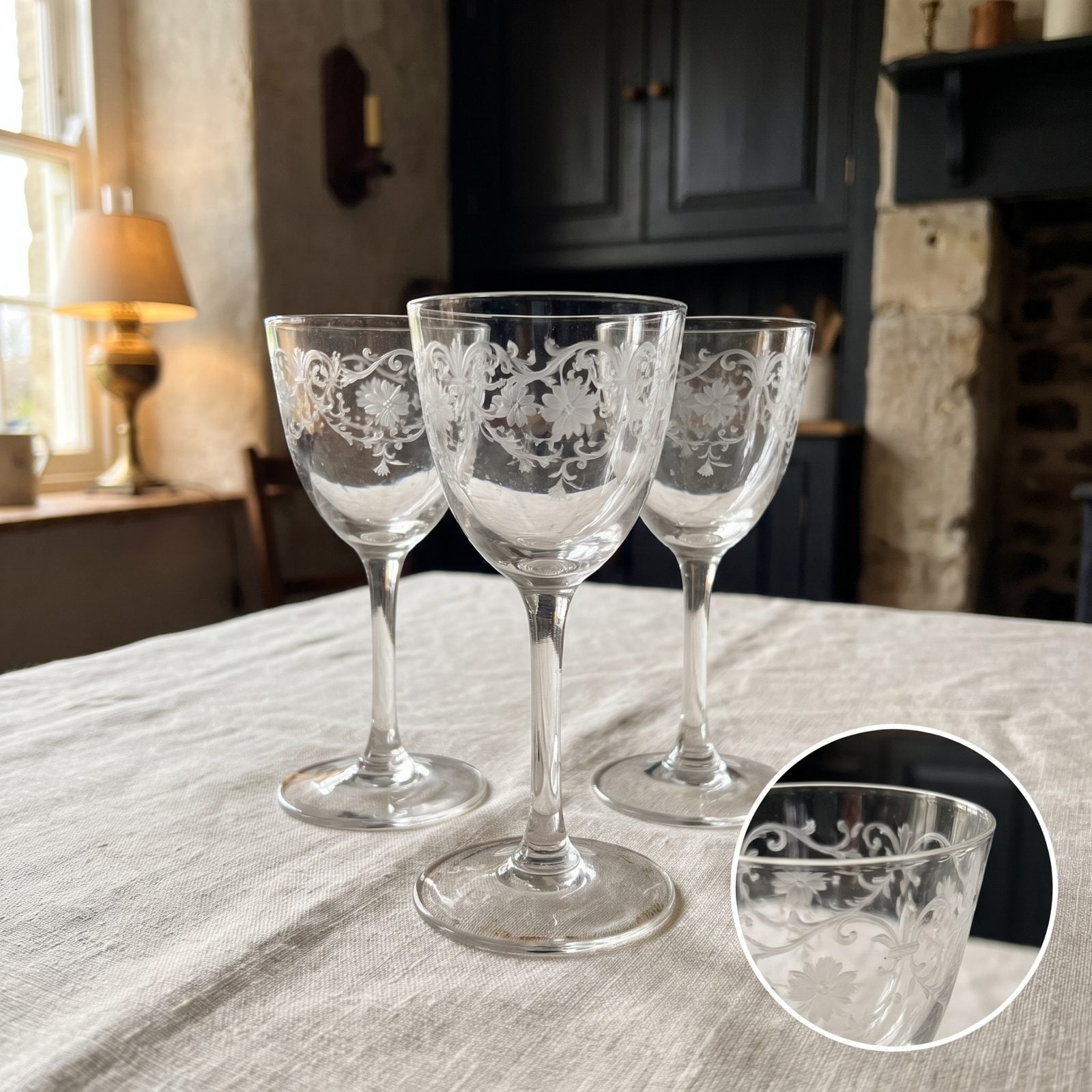
Not pressed, not cheap, and a clear cut above the Depression glass sold in dime stores. Elegant Glass is what collectors call the finer tableware made roughly from the 1920s into the 1950s by makers like Cambridge, Heisey, Fostoria, and Tiffin.
These are hand-finished pieces carrying delicate acid-etched designs, often named patterns that collectors can spot across a room. Rose Point, June, Orchid. The etching is everything. Run your finger across the bowl and you’ll feel the frosted design slightly recessed into the surface.
Some patterns command real money, especially in rarer colors or hard-to-find serving shapes. A common clear goblet might be worth a few dollars; the same pattern in a particular pink, or in some unusual form, can be worth far more.
We’ll admit it. We’ve walked straight past boxes of this stuff at estate sales assuming it was just old glass. Big mistake. Learn to spot the etching before you give a set away, because the pattern name is usually the whole story.
26. Georgian Air- and Opaque-Twist Stemware
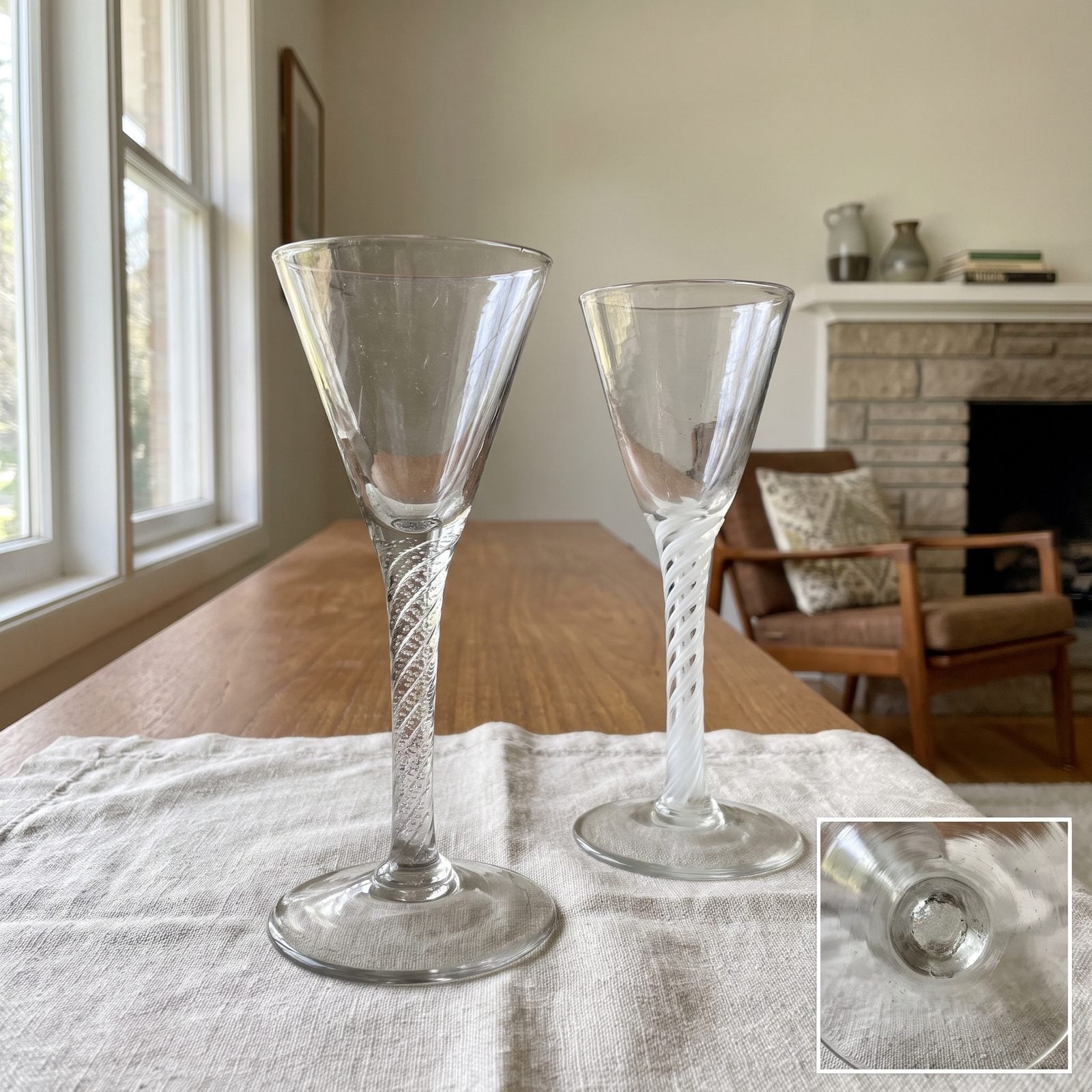
Hold one up to a window and the stem gives you away: a spiral of trapped air running top to bottom, or a thread of milky white glass twisted like a barber pole. That spiral wasn’t an accident. Glassmakers from the 1740s onward spun it deliberately, and it’s one of the surest signs you’re holding something made before 1780.
Air twists came first, opaque white twists followed, then the rarer color twists in green, red, or blue that collectors chase hardest. The glass feels heavier than modern reproductions and carries a faint grey cast from the lead. Check under the foot for a rough pontil scar where the glass was snapped off the rod.
A color twist in good condition can run into the hundreds or more. Research before you let one leave the house.
25. Baluster-Stem Wine Glasses
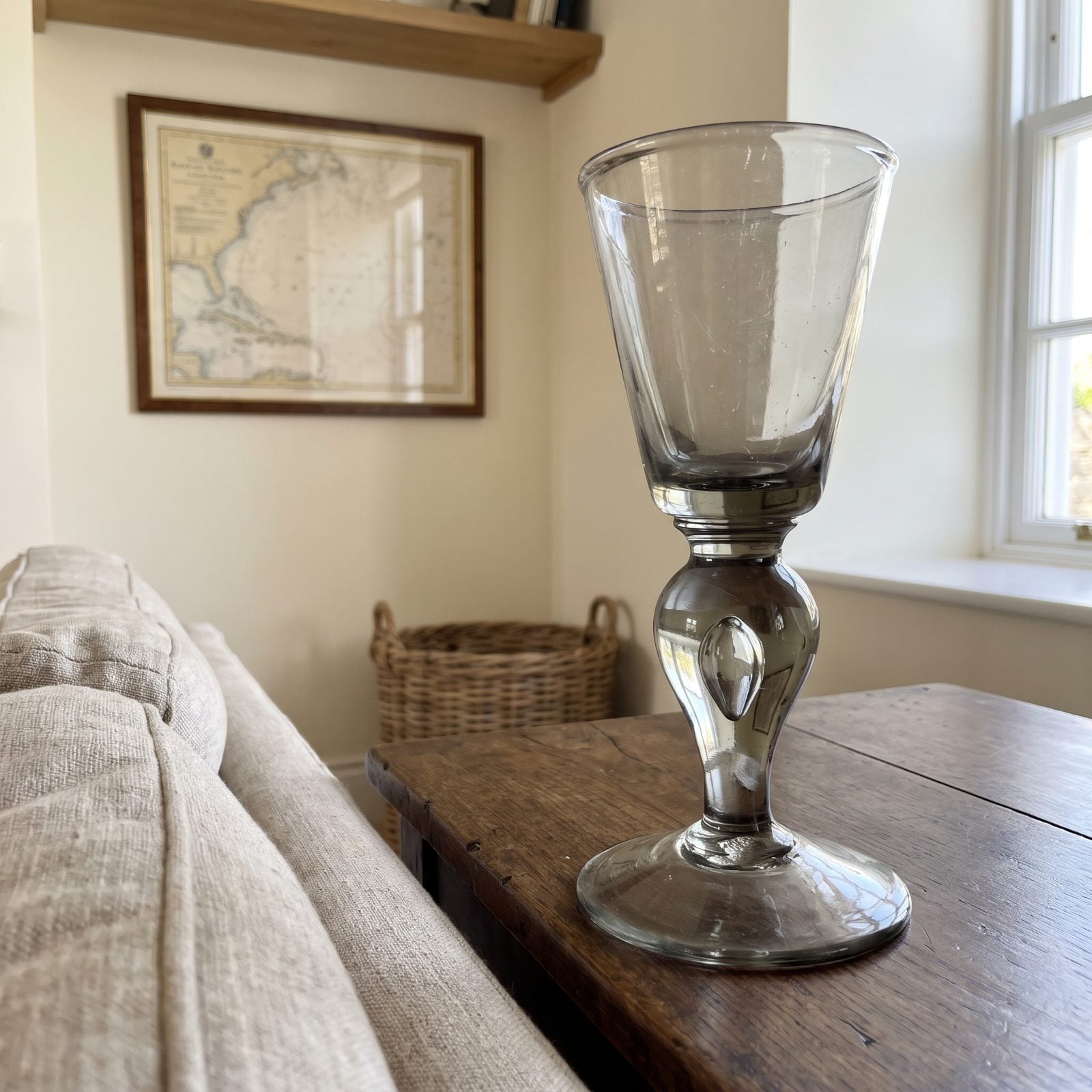
These are the heavyweights, literally. Pick one up and the first thing you notice is the mass of the stem, a solid column swelling into bulbous knops shaped like a turned staircase post. In fact that’s where the name comes from, the fat baluster that holds up a railing.
Made roughly from 1685 to the 1720s, they’re among the earliest English drinking glasses a collector can realistically find. The best ones hide a single teardrop of air suspended in the knop, placed there on purpose by a maker who knew it would catch the light. Bowls stay small and conical because wine came in modest pours of strong stuff.
We’ll admit we underestimated these for years. Anything clunky looked crude to us. Then we handled a real one, and the weight alone told us it was serious lead glass, not some Victorian copy. Age shows in the greyish tint and the honest wear ground into the foot rim.
24. Antique Glass Rummers
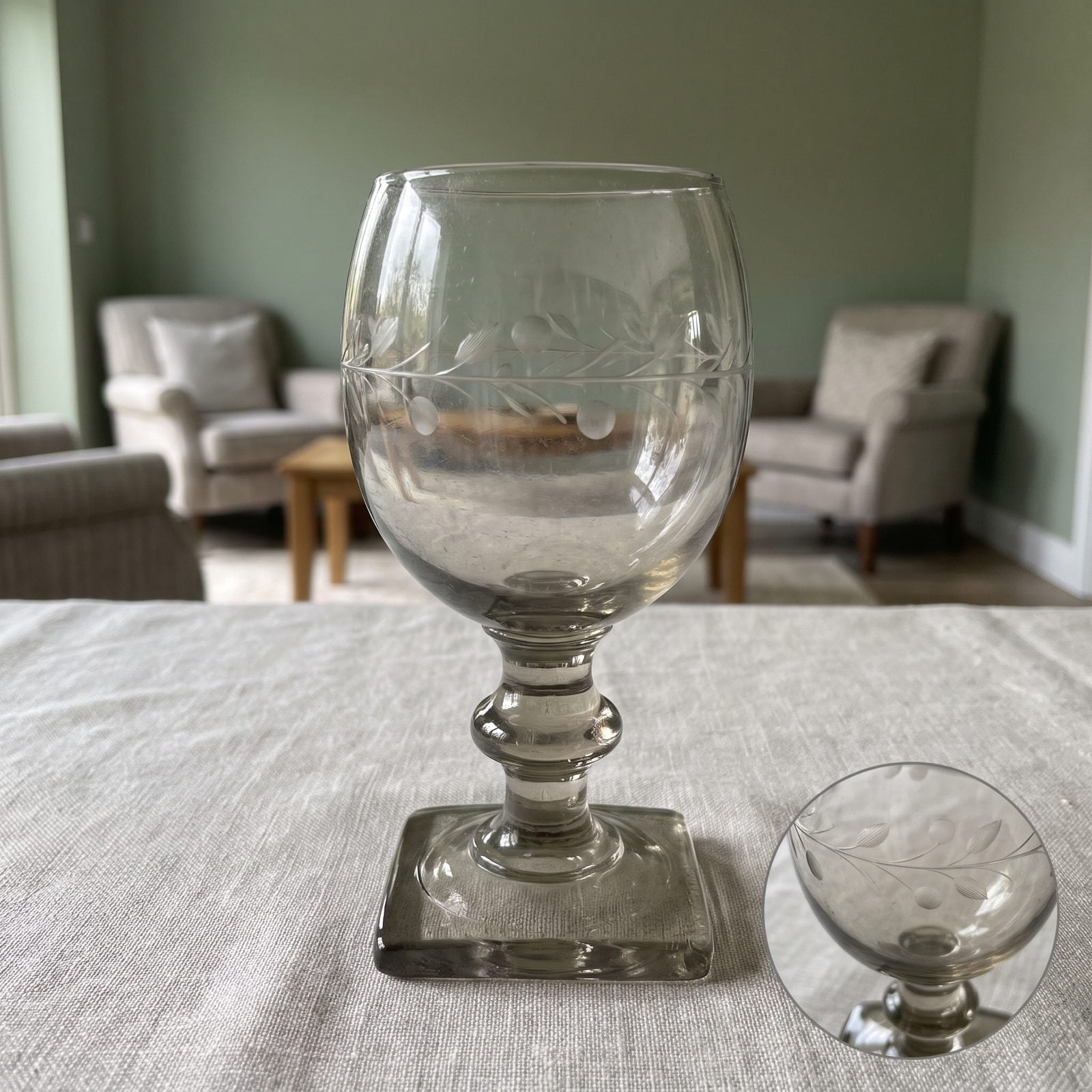
Big bowl, short stout stem, and often a solid square foot. The rummer was a workhorse glass, built for toddy, punch, and strong drink rather than delicate sipping. And no, the name has nothing to do with rum. It comes from the German roemer, a traditional Rhine wine glass.
Georgian and early Victorian rummers turn up more often than twist stemware, which makes the plain ones affordable. The ones worth researching carry engraving: fruiting vines, patriotic ships, inscriptions cut for a wedding or a coronation. A rummer marking a specific event or canal opening can jump in value fast, because collectors of local history want them as much as glass people do.
Look at the base. A star-cut or strawberry-diamond cut foot signals better quality, and a rough pontil underneath confirms the age. Don’t donate one without flipping it over first.
23. Toddy Lifters
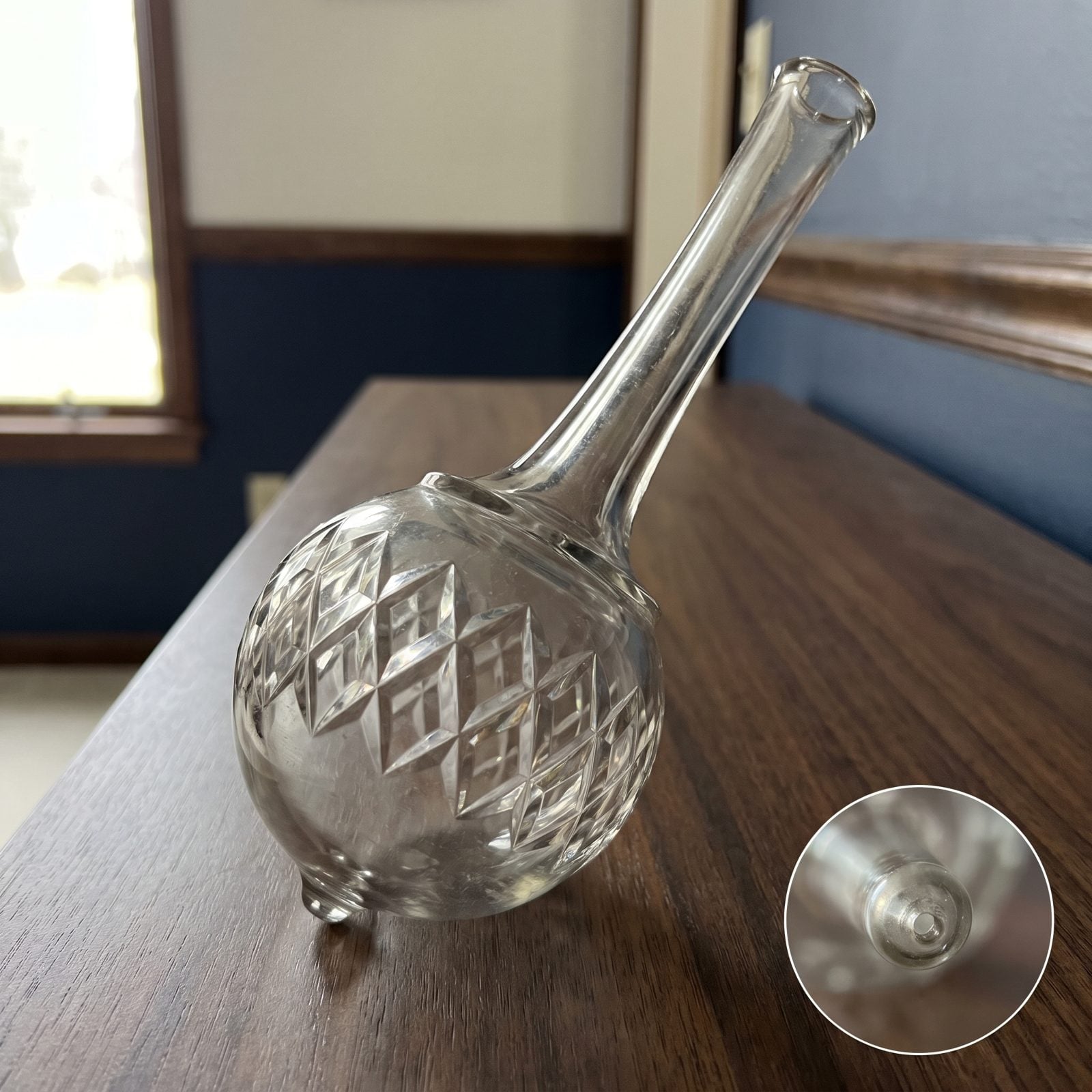
Here’s one that stumps almost everyone. It looks like a tiny decanter that lost its stopper, with a bulb at the bottom, a long thin neck, and a curious little hole at the very tip of the base. People find them in a drawer and have no idea what they’re holding.
It’s a toddy lifter, and it works like a giant pipette. You dip the bulb into a bowl of hot punch, the liquid fills through the bottom hole, you cap the top opening with your thumb to hold the vacuum, then lift and release over your glass. A party trick and a serving tool in one.
If you’ve got one, you’ve got something genuinely scarce.
22. Syllabub Glasses
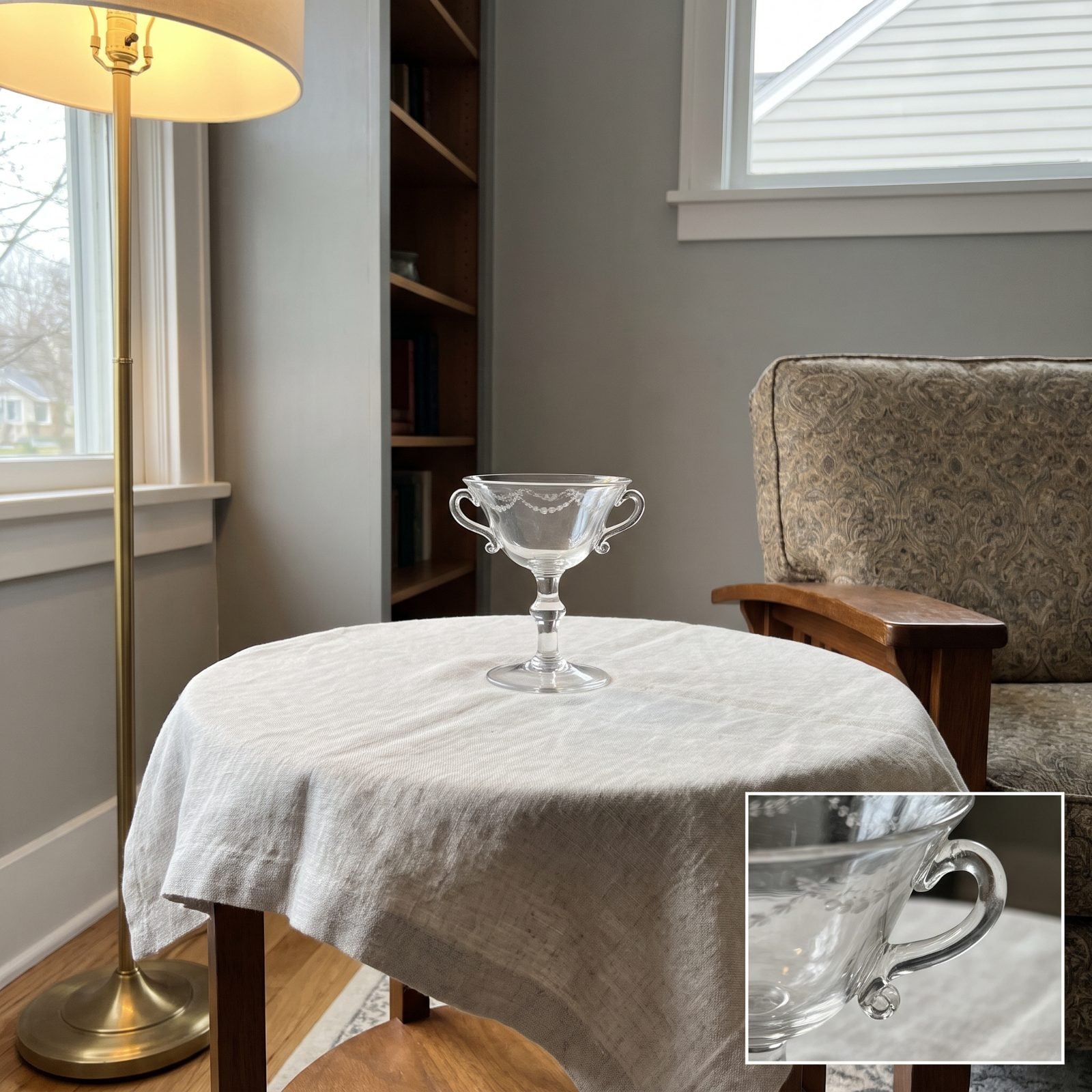
Small, flared, often with a pair of dainty handles, these little glasses served a frothy dessert drink made from cream, wine, sugar, and sometimes spices. Syllabub sat somewhere between a cocktail and a pudding, whipped until the top went foamy and the boozy whey settled below.
The glasses were designed to show off that layered effect, which is why so many have thin, clear bowls. Georgian examples carry light engraving and the honest grey tint of lead glass. The handled ones, sometimes called jelly or custard glasses depending on their job, confuse a lot of sellers who have no idea what they were for.
And that confusion is your opportunity. A glass misidentified in a donation bin as a generic goblet might be a documented 18th-century dessert glass worth a proper look. Check the stem for a knop, the foot for a pontil, the bowl for engraving, before anything gets written off.
21. Celery Vases
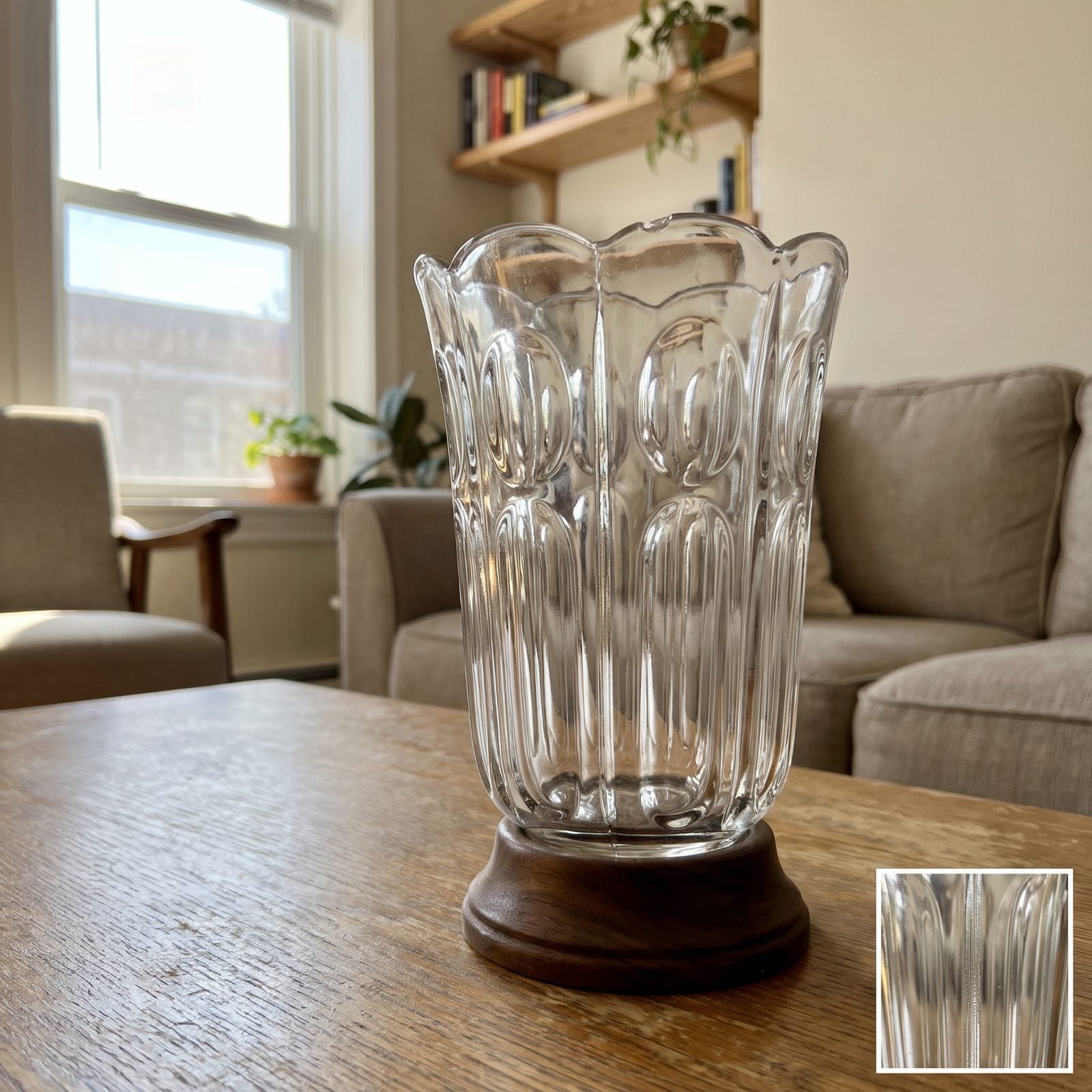
Imagine celery being so prized it got its own showpiece on the dinner table. In the Victorian era it was, and the celery vase proves it. Taller than a tumbler, flaring from a flat, footless base to a scalloped rim, it held crisp stalks like a bouquet.
Most are pressed glass, and the pattern is where the value hides. Collectors of American pattern glass know these by their waffle, thumbprint, and diamond designs, and a recognized pattern in good condition commands real money among specialists. Run a finger up the side. A mold seam means pressed, which is normal and expected here.
Celery was a luxury vegetable, hard to grow and showy to serve, so people displayed it like flowers.
People mistake these for vases or spoon holders constantly. Before one goes to the charity shop, photograph the pattern and search it. A named Victorian pattern can surprise you.
20. Pickle Castors
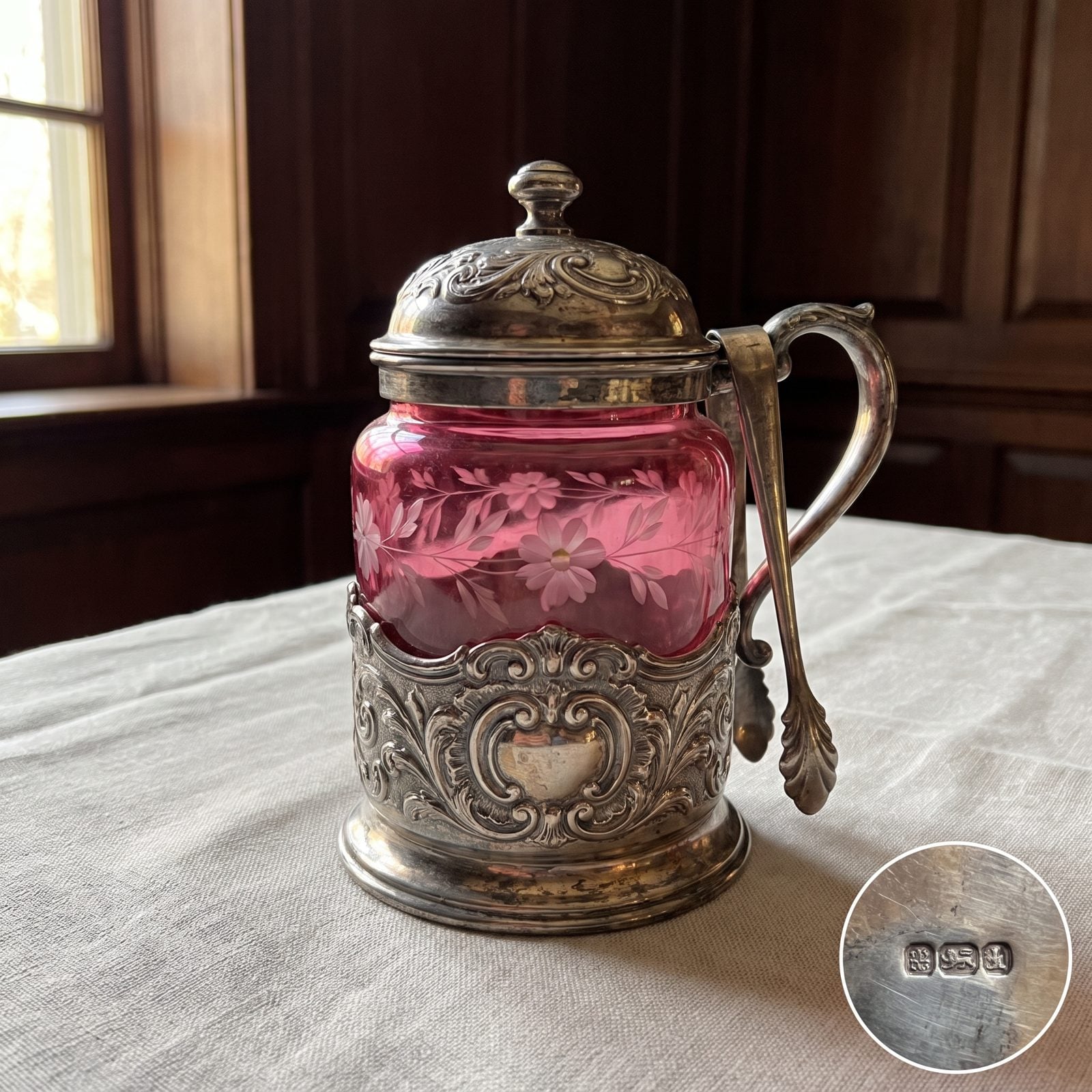
A glass jar wearing a full suit of silver armor. That’s a pickle castor, a Victorian status symbol dressed up as a condiment holder. A patterned glass insert nests inside an ornate silverplate frame, usually with a hinged lid and a little pair of tongs hanging off the side to fish out the pickles.
The glass insert is where the money sits. Cranberry glass, enameled florals, or an inverted thumbprint pattern can make an otherwise common frame genuinely collectible. A matched original insert and frame, with the tongs still present, is far more valuable than a mismatched marriage cobbled together later.
Check the frame base for a silver company’s mark. Reed and Barton, Meriden, and similar makers add to the appeal.
19. Silver-Mounted Claret Jugs
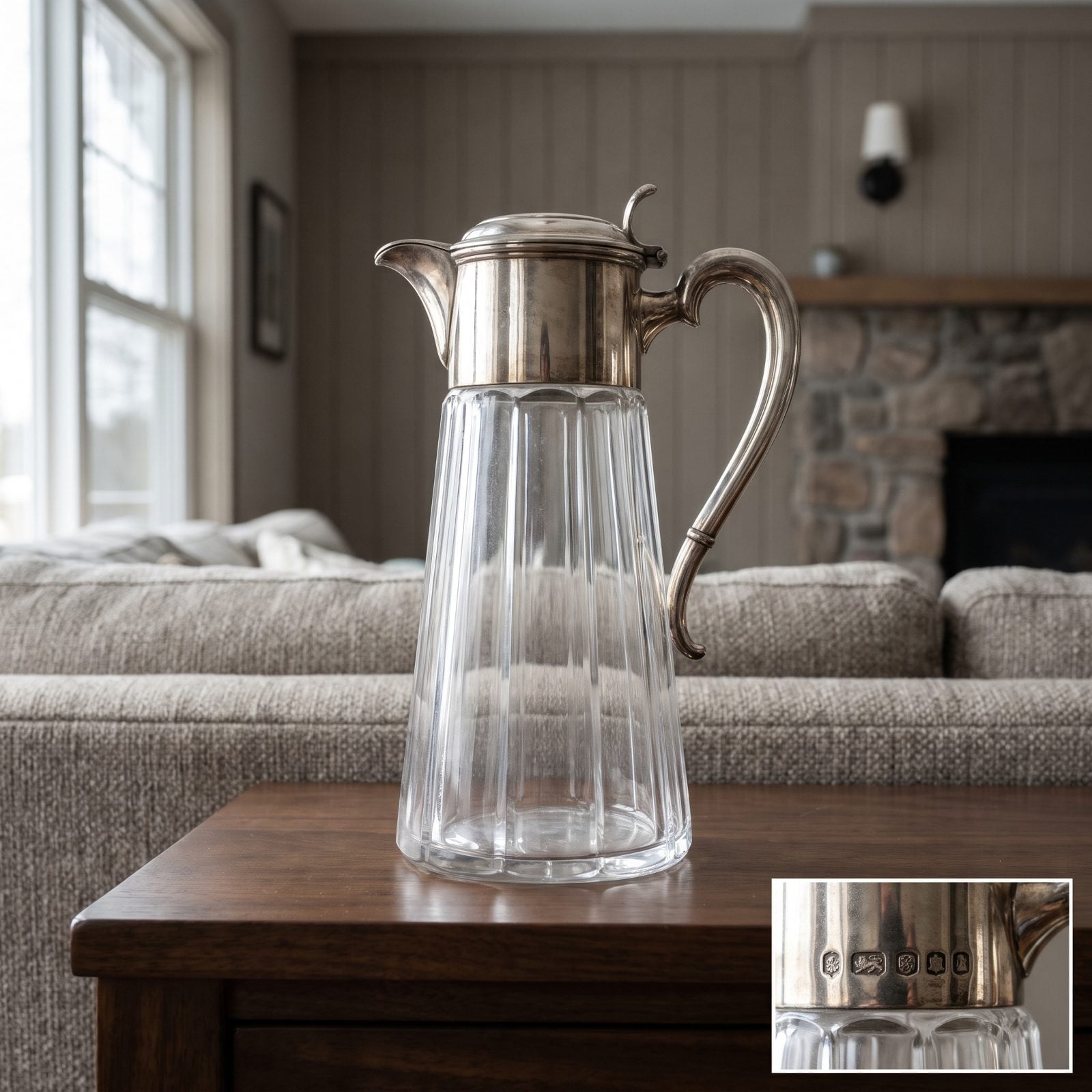
This is the one to stop and inspect carefully. A claret jug pairs a glass body with silver or silver-plated mounts, a hinged lid, a collar, and a handle, built to pour red wine with ceremony. The glass alone can be fine. The silver is what turns it into a serious object.
Hallmarks matter enormously here. A sterling silver mount carries a date letter, a maker’s mark, and an assay office stamp, and a reputable name attached to a cut or etched glass body can push value into the thousands. Silver plate is lovely but a different league, so learn to tell them apart before you let one go.
We’ve watched these passed off as decanters at estate sales by people who never looked at the collar. The difference between plate and sterling is a few tiny stamps and a wide gap in worth. Grab a loupe, find the hallmarks, look them up. This is not a glass to donate on a hunch.
18. Victorian Glass Epergnes
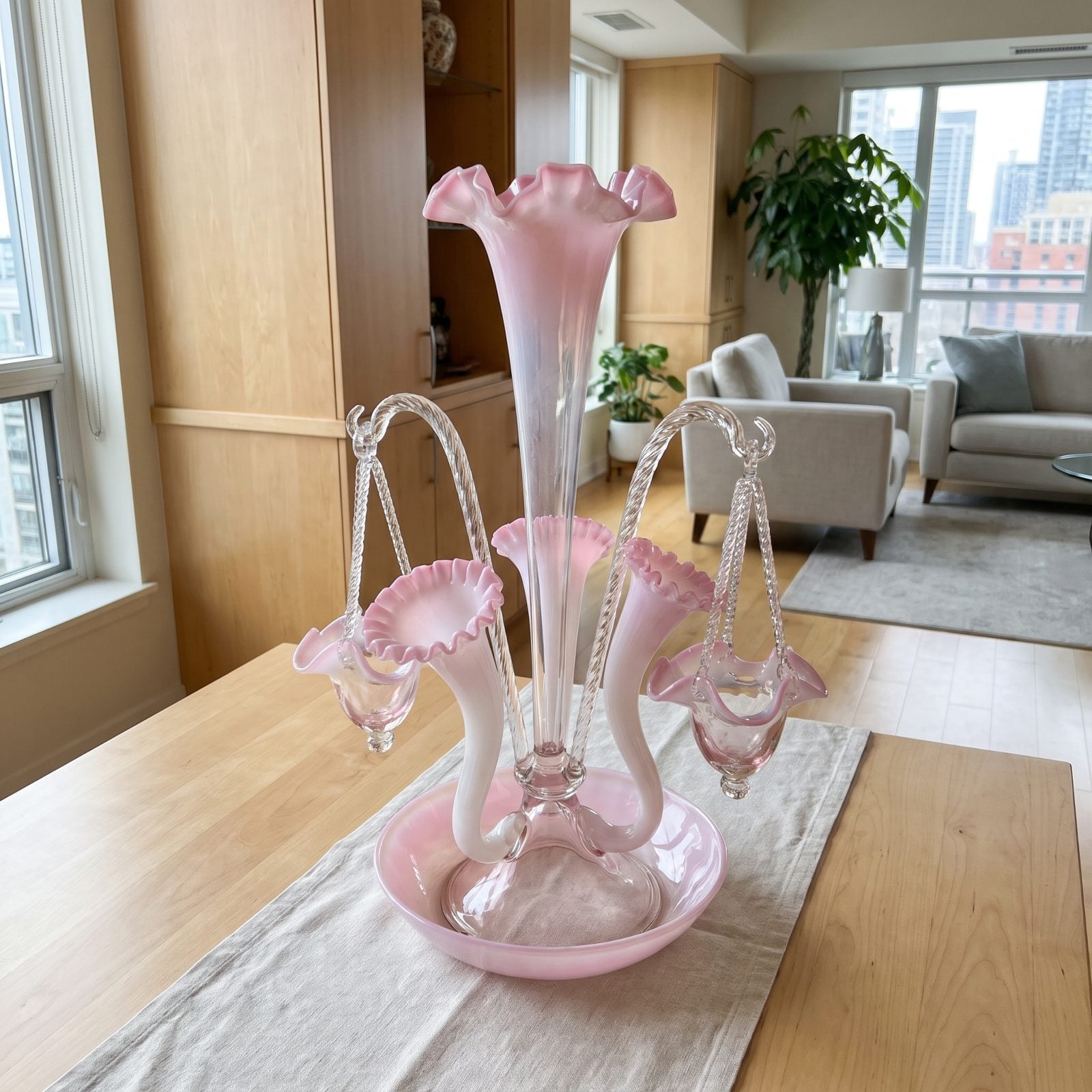
Part flower vase, part sculpture, the epergne was the Victorian dinner table’s grand centerpiece. A tall central trumpet soars up from a base dish, ringed by smaller trumpets and sometimes hanging baskets on twisting glass arms. It held flowers, fruit, or sweets, and it existed mostly to announce that the host had money and taste.
The desirable ones come in opalescent glass, cranberry, or vaseline glass with those frilled, ruffled edges that catch the light. Condition is everything. The delicate trumpets and arms chip and break easily, so a complete, undamaged epergne is far rarer than a battered one missing an arm.
If the pieces are original and matched, research hard before parting with it.
17. Glass Perfume Atomizers With Their Original Bulb and Netting
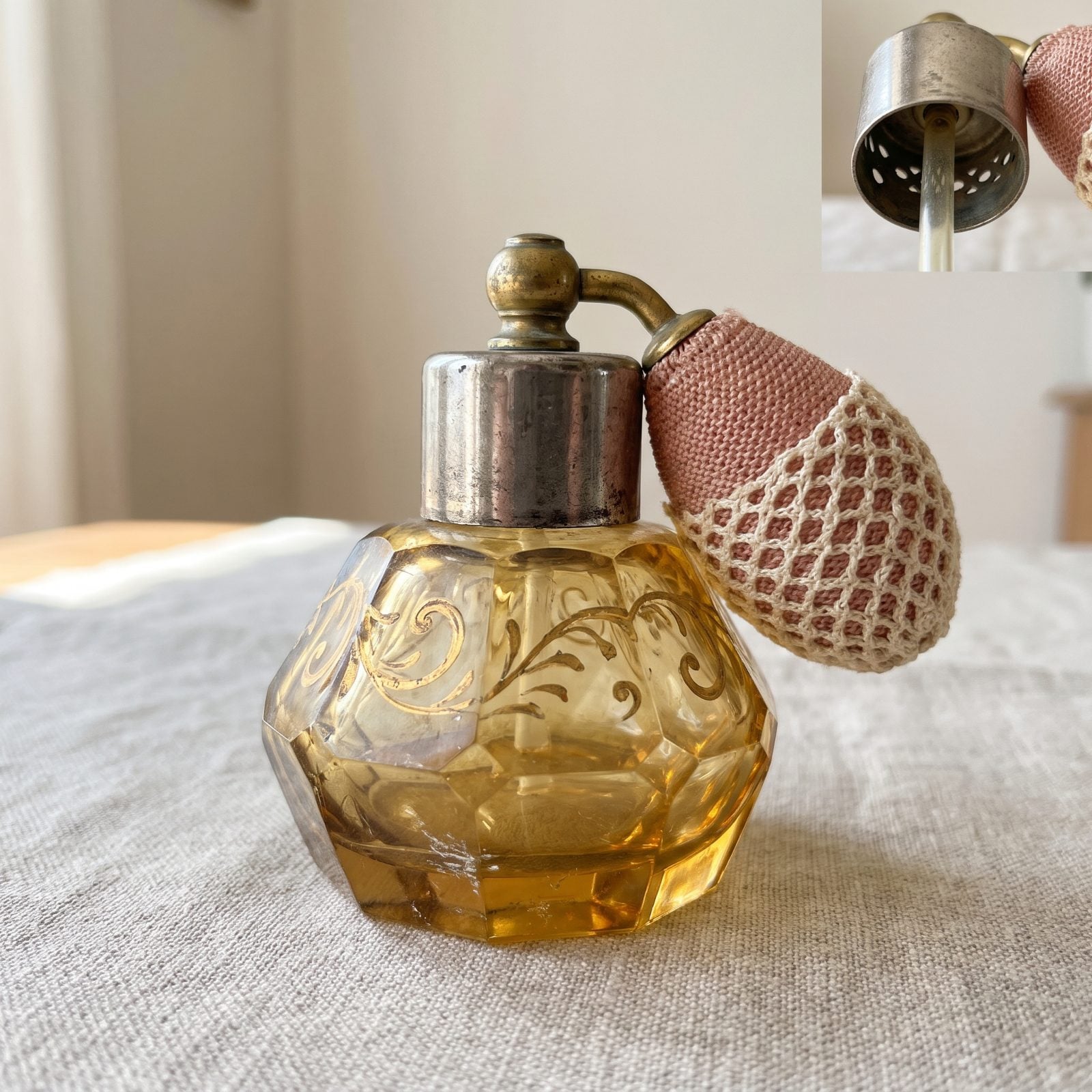
Start with the bulb. If the rubber squeeze bulb and its silk covering survived, you’re holding something someone kept with real care — and collectors notice. Most atomizers lost that part within a decade because rubber hardens and crumbles, so an intact original bulb bumps the research value up fast.
These little sprayers had their moment between the 1870s and the 1930s, and the gilded, faceted European examples drew the most attention. DeVilbiss is the name worth looking up. Hunt for painted enamel, cut glass that throws light around, and a metal collar that fits snugly rather than some modern stand-in.
We’ve walked right past a few of these at estate sales, writing them off as cheap vanity clutter. Mistake. A signed DeVilbiss in good shape is not pocket change.
16. Cut-Glass Vanity Jars Heavy Enough to Feel Like Crystal
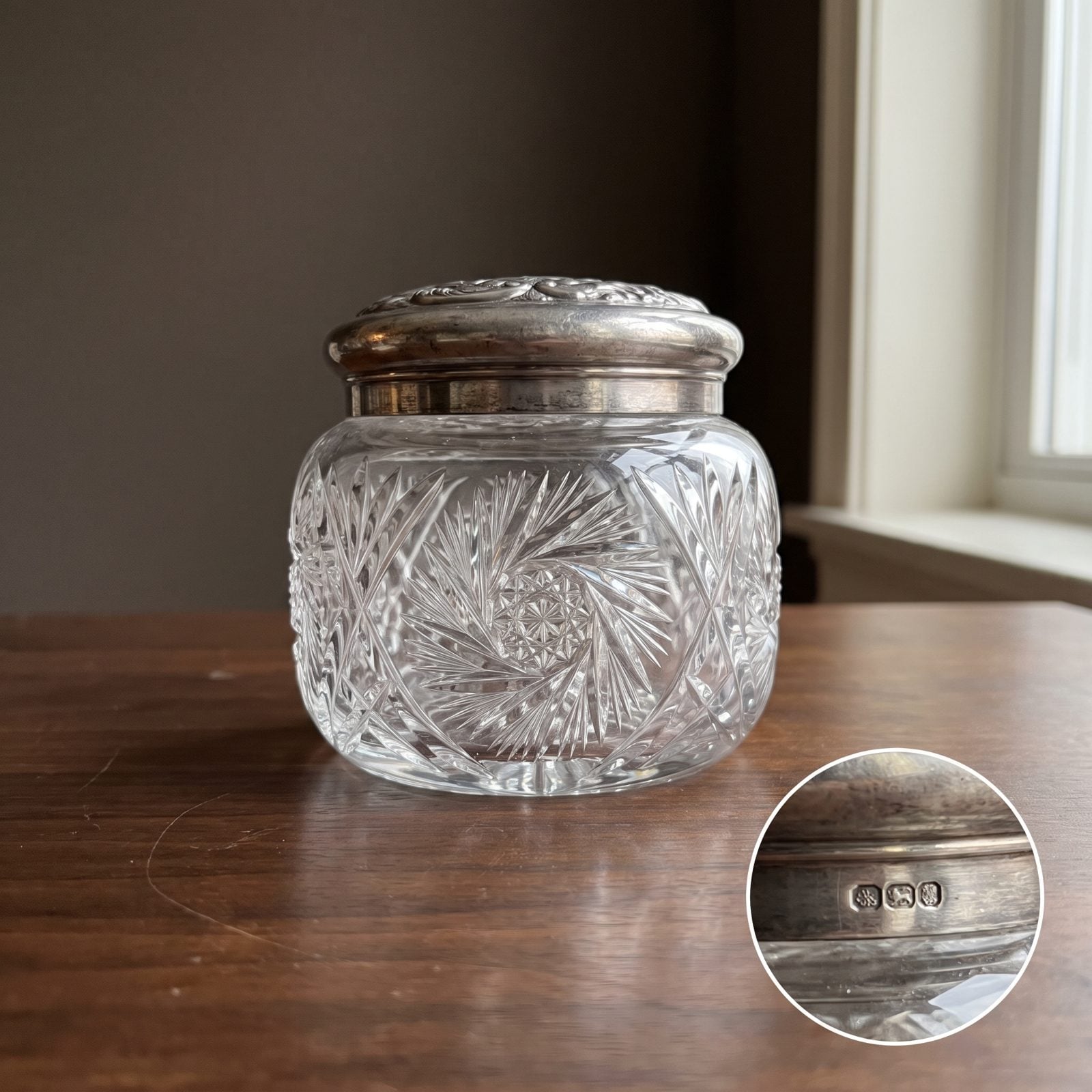
Pick it up. Weight is your first clue — leaded cut glass feels dense and cold in the hand, and a gentle tap on the rim brings a ring rather than a clunk. That ring is what separates genuine American Brilliant Period cut glass, roughly 1876 to 1917, from the pressed imitations that came later.
Now run a fingertip across the cuts. Hand-cut facets have crisp, slightly irregular edges and sharp points, while molded fakes feel rounded and soft. Spot a sterling silver lid with a visible hallmark and you’ve moved the piece from merely pretty to worth-a-look.
15. Etched Barber Bottles With a Shop’s Ghost on the Glass
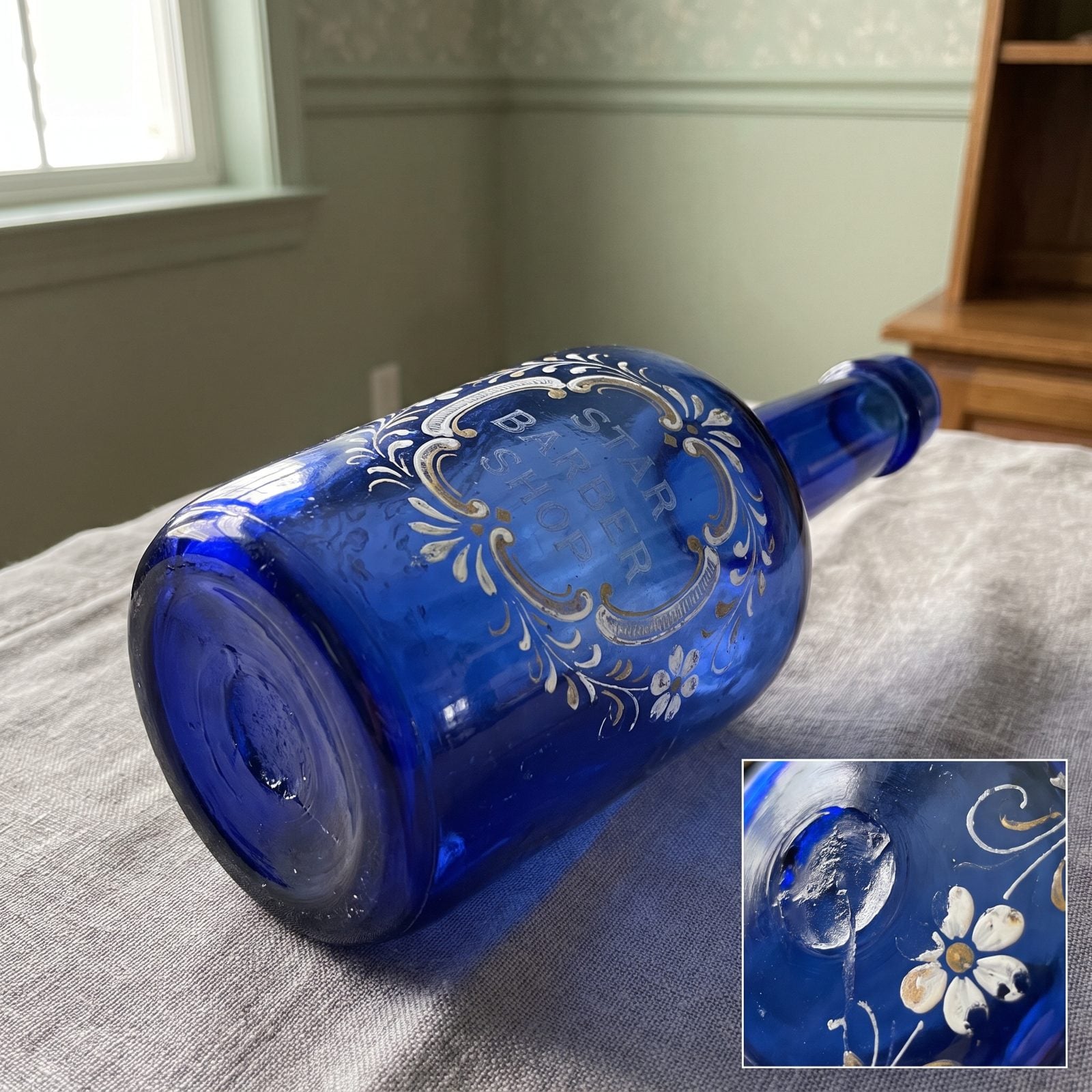
These sat on a barber’s back bar, refilled over and over with tonic, bay rum or witch hazel — and they’re far scarcer than their fancy looks suggest. Once sanitation laws arrived in the early 1900s, barbers stopped using refillable bottles, so most got tossed. The survivors in cobalt, cranberry, or milk glass with hand-painted enamel are the ones worth researching.
Flip it and check the base. A rough pontil scar means it was hand-blown and likely predates 1900. Then look for a personalized name or shop lettering painted on the front — that’s what turns a decorative bottle into a documented object somebody actually used behind a chair.
Faded paint hurts value but doesn’t kill it. A rare color with soft enamel still beats a common bottle in perfect shape, most days.
14. Apothecary Show Globes That Once Glowed in a Druggist’s Window
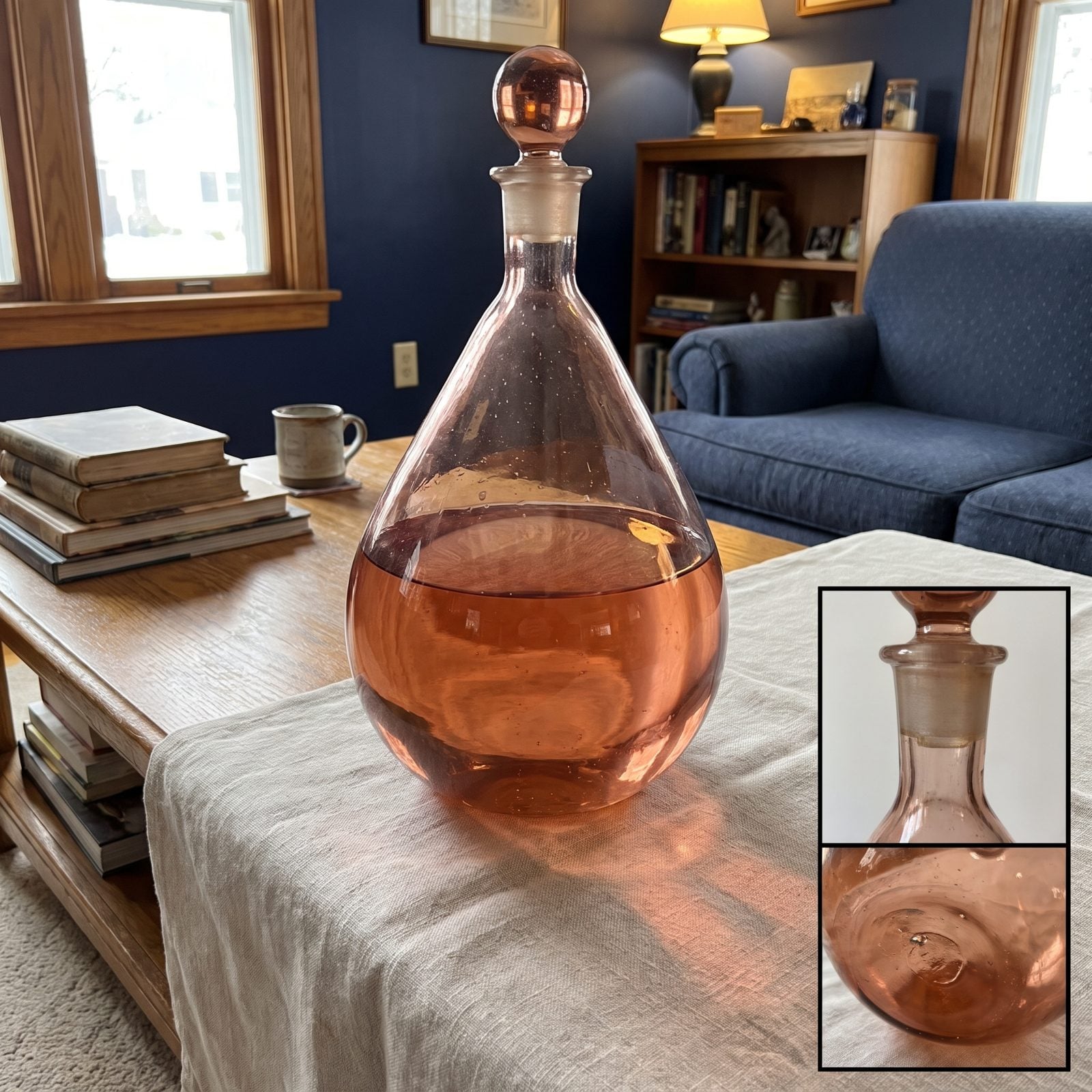
A pharmacy once announced itself with these. Big glass globes filled with colored water hung or stood in the window as the universal sign for a druggist, long before anyone could read the words painted on the awning outside.
Big, blown, and fragile — they rarely survived moves and renovations. An intact globe with its original stopper is genuinely uncommon, so check for hand-blown swirls, a pontil mark, and a ground-glass stopper that seats properly.
Donate one of these without a second glance and you may have just handed off the single storied piece on the whole truck.
13. Embossed Poison Bottles Built So You Couldn’t Grab the Wrong One in the Dark
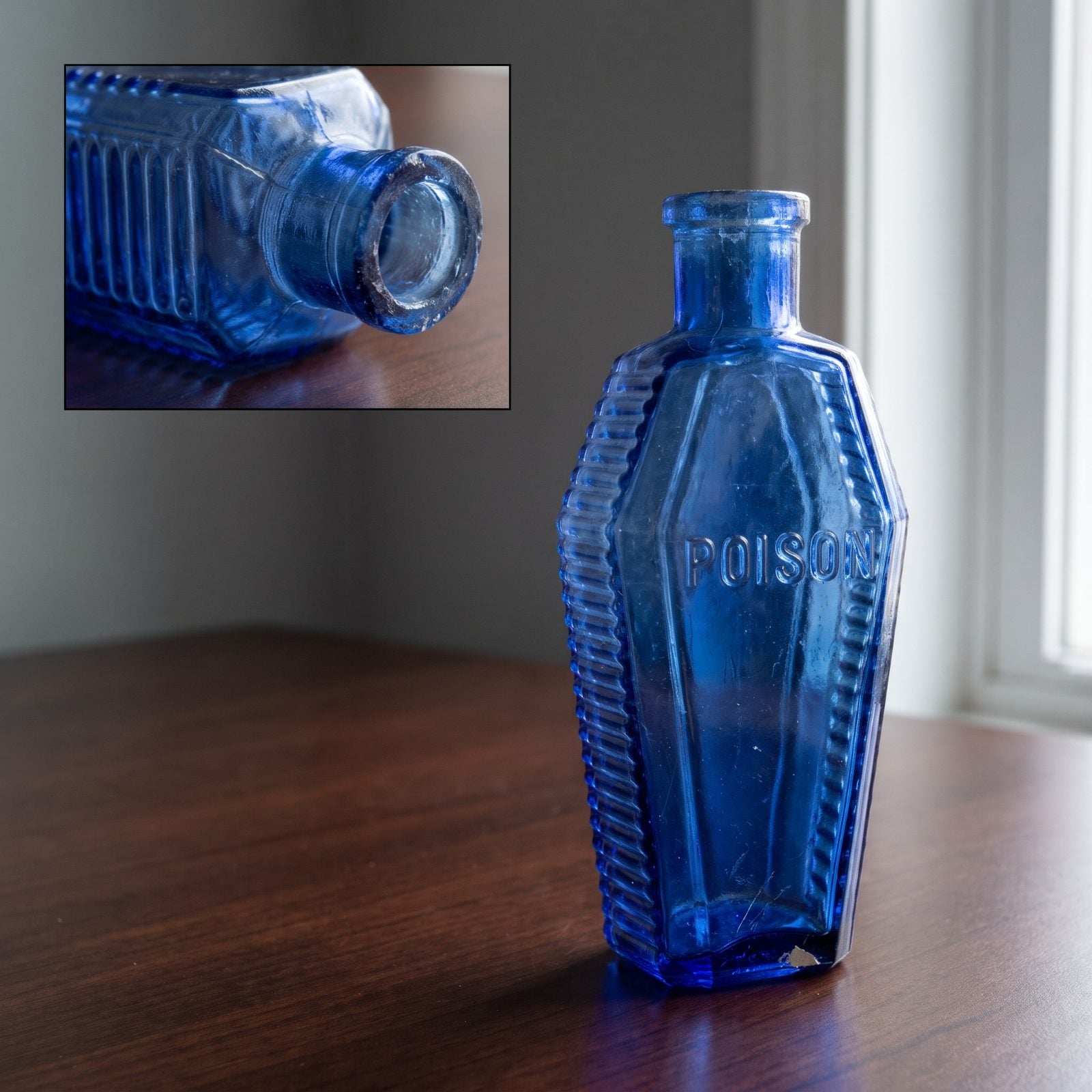
The whole idea was that you could feel the danger. Poison bottles from the late 1800s were made in cobalt or deep green and molded with ridges, hobnails, spikes, or skull-and-crossbone lettering, so a hand groping into a dark cabinet knew instantly not to drink from it.
That built-in paranoia makes them wildly collectible now. Run your fingers over the surface. Raised ribbing, a coffin shape, or an embossed warning word are the features that drive value. Cobalt is common enough — but the unusual colors and odd shapes get collectors moving.
12. Lightning-Closure Canning Jars With the Wire Bail Still Snapping Shut
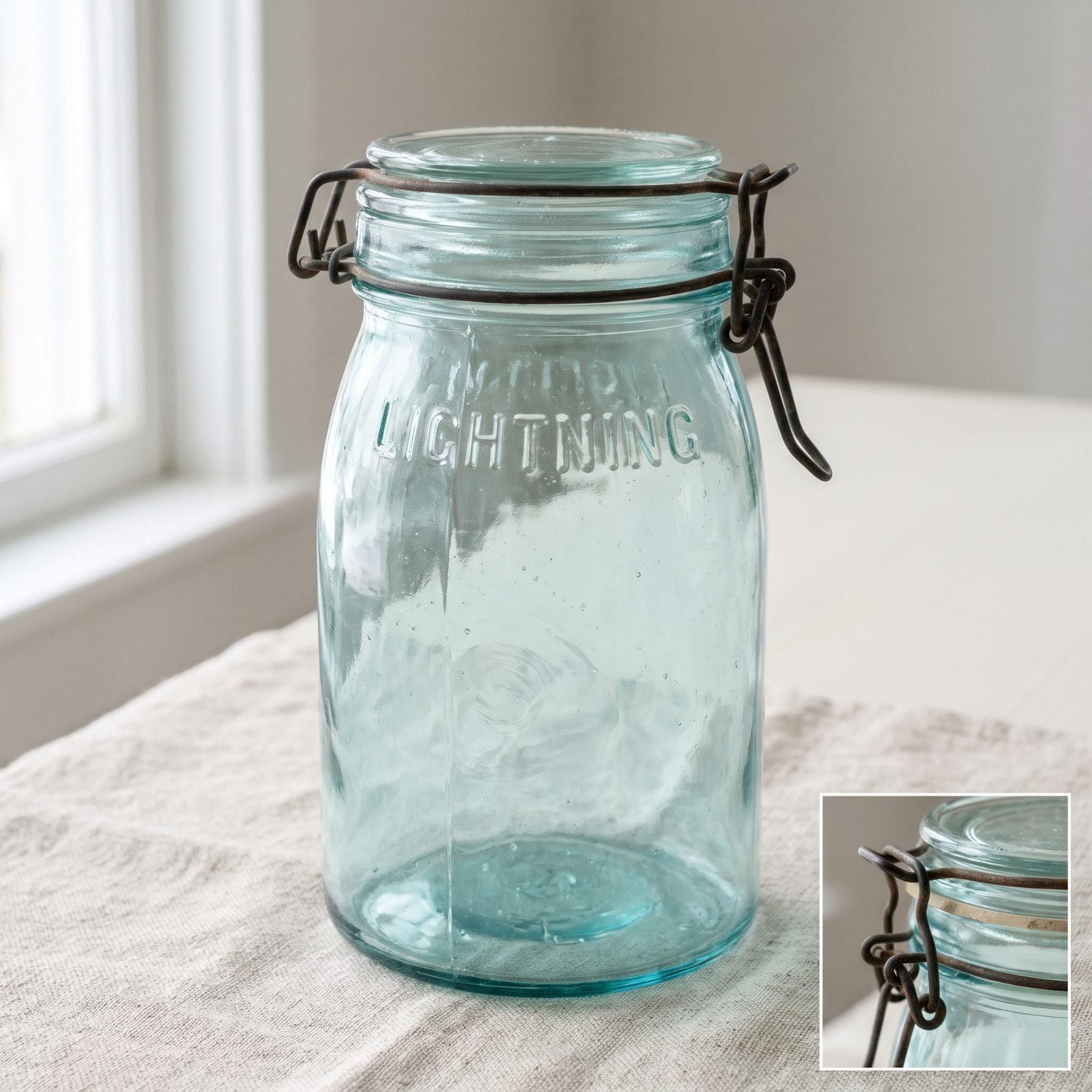
Most old canning jars are worth a dollar. A handful are worth hundreds, and the whole difference hides in the color and the lettering. The Lightning closure, patented in 1882, swapped the zinc screw lid for a wire bail and lever, and it turns up on common and uncommon jars alike.
Hold it to the light. Deep aqua, amber, cobalt, or a true green raises the odds in your favor. Then read the embossing — rare maker names, spelling oddities, and early patent dates are what separate the keeper from the recycling bin.
11. Antique Glass Ink Bottles Shaped Like Tiny Buildings and Igloos
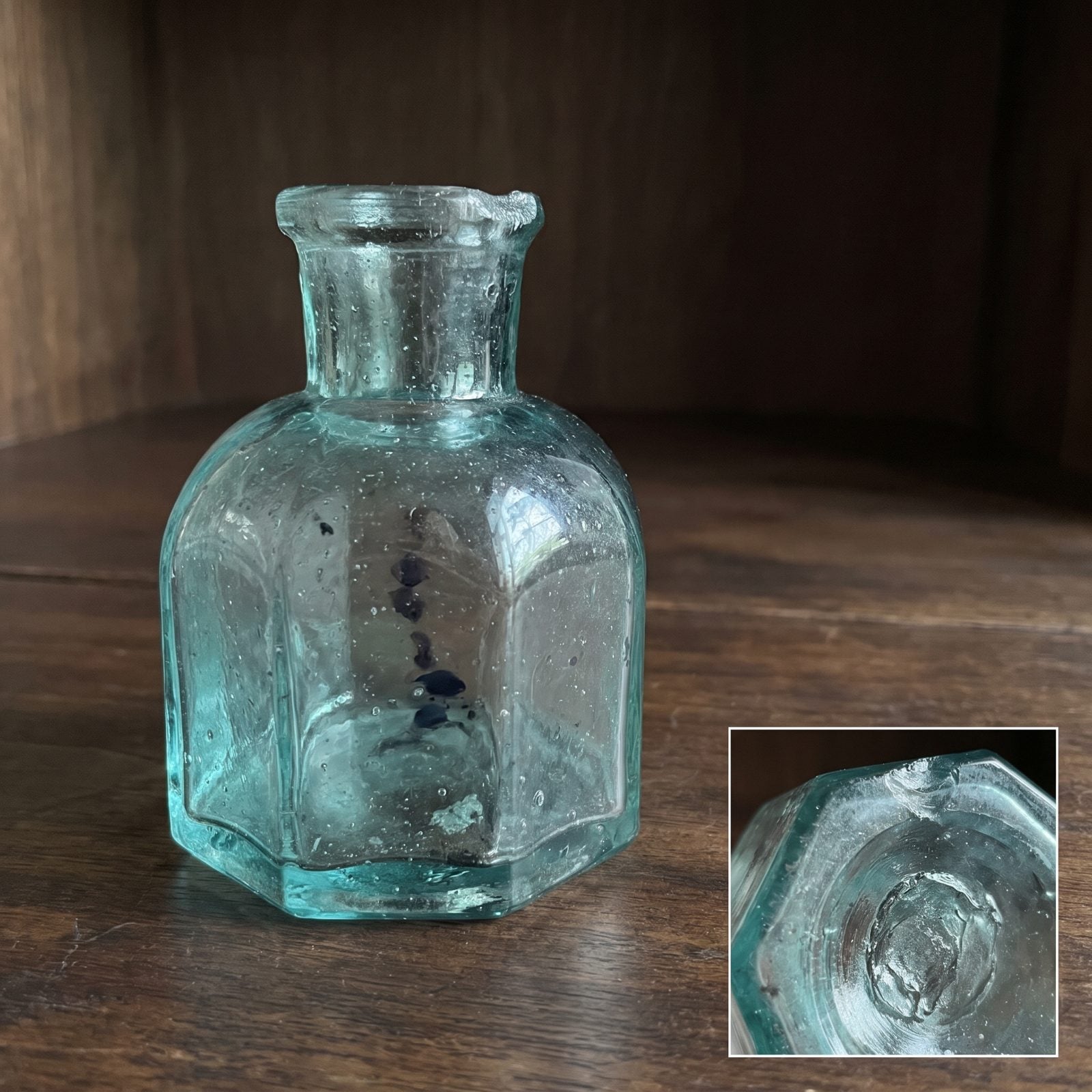
Someone dipped a pen in this a thousand times. Nineteenth-century ink bottles came in shapes that make no sense until you learn the names — umbrellas, igloos, cottages, teakettles with angled spouts. Collectors chase them for exactly that charm.
The desirable ones are small, hand-blown, often aqua or amber, with a crude sheared lip and a pontil scar underneath. Figural inkwells shaped like turtles or little houses sit right at the top of the pile.
For years we kept a plain cylinder ink bottle on a windowsill thinking it was nothing. It mostly was. But we’ve since learned the teakettle shape, in a good color, can be worth more than the desk it sat on.
10. Glass Target Balls Thrown Into the Air Before Clay Pigeons Existed
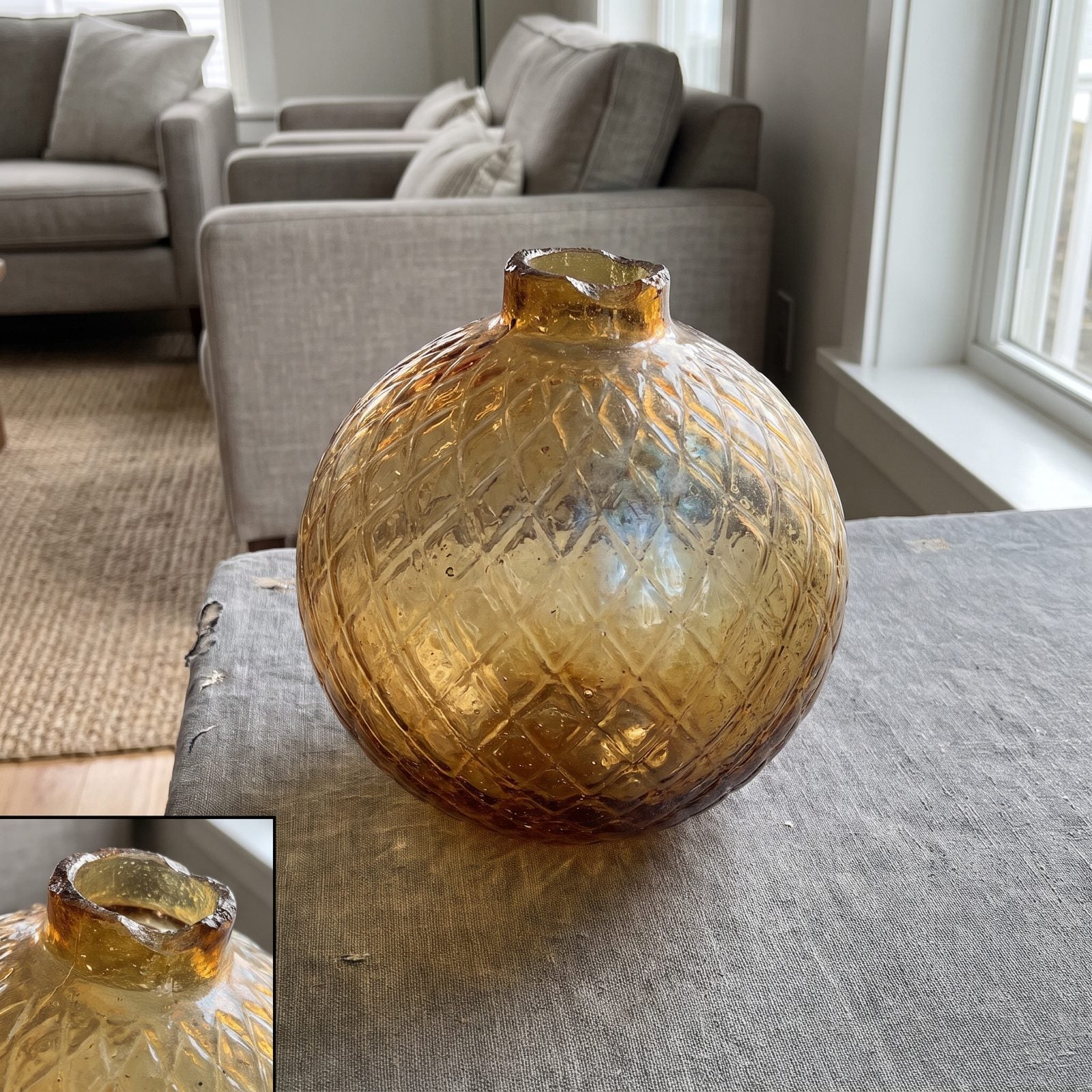
These were made to be destroyed, which is exactly why the survivors are prized. Before the clay pigeon took over in the 1880s, shooters launched hollow glass balls into the air with a spring trap and blasted them to pieces. The ones that missed, or never got used at all, are what collectors hunt today.
Look for a hollow sphere about the size of a small orange, with a quilted or diamond-pattern surface and a rough sheared neck. Amber, cobalt, and true colors beat common aqua. An embossed maker name or patent lettering can push a single ball into serious territory.
9. Glass Fire Grenades You Were Meant to Throw at the Flames
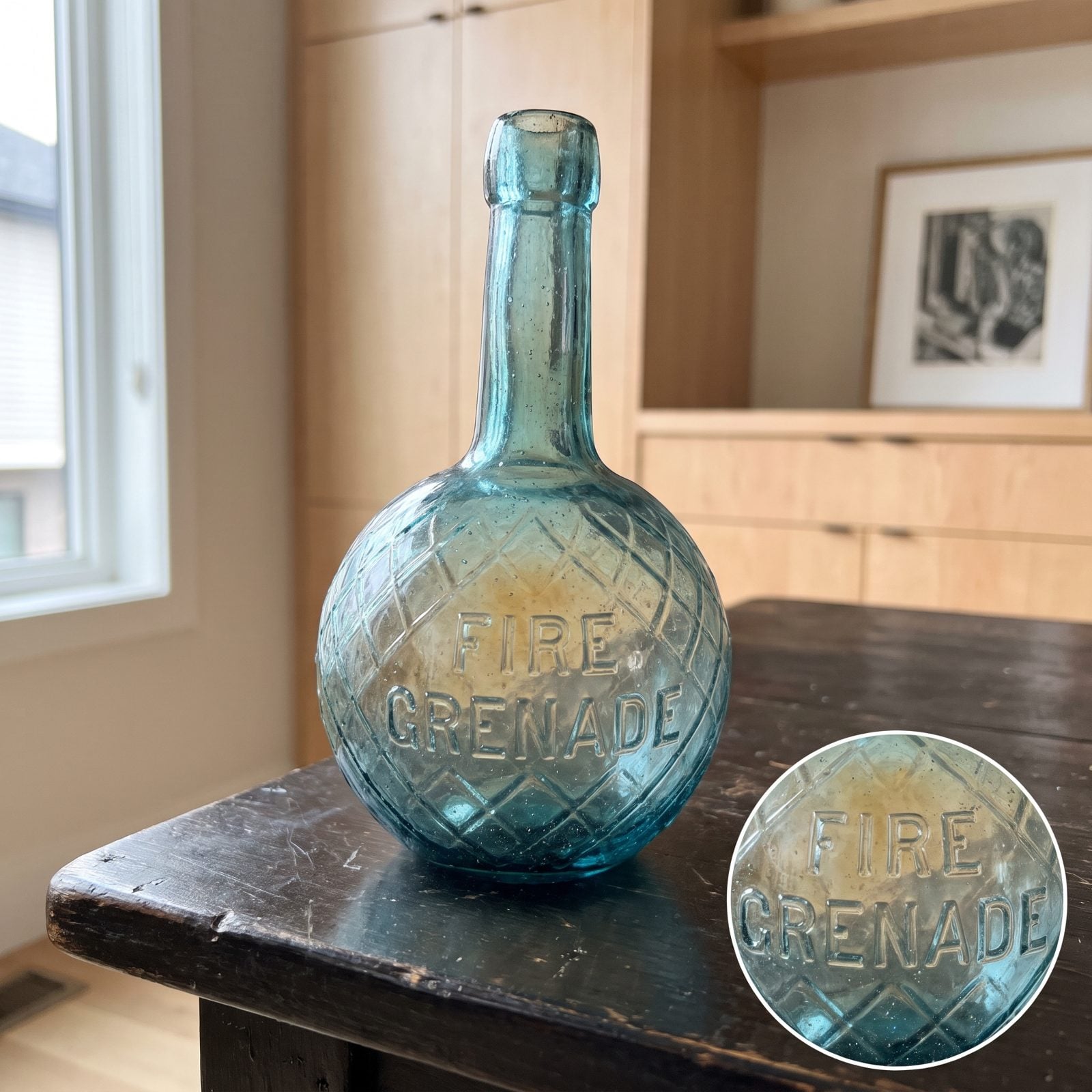
You threw it at a fire and hoped. Late-1800s fire grenades were sealed glass bulbs filled with carbon tetrachloride or saltwater, meant to be hurled at the flames so the breaking glass smothered the blaze. Many hung in little brackets by doorways, waiting.
Collectors want them sealed and full, because an unbroken grenade still holding its original liquid is rare. Colors run from aqua to cobalt to amber, usually with embossed brand names and quilted patterns.
One honest warning, worth more than the glass itself: some still hold carbon tetrachloride, which is toxic. Research before you handle one, and never open a sealed example. That caution is also, frankly, part of why intact ones stayed intact.
8. Handblown Glass Fishing Floats That Drifted an Ocean to Reach You
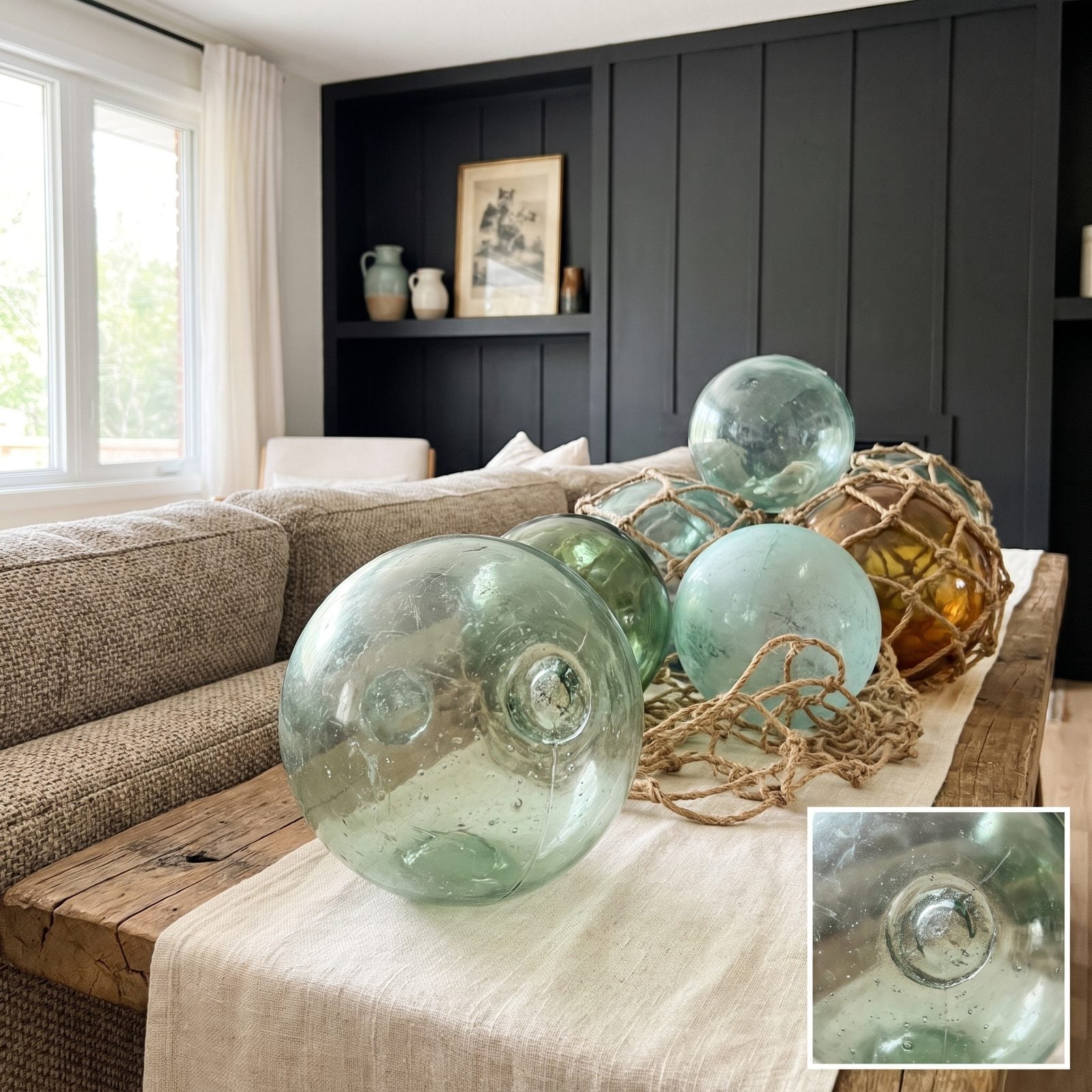
These drifted across the Pacific before they ever landed on anyone’s shelf. Japanese and Scandinavian fishermen blew the hollow glass balls to buoy their nets from the late 1800s onward, and storms worked countless floats loose to carry them across entire oceans.
Beachcombers prize the genuine handblown ones. You spot them by the small sealing button where the glassblower pinched off the sphere, the visible bubbles, and an irregular, slightly off-round shape. Common greens and aquas are everywhere. Rare colors — red, cobalt, amethyst, black — command real money, because those tints needed costlier ingredients to make.
Here’s the catch. Decorative reproductions flood the market, usually too perfectly round, too uniformly colored, with a fake seam. Original netting, a true sealing scar, and honest surface wear are what separate a kept treasure from a gift-shop copy.
7. Glass Telegraph and Power Insulators
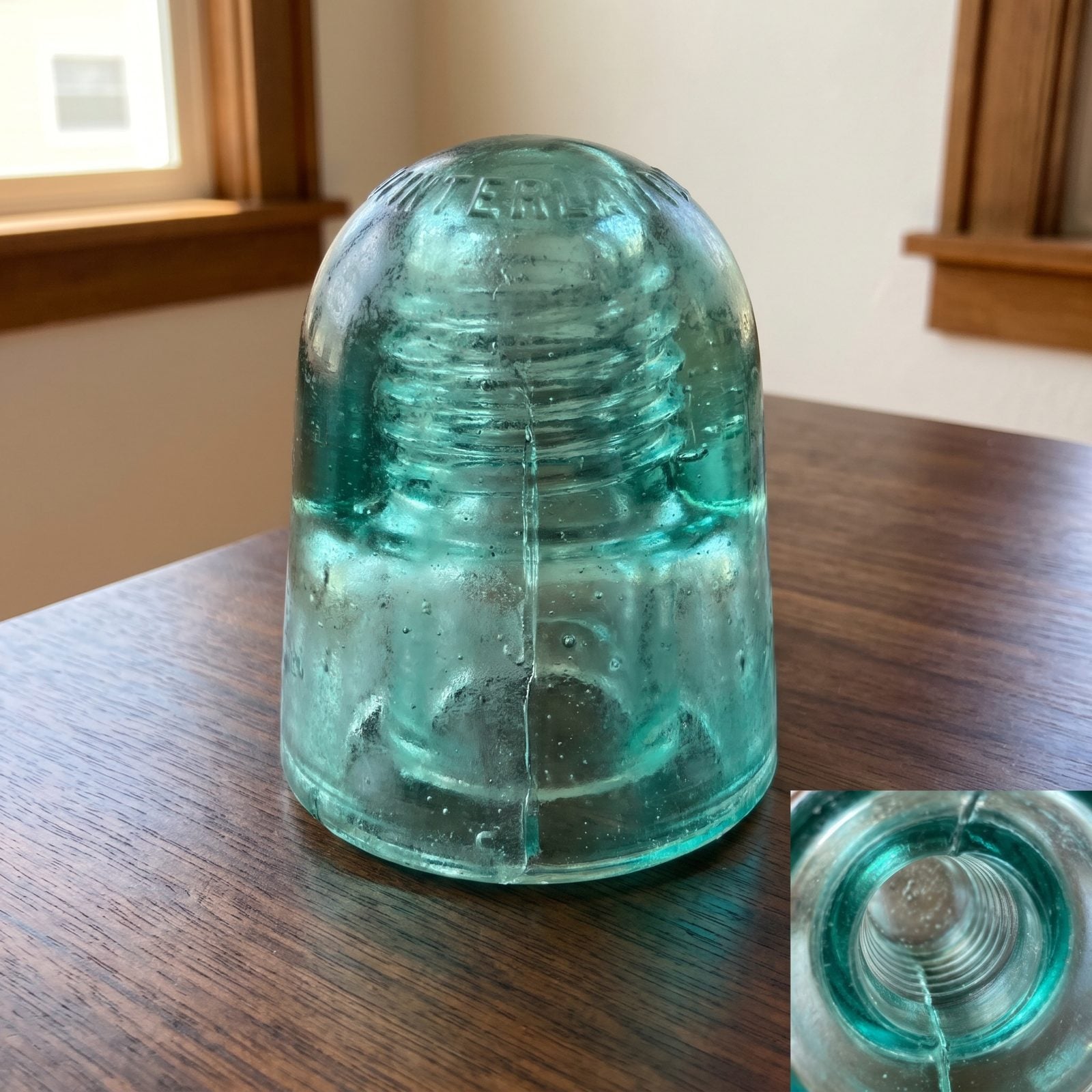
Start at the bottom of the junk box. That heavy glass knob you keep shoving aside while digging for better stuff is probably a telegraph or power-line insulator, and while most are worth a quarter, some are worth real money.
Color is the whole game. Clear and aqua pieces turn up by the crate, common as gravel. But pour on strong cobalt blue, true purple, amber, or an odd olive-yellow and suddenly you’ve got something collectors chase across three states. The embossed makers’ names on the crown matter too, and so do the mold variations almost nobody notices. We ignored all of it for years. Figured they were interchangeable. That’s precisely the lazy assumption that sends a $200 insulator to the donation bin.
6. Marked Railroad Lantern Globes
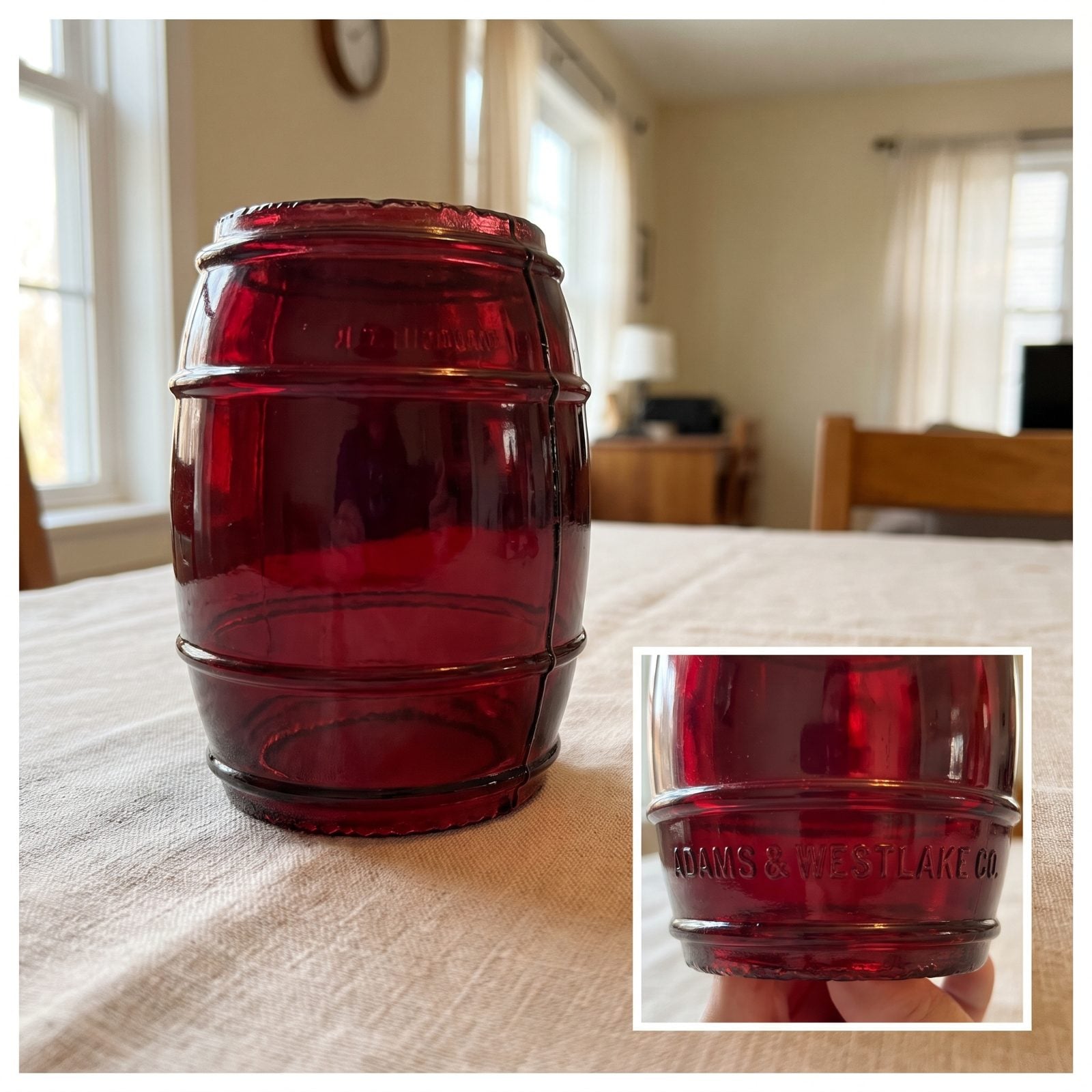
The red globe gathering dust in the garage might be the keeper. These get melted into decor and tossed without a second thought, but a marked one can carry a line’s name embossed right into the glass, and that mark is where the value hides.
Look for raised lettering on the shoulder or base: initials of the railroad, sometimes the lantern maker like Adlake or Dietz. Ruby red and cobalt outpace clear every time, and an unusual color paired with a short-line railroad mark? That’s the lottery ticket. Unmarked globes are pretty but ordinary.
The color sells it to your eye. The embossed railroad name sells it to a collector.
And check condition honestly, because a chip at the rim or a hairline crack knocks the price down hard. These were working tools, swung around in the dark on cold platforms, and most of them didn’t survive clean.
5. Pressed-Glass Oil-Lamp Fonts
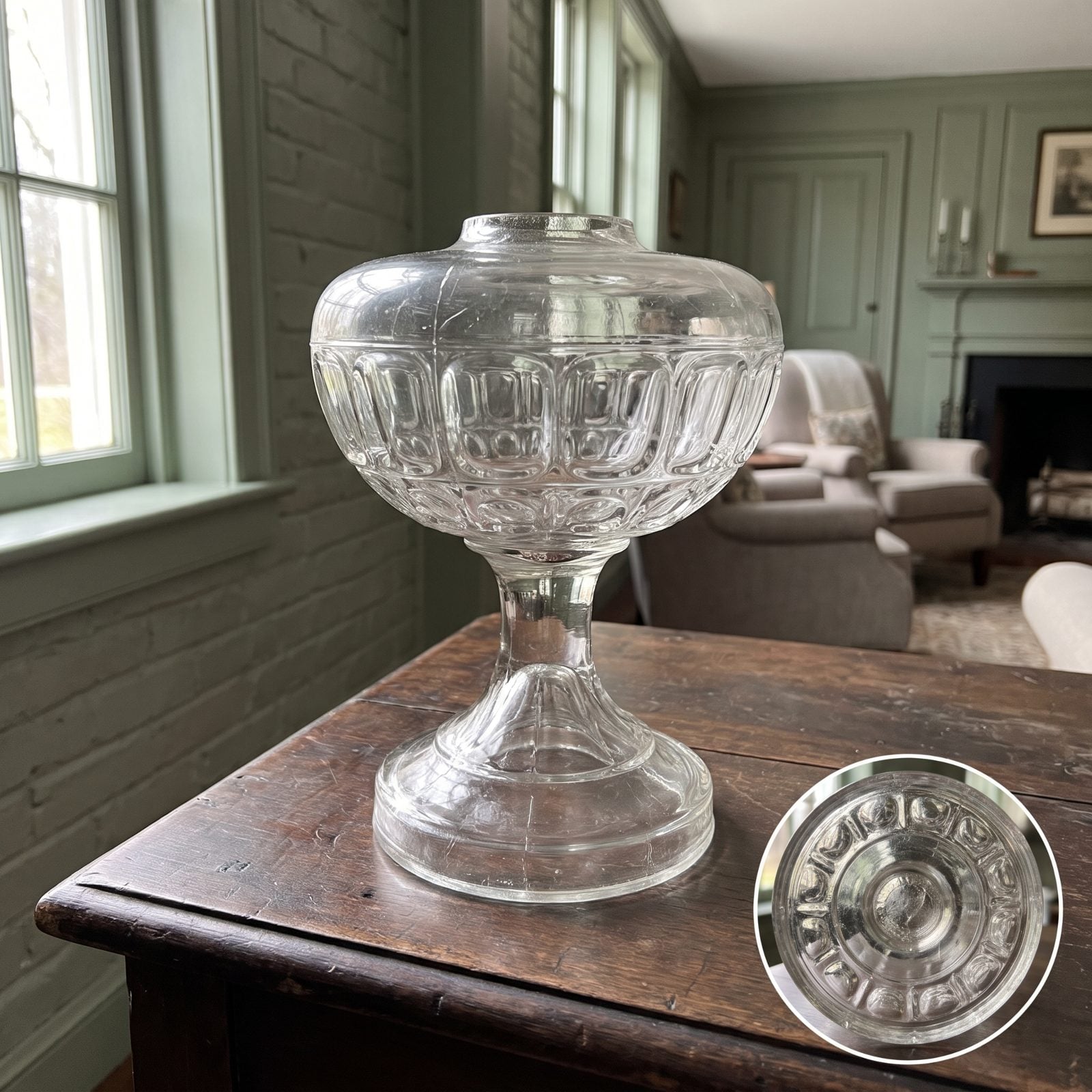
Most oil lamps are worth their weight in dust. The glass is clean, the pattern is fine, the market is drowning in them because every farmhouse owned several. That’s the honest starting point before you let yourself get excited.
What lifts a font out of the ordinary is a named pattern collectors actually track, an unusual color like canary, amethyst, or deep blue, or a maker tied to a known factory. A matched stem-and-font in a recognized pattern beats a mismatched marriage of two different lamps glued together, which happens far more than sellers will ever admit.
4. Victorian Fairy Lamps
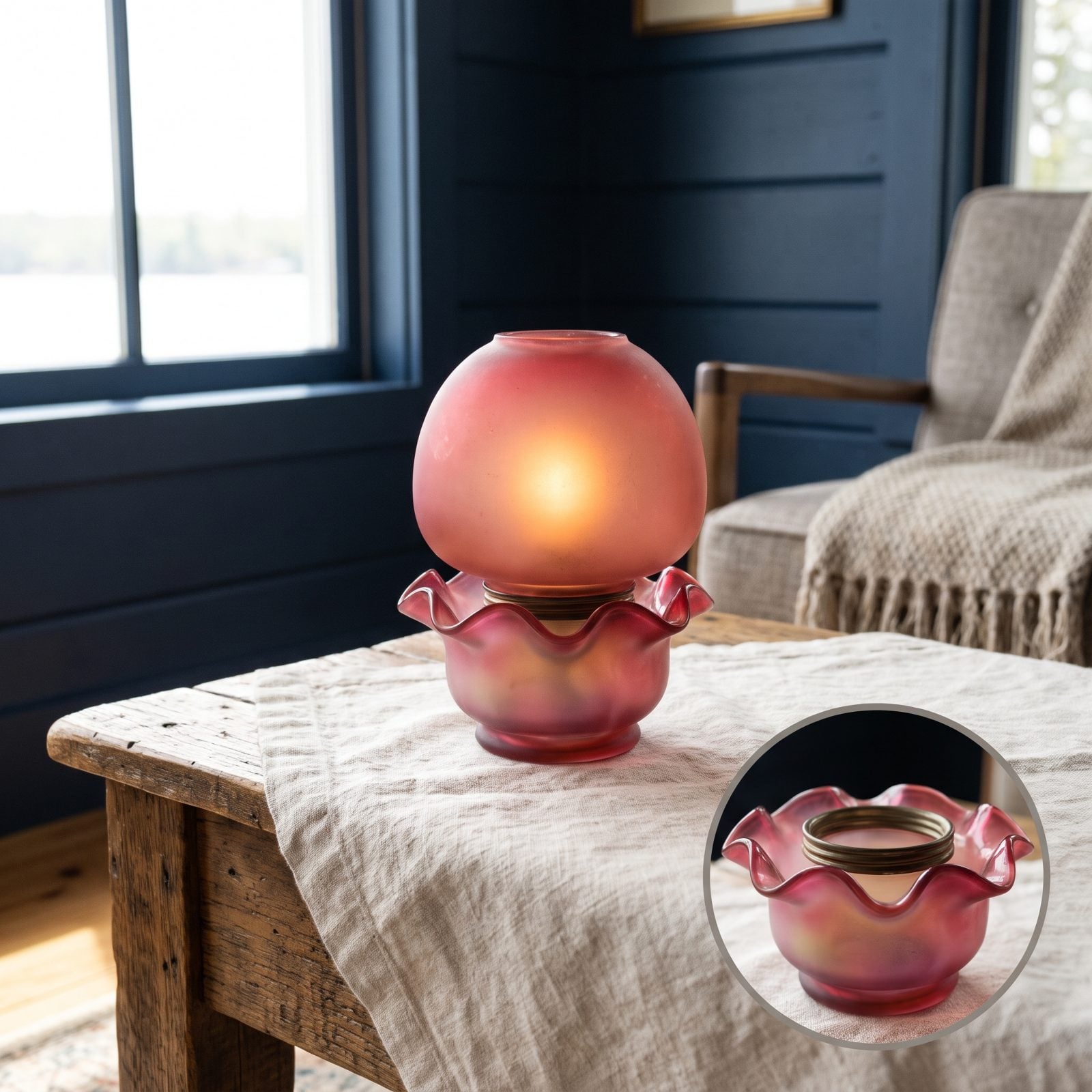
These tiny domed night-lights are easy to mistake for a votive holder and donate for a buck. They aren’t votives. A genuine Victorian fairy lamp was a two-part candle shade, and the good ones carry names that make collectors sit bolt upright.
The clue usually sits on the base cup: an embossed registration mark, or the stamp of makers like Clarke, who basically invented the whole category in the 1880s. Satin-finish cranberry, Burmese glass that fades yellow into pink, and cased art glass all push values well past plain clear examples. And a matching shade and base in one pattern is worth far more than orphaned halves scrounged from two boxes.
3. Mercury-Glass Christmas Kugels
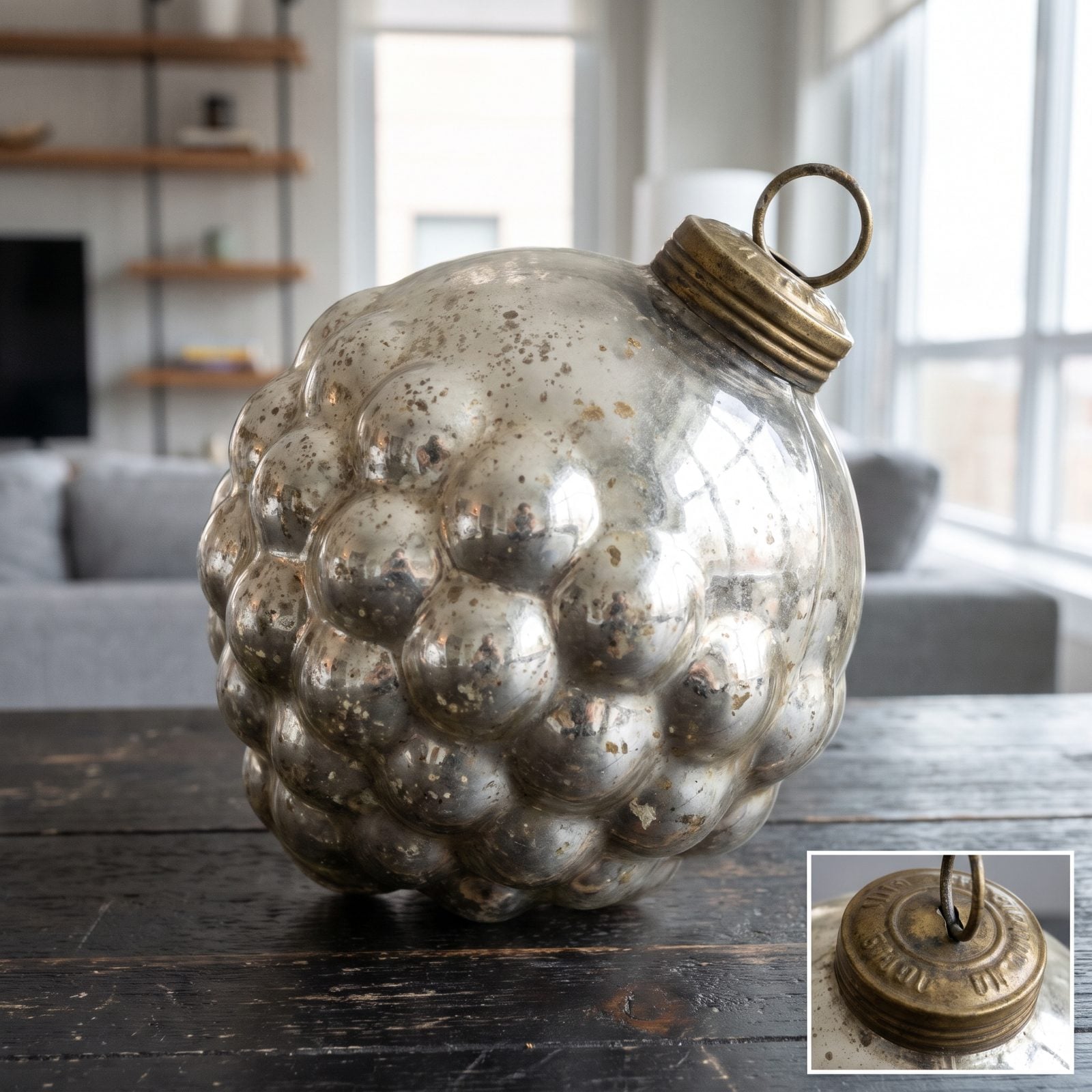
Pick it up first. The weight tells you almost everything, because real kugels are heavy thick-walled glass, nothing like the feather-light bulbs from a drugstore box. That heft is your first filter.
The genuine ones date from the mid-1800s, silvered on the inside and capped with embossed brass. Hunt for grape clusters, fluted balls, teardrops, and the dead giveaway ribbed brass cap. Color drives the number: silver and gold are common enough, while cobalt blue, amethyst, and green run higher, and the big specimens command the most of all. Reproductions are out there, so weight and cap style earn your scrutiny.
Light as a modern bauble means modern. Heavy as a paperweight means research before you donate.
We’ve watched these walk out in the Christmas giveaway pile because nobody looked past the tarnish, and that cloudy silvering is age, not damage.
2. Ruby-Flashed Souvenir Glass
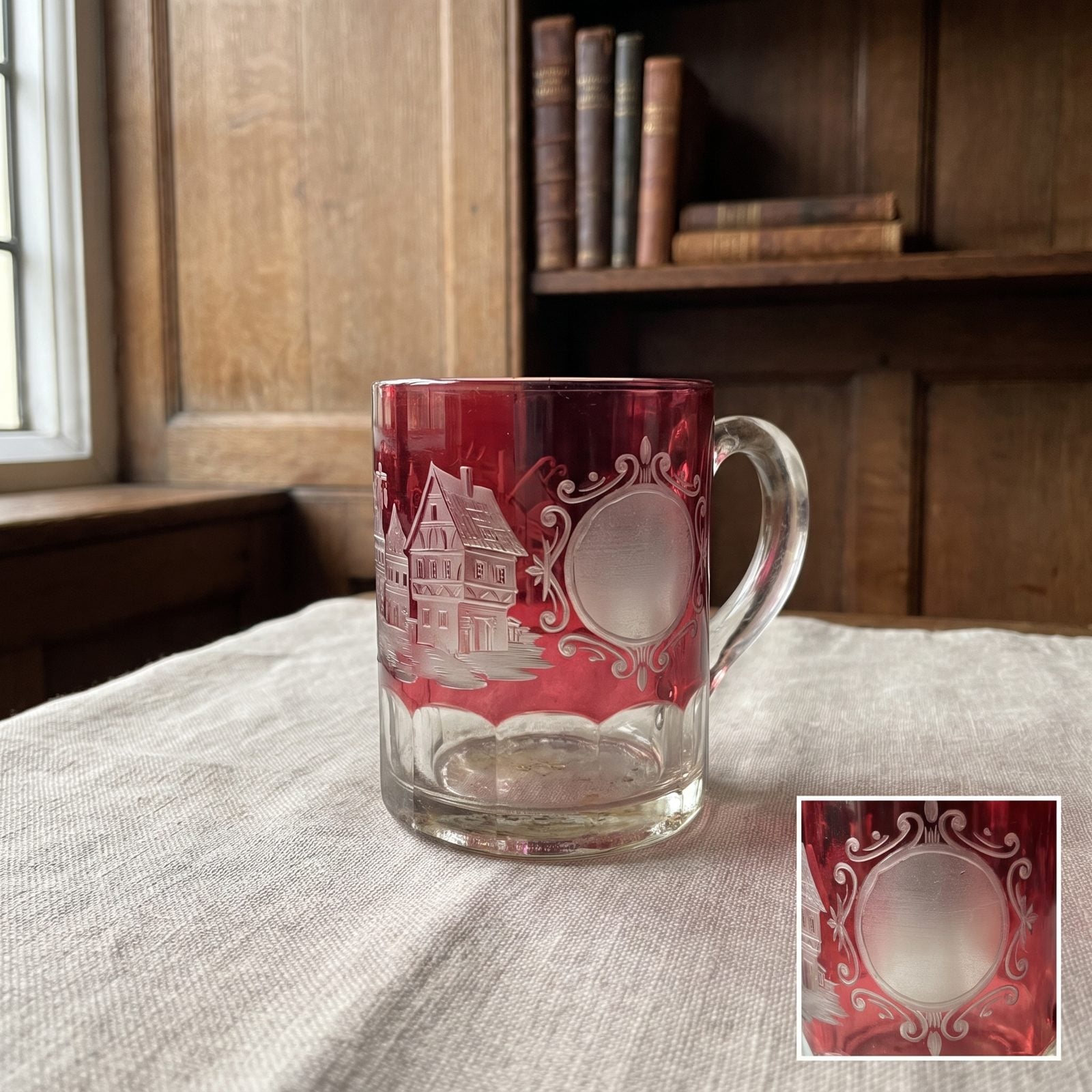
That little red-and-clear mug engraved with a village scene and a blank medallion is ruby-flashed souvenir glass, sold by the thousands at world’s fairs and seaside resorts from the 1890s onward. Most are common. Some aren’t.
The red is a thin flash of ruby stain laid over clear glass, then wheel-engraved so the design cuts through to the bright glass underneath. Value climbs with the event behind it: a documented world’s fair, an unusual form like a toothpick holder or a complete table set, crisp engraving that hasn’t worn away. The flash is fragile stuff and rubs thin at the handle and base, so examples with strong color and sharp cuts really stand apart.
1. Uranium and Vaseline Glass
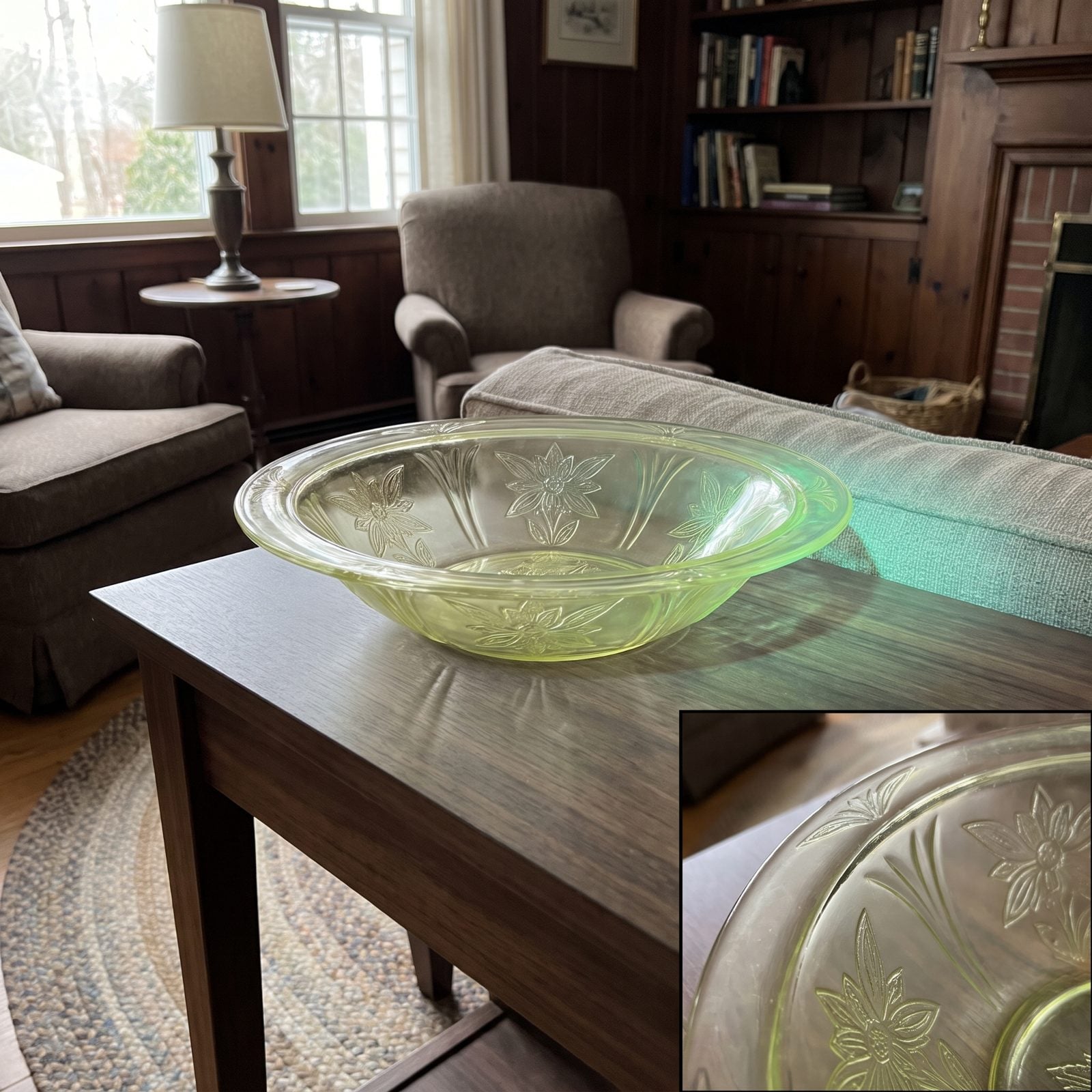
Hold a UV light to the yellow-green glass and watch it answer back. Uranium glass glows a vivid, almost cartoonish green under blacklight, and that reaction is the single clearest identification test in this entire guide. No glow, no uranium. Simple as that.
Vaseline glass is the pale yellowish branch, named after its petroleum-jelly color, and it’s the most collected member of the family. Green, custard, and Burmese pieces carry uranium too and fluoresce right along with it. The radioactivity is faint and perfectly safe to handle, but honestly the glow is pure novelty theater, and buyers eat it up.
Collectors prize unusual forms, pressed patterns, and the deeper opaque custard and Burmese variants. A plain vaseline toothpick holder is modest money. A rare pattern or a signed piece climbs fast.