
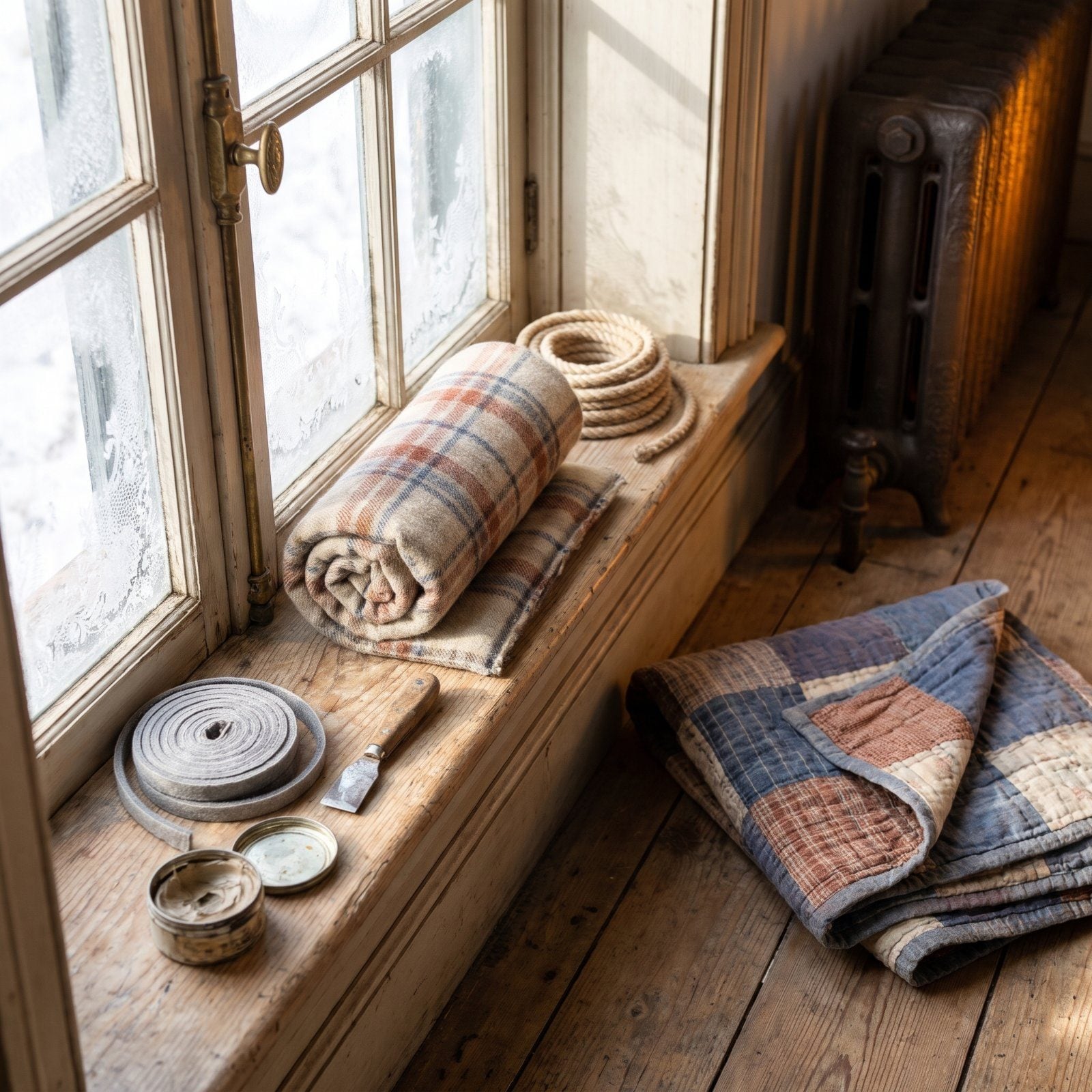
The coldest room in an old house is almost always the one with the prettiest windows. Thin glass, warped sashes, gaps you can feel with the back of your hand on a January night. Before central heat got cheap and nobody thought twice about it, households fought the cold with wool and rope and felt and a little seasonal labor. Most of those methods still work. They cost next to nothing and ask for an afternoon instead of a contractor. The ones below come from farmhouses, Victorians, Depression-era kitchens, and mid-century bungalows, and they all treat heat like something worth keeping. That old instinct turns out to be solid building science.
Please note that some of the images in this article were created with the assistance of AI.
41. Open the Curtains to the Winter Sun
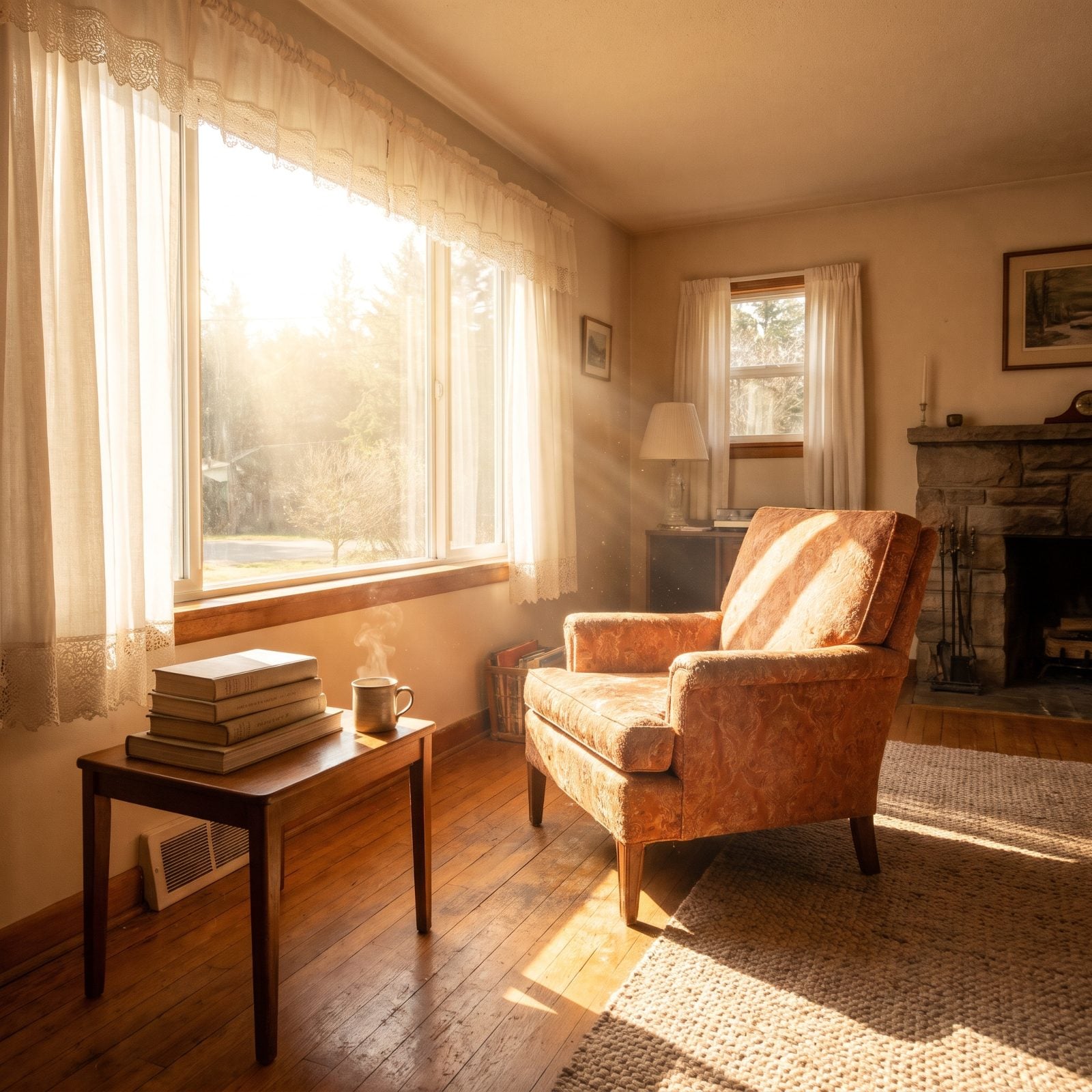
South-facing glass is a free furnace from mid-morning until mid-afternoon, and old-timers knew it long before anyone called it passive solar gain. You open everything the sun can reach, let dark floors and masonry soak up the heat, and that stored warmth bleeds back into the room slowly once the sun drops.
Here’s the catch nobody mentions. North and east windows do none of this in winter, so leaving them open all day just throws warmth out the glass. Watch the light, not the clock.
40. Close Heavy Lined Curtains at Dusk
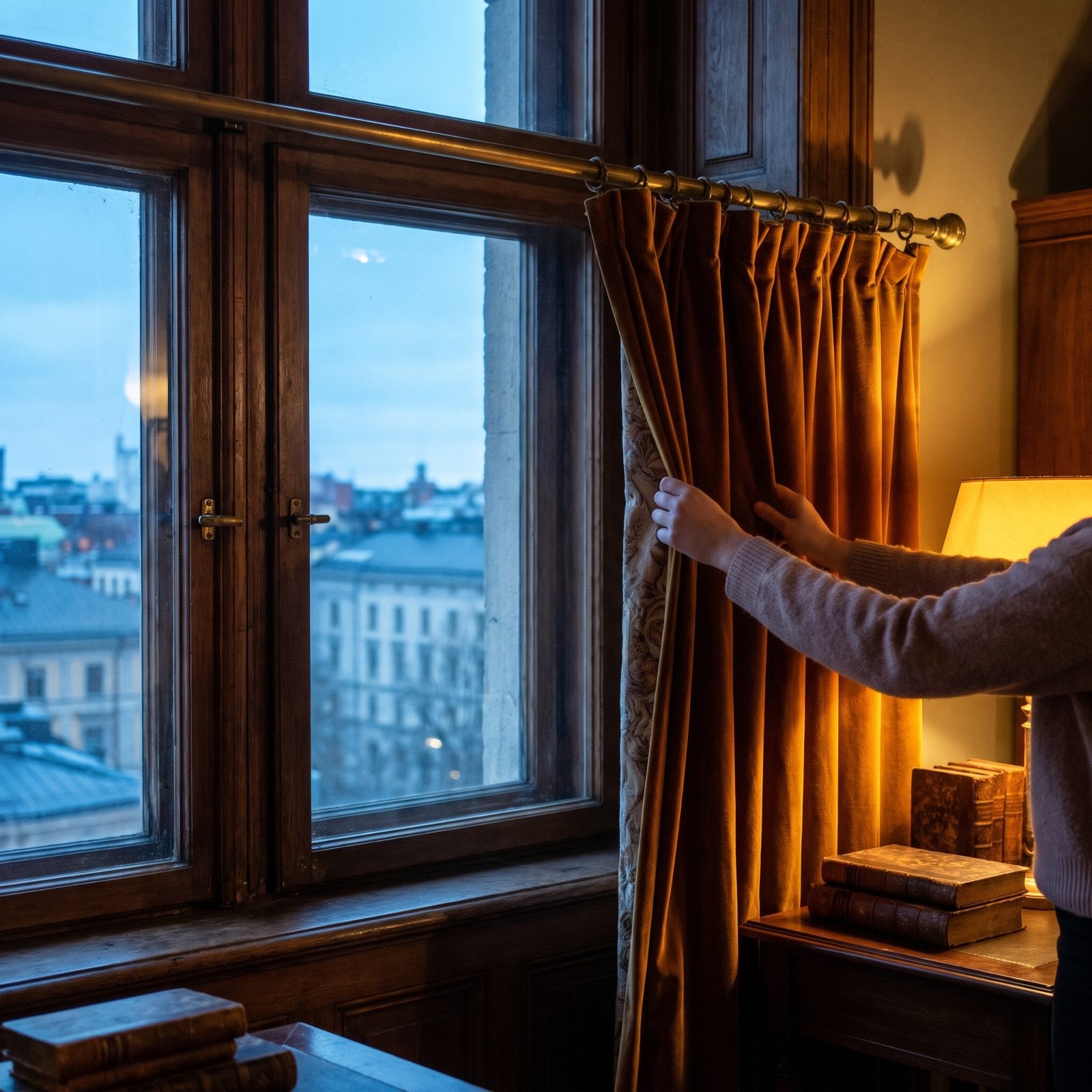
The sun does the work by day. At dusk those same windows flip into the biggest cold spot in the house, and that’s your cue to seal them up.
Thin curtains are decoration. The ones that actually hold heat are heavy, lined, and long enough to reach the floor or the sill. Mount the rod above the frame if you can — and a drape that stops an inch short lets cold air pour out underneath and ruins the whole effect. Make sure the panels close across the whole window so they trap a still layer of air between the fabric and the glass.
39. Hang Quilted Covers Over Drafty Windows

When a window was too drafty to save with curtains alone, people hung a quilt over it and called it done. A padded panel with batting inside stops far more heat loss than any single layer of cloth, and a worn patchwork quilt was something most households already owned.
The rooms that benefit most are the ones you only use part of the day — a spare bedroom, a back stairwell, a pantry. Cover the window completely at night, roll it aside in the morning.
38. Add Removable Storm Windows
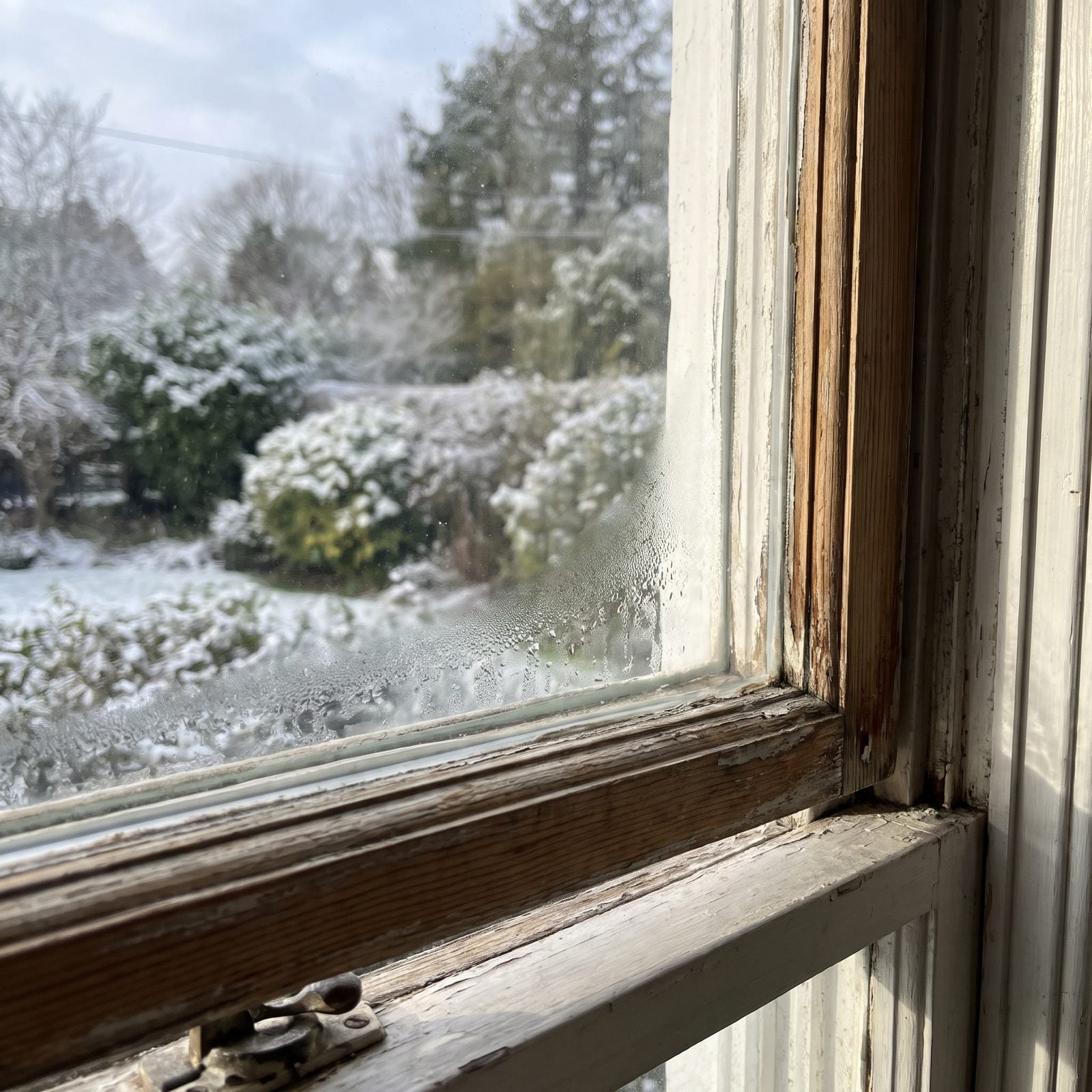
A storm window is just a second pane with a sealed pocket of still air between it and the main window. That trapped air is the insulator, not the glass — the same reason a double-pane window works, invented decades before anyone could afford to buy one.
Old wood storm windows hang on simple hooks, come off in spring, and go back on in fall. Got original single-pane sashes you want to keep? Interior storm panels — clear acrylic in a magnetic or compression frame — do the same job without anyone touching the exterior.
37. Reglaze Loose Windowpanes Before Winter
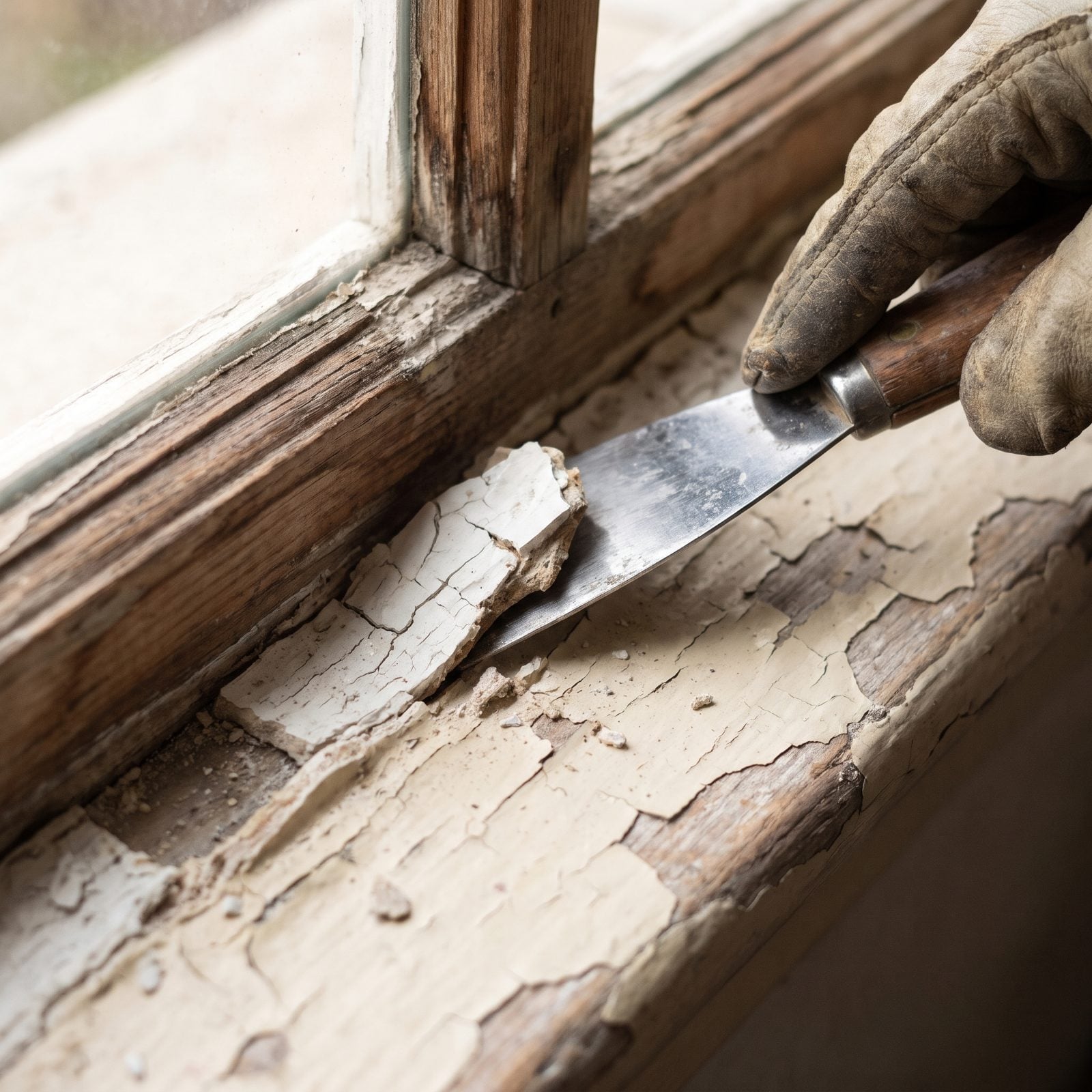
The putty that holds old glass in its wooden frame dries out, cracks, and crumbles away after fifty or eighty years. Once it’s gone, cold air whistles straight past the pane and the glass can rattle loose in a storm.
Reglazing is slow, fussy work. You rake out the old compound, set the glass with glazier’s points, and press a clean bead of fresh putty along the edge with a knife, and then it takes a few days to skin over before you can paint it. Do it in fall while the weather still cooperates.
36. Press Rope Caulk Into Seasonal Window Gaps
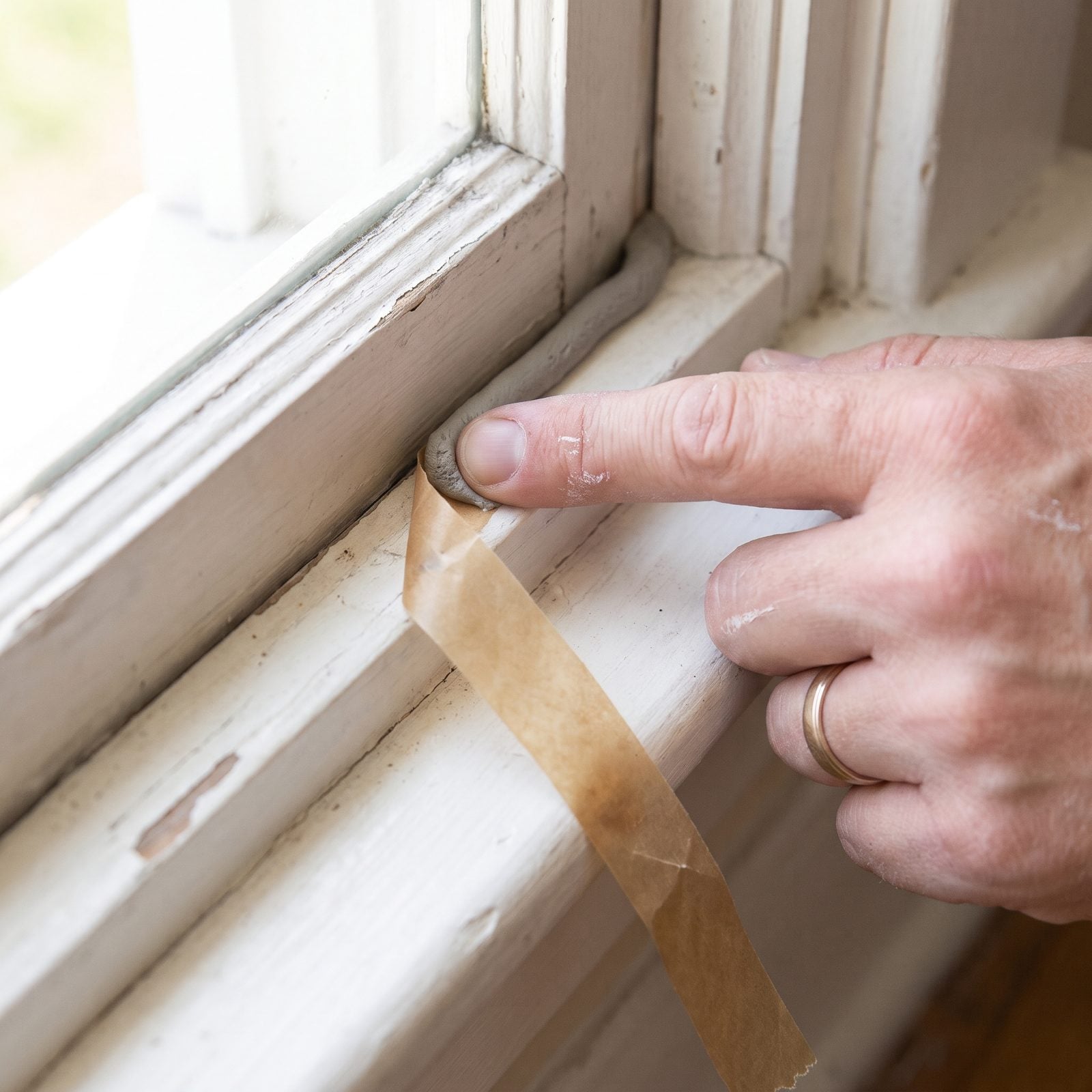
Rope caulk is the lazy person’s dream, and I mean that as high praise. It’s a soft putty rope that peels off a backing and presses into any gap with your thumb — no gun, no mess, no skill required. You run it along the seams of a window you don’t plan to open until spring.
Best part? It’s removable. Come warm weather you peel it off clean, roll it up, and use it again next year. Seals the stationary sash, the meeting rail, anywhere you feel air sneaking through.
35. Tack Felt Weatherstripping Around Window Frames
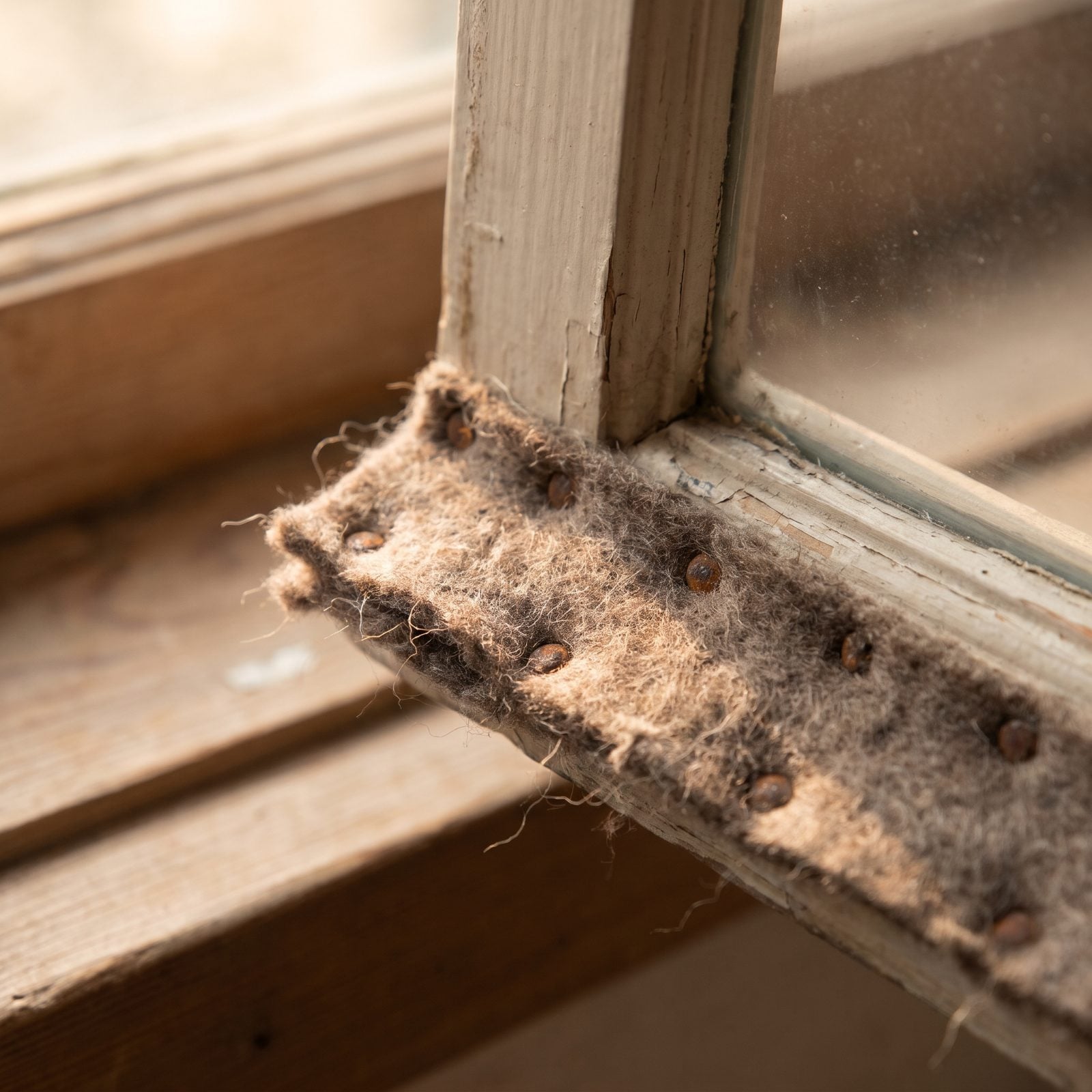
Felt weatherstripping is the grandfather of every foam and vinyl strip at the hardware store. Wool or hair felt, tacked around the frame where a sash or casement closes against it, compresses just enough to seal the gap without jamming the window shut.
It won’t last like modern materials, though. Felt flattens, soaks up moisture, and usually needs replacing every few years. But it’s cheap, it’s gentle on original wood, and on an operable window you actually want to use, it beats caulking the thing shut for the season.
34. Lay Draft Snakes Along Cold Windowsills
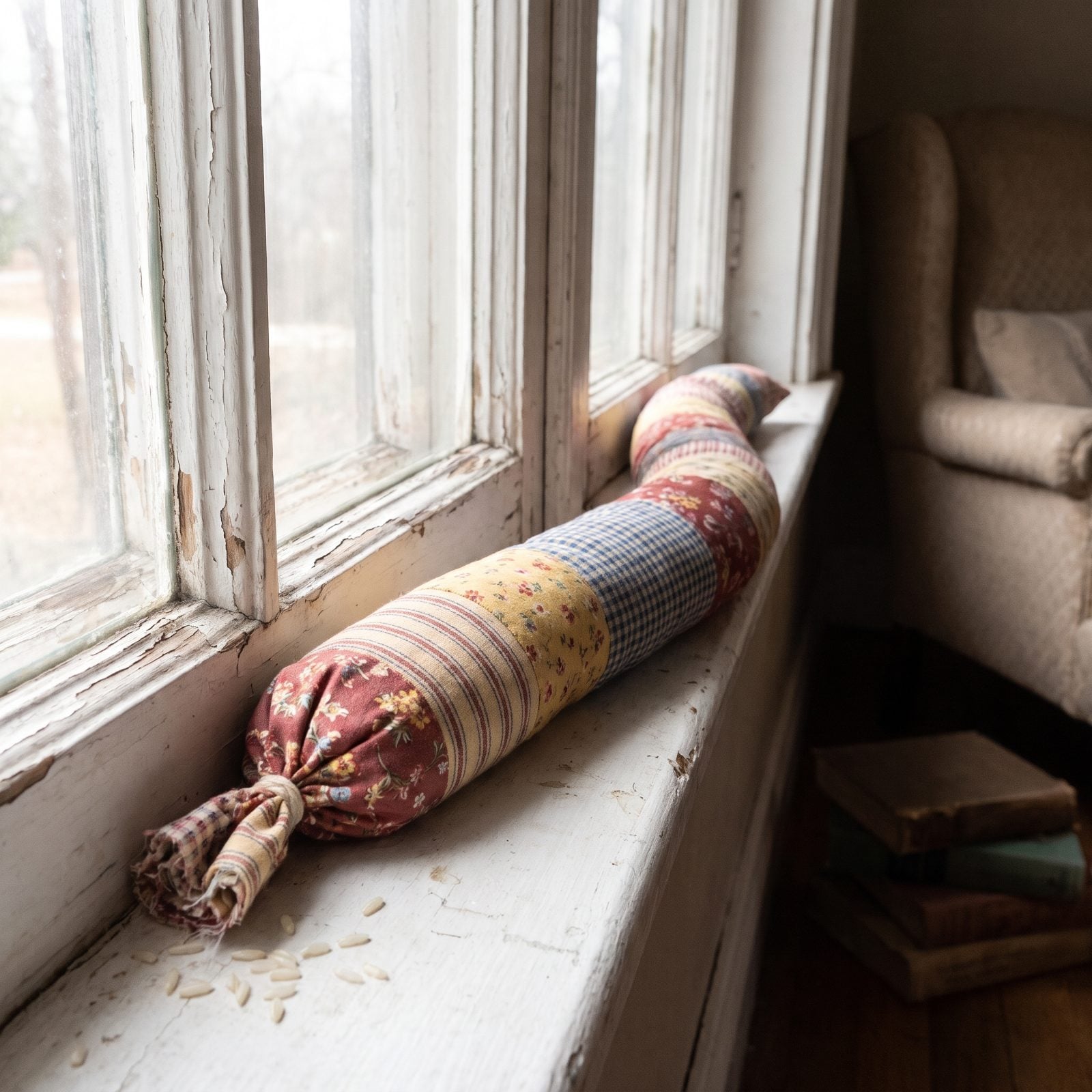
A draft snake is a tube of fabric stuffed with rice, sand, dried beans, or old scraps, laid along the bottom of a window or door to block the cold air pooling there. Every grandmother seemed to own a few, sewn from a worn pant leg or a remnant of plaid wool.
They work best on the sill of an older window, where cold air settles and spills down into the room. Weight matters here. A snake filled with rice or sand stays put and seals the gap, while a loosely stuffed one just rolls away the first time you bump it.
33. Fit Door Sweeps Beneath Exterior Doors
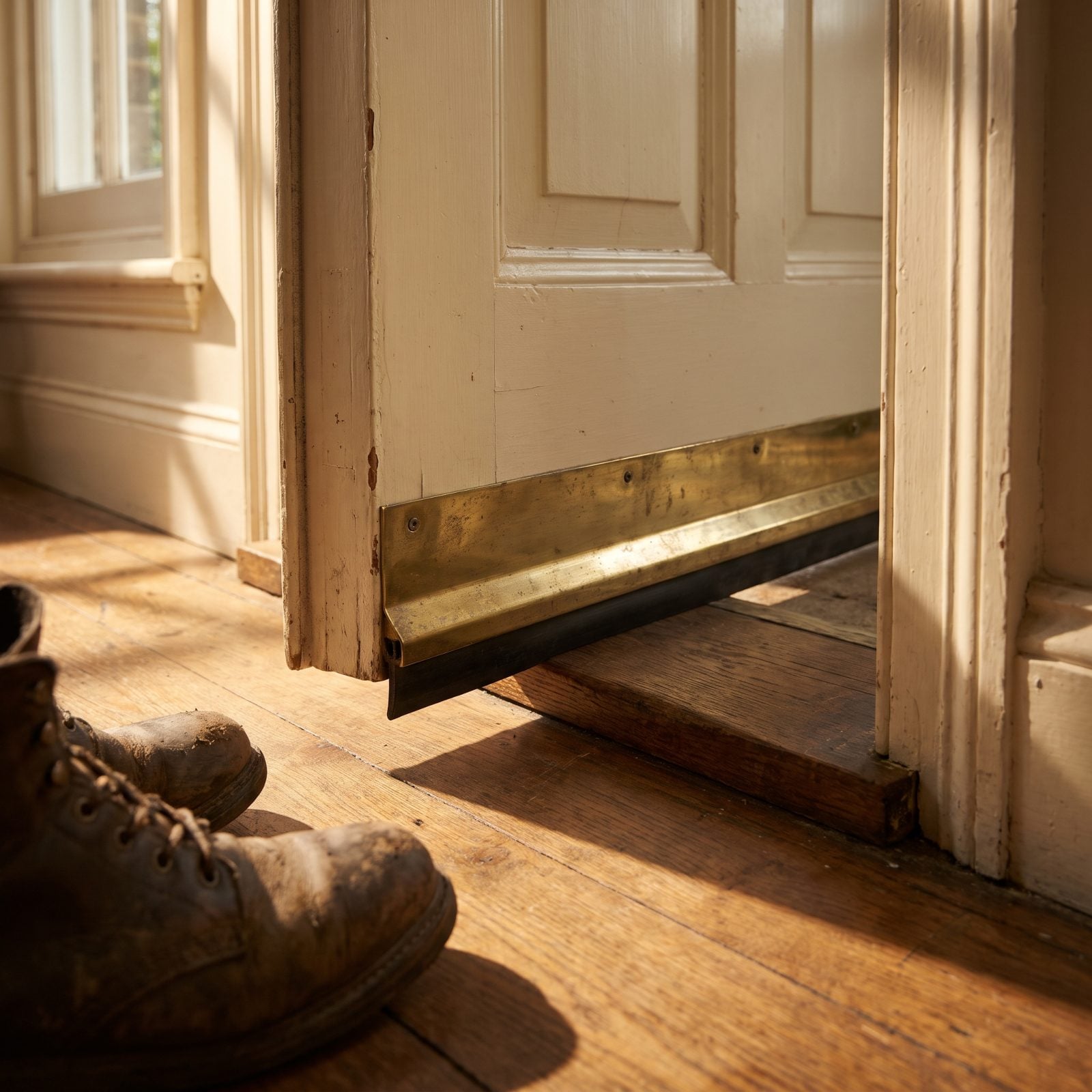
The gap under an exterior door is one of the worst leaks in any house, because cold air is heavy and it hunts for the lowest exit it can find. You can usually see daylight under an old door, and where you see daylight, you lose heat.
A door sweep screws or slides onto the bottom edge and drags a strip of felt, bristle, or vinyl across the threshold as the door closes. For a truly out-of-level old door, the brush-style sweeps conform to the gap better than a stiff flap. Pair it with the old habit of tucking a rolled towel at the base of a door to a room you’re not heating.
32. Add a Storm Door as a Second Barrier

A storm door is the doorway version of the same still-air trick — a buffer of trapped air in front of the main door, plus a windbreak that keeps gusts from hammering the seal around it. On an exposed entry facing the prevailing wind, that buffer makes a real difference.
The old solid-core storm doors got swapped for screen panels in summer. And here’s the underrated bonus: the outer door takes the beating from wind and snow, so the main door and its seal last longer. Keeping the cold out starts at the threshold.
31. Hang a Heavy Portiere Inside the Front Door
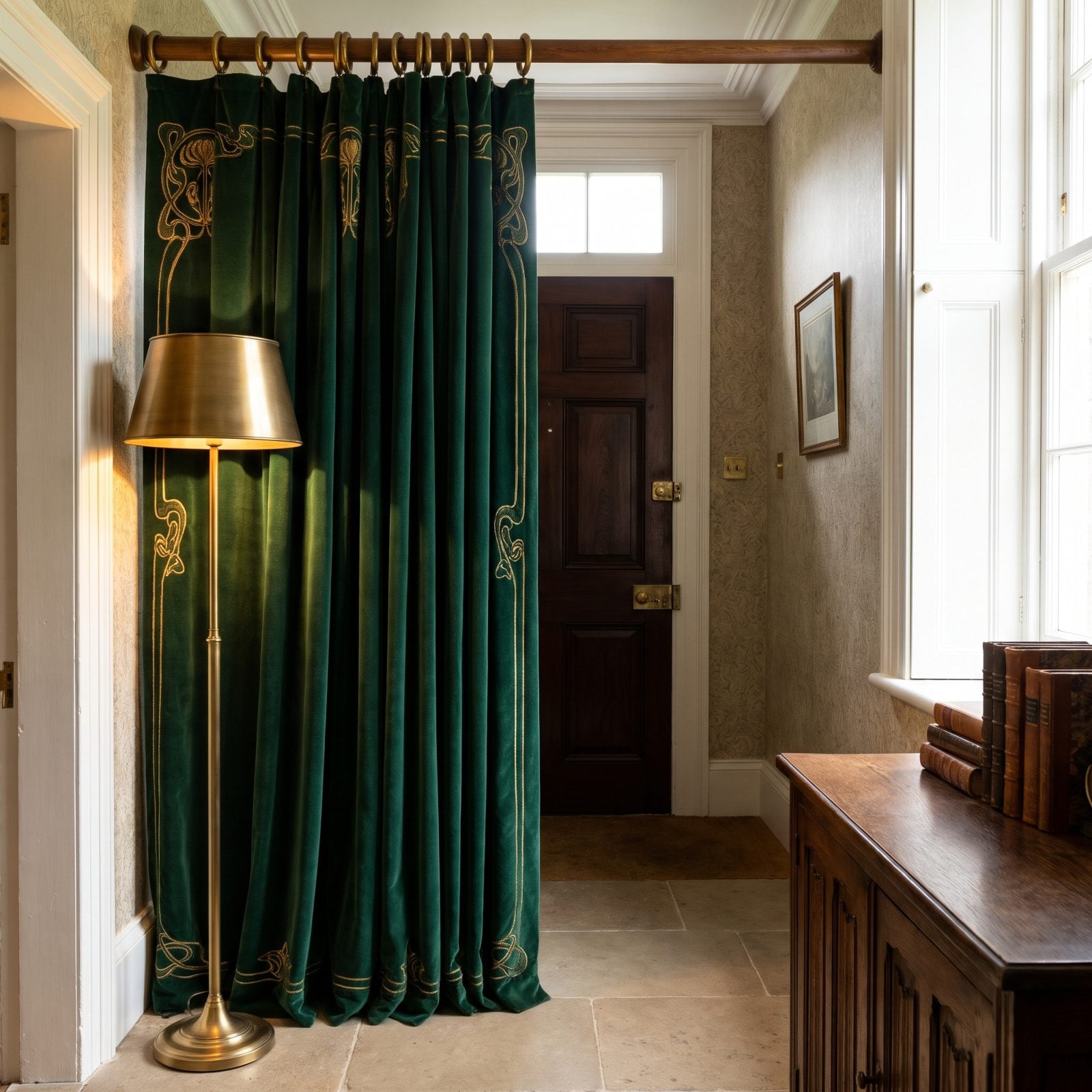
The front door is the worst offender in any old house. Open it for ten seconds and the cold rides in on your heels, filling the whole hall before you’ve got your coat off.
A portiere is just a heavy curtain hung across a doorway, or in this case a foot or two inside the entry. Victorians loved them. Wool, velvet, anything with weight. The idea is dead simple: you trap a pocket of still air between the door and the rest of the house, so the draft dies in the hall before it ever reaches the parlor.
30. Use the Mudroom as a Cold-Air Lock
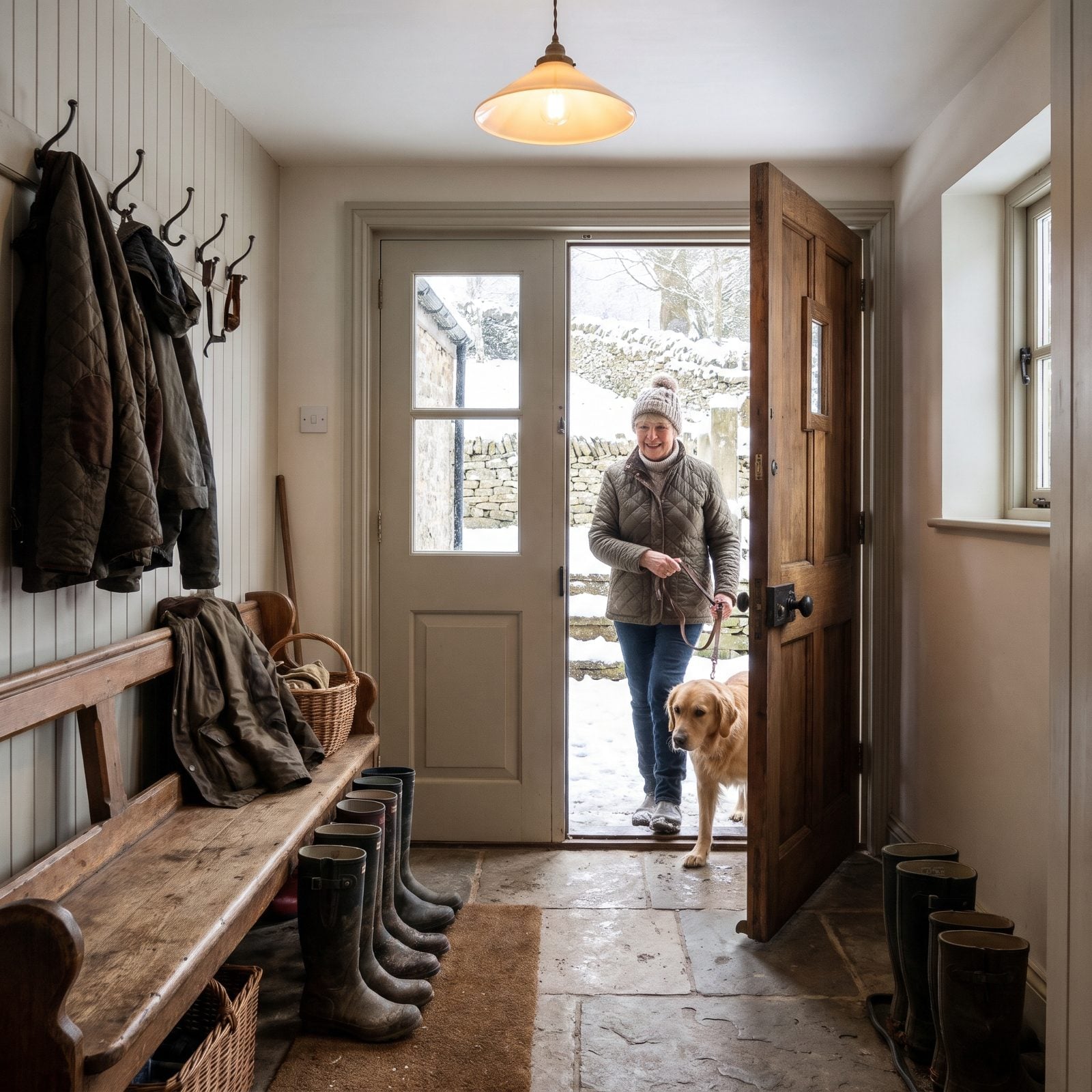
A mudroom isn’t just where the boots live. It’s an airlock, and it works best when you treat it like one.
Here’s what earlier generations understood that we’ve mostly forgotten: never have both doors open at once. You come in, shut the outer door behind you, stamp the snow off your boots, and only then open the inner door. The cold gets caught in the little room and sulks there instead of pouring into the kitchen. It’s the same principle as the double doors on an old bank or a walk-in freezer, scaled down to a back porch with a bench and a boot tray.
If your inner door doesn’t close snugly, fix that first. The whole thing falls apart on a leaky latch.
29. Shut Off Unused Rooms for the Winter
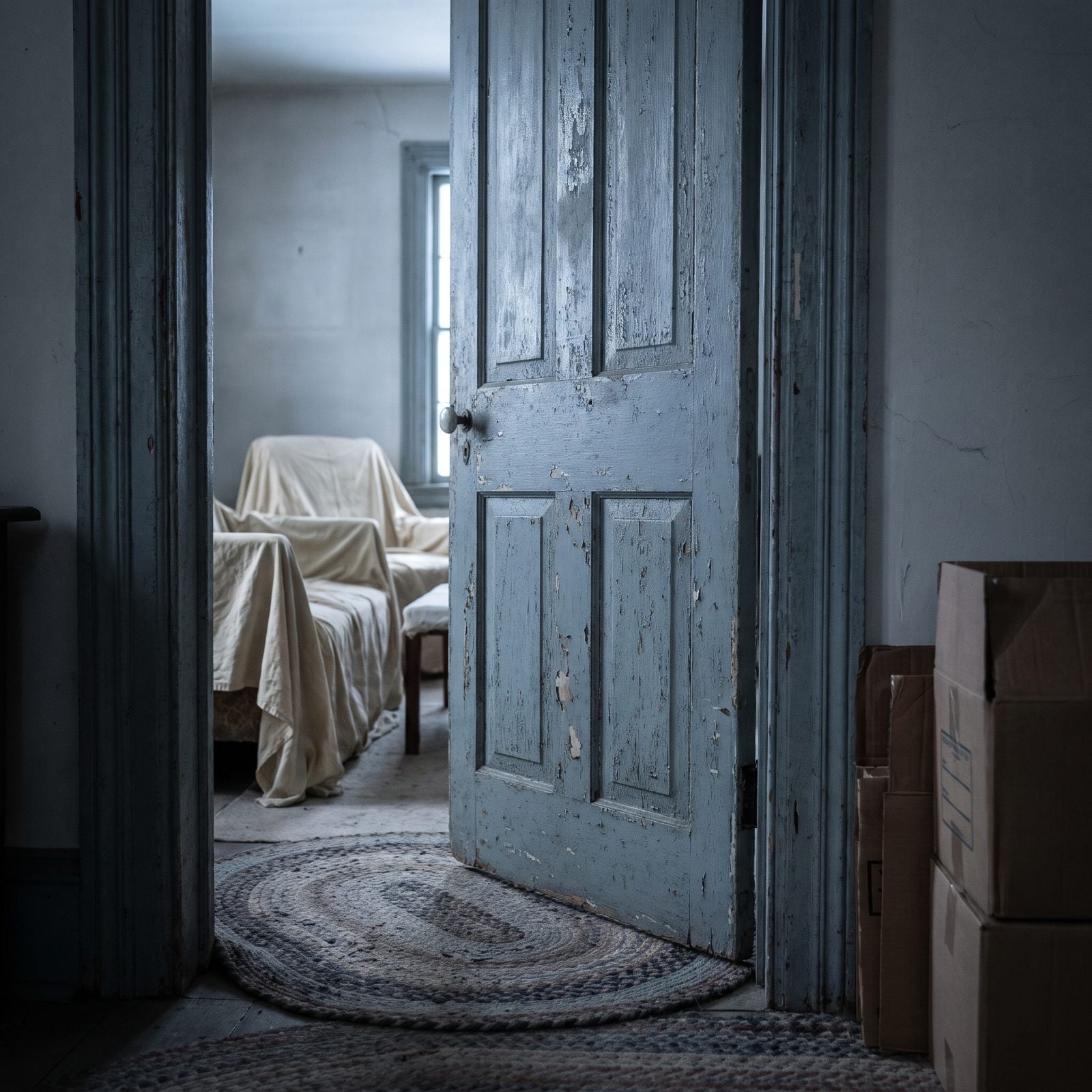
You don’t need to heat the whole house. Almost nobody did, before central heating made the idea feel normal.
Families picked a room or two to live in through the coldest months — usually the kitchen and one other — and closed the rest. Doors shut, drafts stopped at the base, radiators valved off or fireplaces left cold. The parlor came back to life for company and holidays, and otherwise sat under dust sheets like a museum nobody visited.
One caution, and it’s an important one: don’t let a shut room drop below freezing if there are water pipes in its walls. Crack the door on the coldest nights.
28. Curtain Off an Open Stairwell

Heat climbs. An open staircase is a chimney for the warmth you’re paying to make, drawing it straight up to the cold bedrooms and the roof while you sit shivering below.
The old fix was a curtain across the stairwell, hung at the top or bottom of the flight — heavy fabric on a rod, parted when you went up to bed and drawn shut the rest of the time. It keeps the warm air down where the people are, instead of letting it pool uselessly against the upstairs ceiling.
It’s easy to ignore this for years, never working out why one end of the living room stays stubbornly cold. The stairs are eating the heat the whole time.
27. Lay an Insulated Cover Over the Attic Hatch
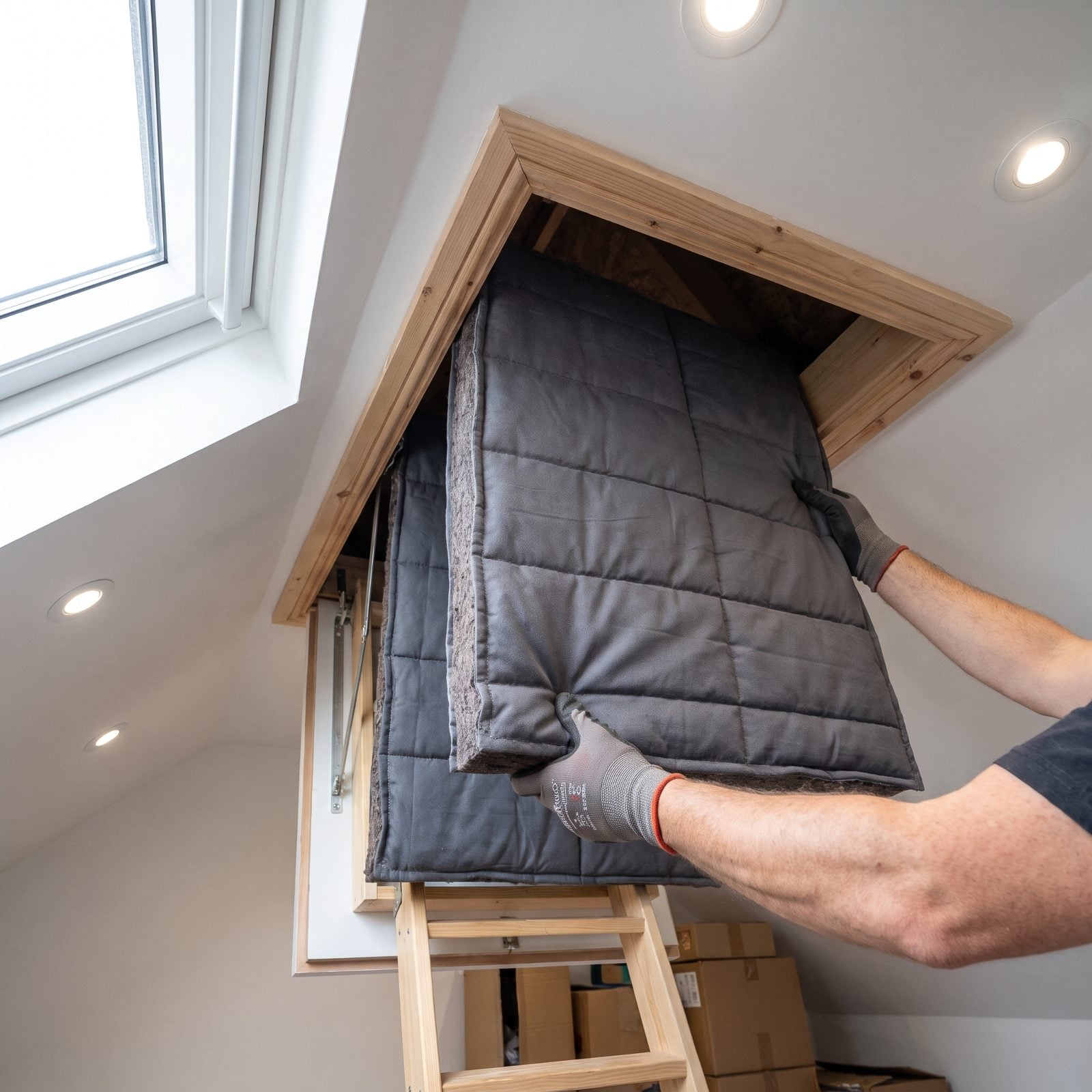
A loft hatch is a hole in your ceiling that nobody bothers to insulate. You pack the attic floor with the good stuff, then leave a thin plywood square resting over the opening, and all that cold pours right back in through the gap.
The old answer, still the best one, is a padded cover that sits on top of the hatch from the attic side. A felted wool box. A cushion of batting. Anything thick enough to seal the lid. It stops warm air leaking up and cold settling down through the one weak spot you forget about precisely because it’s over your head.
26. Deepen the Insulation Across the Attic Floor
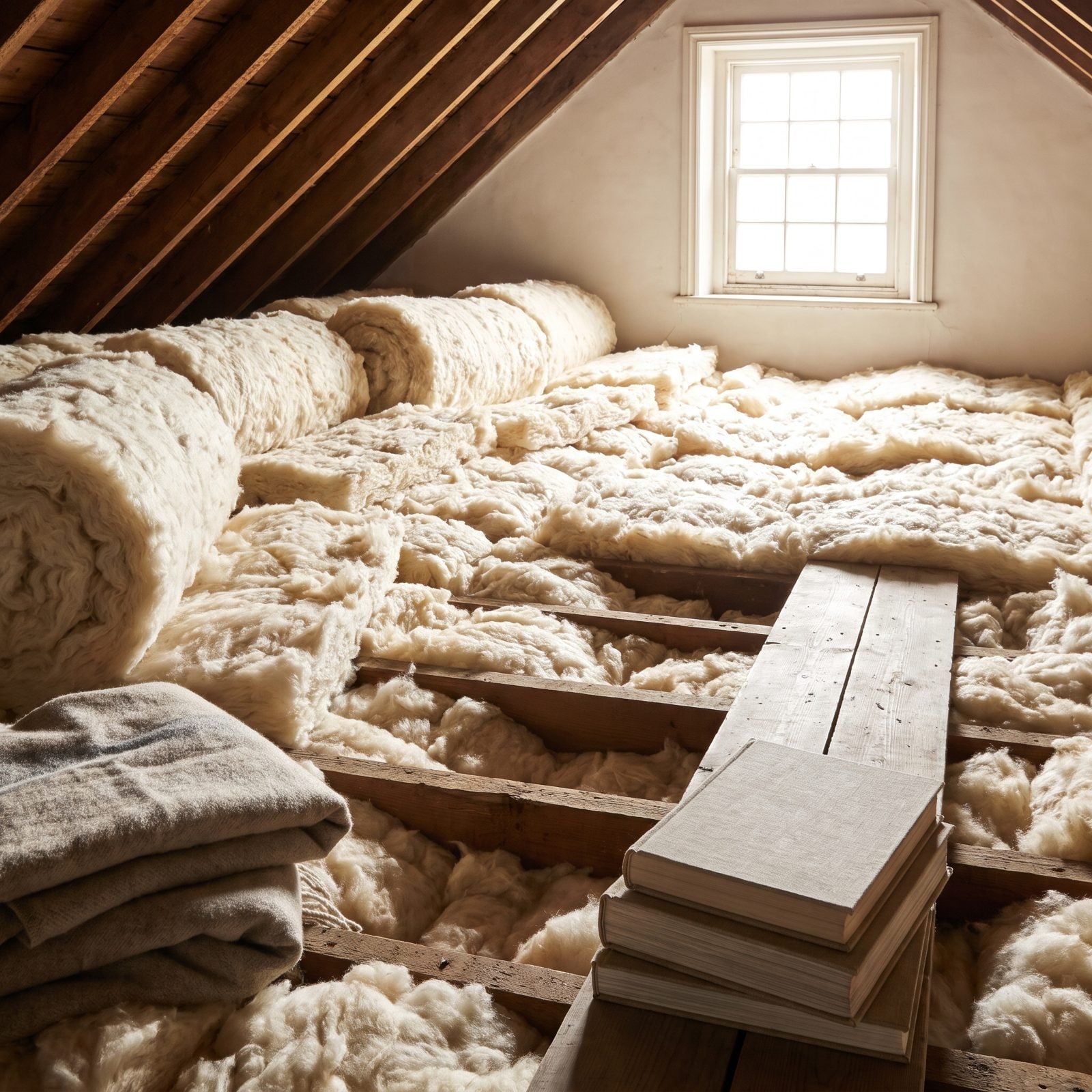
A big share of your lost heat goes up and out through the roof. Not a modern discovery, that. Thatchers knew it, and so did anyone who ever packed a loft with straw, sawdust, or old newspaper before better materials came along.
The principle hasn’t budged, only the stuff you use. A deep, even layer across the whole attic floor, carried right out to the eaves, is the single biggest thing standing between your warm rooms and the winter sky. Skimp in the corners and you’ve handed the heat a way out.
Can you still see the tops of your joists poking through? Then there isn’t enough up there.
25. Seal Cracks Where Baseboards Meet the Floor
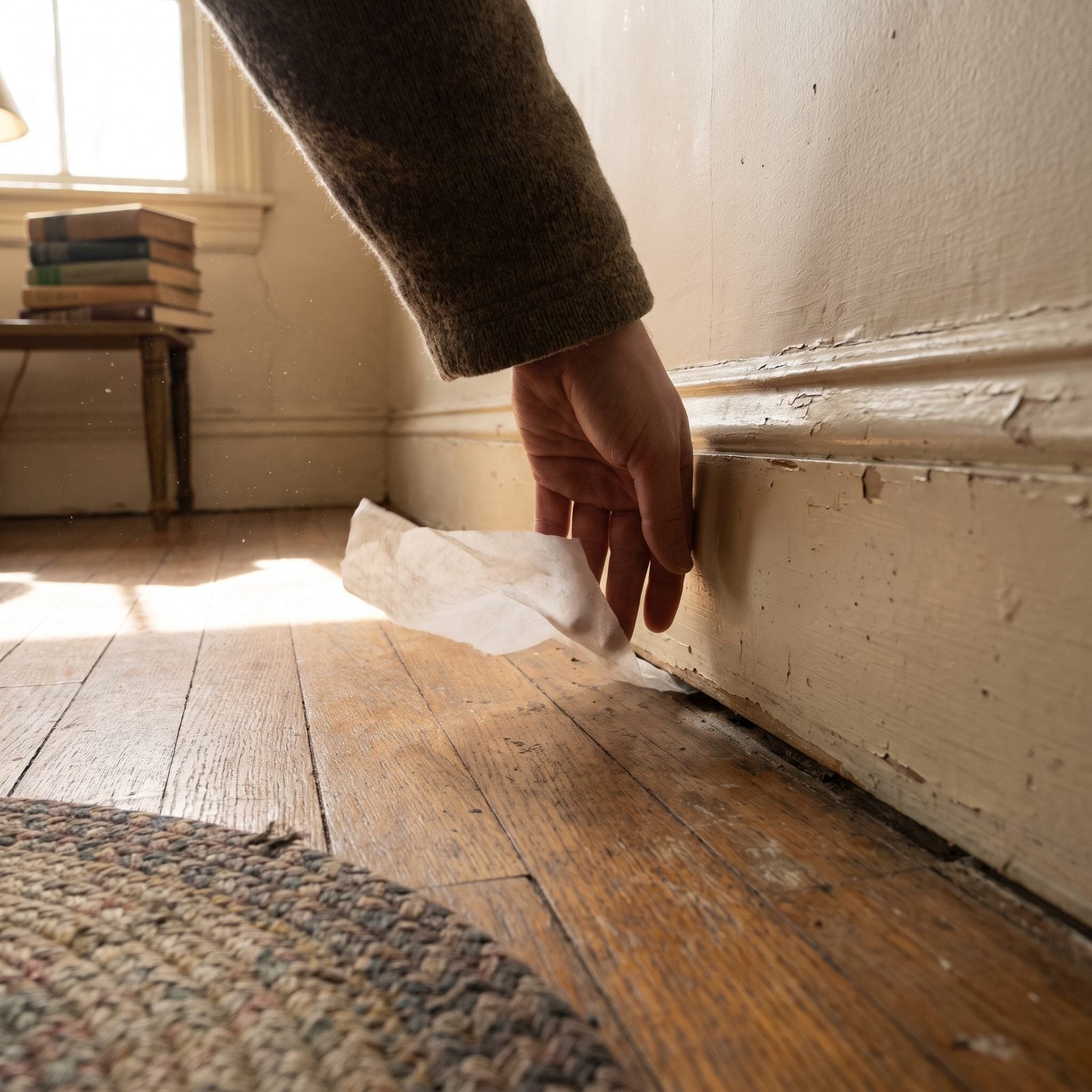
Get down on the floor on a windy day and hold the back of your hand along the bottom of the wall. You’ll feel it — a cold ribbon of air sliding in through the gap where the baseboard meets the boards.
In old houses those gaps are everywhere, cracked open by a century of timber shrinking and settling. Each one is small. Added together, they can equal leaving a window open all winter.
The old fix was to stuff them with felt, rag, whatever was handy, then run a strip of wooden trim down to hide the lot. Caulk does the same job now. Boring work, cold on the knees, and honestly one of the best returns you’ll ever get for an afternoon of grumbling.
24. Lay Thick Rugs Over Bare Floorboards

Bare floorboards feel cold because they are cold, and because the gaps between them let air move. A rug does two jobs at once: it traps a layer of still air against the boards and blocks the draft rising through the cracks.
Thicker is better. A wool pile over a felt underlay beats a thin cotton flatweave by a mile. People used to layer them — a big rug on the floor with smaller ones piled on top by the fireside, building up the warmth where feet actually went.
23. Hang Tapestries on Cold Exterior Walls

Tapestries weren’t just decoration. Hung on cold interior faces of exterior walls, they were insulation. A heavy woven wall-hanging traps a cushion of air against cold stone or brick and softens the chill that radiates off it into the room.
You feel that chill even when the air is warm. Sit near an uninsulated exterior wall and your body quietly bleeds heat straight into it, which is why one side of you can feel cold in a perfectly heated room. A thick textile on that wall cuts the effect. It swallows sound too, which the drafty-hall crowd appreciated just as much.
22. Add Winter Skirting Around a Raised Foundation
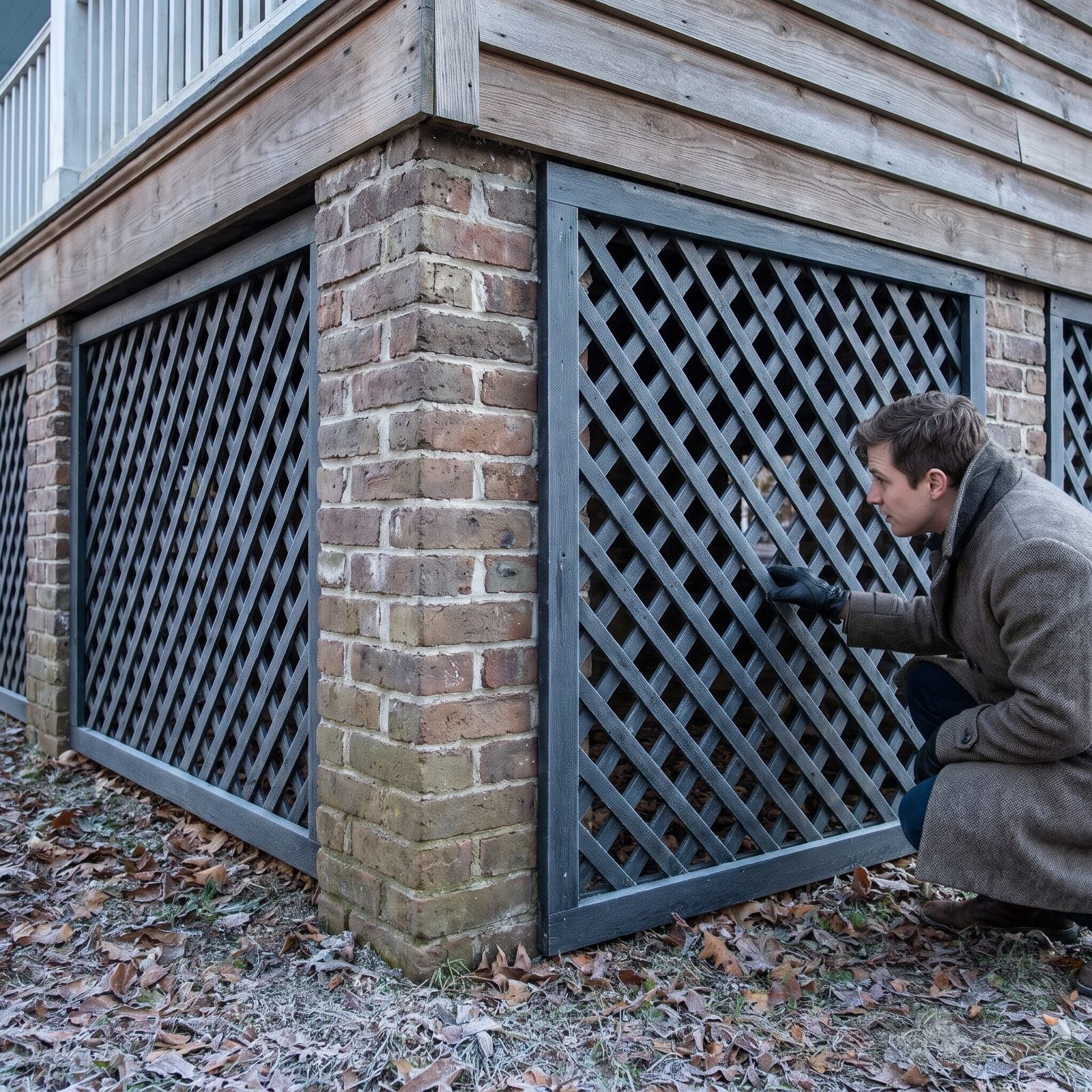
If your house sits up on piers with an open crawl space underneath, winter wind runs straight beneath your floors and pulls the warmth out of them from below. Farmhouses on raised foundations had cold floors for exactly this reason.
The old answer was seasonal skirting: boards, straw bales, banked earth, packed around the base of the house every fall to close off the gap and break the wind. Open lattice, especially lattice that stops short of the ground, lets the wind blow straight through, so back it with boards or bales for the cold months. Come spring, you opened it all back up so the space could dry out and air through.
And that last part really matters. A crawl space sealed tight year-round traps moisture and rots the very floor you’re trying to save. The skirting was meant to come and go with the season — the detail people forget when they wall one of these in permanently, then stand around baffled about where the damp came from.
21. Fit Insulated Panels Into Cellar Windows
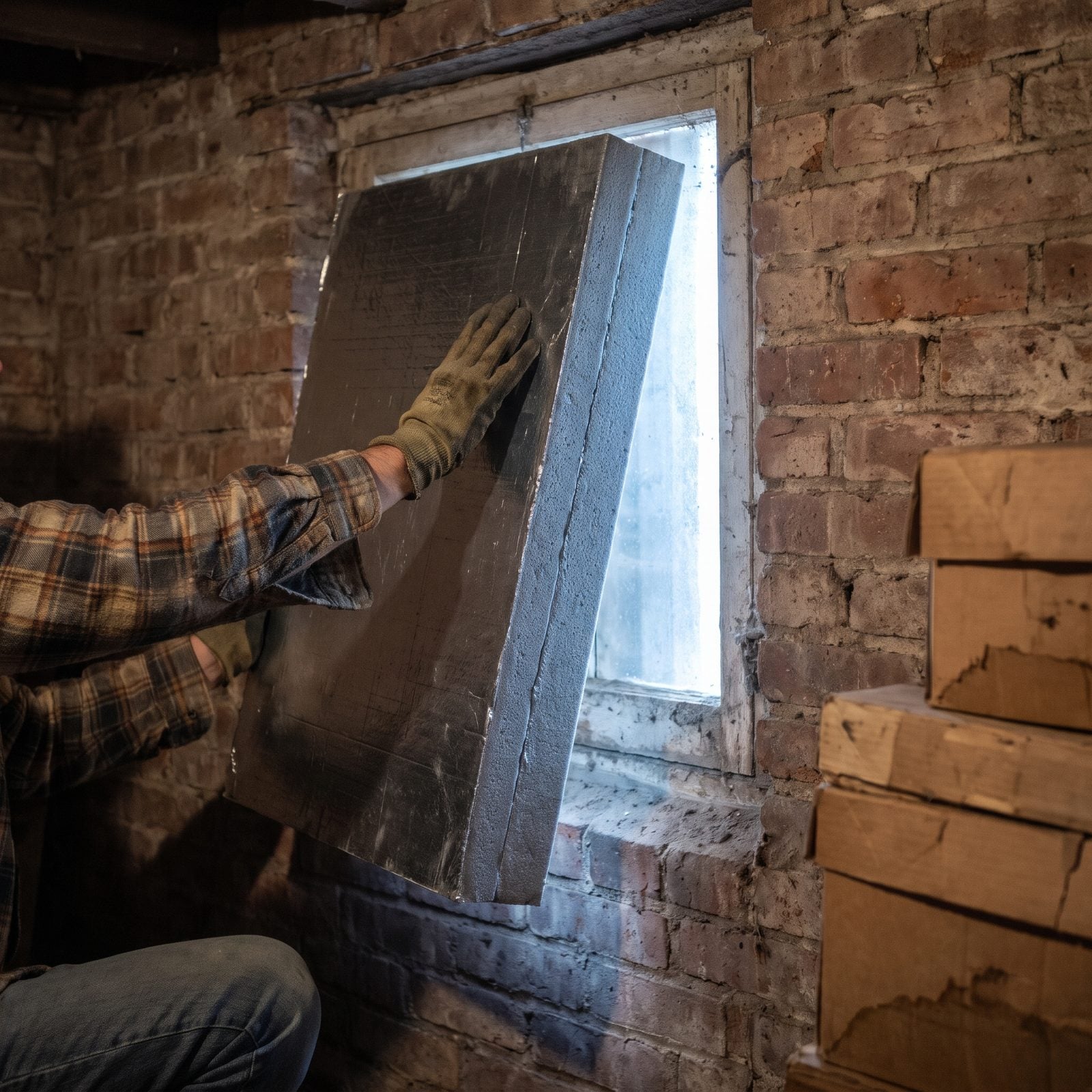
Cold pours in through cellar windows all winter and nobody notices, because nobody spends time down there. That’s the whole problem. The chill settles into the foundation and creeps up through the floorboards above.
The fix is a fitted panel — a sheet of foil-faced rigid foam board with its edges sealed in duct tape, cut to drop snugly into the window well each fall and pulled back out in spring. The removable bit matters, because you still want ventilation when the weather turns.
20. Close Transoms That Let Warm Air Escape
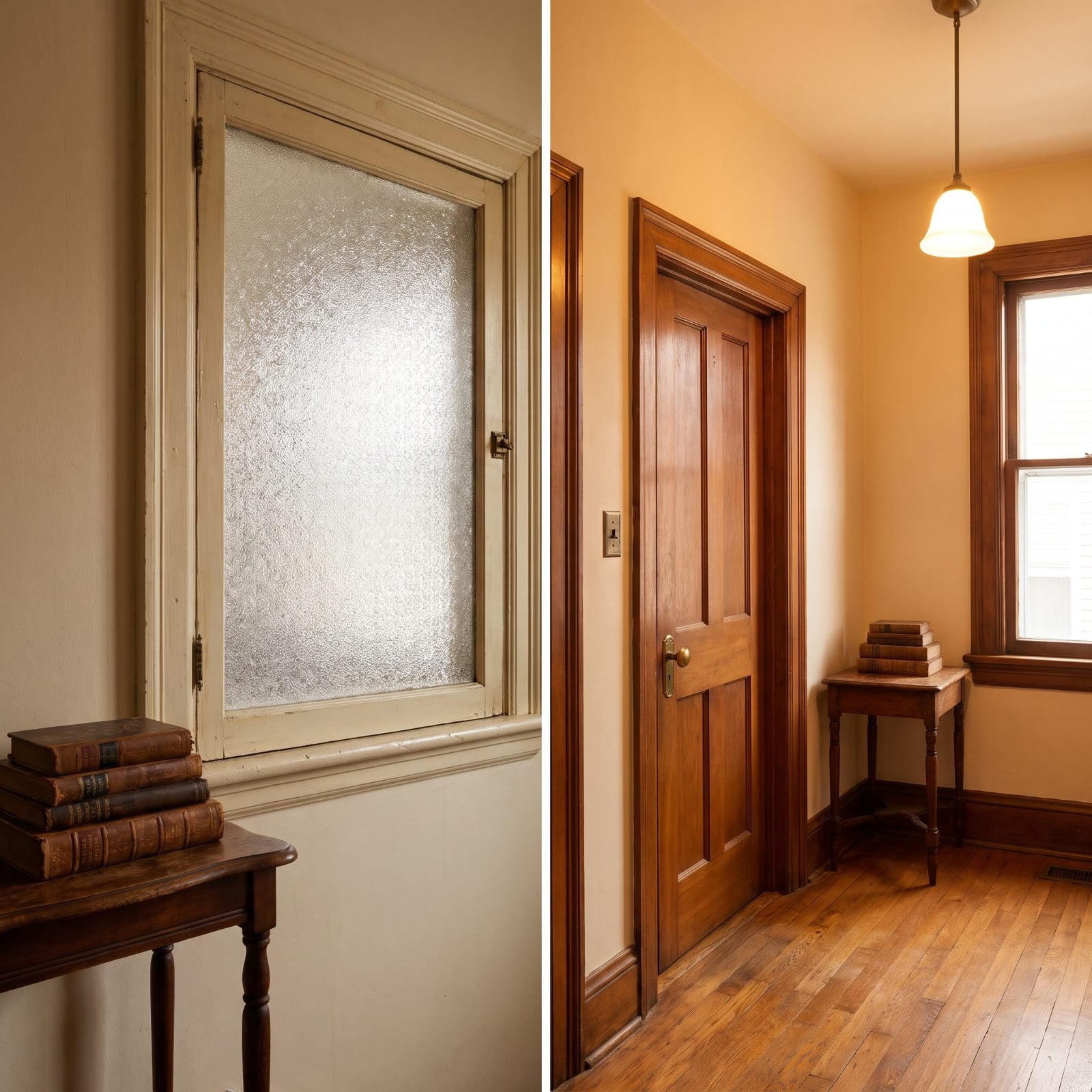
Those little windows above interior doors had a job. In summer they swung open to move air between rooms when everything else was shut for privacy; in winter you closed them, and most people today don’t even realize they can.
Warm air rises and parks itself at the ceiling. Leave the transom open and that heat drifts out of the room you’re actually sitting in and off into the drafty hall. Latch it shut, and the warmth stays where your chair is.
19. Shut the Fireplace Damper After the Embers Die
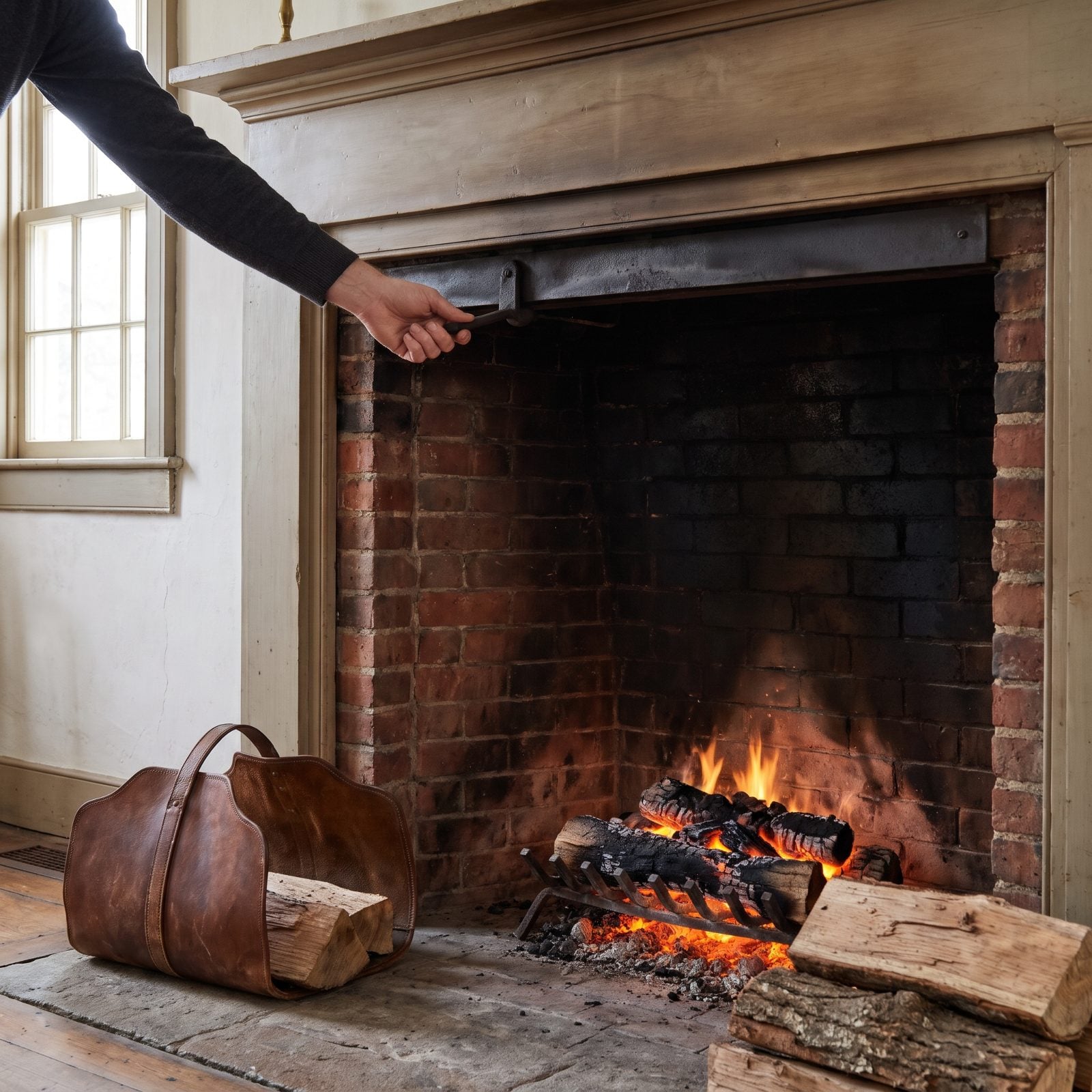
An open damper on a cold fireplace is the single biggest heat leak in a lot of old houses. It’s a four-foot hole in your ceiling, aimed straight at the sky, and all the warm air you paid to make rises right up it.
The rule is simple, and people still get it wrong. Shut the damper once the fire is completely out and the embers are cold to the touch. While a log is still flaming and embers are glowing under the grate, as here, the only job for that handle is to make sure the damper is fully open. A live fire needs that draft. A dead one just funnels your heat away.
18. Plug an Unused Chimney With a Removable Draft Stopper
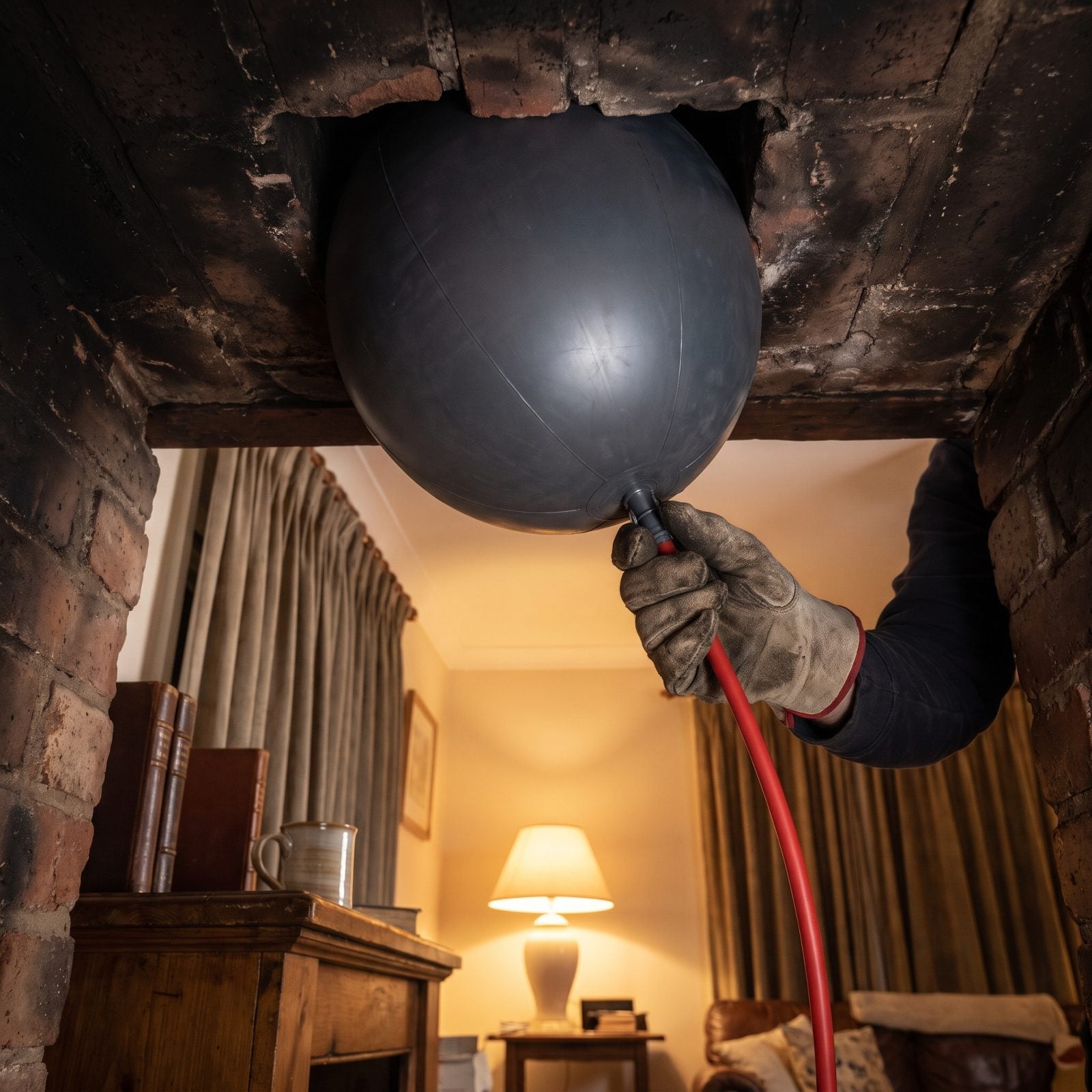
Plenty of old homes have a chimney nobody uses anymore, standing open and pulling warm air up and out of the room around the clock. You feel it as a cold spot near the hearth you can never quite explain.
Here’s the remedy: a removable draft stopper pushed snug into the flue. Historically that meant a wool-stuffed cushion or a sandbag bolster, pushed snug into the opening. Today the usual choice is an inflatable chimney balloon, which you can deflate and pull back down whenever you need to. It blocks the column of rising air without permanently sealing anything, which matters — the flue still needs to breathe and dry out.
17. Place Reflective Panels Behind Radiators
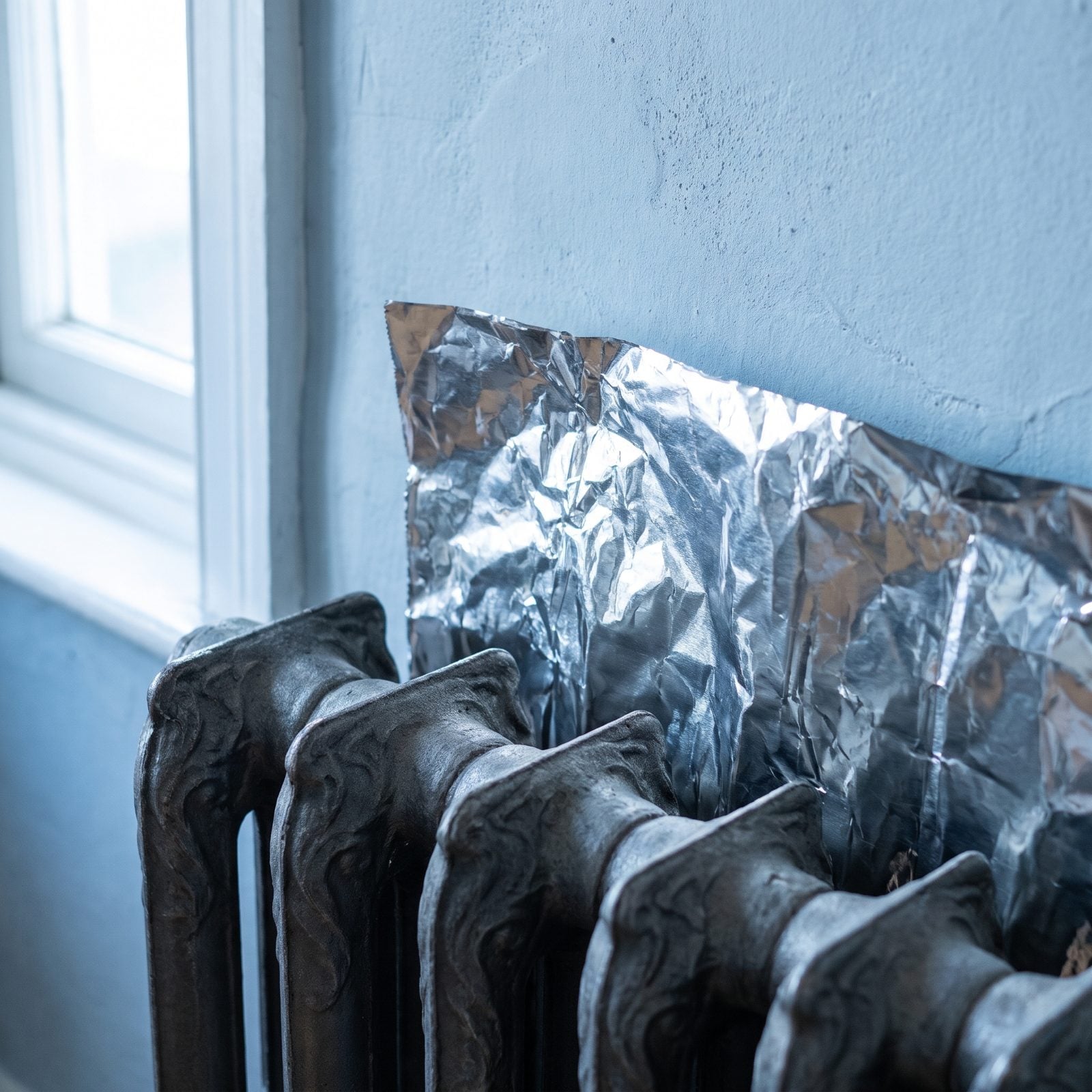
A radiator sitting against an outside wall wastes a good chunk of its heat warming the bricks behind it, and from there it slips straight outdoors.
Put a reflective panel on that wall and the heat bounces back into the room instead. Households used to tuck sheets of tin or foil-backed card behind the radiator for exactly this. The shinier and flatter it sits, the more it sends your way.
16. Add a Shelf to Direct Radiator Heat Into the Room
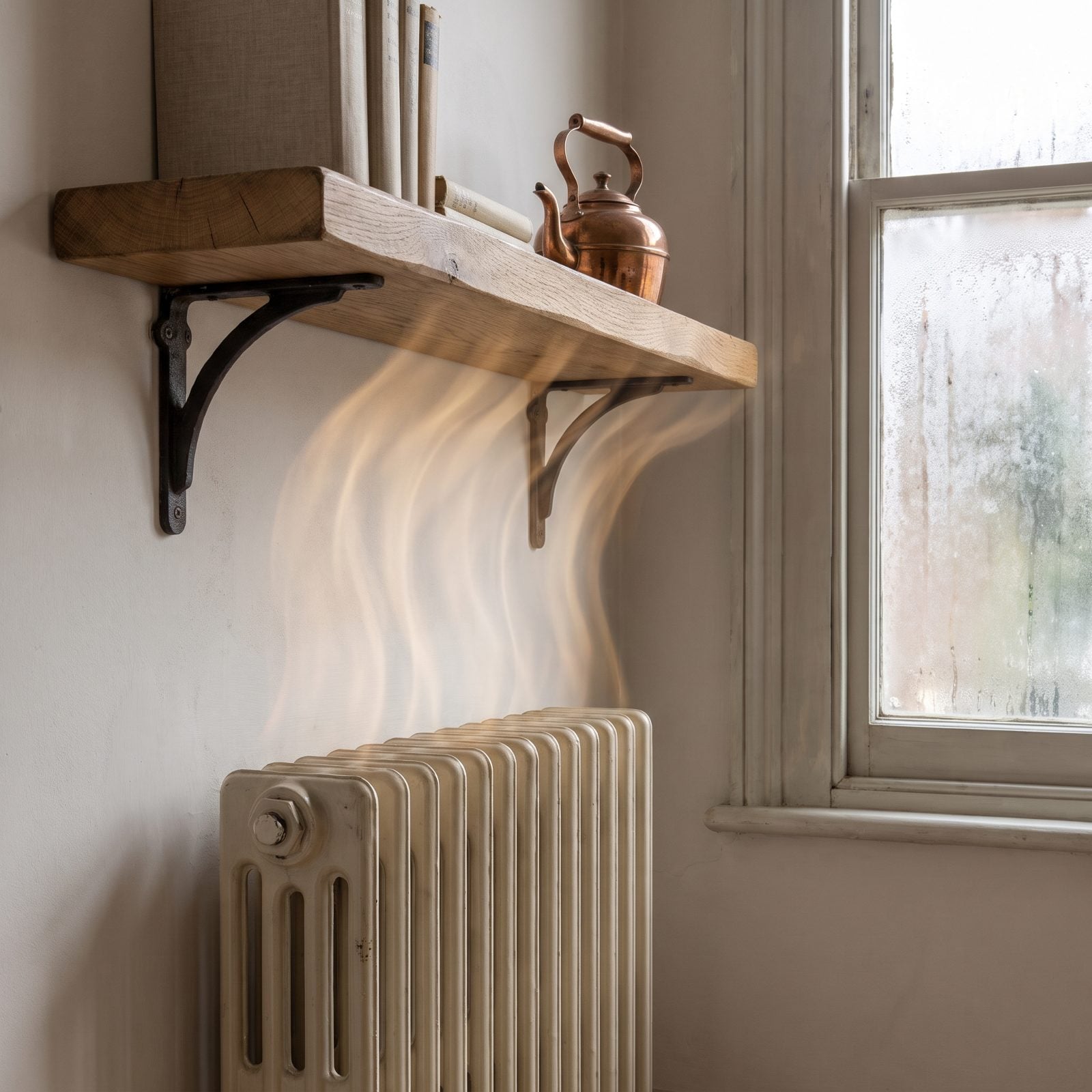
Heat climbs straight up off a radiator and runs up the bare wall beside the window toward the ceiling, where it pools and does you little good.
A sturdy shelf mounted on the wall above the radiator catches that rising warmth and nudges it forward, into the room where you sit. Old trick, and it doubles as a handy ledge. Make it deep enough to reach out over the radiator, and don’t drape curtains over the whole arrangement — do that and you’ve just built a warm corner and a cold room.
15. Bleed Trapped Air From Hot-Water Radiators
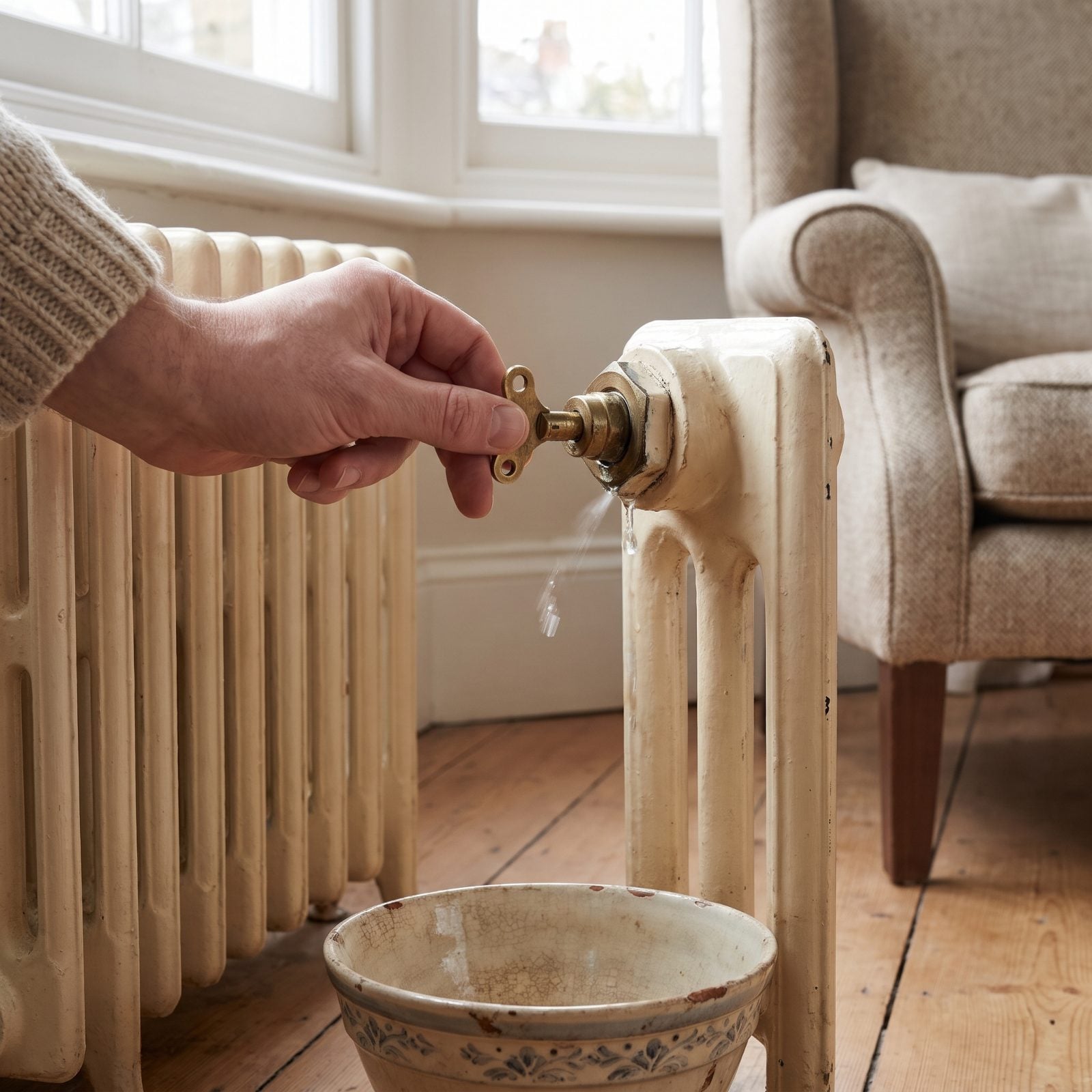
Warm at the bottom, cold up top? There’s air trapped inside and your heat is stuck below it.
Bleeding it is a two-minute job with a cheap radiator key. Crack the little valve at the top corner, let the trapped air hiss out, and close it the moment water starts to come out. Keep a bowl under it. If water sprays from the big hex nut around the valve rather than from the bleed screw itself, that joint is leaking and needs tightening or resealing. The radiator heats evenly again and the whole system runs happier for it.
14. Move Furniture and Curtains Away From Radiators
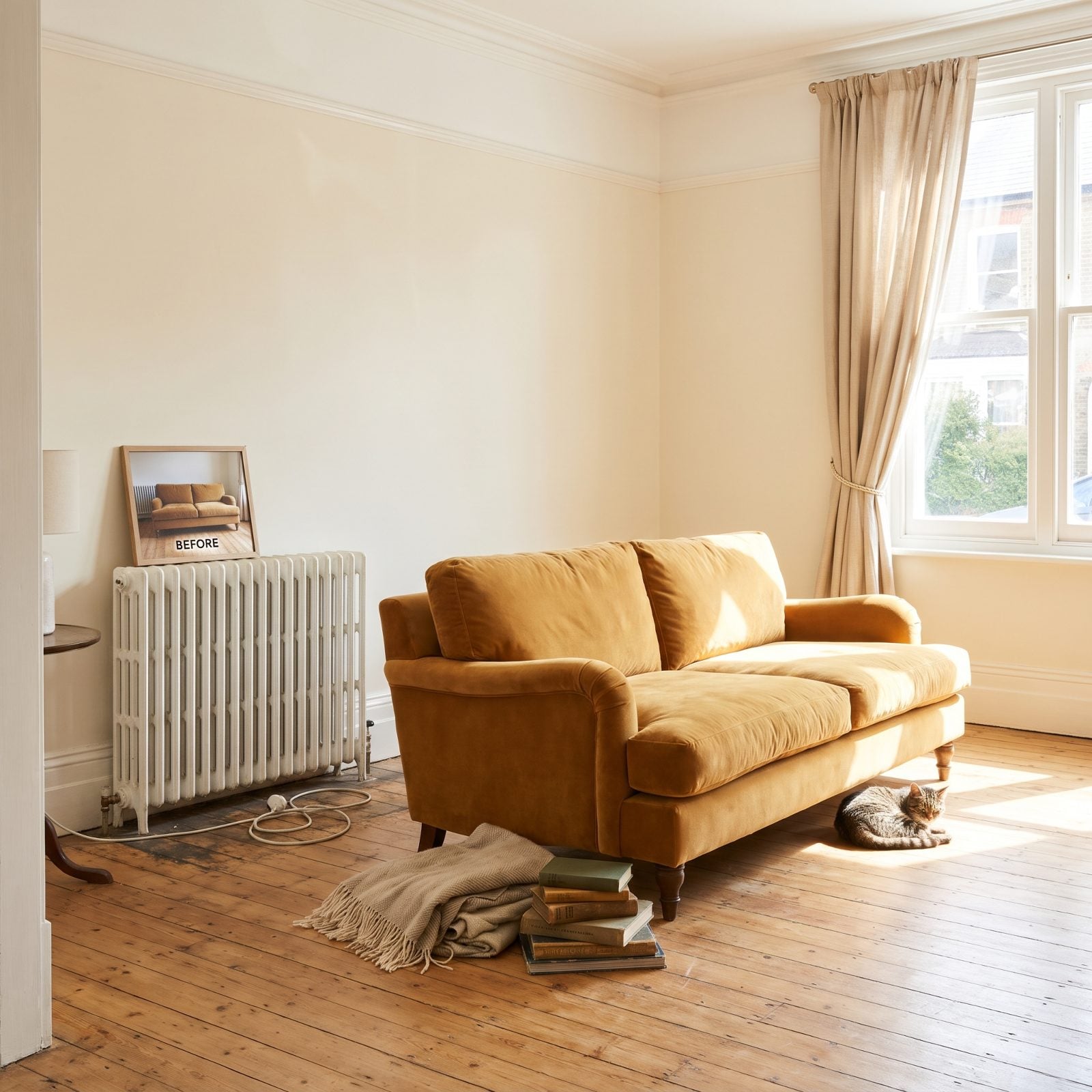
A sofa jammed against the radiator feels cozy. It also soaks up the heat meant for the room and sends it straight into the upholstery and the wall.
Give the radiator room to breathe. Long curtains that hang over it are the worst offenders — they funnel all that warmth behind the fabric and down the cold window glass, which is exactly backwards. Pull the curtains up to the sill and the furniture back a foot, and the whole room warms faster.
13. Wrap Exposed Steam and Hot-Water Pipes
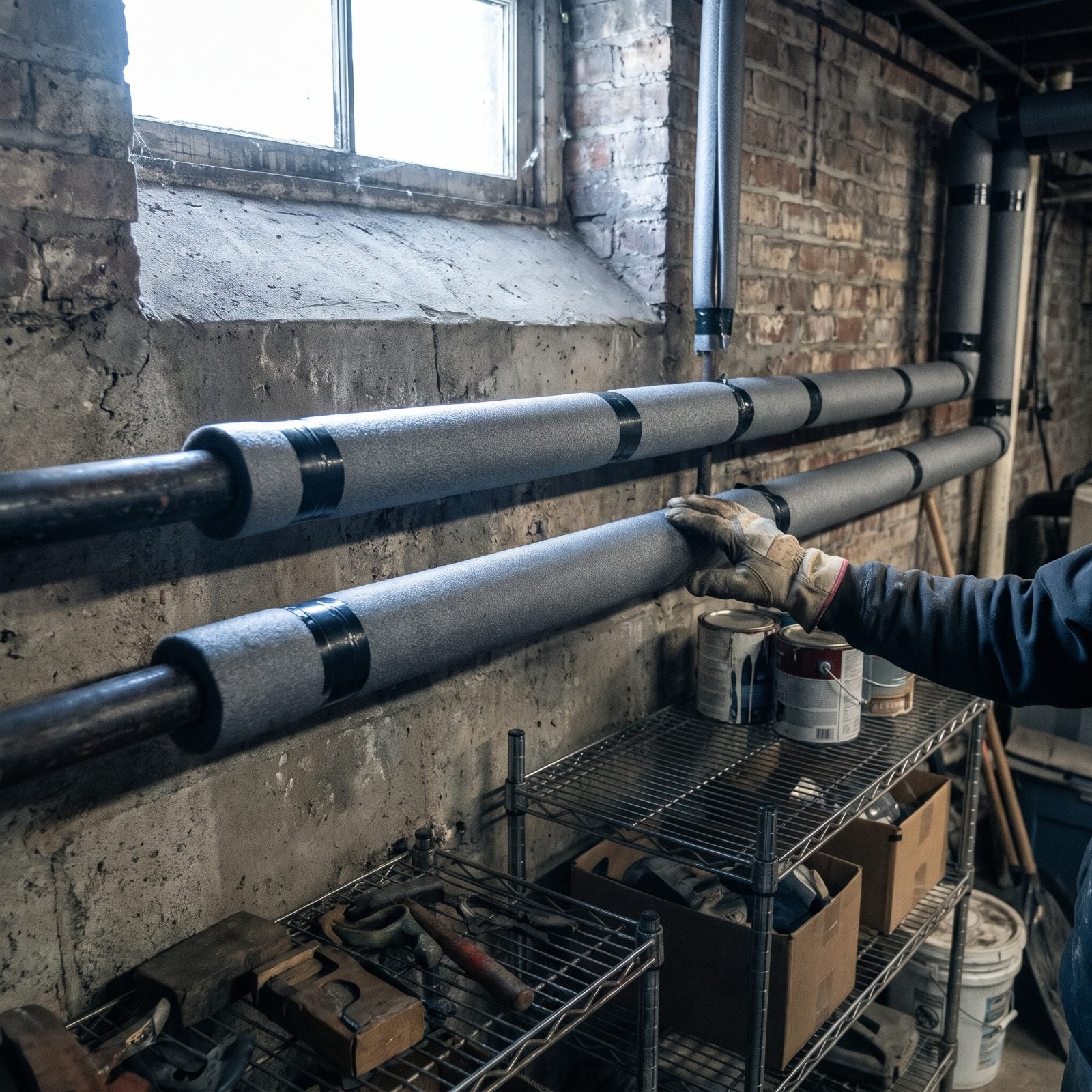
Pipes carrying hot water or steam through a cold basement give up their heat the whole way, so by the time it reaches the radiator upstairs there’s less of it left.
Wrap those exposed pipes and the heat stays in the water where it belongs. The room upstairs gets warmer on the same fuel. It’s cheap, it’s not hard, and it’s one of those jobs that pays for itself before the winter’s out.
12. Switch Off Kitchen and Bath Exhaust Fans Promptly
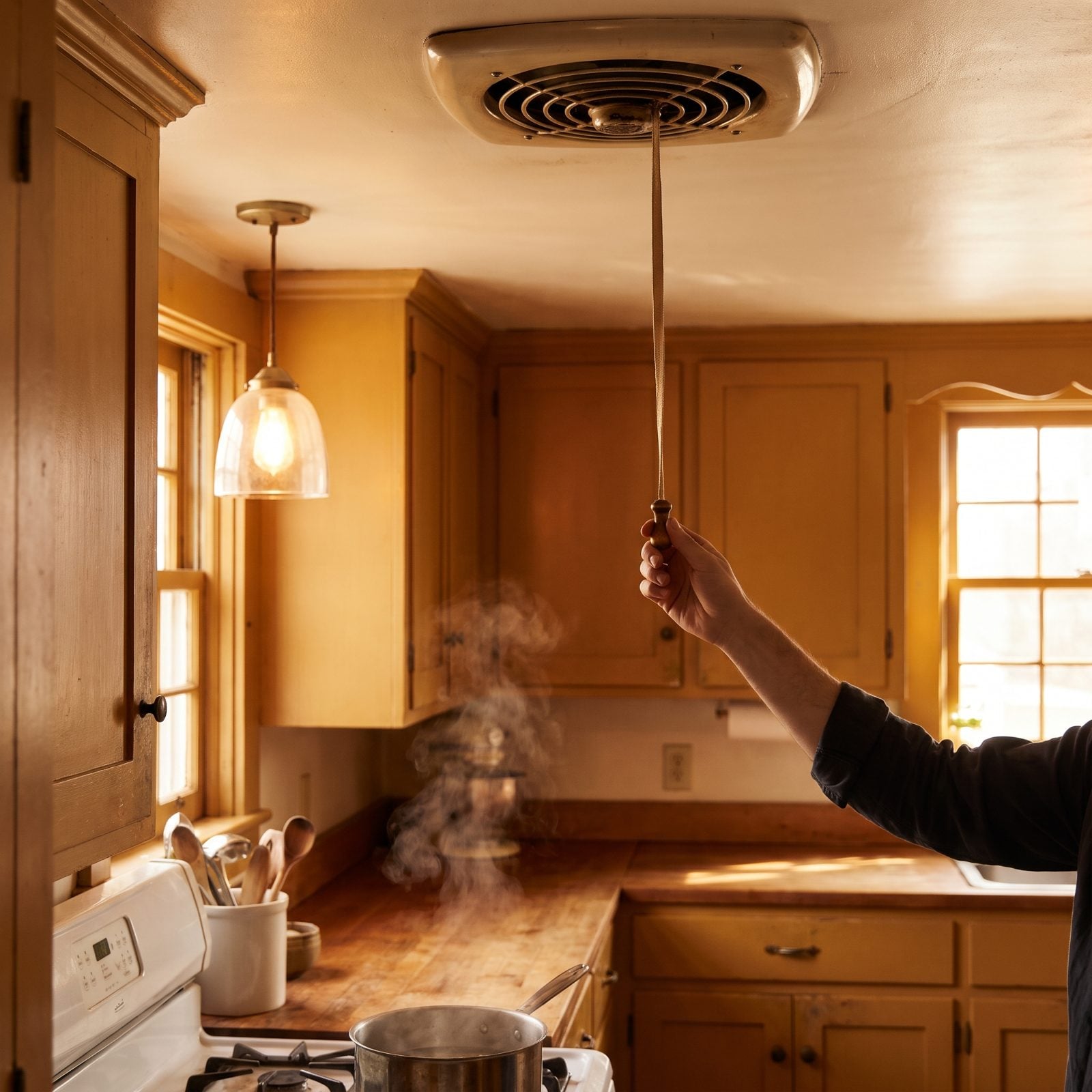
An exhaust fan does one thing: it pulls air out of your house. In winter, that’s warm air you heated, replaced by cold air sucked in through every gap in the walls.
Run them while you cook or shower, then shut them off. Leave the bathroom fan going for an hour after a shower, or forget the stove hood is on, and you’re emptying your warm house into the backyard a few cubic feet at a time. Flip it off the moment the steam clears.
11. Schedule Baking for the Coldest Hours
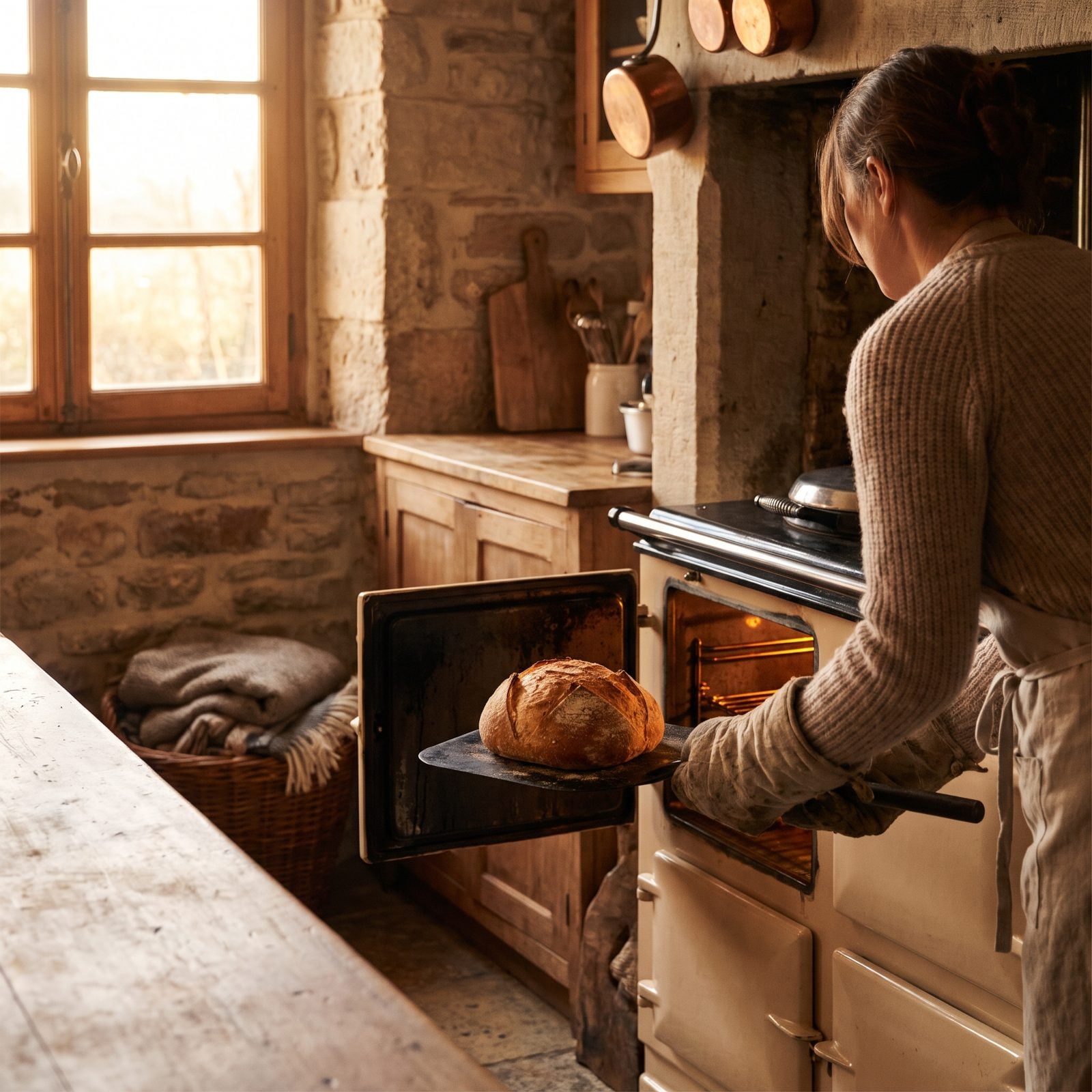
An oven running at 400 degrees throws off heat long after the bread comes out, and earlier households knew it, so they planned the week’s bread, pies, and beans for the bitterest mornings. The kitchen turned into the warmest room in the house almost by accident. Nobody wasted a watt doing it.
Once the baking’s done and the oven’s off, leave the door open a crack. All that stored heat drifts into the room instead of sitting trapped behind iron and glass. Free warmth, already paid for.
10. Move Chairs Away From Windows and Exterior Walls
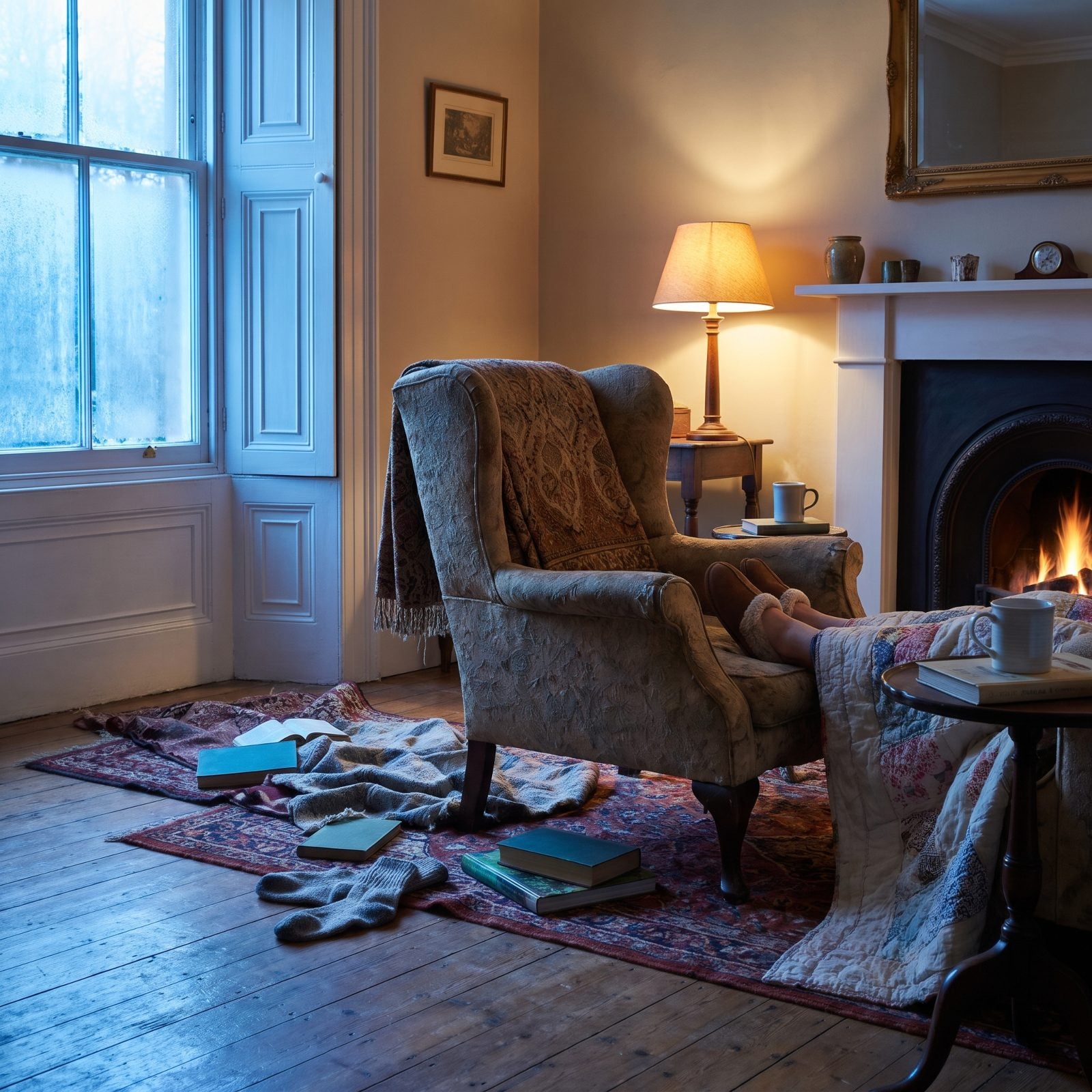
Sit by a window on a January night and you’ll feel a chill even with the glass sealed. That’s radiant heat loss — your body throws warmth toward the cold surface, and no amount of weatherstripping stops it entirely.
So they dragged the good chairs inward, toward the middle of the room, away from the outside walls. Simple. Costs nothing. It’s genuinely surprising how much difference three feet makes.
9. Place Folding Screens Around the Sitting Area
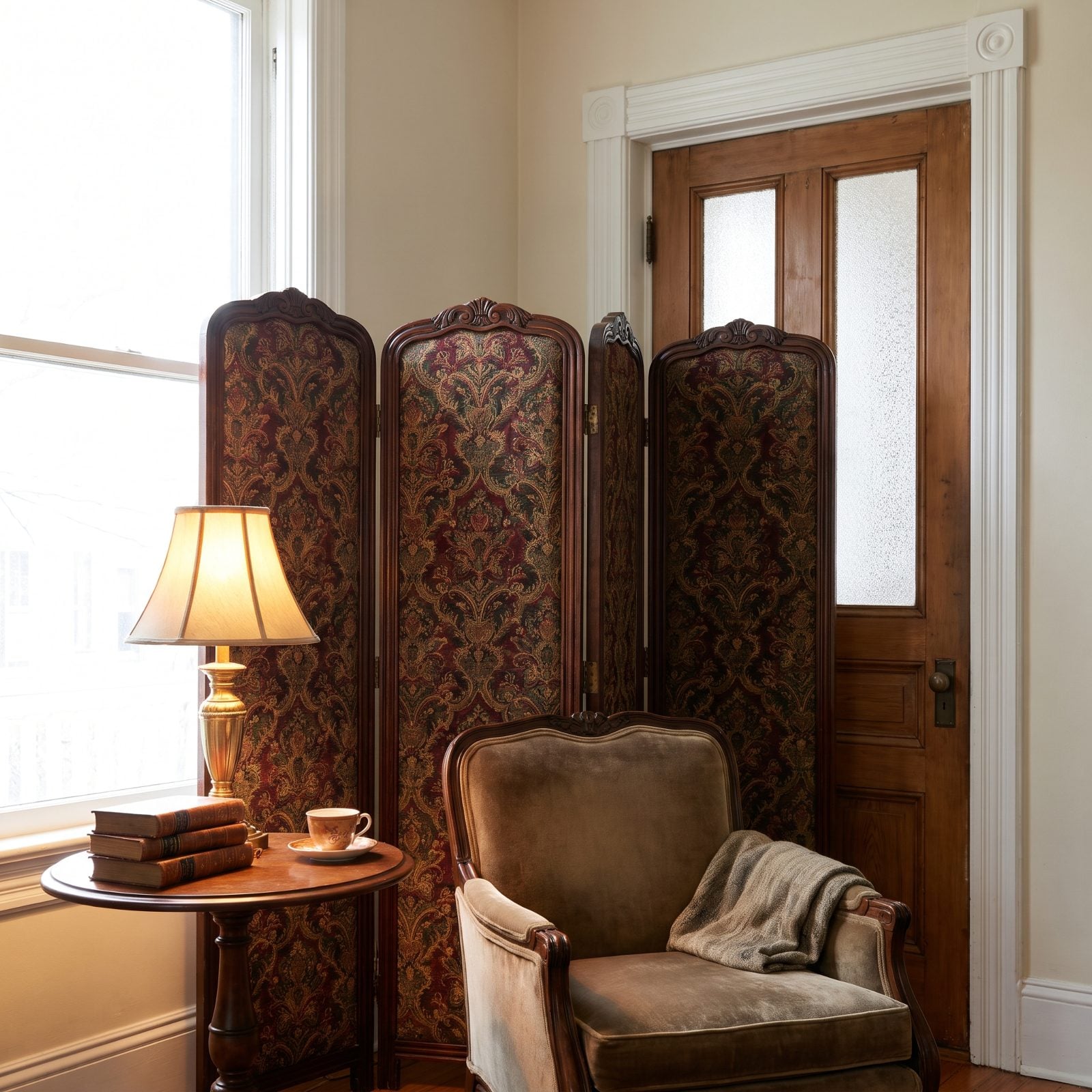
Folding screens weren’t only for modesty or hiding a dressing corner. Set one between your chair and the door and it breaks the cold current creeping across the floor. The draft hits the panel, not your ankles.
A screen also carves a smaller pocket out of a big room. Less air to warm, less space for heat to vanish into. The warmth settles around you instead of wandering off to the far wall.
8. Draw Bed Curtains Around the Mattress
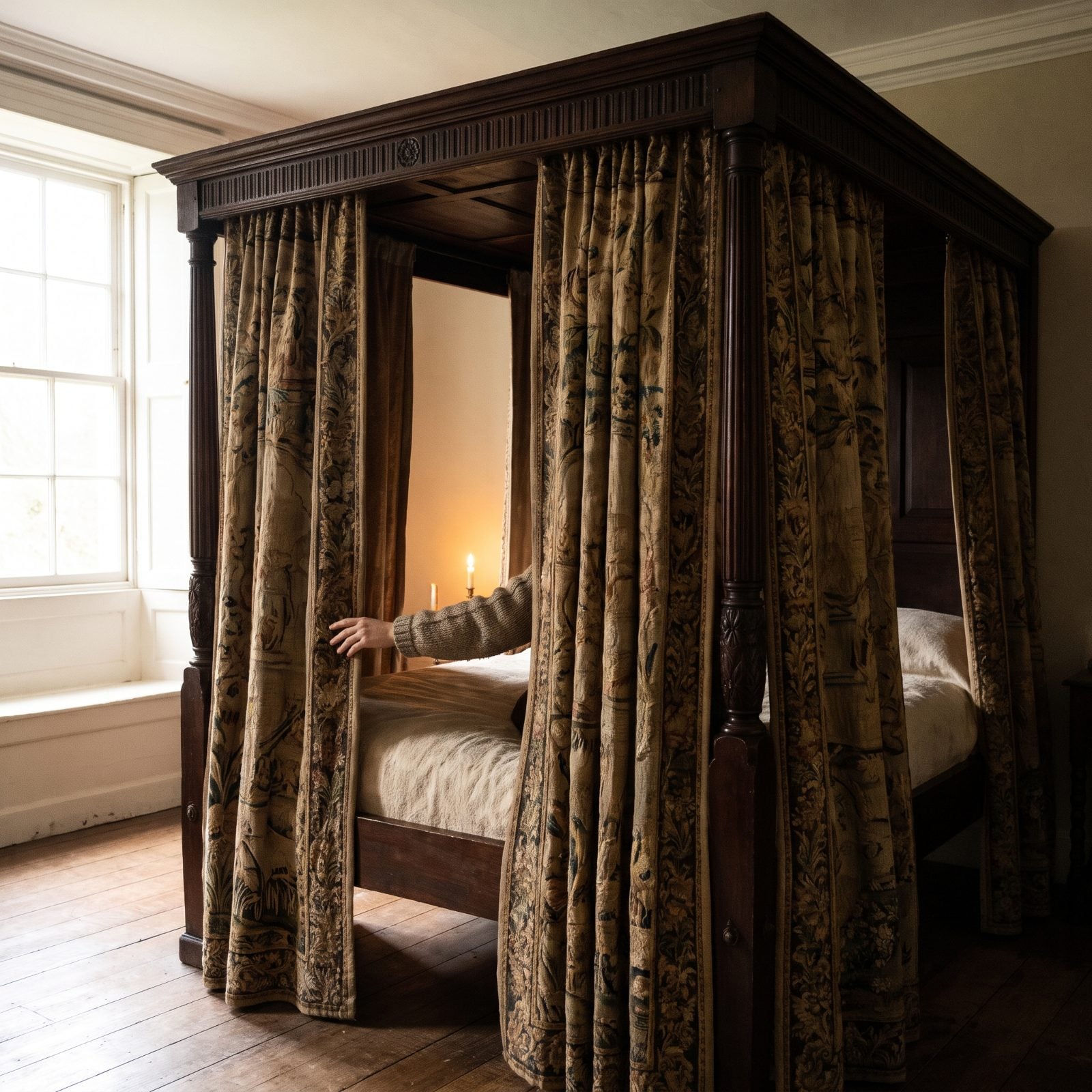
That four-poster with the heavy drapes was never about looking grand. Bedrooms went bitterly cold overnight, and the curtains turned the bed into a little tent that held your body heat close until morning.
Draw them shut and the trapped air warms up fast. You’re heating a space the size of a closet instead of a whole frigid room. Our great-grandparents woke to ice on the water jug and shrugged it off, because inside the curtains it stayed warm.
7. Add a Deep Featherbed for Winter
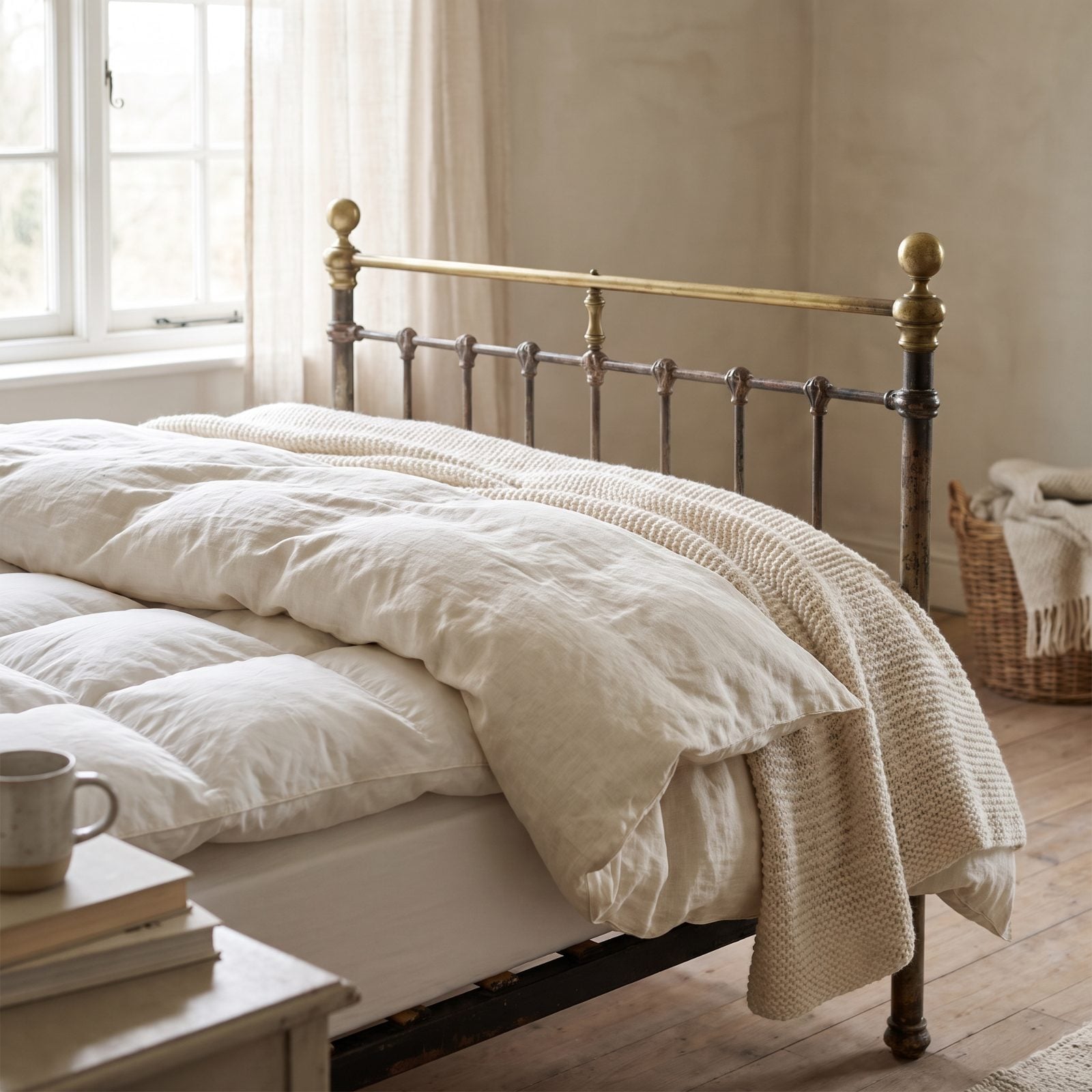
A featherbed goes under you, not over you — thick down ticking laid on top of the mattress, so you sink in and the loft wraps up around your sides. The cold never reaches you from below.
Families swapped these in for winter and packed them away come spring. All that trapped air does the insulating. Half of staying warm in bed is stopping the chill that rises up through the mattress, and a featherbed handles it from the first minute.
6. Put a Wool Blanket Beneath the Bottom Sheet
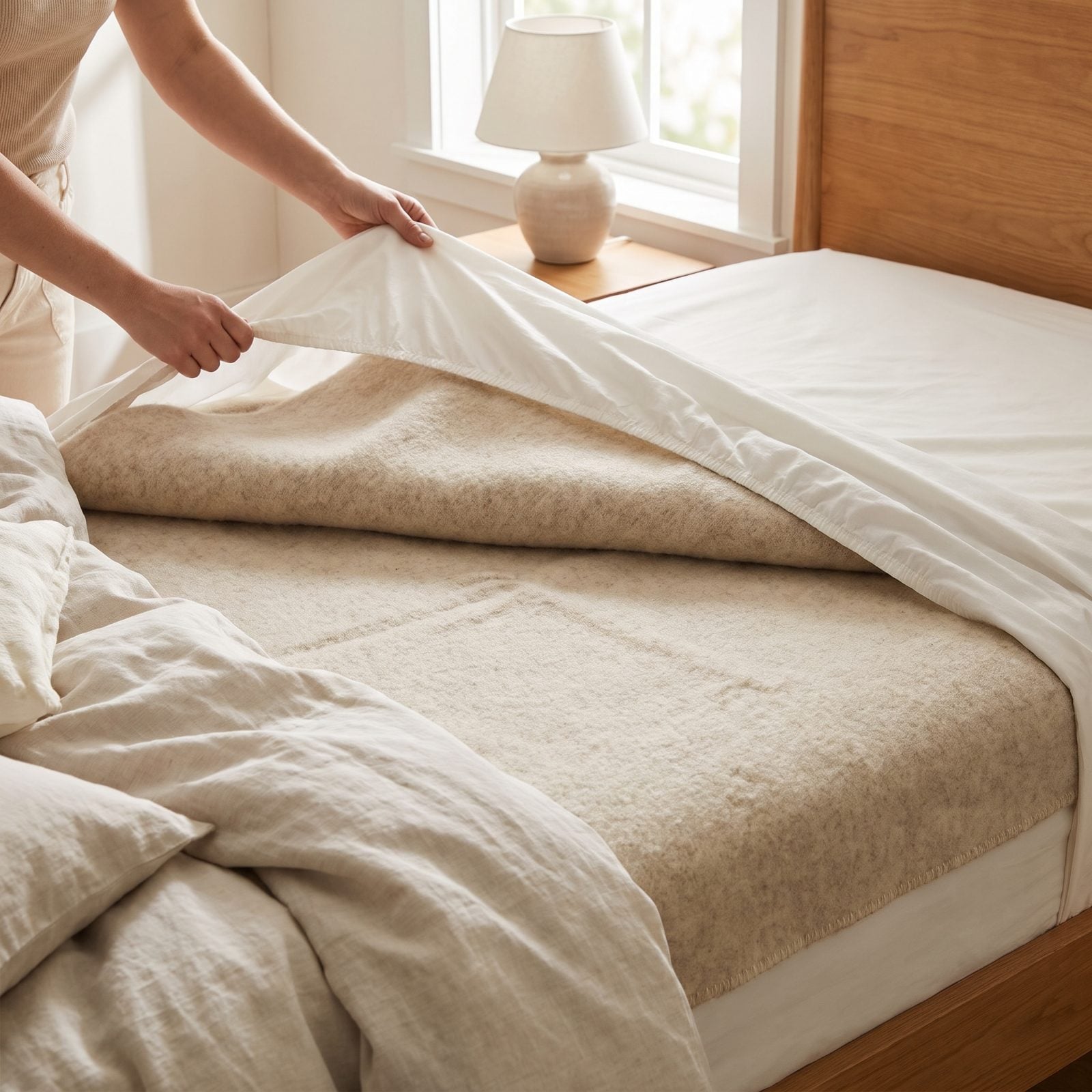
Most people pile blankets on top and shiver anyway. The fix is underneath. A wool blanket laid straight on the mattress, bottom sheet smoothed over it, and the cold rising from below never gets through.
Wool keeps its warmth even where down flattens under your weight. This one costs you nothing but a minute of remaking the bed. Skeptical? Try it for one night.
5. Change Cotton Sheets for Brushed Flannel
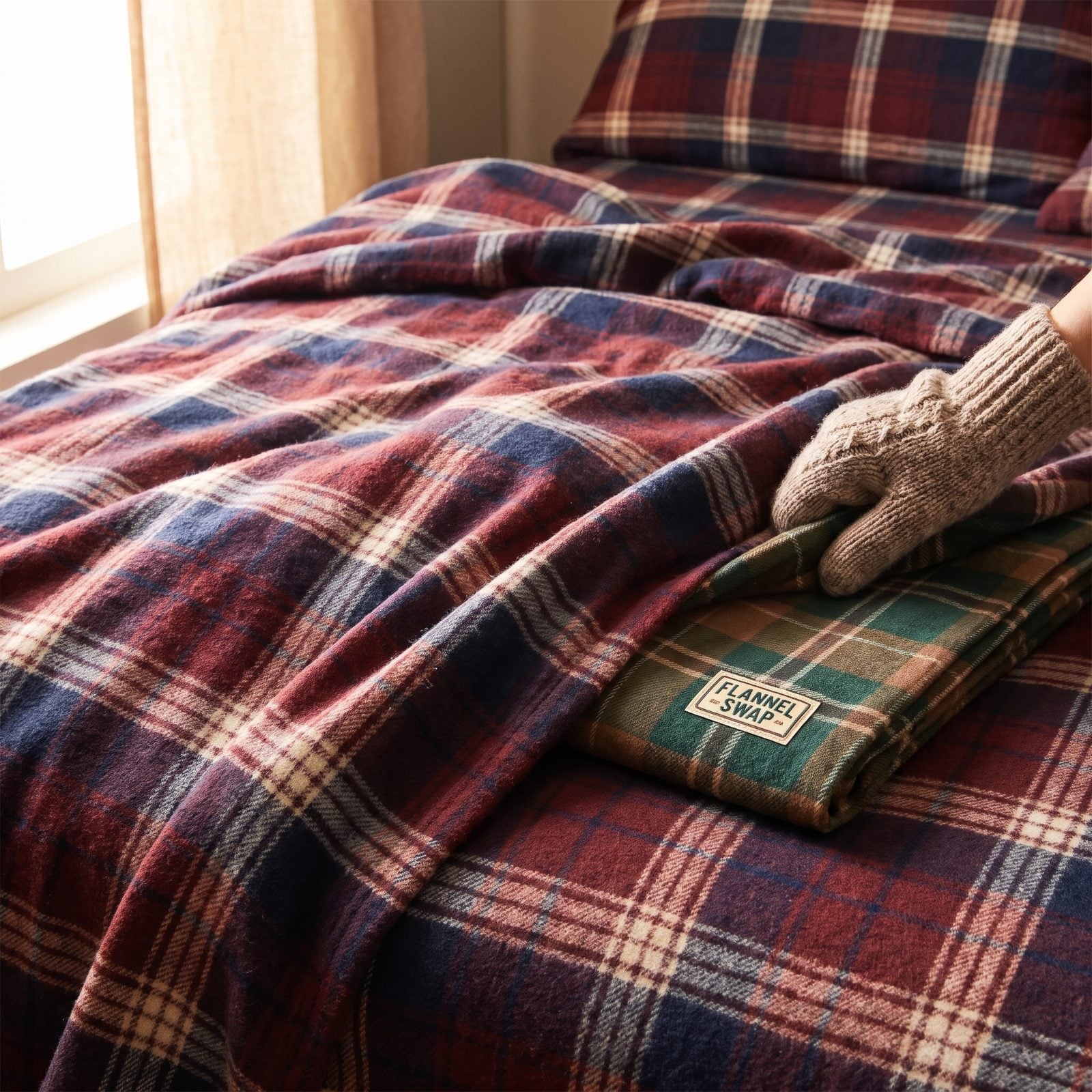
Slide into cold cotton percale in January and your whole body flinches. Flannel never does that. The fabric is brushed until the fibers lift into a soft nap, and that fuzzy surface traps a thin layer of warm air right against your skin.
It feels warm the second you climb in, which plain cotton never manages. Households kept two sets and switched with the season — crisp cotton for summer, soft flannel once the frost came. The right sheet does half the blanket’s job for it.
4. Layer Several Lighter Quilts Instead of One Cover
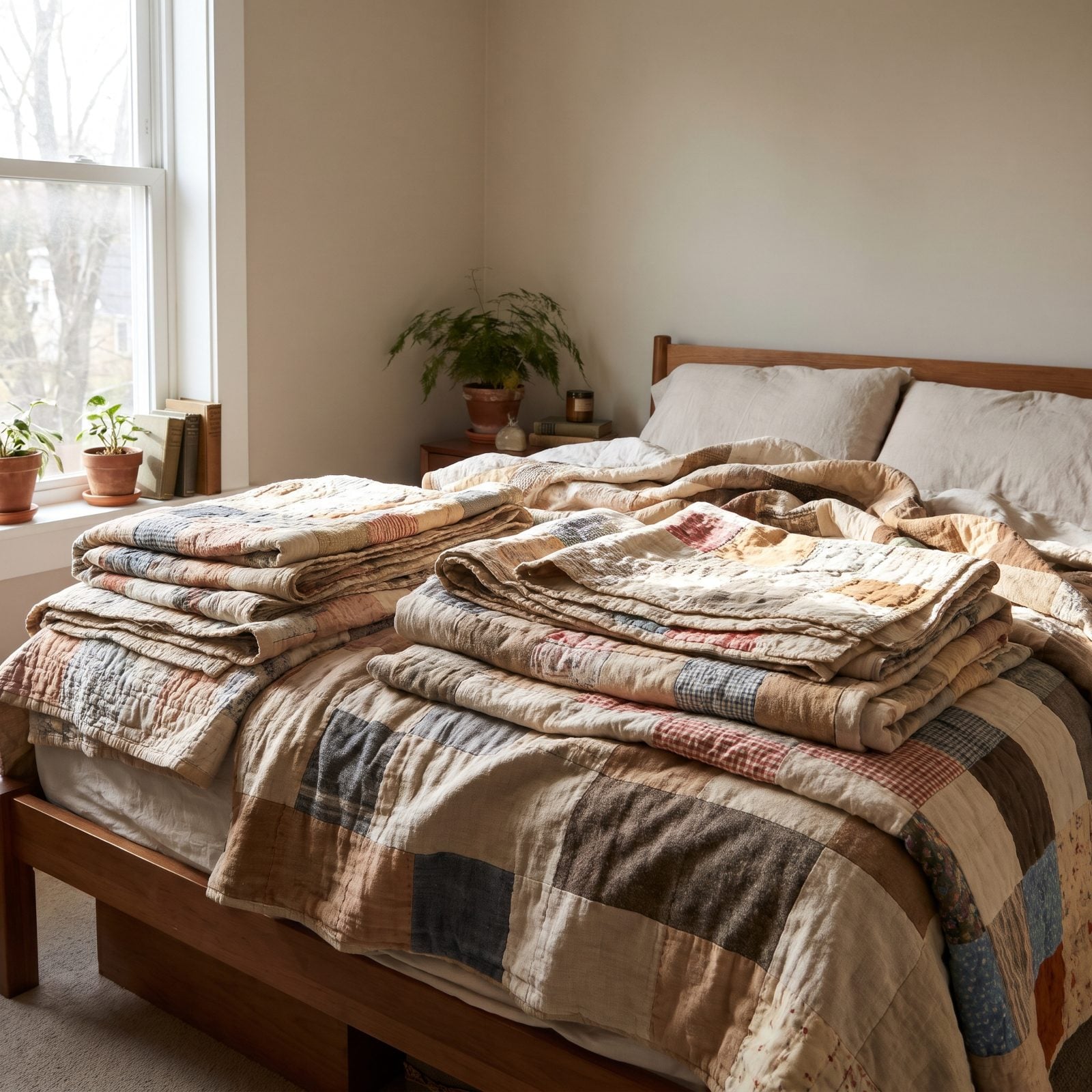
One thick comforter sounds warmer. It isn’t. Several lighter quilts beat it every time, because the air trapped between each layer does the insulating, and a single heavy cover leaves you no gaps to work with.
- You add or peel off a layer as the night shifts, instead of being stuck too hot or too cold.
- Each quilt traps its own pocket of warm air, so three thin ones out-insulate one fat one.
- Depression-era households already owned a stack of pieced quilts, so this cost nothing but the folding.
3. Tuck a Hot-Water Bottle Into the Bed
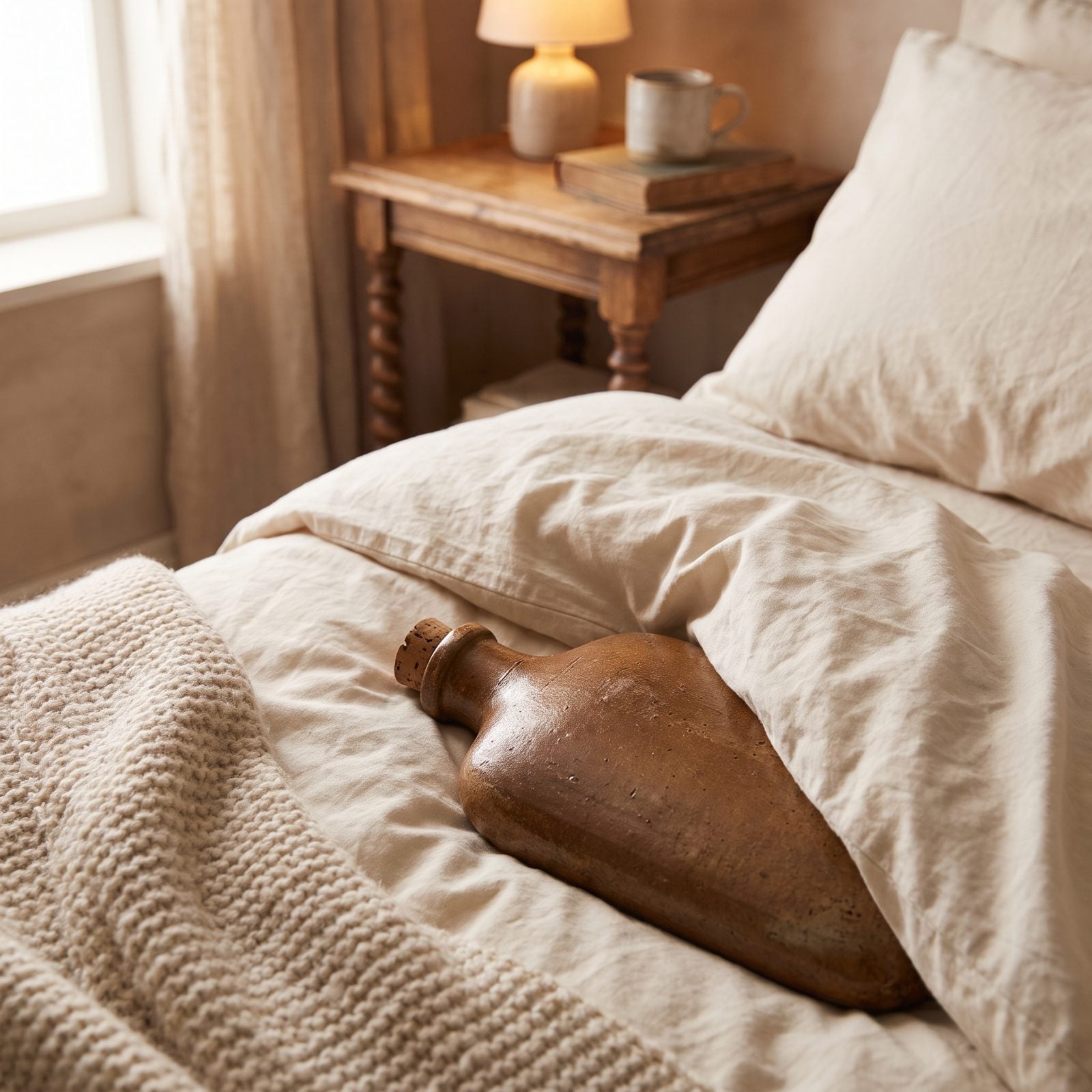
Before rubber, these were stoneware or copper, filled from the kettle and slipped between the sheets a half hour before bedtime. You climbed into a warm bed instead of a cold one, and that changes everything about falling asleep.
Placement is the real trick. People park it at their feet, but tuck it near the small of your back or your stomach and the warmth carries further through the night. Old wisdom, still useful, and a good deal quieter than any heater.
2. Warm the Sheets With a Bed-Warming Pan
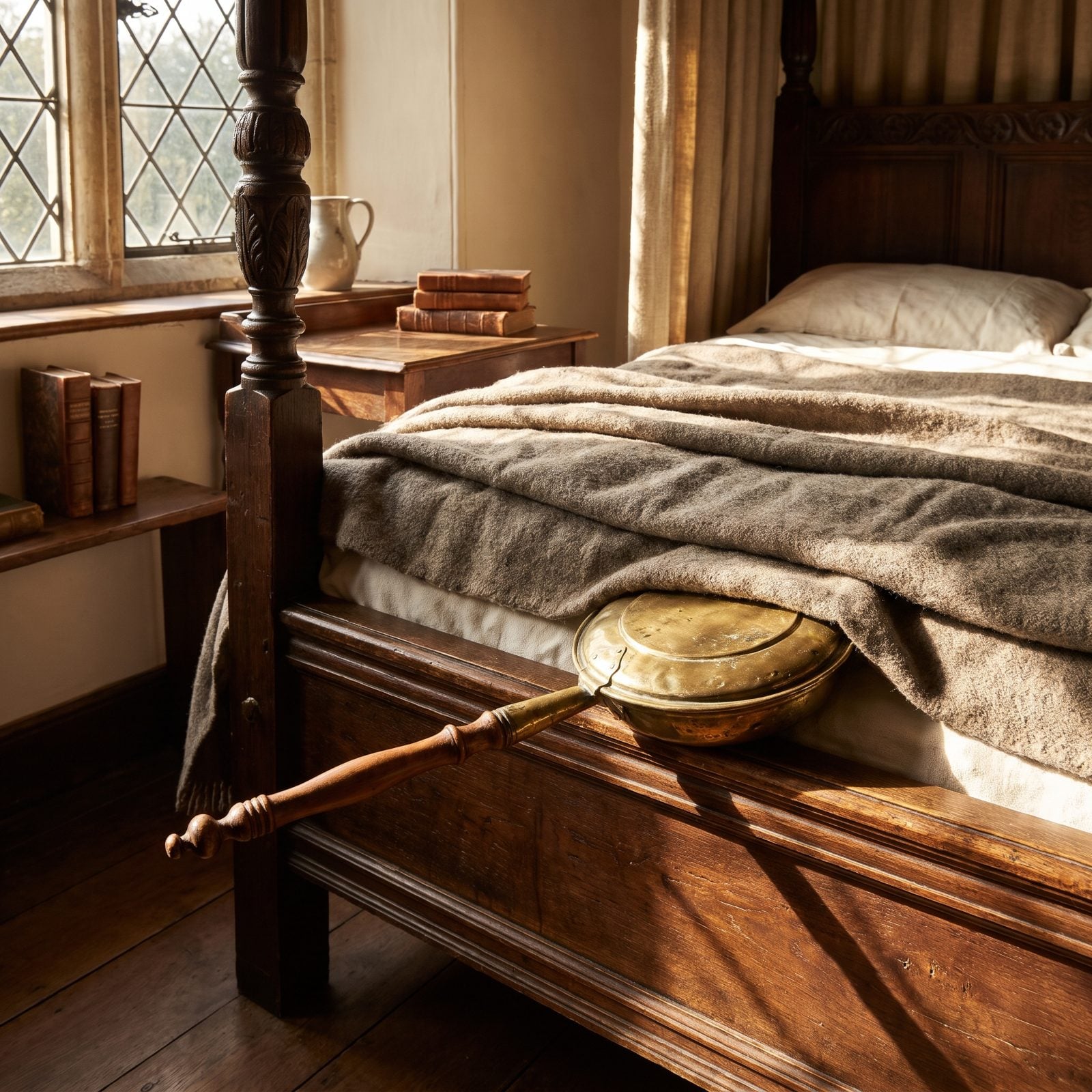
Before you slid into a cold bed, something slid in ahead of you. A flat covered pan on a long handle, filled with embers or hot coals scooped from the hearth, run back and forth between the sheets a few minutes before you climbed in.
That long handle wasn’t for show. Leave a lidful of coals sitting in one spot and you scorch the linen, so the whole trick was keeping it moving — and people got genuinely good at this, the way you get good at anything you do every single night of your life.
Its modern descendant? The rubber hot water bottle, which does the same job with none of the fire risk and, let’s be honest, roughly none of the charm. If you own an antique pan today it’s probably hanging on a wall somewhere, its working life over the day coal and open embers stopped living in the bedroom.
1. Let a Household Pet Become a Willing Lap Warmer
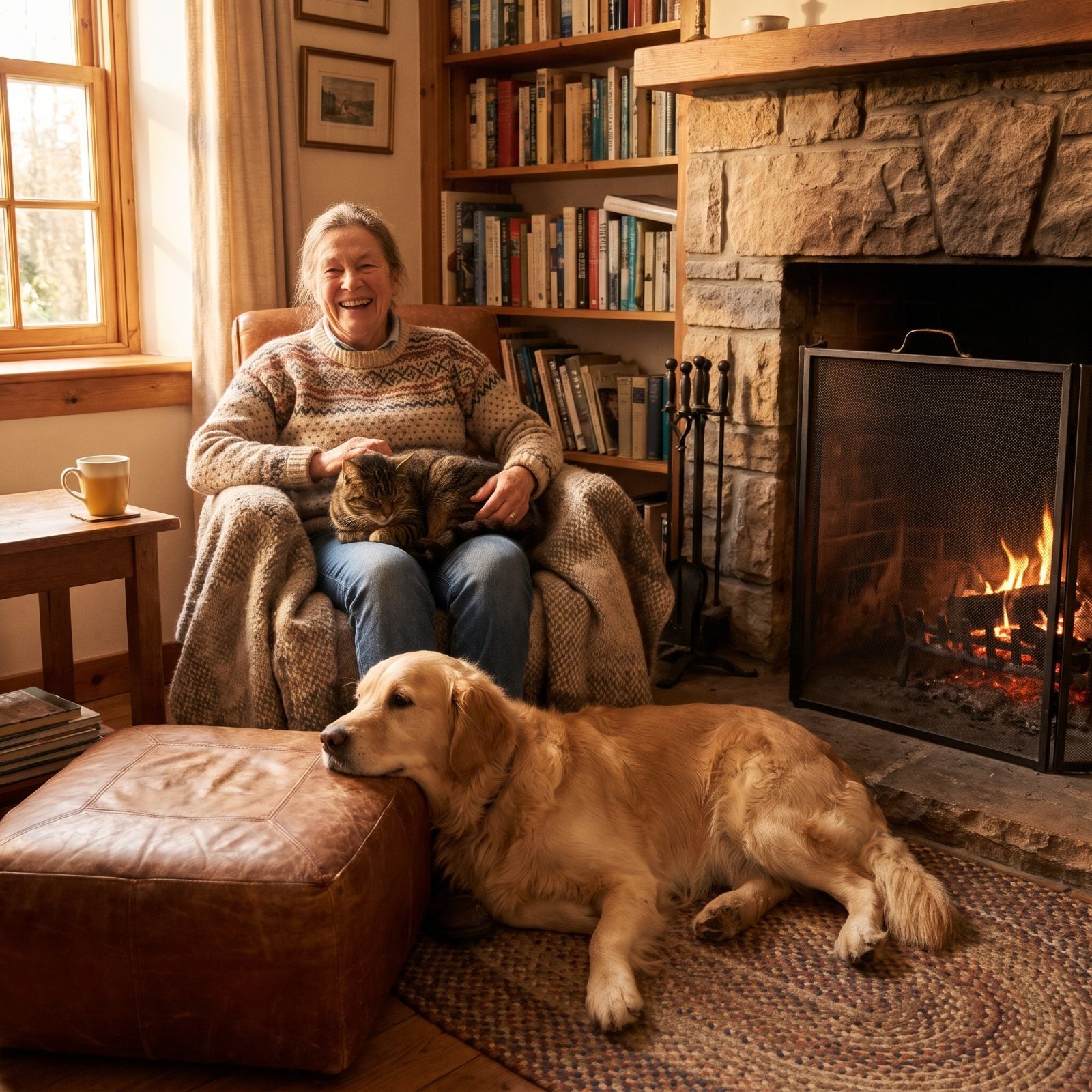
A sleeping cat runs warm. A dog across your feet runs warmer. This isn’t folklore — it’s thermodynamics, and generations figured it out long before anyone had a way to measure it.
The old phrase “three dog night” comes from exactly this: a night so cold you needed three dogs in the bed to get through it. People really did sleep like that, and the animals obliged happily enough, since the body heat you were chasing was heat they wanted to be near too.
Watch any cat in an old house. It finds the one warm spot without a thermometer — the square of sun on the floor at two in the afternoon, the top of the radiator, your lap the second you sit down. They’re better at hoarding heat than we are, and letting one settle in may be the laziest trick on this whole list.