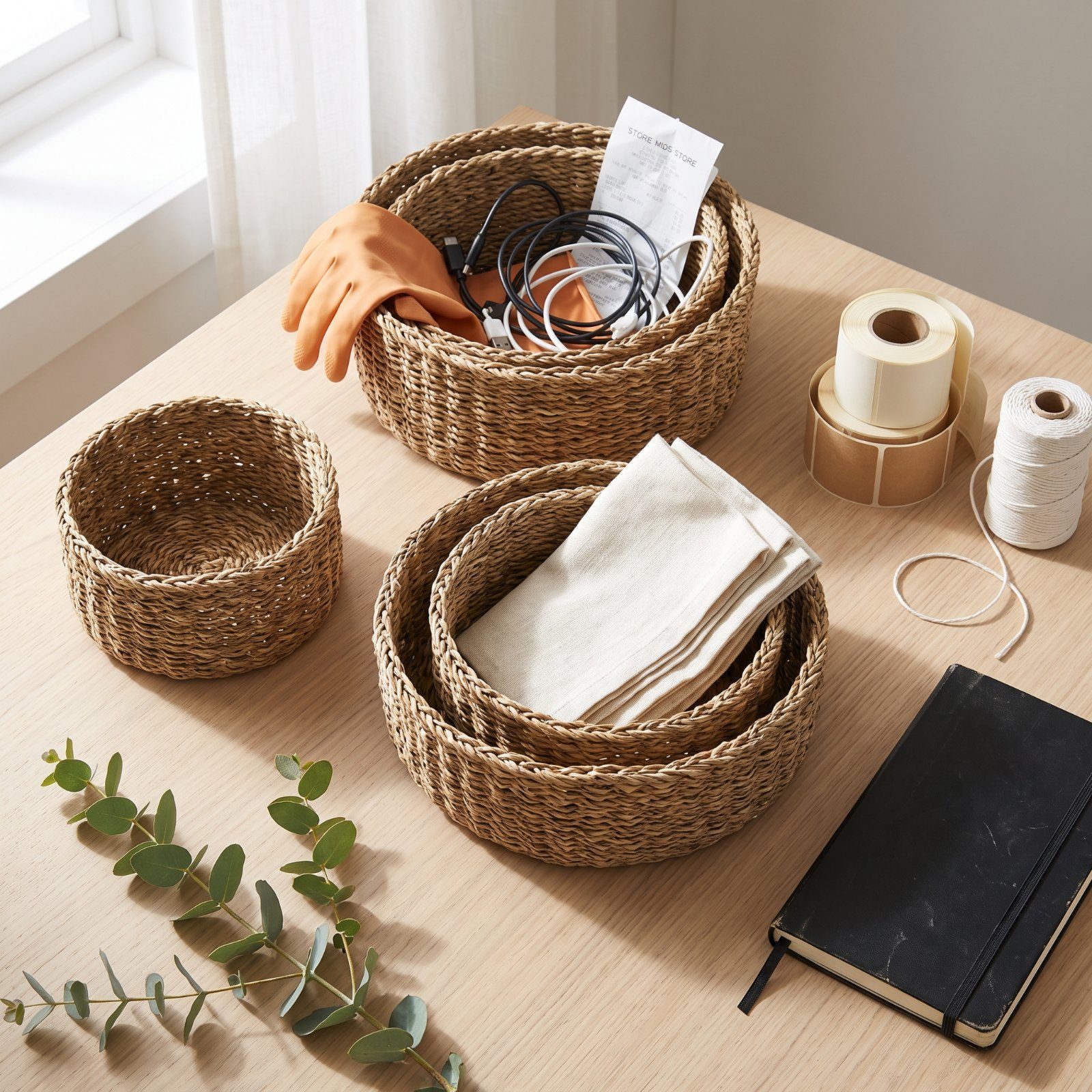
The woven baskets arrived on a Tuesday. By Thursday you’d lined them up on the shelf, stepped back, and felt that warm little hum of a life finally under control. Three weeks later they held a tangle of chargers and one odd glove.
Please note that some of the images in this article were created with the assistance of AI.
That hum, and the slow deflation that follows it, is the same feeling you’ve chased in a few relationships too. The system was going to fix everything. So was the right person. Then daily life showed up and both got messy again. The wiring underneath is identical: we fall for potential, we compare in secret, we spend too much to walk away. Here’s where organizing your house and loving another human run on the exact same stubborn human software.
16. New Storage Baskets Deliver a Brief Honeymoon Phase
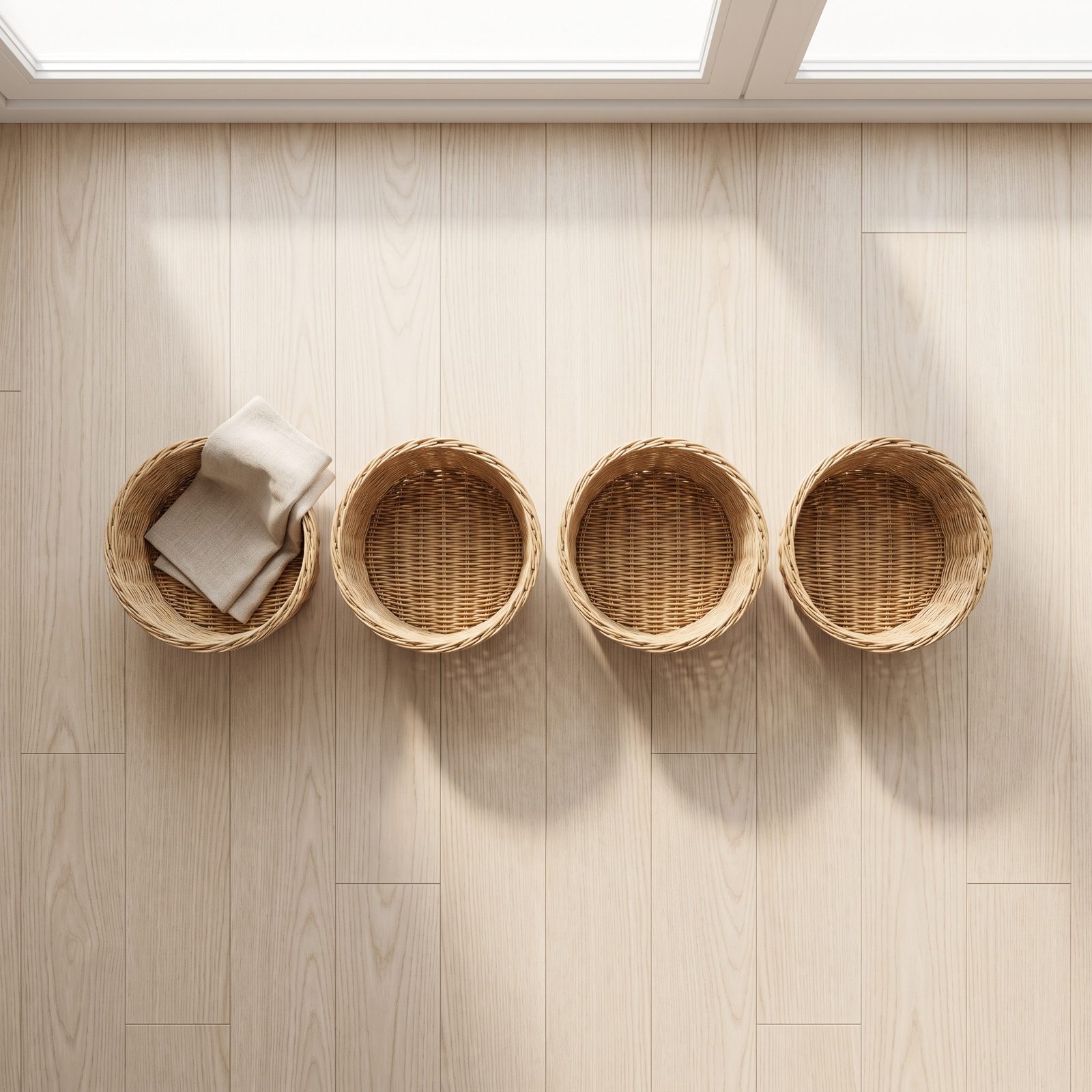
Nothing promises a whole new you like an empty basket. You unbox them, line them up, and for about seventy-two hours your home feels like it belongs to a calmer, more deserving person. The remote has a home now, the scarves live somewhere, and you are reborn.
This behaves exactly like the early weeks of a new relationship. Psychologists call it hedonic adaptation: the thrill of any new thing fades fast because we normalize it. The basket doesn’t change. Your dopamine does. Within a month the novelty wears off, the baskets become furniture, and the clutter finds its way back in like it never left.
Plenty of us have bought the same style of basket three times, telling ourselves the problem was the basket. It was never the basket.
15. You Compare Your Linen Closet to Strangers’ Highlight Reels
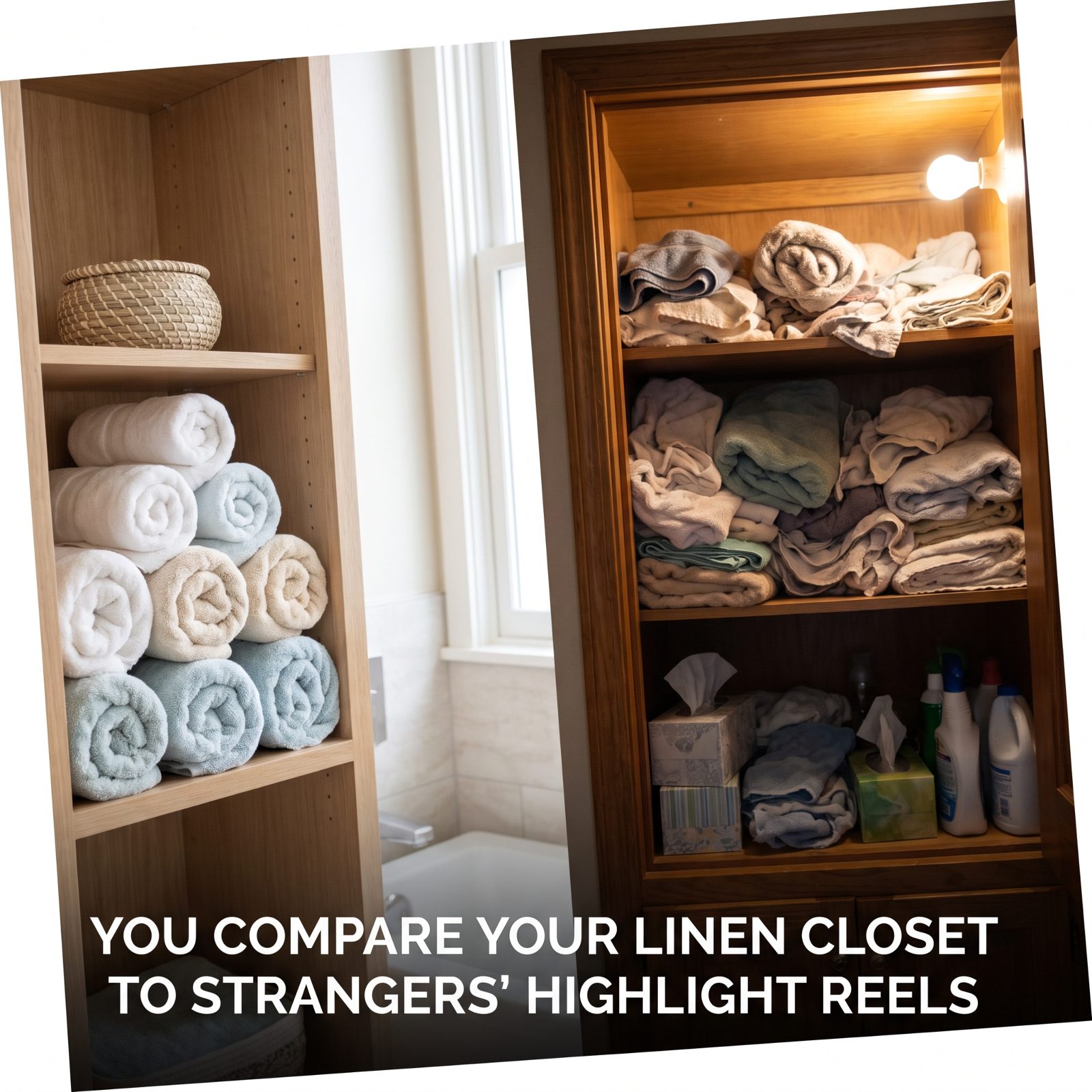
Somewhere out there is a linen closet with towels rolled like a spa menu, sorted by color, tied with twine. You’ve seen it. You followed it. You held your own messy shelf up against it and felt a small flush of inadequacy.
Here’s what nobody posts: that closet took forty minutes to stage and was never used again. You’re comparing your Tuesday to a stranger’s photo shoot, which is the exact trap that makes people measure their real marriage against someone’s anniversary caption. Social comparison theory says we rank ourselves against others constantly, and we always lose when the competition is a curated frame. The highlight reel has no laundry day in it.
14. You Test Five Planners Without Committing to One System

Five planners. Each one bought the week you were sure this was the one that would finally stick. The bullet journal lasted four days, the leather one you were too precious to write in, and the app got deleted during a software update you never fixed.
This is choice overload, the same restlessness that keeps someone perpetually dating without ever picking a person. When every option stays open, none of them gets your full effort. The planner isn’t failing you. The ongoing search is the comfortable part, because searching never asks you to commit and possibly fail at the commitment.
Plenty of us have a drawer of half-used planners we keep because throwing them out feels like admitting defeat. Which, honestly, it would be.
13. One Perfect Pantry Shelf Makes You Ignore the Chaos

One shelf. You got the matching canisters, decanted the pasta, aligned the labels, and now you open the pantry and your gaze locks onto that single gleaming row like a tractor beam. The half-unpacked boxes and the avalanche of snack bags right below it? Invisible.
That’s the halo effect doing your dirty work. One good feature makes us assume the whole thing is good, which is precisely how someone excuses a hundred red flags because their partner is wonderful in one dazzling way. The perfect shelf isn’t the problem. It’s the spotlight that keeps you from looking at the rest.
12. You Hide Counter Clutter Before Anyone Comes Over

Doorbell in ten minutes. You sweep the counter’s worth of mail, meds, and mystery cords into a basket and shove it in the hall closet. The guest arrives to a serene kitchen. Everyone agrees your home is lovely.
We perform our best version for an audience, then let the backstage pile up where no one can see. Same instinct that makes a couple put on the happy face at the dinner party and save the real conversation for the car ride home. Impression management is exhausting precisely because the mess didn’t go anywhere. You just relocated it to a room with a door.
11. You Keep Changing Labels Instead of Changing Daily Habits
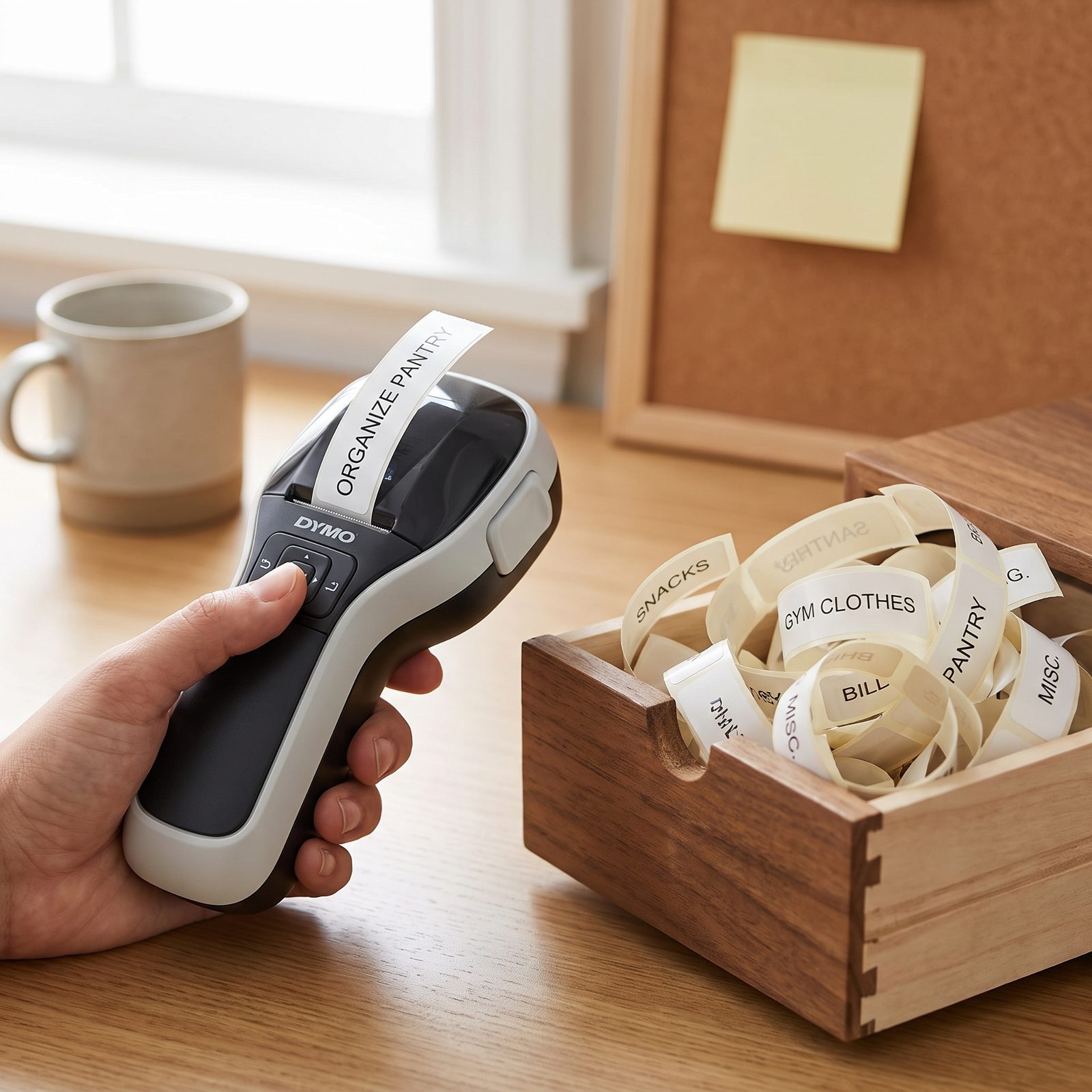
The label maker gets a workout. You reprint, realign, upgrade the font. Last week it said SNACKS; now it says, in a cleaner typeface, SNACKS. The bin still ends up chaotic because the actual problem is that nobody puts the snacks back.
Relabeling feels like progress while asking nothing of your behavior. It’s the home version of fixing a relationship by swapping the surface stuff, new sheets, a weekend away, a grand gesture, while the daily pattern underneath stays exactly the same. The label is the easy lever. The habit is the hard one, and it’s the only one that moves anything.
10. You Expect Saturday’s Purge to Fix Months of Neglect

You block the whole Saturday. Coffee, trash bags, a podcast queued, and the righteous energy of someone about to fix everything in one heroic sweep. By two o’clock the closet is worse than when you started and you’re sitting on the floor surrounded by your own history, defeated.
That’s the planning fallacy. We dramatically underestimate how long things take and dramatically overestimate what one burst of effort can undo. The crash diet of organizing, basically. People do the identical thing in relationships, saving months of small resentments for one big talk meant to repair it all in an afternoon. Neglect built slowly can’t be cleared fast.
The mess took months of small surrenders. One heroic Saturday was never going to outmuscle that.
9. You Keep That Dresser Because You’ve Invested Too Much

The drawers stick. One pull is missing. You half-refinished it two summers ago and the bare patch still stares at you. But you’ve put money into it, and a weekend of sanding, and the brass handles you bought and never installed. So it stays.
This is sunk-cost fallacy in oak form. We throw good effort after bad because walking away feels like admitting the past effort was wasted. Same quiet logic that keeps people in a relationship they’ve outgrown: too many years in to leave now. But the years already spent are gone either way. The only real question is whether it serves you from here.
8. You Organize Everyone’s Stuff Except Your Own Nightstand
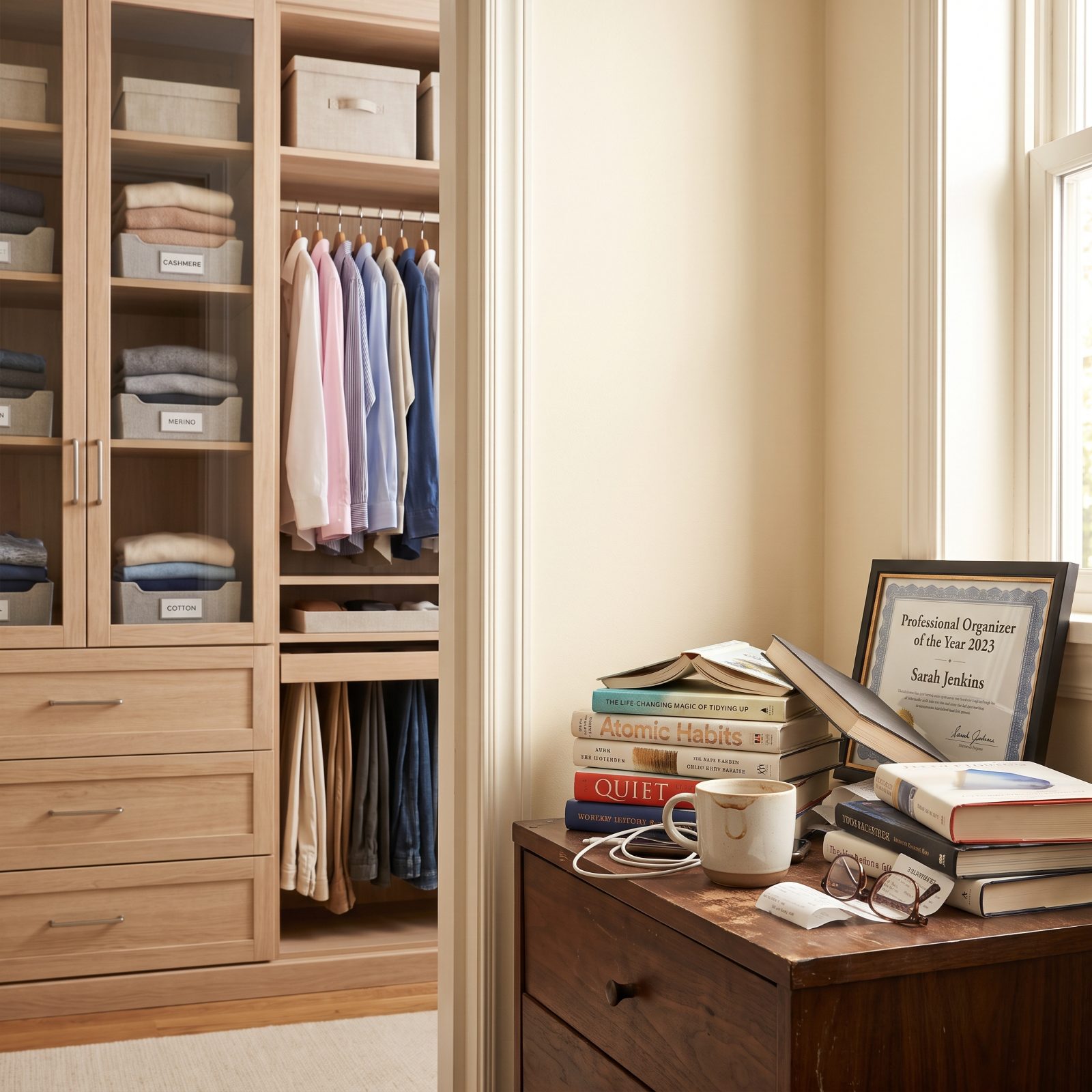
The kids’ closets are sorted by size. The command center hums. The pantry could be in a magazine. And then there’s your nightstand: a water glass from Tuesday, three half-read books, a tangle of hair ties, a cough drop of unknown origin.
You manage everyone’s space and abandon your own, the pattern of the person who pours into everyone’s needs and keeps none of that care for themselves. Caretaking others is visible and praised. Tending yourself feels optional, so it drops off the list. The one surface that’s entirely yours becomes the one you never get to.
7. You Never Discuss Who Resets the Kitchen at Night

Every day the kitchen has to be put back. Dishes, crumbs, lunchboxes, the sink wiped down so the evening doesn’t start in a disaster. Nobody decided who does this. It just happens, or it doesn’t, and whoever can’t stand the mess breaks first.
This is the invisible-labor trap, maybe the truest parallel of all. The organizing work that goes unspoken breeds the same slow resentment as the household tasks a couple never actually talks about. What never gets named never gets shared. The person who notices the mess first ends up owning it, quietly, until quietly curdles into something sharper.
The fix isn’t a better system. It’s a conversation nobody wants to start, which is why it’s the hardest shelf in the whole house to organize. Say the thing. Then go enjoy the afternoon.
6. Your Childhood Home Still Sets Your Cleanliness Standard
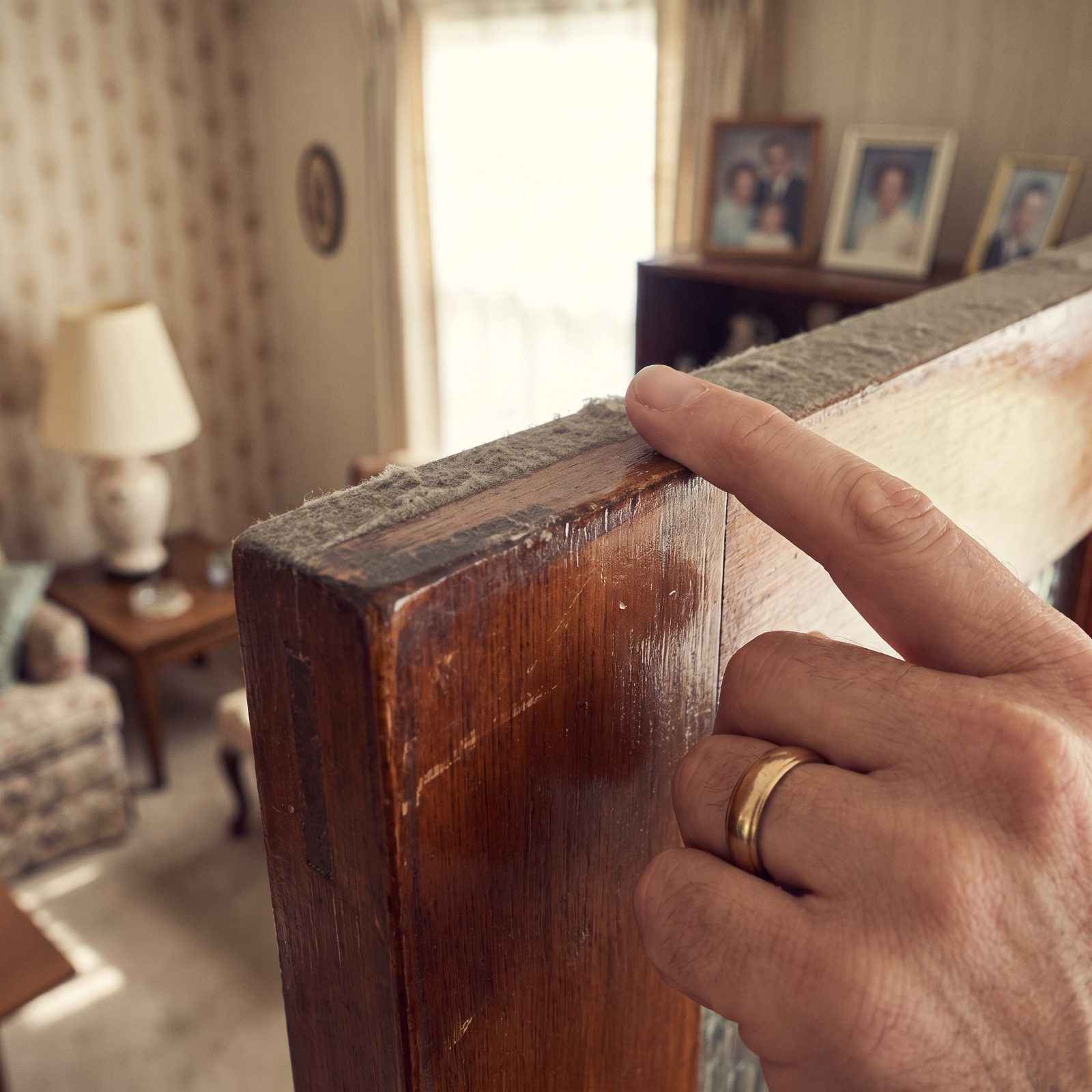
Run a finger along the top of a door frame. If you flinch at the dust, somebody taught you to check there — probably decades ago, in a house you haven’t lived in since you were eighteen.
The home we keep as adults is almost never our own invention. It’s a rerun. Beds made or beds left unmade, shoes at the door or shoes everywhere, dishes done before bed or soaking till morning. We inherit the rules and the guilt that enforces them, and we carry both into our own hallways without ever once voting on them.
Romance works the same way. The first blueprint of love we ever saw was the one at the kitchen table when we were small — warm, cold, loud, silent, whatever it was became the baseline for normal. And normal is a sneaky word. It doesn’t mean good. It means familiar.
5. One Crooked Sofa Makes the Whole Room Feel Wrong

You can walk into a spotless room and feel it before you see it. One picture hangs a hair off level, and the whole wall tilts in your mind until you fix it.
The brain hates a near-miss more than it hates a mess. Total chaos gets filed as chaos and ignored. But one wrong element inside an ordered scene lights up like a flare, because the eye is wired to catch what breaks the pattern. A tidy room with a crooked sofa reads as more annoying than a room that gave up entirely.
Love pulls the identical trick. The relationship can be good in ninety ways and the mind will fix on the one habit that’s off — the way they load the dishwasher, the tone of voice on Thursdays. We magnify the single flaw in an otherwise fine thing, then mistake the flaw for a verdict on the whole.
That’s negativity bias doing its ancient job. One wrong detail feels louder than ten right ones. Straighten the sofa if you must. Just know the sofa was never the problem.
4. You Keep Waiting for the House to Stay Finished

You finish the closet. Every sweater folded, every basket labeled, the floor actually visible. You stand in the doorway and feel something close to peace, and it lasts about a day and a half.
Then the mail piles up again. The shoes migrate. The house exhales back into disorder and you feel oddly betrayed, as though you’d signed a contract the house refused to honor.
Here’s the quiet lie underneath every home project: that one day the work ends. It doesn’t. A home is a verb pretending to be a noun. Keeping it is maintenance, not conquest, and that finish line was always a mirage.
We expect the same of love — that the right partner is a destination, that once we arrive the effort stops and the thing just holds on its own. Then it needs tending again, and we wonder what went wrong.
Nothing went wrong. Living things need upkeep. That’s not a flaw in the house or the marriage. That’s just what being alive costs.
3. You Reorganize the Pantry Whenever Life Feels Uncontrollable

Notice when the urge to alphabetize the spices hits. It’s rarely a calm Tuesday. It’s the week the news is bad, the job is shaky, the body is acting up — and suddenly nothing in the world matters more than sorting the pantry into clear glass jars.
This isn’t really about the pantry. When the big things spin out of reach, the brain grabs a small thing it can actually finish. Order the lentils and you’ve proven, for twenty minutes, that something still obeys you.
We run the same play in relationships. When the real tension in a bond feels too large to name, we start managing the small stuff instead. Who forgot to text back. Whose turn it was to call. The tiny, winnable arguments stand in for the big, scary one nobody wants to open.
2. You Try Minimalism Even Though You Love Collections

Everyone goes through a minimalism phase. You read the book, you bag up the knickknacks, you stand in the newly empty room and feel briefly virtuous. Then within a month the shelf has three new things on it, because you are, in fact, a person who loves stuff.
Minimalism sells us an aesthetic as an identity. We adopt the look hoping to become the serene, uncluttered person who owns it. But if you genuinely delight in collections, in objects that carry stories, bare shelves won’t make you peaceful. They’ll just make you feel like a guest in your own home.
In love, the parallel is chasing a relationship style that photographs well instead of one that fits who you are. That low-drama, perfectly balanced partnership looks enviable from outside. But if you run hot by nature, forcing cool-and-contained is just cosplay with better lighting.
1. The Vacuum Becomes Proof You Care More Than Everyone

There’s a particular way a person pushes a vacuum when they feel unappreciated. A little harder. A little louder. Past the doorway of whoever’s sitting down, so the message lands without a single word being spoken.
The chore becomes a scoreboard. You’re not just cleaning — you’re building a case, logging evidence that you carry more, notice more, care more than everyone else under this roof.
Relationships keep this exact ledger. We tally who texts first, who plans, who remembers, who tries, and the tally quietly curdles into a grievance we never quite say out loud. Resentment loves a spreadsheet.
Psychologists have a name for the root of it: the responsibility bias. We remember every single thing we did in vivid detail and barely register what the other person did, so our own contribution always looks bigger from the inside. Everyone in the house genuinely believes they do the most. So the vacuum doesn’t prove you care more. It just proves you’ve been keeping score — and nobody ever wins that one.