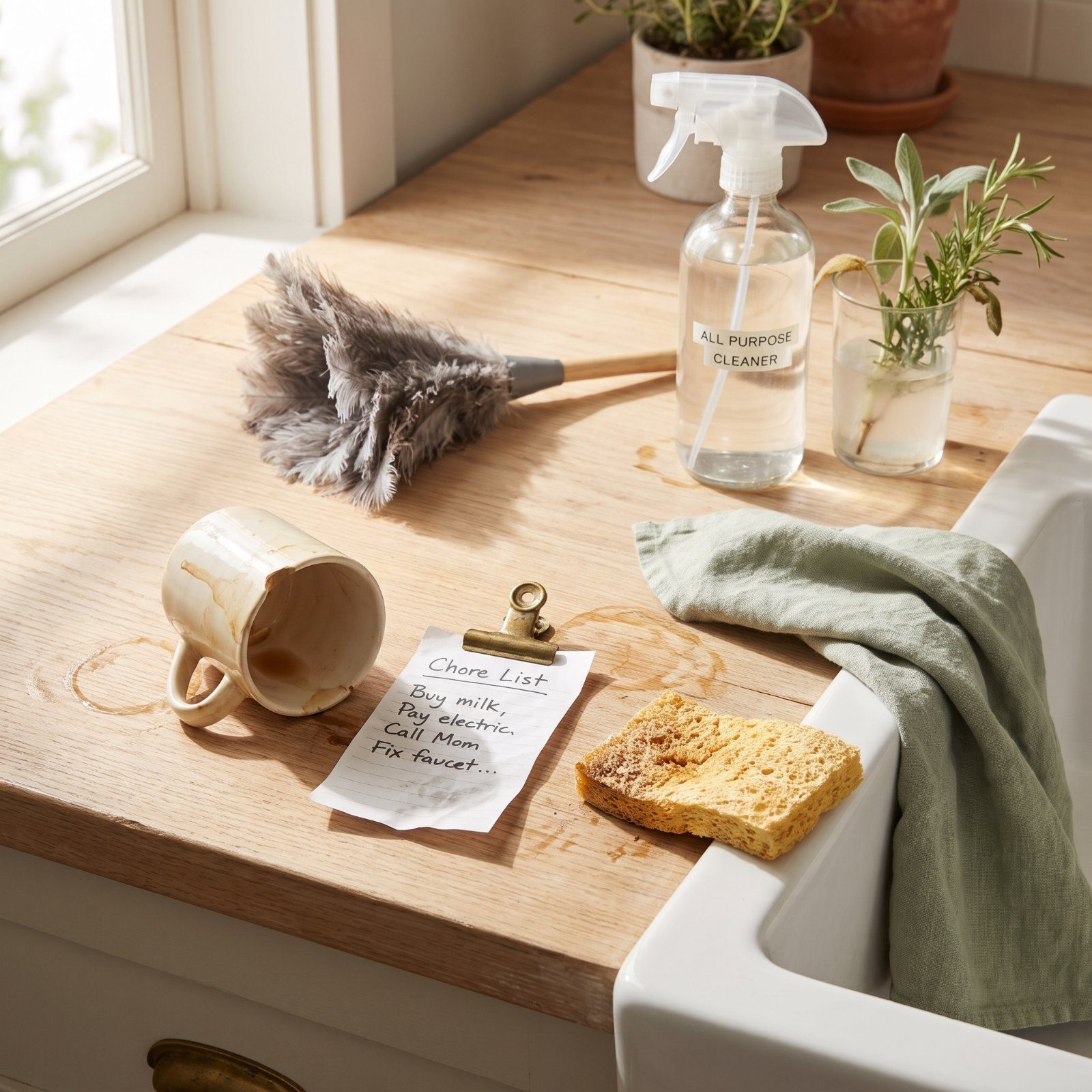
There’s a sponge sitting in the sink right now, half-dried, holding yesterday’s grievances. Nobody’s talking about it. Somebody will, eventually, probably at the worst possible moment. Cleaning a shared home runs on the same wiring as any close relationship, which is why the arguments feel so familiar and so wildly out of proportion to a dish. Because the dishes were never about the dishes. That vacuum left in the hallway is a sentence nobody finished out loud. Below are the patterns that quietly wreck a household routine, each one a mirror of the thing that wrecks people who love each other. You’ll recognize most of them, and you might have invented a couple. Naming the mechanism, though, turns out to be most of the cure.
Please note that some of the images in this article were created with the assistance of AI.
16. You Wait for Saturday to Rescue the Entire House

The house gets worse Monday through Friday because Saturday is coming to fix it. You tell yourself the whole mess will get one glorious reckoning. But Saturday arrives already exhausted, and now you’re staring down five days of neglect in a single afternoon, resentful before you’ve even picked up the mop.
Same avoidance that lets a small relationship problem fester until it needs a Big Talk. We put off the little correction because confronting it feels like effort, then the backlog grows so monstrous that dealing with it feels catastrophic. There’s a tidy psychological name for the housekeeping version of this: the fresh start effect running in reverse. We keep deferring to some cleaner future moment that never, ever shows up less tired than we are right now.
15. One Dirty Mug Somehow Cancels the Whole Kitchen

You scrubbed every surface, emptied the dishwasher, wiped the stove, swept the floor. Then someone leaves one mug on the counter and your brain declares the entire room a disaster. The ninety-nine percent you accomplished vanishes behind the one percent you didn’t.
Negativity bias. It’s the same glitch that lets one sharp comment overshadow a whole pleasant evening together. Our minds evolved to weight threats heavier than rewards, so the lone flaw screams louder than all the sparkling counters it sits on. In a relationship it’s why the forgotten errand eclipses a month of kindness.
The fix isn’t a cleaner mug. It’s catching yourself in the moment and asking whether the kitchen is actually dirty or just not flawless. Those are very different houses. Very different marriages, too.
14. You Take Every Room, Then Resent Everyone Else

You didn’t ask for help. You just did it all, silently, with the growing certainty that nobody else sees what needs doing. By the end you’ve built a tidy house and a tower of grievance, convinced you’re the only adult in the building.
Martyrdom feels righteous and it poisons everything. The resentment comes from a quiet contract nobody else signed. You decided they should notice, should offer, should know, and when they didn’t, you cast them as the villain in a story they were never handed.
Unspoken expectations are just premeditated disappointments wearing an apron.
The same pattern ends relationships. One person over-functions, keeps score, then erupts over a thing they never once requested out loud. Doing everything isn’t generosity if the price is a slow-building ledger of blame. It’s control wearing the costume of sacrifice.
13. You Redo Their Work Right in Front of Them

They loaded the dishwasher. You reloaded it. They folded the towels, and you refolded them, maybe with a little sigh for effect. The message lands instantly: your way is wrong, and I’d rather do it all myself than let you do it adequately.
Here’s what that costs. Nobody keeps helping when their help gets corrected on the spot. You’ve trained the whole household to step back, and now you’re doing everything again, which loops you straight back into resentment.
In partnership it’s the same impulse that corrects how your spouse tells a story at dinner. Micromanagement reads as contempt even when you mean it as standards. A good-enough job someone else did beats a perfect job you did resentfully, every single time.
12. You Leave the Vacuum Out Instead of Asking
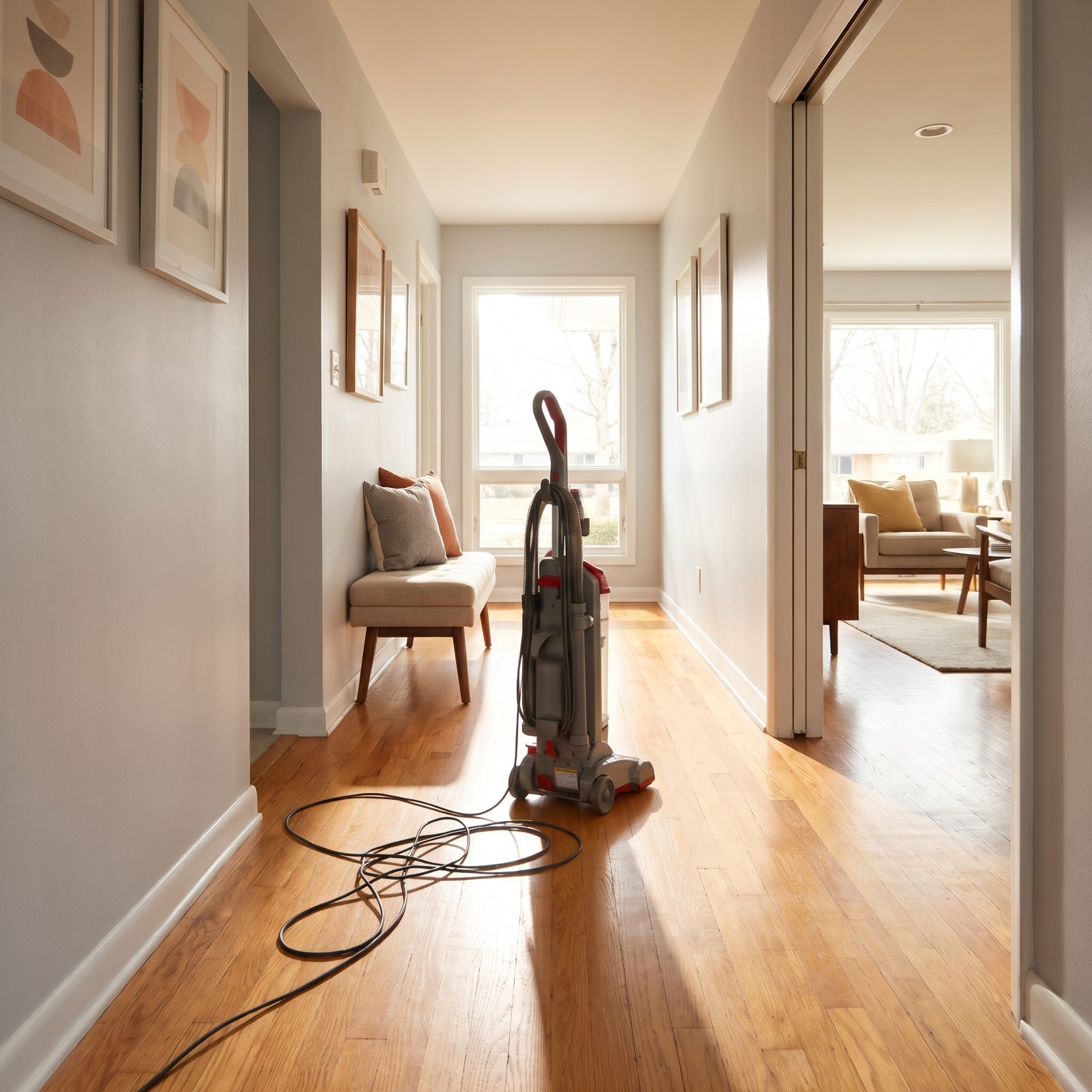
You don’t say “the carpet needs doing, can you grab it?” Instead you park the vacuum in the hallway where it blocks the path, a plastic monument to a request you refuse to make out loud. You want them to read your mind and feel guilty for failing.
Passive-aggression is what happens when a need outlives our willingness to voice it. We hint, we stage props, we leave the dishes in a pointed pile, all to dodge the small discomfort of a direct ask. The discomfort we avoid is tiny. The resentment we breed is enormous.
Relationships run on the same fuel when communication breaks down. The silent treatment, the loaded sigh, the door closed a touch too hard. Every one of them is a sentence we couldn’t bring ourselves to finish. Just say the sentence. “I’d love a hand with the floors today” accomplishes more than a vacuum standing sentinel for three days ever will.
11. You Never Agree on What a Clean Kitchen Means

To you a clean kitchen means empty counters and a shining sink. To the other person it means no visible food and nothing growing. Neither of you ever defined the word, so you both operate on private blueprints and then feel betrayed when the other one builds the wrong house.
Welcome to the trouble with assumed shared standards. We treat our own definition as the obvious objective truth, a bias so common that psychologists gave it a name: naive realism. We genuinely believe everyone sees the situation the way we do, and that anyone who acts differently is being careless or lazy on purpose.
Same thing wrecks relationships over “respect” or “on time.” Two people using one word to mean two different things, each dead certain they’re the reasonable one. Define the word out loud. It’s unromantic and it works.
10. You Make a Chore Chart Nobody Agreed To
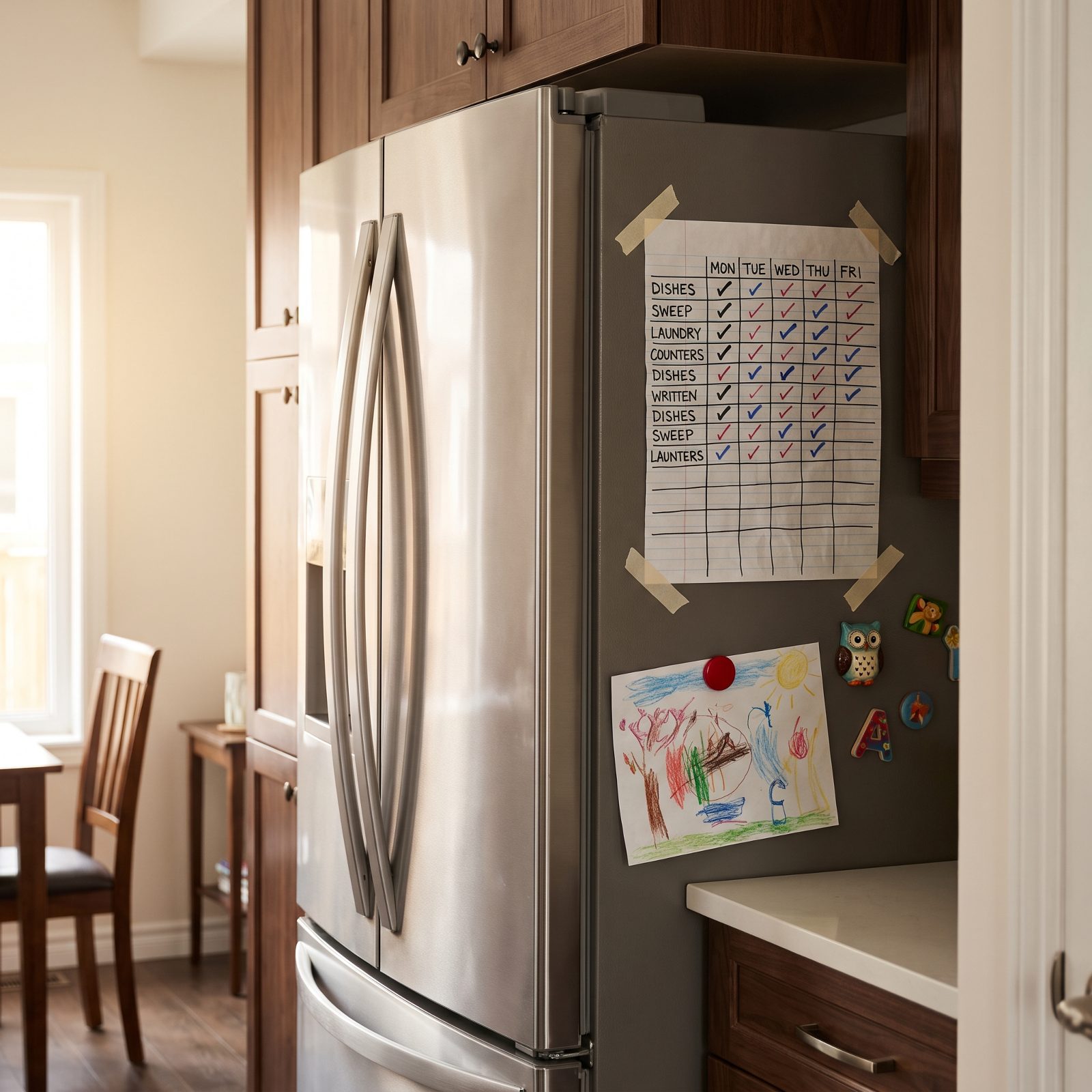
You built the system alone. Columns, rotations, color codes, the works. You present it like a gift and you’re baffled when it’s met with dead eyes and grudging, box-ticking compliance. Within a week the chart is crowded with checkmarks in three colors of ink, yet nobody does one thing beyond what the grid demands, and you’re left armed with proof that they just don’t care.
People resist systems imposed on them even when the systems are good. We carry a deep need for autonomy, and a rule we didn’t help write feels like an order rather than an agreement. The chart failed not because it was wrong but because it was yours.
Unilateral solutions collapse in marriages the same way. One partner decides how the money works, how the holidays go, how the in-laws are handled, then can’t understand the quiet sabotage that follows. Buy-in isn’t a nicety. It’s the whole thing. A messy plan two people built together beats a perfect plan one person issued.
9. You Stop Wiping Counters When Nobody Notices

You used to wipe the counters because someone would see them and appreciate it. Now you don’t, because they never said a word. The effort was never really about the counter. It was about being noticed, and the noticing stopped.
Appreciation is the invisible paycheck that keeps unpaid work going. When thanks dries up, so does the motivation, and the slide into “why bother” is quiet and almost automatic. We’re wired to repeat behaviors that get acknowledged and abandon the ones that disappear into a void.
The repair is cheap and almost embarrassing. Notice the invisible work. Say thank you for the full dishwasher, the stocked fridge, the floor that’s clean. Noticed effort is renewable. Ignored effort runs out.
8. You Hide the Clutter Whenever Company Comes Over

The doorbell rings and you become a magician. Clutter vanishes into closets, under beds, behind closed doors. The public rooms gleam. Your company admires the tidy home while three closets groan with everything you shoved out of sight an hour ago.
We perform cleanliness for an audience while the private reality goes untouched, because the goal was never a clean house. It was looking like someone who has one. That’s impression management, the curated front we hold up for the world.
The parallel to relationships is almost too neat. The couple who glow at the dinner party and barely speak in the car home. The home that dazzles for guests and crumbles behind the scenes, stress-cleaned into a lie we maintain for people who don’t even live there.
7. You Treat Dusty Shelves Like a Character Flaw

You run a finger along the shelf, find dust, and somewhere underneath the irritation is a quiet verdict about yourself. A dirty house doesn’t feel like a to-do item. It feels like evidence that you’re failing at being a functional adult.
That’s shame, and it’s the loudest, least useful voice in all of housekeeping. Shame says “I am bad” where guilt merely says “I did a thing I’d like to fix.” Guilt motivates. Shame paralyzes. Which is why the messiest rooms are so often the ones we feel worst about, because the worse we feel, the less we can bear to even look at them.
Relationships carry the same trap. When a mistake becomes proof of our unworthiness instead of a fixable event, we hide, we defend, we avoid the person entirely. The dust on the shelf is dust. It is not a referendum on your soul. Let it be a chore, a small boring task you’ll handle this week, and watch how much easier it gets to actually pick up the cloth.
6. You Keep a Broken Vacuum Because It Cost Plenty
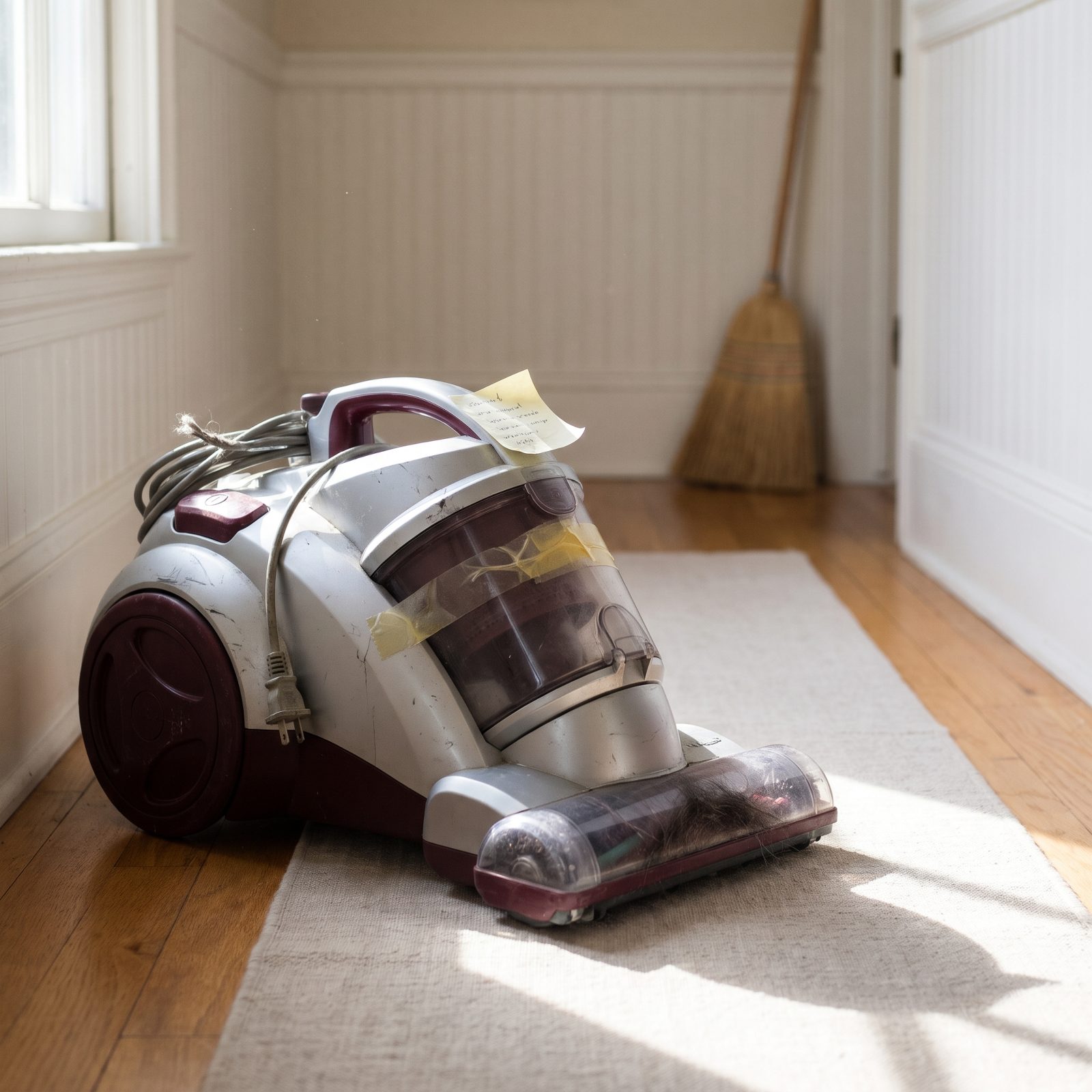
There it sits in the hall closet, the expensive one, dead since sometime last spring. You’ve meant to order the part. Meanwhile you’re pushing crumbs around with a broom like it’s 1950. Throw it out, though? No. It cost real money.
That’s the exact logic that keeps people in situations long past their expiry date. Sunk-cost fallacy, we call it: we weigh what we already spent instead of what the thing is worth to us now. A vacuum that doesn’t vacuum has a present value of zero, no matter what the receipt said. Yet the brain treats the money as a debt the object still owes you. So you wait, and you sweep, and the dust wins.
Relationships run on the same bad math. People stay for the years already invested, as if quitting now would waste them, when the years are gone either way. The only honest question is whether the thing helps you today.
5. You Copy a Cleaning Routine Built for Another Life

Somewhere online you found the routine. Thirty perfect days, each zone assigned, Mondays for mirrors, Fridays for floors. It belonged to someone with no kids underfoot, no job that runs late, maybe no pets. You printed it anyway and taped it to the fridge like a treaty.
By day four it’s a monument to a life you don’t lead. The schedule assumed a version of you that doesn’t exist, and when real Tuesday arrives with its spilled juice and surprise meeting, the whole structure collapses and takes your morale with it.
We do the identical thing with how a home, a marriage, a body is supposed to look. We import someone else’s blueprint, then feel like failures for not fitting it. Unrealistic expectations rarely announce themselves as unrealistic. They show up dressed as standards.
A routine built for a stranger’s life will punish you for living your own.
The fix is boring and freeing: build the system around the house you actually have, on the days you actually get. Lower bars get cleared.
4. You Change Systems Before the Last One Can Work
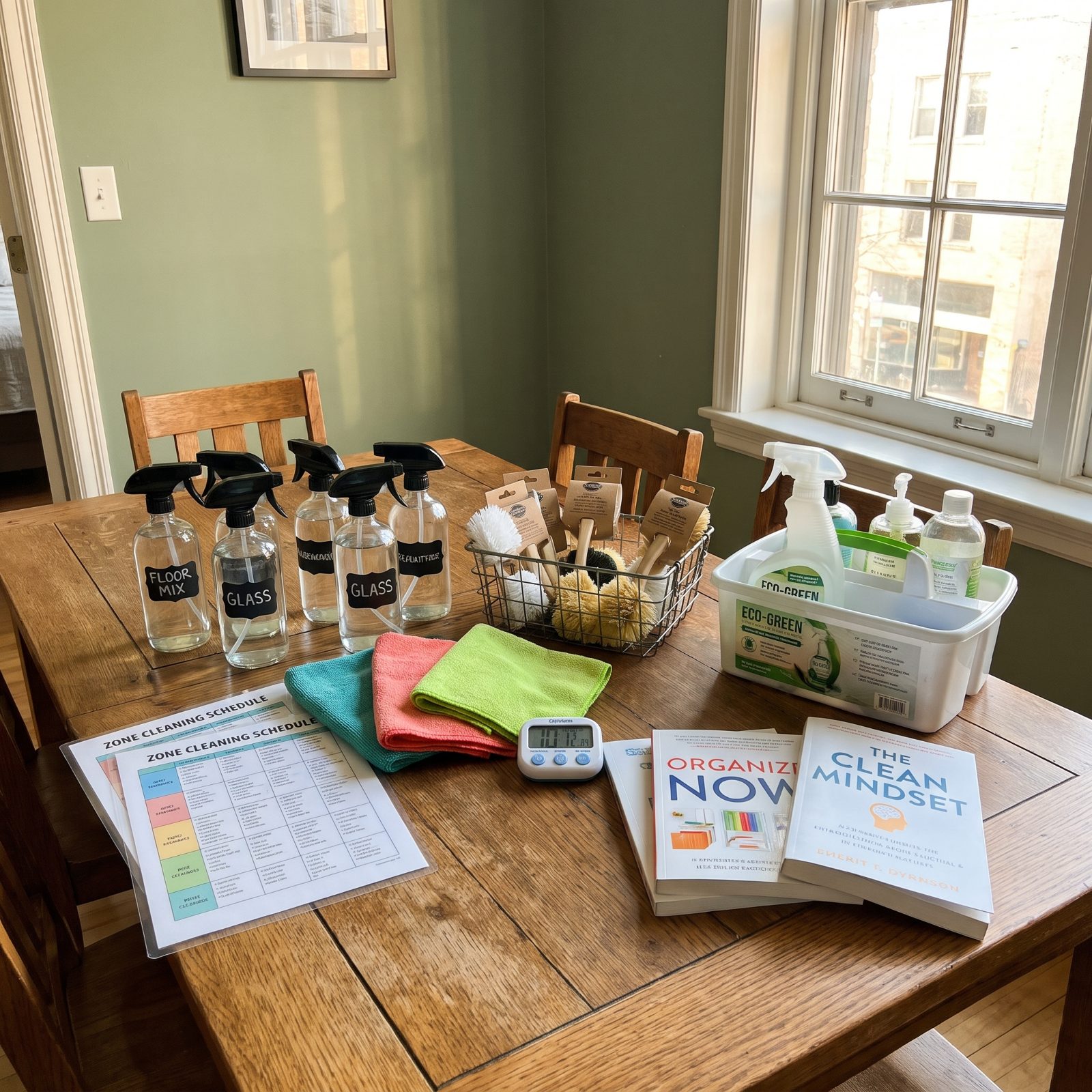
The honeymoon with a new cleaning system lasts about ten days. You try the bottle-labeling method, abandon it for the fifteen-minute timer method, drop that for a laminated zone-cleaning schedule, then order the color-coded cloths because clearly those were the missing piece. The cupboard fills with half-used solutions.
No single system ever gets long enough to prove whether it works. The moment it feels dull — which is the exact moment a habit starts forming — you reach for the fresh thrill of starting over. New tools feel like progress. They’re actually a very tidy way of dodging the plateau where real results live.
People do this with careers, cities, partners. The early rush of anything beats the quiet middle, so they keep trading the middle away. Call it novelty bias: our brains overpay for the new and undervalue the familiar that’s finally about to pay off.
3. You Buy Another Caddy Instead of Scrubbing the Shower

The shower needs scrubbing. You know this. So you drive to the store, buy a caddy in a cheerful color, fill it with matching bottles, arrange them by height, and feel genuinely productive. The shower, meanwhile, is exactly as scummy as it was this morning.
Buying the gear is the fun part. Using it is the work. We mistake the preparation for the task, because preparation hands us the little reward hit without the sweat. It’s procrastination in a productivity costume, weirdly satisfying, and that’s what makes it dangerous.
Here’s the friend who reads every book about the hard conversation but never has it, the person who plans the project for months and never breaks ground. Gathering supplies feels like doing the thing. It isn’t. The grout doesn’t care how organized your caddy is.
2. You Start With Baseboards and Never Reach the Dishes

You set out to clean the kitchen and somehow find yourself on your knees in the living room, scrubbing baseboards that weren’t even dirty. An hour later the baseboards gleam, the sink is still a disaster, the laundry is still heaped on the couch, you’re exhausted, and nothing anyone will notice is actually done.
That ledge is safe. It’s small, finite, low-stakes, and it lets you feel busy while dodging the chaos that actually matters. The dishes are big and daily and a little defeating, so the mind drifts toward the task it can win. Avoidance, wearing a tidy little apron.
Recognize it? It’s answering three easy emails to dodge the one hard phone call. It’s rearranging the sock drawer the night before a deadline. We gravitate to the manageable corner of a problem precisely because the whole problem scares us.
1. You Demand Motivation Before Touching the Mop
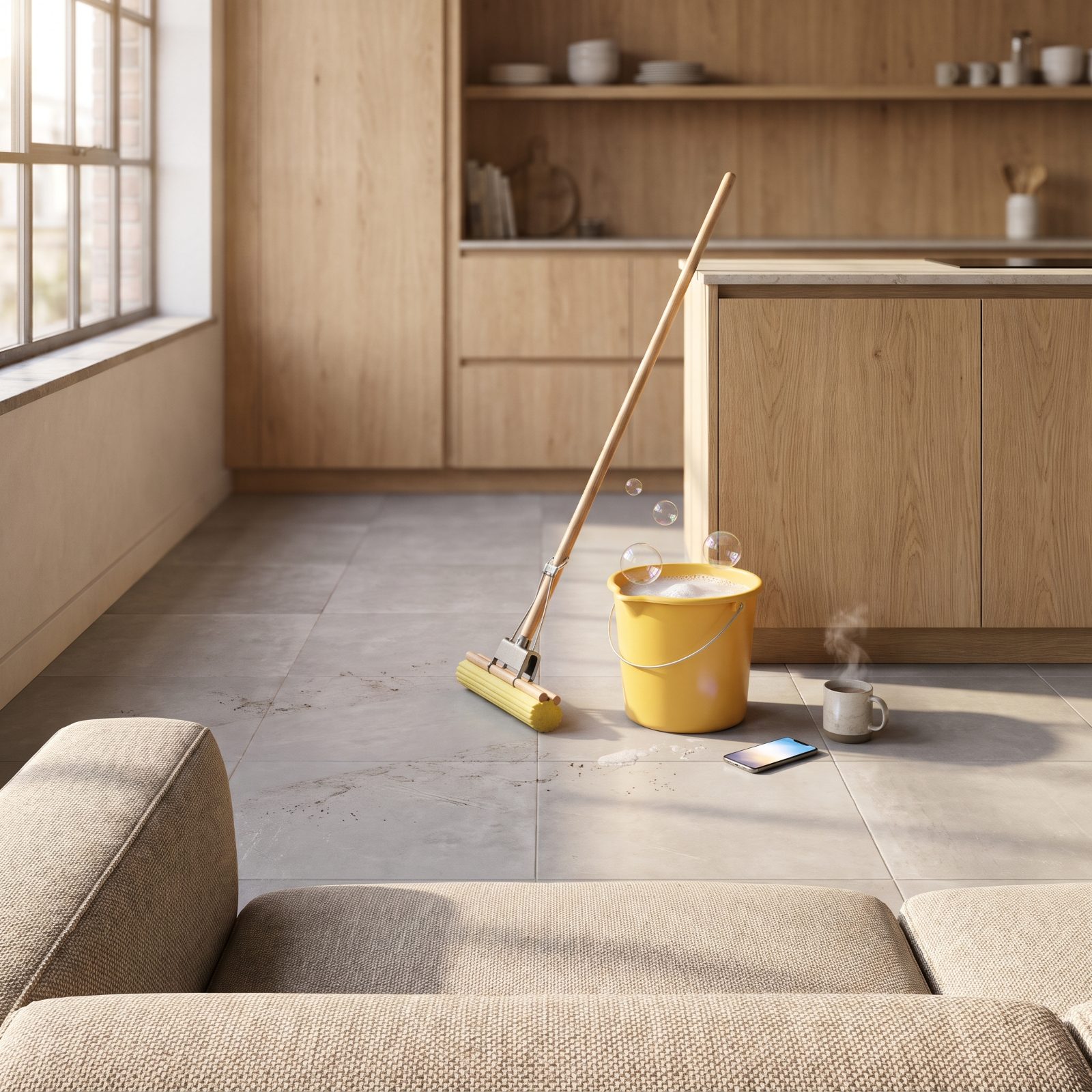
The mop is out. The bucket is filled. And you’re on the couch waiting to feel like it, as though the right surge of enthusiasm will arrive and carry you across the floor on a wave of purpose. The water goes cold. The feeling never shows.
The hard truth we all resist: motivation usually follows action, not the other way around. You don’t wait to feel like running and then lace up — you lace up, start moving, and the wanting catches up around minute three. Expecting the feeling first is backwards, and it leaves kitchens unmopped for weeks.
Love works the same way. People wait to feel loving before they act lovingly, and the warmth never comes, because warmth is built by the doing. The dishes, the call, the kind gesture, the mop. Start cold. The feeling is the reward, not the admission ticket.