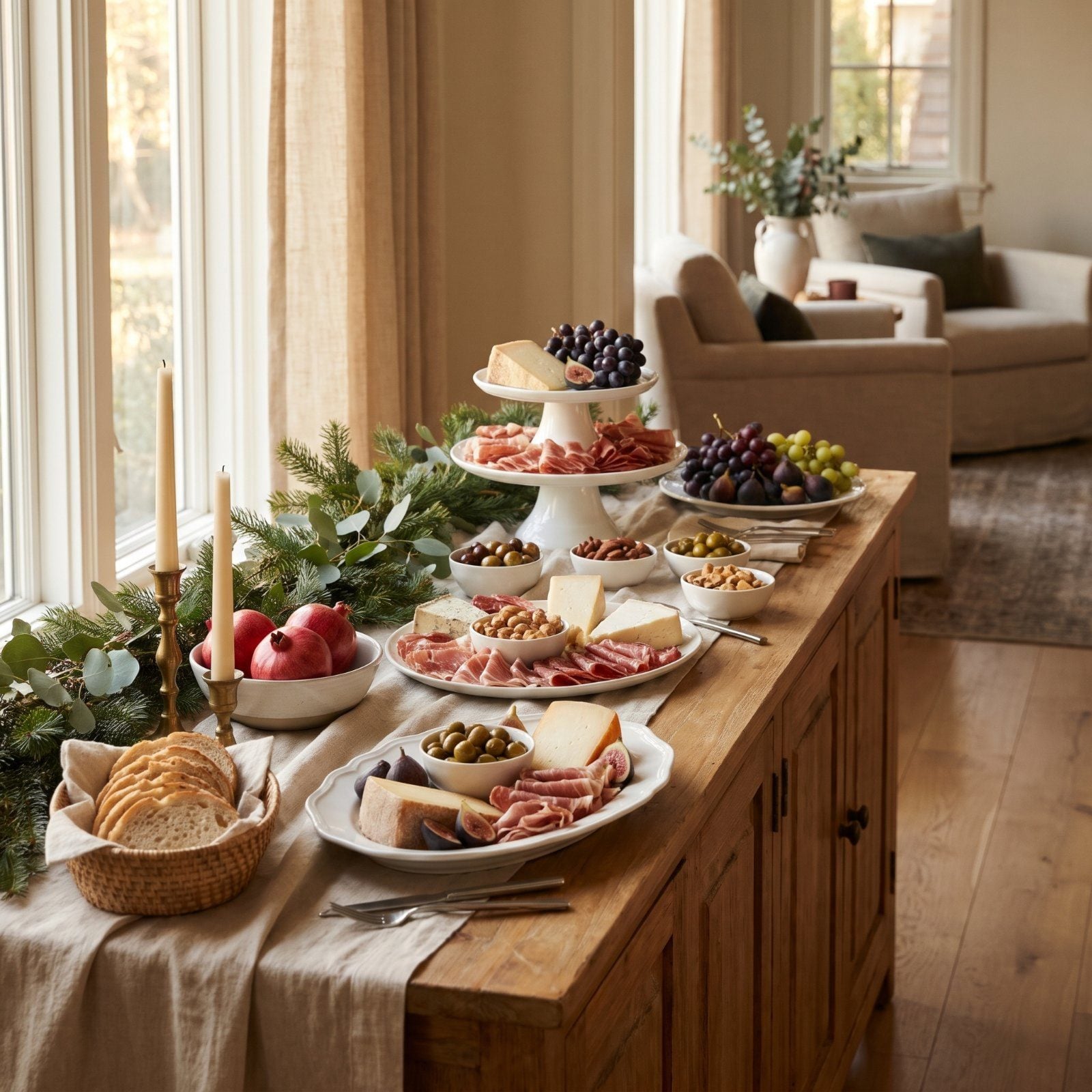
Watch what happens the second someone steps into a party. They freeze for a beat, scan the room, and hunt for two things: where to dump the coat and where the food is. When that second answer isn’t obvious, the whole evening develops an awkward hover. People cluster by the door, the table sits untouched in another room, and the host keeps waving everyone toward it like a crossing guard. None of this is about the food. It’s staging. Here’s how to build a room that pulls people straight to the spread without a word of instruction.
Please note that some of the images in this article were created with the assistance of AI.
31. Mention the Holiday Buffet Right in the Invitation
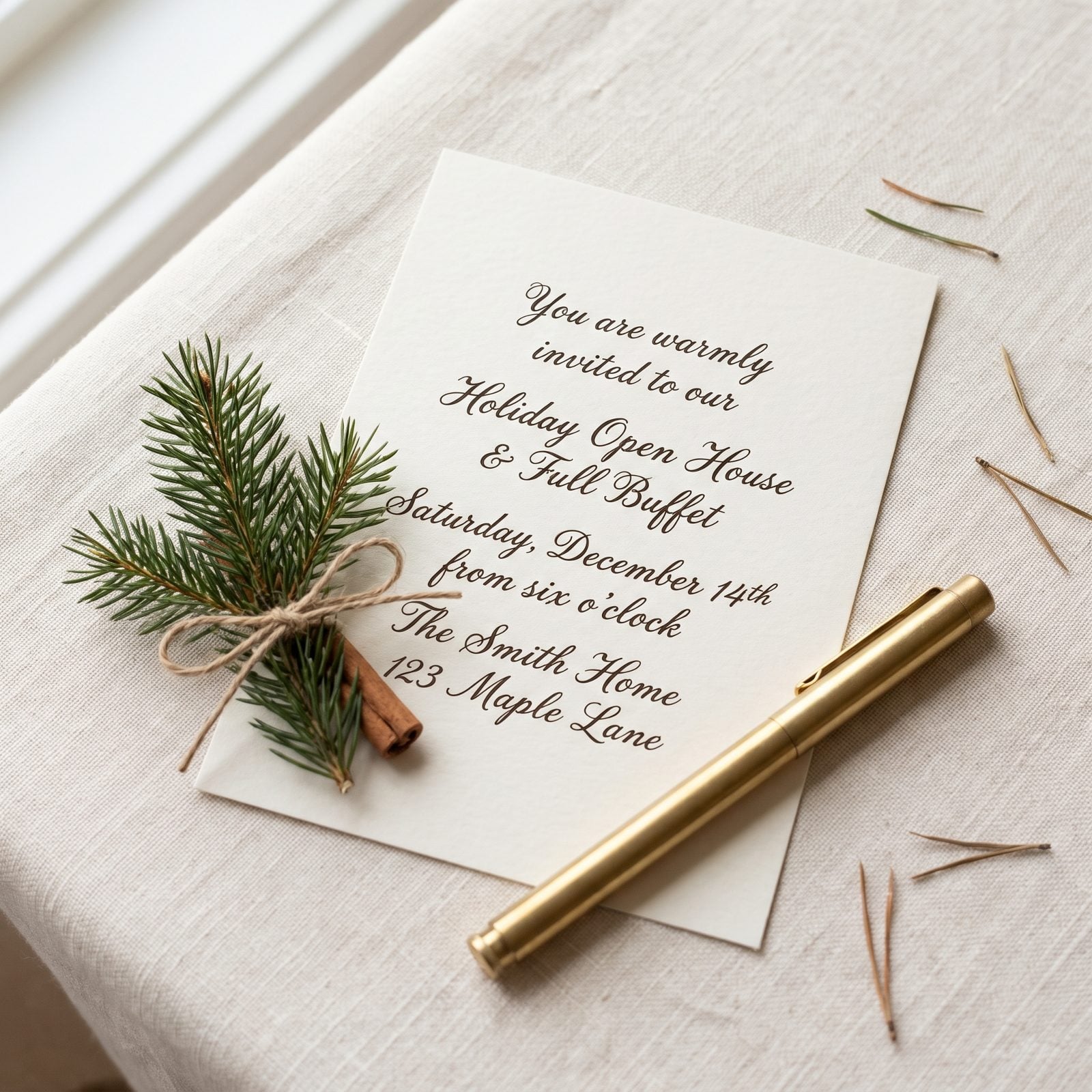
People show up calibrated to what you promised. Say “drinks and nibbles” and they eat before they come. Say “holiday open house with a full buffet from six” and they arrive hungry, curious, already picturing a table.
That one line does quiet work. It tells guests the food is the point, so nobody stands around wondering if it’s rude to be first to fill a plate. You’ve handed them permission before they’ve even arrived.
30. Open the Doors Only After the Table Is Fully Set
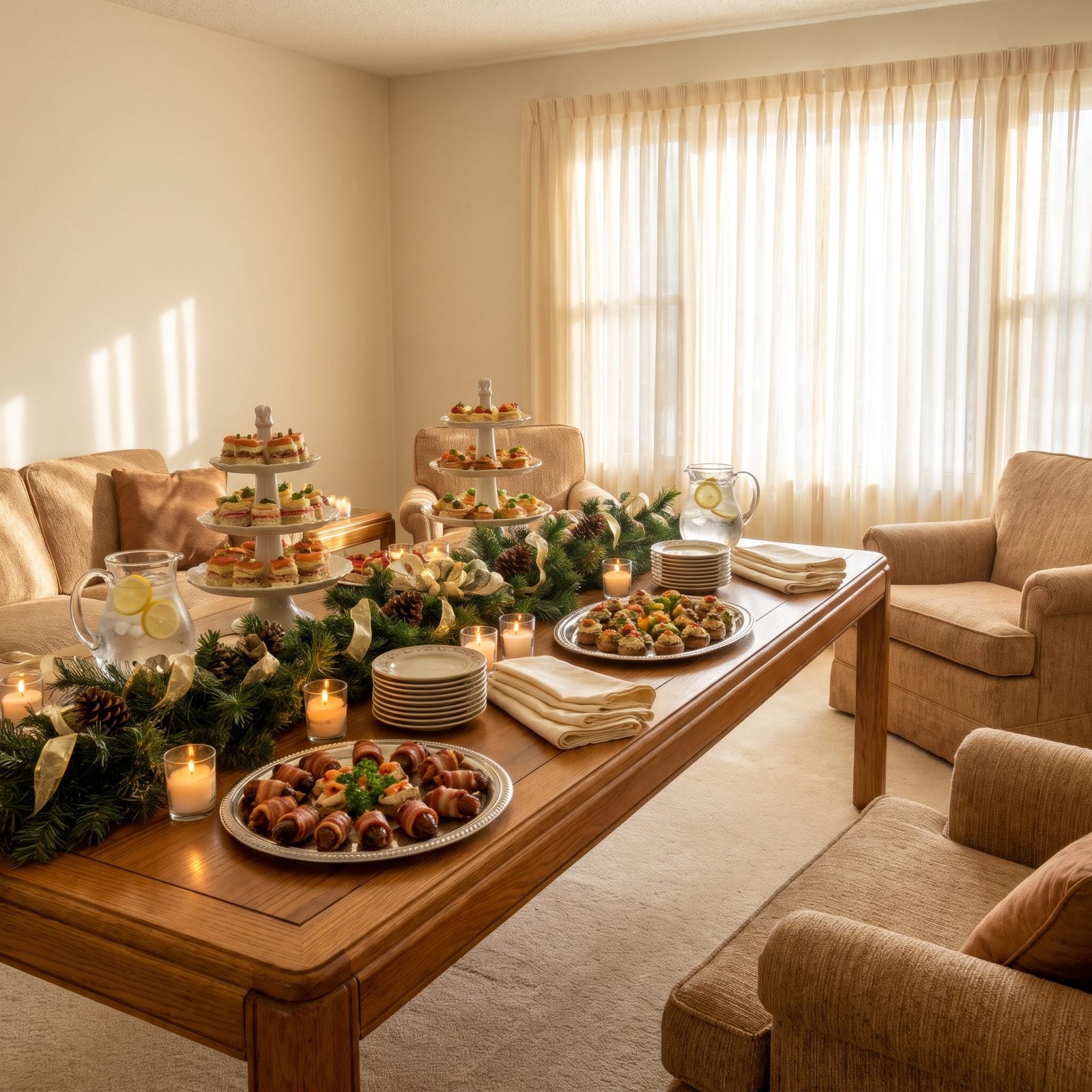
A half-set table reads as “not yet.” Guests spot the gaps where platters should go and they wait, hovering at a polite distance, because nobody wants to be the person eating while the host is still ferrying bowls out of the kitchen.
So set everything before the first knock. Candles lit, plates stacked, the last dish in place. When the door swings open to a table that looks finished, the message is unmistakable: this is ready for you, dig in. We learned this the hard way one year, still fussing over a cheese board while people pretended not to watch. Nobody touched a thing for twenty minutes. Twenty. It was agony, and it was entirely our fault for not finishing the job before we let anyone in.
29. Make the Food Table Visible From the Entrance
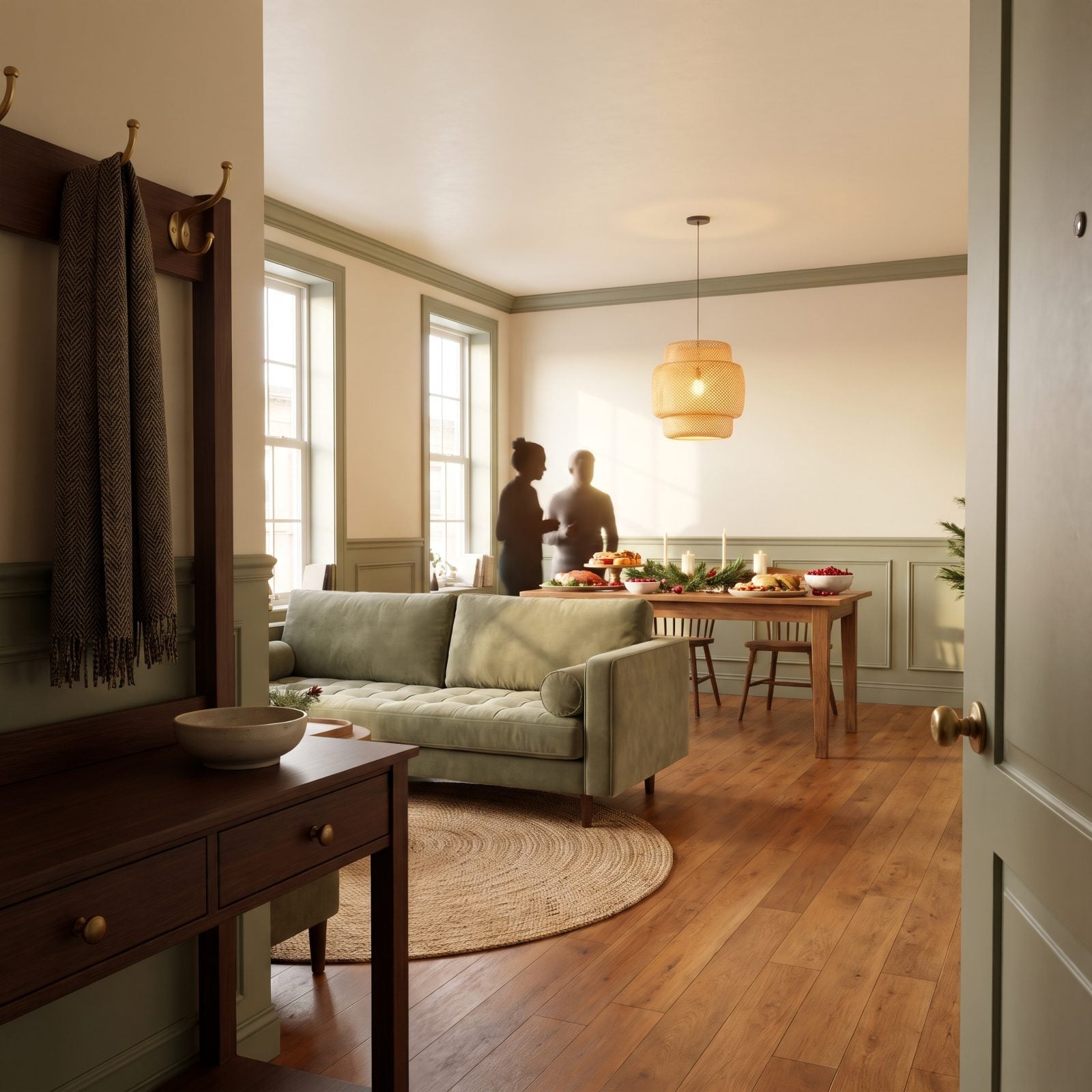
The eye wants a destination the moment it crosses a threshold. Give it one. If a guest steps inside and can see the spread from where they’re standing, half your work is done before the scarf is even off.
Walk your own entrance before the party. Stand where guests will stand, and look hard. Can you actually see the table? If a tall bookcase or an open closet door clips the line, move the table, not the guest. That sightline is the single biggest lever you’ve got, and most hosts never check it.
Arguing that the food should be the star of the party, a southern hospitality blogger writes: “When they enter the room, the beautiful spread should be the first thing they see.”
28. Put the Buffet in the First Room Guests Enter
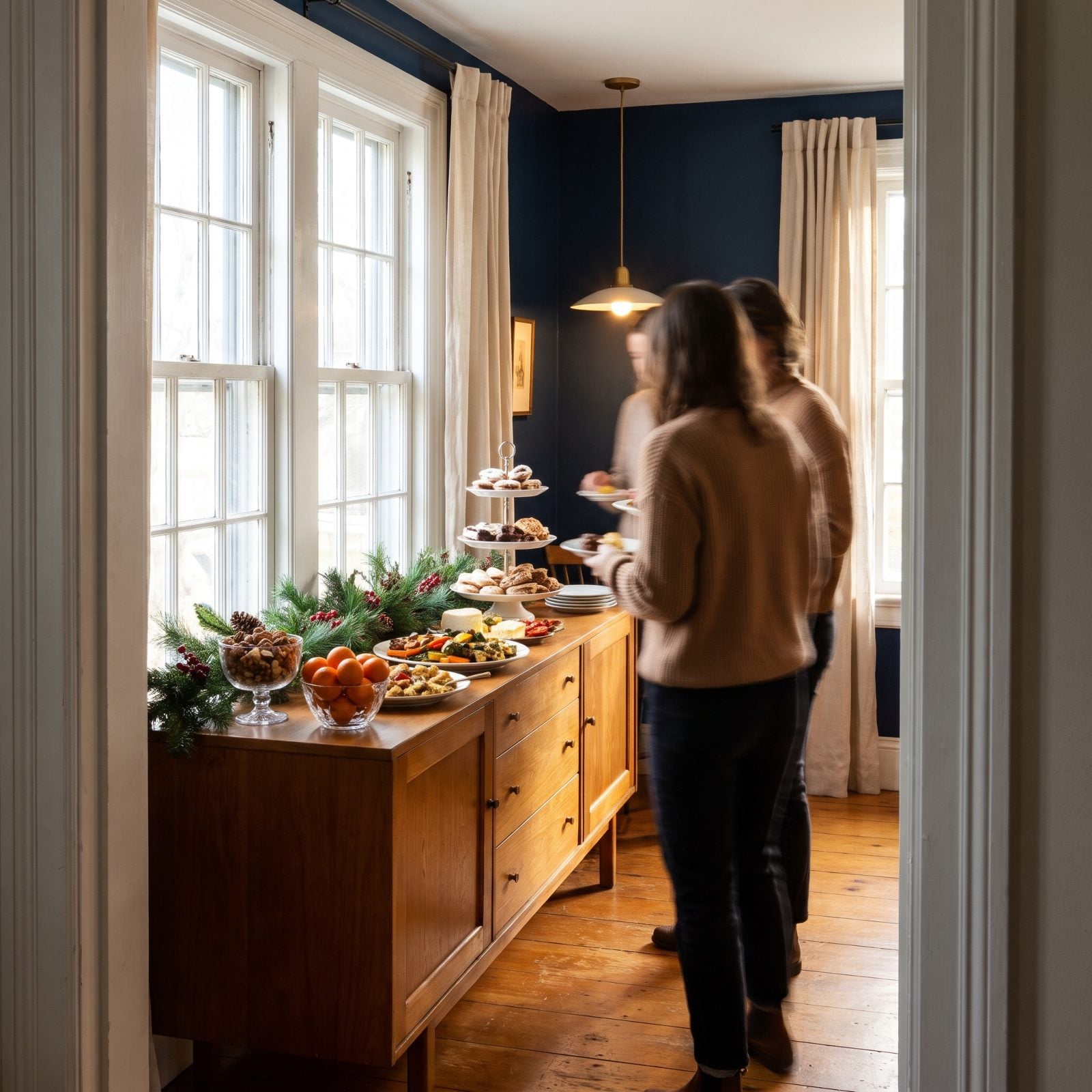
Tucking the food in a back kitchen feels tidy. It also kills the flow, because now guests have to be led there, and leading people around is exhausting for everyone involved.
Put the main spread in the first proper room they reach. The entry momentum carries them right to it, plate in hand, before they’ve had a chance to sink into a sofa and go quiet. Momentum is the whole game. Once someone sits, they stay put, and a far-off buffet might as well be in another zip code.
27. Clear an Unbroken Path From Door to Table
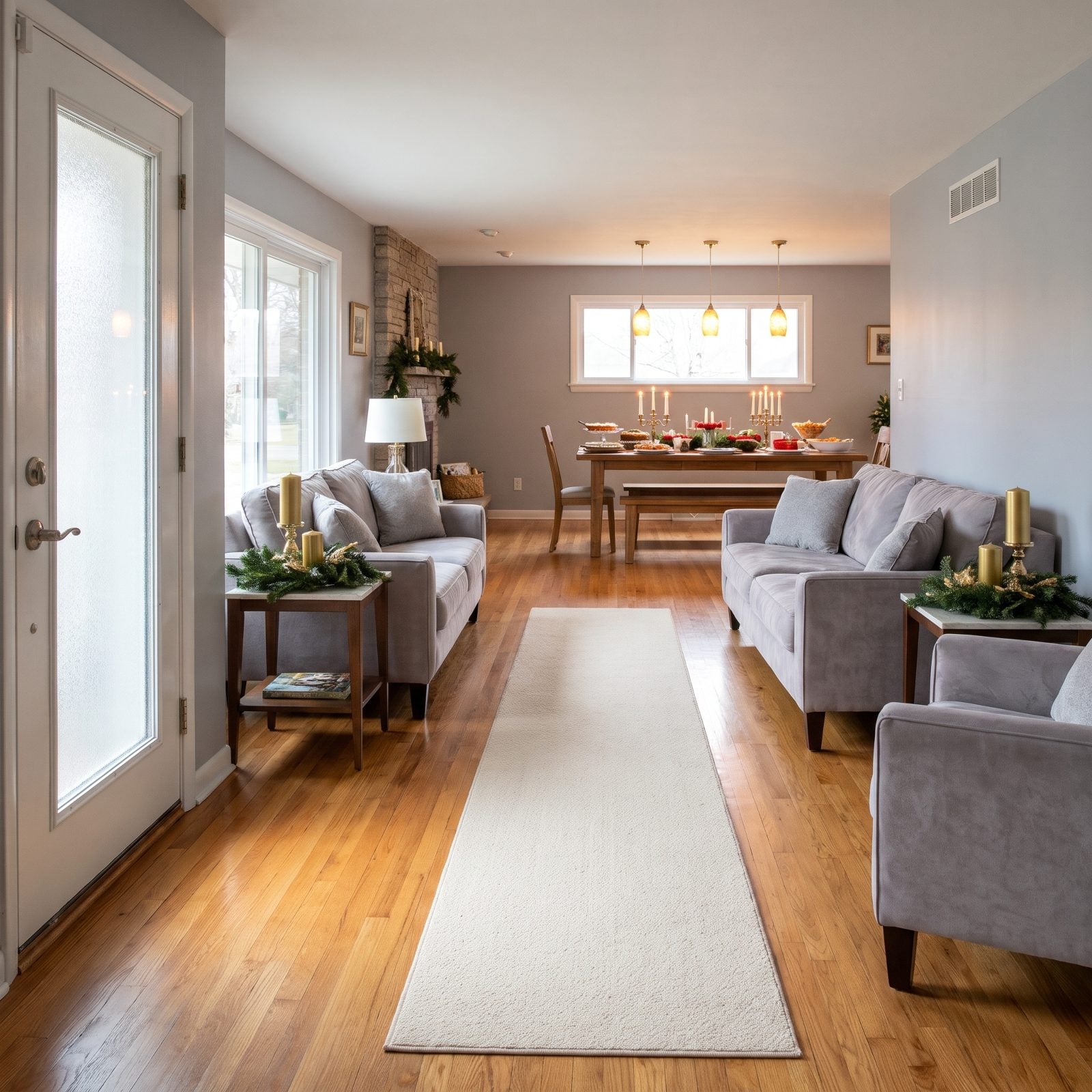
Furniture is the saboteur. An ottoman mid-route, a chair sticking out, a stack of boxes you swore you’d deal with by December. Each one makes a guest break stride, reconsider, and drift somewhere easier.
Before anyone arrives, walk the route from door to table carrying an imaginary plate. Wherever you’d have to turn sideways or step around something, that’s where people stall. Pull the furniture back to the walls and widen the lane. A straight, open shot to the food beats any arrow you could draw.
26. Set the Coat Station Far From the Food
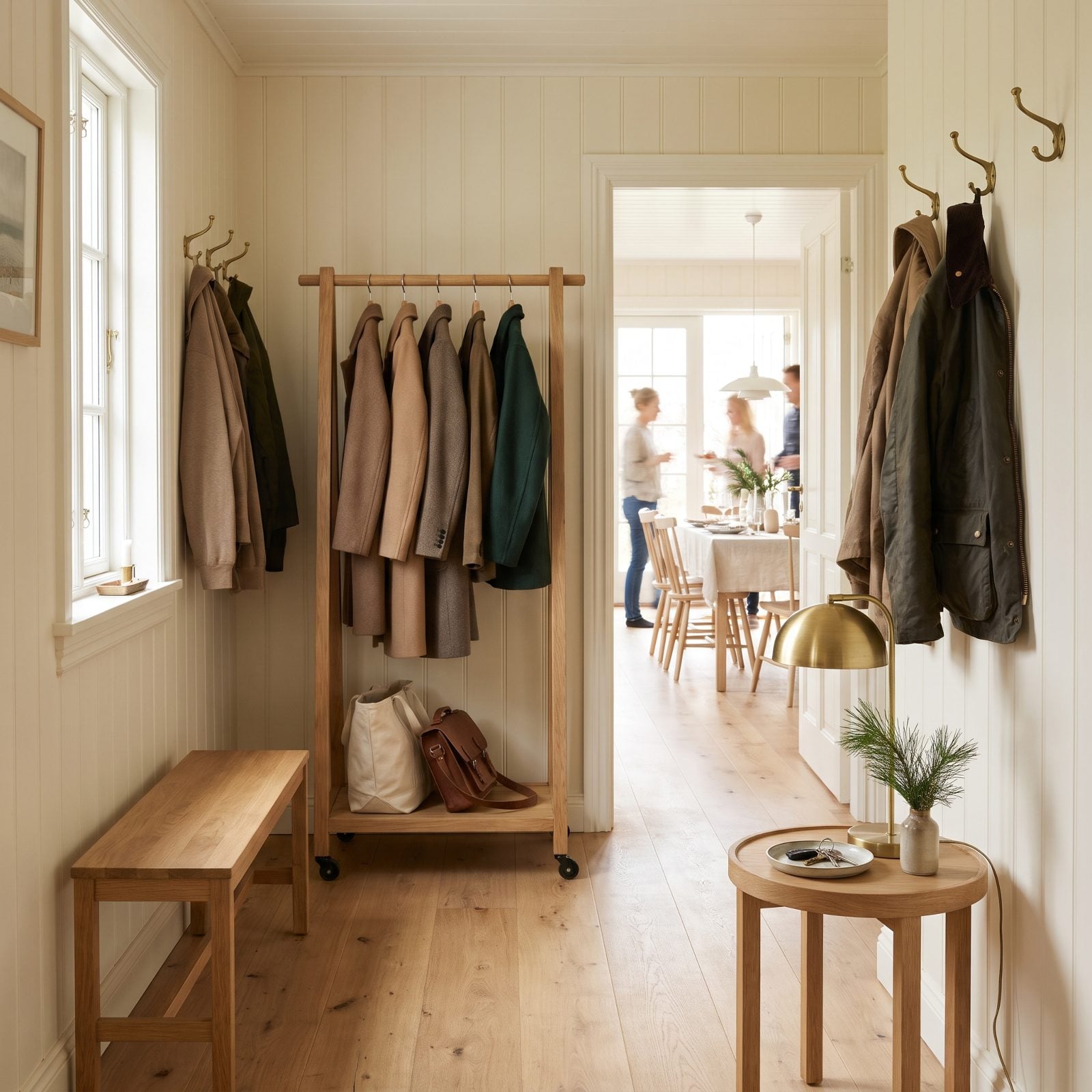
Where people shed their coats is where they clump. Pile the coats near the buffet and you’ll build a traffic jam exactly where you need open space, with elbows by the cheese and bags underfoot.
Send the coats somewhere else entirely. A bedroom, a hall rack, a bench down the corridor, anywhere out of the way. The split keeps the arrival shuffle out of the food zone, and it hands guests a natural two-step: drop the coat over there, then go find the table. Two destinations, cleanly separated, both obvious.
25. Frame the Buffet Through an Open Doorway
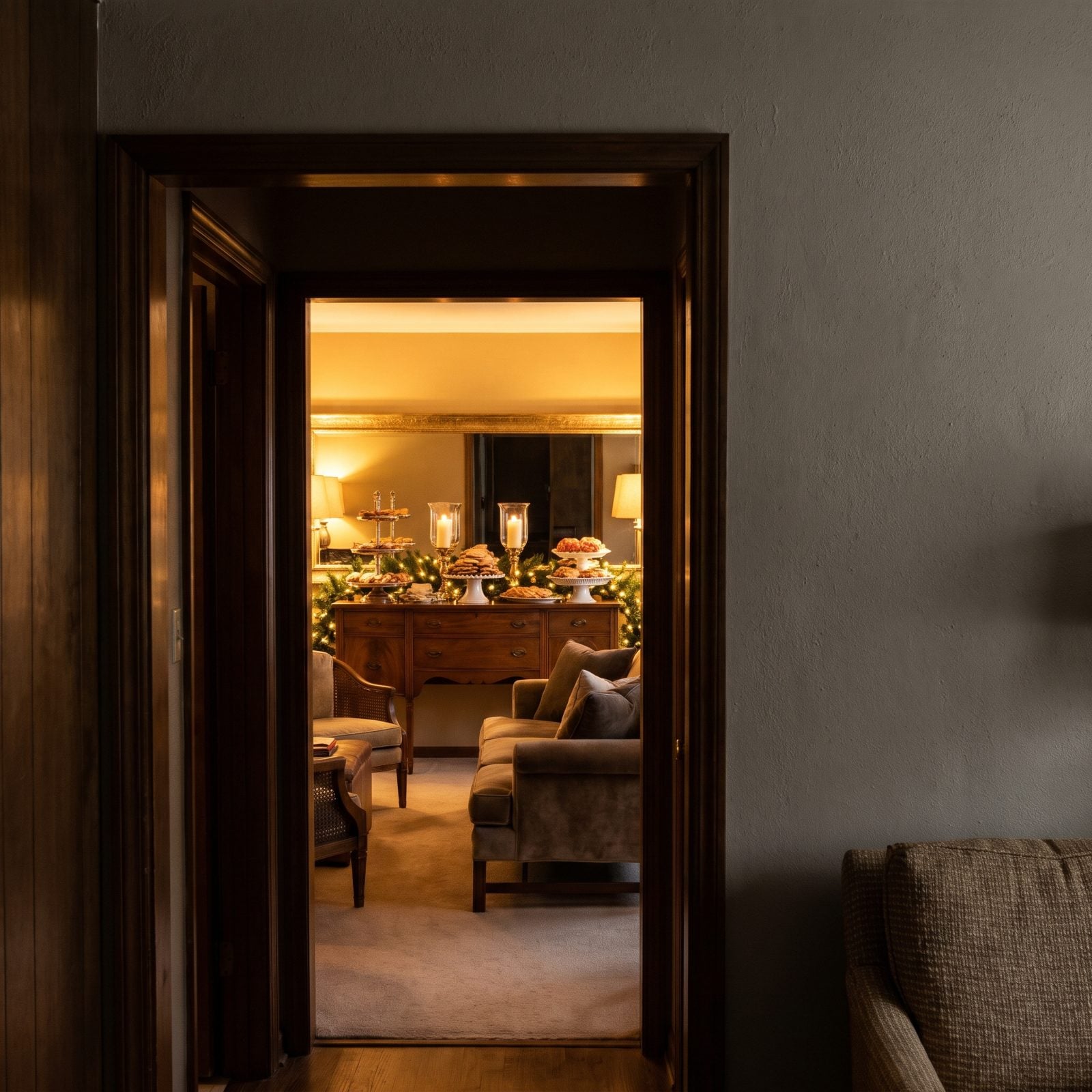
A doorway is a frame you already own. Position the table so guests catch it through an opening, and the architecture does the composing for you, turning the spread into something that looks deliberate and worth crossing the room for.
The trick is contrast. A slightly dimmer hallway in front, a warmly lit room beyond, and the table sits glowing at the center of the opening like a lit stage. Nobody resists walking toward the brighter space. We’ve been chasing light through doorways since we lived in caves.
24. Point the Way With a Simple Welcome Sign
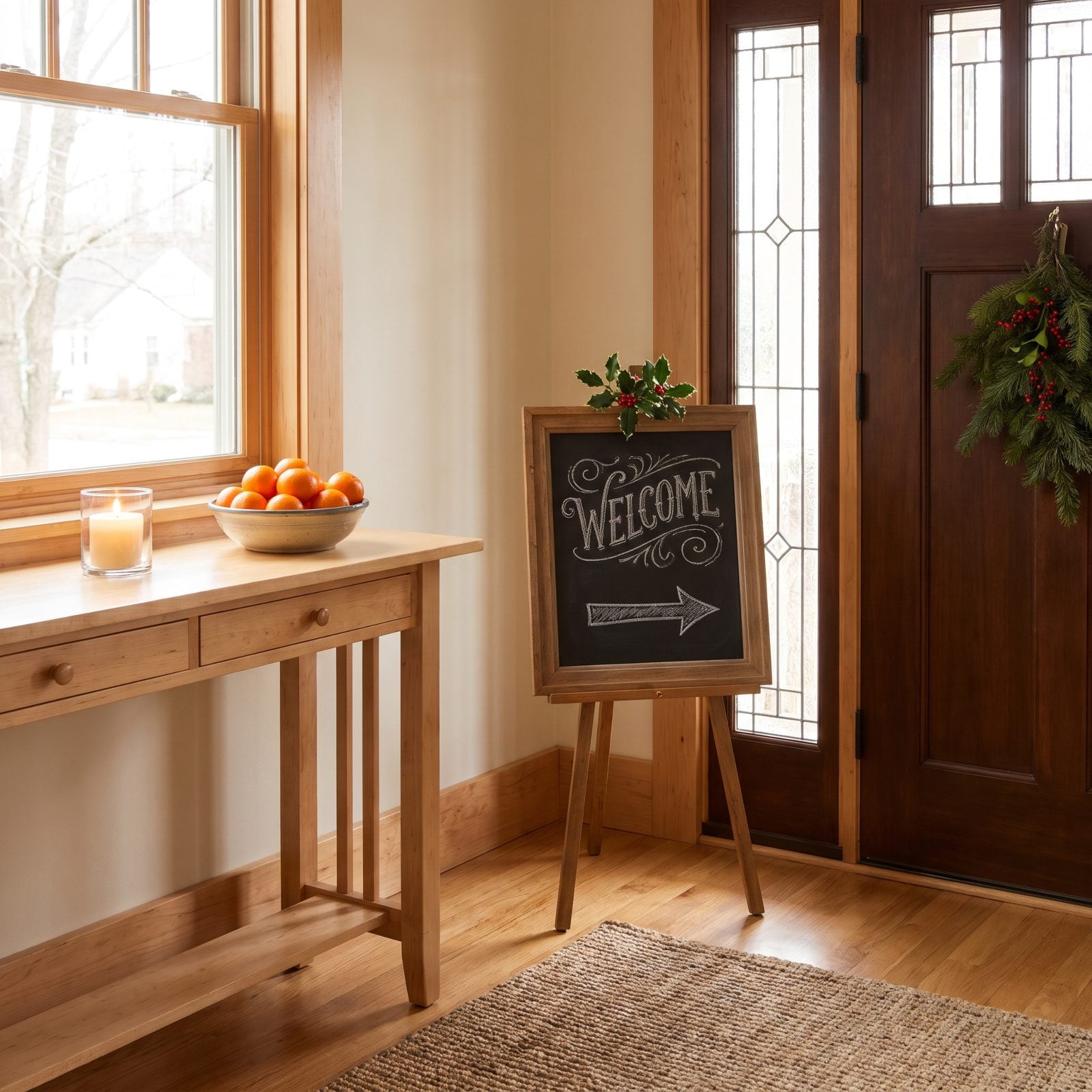
Sometimes the layout fights you. The table’s around a corner, the house rambles, the sightline simply won’t cooperate. A small sign solves what staging can’t.
Keep it charming, not corporate. A little chalkboard on an easel with a holly sprig and an arrow, or a framed card reading “this way to the feast.” It reads as part of the decor rather than airport signage, which is the whole point. Guests follow it and feel welcomed, not herded.
23. Give the Food Table Its Own Warm Light
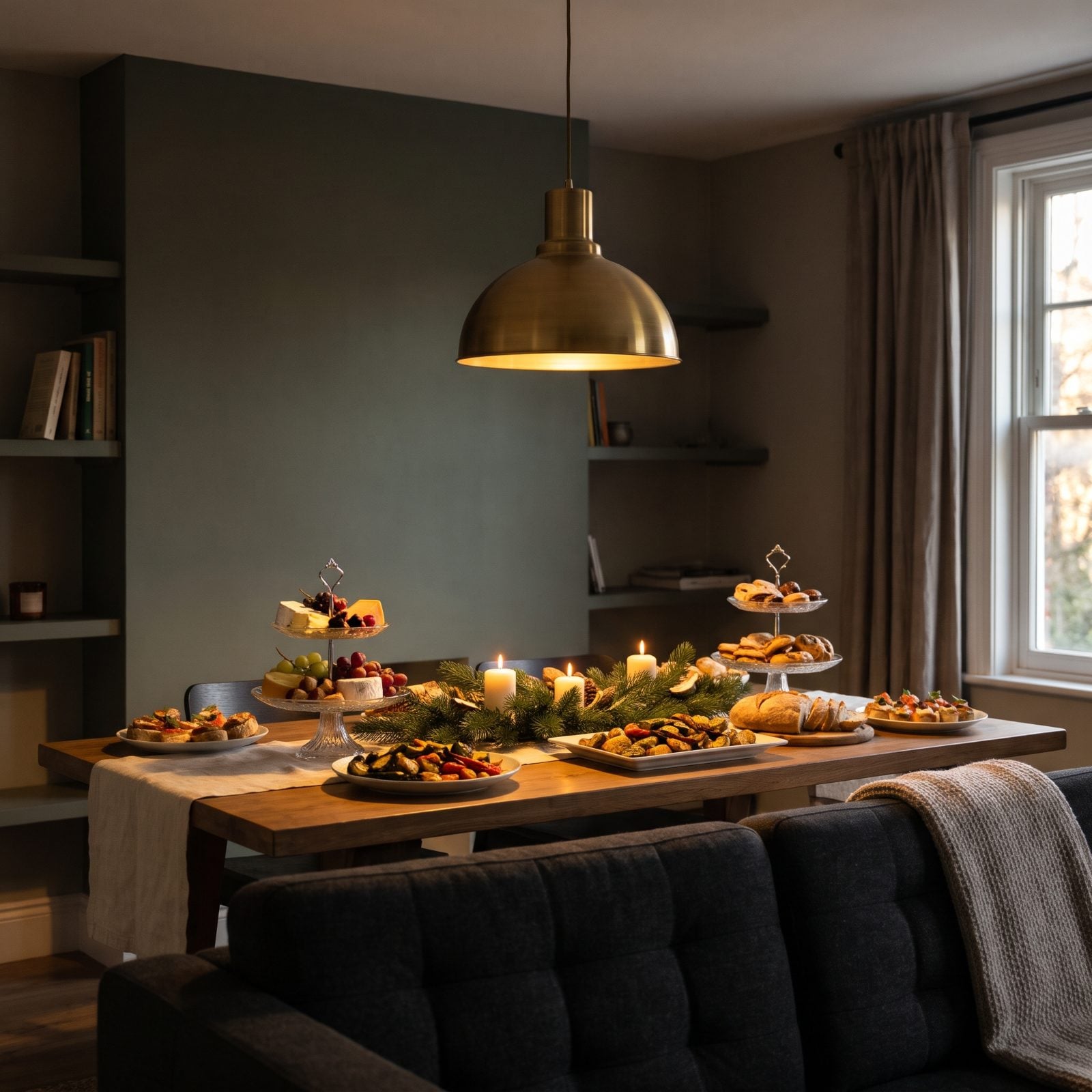
Light is a magnet. Dim the overheads everywhere else and pour the glow onto the table alone, and the whole room quietly tilts its attention toward it.
Cluster candles among the platters, set a lamp at each end, or hang a warm pendant directly above. Warm bulbs, never cool ones, which wash food flat and gray. You want a pool of golden light with the spread at its center, so the table reads as the most alive, most inviting corner of the house. People drift toward it the way moths do. Set it, dim everything else, and let the glow finish the hosting for you.
22. Hang Holiday Decorations Above the Table
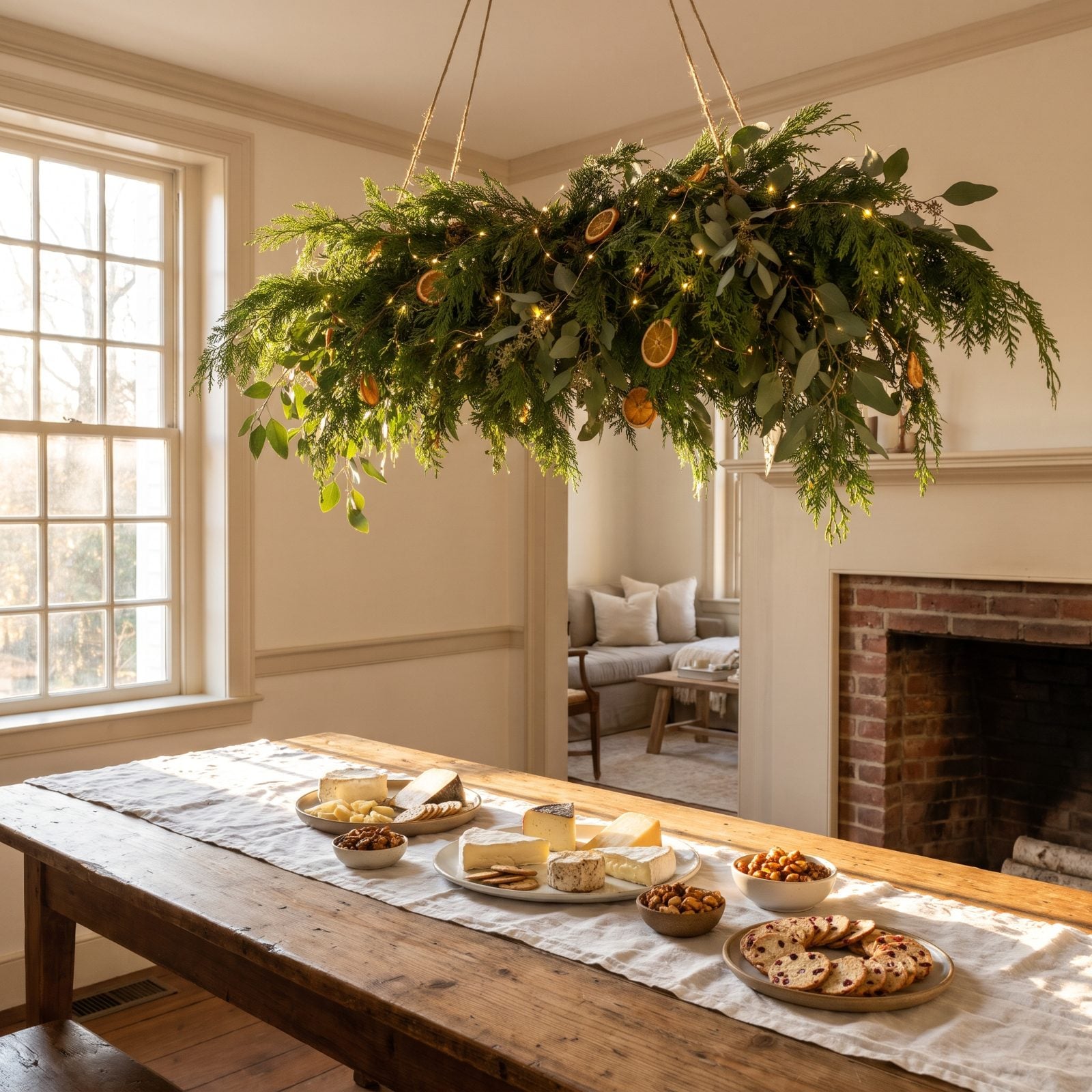
Eyes go up before they go anywhere else. Hang something over the food table and you’ve marked the spot without a single sign.
A cedar chandelier, a cluster of paper stars, a run of warm lights strung low enough to glow but high enough to miss with a reaching arm — any of these pulls the gaze across the room and lands it exactly where you want people standing. Keep it at least a foot above the tallest platter so nobody singes a sleeve near a candle.
21. Choose a Tablecloth That Makes the Food Stand Out
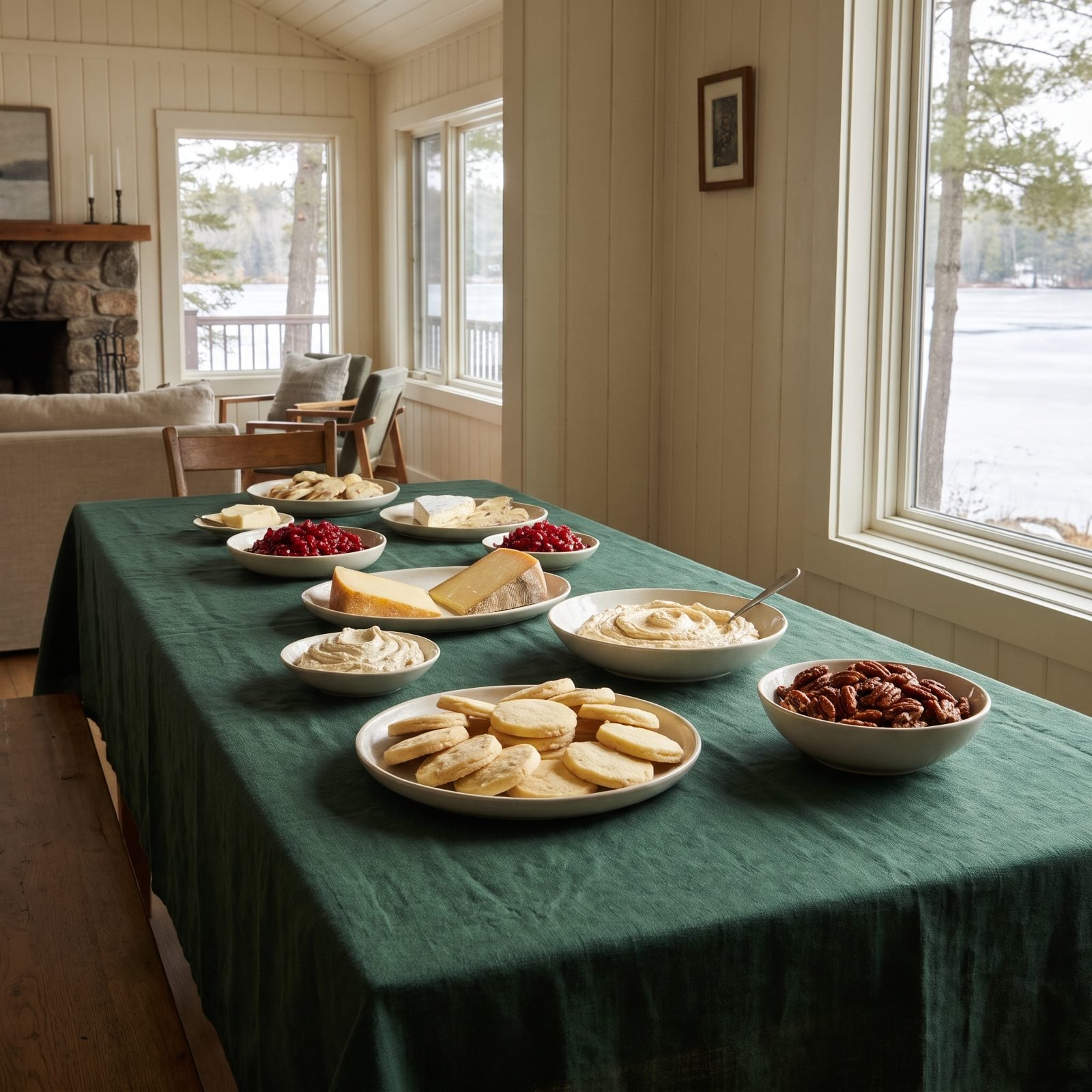
The cloth under the food matters more than most people think. Put pale cheeses and cream dips on a white tablecloth and everything disappears into a fog of beige.
Go dark instead. A deep green, burgundy, or charcoal linen turns every light-colored dish into something worth photographing, and suddenly a simple cheese board looks deliberate. We learned this the slow way, hosting a party where half the spread blended into the table and nobody could tell where one dish ended and the next began.
20. Use Tiered Stands to Create an Abundant Display
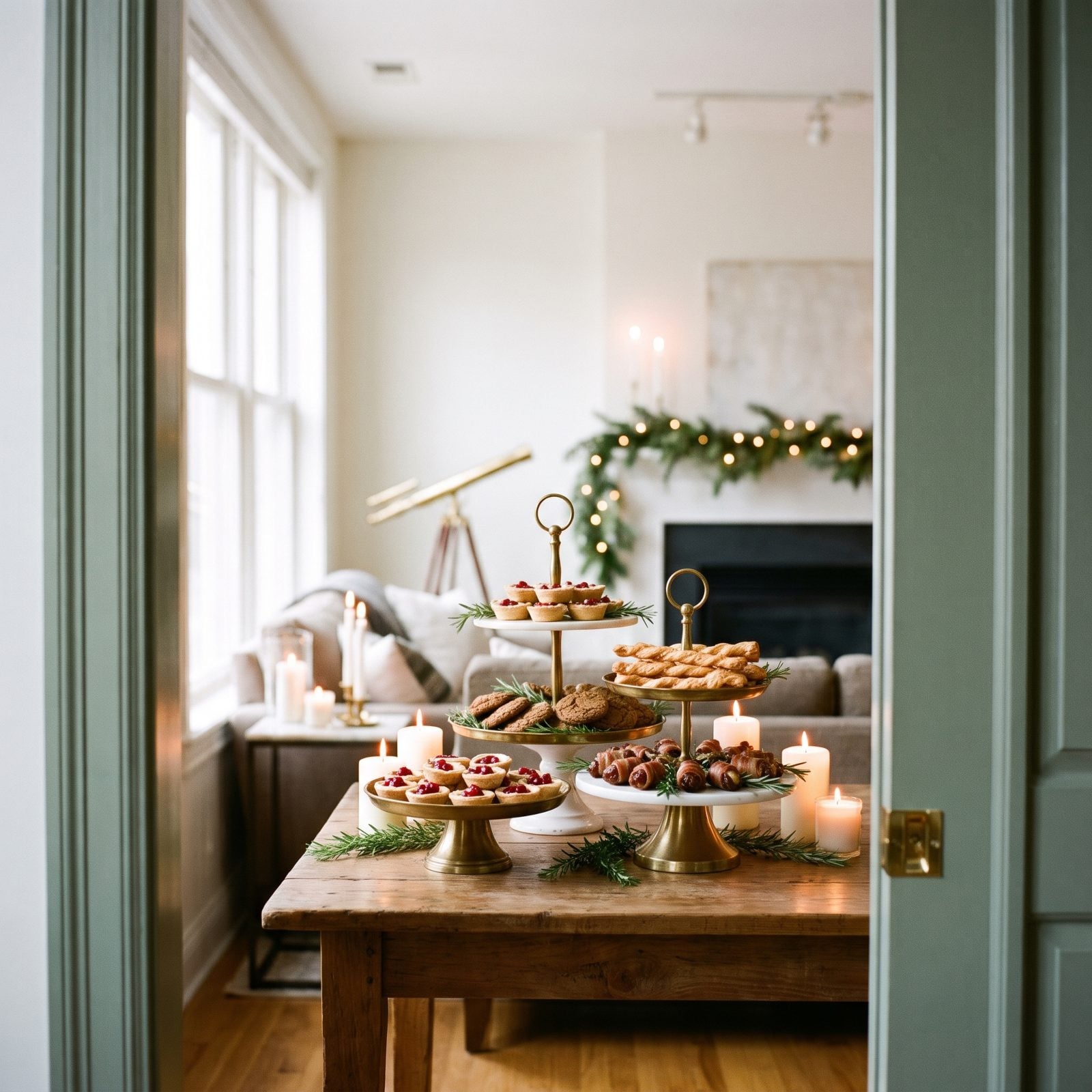
Height reads as generosity. Spread the same amount of food flat across a table and it looks sparse. Stack it on tiered stands and the identical quantity suddenly looks like a feast.
Mix two or three heights so the eye travels up and down the display — a cake stand under a bowl, a footed platter beside a flat tray. The vertical rhythm pulls attention the way a store window does. And it buys you precious table real estate, which you’ll want the moment a second wave of guests arrives.
In holiday hosting advice, a celebrity event planner recommends thinking through how the food is displayed, using different heights and arrangements to make the presentation more enticing.
19. Put the Showpiece Platter in the Center
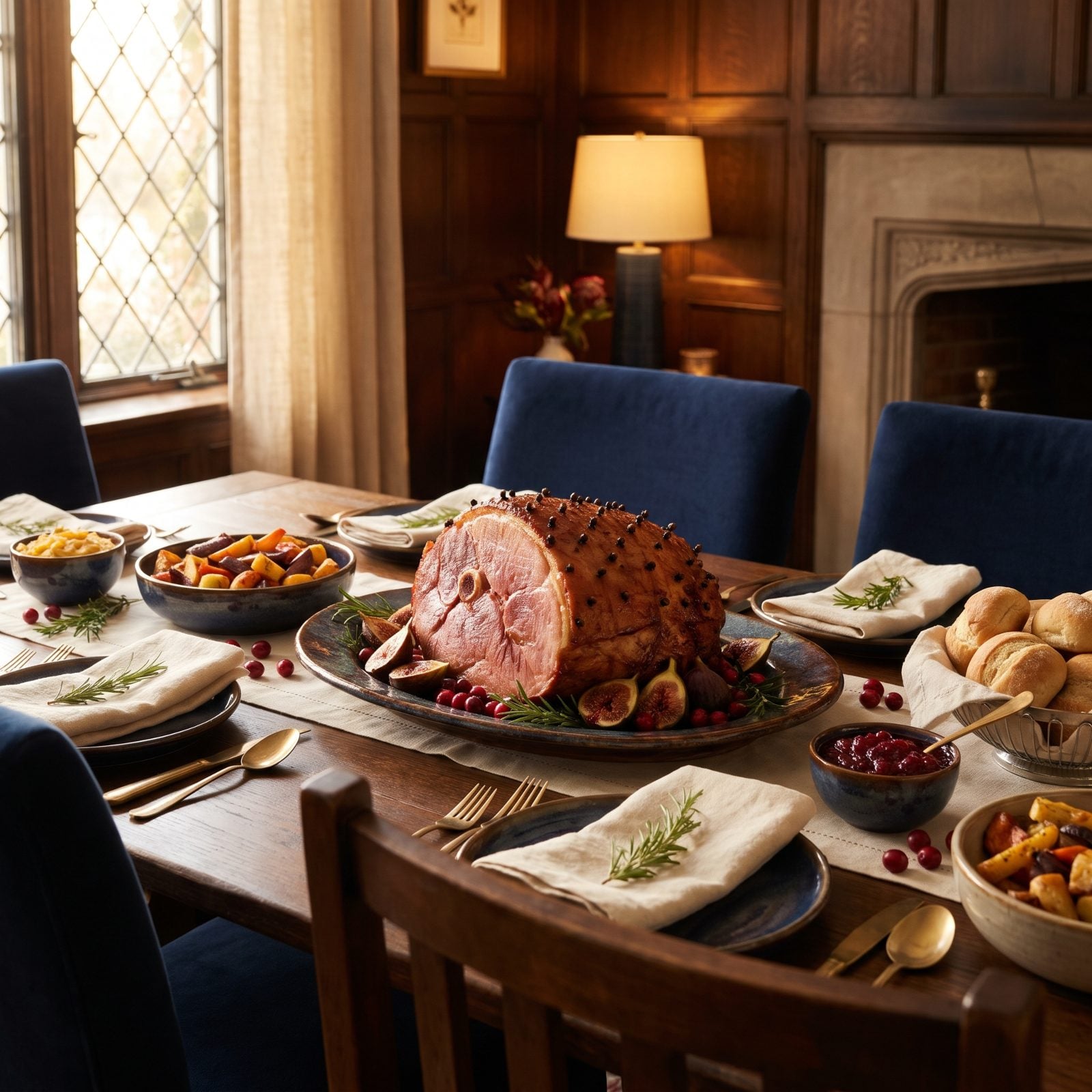
Every table needs one dish that stops people — a glazed ham, a whole roasted bird, a showstopping cake, something that photographs itself.
Center it and build everything else around it like planets around a sun. Guests orient to the biggest, brightest thing in the room, and when that thing is edible, they drift straight toward it. The centerpiece also quietly tells latecomers this is the real party, not the coat pile by the door.
18. Arrange Foods in Distinct Blocks of Holiday Color
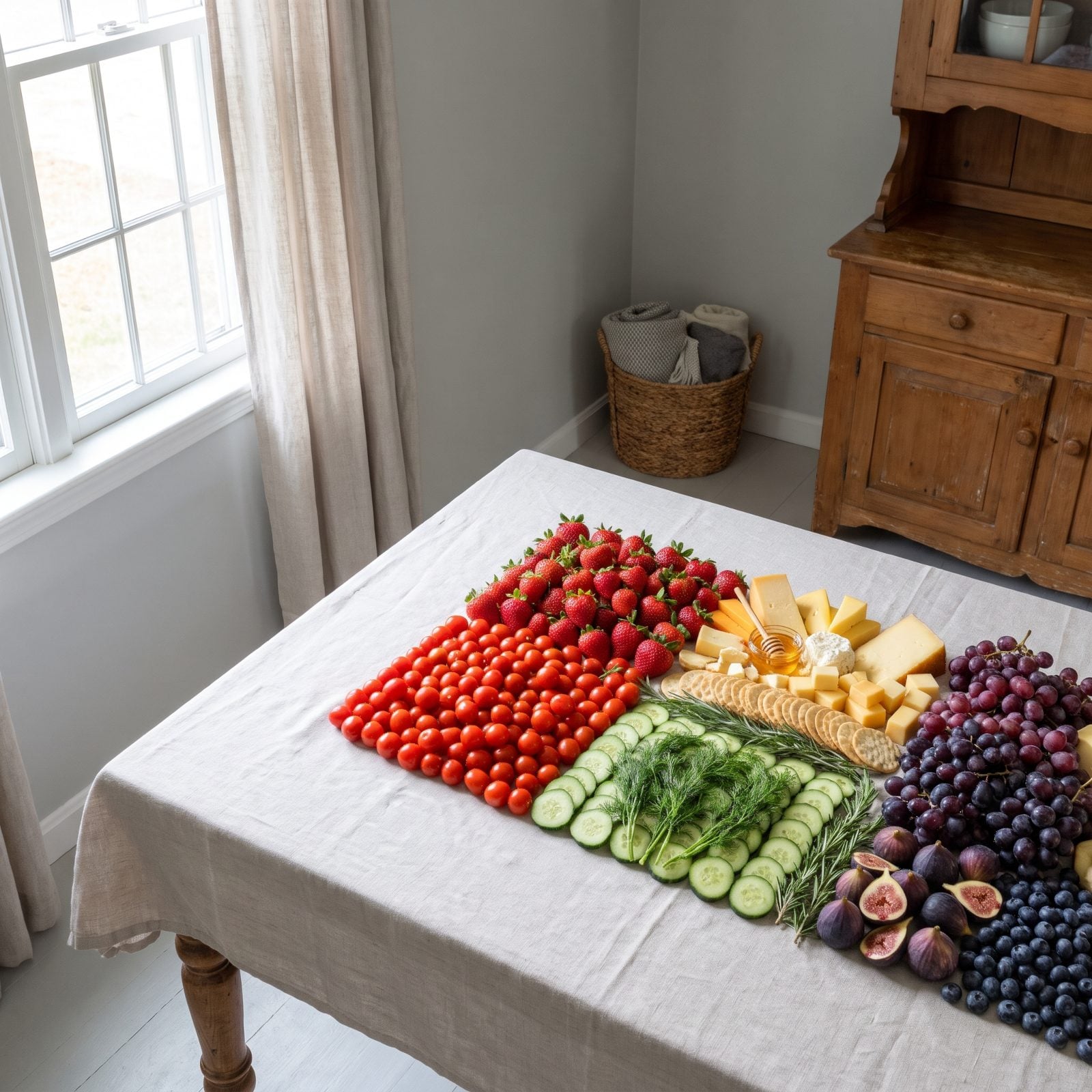
Scatter red and green and gold randomly across a table and it reads as clutter. Group them into blocks and it reads as design.
Cluster the reds together — tomatoes, strawberries, cranberry-dotted crackers. Let the greens hold their own corner, and give the golden cheeses a zone. The eye loves order, and organized color feels more generous than the same food thrown around in a jumble.
It also helps guests find what they want. Someone hunting for sweet knows exactly where to go.
17. Let Seasonal Aromas Reach the Entryway
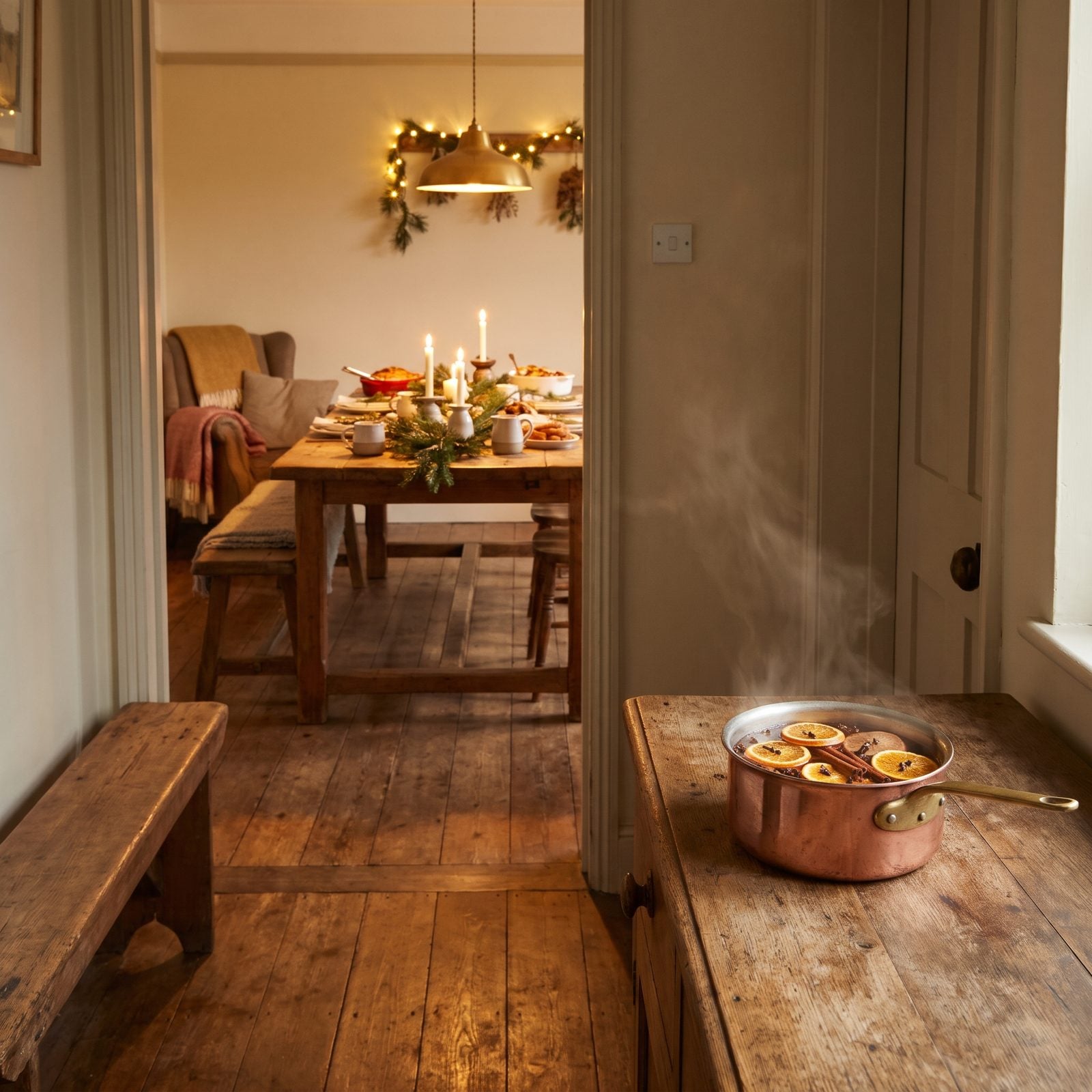
You walk into a house and the smell gets there first. Cinnamon, orange, clove simmering somewhere out of sight, and your feet start moving toward it before your brain catches up.
A simmer pot near the door, a tray of something warm just pulled from the oven, mulled cider steaming on the sideboard. Scent goes where decorations can’t. It reaches people the second they cross the threshold and lays a trail straight to the table.
16. Keep Menu Cards Large Enough to Read at a Glance
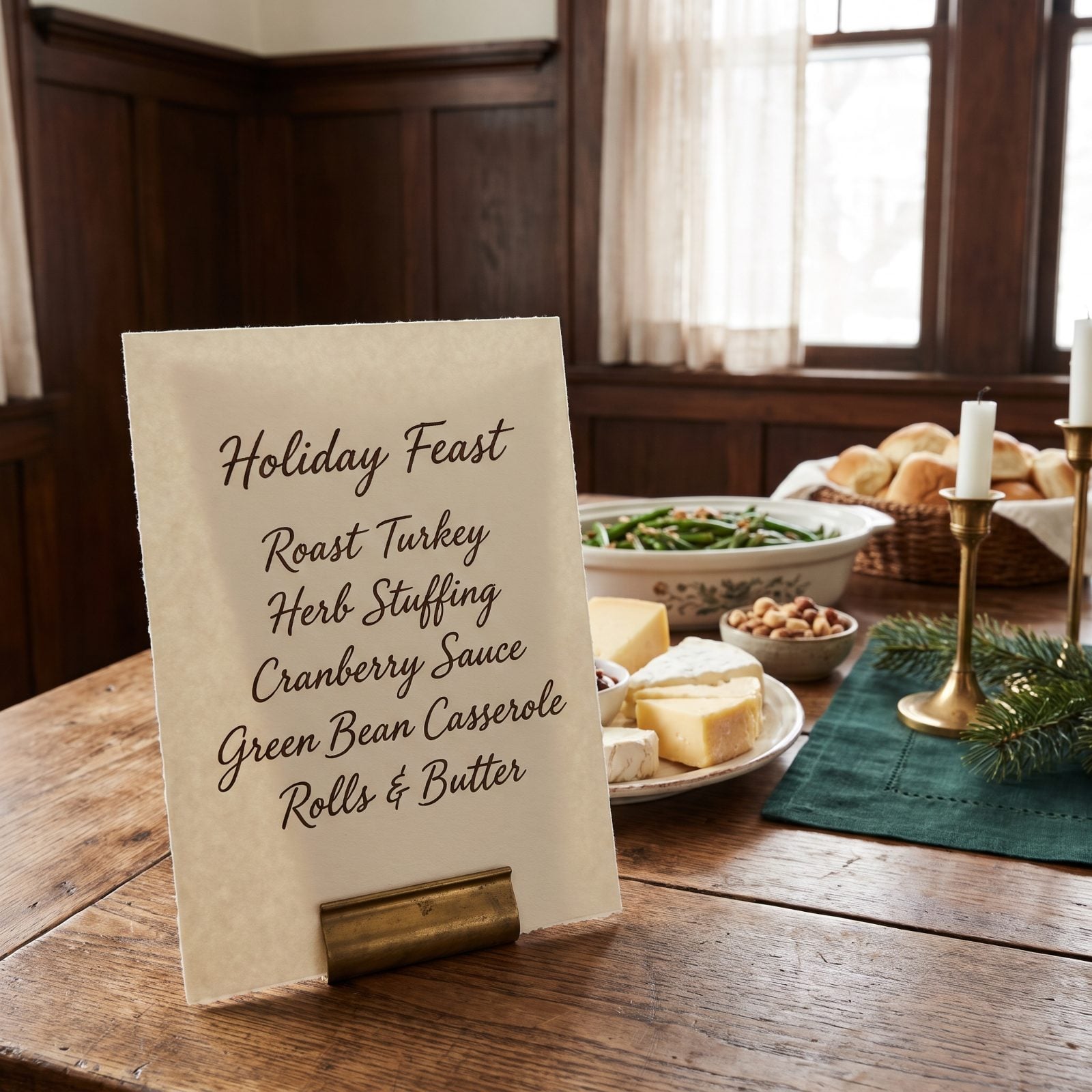
Tiny calligraphy on a folded card looks lovely, and nobody over forty can read it in low party light. We say this as people who have squinted at cheese labels with a phone flashlight hovering over them.
Write big. Dark ink, generous letters, cards propped where people actually stand. A readable label does two jobs: it tells guests what they’re eating and, just as importantly, it gives shy guests an excuse to approach. Reading the menu is an easy reason to walk over.
15. Place the Plates Where Guests First Approach
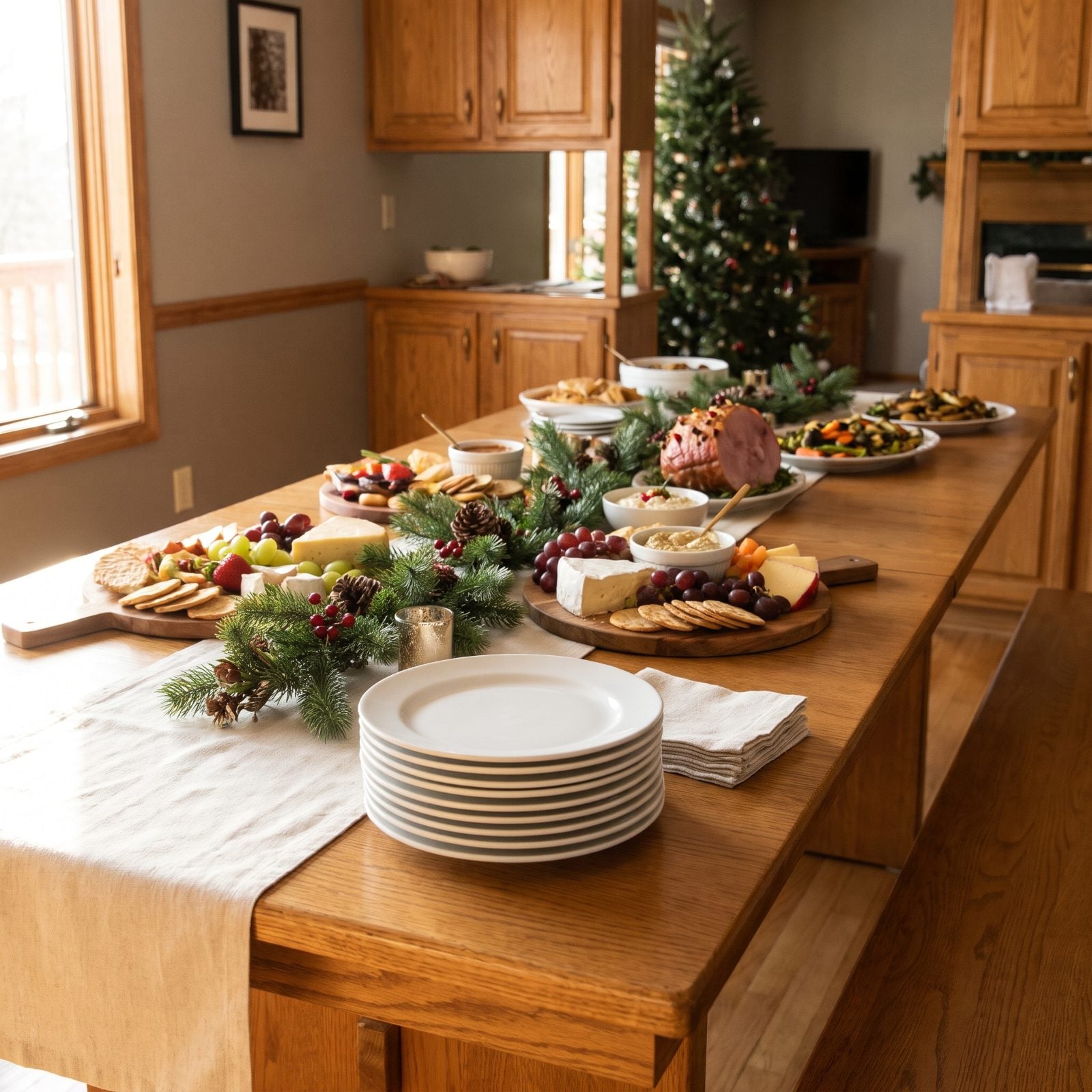
Put the plates in the wrong spot and you build a bottleneck. Guests reach for food, realize they need a plate, backtrack, bump into the person behind them, and the whole line snarls.
Stack the plates at the point where people first arrive — the approach end, not the far side. It reads like an invitation and sets the traffic moving in one direction. A table that flows feels welcoming; a table that jams feels like a parking lot.
Laying out a buffet line with a clear start, middle, and end, one barbecue caterer says “plates should be at the front, followed by inexpensive appetizers and snacks, main cuisines in the middle, and then utensils and napkins at the end.”
14. Display Napkins and Utensils as a Clear Invitation
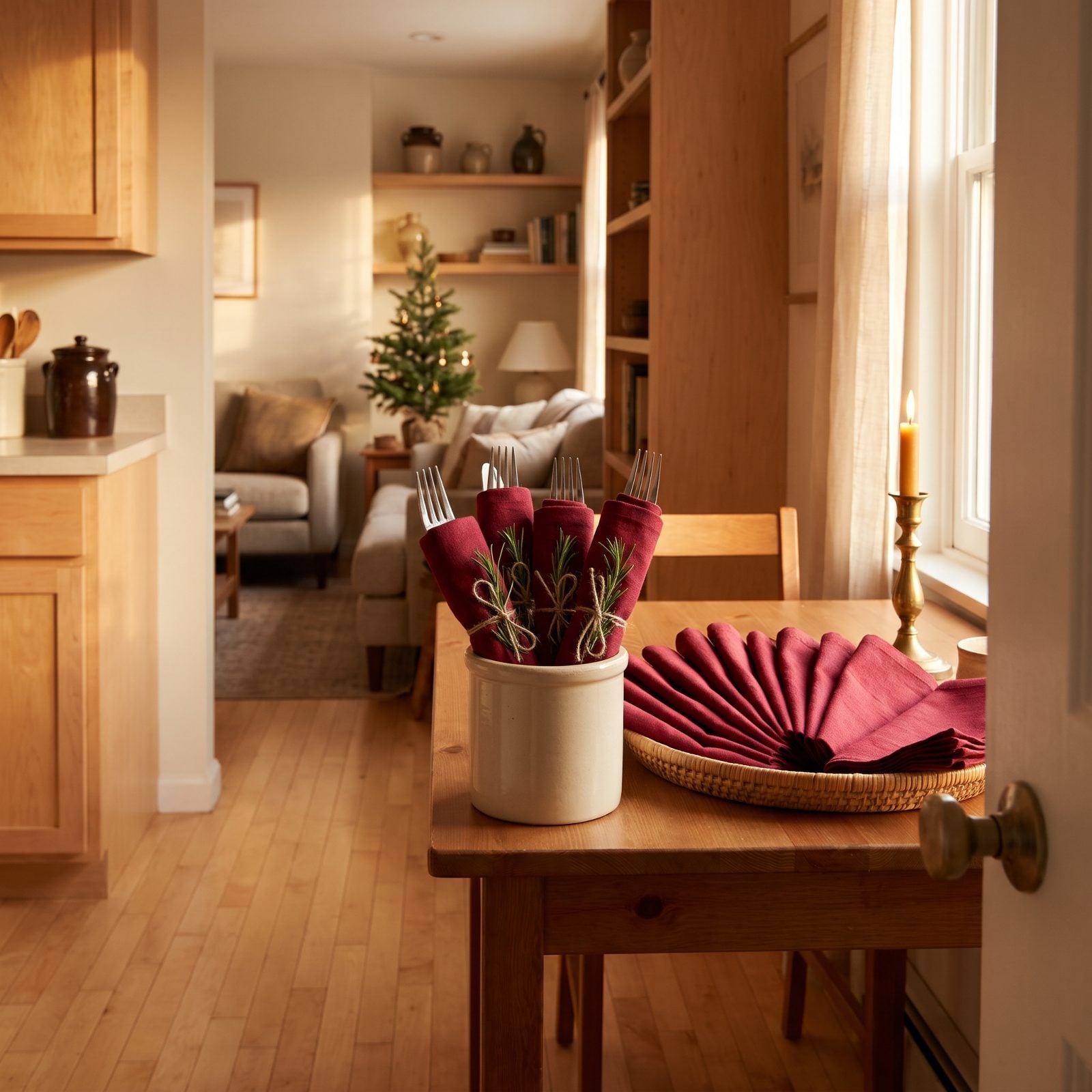
Napkins and forks are the quiet signal that says yes, you’re allowed to eat. Hide them and guests hover, unsure if the spread is for looking or for grabbing.
Fan the napkins where hands land. Stand the napkin-wrapped forks tines-up in a crock so people can take one without digging. Make helping yourself feel obvious and effortless. A tidy utensil station lowers the social hesitation that keeps people standing politely three feet from the table.
13. Put an Easy First Bite at the Near Edge
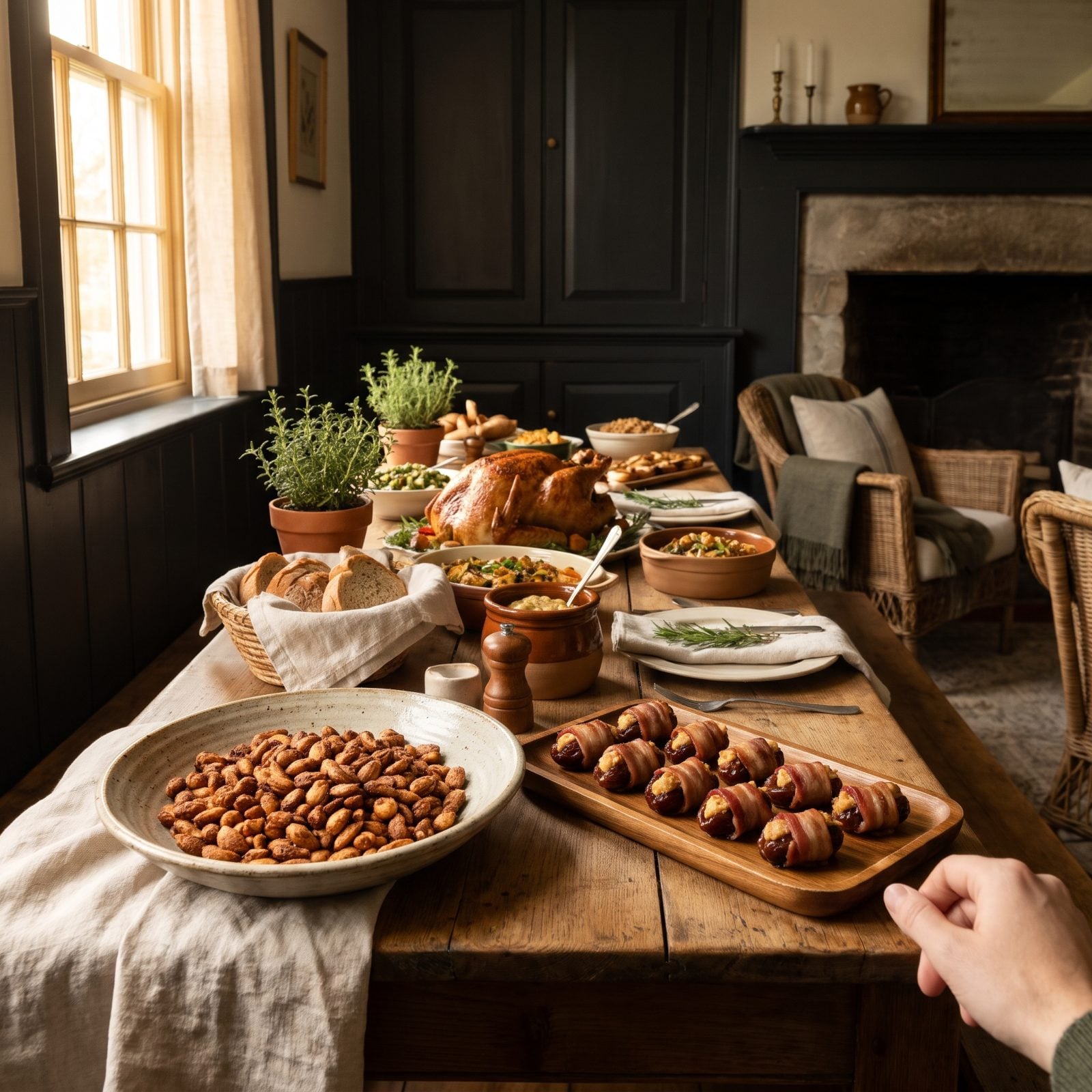
The hardest moment at any party is the first bite. People hang back, waiting for someone braver to go first.
Solve it with a no-commitment nibble parked at the near edge — a bowl of spiced nuts, a tray of single-bite stuffed dates, something you grab without a plate or a decision. One easy bite breaks the seal. Once a guest has eaten one thing, standing by the table feels natural, and the room loosens up around the food exactly the way you wanted.
Get that first bite right and the rest of the table takes care of itself.
12. Pull the Serving Covers Off Before the First Guest Walks In
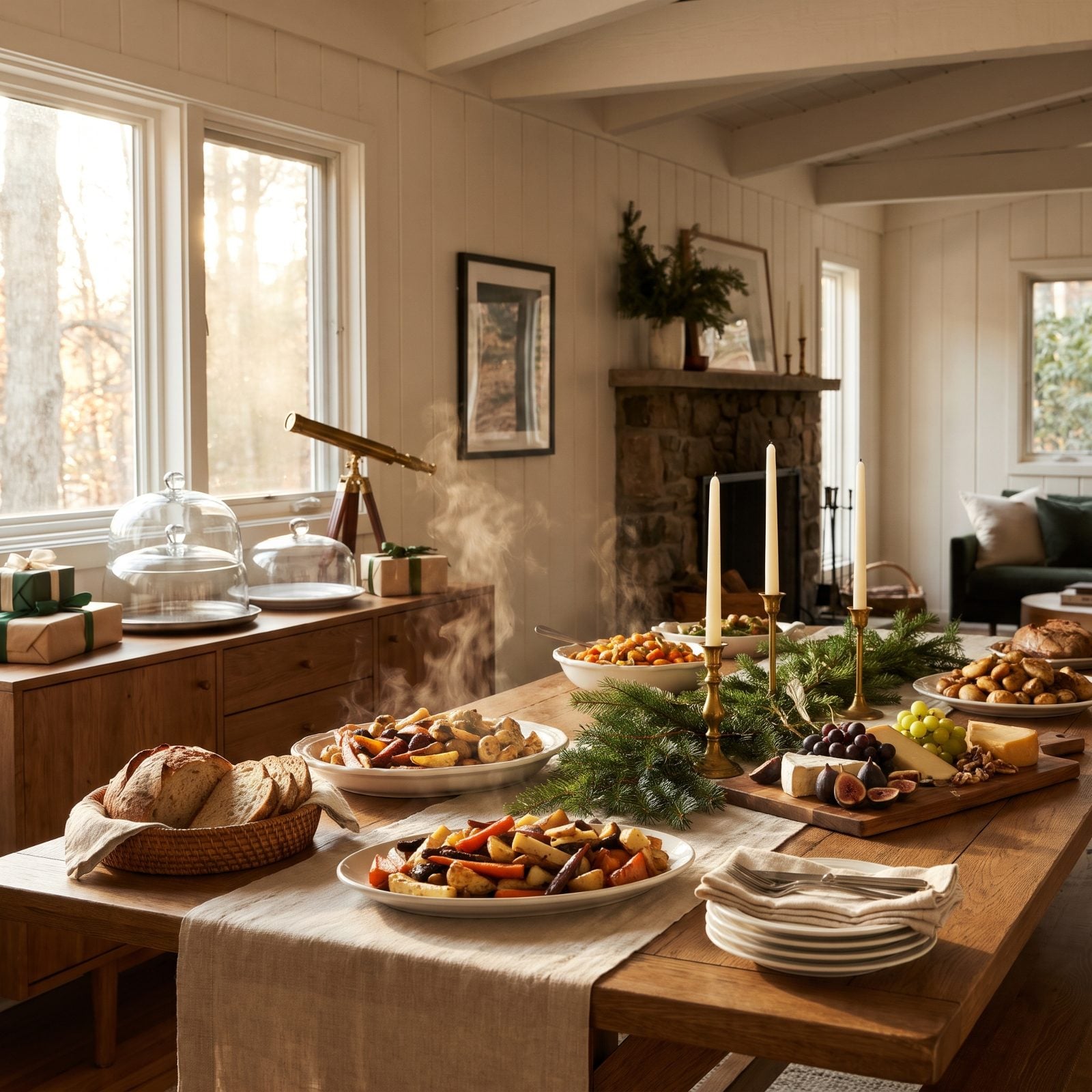
A covered dish reads as not yet. Guests see domes and lids and assume the host isn’t ready, so they hover near the door instead of drifting toward the food. Pull every cover off before anyone rings the bell.
Exposed food does the inviting for you. The gleam of roasted vegetables, a cheese board heaped with figs and grapes, a neat stack of plates waiting at the edge — it all says go ahead. If the cloches stay on the table, set them empty at the far end, well clear of the food, so nobody wonders whether they’re even allowed to touch anything.
11. Keep the Centerpiece Low Enough to See Across
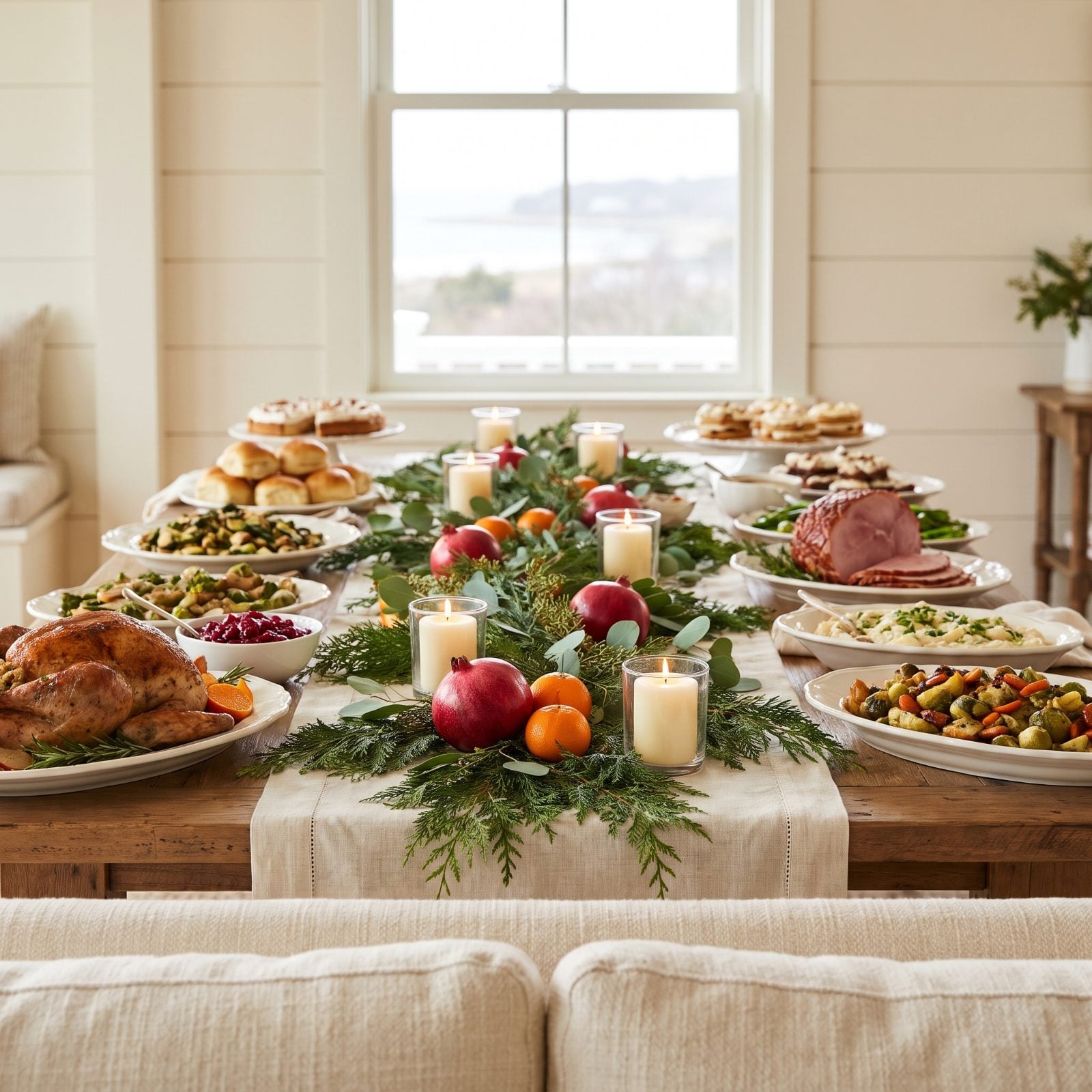
Tall arrangements are a wall. A towering floral centerpiece splits the table in half and hides whatever sits behind it, so half your food goes ignored because nobody can see it.
Keep anything in the middle below chin height — low candles, a flat runner of greenery, a shallow bowl of citrus and nuts. People should be able to catch a friend’s eye across the spread and clock every platter at a glance. Want drama? Go wide and low instead of up.
10. Leave at Least Two Sides of the Table Open
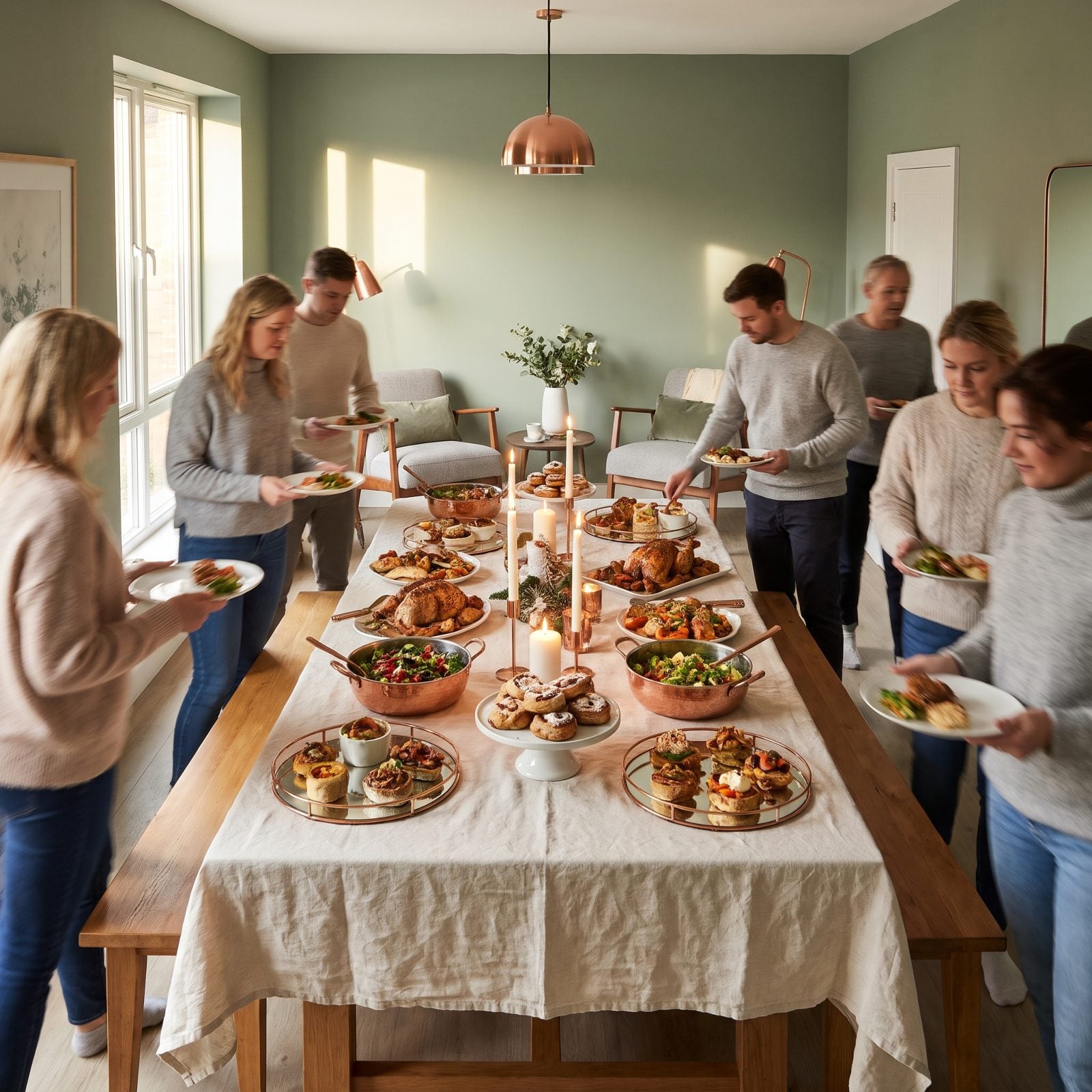
A table shoved against the wall forces a single-file line, and single-file lines stall. One slow deliberator, and everyone behind them is stuck.
Float the table so guests can work both long sides at once. Better yet, mirror the dishes so each side reaches the same things. Twice the access, half the wait, and nobody has to reach across somebody’s shoulder for the brie.
Describing the double-sided buffet layout, a full-service caterer explains: “Guests can serve themselves from both sides of the same table, which effectively doubles capacity. This works best when you can duplicate key items and serving utensils on both sides so guests are not reaching across each other.”
9. Give the Drinks Their Own Station Across the Room
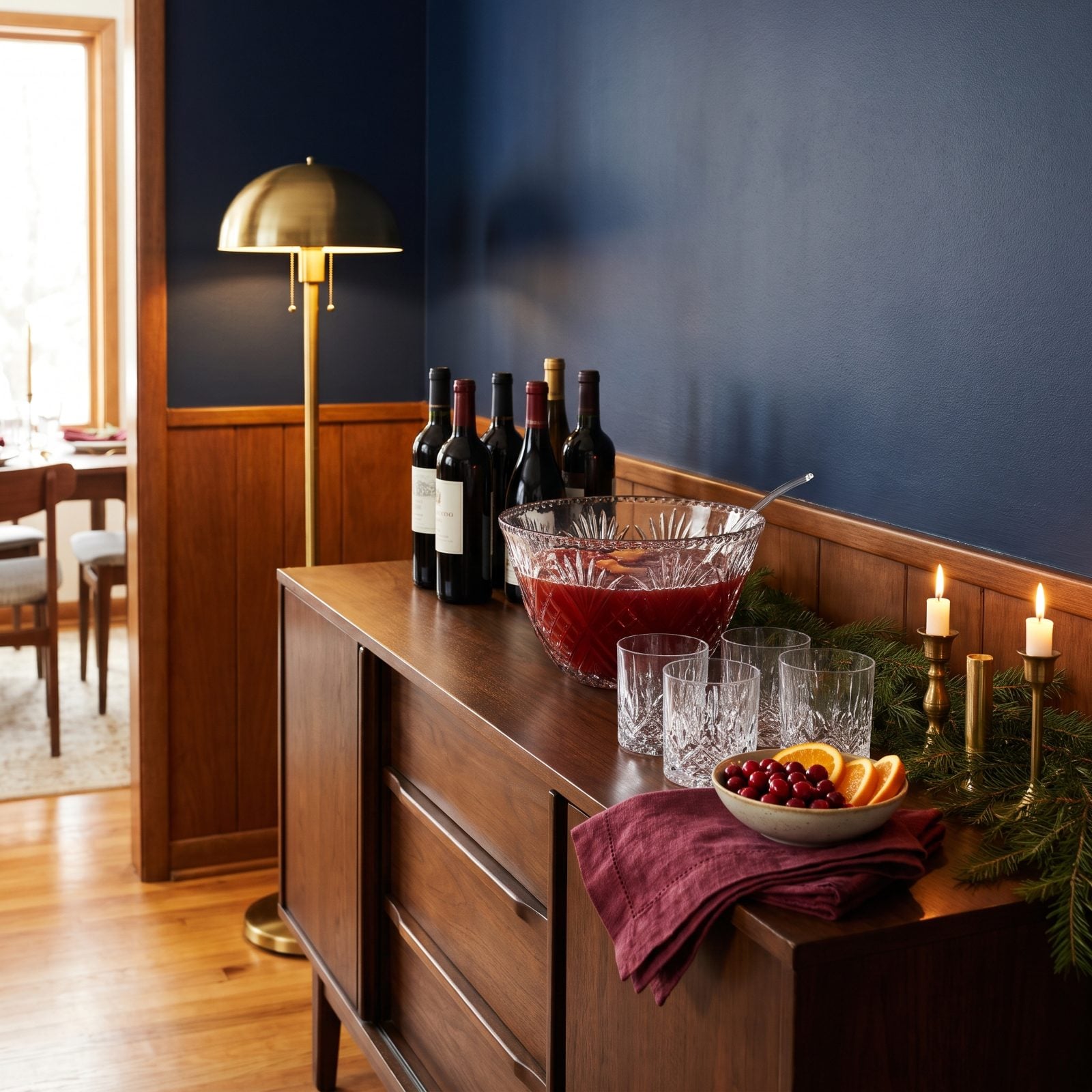
Drinks and food on the same table is a jam waiting to happen. One person pouring wine blocks three others trying to reach the cheese, and the two activities end up fighting over the same square foot.
Set the bar somewhere else entirely — across the room, in the hall, on a cart by the window. Split them and you get two natural gathering spots instead of one gridlocked one. The food keeps flowing while the pourers take their sweet time.
Stressing that guest flow matters most in tight homes, one event planner advises: “Avoid placing food, beverages, and entertainment all in one area, as this can create unnecessary congestion.”
8. Clear the Dining Chairs Away From the Buffet
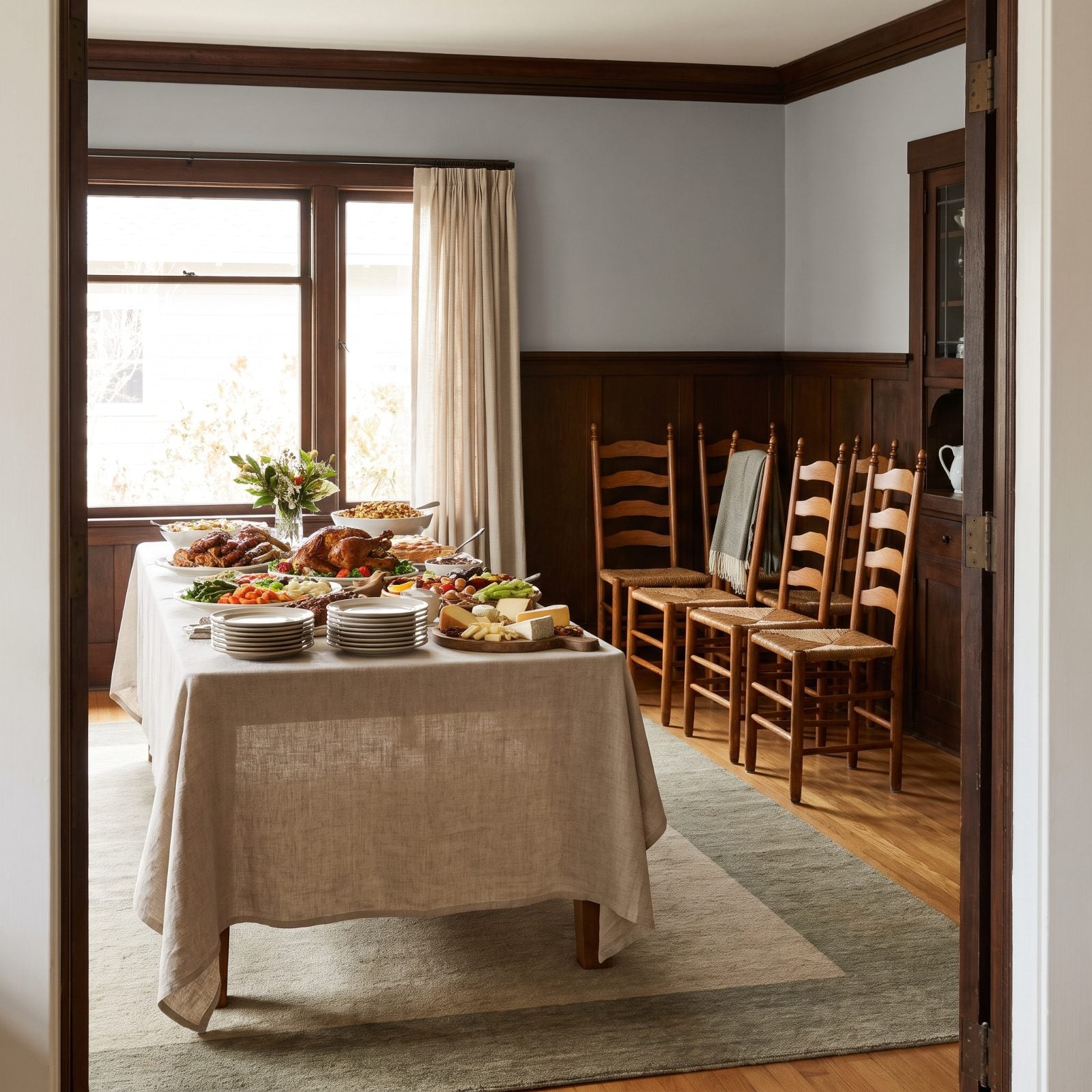
Chairs around a buffet are an invitation to sit, and once someone sits they stop moving. They settle in, elbows out, and quietly anchor the whole table into a dinner-party freeze.
Pull the chairs away. Group them into a little seating cluster across the room for the folks who really do want to rest their feet. The food table should feel like a place you pass through, graze, and keep circulating — not a place you park.
7. Station the Host Right Beside the Food Table
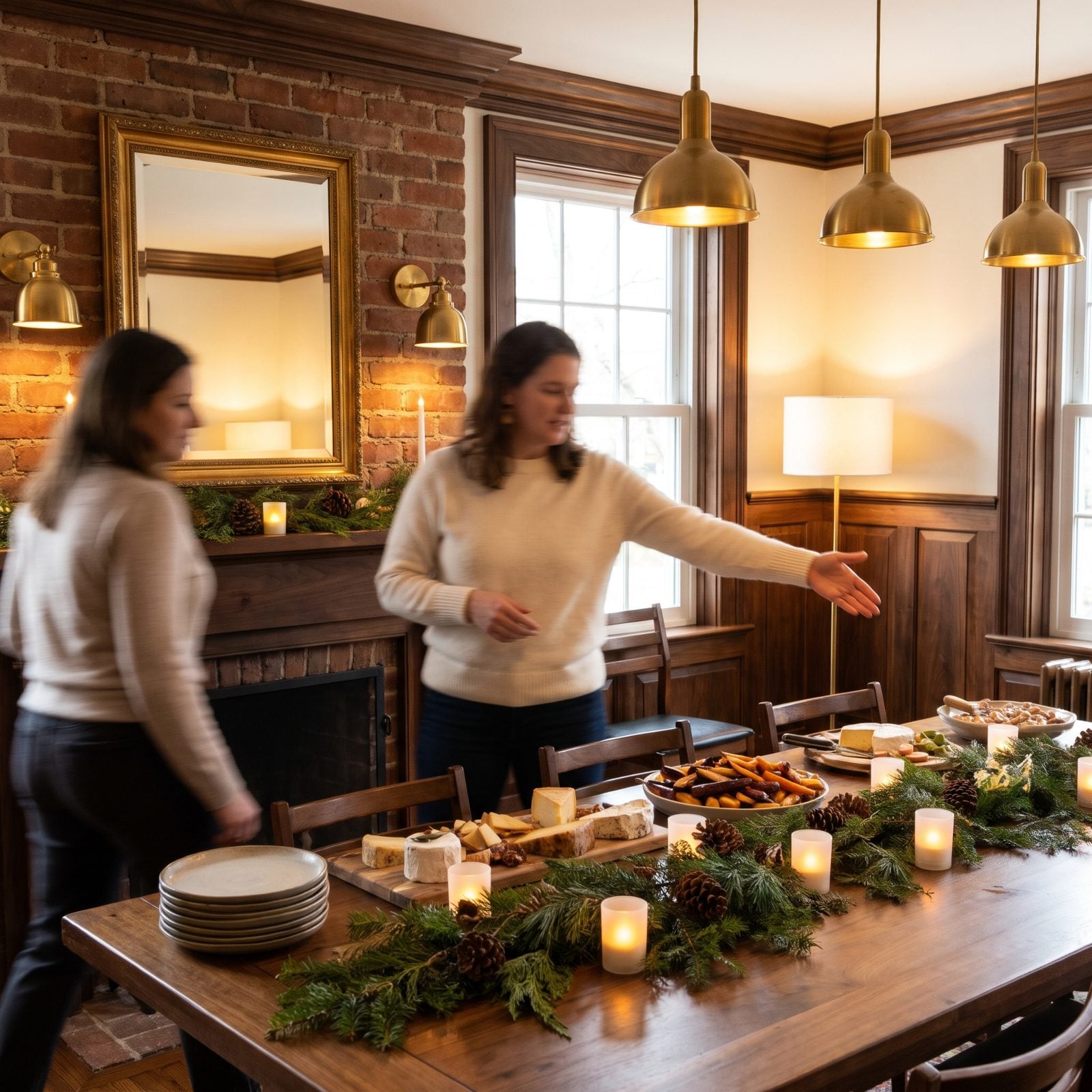
Where the host stands is where the party gathers. Plant yourself by the door and you’ve built a crowd in the entryway. Stand by the food and you’ve built it where you actually want it.
Greet people with the table at your back — a hug, a hello, then a half-step toward the spread so the first thing they see is dinner. You become the thing people drift toward, and you happen to be standing right where the action should be.
6. Hand Arriving Guests a Plate Before the Small Talk
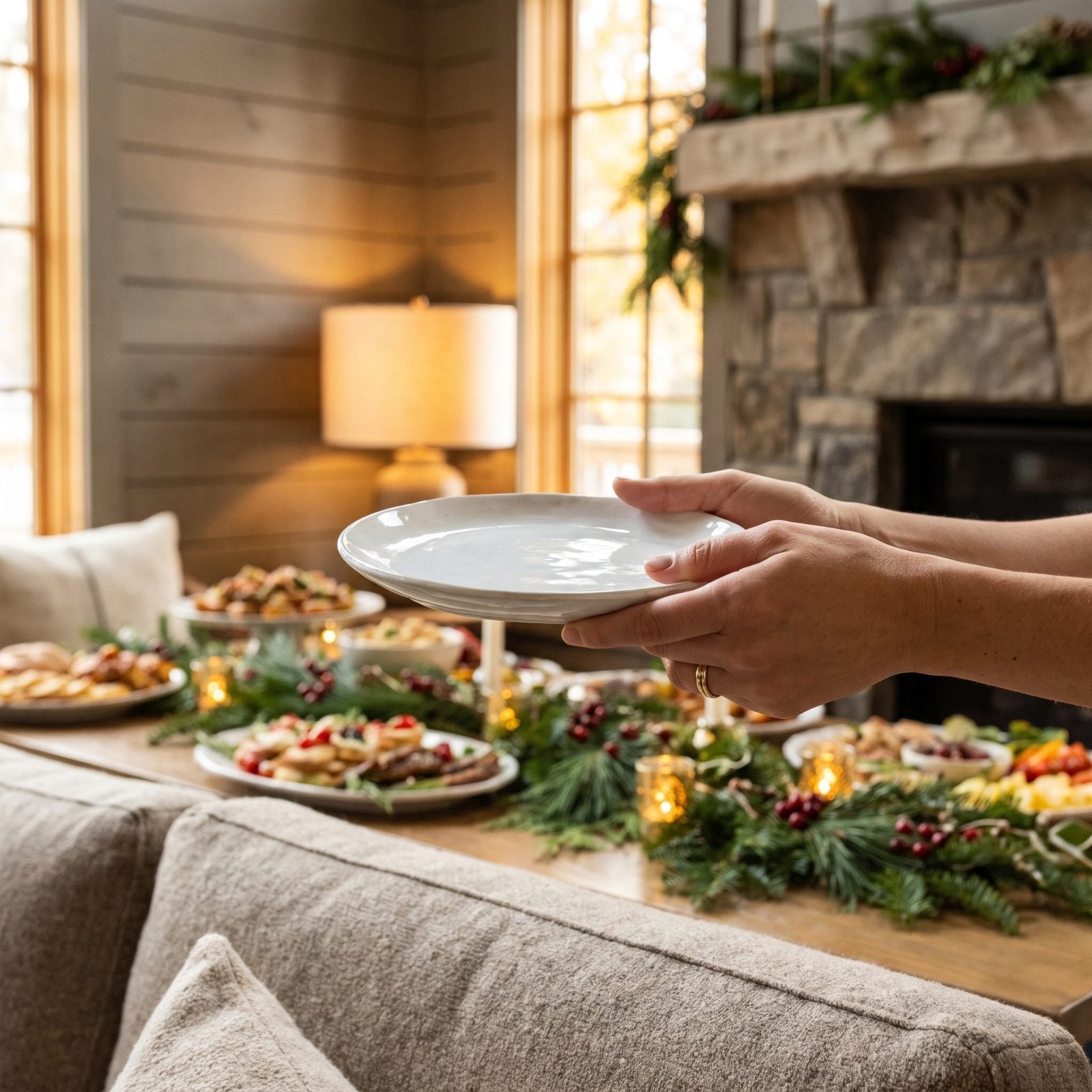
A long introduction leaves a guest standing empty-handed, unsure what to do with themselves. A plate fixes that in a second.
Put one in their hand before you’ve even finished saying hello. It gives them a reason to move, a thing to hold, and quiet permission to start eating. Conversation flows easier when you’re both grazing instead of staring at each other by the door.
5. Set Out a Few Ready-to-Carry Tasting Plates
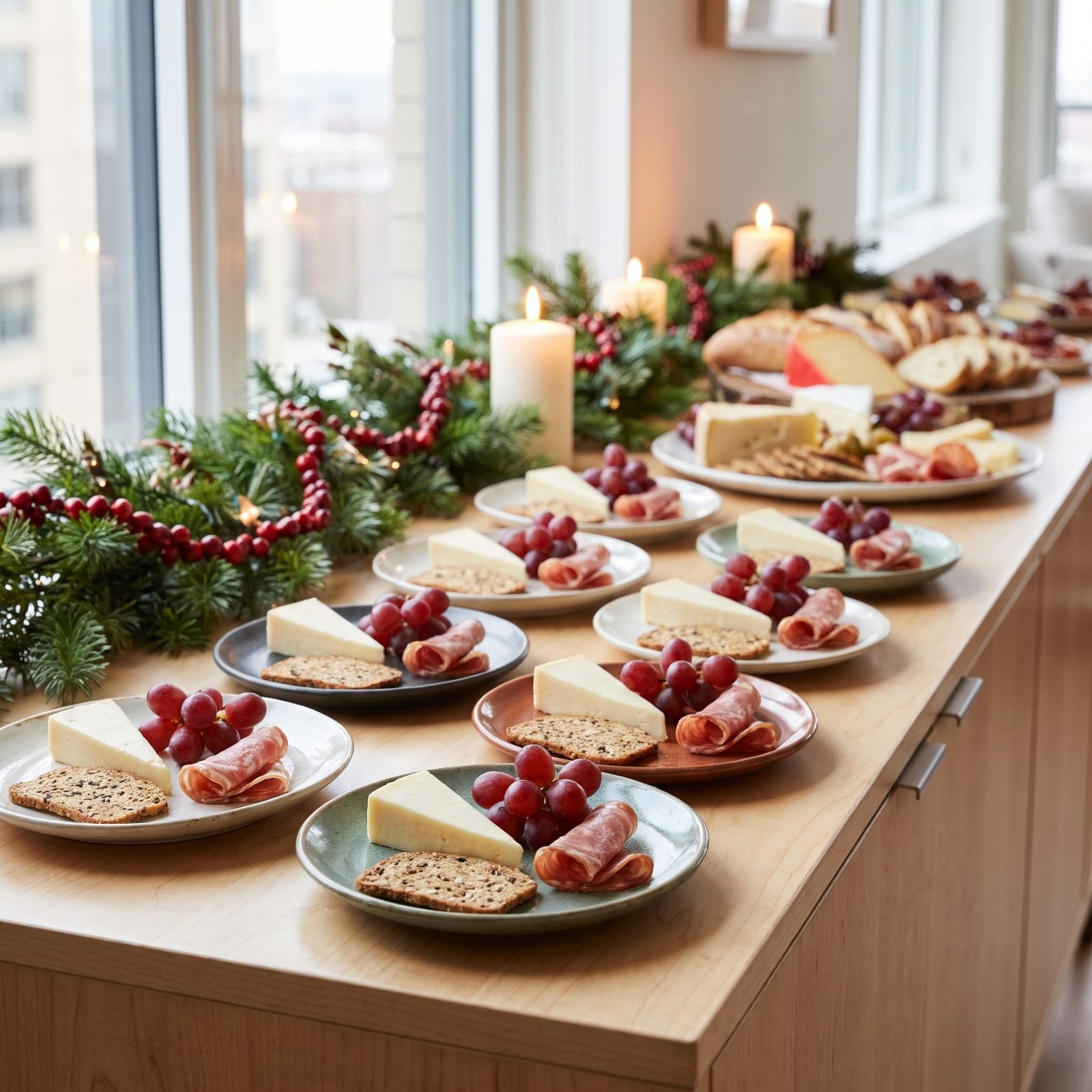
Not everyone wants to build a full plate the second they arrive. Some just want a bite while they find their footing.
Arrange a handful of little plates already loaded with a few tastes each — a cube of cheese, a cracker, a couple of grapes — and set them at the front edge so arriving guests can snag one and keep walking. It takes the pressure off the main spread and hands shy guests an easy first move. These always vanish first at our parties, which tells us they’re earning their keep.
4. Refresh Small Platters So the Spread Never Looks Picked Over
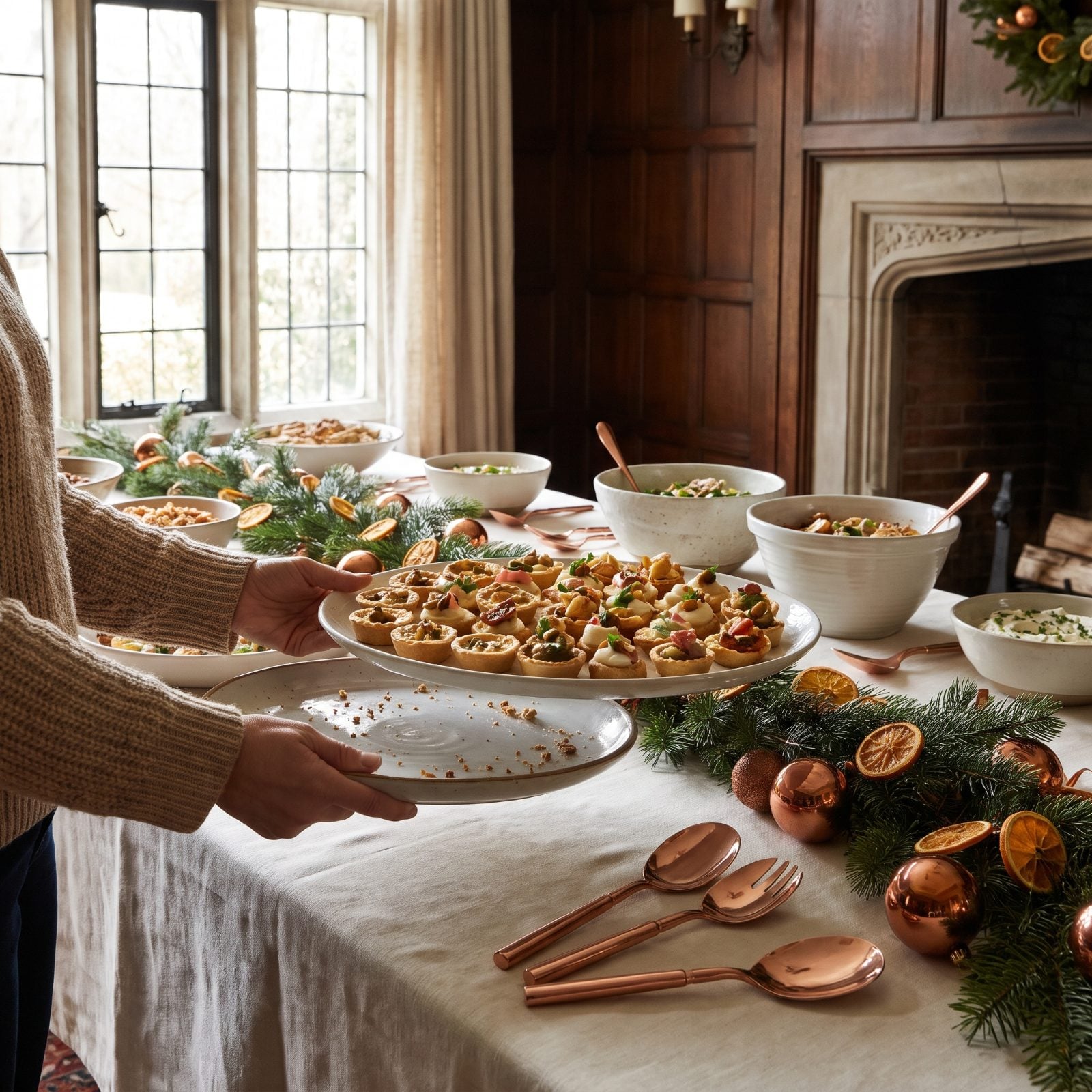
A giant platter looks generous for ten minutes, then ravaged for the next two hours. Crumbs, gaps, one lonely olive. Guests read a half-wrecked tray as closed for business and drift away.
So serve from several small platters instead of a few big ones. When one gets scruffy, pull it to the kitchen, refill or swap it, and carry out a tidy one. The table keeps looking like the party just started, right up until the last guest leaves. Stash a couple of backups in the fridge before anyone shows up — future you will be grateful.
3. Hide Backup Serving Pieces on a Nearby Staging Table
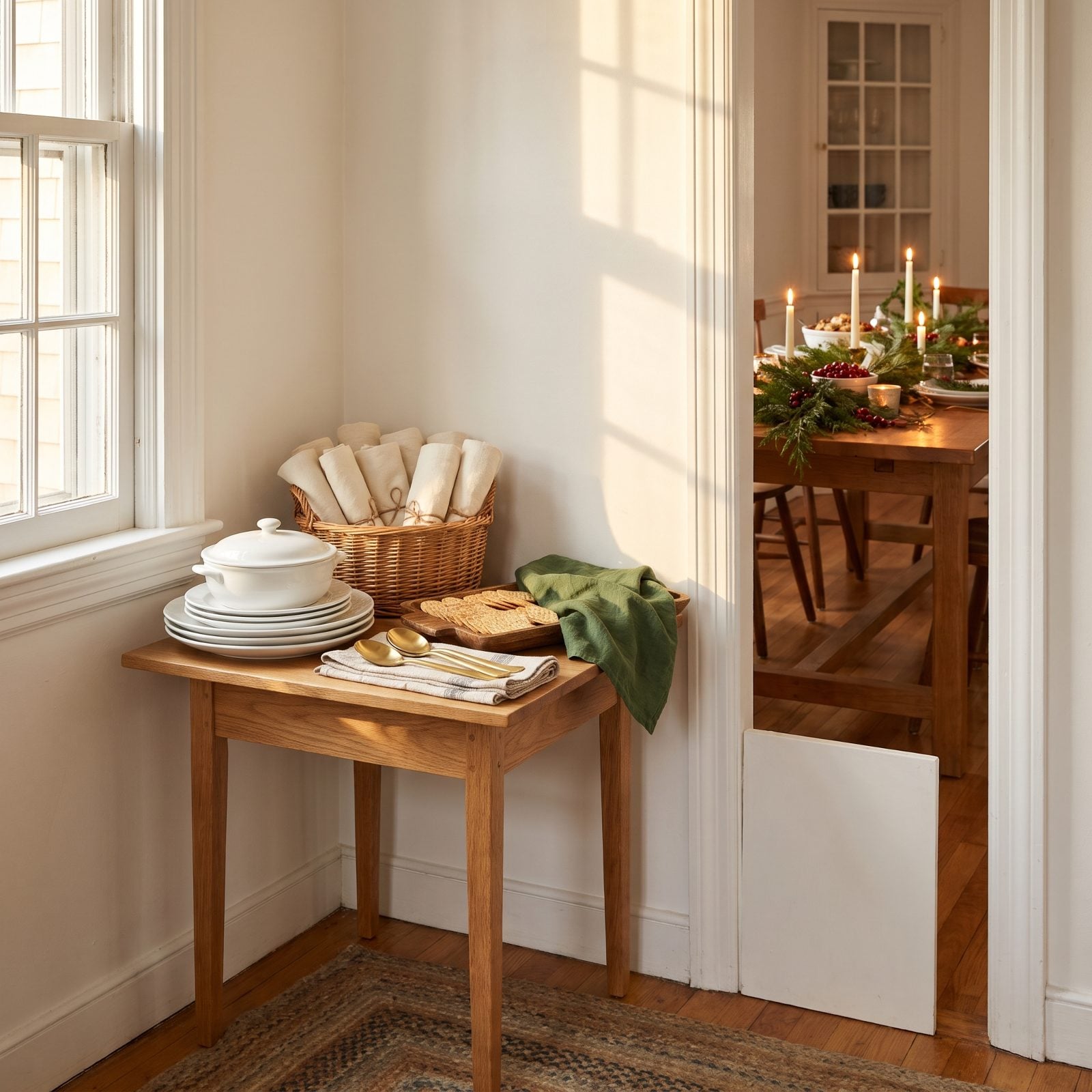
Nobody needs to watch you refill the meatballs. A staging table — a console in the hallway, say, or a card table dressed with a cloth — is where the backup lives: clean platters, the second round of cheese, extra napkins, a reserve tray you can swap in while the empties disappear. Out front, the food table stays abundant and uncluttered.
It all comes down to distance. Close enough to restock in ten seconds, far enough that guests read it as off-limits. A linen runner and a stack of folded napkins whispers “staff area” without a single sign.
2. Keep Desserts Visible Without Letting Them Block Savory Food
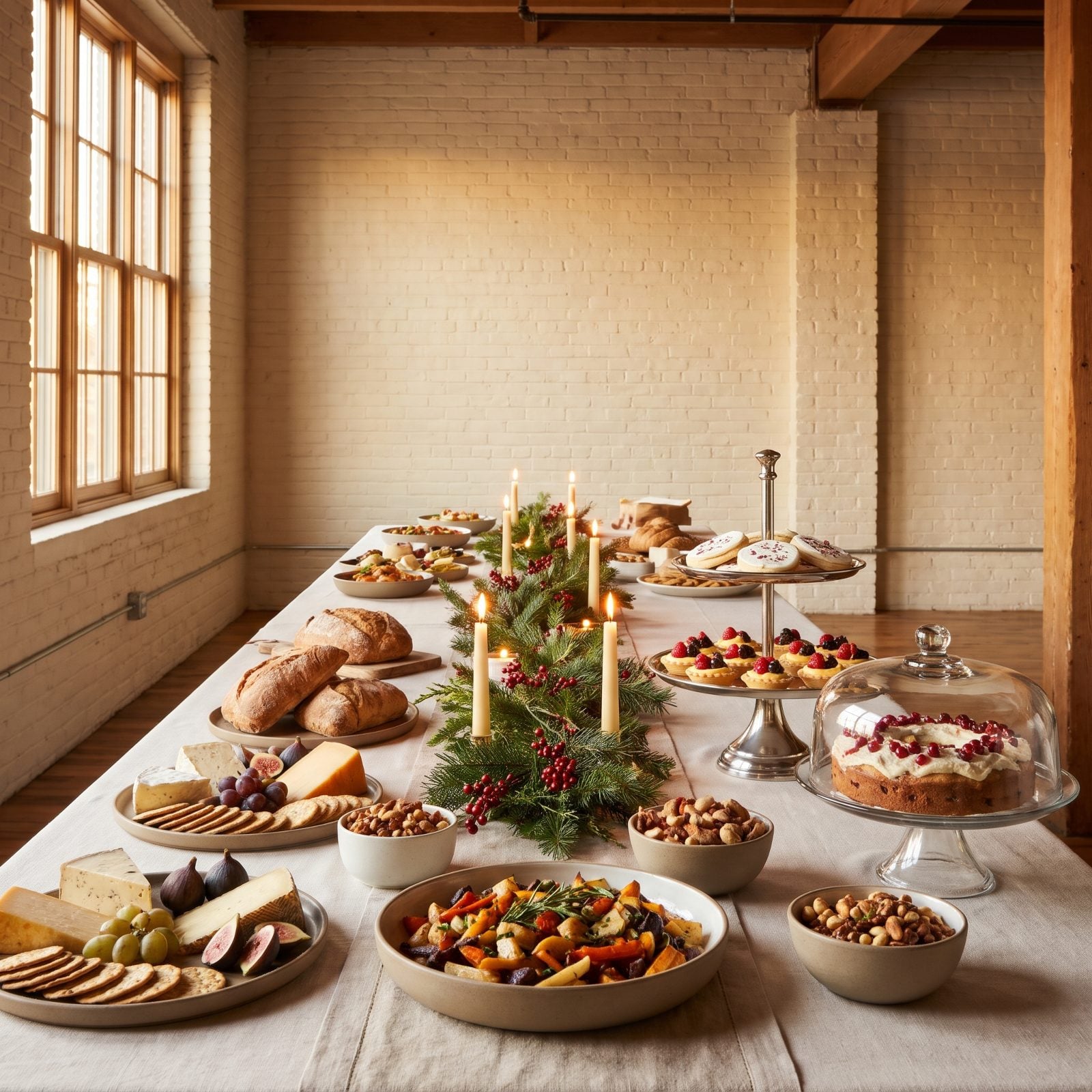
Desserts draw a crowd, and a crowd parks. Put the cookie tray right next to the roast and you’ll bottleneck the whole table while three people debate the lemon bars versus the shortbread, elbows out, ignoring the brisket entirely.
Give sweets their own real estate. The far end of the same table works fine, or a separate surface across the room. Raise them on a stand so they stay in view and pull people toward the end of the line instead of the middle of it.
We’ve watched a single plate of brownies shut down an entire buffet. Height and separation fix it.
Explaining how she keeps big buffets moving, a large-group cooking blogger writes: “I try to locate the dessert table away from the buffet line.”
1. Move the Music Speaker Away From the Serving Area
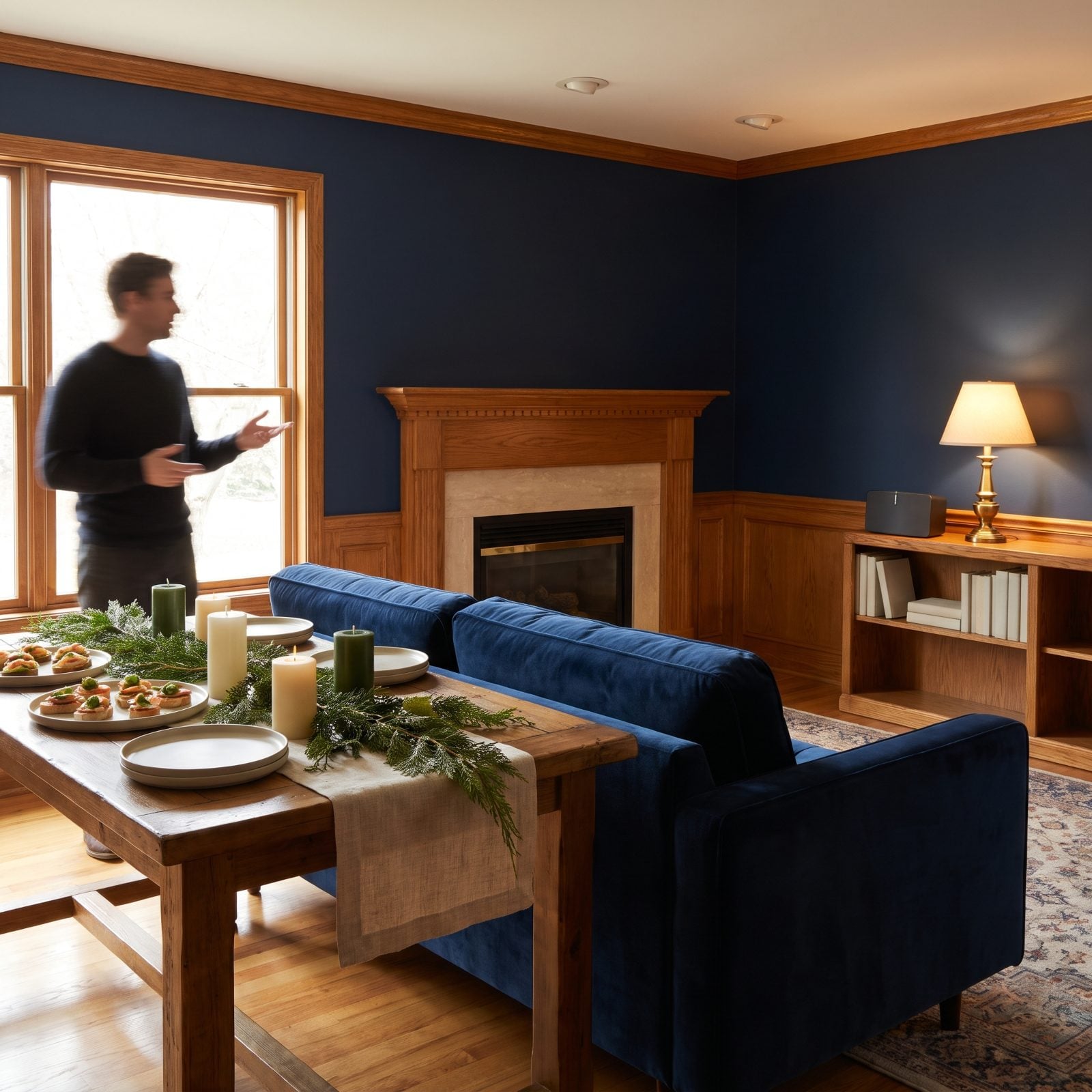
Park the speaker next to the cheese board and you’ve built a dead zone. People lean in to hear each other, give up, and shuffle off — leaving your best grazing spot loud and lonely.
Tuck it into a far corner instead. On a shelf, behind a chair, anywhere the sound fills the room without shouting over the one place you want people to linger. The food table should feel like the easiest spot to stand and talk, not the hardest.