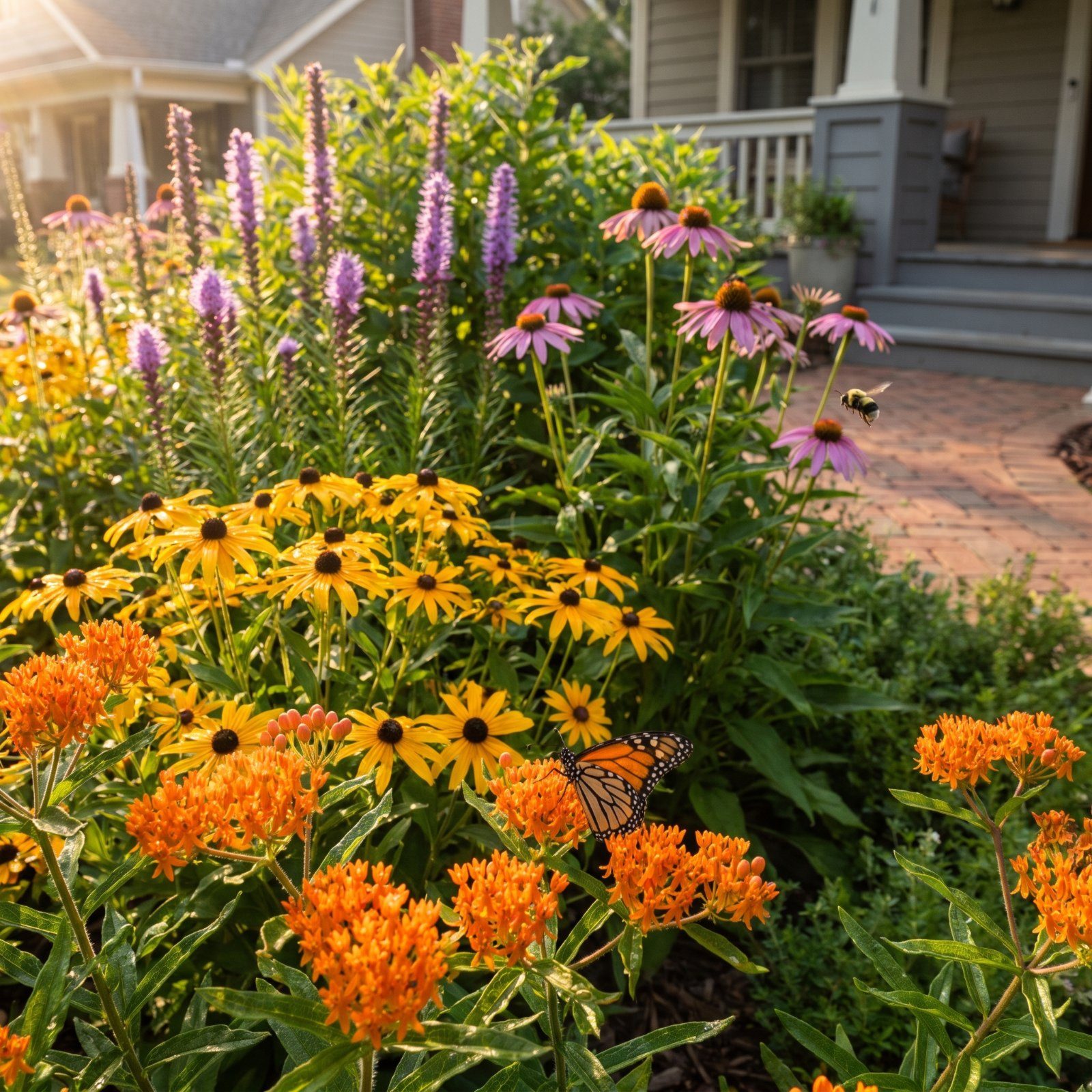
Dig a hole in a North Carolina front yard and you might turn up a monarch caterpillar before you turn up a worm. That’s what happens once you stop fighting the local plants and start planting them instead. The orange, the gold, the blood red, the purple spikes that lean in the July heat. These flowers are native to this state, which means they already know how to handle the clay, the humidity, and those drought weeks in August when everything else sulks. They feed the bees and the hummingbirds and the butterflies, and they look good from the sidewalk too. Here are the ones worth the front-row seat.
Please note that some of the images in this article were created with the assistance of AI.
7. Butterfly Weed: The Orange That Stops Traffic
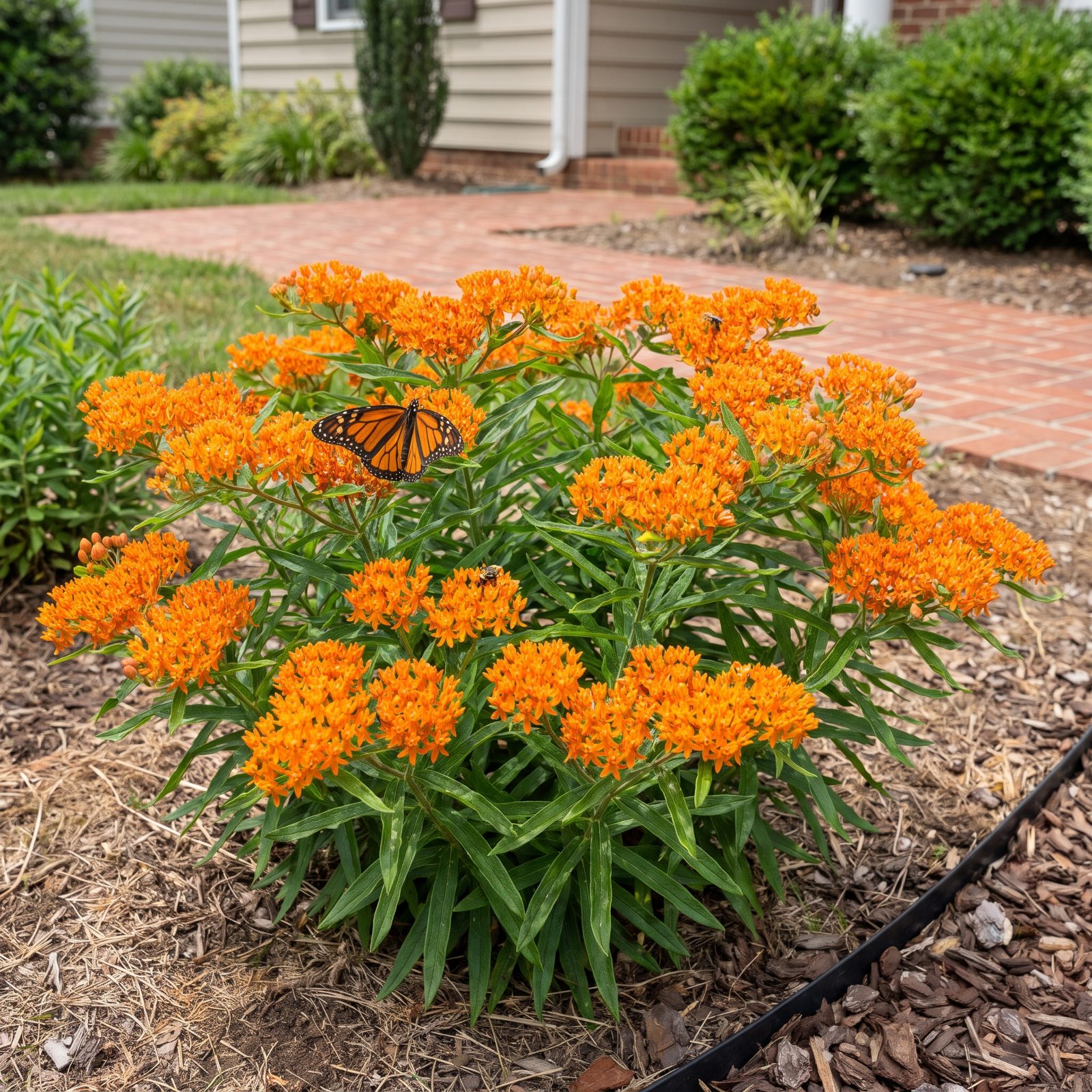
No flower here earns its spot from the sidewalk faster. Butterfly weed (Asclepias tuberosa) throws out clusters of orange so bright they look lit from inside. NC State Extension lists it as native across all three regions of the state, Coastal, Piedmont and Mountains, growing one to three feet in a neat clump that shrugs off drought, poor dry soil, and even a little salt.
Here’s the catch nobody mentions. It has a deep taproot and hates being moved, so pick its spot once and leave it. Plants grown from seed can take two or three years to flower, which means you should buy a potted one if you want the show this summer.
6. Black-Eyed Susan: The One Everyone Thinks Is an Annual
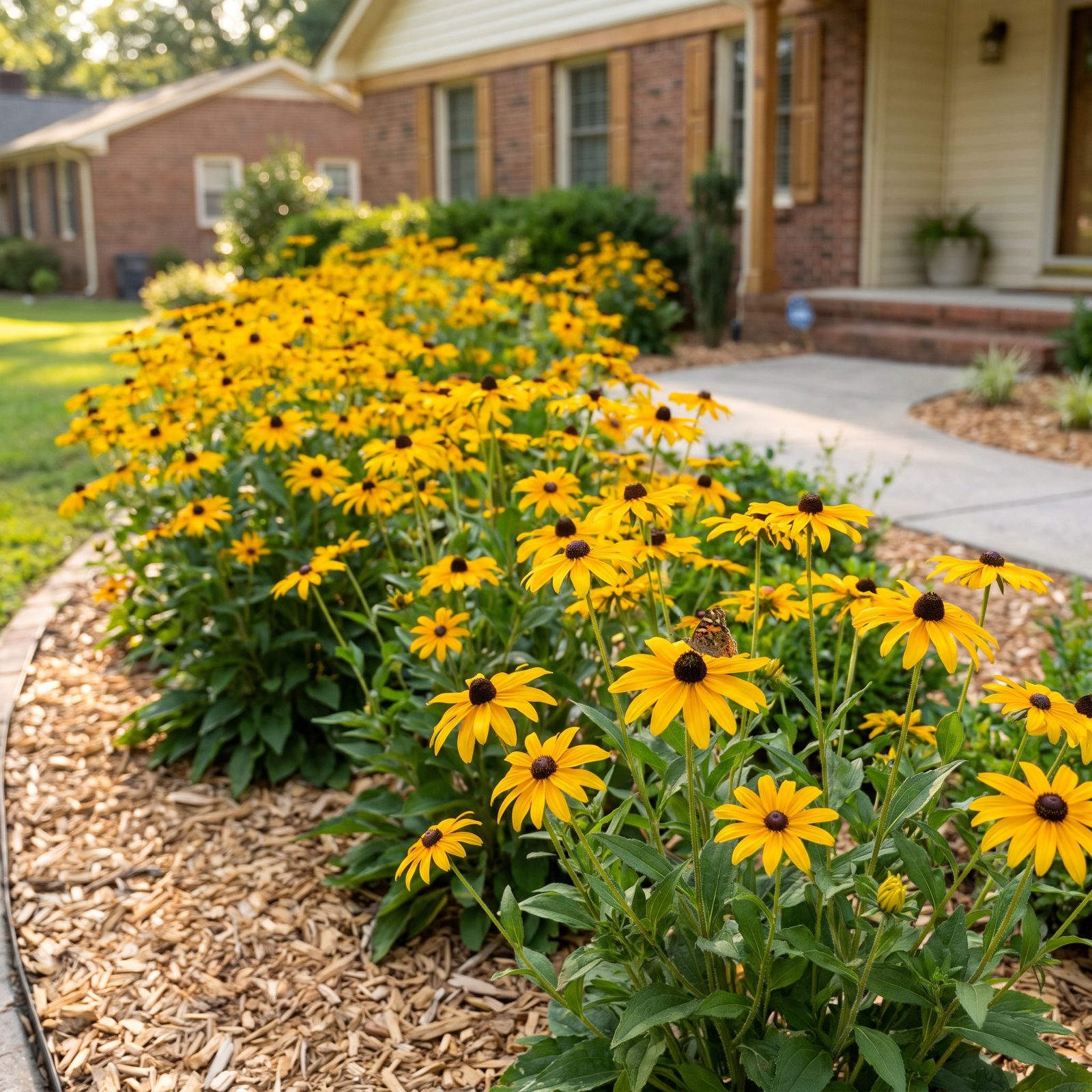
People buy black-eyed Susan (Rudbeckia hirta) every spring thinking it’s an annual, then act surprised when it comes back. It’s actually a biennial or short-lived perennial that blooms its first year from spring-sown seed, and that’s where the confusion starts.
Deadhead it and the gold keeps coming from midsummer into mid-fall. It reseeds freely, laughs off deer and drought, and feeds the caterpillars of the Silvery Checkerspot butterfly. One real mistake to avoid: don’t plant it along the lawn edge. Lawn fertilizer dumps too much nitrogen into the soil and you end up with a tall leafy plant and a stingy flower show.
5. Cardinal Flower: For the Damp Corner Where Nothing Else Wants to Live
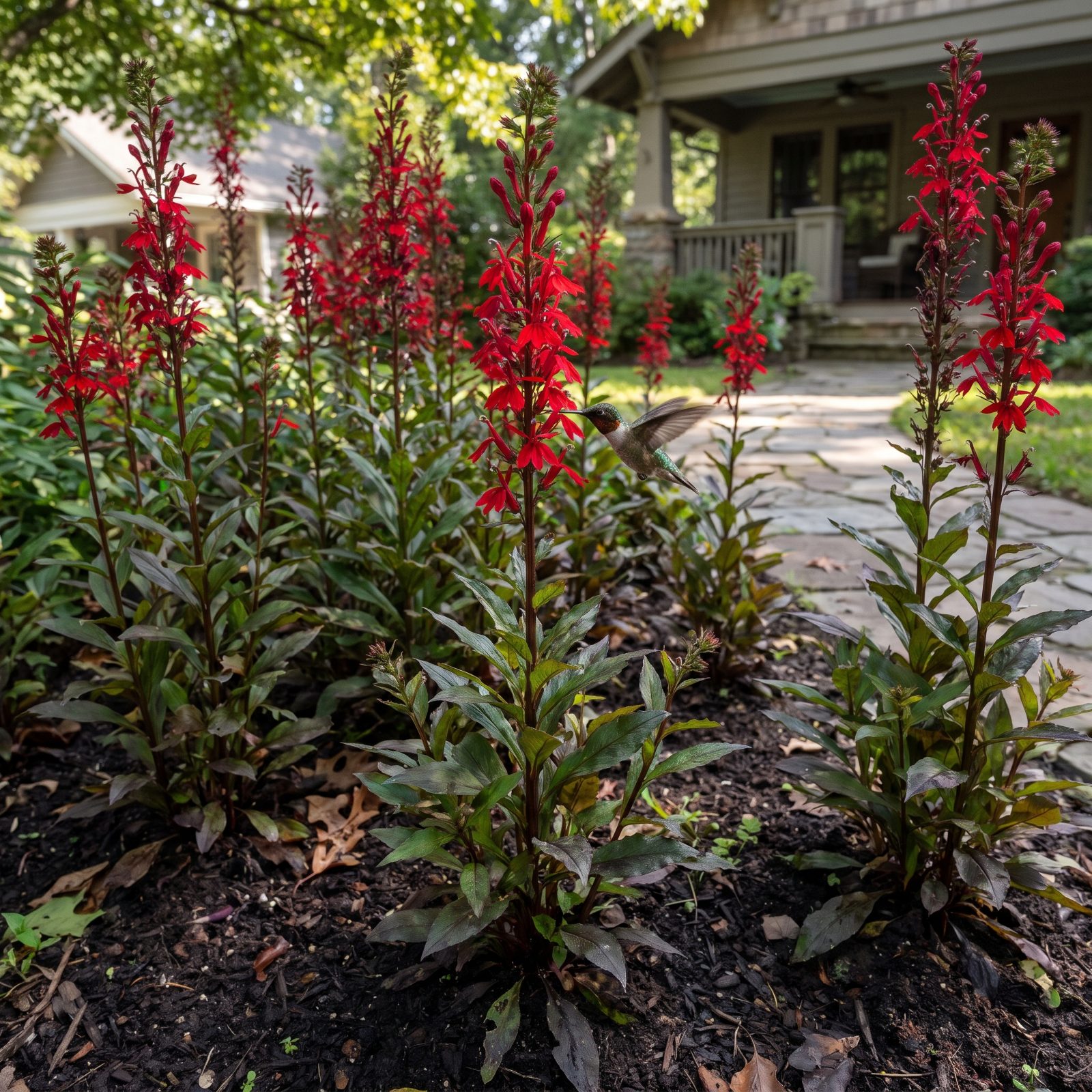
Most front-yard plants want sun and good drainage. This one wants the opposite, which makes it the fix for a problem a lot of yards have.
Cardinal flower (Lobelia cardinalis) sends up spikes of red so intense they almost hum, four to five feet tall, late summer into mid-fall. It needs rich soil that never dries out and tolerates brief flooding, so that low damp corner by the downspout is finally useful. Hummingbirds go for it hard. The ‘Queen Victoria’ cultivar adds bronze leaves beneath the red. Montgomery County Extension suggests pairing it with great blue lobelia for a red-and-blue finish to the season.
4. Scarlet Bee Balm: The Blue Ridge Parkway in Your Flowerbed
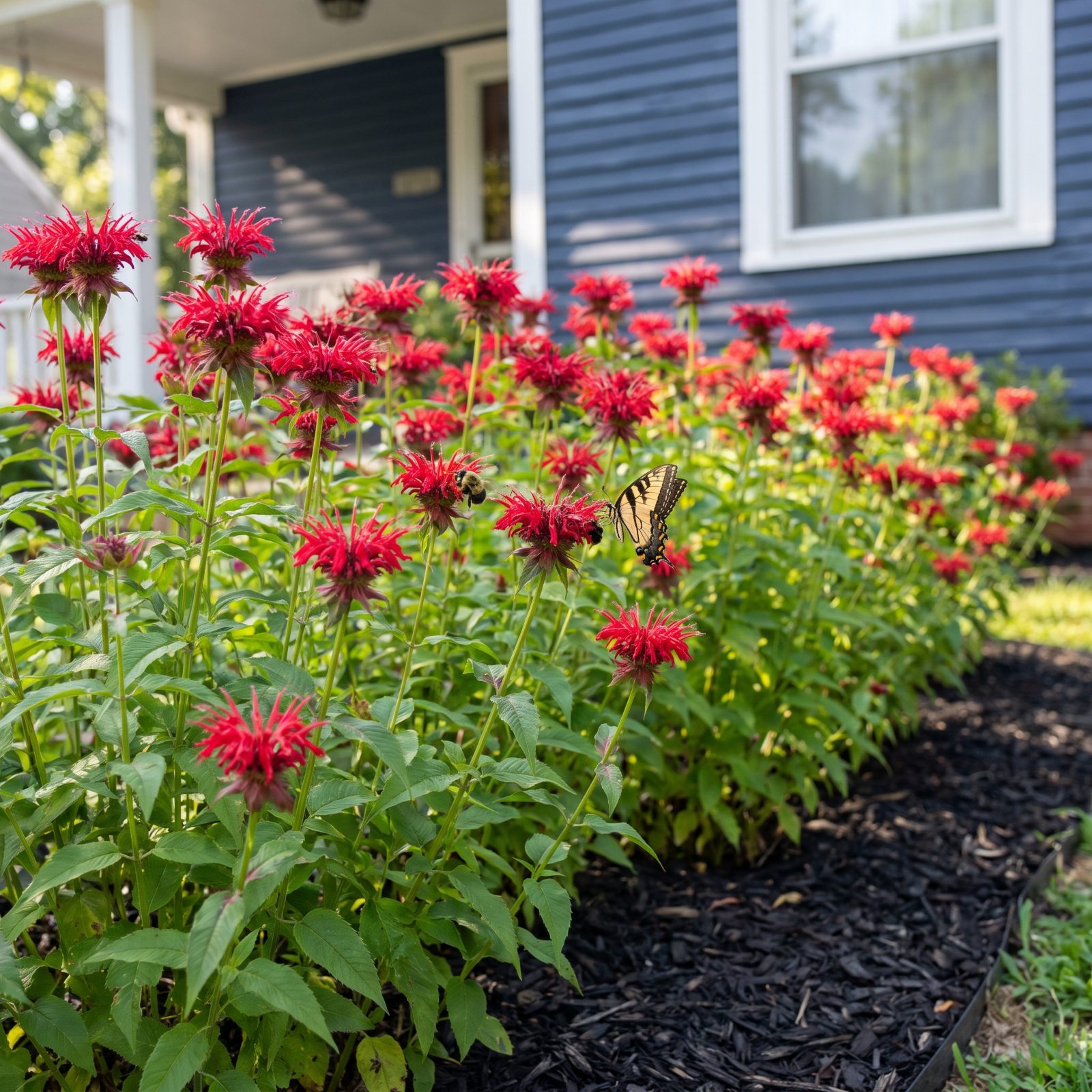
Drive the Blue Ridge Parkway in summer and you’ll spot the scarlet heads of bee balm (Monarda didyma) along the roadside. NC State Extension lists it as native to the NC mountains and the wider Appalachians. Crush a leaf and it smells like mint, because it’s in that family.
It grows up to four feet and spreads fast by underground runners, so give it room or expect to pull some each spring. Bees, hummingbirds and butterflies all show up. Here’s the part most people miss: native bees nest inside the hollow stems over winter, which is why the Extension says to cut dead stems back to 12 to 24 inches and leave those standing until they break down on their own.
3. Purple Coneflower: The Workhorse That Feeds Finches in Winter
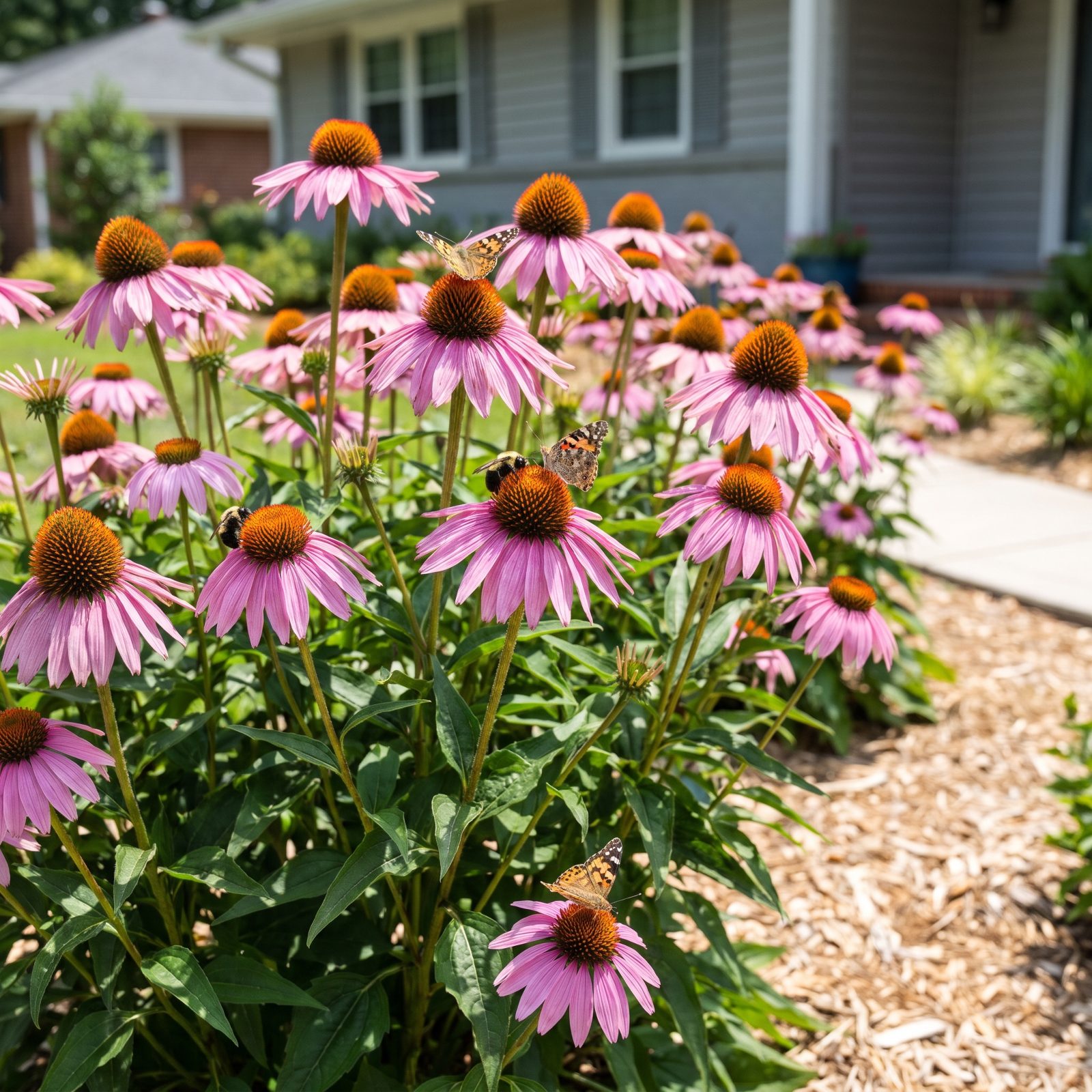
If you only plant one thing here, this is a strong pick. Purple coneflower (Echinacea purpurea) grows three to four feet with pinkish-purple flowers that run from early summer into mid-fall, tolerates drought once settled, and shrugs off deer, heat, humidity and salt. It reseeds itself too.
Odd fact worth knowing: it’s native to the central and eastern U.S. but genuinely rare in the wild here, ranked S1 in North Carolina. The state dropped it from its rare-plant list in 2021, though the Natural Heritage Program still tracks it. Leave 12 to 24 inches of dead stem over winter. Native bees nest inside, and finches work the seed heads when snow’s on the ground.
2. Smooth Coneflower: The Rare Piedmont Native You Should Buy, Never Dig
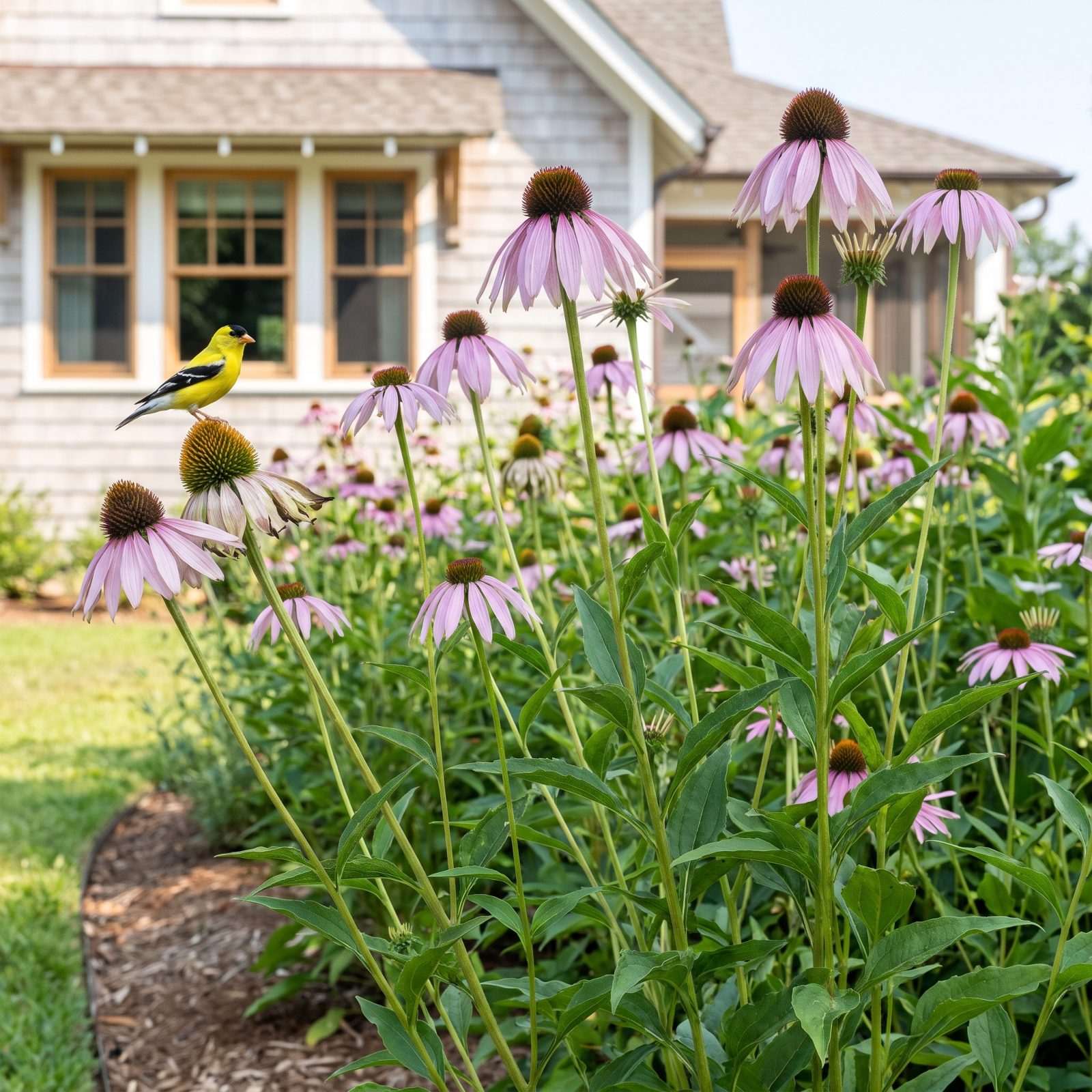
Its cousin above gets all the attention, but smooth coneflower (Echinacea laevigata) is the true Piedmont native, growing wild along roadsides and in fire-cleared ground across NC, SC, VA and GA. The petals droop further than purple coneflower’s, which gives it a windswept look. It reaches up to five feet and blooms May through July.
It’s a federally listed species, and that changes how you get it. Buy only nursery-propagated plants. Never dig one from the wild. It likes neutral to alkaline soil rich in calcium and magnesium, and once established it handles drought, heat and poor soil. Leave some seed heads standing. Finches love them.
1. Marsh Blazing Star: The Purple Spire Bees Climb Top to Bottom
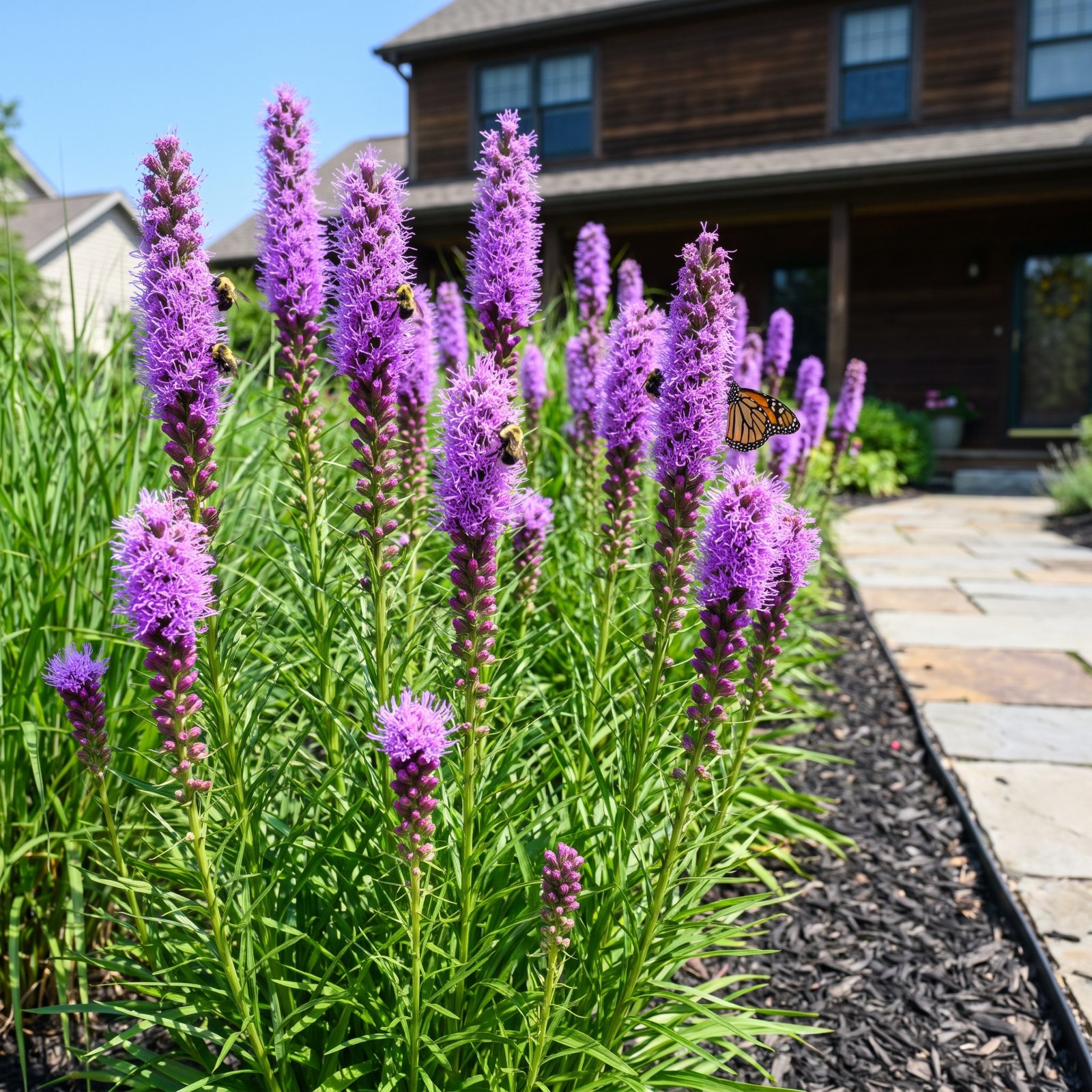
For vertical drama at the back of the bed, nothing here touches marsh blazing star (Liatris spicata). The spikes run three to six feet and open from the top down, backward from most flowers and oddly satisfying to watch over a few weeks.
In North Carolina it grows in the Coastal Plain and Piedmont, takes the summer heat and humidity, and prefers moister soil than other blazing stars, which suits a border or rain garden. The Extension says plant it in groups, never singles. The NC Botanical Garden’s pollinator toolkit lists dense blazing star as a nectar plant, and pollinators will cover a stand of it.