
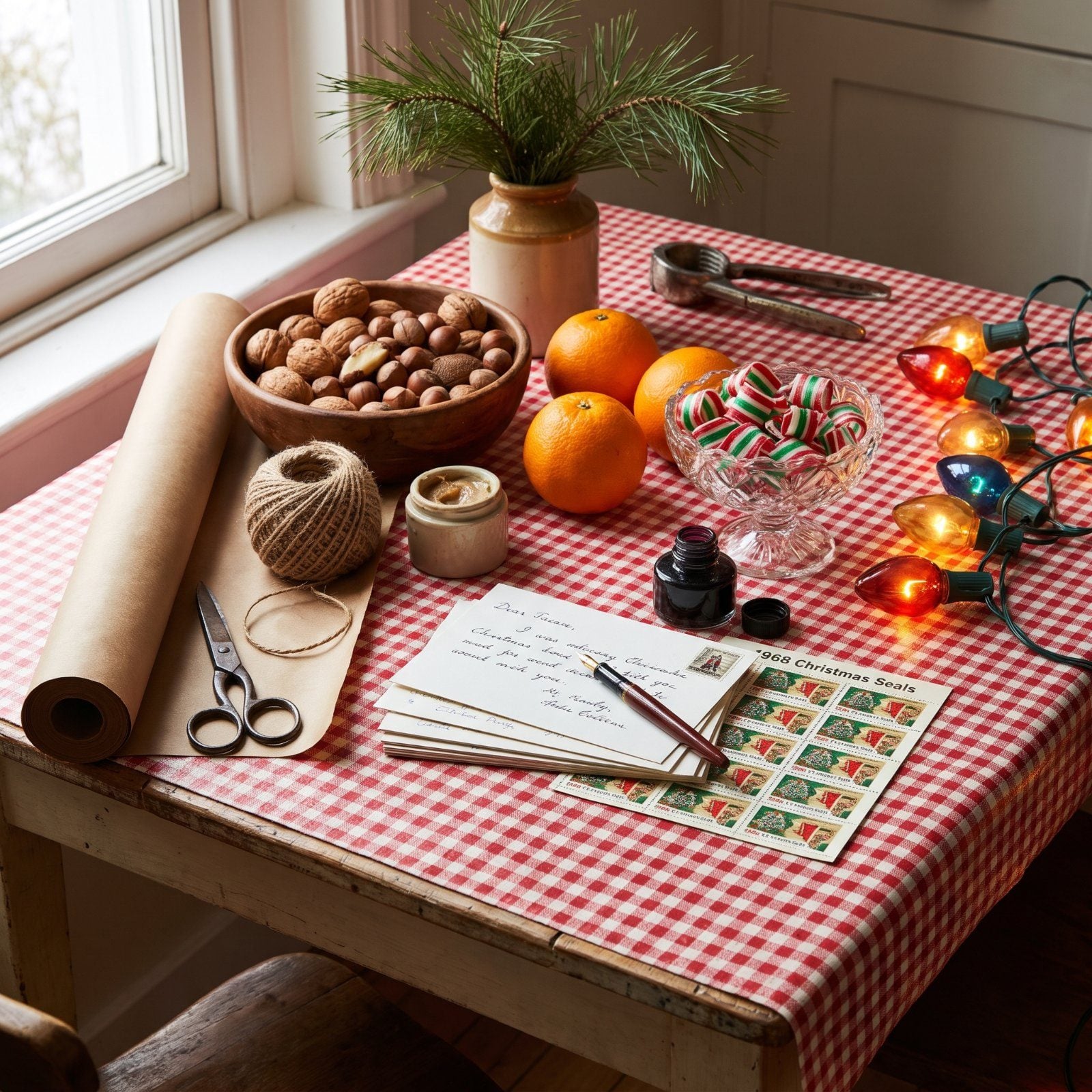
The smell gives it away first. Pine sap, orange peel, and the faint metallic tang of a freezer being thawed with a pot of hot water. December in a 1960s house was loud with small labor. Nobody ordered anything with one tap. You licked stamps until your tongue went dry and wound string around a parcel until your fingers ached, then dragged the armchair across the room so a tree could stand where it had never stood before. Ordinary jobs, done by hand, in a particular order. Below are the chores that filled those weeks, and the reasons they mattered more than anyone said out loud.
Please note that some of the images in this article were created with the assistance of AI.
43. Defrost the Freezer by Hand Before the Turkey Arrived
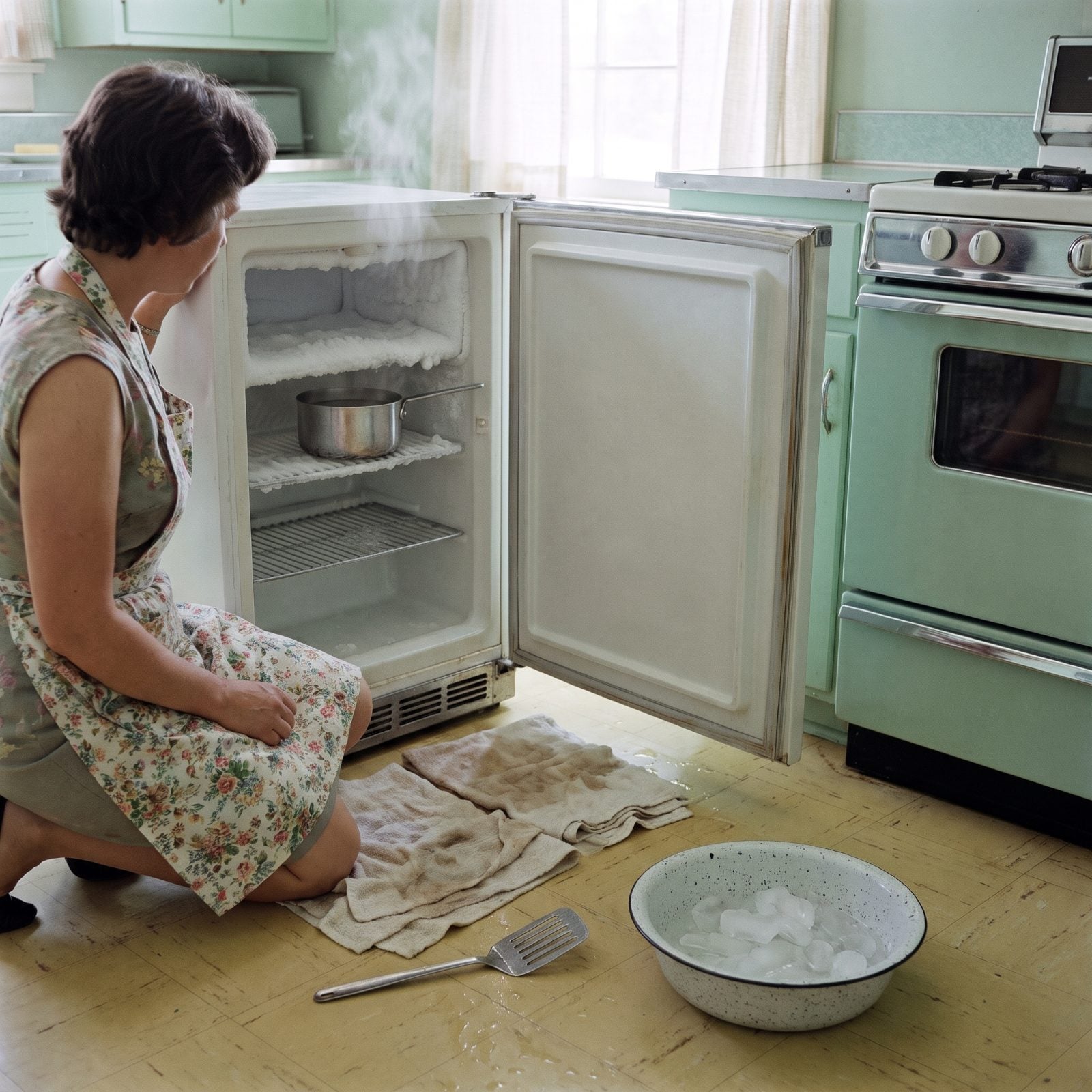
You couldn’t fit a twelve-pound bird into a freezer choked with two inches of frost. So the first real Christmas job had nothing to do with Christmas at all.
Out came everything, then in went a pot of hot water to loosen the ice, towels on the floor to catch the melt, a spatula to chip at the stubborn ledges. It took an afternoon and left your knuckles red. Frost-free units existed by mid-decade, but plenty of households still ran the old manual boxes, and those boxes demanded this ritual.
42. Write, Personalize, and Address Every Christmas Card by Hand
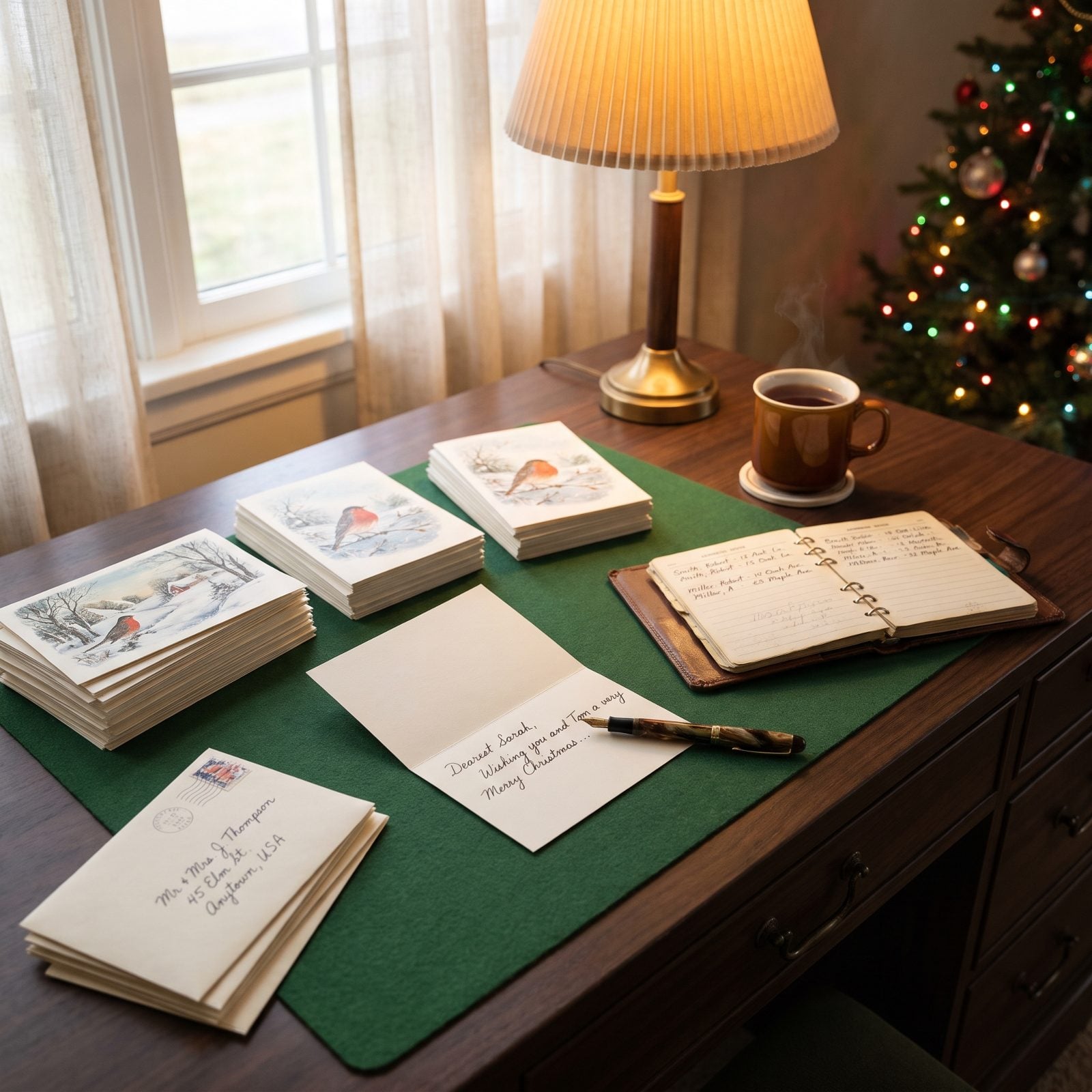
Fifty cards. Maybe eighty. Each one addressed by hand, each with a line or two written inside, because sending a blank signed card to your own sister was considered a small insult.
Out came the address book, sometimes a decade old, its margins crowded with crossed-out streets and new babies penciled in. You noted who sent last year and who didn’t, and that quiet ledger decided next year’s list.
A card wasn’t a formality. It was proof you still thought about someone twelve months later.
The volume was real. American households mailed cards by the billion each December, and the post office hired seasonal help just to keep up.
41. Buy Christmas Seals and a Fresh Sheet of Postage Stamps
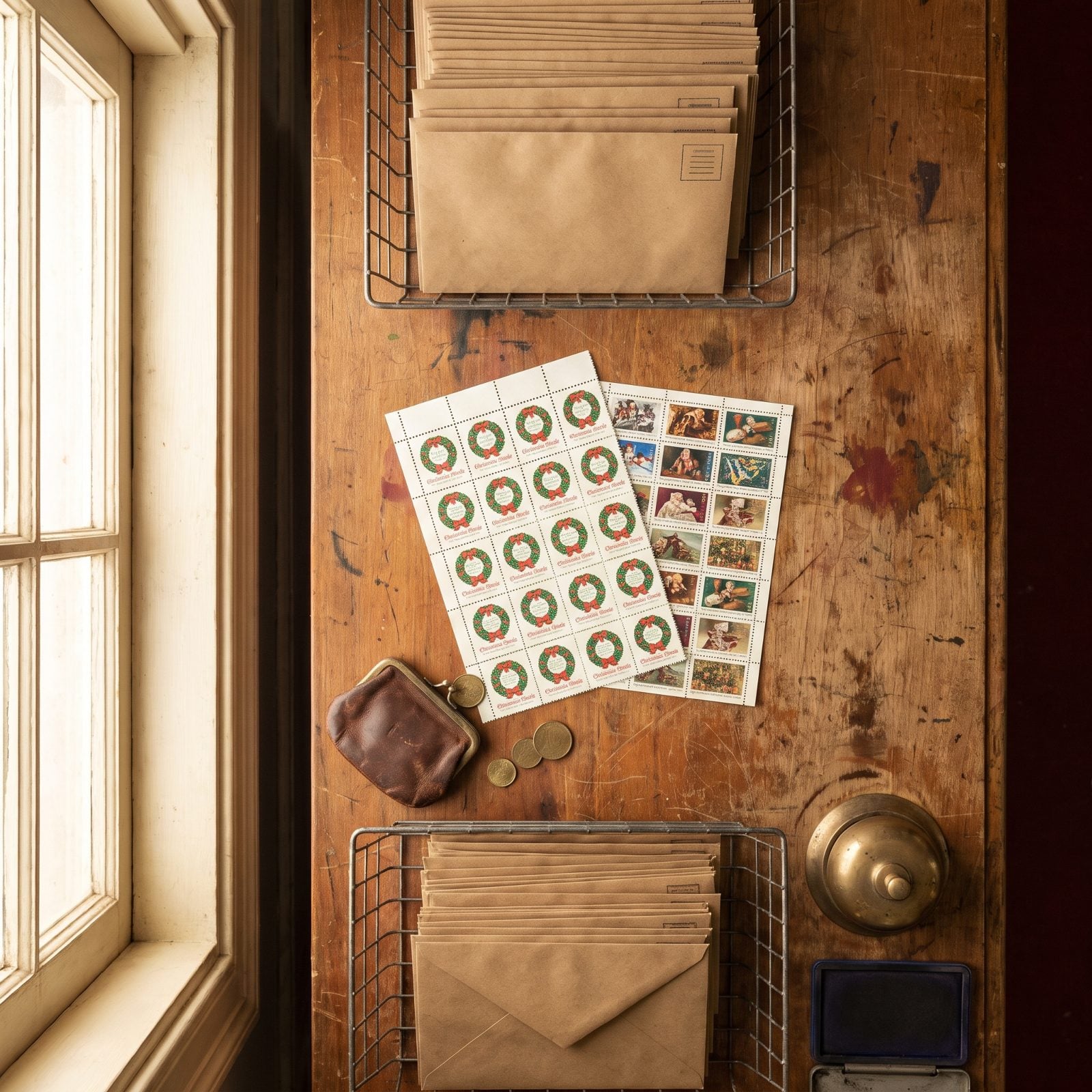
Two separate purchases, confused then and now. The stamp carried the card. The seal did not.
Christmas Seals were the little gummed stickers sold to fund the fight against tuberculosis, and later lung disease, by the American Lung Association’s predecessor. You stuck them on the back of the envelope as decoration and quiet charity. They never paid the postage.
Run out of either mid-pile and you faced a cold walk back to the post office. So you bought extra.
40. Wrap Mailed Parcels in Brown Paper and Sturdy String
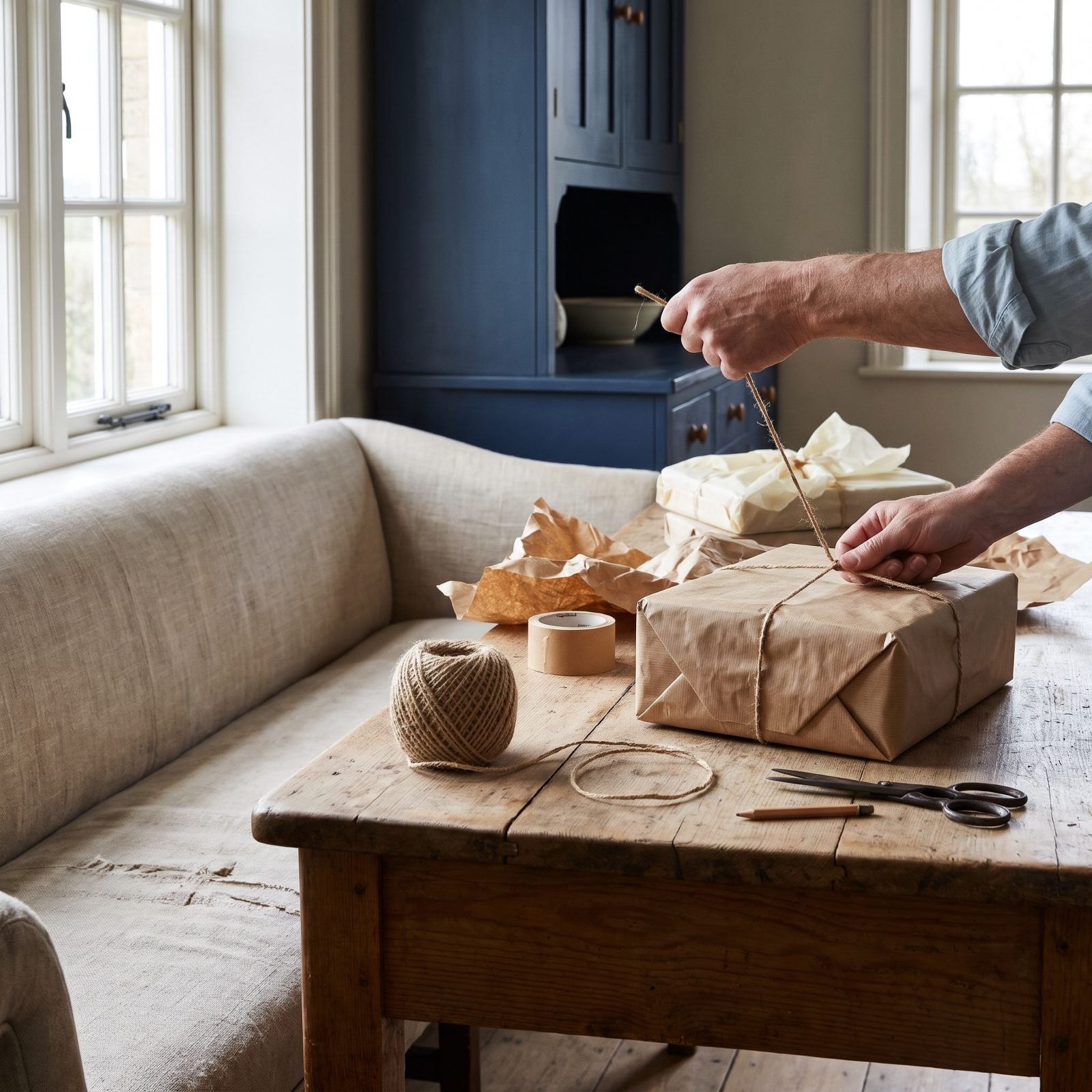
No printed gift wrap for anything going in the mail. Pretty paper got crushed and torn in transit, so parcels were sent the honest way: brown kraft paper and string wound tight enough to survive a sorting machine.
And there was a technique to it. Fold the ends like a hospital corner, run the string the long way, then crosswise, then knot it so it couldn’t slip. Address written straight on the paper in dark ink. A proper parcel looked plain and held together through a thousand miles of rough handling.
39. Clip Holiday Recipes From the Newspaper Food Page
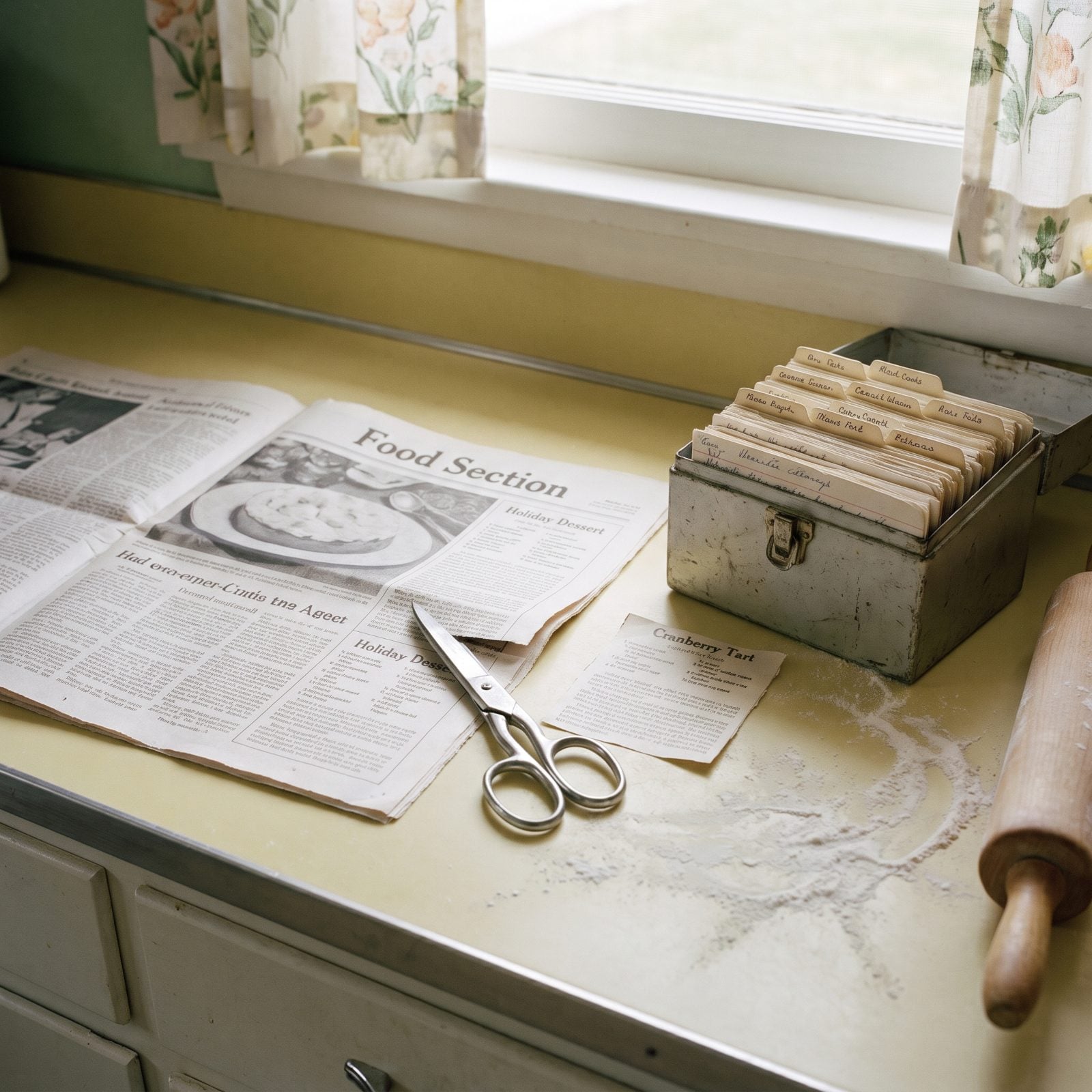
The newspaper food page was a free cookbook that arrived twice a week. Come December it filled with fruitcake, divinity, cranberry molds, and whatever the butter and sugar companies were pushing that year.
You cut them out and tucked them into the recipe box, behind the tabbed cards, where half of them stayed untried forever. Some made it into the rotation and became family standards nobody could trace back to a source. The clipping yellowed. The dish stayed.
38. Order the Christmas Turkey From the Local Butcher
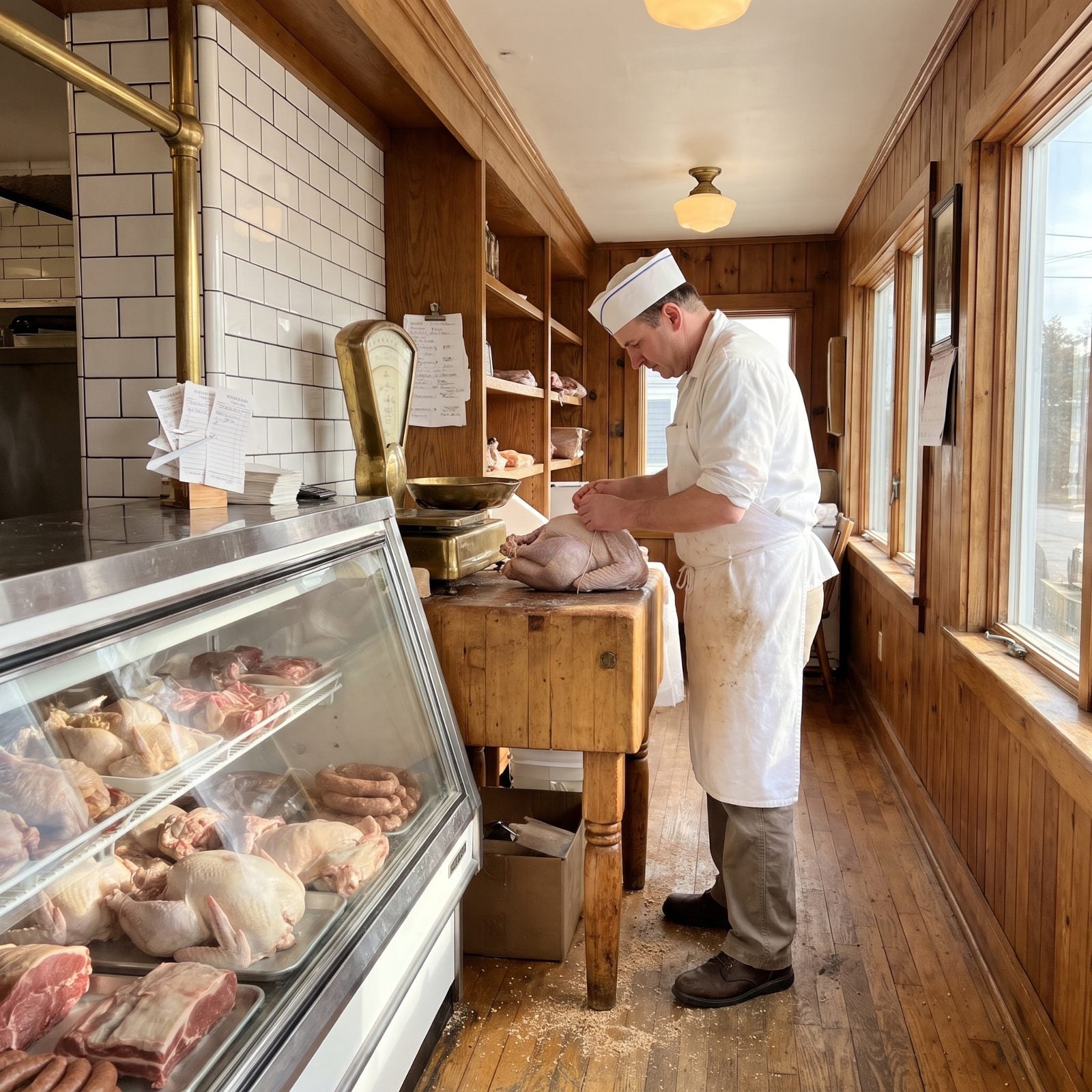
You didn’t grab a frozen bird off a pallet. You walked in weeks ahead, told the butcher the size you needed, and your name went on a list behind the counter.
The size question mattered more than you’d think. Too small and you’d be slicing ham to stretch it. Too big and you’d eat turkey until New Year’s. The butcher knew your family’s usual and would nudge you toward it, then reserve the bird, dress it, and have it ready the day you asked.
37. Buy a Bowl of Mixed Nuts Still in Their Shells
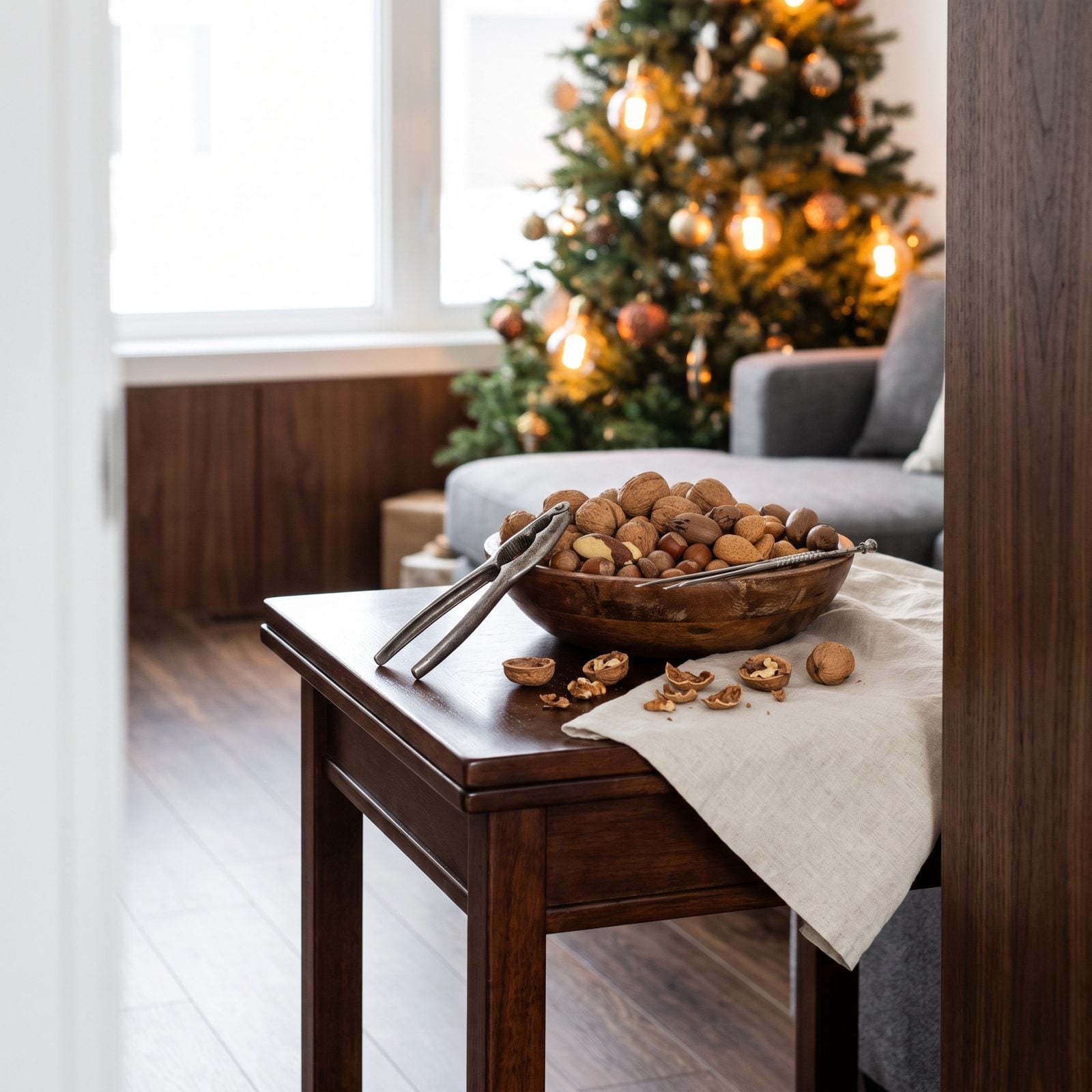
Shelled nuts in a bag? That was for baking. The Christmas bowl held them whole, in the shell, with a nutcracker lying across the top like a dare.
Cracking them was half the fun, a slow after-dinner occupation that kept hands busy and conversation going. Brazil nuts resisted the longest. Someone always launched a walnut across the room. The debris pile grew on the coffee table and nobody minded.
Buying in-shell also kept them fresh longer, which mattered when you stocked up in early December for a bowl that had to last the season.
36. Choose the Oranges and Hard Candy for the Stockings
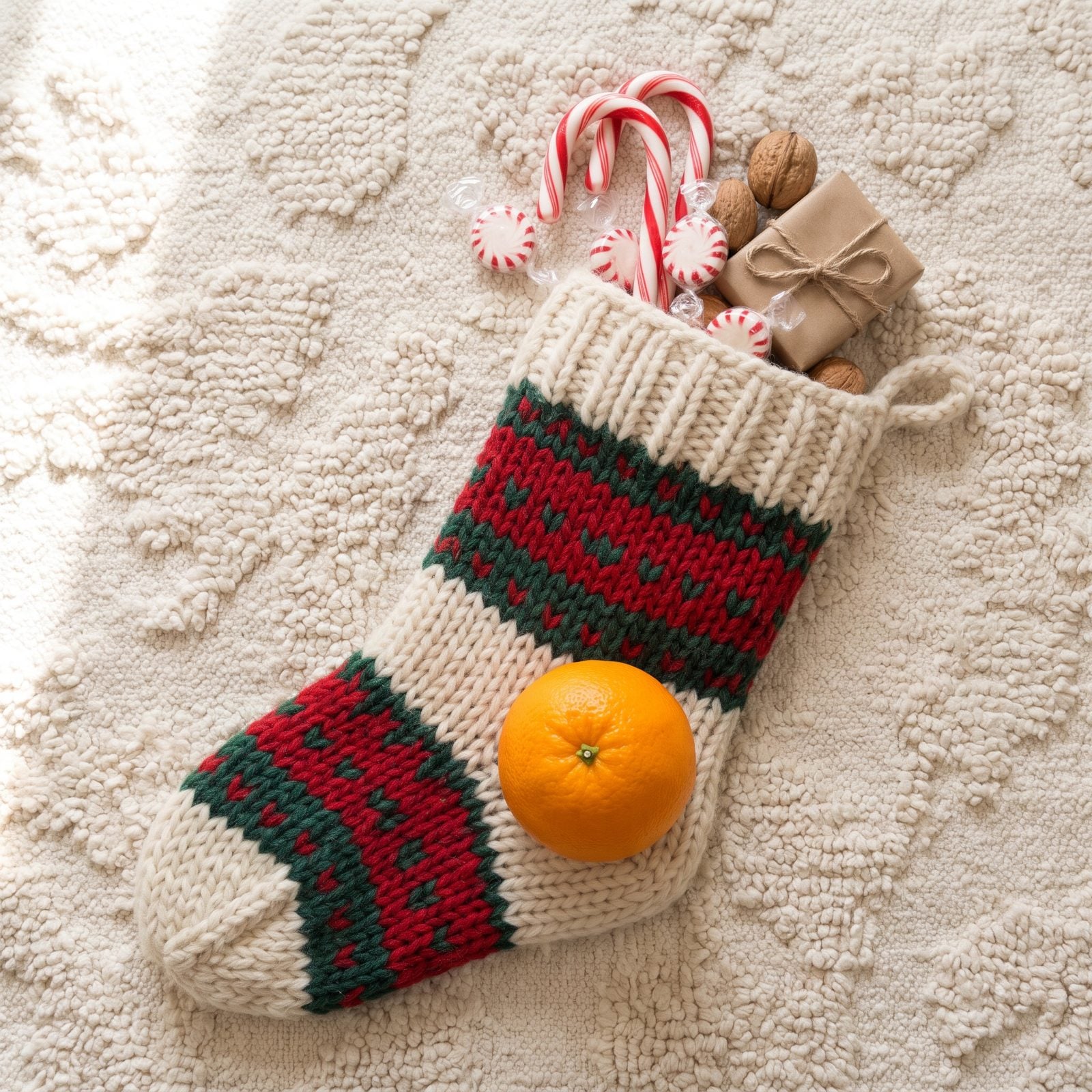
An orange in the toe of the stocking. Nearly every child of the era remembers it, and most never asked why.
The custom reached back to a time when a fresh citrus fruit in midwinter was genuinely special, a bright and expensive treat in a cold month. By the 1960s oranges were common, but the tradition held, because traditions do. Above it went the hard candy: ribbon candy, peppermints, those filled strawberry drops in crinkled wrappers.
35. Move the Furniture to Make Room for the Tree

A real tree takes up a corner, and that corner already held something. An armchair, a lamp, a side table, all of it had to go somewhere for the duration.
This was the week the living room got shoved around. The sofa slid down a wall, a chair ended up in the hall, and the vacuum finally reached the dust under where the end table had lived since spring. One tree, and the whole room reset around it.
34. Bring Home a Fresh-Cut Christmas Tree and Fight It Into the Stand

Aluminum trees had their moment, but plenty of families still wanted the real thing, needles and sap and all.
You picked it at a lot strung with bare bulbs, roped it to the roof of the station wagon, and drove home slow. Then came the stand, that cast-iron tripod with three thumbscrews that never quite held the trunk straight. Someone lay on the floor turning screws while someone else called out “left, no, your other left” until it stood close enough to vertical.
33. Testing Every Strand of Lights and Swapping Dead Bulbs One at a Time
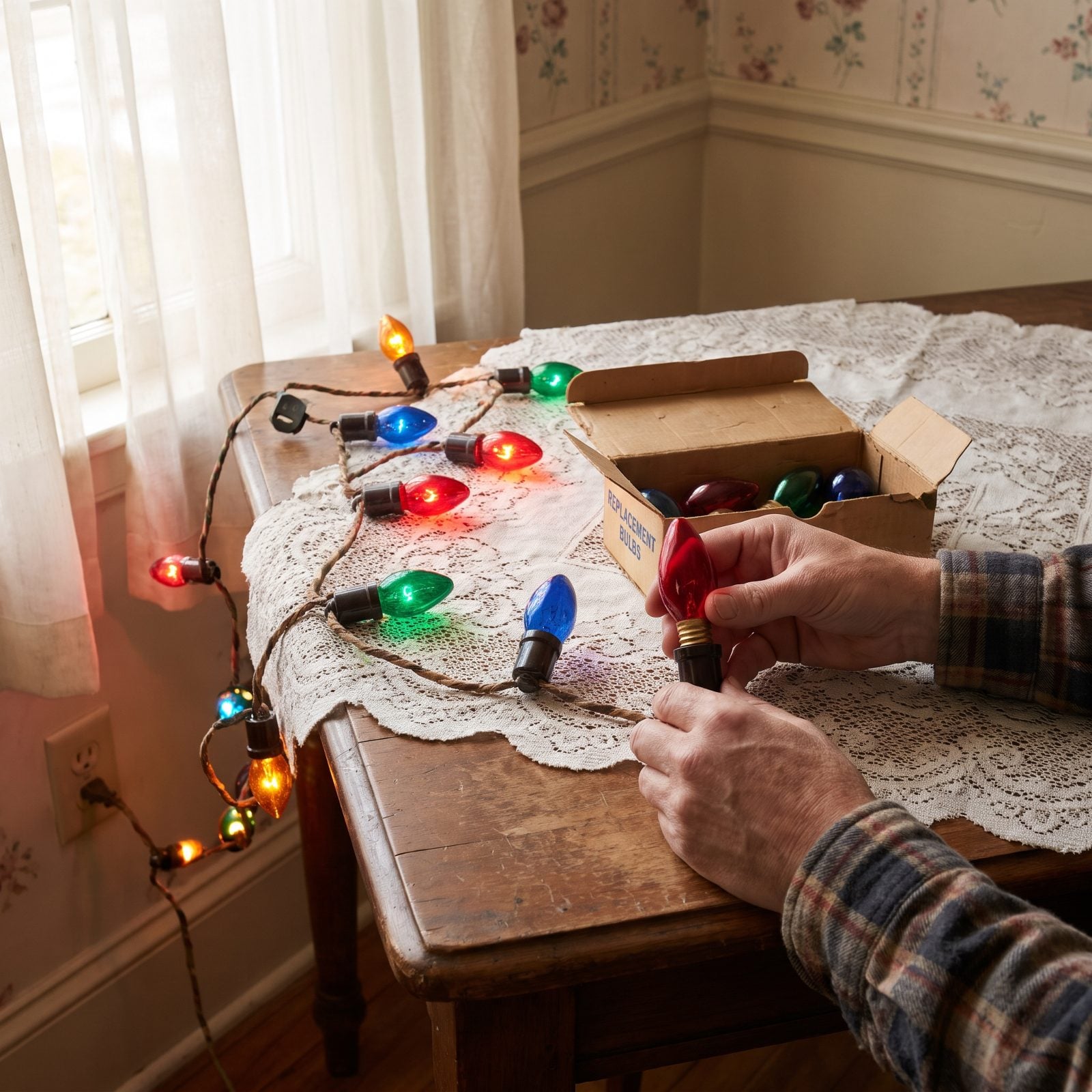
Burned-out bulbs were the enemy. On these big-bulb strings, one dead bulb just sat dark while the rest of the strand kept glowing, leaving a gap in the color. So you’d go down the line, unscrewing each dead bulb and twisting in a fresh one until every socket glowed again.
Tedious work, and genuinely maddening. Every household kept a little box of spare bulbs in a drawer year-round, because you always needed one come December. Testing before the lights went on the tree saved you from undecorating half of it in the dark.
32. Lifting Fragile Mercury-Glass Ornaments Onto the Branches
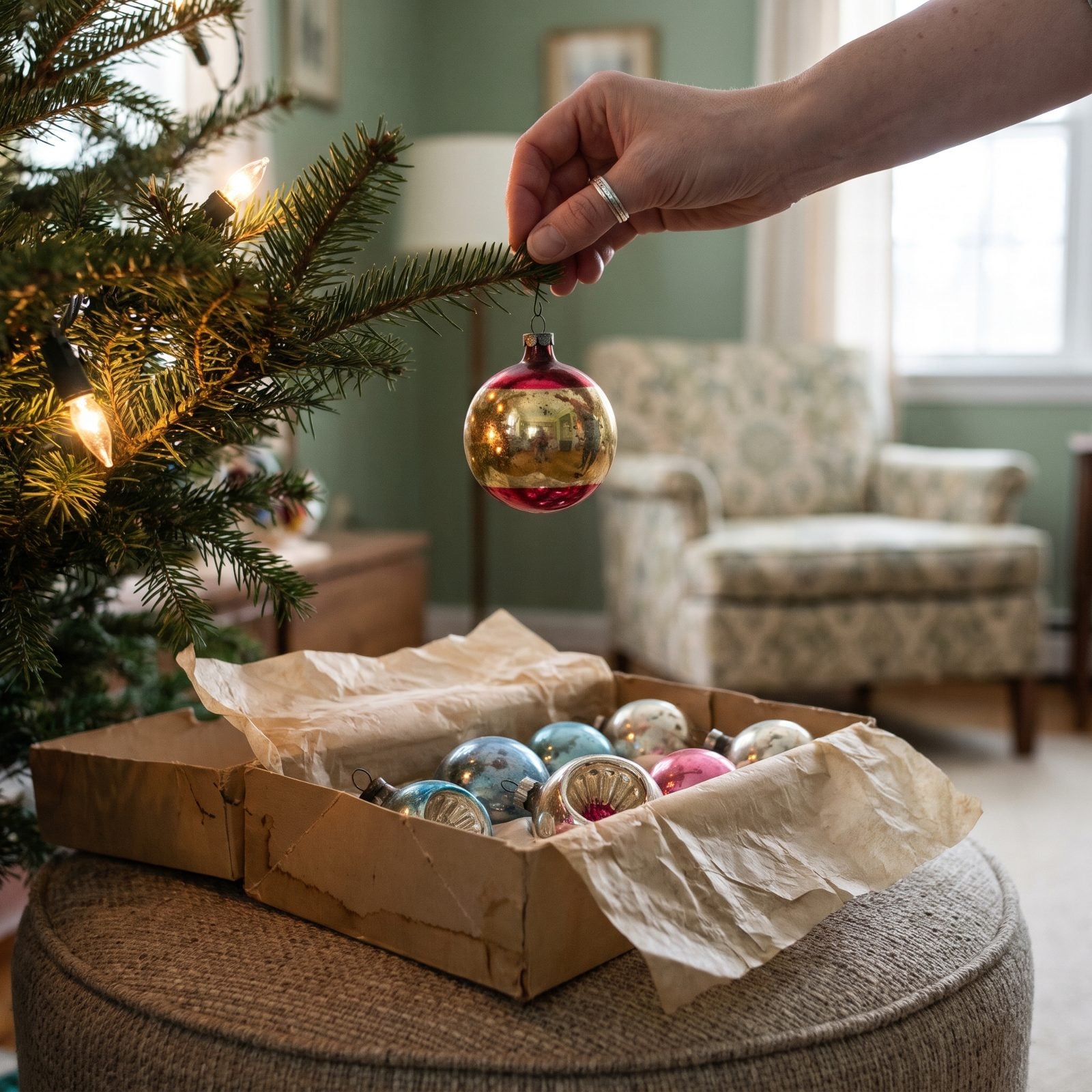
Thin as eggshells, these ornaments. Blown glass, silvered on the inside, some old enough to have crossed the Atlantic from German workshops before plastic took over the market.
You handled them like the family china, because they practically were. One careless elbow and a bauble burst into a hundred needle-sharp slivers across the floor. The good ones went high, out of reach of small hands and the dog’s tail.
31. Draping Tinsel One Delicate Strand at a Time
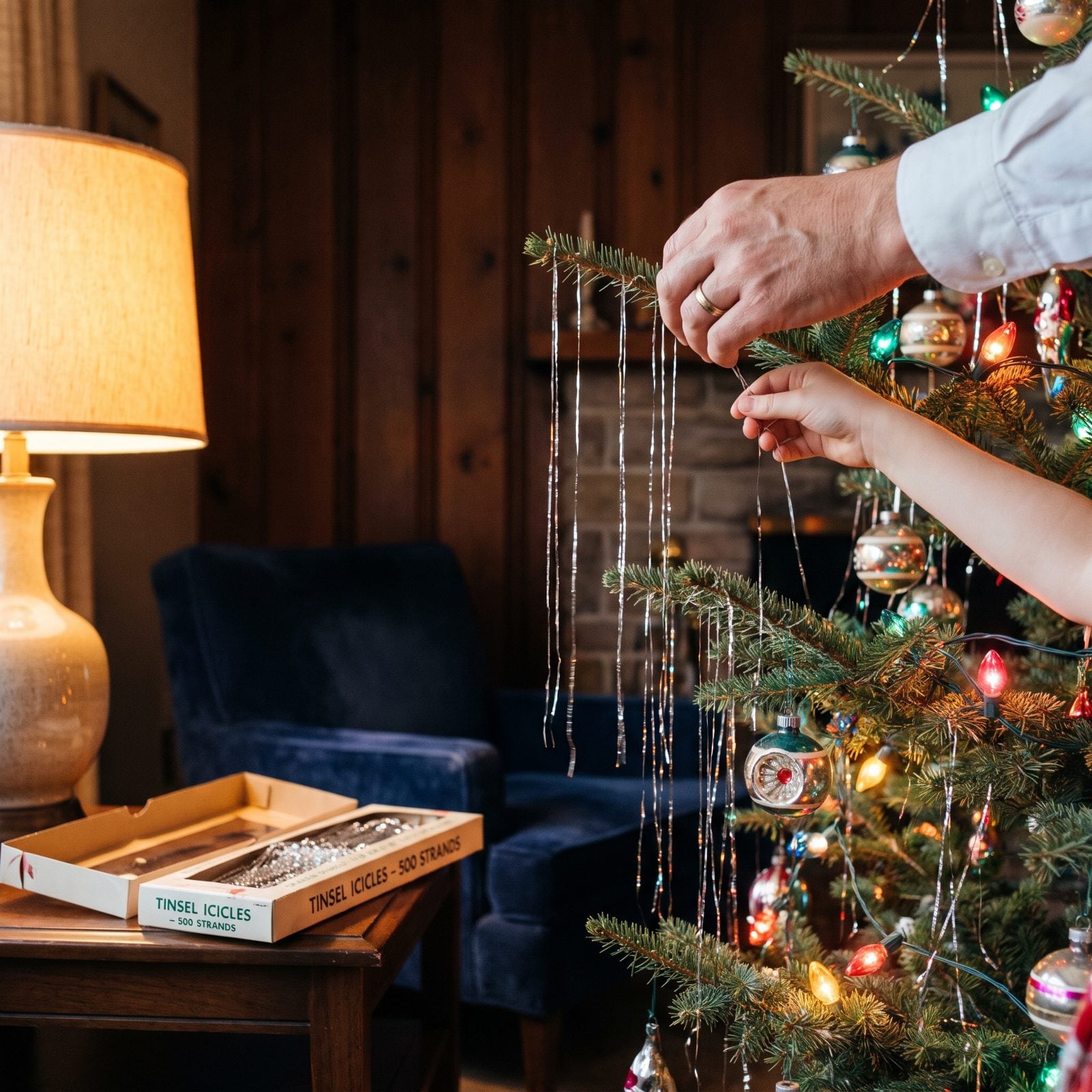
There was a right way and a wrong way, and every family had an enforcer. The purists draped tinsel strand by strand so each hung straight and caught the light, while the impatient flung handfuls and ended up with silver clumps.
That old tinsel was heavy lead foil — which is exactly why it hung so beautifully, and also why it got yanked off the shelves. It fell like liquid metal. Doing it properly on a full tree could eat an entire evening, and someone always kept finding stray strands buried in the carpet until March.
30. Gluing Paper Chains at the Kitchen Table With the Kids
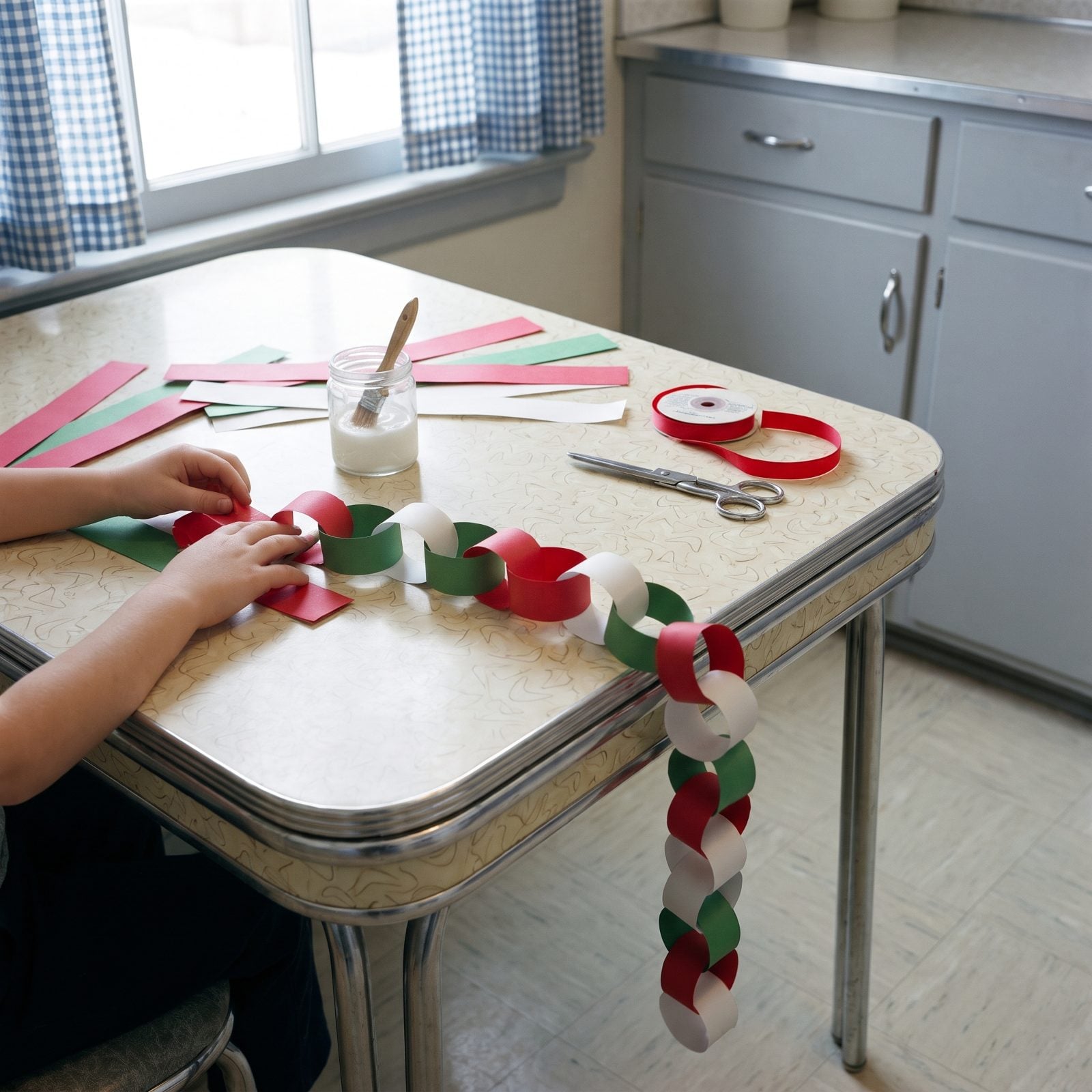
This one got handed to the children, partly to decorate and partly to keep them out from underfoot. Strips of construction paper, a jar of paste, endless loops threaded through loops.
The chains were never quite long enough, so you made more, and the finished garlands sagged in cheerful arcs across the doorways. It cost pennies. What it really bought was small hands something to do, and something to beam about when it finally went up on the wall.
29. Threading Popcorn and Cranberry Garlands by Hand
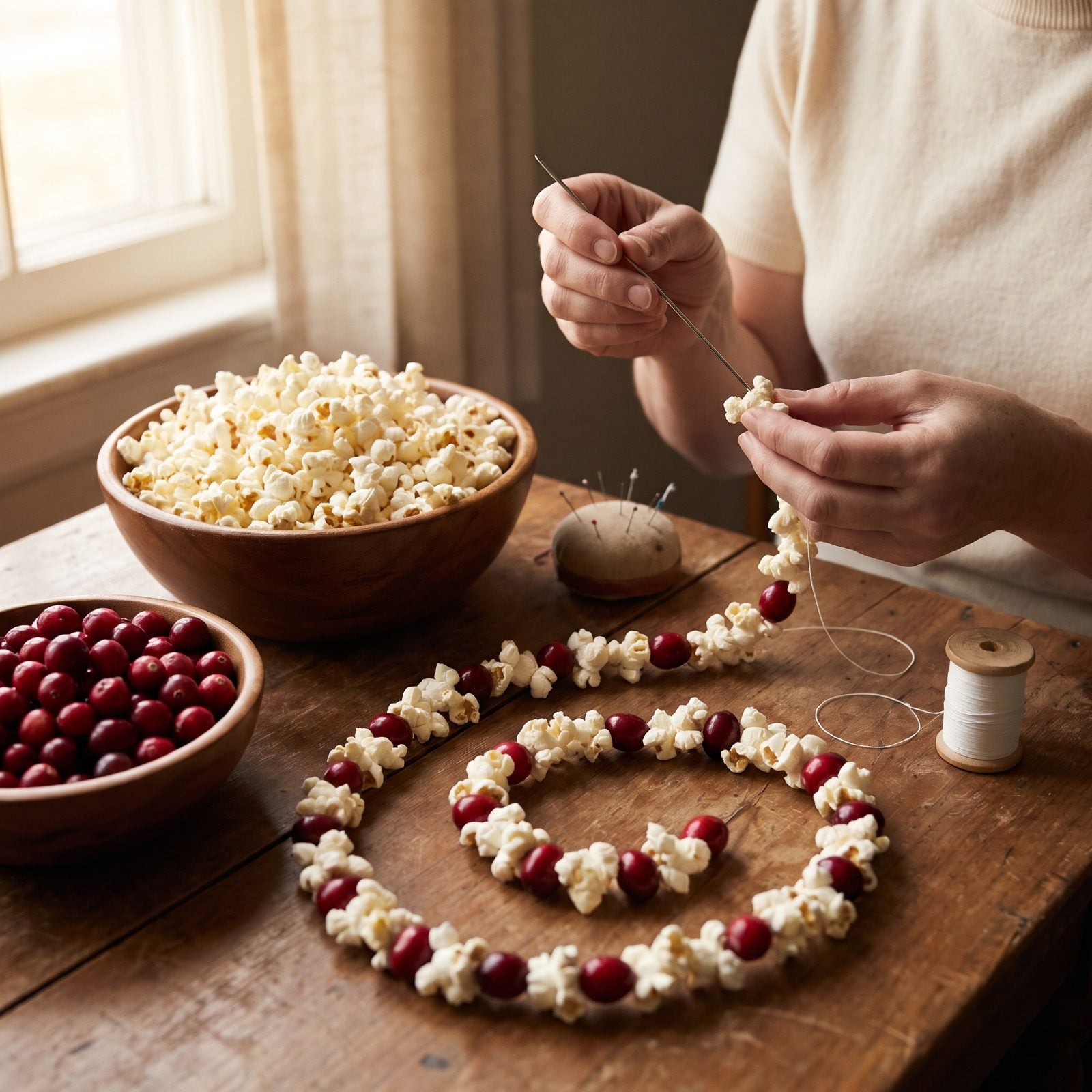
A needle, strong thread, and a lot of patience. You alternated fluffy white popcorn with hard red cranberries, and your fingertips paid the toll by the end of the afternoon.
Here’s the odd part: stale popcorn worked better. Fresh-popped crumbled on the needle and left you cursing under your breath. Hung on the tree, these garlands were the opposite of fancy, which was the whole charm. When they came down in January, they often went straight outside for the birds.
28. Setting Up the Nativity Scene on the Mantel
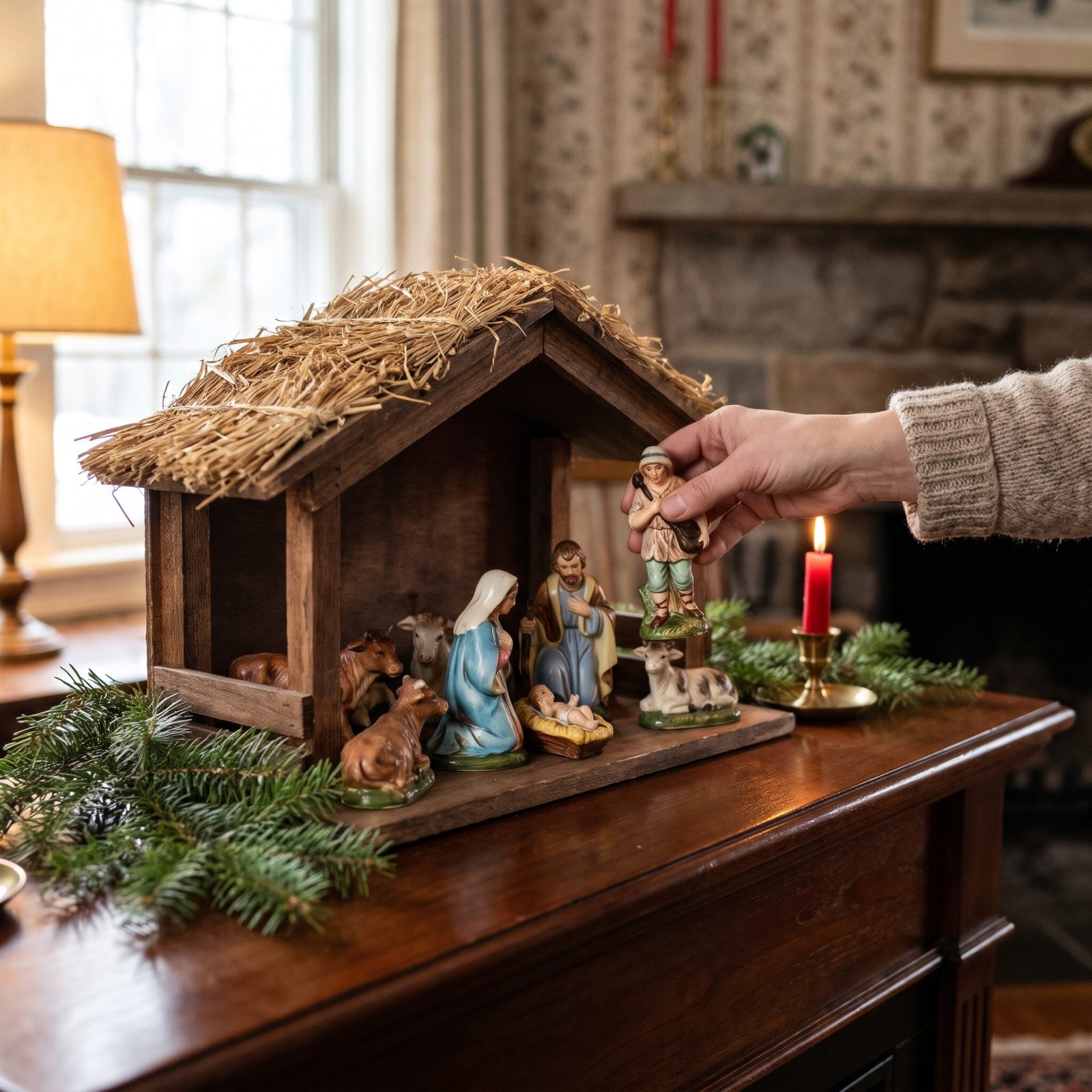
In many homes the crèche came out before the tree, and it got the place of honor — the mantel, the hall table, somewhere everyone passed.
Each figure had its spot, and the arranging was its own small ritual. The baby in the manger was usually held back until Christmas Eve, a quiet bit of timing the kids learned to watch for. Plaster, chalkware, or hand-painted ceramic, these sets were handled gently and packed away just as carefully. Some lasted three generations.
27. Hanging a Fresh Evergreen Wreath on the Front Door
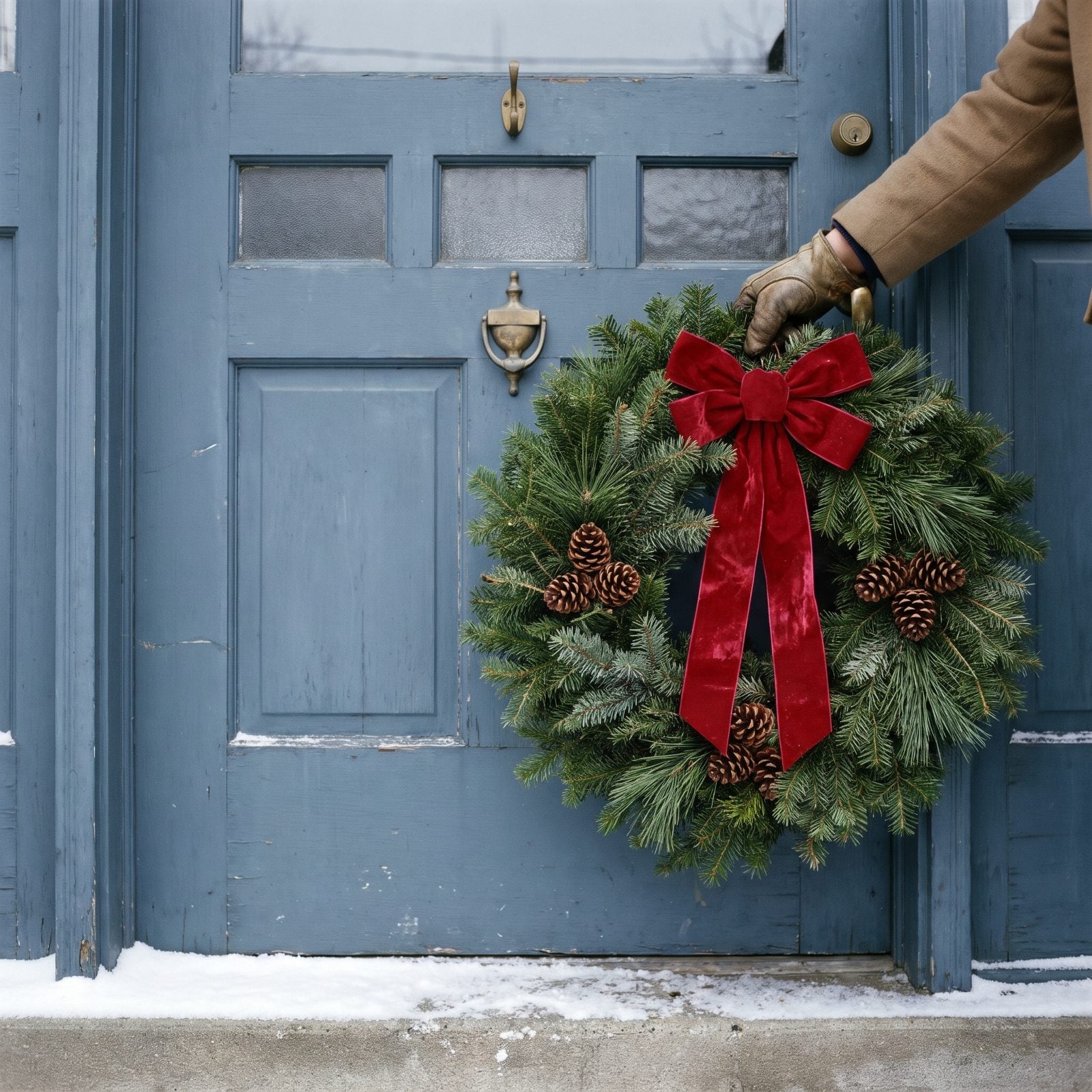
The wreath was the handshake — first thing anyone saw, a signal to the street that your house was ready for the season.
Plenty of families built their own from trimmed branches, wired onto a frame with a red bow and a few pinecones tucked in. A fresh one scented the whole porch and, honestly, browned within a few weeks in a heated doorway. Nobody minded. By then the holiday had already done its job.
26. Pinning a Sprig of Mistletoe Above the Doorway
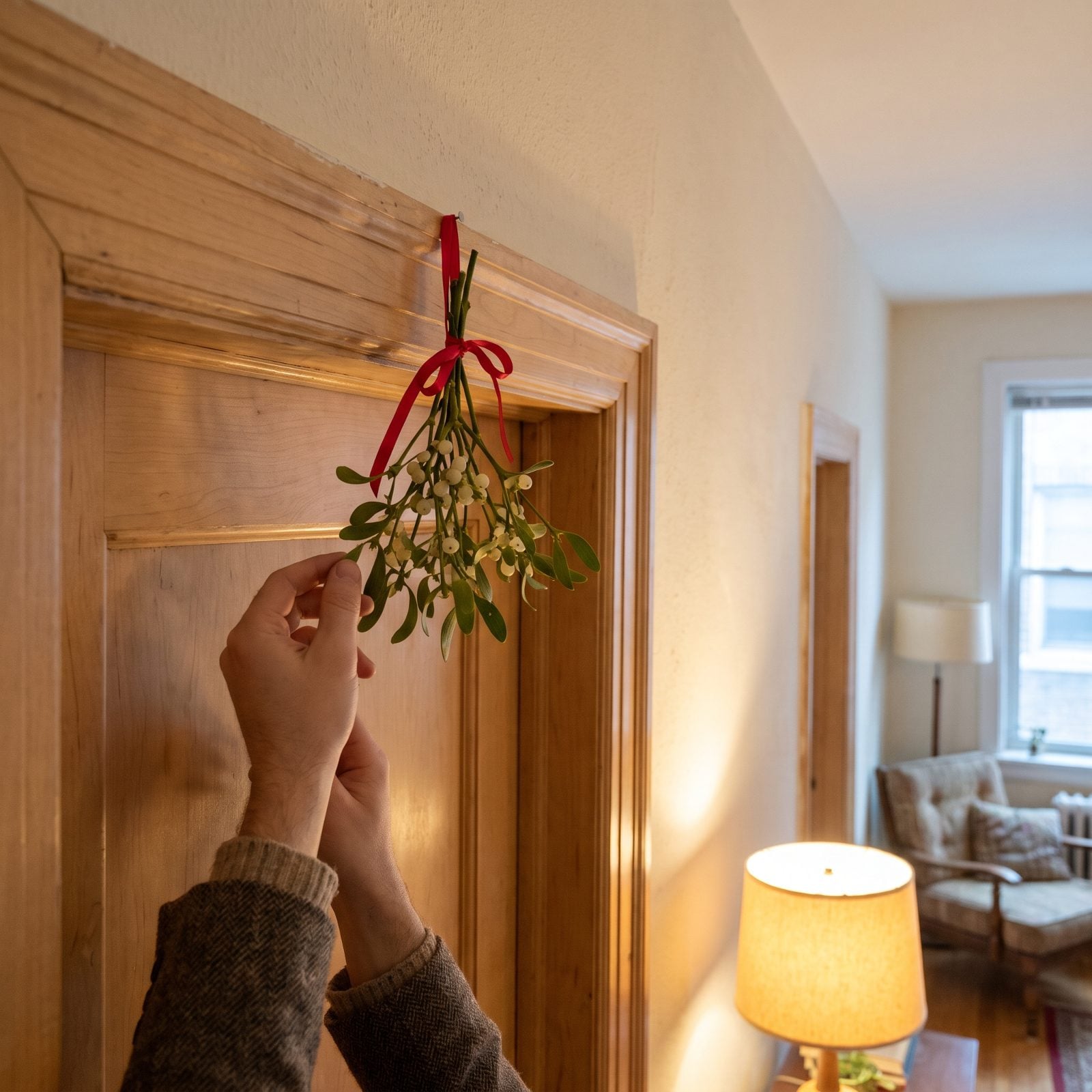
A little mischief, hung by the door. The tradition runs old and genuinely pagan in origin, long predating any Christmas tie, folded over the centuries into the kiss-beneath-it custom.
And here’s the detail people forget: those white berries are toxic. So it went up high, out of a toddler’s reach. A sprig tied with ribbon over the kitchen or hall doorway was all it took to set the whole house grinning.
25. Standing Christmas Cards in Rows Around the Living Room
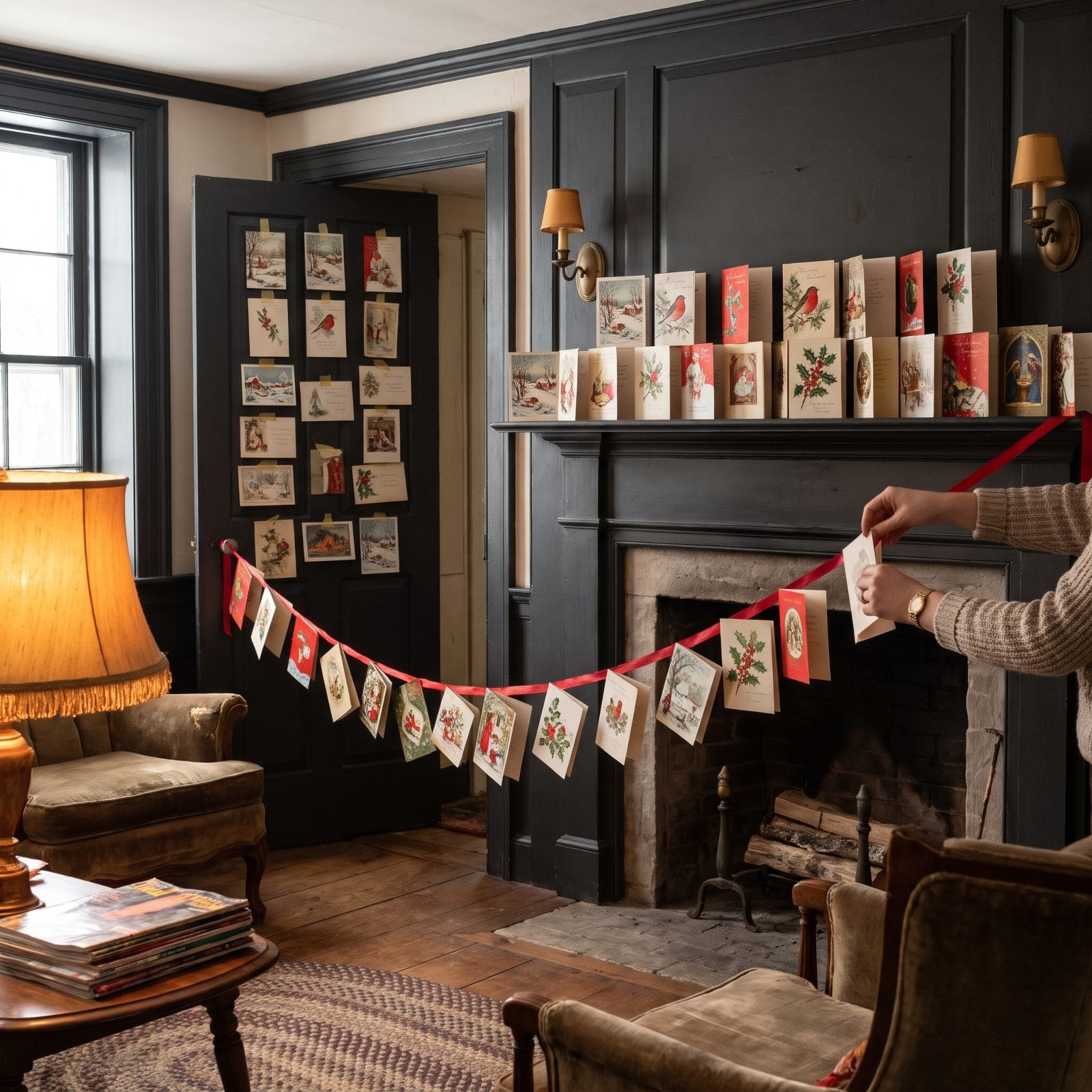
Every card that arrived got shown off. They marched along the mantel, perched on top of the TV set, and strung on ribbon tacked across the wall until the whole room was papered in other people’s good wishes.
The display doubled as a kind of scorecard. One glance told you who had written and who you still owed a reply. Sending and receiving cards was a real season’s worth of work, and that wall of them was proof your people were thinking of you.
24. Set the Electric Candles in the Front Windows
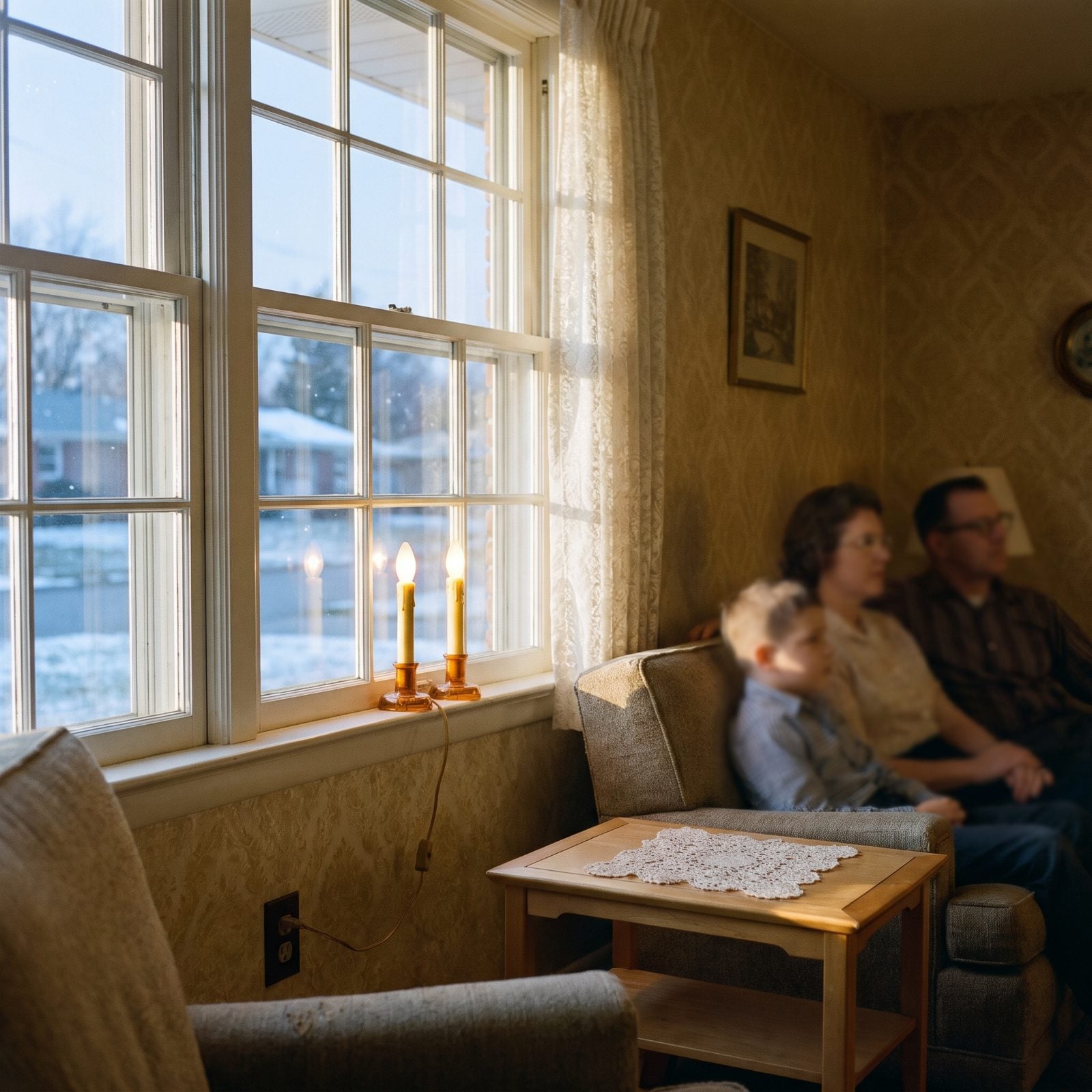
The porch and the front window did the talking before anyone rang the bell. A single bulb per sill, screwed into a plastic candle base, cord snaked to the outlet and hidden behind the drapes if you were tidy about it.
People get the look wrong now by cramming a whole string in. One candle, centered, per window — that was the whole idea, and it read as welcome rather than display. It stayed on all night too, which is why the bulbs burned out by New Year’s and somebody was always sent to the hardware store for replacements.
23. Haul the Rugs Out Back and Beat Them

Before the vacuum became king, the rug went out the back door and over the line, and you took a rattan beater to it until the dust stopped rising.
Cold, dry December air was the point, because it stiffened the fibers and let the grit fall free instead of grinding deeper. Some houses had the upright vacuum by then — the kind with the headlight on the front — and ran it over the hallway runner for the hundredth time. But the big room-sized rug still got dragged outside at least once before company came. Your arms knew about it the next day.
22. Take Down the Curtains and Launder Every Panel
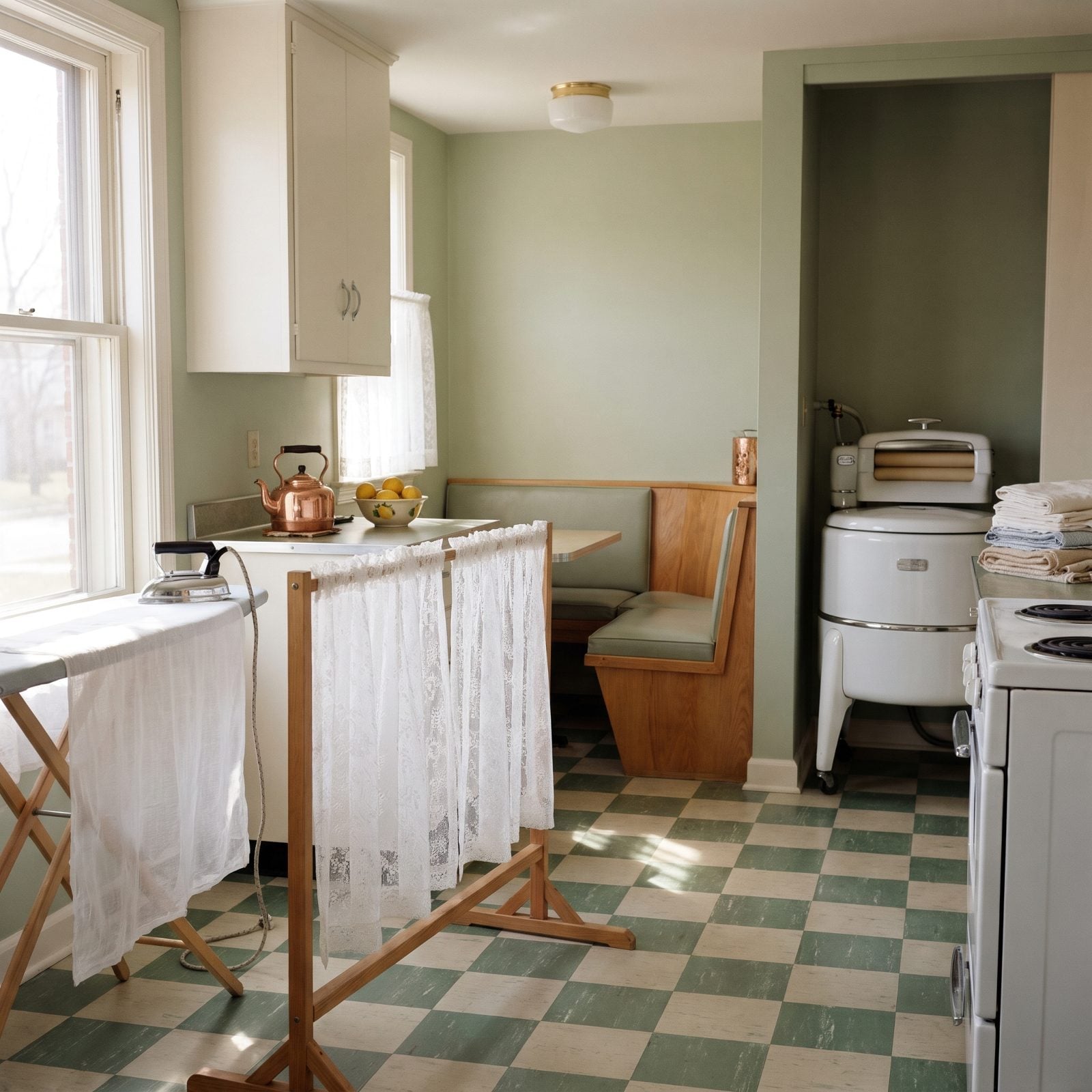
Clean curtains were half the holiday before anyone noticed them. A year of furnace soot and cigarette haze settles into sheers, and nobody sees it until the panel comes down and the clean one goes up beside it.
The real job was getting them back to shape. Sheers and lace went over a drying rack — a plain freestanding wooden frame with a single top rail — so they could hang loose and dry instead of shrinking into a sad rag. Heavier drapes might only get a good airing on the line. Rehanging them, still faintly warm, meant the front room was officially ready.
21. Bring the Brass and Copper Back to a Shine
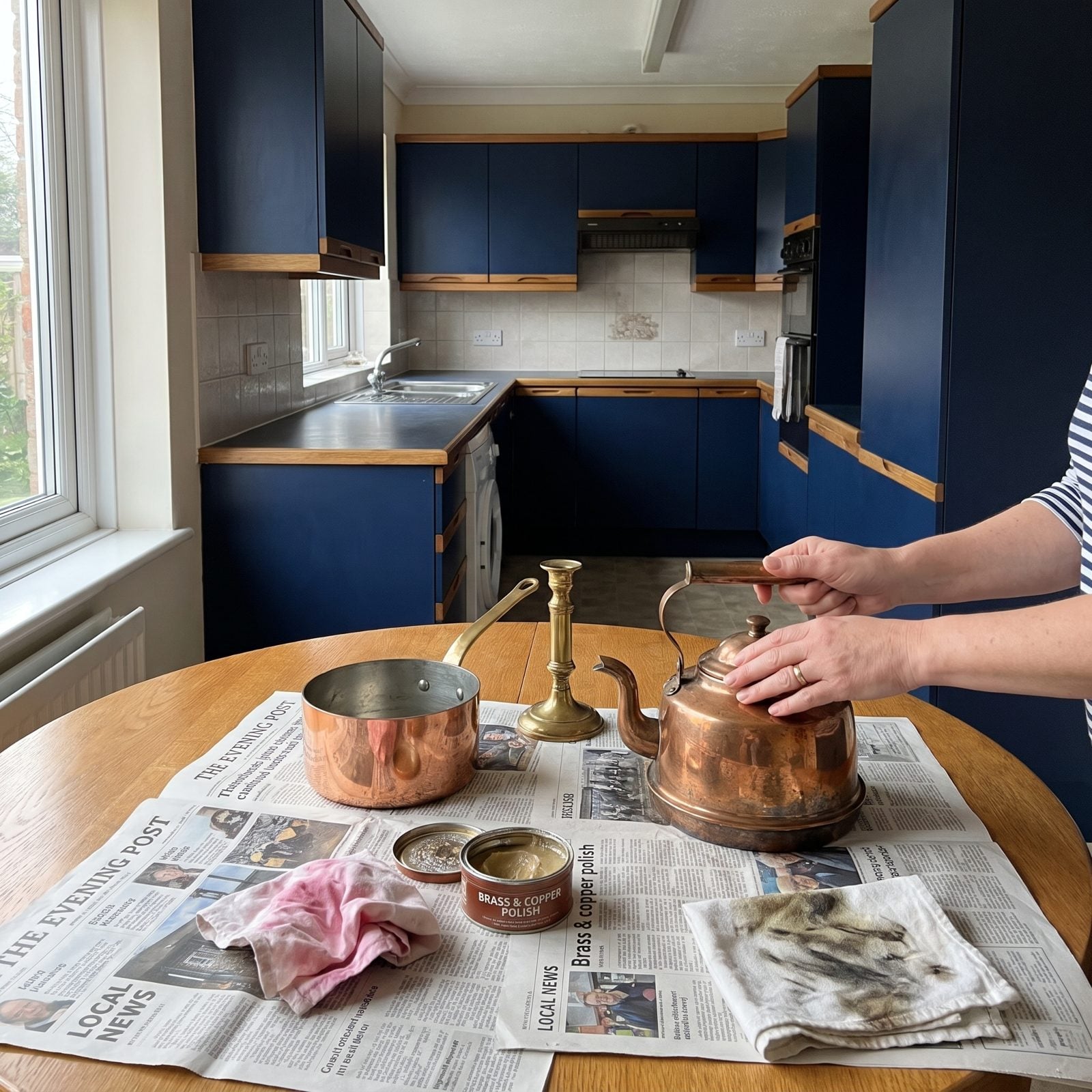
Brass goes muddy and copper goes brown, slowly, so you forget what they looked like until you rub one spot clean and the contrast stops you cold.
The paste polish came out, newspaper went down on the table, and the candlesticks, the copper kettle, the fireplace tools all got worked over with a rag until they threw light again. Old trick that still works: half a lemon dipped in salt cuts copper tarnish fast if you’ve run out of the tin. Nobody mentions the downside — polished brass starts fogging again within days. So you did it right before guests, never a week ahead.
20. Lay Out the Family Silver and Polish It Piece by Piece
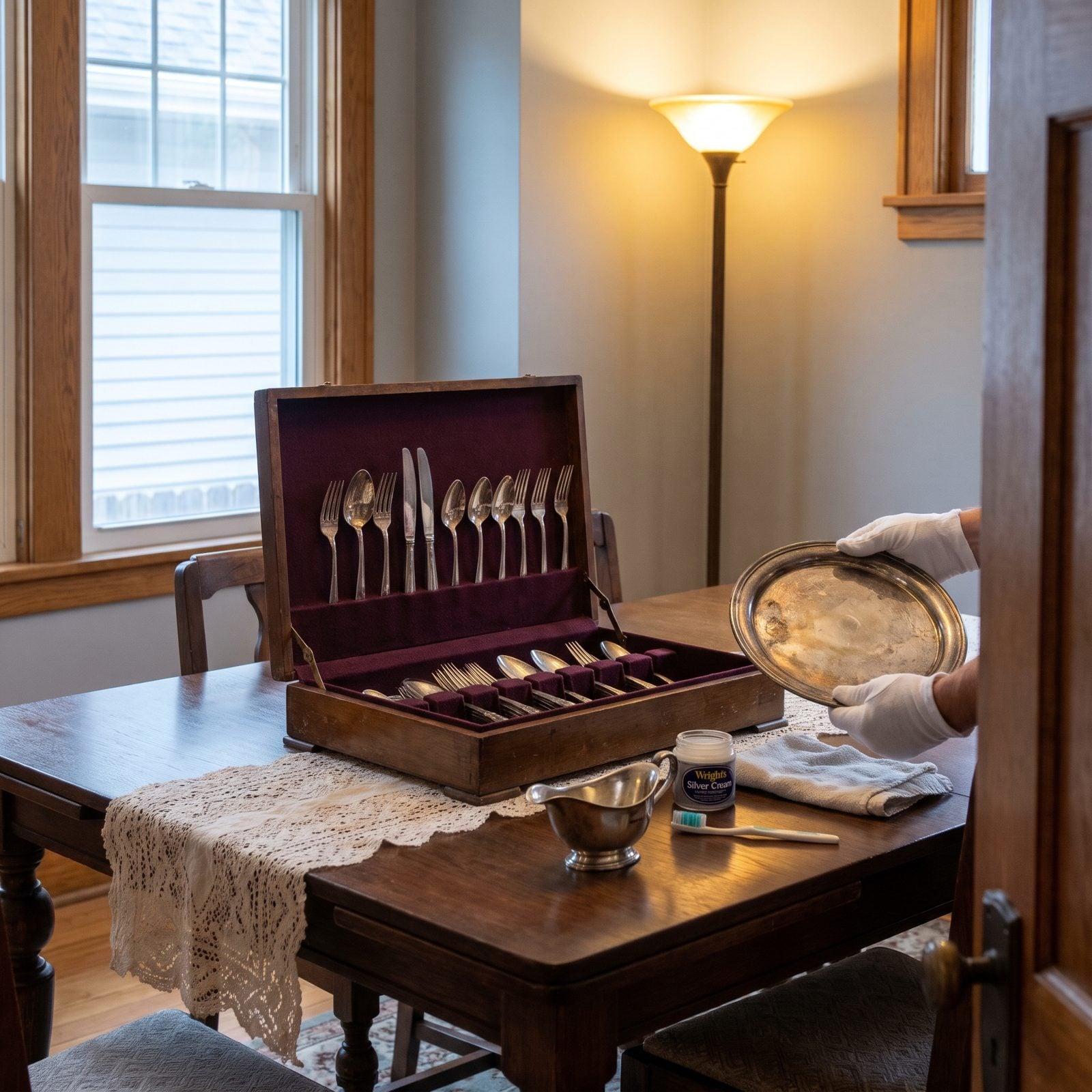
The good silver lived in a felt-lined chest eleven months of the year and came out resentful, tarnished at the edges and black in the fork tines.
A toothbrush got the crevices the cloth couldn’t reach. Patience got the rest. And that felt in the chest wasn’t decoration — it was treated to slow the tarnish, which is why loose pieces in a plain drawer always looked worse.
19. Wash the Wedding China and Crystal by Hand
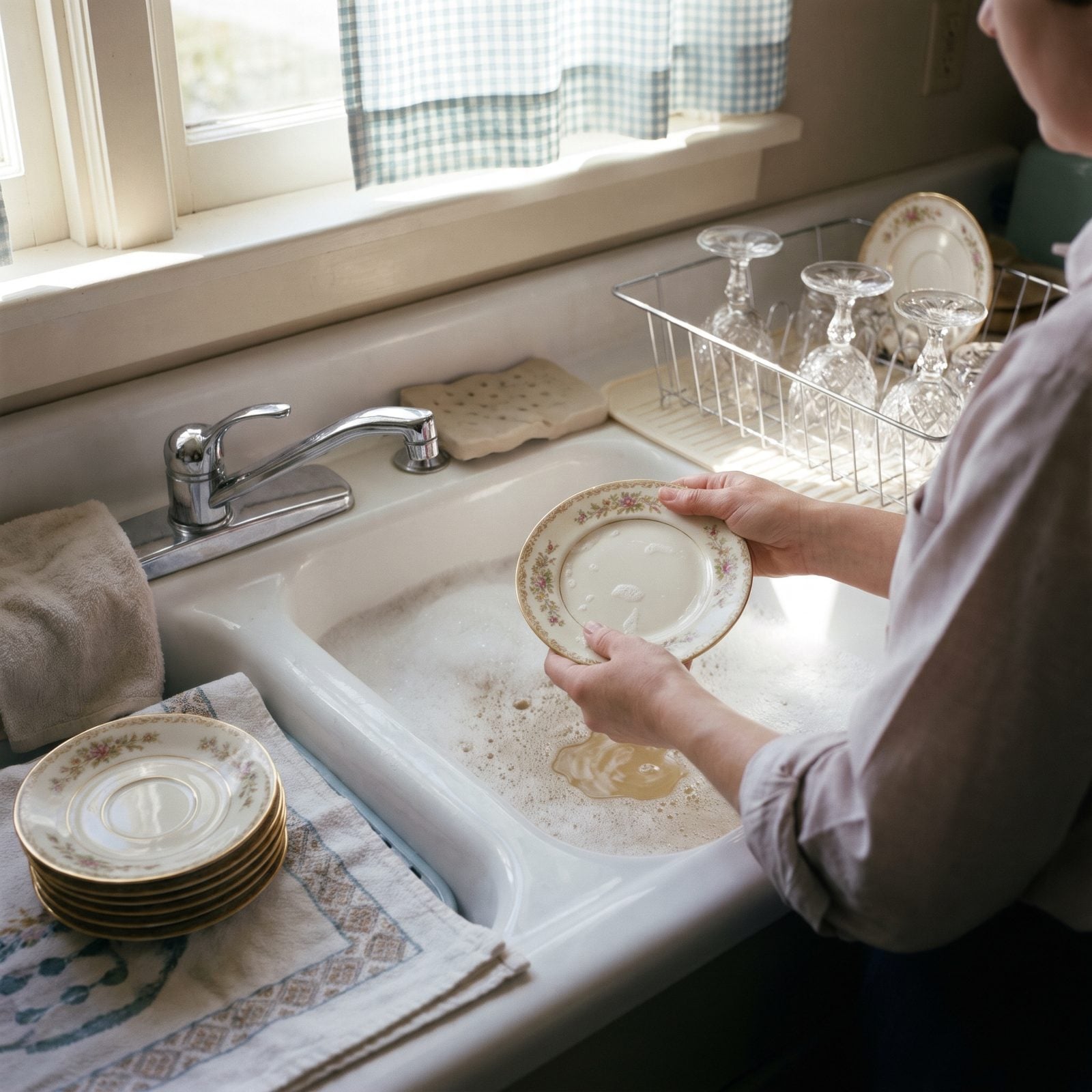
The china came out of the corner cabinet with a year of settled dust on the top plate and that faintly musty closed-cupboard smell on all of them.
Everything got washed by hand, one piece at a time, in water that wasn’t too hot because sudden heat can craze old glaze and crack a thin crystal stem. You dried crystal with a lint-free cloth and held it to the window to check for streaks. A rubber mat in the sink basin was cheap insurance. One chipped gold rim meant a story told at every dinner for the next decade.
18. Press the Damask Tablecloth and Every Cloth Napkin
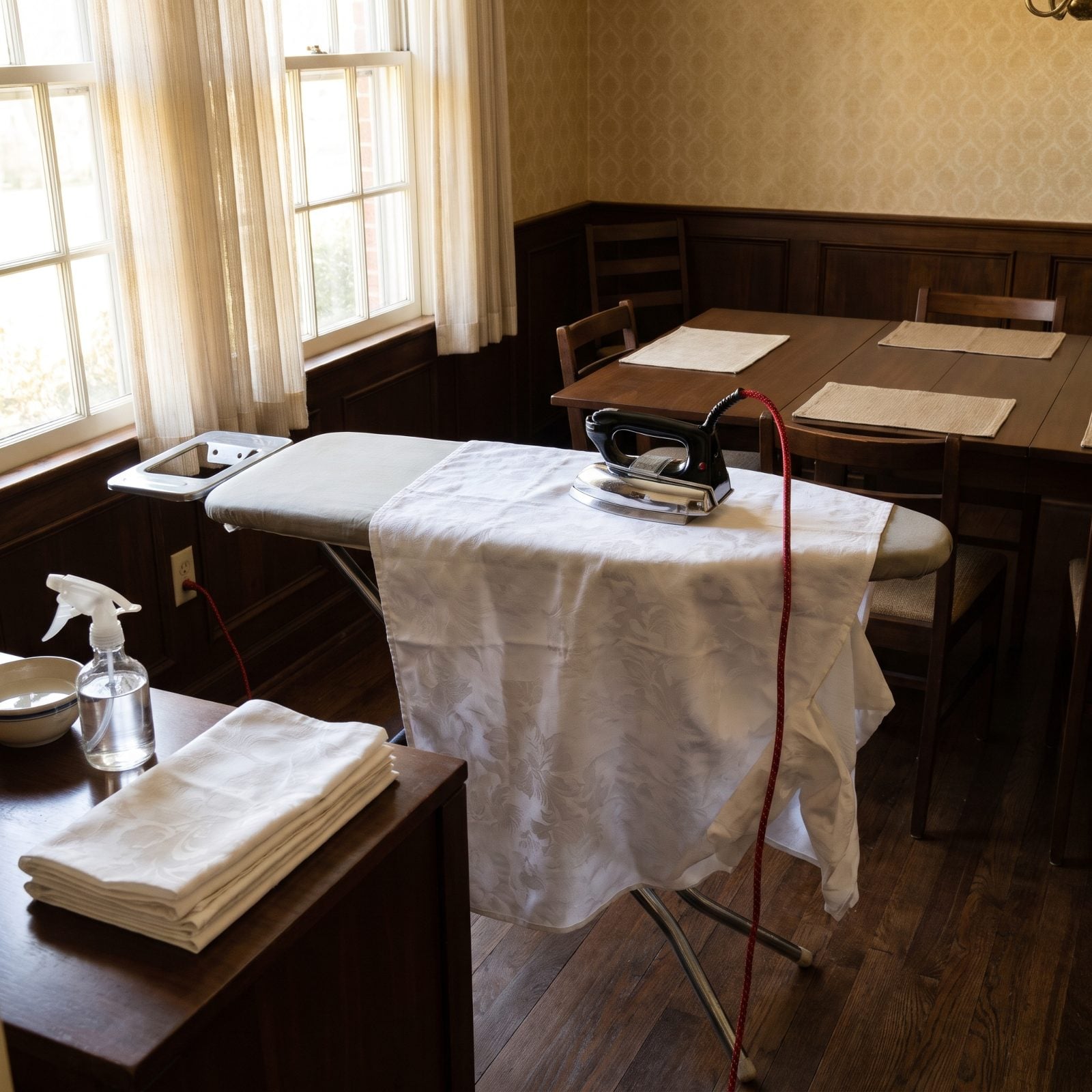
A damask cloth folds into a drawer with the same creases year after year, and those creases get set hard. December meant pressing them out.
Starch was the secret to the look. A good spray on the napkins and they held a crisp fold standing up on the plate instead of flopping like a dishrag. The cloth got ironed right on the table sometimes, over a pad, because no board was big enough. Twelve napkins pressed into matching squares took real time, and you noticed every one that wasn’t.
17. Round Up Extra Chairs From Every Room in the House
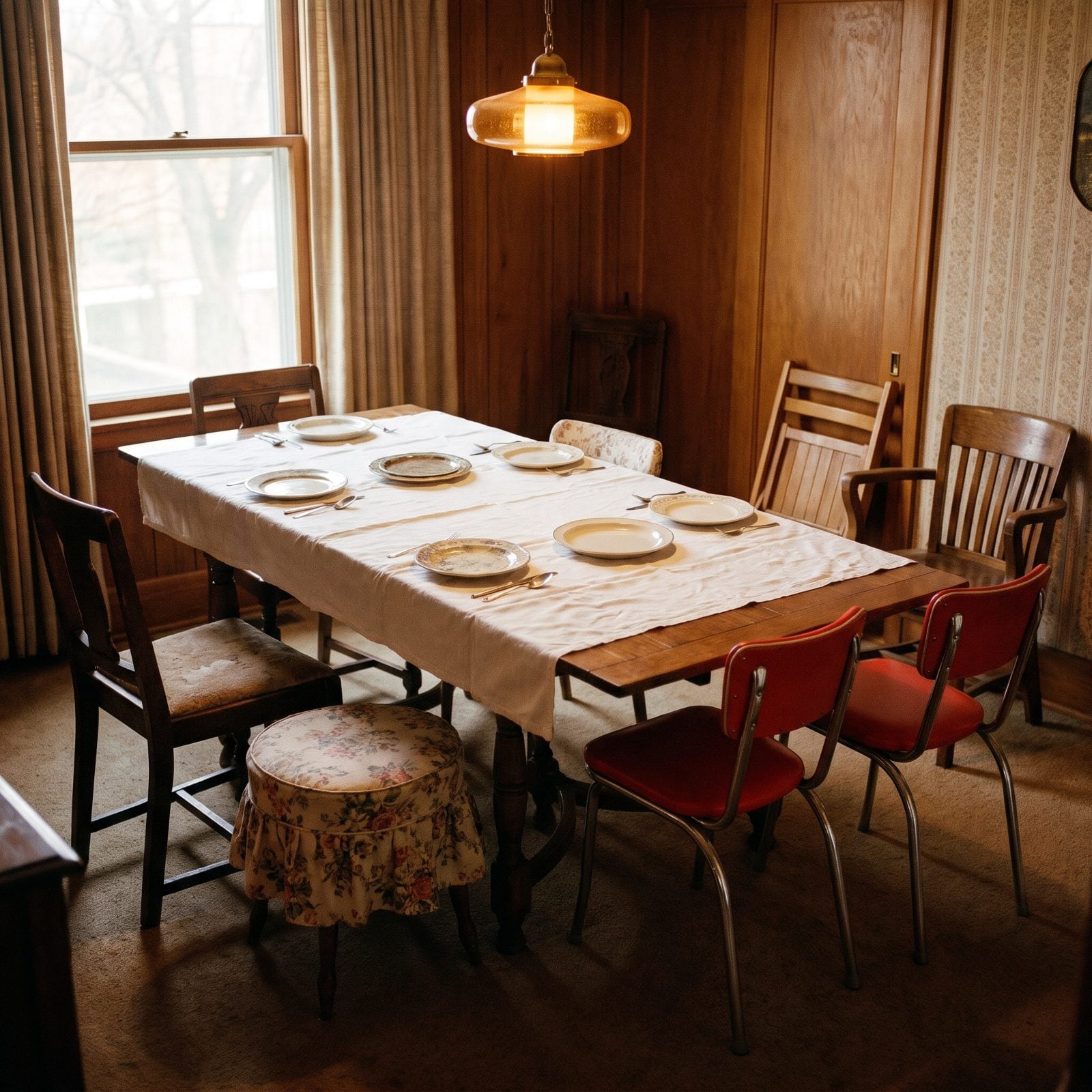
No family owned enough matching chairs for a Christmas crowd, and nobody pretended otherwise.
The dining four got joined by two from the kitchen, the vanity stool from the bedroom, the desk chair, and whatever a neighbor could lend if the count ran high. By the time everyone sat, the table was ringed with a committee of mismatched seats, and the shortest cousin always drew the stool that left them chin-level with the mashed potatoes. It worked. A table that’s a little crowded with borrowed chairs feels fuller than one with room to spare — a quiet trick of hosting nobody wrote down.
16. Set Up the Folding Card Table for the Children
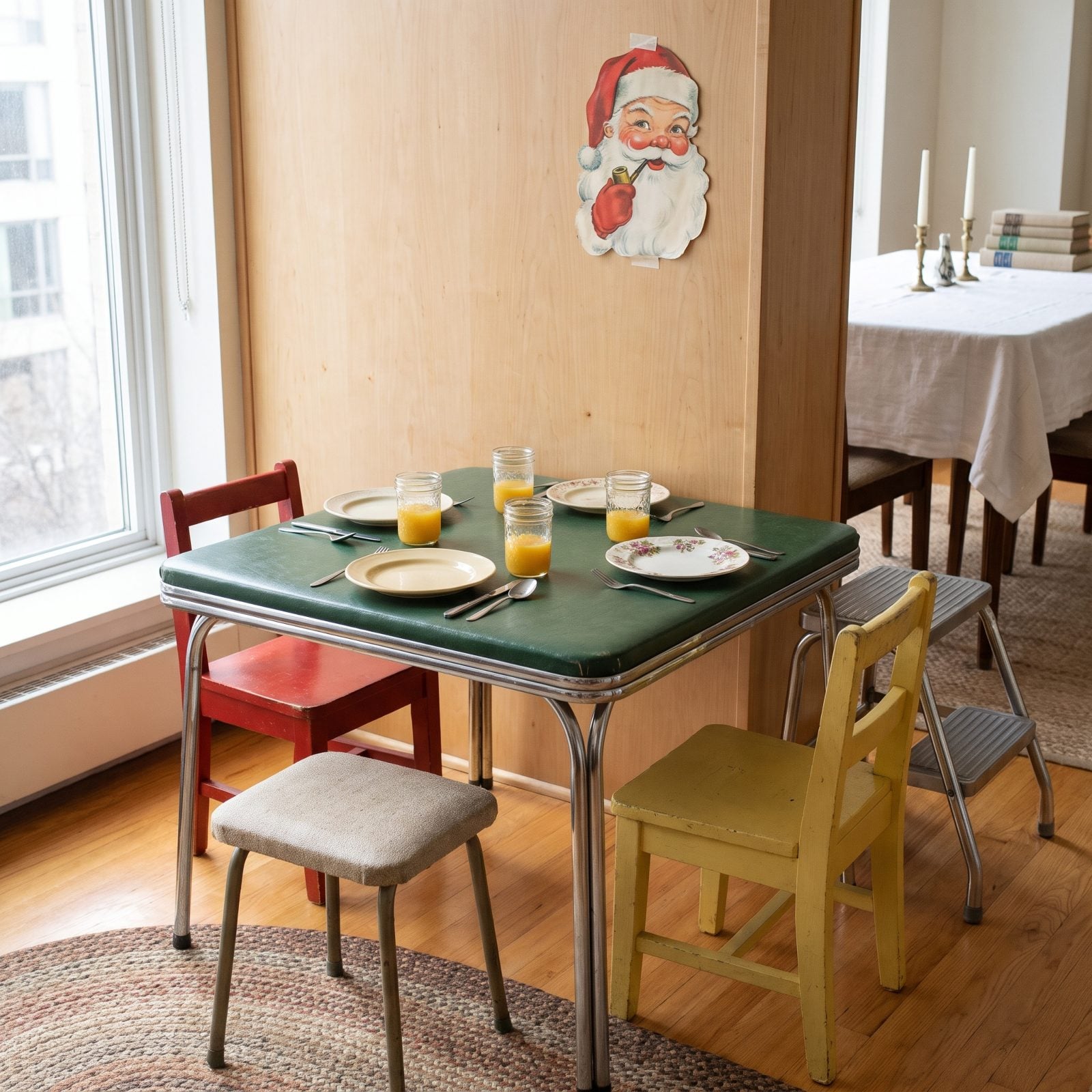
The kids’ table was an institution, and the folding card table was its throne. Green vinyl top, wobbly chrome legs, set up in a corner or a doorway where the grown-up table couldn’t stretch.
Parents framed it as a privilege. The truth was closer to crowd control, and children saw through it instantly. Still, the kids’ corner ran louder and happier than the adult one, with jelly-jar glasses instead of the crystal and nobody minding elbows on the table. Plenty of people over 40 remember graduating to the big table as a genuine milestone, which tells you the card table did its psychological work better than anyone admitted.
15. Set Out Clean Ashtrays for the Grown-Ups

This one needs the history more than the instructions. Back then, setting out ashtrays was simple hosting, the same as putting out coasters. A huge share of adults smoked, and company expected a clean place to tap an ash.
The heavy amber glass ones got washed, the little brass pedestal one on the end table by the sofa got emptied and wiped, and a table lighter sat ready beside the nut dish. It reads as strange now, and there’s the honest value of looking back: a chore so routine it needed no thought is a thing families went out of their way to erase a generation later. Customs don’t vanish with a bang. They just quietly stop being set out.
14. Clean the Oven Before Holiday Baking
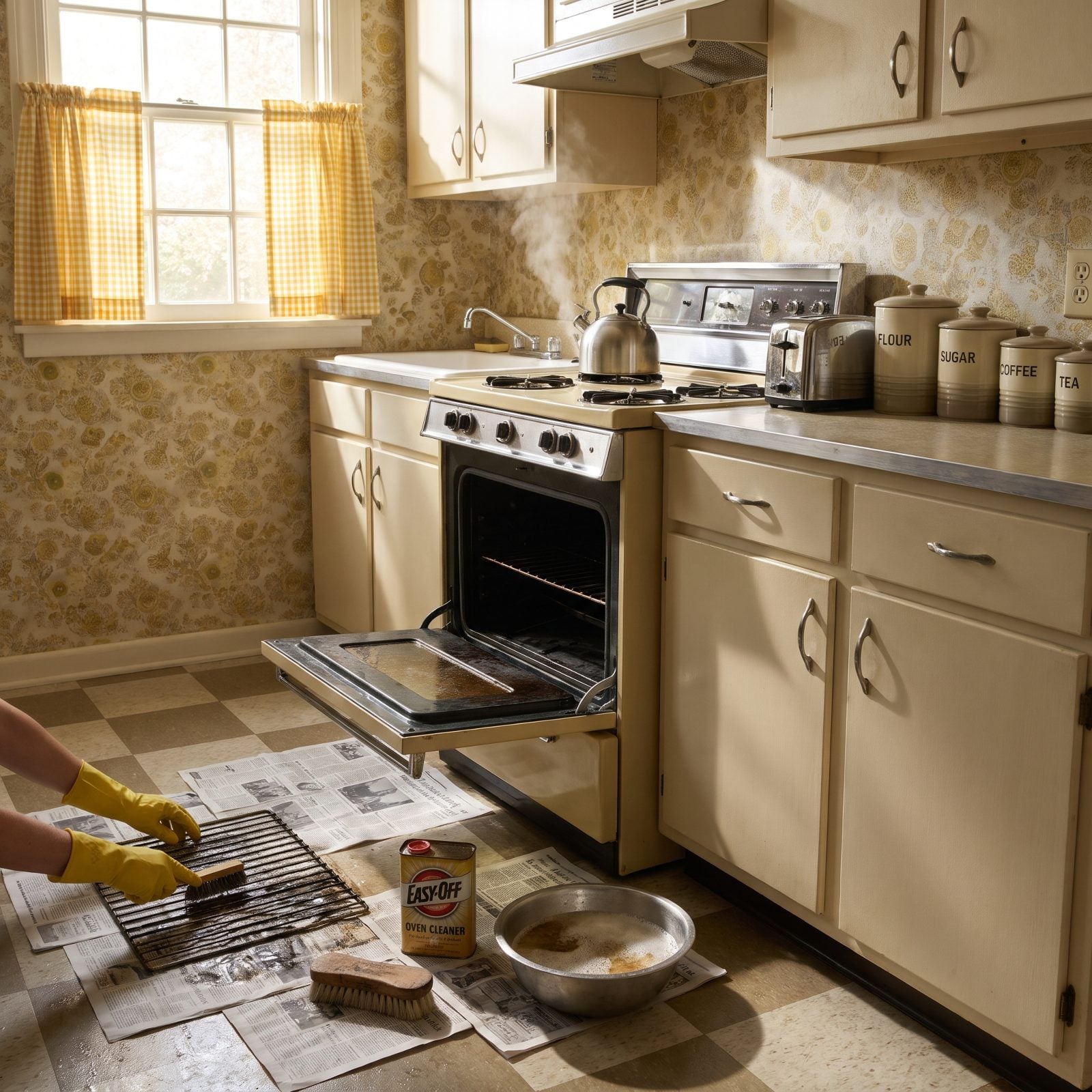
Nobody warns you how much a dirty oven can ruin a batch of sugar cookies. Last year’s roasting spatter burns off into smoke the second you preheat, and suddenly the whole kitchen smells like a drip pan.
Before the baking season, the oven got emptied, the racks soaked in the sink, and the caked-on grease worked over with cleaner and a stiff brush. Grim half hour. But you can’t flavor a pie crust with scorched December grease, and a clean oven heats more evenly besides.
13. Bake and Feed the Christmas Fruitcake With Brandy
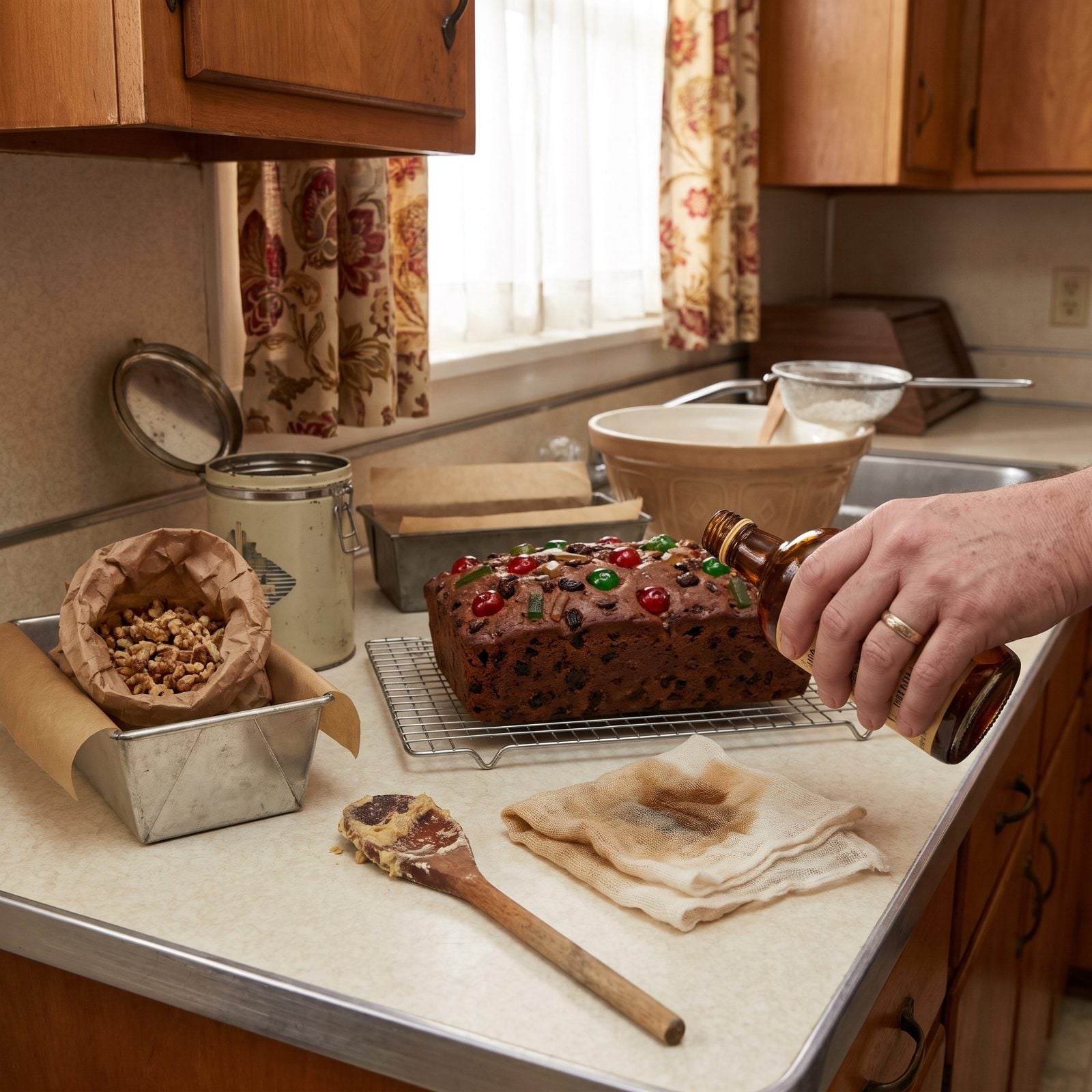
A fruitcake made in November and wrapped in brandy-soaked cheesecloth isn’t a dessert so much as a slow project. You bake it early, then feed it a spoonful of brandy every week or two, rewrapping it and tucking it back in its tin.
People love to mock fruitcake — mostly because they’ve only ever had the dry supermarket brick. A properly fed one is moist, boozy, and keeps for weeks because the alcohol and sugar hold it together. Older than anyone’s grandmother, that trick.
The cheesecloth does the work. You just remember to visit the tin.
12. Steam the Christmas Pudding for Hours on the Stovetop
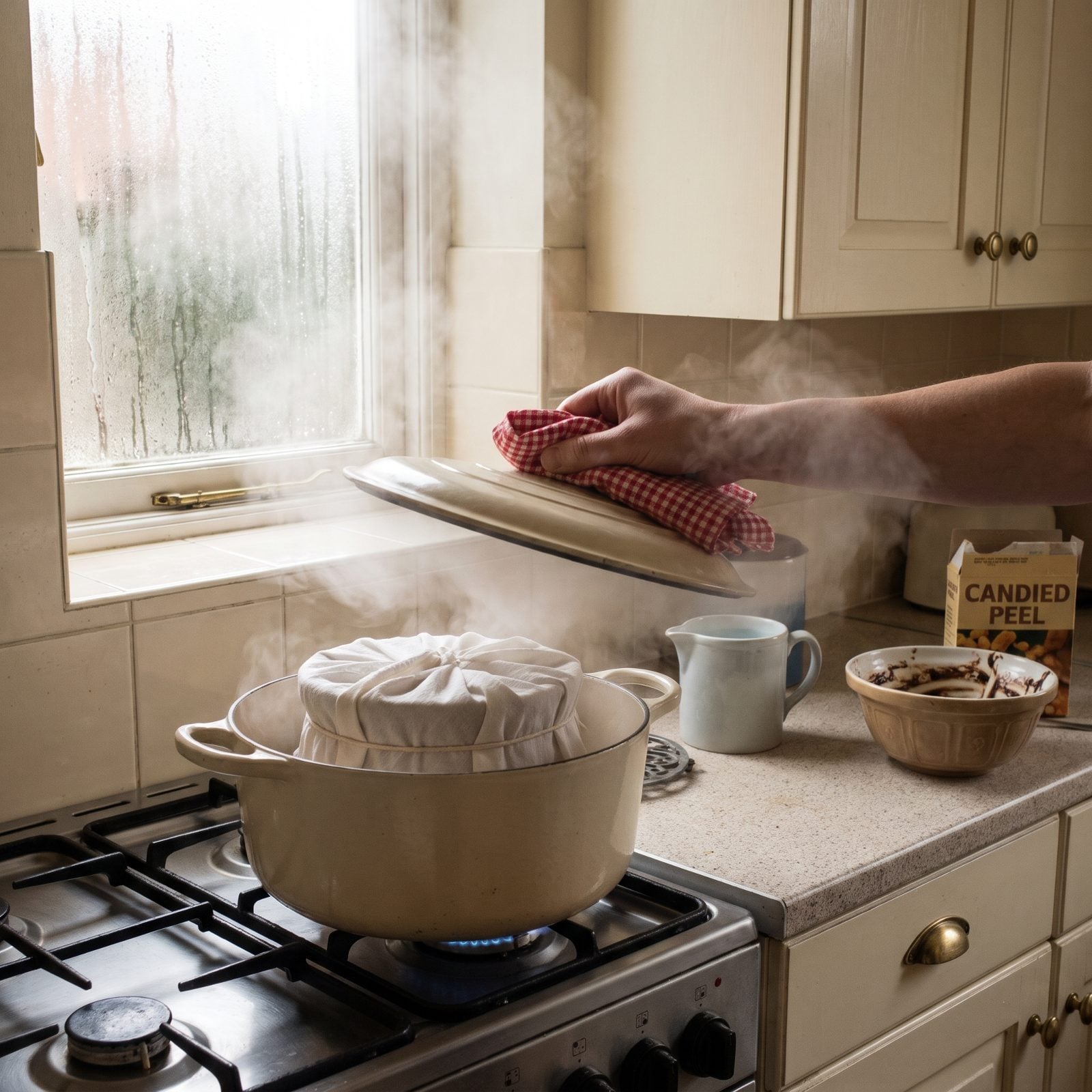
Steaming a pudding ties up your biggest pot and your attention for most of a morning. The basin sits on a trivet in simmering water, lid on, and you keep topping up so it never boils dry. Walk away too long and you’ll come back to a scorched pot and a wasted pudding.
That long steam is what gives a proper Christmas pudding its dark, dense, almost translucent crumb. It cooks gently, for hours, the way a stew mellows. Make it weeks ahead and steam it again on the day to warm it through.
11. Decorate Cutout Cookies With Homemade Royal Icing
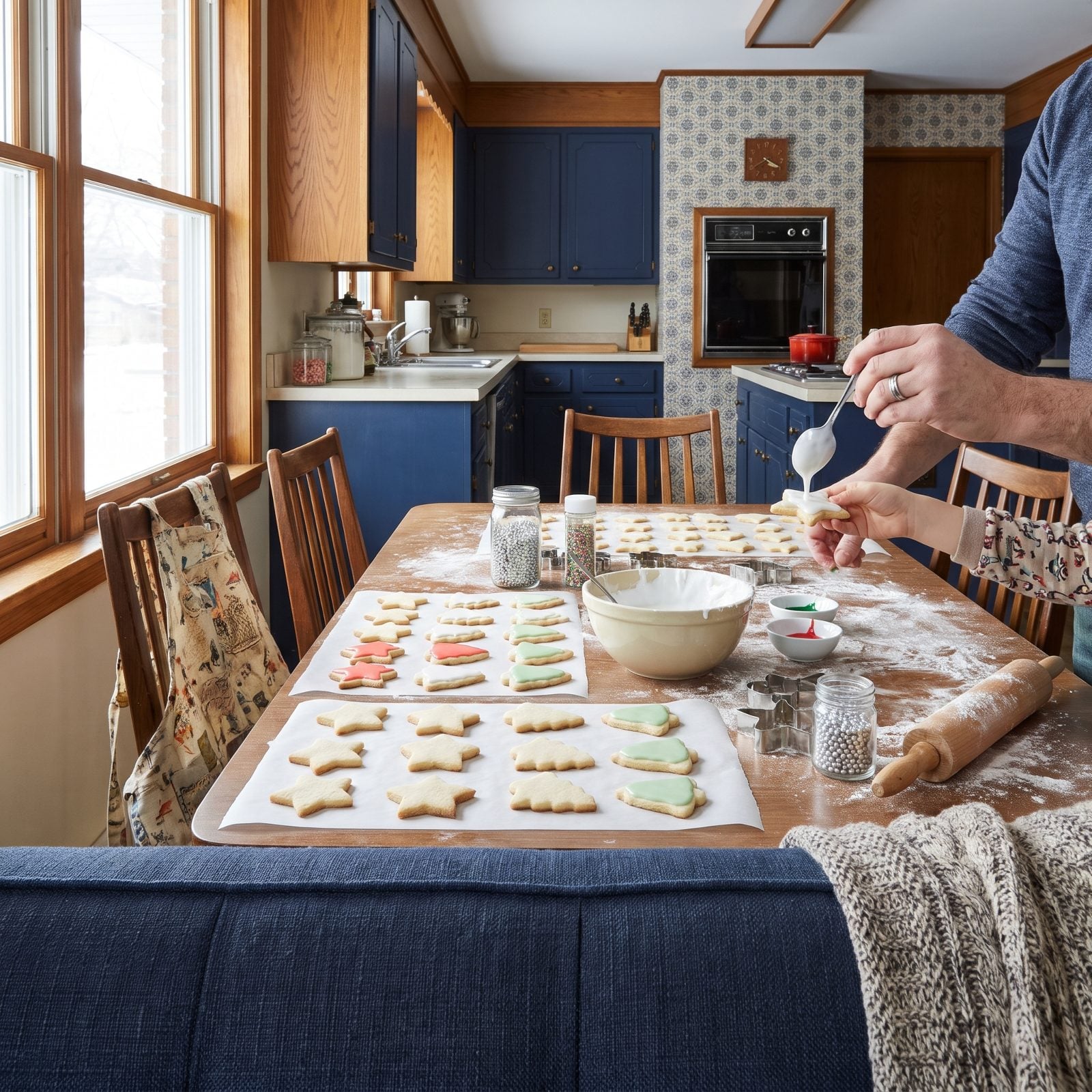
Royal icing was the one that mattered. Powdered sugar, egg white, a little lemon or water, beaten until it held a ribbon. Divide it, tint it with a drop of coloring, and you had enough to ice two dozen trees and stars.
Nobody tells you the icing has to be exactly the right stiffness. Too thin and it runs off the edges into a puddle on the parchment; too thick and it won’t spread at all. You learn the feel by ruining a few.
10. Make Fudge on the Stovetop and Test It in Cold Water
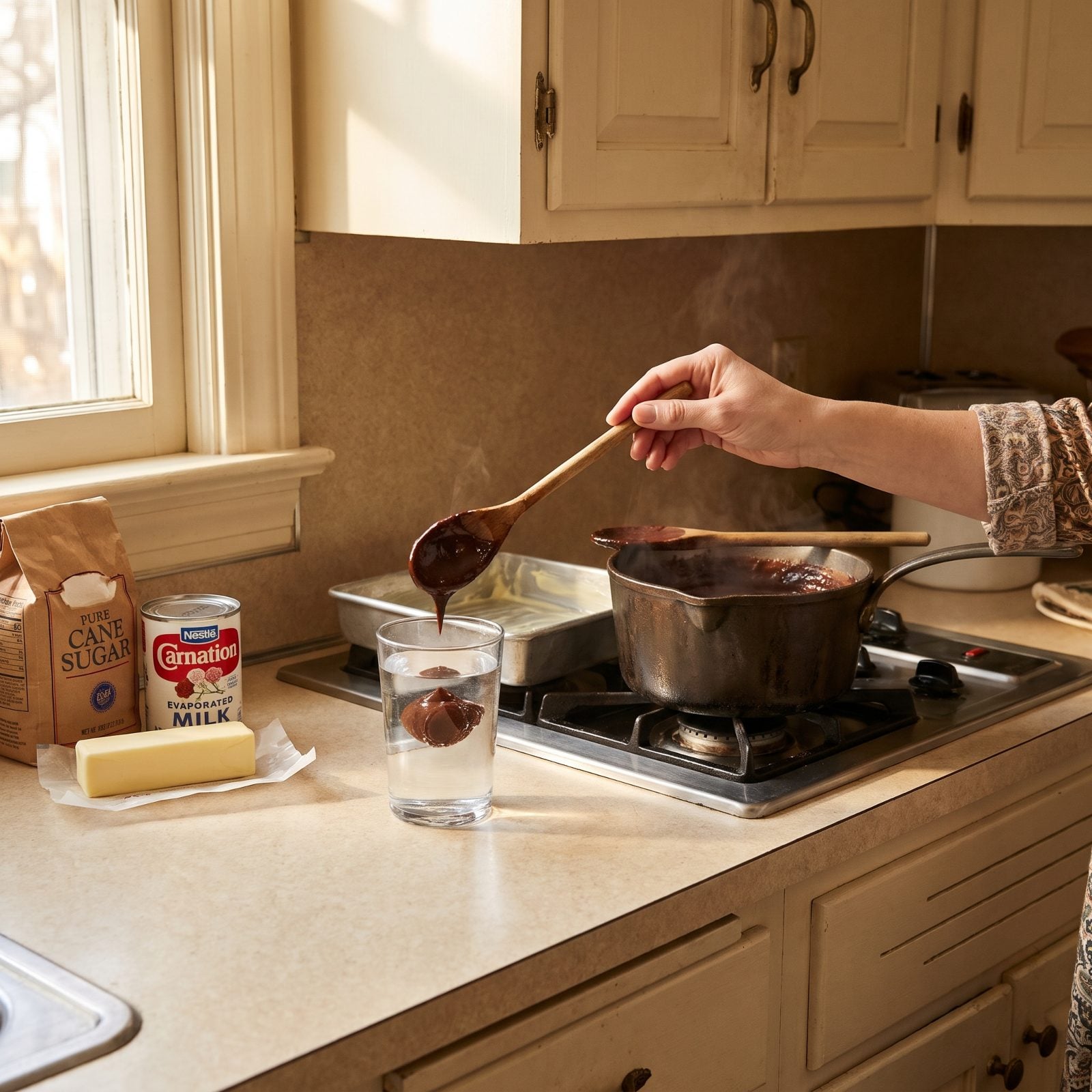
Before clip-on thermometers lived in every drawer, you tested fudge by dropping a little into a glass of cold water. If it formed a soft ball you could pinch between your fingers, it was ready. Too late, and you got grainy candy you’d have to call penuche and pretend you meant it.
Fudge punishes impatience. Stir too much as it cools and it seizes up sandy; stir too little and it won’t set. The window between is narrow, and the whole kitchen holds its breath until it does.
9. Dry Bread Cubes for the Stuffing
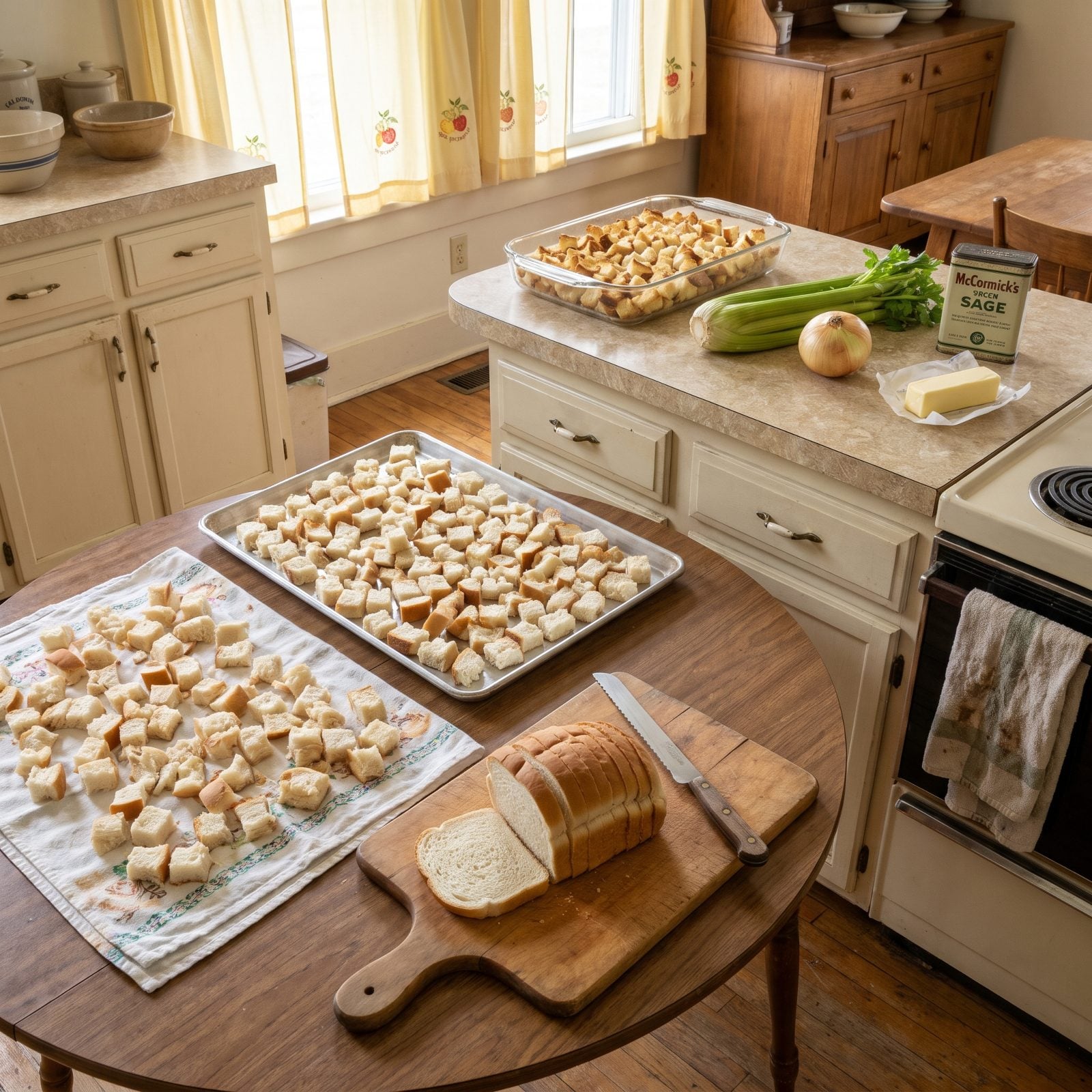
Fresh bread makes gummy stuffing. Everyone learns this once.
So the bread got cubed days ahead and left out on trays to go stale, or dried slow in a low oven. Dry cubes drink up the broth and butter and hold some structure, instead of collapsing into paste. A heel of stale bread was never waste in December — it was the start of the dressing.
8. Wash and Press the Children’s Best Clothes
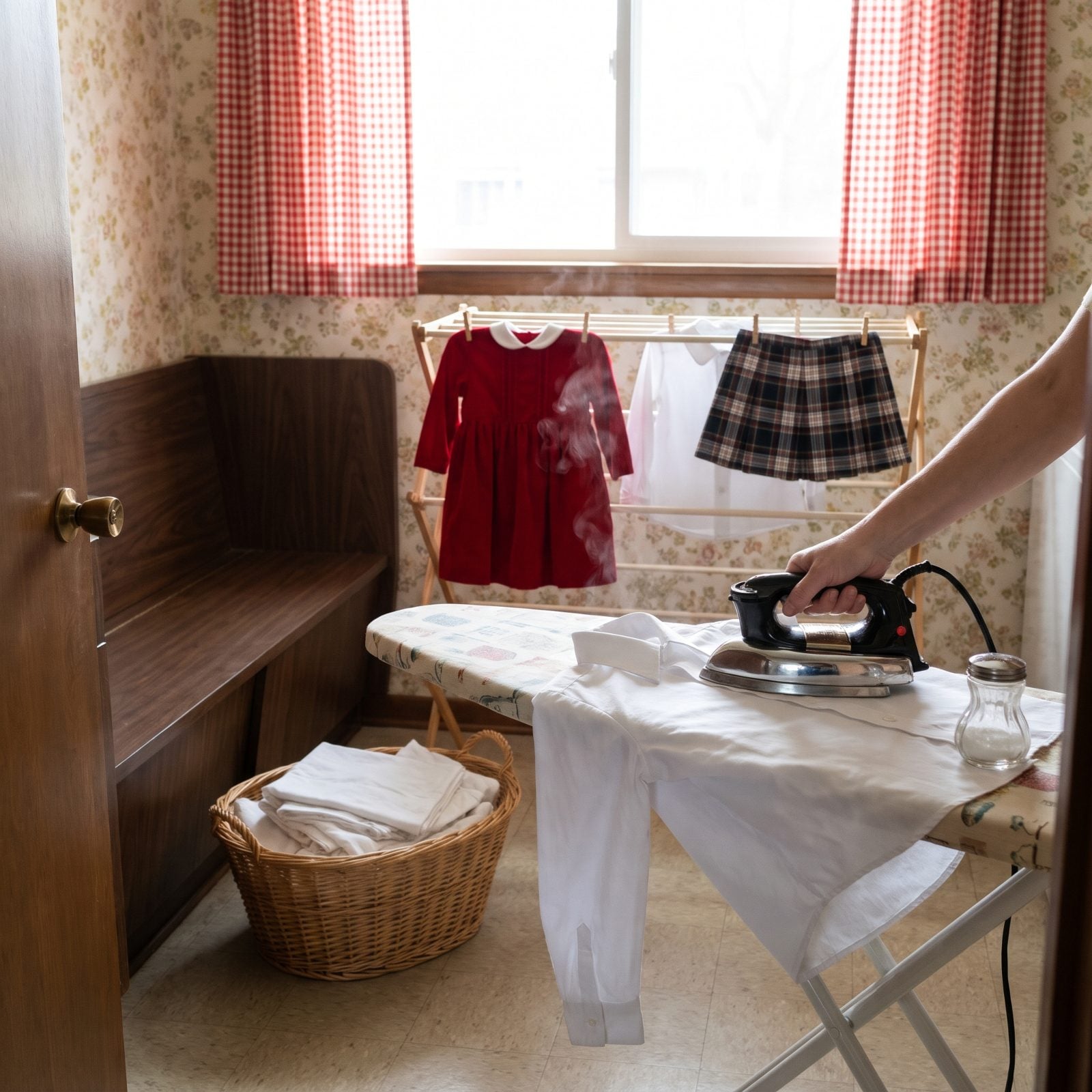
The good clothes came out of the back of the closet days before, got washed, then got the iron. Collars, cuffs, the pleats on a skirt — all pressed with a dampening bottle at the ready, because dry cotton fights you.
Nobody thanked you for it. The kids would wrinkle everything by the second hymn. But there’s a particular pride in a child walking into church in a crisp pressed shirt, and everyone in those pews knew exactly how much effort it took.
7. Polish Everyone’s Dress Shoes to a Shine
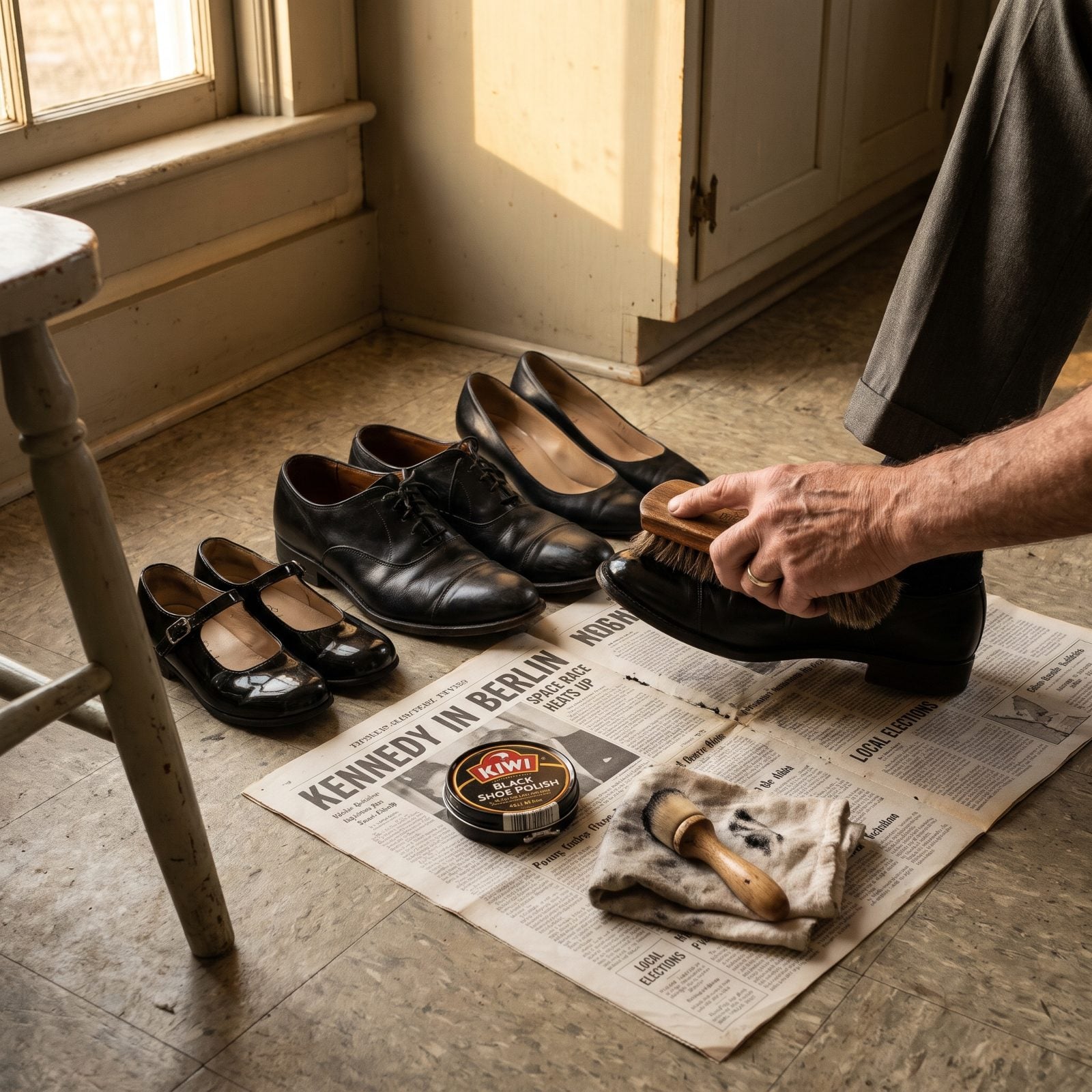
Shoe polishing was a floor job. Newspaper down, the whole family’s good shoes lined up, a flat tin of wax, a dauber, a brush, and a soft cloth for the final buff.
You dab, let it haze over, then brush hard until the leather snaps bright. The spit-shine on the toes? Pure showing off. Scuffed shoes gave the whole outfit away no matter how pressed the shirt was, and that was exactly why you bothered.
6. Mend and Hang the Christmas Stockings
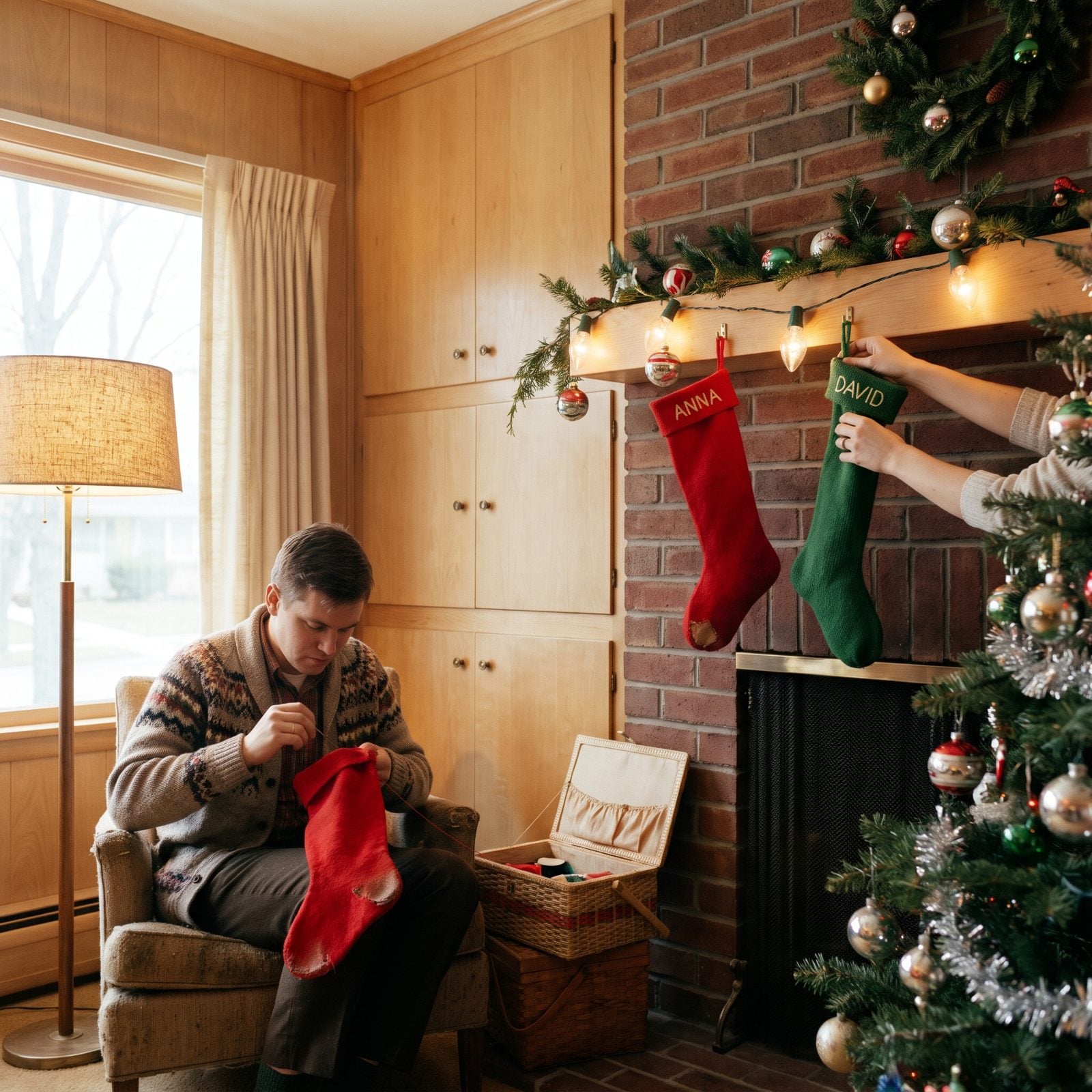
These weren’t bought in a bag of four. The stockings were knit or sewn, named at the cuff, and used year after year, which meant the toes wore thin from the weight of an orange and a handful of walnuts.
So before they went up, somebody got out the sewing basket and darned the holes. Hanging them was the signal that the season had truly started. The worn spots were a kind of record, one Christmas layered on the last.
5. Wrap and Tag Gifts at the Kitchen Table
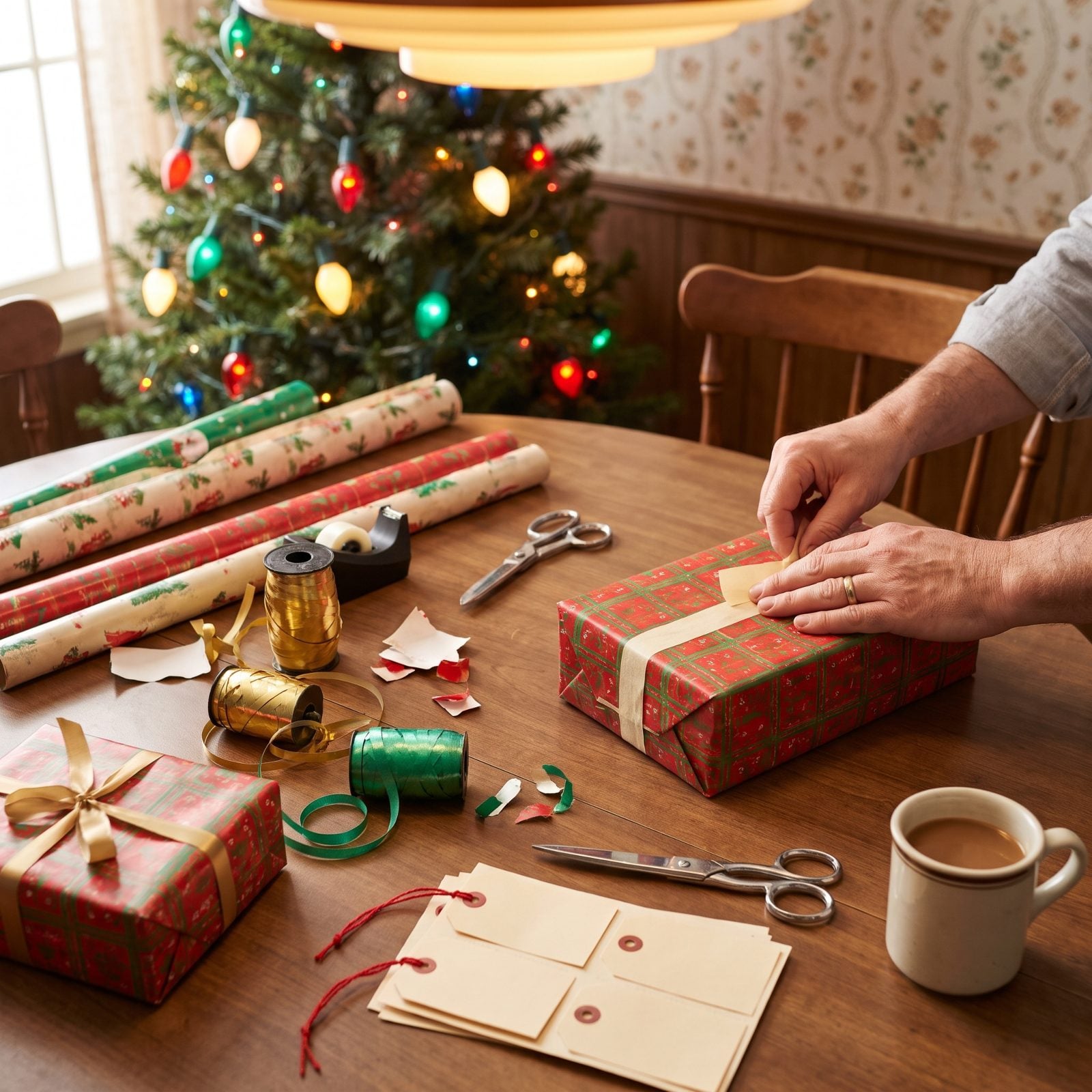
The wrapping always happened after the kids were asleep. Kitchen table cleared, rolls of paper unspooled, scissors and tape and a dish of little tags with string.
You folded the ends crisp, taped the seam, curled the ribbon over a scissor blade, and wrote the tag last so you wouldn’t lose track of whose was whose. A good parcel was a small point of pride. And when it was all stacked and tagged, that was the first time all month the house felt quiet and done.
4. Making Up the Guest Beds and Setting Out the Good Towels
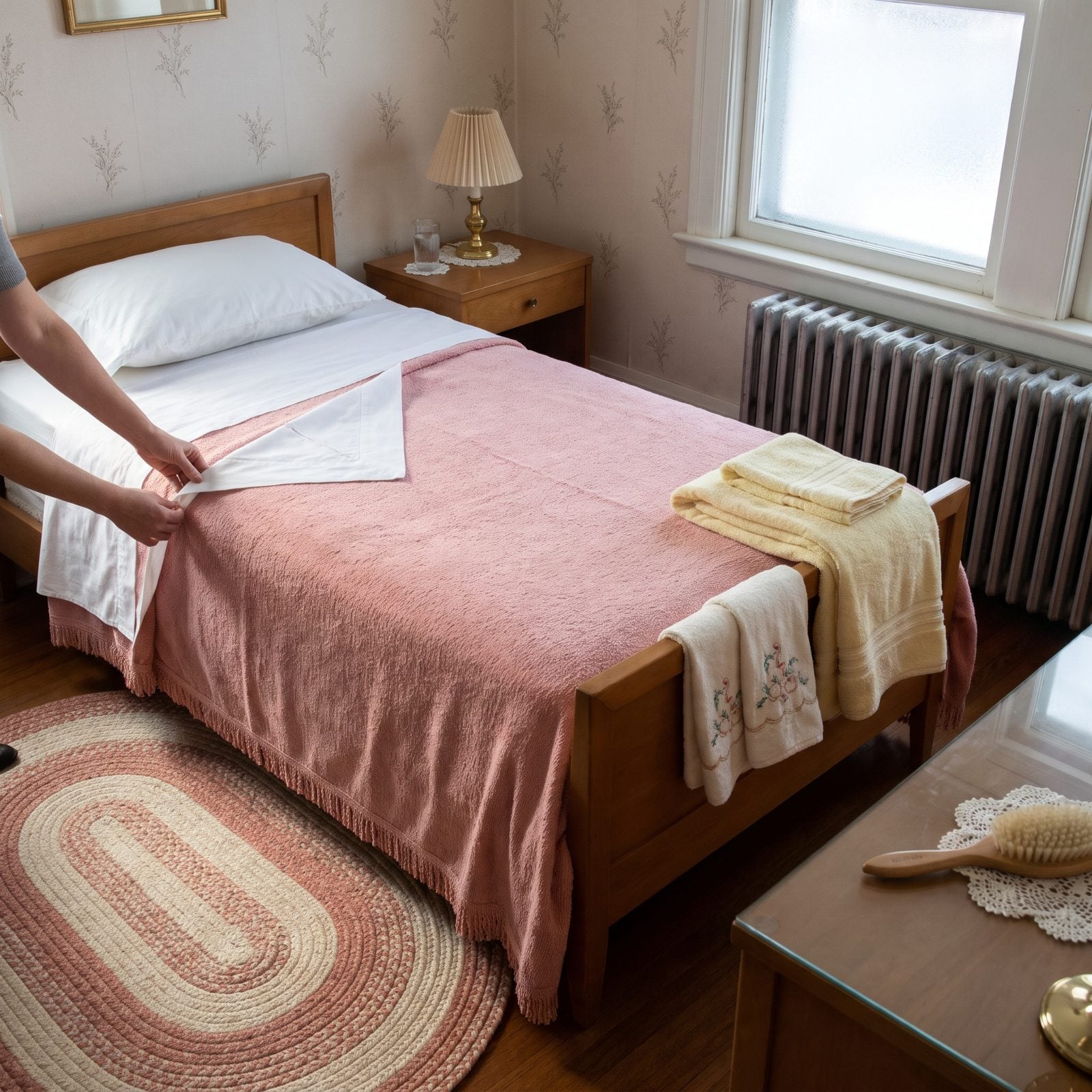
The good towels came out twice a year, and Christmas was one of those times. Everyday towels were thin and grey at the edges. The company towels lived folded deep in the linen closet with a bar of soap tucked between them to keep them smelling clean, and they only saw daylight when relatives were on the way.
Making up a guest bed was its own small ceremony. You pulled the sheets tight enough to bounce a coin off, folded that fierce hospital corner nobody bothers teaching anymore, and smoothed the chenille spread flat. A glass of water on the nightstand said, plainly, that you were expected.
3. Spreading the Road Map Across the Kitchen Table to Plan the Christmas Drive
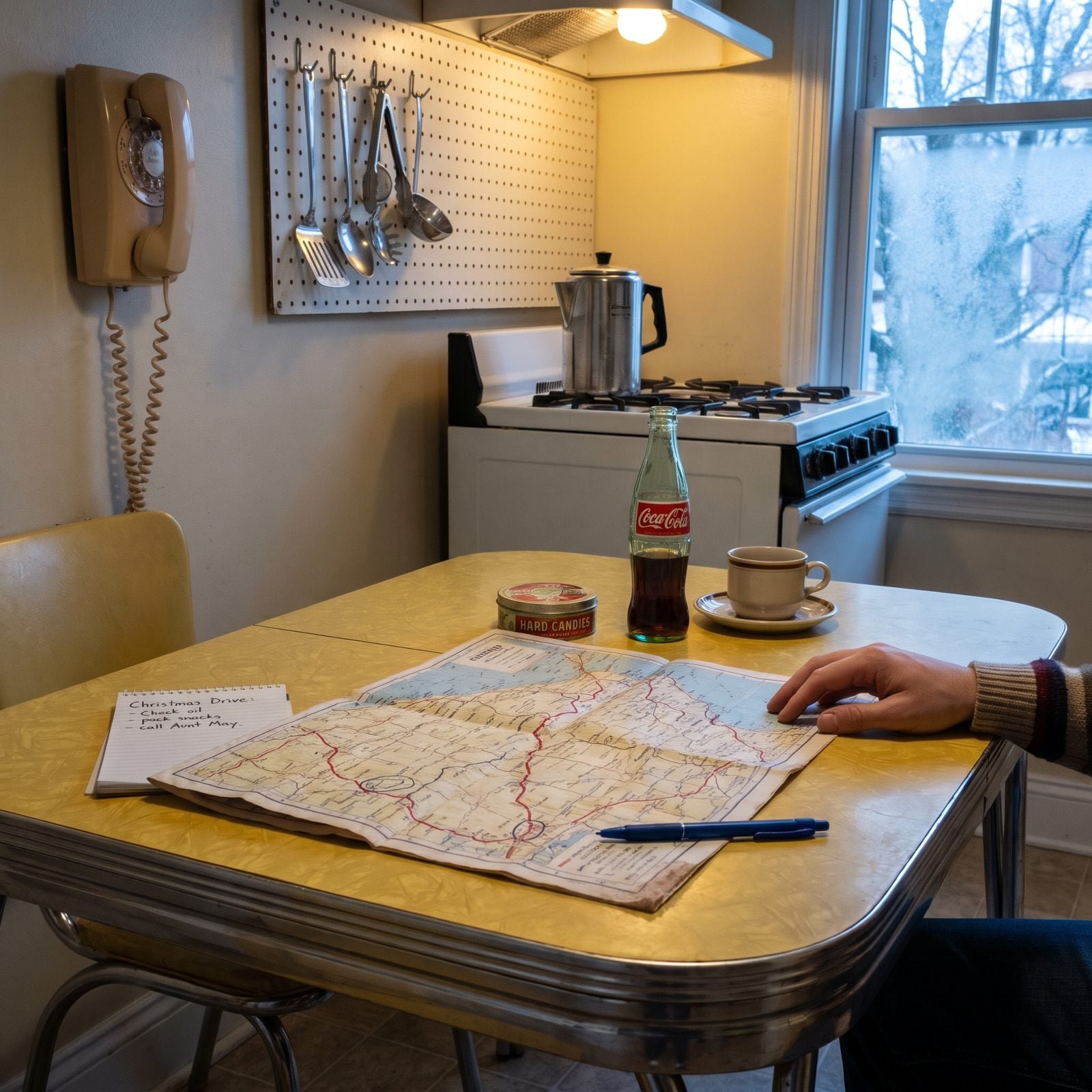
Long before anyone rode along in a glowing dashboard voice, the family route to Grandma’s lived on a single folded paper map that never, ever folded back the same way twice.
Planning happened at the kitchen table. Someone traced the drive in ballpoint, circled the towns with a reliable gas station, and guessed at the miles between rest stops. Those big accordion maps came free from the service station if you filled up — a little gift from the oil companies elbowing each other for your loyalty.
The whole thing ran on optimism. You picked a departure time, added two hours for “everybody needs to use the bathroom,” and prayed the pass wasn’t iced over.
2. Carrying Plates of Homemade Fudge and Cookies Door to Door Down the Block
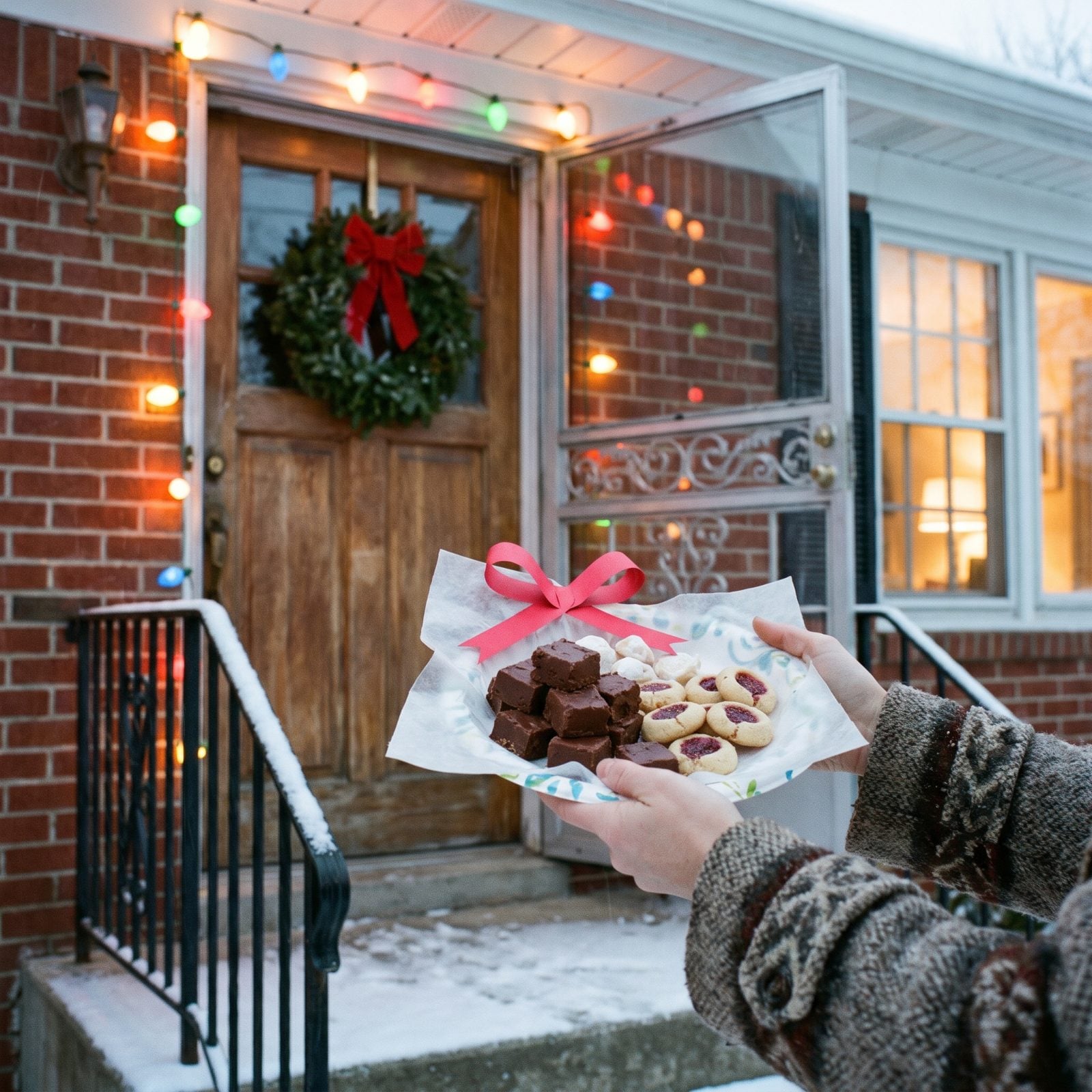
Nobody rang ahead. You filled a paper plate, covered it in waxed paper, and walked it down the block through the snow.
The treats were whatever the kitchen had been churning out in bulk that week — fudge, divinity, those thumbprint cookies with a dot of jam, maybe a slice of nut bread wrapped tight. The plate itself was a quiet act of diplomacy, a way of saying we see you, we like you, Merry Christmas. And it kept the whole street on speaking terms.
The gift wasn’t really the fudge. It was the knock on the door.
1. Assembling the Toys at the Kitchen Table After the Children Were Asleep
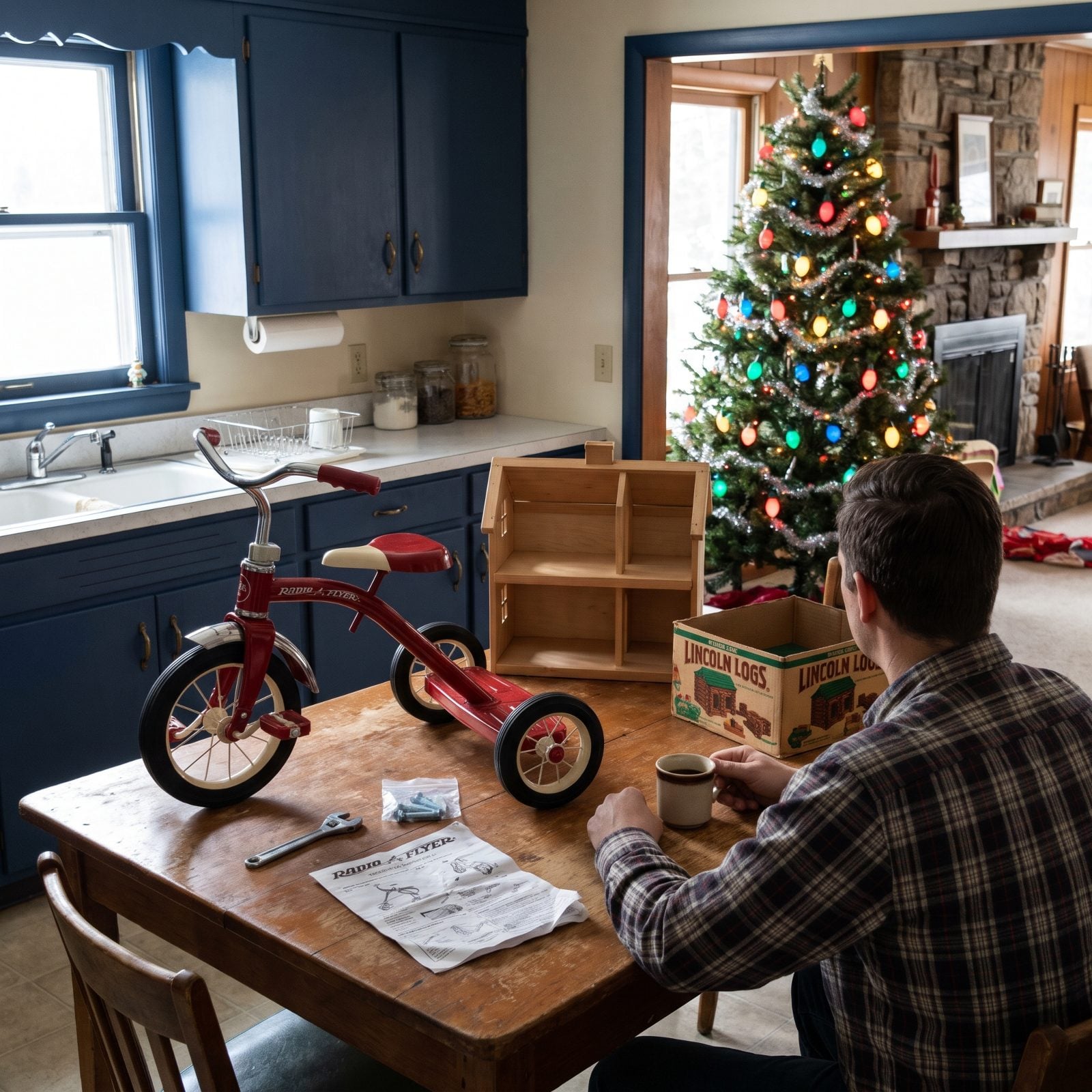
The hardest work of Christmas happened late at night, in a pool of lamplight, with a screwdriver in one hand and a sheet of instructions printed far too small to actually read.
Once the kids were finally out of the room, out came the boxes. Tricycles with the wheels off. Dollhouses in forty pieces. Bicycles with the handlebars pointed the wrong way, plus a bag of bolts that somehow never matched the diagram. The kitchen became a workshop, and whoever was still awake cursed softly through it by lamplight and the glow of the tree from the next room.
And here’s the part that never changes. There’s always one piece left over — one mystery screw, nothing obviously missing, everything spinning fine. You decide it’s a spare. You call it done.