
Half the kitchen habits we grew up with came from our mothers, who got them from theirs. Some still hold up. A lot don’t, and the chicken-rinsing one has been quietly working against us for decades. What’s nice is that the fixes here take less effort than the old way, not more. These are the habits worth retiring, with the simple swaps that replace them without any fuss.
Please note that some of the images in this article were created with the assistance of AI.
38. Saving the Good Dishes for Someday
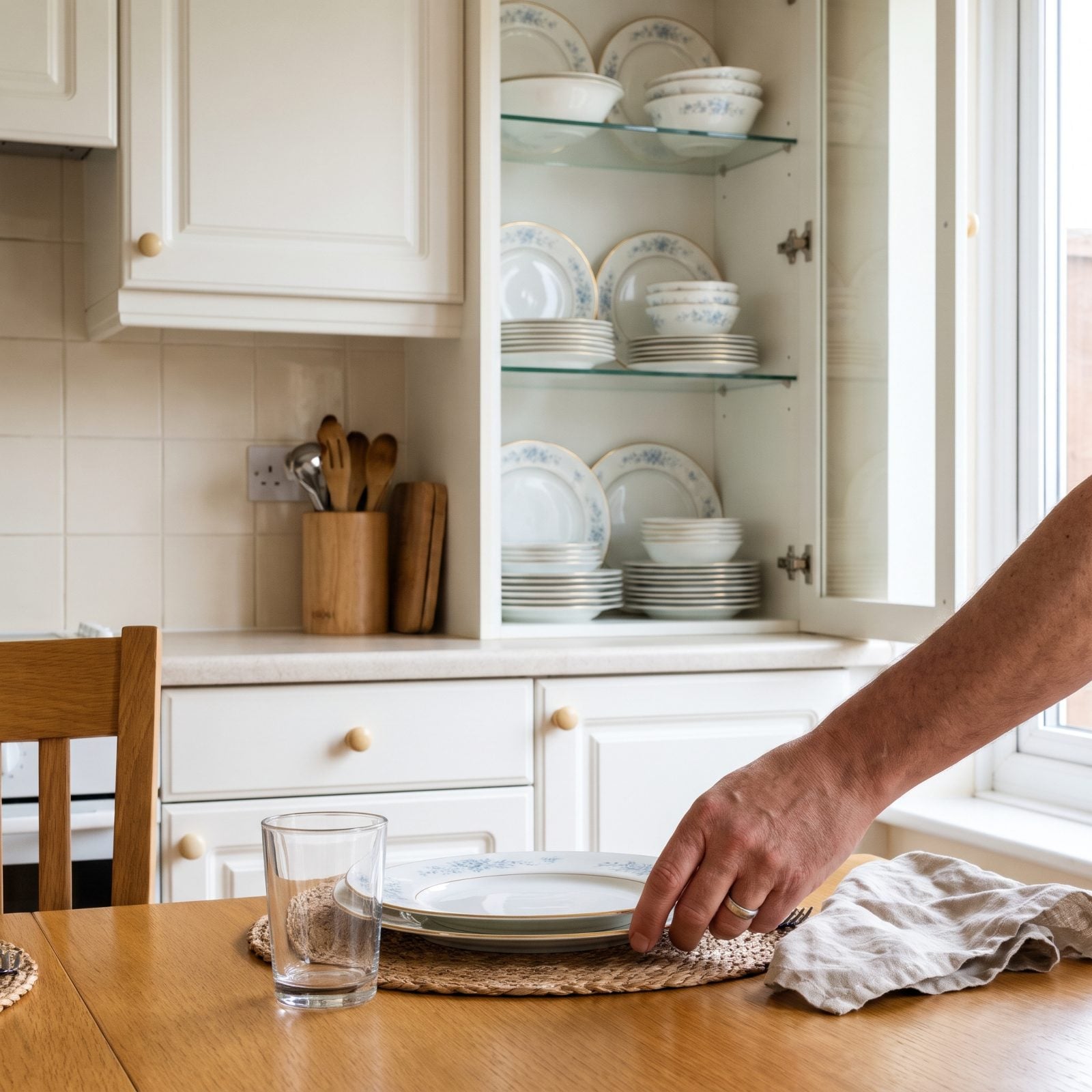
Somewhere in the house there’s a china set that has seen three holidays in thirty years. The wedding plates. The ones with the gold rim you’re saving for an occasion grand enough to deserve them.
And here’s the cost of that logic: the occasion rarely comes, so the dishes outlive their own purpose sitting in a cabinet. Good things used once a decade aren’t being protected. They’re being wasted politely.
So pull them out and eat Tuesday’s pasta off the good plates. They’re sturdier than you think, most are dishwasher-safe if you check the maker, and a meal on a beautiful plate genuinely tastes better to your brain.
37. Rinsing Raw Chicken in the Sink
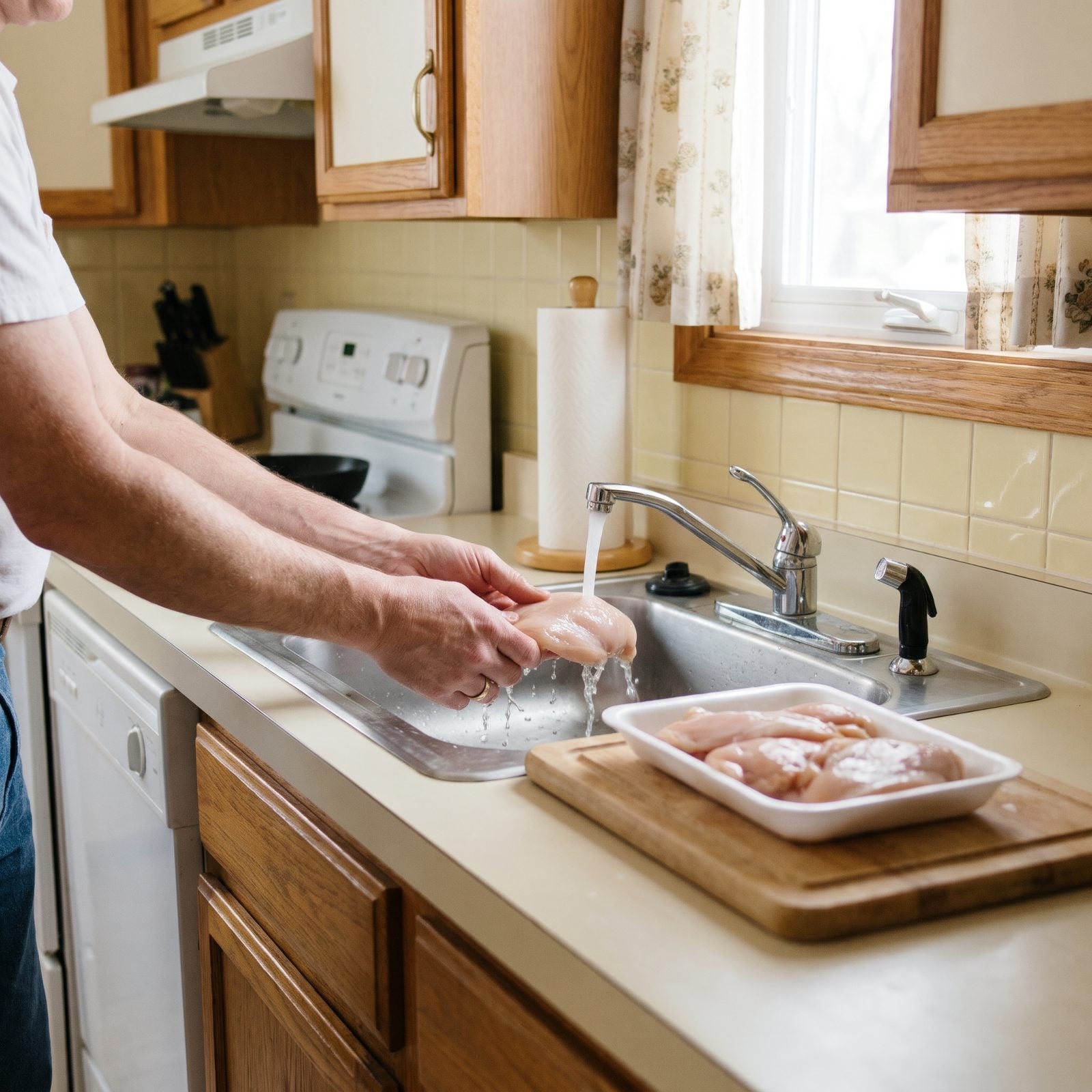
It feels responsible. Hold the raw chicken under the tap, wash off the slime, feel clean about it. Nearly everyone over a certain age learned it this way.
Food scientists have been begging us to stop, because rinsing doesn’t remove bacteria, it launches it. Water droplets carrying salmonella and campylobacter spray several feet across your counters, your dish rack, the clean lettuce drying nearby. You’re not cleaning the chicken. You’re painting the kitchen with it.
Skip the rinse entirely. Pat the chicken dry with paper towels, toss them, and let proper cooking temperature do the actual killing. Drier skin browns better anyway.
36. Thawing Frozen Meat on the Counter
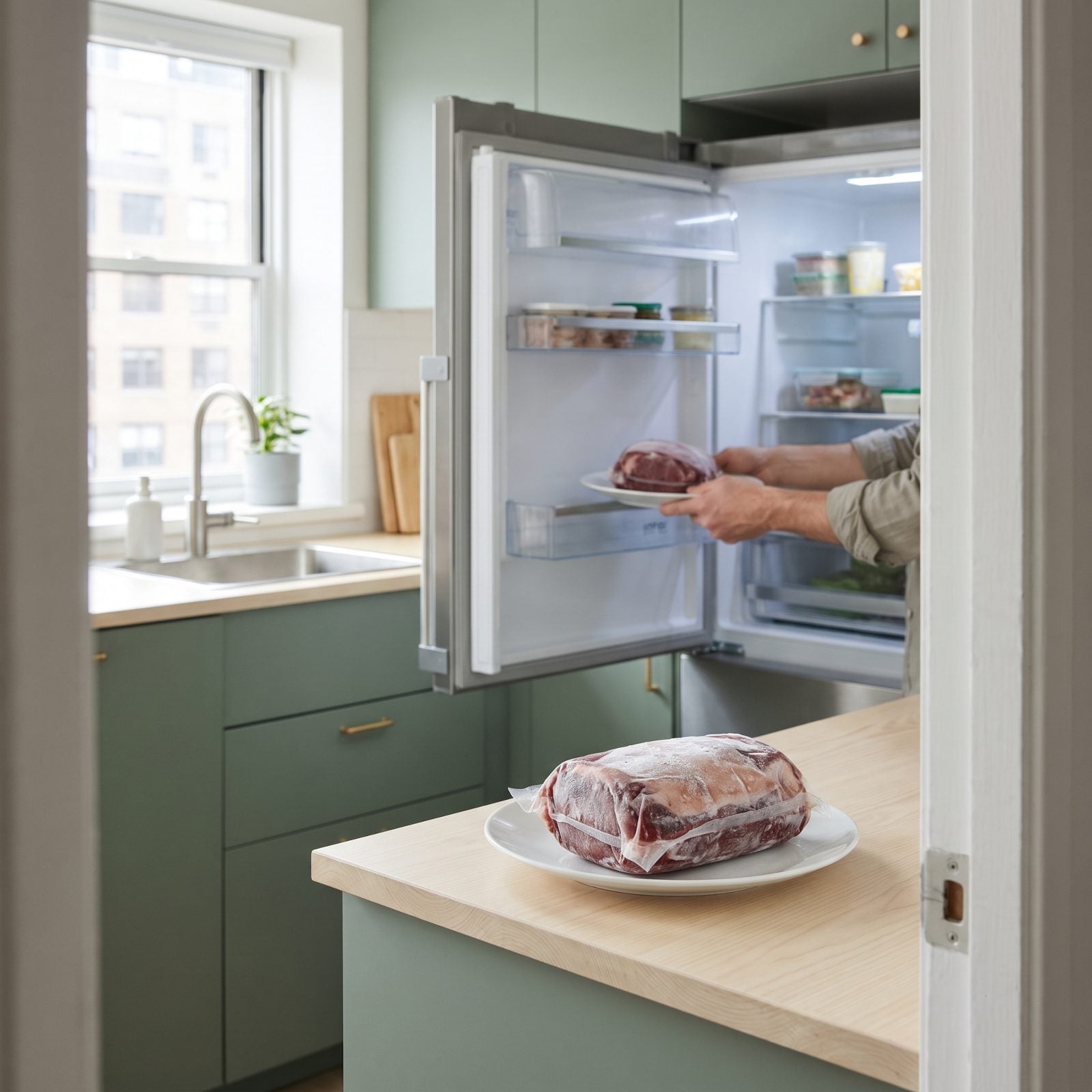
Morning move: pull the pork chops from the freezer, set them on the counter, head out for the day. Come home and they’re thawed and ready. Simple.
The trouble lives in those hours in the middle. Once the surface of that meat crosses 40 degrees, bacteria wake up and start doubling while the center is still an icicle, so by dinner the outside has spent most of the afternoon in the danger zone.
Thaw in the fridge overnight instead, on a plate to catch drips, lowest shelf. In a rush? Seal it in a bag and sit it in a bowl of cold water, swapping the water every half hour.
35. Using Dull Knives Because They Feel Safer
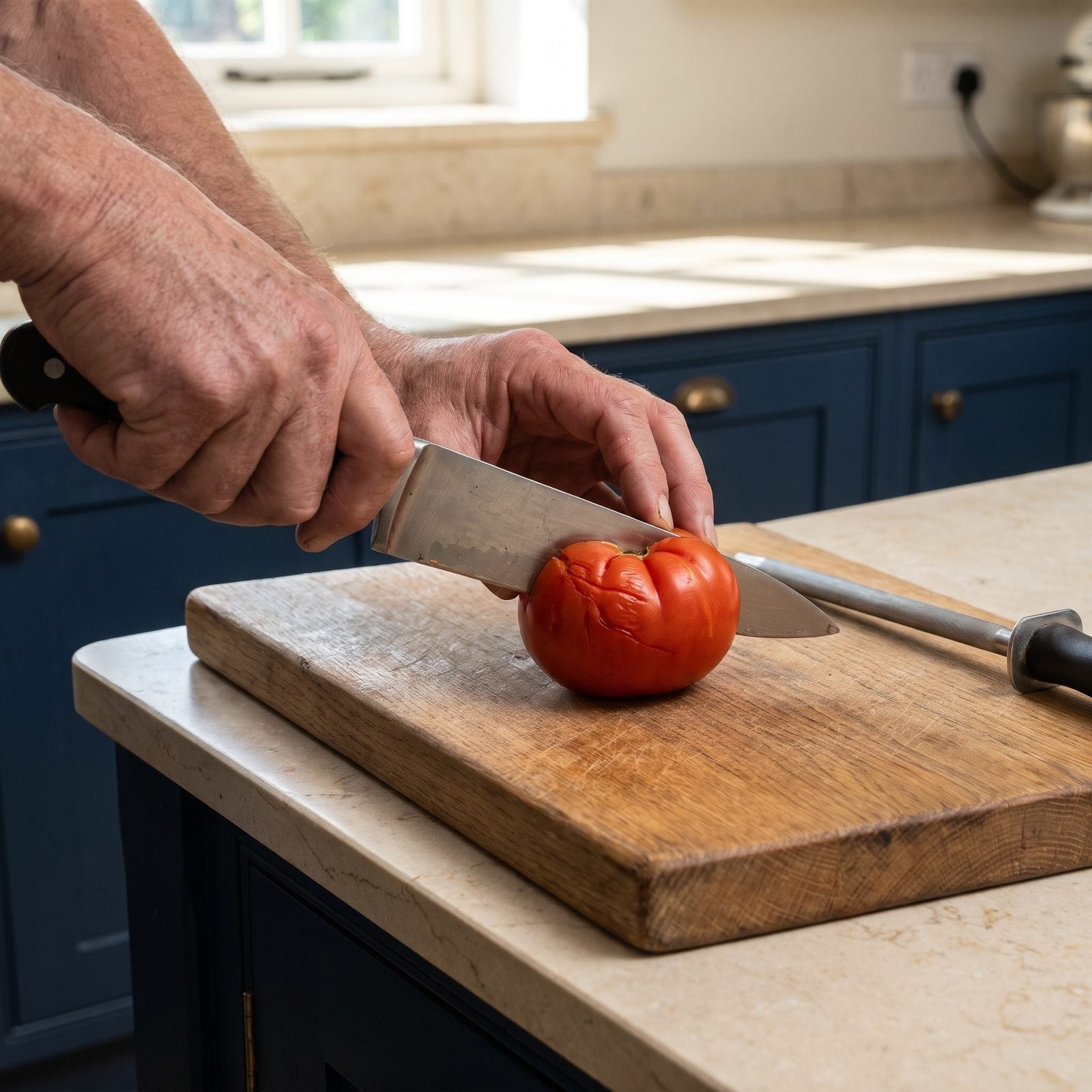
A dull knife feels like the cautious choice. It can’t cut you as easily, or so the reasoning goes. Plenty of us believed this for years and kept a drawer of butter-spreaders we called chef’s knives.
But the reasoning runs backwards. A dull blade slips off tough skins and makes you shove, and the moment it finally catches, it lurches somewhere you didn’t plan. Most serious kitchen cuts happen to people sawing at a tomato with a blunt knife.
Sharp knives go where you aim them. Learn to run yours across a honing steel before each use, and have it properly sharpened once or twice a year.
34. Pouring Grease Down the Kitchen Sink
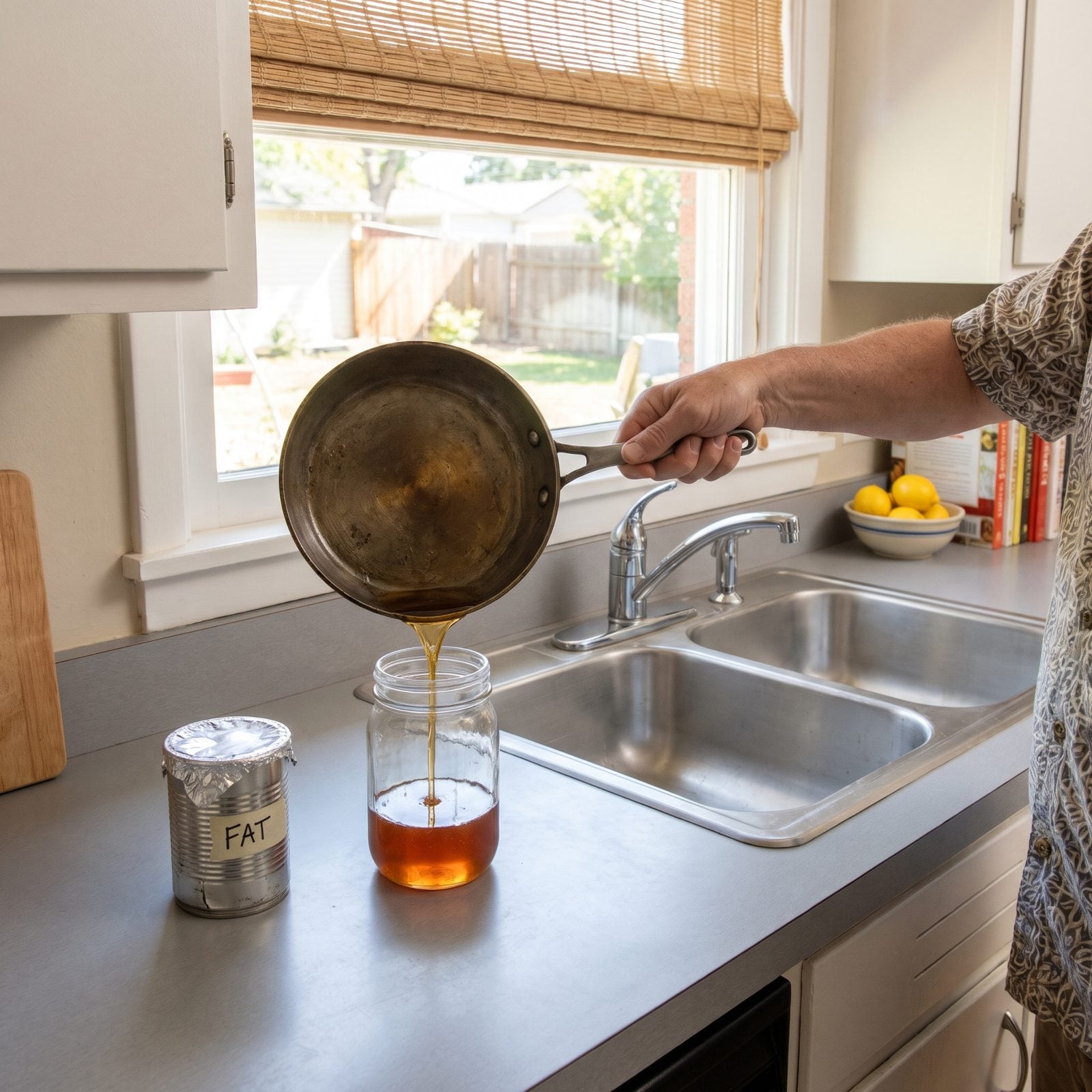
Hot grease looks like a liquid, so it goes down the drain like one. Then it cools in the pipe, hardens into a waxy plug, and grabs every coffee ground and crumb that follows.
Cities haul actual boulders of congealed fat out of sewer lines, and yours is doing the same thing on a smaller scale under your floor. A plumber’s visit costs far more than the two seconds it takes to avoid it.
Keep an empty jar or can by the stove. Pour cooled grease in, lid it, toss it once it’s full. Bacon fat, saved in the fridge, is also pure gold for roasting potatoes.
33. Washing Every Dish Before Loading the Dishwasher
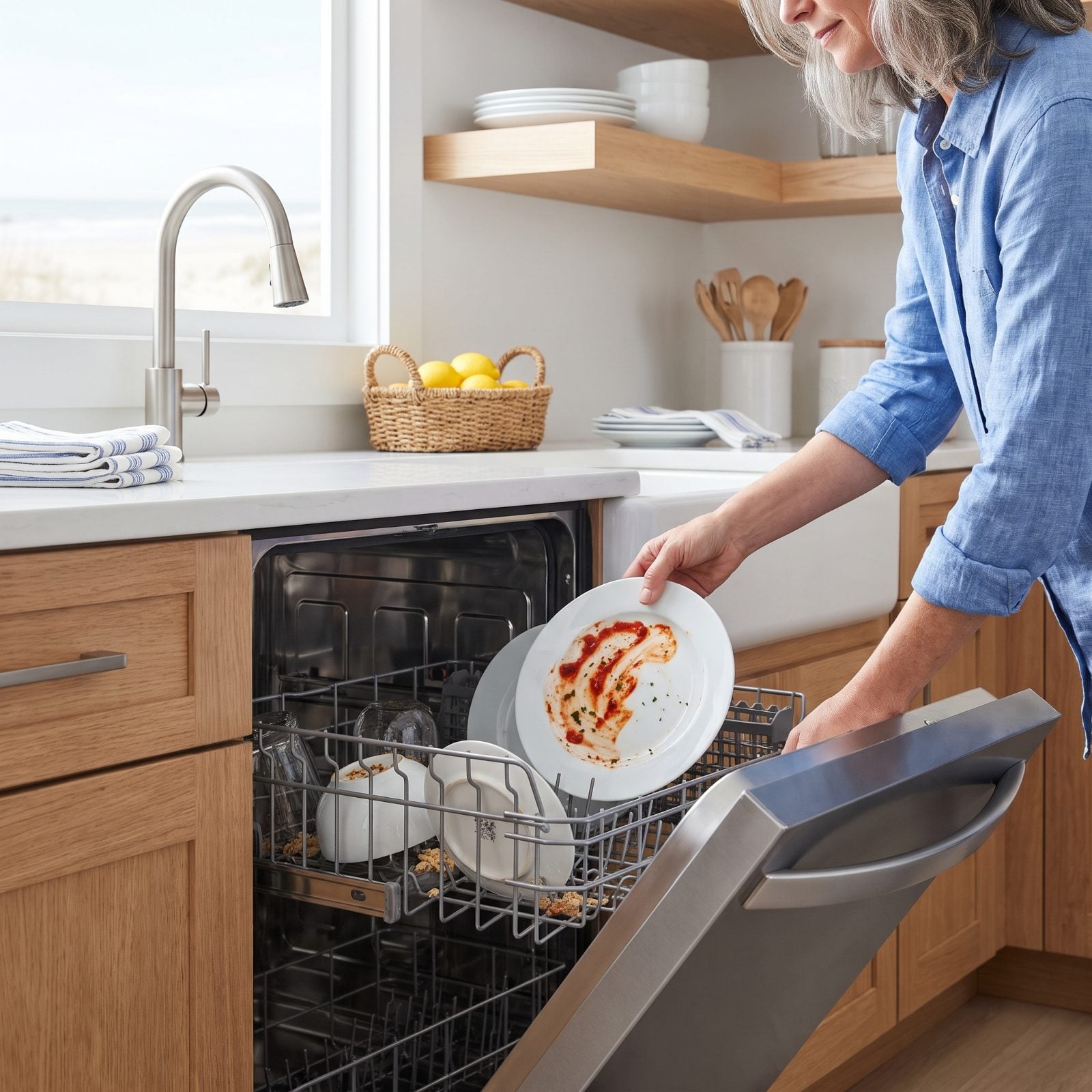
You scrub each plate nearly clean, then put it in the machine whose entire job is to clean plates. A double shift nobody asked for.
Modern dishwasher detergents are built to cling to food particles. Send them a spotless plate and they have nothing to grab, which can actually leave dishes cloudier than if you’d left the residue on. And that’s on top of the tap running for ten minutes you’ll never get back.
Scrape the big stuff into the trash, skip the rinse, load it dirty. The machine wants the job.
32. Using the Same Cutting Board for Raw Meat and Everything Else
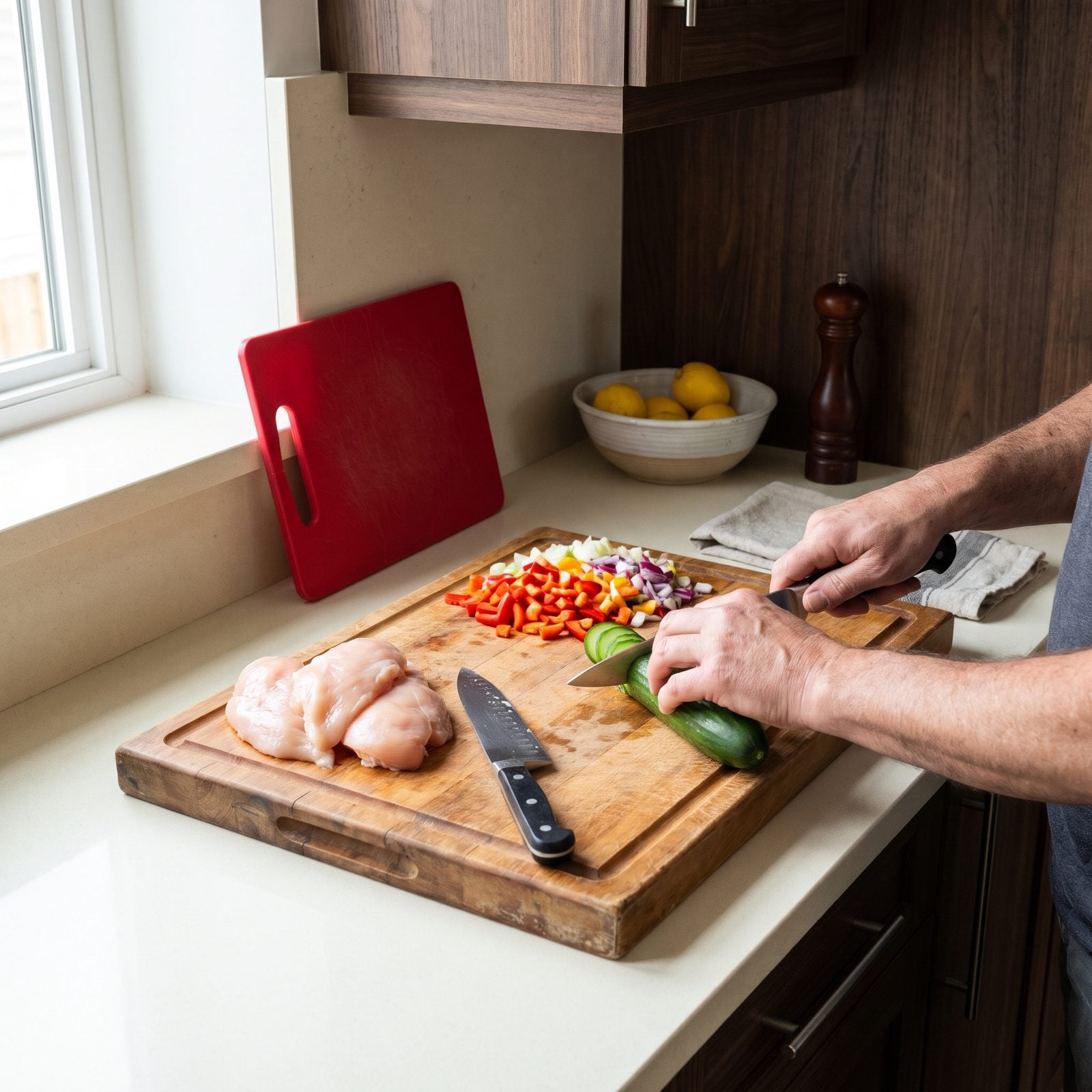
One good board, used for everything. Cube the raw chicken, give it a quick wipe, then chop the salad on the same surface. Efficient, and completely common.
A wipe doesn’t remove what raw meat leaves behind, especially down in the knife grooves cut into the wood. Whatever was on that chicken is now riding on your lettuce, and salad doesn’t get cooked to fix it. This is one of the most frequent paths to home food poisoning.
Keep two boards and make it impossible to confuse them. Color-coded ones help, with red for meat as the usual convention. Produce on one, raw protein on the other, always.
31. Using One Dish Towel for Every Kitchen Task
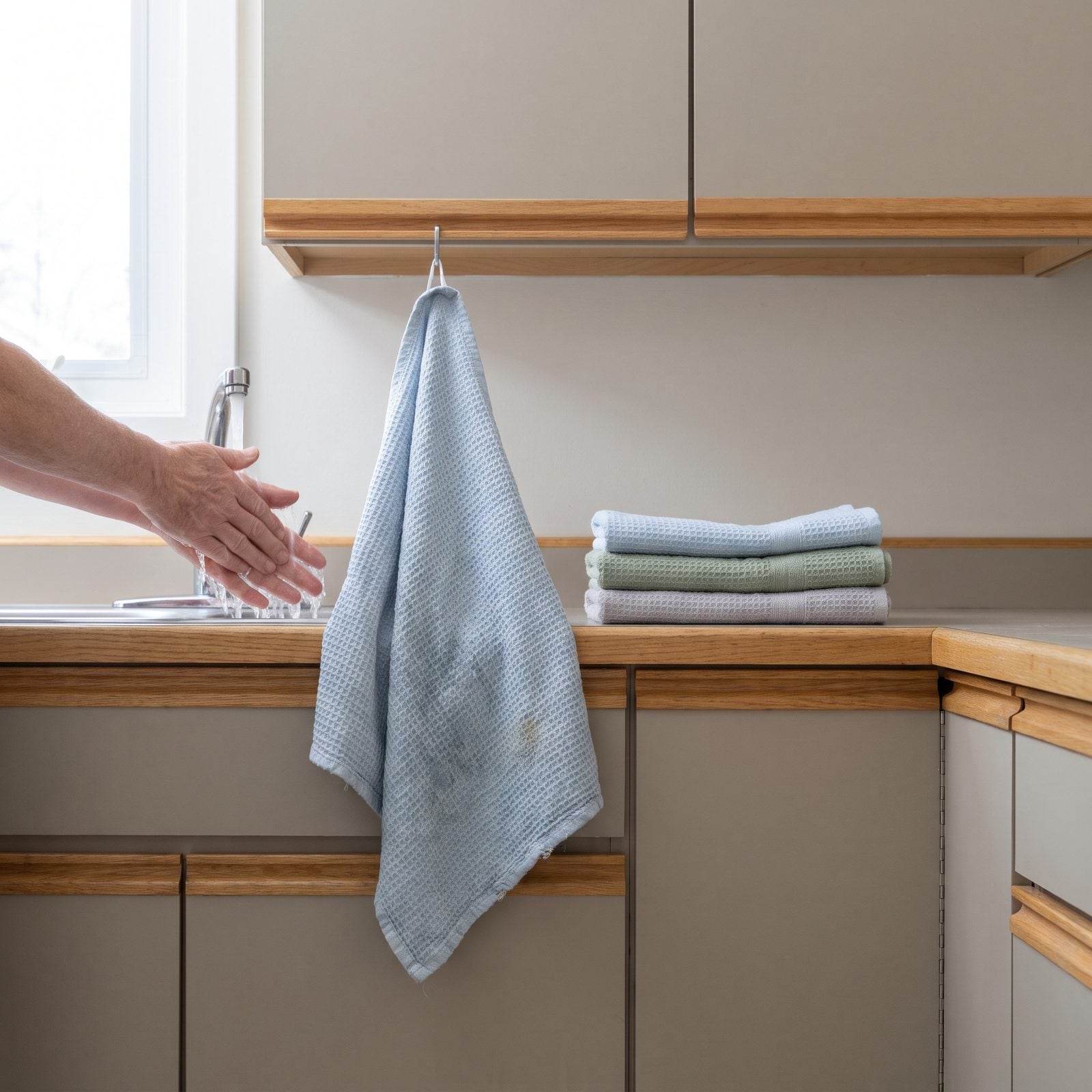
The same towel wipes the counter, dries your hands, grabs the hot pan handle, mops a spill, and dries the just-washed glasses. It’s been damp since Tuesday and it’s touched everything.
A towel that’s wiped up raw-meat juice and then dried a clean plate just moved the mess around. Damp cloth is a hotel for bacteria, and reusing one everywhere spreads whatever it collected to the next surface.
Run a few towels and give them jobs. One for hands, one for dishes, one for messes. Swap them daily. The laziest hygiene upgrade going.
30. Using the Same Sponge for Weeks
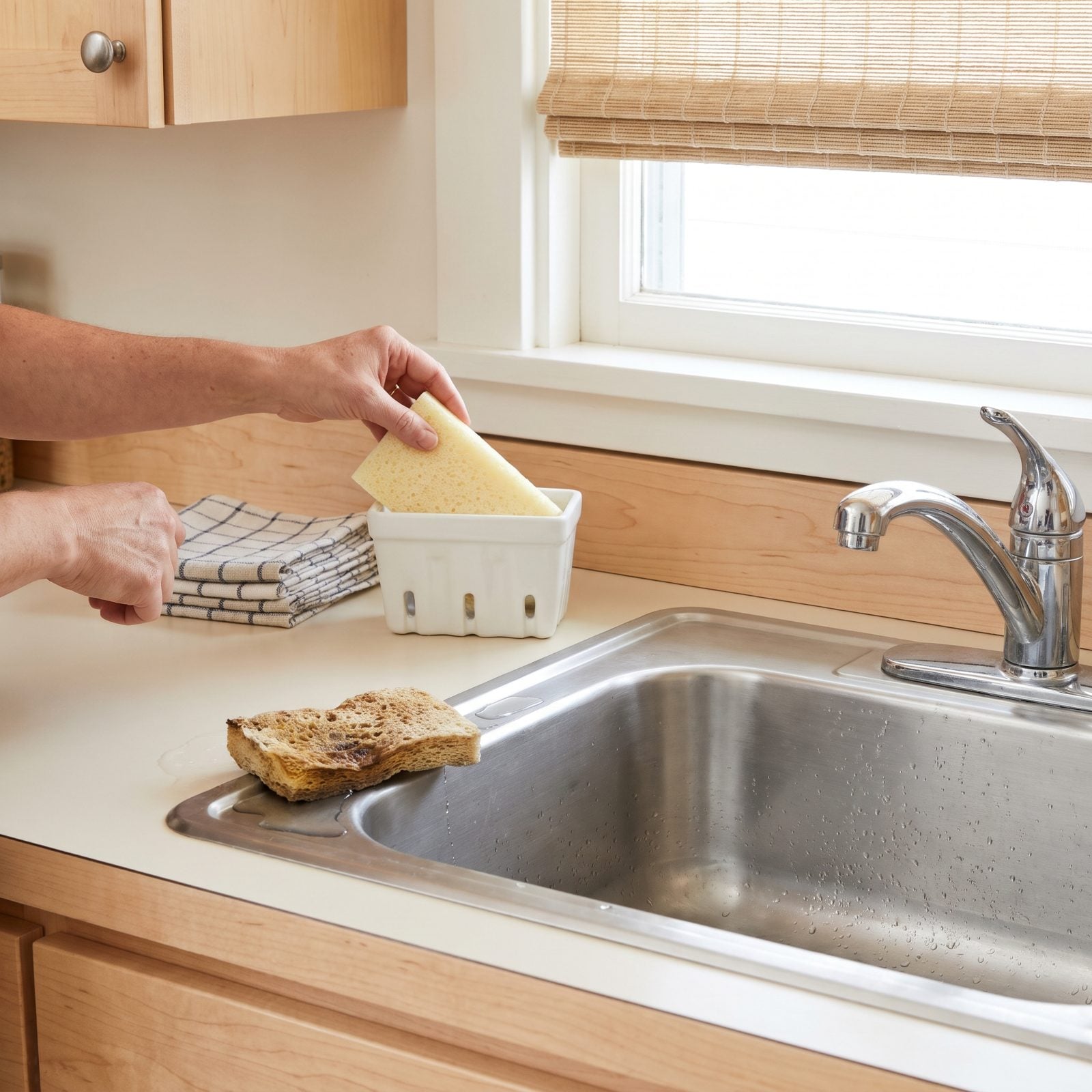
That sponge has been by the sink for a month. It smells faintly sour, you’ve noticed, but it still foams up, so it stays.
A used kitchen sponge ranks among the germiest objects in the entire house, outscoring the toilet handle in study after study. Microwaving it helps a little, but a sponge this far gone is just redistributing bacteria across your clean dishes.
Replace sponges every week or two, and let them dry fully between uses in a holder that drains. Honestly, switching to washable dish cloths you can toss in the laundry solves the whole thing.
29. Microwaving Food in Old Plastic Containers
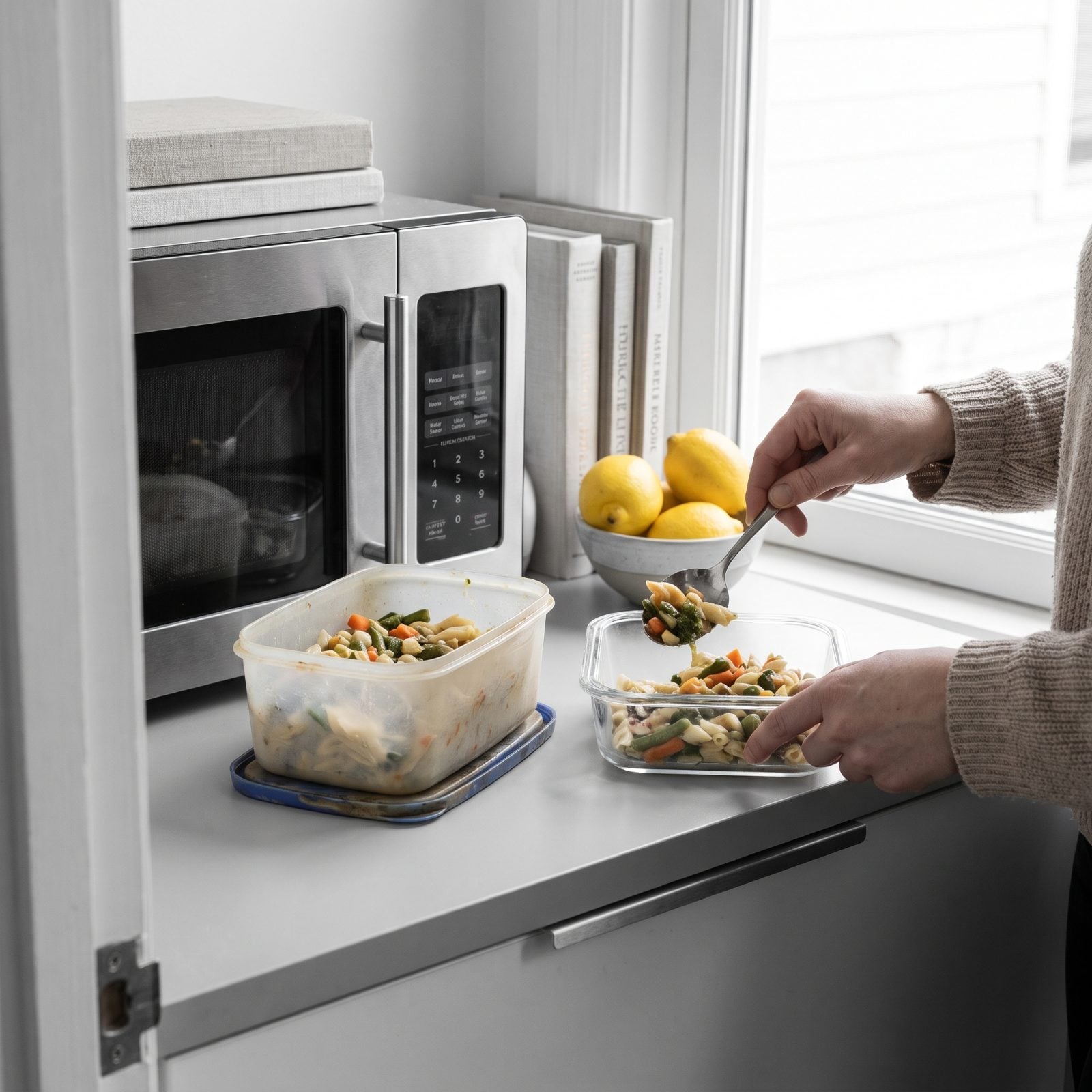
The yogurt tub became a leftovers container. The margarine tub holds soup. They’ve survived years of reheating and they’re free, so into the microwave they go.
Those tubs were never built for heat. Old, scratched, cloudy plastic can leach chemicals into hot food, and takeout containers especially were designed to hold food once, not to be cooked in weekly. The scratches make tiny reservoirs for bacteria too.
Reheat in glass or a dish stamped microwave-safe, and transfer leftovers out of the plastic takeout tub and onto a plate before heating. Takes an extra ten seconds and saves you from eating your container.
28. Keeping the Oil Bottle Right Next to the Burner
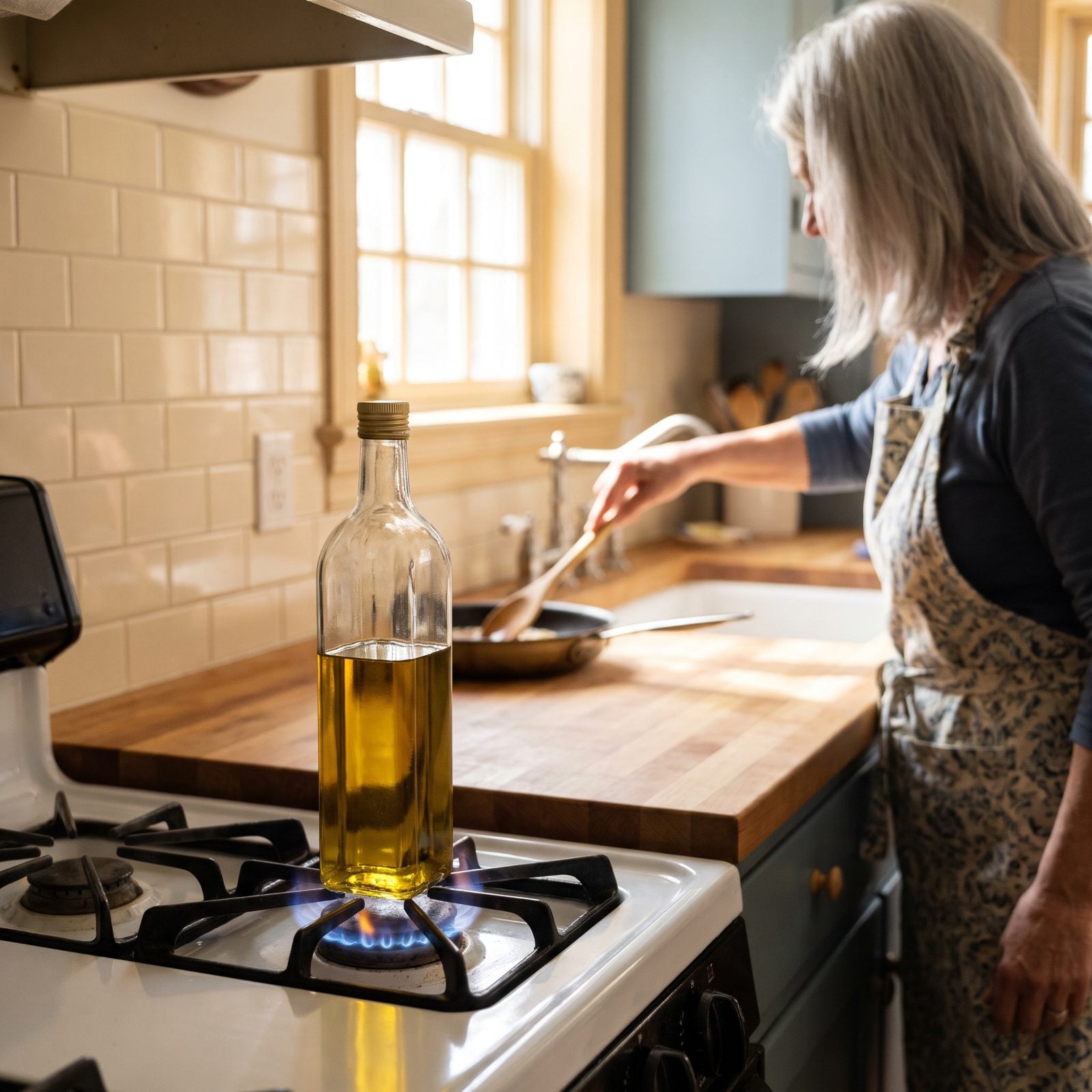
That bottle lives by the stove because it’s handy, one reach and you’re cooking. The trouble is heat. Oil near an open flame or a glowing coil warms up, and warm oil is a fire waiting for an excuse, since a splash onto a hot burner does the rest.
Move it a few steps away. A shelf, a cabinet, some cool dark pantry corner. Oil keeps longer away from heat and light anyway, so your good olive oil stops going rancid in three months. Decant a small cruet for daily cooking if you want the convenience and let the big bottle stay safe.
27. Hanging On to Expired Food “Just in Case”
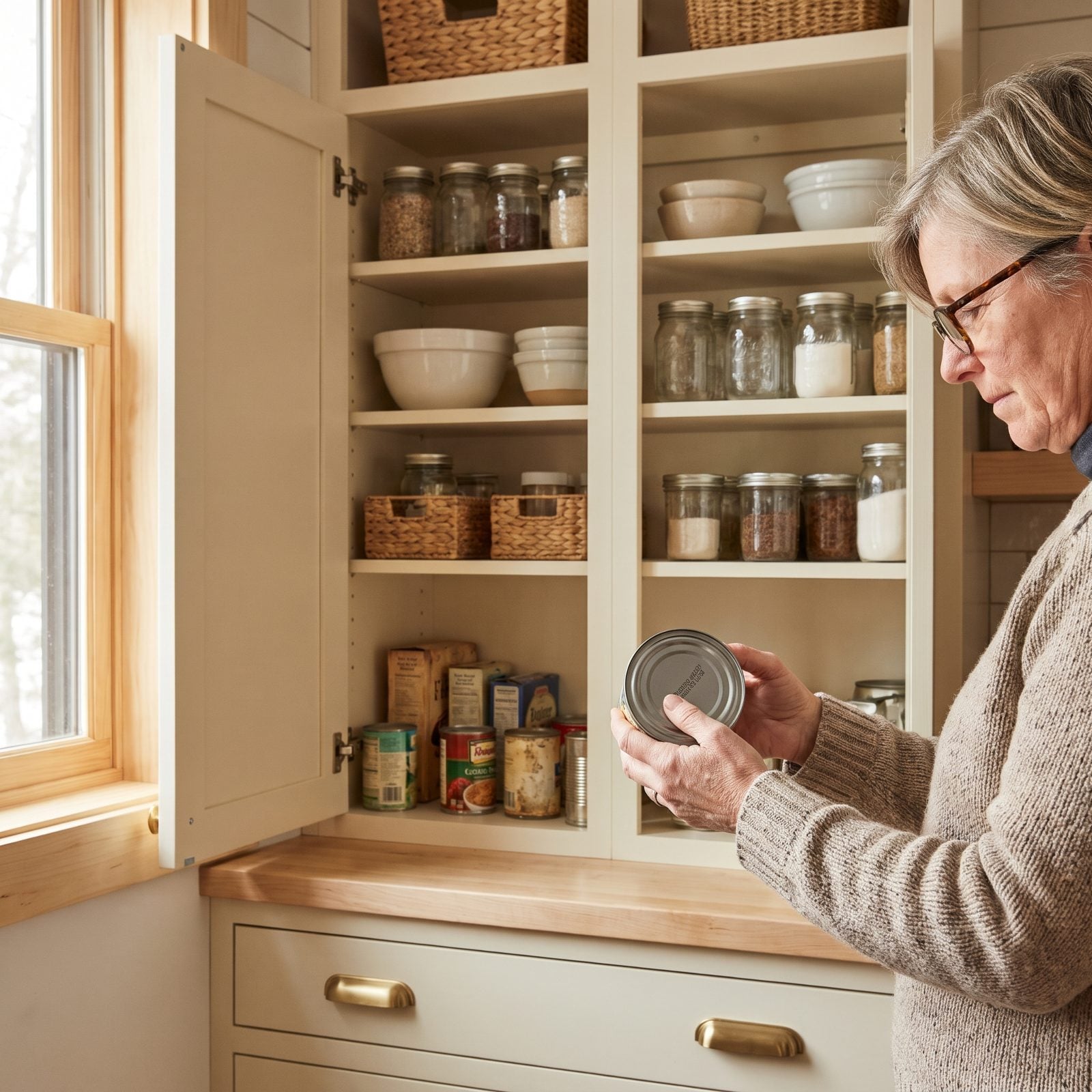
There’s a pantry logic that says food doesn’t really go bad, it just gets old. So the can from two moves ago sits in the back, saved for an emergency that never comes.
Some of it is genuinely fine past the printed date. Plenty of it isn’t, and you can’t always tell by looking. Puffed cans, off smells, oil that’s turned — warnings, not suggestions. The habit of keeping everything means the real food gets buried behind the dead stock.
Do a slow sweep twice a year and toss anything you wouldn’t actually eat tonight. Learn the difference between “best by” (quality) and “use by” (safety), because they are not the same word and never were.
26. Sliding Leftovers Into the Fridge Without a Date
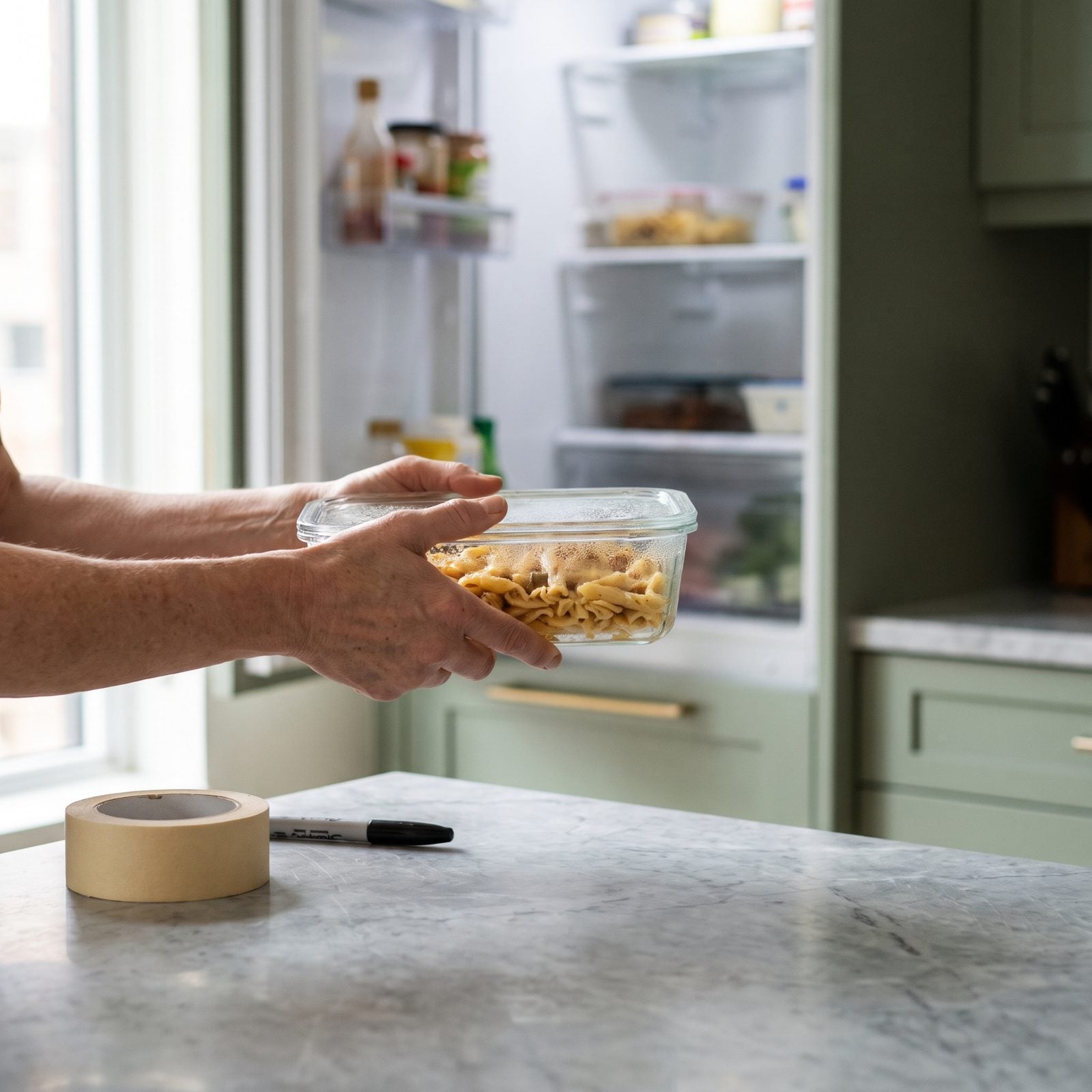
You know the container. Clear lid, something orange inside, been in there since… well, that’s the problem. Nobody dated it, so it sits until someone braves the smell test.
The guessing game is how leftovers become science experiments. Cooked food holds up a few days in the fridge, and after that you’re rolling dice with your stomach lining.
Keep a roll of masking tape and a marker in a drawer. Date everything the second it goes in. Ten seconds now saves a bad afternoon later.
25. Shaking Out Spices That Lost Their Flavor Years Ago
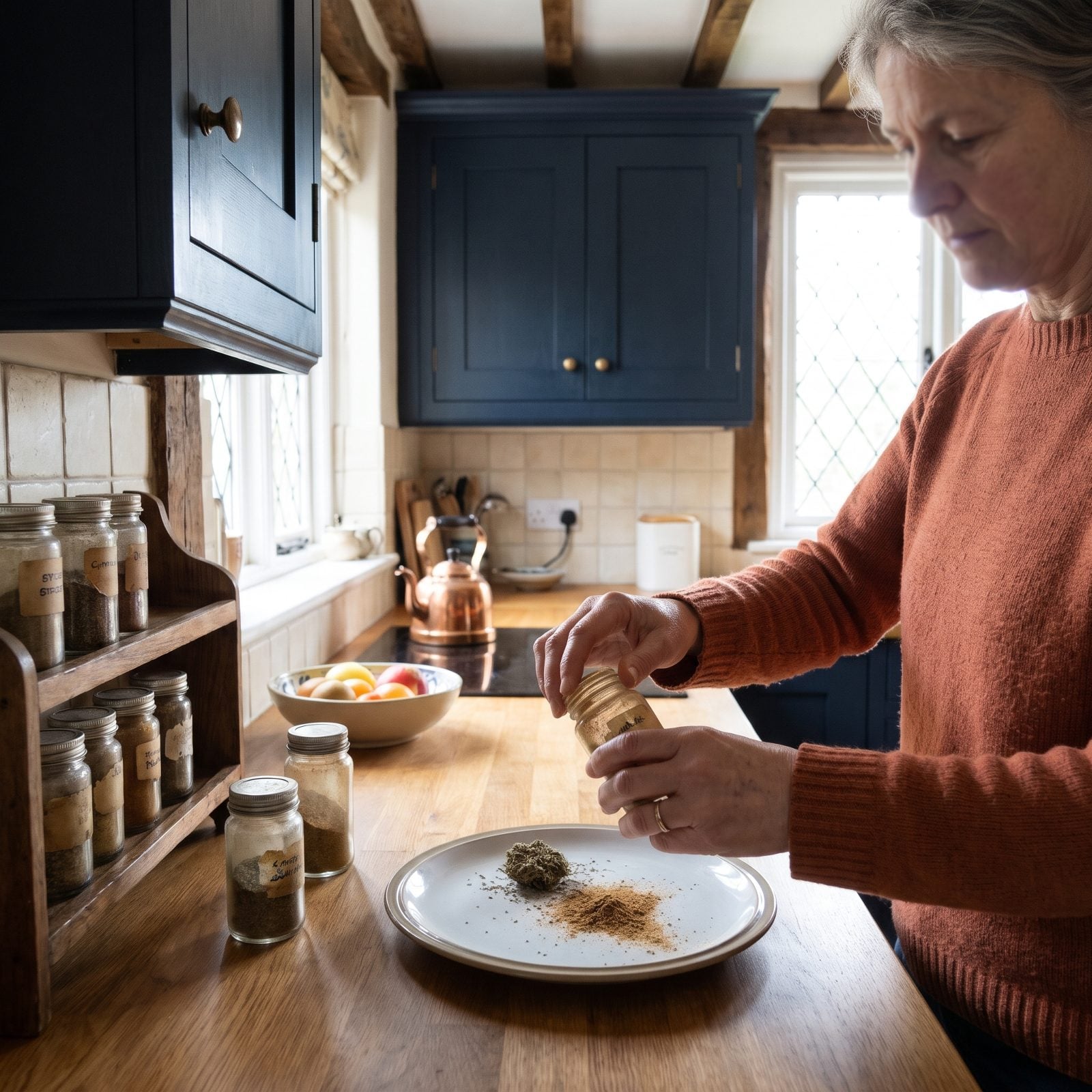
Ground spices don’t spoil in a way that hurts you. They just quietly die. That paprika from the first Bush administration still looks red, but it tastes like red dust.
Dried ground spices start fading after a year, whole spices a bit longer. You keep seasoning and seasoning and wondering why the chili’s flat. It’s flat because the spice gave up and nobody held a funeral.
Open the jar and smell it. If it smells like nothing, it tastes like nothing. Buy smaller amounts more often and date them when they come in the door. We resisted this for years out of pure thrift, then tasted food made with fresh cumin and felt genuinely robbed.
24. Jamming Too Much Into One Pan to Save a Step
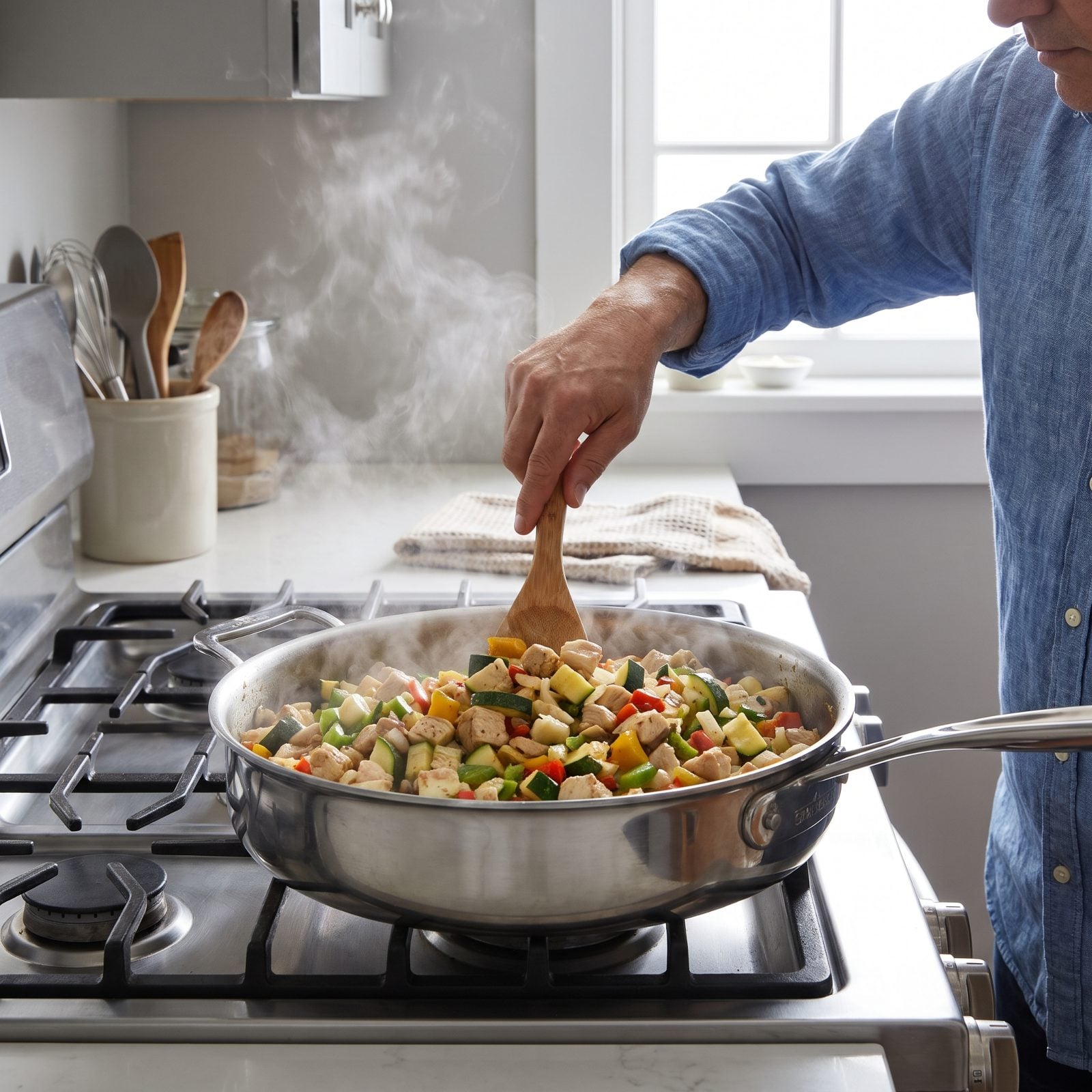
One pan, everything in it, fewer dishes. Sounds efficient. What you actually get is a pile of ingredients steaming in their own moisture, grey and soft, never browning.
Crowded food can’t lose water fast enough to sear, so the flavor you’re after never shows up. You wanted a crust. You got a boil.
Give things room. Cook in batches if you must, or reach for a bigger pan, because the empty space around each piece is where the browning happens.
23. Cranking Everything to High Because It’s Faster
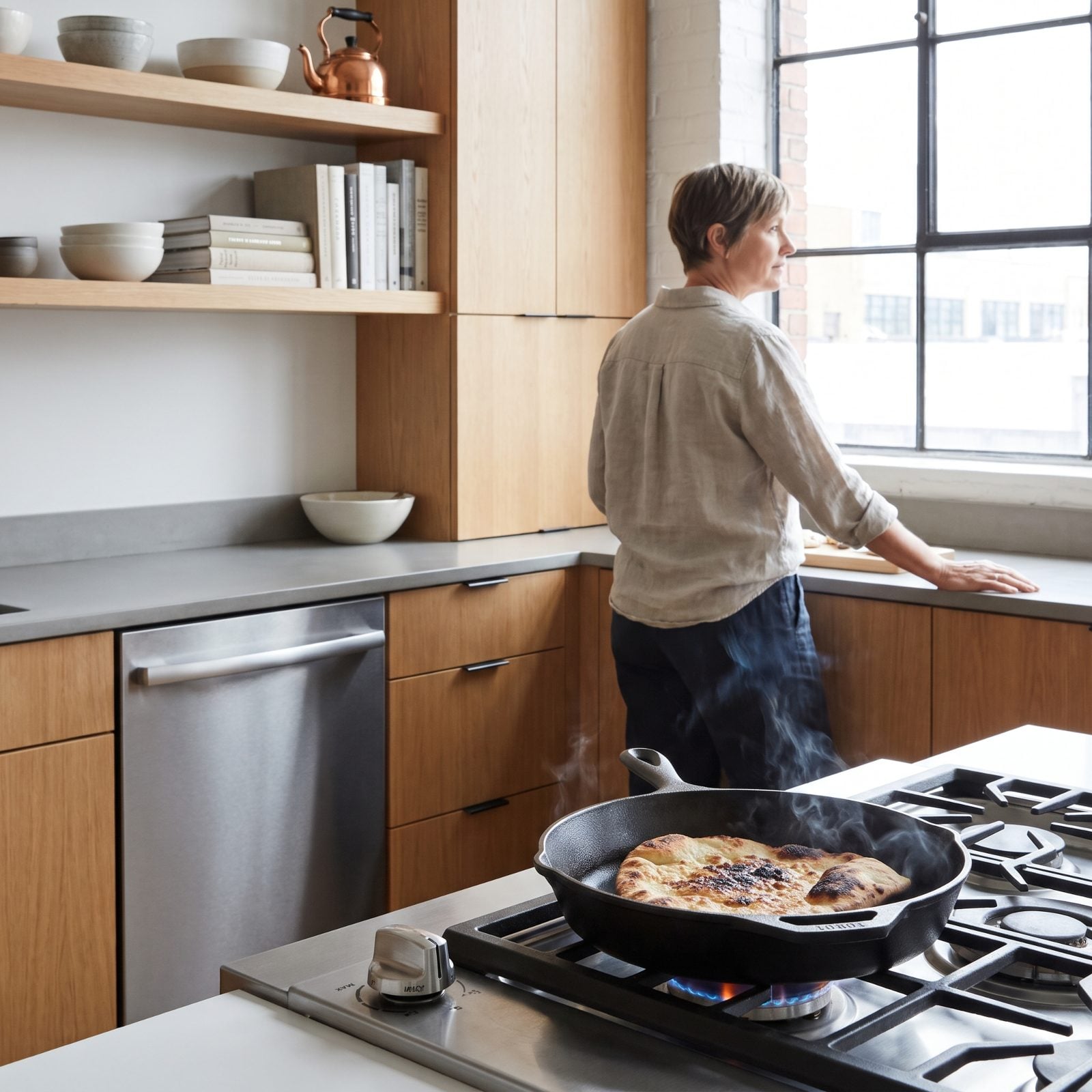
High heat feels like progress. The pan’s hot, dinner’s closer, let’s go. But most food cooks unevenly on high, scorching outside while the middle stays raw, and your nonstick coating hates every second of it.
Medium does more work than people give it credit for. Eggs set soft, onions go sweet instead of bitter, fish doesn’t seize. High heat has its place — searing a steak, boiling water — and not much else in daily cooking.
22. Dragging Metal Tools Across Your Nonstick Pans
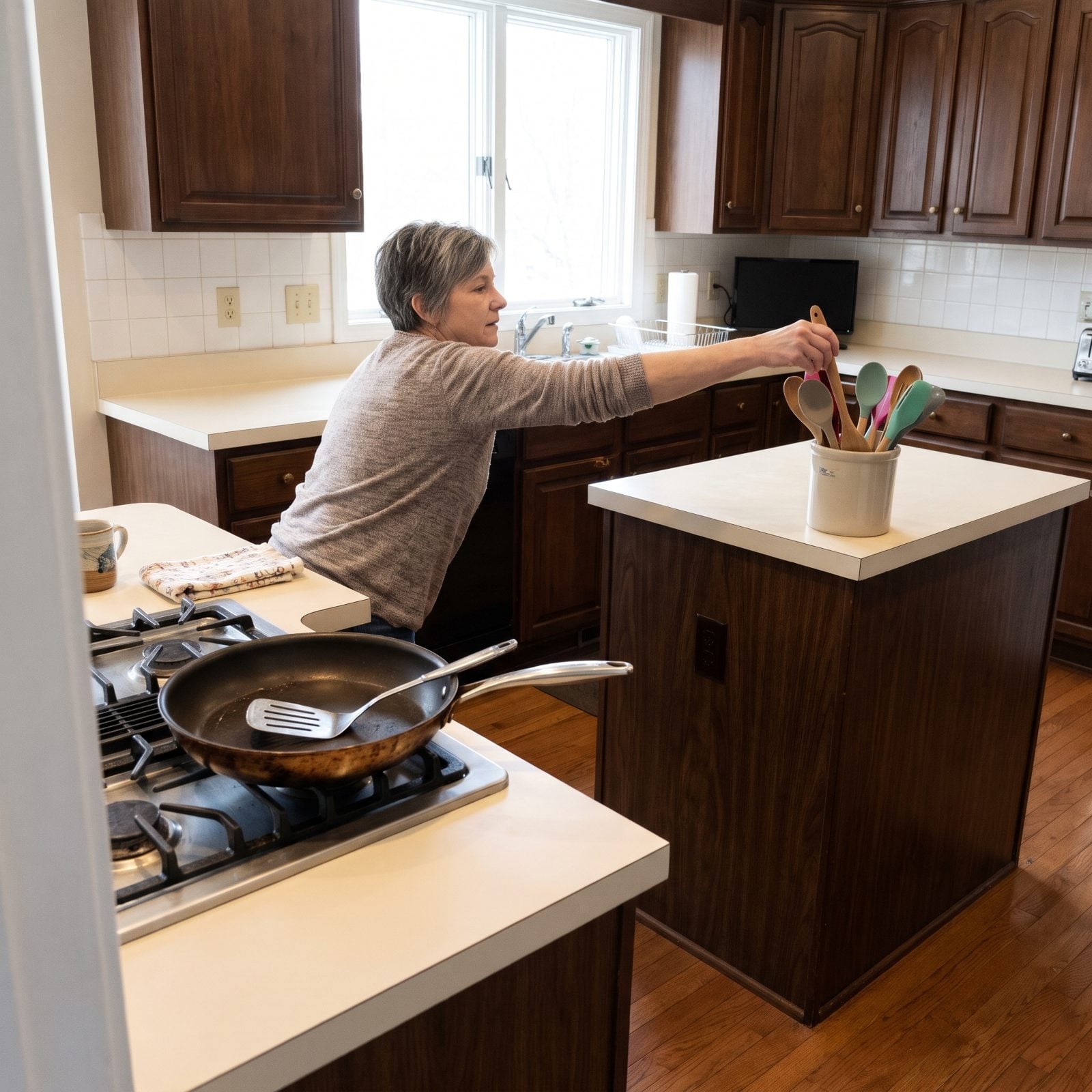
A metal spatula gets the job done and it was already in the drawer. Every scrape and flip, though, leaves tiny grooves in the coating, and once that surface is cut, the whole point of nonstick is gone.
Those scratches let food grab, and they shorten the pan’s life by years. Switch to wood, silicone, or nylon. Keep the metal tongs for your stainless and cast iron, where they belong.
21. Preheating an Empty Nonstick Pan Until It’s Scorching
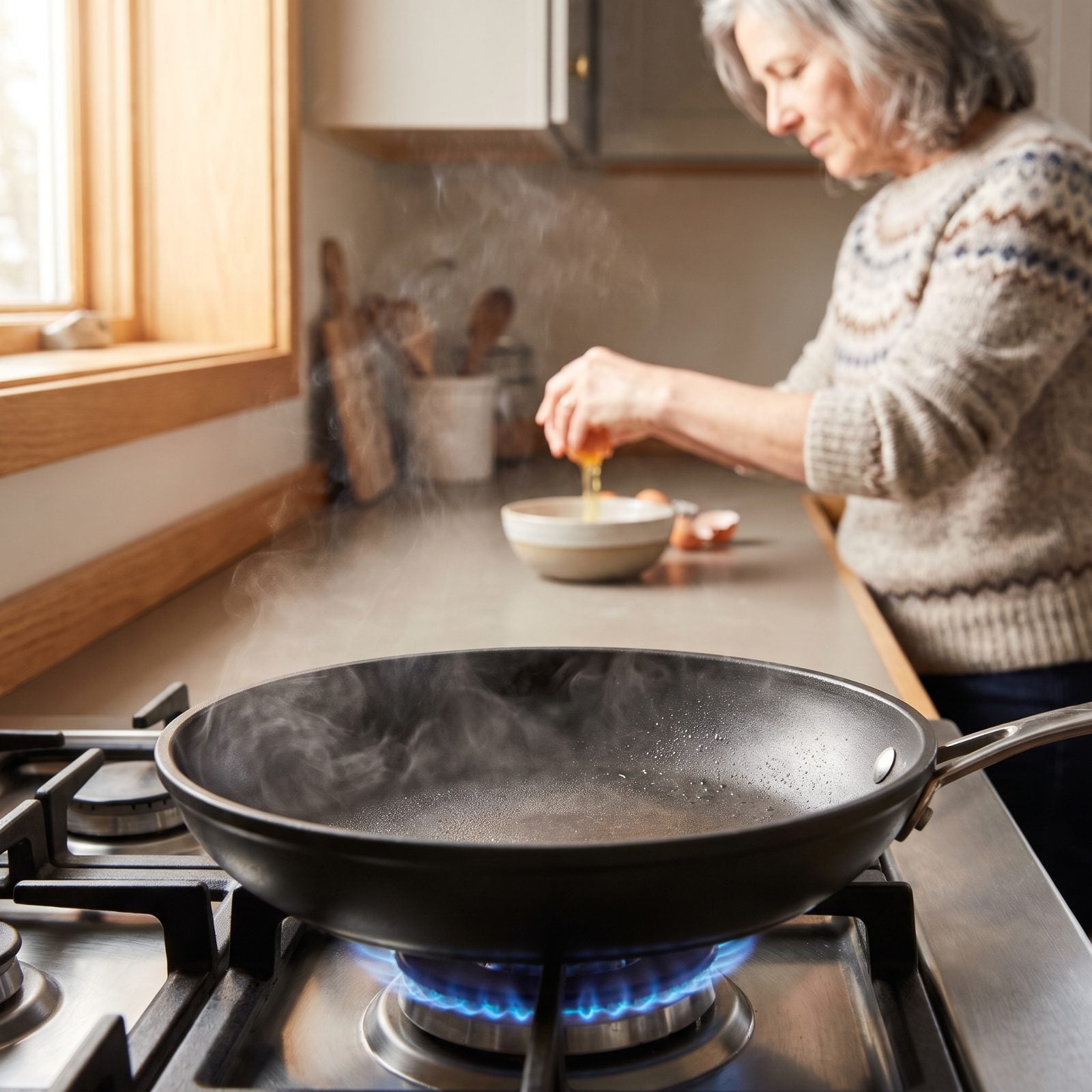
Cast iron rewards a long empty preheat. Nonstick does the opposite. An empty nonstick pan climbs to damaging temperatures fast, and that’s where the coating starts to break down and release fumes.
The fix costs nothing. Add your oil or butter first, then turn on the heat, and let them come up together. The fat tells you when the pan’s ready without any guessing, and the coating stays intact for the long haul.
20. Letting the Wooden Cutting Board Soak in the Sink
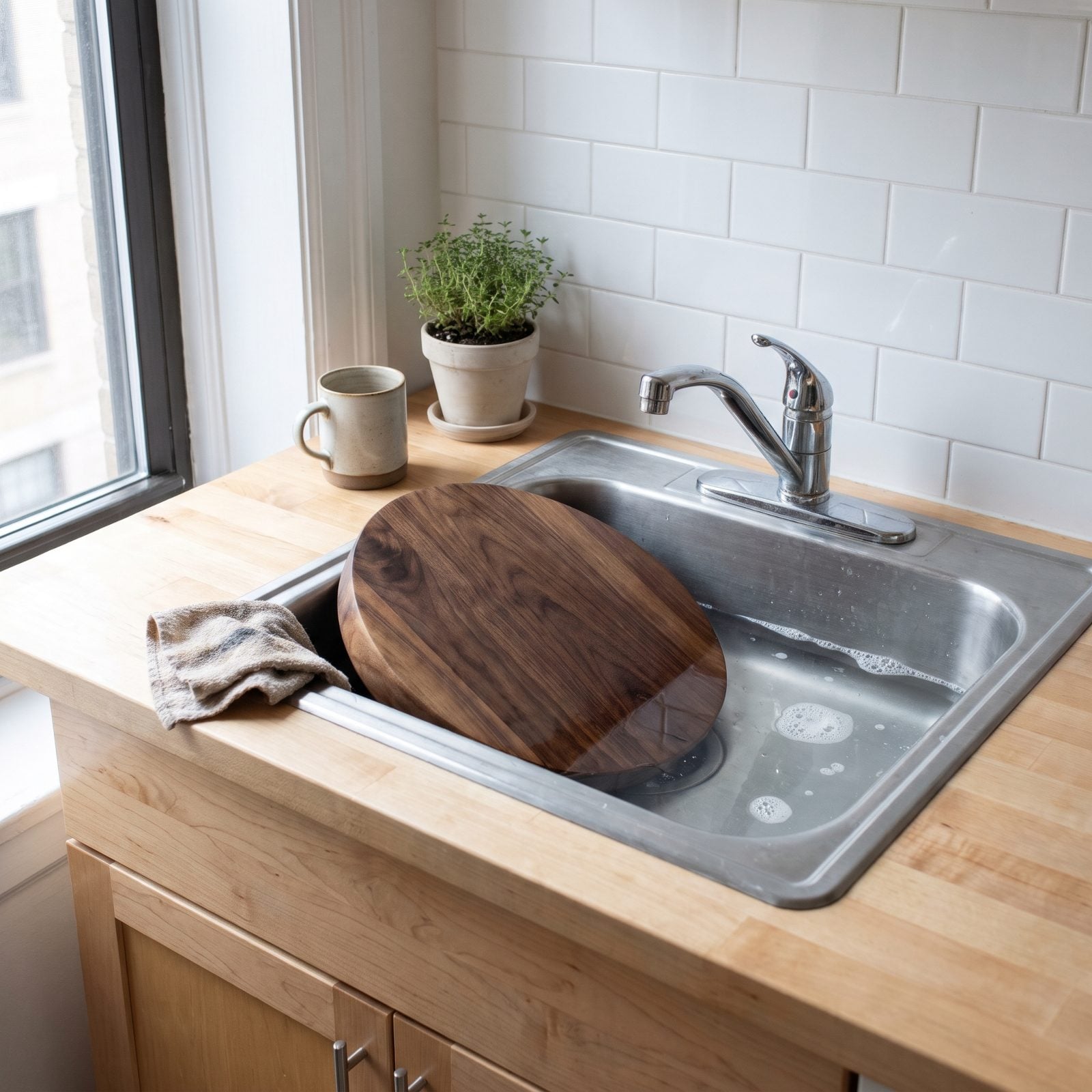
A good wooden board left in a sink of water drinks it up like a sponge. The wood swells, the glue joints loosen, and sooner or later it cracks or warps into a seesaw.
Soaking also invites the bacteria you’re trying to wash off to settle deeper into the grain. Wash it quick with hot soapy water, rinse, and stand it on edge to dry both sides. Oil it now and then with food-safe mineral oil. Treated right, a wooden board outlasts most of your plastic ones.
19. Setting Hot Glass Bakeware Down on a Cold Counter
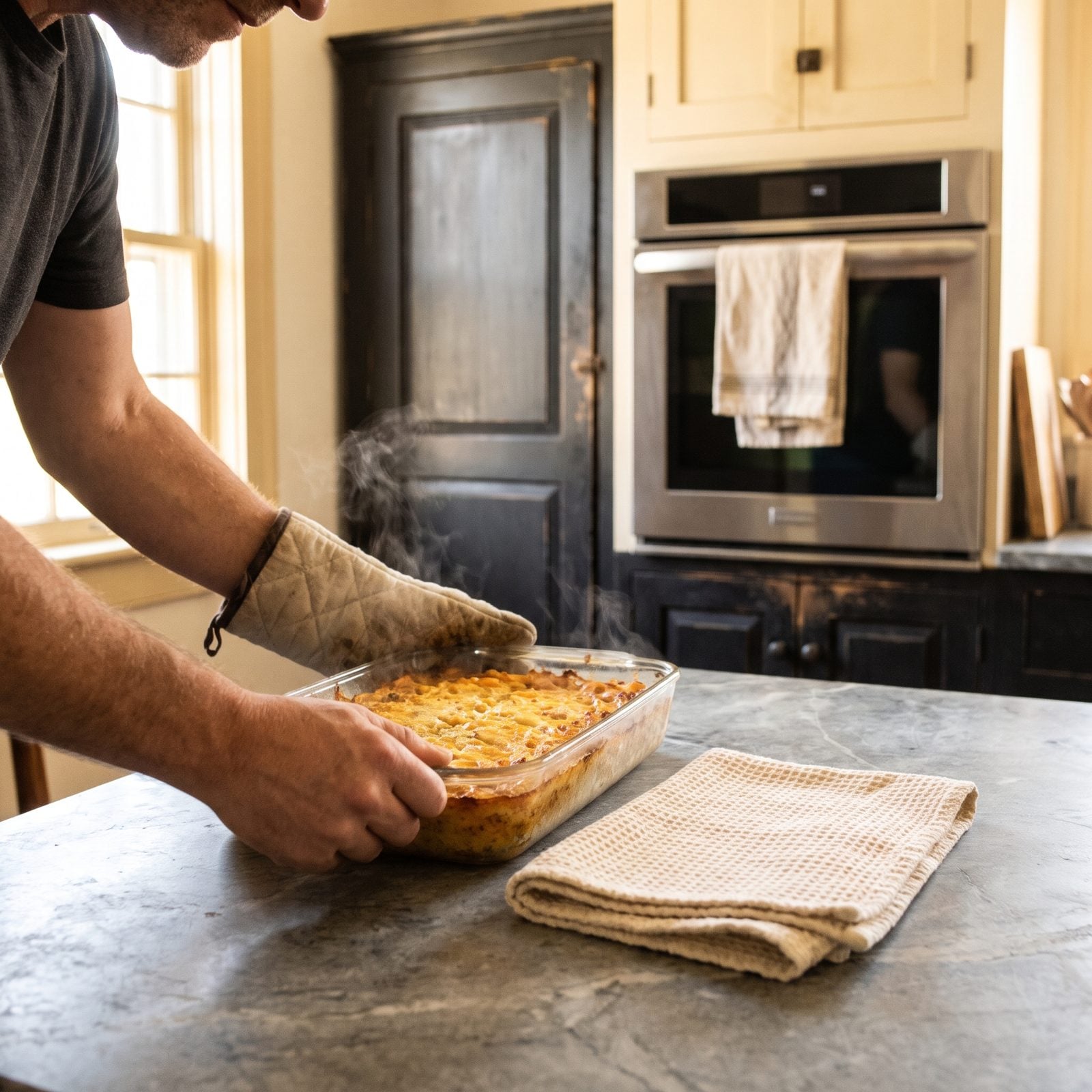
You pull a bubbling casserole from the oven and set it straight onto cold stone or a wet counter. The glass goes from blazing to chilled in one spot, and that sudden shift can shatter it right across your dinner.
It’s called thermal shock, and glass bakeware is prone to it. Keep a trivet, a dry folded towel, or a wooden board ready before the timer goes off. Set the hot dish on that — never bare cold surfaces, never a wet one. And skip moving glass straight from freezer to a hot oven for the same reason.
18. Using the Garbage Disposal as a Trash Can
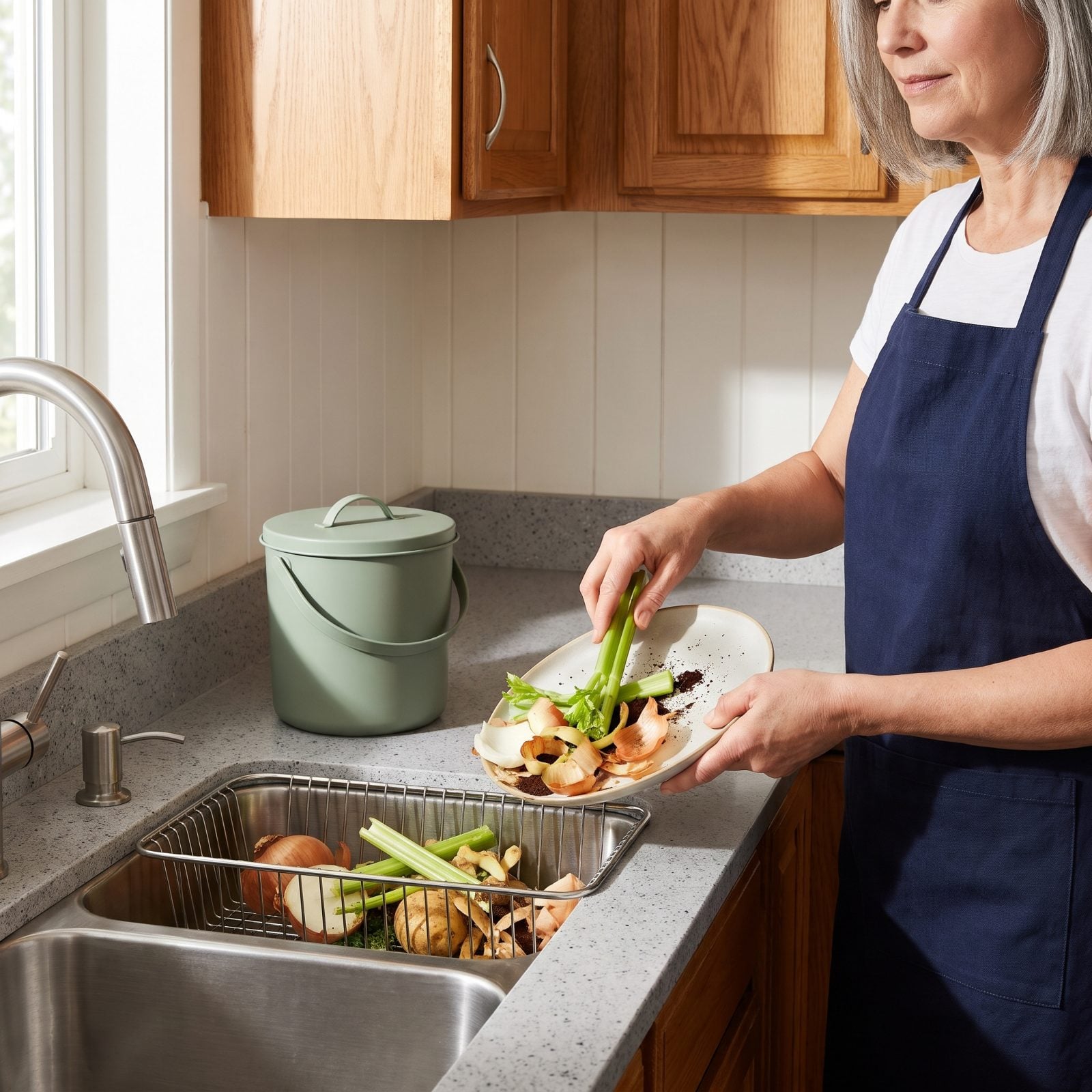
The disposal is not a woodchipper, though it gets treated like one. Coffee grounds, onion skins, celery strings, the fibrous end of everything goes down the hole, and the grinding noise sounds like progress.
It isn’t. Those are the exact things that build up in the trap and wrap the blades, and the plumber who fishes it all out charges by the hour while starchy peels turn to paste and grease cools and sets like candle wax in the pipe.
Keep a lidded pail on the counter for scraps and peels, and let the disposal handle only the small bits that rinse off a plate. Your sink will thank you, and so will your wallet.
17. Lining the Oven Floor With Aluminum Foil
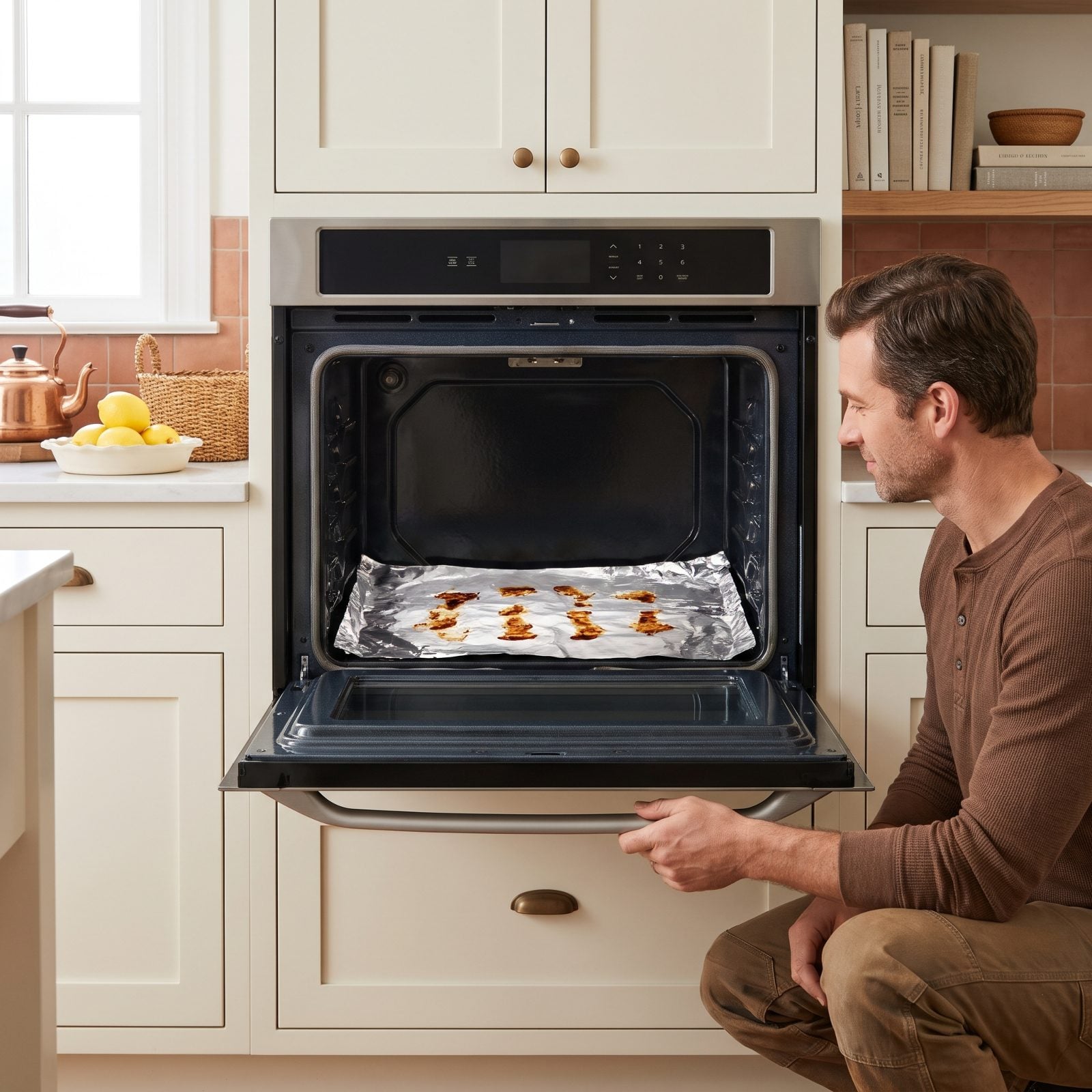
It feels thrifty. Lay a sheet of foil across the oven floor to catch drips, peel it out later, done. Our grandmothers did it and the kitchen survived.
Here’s the problem. The foil traps heat against the oven bottom, warps the temperature readings so your cake bakes unevenly, and on a gas oven it can block the vents entirely. And it can melt and fuse right onto the enamel, a mess that never comes off.
Slide a sheet pan onto the rack below whatever is bubbling over. Catches every drip, washes clean in the sink, and keeps the oven floor exactly where the manufacturer wanted it.
16. Mixing Household Cleaners for Extra Strength
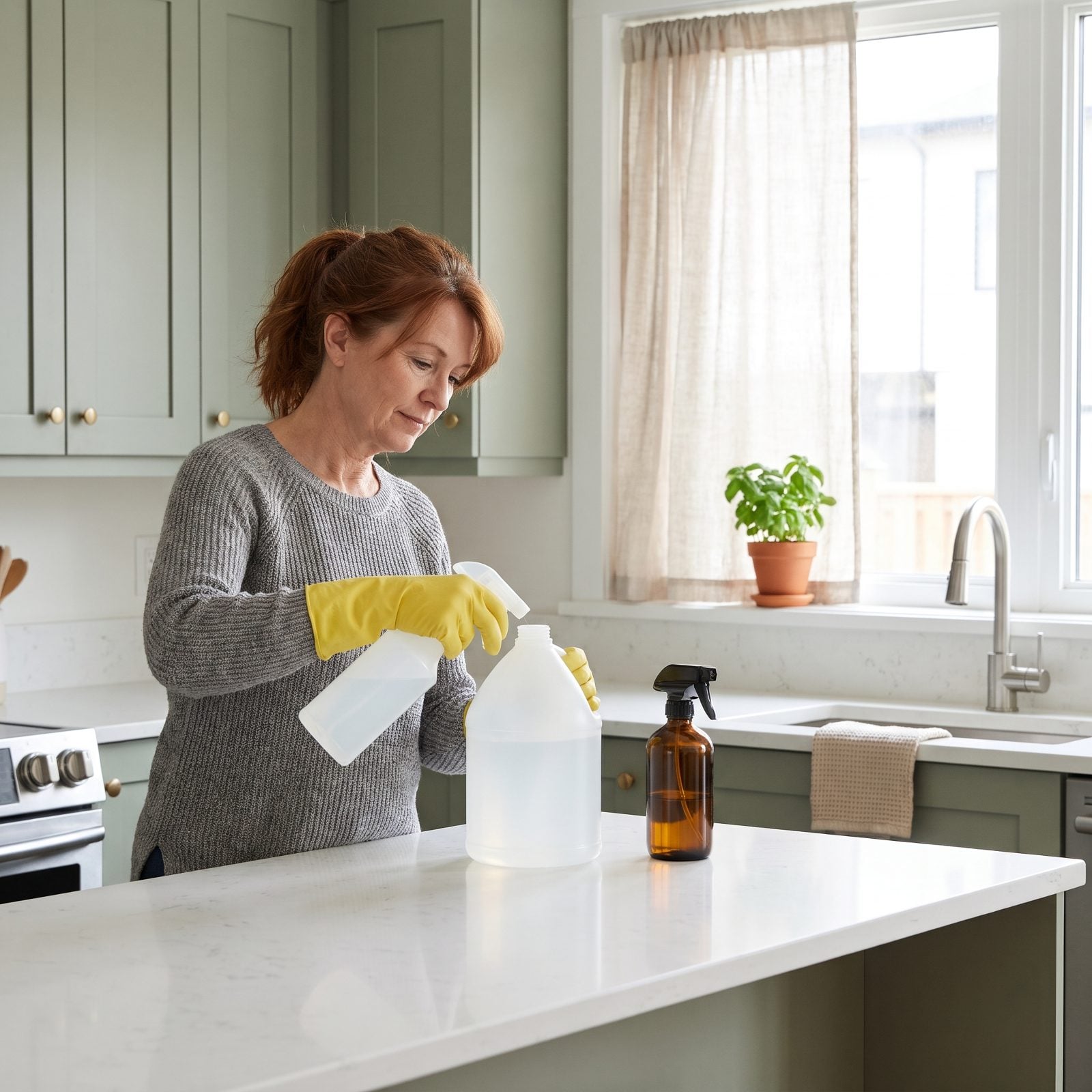
The logic sounds airtight. One cleaner cuts grease, another kills germs, so together they must do both and better. So people combine bleach and ammonia, bleach and vinegar, the old reliables, chasing more power.
That combination makes chloramine gas or chlorine gas. In a closed kitchen it can land you in the emergency room, and it has killed people cleaning a bathroom with the door shut. No scrubbing job is worth that.
One product, one surface, one task. Rinse and let the surface dry before you reach for a different cleaner. If a job is tough, give a single cleaner a few minutes to sit and do the work for you.
15. Starting Dinner With an Already Cluttered Counter
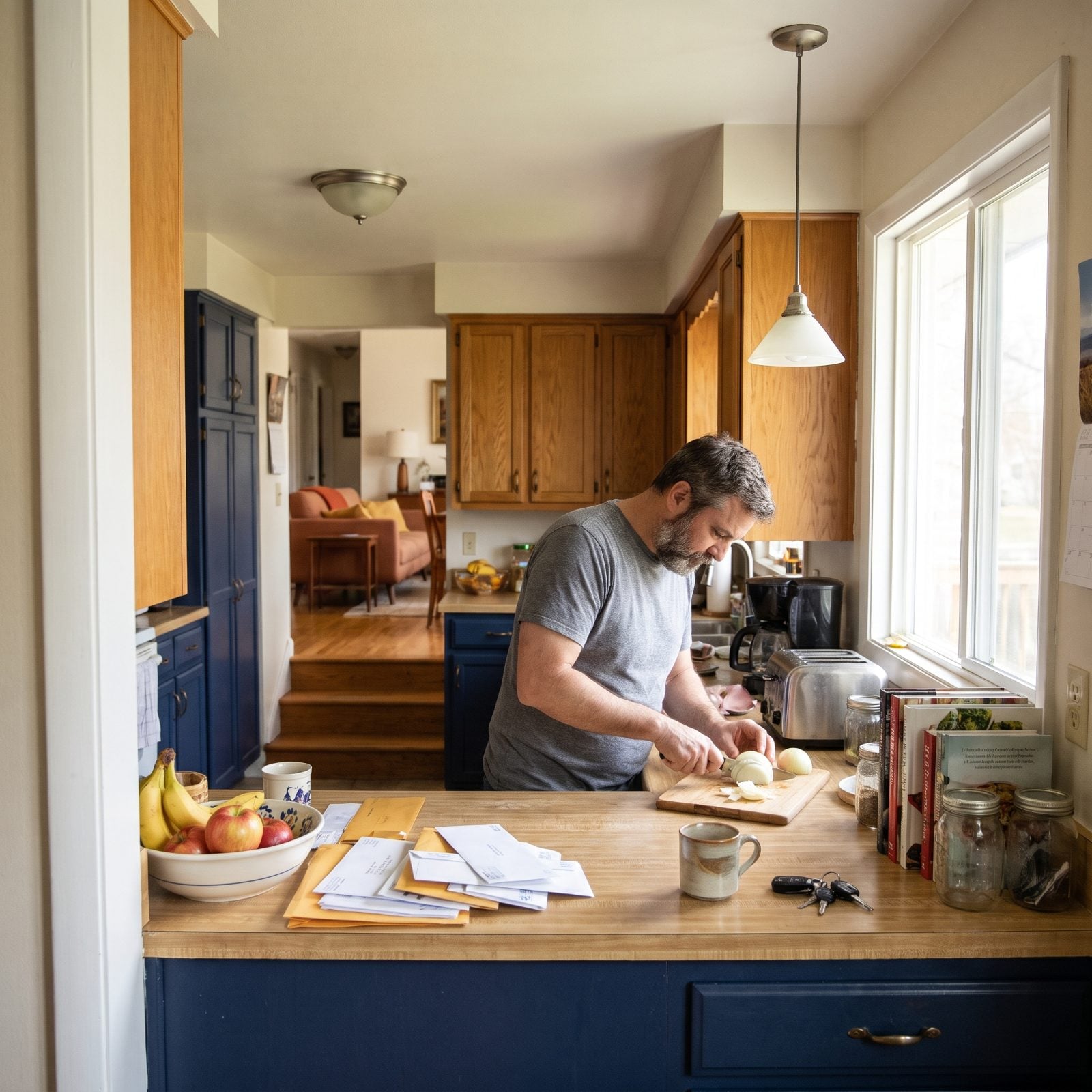
You clear a patch about the size of a cutting board between the mail pile and the fruit bowl and start cooking anyway. Everyone does it. The counter fills with life, and dinner gets squeezed into whatever’s left over.
Crowded space is slow space. You’re reaching over clutter with a hot pan, nudging the knife past the coffee mug, losing the garlic behind the toaster. More spills, more near-misses, more time.
Clear the whole run before you turn on a burner. Two minutes of tidying buys you a stretch of open counter and a dinner that goes faster and safer. Chefs call it mise en place. You can just call it clearing the decks.
14. Working Under Dim Kitchen Lighting
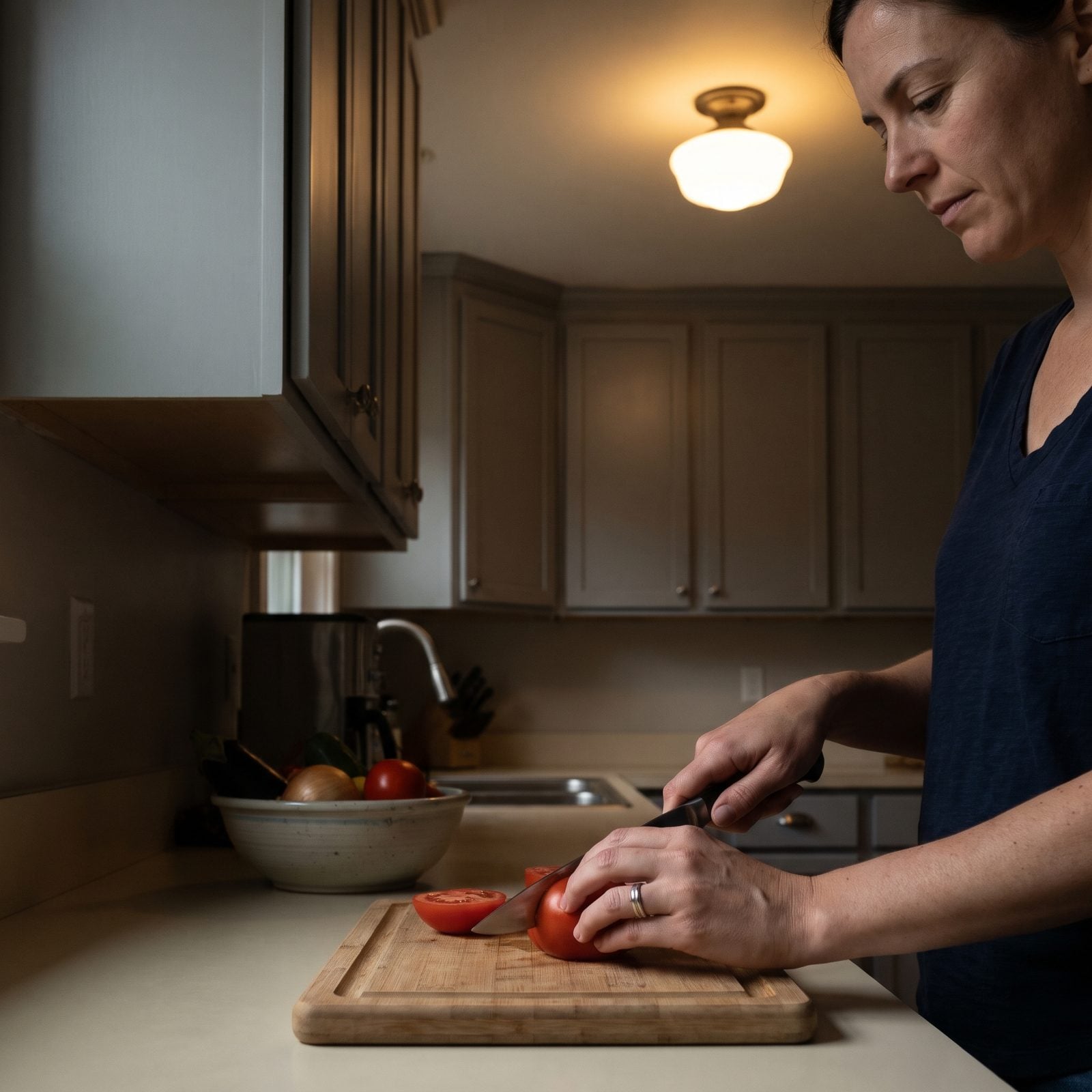
One ceiling fixture in the middle of the room, and the cutting board catches its glow while the counter under the upper cabinets fades into shadow. Eyes change after fifty. That single bulb stopped being enough a while ago.
Dim light near a knife is how fingers get nicked. It’s also how you miss the mold on the bread and the raw spot in the chicken.
Add light where the work happens. Stick-on, battery-powered LED strips under the upper cabinets go up in minutes with no electrician and throw clean light right onto the counter. Cheapest upgrade in the kitchen, and the one you notice every single day.
13. Using Loose Rugs Near the Stove and Sink
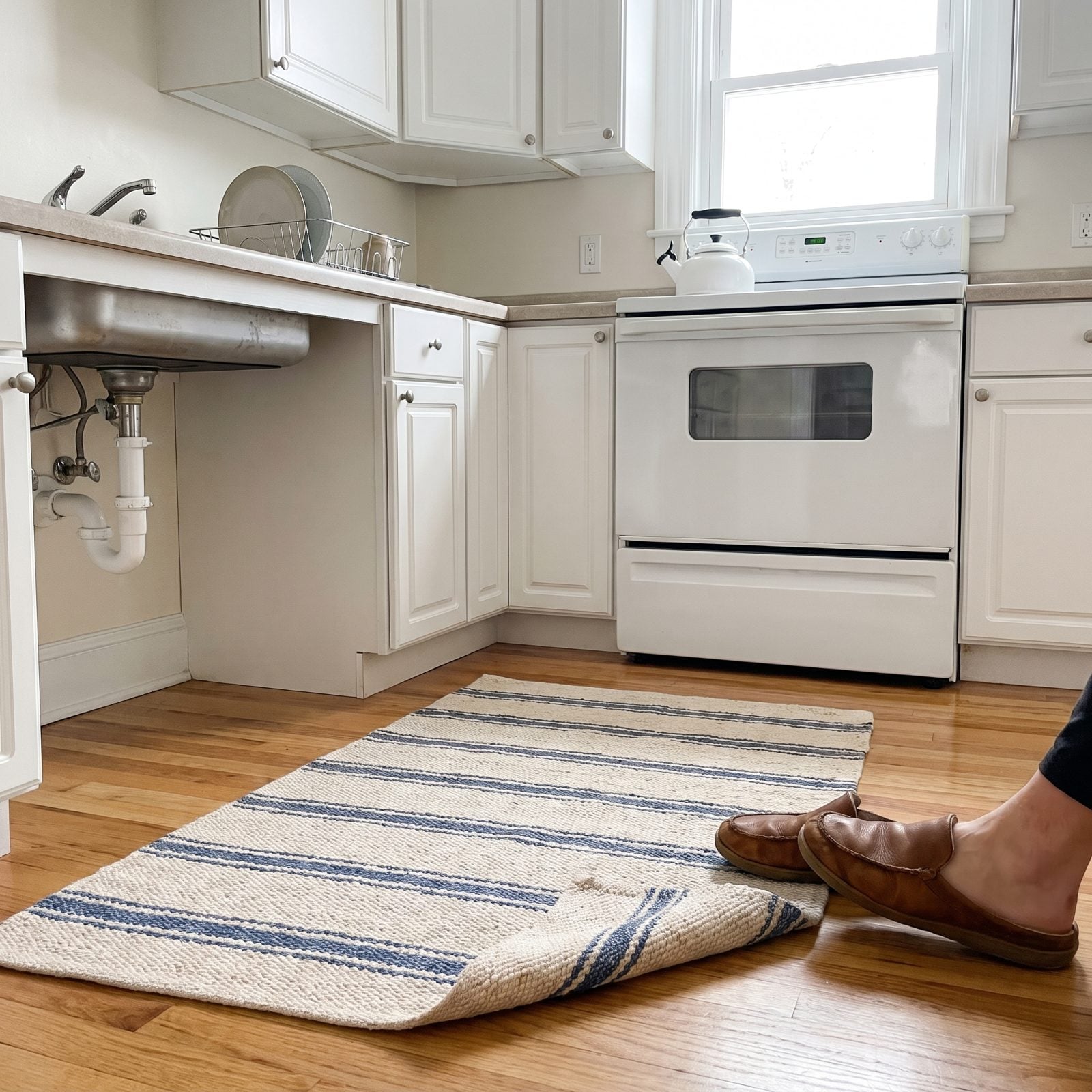
The little rug in front of the sink feels cozy and catches drips. Nobody thinks about it until a wet sole hits the edge and it slides out from under you.
That’s a fall waiting on a hard floor, often near a hot stove, and a fall at this stage of life is the thing that changes everything else.
Want cushion and drip-catching? Use a rug with a solid rubber backing that grips the floor, or add a non-slip pad underneath a rug you already love. Flat, gripped, and no curled corners. That’s the whole rule.
12. Reaching for Items From an Unsteady Chair
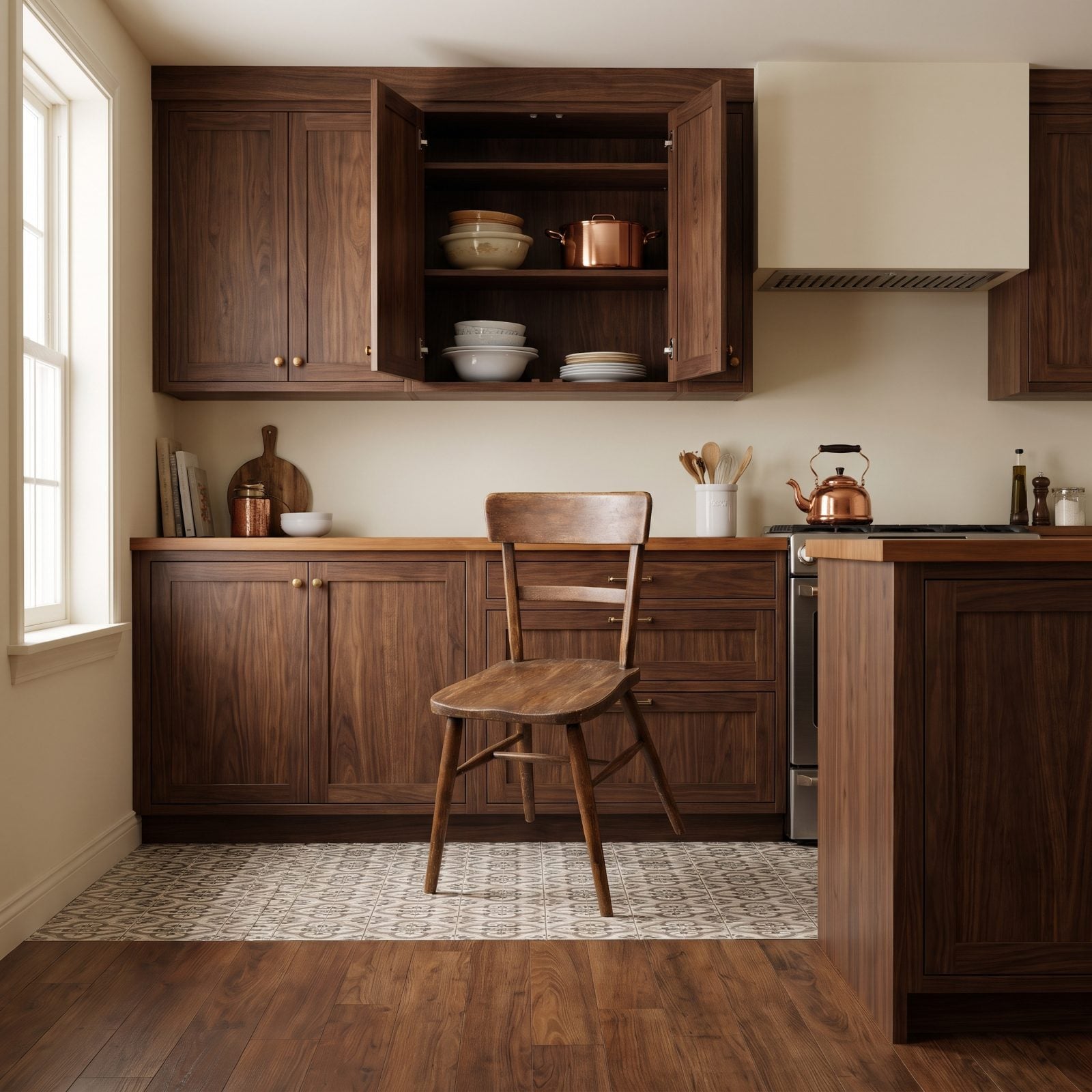
The platter lives on the top shelf and the chair is right there, so up you go. One foot on the seat, a hand on the cabinet door, a stretch. We’ve all done it and told ourselves it was fine.
A dining chair tips. The seat is slick, the back pulls when you lean, and the floor below is tile. Emergency rooms see this exact fall constantly, and the people it hurts most are the ones who felt perfectly steady right up until they weren’t.
Keep a two-step folding stool with a handrail in the kitchen. It locks open, grips the floor, and gives you something to hold. Costs little, folds flat against the pantry wall, and ends the chair habit for good.
11. Keeping Frequently Used Tools in Hard-to-Reach Cabinets
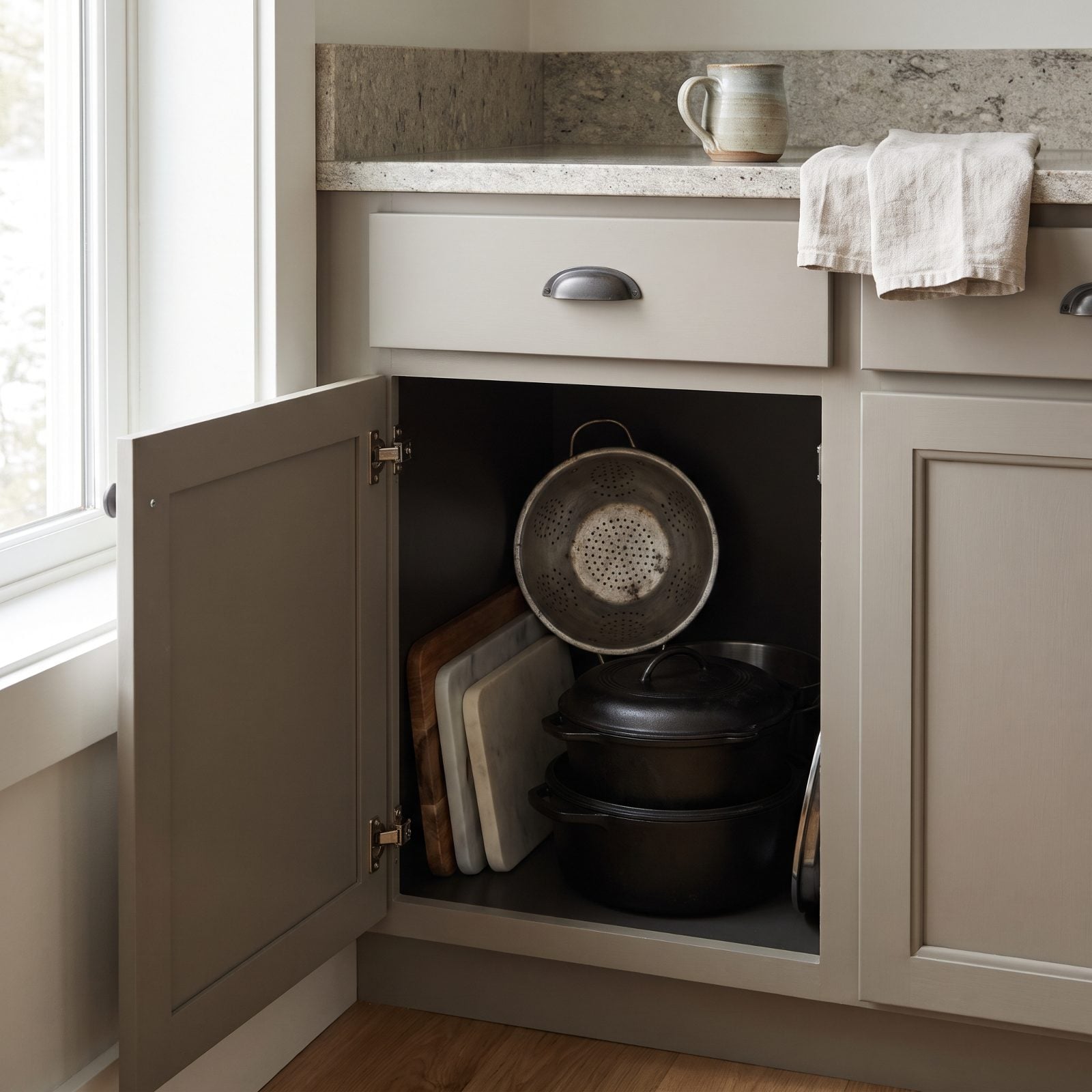
The things you use daily end up in the worst spots. The colander lives at the back of a deep base cabinet behind three pots, the good knife sits in a drawer across the room, and you reorganized once, years ago, and never questioned it since.
Every reach is a little squat, a little stretch, a little twinge in the knee or the back. Done five times a day, it adds up.
Put the daily tools where your hands already go. Pull-out shelves turn a cave into a drawer that comes to you. A magnetic strip or a crock on the counter keeps knives and spoons in reach. Rearrange around your real habits, not around how the boxes happened to stack.
10. Carrying an Overfilled Pot of Boiling Water to the Sink
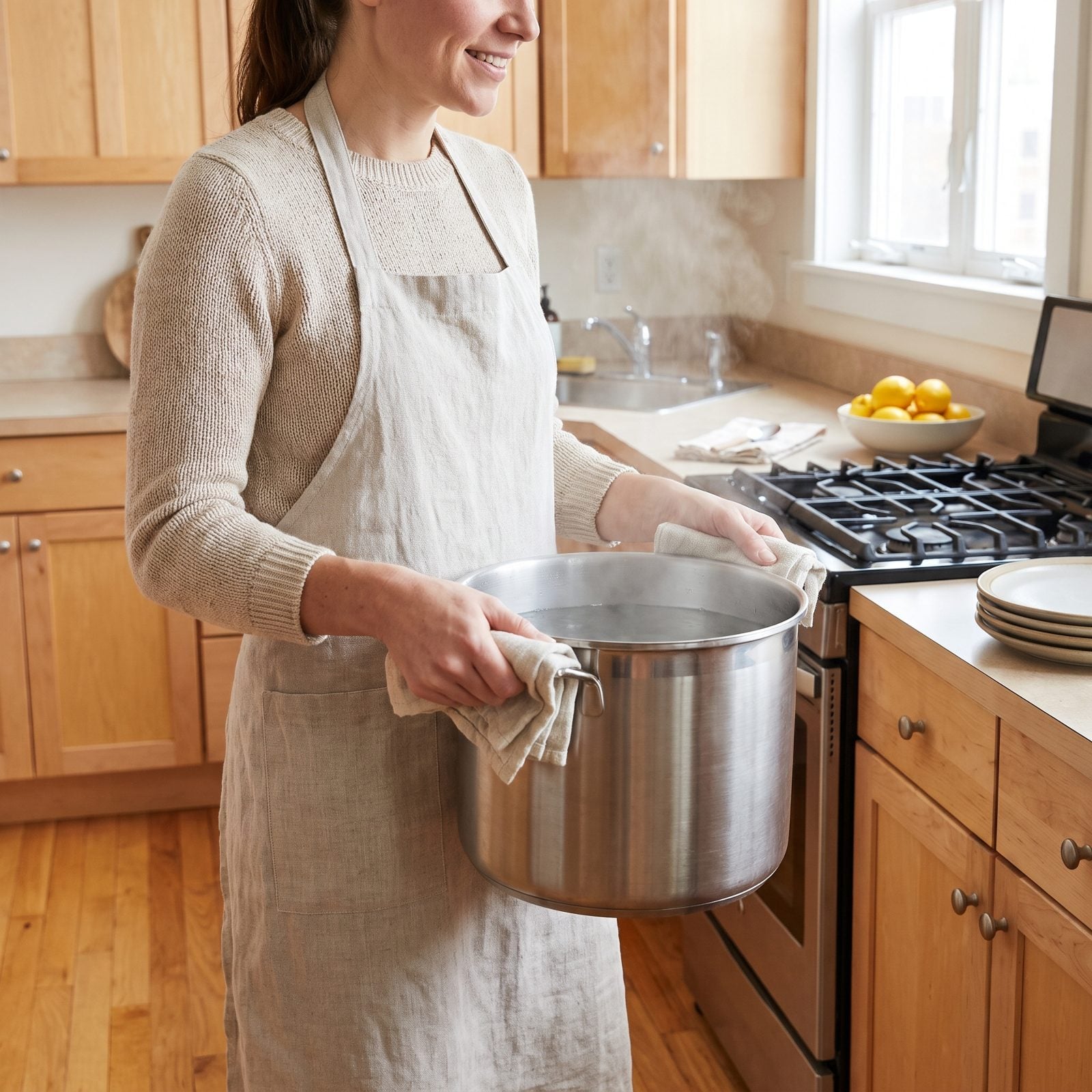
Pasta’s done, so you heft the whole heavy pot of boiling water across the kitchen, steam in your face, water sloshing at the rim, and pour it into the sink. It’s the single most common way people scald themselves at home.
A splash, a slip, a wet handle, and boiling water goes onto your feet or your forearm. Those burns are serious and they heal slowly.
Skip the trip. Drop a steamer basket or a pasta insert into the pot, and lift just the food out while the water stays put on the stove to cool. No carrying, no sloshing, no scald.
9. Lifting Heavy Dutch Ovens With One Hand
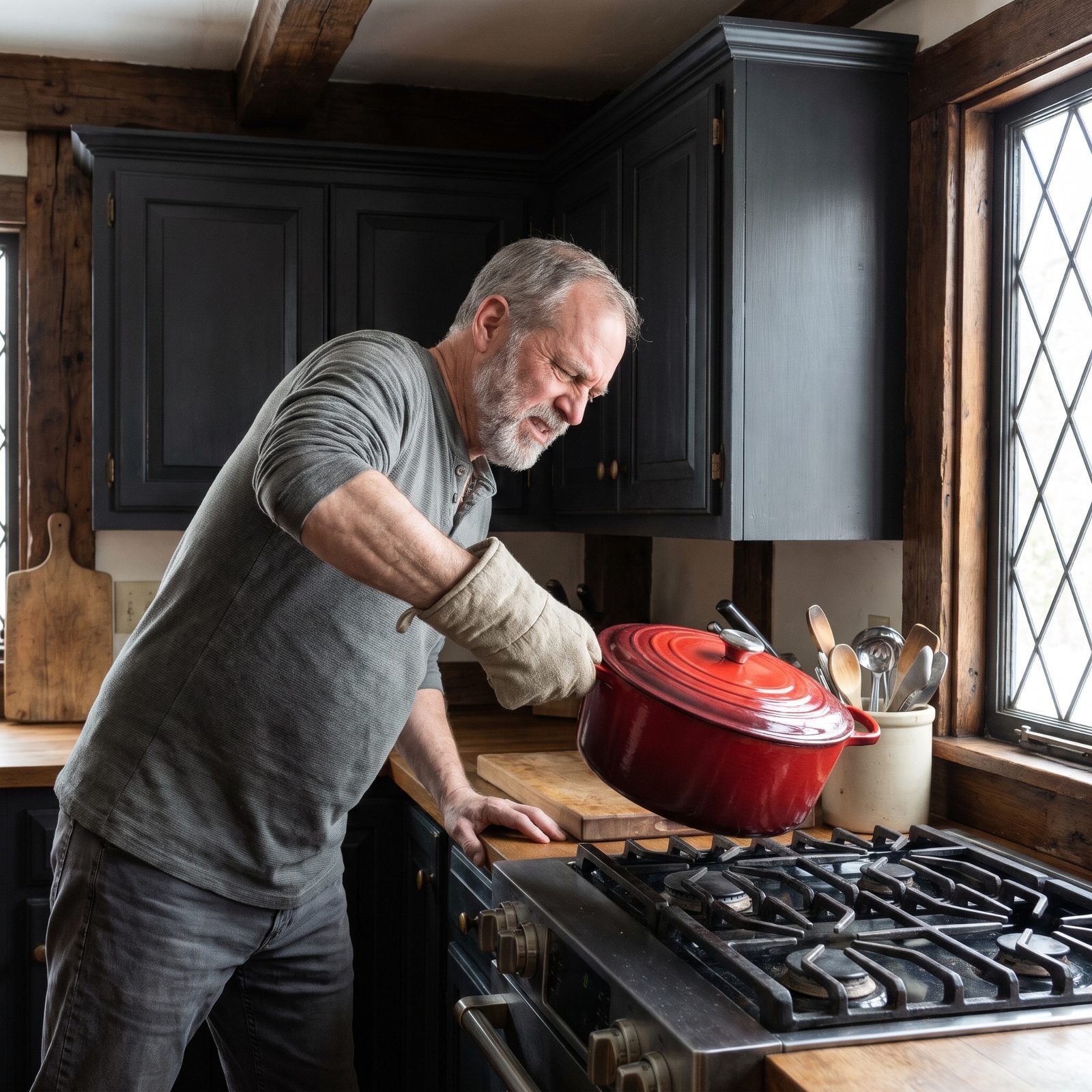
A loaded enameled Dutch oven can run heavy before you even add the stew. People still grab it one-handed by a single side handle and swing it off the burner, wrist and shoulder taking the whole weight at an angle.
That’s how wrists get sprained and how a slip drops scalding cast iron onto the floor or a foot. Grip strength and joints change with the years, and a one-handed heave that worked at forty doesn’t at sixty-five.
Two hands, two mitts, side handles, knees bent. Slide it when you can instead of lifting. And if your heaviest pot has become a regular strain, a lighter enameled pot or a good stainless braiser does most of the same jobs without the fight.
8. Wrestling a Stuck Jar Lid With Bare Hands
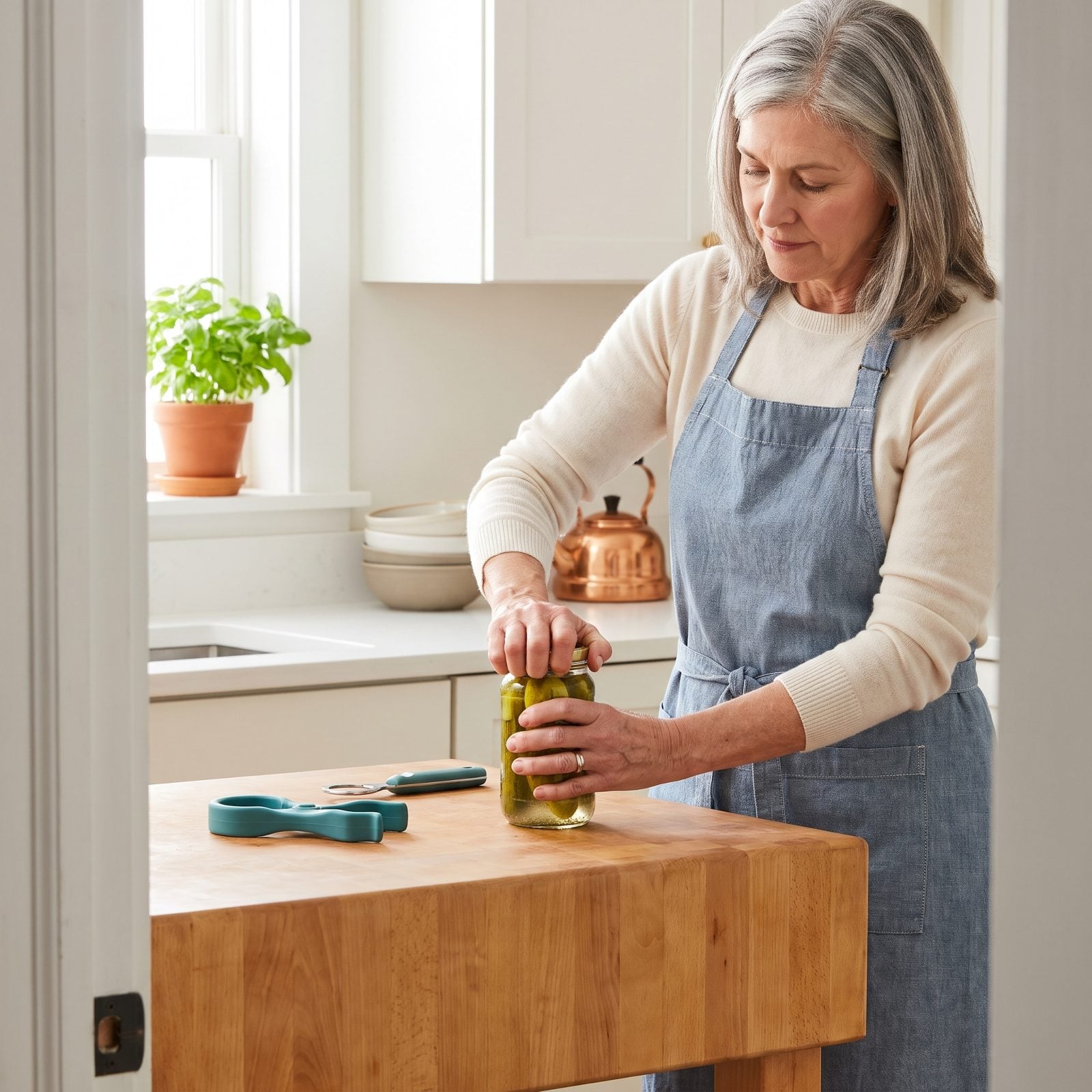
A stuck lid used to mean red knuckles and a muttered word or two. Vinegar face, a towel wrapped around the glass, a shout for backup from the next room. Plenty of us did this for years and sometimes paid for it with a wrenched thumb.
The force is the problem. A slip means a jar shattering in the sink, and over time that grip strain settles into wrists and shoulders that don’t bounce back the way they once did.
So stop muscling it. Tap the lid’s edge against the counter to break the seal, run it under hot water, or keep a silicone gripper and a cheap handheld opener in the drawer. The tool does the twisting. You just hold the jar.
7. Standing for Every Minute of Chopping and Stirring
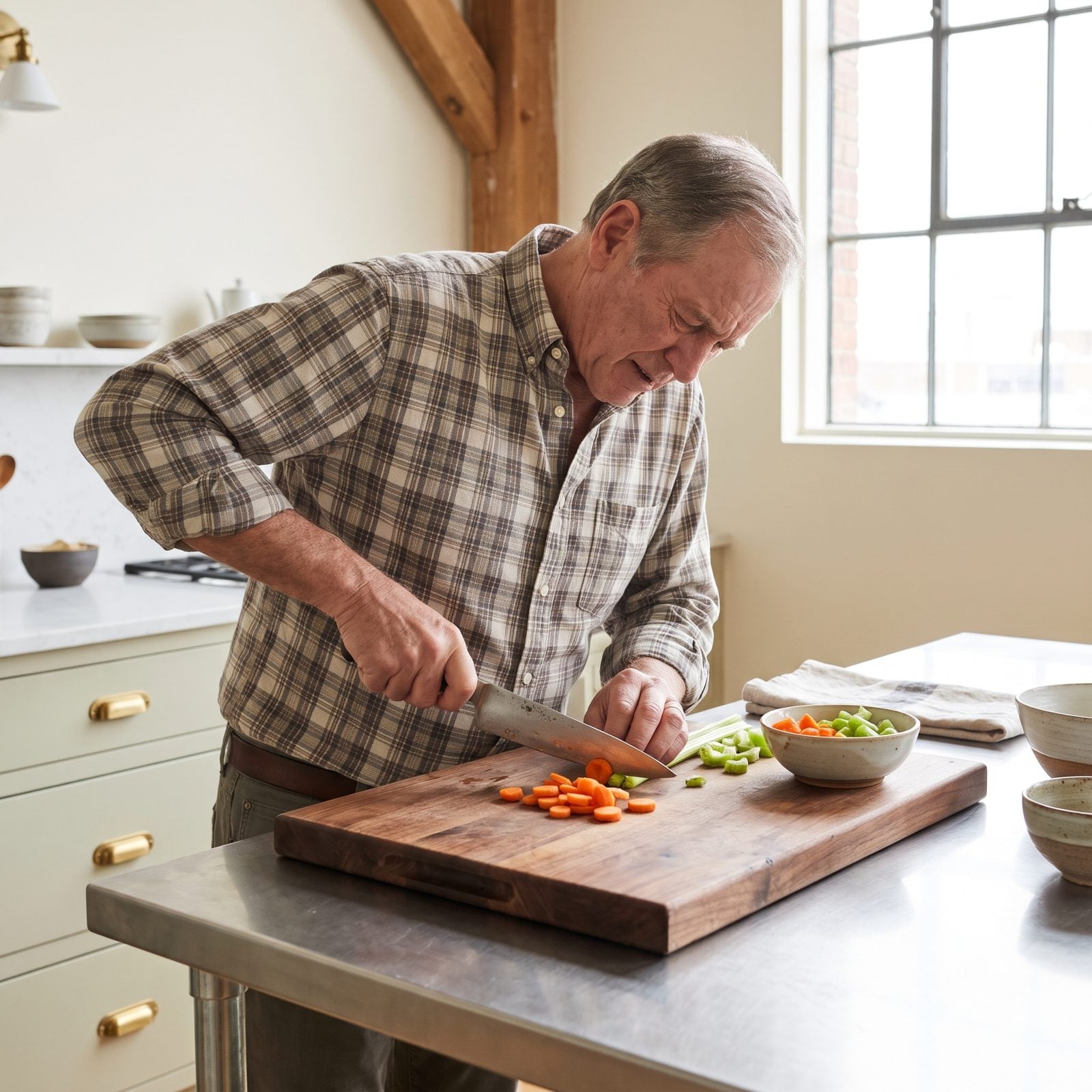
For decades, meal prep got treated like a standing endurance test. Mince, stir, wait, drain, all on two feet for an hour straight, because sitting down in your own kitchen somehow felt like cheating.
Your feet and lower back disagree. Fatigue partway through a recipe is exactly how fingers get careless near a knife, and tired legs are how plenty of people quietly stop cooking at home altogether.
Pull a stool up to the counter for the long jobs: chopping, peeling, podding, rolling. Save standing for the few minutes at the stove that actually need it. Nobody’s handing out medals for staying upright through the whole thing.
6. Trusting Your Memory to Catch the Oven
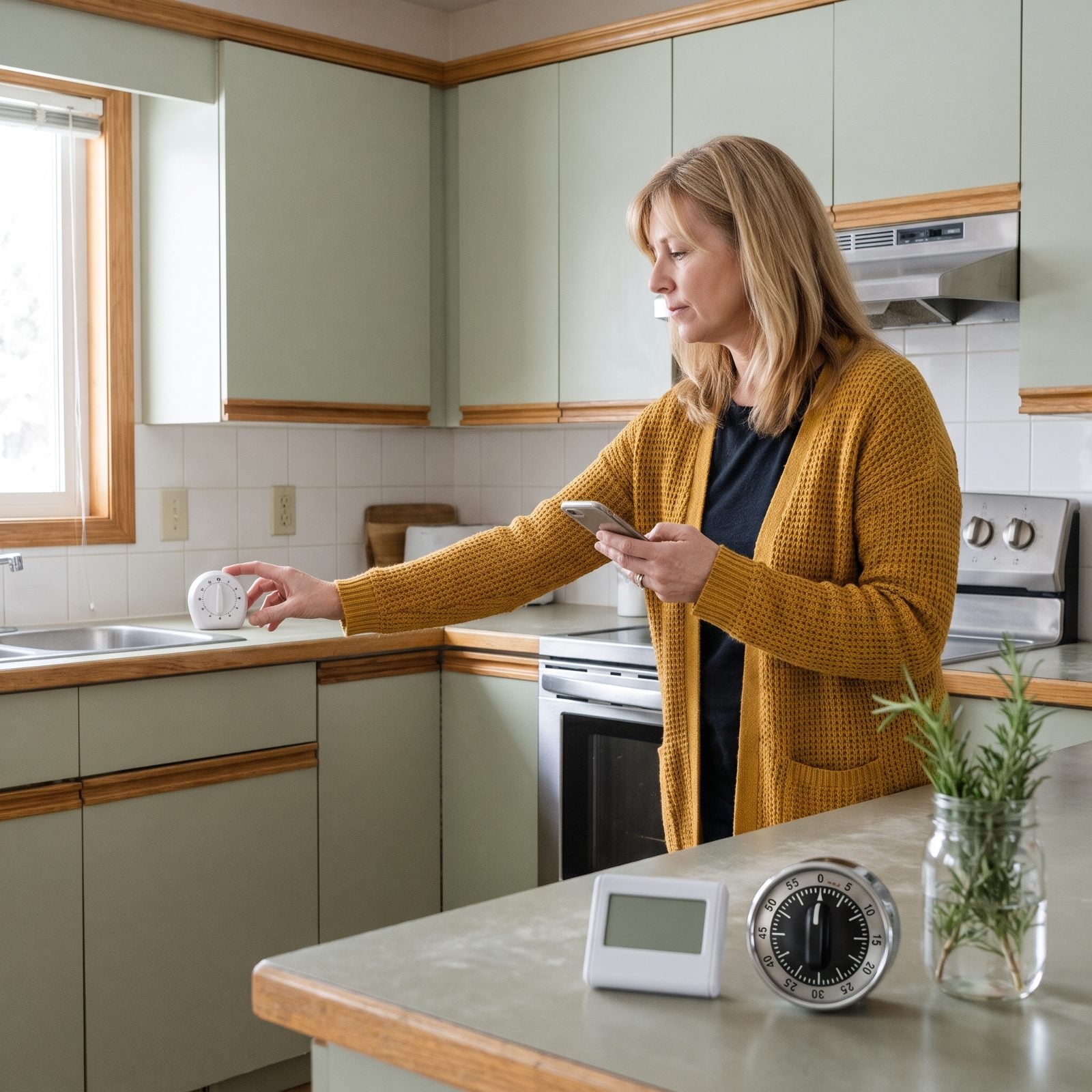
There was a whole generation that cooked by instinct and refused, out of pride, to set a timer. You know the roast’s ready when you smell it, right? That worked fine until the phone rang, or a grandchild wandered in, or the news got good.
Memory is a lousy smoke detector. A forgotten pan on the heat is one of the most common ways a kitchen fire starts, and most of those begin with somebody who was absolutely certain they’d remember.
Set a timer for everything, even a three-minute boil. Your phone will shout from another room, and so will the five-dollar dial timer by the stove. This isn’t about forgetfulness. It’s about closing the gap where distraction lives.
5. Judging Chicken and Burgers by Color Alone
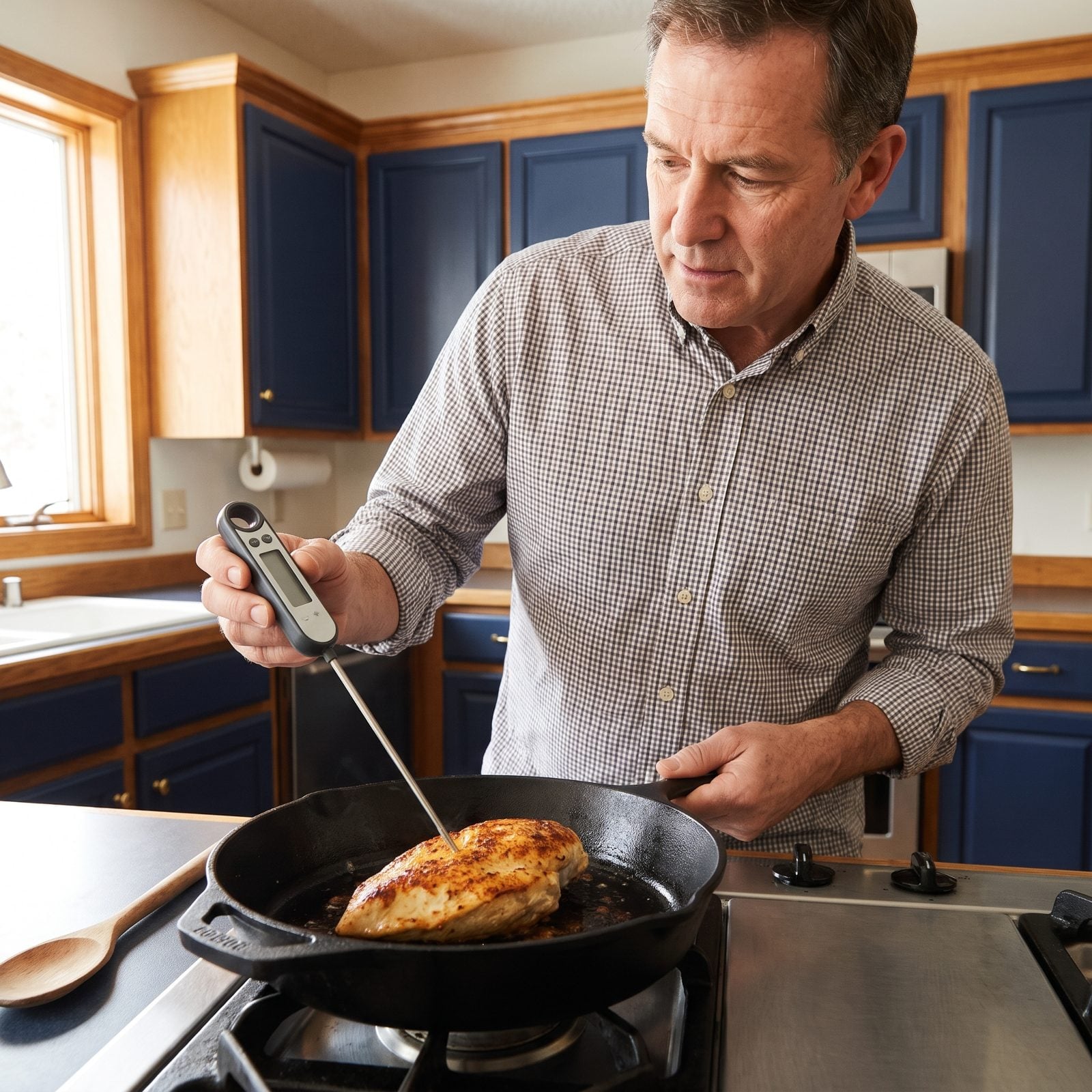
Cut it open, peek at the juices, call it done. That was the whole method, and it’s quietly responsible for a lot of leathery pork and, far worse, undercooked poultry that looked perfectly fine on the plate.
Color lies. Ground beef can brown before it’s safe, and a thick chicken breast can read golden on the outside while staying pink down at the bone. You simply can’t see bacteria.
An instant-read thermometer settles the argument in four seconds. Poultry to 165, ground meats to 160, most whole cuts to 145 with a rest. Probe the thickest part, away from bone. Cheapest peace of mind you’ll ever buy for a kitchen.
4. Letting a Big Pot of Soup Sit Out to Cool
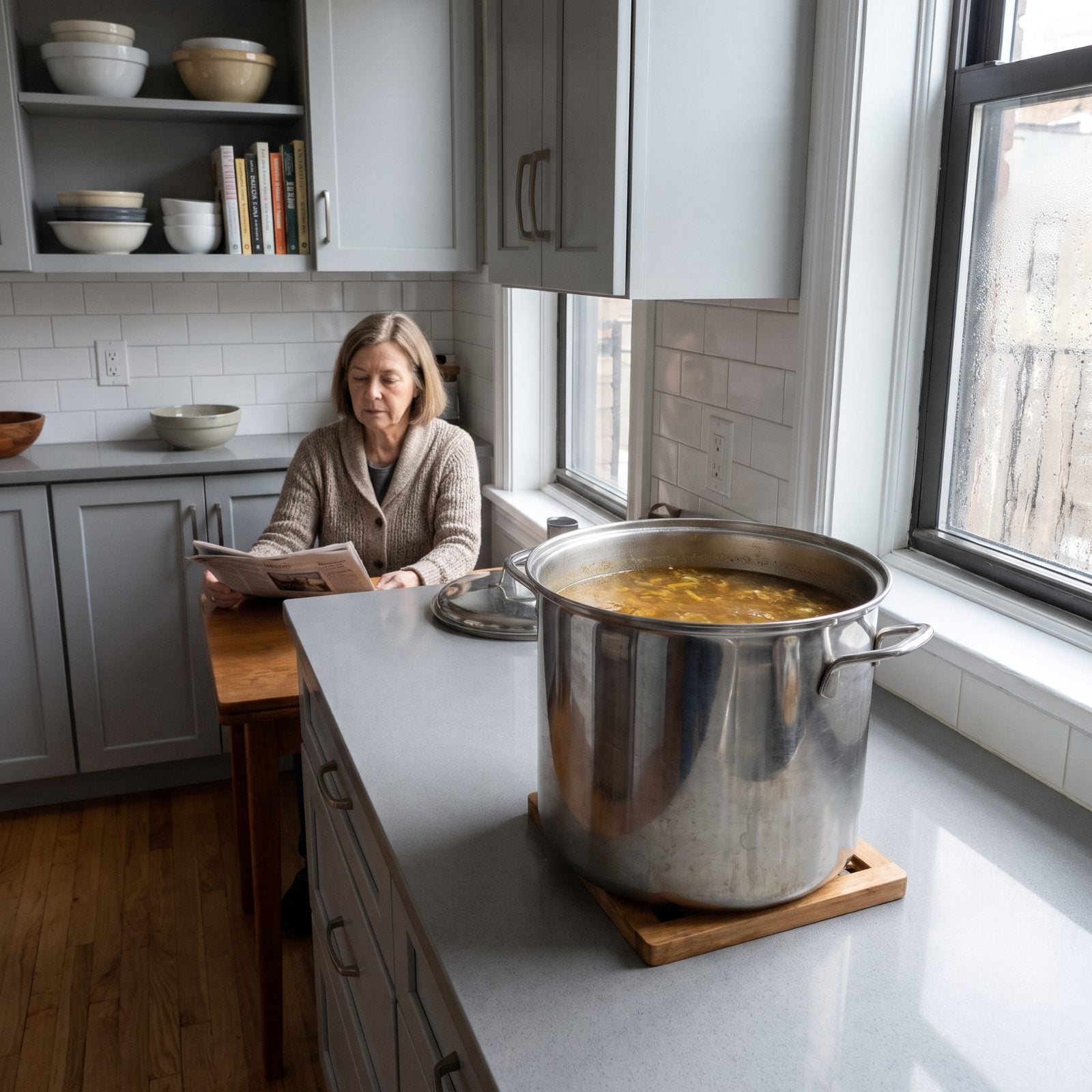
The old rule said never put hot food in the fridge. So the big pot sat on the stove for hours, sometimes clear through to morning, cooling at its own leisurely pace.
That slow middle zone between hot and cold is exactly where bacteria throw a party. A deep pot can stay warm in the center long after the surface feels fine to the touch, and the center is where trouble grows.
Split the batch into shallow containers so it loses heat fast, then get it into the fridge within two hours. An ice bath in the sink speeds things along. Your leftovers and your stomach will both thank you for not waiting.
3. Burying the Fire Extinguisher Where You’ll Never Reach It
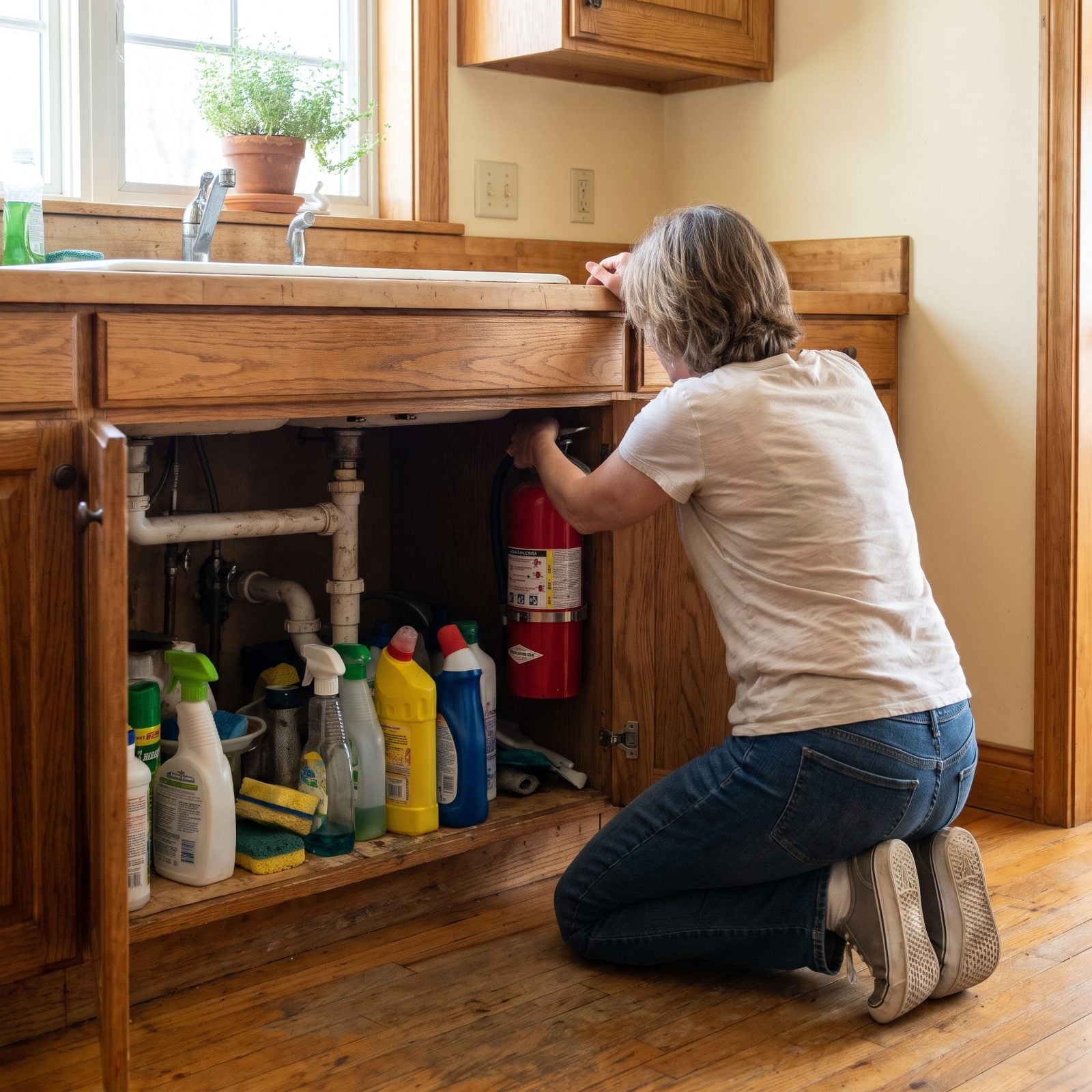
Nobody wants to admit it, but plenty of kitchens do have a fire extinguisher. It’s just wedged behind the recycling in the back of a low cabinet, pressure needle drooping into the red, bought sometime during a previous presidency.
An extinguisher you can’t grab in three seconds is decoration. An expired one may not fire at all. And the one moment you actually need it is the one moment you can’t afford to go digging on your knees.
Mount a working one on the wall near the kitchen exit — not right over the stove, where a flare-up would block the very thing you’re reaching for. Check the gauge every few months and replace it when it ages out. Learn how to use it before a pan ever flames.
2. Pointing Pan Handles Straight Out Into the Walkway
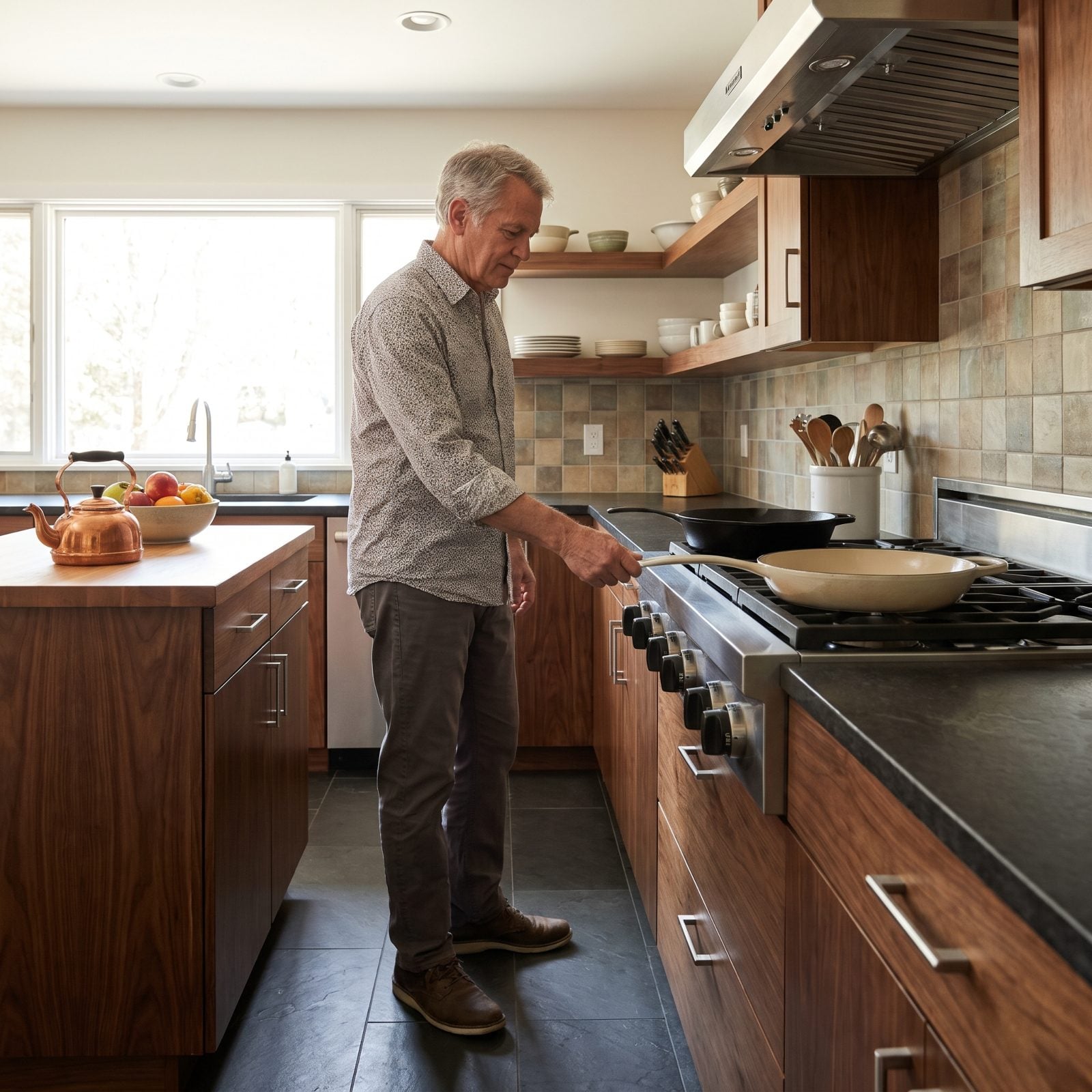
A skillet handle jutting out over the stove’s front edge is an accident with a timer on it. One passing hip, one curious grandchild reaching up, and a pot of hot oil comes down on somebody who didn’t deserve it.
Turn every handle inward toward the center or back of the stove, and never let it hover over an open flame or a neighboring burner. Half a second of habit, and it’s the difference between a safe cook and a burn-unit story.
1. Stepping Away While Oil Is Frying on the Burner
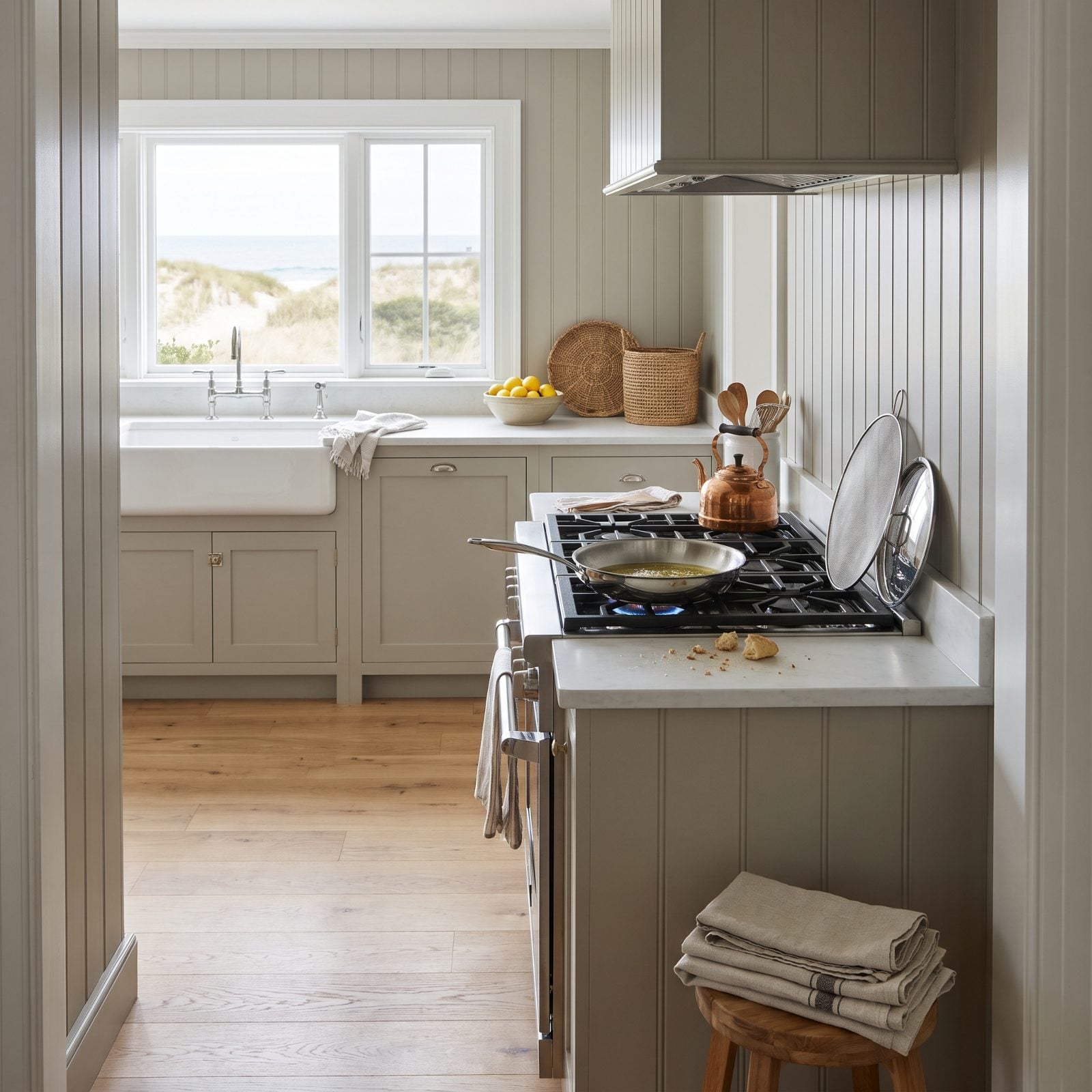
Drop the chicken in, wander off to fold laundry, come back when it’s done. That was the routine in a lot of households. Trouble is, frying oil is the least forgiving thing in the kitchen to leave alone.
Hot oil goes from quiet shimmer to flashpoint in seconds. By the time you catch the smell from the other room, there’s already a fire on the stove, and grease fires are fast — they climb.
Stay put the entire time oil is hot. Keep a lid or a baking sheet beside the pan to smother flames, and never, ever reach for water on a grease fire. If frying ties you to the stove for twenty minutes, fine. That’s the deal with oil.