
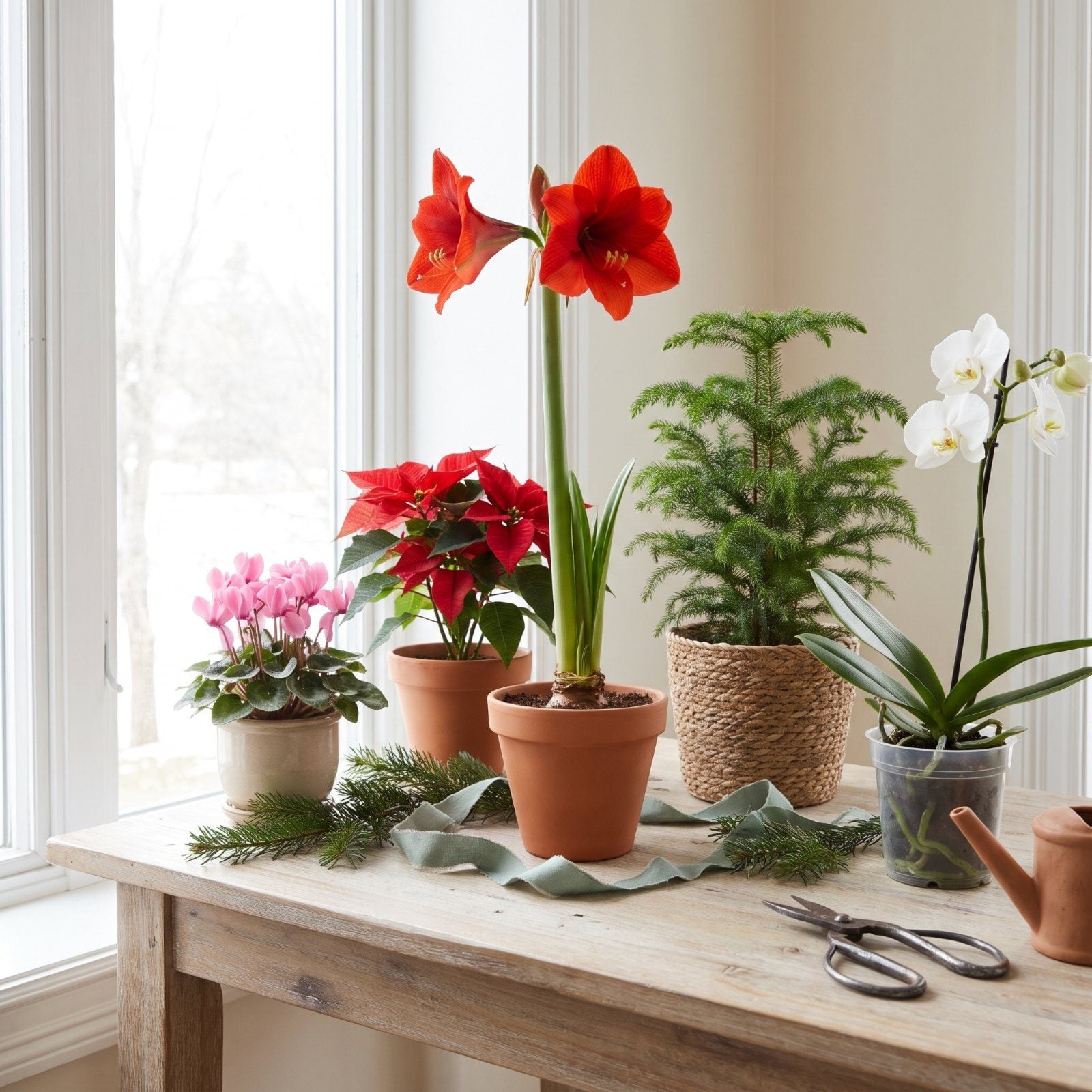
Most holiday plants hit the trash by mid-January, wilted and forgotten next to the deflated balloons. Shame, really, because a surprising number of them aren’t disposable at all. The poinsettia on your mantel can stretch into a leggy six-foot shrub, and that grocery-store amaryllis will bloom again every winter if you feed the bulb. Some of these outlive the person who received them. What they need isn’t luck or a green thumb — it’s knowing the one thing each species wants after the party ends, and giving it that instead of a spot by the furnace vent.
Please note that some of the images in this article were created with the assistance of AI.
44. Poinsettia, Keep It Growing Long After the Red Bracts Fade
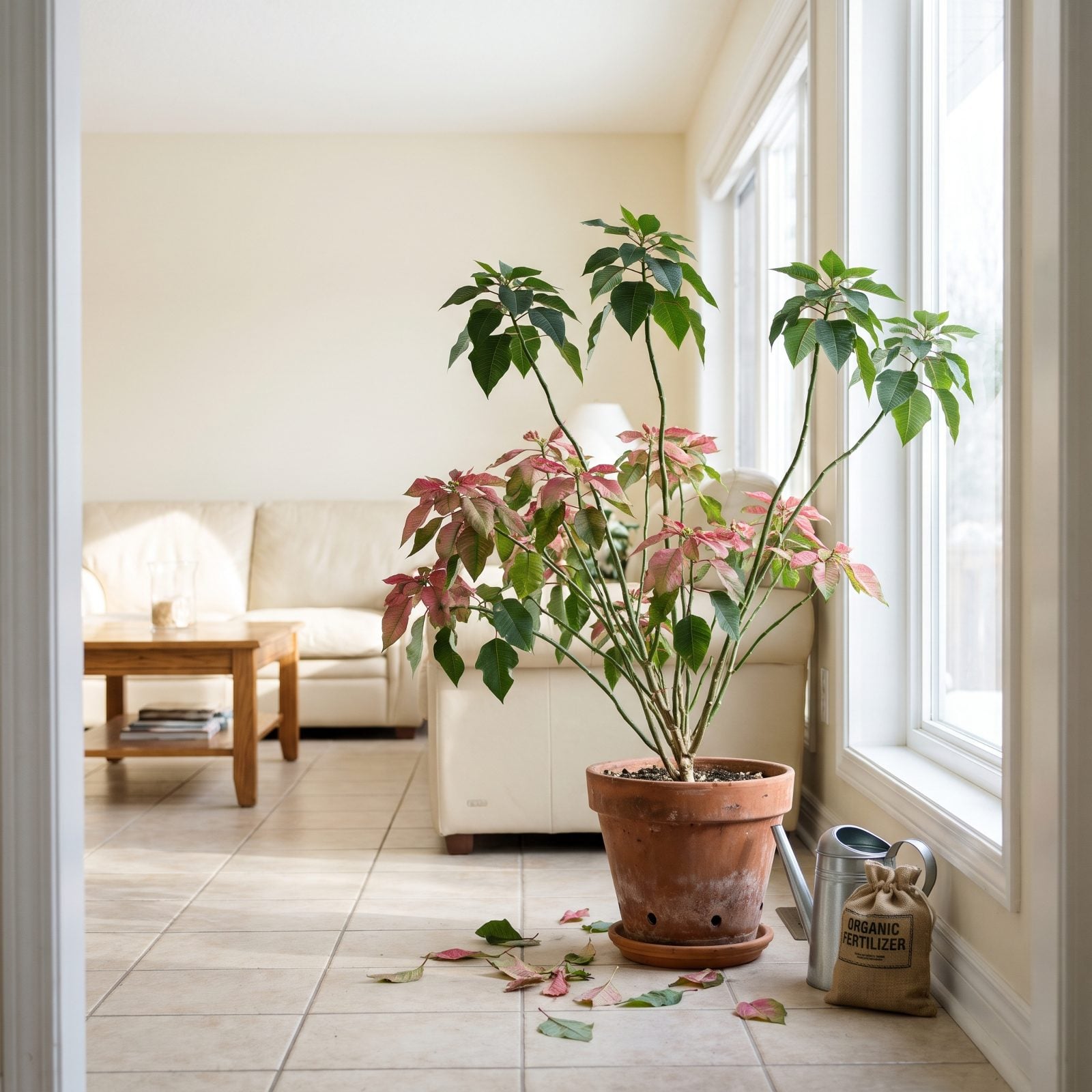
Nobody tells you this about poinsettias: the red parts aren’t flowers. They’re bracts, modified leaves that color up in response to long nights. Once they fade, you’re left with a perfectly healthy tropical shrub that most people throw away out of sheer habit.
Cut it back hard in spring, park it in a sunny window, and water when the top inch dries out. By autumn you’ll have a bushy plant on your hands. Getting it to turn red again is the fussy part — it demands total darkness for fourteen hours a night starting in October, which is more of a commitment than it sounds. We’ve skipped that whole routine and just enjoyed the green plant. It’s a lovely houseplant without the drama.
43. Amaryllis, Rebuild the Bulb for Another Winter’s Trumpet Show
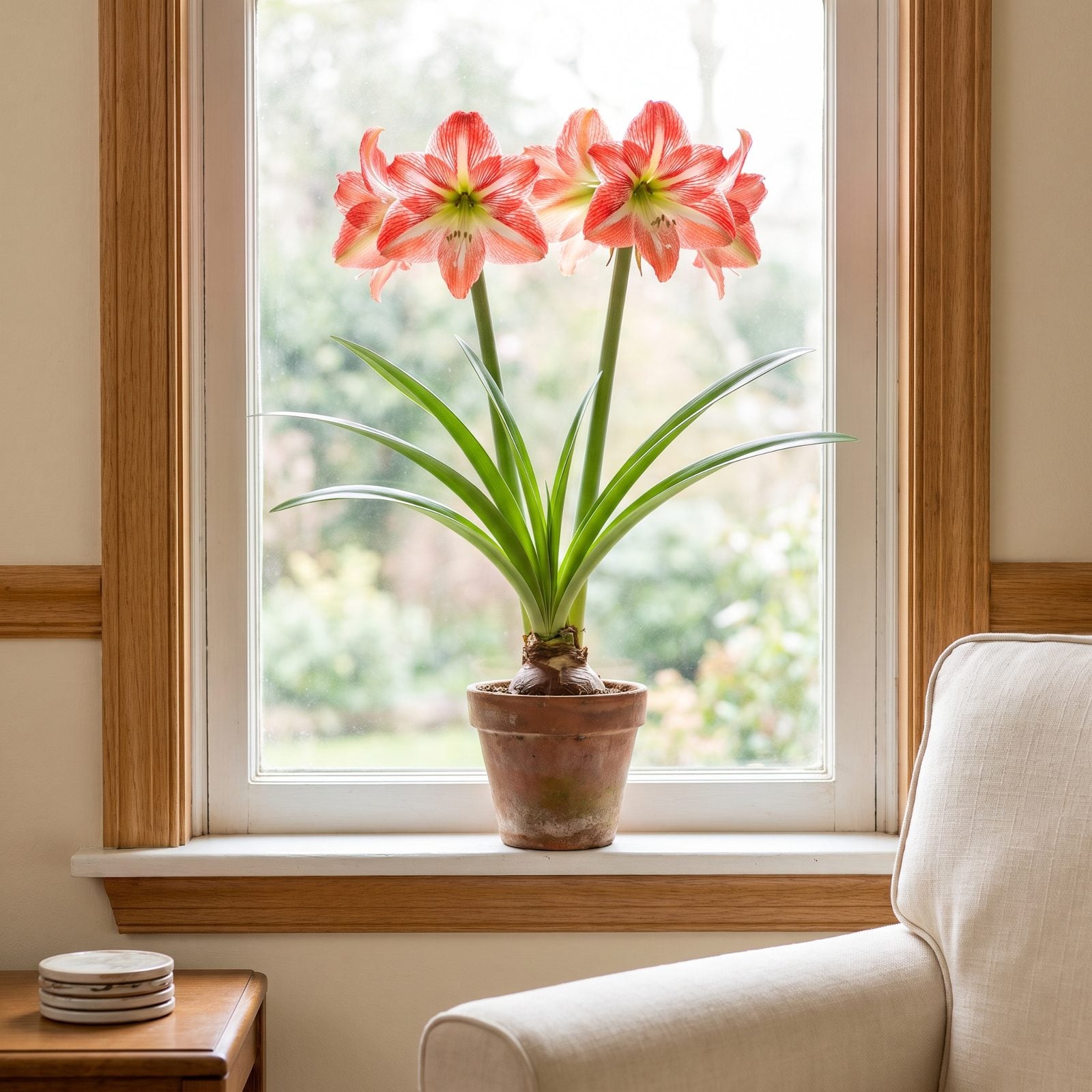
An amaryllis is basically a battery. It stores up energy one year and spends it on those enormous trumpet blooms the next. The flowers you buy at Christmas were powered by last summer’s leaves, grown somewhere in a Dutch or South African field.
After it blooms, snip the spent flower stalk but leave the leaves alone. Feed it, keep it in sun, and let those leaves work all summer. In early fall, stop watering and let it go dormant in a cool, dark spot for a couple of months before bringing it back out. That dormancy trigger is the step everyone forgets.
42. Norfolk Island Pine, Treat It as a Tropical Houseplant, Not a Christmas Tree
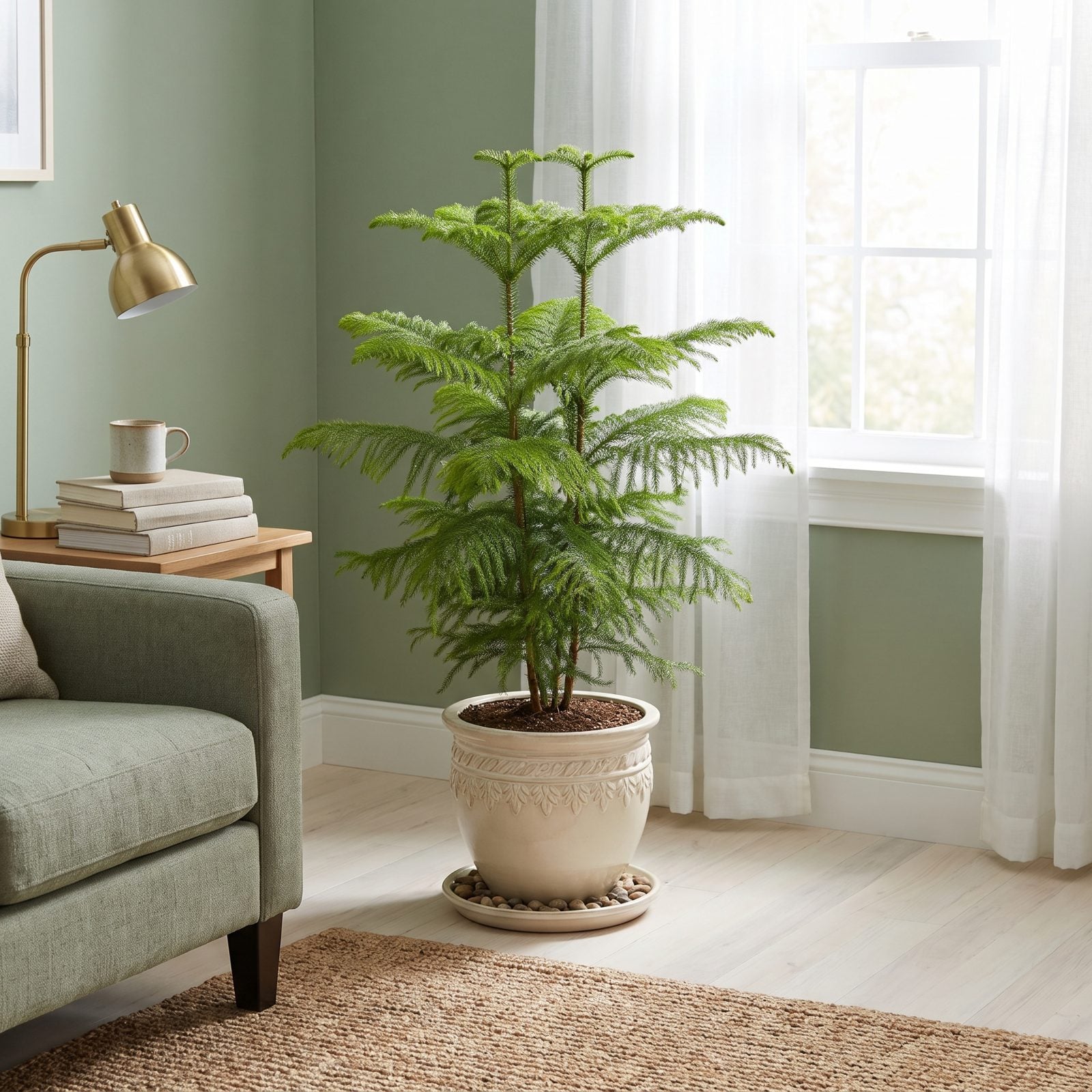
That tabletop Christmas tree strung with tiny lights? It’s actually a tropical conifer from a speck of land in the South Pacific. It’ll never survive a frost, so forget planting it outside unless you live somewhere genuinely warm.
Indoors it wants bright light, steady moisture, and humidity — three things a dry winter house fails at spectacularly. Parched air browns the lower branches and makes them drop, and those don’t grow back. Keep it clear of the furnace vent, mist it or set it on a pebble tray, and over the years it’ll rise into a graceful green column. These can clear ten feet indoors. The whole game is patience.
41. Florist Cyclamen, Guide It Through a Summer Nap Instead of the Trash
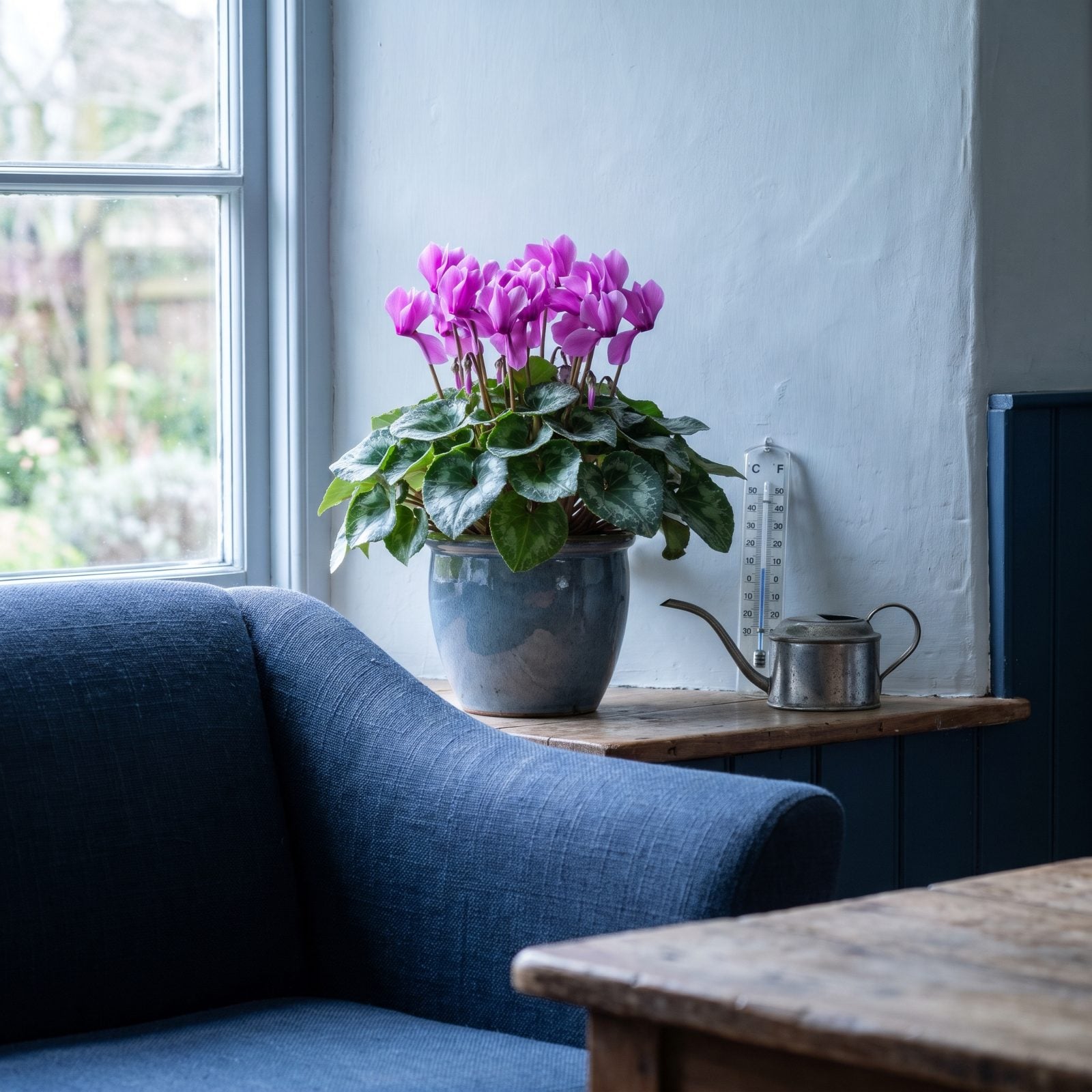
Cyclamen look like they’re dying in May. The leaves yellow, the flowers quit, and most people toss the pot convinced they killed it. They didn’t. The plant is just going to sleep.
Cyclamen grow from a tuber and rest through summer heat. Ease off the watering as the leaves fade, then let the tuber sit dry and cool for a few months. Come fall, start watering again and it wakes right up. Here’s the catch — they loathe warm rooms while growing. Keep them cool, around 60 degrees, and water from the bottom so the crown stays dry.
40. Moth Orchid, Keep the Roots Airy and the Crown Bone Dry
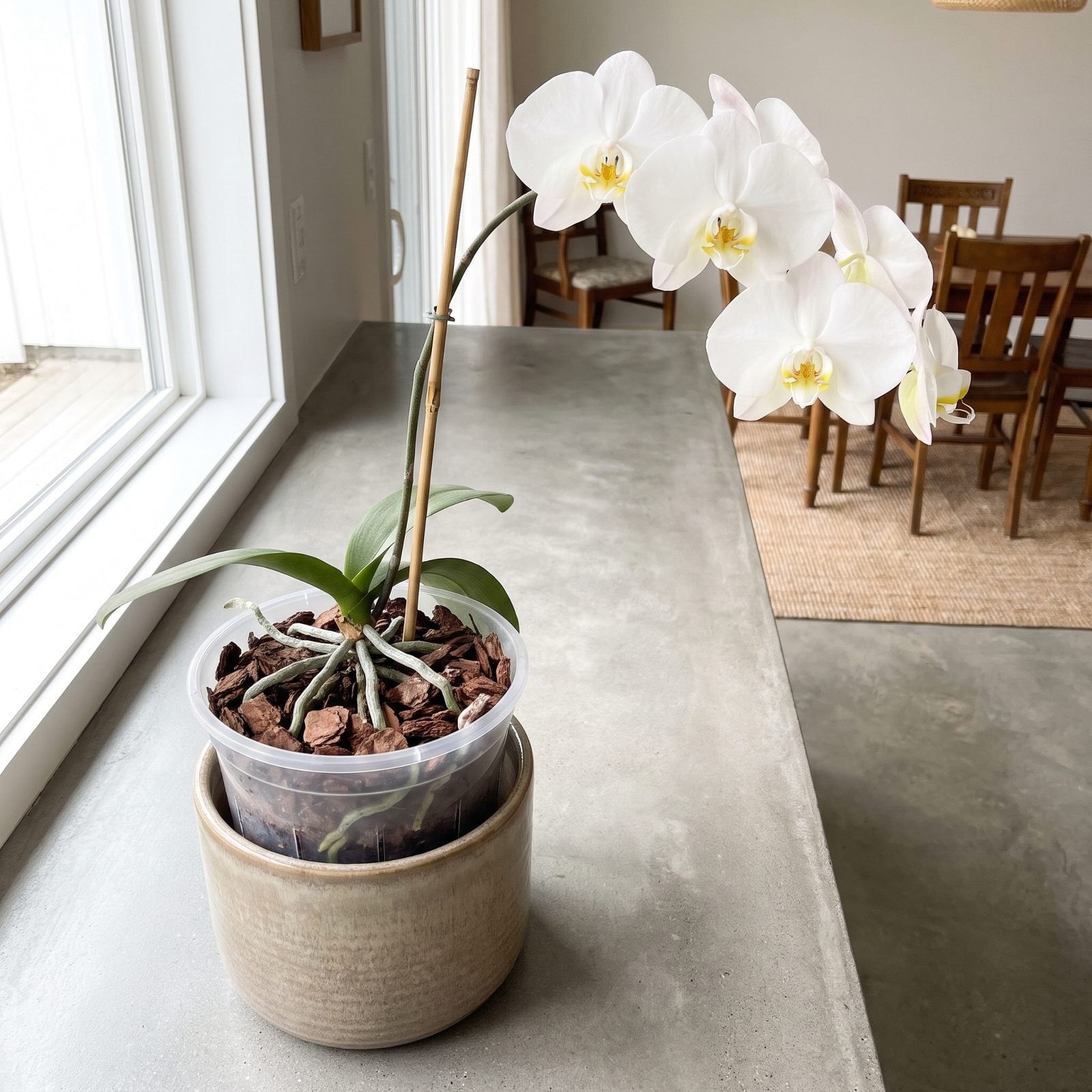
The number one way to kill a moth orchid is kindness. People water them like ferns and the roots rot in a week.
In the wild, orchids grow on tree bark with their roots dangling in the air. That’s why they come in bark chips instead of soil, and why those clear pots earn their keep. Water when the roots turn silvery, never green, and keep water out of the crown where the leaves meet. One drop sitting there overnight can rot the entire center.
Get the watering right and these bloom for months, then rebloom off the same spike for years. Tougher than their reputation lets on.
39. Rosemary Topiary, Rescue It From Hot, Dry Indoor Air
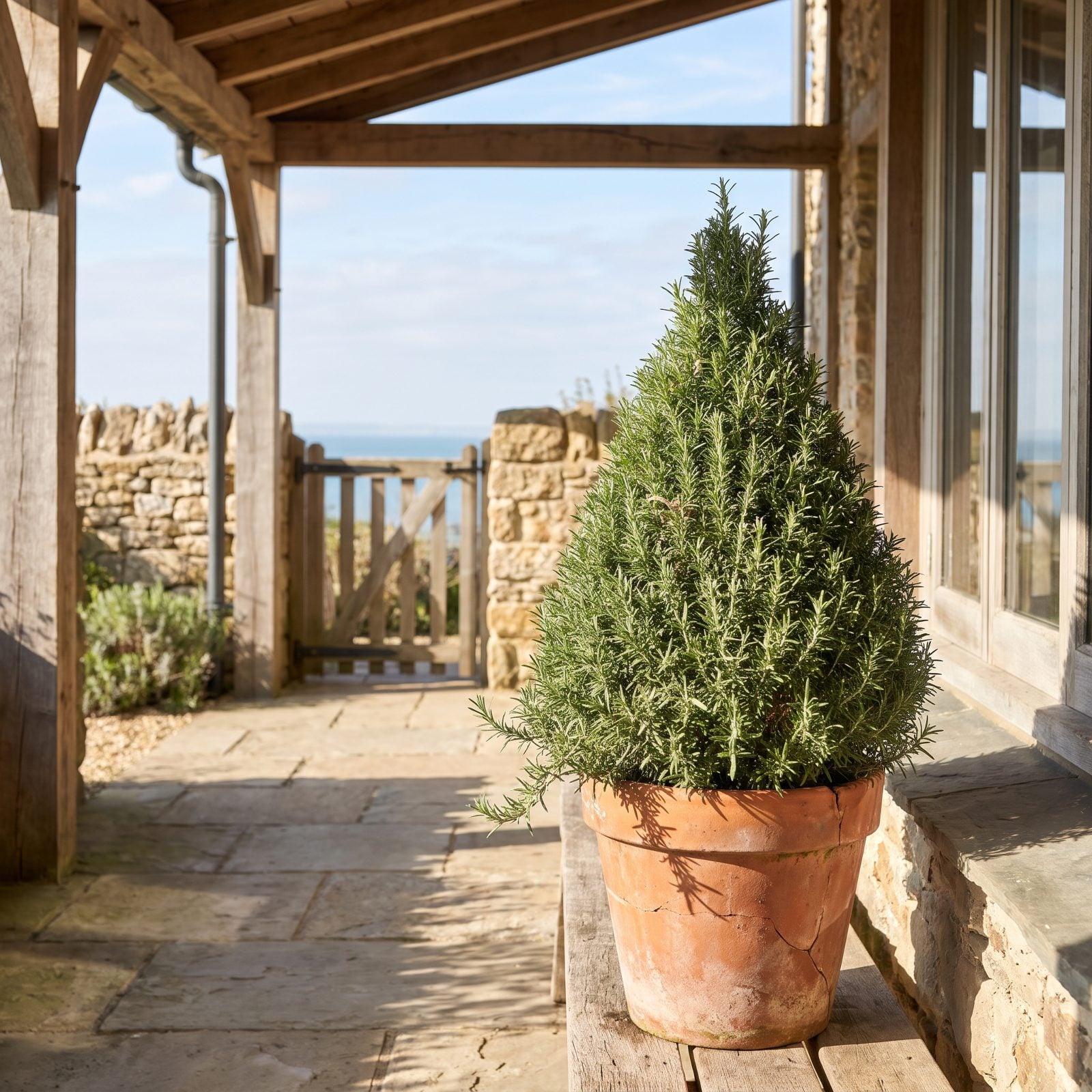
Those cute rosemary cones at the garden center are set up to fail. Rosemary is a Mediterranean shrub that craves sun, airflow, and a bit of benign neglect. Shove it in a heated living room and it quietly dries out, then drops every needle in one sulky afternoon.
So get it out of the house. A cool sunroom, a bright porch, anywhere with fresh air and sun. In zones 7 and warmer it can go straight into the garden and grow into a proper shrub. Water it before it bolts, not after — by the time rosemary looks thirsty, it’s usually already gone too far.
38. Flaming Katy Kalanchoe, Trick It Into Blooming Again With Shorter Days
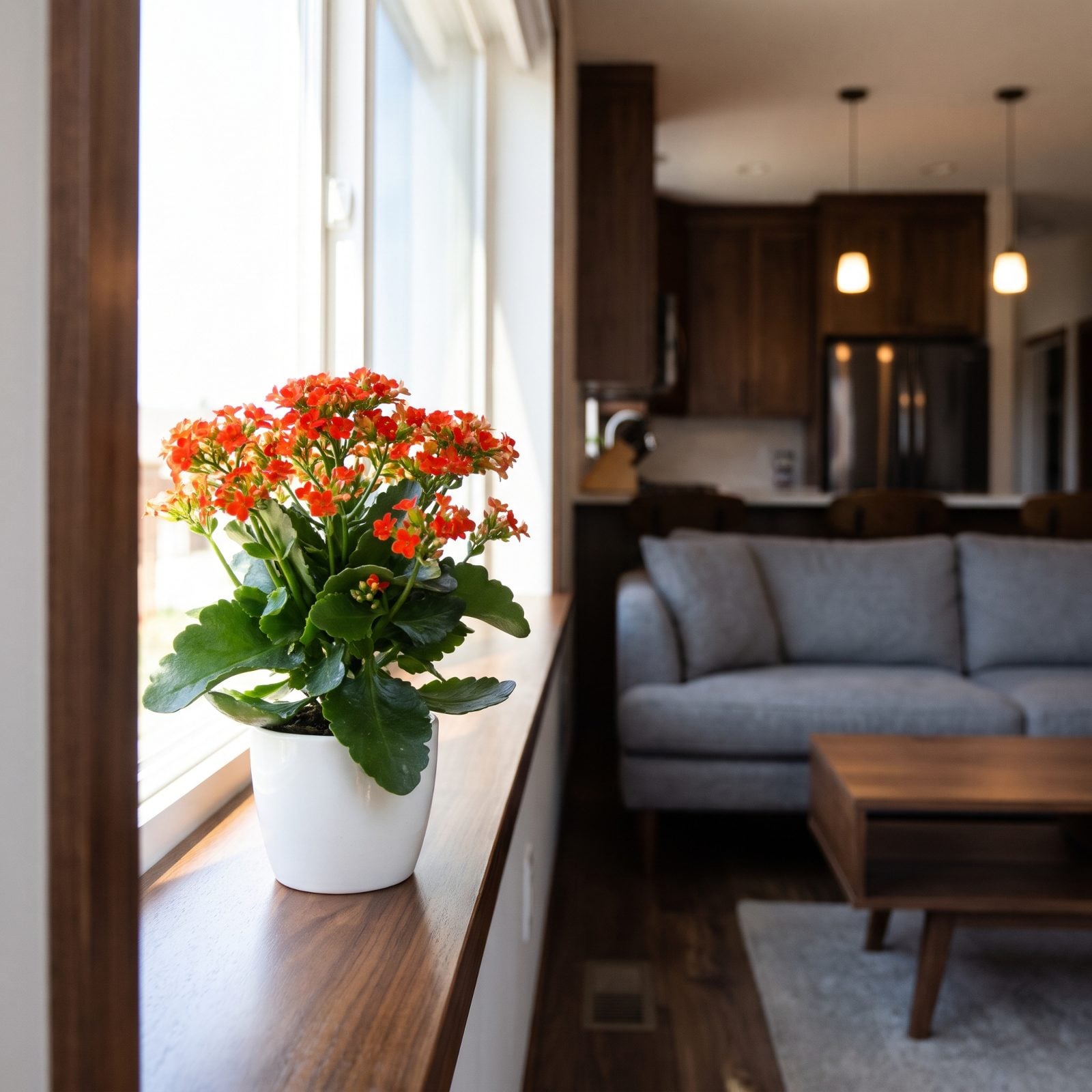
Kalanchoe is the succulent you probably got as a gift and kept on a shelf long after the flowers quit. The leaves stay fat and happy for years. The blooms, though, want a trick.
Like the poinsettia, kalanchoe reacts to long nights by setting flower buds. To coax it back into bloom, give it roughly six weeks of fourteen-hour darkness in fall — a closet, or a box dropped over the pot each evening. Then let it do its thing.
Between bloom cycles, treat it like any succulent. Bright light, dry it out between waterings, and ignore it a little. They honestly prefer that.
37. Miniature Rose, Get It Outdoors Instead of Babying It on the Counter
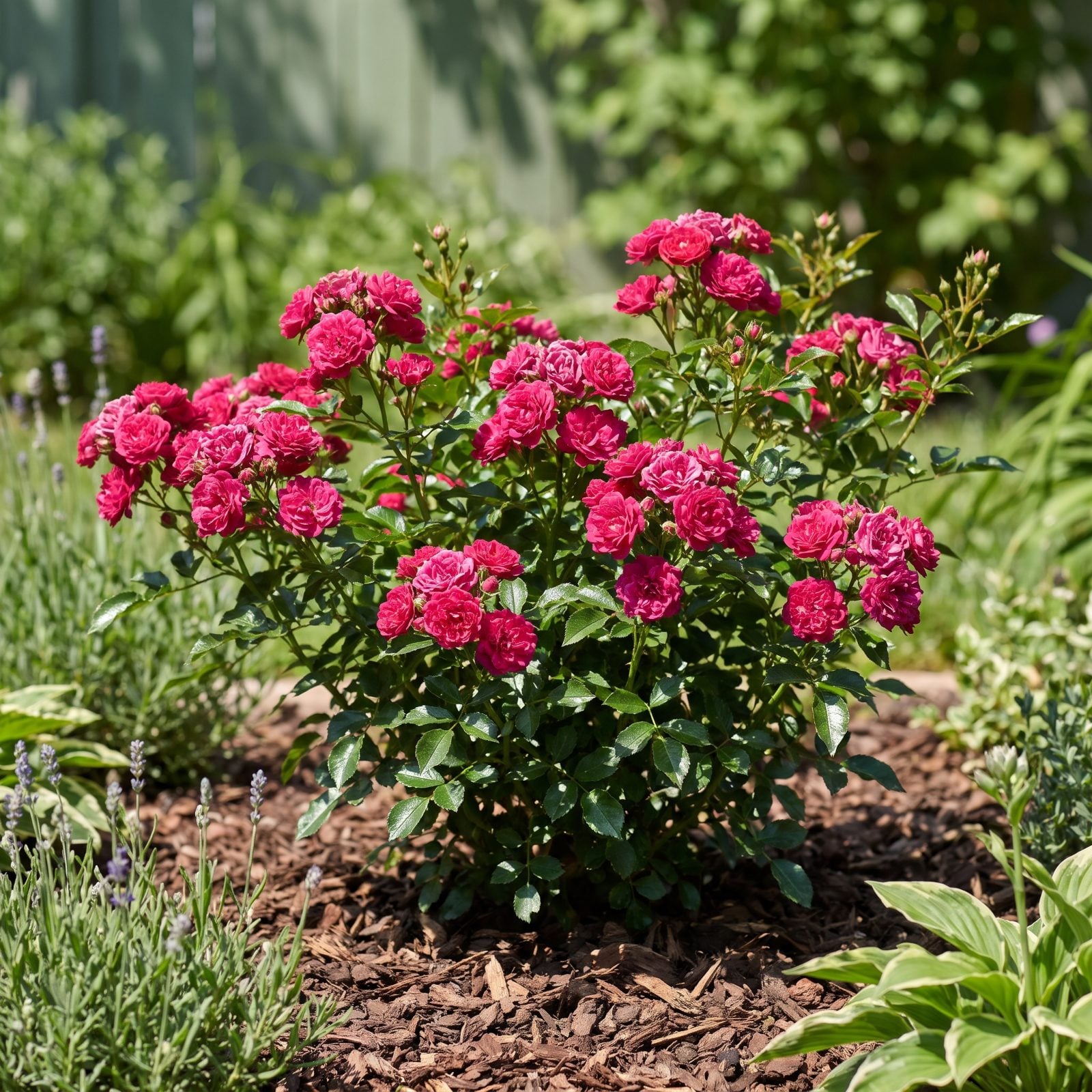
A grocery-store miniature rose is a real, hardy rose shrunk down. It just wasn’t built to live on a kitchen counter, where it goes leggy, catches spider mites, and sulks within weeks.
Put it outside. These survive winter across much of the country, roughly zones 5 through 9, and planted in a sunny bed they return year after year as a tidy little shrub. Harden it off gradually before it moves out, or the tender indoor growth will scorch.
36. Easter Lily, Plant the Bulb Outside Once the Trumpets Collapse
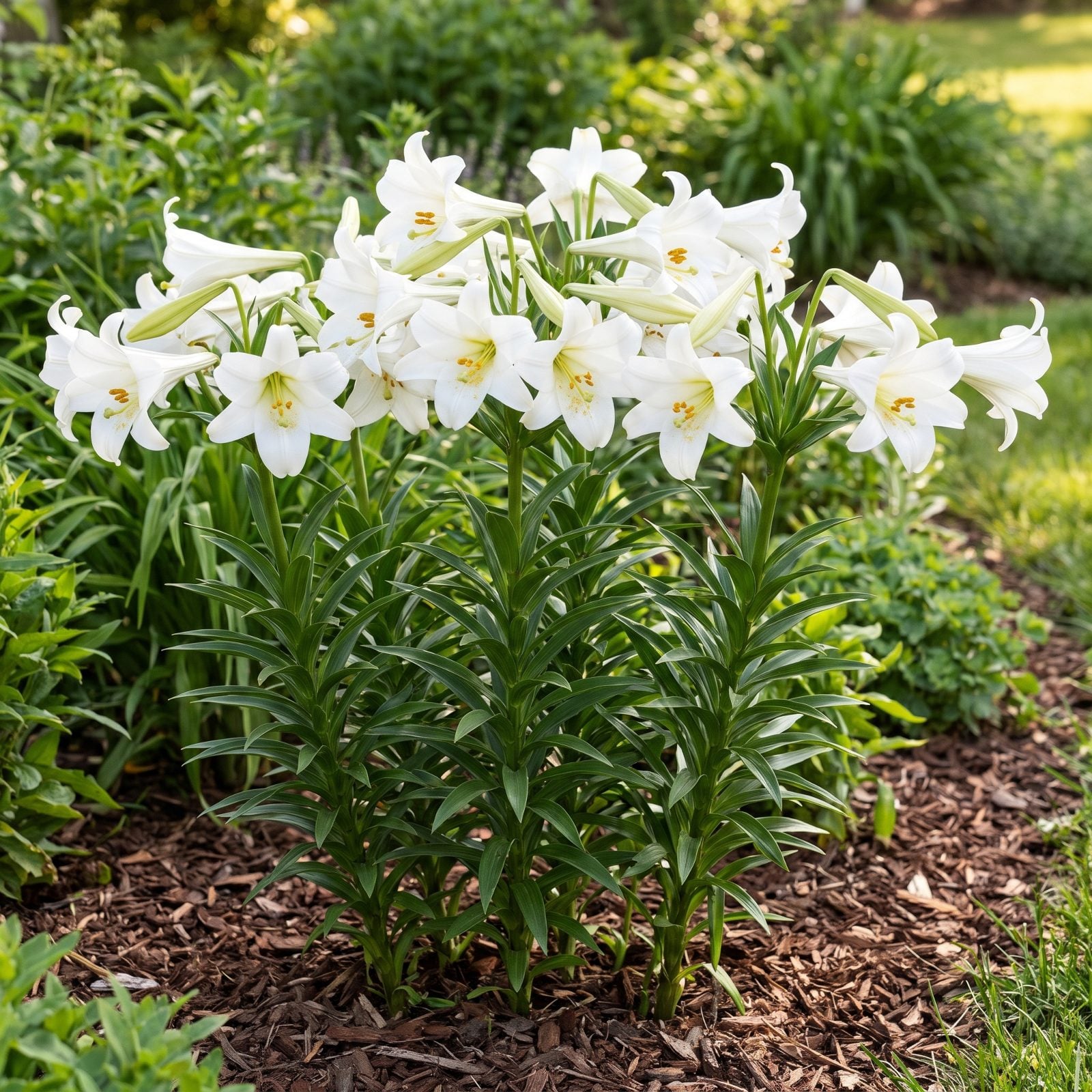
Easter lilies get forced into bloom months ahead of their natural schedule, which is exactly why they look so exhausted by the time the flowers brown out. That’s not the end of the bulb, though.
Once the blooms fade, keep watering and let the foliage stay green so it can recharge. When the leaves finally yellow, cut the stalk back. Plant the bulb outside about six inches deep in a sunny, well-drained spot. It’ll likely skip a year, then settle into its true rhythm and bloom in early summer from then on. Hardy to around zone 5. A gift that quietly becomes a permanent part of the border.
35. Hellebore, Move It Into a Shaded Bed and Let It Outlive You
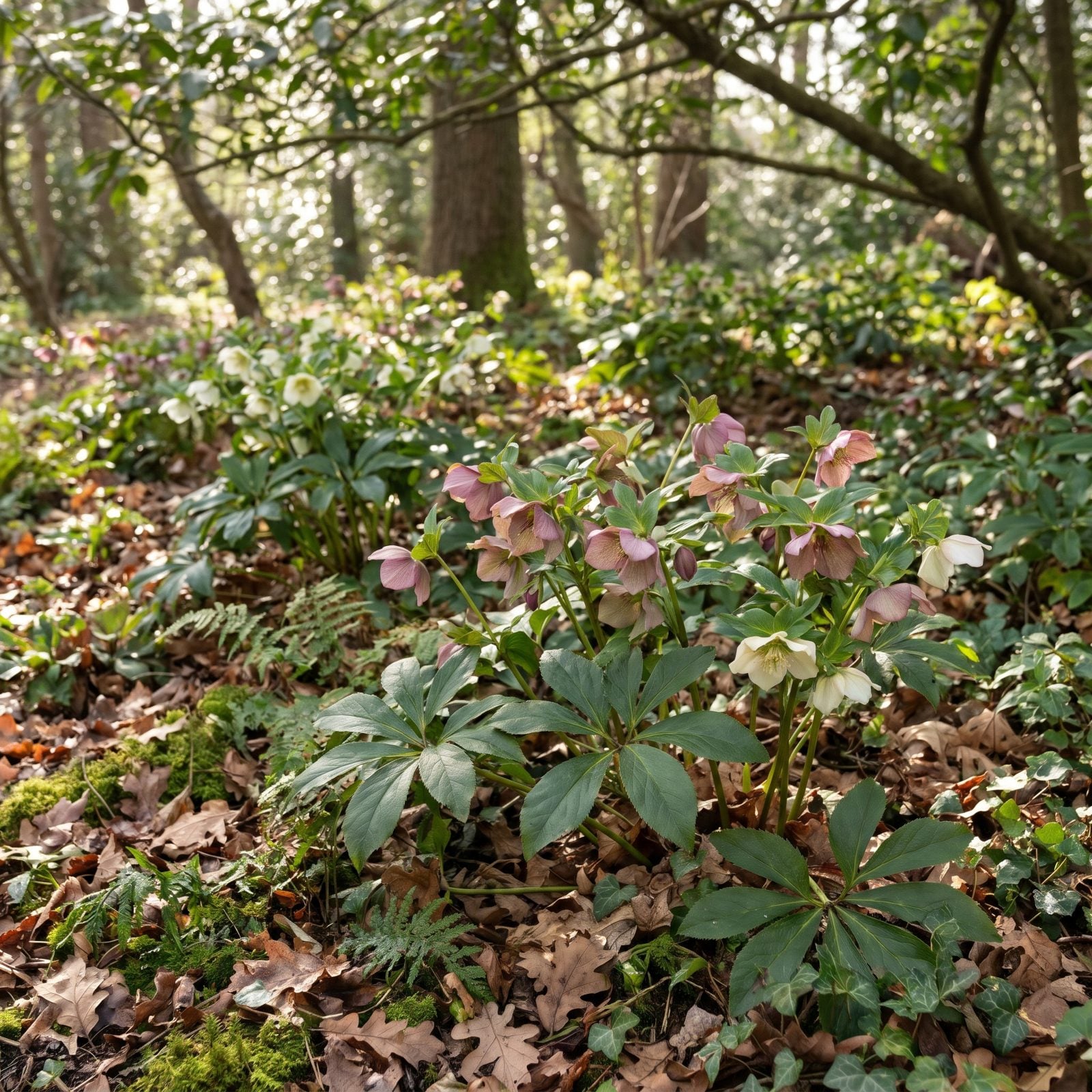
Of everything here, the hellebore is the one we’d go to the mat for. These potted winter bloomers are genuine garden perennials, and once they settle in they’re nearly immortal.
Hellebores want shade, rich soil, and to be left thoroughly alone. Tuck yours under a tree or on the north side of the house and it’ll shrug off the harshest cold, blooming while snow still sits on the ground. The leathery evergreen leaves stay handsome all year. Some clumps have been holding the same patch of ground for thirty years.
A holiday gift that outlives the holidays by decades is not a decoration. It’s an inheritance you didn’t know you were planting.
34. Dwarf Alberta Spruce, Acclimate It Gradually Before Planting Outdoors
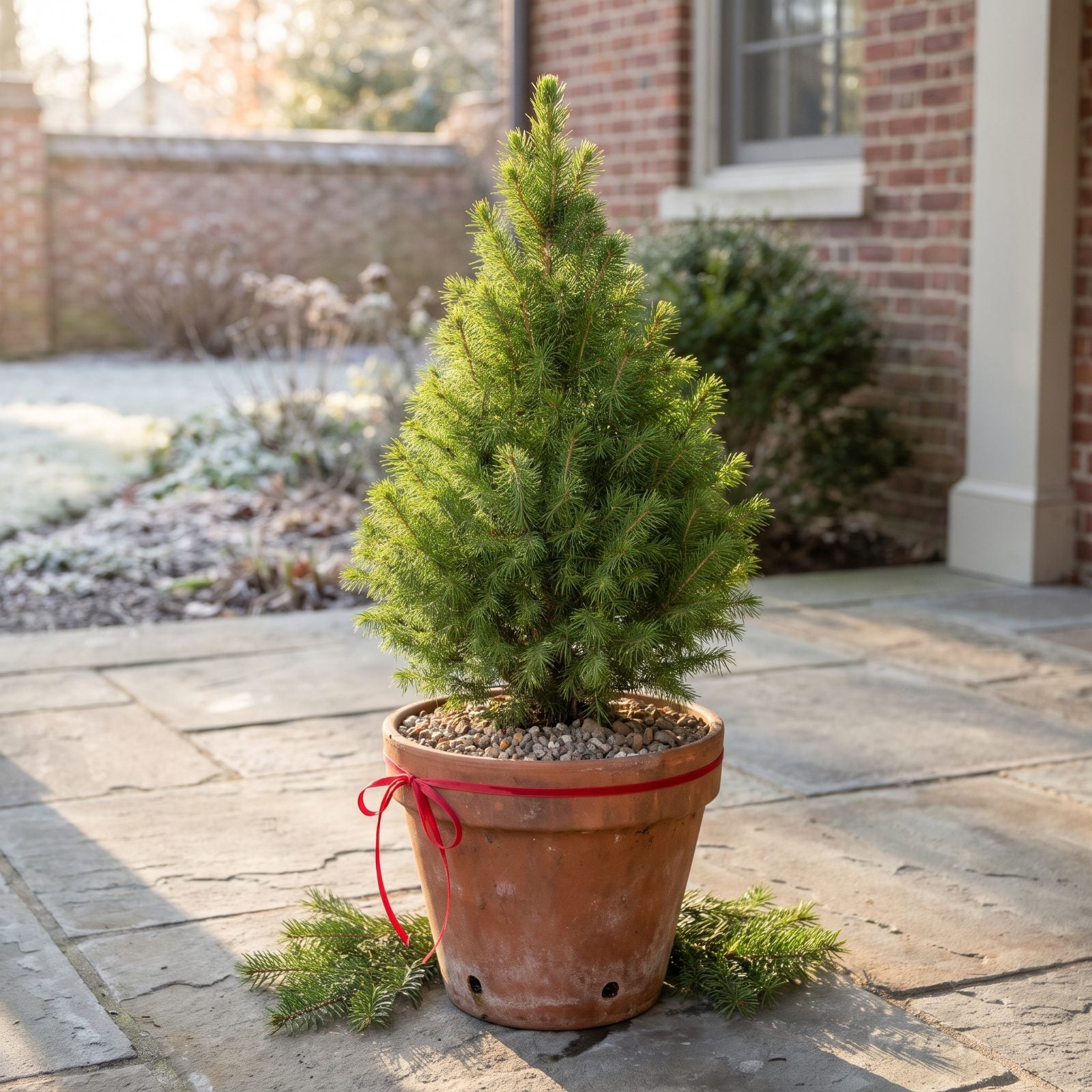
That tidy little Christmas-tree shape in a pot? It’s a real conifer, and it will sulk hard if you march it from a warm living room straight into January. Alberta spruce hates sudden change more than almost anything.
Move it to a cool porch or unheated garage for a week or two first, then an outdoor spot. Plant in spring once the ground thaws. It wants full sun and good airflow, and it’s prone to spider mites indoors, so get it outside when you reasonably can. Slow-growing to maybe 10 feet over decades. You’re planting for the long haul here.
33. Holiday Bromeliad, Raise the Pups After the Mother Rosette Fades
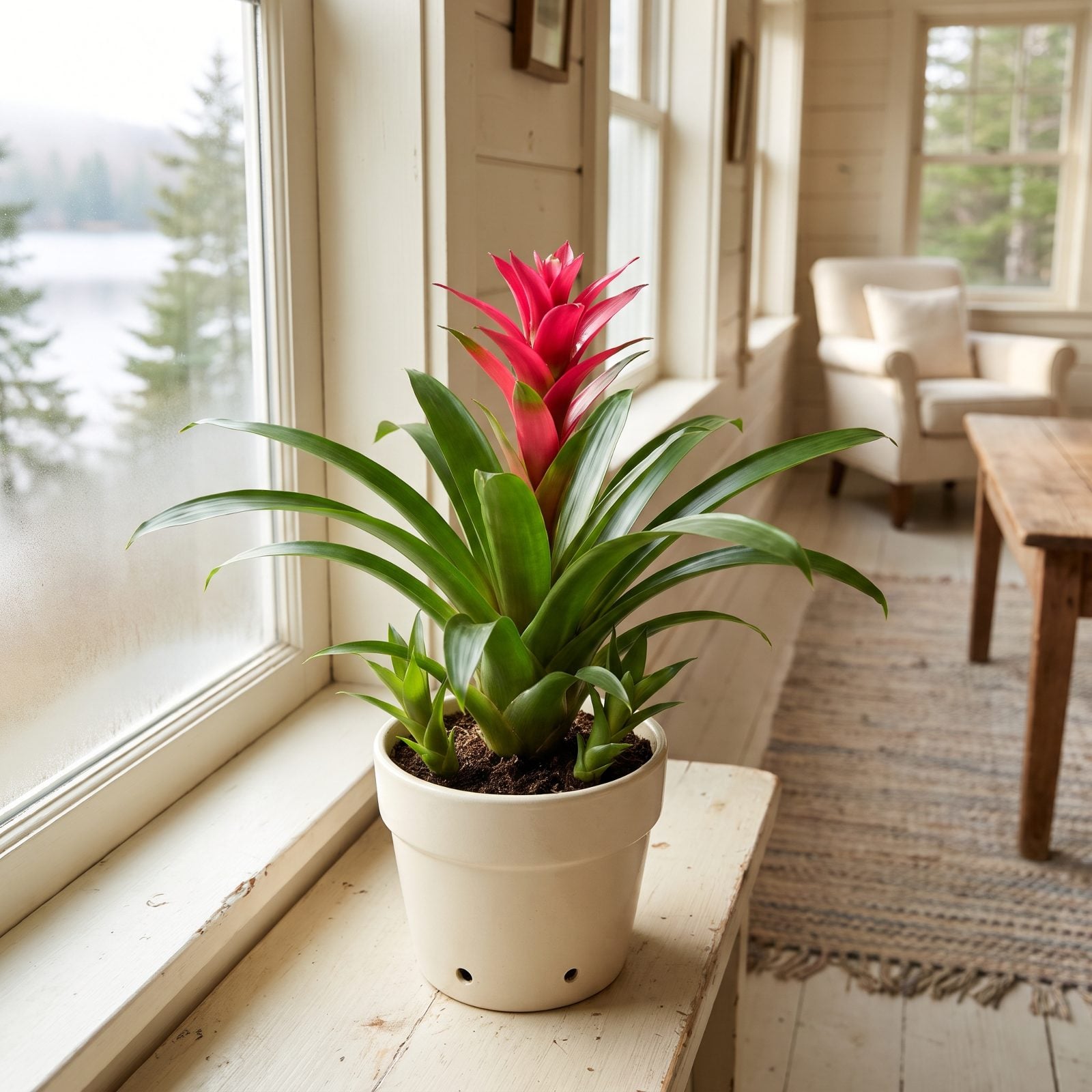
Here’s the part nobody mentions on the gift tag: that mother bromeliad will never bloom again. Once the colorful bract fades, she’s done. But she spends her last energy making babies.
Look at the base and you’ll see small pups forming. Let them reach about a third of the mother’s size, then separate them with a clean cut and pot them up. Keep water in the central cup, give bright indirect light, and in a year or two you’ll have blooms again. One gift becomes a rolling line of plants. We’ve kept a chain going for years from a single grocery-store find.
32. Potted Holly, Plant It Where a Compatible Pollinator Can Grow
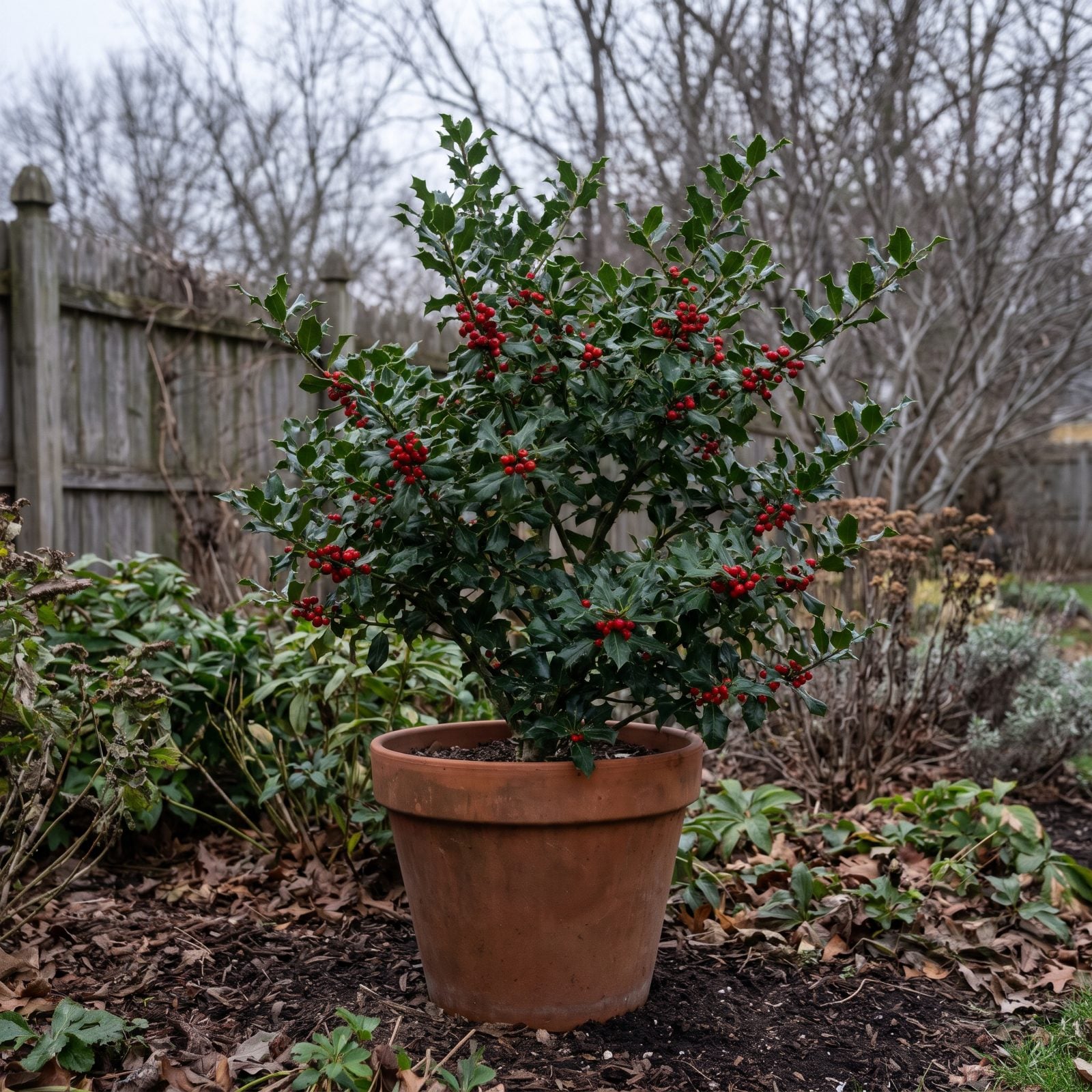
A holly with no berries next year isn’t broken. It’s probably a female that lost its date.
Hollies are mostly dioecious, meaning plants are male or female, and only females carry berries. Your festive berried gift is female. She needs a male holly of a compatible type growing within range so bees can shuttle pollen between them. No male nearby, no berries.
Plant her in moist, slightly acidic soil in sun to part shade, and site a suitable male somewhere close by. One male can service several females. People buy a single holly, wait a year, and feel cheated when the berries don’t return. Now you know why.
31. Lemon Cypress, Give It Sunlight and Consistent Moisture
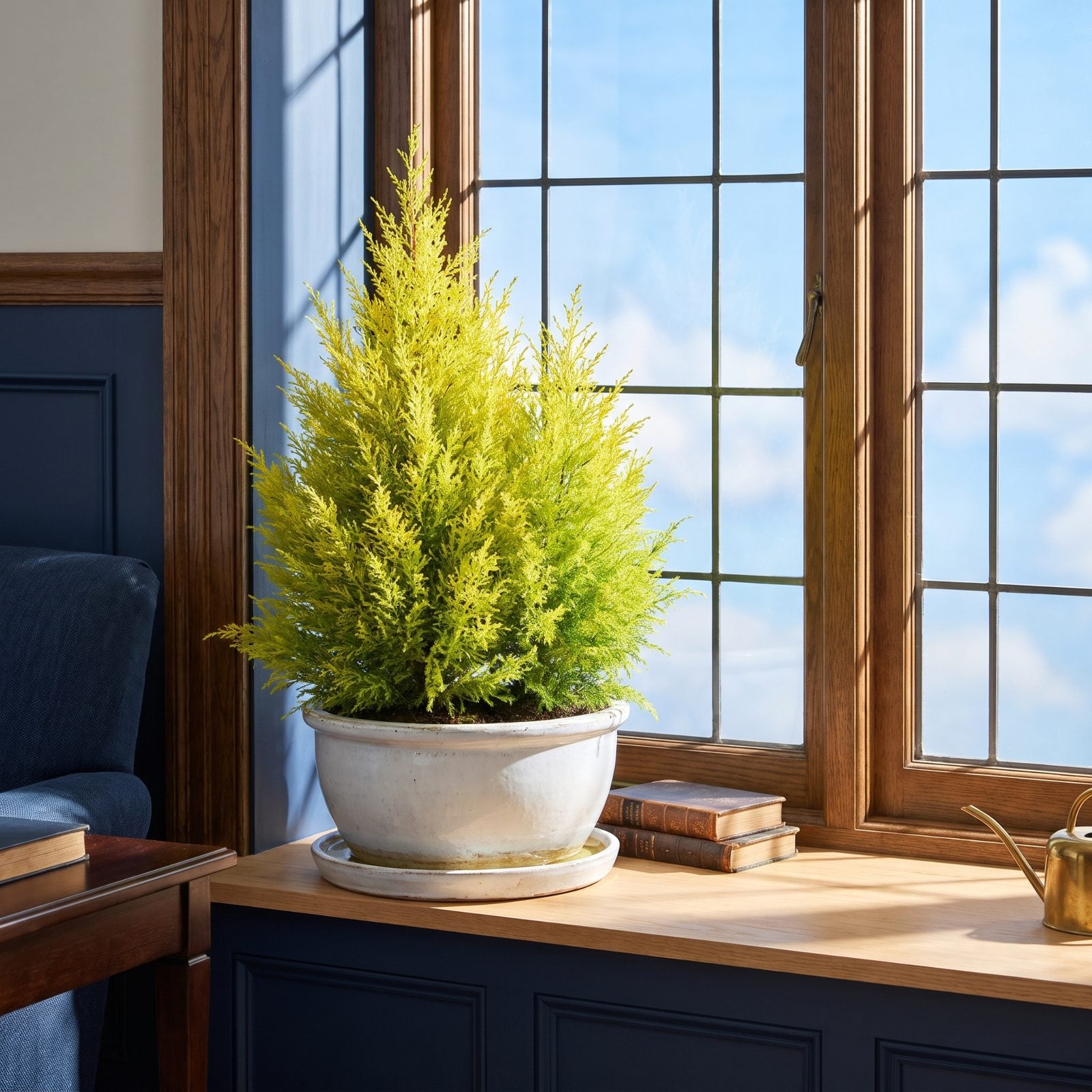
Brush the foliage and your hand smells like lemon zest and pine. That’s the draw of this golden conifer, often sold as a tabletop tree with tiny ornaments clipped on.
Two things kill them fast: too little light and letting the soil dry out. They want the brightest window you have, ideally hours of direct sun, and soil kept evenly moist but never soggy. Brown patches rarely recover, so watch it closely. In zones 7 and warmer you can plant it outside, where it can rise into a tall, slender column over the years.
30. Florist Azalea, Replant It in Acidic Soil After Flowering
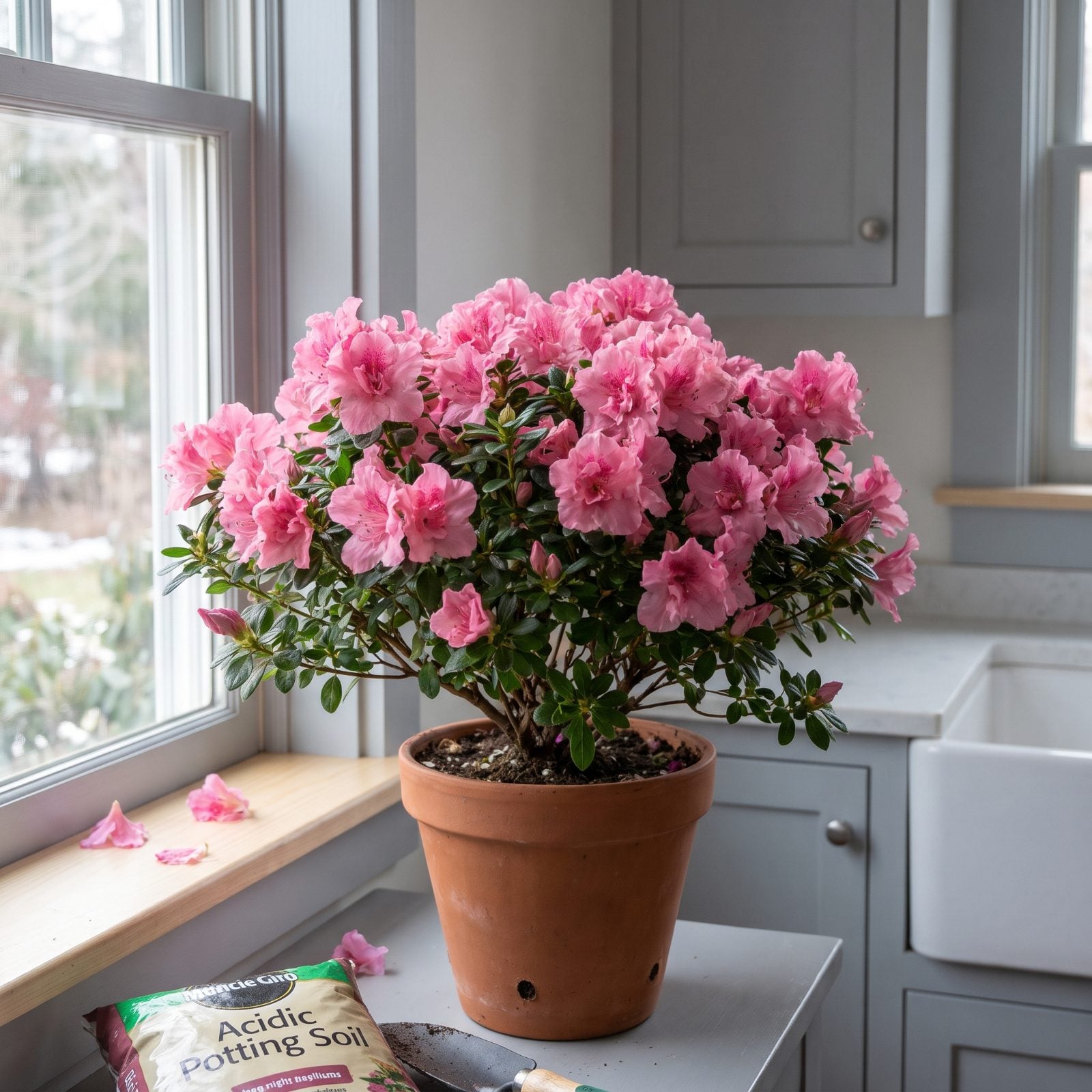
Florist azaleas are the ones that come wrapped in foil, blooming like mad, usually destined for the trash by February. That’s a waste. They’re tender evergreen shrubs, and most want to live.
After the flowers fade, pot it up in genuinely acidic, well-draining soil. These plants loathe alkaline conditions and chlorinated hard water, which is why they yellow and fade on so many windowsills. Keep it cool, bright, and lightly moist. In mild zones it can go into the garden. Elsewhere, treat it as a cool-room houseplant that summers outside. Stop letting it sit bone-dry and it’ll rebloom for years.
29. Anthurium, Provide Warmth for Repeat Red Blooms
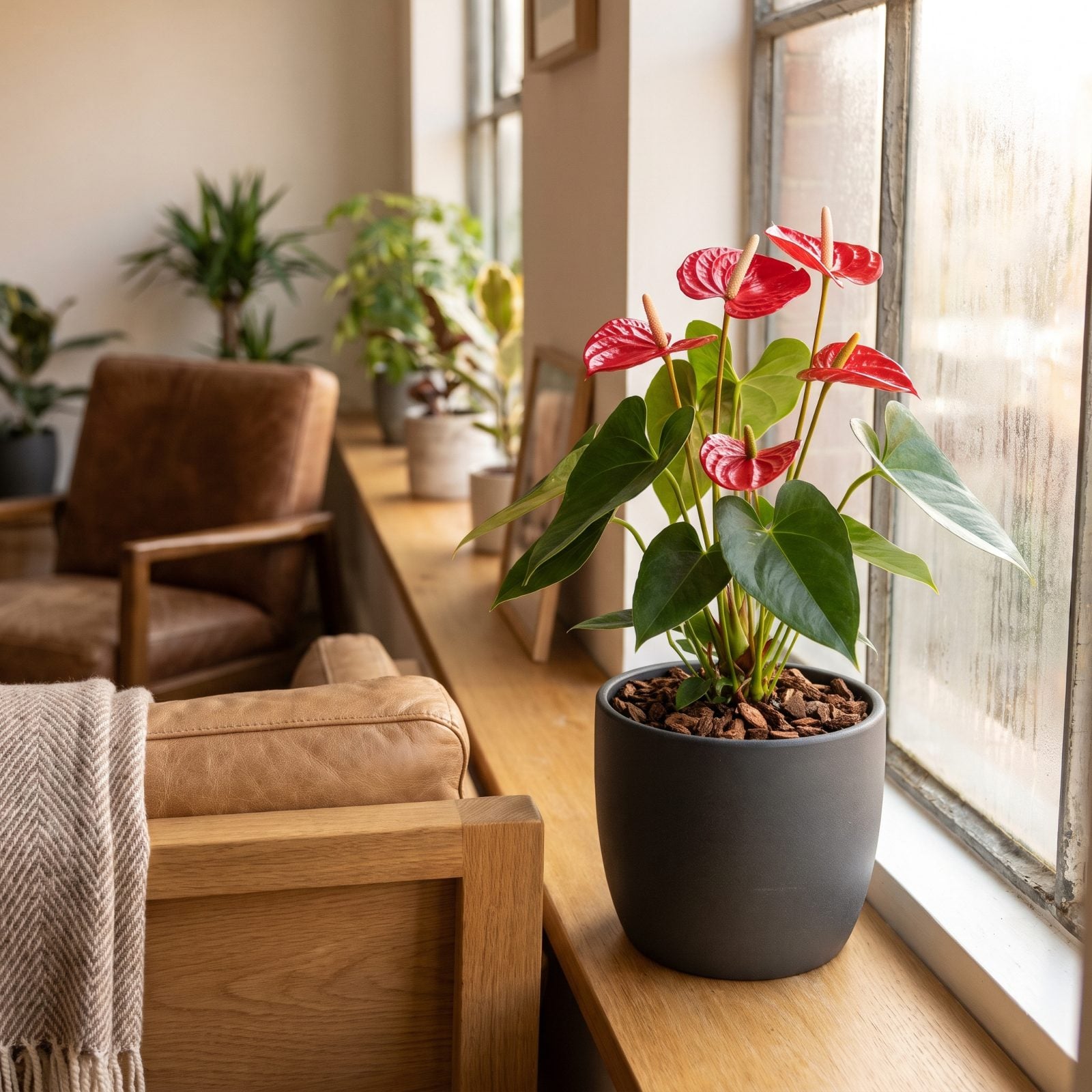
Those red hearts aren’t flowers, by the way. They’re modified leaves called spathes, and the real flowers sit on the little spike in the middle. Trivia for your next dinner party.
Anthuriums bloom on and off all year if they’re kept happy, and happy means warm. Below about 60 degrees they stall and refuse to produce new spathes. Give it bright indirect light, a chunky mix that drains fast, and room-temperature water when the top inch dries. Keep it clear of cold drafts and heating vents alike. Treat it well and the red hearts keep coming for years, long after the holiday that brought it.
28. Clivia, Use a Cool Rest Period to Set Flower Buds
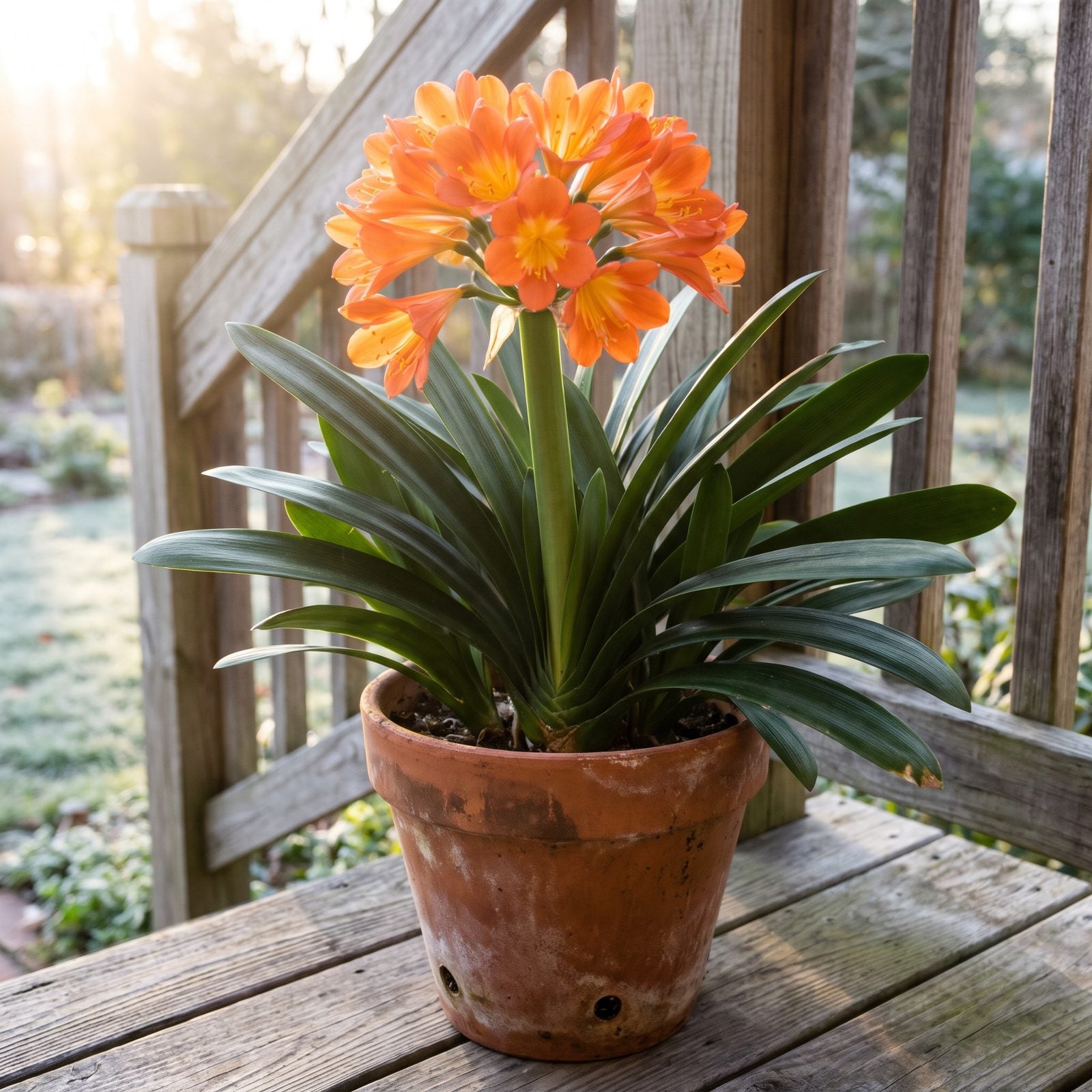
Clivia is the quiet overachiever of winter gift plants. Those orange trumpet clusters can keep coming back for decades if you understand one thing: it needs to be cold and thirsty for a while.
From roughly late fall, move it somewhere cool, around 50 degrees, and nearly stop watering for six to eight weeks. That dry chill is what triggers the flower stalk. Skip it and you get leaves, year after year, and a lot of confused owners. After the rest, warm it back up, resume watering, and the bloom stalk rises. It likes being pot-bound, so don’t rush to repot it.
27. Frosty Fern, Maintain the Humidity This Selaginella Needs
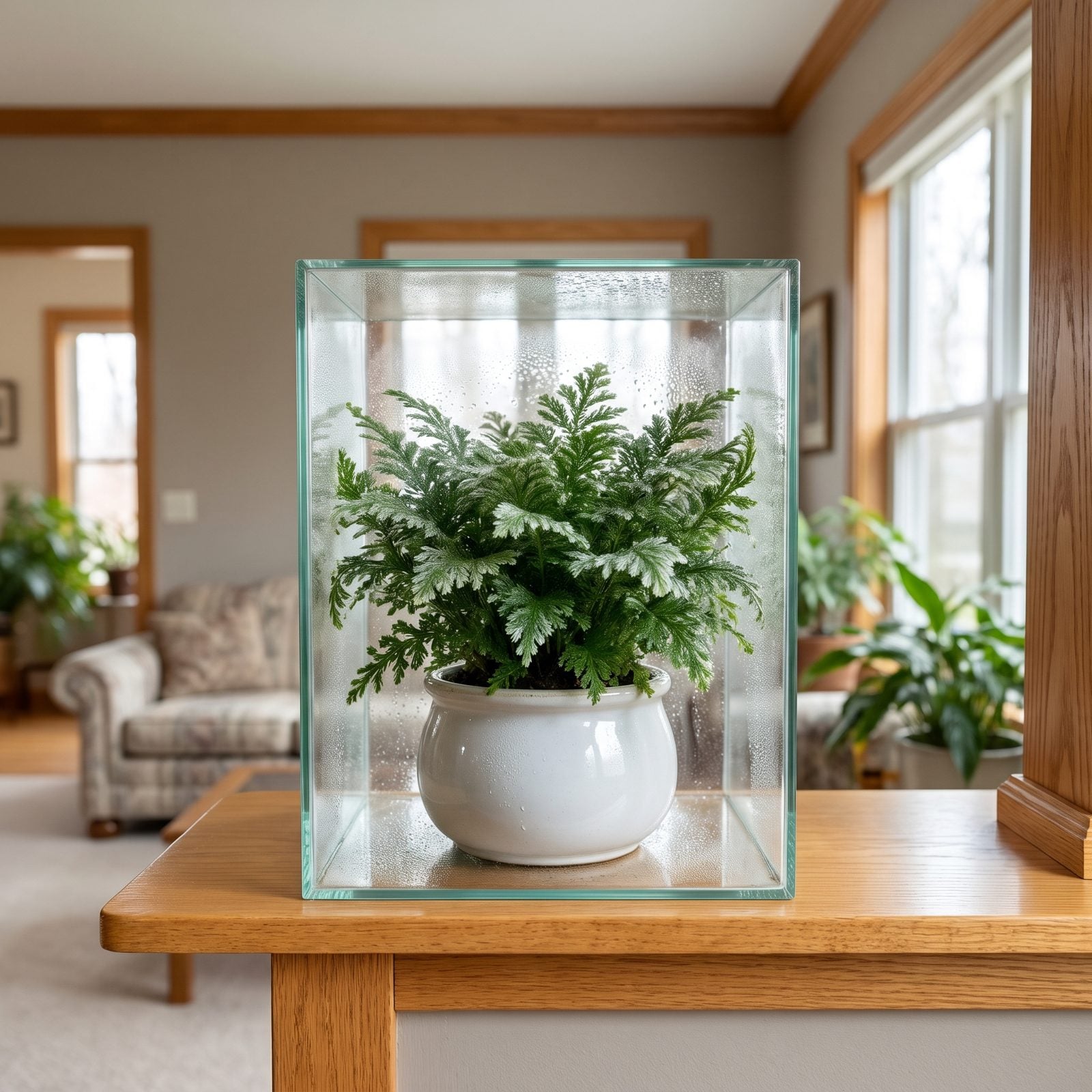
It looks like a dwarf conifer with snow on the tips. It’s neither a fern nor frosted. Frosty fern is a Selaginella, a spikemoss, and the white tips are just new growth.
These are drama queens about humidity. Let the air dry out or the soil go dry even once and the whole thing crisps to brown in a day. We’ve lost one to a single forgotten weekend, so we’re not exaggerating. Keep it in a terrarium, a bathroom, or under a cloche, in constant moisture and bright indirect light. Outside the warmest zones it’s a houseplant, full stop. High effort, but genuinely pretty.
26. Wintergreen, Give This Woodland Plant Acidic Soil
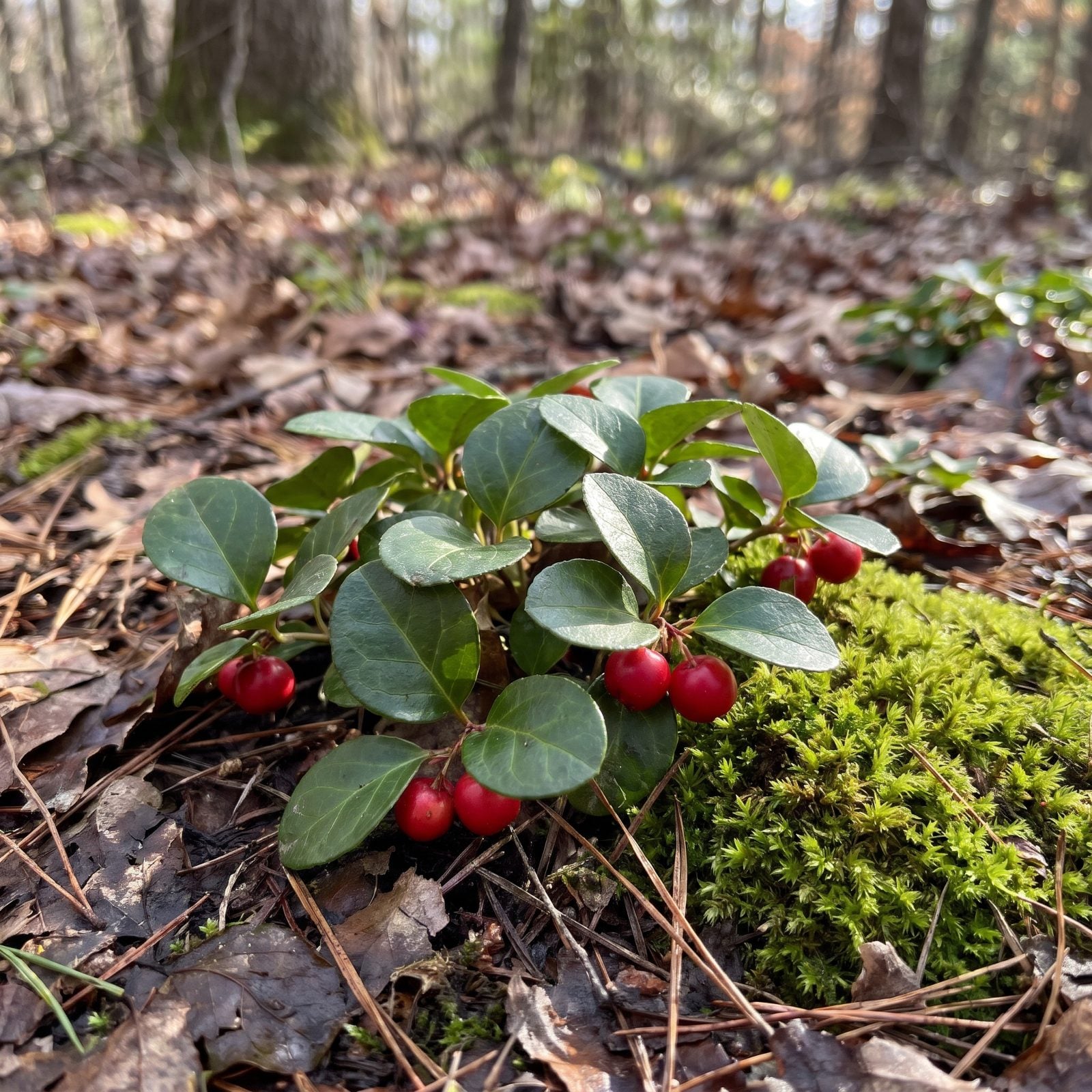
Crush a wintergreen leaf and you’ll recognize the smell instantly: old-fashioned mint candy and chewing gum. This native woodland groundcover (Gaultheria procumbens) is the original source of that flavor.
It turns up in winter as a little berried pot, and it’s a true perennial that wants out of the house. The catch is soil. Wintergreen demands acidic, humusy, consistently moist conditions in part to full shade, the sort of spot where rhododendrons thrive. Plant it in ordinary alkaline garden dirt and it slowly fades. Give it the right acidic bed under trees and it spreads into a tidy evergreen carpet, the red berries lingering clean through the cold months.
25. Skimmia, Pair Male and Female Plants for Future Berries
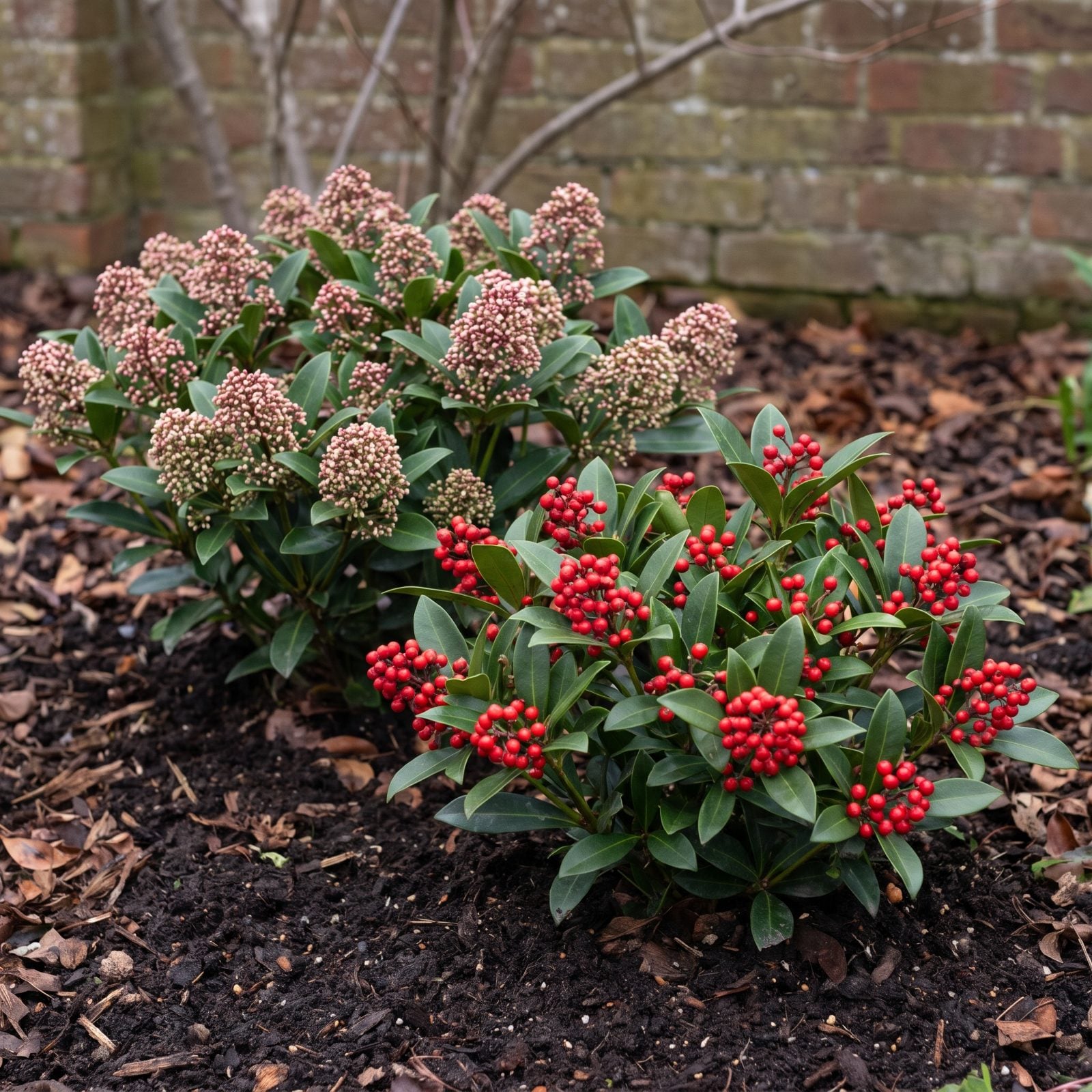
Skimmia pulls the same trick as holly, and it catches people out the same way. The berried plant you got is female. She can’t make next year’s berries alone.
You need a male skimmia planted nearby to pollinate her. Buy a berried plant and a bud-covered male (varieties like ‘Rubella’ are popular males) and site them close in moist, acidic, shaded soil. One male covers several females. It’s a slow, compact evergreen for a shady corner, and little else looks this cheerful there in the dead of winter.
24. Camellia, Protect Its Roots While It Establishes Outdoors
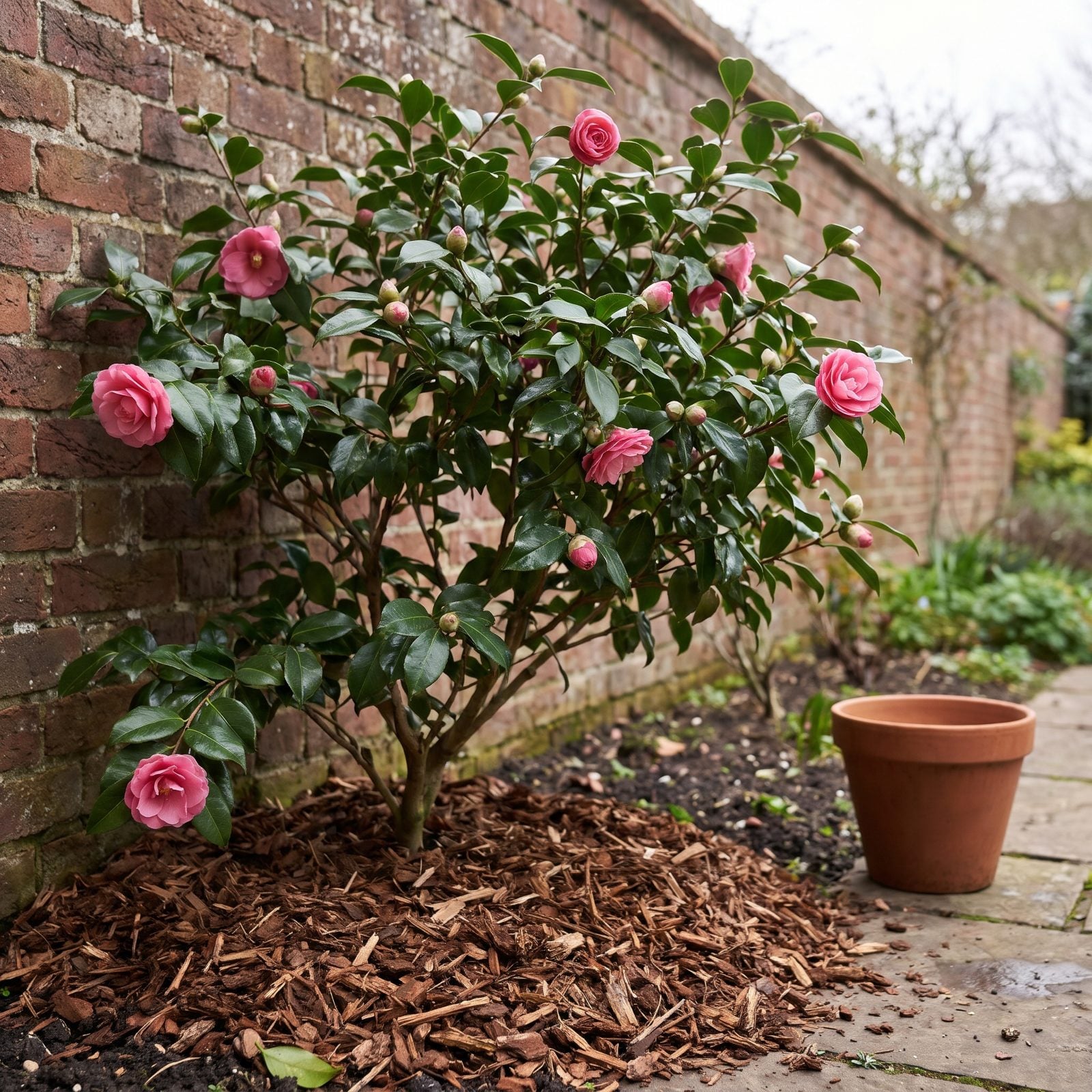
That camellia you got wrapped in gold foil is no disposable table ornament, no matter how it arrived. It can live for decades. The catch is the roots, which are shallow, fussy about being cooked, and deeply resentful of sitting in a warm living room all winter with bone-dry soil.
Keep it cool and bright indoors until the frost danger passes, then plant it in acidic, well-drained soil with afternoon shade. Mulch generously over the root zone, keeping it a couple of inches back from the stem. We lost one years ago by planting it in blazing afternoon sun because the tag said “full sun” and we didn’t read the fine print about southern climates. Lesson learned the hard way.
23. Paperwhite Narcissus, Plant Prepared Bulbs Outdoors in Suitable Climates
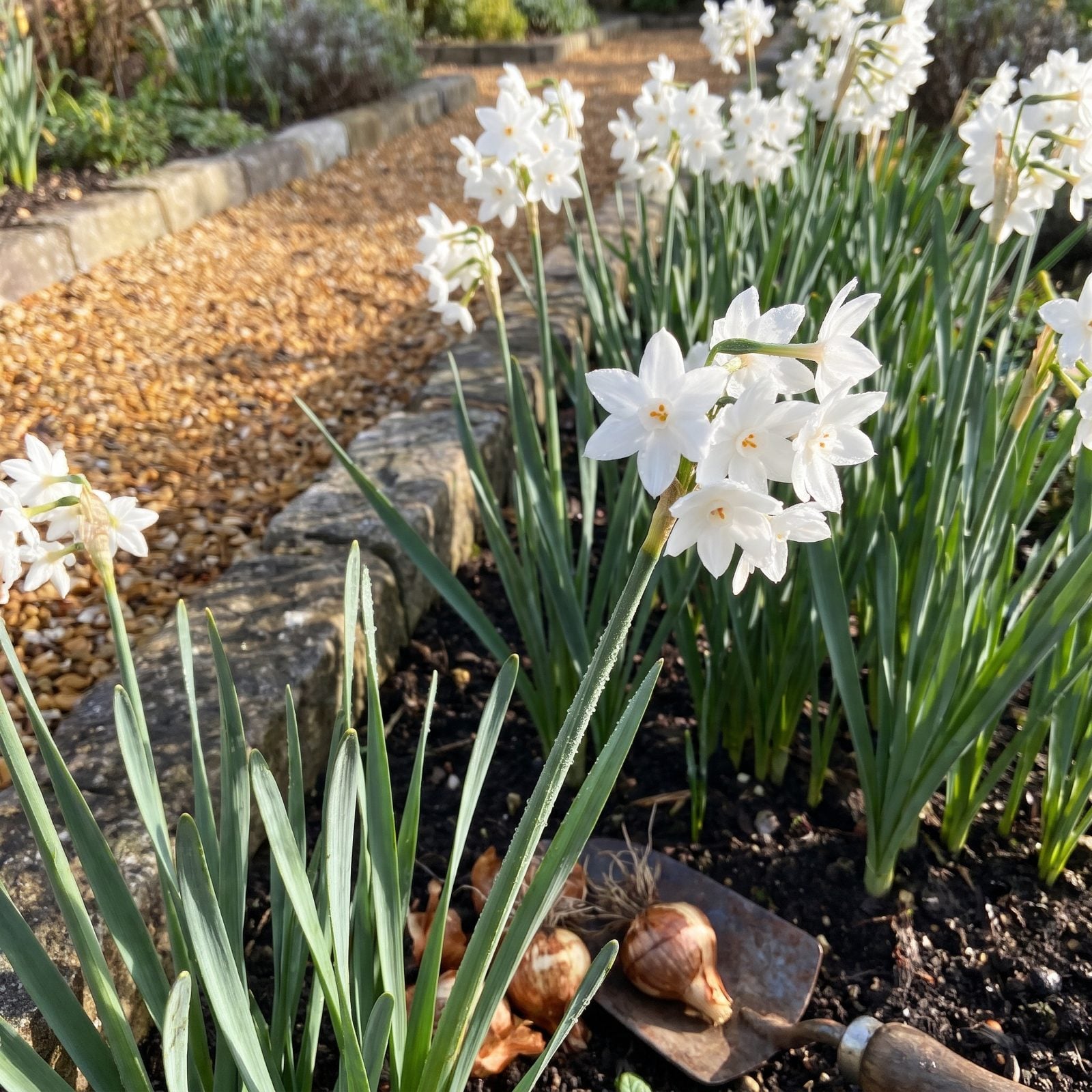
Paperwhites are the plant everyone forces in a bowl of pebbles for the holidays, then tosses in January. Fair enough. The forced ones rarely rebloom indoors.
But garden in a mild-winter zone, roughly USDA 8 through 11, and those same bulbs can go straight into the ground to come back year after year. They’re tender compared to regular daffodils, so cold climates will finish them off outdoors. Let the foliage yellow and die back naturally after flowering, feed the bulb through its leaves, and plant in autumn somewhere sunny with sharp drainage. In the right spot they’ll naturalize into drifts and bloom in late winter when nothing else dares.
22. Miniature Daffodils, Naturalize Them in a Sunny Garden Bed
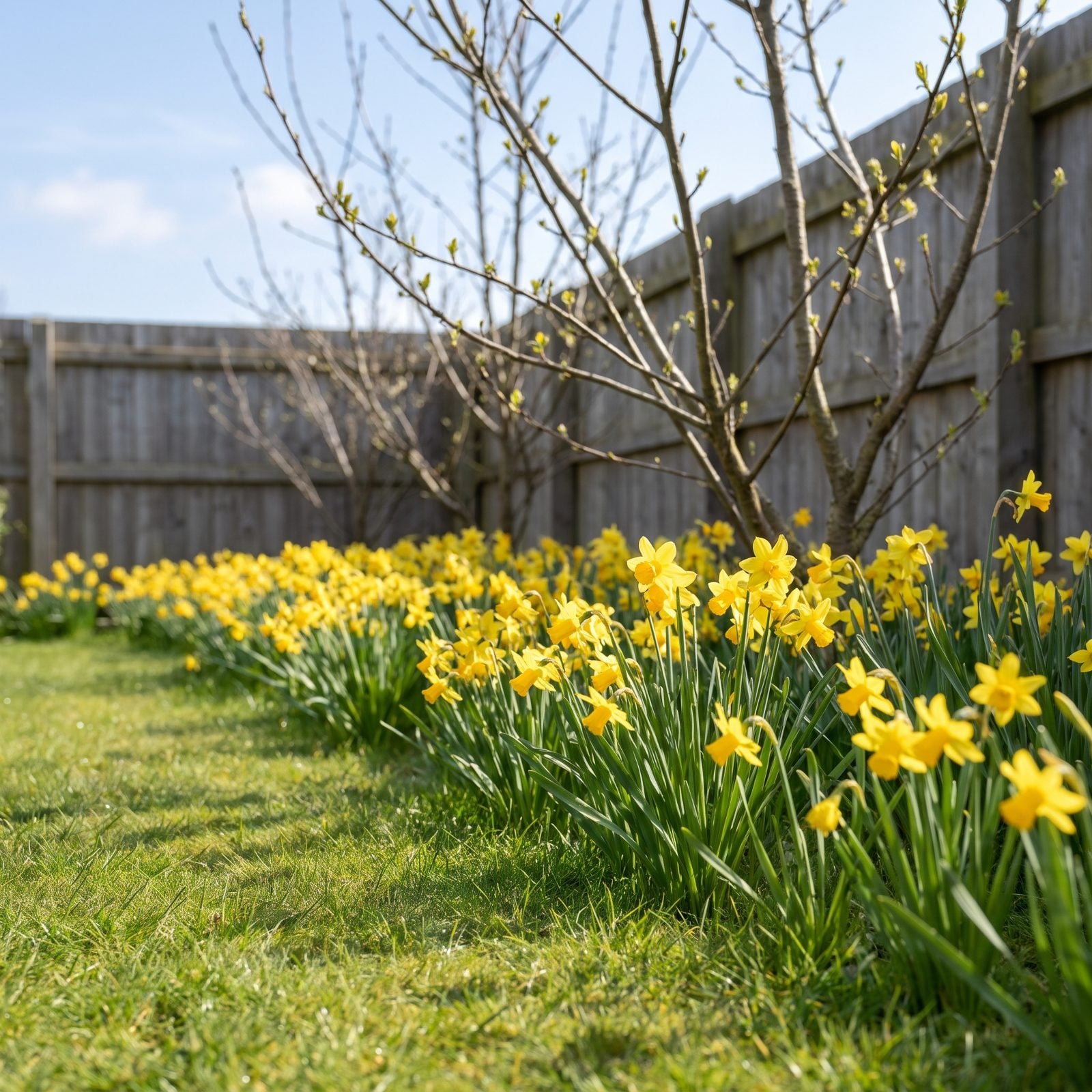
These are the gift plant that actually improves with neglect. Miniature daffodils, the little ‘Tete-a-Tete’ types sold in festive pots, want almost nothing from you once they’re in the ground.
After the indoor display fades, keep watering until the leaves go. Don’t cut that foliage early no matter how scruffy it looks, because that’s the bulb eating sunlight and storing it for next year. Plant them in a sunny, well-drained bed in autumn, four or five inches deep, and leave them alone. Within a few seasons a single pot’s worth multiplies into a proper spring patch that returns on its own, cheerful and completely free.
21. Potted Hyacinth, Let the Foliage Recharge the Bulb
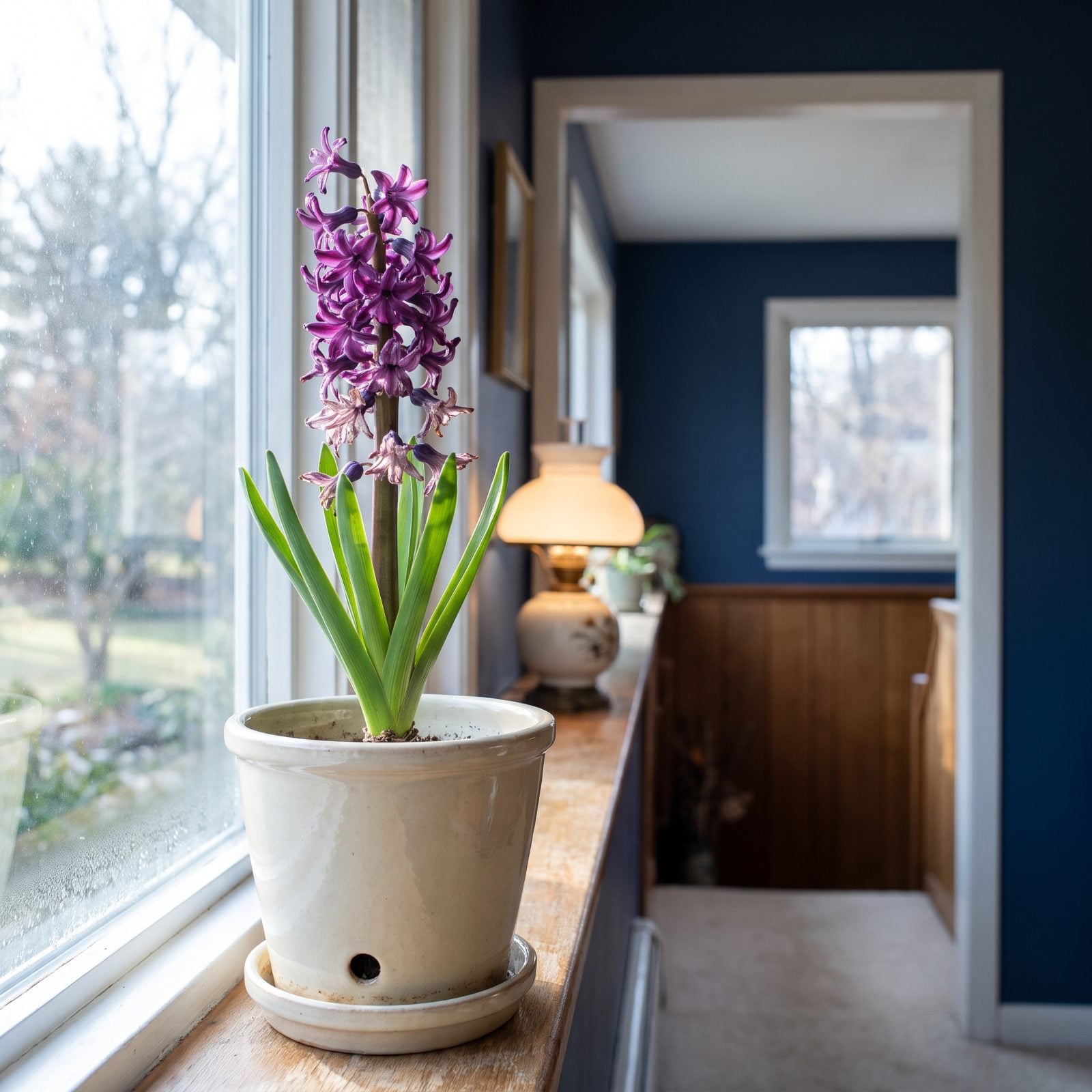
Forced hyacinths put on a show and then look spent. That thick spike of waxy florets took everything the bulb had, which is why it won’t repeat the trick next year. It needs to rebuild.
Snip the flower stalk once it fades, but leave every leaf. Those leaves feed the bulb back to strength. Keep it in a cool, bright spot and water sparingly until the foliage dies down, then plant it outdoors in autumn in well-drained soil. Honest warning: the second-year bloom is usually looser and smaller than the florist’s forced version. It’ll never match that first fat spike. That’s normal, not failure on your part.
20. Holiday Primrose, Move It to a Cool, Partly Shaded Garden
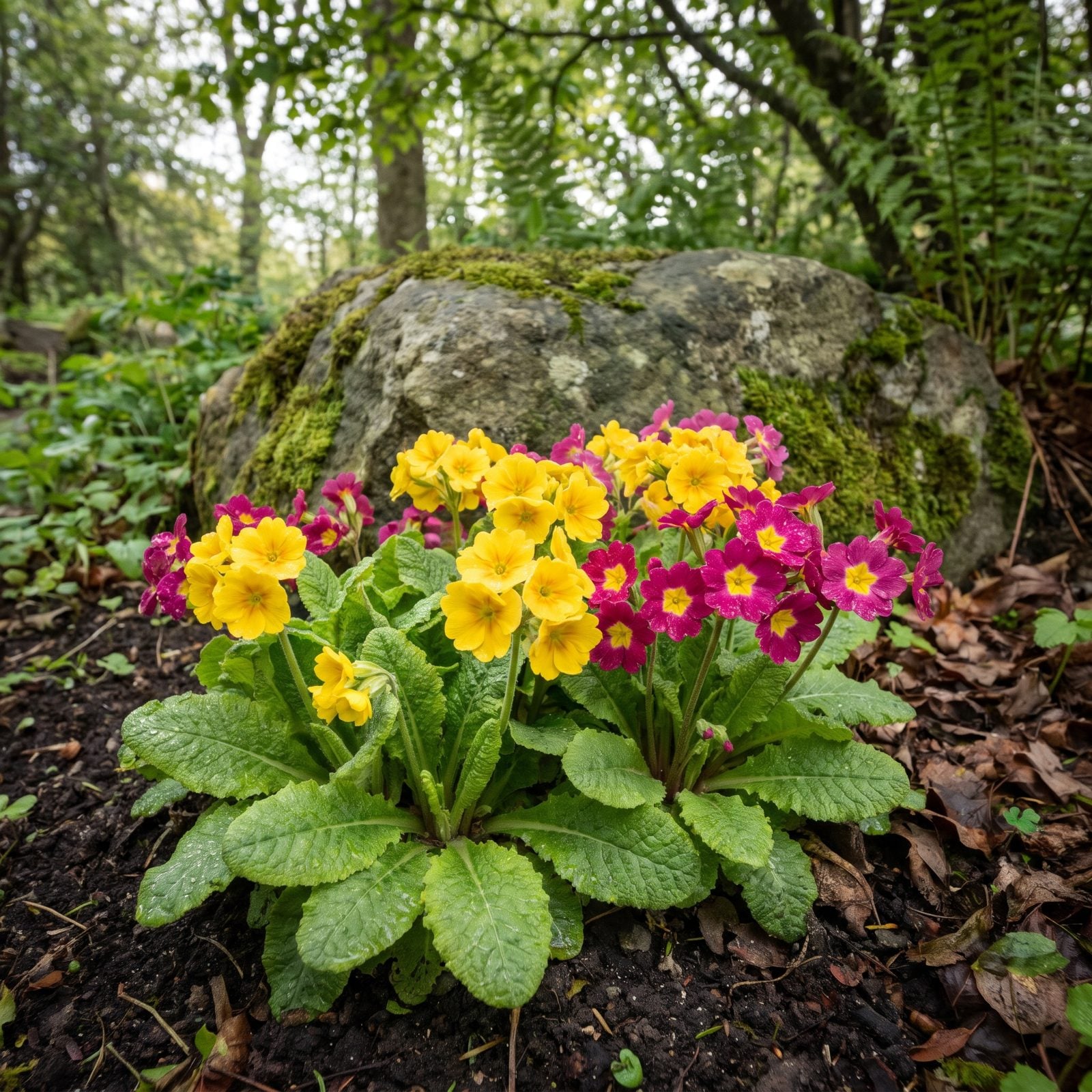
Holiday primroses are sold as throwaway color, little pots of intense yellows and magentas meant to brighten a kitchen counter in the dreariest weeks. Most people compost them by February.
They’re tougher than that. Primula is a genuine perennial in cool, moist conditions. What kills them is warmth and dry air, which is exactly what a heated living room provides. Get them into a shaded, humus-rich garden bed as soon as the ground allows, somewhere that stays cool and never bakes, and keep the soil damp. In a spot they like, they’ll clump up and rebloom every spring for years, often earlier than anything else in the bed.
19. Calamondin Orange, Hand-Pollinate Its Fragrant Indoor Flowers
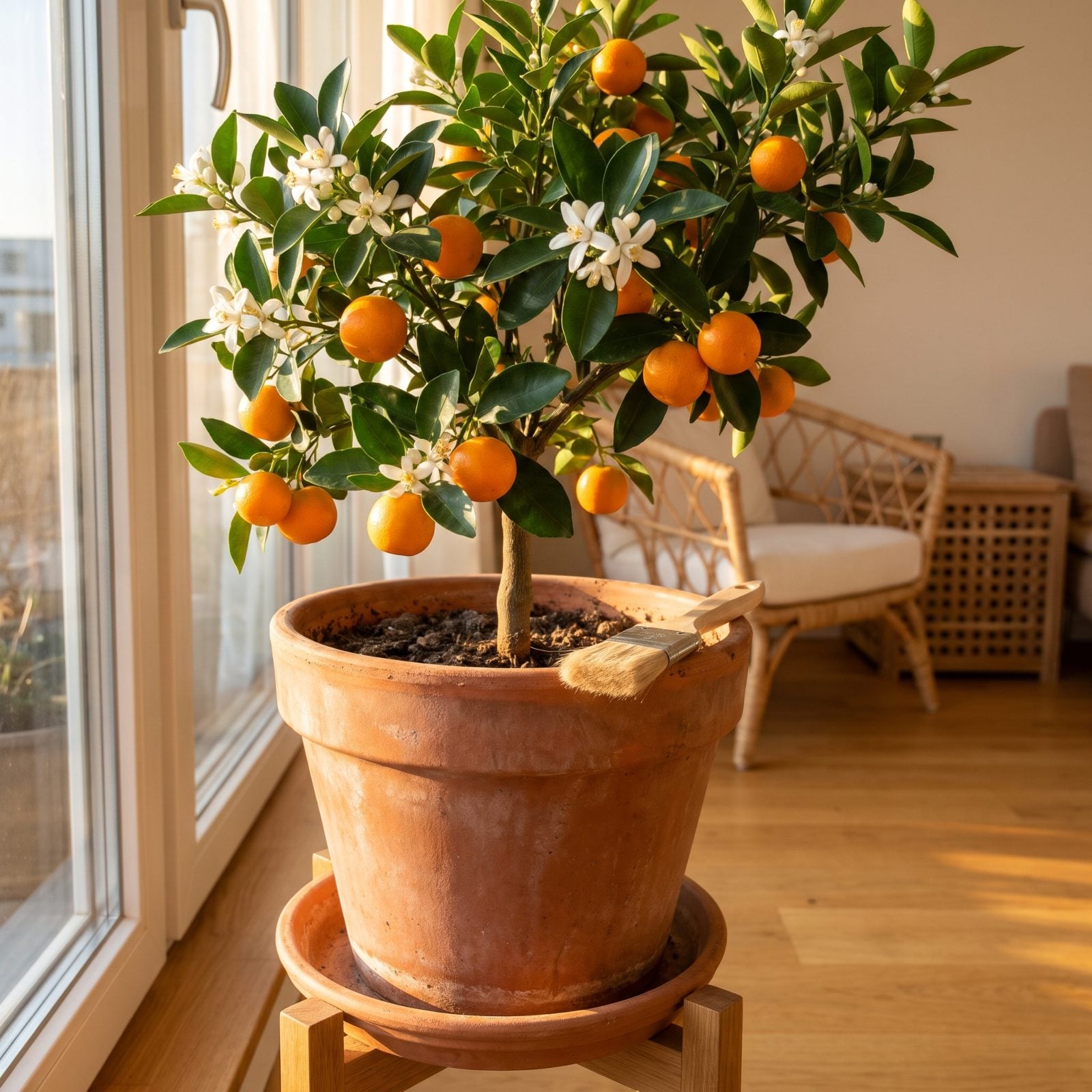
Covered in tiny orange fruit and sweet-smelling white blossom, a calamondin is the kind of gift that makes you feel like you’ve been handed a whole tiny grove. It can keep fruiting indoors for years. But indoor air has no bees.
So you play bee. When the white flowers open, take a small soft brush and dab from bloom to bloom, moving pollen around. It’s a two-minute job that decides whether you get fruit or just flowers that drop. Give it the brightest window you own, let the top inch of soil dry between waterings, and feed it a citrus fertilizer through the growing season. The fruit is mouth-puckeringly sour, by the way. Marmalade is its destiny, not snacking.
18. Bay Laurel, Overwinter It Indoors in Cold Regions
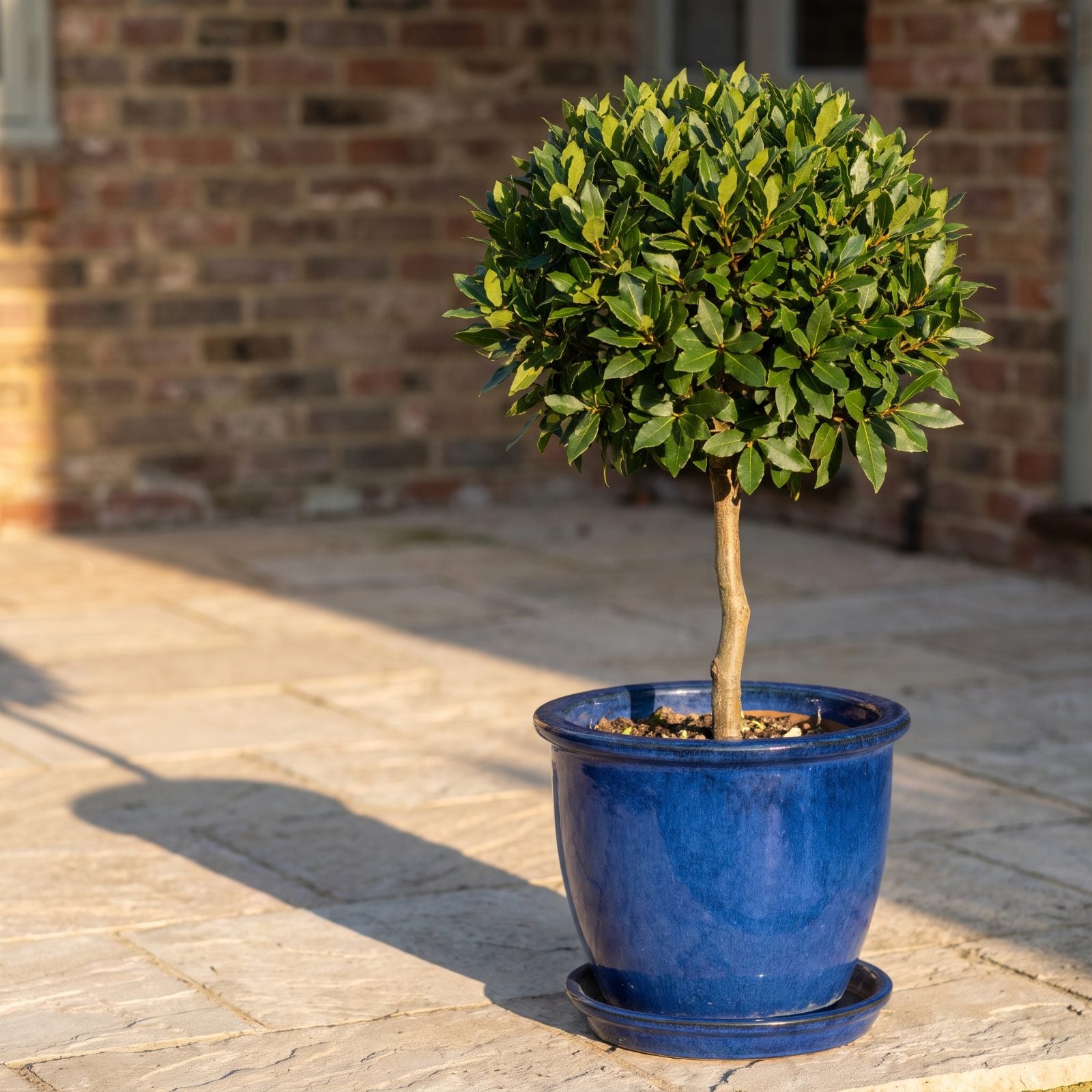
A bay laurel is a kitchen plant that happens to be a tree. Those glossy, leathery leaves are the same ones you fish out of a stew. Left alone it grows tall, but in a pot it stays manageable and good-looking for decades.
In mild climates it lives outside year-round. Where winters drop below the low twenties Fahrenheit, it needs to come indoors before hard frost. Put it in a cool, bright room, water only when the soil dries, and go easy on the heat. Bay sulks in dark, warm corners and drops leaves. Move it back outside after the last frost and it’ll shrug off the whole ordeal. Harvest leaves whenever you cook. The plant doesn’t mind.
17. Potted Olive Tree, Provide Intense Light and Fast-Draining Soil
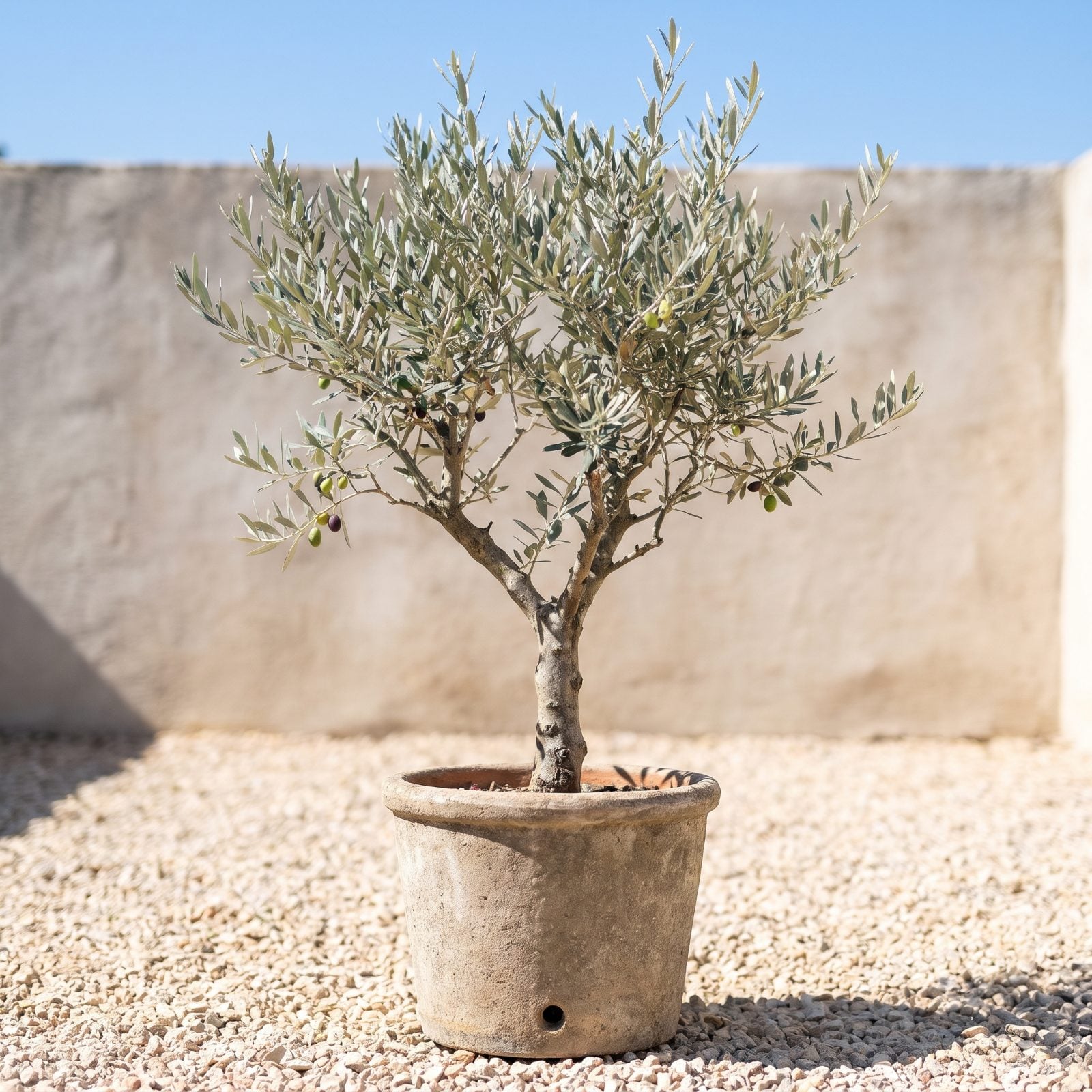
Olive trees get sold as chic holiday décor, all silvery leaves and Mediterranean romance, and then promptly die in a dim corner of someone’s apartment. Let me be blunt: these plants want punishment. Blazing sun, lean soil, and almost no fuss.
The two fastest ways to kill one are low light and wet feet. An olive in a shady room stretches, pales, and gives up. An olive in rich, moisture-holding potting soil rots at the roots.
Give it the sunniest window in the house, or better yet, a hot patio once the weather warms. Use a gritty, fast-draining mix, let it dry out hard between waterings, feed it lightly. Treat it like you resent it and it’ll thrive.
16. Dwarf Pomegranate, Give It Winter Rest and Summer Sun
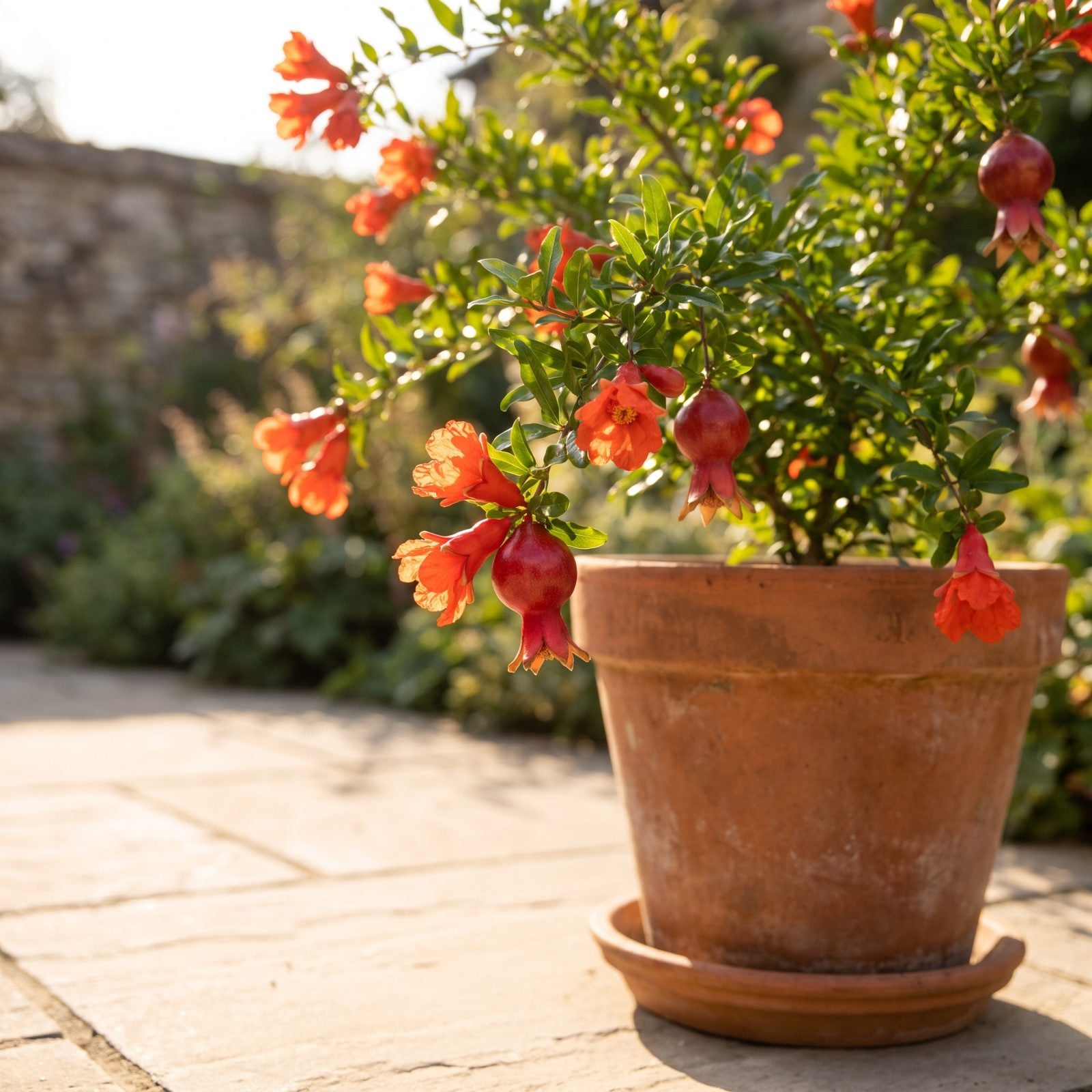
The dwarf pomegranate is a showoff. Scarlet trumpet flowers all summer, then tiny ruby fruits the size of a walnut. It stays compact enough for a container forever and lives for many years, as long as you give it one simple rhythm.
It needs a season to rest. In autumn it drops its leaves and wants a cool, dry dormant period, so cut back watering and keep it somewhere bright but cold, nowhere near a warm living room. Come spring, move it into full sun, start watering and feeding, and the whole cycle fires up again. People get this wrong by coddling it warm all winter, which confuses the plant and wrecks the flowering. Let it sleep.
15. Lucky Bamboo, Replace Stagnant Water and Avoid Direct Sun
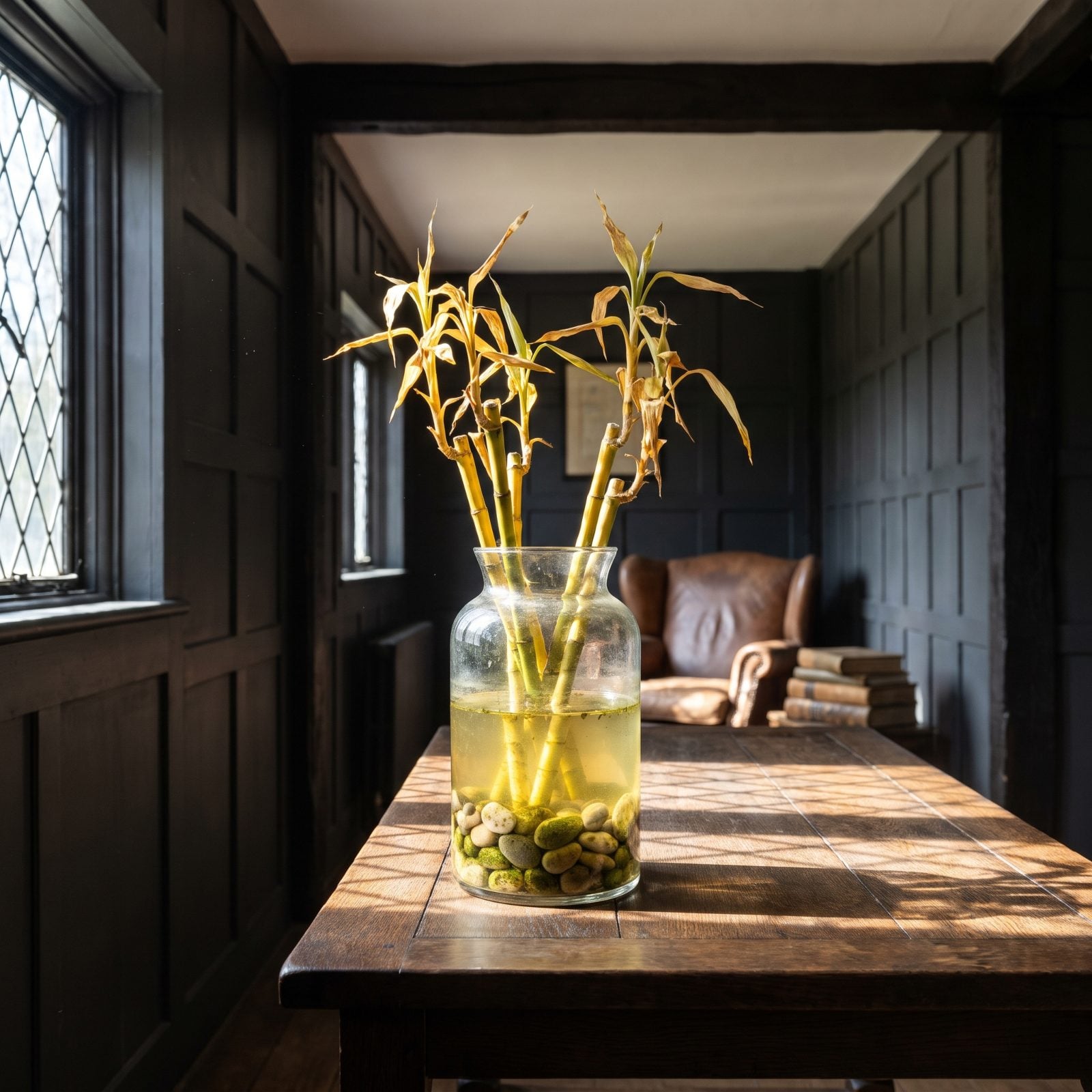
First, a correction: lucky bamboo isn’t bamboo at all. It’s a Dracaena, a tropical relative of the corn plant, and it’ll outlive most of your other gift plants with almost no effort.
The water is everything. Stagnant water turns cloudy, smells, and rots the stems, so swap it out every week or two and keep the roots covered. Use filtered or sat-out tap water, since the fluoride and chlorine in fresh tap can brown the leaf tips. Bright, indirect light only. Direct sun scorches those thin green stalks fast. Do that much and it quietly grows for years, which is more than you can say for the pebbles it came packed in.
14. Jade Plant, Let Its Soil Dry Between Winter Waterings
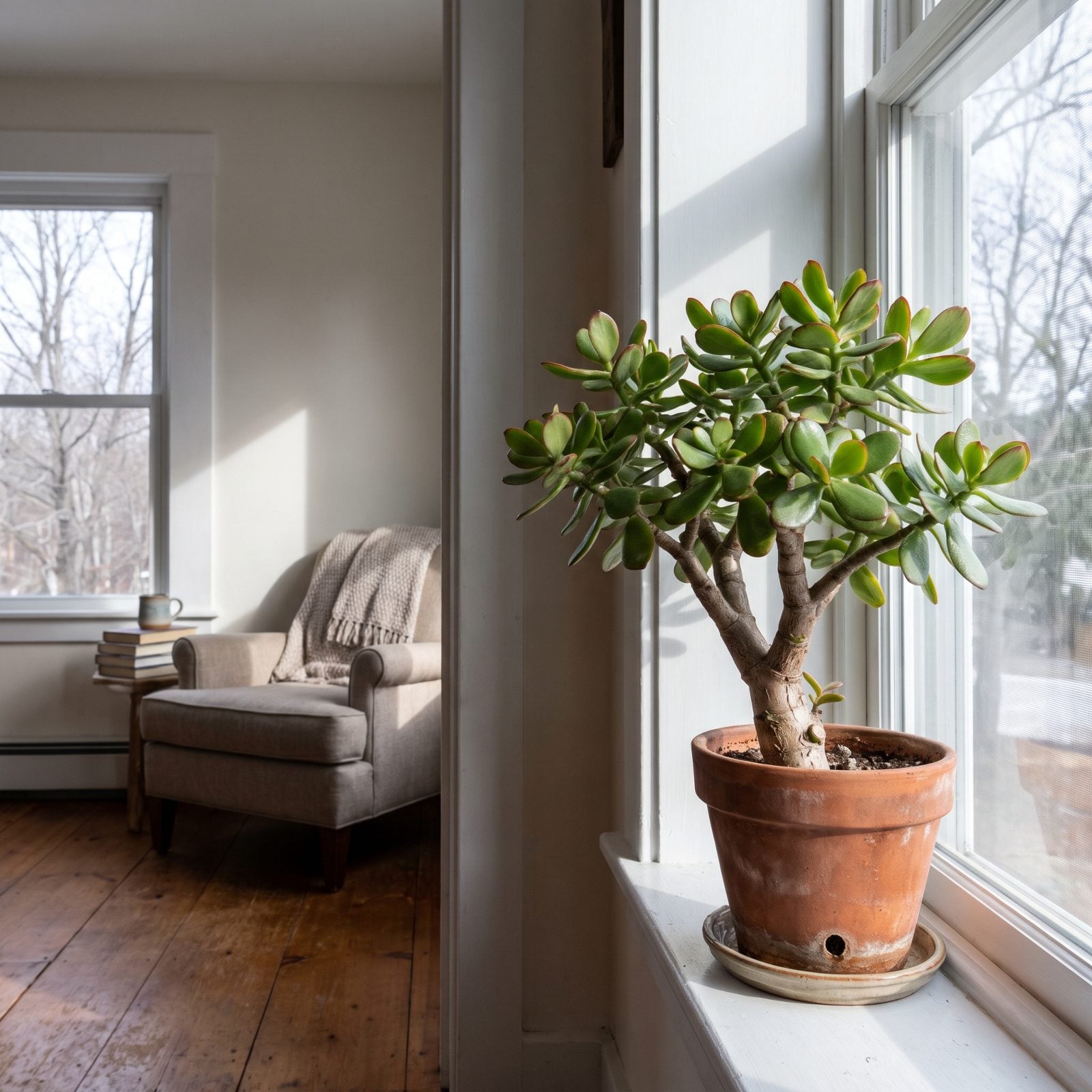
That cute little jade in the glazed holiday pot wants to be left alone in winter. Really. Overwatering is how most of them die, and the glazed pot with no drainage is the murder weapon.
Jade is a succulent that stores water in those fat leaves, so from late fall through winter it barely drinks. Let the soil go bone dry, water, then wait again. Give it the brightest window you’ve got. Do that and a thumb-sized gift becomes a woody little tree that lives for decades. We’ve killed more jades by being kind than by neglect, so take that as a warning.
13. Money Tree, Protect It From Cold Drafts and Soggy Soil
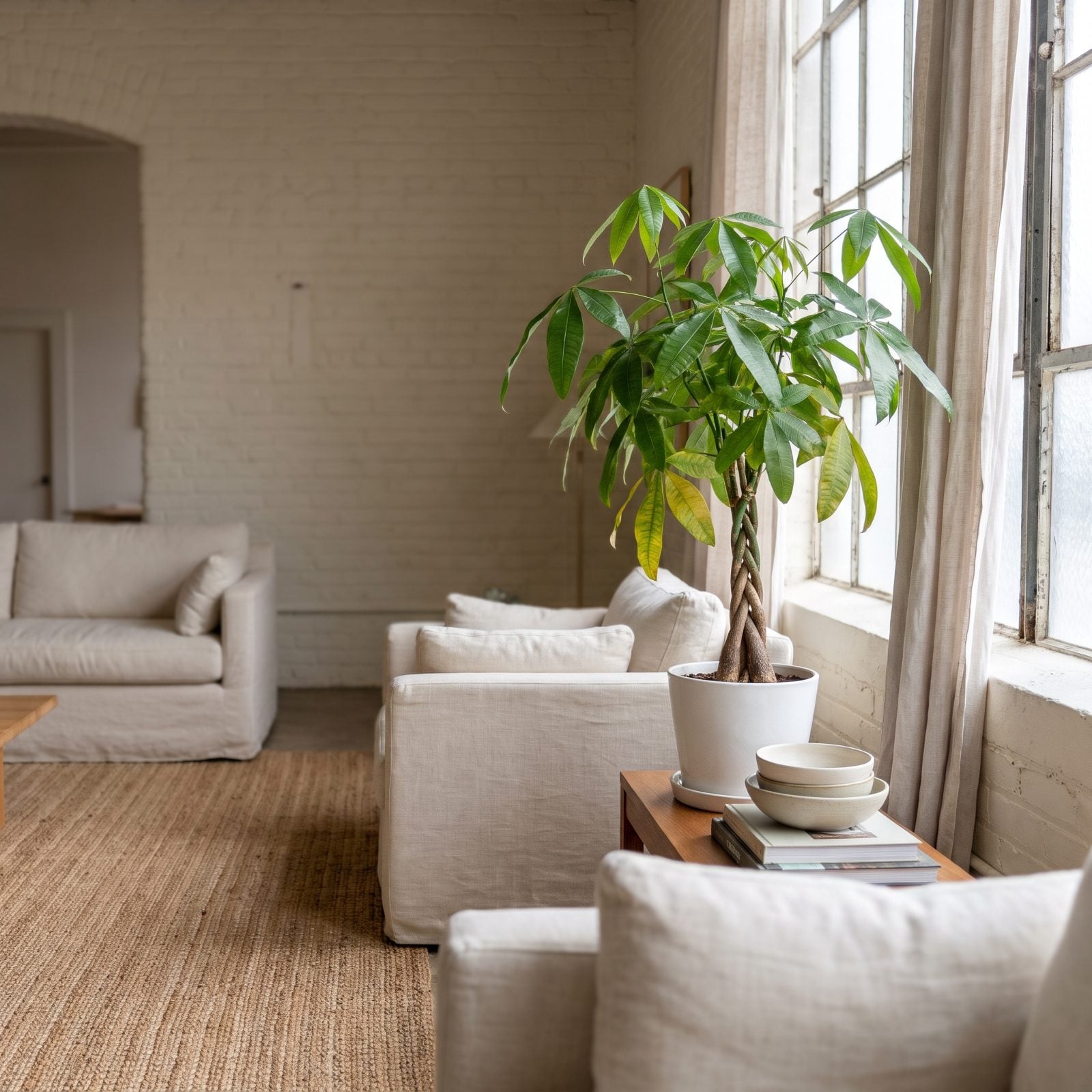
The braided trunk is a florist’s trick, not nature, but the plant underneath is tougher than it looks. Two things kill money trees: cold air and wet feet.
Keep it away from the drafty front door and the window that leaks January air, because those glossy leaves drop fast when chilled. Water only when the top couple inches of soil dry out, and pour off anything that pools in the saucer. In decent bright indirect light it grows into a six-foot indoor tree that sticks around for years.
12. Red Aglaonema, Preserve Its Color With Filtered Light
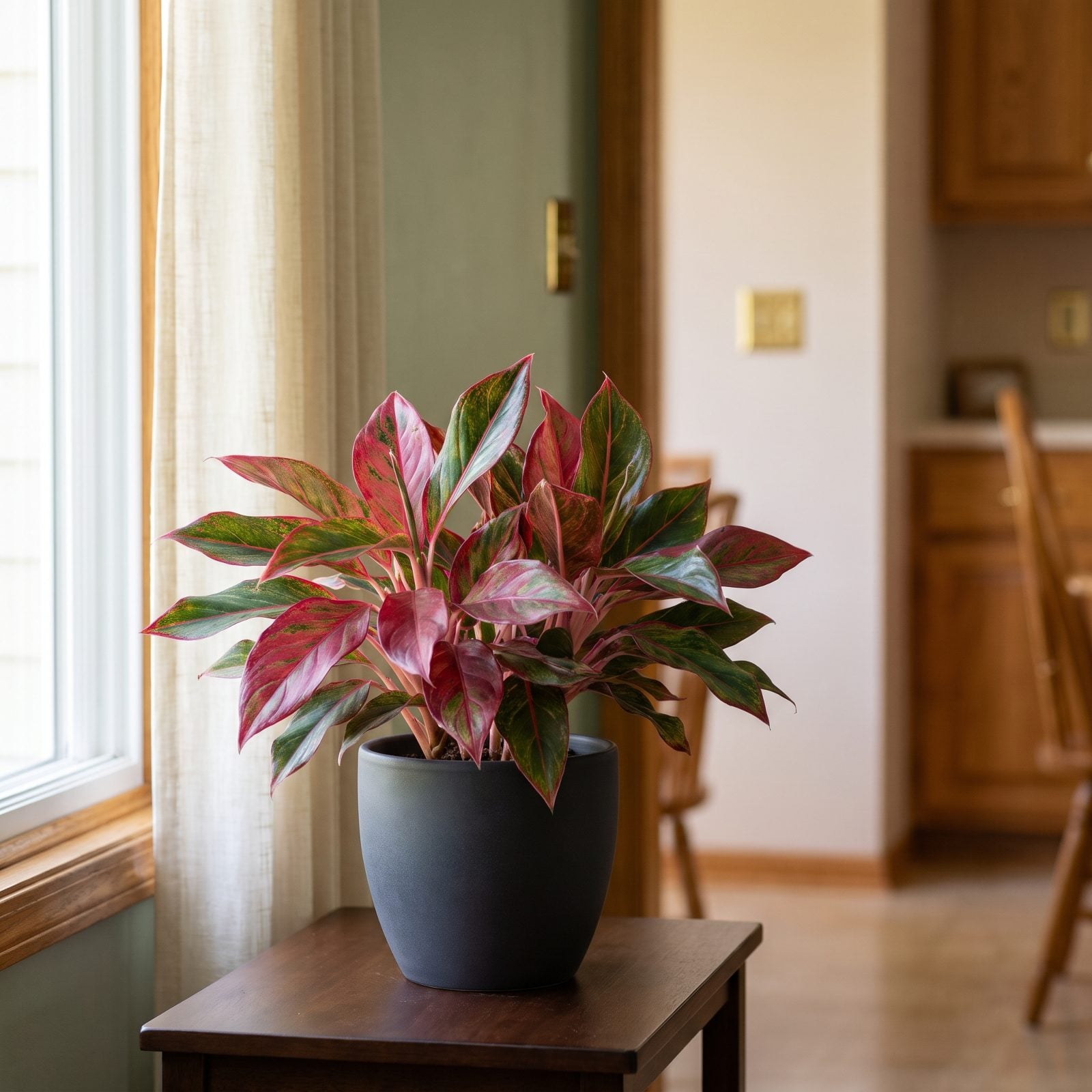
Here’s the counterintuitive part: the red one needs less light than you’d guess. Blast it with direct sun and those pink leaves bleach pale and crisp at the edges.
Filtered or bright indirect light holds the color best, so a spot near a curtained window is ideal. It’s slow, forgiving, and happy in average household humidity, which makes it one of the easier gift plants to keep going long-term. Your reward is that painted-leaf drama year round, no flowers required.
11. African Violet, Encourage Nearly Continuous Window-Sill Flowers
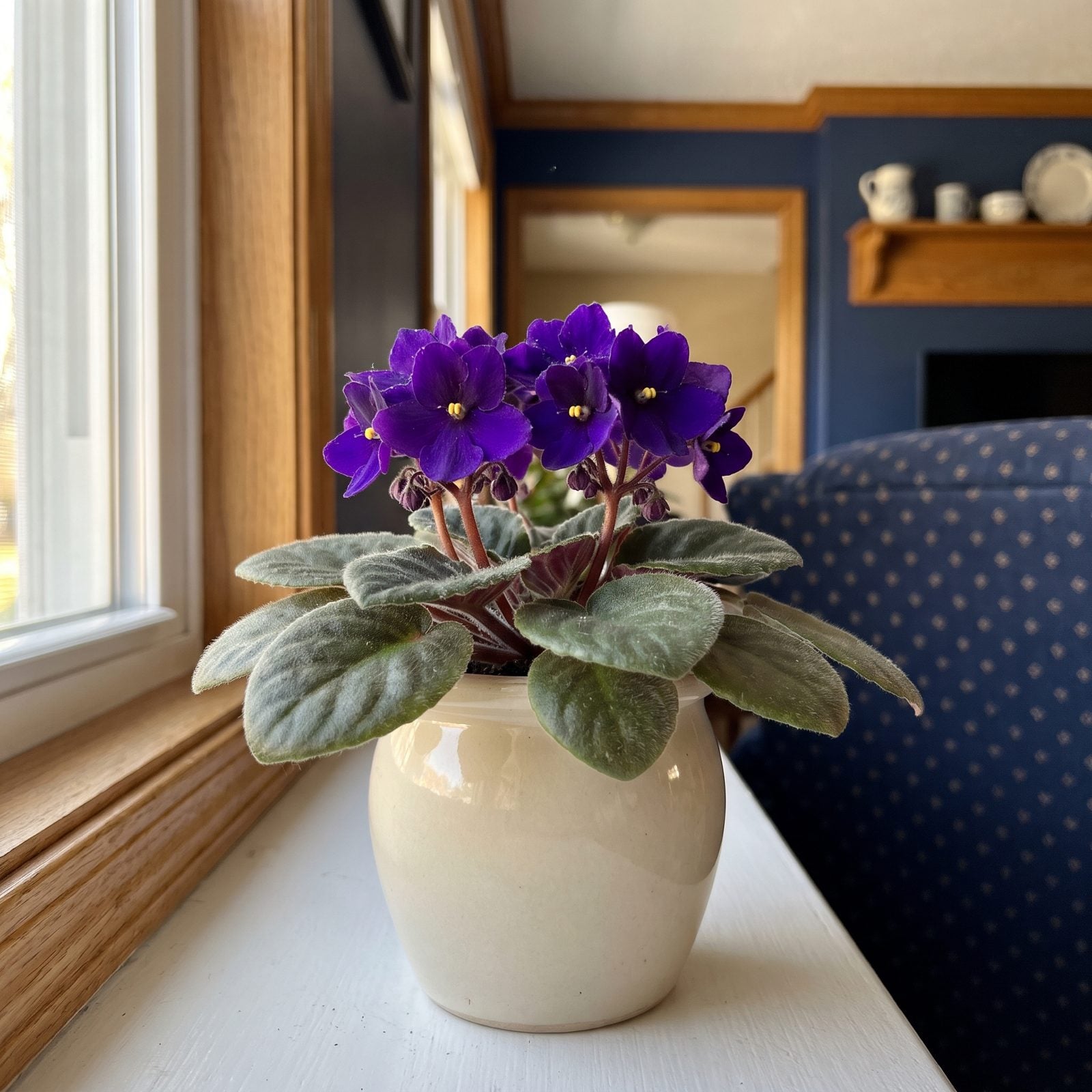
Few plants bloom as stubbornly as an African violet treated right. The trick is almost boring. Bright indirect light, warmth, and water from the bottom so you never splash the fuzzy leaves.
Water droplets on those leaves leave ugly spots, so set the pot in a saucer and let it wick moisture up from below. An east window suits them. Feed lightly during active growth and clusters of velvety flowers keep coming nearly all year. We keep one on the kitchen sill out of pure spite toward people who call them fussy. They aren’t.
10. Lunar New Year Peach Tree, Prune It Only After Flowering
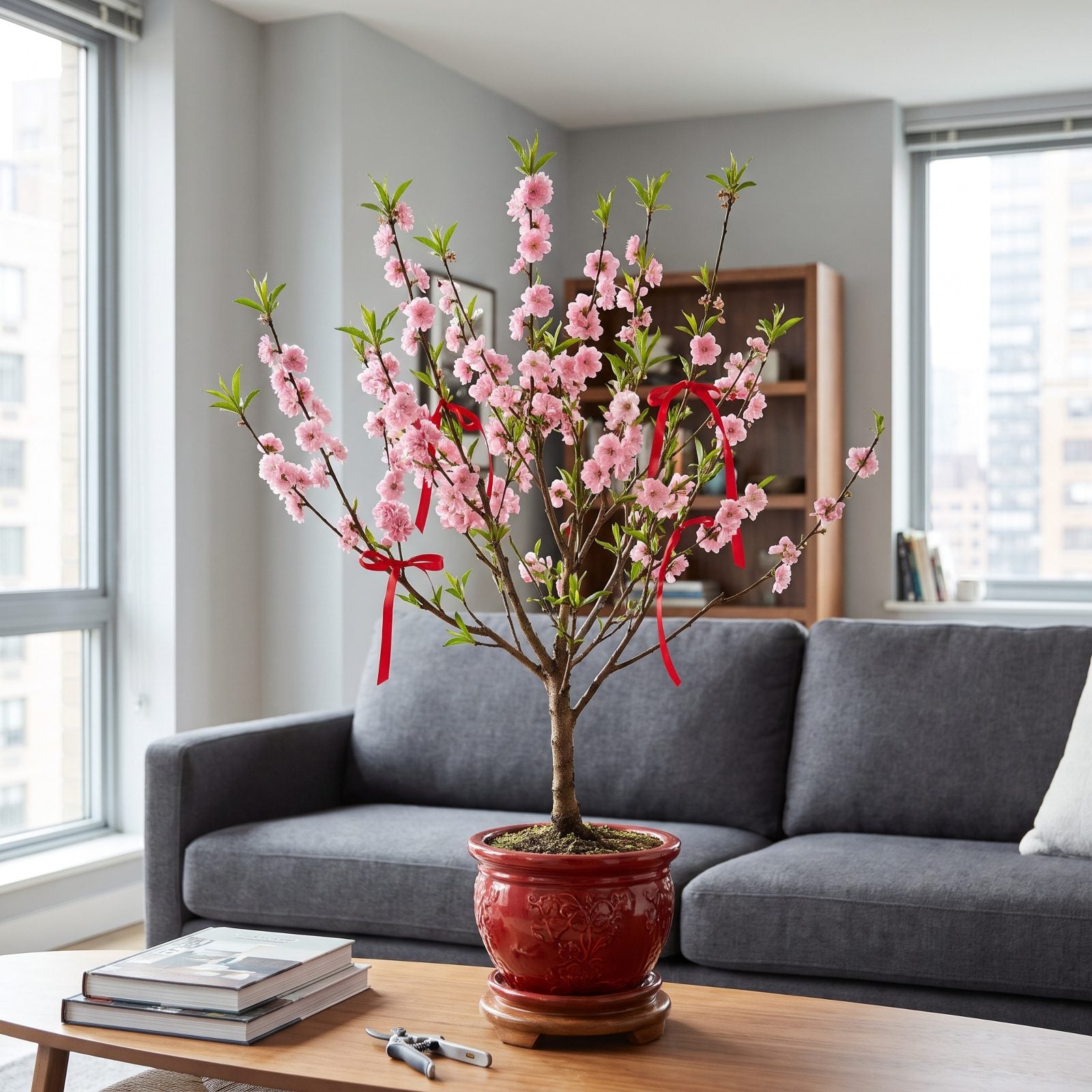
Those pink-blossomed branches are the real thing: a flowering peach, grown as a living symbol of the new year. And it can go in the ground.
Timing on pruning is everything. Peach trees flower on last year’s wood, so cut at the wrong moment and you remove next year’s show. Wait until the blooms fade, then shape it. Once the hard frosts pass, it can be planted outside in a mild climate, where it grows into a proper small ornamental tree that flowers every spring. Give it full sun and well-drained soil.
9. Purple Shamrock, Let Its Oxalis Bulbs Rest When Foliage Dies Back
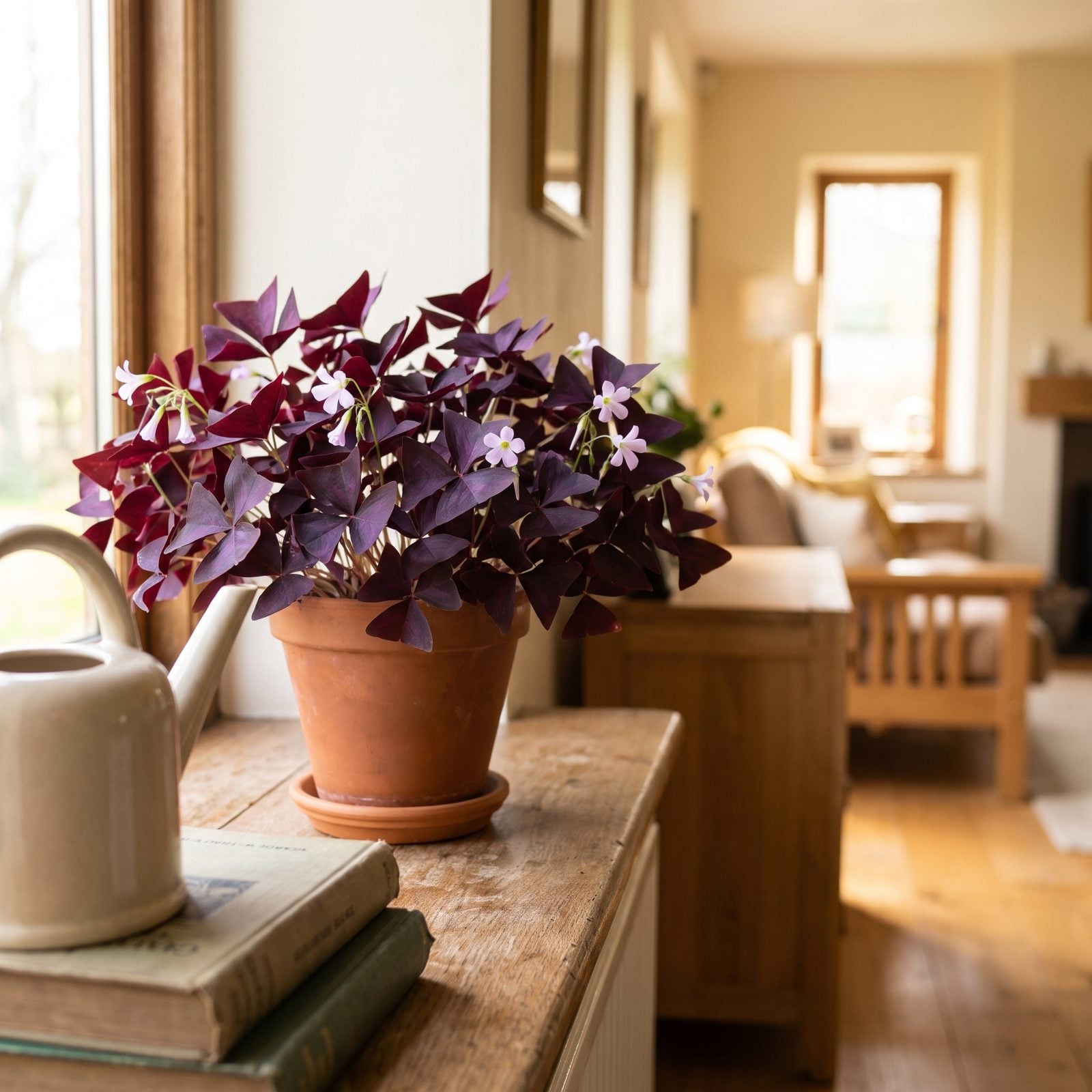
When your purple shamrock suddenly collapses into a brown mess, don’t panic and toss it. That’s not death. That’s a nap.
Oxalis grows from small bulbs and goes dormant naturally, usually after a long stretch of growth. Stop watering, let the leaves die back, and set the pot somewhere cool and dim for a few weeks. Then water again and those folded plum-colored leaves push right back up. People throw these out constantly at the first sign of yellowing. Easily the most avoidable mistake on this list.
8. Gloxinia, Save the Tuber Through Its Dormant Season
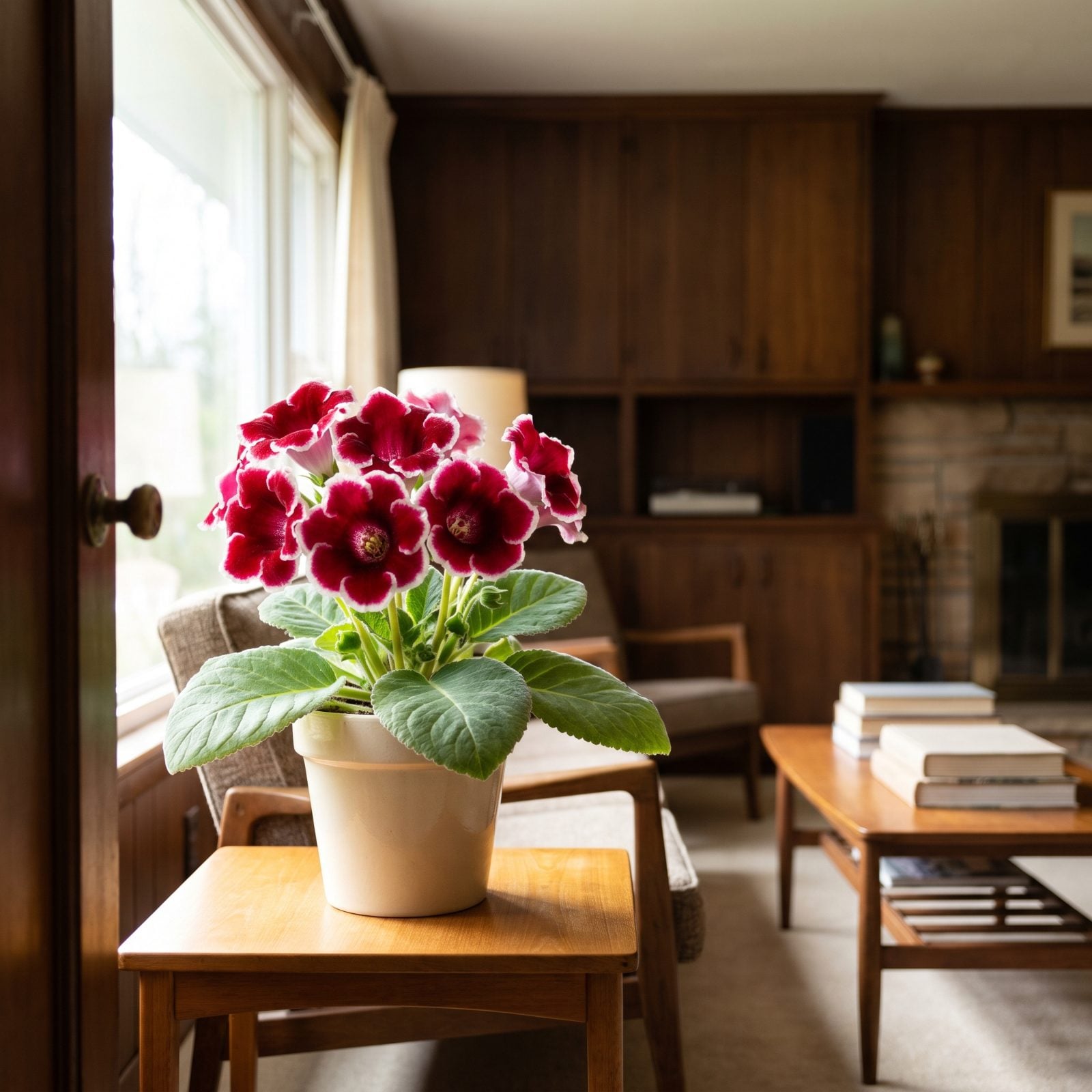
Gloxinia puts on a lavish show of velvety trumpet flowers, then falls apart. Everybody assumes it’s a one-and-done. It isn’t, provided you save the tuber.
After the blooms finish and the leaves yellow, let it dry out and go dormant. Store the tuber in its barely-damp pot somewhere cool for a couple months. When new growth appears, resume watering and it blooms all over again. It takes patience most gift plants don’t demand, but the second round of flowers is just as full as the first.
7. Calla Lily, Store or Replant Its Rhizomes After Blooming
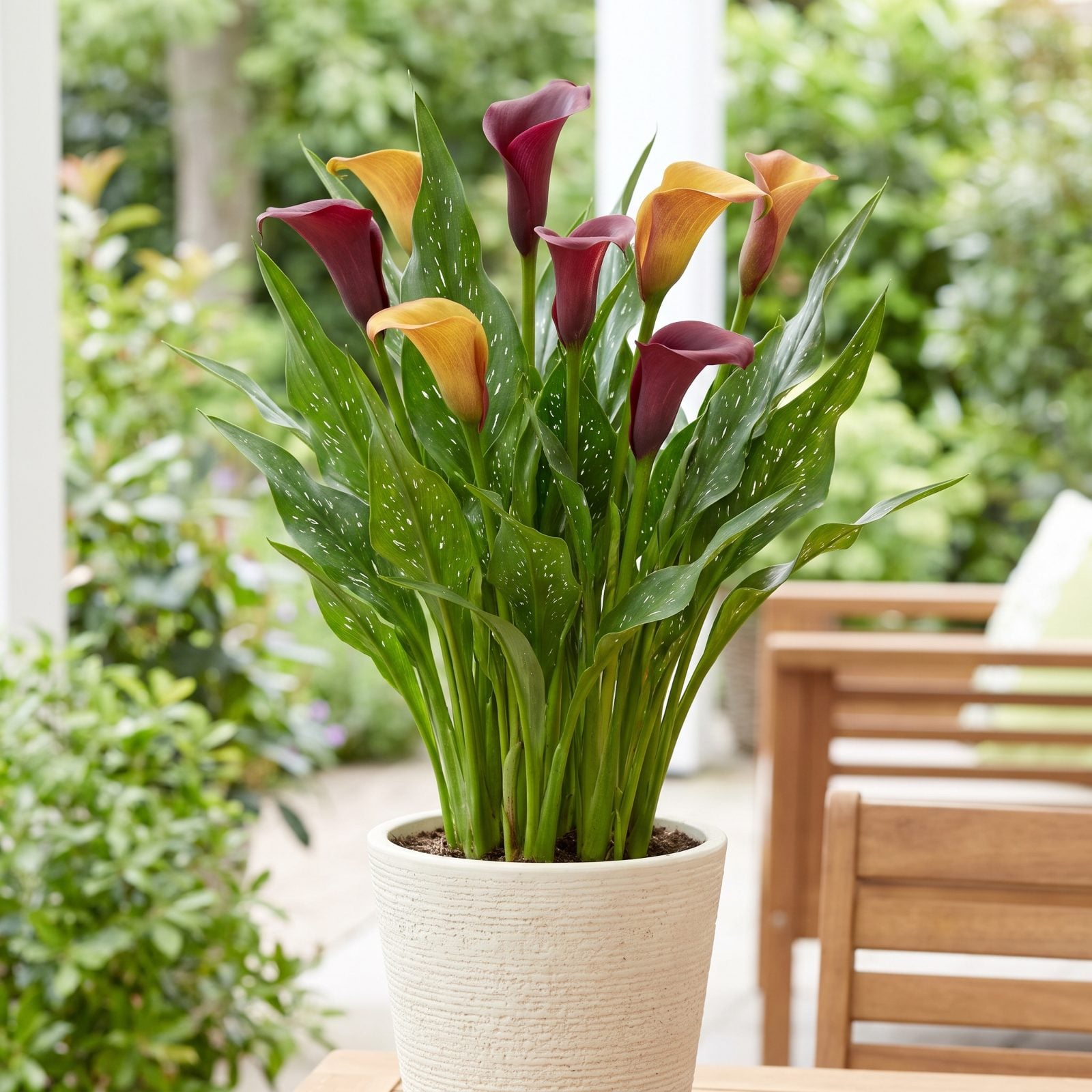
The sculptural, almost waxy flowers make calla lilies feel too fancy to be a throwaway. They’re not throwaway at all.
Callas grow from rhizomes, and after flowering they want a rest. In mild climates, plant the rhizomes outdoors in a moist, sunny spot and they return each year. Where winters bite hard, lift and store the rhizomes dry over the cold months, then replant in spring. Keep them going a few seasons and one gift pot multiplies into a whole clump of those elegant blooms.
6. Crown of Thorns, Give It Sun for Recurring Red Bracts
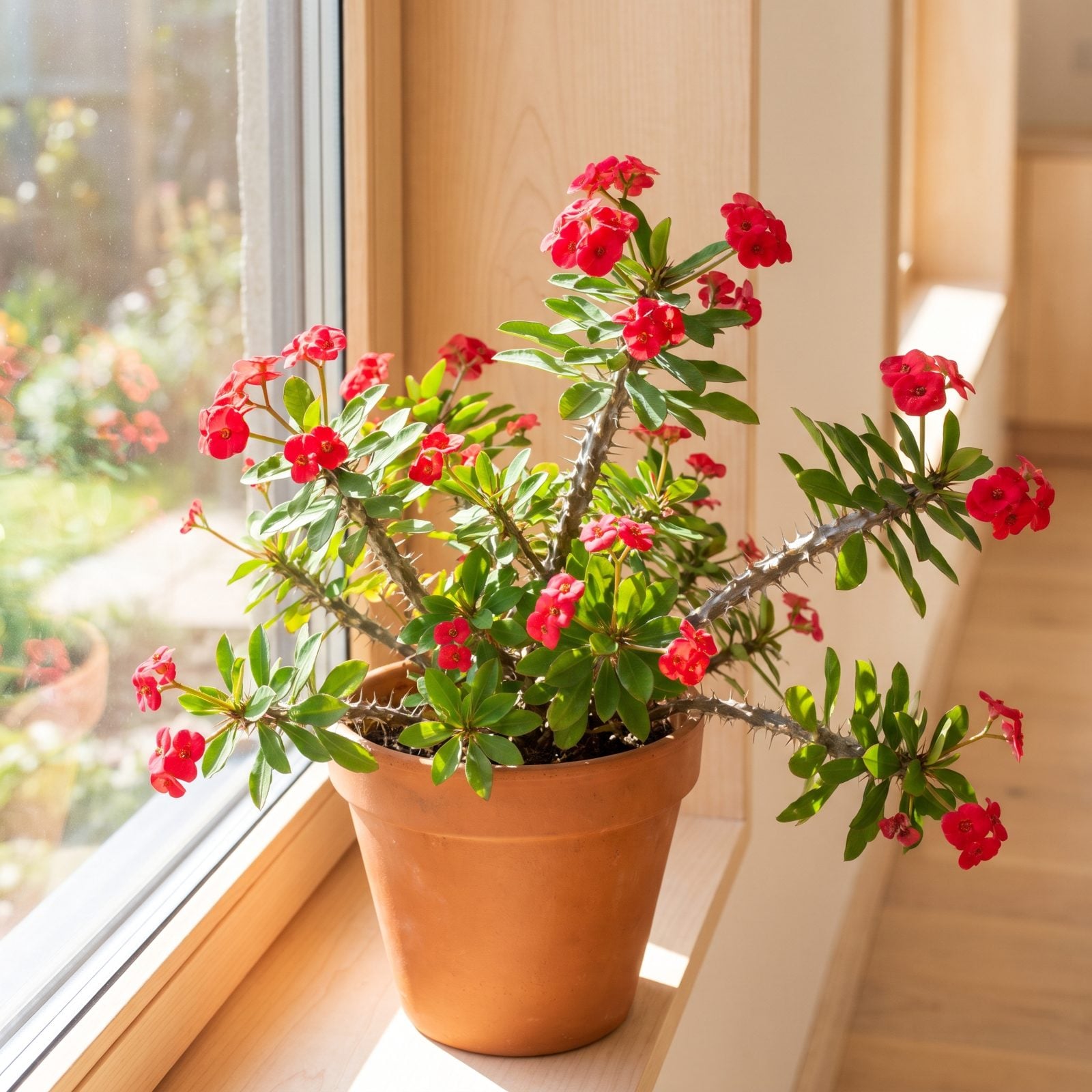
Thorny, a little gothic, and tough as old boots. Crown of thorns is one of the few flowering gift plants that actually wants a hot, sunny window.
Give it all the direct light you can and it throws out those red bracts (they look like flowers, but they’re modified leaves) for much of the year. It’s a succulent-type euphorbia, so it shrugs off drought and hates wet soil. The milky sap is an irritant, so keep it away from kids and pets, and wash your hands after handling. Low drama, long life.
5. Echeveria, Remove Decorative Foil and Restore Proper Drainage
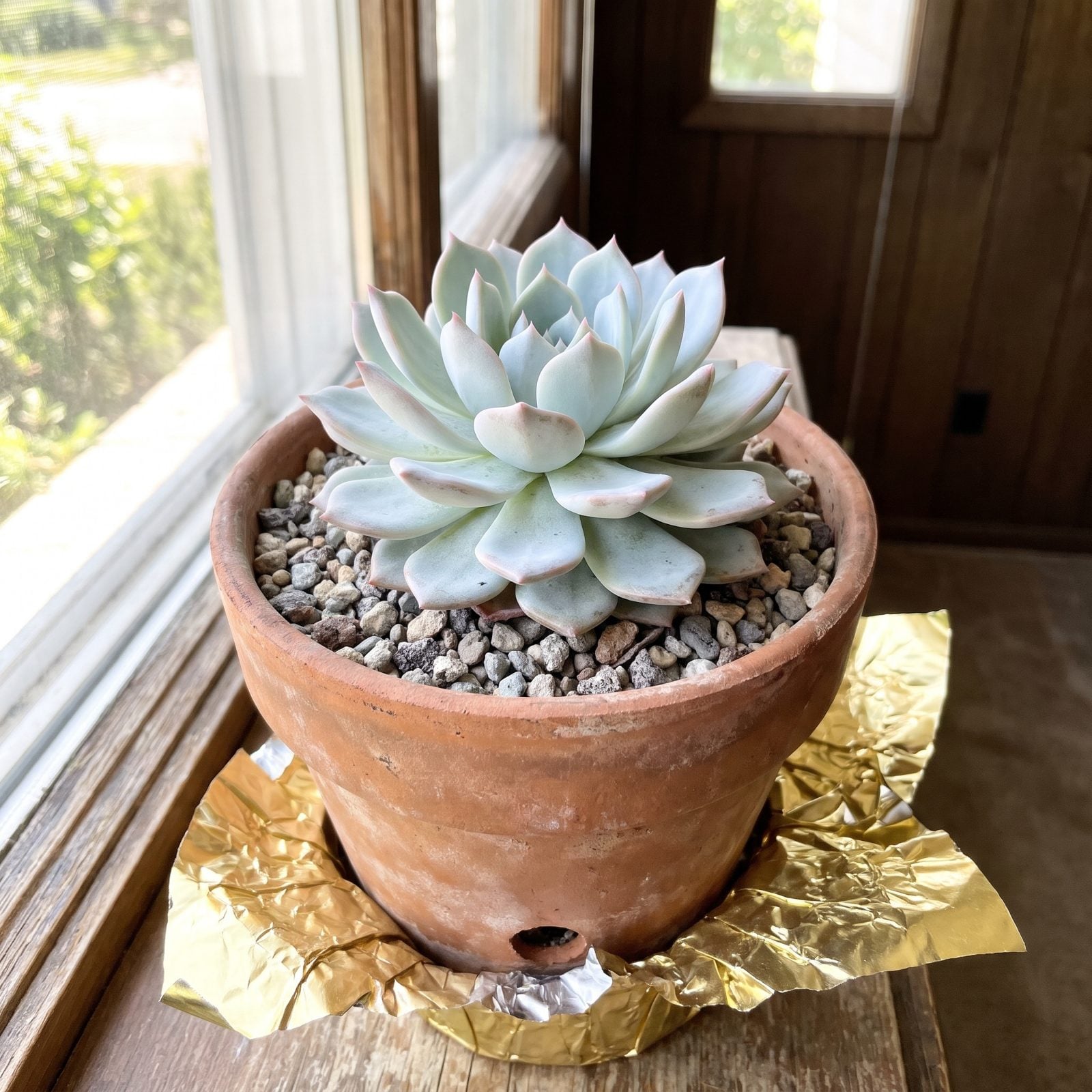
The foil has to go. First thing. That decorative sleeve wrapped around the pot is a tiny bathtub, and your echeveria is drowning in it slowly.
These rosette succulents need water to run straight through and out the bottom. Unwrap it, make sure the pot actually drains, and switch to gritty cactus soil if it came in dense peat. Then move it to your brightest window and water only when the soil is fully dry. Done right, a single gift rosette produces offsets you can pot up for years. The foil is pretty for a week and lethal by spring.
4. Ficus Bonsai, Keep Its Light and Watering Routine Boringly Consistent
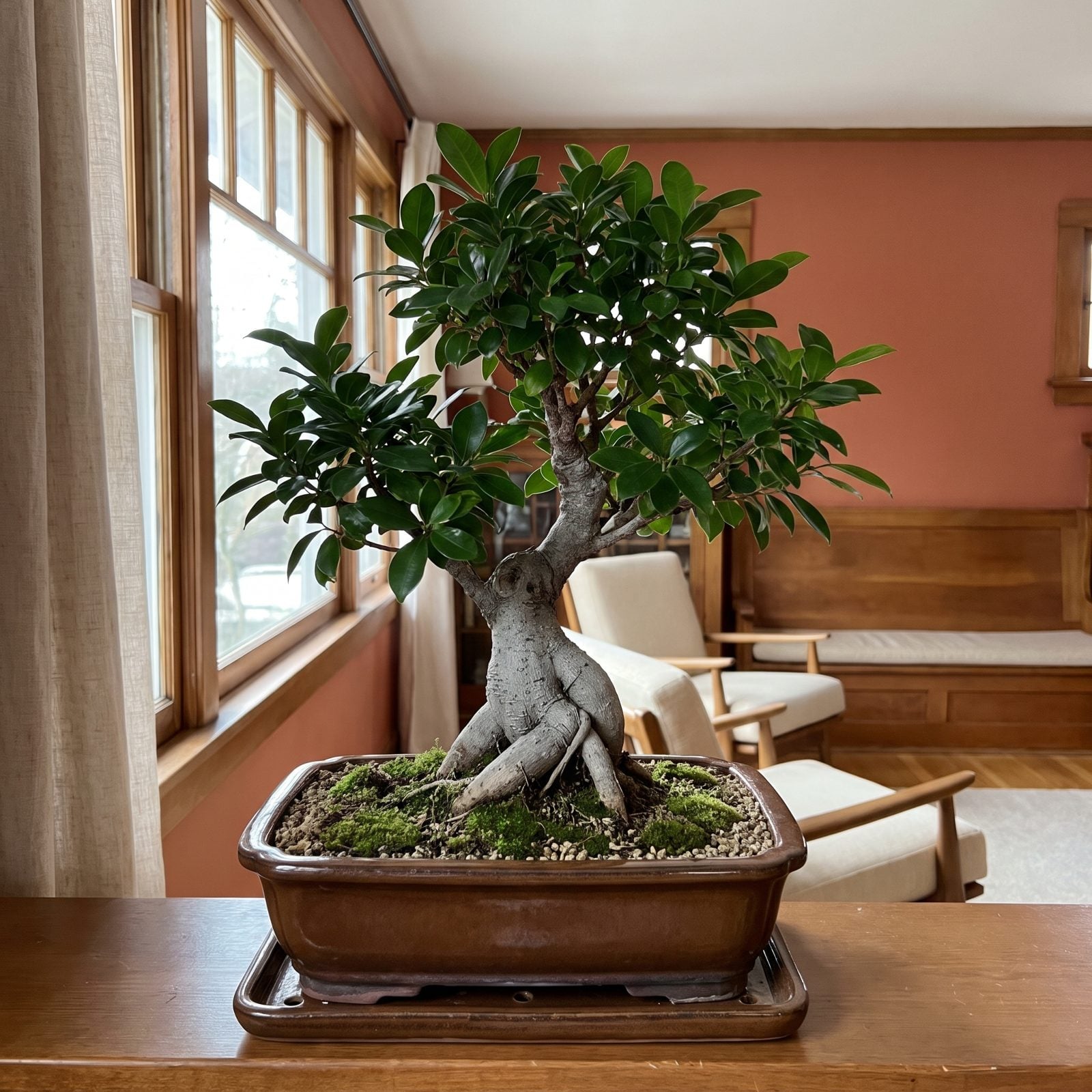
The quickest way to kill a gifted ficus bonsai is to love it in spurts. These little trees hate drama. Move it near a cold draft, forget it for ten days, then drown it in guilt, and you’ll watch it drop every leaf in protest.
Give it the brightest window you own and leave it there. Water when the top of the soil feels just-dry to the touch, not on a calendar schedule. We killed two before we understood that a ficus would rather be slightly neglected on a steady routine than fussed over erratically.
3. Arabian Jasmine, Cut It Back Once the Fragrant Flowers Fade
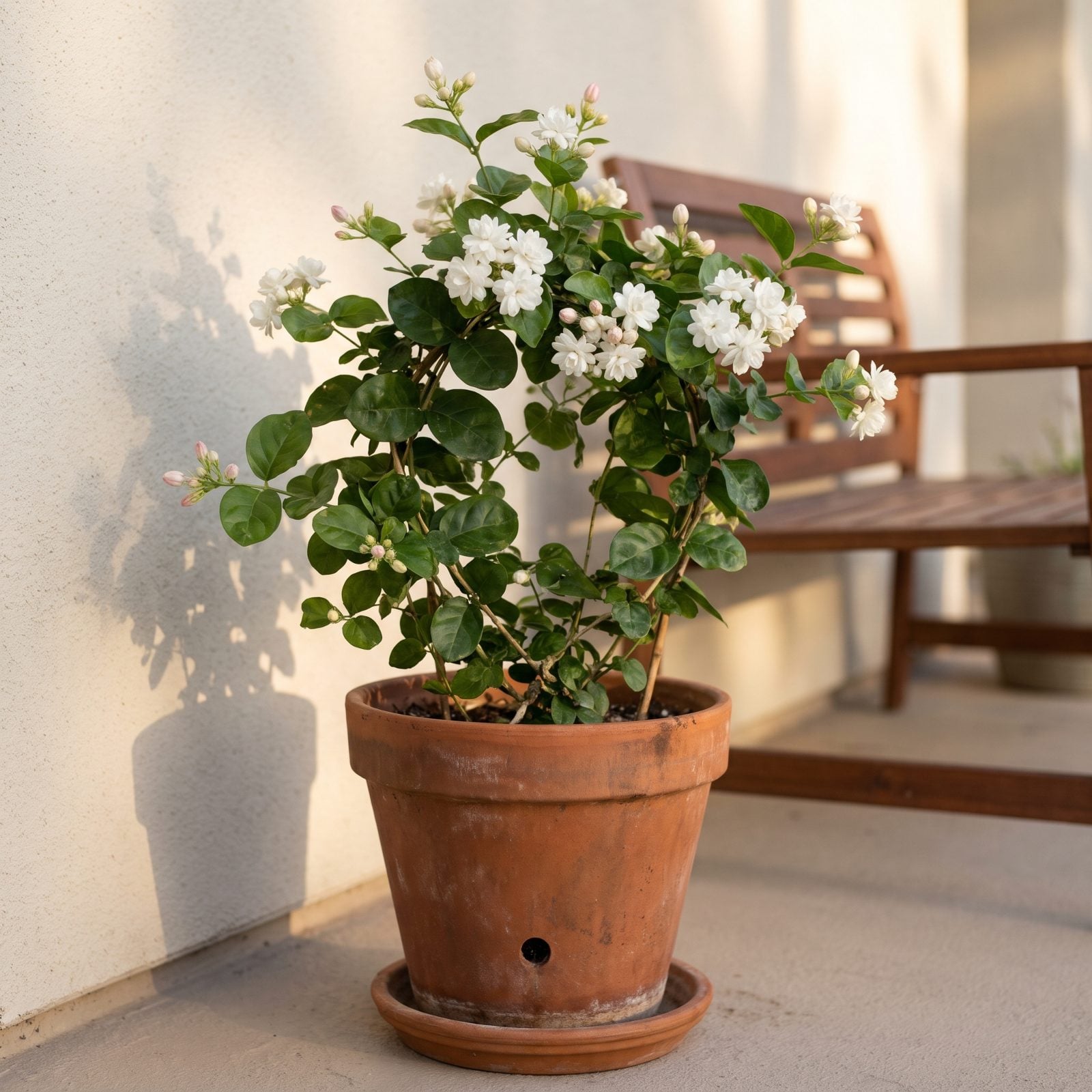
That intoxicating perfume drifting from a holiday jasmine? It won’t last unless you learn to cut the plant back.
Arabian jasmine blooms on new growth, so once a flush of those waxy white flowers finishes and browns, trim the spent stems back by a third or so. Pinch the tips too — that’s what pushes the bushy, branching growth carrying the next round of buds. Skip the pruning and you get a leggy, sparse tangle that flowers less each year.
Indoors it wants bright light and warmth. In warmer zones it’ll grow outdoors into a shrubby vine that scents a whole patio come summer.
2. Boxwood Topiary, Keep That Cone Sharp With Light Seasonal Trims
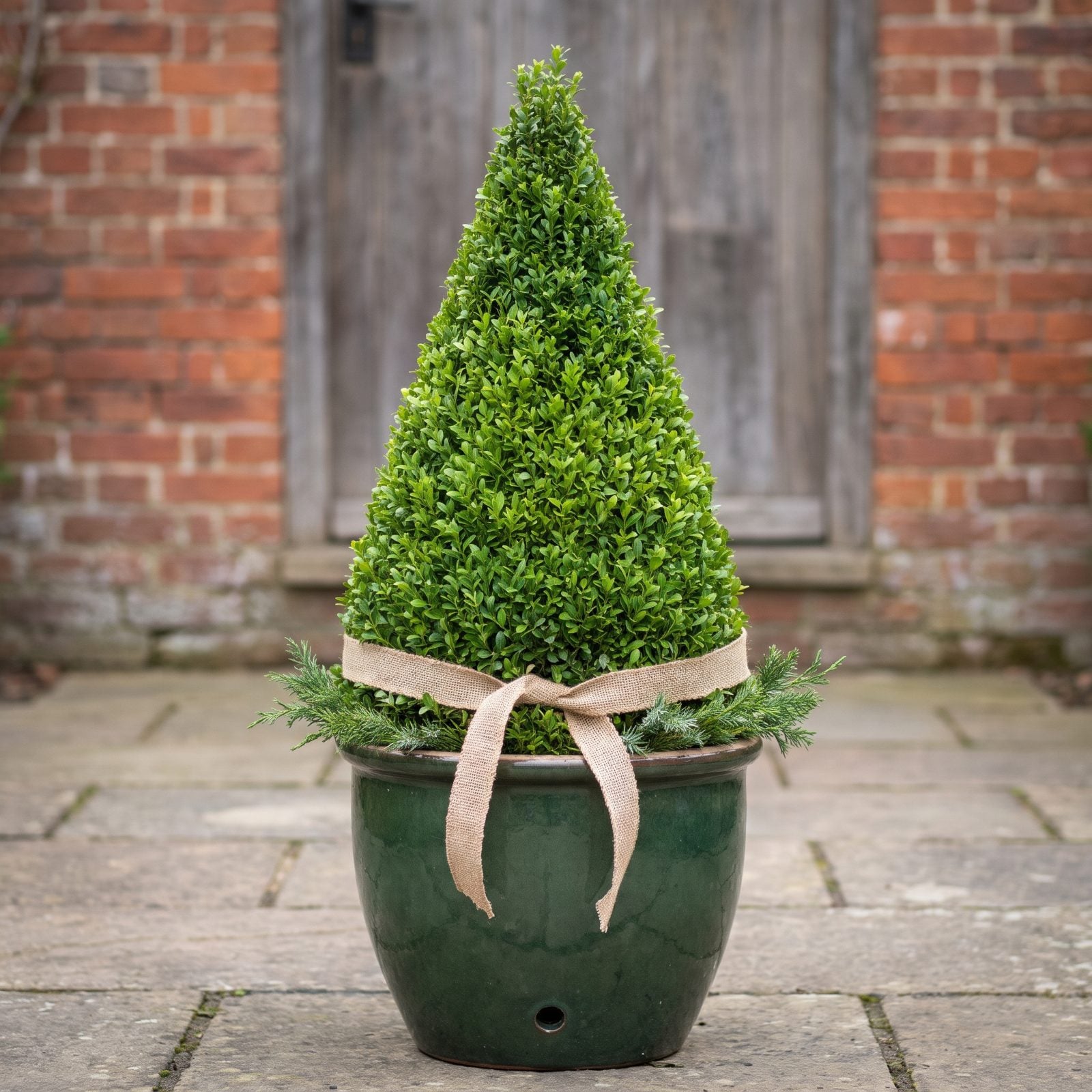
A boxwood topiary is a haircut that never ends. That crisp cone or ball you got wrapped in ribbon stays sharp only because someone keeps shaping it.
Light, frequent trims beat one big annual hack. Snip stray shoots back to the green outline through the growing season with clean, sharp shears. And never cut into the bare brown interior wood — boxwood is painfully slow to resprout from old growth, so there’s no coming back from an overzealous session.
Plant it in the ground and it becomes a slow, handsome shrub or low hedge that outlives most of what you set around it.
1. Christmas Cactus, Let Cool, Dark Nights Set Up Next Year’s Blooms
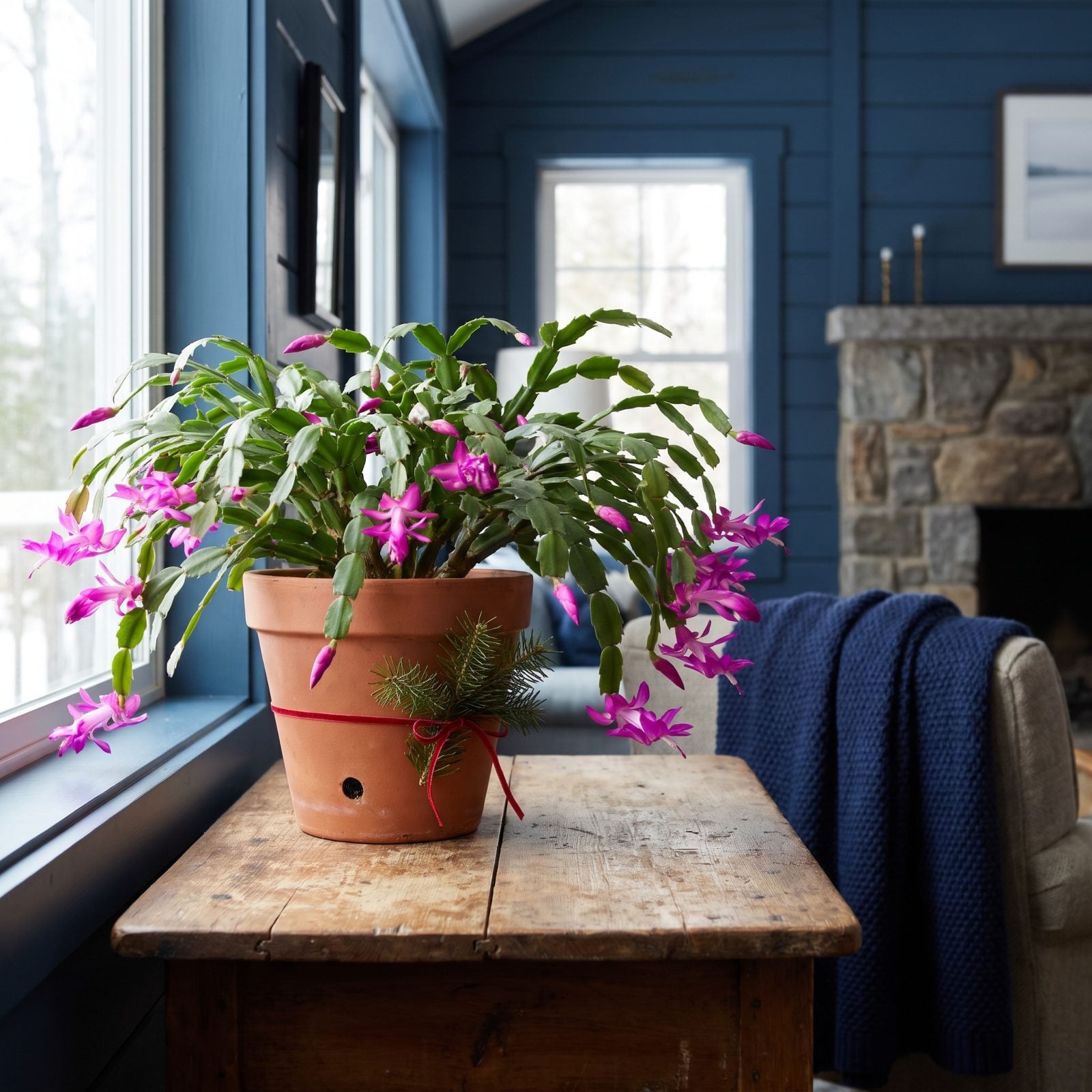
People blame themselves when a Christmas cactus won’t rebloom. The plant isn’t sulking. It just never got the signal.
These are tropical forest plants, not desert ones, and they set buds in response to long, cool nights in fall. Give it roughly six weeks of cooler temperatures and twelve-plus hours of uninterrupted darkness and it’ll flower — but a lamp flicking on in the same room at night can quietly cancel the whole thing.
The rest of the year it’s forgiving. Bright indirect light, water when the soil dries down a bit, and leave it slightly potbound. Ours has outlived three houseplants we babied far harder, and it’s one of the longest-lived things on our windowsill.