
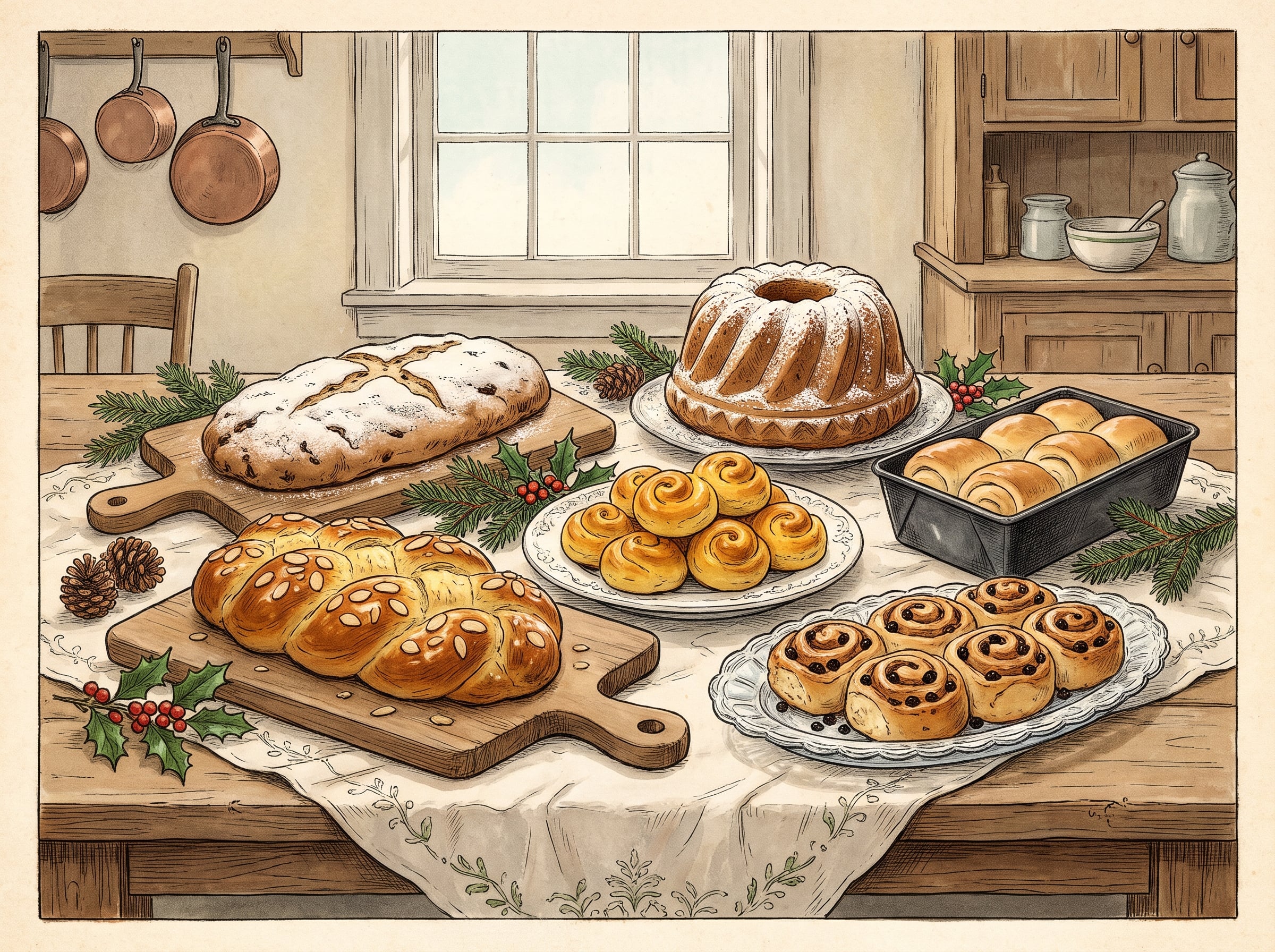
Here we’ve gathered holiday breads printed between 1796 and 1920, each copied exactly as printed and linked to a full page with its history. The range is wide: a Christmas stollen from a 1919 kosher cookbook, saffron buns topped with sugared caraway comfits, a Moravian sugar cake packed with butter and cinnamon, an 1887 Election Cake heavy with raisins, Fannie Farmer’s Parker House rolls, an Appalachian salt-rising bread, a brioche twisted into a crown, beaten biscuits struck a hundred times, and a rusk from America’s first cookbook.
Please note that some of the images in this article were created with the assistance of AI.
The old wording is part of the fun. Miss Leslie warns off anyone without excellent yeast, The White House Cook Book never says how much flour goes into its Election Cake, Mary Ronald rests her brioche "on the ice," and La Cuisine Créole says its potato loaf "is nice without" butter. We’ve left every line untouched.
Every recipe here is printed as published, in the old cooks’ own words. Their yeasts (homemade "emptins," "a cup of yeast," brewer’s yeast) were far weaker and slower than today’s dry yeast, and oven heat was judged by feel, so treat the times and amounts as a guide, not a promise.
25. Sweet Rusk Raised With Emptins
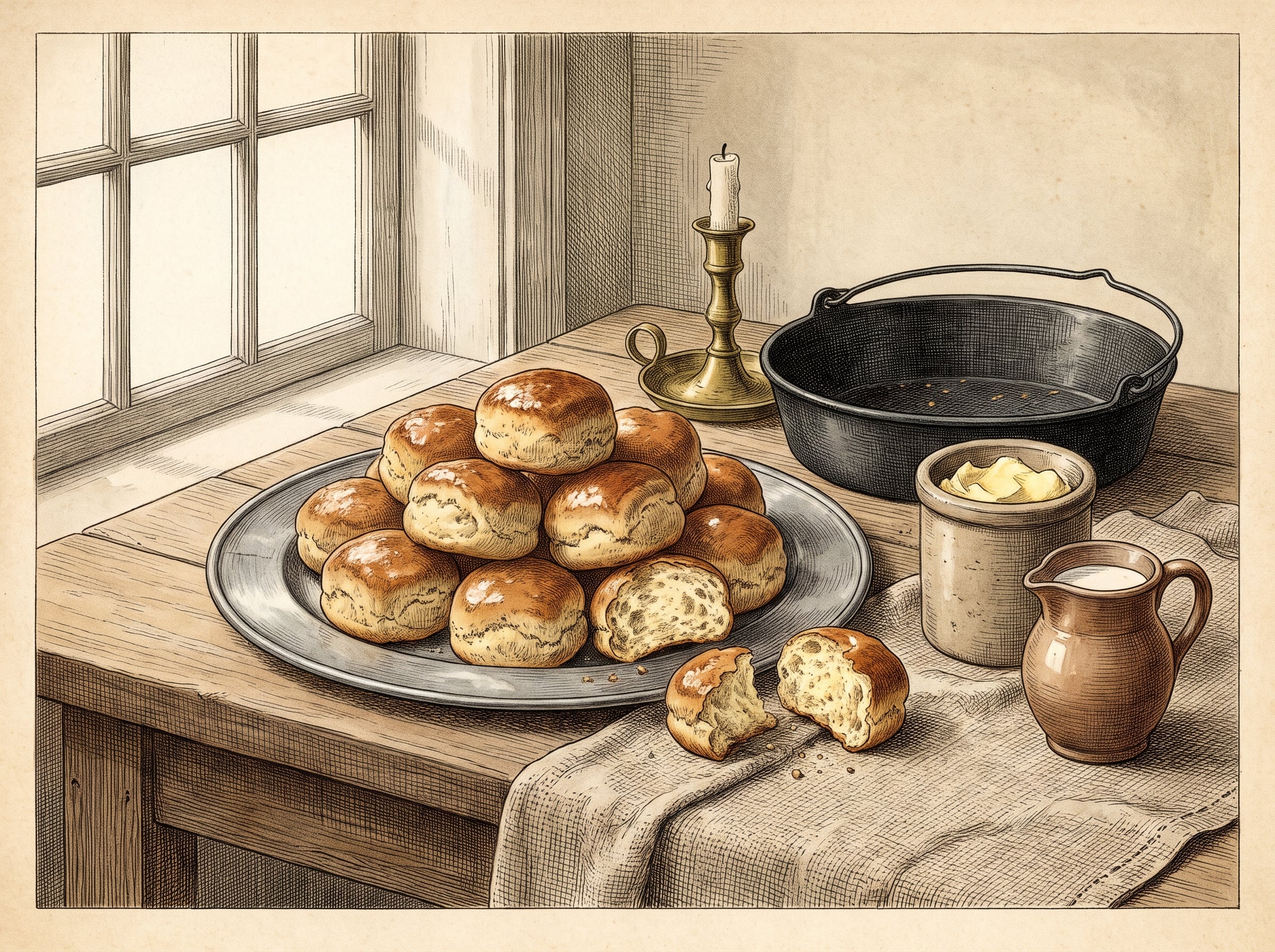
This rusk comes from America’s first cookbook (1796). It is a lightly sweet bread raised with "emptins," a homemade yeast of hops and beer dregs, and it breaks the rusk rule by baking only once, fast, with no second drying.
Ingredients
- 1/2 pound sugarPrinted: “half pound sugar”
- 1/2 pound butterPrinted: “half pound butter”
- 4 pounds all-purpose flourPrinted: “four pound flour”
- 1 pint milkPrinted: “pint milk”
- 1 pint emptins (homemade liquid yeast starter)Printed: “pint emptins”
- Makes: About 4 dozen small rusks
In short
- Rub half a pound of sugar and half a pound of butter into four pounds of flour.
- Add a pint of milk and a pint of emptins (homemade yeast).
- Let the dough rise well.
- Bake in pans quickly, for ten minutes.
24. Moravian Sugar Cake
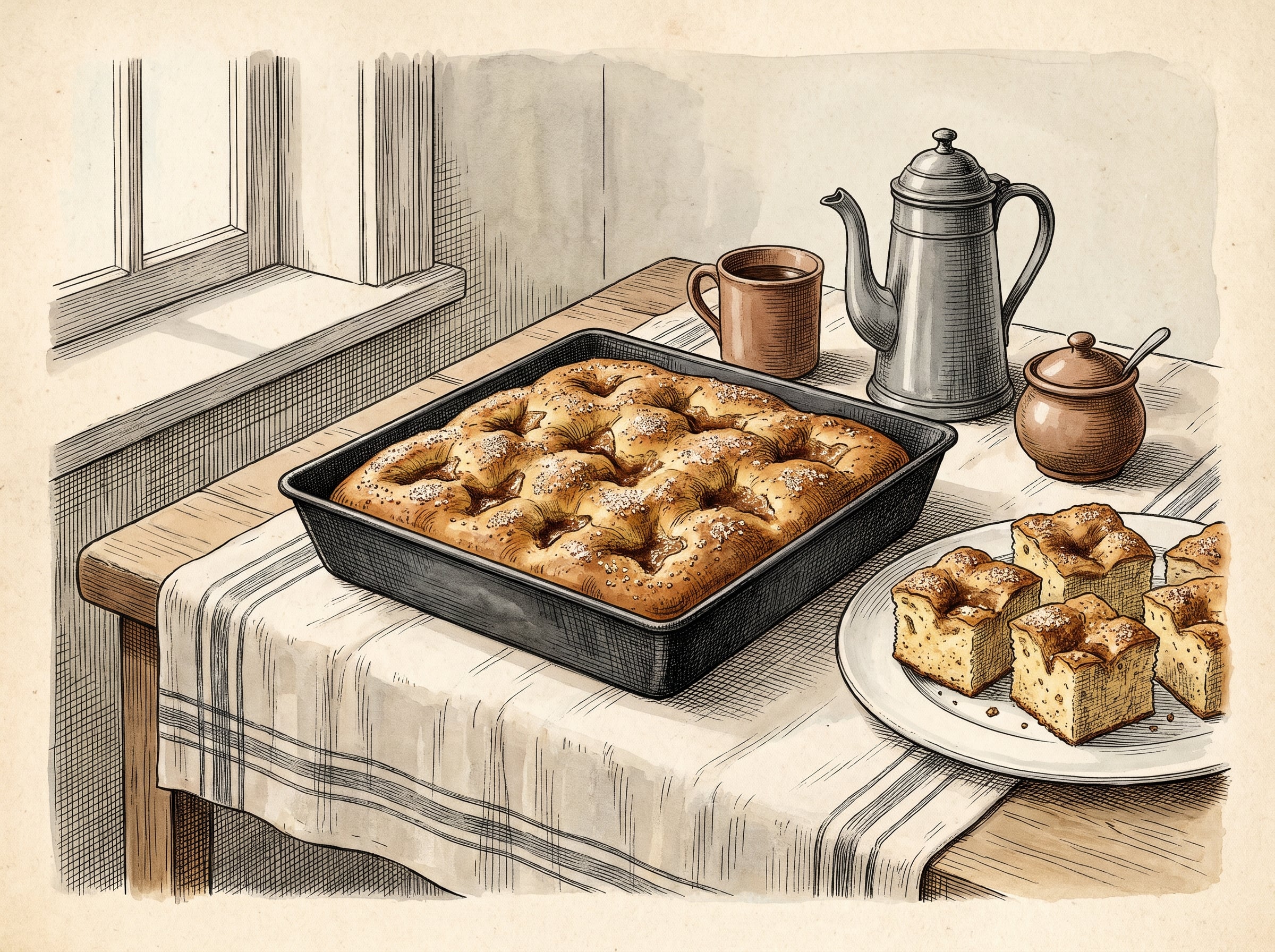
A Moravian holiday favorite in an 1840 Philadelphia cookbook: a cinnamon-spiced yeast dough with no potatoes, its surface stabbed with deep holes and packed with butter, brown sugar and cinnamon. Miss Leslie warned off anyone without excellent yeast.
Ingredients
- 1/4 pound (1 stick) butterPrinted: “a quarter of a pound of butter”
- 1 pint (2 cups) whole milkPrinted: “a pint of rich milk”
- 3/4 pound (about 3 cups) all-purpose flour, siftedPrinted: “three quarters of a pound of flour (or a pint and a half)”
- 1 heaping tablespoon liquid brewer’s yeast (or fresh yeast)Printed: “a large table-spoonful of the best brewer’s yeast”
- 1/4 teaspoon salt*Printed: “a salt-spoonful of salt”
- 1 egg, well beatenPrinted: “a well-beaten egg”
- 3/4 pound (about 3 cups) all-purpose flour, siftedPrinted: “three quarters of a pound more of sifted flour”
- 1 tablespoon ground cinnamonPrinted: “a table-spoonful of powdered cinnamon”
- 5 ounces (about 1 cup) light brown sugarPrinted: “five ounces or a large coffee-cup of fine brown sugar”
- 2 ounces (4 tablespoons) butterPrinted: “two ounces of butter”
- 2 tablespoons ground cinnamonPrinted: “two table-spoonfuls of powdered cinnamon”
- 2 tablespoons sugar, for sprinkling on top*Printed: “some sugar”
- Makes: One deep 10-inch square sugar cake (about 16 squares)
* Modern amount: AI converted the outdated terms and did its best to come up with the modern equivalent.
In short
- Warm 1/4 lb butter in a pint of rich milk until soft, then stir well to mix.
- Into a well in 3/4 lb sifted flour, stir a large tablespoon salted brewer’s yeast, then milk; cover, rise ~2 hours.
- Beat in a beaten egg, 3/4 lb more flour and 1 tablespoon cinnamon; pour into buttered deep square pan; rise again.
- Mix 5 oz brown sugar, 2 oz butter and 2 tablespoons cinnamon; press into deep incisions cut across risen dough, closing tops.
- Strew sugar on top; bake immediately in a brisk oven 20–30 minutes or more, by thickness. Cut into squares when cool.
23. Saffron Bath Buns With Caraway Comfits
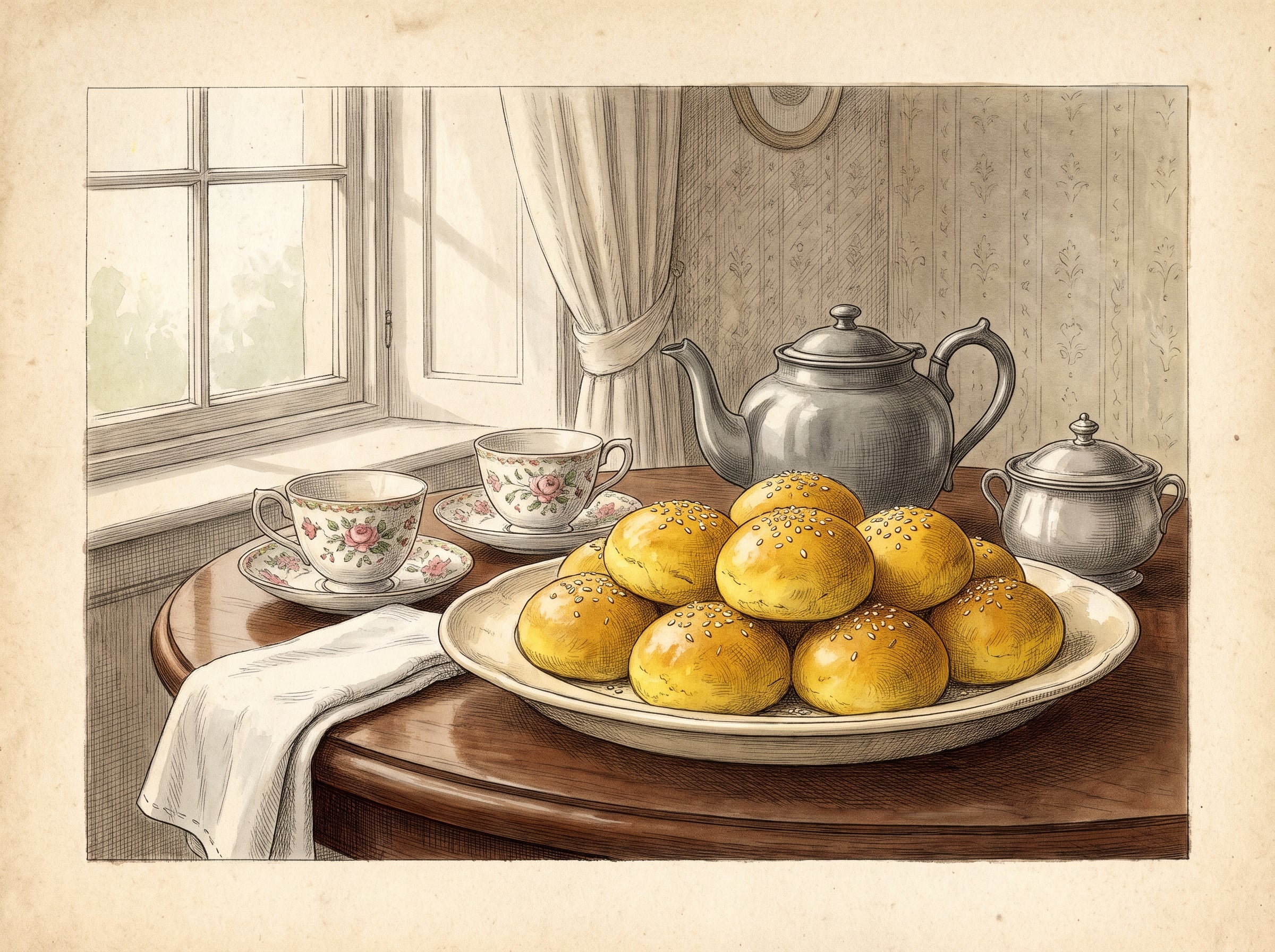
Miss Leslie’s 1840 Philadelphia take on an English bun: a butter-and-egg dough dyed gold with saffron tea, sweetened only after it rises, cut into neat rounds and topped with sugared caraway comfits. Her rule was strict: eat them the day they’re baked.
Ingredients
- 1 generous pinch (about ¼ teaspoon threads) saffron threads*Printed: “a little saffron”
- 3 tablespoons water (for the saffron infusion)*Printed: “sufficient water to cover it”
- ½ pound unsalted butterPrinted: “half a pound of fresh butter”
- 1 pound all-purpose flour, siftedPrinted: “a pound of sifted flour”
- 4 large eggs, well beatenPrinted: “four eggs that have been well beaten”
- ⅓ cup liquid brewer’s yeast*Printed: “a large wine glass of the best and strongest yeast”
- ¼ pound superfine sugar (finely powdered loaf sugar), siftedPrinted: “a quarter of a pound of powdered and sifted loaf-sugar”
- 1 whole nutmeg (about 2 teaspoons grated) nutmeg, freshly gratedPrinted: “a grated nutmeg”
- 2 to 3 tablespoons caraway seeds (optional)*Printed: “two or three spoonfuls of carraway seeds”
- 2 tablespoons caraway comfits (sugar-coated caraway seeds), for the tops*Printed: “carraway comfits”
- Makes: About 16 buns
* Modern amount: AI converted the outdated terms and did its best to come up with the modern equivalent.
In short
- Boil a little saffron in just enough water to cover until bright yellow; strain and cool.
- Rub ½ lb butter into 1 lb sifted flour; bind with four beaten eggs, a large wineglass of strong yeast, and the saffron water.
- Cover and let rise before the fire until light; mix in ¼ lb powdered sugar, a grated nutmeg, and optional caraway seeds.
- Roll into a thick sheet, cut into rounds, strew with caraway comfits, and bake on well-buttered flat tins.
- Eat the same day; they are only good quite fresh.
22. Saffron Geneva Rolls and Currant Buns
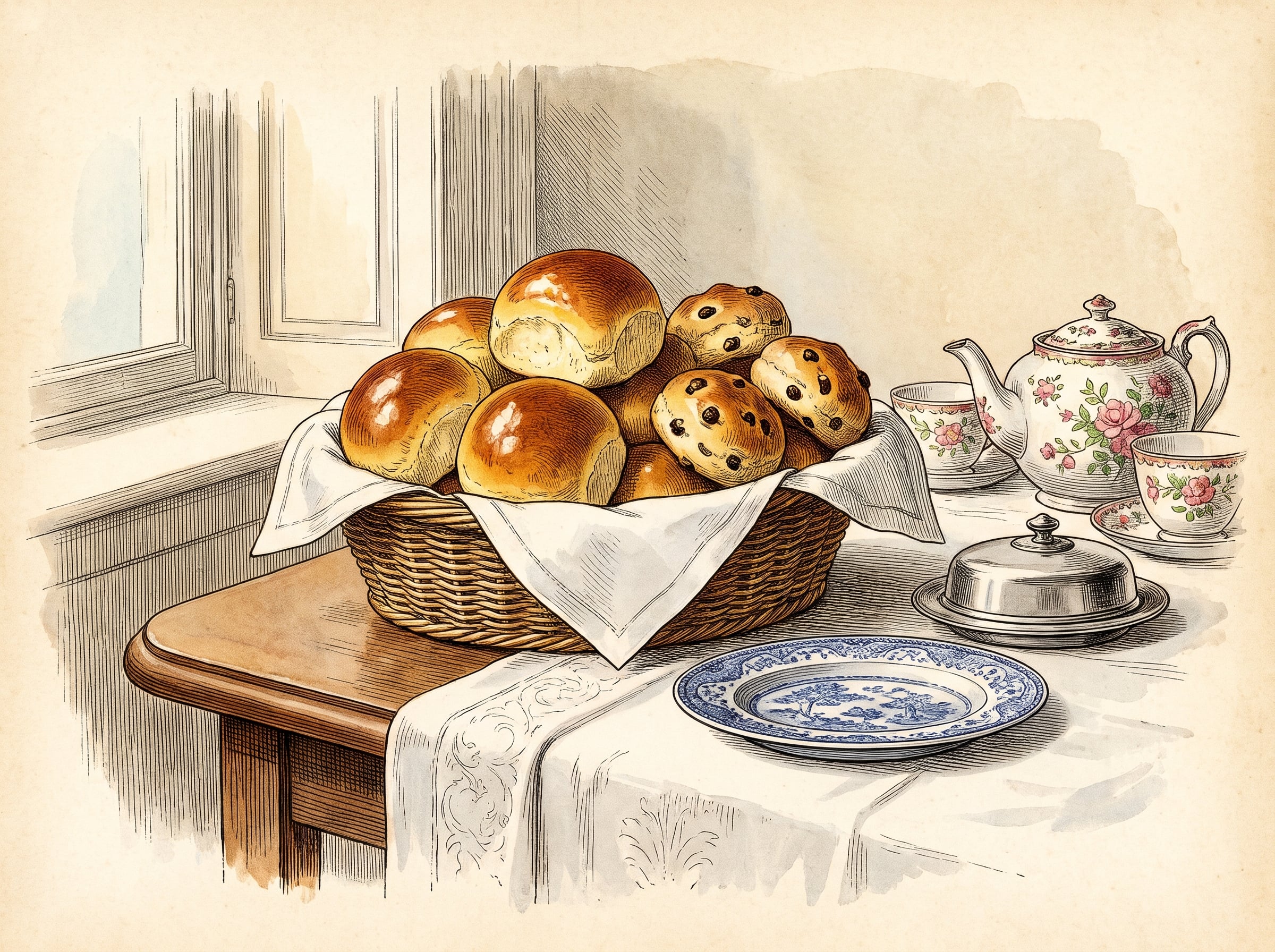
Eliza Acton’s 1855 Geneva rolls are really two recipes in one. A plain, saffron-gold roll becomes a currant-and-candied-peel bun with a few additions, and Acton treats the saffron as optional, used mainly for color.
Ingredients
- 2 pounds flourPrinted: “two pounds of flour”
- 3 ounces butterPrinted: “three ounces of butter”
- 1½ teaspoons salt*Printed: “a little salt”
- 1 heaping tablespoon thick brewer’s yeast (solid yeast)Printed: “a large tablespoonful of solid yeast”
- 1 pint (2 cups) whole milkPrinted: “a pint of new milk”
- 1 tablespoon or more strong saffron water (saffron steeped in hot water)Printed: “a tablespoonful or more of strong saffron water”
- 2 eggs, well beatenPrinted: “a couple of well-beaten eggs”
- ½ cup hot milk*Printed: “as much hot milk as will render them lukewarm”
- 1 egg yolk, beaten, for brushing*Printed: “beaten yolk of egg”
- 6 ounces sugar (for buns)Printed: “six ounces of good sugar”
- 3 ounces additional butter (for buns)Printed: “three of butter”
- ½ pound or more dried currants (for buns)Printed: “half a pound or more of currants”
- grated zest of 1 large lemon lemon zest (for buns)Printed: “the grated rind of a large lemon”
- 2 ounces candied orange peel (for buns)Printed: “a couple of ounces of candied orange-rind”
- Makes: About 2 dozen small rolls or buns
* Modern amount: AI converted the outdated terms and did its best to come up with the modern equivalent.
In short
- Rub 3 oz butter into 2 lb flour until very fine; add a little salt.
- Set the sponge: 1 large tablespoon solid yeast, 1 pint new milk, 1+ tablespoon strong saffron water (optional); rise a full hour.
- Stir hot milk into 2 beaten eggs until lukewarm; work into a light, lithe dough. Rest 30–45 minutes.
- Shape into small rolls, brush with beaten egg yolk, and bake 20–30 minutes.
- For buns, add 6 oz sugar, 3 oz butter, ½ lb currants, a large lemon’s grated rind, 2 oz candied orange-rind.
21. Quick Sally Lunn Tea Bread
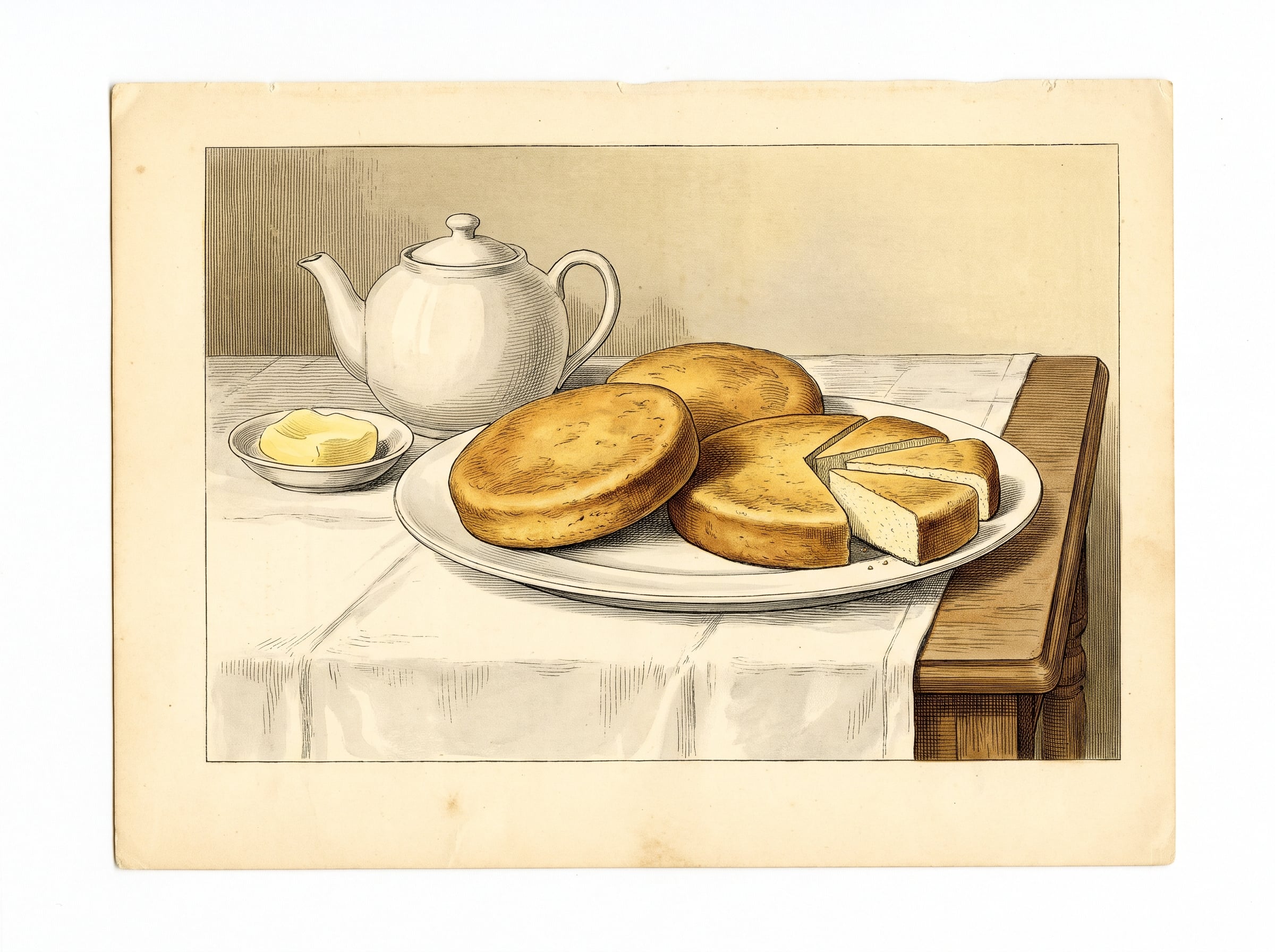
Among all these slow-rising yeast doughs, this 1859 Boston Sally Lunn is the sprinter: soda and cream of tartar do the lifting, and three plate-sized rounds are ready for the tea table in about twenty minutes.
Ingredients
- 1 quart (about 4 cups) all-purpose flourPrinted: “A quart of flour”
- 4 tablespoons (¼ cup) butter, melted*Printed: “a piece of butter the size of an egg”
- 3 tablespoons sugarPrinted: “three table-spoonfuls of sugar”
- 2 eggsPrinted: “two eggs”
- 1½ cups milk*Printed: “two teacups of milk”
- 2 teaspoons cream of tartarPrinted: “two teaspoonfuls of cream of tartar”
- 1 teaspoon baking soda (saleratus)Printed: “one of saleratus”
- ½ teaspoon salt*Printed: “a little salt”
- Makes: Three 8-inch round Sally Lunns
* Modern amount: AI converted the outdated terms and did its best to come up with the modern equivalent.
In short
- Scatter the cream of tartar, salt and sugar into the quart of flour.
- Add the two eggs unbeaten, the melted butter and one cup of the milk.
- Dissolve the saleratus in the remaining cup of milk, add it, and stir everything steadily for a few minutes.
- Bake in three pans the size of a breakfast plate for fifteen or twenty minutes.
- For a family of four or five, halve the recipe. For a plain cake, add spice and double the sugar.
20. Virginia Batter Bread in Little Tin Moulds
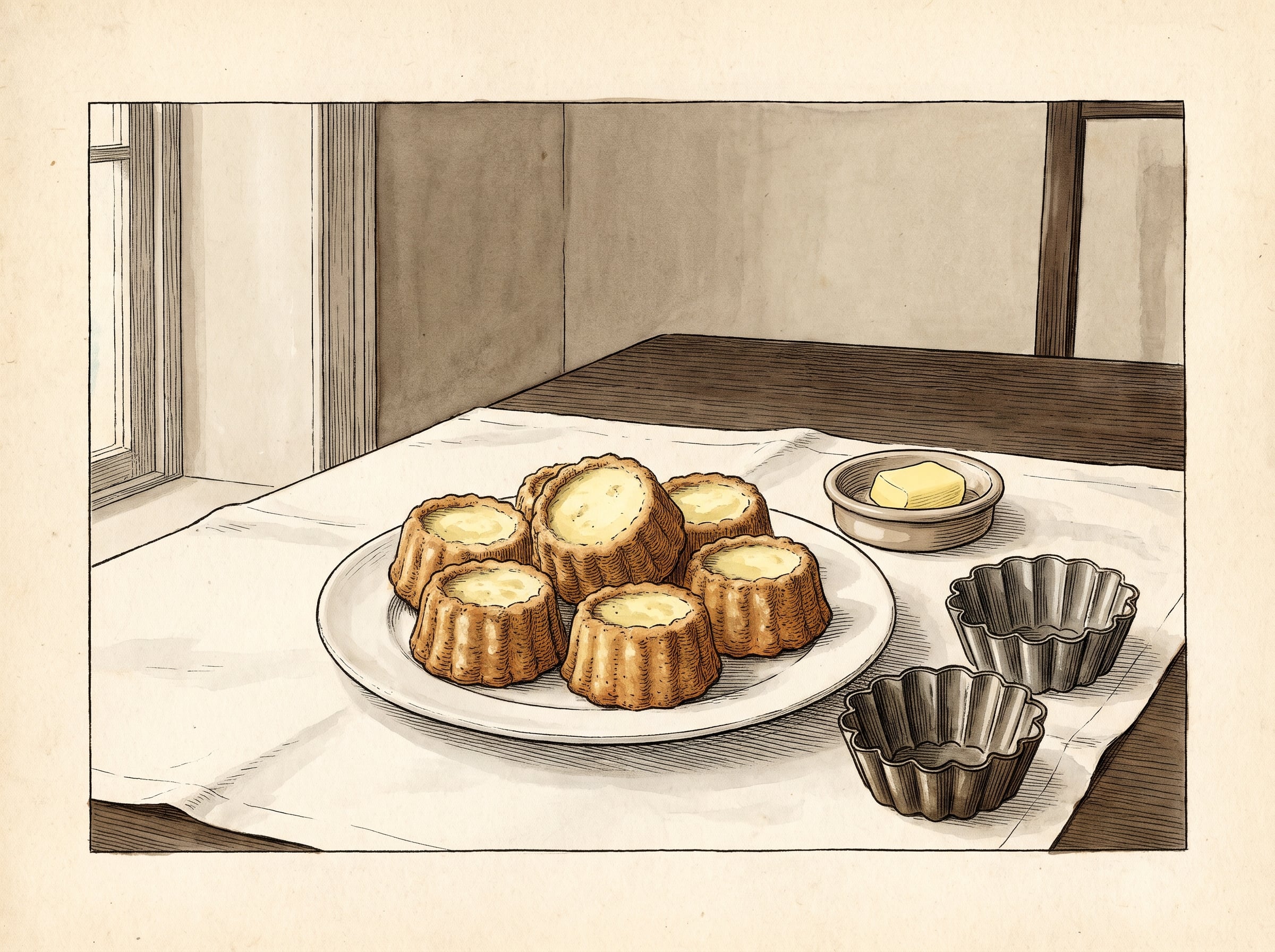
No yeast, no spice, no sugar: Mary Randolph’s Virginia batter bread rises on four eggs alone. Corn meal and wheat flour bake in little tin moulds into tender individual breads, early relatives of Southern spoon bread.
Ingredients
- 6 tablespoons all-purpose flour*Printed: “six spoonsful of flour”
- 3 tablespoons cornmeal*Printed: “three of corn meal”
- 1/4 teaspoon salt*Printed: “a little salt”
- 4 eggsPrinted: “four eggs”
- 1 cup whole milk*Printed: “a sufficient quantity of rich milk”
- Makes: About 10 small muffins
* Modern amount: AI converted the outdated terms and did its best to come up with the modern equivalent.
In short
- Combine six spoonfuls of flour, three spoonfuls of corn meal, and a little salt, then sift them.
- Make a thin batter with four eggs and enough rich milk.
- Bake in little tin moulds in a quick oven.
19. Creole Potato Bread From New Orleans
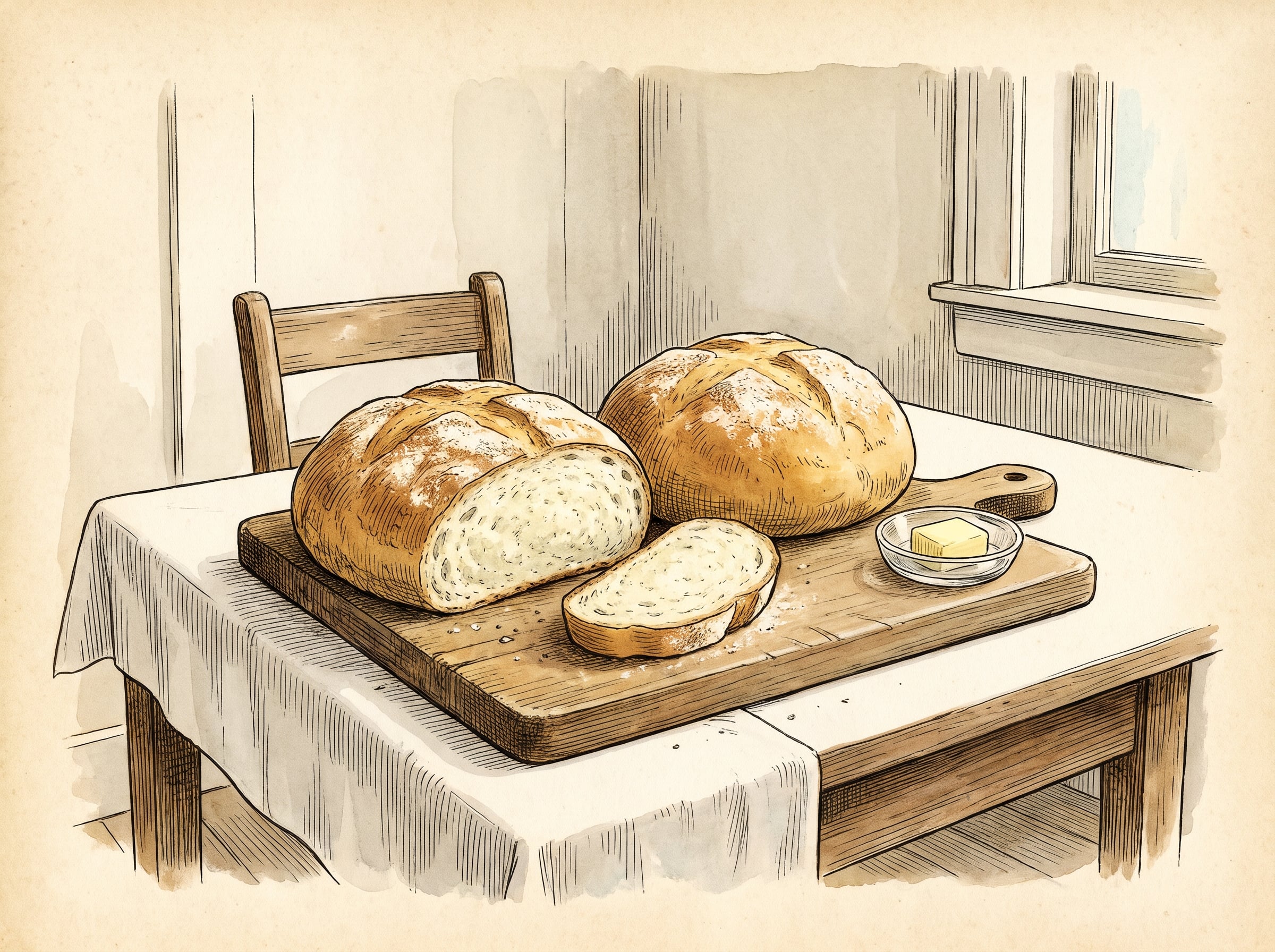
Among the butter-rich stollen and brioche, this New Orleans loaf from La Cuisine Créole is the plain one. It takes two parts flour to one part mashed potato, the yeast is measured by the cup, and the butter is optional, since the cookbook says "it is nice without."
Ingredients
- 2 pounds all-purpose flour (about 7 cups)Printed: “two pounds or pints of flour”
- 1 pound warm mashed starchy potatoes, such as russets (about 2 cups)Printed: “one pound or pint of warm, mashed mealy Irish potatoes”
- about 1½ cups total, half and half lukewarm milk and water*Printed: “milk and water”
- 1 cup liquid yeast (homemade yeast starter)Printed: “a cup of yeast”
- 2 teaspoons salt*Printed: “a little salt”
- 2 tablespoons (optional) lard or butter*Printed: “a little lard or butter”
- Makes: Two 9×5-inch loaves
* Modern amount: AI converted the outdated terms and did its best to come up with the modern equivalent.
In short
- Mix one pound (or pint) of warm, mashed mealy Irish potatoes into two pounds (or pints) of flour.
- Add milk and water, a cup of yeast and a little salt.
- Knead very well, shape into loaves, and place in a pan to rise.
- For a richer, shorter bread, add a little lard or butter if desired; it is also nice without.
18. Old New England Election Cake
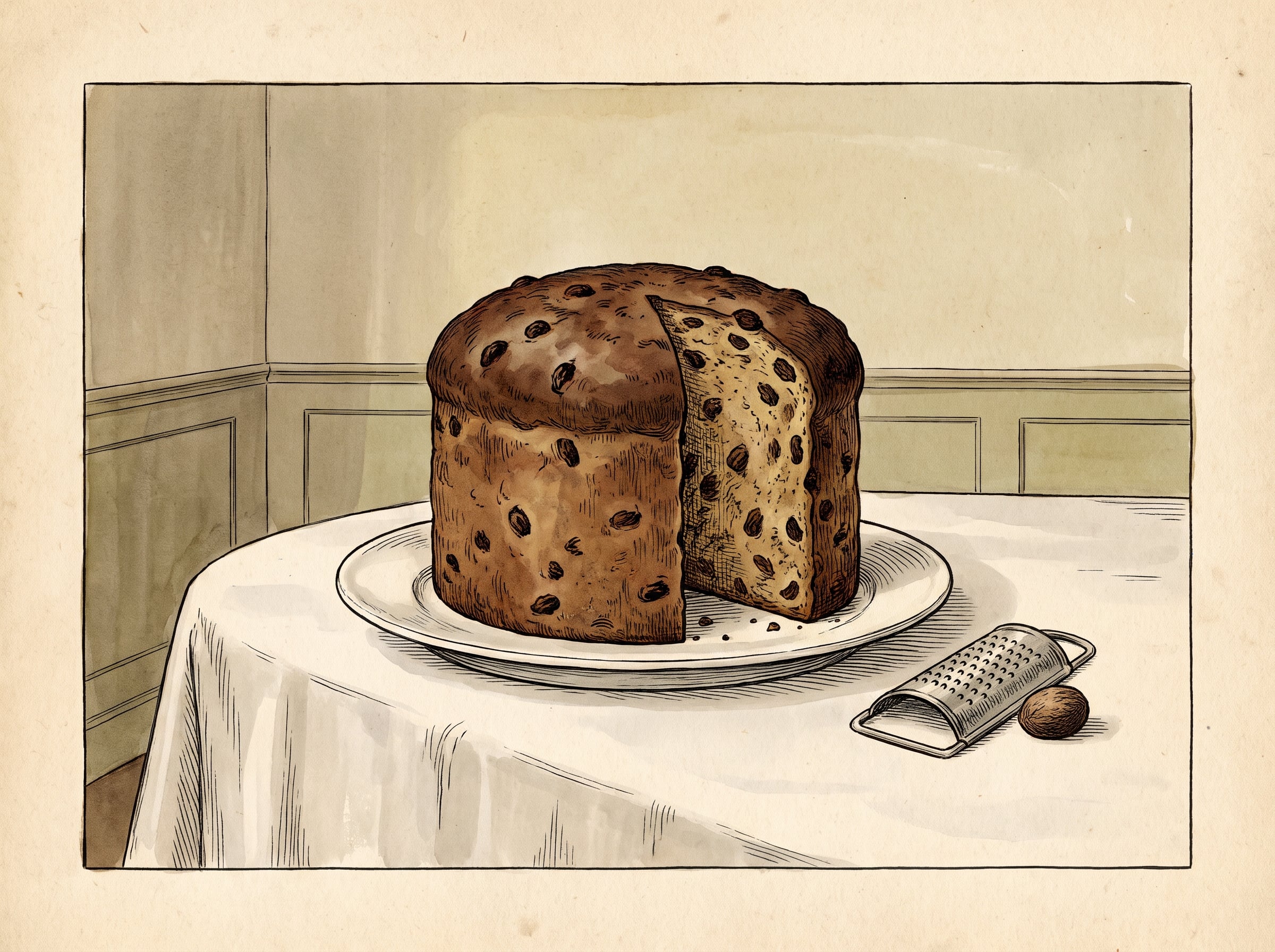
New England’s Election Cake was a holiday bread for a civic holiday: a brandy-and-raisin loaf raised overnight on yeast, descended from colonial ‘great cakes’ once baked by the thirty-quart batch, and so trusted to experienced hands that Gillette never said how much flour.
Ingredients
- 3 cups milkPrinted: “Three cups milk”
- 2 cups sugar (brown sugar preferred)Printed: “two cups sugar”
- 1 cup liquid yeast (homemade yeast starter)Printed: “one cup yeast”
- 2 cups sugar (brown sugar preferred)Printed: “two cups sugar”
- 2 cups butterPrinted: “two cups butter”
- 3 eggsPrinted: “three eggs”
- ½ whole nutmeg, grated (about 1 teaspoon)Printed: “half a nutmeg”
- 1 tablespoon ground cinnamonPrinted: “one tablespoonful cinnamon”
- 1 pound raisinsPrinted: “one pound raisins”
- ½ cup brandy*Printed: “a gill of brandy”
- ½ teaspoon baking sodaPrinted: “a half-teaspoonful of soda”
- 1 tablespoon milk (to dissolve the soda)Printed: “a tablespoonful of milk”
- Makes: About 3 large loaf cakes (flour amount not printed)
* Modern amount: AI converted the outdated terms and did its best to come up with the modern equivalent.
In short
- Stir three cups milk, two cups sugar and one cup yeast into a batter; let stand overnight.
- In the morning, add two cups sugar (brown is better than white), two cups butter and three eggs.
- Add half a nutmeg, one tablespoon cinnamon, one pound raisins and a gill of brandy.
- For an improved cake, also add half a teaspoon soda dissolved in one tablespoon milk.
- Let stand in greased pans until risen and quite light, then bake.
17. Delmonico’s Fruited Baba
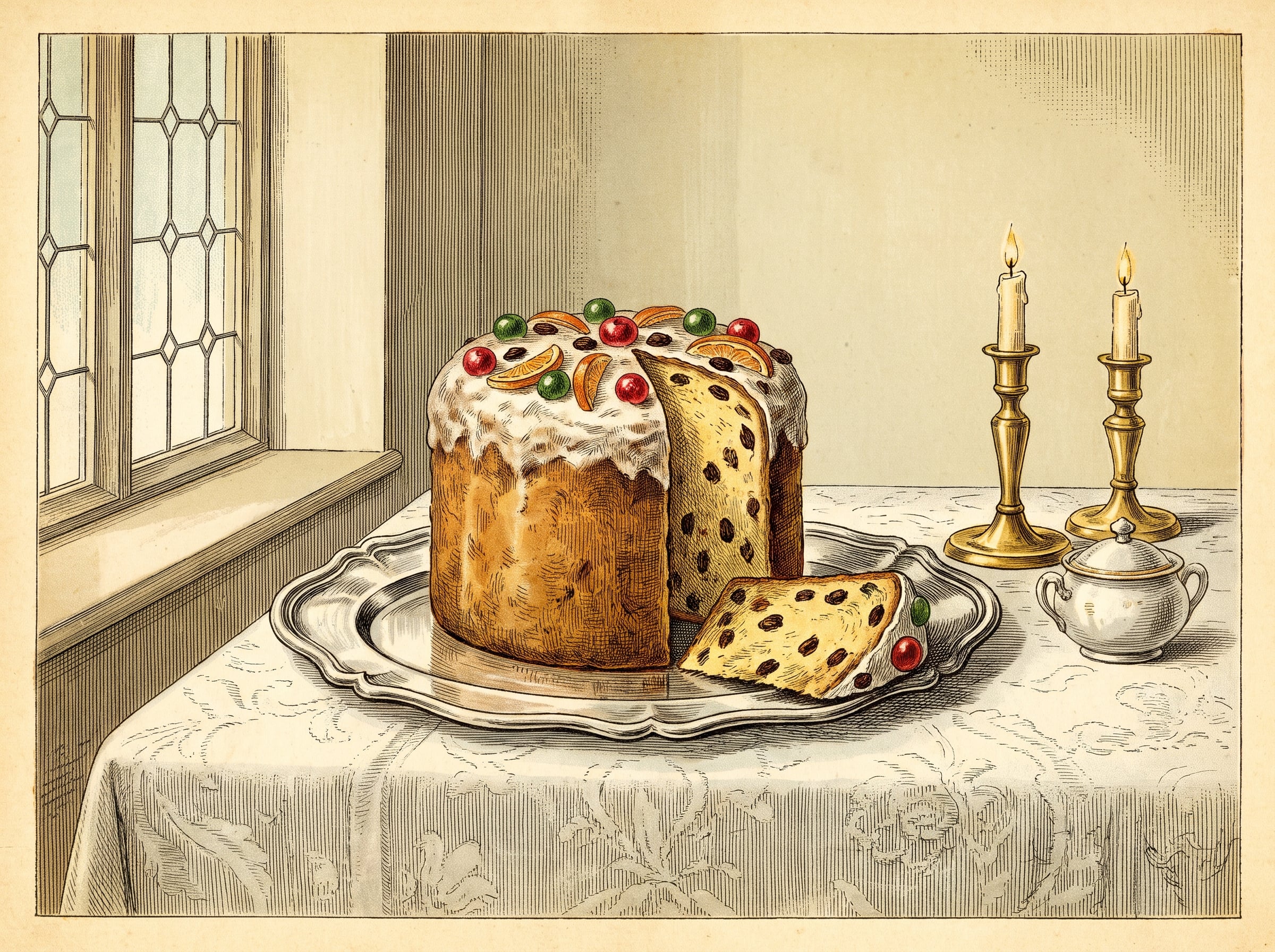
From Delmonico’s kitchen comes a tall, Polish-rooted yeast cake rich with cream, butter and Madeira and packed with Sultanas, raisins and citron. Unlike today’s little rum babas, it’s big and unsoaked, glazed and crowned with candied fruit for the center of the table.
Ingredients
- ½ pound best-quality all-purpose flourPrinted: “half a pound of the best flour”
- 1/16 ounce (about 2 grams, roughly ½ teaspoon crumbled) fresh compressed yeast*Printed: “one drachm of compressed yeast”
- ¼ cup warm water*Printed: “half a gill of warm water”
- 1 ounce superfine sugarPrinted: “an ounce of powdered sugar”
- 4 raw eggsPrinted: “four raw eggs”
- ½ cup cream*Printed: “a gill of cream”
- ¼ cup good Madeira wine*Printed: “half a gill of good Madeira wine”
- 1/16 ounce (about ⅓ teaspoon) very fine salt*Printed: “a drachm of very fine salt”
- 5 ounces fresh unsalted butter, softenedPrinted: “five ounces of good, fresh, soft butter”
- 2 ounces sultanas (golden raisins), cleanedPrinted: “two ounces of cleaned Sultana currants (No. 1080)”
- 2 ounces raisins, cleanedPrinted: “two ounces of cleaned raisins (No. 1081)”
- 1 ounce candied citron, finely choppedPrinted: “one ounce of finely chopped citron”
- 1 tablespoon cold butter, for greasing the mold*Printed: “cold butter”
- about ¾ cup water icing (powdered sugar mixed with water)*Printed: “a glace à l’eau (No. 1197)”
- about ½ cup candied fruits, for decorating*Printed: “candied fruits”
- Makes: One 3-pint ring-mold baba (about 10 servings)
* Modern amount: AI converted the outdated terms and did its best to come up with the modern equivalent.
In short
- Mix 3 oz flour, 1 drachm compressed yeast and half a gill warm water; cover and leave warm 30 minutes to double.
- Mix remaining flour, 1 oz sugar, 4 eggs, 1 gill cream, half gill Madeira, 1 drachm salt; work in 5 oz butter.
- Knead both doughs together at least 5 minutes; cover and leave warm one hour until doubled.
- Stir in 2 oz sultanas, 2 oz raisins and 1 oz chopped citron; put in buttered 3-pint mold; leave warm 20 minutes.
- Bake in a moderate oven one hour until golden; cool slightly, unmold, glaze with glace à l’eau and decorate with candied fruits.
16. Graham Date Bread
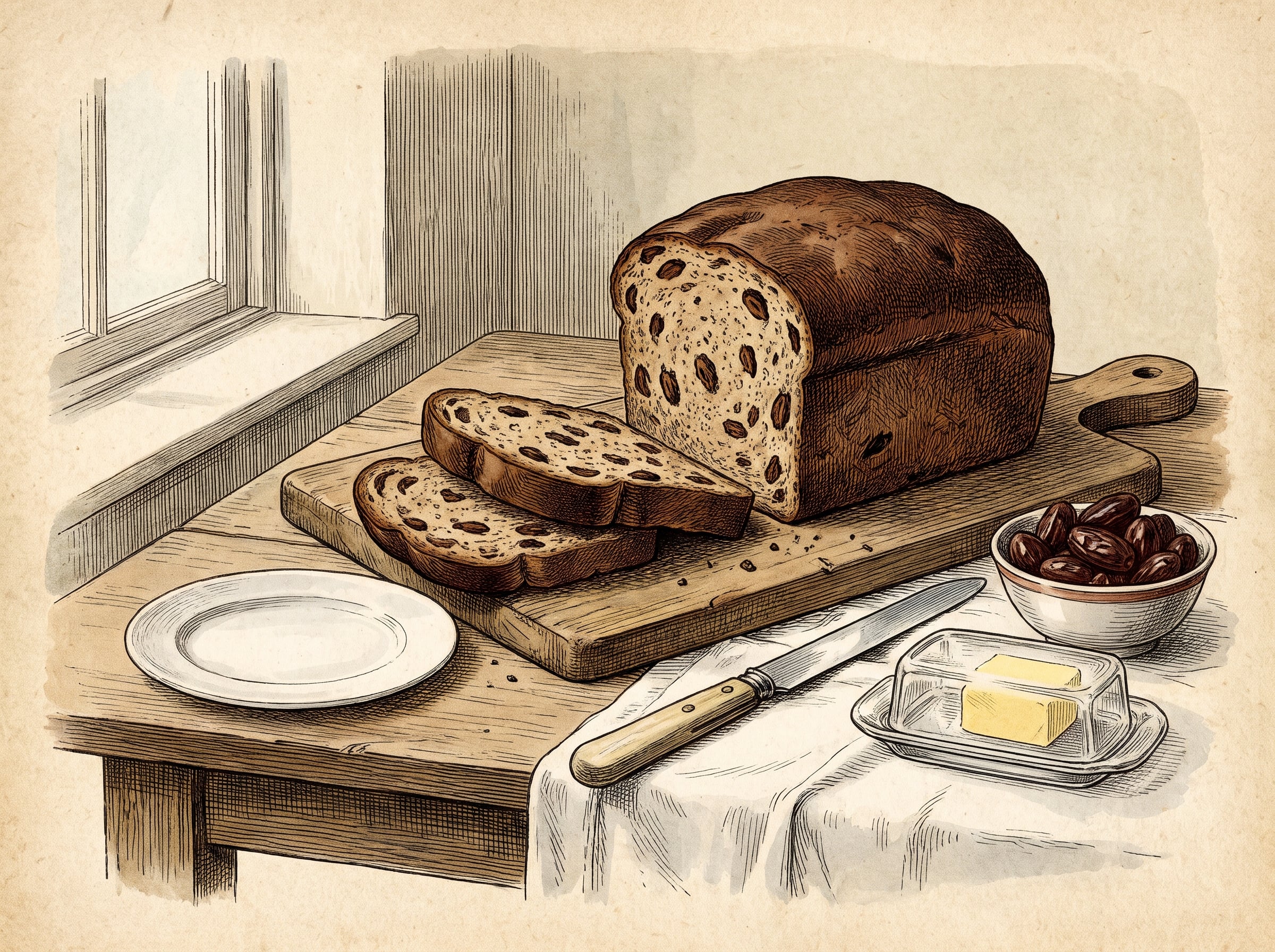
Among the holiday loaves, this one comes from a health reformer. Ella Eaton Kellogg’s 1890s yeast bread pairs coarse Graham flour with imported dates and just two tablespoons of sugar, and it predates America’s date nut bread by a generation.
Ingredients
- 1 pint light (well-risen) white bread sponge made with milkPrinted: “a pint of light white bread sponge prepared with milk”
- 2 tablespoons sugarPrinted: “two tablespoons of sugar”
- about 2½ cups graham (coarse whole-wheat) flour*Printed: “Graham flour to make a very stiff batter”
- 1 cup pitted datesPrinted: “a cupful of stoned dates”
- Makes: One small loaf
* Modern amount: AI converted the outdated terms and did its best to come up with the modern equivalent.
In short
- Take a pint of light white bread sponge made with milk and add two tablespoons of sugar.
- Add Graham flour to make a very stiff batter.
- Lastly, stir in a cupful of stoned dates.
- Turn into a bread pan, let it rise, and bake.
15. Twisted Brioche Crown
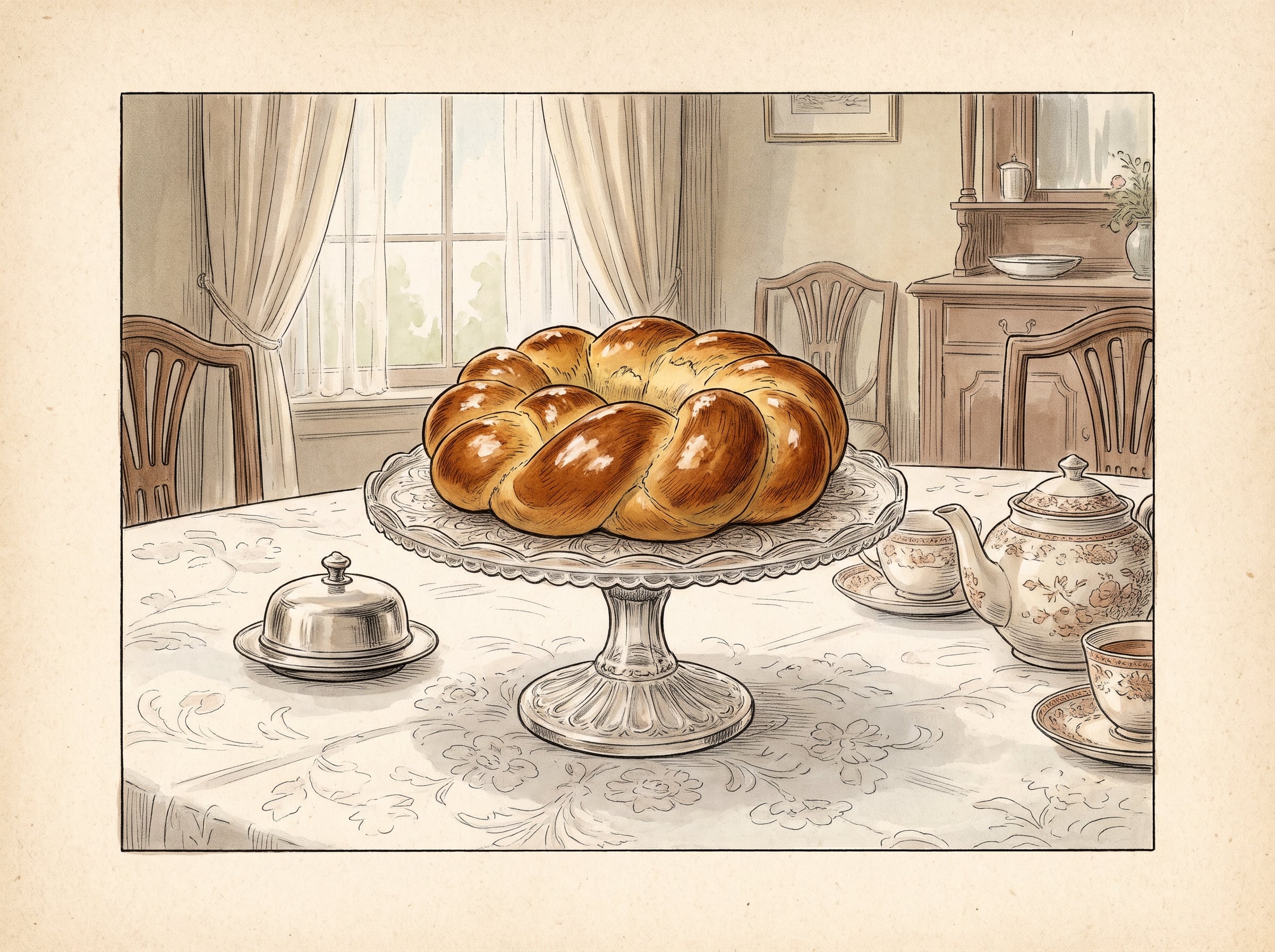
A French dough by way of New York: Mary Ronald’s brioche rises with a factory yeast cake, rests overnight "on the ice" and is twisted into a rope-like crown, rich with seven eggs and three-quarters of a pound of butter.
Ingredients
- 1 cake (0.6 ounce) compressed (fresh) yeastPrinted: “1 cake of compressed yeast.”
- 1/4 cup lukewarm waterPrinted: “1/4 cupful of lukewarm water.”
- 1 quart (4 cups) all-purpose flourPrinted: “1 quart of flour.”
- 7 large eggsPrinted: “7 eggs.”
- 3/4 pound (3 sticks) butter, softenedPrinted: “3/4 pound of butter.”
- 1/2 teaspoon saltPrinted: “1/2 teaspoonful of salt.”
- 2 teaspoons sugarPrinted: “2 teaspoonfuls of sugar.”
- Makes: About 2½ pounds of dough (one large brioche crown or about 2 dozen small brioches)
In short
- Dissolve yeast in 1/4 cup lukewarm water, add flour for a soft ball; set in warm water, covered, about an hour.
- In a well of remaining flour, hand-work soft butter, salt, sugar and four eggs, then two more eggs, until no longer sticky.
- Lift the leaven from the water, work it into the dough with the last egg, and beat by hand a long time.
- Cover and let double, four to five hours; beat down and chill on ice twelve to twenty-four hours, starting the day before.
- Roll to a half-inch round, cut through, twist into a ring; let rise, egg-brush, bake in a hot oven about 30 minutes.
14. Raisin Bread With an Eight-Hour Rise
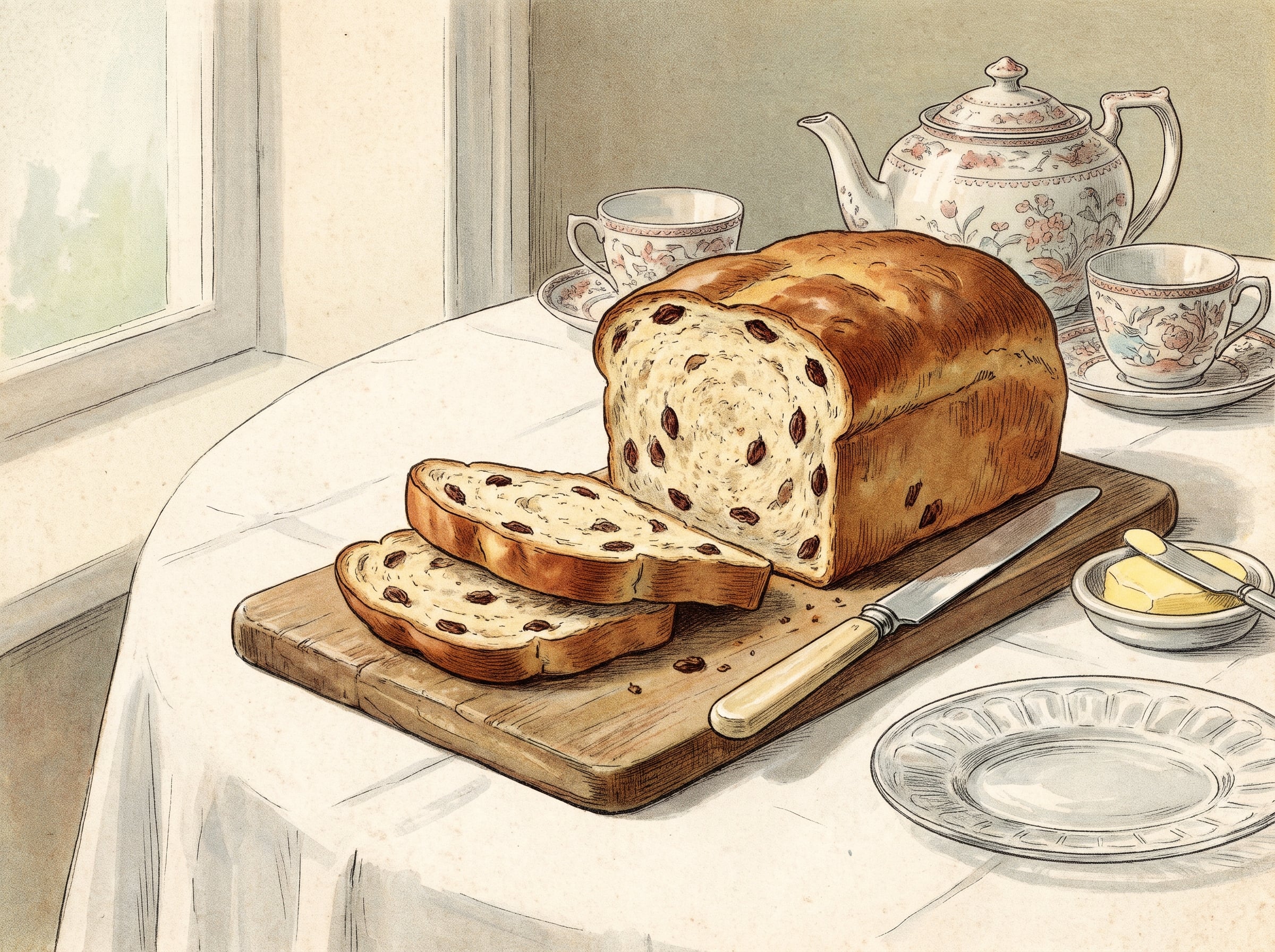
Among the butter-and-spice showpieces, Marion Harland’s raisin bread is the plain one: no sugar, eggs or spice, just milk, butter, raisins and a slow eight-hour rise. That long wait makes it easy to start a day ahead of a holiday breakfast.
Ingredients
- 1 pint (2 cups) milkPrinted: “a pint of milk”
- 1 teaspoon butter, meltedPrinted: “a teaspoonful of melted butter”
- 1 teaspoon saltPrinted: “one of salt”
- 0.3 ounce (½ standard cake), or about 1¼ teaspoons active dry yeast fresh compressed yeast*Printed: “half a yeast-cake”
- ½ cup warm waterPrinted: “a half-cupful of warm water”
- 3½ cups all-purpose flour (for the batter)*Printed: “enough flour to make a good batter”
- 1 cup all-purpose flourPrinted: “a cupful of flour”
- 1 cup raisins, halved and seededPrinted: “a cupful of halved and seeded raisins”
- 2 tablespoons all-purpose flour (for dredging the raisins)*Printed: “flour”
- Makes: One large loaf (about 2 pounds)
* Modern amount: AI converted the outdated terms and did its best to come up with the modern equivalent.
In short
- Scald a pint of milk; beat in a teaspoon of melted butter and a teaspoon of salt.
- When lukewarm, add half a yeast cake dissolved in half a cup of warm water; beat in flour to make a good batter.
- Leave in a warm room to rise for eight hours.
- Beat hard, add a cup of flour, and work in a cup of halved, seeded raisins well dredged with flour.
- Let rise until light, then bake.
13. Kentucky Salt Rising Bread
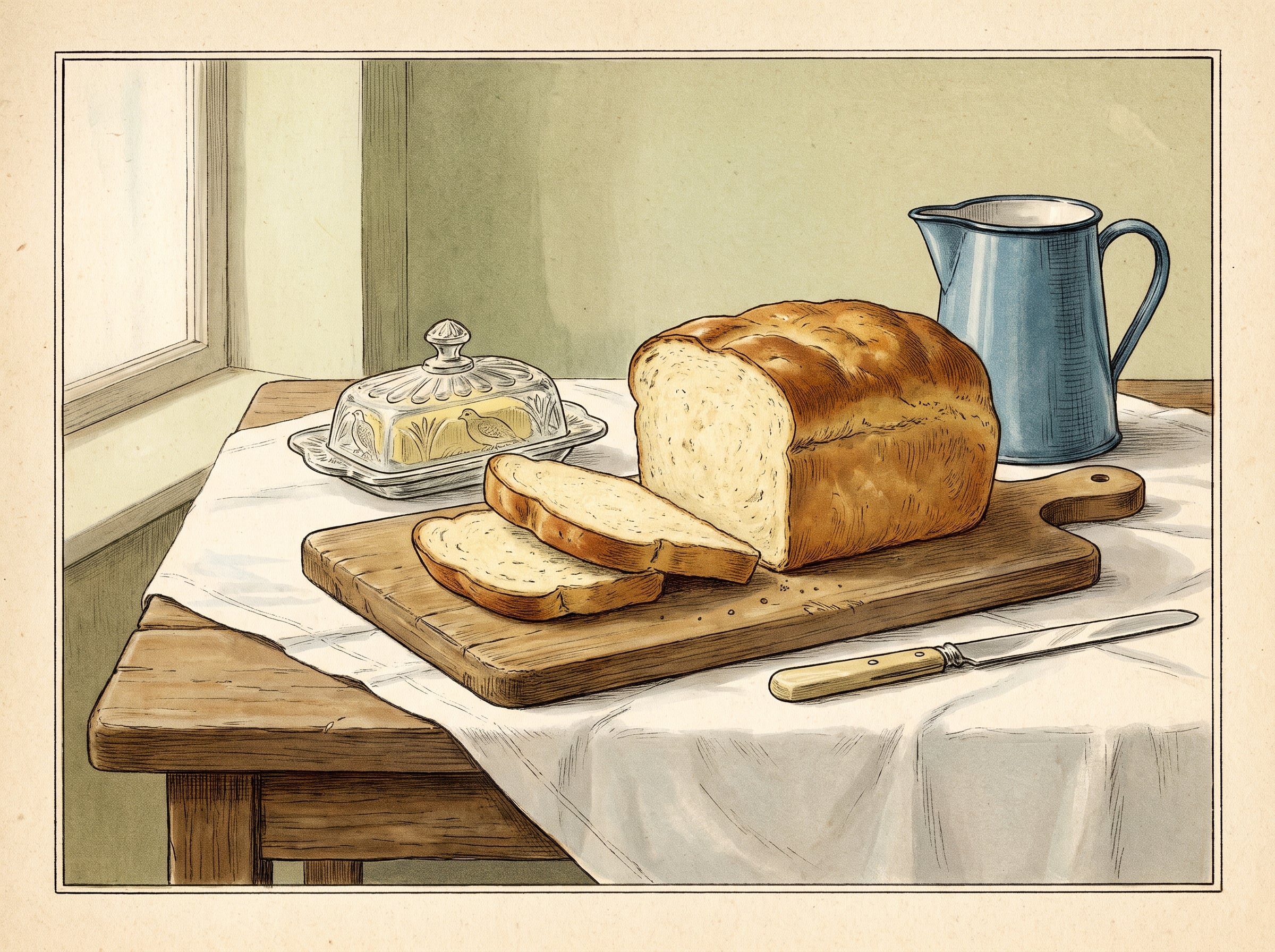
The odd cousin among these loaves: an Appalachian bread whose cornmeal-and-milk starter sours overnight, giving a dense, cheesy-tasting loaf that doesn’t taste salty. This 1908 version adds a mystery, half a cup of unspecified ‘yeast.’
Ingredients
- 1 cup whole milk, scaldedPrinted: “One cup sweet milk”
- 1 pinch saltPrinted: “a pinch of salt”
- about ½ cup cornmeal*Printed: “enough corn meal to make a batter”
- 1 pint (2 cups) warm waterPrinted: “1 pint of warm water”
- about 2½ cups all-purpose flour*Printed: “enough flour to make a batter”
- about 9 cups all-purpose flour*Printed: “3 sifters of flour”
- 1 teaspoon saltPrinted: “1 teaspoonful of salt”
- 1 tablespoon lardPrinted: “1 tablespoonful of lard”
- ½ cup yeast (the book does not say what kind)*Printed: “½ cup yeast”
- about 2½ cups lukewarm water*Printed: “lukewarm water”
- Makes: About 3 loaves
* Modern amount: AI converted the outdated terms and did its best to come up with the modern equivalent.
In short
- Scald 1 cup sweet milk; add a pinch of salt and enough corn meal for a batter. Leave warm overnight to sour.
- Next morning, add 1 pint warm water and enough flour for a batter; let rise somewhere warm, about two hours.
- Combine 3 sifters flour, 1 teaspoon salt, 1 tablespoon lard and ½ cup yeast; work into a sponge with lukewarm water.
- Let rise about three hours, then bake in a slow oven for about 40 to 50 minutes.
12. Parker House Rolls
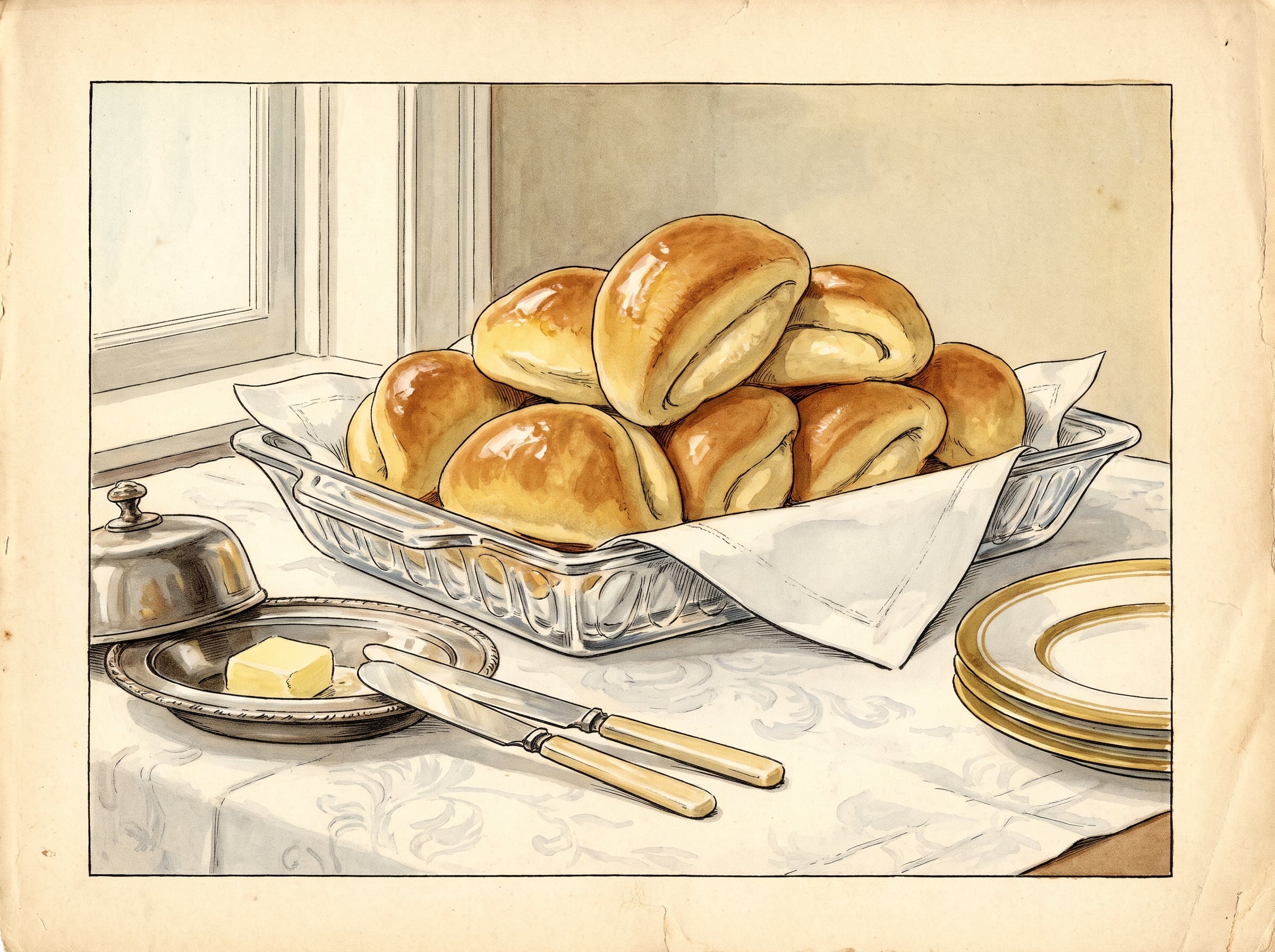
Born in a Boston hotel kitchen, the Parker House roll is a soft, buttery round folded over on itself. Fannie Farmer’s 1910 version spells out every measure, down to the floured knife handle that makes the crease.
Ingredients
- 2 cups milk, scaldedPrinted: “2 cups scalded milk”
- 3 tablespoons butterPrinted: “3 tablespoons butter”
- 2 tablespoons granulated sugarPrinted: “2 tablespoons sugar”
- 1 teaspoon saltPrinted: “1 teaspoon salt”
- 1 cake (0.6 ounce), or 2¼ teaspoons active dry yeast compressed fresh yeast*Printed: “1 yeast cake dissolved in”
- ¼ cup lukewarm waterPrinted: “¼ cup lukewarm water”
- about 5½ cups (3 cups, then about 2½ cups), plus extra for the board flour (bread or all-purpose)Printed: “Flour”
- Makes: About 3½ dozen rolls
* Modern amount: AI converted the outdated terms and did its best to come up with the modern equivalent.
In short
- Add butter, sugar, and salt to scalded milk; when lukewarm, add dissolved yeast cake and 3 cups flour, and beat thoroughly.
- Cover and let rise until light; cut down, knead in about 2½ cups more flour, and let rise again.
- Knead on a lightly floured board, pat and roll ⅓ inch thick, and cut with a floured biscuit cutter.
- Crease each center with a floured knife handle, brush half with melted butter, fold, and press edges together.
- Place 1 inch apart in a greased pan, cover, let rise without hurrying, and bake in a hot oven 12–15 minutes.
11. Swedish Tea Braid With Almonds
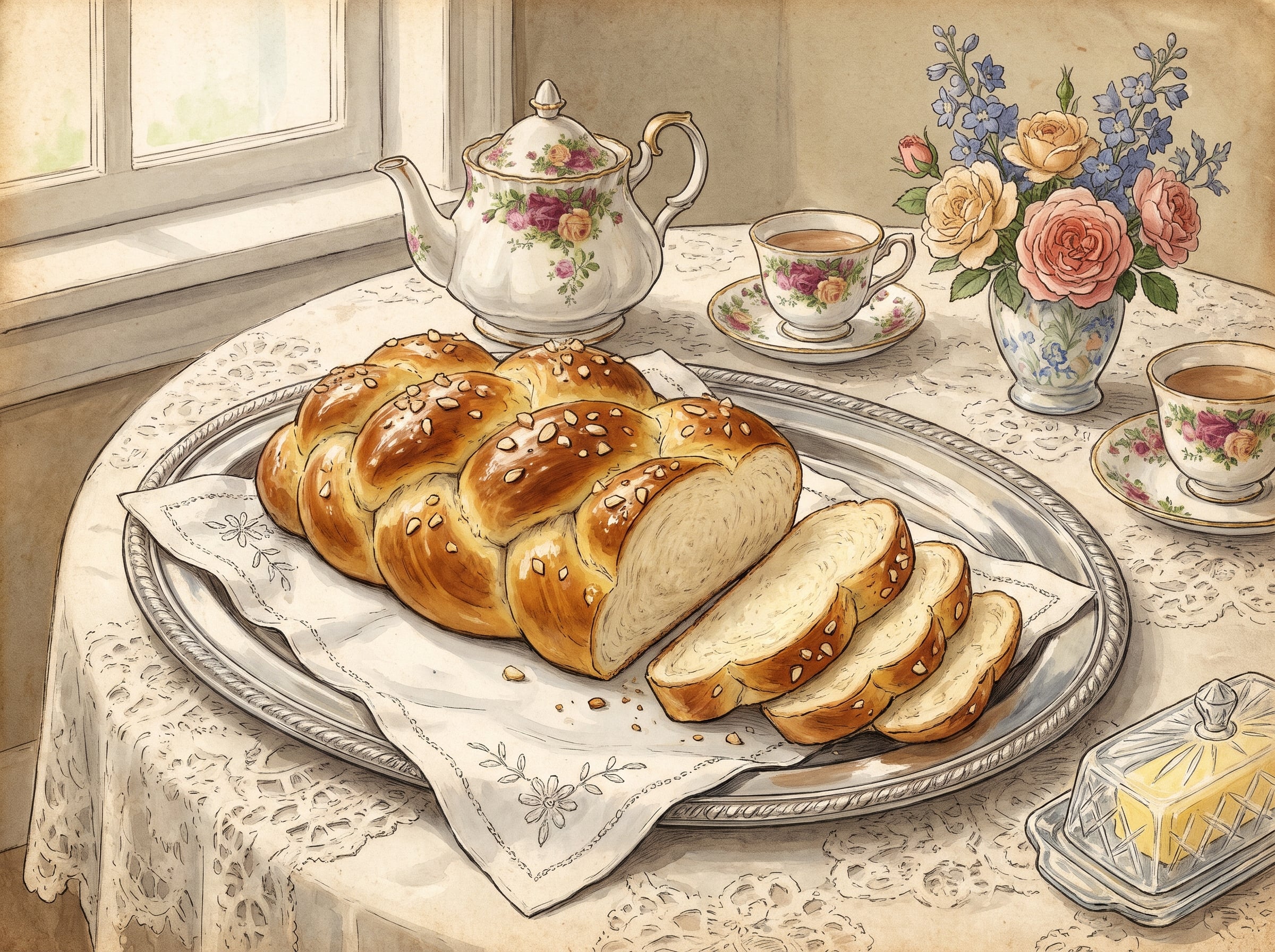
Fannie Farmer’s 1910 Swedish Bread skips spice and candied fruit and bets everything on almond. There is almond extract in its butter-and-egg dough and chopped blanched almonds on a yolk-glazed, three-strand braid, built through three patient rises.
Ingredients
- 2½ cups milk, scaldedPrinted: “2½ cups scalded milk”
- 1 cake (0.6 ounce) fresh compressed yeastPrinted: “1 yeast cake”
- 7 cups all-purpose flour (½ cup for the sponge, 4½ cups, then 1½ cups, plus ½ cup for kneading)Printed: “Flour”
- ½ cup butter, meltedPrinted: “½ cup melted butter”
- ⅔ cup sugarPrinted: “⅔ cup sugar”
- 1 egg, well beatenPrinted: “1 egg, well beaten”
- ¼ teaspoon saltPrinted: “¼ teaspoon salt”
- 1 teaspoon almond extractPrinted: “1 teaspoon almond extract”
- 1 egg yolk, slightly beaten (for glaze)Printed: “yolk of one egg, slightly beaten”
- ½ tablespoon cold water (to dilute the glaze)Printed: “one-half tablespoon cold water”
- ¼ cup blanched almonds, finely chopped (for topping)*Printed: “finely chopped blanched almonds”
- Makes: Two large braided loaves (Swedish Tea Braids)
* Modern amount: AI converted the outdated terms and did its best to come up with the modern equivalent.
In short
- Dissolve yeast cake in ½ cup lukewarm scalded milk, beat in ½ cup flour, cover, and let rise.
- When light, stir in remaining milk and 4½ cups flour, cover, and let rise again.
- Add remaining ingredients and 1½ cups flour. Knead on a floured cloth, using ½ cup flour; cover and let rise.
- For a tea braid, roll three equal pieces by hand into uniform strands, braid, and place on a buttered sheet.
- Cover and let rise; brush with yolk diluted with ½ tablespoon cold water, sprinkle with chopped blanched almonds, bake in moderate oven.
10. Old-Style Southern Beaten Biscuit
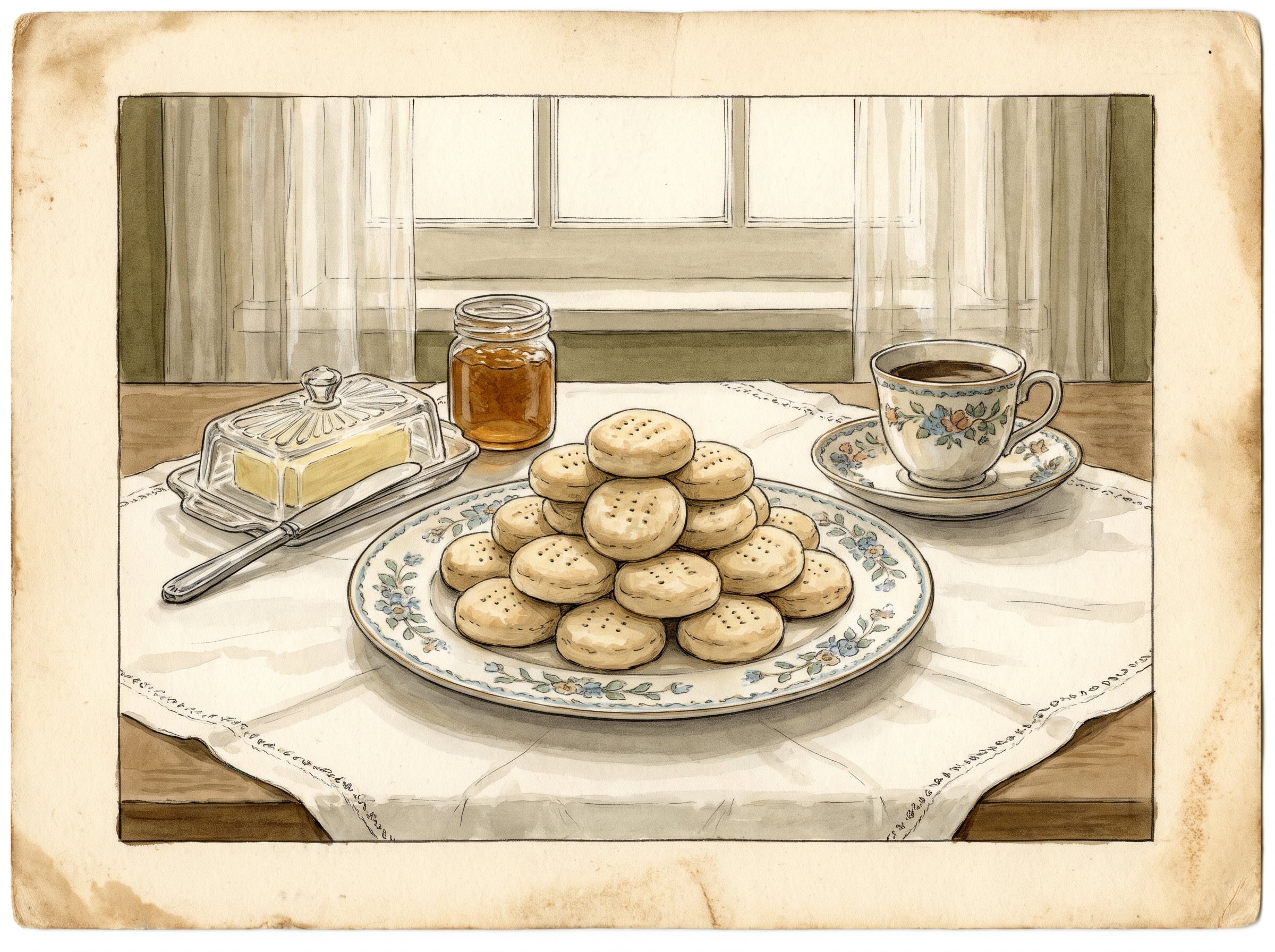
Among the yeasted, buttery and sugared showpieces of the holiday table, this 1913 Southern biscuit is the odd one out: no yeast, no baking powder, no sugar, just a stiff lard dough struck a hundred times until air alone lifts it.
Ingredients
- 1 quart (4 cups) all-purpose flour, siftedPrinted: “a quart of flour”
- ½ teaspoon saltPrinted: “half a teaspoon salt”
- ¾ cup lard, very cold*Printed: “a teacup of very cold lard”
- about ¾ cup ice water*Printed: “cold water–ice water is best”
- about ¼ cup all-purpose flour, for dredging the dough*Printed: “flour (for dredging)”
- Makes: About 3 dozen small biscuits
* Modern amount: AI converted the outdated terms and did its best to come up with the modern equivalent.
In short
- Sift 1 quart flour with ½ teaspoon salt, then cut in 1 teacup very cold lard.
- Add cold water, ice water is best, to make a very stiff dough.
- On a floured block or marble slab, give 100 strokes with a mallet or rolling pin, refolding as it thins.
- Dust with flour if it sticks; beat until the dough is firm, smooth and very elastic.
- Roll ½ inch thick, cut small rounds, prick tops, and bake in steady, moderate heat until delicately browned.
9. Popovers Baked in Gem Cups
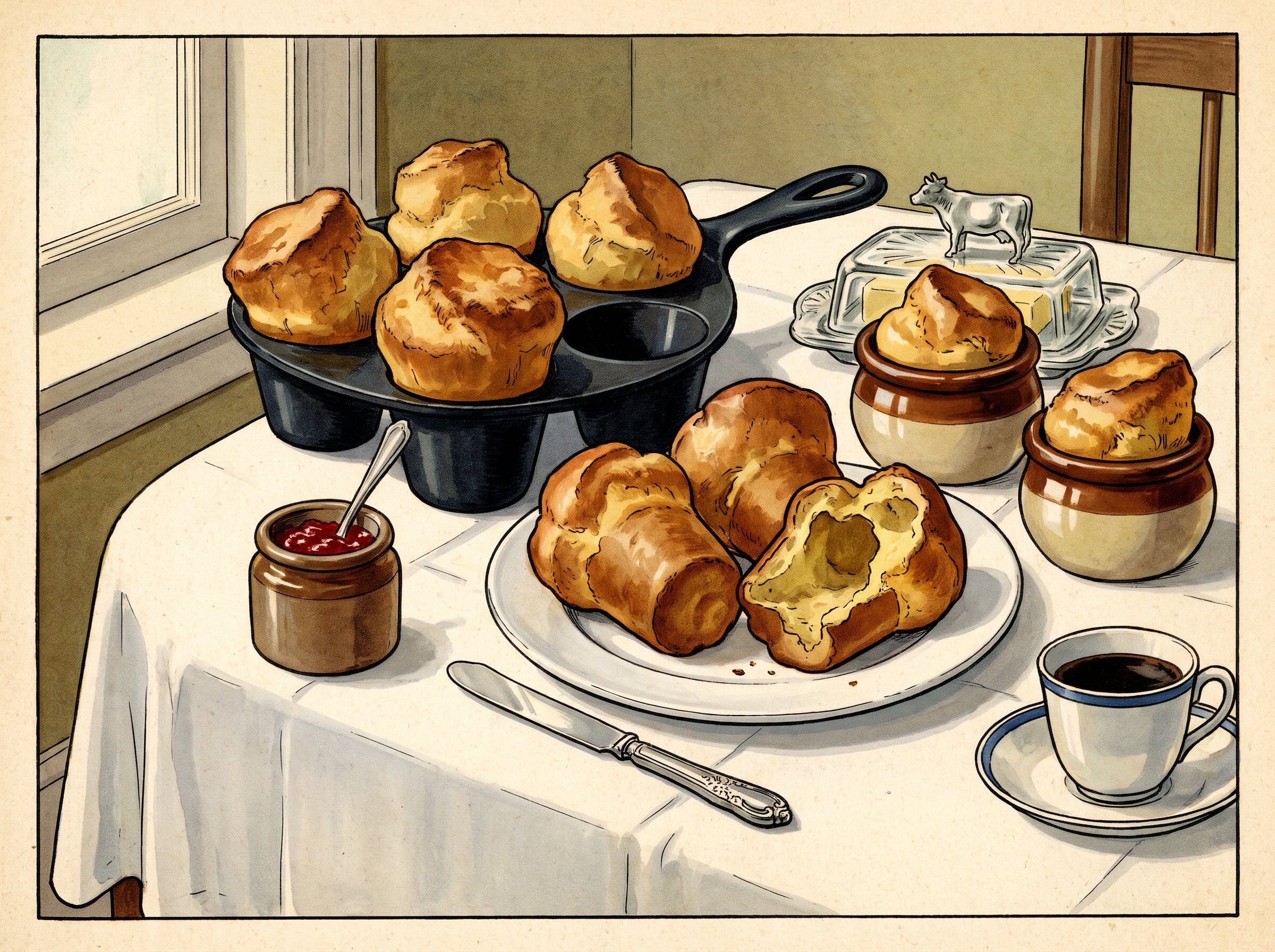
Unlike the yeasted, spiced and sugared breads here, Hiller’s 1913 popovers use no yeast and no sugar, just eggs beaten hard and batter poured into hissing-hot gem cups to puff up over the rim. A Sunday-dinner bread rather than a holiday one.
Ingredients
- 1 cup all-purpose flourPrinted: “1 cup flour.”
- 1/4 teaspoon saltPrinted: “1/4 teaspoon salt.”
- 7/8 cup (3/4 cup plus 2 tablespoons) milkPrinted: “7/8 cup milk.”
- 1 teaspoon Cottolene shortening (a cottonseed-oil and beef-suet shortening), meltedPrinted: “1 teaspoon melted Cottolene.”
- 2 eggs, beaten until very lightPrinted: “2 eggs beaten very light.”
- Makes: About 8 popovers
In short
- Sift flour and salt together, then add milk gradually, beating continuously.
- Add the melted Cottolene and the eggs, beaten very light.
- Beat with a Dover egg beater for three or four minutes until perfectly smooth, creamy and full of bubbles.
- Pour into hissing-hot, well-greased gem cups and bake in a hot oven for thirty to thirty-five minutes.
- Alternatively, bake in earthen custard cups, which give the popovers a glazed appearance.
8. Swedish Bread Wreaths With Salted Almonds
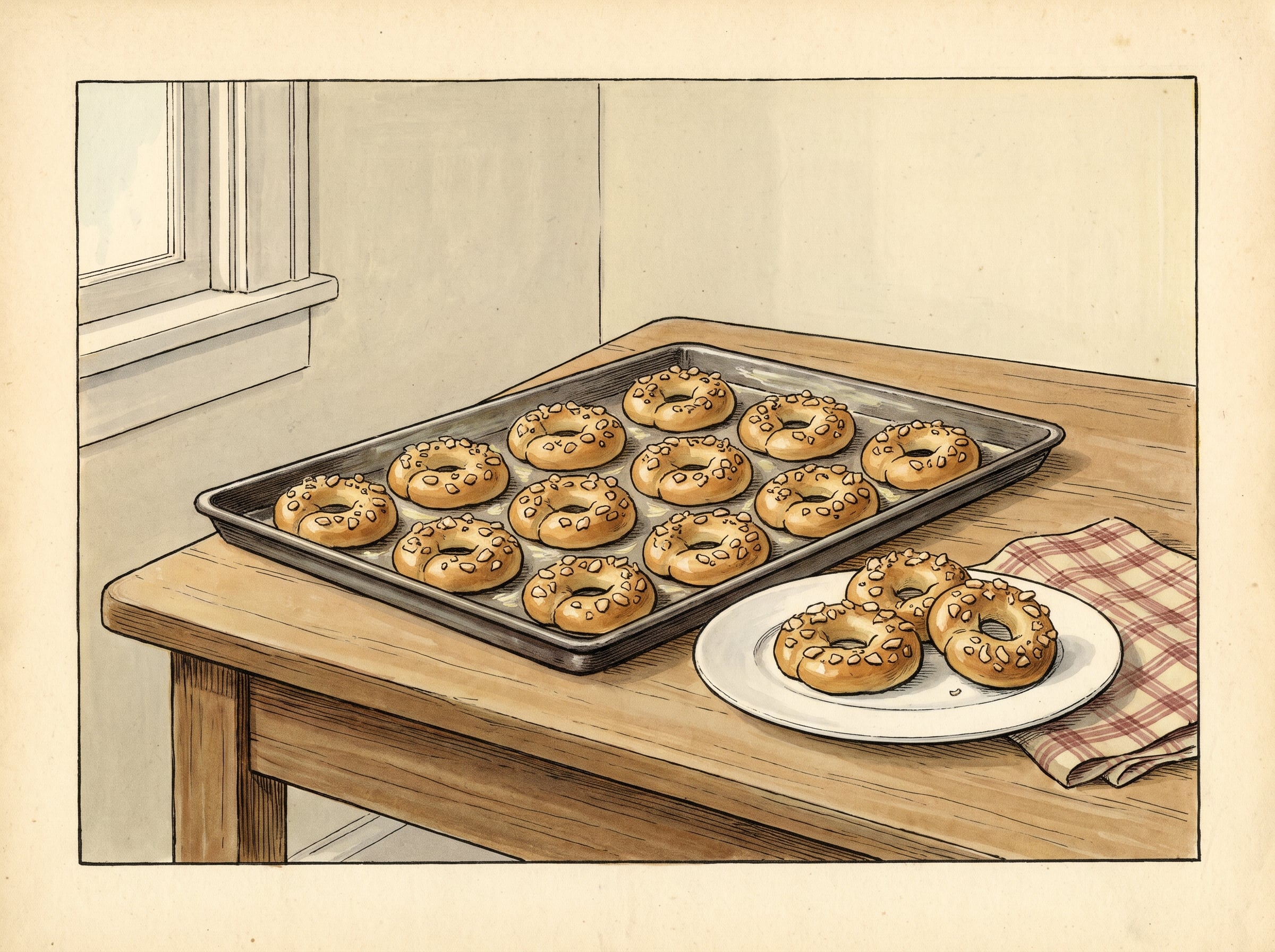
Amid all the sugar and spice, these 1915 suffrage-cookbook rings take a savory turn: a cup of the family’s bread dough, enriched with butter and lard, shaped into small wreaths and crusted with salted almonds instead of glaze.
Ingredients
- 1 cup risen bread doughPrinted: “1 cup of bread dough”
- 1/4 cup butter, softenedPrinted: “1/4 cup butter”
- 1/4 cup lardPrinted: “1/4 cup lard”
- 1/2 cup all-purpose flour, for kneading*Printed: “enough flour to prevent sticking”
- 1/2 cup blanched almonds, chopped and lightly salted*Printed: “blanched almonds that have been chopped and salted”
- 1 tablespoon butter, for greasing the baking sheets*Printed: “buttered baking sheets”
- Makes: About 12 small almond-topped rings
* Modern amount: AI converted the outdated terms and did its best to come up with the modern equivalent.
In short
- Work 1 cup bread dough, 1/4 cup butter and 1/4 cup lard together by hand until thoroughly blended.
- Turn onto a floured board and knead, using just enough flour to prevent sticking.
- Cut off pieces, roll like bread sticks and shape into rings; dip tops in chopped, salted blanched almonds.
- Arrange on buttered baking sheets and bake in a hot oven until brown.
7. Walnut Nut Bread
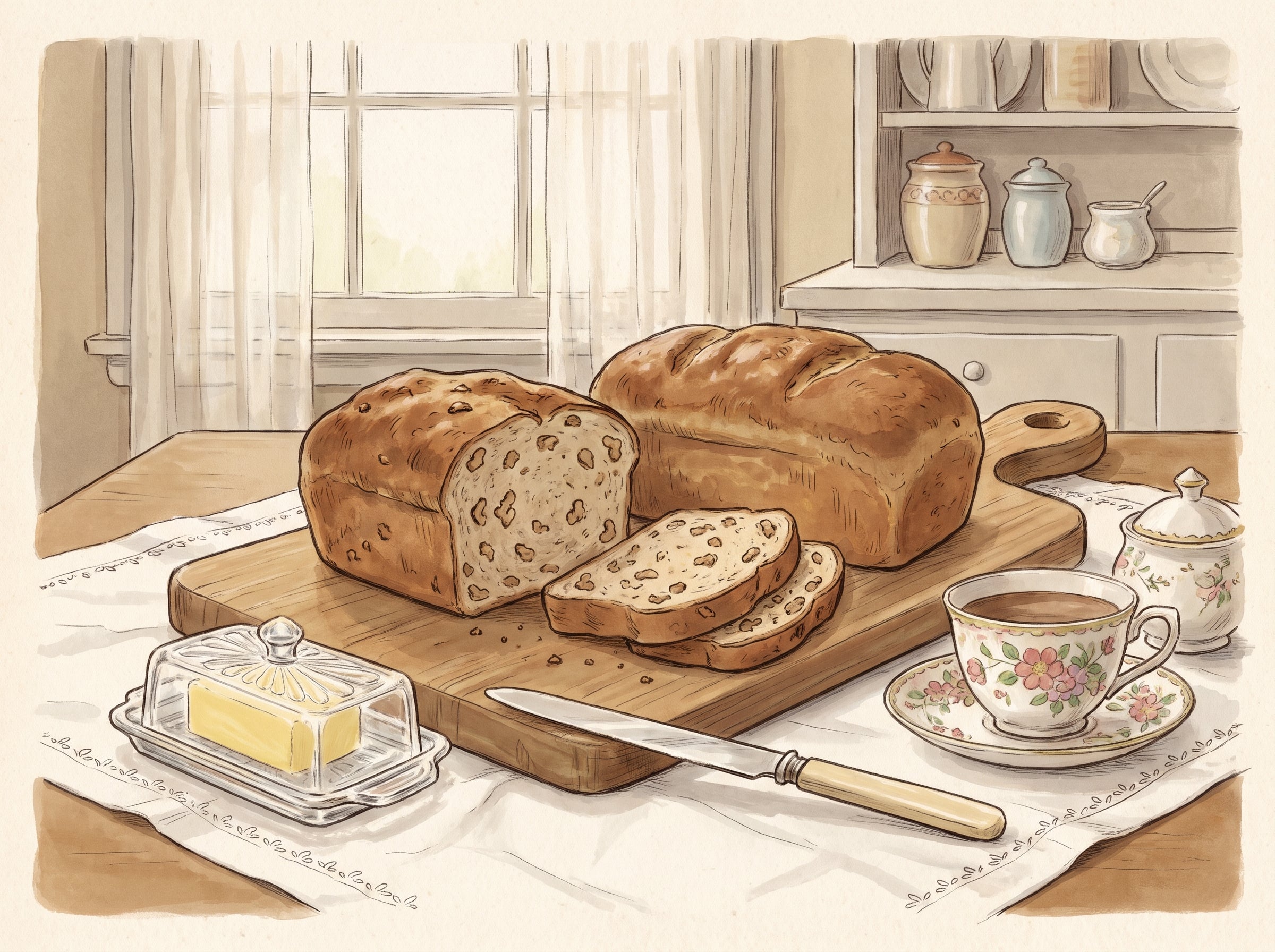
No yeast, no butter, no spice: this 1916 Cincinnati walnut loaf rises on baking powder and beaten eggs after just a twenty-minute rest. It is a plain, quick counterpoint to slow-risen yeast breads.
Ingredients
- 4 1/2 cups all-purpose wheat flourPrinted: “Four and one-half cups wheat flour”
- 8 teaspoons baking powderPrinted: “eight teaspoonfuls baking powder”
- 1 teaspoon saltPrinted: “one teaspoonful salt”
- 1 cup granulated sugarPrinted: “one cup sugar”
- 2 cups whole milkPrinted: “two cups sweet milk”
- 1 heaping cup chopped walnuts*Printed: “one large cup chopped walnuts”
- 2 eggs, well beatenPrinted: “two eggs well beaten”
- Makes: Two 9×5-inch loaves
* Modern amount: AI converted the outdated terms and did its best to come up with the modern equivalent.
In short
- Stir 4½ cups wheat flour, 8 tsp baking powder, 1 tsp salt, 1 cup sugar and 1 large cup chopped walnuts thoroughly.
- Add 2 well-beaten eggs and 2 cups sweet milk.
- Let stand 20 minutes before baking.
- Bake in two tins in a moderate oven for about 45 minutes.
6. Bettina’s Christmas Breakfast Muffins
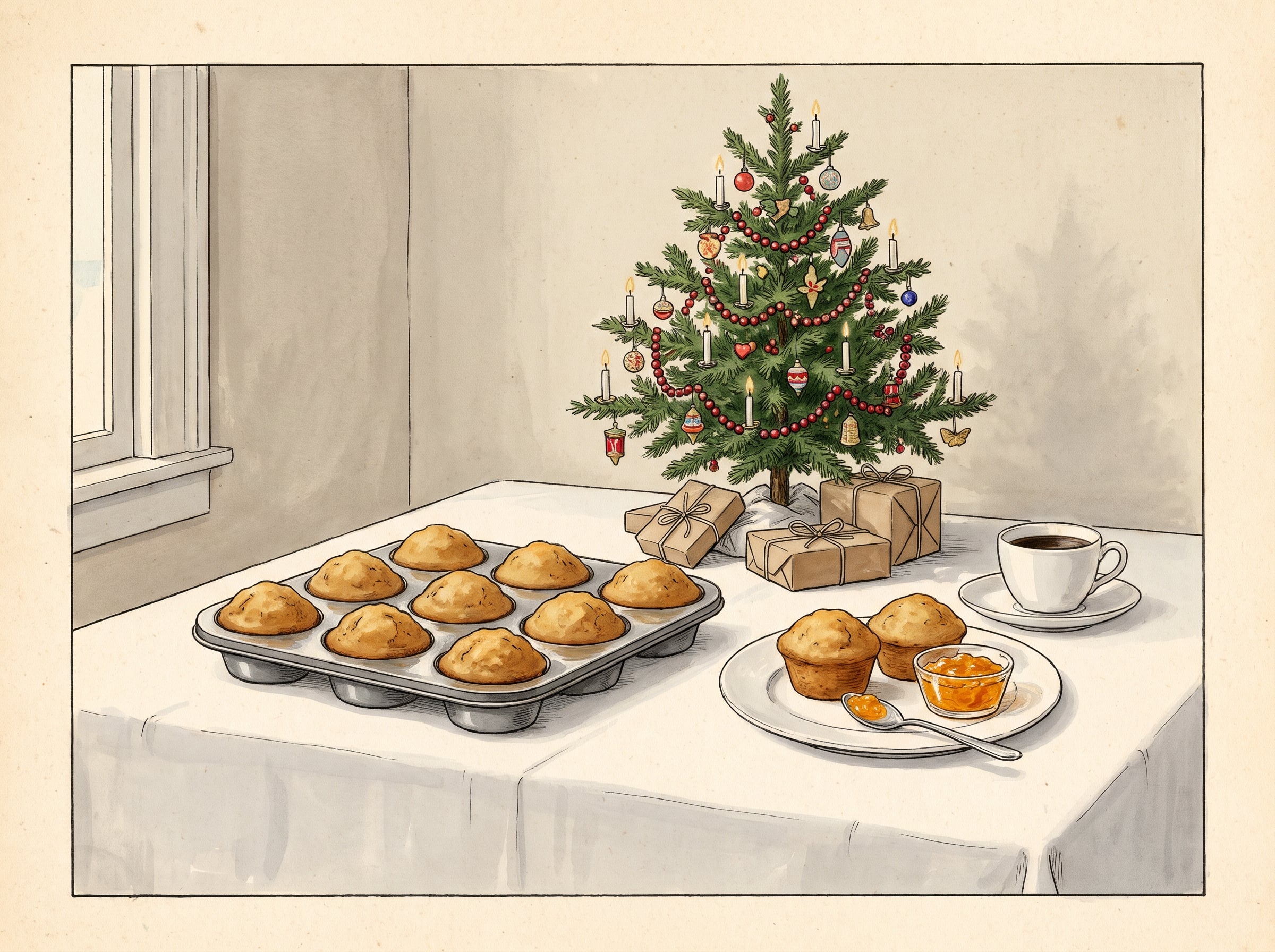
The muffins Bettina served at her 1917 Christmas breakfast, with orange marmalade and a tiny tree on the table: twelve sweet, plain muffins raised with baking powder, beaten two minutes and baked in twenty.
Ingredients
- 2 cups all-purpose flourPrinted: “2 C-flour”
- 4 teaspoons baking powderPrinted: “4 t-baking powder”
- 1/3 cup granulated sugarPrinted: “1/3 C-sugar”
- 1/2 teaspoon saltPrinted: “1/2 t-salt”
- 1 egg, beatenPrinted: “1 egg”
- 1 cup milkPrinted: “1 C-milk”
- 2 teaspoons butter, meltedPrinted: “2 t-melted butter”
- Makes: 12 muffins
In short
- Mix the flour, baking powder, sugar and salt.
- Add the beaten egg and milk, and beat for two minutes.
- Stir in the melted butter.
- Fill well-buttered muffin pans half full and bake twenty minutes in a moderate oven.
5. Stollen With Raisins, Almonds and Lemon
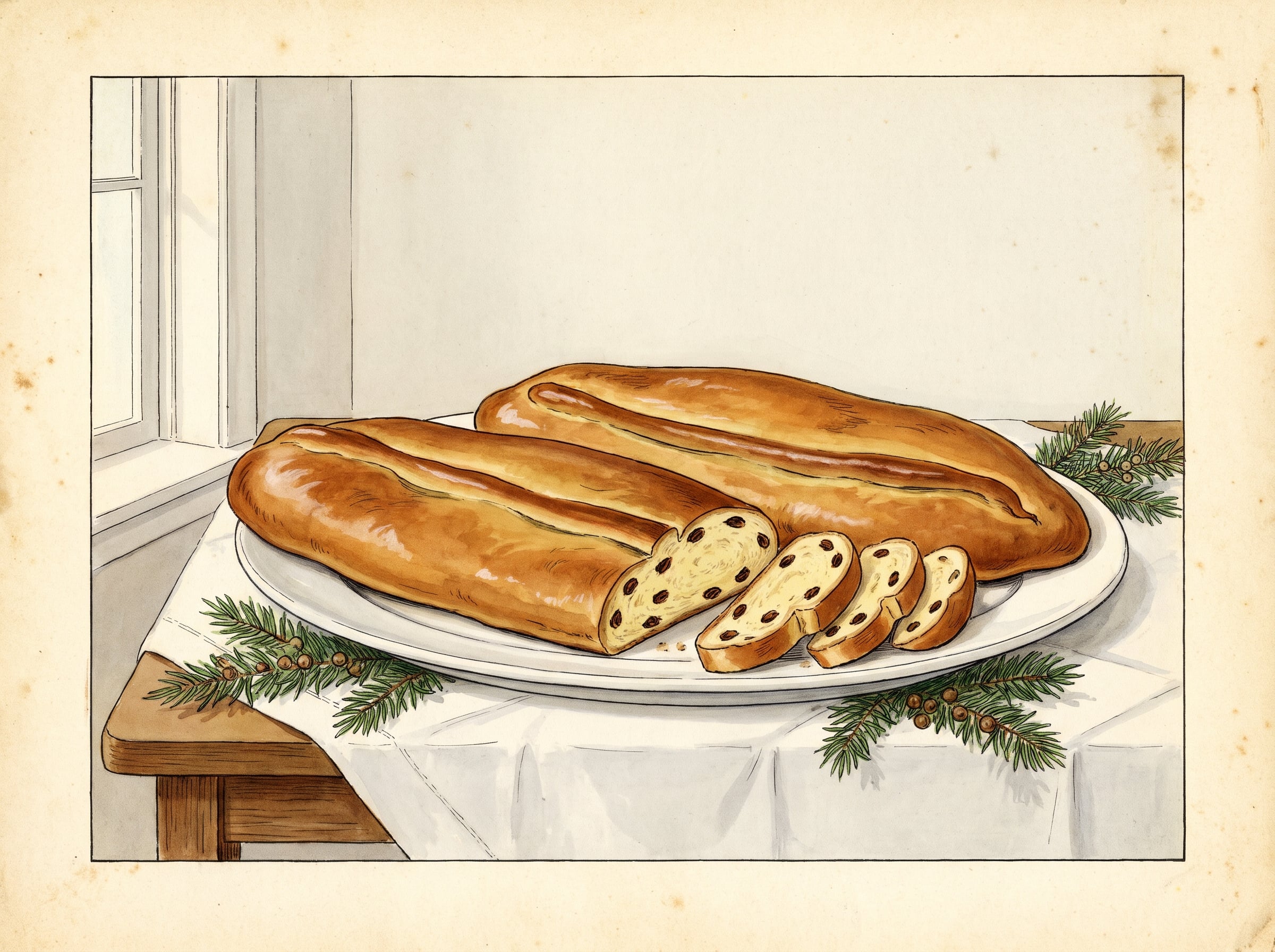
A 1919 kosher cookbook’s take on Saxony’s Christmas loaf: buttery and rich with ground almonds, scented with fresh lemon, folded over double, and made without the candied peel, spice or powdered-sugar coat that today’s stollen is known for.
Ingredients
- 2 pounds all-purpose flour, siftedPrinted: “two pounds of flour”
- 1 cake (0.6 ounce) fresh compressed yeastPrinted: “one cake of compressed yeast”
- 1 teaspoon saltPrinted: “one teaspoon of salt”
- 1 pint (2 cups) whole milk, lukewarmPrinted: “one pint of lukewarm milk”
- 1 tablespoon granulated sugarPrinted: “one tablespoon of sugar”
- ½ pound (1 cup) butter, creamed (beaten soft)Printed: “one-half pound of creamed butter”
- ¼ pound seeded raisinsPrinted: “a quarter of a pound of seeded raisins”
- ¼ pound granulated sugarPrinted: “one-quarter of a pound of sugar”
- 4 egg yolksPrinted: “yolks of four eggs”
- 4 ounces finely ground almondsPrinted: “four ounces of powdered almonds”
- 1 lemon grated lemon zestPrinted: “the grated peel of a lemon”
- 2 tablespoons butter, melted (for brushing the tops)*Printed: “melted butter”
- Makes: Two large stollen loaves (or one very large loaf)
* Modern amount: AI converted the outdated terms and did its best to come up with the modern equivalent.
In short
- Sift 2 lb flour; set a sponge with 1 cake compressed yeast, 1 tsp salt, 1 pint lukewarm milk, 1 tbsp sugar.
- Once risen, add ½ lb creamed butter, ¼ lb seeded raisins, ¼ lb sugar and 4 egg yolks.
- Add 4 oz powdered almonds and grated peel of 1 lemon; beat well with the hands, not kneading.
- Let rise at least 3 hours; roll, press down the centre, fold double, form one or two long narrow-ended loaves.
- Brush the top with melted butter, let rise again, and bake ¾ hour in a moderate oven.
4. Kugelhopf With Raisins and Citron
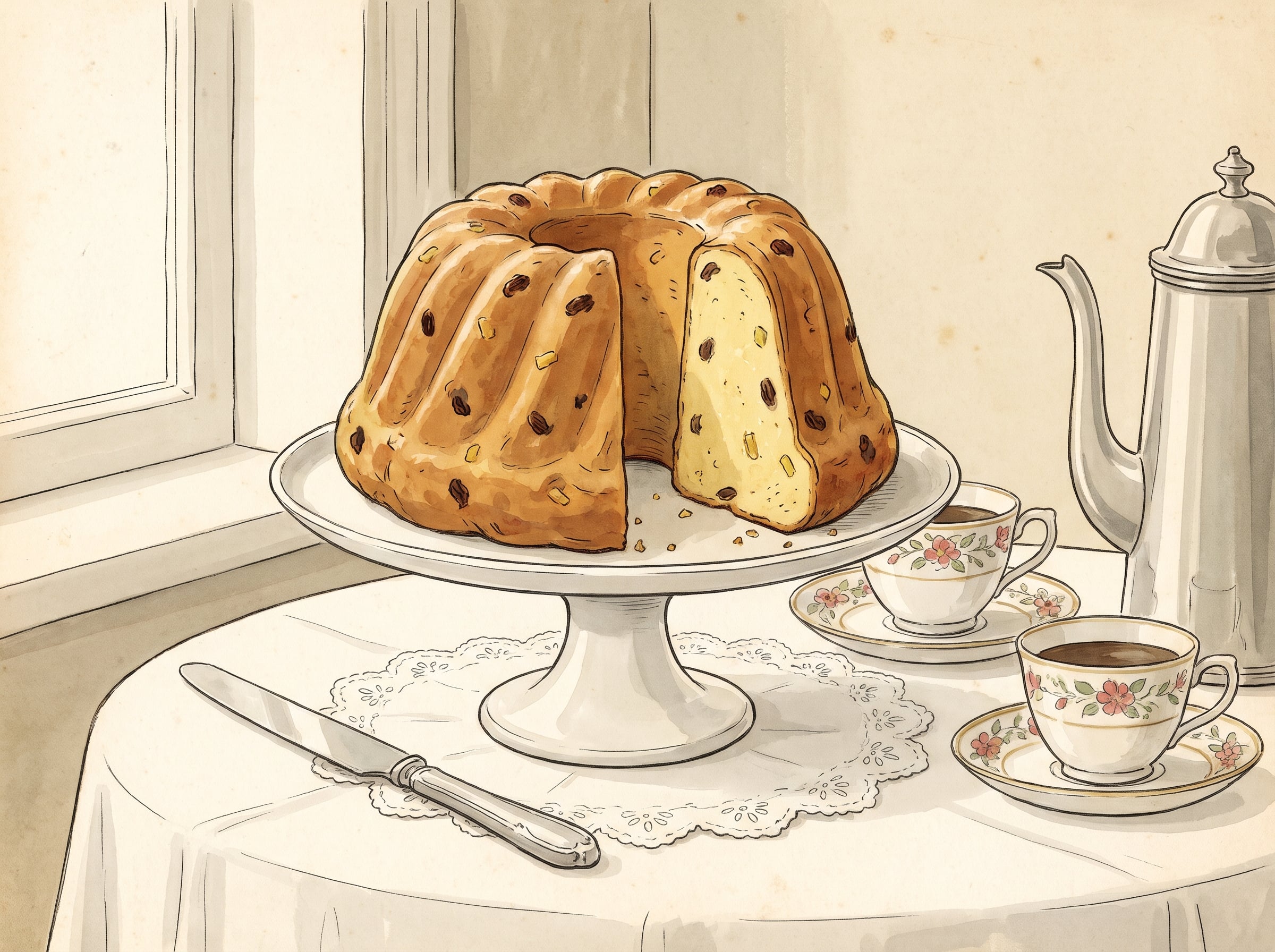
Beside the kneaded stollens and braids, this kugelhopf from a 1919 kosher cookbook is barely a bread. It is a stirred yeast batter rich with creamed butter and beaten egg whites, studded with raisins and citron, and baked in a tall tube pan.
Ingredients
- ½ ounce fresh compressed yeast (or 1 cake)Printed: “one-half ounce of yeast or one cake compressed yeast”
- 2 tablespoons lukewarm milk (for dissolving the yeast)*Printed: “a very little lukewarm milk”
- 1 pinch saltPrinted: “a pinch of salt”
- 1 tablespoon granulated sugarPrinted: “one tablespoon of sugar”
- scant 1 cup butter, softenedPrinted: “a scant cup of butter”
- scant 1 cup powdered sugarPrinted: “a scant cup of powdered sugar”
- 4 egg yolksPrinted: “the yolks of four eggs”
- grated zest of 1 lemonPrinted: “the grated peel of a lemon”
- 2 cups all-purpose flour, siftedPrinted: “two cups of flour”
- 1 cup lukewarm milkPrinted: “one cup of lukewarm milk”
- ½ cup dark raisins, seededPrinted: “one-half cup of cleaned and seeded dark raisins”
- ¼ cup candied citron, finely chopped*Printed: “some citron”
- up to ½ cup all-purpose flour (for dredging the fruit and adjusting the batter)*Printed: “more flour”
- 4 egg whites, beaten stiffPrinted: “the stiffly-beaten whites of the eggs”
- Makes: One 9-inch tube-pan kugelhopf
* Modern amount: AI converted the outdated terms and did its best to come up with the modern equivalent.
In short
- Dissolve ½ oz yeast in a little lukewarm milk with a pinch of salt and 1 tablespoon sugar; set somewhere warm to rise.
- Cream a scant cup butter with a scant cup powdered sugar; beat in 4 egg yolks one at a time, plus grated lemon peel.
- Make a well in 2 cups sifted flour; add yeast and 1 cup lukewarm milk for a light batter. Beat in butter mixture until blistered.
- Add ½ cup floured raisins and finely cut citron, adding flour if needed for cup-cake-batter consistency. Fold in stiffly beaten egg whites.
- Put in a greased tube pan, let rise until doubled, and bake in a moderate oven until browned and done.
3. Sour Cream Kolatchen With a Raisin or Cherry
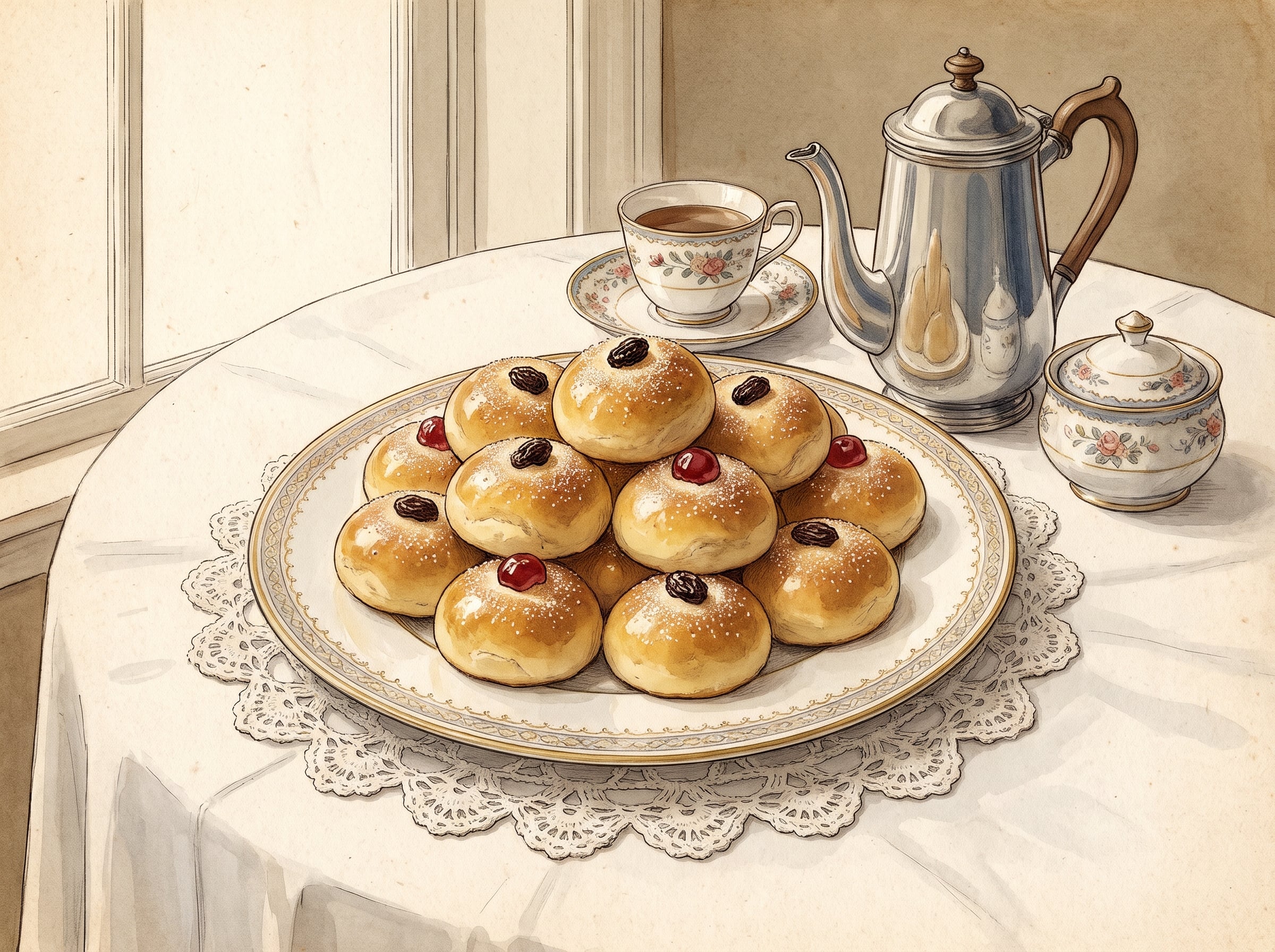
A Czech holiday kolache reworked for a busy 1919 kitchen: rich sour cream and egg-yolk dough dropped from a teaspoon, risen once and topped with a lone raisin or cherry under a sugary egg-white glaze. No shaping, no filling, no rolling pin.
Ingredients
- 1/2 cup butterPrinted: “one-half cup of butter”
- 5 egg yolksPrinted: “five yolks”
- 2 tablespoons granulated sugarPrinted: “two tablespoons of sugar”
- grated zest of 1 lemonPrinted: “grated rind of a lemon”
- 1 cup thick sour creamPrinted: “one cup of thick sour cream”
- 1 ounce (2 cakes) fresh compressed yeastPrinted: “one ounce or two cakes of yeast”
- 1/2 teaspoon granulated sugar (for dissolving the yeast)*Printed: “a little sugar”
- 2 tablespoons lukewarm milkPrinted: “two tablespoons of lukewarm milk”
- 3 cups all-purpose flourPrinted: “three cups of flour”
- about 48 (1 per cake) raisins or cherries*Printed: “a raisin or cherry”
- 1 egg white, beaten*Printed: “beaten white of egg”
- 2 tablespoons granulated sugar (for sprinkling)*Printed: “sugar”
- Makes: About 4 dozen small drop cakes
* Modern amount: AI converted the outdated terms and did its best to come up with the modern equivalent.
In short
- Cream ½ cup butter; add 5 yolks, 2 tablespoons sugar, grated rind of a lemon, and 1 cup thick sour cream.
- Add 1 ounce (two cakes) yeast dissolved with a little sugar in 2 tablespoons lukewarm milk; stir together.
- Mix in 3 cups flour, then drop from the end of a teaspoon onto well-greased pans.
- Let rise in a warm place until light.
- Top each with a raisin or cherry, spread with beaten egg white, sprinkle with sugar; bake 10 minutes in a hot oven.
2. California Orange Bread
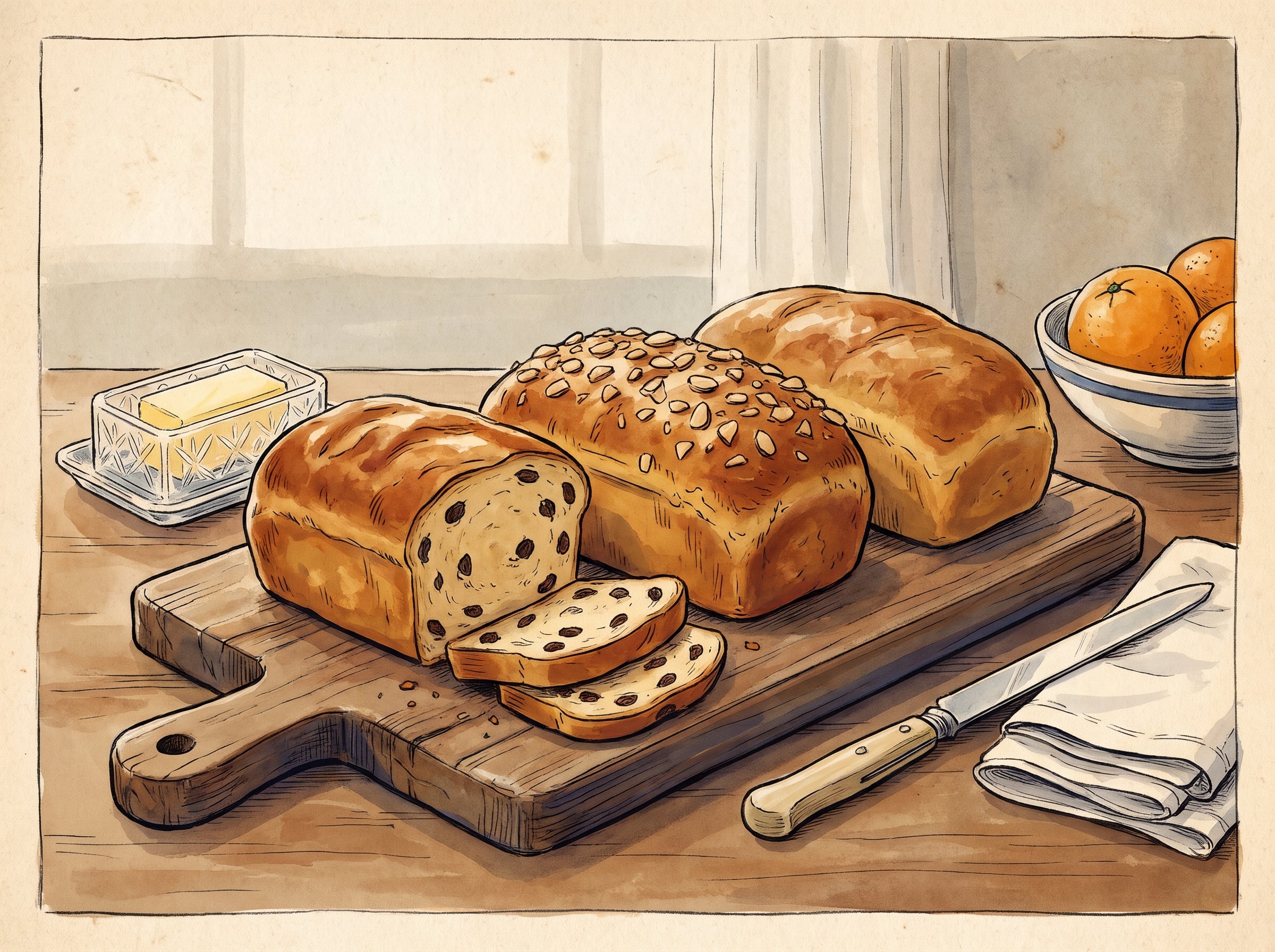
Not every old sweet bread is rich. This 1920 Philadelphia loaf takes its flavor from a cup of orange juice and grated rind, uses one egg for three loaves, and splits the dough three ways: raisin, almond and plain.
Ingredients
- from 2 oranges grated orange zestPrinted: “the rind of two oranges”
- 1 cup orange juice, warmed to 80°FPrinted: “One cup of orange juice, warmed to 80 degrees Fahrenheit”
- 2 tablespoons shortening, meltedPrinted: “Two tablespoonfuls of melted shortening”
- 4 tablespoons sugarPrinted: “Four tablespoonfuls of sugar”
- 1½ teaspoons saltPrinted: “One and a half teaspoonfuls of salt”
- 1 eggPrinted: “One egg”
- 1 cake (0.6 ounce) compressed fresh yeast*Printed: “one yeast cake”
- 1 cup water, warmed to 80°FPrinted: “one cup of water 80 degrees Fahrenheit”
- about 8 cups all-purpose flour, enough for a smooth elastic doughPrinted: “sufficient flour to make a smooth elastic dough; usually about eight cups”
- ½ cup seeded raisins (seeds removed)Printed: “One-half cupful of seeded raisins”
- ½ cup chopped almondsPrinted: “One-half cupful of chopped almonds”
- Makes: Three loaves (one raisin, one almond, one plain)
* Modern amount: AI converted the outdated terms and did its best to come up with the modern equivalent.
In short
- Grate the rind of two oranges into a bowl; add 1 cup orange juice warmed to 80°F and 2 tbsp melted shortening.
- Add 4 tbsp sugar, 1½ tsp salt and one egg; beat. Dissolve one yeast cake in 1 cup 80°F water; add.
- Work in about eight cups flour to a smooth, elastic dough; turn in a greased bowl to coat, cover, rise three hours.
- Pull corners to centre, punch down, turn over; rise one hour. Punch down again; rise 45 minutes.
- Shape three loaves (½ cup seeded raisins, ½ cup chopped almonds, plain); rise 45 minutes in greased pans; bake 40 minutes, 400°F.
1. Sticky Cinnamon Buns
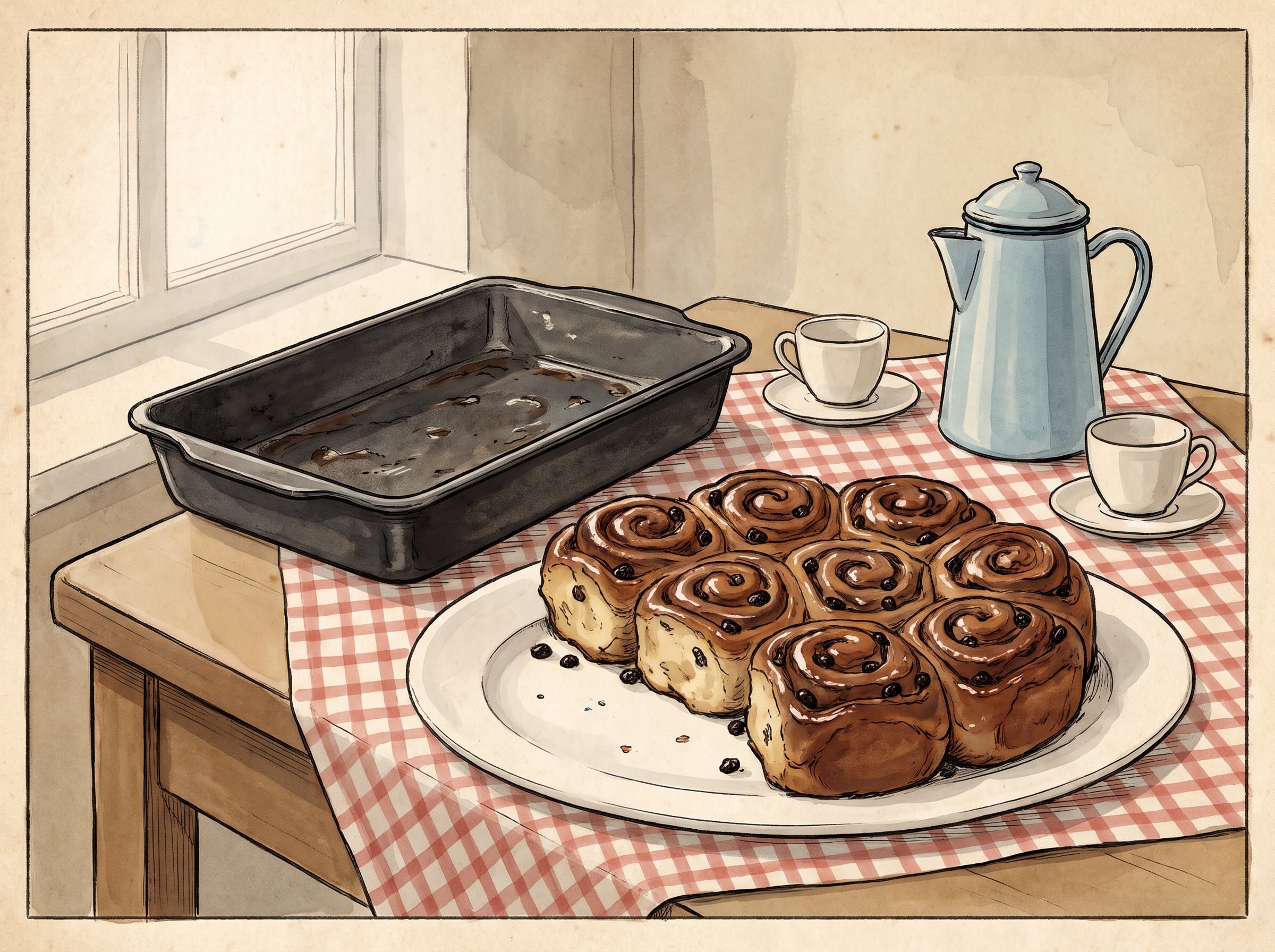
A thrifty Philadelphia sticky bun from 1920, made without eggs or butter. Shortening, brown sugar, cinnamon and currants do all the work, and a slow rise from half a yeast cake lets the dough take its time.
Ingredients
- 1 cup milk, scaldedPrinted: “one cup of milk”
- 4 tablespoons shorteningPrinted: “Four tablespoonfuls of shortening”
- 1/2 cup granulated sugarPrinted: “One-half cupful of sugar”
- 1 teaspoon saltPrinted: “One teaspoonful of salt”
- 1/2 cake (about 0.3 ounce fresh yeast, or about 1 1/4 teaspoons active dry yeast) compressed fresh yeast*Printed: “one-half yeast cake”
- 1/2 cup lukewarm water (80°F)Printed: “one-half cupful of water 80 degrees Fahrenheit”
- 6 cups all-purpose flourPrinted: “six cupfuls of flour”
- 3 tablespoons shortening, melted (for brushing the dough)*Printed: “melted shortening”
- 1 cup brown sugar (for the filling)Printed: “brown sugar, using about one cupful”
- 2 teaspoons ground cinnamonPrinted: “two teaspoonfuls of cinnamon”
- 1 1/2 cups dried currants or small seedless raisins (for the filling)Printed: “one and one-half cupfuls of currants or small seedless raisins”
- 1/4 cup shortening (for thickly greasing the pan)*Printed: “shortening”
- 1 cup brown sugar (for the pan)Printed: “one cupful brown sugar”
- 1/2 cup dried currants or small seedless raisins (for the pan)Printed: “one-half cupful of currants or small seedless raisins”
- Makes: About 24 buns (two 9×13-inch pans)
* Modern amount: AI converted the outdated terms and did its best to come up with the modern equivalent.
In short
- Pour 1 cup scalded milk over 4 tbsp shortening, ½ cup sugar and 1 tsp salt; stir well and cool to 80°F.
- Add ½ yeast cake dissolved in ½ cup 80°F water, plus 6 cups flour; work to a smooth dough.
- Coat in a greased bowl, cover and rise 3½ hours; punch down, rise 1 hour, halve, knead into balls, rest 10 minutes.
- Roll ¼ inch thick, brush with melted shortening, sprinkle 1 cup brown sugar, 2 tsp cinnamon and 1½ cups currants; roll up.
- Cut 1½-inch slices into thickly greased pans over 1 cup brown sugar, ½ cup currants; rise 1 hour; bake moderately 35–40 minutes.
The original recipes are from works published between 1796 and 1920 and are in the public domain in the United States. The introductions, summaries, history and illustrations are Digstalk’s own. Brand names in historic recipes are mentioned as historical fact only.