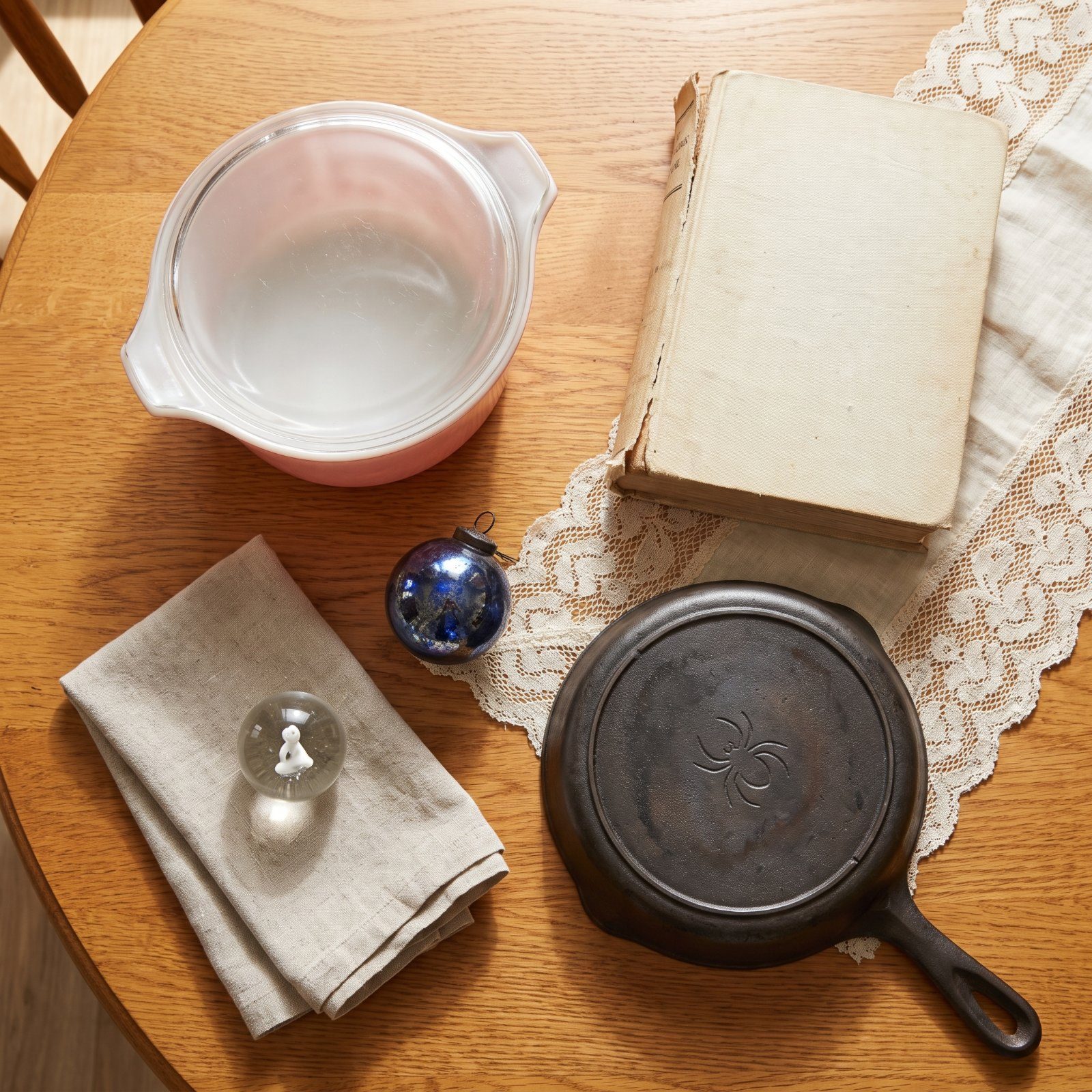
A chipped pink casserole dish once sold for more than a used car. Not because it was pretty, but because almost nobody kept the pattern around long enough for it to survive. That’s the strange math of serious collecting: value hides in the short runs, the odd emblems, the colors a factory abandoned after one season. Most of what sits in a grandmother’s cupboard is worth exactly what it cost. But a handful of things carry secret signatures, maker’s ciphers and production quirks that separate a two-dollar yard-sale find from something a specialist will fight over. Here’s what to actually look for.
Please note that some of the images in this article were created with the assistance of AI.
49. Pyrex “Lucky in Love” Casseroles: The Pattern That Barely Existed
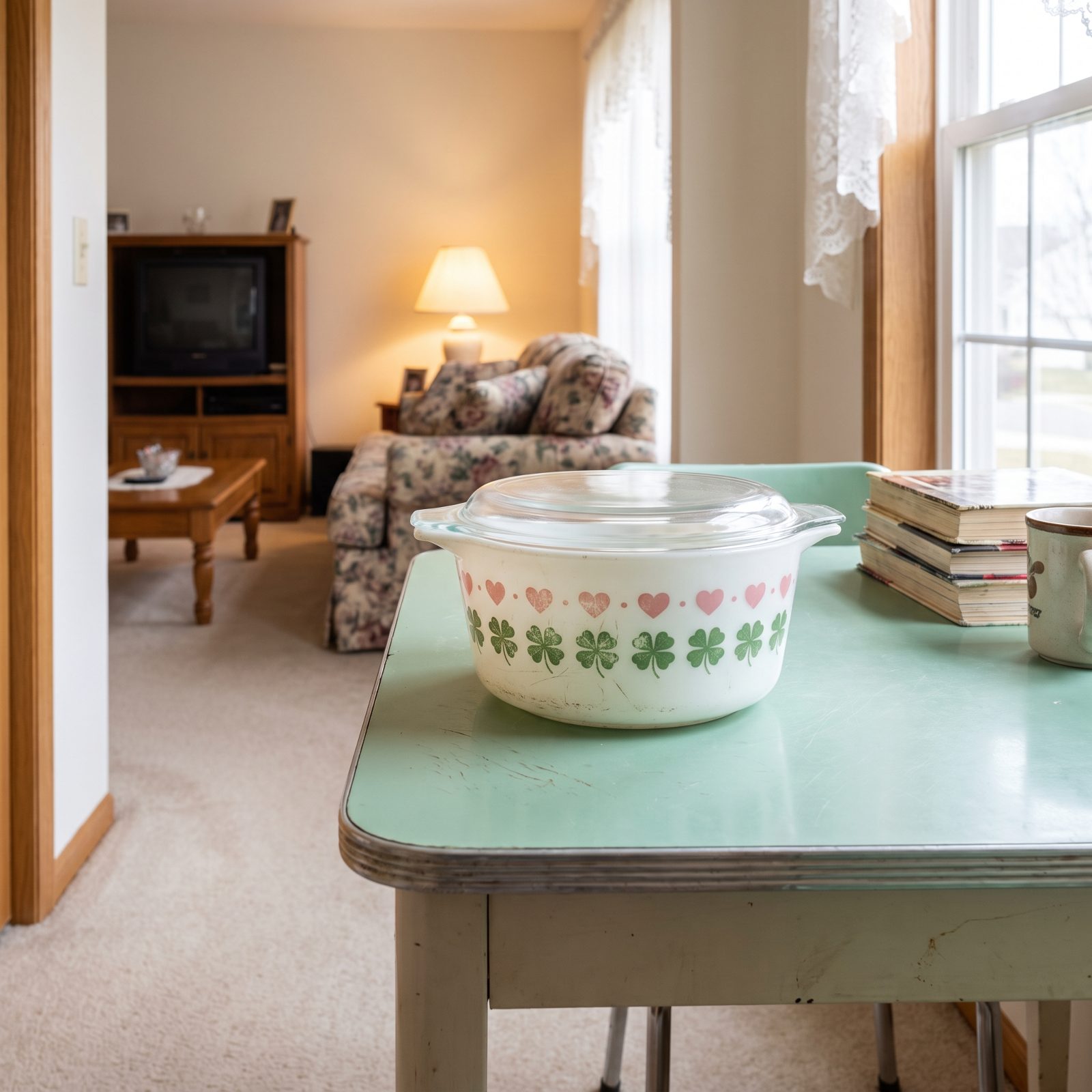
This one is the white whale. Pyrex ran the hearts-and-clover design for a blink in 1959 and almost nobody bought it, which is exactly why collectors lose their minds over it now. Pink hearts along the top, a green four-leaf clover below, cream body underneath.
Verified examples have sold in the thousands. Trouble is, fakes and repaints circulate, and the pattern placement is specific. Real ones show the hearts and clover in the correct Pyrex-period print — not a sticker, not a hand-applied decal that wears off under a fingernail.
48. Griswold “Erie Spider” Skillets: The Emblem on the Early Iron
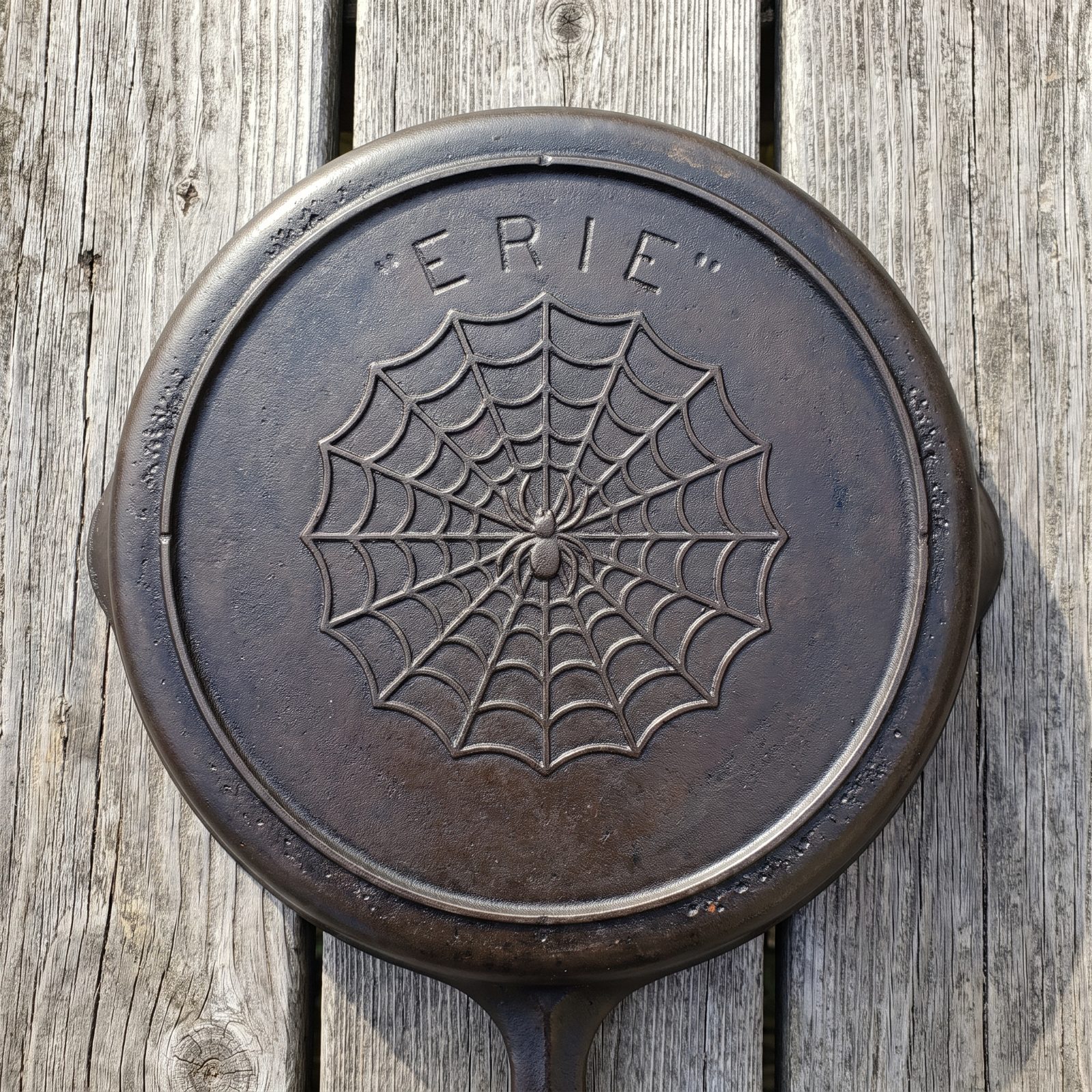
Flip the skillet over. That’s where the money is.
Griswold’s earliest cast iron, made under the Erie name before the familiar block logo, sometimes carries a spider-and-web emblem on the base, and on this round skillet the web and spider fill nearly the entire bottom, topped by a single arc of “ERIE” in raised letters. Collectors call these “Erie Spider” pieces, and a genuine one in good shape can bring serious interest because it predates the mass-market marks most people recognize.
Condition matters enormously. Cracks, warping, heavy pitting or a wobbly flat bottom all drag the value down fast, and a clean, flat, well-seasoned spider skillet is a different animal than a rusted one. And no, a good cook’s lifetime of use does not disqualify it. These were made to be beaten on.
47. The 1931 First Edition “Joy of Cooking”: The One Nobody Paid to Print But Her
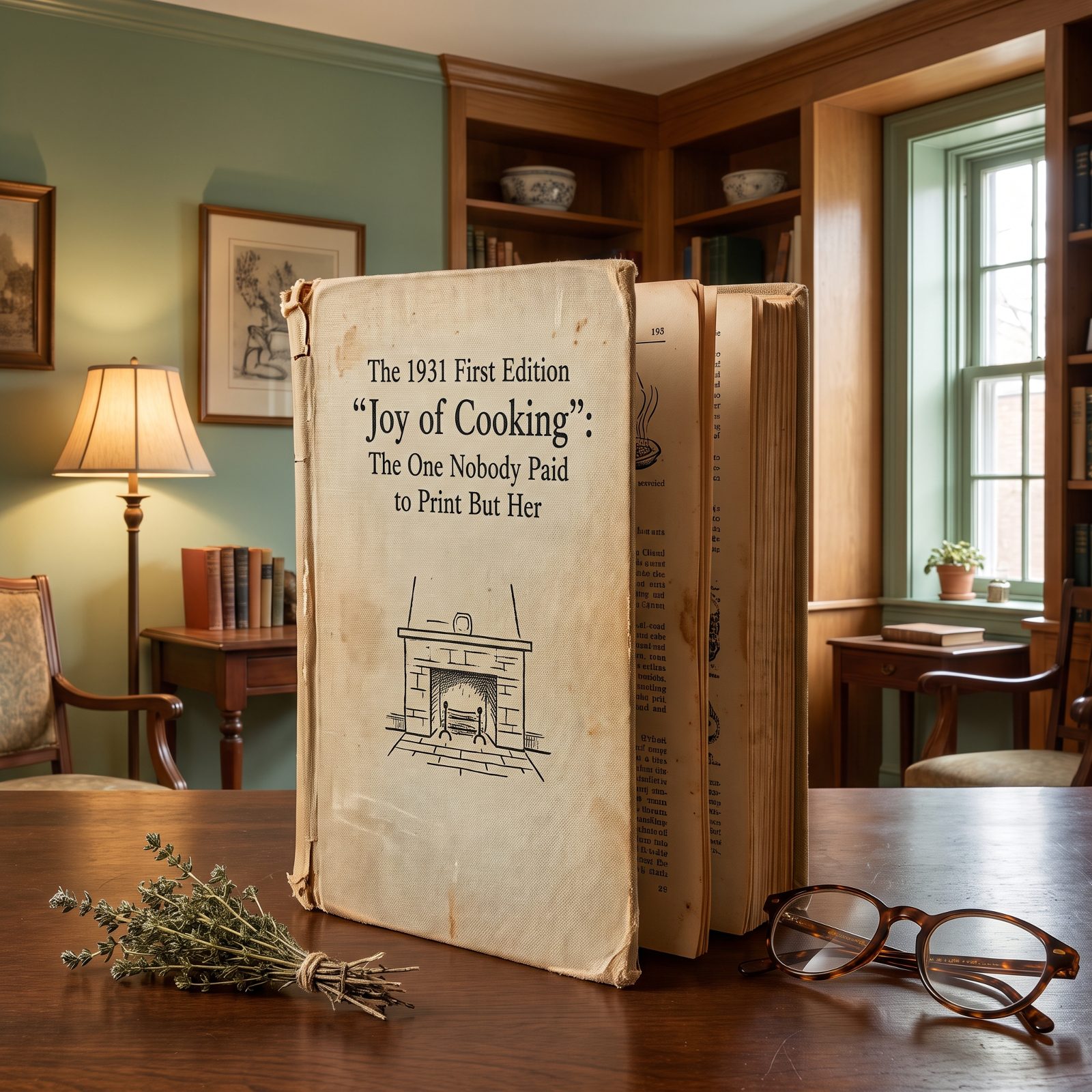
The famous kitchen bible started as a self-funded gamble. The original 1931 edition was privately printed in a modest run, and it reads differently from the polished versions that came later. It predates the now-signature “action method,” and the book itself is plainer, scarcer and much harder to find intact.
Identifying a true first takes care. Reprints, book-club editions and later printings far outnumber the original, and sellers conflate them constantly. The giveaways hide in the publisher information, the printing details on the title and copyright pages, and the physical construction of the binding. Talk to a knowledgeable rare-book dealer before anyone gets excited.
46. Grenfell Hooked Mats: The Textiles Made From Silk Stockings
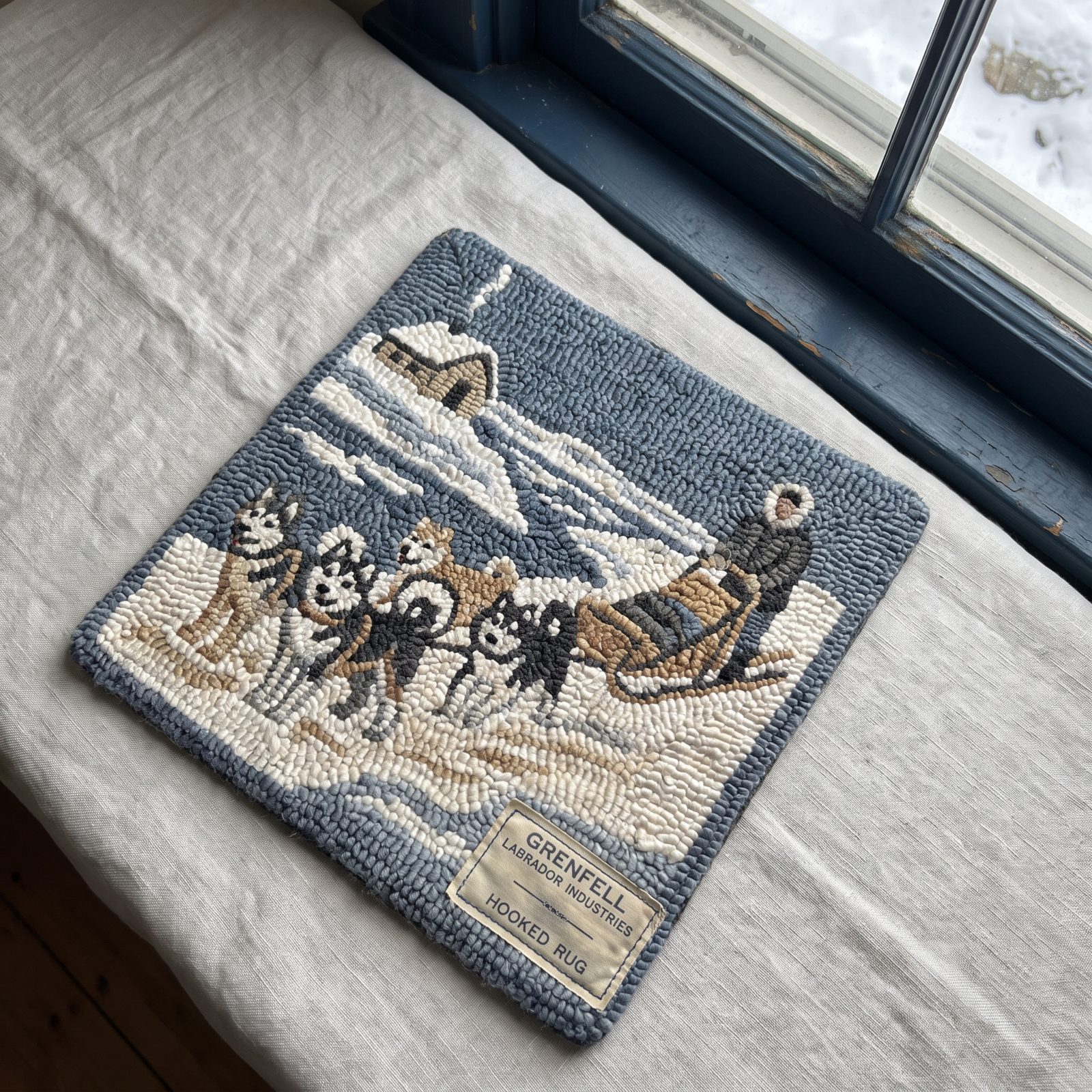
These came out of a mission in Newfoundland and Labrador, hooked by local workers from whatever fiber was lying around — including old silk stockings cut into strips. Not every mat shows it, though; many are worked in coarser wool loops.
Collectors prize the regional scenes: dog teams, polar bears, coastal villages, puffins. An original Grenfell label and the recognizable subject matter all point to the real thing, and the finer silk-loop examples are especially sought after.
Condition and colorfastness count for a lot. Fading, moth damage, patched areas or a missing label all pull the number down. A clean mat with a strong scene and an intact label is the one people chase.
45. Antique Sulfide Marbles: The Little Figure Trapped in the Glass

Hold one up to the light and there’s a tiny creature floating inside the glass. A dog, a bird, a lamb, sometimes a number or a human figure. That suspended object is a sulfide, and genuine nineteenth-century examples are handmade and distinctive.
Look for a hand-ground pontil mark, slight imperfections in the glass, and a figure that sits cleanly suspended rather than looking injected or too crisp. Reproductions exist, and they tend to look a little too perfect — suspiciously flawless, like they skipped the handmade part. Rarer figures, larger sizes and colored-glass bodies (most are clear) push value up considerably.
44. German Papier-Mâché Halloween Lanterns: The Jack-o’-Lanterns That Rarely Survived
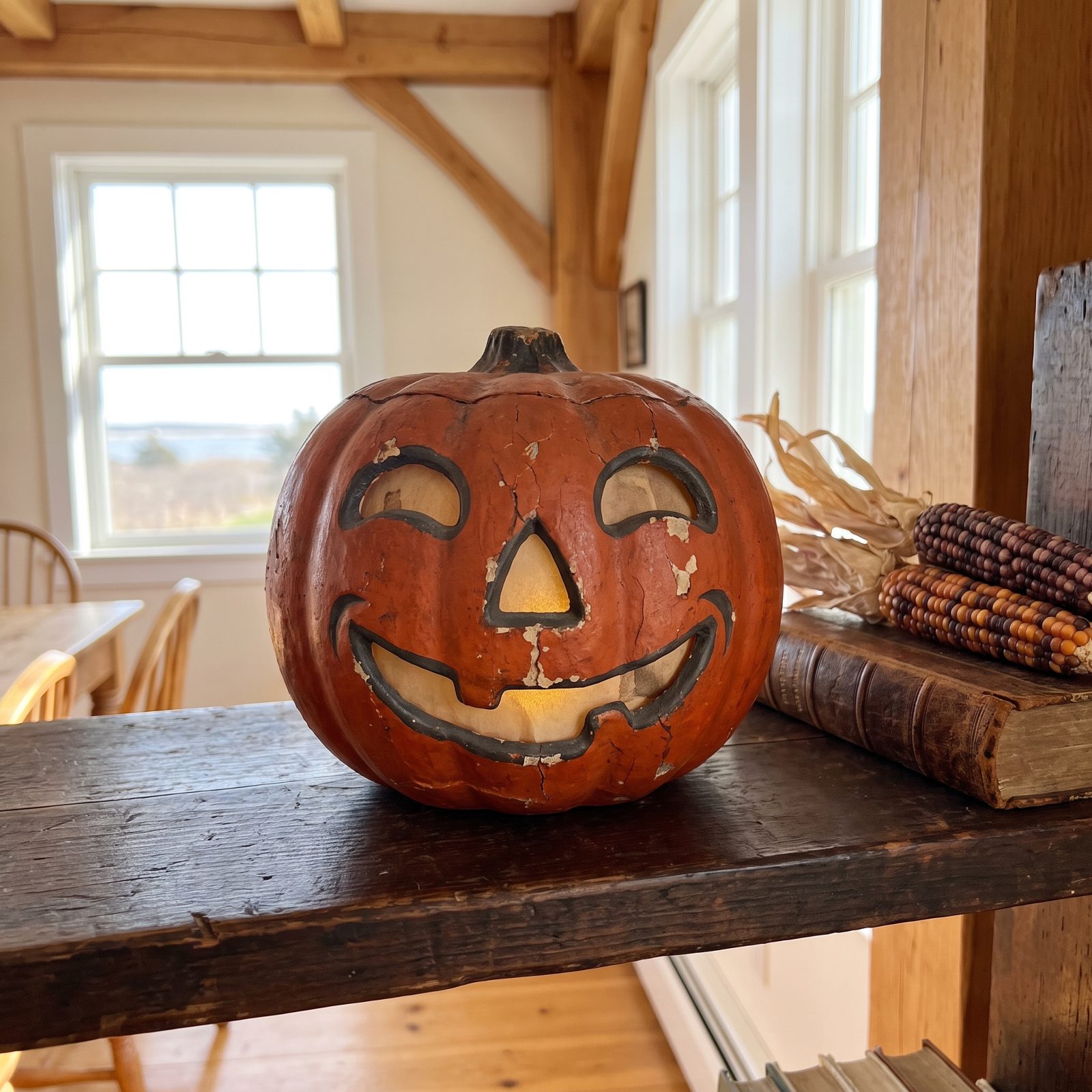
Most of these didn’t make it. Cheap seasonal decorations, lit with candles, handled by children, tossed out once the paper faces tore. Which is exactly why the early German papier-mâché versions, roughly 1900s through the 1920s, are so scarce and so wanted now.
The detail that separates a good example from a great one is the insert. Original printed-paper face inserts behind the cutouts survive on very few, and candle burns, missing inserts and crushed forms are everywhere.
43. Antique Glass Kugel Ornaments: The Heavy Ones With the Mirrored Insides

Pick one up and the weight tells you immediately. Antique kugels are thick, heavy mercury glass with a dense mirrored interior, nothing like the paper-light ornaments that came later.
Common colors like silver and gold are relatively easy to find. The money is in the uncommon ones — deep amethyst, certain greens, and especially the harder grape-cluster and figural shapes. The embossed brass cap and the right wear pattern help confirm age.
A crack, a dull spot in the silvering, or a replaced cap all matter. Weight plus color plus an original, period-correct cap is the combination that gets a specialist leaning in.
42. Signed Lucite Box Purses: The Sculptural Ones by Wilardy and Llewellyn
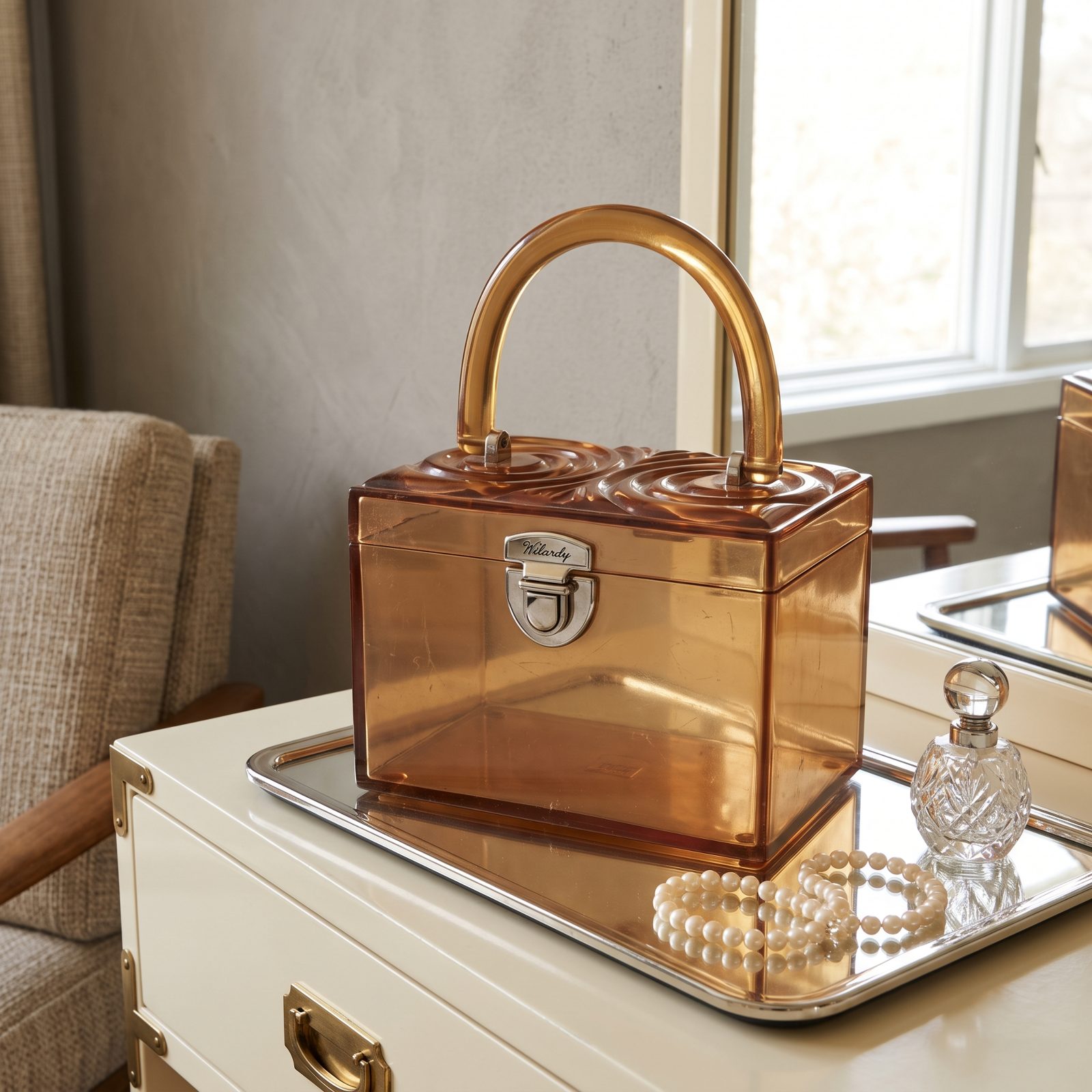
Mid-century designers treated Lucite like sculpture — carving lids, tinting the plastic amber, smoke, pearl and confetti, building handbags that look more like objects than accessories. The names that move the needle are Wilardy and Llewellyn, and the best pieces are signed.
One catch, and it’s a big one. Lucite can craze, fog, warp and crack internally with age, and once that happens the value drops hard. A clean, clear, uncracked signed box bag is dramatically more desirable than a cloudy one, no matter how unusual the shape.
41. Wedgwood Fairyland Lustre: The Dishes Covered in Imps and Goblins
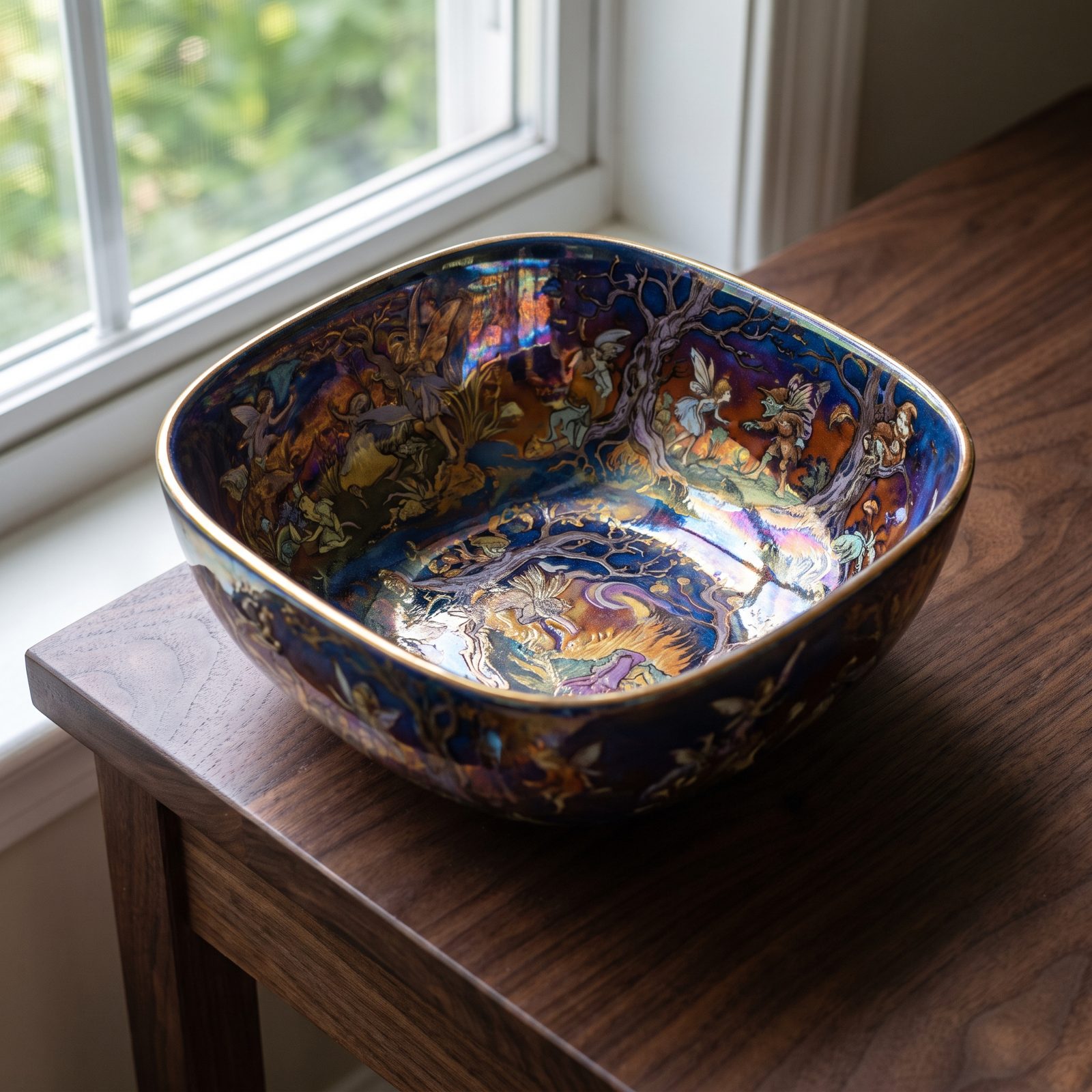
This is where English pottery goes strange and wonderful. In the early twentieth century a Wedgwood designer dreamed up Fairyland Lustre: porcelain decorated with elves, imps, goblins and twisted enchanted forests, all under a shimmering iridescent glaze.
These were expensive when new and remain highly collectible. The elaborate fantasy scenes and documented pattern names — the designs carry specific recorded titles — mark out the exceptional pieces, and condition, pattern rarity and the richness of the glaze all drive value.
Not every blue-and-gold scrap of Wedgwood is Fairyland. The scenes have to be the genuine fantasy patterns, and reference books exist precisely because telling the celebrated patterns from lesser lustre work takes real study.
40. Artist-Signed Rookwood Pottery: The Cipher That Changes Everything
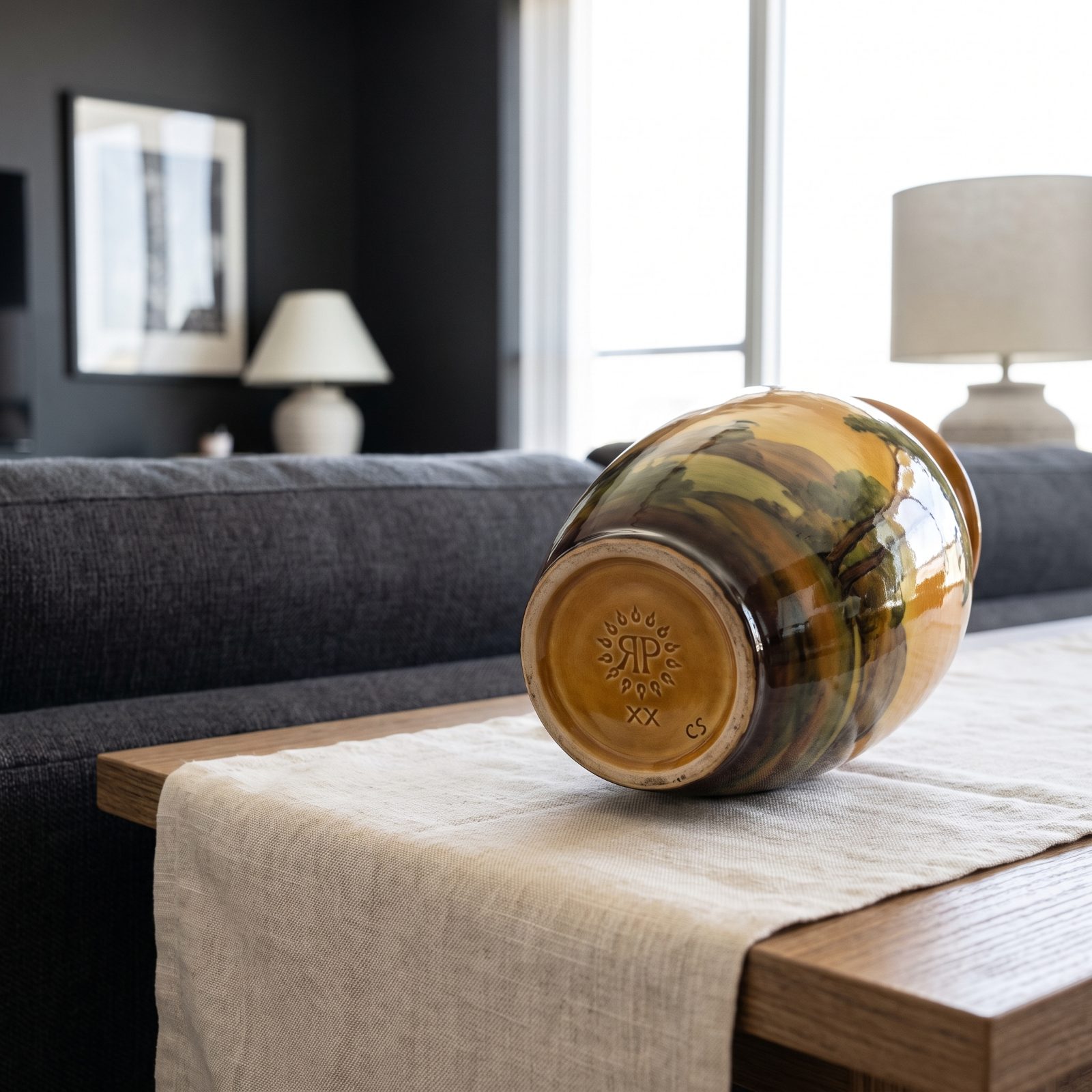
Turn it over. On the base you may find a flame-and-initials company mark, a dating symbol, and — if you’re lucky — a small incised cipher: the mark of the individual artist who decorated the piece.
That cipher is the difference between a nice vase and a serious one. Rookwood’s hand-decorated, artist-signed pieces trade far above its production ware, and the specific decorator, the glaze type (some glazes are rarer and more prized) and the date all feed into value. Reference guides match ciphers to named decorators.
A clean glaze, no cracks or crazing-related staining, and a clearly readable mark are what a specialist wants to see. A chip in the wrong spot can cut value in half.
39. Roseville Futura Pottery and Its Sharp Art Deco Angles
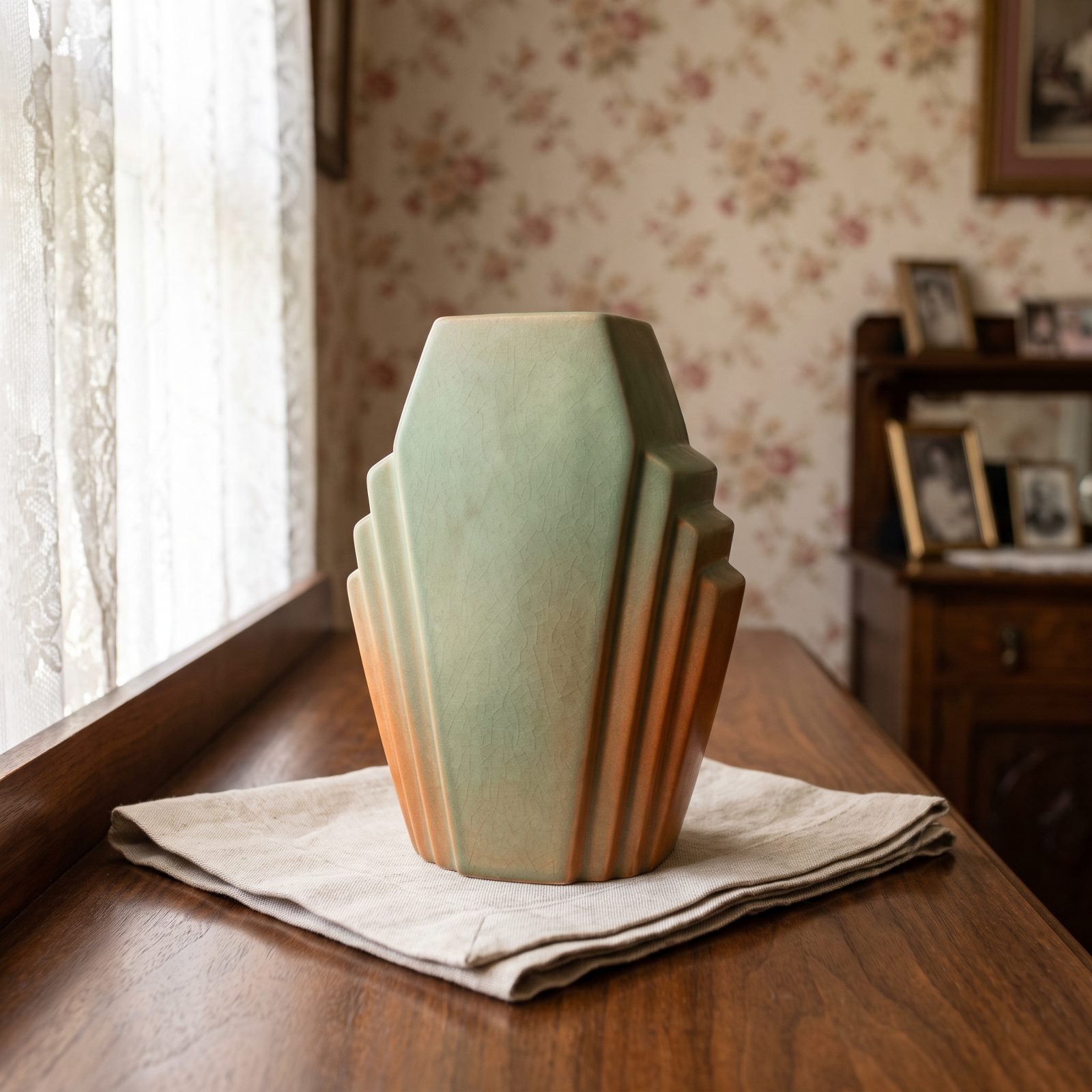
Most Roseville lines whisper. Futura shouts. Made for only a few years starting around 1928, it ditched the soft florals the company was known for and went full geometry — stepped bases, flared rectangular necks, shapes that look drawn with a ruler during a caffeine high.
That oddness is exactly why collectors chase it. The rarer forms pull the strongest prices, especially the ones enthusiasts have nicknamed over the years. Common pieces stay affordable, but the sculptural standouts in clean condition are a whole different animal.
38. Catalin Radios With Their Marbled Jewel-Tone Cabinets
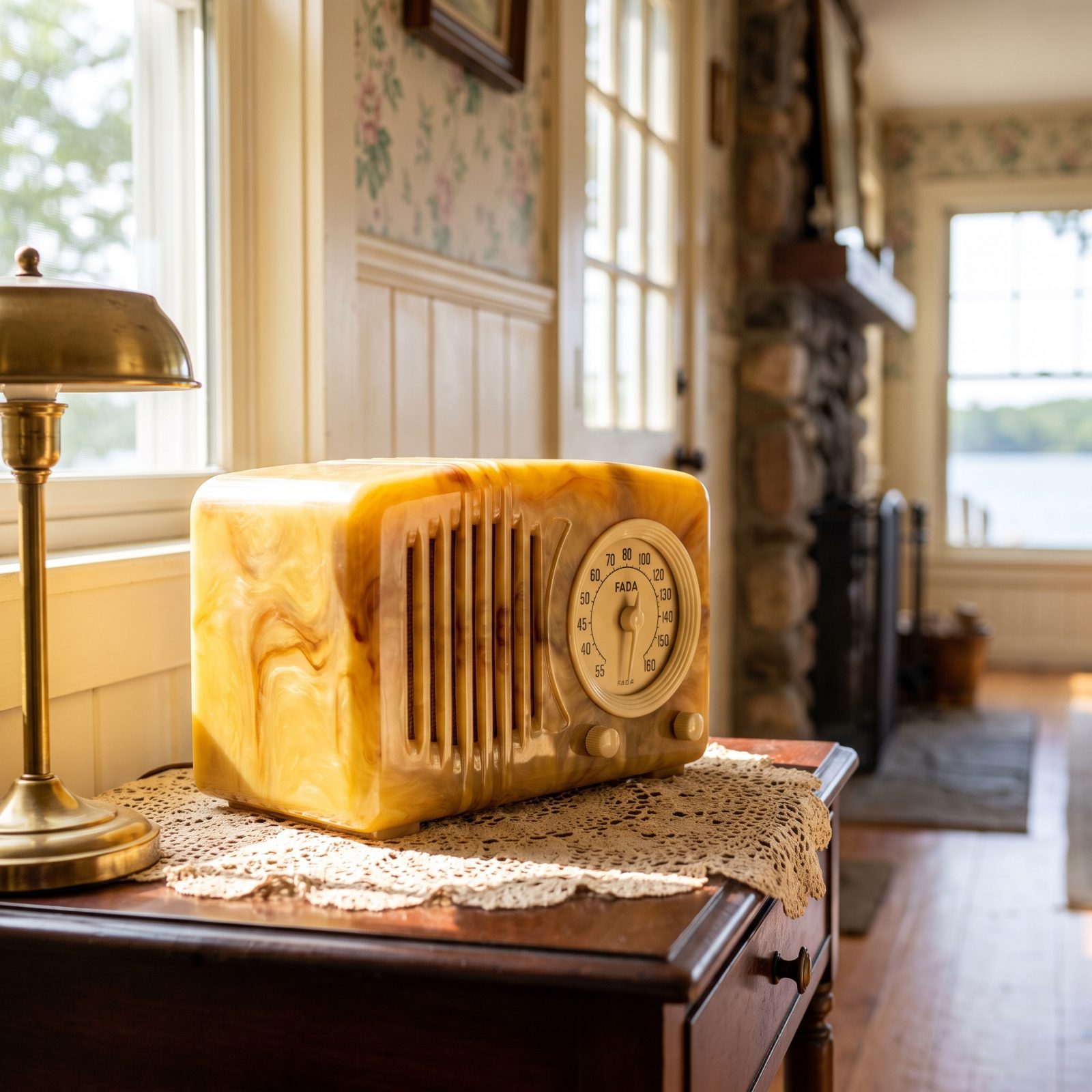
Catalin is the reason a small Depression-era radio can outsell a car on a good day. The cast-phenolic plastic came in colors that looked lit from within — butterscotch, oxblood, that elusive marbled blue. Over decades the surface darkened and ambered, so a radio still showing its original color is scarce.
Now here’s the catch nobody mentions at the flea market. Catalin shrinks and cracks with age, and heat from the tubes made that worse. A cabinet with no hairline cracks, original knobs, and an uncommon color is what everybody wants. Chips and missing knobs tank the value fast.
37. Nantucket Lightship Baskets and the Maker’s Mark Inside
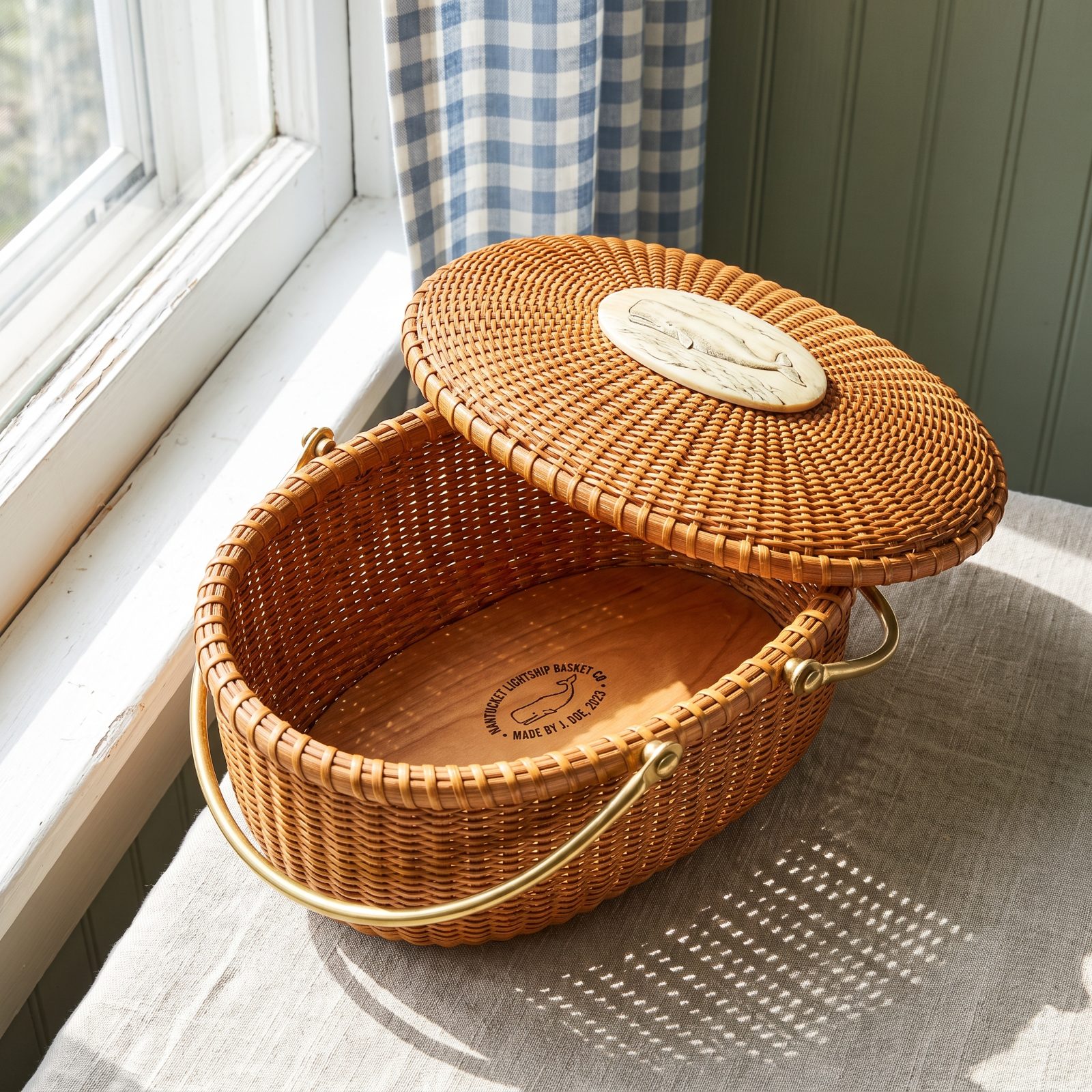
These baskets began as a way for bored lightship crewmen to kill endless shifts anchored off Nantucket in the 1800s. They wove over molds using cane and rattan, and later makers refined that habit into something close to furniture-grade craft.
Attribution is everything. A basket signed or documented to a known maker — turned wooden base, finely even staves, a carved ivory or scrimshaw plaque on the lid — lives in a different price world than an anonymous souvenir version. Age and tightness of the weave matter too. Loose, uneven work usually means a later copy.
36. Majolica Oyster Plates in Loud, Glossy Glaze
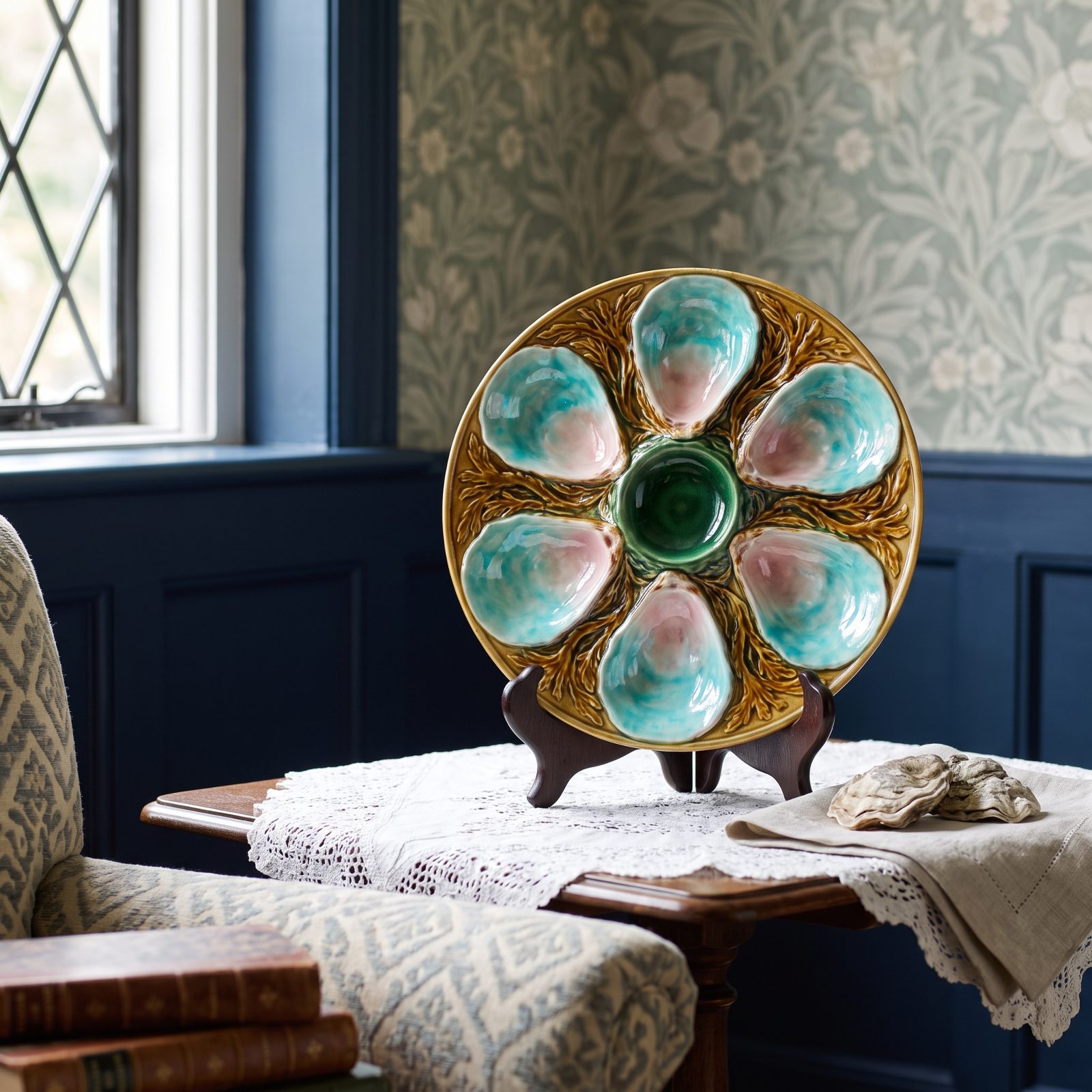
A plate designed to hold six raw oysters sounds like a footnote. In majolica collecting it’s a headliner.
The appeal is the glaze — thick, glossy, poured in colors that have no business being on dinnerware: mottled turquoise, pink, that wet-looking green in the sauce well. Wells molded like actual oyster shells, with seaweed and shell relief, show off the maker’s skill. Pieces attributed to recognized Victorian factories, with crisp molding, vivid color, and no chips to those fragile rims, draw serious interest. The soft lead glaze chips at the slightest knock, so condition is what separates the wall-worthy from the yard-sale cull.
35. Tramp Art Boxes Chip-Carved From Scrap Cigar Wood
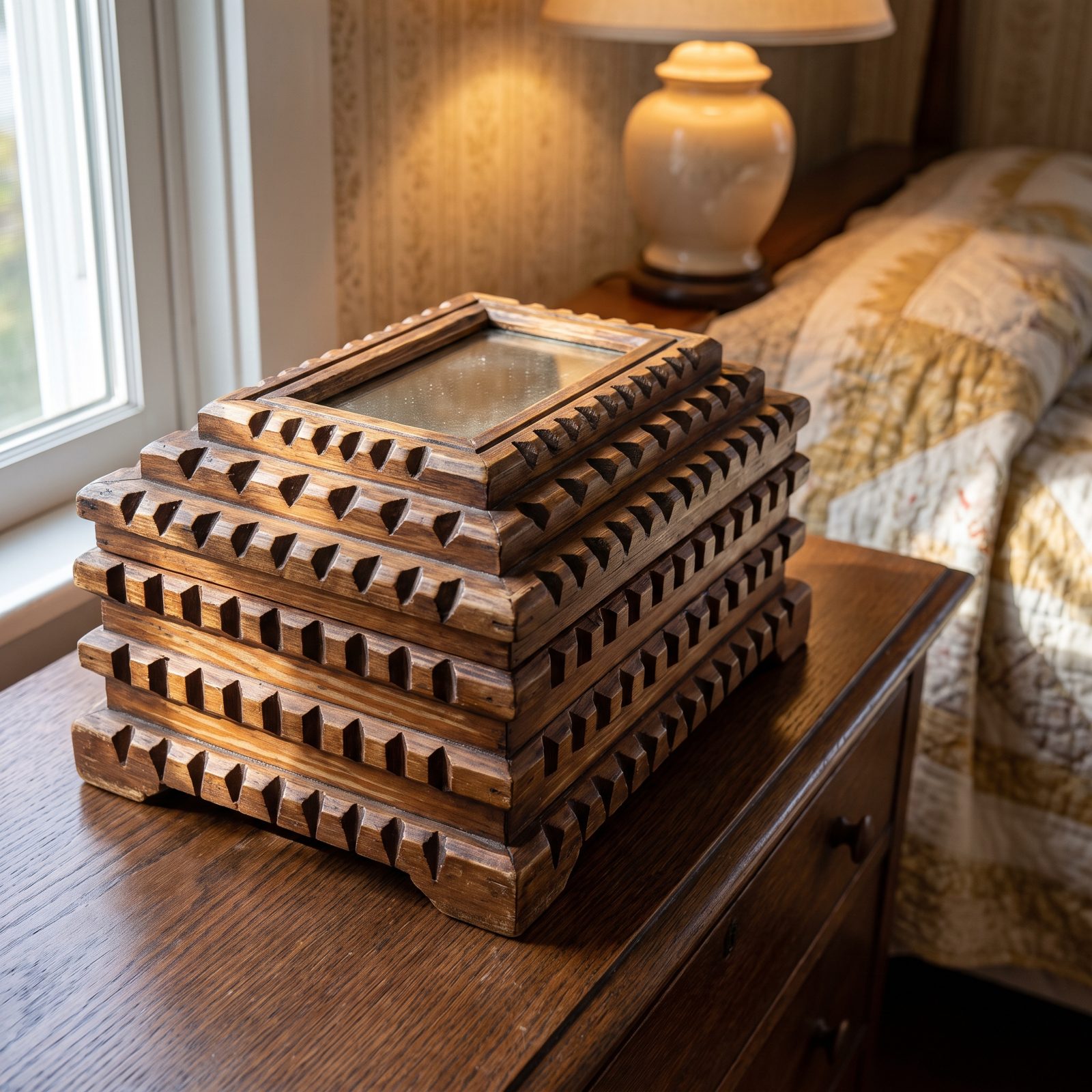
Tramp art has one of the great misleading names in folk art. Most of it wasn’t made by tramps at all. It came from ordinary people, often immigrants, who turned discarded cigar boxes and crate wood into layered, chip-carved objects during long winters.
The technique is simple and the ambition isn’t. Thin layers of notched wood stacked into pyramids, frames, and boxes — sometimes hundreds of pieces deep. The strongest examples show tight, confident carving, inventive construction, and documented age, which is rare since almost none of it was signed. A box bristling with crisp layered edges, intact and original, is the real find. A loose, chunky one? Just old scrap wood with delusions of grandeur.
34. Hand-Carved Duck Decoys Worn Smooth by Real Hunts
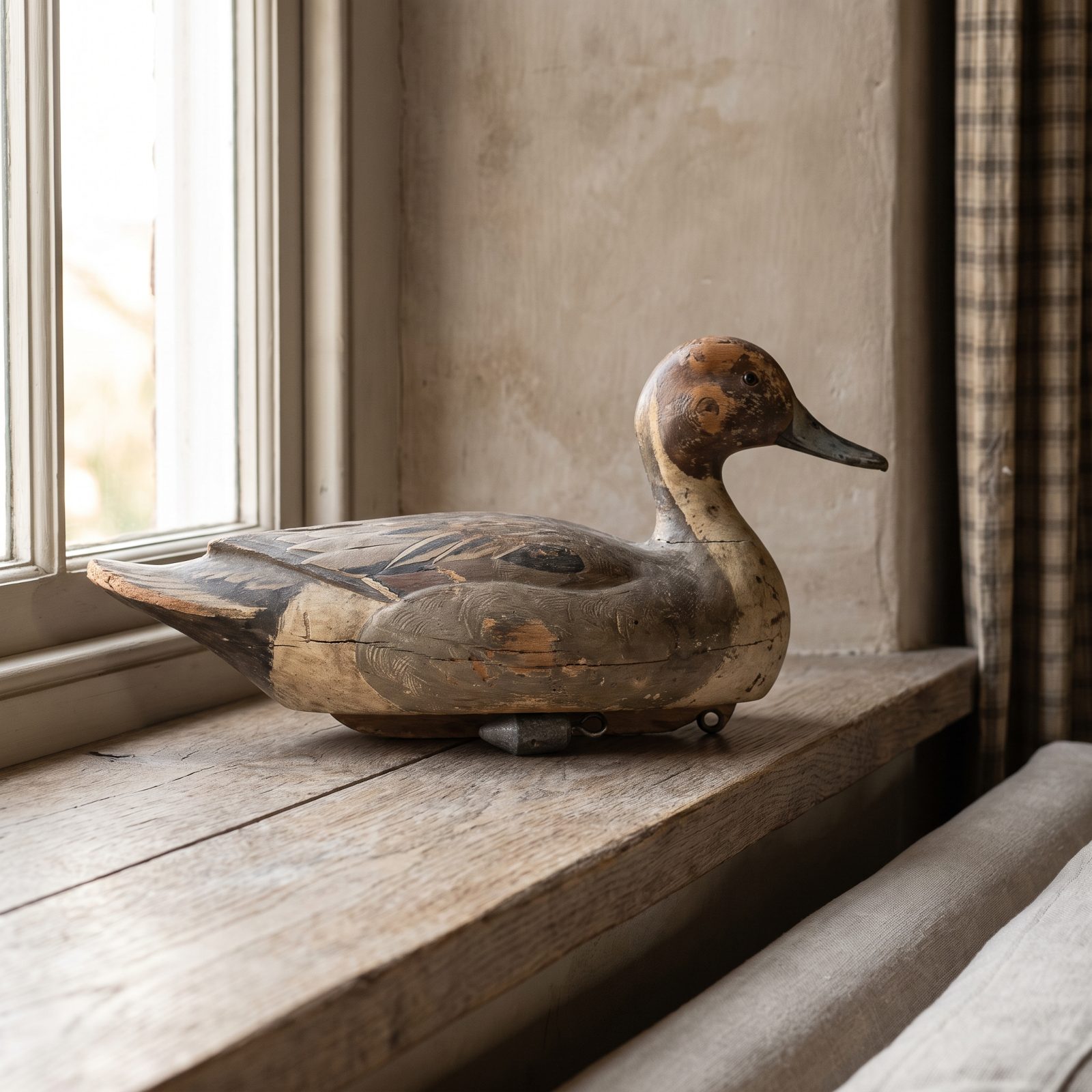
Collectors prize the wear on a good decoy, not despite it but because of it. Rubbed-down paint, old shot scars, a repaired neck — that’s a working life, and it’s what separates a real gunning decoy from a decorative reproduction.
Regional carving style is the detective’s tool here. A shape and paint pattern can tie a bird to a particular tradition or a documented maker, and attribution is where the money lives. Hollow construction, a graceful head turn, and original paint under the honest wear all nudge a decoy from “old duck” toward something you’d call sculpture.
33. Red Wing Crocks With Cobalt Blue Decoration
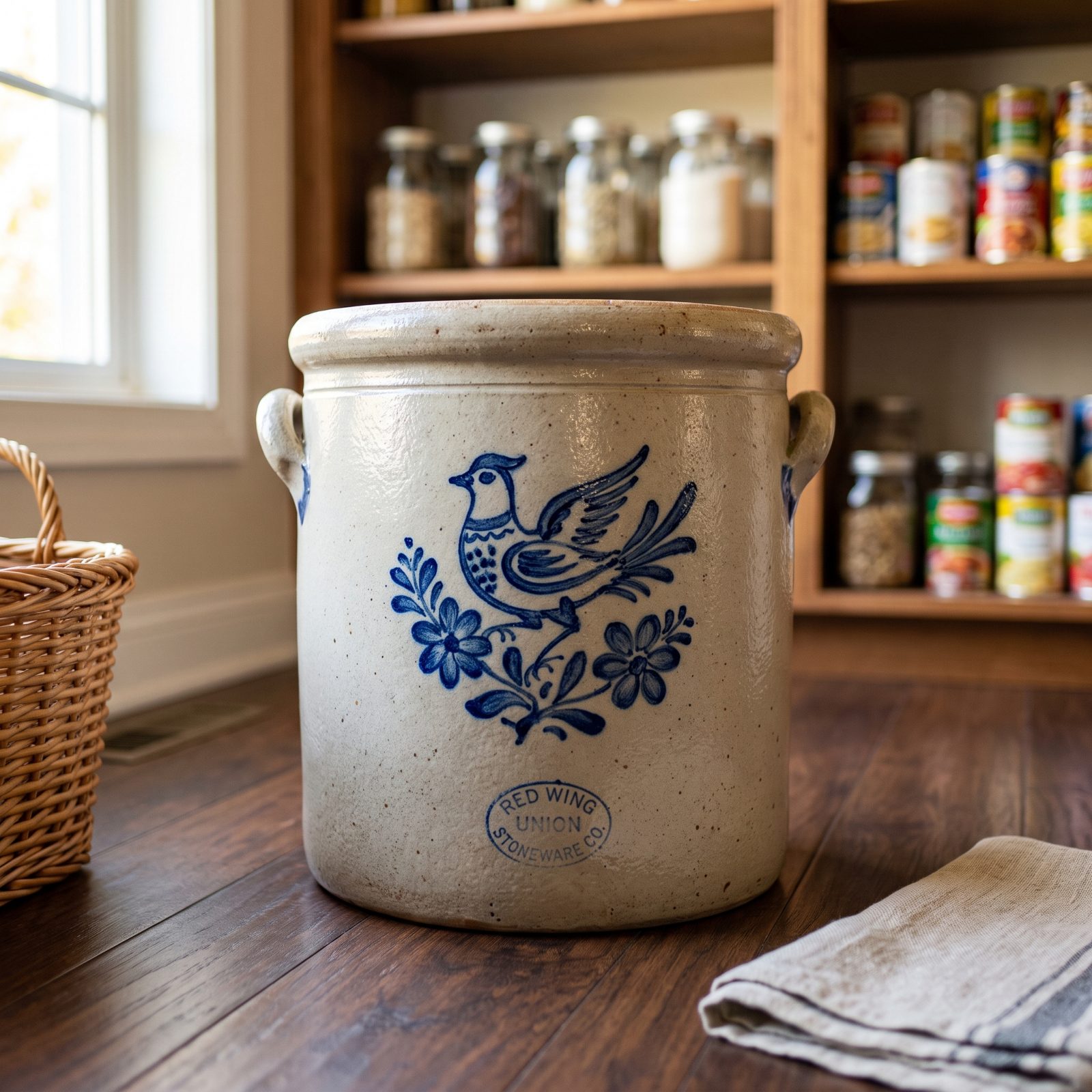
Stoneware crocks were the plastic storage bins of their day. Millions got made, and most are worth modest money. The exceptions are specific and knowable.
Cobalt blue is the first lever. Hand-decorated crocks with birds, flowers, or elaborate brushwork in that deep blue outpace plain ones by a wide margin. Unusual sizes command a premium, and a crisp advertising stamp from a small merchant turns the piece into a slice of local history. The real attention goes to salt-glaze examples — pebbled orange-peel surface, intact cobalt, all of it still there.
32. Rare McCoy Cookie Jars With Original Undamaged Lids
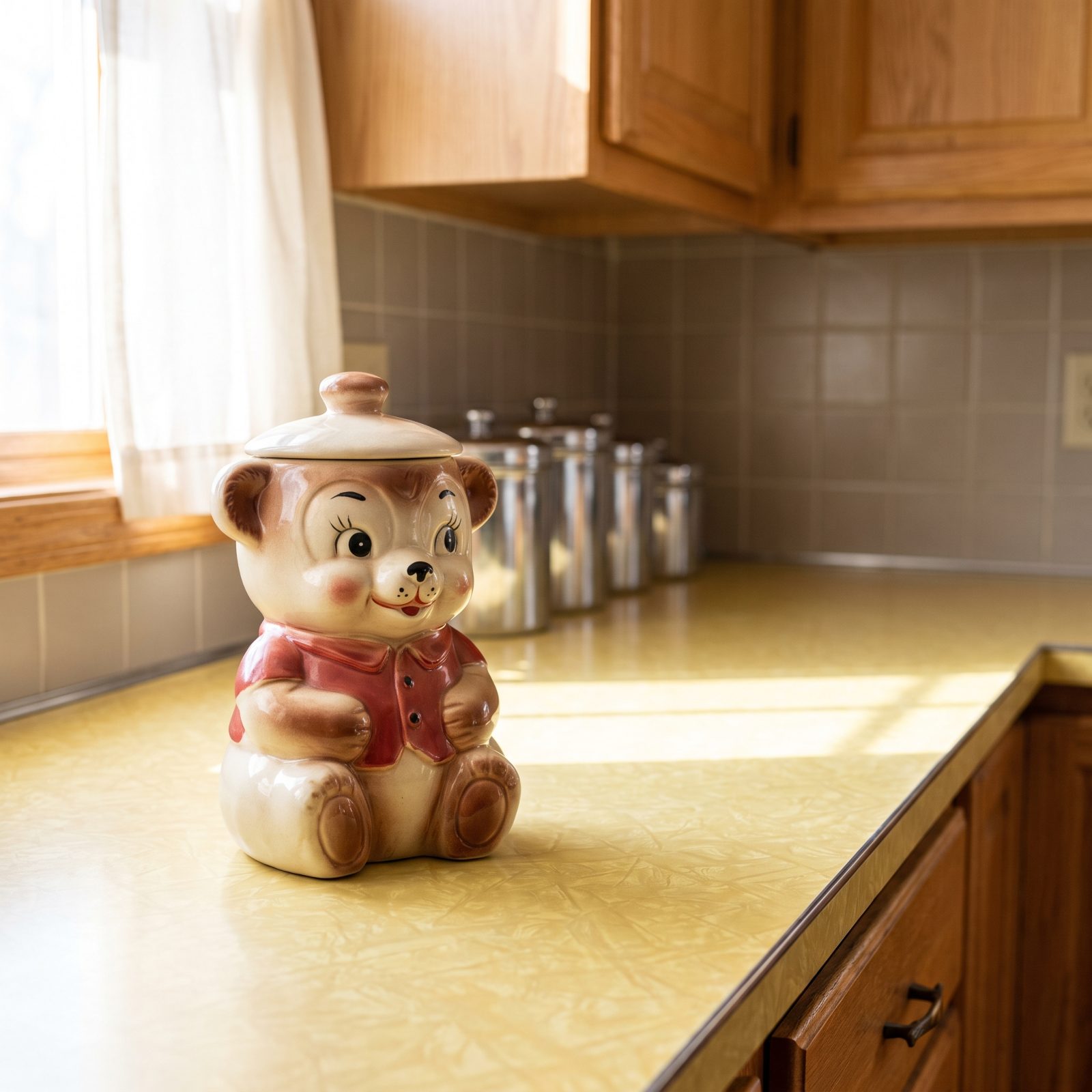
The lid is the whole ballgame. McCoy made cookie jars by the truckload for decades, so the common figural models turn up at every estate sale. What lifts a McCoy jar out of the ordinary is a short-production character — one that didn’t sell well originally and got pulled from the line.
Condition hinges on that fragile topper. A jar missing its lid, or wearing a chipped or replaced one, drops in value immediately. And collectors have to wade through a swamp of reproductions and fakes stamped “McCoy,” so knowing the authentic glazes and mold details is half the battle.
31. Lalique Perfume Bottles With Their Frosted Glass Intact

Frosted glass that looks carved from frozen water, molded with nudes, flowers, or dragonflies — that’s the Lalique signature, and it’s been copied relentlessly for a century.
Three things decide whether a bottle is a treasure or a souvenir. The signature has to be authentic, and since fakes abound, learning which marks match which eras is essential. The original stopper must be present and matched, because a replacement kills it. And the frosted decoration must be undamaged. Chips to that delicate relief, especially on the protruding bits, are where value quietly drains away. A complete, correctly signed bottle with crisp frosting is the one you want.
30. Carved Bakelite Bangles That Pass the Hot-Water Test
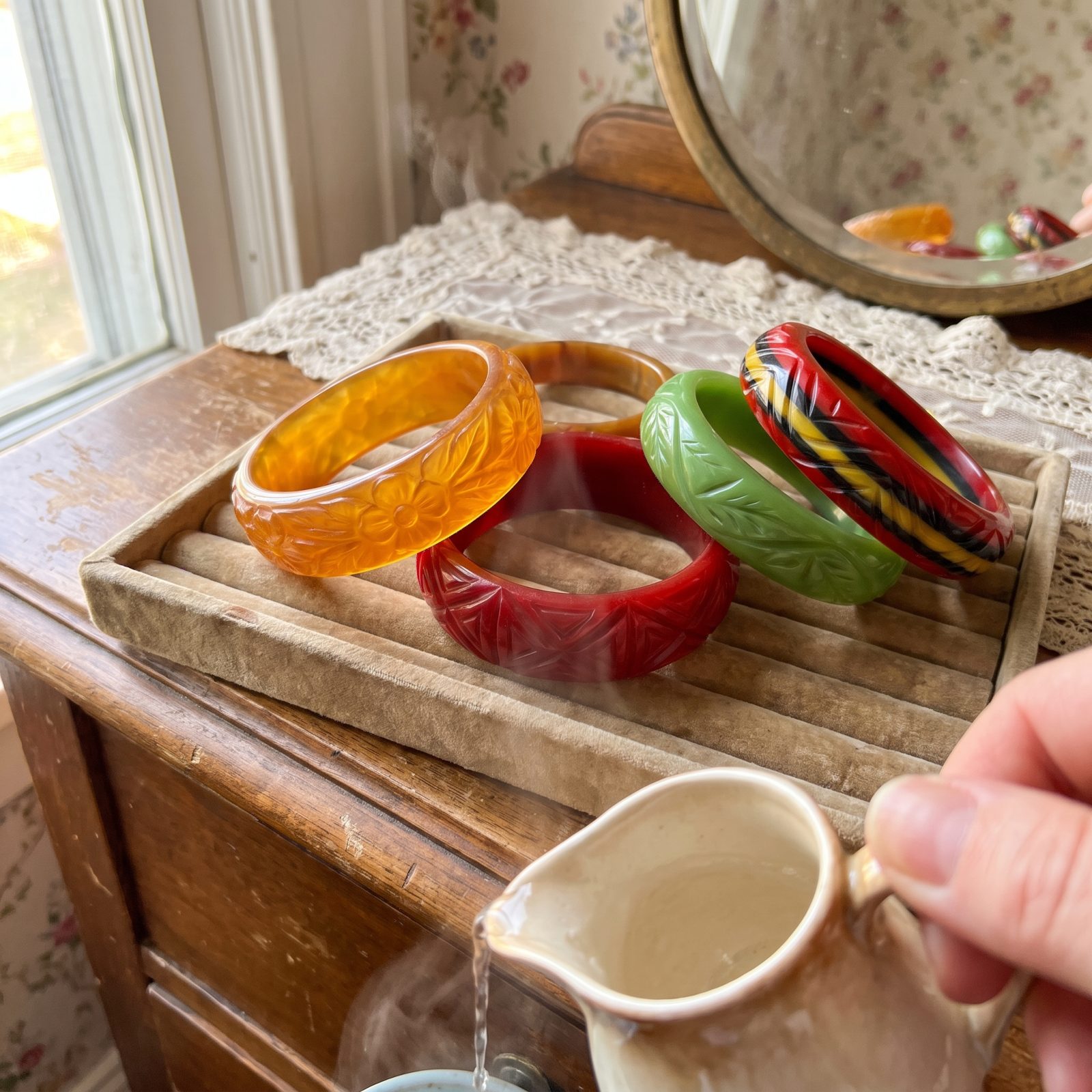
Plain Bakelite bangles are a dime a dozen. Deeply carved ones — roses, leaves, geometric relief cut right into the thick resin — are a different market entirely. The deeper and more inventive the carving, the better, and laminated pieces that stack contrasting colors beat solids every time.
Testing is the collector’s rite of passage. Genuine Bakelite reacts when you rub it warm or dip it briefly in hot water, giving off a faint phenol or formaldehyde smell that newer plastics don’t. That test, plus a hunt for the mold seams fakes have and real Bakelite doesn’t, sorts the valuable carved pieces from decades of convincing imitations.
29. Uranium Glass That Glows Green Under a Black Light

In ordinary daylight, a real piece of uranium glass just looks like a pale yellow-green bowl — keep a UV torch handy nearby for the real test. Flip off the lights and shine it at the glass, and that vivid, almost electric green is the trace uranium doing its thing; it’s the single fastest way to separate the genuine article from the pretenders. The glow is the proof.
Common bowls and goblets turn up often and stay cheap. What pulls real money is the odd form — a figural stem, a strange pitcher, anything a collector hasn’t seen a hundred times before. Condition counts too, and chips on a fluted rim knock the value hard.
28. Bitossi Rimini Blue Pottery With Its Carved Geometric Skin
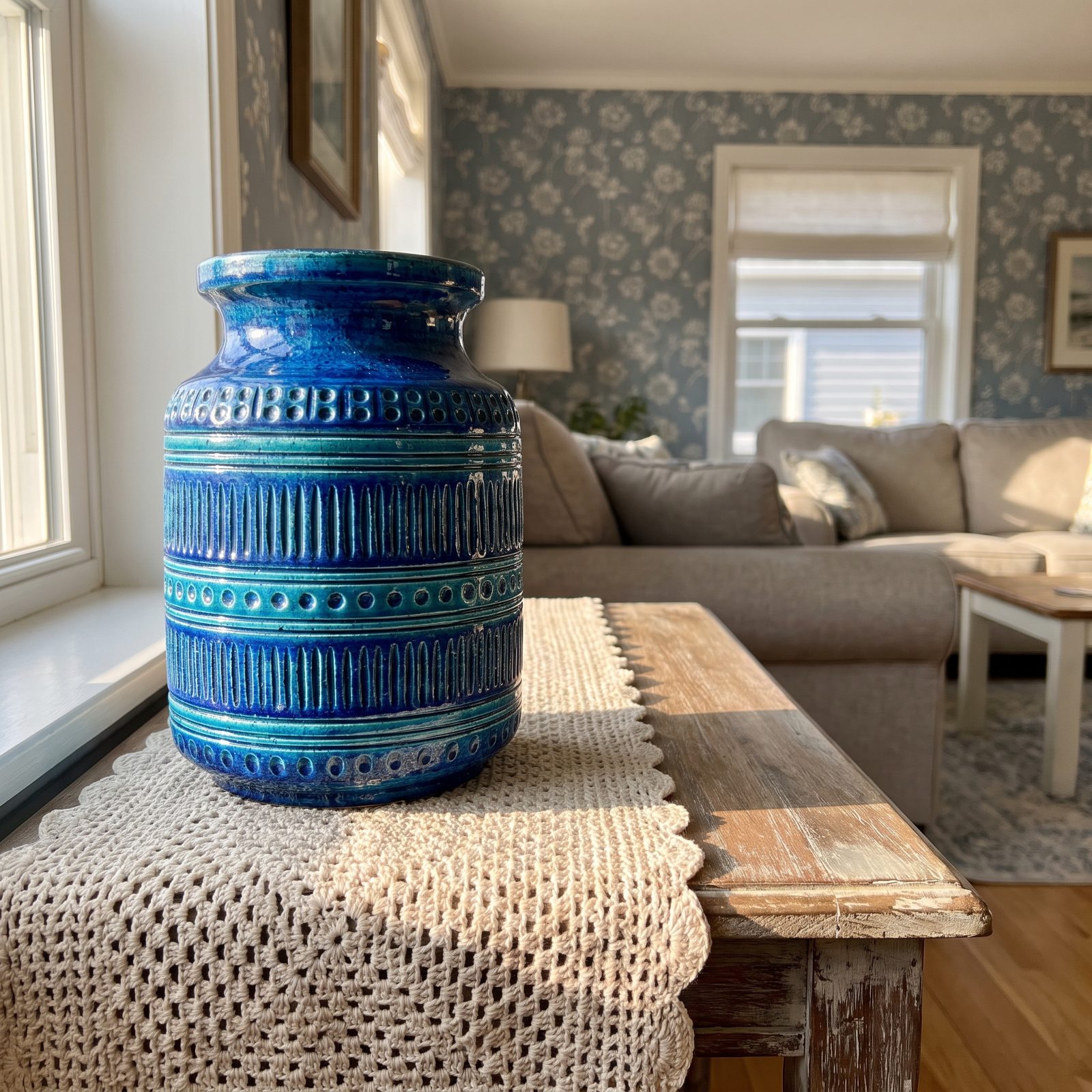
Run your thumb across a Rimini Blue piece and you feel why people chase it. The surface is a field of carved rows, dots and ribs — that textured skin is the signature. Factory copies go shallow and lazy on the carving, so the depth of the pattern is your first tell.
The glaze does half the work. That rich blue shifts from turquoise to near-black down in the grooves, and it’s half the reason these things sell. Larger animal figures and unusual vessel shapes bring the strongest interest. Base marks help, sure, but condition and form carry more weight than a stamp ever will.
27. Cathrineholm Lotus Enamelware in the Colors Nobody Expects
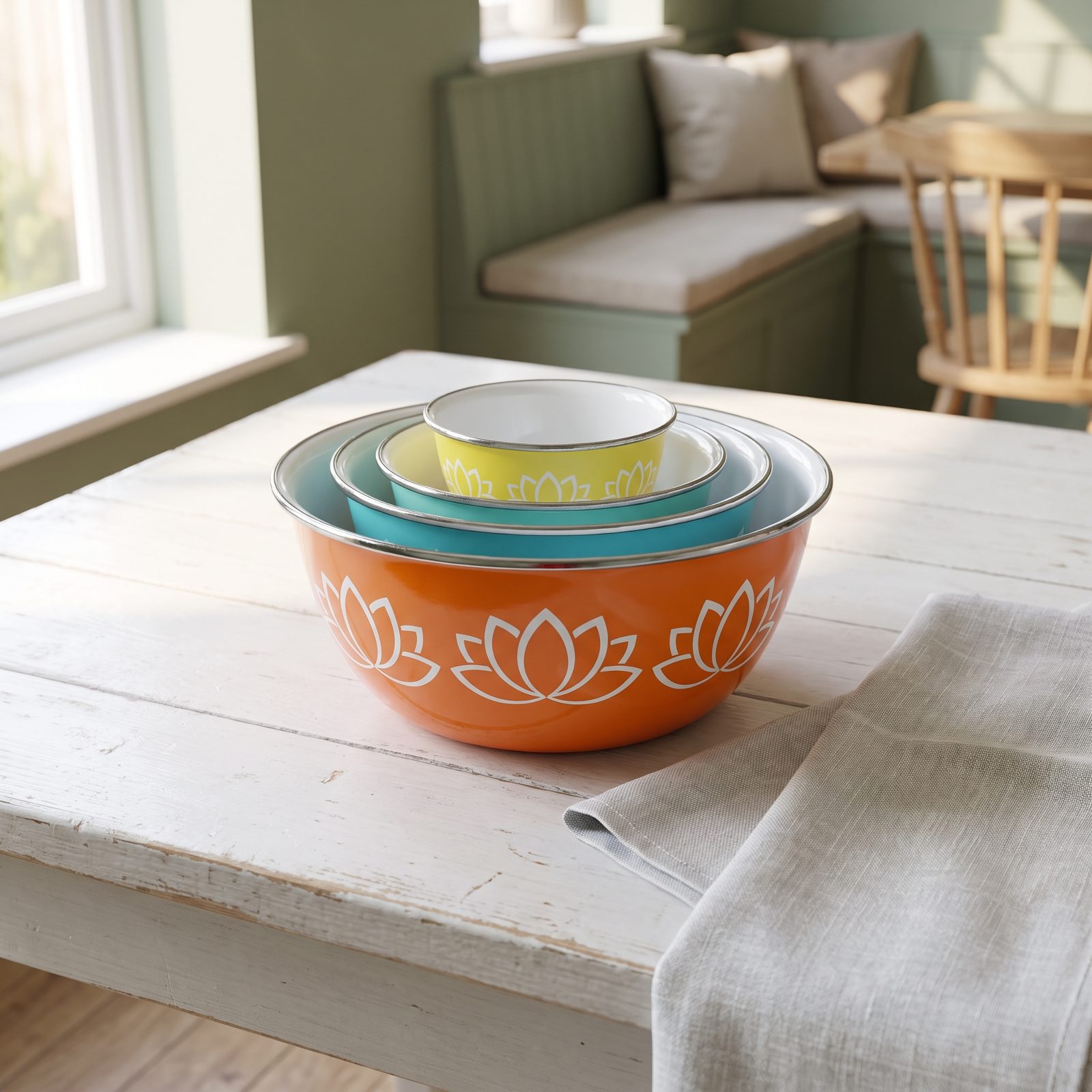
The lotus has to be crisp. On a real Cathrineholm piece the white petal graphic reads clean and confident, sharp edges, even spacing. Blurry, smeared or wobbly lotus lines point straight to fakes or heavily worn seconds.
Orange and turquoise show up most. The money hides in the uncommon pairings — yellow bodies, the blues, the colorways that don’t flood every online listing. A scratched graphic or chipped enamel steel tanks the value, since the surface is the whole draw.
26. Blenko Architectural Decanters Big Enough to Announce Themselves

These were never meant to be shy. Blenko blew them oversized, built to sit on a floor or a low shelf and take over the room — and midcentury collectors still want exactly that drama.
Scale is the draw. Those tall sculptural forms with their big stoppers outrun the small tableware every time, and color matters enormously; saturated tangerines, blues and greens pull serious interest. Look for the pontil mark and the faint bubbles that confirm handblown work. Then check the stopper actually belongs to the body. A married stopper — a replacement that wandered in from somewhere else — quietly cuts the value.
25. Swung Glass Floor Vases With Their Wild, Pulled Rims

The shape tells you everything. Swung glass got spun and stretched while hot, so the rim pulls into those uneven, almost liquid peaks — and every one froze mid-motion into something a little different from the last.
Height is the headline. The floor-standing examples, some pushing two feet, grab the most attention, and uncommon colors push the value further still. Deep purples, smoky greens, oddball ambers — those stand out against the everyday clear-and-amber crowd. One warning: hairline cracks love that thin stretched rim, so inspect the edge closely before you commit.
24. Fire-King Jade-ite Restaurant Ware Built Like a Tank
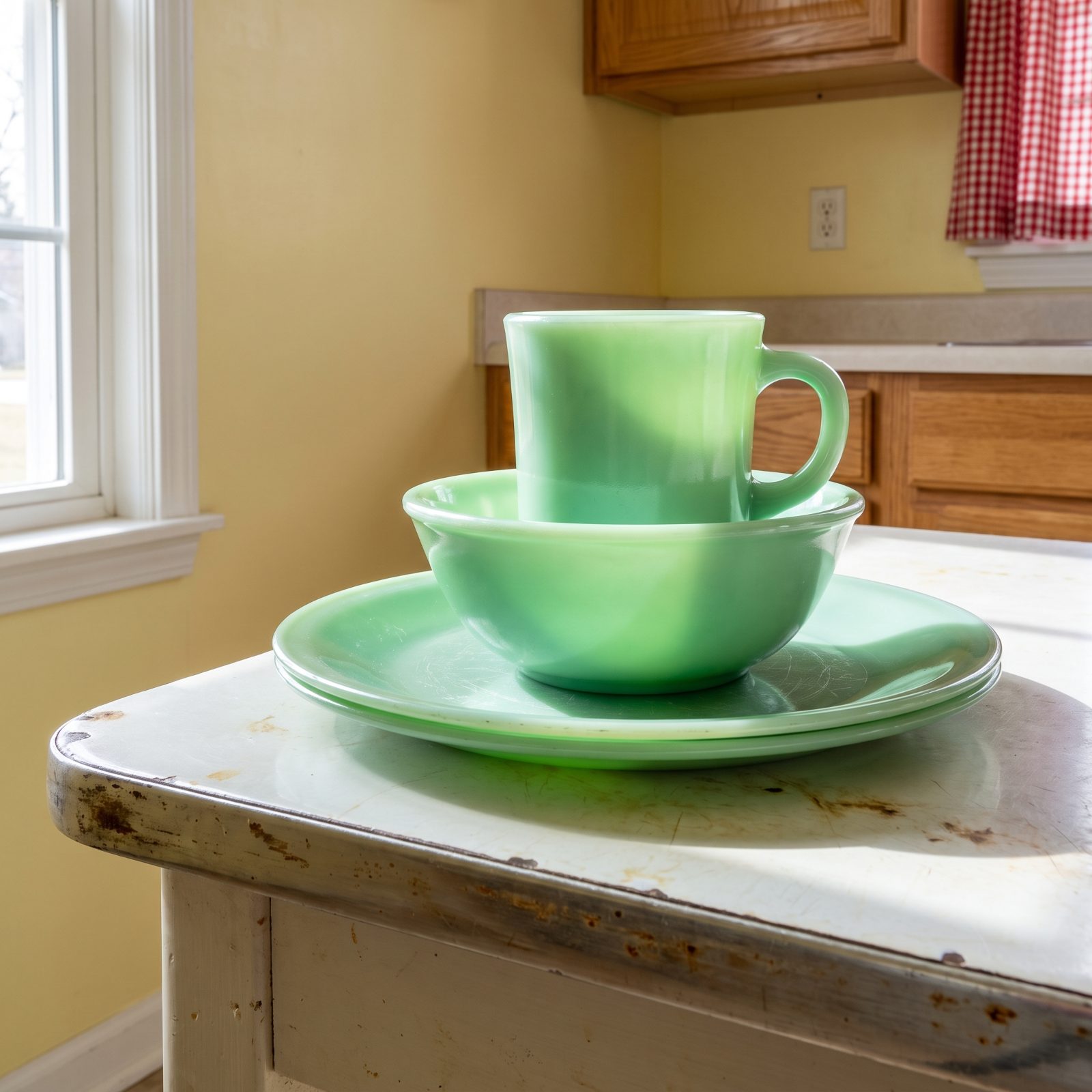
Heft is the giveaway. Genuine restaurant-grade Jade-ite feels dense and serious in the hand, made to survive a working kitchen, while the flood of modern copies feels lighter and reads a touch too bright, too evenly colored.
The thick commercial mugs and scarce serving forms outvalue the everyday pieces by a wide margin. Original backstamps, correct weight, that slightly uneven milky green — all of it matters. Repro Jade-ite has fooled plenty of buyers. So handle the real thing a few times and let your hands learn the feel.
23. Original Fiesta in the Colors They Stopped Making
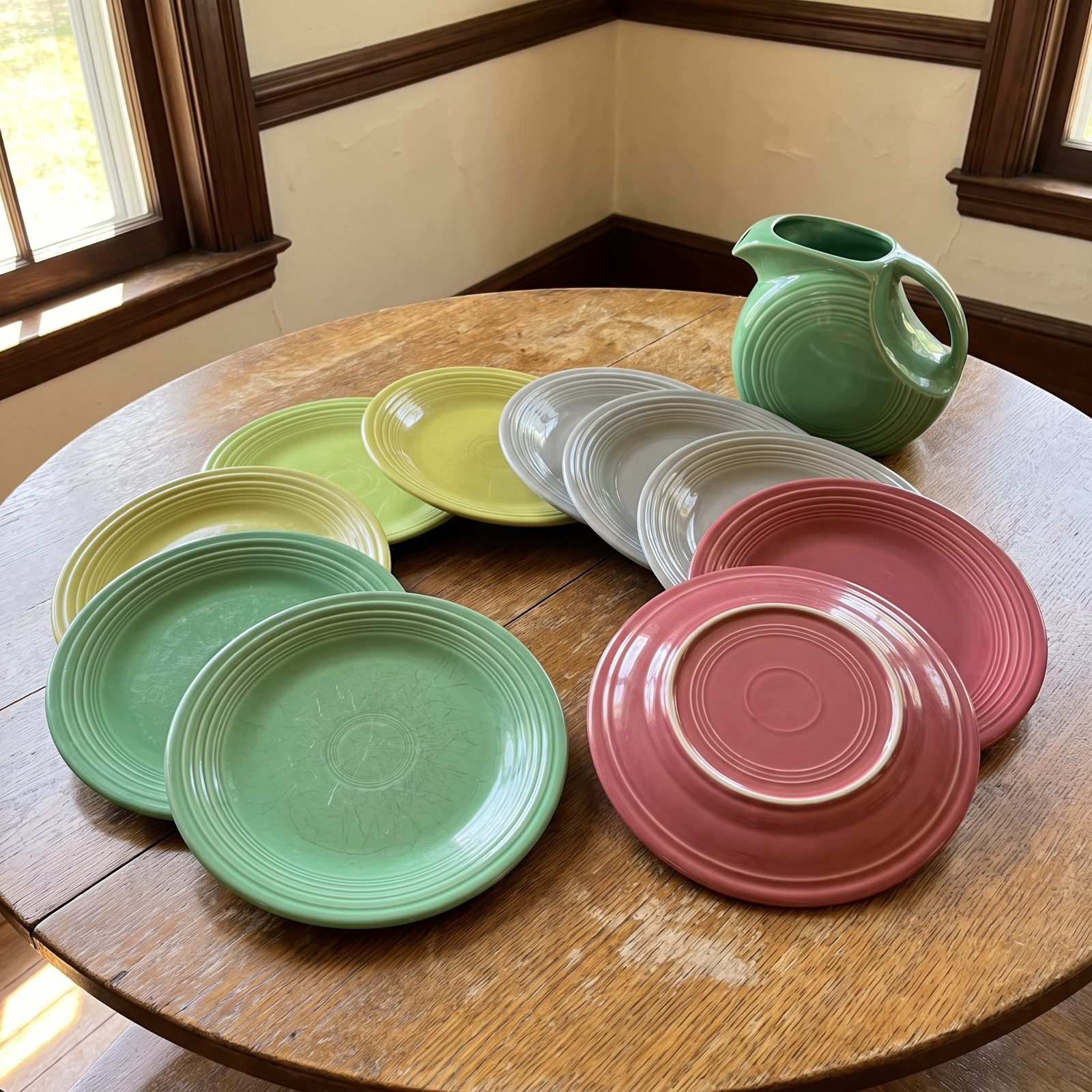
Not all Fiesta is equal, and the glaze color does most of the sorting. The discontinued tones — medium green, the greys, that chartreuse that ran only briefly — pull far more than the colors cranked out for decades.
Early impressed ring marks on the base help date a piece, and so does form. Scarcer shapes, covered pieces, certain pitchers, the ones that broke and got tossed, bring more than the plates everyone still owns. Check older examples for the radioactive red glaze, another collector talking point, and look for crazing and chips that dent the value.
22. Aluminum Christmas Trees With the Spinning Color Wheel
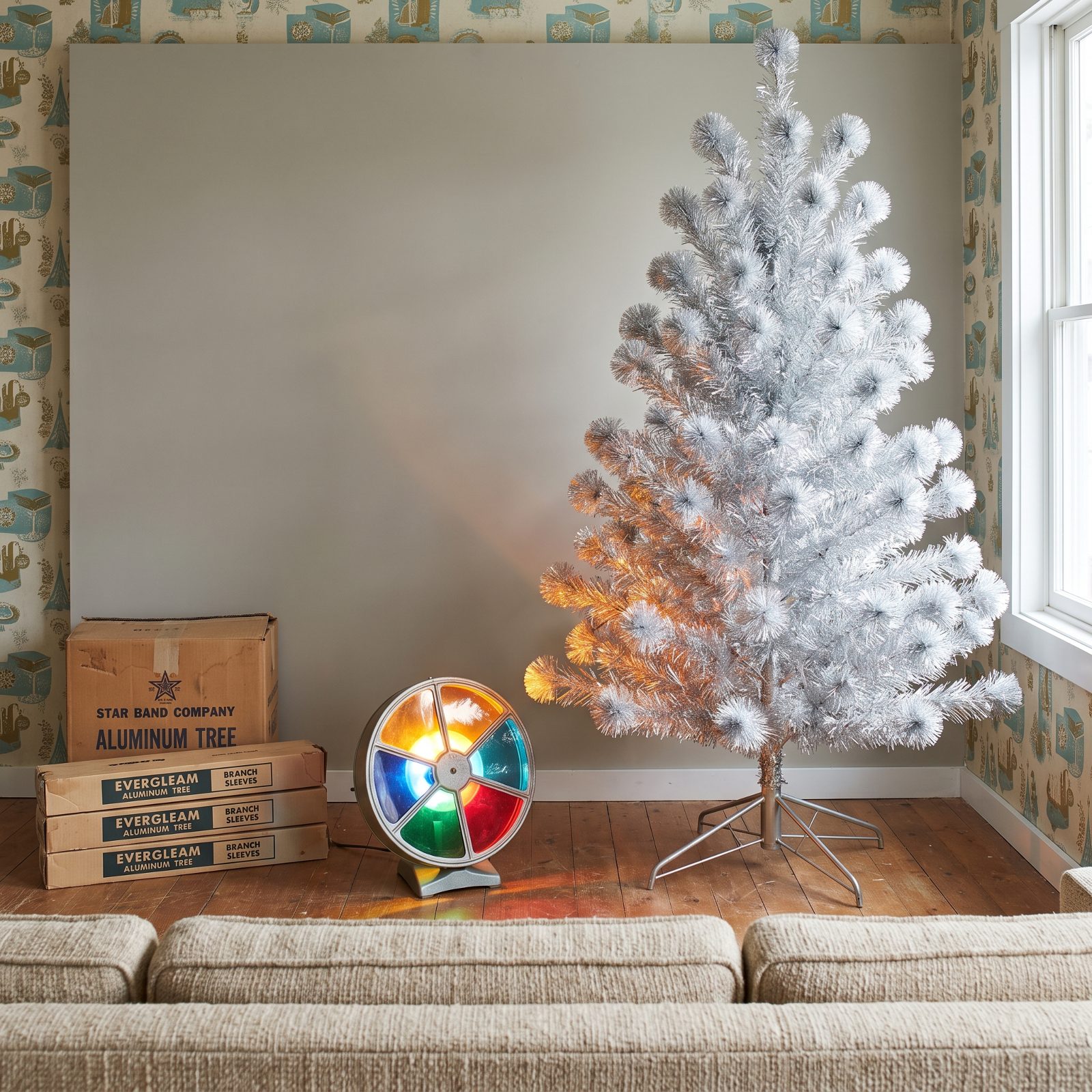
A bare silver tree is worth a fraction of a complete set. What collectors want is the whole package — every branch present, the original stand, the rotating color wheel, and best of all the labeled box with its individual branch sleeves.
Those paper sleeves are where most sets fall apart over sixty years of attic storage. A tree with its full complement of branches, no bent or crushed foil, plus the working color wheel that threw shifting light across a dark room — that’s the one that commands real attention. Missing branches and a dented crown drag the price right back down.
21. Original George Nelson Wall Clocks and the Labels That Prove Them

The copies are everywhere, and good enough to trip up casual buyers. An original gives itself away in the construction and the maker’s label on the back — period-correct movements, correct materials, the paper or stamped markings that tie the thing to its era.
Spoke clocks, ball clocks, sunburst forms, all of them get copied endlessly. So learn the weight of the hands, the finish on the metal, the way the originals were actually put together. A genuine period example with its label intact lives in a completely different value bracket than the modern copy hanging in some furniture showroom.
20. Porcelain Advertising Signs With Honest, Unrestored Enamel
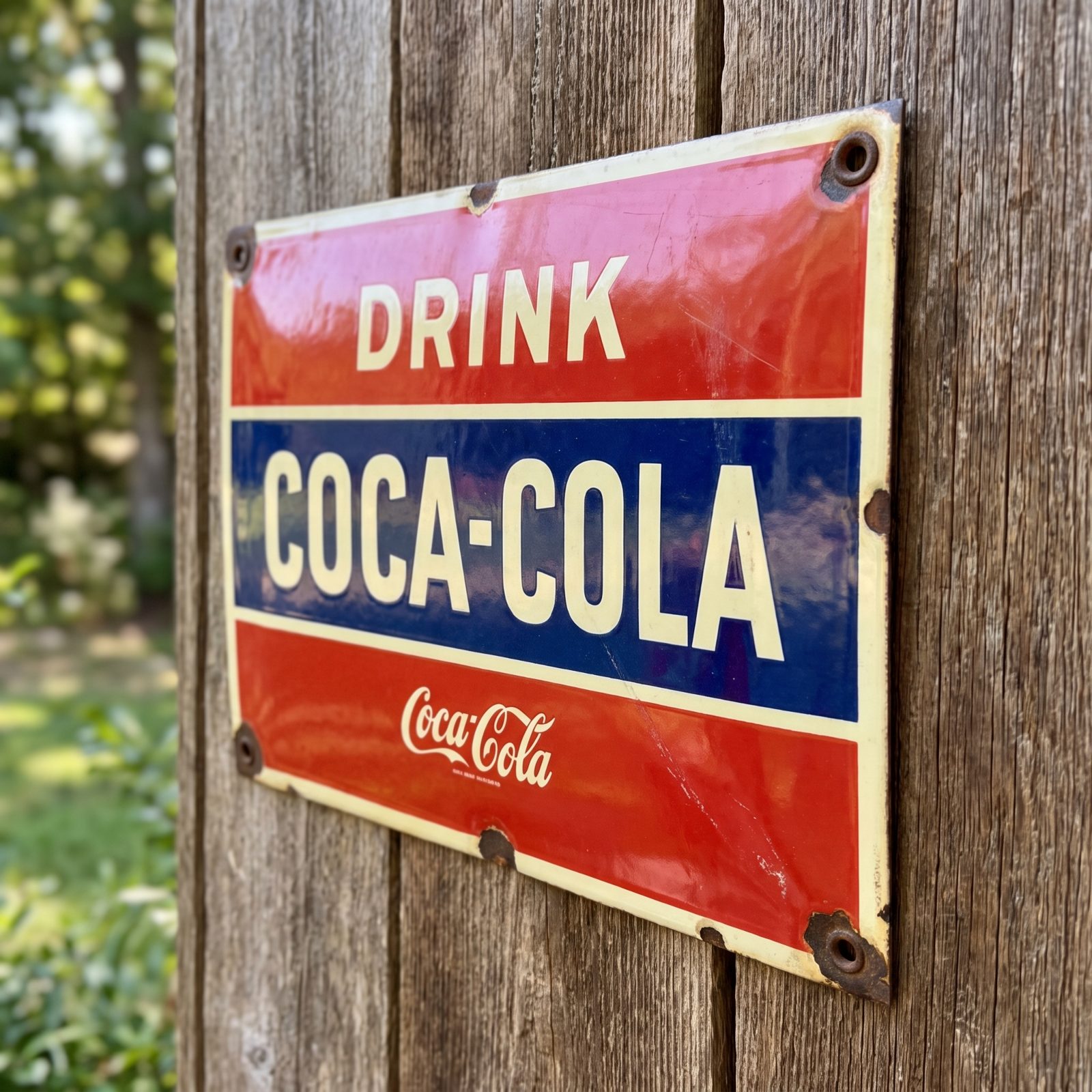
Porcelain enamel has a glassy, baked-on surface that ages a particular way, and learning that aging is the whole game. Real pieces chip to show dark metal at the mounting holes and edges, and the gloss sits hard and deep. Printed reproductions on thin tin look flat and feel wrong the moment you pick one up.
Two things push value beyond condition. First, the business itself — obscure regional brands and oddball products outdraw the famous national names everyone already has. Second, restraint on repair. Collectors want honest wear, not a sign that’s been repainted or touched up, because restoration almost always announces itself, and it cuts value rather than saving it.
19. Cast-Iron Mechanical Banks: The Penny That Still Works Is the One That Pays
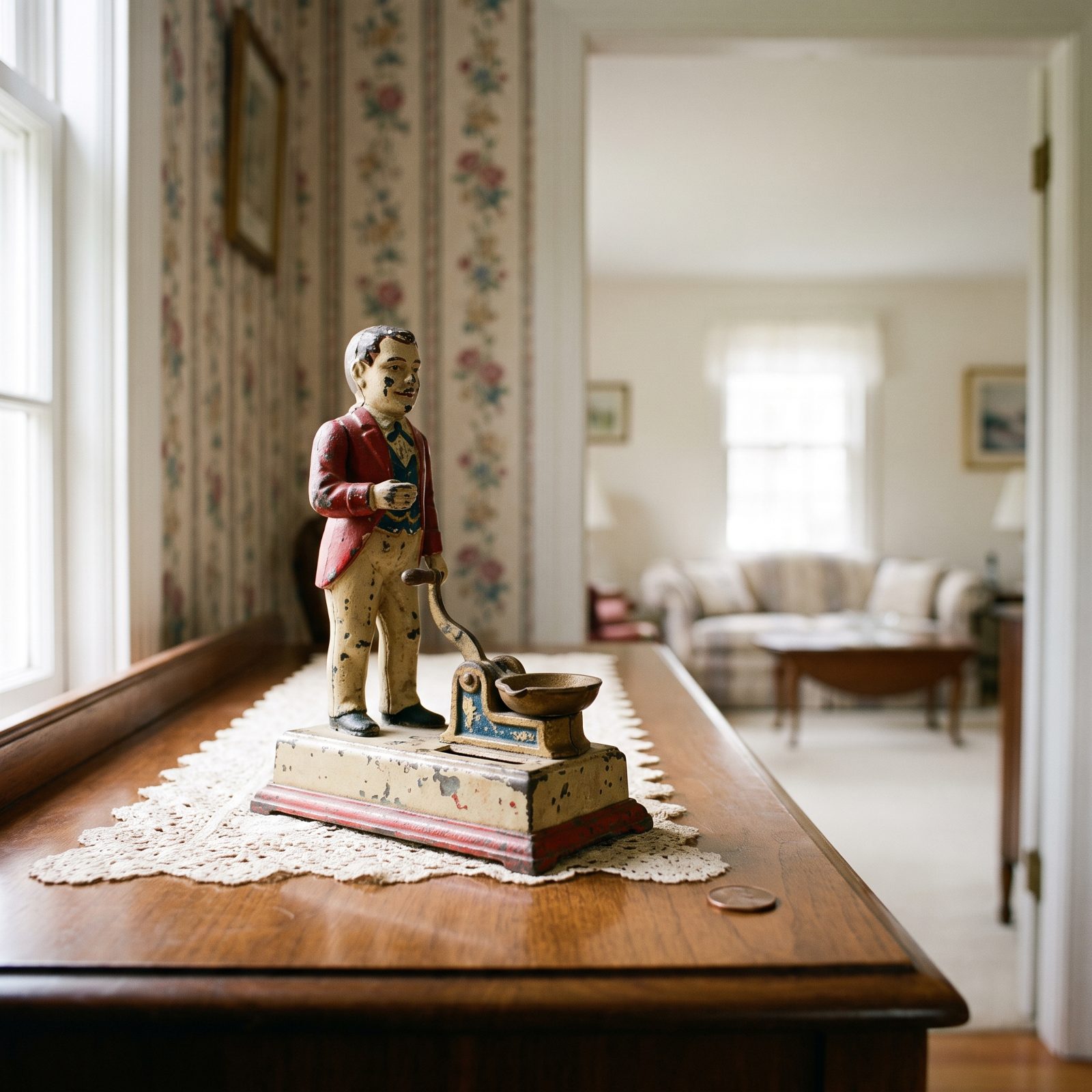
Collectors do not pay for the bank. They pay for the mechanism. A cast-iron mechanical bank that still kicks, flips or swallows the penny when you work the lever sits in a different league from one that’s seized up or been repainted.
Original paint is the whole game, and repaints tank value fast. Run a fingernail over the raised detail: honest wear shows where fingers touched for a century, and fakers never get that pattern right.
18. Tin-Lithographed Wind-Up Toys: Where the Clockwork and the Color Both Have to Survive
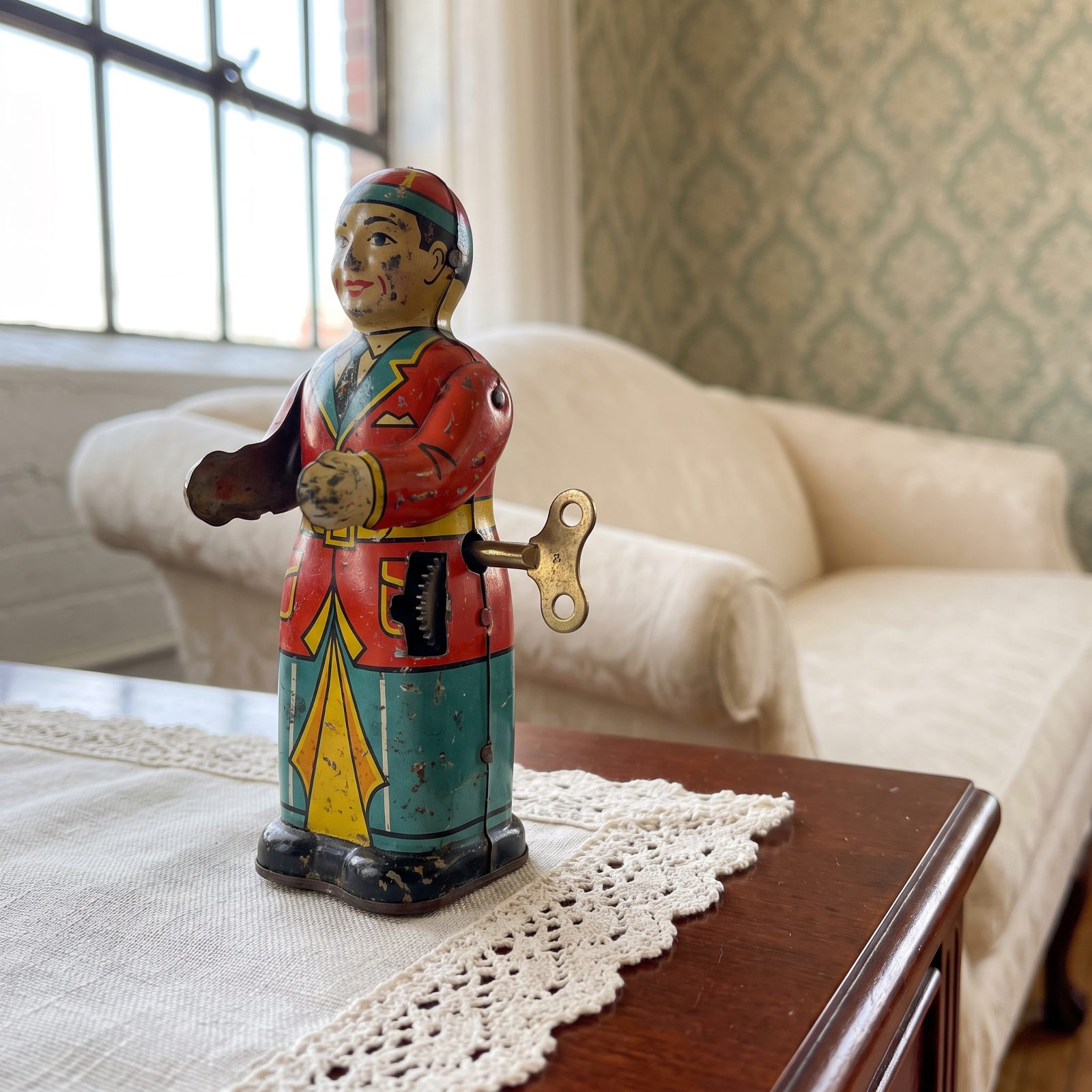
Two things have to survive together, and that’s the trick. The clockwork has to turn and the printed surface has to keep its color, and plenty of these toys manage only one. The ones that do both, by a scarce maker, pull real money.
Watch for rust bloom under the lithography and keys that don’t match the toy. A replaced key is fine; a seized spring is a repair bill. And honestly, the loudest colors — that electric teal, that chrome-yellow — fade first, so a bright survivor is rarer than it looks.
17. Real-Photo Postcards: A Vanished Main Street Is Worth More Than a Pretty View
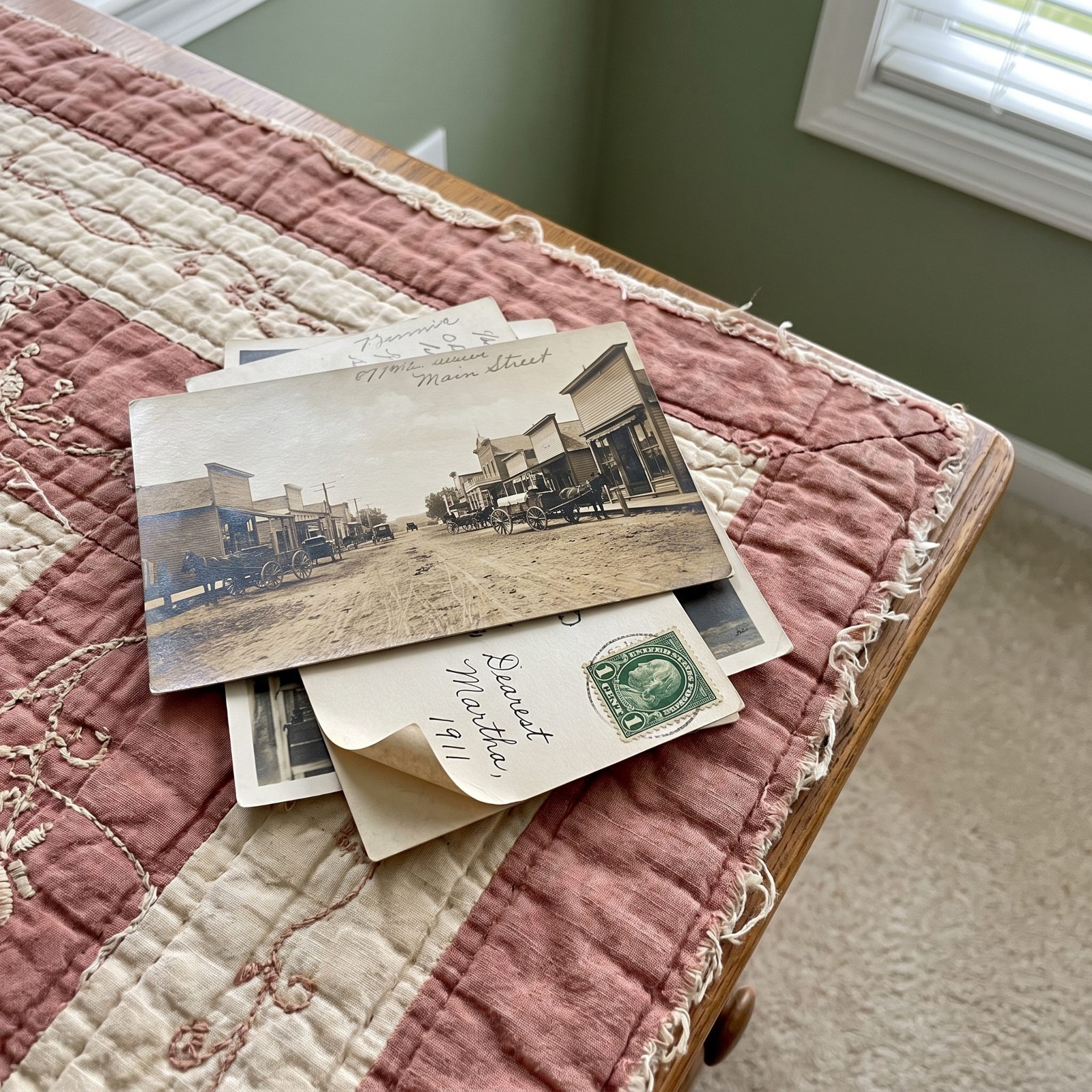
Most postcards are worth a quarter. Real-photo postcards are a different animal — actual photographs printed on postcard stock, and the ones that show a vanished place pull collectors who don’t care about postcards at all.
A photographed Main Street that burned in 1911. A storefront nobody else documented. A county fair, a flood, a train wreck. Local history people and institutions chase these because the image exists nowhere else.
Flip it over. A named town, a dated postmark and a legible caption can multiply the interest.
16. Scarce Regional Community Cookbooks: The Spiral-Bound Book Nobody Thought to Keep
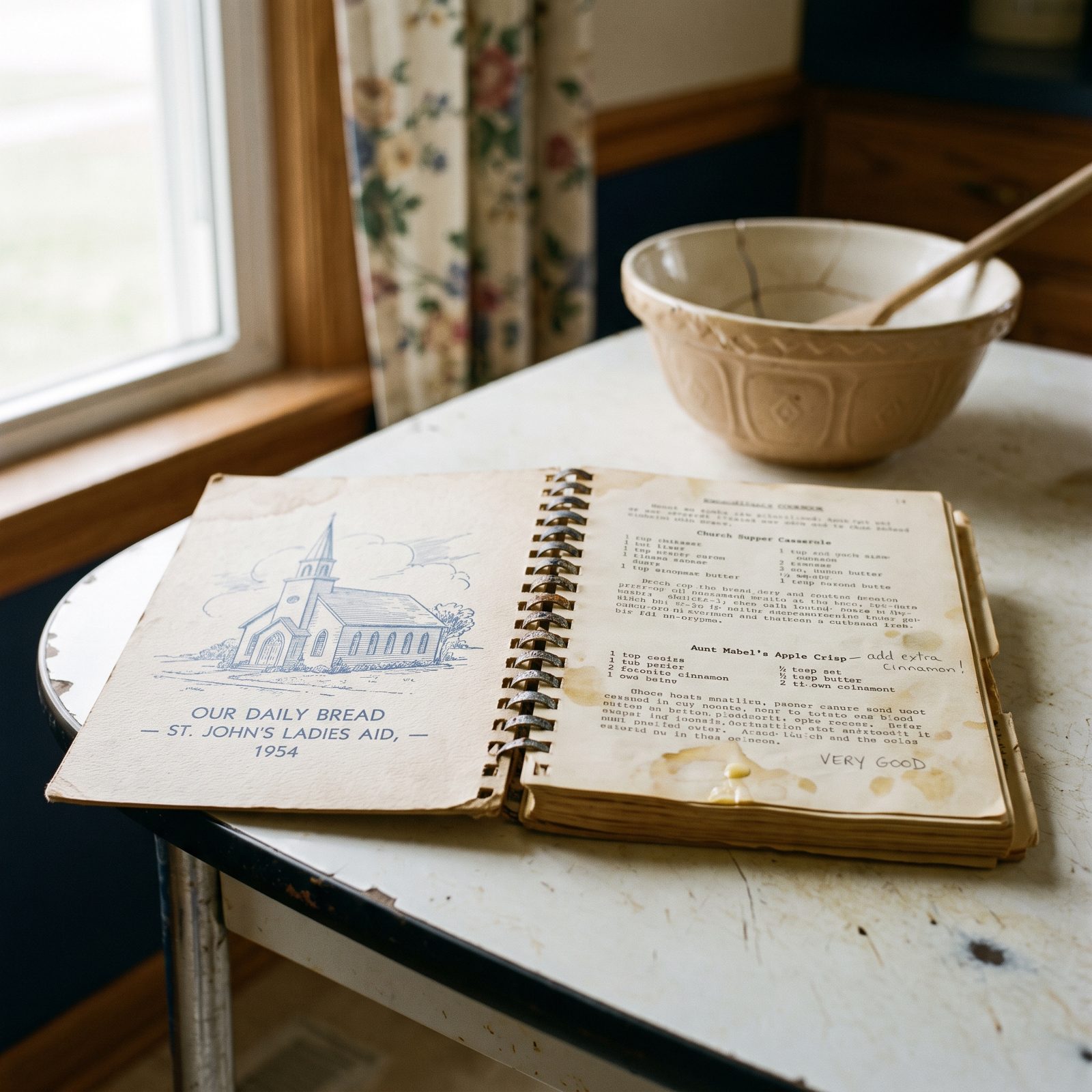
The community cookbook got overlooked for decades, and that’s exactly why the scarce ones matter now.
Picture a church guild in a small town printing a few hundred spiral-bound cookbooks in 1952 to raise money for a new roof. Most got splattered, warped, thrown out. The handful that survive hold recipes that exist nowhere else, plus the names of every woman who contributed — and food historians and regional collectors want those names as much as the dishes.
Small print run, local recipes, a dead-simple cover. That’s the profile. The grease stains are a feature, not a flaw.
15. Antique Schoolgirl Samplers: A Name, a Date, and a Whole Lost Childhood in Thread
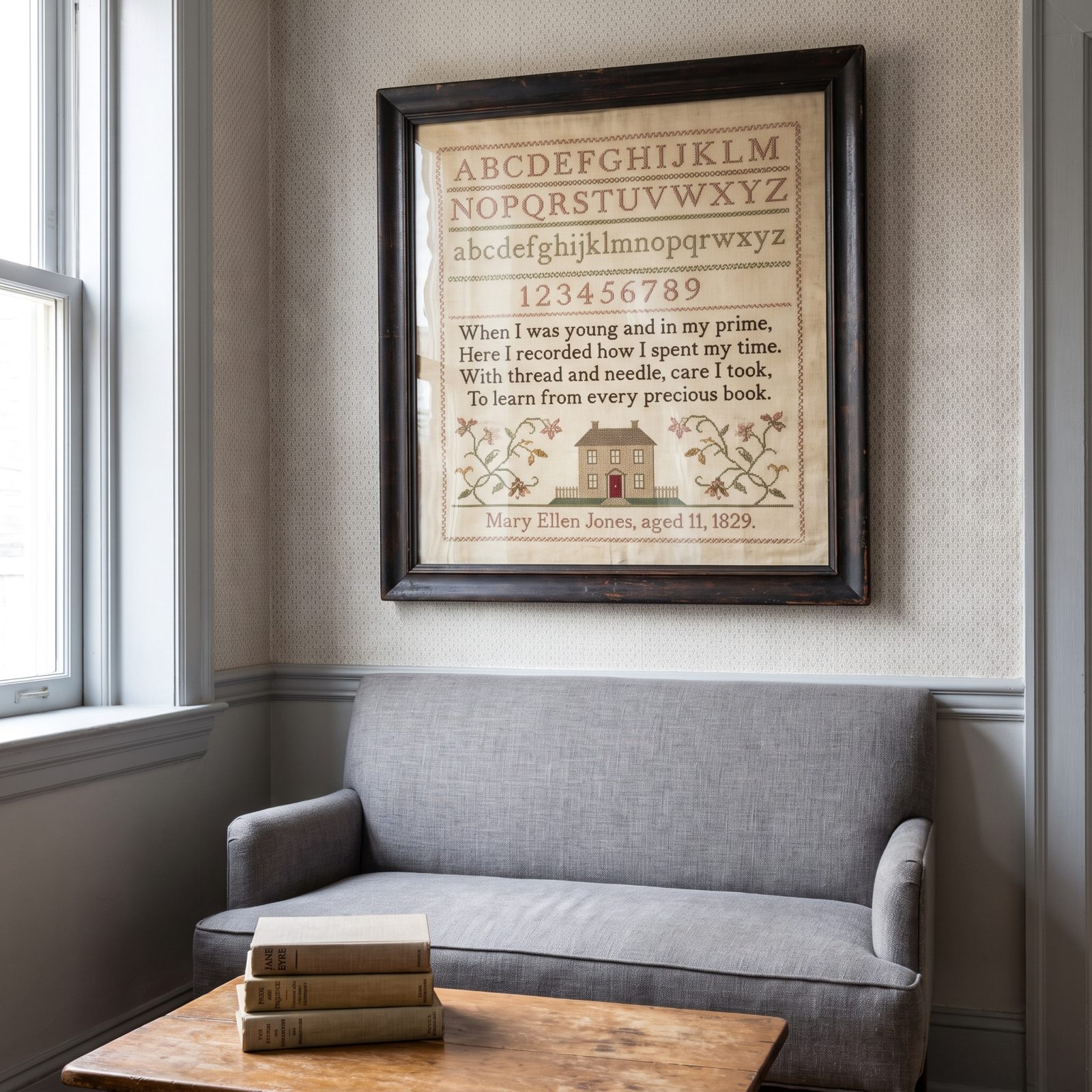
A signed and dated sampler is a document, not a decoration. Some girl in 1820 stitched her name, her age and the year into linen, and that makes it traceable, which is where the value lives.
Regional motifs give it away to people who know. A particular house shape, a certain flowering border, an alphabet layout favored by one New England academy — markers like these can tie a piece to a specific school or region, and specificity is money.
14. Baltimore Album Quilts: The Appliqué That Took a Year and Still Looks It
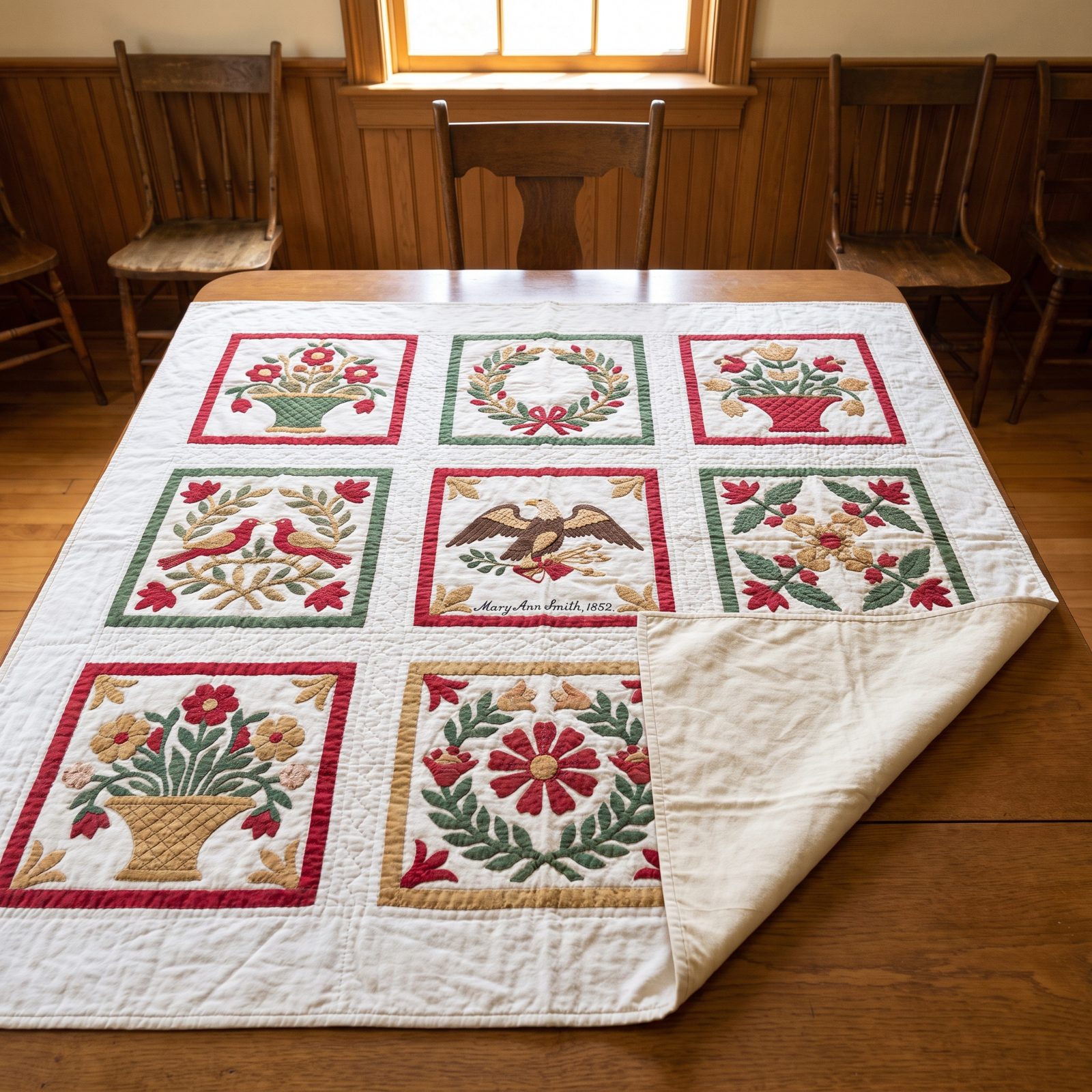
These are the showpieces of American quilting, made mostly around Baltimore in the 1840s and 1850s, and a genuine one stops a room cold.
The appliqué is the tell — blocks of cut-fabric baskets, wreaths, eagles and buildings, some with stuffed and padded detail, each one a small marvel of handwork. Many are inked and dated inside the blocks, and that documentation pushes the serious examples right to the top.
Reproductions exist. Later copies are everywhere. Age of fabric, hand-stitching under magnification and provenance separate the real thing from a pretty tribute.
13. Hand-Knotted Persian Rugs: The Inherited Floor Covering That Might Be the Family’s Best Asset
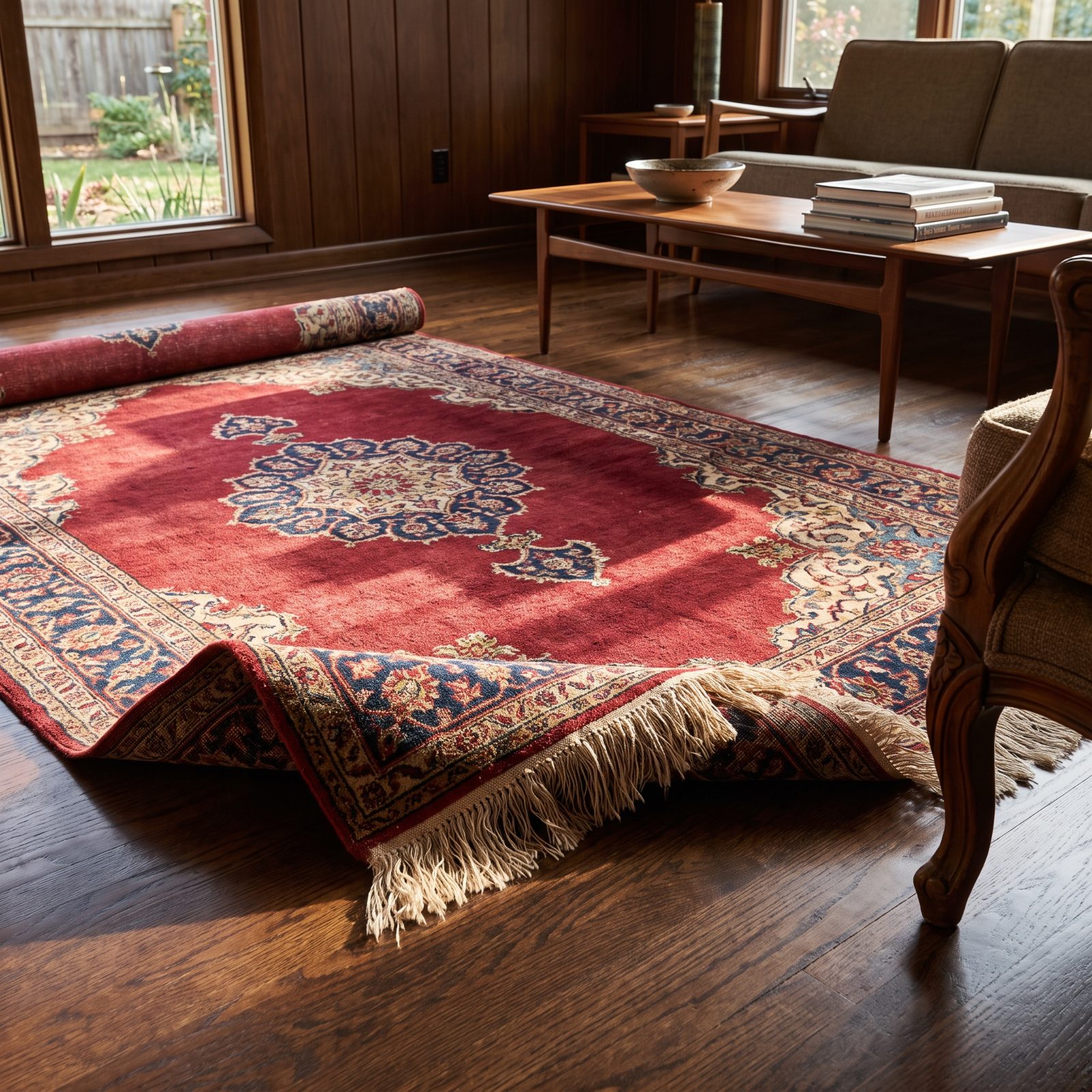
The rug under the dining table could be the most valuable thing in the house, or it could be a factory piece from a department store. The difference hides on the back.
Flip a corner and look. Hand-knotted rugs show individual knots, slight irregularity, and the design bleeding through to the reverse. Age, dye source — natural plant dyes versus synthetic — weaving region and condition all stack up, and a worn but genuinely old tribal piece can outvalue a crisp modern one.
Get a specialist to look before you let a cleaner near it.
12. Sterling Silver Flatware Sets: Weight, Maker and a Full Set Beat Melt Value Every Time
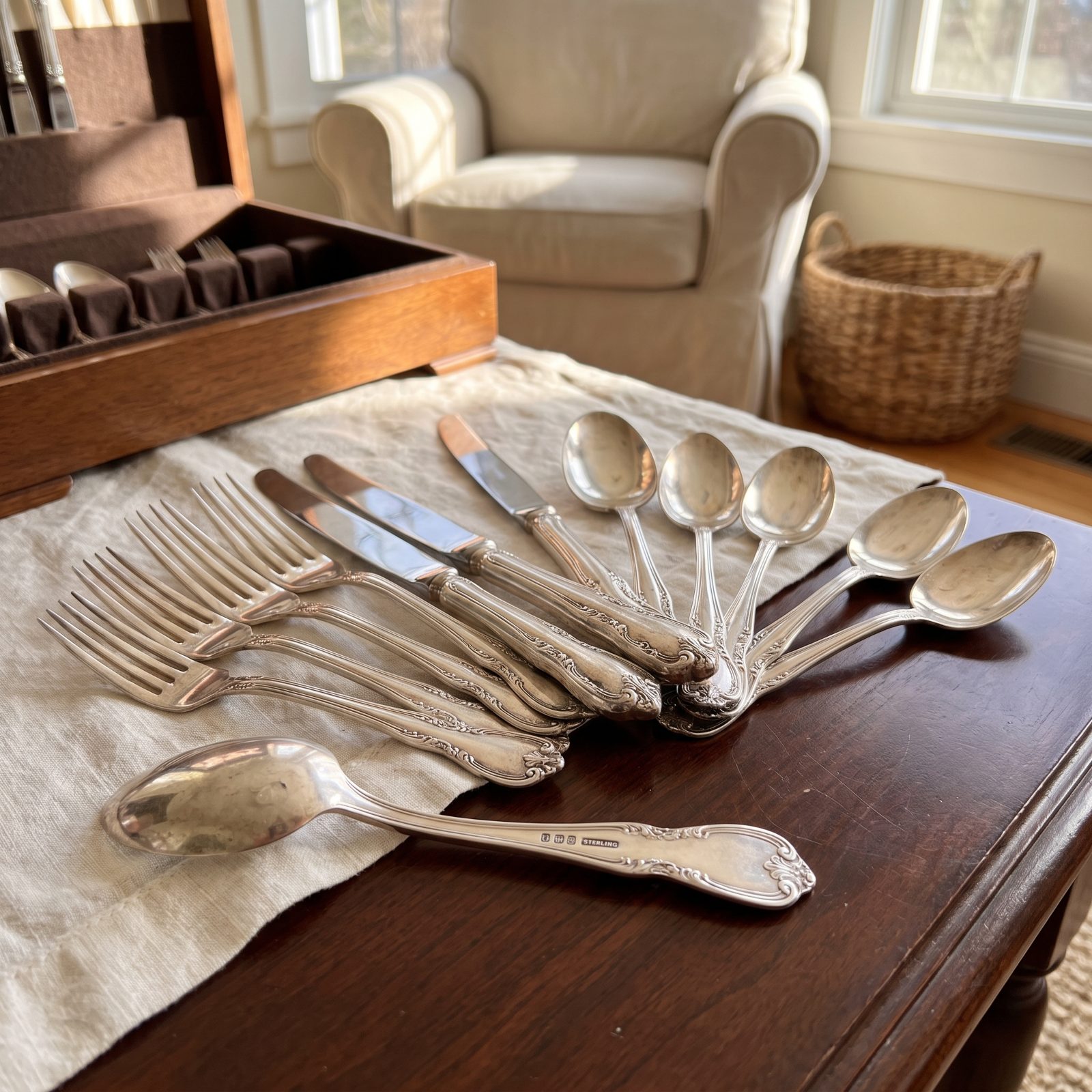
Scrapping a sterling set for melt is usually a mistake. Pattern, maker and completeness can be worth multiples of the silver by weight.
A full service for twelve in a sought-after pattern, serving pieces included and hallmarked by a known maker, sells as a set to people who actually want to lay a table with it. Monogram-free, matching, no bent tines — that’s the goal. Every piece should match the same pattern as the rest of the set.
Check for ‘sterling’ or the right national hallmarks — if a stamp is worn or unreadable, have it tested. Silverplate looks identical to most eyes and is worth a fraction, so a clear stamp or an acid test decides everything.
11. Signed Vintage Costume Jewelry: No Precious Stones, Plenty of Demand
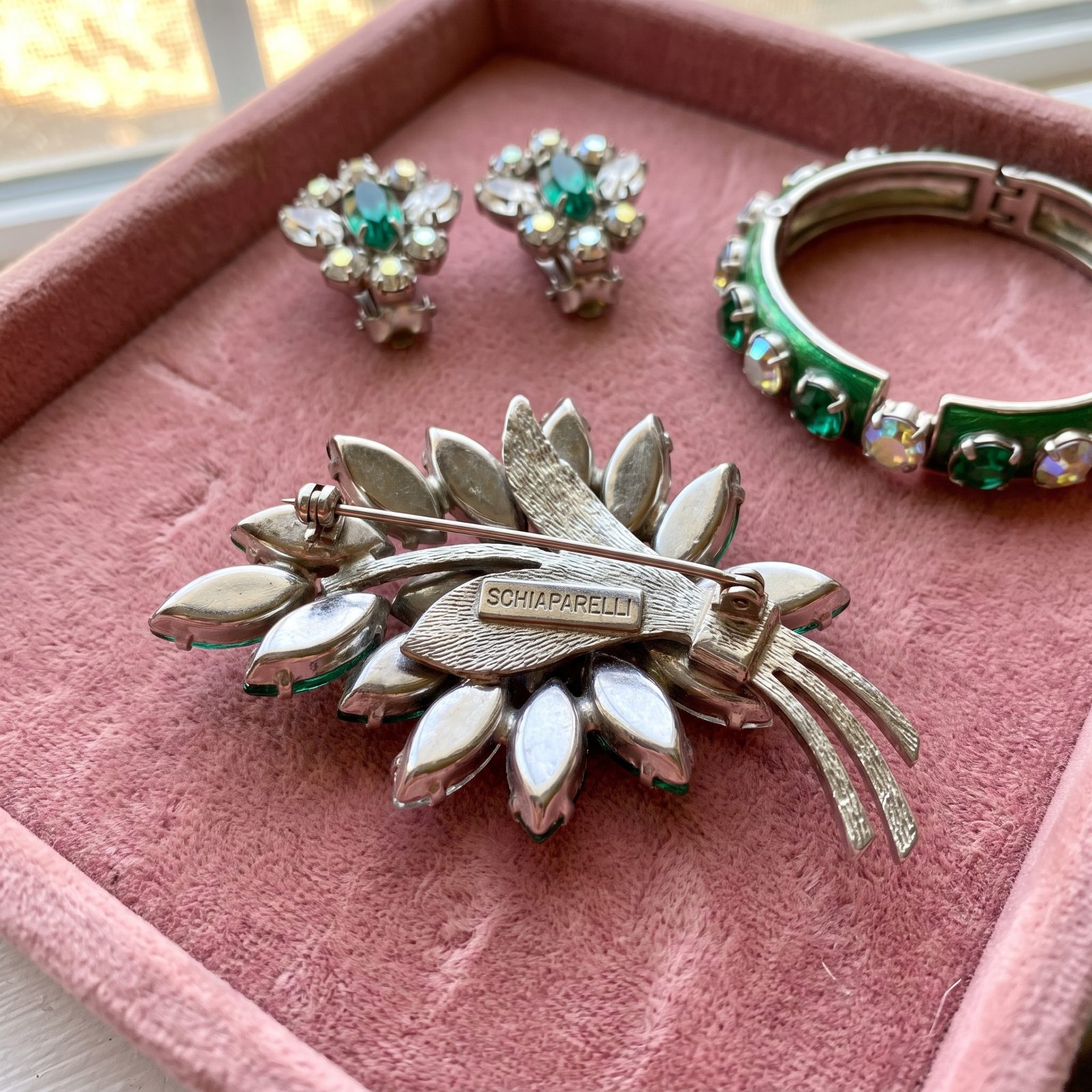
The value is in the name stamped on the back, not the glass on the front.
Costume jewelry from certain mid-century design houses commands prices that embarrass the “it’s just rhinestones” crowd. Collectors chase specific makers, specific eras, specific designs. A signed piece in good shape, stones intact and no plating loss, outperforms the unsigned ones that look nearly identical.
10. Hermès Silk Scarves: The Label, the Hand-Rolled Hem, and a Design They Stopped Making
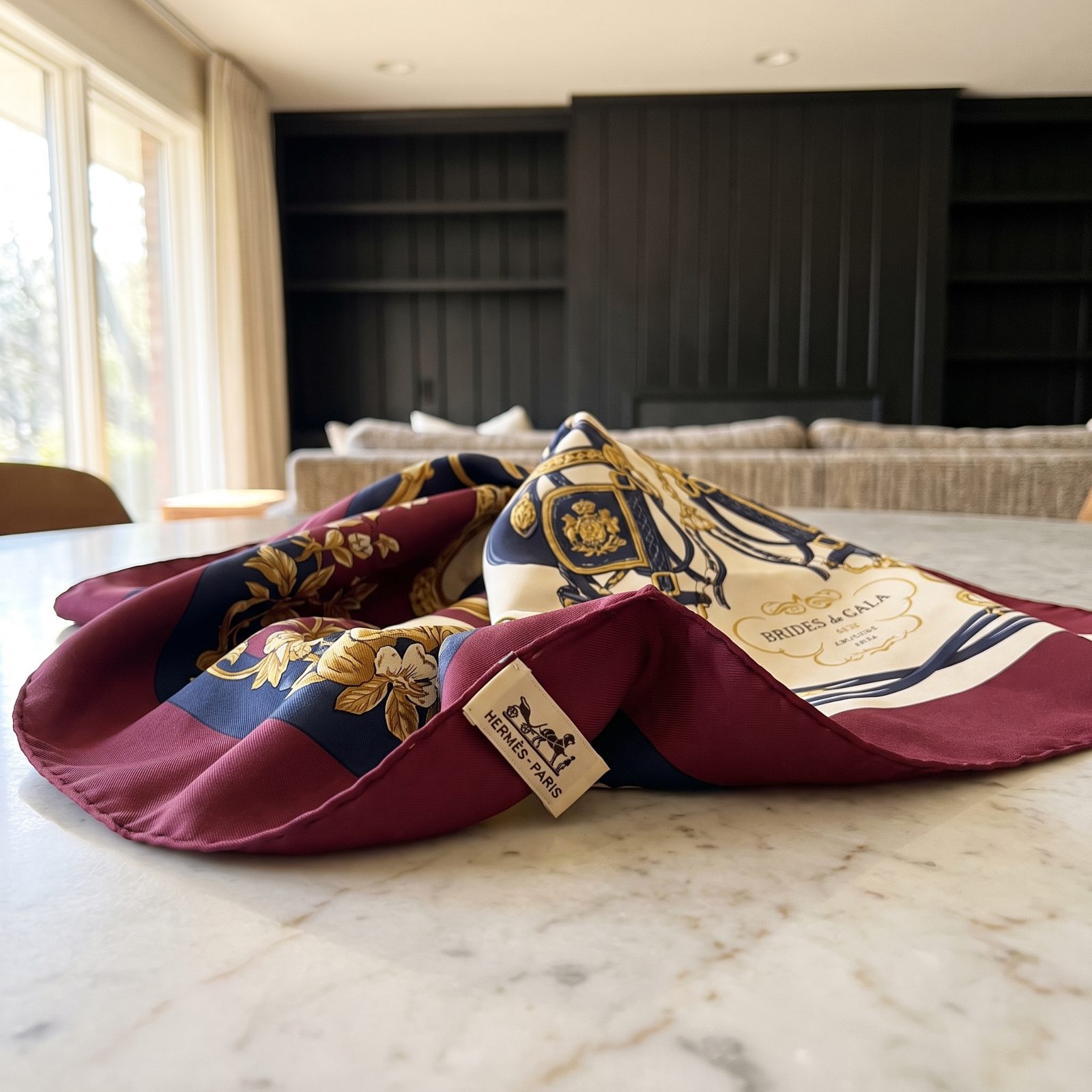
A discontinued design is the one collectors hunt — but only if the scarf has kept its proof.
Three things get checked fast: the label, the hem and the color. The hem should be hand-rolled and hand-stitched, folded toward the printed side. The label should match the era. And the colors should still be saturated, because sun and washing dull silk in a way nothing undoes.
A rare print with a faded field or a machine hem is just a scarf. A rare print with every detail intact is a find. Store them flat, out of light, and never dry-clean them on a whim.
9. Judith Leiber Minaudières With Intact Crystal and Hardware
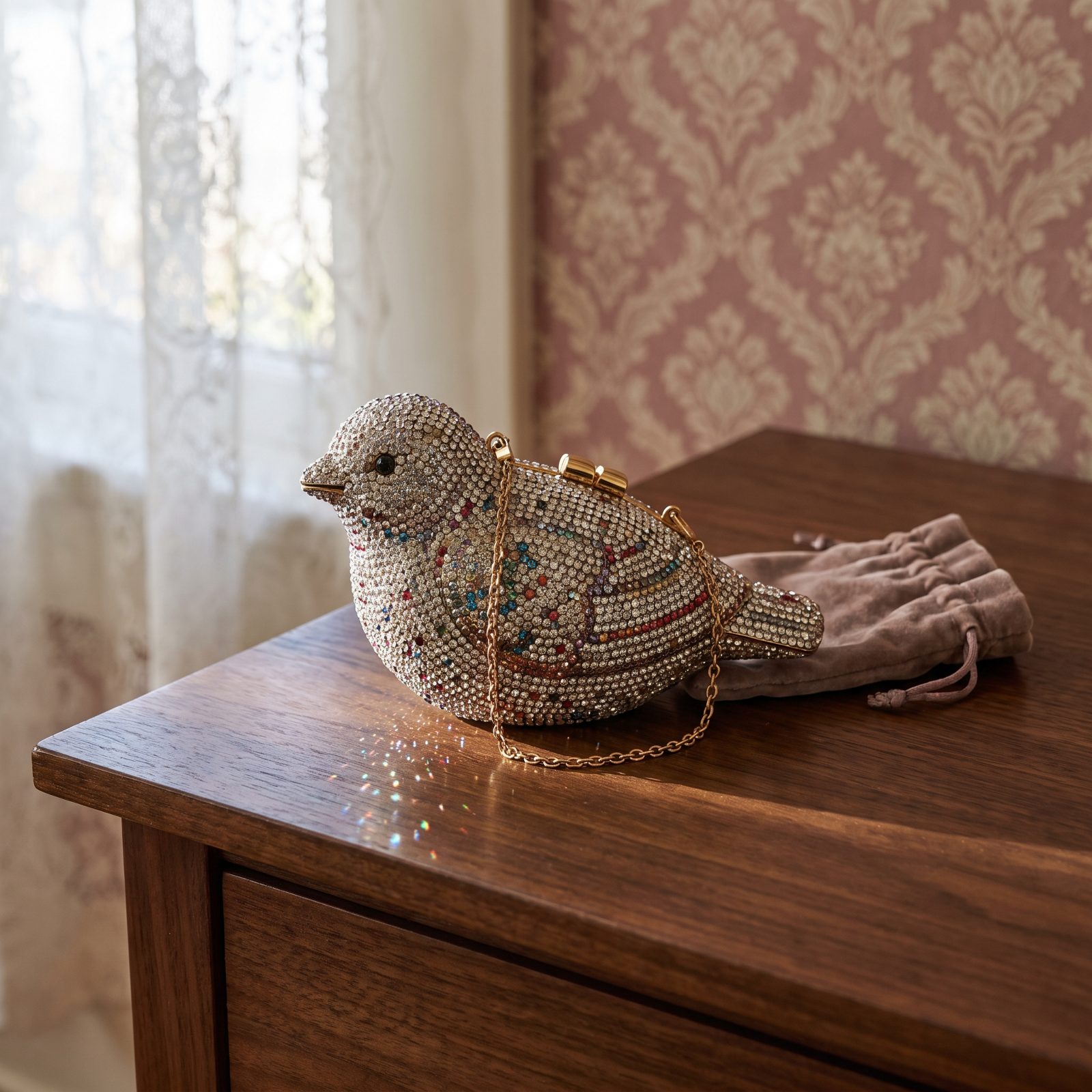
A crystal minaudière sounds delicate until you hold one. These are solid metal shells, hand-set with Austrian rhinestones, and the whimsical shapes are exactly what collectors chase: penguins, cupcakes, a head of asparagus. The novelty pieces outrun the plain evening clutches every time, no contest.
Condition lives in the small stuff. Missing stones leave dull gaps that catch the eye immediately, the original clasp needs to snap clean, and you earn bonus points if the little mirror, coin purse, or dust bag survived inside. Authentic pieces carry a signature plaque. That plaque matters more than people think.
8. Whiting & Davis Mesh Purses With Sterling Frames
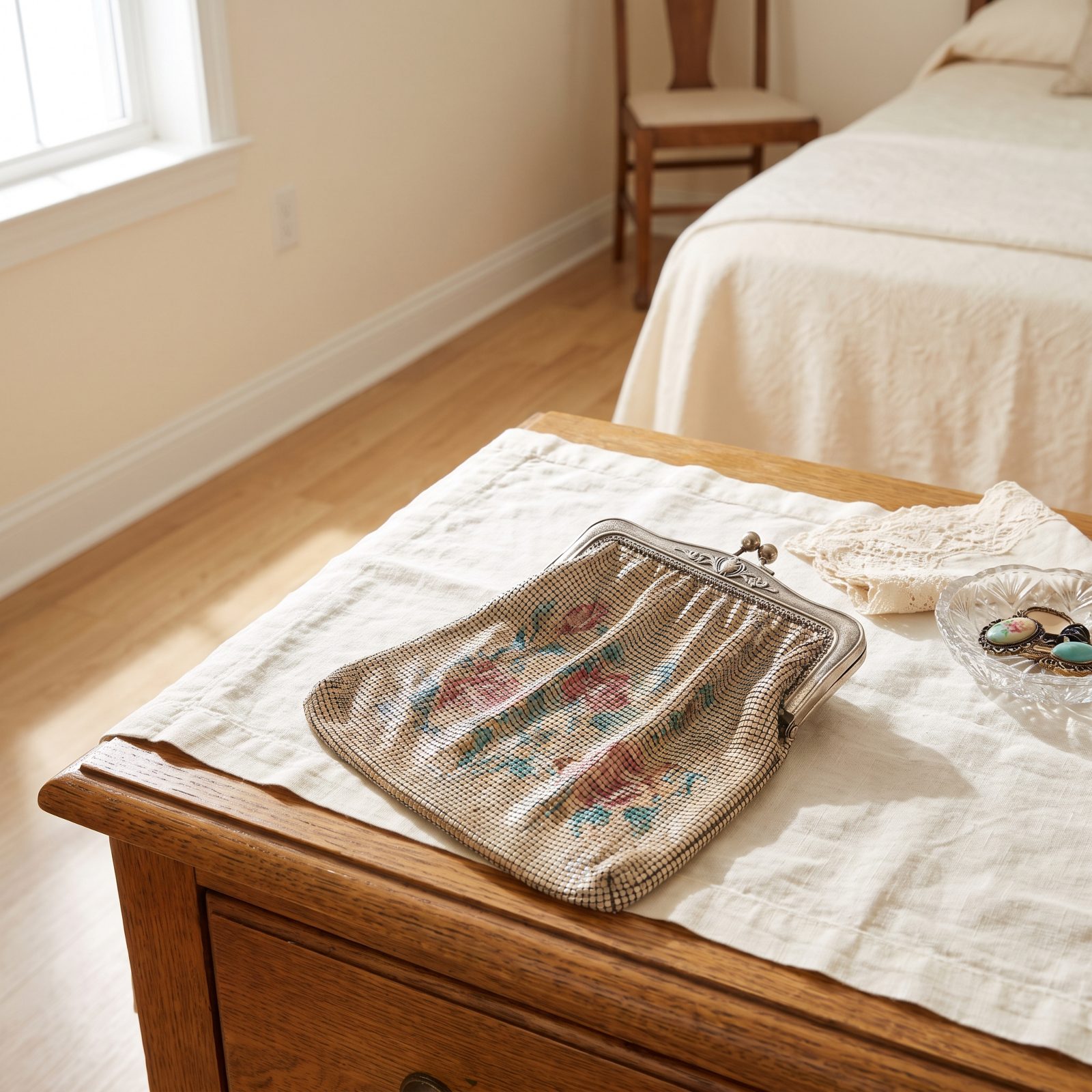
Most people lump all mesh purses together. Collectors don’t. What separates a common gold-tone bag from a prize comes down to the frame and the mesh itself.
Sterling frames beat base metal, and enameled mesh with unusual painted patterns pulls ahead of plain chainmail every time. Geometric Deco work, little scenics, anything that looks hand-decorated. Hold one up to the light. If the enamel is cracking, flaking, or worn down to bare metal along the fold lines, the value drops fast. Intact painted mesh is what you want, with a frame that still latches and a maker’s mark stamped inside.
7. Singer Featherweight 221 Sewing Machines in Original Cases
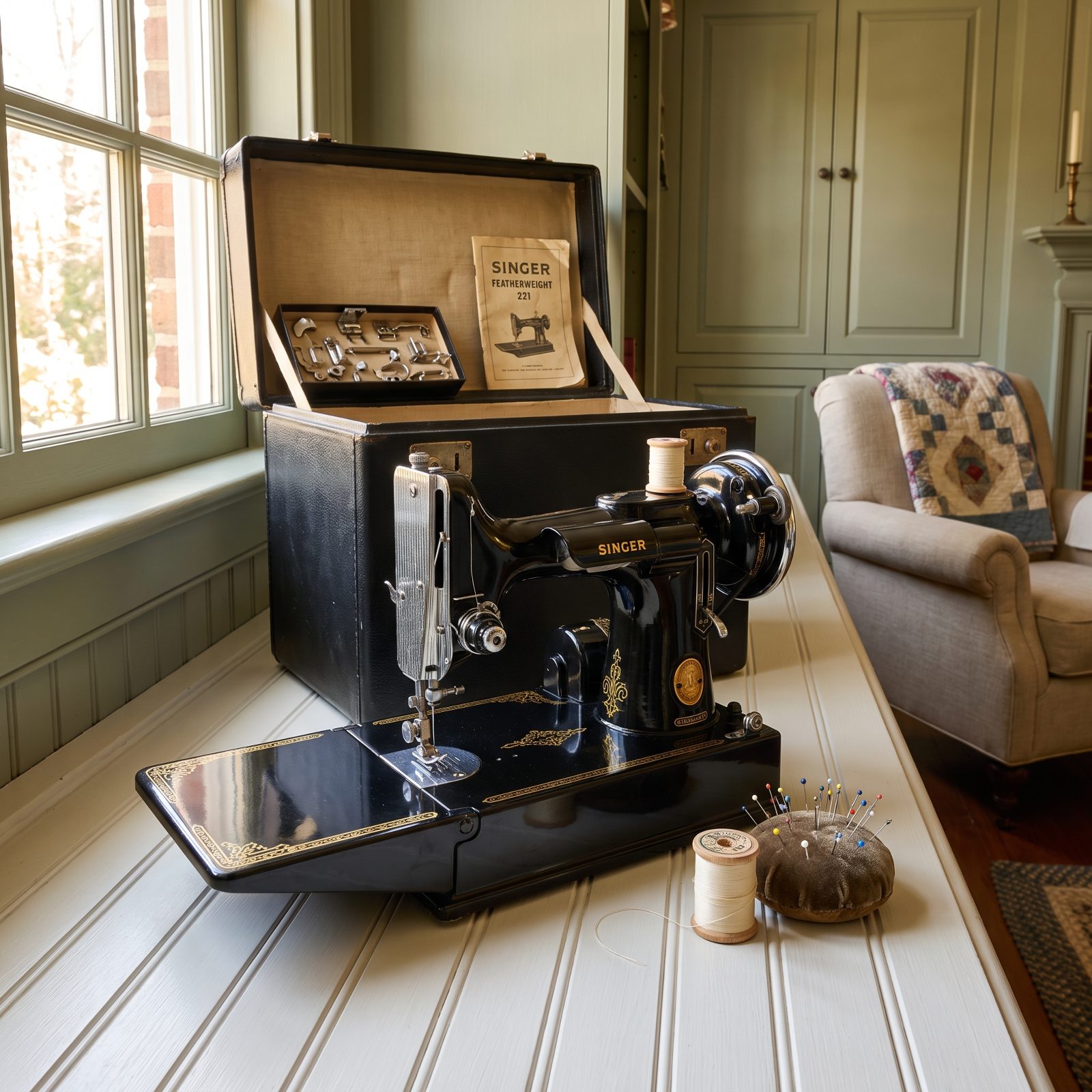
Quilters love these little machines, and that love keeps prices stubbornly healthy. The Featherweight weighs about eleven pounds, sews a straight stitch that puts modern plastic machines to shame, and fits in a case you can carry one-handed.
The gold decals are the tell. Worn, flaking scrollwork signals hard use, so collectors want the bright ones, a smooth-running motor, and the full kit: original case, foot controller, attachments in their little tray, and the manual. A machine that actually sews is worth more than a pretty shelf piece. Plug-in condition counts.
6. Steiff Bears With the Button in the Ear

That little metal button in the ear is the whole game. Steiff started using it around 1904, and the earliest bears, long-limbed, humped at the back, stuffed firm with excelsior, are the ones serious collectors fight over.
Here’s where people go wrong. They clean and repair, thinking it helps, and it doesn’t. A bear with its original mohair, original pads, original eyes, and minimal fixing beats a restored one. Honestly? The worn ones with an intact button and a surviving ear tag can be worth more than a prettier replacement. Age without the identifiers means guesswork, and guesswork sells cheap.
5. First-Issue 1959 Barbie Dolls With Holes in the Feet

Everyone thinks they have an old Barbie. Almost nobody has the first one.
The 1959 original has specific giveaways: a black-and-white striped swimsuit, a ponytail, arched eyebrows, and two small holes in the soles of the feet that fit a pronged metal stand. Later dolls lost those foot holes. And here’s a quirk worth knowing. The skin on the earliest ones can fade to a pale, sometimes greenish tone near the earrings, the metal reacting with the plastic over decades.
Original swimsuit, original sunglasses and earrings, plus a doll that hasn’t been played to pieces. That combination is genuinely rare, which is why the real first-issue commands what it does.
4. First-Edition Children’s Books With Intact Dust Jackets
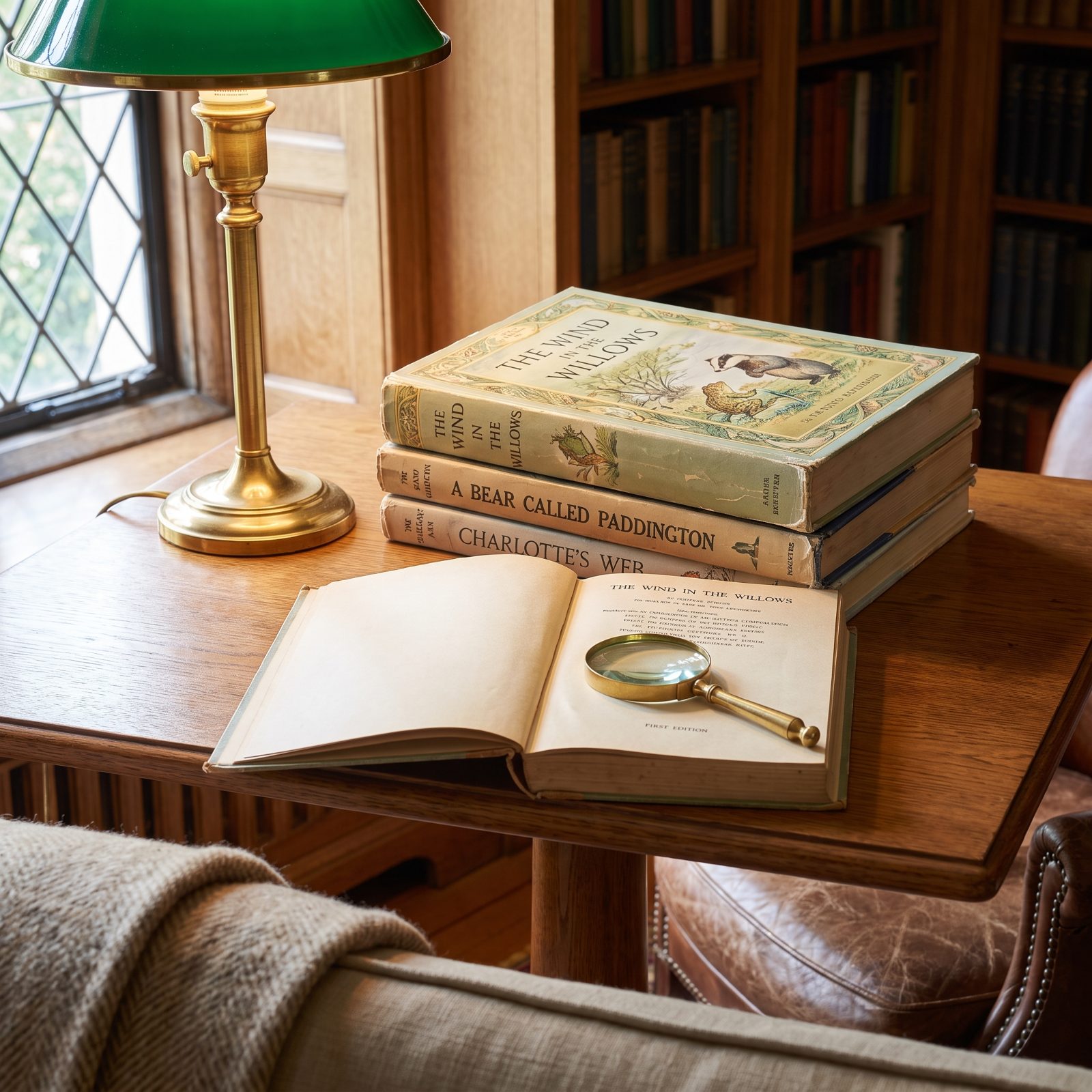
Age is the trap. A hundred-year-old book can be worth five dollars while a book from the 1960s goes for thousands, and what separates them is the first edition, which hides in the fine print.
Collectors hunt for “issue points”: a specific printing line, a stated first edition, a typo later corrected, a price that matches the original run. The dust jacket does heavy lifting too. A first edition without its jacket can be worth a fraction of the same book with one intact.
3. Parker Duofold Fountain Pens in Hard Rubber and Celluloid
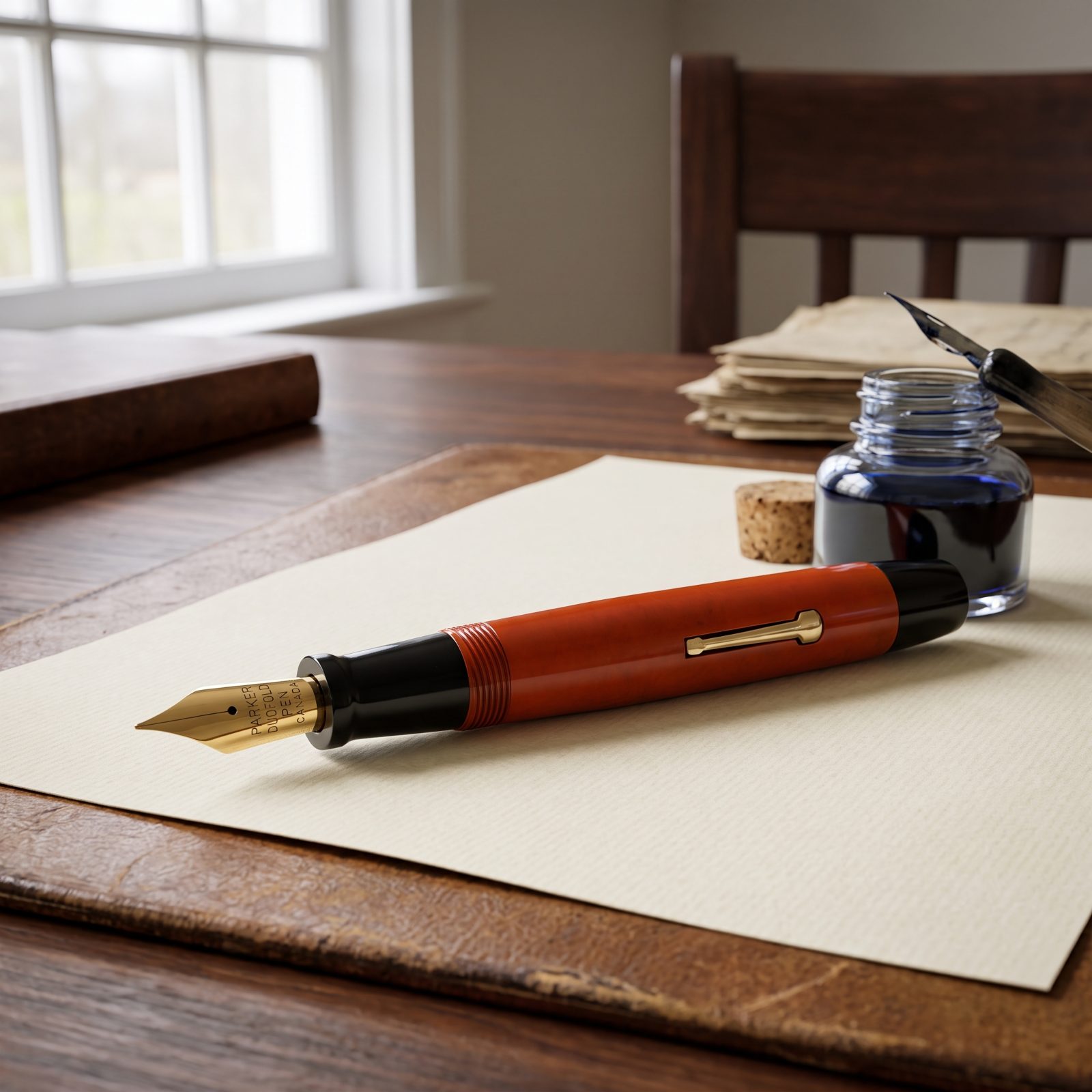
The orange ones get the nickname “Big Red,” and for good reason. Early Parker Duofolds in hard rubber and bright celluloid are the pens that pen people actually want to own.
Originality decides everything. A nib that matches the pen, a filling system that still draws ink, no cracks in the barrel, and a barrel imprint you can still read. Celluloid ages unpredictably; some of it discolors or develops hairline crazing over the years. A pen that writes, holds ink, and wears its original parts beats a prettier one that’s been quietly rebuilt with mismatched bits.
2. Hermes 3000 Typewriters in the Seafoam Body
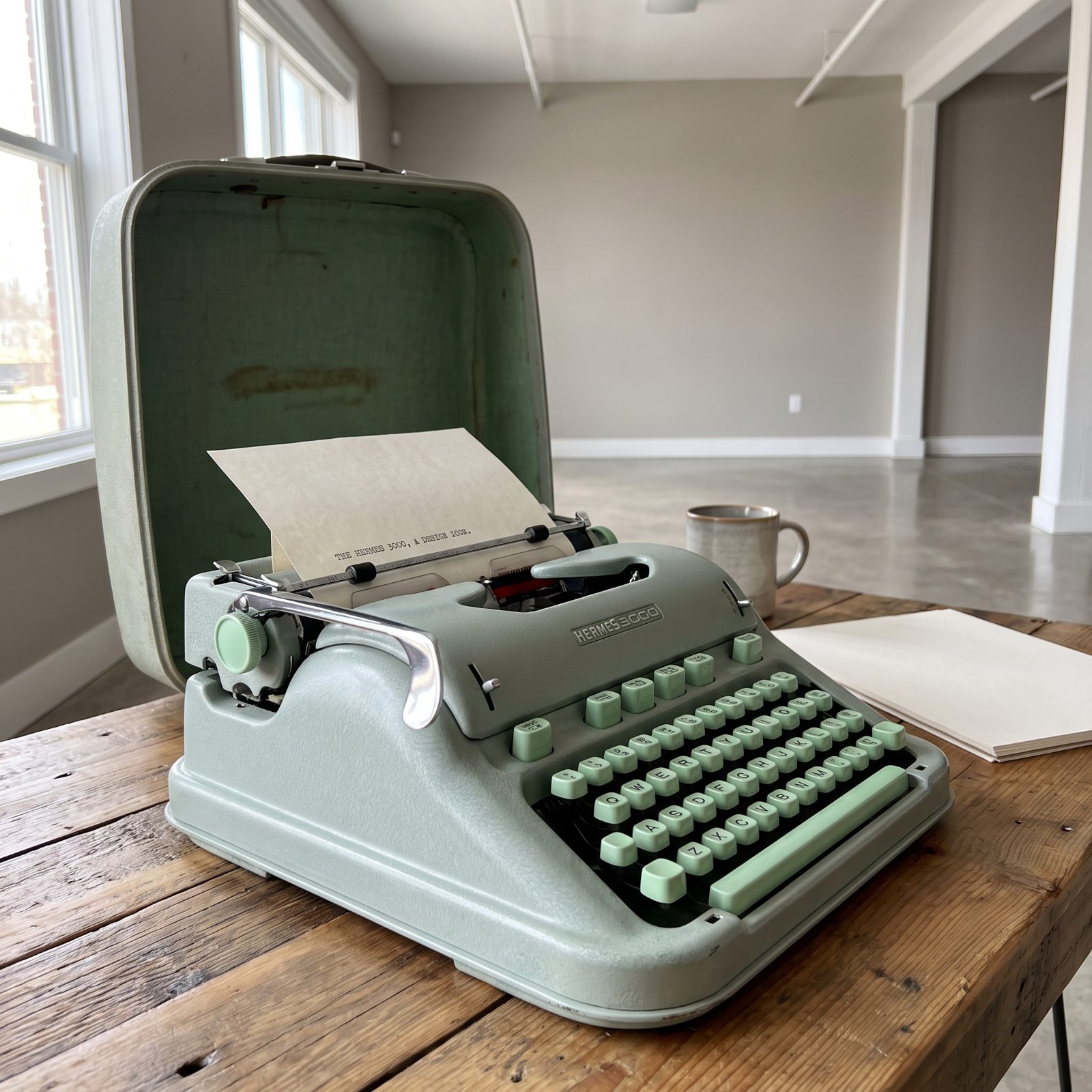
Writers made this one a cult object. The Hermes 3000, with its curvy body and that pale seafoam-green crinkle paint, types with a smoothness that turned it into a legend among novelists, and by extension among collectors who now pay up for the look.
Body style and typeface drive demand. The rounded earlier shape has its devotees, and certain type styles chase a premium, script faces in particular. But a clean working mechanism matters most. Sticky keys, a dried ribbon, a seized carriage, all fixable, all off-putting. And include the original case, please. These were sold as a set, and the set is what people want.
1. Leica Screw-Mount Cameras With Matching Serial Ranges
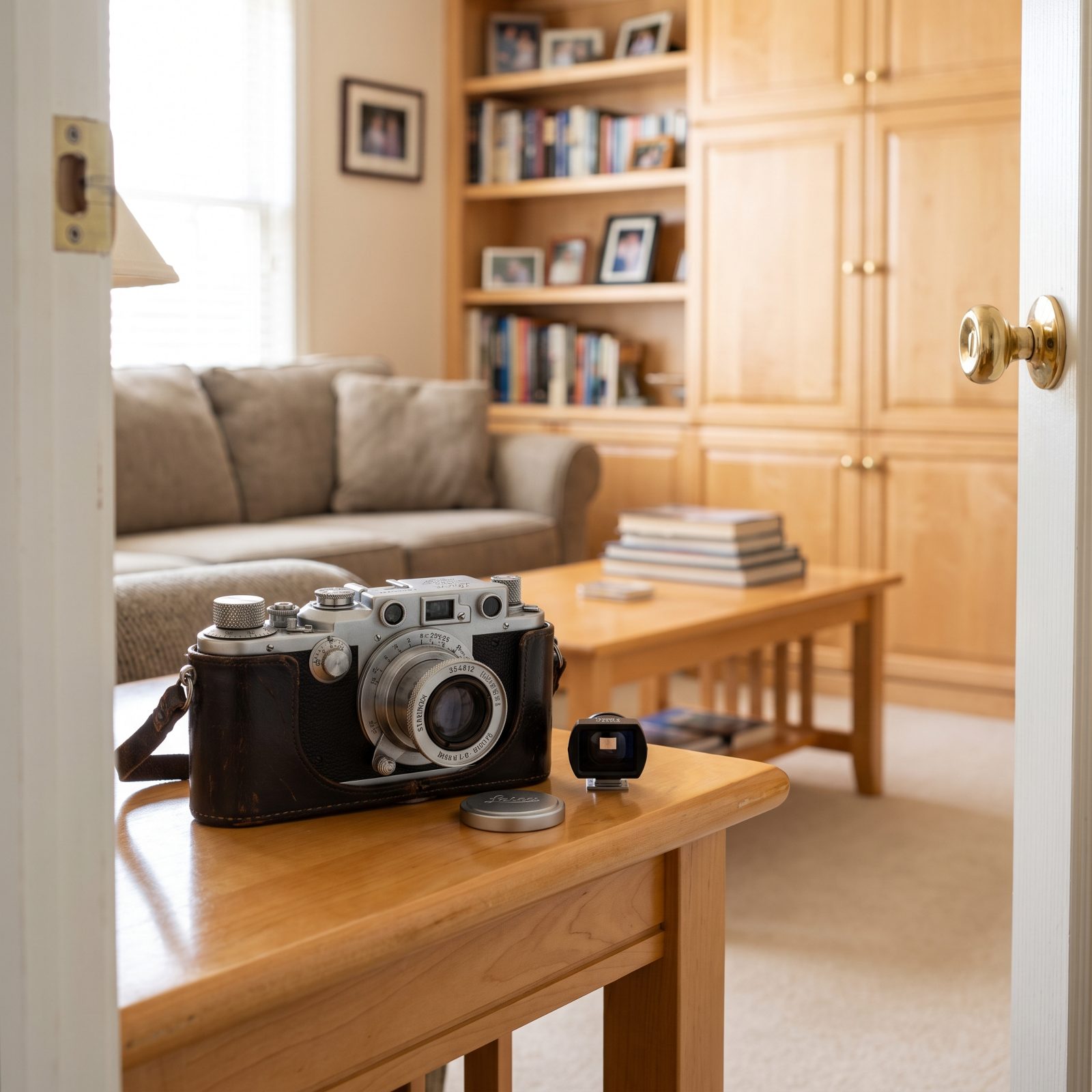
Here’s where small numbers mean big money. On a screw-mount Leica, collectors read the engraved serials like detectives, and they want the whole story to line up.
What they check:
- A body serial that falls in a known production range for the model.
- A lens with a matching serial era, ideally the one originally sold with the body.
- An unmodified body: no reground engravings, no fake rarities assembled from spare parts. Lens lettering that reads as gibberish or runs backwards instead of proper Leitz Elmar/Summitar markings, is a red flag.
The trade is riddled with “married” cameras and faked rare variants, so untouched and honest wins out over flashy and rebuilt. A clean shutter firing at the right speeds, original leatherette, factory engraving, all of it pushes value up. Mess with the serials and you don’t add a dime. You destroy it.