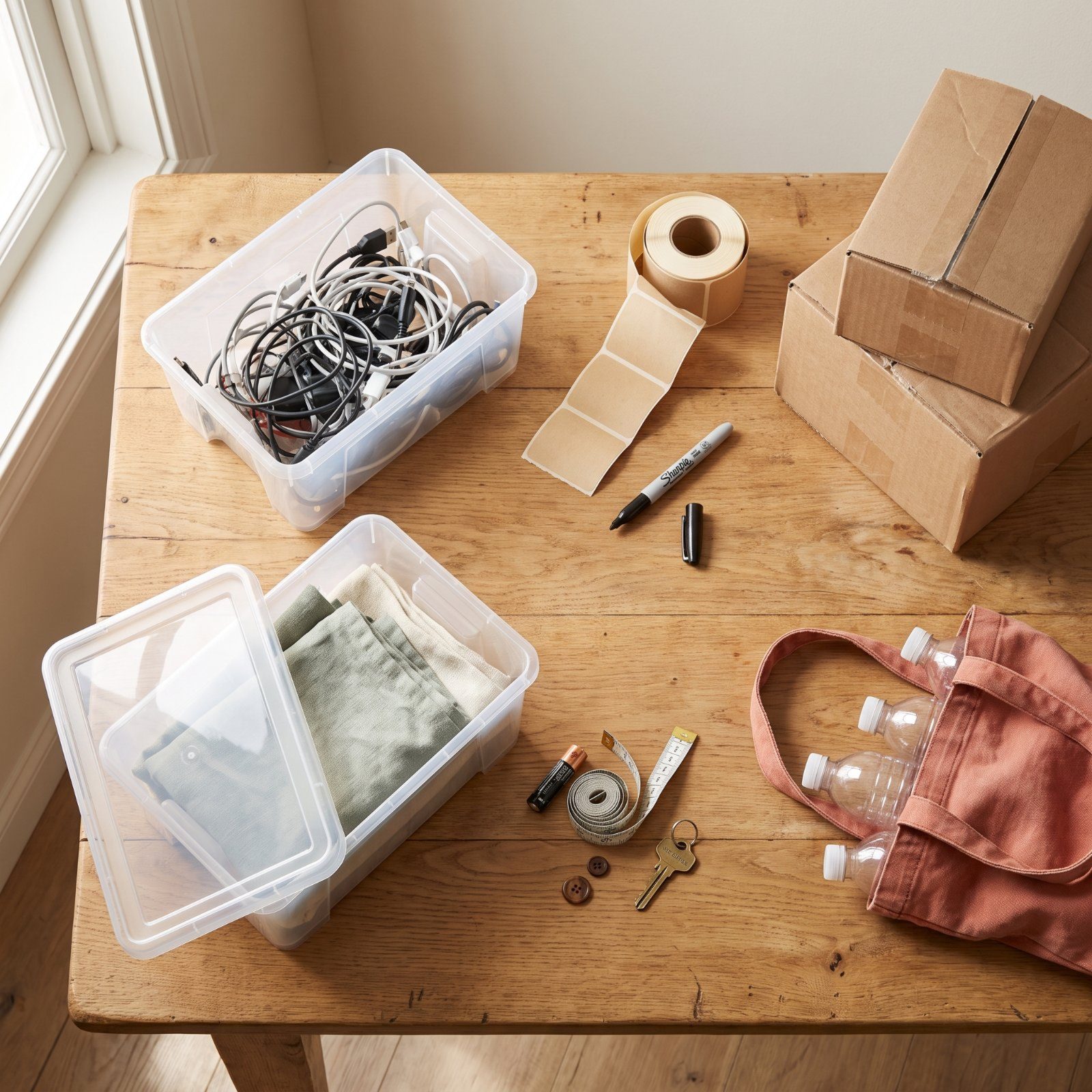
A full closet is not an organized closet. Often it’s the opposite, and the people who untangle houses for a living will tell you so before they even open the door. The patterns repeat house to house, zip code to zip code, in homes that look perfectly fine from the street. Nothing dramatic. No hoarding, no crisis — just a slow drift of decisions nobody got around to making, stored in boxes and labeled, generously, as storage. These are the snags organizers see again and again, and once you spot them in your own place, you cannot unsee them.
Please note that some of the images in this article were created with the assistance of AI.
48. Storage Packed to 100 Percent, So Nothing Goes Away Without a Fight
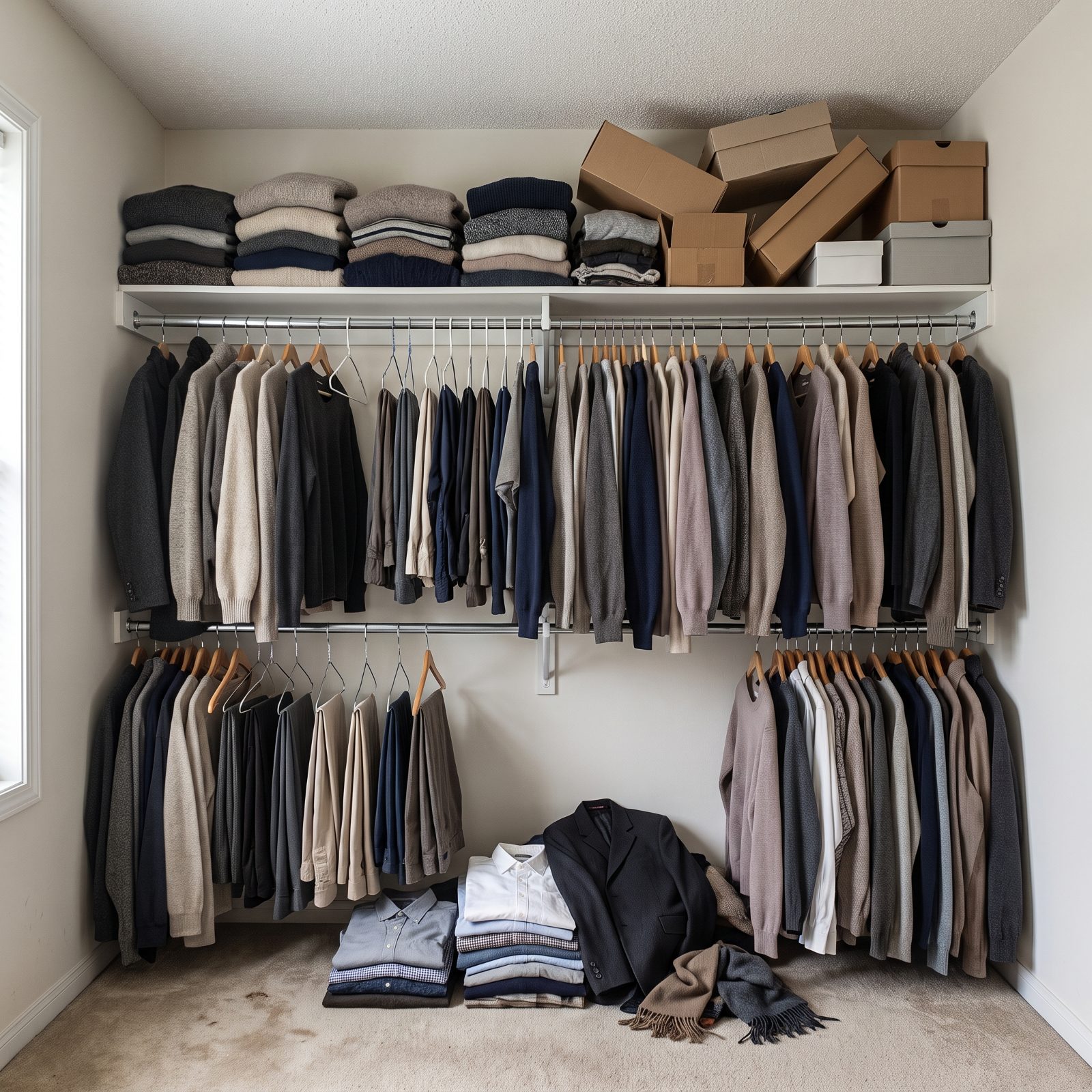
A closet at full capacity feels like an accomplishment. It isn’t. The moment every inch is claimed, there’s no room left for the thing in your hand, so it lands on the chair, the dresser, the floor by the door. Organizers call this working at 100 percent, and they treat it like a dashboard warning light.
The fix isn’t a bigger closet. It’s leaving a gap on purpose. Slack invites things back in; a shelf packed solid pushes everything out into the room.
47. The Best Shelf Given to the Fondue Set You Used Once
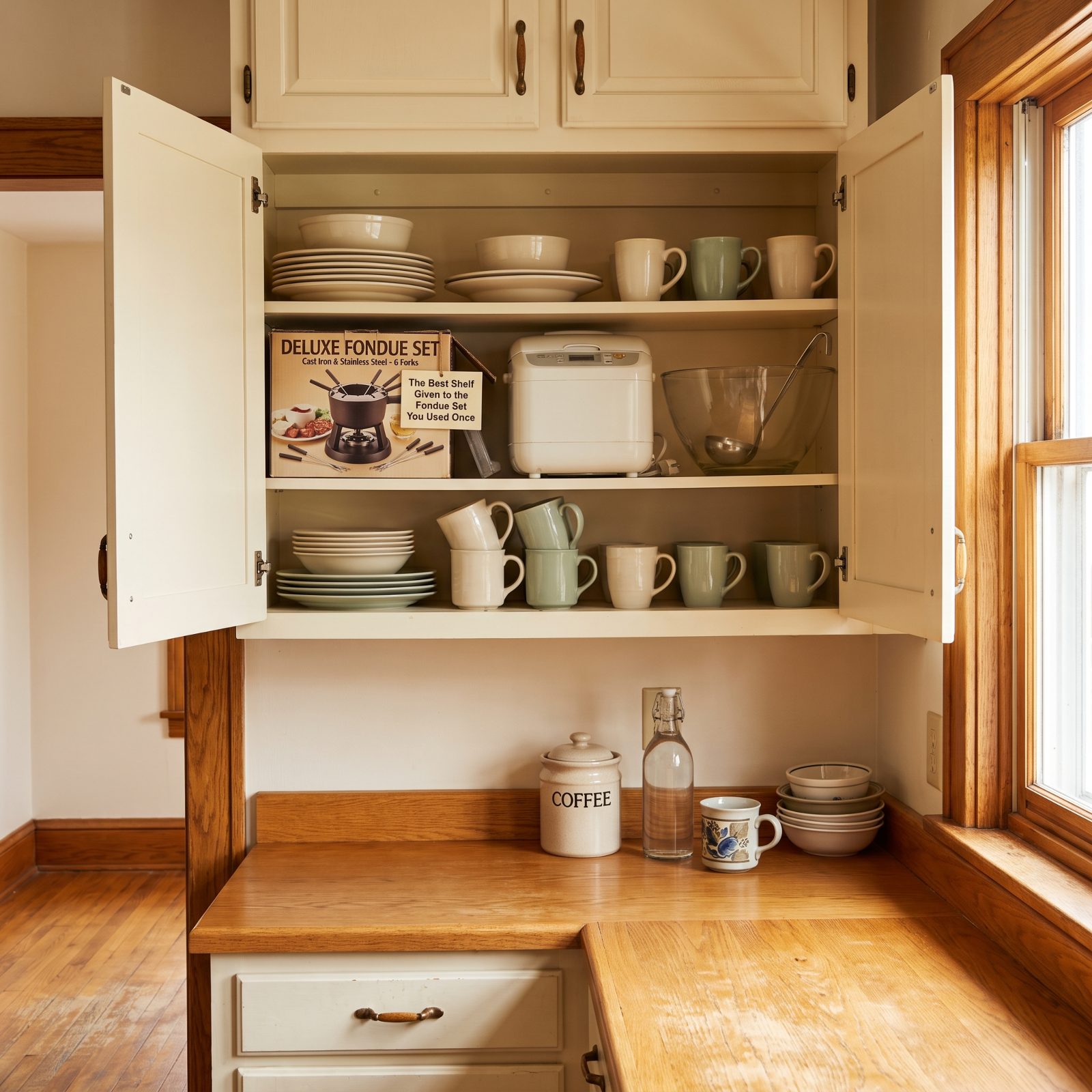
Open the best cabinet in most kitchens and you’ll find the stuff nobody touches. The waffle iron. The punch bowl. That appliance from a hobby that lasted a weekend. Meanwhile the coffee, the water bottles, and the everyday plates are stranded on the counter because there’s nowhere good left for them.
The zone between your shoulders and your hips, where your hands go without thinking, should hold what you reach for daily. Guest items can take the high shelf or the garage. Make that one swap and a counter quietly clears itself.
46. Scissors Live in the Junk Drawer, But You Always Need Them in the Bedroom
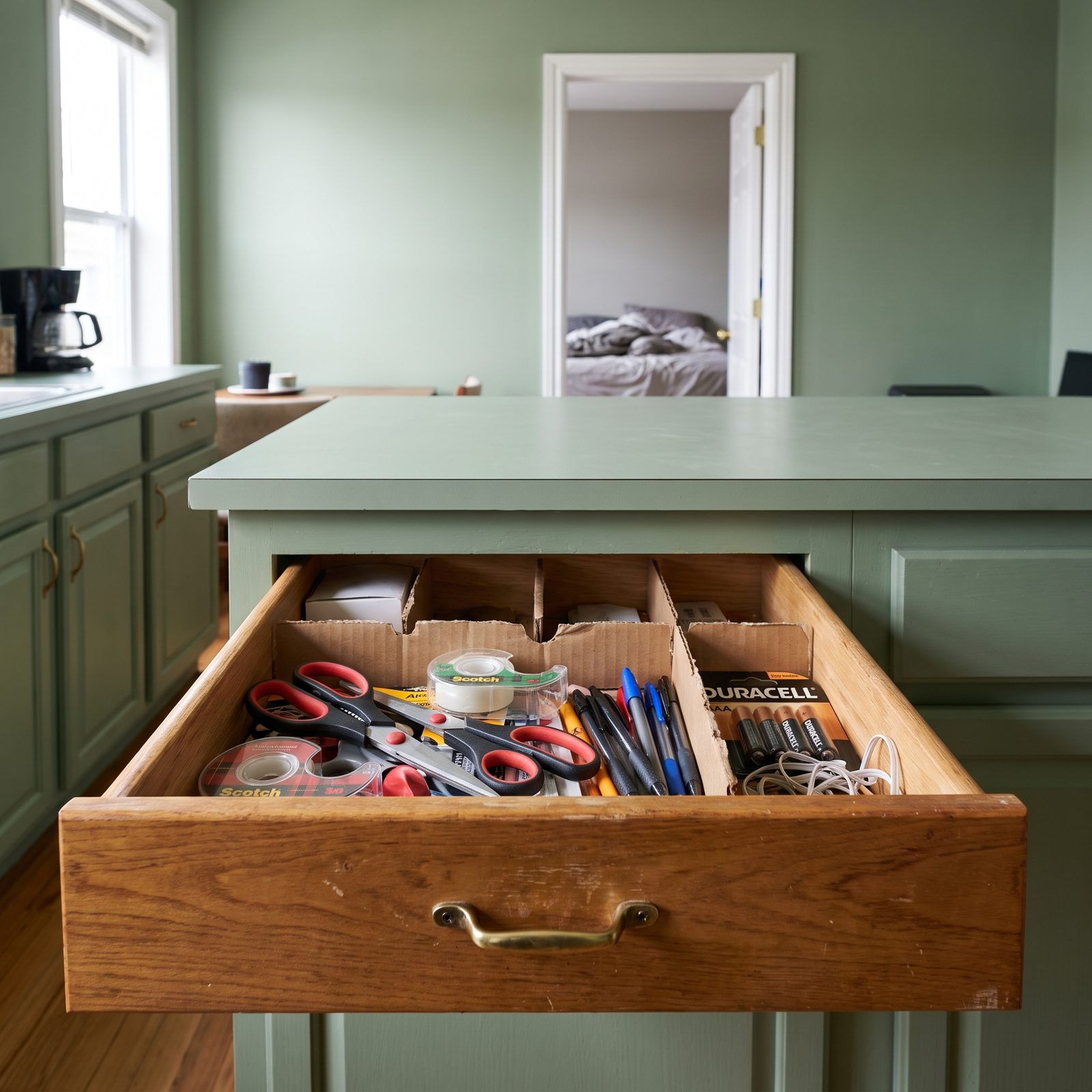
Things get stored where there happened to be space, not where you actually use them. So the scissors live three rooms from where you open every package, and the spare phone charger sits in a drawer you have to walk downstairs to reach.
Each small mismatch adds a few steps, and steps are what make a routine feel heavy. Organizers trace your real movements, not your intentions. Where do you stand when you need the thing? Store it there, even if it means owning a second pair of scissors.
45. The Extra Shampoo Is in the Basement, So You Keep Buying More
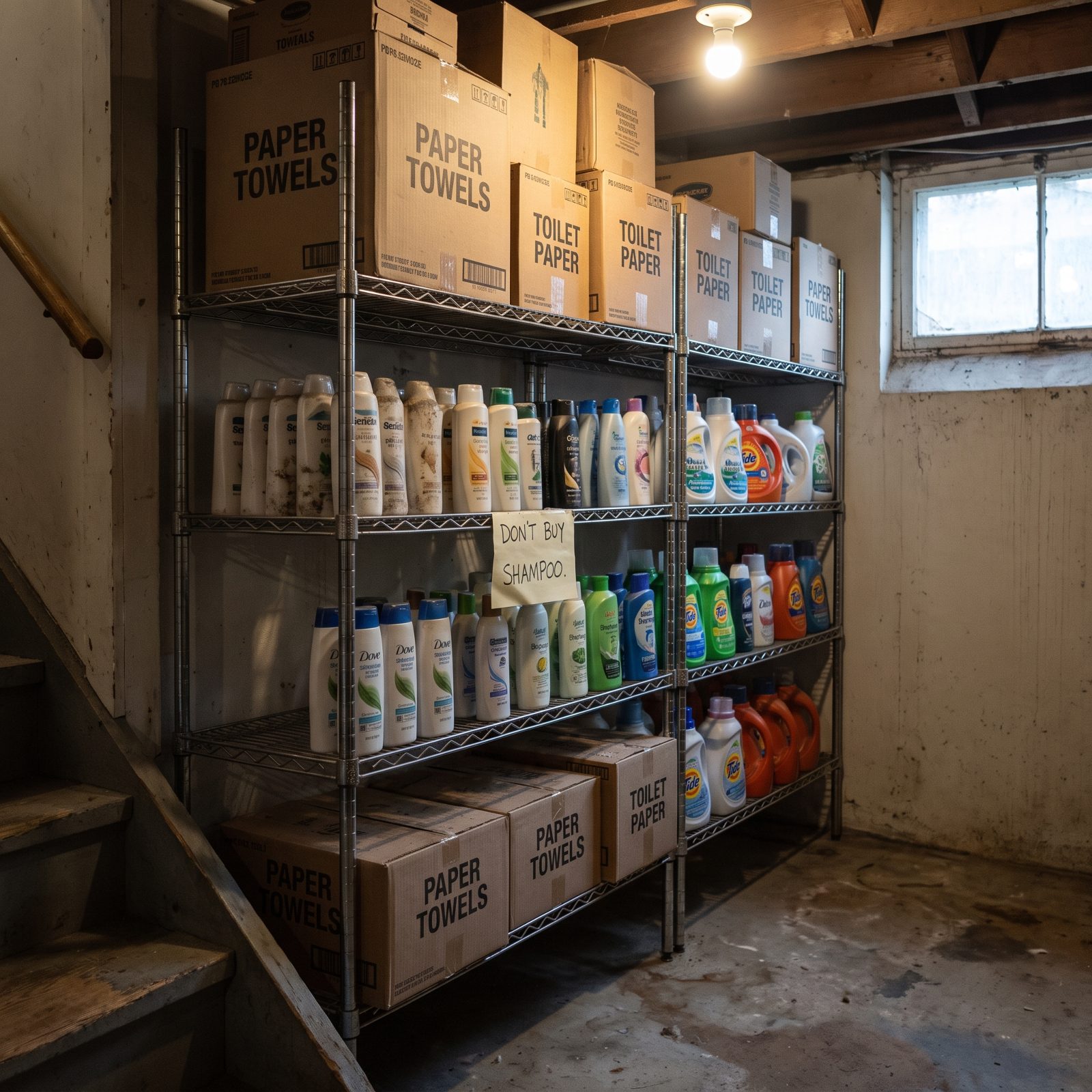
Backstock lives far from the product in use, so you forget it exists. Three unopened bottles of shampoo wait in the basement. The one in the shower is almost empty, so you buy another. Multiply that across a dozen categories and you’ve built a shadow store you’re paying for twice.
Out of sight really does mean out of mind, and retailers are counting on exactly that. Keep a small amount of backup near whatever it refills, and shop your own shelves before the store’s.
44. Batteries in Four Rooms Means You Never Know If You Have Any
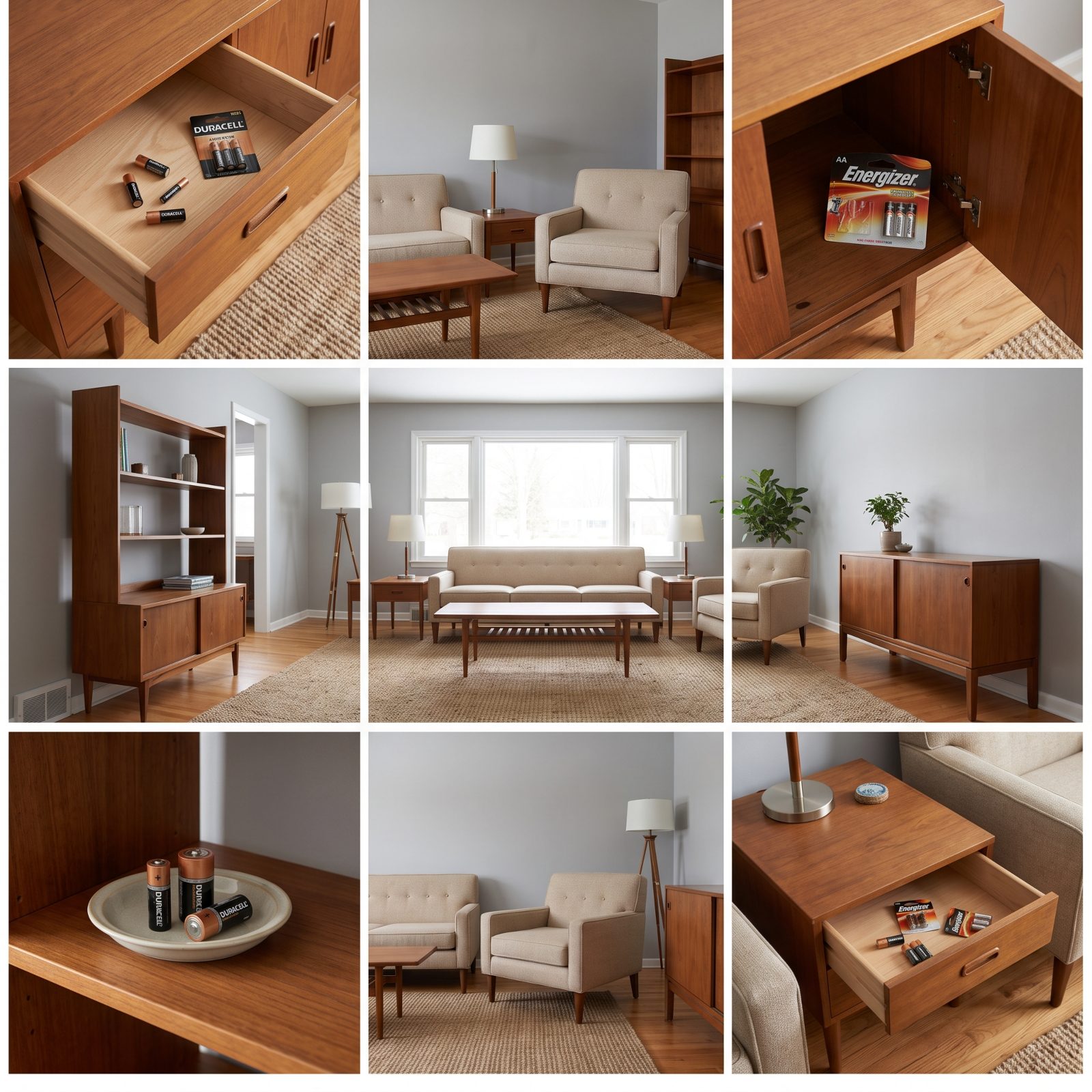
One category, split across four rooms, equals nobody knowing how much you actually own. Batteries in the kitchen, the office, the garage, a bedside drawer. Light bulbs in two closets. When a thing has no single home, you can’t take inventory, so you over-buy and lose track in the same breath.
Consolidation is the dull, powerful fix. Pull every battery in the house into one bin. The pile is almost always bigger — or smaller — than you’d have guessed. Either way, now you know.
43. The Box of Maybes: Decisions You Packed Instead of Made
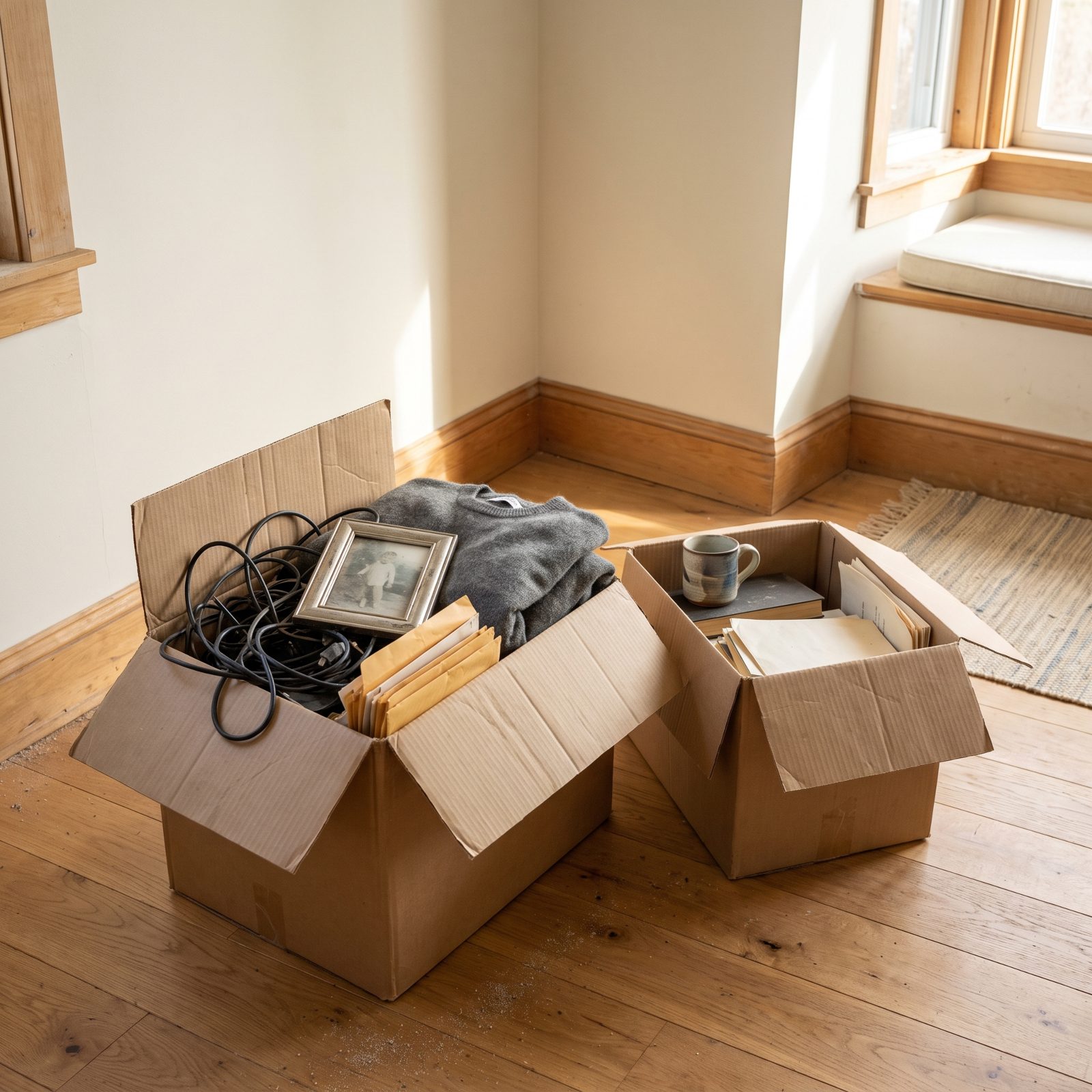
Every home has at least one. The box of maybes — things you couldn’t quite keep but couldn’t quite release, so you taped the flaps and told yourself you’d sort it later. Later never came. Now the box has friends.
These aren’t storage. They’re postponed decisions wearing a disguise. The hard truth organizers deliver gently: if you haven’t needed anything in that box for a year and can’t name a single item inside, the deciding is already done. You just haven’t admitted it yet.
42. The Bins You Bought Before You Decluttered, Now Cluttering Too
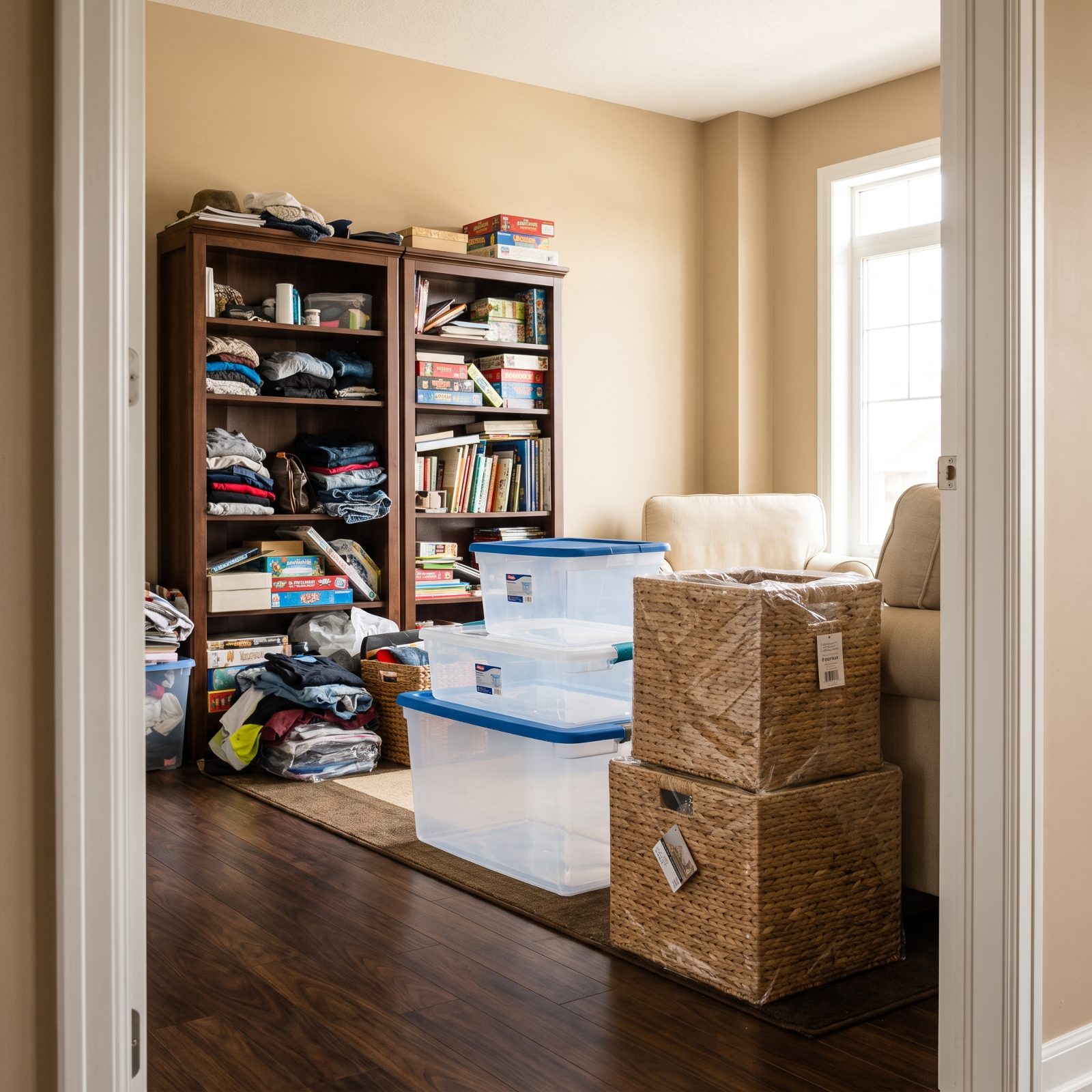
The container aisle feels like progress. It almost never is. Buy the bins before deciding what stays and you’ve just added more objects to a space that already had too many. Congratulations — now you own the clutter and the clutter’s clutter.
You can’t size a container for a decision you haven’t made yet.
Sort and purge first. Measure what’s left. Then buy, always in that order. The matching baskets are the reward at the finish line, not the starting gun.
41. The Deep Bin Where Everything but the Top Layer Disappears
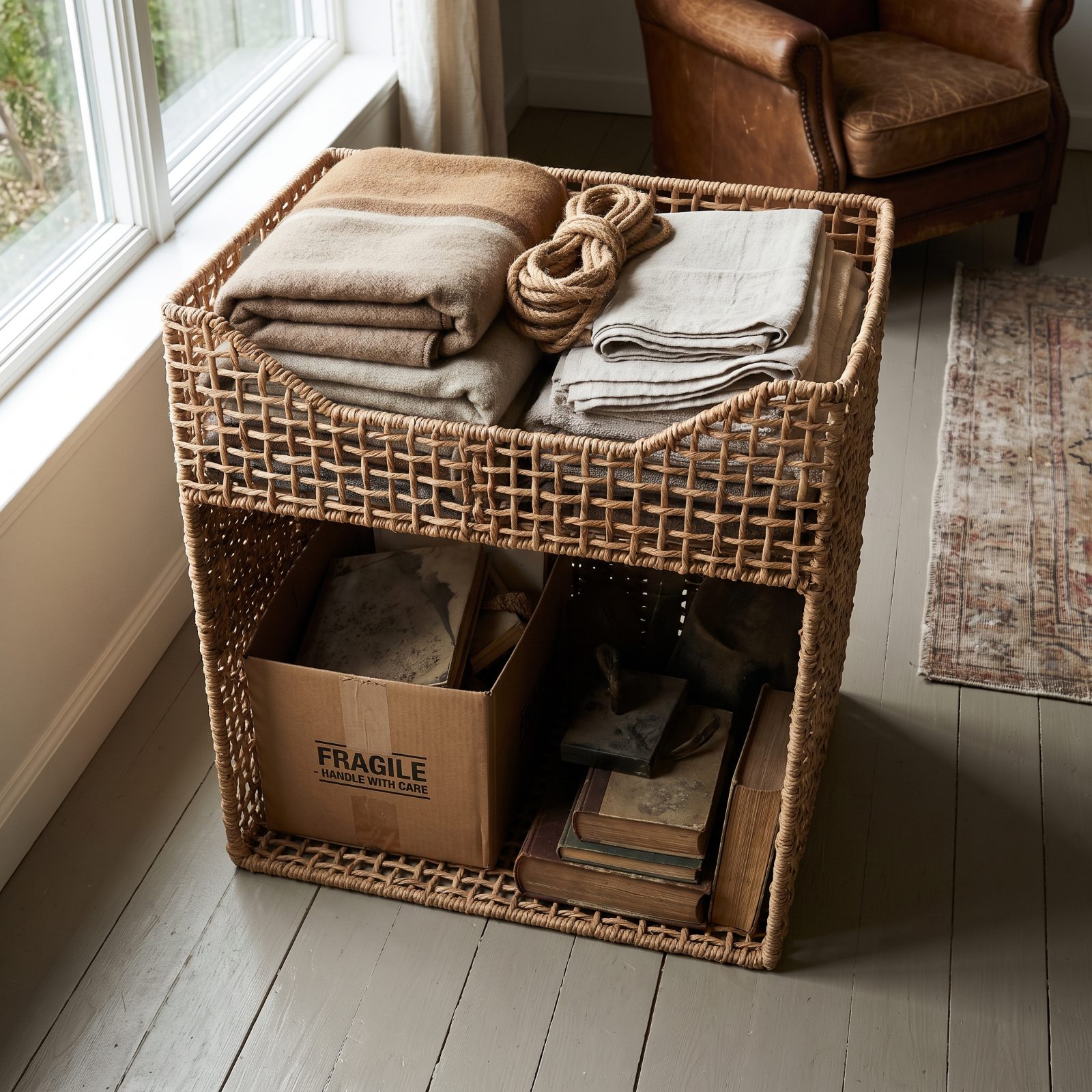
Deep containers look efficient and behave like sinkholes. Whatever lands on top survives. Everything below goes dark, and you re-buy it because you genuinely forget it’s down there. A tall basket of scarves is really one scarf and a whole lot of archaeology.
Shallow and wide beats deep and tall nearly every time, because you want to see the whole category in a single glance. If a bin needs excavating, it’s too deep for anything you touch more than twice a year.
40. The “Miscellaneous” Bin, Where Unrelated Things Go to Vanish Together
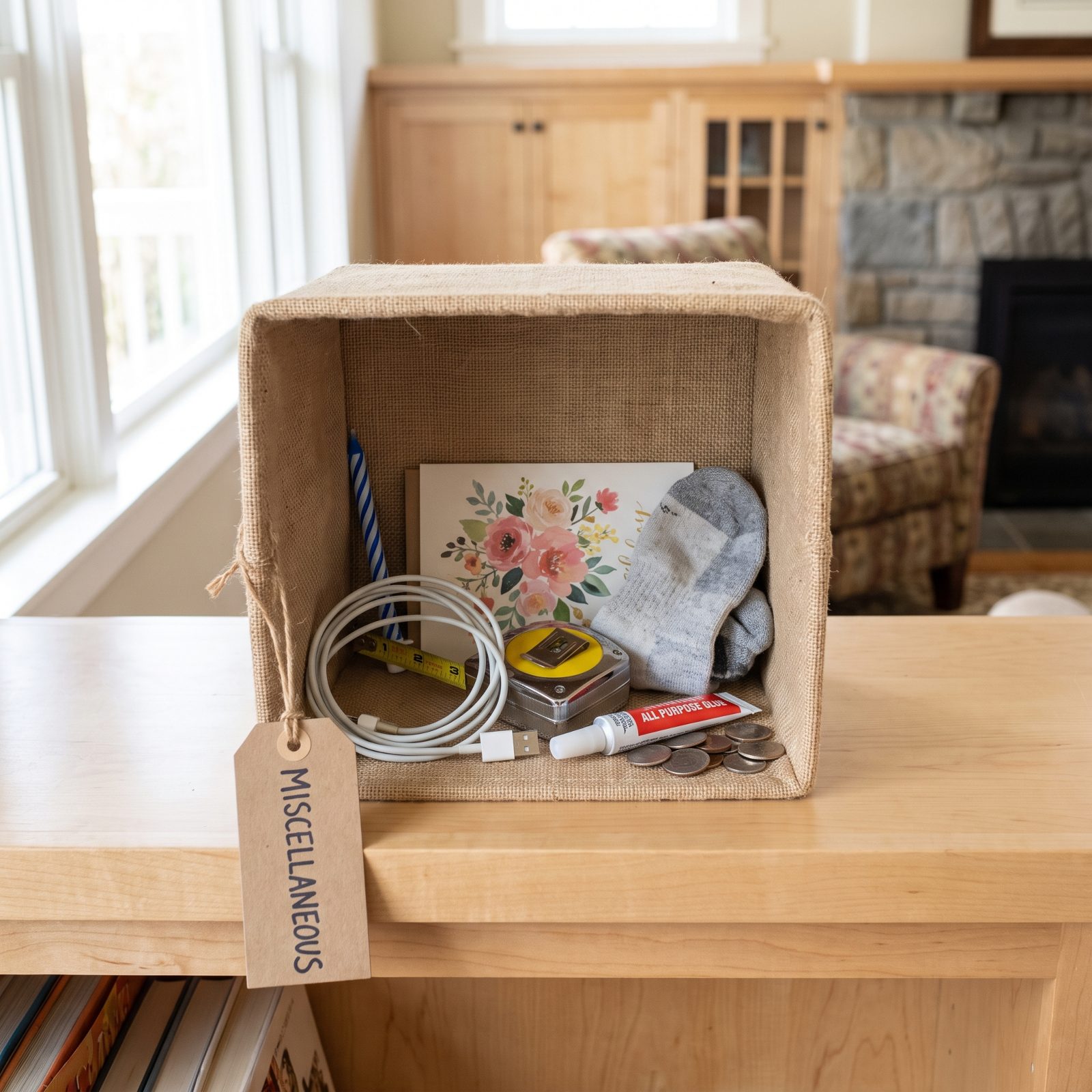
“Miscellaneous” is the word you write when you’re tired. The trouble is that a miscellaneous bin has no rule for what belongs, which means everything belongs, which means nothing can ever be found. It’s a drawer full of unrelated strangers.
A good label answers a question — what goes here, and what doesn’t? The second a container can’t say no to something, it stops being storage and starts being a holding pen. Break the misc pile into real categories, even tiny ones. Most of it will turn out to belong somewhere you already have.
39. Grandma’s Letters Stacked on Top of the Printer Paper
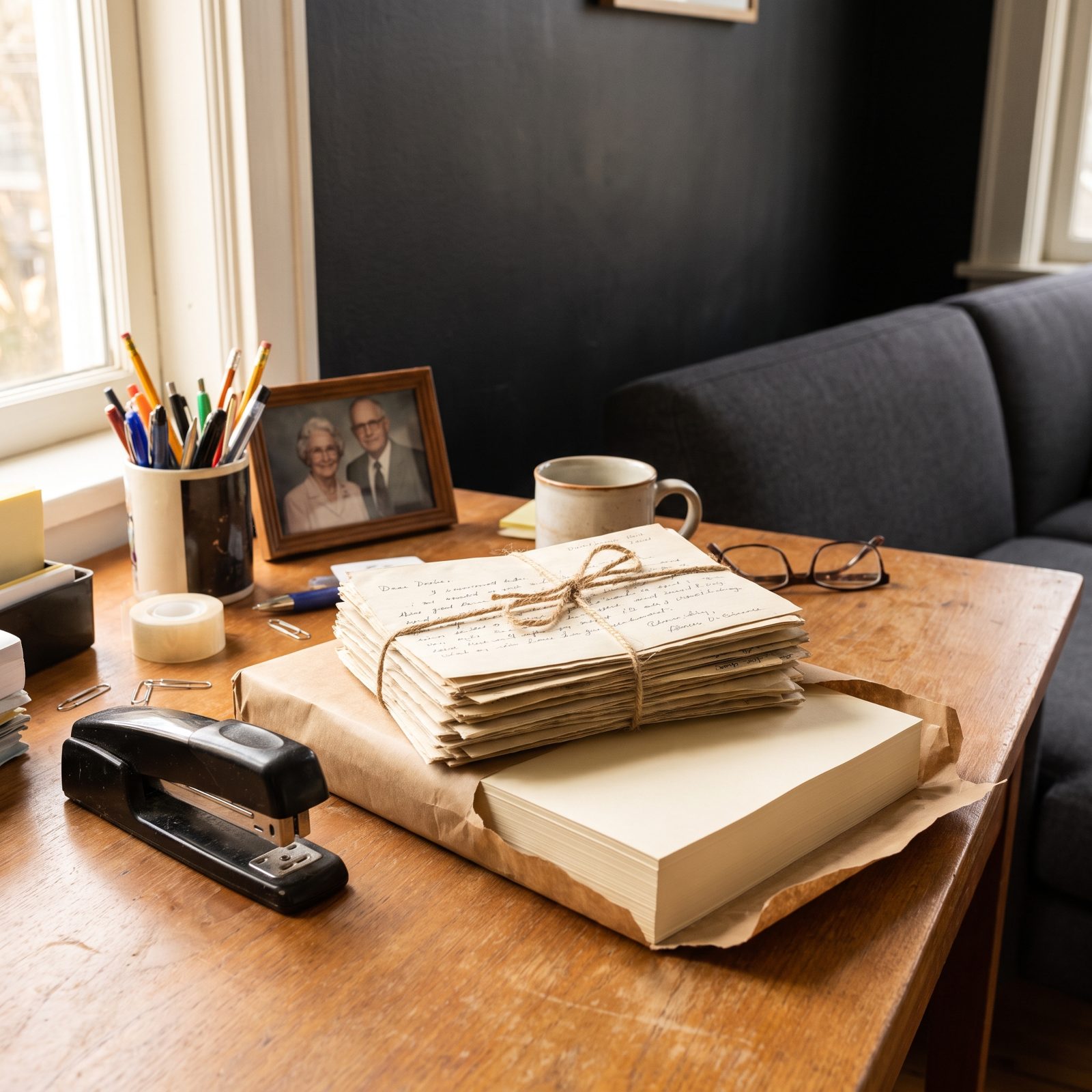
And here’s the one that stings. The old letters, the ticket stubs, the child’s first drawing — all stored shoulder to shoulder with the printer paper and the spare chargers. When the irreplaceable shares a shelf with the disposable, neither gets handled right. You rummage past your grandmother’s handwriting looking for a Post-it. It feels a little awful every time, and you do it anyway.
Sentimental things deserve a home you visit on purpose, not one you churn through daily. Mix them in and the meaningful stuff gets manhandled while the practical stuff gets treated like a shrine. Pull the keepsakes out. Give them their own box, somewhere safe. Then let the supply shelf just be a supply shelf.
38. Furniture Bought to Hold the Backlog, Where Storage Grows and the Pile Never Does
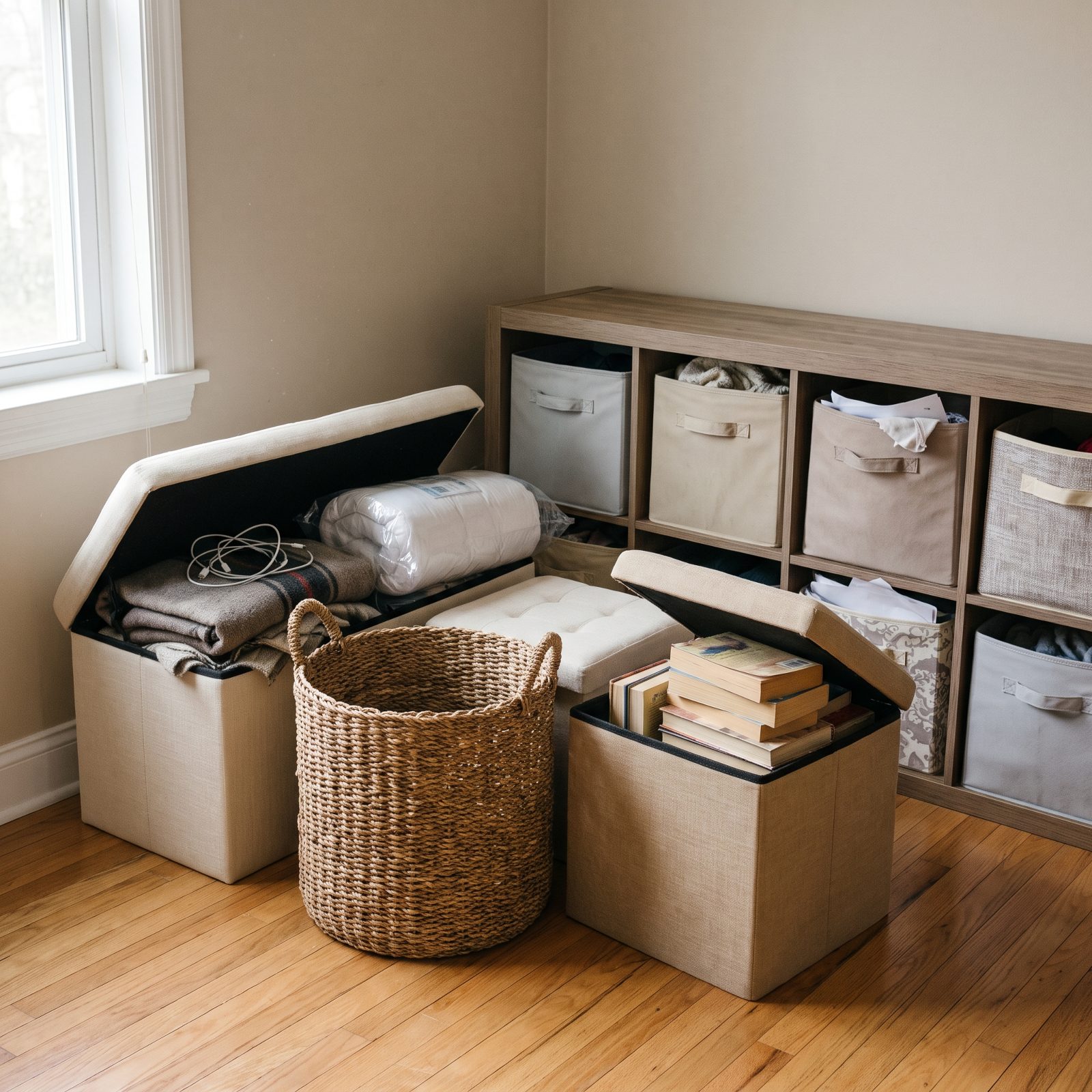
Here is the pattern organizers spot first. A house running out of room buys a bookcase, a storage bench, a set of cube bins — and within weeks the stuff has spread to fill the new space. Nothing left over. The mess just got better camouflage.
Storage furniture solves a volume problem that was never the real problem. What you’ve actually got is a pile of undecided belongings, and a wider shelf just lets you keep postponing the decision. You bought permission not to choose.
37. The Household Inbox You Never Named, Why the Dining Table Collects Everything Homeless
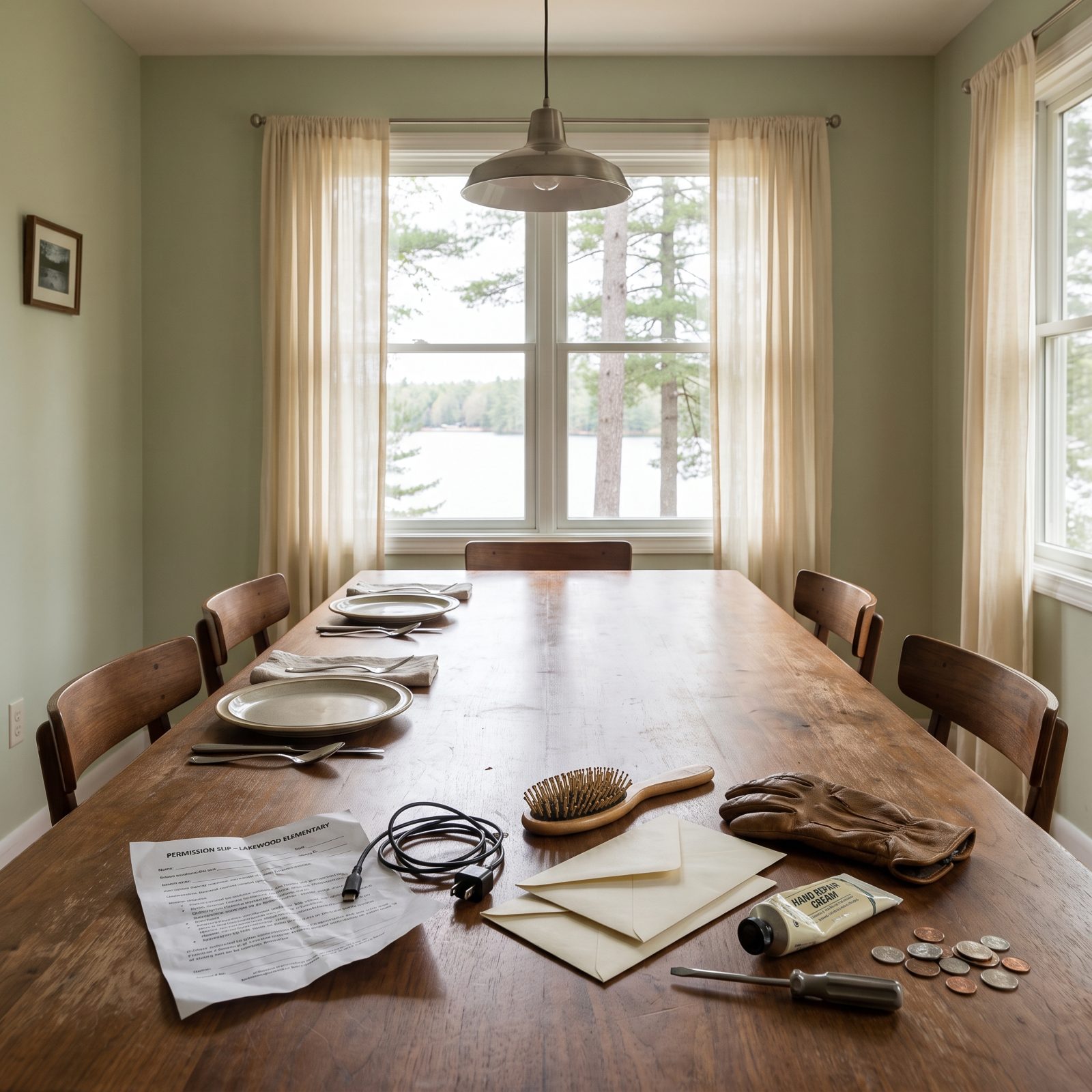
Every home has one surface that works like a lost-and-found. A kitchen island, the bottom stair, the end of the dining table, where a small pile builds up right beside the place settings.
Flat and horizontal, sitting near a doorway — that’s the magic combination. An object with no assigned home lands wherever your hands are already going. The surface isn’t messy because you’re lazy. It’s messy because it’s doing a job nobody ever assigned it.
Organizers rarely clear these surfaces as step one. Instead they ask what each item was waiting for. Half of it was waiting for a decision. The other half just needed a drawer three feet away.
36. Donation Bags With No Exit Date, Decluttering That Stalls Six Inches From the Door
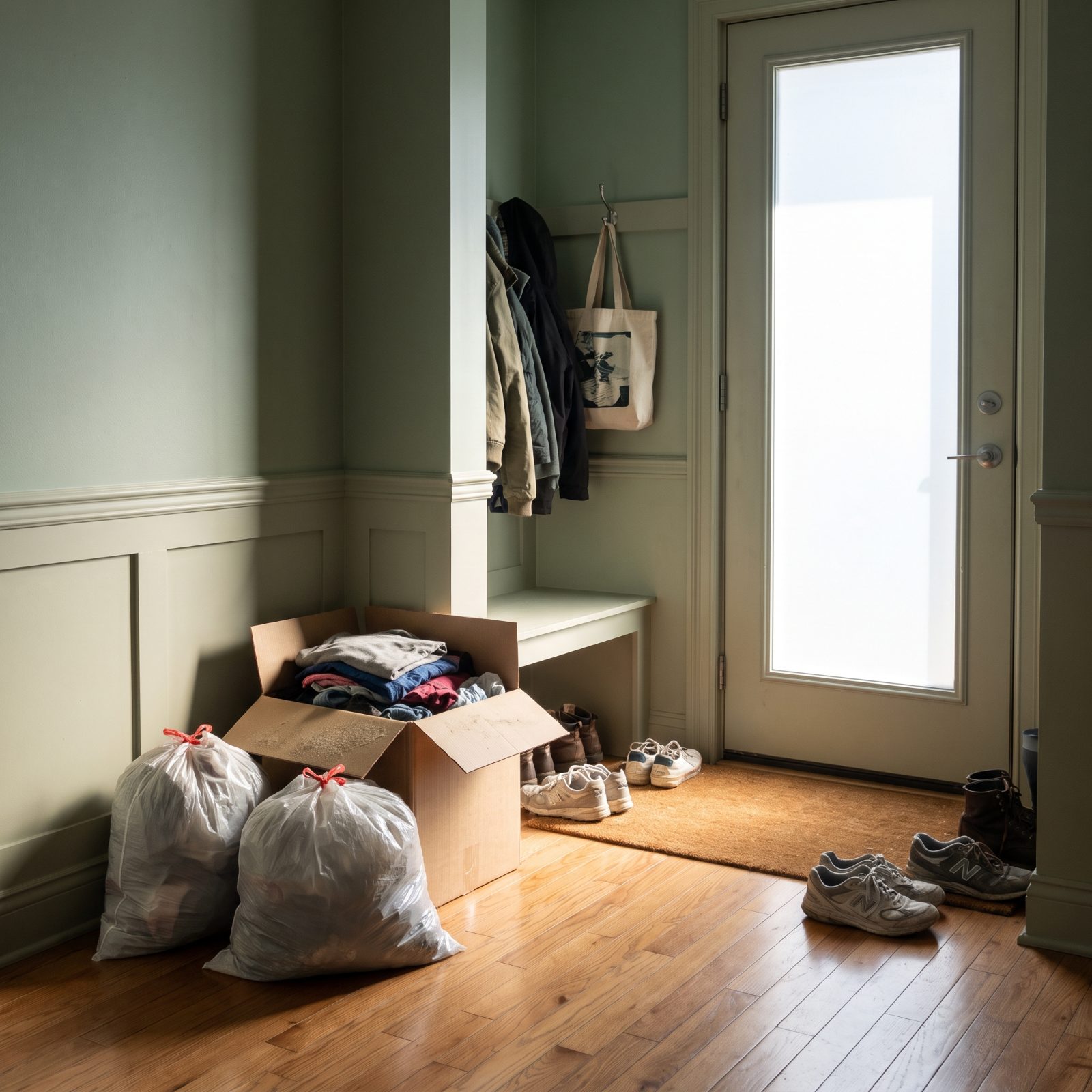
The hardest part of decluttering isn’t deciding. It’s the last ten feet.
Organizers find bags of genuinely good donations parked by the door for months, sometimes long enough to gather a visible film of dust. The decision got made. The exit never happened. An undated donation bag is really just a slower kind of storage — it eats floor space while quietly doing the work of a closet.
Put a date on it. Write it on the bag, set a reminder, whatever works. A bag with a departure time leaves. A bag without one becomes furniture by spring.
35. Gear for the Life You Meant to Lead, Hobby Supplies That Never Became a Habit
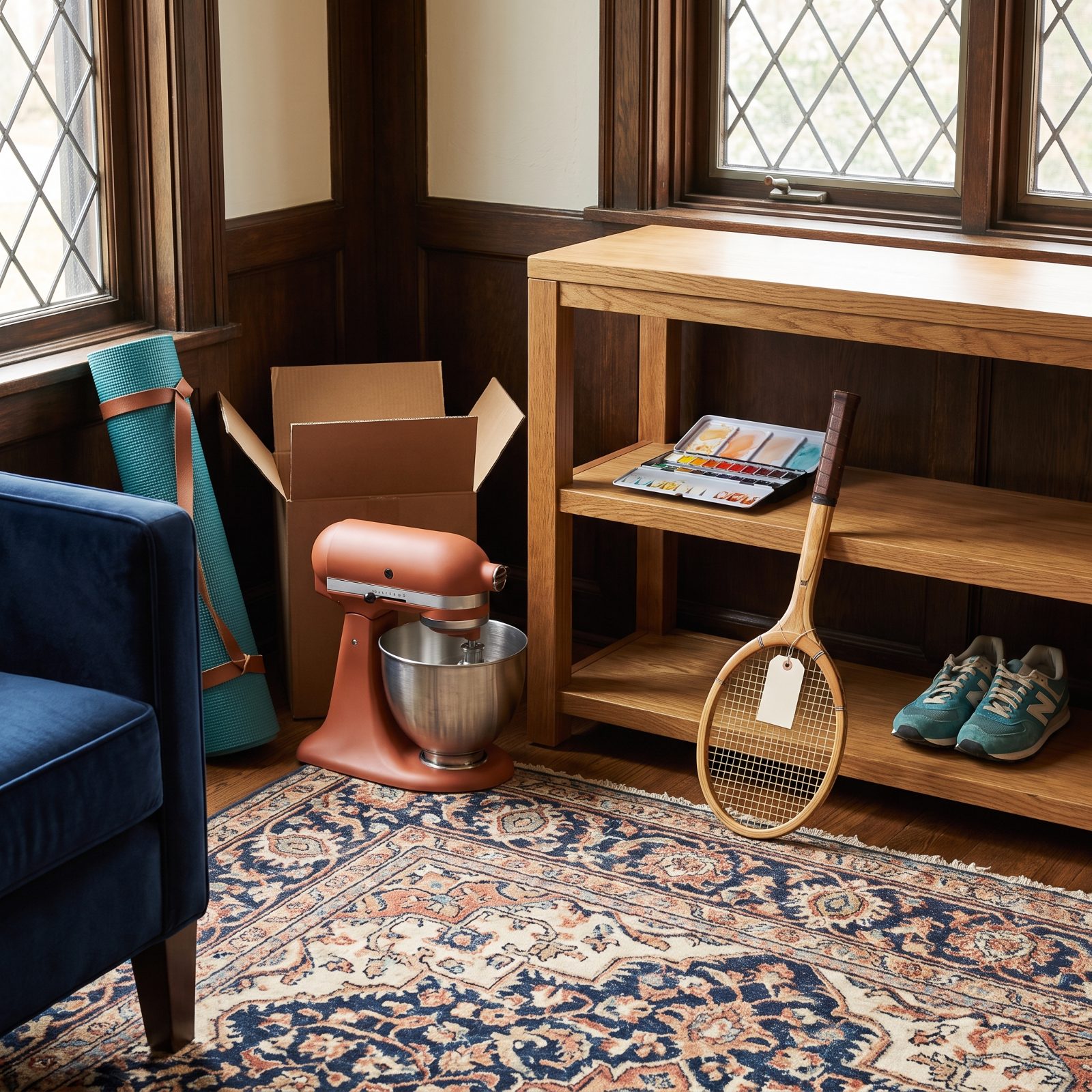
This is the clutter that hurts, because it’s made of hope. The stand mixer for the sourdough phase. The watercolors for the creative self you were going to become. Running shoes that never once ran.
Aspirational belongings aren’t really objects at all. They’re identities you bought in advance. Letting them go feels like admitting the person you planned to be isn’t coming — which is exactly why the yoga mat outlives three apartments.
So organizers ask something gentle but blunt: is this gear for the life you actually live, or the one you keep meaning to start? The gear can stay. But it should earn its shelf rather than guard a version of you who never showed up.
34. Projects Paused Indefinitely, When ‘Temporary’ Supplies Join the Permanent Household
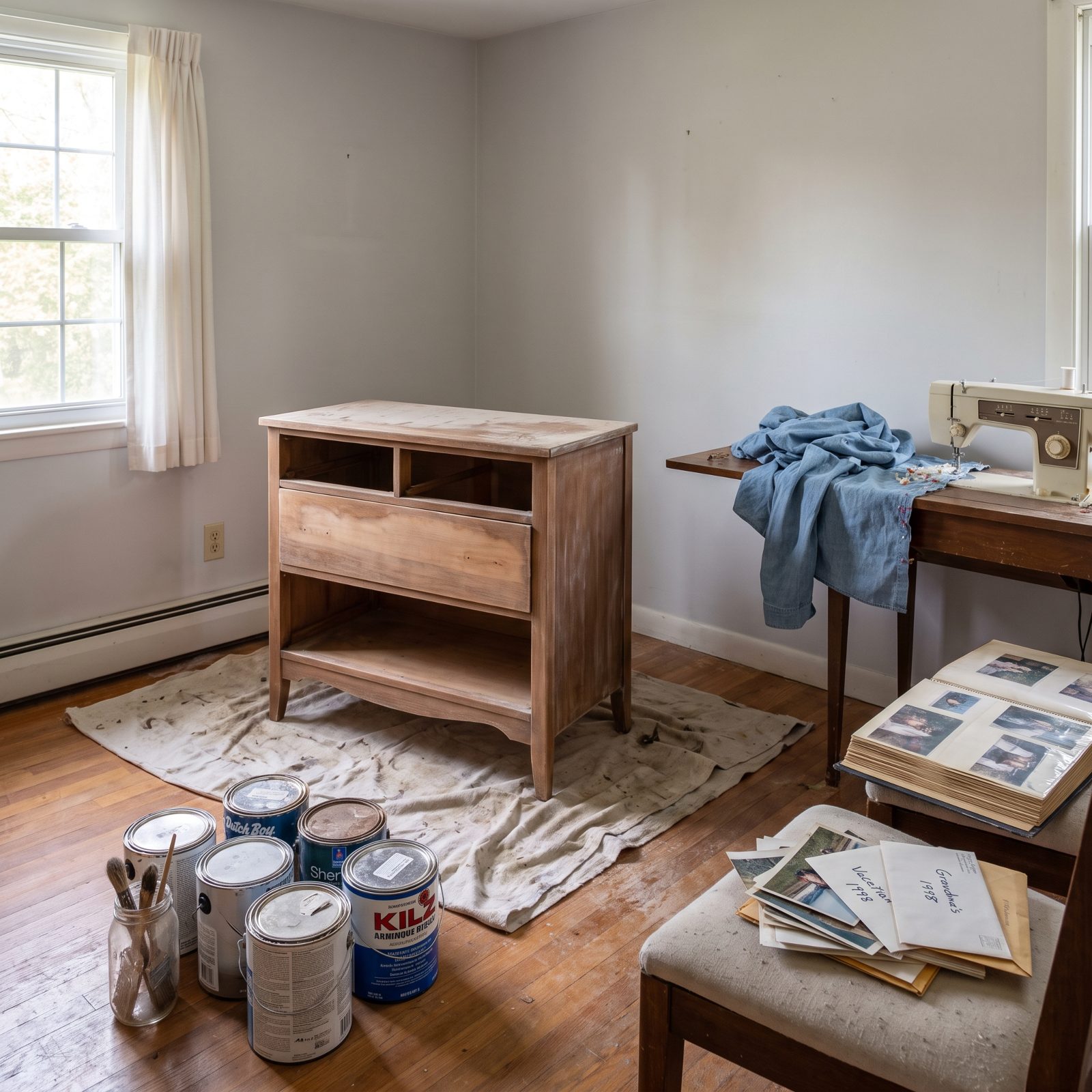
The furniture you were going to refinish. The photos you were going to sort into albums. Those curtains, hemmed on one side, waiting two years for the other.
Unfinished projects claim the worst kind of space, because the supplies have to stay out as proof you’ll return someday. A drop cloth becomes carpet. Paint cans become a permanent fixture by the window.
33. Gifts You Can’t Use and Can’t Toss, Keeping Objects Out of Guilt
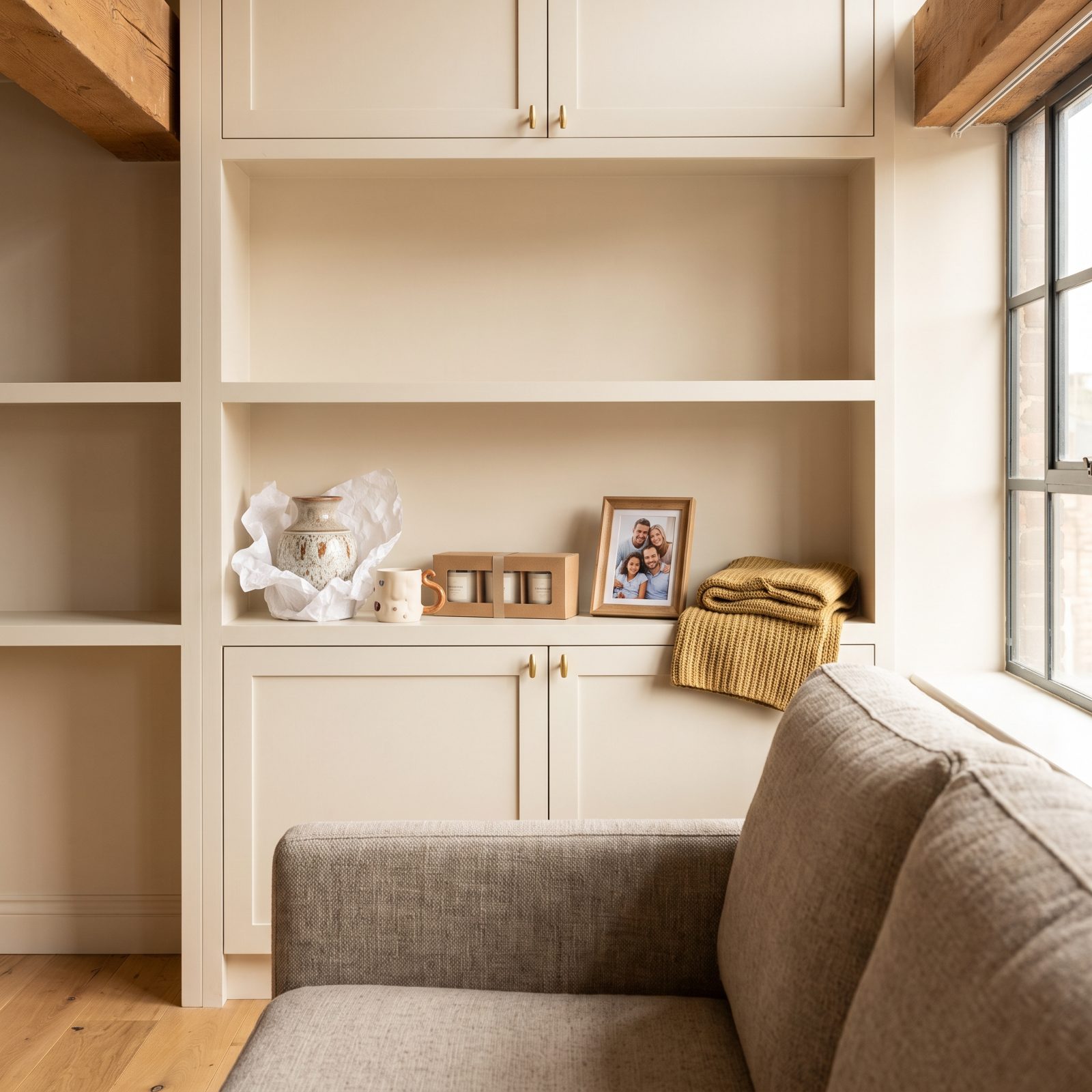
Nobody admits how much guilt lives in their cabinets.
The vase from an aunt. The mug that isn’t your style. The sweater in a color you’d never choose in a thousand years. You don’t use them, but tossing them feels like tossing the person who gave them — so they sit, year after year, radiating a faint low-grade obligation.
Worth saying flatly: the gift did its whole job the moment it was handed over. The love was in the giving, not in you keeping it forever. You’re allowed to pass it along. The giver will almost never know, and even if they did, most would rather it got used by someone than entombed in your cupboard.
32. An Entryway Without a Plan, Keys, Bags, Shoes and Mail Fighting Over One Surface
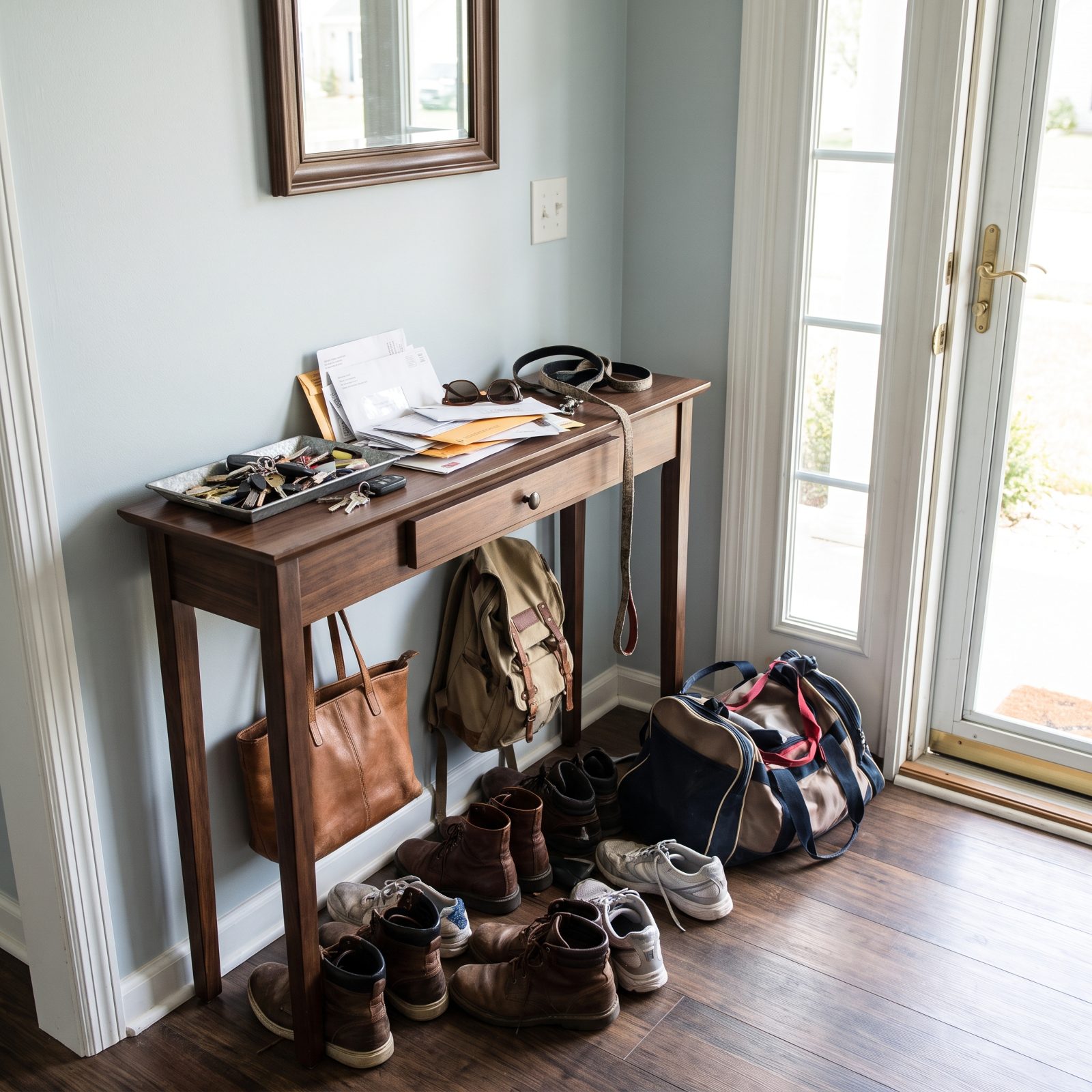
Watch anyone come home. They stop at the door, hands full, and offload everything onto the first available spot. That spot gets hit dozens of times a day, and if it wasn’t built for the job, it loses.
An entryway without an assigned drop zone forces keys, bags, shoes and mail to share one small surface. Predictable chaos follows, right there at the busiest ten square feet in the house.
31. Mail With Nowhere to Be Sorted, How Bills, Notices and Flyers Fuse Into One Pile
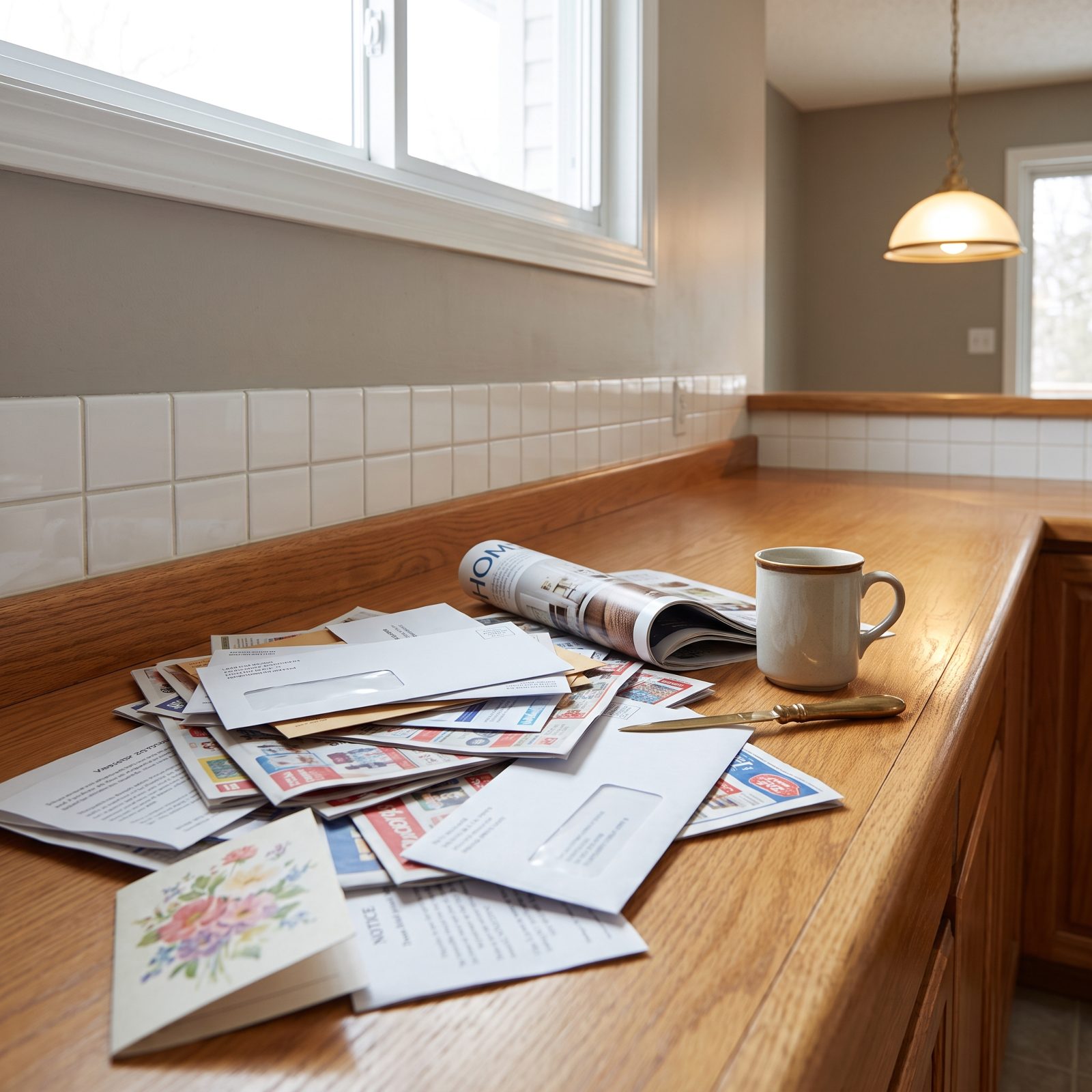
Mail isn’t a storage problem. It’s a processing problem pretending to be a storage problem.
Without a station, every piece meets the same fate — it joins the pile. The bill that needs paying sits next to the pizza coupon and the magazine, all treated as equal because nobody decided what any of it was. The pile grows because deciding feels harder than stacking.
The fix organizers reach for is almost dull. A spot to open mail, a recycling bin within arm’s reach, and three destinations: act on it, file it, toss it. Most mail is trash the day it lands. It just needs somewhere to go before it breeds.
30. Papers You Keep Because They Look Important, Expired Documents Burying the Real Records
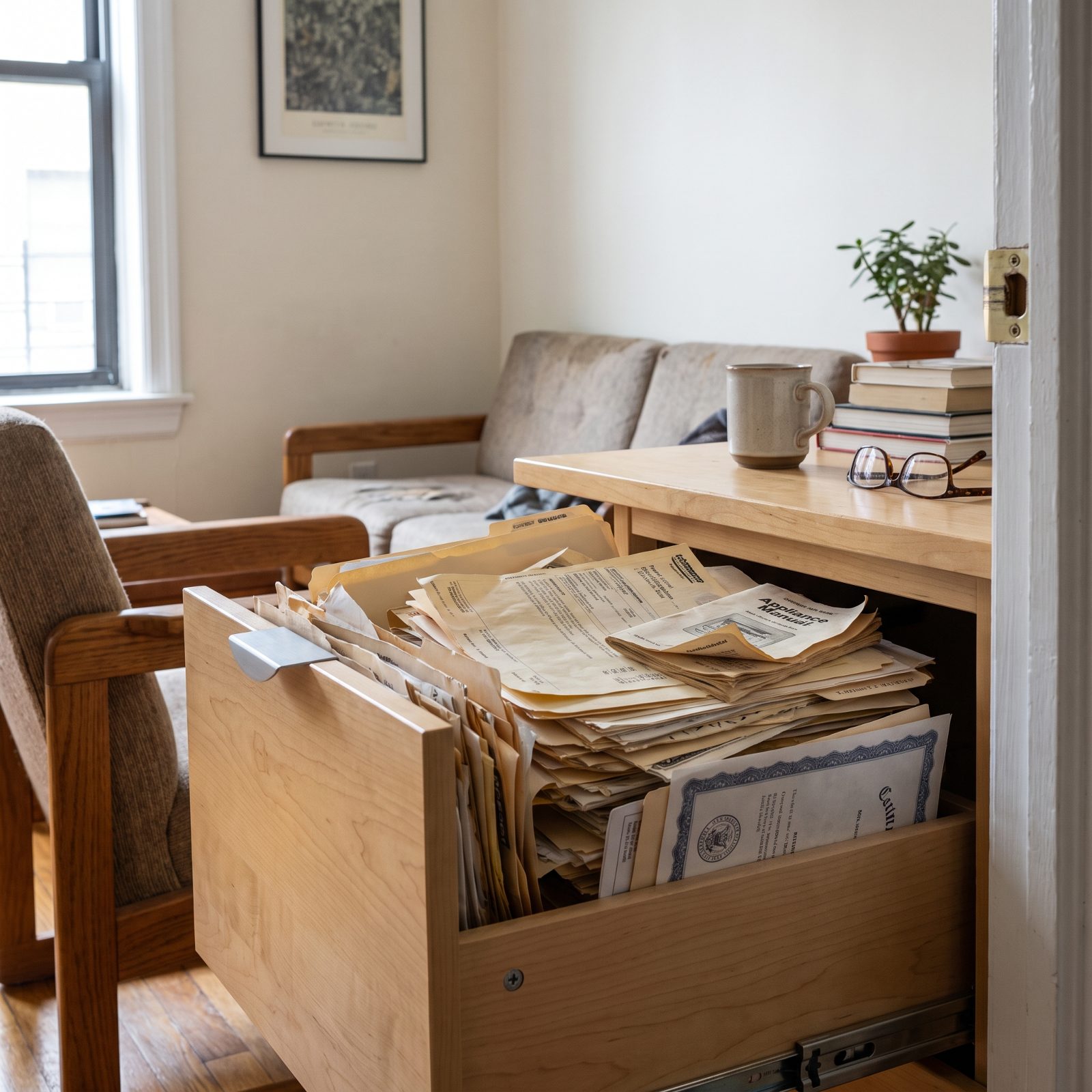
Official-looking paper carries a gravity all its own. Heavy stock, a seal, a letterhead — and suddenly it feels reckless to shred the thing, even if it expired during a different presidency.
So the manuals for appliances you no longer own stay. Insurance booklets from two cars ago stay. And the one document you actually need, the birth certificate or the deed, gets buried under a mountain of impressive-looking irrelevance.
The thicker the file, the longer it takes to find the thing that matters. Volume is not the same as safety.
Most households hang on to far more paper than any rule requires. The appearance of importance is doing all the persuading here, and it’s lying to you.
29. Receipts and Warranties Filed Far From the Thing They Prove
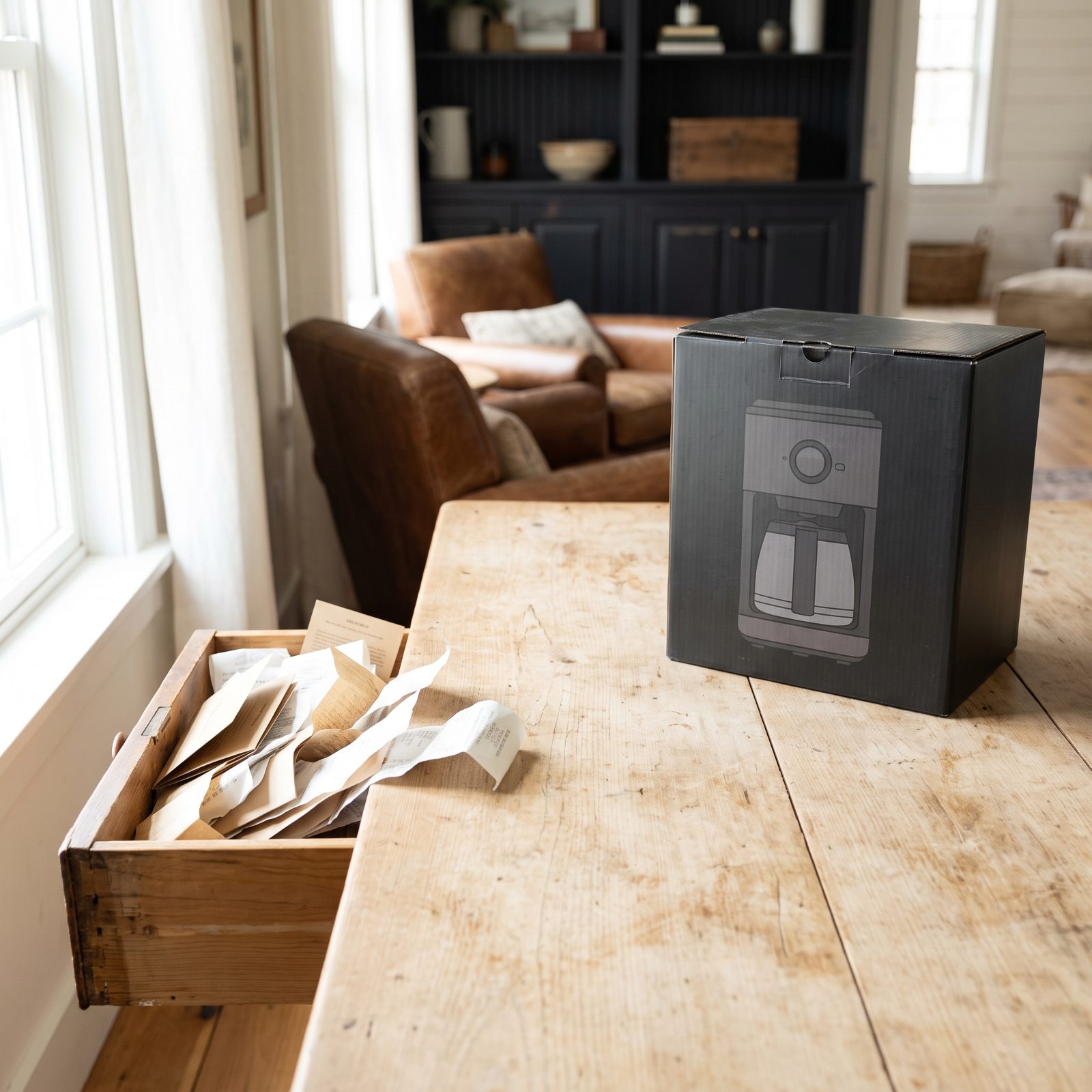
The washing machine dies under warranty. Great. Now go find the receipt — it’s in a shoebox, in a drawer, possibly faded to a blank thermal rectangle because that ink doesn’t last.
Receipts and warranties live in one central pile while the products they protect live all over the house. When something breaks, the two never reunite in time. The coverage was real. The paper trail was gone.
Store the proof with the product, or just photograph receipts the day they come home. Thermal ink fades fast, so a phone photo often outlives the original slip. Nobody tells you that until the warranty claim is already denied.
28. The Junk Drawer That Quietly Colonized Three More Drawers
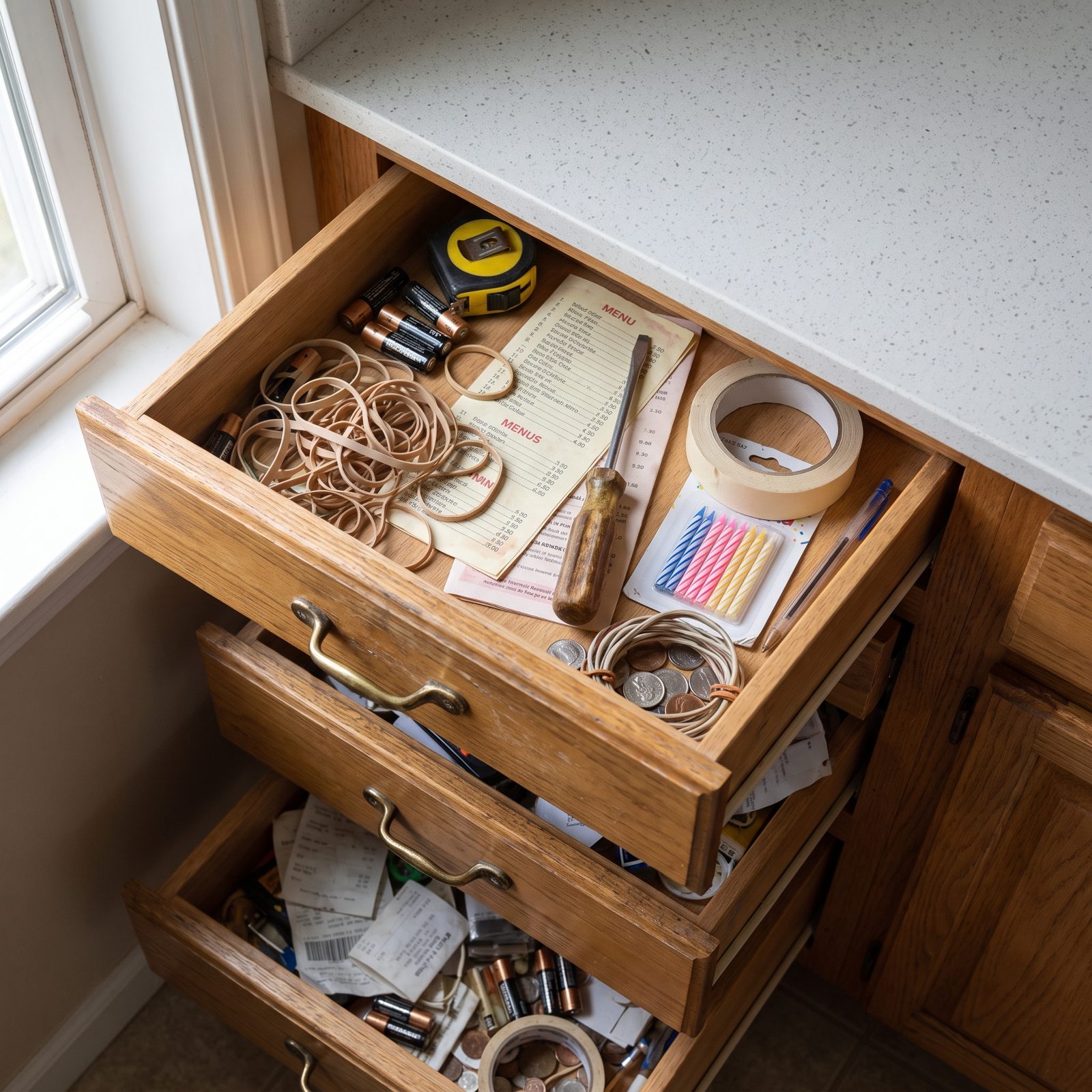
It starts honest. One drawer for the stuff that belongs nowhere else. Then the batteries need a home and the drawer is already full, so they migrate next door, and within a year you’ve got a loose federation of junk drawers — none labeled, all vaguely overlapping.
Organizers see this constantly, and the real cost isn’t the mess. It’s time. You need the flathead screwdriver right now, and you open three drawers before you find it next to the birthday candles. The fix is boring and it works: one drawer, divided into trays, and a hard rule that the overflow drawers get emptied, not expanded.
27. Reusable Shopping Bags Breeding in the Pantry Corner
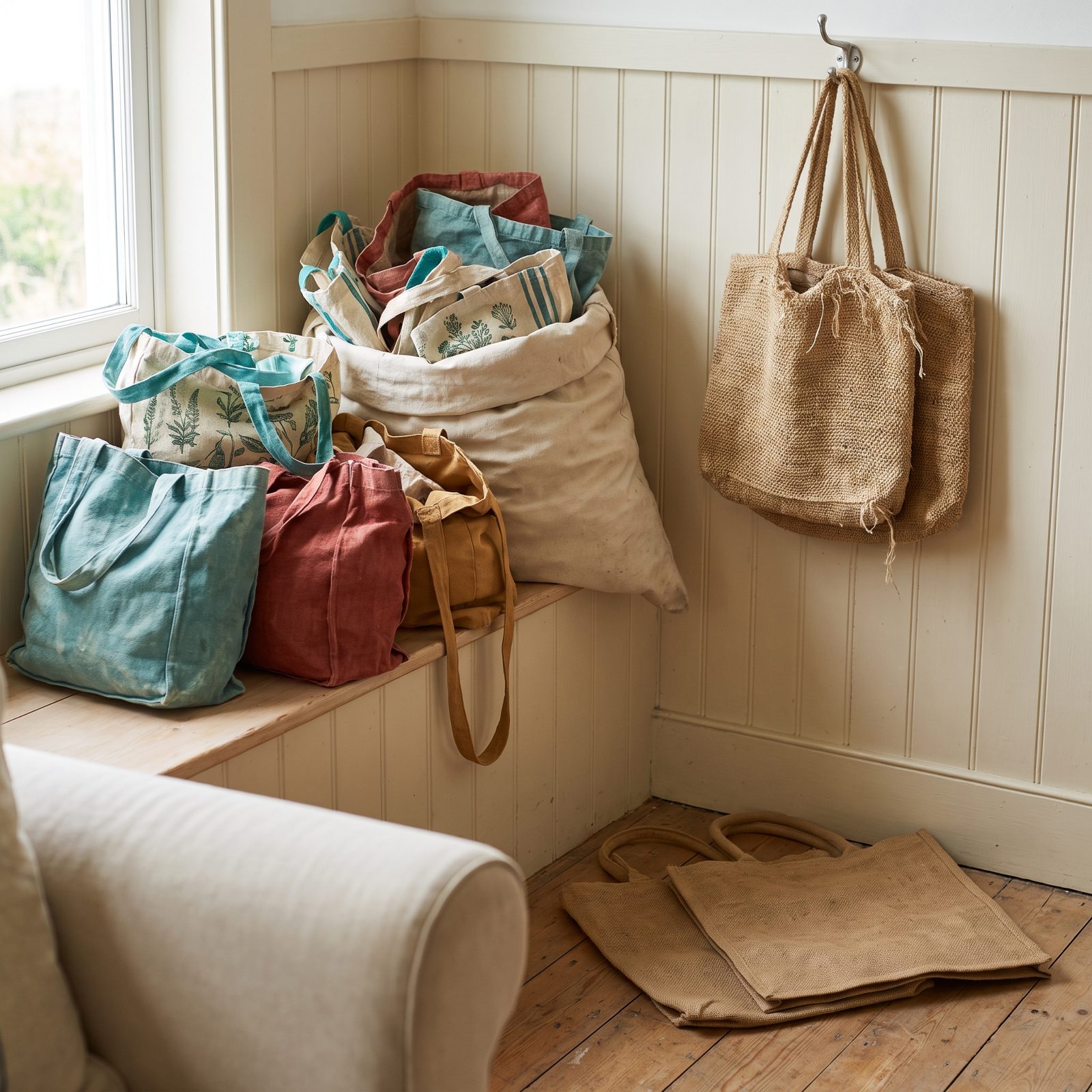
Here’s the irony nobody admits: the reusable bag was supposed to replace the plastic pile, and instead it joined it. You buy one at checkout because you forgot yours at home. Now you own fourteen, balled up inside a bigger bag like some nesting doll of good intentions.
The pattern is almost universal. One genuinely useful item, acquired slightly faster than it gets used, until the solution becomes its own problem.
26. Shipping Boxes Saved for Returns That Never Got Sent
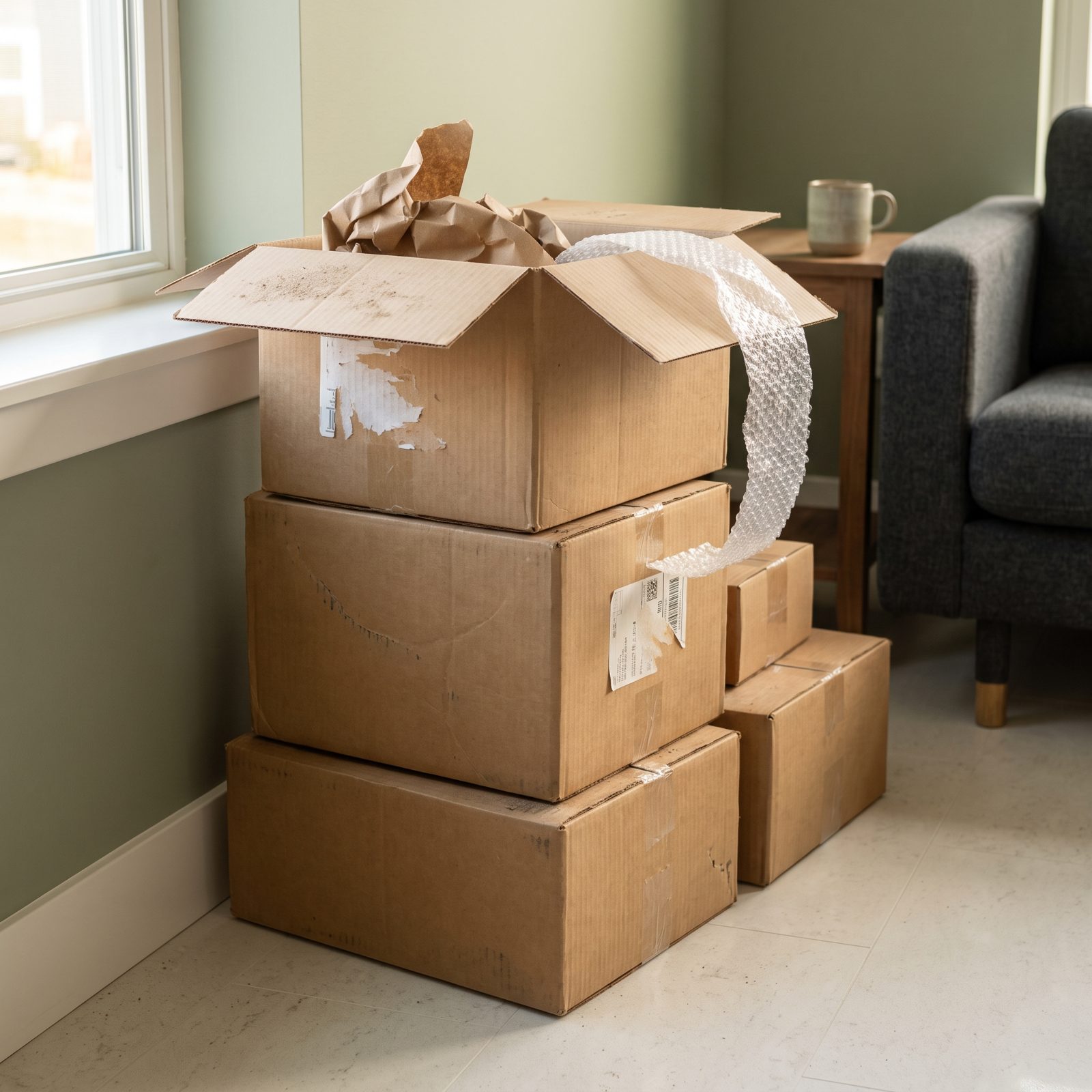
You kept the box in case the sweater didn’t fit. The sweater fit. The box stayed. And so did the next one, and the one after that, until a corner of the guest room became a cardboard filing system for returns you were never actually going to make.
Organizers flag this gently, because the logic feels responsible. It isn’t. Most return windows close within a month. A box that’s been sitting empty longer than that is a decision you’ve already made. Break it down. The recycling bin is the honest answer it’s been waiting for all along.
25. The Drawer of Mystery Cords for Electronics You No Longer Own
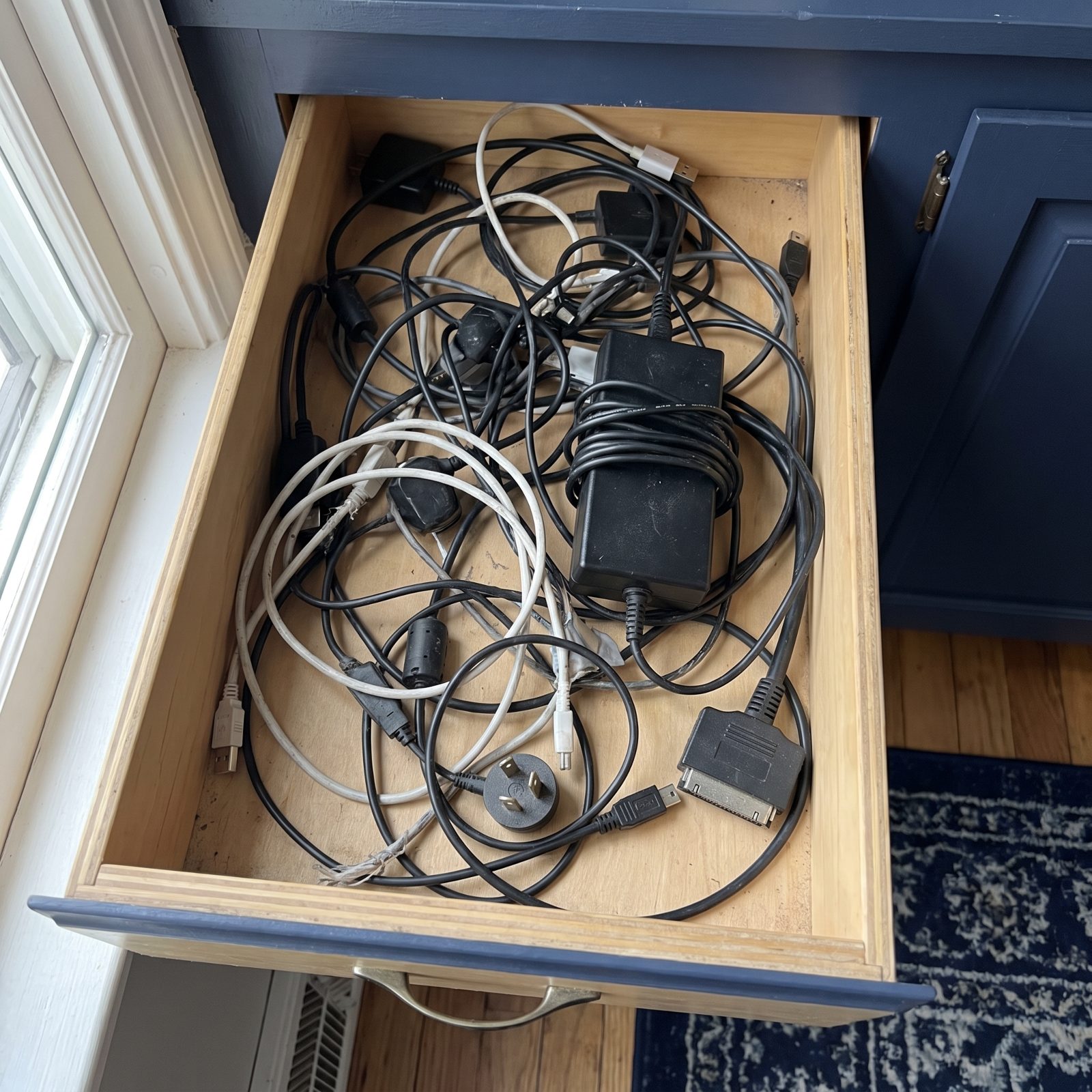
Every home has one. The cord graveyard. A drawer full of coiled black snakes, each a charger for a device that stopped existing years ago, kept alive by a single fear — what if this is the one that goes to something important?
That fear is the whole mechanism, and it’s worth naming. You’re not keeping cords. You’re keeping the dread of tossing the wrong one. So flip it: hold each cord against a device you actually own, right now, in your hands. Anything orphaned goes to e-waste. If you can’t tell what it charges, neither can the past.
24. The Bowl of Keys That Open Nothing Anyone Remembers
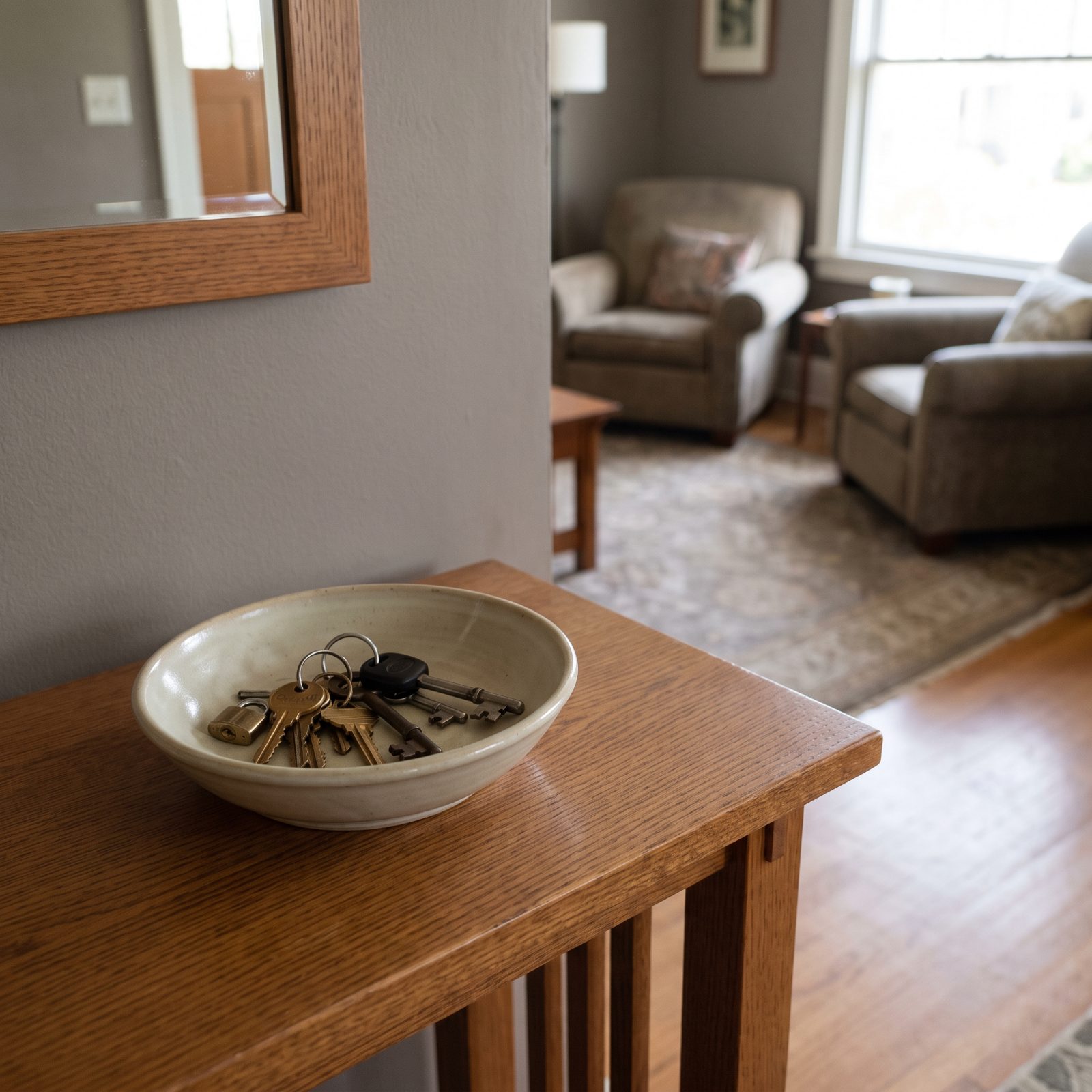
A handful of keys, tarnishing in a dish by the door. One’s probably for a padlock that rusted off years ago. Another might be the old back gate. Nobody knows, and nobody’s going to test every lock in the house to find out, so they sit there in permanent limbo.
Fix it with a rubber band and a rainy afternoon. Try each unknown key on every lock you own. Whatever fits, label with masking tape. Whatever opens nothing gets tossed. Keys to nowhere are just small metal guilt.
23. Printed Photographs Stranded in Envelopes Nobody Opens
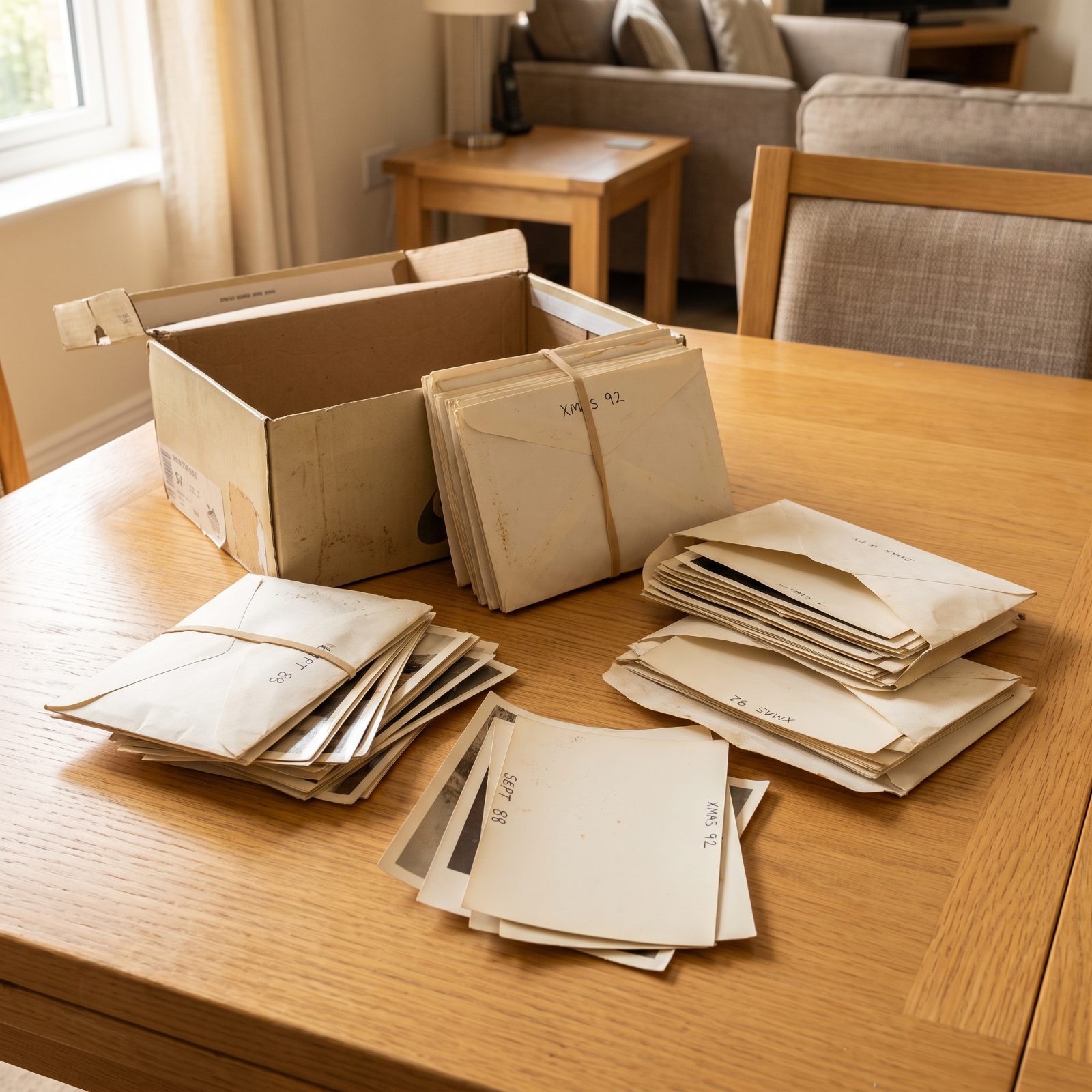
The photos from the best years of a life, locked inside a shoebox, face down, still in the order the lab printed them. This one lands differently for organizers, because the clutter is also the treasure. You can’t just recycle it.
Which is exactly why it never gets done. The task feels too big and too tender to start, so the envelopes outlive everyone in them. Go small. One stack at a time, keep the ones that make you feel something, bin the eleven near-identical shots of the same lawn. Perfection is the enemy here. Done beats pristine.
22. Food Storage Containers Whose Lids Vanished Into Another Dimension
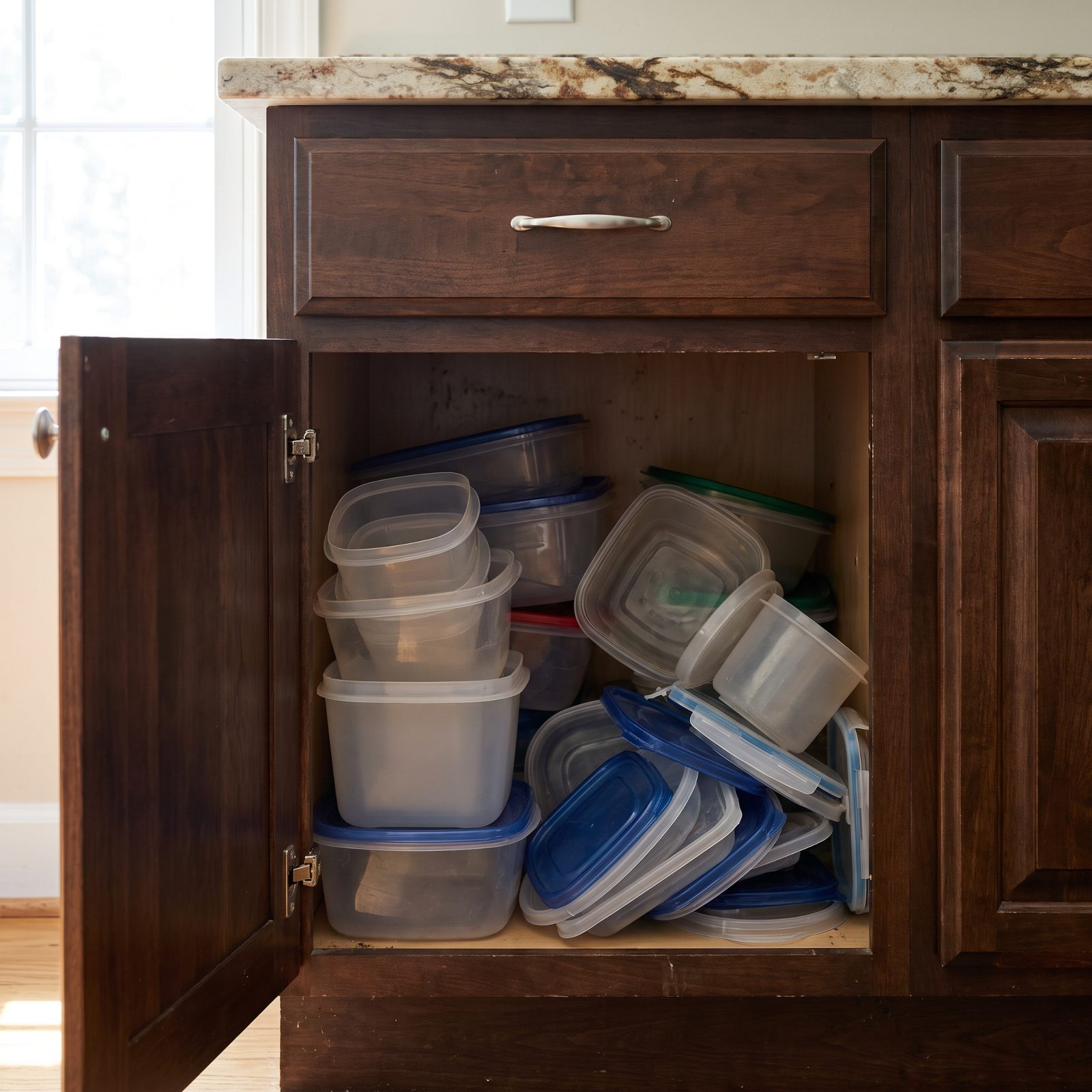
Open the container cabinet and something always falls out. There’s a base with no lid, a lid with no base, and three sizes that look matched until you actually try to seal them. The usable sets exist — they’re just buried under the orphans.
Dump the whole cabinet on the floor and pair everything up, and here’s the ratio most people discover: roughly half is junk. A lidless container isn’t a container. It’s a very optimistic cup. Match the sets, recycle the singles, stack by size. Twenty minutes, and you’ll feel absurdly good about it.
21. The Mug Avalanche of Sentiment, Souvenirs, and Office Freebies
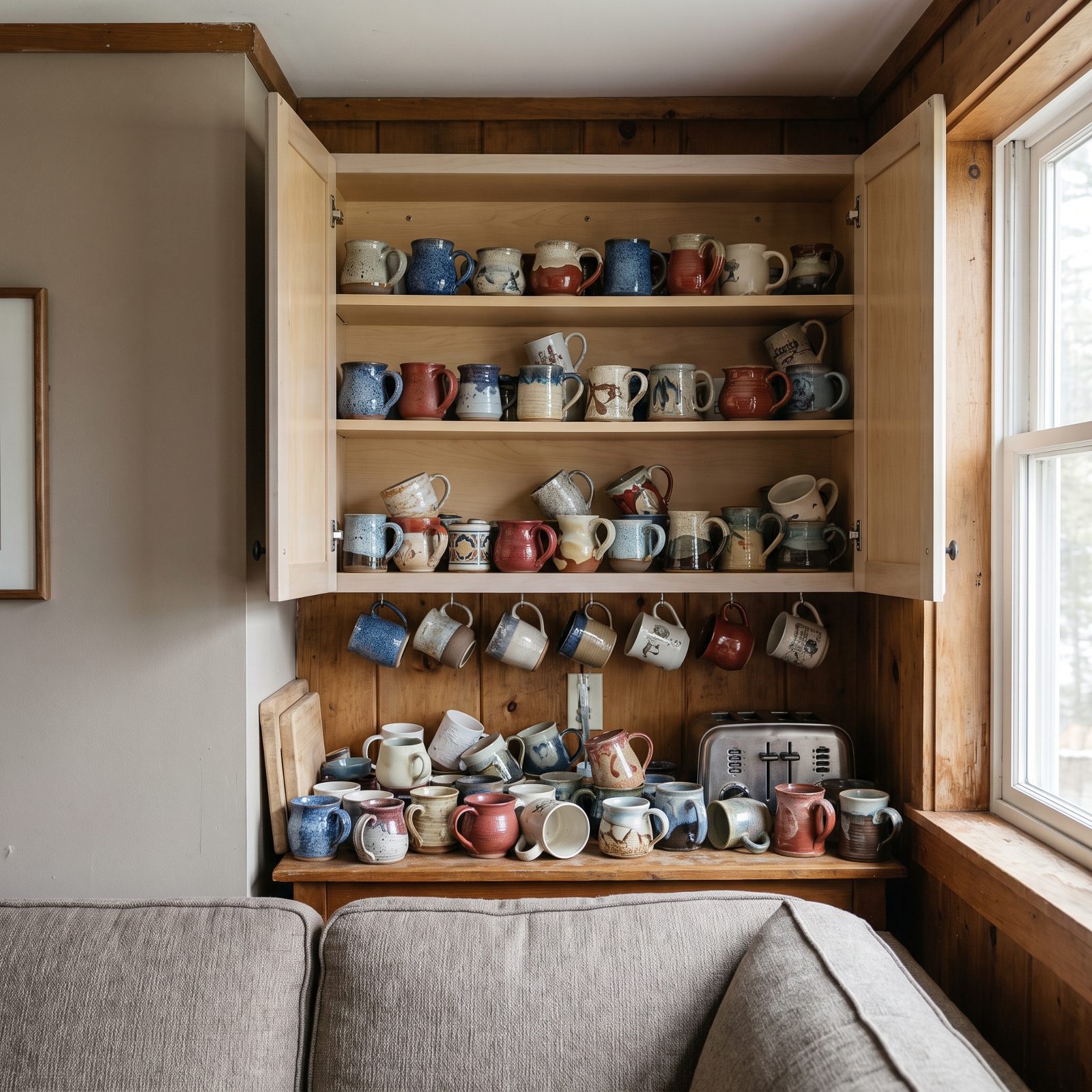
Count the mugs. Now count the people who live in your house. That gap is one of the most reliable things organizers run into, and mugs are stubbornly hard to release, because every single one carries a tiny story.
The conference you went to. The kid’s handprint. The joke gift from a friend you’ve lost touch with. Sentiment is real, but a cabinet has limits. Try this test: if you rotated through your favorites, how many would you actually reach for in a month? Keep those. The rest can become someone else’s thrift-store find.
20. The Takeout Drawer of Soy Sauce Packets and Plastic Forks
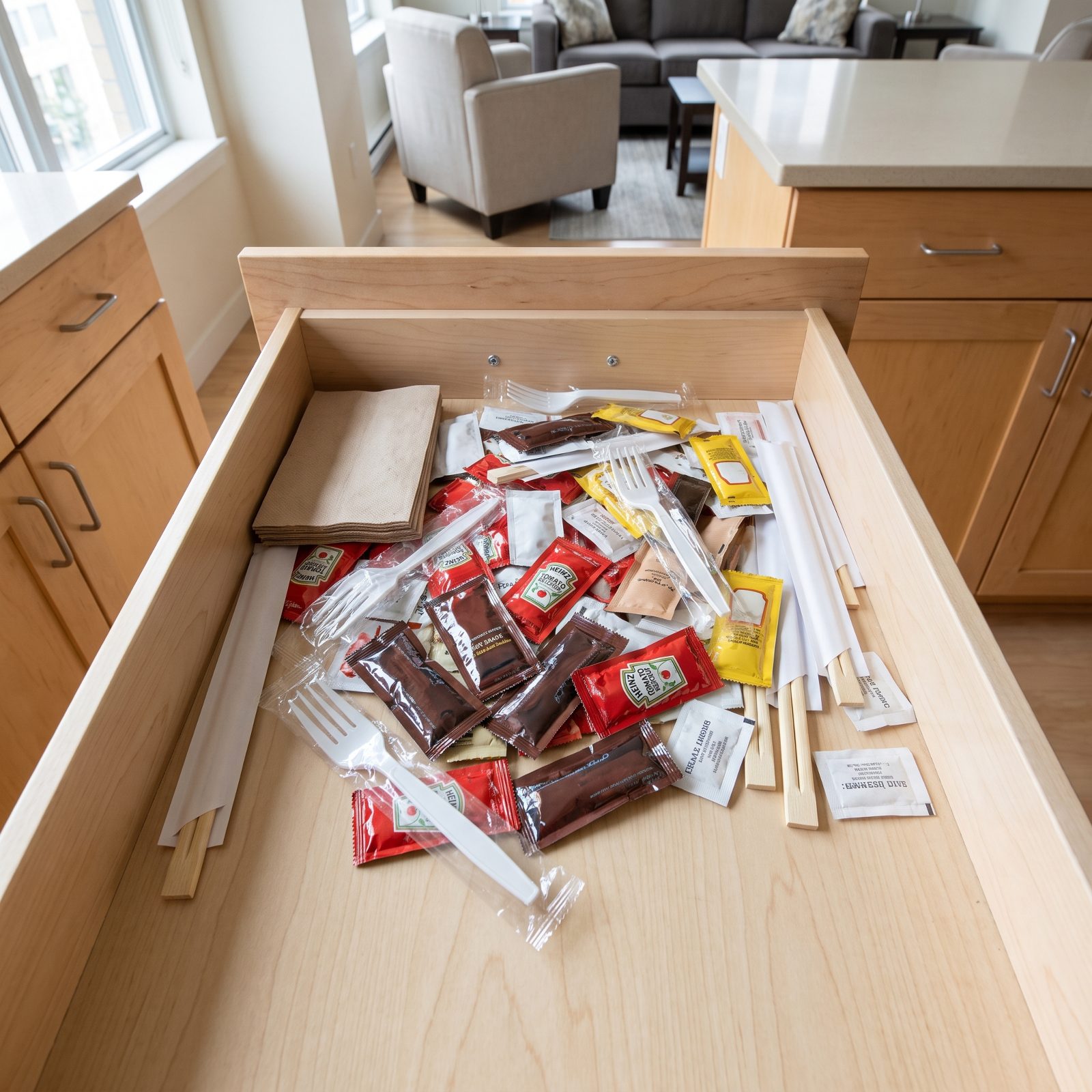
Every order comes with extras nobody asked for. Four forks, a fistful of napkins, soy sauce for a dish that didn’t need it. You stash them because tossing them feels wasteful. Then they sit in a drawer for years, which is its own kind of waste.
The math is unforgiving. You’ll never eat your way through a drawerful of soy packets before they separate and dry out. Keep a small handful for the picnic or the sick day. Let the rest go, and start saying no thanks to cutlery you’ve already got at home.
19. Spices Bought Twice Because the First Jar Hid Behind the Second
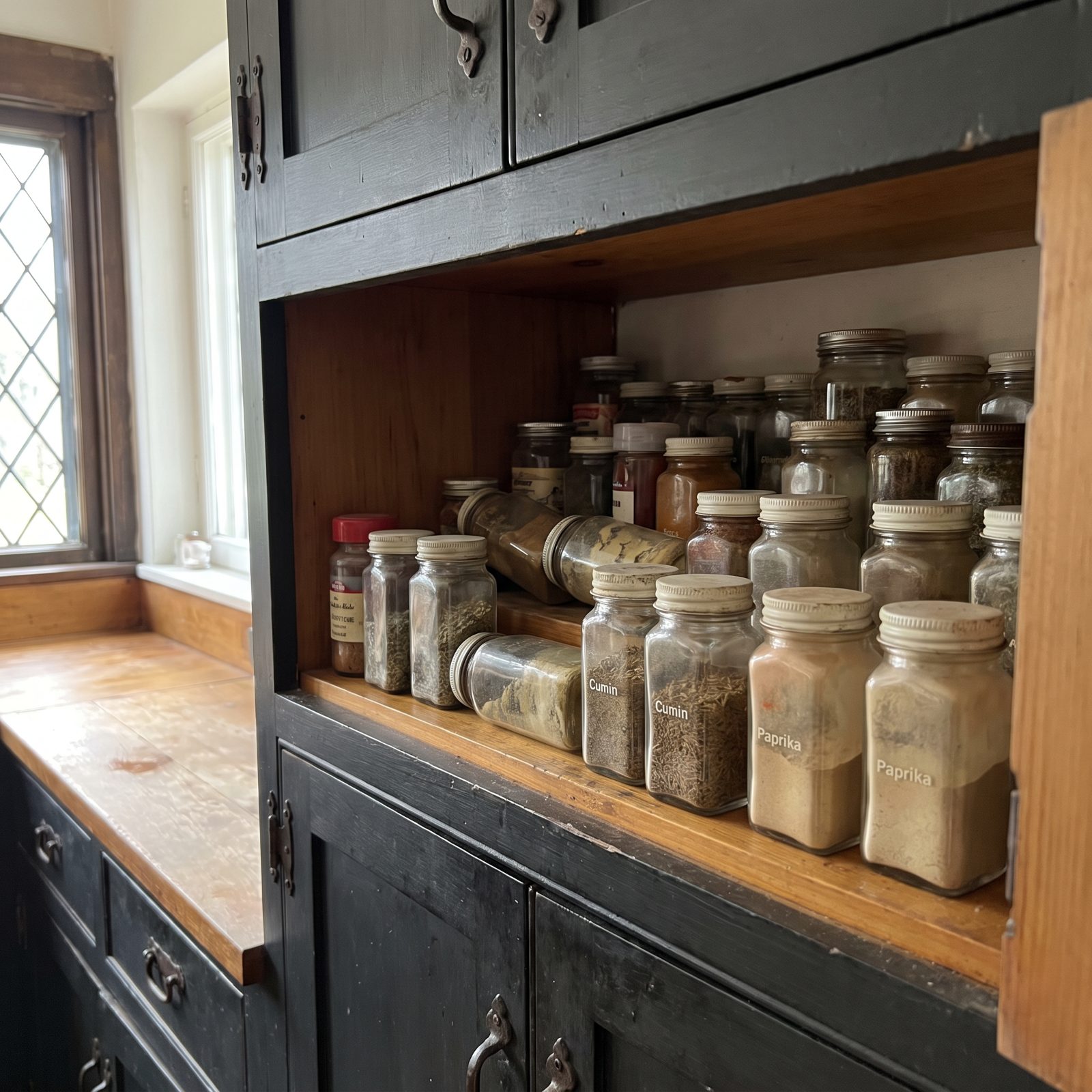
You bought cumin. You know you did. But it was lost in the back row behind the paprika and the oregano, so at the store you bought it again, and now you own two jars of something you use twice a year.
The real culprit is depth. Store spices more than one jar deep and the back ones vanish, and invisible means duplicated. Ground spices quietly lose their punch within a year or two, so half of what’s hiding back there is already flavorless.
18. Refrigerator Doors Jammed With Near-Identical Condiments Fighting for Prime Real Estate
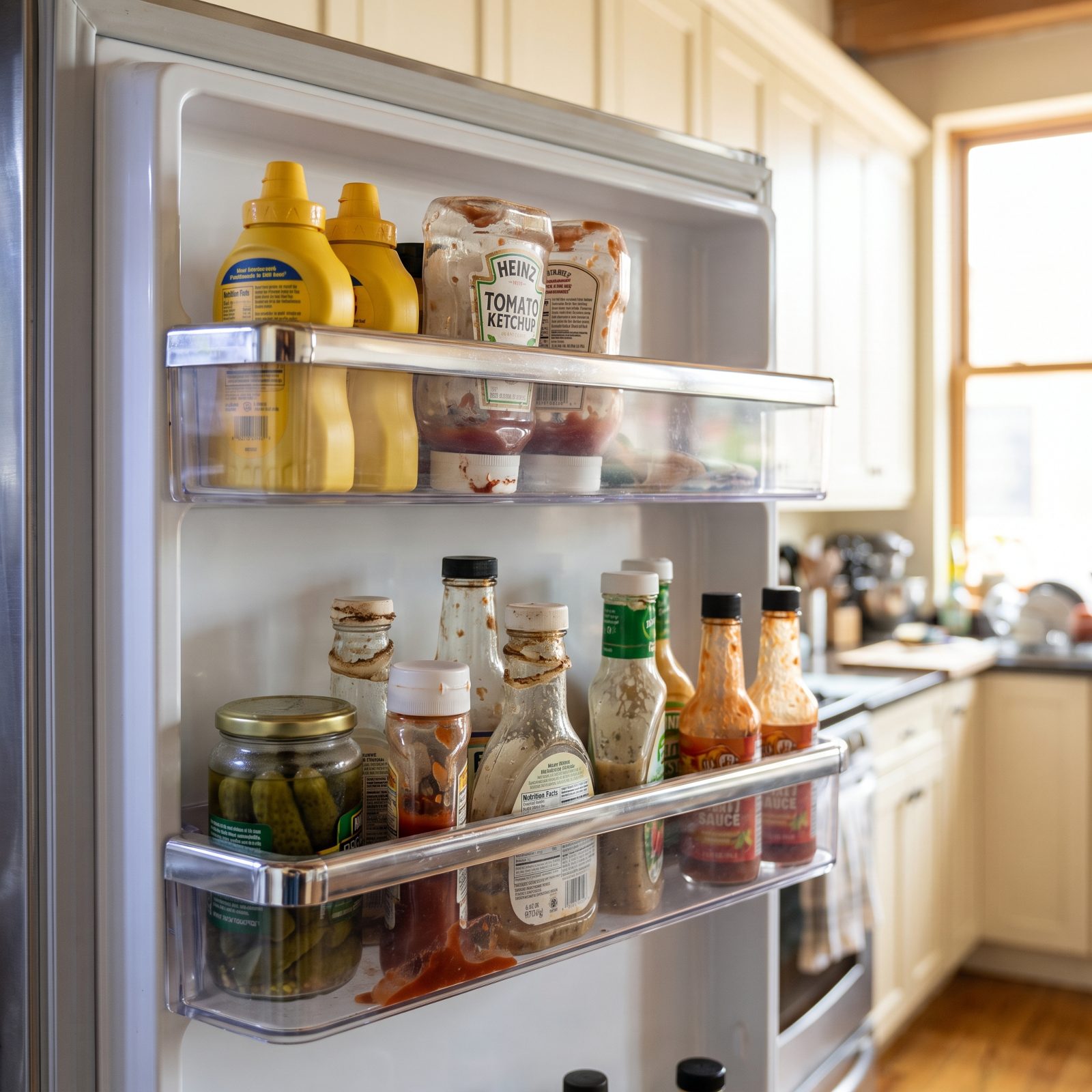
The fridge door is the most contested shelf in the house, and condiments win it by sheer attrition. Two ketchups, three mustards, a salad dressing nobody admits to buying. Each one earns its slot because it isn’t empty — just mostly empty.
Now the part people get backwards: that door is the warmest zone in the whole appliance, not the coldest, because it swings into room air every single time you open it. So the one spot everyone crams with half-finished bottles happens to be the worst place to store anything you actually want kept fresh.
Organizers do two things. Consolidate the duplicates down to one bottle, then shove milk and eggs off the door, where those temperature swings quietly shave days off their lives.
17. Cleaning Products Stashed in Every Room, Breeding Partial Bottles and Duplicate Formulas
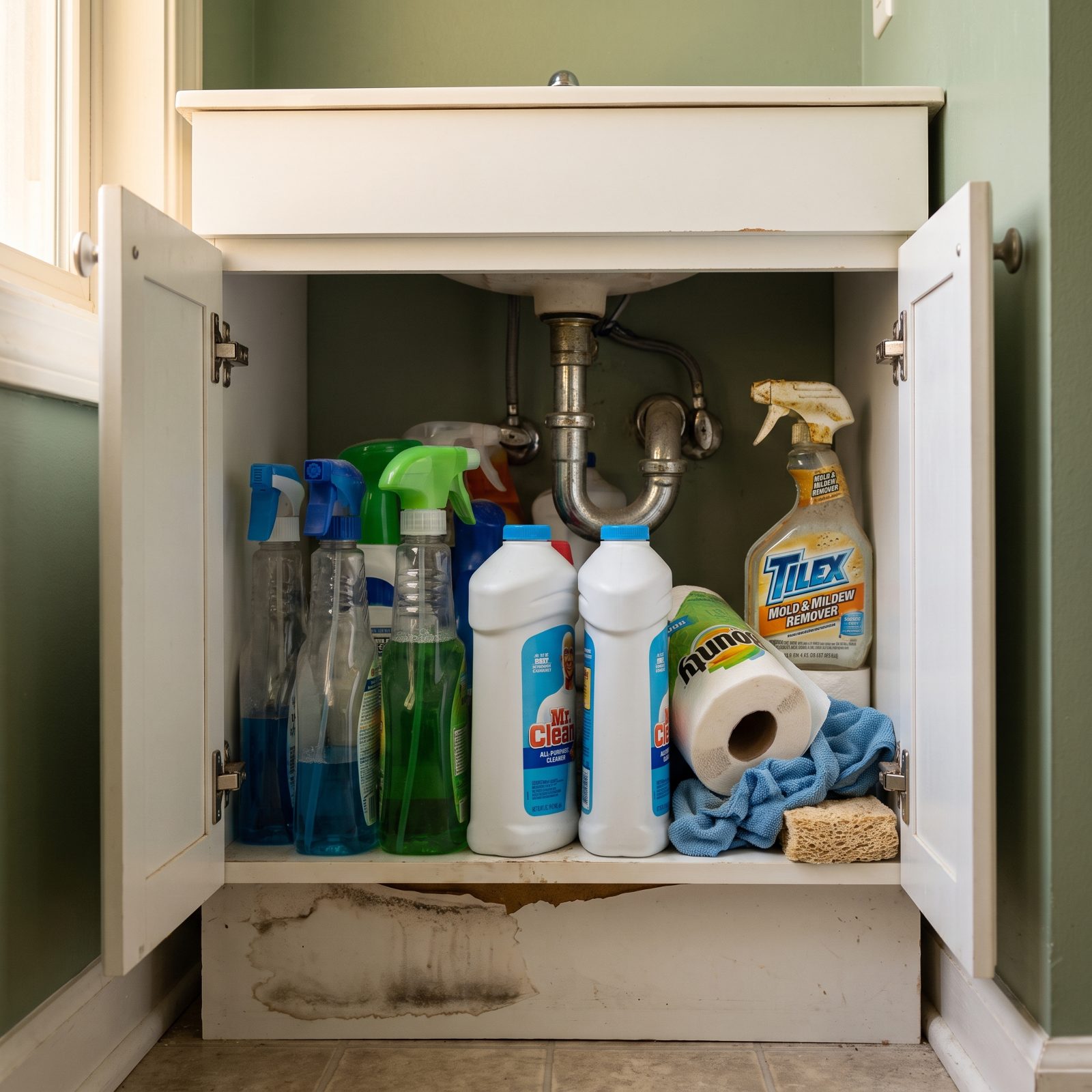
Scatter is how duplicates hide from you. One spray under the kitchen sink, another in the bathroom, a third in the laundry room — and not a single one of them is a full bottle. All the same formula, too.
Because no cupboard holds the whole count, you never see that you own six all-purpose cleaners. You just see the bottle in front of you running low, so you grab another.
Gather every cleaning product into one place first, even if only for an afternoon. The pile that results makes the argument for you. Most homes own three times what they ever use.
16. Travel-Size Toiletries Saved Between Trips, Where Samples Quietly Outnumber Everything Used Daily
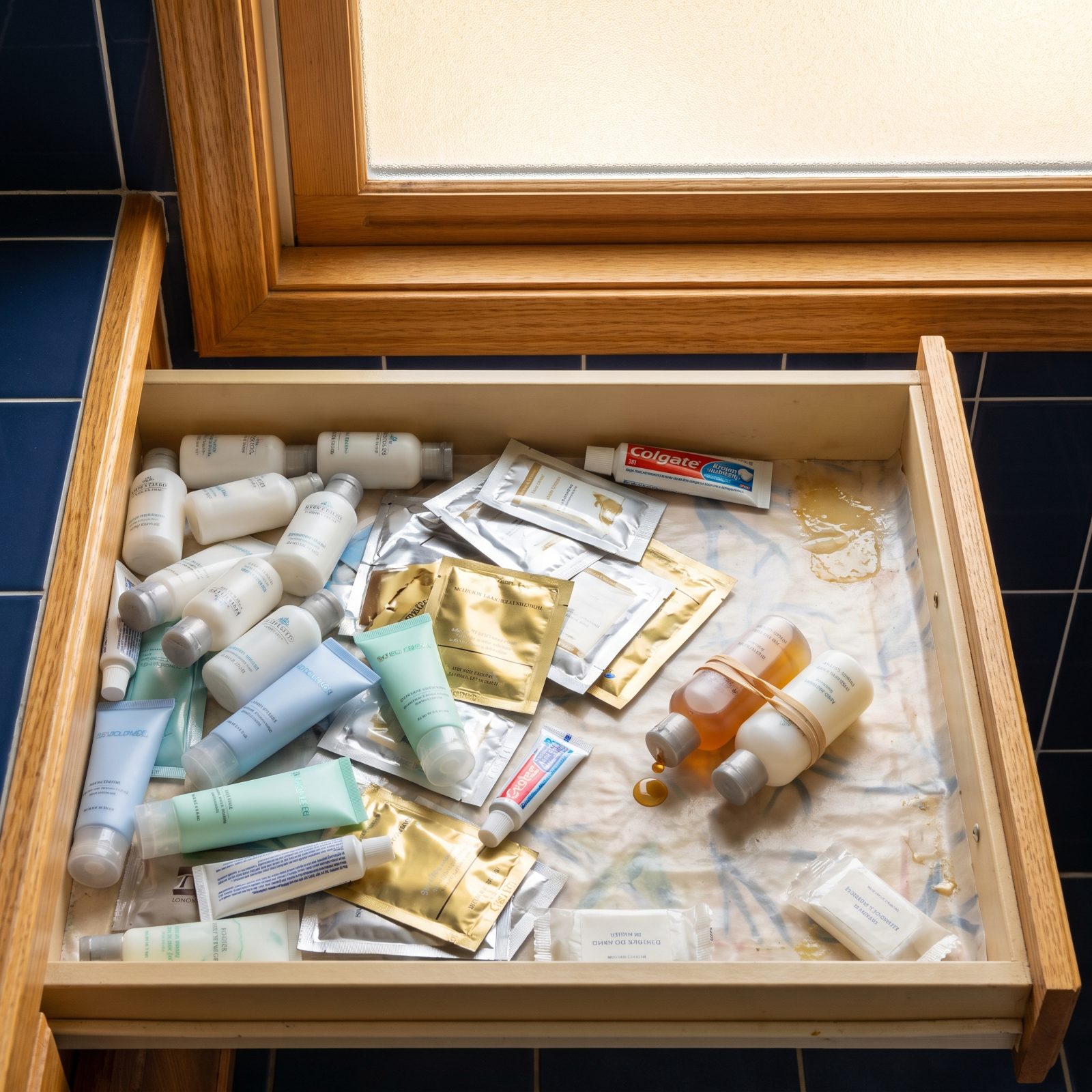
Every hotel stay drops another tiny shampoo into the drawer. Every beauty counter adds a sachet. The pile grows because each piece is free, small, and feels wasteful to bin.
Look at the ratio, though. In most homes the samples outnumber the full-size products you actually use, and the vast majority never get opened. They migrate from drawer to travel bag and back again, forever sealed.
The kindest thing you can do is admit that a sample you’ve dragged through two years of trips is not a product you’ll ever reach for. It’s a souvenir. Treat it as one, and let the drawer breathe.
15. Expired Sunscreen and Personal-Care Products Lingering Long After They Stopped Working
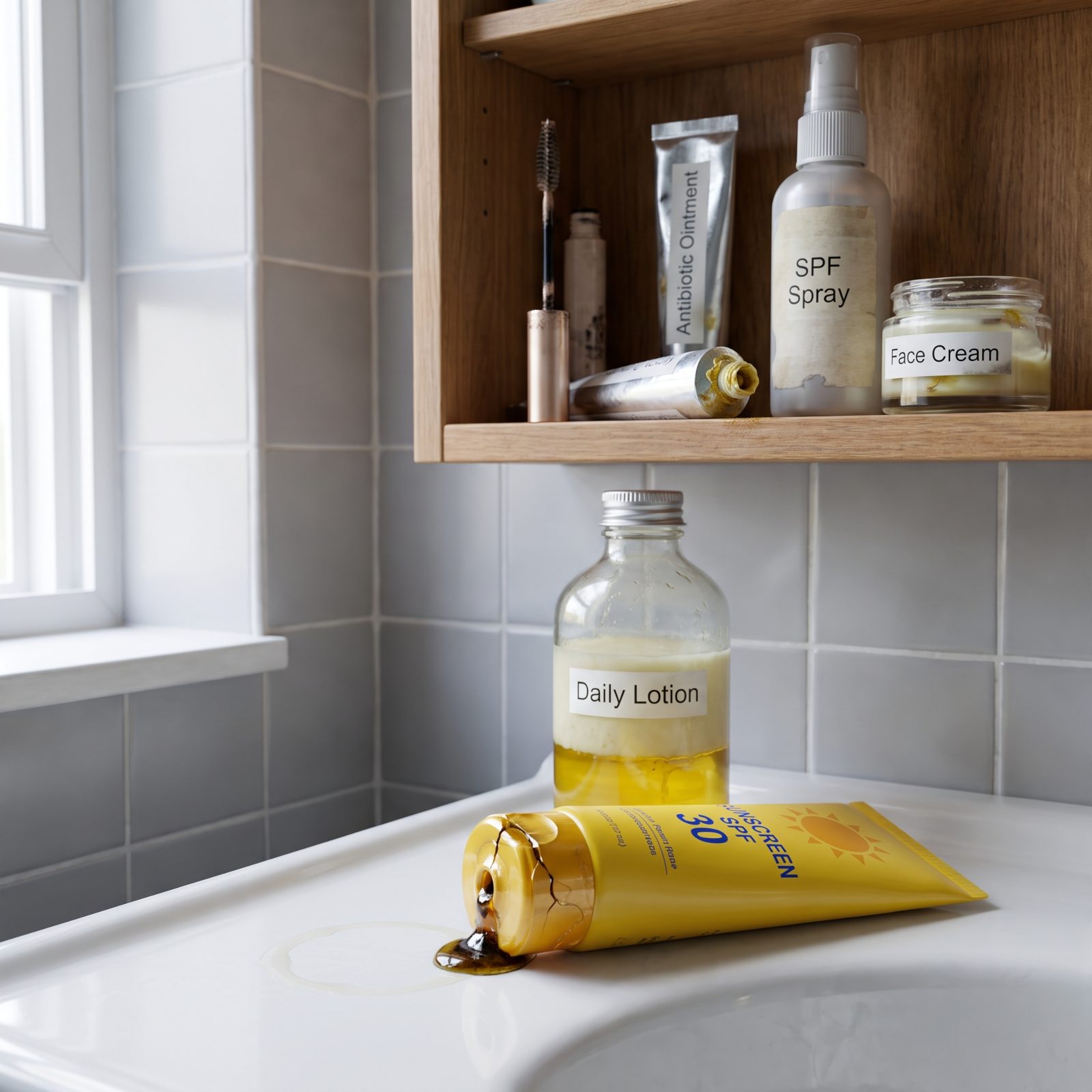
Sunscreen is the item people trust longest and should trust least. It carries an expiration date for a reason. The active ingredients break down, and a tube that protected you two summers ago may now do almost nothing while you bake in full sun, convinced you’re covered.
Same story for the other date-sensitive stuff crowding a vanity: separated lotion, a mascara long past the bacteria-risk line, ointments gone thick and yellow. And yet it all still sits there, waiting to be used.
Check the little open-jar symbol with a number inside. That number counts months after opening, not months on the shelf.
14. Linen Closets Packed With Mismatched Sets Nobody Can Pair Anymore
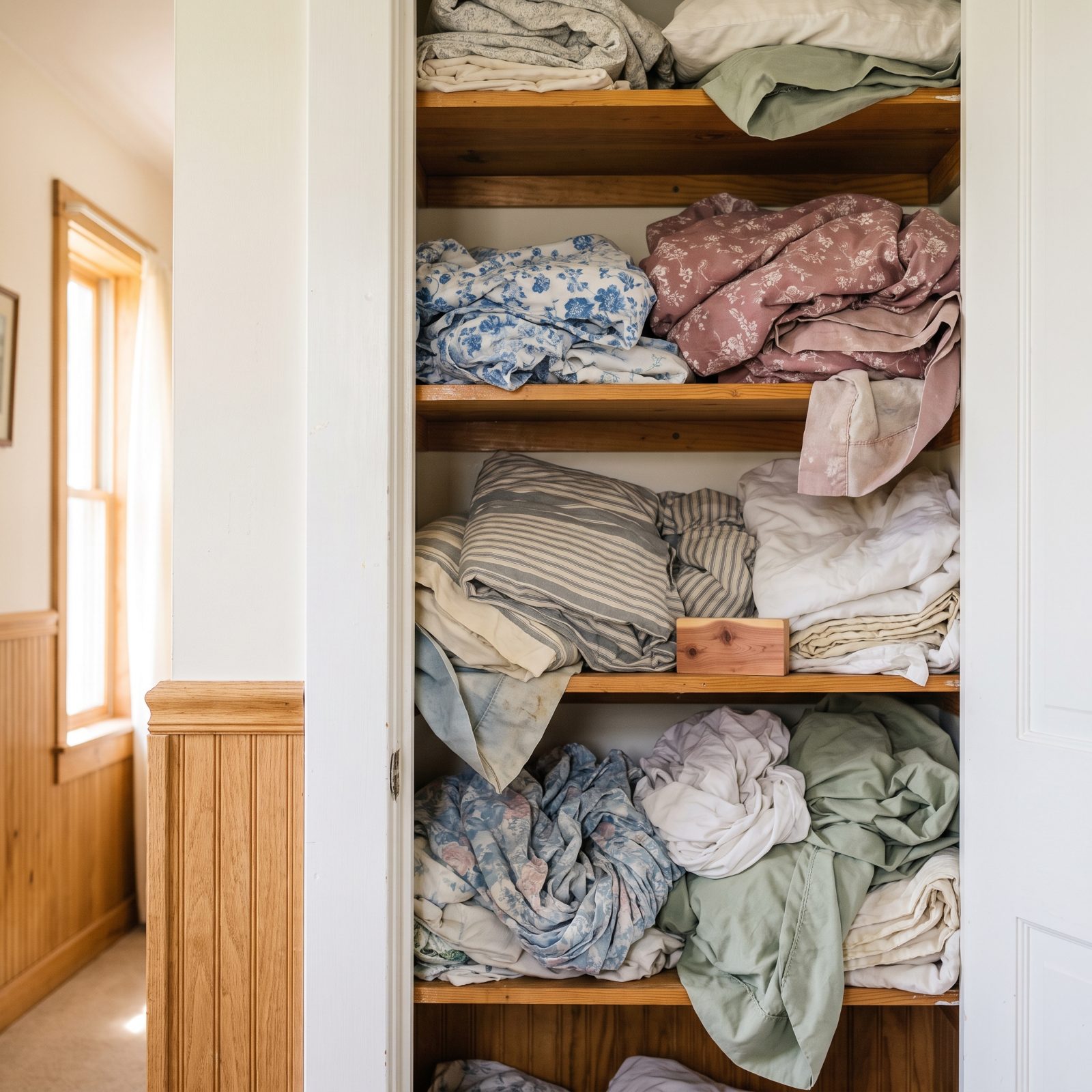
Sheets lose their partners faster than socks do. The flat sheet survives, the fitted sheet wanders off to another bed, the pillowcases scatter. What’s left in the closet is a drawer of orphans that no longer add up to a working set.
And the folding makes it worse. A fitted sheet is miserable to fold, so it becomes a wad, and a wad can’t be identified without tearing the whole stack apart.
There’s an old trick worth stealing. Tuck each complete set inside one of its own pillowcases, and the whole thing becomes a single tidy parcel. Nothing wanders off alone.
13. More Towels Than the Household Could Ever Rotate Through
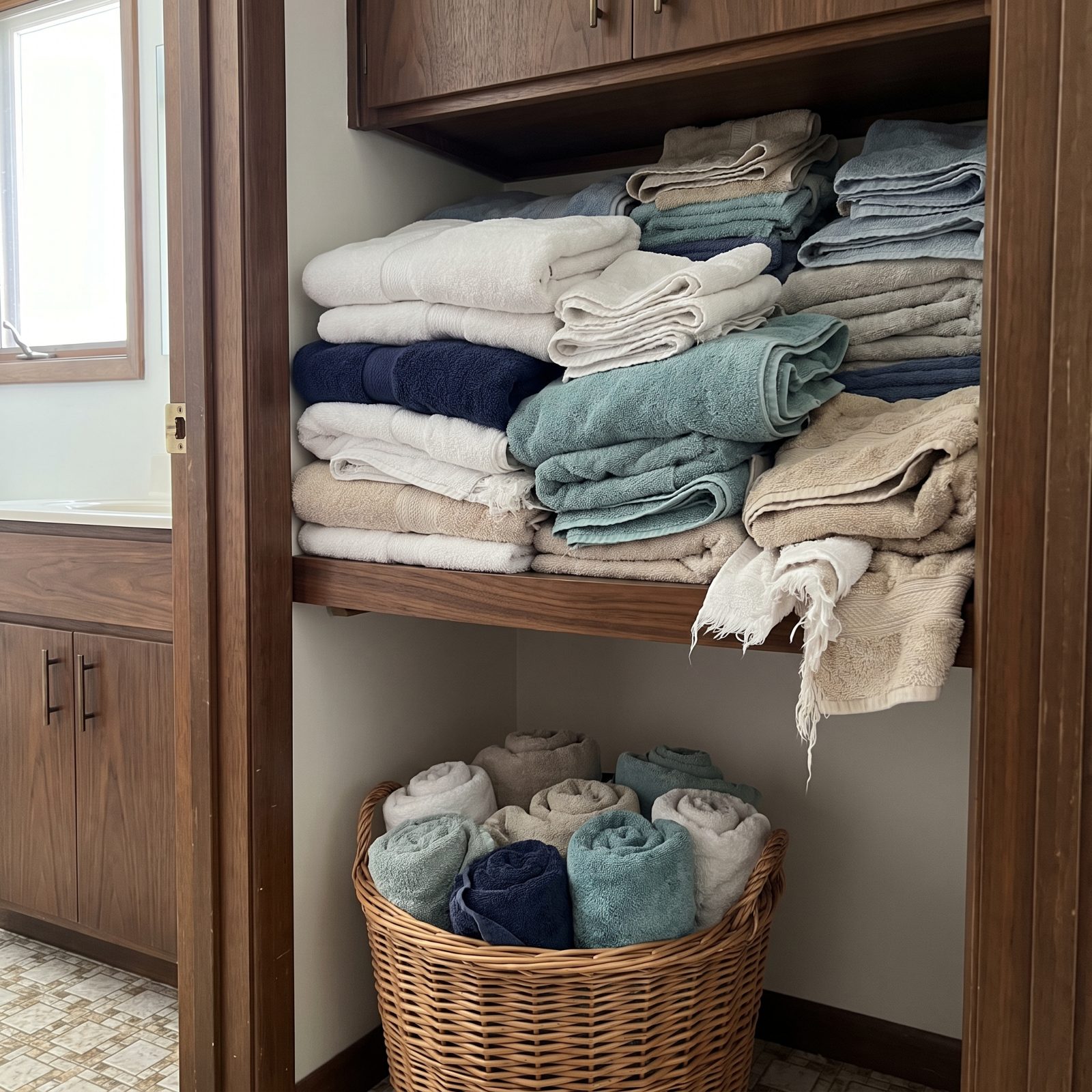
Towels are bulky, and bulk is sneaky. Twenty of them eat an entire shelf, yet two people genuinely cycle through maybe six. The rest is padding.
Nobody throws a towel away. They just get demoted — the good ones for guests, the faded ones for the gym, the thin ones for the dog, the truly sad ones banished to the garage. Four tiers of towel, every tier squatting on prime shelf space.
Here’s a fair rule most organizers land on: two sets per person who actually uses them, one in the wash and one on the rack. Anything past that is fabric you’re storing on behalf of nobody.
12. Clothing Kept in Three Sizes, Where the Current Wardrobe Competes With the Past and the Hoped-For
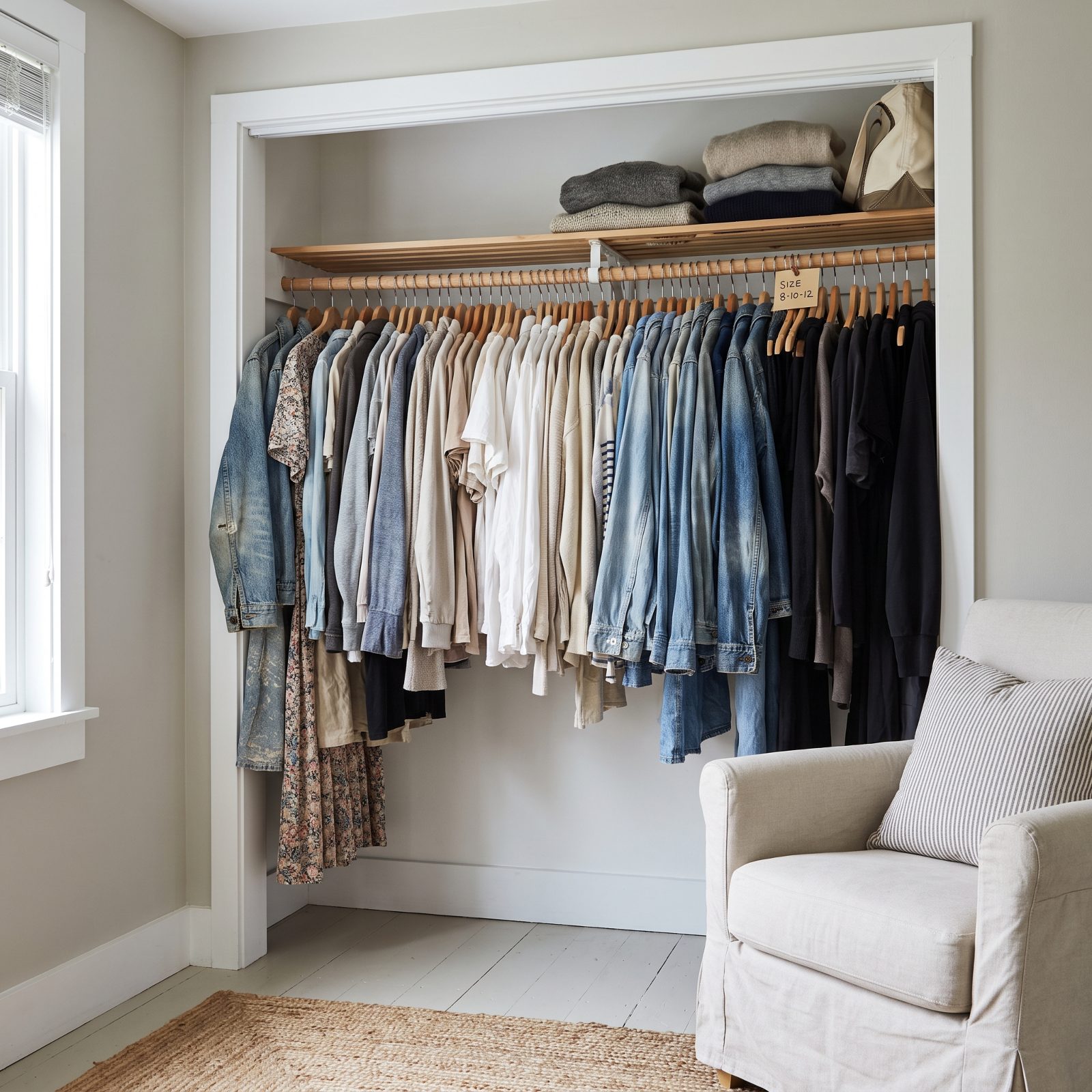
Three wardrobes share one closet, and only one of them fits. There are the clothes that fit before, kept out of hope they will again. The clothes you wear now. And the aspirational pieces bought a size down, still waiting.
The problem isn’t sentiment — it’s volume. The two wardrobes you can’t wear today squeeze the one you can into a crowded corner, which turns getting dressed into a small daily fight.
11. Unworn Clothing With Tags Still Attached, Long After the Return Window Closed
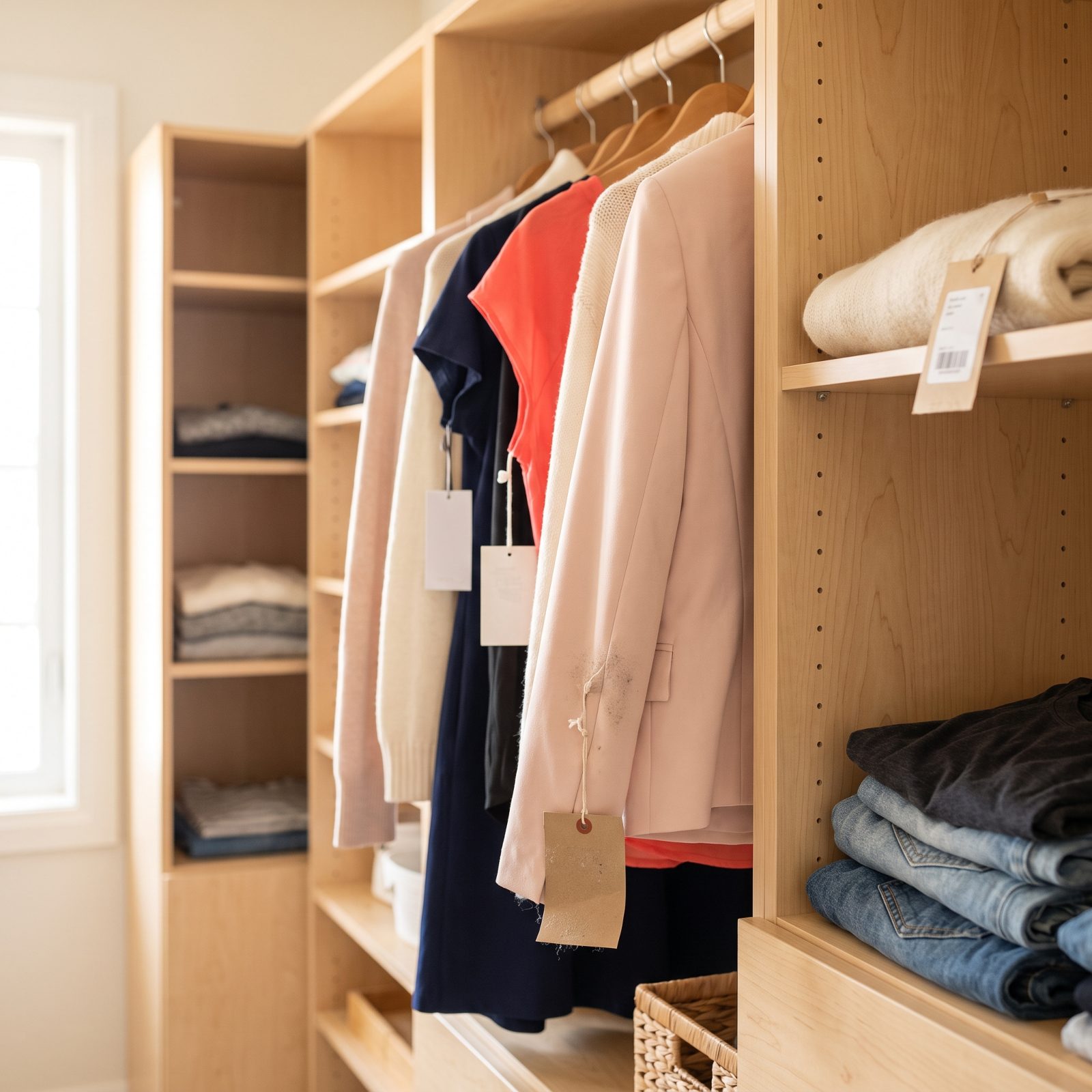
A tag still hanging off a garment is a decision that never got made. You bought it meaning to wear it, or meaning to return it, and then time quietly closed both doors.
These pieces are awkward to deal with because they still feel new. The money feels recoverable, even though the return window shut months back, so the item hangs in limbo — neither used nor released.
The honest read: if something has survived a full change of seasons with its tag on, you’ve already answered the question. The purchase was a mistake, and leaving the price tag attached just keeps that mistake in view.
10. A Jumble of Hanger Styles That Waste Rail Space and Scramble the Eye
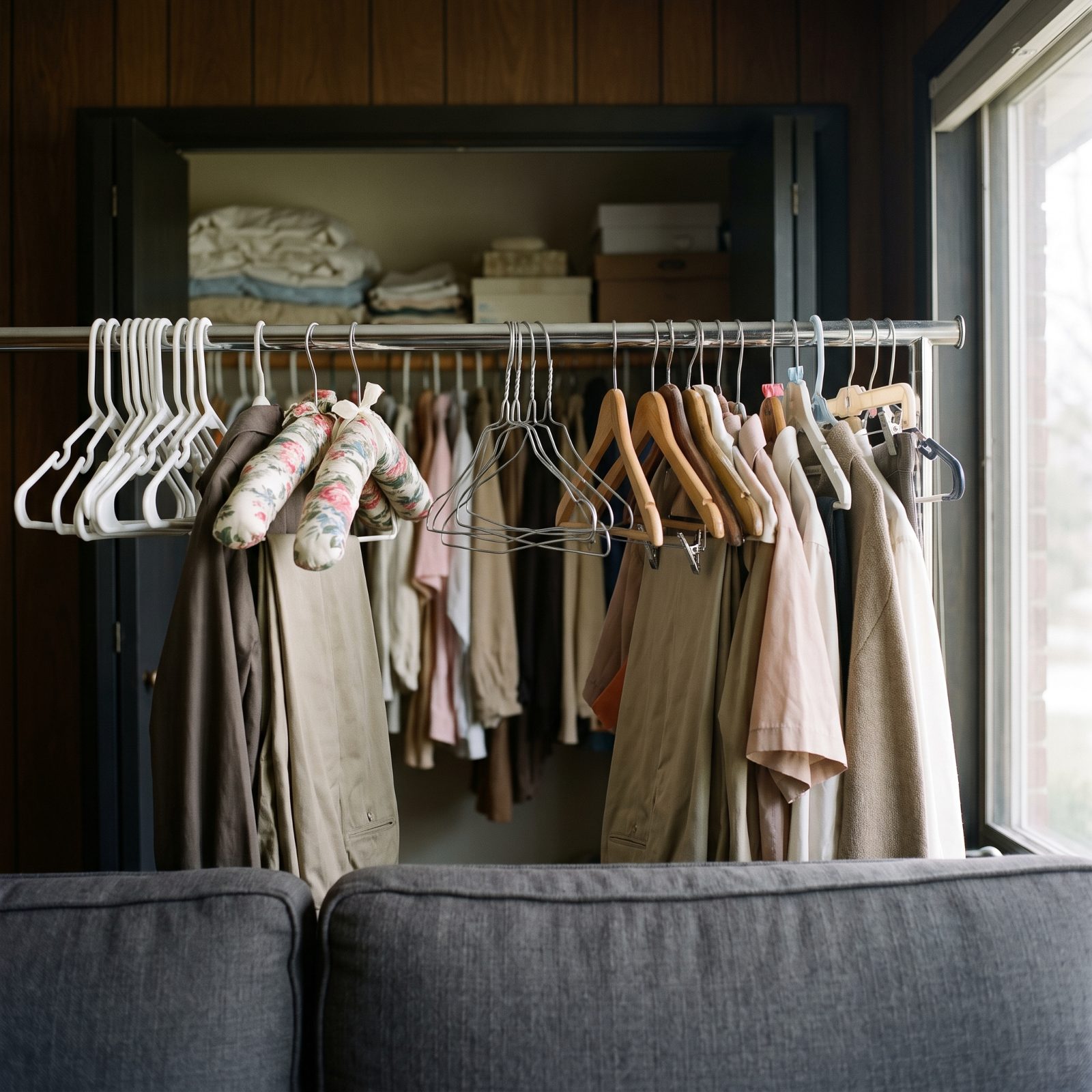
Mismatched hangers do more harm than they look capable of. Chunky plastic beside thin wire beside a padded one, every shape a different thickness, so garments hang at different depths and heights. The rail becomes a ragged, bumpy line your eye simply can’t scan.
Switch to thin matching hangers and you fix two problems at once. They win back real rail length — often enough to squeeze in noticeably more — and they let the whole closet read as one clean row. That legibility, not the look, is why uniform hangers actually work.
The wire dry-cleaner ones are the real villains. They crease shoulders, they tangle, and they breed faster than anything else in there. Send them back where they came from, or straight into recycling. Nobody misses them.
9. Single Socks Waiting Indefinitely for Their Missing Partners
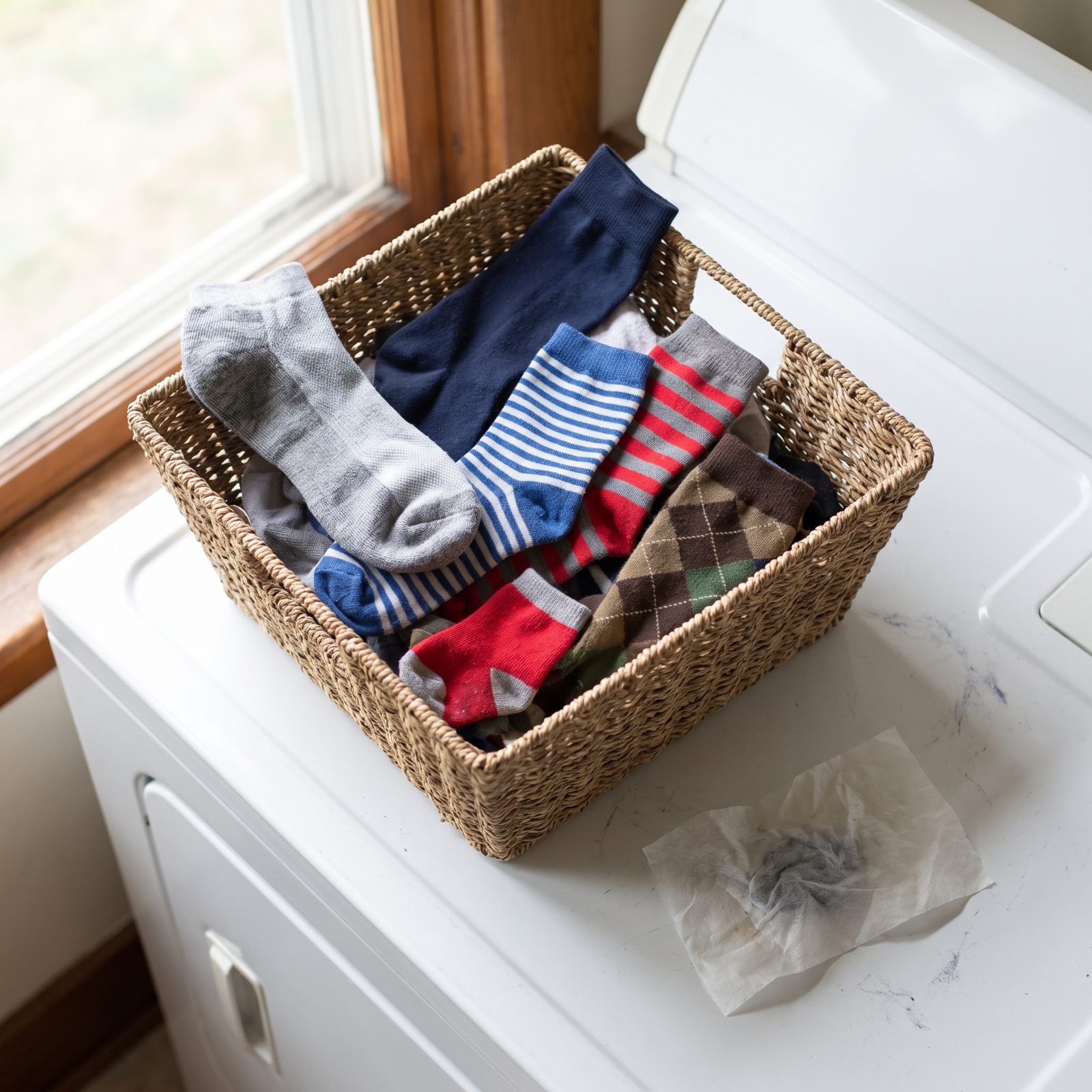
The sock basket is the most honest object in any laundry room. It starts as a reasonable idea — the partner will turn up next load, so give it a week. Then the holding area stops being temporary and becomes a small museum of optimism.
Organizers see this everywhere, and the fix is less about the socks than the deadline. Pick a date. Anything left orphaned by then gets tossed or turned into dust rags. Plenty of us have run a sock purgatory for years, so this isn’t a lecture from higher ground.
8. Clean Laundry Living in Baskets Instead of Closets
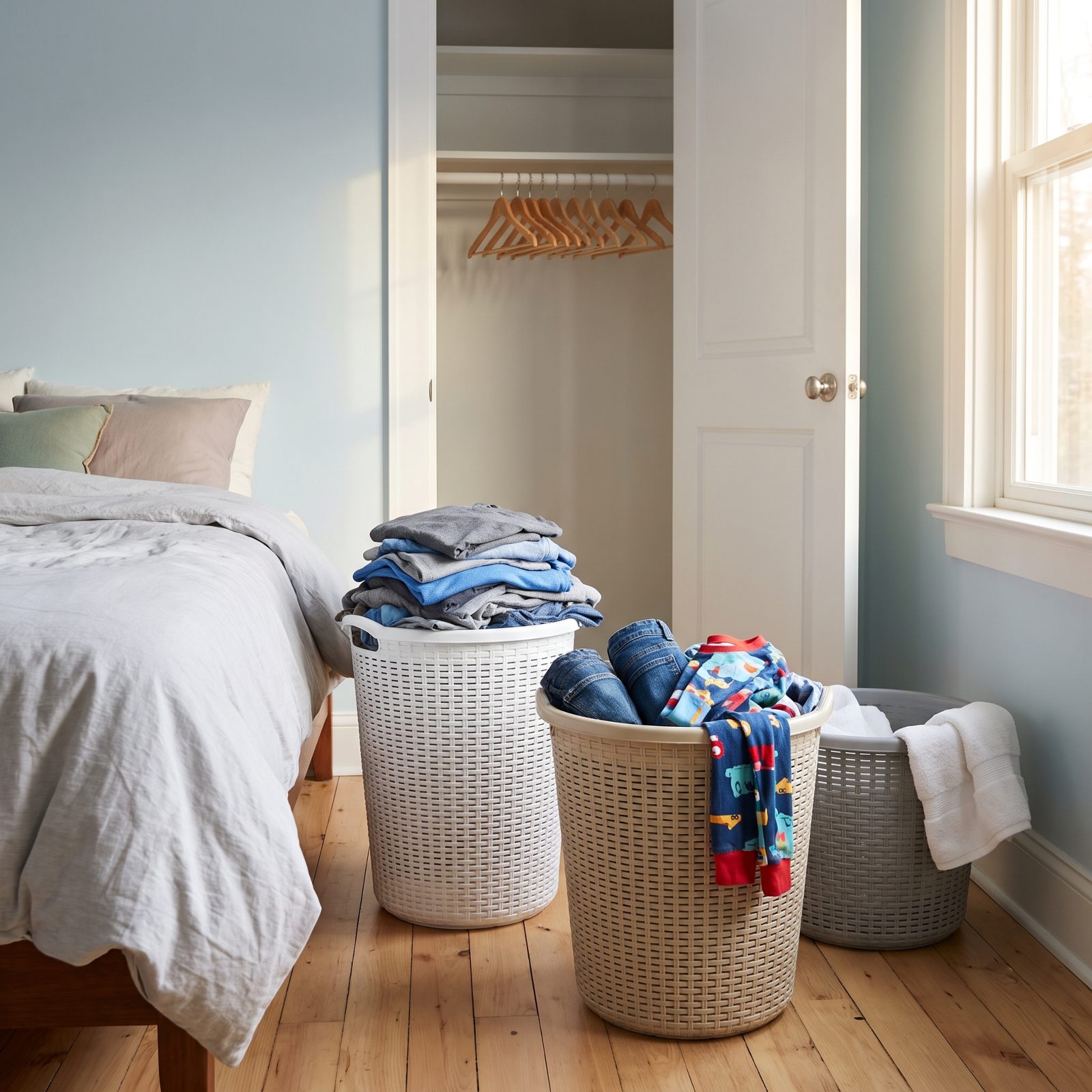
Here’s the trap. The laundry gets washed, dried, even folded — and then it stalls one step from home, sitting in the basket because putting it away is somehow a separate, bigger chore than all the steps that came before.
Soon there are three baskets: one clean, one dirty, one a complete mystery. The floor fills up while the closet stays half empty. And the real problem is almost never storage space. It’s that the drawer feels full even when it isn’t, and nobody enjoys the last ten percent of any task.
7. Shoes Piling Up at Every Door They Walk Through
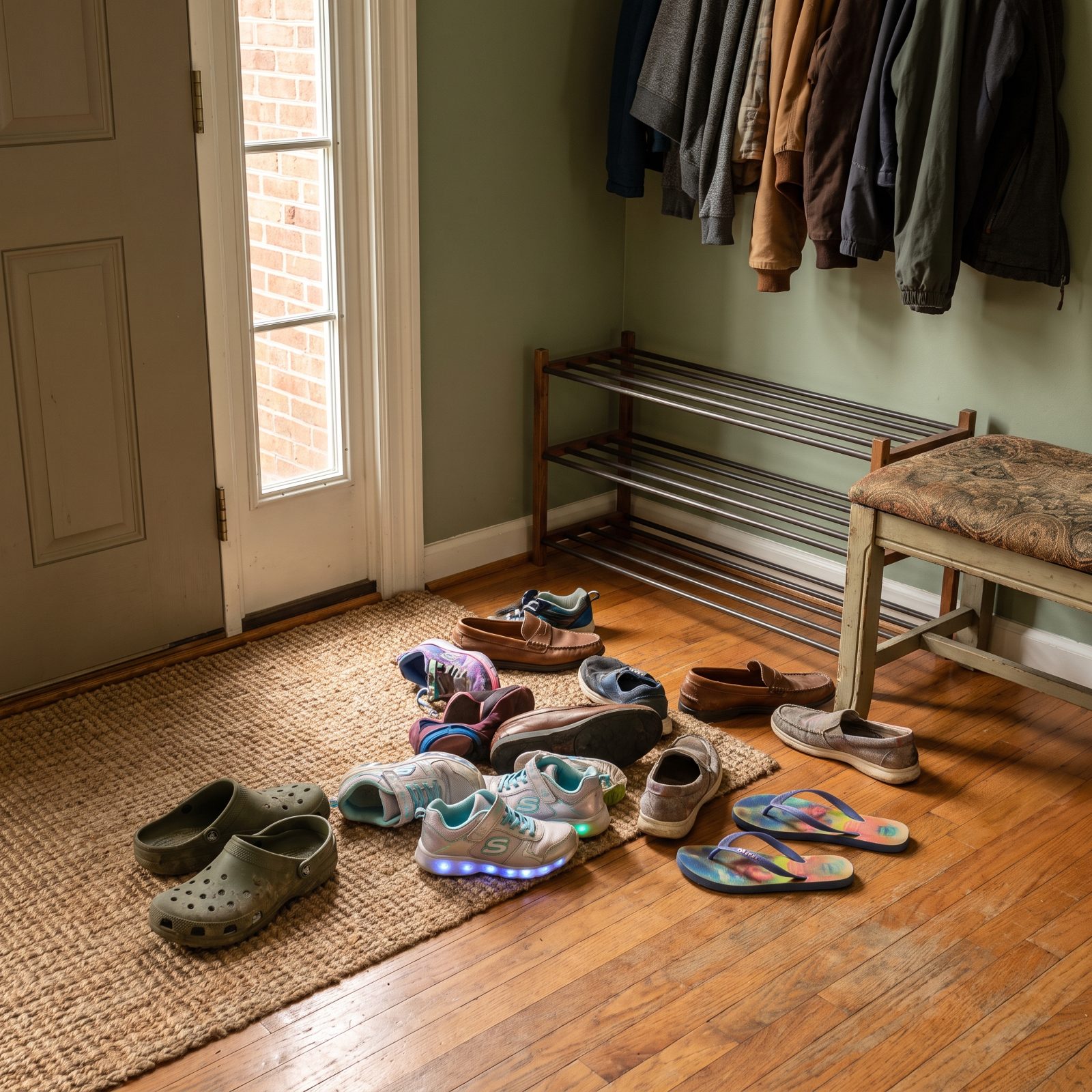
Shoes gather where they come off, not where they belong. That single sentence explains almost every entryway in the country.
The empty shoe rack six feet away might as well be in another zip code. People take the path of least resistance, and least resistance is the floor, right now, mid-stride toward the kitchen.
6. Office Supplies Stockpiled for an Office You Don’t Run
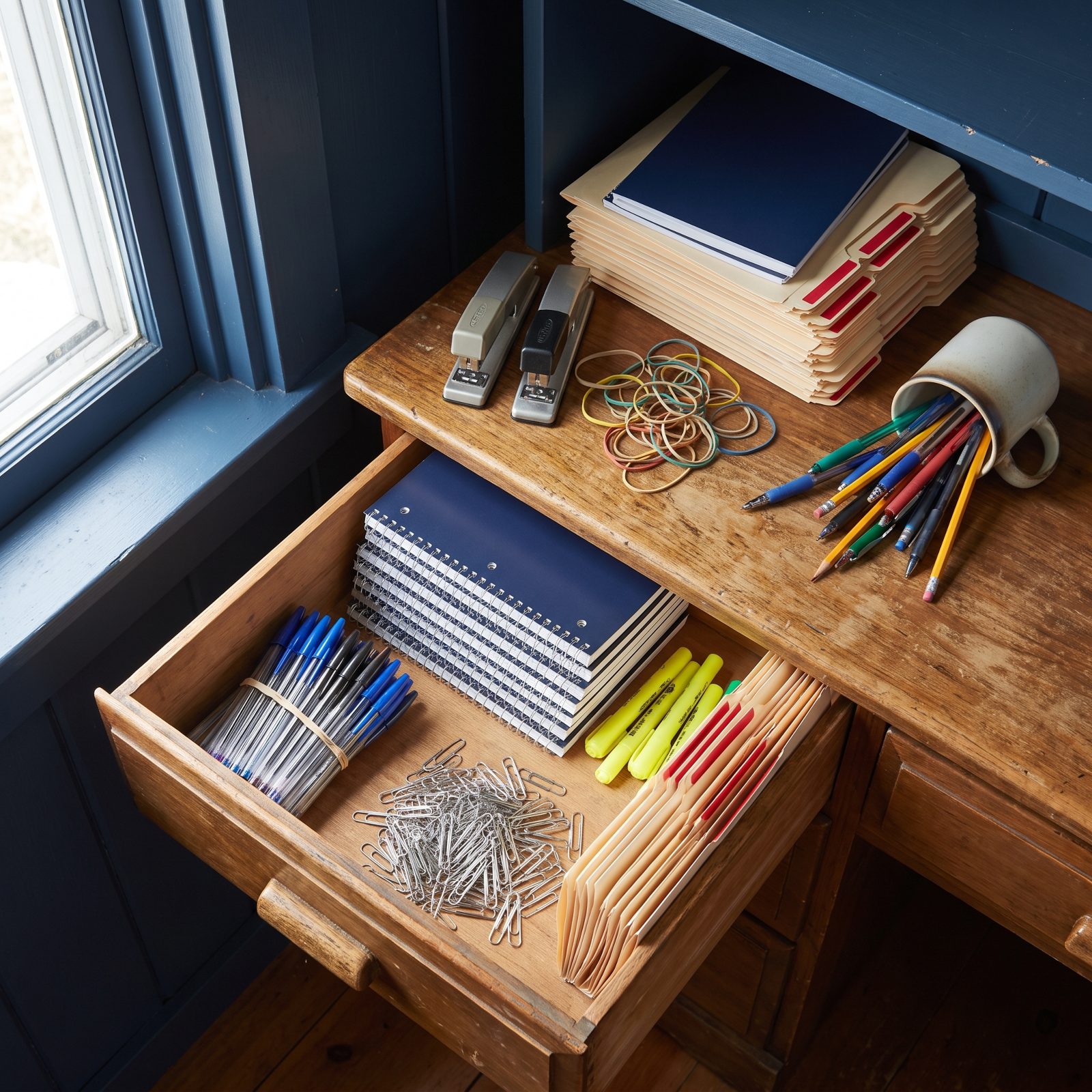
Count the pens in a typical junk drawer and the number borders on absurd. Three dozen, easily. Add the backup stapler nobody remembers buying, plus the notebooks still in their shrink-wrap, waiting for a fresh-start energy that comes once a year and never uses eight at a time.
Supplies accumulate because they’re cheap, they feel useful, and throwing out a working pen feels like a small moral failure. So they breed. One household genuinely needs a handful of pens. The rest is a tax we pay for liking stationery.
5. Gift-Wrap Scraps Too Small to Wrap Almost Anything
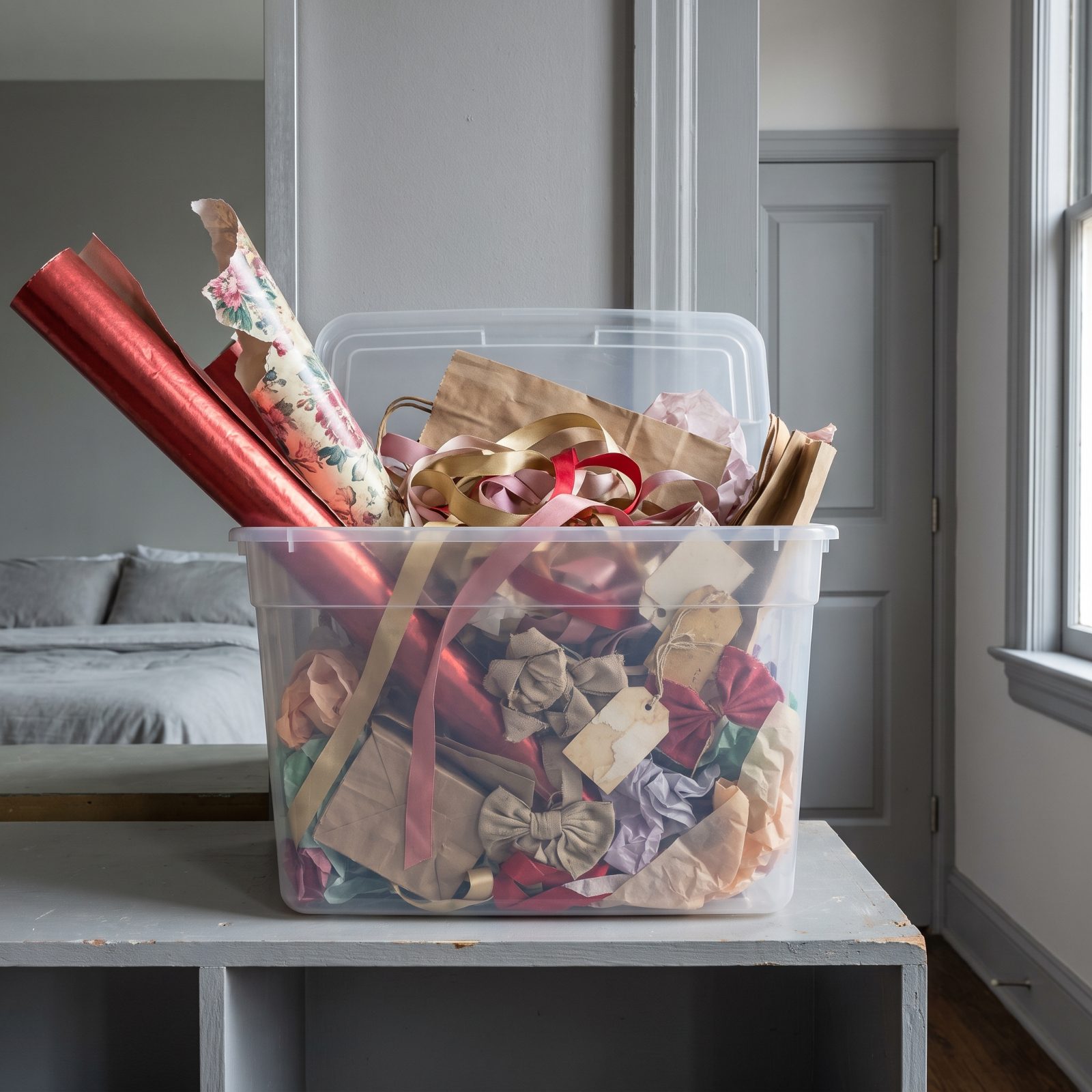
The scraps are the problem, not the rolls. A full roll has an obvious job. It’s the foot-long remnants and the three-inch ribbon ends that defeat people — too small to wrap anything bigger than a candle, too usable-looking to throw away.
So the box fills with maybes. Potential usefulness is the strongest glue in any home, and it holds onto junk harder than sentiment ever does.
4. Holiday Decorations Hiding in Identical Unlabeled Bins
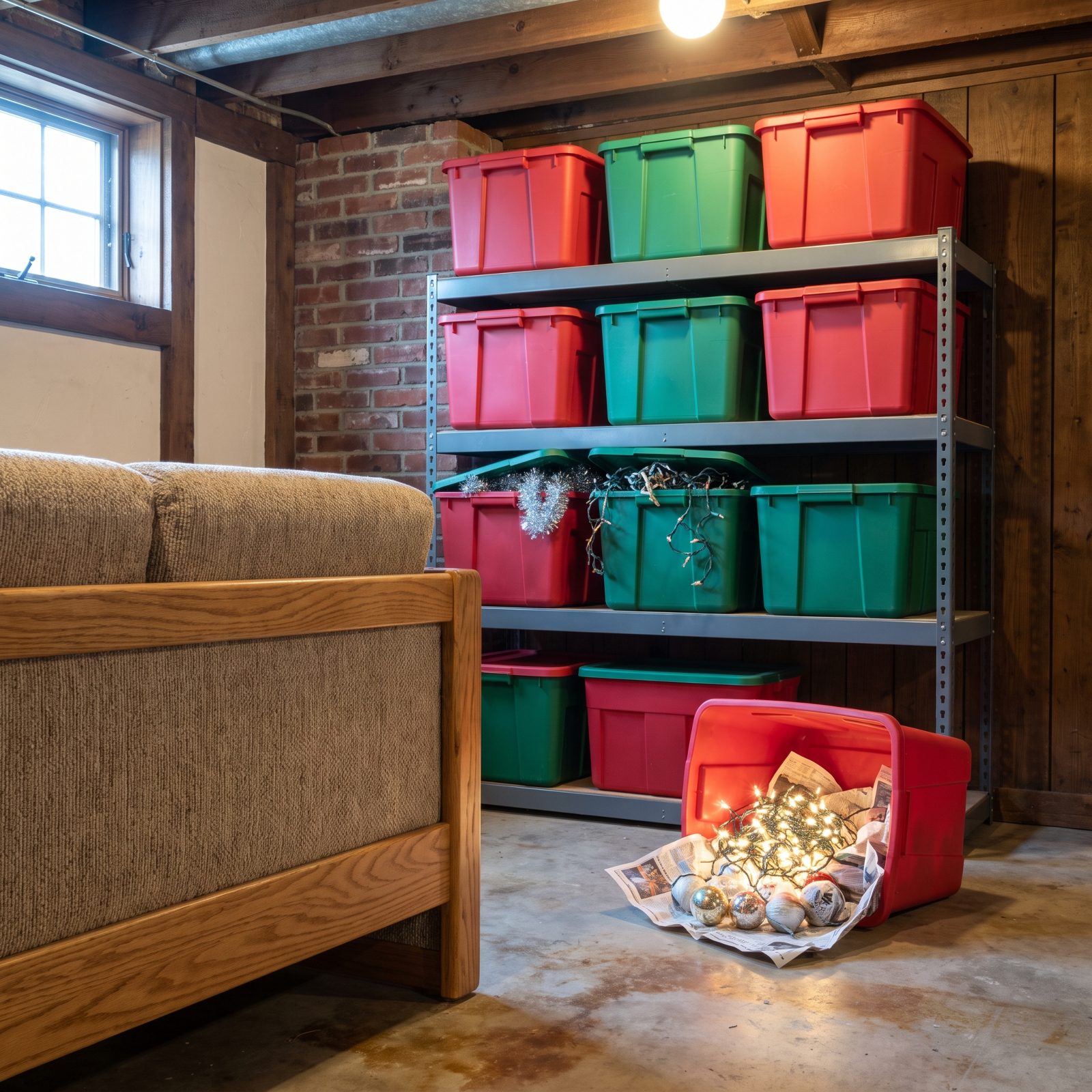
Every holiday begins the same archaeological dig. Which bin has the lights? Which one hides the tablecloth? You open four before the ornaments surface, and by then the enthusiasm has leaked out of the whole afternoon.
Unlabeled bins are a bet that you’ll remember. You won’t. Nobody does. A strip of masking tape and a marker would end the entire ritual — which is why it’s always the easiest fix and somehow the one left undone year after year.
3. Loose Batteries You Can No Longer Tell Apart
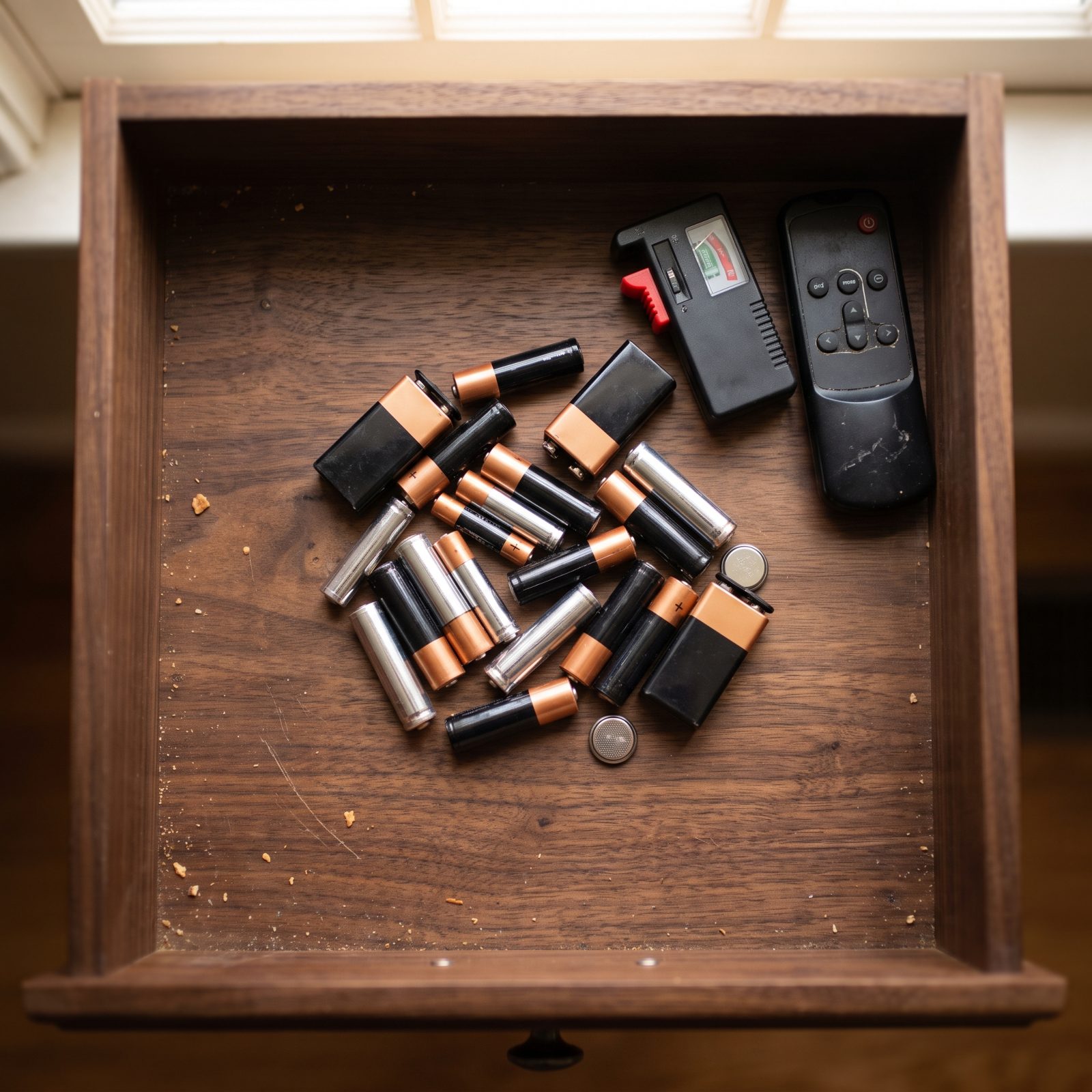
Fresh and depleted batteries look exactly alike, which is the entire crisis in one line. The pile grows because you pull one that’s dead, grab a replacement, and toss the dead one right back in with the rest. For next time. There is no next time. There’s only a bowl of maybes.
2. Leftover Screws and Hardware With No Memory of the Job
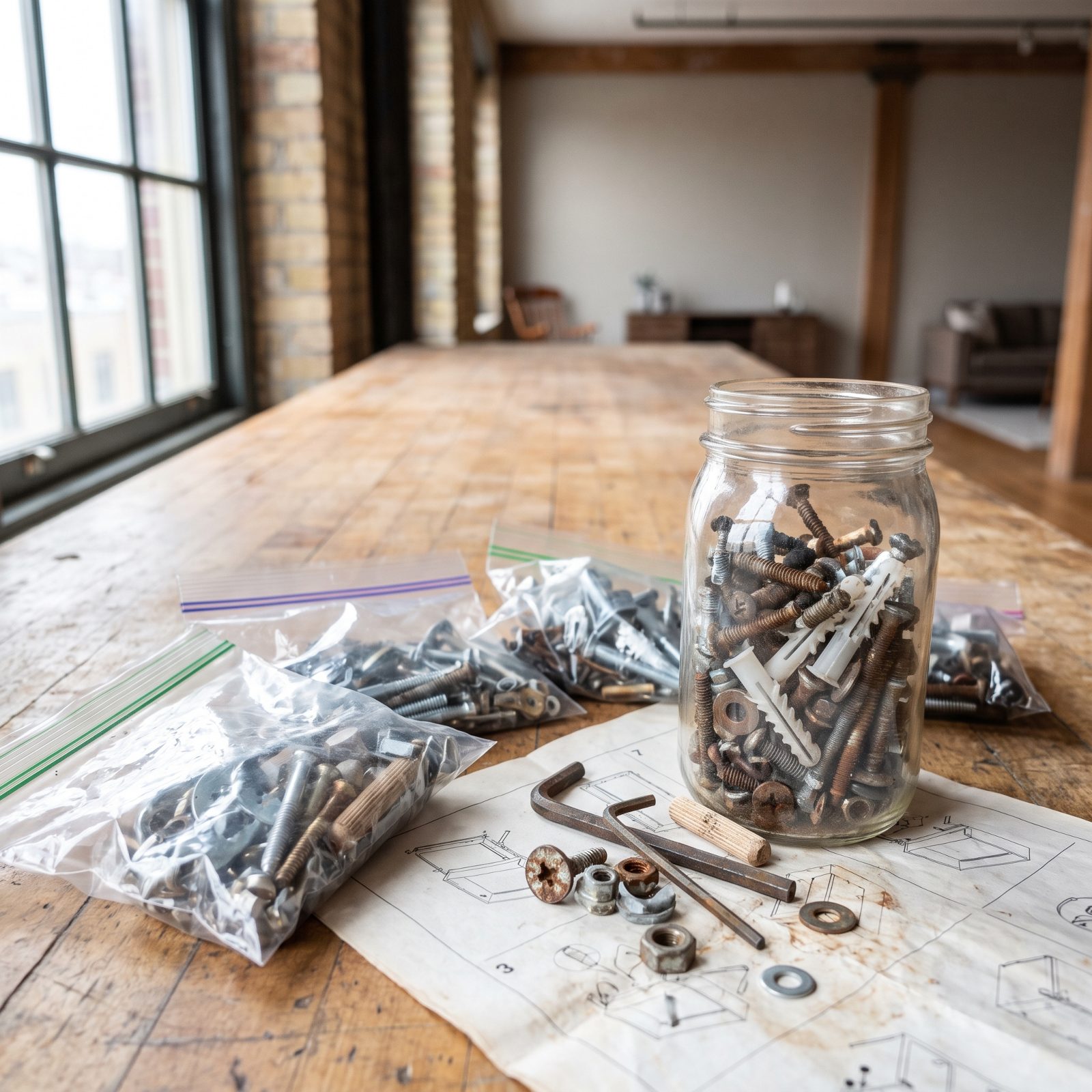
That bag of leftover hardware from the bookshelf meant something on assembly day. Six months later it’s a mystery pouch of screws that fit nothing you can identify.
People keep them because throwing away hardware feels wasteful, and because surely one of these fits something. The catch? An unlabeled screw is barely more useful than no screw. You’ll buy the right one at the store rather than sift through the jar, which makes the jar a monument to good intentions and nothing else.
1. Garage Floors Packed Solid While the Walls Stay Empty
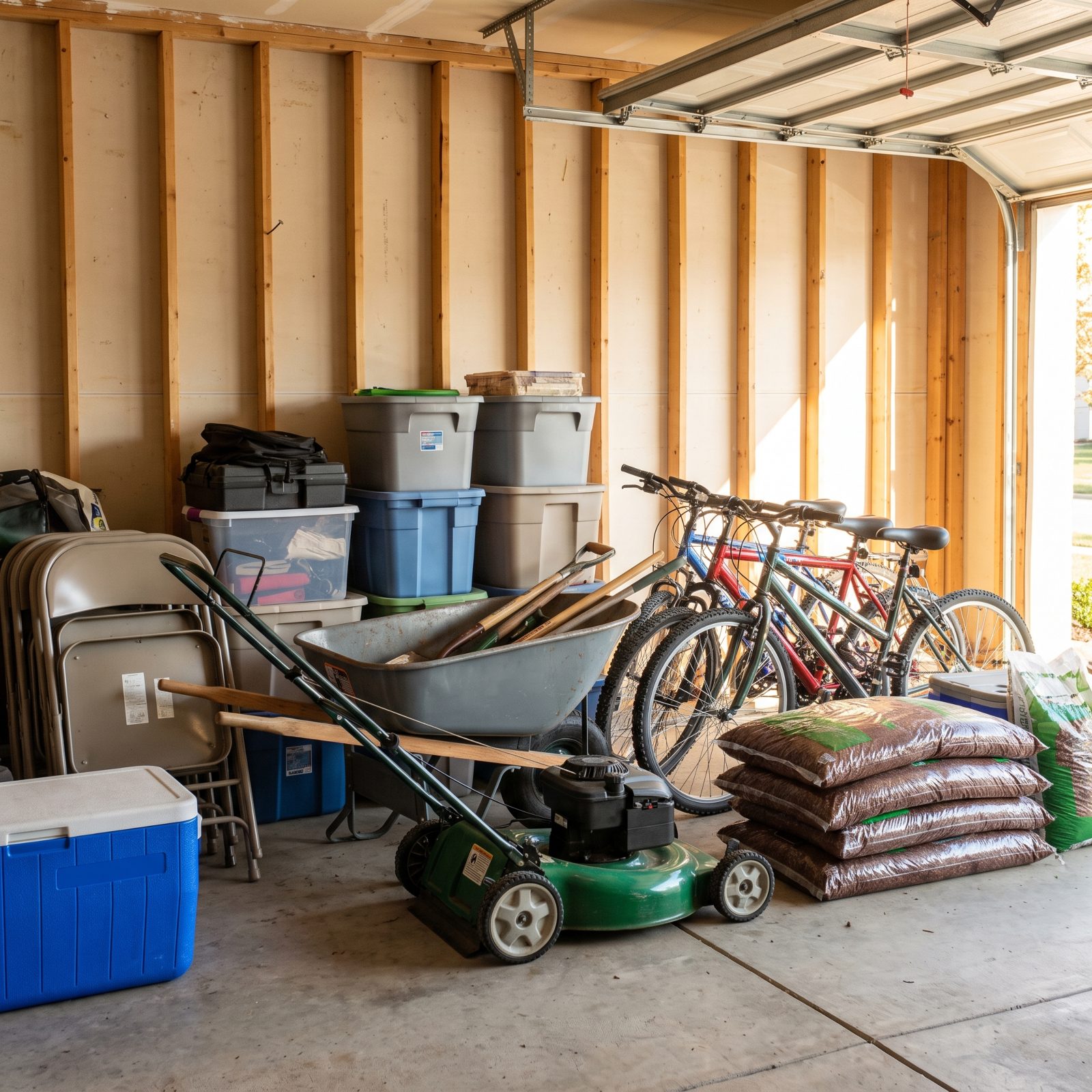
Look at a crowded garage and then look up. The walls are blank. All that vertical space sits empty while the floor does the work of holding bikes, mowers, coolers, and the bags of soil that split open the second you move them.
Horizontal storage is the lazy default because it needs no planning — just set it down. The result is a garage that stores everything except the car, which was the whole point of the garage. Hooks and a couple of shelves reclaim the floor faster than anything, which is why so many cars spend whole winters in the driveway.