
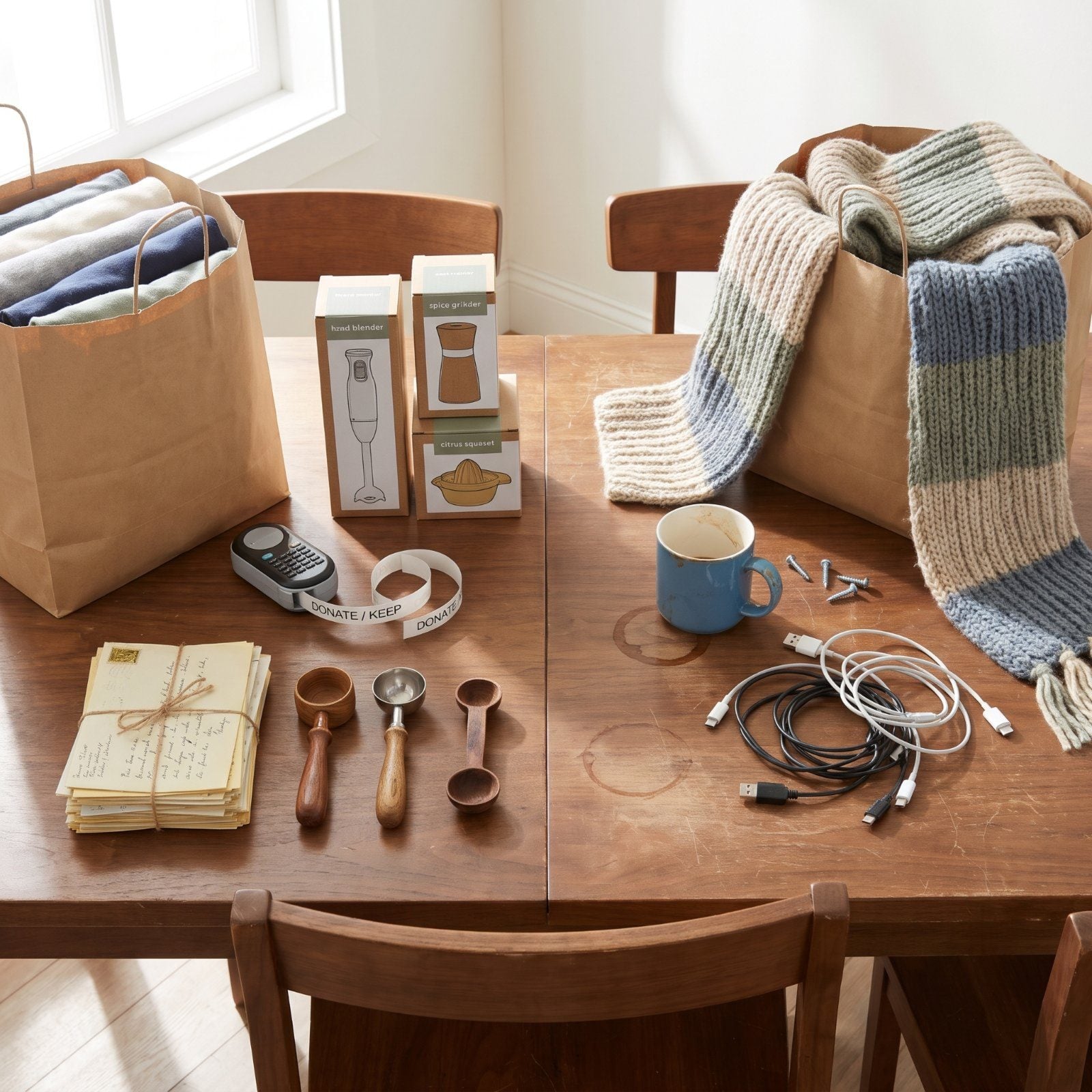
Nobody warns you that a free Saturday and two trash bags can surface a decade of unspoken grievances. You think you’re clearing a closet. You’re actually negotiating whose time matters more, whose stuff gets to stay, and who secretly bought the thing in the box nobody remembers. The junk drawer confesses. The maybe pile stalemates. A chipped mug turns into a loyalty test. What looks like tidying is really a slow, honest audit of trust, communication, power, and whose priorities win when the bags fill up. The same wiring that sits two people on a counselor’s couch is the wiring that has you arguing over a blender at 2pm. Here’s where the house gives you away, and why the reasons are older than the clutter.
Please note that some of the images in this article were created with the assistance of AI.
18. Every Flat Surface Reveals Who Thinks Space Is Theirs
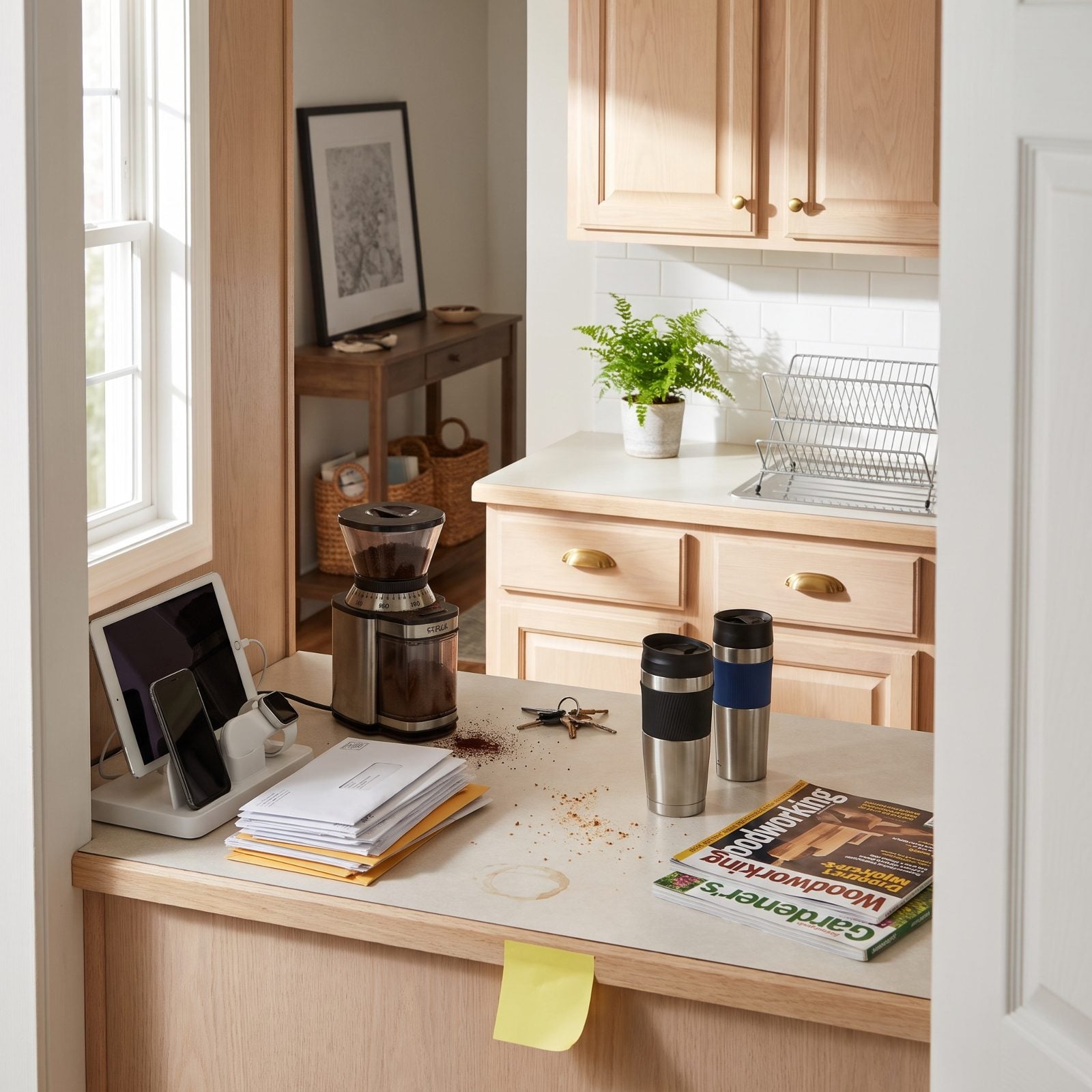
Look at where the mail lands. Look at who owns the kitchen island, the back of the sofa, the top of the dresser. In most homes one person colonizes the flat surfaces, and it happens so slowly nobody notices until the decluttering starts and somebody says, gently, that maybe not every horizontal plane needs to hold their charger cords and golf tees.
This is territory, and we are not above it. Psychologists call it the mere-ownership effect, a cousin of the endowment effect: the moment something feels like ours, it feels more valuable and harder to move. A surface claimed is a surface defended. The counter stops being shared square footage and becomes somebody’s documented habitat.
The marriage-counseling mirror shows up the second you see it. Who gets more say, more room, more default-yes, without either person ever agreeing to it out loud? Space is just the thing you can point at. The real argument is about whose presence gets to expand.
17. You Sort While They Keep Finding Reasons to Disappear

The project starts with both of you. By noon it’s you, a mountain of books, and the sound of someone reorganizing the garage, then checking on dinner, then taking a very important phone call in another room.
This isn’t laziness, usually. It’s avoidance, and avoidance has a logic. Sorting means deciding, and deciding means facing stuff that carries feeling: the exercise bike that stands for a resolution, the clothes two sizes ago, the gift from someone you miss. When the emotional weight of a task climbs, the brain gets very creative about finding somewhere else to be.
You’ve watched a friend live this exact afternoon. One person doing the hard work out loud, the other managing to be present and absent at the same time. Counselors have a name for it: the pursuer and the distancer. One chases engagement, one creates space, and both dig in harder the more they try.
The decluttering just makes it visible. The chase isn’t about the closet. It’s about wanting a partner in the thing, and standing there alone with the bags.
16. Their Maybe Pile Makes Every Decision Your Job

Keep. Donate. And then the third pile, the one that swallows everything: maybe. It looks like participation. It’s the opposite — a way of being in the room without owning a single call.
Here’s the trap. A maybe isn’t a neutral outcome. It’s a decision outsourced to you, later, when you’re tired and want it over, and you become the one who has to say the final no on their behalf. Then if it turns out they wanted the thing, guess who threw it out.
A maybe is a decision wearing a disguise. Someone still has to make it, and it’s usually not the person who said maybe.
Counselors see this constantly, just without the cardboard boxes. One partner avoids taking a position so they can’t be blamed for the result, which quietly hands the other person all the responsibility and all the risk. Call it decision avoidance or passing the buck. The maybe pile is where it lives in a house.
15. Different Definitions of Clean Finally Meet Behind the Sofa

Two people can live in the same house for years and never discover they define clean completely differently. Then the sofa gets moved, and the truth behind it comes out: the dust, the coins, the sock nobody admits to.
For one of you, clean means the visible parts look good. For the other, clean means the hidden parts are actually clean. Neither is lazy. They’re running on different standards set long before you met, usually by whatever house you grew up in.
Here’s where the trouble hides in a marriage too. Not the big dramatic fights, but the mismatched baselines that never got spoken out loud. You assumed your normal was the normal. So did they. Nobody negotiated it, so it just sat there, behind the furniture, until something forced it into the light.
The fix isn’t winning. It’s finally saying the standard out loud so there’s one to share.
14. Donating Their Chipped Mug Without Asking Breaks Trust Fast
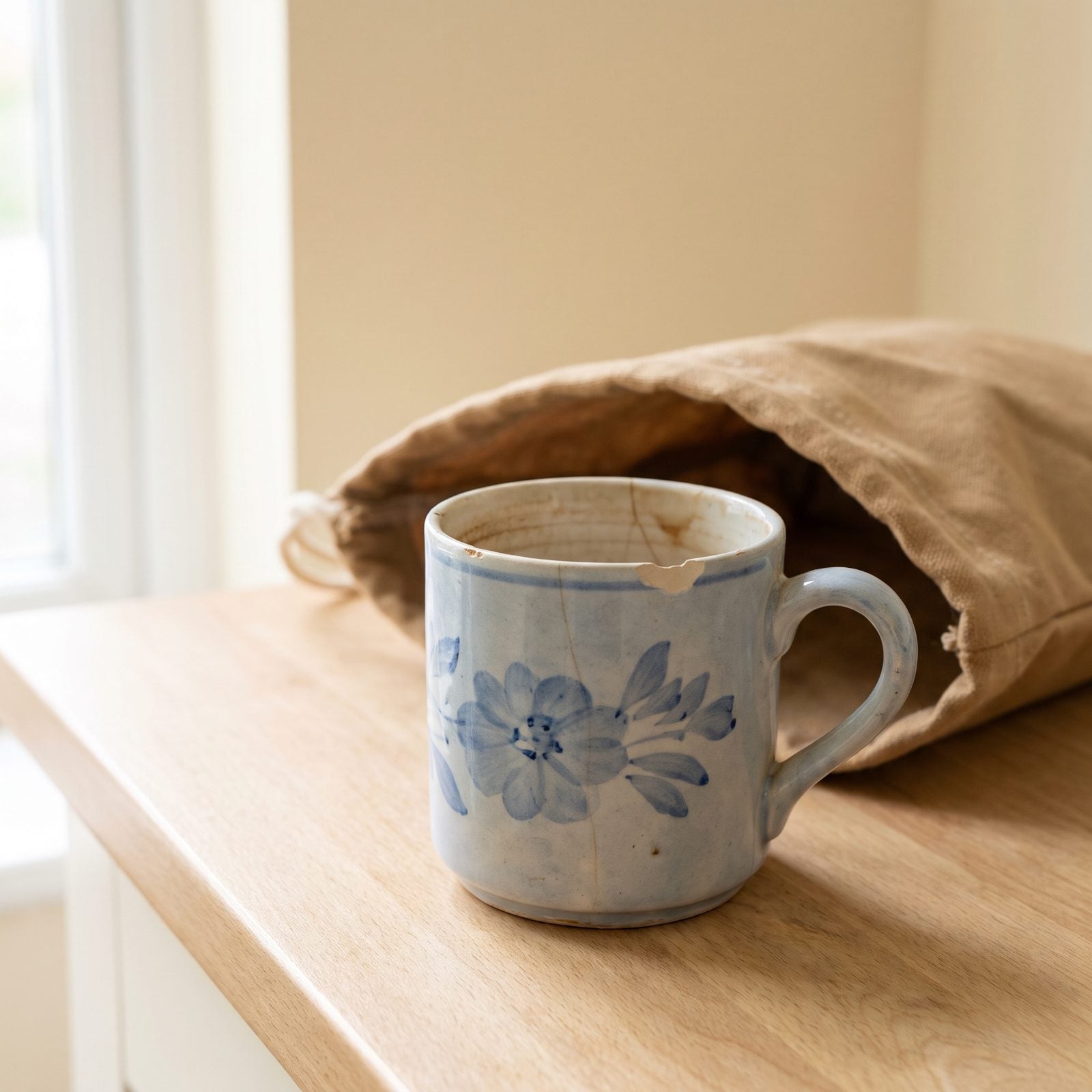
The mug is chipped, the handle faded, and it holds less than a juice glass. Any reasonable audit sends it straight to the donation bag, so you do, and when they notice it’s gone the temperature in the house drops ten degrees.
You weren’t wrong about the mug. You were wrong about the rule. The thing wasn’t worth defending; the fact that you decided alone was. Stuff carries memory, and we assign value to objects that has nothing to do with their market worth. Economists call it the endowment effect. Everyone else calls it that was my dad’s mug and you threw it out.
The breach is small and enormous at once. In a relationship, trust is built from a thousand tiny moments of consent, of checking first, of treating the other person’s attachments as real even when you don’t share them. Act unilaterally on something that was theirs and the object stops being the point. The message is: your things, and your feelings about them, are mine to overrule.
Ask first. Even about the ugly mug. Especially about the ugly mug.
13. Your Label Maker Starts Looking Like a Power Grab
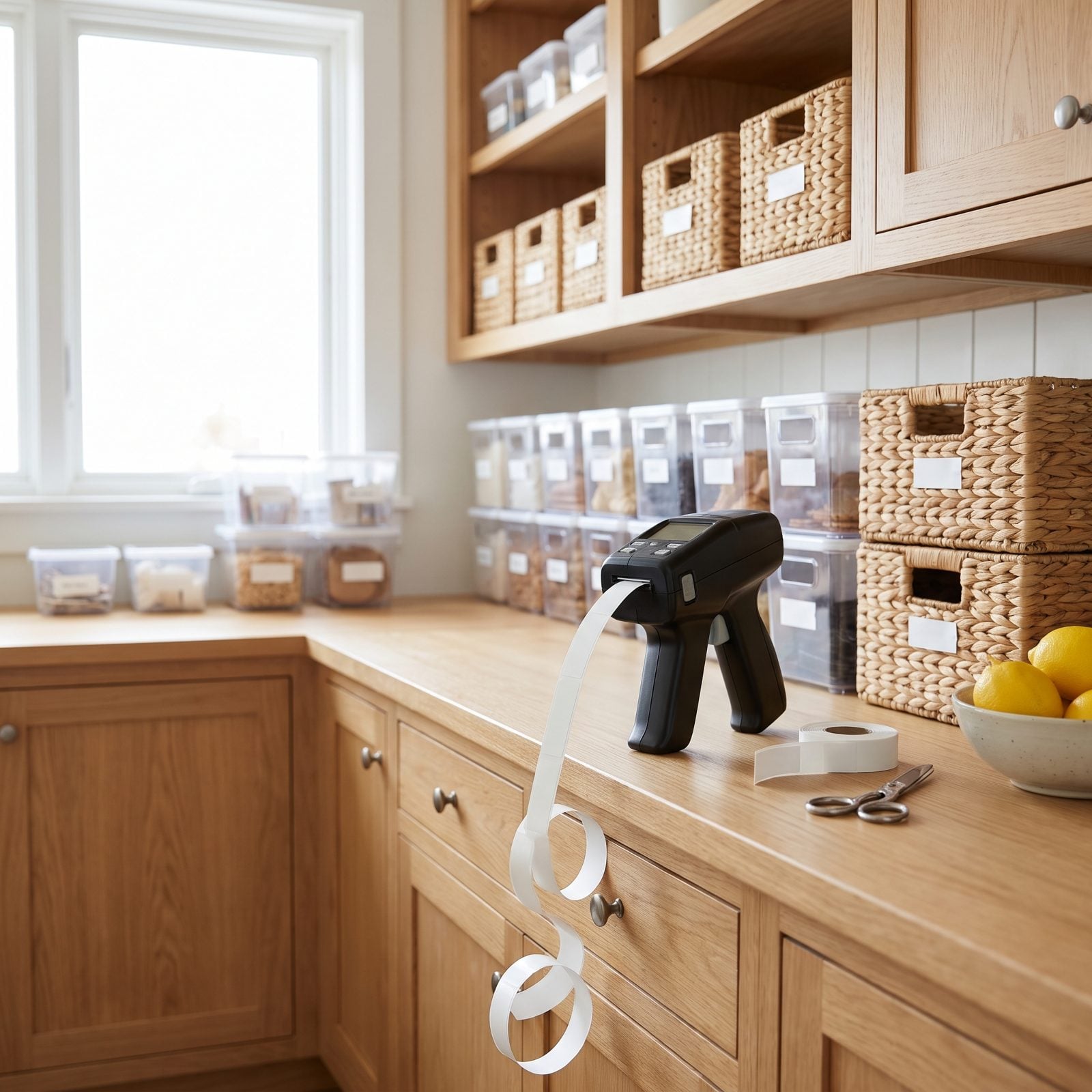
Organizing feels like the generous part of the project. You’re the one making the system. Then somewhere around the fourth labeled bin, the system stops being shared and starts being yours, and a label maker in the right hands turns into a very polite instrument of control.
When everything has a designated place that one person designed, the other person now lives in a house where they can be wrong about where the scissors go. Order starts carrying a quiet enforcement. Put it back correctly. Correctly meaning: the way I decided.
There’s real psychology under this. Imposing structure is one way people manage anxiety, and it genuinely helps the person doing it feel calmer. But a system built for one nervous system can feel like a cage to another. The marriage version is the partner who keeps the ledger of how things should be done, where helpfulness and control share a border nobody mapped.
12. You Critique the Closet; They Defend Their Entire Character

You pick up the ten-year-old concert shirt with the hole in the armpit and say, reasonably, that maybe this one can go. What you hear back is not about the shirt. It’s a defense of the entire person who ever loved that band, went to that show, was that version of themselves.
You meant to critique a garment. They heard a critique of who they are. That gap is the whole problem.
Clothes are identity worn on the body, which is why closet cleanouts turn tense so fast. Suggesting a piece go can register as suggesting a self should go: the ambitious one who bought the suits, the athletic one in the jersey, the younger one in the flannel. Attachment to those pieces is attachment to continuity, to not disappearing.
Counselors call this fusing the behavior with the identity. You said “this shirt.” They heard “this you.” The defensiveness isn’t about fabric. It’s the alarm that goes off when someone we love seems to be editing us down.
So aim narrow. The shirt is just a shirt. Say that out loud, because they genuinely can’t tell.
11. You Hide Donation Bags to Avoid the Predictable Blowup

You know the move because you’ve either done it or caught someone doing it. The bags go out to the car at a strategic hour, the donation run happens while they’re out, and nobody discusses the contents. The reasoning sounds practical: it avoids a fight. It just doesn’t actually avoid anything.
This is conflict avoidance with a cardboard box, and it works right up until it doesn’t. You’re spending trust to buy quiet. Every hidden bag is a small secret, and secrets compound. When they finally notice something’s gone, the fight you dodged comes back bigger, now with a second charge attached: you went behind my back.
In relationship terms this is stonewalling’s sneaky cousin, managing the other person instead of talking to them. It comes from a decent place, usually. You’re tired of the predictable blowup. But handling someone to keep the peace tells them, underneath, that you’ve decided they can’t be reasoned with. That’s a heavier message than any argument about a lamp.
The hard thing is also the simple thing. Say what you want to donate, out loud, before it leaves. Risk the ten-minute fight to skip the ten-day silence.
10. Three Unopened Blenders Raise Questions About Secret Spending
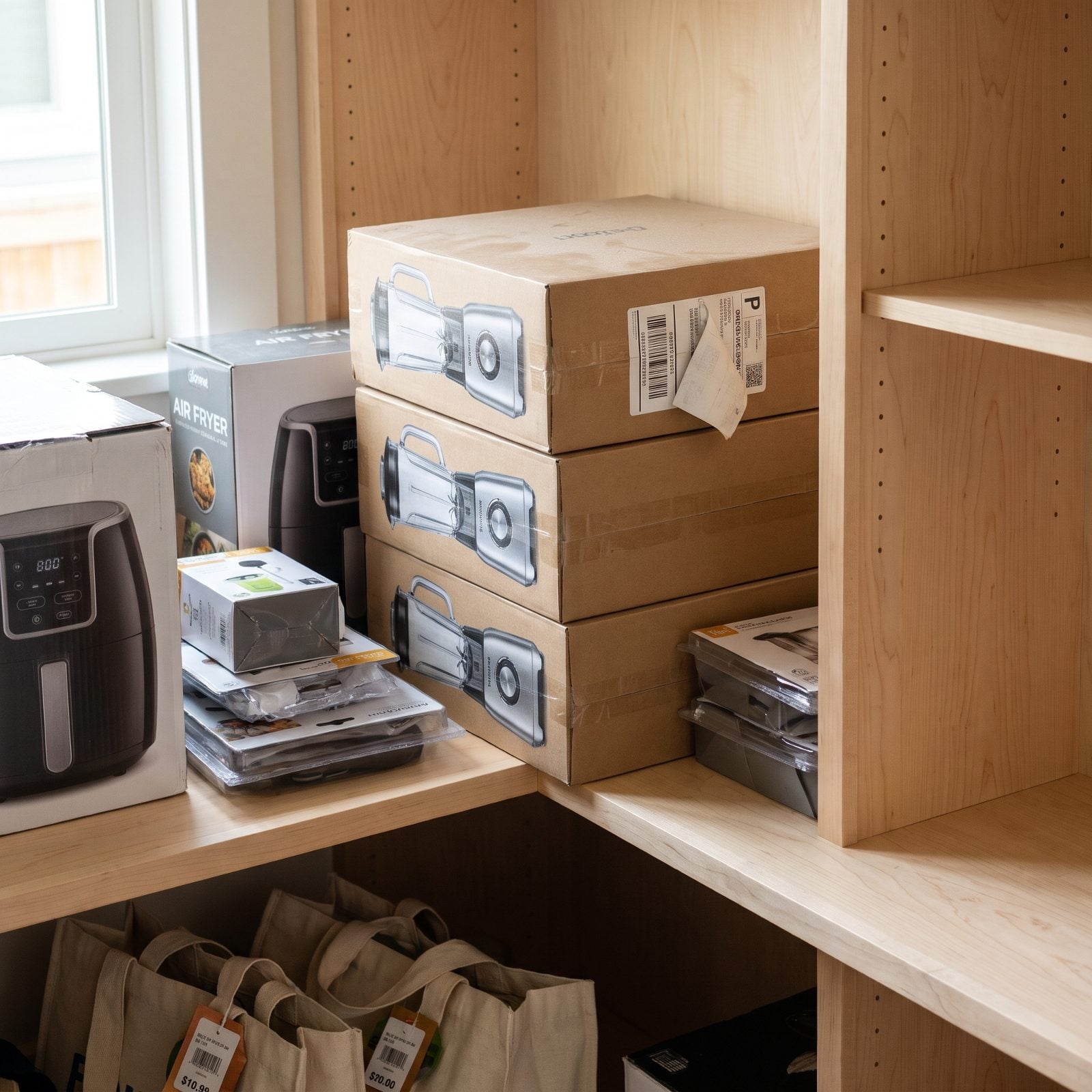
Pull everything off the back shelf and there they are. Three blenders. All unopened. Plus an air fryer that already had a twin somewhere. The question writes itself, and it isn’t really about blenders.
Decluttering is an audit nobody consented to. The stuff tells on the spending, and duplicate unopened purchases tell a specific story: someone bought for the feeling, not the need. The purchase did its job in the checkout line and never had to be used. That’s a well-documented loop. The hit of acquisition fades fast, so another one gets ordered.
Money is one of the top things couples actually fight about, and it rarely stays about money. Three blenders raise the real question: what else don’t I know, and why wasn’t I told. The hidden spending matters less than the hiding. That’s the part that sits a couple on the counselor’s couch, holding a receipt.
9. The Garage Shows Whose Hobbies Get Permanent Real Estate
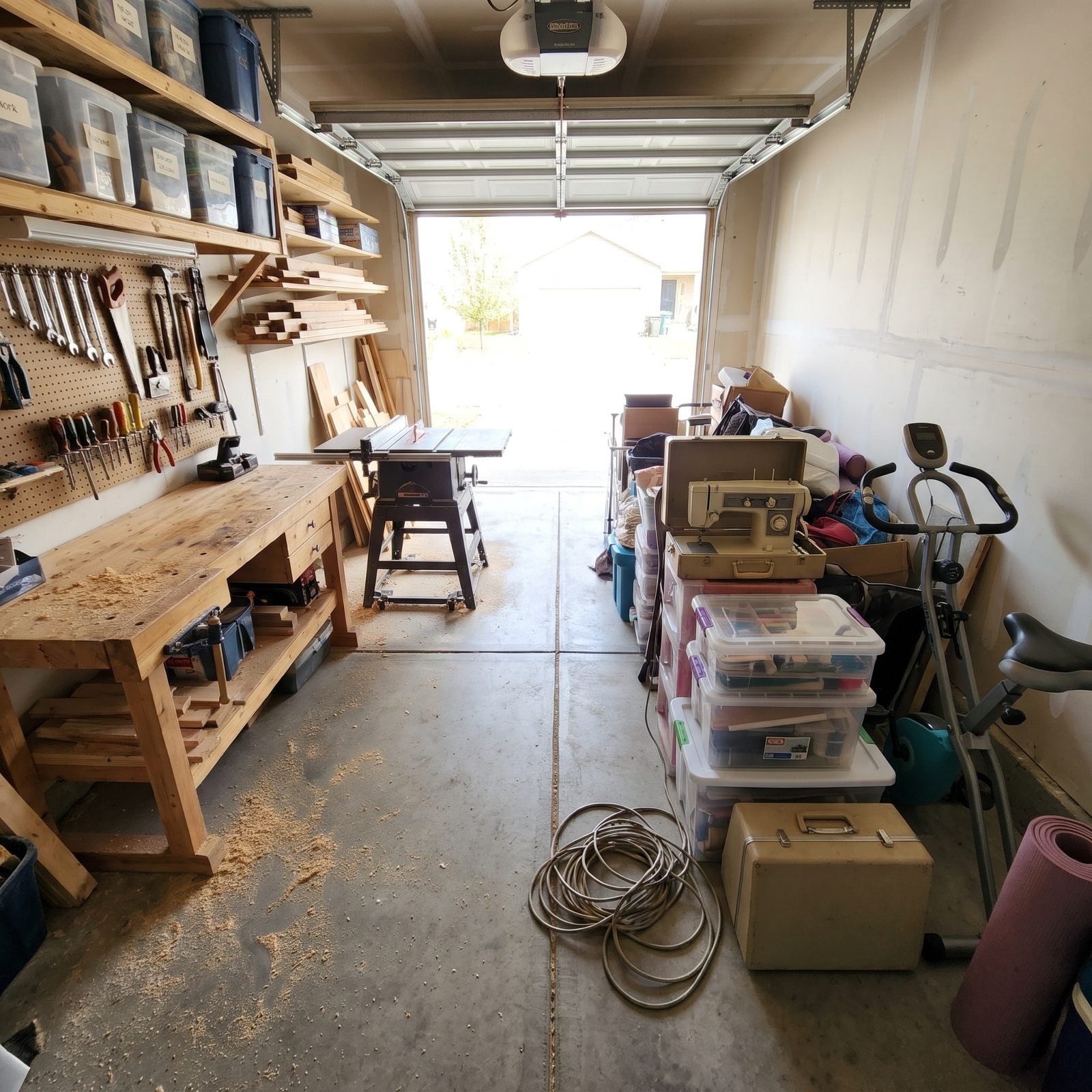
The garage doesn’t lie. One side is a fully built workshop — bench, pegboard, bins of in-progress projects, carved out over years. The other side is where a second person’s hobbies go to be crammed against the wall, if they fit at all.
Here’s a map of whose interests got treated as real. Permanent real estate in the garage is a vote. It says this pursuit matters enough to keep a dedicated zone, and the sewing stuff shoved behind the bikes says the quiet opposite, whether anyone meant it that way or not.
How you split shared space is one of the most honest measures of whose priorities quietly won. In a marriage it rarely gets decided in a conversation. It accretes. One person’s thing expands a little each year because they advocate for it, use it, defend it, and the other person’s shrinks by default. Not malice. Just momentum nobody checked.
The reckoning comes when you stand in there with boxes and see it laid out on the floor. The question underneath isn’t about shelving. It’s: do my interests get to take up room in this life too. Answer that one honestly and the garage reorganizes itself.
8. The Hall Closet Shows Who Always Makes Themselves Smaller

Open any shared hall closet and you can usually read the negotiation that never got spoken out loud. One person’s belongings are folded into the smallest possible footprint, squeezed to the edge, apologizing for taking up room, while the other person’s stuff sprawls like it pays the mortgage. Same closet. Two completely different beliefs about who gets to occupy space.
Counselors see this exact dynamic when a couple describes a normal Tuesday. One partner has quietly trained themselves to need less, want less, ask for less. It feels like generosity. Often it’s a learned flinch.
Psychologists call it self-silencing: shrinking your own needs to keep the peace, until shrinking becomes the only size you know. The closet makes it physical. That folded stack in the corner isn’t tidiness at all — it’s a whole history of deciding your things matter a little less than theirs.
7. Half-Finished Projects Become Evidence About Promises and Follow-Through
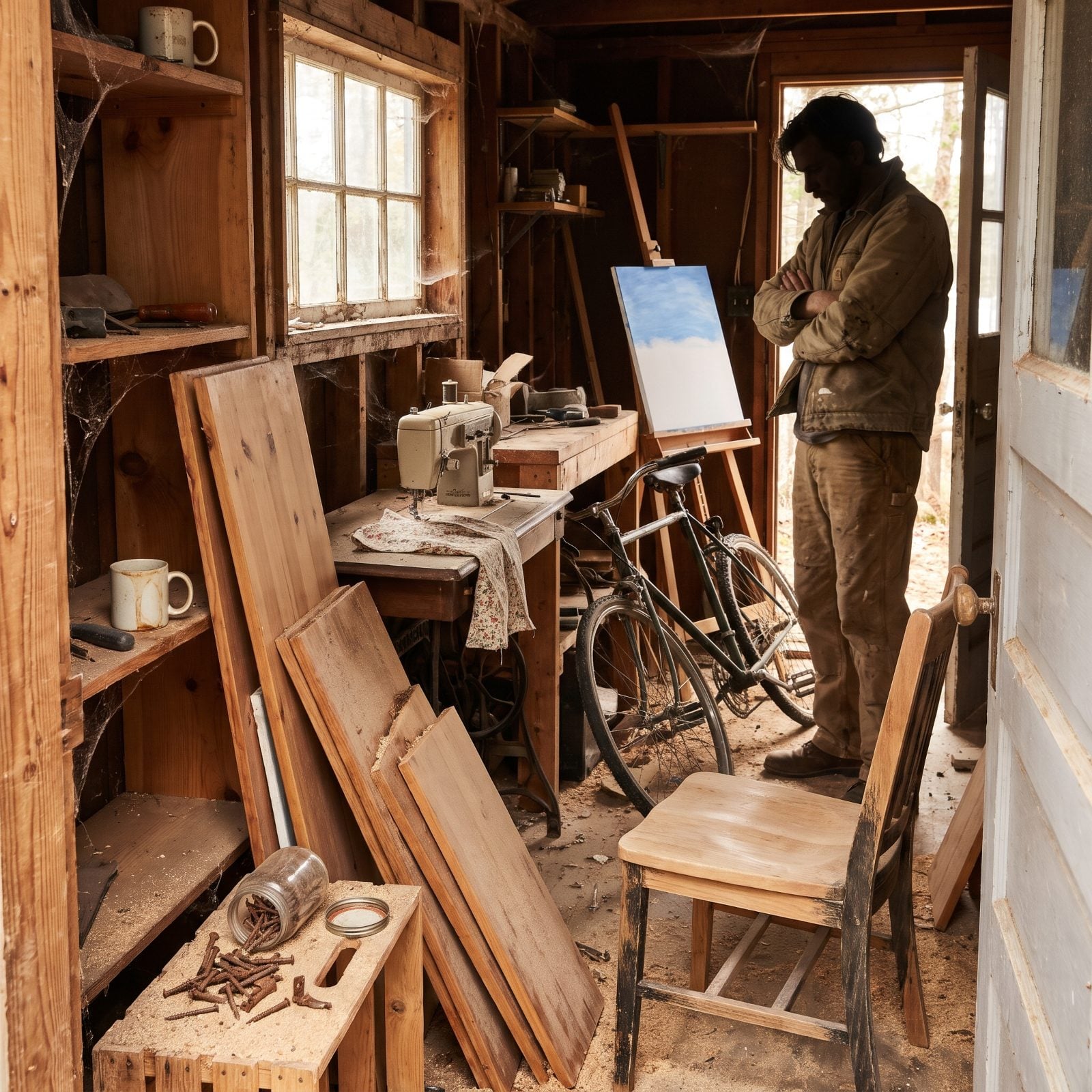
The half-sanded chair has been half-sanded for two years. The bookshelf lives in pieces, its screws in a jar, and somewhere there’s a sewing machine with fabric still pinned under the needle, waiting on a seam nobody’s planning to finish.
Start sorting these and watch the mood shift. Suddenly you’re not talking about a chair. You’re talking about every time someone said they’d handle it and didn’t, and the unfinished project becomes proof, something both people reach for like a lawyer.
Here’s the trap. We judge ourselves by our intentions and other people by their results — the fundamental attribution error, running hot during decluttering. My abandoned project means I’m busy and I have big plans. Yours means you never follow through. Same dust, two verdicts.
6. One Paint Can Restarts the Argument From Three Years Ago
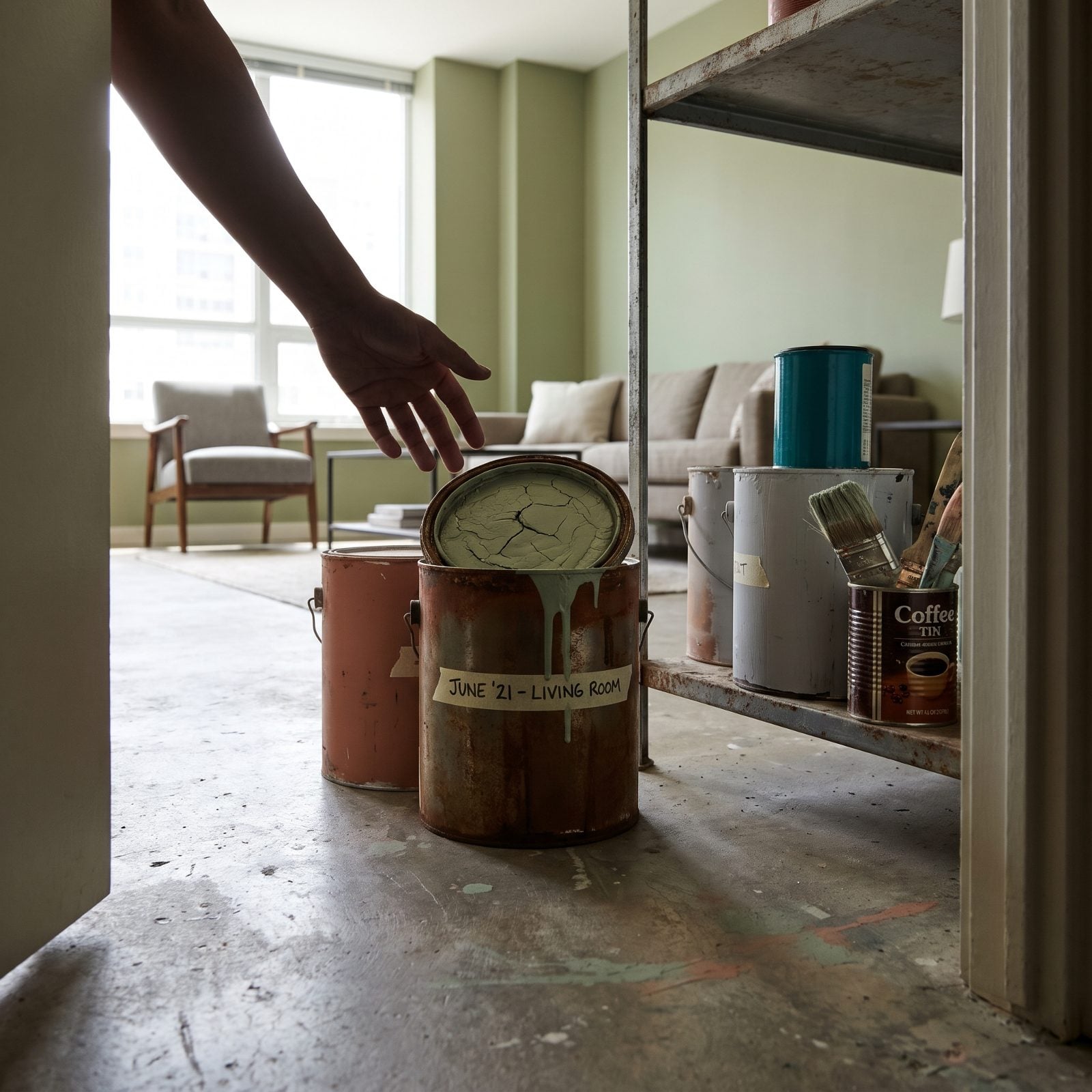
Nothing reopens an old wound like a crusted paint can. You find it on the basement shelf, the sage green you two never agreed on, and before the lid is fully off you’re back in the kitchen in a conversation from three years ago, word for word.
The paint didn’t cause the fight. It stored it. Objects do this quietly, becoming bookmarks for conversations we never actually closed, and the second we touch them the whole page reopens.
Some objects aren’t clutter. They’re unfinished arguments wearing a lid.
Marriage counselors call these perpetual issues — the disagreements that never get resolved, only managed. A large share of a couple’s conflicts are exactly this kind, and they don’t go away. The sage can is one of them, waiting on a shelf. You can throw out the can. You cannot throw out the question underneath it, which is whose taste gets to win.
5. One Box of Old Love Letters Stops Everything
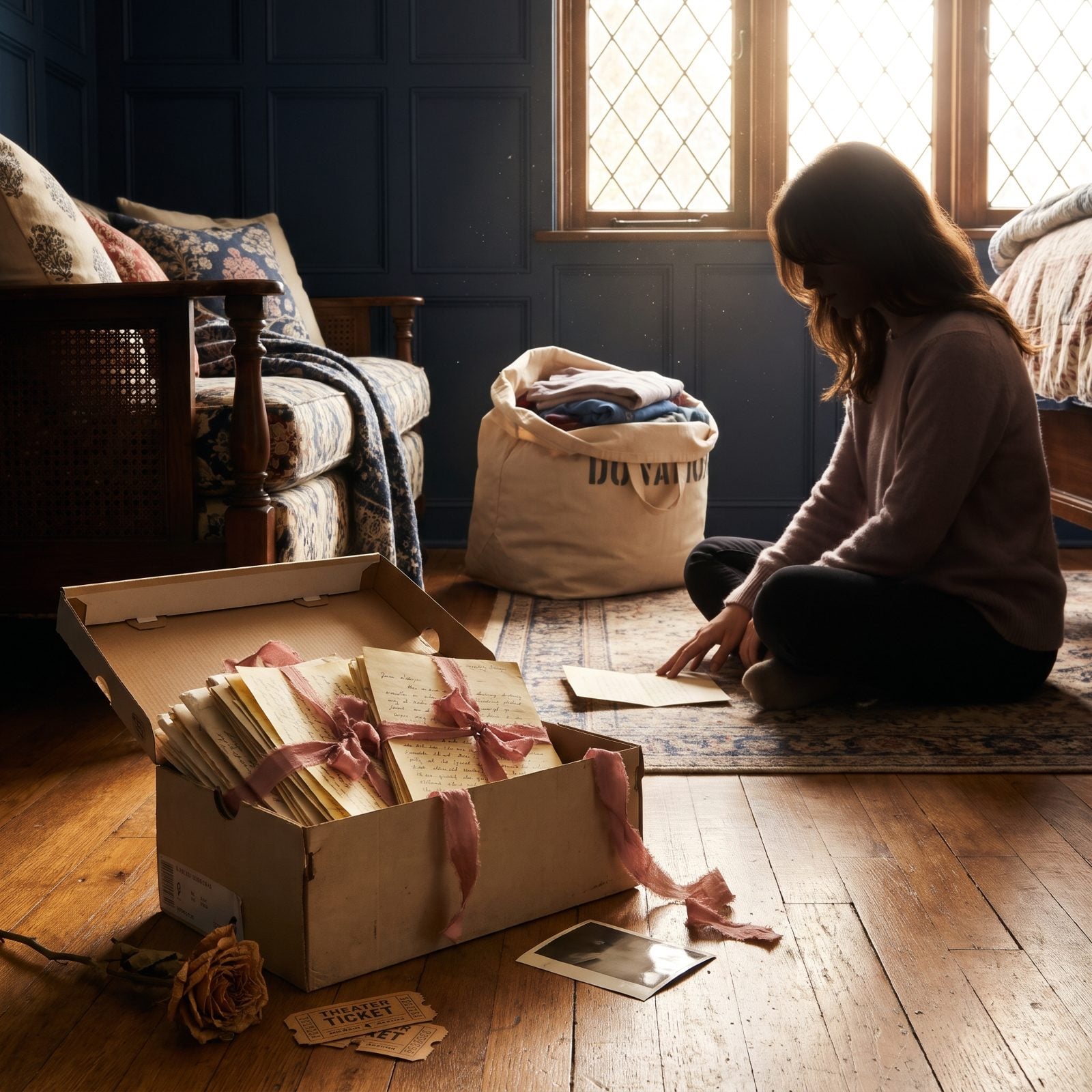
The whole operation is humming along, bag after bag heading out, and then someone lifts the lid on a shoebox of old letters. Everything stops. The ribbon comes loose, one page gets read, then another, and the afternoon is gone.
So much for the trash-bag efficiency you started with. The point isn’t that the letters are worth keeping — it’s that they pull you back into a version of the two of you that existed before the resentments piled up like the junk in the garage.
Memory does a kind editing job here. Nostalgia smooths the rough edges and keeps the warm parts, which is exactly why reminiscing together can soften a tense room faster than any apology. Those letters are evidence that it was good once, and that evidence matters more than the box it came in.
4. Their Keep Pile Looks Exactly Like Their Childhood Home

Look at what each person refuses to throw away and you’re looking at the house they grew up in. One keeps almost nothing, raised somewhere that prized a clear surface and a cold eye toward sentiment. The other saves the twist ties, the grocery bags, the buttons from shirts long gone — raised somewhere that learned you never know when you’ll need it.
These aren’t quirks. They’re inheritance. We absorb our whole model of home before we’re old enough to question it, and then we marry someone who absorbed a different one. The keep pile is where two childhoods finally collide on the living room floor.
Neither pile is wrong. They’re just two different families still arguing, generations later, through the two people standing on the rug.
3. The Kids’ Artwork Turns Into a Parenting Standoff
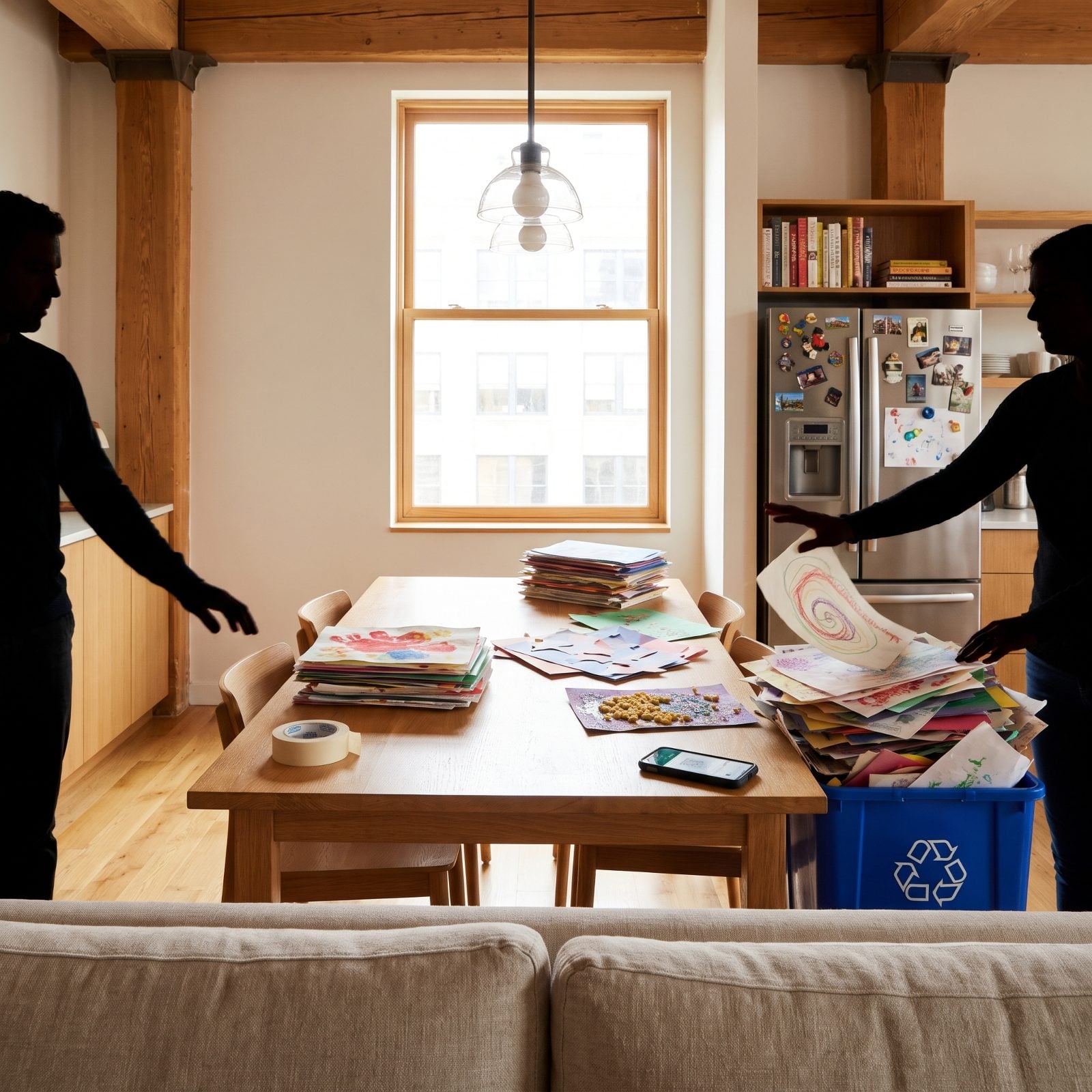
It starts reasonable. You cannot keep every macaroni turkey from preschool through sixth grade. Everyone nods. Then one person’s hand reaches for a specific crumpled drawing, and the other flinches like you reached for the kid’s actual arm.
Suddenly it isn’t about paper. It’s about who loves them more, who remembers more, who’s the sentimental one and who’s the cold one. The recycling bin becomes a referendum on your whole parenting.
What’s really happening is that the artwork stopped being the kid’s long ago. It became a trophy of your own effort — proof that you showed up, taped it to the fridge, drove to the recital. Tossing it feels like tossing your own devotion. Call it the endowment effect wearing a glitter beard; we overvalue what represents us. Scan it, keep three favorites, let the rest go. The love was never in the construction paper.
2. Unwanted Gifts Reveal Whose Family Feelings Come First
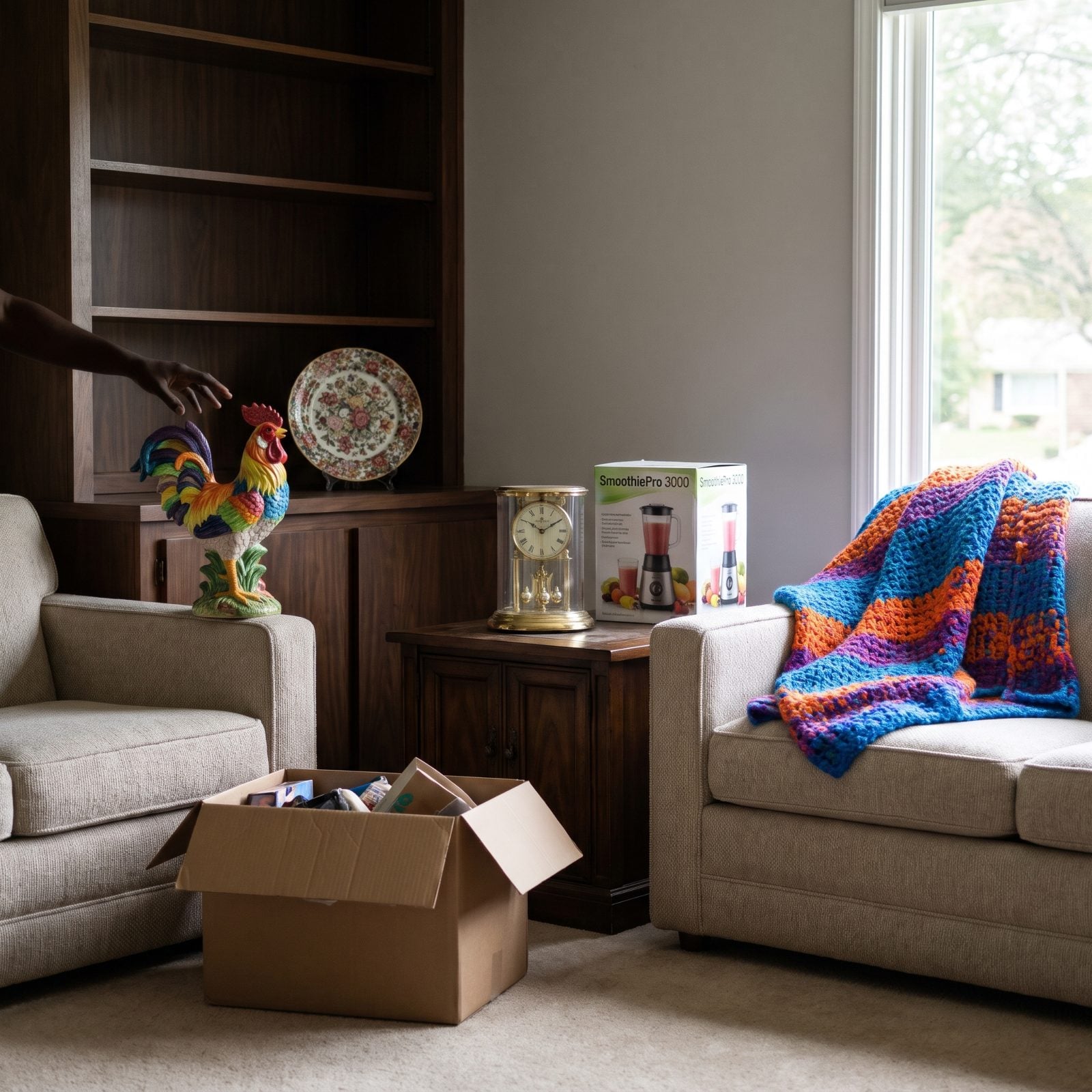
The ceramic rooster from his mother. The clashing floral plate from her aunt. The appliance still in its box, a gift from someone whose feelings apparently outrank kitchen counter space. You both know these things are not to your taste, and neither of you will be the one to toss them.
And the real fight lives right there. Keeping the rooster isn’t about roosters. It’s about whose family you’re willing to risk offending, because every unwanted gift carries the invisible gift-giver standing behind it, watching.
Reciprocity runs deep in us, deeper than aesthetics. A gift creates a debt, and getting rid of it feels like defaulting. So the house fills up with obligations nobody chose, each one a small loyalty test about whose relatives get protected first. Decide that together, out loud, or the rooster wins by default every time.
1. The Someday Bin Shows How Differently You Handle Uncertainty
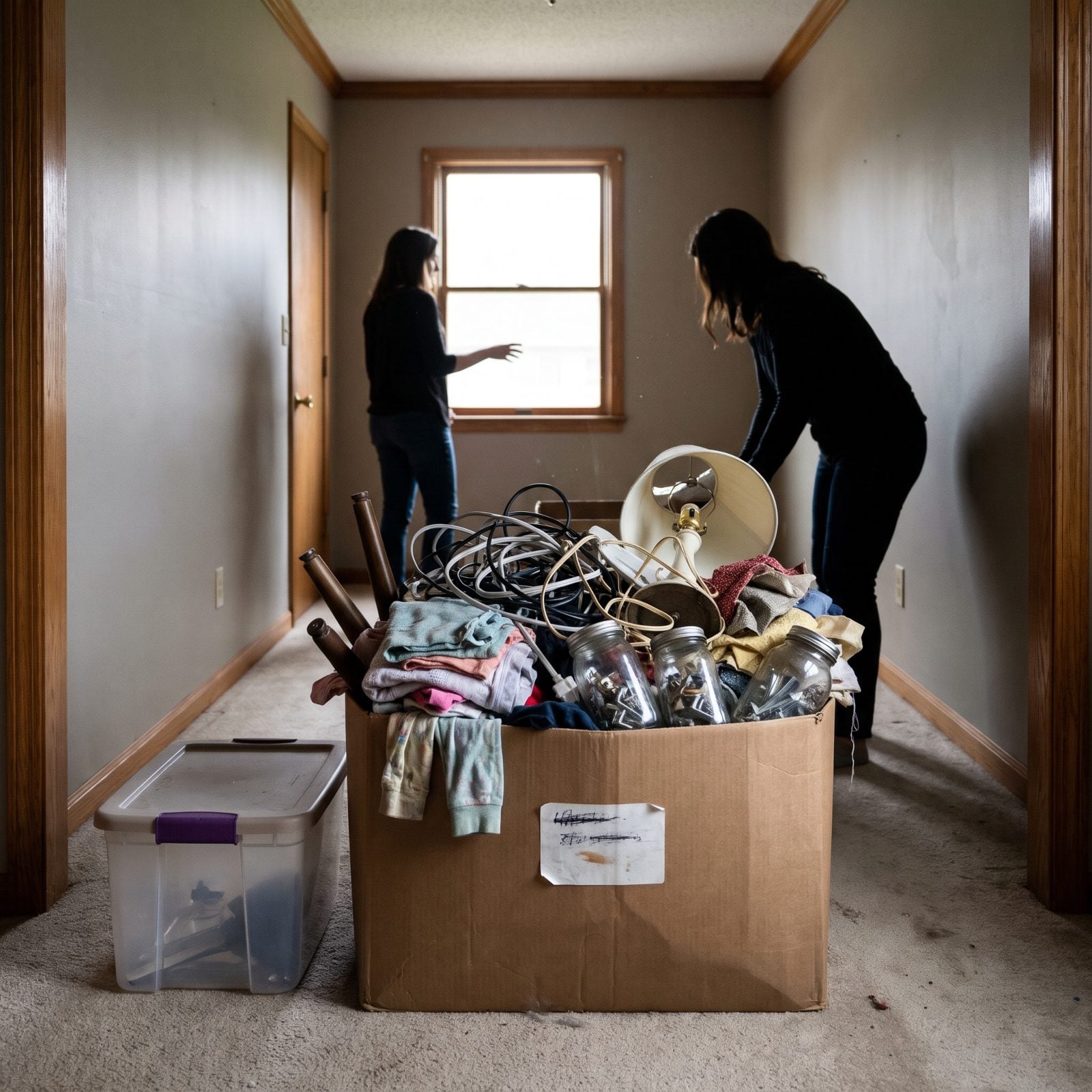
Every household has one. The someday bin — the place where things go that might be useful, might get fixed, might come back in style, might fit again. One of you treats it like a safety net. The other treats it like a slow leak.
That split isn’t about mess. It’s about how two different nervous systems handle not knowing what’s coming. The saver keeps the broken lamp because getting rid of it feels like betting against the future, and losing something you might need stings worse than keeping something you won’t.
Loss aversion is the engine. The pain of discarding looms larger than the pleasure of the empty shelf, so the bin never shrinks, while the other person feels the exact opposite — that the open space is the whole reason to do this at all.
Neither of you is managing the bin. You’re managing uncertainty, with two completely different strategies, in one small plastic box. Name that out loud and the bin gets a lot easier to open.