
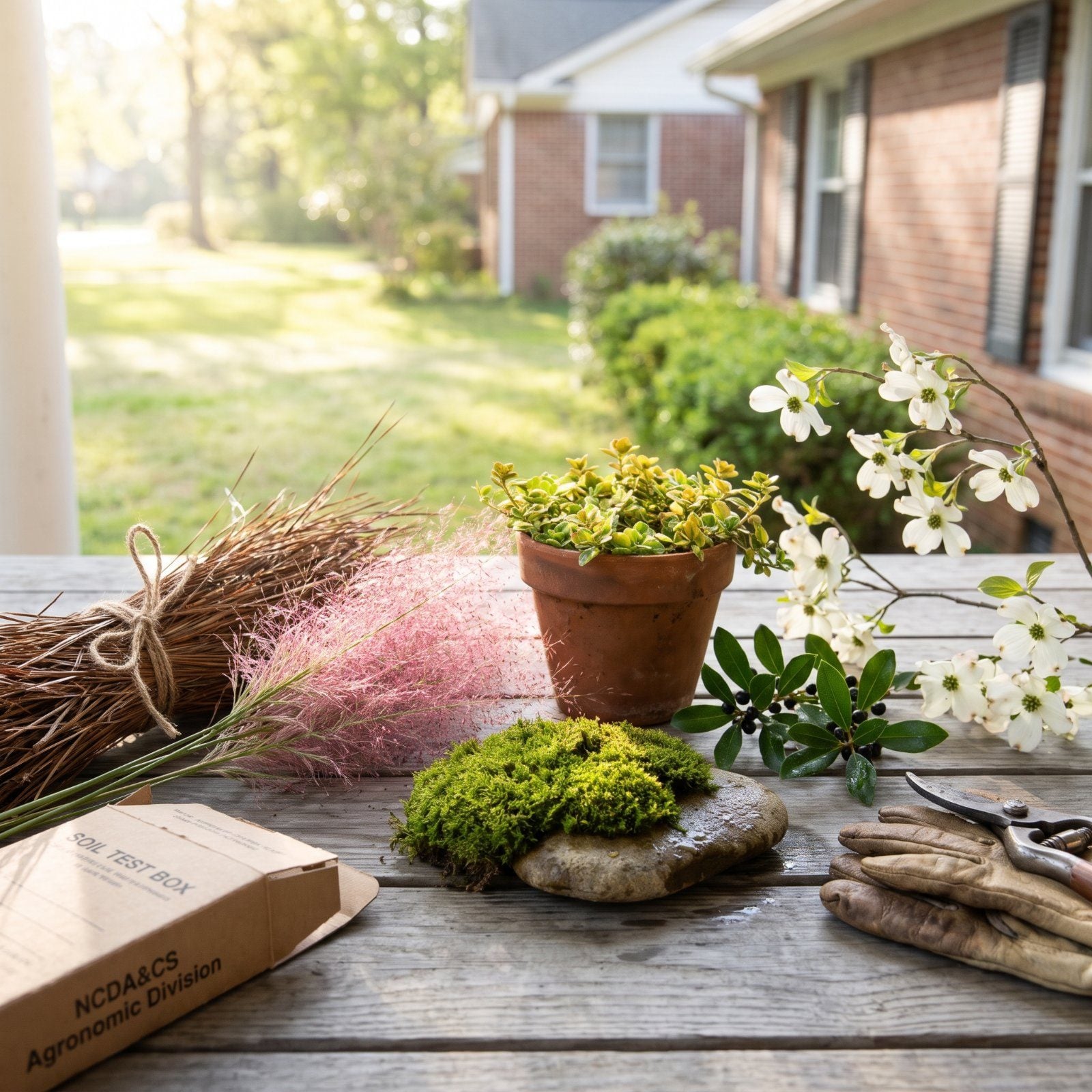
The suburban front lawn is the most expensive carpet in America, and most of it gets walked on maybe four times a year. In North Carolina the odds are stacked against you anyway. Clay bakes hard in the Piedmont, salt spray scorches coastal yards, and mountain shade kills turf outright, so fighting for a putting-green lawn is a losing war. NC State and the county Extension offices have spent decades saying there’s a calmer way. Native shrubs that shrug off deer. Grasses that bloom pink in October. Moss that never needs mowing. Here’s what actually works, matched to where you live.
Please note that some of the images in this article were created with the assistance of AI.
20. A Low-Input Warm-Season Lawn: Centipede or Zoysia
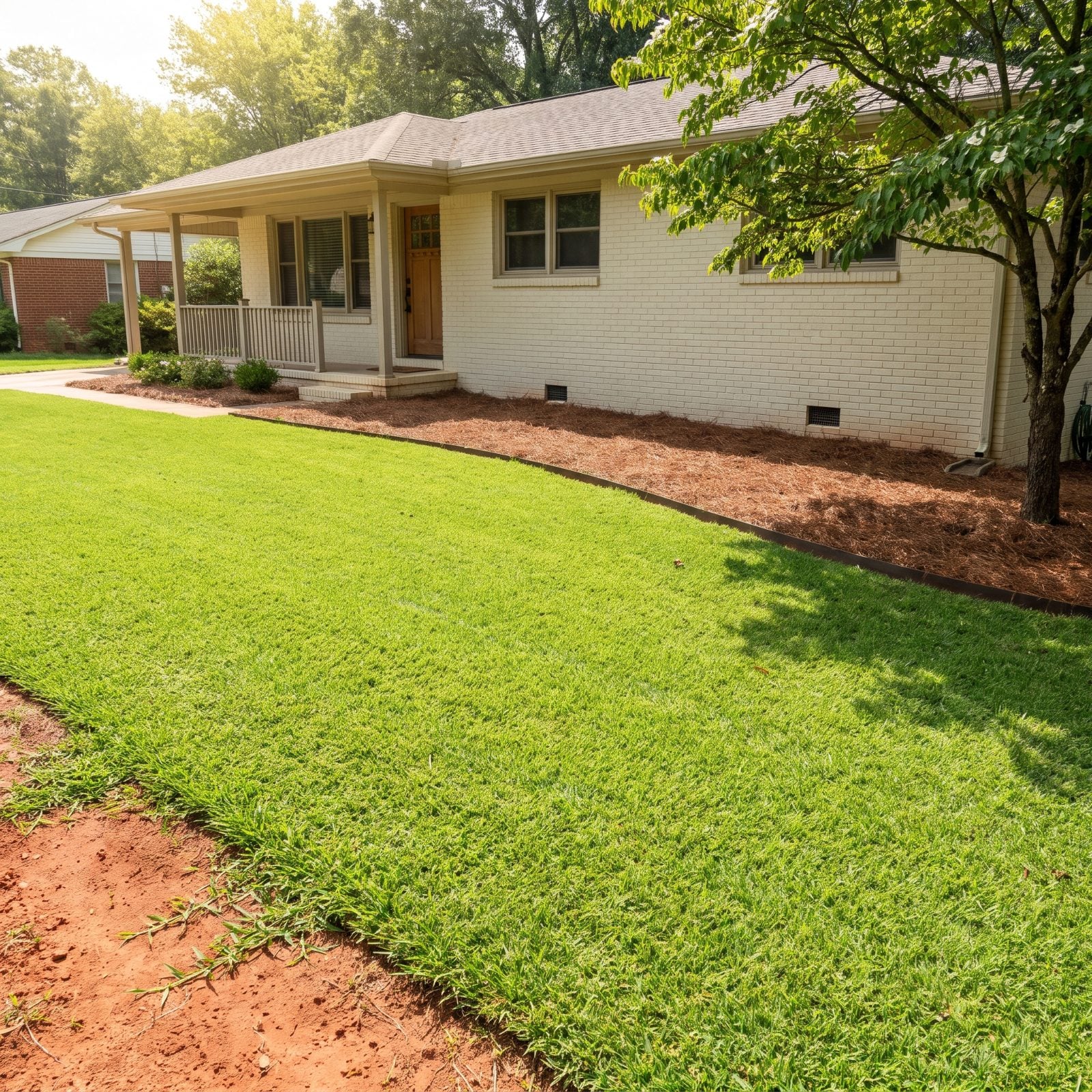
Can’t give up grass entirely? Pick one that doesn’t demand your weekends. Centipedegrass is the lazy gardener’s dream. NC State’s Extension Gardener Handbook rates it low-maintenance for the Piedmont and Sandhills-Coastal Plain, and it wants only half a pound to a pound of nitrogen per 1,000 square feet a year. It loves our acidic soil and full sun. The catch? It can’t take foot traffic, drought, or deep shade, so this is a look-at-it lawn, not a play-on-it one.
Zoysia is the sturdier cousin. It grows slower than bermuda, so you mow less, and once it’s settled in it rarely needs watering to survive here.
19. Shrink the Lawn With Bigger Planting Beds
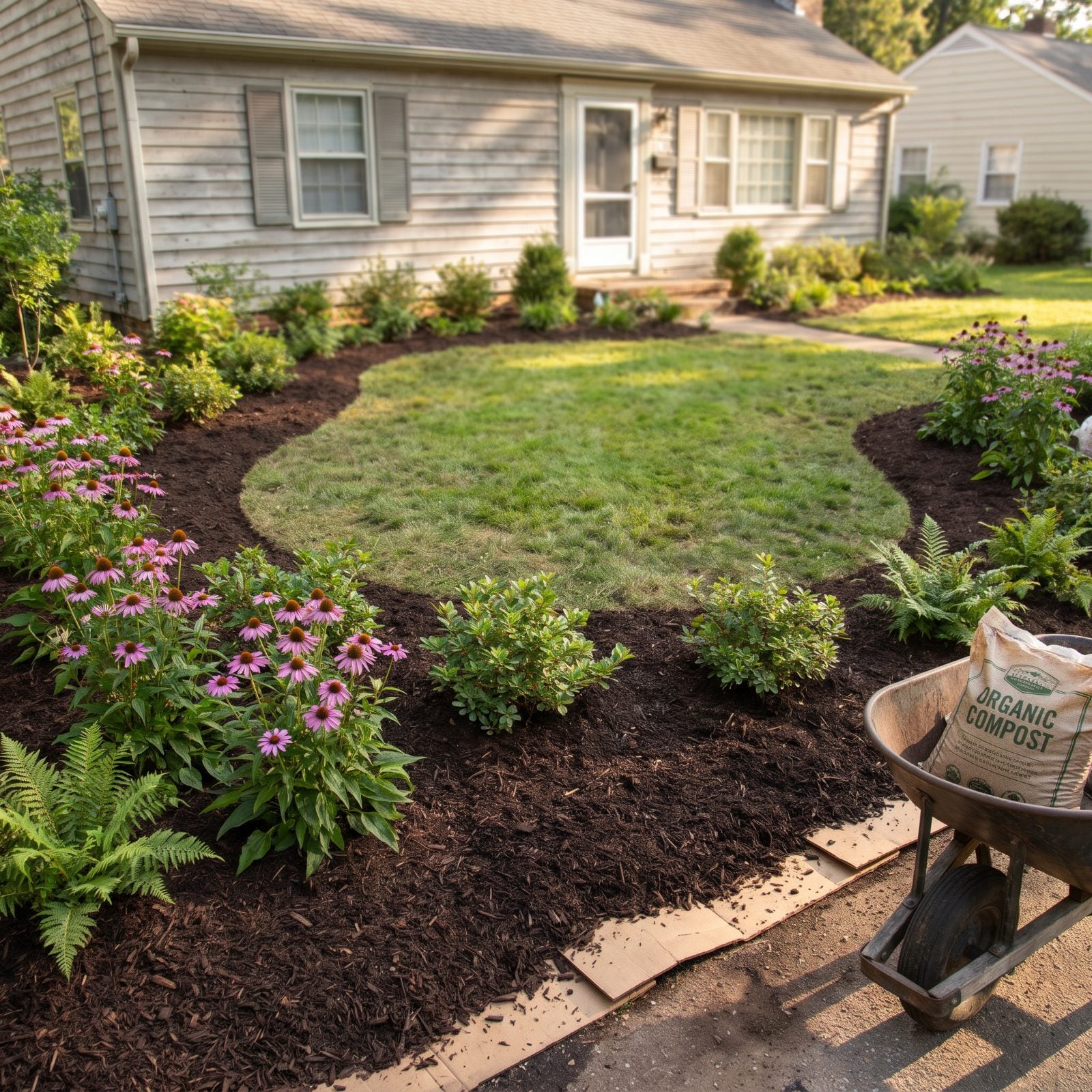
The easiest way to mow less is to have less grass. Caldwell and Randolph County Extension both push the same idea: stop treating turf as the default for every bare patch and widen your beds instead. Fill them with native perennials, shrubs, and small trees suited to the spot, and suddenly you’re spraying less, fertilizing less, and mowing less.
You don’t need a tiller or a sore back to kill the old grass, either. The Extension Gardener Handbook says to lay down six to eight sheets of newspaper or a single layer of cardboard, then pile three inches of weed-free mulch or compost on top. Patience is the only tool required. Smothering the grass takes anywhere from three months to a full year, so start in fall and plant come spring.
18. Pine Straw and Leaf Mulch (The Free Kind)
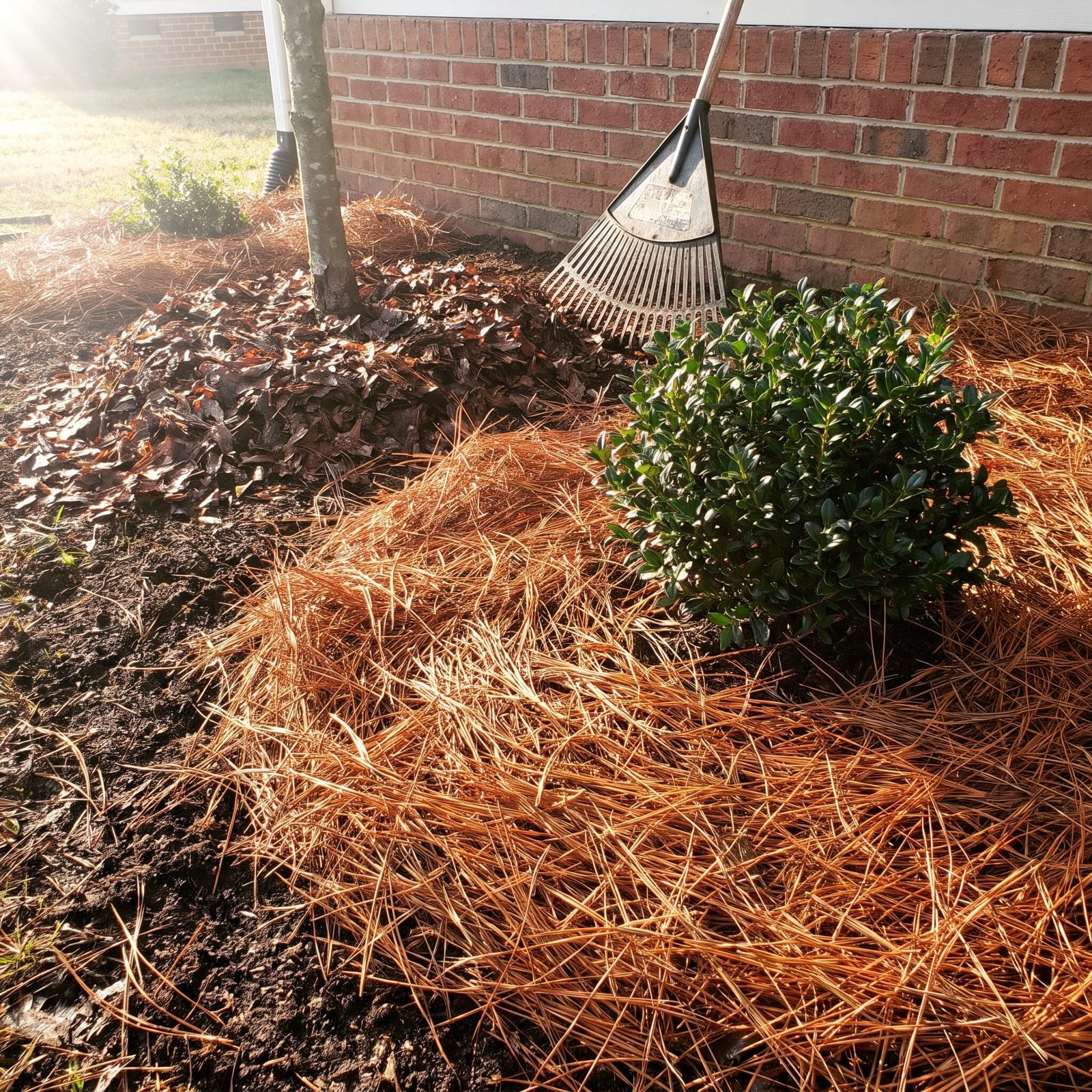
Here’s a myth worth killing: pine straw does not acidify your soil any more than other mulches do. Lee County Extension, citing NC State soil scientists, has said so plainly, yet people keep repeating the old wives’ tale at the garden center. Longleaf pine needles are prized because they’re long, hold their color, and last. NC State rates them “excellent” and easy to spread. Lay it three to four inches deep over weed-free ground and leave the black plastic at the store.
And those leaves you’re bagging every October? Raleigh asks residents to rake them straight into beds and around tree bases as free mulch that smothers weeds and holds water. Just don’t leave a thick mat sitting on the lawn.
17. Native Evergreen Foundation Shrubs Instead of Boxwood
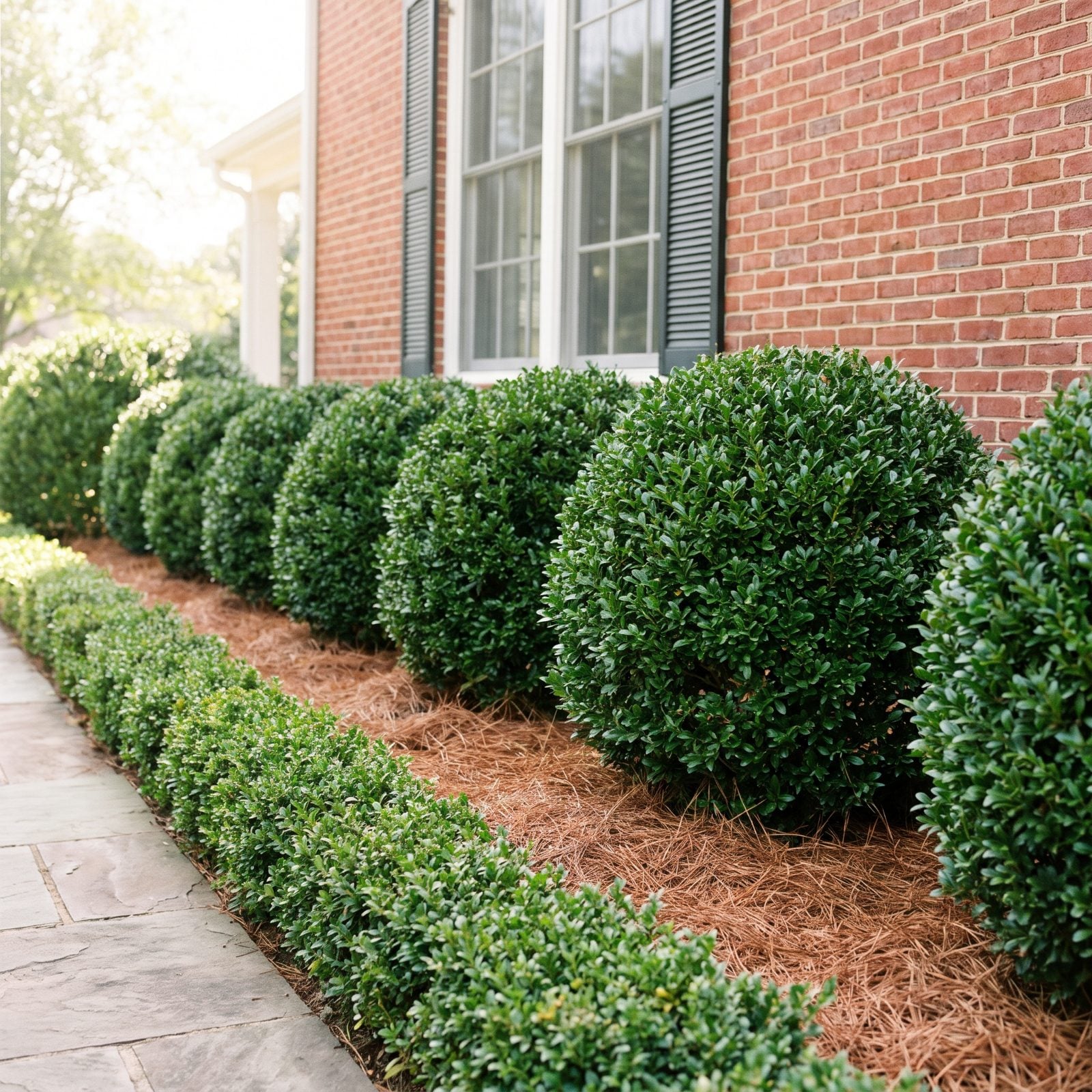
Boxwood is a heartbreak waiting to happen in this state. NC State’s Extension Gardener blog reports boxwood blight has spread widely across North Carolina, and the disease has meant decline and removal of those classic clipped hedges all over the place. We’ve seen homeowners replant the same spot twice before giving up.
The good news is native stand-ins do the same job without the drama. Newer inkberry holly cultivars were bred specifically to mimic boxwood’s tidy mounded habit. Yaupon holly takes shearing like a champ, which makes it a natural hedge. Henderson County Extension lists both as boxwood alternatives, and NC State’s Plant Toolbox says yaupon handles full sun to deep shade, drought, salt spray, even occasional flooding. Look for dwarf yaupon cultivars like ‘Nana’ and Bordeaux, which top out around four to five feet.
16. Native Ornamental Grasses Like Pink Muhly
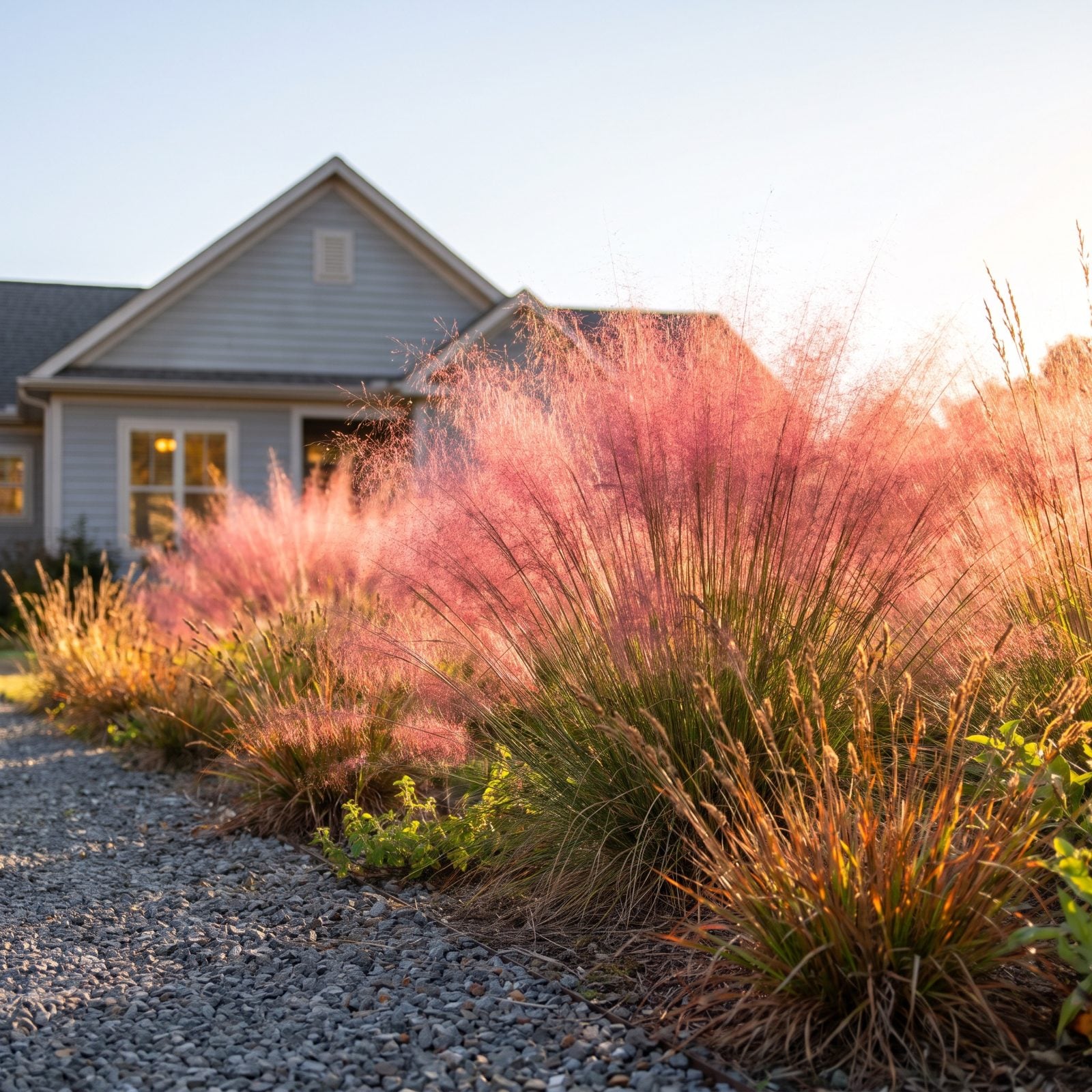
Nothing in the fall yard stops traffic quite like pink muhly grass in bloom. For a few weeks in autumn it throws up a cloud of rose-pink haze that looks like the ground is exhaling. And it earns its keep the other eleven months, too.
The NC State Plant Toolbox calls it long-lived, nearly pest-free, highly deer-resistant, and “perfect for the low-maintenance garden.” It shrugs off heat, humidity, drought, poor soil, and salt, reaching about four feet tall by three wide. It’s native to the Piedmont and coastal plain. Up in the mountains, reach for little bluestem or switchgrass instead, both native statewide.
Once established, ornamental grasses need little more than a single haircut back to six or eight inches in late winter. That’s the whole maintenance calendar.
15. Let Moss Take Over the Shady Spots
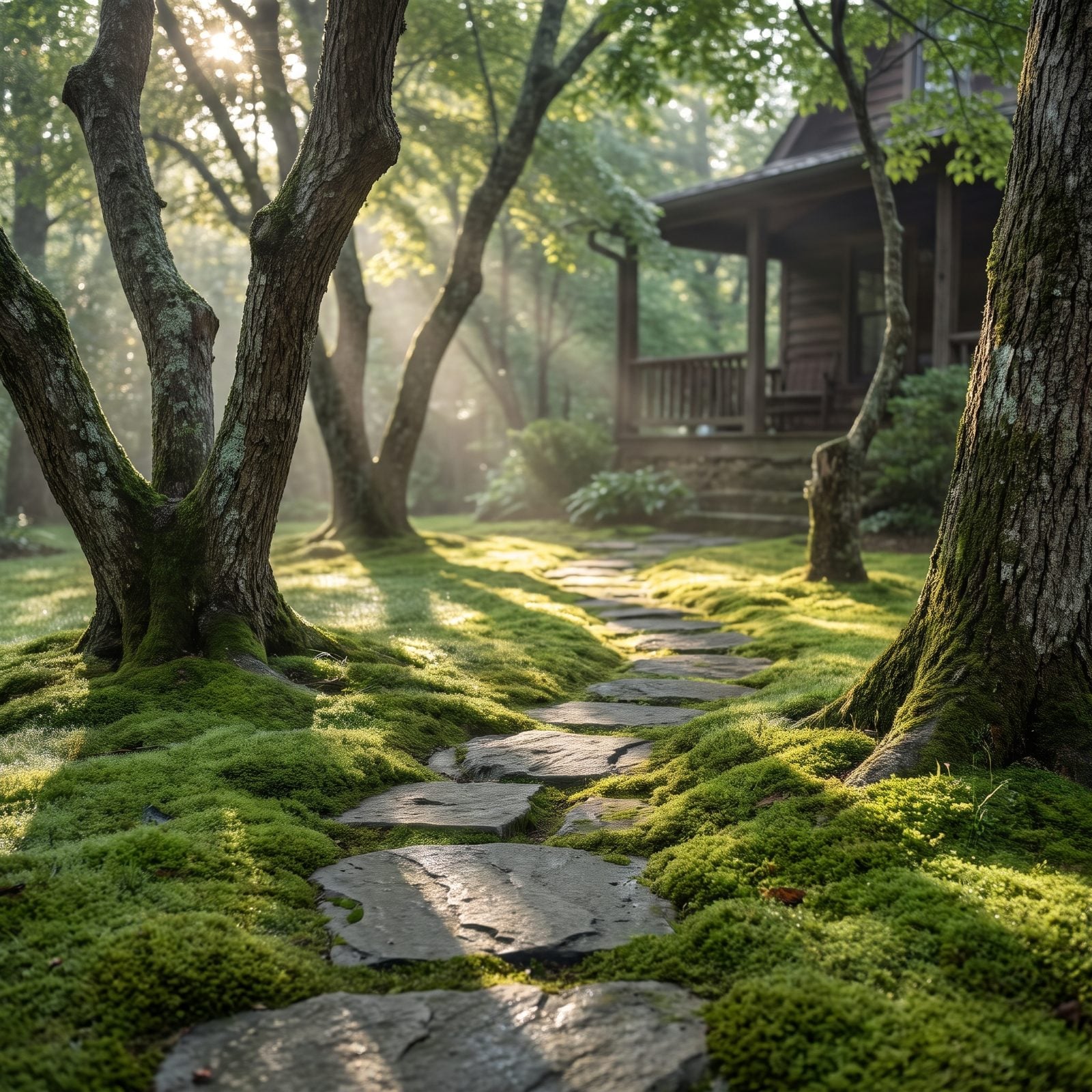
Stop fighting the shade. If turf keeps thinning out under your trees, that’s the grass telling you it’s in the wrong room. Randolph County Extension says anywhere with more than 50 percent shade is a losing battle for lawn, and suggests just letting moss grow.
Moss is almost suspiciously easy here. The Extension Gardener Handbook notes it thrives in our naturally acidic soil, grows flat so it never needs mowing, needs little water once settled, and wants no fertilizer at all. Plant chunks in spring after the last frost, keep them damp for three weeks, and wait. It can take up to a year to knit together, so this is a plant-and-forget project. One rule: moss hates being walked on, so lay a flagstone or paver path through it before you fall in love.
14. A White Clover Patch
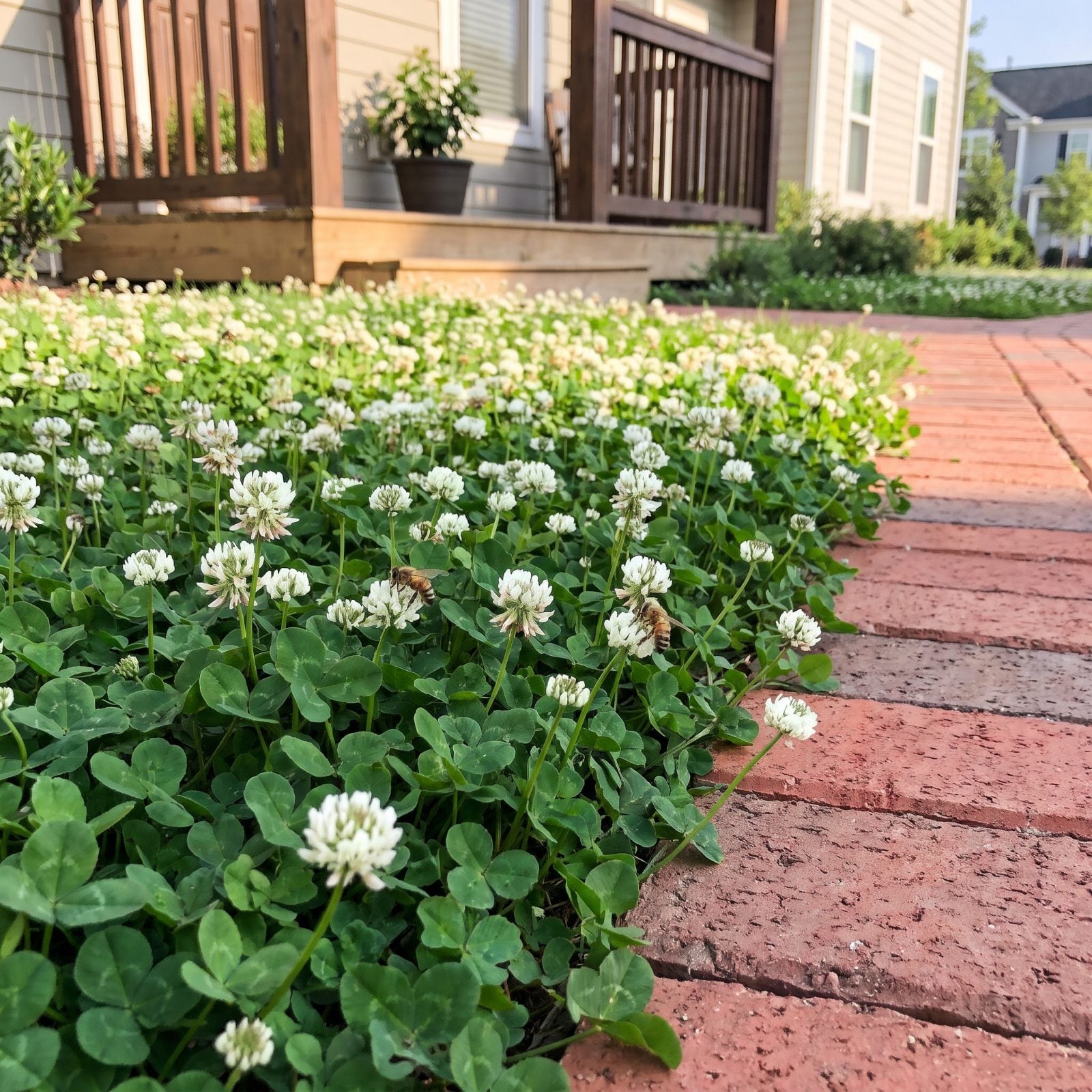
Clover used to be in every seed mix until someone decided a flawless green monoculture was the goal. That was a mistake, and we’ll die on this hill. White clover thrives in sun to part shade, needs no fertilizer, and loves our acidic soil. Being a legume, it actually pulls nitrogen out of the air and feeds the ground, which Caldwell County Extension points out while noting it also feeds the bees.
It handles foot traffic better than moss, though not kids-and-dogs-running-laps better. Sow it in spring once nighttime temps stay above 40 degrees. The flowers draw pollinators all season, which some folks love and a few consider a nuisance near bare feet. Fair enough.
13. Native Groundcovers Like Green-and-Gold and Creeping Phlox
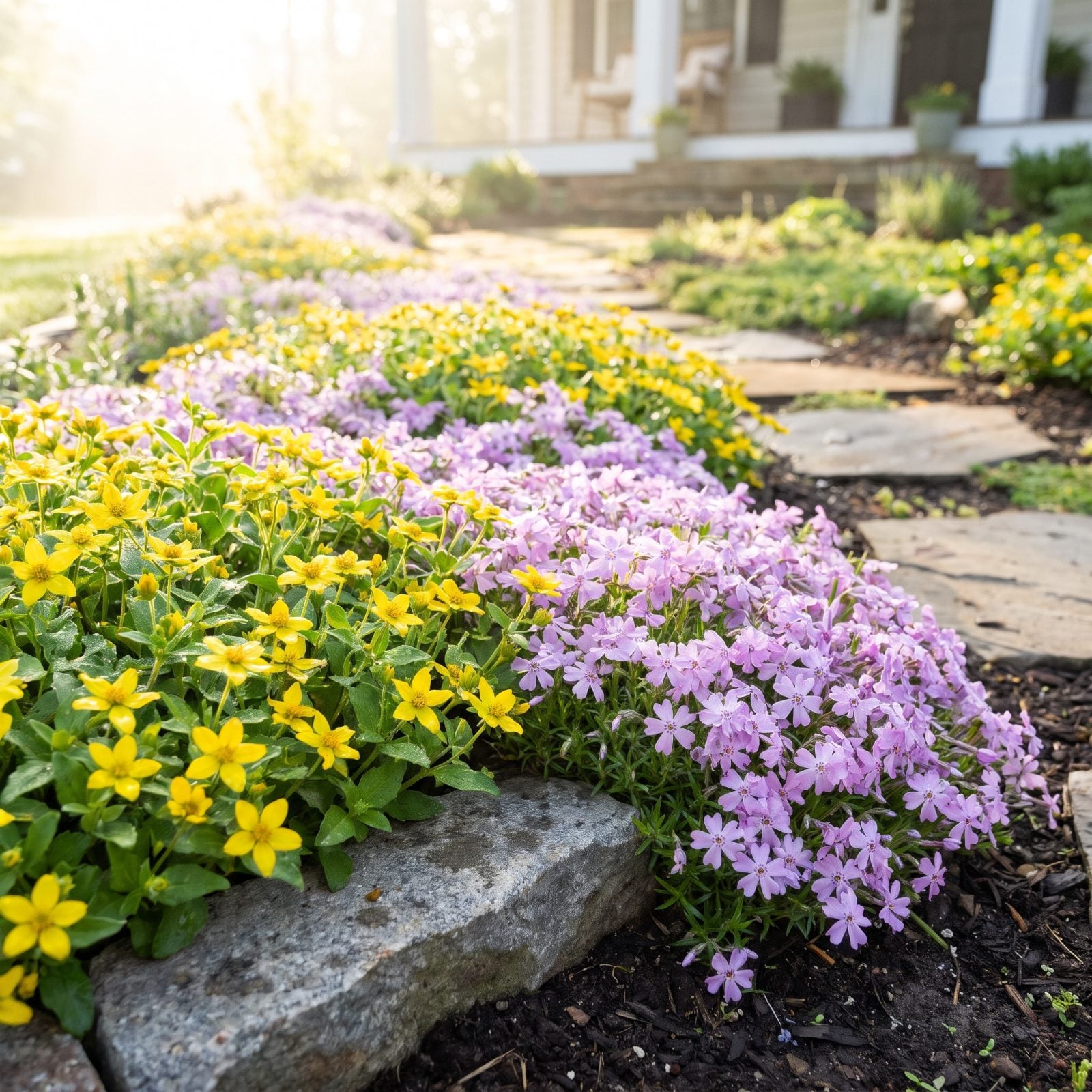
Why mow a slope when a groundcover will cover it and bloom while it’s at it? The Extension Gardener Handbook lists a whole bench of native options: green-and-gold, creeping phlox, Pennsylvania sedge, heartleaf foamflower, partridgeberry, pussytoes, and creeping blueberry. The trick is matching the plant to your region. Partridgeberry and pussytoes grow native statewide, while creeping blueberry belongs to the Piedmont and coastal plain.
Pick one suited to your spot and it becomes a living mulch that chokes out weeds and asks almost nothing of you.
12. Sedum and Creeping Thyme for Sunny, Dry Spots
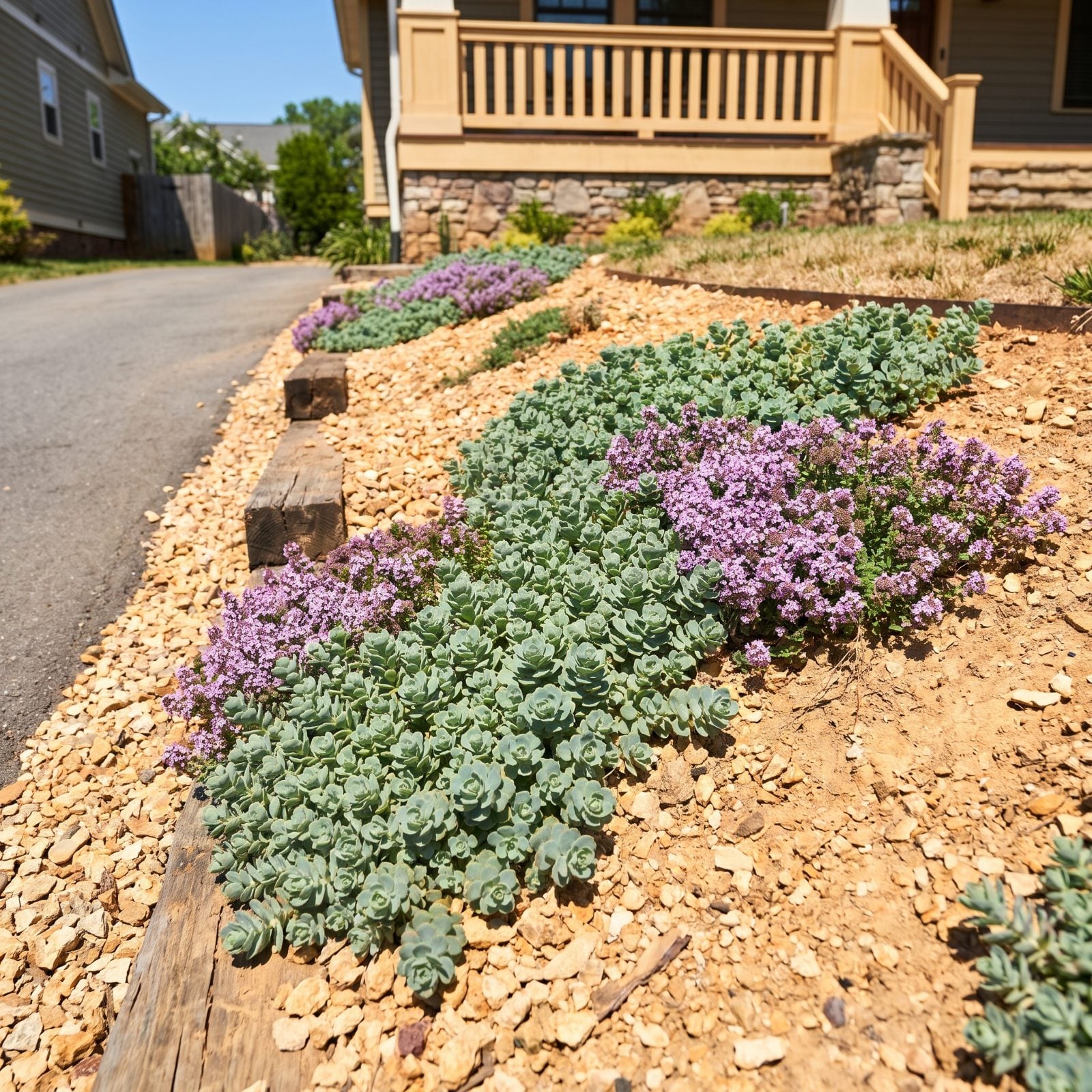
That hot strip where nothing survives? That’s sedum and thyme territory. Creeping sedums run about four inches tall, laugh at drought, want no fertilizer, and crowd out weeds by their second year. The Extension Gardener Handbook specifically recommends them for banks and hillsides, where their shallow roots turn out to be a feature rather than a flaw.
Creeping thyme is the fragrant alternative. It needs fast-draining soil and takes three or four seasons to fully cover, but after that it’s close to trouble-free: no mowing, no feeding, water only in a drought. The big difference between them is traffic. Thyme handles a footstep or two a day, while sedum wants to be admired from the path, not walked across.
11. A Sedge or Mondo Grass ‘Lawn’
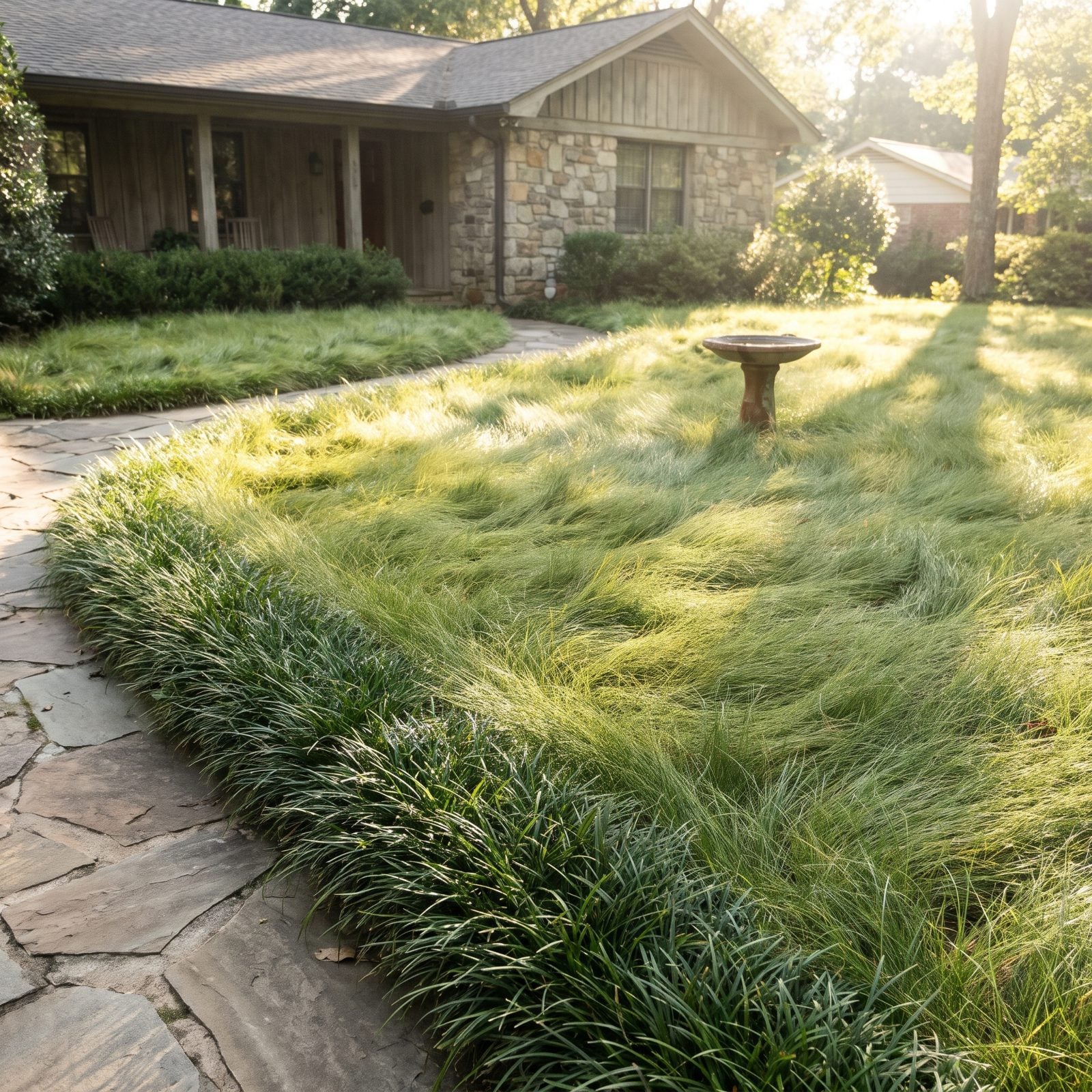
For the folks who want something that reads as “lawn” without the weekly ritual, sedge is the quiet answer. The Extension Gardener Handbook says certain Carex sedges can pass for a grass lawn but need mowing only a few times a year, or leave them long for a meadow look. Dwarf mondo grass is the other option, maxing out at two inches and tough enough for regular foot traffic. Set plugs six inches apart in spring or fall and let them close the gaps.
10. Turn That Annoying Driveway Strip Into a Pollinator Buffet
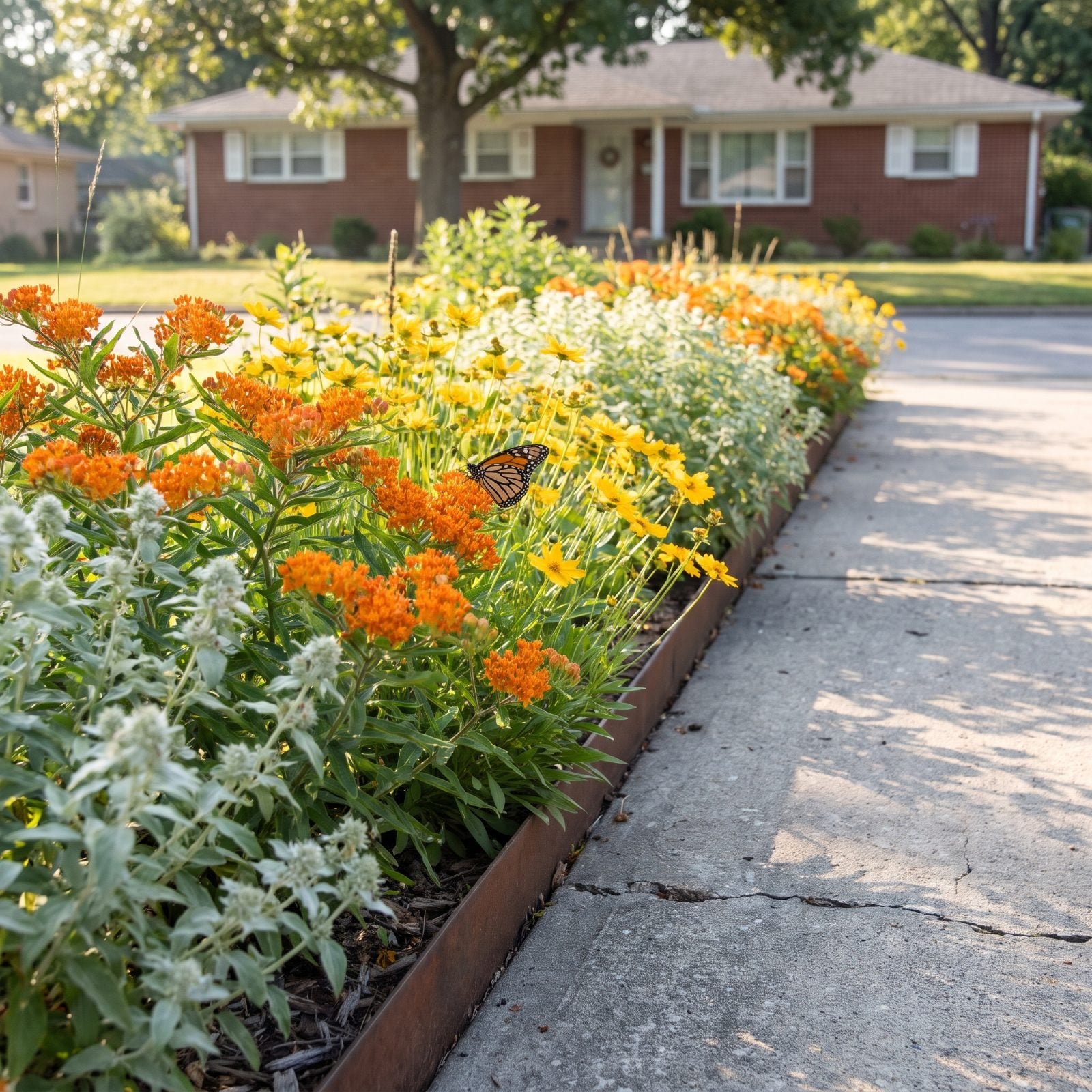
That skinny ribbon of grass between your driveway and the sidewalk is the worst square footage in your yard to mow. You know the one. You drag the mower across it for thirty seconds, scalp the edges, and curse a little.
Caldwell County Extension calls that exact spot a perfect pollinator garden, and they’re right. Aim for at least three native species in bloom in each season, from early spring through late fall,, and plant them in groups of three to five so the color reads from the street instead of looking like scattered weeds. Butterfly weed, lanceleaf coreopsis, mountain mint, and wrinkle-leaf goldenrod are all native statewide and do the job.
9. Let the Front Lawn Grow Into a Native Meadow
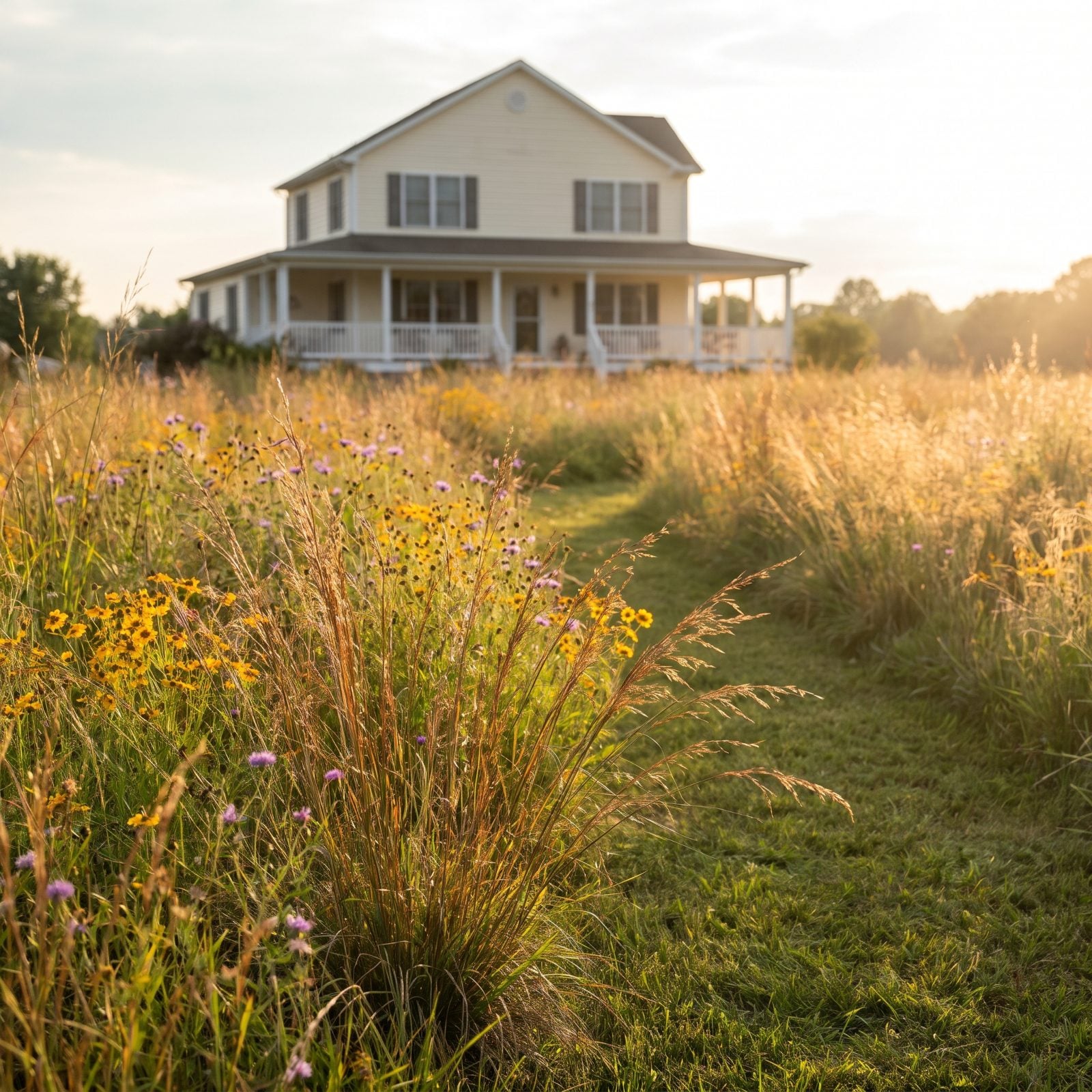
A big front yard is a tough thing to keep as lawn. All that mowing, all that fuel, all that noise every Saturday. Caldwell County Extension flags large yards as good candidates for a native meadow, and native perennials aren’t hard to get going once you treat the prep like you would a new lawn.
Randolph County Extension lays it out: soil test, relieve compaction, remove the weeds that are already there. Sow a regionally adapted seed mix anytime over the winter dormant months. North Carolina is home to more than 100 native grass species, and deer tend to leave them alone. Mow a path or two through the middle so you can still walk to the mailbox without wading.
A meadow isn’t a lawn you gave up on. It’s a lawn you promoted.
8. Anchor the Whole Yard With a Flowering Dogwood or Redbud
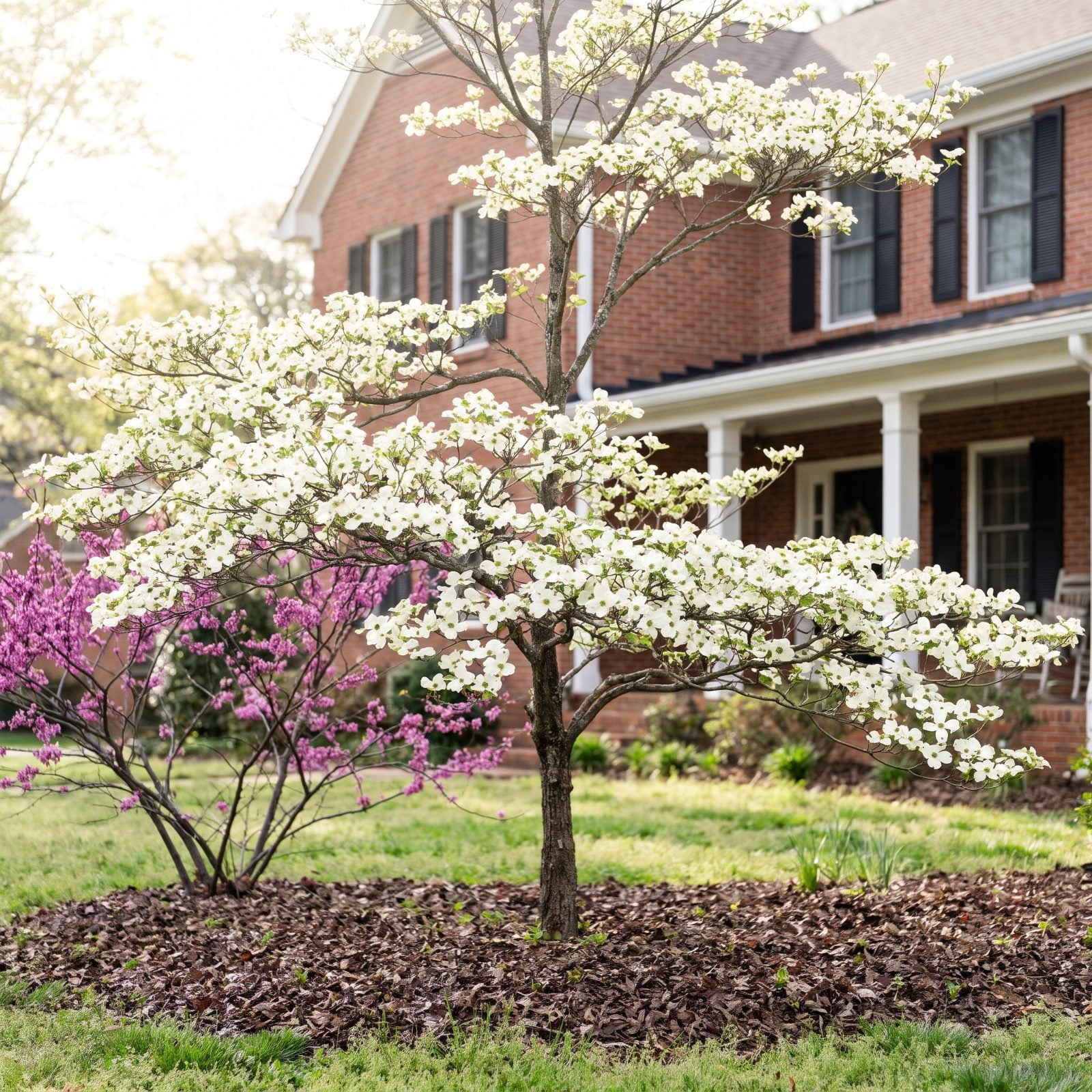
The dogwood has been North Carolina’s state flower since 1941. That’s not trivia for its own sake. It’s a reminder that the best focal point for your front yard might be the tree your grandparents already planted.
Flowering dogwood (Cornus florida) blooms across most of the state in spring. The Extension Gardener Handbook lists it alongside redbud, serviceberry, and sourwood as native understory trees that work in the mountains, Piedmont, and coastal plain. These trees are built to take shade. But here’s the part people miss: they flower harder and stay more compact when you hand them a little sun. Tuck one into a corner that gets morning light and you’ll get the show.
7. Build a Rain Garden Where the Downspout Dumps
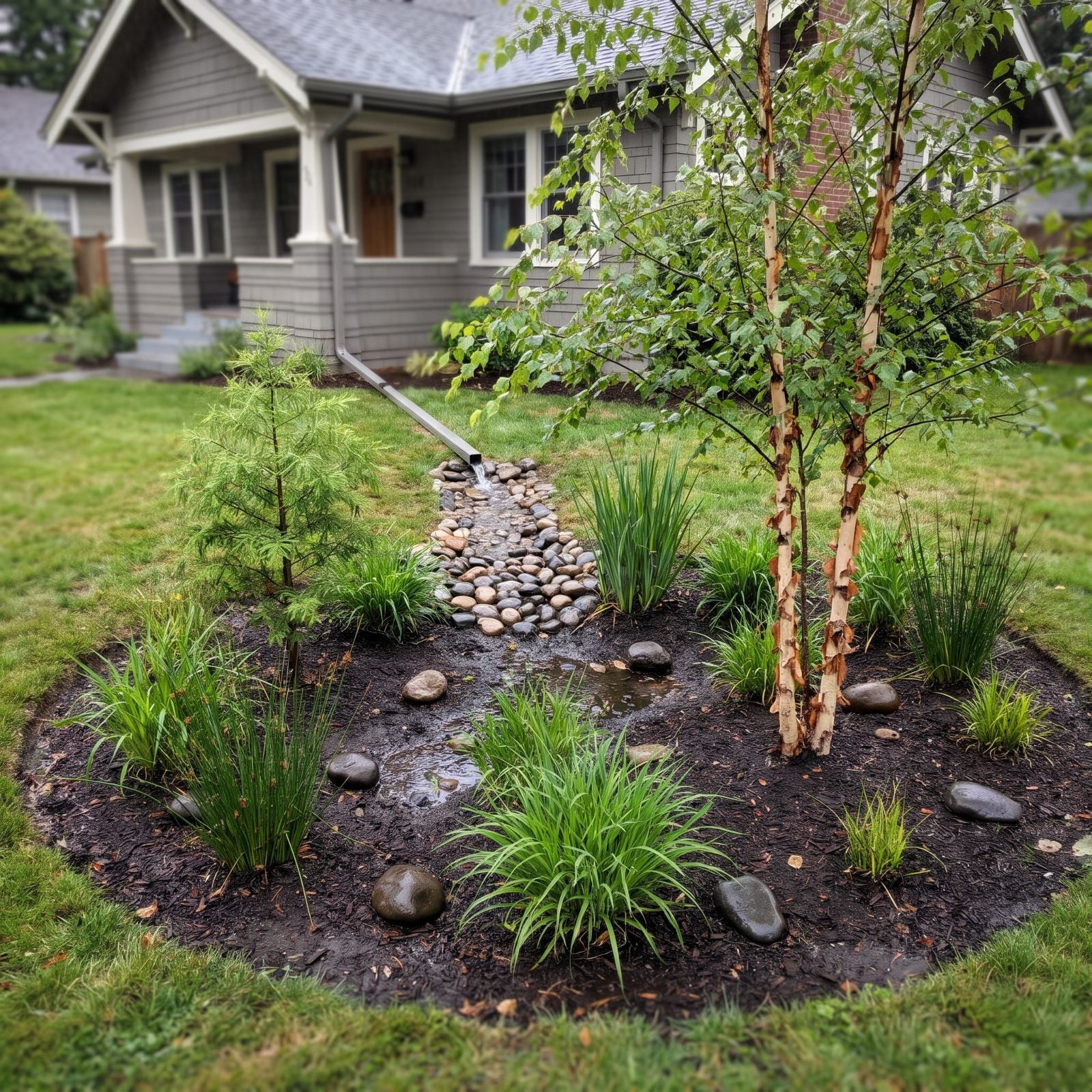
Every hard rain, the water off your roof hits the downspout and runs straight for the street, taking whatever’s loose in your yard with it. A rain garden catches that water and lets it soak in instead.
The NC Cooperative Extension Rain Garden Manual suggests sizing the garden at roughly a tenth of the roof and driveway area draining into it. A Chapel Hill gardening column gives a similar rule of thumb: about 5 to 10 percent of the hard surface draining into it, and if the garden ends up smaller, make sure it drains well. For the soggy spots that never dry out, Randolph County Extension points to river birch, willow, bald cypress, sedges, and rushes instead of fighting grass.
6. Put a Rain Barrel Under the Downspout and Stop Paying to Water Beds
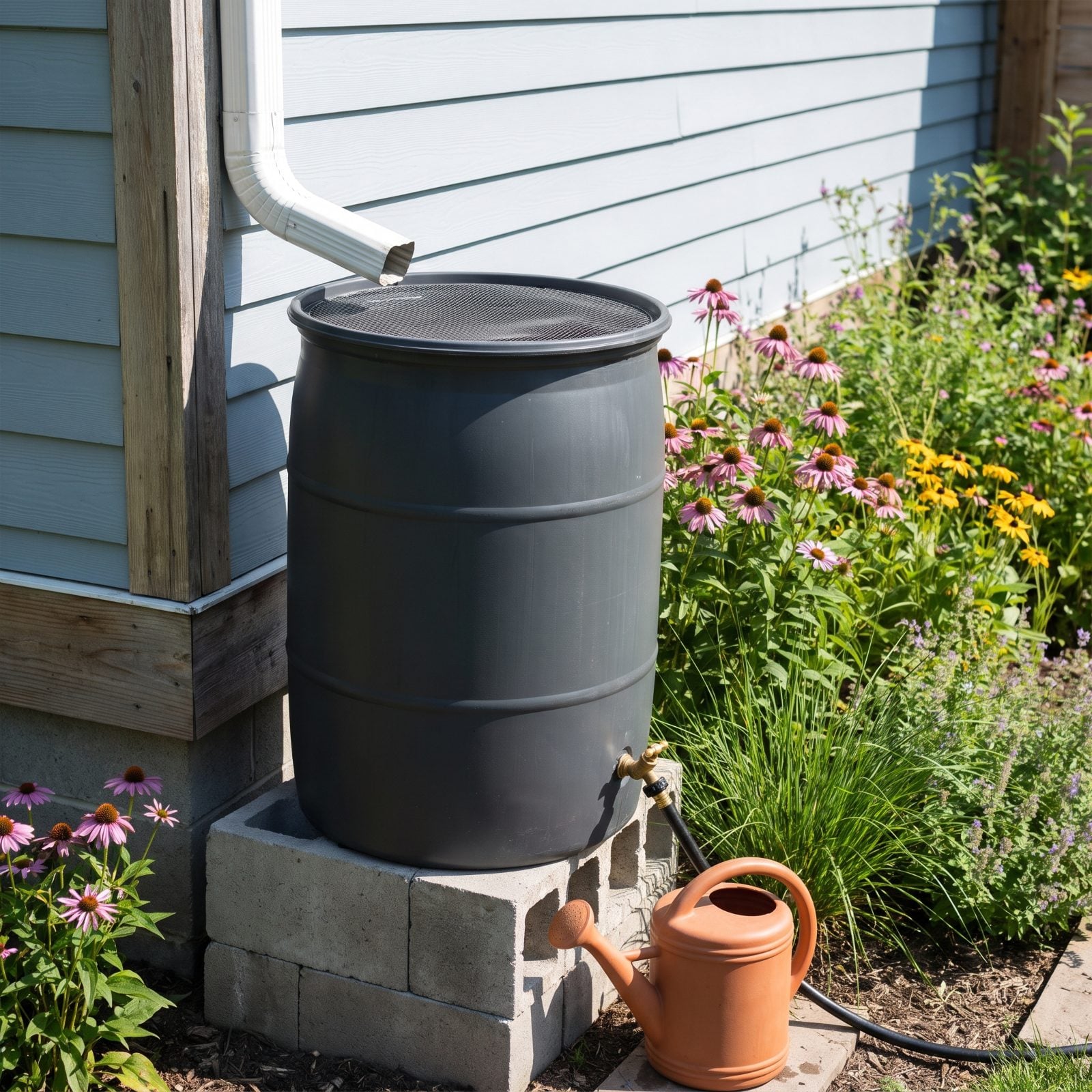
Somebody should say the honest version: a rain barrel will not keep your whole lawn green. Beaufort County Extension says so plainly. What it will do is give you free water for hand-watering shrubs, pollinator beds, and new plantings.
Brunswick County Extension notes the NC State Climate Office expects long dry spells broken by intense storms, which is exactly the weather a barrel is built for. Catch the downpour, dole it out during the drought. Set it under an existing downspout on level ground, because a full barrel is genuinely heavy. Give it a screened lid to keep mosquitoes out and an overflow outlet so it doesn’t back up against your house.
5. Lay Gravel and Stepping Stones Where Feet Keep Killing the Grass
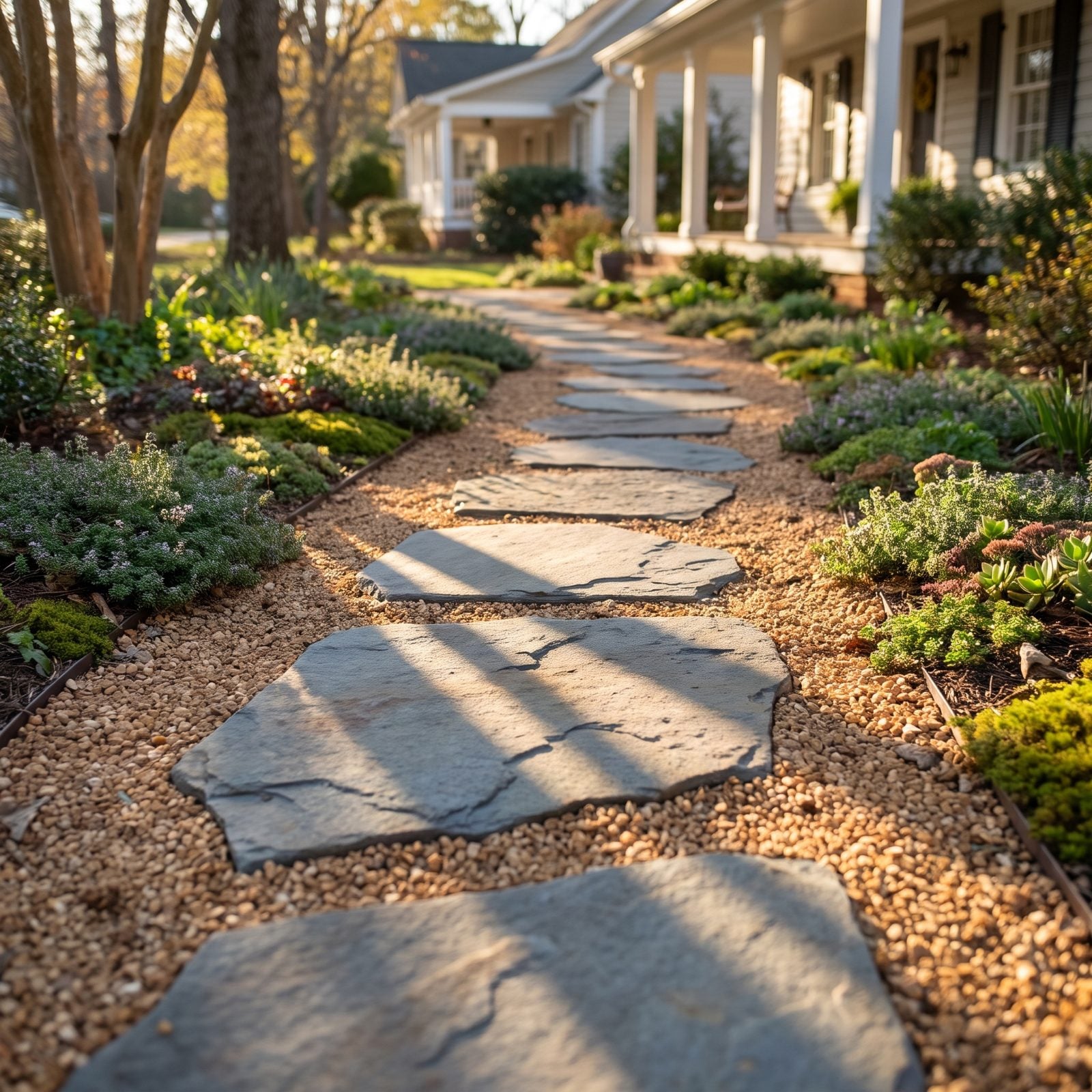
Grass takes some wear. It does not take concentrated foot traffic, and you already know which stretch of your yard proves it. The worn-dirt line from the driveway to the door. The bald patch by the gate.
Randolph County Extension’s advice for those narrow, high-traffic strips is simple: stop trying to grow grass there. Use gravel, stepping stones, or mulch instead. The NC State Mulches publication notes gravel and crushed rock work fine as mulch as long as they fit the overall design, not just dumped at random. Down in the Cape Fear region, New Hanover County Extension points out that the sandy soils suit permeable pavement well, though you’ll have to keep it clear so it doesn’t clog over time.
4. Turn the Dead Zone Under Your Shade Trees Into a Fern Bed
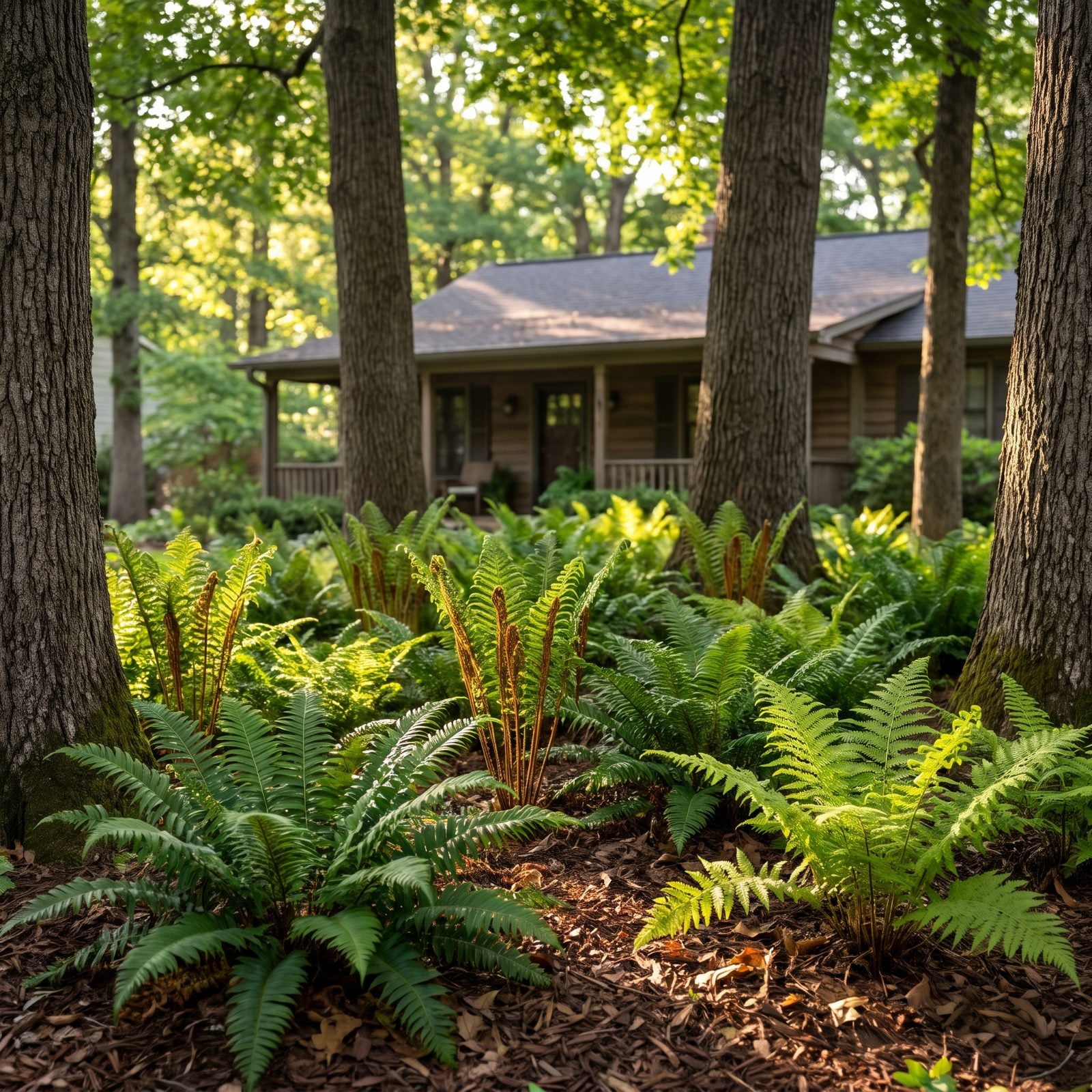
You’ve fought this fight. The patch under the maple where grass goes thin, then thinner, then just gives up and turns to dirt. Caldwell County Extension says turf simply won’t grow in heavy shade, so quit asking it to.
What they suggest instead is a fern haven. The Extension Gardener Handbook lists Christmas fern, cinnamon fern, southern lady fern, and New York fern as native across the mountains, Piedmont, and coastal plain. Christmas fern stays green through winter, so you get something to look at in January. Mix a few textures and the bed reads lush rather than sparse, and you never touch it with a mower again.
3. Pick Salt-Tolerant Natives if the Ocean Air Reaches Your Yard
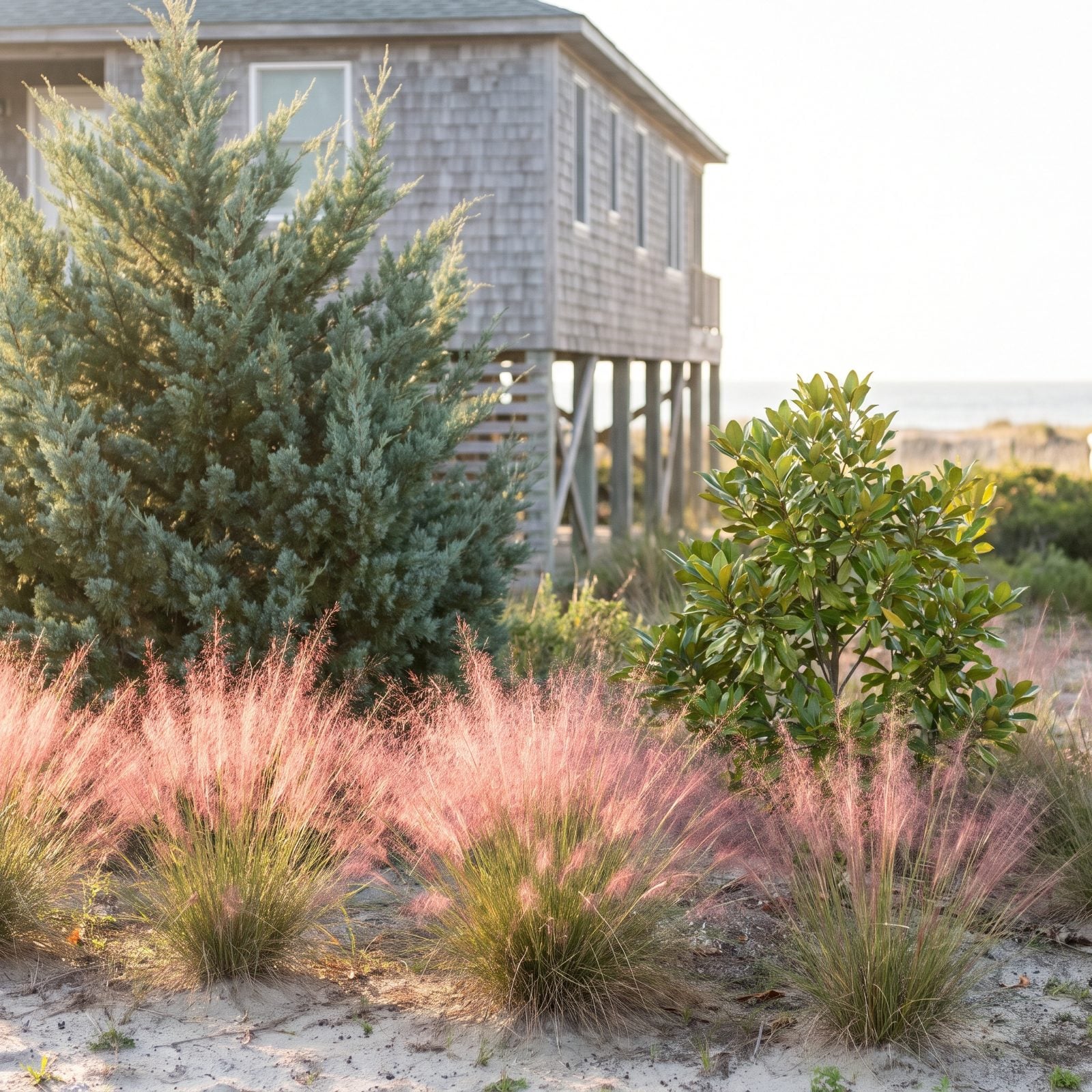
Salt air is quietly brutal on plants, and it gets worse the closer you are to the water. NC Sea Grant notes that salt injury climbs as you approach the ocean, and tolerance varies plant to plant, so there’s no one answer for the whole coast.
Brunswick County Extension names a few workhorses. Eastern redcedar shrugs off drought and salt. Sweetbay magnolia stands in nicely for crape myrtle. Yaupon holly takes salt spray, drought, and even occasional flooding. And pink muhly grass handles salt beautifully, throwing up its pink haze in fall when half the yard has quit for the year.
2. Plant the Things Deer Actually Walk Past
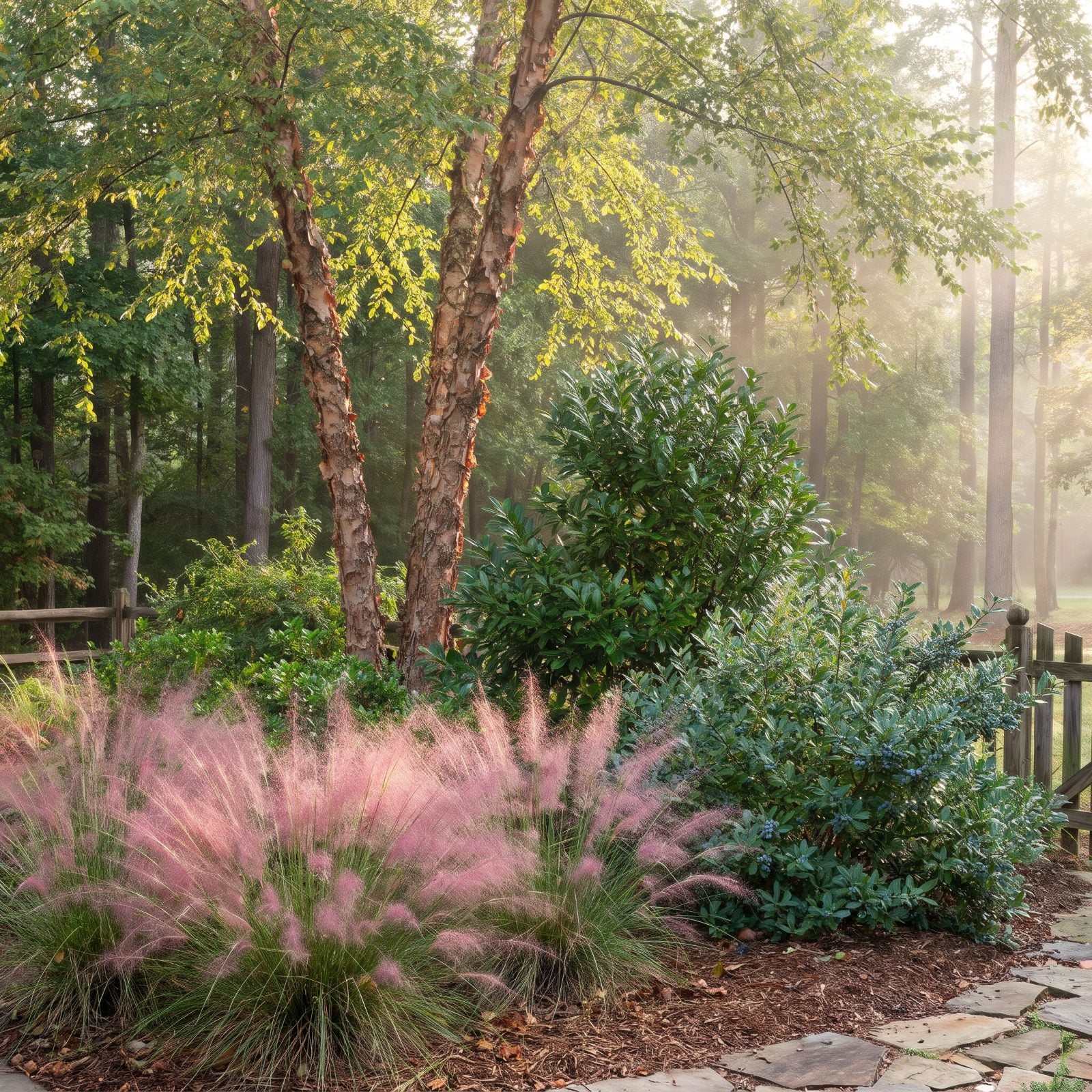
No plant is truly deer-proof. Anyone who tells you otherwise has never watched a hungry doe eat something the label swore she wouldn’t touch. But some plants get browsed far less than others, and that’s what you want near the woods.
Pender County Extension lists river birch and Carolina cherrylaurel among the small-to-medium trees that have held up against deer while also handling drought. For sunny evergreen shrubs the deer tend to skip, they point to yaupon and wax myrtle. In shade? Try dwarf palmetto or needle palm, since palms in general rarely get chewed. And pink muhly grass, which NC State’s Plant Toolbox rates highly resistant to deer, earns its place yet again.
1. Stop Mowing That Steep Front Bank and Plant It Instead
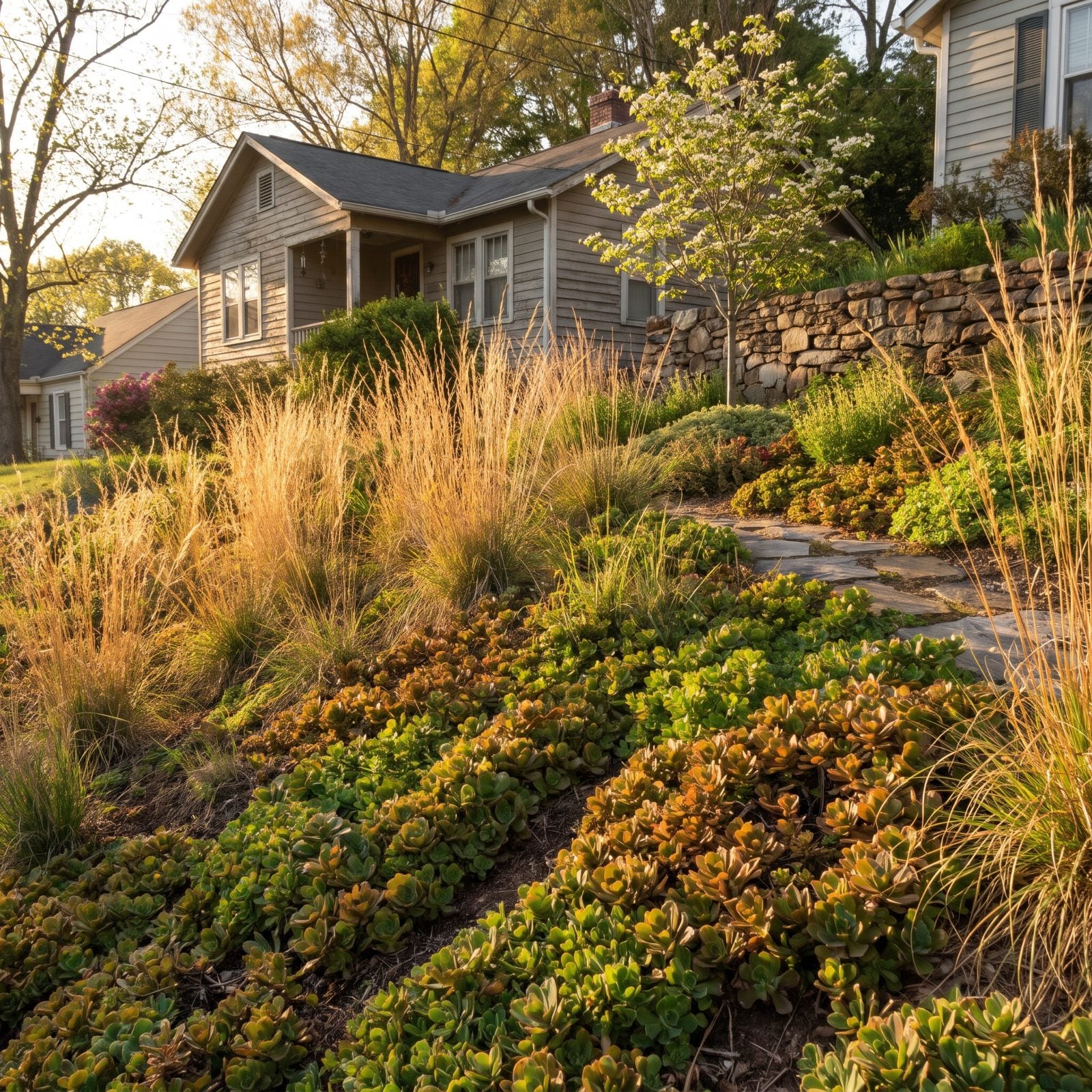
Pushing a mower across a steep bank is dangerous, miserable, and pointless. Caldwell County Extension says it straight: slopes too steep to mow give poor erosion control as grass anyway. You’re risking your ankles to maintain something that isn’t even doing its job.
Native trees give the best erosion control because they live longest and root deepest, and Randolph County Extension recommends layering them with shrubs and ornamental grasses to lock a slope in place. For the sunny, shallow-soil parts of the bank, the Extension Gardener Handbook notes that sedums do well on hillsides despite their short roots. Plant the bank once. Then watch it hold itself together while your neighbor white-knuckles his mower across the one next door.