
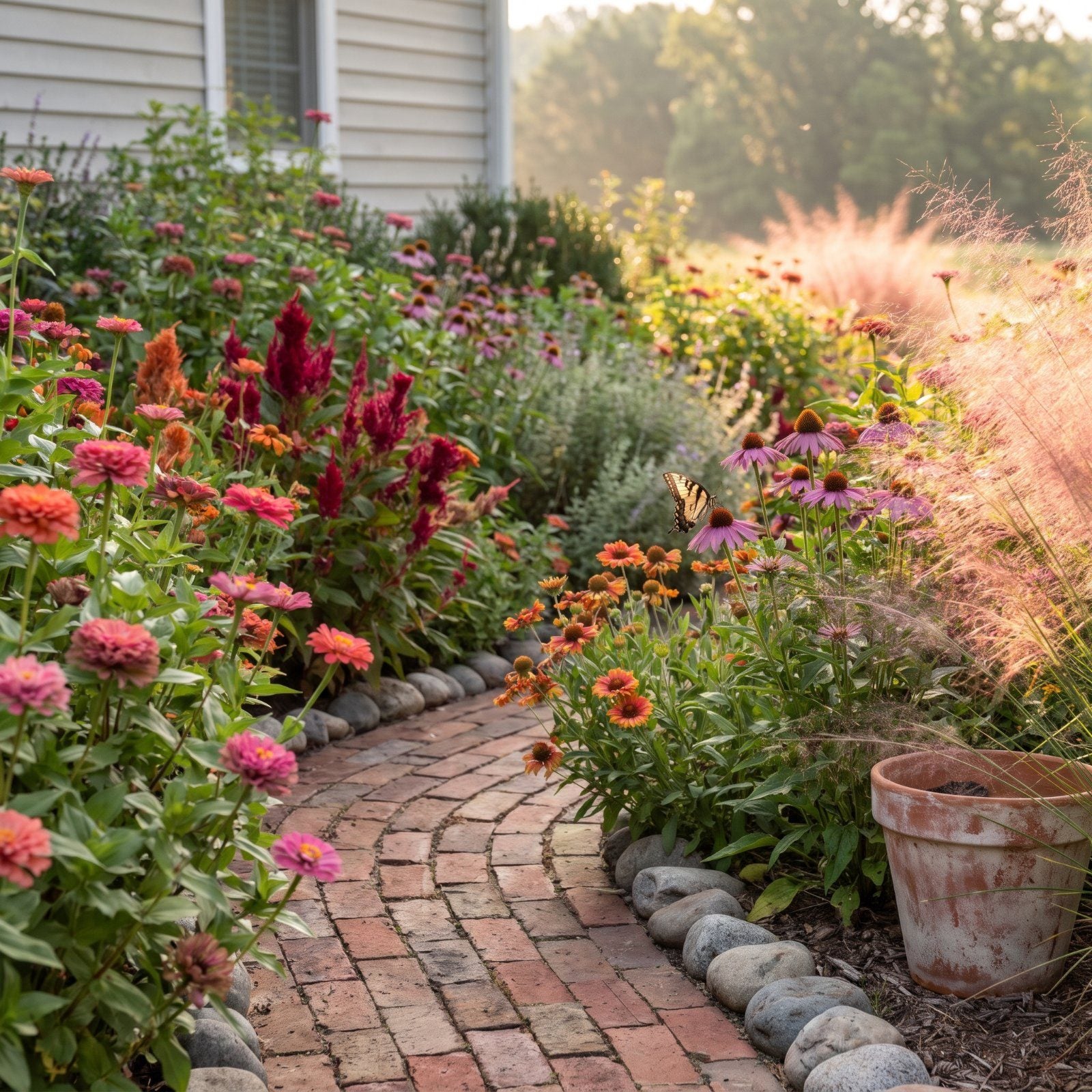
Plant damage starts at 86 degrees. Durham County Master Gardeners cite that number from the heat-zone map, and if you garden anywhere between the Outer Banks and the Blue Ridge you already feel it in your bones by July. The air goes thick, the soil cracks, and half of what you put in the ground back in May looks sulky by the Fourth. The plants below don’t sulk. Every one is Extension-vetted and built for heat, humidity, drought, and the kind of soggy August that rots lesser flowers. A few are natives that feed monarchs. Others come back harder every spring. All of them keep going when the thermometer gives up.
Please note that some of the images in this article were created with the assistance of AI.
21. Annual Vinca (Madagascar Periwinkle): The Workhorse That Blooms in a Heat Wave
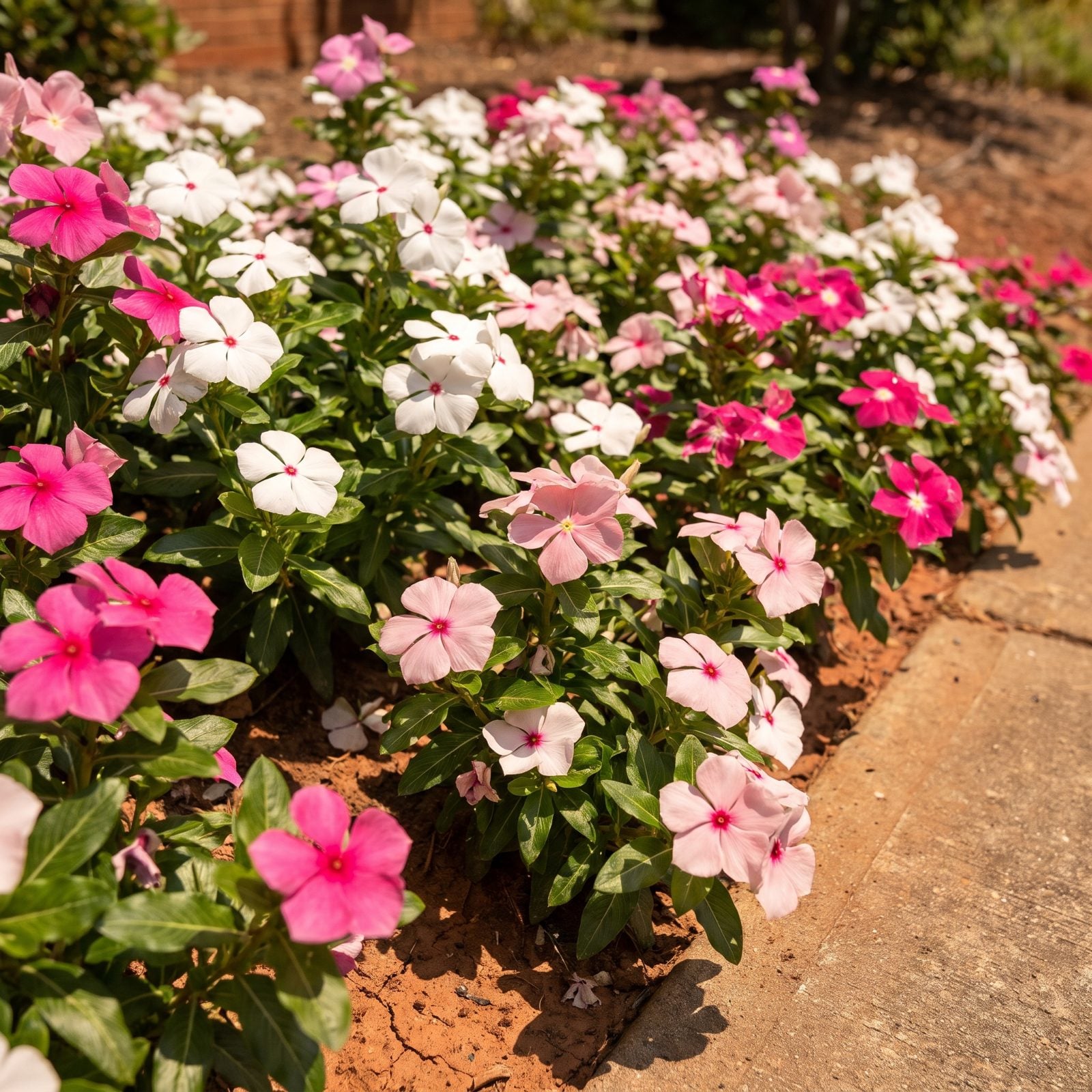
A Beaufort County Extension Master Gardener flat-out calls vinca “a true workhorse in the summer garden,” and that’s the right word. Full sun? No complaints. Dry spells once it’s rooted in? Still nothing. NC State’s Plant Toolbox notes it keeps blooming straight through heat stress and doesn’t quit until frost finally shuts it down.
The catch nobody warns you about is this: in our climate it’s an annual. Truly perennial only in Zone 10 and warmer, so enjoy it and replant next year. Deer and rabbits leave it alone, which for some of us is reason enough on its own.
20. Zinnias: The Cut-Flower Bed That Laughs at Humidity
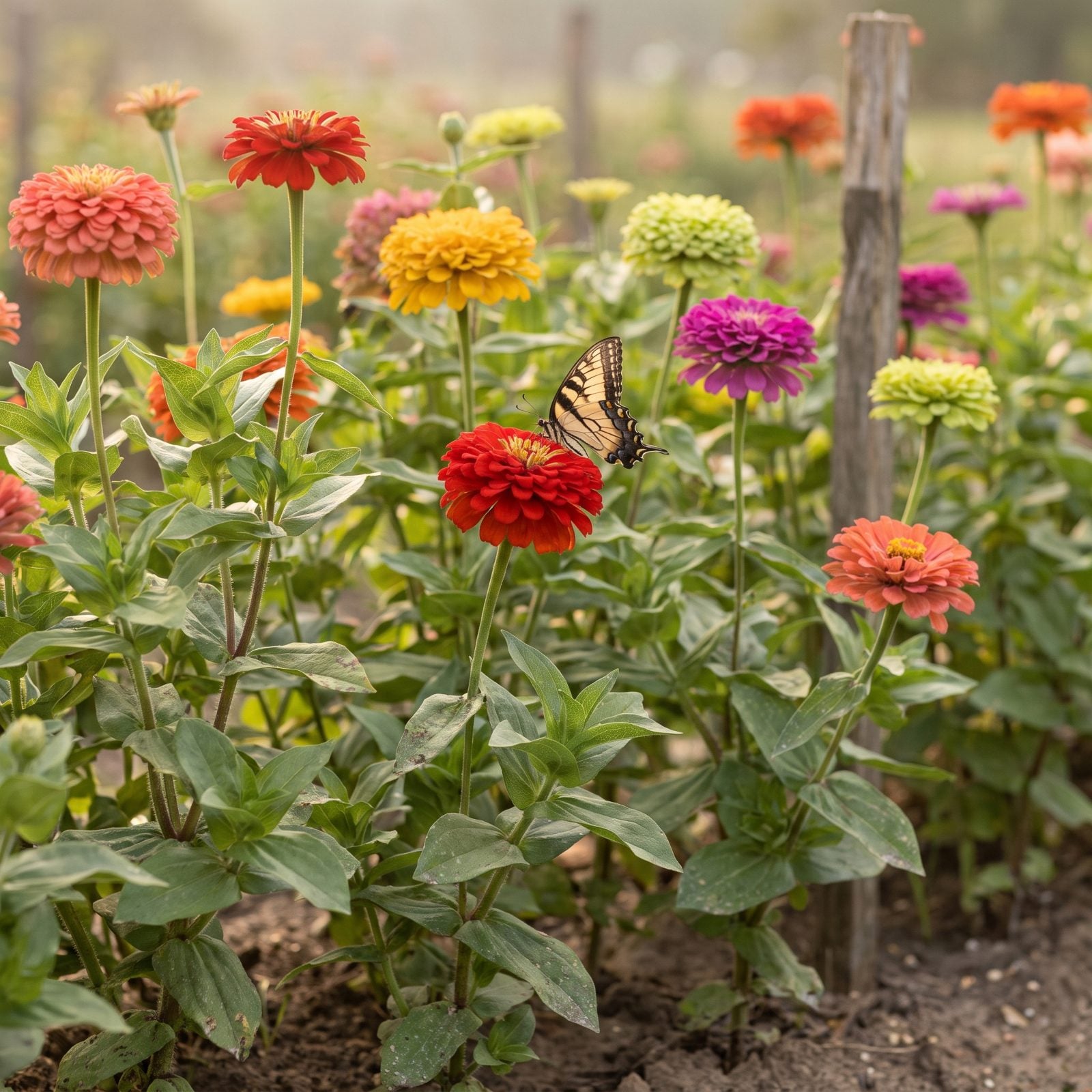
Zinnias flower from early summer until the first frost, and Beaufort County Extension says they stand up to high heat, humidity, and soil that’s nothing to brag about. NC State lists them for all three regions, Coastal to Piedmont to Mountain.
Two names worth knowing. The ‘Profusion’ series, a cross of two species, shrugs off drought and humidity like it was bred for Raleigh in July. ‘Benary’s Giant’ goes tall and throws long-stemmed cut flowers that hold up for days on the kitchen table.
Give them full sun, drainage, and room to breathe. Crowd zinnias and you’ll get powdery mildew, and once that starts in our humidity it doesn’t stop. They draw butterflies, hummingbirds, and songbirds. The deer skip them.
19. Celosia (Cockscomb): Flowers Shaped Like Flames and Coral
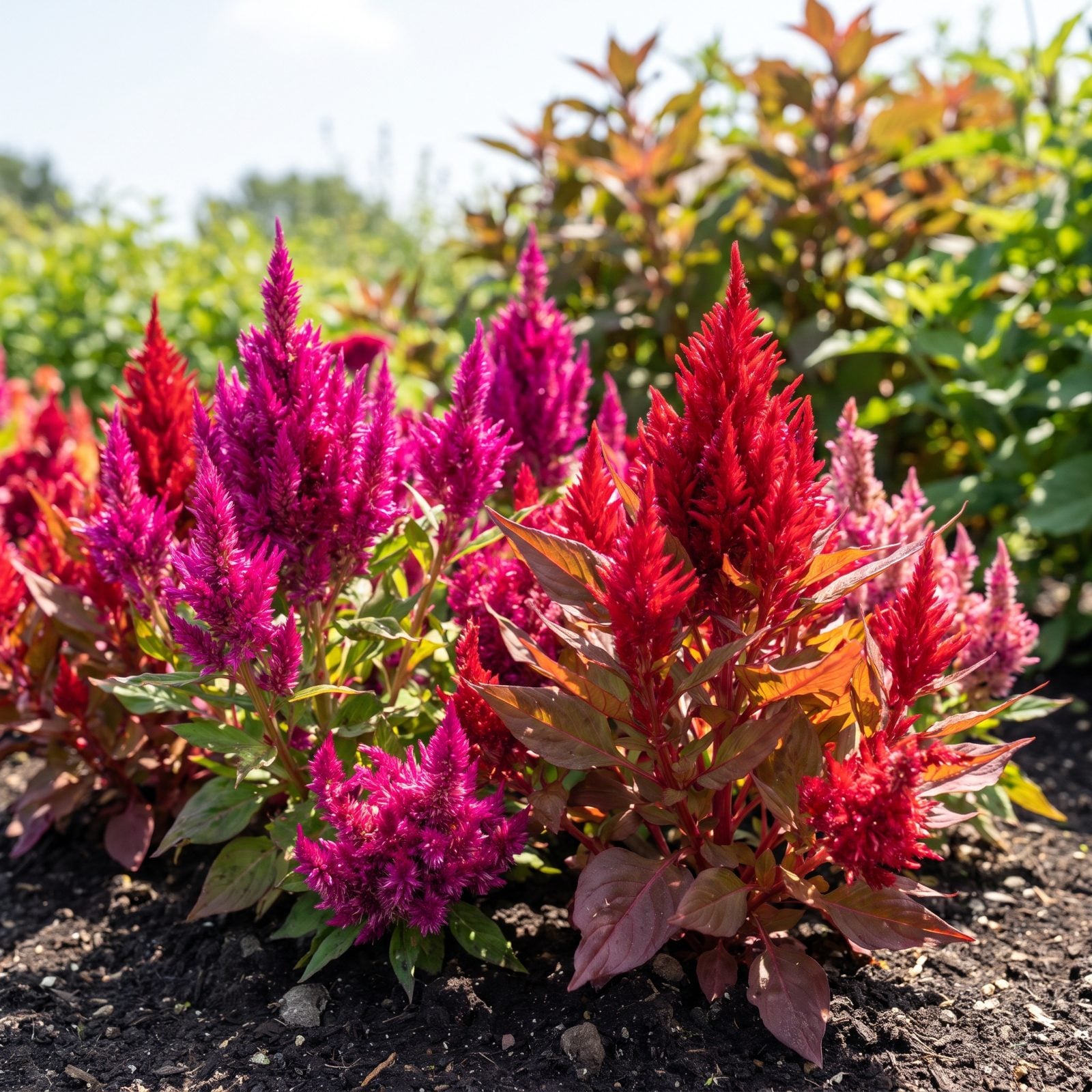
Flames, feathers, coral. The flowers genuinely look like that, which earns celosia a spot even if it did nothing else. It thrives in hot, sunny corners and wants little more than drainage and the occasional deadheading.
Extension points to two worth hunting for: ‘Intenz’ with its magenta plumes, and ‘Dragon’s Breath,’ which stacks red leaves and red flowers on the same plant. According to NC State it grows in most soils except heavy clay.
18. ‘Miss Huff’ Lantana: The Lantana That Actually Survives Winter
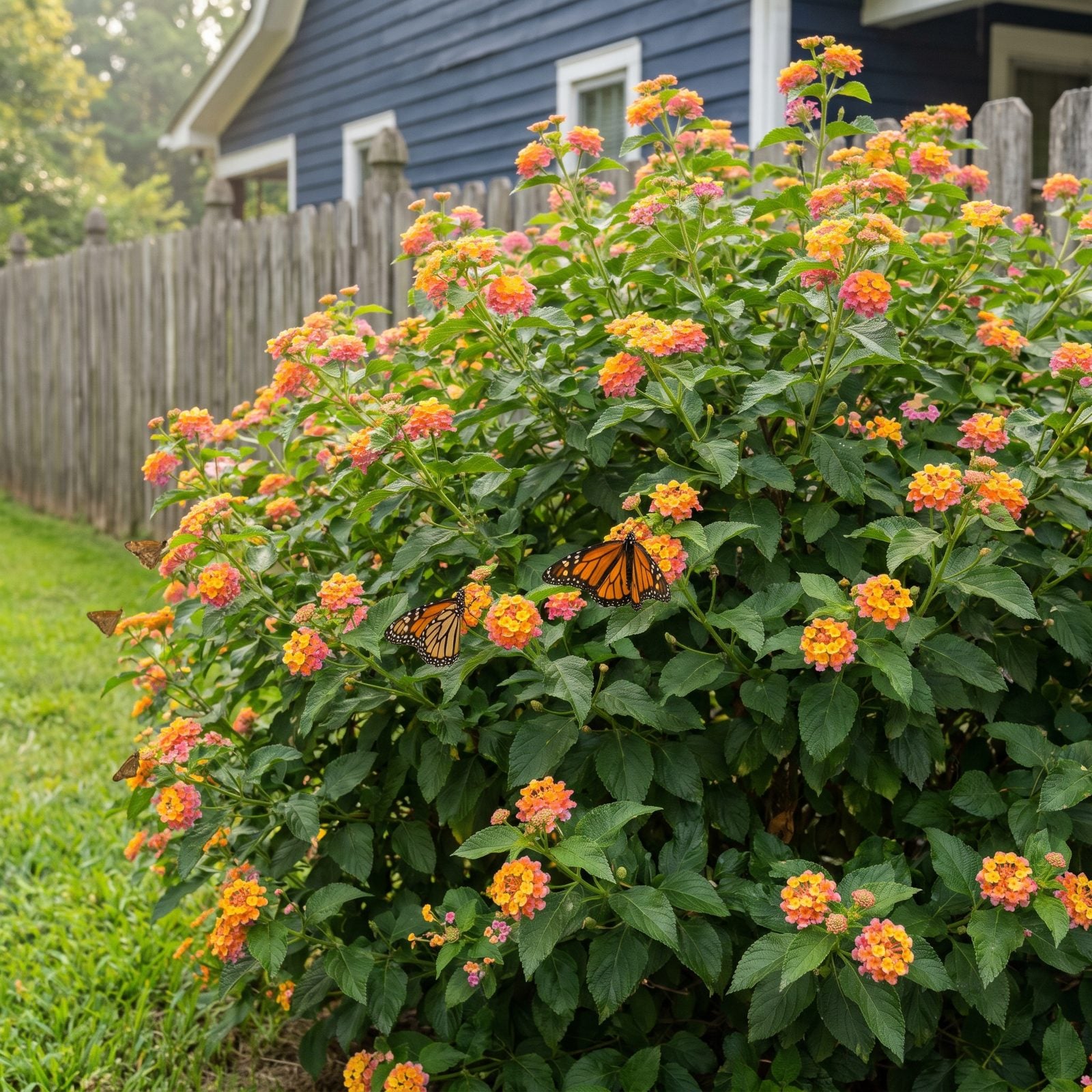
Most lantana you buy is a one-season gamble in the Piedmont. ‘Miss Huff’ is the exception. NC State calls it the most cold-hardy lantana going, rated for Zones 7b through 10b across the Coastal and Piedmont regions.
Durham County Master Gardeners confirm it comes back reliably as a perennial here while everything else should be treated as an annual. Once established, it handles heat, drought, humidity, salt, and deer all at once, hits four to six feet each way, and blooms spring to fall.
Cut it to four or six inches in spring before new growth starts, and give it room. It grows fast and it grows pushy.
17. Purple Coneflower: The Native That Feeds Bees Even After It Dies
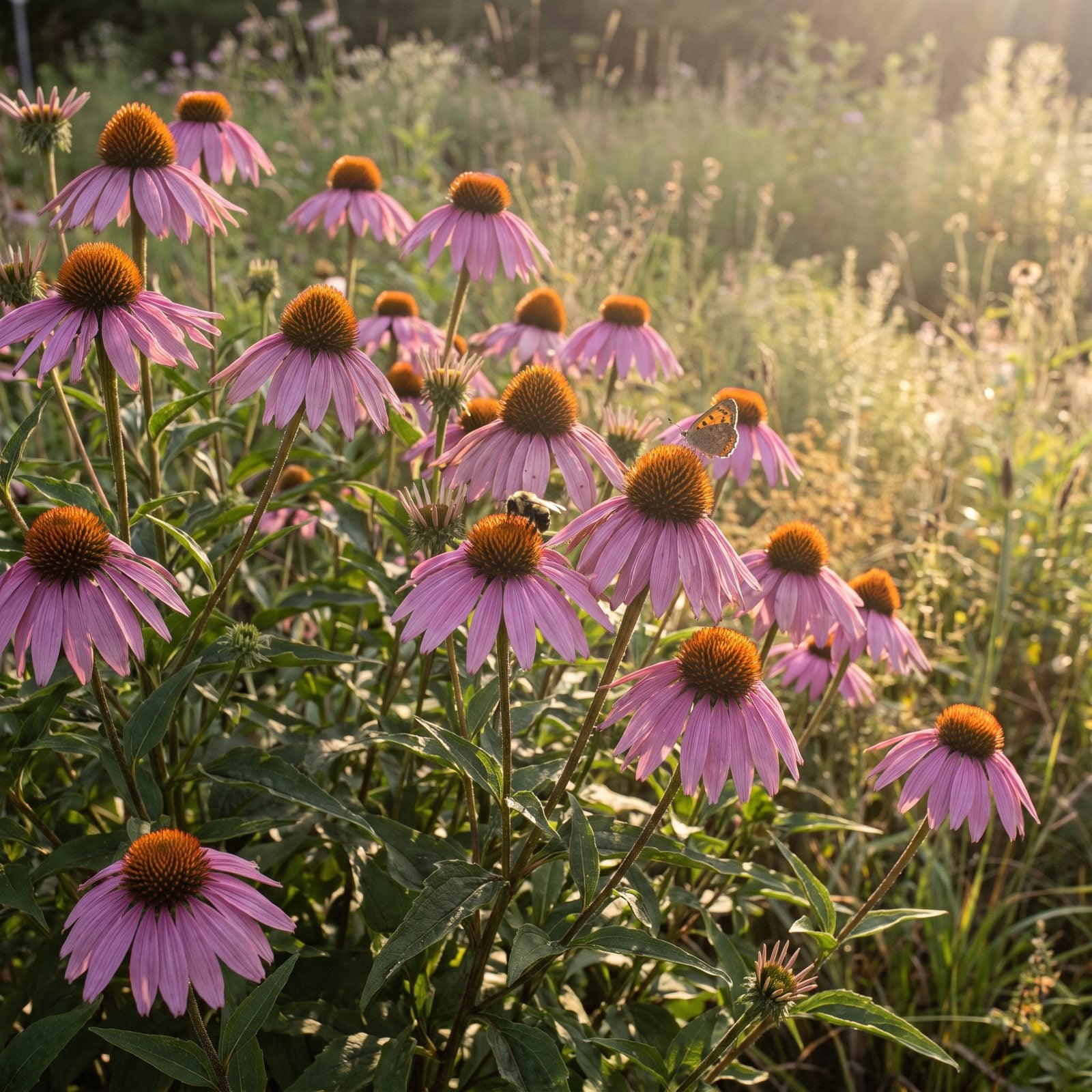
Native to the central and eastern US, purple coneflower is listed for every NC region and blooms May straight through October. Durham Master Gardeners note it takes humidity, poor soil, and drought once established, and NC State piles on heat, salt, and deer resistance for good measure.
Here’s where most people go wrong, and it’s in fall. Don’t cut it all the way down. Trim the dead stems to somewhere between 12 and 24 inches and leave them standing over winter.
16. Indian Blanket Flower (Gaillardia pulchella): A Beach Dune in Bloom
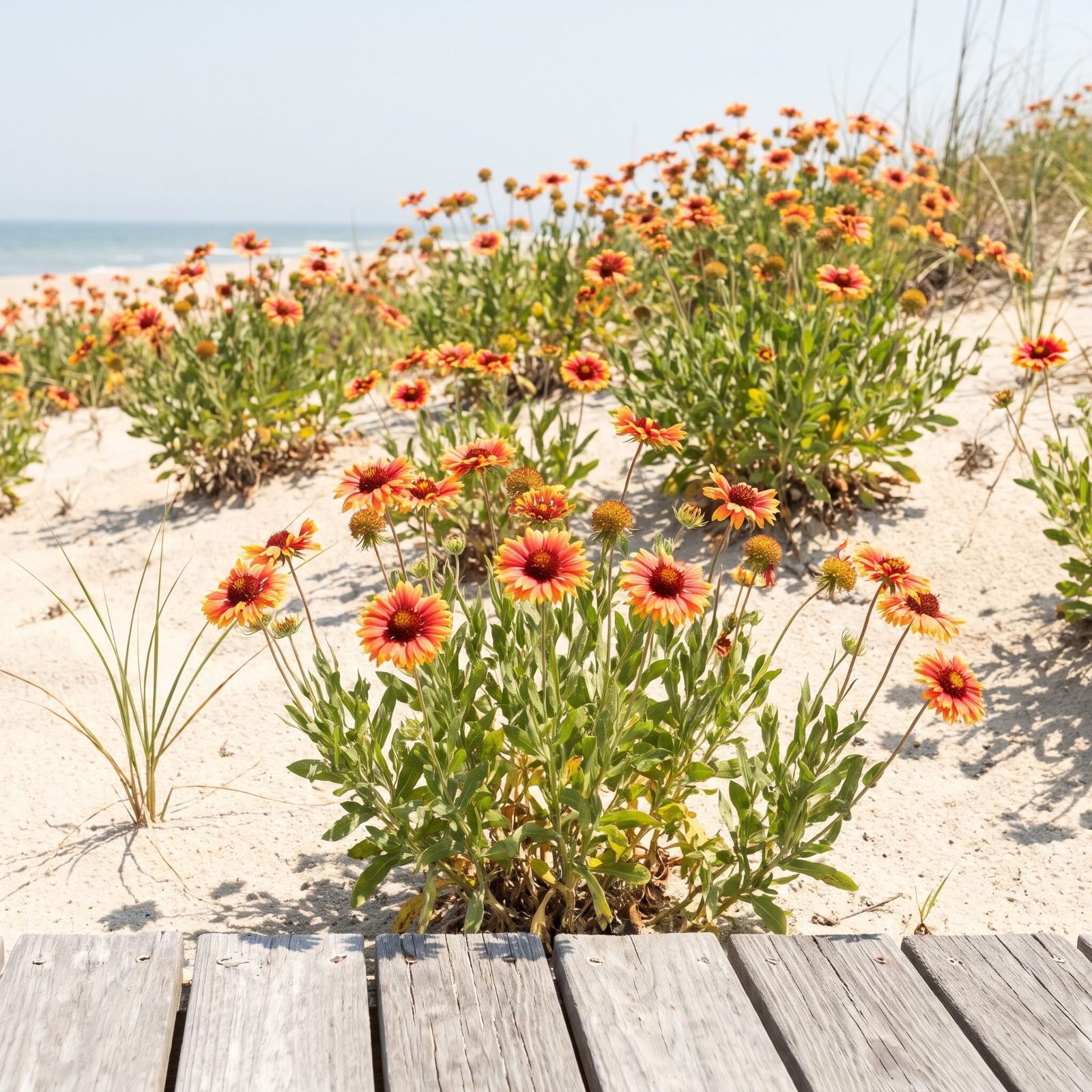
On the barrier islands this one blooms in loose sand right alongside the beach walkways, which tells you everything about its grit. NC State rates it highly tolerant of drought, heat, and salt.
North Carolina is actually its northern limit. The naturalized range runs from here down to Florida, so plant it in-state and you’re gardening at the edge of its comfort zone. Expect roughly a foot and a half tall, a foot wide, with orange-and-red flowers from summer into fall.
Sow seed directly in fall and leave the seed heads standing. Songbirds work them all through the cold months.
15. Butterfly Weed: The 1985 NC Wildflower of the Year Monarchs Depend On
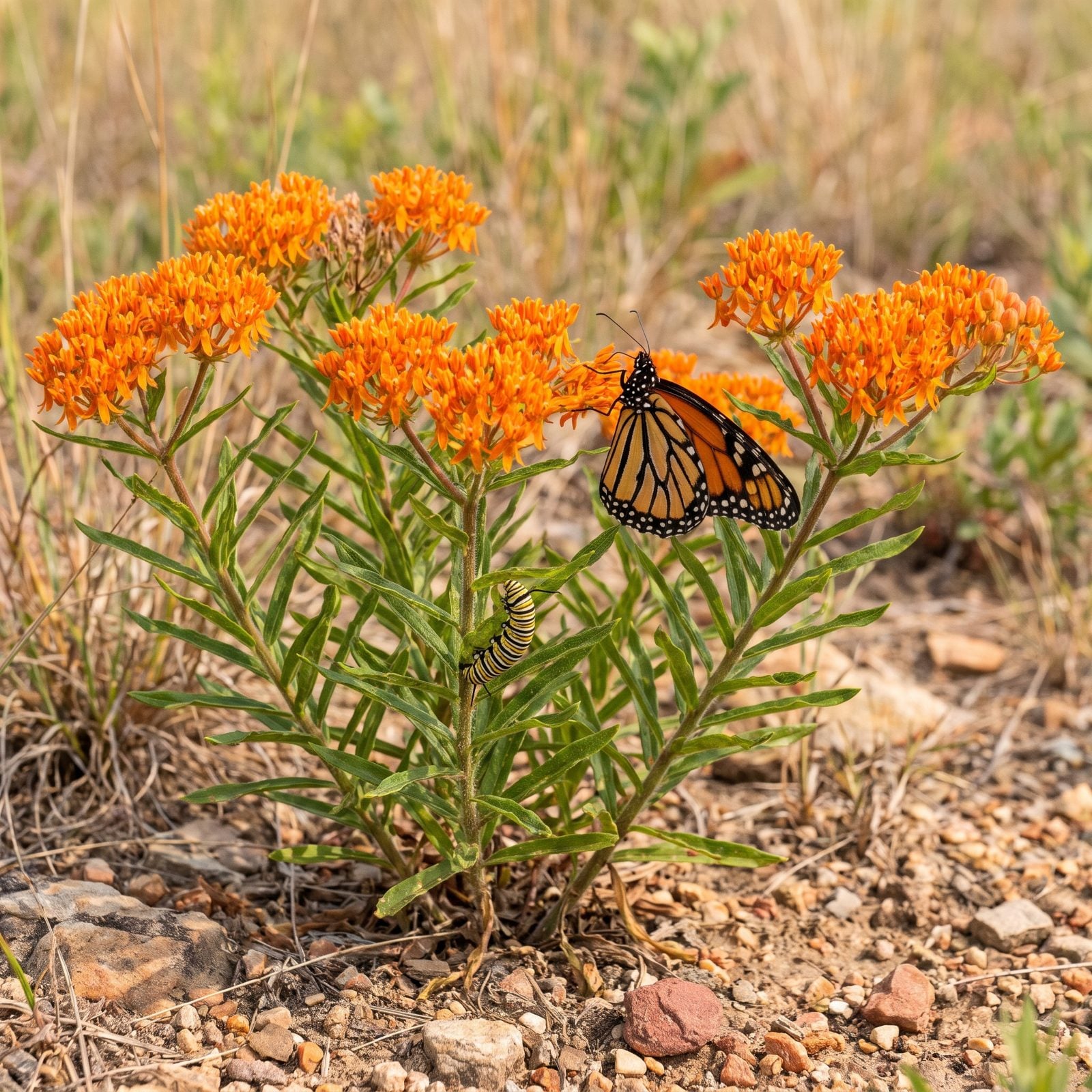
Orange that stops you in the driveway. Butterfly weed thrives in poor, dry soil and full sun, takes drought and moderate salt, and grows in every ecoregion of the state. It was named the 1985 NC Wildflower of the Year, and it’s a host plant for monarch caterpillars, not just a nectar stop they pass through.
Two honest warnings. It can take two or three years to bloom, so don’t yank it in disappointment the first summer. And that deep taproot means it hates being moved. Pick the spot once and leave it there.
14. Pink Muhly Grass: The Pink Fog That Rolls In When Everything Else Fades
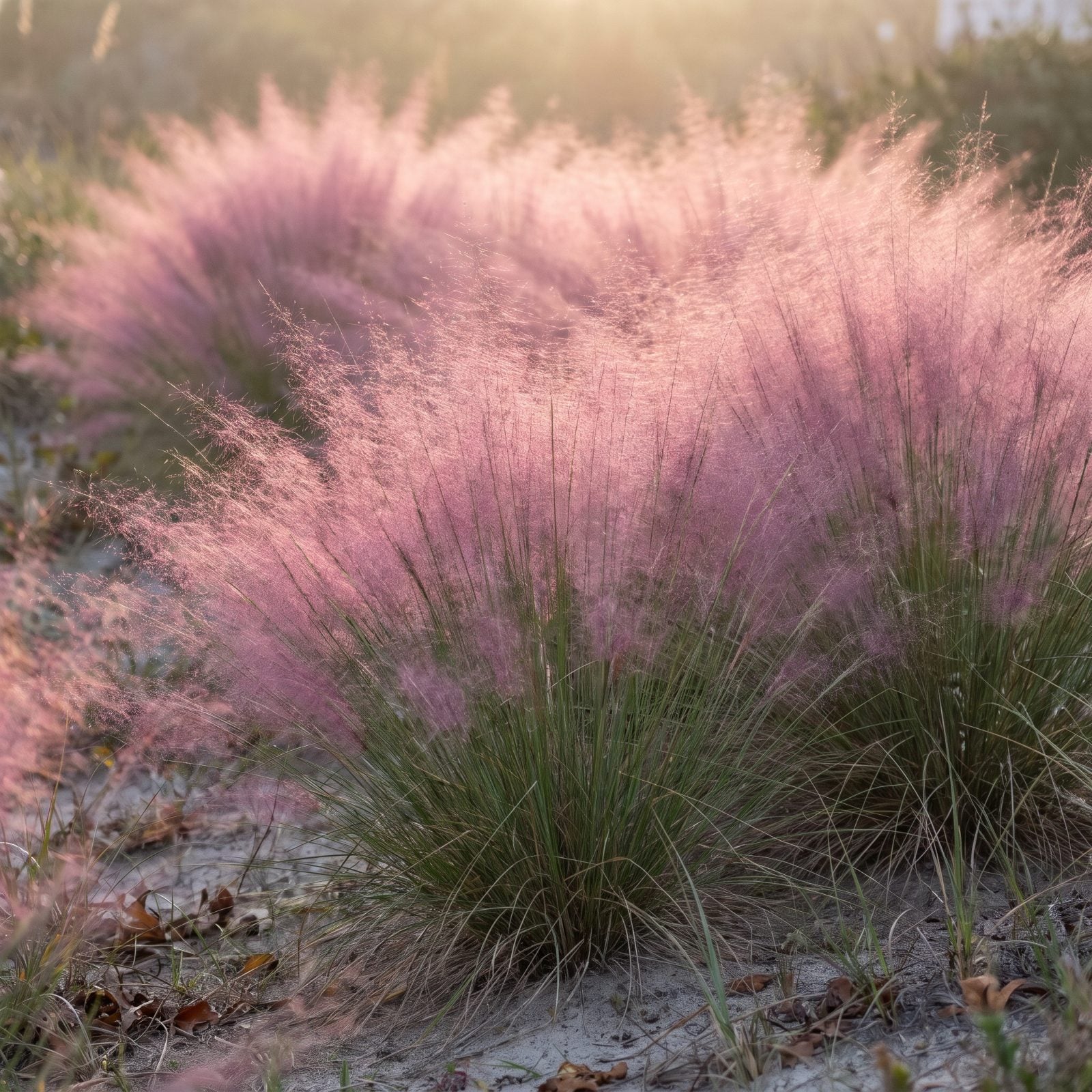
Plant it in a group or don’t bother. Brunswick County Extension recommends muhly grass for coastal urban landscapes planted in masses, and there’s a reason. One plant is a wispy shrug. A sweep of them in October is a pink cloud floating over the whole bed.
It handles heat, humidity, drought, poor soil, and strong salt, and deer won’t touch it. Two to three feet tall and about as wide, with airy pink plumes in fall right as the summer annuals give out. That timing is the whole trick. Color arrives exactly when you figured the show was over.
13. Eastern Prickly Pear Cactus: The Native Cactus That Survives a Carolina Winter
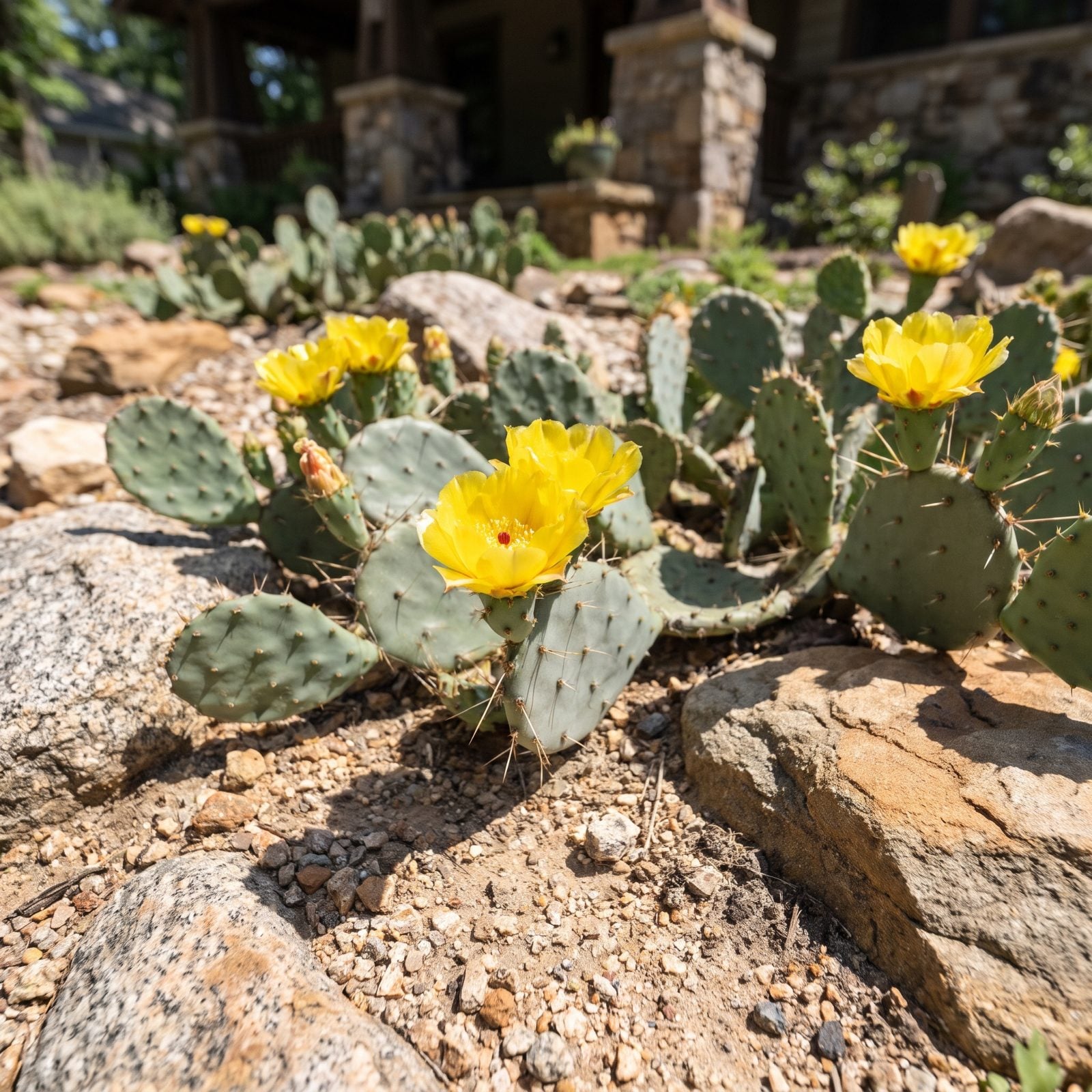
A cactus. In North Carolina. Montgomery County Extension calls Opuntia humifusa one of the most cold-tolerant cacti in North America, and the NC Wildlife Federation lists it as a heat- and drought-tolerant native for dry soils and rock gardens.
It wants full sun and sandy or rocky soil, and it shrugs off salt and drought without blinking. What it won’t take is shade or wet, poorly drained ground, so don’t tuck it anywhere that puddles after a storm.
12. Blazing Star: The Upright Pollinator Spire for Our Worst Humidity
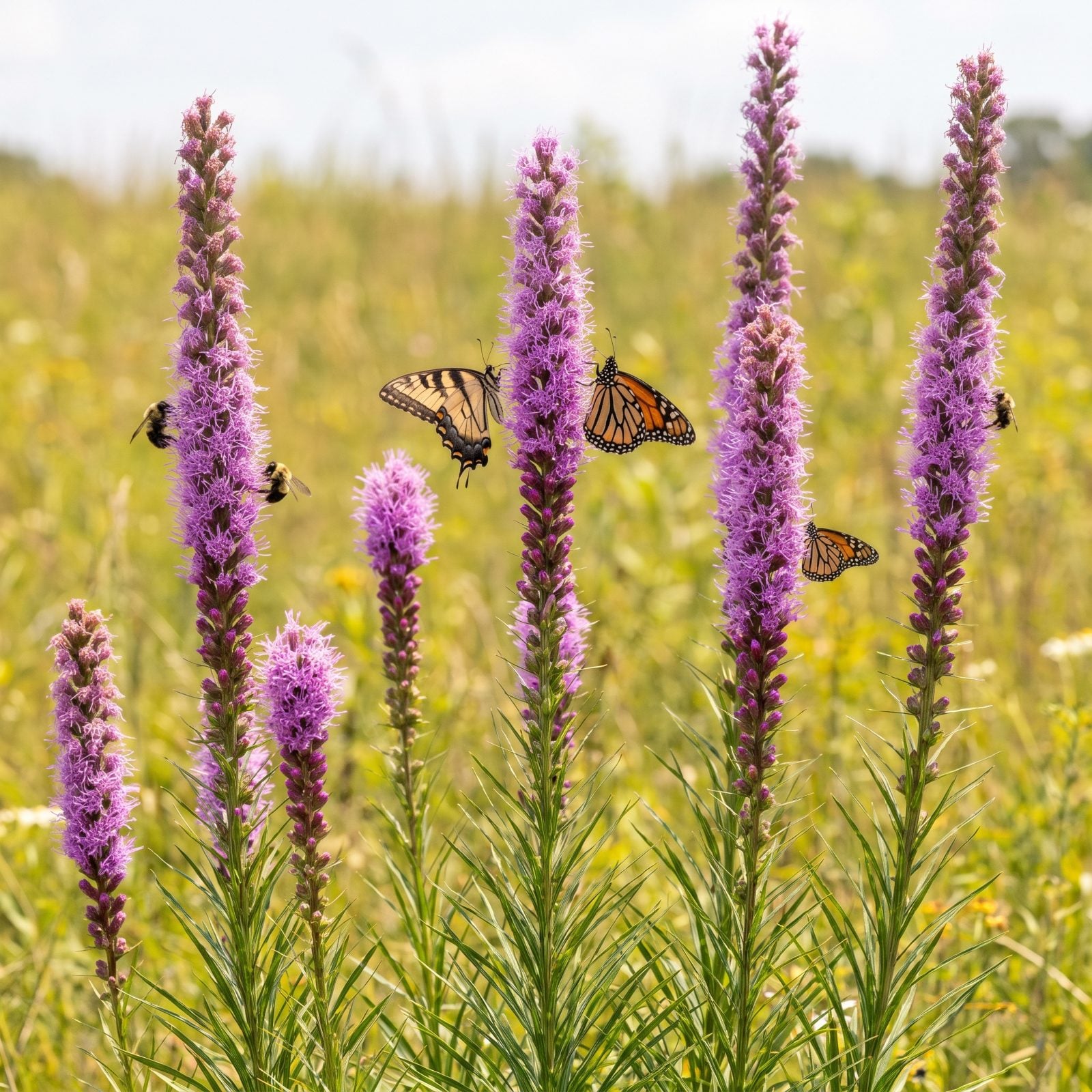
Vertical, reliable, and absolutely crawling with bees. The NC Wildlife Federation calls blazing star a dependable pollinator plant precisely because it shrugs off the summer heat and humidity that wreck half the pretty perennials at the garden center.
It forms upright clumps three to six feet tall, happiest in full sun but fine in dappled shade. Many soils will do, though it leans toward moist, well-drained ground. Set it among a bed of rounded mounds and those tall spires give the eye somewhere to climb, blooming top to bottom in a way that holds color for weeks on end.
11. Chaste Tree (Vitex): The Little Tree That Shrugs Off July
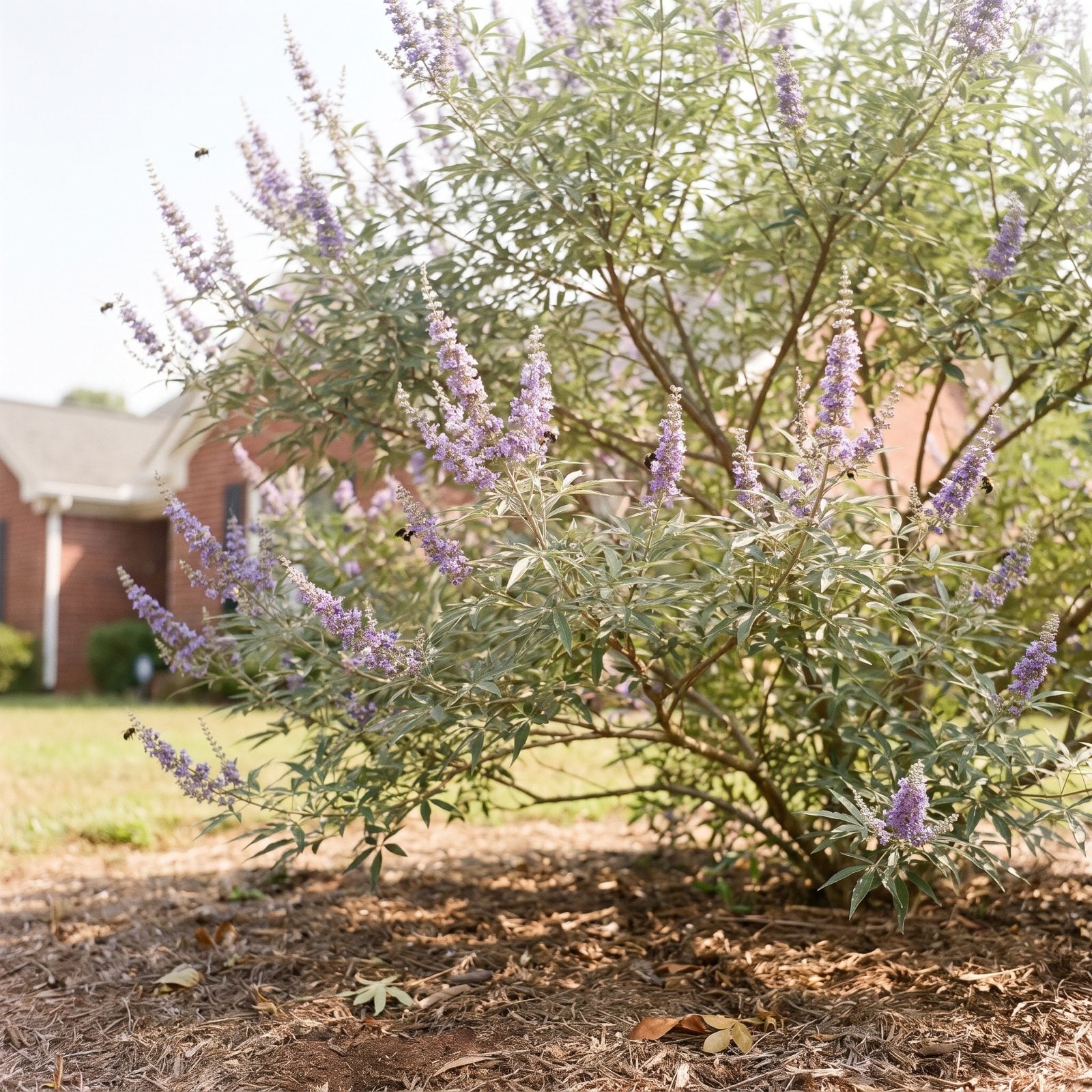
Lee County Extension’s heat-happy plant list calls Vitex “a true Southern favorite,” and once you’ve watched one bloom in the middle of August while everything else sulks, you get it.
It tops out around 10 to 20 feet, so it’s really a small tree rather than a shrub. Those blue flower spikes start in early summer and keep coming through the worst of the heat, and the lacy foliage reads cool even when the air won’t cooperate. Give it room and full sun. After that it wants nothing from you — which, honestly, is more than most yard plants can claim.
10. Blue Mist Shrub (Caryopteris): Cool Blue on a Stingy Water Budget
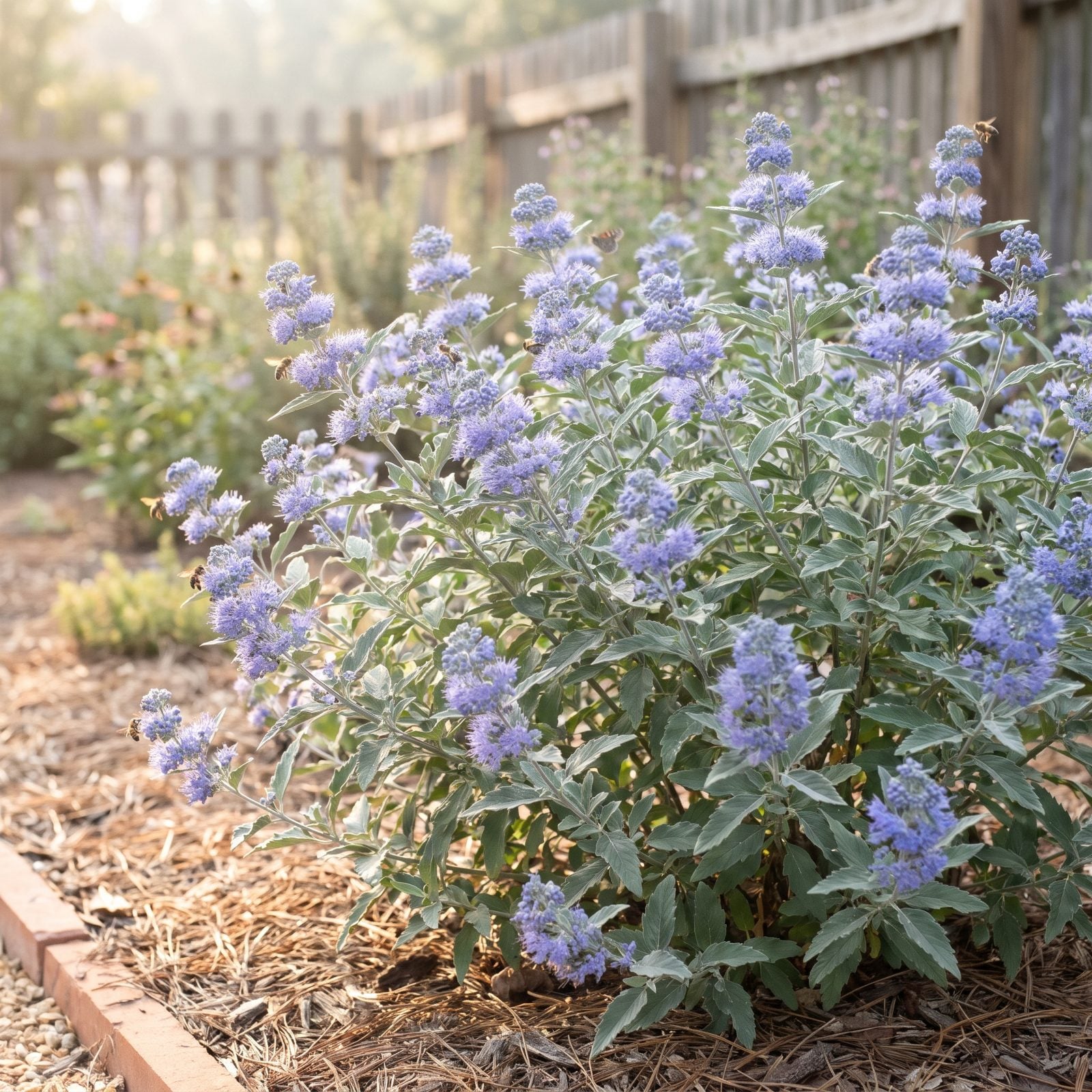
Lee County Extension says Caryopteris handles heat, humidity, and “stingy watering,” which might be the most honest phrase ever printed in an Extension bulletin.
The payoff is blue. Real, cool, hazy blue flowers in the hottest stretch of the year, exactly the color your tired August eyes are begging for. It’s deer resistant too, which matters more than people admit until the morning they find their hostas chewed to nubs. Plant it where you’ll see it from the porch.
9. Smoke Bush: Purple Haze and Burgundy Leaves That Deer Walk Past
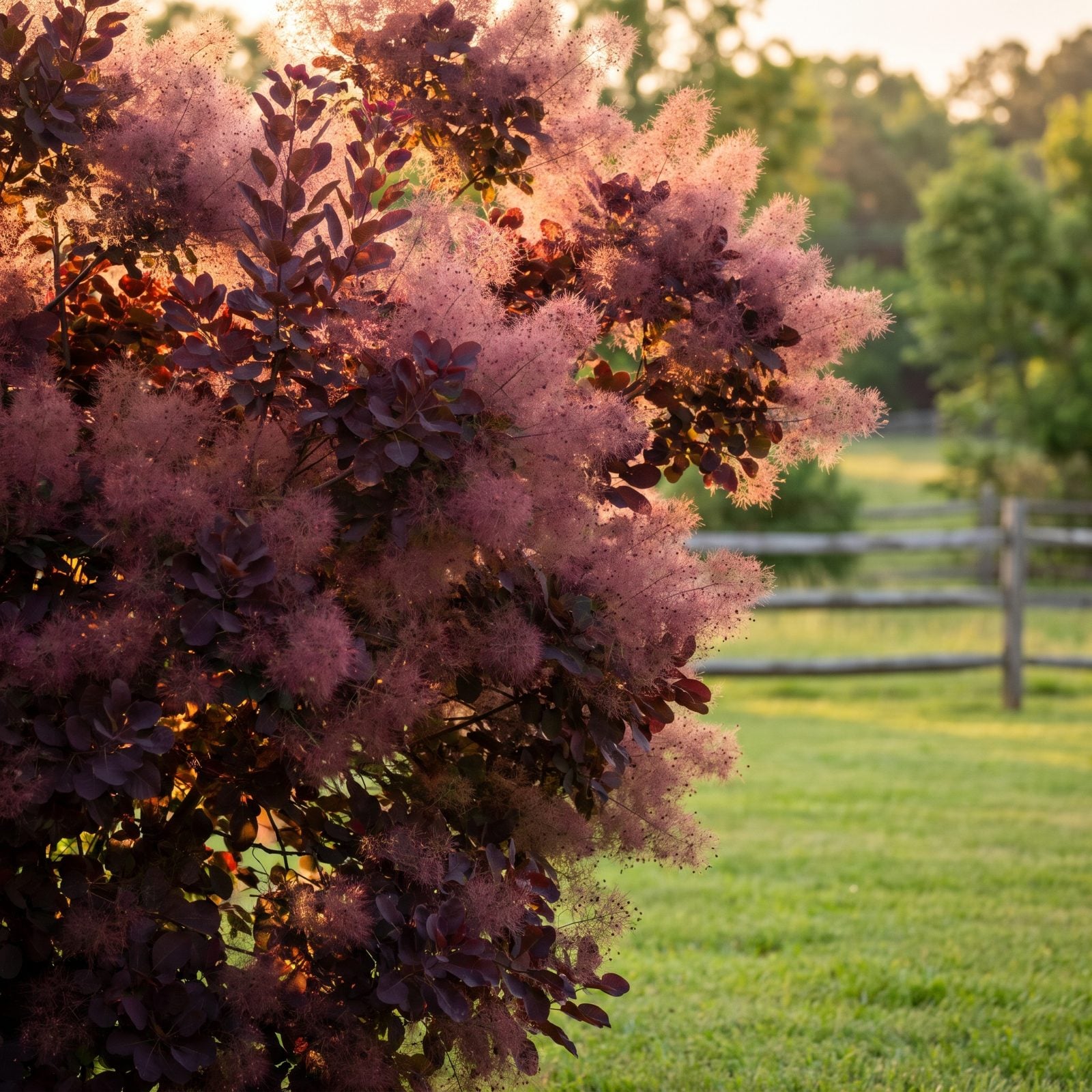
The name does all the work here. Smoke bush earns it with feathery flower clusters that hover around the plant like purple smoke caught mid-drift.
Lee County Extension puts Cotinus on its heat-happy shrub list, and the popular purple form runs to about 15 feet with burgundy leaves that are, honestly, the better show. Deer usually walk right past it. Those smoky plumes photograph terribly and look unreal in person, so don’t bother trying to capture them. Just stand there and look.
8. Summer Snapdragon (Angelonia): The Container Plant That Blooms June Through September
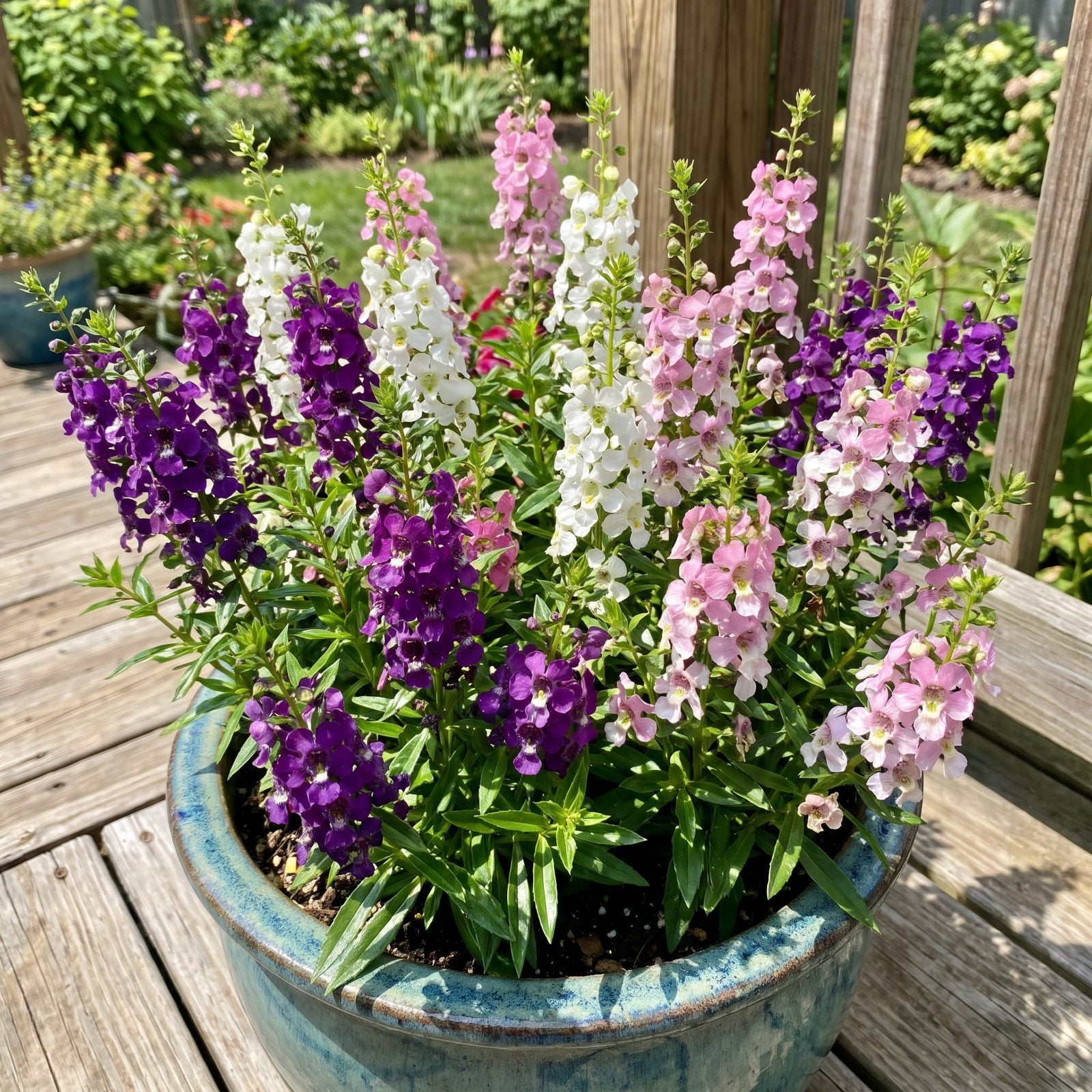
Durham County Extension Master Gardeners put Angelonia on their list of plants that take sunny, hot, dry Piedmont conditions. The bloom window is what sells it, though: June clear through September.
The flowers look like tiny orchids stacked on a spike — white, purple, pink, and those streaked variegated forms. Durham’s write-up expects it to shine in containers, and that’s where we’d put it. There’s something about Angelonia in a pot by a baking front step that just keeps going long after you’ve given up on everything else.
7. Portulaca (Moss Rose): The Succulent That Closes Up When the Sun Goes In
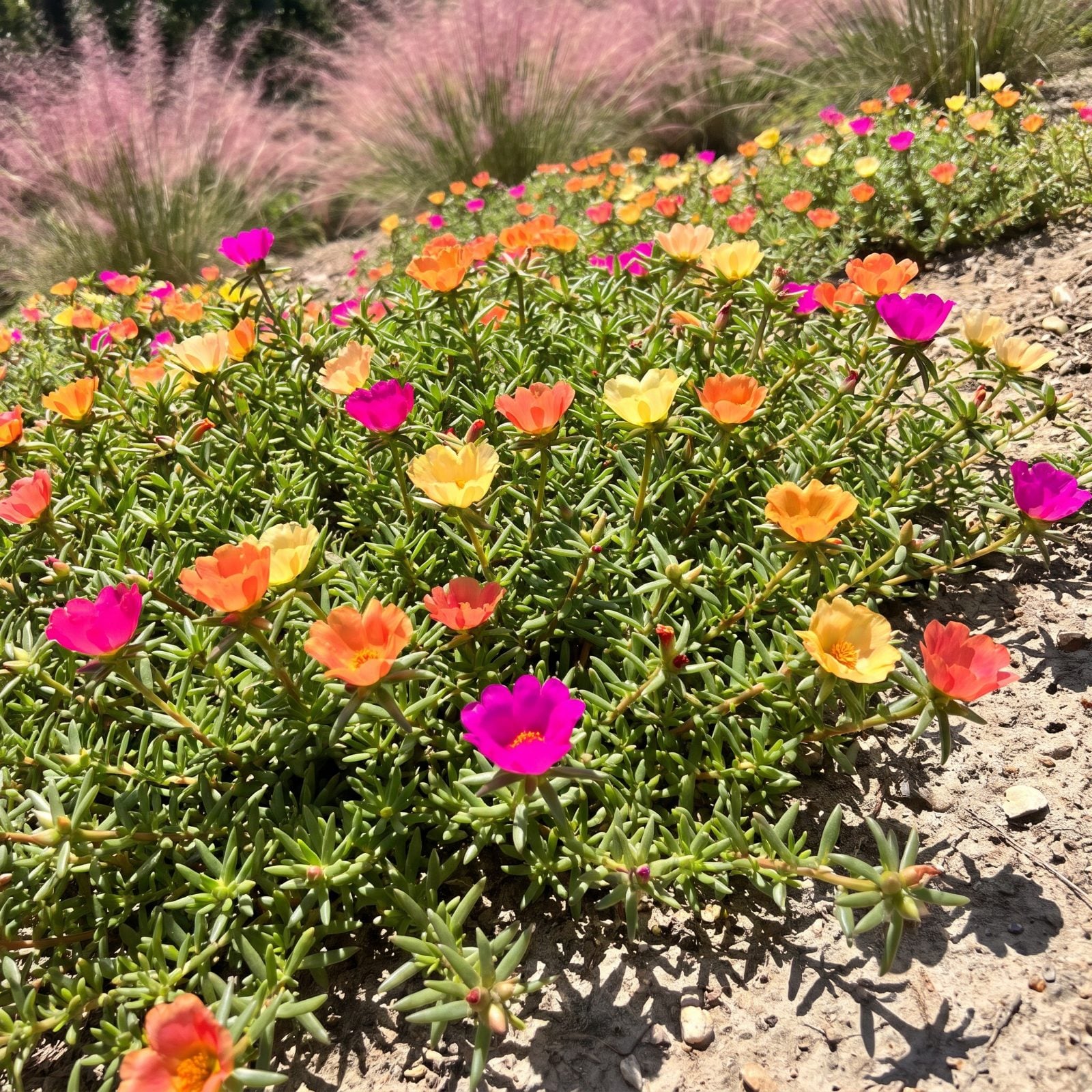
Nobody warns you about this one: moss rose shuts its flowers on cloudy days. The first time it happens you’ll swear you killed it. You didn’t. It’s just waiting for the sun to come back.
Durham Master Gardeners and Beaufort County Extension both recommend it as a heat-tolerant annual, and the Durham note suggests a sloped, sharp-draining spot, tucked in among native pink muhly grass. It wants baking heat and quick-drying soil. Overwater it and it rots; neglect it and it thrives. Our kind of plant.
6. Blue Daze (Evolvulus): A Morning Glory Cousin That Hugs the Ground
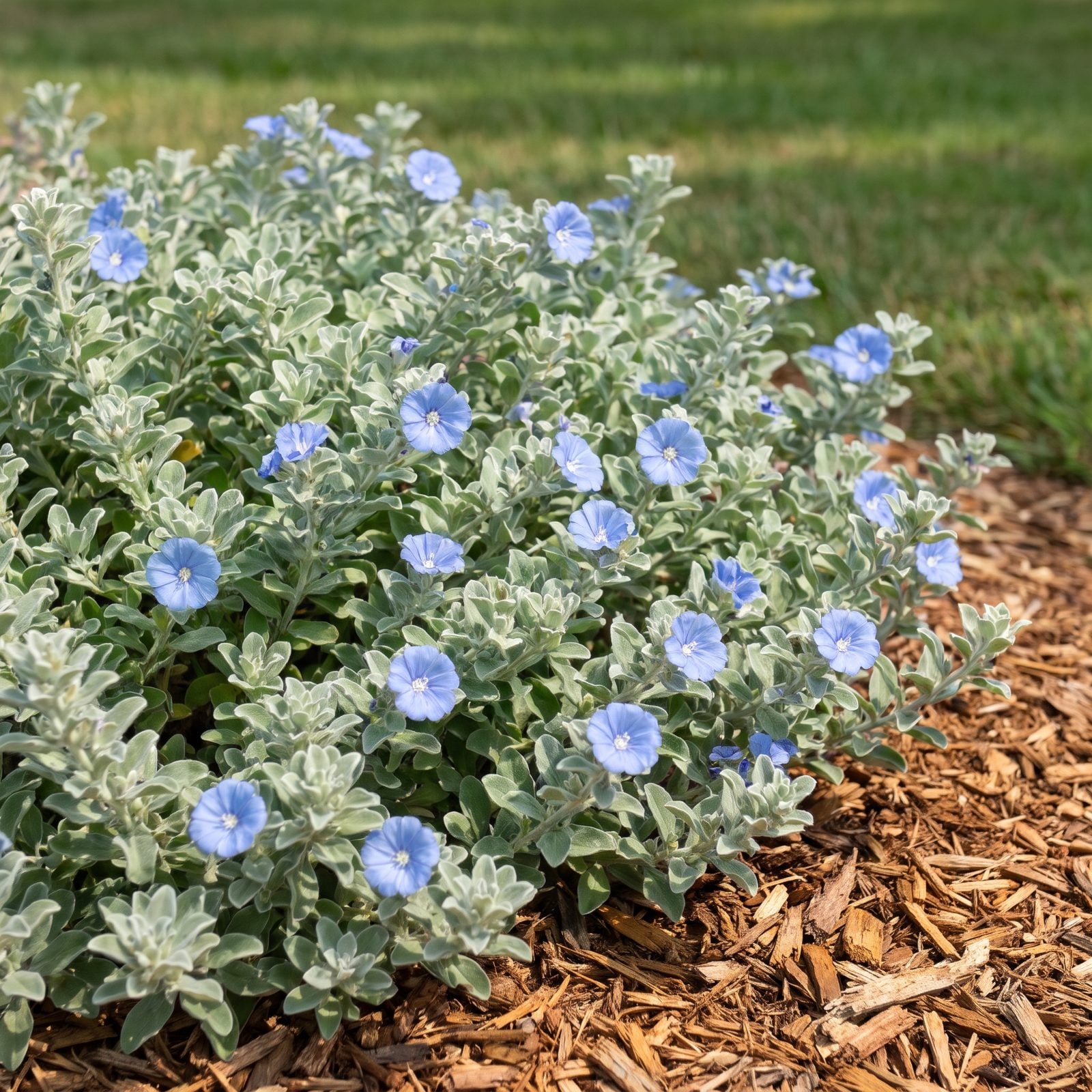
It’s in the morning glory family, but it won’t climb your mailbox. Blue Daze stays low and spreads, forming mounds 9 to 18 inches tall with fuzzy silver-green leaves and sky-blue flowers.
Durham Master Gardeners list Evolvulus ‘Blue Daze’ among the plants that shrug off sunny, hot, dry Piedmont conditions. Give it open ground, because it wants to roam. The flowers close at dusk and on overcast days, same as the portulaca — a plant for people who are actually home in the afternoon sun.
5. ‘Dragon Wing’ Begonia: The Begonia That Took the Heat (and Surprised a Master Gardener)
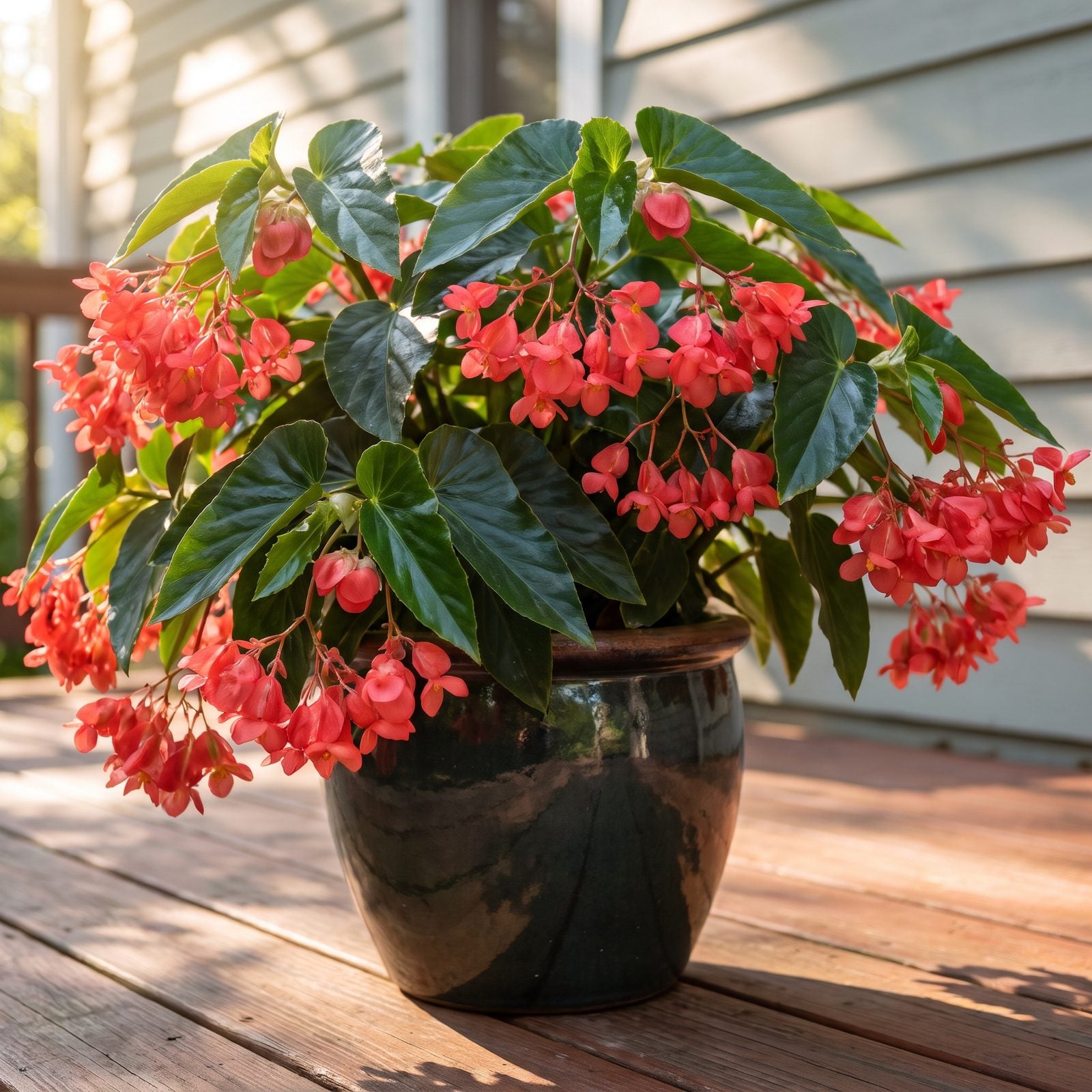
A Durham Master Gardener admitted she’d never thought of begonias as heat and drought plants. Then ‘Dragon Wing’ changed her mind through a hot, dry Piedmont summer, and she added it to the list from firsthand experience.
It did well two ways: a deck container with morning sun, and in the ground on a west-facing, partly shaded spot. The glossy angel-wing leaves and drooping clusters of red or pink flowers keep going when the real begonia snobs expect a meltdown.
4. Garden Sage: The Herb That Looks Good in February, Not Just August
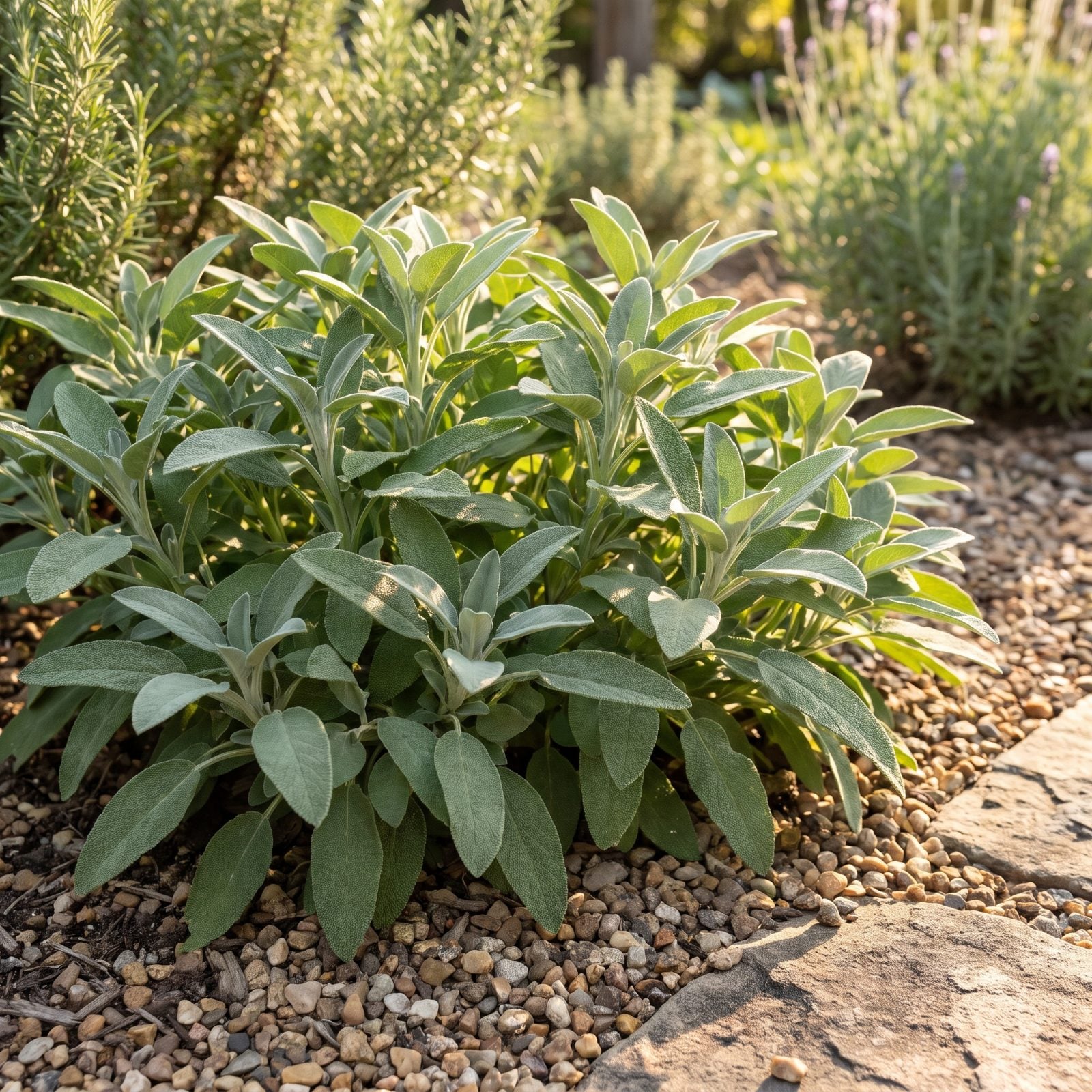
A Durham Master Gardener calls Salvia officinalis the star of her herb garden, and the reasons are refreshingly unglamorous: good-looking, evergreen, productive all year.
It came through a hot, dry Piedmont summer on just a few hours of sun in well-drained soil. The velvety gray-green leaves are the point as much as the cooking. Sage earns its spot by still being there in winter, when the flashy annuals are long gone and composted.
3. ‘Walker’s Low’ Catmint: A Lavender Haze the Bees Will Not Leave Alone
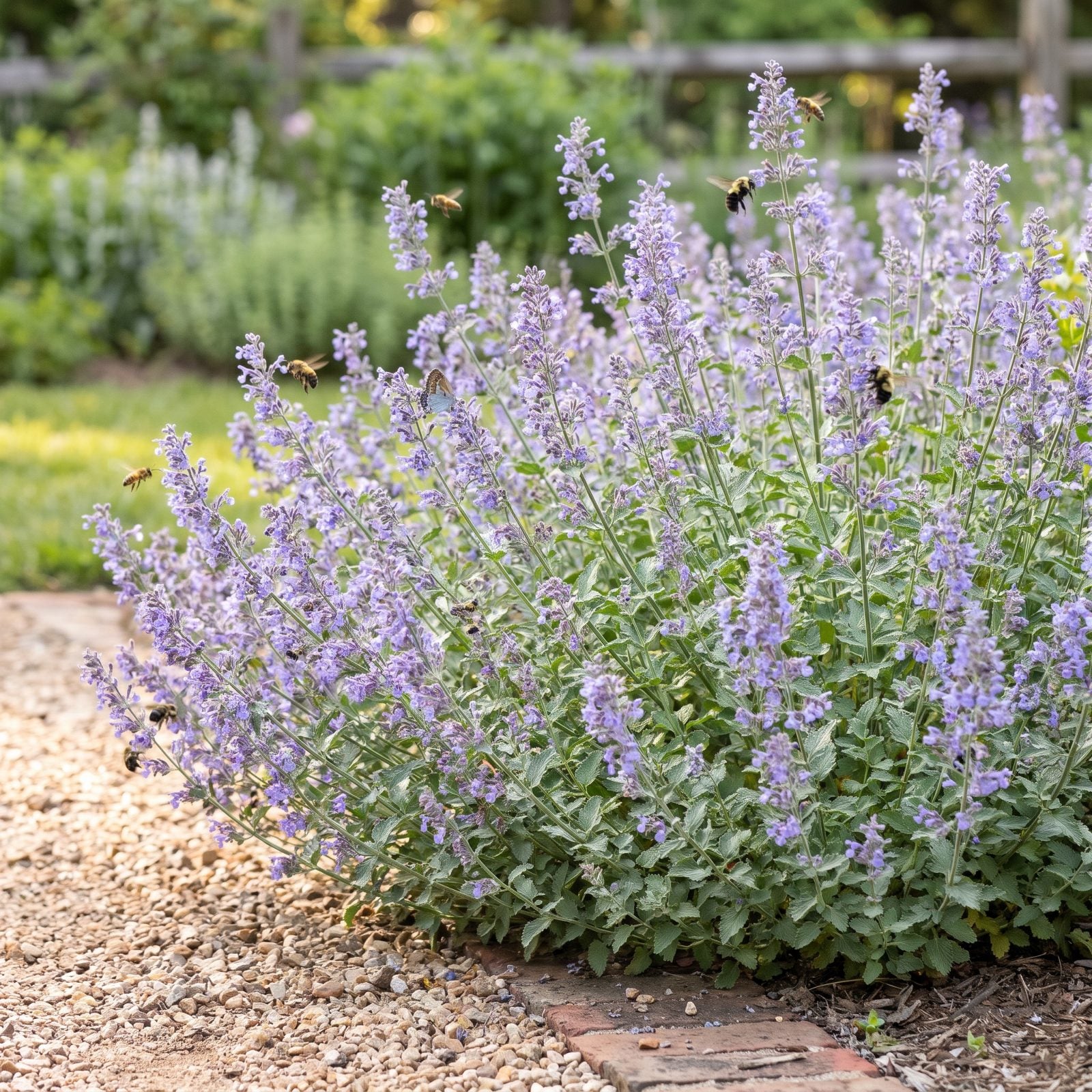
Durham Master Gardeners list Nepeta ‘Walker’s Low’ among the perennials that hold up in sunny, hot, dry spots, and the flower spikes run from late spring into midsummer.
It’s always busy. Bees, moths, butterflies — the whole afternoon shift works it over, and it’s deer resistant. Want one plant that feeds pollinators while asking almost nothing from you? This is the short list.
2. Blackberry Lily: July Blooms and the Black Seeds That Name It
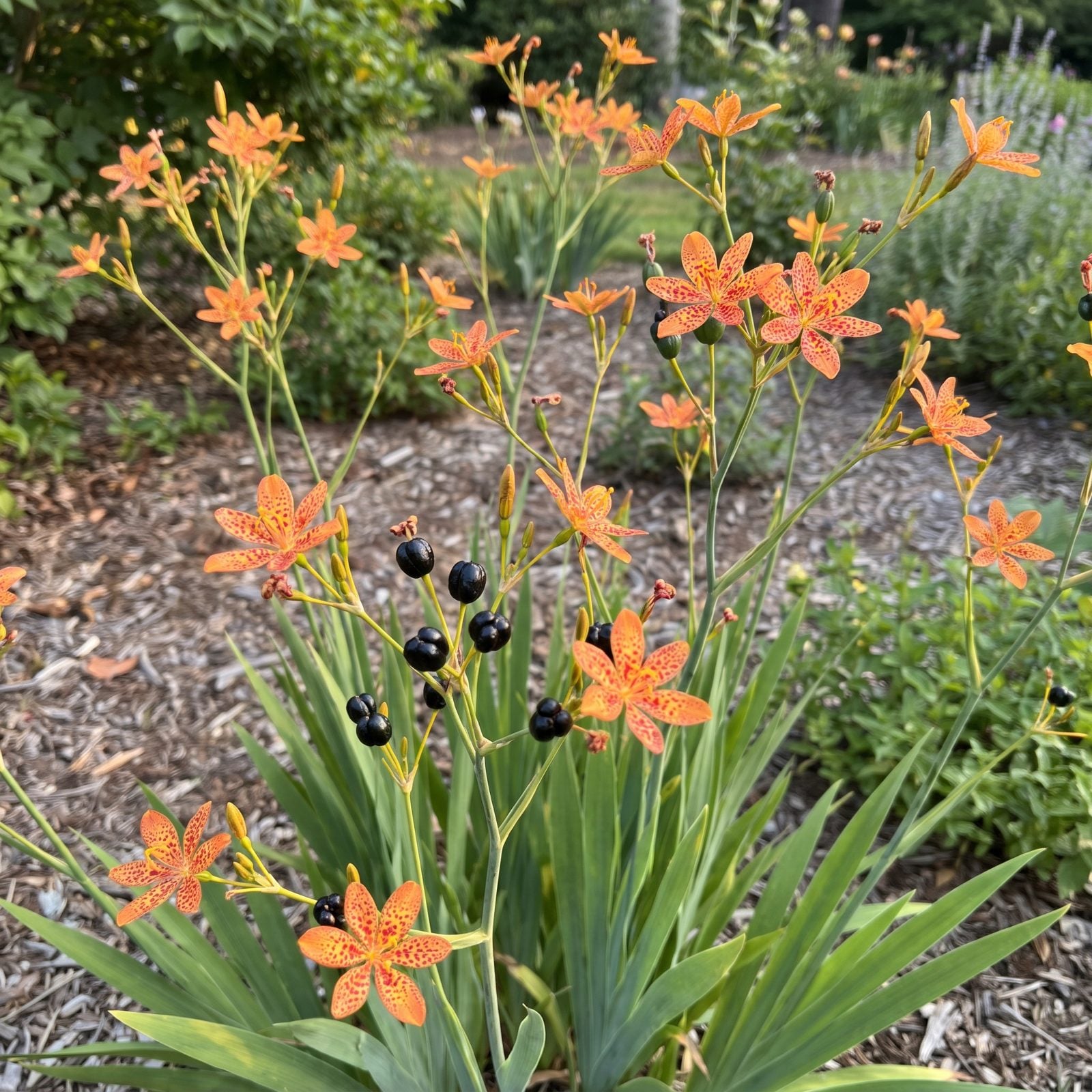
The name throws people. No blackberry, and no lily, exactly. The black comes later, when shiny clusters of seeds form after the flowers fade and look for all the world like ripe blackberries clinging to the stalk.
Durham Master Gardeners report Belamcanda did very well in afternoon sun and well-drained soil, even though it prefers morning light. It blooms in July on tall stalks, freckled orange stars held above fans of iris-like foliage. Leave the seed heads. They’re the whole second act, and they look wonderful in a dry arrangement on the kitchen table.
1. Mandevilla: The Tropical Climber That Shrugs Off a Piedmont August
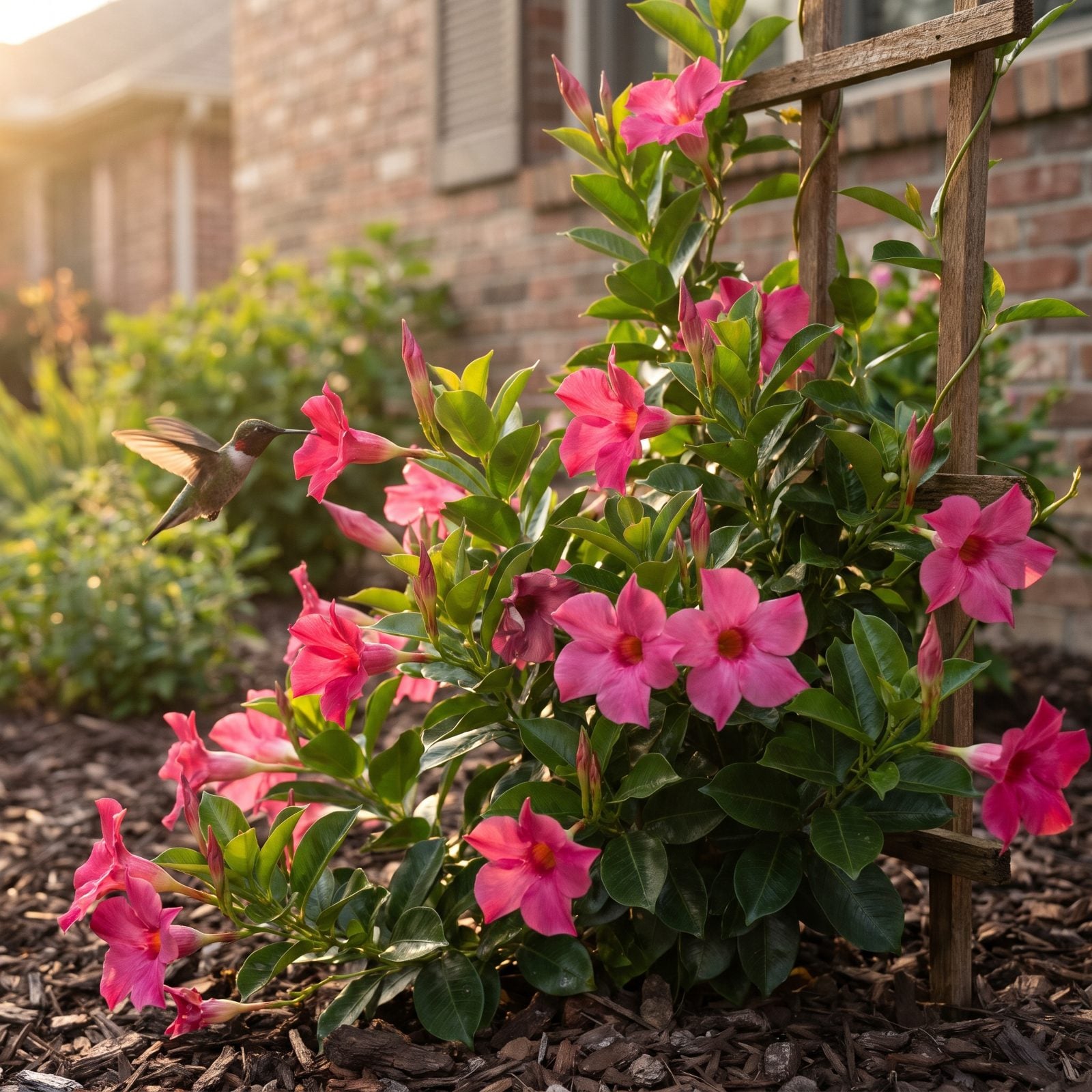
Most people kill mandevilla by babying it. Give it mulch, a spot in the ground, a trellis to grab, and then — this is the hard part for fussers — walk away. Durham County Master Gardeners stuck the compact mounding type straight into the soil, barely watered it, and reported it doing well in hot, dry conditions with little extra water.
Hummingbirds and butterflies find it fast. Those waxy leaves and pink blooms look like something flown in from the equator, which is precisely why gardeners assume the plant must be high-maintenance. Wrong. Once it digs in, it just goes.
Here’s the catch. It won’t make it through a Carolina winter outdoors, though NC State Extension points out you can overwinter it indoors in a container and set it back out come spring.