
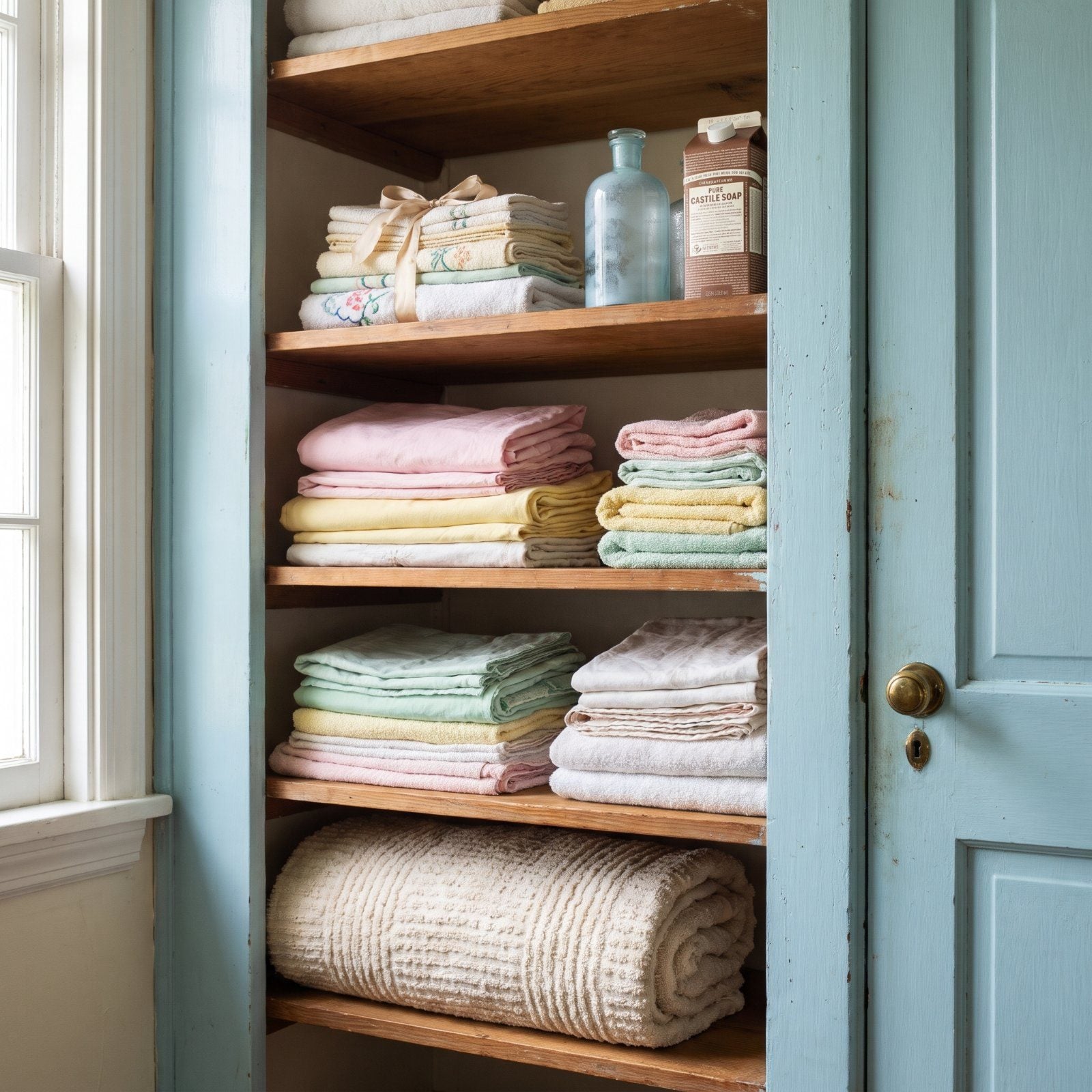
Open the door and the smell hits first. Cedar, a little starch, maybe the ghost of a lavender sachet somebody tucked between the sheets twenty years ago. The 1960s linen closet was a tall painted cupboard packed tight, every shelf doing double duty, nothing thrown out that still had a season left in it. It held more than towels — it held a household’s whole plan for staying clean, warm, and ready for company. We went looking for what actually lived on those shelves, and the objects below tell you as much about the decade as any photograph. Mind the folded stacks.
Please note that some of the images in this article were created with the assistance of AI.
37. Cannon Bath-Towel Sets in Every Candy Color
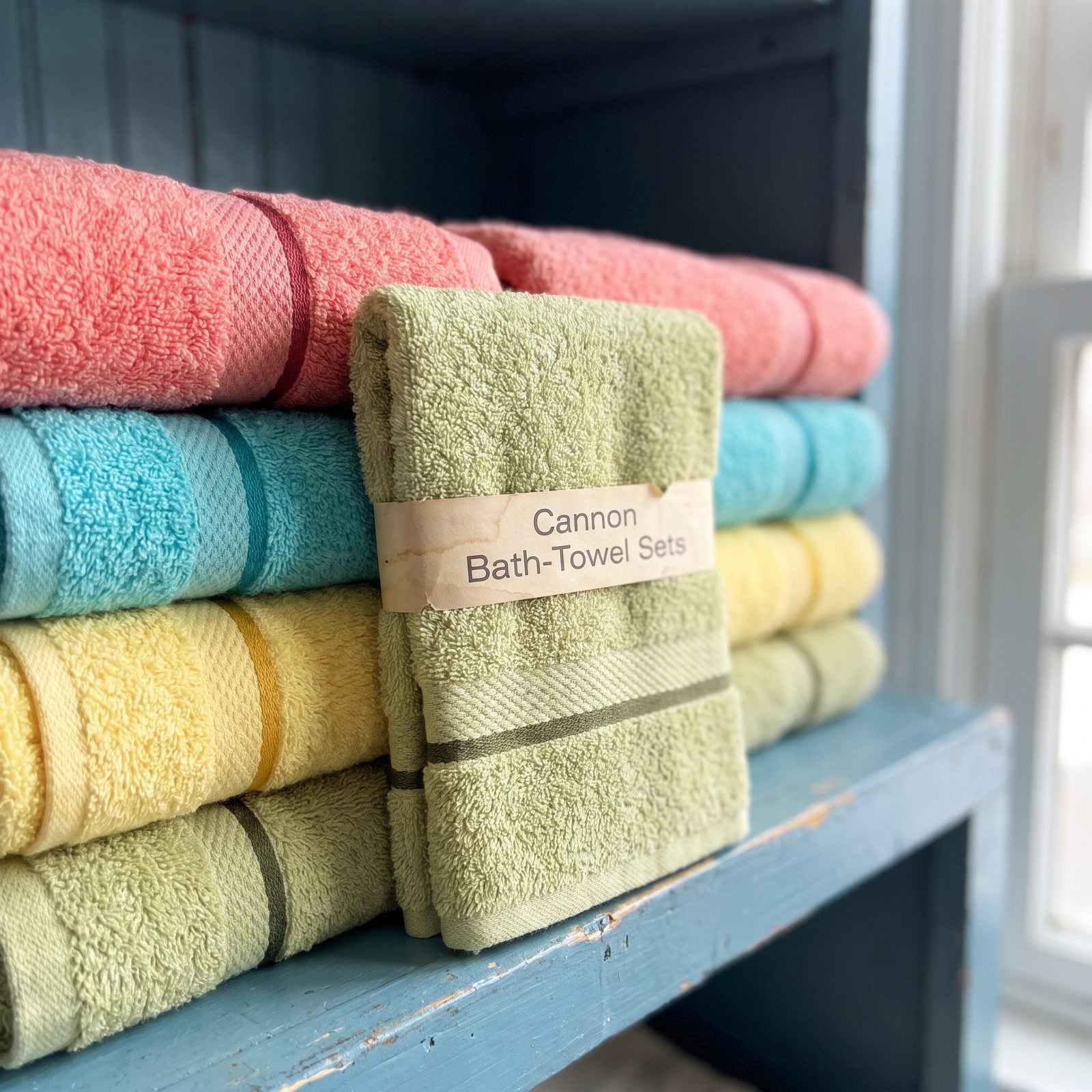
Color was the whole point. Somewhere in the decade, towels stopped apologizing for themselves and showed up in coral, turquoise, and a green somebody decided to call avocado. Cannon ran heavy national advertising and sold them matched — bath sheet, hand towel, washcloth, all the same shade, stacked like paint chips on the shelf.
Here’s what people get wrong looking back: these weren’t cheap. A good matched set was a real purchase, and you bought towels to last a decade, not a season. The weight tells you. Pick one up today at an estate sale and it has more heft than most towels you can buy now.
36. The Fuzzy Chenille Toilet-Lid Cover
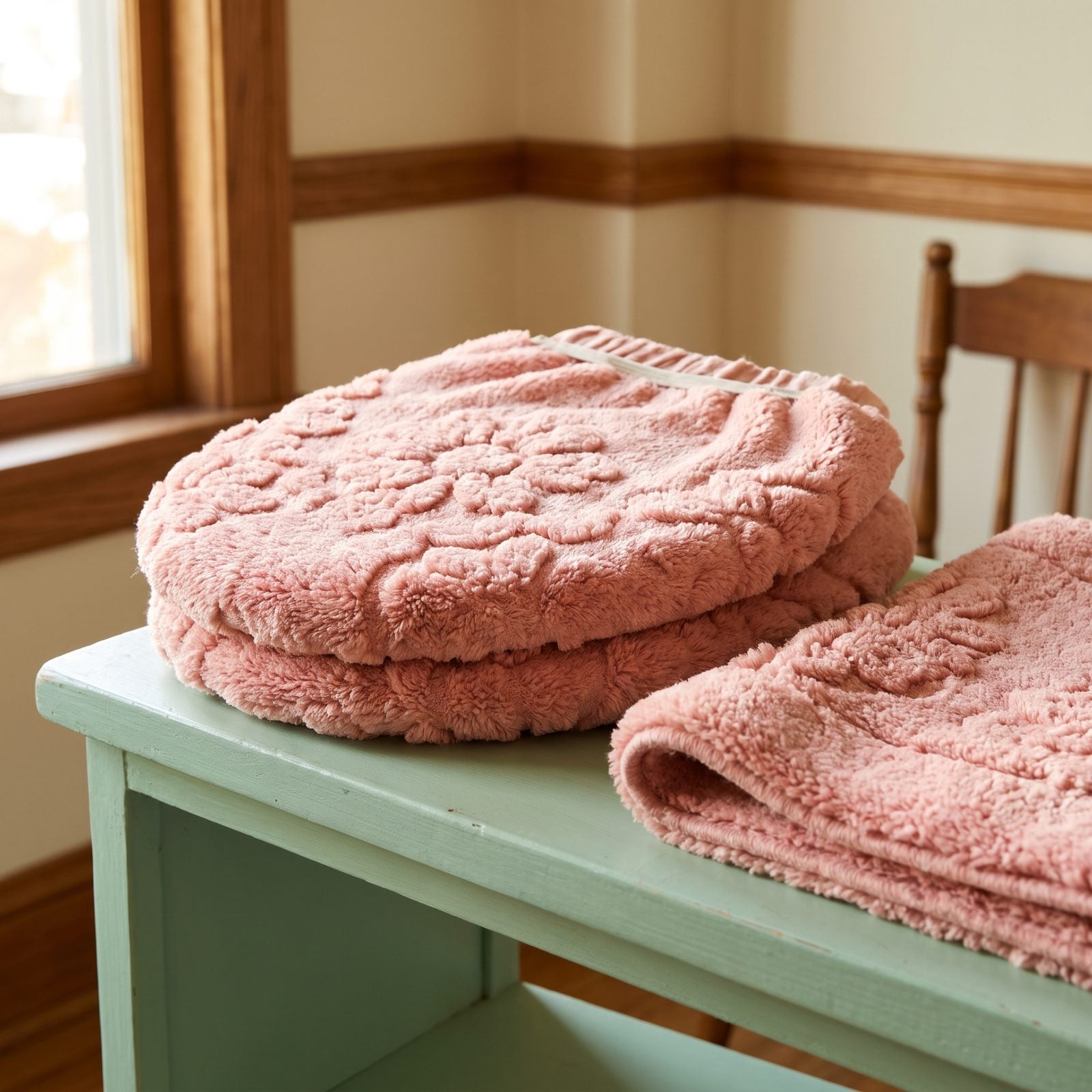
Fuzzy, stretchy, usually pink. The chenille lid cover slipped over the closed toilet lid like a shower cap and matched the contour rug hugging the base. Nobody needed it, and nobody ever claimed otherwise.
What it offered was softness everywhere — a bathroom that felt upholstered instead of tiled and cold. The covers held up badly, though. They soaked up moisture and had to be washed constantly, which is exactly why so few survive in decent shape.
35. Embroidered Guest Towels Nobody Was Allowed to Use
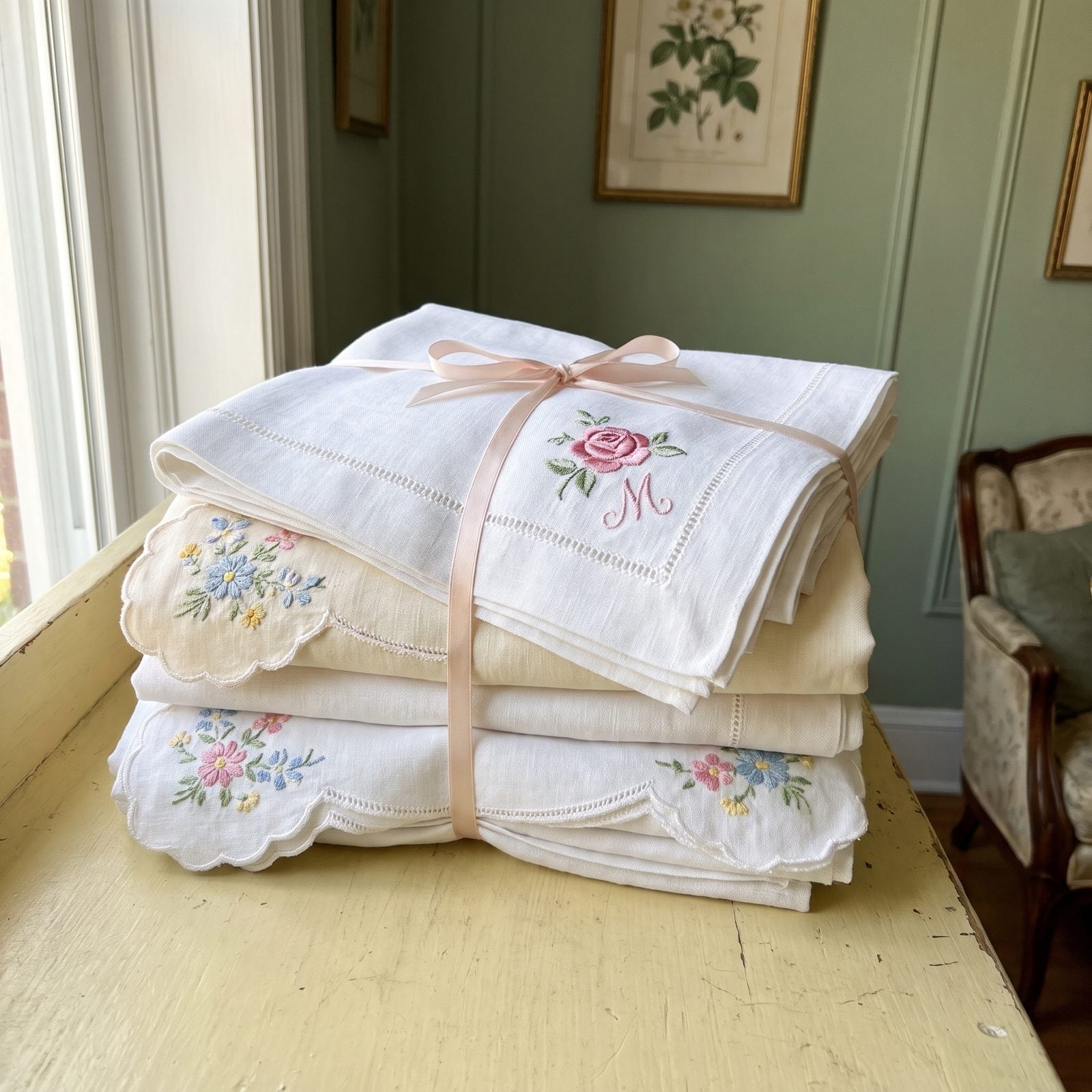
You know the ones. Pressed, scalloped, a little rose stitched in one corner, maybe a monogram. They hung on the guest-bath rack looking perfect, and if you actually dried your hands on one as a kid, somebody noticed.
That tension is the whole story. Guest towels were display objects dressed up as useful ones. Many were handmade or arrived as wedding gifts, which is why they got guarded like heirlooms — plenty spent their entire working life being looked at and never once touched water.
34. The Rubber-Backed Bath Mat That Clung to the Floor
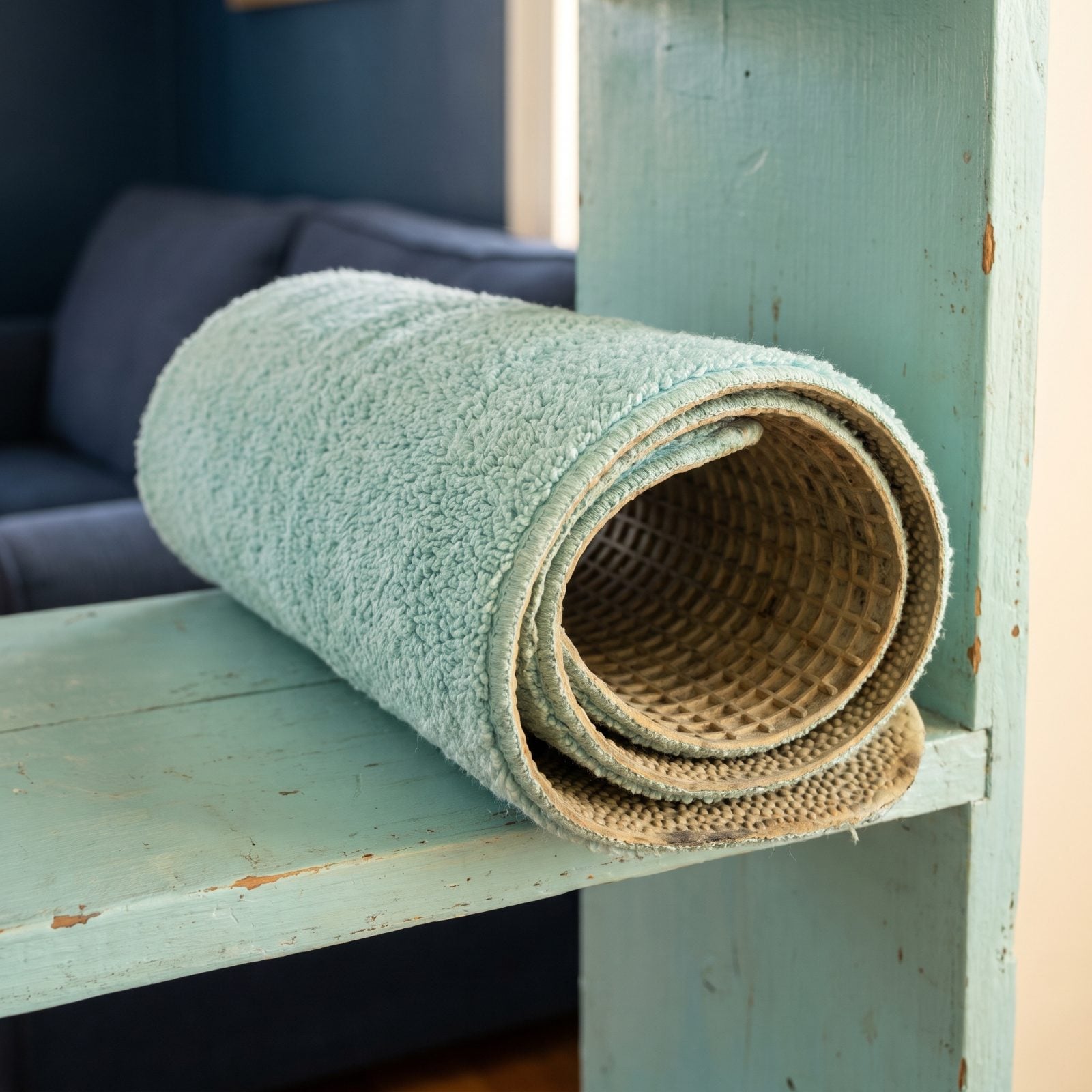
The practical one. Cotton loop pile on top, a pebbled rubber grid underneath that gripped the floor and, given enough time, left its own waffle print pressed into the linoleum if you forgot to move it around.
That rubber was the whole innovation, and also the weak point. It dried stiff, cracked, and eventually started flaking off in little black crumbs. Worth knowing if you find a vintage one and wonder why the backing looks like a dried riverbed.
33. Pastel Cotton Sheet Sets in Pink, Blue, and Butter Yellow
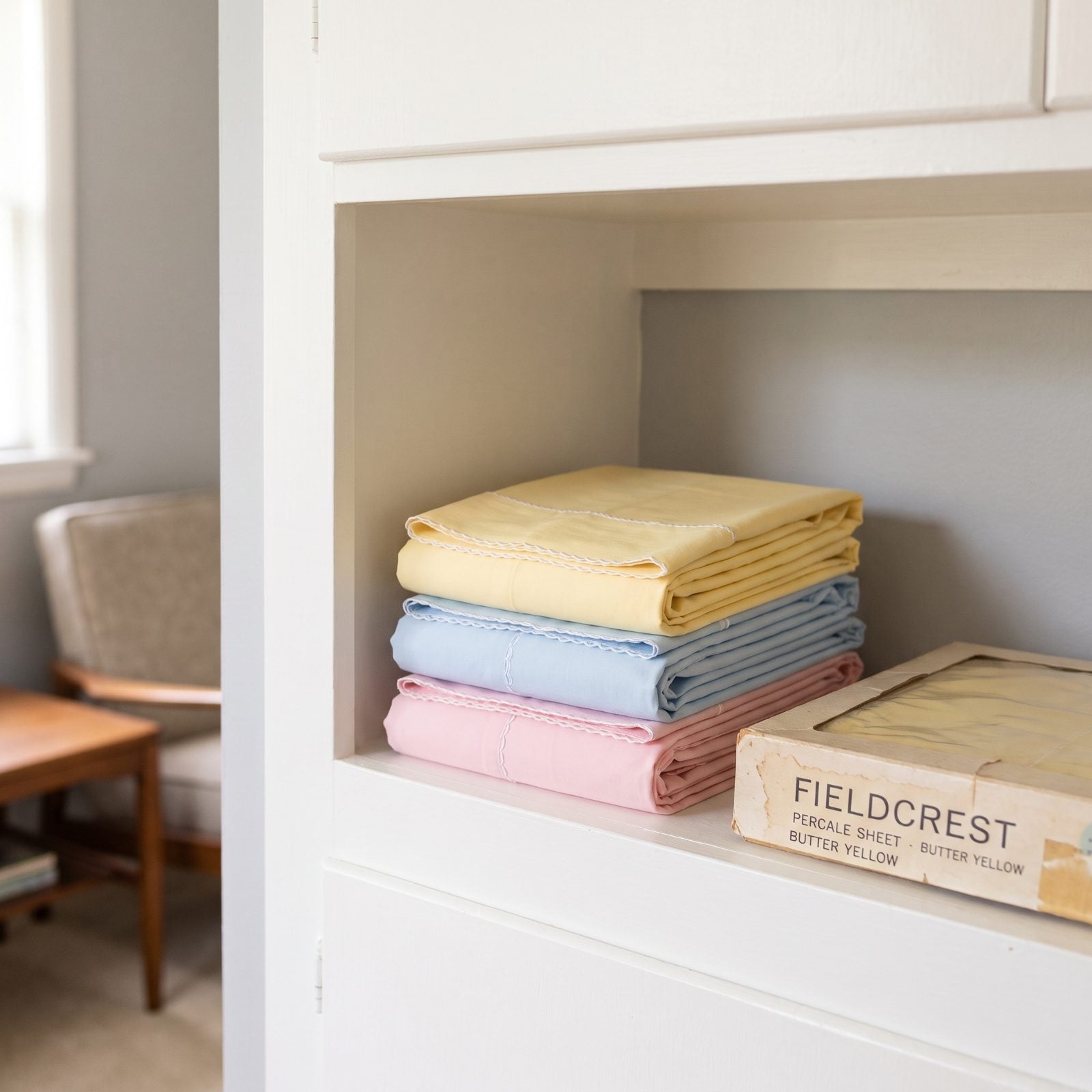
White sheets gave way to color, and the shelf started to look like an Easter basket — powder pink, pale blue, a yellow the exact shade of churned butter, often with a thin embroidered border running along the top hem.
These were cotton percale. Crisp, cool, and a project to keep nice: washed, line-dried, pressed, folded square. Good news for anybody who inherits a set, though. Well-made 1960s percale softens with every wash and outlasts a lot of what fills store shelves now, and I’d take a worn one over most new sheets without thinking twice.
32. The First No-Iron Fitted Sheets, a Minor Miracle
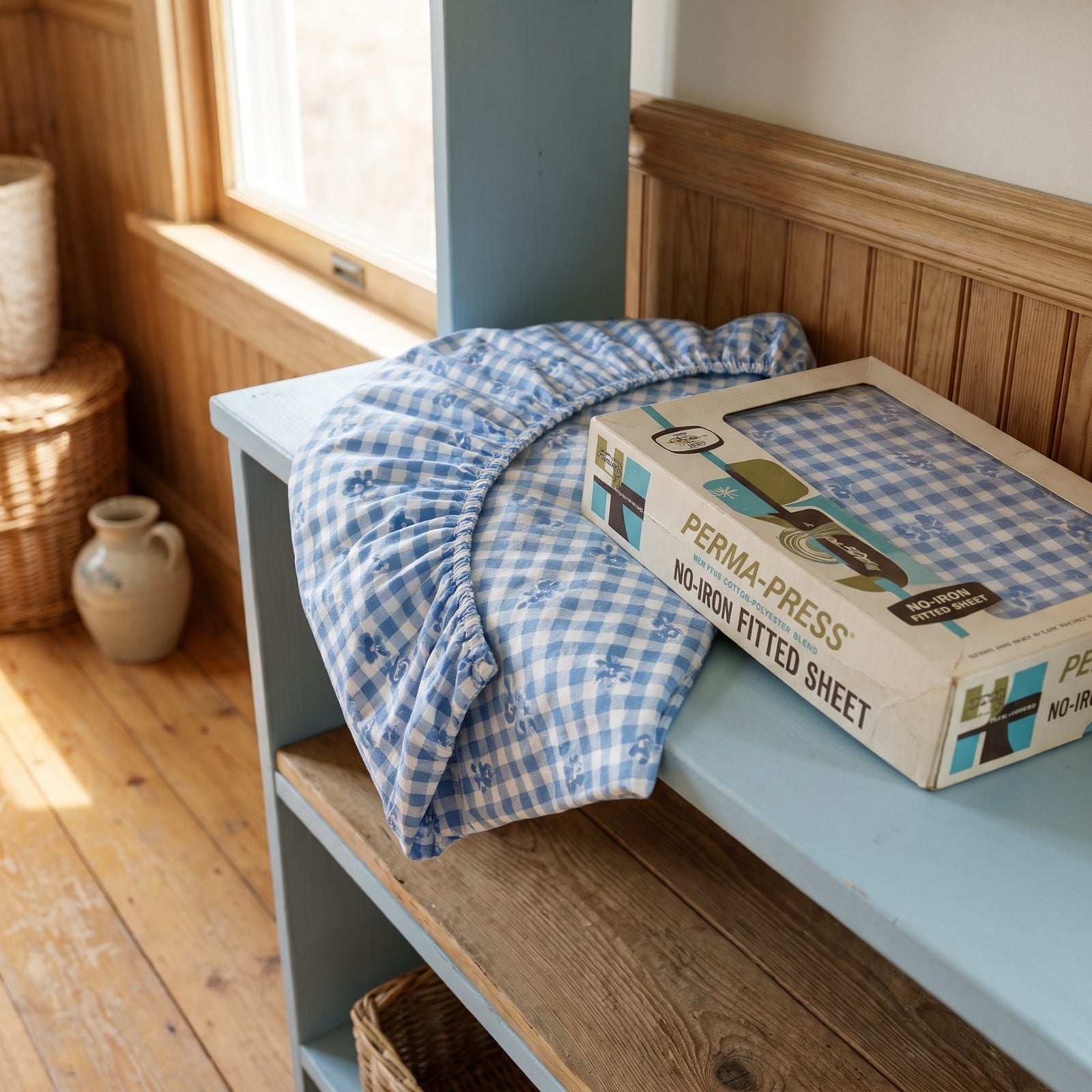
Ask anyone who ran a household back then what changed their week, and the no-iron sheet lands high on the list. Blending cotton with the new synthetic fibers meant a sheet that came out of the dryer close enough to smooth that you could skip the iron entirely.
That was hours back every week. The trade-off? A slightly slicker, warmer-feeling fabric that never breathed quite like pure cotton — a complaint you still hear today. Both things are true, and people loved them anyway, because nobody missed pressing a bed.
31. A Tufted Chenille Bedspread, the Shelf’s Heavyweight
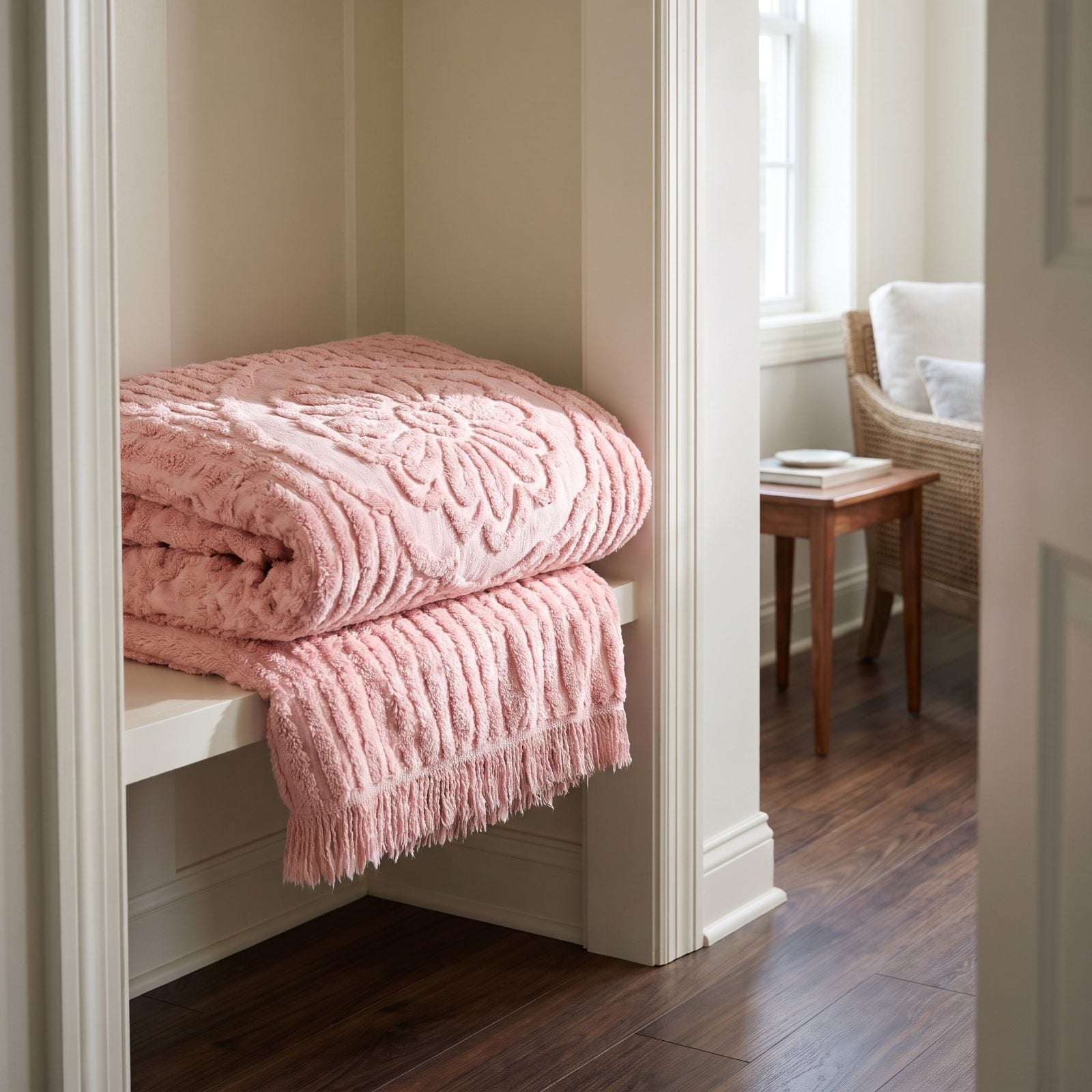
The bulky one that ate up a whole bottom shelf. Tufted chenille bedspreads were thick and plush, often carrying a raised design — a floral medallion, or the famous peacock spread sold at roadside stands across the South.
And here’s the part worth knowing: that peacock pattern became such a travel souvenir that vendors lined highways through the Southern states, draping spreads over clotheslines to catch passing cars. People called it Peacock Alley. Cheap then, collected now.
30. The Electric Blanket With the Clicking Dial Control
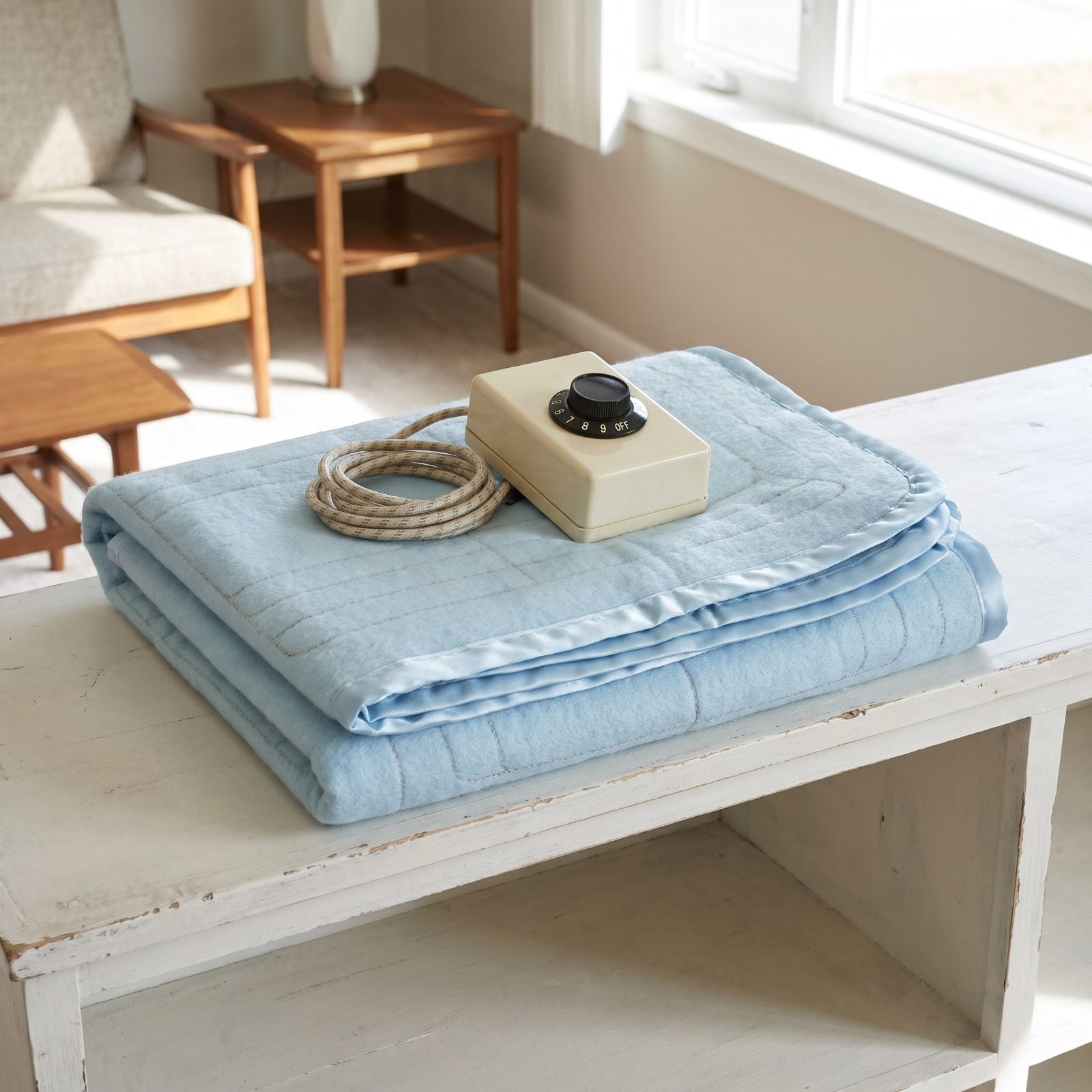
Warmth you could dial. The electric blanket came folded with its control box perched on top, a cream bakelite dial with a numbered knob that clicked as you turned it up on a cold night.
These felt like tomorrow had arrived. By current standards they were also a little nerve-racking. The wiring in older ones degrades, so the heads-up is simple: a genuine 1960s electric blanket is a lovely object and a terrible idea to plug in. Admire the dial. Keep the power off.
29. The Patchwork Quilt Handed Down From a Relative
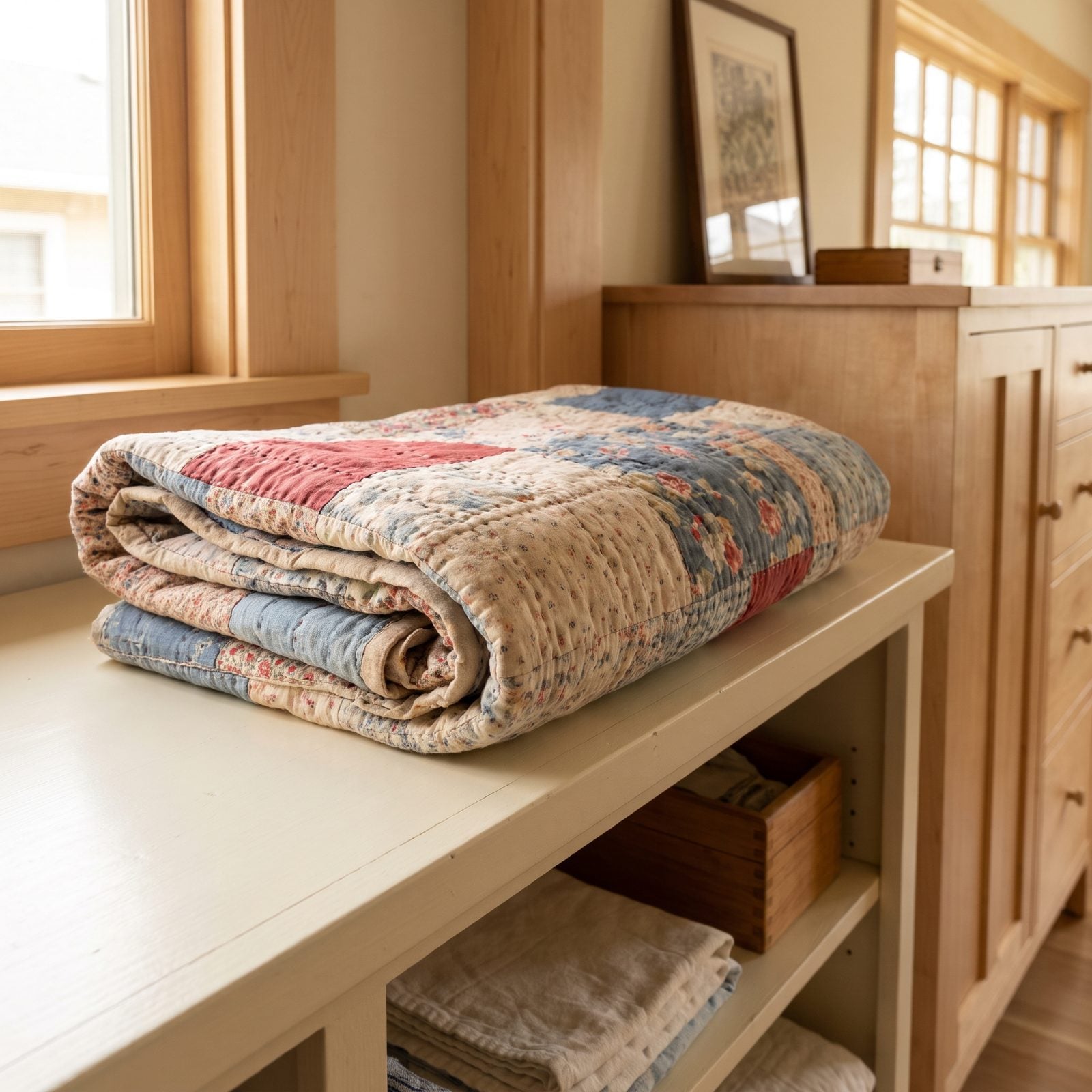
Every closet had one that wasn’t bought. The patchwork quilt came down from a grandmother or an aunt, pieced from dress scraps and feed sacks, carrying a record of fabrics nobody wears anymore.
Look close and you can roughly date the pieces. A calico from one decade sits right beside a shirting from another, because quilts got made from whatever the sewing basket happened to hold. That’s the quiet wonder of them — it isn’t really a blanket. It’s a family’s leftover fabric, stitched into something warm by hand.
28. Satin-Edged Thermal Blankets in Soft Solids
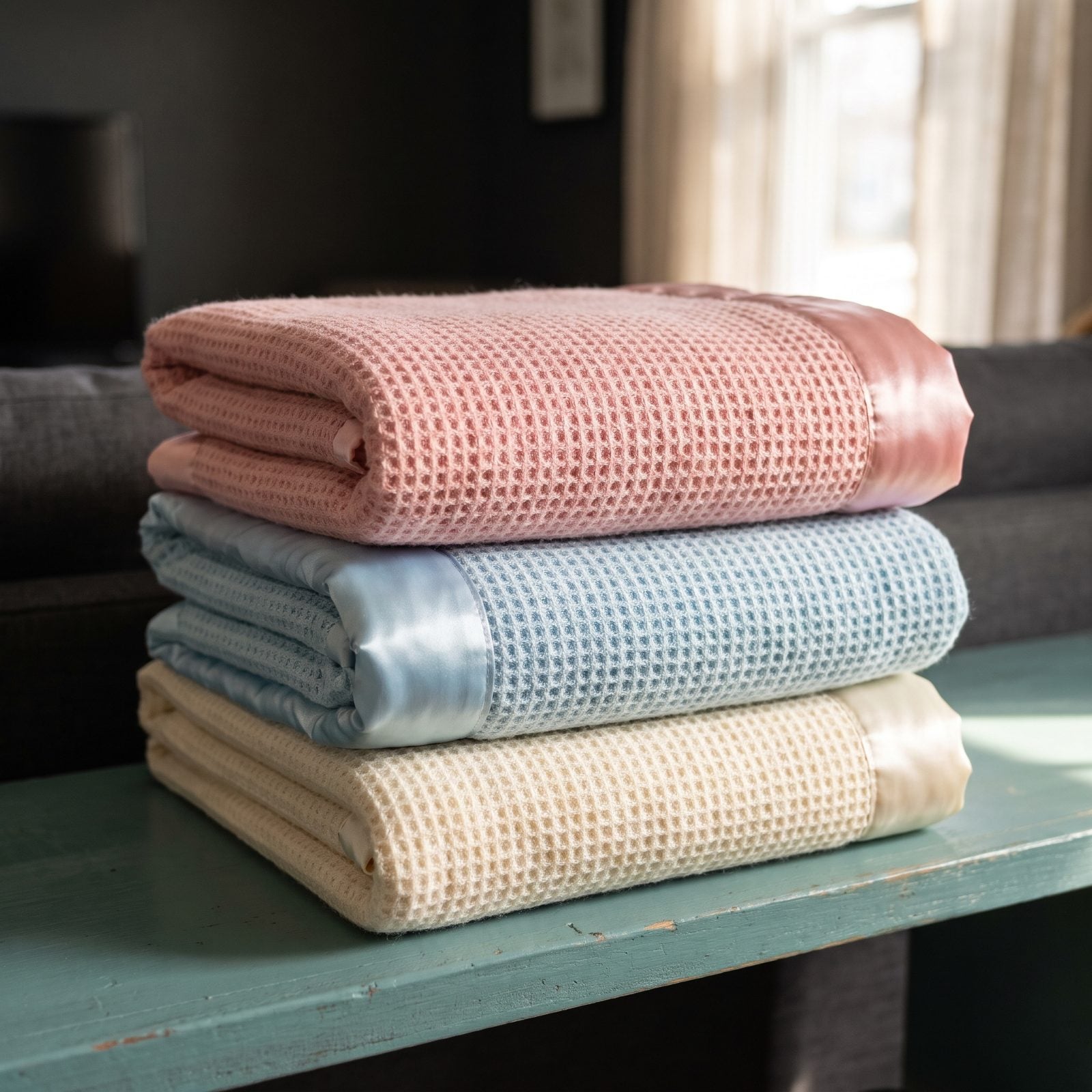
This one had a trick to it. An open thermal weave trapped air for warmth without the weight, finished with a wide band of glossy satin along each end. That satin edge was the signature — cool and smooth where it tucked under your chin.
Thermal blankets did something clever. The waffle-like weave held body heat in the air pockets, so you stayed warm under something light instead of pinned beneath a heavy wool. The satin binding kept the edge from unraveling too, which explains why so many survive with the body worn thin but the trim still perfectly intact. Run your thumb along one at a flea market, and that cool slide of satin is the whole decade in a single touch.
27. The Hand-Crocheted Afghan Folded on the Top Shelf
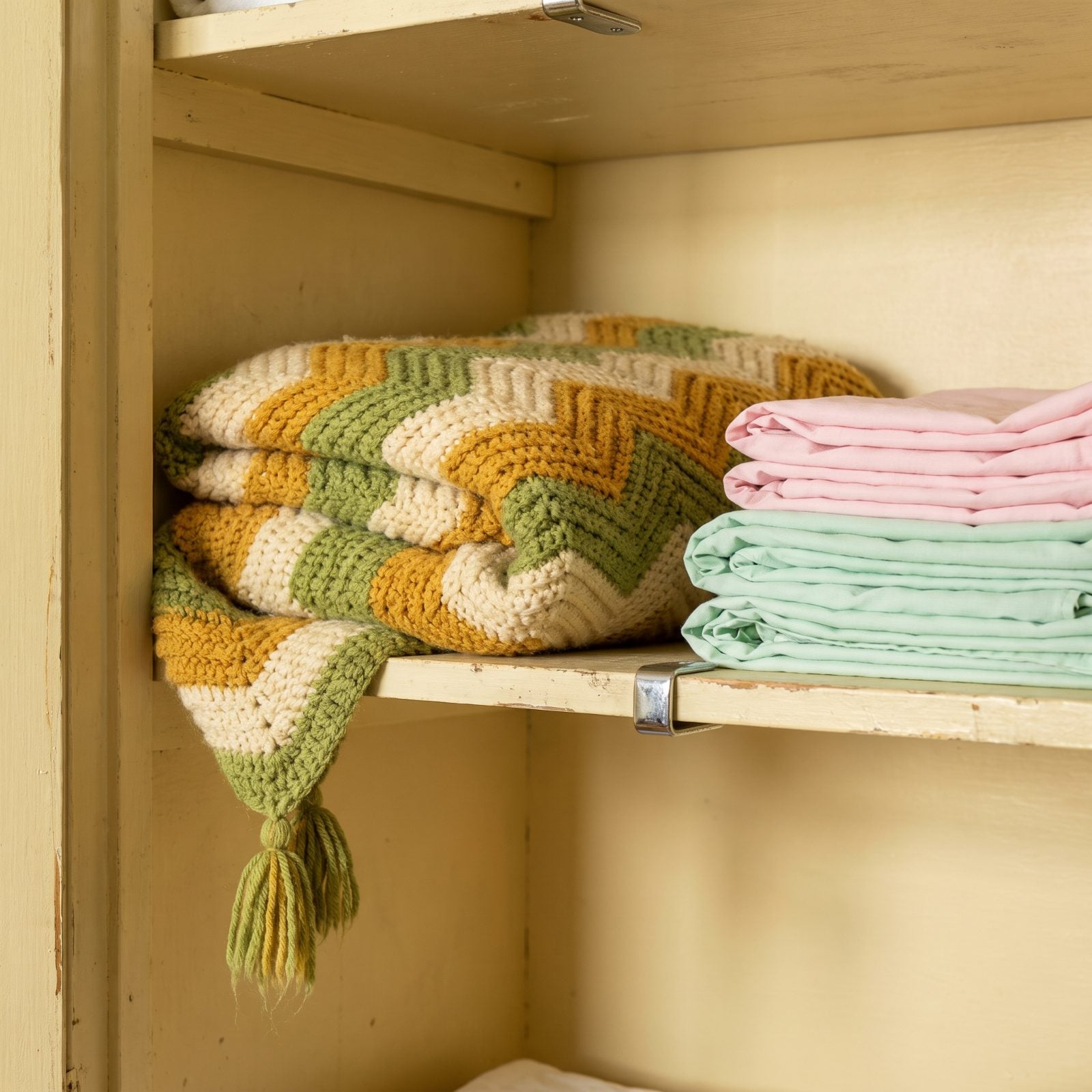
Every closet had one. The ripple-stitch afghan nobody remembers buying, because nobody bought it — somebody’s hands made it, loop by loop, usually out of whatever leftover wool was lying around, which is exactly why the colors never matched the room.
These things were workhorses. Draped over the back of the sofa for show, yanked down for a fever, dragged outside for a ball game. The scratchy worsted wool outlasted three couches and most marriages.
26. The Protective Mattress Pad Nobody Wanted to Admit They Needed
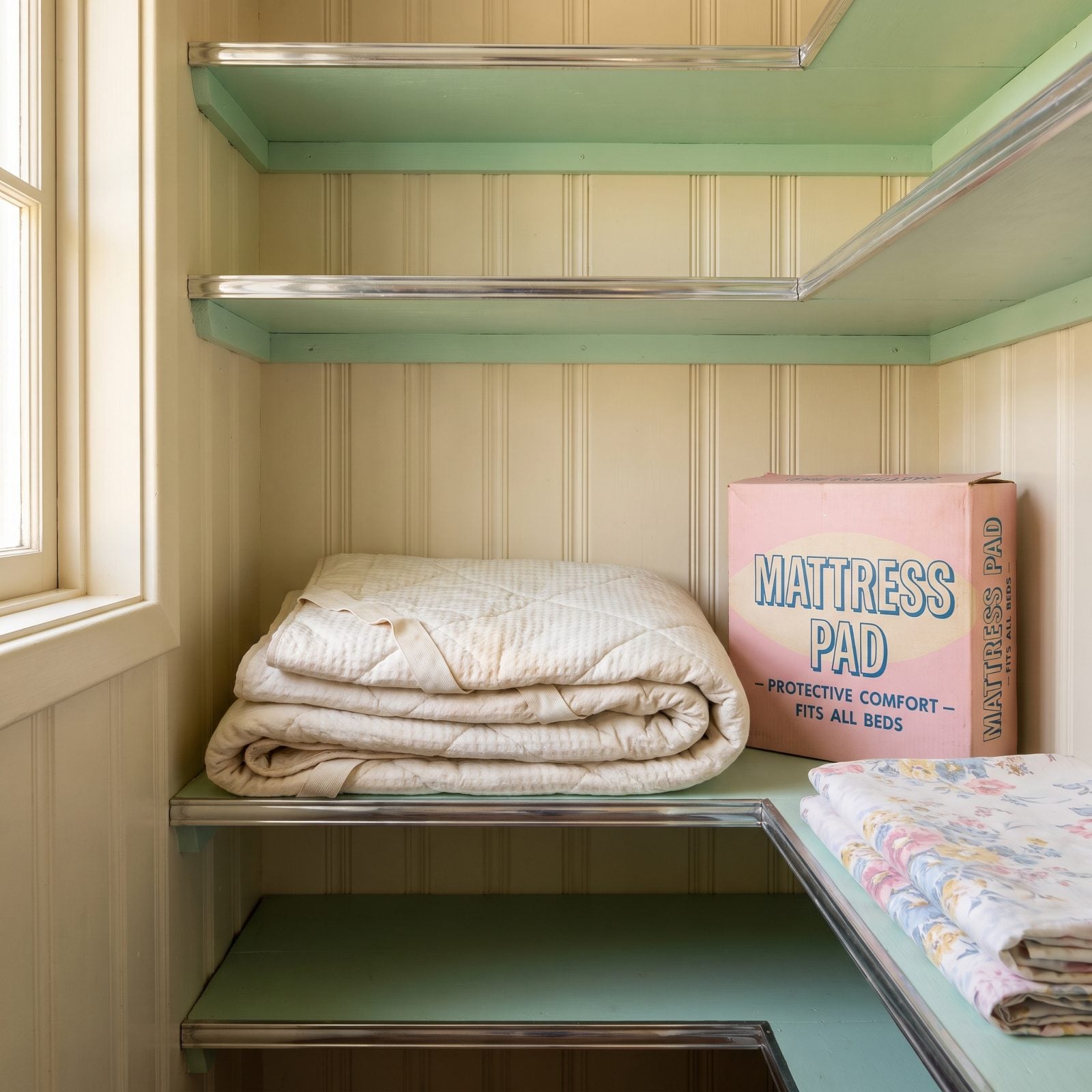
The quilted mattress pad was the quiet hero of the closet. Not pretty, not something you showed guests, but it stood between a good mattress and every spilled drink, sick kid, and leaky hot water bottle a household could throw at it.
Back then they were thick cotton quilting with elastic straps that fought you at every corner. You wrestled them onto the bed and swore. Then they lasted ten years. The thin fitted versions today feel flimsy next to that, and I’ll say it plainly — they don’t hold up.
25. Zippered Pillow Protectors That Crinkled Through the Night
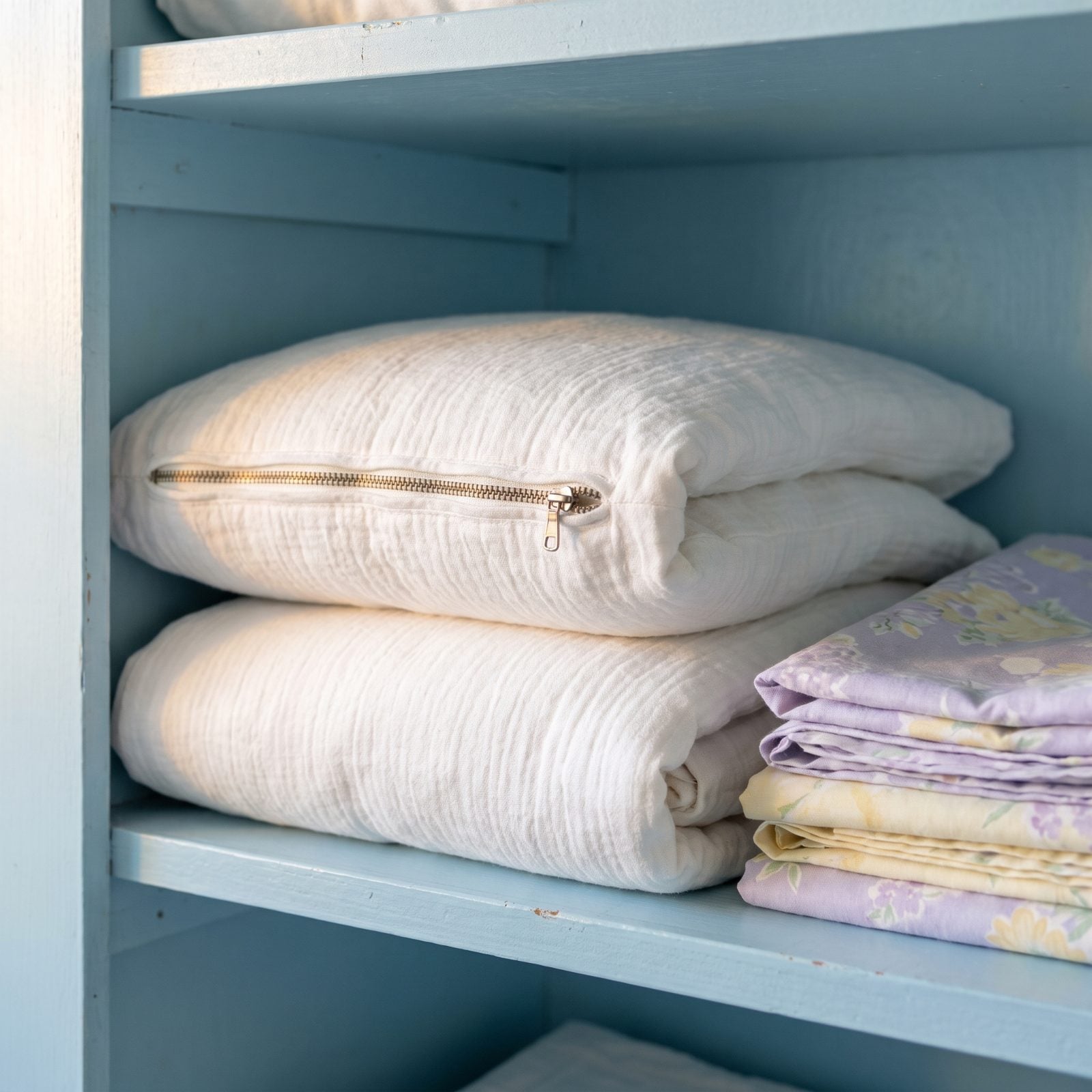
Ever slept on a pillow that crackled when you rolled over? Then you’ve met the zippered protector — a plain muslin casing with a metal zip running the length of one side, built to keep sweat, oil, and dust mites off the pillow itself.
That crinkle came from an inner coating meant to seal everything out. Loud. A little clammy in summer. And completely effective.
24. The Waterproof Crib Sheet Hidden Behind the Towels
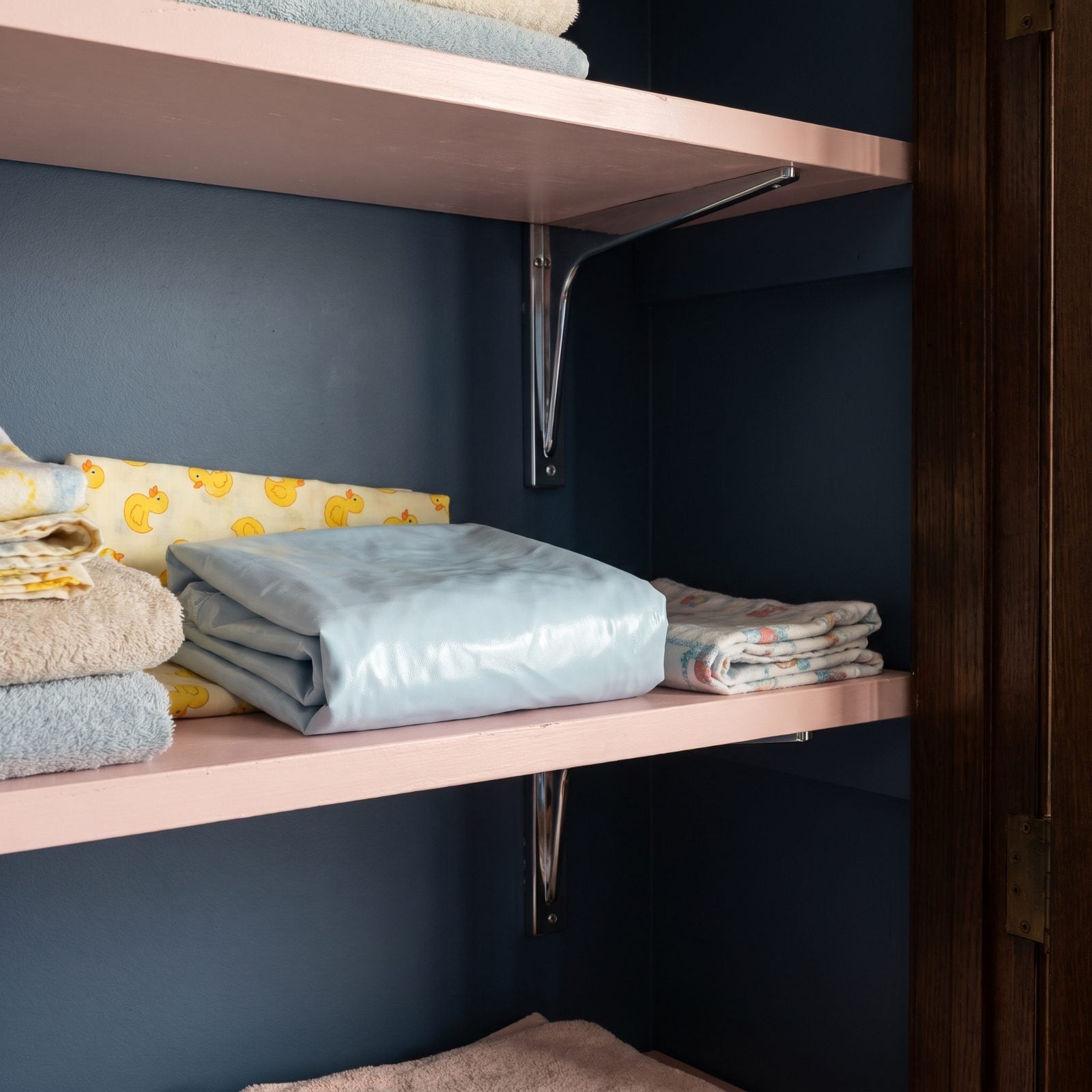
Tucked behind the towel stacks on the middle shelf sat the rubberized crib sheet. Thin, faintly shiny, cool to the touch in a way regular cotton never was. Every nursery had one and every parent blessed it at two in the morning.
These were coated flannel or treated rubber sheeting, and they saved the mattress from everything a baby could produce. Folded small, so they barely took up room — which is probably why so many got shoved to the back and forgotten until the next baby came along.
23. Printed Tablecloths Saved for Company
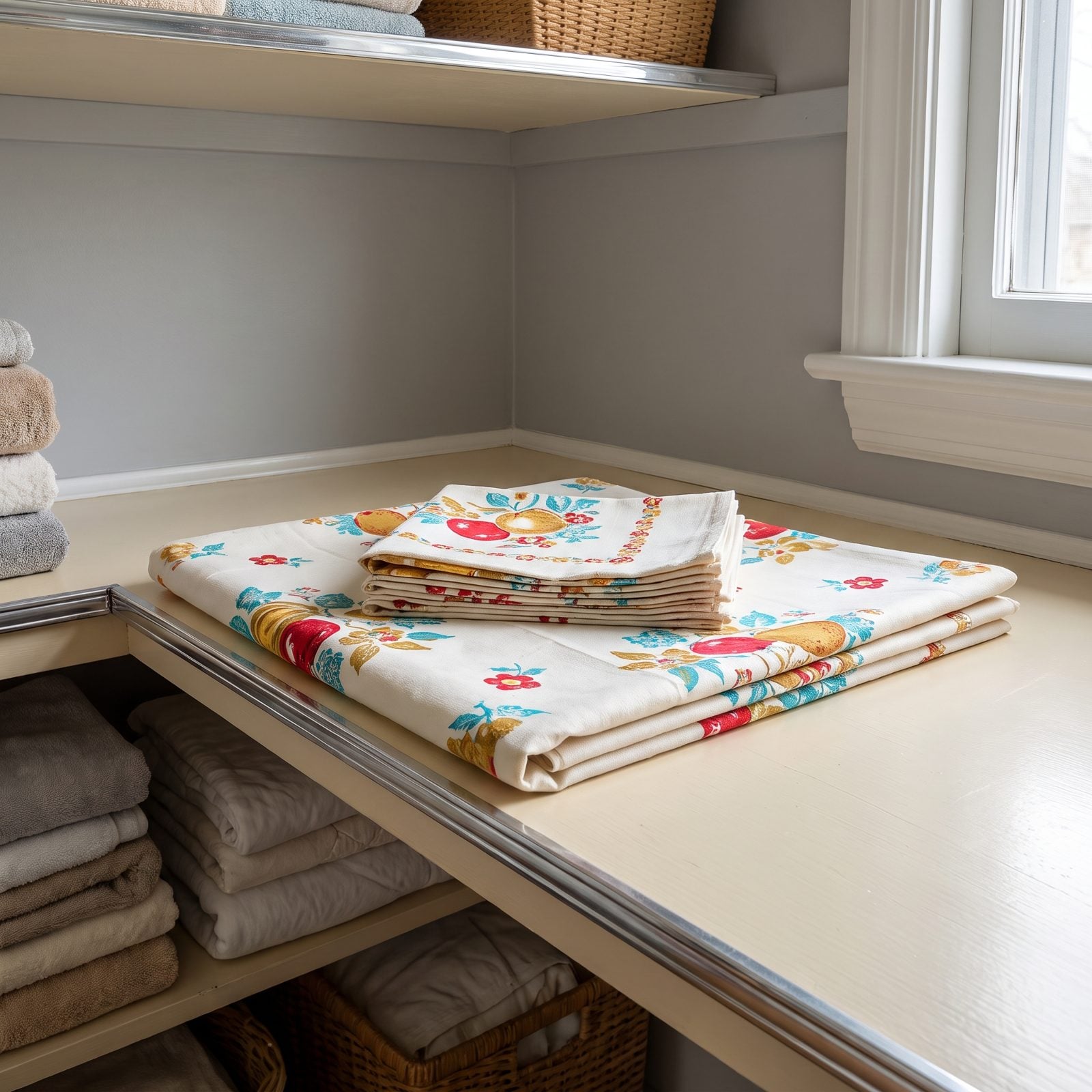
The good tablecloth lived folded and pressed, waiting for a reason. Sunday dinner. The in-laws. A holiday big enough to justify pulling it out.
Printed cotton cloths from that era leaned hard into cheer — clustered fruit, scattered florals, geometric borders in red and turquoise. Starched stiff, they held a crease like a soldier. You could tell the company cloth from the everyday one by the fold alone: sharp versus soft.
22. The Vinyl Tablecloth With Soft Flannel Backing
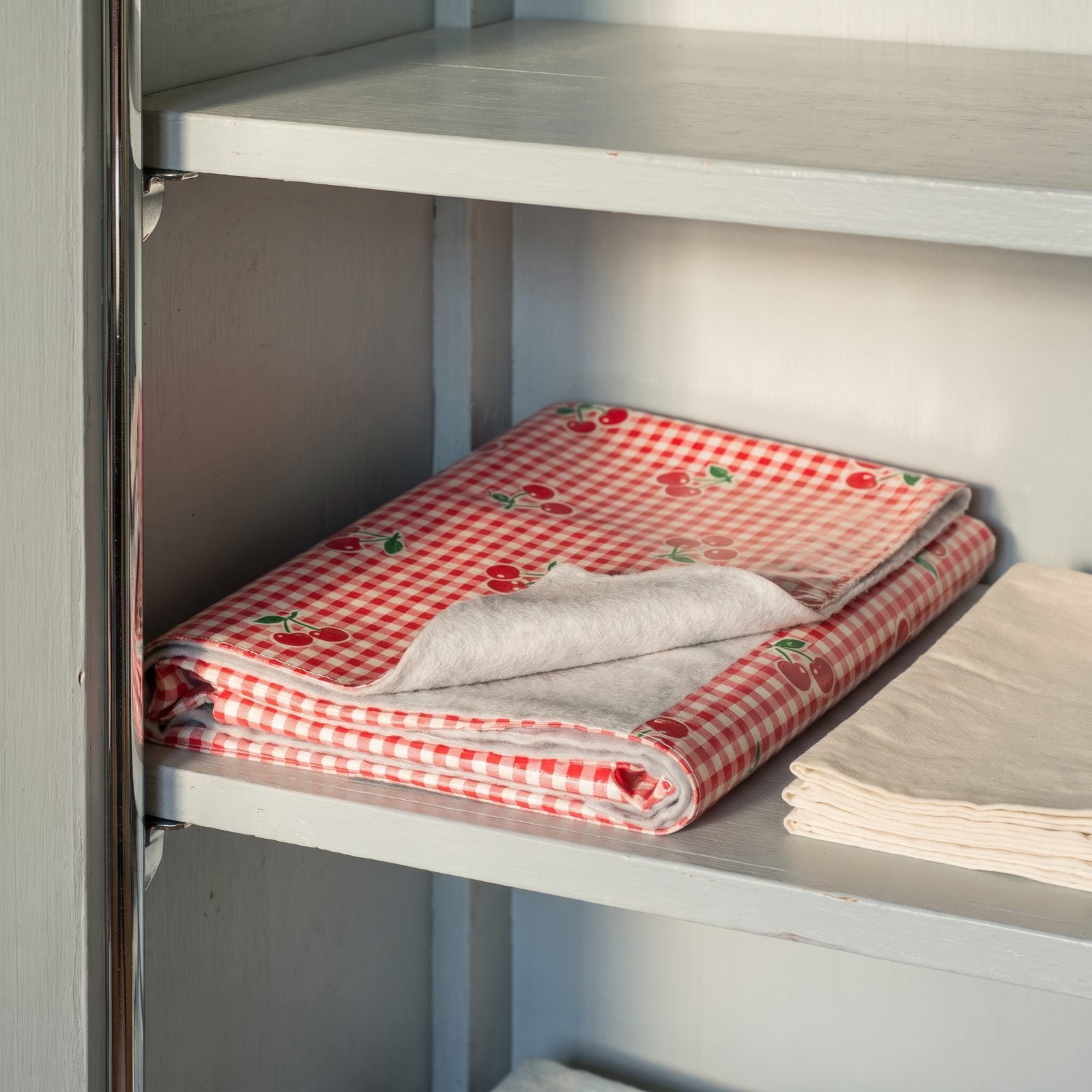
Now meet the everyday workhorse: the vinyl cloth with the fuzzy flannel back. Wipeable top for the kids, soft underside so it didn’t slide around or scratch the table. Pure function dressed up in cheerful gingham.
You could sponge off spaghetti sauce in two seconds flat — no soaking, no laundering, no fuss. That flannel backing is the detail nobody mentions, and it’s the whole reason these stayed put and shielded the wood underneath. Modern wipe-clean cloths often skip it. They shouldn’t.
21. Embroidered Linen Napkins With Someone’s Initials in the Corner
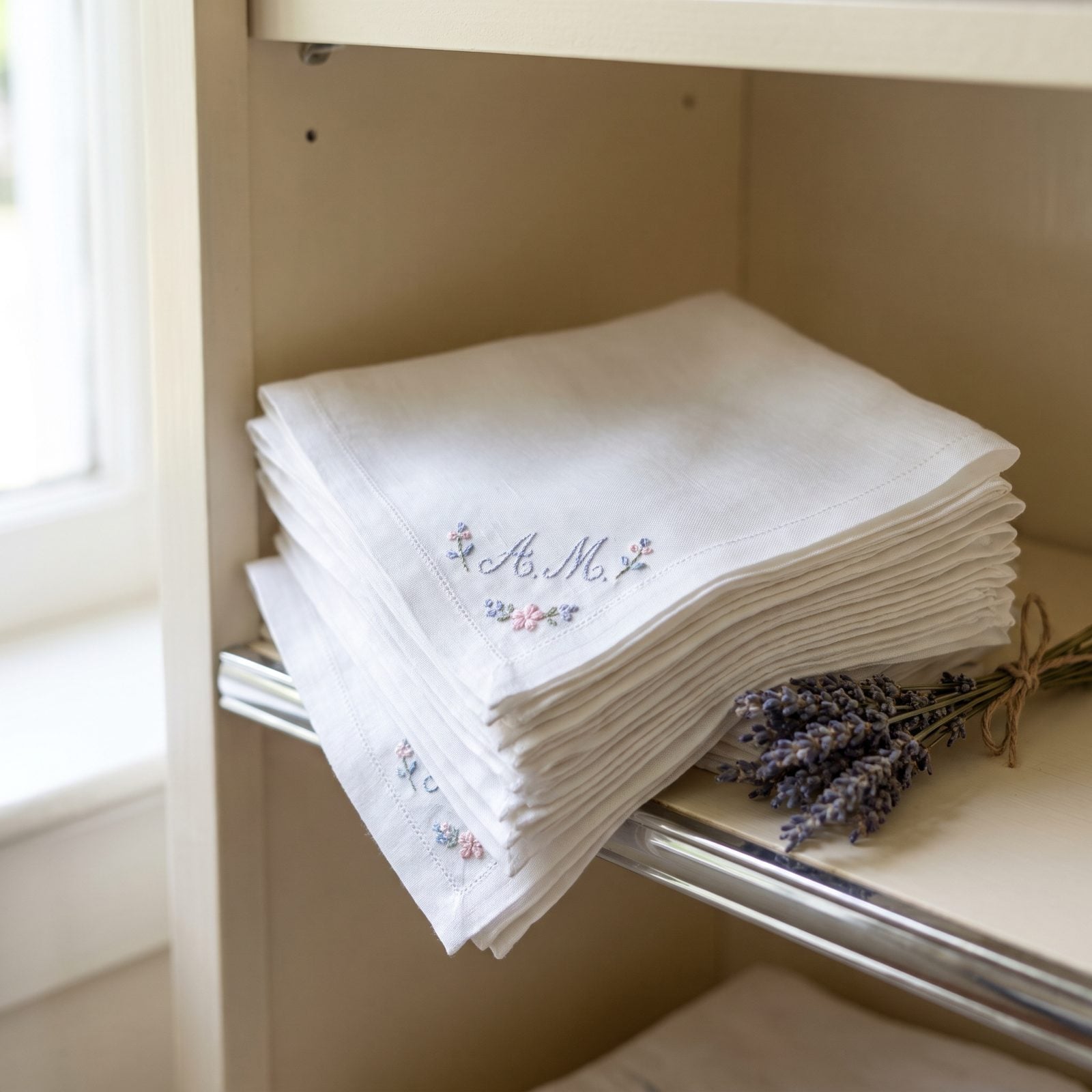
Pull one out and you might find initials stitched into the corner — often not your own. Embroidered linen napkins moved through families like small inheritances, worked by hand as wedding gifts or trousseau pieces decades before they ever reached the closet.
The fine hemstitching and tiny floral sprigs took real hours. Which is why they came out twice a year, got washed by hand, pressed damp, and folded back into tissue.
20. Crocheted Doilies Pressed Flat Under the Good Linens
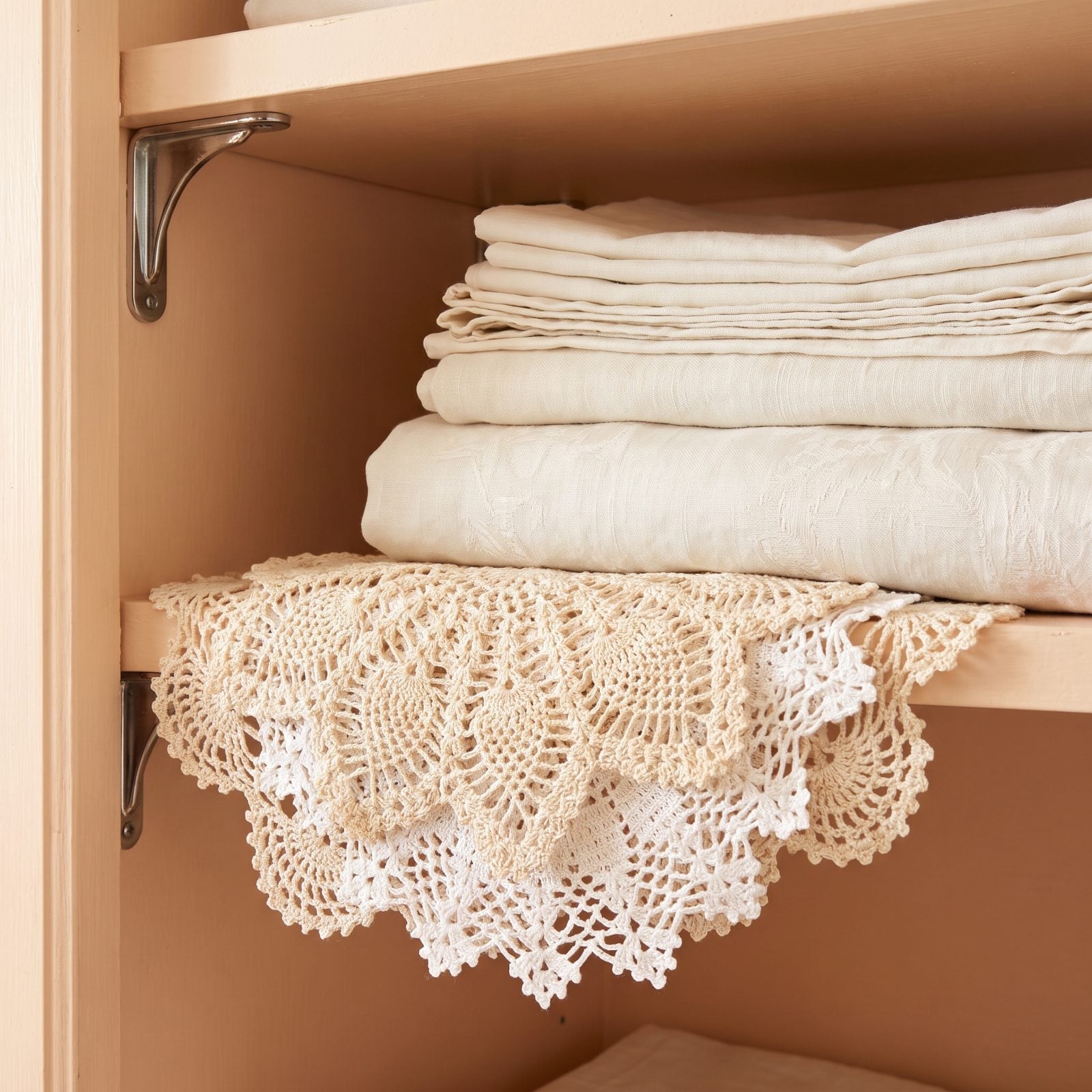
Flat as paper, stiff as a playing card. The starched doily lived pressed under heavier linens, waiting to go out on the arm of a chair or under a lamp.
This was thread crochet, not yarn — thin cotton worked on a tiny hook. Pineapple patterns, star patterns, endless rounds of chains and shells. Somebody put a full evening into each one.
19. Decorative Dresser Scarves Running the Length of the Bureau
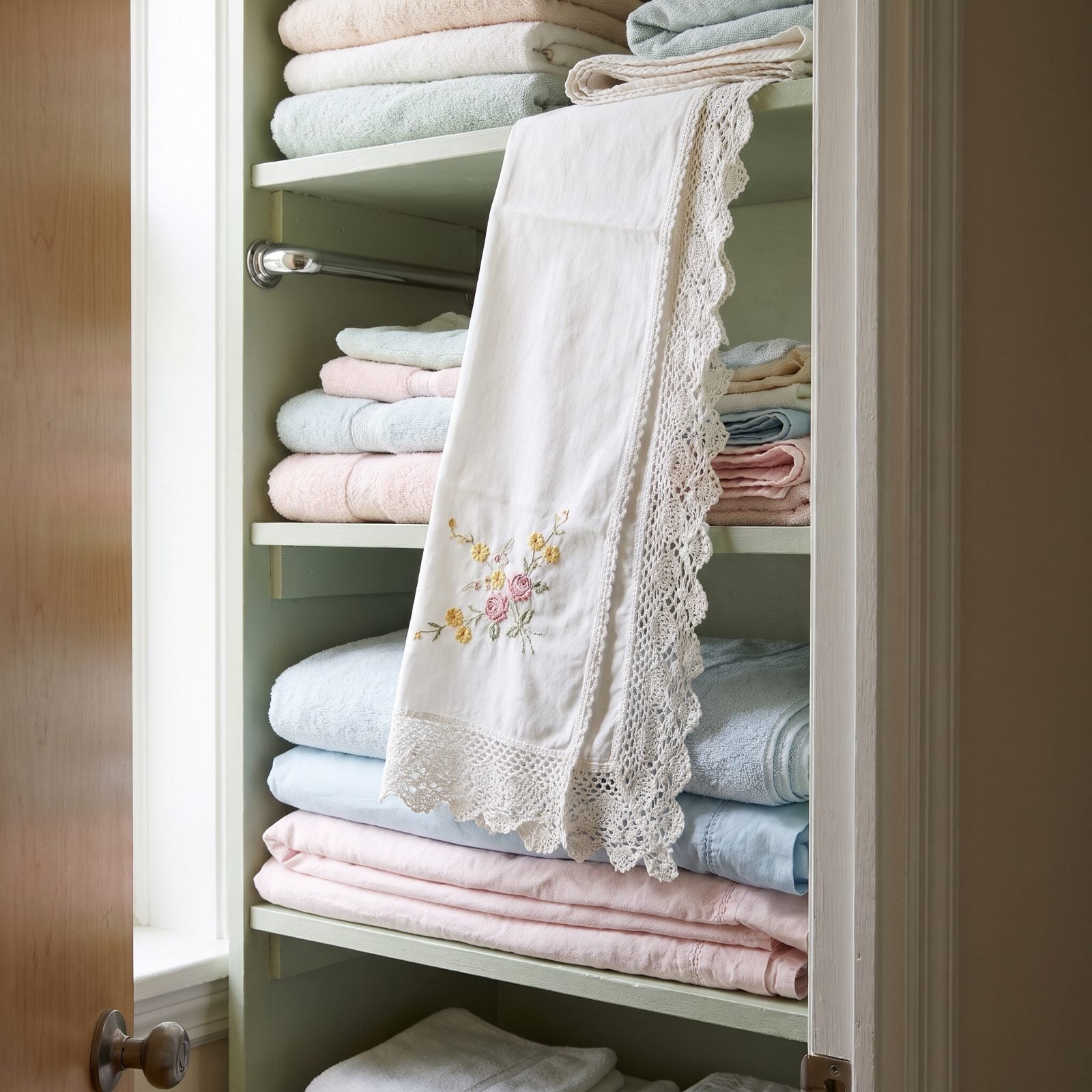
Long, narrow, trimmed in lace — the dresser scarf stretched across the top of the bureau to catch perfume rings and give a hard surface a little softness. Half decoration, half armor.
Most had embroidered corners and a lace edge that spilled over the dresser lip. They’ve mostly vanished from bedrooms now, which is a quiet loss. A runner under a lamp still beats a bare slab of laminate, and I’ll die on that hill.
18. Flour-Sack Kitchen Towels Soft From a Hundred Washes
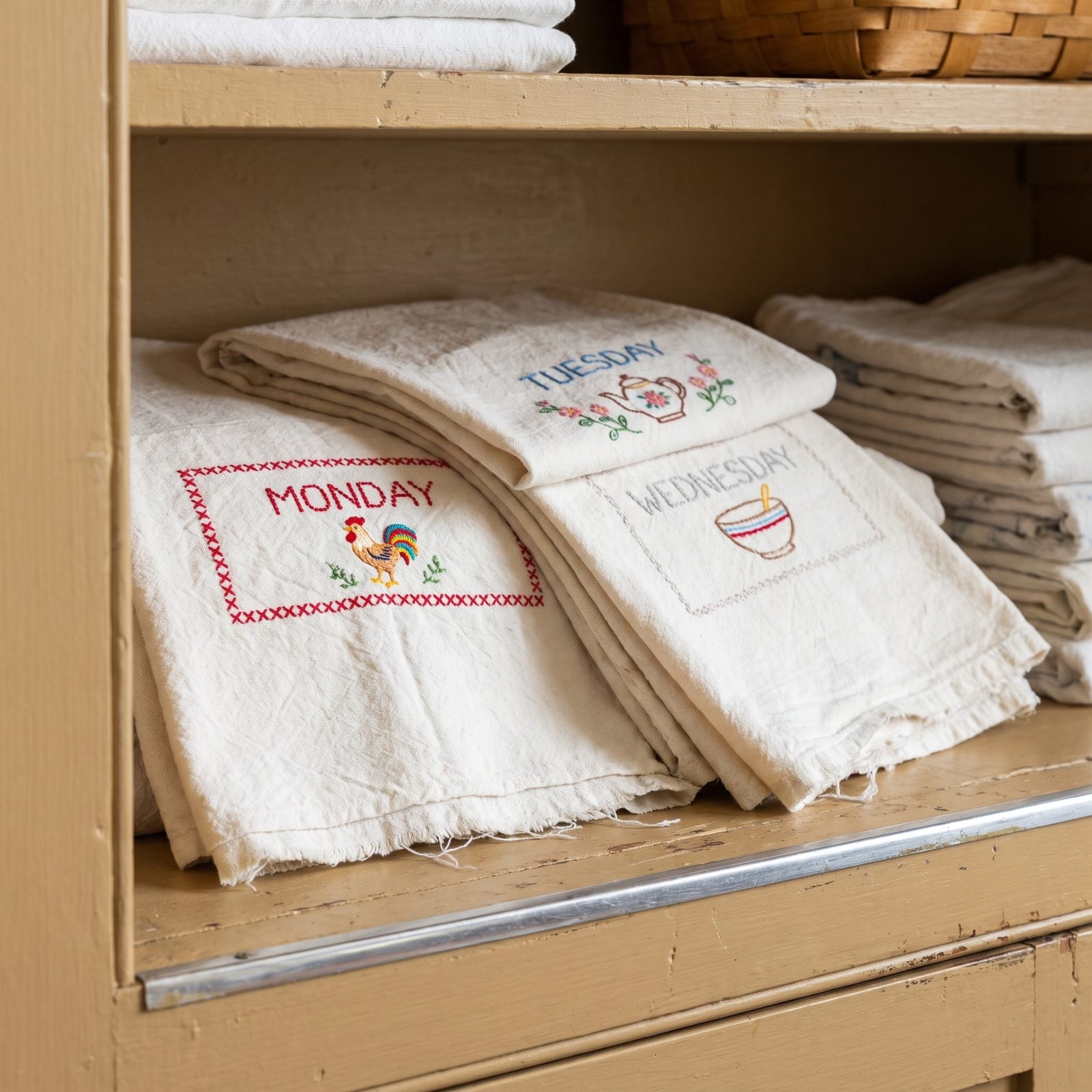
They started life holding flour. That’s not a figure of speech. Cotton sacks came printed — sometimes deliberately — with patterns so women could cut, hem, and turn the cloth into towels, aprons, even dresses.
By the ’60s, true repurposed sacks were giving way to store-bought flour-sack towels, but the name and that thin, thirsty weave stuck around. Many got embroidered with little day-of-the-week scenes, one towel per day, a full week’s set hanging in rotation.
17. Ironed Cotton Handkerchiefs, Folded Into Crisp Squares
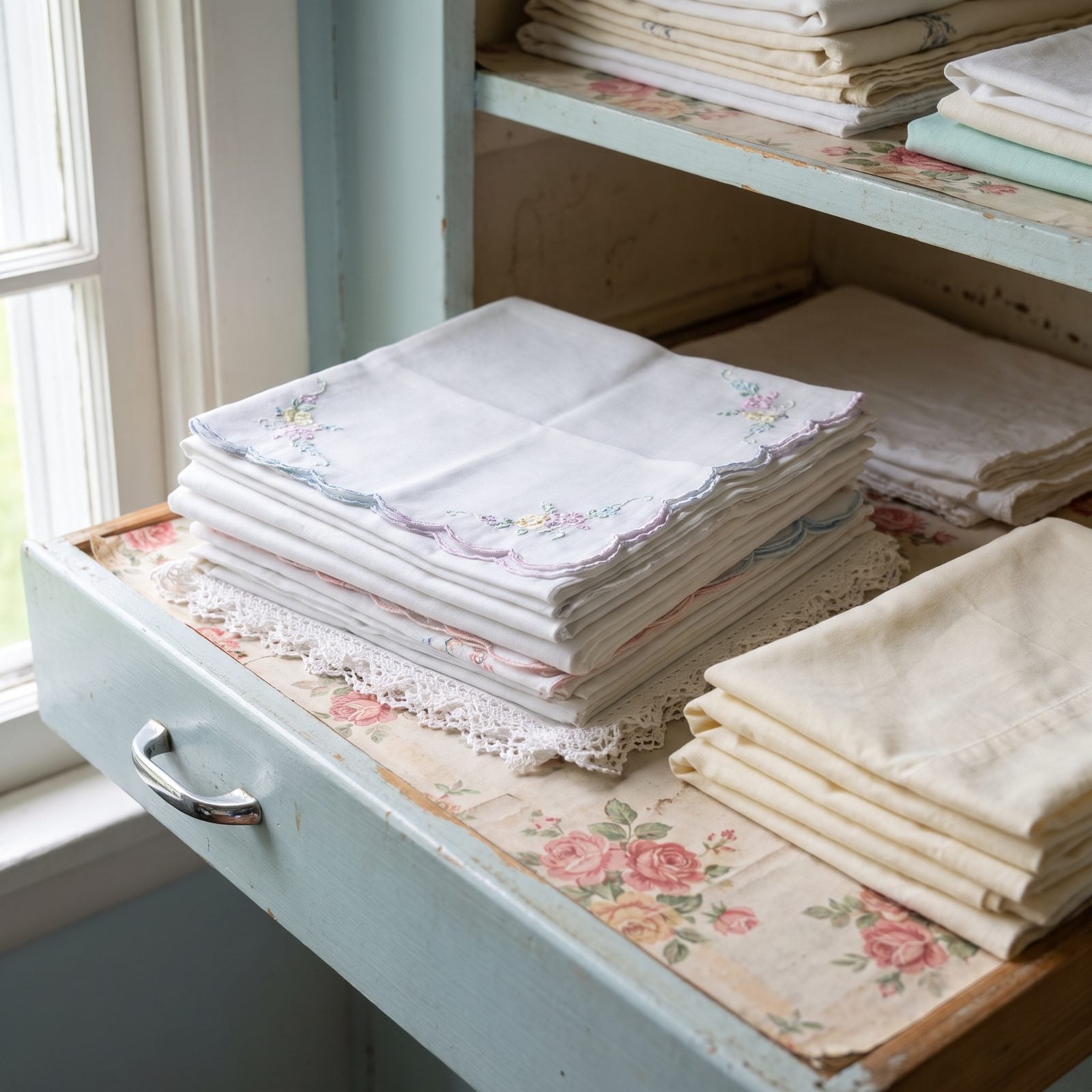
Before the tissue box took over, a handkerchief went everywhere a person did. Men carried a plain white one, while women kept a whole drawer of embroidered ones they’d never dream of actually blowing their nose into — those were for show, tucked into a sleeve or a purse.
The ironing was the whole point. A wrinkled hankie signaled a sloppy house, so folks pressed them damp, folded them into exact quarters, and stacked them by size. You can still find boxes of unused ones at estate sales for next to nothing.
16. A Cedar Sachet, Quietly Guarding the Wool
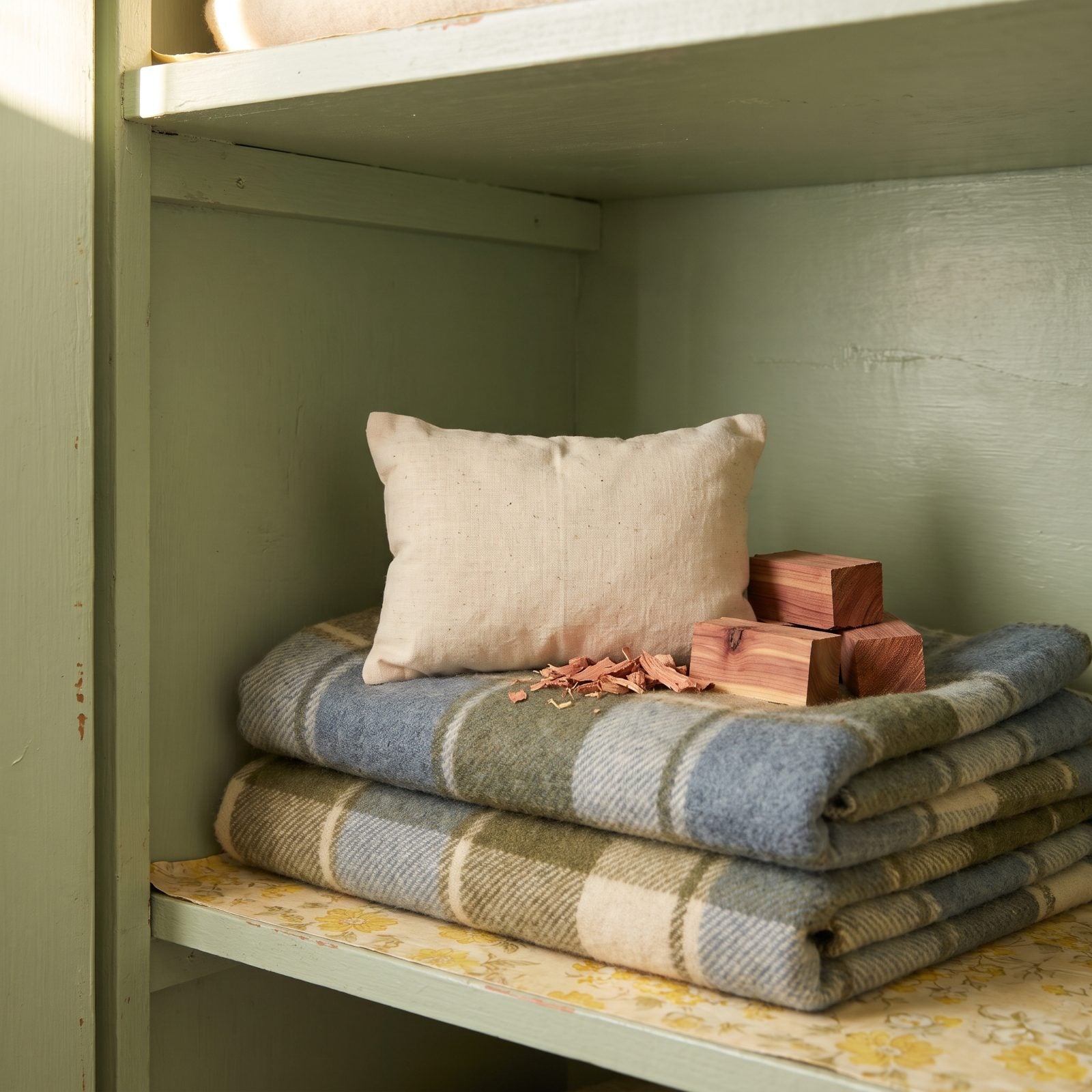
Cedar did the gentle work. A little muslin pouch of shavings, tucked between the wool blankets, kept the whole shelf smelling like a toolshed in the good way.
It never worked as well as people believed. Cedar oil repels young moth larvae but won’t kill eggs already laid, and the scent fades within a year or two. Most folks sanded the blocks lightly to wake them back up — the one trick that actually still holds true.
15. Lavender-Scented Drawer Liners Pressed Flat Under the Sheets
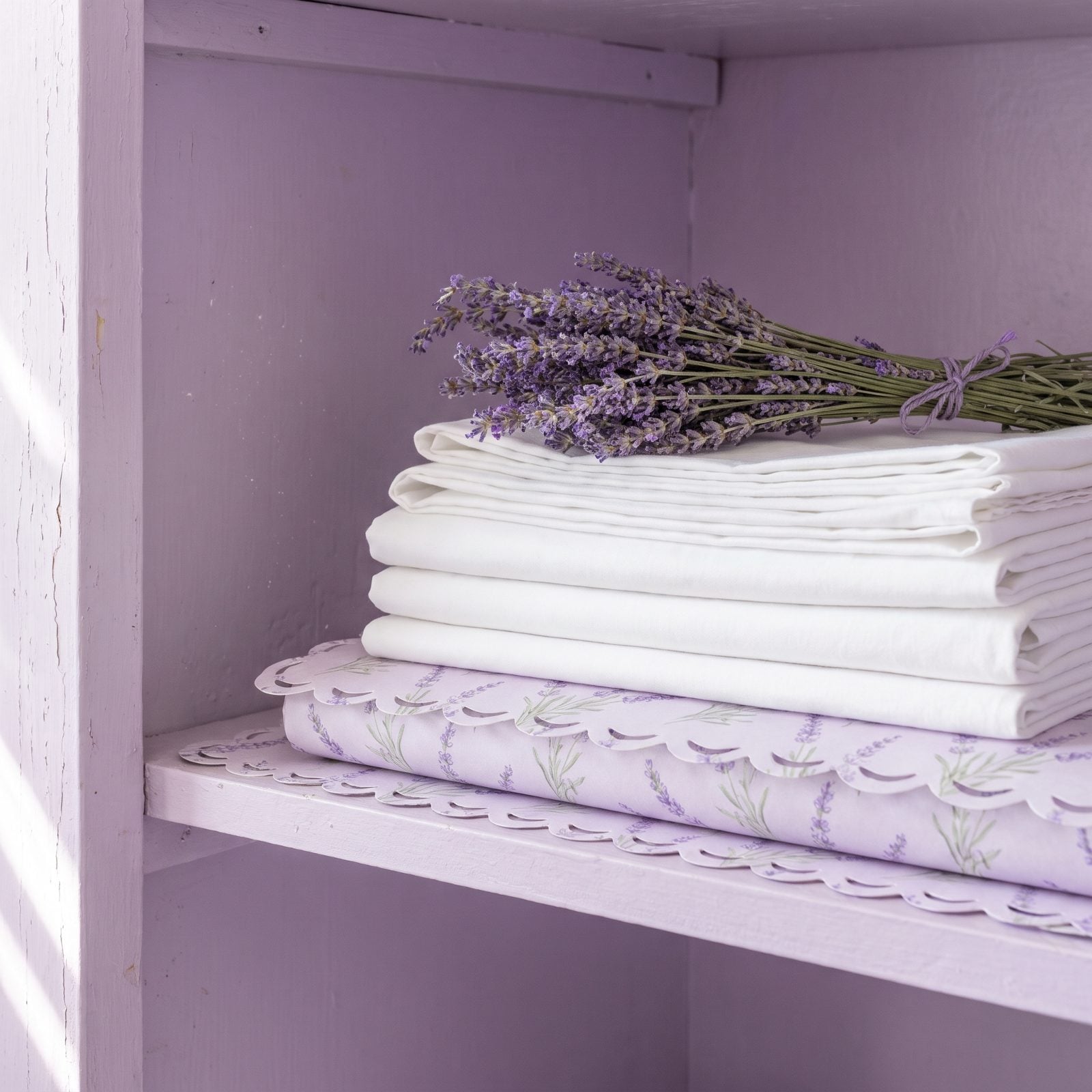
Scented drawer liners were the quiet luxury of a tidy house. Thin printed paper, often lavender or rose, laid flat under the linens so every sheet pulled out carrying a soft floral smell.
They did double duty, protecting pale wood shelves from snagging and dampness while perfuming the stack. The scent was always stronger on the box than in the drawer, and it wore off faster than anyone wanted to admit.
You replaced them maybe once a year, usually during spring cleaning. The smell of a fresh sheet going down was its own small reward.
14. Mothballs in a Cardboard Box, Tucked in the Back Corner
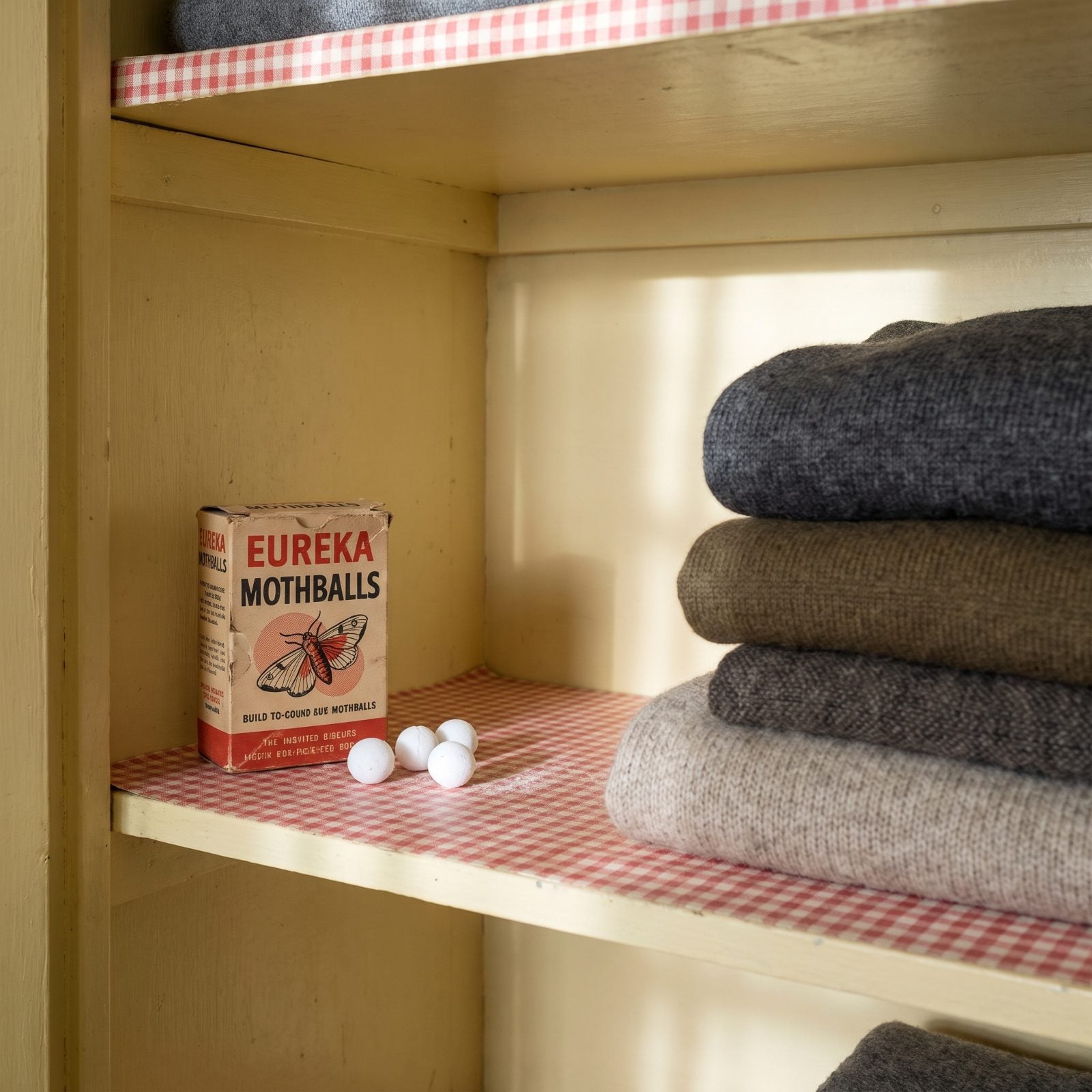
You smelled these before you saw them. Mothballs lived in the back corner, a chalky cardboard box of white spheres that announced the whole closet to anyone who opened the door.
Most people got this one dangerously wrong. Mothballs aren’t an air freshener and they aren’t harmless — they’re nearly pure pesticide, naphthalene or paradichlorobenzene, meant to be sealed in an airtight container with the wool so the fumes build up. Scattered loose on an open shelf, they do almost nothing except stink and release vapors you really shouldn’t be breathing.
13. A Bar of Unwrapped Scented Soap Tucked Between the Towels
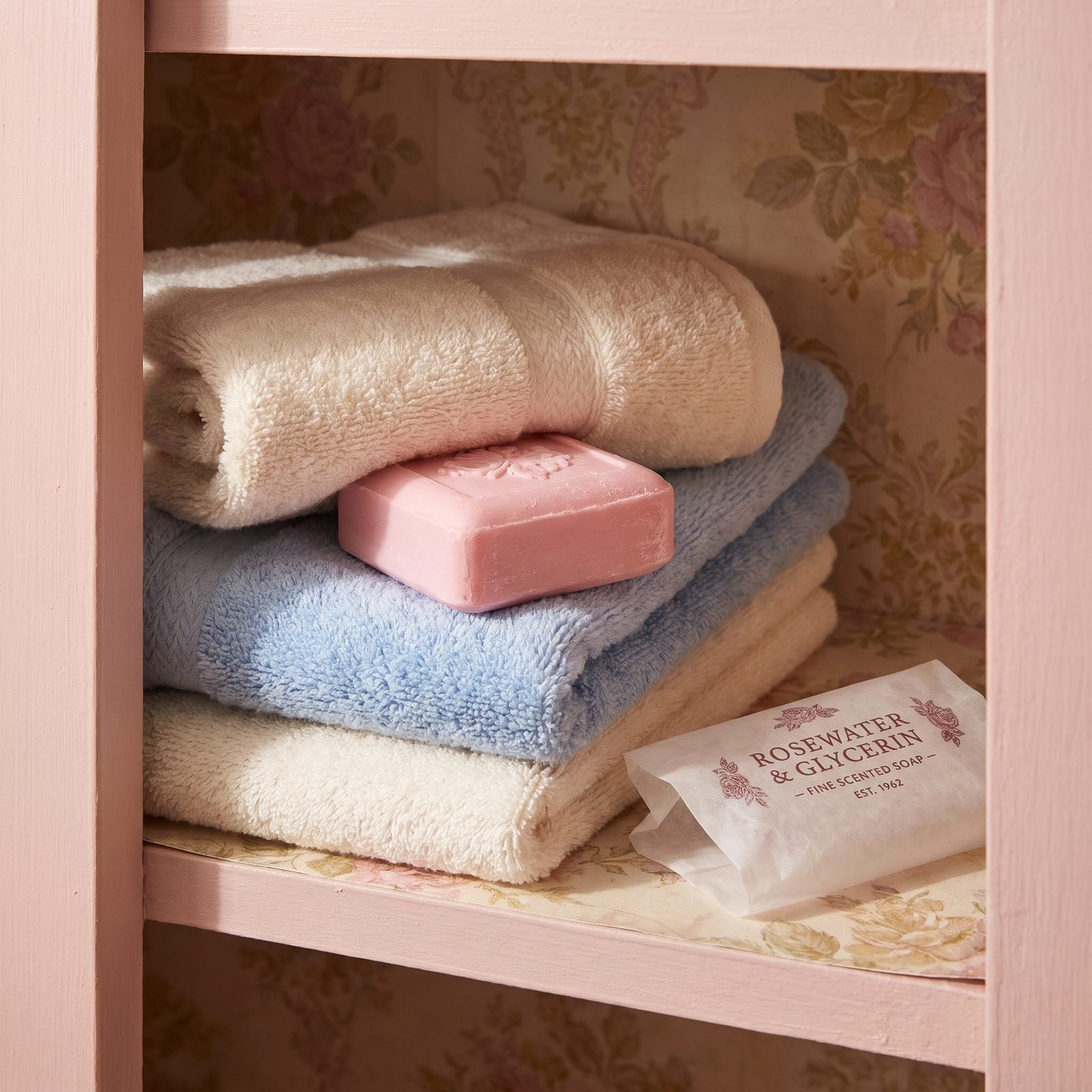
A fresh bar of soap, unwrapped and set between the towels, was the cheapest air freshener going. The scent — usually rose, lily of the valley, or something floral and powdery — seeped into the cotton over weeks.
There was a practical reason too. Soap cures as it ages, which is to say it dries and hardens, so a bar that sat in the linen closet for a month lasted far longer in the shower than a soft fresh one. Thrift and fragrance in a single pink brick.
Guest soaps often never got used at all. They just sat there being decorative and smelling nice, slowly turning chalky.
12. A Wooden Darning Egg, Companion to the Mending Basket
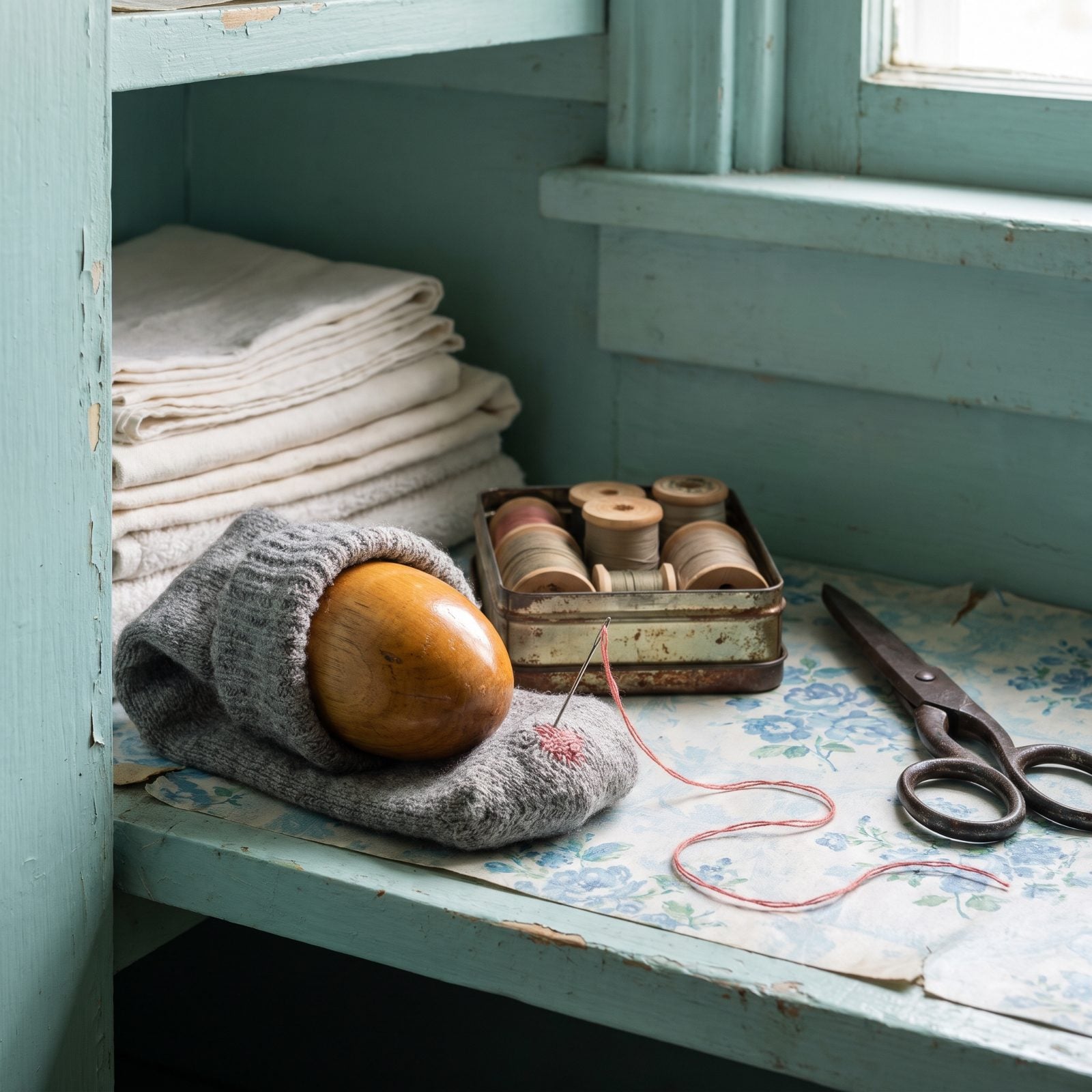
Slip the smooth wooden egg inside a sock, pull the worn heel taut over the curve, and you had a firm surface to weave new thread across the hole. That’s all it was, and it was genius.
Darning is nearly a lost skill now, which is a small shame. A holey sock meant repair, not replacement, and the egg lived in the mending basket right alongside the thread spools and a pincushion.
11. A Heating Pad With a Button-On Cloth Cover
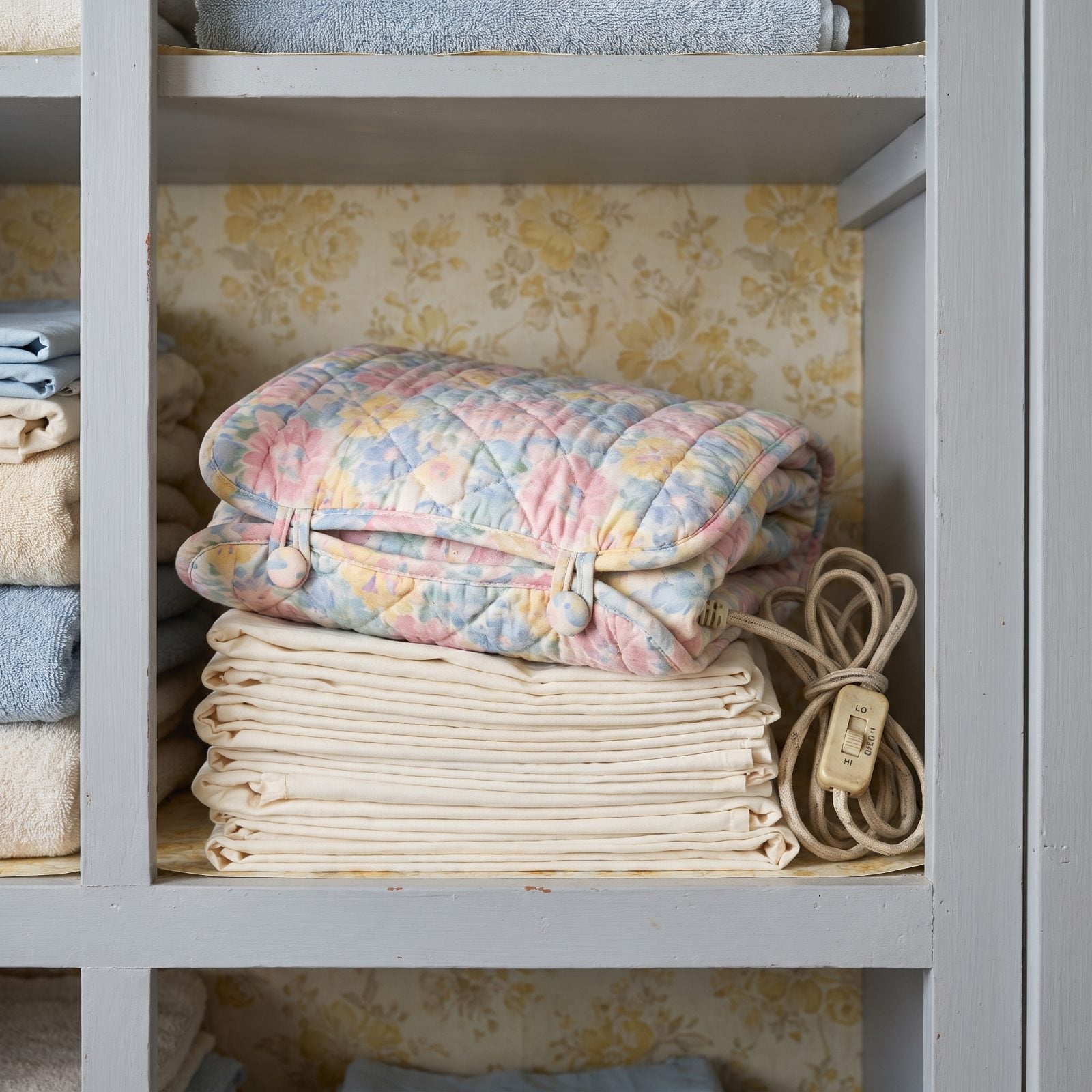
Every household had one, often in a pastel floral print, with a removable quilted cover that buttoned on so it could be washed. The cord was cloth-wrapped, the switch slid between LO and HI, and the whole thing lived folded in the linen closet between uses.
It was the family cure-all. Sore back, cramps, a stiff neck, an earache — you plugged it in, laid it on, and waited.
Those early models ran hotter and dumber than anything sold now, with no auto shut-off, which is exactly why you’ll read warnings about not falling asleep on one. People did anyway.
10. A Red Rubber Hot-Water Bottle, Warming the Foot of the Bed
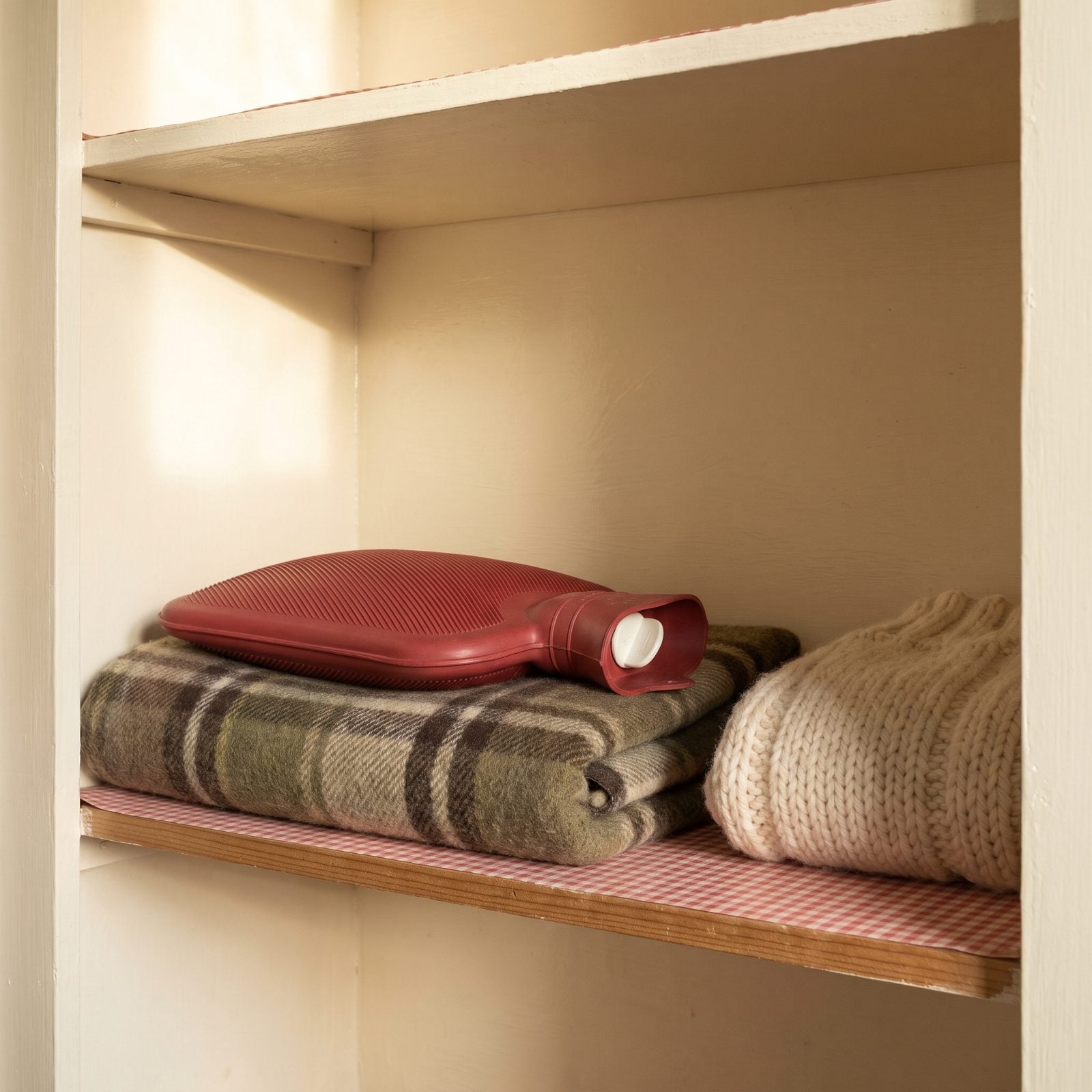
Before electric blankets took over, the red rubber bottle warmed the sheets. You filled it with hot (not boiling) water, screwed the stopper tight, and slid it to the foot of the bed twenty minutes before turning in.
The ribbing on the front wasn’t decoration. It spread the heat and kept the hot rubber off bare skin, and many bottles came with a knitted cozy for the same reason.
Fill it with boiling water and the seam eventually fails. Then you’ve scalded yourself in bed, which is a genuinely old and well-documented accident.
They never really went away. You can still buy the identical design today, which tells you it got the job right the first time.
9. A Rectal Fever Thermometer in Its Little Case
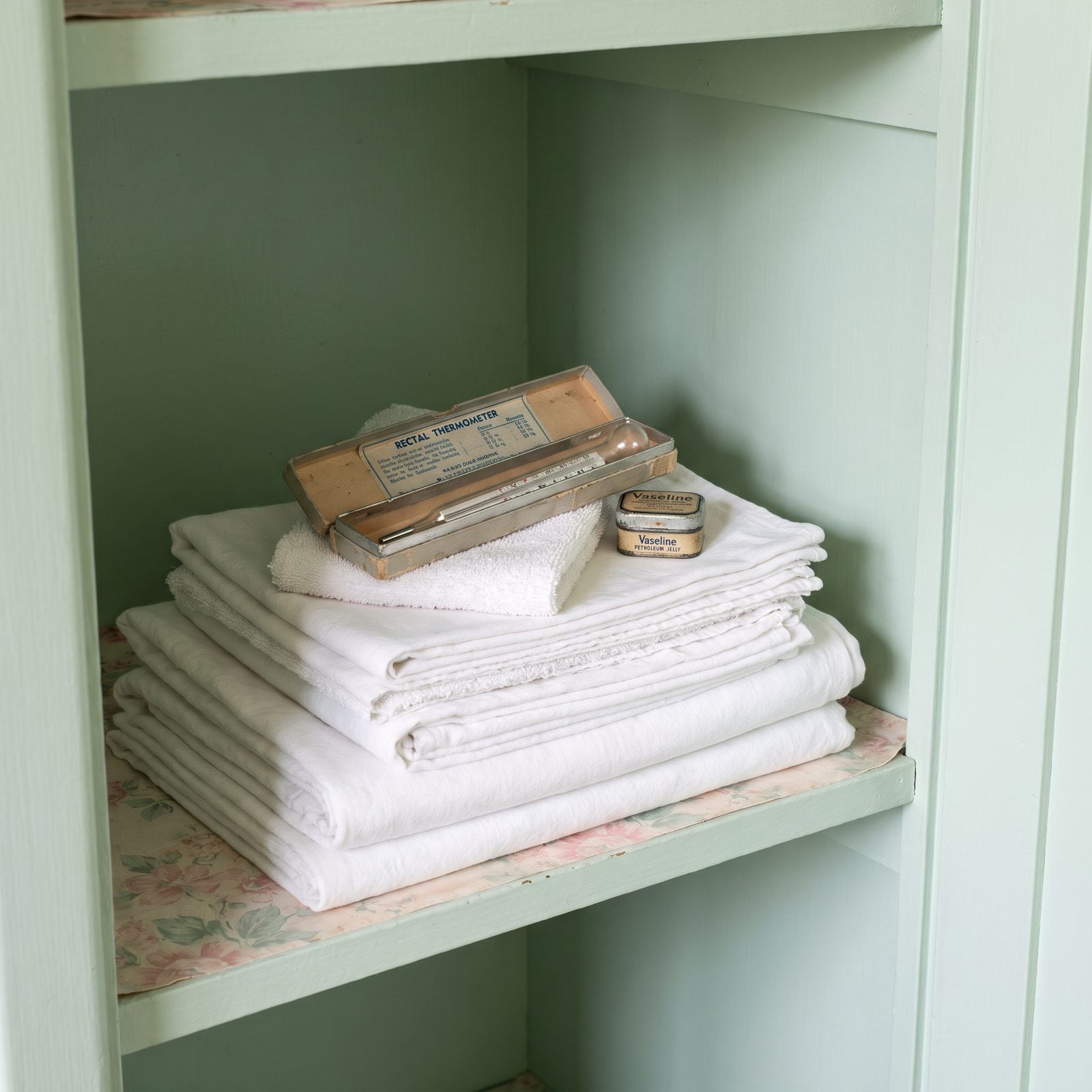
Slim glass tube, a little silver thread of mercury inside, and a big round glass bulb at one end, labelled on the case as the rectal model, not the oral one. It lived in a cardboard case on the medicine shelf, usually with a small tin of petroleum jelly close by.
Taking a baby’s temperature this way was standard advice for decades, considered the most accurate reading you could get at home. You shook the mercury down with a flick of the wrist, waited the full three minutes, and squinted to read the column against the light.
8. The Blue Rubber Ice Bag With a Screw Cap
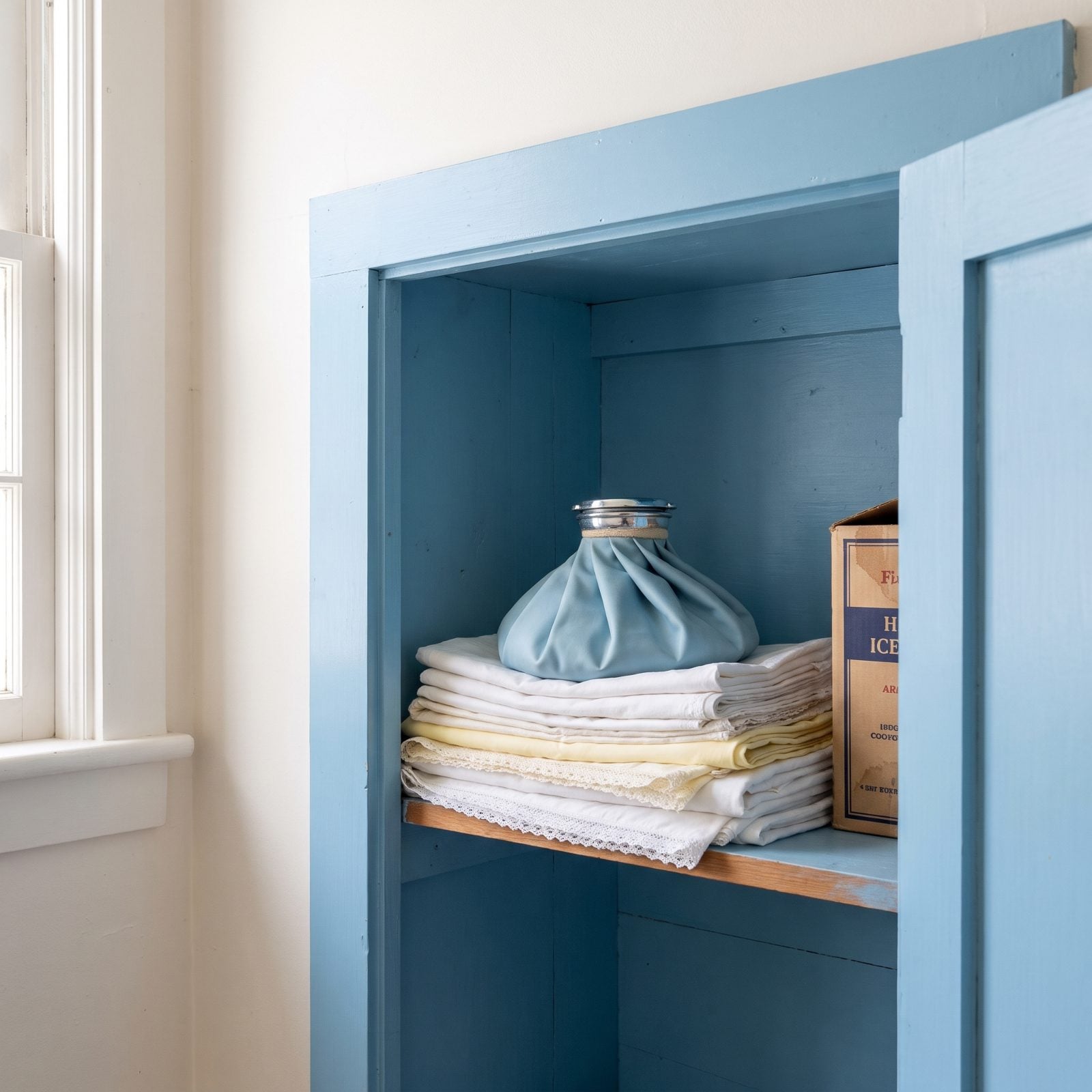
Every household kept one, and every kid dreaded it. The screw-cap ice bag was the ancestor of the squishy gel pack, except this one weighed about as much as a brick once you crammed it full of chips chiseled off the block in the freezer.
The rubber had a smell — if you grew up with one you already know it, somewhere between a garden hose and an old inner tube. And the screw cap was the whole trick. No zip-top, no seam to burst, just thread it tight and press it against a fever or a swollen ankle.
7. The Dented Metal First-Aid Tin on the Top Shelf
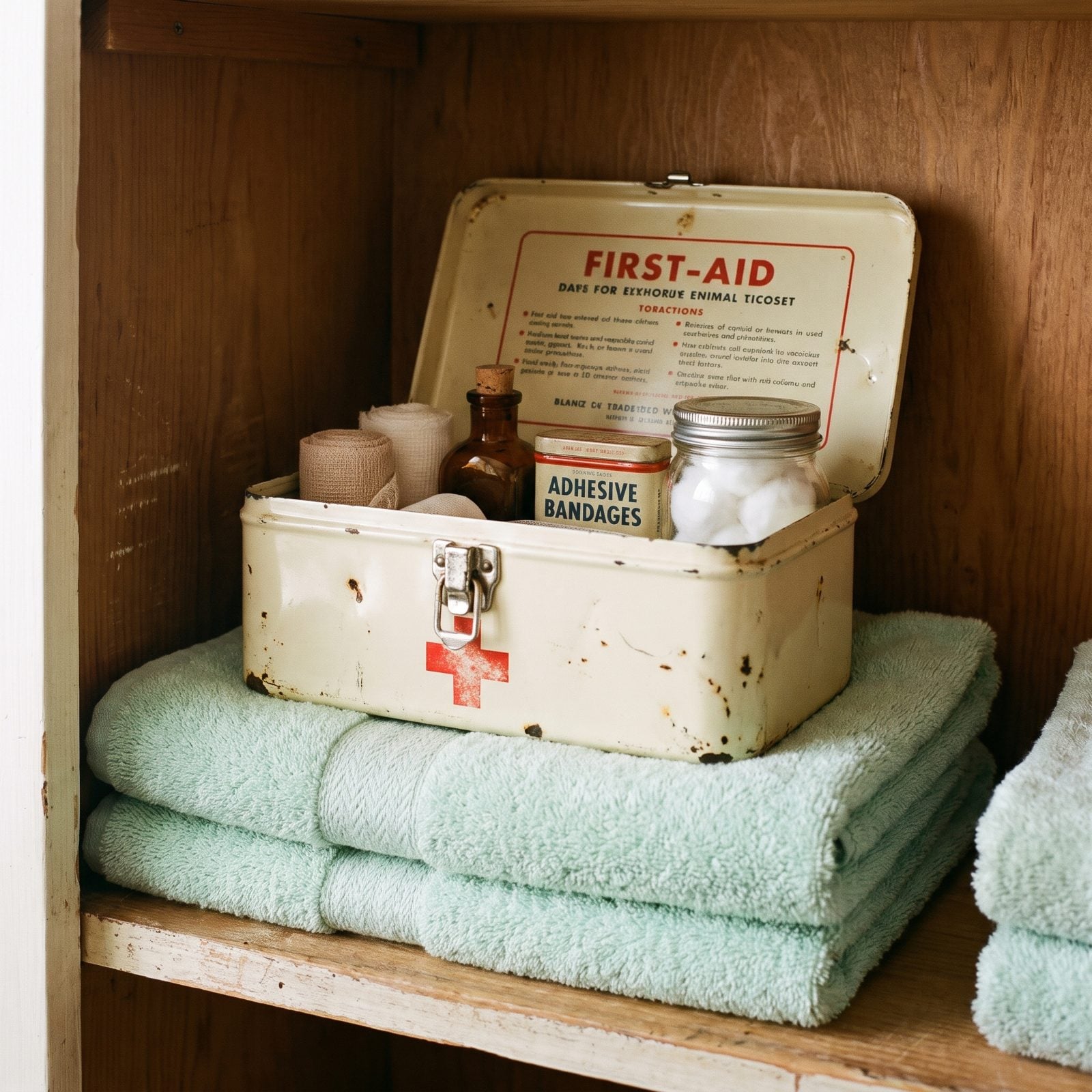
The metal first-aid tin lived on the top shelf, because that’s where you put the thing that mattered and kept little hands out of it. It had a hinge that squeaked and a lid that never quite closed flush after about 1963.
Inside was a whole decade of life: gauze gone slightly yellow, a roll of adhesive tape welded to itself, scissors with a spot of rust, and bandages whose backing peeled off in one dry curl. Half of it was expired. Nobody checked.
6. The Little Amber Bottle of Mercurochrome
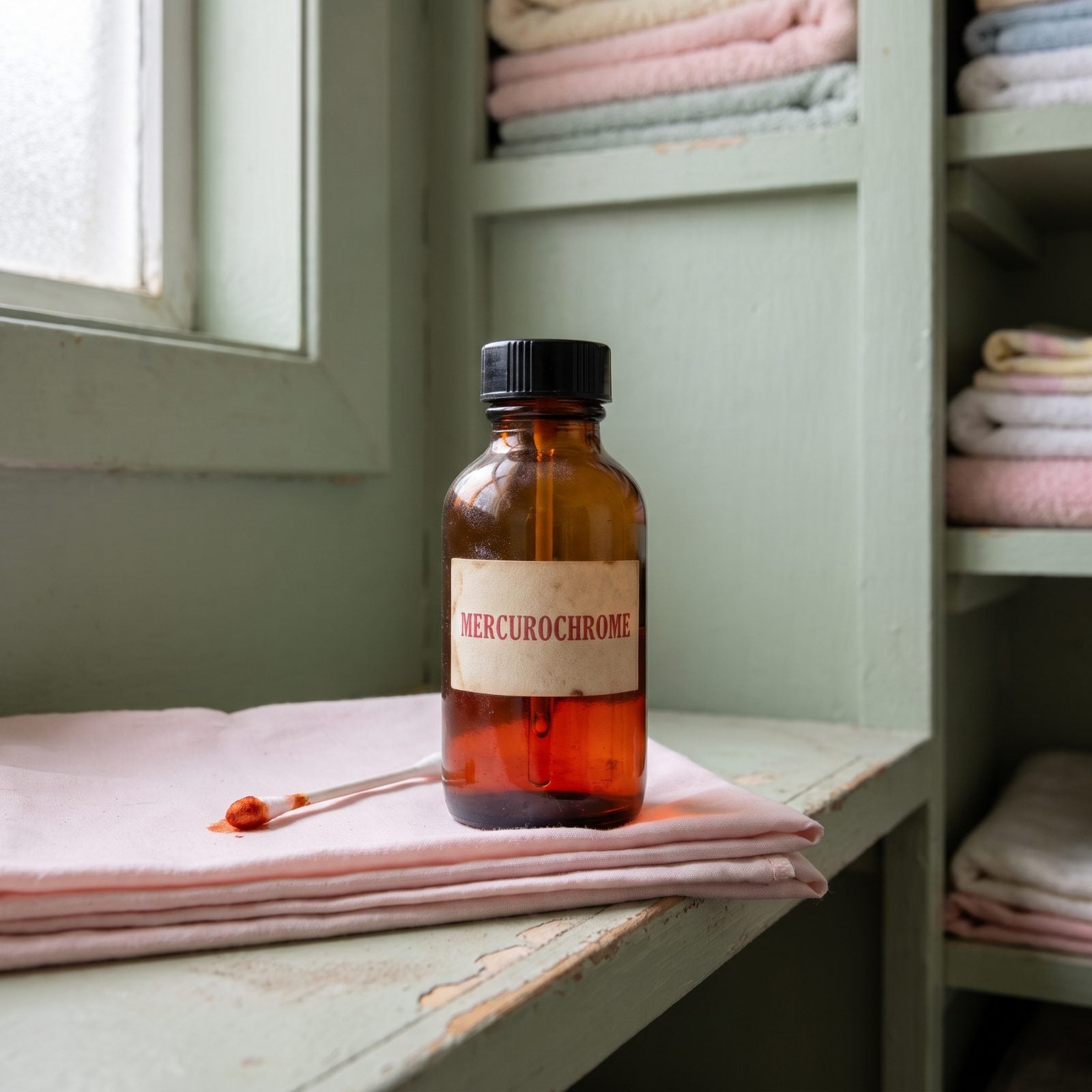
If you ever stained a knee the color of a traffic cone, you met Mercurochrome. That orange-red antiseptic was the sting-free alternative to iodine, dabbed on from the little glass dropper poking up through the black cap, and it marked every scrape with a badge you couldn’t scrub off for a week.
Now the part worth saying plainly. The FDA pulled it from the “generally recognized as safe” list in 1998 because it contained mercury — merbromin, to be exact. For decades it sat in millions of linen closets while nobody gave the ingredient a second thought. It worked, it didn’t hurt, and that was enough.
5. The Blue Tin of Mentholated Chest Rub
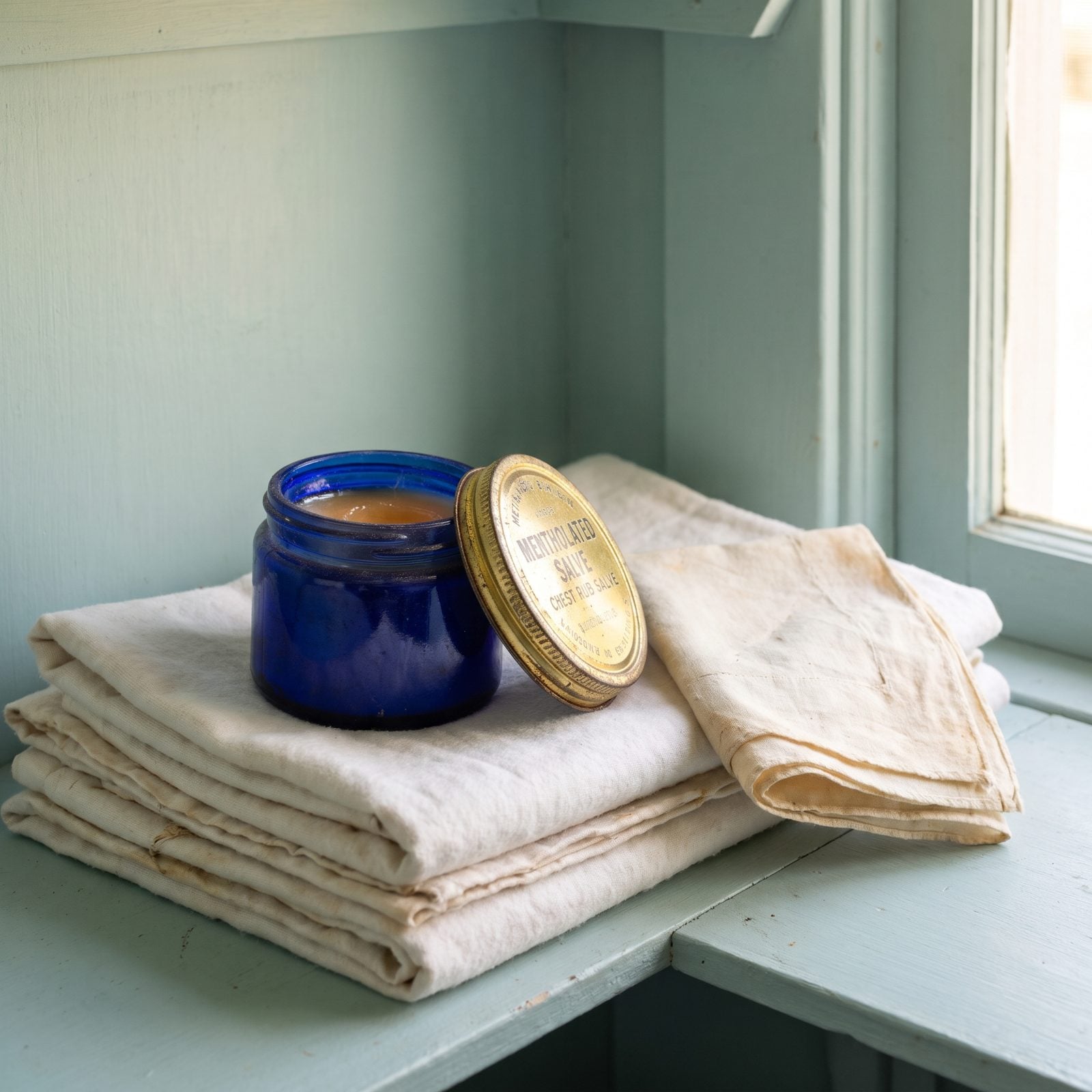
You could find this jar in the dark by smell alone. Camphor, eucalyptus, menthol, all packed into a cobalt-blue glass tub with a gold lid that always seemed to have a thin crust of salve stuck in the threads.
Winter ritual: a smear on the chest, a dab under the nose, a pair of socks pulled on afterward if the grown-ups were feeling scientific about it. The vapors didn’t cure a thing. They made you feel tended to, which counts for plenty when you’re six and miserable.
4. The Brown Glass Bottle of Aspirin With a Cotton Plug
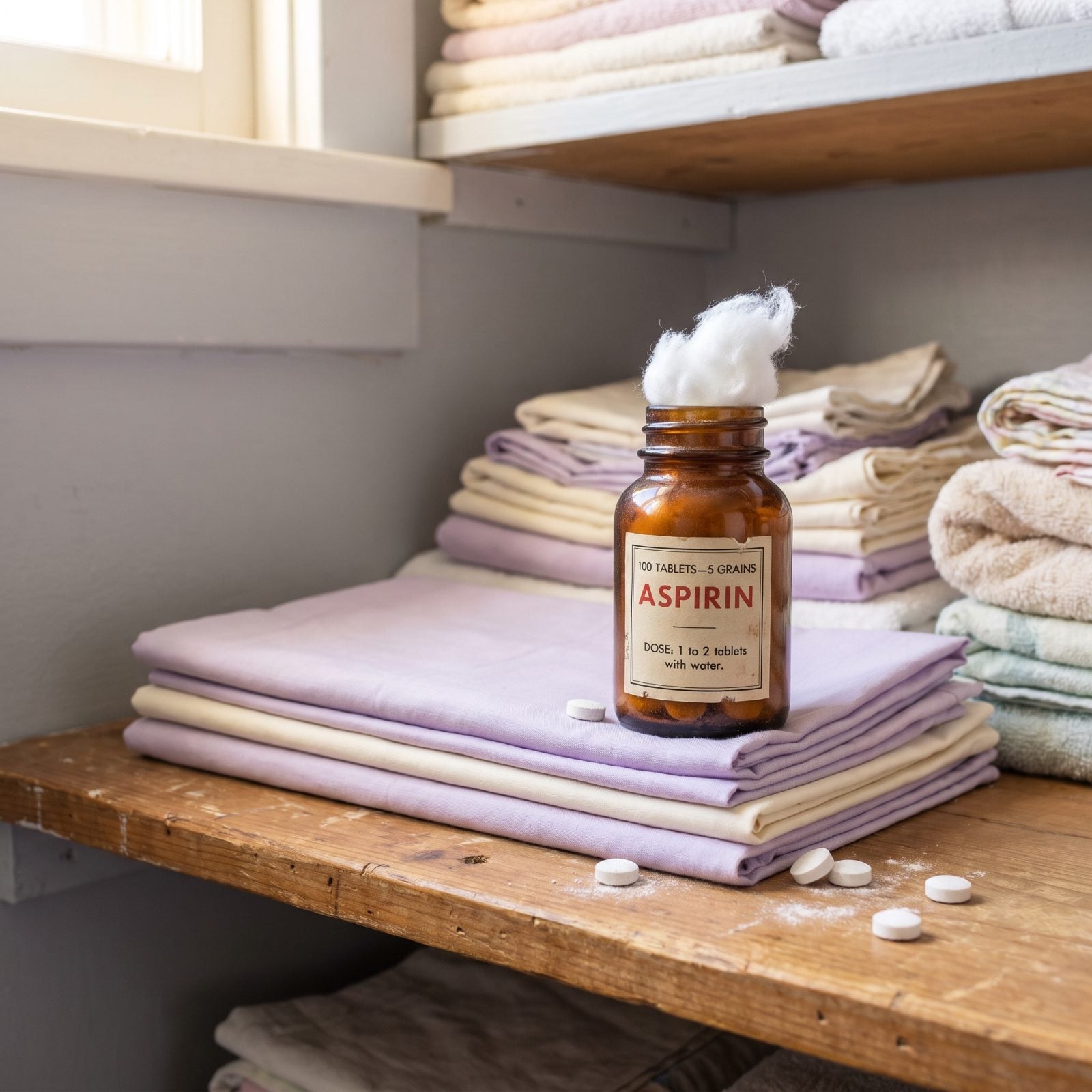
Twist the metal cap, pull out the wad of cotton, shake two tablets into your palm. That cotton plug is the detail nobody mentions — stuffed in at the factory to keep the pills from rattling to powder, and you fought it out of the neck every single time.
No childproof cap. That came later. The Poison Prevention Packaging Act didn’t arrive until 1970, so for most of the decade an aspirin bottle opened just as easily for a curious toddler as for anyone else.
3. The Little Glass Eyewash Cup for Boric Acid
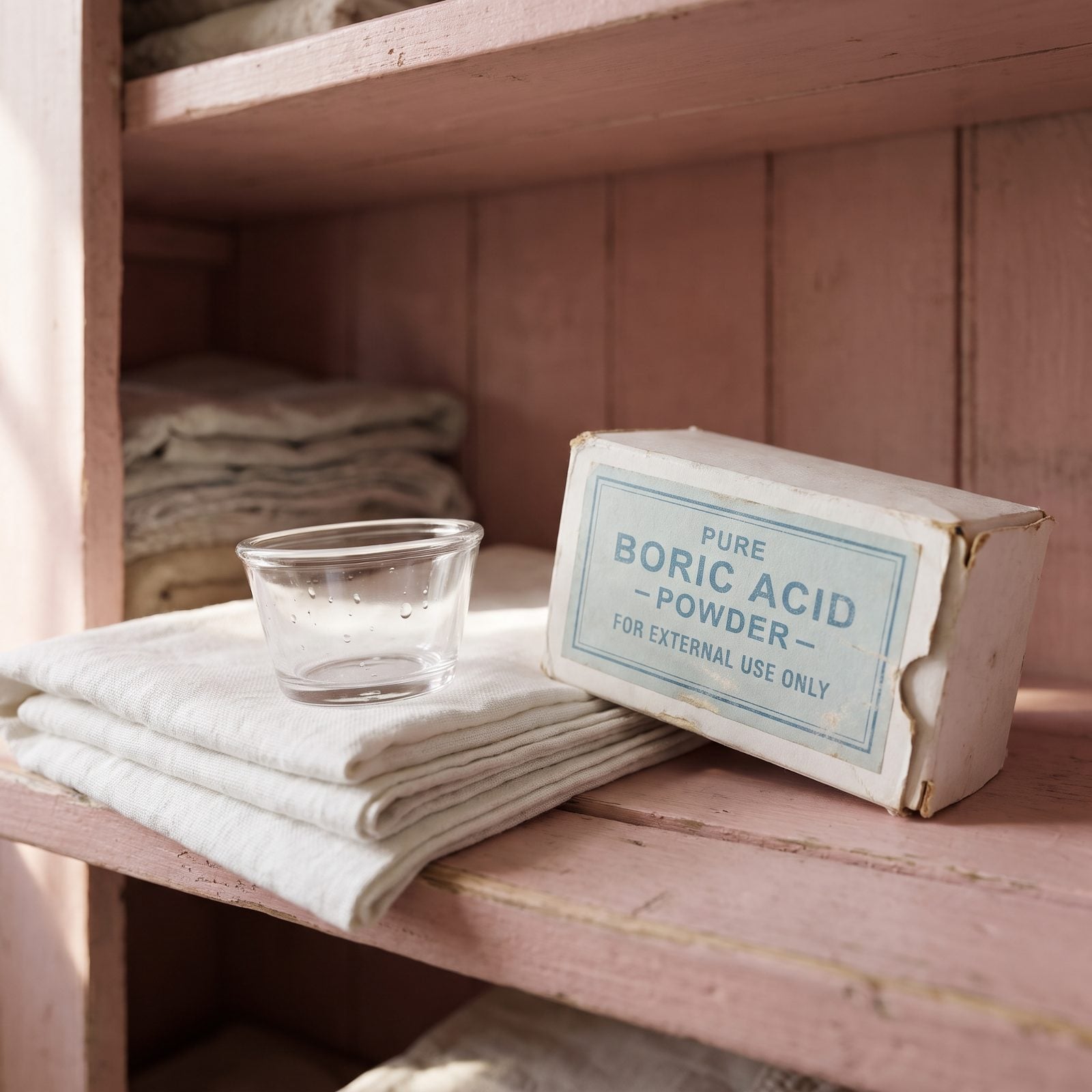
A tiny glass cup shaped to cradle the eye socket, filled with a boric acid solution, tipped back, and blinked into. If your eye was red or gritty, this was the fix — and the whole ritual felt oddly surgical for something done over the bathroom sink.
Worth being honest here. Boric acid eyewash fell out of favor once doctors learned it can irritate the eye and, swallowed, it’s toxic. The cheerful little cup outlived the practice. Plenty still sit in cabinets, pressed into service as a shot glass for houseplants or forgotten entirely.
2. The Flat Box of Sanitary Napkins and the Elastic Belt
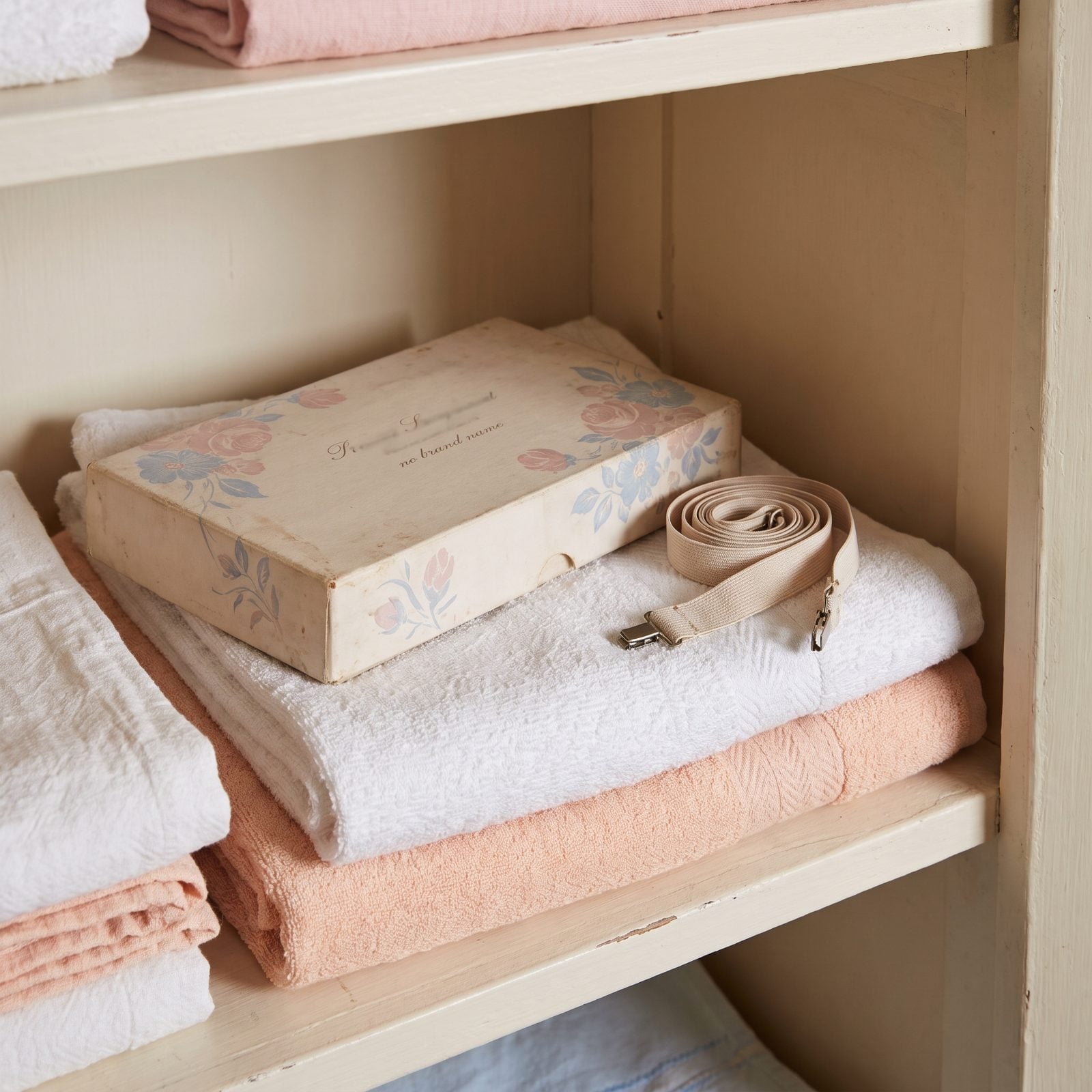
The packaging whispered. Soft florals, pale pastels, type that worked hard to say nothing at all — because this was a product sold in an era that would rather not discuss it out loud.
Here’s the detail that surprises younger people: these napkins had no adhesive strip. They hooked onto a separate elastic belt — a narrow beige strap with little metal clips on its ends to grip the napkin’s tabs. Self-adhesive pads didn’t catch on until the early 1970s. Until then, the belt was the whole system — and it’s the thing almost nobody kept.
1. The Pink Rubber Douche Bag Folded Behind the Towels
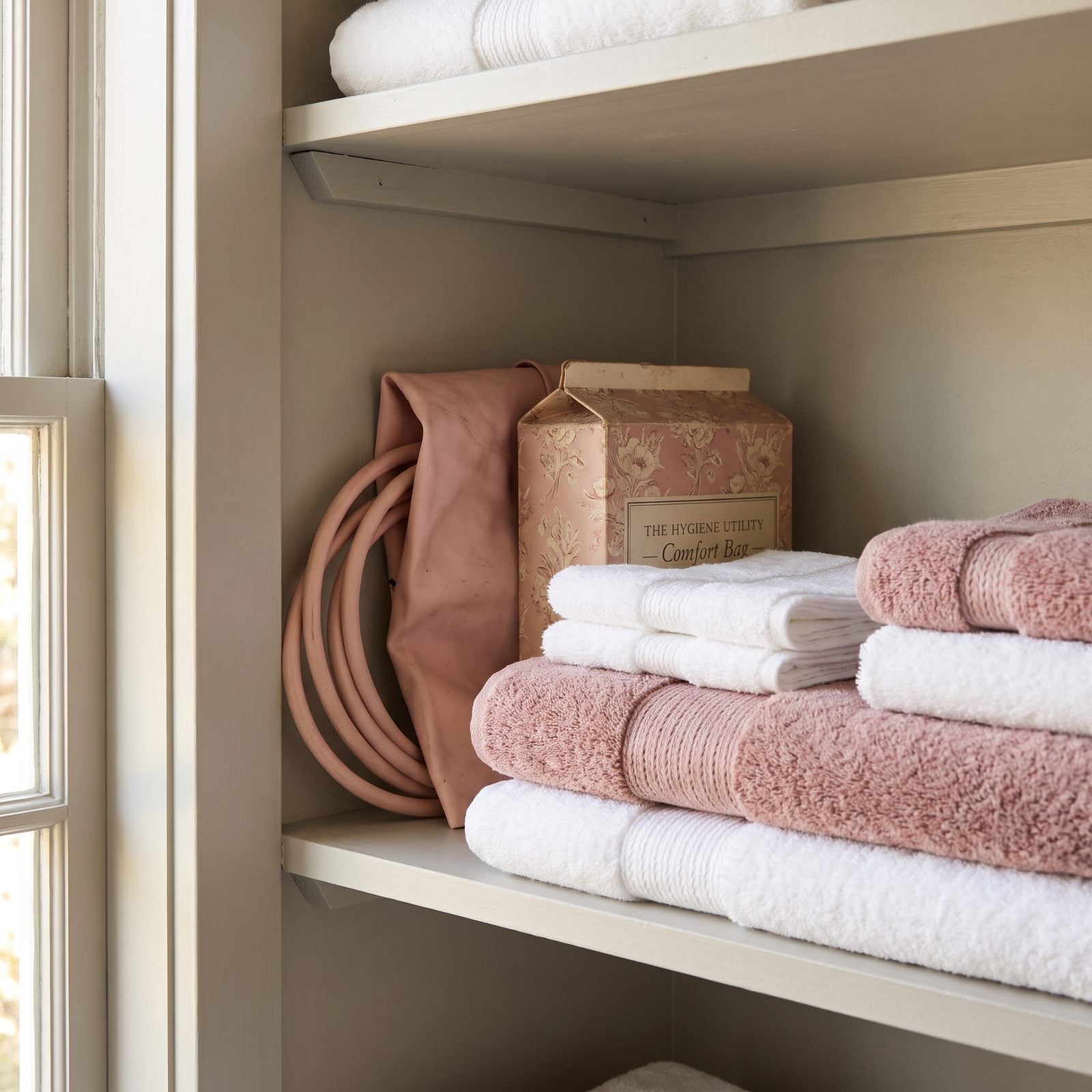
Folded behind the towel stack, next to its worn floral box, sat the pink rubber bag with its coil of tubing. Sold as feminine hygiene, it often doubled as a hot water bottle or an enema bag depending on the fitting — one piece of rubber asked to do several delicate jobs.
The marketing promised freshness and marital happiness in language that would make a modern copywriter blush. Real talk: doctors now agree routine douching does more harm than good, throwing off the body’s own balance. The product quietly disappeared from closets as that understanding spread.