
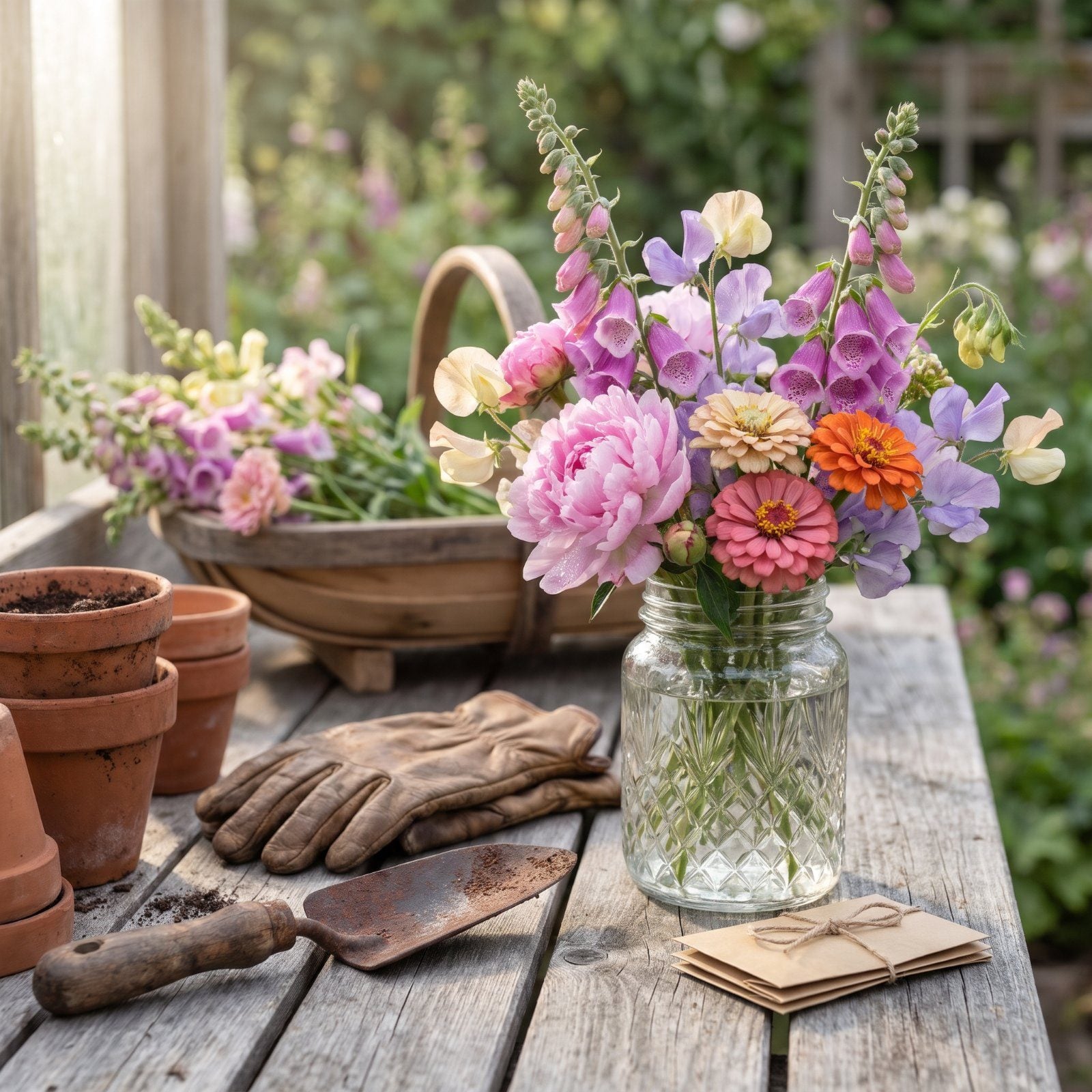
There’s a lilac bush somewhere in nearly everyone’s memory. You brushed past it heading for a back door that stuck in humid weather, and the smell hit you before you spotted a single bloom. For decades, flowers like that got shoved aside for tidy annuals and low-maintenance shrubs that asked nothing and gave about as much. Now they’re back, planted on purpose by people who want a garden that actually smells like something. These are the heirloom bloomers once treated as default porch decoration. Here’s why they belong in your beds again, and what nobody warns you about before you plant them.
Please note that some of the images in this article were created with the assistance of AI.
47. Towering Hollyhocks Along the Fence
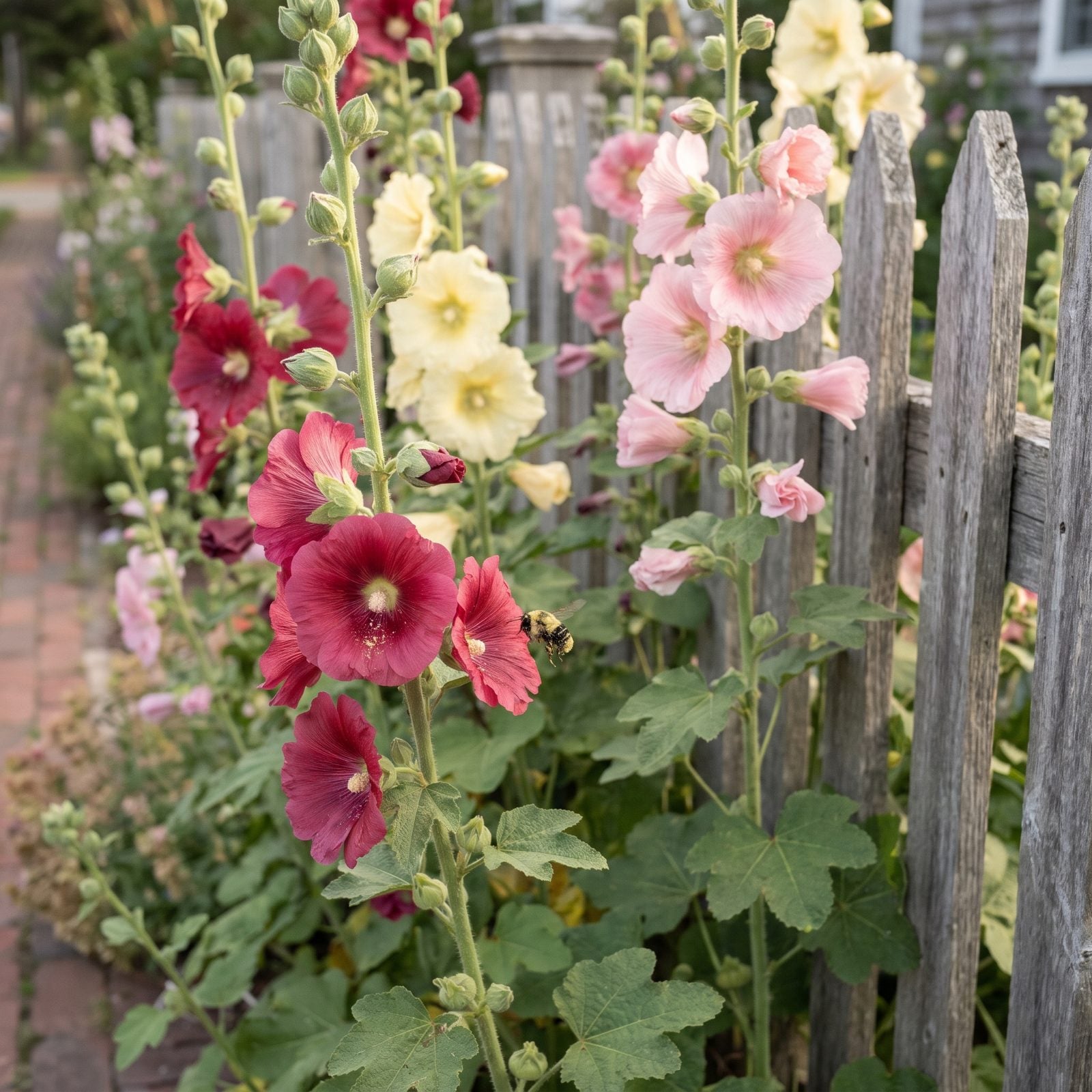
Nothing says old farmhouse quite like hollyhocks leaning against a fence, which is exactly where they want to be. They need something to lean on, and a fence or wall gives them the backbone they lack on their own.
Here’s the catch nobody mentions when they hand you a seed packet: most hollyhocks are biennial. Plant them one year, they make leaves, they flower the next. Sow two years running and you’ll never have a gap. They also get rust — those orange spots on the leaves — and you’ll just have to make peace with it.
46. Blowsy Peonies Loaded With Petals
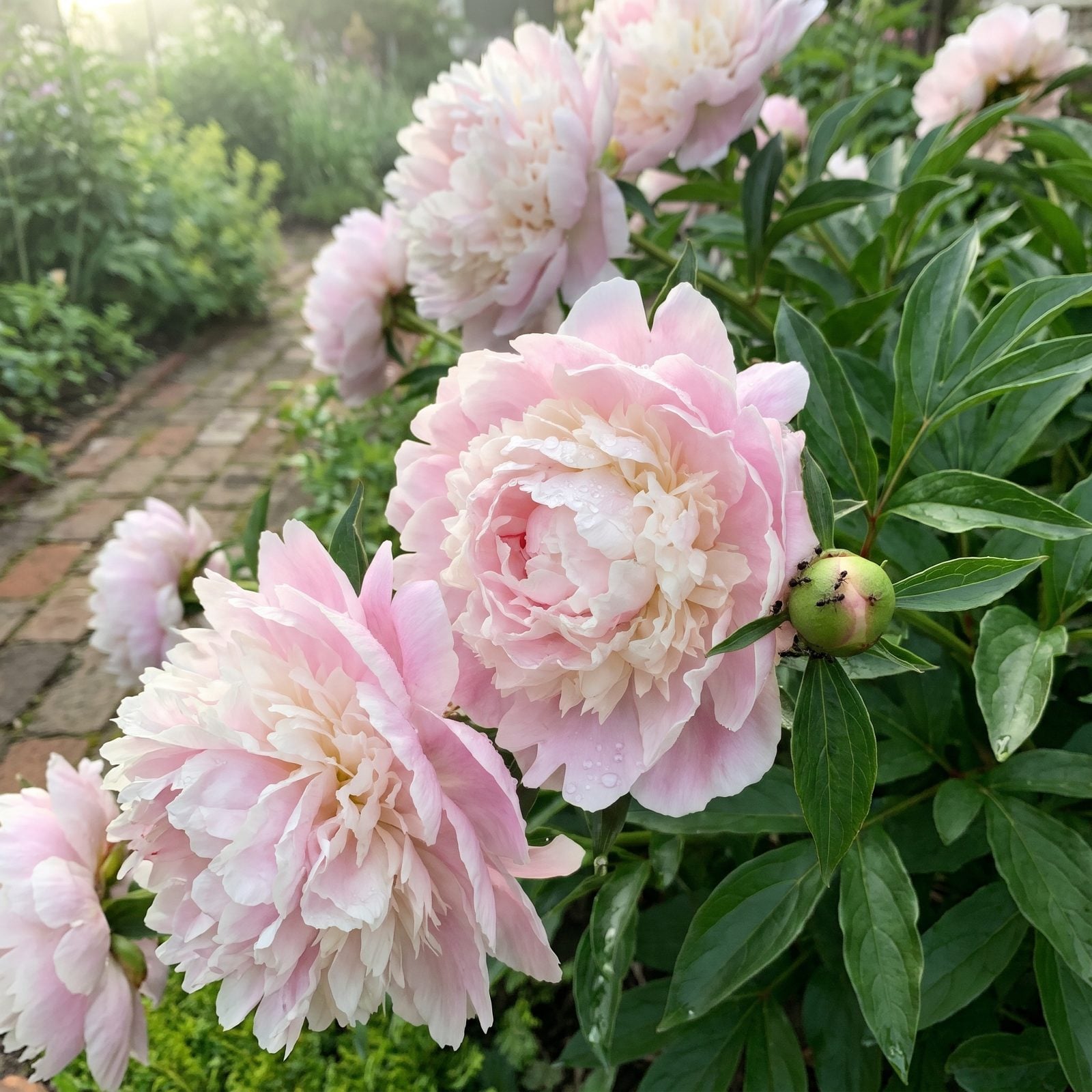
A peony gives you one spectacular week and then it’s done for the year. Worth it. Those fat, petal-stuffed blooms are heavy enough to flop face-down into the mud after rain, so a cheap metal grow-through support set out early in spring saves you the heartbreak.
The thing to know: peonies are slow, and they hate being moved. Plant one and leave it alone. They’ll outlive you if you let them, blooming in the same spot for half a century.
45. Fragrant Sweet Peas Climbing a Trellis
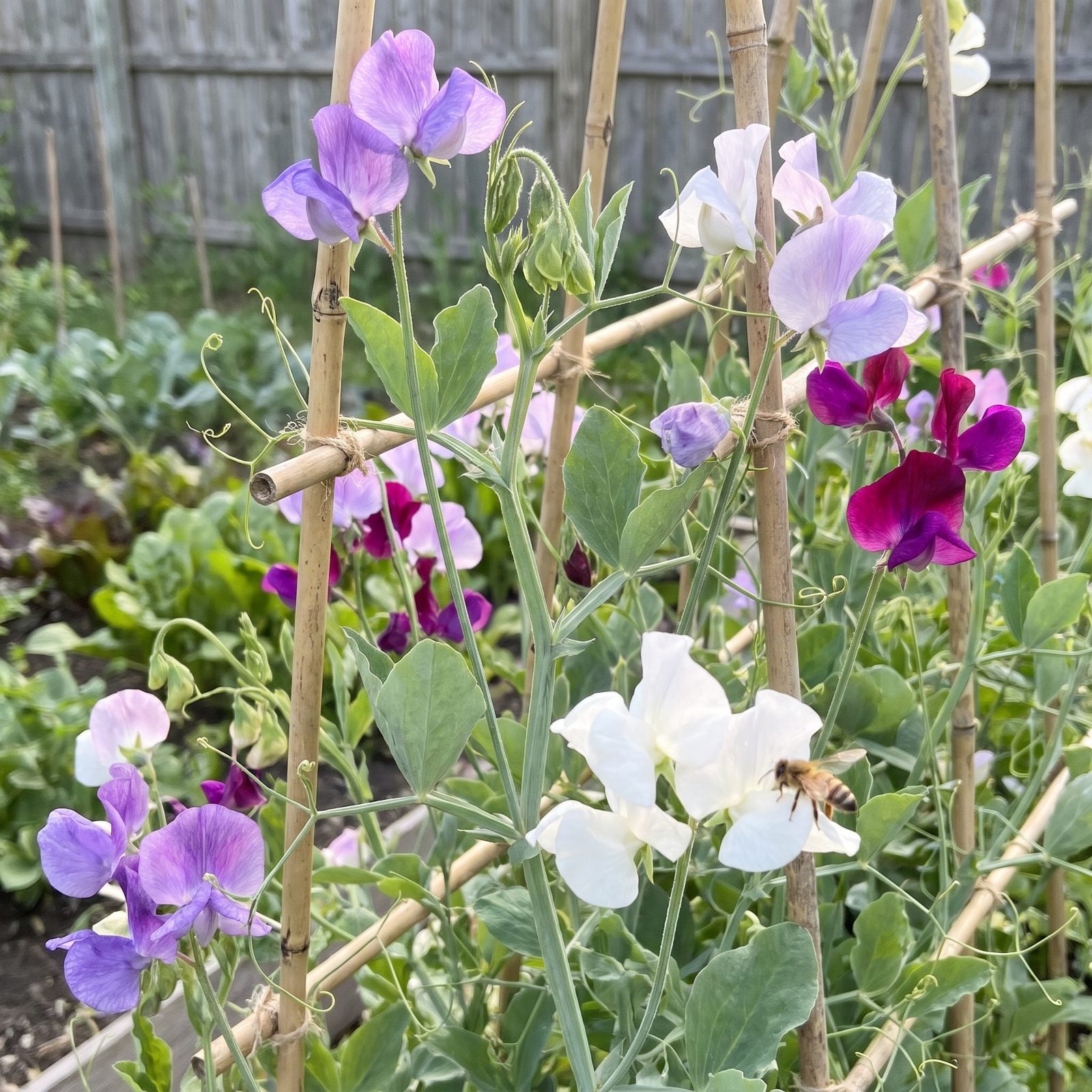
Sweet peas earn their keep with scent, not looks — though the looks are fine too. One small jar on a windowsill will perfume a whole kitchen.
They’re greedy cutters in the best way: the more you pick, the more they flower. Let a single bloom go to seed, though, and the plant decides its work is done and quits. So cut them hard, every few days, all summer.
44. Perfumed Lilacs by the Garden Gate
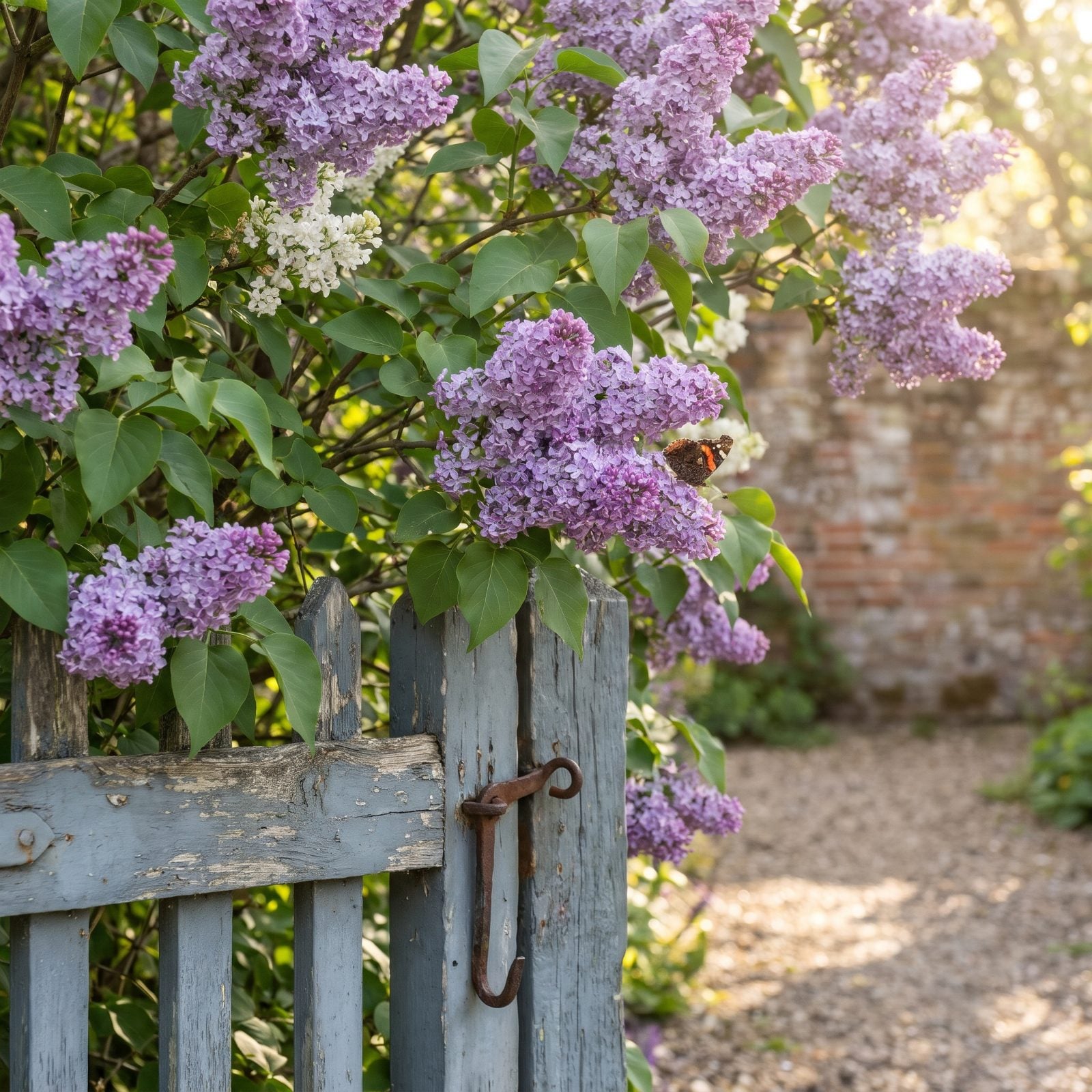
The smell of lilac is practically a time machine, and that’s most of the draw. Two weeks of bloom, maybe three, and then it’s a plain green shrub until next May. People forget that part.
If yours never flowers, blame one of two things: you pruned at the wrong time, or it’s sitting in too much shade. Lilacs set next year’s buds right after this year’s flowers fade, so prune in early summer or not at all. And they want sun. A lot of it.
43. Jewel-Toned Zinnias for Cutting
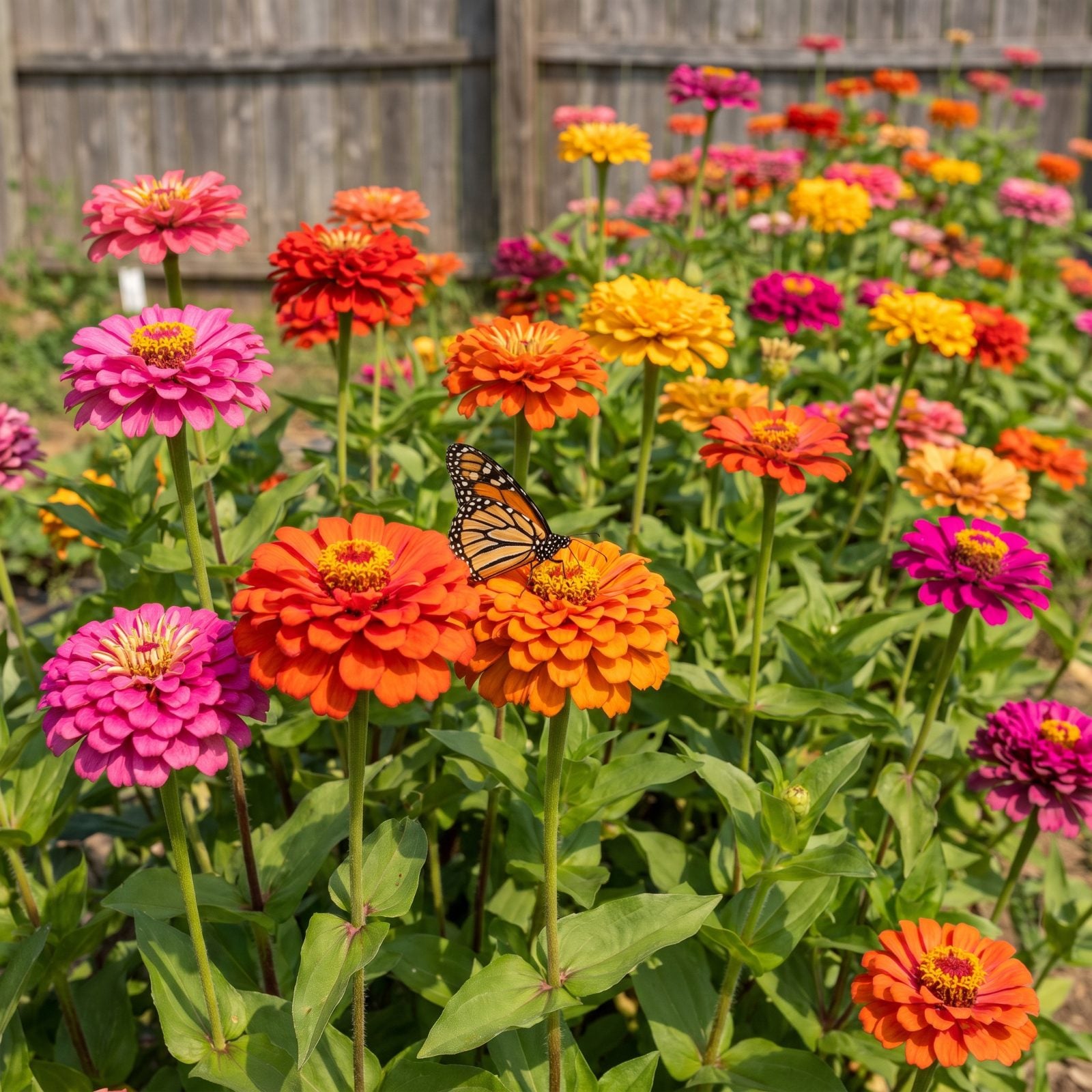
Never grown a cutting flower before? Start with zinnias. They’re almost impossible to mess up.
Direct-sow the seed after your last frost, into warm soil, and they’ll be blooming in a couple of months in colors that look dialed up past realistic — raspberry, tangerine, lime green, deep velvet red. Cut them and they keep coming till frost. Pinch the first central bud when the plant is young and it branches into a bushy flower factory. And the butterflies? They find them from a surprising distance.
42. Romantic Climbing Roses Around the Door
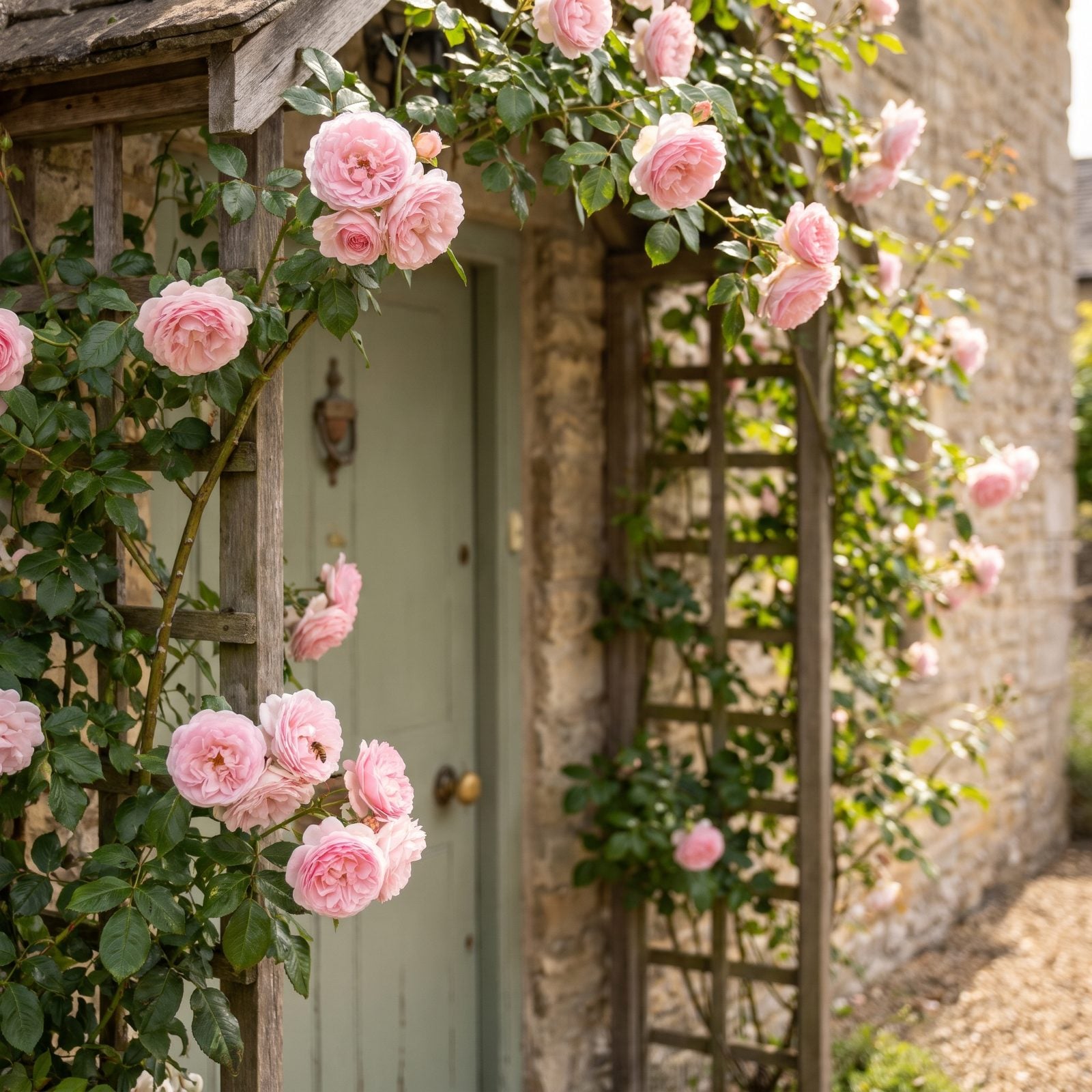
A rose framing a doorway is the whole fantasy, and it’s more achievable than people think. You just have to pick the right one.
Modern repeat-flowering climbers give you flushes all summer instead of one June explosion, and many are bred to shrug off the fungal problems that made grandmother’s roses such a chore. Find a disease-resistant variety and you’ll spray almost never.
The real trick with climbers is bending the main canes sideways, as horizontal as you can manage. Vertical canes flower only at the top. Bent canes break out in blooms all along their length. Ignore this and you’ll keep wondering why your rose only flowers up at the roofline.
41. Foxgloves With Freckled Bell-Shaped Blooms
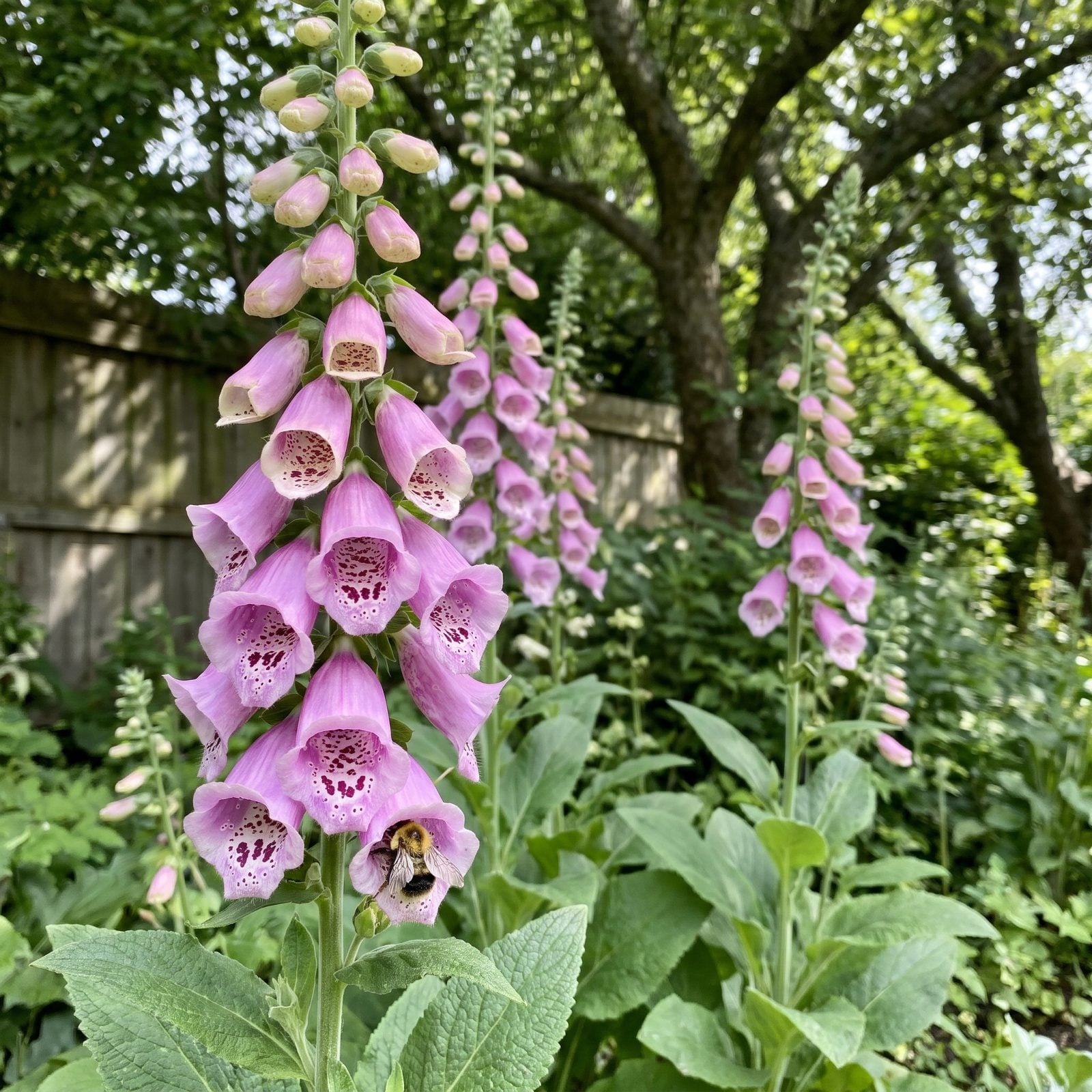
Those spotted throats aren’t decoration. The freckles are landing lights, guiding bees straight into the flower, which is why you’ll watch a fat bumblebee disappear entirely inside a lower bell and back out covered in pollen.
Foxgloves seed themselves around a garden and turn up wherever they please — half their charm, honestly. They’re biennial like hollyhocks, so a plant that’s all leaves this year becomes a tall spire the next.
40. Mophead Hydrangeas in Blue and Pink
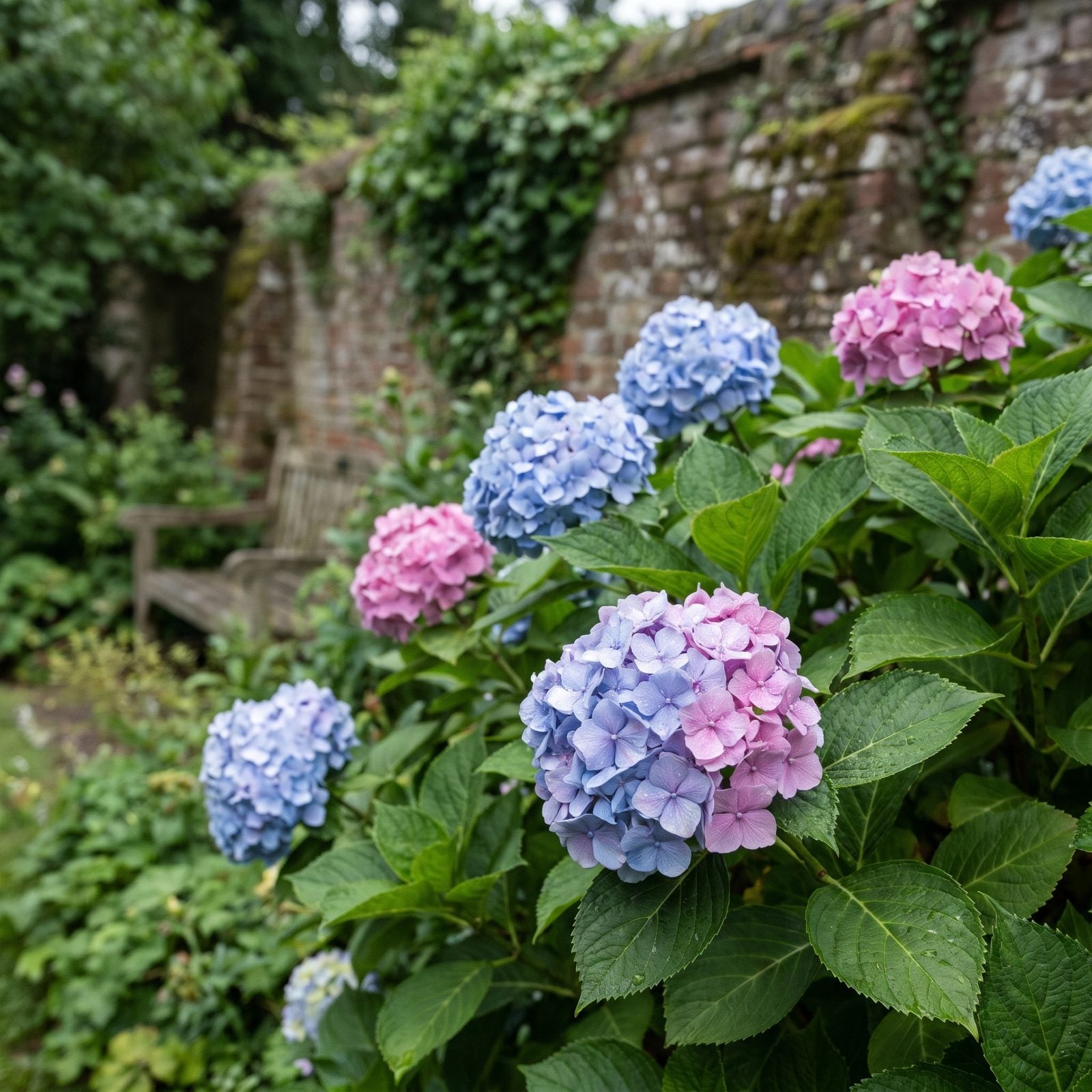
Here’s the bit of garden chemistry grandmothers knew by instinct: the soil decides the color. Acidic soil turns mophead hydrangeas blue, alkaline soil turns them pink. It comes down to the aluminum in the ground — made available or locked away by the pH.
So that blue hydrangea you bought may drift pink in your dirt, and no amount of wishing changes it. You can nudge it with soil amendments, slowly, over a season or two. White varieties stay white no matter what, which is its own kind of freedom.
39. Ruffled Snapdragons in Candy Colors
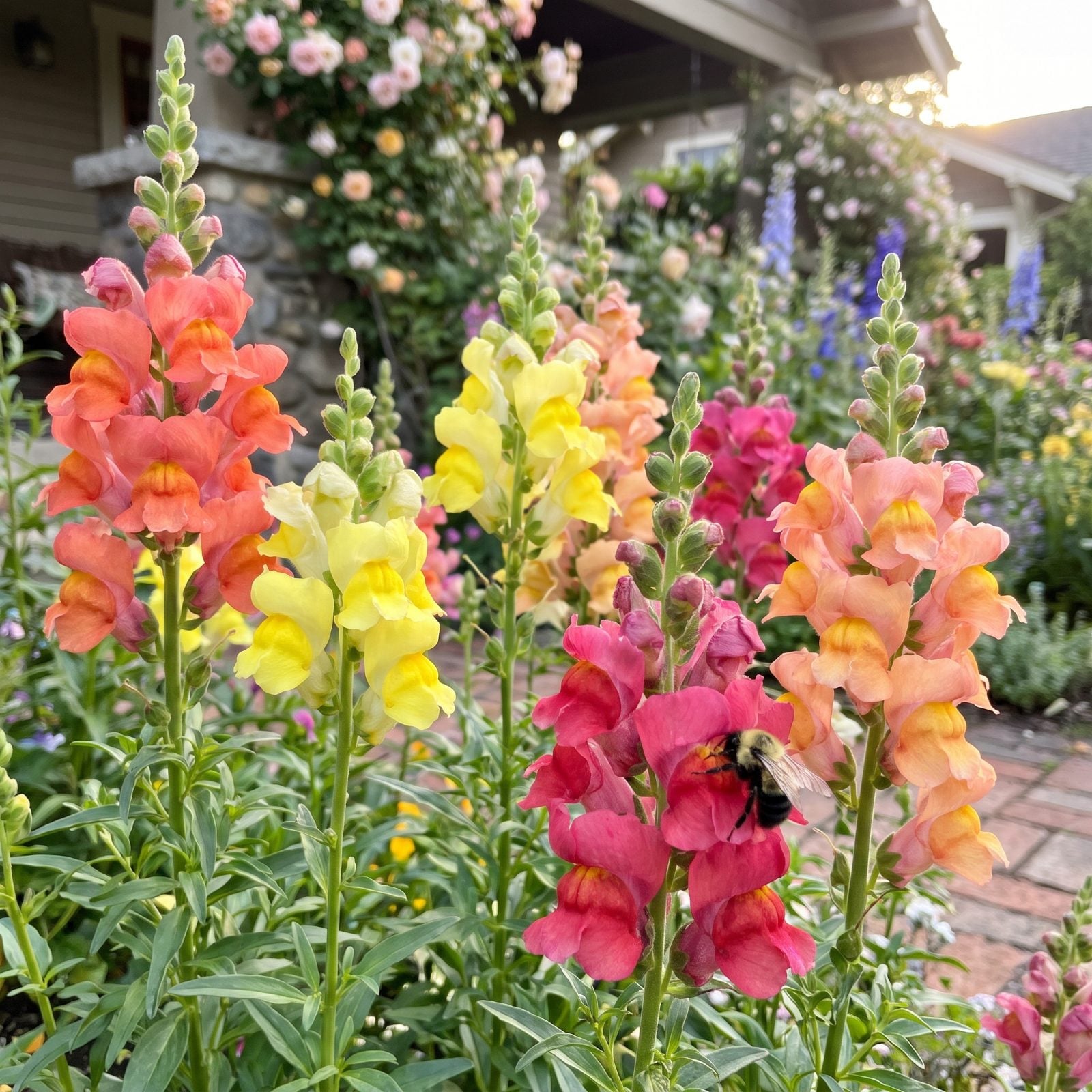
Squeeze the sides of a snapdragon bloom and the mouth opens like a tiny jaw. Every child ever handed one remembers this, and it’s still the quickest way to get a kid interested in the garden.
Beyond the party trick, they’re hard-working cut flowers in sherbet colors that bloom from the bottom of the spike up. Cut when the lowest few florets have opened and the rest keep unfurling in the vase. They handle cool weather better than most, and often flower again in autumn after a summer rest.
38. Cottage-Garden Delphinium Spires
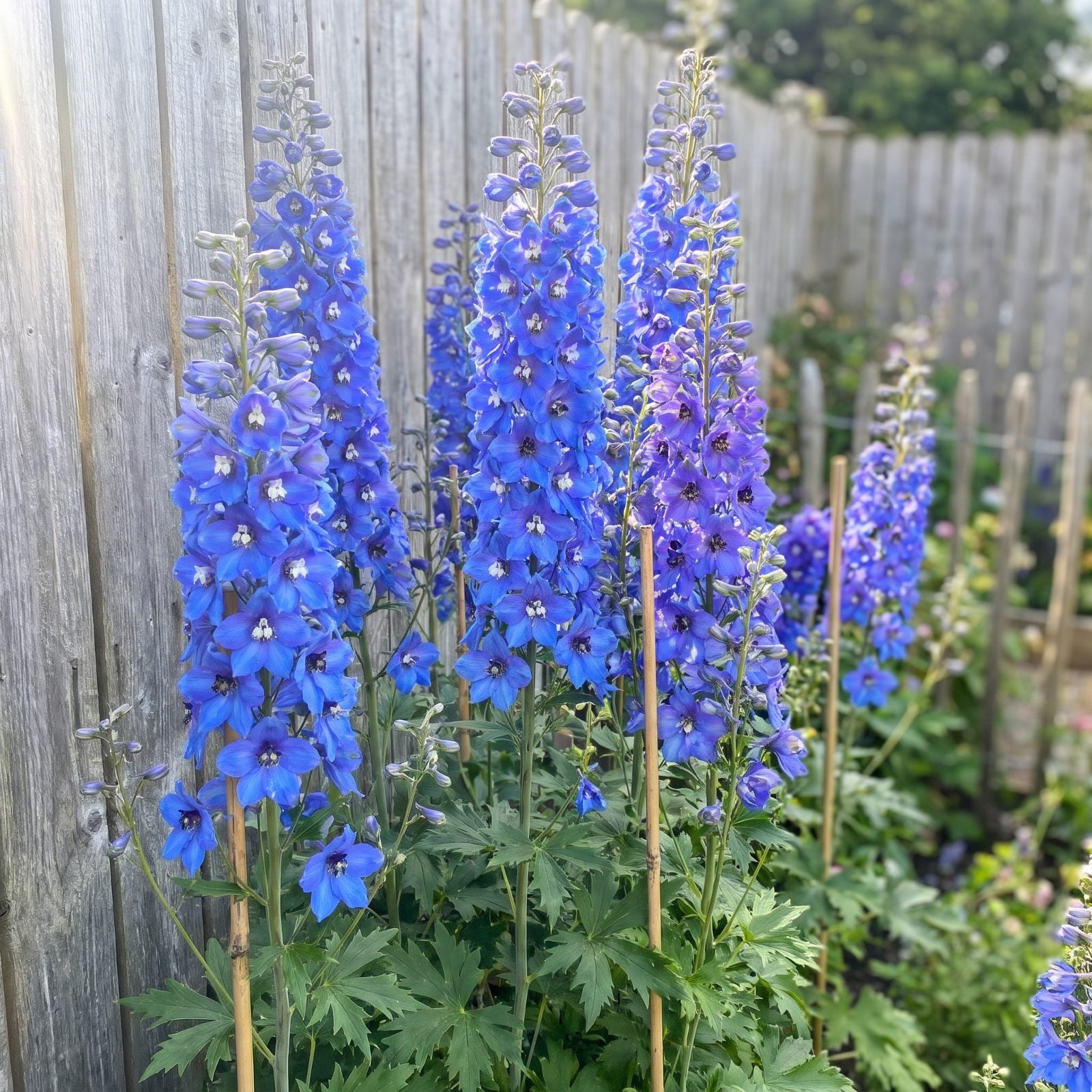
True blue is rare in the flower world, and delphiniums deliver it by the spireful — six-foot towers of it, in a shade that doesn’t quite look real.
They’re also the drama queens of this whole list. Top-heavy, hollow-stemmed, liable to snap in a gust the moment they peak. Stake each spire early, before it needs it, with the stake hidden among the leaves. And the slugs? They adore the fresh spring shoots, so protect the new growth or you’ll find leaf stubs where your delphinium used to be.
Cut the main spire down after it fades and many delphiniums reward you with a smaller second flush in late summer.
37. Airy Cosmos Swaying Above the Border
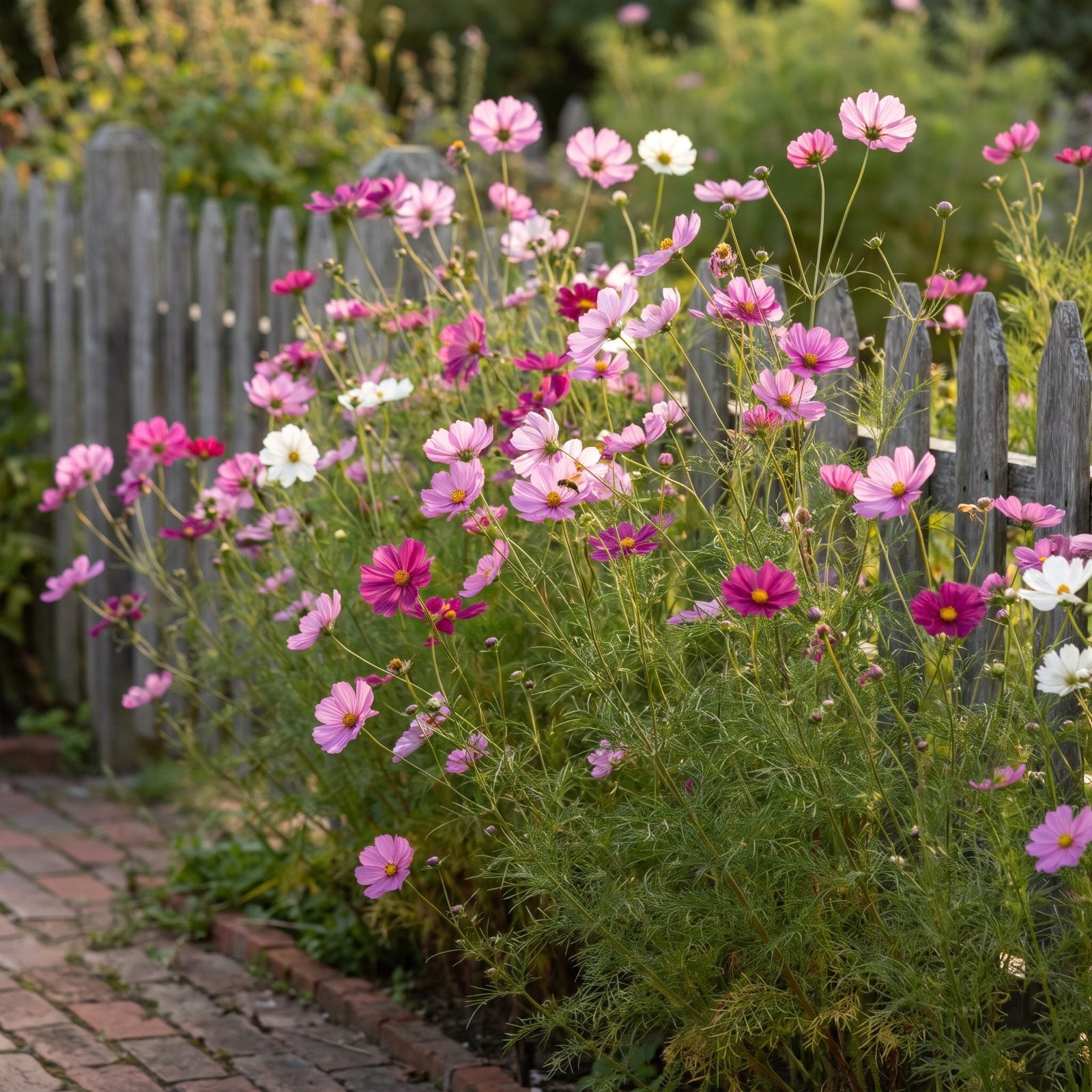
Cosmos is the plant you scatter and forget. Direct-sow the seed into warm soil after your last frost, barely cover it, and walk away. Too much pampering actually backfires, because rich soil and heavy feeding give you a jungle of ferny leaves and almost no flowers.
They lean. Anything over three feet will flop in a storm, so give them neighbors to lean on or a few twiggy branches pushed in early. Keep cutting the blooms and they keep coming until the first hard frost takes them down.
36. Clove-Scented Stock by the Back Door
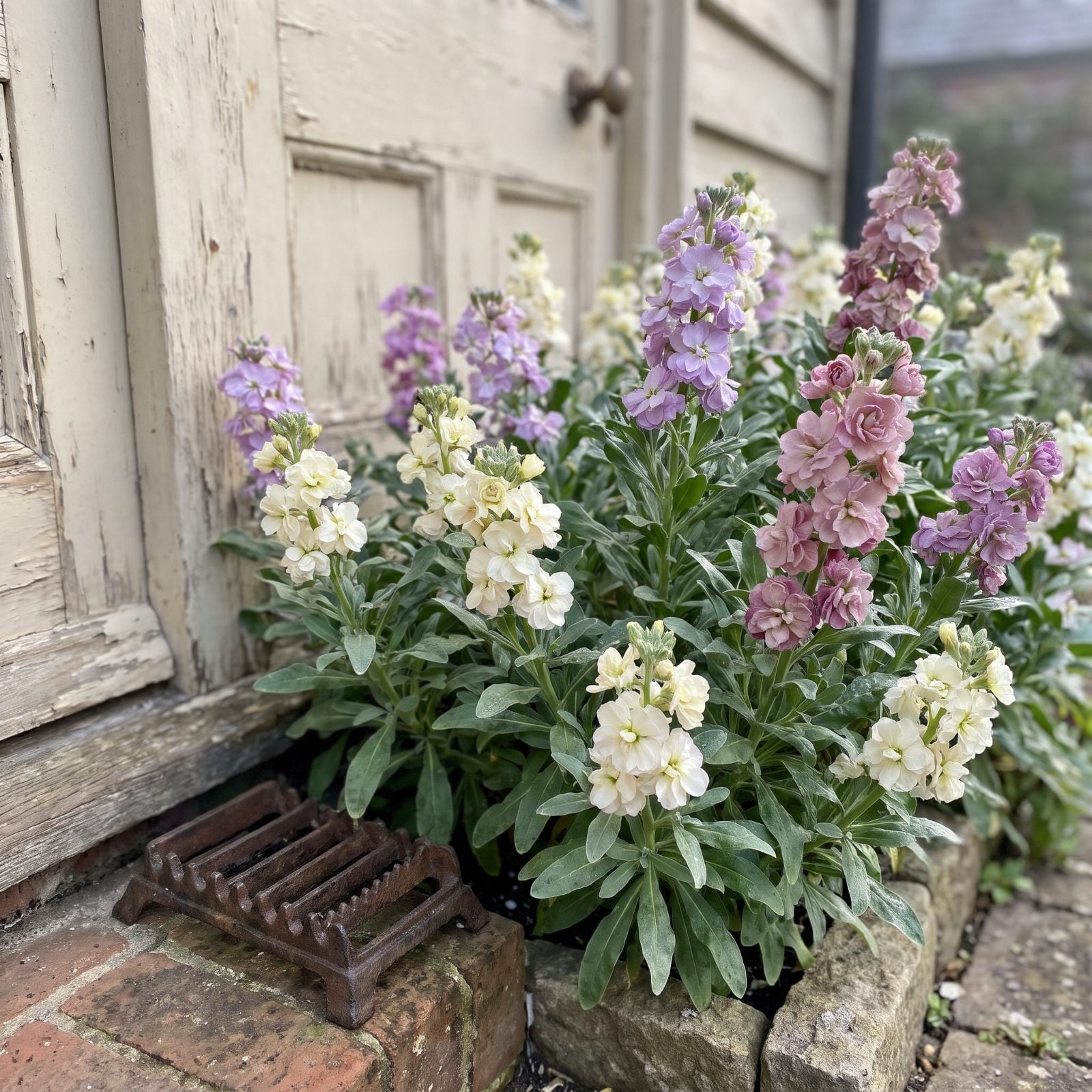
Smell is the whole point here. Stock throws a clove-and-honey scent that gets stronger at dusk, which is exactly why gardeners parked it by the kitchen door for generations. You brush past, you get hit with it.
It likes cool weather and sulks in heat, so across most of the country this is a spring and fall flower. Plant it early. In mild-winter regions you can sow in autumn for a flush of bloom before summer shuts the whole thing down.
35. Four O’Clocks That Open at Dusk
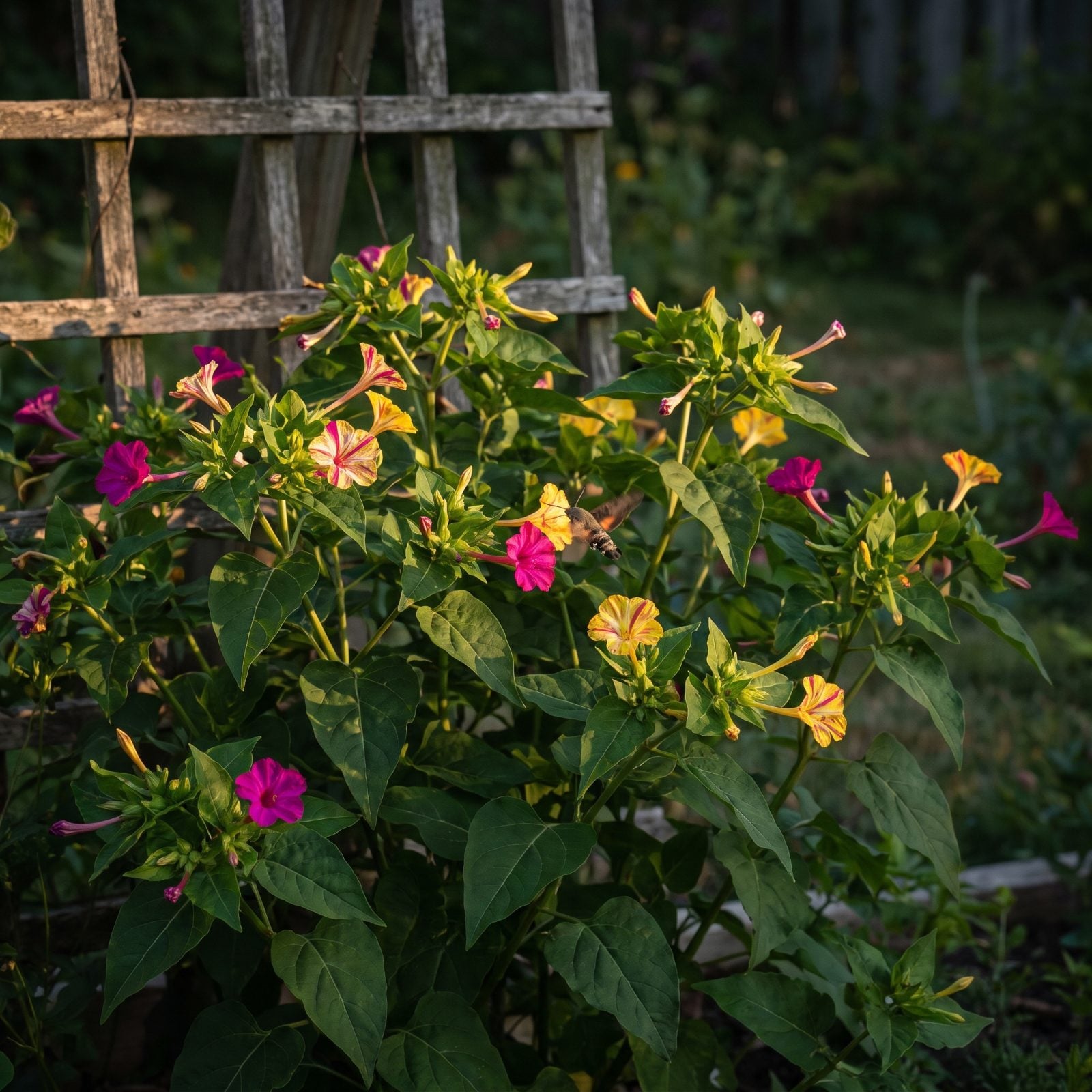
This is the flower that keeps gardener’s hours backward. Four o’clocks stay shut tight all day, then pop open in late afternoon and run all evening, pumping out a sweet scent for the moths. Plant them where you actually sit after dinner.
Here’s the part nobody mentions: they grow a fat tuber underground, like a small potato. Dig it in fall where winters are harsh and you can replant it next spring, same as a dahlia. One plant can also carry three flower colors on the same bush, which feels like a glitch the first time you see it.
34. Love-in-a-Mist in a Misty Blue Haze
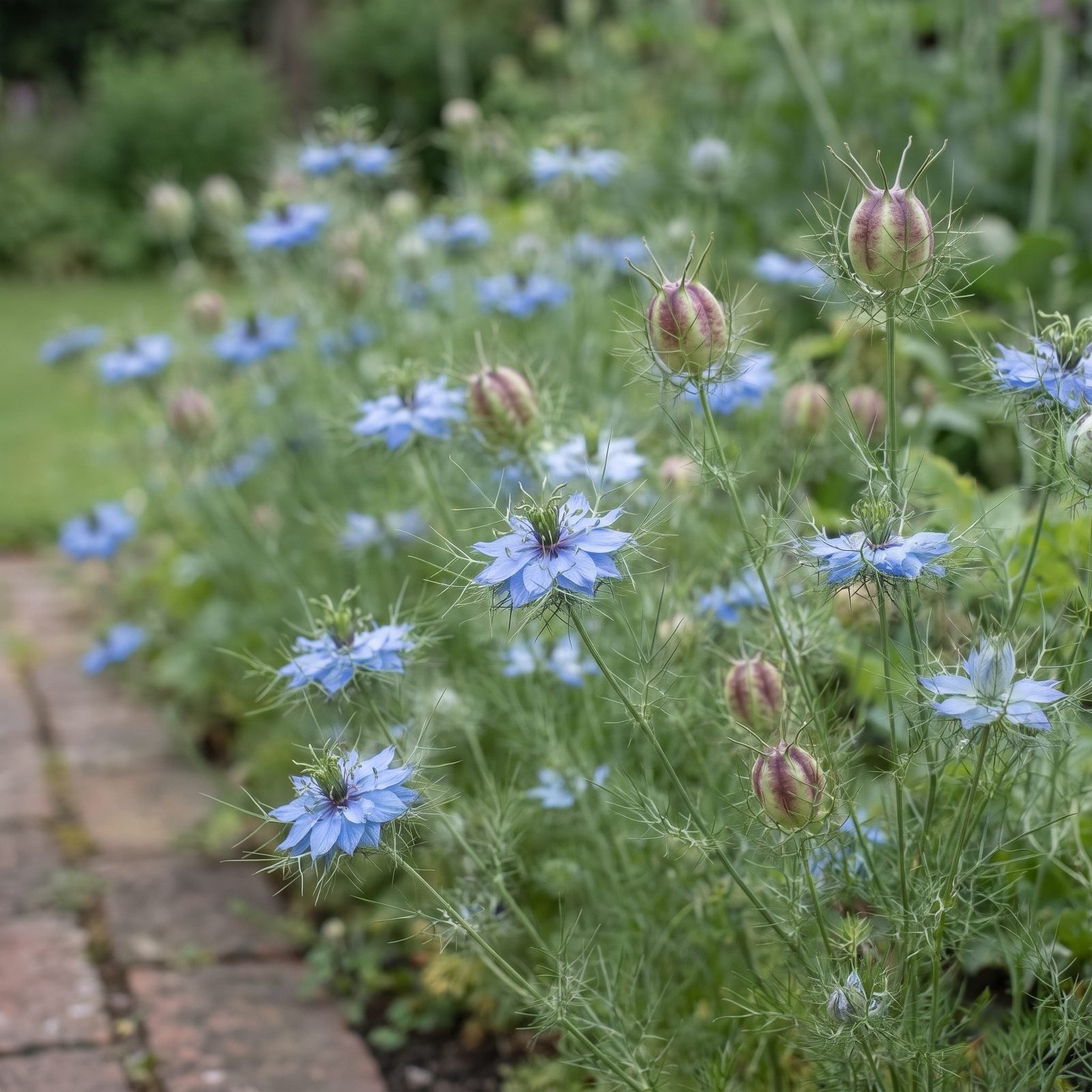
The flower is pretty. The seed pod is the reason to grow it.
Love-in-a-mist (Nigella) gives you those veiled blue blooms for a few weeks, then swells into balloon-like striped pods that dry beautifully for arrangements. Leave a few on the plant and it self-sows all over the place the next spring — politely, never like a thug.
It hates being moved, so sow the seed right where you want it. Transplants sulk and bolt. Cool soil in early spring is all it asks for.
33. True-Blue Bachelor’s Buttons
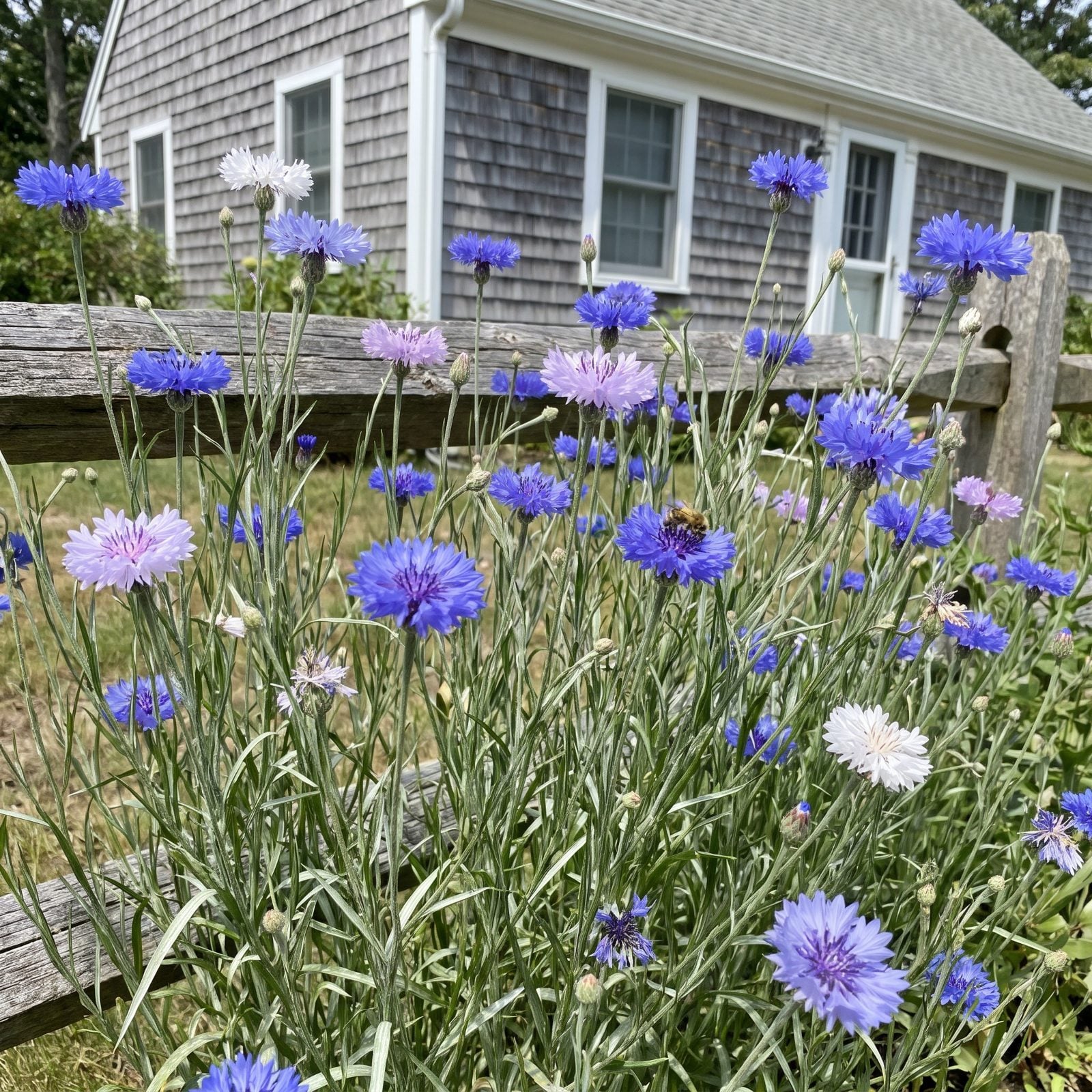
There are not many truly blue flowers. Bachelor’s buttons are one of the real ones, that clean electric cornflower blue that photographs like someone cranked the saturation up.
Dead easy from seed, happy in poor lean soil, and it shrugs off a light frost. The plants get leggy and tired by midsummer, so sow a second round in spring and you stretch the show well past it. Cut them young for the vase, before the centers fluff out.
32. Sunny Calendula With Edible Petals
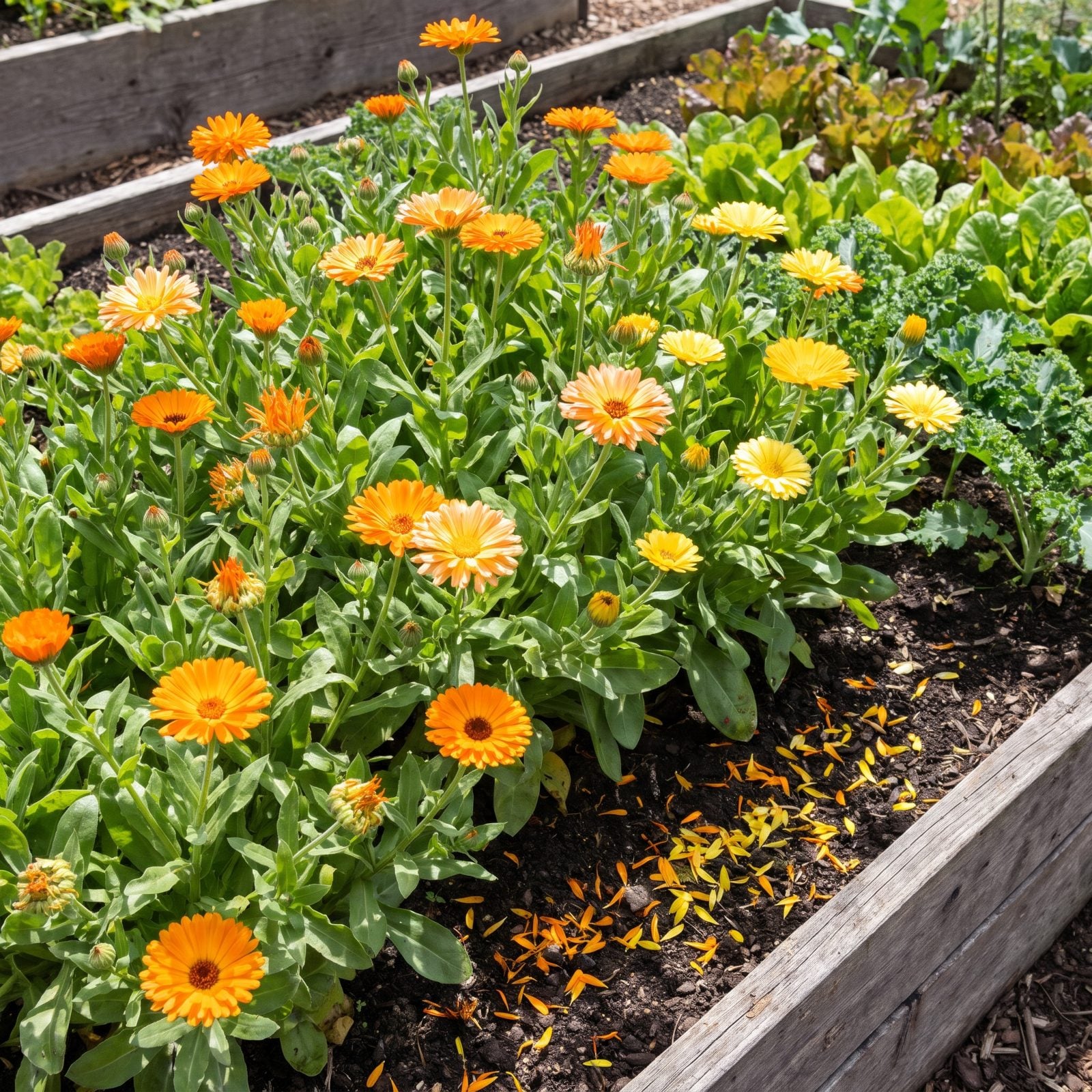
Calendula earns its keep three ways: it blooms forever, the petals go in your food, and it laughs at cold. This is the pot marigold of old cottage gardens, not the stinky bedding marigold people confuse it with.
Scatter the curved little seeds in cool soil and they come up fast. The more you pick, the harder it flowers. Toss the petals into salads, rice, or cornbread for color. And that orange looks gloriously ridiculous against a gray fence.
31. Nasturtiums Tumbling Over Bed Edges
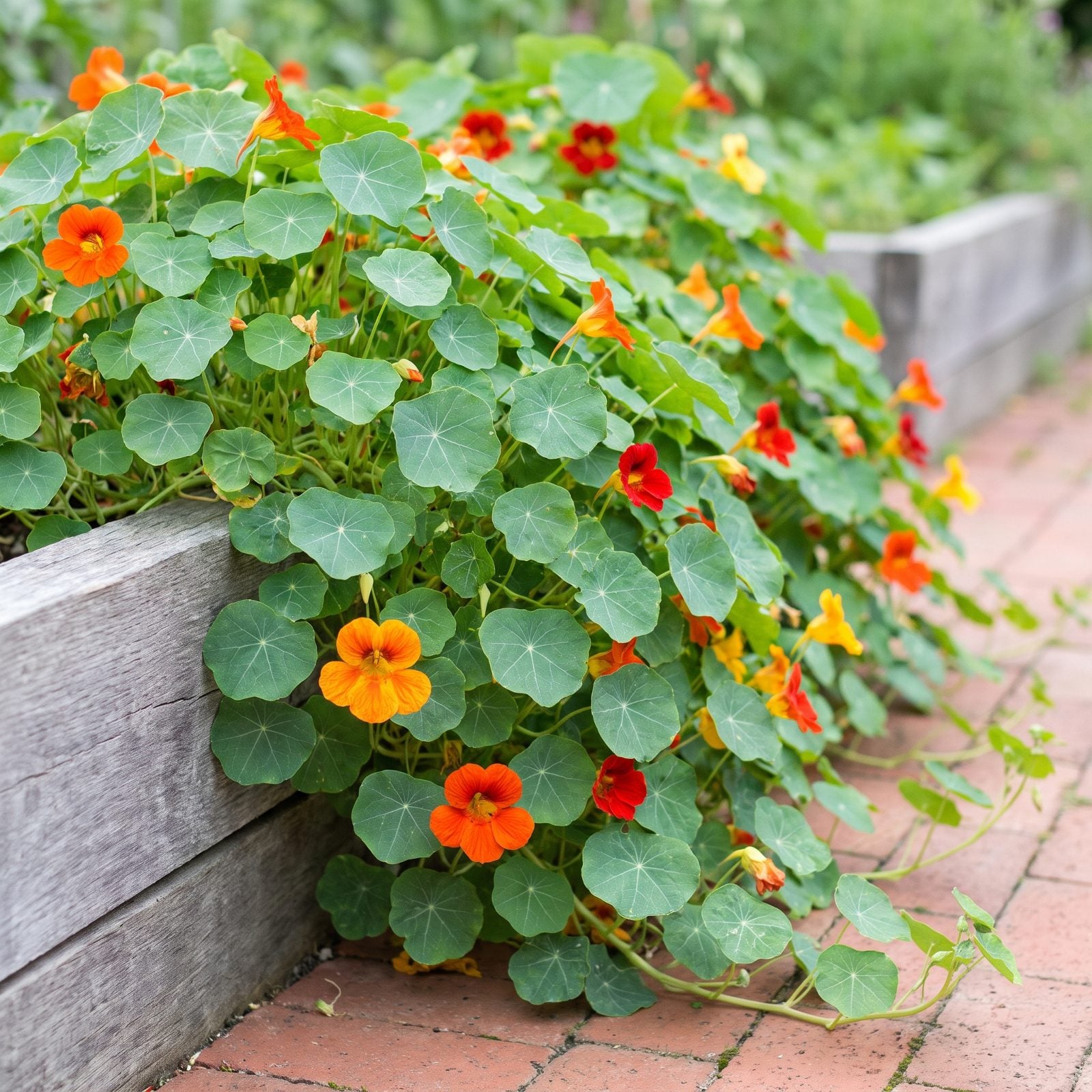
Starve them. That’s the trick with nasturtiums, and plenty of gardeners get it wrong for years.
Give them rich soil and water and you get a mountain of those pretty round leaves and barely a flower. Plant them in poor, dry dirt and suddenly they bloom like they mean it. The whole plant is edible, peppery like watercress, flowers and leaves both, and the fat seeds can be pickled like capers.
They trail, they climb, they tumble over edges and soften the hard line of a raised bed. One packet goes a long way.
30. Vanilla-Scented Heliotrope
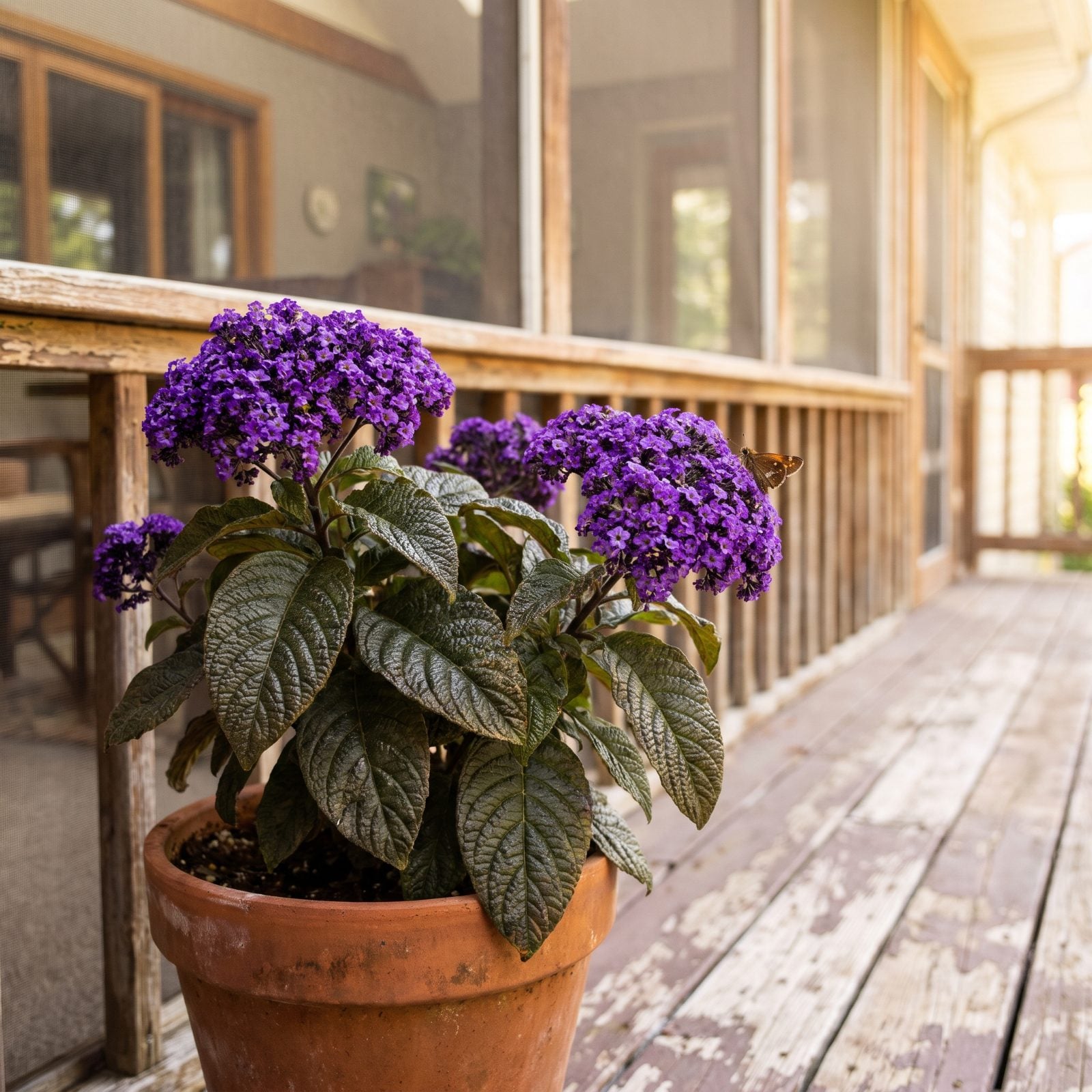
Lean in and heliotrope smells like warm vanilla, sometimes cherry pie, which is why Victorian gardeners were obsessed with it. The scent carries on still, warm evenings.
It’s tender, so most of us grow it as an annual or drag a pot indoors over winter. Container life suits it fine. Keep it near a chair or a doorway, because the whole payoff is the fragrance — a heliotrope stuck in the back of a border is a wasted plant.
29. Patchwork Clusters of Sweet William
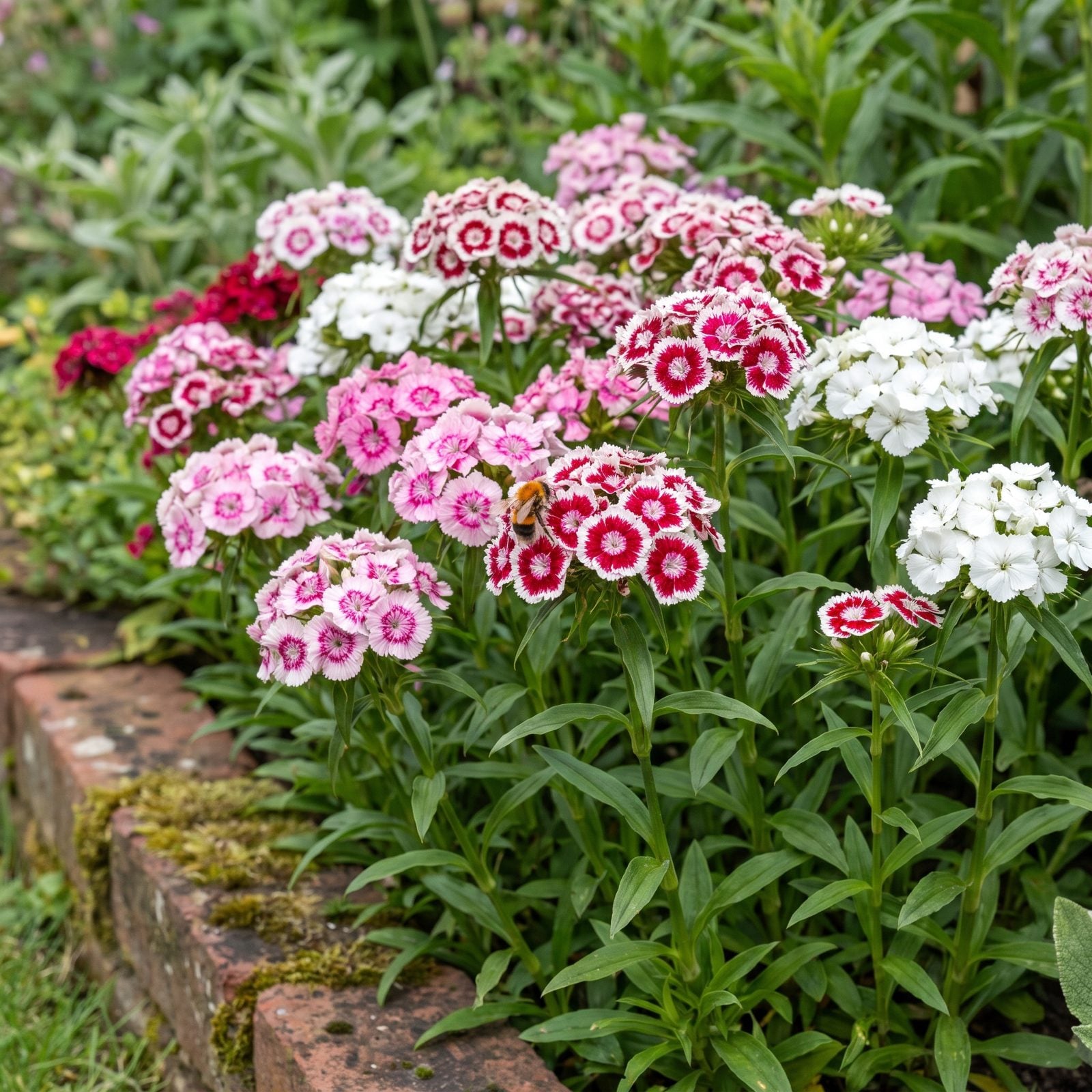
No two flower heads look quite the same. Sweet William throws rings, eyes, and lacing in crimson, pink, and white, which is where that patchwork-quilt effect comes from. It reads like someone hand-painted each cluster.
It’s a short-lived perennial that mostly behaves like a biennial: leaves one year, a mass of bloom the next, then it tapers off. The upside is it self-sows and keeps the patch going on its own. It also smells faintly of clove, a trait shared with all the dianthus clan.
28. Heart-Shaped Bleeding Heart Blooms
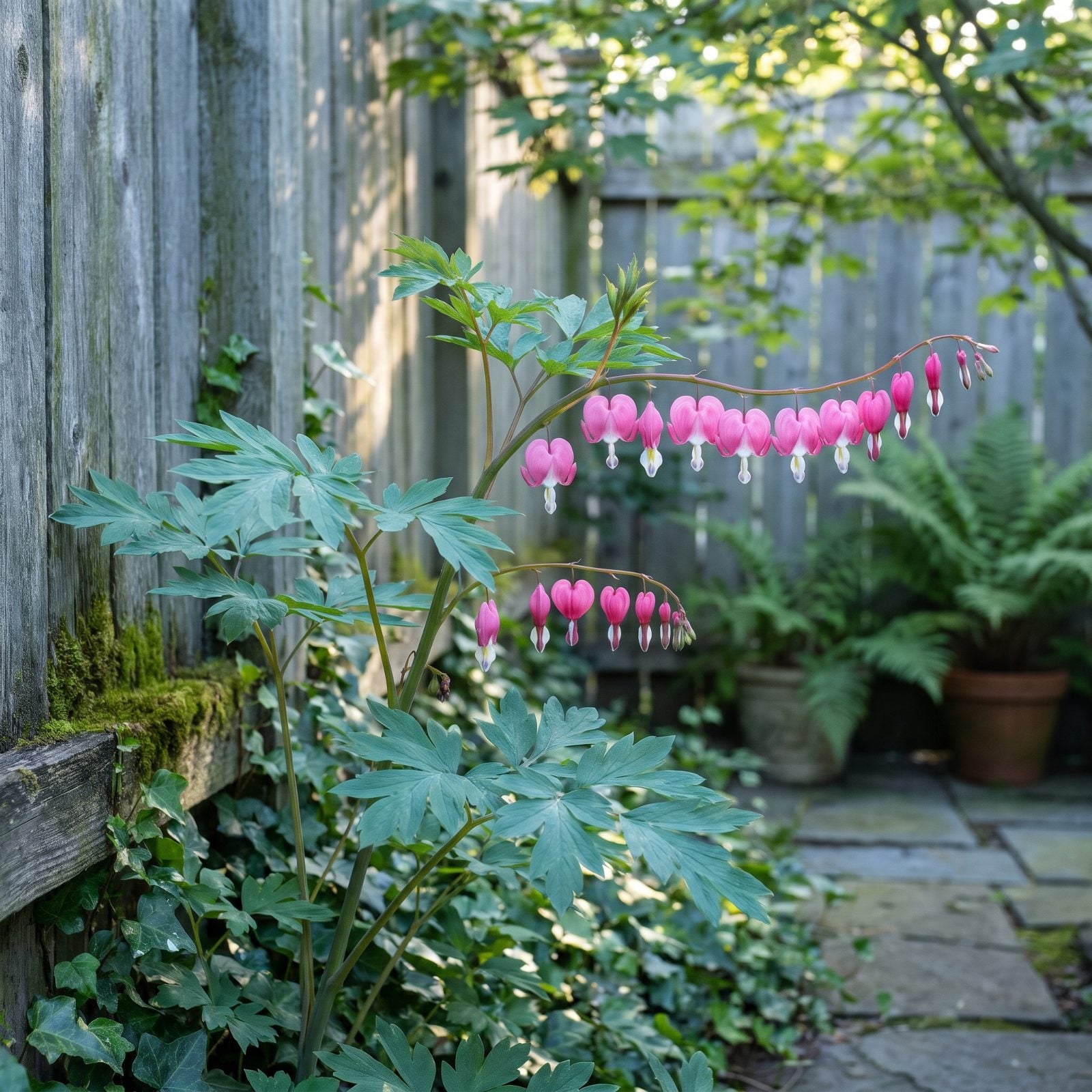
Pink hearts hung in a row on an arching stem, each with a little white drop falling out the bottom. Bleeding heart (now Lamprocapnos) is the shade-garden heirloom that stops people mid-walk every single spring.
Then it vanishes. By midsummer heat the whole plant yellows and dies back to the ground, which alarms first-time growers who think they killed it. You didn’t. It’s just resting, and it comes back faithfully for decades. Plant something leafy nearby to fill the gap it leaves.
Give it dappled shade and damp soil and it will outlive the person who planted it.
27. Lily of the Valley Carpeting the Shade Beneath Old Trees
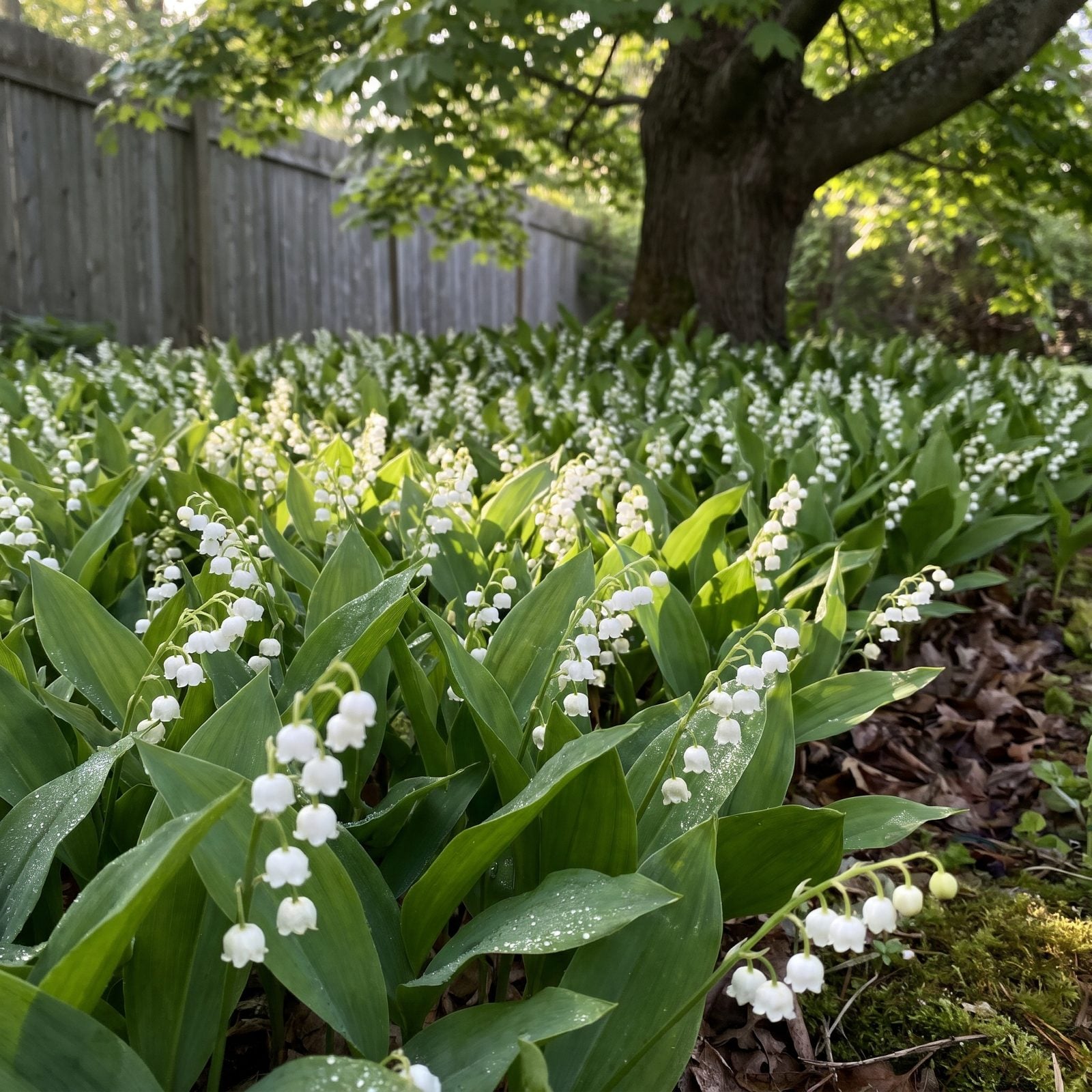
The smell gets you first. One sprig of lily of the valley can scent a whole room, which is exactly why it ended up in so many bridal bouquets and so many grandmothers’ shady corners.
Nobody mentions the catch when they hand you a few pips. It spreads, relentlessly. Plant it where you can let it run, under trees or along a north-facing fence, and never where it’ll crowd something precious. One more thing, and it matters: the whole plant is toxic, berries included, so watch for curious pets and small kids.
26. Tiny Blue Forget-Me-Nots Self-Sowing Everywhere
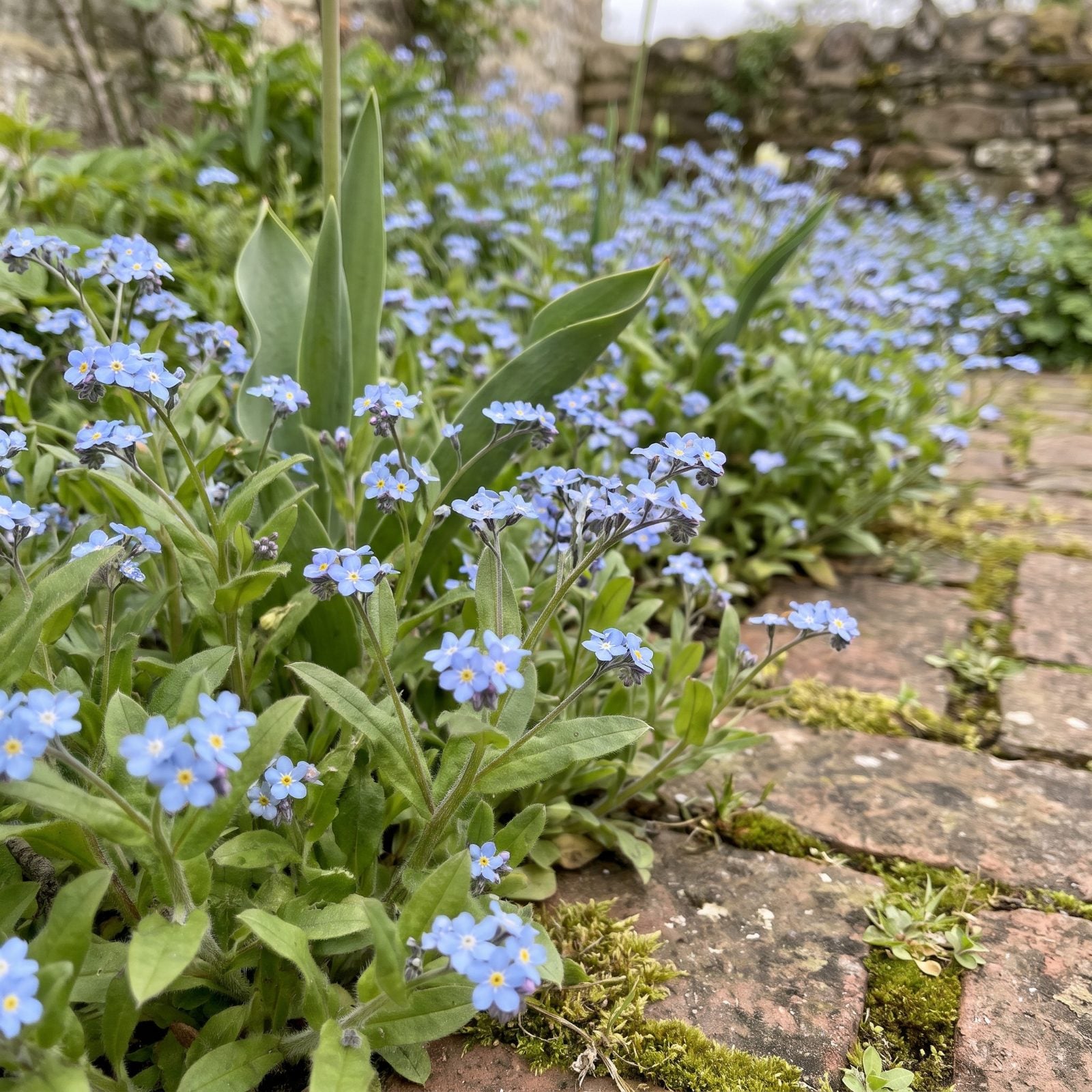
Forget-me-nots do the one thing most gardeners secretly want: they fill gaps on their own. Scatter seed once and that watery blue haze turns up in cracks and corners for years, always where the tulips and daffodils are fading and the bed looks a little tired.
They’re biennial. Flower in year two, die back, reseed. It’s tempting to pull them thinking they’ve finished for good, but they haven’t. Leave a few to drop seed and you’ll never buy them again.
25. Fragrant Sweet Violets Tucked Into Shady Corners
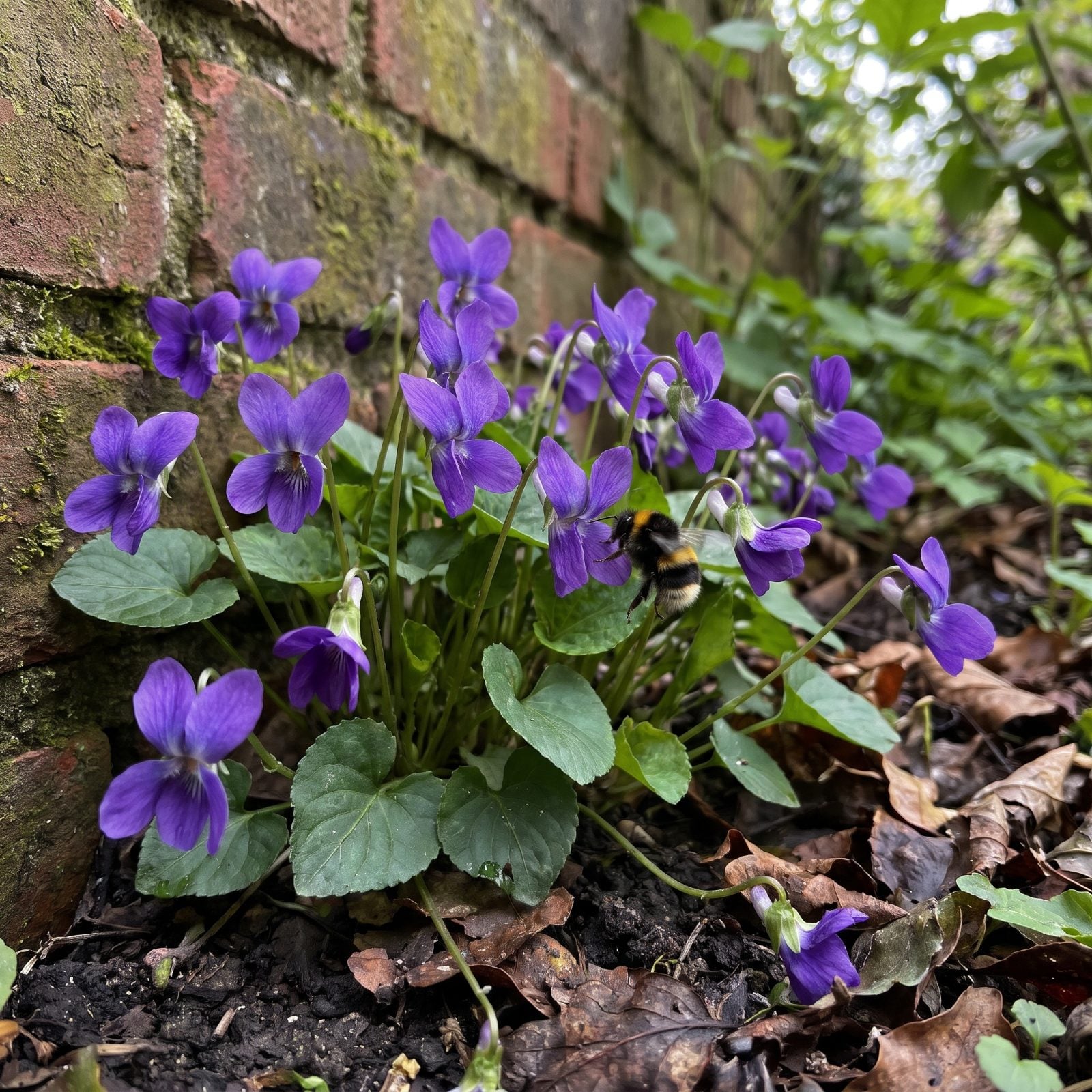
Sweet violets are the quiet workhorses of the shade. They bloom early, they smell like old-fashioned perfume (because they literally flavored it), and they ask for almost nothing but a bit of damp shade.
People mix them up with the pretty-but-scentless wild violets that colonize lawns. If fragrance is what you’re after, hunt down Viola odorata specifically. Leaves and flowers are edible too, candied onto cakes the way Victorian cooks did it, and a handful tossed into a salad looks far fancier than the effort it took.
24. Velvety-Faced Pansies That Shrug Off Frost
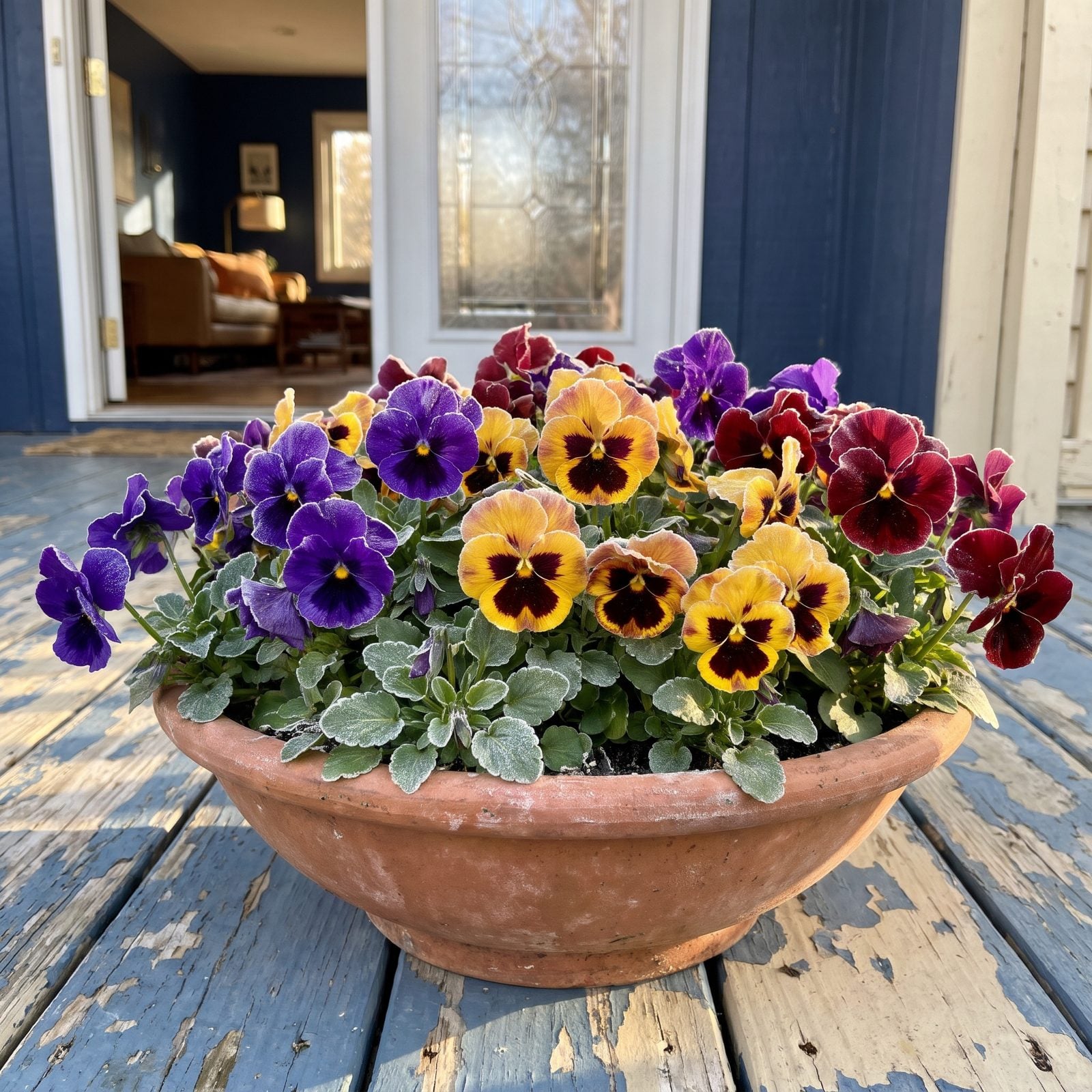
Nothing else looks you in the eye the way a pansy does. Those dark central blotches read like little faces, which is precisely why they charmed their way into every cottage windowbox a century ago.
Here’s what people forget: pansies are cool-weather plants. They sulk in summer heat and shine in the shoulder seasons, blooming right through a light frost and sometimes under snow. Plant them in fall for color when everything else has quit, then again in early spring. Deadhead the spent ones and they’ll keep throwing flowers far longer than you’d expect.
23. Nodding Columbine for the Woodland Edge
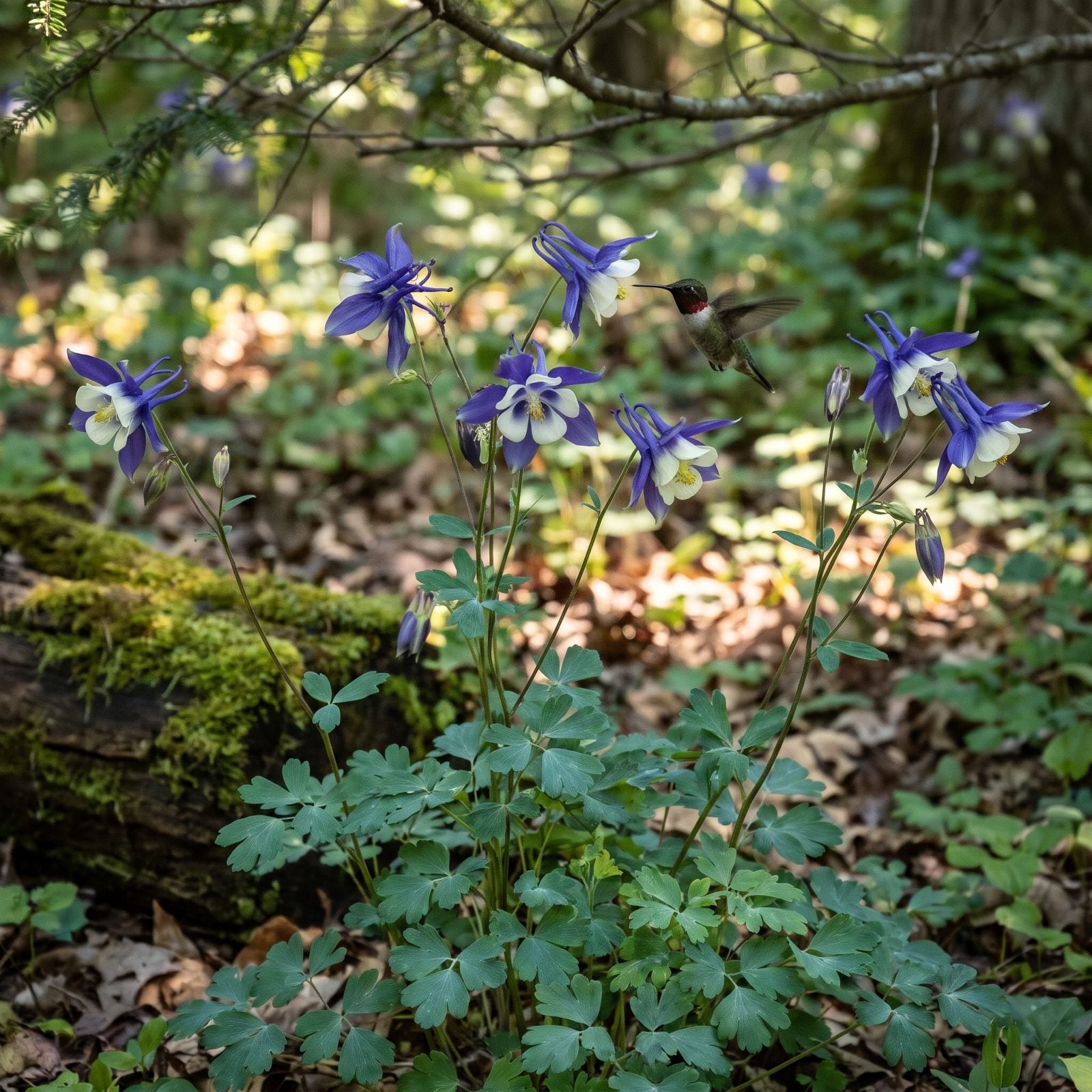
Look closely at a columbine and you’ll see why nobody can quite describe it. Those backward-pointing spurs make the flower look like a cluster of doves, which is where the old name comes from.
They thrive in the in-between places other plants hate: the edge of the woods, the dry shade under a shrub, that spot that’s sunny in spring and gloomy by July. Short-lived perennials, so let them set seed. You’ll get surprise crosses in colors you never planted, and honestly, those volunteers are usually the prettiest ones.
22. Billowing Drifts of Fragrant Garden Phlox
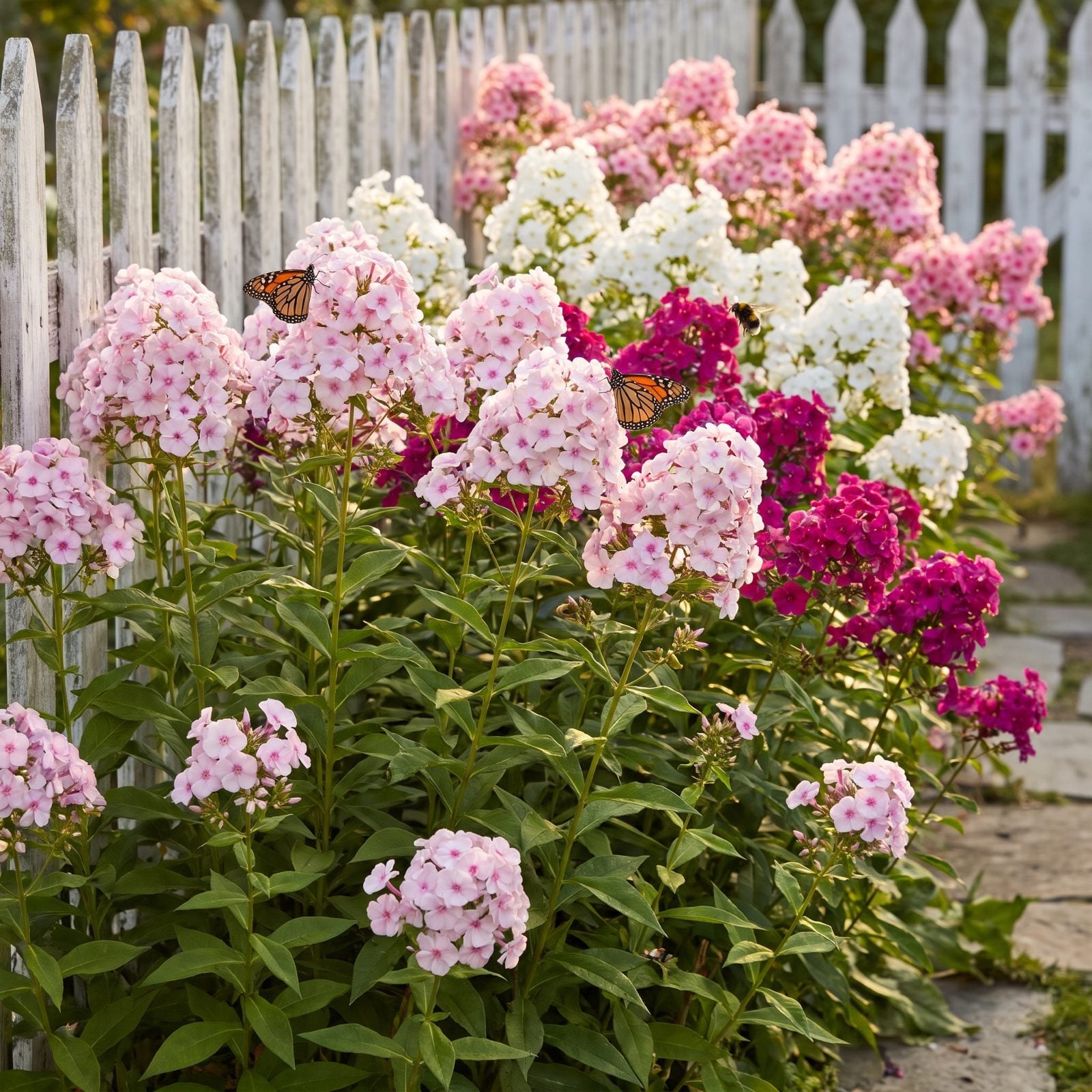
Garden phlox is the scent of a hot July evening. Those fat flower heads pump out a sweet, peppery fragrance that pulls in every butterfly and moth in the neighborhood right as the light goes gold.
The old varieties earned a bad reputation for mildew, fairly. If the leaves go gray and crispy by August, that’s it, you’re done. The fix is simple, though. Give plants room to breathe, water the soil rather than the foliage, and choose the newer resistant types like ‘David’ if you’ve struggled before.
Few perennials earn their space the way a happy clump of phlox does, blooming for weeks when the rest of the border is catching its breath.
21. Heirloom Chrysanthemums in Deep Autumn Colors
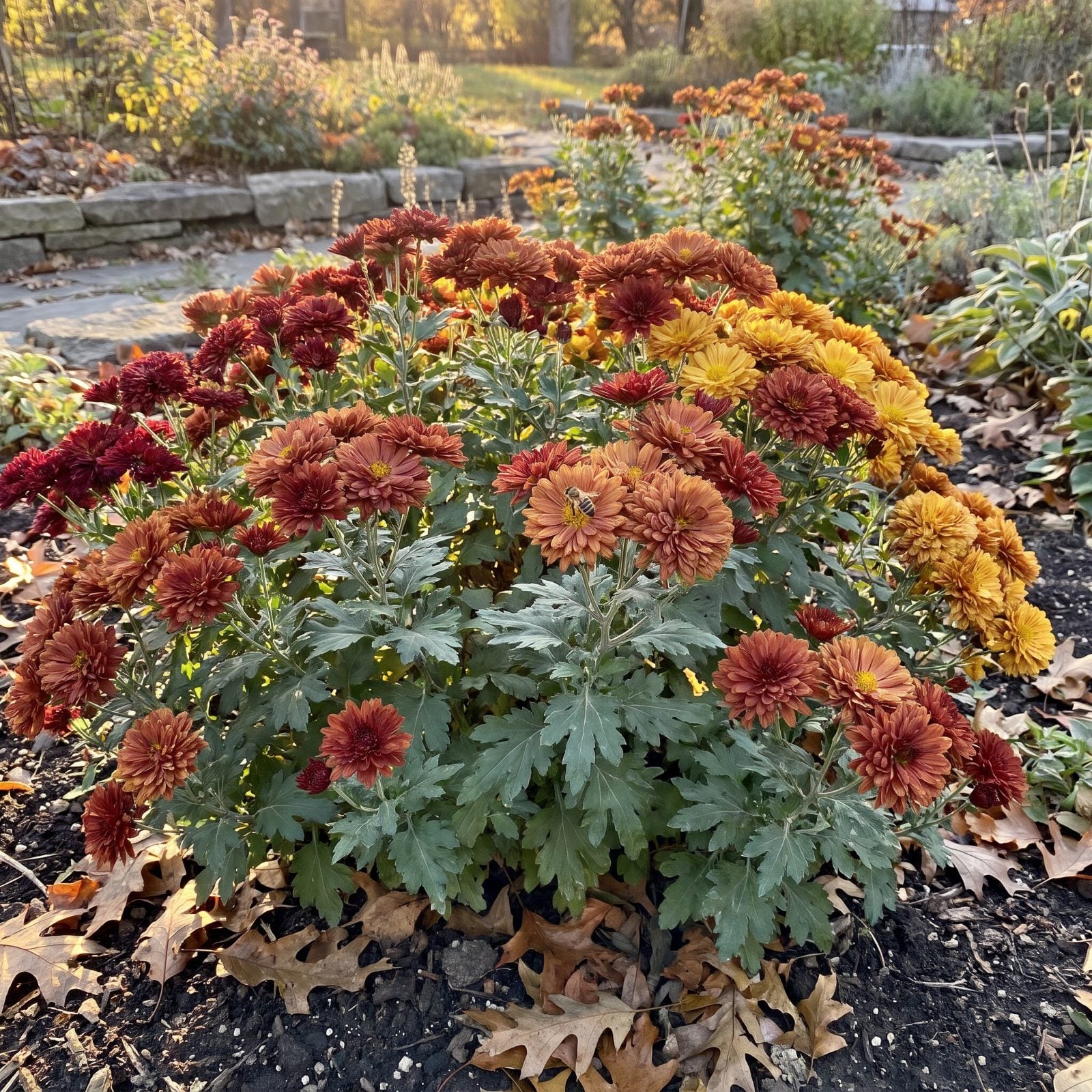
Forget the supermarket mums you buy in bloom and toss after Halloween. The old heirloom chrysanthemums are tough perennials that come back for decades, throwing russet and bronze flowers long after the first frost has leveled everything else.
The trick nobody tells you is to pinch them. Cut the stems back by a third around early summer, maybe twice before July, and instead of a leggy sprawl you get a tight dome covered in buds. Skip the pinching and you’ll wonder why your mums flop. I wondered for years.
20. Dinner-Plate Dahlias the Size of a Serving Platter
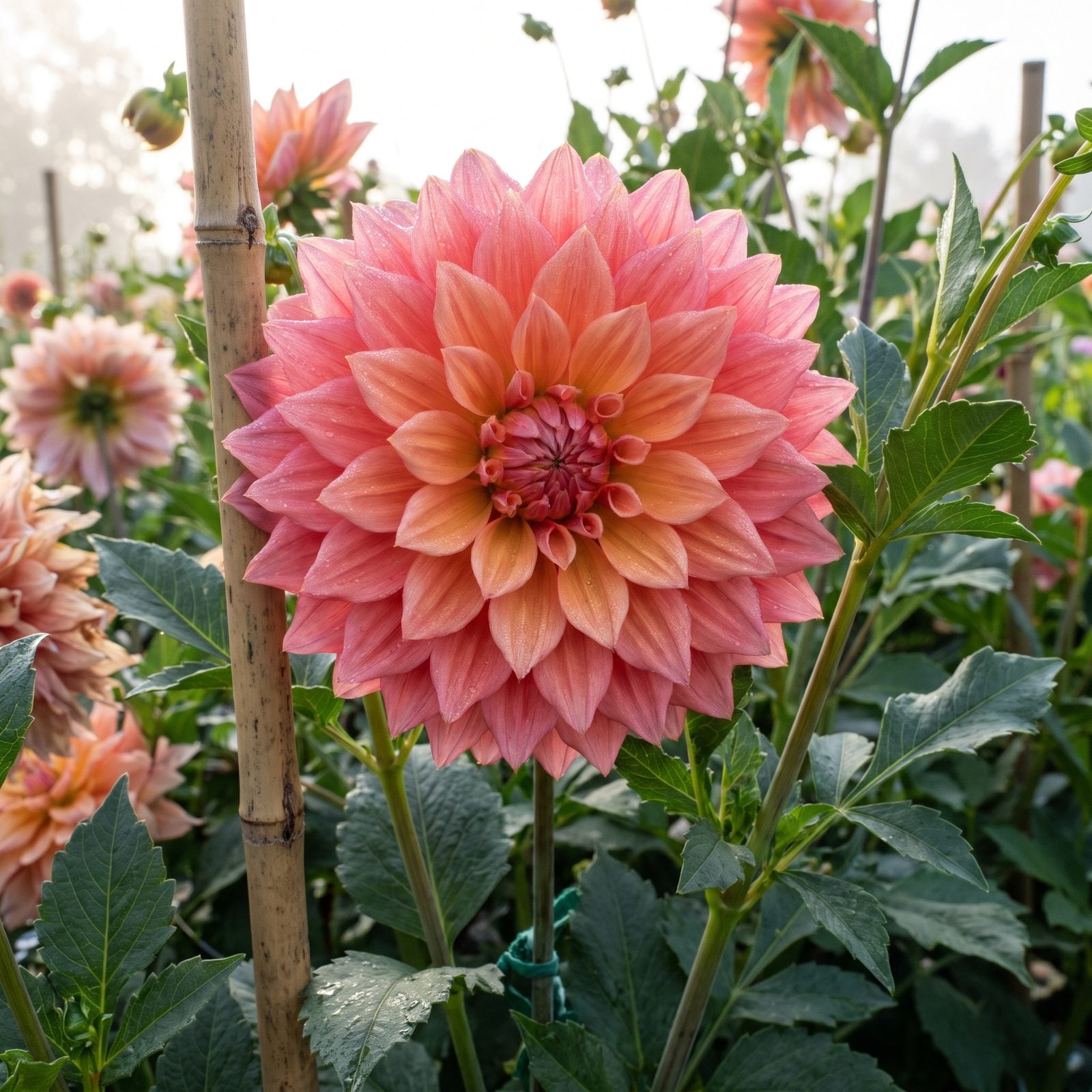
Some dahlia blooms genuinely reach the width of a dinner plate. Heavy enough to nod the stem, the kind of flower that stops people mid-conversation.
They’re greedy for sun, water, and feeding, and the plants get top-heavy, so stake them early, before they need it. In most of the country the tubers won’t survive a hard winter in the ground. You dig them after the first frost blackens the foliage, let them cure, and store them somewhere cool and dark until spring. Sounds fussy. It’s one afternoon a year for the showiest flowers you’ll grow.
19. Swordlike Spikes of Old-Fashioned Gladiolus
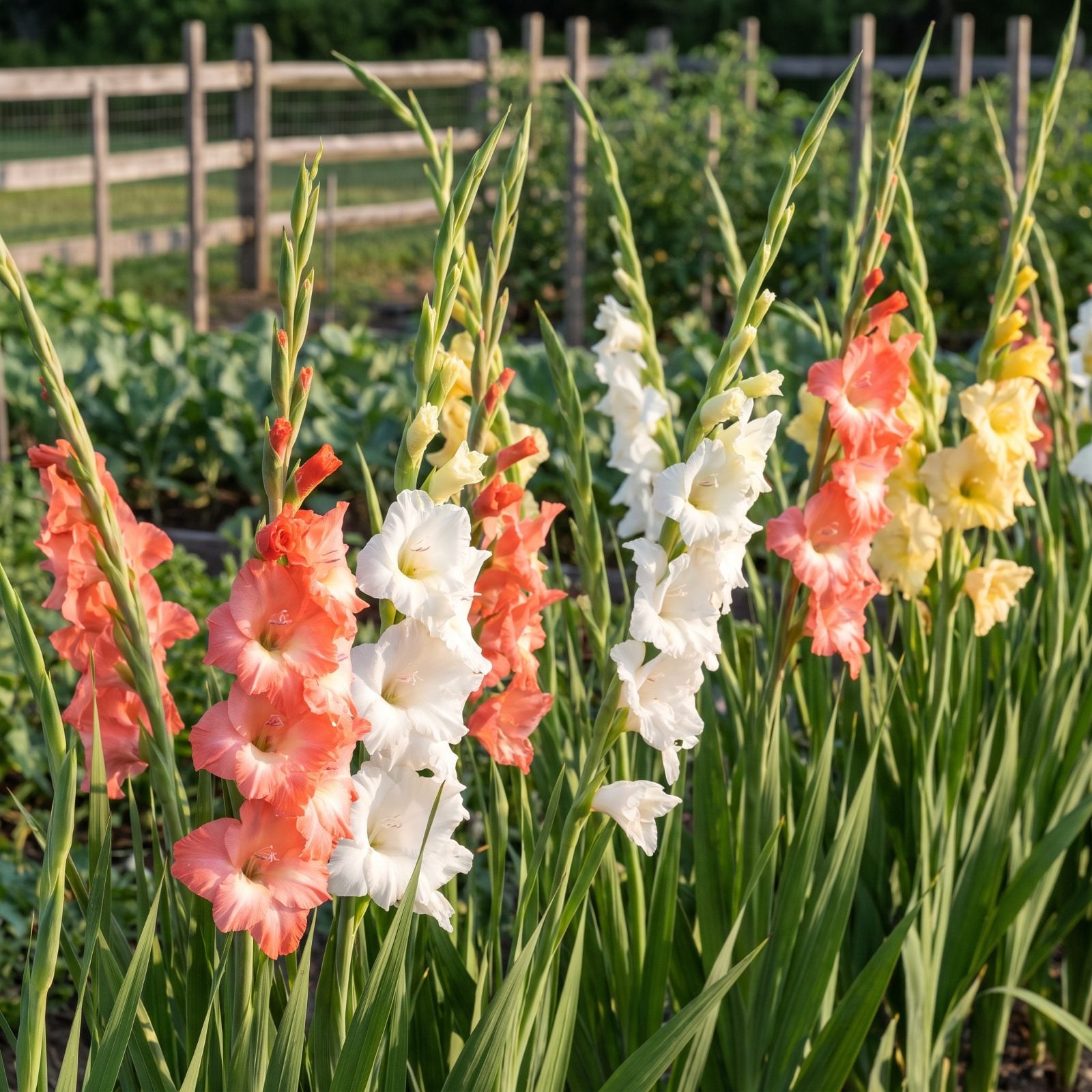
Gladiolus fell out of fashion for being a bit funeral-parlor, and that’s a shame. Those tall ribboned spikes do something almost no other flower manages: they add height and drama to a flat border, and they make spectacular cut flowers.
Plant the corms in batches a couple of weeks apart from spring through early summer and you’ll have spikes opening all season instead of one brief flush. Cut them when the bottom florets just show color. They’ll keep opening up the stem in the vase for well over a week.
18. Tropical-Looking Cannas for Big Backyard Drama
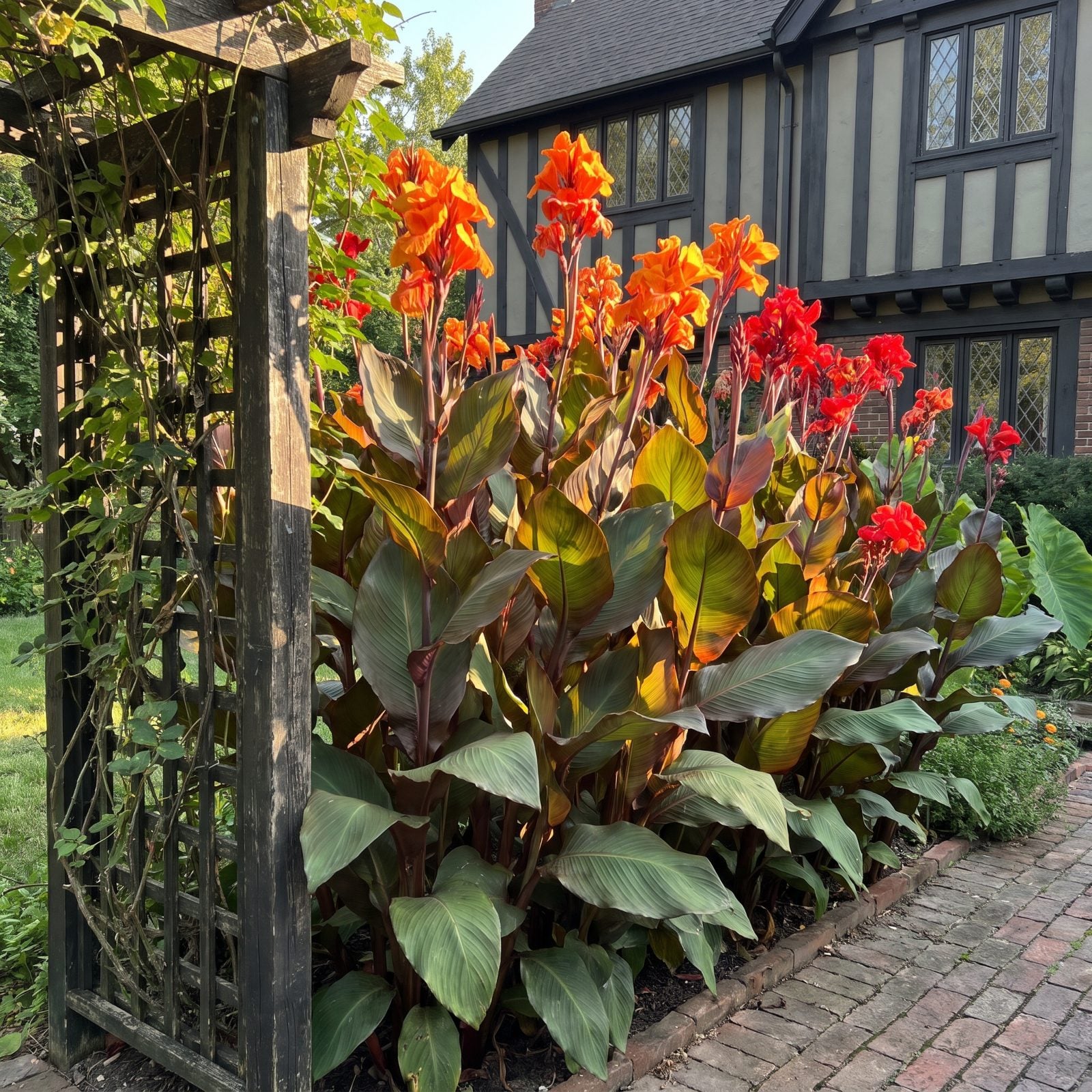
Cannas hand you the tropics in a Midwest backyard, which is a genuinely odd thing for a plant your grandmother probably grew. Those banana-leaf paddles and hot flame-colored flowers can shoot up to the height of a tall man in a single season.
They grow from rhizomes, not true bulbs, and they multiply fast. In cold zones you lift and store them like dahlias; in warmer regions they just keep clumping until you divide them. Grow one in a big container by a sunny patio and you’ve got instant structure where everything else is knee-high. Full sun, plenty of water. Stingy treatment shows immediately.
17. Ruffled Bearded Irises
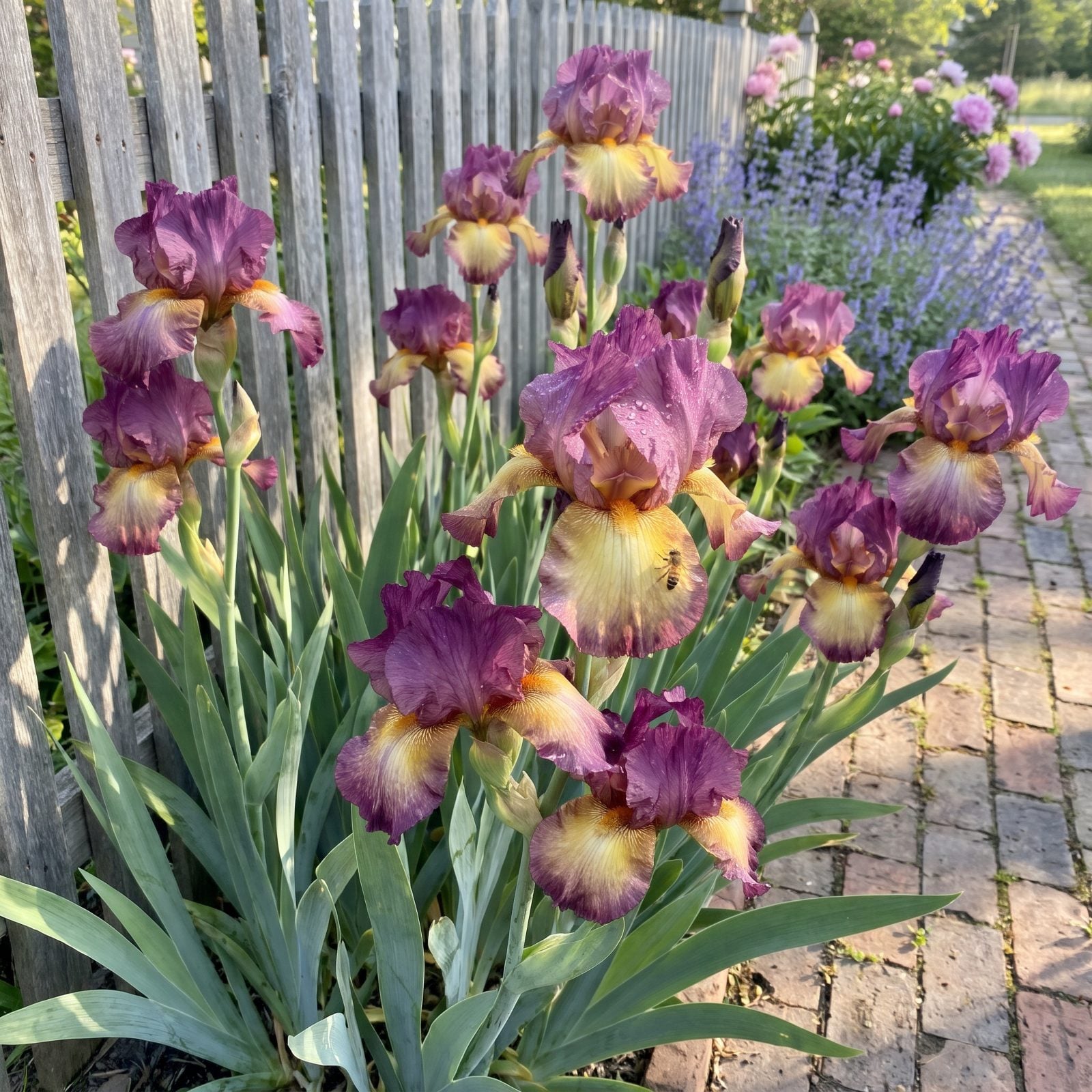
Nobody warns you that bearded irises are basically free plants. Every three or four years you dig up a clump, snap the rhizomes apart like breaking a Kit Kat, and suddenly you’ve got a dozen. That’s how they ended up in every grandmother’s border, traveling fence to fence over coffee.
Here’s the trick most people miss. Plant the rhizome shallow, almost sitting on top of the soil, because bury it and it sulks, then rots. These want sun on their backs like a cat on a windowsill.
16. Spotted Orange Tiger Lilies
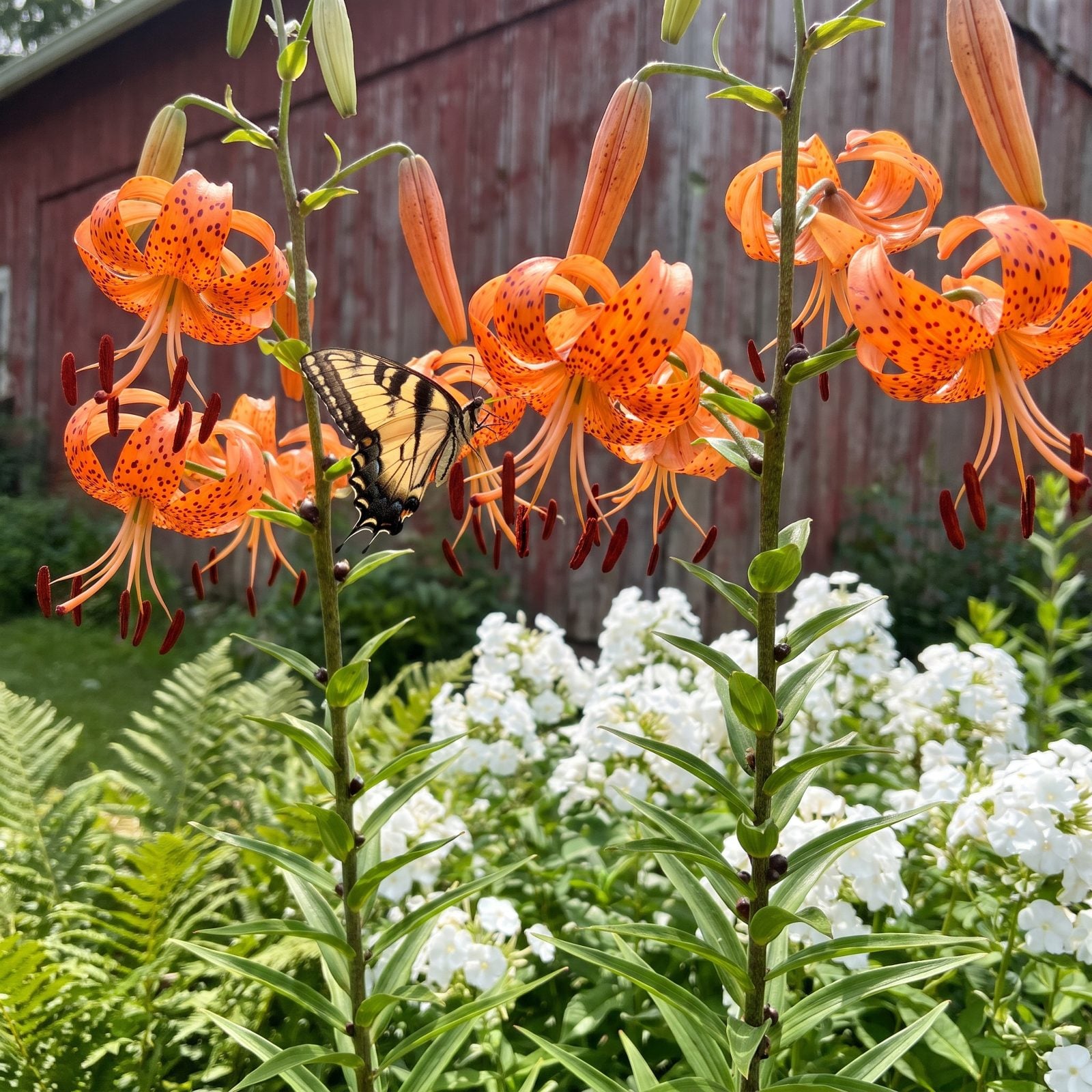
Tiger lilies spread by dropping little black bulbils from the joints where leaf meets stem, and each one is a baby plant. Leave them be and you’ll have a drift in a few seasons. That’s exactly how a single pass-along bulb became your great-aunt’s whole back fence.
They’re tough to the point of stubborn. Clay soil, neglect, bad weather, doesn’t matter. One real warning, though: they carry a virus that doesn’t hurt them but can hop to fussier lilies nearby, so keep a little distance from your prized hybrids and everybody stays happy.
15. Papery Oriental Poppies
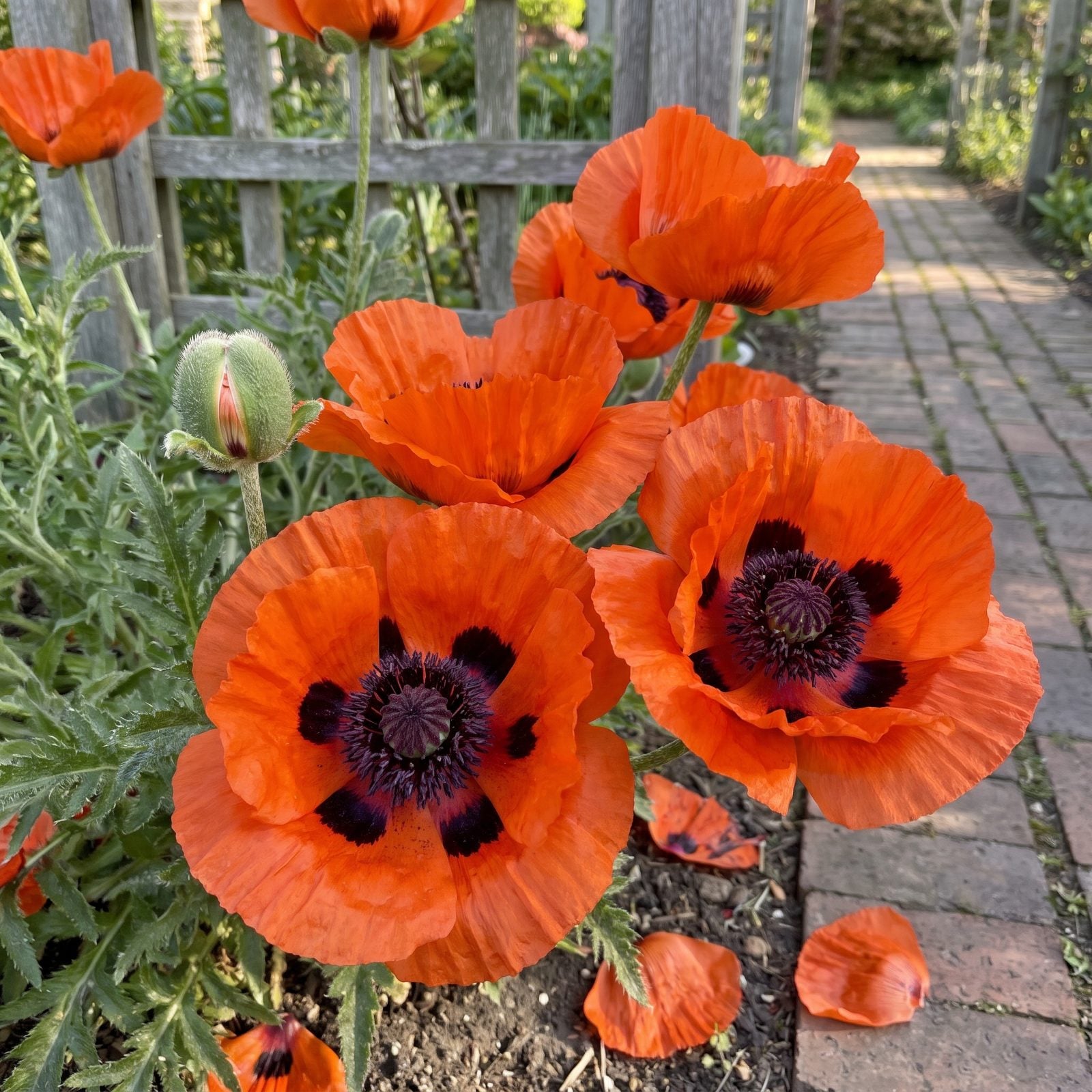
Oriental poppies bloom hard, then they vanish. By midsummer the foliage yellows and dies back completely, leaving a bare patch where all that fire used to be. Gardeners who don’t know this panic and dig them up. Don’t. They’re just napping, and they return every spring.
Plant something bushy nearby to fill the gap. We learned that the hard way after assuming we’d killed ours two Junes running.
14. Cup-and-Saucer Canterbury Bells
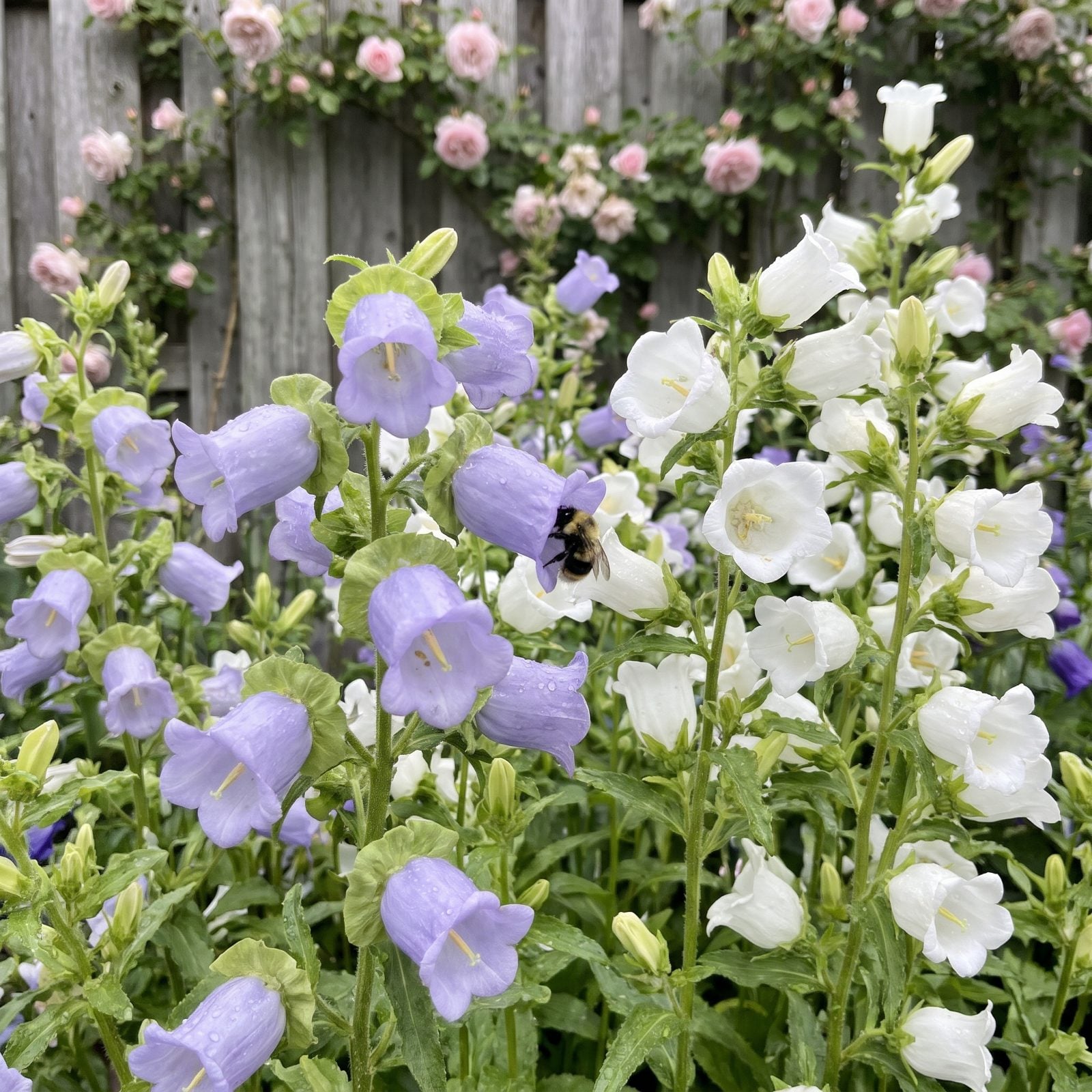
These biennials play a slow game. You plant seed one year, get a tidy rosette of leaves, and the flowers won’t show until the next. In a world of instant everything, that patience is the whole charm.
The old name comes from the bells of pilgrims walking to Canterbury. The “cup-and-saucer” types are the showiest, with that frilled collar circling each bell.
13. Papery Strawflowers for Dried Bouquets
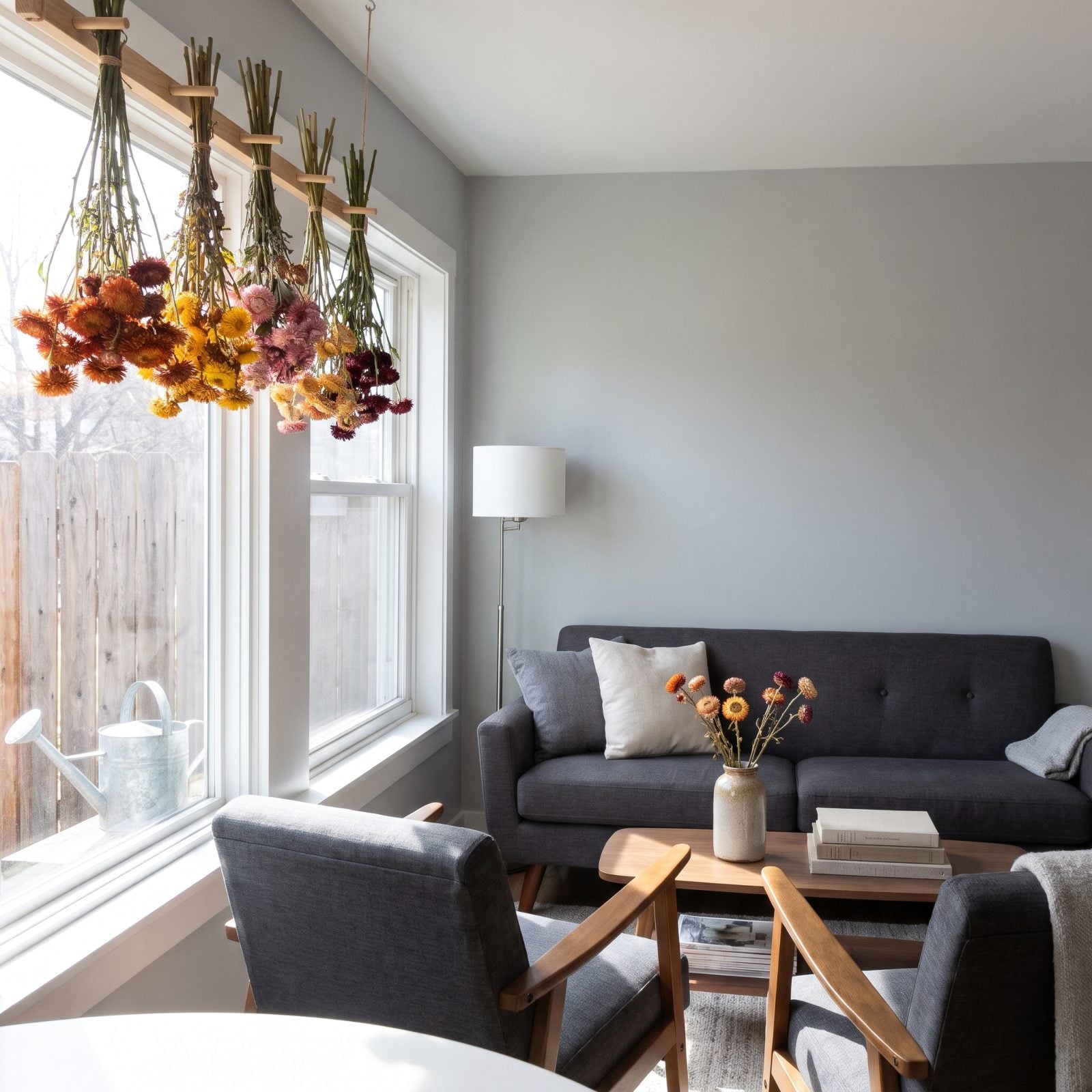
Touch a strawflower and you’ll swear it’s already dried. That papery crackle is real, even on the living plant, which is exactly why it became the queen of the winter mantelpiece back when nobody bought cut flowers in January.
Cut them just before the centers fully open, hang them upside down from a rod by a bright window, and they hold their color for years. No special equipment. Just string and patience.
12. Velvety Cockscomb With Crested Blooms
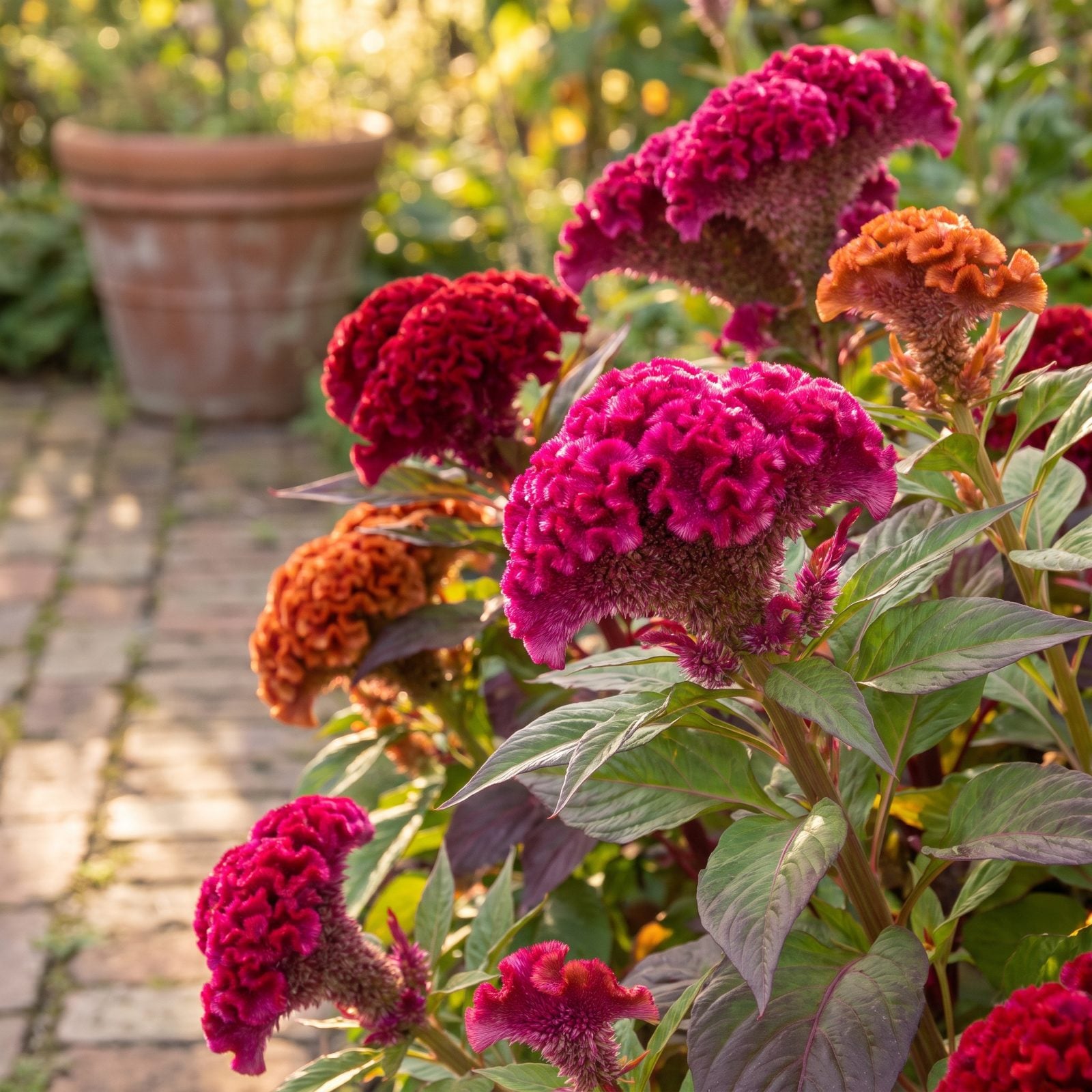
Cockscomb looks like something dredged up from the bottom of the sea, which is probably why kids love it and serious gardeners pretend not to. The crested types fold and ripple like coral or, yes, a rooster’s comb. The name isn’t poetic license.
It thrives on heat and poor soil, sulks in rich damp ground, and dries to hold that wild velvet color almost indefinitely. A grandmother thing that reads shockingly modern now.
11. Evening-Scented Flowering Tobacco
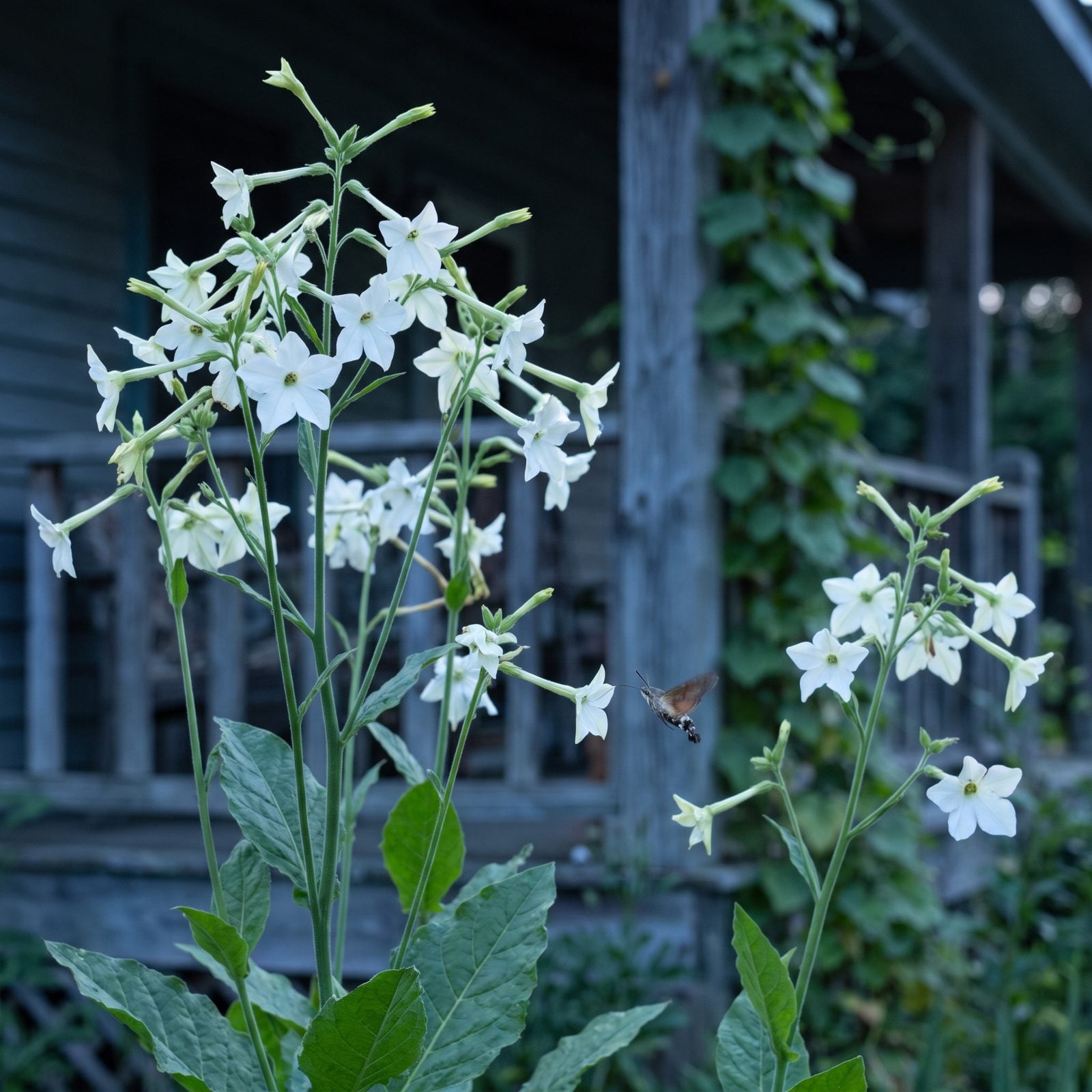
The old white-flowered flowering tobacco barely registers by day, blooms hanging limp and almost sad. Then the sun drops and the whole plant wakes up, flinging a jasmine-sweet scent across the yard that pulls in night moths with tongues like party blowers.
Breeders traded that perfume for showy daytime color in the compact modern versions, and lost the point entirely. If you want the scent, hunt down the old tall white species, Nicotiana alata or sylvestris. I will die on this hill.
10. Moonflowers Unfurling After Sunset
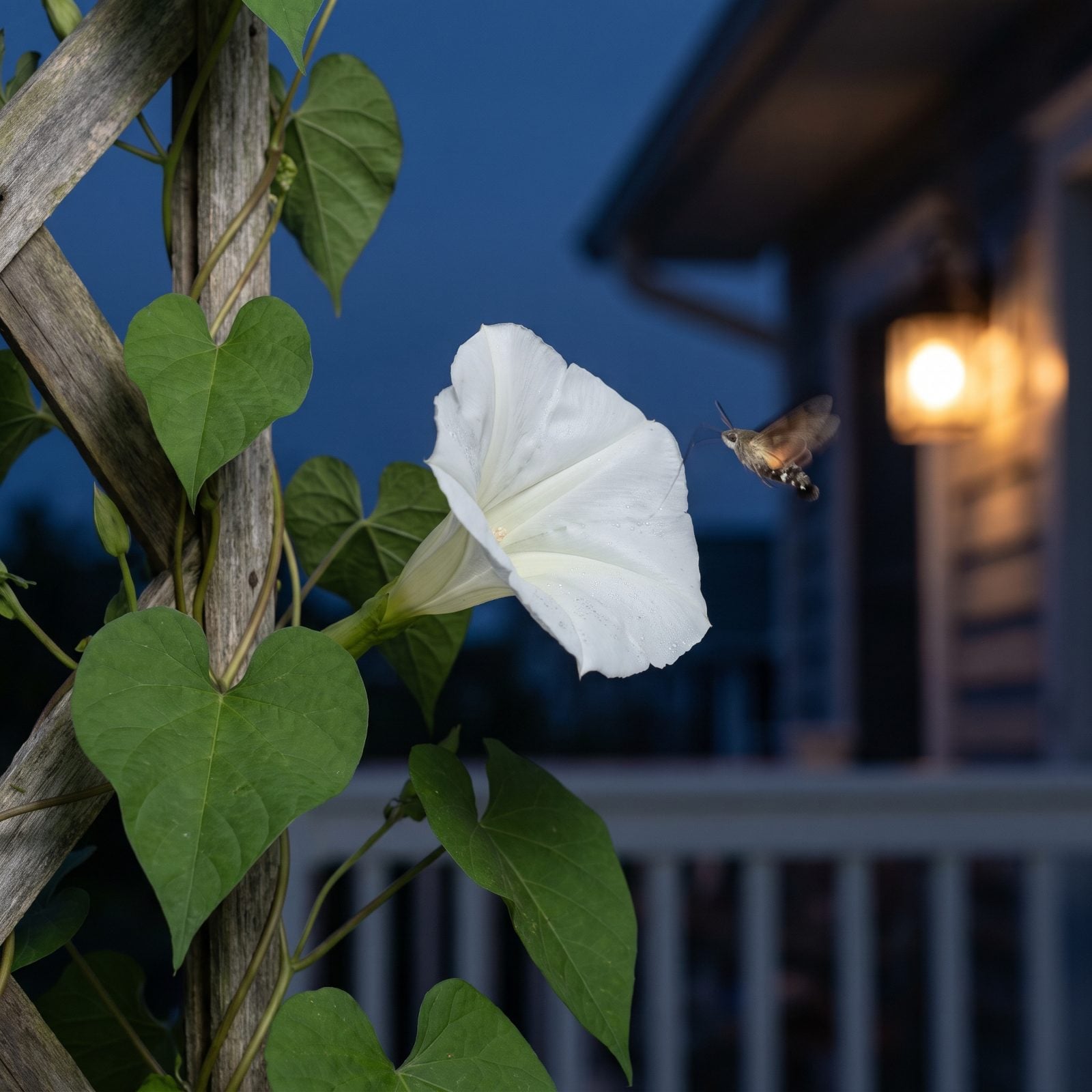
Watching a moonflower open is the closest thing a garden offers to live theater. Around dusk the twisted white bud spirals loose and unfurls into a dinner-plate trumpet in a matter of minutes. People used to pull porch chairs up and just watch.
Soak the hard seeds overnight or nick them with a file before planting, or they’ll sit in the soil doing nothing while you blame yourself.
9. Morning Glories Climbing the Porch
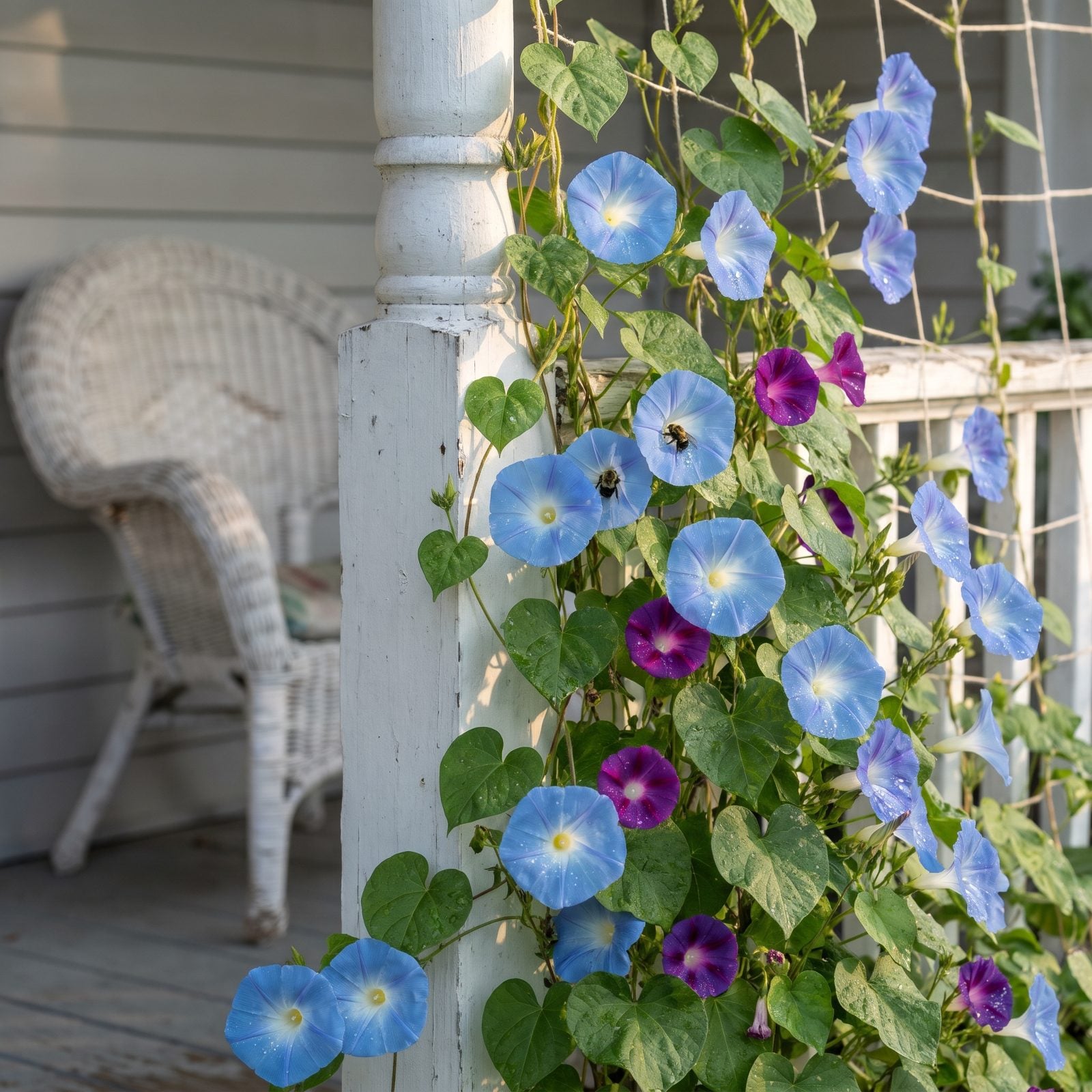
That electric heavenly blue only lasts until noon. By afternoon each flower collapses into a damp twist, done for good, replaced by a fresh crop the next dawn. A whole flower that lives one morning. There’s a lesson in there somewhere.
They reseed with gusto, sometimes too much gusto, so give them a post or trellis and keep an eye on where they wander. A single packet of ‘Heavenly Blue’ seed will smother a porch by August.
8. Citrus-Scented Mock Orange
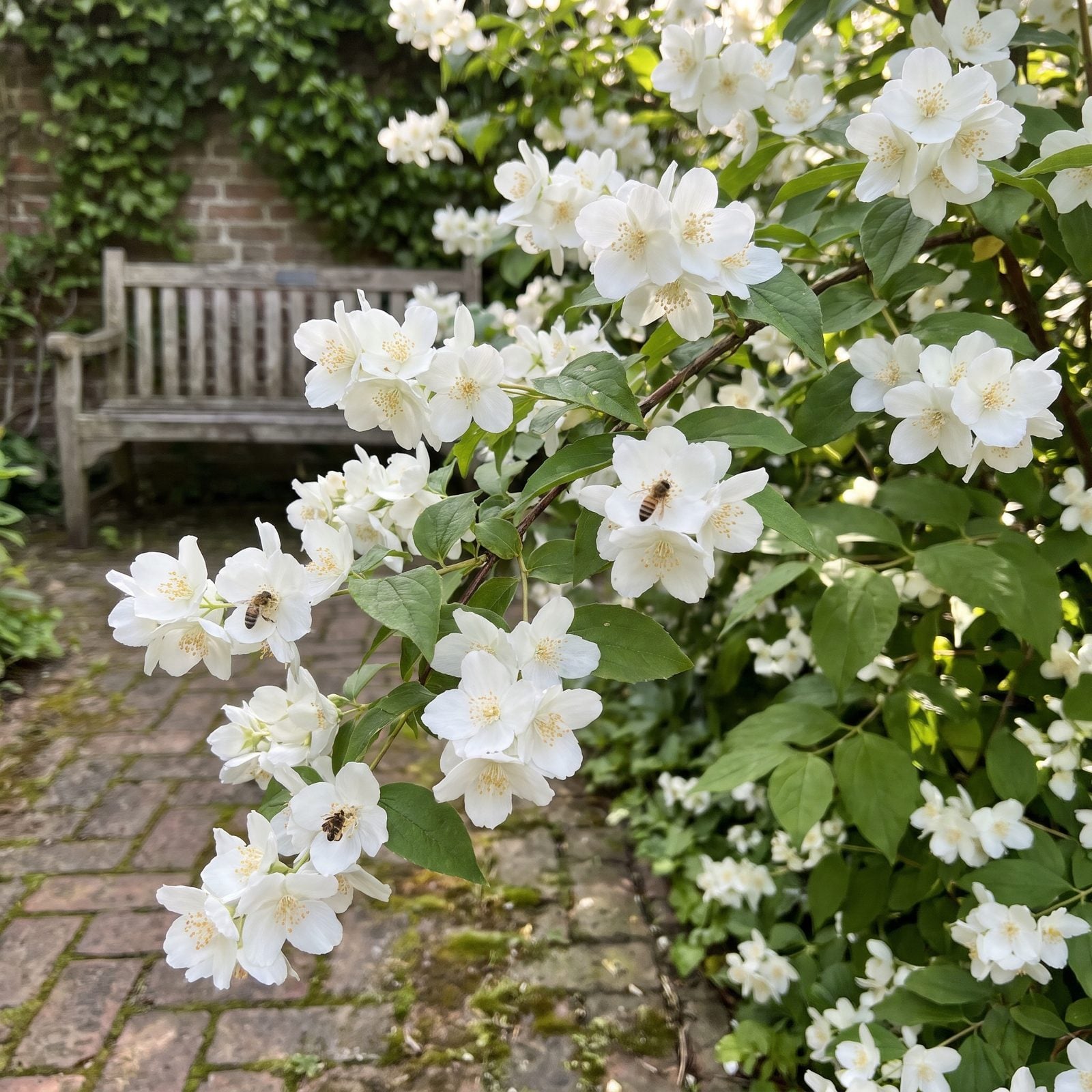
You smell mock orange before you see it. The scent is pure orange blossom, which is odd, because the shrub is no relation to any citrus at all. Walk past one in late spring and your head turns on reflex.
It earns its keep for roughly two weeks a year and spends the other fifty looking like a plain green bush. Worth every day of the wait. Prune right after flowering, never in spring, or you’ll cut off the whole show.
7. Coral-Red Flowering Quince, the First Thing to Bloom
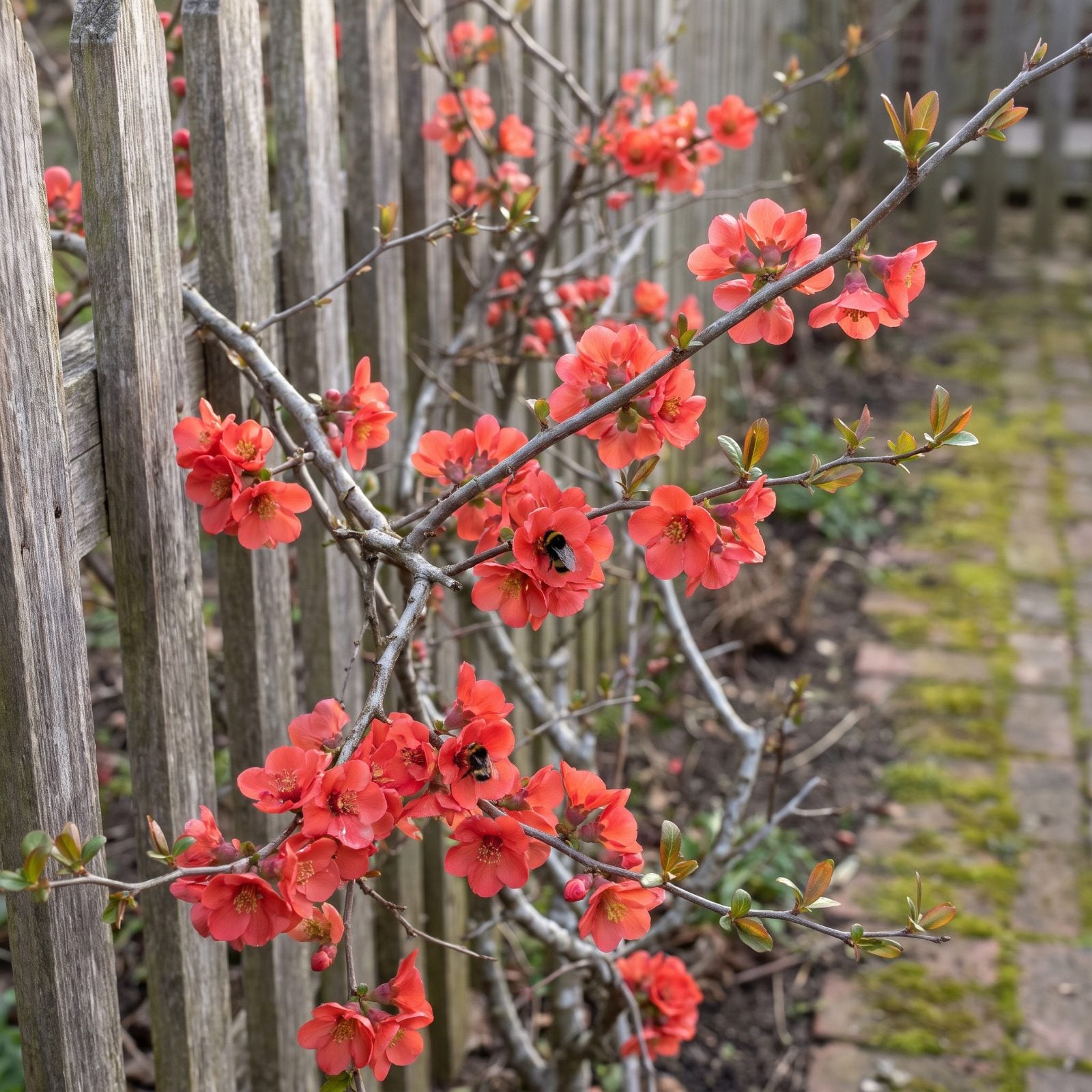
Nothing else is awake yet and this thing is already on fire. Flowering quince blooms on naked, thorny branches in late winter, coral-red against gray sky, weeks before the forsythia gets its act together. That’s its whole case.
It asks for almost nothing — full sun, average soil, and a hard prune after flowering if you want it tidy. The thorns are real, though, so don’t plant it where you’ll be reaching past it to grab the hose.
6. Snowball Viburnum Hung With White Globes
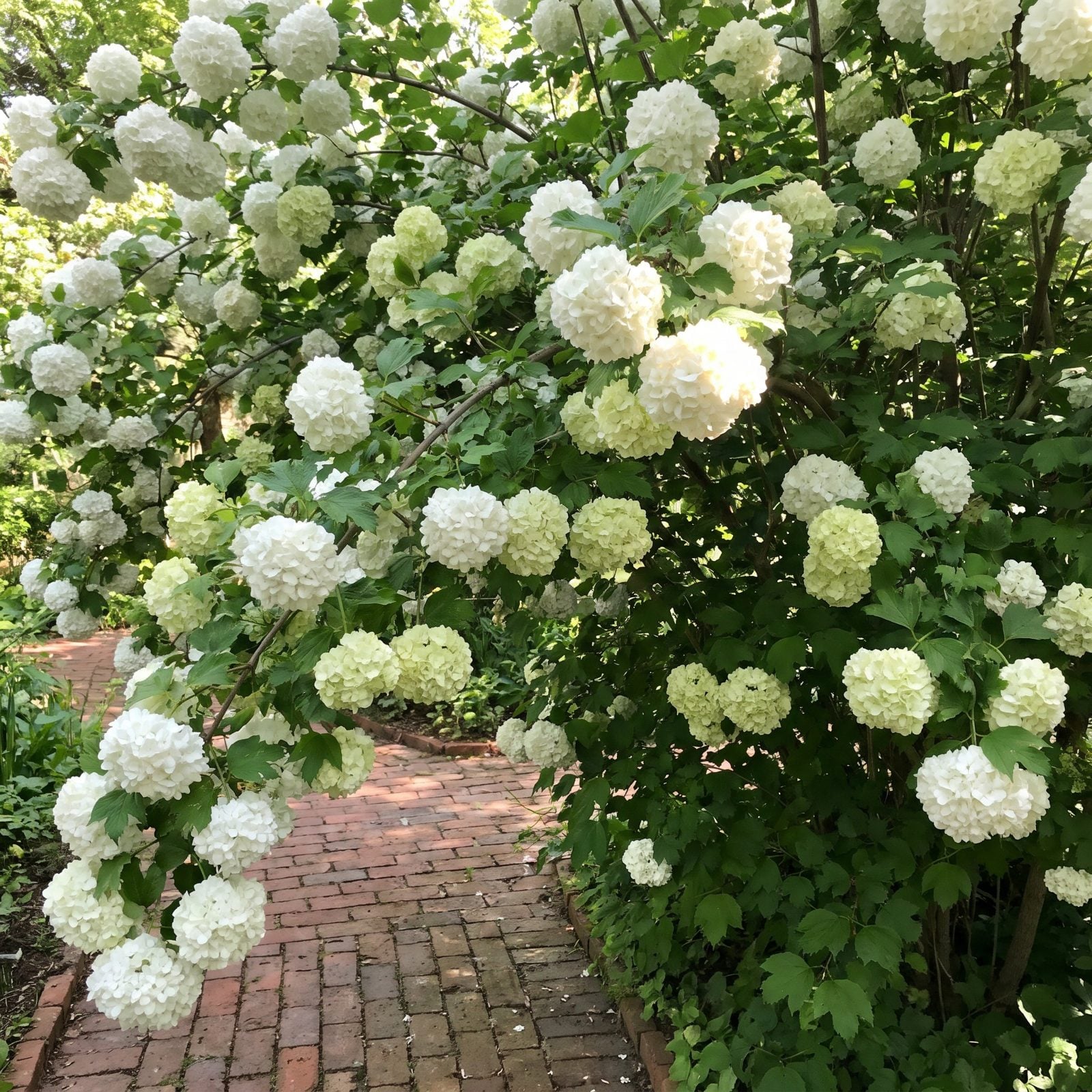
The blooms start green, turn white, then fade to a tired cream before they drop. A single snowball viburnum in May can carry hundreds of those round clusters, each one as big as a softball, bending the branches until the whole shrub looks like it’s holding its breath.
Here’s the catch nobody mentions at the garden center: the showy mophead type has no scent and the flowers are sterile, so pollinators mostly ignore it. Want fragrance and berries for the birds? You want a different viburnum entirely. For pure spectacle, this one’s hard to beat. Plant one by the back door and you can cut armfuls of it every spring without guilt.
5. Bright Zonal Geraniums Spilling From Terracotta Pots
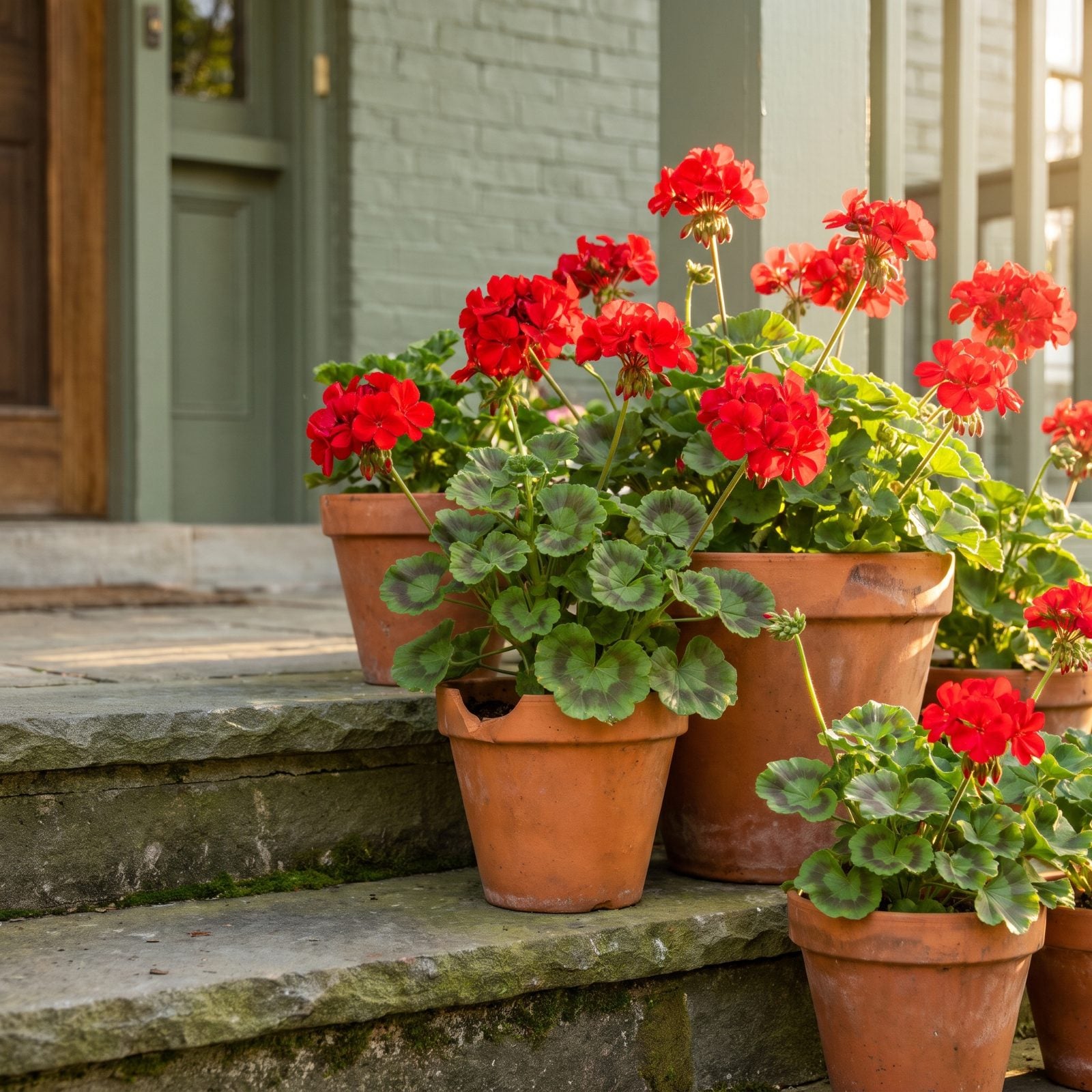
Look at the leaf. That dark horseshoe band running across each round leaf is the “zone” these are named for, and it’s half the reason they look good even between flushes of bloom.
Geraniums fell out of fashion for being the flower of gas station parking lots. That was always unfair. In a terracotta pot on a sunny step, deadheaded regularly and watered only when the soil dries out, they bloom from May to frost without sulking. Overwater them and they rot. That’s the whole learning curve.
4. Pendant Fuchsias Dripping From a Hanging Basket
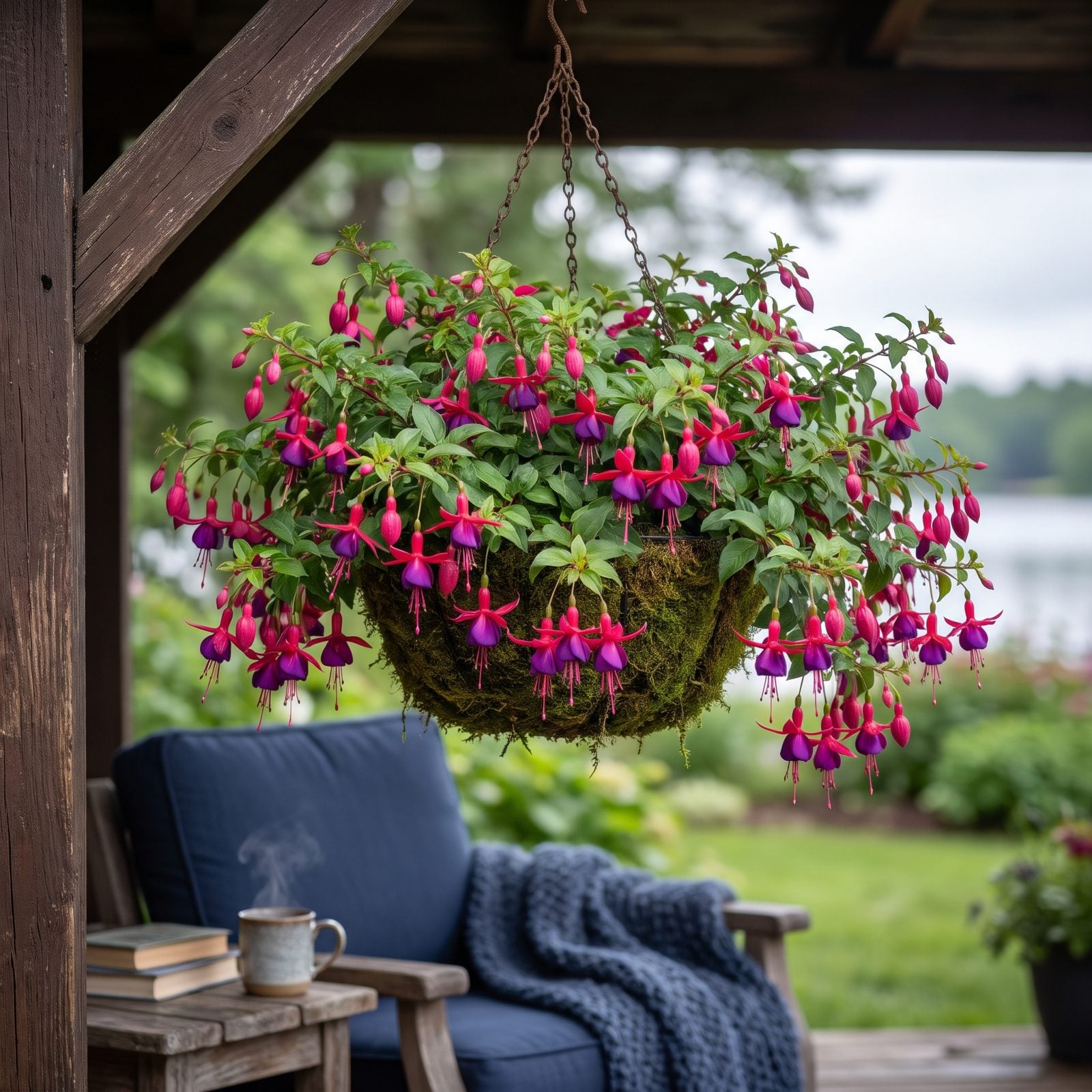
Every bloom looks like a tiny dancer caught mid-curtsy. Fuchsias hang their flowers face-down on purpose, two colors to each one — the flared outer sepals one shade, the inner skirt another. In a basket where you look up into them, that upside-down design finally makes sense.
They want what most showy flowers won’t tolerate: shade, cool air, and steady moisture. A hot afternoon wall will fry them. A dappled porch, though, keeps them going into fall, and hummingbirds will find them within days.
3. Ruffled Petunias Tumbling Over Window Boxes
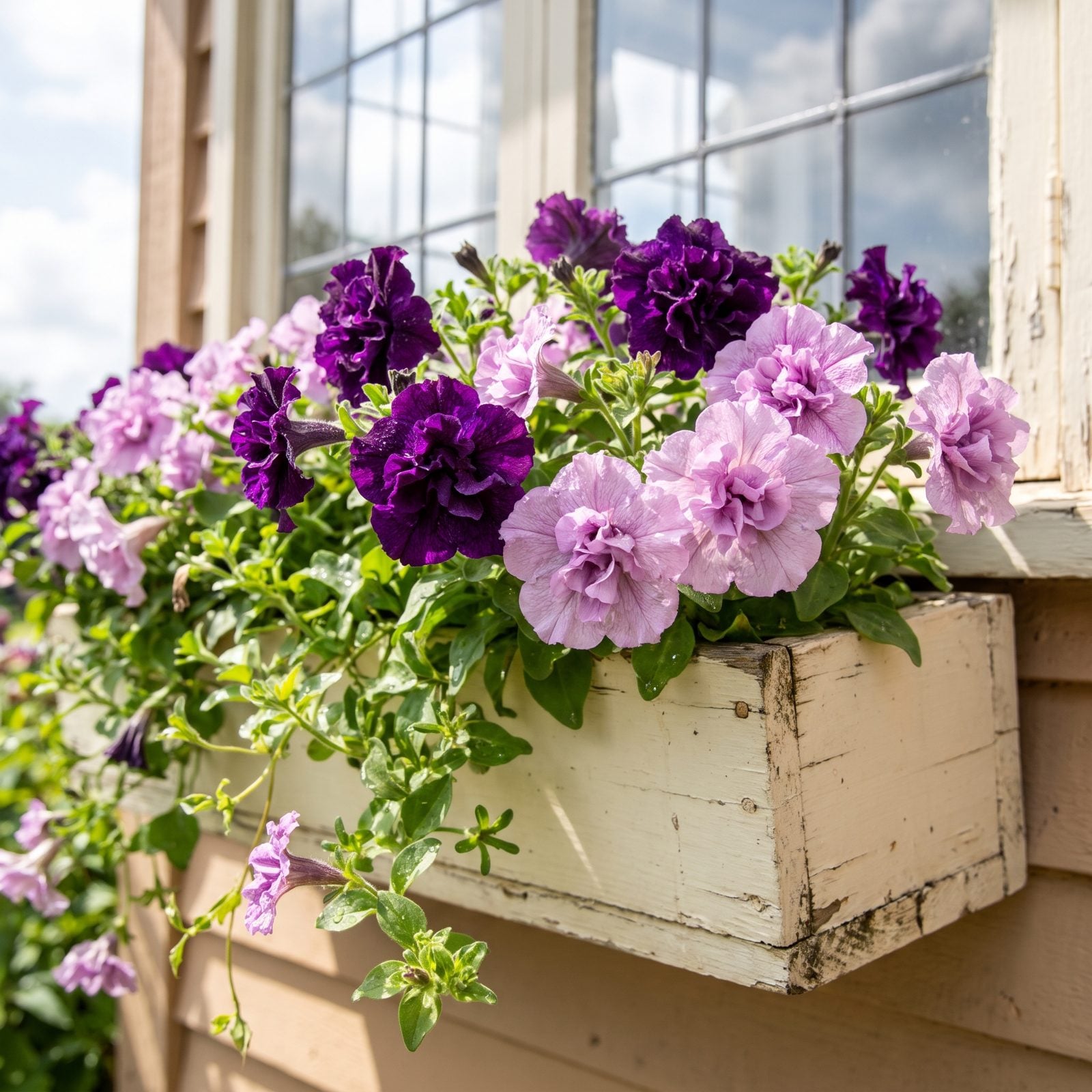
The old frilly doubles are back, and thank goodness. For years the market was all flat, weatherproof wave petunias — fine, reliable, and about as exciting as a parking lot. The ruffled doubles look like crushed silk and smell faintly sweet at dusk.
They earn their keep in a window box, spilling forward to soften a hard edge of siding. The trade-off is maintenance. Those full blooms turn to mush after rain and need deadheading, and the plants are hungry, so a diluted feed every week or two keeps them going.
2. Marigolds Edging the Vegetable Patch
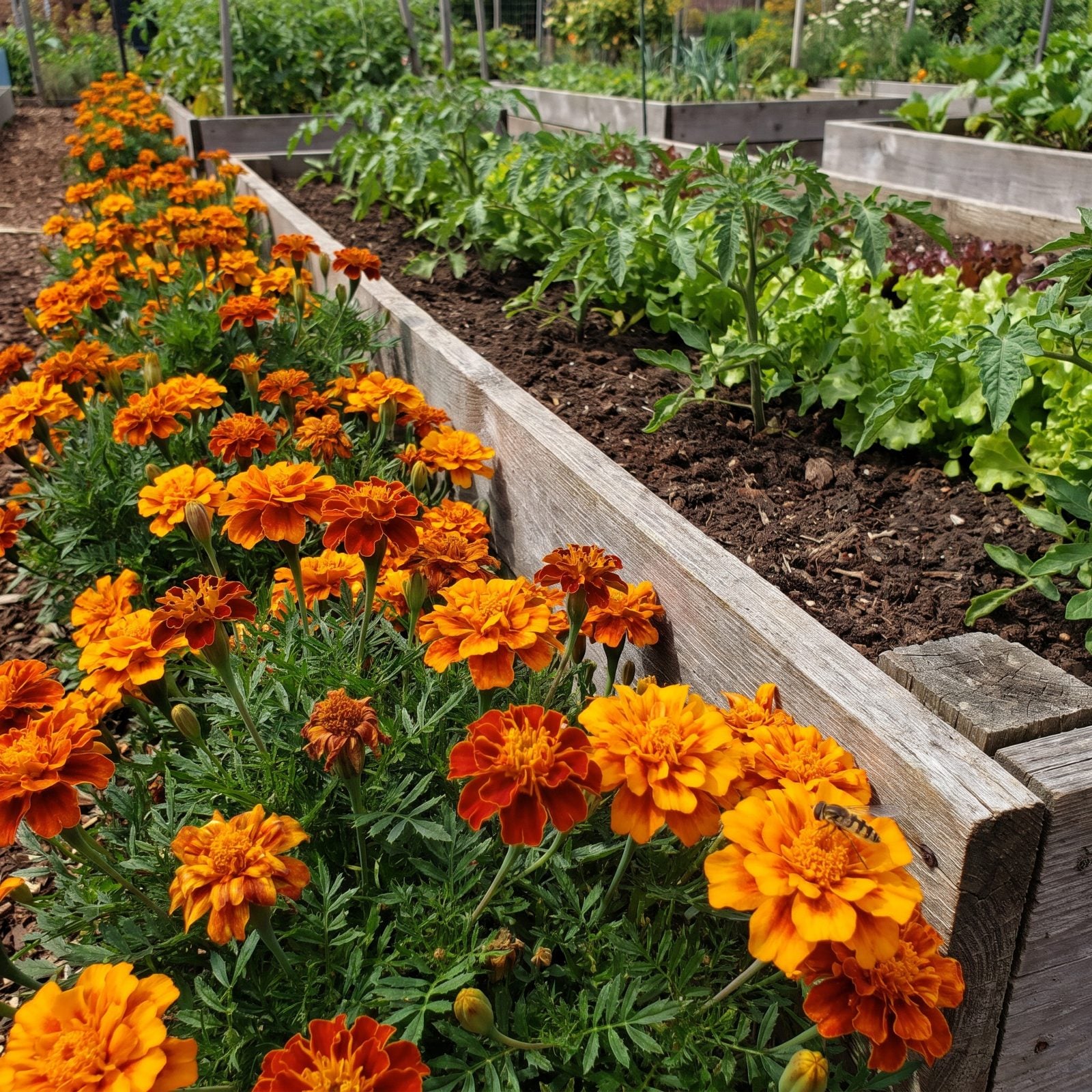
Grandmothers put marigolds around the tomatoes for a reason, and it wasn’t just color. The pungent foliage is thought to deter some pests, and research backs up their use against certain root-knot nematodes in the soil — though you’d need a solid planting, not a token few, to make a real dent.
Pest science aside, they’re the easiest annual there is. Direct-sow after frost, thin a bit, and they bloom nonstop until the cold kills them. The scent is love-it-or-hate-it. I happen to love it. It smells like July.
1. Giant Sunflowers Standing Guard at the Garden’s Edge
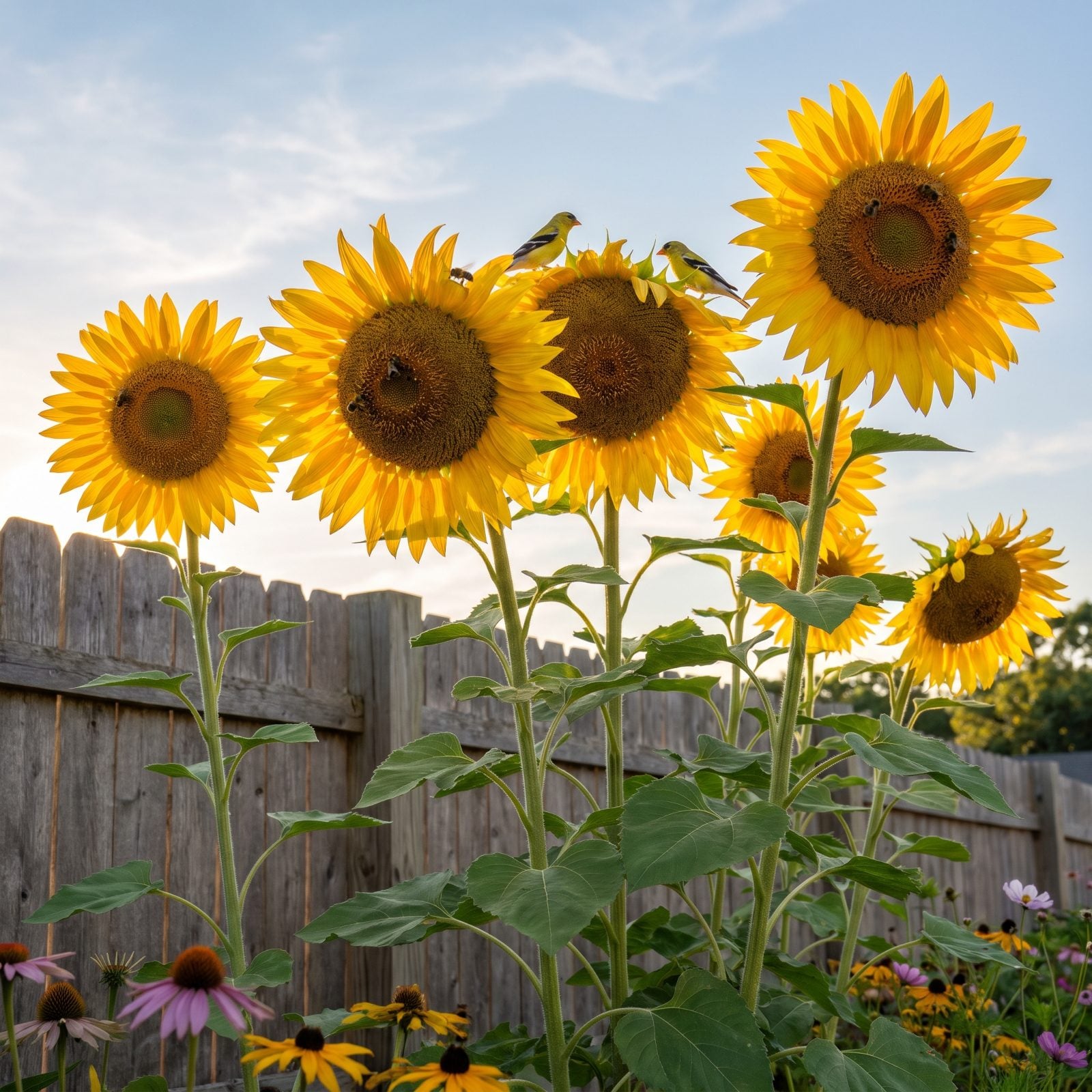
Plant them where you won’t mind looking up. Mammoth sunflowers push past ten or twelve feet in a good summer, which means they belong at the north edge of the garden where they won’t shade everything else into darkness.
Two things people forget. First, those heavy heads need staking or a fence to lean on, or a strong wind takes them down at the ankle. Second, leave the spent heads standing into fall. The goldfinches will clean the seeds out all autumn, clinging upside down to pick at them, and that show is worth more than the bloom ever was.
A sunflower follows the sun while it’s young, then settles facing east for good once it matures. Nobody tells you the flower eventually stops moving and just waits for morning.